By Markus Schmidt
The Richmonder staff report
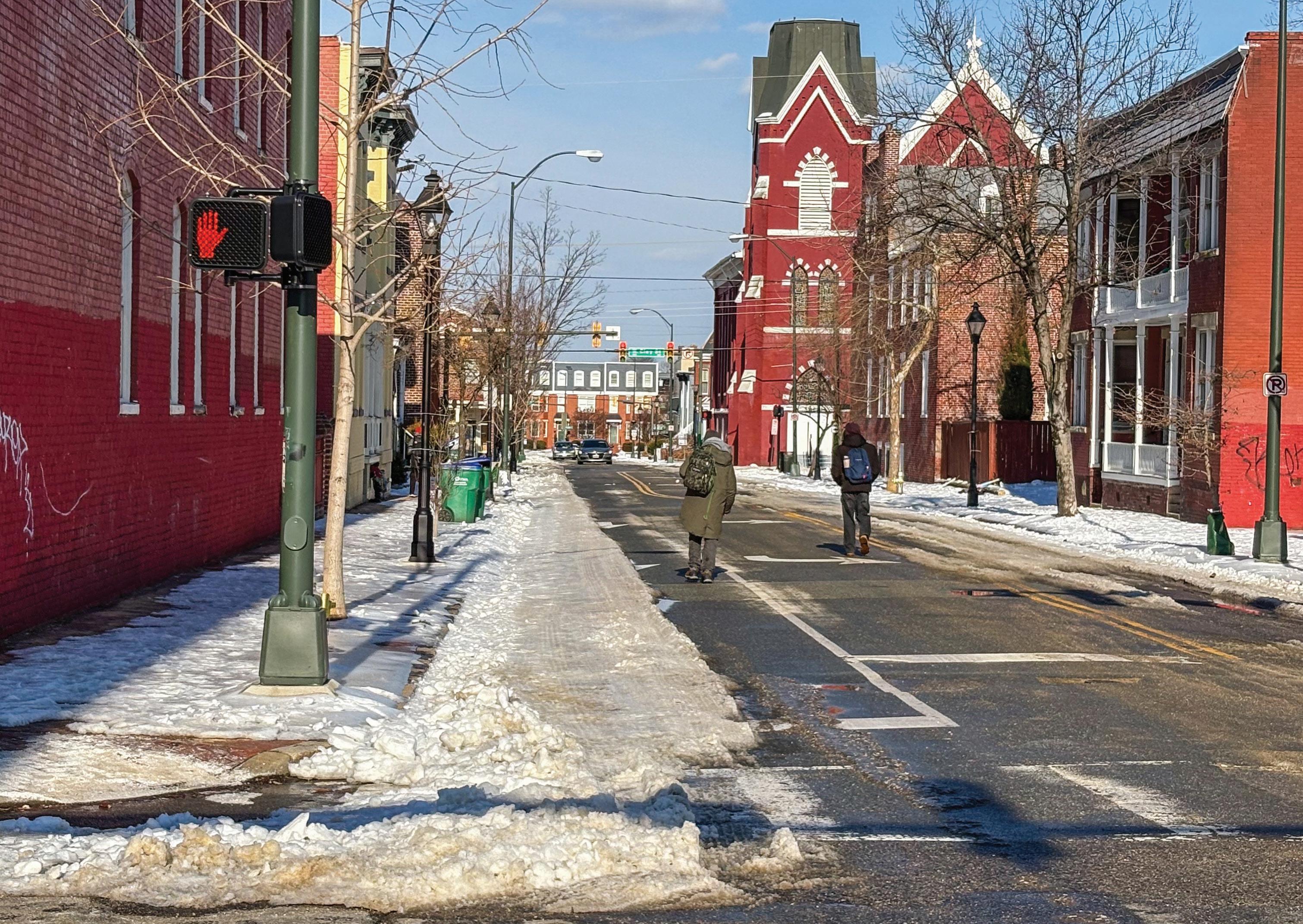
Richmond will take its first tentative steps back to normalcy on Waednesday, with city and county offices opening on a limited basis, even as schools remain out across the region.
Officials said below-freezing temperatures are making it difficult to clear the snow and ice in traditional ways, as plows are largely ineffective against the giant sheets of ice in most residential neighborhoods, and salt stops working when temperatures drop below 20 degrees, as they have each night.
In an interview Tuesday afternoon, Department of Public Works Director Bobby Vincent said most of Richmond’s main roads are in “B+” or “A” condition. The less traveled neighborhood streets, he said, are a different story.
“They’re pretty much frozen over,” Vincent said. Richmond’s streets could be back to normal by Friday, Vincent said, but by that time the city might have to start prepping for more snow in the forecast for this weekend.
He said the city is deploying a sand-and-salt mixture to help soften roads when the sun is out.
“The plows are not effective with the ice, but the plows are effective with the slush,”
By George Copeland Jr.
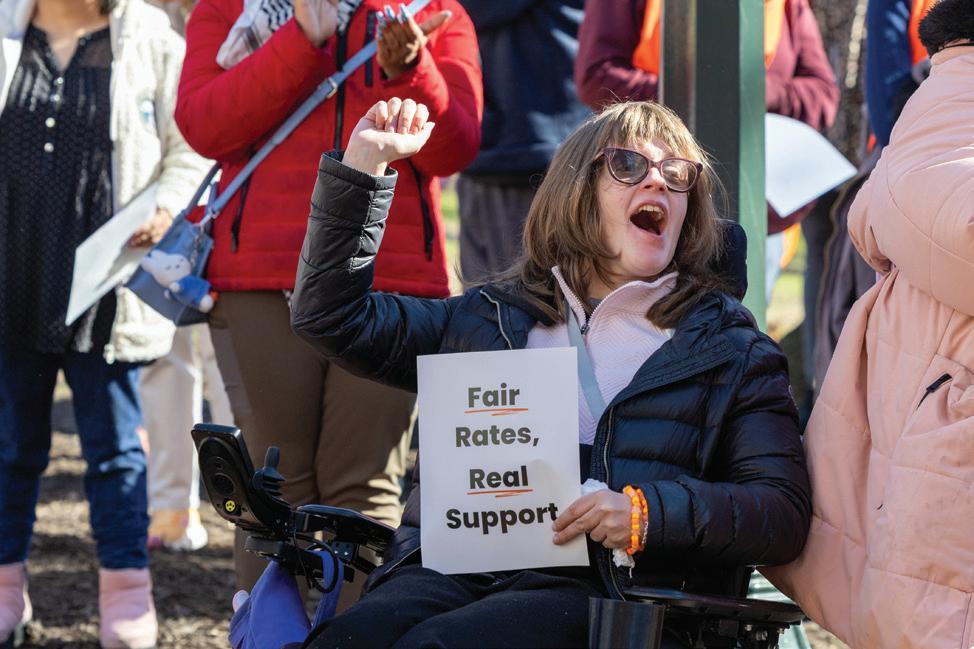
Chanting “Make the Promise Real” and carrying signs, about 80 disability advocates from across Virginia rallied at the state Capitol on Jan. 22 to press lawmakers for improvements in disability services and protections during the General Assembly session. The Developmental Disabilities Advocacy Rally, organized by The Arc of Virginia, was one of several demonstrations held at the Capitol last week as groups outlined their legislative priorities.
The state reached a settlement agreement with the U.S. Department of Justice in 2012 that committed Virginia to expand community-based supports and comply with federal law.
For disability advocates, the session marks another push to build on changes made after a 2011 federal investigation found Virginia violated the Constitution and the Americans with Disabilities Act by failing to provide adequate services.
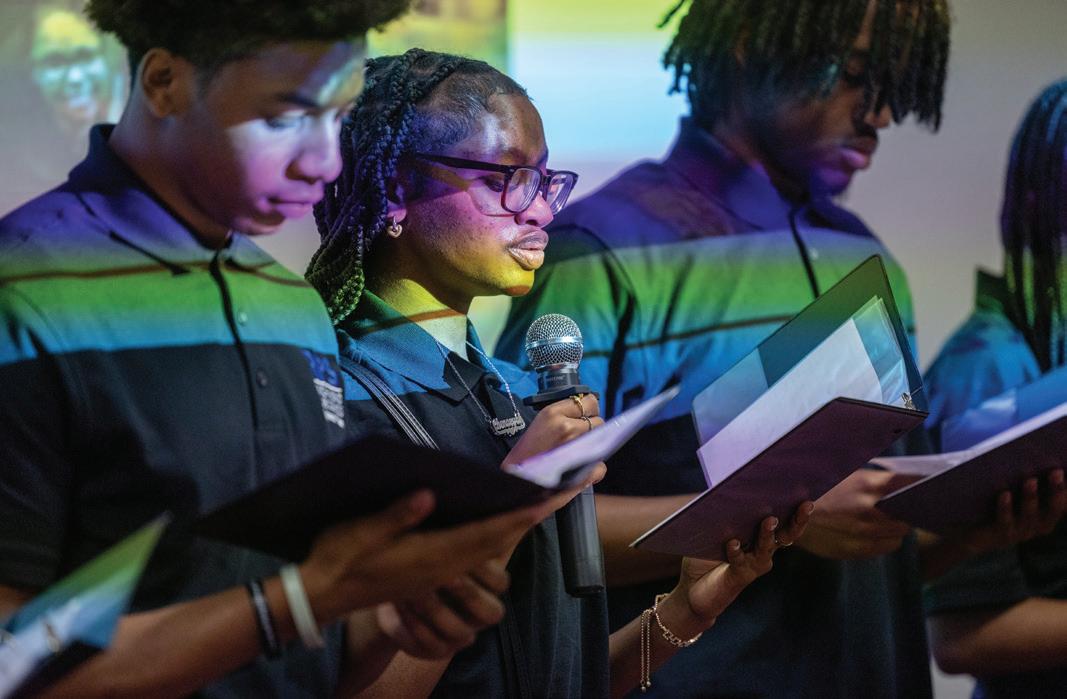
“When I have consistent support, I can focus on living my life, not starting over,” said Nick Zweerink, an Arc of Virginia peer mentor.
Zweerink said he has had more than 100 support program counselors over the past decade because of low wages and high
Please turn to A4
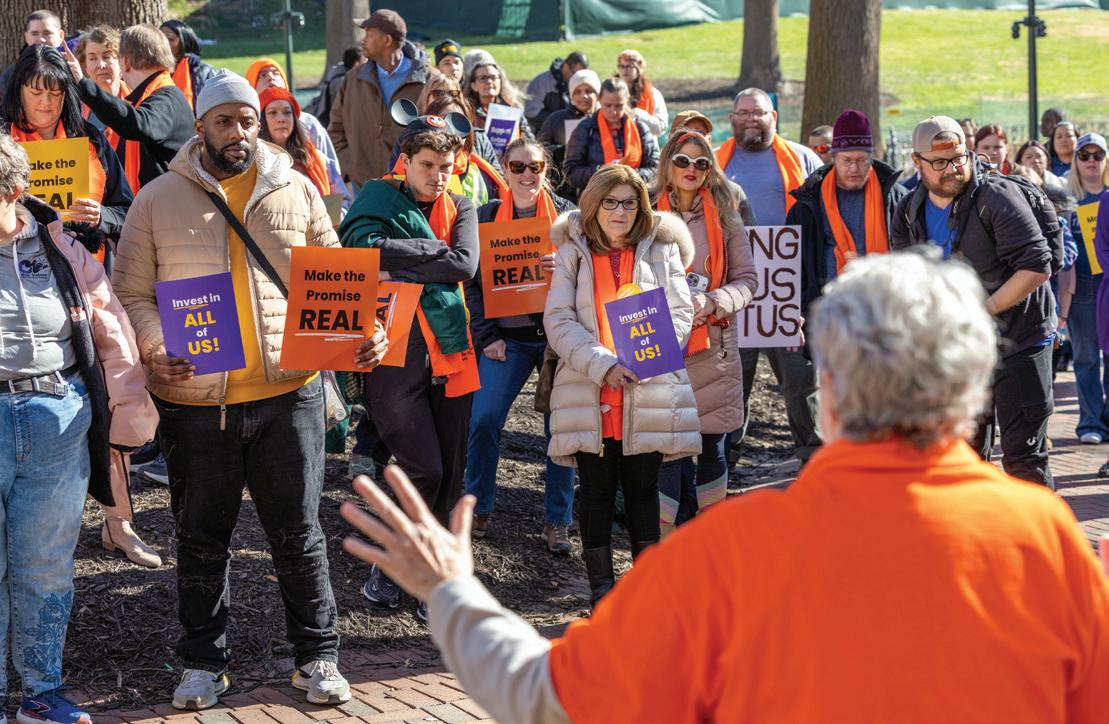
The Arc of Northern Virginia organized the event to push for disability rights, community-based care and funding that affects the safety, independence and civil rights of people with disabilities.
Victoria A. Ifatusin
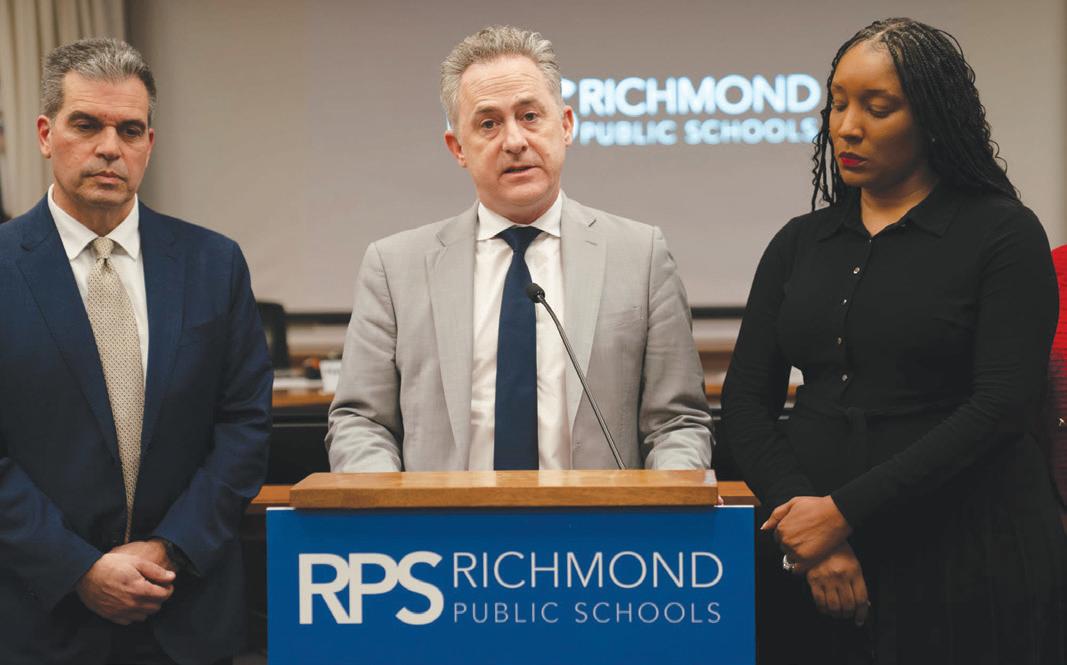
As a result, the administration plans to scale back $22 million in planned expenses to “remain in balance.”
“Highly regrettable reductions, but I’m trying to make the numbers work,” Kamras told the board.
Most notable is a pause on raises for staff members and the splitting of health insurance increases with employees. Doing
Jan. 30 deadline
Free Press staff report
Virginians have until Friday, Jan. 30 to enroll in health coverage for 2026 through Virginia’s Insurance Marketplace, officials said.
Open enrollment is the only time of year when eligible people can sign up for or change plans without a qualifying life event.
Plans offered through the Marketplace cover essential health benefits, including emergency services, hospitalization, maternity and newborn care, prescription drugs, mental health care and preventive services. Some health plans outside the Marketplace do not include all 10 essential benefits, which can leave gaps in coverage.
The Marketplace is also the only place where Virginians can apply for financial assistance to reduce monthly insurance costs.
“With monthly premium costs increasing this year for many consumers with the expiration of enhanced federal tax credits, it is more important than ever for Virginians to price shop and explore their options,” said Keven Patchett, director of the Health Benefit Exchange, the State Corporation Commission division that oversees the Marketplace. “Navigating health insurance can feel overwhelming, but the Marketplace provides tools, resources and free local assistance to help people understand their options and select a plan that best meets their needs and budget.”
Virginia extended the open enrollment period by two weeks this year. After Jan. 30, people can enroll only if they qualify for a Special Enrollment Period due to a major life event such as losing coverage, getting married or having a baby.
The Marketplace offers free resources to help people compare plans, estimate potential financial assistance and access a statewide network of more than 3,000 certified assisters and agents for in-person or virtual help. A help center is also available with phone support and translation services.
People can visit marketplace.virginia.gov to browse plans, connect with local assisters and agents, and apply for coverage.
Free Press staff report
If you like arriving at the airport early to avoid the stress of rushing to your gate, plan for a little extra time at Richmond International Airport. Construction in the hourly parking garages may add a few detours for visitors this winter.
Starting this week, one of the roads connecting the North and South hourly parking garages will be closed until June as part of a capital improvement project. Detours will guide airport visitors through the garages if either reaches capacity. While officials expect minimal impact, travelers are encouraged to allow extra time when parking.
The Center Core Plaza project includes new pavement and landscaping in the wedge-shaped area between the garages. Updates will also bring improved storm drainage, site lighting and furnishings, walkways and pet relief areas as well as infrastructure for future EV charging stations.
A centerpiece of the project will be the airport’s first public art installation, a 24-foot-tall sculpture of a dogwood tree and three hummingbirds by artist Matthew Mazzotta titled “Travel Companions.” Airport visitors recently suggested names for the birds on social media and voted for Henry, Hollywood and Hummie Mae.
Free Press staff report
The Library of Virginia will launch its Culturescape Saturdays programming initiative with a free Black History Month celebration highlighting Black artists and storytellers from noon to 3 p.m. Saturday, Feb. 21.The event was originally scheduled for Jan. 31 but was rescheduled due to anticipated inclement weather.
Planned activities include a pop-up exhibition featuring works by local Black artists, a genealogical show-and-tell presentation, guided tours of the Library’s current exhibition, “House to Highway: Reclaiming a Community History,” resource sharing from community partners and reference and genealogical assistance.
The Culturescape Saturdays series explores the intersections of art, culture, history and community across Virginia. More information about upcoming programs are available at lva.virginia.gov/events.
Free Press staff report
Greg McQuade has spent 25 years telling stories about Virginia veterans, and the Virginia War Memorial will showcase many of those stories in a program next month.
The memorial will present “Heroes Among Us: Veterans Voices with Greg McQuade” on Feb. 12 from 7 to 9 p.m.
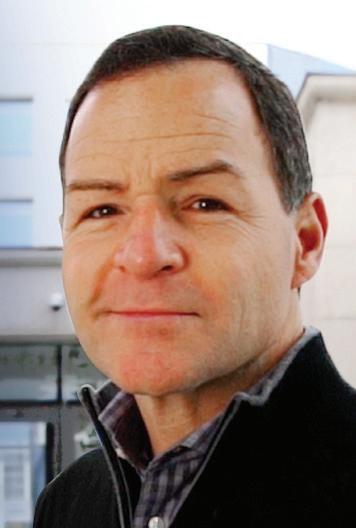
The Emmy and Edward R. Murrow awardwinning WTVR-TV CBS6 reporter will offer a retrospective of his “Heroes Among Us” video segments highlighting Virginia military veterans and active service members.
The program in the memorial’s Veterans Hall is free, but preregistration is requested due to limited seating. Free parking is available in the memorial’s surface lot and parking deck at 621 S. Belvidere St. McQuade, a Massachusetts native and Northeastern University broadcast journalism graduate, joined WTVR-TV in October 2020 as a political and military reporter. He produces the weekly “Heroes Among Us” segment and anchors “CBS6 Weekend Morning” on Saturdays and Sundays.
“We consider Greg a true friend of our veterans and practically a member of our Virginia War Memorial team as he is so often here doing research and filming his ‘Heroes Among Us’ segments,” said Virginia War Memorial Director Dr. Clay Mountcastle. For more information, visit dvs.virginia.gov

Slices of life and scenes in Richmond
By Jahd Khalil VPM News
Shortly before leaving office, Virginia Republican Gov. Glenn Youngkin granted an absolute pardon to a former Fairfax County police officer who killed a man while on duty and was later convicted of reckless firearm handling.
Wesley Shifflett was one of two FCPD officers who fatally shot Timothy McCree Johnson on Feb. 22, 2023.
Johnson, who was unarmed at the time of his death, had allegedly shoplifted sunglasses from Tysons Corner Center.
In the Jan. 15 pardon, Youngkin cited a report from the independent police auditor of Fairfax County as a reason for removing the conviction.
Since the report “concluded that it was objectively reasonable for Sgt. Wesley Gonzalez Shifflett to believe he was in significant danger of death or serious physical injury,” Youngkin wrote, it meant “the deadly force used by Sgt. Wesley Gonzalez Shifflett on February 22, 2023, was both lawful and consistent with the department’s policy and training.”
The pardon removes Shifflett’s conviction; he previously received clemency from Youngkin in March 2025, two days after his conviction for recklessly handling a firearm. A Fairfax judge had sentenced him to five years, with two years suspended, and an additional five years of probation.
A jury acquitted Shifflett of involuntary manslaughter.
“I can’t speak to the governor’s thinking but there were a lot of factors
Free Press staff report
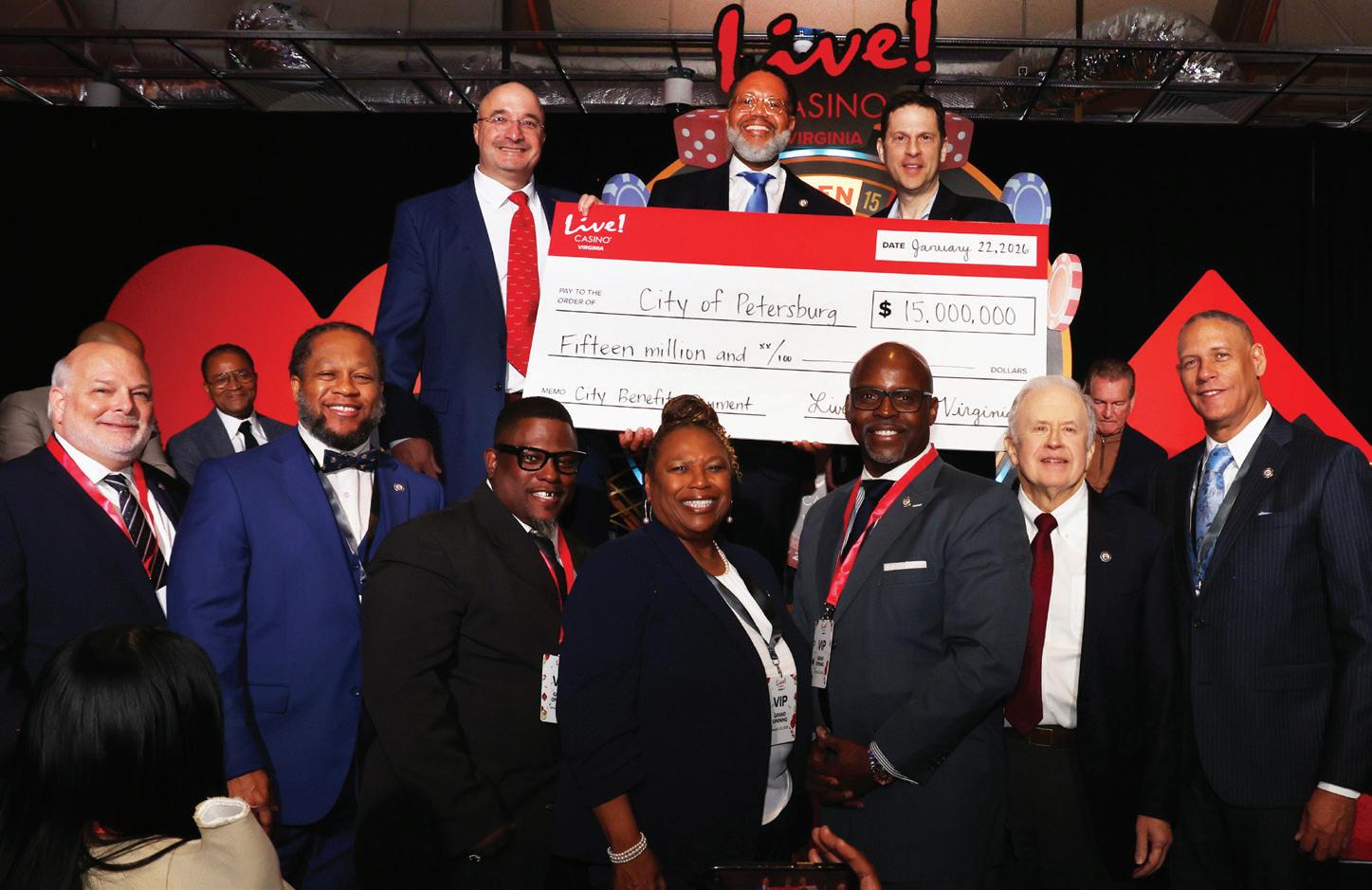
Live! Casino Virginia opened last week in Petersburg, becoming Central Virginia’s first full-scale casino and marking a major expansion of legalized gaming just south of Richmond.
The Jan. 22 opening comes after Richmond voters rejected proposed casino developments twice — first in a November 2021 referendum and again in a June 2023 revote — clearing the way for Petersburg to move forward with its own casino project under Virginia law.
Developed by The Cordish Companies and Bruce Smith Enterprise, the temporary gaming facility sits off Interstate 95. The casino operates 24 hours a day and features more than 900 slot machines and 33 liveaction table games. Guests also have access to a bar, a restaurant and free parking. Company officials and local leaders gathered for a grand opening ceremony, which included a ceremonial first bet placed by former NFL quarterback Joe Theismann. Attendees included members of the Virginia Lottery Board, Petersburg Mayor Sam Parham and members of the City Council.
“This moment marks the beginning of a powerful new era,” Parham said, describing the casino as a project intended to spur economic development in Petersburg and the surrounding Tri-Cities region.
During the opening event, $15.05 million was presented to the city and local charities. The funds include a $15 million contribution to the city, part of a broader commitment by the developers, and $50,000 raised during a charity
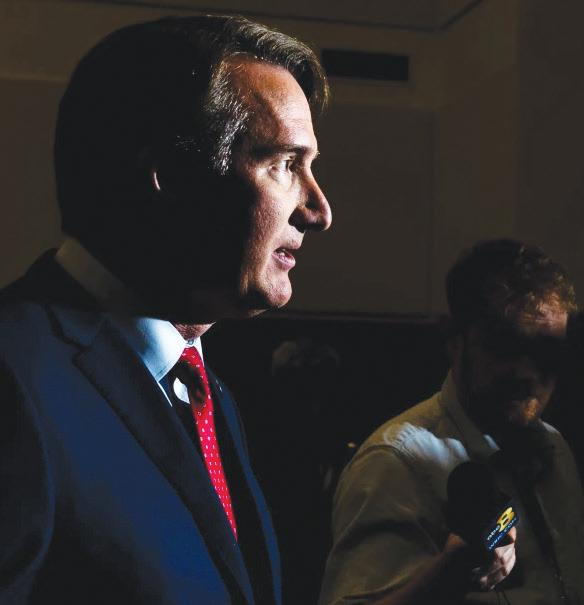
at play in Sgt. Shifflett’s conviction,” Caleb Kershner, Shifflett’s attorney, told VPM News. “An officer training Fairfax County police officers testified that Sgt. Shifflett’s use of force aligned with how he was trained.”
Carl Crews, an attorney for Johnson’s family, declined to comment. A spokesperson for the office of Fairfax Commonwealth’s Attorney Steve Descano, which prosecuted the case, referred VPM News to Descano’s prior statements on Youngkin’s grant of clemency.
“I’m outraged at Youngkin’s decision tonight,” Descano said at the time. “This is an insult to all Virginians who value an untainted justice system.”
Youngkin, who left office on Jan. 17,
did not release information about the pardons and clemency he granted. The Virginia General Assembly recently posted a report on clemency actions in Youngkin’s last year as governor. Shifflett was the only absolute pardon. The last three reports filed to the General Assembly indicated Youngkin had granted absolute pardons to two men in his first three years, including one convicted of disorderly conduct after a scuffle at a Loudoun County School Board meeting.
In his March 2025 statement, Youngkin said he was “convinced” that Shifflett’s sentence was unjust but did not mention innocence. The report Youngkin cited came out after Shifflett’s conviction on April 7.
Absolute pardons are typically used after all appeal avenues are exhausted and when a governor is convinced a person is innocent of a charge.
“I am convinced that the court’s sentence of incarceration is unjust and violates the cornerstone of our justice system—that similarly situated individuals receive proportionate sentences,” Youngkin said at the time.
“I want to emphasize that a jury acquitted Sgt. Shifflett of the more serious charge of involuntary manslaughter, a conviction for which the sentencing guidelines recommend no jail time or up to six months’ incarceration.”
By Shannon Heckt
Legislation is advancing through the General Assembly to restrict future data centers to industrially zoned areas.
Several of the bills are aimed at helping localities manage the industry as well as temper community concerns over environmental impacts, sound and viewshed issues around data centers. One bill looks to place data centers near manufacturers and warehouses — far away from commercial and residential communities.
“What we’re trying to have happen is have localities acknowledge that data centers, especially in the modern day, are not the way that they were just 10 years ago,” Sen. Danica Roem, D-Manassas, said during a local government committee meeting. “But the modern data centers today that are being built up, especially for AI, are industrial use and they need to be classified as such.”
Roem is the sponsor of Senate Bill 94, which has faced pushback from the data center industry and electrical workers unions. The bill does not stop communities from rezoning areas to be industrial in order to make more space for data centers. Localities often require setbacks and buffers when an industrial zone borders a residential area.
Roem’s district, which includes parts of Prince William County, is home to over 60 data centers. A recent move to rezone agricultural areas near Manassas National Battlefield for the controversial Digital Gateway data center project is caught up in a court battle.
The 2024 Joint Legislative Audit and Review Commission report on data centers stated that the state should allow localities to manage their own ordinances and siting for the industry. But Roem said that since the report’s release, localities have been slow to pass ordinances, and community concern around where data centers are allowed has increased. She said the price of land in her district is skyrocketing due to the data center industry and

The construction of a data center in Loudoun
the energy needed to be built to power them.
“You basically have data centers outbidding residential developers in much of Northern Virginia … It has localities looking at, will we be able to actually approve residential rezoning for future projects? Will we be able to use the grid, be able to handle that capacity,” said Andrew Clark, vice president of government affairs for the Home Builders Association of Virginia.
The Home Builders Association did not take a stance on the bill, but did answer a question to the committee posed by Roem.
The data center industry is not a fan of the bill. Nicole Riley with the Data Center Coalition testified against the
bill, saying it unfairly targets one industry over other large projects. She pointed to Senate Bill 130 by Sen. Adam Ebbin, D-Alexandria, that allows localities to require environmental and sound impact studies to be done before approving permits for data centers.
“We believe this is the best approach to address the need for localities to have more tools when approving permits related to projects for high energy use facilities,” Riley said in committee.
The bill was referred to Senate Finance for further consideration by a vote of 8-5 with one abstention.
This story originally appeared on VirginiaMercury.com.
By Nathaniel Cline
A proposal to create a volunteer cybersecurity incident response team to investigate and troubleshoot threats targeting digital systems around the Commonwealth will be considered again in this year’s General Assembly session.
The legislation, carried by Del. Michael Feggans, D-Virginia Beach, would authorize the Virginia Information Technologies Agency to select people to serve as Virginia Cyber Civilian Corps volunteers and corps advisers and to deploy such volunteers across the state to provide rapid-response assistance under the direction of VITA upon request from a client or government agency affected by a cybersecurity incident.
The proposal would also create an advisory board within VITA to review and make recommendations regarding the creation and administration of the corps.
Public data suggests cyberattacks are increasing. In many cases, reporting lags and transparency vary because of reputational or security concerns.
“The problem today is that localities are ‘soft targets’ these days,” said Tijay Chung, an associate professor in the computer science department at Virginia Tech. “Hackers have shifted (their) focus from hard and corporate targets to schools, hospitals or municipalities.”
He said House Bill 83 is a smart idea and that hackers are aware local governments do not have the budgets for a state-of-the-art security system or dedicated 24/7 monitoring teams.

out of the blue,” Feggans said at the start of the General Assembly session. “It’s a model showing that we can increase our cybersecurity resources without adding a large bill to the state. We’ve seen cyberattacks happen in Virginia, and we just need to continue to increase our intellectual abilities to be able to assist in that, and this is my way to address our cybersecurity resources within the state.”
In December, Campbell County was targeted by a cyberattack on its emergency notification system, OnSolve CodeRED, used for weather and emergency alerts.
The county said the system has been decommissioned. An initial investigation found an organized cybercriminal group damaged the CodeRED platform. The group may have removed subscriber data and posted some of it online.
Chung said lawmakers will need to consider vetting volunteer experts in their implementation plan and added that having a certification does not necessarily mean you can stop an active ransomware attack.
In 2024, Feggans introduced a similar proposal, which cleared the General Assembly during his first term. However, former Gov. Glenn Youngkin vetoed the bill. Youngkin said creating a civilian cybersecurity corps is premature, costly and legally unclear under Virginia’s current cybersecurity setup.
According to the Department of Planning and Budget, an estimated $410,000 is projected
“That’s why these days, hackers, in my opinion, think that (attacking) localities are easy targets — low risk, high reward,” Chung added.

for VITA to create and fund an advisory board for the Virginia Cyber Civilian Corps. Funds would also be allocated to the Virginia State Police for fingerprinting volunteers.
Feggans’ interest in introducing the legislation stems from his time as a cybersecurity intern for former Gov. Terry McAuliffe’s administration and research on potential legislation. He also cited the success of similar proposals in states such as Ohio, Michigan and Wisconsin.
“This wasn’t just something that came up

“You really have to have real experience. Conversely, some of the best white hat hackers may not have a formal degree. VITA needs to balance bureaucracy with actual technical capability.”
If Feggans’ bill is to have any success in advancing to the Senate, it must clear the House of Delegates before crossover on Feb. 18. Gov. Abigail Spanberger would be responsible for signing the legislation.
This story originally appeared on VirginiaMercury.com.
Continued from A1
with protecting all Virginians,” Del. Marcus Simon, D-Fairfax, told reporters. “It’s Virginia citizens, all Virginia residents, our neighbors, and keeping our communities safe.”
Simon tied the legislative push to the deaths of Alex Pretti, a hospital ICU nurse who cared for veterans, and Renee Nicole Good, a Minnesota mother of three, during recent federal enforcement actions.
“Alex Pretti, a VA hospital ICU nurse, was just trying to help a woman who’d been knocked to the ground; he was shot in the back 10 times by federal agents. He was shot like a dog in the street.
Renee Good, a mother of three, shot in the head,” Simon said.
Democrats did not provide a response Wednesday on a reported federal plan to establish an ICE detention facility in Hanover County, nor did they elaborate in detail on the bills they expect to advance this session.
The legislative push comes as immigration enforcement has become one of the earliest tests of Gov. Abigail Spanberger’s administration, following Democrats’ takeover of statewide offices and both chambers of the General Assembly.
Shortly after her Jan. 17 inauguration as Virginia’s 75th governor, Spanberger moved quickly to reverse a signature Republican immigration policy by rescinding former Gov. Glenn Youngkin’s executive order that had urged state police and corrections officers to help carry out federal immigration enforcement, a step advocates said fueled fear in immigrant communities.
But Spanberger’s move did not end existing agreements between state or local agencies and the federal government.
Democratic lawmakers said their proposals are designed to draw clearer boundaries between federal immigration enforcement and state and local institutions, particularly schools, hospitals, courthouses and polling places.
“We can enforce the law and respect the Constitution,” Simon
Continued from A1
staff turnover, forcing him to rebuild relationships and trust.
“My voice is my strength, but I should not have to fight for basic stability,” Zweerink said.
Advocates are backing several policy changes, including protecting voting rights for people under guardianship and requiring disabilities to be considered before law enforcement pursues felony charges tied to disability-related behaviors during officer interactions.
They also want the Blue Envelope program, which helps autistic drivers communicate with police and first responders, expanded to include all people with disabilities. In addition, they are seeking to close a loophole that could cut off caregiving support for adults with disabilities after a parent’s death.
On funding, advocates are calling for increased community care dollars, protection of the right to work for adults with Developmental Disabilities waivers through participation in Medicaid Works, more affordable housing and continued support for the Public Guardianship Program.
“Our shared goal is to make the promise of community living real,” said Tonya Milling, Arc of Virginia executive director, “by investing in the supports that people need, by building provider capacity, and by planning ahead so that families are not pushed into crisis while they’re waiting for services and support.”
While acknowledging progress since the settlement agreement, advocates said significant gaps remain. They cited the lack of proposed rate increases for nursing, personal care and respite services in the current budget, along with workforce shortages, access barriers and inequities in supported living service rates.
“There’s not enough workers, there’s not enough providers, and that promise depends on everybody getting the support that they need when they need it,” Milling said.
Advocates, their families and allies from Southwest Virginia also met with lawmakers, and participants from other regions are expected to travel to Richmond in the coming weeks.
Julianne Tripp Hillian/Richmond Free Press
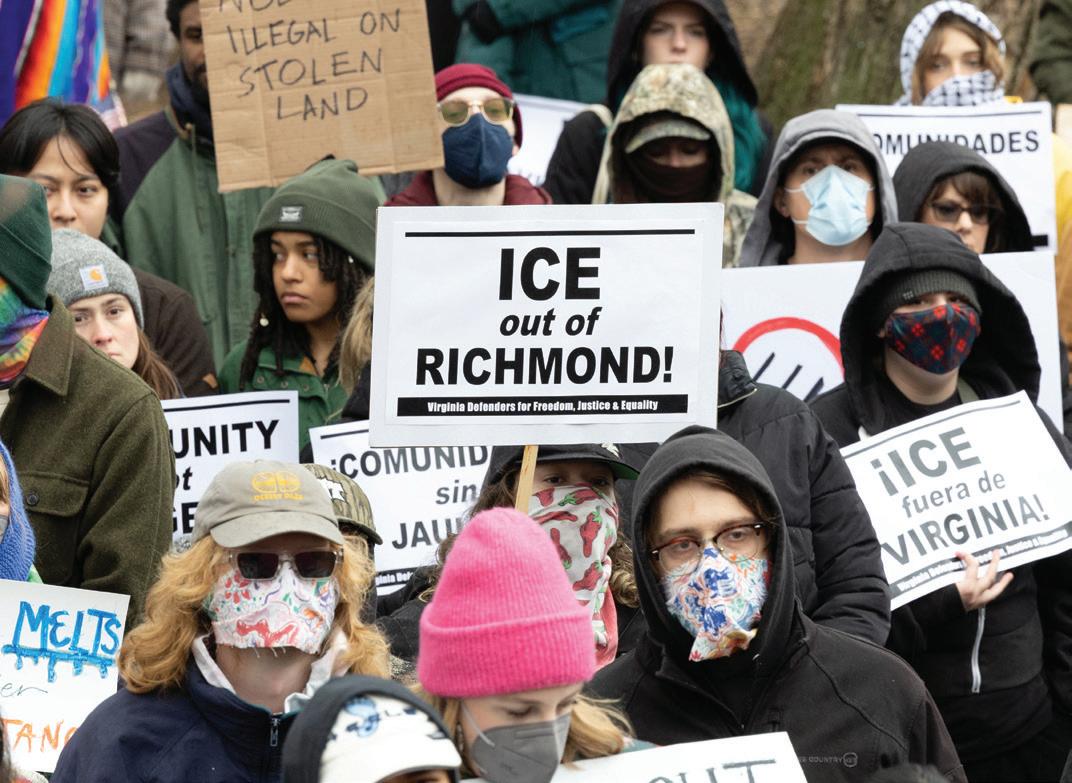
Local immigrant rights organizations rally at Monroe Park in Richmond on Sunday, Jan. 18. said. “We hold criminals accountable without terrorizing communities. That’s what real public safety looks like.”
Bills restrict enforcement locations, cooperation
Several of the proposals were introduced by Del. Alfonso Lopez, D-Arlington, who said they are intended to prevent immigration enforcement from interfering with access to essential services and democratic participation.
Lopez’s House Bill 1440 would prohibit federal immigration enforcement in certain “protected areas” owned or operated by state or local governments, including hospitals and health care facilities, schools at all levels, offices of commonwealth’s attorneys and other locations designated by the attorney general.
Under the proposal, employees of those facilities could not knowingly allow federal immigration enforcement into nonpublic
areas for enforcement purposes. Violations would be punishable as a Class 1 misdemeanor, with limited exceptions.
HB 1441 would restrict state and local law enforcement officers from assisting or cooperating with federal immigration enforcement operations unless they are acting under a valid judicial warrant, subpoena or detainer, or are otherwise required by law.
HB 1442 would prohibit immigration enforcement activity within 40 feet of polling places, locations where election results are being certified, or recount sites. Lopez said the legislation is meant to ensure voters are not deterred from participating in elections.
“Public safety includes protecting the most fundamental right in a democracy, the right to vote without fear,” Lopez said. “What we have seen from ICE agents is intimidation.”
Courthouse protections
Another proposal, HB 650 by Del. Katrina Callsen, D-Albemarle, would restrict civil arrests inside courthouses. At the Chesterfield County Courthouse alone, at least 14 undocumented individuals were arrested last summer, drawing sharp rebukes from public officials, civil rights groups and lawmakers but praise from Youngkin.
The measure would prohibit such arrests of people attending court proceedings, traveling to court or leaving court, including witnesses and family members, unless the arresting authority presents a judicial warrant or order reviewed by a designated official.
Violations would be punishable as contempt of court.
“Courthouses should be places of justice, not fear,” Callsen said during the news conference. “People have to be able to enter a courthouse to testify, attend hearings and comply with the law without worrying that they’ll be snatched, detained or disappear on their way in the door.”
Callsen said the bill is aimed at preventing a breakdown in the justice system when people are afraid to participate.
“When people are afraid to show up, crimes go unreported,” she said. “That is not what public safety is about.”
This story originally appeared on VirginiaMercury.com
Continued from A1
Vincent said.
In Henrico, government buildings will reopen and trash pickup will resume on a two-hour delay. Richmond will do the same, but with government buildings opening at noon.
All localities, Chesterfield included, have canceled school for the day.
“While progress is being made to clear areas, extremely icy conditions across Henrico County and frigid temperatures mean we cannot open schools on Wednesday,” Henrico said in a statement. The storm’s toll
Early notification allowed residents to prepare for an extended period at home.
Virginia State Police said there were 108 car crashes in the area — four with injuries reported, but no fatalities — during the storm.
The lone fatality reported as of Tuesday evening was a 4-year-old boy who fell into an icy lake in Henrico. He was rescued, but was unconscious and later died at a hospital.
Plowing paths
Wednesday could be the biggest test yet of how the area’s infrastructure handles the extended snow, as many workplaces and stores reopen even as neighborhood roads show no signs of thawing.
While the storm wasn’t as bad on the front end as it could have been, its lingering after-effects have some residents going stir-crazy.
Beyond that, though, conditions remain dicey.
With some sunlight hitting and more chemicals being applied, Vincent said, roads should get clearer over the next few days. The city has about 75 trucks working on the roads, according to DPW.
“They should be able to start pushing on many of our neighborhood and residential streets,” Vincent said.
Limited bus service resumes
After being shut down entirely on Sunday, the Greater Richmond Transit

Company had planned to resume service on Monday, before changing that decision after drivers evaluated road conditions.
GRTC operated Tuesday with limited routes and drivers. On Wednesday, service began at 7 a.m.
So far, road conditions have been mixed, with ice lingering on most streets, said spokesperson Ashley Potter. The company’s road supervisors and operations team have been monitoring conditions, and service has been limited and adjusted based on those conditions.
That includes buses having to take “snow routes” — an alternative route of the regular paths — to avoid hazardous streets that have historically proven to be difficult to navigate in inclement weather. That means that drivers may not reach all of the stops in the regular route. The company also notes that additional detours may take place depending on conditions.
More snow soon?
While some forecasts are showing snow over the weekend, it’s still too early to make definitive predictions, according to forecasters.
Early projections show the storm developing off the Eastern Shore. The European forecasting model, which has been more accurate so far this winter, shows the storm stalling short of the Richmond area while dumping precipitation on Tidewater.
Whether snow arrives or not, temperatures will remain low, which will create an extended need for caution.
Vincent, the DPW director, encouraged residents to drive cautiously no matter what type of road they’re on.
“We want people to be careful,” he said. “Just take your time and drive slow.” This story originally appeared on TheRichmonder.org
Continued from A1
this would save the division $4 million and $2.8 million, respectively. Employees would still receive a 1.17% annual salary step increase.
Kamras also announced the proposed layoffs of 46 central office full-time workers, which would save $4.8 million in salaries and benefits annually. During a news conference, the superintendent told reporters that he would not share the impacted positions with the public at this time because it would reveal the employees, who were notified of their pending discharge earlier in the day.
“Quite frankly, I’m devastated. It shouldn’t have to come to this,” said Board Chair Shavonda Fernandez (9th District). “Today was a hard day for RPS. We are losing valuable associates.”
Kamras said union leaders have been notified of the proposals, and he expects to hear from them during public comment periods for the budget.
The superintendent also proposed implementing furloughs for himself and senior staff in his cabinet.
Some services for students are on the chopping block in Kamras’ proposal, like closing Richmond Virtual Academy and eliminating summer school for kindergarten to eighth graders.
The division aims to center its dollars on the
traditional school day, he said. Anything outside of that “is unfortunately perhaps not able to be sustained with fewer resources.”
Funding gaps
The city provides the bulk of Richmond schools’ funding. Kamras pointed to the city’s incoming property tax freeze for this year, which will reduce revenue growth. As a result, Kamras said the division plans to ask the city for an additional $6 million rather than the full $31 million.
School Board members immediately responded to the presentation with calls for action from the public and more funding from the state.
“Please don’t be quiet. … A lot can still happen,” said Vice Chair Matthew Percival (1st District), who offered to forward emails from residents to state representatives that contain advocacy for more funding to Richmond schools.
RPS funding breakdown
Small glimmers of optimism were expressed when referring to proposed bills in the General Assembly, including a bill that would allow taxpayers to decide whether to fund school construction through a 1% local sales tax, and another requiring the state to adjust its school funding formula. The school construction bill, which Kamras said he believes would pass, could bring the division $50 million a year for school construction.
“The state has been underfunding us for a
long time,” said board member Stephanie Rizzi (5th District). She also called for families to bring their children back to RPS, saying that the division’s student enrollment contributes to the state’s funding and “causes us to lose a bit of funding that we desperately need.”
Virtual Academy, some summer school would end
Kamras said Richmond Virtual Academy was born out of the pandemic and was funded by the American Rescue Plan Act, an economic stimulus bill that was implemented to combat the impacts of the COVID-19 outbreak. Those funds expired last summer, he said, and the division has been able to keep it afloat using local money.
He said the school had classes of fewer than five students in some of the elementary grades.
“In a time of financial constraints … it is no longer possible for us to continue to dedicate those local dollars for something that was previously funded by the federal government,” he said.
In budget documents, the listed savings from closing the Virtual Academy is $3.2 million.
Kamras and Fernandez said the administration has offered those teachers positions at local school buildings and that it will be working with families to figure out what schools they can go to. Kamras also added that the division’s homebound and home-based services, which
let students learn from home due to personal restrictions, will remain.
The division attempted to close the academy in 2022, which was met with backlash from teachers and families of students at the school.
Discontinuing summer school for all elementary and middle school students would save $100,000, according to the budget presentation. That is also the budgeted cost of renaming Armstrong High School to Armstrong-Kennedy, which the board approved late last year.
Summer school for high school students is still intact, stressed Kamras, adding that administrators are beginning conversations with the city’s Parks and Recreation Department “to see if they are able to do something that approximates summer school.”
Next steps
Before the division’s budget is adopted and finalized, the proposal will go through rounds of discussion with the School Board, which will approve it and present it to the mayor.
The mayor incorporates RPS’ budget in whole or in part into the citywide budget, which will be adopted by City Council.
The School Board will host a town hall meeting on Feb. 9 at River City Middle School where the public can discuss the budget.
This story originally appeared on TheRichmonder.org.
Richmond’s oldest Black-owned jewelry shop keeps family and craft alive
By Rich Griset
It was at the ripe old age of 8 that Marcellus Carrington Waller repaired his first timepiece. In defiance of his grandmother’s wishes, the industrious youngster took her broken mantle clock apart and fixed it on his own. The year was 1881.
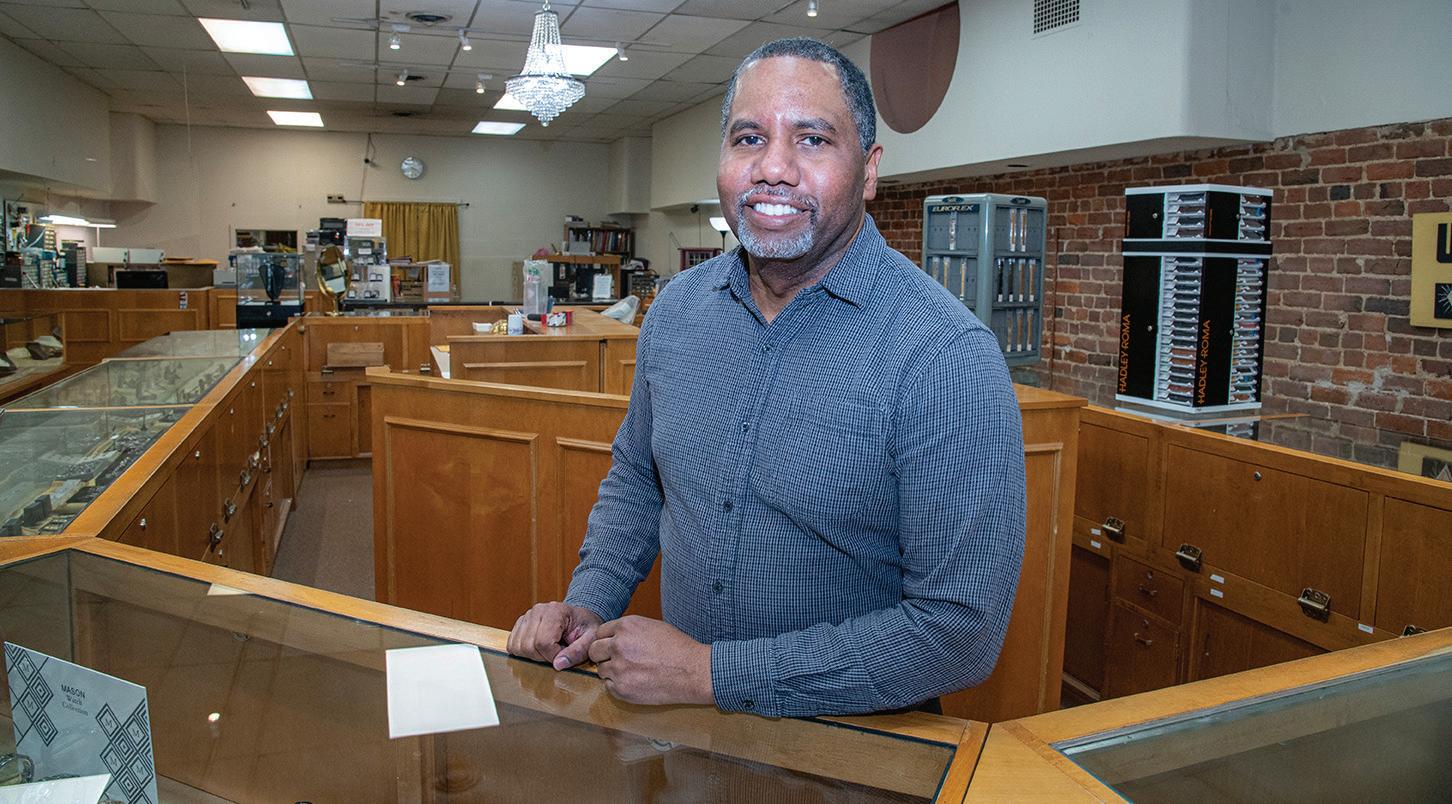
“He was a mechanical genius,” says David Waller, fourth-generation co-owner of Waller & Company Jewelers on East Broad Street. “He could really fix anything.”
It’s a legacy that the Waller family carries on. Last year, Waller & Company Jewelers turned 125 years old, making it the oldest Black-owned jewelry and watch repair shop in the nation. Through recessions, break-ins, fire and COVID, Waller & Company Jewelers has stood the test of time.
In operation since 1900, the company began doing business at 1007 W. Leigh St. in Carver under the name M.C. Waller, Jewelers. That original location was near a train station, and M.C. did brisk business setting the watches of conductors. Back then, conductors’ watches could only be adjusted with a special tool, necessitating that the conductors visit businesses like M.C.’s to regulate their timepieces.
“Being Black at that time [meant that] nobody would sell him the parts and tools, so he made his own,” David says. In 1920, M.C. was finally able to find a company in New York to supply his business.
Although M.C. had only a third-grade education, he ran a successful watch and jewelry business, owned a grocery store, and helped found Trinity Baptist Church.
“He did a lot right at the turn of the century, not too far out of Reconstruction,” David says.
Three of M.C.’s children — Junius, Richard and Thomas — eventually joined their father in the family business. Their slogan circa 1928? “Let Waller make your watch tell the truth.”
Large supplier of Black fraternal paraphernalia
The ensuing decades saw the company relocate and open more than one secondary store. The Wallers closed their original
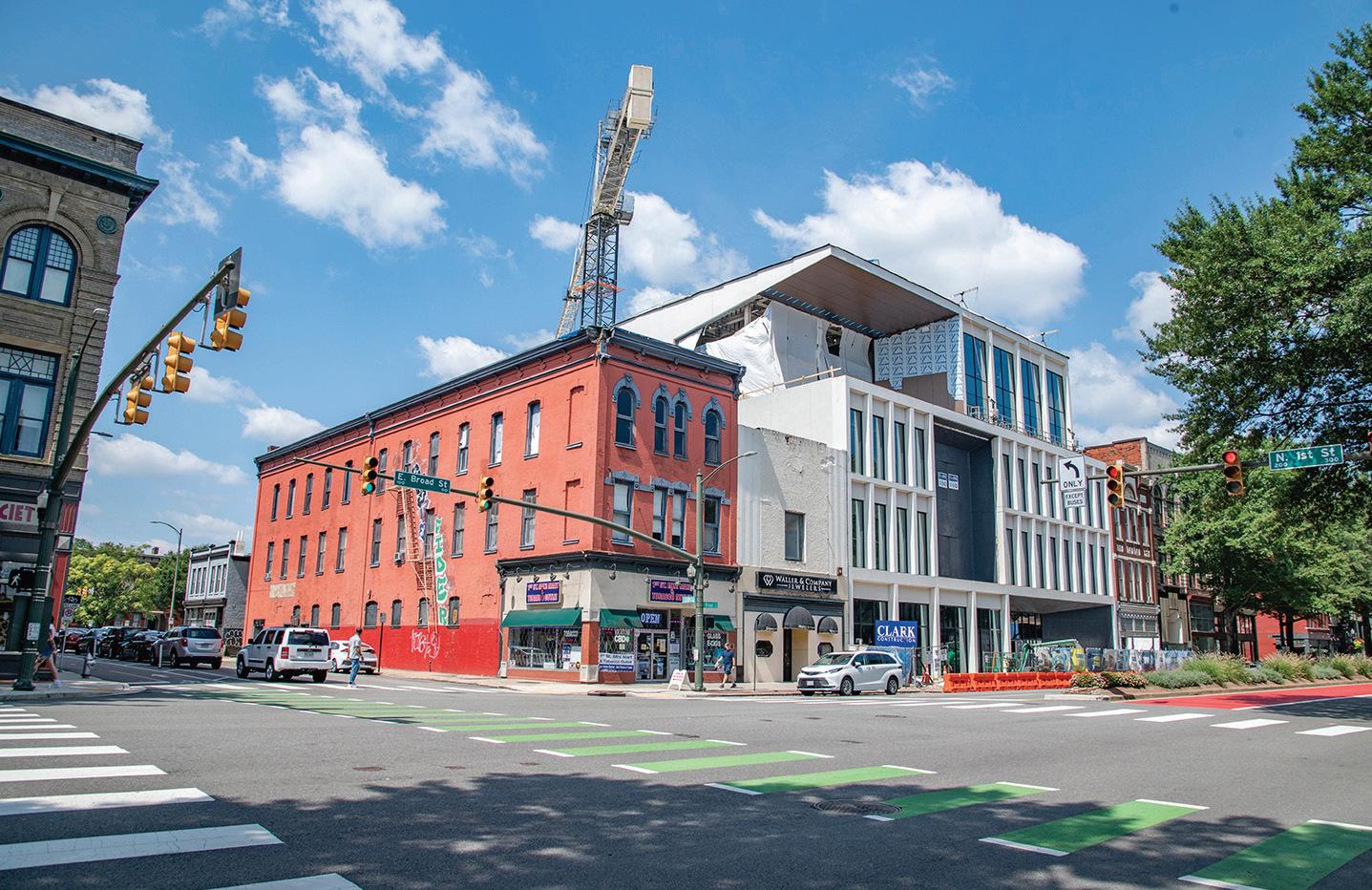
shop in 1973; it opened its current storefront at 19 E. Broad St. in 1980. Roughly a dozen members of the Waller family have worked for the business over the course of its history. In 1970, at David’s aunt’s encouragement, the business started selling sorority and fraternity items; the store is now one of the largest suppliers of Black fraternal organization accessories and paraphernalia on the East Coast. David says the section helps bring new generations of customers into the business.
“It’s a blessing,” he says.
“Something that started out so small back in 1970 has really bloomed and now has its own section.”
It hasn’t all been smooth sailing. The company’s previous store near First and Marshall streets was broken into during the riots that followed the assassination of the Rev. Martin Luther King Jr. in 1968. The current location on East Broad Street was damaged in 1987 when a five-alarm fire next door sent bricks tumbling onto the Wallers’ roof, gouging a hole that let a deluge of firefighting water into the store. Repairing the damage cost $100,000, more than the $70,000 that the business was insured for.
Then, in 2020, Waller & Company was vandalized in the days following George Floyd’s murder by a Minneapolis police officer. A half-dozen display cases of watches and jewelry were destroyed and looted. Within hours, roughly 70 people from local sororities and fraternities showed up to help clean the mess.
“It’s been a blessing that the city has supported us all these years, through the Great Depression, all the recessions, the ups and downs of the economy, Broad Street going up and down, Thalhimers and Miller & Rhoads going out of business, riots and COVID,” David says. “We’ve been blessed to make it through all those changes in the city.”
Famous faces and online sales
Over the years, the store has enjoyed the patronage of at least a couple of famous faces. Maggie L. Walker, the first African American woman to both charter a bank and serve as a bank president, was
a customer. In 2011, when the production company for Steven Spielberg’s “Lincoln” needed a vintage pocket watch fixed for the silver screen, it turned to Waller & Company to repair it.
Family members Jewel Waller Davis and Joyce Waller Baden have since chronicled their history in the 2021 book “Our Shining Legacy: The Waller-Dungee Family Story, 1900-2020.”
David’s own start at the family business began with sweeping floors and wiping down counters at the age of 8.
By 12, he understood the inner workings of watches and could do minor repairs.
“I’ve pretty much grown up in it,” says David, whose accomplishments rival those of
his great-grandfather’s; he was class valedictorian at Richmond Community High, earned his bachelor’s in marketing summa cum laude at Hampton Univer-
sity and his juris doctorate from Howard University. After clerking for senior judges of the Superior Court of the District of Columbia, David
practiced corporate law in D.C. and Maryland. Depending on the year, David would split his time between working at the shop and handling cases up north, but he’s essentially been full time at the store since the pandemic hit.
Looking forward, David says the business plans to focus more energy on online sales.
To commemorate Waller & Company’s 125th anniversary, David plans to put out a line of original women’s jewelry in 2026 that he designed himself. Eventually, he hopes to release a matching men’s line. “We’ve been blessed,” David says of the longevity of his family’s business. “We’ve got a strong focus on God and devotion and respect, and we really care about our customers. We try to provide the best service we can, and we try to support our community.” This story originally appeared on Styleweekly.com.


How about this weather?
Ice from Sunday’s storm is hanging around like an unpaid bill, hindering progress and representing a constant threat. The sun shines bright on it, but instead of melting it just glistens and taunts anyone daring to walk or drive. Some of us learn the hard way. I took a tumble on Monday on my way to the garbage can, and ended up staring up at the sky, flat on my back. Fortunately, it was a slow fall — a business decision, realizing it’s easier to go down with a degree of dignity rather than to keep flailing in place. I’m ok, or at least back to normal after a couple of aspirin.
The winter storm known as “Fern” wasn’t the snowpocalypse reported by local TV stations and meteorologists, but it’s been more than a minor inconvenience. Their predictions had us searching for D batteries, generators and food staples such as bread and milk. One local weatherman was apologetic in a social media post after the storm, explaining to his viewers that weather models showed the worst forecast he’d ever seen for the area, and he wanted them to be prepared. I’m sure that wasn’t enough for some people, who failed to appreciate that the worst never came — but should it arrive later, they’re more prepared than they were.
As I write this, the city is slowly thawing — I spotted a GRTC bus this afternoon, and a recycling truck tried to make its rounds this morning. It’s still treacherous out there, but it’s reassuring to see the city inching back toward normal across the frozen patches covering neighborhoods and sidewalks.
While we might be ready for it to go, winter isn’t quite ready to pack up and walk out on us. The forecast for this weekend calls for more snow, a reminder that “Fern” might have been just the opening act. Until then, we’ll keep navigating icy sidewalks, watching city crews chip away at frozen streets and hoping that, when the next round arrives, we’re a little wiser — and a little steadier on our feet.
The name Kanye West would have been at the top of a list of people I didn’t plan to write about this year, if I had time to keep track of things like that. But here we are. West, or “Ye” as he’s come to be known, is a rapper and producer behind songs such as “Stronger,” “Gold Digger” and “Heartless.” The Chicago native has won multiple Grammy Awards and is credited with reshaping the sound and scope of contemporary hip-hop. But that’s the old Kanye.
The new Kanye is, at best, a provocateur and a contrarian. He has embraced extreme elements of the conservative movement, been accused of harassment by an employee, and posted hate-filled rants on social media directed at women, Jewish people and his ex-wife. As you might have surmised, his behavior hasn’t done any favors for Black people.
Well, guess what? He says he’s sorry about that. The rapper took out a full-page ad in The Wall Street Journal, of all places, and attempted to repair the damage his behavior has done and offer a reason for his troubling antics.
Twenty-five years ago, I was in a car accident that broke my jaw and caused injury to the right frontal lobe of my brain. … It wasn’t properly diagnosed until 2023. That medical oversight caused serious damage to my mental health and led to my bipolar type-1 diagnosis.
He continues:
I regret and am deeply mortified by my actions in that state, and am committed to accountability, treatment and meaningful change. It does not excuse what I did, though. I am not a Nazi or an antisemite. To the Black community — which held me down through all of the highs and lows and the darkest of times … I am so sorry to have let you down. I love us.
I’m not asking for sympathy, or a free pass, though I aspire to earn your forgiveness. I write today simply to ask for your patience and understanding as I find my way home.
There are those who will question the sincerity of a man who wants to communicate with Black people and uses an ad in The Wall Street Journal to do it. The Black Press may not have offered him patience and understanding, but most probably would’ve provided some ad space for the right price.
Those moved by his words might want to know one more thing: His new album, “Bully,” drops Friday.

Black America is often told that foreign policy is distant, something for diplomats, generals and elites in places most of us will never see. We are told to focus on schools, housing, policing and wages, as if global power has nothing to do with any of that.
That separation is a lie.
across Africa, Asia and the Caribbean. Ida B. Wells took the fight against lynching overseas, exposing U.S. racial terror to international audiences and embarrassing a nation that claimed moral leadership abroad while tolerating barbarism at home.
extraction.
Black Americans are told this is none of our concern. That is precisely why it should be.
That lesson still holds. Davos is not where democracy happens. It is where consensus among the powerful is rehearsed and normalized.
Decisions made in elite global spaces — whether at the World Economic Forum in Davos, in NATO councils or in negotiations over strategic territories like Greenland — shape budgets, priorities and power at home. They determine what gets funded, what gets militarized and what gets neglected.And when resources are scarce, or declared to be, Black communities feel it first.
This is not new.
Black leaders have long understood that racial justice at home cannot be separated from global arrangements of power. W.E.B. Du Bois argued more than a century ago that the “color line” was global, not merely American, that Western wealth was built on colonial extraction and racialized labor
And Martin Luther King Jr., in his 1967 speech “Beyond Vietnam,” made the connection explicit: A nation that spends more on war than on social uplift is approaching spiritual death. King was condemned for saying
it. History has proven him right. Today, the language has changed, but the structure remains.
Global elites gather at Davos to discuss growth, security, climate and “risk.” But those conversations are not neutral. They are about who controls resources, who bears costs and whose lives are treated as expendable. When melting ice makes Greenland newly valuable, not as a home to people but as a site of minerals, shipping lanes and military advantage, we are watching climate crisis turn into geopolitical opportunity for the powerful. Extraction wears a green suit now, but it is still
Foreign policy determines whether trillions go to weapons systems or to housing. It determines whether climate change is treated as a human emergency or a strategic opening. It determines whether debt relief is extended to poor nations, or whether austerity is imposed, hollowing out social systems that mirror our own disinvestment here at home. When banks, defense contractors and multinational corporations dominate global forums, their priorities don’t stay abroad. They come home in the form of budget cuts, privatization and “fiscal realism” imposed on Black communities.
Black internationalism has always been dangerous to power because it refuses this separation. Paul Robeson understood this deeply. He insisted that Black freedom in the United States was inseparable from the liberation of oppressed people worldwide. For that belief, the U.S. government revoked his passport, destroyed his career and branded him a threat. Robeson learned what Black truth-tellers often learn: When you expose how global power really works, you are not debated, you are disciplined.
What is happening in Minnesota should be the kind of wake-up call for Americans who still fail to recognize the truth about this administration and need to understand the grave situation we face as a nation.
We are seeing evidence that the abuse of power by Trump administration officials is far worse than we could have imagined, even for those of us who were prepared for what we experienced during the first Trump term to continue into the second. We knew it was going to be bad; therefore, we sounded the alarm because what he was planning to do was no secret.
Trump told us. Kamala Harris told us. Now that he is back in office, Trump is emboldened by the judicial cover received from past and future Supreme Court decisions. He is no longer surrounded by the likes of Mike Pence, who, as a key member of the first Trump administration, eventually had the courage and conviction to tell the president no. In his second term, he has strategically put in place a vice president, DHS secretary, attorney general and FBI director who share his disdain for the Constitution, the rule of law and human dignity for those considered “others.” And yet behind the corrupt facade stands Stephen Miller. As the deputy chief of staff and homeland security adviser, Miller is truly the evil behind the maliciousness that has permeated all levels of the federal government.
Many voters who supported Trump for president knew his
future administration would conduct mass deportations. Still, they could not have known that there would be cases where ICE agents would literally murder innocent citizens in the process.
A Border Patrol agent shot and killed Alex Jeffrey Pretti, a 37-year-old ICU nurse, during a federal immigration enforcement operation. The shooting of Pretti comes less than three weeks after Renee Nicole Good, a 37-year-old mother of three, was shot dead by an immigration agent in the same city of Minneapolis.
In both shootings, conflicting narratives have come from federal and state officials. In both
cases, neither Alex Pretti nor Renee Good was the actual target of an ICE raid. The conflicting narratives between federal and state officials should serve as a wake-up call.
Fortunately, we live in a time when most people have cellphones and, with them, can provide video footage in instances where ICE agents cross the line. We should be encouraged that average bystanders are giving the American public the evidence we need to expose the truth behind wrongful deaths and the methods used by Trump’s modern-day Gestapo.
Despite the video recording seen by the public, federal agents said Pretti resisted violently, and Secretary of Homeland Security Kristi Noem has claimed that an official fired “defensive shots.” Minnesota Democratic Gov. Tim Walz, though, has said this account is “nonsense” and “lies.” We have to ask ourselves what is the true motive behind ICE’s
operation in Minnesota, where this level of federal intrusion is not present in red states such as Texas and Florida, which have a larger number of migrants.
U.S. Attorney General Pam Bondi sent a letter to Walz demanding the state take three specific actions before federal immigration agents would consider reducing their presence in Minneapolis, including turning over voter rolls.
In the letter, Bondi blamed both state and local leaders for the unrest that has come in response to the Trump administration’s immigration enforcement operations. We can never expect that Trump and his allies will make idle comments that have no meaning. We must pay attention because they will eventually give away their true intentions.
The attorney general’s request for Minnesota voter rolls raises a serious red flag because it has nothing to do with the unrest in the streets or with immigration policy. This is about election interference by way of force and threats. It shows an administration that is getting bolder and feels no need to hide the corruption.
I agree with Sen. Chris Murphy, who wrote on X, “This has never been about safety or immigration. It’s a pretext for Trump to take over elections in swing states.” This should be a wake-up call for those who believe in authentic conservative ideology.
This is the wake-up call for self-described conservatives who still support the Trump administration and its actions in Minnesota. You are not a conservative. You are a fascist who is supporting tyranny in America.
Black America ignores these spaces at our peril, not because we are invited but because we are affected. Global decisions about trade, climate finance, militarization and extraction shape the economic conditions we are told to endure quietly. We cannot afford that quiet. Paying attention to global power is not a distraction from Black struggle. It is part of it. From lynching to militarism, from colonial extraction to climate displacement, the same hierarchies repeat themselves, scaled up, sanitized and defended as inevitable. They are not inevitable. They are choices. And Black America has always been at its strongest when it understood that the fight for justice does not stop at the water’s edge.




When Claudette Colvin died this month, too many Americans learned her name for the first time in an obituary. That alone is an indictment.
At 15, nine months before Rosa Parks, Colvin refused to give up her seat on a Montgomery bus. She was arrested, handcuffed and taken to jail for insisting she had the same right to sit in public as anyone else. When the civil rights movement took its case to federal court, Colvin was one of the young women who risked their lives as plaintiffs in Browder v. Gayle, the case that ended bus segregation.
slavery-related exhibits at the President’s House site, an installation that honored the nine enslaved people George Washington held there and confronted the contradiction at the nation’s founding.
But history has a cruel habit. It elevates the version of a story that is easiest to package, teach and celebrate while pushing the rest to the margins. That is why Colvin’s passing is more than a sad headline. It is a warning.
While we mourn one civil rights icon whose contributions were often minimized, we are also watching something more deliberate unfold: the active removal of public memory meant to tell the full American story. In Philadelphia, the National Park Service removed
This is what erasure looks like in real time: not only forgetting the past but also stripping away the tools that help the public remember it. It is happening alongside other symbolic ruptures. Presi-
dent Donald Trump initially declined to mark Martin Luther King Jr. Day with the traditional proclamation or public recognition, issuing one only after public backlash.
Some may dismiss these moments as politics as usual. But taken together with the administration’s broader push to police how history is told, they point to a deeper project: controlling national memory by narrowing it. Erasure is not passive. It is a policy choice.
There is a difference between a story fading over time and a story being pulled off the wall.
The actions in Philadelphia were tied to a wider federal directive that framed certain historical narratives as divisive or anti-American. That direc-
tive has triggered reviews of interpretation across national parks and museums, including Smithsonian institutions, with pressure to remove or revise material that does not align with a preferred version of American history.
Narrative control is not only about what is taken down. It is also about what gets rewritten.
Inside the White House, official language about the nation’s first Black president has been altered. Descriptive plaques accompanying President Barack Obama’s portrait were revised to reflect a more politicized assessment of his presidency. At the same time, information about prior administrations has quietly disappeared or been rewritten on WhiteHouse.gov, reshaping how recent history is presented to the public. These are not neutral edits. They are reminders that even the most official spaces of national memory are vulnerable to manipulation.
If that sounds abstract, consider what is at stake in plain terms: whether future visitors, especially children, will be allowed to encounter the honest complexity of the past, or only a curated version that flatters power.
This is why public commemoration matters. Holidays, museums, historical markers, school curricula, the naming of buildings and streets — all
Americans are paying more for less when it comes to health care. One in five patients now waits more than two months to see a primary care doctor or specialist. At its core, this crisis stems from a growing mismatch between patient demand and provider supply. Since the pandemic, demand for physicians has soared, while the health care workforce has shrunk by tens of thousands. A major driver of this exodus is exhaustion.
Employee burnout costs the U.S. health care system billions each year in lost productivity and staff turnover. Each departure increases the burden on those who remain, creating a vicious cycle similar to what I have seen in Army Special Operations.
Why has the health care workforce reached such a breaking point? The answer lies in a workplace culture that prizes daily endurance over sustainable schedules. For decades, health systems have tacitly celebrated martyrdom — praising those who work the longest, sleep the least and
sacrifice the most.
Patients need nurses and doctors who aren’t exhausted. But we can’t just tell health care workers — many of whom are trained to put others first — to take better care of themselves. Health care is a calling, and asking providers to prioritize themselves can feel at odds with their sense of service.
Instead, organizations must meet their moral obligation to support workers physically,
mentally and emotionally — and make self-care a measurable part of performance. Neglecting this responsibility harms employees, erodes institutional culture, damages public trust and ultimately compromises patient care. A nurse cannot provide compassionate care on empty. A physician’s judgment suffers under constant fatigue.
To protect staff, institutions and patients, we must rethink how we support employee well-being.
Some health systems are showing the way. At Ohio State University, the MINDBODYSTRONG program equips new nurses with cognitive strategies
through weekly group sessions, yielding lasting improvements in mental health and job satisfaction.
At my institution, the Hospital for Special Surgery in New York City, physicians who fully engaged with our wellness initiative, The Resiliency Project — which combined wearable devices with professional coaching — reported a threefold reduction in burnout symptoms over 12 weeks.
These success stories share common elements. They are evidence-based, integrated into schedules rather than added on top of heavy workloads, fully funded and supported by leadership. They also recognize that while individual resilience matters, it cannot replace structural support in a culture where stress has become the norm.
We have the tools and knowledge to make this transformation. Now, we need the will to turn them into standard practice. It is time to build a system that cares for caregivers as much as they care for us.
The writer is a U.S. Army Special Forces combat veteran and former critical care nurse. This piece originally ran in The Well News.

are not side issues. They are the infrastructure of memory. They teach people what a society values and whose struggles count as part of the national inheritance.
For children, learning honest history is not about shame or division. It is about belonging. When young people can see themselves in the American story, including its struggles and progress, they are more likely to feel pride in their country and a sense of responsibility for its future. Shielding them from the truth does not protect them. It leaves them unanchored, more vulnerable to fear, misinformation and the repetition of past injustices. A nation that wants cohesion must first be willing to tell its children the truth.
When that infrastructure is dismantled, the losses compound. Icons vanish not because their lives mattered less, but because fewer people have the chance to learn about them.
Truth becomes optional, treated as ideology rather than a baseline for citizenship. Progress gets rewritten as if it happened effortlessly, without conflict, courage or sacrifice.
Claudette Colvin’s life shows how easily even the bravest contributions can be
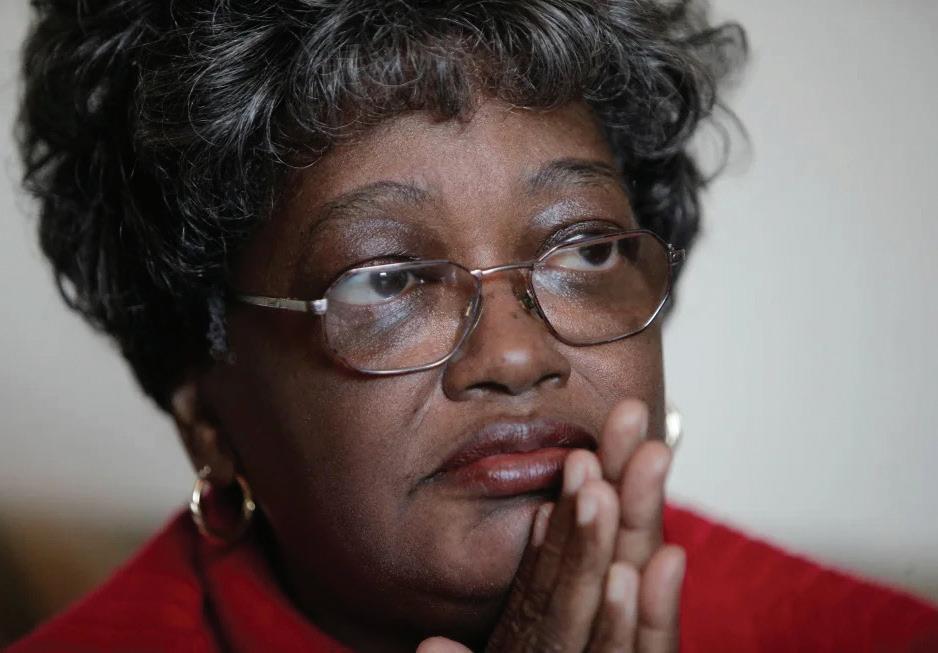
sidelined. Today’s removals show how quickly sidelining can become a strategy.
There is another truth worth naming. The public is not asking for this erasure.
Research shows Americans remain broadly aligned with the values that powered the civil rights movement. Urban League research on public support for diversity, equity and inclusion shows strong majorities continue to support equal opportunity and inclusive approaches that strengthen communities and expand access.
That matters because the fight to preserve honest history and honor civil rights icons is not fringe. It is mainstream, unifying and deeply American.
If we do not want Colvin’s story, and countless others, to vanish, commemoration must be treated as action, not senti-
ment. That means protecting public history from political purges, expanding whose stories are told, investing in museums and archives that preserve living memory, and naming the pattern when history is stripped away under the guise of unity. We do not build a stronger country by hiding its scars. We make it by telling the truth about how we got here and who paid the price.
Claudette Colvin is gone, but her courage remains. The question is whether we will preserve the places, texts and teachings that allow the next generation to meet her where she stood, certain of her dignity and unafraid to claim it. When we allow civil rights icons to be erased, we do not just lose history. We lose the roadmap.





By John Wawrow Associated Press
It was fajita night to celebrate Laila Edwards’ hockey homecoming when an excited shriek pierced the casual gathering in the brightly lit early 20th-century colonial she grew up in on a quiet, tree-lined street.
Four generations of the Edwards family turned to see a dumbstruck Laila and longtime friend and teammate Caroline Harvey huddled over a cellphone, breathlessly giggling one “Oh, my God” after another.
There, for all the world to see, was a picture Cleveland Cavaliers forward Larry Nance Jr. had posted on social media of him arriving for an NBA game wearing Edwards’ No. 10 U.S. hockey jersey.
“Whoa,” said Edwards, well-versed in the city’s sports history even though she long ago left Cleveland to pursue a career in hockey.
“He’s born in Ohio. His dad played for the Cavs. Legend,” Edwards said. “I thought it was super cool for him to do that, when he didn’t have to.”
A day later in November, Edwards hit the ice at the same downtown arena, where she took the ceremonial opening faceoff and had an assist in a 4-1 Rivalry Series win over Canada.
Soon enough, Nance might not be the only one hopping aboard the Edwards bandwagon as she prepares to make her Olympic debut at the Milan-Cortina Games next month. She will become the first Black female to represent the U.S. at the Olympics in hockey, and at 6-foot-1 (185 centimeters) and 195 pounds (88 kilograms), she is an imposing defender with a rare combination of having a hard shot, speed and deft playmaking ability.
‘Future of the sport’
“Laila is the future of the sport,” said Hilary Knight, team captain and the face of U.S. women’s hockey. “I think you’re seeing someone who’s coming into her skill set and just scratch-
ing the surface.”
Edwards is so highly regarded that USA Hockey made a point to play in Cleveland in what served as a coming-out party for the player completing her senior college season at top-ranked Wisconsin. She is only 21.
It was a four-day visit with practices at a rink Edwards knew well when she was growing up. It was also a chance to reconnect with her family, who have watched much of her development from afar. Edwards left Cleveland to play for an elite girls team in Pittsburgh and spent high school at the Bishop Kearney Selects Academy in Rochester, New York, before moving on to Wisconsin.
“The idea of going from a 400-seat rink to the biggest sporting event in the world, it’s like, wow,” Edwards said. “It feels like a full-circle moment to be starting the launch of my Olympic career here in Cleveland with my family.” Early hockey start
Edwards got into hockey at 3, courtesy of her father, Robert. Her older brother, Bobby, first played, and she was joined by her older sister, Chayla, who also played at Wisconsin.
Edwards developed at such a rapid pace that by the time she was 11, coaches suggested she begin playing with girls 2 and 3 years older. That prompted the decision to have her play for more established developmental programs, including Kearney, which has produced numerous high-caliber players including fellow Olympic teammates Harvey, Haley Winn, Kirsten Simms and Ava McNaughton.
“We thought she was ready because she was mature for her age. She was very solid educationally,” Robert Edwards said.
“The thing that we didn’t expect was to miss her as much as we did, and the loss of not seeing her grow up,” he added. “I don’t regret doing that, but that is something that I feel was not the best part of her going away.”
Edwards faced her share of challenges away

Edwards, the first Black woman
practices Nov. 4, 2025, in a rink in Strongsville,
from home, too. There were growth spurts — some 5 inches at Kearney — and there were sacrifices, such as having to skip her graduation to compete at the under-18 world championships.
And there was being a Black athlete in a sport predominantly played by white players.
“To get through some of the things you have to get through in this sport, you’ve got to be strong,” Edwards said.
“There’s a lot that goes on in the locker room, outside, coaches, practice, fans,” she added, declining to go into details. “You definitely have to be strong. And I think it’s huge in terms of representation and being a role model.” Forward to defender
Little has fazed Edwards, a quality U.S. coach John Wroblewski called the player’s strength in whatever she’s faced, including making the switch from forward to defender.
“She’s an inspiring person to be around,” Wroblewski said. “I think it’s just innate. It’s just Laila. She’s a gamer. She’s the real deal.”
In her U.S. national team debut at forward, Edwards was named MVP at the 2024 world championships, in which the Americans lost the gold medal game to Canada. At worlds this past year, Edwards struggled making the transition
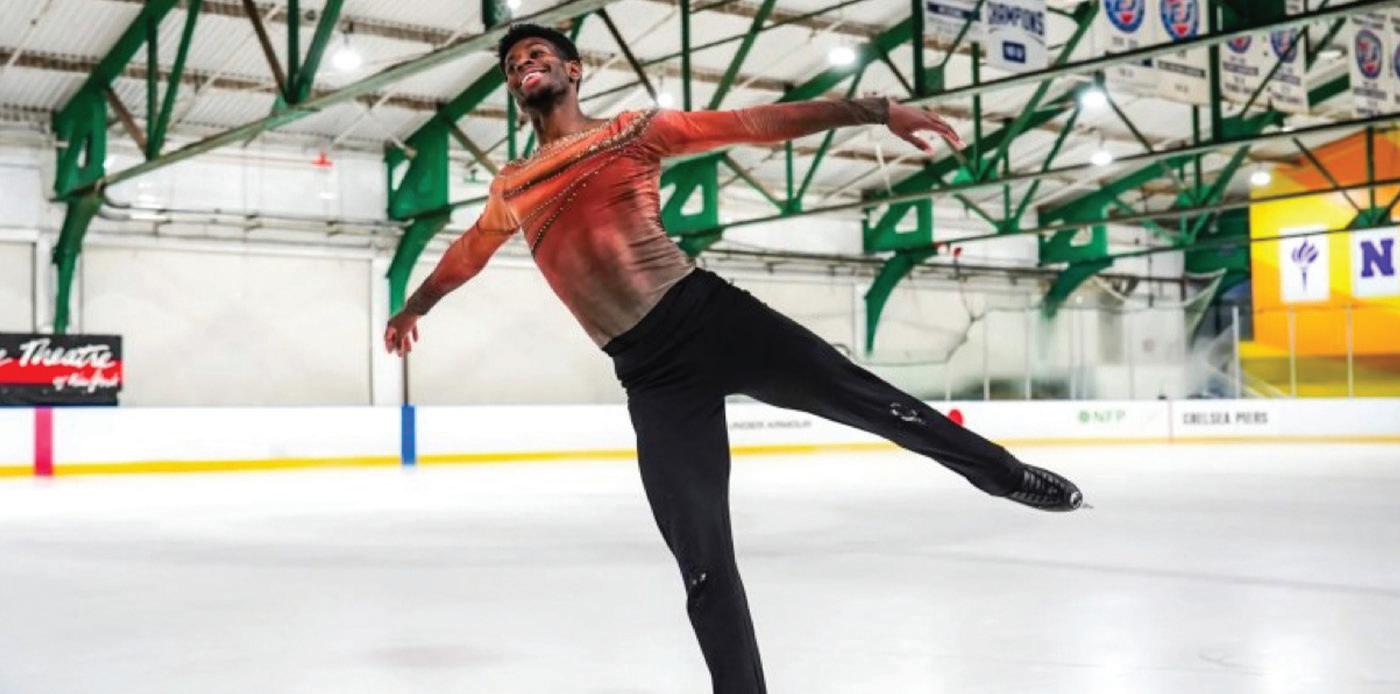
By Lois Elfman Amsterdam News
The ice will be hot at the 2026 U.S.
Figure Skating Championships as results of the senior events will significantly factor into the selection of the U.S. team for the Olympic Winter Games in February.
Emmanuel Savary is making his mark in what will likely be his final U.S. nationals.
This is Savary’s sixth appearance in the senior men’s event. The 2025 nationals marked his return to the U.S. Championships after six years. An ankle injury slowed his training over the summer, but by autumn he felt better, allowing him to skate in shows and compete internationally in Scotland.
In November, Savary, 27, won his second consecutive Eastern Sectional Singles Final. “I personally feel [show skating] has
helped me so much,” said Savary, who has become a regular performer with Ice Theatre of New York, recently skating at the Christmas tree lighting ceremonies at Bryant Park and Riverbank State Park.
“I’m naturally very introverted, so it has helped me be comfortable in front of an audience. Making eye contact, smiling and engaging the audience, things like that, have elevated since I’ve been doing a lot more shows.”
In the weeks leading up to the sectional competition, Savary said he was feeling good and gaining confidence. “I skated pretty much how I expected to skate, and I’m hoping to carry that momentum with me to nationals,” he said.
Savary has kept his free skating program from last season, set to the music “Saturn.”
His new short program is a tango fusion

with some Latin accents. He does his own choreography, which is his favorite part of skating. “I find something I’m relating to music wise,” he said. “I’m very particular about how I want certain things to look.”
Long term, Savary hopes to do more choreography for other skaters. He currently does some choreographic work with the young skaters he coaches at the Skating Club of Wilmington in Delaware.
Shortly after the U.S. Figure Skating Championships, Savary will return to his studies at the University of Delaware. He’s on schedule to graduate next spring with a degree in astrophysics. While graduate school is still on his radar, it will probably be several years in the future.
“While my body still can, I want to do more things in skating,” he said. “I would love to see the world.”
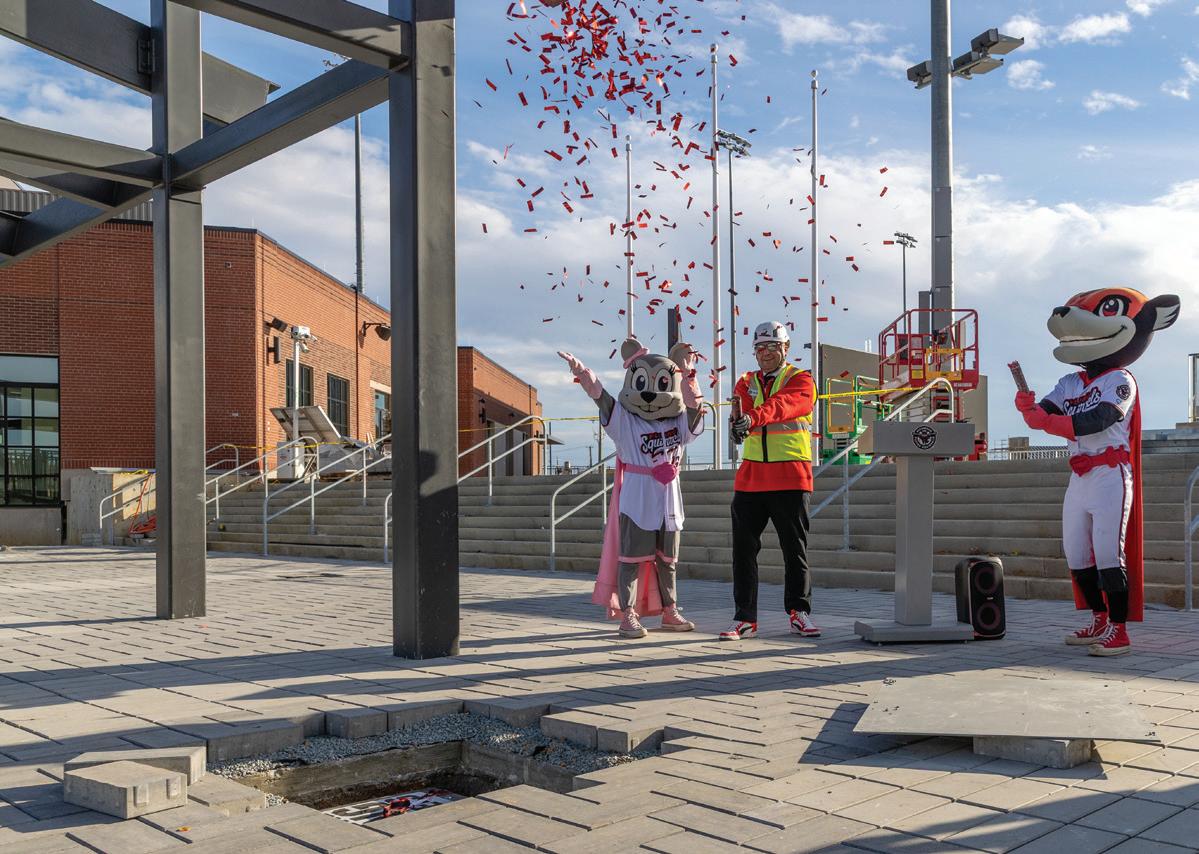
at The Diamond, along with relics from
Braves, including items donated by fans last fall. A date for when
to defense, although she still finished with a goal and three assists and won gold.
“I didn’t have my best tournament, but to me that wasn’t what it was all about. We won, and I learned a lot, so that was a win as well,” she said. “I think my expectations are a little higher now.” Edwards has thrived on adversity. “The word ‘challenge’ is fine because I don’t look at it as a negative. I see it as something that I can learn from,” she said. “So I’m always trying to push myself to be a great athlete and player. But more importantly, a good person, role model, teammate.” Happy at home
Edwards sat squeezed between her two parents on a couch in the family’s den. In the living room, bookshelves displayed numerous plaques, trophies and medals she’s won, with many more likely to come. The future, however, could wait. On this night, what mattered to Robert and Charone Gray-Edwards was enjoying a few precious moments with their suddenly grown-up daughter set to step onto the world stage.
“We tell her we love her regardless. You’re not going to be perfect. You’re not always going to win. You’re not always going to be the top scorer,” Charone said. “But you’re always our Laila.”
Free Press staff report
The Dallas Cowboys have hired Christian Parker as their defensive coordinator, making him the youngest in franchise history. Parker, 34, takes over a unit that struggled last season and becomes one of the NFL’s youngest Black coordinators in a lead defensive role. The team finalized the hire on Jan. 22.
A former wide receiver at the University of Richmond, Parker began his coaching career, working as a defensive assistant at Virginia State University and later Norfolk State. He went on to build experience at Notre Dame and Texas A&M before moving to the NFL with the Green Bay Packers, Denver Broncos and Philadelphia Eagles.
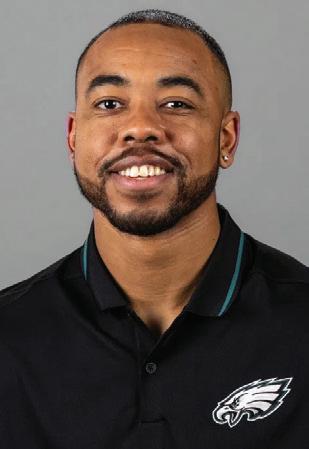
Parker
Parker is known for his work with defensive backs. In Denver, he helped develop Patrick Surtain II into an All-Pro cornerback. Most recently, Parker served as passing game coordinator for an Eagles defense that won Super Bowl LIX. Philadelphia ranked among the league’s best against the pass during his tenure, including allowing the fewest passing yards in 2024 and the fewest passing touchdowns in 2025.
Dallas turns to Parker after a difficult season on defense. The Cowboys allowed a league-high 511 points in 2025, leading to the dismissal of Matt Eberflus after one year. The secondary also surrendered an NFL-high 35 passing touchdowns.
Parker inherits a rebuilding task in Dallas, with an immediate focus on stabilizing the secondary and improving overall defensive performance as the Cowboys look to rebound next season.
Free Press staff report
Visit Williamsburg will serve as title sponsor of an American Junior Golf Association tournament returning this year, officials announced recently.
The Visit Williamsburg Junior Championship will bring 78 topranked junior golfers from around the world to Ford’s Colony Country Club’s Marsh Hawk Course for a four-day event May 22-25, 2026. It marks the AJGA’s first tournament in Williamsburg since 2020.
The three-year partnership establishes Williamsburg as host site through at least 2028.
“The American Junior Golf Association represents the future of golf, and Williamsburg is honored to play a part in their journey,” said Edward Harris, CEO of Visit Williamsburg. “Our community has a deep appreciation for the sport and for events that inspire young athletes.”
A qualifying round May 21 will give 78 additional golfers a chance to earn spots in the main field. The following day, community members can participate in a Junior-Am fundraising tournament to play alongside competitors while supporting AJGA charitable programs. Patrick Cansfield, AJGA director of business development, said the timing aligns with the nation’s 250th anniversary celebrations in 2026.
“Williamsburg’s rich history and deep sense of community make it a perfect setting to showcase the future of our game,” Cansfield said.
When Farrah Massenburg noticed a small lump while breastfeeding, she could not have anticipated what lay ahead. Within weeks, she was diagnosed with an aggressive form of breast cancer that, despite being in its early stage, required targeted therapies and personalized treatment.
Her diagnosis sparked a nearly two-year ordeal marked by missteps, a near-fatal reaction and ultimately survival — experiences that now fuel her advocacy for women battling breast cancer.
Massenburg’s first oncology team began a chemotherapy regimen immediately after her diagnosis, without conducting tests to assess her overall health. The treatment caused her to be hospitalized after each session. One round triggered a seizure, and twice she came close to death. Despite these complications, her doctors continued the same chemotherapy protocol, telling her that if she did not undergo treatment, she would have five years to live.
“In addition to the pain and sickness, I had Black women’s hair struggles to love my hair, only to lose it. I was sad because I couldn’t breastfeed my daughter and worried that she’d feel abandoned. My son asked me if I wanted to die,” Massenburg said. “A cancer diagnosis affects the whole family, but in different ways.”
A chance encounter with two women from the Massey Comprehensive Cancer Center at VCU changed the course of her cancer journey. After learning about her battle, they fast-tracked her for evaluation at the center. Massenburg says the difference in care was stark: her Massey VCU doctors humanized her treatment and prescribed a less intensive chemotherapy regimen.
“The doctors at Massey VCU use humanity and science to create pathways for patients,” she said. “They’ll let you know that they’re going to try to figure it out.”
Massenburg underwent eight surgeries, including
a double mastectomy and reconstruction. She also had a hernia repair and endured weight gain from steroids and medications.
Now in remission, she advocates for breast cancer awareness and emphasizes the importance of second opinions to inspire others to take action. Her work with Women and Wellness at Massey VCU allows her to help raise funds for the lifesaving research and treatment available there. She will chair the organization’s 31st Women and Wellness luncheon next month.
“People don’t know how important second opinions are,” Massenburg said. “Massey VCU will evaluate other doctors’treatment plans. What would happen to patients like me if they didn’t focus on listening?”
Black women in the U.S. are less likely to be diagnosed with breast cancer but much more likely to die from it than white women. According to the American Cancer Society, Black women are dying at a nearly 40% higher rate from the disease than white women.
“It’s not just about the patient; it’s about the treatment plan and what the doctors do. Massey VCU has allowed me to become a walking billboard,” Massenburg said.
What is the Women and Wellness at VCU Massey Comprehensive Cancer Center?
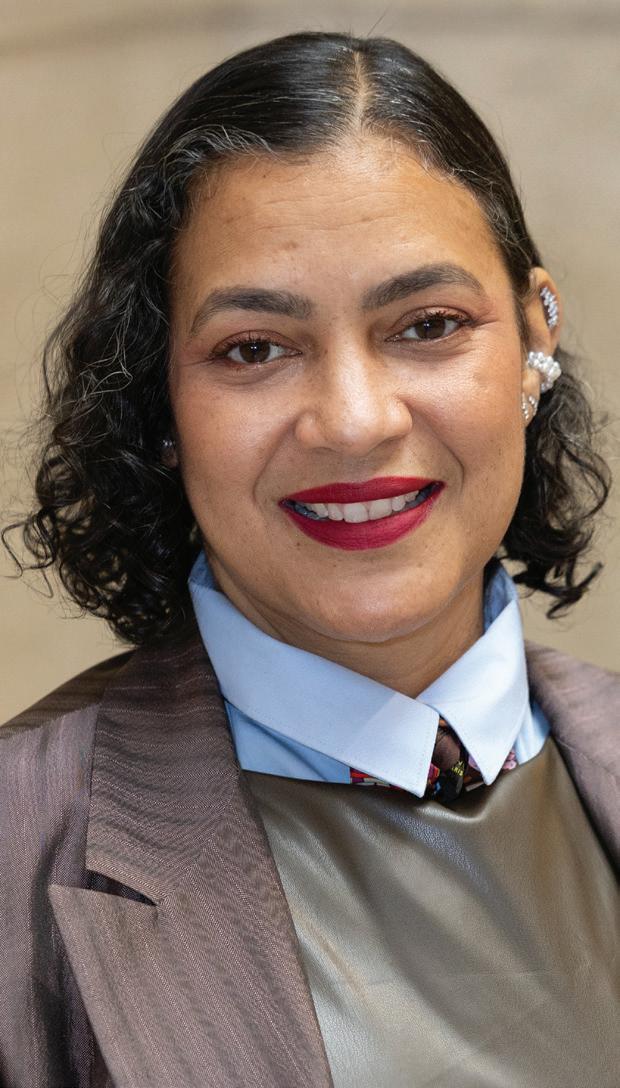
It’s an annual fundraising and education program dedicated to fighting women’s cancers. Our signature event is the luncheon next month at The Jefferson Hotel.
What kind of advocacy work do you do at the center?
We try to figure out the why and what’s the next step. I try to make things fun, like recruiting volunteers and reaching out to lingerie boutiques for bra donations and to pharmaceutical companies and nurses for donations.
Why are you such a fierce advocate?
I’m a breast cancer con-
queror. I wondered who else is going through this. You don’t go into detail about your journey because you don’t feel comfortable. I advocate because there are women who work, who are mothers and who do a lot of things. We shouldn’t have to do it all by ourselves.
What do you tell women who are going through their cancer journey?
If I hear someone going through it, I offer mental support. I know they don’t want to hear “I’m sorry,” but we know people are trying to be consoling. I understand what they’ve gone through. I tell them that the light that shines on them should not be bigger than the light in them. I encourage them to use their power wisely because everyone has a superpower.
How did your husband help with your cancer journey?
Some women are going through cancer and their husbands are leaving them. I was lucky. My husband cared for me when I couldn’t walk, changing tubes, washing, wiping, staying in the hospital with me and taking care of the kids.
How have things changed since your diagnosis?
I was very active with
softball — very athletic. Now, I feel like I’m more fragile, especially with the surgical scars. I get sicker quicker, and I have to work a little harder mentally and physically. I haven’t said these things out loud before. It’s like training for your own personal marathon. I still wear bright lipstick because I wanted to look cute when I was bald.
What’s your prognosis?
I’m in remission. I don’t have to use a walker or a cane. I’ve lost the weight. I’m cancerfree, but I have to do scans and bloodwork regularly.
Tell me about your family. My husband and I have four kids, two boys and two girls.
What’s your educational background?
I have a bachelor’s in psychology, pre-med from Virginia Commonwealth University.
What do you do for a living?
I’m the founder and president of Inclusive Infrastructure Solutions. It’s a construction consultancy. Alphonso Hugo “Al” Bowers Jr. was my dad. I followed in my father’s footsteps, promoting diverse inclusion in government building projects. Where are you from?
I’m originally from Greensboro. My family moved to Richmond when I was 16.
Where do you live now?
Eastern Henrico.
What do you do in your downtime?
I love to cook. I have a catering business with a good friend. I love gardening and growing fresh herbs for cooking.
What do you like to cook?
I make all kinds from scratch. I like to see how my food makes people feel. I make blueberry biscuits. I love my butter chicken. My oldest daughter likes pho soup, so we make that.
What’s your favorite hobby?
I like feeding my family because they all eat differently. Some are pickier than others. I love taking care of my family.
Who has influenced you the most?
Myself, because I didn’t realize how strong God made me. I had to learn that. If I’m not strong, how am I going to be strong for others? What was the first thing you did when you were cancer-free?
I was able to ring the bell the second time. I had an outfit made. I went home and cooked. I made a huge dinner with things I couldn’t eat during the chemo, like cold cuts. I made gourmet sandwiches.
What’s next?
Growing my business and creating my legacy, focusing on my purpose — everything that I’m supposed to do.








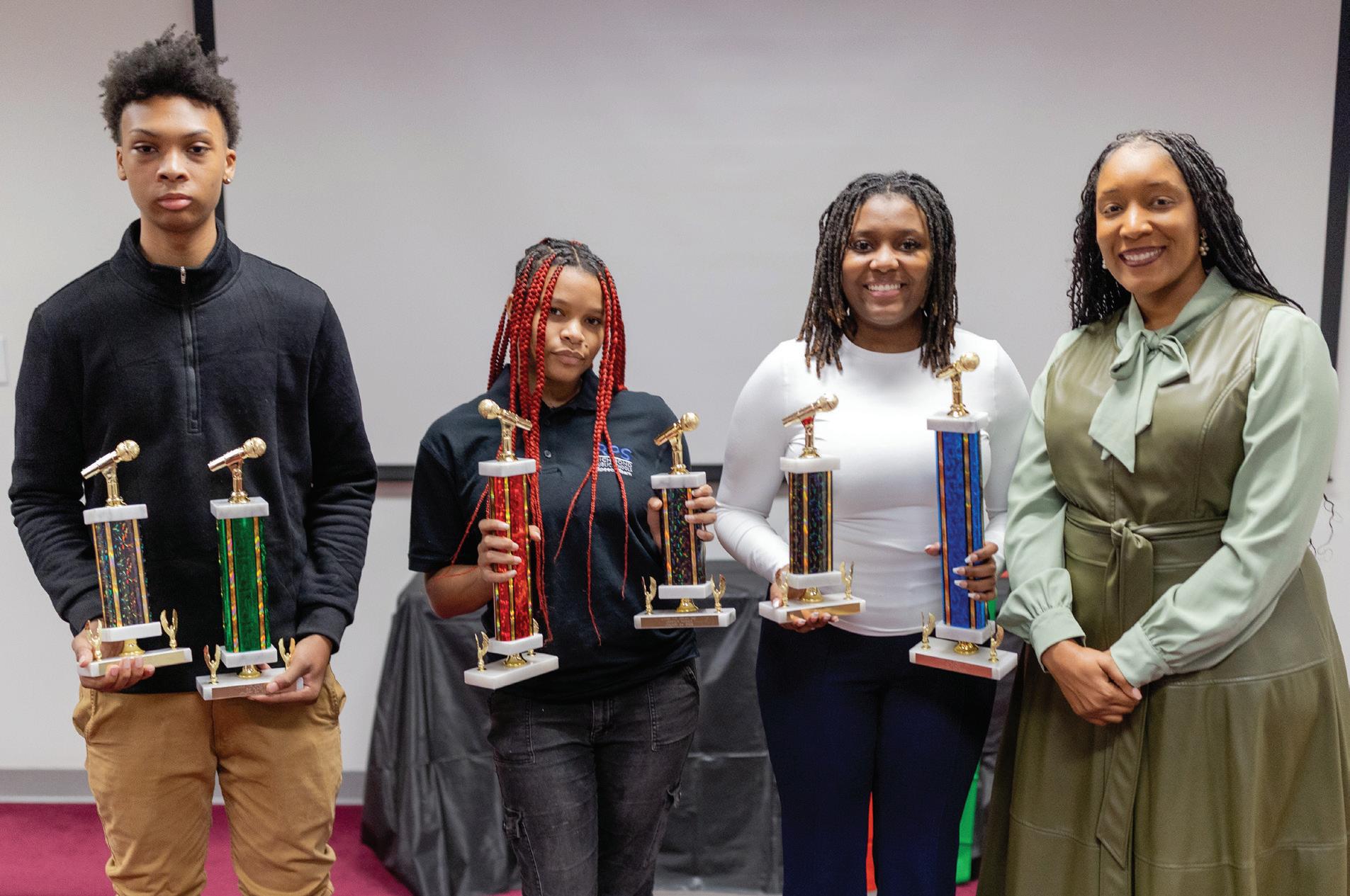
By Brent Baldwin
Over the past decade, the Visual Arts Center of Richmond has been steadily outgrowing its home at 1812 W. Main St. Now, thanks to an anonymous donor, the arts nonprofit has closed on the purchase of the former Fan Tastic Thrift store property at 1914 W. Main St., half a block west of its current home, which will allow it to expand its offerings.
“Buying this building lets us grow our footprint by about 50%, which is really cool,” said Jordan Roeder, executive director of VisArts, as it is commonly known. (Disclosure: VPM Chief Content Officer Steve Humble is vice chair of the Visual Arts Center board.) “We’re also excited that this Fan institution with some cool history, which has been a part of the neighborhood for so long, still gets to be a part of the neighborhood.”
VisArts is figuring out how it will use the new space, Roeder says, but it wants to grow and improve the gallery, as well as community programming space, and increase the amount of teaching studios. “We’re just trying to figure out how we’re going to split all that,” Roeder says, adding that VisArts is working with the architectural design firm 3North on the redesign of the new building. A timeline
for renovation and construction has yet to be determined.
Too good to pass up
Founded by preservationist Elisabeth Scott Bocock in 1963, VisArts was originally known as the Hand Workshop and located in Church Hill. It moved to its current location in the historic Virginia Dairy building in 1985, with the last renovation to that 30,000-square-foot space coming in 2008.
Statistics provided by VisArts underscore the need for more space: Since 2015, Vis Arts has more than doubled its tuition-based classes to over 9,500 students while tripling its roster of teachers to more than 250 and nearly doubling its class offerings to 1,922 classes. Classes offered can range widely from courses in ceramics and stained glass to photography, printmaking and writing, to name a few. (On a personal note: I took a screenwriting course there over 20 years ago that featured a class age range from 15 to 82; and which led to a longtime friendship with my teacher, Ted Salins.) Today, VisArts has more than 3,000 people sitting on annual class waitlists.
“It’s all very serendipitous, we have all these waitlists for our classes, our community programs keep growing, and we want to be able to welcome the people in who want to
By George Copeland Jr.
For John Marshall High School senior Renashea Hunt, exploring one of Martin Luther King Jr.’s lesser-known speeches was rooted in family history.
Hunt said conversations with her father and great-grandfather — both active in community advocacy — often center on poverty, reparations and the impact of gentrification. Those discussions helped guide her first-place presentation on King’s 1967 “Reparations” speech during the MLK Oratorical Contest on Saturday.
“These are things that are happening now that we should be talking about,” Hunt said after the contest, explaining her choice.
The event, sponsored by Living the Dream, brought about 30 people, including Richmond Public Schools leaders and students, to Virginia Union University’s L. Douglas Wilder Library to examine King’s speeches and his legacy’s relevance.
The students’ performances were evaluated by judges on their creativity, delivery, originality and overall impact.
“These young people are carrying forward Dr. King’s legacy through spoken word, music, art, visual expression,” School Board Chair Shavonda
Fernandez said during the contest. “They’re not just only reflecting on his dream, but they are interpreting it for this generation and challenging us to live it more fully.”
The presentations varied widely, from drawing connections between the “constructive tension” King described in “Letter from Birmingham Jail” and the pressures facing today’s youth, to applying lessons from “The Power of Nonviolence,” “A Time to Break the Silence” and “I Have a Dream” to their own lives.
Students also incorporated audience participation and engagement into their performances, and one presentation of “I’ve Been to the Mountaintop” featured audio from the speech itself.
Hunt received a $400 award for her performance. Open High School sophomore Jakayla Parker placed second and earned $200, while Huguenot High School senior Te’Ron Jefferson finished third and received $100. All contestants were presented with trophies and certificates.
“If you share your knowledge of the history of this country given to you through your reading of Dr. King’s speeches and his life,” retired RPS educator Bill McGee said in an address to the students, “you will change and have a great impact on your peers and everyone else.”
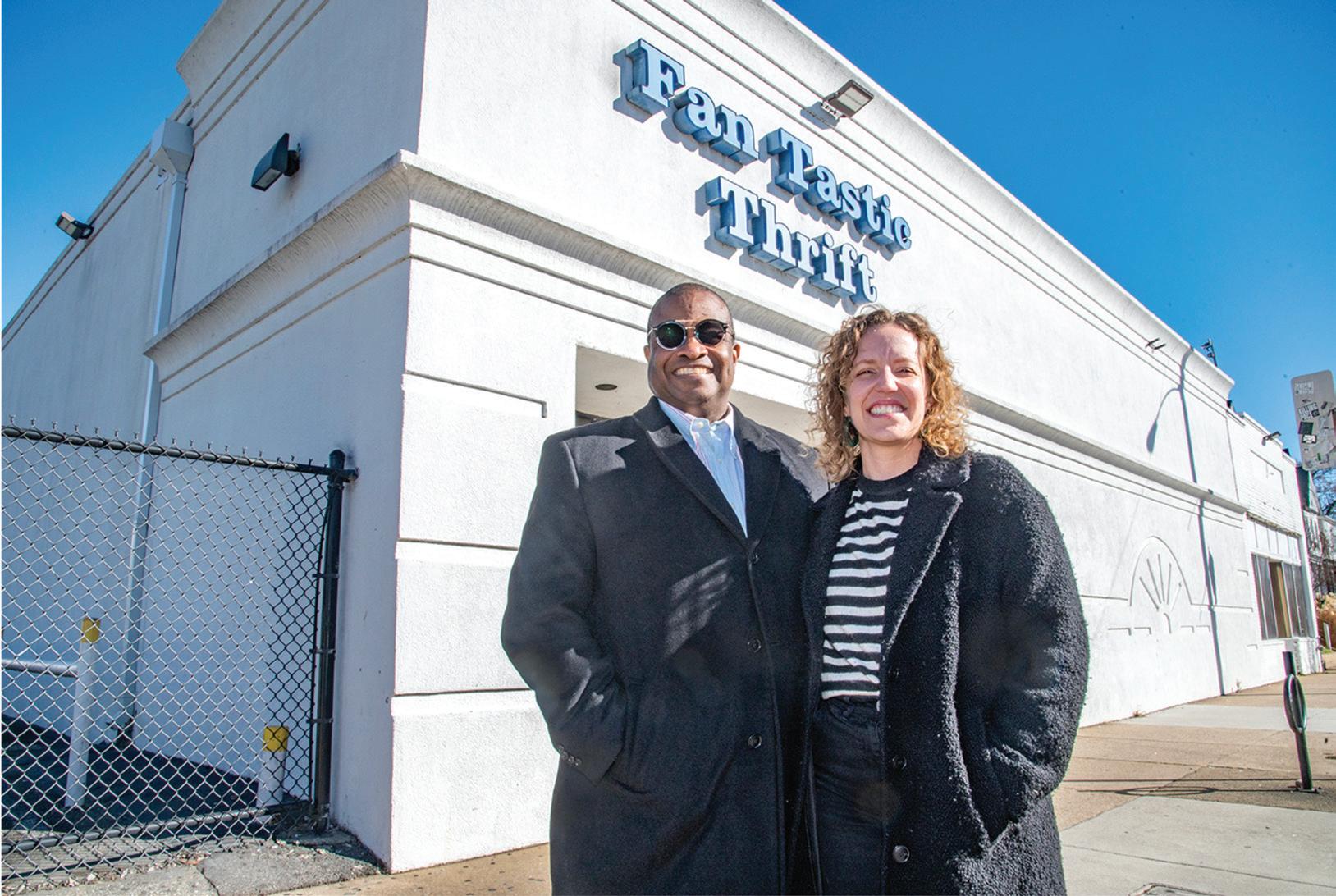
be there,” Roeder says. After hearing about the Fan Tastic Thrift location early on, staff members decided it was “an opportunity they couldn’t pass up.” VisArts has seen its budget nearly double over the past 10 years, from $1.7 million to $3.5 million.
Free Press staff report
With Richmond’s Civil War past as its backdrop, a new opera brings the city’s hidden history of espionage to the forefront through music, storytelling and live performance.
The Library of Virginia and Virginia Opera will present a free panel discussion and live musical performance exploring Civil War-era spy networks that inspired the opera “Intelligence.”
“Decoding ‘Intelligence’: The RealLife Spy Network Behind the Opera” will be held in the lecture hall at the Library of Virginia on Wednesday, Feb. 4, from 6 to 7:15 p.m. Registration is required at lva-virginia.libcal.com/event/16275895.

Historians Trenton Hizer, the library’s senior manuscripts acquisition and digital archivist; Nathan Hall, a park ranger for the National Park Service; and author Libby Carty McNamee will discuss espionage efforts, acts
Free Press staff report
The Virginia Tourism Corporation has launched a new Virginia Civil Rights podcast series spotlighting the Commonwealth’s role in the Civil Rights Movement and amplifying the voices of individuals and communities who helped shape the fight for equality.
The Virginia-focused episodes are part of the nationally recognized U.S. Civil Rights Trail Podcast, a narrative-style series that examines pivotal moments in history through firsthand accounts, expert commentary and historical context.
The Virginia Civil Rights podcast explores key events in Farmville, Fredericksburg, Danville and Richmond, sharing stories of everyday citizens whose courage and resilience drove
of resistance and figures such as Elizabeth Van Lew and Mary Jane Bowser whose lives helped shape the opera. The discussion will be moderated by Adam

lasting change. The series features people who lived the history alongside historians and scholars who continue
to study its impact.
Turner, artistic director and chief conductor of Virginia Opera, and will be followed by a live musical performance by Virginia Opera.
Set in Richmond during the final months of the Civil War, “Intelligence” centers on Van Lew, a socialite from a prominent Confederate family who operated a secret pro-Union spy network, and Bowser, a woman born into slavery who becomes a Union spy after being placed in the Confederate White House.
According to the synopsis, Bowser gathers intelligence from Jefferson Davis’ home and helps relay information north through Van Lew’s network while Confederate authorities grow increasingly suspicious. As the danger escalates, secrets surrounding Bowser’s past emerge, forcing her to confront long-buried truths about her family and her own history.
By the opera’s conclusion, Bowser chooses to leave Richmond to reclaim her story.
“Virginia’s civil rights story is essential to understanding the broader U.S. Civil Rights Movement,” said Rita McClenny, president and CEO of the Virginia Tourism Corporation.
“Through this podcast, we are honoring the individuals who stood up for justice, often at great personal cost, while inviting listeners to engage more deeply with the places and stories that shaped our shared history. These narratives are powerful reminders that Virginia’s communities played a critical role in advancing civil rights in our nation.”
The Moton Museum in Farmville is among the organizations represented in the series.
“We were thrilled to have participated in the podcast,” said Cainan Townsend, executive director of the
“We’ve gotten a lot of feedback from the community about ways they’d like to see us grow,” says Roeder, though it’s too early to go into any specifics yet.
Built in 1975, Fan Tastic Thrift features 13,500 square feet of office and retail space as well as an additional 41 parking spaces. Many Richmonders associate the former business with selling low-cost used clothing for decades, with some media reports calling it “the end of an era” when the closing was announced last year. The current VisArts building at 1812 W. Main St. will remain the nonprofit’s headquarters, and operations will continue there as usual. On a typical day, that center can offer 30 classes and reach 300 people. Its community outreach programs now extend to more than 5,000 Richmonders annually through free programs for youth, older adults, veterans and individuals with disabilities.
“Main Street has been VisArts’ home for 40 years,” said Jeffrey Wilson, chair of the Visual Arts Center of Richmond’s Board of Directors, “and it’s our responsibility to ensure we can sustain VisArts’ growth here over the next 40 years. We couldn’t have asked for better timing to take this step.” This story originally appeared at Styleweekly. com.
Moton Museum. “People often do not associate civil rights history with the Commonwealth of Virginia, but I hope these episodes illuminate these stories and demonstrate the crucial role Virginia played in the fight for equality.”
Three Virginia-centered episodes anchor the series.
Teen activism takes center stage in “Students Take a Stand,” which recounts how Barbara Johns led a protest at her segregated Farmville school, an act that helped change legal history in Virginia and beyond. The episode features Joan Johns Cobbs, Claude Jones Cobbs, Skip Griffin, Cainan Townsend and Gary Flowers, with locations in Farmville and Richmond.
From classroom walkouts to department store sit-ins, “The Movement
Arrives” traces how individuals in Fredericksburg sparked meaningful change. Voices in the episode include Ambassador Pamela Bridgewater, Lateefah Muhammad, Mary Malone, Clarence Todd and Gaila Sims. Violence and resistance are examined in “The Price of Protest,” which looks at Bloody Monday, a public library protest and organized marches in Danville that were met with backlash. The episode features Karice Luck-Brimmer, Sherman Saunders, Cassandra Newby-Alexander and Robert Vinson. The Virginia Civil Rights podcast series is available through the U.S. Civil Rights Trail Podcast on major platforms, including Apple Podcasts, Spotify, Amazon Music and iHeartRadio. More information is available at virginia.org/VACivilRightsTrail.
By Adelle Banks Religion News Service
Thousands of fans of gospel music giant Richard Smallwood bid him farewell in a music-filled funeral Saturday, as family and friends of the composer remembered him for his creativity, his theology and his humility.
Smallwood’s black closed casket, covered with white flowers, stood at the front of the sanctuary of First Baptist Church of Glenarden, just east of Washington, at the 2 1/2-hour service dominated by the songs he wrote.
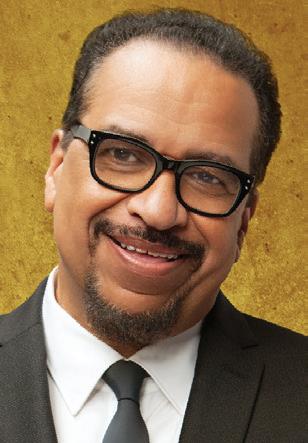
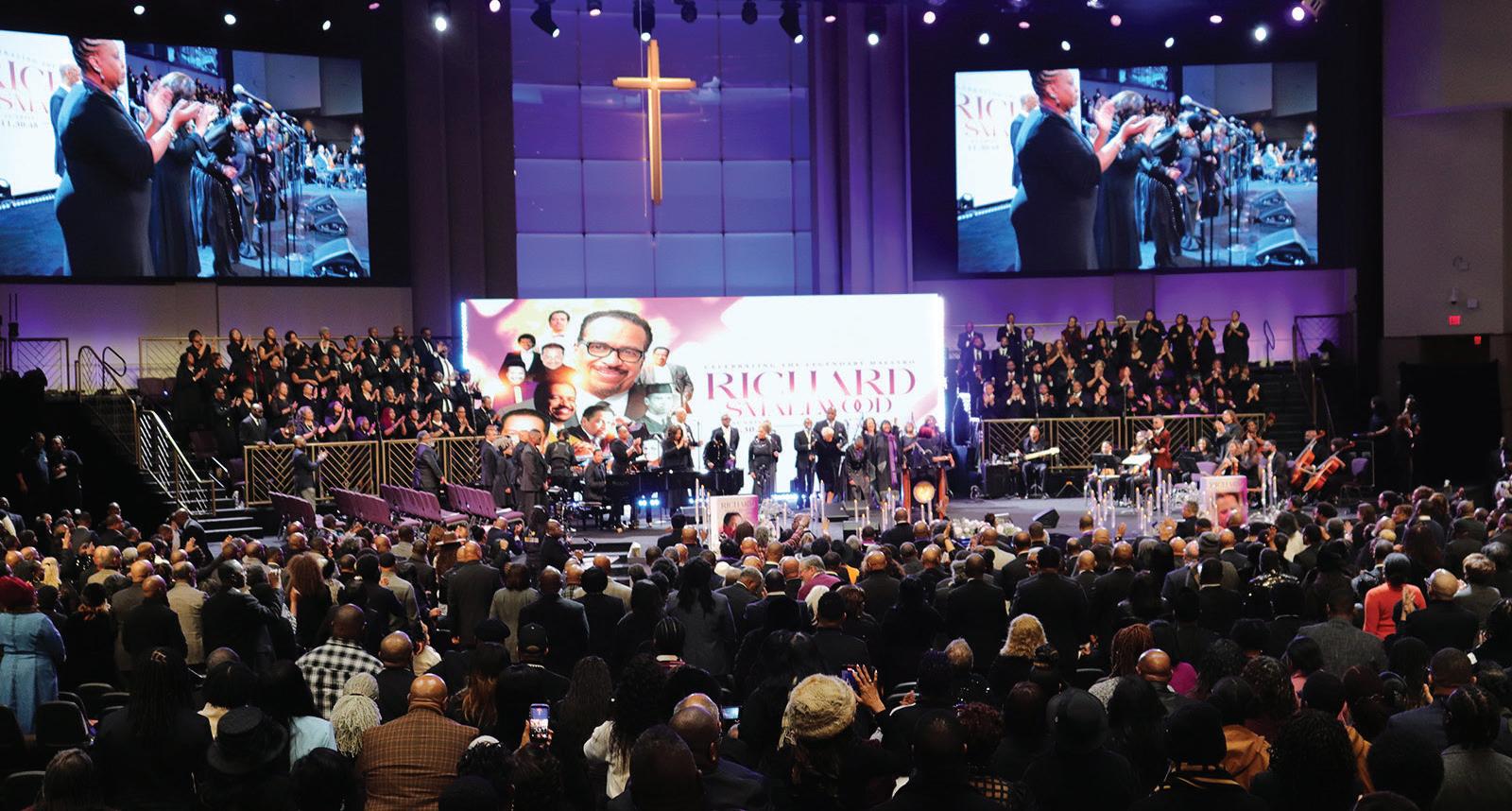
enough to inspire and give hope to the common person.”
Pastor
Maurice Watson, the former pastor of Smallwood’s Washington-area home congregation, preached on Psalm 121, on which Smallwood based one of his most widely sung works, “Total Praise,” which begins with the words “Lord I will lift mine eyes to the hills, knowing my help is coming from You.”
“His music had a depth to it that spoke to our souls and to our hearts,” said Watson, who led Metropolitan Baptist Church, where Smallwood was a member and was ordained. “His music was high enough to make the erudite sit up and listen, but it was low
Smallwood, an eight-time Grammy Award nominee, died in Sandy Spring, Maryland, on Dec. 30, 2025, at age 77 of complications from kidney failure. Born in Atlanta, he was raised mostly in Washington, where he was influenced by his stepfather, the Rev. Chester Lee “CL” Smallwood, who pastored the district’s Union Temple Church, and his mother, Mabel, who took him to performances of the National Symphony Orchestra. Twenty-five minutes before the doors to the megachurch opened at 9:30 a.m., dozens of people huddled outside as others sat in idling cars in 10-degree weather. By the time the funeral began at noon, the predomi-
nantly Black audience, dressed in boots and puffy jackets, furs and high heels, scarves and sneakers, filled most of the seats of the church’s main auditorium.
In a recorded video presentation that preceded the service, Smallwood described how “Total Praise” has been sung around the globe, his words illustrated by clips of the tune being played by Stevie Wonder on the harmonica, by the Florida A&M University marching band and by choirs from Italy to Ghana to Japan.
“Total Praise,” which Smallwood introduced with his group Vision in 1996, was also covered by Destiny’s Child, performed by a cantor at Carnegie Hall in New York, and sung by a choir as President Barack Obama
By George Copeland Jr.
For his family and friends, Clarence Lee Clay Jr.’s life was defined by consistency.
The Jackson Ward resident, who died Jan. 16 at age 85, was a longtime community fixture and a father, husband and friend whose life continues to set an example for his loved ones.
“I think that his legacy is going to help us out, bottom line,” said Clay’s oldest son, Rodney. “We will always fall back on what he showed us.”
Clay was born Sept. 17, 1940, to Clarence Lee Clay Sr. and Evelyn Thompson, the youngest of their four children. The family lived in a house on Leigh Street in what is now Abner Clay Park, across from Ebenezer Baptist Church.
Clay graduated from Maggie Walker High School and Virginia Union University. Among his peers were tennis legend Arthur Ashe, pioneering news anchor Max Robinson
and Max’s brother, lawyer and activist Randall Robinson.
Although a man of steady habits, Clay proved adaptable throughout his career. During nearly 40 years at pharmaceutical company
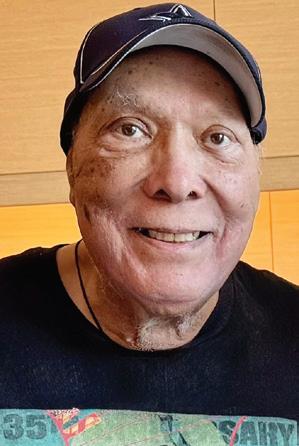
A.H. Robins, he held multiple roles — from mail operations to the health care division to management — before retiring after 36 years.
For 20 years, Clay worked at A.H. Robins alongside his wife, Ann. Their deep love remained with Clay after her death. He stayed dedicated to the Jackson Ward community, its local events and his neighbors. Clay was also father-inlaw to Richmond Free Press photographer Regina Boone and a devoted supporter of the newspaper.
Clarence Lee Clay Jr. singer and athlete. He also expressed his appreciation for friends and family through his love of cooking. Clay was preceded in death by his parents; his wife; and his sisters Gwendolyn, Joyce and Sallie. He is survived by his children; Rodney, Eric and Kenya, grandchildren India, Ryan, Keenan and Tavien; greatgrandchildren Zuri and Ryan Jr.; and other family and friends.
A public viewing will be held Friday, Feb. 6, from 10 a.m. to 7 p.m. at Scott’s Funeral Home, 115 E. Brookland Park Blvd., followed by a funeral Saturday, Feb. 7, at 11 a.m. at Ebenezer Baptist Church, 216 W. Leigh St.
Near the end of the funeral, the song was featured twice more, first in an instrumental version played by pianist Joseph Joubert and then sung by Vision and the Celebration Choir, a collection of singers from different phases of Smallwood’s life, Metropolitan, Union Temple and Howard University’s gospel choir.
Reflecting Smallwood’s longtime interest in classical music, the prelude and postlude to the service were played by a string ensemble, including works by Johann Sebastian Bach, whom Smallwood called his “favorite classical composer on the planet.”
The gospel musician Stephen Hurd, who is also ordained, expressed his gratitude for Smallwood’s knowledge of Scripture, but also music theory.
“Even as we want to mourn and we want to cry, oh God, we are rejoicing because had it not been for a Smallwood song, some of us would not

have learned our circle of fifths,” Hurd said in offering the “prayer of comfort.” “Had it not been for a Smallwood song, some of us wouldn’t have learned how to play in different keys. Had it not been for a Smallwood song, some of us would not know how to articulate Scripture in melody.”
Others recalled that Smallwood both inspired and helped found choirs at his stepfather’s church and at Howard University. After he became a well-known recording artist, Smallwood often returned as a “humble servant” to Metropolitan Baptist, still dedicated to perfection.
“He believed that the choir loft was holy ground and that preparation itself was an act of reverence. Through him, we learned that excellence is not elitism,” said the Rev. H. Beecher Hicks Jr., a former longtime leader at the church who attended the service but spoke via recorded video.
With his early gospel group, the Richard Smallwood Singers, and with Vision, Smallwood recorded such hits as “Anthem of Praise,” “I’ll Trust You” and “Center of My Joy,” the latter co-written with Bill and Gloria Gaither. “I Love the Lord,” originally recorded in 1976 with a Union Temple choir, was re-recorded by the singers in 1982, with Dottie Jones as the lead singer. At the
funeral, Jones sang the song, which was later remade for the soundtrack of the 1996 movie
“The Preacher’s Wife,” in a version sung by Whitney Houston and the Georgia Mass Choir. Also Saturday, Maryland Gov. Wes Moore recalled reciting lyrics of “I Love the Lord” on the day he won his office three years ago.
“Election morning, he was our soundtrack: ‘He heard my cry,’ was how we started that morning,” said Moore, who went on to sing a brief part of Smallwood’s “Center of My Joy.” “He was a true vessel of God’s love at a time when we needed it,” he said. “He was always there to provide the lift that we needed and, Lord have mercy, in the world right now, we need his voice.” Moore also read an official proclamation honoring Smallwood. His tribute followed others previously acknowledged in the service by dignitaries including Bill and Hillary Clinton, Barack and Michelle Obama, Kamala Harris, Washington Mayor Muriel Bowser and U.S. Sen. Angela Alsobrooks, who met with the Smallwood family before the service. But the greatest tribute to Smallwood may be that in the weeks after his death, he and his songs have been remembered at worship services in churches across the country, where his music will doubtless live on.

Clay’s family and lifelong friend Willie Burney remember him as a talented dancer,

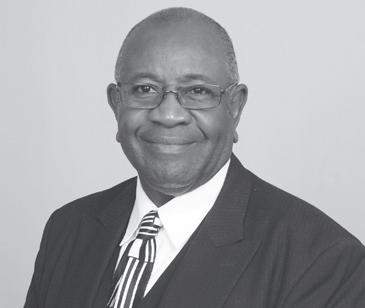




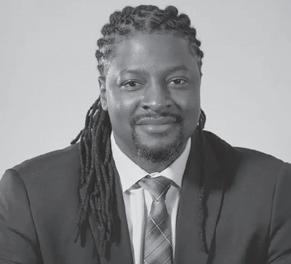


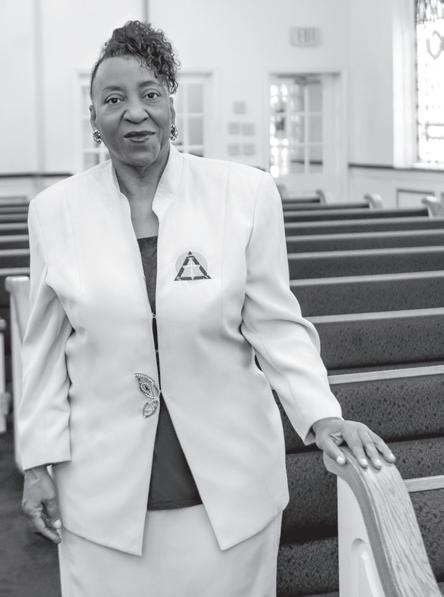





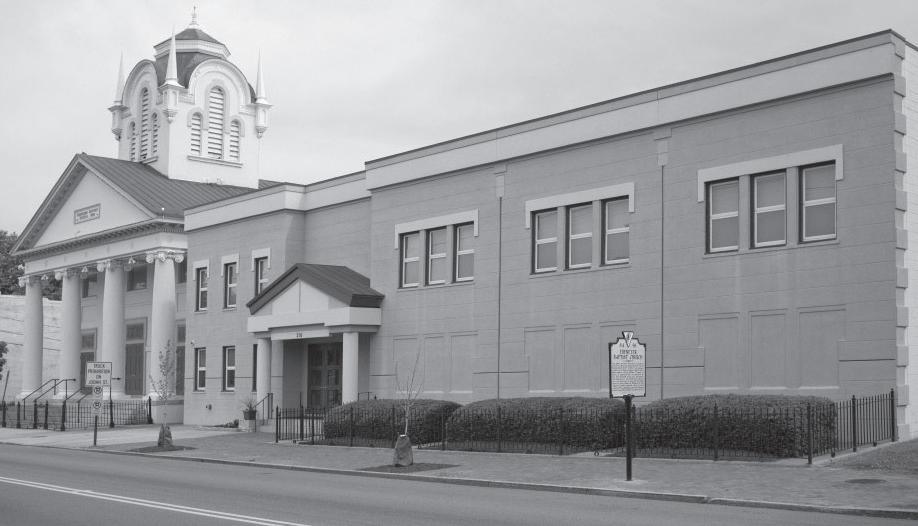
Representatives from Sheehy Auto Stores, event partners and community supporters gather during the dealership’s annual Champions for Charity Golf Tournament, which raised $100,000 for Children’s Hospital of Richmond at VCU.
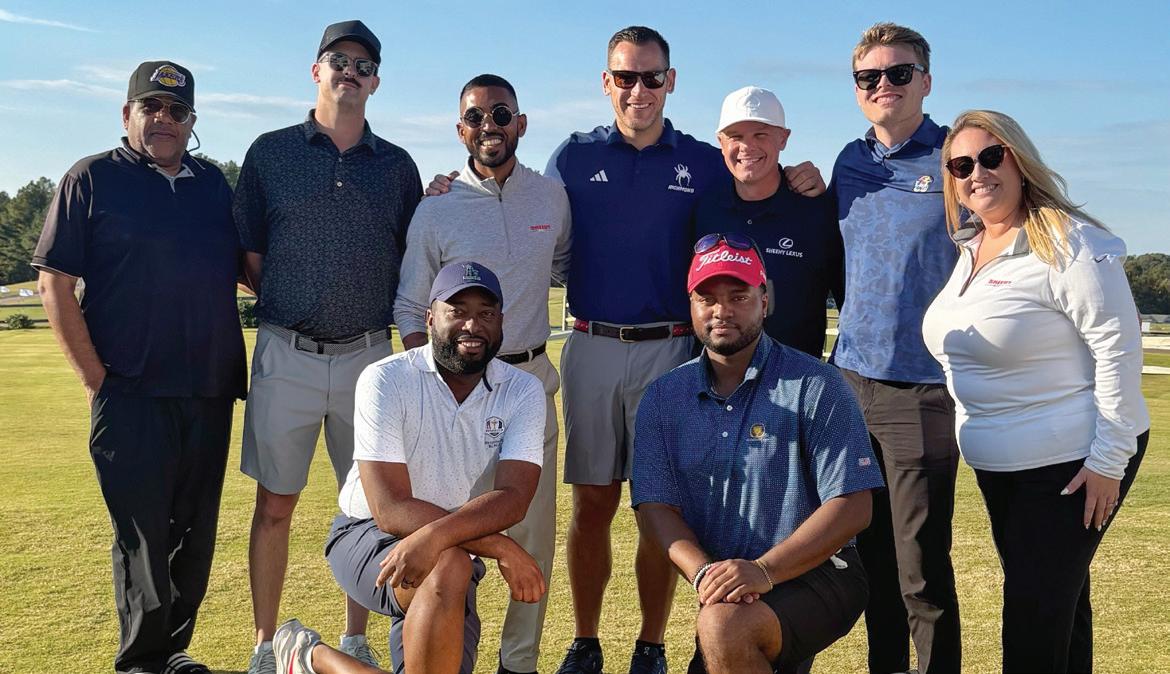
Free Press staff report
A golf tournament hosted by Sheehy Lexus of Richmond brought together community supporters at Independence Golf Club in Midlothian and raised $100,000 for Children’s Hospital of Richmond at VCU.
The annual Champions for Charity Golf Tournament supports pediatric care for thousands of children and families across central Virginia.
coaching in the event.
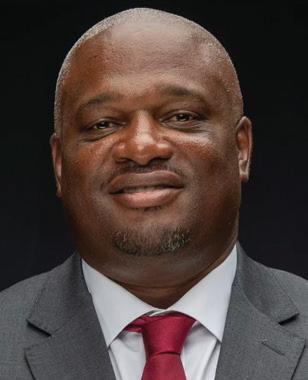
Coach Parker
selection marks his second time
“The opportunity to work alongside so many outstanding professionals is an invaluable experience, and everything the Shrine Bowl represents aligns deeply with what I believe in,” he said. “Being able to represent
Virginia Union University on this stage always means the world to me.”
Parker’s participation places VUU among programs represented on the national stage and continues his involvement in player development opportunities beyond the collegiate season. The game is scheduled to air at 7 p.m. on NFL Network. More information about the East-West Shrine Bowl and coaching assignments is available at shrinebowl.com.
The Central Intercollegiate Athletic Association recently appointed Sonia Chase as an official ambassador for the 2026 Food Lion CIAA Men’s and Women’s Basketball Championship Tournament, scheduled for Feb. 24-28 at CFG Bank Arena in Baltimore. Chase, a Baltimore native and former WNBA player, brings nearly three decades of experience in professional sports, business operations and nonprofit leadership to the role.
“Sonia Chase embodies the values and vision of the CIAA: leadership, integrity and service,” said CIAA Commissioner Jacqie McWilliams Parker.
Chase was the first woman from the University of Maryland, College Park, drafted directly into the WNBA. She played for the Charlotte Sting and Min-
nesota Lynx during a career that spanned a decade and included international competitions. She won an Olympic gold medal at the U.S. Olympic Festival as a Division I collegiate athlete. Chase currently serves as an associate director in Secretariat’s Global Sports practice, where she leads work in NIL/athlete compensation, NIL education, college sports commission governance and compliance and sponsorship operations. She also founded Chase Your Dreams Academy, a nonprofit organization dedicated to creating opportunities for youth in low-income and underserved communities in Baltimore and Washington, D.C. Since
the 5th day of March, 2026 at 9:00 AM and protect her interests.
A Copy, Teste: FRANK D. HARGROVE, JR., Clerk I ask for this: Dorothy M. Eure, Esquire VSB# 27724 Law Office of Dorothy M. Eure, P.C. 8460 Mount Eagle Road Ashland, VA 23005 (804 798-9667
I
HARGROVE,
M. Eure,
VSB# 27724
Law Office of Dorothy M. Eure, P.C. 8460 Mount Eagle Road Ashland, VA 23005 (804 798-9667
VIRGINIA: IN THE CIRCUIT COURT FOR THE COUNTY OF HANOVER DOUGLAS DAVENPORT, Plaintiff v. ORINTHIA DAVENPORT, Defendant. Case No.: CL25004708-00 ORDER OF PUBLICATION
The object of this suit is to obtain a divorce from the bond of matrimony from the defendant on the ground of living separate and apart without any cohabitation and without interruption for a period exceeding twelve months.
It is ORDERED that the defendant, who is a nonresident of the Commonwealth of Virginia, appear here on or before the 6th day of March, 2026 at 9:00 AM and protect her interests.
A Copy, Teste: FRANK D. HARGROVE, JR., Clerk I ask for this: Law Office of Dorothy M. Eure, P.C. Dorothy M. Eure, Plaintiff’s Attorney VSB# 27724 8460 Mount Eagle Road Ashland, VA 23005 (804 798-9667
VIRGINIA: IN THE CIRCUIT COURT FOR THE COUNTY OF HANOVER SHEDRA BARRETT, Plaintiff v. GWEN BARRETT, Defendant. Case No.: CL25004636-00 ORDER OF PUBLICATION
The object of this suit is to obtain a divorce from the bond of matrimony from the defendant on the ground of living separate and apart without any cohabitation and without interruption for a period exceeding twelve months.
It is ORDERED that the defendant, whose whereabouts are unknown, appear here on or before
VIRGINIA: IN THE CIRCUIT COURT FOR THE COUNTY OF HANOVER KATINA HOWARD, Plaintiff v. CHAUNCEY HOWARD, JR., Defendant. Case No.: CL25000076-00 ORDER OF PUBLICATION
The object of this suit is to obtain a divorce from the bond of matrimony from the defendant on the ground of living separate and apart without any cohabitation and without interruption for a period exceeding twelve months.
It is ORDERED that the defendant, whose whereabouts are unknown, appear here on or before the 5th day of March, 2026 at 9:00 AM and protect his interests.
A Copy, Teste: FRANK D. HARGROVE, JR., Clerk I ask for this: Law Office of Dorothy M. Eure, P.C. Dorothy M. Eure, Plaintiff’s Attorney VSB# 27724 8460 Mount Eagle Road Ashland, VA 23005 (804 798-966
VIRGINIA: IN THE CIRCUIT COURT FOR THE COUNTY OF HANOVER SHAVE GEORGE, Plaintiff v. RENEE GEORGE, Defendant. Case No.: CL25004618-00 ORDER OF PUBLICATION The object of this suit is to obtain a divorce from the bond of matrimony from the defendant on the ground of living separate and apart without any cohabitation and without interruption for a period exceeding twelve months.
It is ORDERED that the defendant, whose whereabouts are unknown, appear here on or before the 17th day of February, 2026 at 9:00 a.m. and protect her interests. A Copy, Teste: FRANK D. HARGROVE, JR., Clerk I ask for this: Dorothy M. Eure, Plaintiff’s Attorney VSB# 27724 The Law Office of Dorothy M. Eure, P.C. 8460 Mount Eagle Road
Ashland, VA 23005 (804 798-9667
2009, the academy and its Nike basketball and youth development camps have served more than 13,000 young people through programs combining athletic training with financial literacy, conflict resolution and leadership development.
“The CIAA Tournament represents more than basketball — it’s about culture, community and creating pathways for future leaders,” Chase said. “To serve as an ambassador for the 2026 Tournament is deeply meaningful to me, not only as a former student-athlete and professional player, but as someone committed to using sports as a vehicle for opportunity, education and lasting impact.”
In addition to 22 men’s and women’s basketball games, the event features a two-day fan festival, education day, career expo, community day, Greek night, step shows, concerts and day parties.
VIRGINIA: IN THE CIRCUIT COURT FOR THE COUNTY OF HANOVER MELODEE SPRUILL, Plaintiff v. EMANUAL SPRUILL, Defendant. Case No.: CL25004554-00 ORDER OF PUBLICATION
The object of this suit is to obtain a divorce from the bond of matrimony from the defendant on the ground of living separate and apart without any cohabitation and without interruption for a period exceeding twelve months. It is ORDERED that the defendant, whose whereabouts are unknown, appear here on or before the 12th day of February, 2026 at 9:00 a.m. and protect his interests. A Copy, Teste: FRANK D. HARGROVE, JR., Clerk I ask for this: Law Office of Dorothy M. Eure, P.C. Dorothy M. Eure, Plaintiff’s Attorney VSB# 27724 8460 Mount Eagle Road Ashland, VA 23005 (804 798-9667
CUSTODY
VIRGINIA: IN THE CIRCUIT COURT OF THE COUNTY OF HANOVER In the matter of the adoption of a child to be known as Sophia Lola Davis by Jacob Madison Davis, III Case # CA 25000025 ORDER OF PUBLICATION The object of the abovestyled suit is to waive the consent of Nathan Joseph Carr, birth father of Sophia Lola Carr, to the adoption of Sophia Lola Carr by Jacob Madison Davis, III and approve a Final Order of Adoption. It is therefore ORDERED that Nathan Joseph Carr appear on or before March 23, 2026 at 10:30
Richmond, Virginia 23220-2715
Telephone: (804) 359-0897
SusanBrewer97@gmail.com
VIRGINIA: IN THE JUVENILE AND DOMESTIC RELATIONS DISTRICT COURT OF THE CITY OF RICHMOND Commonwealth of Virginia, in re MARIANNA LEE MCCURTY RDSS V. DAVID MCCURTY, UNKNOWN FATHER Case No. JJ104967-05-00, JJ104967-06-00 ORDER OF PUBLICATION
The object of this suit is to: Terminate the residual parental rights (“TPR”) of the David McCurty (Father) and Unknown Father (Father) of Marianna Lee McCurty DOB 01/15/2025, child. “TPR” means all rights and responsibilities remaining with parent after transfer of legal custody or guardianship of the person, including but not limited to rights of: visitation; adoption consent; determination of religious affiliation; and responsibility for support. It is ORDERED that the defendant David McCurty (Father) and Unknown Father to appear at the abovenamed Court to protect his/ her interest on or before 06/03/2026, at 9:00 AM, COURTROOM #5.
VIRGINIA: IN THE CIRCUIT COURT FOR HENRICO COUNTY IN RE: Samiyrah Ary Ella Gray DOB 6/26/2018 MICHELLE GRAY FITZGERALD and TONY LAMONT FITZGERALD, SR., Petitioners, v. KATHRYN RAISA KOCH, Respondent. Case No. CA24000024 ORDER OF PUBLICATION
Upon consideration of the foregoing Motion and the supporting Affidavit, and it appearing that the Respondent, Kathryn R. Koch, is a resident of the Commonwealth of Virginia who cannot be found despite due diligence, it is hereby ORDERED that the said Respondent appear on or before 3/13 /26 , in the Clerk’s Office of this Court, and do what may be necessary to protect her interest in this cause; AND IT IS FURTHER ORDERED that this Order be published once a week for four successive weeks in a newspaper of general circulation
“This tournament goes far beyond the game of golf,” said Todd Zaciek, general manager of Sheehy Lexus of Richmond. “It represents hope, compassion and a community that refuses to stand on the sidelines when children need us most. Every year, I’m moved by the generosity we see out on the course.”
The event featured three hole-in-one challenges to win a Lexus, long drive and nine-hole putting contests, tournament gifts, gourmet on-course dining and a post-round awards celebration.
Children’s Hospital of Richmond at VCU is Central Virginia’s only comprehensive children’s hospital, providing pediatric care to more than 80,000 children annually.
Sheehy Auto Stores is a family-owned automotive group founded in 1966.
“Funds raised through this year’s golf event will enable CHoR to empower growth across clinical programs and continue the mission of delivering careful and compassionate care for every family who walks through the door,” said Lauren Moore, president and CEO of Children’s Hospital Foundation.
Free Press staff report
Krystian Williams, a Richmond native and Collegiate School standout, has signed with the University of Richmond football team. The 6-foot, 180-pound junior, who spent the first part of his college career at Virginia Tech, has two years of eligibility remaining.

Williams, who played cornerback for the Hokies, will transition to wide receiver with the Spiders. He appeared in 17 career games over three seasons in Blacksburg. At Collegiate, Williams was a three-year letterman under coach Mark Palyo, serving as team captain as a senior and earning the team’s Most Valuable Player honor in each of his final two seasons. He recorded 30 receptions for 472 yards and six touchdowns as a senior, averaging 15.7 yards per catch. As a junior, he had 26 receptions for 604 yards and seven touchdowns, earning All-State VISAA First Team honors at wide receiver and Second Team recognition as a defensive back. During his senior season, Williams also received All-Prep multi-purpose honors and All-State VISAA Second Team accolades as a defensive back and was selected to play in the Big River Rivalry All-Star Game. A consensus three-star recruit by 247 Sports, ESPN, Rivals and On3, he was ranked among the top prospects in Virginia by all four services. Williams, who was also a four-year letterman in track and field, holds Collegiate School records in the indoor long jump (24’1.5”) and outdoor long jump (23’8.75”).
The deadline to apply is March 9, 2026. For more information visit https://henrico.gov/revit/ or call 501-7617.