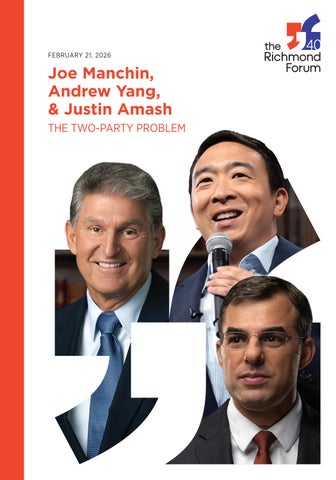
FEBRUARY 21, 2026
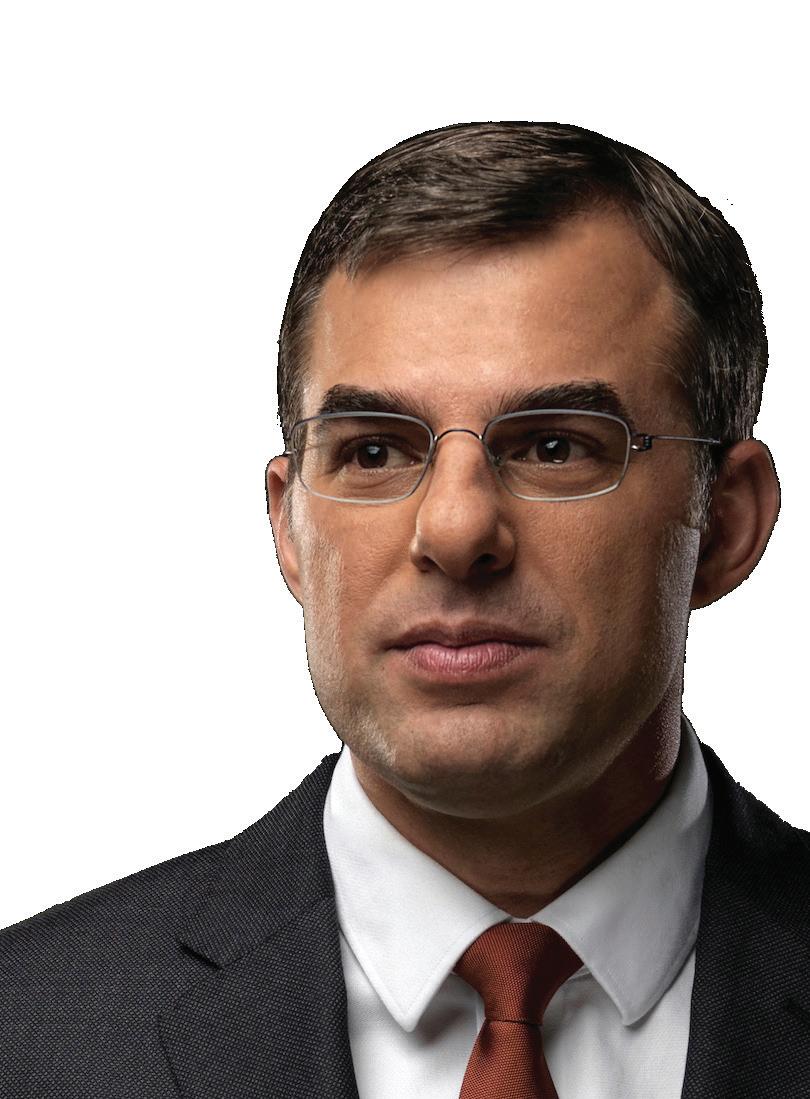
Joe Manchin, Andrew Yang, & Justin Amash
THE TWO-PARTY PROBLEM

A fully integrated construction and development firm serving clients across the Mid-Atlantic advancing unique perspectives that enhance communities and advance our world.
www.hourigan.group
For over 175 years, Deloitte has provided industry-leading audit, consulting, tax and advisory services, striving to live their purpose of making an impact that matters.
www.deloitte.com
A global business-to-business agriproducts company with over 100 years of experience supplying products and innovative solutions to meet our customers’ evolving needs.
www.universalcorp.com

www.cwadvisorsgroup.com

Joe Manchin, Andrew Yang, & Justin Amash
THE TWO-PARTY PROBLEM
FEBRUARY 21, 2026
OPENING MUSIC
OPENING REMARKS
WELCOME AND INTRODUCTION
Willie Williams
Heather Mullins Crislip
Executive Director
The Richmond Forum
Jonathan Brabrand
Secretary
Richmond Forum Board of Directors
MODERATED CONVERSATION
INTERMISSION
AUDIENCE QUESTIONS
Joe Manchin, Andrew Yang, and Justin Amash with Mara Liasson
Willie Williams
Submit your questions via Slido
Joe Manchin, Andrew Yang, and Justin Amash with Mara Liasson
The Richmond Forum is a nonprofit 501(c)(3) educational organization. Tonight’s presentation may not be recorded or photographed by attendees by any means for any purpose.

Universal Corporation proudly supports initiatives that strengthen communities, foster connection, and inspire progress through collaboration and shared purpose.
TONIGHT’S PROGAM
THE TWO-PARTY SYSTEM IS SHOWING ITS CRACKS. As polarization deepens and trust in government erodes, many Americans are asking if the red-versus-blue framework can still fulfill the needs of a diverse and complicated society. In this provocative panel, former Senator Joe Manchin, Forward Party co-founder Andrew Yang, and former Congressman Justin Amash will examine how political tribalism stifles innovation and consensus. From alternative voting systems to the rise of independents, these three leaders will explore whether a post-partisan future is possible — challenging us to rethink the foundations of American democracy in a time when the old rules are not working.
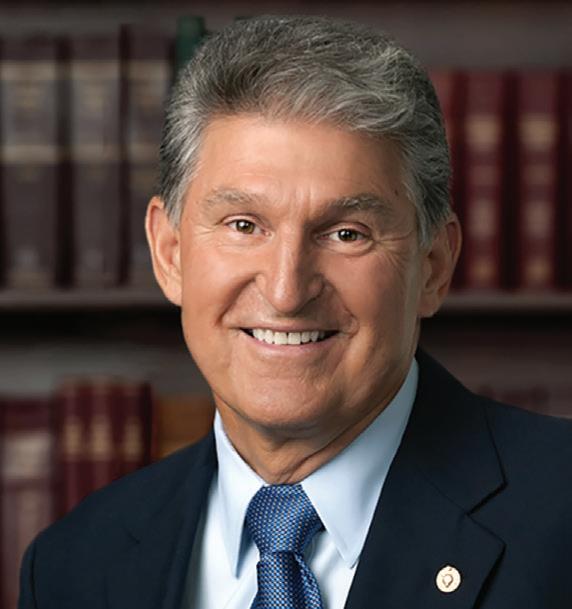
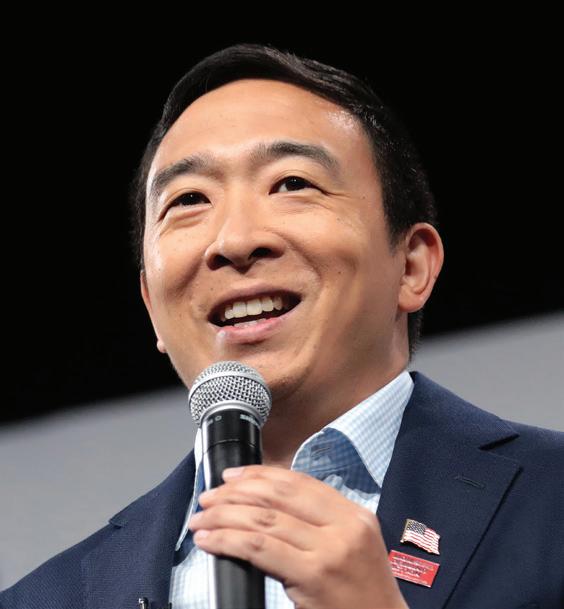
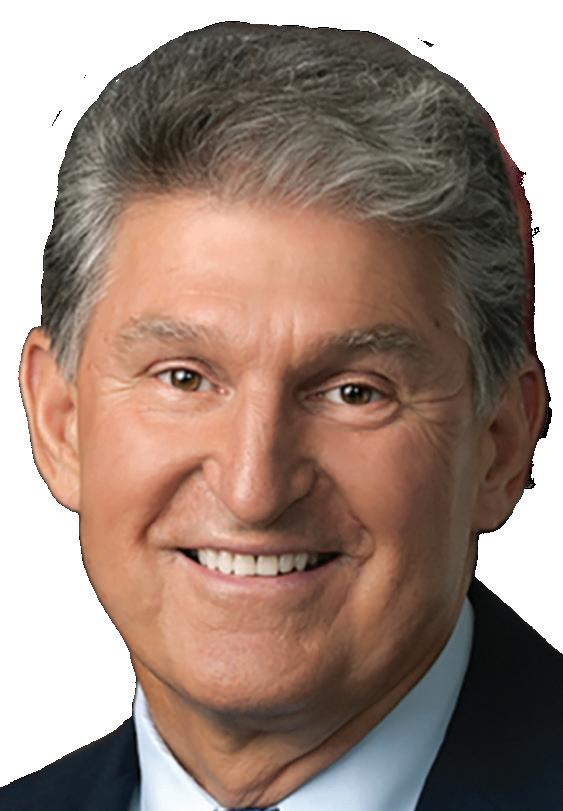
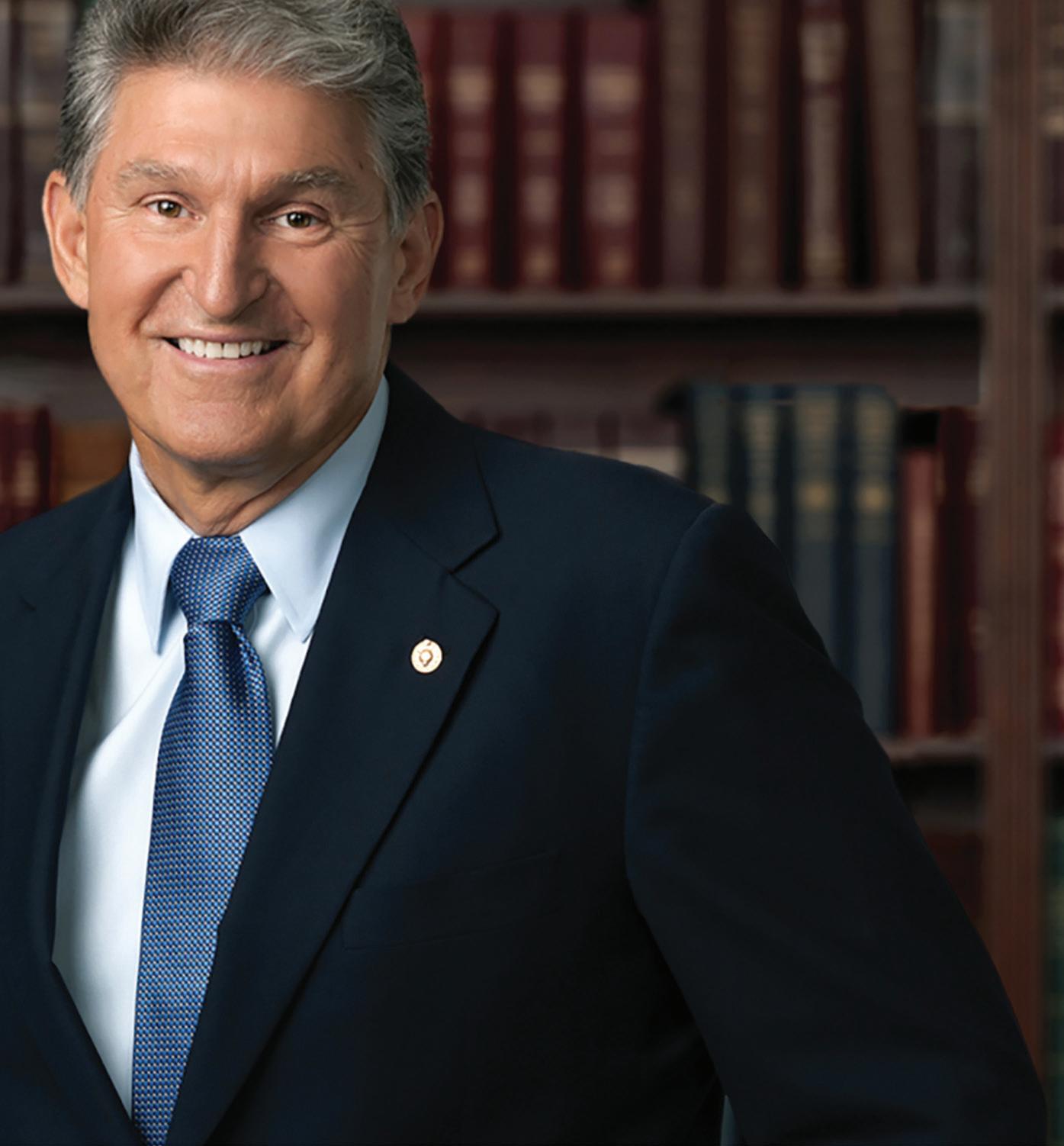
FORMER SENATOR JOE MANCHIN
represented West Virginia in the U.S. Senate from 2010 to 2025, where he was known for his independent streak and commitment to bipartisan cooperation. He served as chairman of the Senate Energy and Natural Resources Committee and was also a member of the Appropriations, Armed Services, and Veterans’ Affairs committees.
Born and raised in the small coal mining town of Farmington, West Virginia, Manchin was shaped by his community’s values of family, fairness, common sense, and hard work. His grandfather, known as “Papa Joe,” was an Italian immigrant and the town grocer who modeled entrepreneurship and the importance of serving the public. His grandmother, “Mama Kay,” inspired his lifelong commitment to public service through her deep compassion and care for those in need. These early influences laid the foundation for his “retail government”
philosophy—prioritizing personal connection with constituents and responsive leadership.
Before joining the Senate, Manchin served in the West Virginia House of Delegates and Senate, as Secretary of State, and as Governor from 2005 to 2010. A centrist Democrat who later registered as an independent, he prioritized job creation, fiscal responsibility, and a balanced energy strategy that included both traditional and renewable resources.
Throughout his Senate tenure, Manchin played a pivotal role in key legislative negotiations, often acting as a swing vote. He championed efforts to protect Social Security and Medicare, reduce the national debt, and secure benefits for veterans.
An avid outdoorsman and licensed pilot, Manchin is married to Gayle Conelly Manchin, former federal co-chair of the Appalachian Regional Commission. They have three children and ten grandchildren.

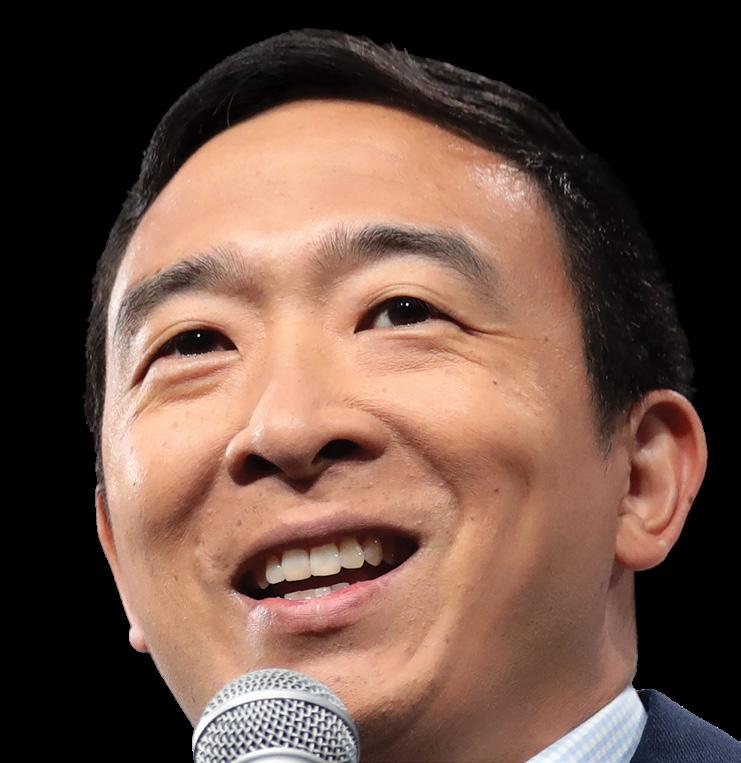
ANDREW YANG IS AN ENTREPRENEUR, author, and political reform advocate whose career has spanned the private, nonprofit, and political sectors. He is best known for his 2020 presidential campaign and for co-founding the Forward Party, a centrist political movement launched in 2022.
Born in Schenectady, New York, Yang was raised in Westchester County. His parents immigrated from Taiwan as graduate students at the University of California, Berkeley. He graduated from Phillips Exeter Academy, earned a degree in political science and economics from Brown University, and received a law degree from Columbia University.
Yang began his career in startups before becoming CEO of Manhattan Prep, a test preparation company. In 2011, he founded the nonprofit organization Venture for America, which aimed to foster entrepreneurship in struggling cities. In 2015, the Obama administration named him a “Presidential Ambassador for Global Entrepreneurship.”
In 2020, Yang ran for president as a Democrat with the slogan “Make America Think Harder” (MATH). His signature policy proposal was universal basic income—a monthly payment to every American adult in response to economic disruptions caused by automation and artificial intelligence. Although he ended his campaign in early 2020, he built a dedicated digital following known as the “Yang Gang.”
In 2021, Yang left the Democratic Party and registered as an independent. The following year, he joined former Democrats, Republicans, and independents to form the Forward Party, focused on electoral reform, ranked-choice voting, and promoting a more collaborative political culture.
Yang is the author of three books: “Smart People Should Build Things,” and “The War on Normal People,” and “Hey Yang, Where’s My Thousand Bucks?.”
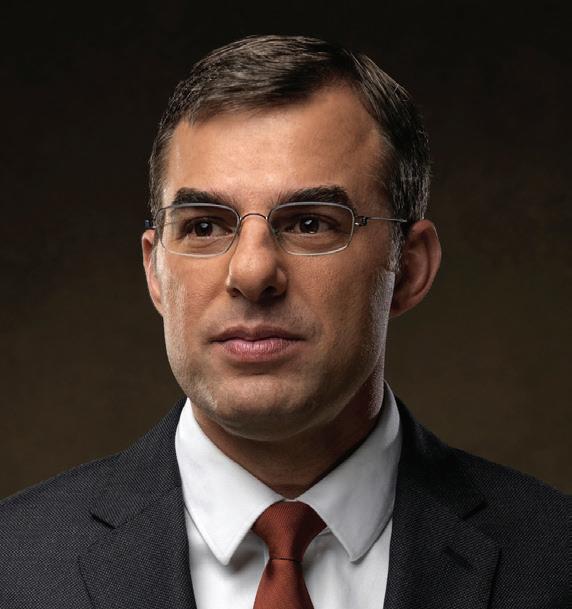
JUSTIN AMASH IS A CONSTITUTIONAL CONSERVATIVE and libertarian who served in the U.S. House of Representatives from 2011 to 2021. Representing Michigan’s 3rd Congressional District, he was known for his principled stance on individual liberty, economic freedom, and the rule of law. Over the course of his five terms, Amash developed a reputation for independence, transparency, and a consistent constitutional approach to legislation.
Born and raised in Grand Rapids, Michigan, Amash is the son of Palestinian and Syrian immigrants. He graduated from Grand Rapids Christian High School and earned a bachelor’s degree with high honors in economics from the University of Michigan. He went on to receive a juris doctor from the University of Michigan Law School before returning to West Michigan to practice law and work in his family’s business.
Before being elected to Congress in 2010, Amash served one term in the Michigan House of Representatives. In Congress, he became a leading voice on civil liberties, opposing warrantless surveillance, indefinite detention, and civil asset forfeiture. He was also a critic of corporate welfare, government overreach, and excessive spending.
In 2019, Amash left the Republican Party and became the first and only Libertarian member of Congress. He briefly explored a presidential run in 2020 and has continued to advocate for political reform, transparency, and constitutional governance.
Amash lives in Cascade Charter Township, Michigan, with his wife, Kara, and their three children: Alexander, Anwen, and Evelyn. He remains active in public discourse, promoting a vision of government rooted in accountability, individual rights, and nonpartisan integrity.

MARA LIASSON
TONIGHT’S MODERATOR
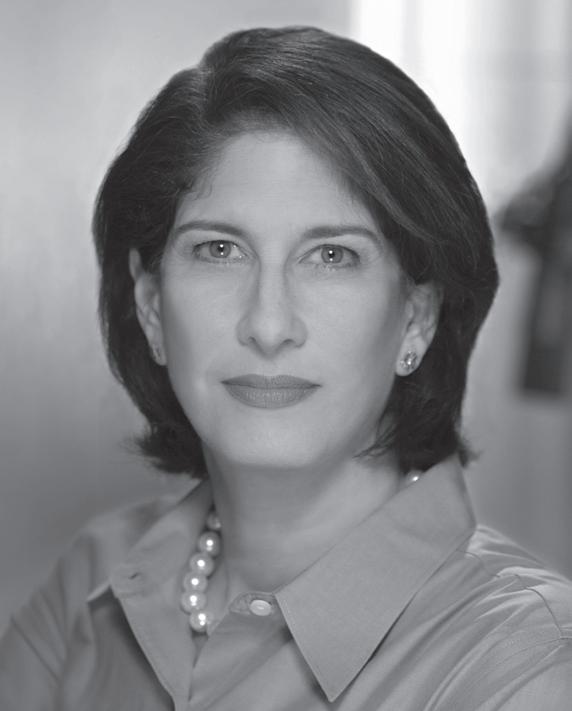
MARA LIASSON IS THE NATIONAL POLITICAL CORRESPONDENT FOR NPR. Her reports can be heard regularly on NPR’s award-winning news programs “All Things Considered” and “Morning Edition.” Liasson provides extensive coverage of politics and policy from Washington, D.C., focusing on the White House and Congress, and also reports on political trends beyond the Beltway.
Each election year, Liasson provides key coverage of the candidates and issues in both presidential and congressional races. During the Clinton administration, she was NPR’s White House correspondent and won the White House Correspondents Association’s Merriman Smith Award three times for her daily news coverage. Since 1998, she has served as a major contributor and panelist on FOX News and regularly appears on programs such as “Special Report with Bret Baier,” “FOX News Sunday,” and “Media Buzz.”
Liasson joined NPR in 1985 as a general assignment reporter and newscaster and later became the network’s congressional correspondent. From September 1988 to June 1989 she took a leave of absence from NPR to attend Columbia University in New York as a recipient of a KnightBagehot Fellowship in Economics and Business Journalism.
Liasson earned a bachelor’s degree in American History from Brown University.
? HAVE
A QUESTION FOR ONE OR ALL OF TONIGHT’S SPEAKERS?
Head to slido.com to submit a question for the Q&A. You can also endorse questions submitted by fellow audience members, both in the theater and online, to increase the chance of them being asked.
Your question is more likely to be selected when you include your name!



Always working in your best interest.
CW Advisors is a national, fee-only wealth management firm offering a full spectrum of financial strategy services with a holistic approach – investment management, financial planning, and concierge financial services. We are here for you through every phase of life, understanding your goals, and creating a plan unique to your circumstances. We act in your best interest, simplify your financial life, and bring you peace of mind.
CW Advisors is a proud sponsor of The Richmond Forum. We are grateful for the outstanding speakers and conversations it brings to our community.
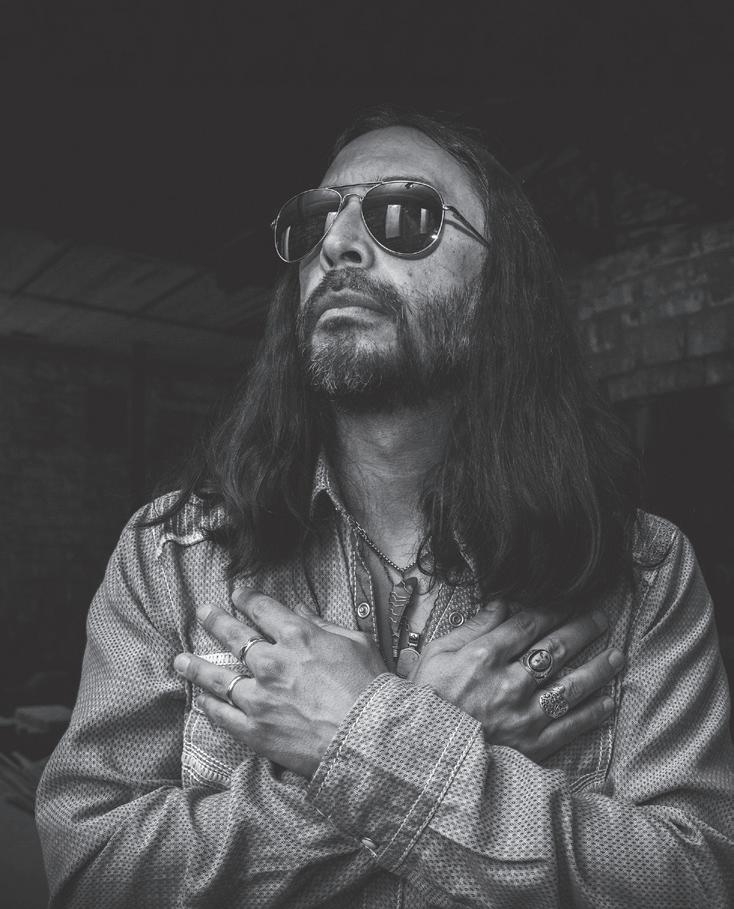
WILLIE WILLIAMS
TONIGHT’S MUSICIAN
RICHMOND-BASED TROUBADOUR Willie Williams stands at the crossroads of Americana, country, and hippie jam rock, delivering a sound that feels both rooted and fresh.
His vocals are steeped in Carolina twang, while echoes of Memphis soul, J.J. Cale, and The Allman Brothers weave through his arrangements.
With commanding live performances and sharp songwriting, Williams brings a rare combination of authenticity and polish that resonates onstage and on record.
“A masterful performer. A revelation.”
- Style Weekly
Thanks to the generous support of Dr. & Mrs. Baxter W. Perkinson, Jr.,
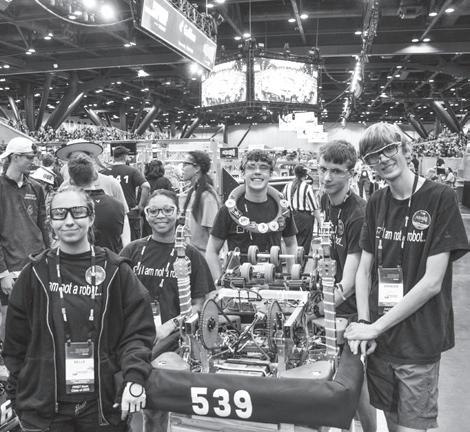
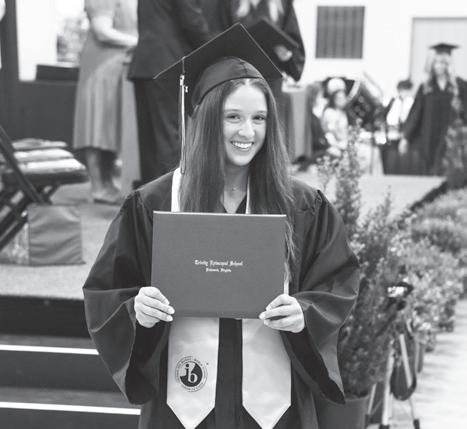
students and faculty from Trinity Episcopal School have the opportunity to attend The Richmond Forum in a special program designed to connect the classroom, the community and current events. Trinity and The Forum are grateful to the Perkinsons for their continued support.






Creating vibrant communities
When we come together to build stronger communities, we give our time, energy, and ideas to help influence positive change. And as we watch progress take root, we grow as well. The Richmond Forum, it’s an honor to recognize your commitment and service to the community.
Helping Clients Achieve Sustainable Growth and Industry Leadership
Richmond isn’t just where we are headquartered—it’s where our roots run deep. As a leading provider of IT services and solutions, we draw strength from the innovation and community spirit of our hometown to help our Fortune 1000 and federal government clients achieve sustainable growth and industry leadership. ASGN is proud to invest in the Richmond community and again sponsor The Richmond Forum, an event that truly inspires, educates, and connects us all.







DECLARATION OF INDEPENDENTS
THE LARGEST POLITCAL PARTY ISN’T A PARTY AT ALL
AMERICA'S POLITICAL LANDSCAPE IS UNDERGOING A SEISMIC SHIFT. According to a 2025 Gallup poll, a record 45% of Americans now identify as political independents, the highest percentage recorded in the past 40 years. Meanwhile, equal shares of U.S. adults identify as Democrats and Republicans — 27% each. This historic milestone reflects deepening frustration with partisan politics and signals a potential transformation of American democracy.
In 1988, 33% of U.S. adults identified as independent voters. This growth accelerated dramatically after 2011, with independents consistently comprising 40% or more of the electorate. The rise is partly driven by younger generations—Millennials and Gen X—continuing to identify as independents as they age, defying historical patterns where voters typically gravitated toward parties over time.
The generational divide is stark. Among voters under 25, a remarkable 56% identify as independents, which is more than double the rate among voters 80 and older (20%). Gen Z adults show the highest rate of independent identification ever recorded for their age cohort, surpassing both Millennials (47% in 2012) and Gen X (40% in 1992).
Today, only two independent politicians serve at the federal level: Sen. Bernie Sanders (I-VT) and Sen. Angus King (I-ME). This scarcity isn’t ideological, it’s structural. Ballot-access laws, fundraising realities, committee power, and voter psychology all heavily favor the two major parties once a politician reaches national office. Even successful independents almost always caucus with one party to function legislatively.
Independent voters describe themselves overwhelmingly as moderates (60%), rejecting ideological extremes. They trust Democrats on issues like abortion (70%), healthcare (67%), and climate change (64%), while favoring Republicans on crime (66%), the economy (62%), and immigration (60%). This nuanced positioning reflects their belief that both parties have become too extreme—70% of independents agree with this assessment.
Despite comprising the largest voter bloc, more than 23.5 million independents remain excluded from primary elections in 15 states with closed congressional primaries. This exclusion is particularly consequential: 87% of U.S. House elections are effectively decided in primaries held in uncompetitive districts, meaning independent voters have no meaningful say in choosing their representatives. Young independents are especially impacted—approximately 5 million voters under the age of 34 cannot participate in congressional primaries. Nearly 80% of independents view this exclusion as a violation of their voting rights, yet the system persists, further alienating a growing segment of the electorate from democratic participation.
Continue the Conversation
Why do you think independent identification has surged to a record 45%? Is this a temporary reaction to current politics or a fundamental shift in how Americans view parties?
Younger voters are twice as likely to be independents as older voters. What do you think explains this generational divide?
The convergence of record independent identification, generational transformation, educational realignment, and collapsing institutional trust suggests the twoparty system faces its greatest legitimacy crisis in modern history.


COMMITMENT
Kaufman & Canoles is committed to strengthening our community. As part of that commitment, we are proud to support The Richmond Forum and the diverse guests they invite to inspire and inform our community. We CAN. And we will.®




A THIRD-PARTY SOLUTION?
LOOKING BEYOND THE TWO-PARTY SYSTEM
THE AMERICAN TWO-PARTY SYSTEM WASN’T PART OF THE ORIGINAL DESIGN. When the Constitution was drafted in 1787, it made no mention of political parties. George Washington himself warned in his farewell address that partisan factions would “distract the Public Councils, and enfeeble the Public Administration.” Yet by the 1790s, fundamental disagreements between Alexander Hamilton and Thomas Jefferson over federal power and economic policy had already crystallized into the nation’s first party system: Federalists versus Democratic-Republicans .
This early division set a pattern that would persist for more than two centuries. The Federalists faded after the War of 1812, giving way to an “Era of Good Feelings” that proved temporary. By the 1820s, new parties emerged from the Democratic-Republican split: Andrew Jackson’s Democrats and Henry Clay’s Whigs . When the Whig Party collapsed over slavery in the 1850s, the anti-slavery Republican Party rose to replace it. Since then, Democrats and Republicans have dominated American politics, adapting their positions while maintaining their duopoly.
Why has this two-party system proven so durable? The answer lies partly in America’s electoral mechanics. The “first-past-the-post” system, where whoever gets the most votes wins, creates what political scientists call strategic voting. Voters worry that supporting their favorite candidate might “spoil” the election, allowing their least-favorite to win. Single-member congressional districts, the Electoral College, and restrictive ballot access laws further entrench the major parties’ advantages. Third parties, lacking the massive organizational infrastructure and financial resources of Democrats and Republicans, struggle to compete.
Third Parties in the 2024 U.S. Presidential Election
Green Party of the United States
Jill Stein: 0.56% (862,049 votes)
Libertarian Party
Chase Oliver: 0.42% (650,126 votes)
Party for Socialism and Liberation
Claudia De La Cruz: 0.11% (166,175 votes)
American Solidarity Party
Peter Sonski: 0.03% (44,000 votes)
Constitution Party
Randall Terry: 0.03% (41,294 votes)
The structural barriers are formidable. In many states, third-party candidates must collect tens of thousands of signatures just to appear on the ballot—requirements that major parties bypass through their established status. Presidential debate rules require candidates to poll at 15% nationally, a threshold nearly impossible to reach without the media coverage that comes from being in debates. The single-member district system means that a party winning 15% of votes nationwide might win zero seats in Congress, unlike proportional representation systems in countries like Germany or the Netherlands, where multiple parties routinely share power.
Yet, Americans consistently express frustration with this binary choice. Recent polling reveals that 62% of U.S. adults believe a third major party is needed , with 74% of independents, 58% of Democrats, and 43% of Republicans holding this view. In 2024, more than 40% of voters said they would consider voting for a third-party presidential candidate.
However, this apparent appetite doesn’t translate into votes. When asked what they would do if their preferred third-party candidate was unlikely to win, 54% of Americans said they would switch to a major-party candidate. Only 11% of adults appear genuinely committed to voting
third-party regardless of electoral prospects, nowhere near enough to make such candidates competitive in presidential elections.
The 2000 election illustrated these dynamics: the Green Party and Ralph Nader’s 2.7% showing may have drawn enough votes from Al Gore to tip Florida, and the presidency, to George W. Bush, reinforcing fears about the spoiler effect for a generation of progressive voters.
Despite these obstacles, third parties have occasionally made significant impacts. The most successful third-party showing in recent history came in 1992, when Texas billionaire Ross Perot captured 18.9% of the popular vote running as an independent—the highest percentage for a non-major-party candidate since Theodore Roosevelt’s 1912 Bull Moose campaign. Perot’s focus on the federal deficit and fiscal responsibility permanently influenced how these issues are discussed in American politics. He ran again in 1996 as the Reform Party nominee, securing 8% of the vote.
Third parties have found more success at state and local levels. Jesse Ventura won Minnesota’s governorship as a Reform Party candidate in 1998. Independents like Bernie Sanders and Angus King have served in the U.S. Senate. These examples suggest that while the presidency remains largely out of reach, alternative candidates can win when local conditions and candidate appeal align favorably.
Today’s prominent third parties represent diverse ideological perspectives. The Libertarian Party, founded in 1971 and now the third-largest party by voter registration, champions individual liberty, minimal government intervention, and free-market economics. The Green Party, the fourth-largest party, promotes environmentalism, social justice, and progressive economic policies. The Constitution Party and Party for Socialism and Liberation occupy the further ends of the political spectrum.
Some reformers argue the solution lies not in building third parties within the current system, but in changing the system itself with solutions like open primaries, ranked-choice voting, proportional representation, and relaxed ballot access laws. Whether such reforms can gain traction nationally remains uncertain, as the two major parties have little incentive to support changes that would weaken their grip on power.
Third parties serve functions beyond winning elections. They raise issues ignored by major parties, provide outlets for dissatisfied voters, and sometimes force major parties to adopt their positions to recapture lost support. The ongoing debate reveals a fundamental tension in American democracy: between the desire for more choices and the structural realities that make viable alternatives extremely difficult to build. The question isn’t whether Americans want alternatives—polling shows many do. The deeper questions concern whether our electoral system can evolve to accommodate them, and whether frustration will ever translate into the sustained commitment necessary to overcome the formidable barriers standing in the way.
Continue the Conversation
Looking back at figures like Ross Perot, what conditions allowed thirdparty candidates to break through nationally? Do those conditions exist today—or have they changed? Would a viable third party make American politics less polarized, or simply rearrange existing divisions? What tradeoffs might come with more choice?

















POWERED BY TOTAL CONCENTRATION AND BY ENERGY YOU DON’T EVEN HAVE TO THINK ABOUT.


Whether you’re building a business, running your household, pursuing a lifelong passion, or learning from powerful voices at The Richmond Forum, staying focused is easier when the energy you need is reliably right at your fingertips. It’s one more way we’re Powering Your Every Day.








CHOOSING HOW WE CHOOSE
RANKED-CHOICE VOTING EXPLAINED
RANKED-CHOICE VOTING (RCV) is an electoral system that allows voters to rank candidates in order of preference, rather than selecting only one. Voters may rank as many, or as few, candidates as they choose, allowing them to express a fuller range of preferences on a single ballot.
The method is currently used in a growing number of U.S. states, including Maine and Alaska, as well as in major cities like San Francisco and New York City. Internationally, many nations have adopted ranked or preferential voting systems for some or all elections, including Australia, Ireland, and India.
Supporters argue that RCV encourages candidates to appeal to a broader share of the electorate, since success may depend not only on first-choice support but also on being a viable second or third choice. Advocates also contend that the system reduces the likelihood of “spoiler” candidates, gives independent or third-party candidates greater viability, and promotes more issue-focused and civil campaigns.
How RCV Works
1. First-choice votes are counted.
2. If a candidate receives more than 50% of first-choice votes, they win.
3. If no candidate reaches a majority, the candidate with the fewest votes is eliminated.
4. Ballots cast for the eliminated candidate are reassigned to the voter’s next-ranked choice.
5. The process continues until one candidate earns majority support, functioning like a series of runoff elections without requiring multiple election days.
Critics, however, raise concerns about complexity and accessibility. Because RCV is unfamiliar to many voters, its implementation requires clear ballot design, robust voter education, and careful election administration. Others argue that longer vote-counting periods in close races may affect public confidence if results are not immediately clear.
RCV is just one of several proposed reforms responding to voter dissatisfaction, low turnout, and polarization in modern democracies.

WEBINAR: Ranked Choice Voting & Democracy Reform in Virginia
SUNDAY, FEBRUARY 22 @ 4:00 P.M. (VIRTUAL)
Join UpVote Virginia tomorrow afternoon for a virtual webinar to learn how you can help build on some of the solutions discussed at tonight’s program, like ranked-choice voting, right here in the Commonwealth.
UpVote Virginia is a nonpartisan democracy reform collective aiming to elevate the voices of Virginia voters by making elections stronger and more equitable. SCAN TO JOIN





www.pfgc.com




Supporting visionaries
We proudly support The Richmond Forum and this evening’s panel featuring Joe Manchin, Andrew Yang, and Justin Amash, as they discuss the possibility of a post-partisan future and challenges facing democracy.








2025-2026 BOARD OF DIRECTORS
EXECUTIVECOMMITTEE
Teresa Downs, Chair Altria*
Andrea Lynn White, Vice Chair CareScoutInsurance*
William R. B. Hershey, Treasurer Davenport&Company*
Jonathan Brabrand, Secretary ProfessionalRestorationServices
COMMITTEECHAIRS
Kelly O'Keefe, Program Chair BrandFederation*
Janet Tope, Investment Chair Subscriber
Alison Rogish, Nominations & Governance Chair Deloitte*
Kevin D. Best, Education Chair VirginiaCommonwealthUniversity*
*PatronofTheRichmondForum
PRODUCTION TEAM & STAFF
THERICHMONDFORUMSTAFF
Heather Mullins Crislip ExecutiveDirector,heather@richmondforum.org
Kathryn Blessing
DirectorofDevelopment&SponsorEvents,kathryn@richmondforum.org
Michael Brown
DirectorofSubscriberServices&Operations,michael@richmondforum.org
Maggie McVicar DirectorofCommunications,maggie@richmondforum.org
Sandra Wheeler
DirectorofStudentPrograms,sandra@richmondforum.org
Lucretia M. Anderson
AssistantDirectorofStudentPrograms,lucretia@richmondforum.org
Sanchez Tucker
Speech&DebateTournamentLeagueManager,sanchez@richmondforum.org
2025–2026RICHMONDFORUMSCHOLARS
Jake Apelt, CollegiateSchool
Jake George, HenricoHighSchool
Ayani Milligan, MaggieL.WalkerGovernor'sSchool
Indira Mudinur, MaggieL.WalkerGovernor'sSchool
Birdie Weir, SaintGertrudeHighSchool
DIRECTORS
Chris Accashian
BonSecoursHealthSystem*
Corynne S. Arnett DominionEnergy*
Kristen Cavallo TheBranchMuseumofDesign
Anthony Conte WellsFargo*
Dr. Ronald A. Crutcher Subscriber
Eva Hartmann LunaInnovations
Steve Humble VPM*
Cynthia Joyce CWAdvisors*
D. Brennen Keene McGuireWoods*
A. Brent King PerformanceFoodGroup*
Rick Palmieri
WilliamsMullen*
Susan P. Quinn
circleSstudio*
Celia Rafalko Subscriber
Daphne Maxwell Reid Subscriber
Lisa Sims VentureRichmond
Zack Smith PartnerMD*
Sally Tate Hourigan*
Ashley L. Taylor Jr. TroutmanPepperLocke*
Maria Tedesco
AtlanticUnionBank*
Pient Tran CapitalOne*
Todd B. Waldo
HughHelen,LLC
Austin Welder BankofAmerica*
PRODUCTION
Jacquelyn Craig ProductionStageManager
Ray Bullock
AssistantStageManager
Boitnott Visual Communications HDVideo
Ryan Marasco ProductionManager
BoitnottVisualCommunications
Cream Studio OpeningVideo
Carlos Chafin Composer
InYourEar
Heidi Winton-Stahle Makeup
Todd Waldo OnlineHost
ALTRIATHEATER
Steve Sweet TechnicalDirector
Thomas Vecchione ProductionManager
Angela Vivaldi AssistantProductionManager
Glenn Major GeneralManager
SUPPORT
Hope Scott
VIPGroundTransportation
JamesLimousine
Josée Covington AirTravel
CovingtonTravel
P. Kevin Morley
Photographer
Daphne Maxwell Reid
StyleConsultant
BEHIND THE PODIUM
INSIDE THE WORLD OF SPEECH & DEBATE COMPETITORS
During the competitive season, hundreds of high school and middle school students across the region step up to the front of the classroom, open their research binders, and deliver speeches that have taken weeks, or sometimes months, to perfect. For students in the Richmond Forum Speech & Debate Initiative (RFSDI), these weekend tournaments represent far more than trophies. They’re laboratories for critical thinking, empathy, and self-discovery.
The Art of Interpretation
Interpretation events challenge students to take published works—plays, novels, poetry, even television scripts—and bring them to life through voice alone. These aren’t acting performances; in fact, many leagues penalize students who rely too heavily on theatrical techniques. Instead, interpretation centers on deep textual understanding and the ability to convey that meaning clearly and intentionally to an audience.
Students can choose from five main interpretation categories. In Prose and Poetry, competitors read from selections contained in a small binder, their voices rising and falling with the rhythm of the text. Humorous Interpretation and Dramatic Interpretation are memorized solo performances with no props or costumes. In a ten-minute window, the student uses just their voice to move an audience to laughter or tears. In Duo Interpretation , two students perform together without ever looking at or touching each other, creating an intricate dance of timing and trust.
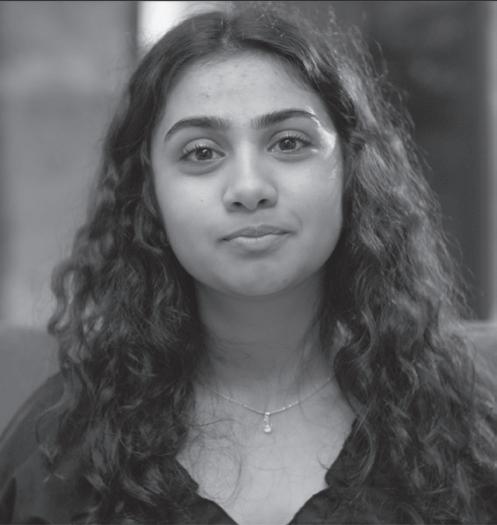
But selecting and preparing an interpretation piece is far more complex than simply choosing compelling material. Students must first ask themselves: What do I want to say? They must consider their own perspective and identity to select stories that work for them as performers and resonate authentically across diverse audiences. Then comes the painstaking process of “cutting.” A multi-hour play or entire novel must be distilled into 10 minutes, preserving essential plot beats and emotional arcs while trimming everything that stalls momentum or feels inauthentic. This refinement can take months. Many competitors use the feedback provided by tournament judges to hone the piece over time in pursuit of greater clarity and impact.
SKILLS DEVELOPED: Empathy, Perspectivetaking, Literary Analysis, Critical Thinking, Self-expression, Emotional Intelligence, Vulnerability, Collaboration (for Duo)
ANUSHRI RAMESH is a senior at Maggie L. Walker Governor’s School, where she has served as captain of varsity debate team and competed in both Dramatic Interpretation and LincolnDouglas Debate. Beyond the competition circuit, she is the founder of We Play Too, a nonprofit that provides elementary students access to after-school sports. Anushri also serves as a social media intern for RFSDI.
Thinking on Your Feet
While interpretation events reward careful preparation, Limited Preparation events test a different skill set entirely: the ability to think clearly under pressure.
In Impromptu Speaking , students receive three general topics—perhaps quotations, proverbs, or objects—and have just seven minutes total to both prepare and deliver a speech. Beginners might use four minutes to prepare and three to speak, while advanced competitors often prep for less than a minute and speak for six. Despite the time crunch, these aren’t rambling thoughts. Students must quickly craft organized arguments and deliver polished, coherent speeches without notes.
Extemporaneous Speaking (or “Extemp”) offers slightly more breathing room but demands deeper research. Students spend roughly a month studying broad topic areas.
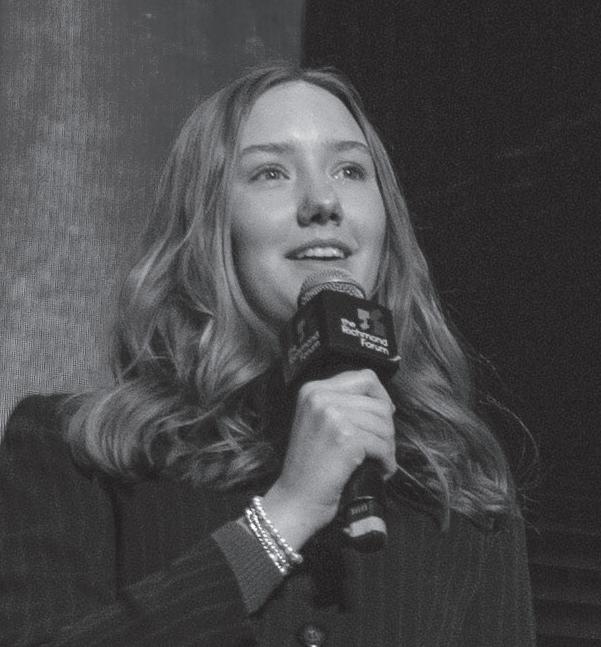
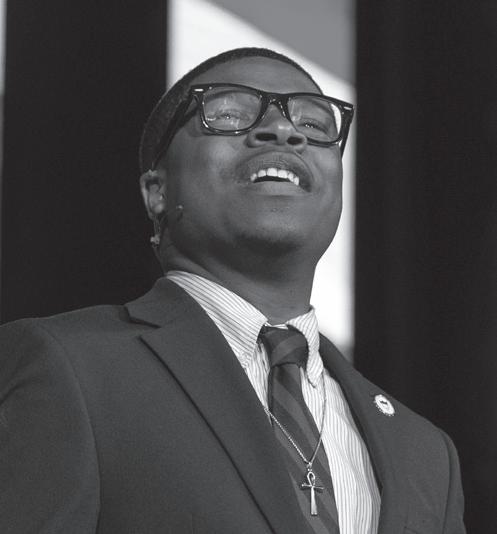
Recent competitions included topics like South America and the Caribbean, Healthcare, and International Economics. At the tournament, they draw three political or policy questions, select one, and have 30 minutes to prepare a seven-minute analytical speech using their research.
These events build skills students will use long after they leave the podium. They learn to synthesize information rapidly, construct arguments under time constraints, and engage with complex issues using balanced, researched approaches. In a world that demands quick thinking and clear communication, these are the skills that matter.
SKILLS DEVELOPED: Working Under Pressure, Research, Information Literacy, Adaptability, Decision-making, Balanced Thinking, Clarity, Conciseness
GRACE MOORE is a senior at Monacan High School who joined her school’s speech and debate team during its inaugural year. Last year, she helped lead her team to win first place overall at both the regional and super-regional championships. As a solo competitor, Grace also earned first place at the Virginia High School League competition in Extemporaneous Speaking.
HENRY PRICE is a 2025 graduate of LC Byrd High School and current freshman biology major at Howard University. As a speech and debate competitor, he dominated the Poetry circuit, earning first place in the super-region and second in the state. Henry qualified for the 2025 National Speech and Debate Tournament before heading to college to start pursuing a PhD in genetics.
We are proud to support The Richmond Forum.
Thank you for bringing exceptional programs that enrich and educate our community.

Davenport & Company is an independent, employee-owned firm, founded in Richmond, Virginia in 1863. During our history, we have experienced nearly every kind of financial market and we have learned the importance of balancing stability and innovation in a dynamic environment. We know there is more to our business than delivering high-quality financial services; it is about building meaningful relationships.





2025 STUDENT PROGRAM DONORS
The following list reflects gifts to the Ralph F. Krueger Jr. Memorial Fund and the Richmond Forum Speech & Debate Initiative, which were received between January 1 - December 31, 2025. The Richmond Forum makes every effort to ensure accuracy when recognizing and thanking our donors. If you find an error in your listing, or if you would like to change your recognition preference, please contact Sandra Wheeler, Director of Student Programs, at sandra@richmondforum.org.
Thank you for your generous support of our student programs!
WWW.RICHMONDFORUM.ORG/GIVE
KRUEGERDIAMONDDONORS
$10,000 or more
Capital One
Davenport & Company
Dominion Energy
Genworth Financial
Herndon Foundation
Hunton Andrews Kurth LLP
McGuireWoods LLP
Meta Henrico Data Center
Richmond Region Tourism
Bob and Anna Lou Schaberg Foundation
TCV Trust & Wealth Management
Troutman Pepper Locke
VCU School of Business
The Virginia Museum of History & Culture
YouDecide
KRUEGERPLATINUMDONORS
$5,000 to $9,999
SingleStone
Ellen E. Spong & Augustus C. Epps Jr.
Ali Tabassian
Lynn White & Philip Saul
KRUEGERGOLDDONORS
$1,000 to $4,999
Chris & Elizabeth Accashian
Jessica Allison & Marc Fend
Kevin D. Best
Kristen Cavallo
Bill & Gay Chapman
Nancy & Wayne Chasen
Anthony & Yvette Conte
Heather Mullins Crislip
Drs. Betty Neal & Ronald A. Crutcher
DLG Strategic
Teresa & Jon Downs
Luna Innovations, Inc.
Jon Haynes
Rudene Mercer Haynes
Henrico Economic Development Authority
Will & Jean Hershey
Jeanel & John Heyel
Kathleen Maccio Holman
D. Brennen Keene
King Family
Mary & Ted Linhart
George L. Mahoney
Markel
Patty Merrill
Stephen & Samantha Otero
Ashley & Rick Palmieri
Performance Food Group Company
ProfitOptics, Inc.
Alison Rogish
Susan Quinn
Nate & Sally Tate
Ashley & Gail Taylor
Maria Tedesco
Douglas & Janet Tope
Wil & Helen Zuelzer
KRUEGERSILVERDONORS
$500 to $999
Corynne Arnett
Wayne Boggs
Colleen & Jon Bohlman
Jim Brightwell & Laurie Keenan
Brian & Carolyn Burns
Susan Caley
Mr. & Mrs. John H Cronly III
John Daylor Jr.
Clifford & Laura Deal
J Dibbs & M Laming
Mary C. Dillon
Nancy Eberhardt
In Memory of Victoria Forrest
Tom & Jenni Gallo Family Giving Fund
Valerie & Kappy Gross
Steve & Wendy Humble
Otis & Machel Jones
Michael & Cindy Joyce
Monte Lake
COL Ralph E Layman, MD
Bruce & Kelly Mathern
Matthew & Erika McCurdy
Jerry Miller
Donald Mullins
Cristy & Kelly O’Keefe
Reshma Patel
W. Paul Pitts
Celia Rafalko
Anand Rao & Tamara Jezic
Dee A. Raubenstine
Tim Reid & Daphne Maxwell Reid
Sage Wealth Advisors
Rebekah Stewart
The Titchner Family
Pient Tran & Chrissy Creery
Todd Waldo
Austin Welder
Alyson Zehner
KRUEGERBRONZEDONORS
$250 to $499
Razi Ali & Sumayra Mohiuddin
Jonathan Brabrand
D. Cavanagh
The Change Decision
Drew & Andrea Gould
Eugene & Barbara Grecheck
Laura & Charles Hicks
Jon & Trish Hill
Elizabeth & Cory Hopper
Michael & Dr. Rebecca Hottman
Mr. Seth Kaplan
Drs. Jeffrey Kushinka & Catherine Grossman
Jesse & Sue Kay Lam-Kent
Seth & Cathy Levy
Paul Manno
Tedd & Liz Povar
Robert & Pamela Reed
Jennifer Rose
Tom & Beth Rosenberg
Michael Schewel & Priscilla Burbank
SHOCKOE - Mobile by Design
Ben & Vivian Sillmon
Lisa & Will Sims
Susan Snyder
Jo Ann S. Stoddard
C. D. Strickland
Technology Leasing Concepts
Sandra Wheeler
Jeb & Emily White
KRUEGERPEWTERDONORS
$100 to $249
Anne & Robert Adler
Margaret L. Ailes
Brian & Amanda Aker
Beth Williamson Ayers
Laura Bacon
Dr. Sheryl Bailey
Tony Basch
Kelly & Carter Berry
Jan Bilger
Gregory D. Blake
Scott & Winn Bleicher
Ruth H. Blevins
Don & Sharon Blom
Cecelia Boardman MD
Ashley & Keith Borders
Rev. Sandra Bottoms
Bill & Lisa Brand
Mr. & Mrs. W. Scott Brannan
Paul Brooks & Dearsley Vernon
Cindy Buckler
David & Maria Budnick
Barry & Cynthia Burkhardt
Phil & Ann Burks
Ken & Michelle Caravati
Carter Ryley Thomas, LLC
Jean Marshall Carter
Barbara Chavatel
Paul & Lisa Cobb
In Honor of Evelyn Virginia Connolly
Kelly & Ryan Conway
Lirys Crawford
Arlene Crislip
Bill & Gale Cushing
Daniel & Brenda Daglish
David DeBarger
Dr. Bethany Denlinger & Dr. Leonard Moses
Mark & Jennifer Dixon
Park & Sue Dodd
Sue & Roger Donaldson
Martha & Craig Eddy
Stephanie & Scott Erickson
Laura & Jay Erskin
Sharif Ewees & Emily Griffey
Susan C. Falbo
Dr. Mike Farrell
Timothy & Tonya Finton
Bridget A Fitzpatrick
Becky & Steve Fram
Stephen & Virginia Gardner
Anne Gilson
Maya & Stu Glaser
Nancy & Ches Goodall
Linda R Greer
Jeff & Kristen Greer
Roy & Charlotte Grier
Dr. Ed Griggs
Angela Gross
Stokes & Susan Grymes
James & Cynthia Gunson
Donna Guza
Nick Hanson & Catherine Gryp
Halle Harpold
Bo & Kim Harris
Bobbi Harte
George & Laura Hiller
Beth & Lowrey Holthaus
Leigh Hulcher
Jeff & Mary Kay Hull
Bobbie Hunt
Dr. Dianne Jewell
Barbara & Douglas Jones
Katherine & Conor Jones
Andy & Heather Jowdy
Claire C. Kaugars
Arthur Kellermann & Leila Taaffe
Rob & Carrie Kerr
Ann & Neil Knarr
In Honor of Carol Kratch
Cathy Kresan
David & Paula Kupstas
Dr. & Mrs. Fred Laine
Jeannie Langnau
The Larsens
Mary B. Line
Kenneth Lucas
Chris Lumpkin
Carol & Todd Lutterbein
Lillian Macartney & Scott Lovejoy
M. R. Macbeth
Kimberly C. MacLeod
Dr. Shailaja Malhotra
Virginia & Joe Marchetti
Amy & Mac Marshall
Ann Marie & Scott Marson
Elizabeth Martin
Ann & Upton Martin
Frances V. Massey
Anne & Andy Mauck
LeAnn & Frank Mazzeo
Ray & Vicki McAllister
Trenton C. McDorman
The Mcilwains
Doug & Peggy McVicar
Scott & Karen Meardon
Marlene & Peter Mellon
Laura & Eric Meyers
Jaclyn Miller
Benita & Michael Miller
Sarah Milston & Courtney Layman
Dr. Guru Mohanty
Jack & Sally Molenkamp
Denee Moore
Russell & Courtney Moore
Eunice Morck
Marsha & Herb Morgan
Ina Moses & Jeff Smyser
Liz Mountjoy
Lee & Tracy Muckey
Dr. & Mrs. Walter Murphy
Trudy Norfleet
Timothy & Kathryn Norman
Jeff & Paula OFlaherty
Elizabeth H. O’Hare
Devin O’Malley
Dib & Sandy Oglesby
Jennifer & John Owen
L. Owen
Katrina Parkinson
Randy & Mary Lloyd Parks
Elizabeth Perkinson
Cherry Peters
Laura & Chris Pomeroy
Ann & Richard Posey
PL Powell
Ruth S. Pratt
The Pressendo Family
Leslie Pridgen
Purpose & Wealth
Dale & Mac Purrington
Bob & Jan Reynolds
Andreya Risser
E.A. Ritter & Ethan Puryear
Edward & Alice Rivas
Wendell & Cheryl Roberts
Penn & Laurie Rogers
Nancy Rowsey
Colin Ruh & JoAnn Adrales Ruh
Niki Sabbath
Paula Saylor-Robinson & Danny
Robinson
Katy & Matthew Schaaf
Andrew & Irina Schaffernoth
Dr. Robert Schmidt & Dr. Melanie Bolling
Rick & Carly Schofield
Lawrence Schwartz & Anne-Marie Irani
Rosemary & Cullen Seltzer
In Memory of Ofelia Sandor
Greg & Beth Shull
Peggy & Dan Siegel
Mary Siff
Laura & Charles Sims
Martha Singdahlsen
Jessica Stankus Smith & Robert Smith III
Ray & Constance Sorrell
Jill Spivey-Kapadia
Frances Stanley
The Stehle Family
Dr. Ken & Susan Stoner
Lisa Storms & Dave Roberts
John & Beth Sublett
Todd Sutherland
Grant Tatum
Marcia Thalhimer
Sallie & Bill Thalhimer
Melodie Thigpen & Paulette Moncol
John Tomlin
Jim & Jane Tucker
Kimberly Vullo & Paul Benson
John Warkentin
Andrea & Rory Weber
Siri & Kyle Wiggins
Bruce & Janet Willis
Curt & Shelly Wiltshire
Jay Wood & Hannah Lauck
Robert & Jill Wright
Becky & John Young
Gary & Deb Zimmermann
Warren & Barbara Zirkle
KRUEGERSLATEDONORS
Up to $99
Sandy Adkins
Laura Akesson
Kris & Jim Allen
Mike Asip & Leslie Baskin-Asip
Nancy V. Ayers
Jane Baird Hyde
Veronica Baker
Bamboo Cafe
Jennifer Barbee
Dr. Edlow & Carolyn Barker
John Pirko & Terry Barnes-Pirko
Tamera & Jeff Barnes
The Barrett Family
Terri Cofer Beirne
KC Blaisdell
Lynn Bradford
Susan & Jeff Breeden
Sharon Brenner
Arthur & Stacy Brinkley
Ted Brown
Kevin W. Bruny
Budesky Family
Chris Burroughs
Alonzo Burton
Connie Burton
Jerry & Kristi Canaan
Diane Carnohan & Julia Flenner
Carol Carr
Diane L. Castleberry
Loena Chase
Kenneth Chitty
Chris & Kathy Clarke
Jessica Clarke
Deborah Cohen
Edward J Conklin
Joe & Abigail Conley
Angela & Ted Cox
Patricia Crocker
Brian & Jean Davis
Susan Dawson
William DeBender
Becky & Mike DeCamps
Stan & Pat Deutsch
Arun & Christina Dhir
Molly Dickinson
Alfred Diez
Harper Story Dodd
Thomas Domer
Jed & Kristen Dutton
John Dwyer
Belinda Early
Oscarlyn & Todd Elder
Thomas & Susan Eschenroeder
D. Esser
Elizabeth Evans
Gloria & Howard Fabry
Steve Farber & Ann Jewell
Michele Faulkner
Martha Fearnow
Robyn Feely
Pascal Fernandez
Mary Anne & Ted Fighera
Dr. & Mrs. Bruce Fillman
Barbara A. Fischi
Constance Ford
Sandy & Chuck Fry
Michael & Kelley Gannon
Mr & Mrs Garland
Tori & Dumas Garrett
Bill & Marilyn Geiszler
Roseblue
Randy & Erbie Godwin
Janene K. Gorham
De. Marijan Gospodnetic
Jeffrey Green
Laura Greenleaf
Judith & Richard Grossberg
Mona Guilford
Kristen & Brian Hager
Susan Hallahan
Norbert & Lynda Hamm
Joyce Hann & Robert Hunt
Jane & Lee Harris
Sally C Harrison
Joyce Hart
Victoria Harvey
Jon & Donna Hatfield
Phillip & Ellen Marie Hess
Grace & George Holzbach
Monica Hoyos
David & Ann Watson Irvin
Brenda Jackson
Henry & Barbara Jacocks
Carol & Chip Jamerson
The Johnson Family
Sherwood Jones
Susan Karn
Jennifer Katona-Dunlavey
David Kearney
Kerry & Linda Keenan
Kae Kindle & Rita D’Amico
Nancy Kinsley
Pamela E Kiser & Curtis N Sessler
Jeanne K Kreiser
Nancy Langston
Beth LaNier
David & Emily Lanning
Dr. Brad & Emily Lehmann
Dewey Litton
Mike & Karen Lucci
Calle & Andrew Luke
John & Danielle Maddock
Mark Maria
Monika & Dave Markowitz
Edward J Mazur
Mr. & Mrs. Van M. McAdoo
Elspeth & Bill McClelland
Joanne McDonald
Mr. & Mrs. Chris McGowan
Dawn McGrain
Goffinet McLaren
Dr. Linda Meyer
Cliff Miller III
Jeff & Tara Modisett
Sue & Mark Molnar
Bernard & Cynthia Monroe
Charleen Moore
Ann Munson
Mary & Eric Nedell
Jan Nelson
Shelley & Robert Nicol
Amy & David Nisenson
Trish & Bob Palmer
Melinda Parker
Steve & Lorna Parkins
Kimberly Pate
Shannon Patterson
G & G Peters
Catherine & Farest Pierce
Betsy Pike
Ingrid Prosser
Judy Putnam
Bob & Wendy Reardon
Andi & Brian Redmond
Jessie & Jay Reuben
Kelly & Randy Riggs
Paul & Mia Ronson
Courtney & Scott Rowe
Elizabeth Royal
Margaret Sacra
Kate Sakowski
David & Kelsey Salley
Wendy & Bill Schultz
Jen & Tom Shepley
Elizabeth Sherer
Susan Siegfried
Ryon Sinclair
Yvonne Singleton
Macon & Caren Sizemore
Bill & Christine Slate
LaShara Smith-Scott
Joyce & Tom Smith
William & Mona Smith
Smoothejazz
Jayne Sneed
Mary Lou & Charles Sommardahl
Chip & Lynn Spitzer
Kathryn & Larry St Peter
Marianne Stack
WT Stille
Melvin & Lisa Stone
Ann & Wayne Stuart
Doug & Pattie Sutton
Teresa Sutton
Carroll Swenson
Linda Talmadge
Suzy & David Taylor
Terry & Diane Taylor
Evelyn Terry
Scott Terry
Anja Thomas
Heidi Thompson
Lynn & Bill Thornley
Inez Tuck
Stanley Ullman
Richard Upton
Katherine Vatalaro Hill
Marianne Vermeer & Robert Johnson
D. Cabell Vest
Susan & Paul Ware
Chuck & Kathy Webb
Brenda & Steve West
Lynda & Ernie Weston
Ruth Wiese
Mark & Marie Wilcox
Linda D. Wilkinson
Gloria Williams & Anthony Proakis
Doris & Frank Willing
In Memory of Joshua Daniel Wilson
Douglas Wilson
Ellaine Wilson
Michael Winters
Wolver Family
Melissa Wood
Scott & Louise Zingaro
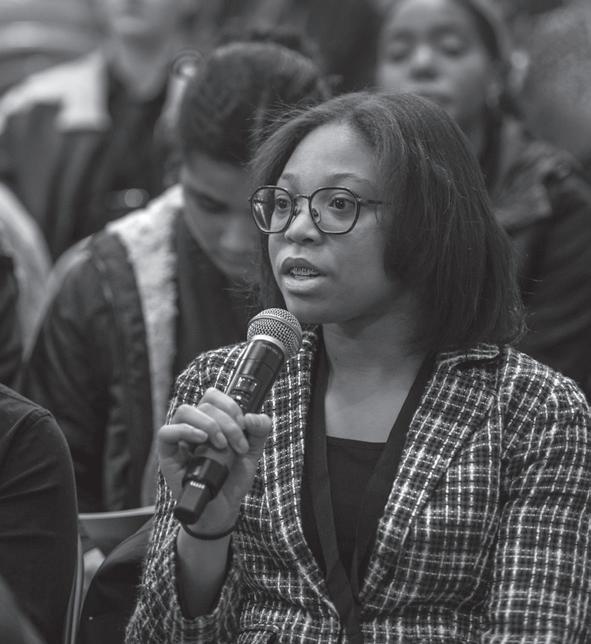
Thank You for Your Support
Your gift empowers the next generation of Richmond leaders to think critically and speak civily. Thousands of local students are engaged in our Student Room, Scholars program, and Richmond Forum Speech & Debate Initiative every year. Thank you for sustaining these vital programs.




UN DENIABLE PROOF
Virginia’s best orthopaedics hospital
As one of the best in Virginia, you can be assured that whoever you are, whatever brings you to us, we are unconditionally committed to helping you live your best life.


U.S. News & World Report ranked VCU Medical Center among the nation’s top 50 hospitals for orthopaedics









2025-2026 PATRONS
LEADPATRON
Altria Group
Davenport & Company LLC
Dominion Energy
Genworth Financial
Wells Fargo
HOSTPATRON
Capital One Bank
circle S studio
Hourigan Group
Troutman Pepper Locke
YouDecide
PRODUCERPATRON
Atlantic Union Bank
Bank of America
Boitnott Visual Communications
Bon Secours Health System
Covington Travel
Cream Studio
Deloitte Services LP
Massey Comprehensive Cancer Center
McGuireWoods LLP
TCV Trust & Wealth Management
Universal Corporation
VCU Health
Virginia Commonwealth University
EDUCATIONPATRON
Dr. & Mrs. W. Baxter Perkinson Jr.
Trinity Episcopal School
MEDIAPATRON
VPM
MUSICPATRON
CW Advisors
PRESENTER
2nd Order Solutions
12 On Your Side
ASGN
Brand Federation
Buckingham Greenery, Inc.
Children’s Hospital of Richmond Foundation
Cobotiq
Columbia Gas of Virginia
DLG Strategic
Froehling & Robertson
Fulton Bank
Heritage Wealth Advisors
HHHunt
Hirschler
Hunton Andrews Kurth LLP
James River Carriers
Kaufman & Canoles, P.C.
KPMG, LLP
Lakewood
Lingerfelt
Marks & Harrison
MCV Foundation
Dr. Andrew J. & Mrs. Patricia Michael
Padilla PartnerMD
Performance Food Group Company
Richmond Ed Fund
Sage Wealth Advisors
Transact Capital
University of Richmond
Virginia State University
Westminster Canterbury
Woodfin Oil
Workshop Digital
CONTRIBUTOR/FRIENDPLUS
Actuarial Benefits & Design Company
COLAB
Cornerstone Realty Advisors
The Dana Foundation
EY
Henrico Economic Development Authority
In Your Ear Studios
J.P. Morgan
Mary & Ted Linhart Markel
Nelson Mullins
VCU School of Business
Williams Mullen
FRIEND
Anne & Roger Boevé
BrownGreer PLC
CEBCO
The Change Decision
Kevin & Sheila Clasbey, Platinum Premier
Drs. Betty Neal & Ronald A. Crutcher
Dr. Arpita DePalma, Thought Work MD
Endodontic Partners
Paulina Hidalgo & Edwin Huertas
Gregory Karawan
Blair & Bill Martin
The Martin Agency
Betty & Will McLean
Mike Mulvihill & Marcy Walsh
Mutual Assurance Society of Virginia
Judy & Dave Pahren
Mary Ellen Pauli
Lisa & Leon Roday
Allesandra L. Schroeder
Will & Lisa Sims
SingleStone
Ellen Spong & Gus Epps
Emily Smith
Tredway S. Spratley & Janine M. Collins
VAMAC, INC.
Warren Whitney
Wells Coleman
Adrienne Whitaker
Vanessa & James Wigand
Dr. Robert Winn
PREMIUMSUBSCRIBERS
Nupa Agarwal, Esq
Razi Ali and Sumayra Mohiuddin
Sherrie Armstrong
Corynne Arnett
Ginger Bacon
Sharon V. Baker
Melody Barnes
Kevin D. Best
Richard & Sidney Bland
Scott & Winn Bleicher
Gina Bond & Sandy Barnes
The Branch Museum of Design
Sonia Phipps Brokaw
Donna & Robert Brown
Don & Donna Burgess
Susan Caley
Jean Marshall Carter
Will Caudle & Dr. Leanne Yanni
Samantha & Jimmy Chou
Julie Christopher & Marge Connelly
Candace & Bob Cody
Angela & Ted Cox
Mr. & Mrs. John H. Cronly III
Tanya & Brad Cummings
Bill & Gale Cushing
Frances Daniel
Kimberly Daniel
Lucy Day
Ken & Sam Seeley Dye
Jack M. Enoch
Laura & Jay Erskin
Whitney Fero
Ellen Field
Patricia Fields
Whitney K. Forstner
Leah Fremouw & Jacob Powell
Susan & Steve Gaidos
Thomas Gallo
Mr. & Mrs. Garland
Michael & Kimberly Giancaspro
Mr. & Mrs. Robert B. Giles
Sallie Gilliam
Maya & Stu Glaser
Nancy & Ches Goodall
Patricia Gordon
Greg & Gloria Gravlin
Dr. Ed Griggs
Pamela D. Harrell
Mary & Tom Harrison
James Head
Jay & Suzanne Hendricks
Phillip & Ellen Marie Hess
Jon & Trish Hill
Gregory & Deborah Hillman
John M. Holloway
Kathleen Maccio Holman
Patti Hughes
Steve & Wendy Humble
Bobbie Hunt
Lana Ingram
Otis & Machel Jones
Michael & Cindy Joyce
Liz Kastelberg
Kerry & Linda Keenan
Arthur Kellermann & Leila Taaffe
Bruce & Terri Kelley
Brent King
Jay & Janet Kraft
Jeffrey Lacker & Lisa Halberstadt
Evan Leslie
Dewey Litton
Anne & Preston Lloyd
Chris Lumpkin
Luna Innovations
John & Rhoda Mahoney
George L. Mahoney
Main Street Law Offices
Dr. Shailaja Malhotra
Paul Manno
Elizabeth & Michael Martin
Candace & Patrick Martin
Elizabeth Mason
Kevin & Nina McDonough
Mike McGinley
Jerry Miller
Michael & Benita Miller
Dr. Guru Mohanty
Charleen B. Moore
Lauren Moore
Ina Moses & Jeff Smyser
The Moten Team
Jan Nelson
Amy & David Nisenson
Suzanne & George Nyfeler
William O’Flaherty
Jeff & Paula O’Flaherty
Samantha & Steve Otero
Thomas & Courtney Perry
Cherry Peters
Michael & Laura Phelan
W. Paul Pitts
Therese Podgorski
Leslie Pridgen
Kee & Hugh Rabb
Celia Rafalko
Andi & Brian Redmond
Tim Reid & Daphne Maxwell Reid
Paul D. Reilly
Mollie Reinhart
Linda F. Rigsby
E.A. Ritter & Ethan Puryear
Grover C. Robinson
Penn & Laurie Rogers
Colin Ruh & JoAnn Adrales Ruh
Dr. Vipal & Jeanette Sabharwal
Diane Dorris Sanders
Paula Saylor-Robinson & Danny Robinson
Linda & Serge Schreiner
Lawrence Schwartz & Anne-Marie Irani
Robert Scott
Ben & Vivian Sillmon
John G. & Laine Sims, LCSW
Jessica Stankus Smith & Robert Smith III
Susan Snyder
Sarahbeth & Steve Spasojevich
Leslie Stack & Frank Rizzo
M. Stewart
Kenneth E. Stoner
Charles & Deborah Sutton
Nathan & Sally Tate
Technology Leasing Concepts, Inc.
Melodie Thigpen & Paulette Moncol
Ken Thomas
Doug & Janet Tope
VCI
Marc & Marnie Warner
Siri & Kyle Wiggins
Beth Williams
The Yaratha Family
Becky & John Young
Robyn L. Young



1987
RICHMOND FORUM SPEAKERS
January Ted Koppel
February Hodding Carter and Larry Speakes with Paul Duke
March General Brent Scowcroft with Diane Sawyer
April Charles Kuralt
1988
January Oprah Winfrey
February Jeane Kirkpatrick and Vladimir Pozner with Marvin Kalb
March George Will
April Art Buchwald
1989
January Sam Donaldson
February Henry Kissinger with John Chancellor
March William Buckley and Charles Rangel
April Dr. Carl Sagan
1990
January Paul Duke, Howard Fineman and Charles McDowell
February Frank Carlucci, George McGovern, William Proxmire and William Rusher with Bettina Gregory
March Mike Wallace
April Alistair Cooke
1990–1991
October Chancellor Helmut Schmidt
January Admiral William Crowe, General Alexander Haig and Robert McFarlane with Edwin Newman
February H. Ross Perot
March Art Buchwald and Andy Rooney
April Captain James Lovell and Dr. Frank Drake with James Burke
1991–1992
October Barbara Walters
January PM Margaret Thatcher
February General H. Norman Schwarzkopf with Larry King
March Dr. Marc Micozzi and Dr. Victor McKusick with Patricia Cornwell
April Mark Russell
PAST PROGRAM HIGHLIGHT
“Perspectives: From Right to Left (1990)”
1992–1993
October Terry Anderson
January Hiroki Kato and T. Boone Pickens
February Dr. Joyce Brothers
March Dr. Bill Cosby
April President Mikhail Gorbachev with Cokie Roberts
1993–1994
November Senator Warren Rudman, Lamar Alexander and Dr. Marvin Cetron with Chris Wallace
January Frank Capiello and Michael Holland with Louis Rukeyser
February President George H. W. Bush
March Dr. Elisabeth Kubler-Ross
April Bob Newhart
1994–1995
November General Colin Powell
January Walter Cronkite
February Dave Barry
March Tom Clancy
April Jack Kemp and George Mitchell
1995–1996
November PM Brian Mulroney and Ambassador Carla Hills
January Neil Armstrong, Eugene Cernan and Dick Rutan with David Hartman
February Calvin Trillin
March Charles Kuralt
April David Gergen, Pierre Salinger, Sheila Tate and Bob Woodward with Ed Bradley
1996–1997
November Carl Reiner with Dick Cavett
January Paul Volcker with Ray Brady
February Doris Kearns Goodwin and David McCullough
March Sir Andrew Lloyd Webber with Sir David Frost
April Marcia Clark, Philip K. Howard, Dr. Rodney Smolla and Kym Worthy with Prof. Arthur Miller
On February 24, 1990, prominent figures from across the political spectrum gathered for a spirited debate on what Washington had begun calling the post–Cold War “peace dividend.” Representing the left were former Democratic senators George McGovern of South Dakota and William Proxmire of Wisconsin, while the right-leaning team featured former Secretary of Defense Frank C. Carlucci III and conservative commentator William A. Rusher
With geopolitical tensions easing after the fall of the Berlin Wall, the group debated whether the United States should continue to invest heavily in its defense budget.
“The Soviet Union is not demobilizing, it is restructuring,” Carlucci said, arguing that the U.S. must preserve its global military presence. McGovern and Proxmire countered that the greater threat lay at home, emphasizing economic strain and mounting federal debt. The lively exchange, punctuated by humor and sharp rebuttals, underscored the ideological divide over how the United States should redefine its priorities in a rapidly changing world.
1997–1998
November Bill Moyers
January Wynton Marsalis
February PM Shimon Peres
March Mary Tyler Moore
April Peter Lynch
1998–1999
November PM John Major
January Robert Bennett and Dr. William Bennett with Tim Russert
February Harry S. Dent, Jr. and Lou Dobbs
March Lily Tomlin
April Dr. Robert Ballard and Jean-Michel Cousteau
1999–2000
November Julie Andrews
January Todd Brewster and Peter Jennings
February John Krubski and Michael Connors with Ray Brady
March Archbishop Desmond Tutu
April James Carville and Newt Gingrich with Tim Russert
2000–2001
November Senator John Glenn
January Tom Brokaw
February PM Benjamin Netanyahu
March Frank McCourt
April Dr. William Kelso
2001–2002
November Hal Holbrook
January Rabbi Marc Gellman and Msgr. Thomas Hartman
February Dick Clark
March Doris Kearns Goodwin and David McCullough
April Madeleine Albright and James Baker with Gwen Ifill
2002–2003
November Ken Burns
January Rudolph Giuliani
February PM Benazir Bhutto and Queen Noor with Gwen Ifill
March Louis Freeh
April Senator Fred Thompson
2003–2004
November Cal Ripken, Jr.
January Robert Shiller and Jeremy Siegel
February Candice Bergen
March President Mary Robinson
April Thomas L. Friedman
2004–2005
November General Tommy Franks
January Michael Beschloss and Walter Isaacson
February Tim Russert
March Dr. Fareed Zakaria
April Frank Gehry
2005–2006
November Robert Redford with Pat Mitchell
January Sherry Lansing
February General Colin Powell (Ret.)
March Tom Wolfe
April Rick Wagoner
2006–2007
November Burt Rutan
January Malcolm Gladwell and Alvin Toffler
February B.B. King
March Jim Lehrer
April Dr. Jared Diamond
2007–2008
November President Vicente Fox
January Carly Fiorina
February Michael Douglas
March Dr. Henry Louis Gates, Jr.
April David Brooks
2008–2009
November PM Tony Blair
January Reza Aslan and Jon Meacham
February Smokey Robinson with Daphne Maxwell Reid
March Terry Bradshaw and Howie Long
April Marion Nestle and Michael Pollan
2009–2010
November Dr. Neil deGrasse Tyson
January Greg Mortenson
March Steve Forbes
April Condoleezza Rice
May David Plouffe
2010–2011
November President Ellen Johnson Sirleaf
January Laura Bush
February Anderson Cooper
March Dr. George Church
April David Blaine
2011–2012
November Dr. Robert Ballard
January Robert Gates
February Quincy Jones with Tim Reid
March Charles Krauthammer and Robert Reich with John Donvan
April Sir Ken Robinson and Rafe Esquith
2012–2013
November Platon
January Steven Spielberg, Tony Kushner and Doris Kearns Goodwin with Tim Reid
February President Bill Clinton
March Captain Mark Kelly and Gabrielle Giffords
April Dr. Jane Goodall
2013–2014
November Ayaan Hirsi Ali, Imam Feisal Abdul Rauf and Maajid Nawaz with John Donvan
January Dan Buettner
February President George W. Bush
March PM Gordon Brown
April Steve Martin and Martin Short
2014–2015
November Diana Nyad
January Garry Trudeau
March Ben Bernanke with Paul Solman
April Dr. Daniel Levitin and Rosanne Cash
May General Keith Alexander and Robert Mueller with John Donvan
2015–2016
November Michael Sandel
January Alan Alda
February James Balog
March PM Julia Gillard
April Russell Wilson and Dr. Henry Louis Gates, Jr.
2016–2017
November Nate Parker
January Doris Kearns Goodwin and Jon Meacham with Steve Inskeep
February Krista Tippett
March PM Ehud Barak and Dr. Mohamed ElBaradei with Robin Wright
April Ron Howard with Linda Holmes
2017–2018
November President Barack Obama
January Glenn Close
February Peter Diamandis
March Ambassador Samantha Power
April Joe Scarborough and Newt Gingrich with Mara Liasson
2018–2019
November Captain Scott Kelly
January Tina Fey with Linda Holmes
February Dr. Sanjay Gupta
March Ian Bremmer
April Dr. Temple Grandin with John Donvan
2019–2020
November Bob Costas
January Dave Isay, Catherine Burns and Brandon Stanton with John Donvan
February Peggy Noonan
2020–2021
November José Andrés
January Theresa May
February Esther Perel
March Bryan Stevenson
April Vijay Gupta
2022
January Bob Iger with Kara Swisher
February Gloria Steinem with Zainab Salbi
March Erik Weihenmayer
April Intelligence Squared U.S. Debates
May Rhiannon Giddens
June Michelle Obama
2022–2023
November Lt. Gen. H. R. McMaster (USA, Ret.)
January Maria Ressa
February Ella Al-Shamahi
March John Lithgow
April Dr. Cornel West and Thomas Chatterton Williams
2023–2024
November Isabel Wilkerson
January Joel Sartore
February Liz Cheney
March Dr. Anthony Fauci
April Jan Crawford and Kimberley Strassel
2024–2025
November Baratunde Thurston
January Dr. Amber Straughn
February Mike “Coack K” Krzyzewzski
March Richard Reeves
April Martha Stewart with Soledad O’Brien
2025–2026
October Andrew Ross Sorkin
November Ted Koppel with Amna Nawaz
January PM Sanna Marin
February Joe Manchin, Andrew Yang, and Justin Amash
March Tracee Ellis Ross
April John Green
Explore our past speaker archive and share your Forum memories at richmondforum.org/speaker.

PRIME MINISTER SANNA MARIN
AT THE RICHMOND FORUM JANUARY 17, 2026
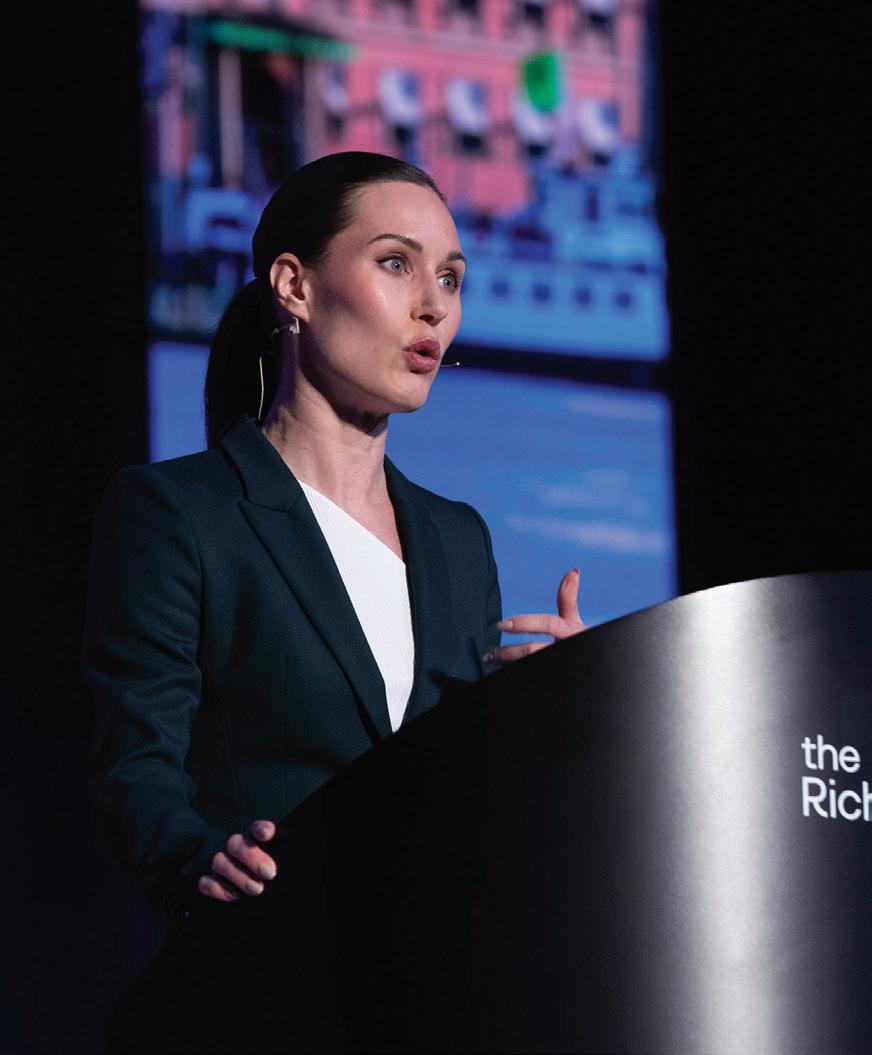
“We won’t give up our values for a 10% tariff.”
Hours after President Donald Trump announced a 10% tariff on eight European nations to pressure Denmark into selling Greenland, former Finnish Prime Minister Sanna Marin delivered a defiant response from the stage of The Richmond Forum.
Her remarks captured the evening’s central theme: values-based leadership as a defense against rising global authoritarianism.
Trump’s plan, announced earlier that day, threatens to increase the tariff to 25% if a deal isn’t reached by June 1. Finland was among the targeted nations.
Marin, who served as Finland’s prime minister from 2019 to 2023 and led the country into NATO membership, warned that today’s geopolitical conflicts are challenging the international rulesbased order established after World War II. “If there are no rules that we can all rely on, then we are all in jeopardy,” she said.
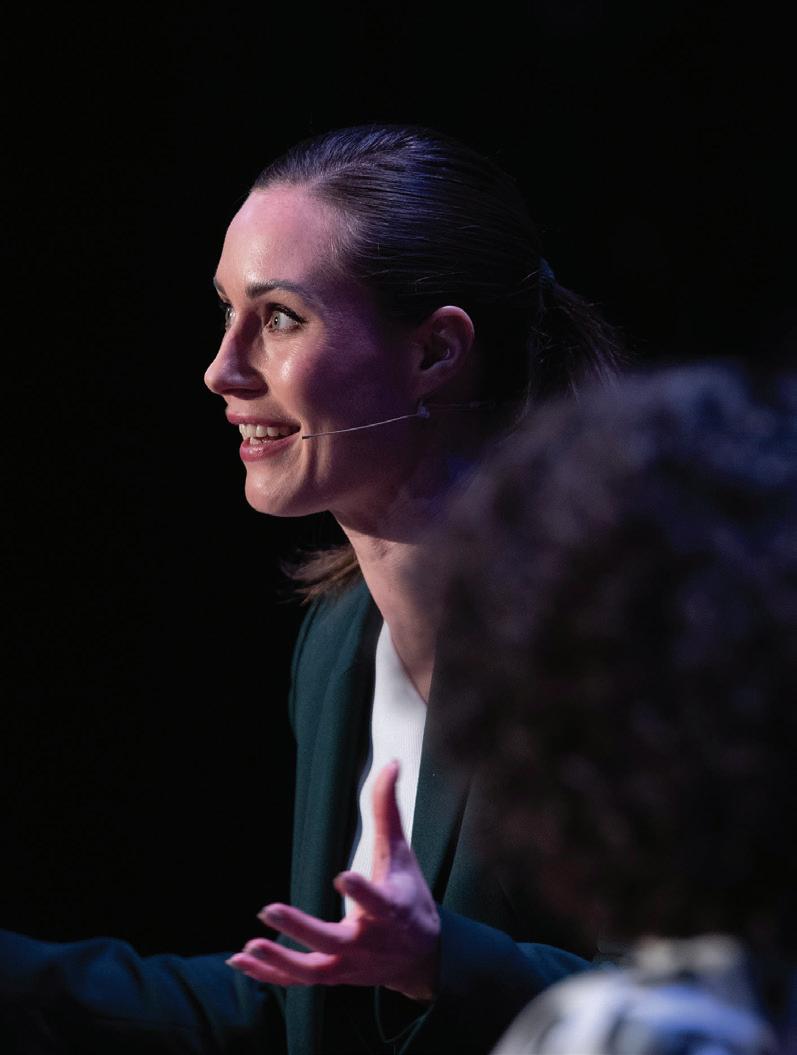
Marin’s appearance coincided with the inauguration of Virginia’s first female governor, Abigail Spanberger. When asked to offer advice, Marin emphasized the importance of trusting one’s values and standing strong in one’s vision. “Do what you came to do,” she said. “You have the opportunity to use power, so use it.”
Democratic nations need leaders who understand core values like democracy, justice, rule of law, and human rights, Marin said. “None of us here want to see a future that we’ve seen in the past,” she remarked. “Only if you have the understanding of those core values, then you can form a vision for a better future that would be prosperous, a future where every child can become anything.”
Marin acknowledged that smaller nations like Finland have historically relied on collective defense arrangements like NATO, but the current situation demands greater European investment in defense.
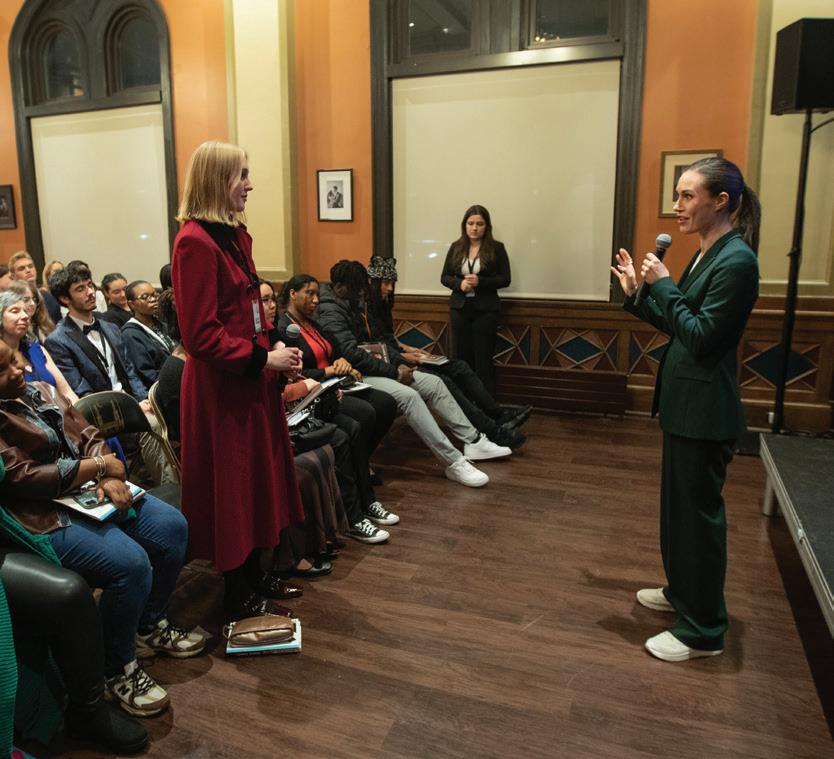
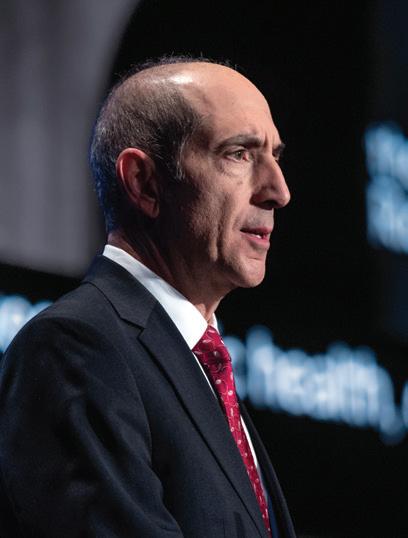
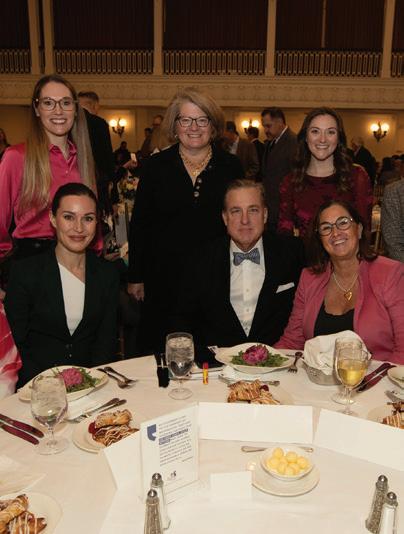
“If we want to stay independent and free, if we want to have democratic values in the future, we need to be able to defend ourselves,” she said. “It has been unfair for U.S. citizens to carry the financial burden of European defense. It’s about time that we take care of our own backyard.”
Marin made an impassioned case for continued Western support of Ukraine, calling it NATO’s “strongest asset.”

“They are the only European country that has the experience of modern warfare,” she said, noting how Ukrainian forces have revolutionized military tactics through drone technology. When the war began, conventional wisdom held that destroying a tank required another tank — an expensive proposition. Ukrainian innovation proved otherwise.
“We have actually seen that the best way to demolish a tank, and to be able to survive warfare, is with drones,” Marin said. “Ukraine is building amazing drones, and they are innovating every day because they are on the battlefield.”
She emphasized the mutual dependence between Ukraine and NATO allies, as Russia also learns and adapts daily. “We need Ukraine as much as Ukraine needs us,” she said.
Despite the ongoing conflict, Ukraine is simultaneously rebuilding and pursuing European Union membership, she said. “Even though there is still an incredibly difficult situation in Ukraine, there is hope.”
Marin closed with a story from childhood. As a 9-year-old, she led classmates in protesting the removal of a forest next to their school. Sadly, they failed, and the trees were cut down.
Rather than accepting defeat, every student and teacher planted a sapling on school grounds. More than 30 years later, a new forest stands.
“There is always hope when there is action,” Marin said.
A
REMINDEROFHOWESSENTIAL HONESTANDFOCUSED
1) Sanna Marin on stage. 2) Marin answers questions from the audience. 3) Marin visits the Student Room to talk with local high school students. 4) Anthony Conte of Wells Fargo, the evening’s Lead Patron, introduces the speakers. 5) Guests of YouDecide, the Host Patron for the evening. 6) Deau Eyes provides musical entertainment.
What do Virginia’s best brands have in common?

They’ve turned to Brand Federation for marketing research, branding and strategic planning. We’re proud to have advised the Richmond Forum, and many of its sponsors, to help turn their brands into fuel for growth. BOOKS ARE AVAILABLE FOR
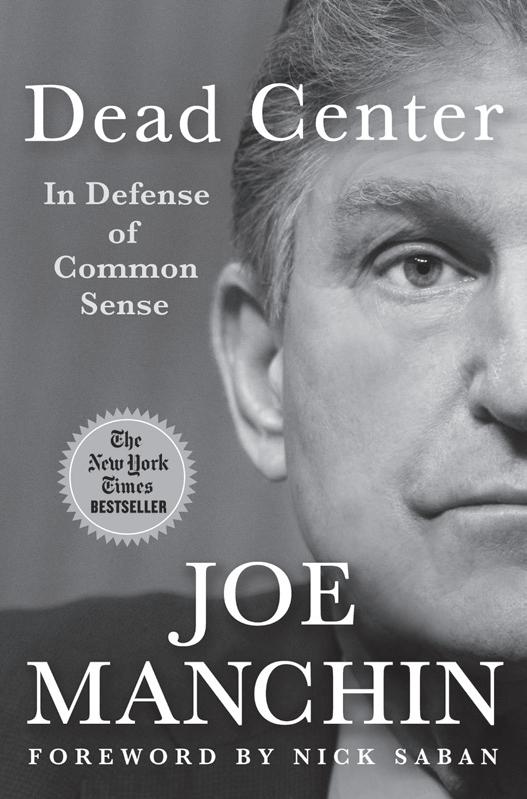


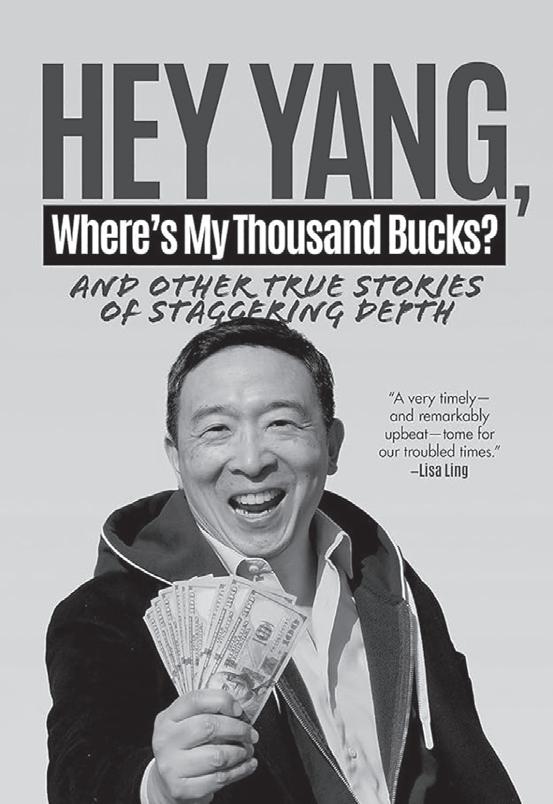

THANK YOU TO OUR LOCAL SPONSORS

Help us roll out Richmond’s red carpet for the ten thousand competitors, coaches, judges, and families who will fill our schools and our city with energy, talent, and ideas. VIsit richmondforum.org/2026 to join our team of volunteers or become a sponsor, or scan the QR code to make a donation tonight. The National Speech & Debate Tournament is coming to Richmond!





YouDecide
TCV Wealth Management
Meta Richmond Debate Institute SingleStone
Herndon Foundation

UP NEXT AT THE FORUM
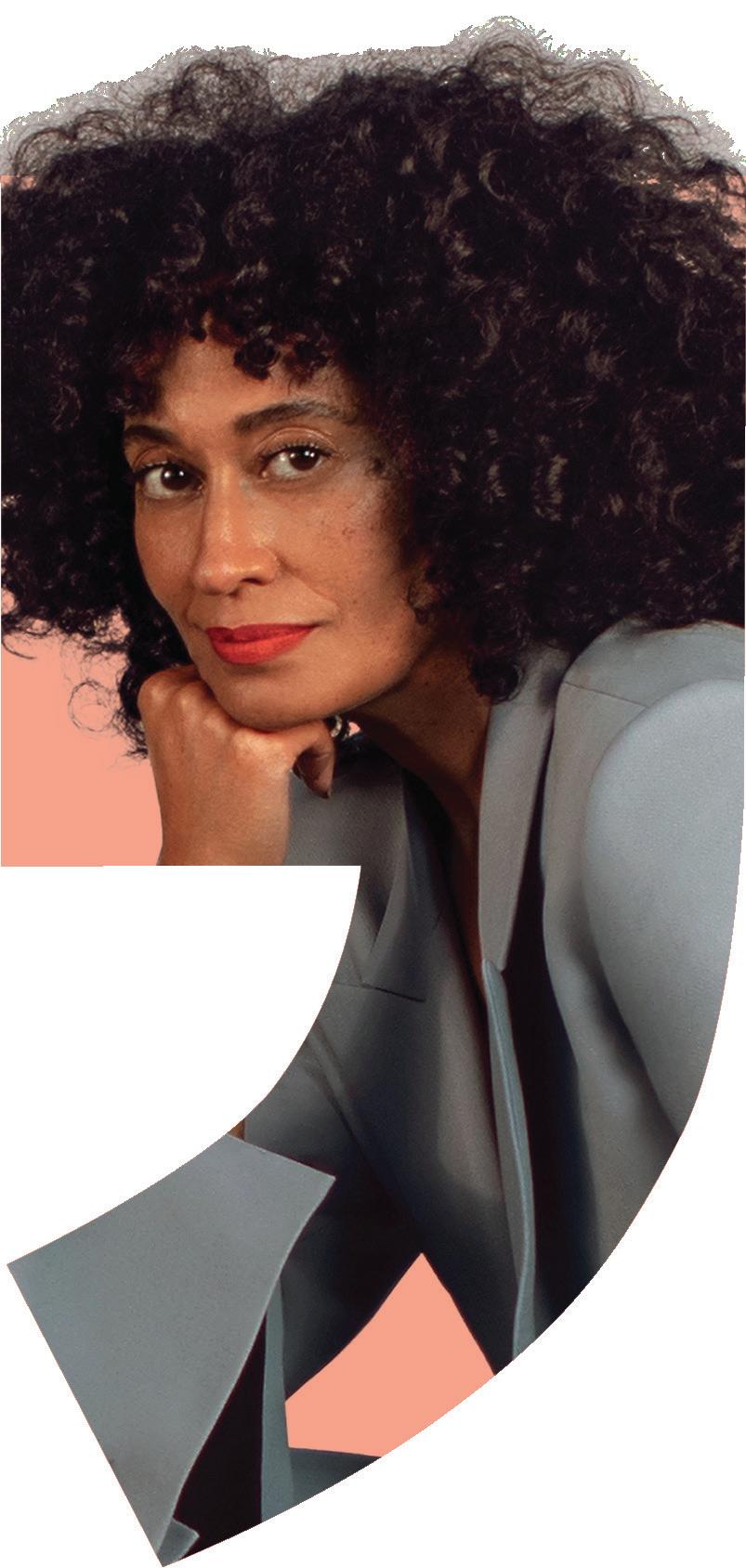
MARCH 21, 2026
TRACEE ELLIS ROSS
ON IDENTITY, IMPACT, & JOY
From cementing a legacy of television and film stardom to building a multimillion-dollar brand that celebrates Black beauty, Tracee Ellis Ross has spent her life breaking molds and making space — for herself and for others. In this evening of conversation, she will open up about her career, her passions, and the power of showing up as your whole self. Expect reflections on creativity, courage, and joy — with the signature humor and honesty that have made her a beloved cultural force.
(Format: Conversation with Q&A)
-TraceeEllisRoss “
I AM LEARNING EVERY DAY TO ALLOW THE SPACE BETWEEN WHERE I AM AND WHERE I WANT TO BE TO INSPIRE ME AND NOT TERRIFY ME.
APRIL 18, 2026
JOHN GREEN
Perpetually Curious #RVAFORUM FOLLOW THEFORUM




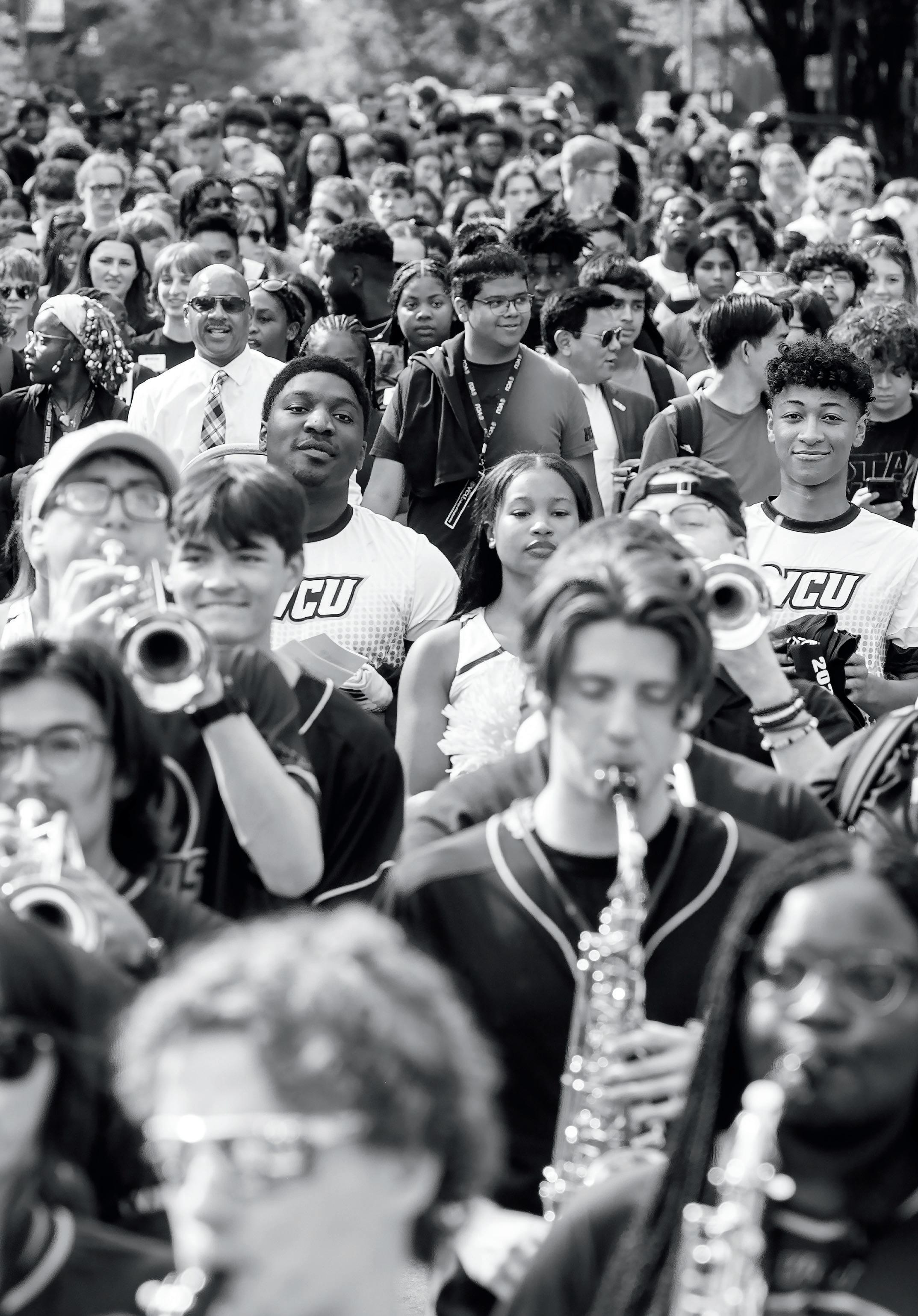
Uncommon THinKeRS
Just like the trailblazing minds who take the stage at the Richmond Forum, VCU believes in the kind of thinking that serves something bigger than ourselves. We bring together world-class research, fearless innovation, bold creativity, and community-driven impact to tackle the challenges others can’t — or won’t — for the greater good. Guess great minds do, in fact, think alike.
VCU. We are the uncommon.