
Richard Marvin Tiberius Grove


Copyright © 2026 Wet Ink Books
Copyright © 2026 Richard Marvin Tiberius (Tai) Grove
All rights revert to the author. All rights for book, layout and design remain with Wet Ink Books. No part of this book may be reproduced except by a reviewer who may quote brief passages in a review. The use of any part of this publication reproduced, transmitted in any form or by any means, electronic, mechanical, photocopied, recorded or otherwise stored in a retrieval system without prior permission in writing from the publisher or a license from The Canadian Copyright Licensing Agency (Access Copyright) is prohibited. For an Access Copyright license, visit: www.accesscopyright.ca or call toll free: 1.8008935777.
The Magic of Blue by Richard
M. Grove
Cover Design – Richard M. Grove
Layout and Design – Richard M. Grove
Typeset in Calibri
Printed and bound in Canada
Distributed in Canada by Volumes – https://volumesdirect.com/collections/wet-ink-books
Distributed in USA by Ingram, – to set up an account – 1-800-937-0152
Library and Archives Canada Cataloguing in Publication
Title: The magic of blue / Richard Marvin Tiberius Grove.
Names: Grove, Richard M. (Richard Marvin), 1953- author, photographer.
Identifiers: Canadiana 20260129224 | ISBN 9781998324309 (softcover)
Subjects: LCSH: Grove, Richard M. (Richard Marvin), 1953-—Travel— Morocco—Chechaouene (Tétouan) |
LCSH: Chechaouene (Tétouan, Morocco)—Description and travel. |
LCSH: Chechaouene (Tétouan, Morocco)—Pictorial works. |
LCSH: Mountains—Morocco—Pictorial works. |
LCGFT: Travel writing. |
LCGFT: Illustrated works.
Classification: LCC DT310.3 .G76 2026 | DDC 916.404/53—dc23

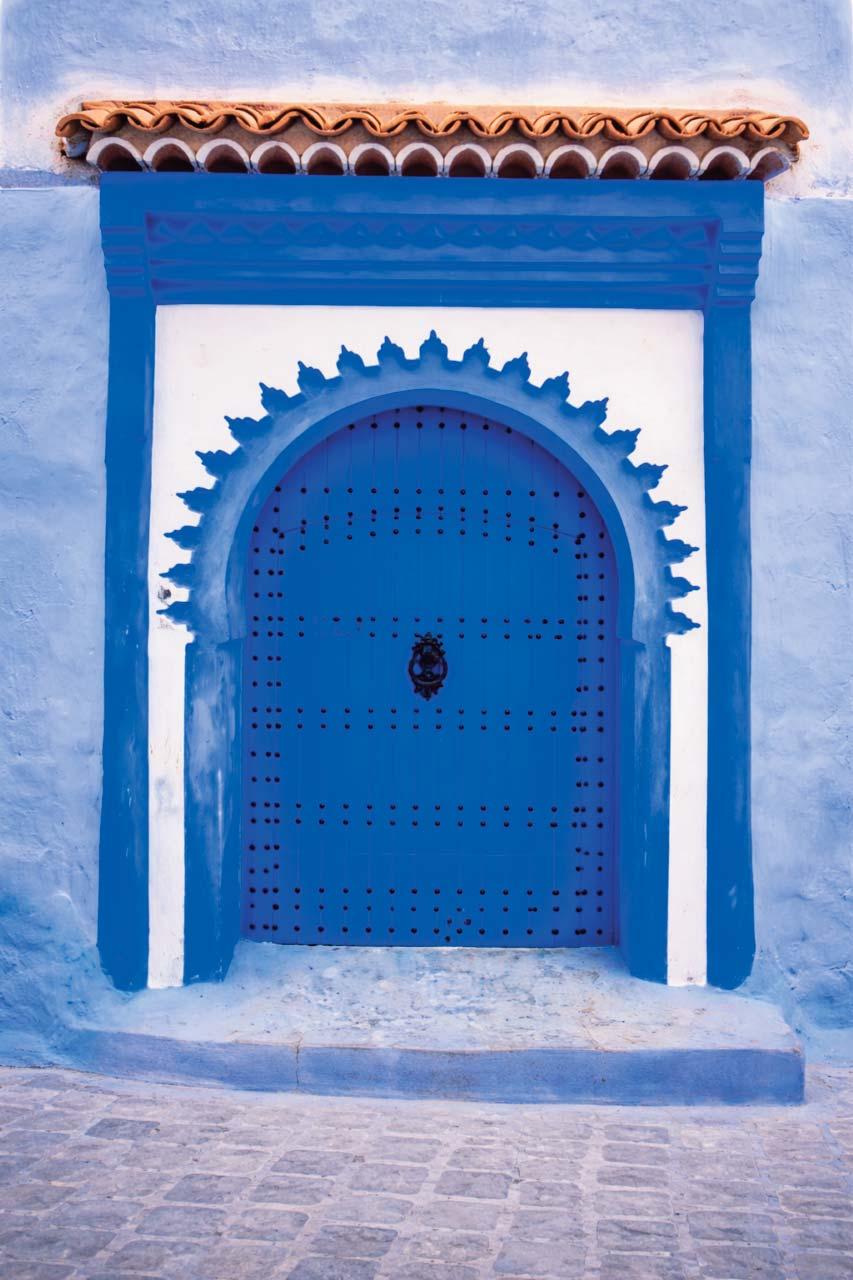

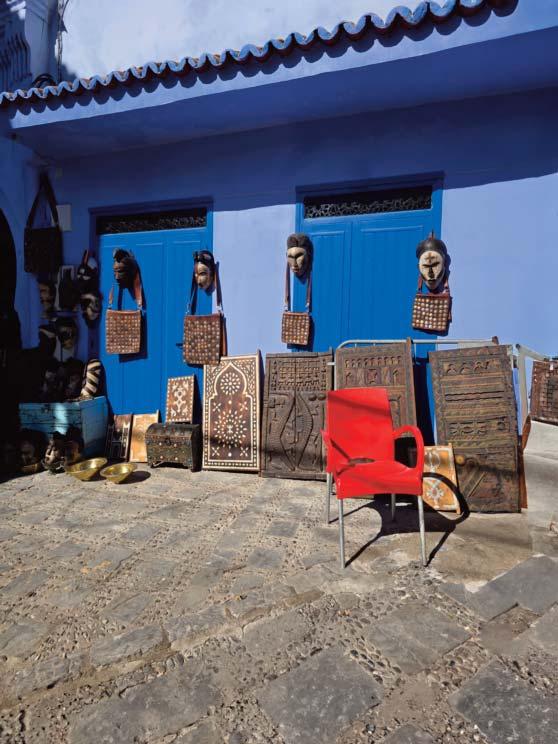
Table of Contents
Introduction – p. 1
The Mountains of Morocco – p. 4
To a Ridge or a Distant Village – p. 8
The Rif Mountains
On our way to Chefchaouen – p. 12
Is this a Life – p. 13
Waiting – p. 15
The Two Faces of Chefchaouen – p. 16
The Magic of Blue – p. 22
The Cats of Chefchaouen – p. 33
Hands of the Blue City – p. 37
Calming the Restless Mind – p. 48
Chefchaouen and the Magic of Blue – p. 52
Merry Christmas – p. 58
At the end of 2025, I found myself saying yes to something that arrived casually in my lap, as good invitations often do. My photographer buddy Mike, from Trenton, asked if I wanted to join him on a twoweek bus tour through Morocco. There was no dramatic pause, no careful weighing of pros and cons. My answer, almost immediately, was simply YES! Our previous trip to Havana, Cuba, was such a success that there was no hesitation. Some opportunities announce themselves loudly. Others slip in quietly and wait to see if you are paying attention.
The idea of Morocco had been circling my imagination for years. Not as a checklist of destinations, but as a mood: heat and dust, ancient cities folded into themselves, long roads, and a culture shaped as much by geography as by history. The tour offered a way in—not rushed, not solitary, but measured, social, and grounded. A moving classroom on wheels, driven not by urgency but by accumulation.
Bus travel has its own peculiar honesty. You see a country not in highlights but in transitions. You watch cities loosen into countryside, countryside tighten into villages, villages dissolve back into open land. You feel distance in your body. You learn the weight of roads, the patience of mountains, the way time stretches when the horizon keeps changing but never fully resolves.
For days, we travelled. North to south. Coast to interior. Plains rising into foothills, foothills climbing into mountains. The bus zigzagged through Morocco’s layered geography, each bend revealing a new arrangement of rock, colour, and settlement. Conversations drifted. Cameras rested on laps, then lifted again. Windows became frames through which the country offered itself in fragments.
And then, after hours of mountain roads and switchbacks, we arrived in Chefchaouen.
Chefchaouen sits tucked into the Rif Mountains in northern Morocco, a city shaped as much by slope as by stone. From a distance, it appears almost tentative, low buildings pressed gently against the hills as if asking permission to stay. But as you draw closer, the city begins to declare itself—not through size or noise, but through colour.
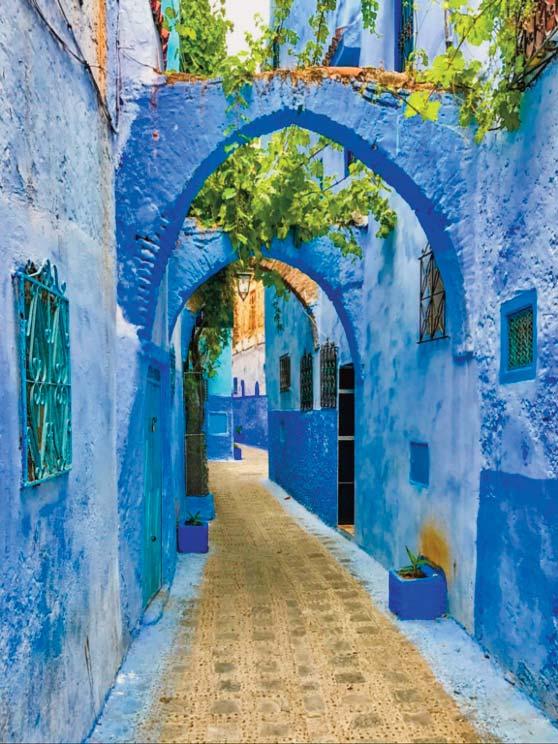
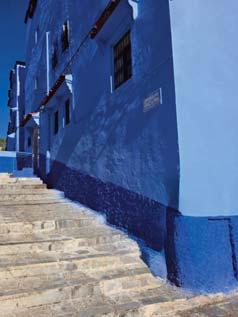
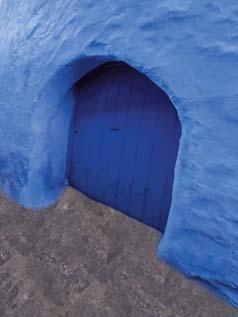
The old part of Chefchaouen is known as the Blue Pearl. The name sounds poetic, almost exaggerated, until you step inside it. Then it feels simply accurate. Blue is everywhere. Not a single blue, but many: pale, washed, deep, defiant. Blue layered over blue, refreshed, repaired, faded, repainted. It coats walls, doors, stairs, arches, and alleyways until the city feels less built than bathed.
Stepping off the bus after days of dust, gravel, and earth tones, the blue feels like a physical sensation. A cooling. A slowing. As if the city has learned how to receive the weary. The Rif Mountains, which had jostled us for hours, release their grip here, and the body responds instinctively. Shoulders drop. Breathing deepens. The pace changes without instruction.
Richard Marvin Tiberius Grove
This short eBook began there, in that moment of arrival. Not as a plan, but as a response. A need to pay attention to what colour can do to place, to mood, to memory. The Magic of Blue is not a guide to Chefchaouen, nor is it an argument for why one should go. It is simply an attempt to walk slowly through a city that asks for nothing more than that, and to notice how blue—quietly, persistently—works its way into everything.
What follows is not a record of everything we saw, but of what stayed. Of mountains that teach patience. Of streets that invite stillness. Of a city that seems to understand that calm is not accidental, but cultivated—wall by wall, step by step, shade by shade.
This is where the Blue City of Chefchaouen journey begins – through the mountains.

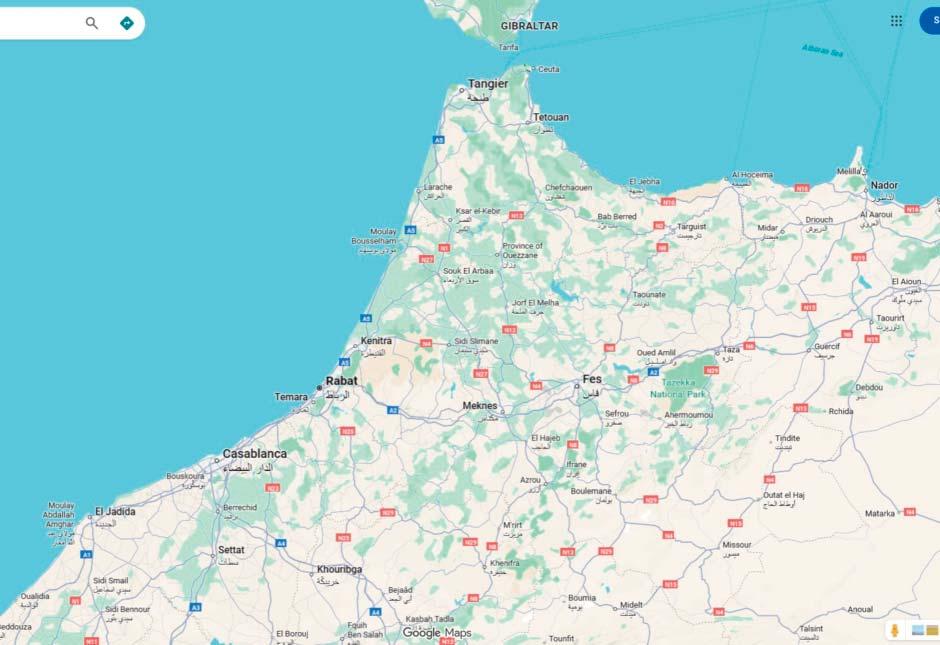

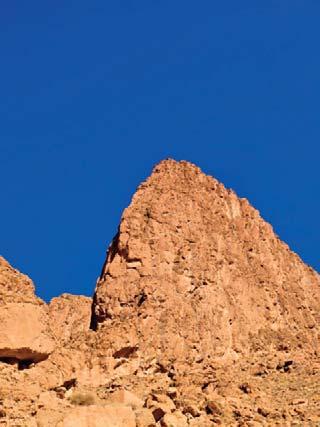
Before we step into the city of Chefchaouen let me give you a bit of a geography lesson while we zigzag up and around yet another mountain range. I had to look this up when I got home because it seemed we were always moving from one mountain to another but basically Morocco is shaped by four mountain ranges, each one quietly determining how the land looks, how people live, and how travel feels as you move through the country.
In the far north, the Rif Mountains rise sharply from the Mediterranean, compact and rugged and greener than expected. Our time in the Rif Mountains took us to Tangier and Asilah along the coast, then climbing inland to
Richard Marvin Tiberius Grove
Chefchaouen known as the Blue Pearl. You will read more about the blue city later.
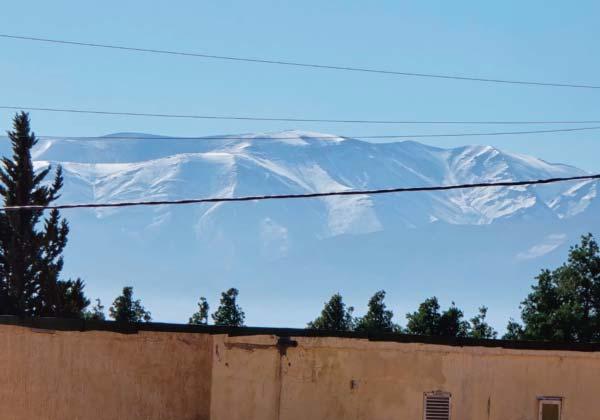
Moving south and inward, the Middle Atlas mountain range spreads out in broad plateaus where cedar forests thrive. This is a more gentle range that feeds rivers and farms. Its seasons are marked by snow in winter and grazing in the summer. The Middle Atlas is not dominated by megacities like other parts of Morocco but instead, it is defined by midsized towns, forested plateaus and agricultural valleys. Its most recognizable urban names are Ifrane and Azrou, while Fez and Meknes stand as the great cities shaped by the range without sitting fully inside the mountain range. In a few pages you will find that our journey takes us to the ancient city of Fez that has been described as both complex and immersive.

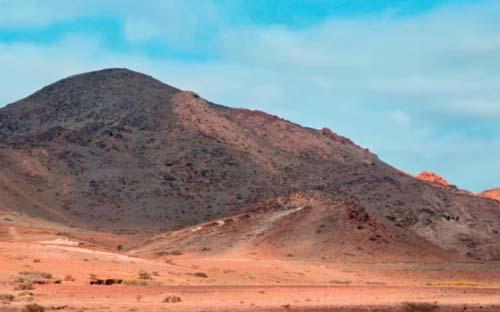

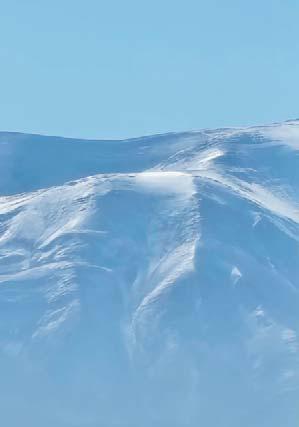
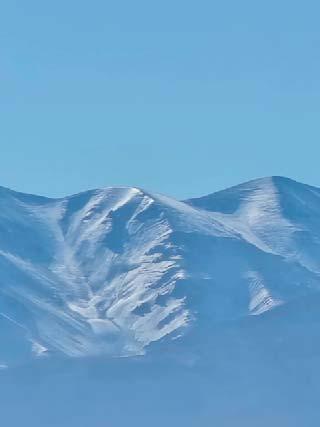

Middle Atlas Mountains in the Midelt area
from the Restaurant 7 on National Road N13

Richard Marvin Tiberius Grove
Beyond the Middle Atlas mountain range, there is the range called the High Atlas mountains with its dramatic and commanding spine cutting across the country, its peaks towering above Berber villages and high passes, forming a natural divide between coastal Morocco and the desert beyond. Our travels took us to and past many cities of interest including, Aït Ourir, Touama, Toufliht, Midelt, Ouarzazate, and Tinghir.
South of the High Atlas , the AntiAtlas mountains slowly dissolve into something older and more elemental. These mountains are lower, more eroded, stripped back to rock and heat but we did not travel through them.
As we were bussed through the different mountain ranges one realises that the mountains, despite how beautiful they are, they are never merely scenery. They are intertwined with climate, settlement, labour and lifestyle. The mountains literally slow you down, jostle you and cradle you, teaching you that this country is not one landscape but many, layered and folded into one another like the long, careful history written into the land itself.

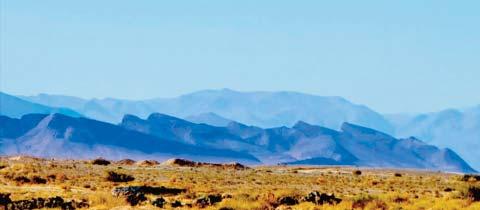
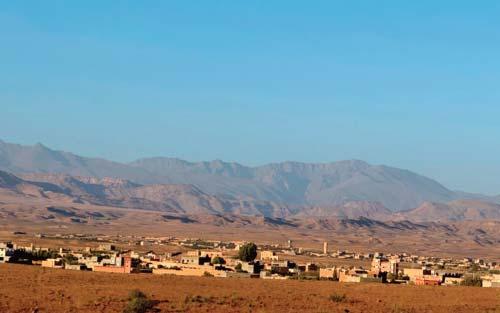
Inside the hush and whir of the bus, mountain cliff faces press close. The road narrows, then widens, then narrows again to one lane. Gazing conversations drift in and out as we fall quiet, lulled by swaying motion simply overwhelmed by scale. Occasionally someone points to a ridge or a distant village, a ribbon of green oasis, adobe mud houses clinging impossibly to stone, and for a moment the bus is silent, everyone leaning toward their windows, trying to read the land before it slips away.

Richard Marvin Tiberius Grove
We will arrive in the Blue City of Chefchaouen in a moment but first indulge me as I get philosophical. My mountain pics make me think about time and space and the tectonic shifts that are taking place under our feet all the time. For some reason I was whisked back to my high school geography class that the teacher thought I was snoozing through. Something actually did sink in. I was just now thinking that mountains are not born in moments of drama but they arrive the way patience arrives, millimetre by millimetre, year after year, age after age. Mountains are formed by two vast tectonic plates of the earth lean toward one another so slowly that no witness could ever say when it begins. What we see are the results called mountains. As a boy I often thought that mountains must be formed in one thunderclap of a catastrophic collision with no announcement, only pressure accumulating in silence and then bang mountains were formed. As it turns out the collision is real, but it happens at a pace that refuses to be a spectacle.
What looked like it must have been sudden to me as a boy is actually the sum of millions of small microscopic movements as rock bends and folds and ancient seabeds rise into the air. It is amazing to think that what was once horizontal learns how to stand like a mountain. Each movement is almost nothing, a shift smaller than a fingernail grows in a year, yet over millions of years it becomes a mountain capable of changing wind, weather, and human imagination.
Time, here, is not a line but a weight. It presses, holds, and reshapes. The earth does not rush. It allows forces to work themselves out slowly, trusting that enough persistence will outlast resistance. Violence is present, but it is restrained, disciplined by duration. Even earthquakes, fierce as they feel, are brief stutters in a long conversation between continents.
Standing before these mountains, it becomes difficult to defend our impatience. The land reminds us that the most consequential changes rarely announce themselves. They arrive quietly, disguised as stillness, accumulating beneath our notice until one day the horizon is altered.
These mountains are not monuments to collision so much as to endurance. They are the visible record of pressure
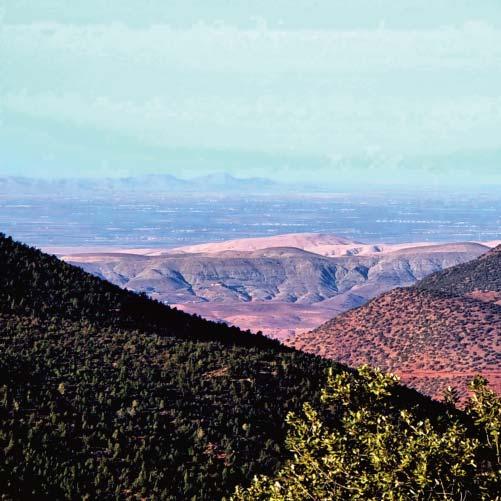
South of Toufliht looking at two different mountain systems, with a broad valley basin between them. The near, darker, greener mountains are the High Atlas Mountains. The far, pale blue silhouettes on the horizon are the Anti-Atlas Mountains and the wide flat zone between them is the Ouarzazate Basin.
Richard Marvin Tiberius Grove
choosing patience over haste, of time proving that gentleness, when sustained long enough, can lift the heaviest things on earth.
Geography, I am learning, is not just the study of landforms but of patience. These mountains do not announce themselves all at once. They reveal their rigid logic slowly, bend by bend, range by range, as if insisting that understanding must be earned through time and slow motion. To move through Morocco on our way to the Blue City is an important reminder that landscape is not background, it is the first narrator of being.

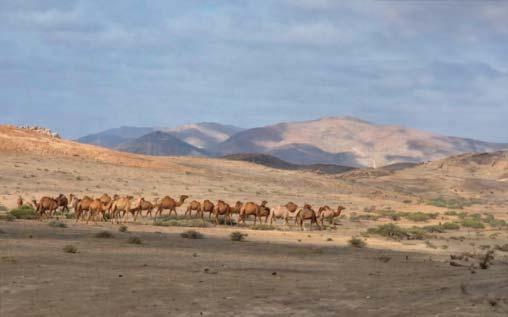
This is a lucky shot taken from the bus window. I had my phone raised at the right moment. We did not see many camels as we zipped by in our bus, blink and they were gone. The pale, rounded mountains on the horizon are the western High Atlas Mountains, specifically the lower western massifs that taper as the range runs toward the Atlantic.
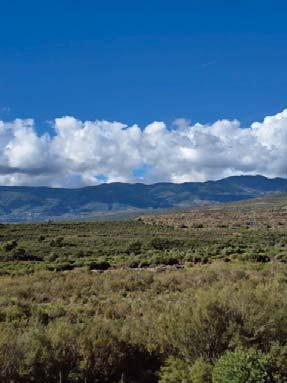
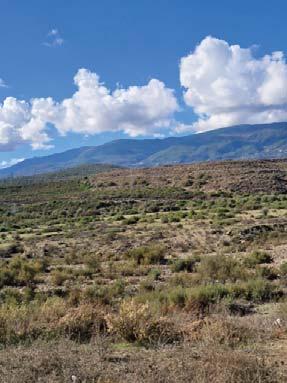
The Rif Mountains bounce, jostle, and jiggle us for hours as we travel south from Tangier to Chefchaouen. The terrain simply refuses to lie still, rising and falling beneath us as we wind our way through a landscape of restless ridges and dry, deep cut valleys. Every turn reveals another sweep of rugged beauty, the mountains holding tight to their dry breath beneath the relentless Moroccan sun.
From the bus window, the colours flatten under the heat of the never ending sun. Greens retreat into dusty olive grey, browns bleach toward bone, and the sky hardens into a pale, so unforgiving it almost loses its blueness. Nothing here feels decorative. Everything feels earned.


Richard Marvin Tiberius Grove
Scattered across the distant hills are dozens of onedonkey hamlets carved into barren slopes. It is impossible not to wonder how people manage to sustain themselves in such isolation, raising a few cadaverous cows, gaunt goats or shabby sheep on land that offered little more than rock, sun and wind. Olive and fig trees dot the hillsides, small paddocks cling to terraces, goats scale impossible inclines with the ease of dancers.

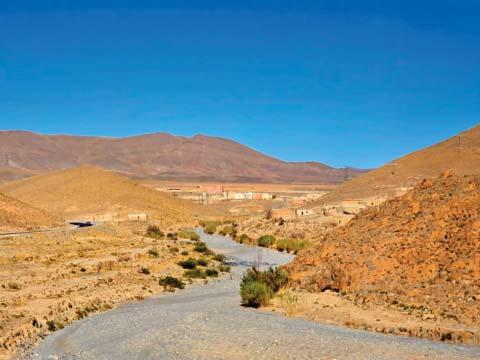

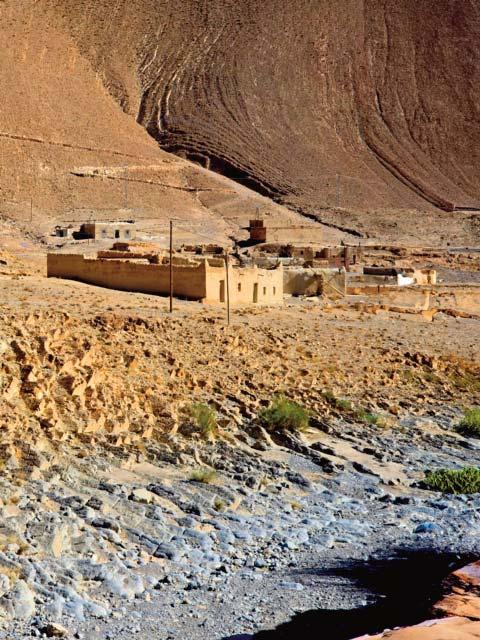
This one-donkey hamlet is at the foot of a mountain praying that the dried up rever bed will one day have water flowing in it again.
These villages feel provisional, as if they might one day loosen their grip and slide back to the foot of the mountain and yet they persist. Stone by stone, season by season, they remain, shaped by necessity rather than choice. The land offers little, but it offers enough, and people have learned how to listen to what is “enough.”
Richard Marvin Tiberius Grove
Life here relies on what the mountains allow, vegetables coaxed from terraces, donkeys carrying meagre goods to distant markets. Seasonal work in nearby towns, and craft traditions passed from generation to generation.
Each settlement is perched on the edge of the world, linked by switchbacks and worn paths that snake through the mountains. Services are scarce in the Rif, industry minimal, and the roads long and winding. Yet there is a rhythm to the waiting.
Waiting
a life measured not by modern urgency but by waiting: waiting for rain, waiting for goods to be delivered, waiting for the road to be finished, waiting for the seven year drought to release them from unfulfilled hope. That waiting carries a quiet dignity, a pace shaped by land, weather and long standing traditions rather than haste.
It is tempting, from a moving bus, to romanticise this kind of waiting, but the dignity here is strictly out of necessity. It is forged through endurance. Waiting is not passive, it is arduous work. It is the effort of staying, of holding on, generation after generation. It is believing that the land will eventually answer and fill your need.
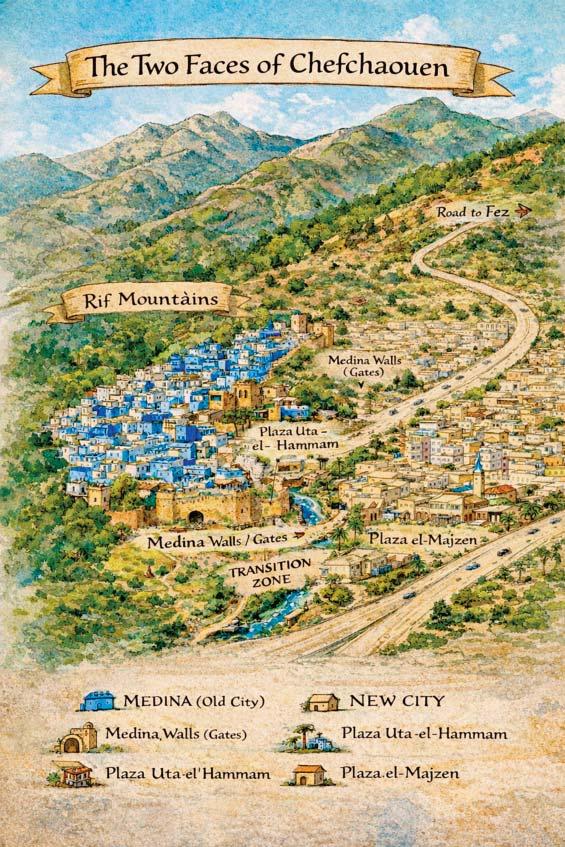
Even after spending many hours roaming the streets of Chefchaouen, it took me a while to understand that this is not a city divided into old and new in the familiar way we had seen in places like Fez or Marrakesh. In those cities, history draws a firm line. In Chefchaouen, it does not. Instead, the city feels like a single place with two faces that quietly blend into one another.

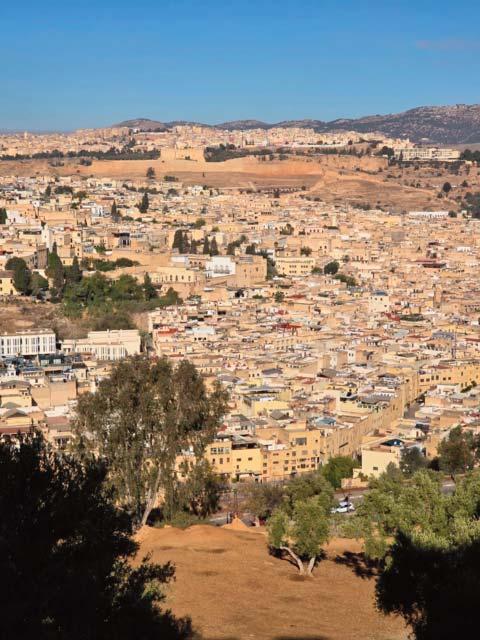
Richard Marvin Tiberius Grove
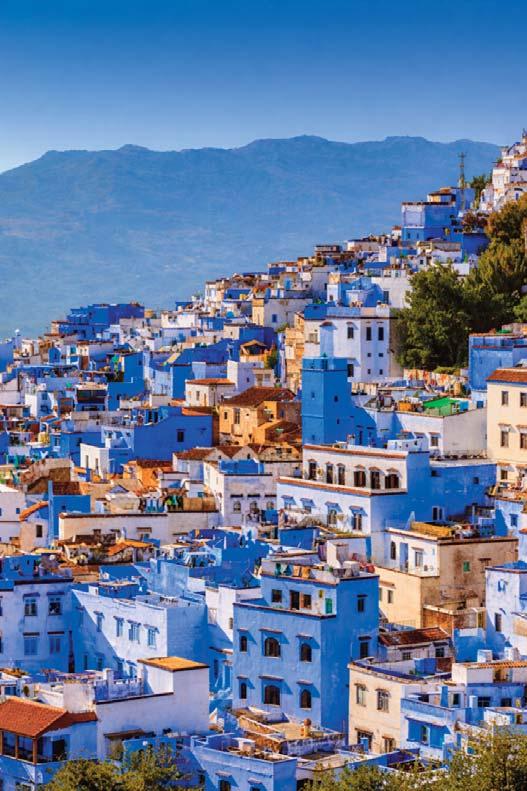
At the heart of Chefchaouen lies the medina, the old city, folded tightly into the hillside like a protected nest. Its streets narrow into pedestrian passageways where no cars intrude, where stairs turn without warning, and where the city seems to move vertically rather than outward. This is the deepest and oldest part of Chefchaouen, the place where the city first took hold.
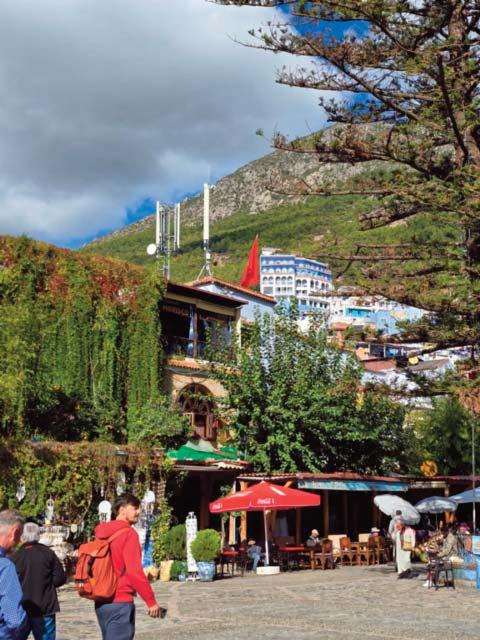
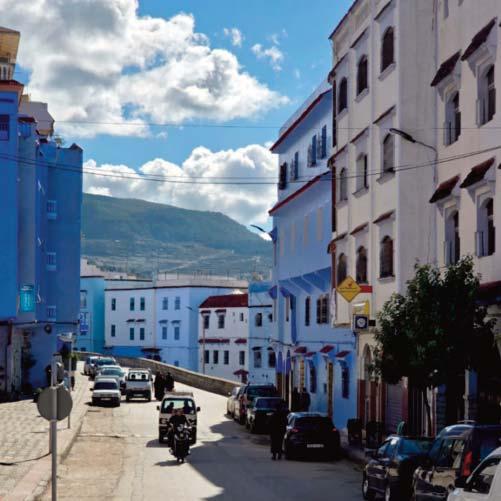
What surprised me most was how quickly the character of the city shifts. Step downhill for only a few minutes, sometimes no more than a block or two, and Chefchaouen subtly changes its posture. Streets widen and buildings straighten. The palette settles into earth tones and creams. This is the new city, practical and open, shaped by the needs of the hustle bustle of modern life.

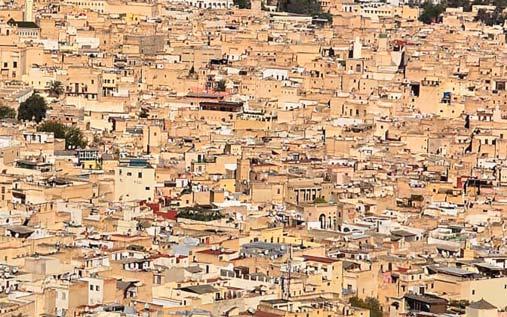
This is the new city of Chefchaouen. Some would say that it does not face the mountains but it belongs to them.
There is no dramatic boundary between these two worlds, which is why I began thinking of them as two faces rather than two places. There is no wall of ceremony, no grand divide. The medina simply loosens its grip. A historic stairway empties onto a sunlit intersection. Past and present meet without announcement.

Richard Marvin Tiberius Grove
The new city is larger. It holds more people, more space, and more momentum. Yet the medina remains the soul of Chefchaouen. Founded in 1471, it is more than five centuries old — originally built as a mountain refuge and fortified sanctuary. Everything that followed grew around it, not away from it.

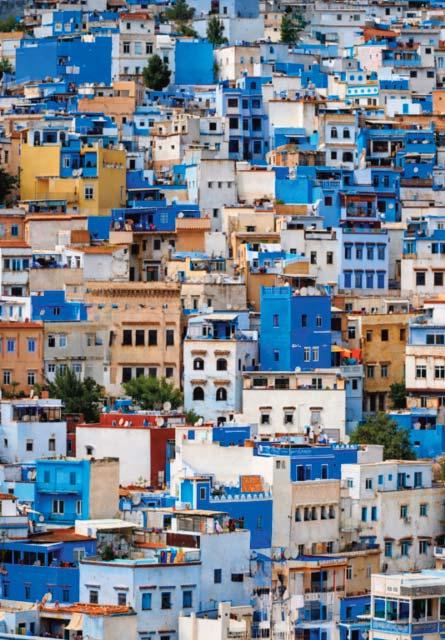
The medina, the old city, gripping to the side of the Rif Mountain, The Magic of Blue.
With help from ChatGPT (OpenAI), through a process of prompting back and forth, I created a simple illustrated map to help show how Chefchaouen presents itself to an outsider. One moment you are brushing up against history; the next, you are standing in modern Morocco, traffic humming softly nearby.
Chefchaouen does not choose between old and new. It carries both. Perhaps that is its quiet strength, a city where time does not erase itself, but simply makes room.

Richard Marvin Tiberius Grove

So here we are, finally, in the Blue Pearl of Chefchaouen, as if the city were easing us gently into its spell.

Richard Marvin Tiberius Grove



Richard Marvin Tiberius Grove
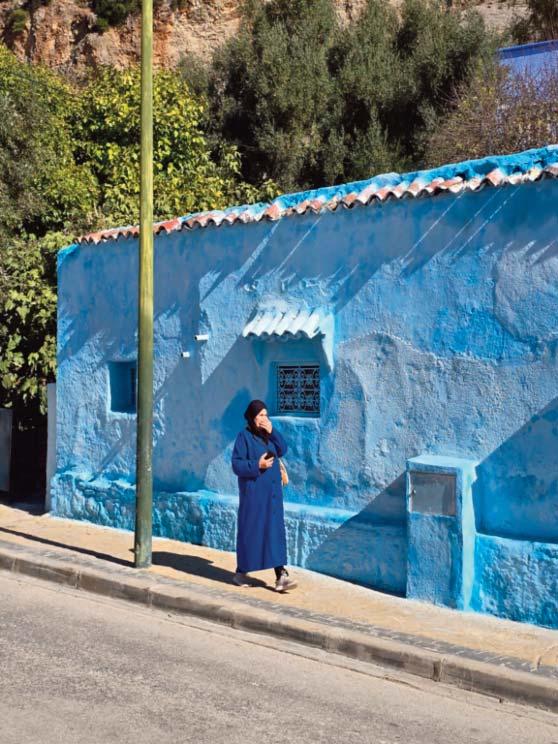
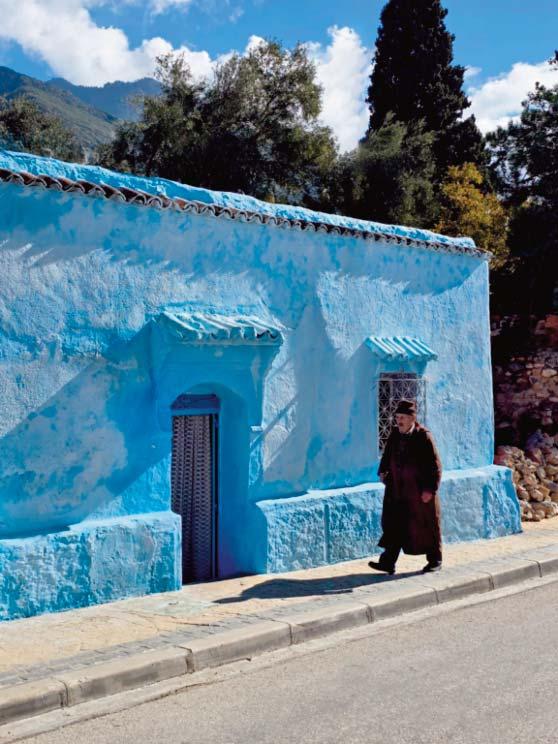
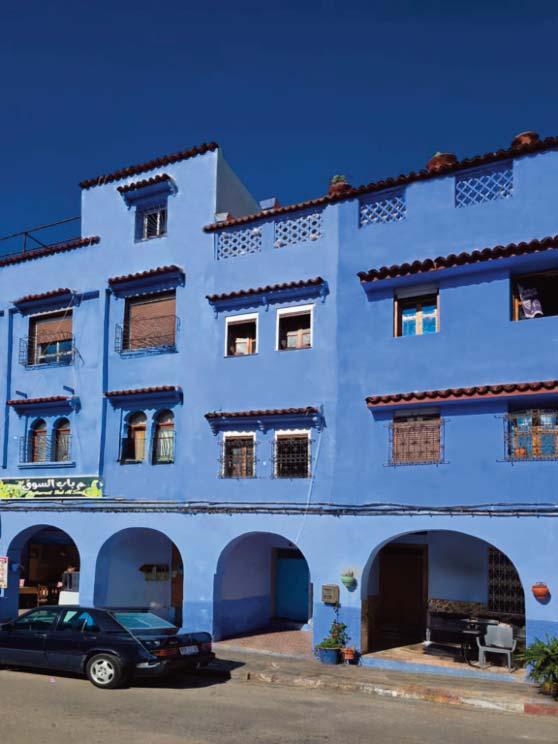
We have travelled many busjiggled miles through the grey insistence of the Rif Mountains, mile after mile of gravel, dustbrown ridges, and earthtoned villages. Against that backdrop, Chefchaouen feels almost unreal, a visual exhale after a long stretch of restraint.

Richard Marvin Tiberius Grove

Richard Marvin Tiberius Grove
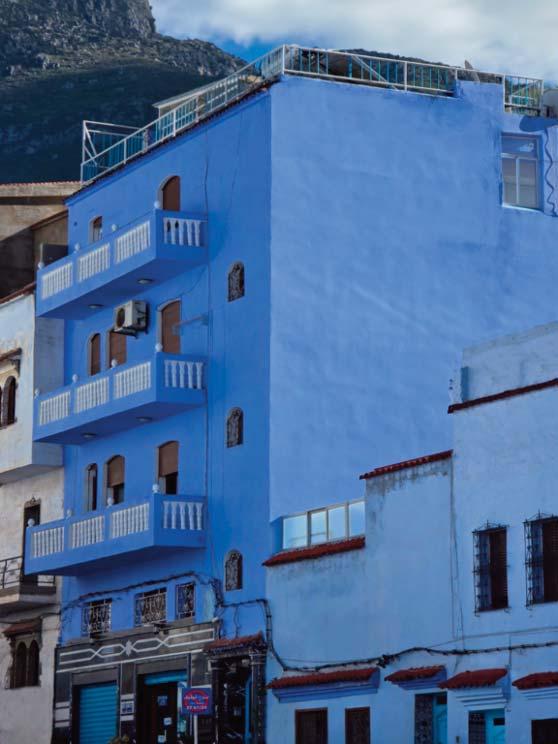
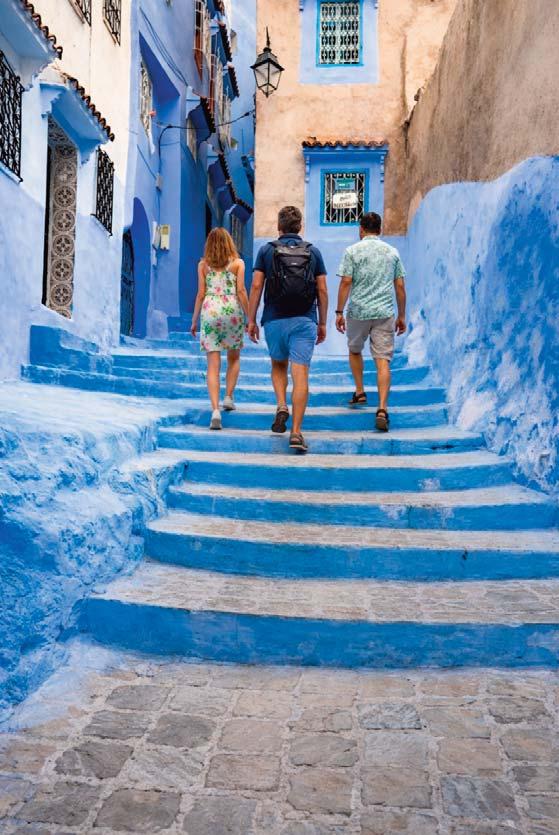
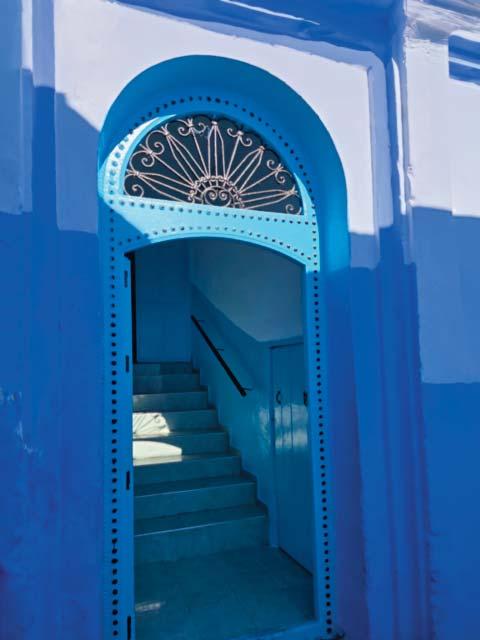
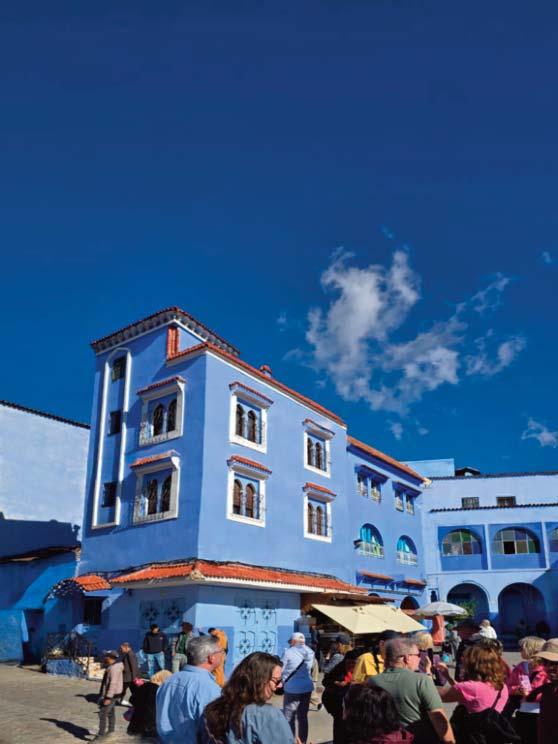
As we approach the city, low, tightly packed buildings in pale stone and white crowd against the slopes, as if the sky itself has settled onto the hillside. Then the magic of blue reveals itself, not all at once, but gradually. Doorways, corners, stairways with whole streets washed in the calm of blue.
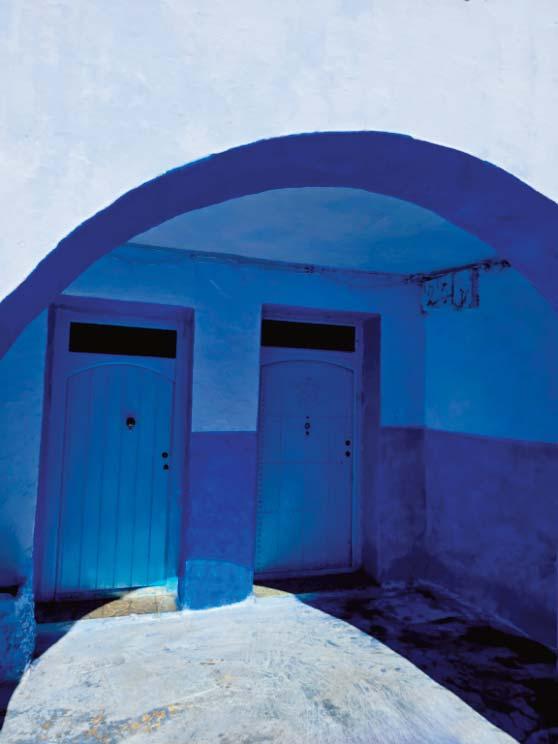
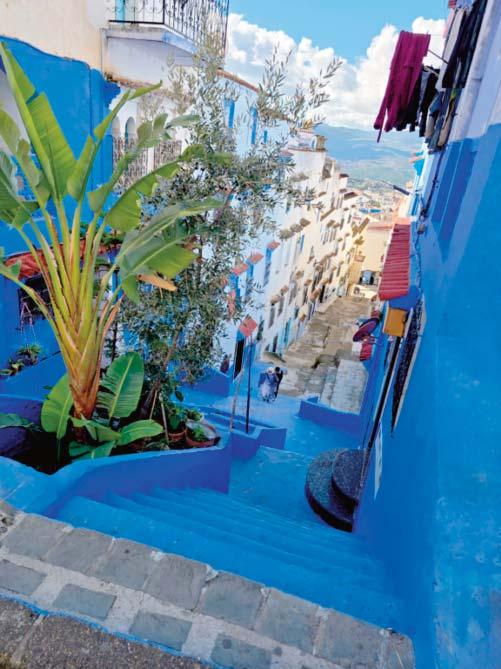
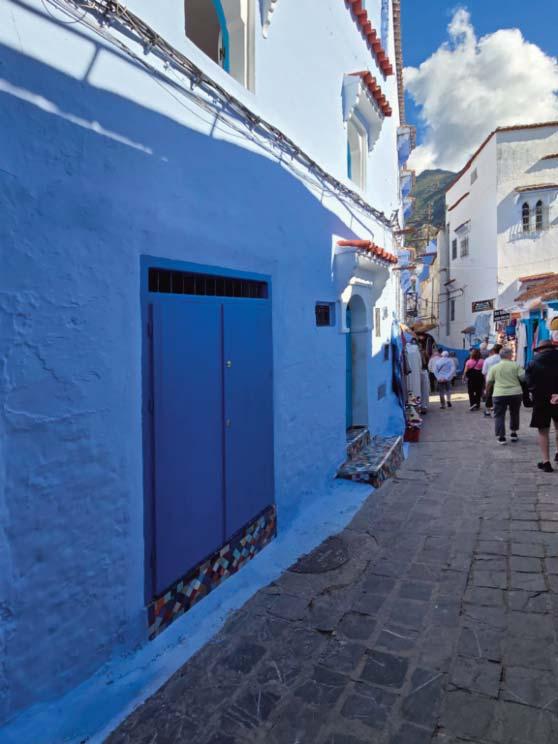
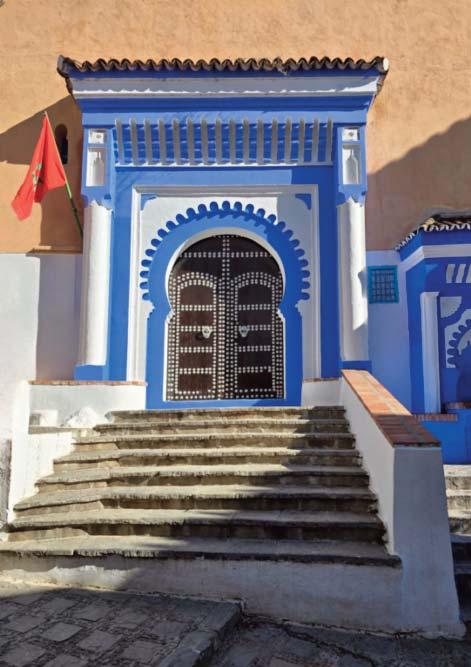
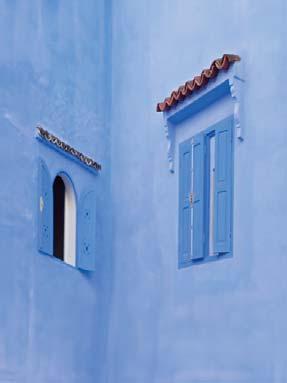
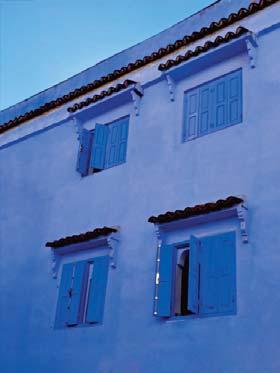
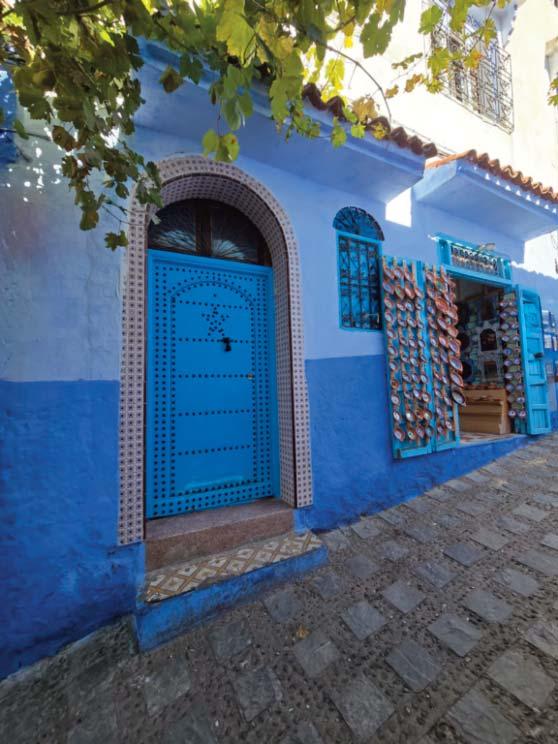
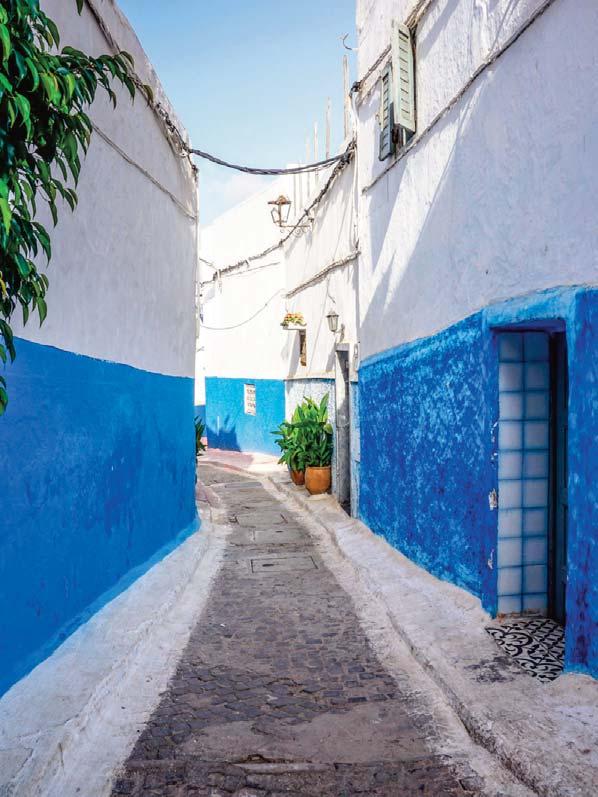
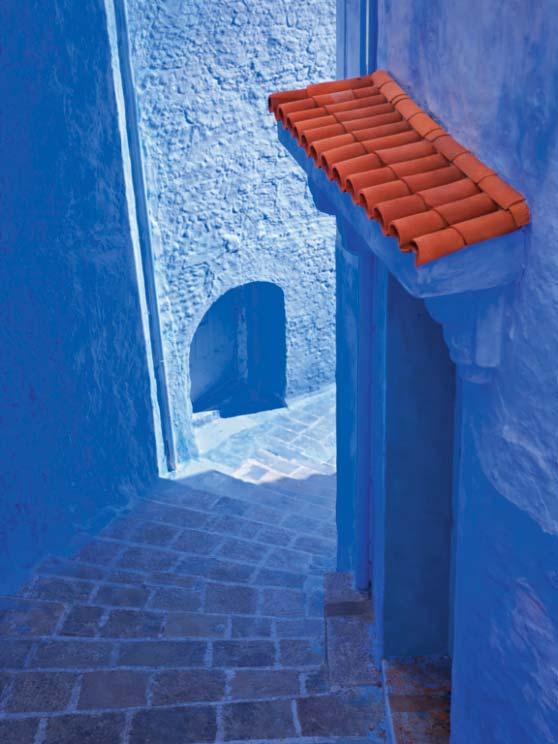
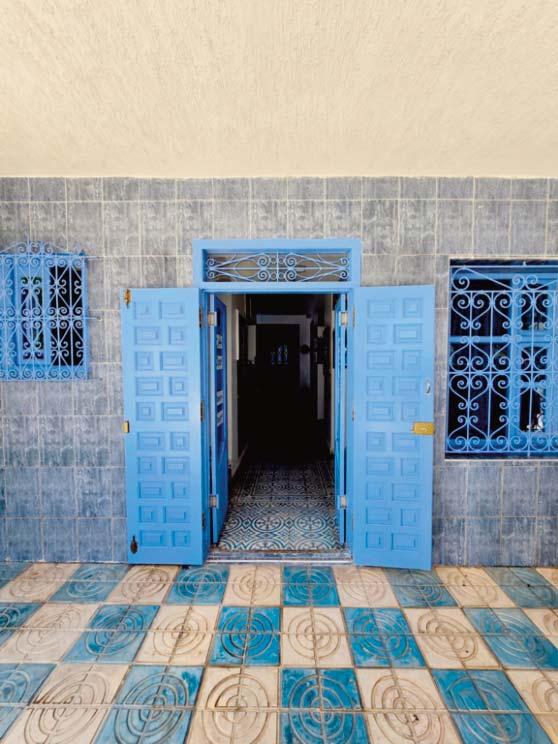
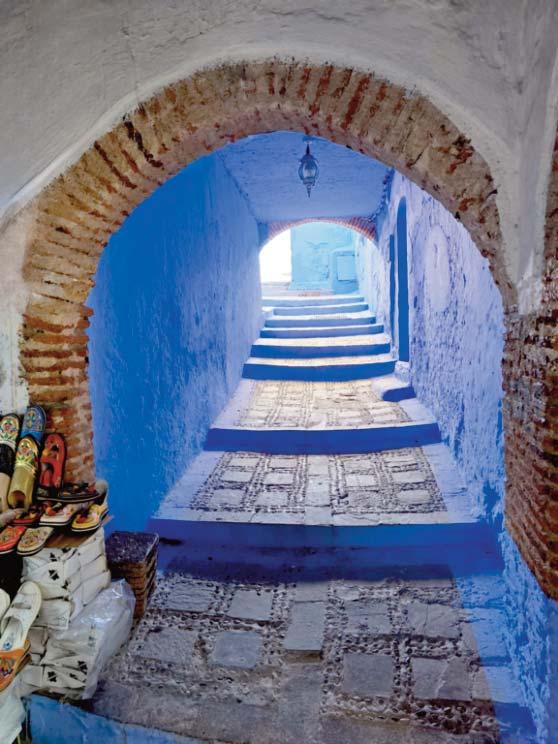
Walking through the medina, the blue is everywhere, yet never quite the same. It drifts from pale skywash to deep indigo, sometimes worn, sometimes freshly brushed, pooling in doorways, climbing rails, slipping into shadow, and spilling onto the stone beneath your feet. It is not uniform, and that is part of its power. The blue feels less like decoration and more like an ethereal atmosphere.

Richard Marvin Tiberius Grove
The colour does not erase hardship; it sits beside it. Smoke from cooking fires drifts across narrow lanes. Lamps glow as evening settles into the valley. Life continues, ordinary and persistent. The blue feels like an insistence, a declaration that beauty can exist even where life is difficult, that calm can be cultivated deliberately, wall by wall, year by year.
After hours of being tossed by serpentine mountain roads, our heads still swimming, we step off the bus into the cool embrace of Chefchaouen. What a relief. What a visual feast after the relentless parade of grey gravel and dustbrown ridges. The city rises before us in a shimmering spectrum, as if someone dipped a brush into sky and sea and painted serenity into stone.

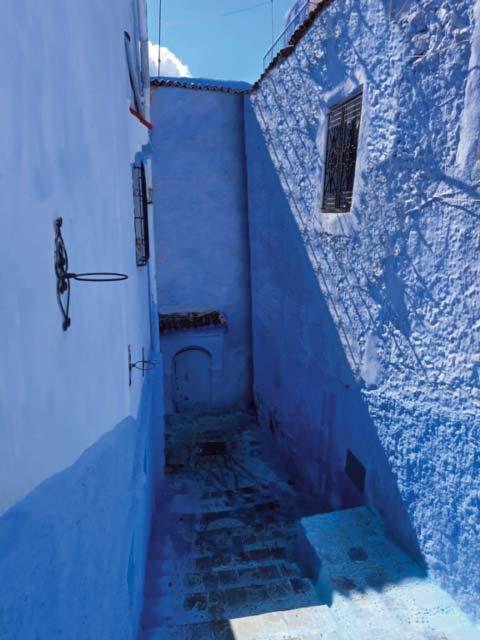
People will tell you many stories about why Chefchaouen is blue. They will tell you about, protection, tradition, symbolism and even faith. All of them may be true. But walking these streets, explanation feels secondary. The blue works whether or not you understand it. It slows the body. All that is important is that it softens the eyes. It invites a quieter way of seeing.

Richard Marvin Tiberius Grove
Here, blue is not a colour but a language. It speaks in soft echoes along the narrow, winding lanes, powder blue doorframes beside walls washed in deeper indigo, cerulean staircases rising toward sunlit terraces, cobalt corners gathering cool shadows where cats lounge like pampered, privileged royalty.

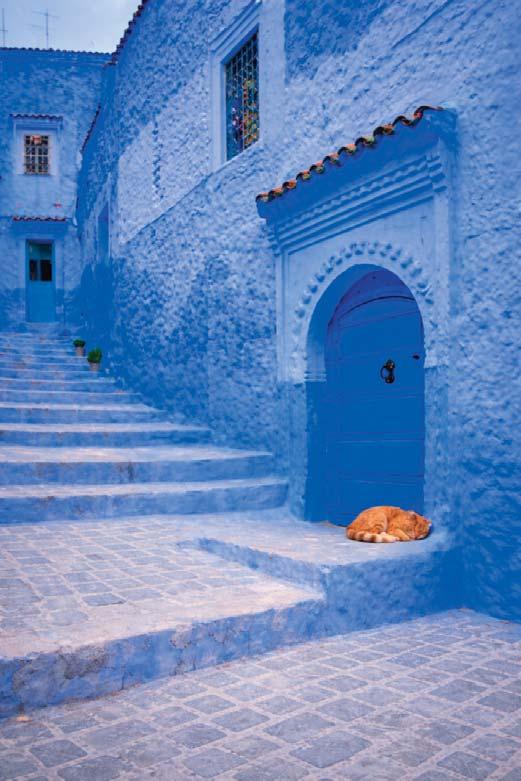
The Blue City cats are everywhere, yet they never feel intrusive. They are not feral in the way the word is usually used, not wildeyed or desperate. These cats look well fed, unhurried, faintly amused. They nap in doorways, stretch across warm steps, recline beneath potted plants as if the entire city were arranged for their comfort.
A fellow traveller on our bus summed it up perfectly, with the kind of practical wisdom that requires no footnotes, “There are lots of cats and no mice and rats.” The equation seems simple enough. Where humans leave gaps, cats fill the spaces with a keen eye and a swift snatch of dinner. Where cities might otherwise fall into imbalance, whiskers intervene.

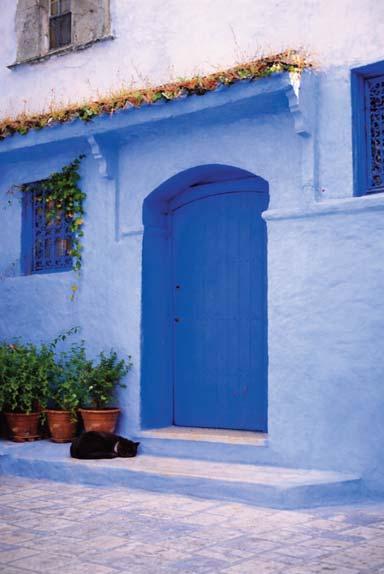
Richard Marvin Tiberius Grove
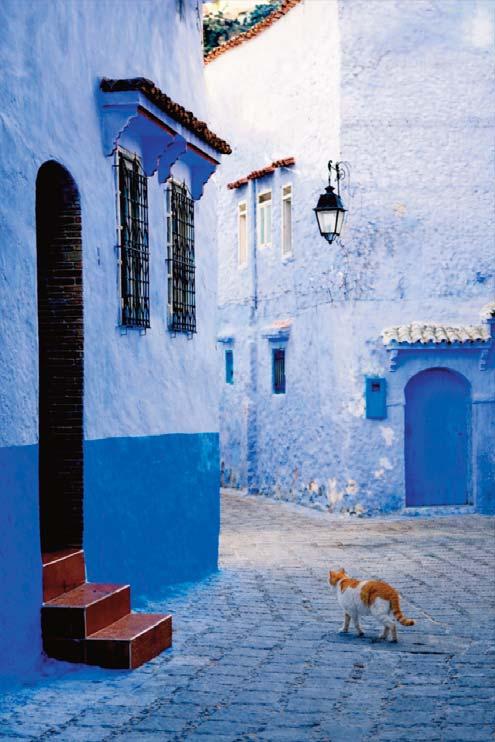

Here, the cats appear less like strays and more like civil servants. Unofficial, unpaid, but deeply committed to their roles. They patrol alleys at night, supervise shaded staircases by day, and ensure that rodents have long since learned to seek opportunities elsewhere. It is difficult to imagine a mouse surviving long in a city where every blue corner holds a pair of halfclosed, watchful eyes.
It seems the cats belong to everyone and no one. A bowl of water here, a scrap of food there. A hand reaches down, a tail flicks in acknowledgement, a purr erupts. They accept affection without obligation, assistance without ownership. There is something profoundly Moroccan in this arrangement, communal care without paperwork, responsibility shared without announcement.
In a city washed in blue, the cats provide contrast and continuity. Black, ginger, grey, striped, and speckled, they move through the many colours of blue like the shadows they saunter through, reminding everyone that this rodentfree calm is not accidental. It is maintained, quietly by friendly furry fourlegged mousers.


Richard Marvin Tiberius Grove

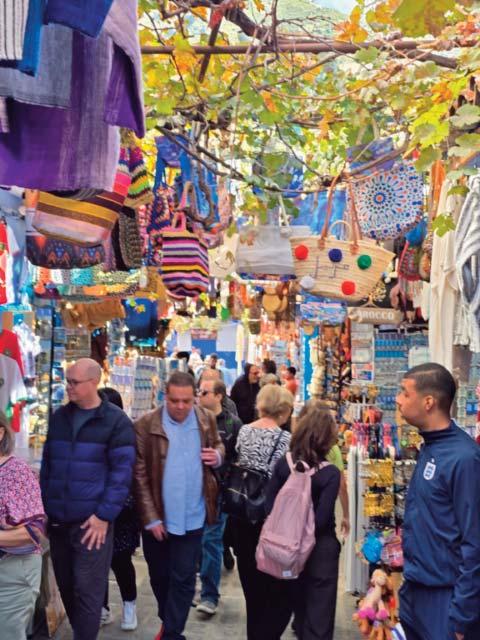
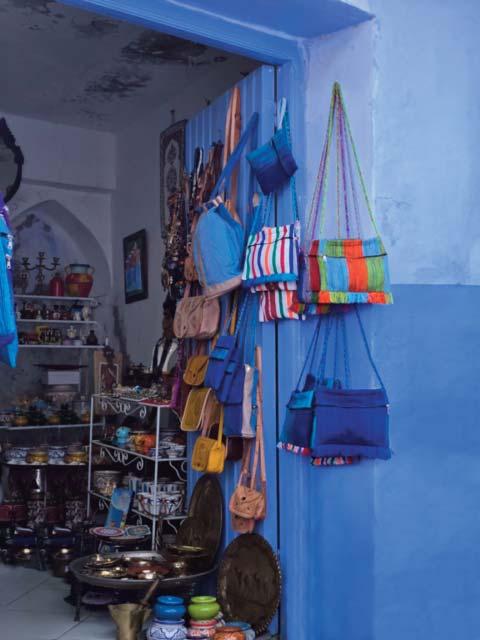
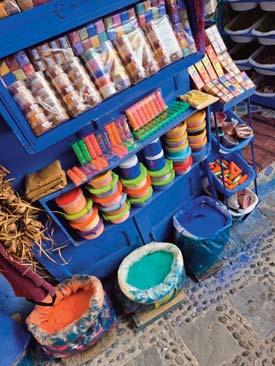
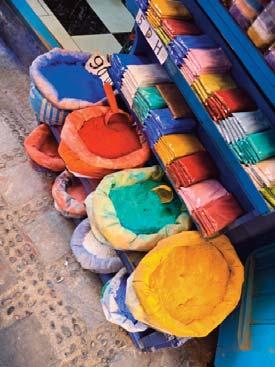
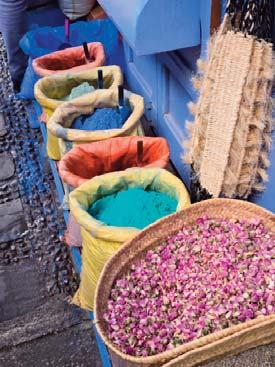
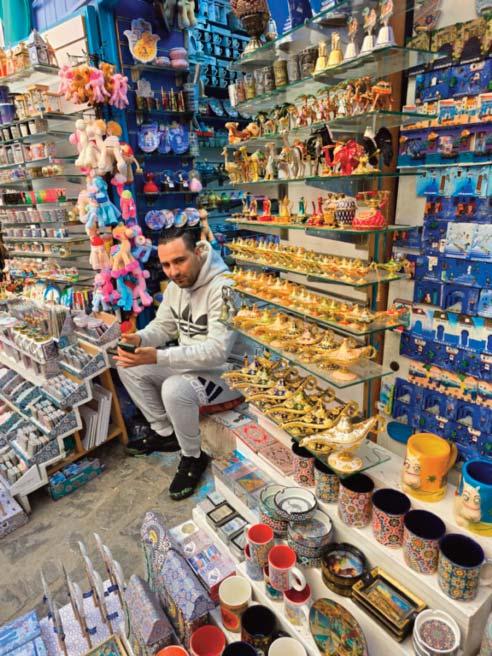
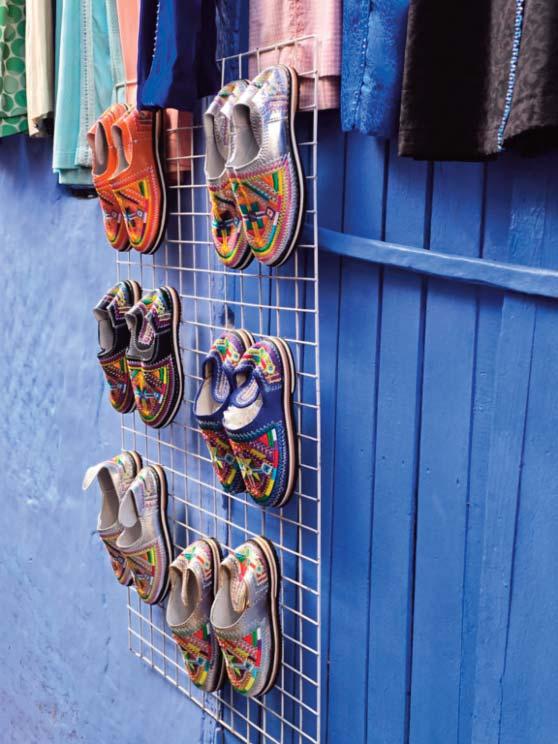
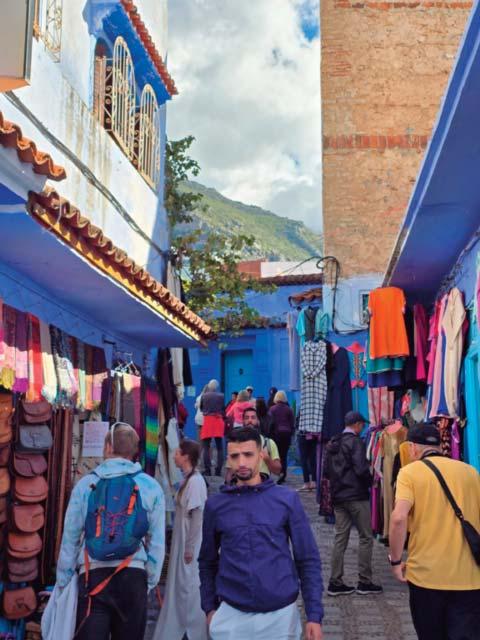
Walking through the Blue City, it would be easy to think that the colour from the small shops and street vendors simply magically appears and arrives fully formed, waiting politely to be admired and purchased. Displayed between the blue doors, windows and stairways is another visual language entirely, one spoken by eyes and hands.
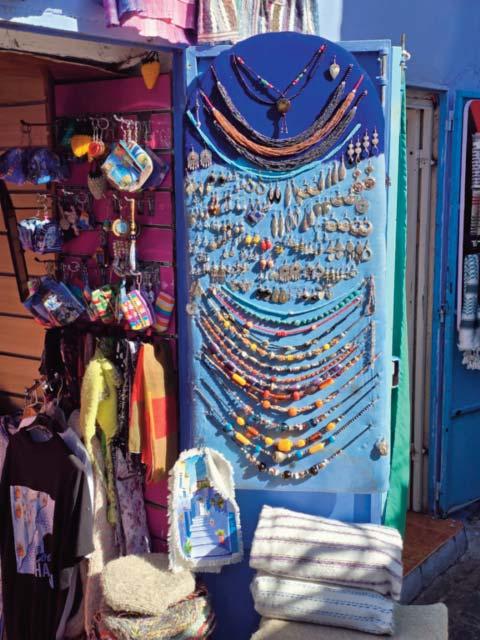
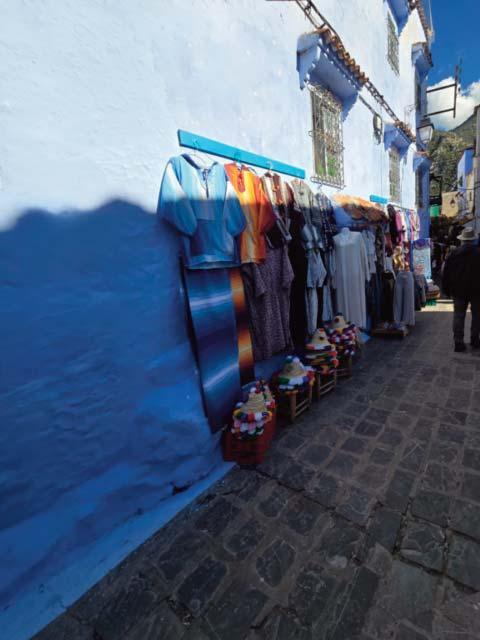
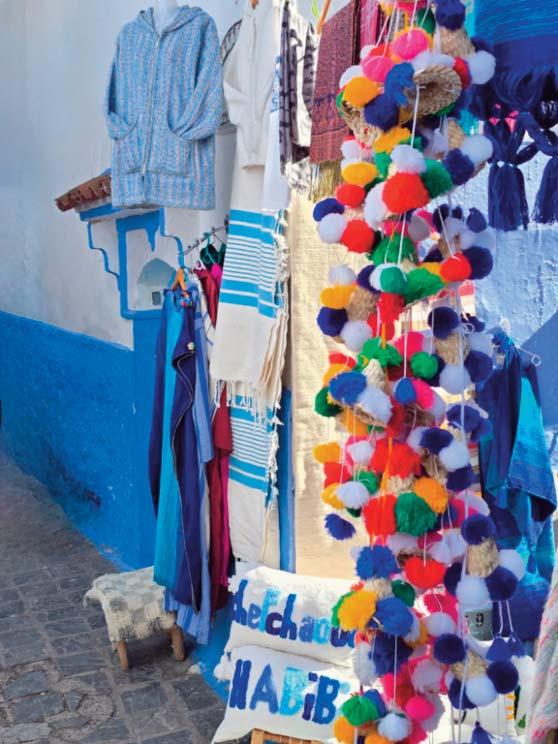
The streets are lined with colour that can be touched. Rugs spill outward from small shops like an exotic experience. Shawls and blankets hang in layers of crimson, saffron, indigo, and earth tones so rich they seem to hum a lullaby beyond the reach of a rainbow. Leather bags, belts, and slippers rest patiently, their surfaces burnished by the hands of a skilled craftsman. Ceramics, metalwork, and carved wood catch the light, not with the shine of factories, but with the quiet confidence of things made slowly.

Richard Marvin Tiberius Grove
These objects do not arrive by magic. They are not stamped out by distant machines and shipped by sea, not rushed along conveyor belts in anonymous warehouses in another world. They are made here, or nearby, by people who know their materials the way farmers know soil or a painter knows pigments. Wool is spun, dyed, and woven by hand. Patterns are learned and passed down from generation to generation as memory. Fingers repeat movements taught by other fingers, decades earlier.

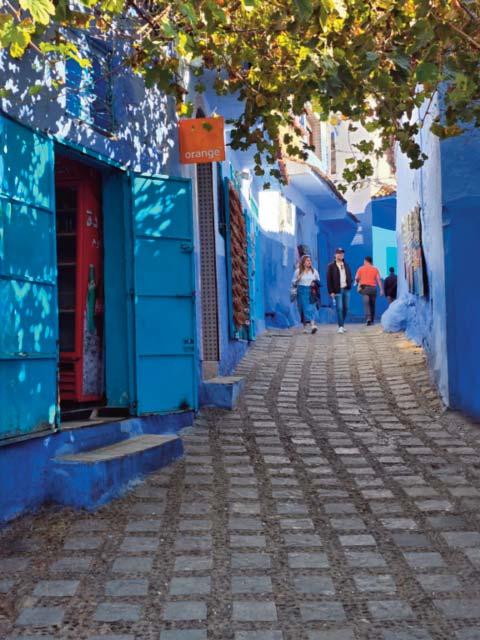
Skill lives in the wrists, the shoulders, the patience of repetition. A rug is not just a rug. A slipper is not just a slipper. It is years of skill folded into months of work. A shawl is not an accessory but a quiet archive of patience woven into comfort. Even the simplest object carries the weight of time spent doing one thing well, over and over, without shortcuts.

Richard Marvin Tiberius Grove
There is something deeply admired in these passed on crafts. In a world increasingly filled with things that arrive cheaply and disappear quickly, these crafts insist on a tactile presence of admiration. They ask you to slow down, to notice the irregularities, to feel the difference between machined perfection and care. No two pieces are exactly alike because no two sets of hands are.

Richard Marvin Tiberius Grove


Richard Marvin Tiberius Grove
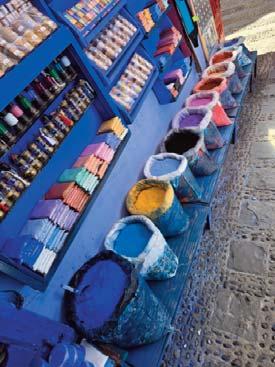
As an artist and former potter what struck me most was not so much the colour, though there is plenty of it, but I was struck by the pride and dignity embedded in these objects. The value is understated. No slogans and jingles just work displayed openly, trusting that someone will recognize its worth and take a small piece of the Blue City home with them.

Richard Marvin Tiberius Grove
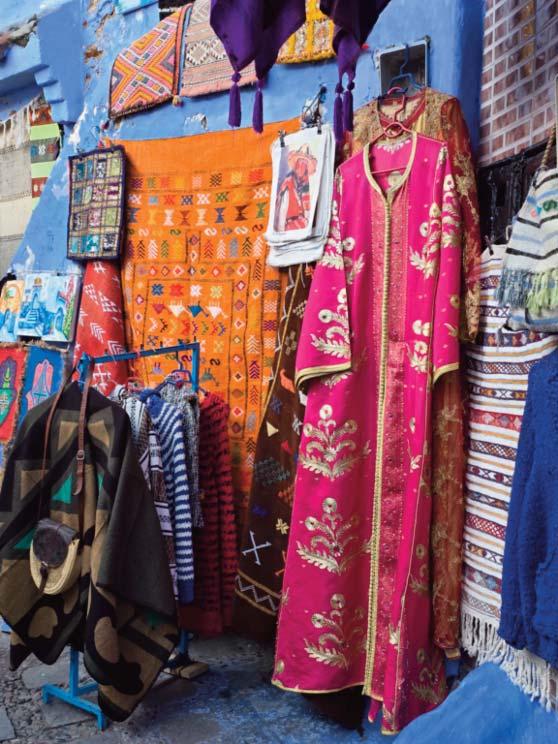
Even the fluttering laundry seems brighter here, shirts and shawls pegged to balconies flap like flags in a breezy celebration of colour, their crisp whites and soft pastels thrown into brilliant relief against the surrounding blues.
Richard Marvin Tiberius Grove
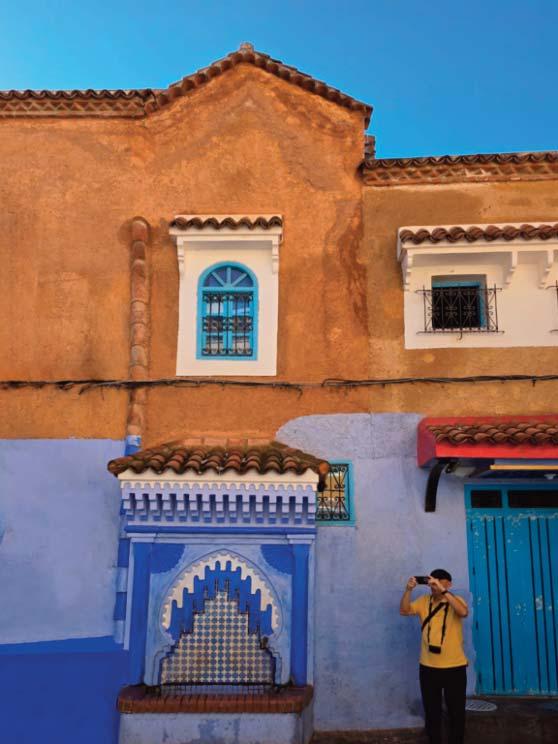
There is a curious alchemy in the Blue City’s pigments. The city feels cooler the deeper you wander, the blue surfaces absorbing heat and offering back a sigh of shade. It is as though the colour itself performs a service, refreshing the weary traveller, calming the restless mind. Each calming turn in the medina reveals another scene worthy of me pointing my camera. Time after time there is another veiled doorway framing a splash of turquoise, a quiet walkway where the blue deepens into something almost sacred.

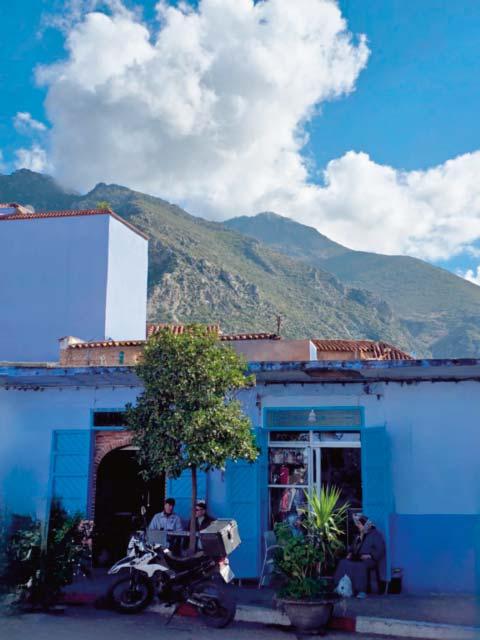
I find myself walking more slowly here, not out of courtesy but calm instinct. The city seems to demand it. There is no need to rush through blue. It unfolds at its own pace, revealing itself to those willing to linger.
This is a city I wish we could linger in longer, to watch how the blues shift with the day’s light. Morning clarifies them into crisp tones; afternoon softens them into a dream; night turns them into deep wells of shadow and mystery. A photographer could lose days here, chasing the play of brightness on blue walls, the tilt of lantern light, the echo of footsteps in narrow alleys where colour and mood blend like watercolours.

Richard Marvin Tiberius Grove
The Blue Pearl is a place of places. It is an atmosphere, a breath, a state of calm painted into being. If the Rif Mountains jostle us, the Blue City soothes us, a cool hand on a warm forehead, a long exhale after a restless climb. It is a place that stays with you long after you leave, tinting memory itself with the magic of blue.
Leaving Chefchaouen, I realize the blue has recalibrated my senses. The mountains feel different now. Not less severe, but less stark. The land still presses and folds, but memory carries a wash of colour that softens the edges. Blue does not erase weight; it teaches us how to carry it.

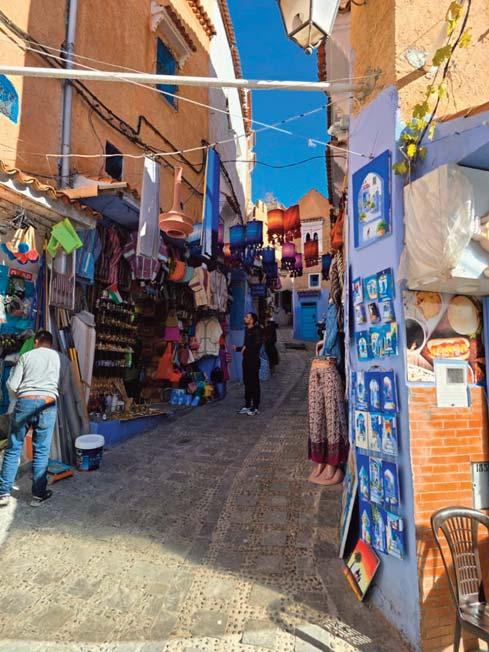
After the Rif Mountains let us glide to a slow stop, blue took us in.
Sapphire walls cooled the pulse, azure stairs slowed the heart, cerulean alleys draw us back into ourselves.
Here, colour learned to pray each shade a hush, each corner an indigo hand laid gently on the mind.
We did not walk so much as drift, tinted by Prussian blue calm, until even memory began to turn a blue spectrum of serenity
Richard Marvin Tiberius Grove
Richard Marvin Tiberius Grove
Richard Marvin Tiberius Grove
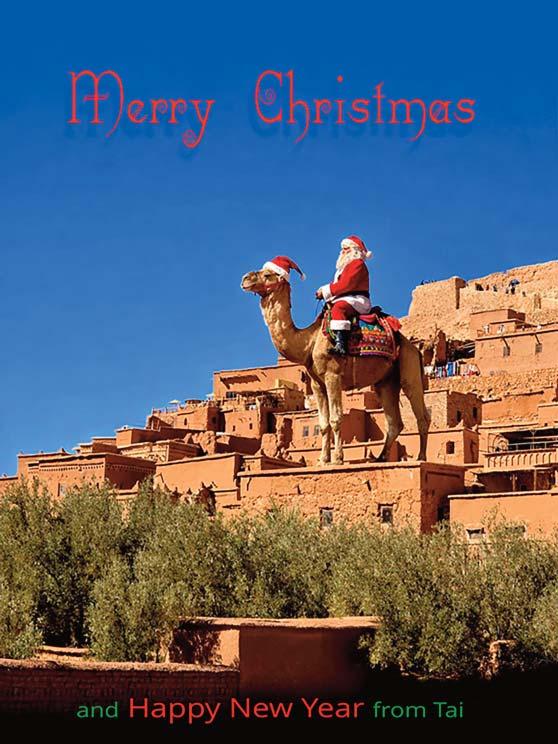
As a photographer it is always nice to be in the right place at the right time to snap a unique pic. This is a once in a lifetime shot, catching Santa on a camel, that no one else in our group caught.
I am happy it was a good pic for my 2025 Christmas eCard.