BACKSTAGE
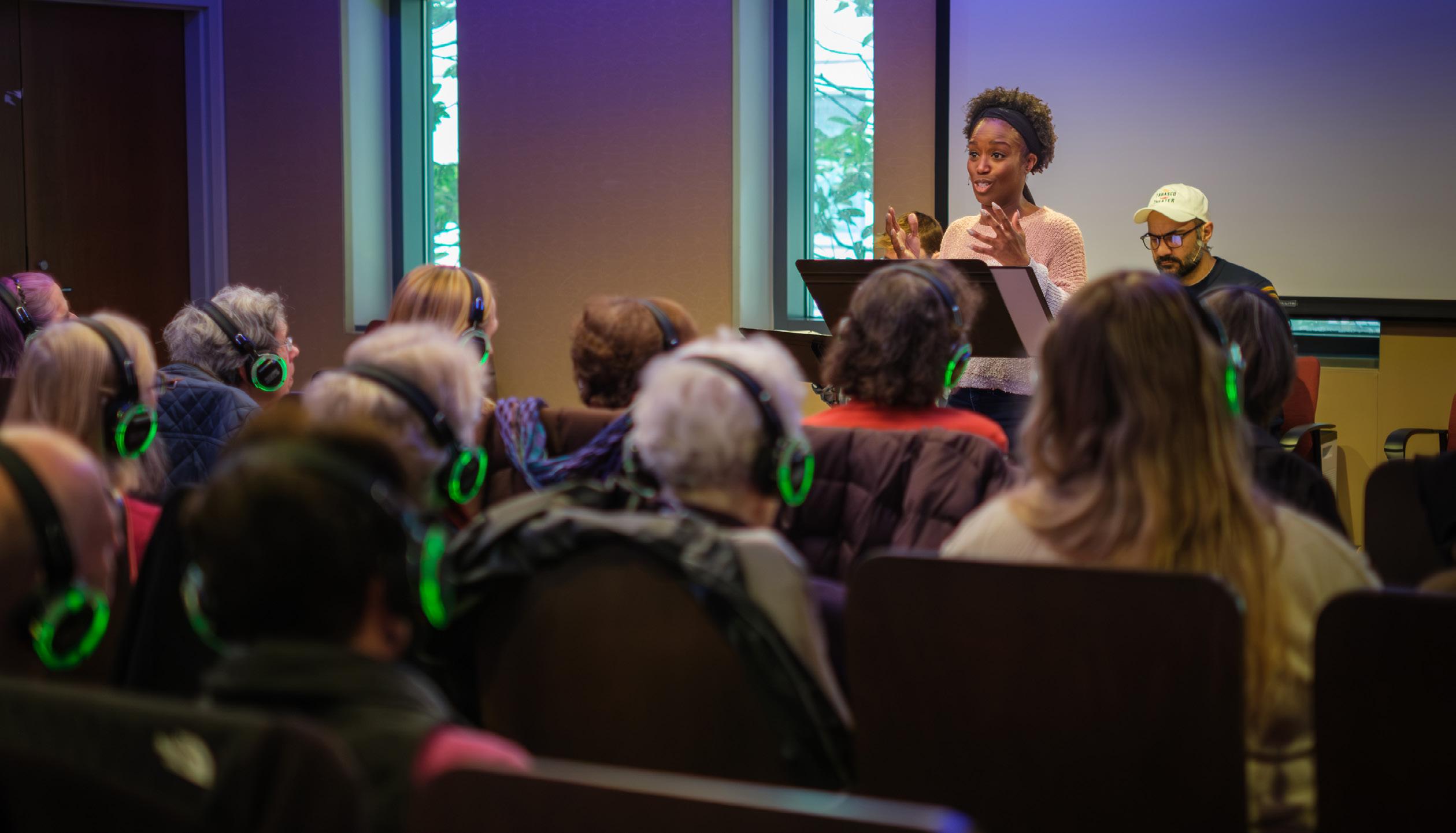

The Bonnie Hammerschlag National Capital New Play Festival
Spring is a wonderful reminder to celebrate both what is new and what is yet to come, and this spring, there is so much to look forward to at Round House.
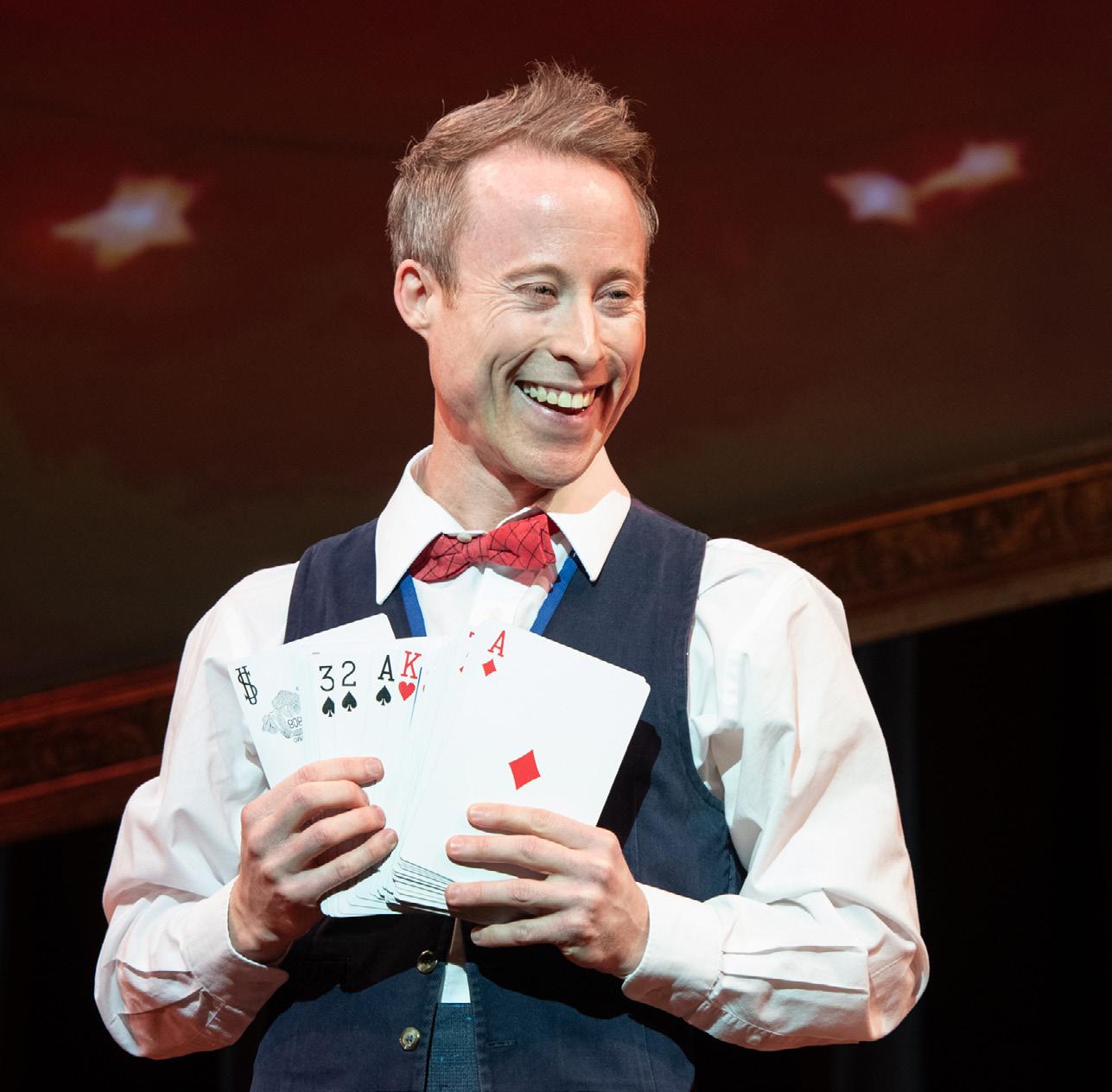
We were mesmerized by Dendy’s return to the Round House stage with the world premiere of Nothing Up My Sleeve...Simple Deceptions for Curious Humans . This magical retelling of his own story, written by Dendy and Aaron Posner, not only led us to examine what is true, and what is…less than true, but also rekindled the childlike wonder we all need to rediscover more often.
Playwright and friend of Round House, Lauren Gunderson, also knows a thing or two about crafting transportive new stories. In addition to frequently topping lists of America’s most-produced playwrights, her new musical The Cave , a Round House commission, was recently featured as a reading during the fifth annual Bonnie Hammerschlag National Capital New Play Festival. Delve into the process of creating new work with one of the industry’s best on pages 4-7.
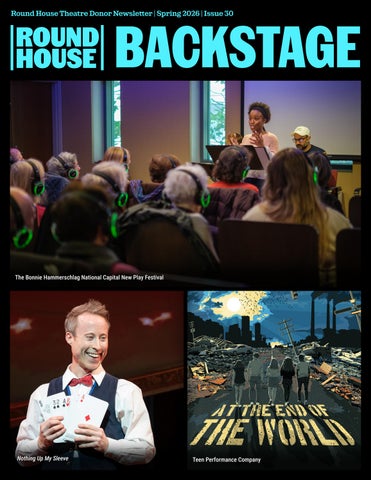
One of the highlights of each spring at Round House is the celebration of the young artists who will shape the future of American theatre. Our Teen Performance Company is the only program of its kind in the country. This free, pre-professional program offers local high school students the opportunity to learn how to bring a new play to the stage over the course of an entire season, with professional mentorship and one-on-one training along the way. The program is also consistently adding to the canon of plays written specifically for teens. Learn more about one of Round House’s signature programs on pages 10-13.
The 2025-2026 Season has already been one of the most successful in Round House history—and there is so much still to come. Thank you for being a part of our story as we plan for the next chapter and dream bigger than ever before.
See you at the theatre!
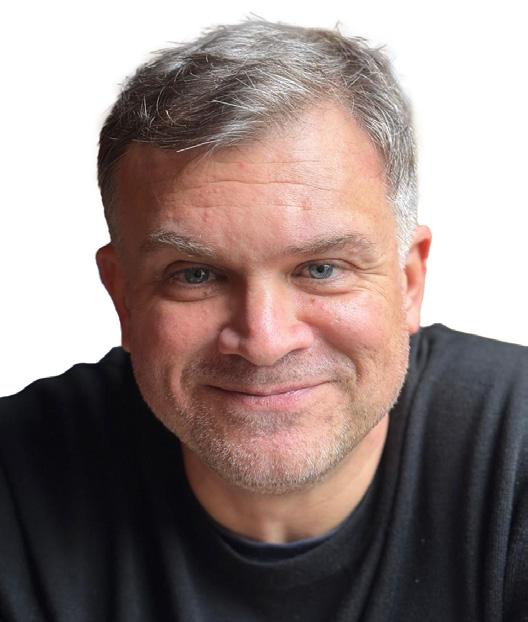
RYAN RILETTE ARTISTIC DIRECTOR
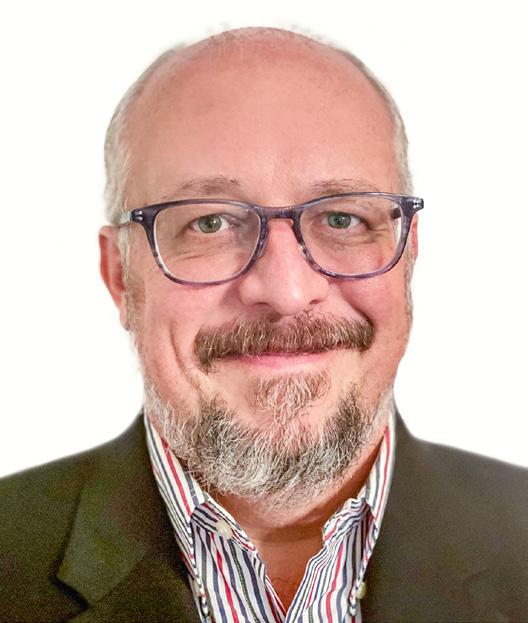
ED ZAKRESKI EXECUTIVE DIRECTOR
ROUND HOUSE THEATRE
SATURDAY, APRIL 18, 2026
THE STORY OF THE CAVE, ITS DEVELOPMENT, AND WHY NOW?
We were thrilled to work with Lauren Gunderson on developing her latest play The Cave during our Bonnie Hammerschlag National Capital New Play Festival this year. Lauren has consistently been among America’s most produced playwrights since 2015 (American Theatre Magazine), and in the 2025-2026 Season she ranks as the most produced playwright for the third time (excluding Shakespeare).
Our Artistic & Dramaturgical Advisor, Naysan Mojgani, sat down with her in February to discuss her new play and the play development process as a whole.
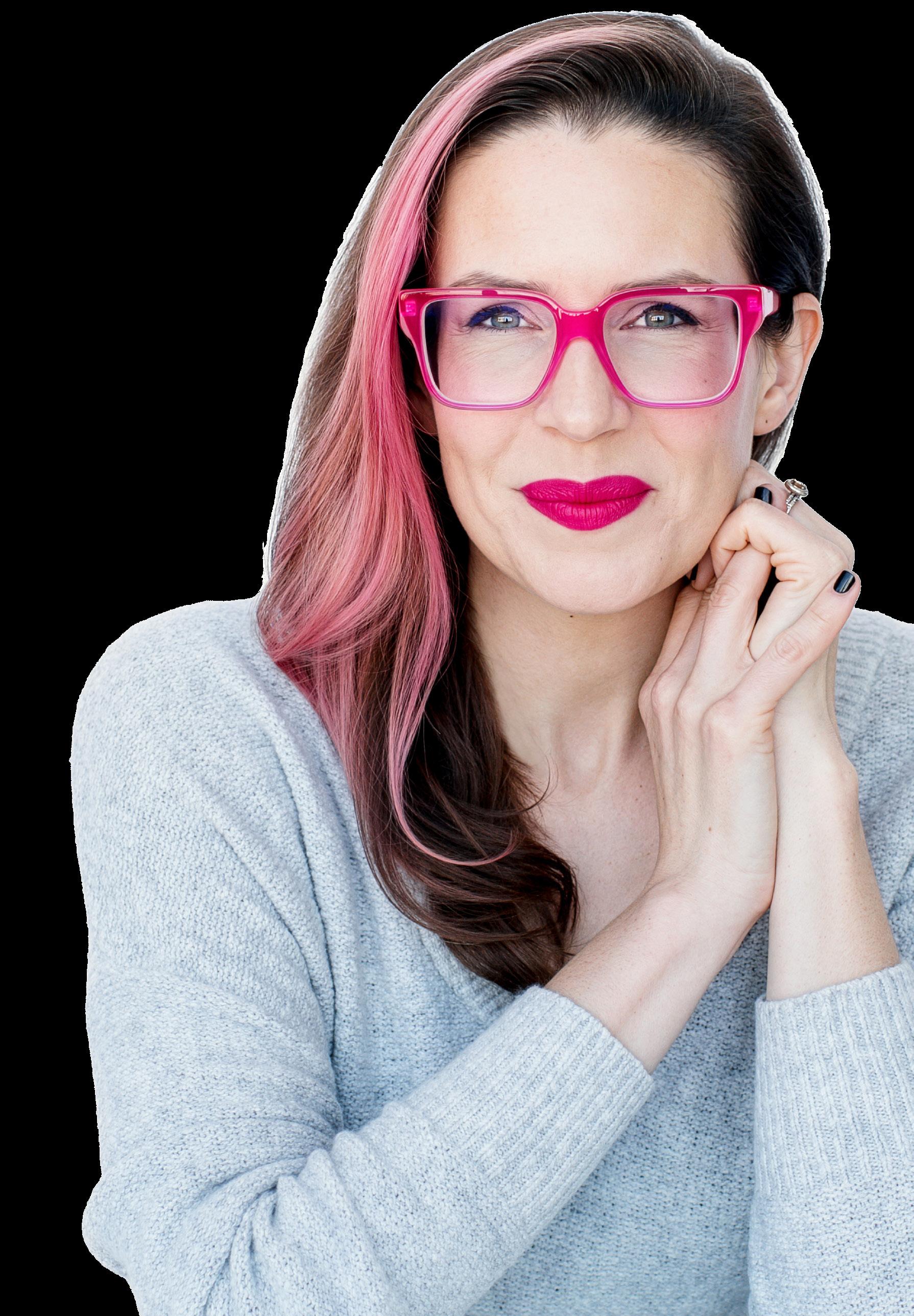
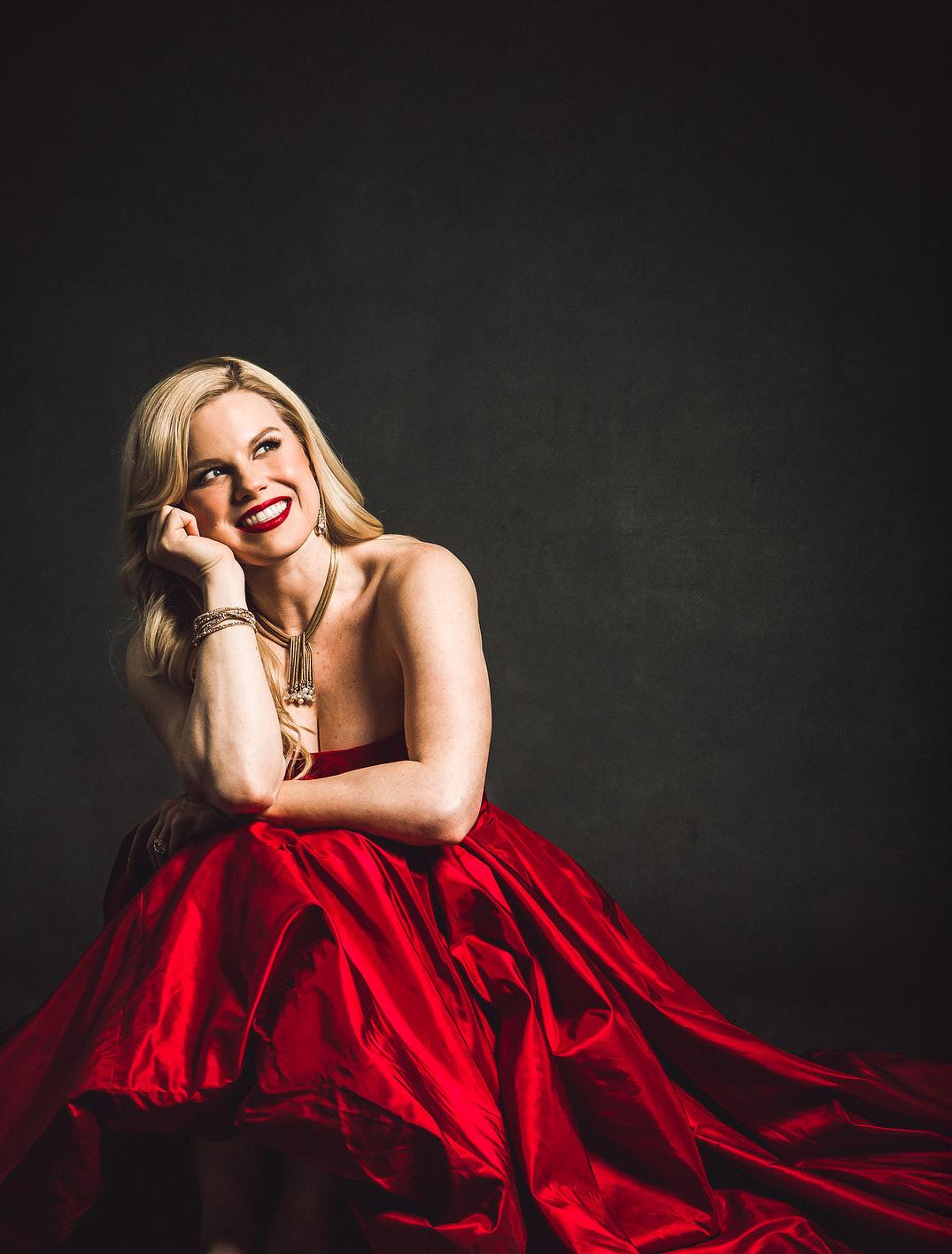
NAYSAN MOJGANI: You and Ryan [Rilette, Round House’s Artistic Director] have been trying to work together through your commission for some time. How long have the two of you known each other?
LAUREN GUNDERSON: I knew Ryan as an artistic director when he was in New Orleans, and we came into each other’s orbit because of Hurricane Katrina. I came up with this Atlanta-based artisticactivist sort of event that was designed to make art and make money for artistic companies who had suffered in the storm. Ryan’s company got most of the money that we raised, which was $1,000 or $2,000—wasn’t massive amounts, but, we did our best. And so, through that, we came to know each other. He was a part of Marin Theatre for a while, when I was there, and at Round House he has done so many plays of mine, which I’ve been incredibly honored to have on his stage.
So, this was sort of a long-timecoming conversation about how since we’re both Southern, do we want to do a big ol’ Southern family play? Or is it a history play? And what is it that Ryan specifically could direct? Most of my work is largely presumed to be directed by women, because it centers women so much, and so what could be another way to get Ryan involved? Because I respect Ryan massively, as an artist, a leader, and a champion of new work. So here we are. It felt like the right story for not just Ryan, but for Round House: being so proximate to DC in this moment in time, with a history of new work with a very intentional political offering, but also a very welcoming space to have these conversations that aren’t divisive. It felt like a really interesting subject, an interesting moment in history to come back to at this moment in history, so it felt like “right place, right person, right subject, right time.”
the art itself—which is beautiful—it’s not the oldest art, it’s not the biggest. What was special about it is its discovery and the historicism of what it is. It was discovered during the Vichy regime in World War II, during the Nazi occupation of Paris and southern France. The people who discovered it were four boys, one of whom is Jewish. It’s the idea of boyhood in a time of national, violent upheaval, art in a time of war, brotherhood in a time of fascism, and particularly this sense of time: the extent and the longevity of the large story that we’re in, as opposed to the small, terrible stories of wars and battles and hatred. One of the discoverers was a young Jewish boy whose parents died in the Holocaust after the discovery, and one of the other boys joined the resistance, and one was absorbed into the Vichy army against his will, and then had to rebel against that. It’s all just this very interesting perspective on a fascist society.
[ THE CAVE EXPLORES] THE IDEA OF BOYHOOD IN A TIME OF NATIONAL, VIOLENT UPHEAVAL, ART IN A TIME OF WAR, BROTHERHOOD IN A TIME OF FASCISM, AND PARTICULARLY [A] SENSE OF TIME.
NM: Can we hear a little more about that “right subject”? What is The Cave ?
LG: It’s based on the true history of the discovery of ancient cave art in the Lascaux Caves in southern France. And what’s interesting about it is not just
But then there’s this 17,000-yearold cave art that is beautiful, that’s magnificent, that was preserved for that long and discovered at that time. The real reason to write The Cave from a philosophical point of view is realizing that when that art was made, there was no France. There was no Germany. There was no country. There was no religion, there was no Judaism, much less Christianity. This is the same place, but we have created these systems and ideologies that did not exist when these people were here. So that’s sort of like…. Wow. We just make up the worst things sometimes. And also, we make the best things! Look at this handprint on a wall from over 10,000 years ago, it’s just…the awe of it and the reckoning of it felt worthy of the theatre. And that’s sort of why it became a musical. Because that honestly felt bigger than dialogue. That’s the grand experiment of this piece, which will be the first musical that I’ve written all the lyrics to, as well as the book, as well as the top-line melody—the style of the songs and the musicality is mine, but of course I get to work with the amazing Bree Lowdermilk to turn those into proper beautiful musical theatre songs that she’s so great at.
NM: Have you ever visited the caves in person?
LG: Ryan and I are going to go see the caves! Or, the replica of the caves, which they’ve preserved. But also, what I didn’t get until I did some research is how big they are. When you go into to the first chamber, you read “there are four horses,” and I was like, “oh, cool, four horses.” And then no, no, no, no, they’re actually like 20 feet long each. Which I was just like “what!?” and I immediately leapt to the theatricality of that. The opportunity of a designer to give that to us in a real way is why we make theater, so you can be there and see the expanse of it.... That is longer than a car. And there’s four of them. It’s so dope! So, I’m just giddy excited about it. And I get to make a play about it! It’s the best feeling in the world.
NM: You are mostly known for writing plays centered on the experiences and stories of women. So when you pitched this story about four boys and a dog, you and Ryan and I were all excited about the opportunity to do something new. Has that shift in focus been different at all?
LG: People are people. I write from that same perspective when I write women-centered stories, and so the feminist narrative is there. And the feminist truth is “can you please treat me like a person?” So it’s actually the same ethos that has driven both. But the truth is, this is a play about…a lot of things. About fascism, about antisemitism, about brotherhood and growing up, and about all of the big political, philosophical things. But it’s also about the sort of grounded, curious, bumblingness of boyhood, which I did not experience personally, but I have two kids. Two boys. I have an 11-year-old and a 10-year-old. And this play, I feel like I could write because of and for them. And that’s what I think made it a play that I wouldn’t initially write off as “That’s of not my vibe.” No, it is. Because this is about young men coming to learn something new via adventure and discovery. Four very different boys and the different personalities creating a sort of cohort. It’s about that found family stuff, and also about recognizing that they are each going through something unique, especially the Jewish boy, Simon, who is a very, very real person. It’s sort of bracing and a great responsibility to know that these are based on real people. This isn’t their exact story, of course, but it is based on this truth.
NM: As another parent who works in theatre, I can understand the rare joy of being able to make a play that your kids can appreciate.
LG: I’m lucky that I can mostly share my work with them, certainly at this age now. But it’s still largely sort of an education for them in the things that I treasure and care about, feminism and women’s activism and all that stuff, stories for and about girls. When we did Peter Pan and Wendy , my oldest son was like, “oh, this is your best play ever! Peter’s awesome!” Of course, he liked Captain Hook the best. It’s a delight, and I’m excited for them to see this one someday.
NM: So, we’re headed into the workshop for this piece. It’s still taking shape, and I imagine we’ll discover some things over these two weeks. How does it feel going into this development process?
LG: I wanted this to be small. Like, a chapter of a novel, not a novel. Something that has intentional Intimacy to it. So, part of the gift of this workshop is being able to explore the capacity of the piece. I’m already writing a new song that I’d been wanting to write for a long time, but didn’t have the way in. Frankly, it was the ICE raids in Minnesota and all over the country that...suddenly I can write a song about not knowing if you can trust your neighbors or wow, you really can, which the characters would go through. I just didn’t know how to write that, and then I thought, “oh, watch the news. I can write that.” That’s what we’re sort of in with this particular subject. We can actually look around and recognize this and write something from the experience of ‘now’ that relates to ‘then’. But, I can’t do it by myself. It’s gonna be me and Bree, my assistant Nic [Sommerfeld], and Ryan, and this wonderful cast. We’re gonna make it together. So it’s… it’s thrilling and…and nerve-wracking, but it’s…great.
NM: To go back to basics with development... You are a tremendously accomplished playwright, and so... why can’t you just sit down and write a play? Why do we have to do a workshop?
LG: Oh yeah, great question. When I teach writing, I tell the students that, unfortunately, when you get to the end of your first draft, the work actually begins. Because the first draft is a great thing, and it is a raw and pure, beautiful thing, but it isn’t a play. A play is...with people, with actors and dramaturgs and directors and designers and everyone else that starts to create the thing together, because a play
does not live on a page. It lives in space and time and hearts and bodies. And so, that translation and iteration and evolution that happens, that’s the theatre. So, the reason why I can’t just show up and be like, “here’s a play,” is because that removes all of the important discovery that you have to learn from lifting it up into breath and body. And we learn, “oh, that monologue is too long. Oh, this has been said three times before. Oh, no one understands how this person gets to the change of heart, we’re missing something. Or, oh my gosh, there’s an opportunity for so much more here.” So, all of that is what takes it from a literary art to a performative art, and the space in between those things requires workshop, requires seeing what it is. The difference between reading a thing and hearing the thing. The difference between a stage direction that says he kisses her, to “what kind of kiss? How long is it? How do they start the kiss? Who starts it? What is it?” There’s so much nuance in humanity, in that, that we need to discover. That’s the great stuff, not only of our art form, but our shared experience as humans. That’s the stuff we want to know. Those are the details that make it real and artful, and so that space is where the gift is. Also, I’m terrible with typos, so the workshop helps me figure out all the terrible misspellings I have. So, thanks!
WHEN YOU GET TO THE END OF YOUR FIRST DRAFT, THE WORK ACTUALLY BEGINS.
LG: I think I have questions about what they’re walking away with? DC audiences are so particularly interesting, because of their proximity to politics and power and government. Also, I have a lot of Gundersons here, a lot of my family is in the area, so woohoo! Go Gundies! What I walk away from any workshop with is listening to flow, listening to the sort of orchestration of the play, meaning the musicality, the gasps, and the pauses, and the run-ups to the jokes.... We actually get to see if the rhythm is rhythming. You know, if we’re hitting the musicality of the piece, which for my stuff is very important. I’m interested, as a lyricist now too, in the ways that a single word in a song changes so much of it.
NM: Is it difficult, emotionally, to make that transition from a thing you work on at your computer alone to opening that up and sharing that with people?
I always start every reading, every workshop, every rehearsal process, by saying, “there is a minimum of three things I don’t know yet about this, that are gonna be amazing ideas, that will better this play. I don’t know what they are yet. That’s why we’re here. One of the reasons why we’re here is to get one or two of those great ideas together.” And they’re not always mine. Actors have great insights, and stage management, and designers, and there’s so many people with their brilliance that is added to the play. And so, so many times, it’s somebody’s wonderful question or response that allows us all to go, “oh my god, of course!” So that’s part of what the workshop is, too.
NM: Is there anything in particular you’re hoping to learn from seeing it with an audience?
LG: Yes and no. I’ve developed a thick enough skin, because you have to, because part of the theatrical effort is sharing. Nothing happens if you don’t share it. So, you have to brace yourself for it being imperfect, for it being stupid, for it being too long, or not funny, and then I learned to turn that from “oh, that didn’t work,” to “I’m so glad I know that didn’t work! We can make it work. I’m so glad I know that that was not a funny joke. I can fix that.” It’s all the experiment, right? And you don’t get to do the experiment unless you’re willing to learn from the experiment. There is stress very much involved. Because in theatre, you can always use a bit more time, to make it a little bit better, a little more nuanced, a little bit this. You always need another week, no matter how much time you’ve had. And somehow, the show goes on, and we learn from it, and we enjoy it, and we cheer it for what it is in that moment, and continue to interrogate it, and that’s the gift.
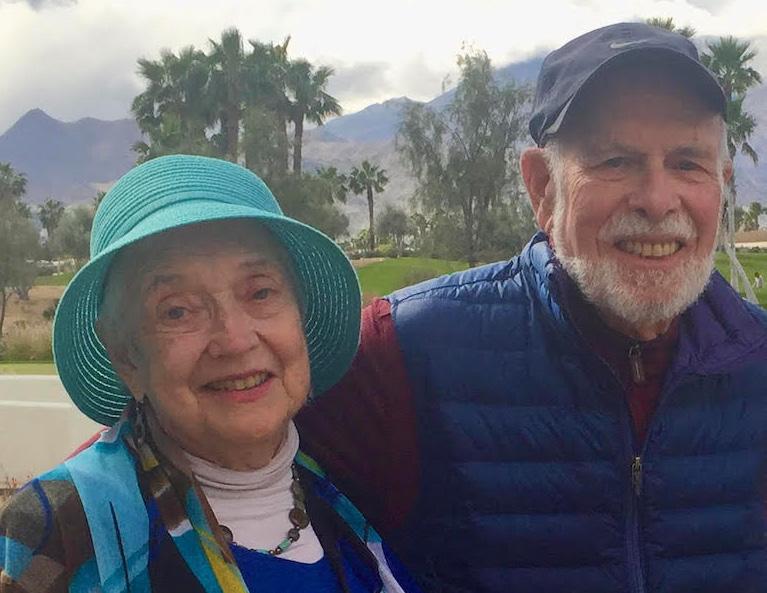
IL AND RONA EISNER did not begin their relationship with Round House Theatre all at once. Like many members of the community, their connection grew gradually, deepening over time as they discovered more about the theatre and its work.
“We were here a few times before we became regular ticket buyers,” said Rona Eisner. “But we started regularly attending and being impressed by what Round House does after we went with Round House to London for the first time [in 2023].”
The trip helped open the door to a broader relationship with the theatre. The Eisners were already enthusiastic theatregoers who often built theatre into their family visits.
adding that Round House’s work “not only… onstage, but also with and for students, was a good match.”
Education and young people were particularly important factors in their decision to give. Rona spent many years working with adolescents as a psychotherapist. “My first job was as an adolescent therapist at Children’s Hospital before I went into private practice,” she said. “It was incredibly important to foster interest in many kinds of activities in kids, the way Round House does in its summer camp and education programs.”
“We do New York trips twice a year to see family,” Rona explained. “Our granddaughter is currently a senior at LaGuardia School for the Performing Arts… We go to see her and other theatre while we’re in town.”
For Gil, the connection to Round House grew from a lifelong appreciation for theatre and a desire to stay engaged locally.
“Our relationship with Round House had a slow start, but we have an inclination to the theatre. We used to go downtown all the time, but then we found Round House.”
After the COVID pandemic, the Eisners began focusing more intentionally on their local community. “After COVID, we didn’t feel like traveling: our orientation was very much focused locally,” Rona said. “We got involved and slowly became part of the family here.”
As their relationship with the theatre deepened, the Eisners began thinking about how they might support the organization more meaningfully. “When we realized we were in a position to make more significant gifts, we looked around for where we thought we could do some good,” Rona said,
That perspective made Round House’s work with young people especially meaningful. Supporting the Teen Performance Company became a major focus of their giving and reflects Rona’s long interest in teaching and youth programs that encourage creativity and confidence.
Rona’s own artistic journey also shapes how she views the theatre’s mission. “I came to art late; I was a psychotherapist and loved my career… but I felt as a woman to be lucky to be able to have another career,” she reflected. “Art of different kinds was something I wanted to do: it’s in everything, teaching is in everything, mental health is in everything.”
The Eisners also see the arts as deeply connected to wellbeing. “Mental health is important and theatre is important to mental health,” Rona said.
For Gil, their philanthropy focuses on causes where they believes their support can make a tangible difference. “I would like my contributions to go to specific causes… if there’s an opportunity to make an impact, that’s where I feel good.”
As they learned more about Round House, the Eisners saw how deeply the organization invests in young people and the broader community. “After we got involved, we found how much was going on with kids and on to schools: it’s a project that deserves help,” Gil said.
Just as important has been the sense of connection they have found at the theatre. “At our age, we are losing friends every week it seems like,” Gil shared, “and one of the things we have been looking for is a connection to a group of people with similar interests, where we feel welcome, and that has been very true at Round House Theatre.”
For Gil and Rona Eisner, Round House Theatre is more than a place to see a play. It is a community where art, education, and human connection come together—and their generosity helps ensure that work continues for students, artists, and audiences across the region.
AT MAYORGA COFFEE , we’re fueled by the idea that great coffee can create real change. For over 25 years, our founder, Martin Mayorga, has been on a mission to transform the coffee industry by supporting small farmers, protecting their land, and building sustainable supply chains.
Martin’s journey began when he witnessed firsthand the inequality and exploitation faced by small-scale coffee producers. Determined to make a difference, he built Mayorga Coffee around a simple but powerful idea: consumers can enjoy exceptional coffee while uplifting farming communities and protecting the planet.
At Mayorga, we are committed to direct trade and organic farming. We partner directly with small producers across Latin America, ensuring they receive fair prices for their harvests. This approach not only supports farmers financially but also helps preserve their land for future generations. The result is highquality, Specialty Grade, 100% organic coffee that’s grown without synthetic pesticides, additives, or dyes— delivering pure, natural flavor in every cup.

But we don’t stop at organic. Our team works closely with partner farms to implement regenerative farming practices, such as shade-grown coffee that preserves biodiversity and prevents soil erosion. We also regularly test our coffee and soil health, ensuring we’re delivering the highest-quality, most sustainable coffee possible.
Unlike many conventional coffee brands, we’ve rejected a profit-first model in favor of one that prioritizes fairness, transparency, and community. When you drink Mayorga Coffee, you’re not just enjoying a delicious cup—you’re joining a movement. Every bag of Mayorga represents a legacy of accountability, pride in heritage, and a commitment to doing business the right way.
We’re thrilled to partner with Round House Theatre this year, sharing our coffee with its vibrant community of supporters. Together, we can celebrate the arts while enjoying coffee that’s making a difference in the lives of farmers, their families, and the planet. Here’s to great coffee and meaningful connections. ¡Salud!





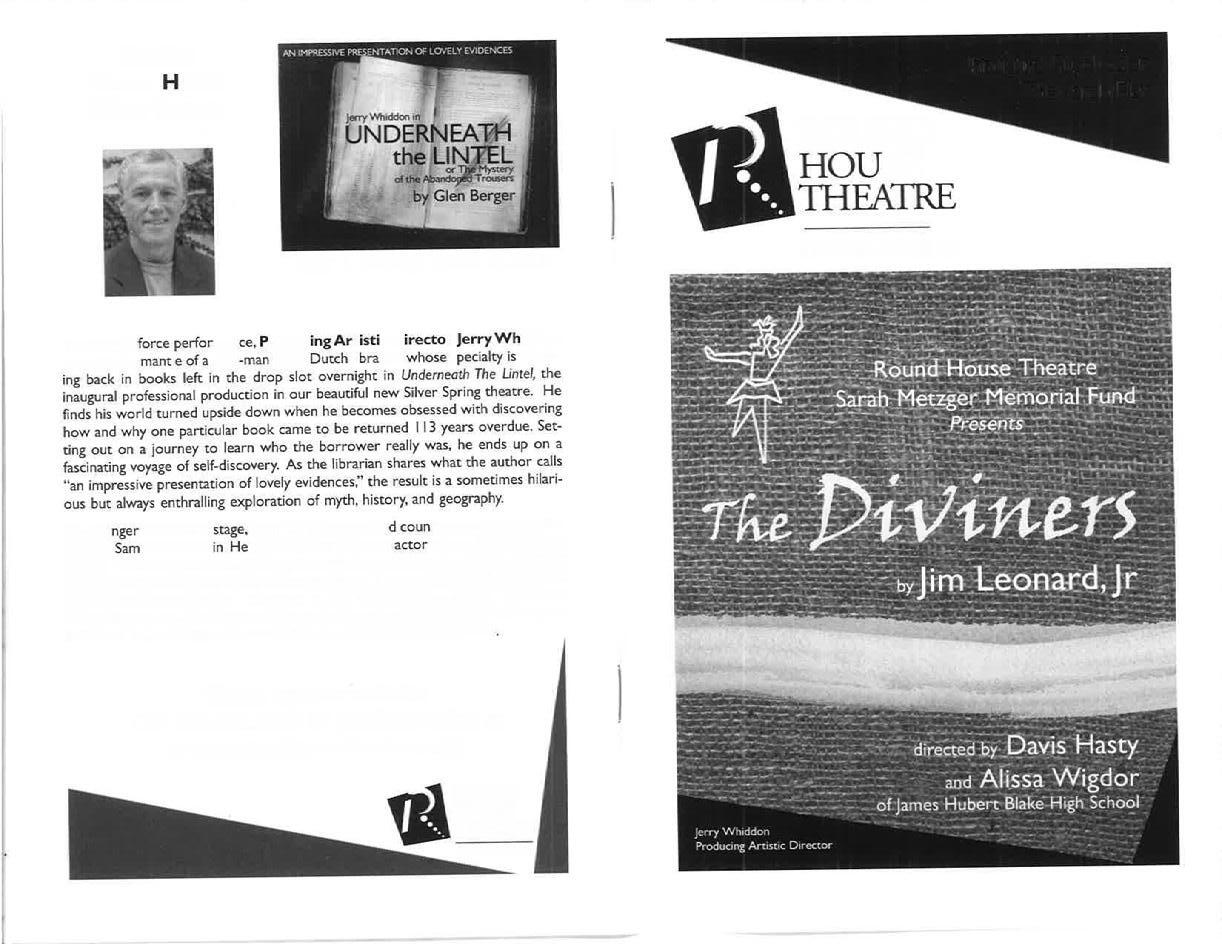
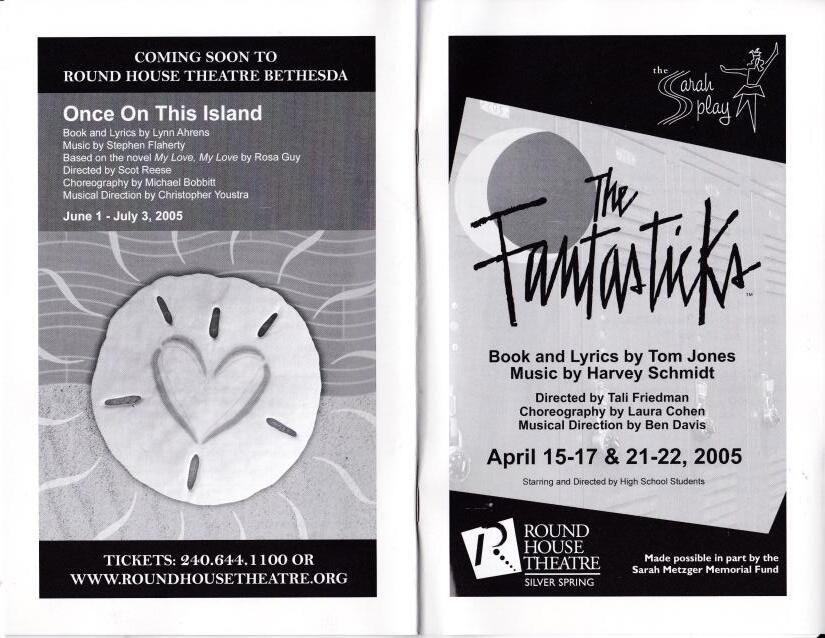


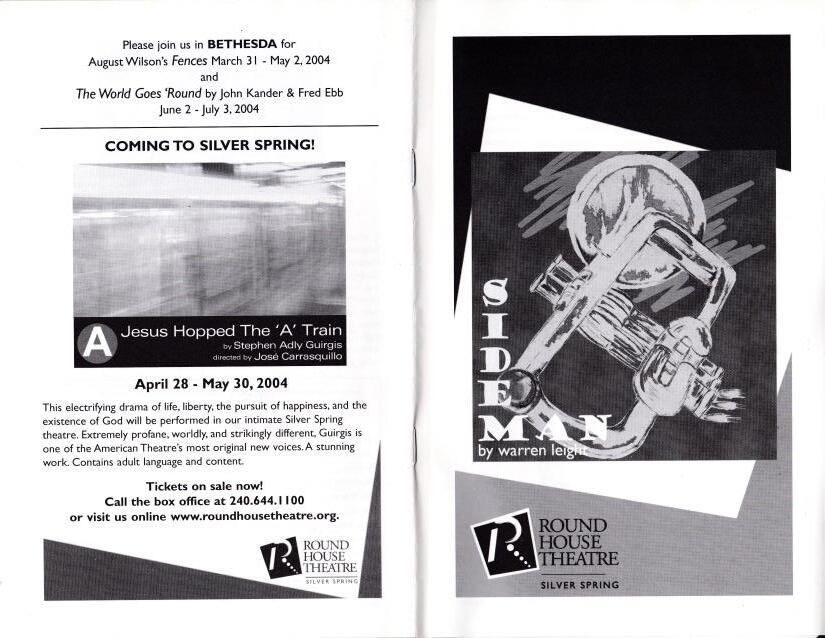


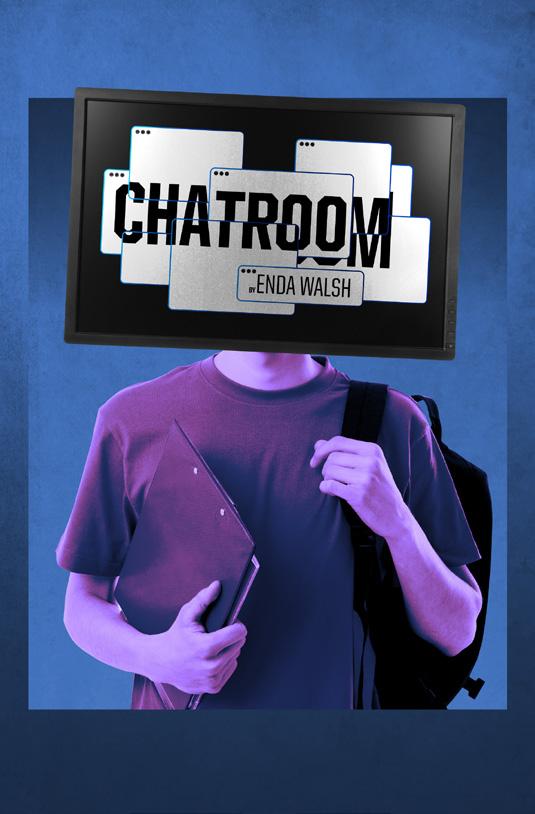




















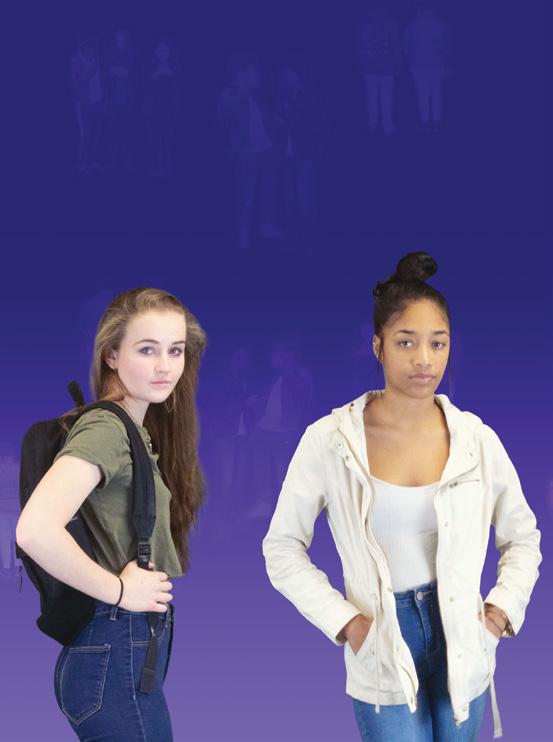






















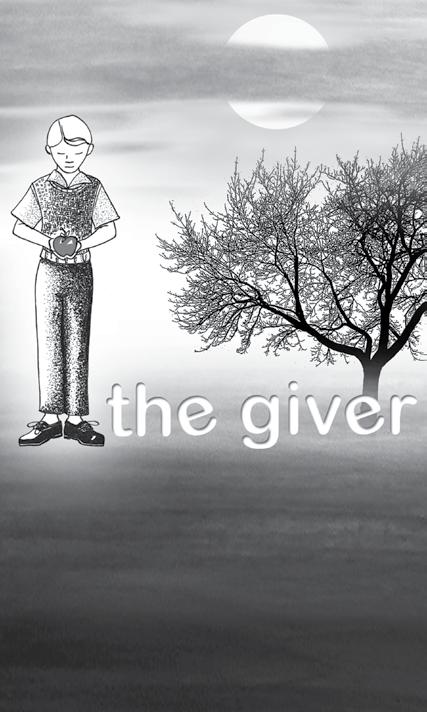












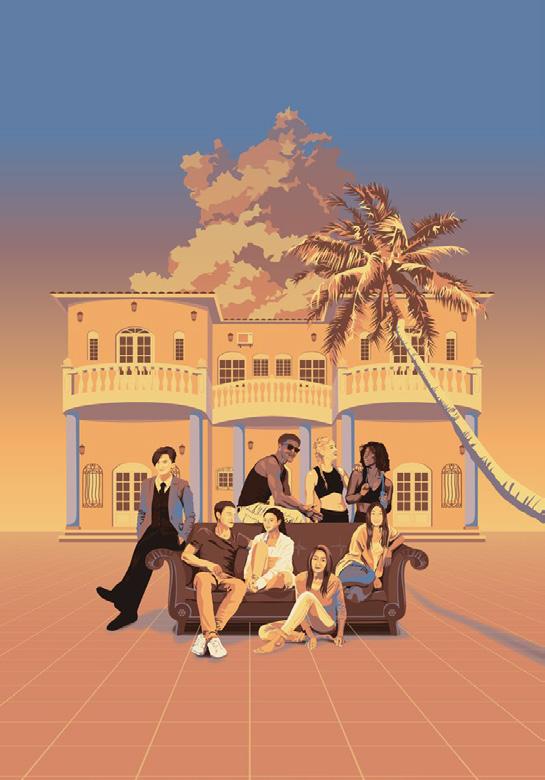





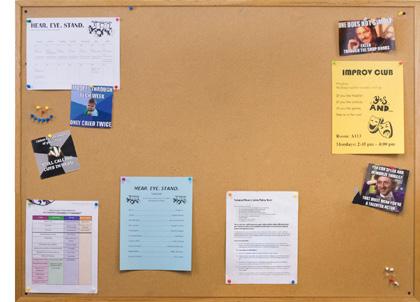


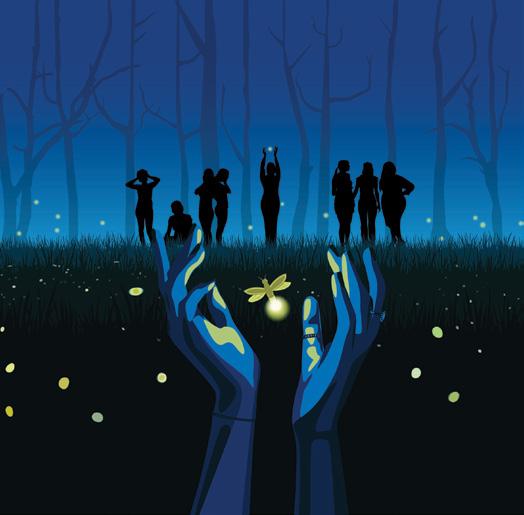









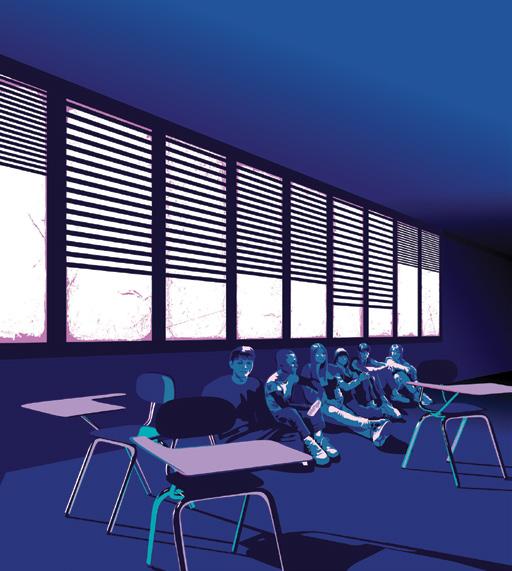






The Teen Performance Company is a pre-professional program for the next generation of theatre artists. The season-long program culminates in the Sarah Metzger Memorial Play, which is directed, designed, stage managed, and performed by the Teen Performance Company, working with professional mentors to help guide them through the process. This year marks the 24th anniversary of the Sarah Play. Patrick Joy, our Associate Director of Development for Operations and Analysis sat down with Danisha Crosby, Director of Education, to learn more about this one-of-a-kind program.
PATRICK JOY: You were the Director of Production here at Round House during the very first Sarah Play back in 2003. How did the idea for the Sarah Play come about?
DANISHA CROSBY: The idea of the Sarah Play started really with a conversation with the [Metzger] family, and our then-Director of Education, Kathy Feininger, about a way to mark and honor Sarah’s memory. A huge piece of that was that Sarah was very frankly frustrated with her high school theatre department at the time. So, when she was a senior, she took it upon herself to pull together a group of friends and, with support from some parents, found a space to perform a show.
PJ: And now, as the Director of Education, you’re even more deeply involved in the Teen Performance Company (TPC) and the Sarah Play. How has the program changed since that first show in 2003?
DC: It really has evolved a lot from that first year, where honestly, Round House was like, here’s the space, here’s the rules, you’re mostly on your own.
It has evolved now into the season-long Teen Performance Company (TPC), where we’re really involved with these kids for more than 6 months of their lives, because they do master classes with us, and they get exposed to a whole variety of different areas of theatre. Last night they were talking to Dani Stoller about playwriting (the playwright behind Girlhood , the 2023 Sarah Play and the actor who played Carrie in Rules for Living ). And every kid in the company is working with somebody who does what they’re doing professionally, who also is great at working with young people. So, if I’m this kid who’s designing sounds for TPC, I’m working with Matt Nielson (Sound Designer/Composer for Ink , Radio Golf , Nine Night ), who literally designs sound for theatre across the country. We’ve even started commissioning plays for the program.
One of the things that I am really, really proud of is seeing how the program has grown and how Round House’s support of the program has grown.
THE GROWN-UPS ARE THERE, TRULY, TO SUPPORT THE KIDS’ ART GETTING ON STAGE.
All the artists involved in the project were high school students, so when we started talking about a way that we could honor Sarah that would mesh with who Round House was, this idea of Round House supporting high school students doing that same thing—putting art on stage—was what we landed on.
PJ: What, in your mind, makes TPC special or unique compared to other youth theatre companies?
DC: I think part of what makes TPC really, really unique is the idea that the grown-ups are there, truly, to support the kids’ art getting on stage. Whereas in many programs— and this is not to diminish those programs—but in many programs, there is ultimately an adult who’s in charge: an adult director, who’s ultimately guiding the art, even if they’re working with a lot of student actors or student playwrights. This program is really, truly designed to put the adults in a supporting role. The adults can certainly guide in the sense of “Oh, I hear what you’re trying to achieve. Let me give you some strategies for getting there.” But we’re still really, really committed to the students’ vision ending up on
stage. My job is not to tell the student director what they want: my job is to help the student director figure out how to get what they want.
PJ: I remember you once said that sometimes we have to let them go down the wrong path to figure out it’s the wrong path for themselves.
DC: Yes! And I think that there are two things that so closely align the Teen Performance Company to larger Round House.
One is that it is this unique little crystallized place where our Education programs and our Performance programs intersect. They saw Dani Stoller on stage [in Rules for Living ] and then they talked to her about her career as a playwright! They were shadowing in tech rehearsals for Nothing Up My Sleeve this weekend. Frankly, Dendy used us as a stand-in audience, and the kids were fascinated by being part of that process. Ryan, who’s the Artistic Director, meets and talks to the kids and he mentors the program. Scout [this year’s TPC director] got to observe Ryan directing. That’s really cool and different than places that have mostly kids theatre. You’re here at Round House and you’re observing us working on Rules for Living
There’s that, and there’s the fact that at the heart of Round House’s Education department is the idea that we are trying to empower students’ voices. And encourage them to explore their own imaginations and their own creativity. We talk about that from the time that kids are tiny. Our education program has never been about “we would like all 35 of you to learn the same dance step,” we are almost the polar opposite of that in the sense that we start from the very youngest class talking about how they imagine being able to tell the story. And TPC really becomes the crystallization of that, for all the reasons I talked about. But again, TPC is about the ultimate empowerment of teen voices and putting them on our stage, and it is a program, as far as we know, that is unique in the country in the sense of the way the students are empowered.
PJ: That’s just incredible! Could you walk me through what a season looks like for a member of TPC?
DC: We typically start interviewing student directors in the late spring or early summer. As soon as we have a director in place, we start working on all of the other moving pieces: interviewing designers, stage managers, et cetera. We audition actors generally in September, so we have a full company in October. Once we have the company pulled together, then we start two things around the same time. We start doing the master class process, so they’ll have everything from meeting with the Round House Marketing department, to doing a lighting design master class, and more. We try to cover a whole lot of different opportunities. Most kids, for instance, have never heard of a dramaturg when they get to Round House, so it’s a great way to introduce to them to this whole other kind of thing you can do in the professional theatre.
AT THE HEART OF ROUND HOUSE’S EDUCATION DEPARTMENT IS THE IDEA THAT WE ARE TRYING TO EMPOWER STUDENTS’ VOICES.
At the same time as the master classes, we’re starting the process of production meetings for the actual show that we’re working on. So, the directors and the designers are working with their mentors and meeting with each other to dig in and figure out how the actual physical production is going to work. Because, just like a mainstage show, we have to know what the set is going to be like before the actors can start doing blocking on it.
Typically, sometime during that process, we do our first big read-through of the play, and if it’s a world premiere, the playwright will join us. This year Morgan Gould [director of What the Constitution Means to Me and playwright behind Jennifer Who is Leaving us on Zoom, so that the kids could read through and directly ask the playwright questions, which is another really cool thing about this program.
Finally, about 12 weeks out from the actual performance, we get into rehearsals. So that’s when everybody starts to get a little more specialized. The actors really start working with the director and stage managers in the room on rehearsing the play, and the production team starts
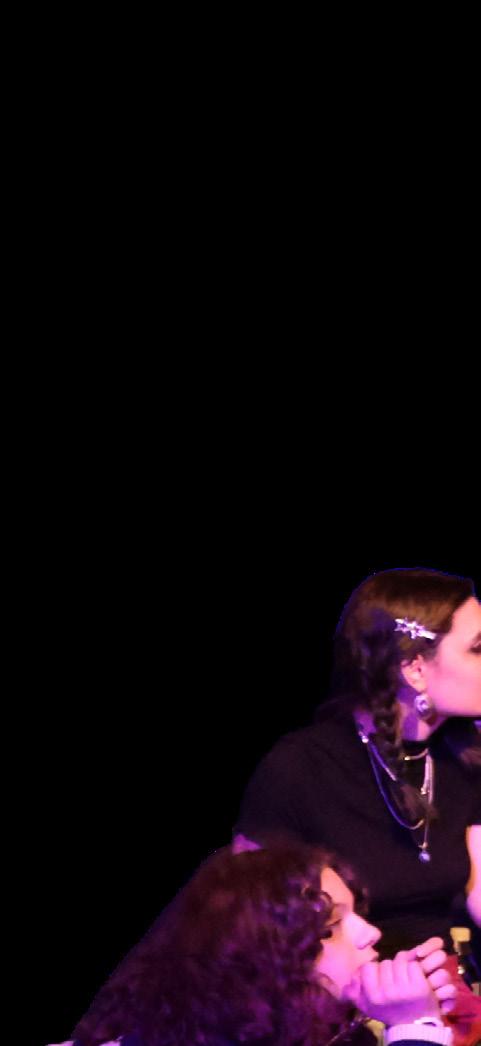
working concurrently on actually turning their grand ideas for costumes into actual costumes, for example. And once we get to the weeks running up to the show, honestly, in some respects, it starts to feel a whole heck of a lot like a mainstage show, except that you have to cram everything in between about 4 and 9 o’clock at night, because they have school and bedtime and most of them have to turn around and get back to school at 7:30 the next morning.
PJ: One final question, TPC is completely free for participants. How and why has Round House managed to keep a program like that going?
DC: I think a huge part of the way that Round House has kept this program going is simply because it’s so close to our core mission that we’ve prioritized keeping it going. I appreciate tremendously the fact that between individual donors, support from foundations, and other kinds of support that we’ve been able to keep it completely free. I think one of the things that is easy to lose sight of is that even if you have a program that you offer scholarships for, there are kids who won’t apply for it for a variety of reasons. And the fact that we have a program that is honest-to-goodness free means that kids who wouldn’t otherwise throw their hat in the ring do. I think that the fact that we have managed to figure out as an organization how to continue to make that true is huge, and it’s one of the reasons that the makeup of the TPC company is as eclectic as it is.
One of the things that is delightful about TPC is that it is not one of those programs that we have to figure out how to shape so that people understand what we want them to understand. This is one of the coolest programs in the nation.
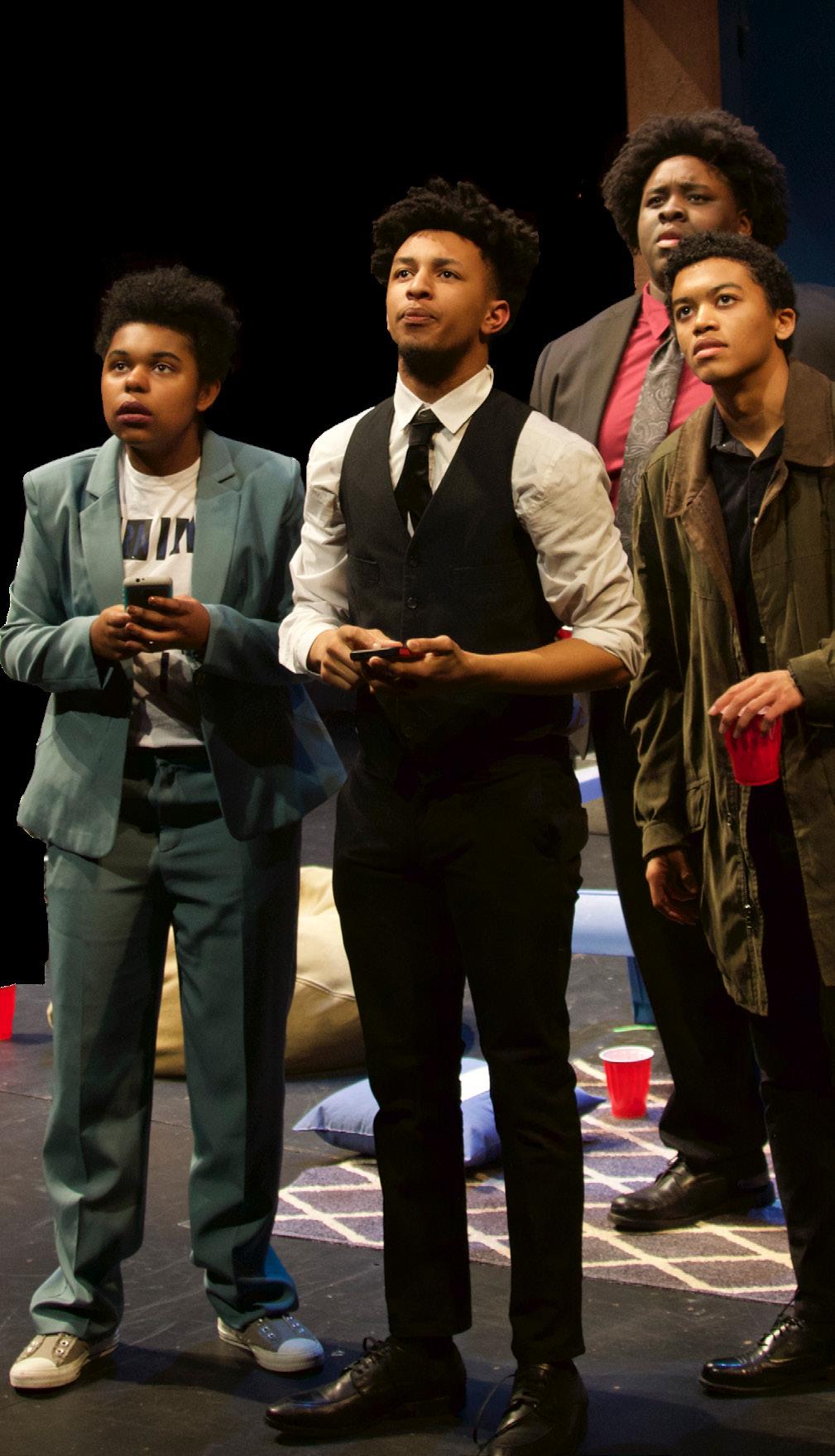
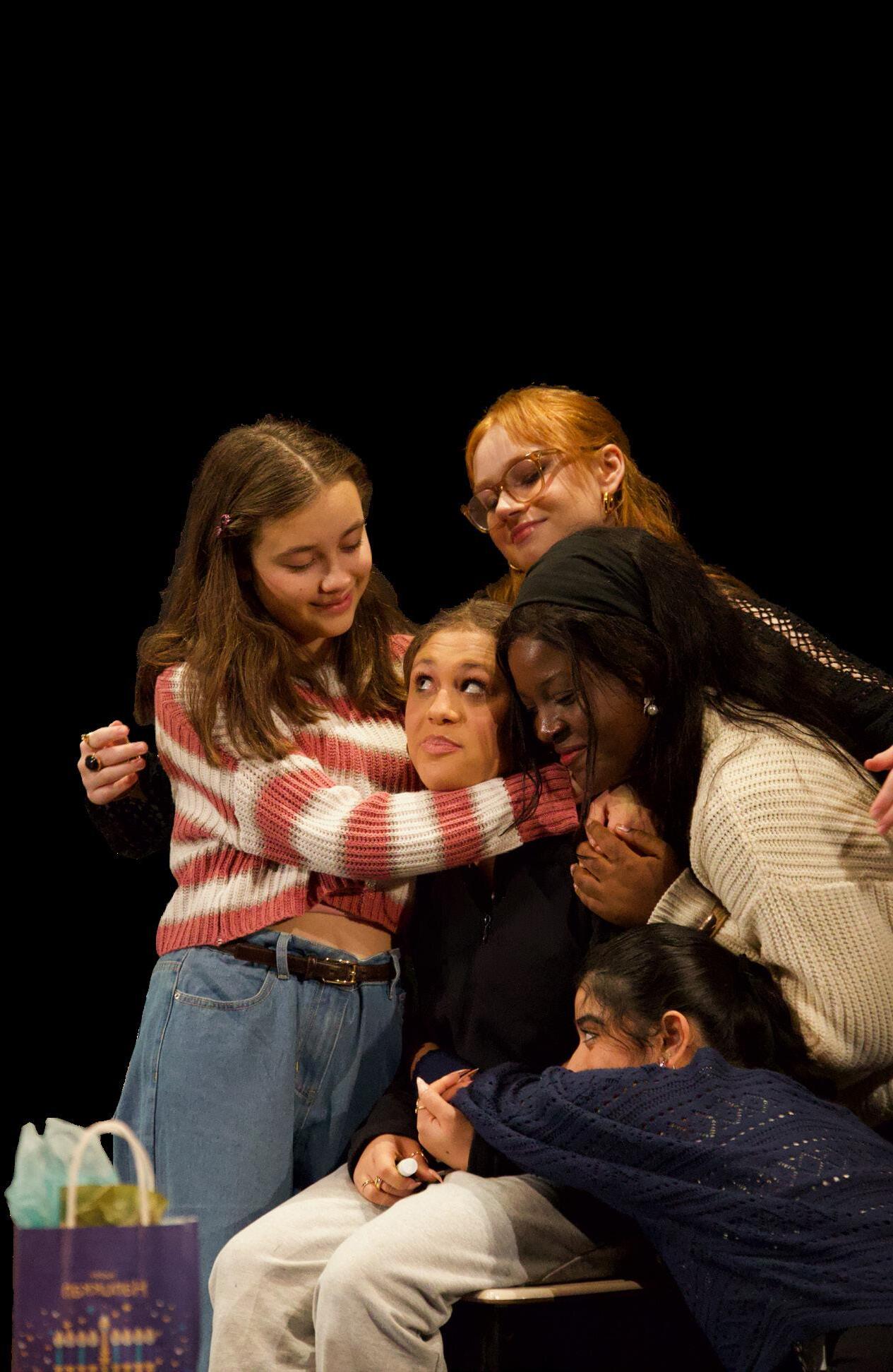
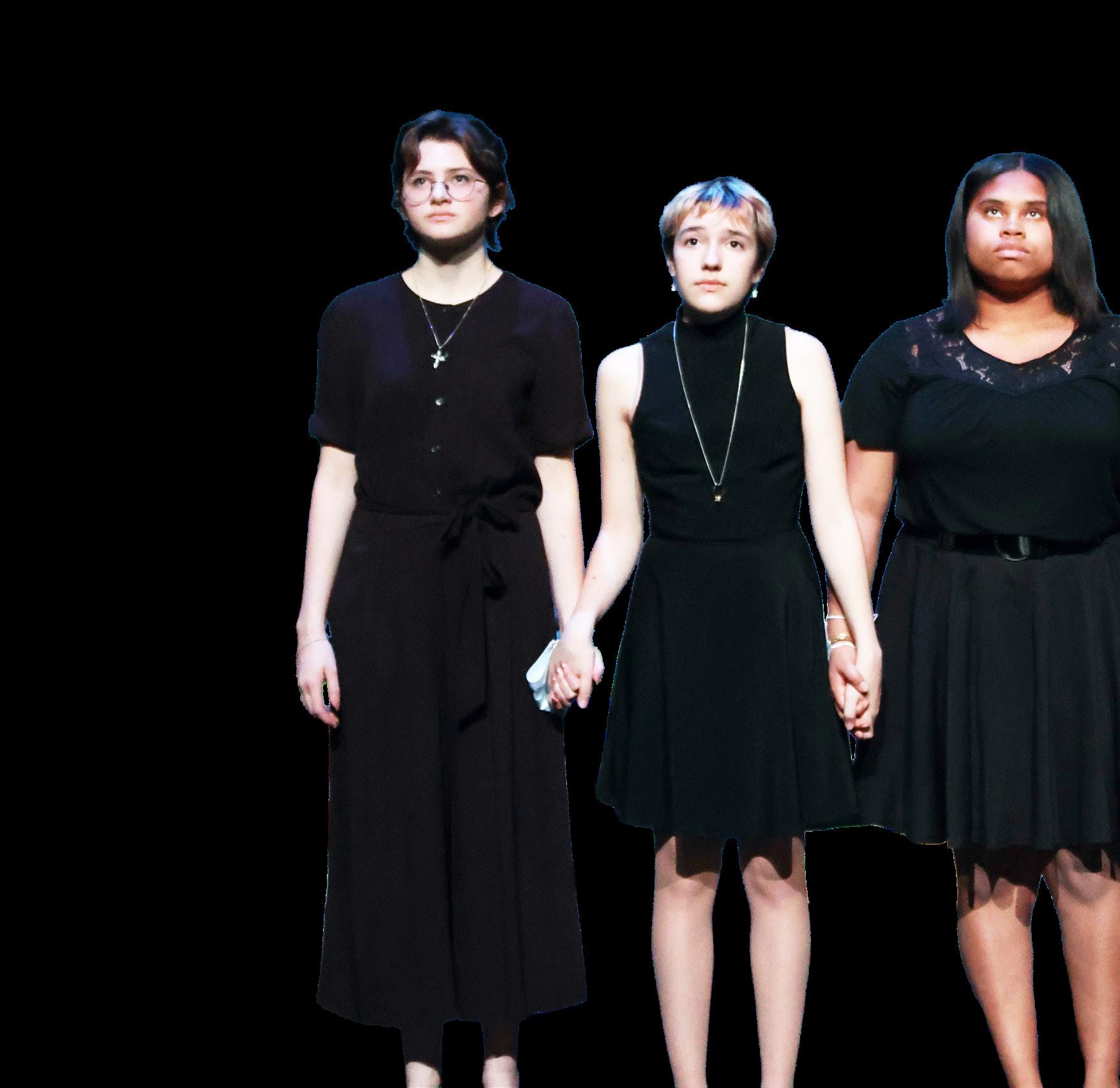
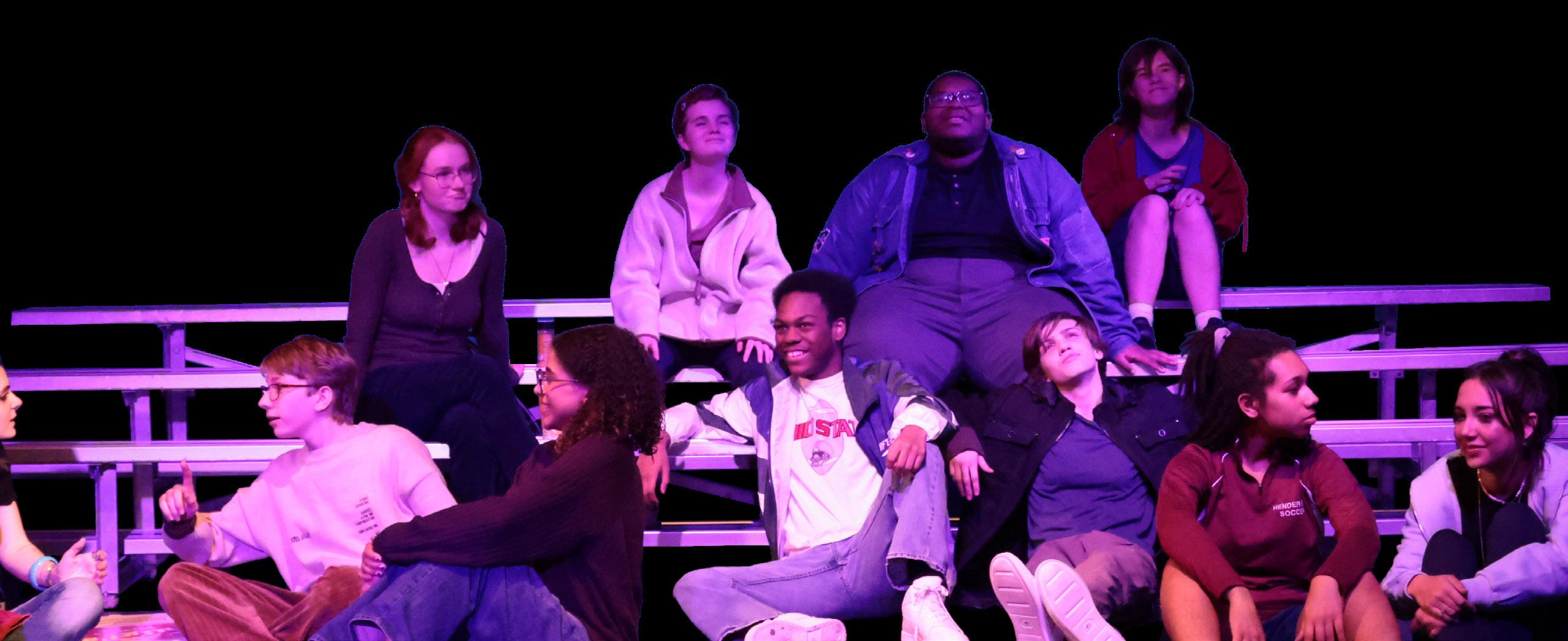
Round House presents the inaugural Sarah Play, The Diviners
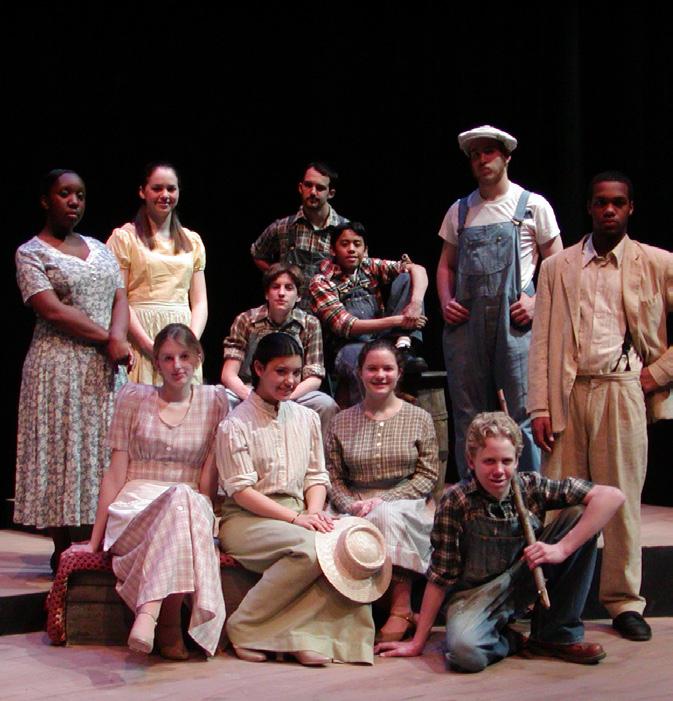
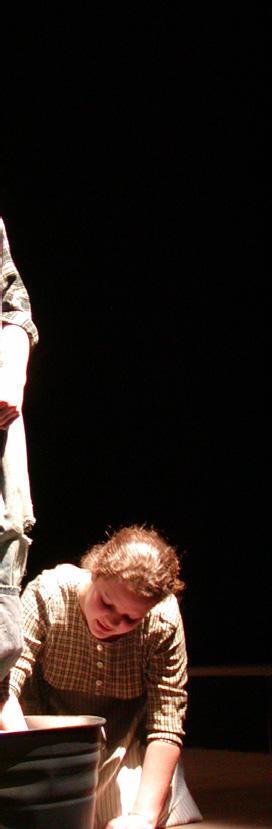
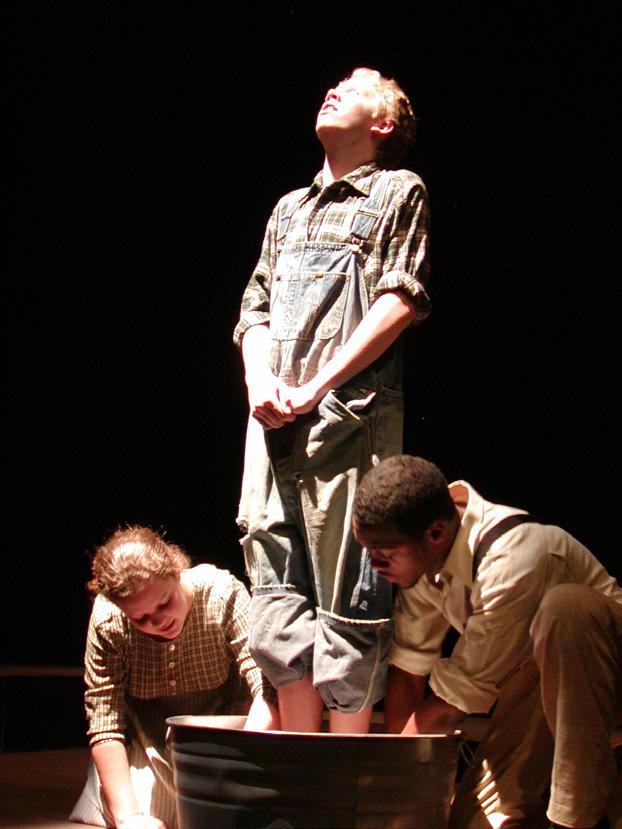
With the production of The Burial at Thebes , Round House adds professional designers to mentor the students throughout the process




Written by Seamus Heaney
Directed by Elizabeth Hagerty
The Sarah Play moves from the Silver Spring Black Box to our Mainstage Theatre
The Sarah Play is also expanded from a standalone play into the seasonlong Teen Performance Company, adding master classes and special events for the company
Over the last 24 years, the Sarah Play has evolved into the incredible program that you know today. We wanted to highlight some milestones in the history of the annual play.
The Teen Performance Company presents its first worldpremiere play, Beach Week , written by Sarah’s sister, Diana Metzger.
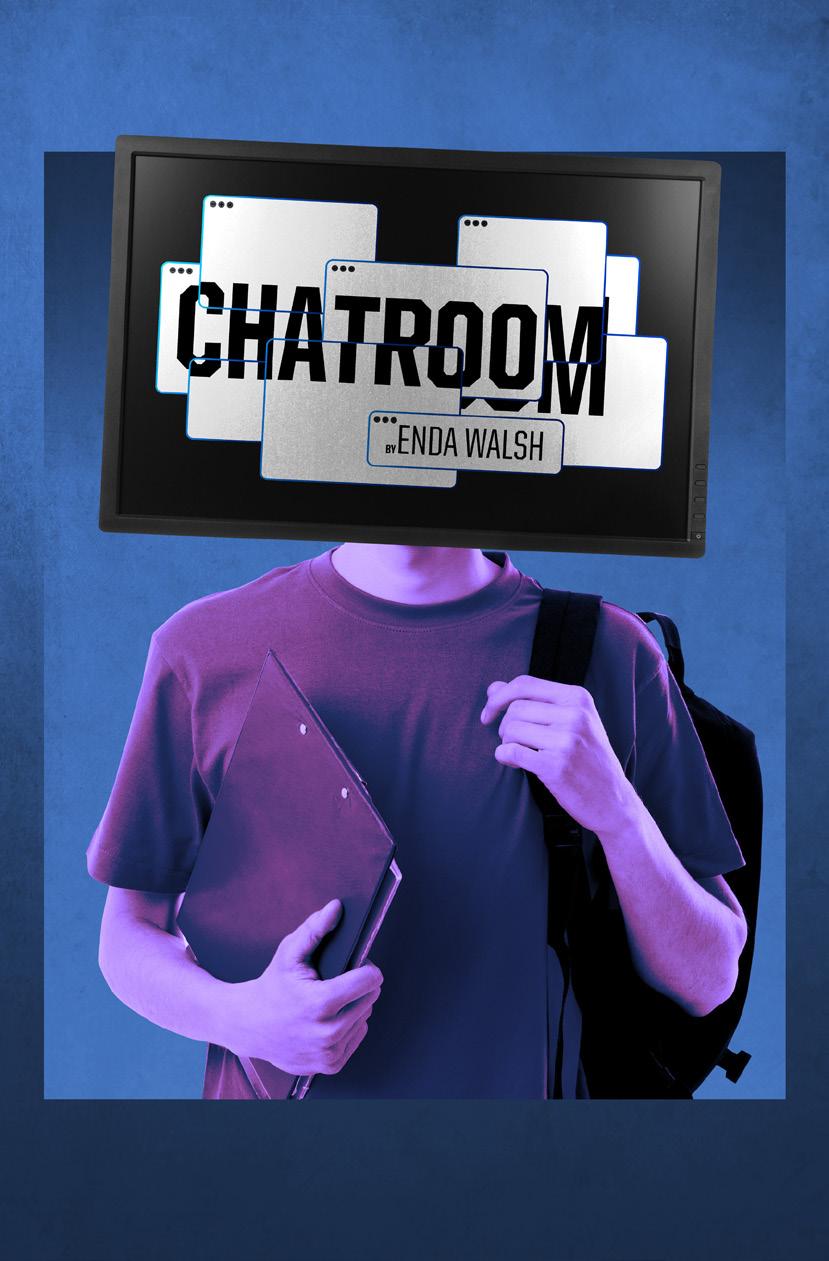
Round House commits to commissioning plays written to be performed by a company of teens which will speak to their real-life experiences
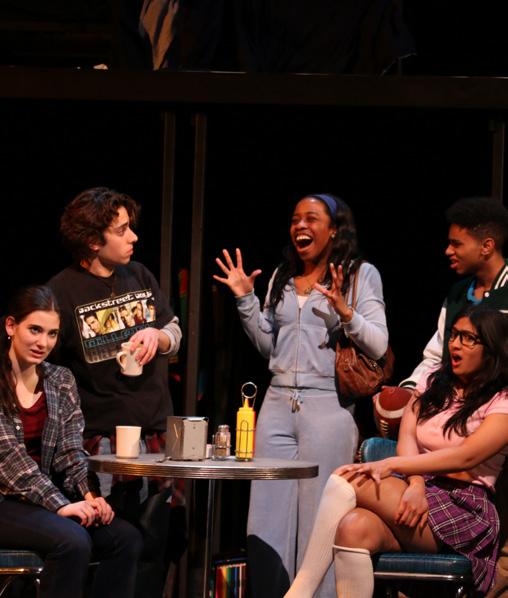
Due to the COVID-19 pandemic, the Teen Performance Company cannot meet or perform in-person. They write and perform their own piece of digital theatre based on their experience with lockdown, titled Hindsight Is…
TPC and the Sarah Play return to in-person productions the following year
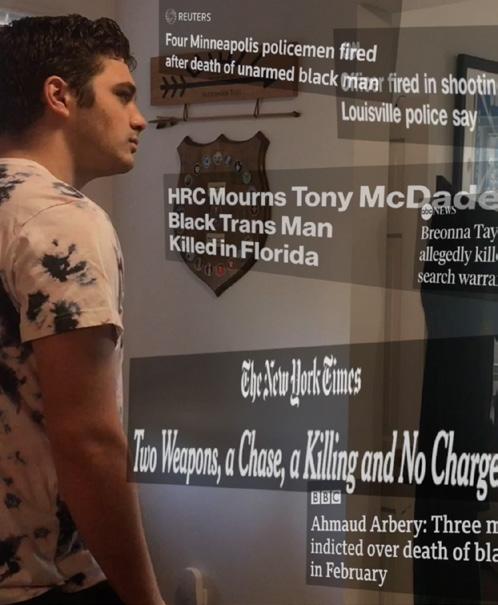
TPC presents its very first play written by a teen playwright, Gallows Humor , written by Fin Davis, a member of the 2022-2023 and 2024-2025 Teen Performance Companies
2026
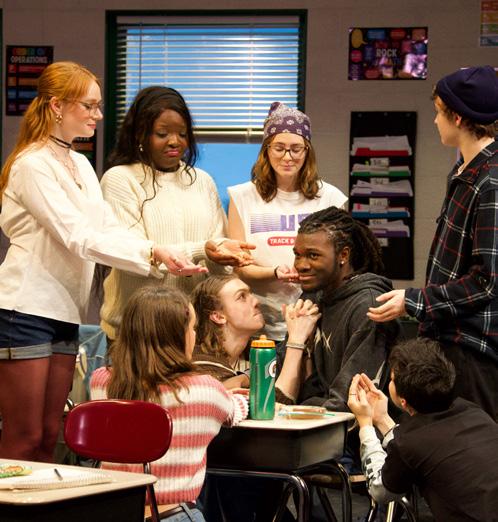
The 2025-2026 Teen Performance Company staged our latest world premiere, At the End of the World , by Morgan Gould

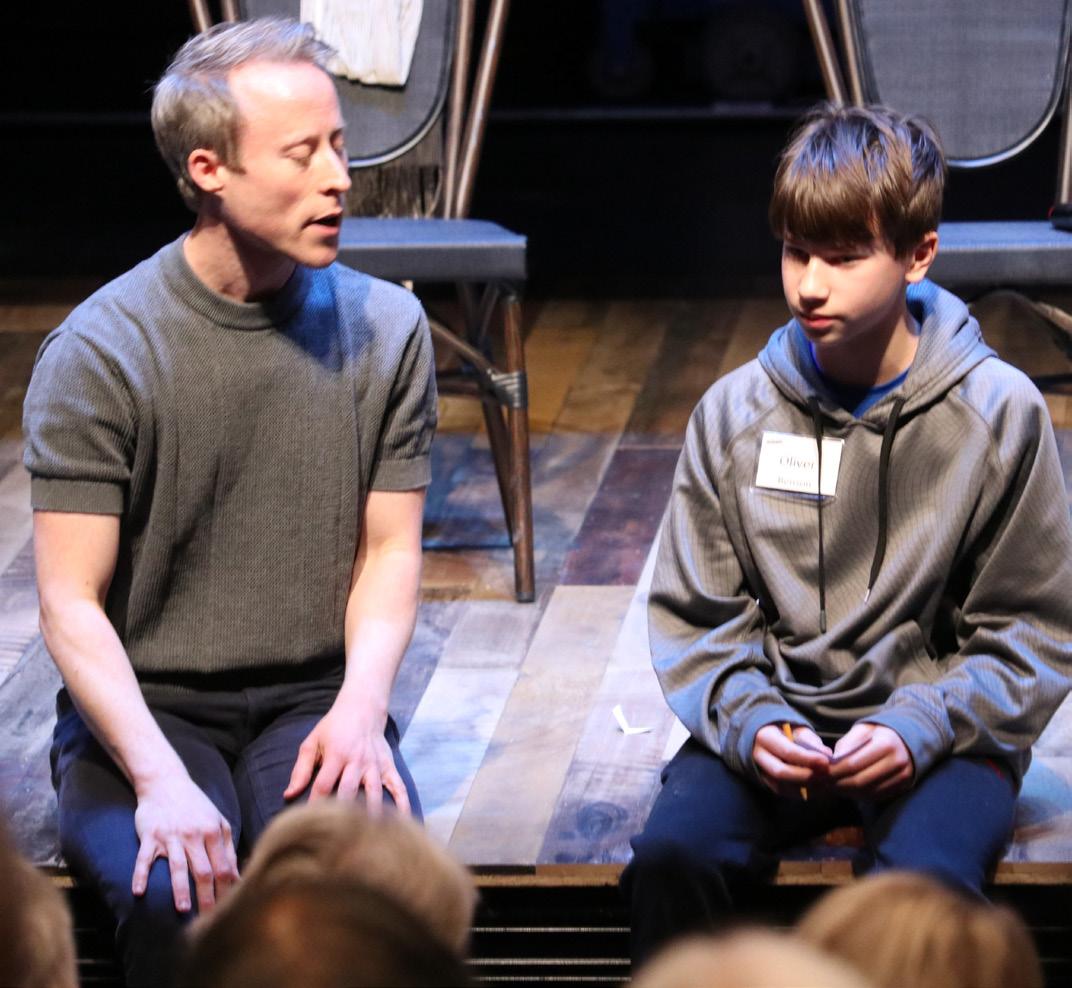
In January we welcomed a record-breaking 200 guests to the Inside Look of Nothing Up My Sleeve. We heard from Dendy and Aaron Posner, the co-creators of the show, as well as the Costume Designer and the Associate Scenic Designer. Finally, Dendy performed some tricks from the show with some lucky members of the audience!
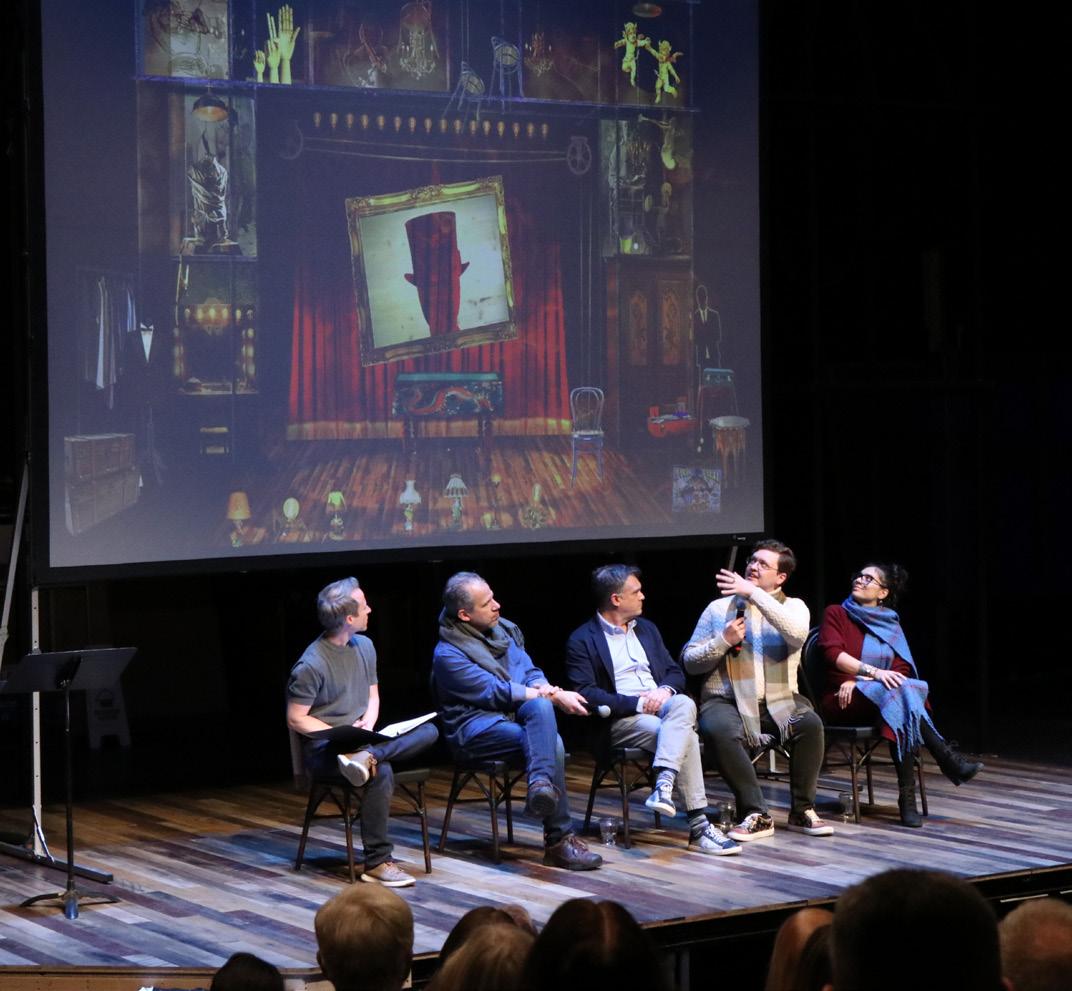
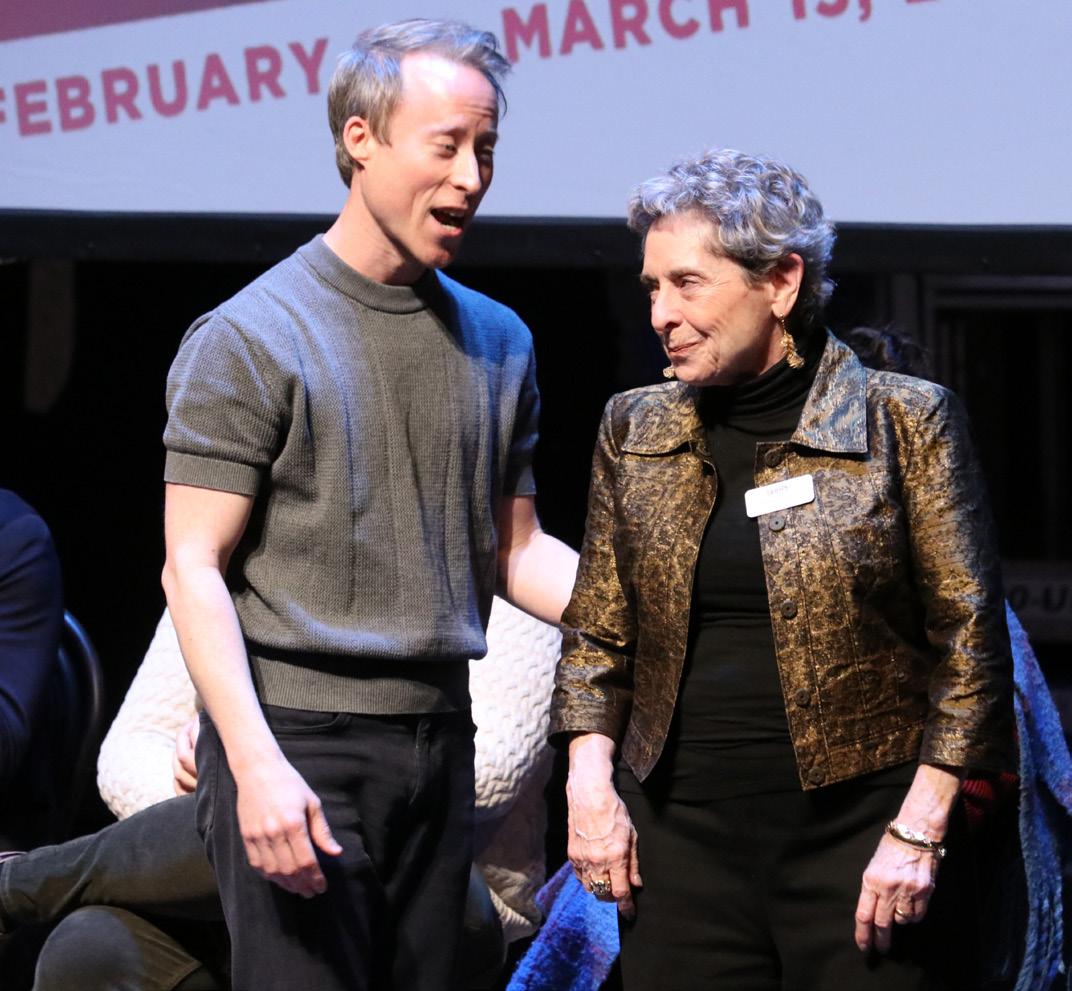
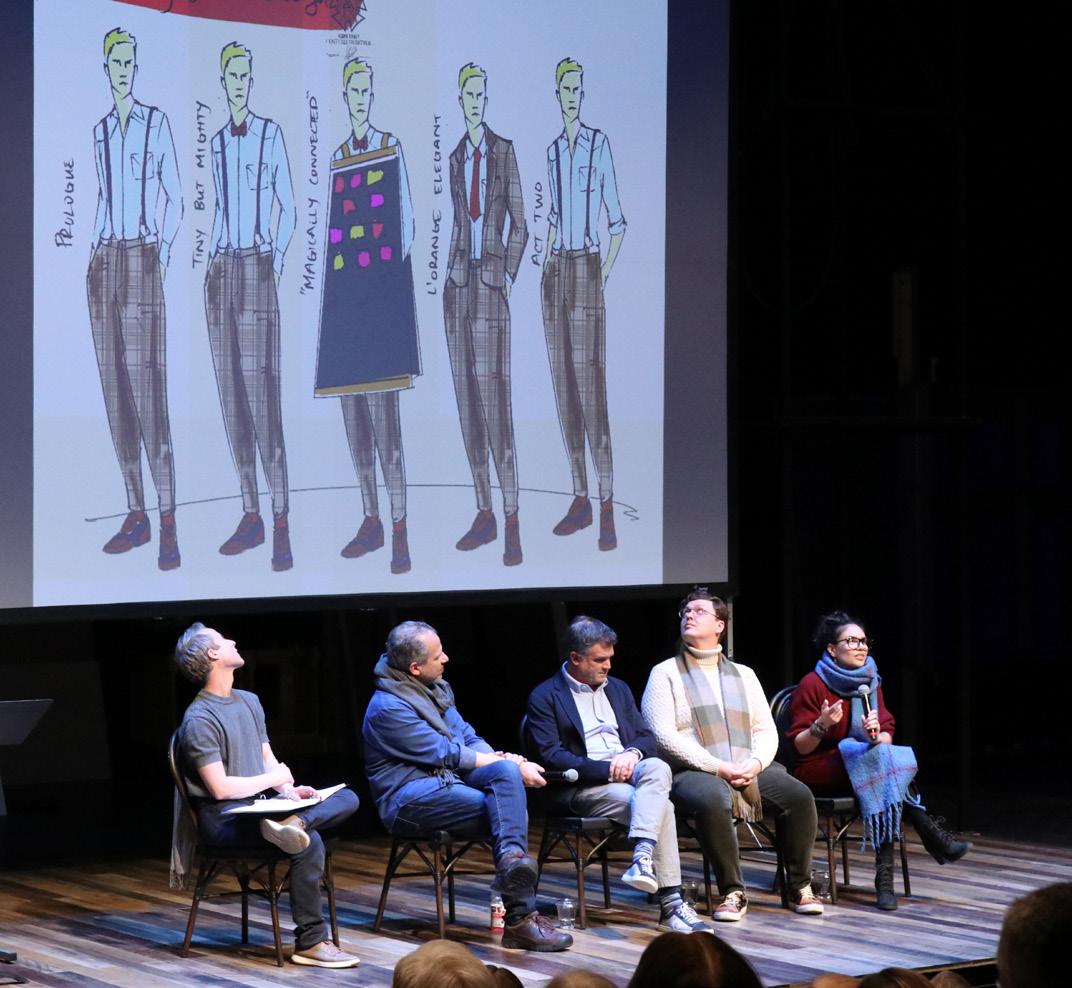
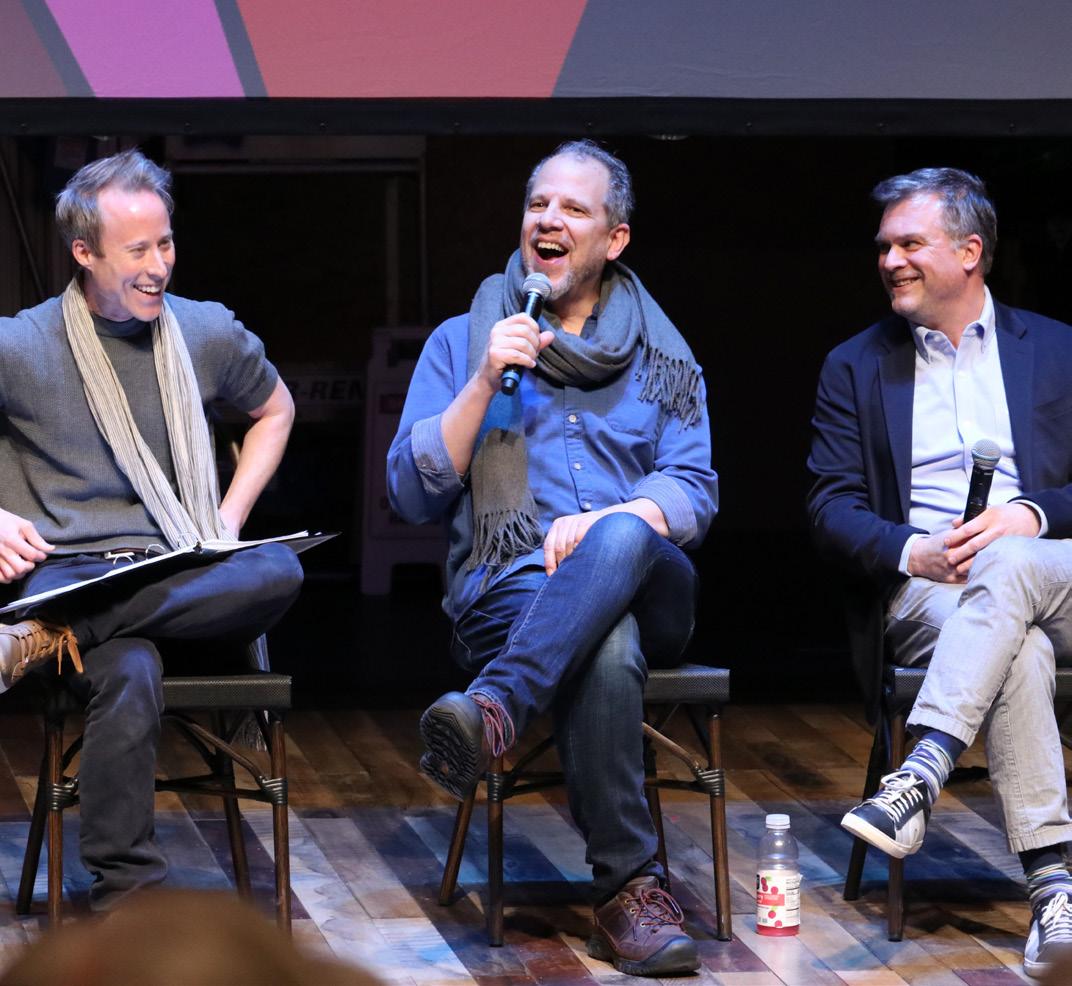
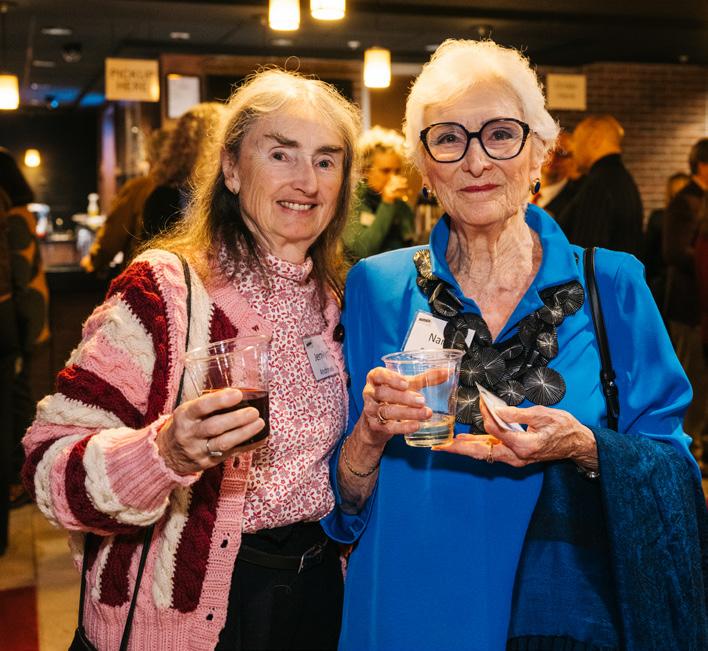
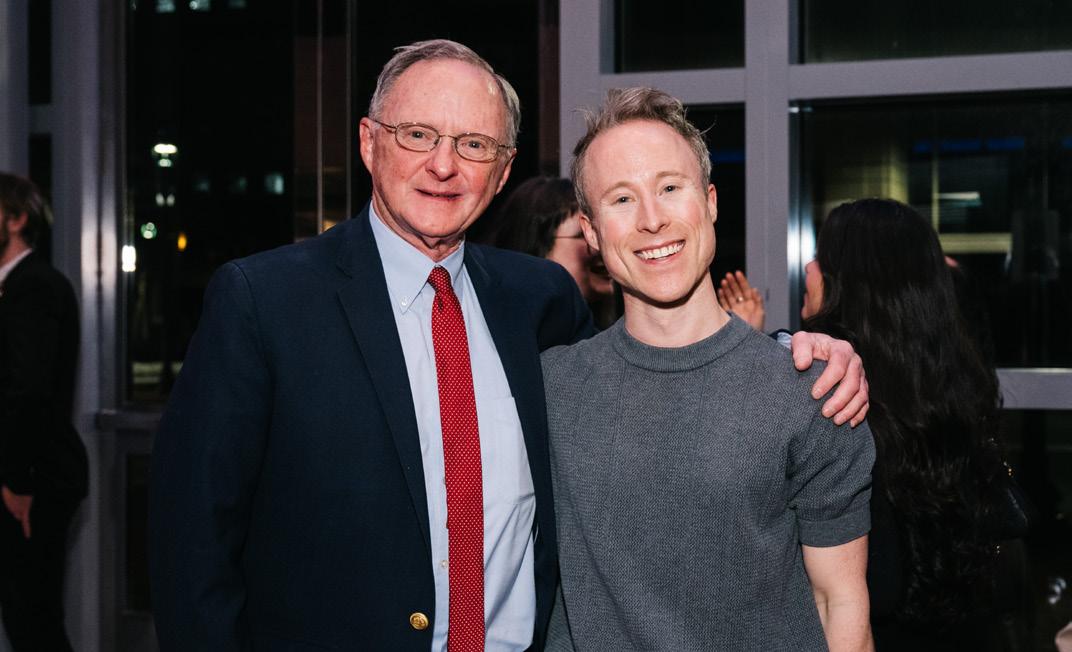
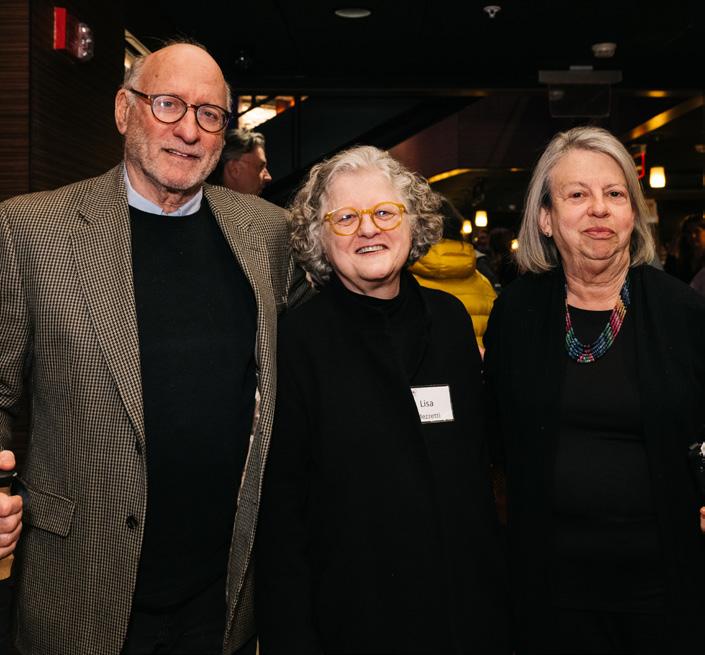
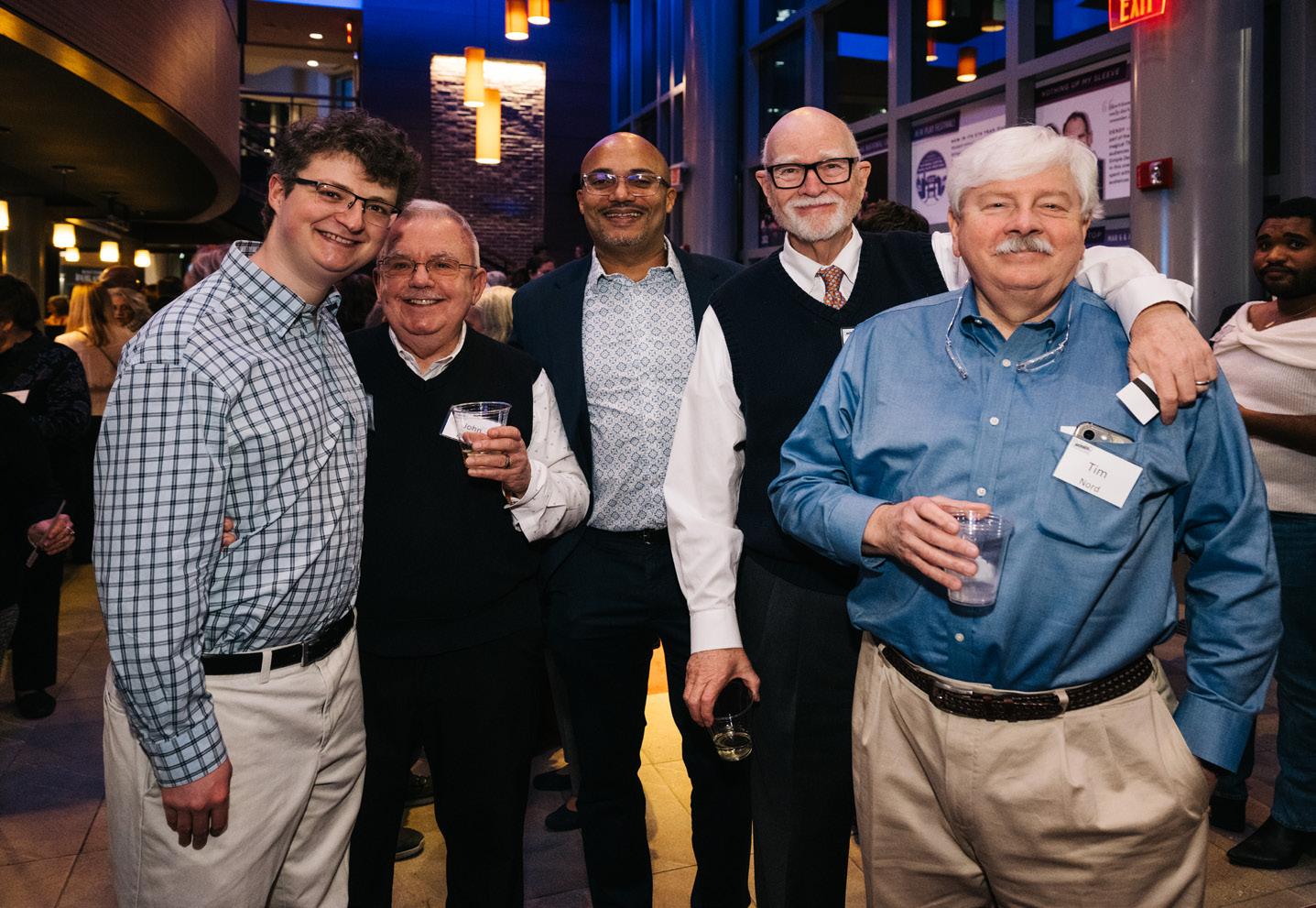
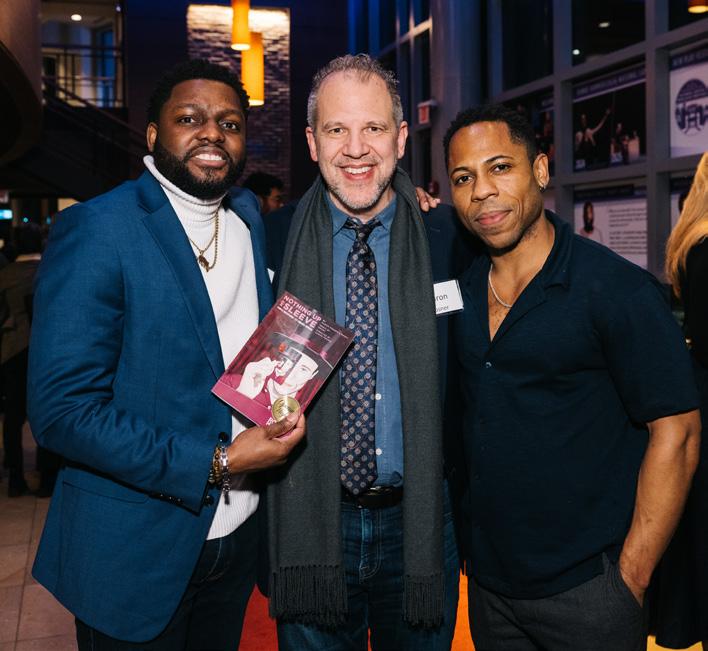
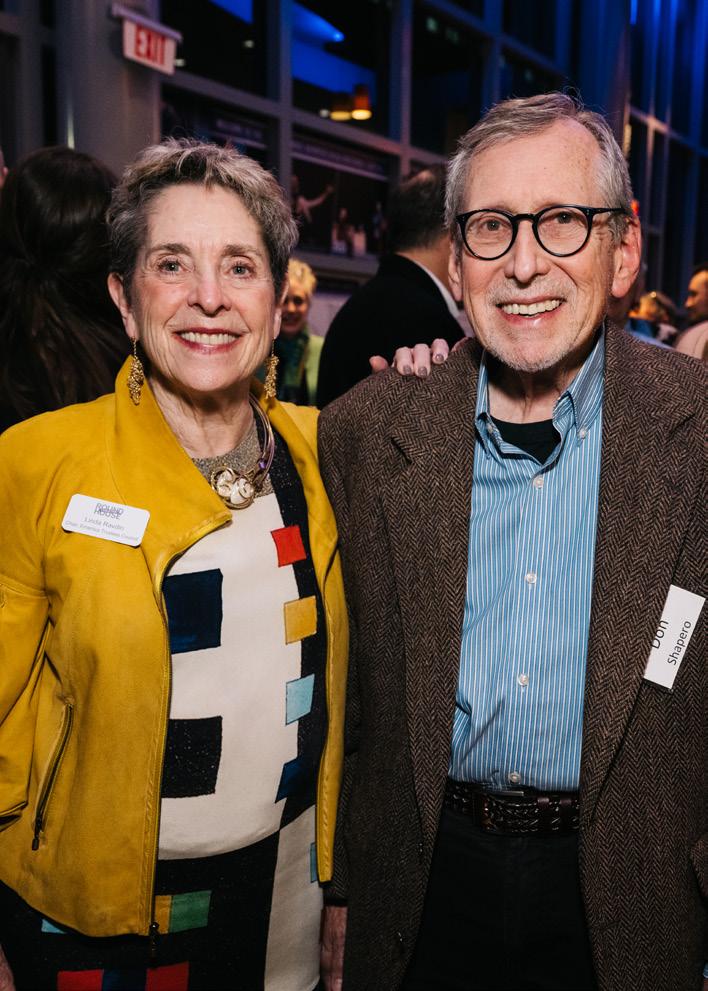
On an unseasonably warm Tuesday, we opened Nothing Up My Sleeve to another sold-out crowd, filled with press and friends of Round House, including many of the cast and creative team from Rules for Living. As they were throughout the whole run of the show, this audience was dazzled by Dendy’s magical and storytelling skills, and we were delighted to launch this production with such a warm crowd.
Photos by Cameron Whitman Photography
Directed by Lili-Anne
September 9 – October 11, 2026
By Alex Lin
by
January 27 – February 21, 2027
by
April 14 – May 9, 2027
November 18 – December 27, 2026
Written and Directed by Sean Daniels
June 2 – July 3, 2027