The
Spring/Summer 2026
Royal Horticultural Society of Ireland
Cumann Ríoga Gairneoireach na hÉireann
The
Spring/Summer 2026
Royal Horticultural Society of Ireland
Cumann Ríoga Gairneoireach na hÉireann




Almost six months into my chairmanship and I must admit that I am still feeling my way. Having been mainly involved with RHSI Russborough, since the start of the project there, and as company secretary, I really did not fully appreciate the scope of what the Society does and the extent of the work being put in by fellow board members, volunteers and our staff Orlaith, Barry and Paul.
The RHSI strategic plan “Growing Together”, which was completed and shared with members in January, defines our vision as: A community with a shared passion for gardening and its heritage, committed to building healthy, resilient lives for a sustainable world.
The Journal will play an important role in achieving our goals:
• To pass on horticultural best practice & hands-on skills, informed by science.
• To bring the pleasure of gardening to the widest possible audience.
• To become a national leader in gardening and sustainable horticulture.
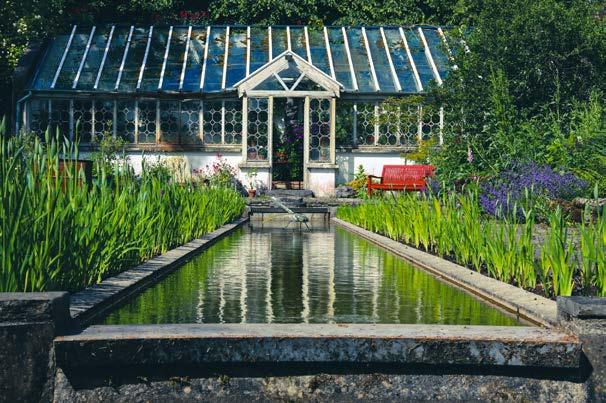
It was a pleasure to visit RHSI Bellefield for the snowdrop weekend in February, to meet the volunteers, stall holders and large numbers of visitors. Renovation works are now underway to improve the facilities, restore the greenhouse and to make the garden more accessible. We can look forward to welcoming more visitors to activities in Bellefield as plans develop in the future.
What a lousy January and February we had. There was no encouragement to get outside and little possibility of doing much useful work in the garden. It was the weather for exploring YouTube, Instagram and seed catalogues
Happily, thanks to the Events team and Orlaith, our operations manager, and her contributors, we were able to stay in the horticultural zone with Wednesday zoom talks and fortnightly bulletins, and with brighter days ahead, I hope you can enjoy working in your garden whatever its size or condition. For inspiration and encouragement, you can’t do better than visit some of our lovely partner gardens.
Gillian Chair, RHSI

Once again Spring, Summer, and Autumn beckon us into the gardening year. Although on Wednesday 25th March you could have been forgiven in thinking we were still in mid-winter as on that day here in Co. Down we experienced snow, sleet, hail, and rain in varying measures during the day and all accompanied by a howling, cold wind – not much encouragement to do any work in the garden.
However, the sun has started to put in more regular appearances and we can venture forth and provide the attention needed by the flower beds – those of us who do not prune our roses in the winter have hopefully completed this task by now and like attention has to be given to the general final pre-summer tidy-up of all flower borders.
Vegetable bed preparation is now well under way for planting the vegetables (potatoes, peas, and beans) and sowing carrots, parsnips, and all the other goodies that will appear on our dinner tables.
Many of you will have enjoyed the excellent vegetable growing articles in past issues of the Journal by Deborah Ballard. It is with sadness that I note her passing - her much loved contributions are remembered with fondness.
This issue of the journal offers a range of articles: I hope that Dahlia Decadence will ‘wow’ you with the fantastic displays
of dahlias that are grown at Powerscourt, interesting experiments with underwear at Russborough will (hopefully) surprise you, and articles on sustainable flower growing and treating the garden as an ecosystem will highlight how biodiversity and sustainability plays an important role in all of our gardens.
As always, getting an issue of the journal ready for you all requires considerable effort and could not be undertaken without the help of the editorial team: Mary, Noreen, Peggy, Carla, Frazer, and Orlaith put in a tremendous amount of work and are worth their weight in gold.
In closing, I note with sadness the passing of Seamus O’Brien – Seamus was a great friend of the journal providing superb articles that brought his plant hunting experiences into our homes to amaze and excite us all. I am grateful to Margie Phillips who has gone to great lengths to collate contributions from those who knew Seamus well. It is the lead article in this issue of the journal and I hope the article is seen as a fitting tribute to a giant of Irish horticulture.
I hope you will find something to please, interest, and excite you in this issue of the journal and, as always, I give you my best wishes for good luck and good gardening.
Peter
Dr Peter Milligan, Editor, The Journal, RHSI


6 Seamus O’Brien – A Tribute
Margie Phillips 19 A Feast of Alpines
Mary Hackett 23 Tresco Abbey Gardens
Holly Doyle 27 The Garden as an Ecosystem
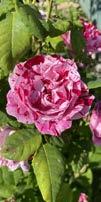
Hui Xing 33 A Riff on Old French Roses
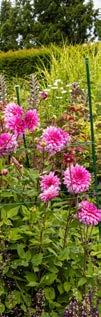
Dr Tim Bowmer 39 Dahlia Decadence
Rosemary O’Flynn
47 RHSI News and Events
Orlaith Murphy
52 From the Editor’s Garden
Peter and Nicola Milligan
57 Royal Honour for Omagh Gardening Society
Mary Hackett
58 Soil and Underwear @ Russborough
Professor Mark Keane 61 A Reason to get up in the Morning
Mary Hackett
66 Come Away with the RHSI
Peter Harrison
69 Try a Woodlander
Peter Milligan
70 Flagging the Importance of our Public Parks and Gardens
Robert Moss
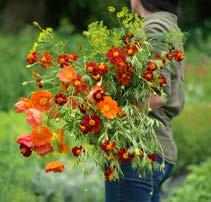
72 The Sustainable Cut Flower Garden
Fionnuala Fallon 76 Partner Garden Scheme
Noreen Keane 77 Russborough Notes
Carla King
80 Pretty as a Picture
Nicola Milligan
81 A Salad Knot Garden or a Salad Pot Garden
Brona Dore
85 RHSI Bellefield – A Year of Progress
Paul Smyth
Royal Horticultural Society of Ireland
Cumann Ríoga Gairneoireach na hÉireann
Volume 18, Part 1, April 2026 ©
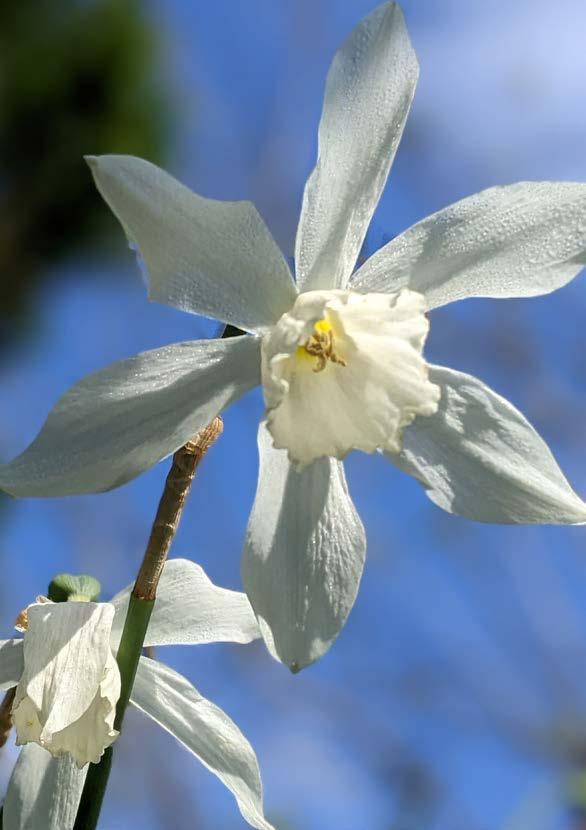
COVER PHOTO: Narcissus ‘Thalia’ Dr Nicola Milligan
Editor: Dr Peter Milligan
Advertising: Frazer McDonogh
Print and Design: Printrun
Dr. Tim Bowmer is a retired environmental scientist, gardening in Co. Cork
Brona Dore “has something on her table from her garden every day”. Tour Guide with the Travel Department Garden Holidays
Holly Doyle is a Horticulturist
Fionnuala Fallon writes for the Irish Times on gardening and, with her husband Richard Johnston, established The Irish Flower Farmer in 2015
Mary Hackett is the Associate Editor of the RHSI Journal
Peter Harrison is the President of the RHSI
Professor Mark Keane is Professor of Computer Science at UCD and Chair of the RHSI Education Committee
Noreen Keane, RHSI board member, co-ordinates the RHSI Partner Garden Scheme
Carla King volunteers at Russborough where she is a member of the gardening team
Robert Moss is the Green Flag for Park Awards Development Manager
Orlaith Murphy is the Operations Manager at the RHSI
Rosemary O’Flynn is a Horticulturalist and member of the Powerscourt Gardening Team
Margie Phillips is a Horticultural Technician at the Teagasc College of Amenity Horticulture, National Botanic Gardens
Paul Smyth is the Head gardener at RHSI Bellefield
Hui Xing is a Lecturer at the Teagasc College of Amenity Horticulture| National Botanic Gardens, Glasnevin

Margie Phillips ‘
Travelling in the footsteps of Seamus O’ Brien, steps that many of us had the pleasure in following, through his Lectures, Facebook and Instagram posts (in which lies a book), garden tours or just working alongside. I had the honour of travelling on many of Seamus’ fascinating expeditions to the Himalaya (Sikkim, Assam, Nagaland, Arunachal Pradesh, and Manipur) and China (Yunnan, and Sichuan). Seamus’ travels show the depth of research for his marvellous books. Travel helped Seamus enable a real insight of the great plant hunters in his books, In the footsteps of Augustine Henry and his
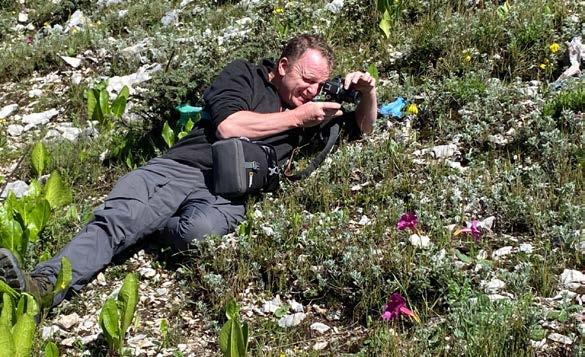
Chinese plant collectors and ‘In the footsteps of Joseph Dalton Hooker: A Sikkim Adventure’, (Augustine Henry, Joseph Dalton Hooker, and Frank Kingdon Ward), we read of the joy witnessing discovering new plants, the hardships they endured, and meetings with ethnic peoples. What an experience! His fellow travellers will never forget the excitement Seamus expressed when seeing these plants for the first time in their natural habitat ‘WOW, WOW, come look at this’ from a voice hidden in the trees. Seamus was a giant in the horticulture world and here are some thoughts expressed from a diverse group about Seamus.’
Neil Porteous Historic Garden advisor
‘We moved to Ballynatray, Co. Waterford in July 2007, and our very first visitor was Seamus who had heard I was gardening, perhaps from Kristin Jameson. It was a Sunday afternoon
later the same year and a car rolled up. Seamus introduced himself and I showed him round and we talked plants. Seamus stayed for tea and I discovered we had another passion in common – whiskey!
It was incredibly brave of Seamus to arrive unannounced, and it shows his commitment to Irish gardens and gardeners. I learned so much from him that afternoon and I imagine he learned very little from me by way of exchange. Our meeting really helped me get a grounding in Irish growing conditions, which are entirely different to those of Scotland or England. We hit it off from the start and I was lucky enough to travel with Seamus and enjoy his friendship since that day in 2007. Even though he is gone, he will never be forgotten. As I walk round Mount Stewart, never a day goes by when some plant or other reminds me of Seamus – that generous spirit’.

Esther Gahan, Seamus’ Aunt
‘Throughout his life, Seamus brought enormous joy and pride to us, his maternal aunts and uncles. We first witnessed his love of horticulture when, as a child, he planted geranium cuttings with our mother, his Granny Wilson. We are so delighted Seamus followed his dream career and enjoyed such adventures, success and respect. We know his “horticulture family” was so important to Seamus and they became important to us too. We will forever be grateful to everyone who added so much to his life.
Seamus was a loving, kind and loyal nephew who gave us the warmest welcomes. His kind acts and achievements and were many and great, but were all cloaked by his lovely humility. Our lives will never be the same without our beloved Seamus, we will miss him, but we will continue to
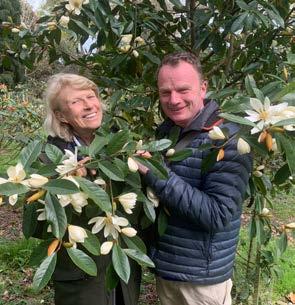
love him, to be endlessly proud of him and we have no doubt that Seamus will enrich our lives forever’.
‘Seamus to me was a star whose light reached all he knew and that light was instrumental in taking many people out of darkness and troubled times. His encouragement and help had no bounds.
For me Seamus was firstly a friend and a mentor. I wish with all my heart that he was here to celebrate with me being awarded the RHSI Sir Harold Hiller. I know Seamus fought so hard to get me this award. To Seamus I will forever bow’.
I worked alongside Seamus for two and a half wonderful years in Kilmacurragh. I had known him for close to twenty years before this and when

he asked if I would consider joining the staff, I knew it was a great opportunity. He and the gardening team had restored the gardens and added to an already astonishing collection of plants.
Those who knew Seamus will have been fully aware of his plant knowledge and his willingness to share it but for me the most striking aspect of working with him was his everyday insatiable enthusiasm and positivity. He would bounce out of the office door, all talk of plans for the day, news on the house restoration, news about neighbours, gossip from gardening circles and back again to plants and more often than not, the Actons of Kilmac and the Moores of Glasnevin. Some of us need a gentle introduction to the day, a coffee, a yawn or two, even some yoga. I never asked him what he did, but it certainly did the job, for him and for me.
‘I was fortunate to spend several
weeks last summer on work experience with Seamus. Working with Seamus was inspiring; he was always generous with his time and eager to share his vast knowledge of plants and garden history. His enthusiasm and kindness left a lasting impression, and I am very grateful for all he taught me’.
Peggy Masterson neighbour
‘The recent death of Seamus O’Brien was a shock to everybody, horticulturists, fellow travellers and gardeners in Ireland and worldwide.
I wite as a neighbour and behalf of the visitors to Kilmacurragh who remember Seamus, who was always a friendly face as we walked around. Visitors and friends have described his greetings to them like a host who delighted in their enjoyment of his special place, keen to show us what we might miss, this was often something our grandchildren would like to see. He loved his wildflower meadows, and I remember Seamus in his wellies

planting thousands of miniature daffodils which bloomed profusely this January.
We miss you Seamus, but we will always remember you’
Andrea Jameson
“THROUGH
One day I was painting the wild meadows in front of the house at Kilmacurragh and Seamus came by. He told me about the trees and plants all around us and then an idea developed. Why not make a record of the gardens seen “Through the Artist`s Eye” and then travel onto to other gardens in Ireland and do the same. He wanted to put together a group of artists to do this.
This project has given so many of us an opportunity to record, and to visit
beautiful places throughout Ireland. We will carry on with your enthusiasm and encouragement, and what a gift and opportunity you have given each and all of us. Thank you, Seamus’.
‘When Seamus arrived at Kilmacurragh in 2006, he introduced a whole new dimension to the word ‘Neighbour’. Never one to arrive here without at least two armfuls of plants, he would settle down to enjoy a wellearned cup of coffee and then tell us the best location in which to install these treasures together with their fascinating history. His enthusiasm, coupled with his profound knowledge of so many plants and their habitats benefitted his neighbours here in East Wicklow. Kilmacurragh, his lasting legacy has enhanced and enriched the community and is enjoyed by so many
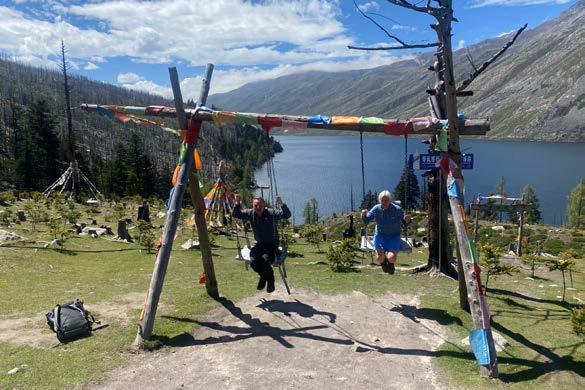
of us today on almost a daily basis. Bless you Seamus, dear neighbour and friend’.
‘It still hasn’t sunk in the great loss of our dear friend Seamus; I will personally miss him for the rest of my Life. Seamus was well known in Castlewellan for many years, he was part of two committees on the future of Castlewellan. Seamus supported me in many, many different ways with his advice, tours, workshops, talks. I personally have known Seamus for 15 years and over those years we had become good friends and I have some great memories of him. I can clearly hear the many conversations we had, certain plants we talked about; you know I can still hear him speak
about them when I stand beside them, this has never happened with anyone else in my life, when you had a conservation with Seamus about plants, he made it exciting, you always learned something new. Seamus would arrive in Castlewellan, jump out of his car his hand reached out saying ‘Glad to see you again’. He was always full of energy. He was straight into an interesting plant, tell you a story of its history, who discovered it, and where it was discovered, and where he saw it in the wild. His enthusiasm was infectious; his energy was energising. His personality was that once you meet him you instantly liked him. Both Seamus and I brought the IDS and the Irish Garden Plant Society around Castlewellan, he gave such an outstanding tour. Seamus loved Castlewellan. Seamus linked us all together, North and South.’

‘Seamus was one of a kind and someone who I will always remember. His love of plants botany, horticulture, travel and people were infectious. I was so lucky to have spent some time with Seamus in November at the Royal Geographic Society where he delivered the annual TROBI lecture. The following day I spent some quality with him in Kew Gardens showing him some of my favourite trees and sharing plant collecting tales. A day that will remain with me forever, swopping stories of our travels and reminiscing about plants and mountains in China and ‘Plant of the day’.’
‘Seamus has left his mark across the world as well as a legion of friends who admired his kindness, passion for and enormous knowledge of the plant kingdom. We are all heartbroken by his untimely passing.’
‘What tragic news… dear Seamus whom I first met many years ago when first visiting Kilmacurragh while the big Magnolia campbellii, one of his delights, was showing two thousand flowers… I realised at once what a star he too was and after praising him in the Financial Times newspaper I have been delighted, but not surprised, while watching him blossom globally, from China back to Kilmacurragh, instructing us in his books, in his detailed and profound knowledge of so many plants, habitats and details of history, and his exemplary response to storm damage on a grand scale in the garden he was transforming. He still had time and kindness to drive me all the way on a tour from Carlow to Offaly and regale me with his insights and friendship this very summer. We had many plans ahead, including a lecture engagement for him in Oxford University, a foretaste of which was a superb lecture in London in November. Bless you Seamus. gardener, and friend.’
Daphne Levinge Shackleton Garden
Designer and Botanist
‘Seamus inspired so many gardeners with his enthusiasm, knowledge and his encouragement to so many young gardeners in particular; through him many of us older gardeners made new gardening friends and contacts. I think of him so often as I garden. In Spring I think of him when our crocus lawn is a purple haze as there was always friendly competition as to whose lawn was the best. And then as I pass Rhododendron hodgsonii which he introduced me to in Sikkim when we travelled together in the footsteps of H. C. Levinge. In summer, I again remember him as I am attacked by ants as I garden, because he informed me the seeds of our wonderful crocus are spread by ants. In autumn I think of him as I clear up under the remains of a rare Mahonia as the last time he visited, and just before he got into his car, he dashed up to take a photo of it. No longer alive we laughed about its subsequent or consequent demise. And I will always think of him at Christmas tree time as one of his last social media posts was of his resplendent Christmas tree which he never got to enjoy.’
Mark Bobbin, Vice Chairman RHSI Rhododendron, Camelia and Magnolia Group
‘I was lucky enough to have met Seamus through working with the RHS Rhododendron, Camellia and Magnolia Group, where Seamus was the Irish branch chair. We both have a love for plants, also adventure, and somehow always orientated towards the genus Rhododendron. I’ve had so many wonderful memories with
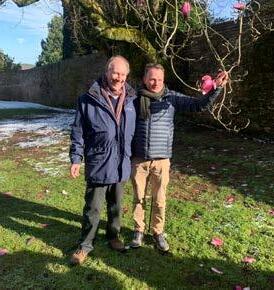
Seamus. Giving him a first look around the Himalayan gardens at Minterne, exploring and taking in the RHS Chelsea Flower Show and most recently travelling, last year to Sichuan, China, on one of his famous expeditions. I have the utmost respect and admiration for Seamus and his work. He was always so kind, compassionate, true, inspirational and yet extremely fun. He always had my back, and I think that’s true for so many others. Forever helping others with his infectious knowledge. I will forever miss him, although he will remain here through his work and passion’.
Thomas Pakenham, historian, author and arborist
‘Seamus has gone but he has left us a dazzling legacy. His botanical travels in China (and beyond) rivalled those of the great plant-hunters like Joseph Hooker and Augustine Henry. In fact, Seamus chose to travel in their footsteps, and his own published accounts of their travels are both an inspiration and a delight. Back in Ireland

he was able to transform Kilmacurragh. It was a wretched ghost of a garden when he took it over. And now, after 20 years, it has become one of the great gardens of Ireland.’
‘Walking around my own garden, Dargle or anywhere9 there are plants for that matter, my thoughts often drift to Seamus. It might be from the glance of plant that he admired or so generously donated or just a thought of one of the many trips we enjoyed together over the twenty years or more. He brought so much of the Horticultural world together through his love of plants, people and places and I will always remember and be eternally grateful for the enthusiasm he had for the gardening world and he shared so freely. He was thoroughly a great friend and mentor and he is sadly missed’.
‘Paddy and I were so fortunate to have had Seamus as our friend and our gratitude for this friendship will always be with us.
The A.J. Waley medal that Paddy was awarded in 2021 was a direct result of Seamus’s recommendation to the RHS that he should be considered for this recognition and this medal is a constant reminder of his thoughtfulness for others and his pleasure in seeing the resulting accolades.
In April 2024 Seamus brought his magnolia group to Mahee to see how a bare County Down Drumlin had been transformed by the judicious planting of shelter belts and the subsequent underplanting of rhododendrons, magnolias and camellias. This was not to be the main attraction however as another A.J. Medal was to be presented.
This time it was to acknowledge John Gault’s ‘outstanding contribution to the cultivation of rhododendrons’ and we all recognised once again the part that Seamus played in keeping Ireland’s horticultural expertise to the fore. John & Paddy were delighted to pose with their medals and many photographs were taken.
After the presentation the group went for a walk to see for themselves what a bare island had become after 60 years in the making. This walk became somewhat challenging as a ferocious wind took over the day with a vengeance. Not only the wind but also the tide which roared in covering the shore road to such an extent and depth that there was no way there would be a chance to get to the lunch venue for at least two hours. The only solution to this change of plan was to clear away the morning coffee cups and to bring out the glasses. So it was that this unexpected extra time for the A.J. Waley celebration was well spent.
Thank you Seamus for everything you did for so many and for the very fond memories that you planted in our souls.’
Christopher Moore - historic buildings
advisor
‘Seamus has left many legacies, not least through his carefully chronicled gifts of plants. Lineage, linkage and provenance were as important to him as botanics: I treasure - from Kilmacurragh - the Scots pine seedlings raised from the 18th century originals growing there, the Podocarpus salignus - so closely associated with both generations of the Glasnevin Moore's
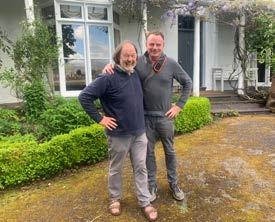
and the tiny fern Pseudophegopteris levingei collected in Kashmir in 1875 by one of Seamus's heroes, Harry Corbyn Levinge.
Kilmacurragh's renaissance was fuelled by Seamus's passion but the hulk of the house lying at the centre of the axes - was an irritant. Whilst OPW restoration plans were in their infancy, Seamus developed friendships with members of the Acton family in Ireland and Australia: his commitment ensured that they agreed to the eventual return of key chattels to furnish the restored house.
It was a pleasure to help Seamus source original architectural fittings removed for safekeeping from the fire damaged house, to different Irish collections. It is to be hoped that these vital fragments will be acquired and incorporated into the rebuild so that the reinstated Kilmacurragh will have the veracity to equal Seamus's own contribution to this State property. ‘
Sailesh Pradhan, Sikkim
‘I had the honour and privilege of conducting tours for Seamus and the numerous groups that he brought
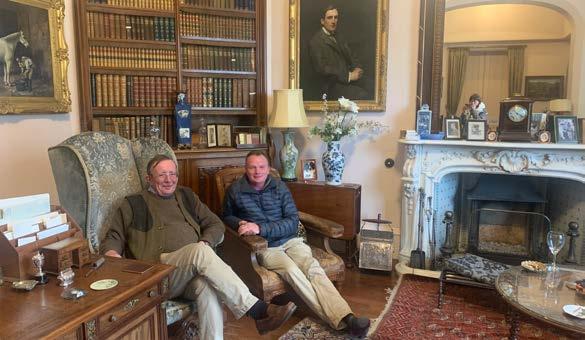
to Sikkim and many parts of the Himalayas. I learnt much more from Seamus about plants than I was able to impart to him and all the fine people that accompanied him. I cherish my trip to Ireland visiting the various gardens and friends with Seamus and the eventful day at Kew during Hooker’s Bicentenary celebration in the Summer of 2017 where Seamus knew and explained the plants, gardens, trees and the paintings at the Marianne North Gallery to many of us like the “back of his hand”!
Visiting Ireland and Kew may never be the same again. Will miss you my friend…..
May you rest in eternal peace.’
John Anderson - Keeper of the Gardens, Windsor Great Park
‘For me Seamus is an inspiration, his passion for life is so evident in his
travels, his enthusiasm spills out in his lectures; his great sense of humour and curiosity is infectious.
He is deeply missed and not a day goes by when I don’t think of him and the plans we were scheming. He was a great human being and always so kind.
An amazing plantsman, so full of knowledge which he happily shared with everyone he came in contact with. He loved an audience giving a talk in a lecture hall or giving a guided tour to students or more knowledgeable groups – who always came away inspired.
His books on some of the great plant hunters are masterpieces, so expertly researched and written. I look forward to his near completed book on Frank Kingdon-Ward.
I will miss our get togethers when we caught up on my return visits
to Ireland either at Kilmacurragh or around a country house dinner table sharing stories, good food and a glass of whiskey.
Wherever you are Seamus thanks for everything - your legacy will never to be forgotten.’
‘When I look back on my life to date it would certainly not be the same without having met and spent so much time with Seamus.
What a great friend. So many memories, fun times, tough times, experiences, chats and discussions together. Knowledge shared and enjoyed.
He had endless curiosity about the plant kingdom, plant life, plant history, and plant hunters. He also had many other hidden interests we didn’t hear so much about.
A wonderful, kind, and easy-going person who impacted on so many people. A tragic loss for us all.’
‘Much has been written about Seamus who was an intricate cog in the wheel of Irish horticulture. I remember a time both Kristin Jameson and I shared Seamus’ birthday in Venice. He was so delighted to sit in St Mark’s square in the exact same place that Frank Kingdon Ward (one of his great plant hunter hero’s) had been photo’d on his honeymoon. Seamus took the lead on our trip around the city, informing
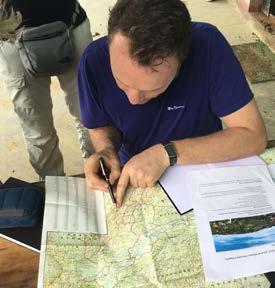
us he was on a Chlorophyll free day, Kristin and I turned the corner to find Seamus in a garden at the Doge’s Palace, a Chlorophyll free day lasted all of five minutes. That was Seamus. Seamus was caring, he was kind and loyal to all he knew, we were all so lucky to have Seamus in our lives, a true friend. Thank you, Seamus for the happy memories and enriching all our lives. We endeavour to carry on your wonderful legacy Seamus. We will miss you forever Seamus!
Its lovely reminiscing. What a contribution Seamus has made to our horticultural world. Another great project in which Seamus was instrumental in was helping Martin Gardner MBE, RBG Edinburgh, with his Conifer Conservation Programme; with rare and endangered conifers from New Caledonia and Latin America (especially Chilean plants).
I know so, so many gardeners would have liked to contribute to this. Apologies If we didn’t include you. There lies another Book….’
Extensive and diverse formal and production gardens over 10 acres including an acre of production glasshouses all open to the public.
Glasshouses open Mon - Fri only
Shanagarry, Cork | www.ballymaloecookeryschool.ie




Mary Hackett
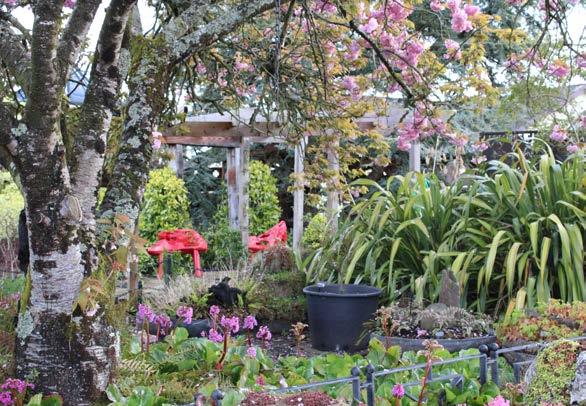
Coolwater in Co Limerick is a garden with personality, created by two gardeners who know what interests them. Claire Fennessy claims the ‘pretty’ parts of the garden, but take it from me, it’s all beautiful. Kevin Begley is the alpine expert. Troughs of treasures line the garden walls, and the Alpine House is a jewel chest. Every mention of this garden online or in the press mentions Kevin’s knowledgeable guiding as the highlight of a visit.
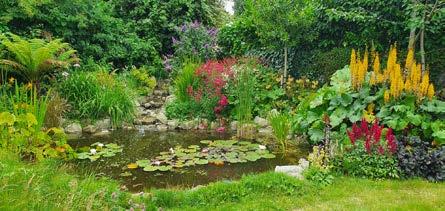
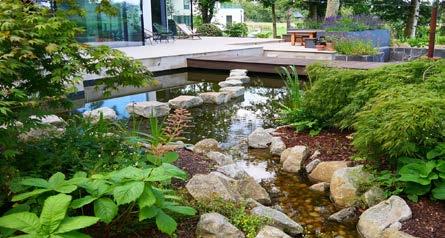
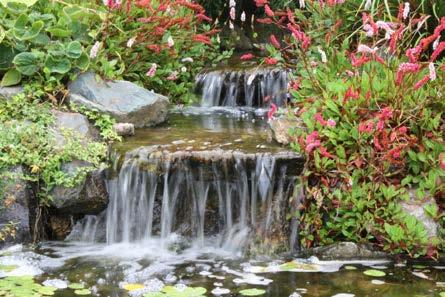
‘I do things my own way, not copying anyone’, Kevin said as we walked around Coolwater. His gardens - the front garden is quite different to the back garden – bear this out. Kevin never liked cutting grass, so in 2009 he replaced the lawn in his back garden with a 90 feet pond. In summer, this is covered in pink waterlilies. There are
no formal borders in this garden. Kevin and Claire planted the pond edges with native species, incorporating structural plants and exotics for definition.
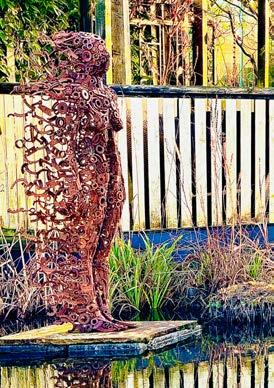
The constructed features of this garden deserve special attention. A pergola running the length of the garden is densely covered with climbing plants. The copper pagoda was originally intended as a smoking shelter for a pub. The floating pagoda arrived in a flatpack containing 1,422 pieces and 800 screws; lacking space elsewhere, it was assembled atop a floating base on the pond. During assembly, the structure began to slowly tip into the water. “It was harder to get it upright again than it was to put together,” Kevin recalls. The pond also showcases several sculptural works. I particularly liked Penny Hardy’s ‘Iron Maiden’, crafted from discarded metal objects.
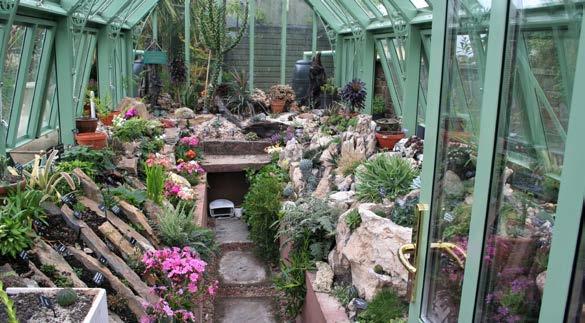
The Alpine House is a stand-out attraction in a garden brimming with
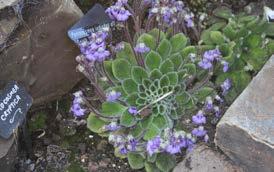
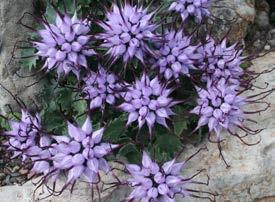
outstanding plants and eye-catching displays. Limestone rocks are used on the right-hand side with acidic rock and shale on the left. Succulents are displayed at the end of the house. The plant collection comes from every corner of the world. Even Kevin was surprised when a very rare Dagestani plant, Muehlbergella oweriniana, flowered briefly last year. From Santa Catalina Island, California comes Dudleya virens ssp. hassei, endemic to the island. There’s Bear’s Paw from South Africa and Petrocosmeas from China – at its best in autumn. Old land drainage pipes from near Glin Castle provide a perfect habitat for Lewisias from the Rocky Mountains. Oxalis massoniana is a bulbous clumping perennial with curly purple leaves. It grows only on the rocky mountain plateau around Van Rhyns Pass, South Africa. Oxalis versicolor ‘Candy Cane’ is another South African native. Its white flowers have a distinct red stripe on the exterior. “I have a lot of unusual plants here”, says Kevin. Which is a suitably modest understatement.
Coolwater is a Zone 8 garden created on limestone boulder till. The site is windy and Kevin has noted that the temperature is typically two degrees below that of Limerick city. Natural pH is 8. Kevin carefully matches soil types to plants. His soil bins have mixtures ranging from pH4 to pH8 and he fine-tunes his mixtures by incorporating rotted manure from an organic farm and homemade compost. An extraordinary range of rock types display his collection, including fissured carboniferous limestone from outcrops of the Burren limestone. That rock extends under the Shannon and can be found in Co Limerick. Tuffeau from the Loire Valley, slate from the Ballyhoura mountains and shale from Tountinna Hill overlooking Lough Derg are also used to display an amazing collection of alpines and succulents. The planting throughout the garden is intriguing, but Kevin’s expertise in local stone and slate made our tour especially memorable.
While Coolwater is an alpine lover’s paradise, the planting and landscaping of the space will be of interest to many garden visitors.
Kevin does talks to garden clubs all over the country.
Coolwater Garden, Fedamore, Co
Limerick
Admission by prior arrangement only: Book through coolwatergaren.com Refreshments included in your prebooked guided tour.
Partially suitable for restricted access and wheelchairs.
Not suitable for young children.
& Glasnevin Graduate Program
Holly Doyle
After several brilliant years studying and working as a horticultural assistant in the National Botanic Gardens, I was lucky enough to be offered a place as a Scholar at Tresco Abbey Gardens. The scholarship meant spending a year living and working on an island 45km off the coast of Cornwall, in what is arguably one of the most extraordinary gardens in the UK and Ireland. As someone obsessed with sub-tropical plants, I genuinely couldn’t believe some of what I was seeing when I arrived.
The garden was established by Augustus Smith in 1834, and nearly two
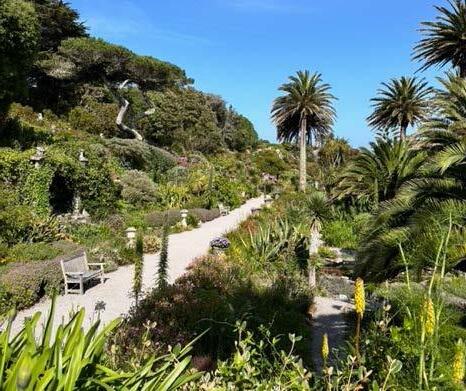
centuries later the Dorrien-Smith family still lease the island from the Duchy of Cornwall. From the beginning, there was a clear ambition to exploit Tresco’s Mediterranean climate. Built around the ruins of a 12th-century Benedictine Abbey, the garden feels ancient - its old stone walls, layered terraces, and filigreed lichens softening every surface. The atmosphere is magical, but horticulturally it is mind-blowing with plants from Mexico, Chile, Australia, New Zealand and South Africa to name but a few.
The terraced layout is key. At the bottom, close to the water table and protected from the worst of the wind by the impressive shelterbelt, towering Cyathea medullaris form an exotic canopy. Canarina canariensis tumbles over walls in an unreal shade of reddyorange, red Clivia nobilis peep out from the leaf litter and everywhere you look something improbable is thriving.
Aeonium spp. and Geranium maderense have naturalised so freely
they seem as though they have always grown there. Echium hybrids would sprout in your pocket if you stood still long enough. Pseudopanax spp. and Piper excelsum self-seed in the crotches of Cordyline spp. It feels less like gardening and more like a lucid dream.
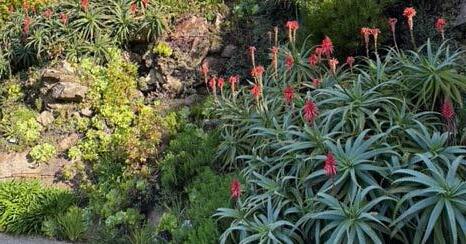
As you climb higher, exposure increases and the planting shifts. The Top Terrace, dry and windbattered, feels closer to Cape Town than Cornwall. Protea, Banksia and Leucadendron scramble along the banks in peaty, free-draining soils, while South African Erica and Pelargonium flower relentlessly.
The climate makes all of this possible. Wet, windy winters give way to warm, dry summers, and frost and snow are extremely rare. It allows boundaries to be tested in a way rarely possible in the UK. Under Head Gardener Andrew Lawson, experimentation is constant. Plants are tried, tested and sometimes lost, but when they work, they work.
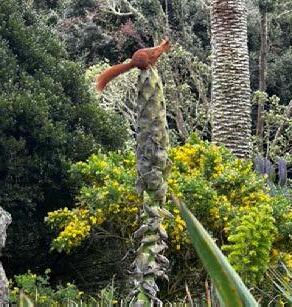
His current enthusiasm lies with New Caledonian and Mexican cloud forest species, an exciting prospect!
Seasonally, the garden moves in waves. February belongs to Aloe arborescens, torch-like against fleeting grey skies. In May, vast drifts of Echium spp. and Senecio glastifolius wash the terraces in blue and pink, punctuated by the glowing orbs of Sonchus arboreus. Telopea speciosissima, Brugmansia sanguinea and Tibouchina urvilleana halt visitors mid-step. Even in winter, the sight of Araucaria heterophylla bending in Atlantic gales reinforces how far removed Tresco feels from mainland Britain.
The work itself was unlike anything I had experienced before — debrambling Puya, pollarding Banksia serrata, cutting Protea spp. for the house, as well as tackling enormous hedges in exposed conditions (I mainly held the ladder and tried not to look). It was physical, occasionally wild, and deeply educational.
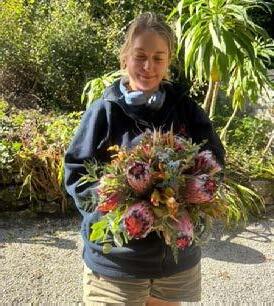
In September I returned to Glasnevin, this time as part of the recently established 12-month Horticultural Graduate Programme. From September to September, I will rotate through the sections, working alongside gardeners. Early in the year I attended a ten-week Conservation Horticulture module with Trinity College botany students, learning about in situ and ex situ conservation, collection management and international policy. Fortnightly plant identifications and lectures with Curator Darach Lupton and former Director Matthew Jebb range from botany, taxonomy and plant history to wider questions about the role of botanic gardens in a changing world.
I have been extraordinarily fortunate to work with such plants in my career so far. Working in both Tresco and the National botanic Gardens Glasnevin has fuelled my passion and I hope to continue working with weird and wacky plants from all over the world, lending my skills to conserving them wherever possible.

Hui Xing
Since the term “biodiversity” was coined in 1986 by the American ecologist E.O. Wilson, “Gardening for biodiversity” have been the buzz words used in response to global and local biodiversity decline. Such decline is due to “HIPPO” (an acronym of threats to biodiversity loss) - Habitat loss, Invasive species, Population growth, Pollution and Over-exploitation.
This movement of “gardening for biodiversity” accelerated since the 2000s and now is gaining significant momentum as awareness of ecological crises grow.
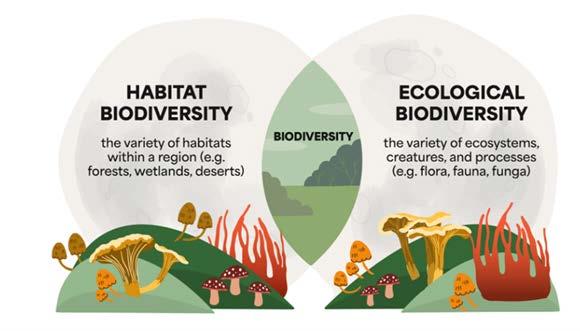
By definition, biodiversity is the variety of life on earth. This biological diversity not only includes species diversity, but also taxonomic diversity, habitat and ecosystem diversity. How does this concept influence us as gardeners and the way we design and select plants?
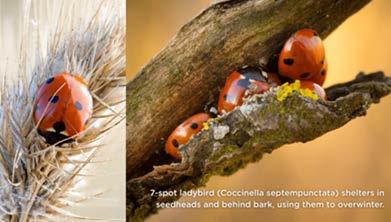
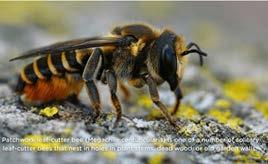
Traditional horticulture has seen “aesthetic” being strongly emphasized. For generations, we have approached the garden as authors for our own desire. We draft plans, select protagonists which are beautiful to our eyes, and edit out “volunteers” deemed unsightly or simply as “weeds”. Biodiversity, in this model, becomes a guest list. We decide which species are admitted. But what if we flipped the script? What if, instead of gardening for nature, we allowed nature to garden through us?
Then for some, the aesthetic challenge is real. A log pile is not a perennial border. A bramble thicket is not a clipped yew hedge. But here, biodiversity asks us to broaden our definition of beauty. We must learn to see the sublime in the scruffy, the way light catches the lichen on a dead branch, the geometry of a spider’s web strung between two thistles. The aesthetic implication is a shift from

the “painterly” border, blocks of colour typically rich in seasonal bedding plants arranged by height, to the “tapestry” border, were species interlock in chaotic, resilient tangles. It requires a palate that appreciates the browns of decaying stems (natural insect hotels) and the haze of undisturbed grasses (larval food).
This is not a pitch for neglect, but a proposal for collaboration, for letting go our obsession with control. It asks us to view the garden not as a static painting, but as a conversation. The soil, the birds, other creatures and the fungi are not recipients of our design: they are co-designers. The ant dragging a seed into a crack in the limestone is executing a planting scheme more complex than we could orchestrate. The robin scattering hawthorn berries is selecting a future hedgerow based on
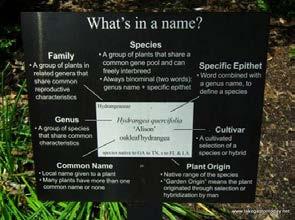
its own perching habits. A worm pulling down a leaf is building the foundation upon which the garden thrives. We must learn to read these intentions and accept that we are not the only designers on site: we are just a part of biodiversity, but we can make a change because biodiversity is the engine that makes a garden work.
Without it, a garden isn’t a living system: it’s just a collection of plants propped up by human effort. With it, the garden becomes self-sustaining, resilient, and alive with activity.
This philosophy begins with how we select plants. Plants are one of the most fundamental elements of biodiversity as they are the basis of a food web. Studies show that high plant diversity in gardens has a positive effect on soil fauna and soil multifunctionality, and that garden management intensity decreases plant diversity. A garden stocked with one hundred different cultivars of roses, remains, ecologically speaking, a monoculture, just like a managed lawn, or ecological dead zone. It is a library of the same book. True diversity operates at deeper levels.
At the species level, specificity matters. Our native hawthorn (Crataegus monogyna) supports over 150 insect species; its exotic cousin supports a handful. So do the native oaks (Quercus petraea), our national tree, and the shrubby blackthorns (Prunus spinosa). If we plant a cultivar (cultivated varieties) with double flowers, we have excluded the very pollinators we invited. We have given them a dining table with no plates, or dinner plates with no food. Cultivars are bred to please our taste, but useless
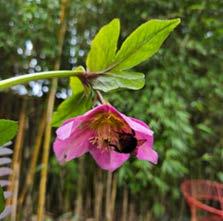
for pollinators as the nectar and pollen are removed for traits such as double flowers, new colours or compact size.
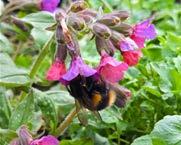
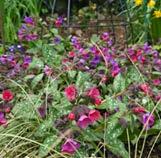
Bumble bees feeding on single petalled Helleborus orientalis and Pulmonaria rubra in author’s garden in early March 2026
At the genus level, we must think in guilds: a collection of three Salix species extends the season for different mining bees. Genus-level diversity buys us phenological overlap, which might relieve phenological mismatch, or trophic asynchrony as a result of climate change. It ensures that when one species flowers early in a warm spring, another waits for the lateemerging solitary bees.
But it is the family level where the real ecological contracts are written. The Apiaceae (carrot family) are helicopter pads for hoverflies. The Fabaceae (pea family) fix nitrogen. The Asteraceae (daisy family) pack a buffet into a single flowerhead. When we select across families, we are not just collecting shapes: we are installing infrastructure. The umbel recruits pest control. The legume enriches the soil. The daisy fuels the pollinators. This is functional biodiversity, not decorative biodiversity. For us gardeners, this suggests a quiet revolution in shopping habits. Resist the gravitational pull of the ‘new’ cultivar. Instead, seek the
obscure species within a familiar genus which are true species. Plant Geranium pratense over the sterile ‘Rozanne’ if you have the space; the former offers pollen, the latter offers only petals.
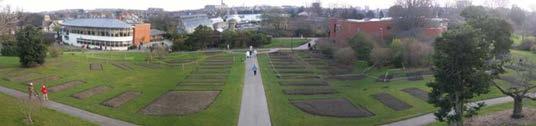
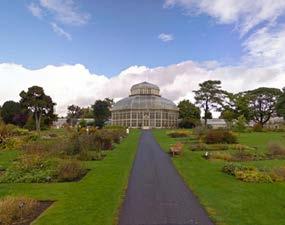
Family beds at the national Botanic gardens, Glasnevin, where you can learn about family, genus and species of plants and their evolutionary relationships. Image Credit: OPW
Yet plants are only half the story. If species diversity represents the cast of characters, then habitat and structural diversity are the stage directions. We tend to design for the human eyeline, but a wren forages in the thorny thicket, three feet off the ground. A solitary bee nests in a bare, south-facing bank. If our garden offers only one vertical layer, we have built a high-rise with no apartments.
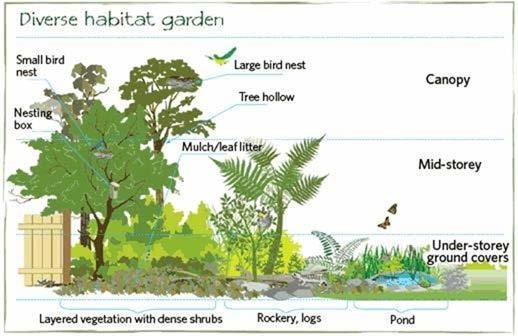
Structural diversity means stacking habitat: the canopy of a mature tree, the shrub layer of berry bearing species, the herbaceous layer of grasses and perennials, the ground layer of leaf litter and stone, and the hydrological layer of water. It means cherishing ecotones: the edges where mown grass meets unmown meadow, the most productive real estate in the garden. It means reimagining the dead and dying: a log pile is not an eyesore but a condominium for beetles and fungi as rot is not failure but nutrient recycling. It means water in some form: a pond, a bog, even a shallow dish, because the frog that breeds there hunts slugs in the border. For us gardeners, this invites a shift in language. We speak of ‘borders’ and ‘beds’, terms of containment. What if we instead speak of ‘habitat blocks’?
This is the garden as an ecosystem, a working landscape. It asks us to become editors rather than authors,
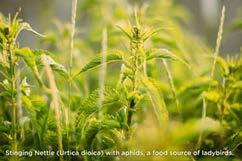
to read the land, to provide the raw materials, and to trust the ancient wisdom of the non-human world. In doing so, we move from being gardeners who host nature to gardeners who are hosted by it. We cease to be the authors and become instead the grateful readers whose library is full of stories written by a variety of flora and fauna with the theme of functional biodiversity: us, and the others, providing for each other in balance.

Dr Tim Bowmer
While doing archive research into the occupational history of gardening, I came across a small garden diary in the National Library of Ireland (NLI)1 , belonging to William FitzMaurice, J.P. (1849-1928)2 of Kelvin Grove Co. Carlow. A land agent by profession, his 25-room Kelvin Grove mansion on the Athy Road in Carlow lay next to the River Barrow on nine acres (it still exists, just about). It had a walled garden, which covered 0.8 acres and surrounded the rear of the house, containing two 100m2 glasshouses with central conservatories and two smaller

National Library of Ireland, FitzMaurice Papers, MS 23,548 – page of a handwritten garden diary/pocketbook with a list of seven newly acquired French roses.
50m2 glasshouses plus a few frames. This garden would have provided ample soft fruits such as grapes, melons, peaches and possibly pineapples, as well as more routine vegetables, potted and cut flowers for the house, with surplus for sale (there are two garden produce sale books in the NLI collection of papers, from the 19-teens; it’s just not clear if they relate specifically to this garden).
FitzMaurice’s thin black garden diary contains thirteen pages of notes in his very small handwriting on dates between 1886 and 1888. It covers the planting of fruit and vegetables including seakale, Jerusalem artichoke and asparagus, as well as many staples such as potatoes, onions and ‘Nonpareil’ cabbage. Then around forty years of age, he clearly enjoyed trying out different varieties and the range of produce listed was considerable.
Unusually, he referred to two of his gardeners by name in the diary – Mr Hayden and Mr Nolan. By 1901, James Hayden was living on the Browne’s Hill estate, a few miles from Carlow town, having moved to new employment; servants, including gardeners moved frequently from one big house to another. One page of the garden diary covers a batch of seven ‘rose trees’ that FitzMaurice’s gardeners had received from Dickson’s and planted on 12 November 1888. It seems more likely from the description that they were sent more fully grown in pots by train to Carlow station. FitzMaurice’s brief text is given in italics below with more recent notes on the varieties.
Sénateur Vaïsse – red. France, JeanBaptiste Guillot, discoverer of the hybrid tea rose in 1867, with 69 rose varieties to his name, including this one3 (not much is known about this variety today).
Xavier Olibo – velvety black shaded with fiery red. France, Lacharme 1865; hybrid perpetual, beautiful velvety black red, repeats well’ about 0.6 to 1.2m tall
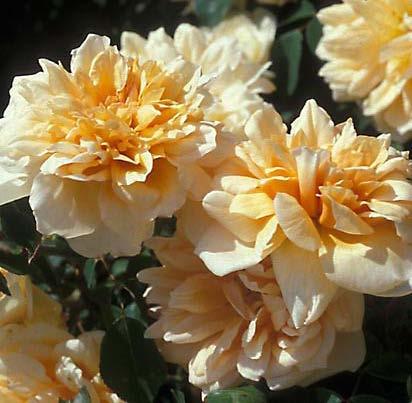
(possibly still available)4. Shown at the Queen’s Co. Horticultural Society’s rose show in 1876 by Messrs’ Saunders & Sons, Friar’s Walk Nurseries, Cork: “Among the blooms on their stand, a magnificent Xavier Olibo, a rich, velvety crimson rose, was greatly admired”5 .
[Madame] Victor Verdier – rose. France, Eugene Verdier 1863 – hybrid perpetual, fully double clear bright rose pink on a strong upright growing plant with good foliage, 1.5 to 2m tall, repeats well. Parent to many old varieties3 (availability unknown; possibly a seedling of Senateur Vaisse’).
Wm. Allen Richardson – orange yellow, […]. France, Marie Ducher 1878 – Chinensis, Noisette. Named after an American Rosarian. Orange-yellow, fading to cream and fragrant, it is very free-flowering, repeats well and is a vigorous climber to 3 or 4m in height6 (still available7).
Thos. Mills – crimson velvety scarlet. France, Eugene Verdier 1872 – hybrid perpetual, rosy carmine with whitish
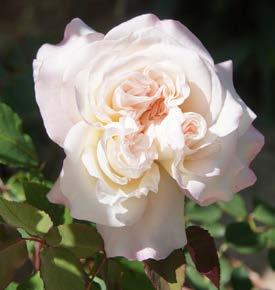
stripes, large, very full blooms in waves throughout the season (a sport of Gen. Jacquimenot).
Madame Falcot – golden yellow France, Jean-Baptiste Guilot 1858 - tea rose, ivory, salmon pink/yellow with vibrant red-tinged stems and glossy leaves, scented. It flowers profusely in Spring with a reprise in Autumn – height about 1.5m tall (still available from Guillot!8).
Niphetos – pure white. France, bush form 1843, climbing form 1889 –Chinensis. A creamy bud opening to pure white, highly scented and used as a florist’s rose in late Victorian times. The later climbing variety grows to 3m tall9,10, (both possibly still available).
Repeat flowering climbers were first imported to France and England from Charleston, South Carolina in the early 1800’s by Philippe Noisette. William FitzMaurice or his gardeners knew their rose varieties well to be able to select this bunch of repeat flowering, fragrant roses, especially the climbers.
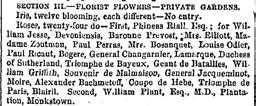
The Freeman’s Journal, Saturday 28 June 1856: Royal Horticultural Society of Ireland show held at Salthill, Kingstown. Snippet of a show report. Note the very French line-up.
The supplier was Dickson’s, founded in 1836 by Alexander Dickson, a Scot who settled in Newtownards, Co. Down; they started breeding their own roses in 187911. From the evidence of this sale to FitzMaurice in 1888, Dickson’s were still dependent on propagating French (and to a lesser extent English) roses, while developing their own varieties. In 1901 Alex. Dickson and Sons Ltd. opened a retail shop and florists at 61 Baggott St., Dublin and sometime before 1907 took over a nursery at Oakley Park, Blackrock12. A little later, they opened the Upton nursery at Ledbury, in Hertfordshire. They produced 112 new rose varieties between 1887 and 1907. A 1921 catalogue13 offered five new Alex. Dickson roses as well as four new Hugh Dickson Ltd. varieties and contained between 700 and 800 altogether, still with a very strong offering of French roses, including William Allen Richardson and Niphetos above. The further back we look, the more prominent the French rose becomes. At the RHSI 1856 Summer show, held at Salthill, Kingstown, Phineas Riall Esq. on Old Conna Hill, Bray, won first place for 24 different roses, the majority of which were French in origin. His frequent rival Wiliam Plant, M.D. came second.
Remarkably, two or three of these FitzMaurice’s French roses are still
available after over 150 years. As bare root (Fr. racine nue), through the post and with open EU borders, there are thousands of varieties both old and brand new available in France, the Netherlands, Belgium, Germany, Italy, etc. Many continental nurseries are delighted to post to Ireland (some aren’t) - many breed their own unique varieties. We have tried: Rose de la Côte d’Émeraude and Pepinière Roses Loubert, both in France, the extensive collection of ‘Lens Roses’ in Belgium, the rich and strongly pink-red-purple collection of ‘Rozen Tantau’ in Germany, and ‘Rozenkwekerij de Wilde’ in the Netherlands.
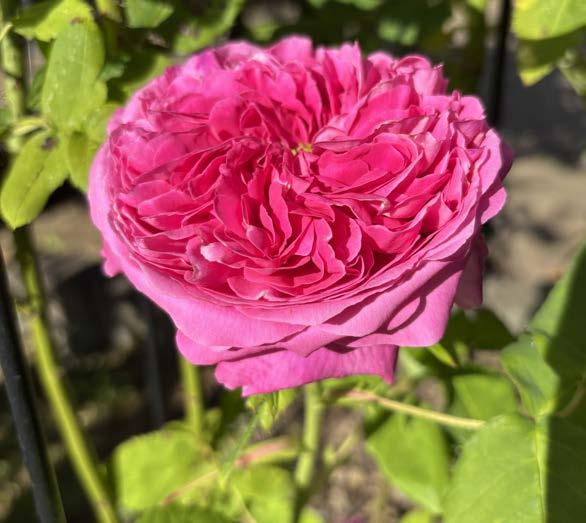
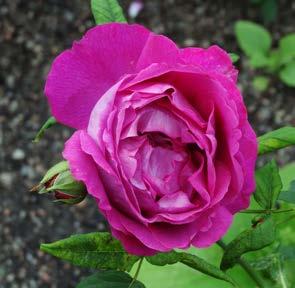
A readily available old French rose is Mme Isaac Périere (Garcon, 1841), an intense blueish-pink colour like Mme Victor Verdier but with a larger flower, flatter and broader. This rose received some negative comments in the RHS encyclopaedia of roses, with a long list of its supposedly poor features14. We prefer to call it tall and stately in growth; stems sprouting to 2m can be spread against a wall or fence. Above all, it is strongly scented and gives stunningly bright, big flashes of colour, with a long flowering season. We don’t find it particularly disease prone but it may need an airy position.
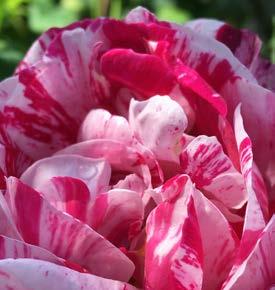
One of the other readily available stars still has to be the relatively young Ferdinand Pichard (Rene Tanne, 1921, but of unknown origin) at a mere century old: “lightly double, elegant in bud, but open up to show their yellow stamens. They are pale pink with crimson stripes and splashes irregularly distributed through the petals. No two flowers are ever alike”15. Absolutely true, this one is being trained on a 2m tall obelisk
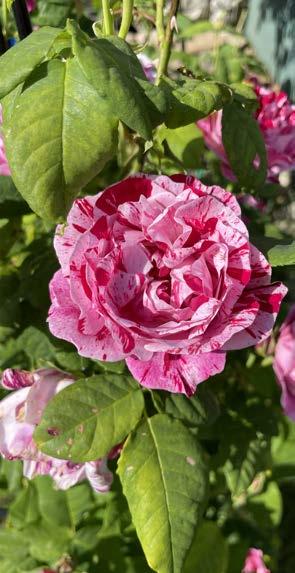
near a south facing wall. It doesn’t like undergrowth around its feet; otherwise, a strong grower, scented and a repeats in waves.
Dr. Tim Bowmer is a retired environmental scientist, gardening in Co. Cork.
1 National Library of Ireland, FitzMaurice Papers Ms 23,548: Gardening diary of William FitzMaurice, of Kelvin Grove, Carlow.
2 https://carlowhistorical.com/wp-content/ uploads/2015/12/Carloviana-No-2-1953.pdf
3 https://fr.wikipedia.org/wiki/Jean-Baptiste_Guillot
4 Peter Beales Roses, 1997-1998 catalogue p 16.
5 Leinster Express, 8 July 1876.
6 Moody & Harkness eds. (1993) The illustrated encyclopaedia of roses, p100,
7 https://lens-roses.com/en_US/shop/williamallen-richardson-14571?search=richardson&order= lr_product_type_sequence+asc%2Cvirtual_stock_ for_website+desc
8 https://www.roses-guillot.com/creations-guillot/ rosiers-anciens-guillot/401-rosier-mme-falcot. html?srsltid=AfmBOorTvJyq4IJPoOC-a4nTEh5gW0K-ukGw_TKQ1bkvH04v-pyz5s5
9 Moody & Harkness eds. (1993) The illustrated encyclopaedia of roses, p114.
10 Quest-Ritson, C. and B. (2003). Royal Horticultural Society Encyclopaedia of Roses p285.
11 https://www.dickson-roses.co.uk/dickson-roseshistory
12 Irish Times, 7 May 1908; Dickson’s Roses and Seeds
– Interesting action.
13 https://archive.org/details/dicksons-hawlmarkroses-catalogue-1921/page/2/mode/2up
14 Quest-Ritson, C. and B. (2003). Royal Horticultural Society Encyclopaedia of Roses p268.
15 Quest-Ritson, C. and B. (2003). Royal Horticultural Society Encyclopaedia of Roses p148.
The world turns and fashions change. In more recent years, dahlias have seen a substantial revival with their diverse and flamboyant flowers once more being welcomed to the pots, containers, beds and borders of our gardens.
I personally feel that they are a “must have” for anyone that wants an abundance of colourful blooms in their garden for several months throughout summer and well into autumn, when most other flowering plants are past their best.
There is a flower for every taste, no matter how conservative or outrageous
that taste may be! There is a plant to intrigue and inspire, to be in awe of and to admire!
Native to mountainous areas of Mexico and Central America, where it thrives at an ambient average temperature of 15oC, the dahlia is a genus of about 30 species and over 64,000 different cultivated varieties officially registered with the Royal Horticultural Society, to date.
Originally, in the Americas, the Aztecs grew dahlias both as a food crop and as medicinal plants, as the tubers could reduce swelling, relieve stomach ache and alleviate epilepsy. The dahlia was known locally as “Cocoxochitl” as the hollow stems were used for piping water and so it was called “the waterpipe plant.” In 1492, when Columbus and his crew arrived in the Americas, the Spaniards were impressed by the Aztecs’ exotic gardens. They took note of the vegetation of the area and at the end of the 16th Century, drawings of 3 different dahlia varieties were sent to Madrid. It wasn’t until 1789, when a
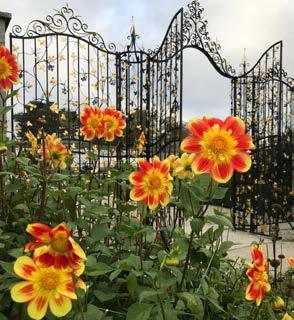
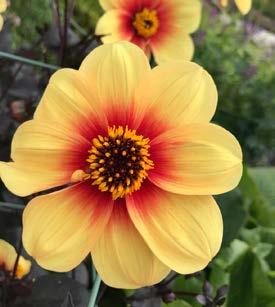
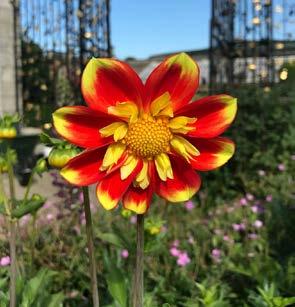
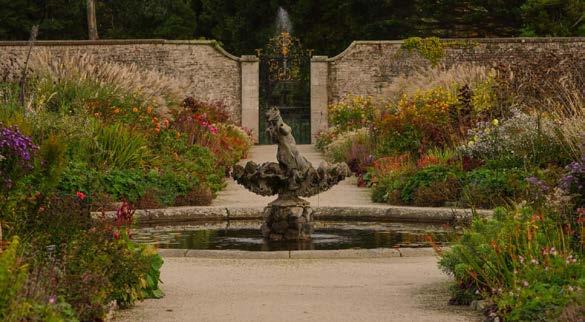
‘Pooh’ with Venetian gates in the Background
boatload of Mexican plants arrived at Madrid’s botanical gardens, that the cultivation of dahlias began. The new genus was named to honour the Swedish botanist, Anders Dahl, who had died that year.
By 1800, dahlias were being sent to botanical gardens all over Europe. And
so, the interest in dahlias spread all over the world!
Often divided into two types; tallgrowing “border” dahlias and lowgrowing “bedding” dahlias, all are good for a garden display, cutting and for exhibiting. Indeed, the shorter-growing ones are ideal for both pots and containers and for the front of a border, whilst the taller-growing ones are more suitable for the middle or back of a border.
Most dahlias are classified into groups determined by the form of their flowerheads and selection of both form of flowerhead and colour is where personal preference and choice comes in! There are 10 main groups which include; Single-flowered, Waterlily, Collerette, Anemone-flowered, Pompon, Ball, Semi-cactus, Cactus, Decorative, Fimbriated, and a Miscellaneous group which includes forms such as Peony, Star, Orchid and Lilliput dahlias.
Given the right conditions, dahlias are actually easy to grow. Having evolved in a sub-tropical climate, the more warmth, moisture and sunshine they receive, the better they will grow; They like a warm, sunny sheltered spot with protection from strong winds. They like free-draining soil, as rich as possible in nutrition and humus, regular feeding with fertilizer from early summer to early autumn, protection from pests, mainly slugs and snails, support using (bamboo) canes, especially for tallergrowing varieties, regular deadheading of fading flowers to prolong the flowering period and as dahlias are tender or half-hardy at best good protection over the winter months with a mulch or fleece, in milder areas. In
colder areas, the tubers should be lifted and stored indoors. The convenience of growing dahlias in pots includes being able to move them indoors easily, once the first frosts arrive.
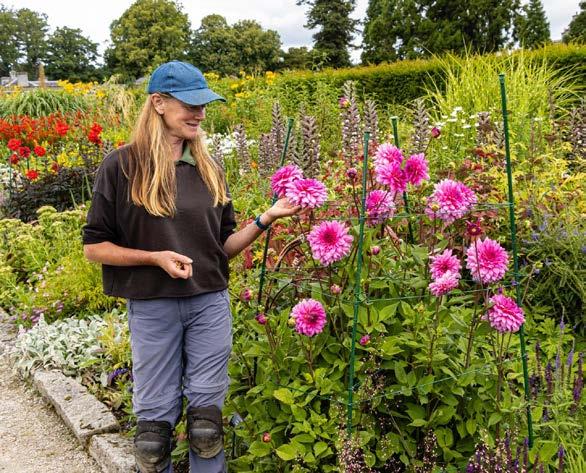
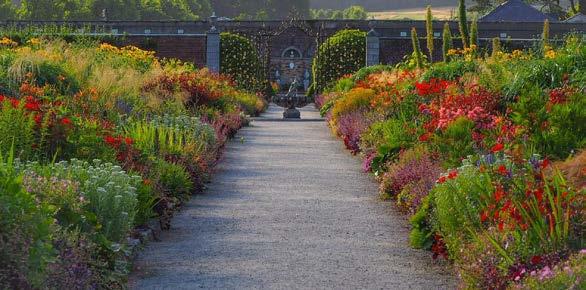
At Powerscourt Gardens, we grow our dahlias in the Herbaceous Border which is located within the Walled Garden. Here they have a sheltered position with protection from strong winds and they grow in full sun. We have 29 different varieties with a good range of colours and forms of flowerhead. Some are repeated so that we have at least 40 planted areas of dahlias throughout both sides of the border.
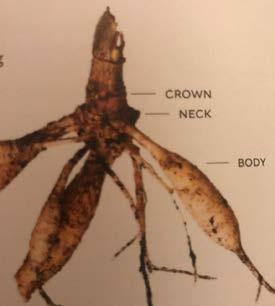
Our dahlias are supplied by Christopher White, (Three Gates Nursery), Beechill Bulbs and Powerscourt’s Garden Pavilion. We start off growing our tubers indoors, in the glasshouse, in pots, from late March - early April. We ensure each set of tubers has a body, neck and crown. (Tiny shoots called “eyes” appear from the crown area.) Any soft or shrivelled
tubers should be cut off and discarded. We plant 2-3 sets of tubers of one variety per large pot, filled with a gritty compost for good drainage, leaving the tip of the crown exposed. When the plants reach about 16 inches in height, the main growing tips above the top pairs of leaves may be pinched out to ensure a bushier plant.
We grow on under glass until the main risk of frost has passed. Then it’s time for hardening off. Outside, in the border, we usually plant out the potted dahlias in groups of 1, 3 or 5 pots per planting area, leaving at least 12 inches between each plant. Group planting of at least 3 pots or more gives a good shrub effect, especially with the tallergrowing varieties. Garden soil mixed with a well-rotted manure, farmyard (cow manure) is ideal for both pots and containers and for beds and borders. Otherwise, a good compost added when planting, will suffice.
Regular feeding with a liquid, granular or pellet form of fertilizer works
well with dahlias. A regular N P K mix is of great benefit during early summer and then switching to a fertilizer higher in Phosphorus (P) and Potassium (K) will help with good root development, flower growth and colour and resistance to disease.
As we grow dahlias on quite a large scale and over a large area, attacks from slugs and snails are always a problem. We use a pellet called “Sluggo” by Neudorff. It is certified organic by the O F & G (Organic Farmers and Growers.) It consists of ferric phosphate (Iron). This works very well to protect young, fresh foliage until the plant becomes more established.
Earwigs are synonymous with dahlias. They take shelter in the intricacies of the flowerheads and are probably responsible for a few nibbled petals! Over the past few years, we have noticed during mid-late summer, the presence of a few Green and Hairy Shieldbugs resting on some of the dahlia flowerheads, but not doing
any harm. Apparently, they like to visit gardens and bask in the sun!
Keeping plants well fed and wellventilated helps to protect from diseases such as powdery mildew and other infections that dahlias are more prone to. These include mosaic virus and spotted wilt virus.
Good support is important for top-heavy, taller- growing varieties of dahlia. We have painted bamboo canes a shade of dark green so that they look inconspicuous amongst the dahlias, yet giving support to heavy flowerheads and protection from strong winds. We use a flexible green elastic string and weave it around and between the dahlia stems and canes.
Regular deadheading encourages more blooms and prolongs the flowering period. If spent blooms are left on, the plant uses its energy to produce seed. We cut fading flowerheads off, removing the whole stem down to just above its joint with another stem. Because conditions are milder within a walled garden, we leave our dahlia tubers in the ground over winter. Following blackening of the foliage and stems after the first few frosts, usually in early December, we cut down the stems and cover the tubers with a double layer of horticultural fleece, held in place with reusable Mypex pegs. Even a layer of mulch using well- rotted manure, garden compost or straw helps to insulate the tubers from excess wet and cold.
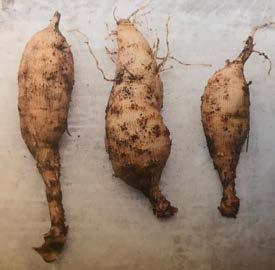
In colder areas, tubers should be lifted and stored; They should be cleaned and left to dry naturally and then stored in newspaper, sand, sawdust or dry compost. It is important that they remain cool, dry, dark and frost-free until the following spring.
Like many of our dahlias, those left in the ground over a number of years tend to grow quite tall and wide during the growing season as the tubers grow bigger and multiply, undisturbed in the soil. When flowering starts to diminish,
usually a few years after planting, this may be a signal to lift and divide compacted tubers.
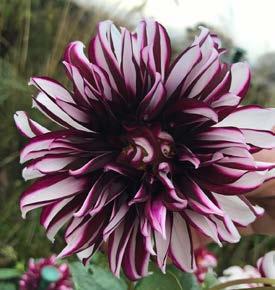
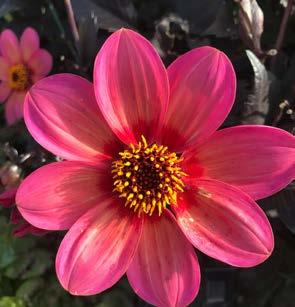
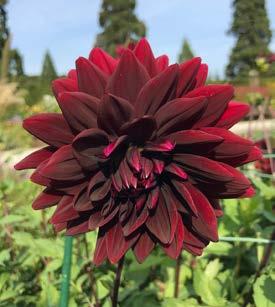
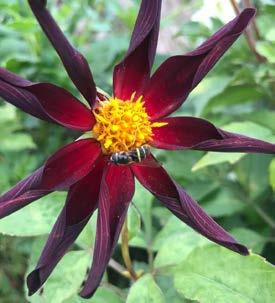
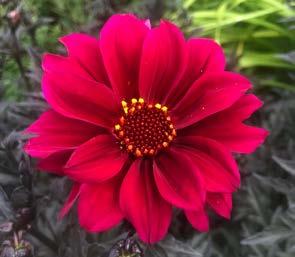
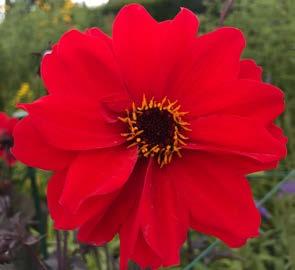
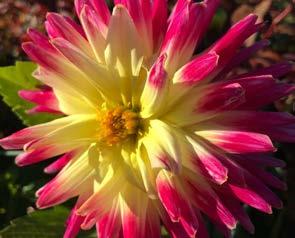
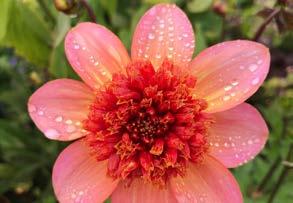
The dahlias growing in our herbaceous border really are showstoppers throughout the summer season and become the stars of the late season. They add fabulous colour, structure, depth and contrast. Here are some eye-catching varieties to look out for; Dahlia ‘Bishop of Llandaff,’ (Peony form) with bright red flowers against lightly bronzed, dark green foliage. It has been voted “The People’s Favourite”. ‘Onesta’ (Waterlily) bears deep lavender-pink flowers. ‘Black Touch’ (Fimbriated) bears deep burgundy, almost black flowers. ‘Tartan’ (Decorative) (Dinnerplate) bears large blackcurrant and white- striped, ruffled double flowers. ‘Tahiti Sunrise’ (Semicactus) bears spiky, luminous yellow double flowers with magenta- purple tips.
Considering dahlias are non-native plants, it is wonderful to see how
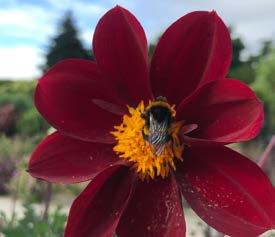
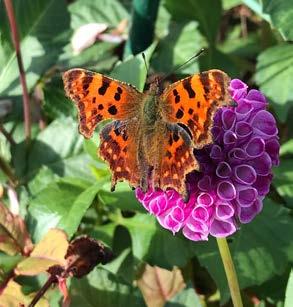
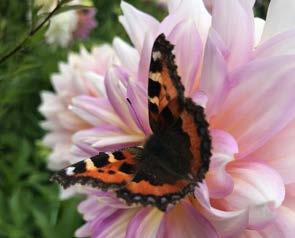
many varieties are pollinator-friendly. The yellow discs at the centre of their flowers are open and both nectar and pollen are easily reached by many of our pollinators, including White-tailed and Buff-tailed bumblebees, Small Tortoiseshell and Comma butterflies and Marmalade hoverflies. For example; Dahlias ‘Wink,’ ‘Moonfire’ and ‘Mexican Star’ from the Single- flowered group. ‘Pooh’ and ‘Christmas Carol’ from the
Collerette group. ‘Verrone’s Obsidian’ from the Star group and ‘Bishop of Canterbury’ and ‘Bishop of Llandaff’ from the Peony group.
Many of our dahlias hold the RHS AGM (Royal Horticultural Society Award of Garden Merit.) For example; Dahlias ‘Pooh,’ ‘Wink,’ ‘Waltzing Mathilda,’ ‘Totally Tangerine’ and ‘Bishop of Llandaff.’
And some of our dahlia varieties hold both the RHS AGM and are designated “Plants for Pollinators” by the RHS. This, I think, makes them extra special and absolute winners altogether! These include; Dahlias ‘Pooh’, ‘Moonfire’, ‘Wink’ and ‘Totally Tangerine’.
There really are few plants that grow so vigorously, so big, so fast and flower so beautifully and so prolifically and so consistently over such a long period. A dahlia grower’s biggest problem becomes finding room for all the new varieties. Dahlias are definitely delightful and definitely decadent!
Plant Fair March 22nd
April 25-26th Open Weekend
June 6-7h Open Weekend
Sept 5-6th Open Weekend
11am to 4pm, Tea/coffee available Tours with head-gardener Paul Smyth at 12am and 2pm daily
Plant sales on open weekends

Oct 10-11th Open Weekend Bellefield House, Shinrone, Co Offaly R42 NW82 (mid-way between Roscrea and Birr) Tickets available for these events on www.rhsi.ie/events or at the gate
We look forward to showing you seasonal highlights in the garden

25 Feb
Zoom Talk, Kitty Scully, The Year round Organic Garden
11 Mar Zoom Talk, Claire Tatler, Working in an Award Winning Garden (Wollerton Old Hall)
21 Mar
Live talk at National Botanic Gardens, Glasnevin, Oliver Schurmann, Starting all over again, it’s never too late! (details to be arranged)
22 Mar RHSI Bellefield Plant Fair (Sunday)
25 Mar Zoom Talk, Anne Repnow, Drought Resistant Planting
28 Mar Day Tour to gardens of Meath, Ashfield House & Anor
8 Apr Zoom Talk, Jimi Blake, Woodland Plants
18 Apr RHSI Plant Sale, Dublin (venue tba)
21/24 Apr 4 Day Tour gardens of Pembrokeshire & Carmarthen
22 Apr Zoom Talk, Millie Souter, An introduction to The Plant Library and how to plant in sand (Serge Hill Project)
25/26 Apr Weekend RHSI Bellefield
17 May RHSI Russborough Garden Show (Sunday)
23 May Day Tour to Mount Congreve Gardens, Waterford
6/7 June Weekend RHSI Bellefield
10 June Day Tour (ex Cork) to Blarney Castle & Hillside Garden
27 June Day Tour to gardens of New Ross
11 July Day Tour (ex Bellefield) to gardens of Limerick
25 July Day Tour to gardens of Meath, Loughcrew & The Poppy Garden
22 Aug Day Tour to gardens of Down, Old Barrack House & McKelvey Garden
15 - 23 Aug Heritage Week Event RHSI Bellefield (tba)
5/6 Sept Weekend RHSI Bellefield
16 Sept Zoom Talk, Darragh Stone, Rhymes & Rhythms – the heritage & revival of Danesmoate
30 Sept Zoom Talk, Colin Jones, Making a Cutting Garden at Salterbridge
10/11 Oct Weekend RHSI Bellefield
10 Oct Live talk at Bellefield, Carl Wright, The Making of Caher Bridge (details to be arranged)
14 Oct Zoom Talk, Hannah Fox - Propagation through the Year / Micro Nursery
4 Nov Zoom Talk, Aoife Munn, Rain Gardens
18 Nov Zoom Talk, Eric Cederberg Pollinator Ecology & Perennials for Biodiversity
2 Dec Zoom Talk, Diane Gallagher - Floral Art Demonstration
5 Dec Christmas Lunch, National Yacht Club, Dun Laoghaire

Peter Milligan and Nicola Milligan
Ihave been told, on numerous occasions, that I spend a lot of time writing and talking about late winter and spring flowering bulbs, more specifically, about snowdrops and daffodils. Without too much thought I have to confess that this is true – my most recent talk, given to a horticultural society, focussed on the people who bred many of our best-known daffodils and a talk given to Greenmount College covered species and cultivars of the snowdrop family.
Should I be worried about this? My answer is simple – if I cannot write about the plants that bring me great joy then something would be wrong with the world. I do love and grow
many perennials that give beauty to the garden in summer and autumn but the spring of the year is special – life bursts forth in the garden and those beautiful early flowers give promise of the additional joy to come.
Some years ago, I was surprised to learn that daffodils bred and introduced before 1950 were referred to as ‘historicals’ and did not seem to be widely grown. In addition, I heard one person refer to cultivars from before 1900 as ‘antiques’ – the inference seemed to be that these were not worth growing.
At the time this led me to start looking in detail at the cultivars that were bred and introduced in the 19th and early 20th centuries and was pleased to find that a good number were available, albeit from specialist growers and nurseries.
Looking back to the 19th and early 20th centuries certain names occur again and again, e.g., George Henry
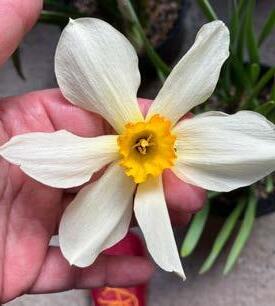
Engleheart, Peter Barr (the Daffodil King of Tooting), P D Williams (the Cornish Daffodil King), The Brodie of Brodie (Major Ian Brodie – referred to as the Chieftain of Daffodils), the Backhouse family, etc.
So, I set about collecting and growing some of the cultivars these
people had introduced and this edition of ‘From the Editor’s Garden’ will present some of these beautiful cultivars.
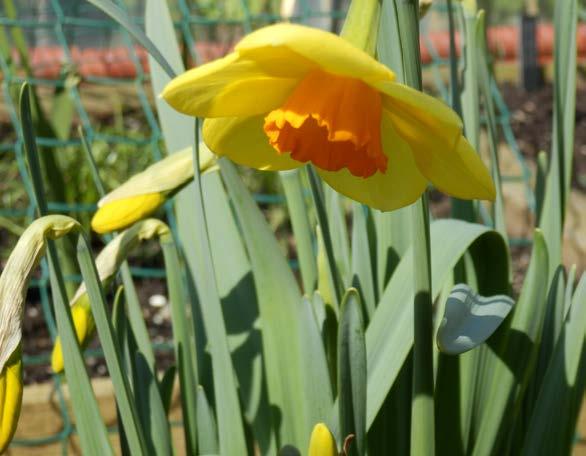
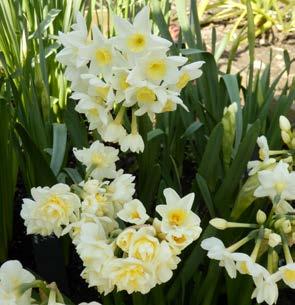
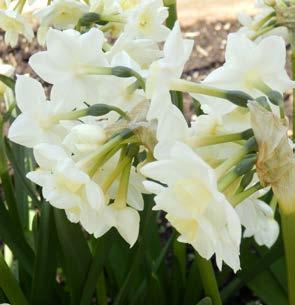
Sadly, for the ‘oldest’ cultivar that I grow – N. ‘Grand Primo Citroniere’ (sometimes listed as N. ‘Grand Primo Citronaire’) was registered c.1780 but I cannot find the name of the hybridizer. As can be seen from the photograph this is a wonderful division eight cultivar.
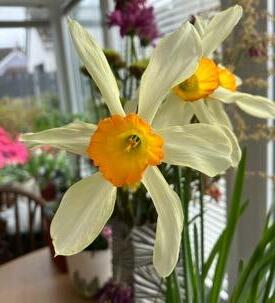
George Henry Engleheart (18511936), or to give him his due title, the Reverend G. H. Engleheart, by profession a clergyman, is listed in Daffseek (Daffseek.org), as having hybridized, or registered, over 700 cultivars – an amazing total by anyone’s standards. Among my Engleheart favourites are N. ‘White Lady’ a beautiful division three cultivar registered in 1897 and N. ‘Lady Margaret Boscawen’ a division two cultivar registered in 1898.
It is rare to find many ladies listed as daffodil hybridizers in the 19th century. However, Alice Louise Lawrenson (1841-
1900) made a name for herself raising some excellent cultivars including the division two cultivars N. ‘Lucifer’ (c.1890) and N. ‘Vesuvius’ (c.1901). Both of these can be found for sale with a little diligent searching and are well worth the effort.
A very well known, and widely grown cultivar, is N. ‘King Alfred’. This cultivar was registered by John Kendall (18281890) in 1899, was grown by my grandfather and father in their gardens and is grown by me and won second prize in the division one category at a local daffodil show in March 2026 – not bad for a cultivar pushing 127 years in existence.
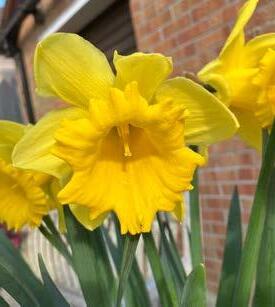
Another ‘oldie’ is N. ‘Scilly White’ registered c.1865 but the hybridizer was not noted. This is a superb division eight white and is well worth buying and growing as is N. ‘Carbineer’ a division two (large cup) yellow and orange of good stature and colour brilliance. N. ‘Carbineer’ was raised by Alexander (Alec) M. Wilson (1868-1953) c.1927.
Moving to 1958 I would recommend N. ‘Salome’. The cultivar I grow is attributed to J. Lionel Richardson (1890-1961) and is listed as a division two W-PPY (white perianths and pink, pink, yellow colouring working from the bottom of the cup to the edge). Mr Richardson was born in Tramore, Co. Waterford and was famous for the range of daffodil cultivars he bred. According to Daffseek he registered somewhere in the region of 750 cultivars.
However, there are two other listings for N. ‘Salome’ – one by The Brodie of Brodie (1868-1943) registered in 1909 and recorded as a division 3 (small cup) W-? (no colour noted for the cup) and one by the Reverend G. H. Engleheart listed as a division 9 W-R.
I am trying to find sources for the Brodie of Brodie and Engleheart cultivars as I would love to grow them and compare them with Richardson’s version.
I could go on and on listing more of these ‘oldies’ that I love to grow but as always space is limited. Please note, I do not dislike modern cultivars and grow many including those raised by famous breeders such as Nial Watson of Ringhaddy Daffodils, Brian S. Duncan, and Dave and Jules Hardy of Esker Farm daffodils.
Brian Duncan, MBE, VMH has a long, prestigious career in daffodil breeding with well over 1000 cultivars recorded – a tremendous amount of work in his 50+ years of hybridizing. Those who manage to tune in to the N. Ireland Saturday morning gardening programme (Gardeners’ Corner) may
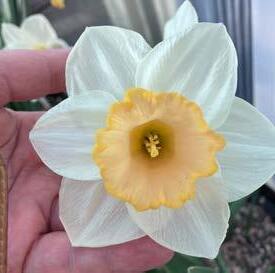
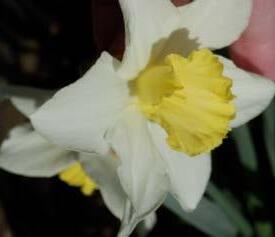
‘Lady Margaret Boscawen’ 1898
be pleased to know that in 2025 Brian named a new daffodil as N. ‘Gardeners’ Corner’ to honour the programme – an excellent cultivar with white petals and a pink-rimmed corona – well worth seeking to add charm and colour to your gardens.
So, while adding daffodils to your gardens (there is always space for another daffodil or two) please do not forget the ‘oldies’ they have a simplicity and charm that has lasted for years and are worth preserving as part of our wonderful daffodil heritage.

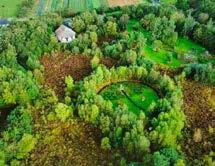

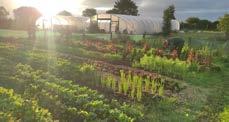


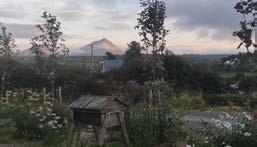
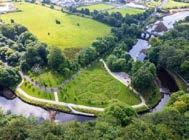

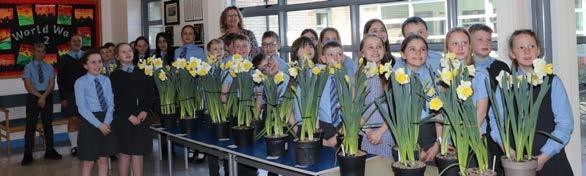
Omagh Gardening Society chairman Terry Haley thanked all members for their hard work, dedication and commitment when the society received the King’s Award for Voluntary Service in November 2025.
The Award for Voluntary Service was established in 2002 to mark the late Queen Elizabeth II’s Golden Jubilee and continues under King Charles III. In total 231 UK clubs, organisation and volunteer agencies received the award in 2025. Of these, 16 were in Northern Ireland.
The Omagh society has a busy 2026 programme which includes an annual Daffodil and Spring Flower Show in Lislimnaghan Parish Hall, a Lily Show in August in Donal McBride’s garden on Oakland Road, lectures, a trip to Holland and a visit to Garden Show Ireland at Antrim Castle Gardens. Community involvement includes outreach to primary schools in the area and volunteer participation in a
Sow and Grow group. Members open their gardens for charity through the summer.
The Omagh Gardening Society with the Northern Ireland Daffodil Group helped organise four World Daffodil Conventions in Northern Ireland, bringing daffodil growers from around the world here in 1979, 1998, 2008 and 2024.
Other County Tyrone recipients of the King’s Award for Voluntary Service in 2025 were Care for Cancer, The Mid-Ulster Victims Empowerment Project and The Mid-Ulster Talking Newspaper Association. Looking more widely at Northern Irish recipients, projects recognised in 2025 included Downpatrick and Co Down Railway Society, Foyle Sailability and the Mallusk Community Group in Co Antrim.
Omagh Gardening Society are delighted to be recognised for their contribution to their community.
Professor Mark Keane
In the interests of Science, at RHSI Russborough over the last few months, we have been burying underwear! Let that sink in a bit before reading on…
The consensus view amongst the volunteers is that there is something deeply funny about burying pristine, white, men’s underwear and then returning several weeks later to see the damage done!
Technically, this is called the Underwear Decomposition Test, colloquially the “The Pants Test”, and is designed to assess the levels of microbial activity and the small-beastie population in your soil.1 So, a 100% cotton brief is interred and its degree of degradation over 8 weeks is used as an indicator of your soil’s health (see A). In short(s), if the brief is a lot briefer over time then biological activity is higher and your soil is healthy (see B and C).
In June, we signed up with several hundred other groups -- schools, farms and gardeners -- to take part in this citizen science project, called GroundTruth, which was organized by Teagasc. The project involved
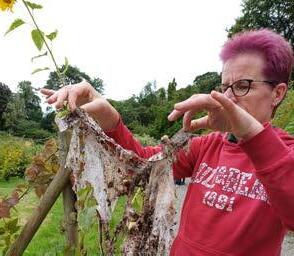
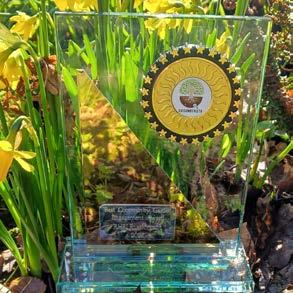
carrying out four different soil-health experiments between June and September: the aforesaid Pants Test, a timed-count of insects in stands of native flowers (called a FIT Count), an earthworm count and the GrassVESS Test (designed to assess soil structure). All of these tests are directed towards assessing the soil biodiversity and soil health of selected sites across the country, to gain some insight into what’s actually happening, literally on the ground.
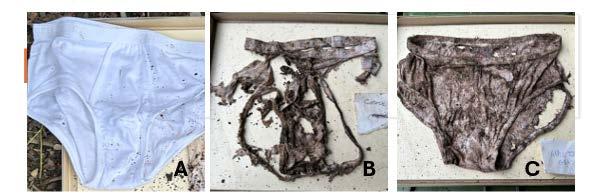
We chose 5 different sites in the walled garden for these tests: two in grassed areas and three in different flower beds. So, in mid-July, our Dunnes-best men’s cottons were buried, before being lifted 8 weeks later. The results were quite interesting. In general, the grassed areas had poorer soil health than the herbaceous borders (compare C and B). In part this probably occurs because the latter are mulched, dug and fertilised more than the grassy areas; though some of our long-standing volunteers suggested that it might also be due to hidden paths beneath the grass that crossed many areas in the old garden. Also, surprisingly, some flower beds were much better than others; the circular wild-flower bed (near the tool sheds) and the bed in the NNE corner of the garden (by the collapsed greenhouse (aka Maura’s Corner)) were much healthier than the East border area used this year for cut flowers (aka Anne’s Section). The most likely explanation for these differences seems to be extended use; the latter section had been left for several years, less tended than the other two areas. However, this does not explain why the wild-flower area is so good, it tends to be left to its own devices; it could be doing better because of the biodiversity in the plants growing there and its no-dig status.
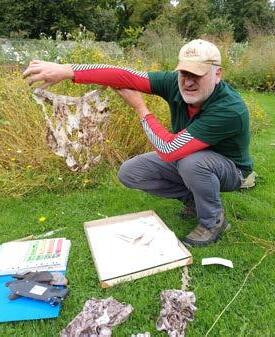
Sadly, one of our pants went missing. The second grass-area burial, in the south end of the garden, was never found because the edges nearby were mowed, making it hard to identify where the cotton-skeleton lay. Perhaps future archaeologists will find it and wonder whether it was a ritual offering to the Garden Gods!
1 ‘GroundTruth Project - Citizen Science for Soil Health’, Teagasc, https://www.teagasc.ie/ environment/soil/soil-health/ground-truth/, accessed 10/04/2025.

Mary Hackett
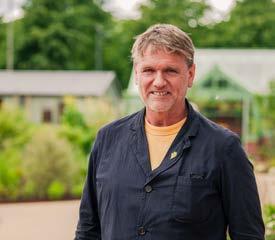
When Horatio’s Garden opened at the Spinal Cord Injuries Unit in Musgrave Park Hospital two years ago, award-winning garden designer Andy Sturgeon—who created the Belfast garden—noted that it is unusual for a garden designer’s work to have such a profound, positive effect on people’s lives. That is precisely what Horatio’s Garden achieves: it transforms difficult circumstances into something much better by harnessing all the benefits gardens and gardening can offer.
Eight Horatio’s Gardens have now been built in spinal centres throughout the UK, created and maintained by a charity founded from personal loss. In 2011, Horatio Chapple—just 17 years old— tragically died following a polar bear attack on an expedition
Andy Sturgeon in Horatio’s Garden Northern Ireland © Carrie Davenport
to Svalbard in Norway. His mother, Olivia, was a GP until she became the Founder of Horatio’s Garden in 2012. His father, David, is a consultant spinal surgeon at Salisbury District Hospital, where Horatio volunteered to support his ambition of becoming a doctor. Speaking with people with spinal injuries there, Horatio recognised their desire for access to a garden; following his death, his parents chose to honour him by establishing one at Salisbury. This effort eventually led to the creation of multiple gardens, with the Belfast project being the seventh created by the Horatio’s Garden charity.
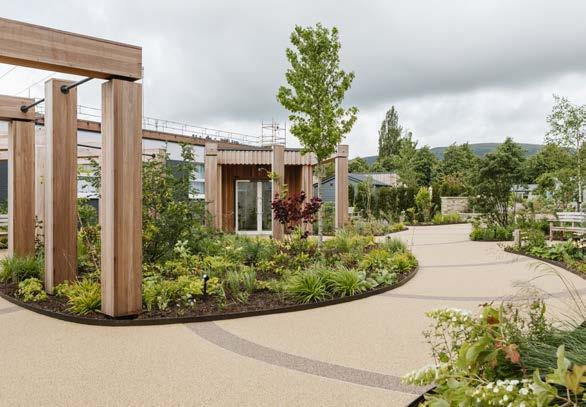
Each Horatio’s Garden is unique, designed by renowned figures such as Cleve West, Joe Swift, Bunny Guinness, Tom Stuart-Smith, and Sarah Price. All are constructed to high standards using natural materials and are planted to bring nature’s healing benefits to those who need them. There are shared features among the gardens: wide, level resin-bound gravel paths for accessibility, raised bed edges to ensure people can move safely and independently through the garden, and a Garden Room providing weatherproof, year-round access. Water features
contribute to relaxation and help mask outside noise.
Matthew Lee is Head Gardener at Horatio’s Garden in Belfast, employed by the Horatio’s Garden charity. He manages planting and maintenance but has broader responsibilities within the space. To explain further, let’s take a journey through the garden together.
Horatio’s Garden connects directly to the Spinal Cord Injuries Day Room in Musgrave Park Hospital which is also used by the Lower Amputee Unit. Only patients from these wards, along with their families, friends, and staff, may access the garden. Designer Andy Sturgeon positioned the water feature right outside the access door, so visitors immediately feel more relaxed upon entering.
Turning right brings you to the social heart of the garden. Here is the Garden Room—a space for coffee, art classes, pottery, music, and conversation (served with a “wee bun,” this is Belfast). Matthew introduced some houseplants to make it cosier, and they’ve flourished, blending indoor and outdoor spaces. Everything is accessible to wheelchair
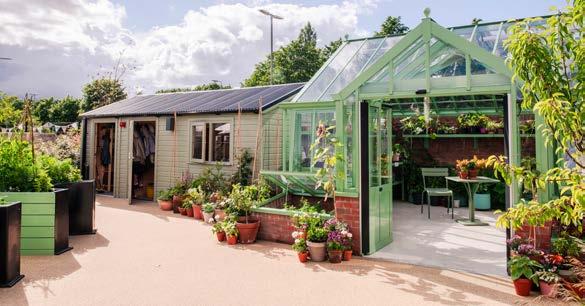
users, with moveable furniture, automatic doors flush with the floor, and plenty of natural light from large windows. People in bed can enjoy the sky through big skylights.
A little farther on there’s a Griffin glasshouse equipped with staging at various heights to accommodate people in wheelchairs and those with walking aids. This is where Matthew introduces gardening to newcomers. He believes everyone can find a plant they enjoy, encouraging sensory experiences with plants like Rungia klossii, which tastes like mushrooms, and Mertensia maritima, whose leaves taste of oysters. “We taste, we smell, we chat,” he says.
A unique aspect of the Belfast garden is its Boccia court. Boccia is a Paralympic sport. Ramps and aids make it inclusive for participants regardless of mobility. The court is surrounded by stone walls and a wildlife hedge, offering a sheltered, sunny spot with parasols and seating for spectators.
If you turn left upon exiting the ward, there are quiet areas with screened alcoves and private spaces, including several garden pods. These pods serve a variety of purposes: a shared take-away, an opportunity to play music at full volume, or privacy for difficult conversations. Benches from Gaze Burvill are strategically placed slightly off centre, as research suggests sitting side by side makes challenging conversations easier.
This section of the garden has a woodland atmosphere, with emphasis on disrupting sightlines. A Opepe (solid timber) pergola supports climbing plants, creating a green walkway that will, over time, be complemented by a canopy of trees and the surrounding wildlife hedge. Notable plant selections include the tactile paperbark maple, the fragrant Seven-sons tree (Heptacodium miconioides), box-leaf Azara, Japanese quince, Toad lily, and Chinese silver grass. When I visited in early March, Skimmia ‘Fragrant Cloud’ scented the area. Matthew plans to expand the
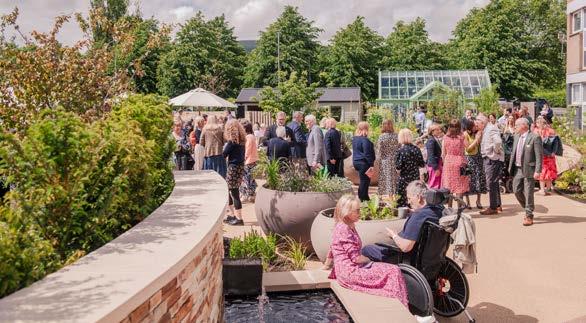
collection of trees and shrubs, which presently includes Daphne, Euphorbia griffithii, royal ferns, Antarctic Birch (Nothofagus antarctica), Cornus mas, crabapple, and Prunus incisa ’Kojo-nomai’.
Paul, a user of a Horatio’s Garden, told the charity that the garden— particularly the garden room—gave him a reason to get up in the morning. For people undergoing long periods in hospital and the staff supporting them, a Horatio’s Garden is a wonderful resource.
Horatio’s Garden Northern Ireland, Musgrave Park Hospital, Belfast is open to the public once a year for the National Garden Scheme. This year’s Open Day is Sat 8 Aug 2026, 1-5pm. Plants, cakes and craft items for sale to boost garden funds. You can also visit the garden yearly by becoming a Friend of the charity with a regular donation – find out more at horatiosgarden.org.uk/donate

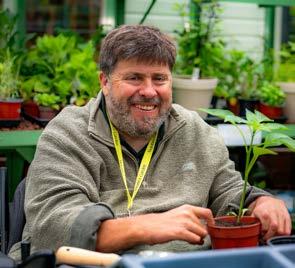
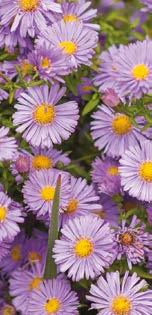
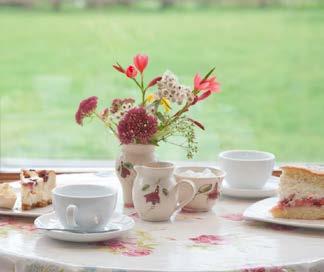
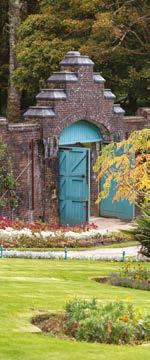
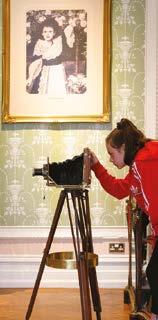


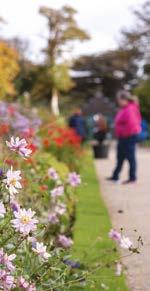
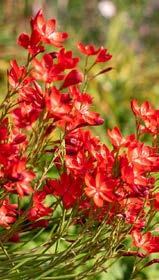
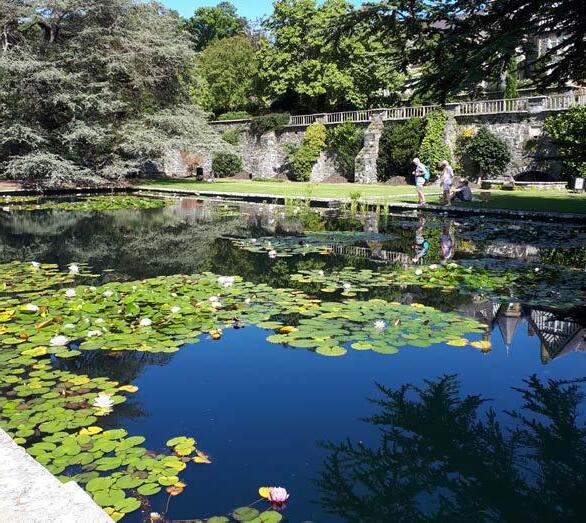
Peter Harrison RHSI President
Have you been on an RHSI Day Trip?
If you have, you already know how special they are. If you have not, perhaps this is your year.
RHSI Day Trips are about much more than visiting beautiful gardens. They are about shared curiosity, good conversation and plenty of laughter along the way. They are about meeting people who understand why one plant can stop you in your tracks or why a beautifully planted border can make your whole day.
There is always great company, wonderful gardens and a delicious lunch. Many of the gardens we visit are not normally open to the public, which makes each outing feel like a real privilege. You learn a lot too. Ideas are shared, inspiration gathered and friendships quietly formed.
Our Day Trips have been running for many years and are always well supported. Every outing is organised and led by volunteers who generously give their time and expertise. In recent years we have enjoyed four or five trips each summer. This year we are planning seven. Five depart from Dublin, one from Bellefield and one from Cork.
Recent tours have brought us to some truly memorable gardens, each with its own personality and story, and each leaving members inspired long after they return home.
This year’s programme includes:
23 May - Mount Congreve
10 June (ex Cork) - Blarney Castle and Hillside private garden
27 June -Gardens of Carlow (revised destination)
11 July (ex Bellefield) - Gardens of Limerick
25 July - Gardens of Meath
22 August - Gardens of Down
If you have never joined a Day Trip before, do not let that stop you. Many

members come on their own and are instantly welcomed. Others come with friends. Either way, the atmosphere is relaxed, friendly and great fun.
For those who want a little more time away, our Garden Holiday Tours offer the chance to travel further and stay longer.
Over the years, dedicated members have organised three, four and five day tours across Ireland and the UK. These trips take a huge amount of planning and research. They are organised with the aim of keeping costs as reasonable as possible.
In recent years, members have enjoyed memorable tours to North Wales, Shropshire and Scotland. Each one packed with exceptional gardens, fascinating visits and the easy companionship that makes travelling with RHSI such a pleasure.
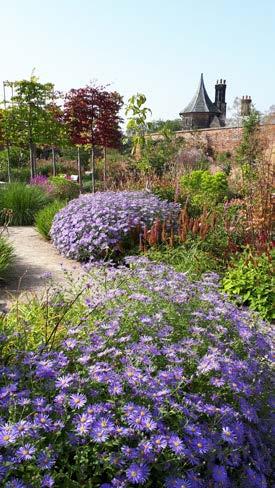
Plans are already in place for:
7 to 9 April 2027- 3 day tour to RHS Garden Bridgewater
29 June to 2 July 2027 - 4 day tour to the Gardens of Kerry
7 to 10 September 2027 - 4 day tour to the Gardens of the Cotswolds
These tours give you time to really settle in, explore properly and share the experience with fellow members who love gardens just as much as you do.
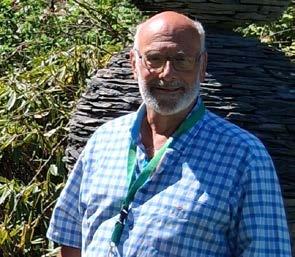
Peter Harrison, RHSI President
All of this is made possible by volunteers who plan and lead each trip with care and generosity.
Peter Harrison, RHSI President, Group Organiser and Tour Leader, has led our UK tours for over twenty-five years.
The Events Committee continues this work. Peter Harrison (Chair), Annmarie Bowring, Astrid Coleman, Deirdre Croft, Hester Forde, Bernie Haydock, Susan Loughnane, Emily O’Kane and Margaret Quinn.
RHSI tours are about connection. With gardens, with ideas and with each other. They are about shared experiences that stay with you long after the day ends.
So, if you have been thinking about joining a trip, take this as your invitation.
Come on your own. Come with friends. Just do come away with the RHSI.
Peter Milligan
Most gardeners will be aware of the beauty provided by bulbs that flower in early and midspring. These include all our favourites such as the crocus, daffodils, and tulips. However, there are many others and I would like you to consider inviting a ‘woodlander’ into your garden.
The trilliums are a beautiful family of plants that, literally, live up to their name. The ‘tri’ at the start of trillium refers to the fact that you will find three leaves at the top of each stem. If the plant is of flowering age – this can be in the range of four to six years old – then the three leaves will be ‘topped’ by a flower and the flower will have three petals. The flowers, which come in a range of colours and shades (white, pink, purple, red, and yellow – there is a green flowering species as well – T. viridescens), will either sit on top of the leaves (a sessile trillium) or hang from a short stalk (a pedicellate trillium).
I find all of the species and cultivars beautiful and they grow well for us here in Co. Down. The trilliums are by nature a shade loving plant and the species and cultivars we grow are native to N. America where they can be found growing in woodlands. You do not have
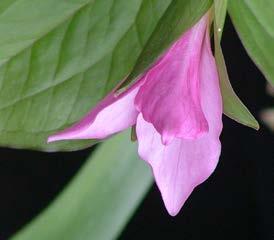
to grow them in deep shade, ours grow in dappled shade or under shrubs in the borders.
There are many species to choose from and one of the best (in our opinion) is T. grandiflorum (the Great White Trillium) together with T. grandiflorum forma roseum and T. grandiflorum forma polymerum ‘Snowbunting’. T. g. forma roseum is simply stunning coming in shades of light to dark pink with wonderful veining on the petals and T. g. forma p. ‘Snowbunting’ is spectacular as it ‘clumps’ up and provides numerous, many petalled flowers.
Another easily sourced trillium is T. chloropetalum (the Giant Trillium) – this species has wonderful deep red petals and has some interesting forms, e.g., T. c. var. chloropetalum liver-brown form and the great T. c. var. giganteum which produces excellent large flowers.
Whatever you chose I am sure the trilliums will please and if you would like to know more about this plant family then I recommend Trilliums by Frederick W. Case Jr. and Roberta B. Case, Timber Press, 1997.
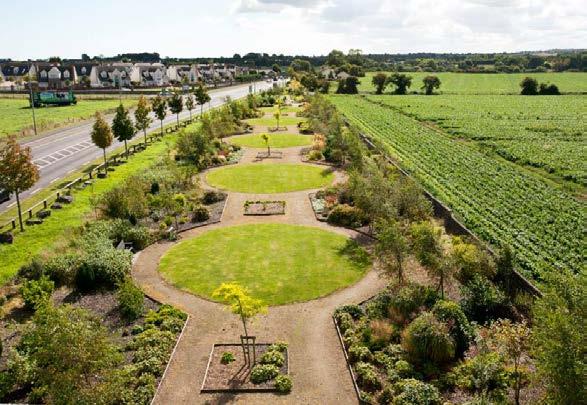
Robert Moss
Combined with a record number of Green Flag Award for Parks sites in Ireland, 2025 also saw the re-establishment of an annual in person award ceremony after a hiatus of 5 years. This was hosted by Maynooth University Campus which is also one of the 128 parks, gardens, and community run green spaces in Ireland to be accredited as Green Flag Award status sites. Within the Republic of Ireland, the Green Flag Award Scheme is operated by the Environmental Education Unit of An Taisce, and was established in 2015.
The Green Flag Award for Parks scheme is highly regarded by park operators, as it is credited with being a
cost-effective way to raise the quality of green space and people’s engagement with it. For park operators it offers a cheap and credible way to safeguard the capital investment made in new and existing green space sites.
As the international quality benchmark for the public green space sector, the scheme is now operating in 19 countries around the world. Running for over 25 years, the programme uses eight key criteria, with an emphasis on environmental management, for its assessment. All sites implement a management framework, and then undergo an annual inspection conducted by qualified judges.
This scheme accredits more than 2500 parks and green space amenities in 19 countries across the World. This includes: Australia, Austria, Belgium, Finland, France, Germany, Malaysia, Mexico, Mongolia, Netherlands, New Zealand, Portugal, Saudi Arabia, Slovenia, South Korea, Spain, Sweden, Turkey, United Arab Emirates, United Kingdom, and the United States of America, as well as the Republic of Ireland.
At the Irish awards event hosted by Maynooth University in November 2025, 103 of Ireland’s freely accessible formal parks and gardens were accredited to Green Flag Award status, recognising them for their horticultural and sustainability practices. Additionally, the Maynooth event also accredited 25 community run green space amenities with Green Flag Community Award status. Since November 2017 the Department of Rural and Community Development and the Gaeltacht has supported An Taisce Environmental Education with the introduction of the Green Flag Community Award into Ireland. This community development initiative launched for the first time in 2018. The reasoning behind this decision was to extend the international Green Flag Award for Parks Scheme into our community-run parks, gardens, and green spaces, so as to leverage Green Flag Award values and standards for the benefit of our communities and their voluntary endeavour.
All community green spaces are eligible to freely enter the Green Flag Community Award, as long as they are accessible to all and unlocked as much as possible. This community award provides our community green spaces
with access to the wider network of Green Flag Award Judges, and best practice management within the more formal provision of public green space. In so doing we maintain a very constructive conduit for information, knowledge, and skill share between the professional and voluntary green space management sectors.
Mr. Jerry Buttimer T.D., Minister of State for Community Development, Charities and Rural Transport, who launched the 2025 award ceremony stated that:
“My department has supported An Taisce’s expansion of the Green Flag Community Award since 2018. The Department of Rural and Community Development and the Gaeltacht share an Taisce’s core values of inclusion and community participation at all levels. The Green Flag provides a ground up approach to facilitating, encouraging and recognising the value of that joint community engagement.
I am sure that all the communities honoured today will take great pride in flying their Green Flag. These awards acknowledge the phenomenal work being done by volunteers and dedicated communities to keep our parks and gardens to such a high standard, and in doing so, improve our communities as a whole. Ireland now has the largest quota of Green Flag Award sites in the EU, and this is down to the dedication, skill and effort of volunteers throughout the country”.
For further information about both the Green Flag Award and the Green Flag Community Award, please contact Robert Moss at robert.moss@antaisce.org
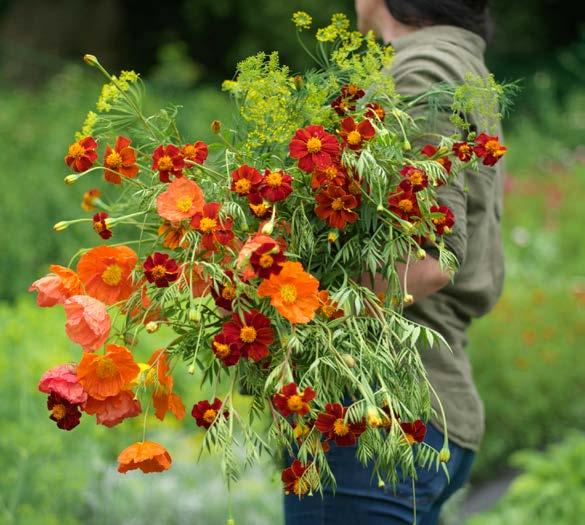
Fionnuala Fallon
Like most gardeners at this time of year, I feel a giddy mix of joy, relief and excitement when the sprawling flower beds around our home finally come back to life. But as a flower farmer and wedding florist, I’ve another good reason to celebrate the arrival of spring, which is the ready access it gives me to many kinds of beautiful garden-style cut-flowers.
My seasonal favourites? Paleflowered daffodils are up there, including the ghostly Narcissus ‘Lady Madonna’, an exquisite cyclamineus-

Late summer arrangement by TIFF using a variety of seasonal, sustainably-grown Irish flowers
type daffodil with elegantly backswept, creamy petals, and the intensely perfumed N. ‘Winston Churchill’ and N. ‘Cheerfulness’. Fat bunches of picoteetype ranunculus are another, with their soft, crumpled petals in shades of pink, peach, red, apricot and plum. So are panda anemones (Anemone coronaria), and dainty snake’s head fritillaries with their chequered, lanternshaped flowers atop slender, curving stems.
Invaluable access to choice seasonal varieties aside, growing cut flowers for the small family-run wedding floristry business that I run with my husband Richard also provides us with a planet-friendly alternative to mass-produced imported blooms typically raised with the intensive use of environmentally harmful chemicals. Yet another bonus is access to varieties of flowers- shining examples include cosmos, dahlias and sweet pea - that are either impossible to source from the Dutch flower markets, or which are increasingly prohibitively expensive.
Guided by sustainable methods of production, we use no herbicides, no insecticides and no synthetic
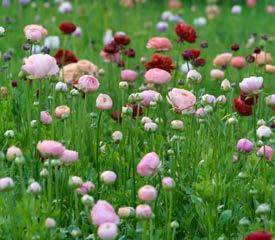
Field-grown ranunculus on the farm
fertilisers or peat-based products on our little flower farm in south Laois. Instead, weeds are managed using a combination of mechanical methods (we couldn’t do without our trusty oscillating hoes), organic mulches, and the short-term use of strong black polythene sheeting and cardboard as groundcover to kill off perennial weeds in advance of planting.
To encourage natural predators and support garden biodiversity - the very best way to nurture a healthy plot - we leave plenty of room for a variety of natural habitats, from generous patches of native meadowland and ‘untidy’ garden edges to wildlifefriendly hedgerows and pocket forests. Amongst the many bonuses of this approach is the appearance of wild orchids, helleborines, scarlet pimpernel and hedge parsley amid the sculptural yellow ant heaps in the sunny meadow above the house, as well as garden’s growing congregations of house sparrows and starlings which wake us each morning with their garrulous chatter.
Nurturing biodiversity in the garden is, of course, also one of the best ways
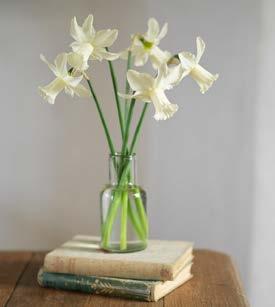
to naturally control pests and diseases including slug and snail damage. But when a little additional help is needed at key pressure points of the year such as late spring, we use a combination of handpicking and tiny, targeted amounts of organically-acceptable, ferric phosphate-based slug pellets to protect vulnerable young seedlings or emerging perennials.
For hungry cut flower crops in need of a nutritional boost, we wouldn’t be without regular liquid seaweed feeds (my favourite brand is Health-Sea) and Topmix, an organic, pelleted, slow-release fertiliser, both of which we source from the Cork-based suppliers Fruit Hill Farm. Homemade liquid nettle feed is another brilliant tool for nurturing plant health, and costs us nothing to make.
To nourish soil health, we also use mulches of homemade garden compost, old straw, and well-rotted manure sourced from our generous neighbours.
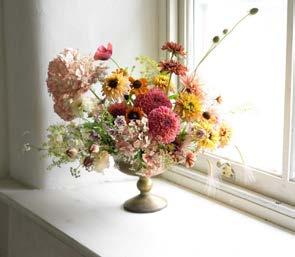
arrangement in a brass
Propagation from seed, cuttings and division also helps to minimise the cutting garden’s carbon footprint. So does home-saving flower seed, a great way to grow our resilience as gardeners while simultaneously guaranteeing a fresh, sustainably-produced supply at no cost. Our go-to for both seed and potting peat-free compost is Klasmann, a German-made brand that consistently produces reliably excellent results in terms of both great germination and growth rates.
We’re also increasingly favouring hardy perennials and woody varieties of cut-flower plants which require less input in terms of time, energy, compost and regular watering, making them a more sustainable, long-term option. Current favourites include Scabiosa ochroleuca, different varieties of geum, sweet rocket, astilbe, verbascum, trollius, linaria, eryngium, galega, silene, echinops, achillea and of course, delphiniums as well as hydrangea, mock orange, spiraea, ninebark and rambling roses. Yes, one day we’ll almost certainly run out of growing space as well as energy, but for now we’re thoroughly enjoying the ride.







Are you the owner of a garden already open to the public during the summer months or longer? If so, you may like to consider joining this scheme which already has sixty-three members throughout the thirty-two counties and is one of the most popular elements of RHSI membership.
• As a garden owner, you would enjoy an increased number of visitors. RHSI members visiting Partner Gardens are very often accompanied by non- members who pay full entrance fees. Both the RHSI members and their friends could add to your income stream, spending at your plant sales area, your gift shop and in your cafe or refreshment area, if available. An RHSI Partner Gardens plaque is provided for your garden entrance.
• Online promotion of your garden would be provided through its profile in the Partner Gardens section of the RHSI website, which in turn would be linked back to your own website / Facebook page if you have one. The 2 weekly eBulletin promotes garden visiting by welcoming photos, seasonal snippets, and news of any upcoming events in Partner Gardens for circulation to all RHSI members.
• Free RHSI membership is given to each Partner Garden owner or a nominee while the garden is part of the scheme. This enables owners to visit other Partner Gardens at a free or reduced-price entry, and to avail of all the other benefits of Society membership.
• A brochure listing participating Partner Gardens for the current year is available to RHSI members in April of each year. We also offer this brochure to potential members at garden events and RHSI functions.
If you would like to receive more information about becoming an RHSI Partner Garden please contact:
Noreen Keane
RHSI Partner Gardens Co-ordinator
Email: partnergardens@rhsi.ie
Mob: 087 259 2766
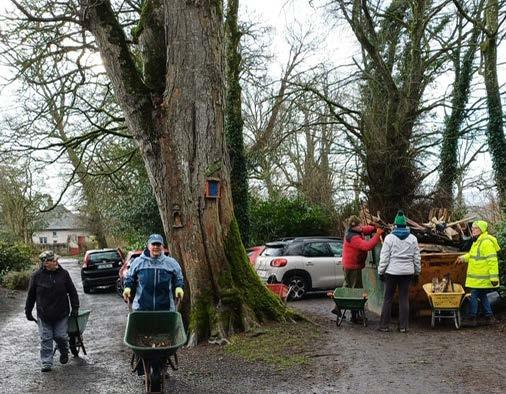
Carla King
Despite the constant rain of the past three months, there was no flooding in the Russborough Walled Garden. The usual winter tasks of pruning fruit trees and bushes, weeding paths and beds and trimming back dead stalks on perennials proceeded between downpours. A lot of structural renovation has gone on over the winter. Compost-making is an important activity for the garden and is a key component in propagation and maintaining fertility in the beds. The 16 compost bins were extensively renovated by Joe McMahon and the rotten pallets removed by a work party of volunteers. A new lean-to was constructed by Conor Gill to provide protection for the larger machines, and
the tall sweet-pea fence is to be rebuilt to replace its ten-year old predecessor, knocked down during storm Eowyn. The wall of brightly coloured, fragrant flowers is one of the outstanding features of the garden in summer.
This is an exciting time in the garden, when we are sowing seeds for the new growing year’s flowers and vegetables. Seeds are saved each year from the flowers in the garden but others are bought in. A range of Cosmos and Sweet Peas has been purchased, in addition to Sunflowers of various kinds. Tall sunflowers are grown in pots every year to give to visiting schoolchildren. A whole range of vegetable seeds is currently on order.
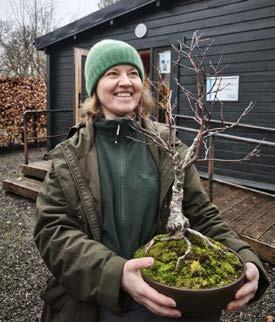
The garden is always full of robins, who hop expectantly around any activity in the flowerbeds, sing loudly in the apple trees, and even venture into the prefab where the volunteers eat their lunch, to peck any available crumbs from the floor. The other birds are more reserved but the garden is full of birdsong.
Agata Lojek and her daughter, Leana have been volunteering at Russborough since 2022 but living in Blessington and loving nature, they already knew the garden well before then through regular visits. Agata recalls seeing the volunteers gathered around a table at lunch and wondering if it would ever be possible to join them. Once she plucked up courage to find out about becoming a volunteer, she received a warm welcome. Then aged 5, Leana became the garden’s youngest volunteer. Originally from Poland, Agata is the garden’s photographer, and her pictures can be seen on the
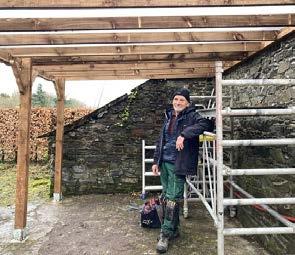
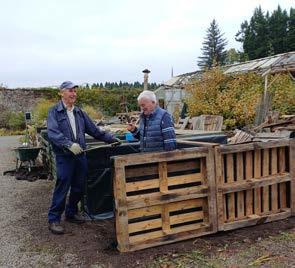
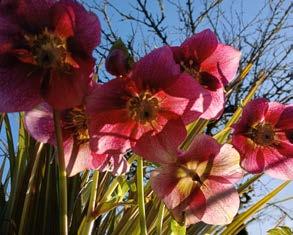
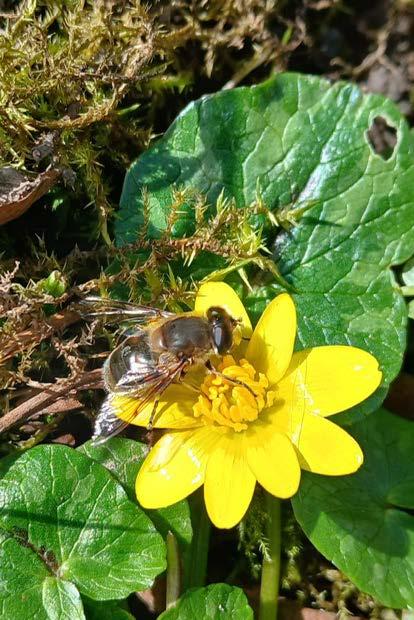
Russborough greeting cards. She also makes great craft projects, such as the wicker scarecrow in the vegetable patch at Halloween. She inherited a love of gardening from her parents and grandparents, who always grew their own vegetables, foraged for berries and mushrooms (an obsession of her father’s) and made preserves and pickles at home, a practice Agata has followed. She seeks to encourage a love of nature and the outdoors in the children she teaches, and apart from her work in a local Primary School, she is a trained forest school leader. Her advice to volunteers is to stop at some stage during their day and look around to see what is growing and appreciate the beauty of the garden surrounding them.
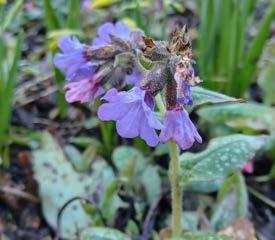
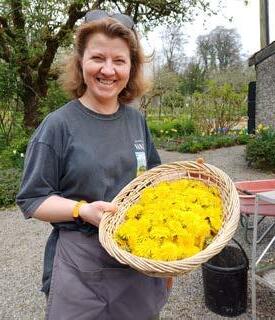
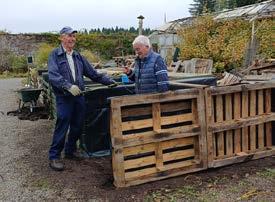
Nicola Milligan
I’ve always loved Tulips, but found them a bit of a pain to deal with. Lovely in lawn, but too much hard work; great in pots, but unless pots are fluted a delicatessen for rats (in the country, at least!). There are a number of miniature tulip species, but I’ve always personally found them a bit miffy here in the north, either performing badly or no great lifespan.
Almost all my gardening these days takes place at sitting height, so it’s been an absolute joy to discover a robust and vibrant tulip that is small enough - at about 12” - to go in a window box, and sturdy enough to withstand the gales we’ve been having.
Please give a big hand for new favourite –Tulipa ‘Pretty Princess’.
Glaucus foliage with a cream edge makes it attractive even before flowering. Then come the variegated buds, and finally a glorious, vibrant two-tone pink flower. I enjoy hubby’s beloved Daffodils, but that slightly hot pink is a really welcome splash of colour at this time of the year. A real stunner, and highly recommended!
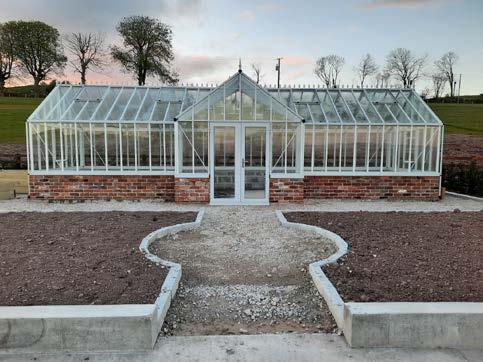

Growing to eat has always been my favourite gardening activity. Therefore, I wish to encourage everyone to have a Salad Knot garden or a Salad Pot garden this summer. I have written this article with our children and grandchildren in mind. Hence, the detailed instructions. I also ‘play’ on the word “Knot”.
Lettuces are the main ingredient of my salad garden, pots and knot. Lettuce comes in greens, reds and green/red, in many different shapes and textures. So, let us start our salad gardens by sowing lettuce seed. Choose a packet of ‘Mixed Salad Leaves’. The packet of seed may tell you what the varieties are and can be
sown from March to August for Summer crop. Mixed Salad Leaves seed is sold for the harvesting of young leaves but pricking out some seedlings to grow on as full-size plants is possible.
You will see that the mixed seed comes in pale to dark brown. As seed is expensive sow about a third of the packet in a full size filled seed tray, less for a half size seed tray and a pinch for a one litre pot. Compost should be almost to the top of the chosen container and level. I pre-soak my filled seed trays by sitting them in a basin of water for about 30 minutes before sowing the seed. Ensure the seed is well scattered. Cover lightly with compost, label and date. Site the tray or pot on a windowsill or in a greenhouse/tunnel. Keep moist. Protect the windowsill with a drip tray.
After about twelve days the seedlings will be big enough to prick out, say about ten/twelve plants, into a prepared modular tray. Using a small dibber or pencil carefully select the seedlings looking at the different shapes and even colours among the seedlings. Always lift the seedling by the first leaves, never the stem. Make
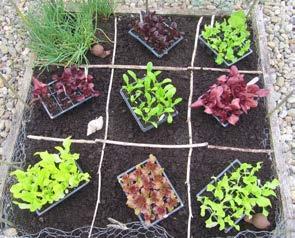
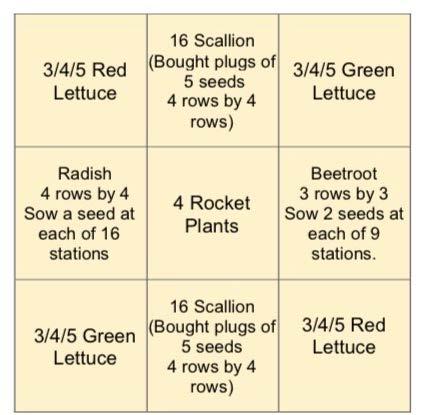
a hole and insert the seedling into a modular cell. If the seedlings have stretched, that is, have a long stem, gently twist the seedling into the hole until the first leaves are touching the compost. Press the compost around the roots with the dibber or pencil. Gently water the modular tray and sit on a drip tray on a windowsill or in the greenhouse/tunnel.
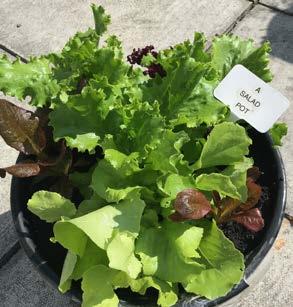
Now tidy up the tray or pot containing the remaining seedlings and water. Place your seedlings alongside your modular tray. The seedlings will continue to grow and can be harvested as ‘baby salad leaves’ while you wait for your lettuce plants to develop. Harvest the baby leaves by picking or cutting a few outside leaves from the plants at the base of the stem.
While your lettuce plants are developing there is time to prepare their final planting space. For a Salad Knot garden choose a piece of ground with good sunshine and drainage. If it is not weed free, put down some cardboard to cover just over a metre square. First layer up some compost, using any leftover open bags from last year or from emptying pots. Then put two to three bags of good compost on top. A depth of 15cm will be adequate for salad plants.
Make a frame as per photographs using eight four-foot (122cm) canes –measuring a metre square, tying where
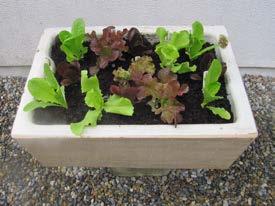
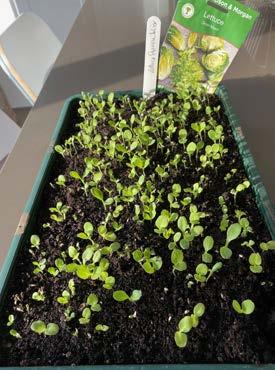
the canes overlap at the corners. Then cut the remaining four canes to metre lengths, lay two north-south and two on top east-west. Ensure they are evenly spaced and tied at the intersections. Set the outer frame on top of the compost bed and place the inset into the frame. String and some short canes can be used to divide up the metre square bed instead of the frame described above.
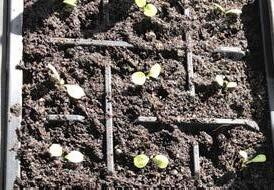
For the Salad Pot garden use large pots or other decorative containers. I use old compost in the bottom and fill the top 15cm with good compost. Ensure drainage holes are open.
It takes four to six weeks from sowing before your lettuce plants are big enough for their final planting. If grown under cover they will need to be hardened off over a few days, that is putting the trays of plants out during the day and taking them in at night and eventually leaving them out overnight. I put some netting over the trays to protect the young plants from sparrows who like to nibble young lettuce plants.
For the Salad Pot garden plant three, five or seven plants in a large pot. See diagram for a Salad Knot garden. All lettuce plants can be harvested by picking the outside leaves of the plants. This keeps the plants young and productive. Slugs mainly attack the mid-rib of lower leaves. If not too damaged just cut away the rib and wash.
Salad/Spring onions were always called scallions when I was growing up and still are by me. I buy plants of White Lisbon for growing-on in old potato grow bags. The top 20cm of compost is
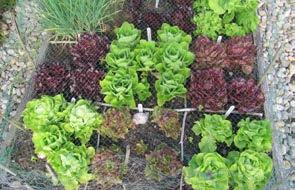
replaced each year. I sow seeds of red Spring onion varieties in pots – Spring Onion Apache – this salad onion grows into delicious small red onions if left.
These two pots of a winter lettuce, mid-April, show the harvest and then the regrowth after ten days.
Below is a suggested plan for a Salad Knot garden. All plants can be bought from your local garden centre – a tray of red lettuce, a tray of green lettuce, trays of Spring onions, rocket plants, beetroot plants/seed and a packet of radish seed. Or just plant all coloured lettuces.
Any left-over plants can be planted in pots for a neighbour or friend.
Sow the radish seed directly into the Salad Knot square or into a pot for the Salad Pot garden.
Beetroot seed can be sown too. I buy some plants and sow seed of finger shaped beetroot – Foniro or Alto F1. Add a few young beetroot leaves to your salad too.
I hope you find your salad garden, Knot or Pot rewarding. You will certainly have a very fresh salad. Be ready to replant after eight to ten weeks.
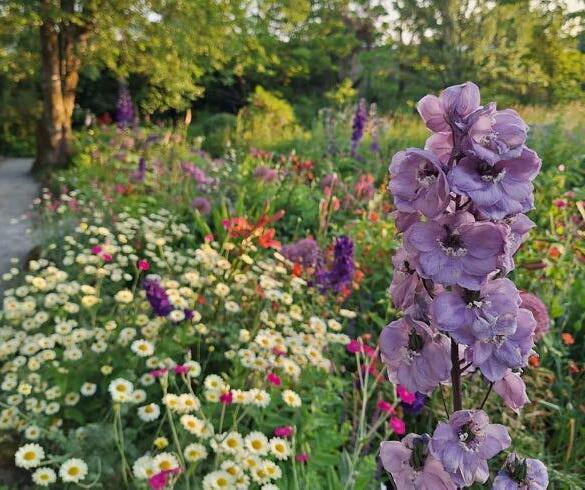
2025 was the year where I feel as though we finally got some control over the garden here at RHSI Bellefield. The beast isn’t fully tamed, but there’s certainly a feeling of being more on top of it and we’ve finally been planting back areas, not just undoing work. Huge amounts of rejuvenation pruning were carried out. With the walls of the North border and Blue border both being cleared and lots of Roses, Clematis and Fruit trees being revealed, some for the first time in years! We added a path to the back of the Blue border too, so you can access it and appreciate the garden from a whole other angle.
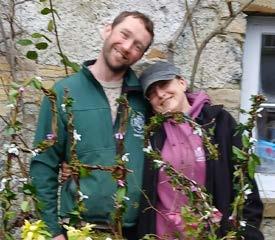
We moved our nursery area from one end of the Haggard Garden to another, to maximise light and give a bigger area to grow. Something most visitors won’t notice but has made a big difference to the plants we can produce for both the garden and to sell.
One of the biggest tasks of 2025 was opening up the woodland loop walk at the bottom of the stable yard to connect it to the woodland garden; this really has helped link up the whole site. I always found the garden was a little disjointed and by adding this simple path it has made an instant impact.
That was followed in late 2025 by the creation of a new woodland area to the side of the existing woodland. We were honoured to have this new area opened by both Neil Porteous and the late Seamus O’Brien in September. It marks the first major piece of development here in RHSI Bellefield, something that Angela was keen we continue. It also gave me a chance to sit down and see what would work both on the site and looking to the future, so resilient trees were chosen to reflect the fact that how we garden is changing as the climate does. The project was titled Rooted in
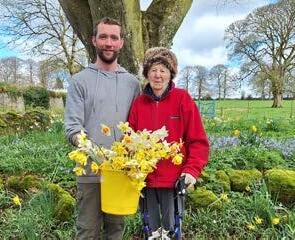
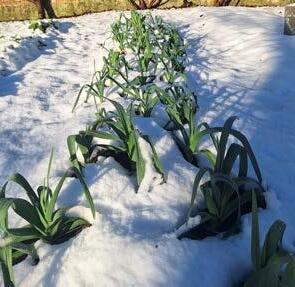
Bellefield and members had a chance to sponsor the trees to help support the project here.
Elsewhere in the garden, we planted a lovely new woodland bed by the side of the new car park and added some real gems to it. Having an area where the soil is free from pernicious weeds here is rare, so I took full advantage! A section of the walled garden where the bindweed was simply too much was covered in plastic in late 2025, something I try to avoid, but with limited
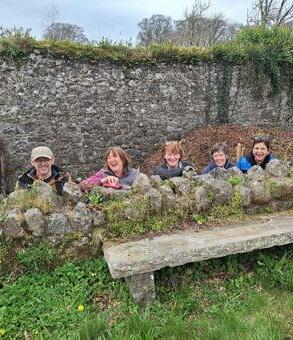
time and resources, sometimes you need to make these decisions. I’ll leave it down for two years and hopefully that will make a real difference.
2025 saw the passing of our dear friend and neighbour Mabel Wallace, who had known Bellefield for 100 years, not something many people can claim. She had attended our snowdrop weekend, driving herself in February but unfortunately passed away in March. Every year Mabel collected Daffodils locally to sell in bundles in the local shop for daffodil day. Since Mabel’s passing another neighbour Eleanor Wakefield has taken on the job and our volunteers help pick a few buckets to continue the good work Mabel started. We were further delighted to be the recipient of some unnamed daffodil selections from Brian Duncan, who allowed us to name one Narcissus ‘Mabel Wallace’ a fitting tribute to a remarkable lady. It now takes pride of place in the new woodland area.
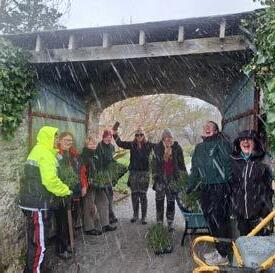
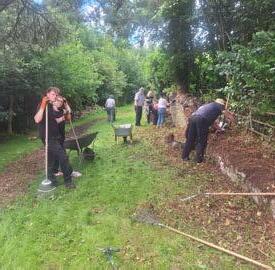
Looking to 2026 we have lots planned. Our Just Transition funded work is underway so visitors will see lots of change in the garden. We are sympathetically installing ramps for accessibility, widening paths and doing lots of other things around the site to help improve it for visitors. While this is happening, we have an opportunity to create a new tropical border in an underutilised bed in the garden and also add some other gems to the Blue border and take some stumps out of
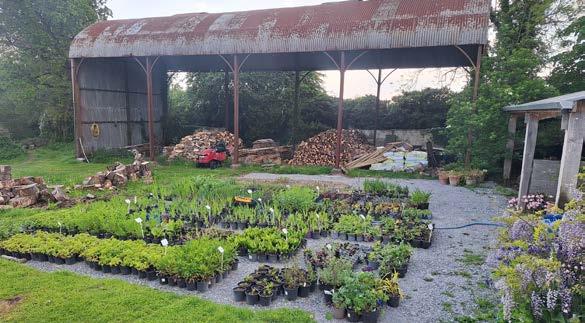
the northern border beds. It’s shaping up to be another busy year here with lots of new and exciting developments!
I cannot talk of all the achievements of the last year here without acknowledging some key figures here. Judith Doherty, who has cared for this garden for years and continues to bring her enthusiasm here each week. Her partner Daffy also helped us for the past few years, keeping grass mown and everything in order long before we took full ownership of the garden. The other group I need to mention are our volunteers who turn up here in all weathers and happily tackle any mad suggestions (and there are plenty) I might have. They are a great bunch who once a week bring real life to Bellefield and remind me of the vision Angela had for the gardens. There are plenty of volunteers working behind the scenes to, doing the less glamorous jobs but it all helps to keep the garden and this place going, so thank you to each and every one of you.
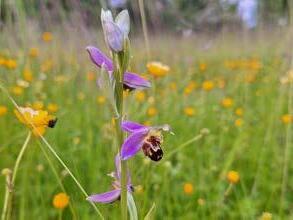
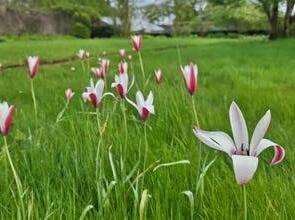
Open ever y day, all year round
Admission FRE E

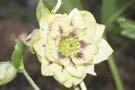


A rdgillan consis t s of a 194 -acre park , 6 acres of garde ns inclu ding a wide varie t y of spring bulbs, rose garde n, national colle c tion of Pote ntilla , he rbaceous borde r, a walle d garde n cont aining an ex te nsive colle c tion of he rbs, fruit , veget ables and orname nt al plant s.
Ardgillan consists of a 194-acre park, 8 acres of gardens including a wide variety of spring flowering shrubs and spring bulbs, rose garden, national collection of Potentilla, herbaceous border, a walled garden containing extensive collections of herbs fruit vegetables ornamental plants, peonies and irises, and 90 acres of wildflower meadows.
At t he Cas t le it se lf, t he re are Cas t le Tour s & C r af t S ho p, Tea Roo ms a n d Playg rou n d.
At the Castle itself, there are Castle Tours, Craft Shop, Art Gallery, Tea Rooms and Playground, Fairy Tree Trail and Wild Flower Meadows.
A r dgillan Cas tle G ar de ns & De mesne, Balb riggan , C o D u blin
E xit 5 or 6 – of f M1
T : 01 8 492 212 E :

scientific institution, the Gardens contain important collections of plant species and cultivars from all over the world.
The National Botanic Gardens in Dublin is located in Glasnevin, just three kilometres from Dublin City Centre, and is famous for the exquisitely restored historic glasshouses.
The National Botanic Gardens in Wicklow is located in Kilmacurragh, where the milder climate, higher rainfall, and deeper, acidic soils of this historic Wicklow garden provide a counterpoint to the collections at Glasnevin The two Gardens have been closely associated since 1854
The National Botanic Gardens are open every day in both Glasnevin and Kilmacurragh, and are free to enter and explore
Guided tours are provided daily at Glasnevin and seasonally at Kilmacurragh
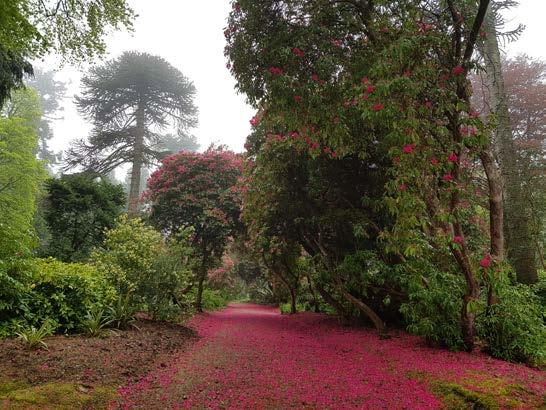
For more information see www.botanicgardens.ie or our social media pages T: (01) 804 0319 E: botanicgardens@opw.ie