Museum members, students, and employees of Wake Forest University and Atrium Health Wake Forest Baptist.
Visit reynolda.org for additional free admission categories.
* Historic House will close effective January 5, 2026 to begin HVAC preservation work. The Babcock Wing will reopen March 10 with LayeredLooking on view.
Each spring, the gardens remind us how time moves here. Sweeps of daffodils signal a promise of winter’s end, transforming what we think we know into something momentarily astonishing. They remind us that lasting things change gently, and in doing so, they endure.
This second issue of our new publication reflects the full breadth of Historic Reynolda, where art, history, and community are intertwined in a living landscape.
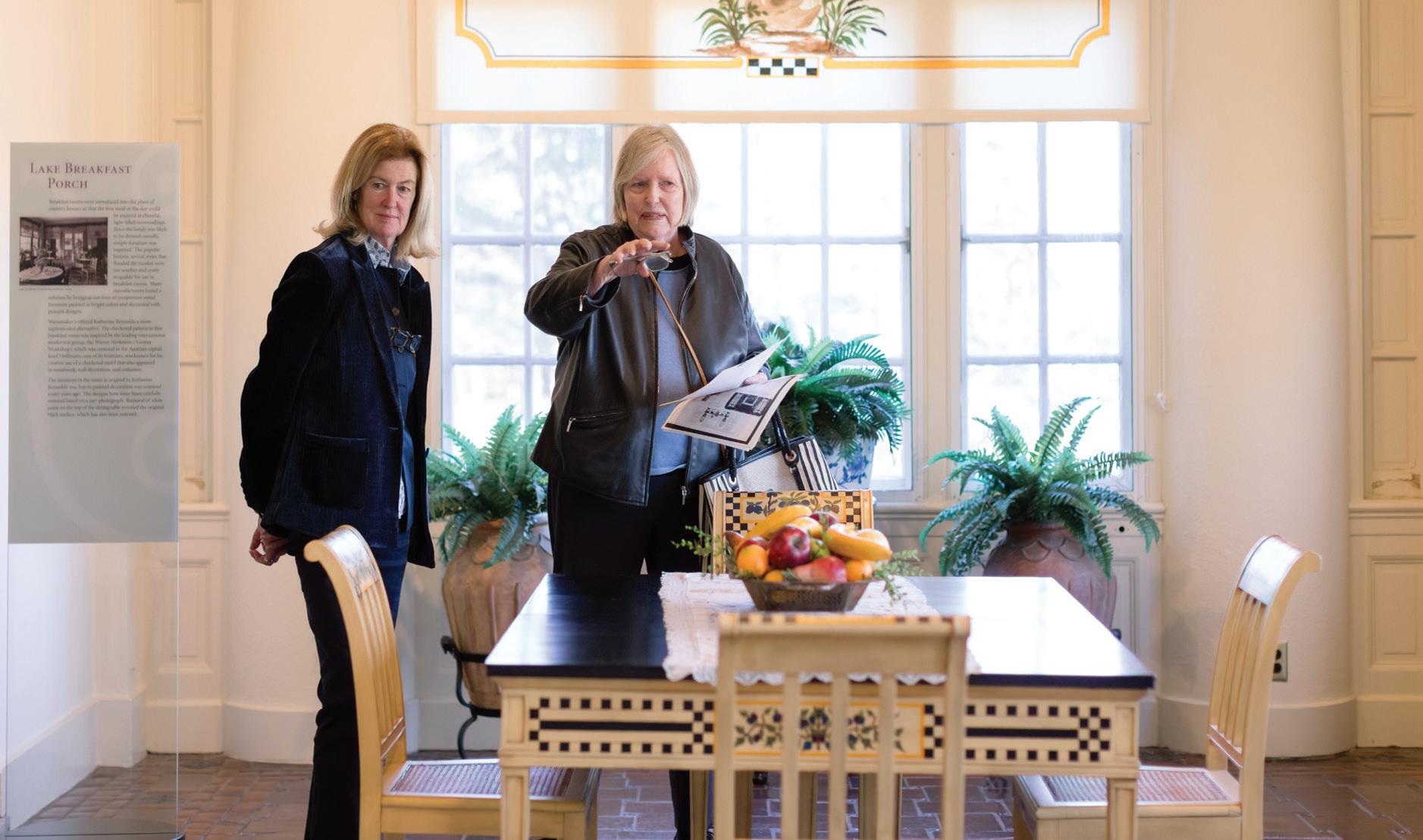
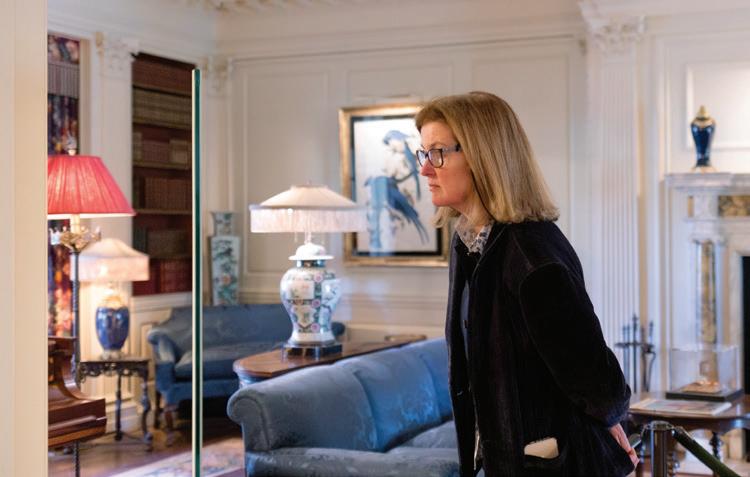
That sense of renewal extends beyond the gardens this year. In January, the historic house closed to begin a seven-month HVAC rehabilitation project, part of the ongoing care that keeps Reynolda strong. More than a century ago, Katharine Reynolds understood the importance of fresh air, light, and comfort. We’re carrying that same sensibility forward, ensuring the museum remains a place where art and history can thrive for you and for those who will follow.
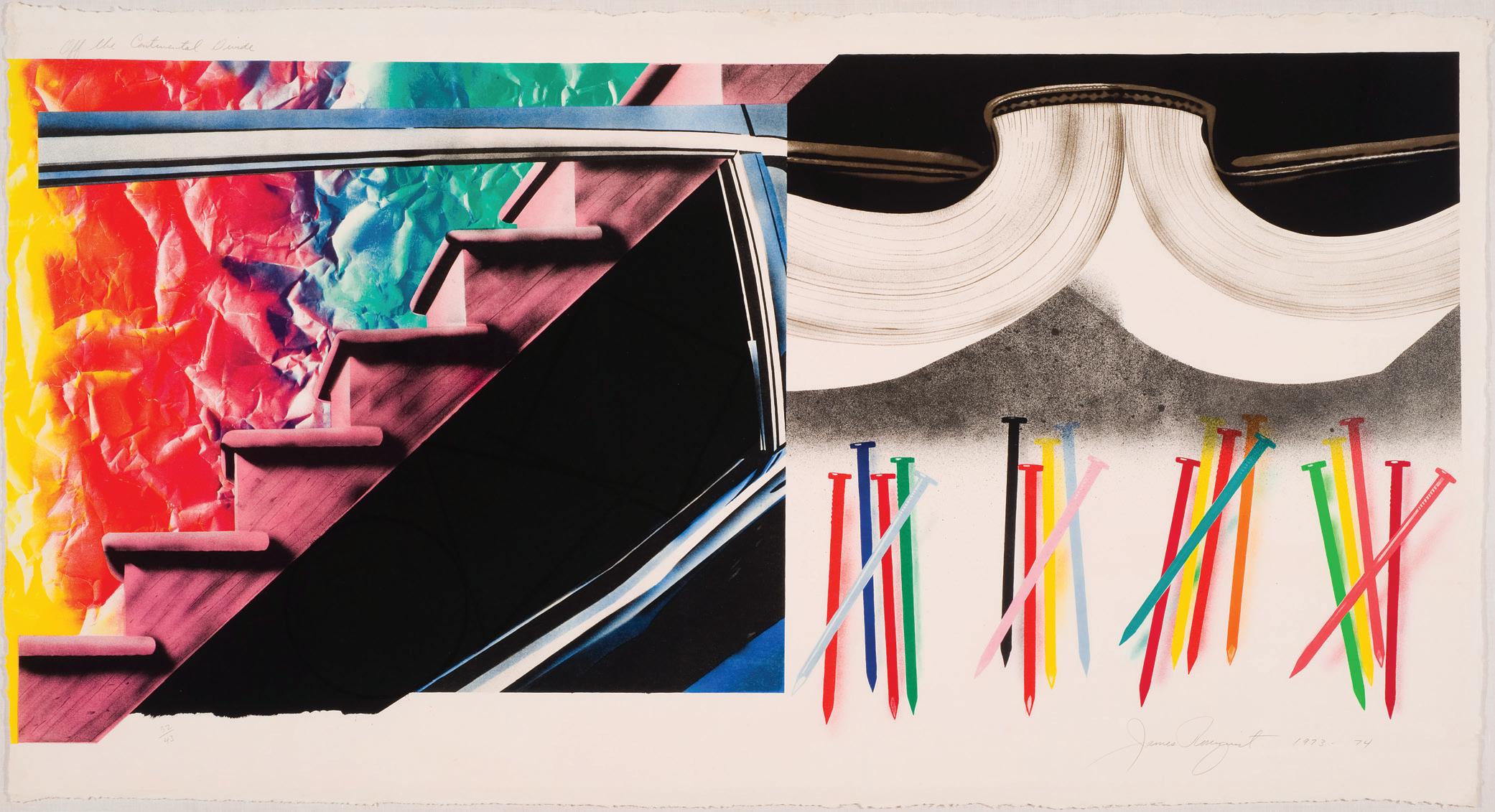
In March, we will introduce Layered Looking: Making Sense of Art, an exhibition that invites us to reconsider how we experience art. Curated by Julia Tanner, our director of teaching and learning, it draws from Reynolda’s permanent collection and features works by Louise Nevelson, Red Grooms, Kwame Brathwaite, and Nam June Paik, among others. It encourages visitors to look more slowly, to notice
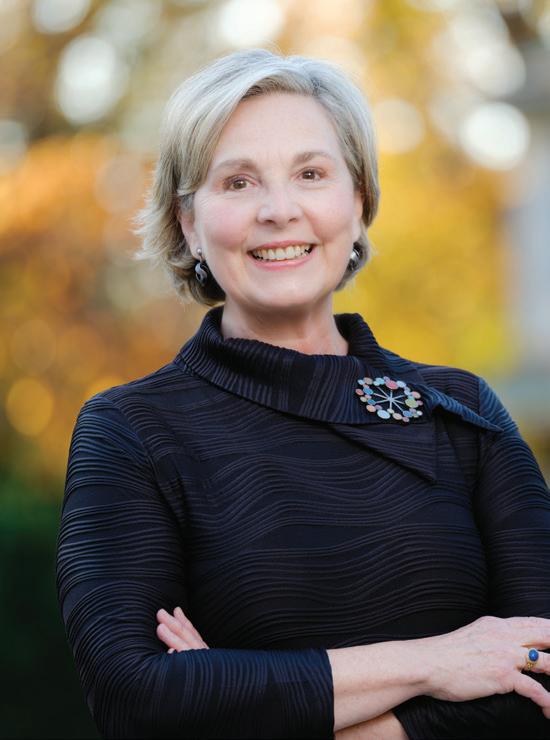
ALLISON PERKINS
Executive Director of Reynolda House
Wake Forest University Associate Provost for Reynolda House & Reynolda Gardens
what they might have missed, and to discover that there is no single way to enter a work of art. The same eyes that linger over a painting learn, in time, to meet the world outside with the same curiosity—to read the light on a branch, to recognize play in the movement of air. In learning to look, we learn to belong.
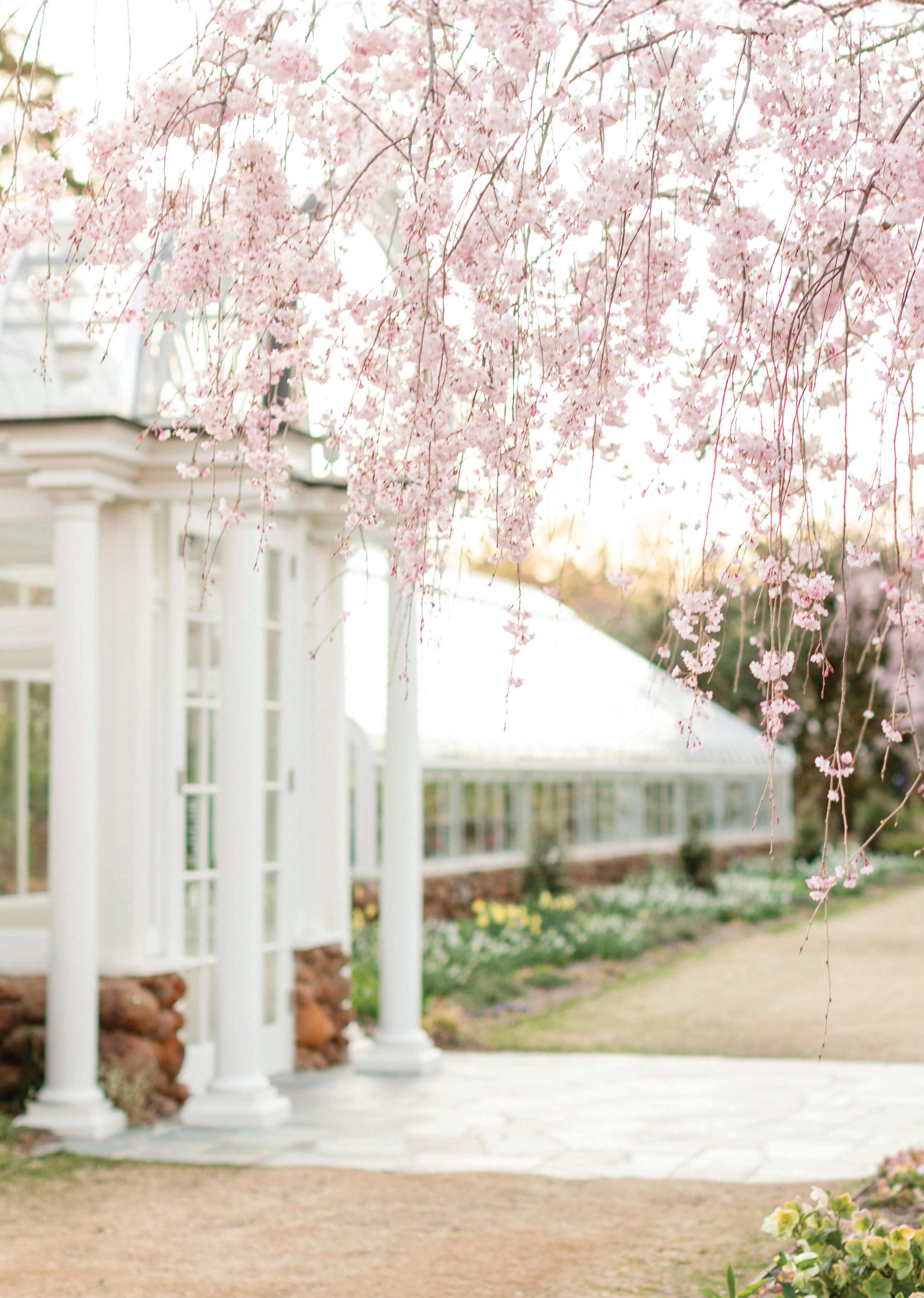
Spring is when Reynolda Gardens are at their most picturesque. The weeping cherry trees lean into bloom, their pale branches brushing the paths as if checking whether winter has really left. The borders answer with color, and the familiar rhythms of the season emerge once again. Even as one part of the estate rests, another reaches its full expression.
Reynolda has always balanced care and change. Every season, every exhibition, every act of preservation carries the same intention: to keep this place alive for those who come after us. In that spirit, I live for the future and trust that what we nurture now will bloom again in ways we can’t yet imagine.
I hope you’ll spend time here this spring, to walk the gardens and trails, to experience art in a new way, or simply to notice how a place can grow ever more itself over time. •
APRIL • 2026 • FOR BENEFACTOR MEMBERS AND ABOVE
The Practice of Preservation
A DISCUSSION WITH JOSEPH K. OPPERMANN
I6:00 – 8:00PM AT REYNOLDA HOUSE
n this talk, Joseph Oppermann will draw on his experience to explore why architectural preservation matters and how it continues to shape the future of historic places like Reynolda. Join us for an engaging conversation on the importance of preservation and the permanence of historic structures.
*FOR MUSEUM MEMBERS AT THE BENEFACTOR LEVEL OR HIGHER. TO UPGRADE YOUR MEMBERSHIP, CONTACT THE ADVANCEMENT OFFICE AT 336.758.3885 OR ADVANCEMENT@REYNOLDA.ORG.
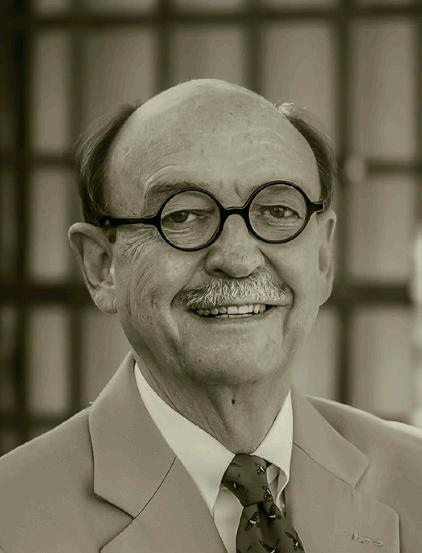
JOSEPH K. OPPERMANN
is a nationally recognized preservation architect with more than thirty years of experience leading acclaimed restorations of historic buildings. Having played a vital role in the restoration of Reynolda's century-old Ludowici tile roof and the recently-restored Brown Family Conservatory, he is currently part of the team overseeing the HVAC restoration project.
The Subtle Art of Seeing: A Q+A with Julia Tanner, Layered Looking curator
Sight Lines: The Andes of Ecuador
Reynolda Gardens: An Extended Family
Reynolda in Community: Blooms of Thanks
Allée Once Again
Before the House, There Was Water
Reynolda Retail: Top Picks for Spring
Coming Fall 2026: Art & Democracy
Village Directory
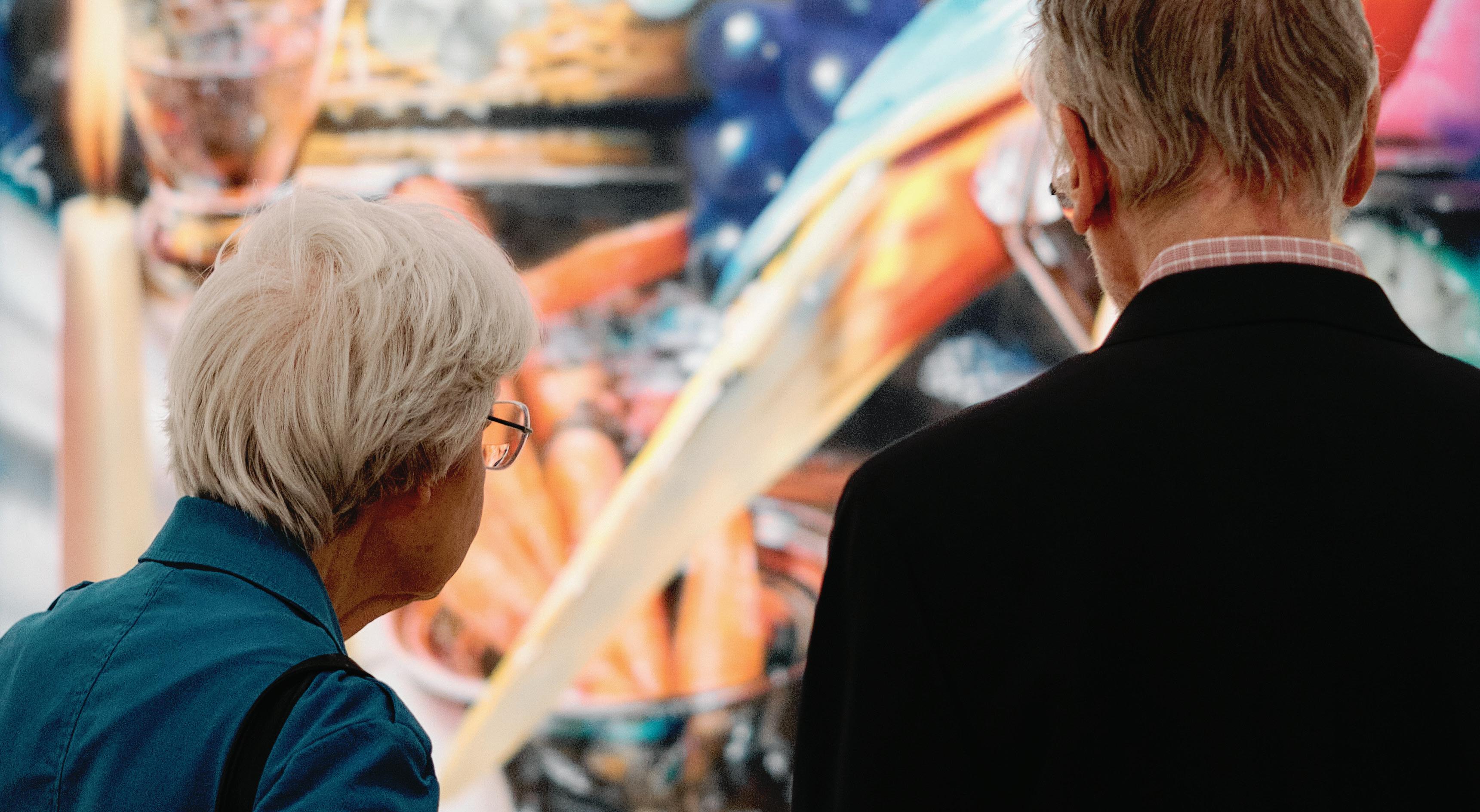
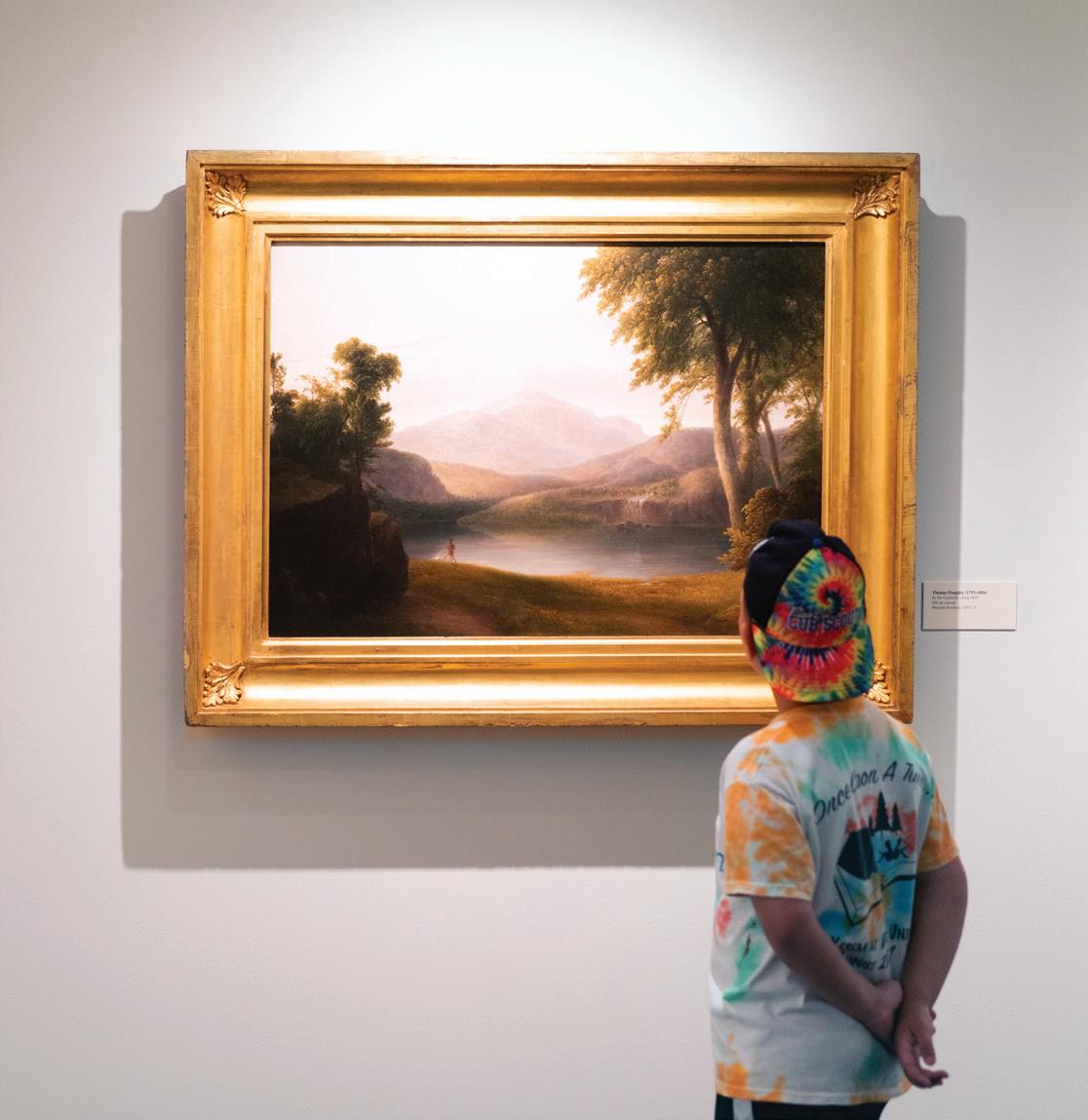
Layered Looking: Making Sense of Art invites you to experience Reynolda’s collection not with a guidebook or a lecture, but through sound, touch, memory, movement — even making things with your own two hands. It’s an exhibition about what happens when we give ourselves permission to engage art with our full curiosity.
Instead of spotlighting one artist, period, or theme, the exhibition is organized around different ways of appreciating art — looking closely, listening deeply, striking a pose, building a bridge between your own life and what you see. In one space, hear a saxophone solo as you reflect on brushstrokes. In another, you might sketch a mystery scene left unfinished by a painter two centuries ago. Around every corner, you’ll find playful provocations and gentle invitations to deepen your engagement.
THERE’S NO ONE RIGHT WAY IN. THAT’S THE POINT.
Whether you are a first-time visitor or a lifelong art lover, you will walk away with a set of tools for seeing — tactile, sensory, reflective — that you can carry into any museum (and, frankly, any moment of daily life). As G.K. Chesterton once said, “The true object of all human life is play.” We believe art is asking the same of us: Show up curious. Stay long enough to be inspired. •
MARCH 10 – JULY 19 BABCOCK WING GALLERY
MARCH MARCH
12 13 MEMBER OPENING EVENTS
EXHIBITION PARTY
5:30 - 7:30 PM FOR SUSTAINER MEMBER LEVELS AND ABOVE 3:00 - 6:00 PM ALL MUSEUM MEMBERS INCLUDED MEMBER CELEBRATION
PRESENTED BY: Arts Council of Winston-Salem & Forsyth County Pam and Fred Kahl
CONTRIBUTING SPONSORS:
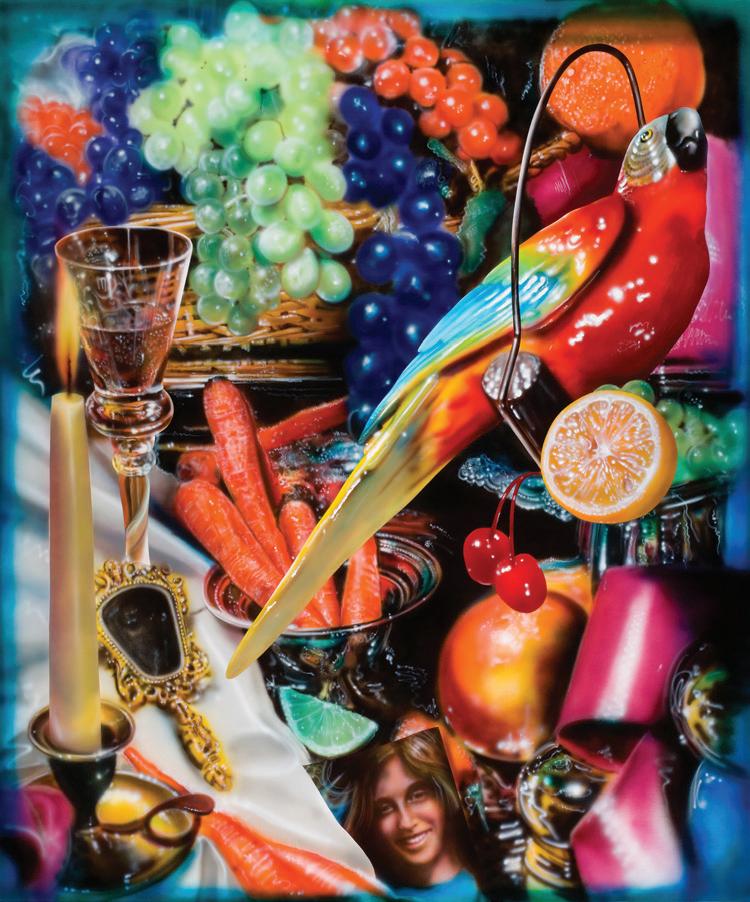
ABOVE: Audrey Flack (1931 - 2024), Bounty, 1978. Oil and acrylic paint on canvas.
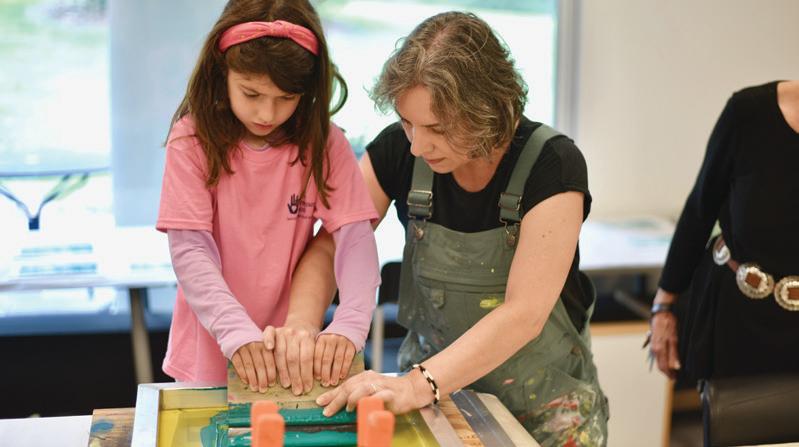
On select Saturdays throughout the season, our studios will be open for visitors of all ages to engage with art through yet another layer: creating. Visitors can drop in and make their own work of art to take home, inspired by art in the exhibition.
SOCIETY (ARS), NY, USED BY PERMISSION. ALL RIGHTS RESERVED.
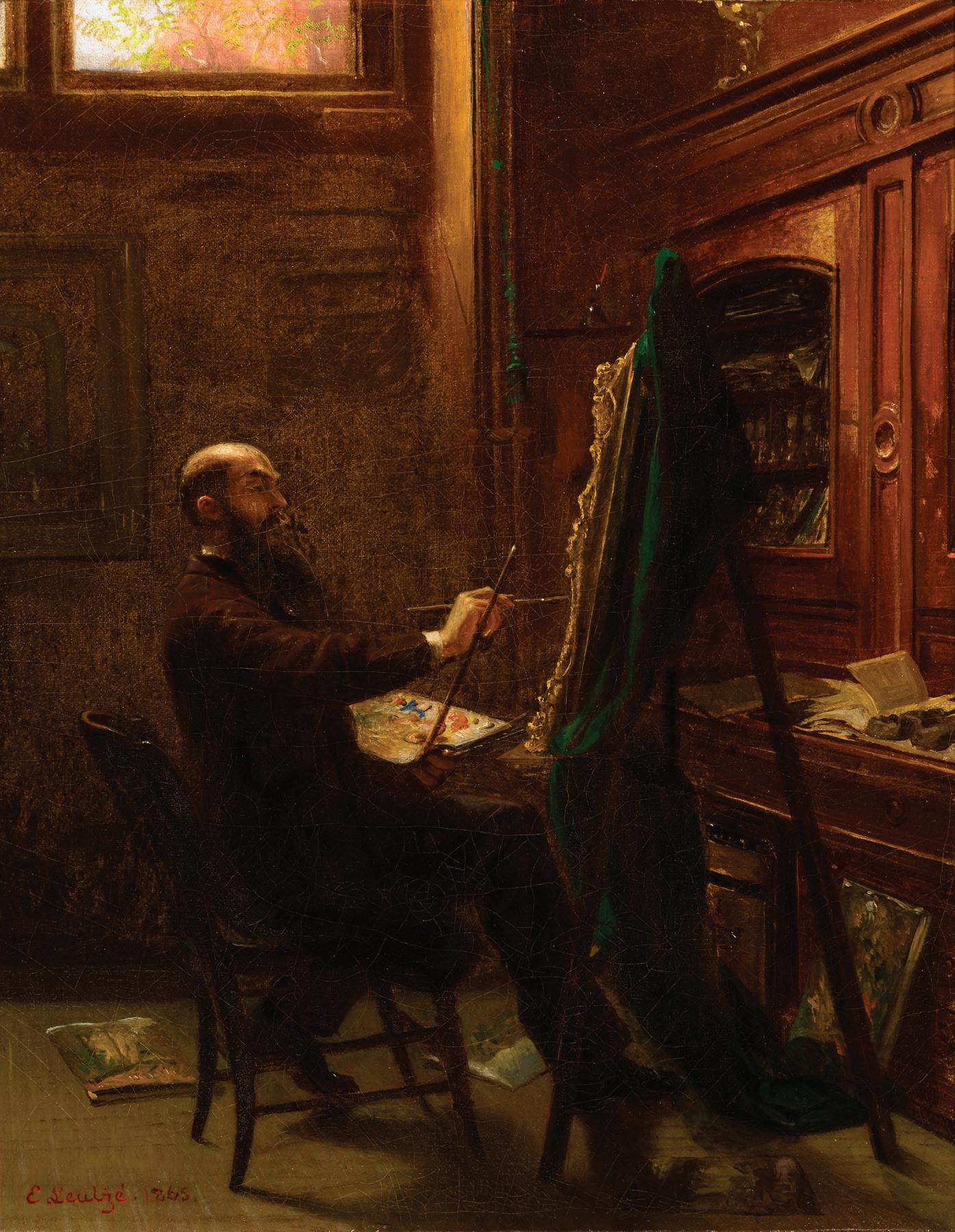
ABOVE: Emanuel Gottlieb Leutze (1816 - 1868), Worthington Whittredge in his Tenth Street Studio, 1865. Oil on canvas .
Subtle Art of The Seeing
JULIA TANNER, LAYERED LOOKING CURATOR AND DIRECTOR OF TEACHING AND LEARNING, REVEALS THE MANY “WAYS IN” TO LOOKING AT ART AND HOW REYNOLDA’S SPRING EXHIBITION HOLDS SPACE FOR CURIOUS LEARNERS OF ALL AGES.
AQSome art exhibitions emerge from a spark—some little moment or itch that gets it rolling. What was the spark for Layered Looking: Making Sense of Art? Did it begin with a particular artwork, an idea you couldn’t let go of, or something else entirely?
In the fall of 2023, Deputy Director Phil Archer approached me with an idea for an exhibition. He had been reflecting on Reynolda’s long history of introducing people to art museums and offering experiences that inspire visits at other museums. He knew that in the spring of 2026 we would have an exhibition that focused on the permanent collection and he invited me to imagine an interactive exhibition with Reynolda’s art objects—an experience open to curiosity at every age. I was thrilled at the opportunity. As an educator, my responsibility is to help people of all ages take time to look at art and guide them in the process. This exhibition felt like a fabulous opportunity to do that for every visitor, not just those who signed up for a tour or a class. As the idea evolved, I knew I wanted to use the exhibition as a chance to teach people about some different approaches to looking at and thinking about works of art.
Q
A
You recently shared the Joshua C. Taylor passage: “to look at a work of art is to think.” Beyond simple looking, what kinds of thinking do you hope this exhibition ignites? Can you point to a moment or artwork where you imagine visitors might be surprised by the kind of mental activity it provokes?
As an undergraduate, I studied psychology, fine art, and modern dance. I was drawn both to the workings of the human mind and to the way the arts express ideas. Eventually, these interests gelled for me as a museum educator. I’m forever intrigued by the way art–regardless of when it was made–communicates something about what it is to be human. Teaching in the galleries with art, I get to explore those ideas with people and hear what they think. It’s not boring to teach with the same work of art over and over, because I’m genuinely curious about what the group in front of me is thinking about what they are seeing, and where our collective conversation might go. Visual art offers an especially accessible starting point: eight to ten people can stand before a painting and take it in together. Discussing a novel is rewarding, but people can’t hold it in their gaze all at once. Visual art offers that immediacy there, while still inviting careful thought. I hope this exhibition sparks a range of thinking for our visitors. I hope that people are able to make an emotional connection with a work of art. I hope visitors experience the reward of really slowing down to look at a work of art in depth, and from some new angles.
AQThe title suggests that there are multiple layers to looking. Can you share an example from the permanent collection where you anticipate visitors discovering more than one “way in”?
Engaging with art is much like learning—people benefit from having different “ways in.” Some connect through the artist’s story, others by thinking about how a work was made, or by hearing someone else describe why they love it. In Layered Looking, we’re offering visitors several paths to try. A tactile station will pair textures with works of art to spark the senses; some works invite imagining an auditory soundtrack and others encourage kinesthetic play. For example, Abraham Walkowitz’s drawing of dancer Isadora Duncan practically begs viewers to move—he was so captivated by her that he created thousands of images. Striking her pose can open up new insight into what Walkowitz wanted to convey with his crayon.
Q
When visitors leave Layered Looking, what do you hope they carry with them—not just as memories of the exhibition, but as tools or habits they might use to encounter art (and maybe the wider world) differently?
A
There are three big things that I hope this exhibition will do. First, I hope visitors practice slowing down and giving art time, the way reading and contemplating a poem takes time. Second, I hope they practice a newto-them approach and find that they get some new piece of information or thought out of the experience. Third, I hope people gain confidence about looking at art and bring that to future exhibitions at Reynolda and at other museums (or even other disciplines). I hear a lot of insecurity from people about art, a feeling that they need to have studied art history to be able to make anything out of it. Sure, having research-based information can add to your understanding of a work of art, but that is only one layer. You have everything you need to look at a work of art and consider what it is communicating to you, based on what you perceive and your life experience to date. That also means that if you look at a work of art when you are five and then again at twenty-five, you’ve had a different set of life experiences, so the work of art will likely say something new to you. That said, I’m personally in favor of revisiting books and works of art with more frequency than twenty years!
Q
AIf Layered Looking plants a seed for Reynolda’s educational programming, what do you hope grows? How might it change the way you teach with the collection going forward?
This exhibition grows out of years of teaching with the collection—my own fourteen years, those of my predecessors, and the learning shared with volunteers and colleagues. In many ways, the whole exhibition is an experiment, and I’m curious to see what it may suggest for our future practices in structuring spaces and exhibitions. This season, we’ll pilot drop-in studio programs on selected Saturdays in March, April, and May. Instead of scheduled programs with pre-registration, these sessions invite any museum visitor to create a work of art to take home. We hope this proves to be a valuable engagement tool. Hands-on components in the gallery may also inspire gallery-safe teaching items for docents to carry into tours. Ultimately, my dream is a permanent space in the museum dedicated to interactive learning experiences like those in Layered Looking. I’m eager to see what emerges from this exhibition! •
Digital Renaissance A
RESTORING NAM JUNE PAIK’S ART
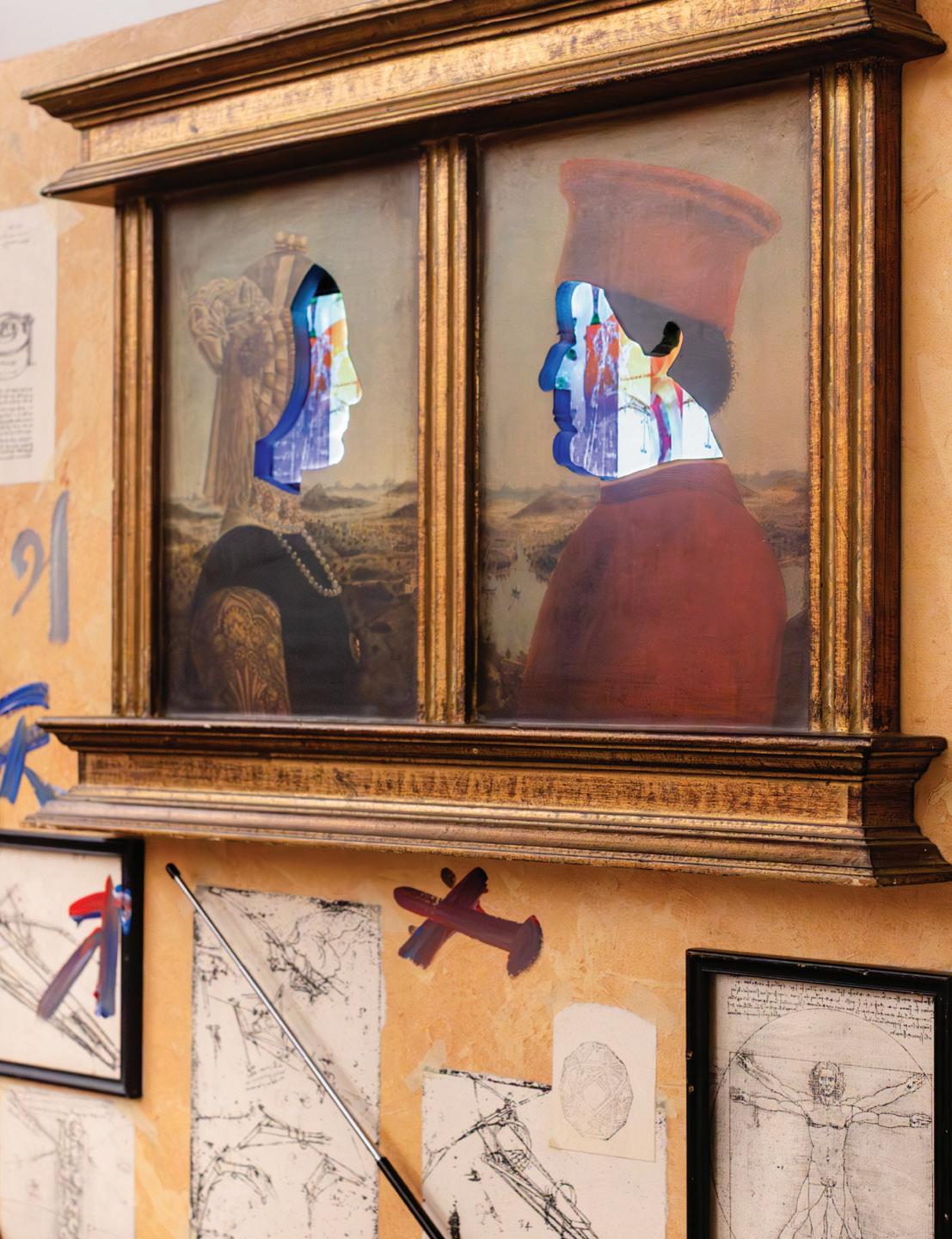
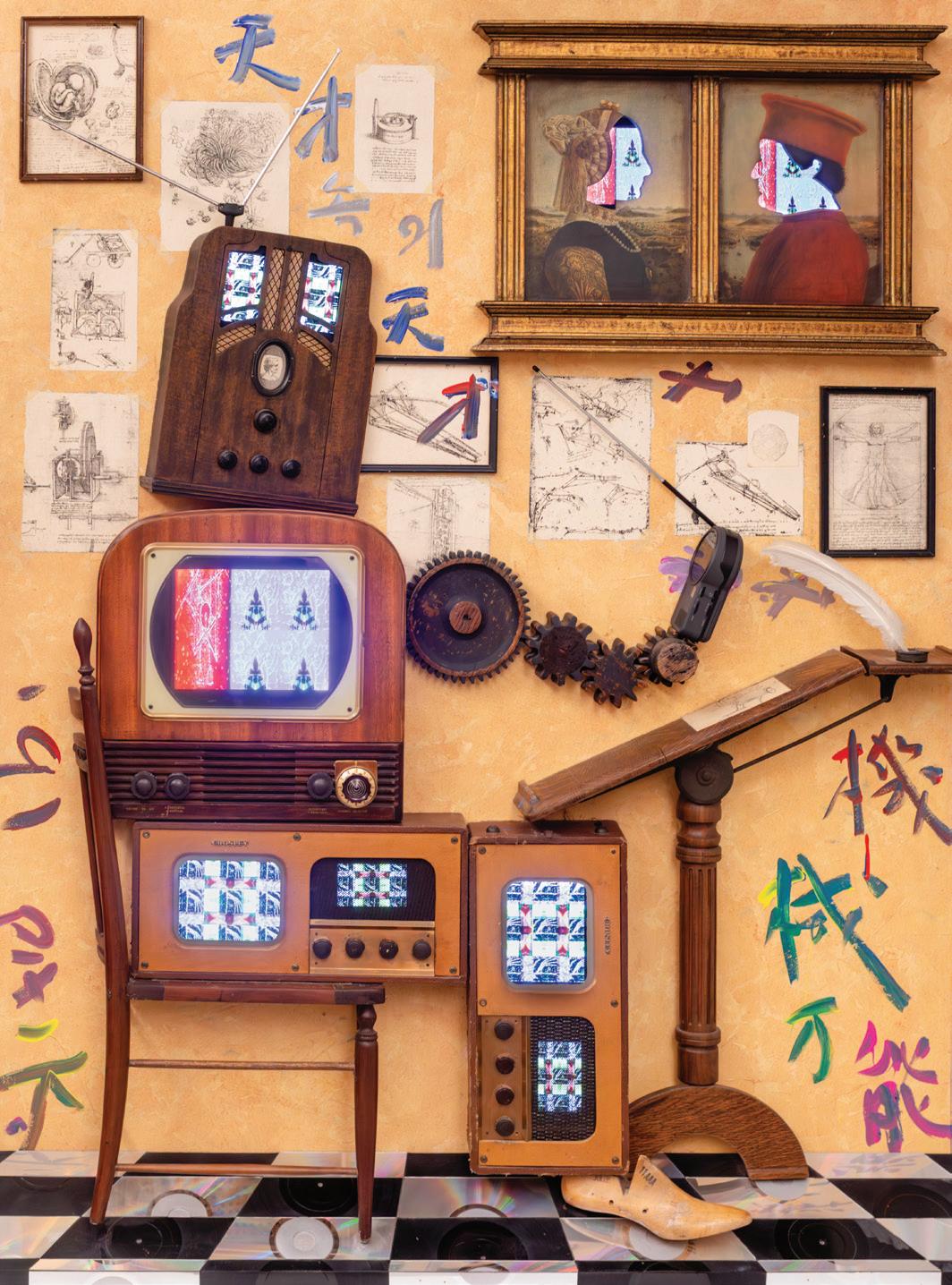
WHEN NAM JUNE PAIK’S LEONARDO DA VINCI FLICKERS TO LIFE, IT DELIVERS A JOLT. THE RUSH OF MOVING IMAGES GIVES WAY TO SURPRISE: THE ANTHROPOMORPHIC ROBOT FIGURE MADE FROM VINTAGE RADIOS AND TVS WAS HIDDEN IN PLAIN SIGHT. PAIK’S WORK IS AN ARRESTING MARRIAGE OF ART, SCIENCE, AND TECHNOLOGY— THE ONLY ONE OF ITS KIND IN REYNOLDA’S PERMANENT COLLECTION. BUT AS MODERN ADVANCEMENTS WOULD HAVE IT, THIS BELOVED 3D WONDER NEARLY FOSSILIZED—ITS VINTAGE MONITORS FAILING ONE BY ONE, ITS VIBRANT VIDEOS FADING TO BLACK.
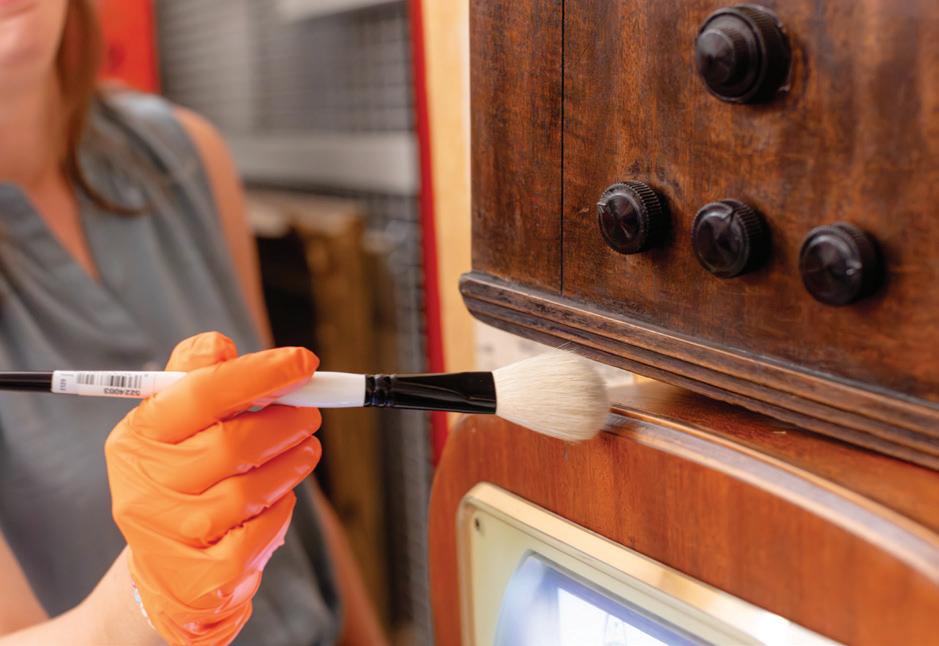
Restoring it meant more than swapping parts. It meant honoring the intent of the artist often referred to as “the father of video art.”
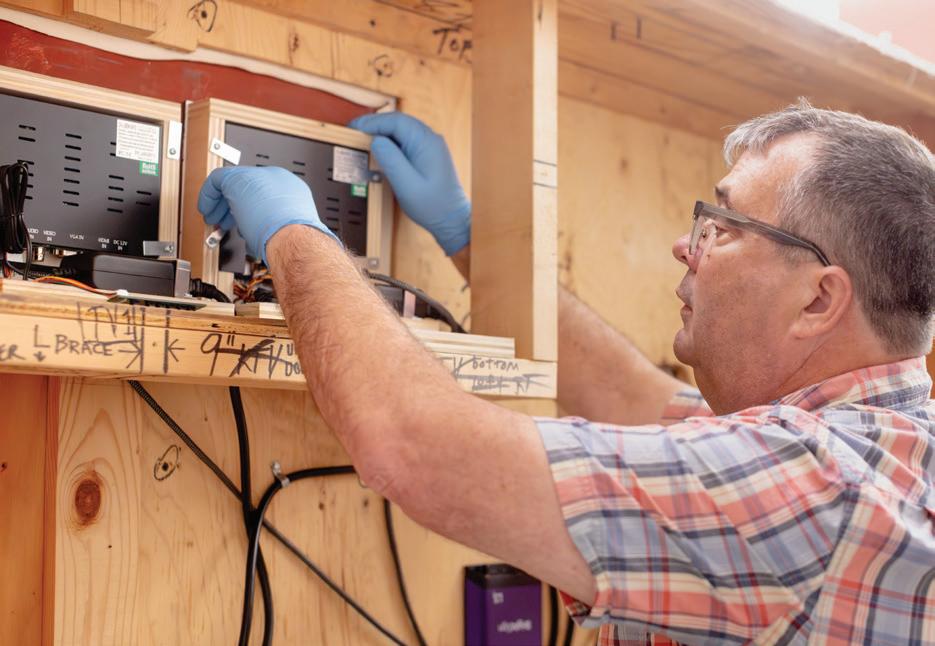
For Collections Manager Katie Womack and Preparator Shane Carrico, this restoration would prove to be quite the adventure—even for this duo with forty-five years of experience between them.
Originally, Leonardo da Vinci ran on two laser disc players feeding a fleet of cathode-ray tube televisions. As these became harder to find, staff turned to secondhand sources and temporary fixes. By 2018, too many screens had failed to preserve Paik’s vision. The challenge wasn’t just replacing parts, but doing so in a way faithful to the artist’s intent.
Paik, born in Korea and working internationally, understood that the technology he used would become obsolete. A letter accompanying Reynolda’s 1993 acquisition granted permission to replace equipment with newer models as needed.
Conserving a work like this meant stepping outside traditional methods. Paintings tend to follow a predictable path—examination, treatment proposal, restoration. This project required someone fluent in both preservation and outdated media tech. That search led to Raphaele Shirley of La Paix Management.
“I started by researching Paik conservation efforts at peer institutions and learned that most collaborated with Chi-Tien Lui of CTL Electronics in New York,” said Womack. “Paik worked closely with Lui over the years, and Lui had also been a source for equipment for museums and collectors with videobased works in their collections. It was CTL that put us in touch with Raphaele.”
Remove the guts of the original cathode-ray tube TVs and install custom LCD monitors into them; this was Shirley’s original proposal, and one that far exceeded budget. Another hurdle.
Since the shells of the TVs weren’t an essential part of the composition of Reynolda’s Paik (and hardly visible), Womack recommended—and was granted permission to— remove the TVs altogether and replace them with plain LCD monitors that would match the scale of the originals. Carrico
then engineered a mount for each monitor and its respective location in the artwork.
“Though Paik said in his letter that changes could be made to the interior structure, we chose to work with the existing shelves as much as possible,” said Carrico. “We were also able to secure a tiny monitor for Leonardo da Vinci’s Watchman held in the hand of the Leonardo robot, bringing it back to life. That was a very exciting day for us!”
What makes this restoration significant is not just the successful repair of a beloved artwork, but what it represents.
“Leonardo da Vinci is the largest three-dimensional work in Reynolda’s collection and the only one to incorporate video,” said Womack. “It speaks of the enduring impact of immigrant artists like Paik and the timeless dialogue between artistic imagination and technological discovery.”
This spring, when the switch is flipped and Leonardo da Vinci blazes back to life, visitors will witness more than a restored artwork. They will see a collaboration across time— between artist and conservator, past technology and present innovation, and between a museum’s commitment to care and an audience’s enduring curiosity. •
THE MISSING PIECE
One particularly thrilling moment came in the midst of the research. After studying Leonardo da Vinci’s documentation, staff knew that the work originally contained two distinct videos, but after a long-ago tech update from original laser discs to DVDs, only one DVD was played on the TVs. Where was the second video? Did we ever have it or were both laser discs the same?
After hours of searching, staff discovered a second DVD. After many attempts to download the old file, the eureka moment finally came when staff were able to watch enough seconds of the DVD to confirm that we did indeed have two distinct videos. The team was able to digitize the laser disc and now, with all new, working monitors, both videos will once again animate the glowing figure, just as Paik intended.
DON’T MISS OBJECT OF THE MONTH WITH THE EXHIBITION CURATOR AND COLLECTIONS TEAM MEMBERS ON JUNE 2, 2026
Preservation in Practice
In Blenheim’s Great Park, once a royal hunting ground, oaks have stood for nine hundred years, their branches splayed wide, their roots sunk deep. They’ve outlasted storms and wars, generations and fortunes, and still they stand, like monuments of survival. Last fall, when Lady Henrietta Spencer-Churchill visited Reynolda to speak about her family’s estate, the parallels felt immediate. Reynolda’s gardens are younger, more deliberate, but they carry the same pulse—plantings still turning toward the sun, a landscape that remembers its maker.
Here’s the truth: Reynolda and Blenheim have more in common than one might guess. One is a Baroque palace in Oxfordshire, wrapped in the Great Park and crowned a UNESCO World Heritage Site. The other is the largest bungalow in the world, a grand American country estate in North Carolina built in 1917 with stucco walls and green tile rooflines. Yet both houses survive because of the people who refuse to let them fade. That conviction is at the heart of Blenheim: 300 Years of Life in a Palace, the new book by Lady Henrietta SpencerChurchill, who shares stories of her ancestral home. With a designer’s eye and a daughter’s memory, she shows how a place can be both fragile and resilient.
Consider Sarah Churchill, the first Duchess of Marlborough, who oversaw every last detail of Blenheim’s construction between 1705 and 1712, driving her architect, Sir John Vanbrugh, nearly to madness. She was, as Lady Henrietta writes, “in many ways, the worst possible client an architect or interior designer could have.” Her force of will has an echo across the Atlantic. In Winston-Salem, Katharine Reynolds was meticulous, thoroughly knowledgeable, and equally relentless as she shaped Reynolda with Philadelphia architect Charles Barton Keen and landscape architect Thomas Sears. Different temperaments, same iron resolve.
Both houses tell, in their own ways, the story of how art lives within a family’s life. At Blenheim, masterpieces were alternately paraded and hidden—objects of both pride and embarrassment. The 7th Duke, John Winston Spencer-Churchill, famously kept the Titians out of sight; all that Venetian light and flesh felt too indecent for Blenheim’s corridors. At Reynolda, art wasn’t hidden away but reimagined: in the 1960s, Barbara Babcock Millhouse transformed the family home into a museum devoted to American art, tracing a lineage from the luminous
TOP:
Lady Henrietta SpencerChurchill (L) tours Reynolda House with Museum Founder Barbara Babcock Millhouse (R).
REYNOLDA HOUSE MEETS BLENHEIM PALACE
landscapes of the Hudson River School to the bold experimentation of the twentieth century and beyond. And now, in a gesture that almost closes the circle, Blenheim itself is reaching toward the art world again, through Lady Henrietta’s half-brother, Edward Spencer-Churchill, who since 2014 has welcomed contemporary artists such as Ai Weiwei, Cecily Brown, and Maurizio Cattelan into its gilded halls and historic grounds.
Of course, families also leave their eccentric fingerprints behind. At Blenheim, there was Gladys Deacon, who became duchess after marrying the 9th duke and later withdrew from the world in the early 1920s following a plastic surgery procedure gone wrong. She filled the palace with forty-five spaniels (and all that implies for upholstery). Reynolda’s story has its own dark chapter in the sensational 1932 death of Z. Smith Reynolds that made national headlines and brought into question the future of the estate.
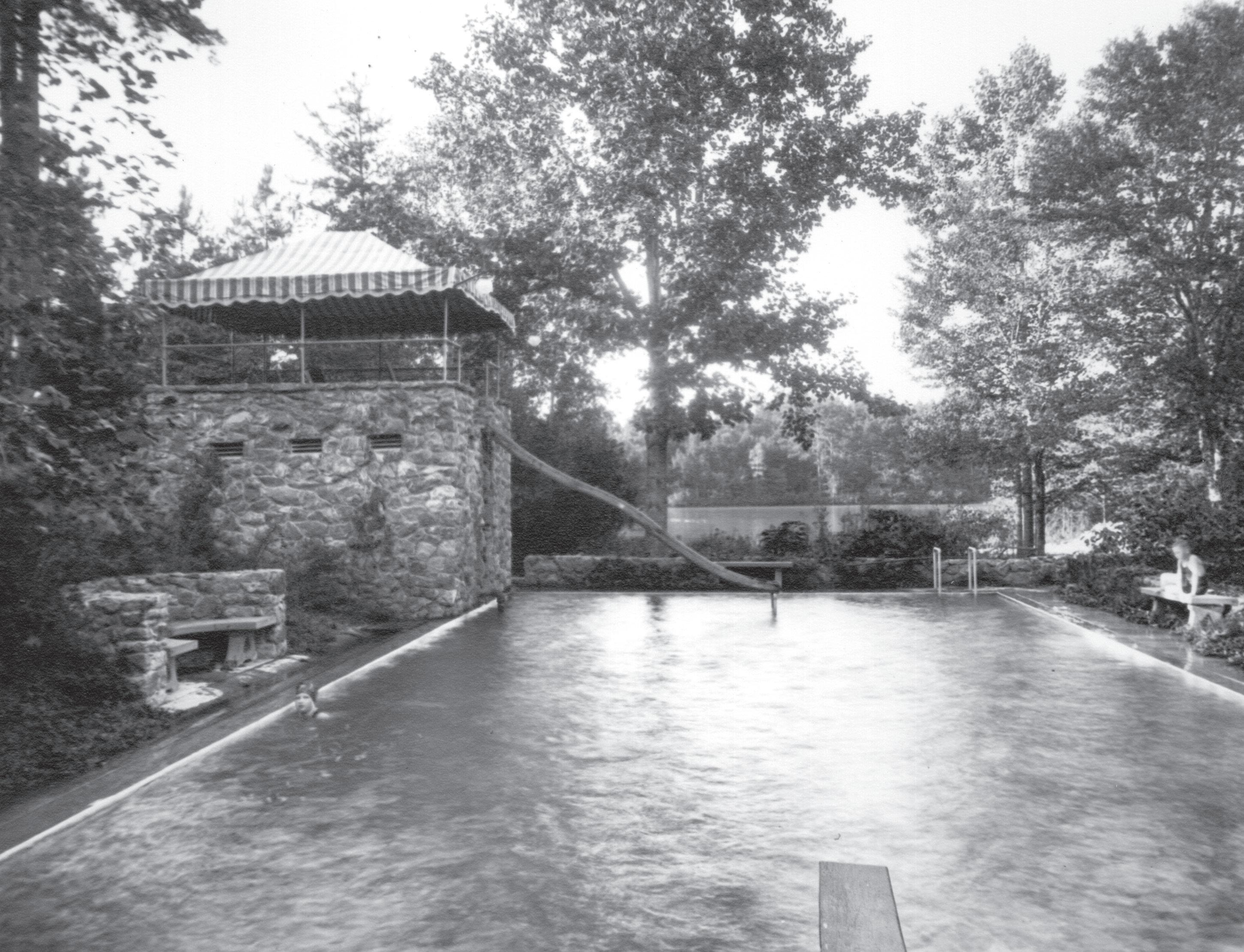
But alongside these dramas are stories of determination that changed the fate of both estates. At Blenheim, Consuelo Vanderbilt, the American heiress from the Gilded Age, and Lady Henrietta’s great-grandmother, brought not only fortune but focus. Respected by servants and tenants alike, she turned her energy toward the less fortunate and ensured that Blenheim remained in family hands. At Reynolda, Mary Reynolds Babcock—Katharine Reynolds’s daughter—came into not just a house but a calling. She added playful facilities for “rainy day fun” among family and friends, then turned outward, giving hundreds of acres to bring Wake Forest College (now Wake Forest University) to Winston-Salem and establishing a foundation of her own devoted to social and economic justice across the South. Her span was short, her vision long: the song her mother began, carried on a new breath.
The parallels run wide, from the stately to the whimsical. Each estate has its own boathouse, uncannily alike despite the ocean between them. Each houses an organ built on a monumental scale, as if music itself were part of the architecture. And both look to their gardens for renewal— Reynolda’s Brown Family Conservatory, a contemporary counterpoint to Blenheim’s grand Orangery.
Reynolda’s gathering with Lady Henrietta was a chance to glimpse that parallel endeavor. Across the Atlantic, two houses, each formidable yet requiring constant care, continue to persist. They survive because people— whether dukes or designers, widows or visionaries—refuse to let them fade. And they remind us that great houses, however stately, are also profoundly human. Their endurance is never guaranteed. What keeps them alive isn’t perfection, but the fact that, over and over, people decide they’re worth loving into the future. •
This event was made possible through the leadership of event co-chairs
MARGARET TOWNSEND and KATE CLEGG and the generous support of our sponsors.
PRESENTING SPONSORS
Ashley & Richard Wimmer
CONTRIBUTING SPONSORS
Cassandra & Jerry Baker
Nella Purrington Fulton
Margaret & David Townsend
BENEFACTOR SPONSORS
Betty & Jim Becher
Patty & Malcolm Brown
Claire & Hudnall Christopher
Stuart Parks
PNC
EVENT PARTNERS
Shelmer Blackburn
Grace & Jimmy Broughton
Stewart Butler
Kate & Alex Clegg
Shelby & Lee Chaden
Luci & Dek Driscoll
Lisbeth Clark Evans
Gene Foster & Tate Foster
Jane & Redge Hanes
Trouvaille Home
Melissa & Richard Lewis
Barbara Babcock Millhouse
Drs. Vincent & Melinda Paul
Nancy & Ed Pleasants
Gwynne & Dan Taylor
Sheila Johnston & Kay Triplett
Patricia Vaughn
Amy & Hayes Wauford
LEFT:
Lady Henrietta pictured in the House Library
SightLines
ALLISON SLABY Curator
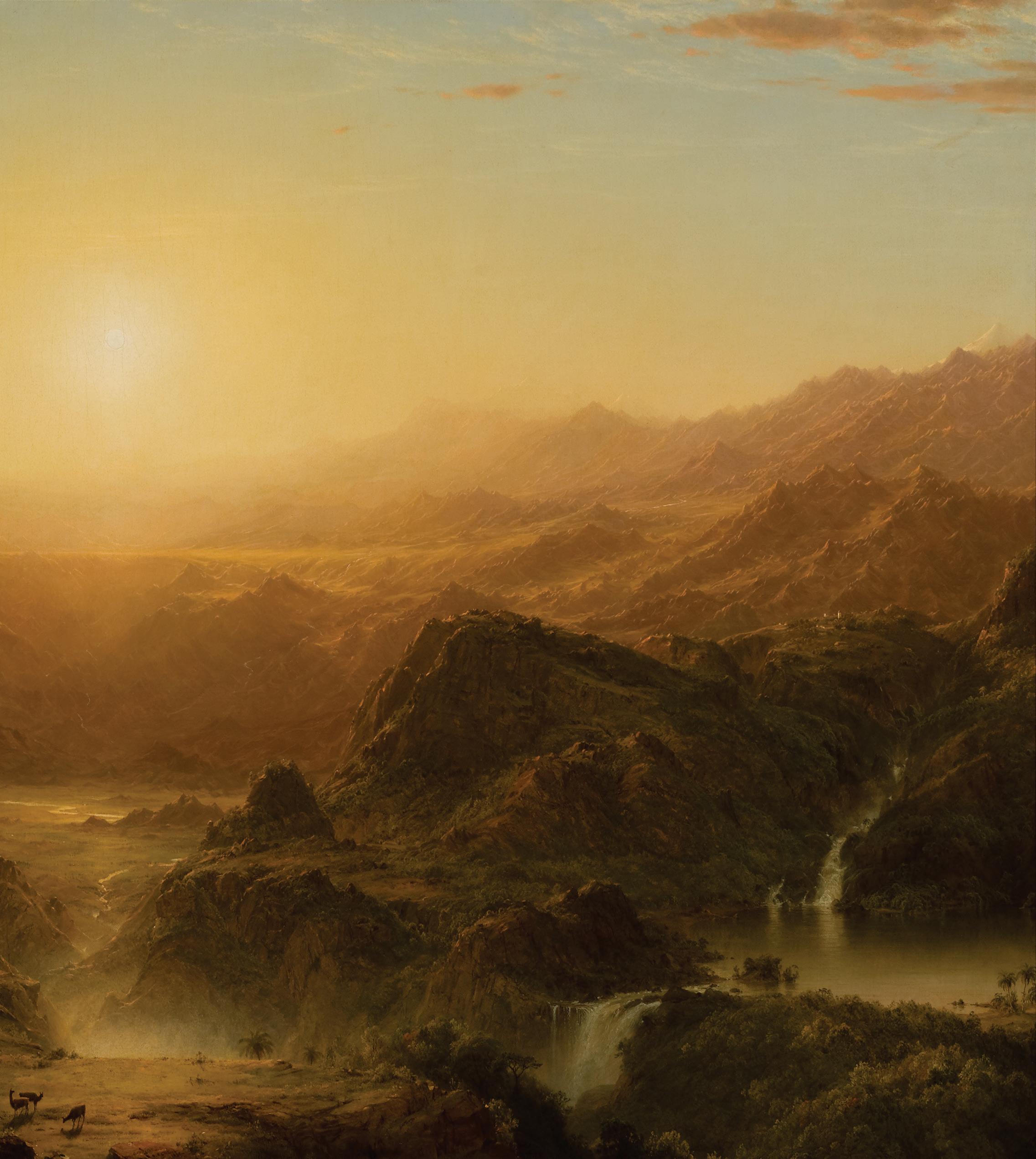
Frederic Edwin Church’s The Andes of Ecuador, completed in 1855, was the culmination of the artist’s 1853 trip to South America. It debuted in the spring exhibition at the Boston Athenaeum and was purchased by Church’s friend and patron William Henry Osborn. The painting was a breakthrough for the artist. It was executed at a new larger scale, represented a new wilder subject, and received new levels of critical praise and popular interest. In this two-hundredth anniversary of the year of Church’s birth, it is worth taking time to revisit this important painting.
Critics raved about the piece when it appeared at the National Academy of Design in 1857. One wrote, “The picture before which perhaps the greatest number of art-critics will congregate is the masterly landscape, by Church, of the Andes of Ecuador. Wonderful hazy ridges of mountain peaks, flooded with tropical sunlight. Sharp pinnacles just tipped with the eternal snow, soaring like white birds to heaven. Vast, distant torrents, dashing over rocky ledges into bottomless ravines that gape for the silver waters. Faint gleams of tropical vegetation reddening the foreground, with all detail, all shape lost in the vastness of the gorges, but shedding a delicious neutral bloom over lonely places. Grandeur, isolation, serenity! Here, there is room to breathe.” Another wrote: “Amazing in its effects of atmosphere and light. It almost blinds the eye of the spectator.”
The painting’s elevated perspective allows the viewer to see an expanse of climate zones: from palm trees to grasslands to snow-clad peaks. All the details are bathed in glowing light. These details essentially connect Church to his contemporary, Charles Darwin, as well: each influenced by the German naturalist Alexander von Humboldt, the painter and the scientist developed similar methods—a keen, even obsessive, sense of observation, a desire to collect natural facts—as sketches or specimens—and a need to put them all together into a single work or theory.
The painting’s success gave Church aesthetic freedom. He would no longer have to rely solely on commissions or patrons and their specific demands. The artist would also be able to exhibit his subsequent works how and where he chose. He began to display his major works alone, often spotlit in a darkened gallery space, swathed in jewel-toned fabric. Visitors would be charged an admission fee, and the paintings would travel around the country, and even across the Atlantic, to be exhibited in different cities. Tens of thousands of people came to see these works, and it is reported that the average time people spent looking at one of his most popular paintings was one hour! Today, museum-goers spend about three seconds looking at a work of art. •
ON VIEW IN LAYERED LOOKING: MAKING SENSE OF ART March 10 - July 19, 2026
ABOVE: Frederic Edwin Church (1826 - 1900), The Andes of Ecuador, 1855. Oil on canvas.
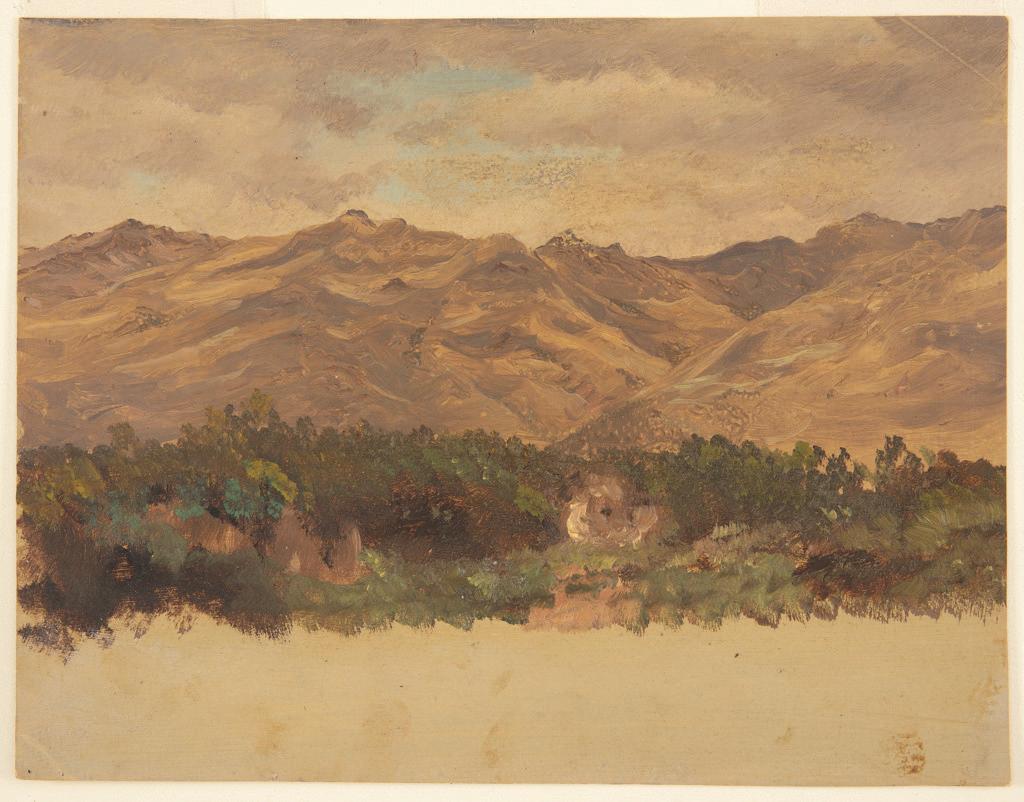
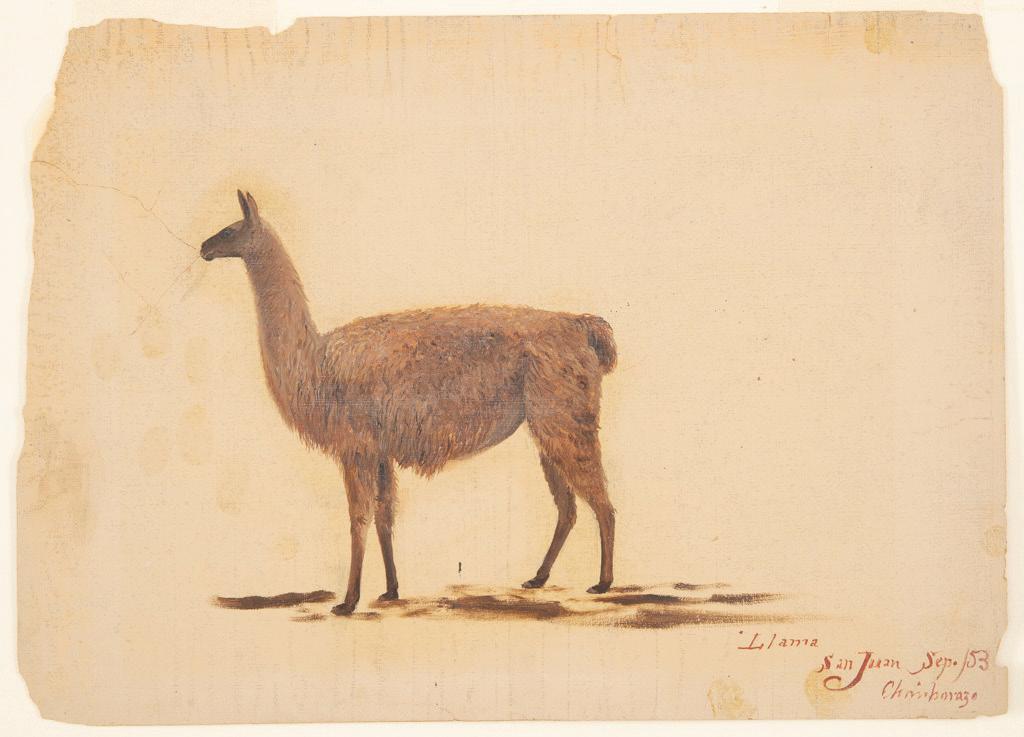
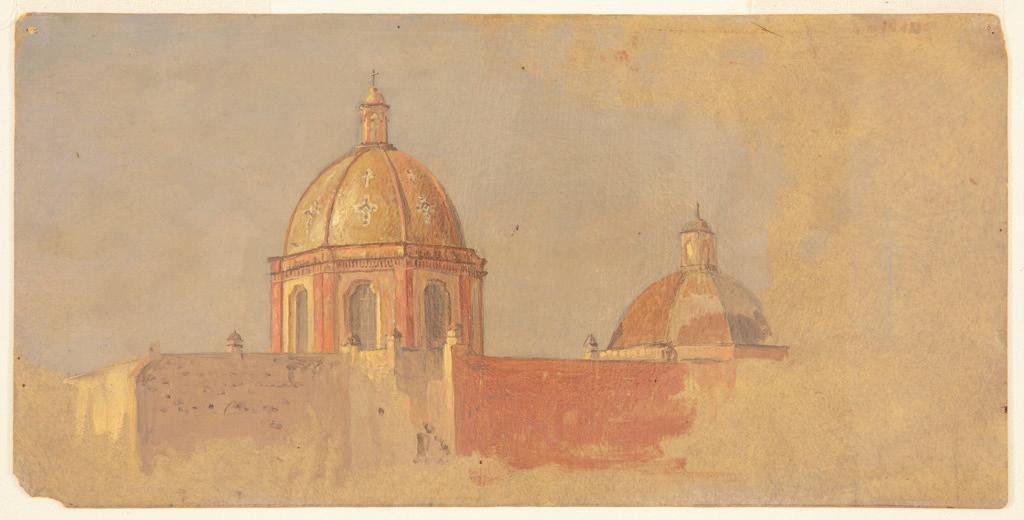
When Frederic Church studied with his mentor, Thomas Cole, Church learned how to make sketches in the field and annotate them with color notes or the name of a plant. While traveling in Colombia and Ecuador in 1853, he continued this practice, as you can see in these sketches. To create the vast, detailed scene The Andes of Ecuador, Church worked in his studio - not in the field. He combined these sketches in a composite view.
LAYERS OF LOOKING WITHIN THE ANDES OF ECUADOR
1
2
When you turn the page, start by letting your eyes wander around The Andes of Ecuador. Make a mental (or written!) list of some of the details you notice.
Choose a detail that stands out to you. Why do you think Church included it? How does he focus your attention on the detail (if he does)?
ABOVE: Drawing, Rugged Mountain Range, Colombia or Ecuador. Oil and graphite on tan paperboard. Cooper Hewitt, Smithsonian Design Museum, Gift of Louis P. Church; 1917-4-820
BELOW: Drawing, Llama near Chimborazo, San Juan, Ecuador. Oil and graphite on brown wove paper. Cooper Hewitt, Smithsonian Design Museum, Gift of Louis P. Church; 1917-4-750-b
3
Re-read Allison Slaby’s article about this masterpiece and explore Church’s preparatory sketches. Do you have new thoughts or questions about The Andes of Ecuador?
OBJECT OF THE MONTH MAY 11:00 AM - NOON THE ANDES OF ECUADOR BY FREDERIC EDWIN CHURCH WITH ALLISON SLABY
ABOVE: Drawing, Church Domes, Colombia or Ecuador. Oil and graphite on tan paperboard. Cooper Hewitt, Smithsonian Design Museum, Gift of Louis P. Church; 1917-4-380
Frederic Edwin Church (1826 - 1900), The Andes of Ecuador, 1855. Oil on canvas.
AnExtended Family
Assistant Horticulturist
AMY DIXON & REYNOLDA GARDENS STAFF
PERHAPS THE MOST SATISFYING PART OF WORKING AT REYNOLDA GARDENS IS HOW OFTEN VISITORS STOP TO SHARE AN UNEXPECTED INSIGHT, A QUICK WORD OF ENCOURAGEMENT, OR A KINDNESS THEY DIDN’T PLAN ON GIVING. A LOT OF GRATITUDE COMES BACK TO THE GARDENS STAFF, AS THE BEAUTY AND TRANQUILITY OF THIS PLACE RESONATE DEEPLY WITH THOSE WHO VISIT. AS A SMALL AND MIGHTY STAFF, WE CERTAINLY CAN’T TAKE ALL THE CREDIT.
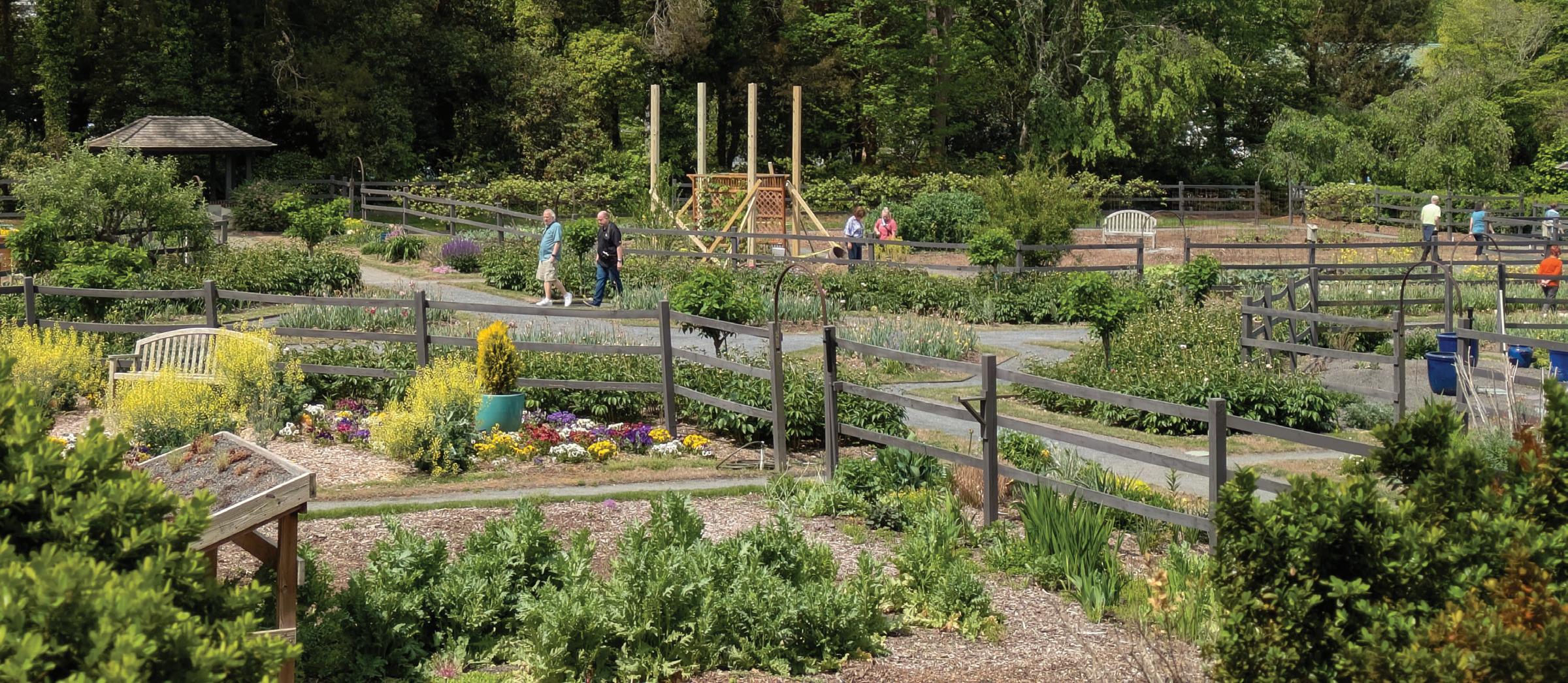
With each passing season our 135 acres of formal and greater gardens change just a little bit more, whether that means a new structure, a cluster of native plants, or another addition to the Early Childhood Education program—all with the goal of expanding our reach in the community.
So when local partners and our colleagues at Wake Forest University continue to answer every call for help, they start to feel like extended family. No matter the request or how frequently it arrives, they’re there— working alongside us to improve the safety, sustainability, accessibility, and beauty of these grounds. That’s what family looks like to us: people who show up and keep showing up.
IN THE FORMAL GARDENS
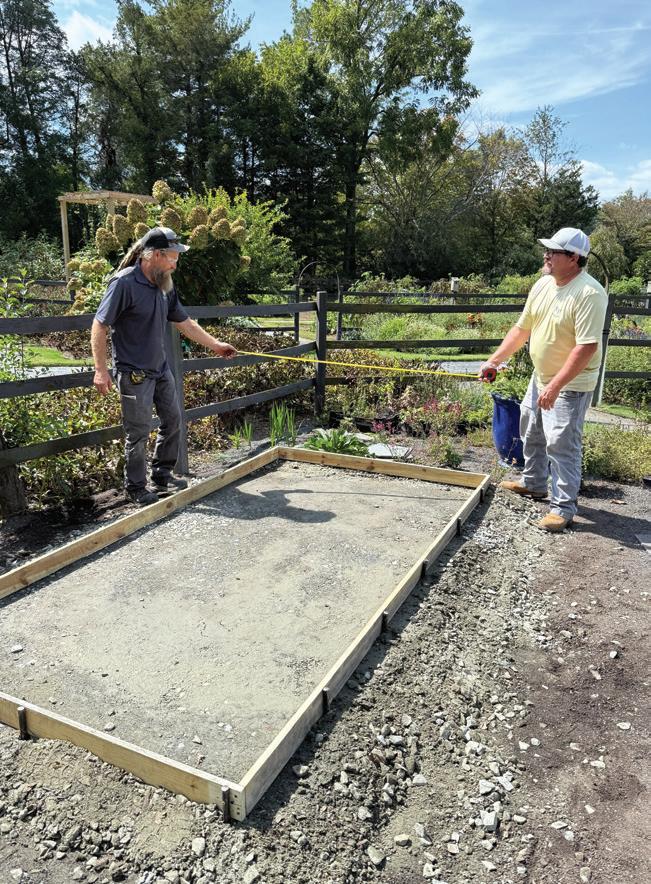
This past year the Formal Gardens has seen several new projects come to fruition, many of which were completed by the talented crew in the Wake Forest University Construction department. Led by Ben Venable, WFU Construction tackled improvements to the Children’s Garden, building a three-bin compost structure, two wooden-framed raised beds and a covered arbor seating area. In the herb garden, they used their masonry skills to build a spiral-shaped, natural cobblestone planter, which will be filled with an eclectic mix of aromatic and textural herbs and perennials.
ABOVE: Wake Construction crews begin framing for the cobblestone planter in the herb garden.
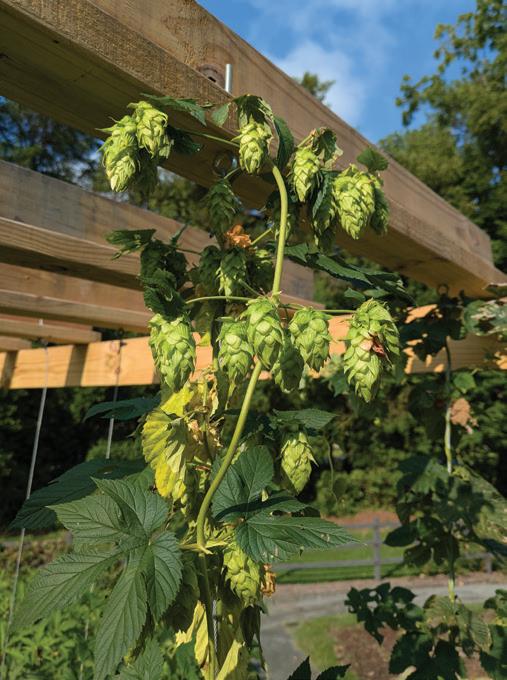
The biggest (and tallest) structural addition to the Formal Gardens is a 16’ hops tower, which satisfies the growing demands of this vining plant. Hops is a perennial plant, grown for the cones it produces which are used to brew beer. The vines are most productive when they have sufficient structural support, growing 20-30’ each season.
Reynolda Gardens Horticulturist Joey Martin knew that if he wanted to grow hefty crops of hops, he had to get a strong trellising system in place. That’s when he turned to WFU Construction to make it happen.
“Ben and his crew from Wake construction have helped me elevate the vegetable garden to new heights I could only dream of,” Martin explained. “When I first saw them erecting the tower, my mouth dropped in awe, as they went above and beyond my expectations. The structure encourages vigorous upward growth that allows more hops to form and thrive. This has led to a bountiful hops harvest that has been brewed into our own Reynolda beer, thanks to Stuart Barnhart at Fiddlin’ Fish Brewing Company.”
AROUND THE GROUNDS
In addition to the Wake Forest Construction team, Reynolda Gardens also works closely with the WFU arborist and tree department. Because a large portion of the Gardens is wooded, we are constantly dealing with downed trees from storms. We also proactively assess the health of existing mature trees and make decisions as to whether they need to be removed for the benefit of the tree or the safety of our visitors. And no matter the urgency, the WFU arborists are always there to help.
While Reynolda Gardens staff is able to cut up and fell smaller trees, we rely on the Wake tree crew to tackle the bigger trees. They have impeccable training and skills that provide an invaluable resource for the Gardens’ tree canopy.
Tony McGee of Round Rock Design is also part of the Reynolda Gardens extended family. Tony has improved, rerouted and expanded many of the trails throughout the Greater Gardens, creating safer footing and better water drainage.
Tony is a priceless resource to Reynolda Gardens, Winston-Salem and the surrounding areas of the Northwest Piedmont. He has
designed and built trails for Piedmont Land Conservancy, NC State Parks and numerous school campuses. His sustainable mindset has helped us achieve a higher standard of walkable paths throughout Reynolda.
“It has been an honor to work on the trails in the outer garden of Reynolda,” McGee commented. “These legacy trails are an important part of the landscape and are obviously well used and loved by all members of the community, functioning as a central park for the city. There are no other trails that I work on that see the level of activity as these. Our work at Reynolda is ongoing, to help maintain and conserve this important landscape.”
One of Reynolda’s many long-term goals includes implementing new native plant installations throughout the Greater Gardens. And while we may have the vision for these areas, we rely on support to cover the cost of plants. This is where a very important community partner has stepped up, time and time again.
The Garden Club Council of WinstonSalem/Forsyth County has shown support to the Gardens through awarding us grants for numerous projects. Most recently, they gave the Gardens a generous grant to cover plant material for a newly cleared area.
“It seems every year the Garden Club Council has always risen to the occasion of supporting the Gardens by helping with the cost of plant materials,” Reynolda Gardens Director Jon Roethling explained. “This has ranged from plants for the Blue and Yellow Garden, the initial stocking of the Brown Family Conservatory, to most recently, the future planting in the Greater Gardens along the spring.”
THROUGH EDUCATION & PROGRAMMING
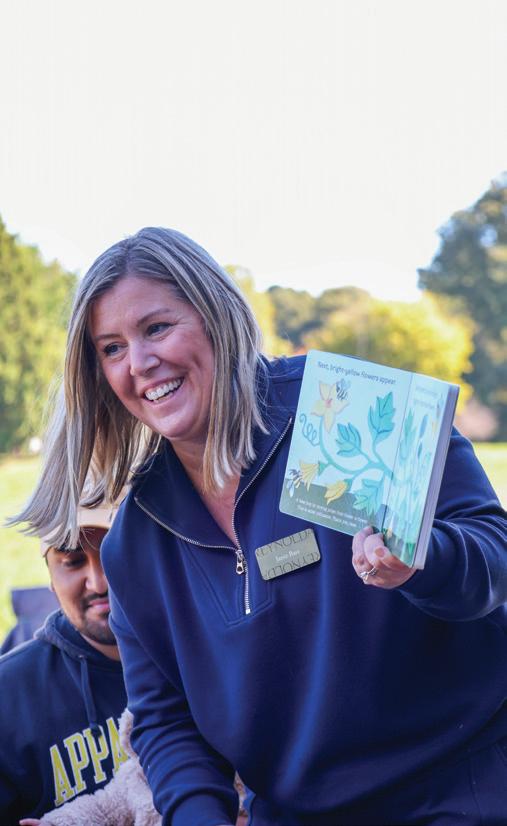
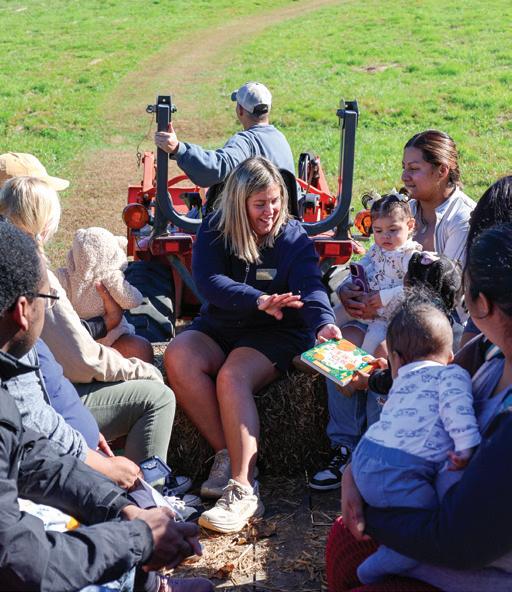
Going beyond the tangible scope of plants, arbors and stone, our Early Childhood Education program is a facet of the Gardens that has garnered a huge extended family of community partners. Led by Early Childhood Education Coordinator Janie Bass, our education program includes Young Naturalists Camp, WS/FC school field trips, community outreach and numerous family programs.
“It truly takes a village to bring our education programs to life,” Bass said. “Our extended Reynolda family makes experiences possible for our programs. Just a few examples include local vendor Tea & Toast blending a custom cherry blossom tea for our family event, the City of Winston-Salem and Keep WinstonSalem Beautiful’s environmental educators guiding children as they explore our waterways and Trader Joe’s providing flowers so Title I students can dissect and diagram blooms.”
“Partners like the WFU Center for Literacy Grant—which provides travel vouchers to help new families access the Gardens—show how collaboration removes barriers and opens doors. Together, this community helps us nurture curiosity, connection and joy in every child and family who visits.”
This extended family that we’ve embraced—these campus and community partners—are invaluable to Reynolda Gardens, keeping us on track for progress, horticulture advancement, sustainability and community connectivity. They help us every single day, so that the Gardens can keep this community green space looking beautiful, cohesive and safe. For that, we are forever grateful. •
Day in and day out, elementary educators around the county wake up with a passion to make a real difference in the lives of our youngest learners. Beyond teaching academics, they nurture curiosity, kindness, and resilience, guiding each child with patience and care. Though the work can be challenging and recognition limited, they choose to do it all over again—every day, even in the midst of uncertain times.
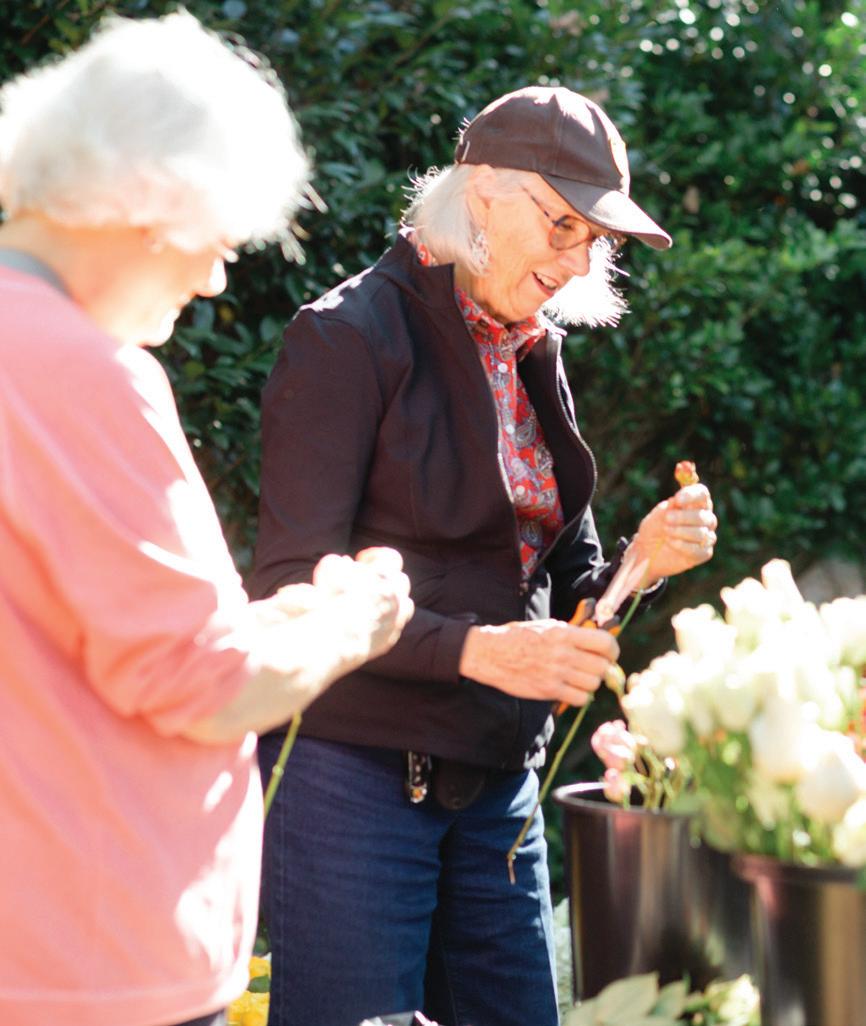
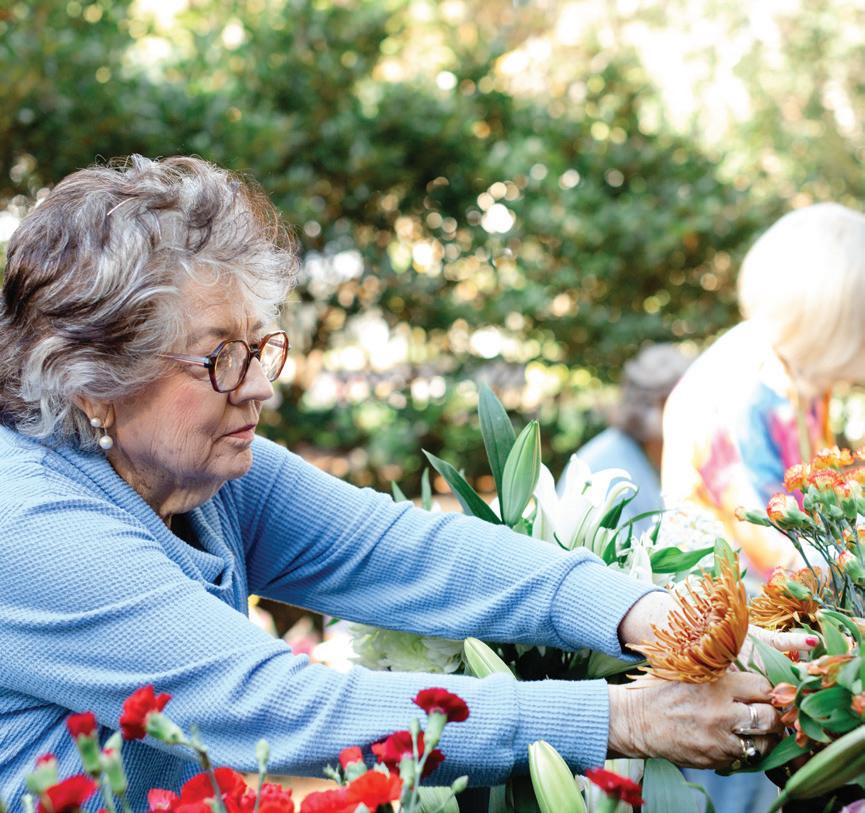
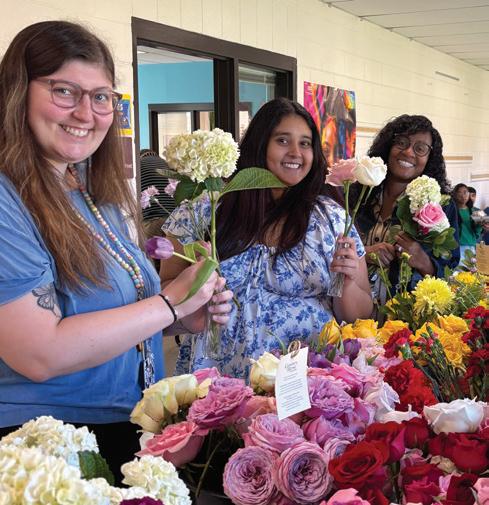
So when Reynolda volunteers asked, “How can we help?” the community answered. With just a few phone calls, Janie Bass, coordinator of early childhood education for Reynolda, secured floral donations from Trader Joe’s and dozens of doughnuts from Dough-Joe’s. Within weeks, the Blooms of Thanks program was born.
Blooms Thanks
Volunteers trimmed and prepped bucketfuls of stems for a pop-up flower bar that welcomed the entire school staff—including teachers, bus drivers, and support staff—at Title I elementary schools within a one-mile radius of Reynolda. Boxes of doughnuts were piled high alongside the flowers, so that every staff member could enjoy a small gesture of appreciation.
What began as a simple question quickly grew into a movement of gratitude, community support, and celebration of the everyday heroes shaping our youngest learners. •
Allée Again
You know spring has arrived in Winston-Salem when the Cherry Allée transforms into a cloud of soft pink petals that sprinkle over your head.
The season’s awakening at Reynolda is nothing short of breathtaking.
While we can’t circle an exact date on the calendar—the trees keep their own schedule—their delicate blossoms usually appear in early March and last into early April.
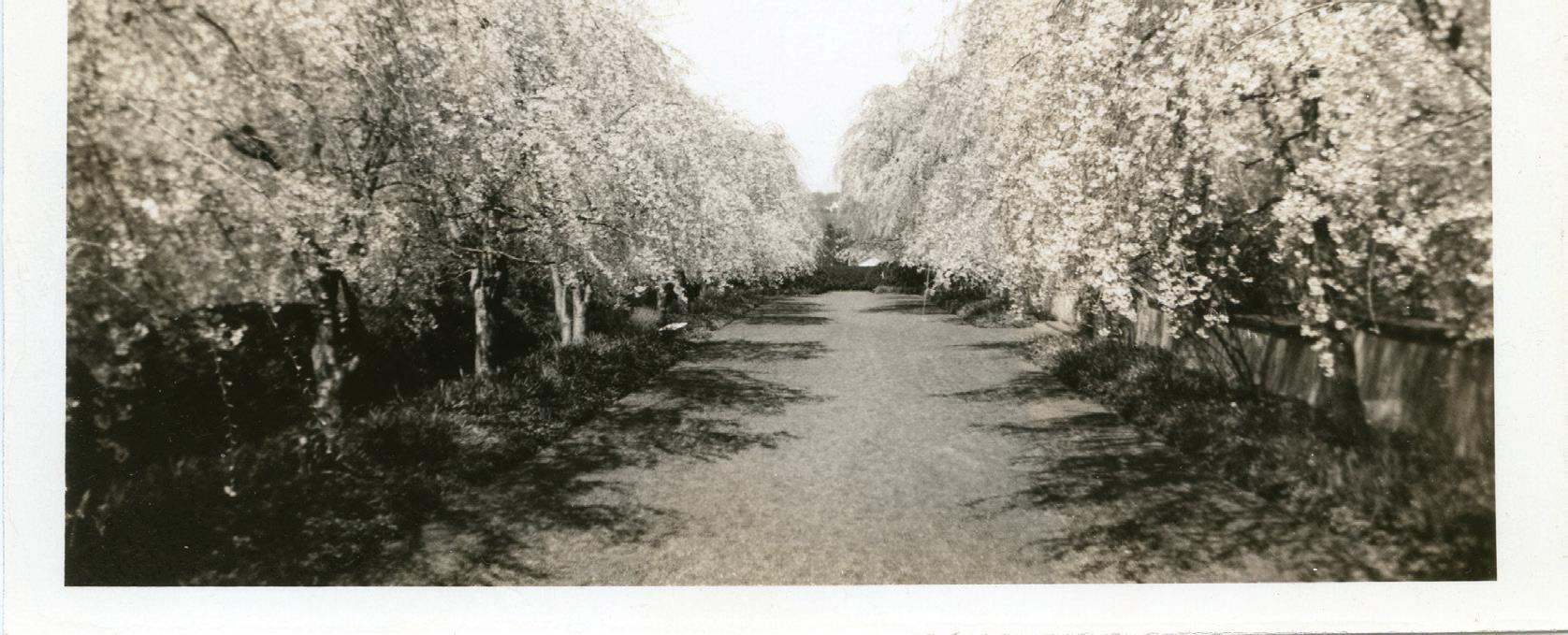
In 1912 the Mayor of Tokyo gifted 3,000 cherry trees to the United States–a gesture of friendship between Japan and America. Five years later Katharine, likely inspired by her sister Ruth’s descriptions of the trees, made the decision to add the pink blossoms to her formal gardens.
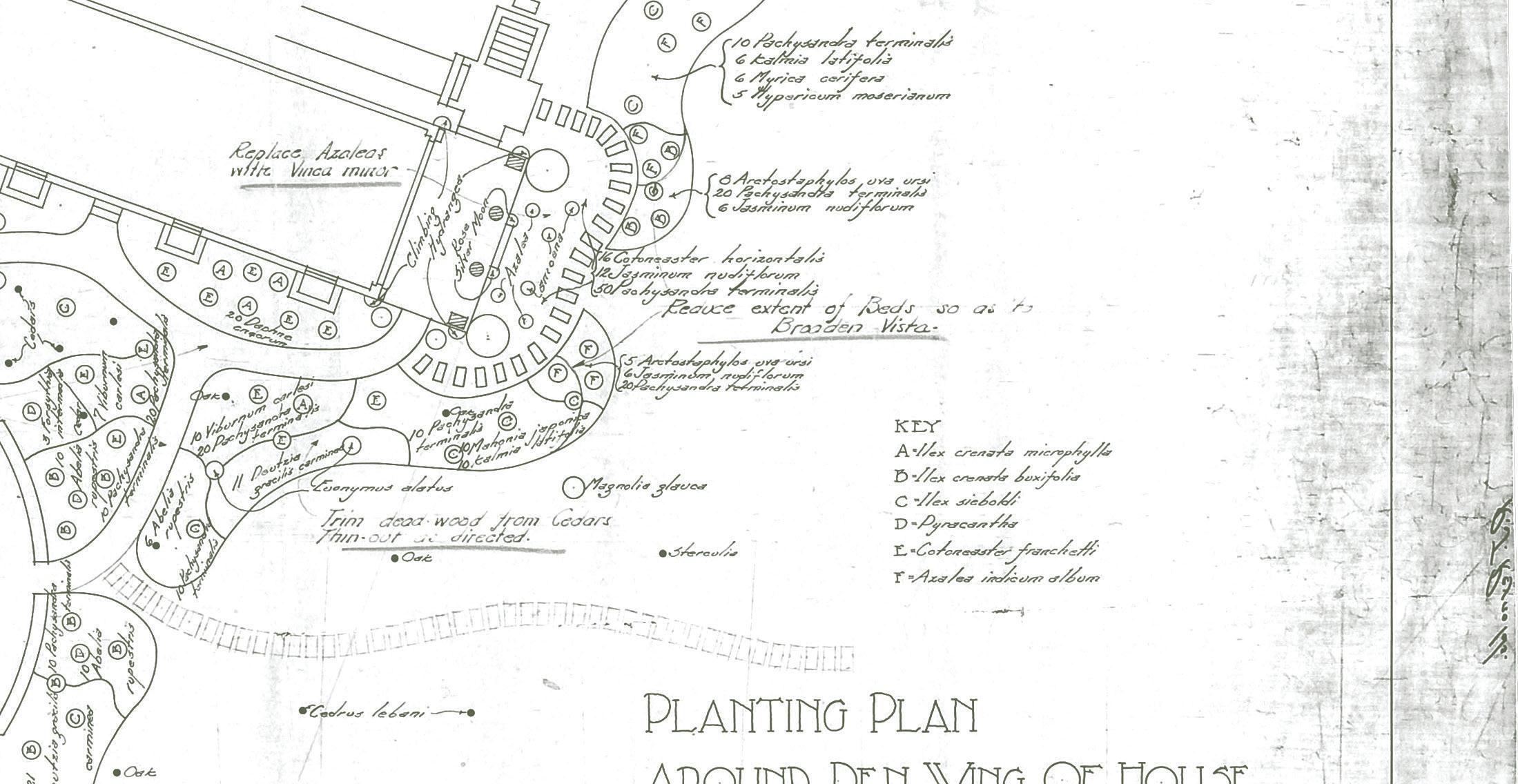
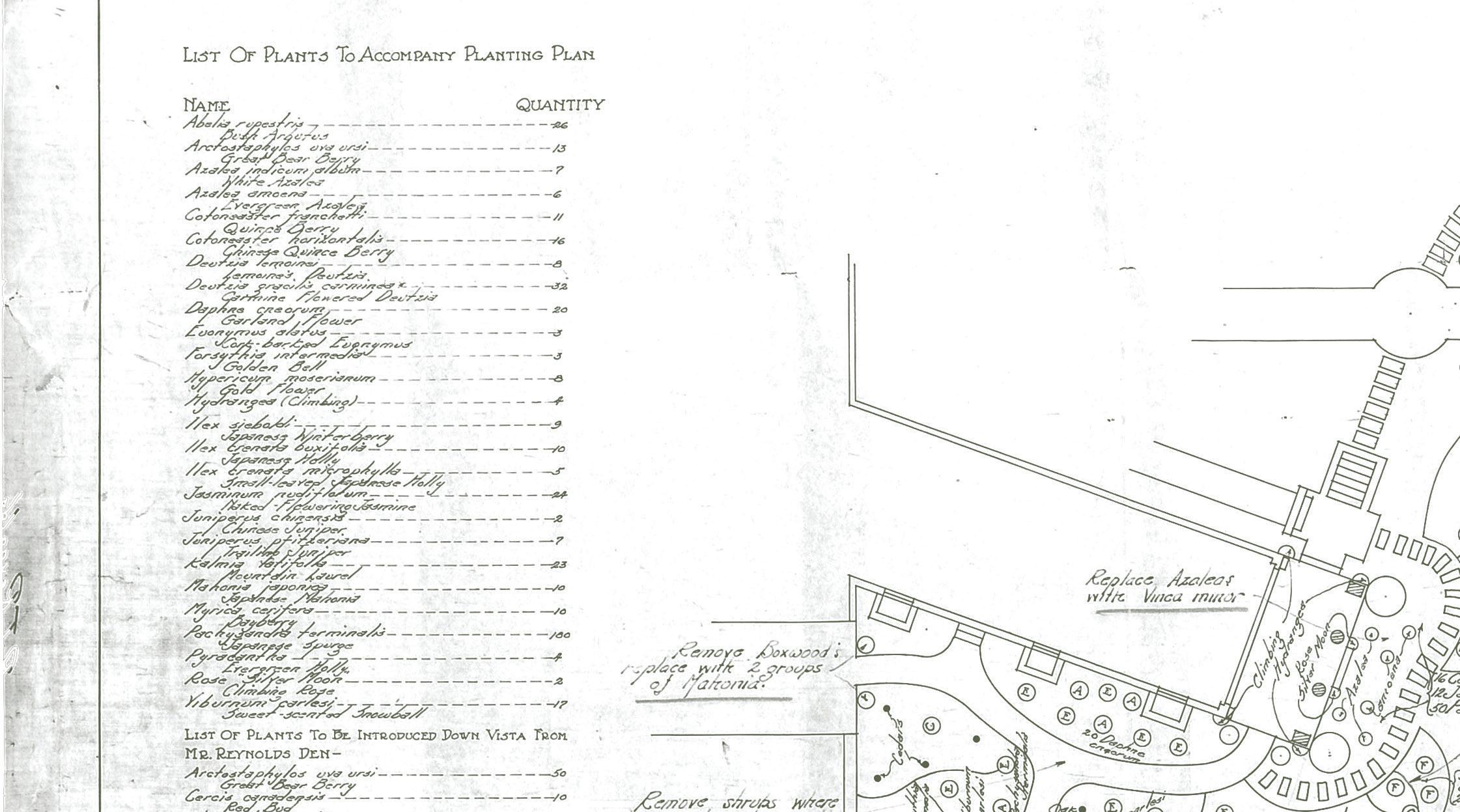
By 2019, time had taken its toll. The last of the original trees was gone, and the Allée had become a patchwork of mismatched varieties. Thanks to a generous gift from Barbara Babcock Millhouse, Reynolda began the careful restoration of this beloved feature in 2020. The team replaced all the trees with graceful weeping cherries ( Prunus subhirtella ‘Pendula Plena Rosea’), restoring the uniform beauty Katharine once envisioned.
Today, the Cherry Allée once again lines the outer edges of the Lower Formal Garden—an irresistible invitation to welcome spring.
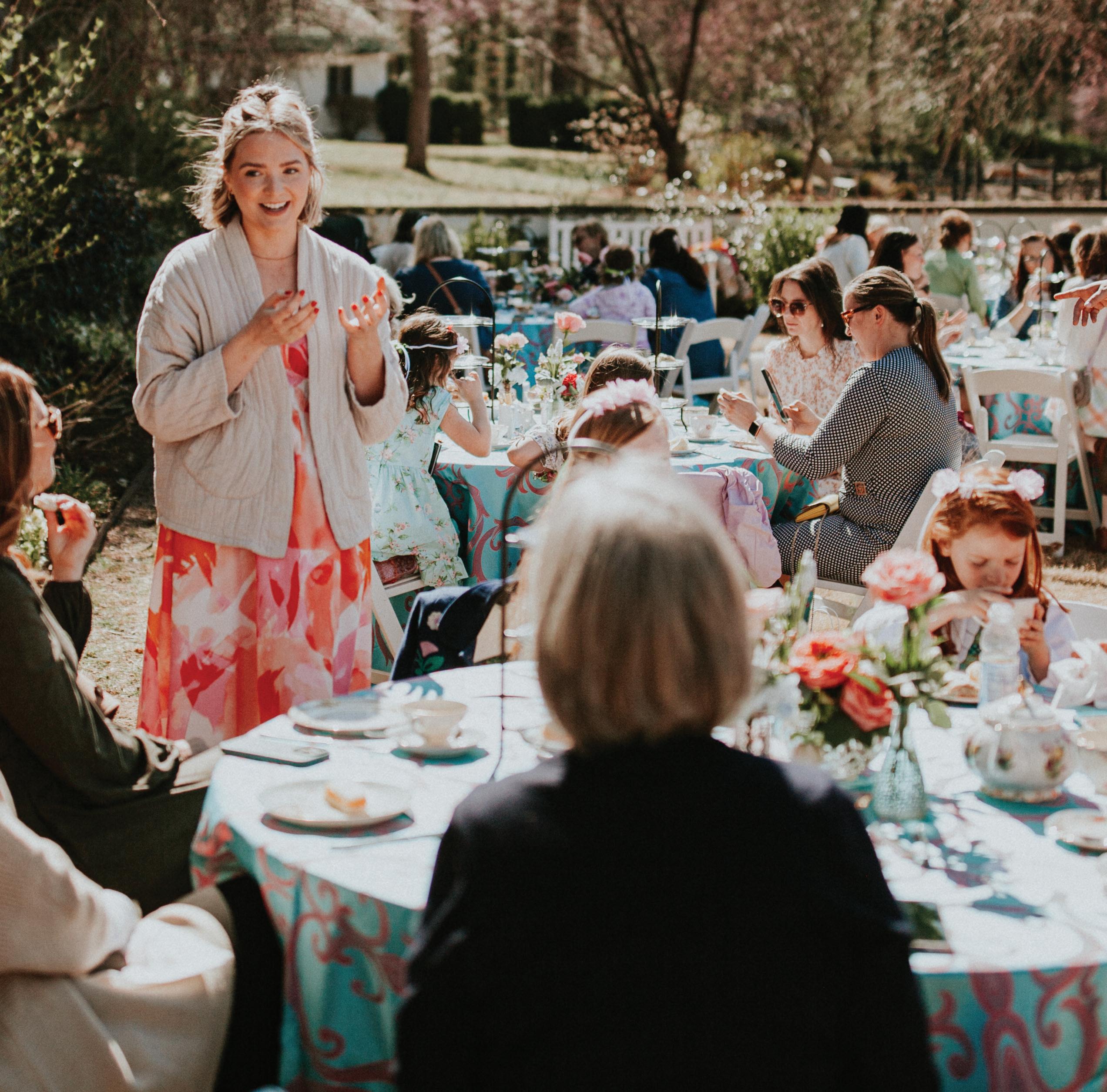
We invite you to savor the season and join us at one of our beloved Cherry Blossom events. Each year Reynolda hosts a family friendly Cherry Blossom Tea, along with a modified version for adults only. At each, participants are invited to learn more about the history of Reynolda’s cherry trees, the cultural traditions rooted in the art of making and sharing tea, and an introduction to local partner, Tea & Toast, who harvested the cherry blossoms from Reynolda to create a custom blend that is bright and perfect for a spring afternoon soaking up the sun.
Whether you join us for a Cherry Blossom Tea or to capture the perfect photo beneath the blooms, this is a season to cherish at Reynolda. •
ABOVE: Cherry Allée on the Reynolda grounds circa 1930
BEFORE THERE THE WAS
HOUSE, WATER.
WATERWAYS
OF REYNOLDA
“YOUR MOTHER NOW HAS 40,000 GALLONS OF RUNNING WATER PER DAY AT GRAY SPRINGS. THE WATER SHOOTS OUT OF A TWO-INCH PIPE TEN FEET ABOVE THE LEVEL OF THE BRANCH AND CAN BE PIPED TO THE LAKE AND PUMPED TWO HUNDRED FEET HIGH WITHOUT ANY COST OF OPERATING THE PUMP.
R.J. REYNOLDS in a letter to his four-year-old son, Dick, on September 24, 1910
Before there was a house—before the land quickened with irrigation and bloom—there was water: rushing, rising, generous. Reynolda began not as a home but as a promise of abundance, as Katharine Reynolds envisioned when she began planning the farm estate in 1908 to “heal the land itself, much of which had been eroded through poor agricultural practices.”
R.J. Reynolds’s letter reads like a hymn to possibility, the words carrying the same current that would one day shape a farm, a family, a way of living beside water.
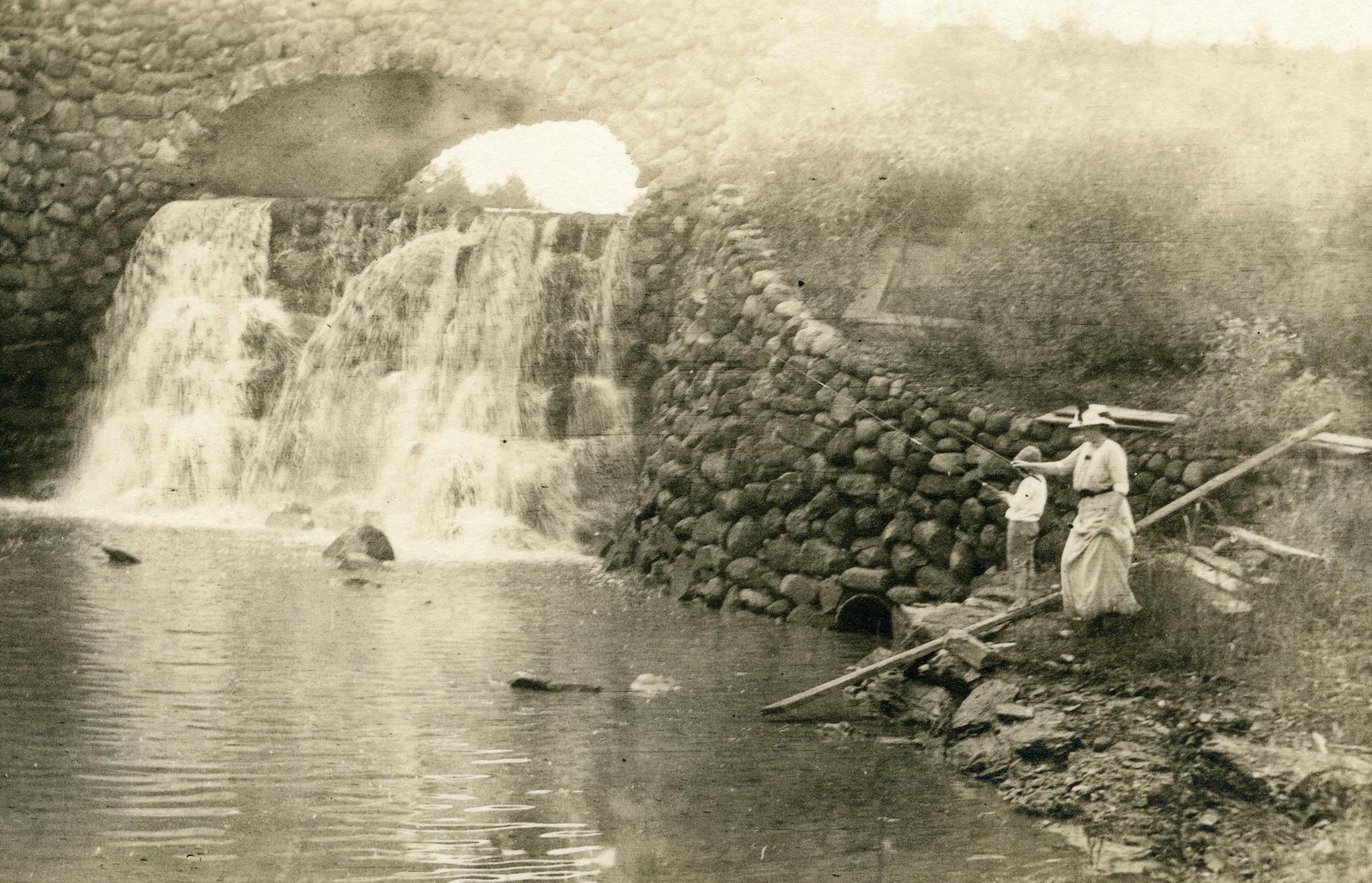
ABOVE : Dick Reynolds and nurse Henriette “Bum” van den Berg fishing at the Lake Katharine spillway, circa 1915
Katharine Reynolds, ever the architect of well-being, found in the water the first trace of something larger. Though determined to provide for her family’s health and education, Katharine also welcomed the wider community to her demonstration farm and large-scale performances and celebrations. Water was her collaborator—an invisible and faithful presence in the life of the estate.
Beneath the soil, Katharine discovered an underground reservoir of artesian wells capable of producing a generous volume of fresh water each day, “a running stream,” as R.J. Reynolds wrote, that shot ten feet above the bank from the meadow’s Gray Spring. Those wells became the lifeblood of a water system that, over the next decade, would grow into a complex network of wells, pipes, cisterns, and pumps serving the home, gardens, and Five Row community.
FORSYTH CREEK WEEK
SATURDAY
MARCH 21; 10:30 AM - NOON
Each March during Forsyth Creek Week, families return to the waters of Reynolda with Janie Bass, coordinator of early childhood education, to listen for frogs, trace paths of minnows, and learn that stewardship begins in wonder.
WATERWAYS OF REYNOLDA GROUP TOUR
WEATHER PERMITTING UP TO 20 PEOPLE • 90 MINUTES
Explore Reynolda’s grounds on this guided outdoor tour to discover how water shaped the estate’s design, history, and daily life. Learn how Katharine Reynolds’s vision for “pure water and healing the land” continues to flow through Reynolda today. Dress for the weather. Tour includes walking over uneven terrain.
The land offered its own inheritance, the same gift the Moravians recognized in the springs and creeks around Salem. Long before them, the Saura and Tutelo peoples knew this water as kin, alive in its own right and deserving of respect.
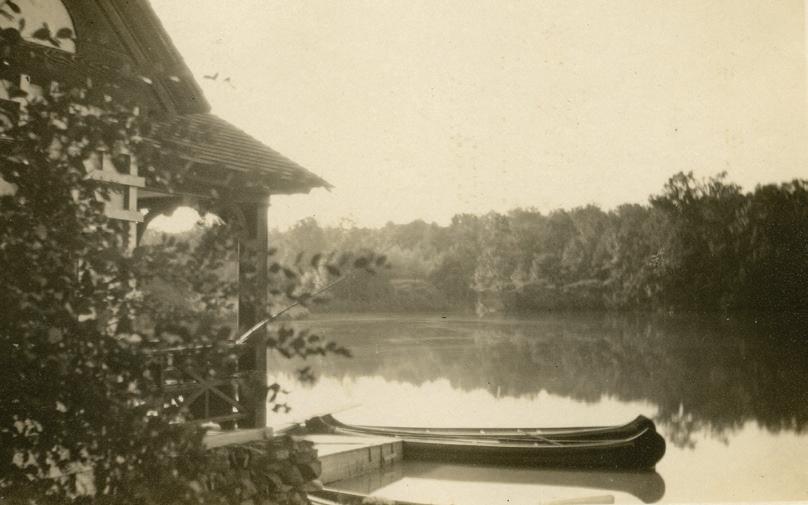
Silas Creek wound through the property, and soon Lake Katharine took shape: a sixteen-acre mirror catching the clouds. Both practical and poetic, it provided water for irrigation, reflection, and renewal. The Boathouse still lingers at its edge, stone and stucco memory of summer mornings when everything seemed briefly at rest, as if the land were gathering itself again.
Beneath the estate ran a network of pipes and tunnels—the veins of a self-sufficient organism. Pumps sent water to a cistern, the cement sentinel still standing near Reynolda Road. The same water that cooled the air, heated the radiators, and cleansed the lungs of the great house also nourished the tulips and lawns outside.
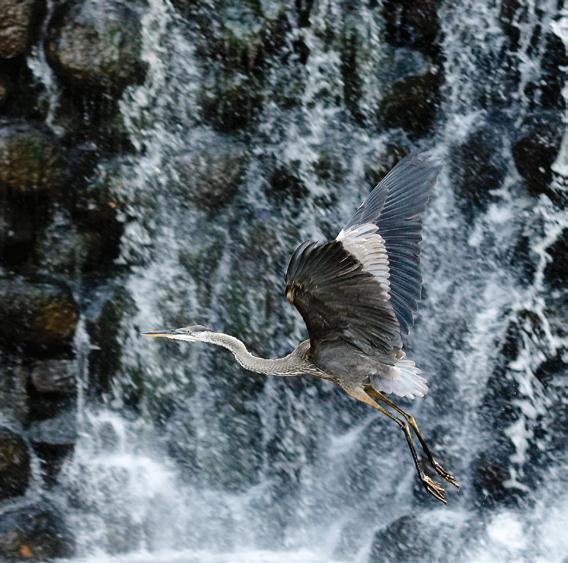
Today, the lake has become a wetland. Its waters move slower now, quieter, alive with reeds and herons. If R.J. Reynolds could stand here now, he might recognize the same promise he once wrote of to his son: water rising from the earth, doing its quiet work, holding us in the patience of the land. • $20 + TAX per PERSON
LEFT: Boat House and Lake Katharine, circa 1920
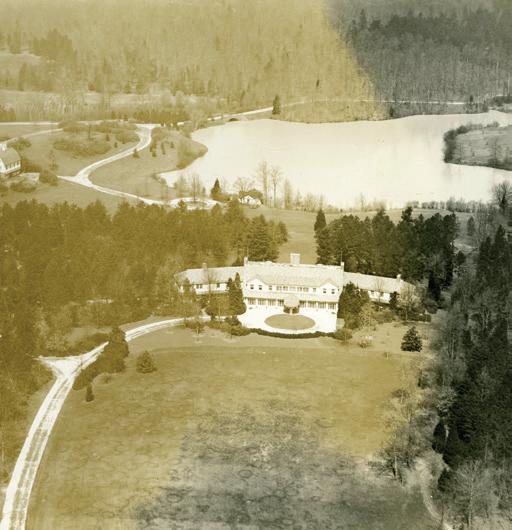
ABOVE : Aerial view of Reynolda House, circa 1927
PicksTop Spring
– From This Historic Home To Yours FOR
INSPIRED BY THE SEASON OF RENEWAL, OUR CAREFULLY CURATED SPRING SELECTIONS BRING REYNOLDA’S BEAUTY INTO EVERYDAY LIFE. WHETHER YOU’RE ADDING TO YOUR COLLECTION OF HAND-BLOWN ORNAMENTS OR INVITING A BIT OF LUXURY WITH REYNOLDA’S SILK SCARVES, EACH ITEM CAPTURES THE CHARM AND ELEGANCE OF REYNOLDA.
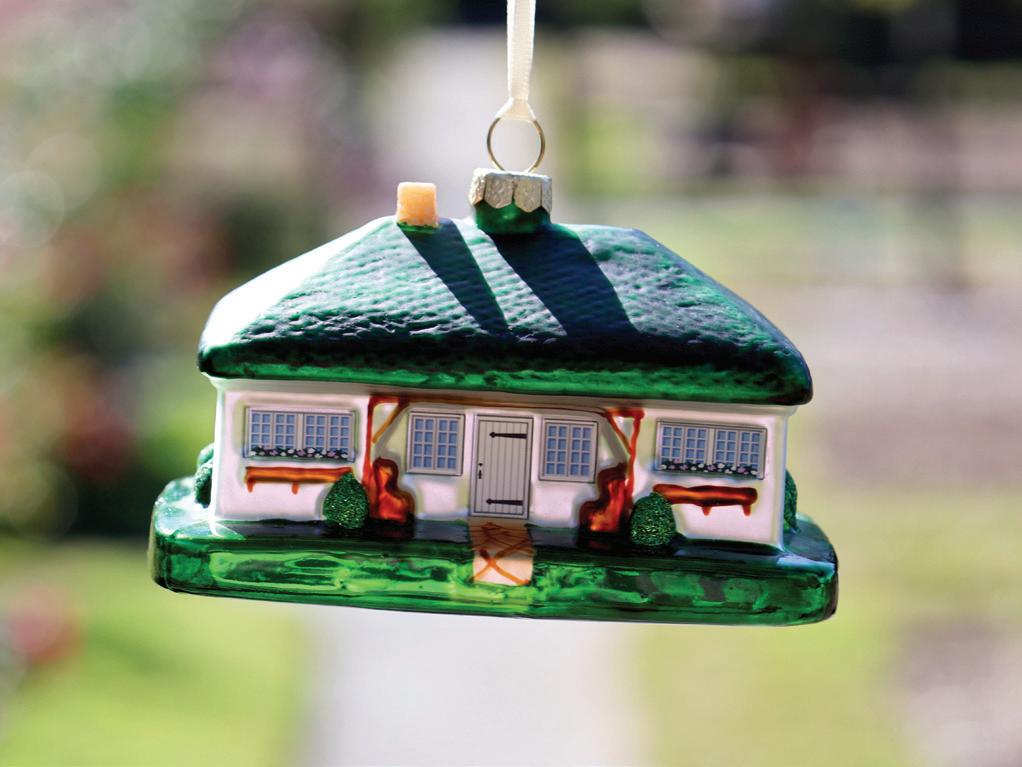
1 2BLOWN GLASS ORNAMENTS
Now with six ornaments in its collection, Reynolda’s blown glass ornaments are miniature replicas of iconic structures located across the 170-acre historic estate. Available this year are: the Bungalow, the Greenhouse, the Barn, the Boathouse, the Church and the newest addition – the Playhouse.
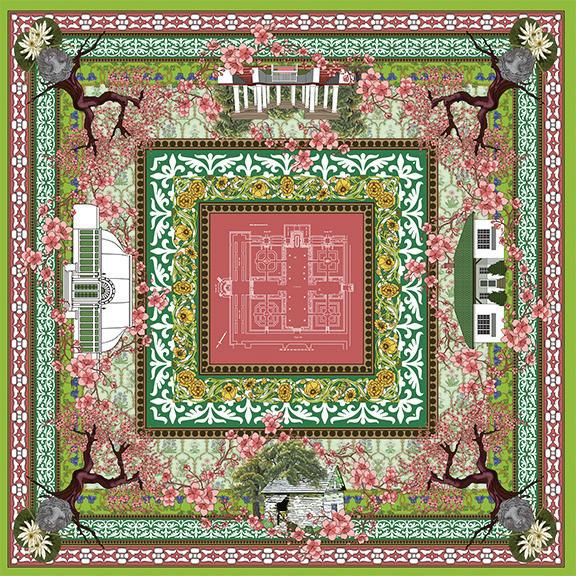
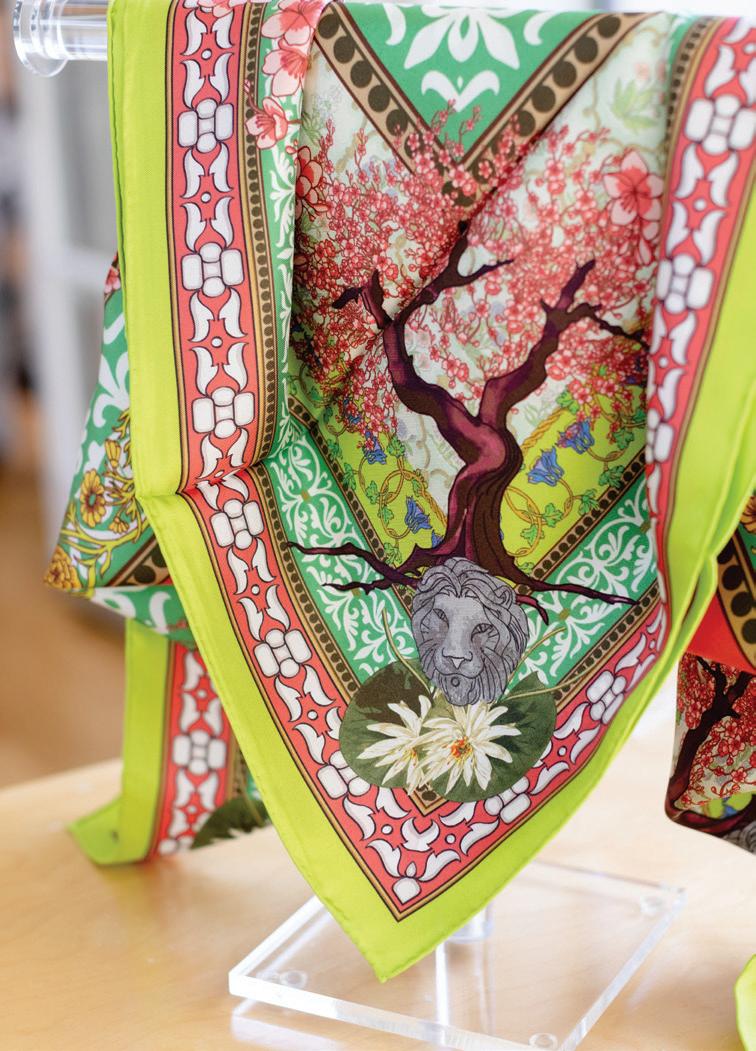
REYNOLDA SCARVES
At first glance, these silk scarves are simply a lovely adornment to any spring wardrobe or accessory but take a closer look and you’ll spot a few familiar details, like the vibrant cherry tree in full bloom, the cabin, or the lion’s head feature found throughout the estate.
3
4 5
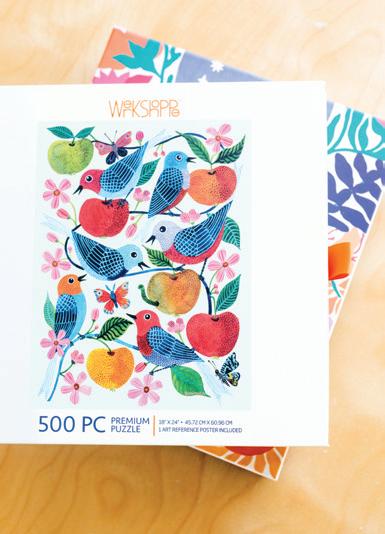
PUZZLES
Elevate your next game night with a new puzzle. Choose your design, gather around the table with light bites and refreshing cocktails, and you’ve got yourself the perfect wind-down activity amongst friends. Each a work of art in its own right, these sets both challenge and inspire.
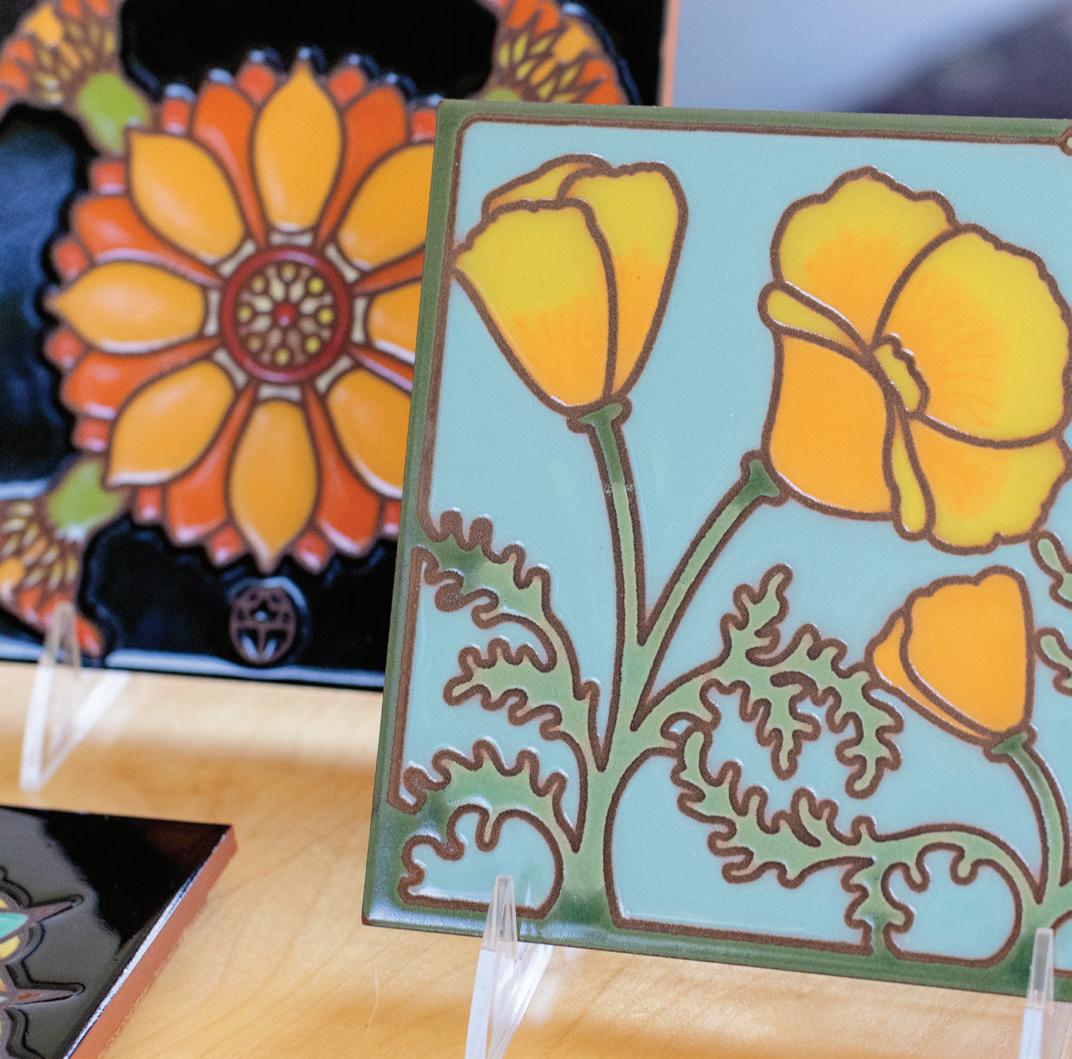
DECORATIVE TRIVETS
Katharine Reynolds and Mary Reynolds Babcock loved to entertain at Reynolda and they overlooked no detail in their planning–even down to the trivets. Add a bit of spring flair to your kitchen with decorative,yet functional, glazed pottery trivets.
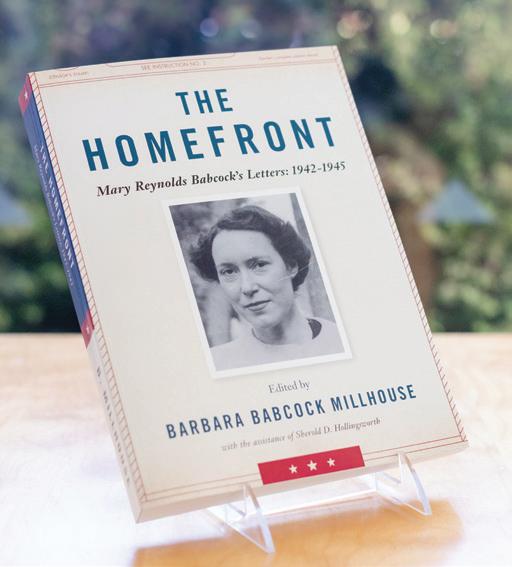
THE HOMEFRONT
After the discovery of a trove of letters written by Mary Reynolds Babcock during World War II, her daughter, Barbara Babcock Millhouse, founding director of Reynolda House, was motivated to develop this book. It captures Mary’s insightful and amusing descriptions of family life under wartime conditions while her husband Charlie was on duty in Europe.
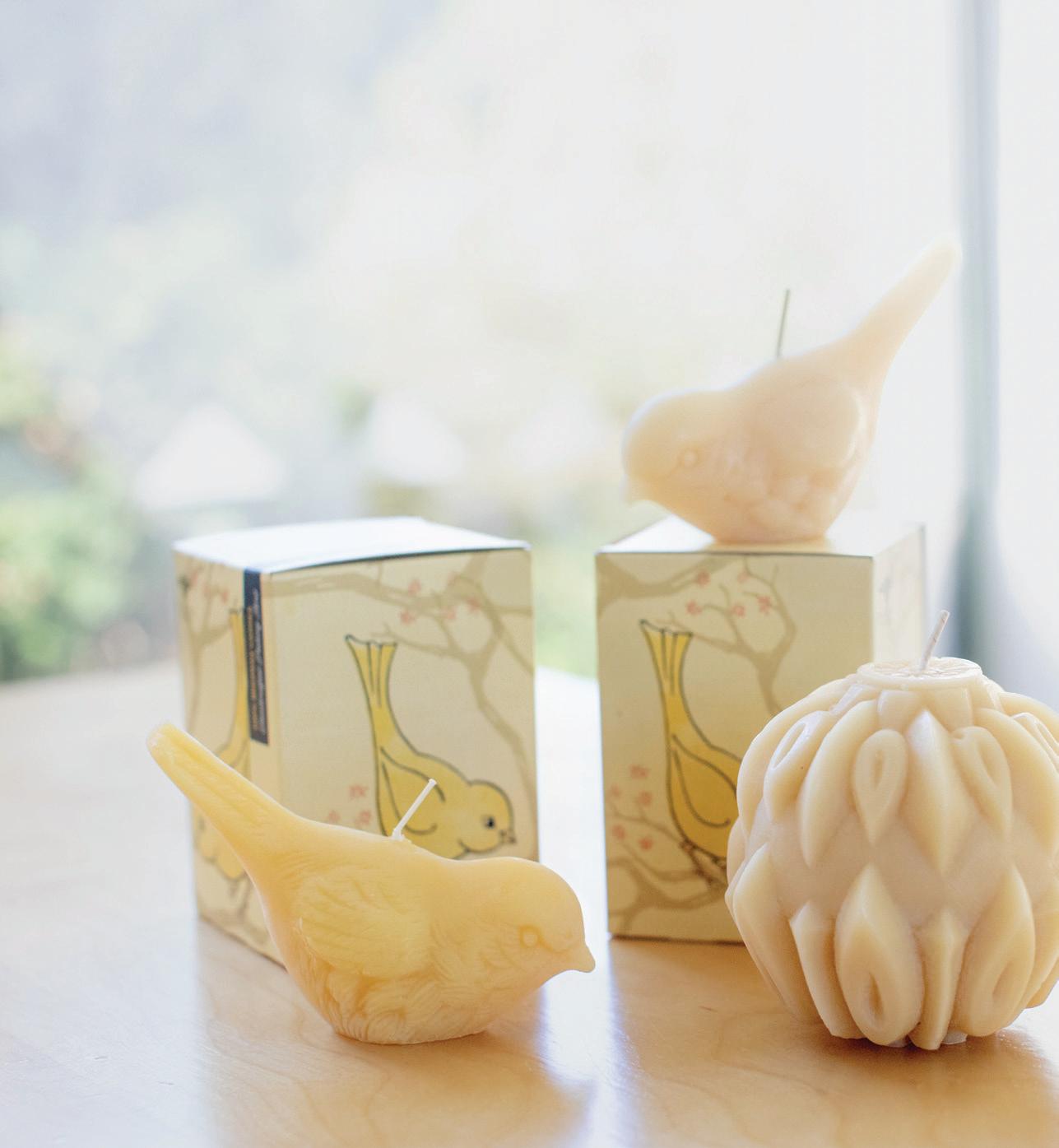
CANDLES
Almost too pretty to burn and too tempting not to, these 100% beeswax candles offer up a pleasant surprise to house guests. You’ll find them to be the perfect home accessory to usher in the beauty and romance of spring. •
DEMOCRACY ART AND
1776 to 2026
IN THE FALL OF 2026, Reynolda House will mark the occasion of the nation’s semiquincentennial with two exhibitions exploring pivotal movements in American art and history. In the Babcock Wing, FLASH POINT: THE CIVIL RIGHTS PHOTOGRAPHY OF DANNY LYON will be on view from September 17, 2026 to January 3, 2027.
Opening in the historic house on September 17, ART & DEMOCRACY will assemble the museum’s collection as a visual chronicle of the nation since its founding and will remain on view for a year.
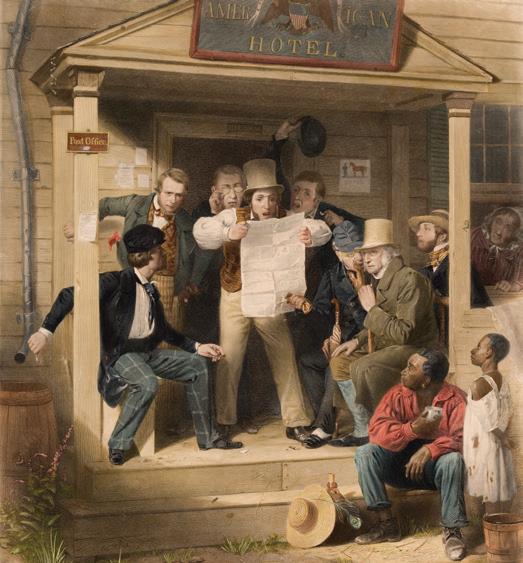
RIGHT CENTER: (after) Richard Caton Woodville (1825 - 1855), Mexican News, 1851. Hand-colored engraving Reynolda House Museum of American Art, gift of Barbara B. Millhouse.
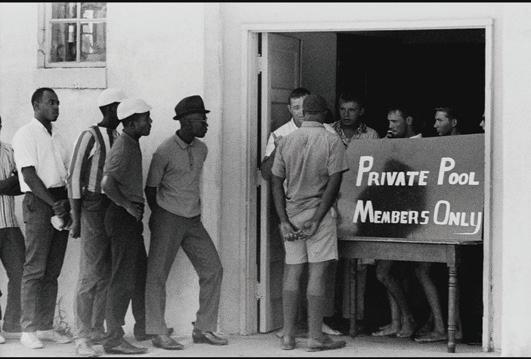
RIGHT TOP: Danny Lyon (b. 1942), Demonstration at an all-white swimming pool, Cairo, Illinois, 1962 Gelatin silver print, printed later Promised Gift of James P. Agah and Wendy S. Agah (P’26, P’28) to the Wake Forest University Print Collection.
FLASH POINT
THE CIVIL RIGHTS PHOTOGRAPHY
OF DANNY LYON
SEPTEMBER 17, 2026 - JANUARY 3, 2027
BABCOCK WING GALLERY
Danny Lyon (born 1942) joined the movement for civil rights in the early 1960s as the official photographer of the Student Nonviolent Coordinating Committee (SNCC). The young staff at SNCC organized peaceful direct-action protests, leading lunch counter sit-ins, freedom rides, and voter registration drives, for which they were frequently jailed, beaten, and, on occasion, murdered. He represented a new breed of documentary photographer, for whom the camera was more than an objective recorder; he was a witness to and implicated in the action, and potentially endangered. In his commitment to the cause, Danny Lyon realized that “my camera could be a sword for justice.”
ART & DEMOCRACY
OPENING SEPTEMBER 17, 2026
HISTORIC HOUSE GALLERIES
The works in Reynolda’s art collection were assembled for artistic merit, yet they address many common themes in American society and culture. Most artists share the concerns of their eras and reflect them, consciously or unconsciously, in their creations. To commemorate the 250 years since the Declaration of Independence, the 1917 bungalow will reopen as an immersive gallery of national development through an experience only art can afford: suggestive, emotional, unconventional, and inconclusive.
In 1962, Lyon—then a University of Chicago student with a borrowed camera and a historian’s instincts—hitchhiked south and embedded himself in the thick of nonviolent planning and protest. Within a week of crossing the Mason-Dixon line, he was jailed in Albany, Georgia, in a cell across from Martin Luther King, Jr. His personal commitment, rather than press credentials or newspaper assignment, gave him unfettered access to the movement. He marched when the students marched, he slept where they slept, and his images were reproduced on SNCC posters and pamphlets and in newspapers throughout the country, revealing the depth of injustice and helping to shift public perception.
Flash Point will debut more than fifty gifts promised to Wake Forest University by James and Wendy Agah, parents of a current student and a recent alumus. The collection represents the largest single gift of photographs in the university’s history and allows a comprehensive understanding of the civil rights movement in the early 1960s. Lyon photographed the violence, but he was also able to elevate the organizers, planners, orators, scribes, and publicists of a complex national network of youthful patriots engaged in direct, nonviolent action. For their own sake—and the nation’s—they courageously pursued a course charted by Dr. King: “The way of nonviolence leads to redemption and the creation of the beloved community.”
Temporary galleries will be dedicated to various themes. “A Nation on Paper” will reaffirm the radical principle that power should be held not by theocrats, autocrats, or hereditary monarchs but rather by representatives elected to uphold laws and rules of governance. The works in these galleries will explore the declarations that were inscribed, treaties that were honored or broken, and Constitutional provisions that were observed or amended. They also demonstrate how artists have cherished the First Amendment’s provision that “Congress shall make no law…abridging the freedom of speech, or of the press.” In another gallery titled “Landscape as National Anthem,” paintings and prints from the nineteenth century will embody artistic reverence for the natural environment. In that era, landscape painting also aspired to a unifying, democratic sentiment, a patriotic ideal available to all citizens in a wilderness already vulnerable to the encroachment of the railroad and the plow. Lastly, “Parade of All Stripes” will explore twentieth century developments in abstract art. Though closely connected to modern trends in Europe and elsewhere, abstract painting became associated in the popular imagination with the post-war triumph of the American model of individual expressive liberty, though the reality often lagged far behind the propaganda.
Art & Democracy will offer a pilgrimage to the past, within the convenience and comfort of a single museum visit. The collection will be supplemented by loans from Old Salem Museums & Gardens and Wake Forest University. •
Flash Point is co-curated by Phil Archer, Betsy Main Babcock Deputy Director, and Ashley Givens, adjunct assistant professor in the Department of Art at Wake Forest University
Reynolda Village
SHOPS AND SERVICES
AERACURA SALON
An Aveda Concept Salon
ALL THROUGH THE HOUSE
Gifts, home furnishings, and accessories
THE BARN AT REYNOLDA VILLAGE
Private venue for weddings, social and corporate events
THE BOOKHOUSE
Independent bookstore
EUROPEAN TOUCH
Full-service day spa
GAZEBO
Ladies’ designer fashions
HALF PAST THREE
Women’s contemporary clothing where classic charm meets boho vibes
J. MCLAUGHLIN
Men’s and ladies’ clothing and accessories
DOUGH-JOE’S DOUGHNUTS & COFFEE
Made-to-order cake doughnuts, baked goods, full coffee bar
McCALLS
Linens, fine lingerie, children’s wear, gifts, and accessories
MONKEE’S
Fine ladies’ clothing, shoes, and accessories
NATUROPATHIC
HEALTH CLINIC
Natural, conventional, alternative, and integrative healing methods
NORMAN STOCKTON
Men’s clothing and accessories
PAINTERS’ PALETTE
Art studio and gallery
A PROPER VIEW
Thoughtfully curated eyewear, exceptional eyecare
PURE BARRE
Pure Barre technique classes and activewear
RESTAURANTS
PENNY PATH CAFÉ & CRÊPE SHOP
Savory and sweet crêpes, full coffee bar
MAY WAY DUMPLINGS THEODORE’S
Chinese noodles and dumplings
Local bar and market; sandwiches, salads, and soups