Reseller Middle East’s Partner Excellence Awards in its 16th year, showcases and applauds the successes of the regional channel business, saluting the excellence and resilience of individual executives and firms.
The event acclaims players who have excelled through a dedicated channel approach, by sustaining and driving their business despite challenging market circumstances, and by leading the space with pioneering strategies and solutions.
Raising the bar every year, the Partner Excellence Awards strives to create a memorable, action-packed and exciting evening to honour the crème de la crème of the channel business.
GOLD SPONSOR
OFFICIAL PUBLICATIONS
HOSTED BY
For more information about the event and nomination details, please visit the event website below :-
e& enterprise and Sergas team up to bring smarter, safer energy operations to life
Middle East emerges as strategic engine for Bitcoin mining, says Mining Grid’s Founder, CEO
Yango Group report highlights economic impact with $4 billion earned by partners
Helping young professionals become indispensable in AIdriven labour market
Sandhya DMello Editor
THE NEW CHANNEL PLAYBOOK: PLATFORMS, AI, OUTCOMES
The year has opened with a clear message for the channel: AI has moved from promise to performance.
Across this issue, one theme cuts through every headline, partnership, and leadership move — the market is entering an era where outcomes matter more than ownership, orchestration matters more than hardware, and intelligence must translate into measurable value.
Our cover story, The Outcome-Driven Channel, captures this structural reset. Vendors and partners alike are confronting a new commercial reality. Customers are no longer experimenting with AI — they are scrutinising utilisation, ROI, governance, and compliance. As leaders from ServiceNow, Pure Storage, BeyondTrust, and Epicor explain, profitability now lies in connecting platforms, unifying data, modernising infrastructure, and delivering autonomous workflows tied directly to business transformation.
The news pages reinforce this shift. HP’s decision to bring HyperX and OMEN under one unified gaming brand signals consolidation around seamless ecosystems. Seagate’s 32TB drives and Nutanix’s acceleration of agentic AI with NVIDIA Rubin show infrastructure scaling to meet AI’s appetite. Cloudflare’s global inference push, Zoho’s UAE data centres, and Bahrain’s quantum-safe cybersecurity framework all highlight a region investing in sovereign, highperformance digital foundations. Meanwhile, partnerships from e& enterprise to Kiteworks and Help AG demonstrate how cybersecurity, governance, and AI analytics are now inseparable.
E-mail: sandhya.dmello@cpimediagroup.com
Facebook: www.facebook.com/ TahawulTech
Twitter: @TahawulTech
Instagram: @TahawulTech
Our interviews extend the lens further. From Bitcoin mining maturing in the Middle East to LEO satellites reshaping global connectivity, digital infrastructure is expanding in both terrestrial and non-terrestrial domains. Research from Yango and insights from AWS and Nokia remind us that technology transformation is ultimately about people, skills, and the networks that underpin digital societies.
Leadership movements across Fasset, Nintex, and GBM Oman also point to a future where orchestration, automation, and AI-aligned banking and enterprise strategies will define competitive advantage.
For the reseller community, the signal is unmistakable: the channel’s role is evolving from seller to integrator, from implementer to orchestrator, and from technology provider to outcome partner. Those who bridge the gap between pilot and production — securely, compliantly, and at scale — will lead the next wave of growth.
2026 has begun with clarity. The opportunity is not just in AI itself, but in the ability to make it work — reliably, responsibly, and profitably.
INTELLIGENCE REDEFINES CHANNEL VALUE
BAHRAIN GOVERNMENT, SANDBOXAQ TAKE DEFINITIVE STEP TOWARD BUILDING QUANTUM-SAFE ECONOMY
The Kingdom’s cybersecurity modernisation framework positions Bahrain as one of the first countries to operationalise post-quantum protection at national scale.
The National Cyber Security Center of the Kingdom of Bahrain and SandboxAQ, a global leader in AIdriven cybersecurity and cryptographic management, announced a landmark partnership, aimed at establishing a nationwide cybersecurity modernisation framework.
The partnership marks one of the world’s first large-scale commitments to transitioning towards a quantumsafe economy. As a founding member of the UNICC AI Hub on Post-Quantum Cryptography (PQC), SandboxAQ will support Bahrain in securing sovereign data, critical infrastructure and sensitive government and privatesector systems against rapidly evolving cyber, cryptographic, and quantum computing threats.
The announcement comes as governments worldwide prepare for “Q-Day”, the point when cryptographically relevant quantum computers (CRQCs) will be capable of breaking today’s widely used encryption. While experts now estimate CRQCs to be feasible by as early as 2029, the threat is already present through “harvest-now, decryptlater” attacks, where adversaries steal encrypted data today with plans to decrypt it once quantum capabilities mature. For governments, this includes classified communications, diplomatic cables, defence data, national identity records and decades of sensitive archives.
Under this partnership, the Kingdom of Bahrain will deploy SandboxAQ’s AQtive Guard platform, an AI-powered cybersecurity solution designed to enable the safe, large-scale deployment of AI agents and modernise defenses for the post-quantum era. It provides complete visibility, assessment, and remediation of critical vulnerabilities stemming from weak encryption and the rapid proliferation of AI agents and non-human identities (NHIs). The
deployment will span more than 60 distinct ministry environments across the Kingdom, requiring SandboxAQ’s platform to manage cryptographic security on a scale.
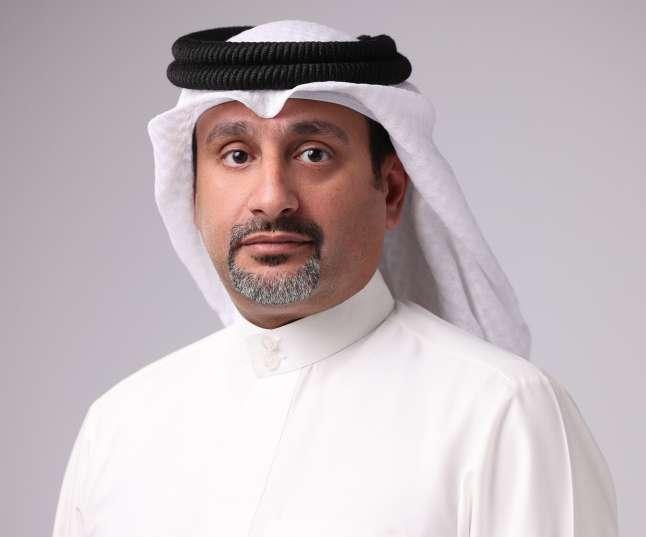
His Excellency Shaikh Salman bin Mohammed Al Khalifa, CEO of the National Cyber Security Center (NCSC) of Bahrain, commented:
“This partnership with SandboxAQ marks a significant milestone in our mission to secure our sovereign data, intellectual property, and other digital assets from both internal and external cyber threats. SandboxAQ’s world-class technologies and expertise in AI-driven cybersecurity will help Bahrain protect its citizens, businesses, and government agencies and lay the foundation for a new era of security and economic growth in the Kingdom.”
Mohammed Aboul-Magd, Vice President of Product, Cybersecurity at SandboxAQ, added: “Bahrain
is taking a bold and much-needed step by not only setting policy, but by operationalising the technology required to secure the Kingdom against rapidly advancing threats. Our partnership establishes a dynamic framework that allows the country to adapt quickly as new vulnerabilities emerge, ensuring the nation stays ahead of attackers in a world where cryptographic risks evolve by the day.
We are honoured to support Shaikh Salman and the Government of Bahrain in implementing this forwardlooking programme, which sets a new benchmark for cyber resilience across the region.”
This initiative forms a core pillar of Bahrain’s long-term cybersecurity strategy and reinforces the Kingdom’s commitment to safeguarding national data, promoting economic resilience and accelerating secure digital transformation.
CLOUDFLARE AND JD CLOUD SIGN PARTNERSHIP TO ACCELERATE AI INFERENCE DEPLOYMENT AND SCALING FOR GLOBAL DEVELOPERS
Partnership projected to reduce latency for AI inference workloads by up to 80 percent, establishing a truly global, high-performance AI Cloud for the developer community.
Cloudflare, Inc., the leading connectivity cloud company, and JD Cloud, an intelligent technology service provider and affiliate of JD.com, today announced plans for a significant expansion of their partnership, aimed at creating a global platform that empowers developers to deploy, manage, and scale AI inference workloads seamlessly.
The growth of AI-driven applications over the past three years has resulted in unprecedented demand for geographically distributed inference capabilities. This broader partnership will enable Cloudflare and JD Cloud to deliver a cohesive networking experience, projected to reduce latency for AI inference workloads by up to 80 percent, establishing a truly global, highperformance AI Cloud that seamlessly connects global developers to the China market and Chinese developers to the rest of the world.
“The future of AI depends on a truly global network that can keep up. Our partnership with JD Cloud makes that possible—giving developers a simple, reliable way to build and run AI applications seamlessly across the world,” said Matthew Prince, co-founder and CEO of Cloudflare.
“By minimising the technical and logistical hurdles for AI developers, we are providing the essential tools for businesses to succeed in a competitive international landscape.”
This latest expansion builds upon the successful foundation that the companies have created together over the past five years. The integration of Cloudflare’s intelligent global platform with JD Cloud’s robust infrastructure already delivers a unified experience, allowing customers to activate their presence in China with just a few clicks—without changing a single
line of code. Once enabled, traffic from users in China is automatically routed to local data centers, operated by JD Cloud, while all other traffic is served from the nearest Cloudflare location worldwide. This seamless setup ensures a secure, fast, and reliable experience reducing latency and strengthening performance with Cloudflare’s comprehensive suite of security services, including its cloud-based Web Application Firewall (WAF), advanced Distributed Denialof-Service (DDoS) mitigation, and
global Content Delivery Network (CDN).
JD Cloud said that Cloudflare’s mission complements JD Cloud’s commitment to delivering premier services to its partners and customers. By leveraging JD.com’s extensive experience across a range of business scenarios and the advanced technological and logistical capabilities, this partnership ensures JD Cloud can continue to deliver market leading services for users and businesses.
Matthew Prince, co-founder and CEO, Cloudflare
DELIVERECT KIOSK LAUNCHES IN MENA REGION
The self-service tech solution arrives in the region that will help reduce waiting times, streamline business operations, elevate customer experiences, and increase average value orders.
Deliverect, a global ecosystem of on and off-premise solutions that empowers restaurants and retailers to sell anywhere and deliver everywhere, has launched Deliverect Kiosk in the MENA region.
A fully integrated self-service solution designed to streamline in-store operations and elevate the customer experience, Deliverect Kiosk aims to empower customers to browse, order, and pay seamlessly when ordering in stores. By installing kiosks, restaurants can benefit from better customer experiences, reduced waiting and queuing times, and no staff involvement.
The introduction of Deliverect Kiosk in the MENA region comes at a vital time when the F&B industry is growing rapidly as more people seek convenient, efficient, and seamless dining experiences.
Deliverect Kiosk is already available in restaurants across Germany, Spain, Italy, Switzerland, Belgium and the UK, with findings showing the systems have helped reduce order time by 17% on average while 50% of orders have included an upsell. Furthermore, the Kiosks also contribute to 30% higher ticket sizes with smart and automated selling options.
Naji Haddad, Vice President of EMEA at Deliverect, said: “The launch of
Deliverect Kiosk represents another important milestone for the company, where restaurants can reap the benefits and accelerate their business revenues even more while also enhancing customer experiences.
“Not only is Deliverect Kiosk a catalyst when it comes to boosting productivity and sales, but this userfriendly innovative tech system is widely used by some of the popular brands in the world today, and we’re delighted that businesses in the MENA region can now leverage them which will help make their day-to-day operations easier.”
More than just a self-service screen, Deliverect Kiosk is tech-
driven, unlocking a cloud-based, fully integrated ordering experience designed to drive conversion and scale with ease. The Kiosk ensures that menus are centrally managed and updated in real time across all locations, with built-in upselling and smart bundling to grow ticket sizes. Whether counter-service, QSR, or dine-in, the Kiosk offers flexible hardware options, floor-standing, wallmounted, or countertop to suit any restaurant layout and real-time stock synchronisation with businesses’ POS, ensuring customers only see what’s available; creating a smoother, more satisfying guest experience from first tap to order fulfilment.
E& ENTERPRISE AND SERGAS TEAM UP TO BRING SMARTER,
SAFER ENERGY OPERATIONS TO LIFE
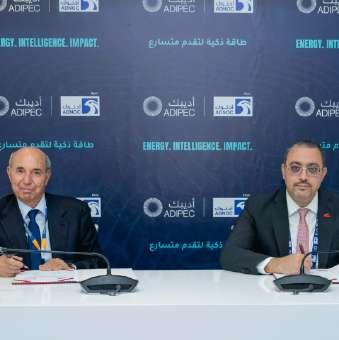
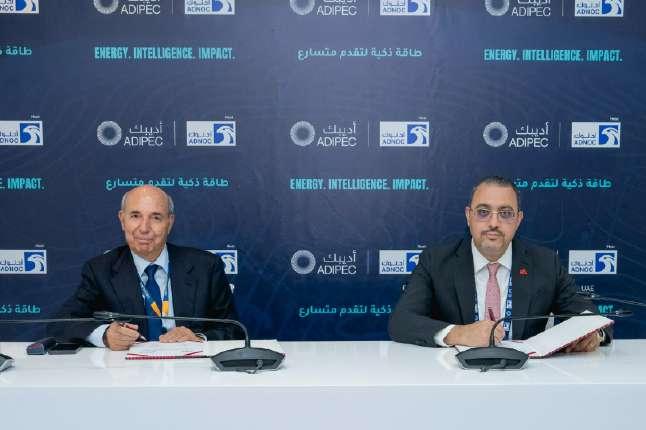
e& enterprise, the digital transformation arm of global technology group e&, today announced a strategic collaboration with Sergas, a UAE-based gas system solutions provider, aimed at transforming the way energy operations are run and protected.
The Memorandum of Understanding (MoU), signals a shared push
toward smarter systems, stronger cybersecurity, and a better customer experience, all driven by innovation.
At the core of this collaboration is a suite of integrated digital capabilities designed to elevate Sergas’ operational efficiency, security, and customer engagement.
Delivered by HELP AG, an e& enterprise company, the SOC will
bolster Sergas’ cybersecurity posture with advanced threat detection and rapid incident response. This ensures uninterrupted service delivery, increased operational reliability, and stronger protection for customer data.
EngageX A2P Communications Platform
By consolidating SMS, email, and
WhatsApp into a single intelligent messaging hub, Sergas can automate service notifications, send targeted alerts, and personalise communications at scale. Customers will benefit from timely updates on billing, maintenance schedules, service requests, and safety advisories, all delivered through their preferred channels.
The platform brings smarter selfservice tools, omnichannel support, and enhanced workforce management. Sergas customers will gain quicker issue resolution, shorter wait times, 24/7 support, and more consistent service quality, whether they reach out through phone, chat, or digital channels.
Majd Coussa, Acting Chief Revenue Officer, e& enterprise, said: “This collaboration equips Sergas with a powerful set of digital capabilities that strengthen every part of their operation—from secure digital payments and enhanced cybersecurity to smarter customer engagement and AI-driven service delivery. It’s about giving them the tools to innovate faster, respond smarter, and deliver greater value to their customers.”
Mohamed Damak, Chief Executive Officer, Sergas Group, said: At Sergas Group, we are witnessing a rapid
transformation driven by UAE's supportive investment climate and advanced regulatory framework. Our partnership with e& for Smart Solutions marks a key step in accelerating digital transformation through AI-powered solutions. By optimising operations and reducing emissions, we’re shaping a smarter, cleaner future for the energy sector.”
The collaboration highlights how energy companies are embracing technology to stay ahead in a changing industry. With cybersecurity and data intelligence at its core, the partnership enables Sergas to optimise performance, enhance reliability, reduce emissions, and elevate the customer experience through the latest technologies.
EVERNORTH AND DOPPLER FINANCE COLLABORATE TO POWER INSTITUTIONAL XRP INFRASTRUCTURE
Evernorth, an XRP digital asset treasury company supported by Ripple and SBI Holdings, and Doppler Finance (Doppler), a leading XRPfi infrastructure provider, have entered into a strategic relationship to explore potential collaboration in support of the XRP Ledger (XRPL), including the design and pilot of institutional liquidity and treasury use cases on XRPL.
The collaboration highlights a deepening integration between one of the largest public XRP treasury companies and a core onchain infrastructure provider, paving the way for deeper convergence between traditional finance and XRPL-native financial systems.
Evernorth and Doppler are exploring initiatives designed to support institutional adoption of the XRPL ecosystem, with a focus on structured liquidity deployment, potential treasury management strategies, and the development of a resilient, longterm ecosystem foundation.
Evernorth and Doppler are exploring institutional liquidity deployment frameworks that may support treasury management activities on the XRPL, such as the evaluation of onchain products and mechanisms for deploying XRP capital at scale. By leveraging Doppler’s institutional-grade architecture, the collaboration contemplates structured
participation from institutional capital while establishing the commercial, operational, and technical foundations required for sustained, long-term engagement.
Beyond infrastructure and liquidity, the collaboration includes coordinated strategic communications and marketfacing initiatives, including joint announcements, publications, and offline engagements. In parallel, Evernorth and Doppler intend to pursue global market expansion efforts targeting both institutional and retail participants, with the objective of accelerating adoption and reinforcing confidence in XRPL-native financial infrastructure.
Majd Coussa, Acting Chief Revenue Officer, e& enterprise and Mohamed Damak, Chief Executive Officer, Sergas Group.
“The next phase of XRPL adoption will be driven by institutions that demand clarity, structure, and real economic utility,” said Asheesh Birla, CEO of Evernorth. “By collaborating with Doppler, we are advancing practical frameworks for deploying institutional XRP liquidity onchain, with the goal of setting a higher
THE NEXT PHASE OF XRPL ADOPTION WILL BE DRIVEN BY INSTITUTIONS THAT DEMAND CLARITY, STRUCTURE, AND REAL ECONOMIC UTILITY, SAID ASHEESH BIRLA, CEO OF EVERNORTH.
standard for how XRP is used, managed, and scaled across global markets.”
This collaboration reflects a shared commitment to positioning XRP as a key asset within a transparent and institutionally aligned onchain framework, while bridging traditional financial standards with next-generation blockchain-based infrastructure.
“Working with Evernorth represents a meaningful step forward in expanding institutional participation across the XRP Ledger,” said Rox Park, Head of Institutions at Doppler Finance. “By aligning institutional liquidity with robust infrastructure and disciplined risk frameworks, we aim to unlock XRP’s full potential as a scalable, yield-generating asset for global markets.”
HELP AG STRENGTHENS CLOUD SOC CAPABILITIES THROUGH DEEPENED PARTNERSHIP WITH SECURONIX
Help AG, the cybersecurity arm of e& enterprise and the region’s leading managed security services provider, has announced the renewal and expansion of its long-standing partnership with Securonix, a global leader in AI-powered SIEM. The collaboration enhances Help AG’s Next-Gen Cloud SOC offering for UAE organisations, combining advanced analytics, AI-driven automation, and cloud-scale threat detection into a unified managed service.
As digital ecosystems expand, organisations face rising complexity across cloud, hybrid, and distributed environments. Help AG continues to invest in next-generation capabilities to meet these challenges. Through its partnership with Securonix, the company integrates a unified, AI-powered platform, combining
Security Information and Event Management (SIEM) & User and Entity Behavior Analytics (UEBA) into its managed detection and response services, enabling faster investigations, deeper visibility, and
high-fidelity detection at scale.
Securonix has recently introduced AI agents purpose-built for Security Operations Center (SOC) teams, capable of automating highvolume L1/L2/L3 workflows and accelerating decision-making across threat detection and response. Help AG incorporates these advanced automation capabilities into its own Managed Security Services offering, reinforcing its position as a market
OUR DEEPENED COLLABORATION WITH SECURONIX ALLOWS US TO BRING A MATURE, AI-DRIVEN SIEM AND ANALYTICS CAPABILITIES INTO OUR CLOUD-DELIVERED CYBER DEFENSE OFFERING, MAXIMISING ANALYST EFFICIENCY AND ELEVATING THREAT DETECTION FOR OUR CLIENTS.
leader in delivering autonomous, cloud-native security operations.
Dr Aleksandar Valjarevic, Acting Chief Executive Officer of Help AG, said: “Help AG continues to take a pioneering role in providing sovereign cyber defense services across the UAE. Our deepened collaboration with Securonix allows us to bring a mature, AI-driven SIEM and analytics capabilities into our cloud-delivered cyber defense offering, maximising analyst efficiency and elevating threat detection for our clients. As we continue to expand our ‘Help AG as a Service’ model, Securonix is a key partner in our mission to deliver 90% of our services in a fully managed format.”
“Help AG has built one of the Middle East’s most trusted managed security operations, and we’re proud to deepen this partnership to raise the bar for Cloud SOC outcomes across the region. By combining Securonix AI-powered SIEM, UEBA, and agentic automation that can take on high-volume L1 to L2 workflows, customers can onboard faster, drive more consistent operations from day one, and put SOC analysts to
work where they matter most: highervalue investigation and response,” said Ajay Biyani, Vice President – Sales –APMEA, Securonix.
Help AG’s leadership in the region is reinforced by market recognition: the company has been named a Leader for two consecutive years in the IDC MarketScape: MDR Middle East 2024 and 2025. Meanwhile, Securonix
has been recognised as a Gartner Magic Quadrant Leader for SIEM for six straight years, demonstrating the robustness of the technology underpinning Help AG’s offerings. Help AG and Securonix continue to support the UAE’s vision for secure digital transformation, empowering organisations to modernise their SOC environments with confidence.
HYPERX AND OMEN UNITE TO POWER FUTURE OF PLAY
HP Inc. is redefining how gamers play, create, and perform with the debut of its most advanced gaming products yet, and the introduction of a new era for its gaming brand. HyperX and OMEN are officially coming together under one master gaming brand: HyperX.
HyperX now delivers an endto-end experience that combines decades of innovation in gaming PCs, displays, peripherals, and software. This milestone underscores HP’s commitment to pushing performance, personalisation, and creativity forward for all gamers.
“Gamers deserve a seamless experience that matches their passion, from the systems that power their worlds to the gear that connects them,” said Josephine Tan, Senior Vice President and Division President of Personal Systems Gaming Solutions
at HP Inc. “As we bring OMEN and HyperX together, we’re continuing to push the boundaries of gaming innovation, delivering performance, personalisation and experiences that help every player reach their full potential.”
A New Era of Play
HyperX OMEN MAX 16: Maximum Gaming Power
Gamers want a laptop that never limits their play. They need power to run any game smoothly with high frame rates and fast load times, lightning-fast keyboard responsiveness where every millisecond matters, and a system that stays cool and consistent under maximum load. When power, cooling, input speed and display quality work together, the laptop does more than run games. It helps players react faster, stay immersed, and play at their best.
The HyperX OMEN MAX 16 is built for players who demand uncompromising performance and ushers in a new era of performance.
Next-generation hardware delivers up to 300W Total Platform Power, an additional 50W and 20% increase versus the previous generation, powered by new Intel® Core Ultra 200HX series processors and next-gen AMD Ryzen ™ AI processors, and up to the NVIDIA® GeForce RTX™ 5090 Laptop GPU1 for lightning-fast, smooth, and immersive gameplay making it the world’s most powerful gaming laptop with fully internal cooling. Keep cool under pressure with a redesigned OMEN Tempest Cooling Pro system – featuring a third fan and Fan Cleaner technology that improves cooling efficiency automatically –keeping performance steady even during intense sessions.
Dr Aleksandar Valjarevic, Acting Chief Executive Officer of Help AG
Ajay Biyani, Vice President –Sales – APMEA, Securonix.
Player-focused design like an industry-leading high-polling rate keyboard that delivers up to 4x faster keyboard polling rate compared to previous generations; the keyboard also offers full-size arrow keys and captivating lighting effects customisable through OMEN Light Studio.
See every frame clearly on up to a 16-inch OLED 240Hz WQXGA 500-nit display delivering sharp and responsive visuals for competitive play.
OMEN AI redefines FPS optimisation with a personalised, one-click solution tailored to each game, adjusting operating system settings, hardware settings, and game settings – eliminating the need for endless troubleshooting.
HyperX OMEN OLED 34: Pure Visual Brilliance
The HyperX OMEN OLED 34 raises the bar in display innovation, engineered for gamers and creators to deliver enhanced clarity, speed, and color accuracy powered by next-generation V-stripe QD-OLED panel technology.
Experience better picture and less text fringing on the next generation V-Stripe QD-OLED panel, with 21:9 WQHD, 360Hz refresh rate, and 0.03ms response time for next level immersive performance.
Achieve more and create freely with HyperX ProLuma, professional-grade color precision, 100W USB-C power delivery, and a built-in KVM switch for
seamless multitasking. Make it your own with a fully customisable 3D-printable headphone hook.
Stay protected with HyperX OLED CoreProtect and three-year limited warranty ensures the longevity of your monitor keeping you in the game without the worry of burn-in.
HyperX Clutch Tachi: Fast Wins Made Easy
The HyperX Clutch Tachi is HP's first Xbox licensed arcade controller, delivering precision and style with a premium leverless design. Enjoy lightning-fast inputs with Magnetic Switches with TMR sensors. Personalise your playstyle by adjusting button mapping, rapid trigger, and actuation in NGENUITY
software. Create aftermarket mods by 3D printing button shapes or unique artwork for the top plate.
The New Edge of Player Performance
HyperX & Neurable
HyperX is partnering with Neurable to develop a gaming headset outfitted with neurotechnology. This industryfirst gaming technology demonstrates how AI and neuroscience can work together to help players improve their focus and accuracy by interpreting brain activity in real time.
Pricing and Availability
The HyperX OMEN MAX 16, OMEN OLED 34, and HyperX Clutch Tachi are expected to be available on HP.com in the Spring.
KITEWORKS AND CONCENTRIC AI TO DELIVER COMPREHENSIVE DATA SECURITY GOVERNANCE AND ENFORCEMENT CAPABILITIES
Complementary solutions automate discovery, governance, and enforcement of data sharing and transfer.
Kiteworks, which empowers organisations to effectively manage risk in every send, share, receive, and use of private data, announced a strategic partnership with Concentric AI to deliver robust capabilities for securing data in motion.
The collaboration addresses the need for organisations to share data outside the enterprise—via file
sharing, managed file transfer, SFTP, email, data forms, and APIs—without relinquishing control. Kiteworks’ advanced security capabilities and automated policy enforcement are enhanced with context-based discovery, classification, and data risk insights from data security governance provider Concentric AI, allowing for the application of appropriate layers of
security to data records.
Concentric AI secures data at rest, in motion, and across all the GenAI applications users interact with. Its Semantic Intelligenceä platform uses patented AI to autonomously discover, classify, monitor, and remediate sensitive data across cloud and onpremises environments.
Kiteworks Private Data Network
consumes Microsoft Information Protection (MIP) labels applied by the Concentric AI platform, which can then be used to create and automatically enforce policies when data is being shared externally. This includes whether it can be copied or downloaded, and how long recipients have access.
“Organisations invest in DSPM to understand their sensitive data, but protecting this data requires comprehensive security data governance,” said David Byrnes, VP of Global Channels at Kiteworks.
“Kiteworks transforms Concentric AI data risk insights into automated protection that follows data wherever it travels. Together with Concentric AI, we're helping customers achieve continuous data protection—from discovery through secure external collaboration.”
“Enterprises struggle not just with discovering sensitive data, but also with maintaining control when that data needs to be shared with partners, customers, or vendors,” said Dhruv
VP of Product at Concentric AI. “Our end-to-end data security governance capabilities combined with Kiteworks’ automated enforcement capabilities help ensure that data classifications drive real-world protection.”
The partnership enables organisations to maximise their data security investments by ensuring that data discovery and risk insights translate into automated protection.
ORGANISATIONS INVEST IN DSPM TO UNDERSTAND THEIR SENSITIVE DATA, BUT PROTECTING THIS DATA REQUIRES COMPREHENSIVE SECURITY DATA GOVERNANCE.
DAVID BYRNES, VP OF GLOBAL CHANNELS AT KITEWORKS.
When Concentric AI classifies data as “Confidential,” or when it applies compliance labels like “HIPAA” or “GDPR,” Kiteworks automatically enforces appropriate controls— encryption, access restrictions, watermarking, or possessionless editing—when that data is shared externally. This automated governance eliminates manual processes while providing complete audit trails for compliance and security analysis.
Kiteworks and Concentric AI will jointly engage customers through field events, enablement programs, and industry-specific initiatives focused on regulated sectors, including healthcare, financial services, energy, and government. The partnership supports compliance with key frameworks, including HIPAA, GDPR, CMMC, and NIST 800-53, empowering organisations to confidently meet audit and governance requirements while enabling secure external collaboration.
NUTANIX ACCELERATES AGENTIC AI TIME TO VALUE WITH THE NVIDIA RUBIN PLATFORM
Over the past three years since the initial release of publicly available LLMs, a massive wave of interest and innovation has been unleashed to bring new, innovative solutions to customers. LLMs, for the first time, offered token
prediction output that enabled users to create text, images, summaries, translations, and thousands of additional use cases, providing value to individuals and organisations.
NVIDIA’s advanced AI infrastructure is the best-in-class platform for processing the underlying tokens needed for generative AI output. We also observed that models continued to grow and evolve, requiring new solutions and innovations to keep up
Jain,
with resource demands and solutions to the growing complexity of the infrastructure needed to power them. Customers demand performance, scale, and power efficiency.
Nutanix quickly responded by creating an integrated AI operating environment to enable enterprise customers to simply and efficiently build software infrastructure to power diverse generative AI applications. Based upon Nutanix’s award-winning Acropolis Operating System (AOS) storage platform solution and AHV Hypervisor virtualisation solution, Nutanix also offers the Nutanix Kubernetes Platform (NKP), Nutanix Enterprise AI (NAI), Nutanix Unified Storage (NUS), and Nutanix Database (NDB) solutions.
Nutanix also partners with Canonical to include the Ubuntu Pro OS for NKP bare metal deployments, giving customers a complete end-to-end offering with the optimal NVIDIA compatibility in the ecosystem.
The Nutanix integrated AI operating environment is a turnkey, complete system to operationalise AI factories built on NVIDIA AI infrastructure and NVIDIA AI Enterprise software, including NVIDIA NIM microservices. We make it simple to activate AI infrastructure investments and get from dock delivery to producing tokens as rapidly as possible, all from one OS vendor, while fully integrated with the NVIDIA AI Enterprise ecosystem.
To support the introduction of the NVIDIA Rubin platforms, Nutanix is also collaborating closely with NVIDIA to design and enhance our integrated AI operating environment for their latest acceleration technologies.
Nutanix plans to support the NVIDIA Vera Arm based CPUs and the NVIDIA Rubin GPUs for bare metal NKP and AHV and NKP based virtualised environments. Nutanix will also support the NVIDIA Inference Context Memory Storage Platform with the NVIDIA BlueField-4 storage processor.
Nutanix has a rich history of supporting open source, and we will also continue our commitment to open source with the newest NVIDIA open-permissible models and NIM microservices to bring the latest LLM model benefits to customer use cases and solutions.
This brings support for the latest AI infrastructure from NVIDIA. Nutanix will also add support for NVIDIA Spectrum-X Ethernet Photonics switch systems to enable complete datacenter acceleration in the Nutanix integrated AI operating environment.
“The AI-driven industrial revolution requires a foundation that strips away complexity to deliver rapid time to value for enterprise AI,” said Justin Boitano, vice president, Enterprise AI Products, NVIDIA. “By integrating the NVIDIA Rubin platform with Nutanix’s AI operating environment, organisations gain a sovereign AI foundation to build their own AI factories and turn proprietary data into a decisive competitive advantage.”
Generative AI is powered by tokens, and Nutanix and NVIDIA are offering infrastructure solutions for the most optimised, accelerated, and easiest to use token generation to power all AI applications.
“In the UAE, organisations are increasingly looking to leverage AI at scale while ensuring local control and compliance,” said Mahmoud Sharaf, Director, Systems Engineering - South Gulf & Sub-Saharan Africa at Nutanix. “By combining Nutanix’s integrated AI operating environment with NVIDIA Rubin platforms, enterprises can accelerate AI adoption, simplify infrastructure management, and generate real business value from day one.”
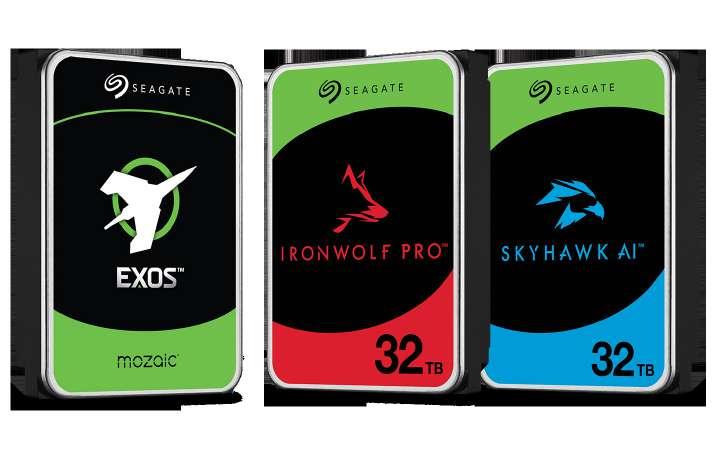
SEAGATE 32TB CAPACITIES NOW SHIPPING TO CHANNEL AND RETAIL PARTNERS GLOBALLY
Flagship SkyHawk AI, Exos, and IronWolf Pro Drives take center stage as Seagate showcases video intelligence innovation at Intersec 2026.
Seagate Technology plc, a global leader in mass - capacity data storage, showcased advanced storage solutions at Intersec 2026 that help power the transformation of AI-driven video analytics into searchable, decision -ready intelligence. The edge-tocloud portfolio is designed to help businesses unlock the full value of their data and make smarter, faster decisions.
AI applications in video image analytics (VIA) are fueling unprecedented data growth at the network edge. IDC reports that more than 75% of organisations expect their video data to at least double over the next five years, as AI adds summaries, annotations, and metadata to every frame. This surge is driven by new use cases across industries - from accelerating investigations and automating alerts to ensuring compliance and enabling deep operational insights.
To help meet this demand, Seagate highlights its latest mass-capacity storage breakthroughs at Intersec. Building on its leadership in CMR technology, the company brings industry-leading 32TB hard drives
across its Exos, SkyHawk AI, and IronWolf Pro portfolio to channel and retail partners. Following the blueprint established in hyperscale cloud environments - where Seagate Mozaic technology at higher capacities is already provenenterprise customers can confidently scale AI workloads across today’s complex hybrid and multi-cloud infrastructures. Hard drives deliver unmatched capacity, performance, and scalability enabling businesses to efficiently store and process massive volumes of data, supporting AI adoption at the edge and in data centers.
“AI applications, like computer vision, are transforming how video is used across industries,” said Melyssa Banda, SVP of Edge Storage and
AI APPLICATIONS, LIKE COMPUTER VISION, ARE TRANSFORMING HOW VIDEO IS USED ACROSS INDUSTRIES,” SAID MELYSSA BANDA, SVP OF EDGE
Solutions at Seagate. “From smart city initiatives to retail and critical infrastructure, video is becoming a searchable business intelligence, and it’s changing how operations run day-to-day. This pivot demands a new kind of data backbone: mass-capacity storage at the edge and in the data center to keep insights flowing and archives searchable. Without it, the promise of AI-powered video analytics stalls.”
To learn more, visit us at Intersec booth SA H19. Seagate experts are there to provide you with the latest updates on cutting-edge technologies designed to address the needs of the AI-driven data surge.
Media are invited to a networking Happy Hour on January 13 at 12:30pm at the booth.
Availability and Pricing: SkyHawk AI, Exos, and IronWolf Pro 32TB hard drives were available starting January 14 through Seagate’s authorised channel partners worldwide. Recommended retail price are $699.99 - SkyHawk AI ; $729.99Exos; $849.99 - IronWolf Pro.
ZOHO CORP. OPENS ABU DHABI AND DUBAI DATA CENTRES TO STRENGTHEN UAE DATA SOVEREIGNTY
New data centres in Dubai and Abu Dhabi to host 100+ cloud-based solutions of both Zoho and ManageEngine, the company’s two key brands.
Zoho Corporation, a global technology company, today announced the launch of its data centres in UAE in Dubai and Abu Dhabi. The data centres form a part of AED 100 million investment in the UAE that the company had announced in 2023. The data centre will host solutions from Zoho Corporation’s two key brands: ManageEngine (enterprise IT management) and Zoho (cloud business solutions).
“The opening of our data centres is part of our ongoing investment in the UAE, which remains one of the largest markets in the region for both ManageEngine and Zoho brands,” said Shailesh Davey, Co-founder and CEO, Zoho Corporation. “With this move, Zoho Corporation will be enabling businesses store their data locally, strengthening data sovereignty, and supporting National Cybersecurity Agenda. Furthermore, 100+ solutions across Zoho and ManageEngine, will enable businesses of all sizes, and government and semi-government organisations adopt cloud technology for digital transformation in nearly every area of operation, and help Dubai become a digital economy line with Dubai Vision 2030.”
The data centres have also received certification from CSP Security Standard Certificate by DESC (Dubai Electronic Security Center). This qualifies Zoho Corporation to serve government and semi-government entities in addition to local businesses. As part of this, the data centres are also compliant with: ISO 27001, ISO 22301, ISO 27017 and CSA STAR Level 2 Certificate for data centres. In addition, the company’s Dubai office has received ISO 27001 certificate.
Growth Momentum of Zoho
Zoho has grown by 38.7% in 2025 in UAE, and expanded its partner network by 29% in the same period.
It has further increased its employee count by 35% last year to serve the needs of its increasing customer base, and expanded into a larger office. The key solutions driving Zoho’s growth are: Customer Experience platform (Zoho CRM, Desk and Zoho CRM Plus), Zoho Books (VAT-compliant and FTA-approved accounting software), Creator (lowcode app development platform), Zoho Workplace (communication and collaboration platform), and Zoho One (all-in-one suite of 55+ products). In the past five years, Zoho has invested Dh80 million on enabling over 7000 businesses in their digital transformation journey through various partnerships such as those with DET and Dubai Culture. In the past few years, Zoho has seen a steady upmarket growth in the country, 48% in 2025, led by its strong platform capabilities that allow enterprises achieve faster time to value and lowers their total cost of ownership.
Growth Momentum of ManageEngine
ManageEngine has grown by 20% in 2025 in the UAE, led by its continued focus on the enterprise sector. The brand has strengthened its local presence, including through the partner network, to support the increasing adoption of its solutions across both private and government organisations. The key solutions driving the growth are: Endpoint Central (unified endpoint management), ServiceDesk Plus (unified service management) and Site24x7 (cloud-based observability platform). In recent years, growth in the UAE for ManageEngine has been particularly strong in BFSI, government and public sector, and manufacturing, fuelled by cloud adoption, which is growing at nearly 35% in the region for the brand’s cloud solutions. This trend reflects a broader shift toward cloud-first strategies, as organisations prioritise scalability, agility, and faster innovation.
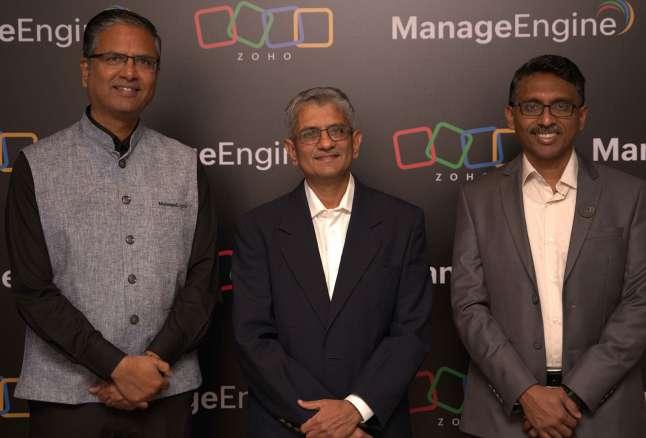
Rajesh Ganesan, CEO of ManageEngine, Shailesh Kumar Davey, Co-founder and CEO of Zoho Corporation and Hyther Nizam, President of Zoho – Middle East and Africa.
THE CHANNEL REINVENTION: AI REDEFINES PROFITABILITY
Vendors are redesigning partner ecosystems around orchestration, platforms, and outcomes — marking a structural reset in how the channel creates value as AI shifts from experimentation to enterprise-scale execution.
AI is no longer a science project for the channel — 2026 is the year of commercial accountability. After two years of pilots, copilots and proof-ofconcepts, customers across the Middle East are demanding measurable impact, not experimentation. The consensus among leading vendors is unmistakable: margin is shifting away from product resale and toward partners who can orchestrate platforms, unify enterprise data, modernise infrastructure, and govern AI at scale.
Success now hinges on turning fragmented tools into integrated, outcome-driven environments that reclaim time, strengthen resilience, and unlock operational efficiency. In this new cycle, the most profitable channel partners will not be those with access to AI technology, but those with the expertise to connect systems, navigate sovereignty and compliance demands, and deliver autonomous workflows tied directly to business transformation.
From AI features to business outcomes
Samih Moussly, Senior Director –Global Partners & Channels, EMEA South at ServiceNow, captures the shift succinctly: partners must stop selling AI features and start delivering business outcomes. Enterprises across the region have spent the past 18 months experimenting with chatbots and copilots, yet many pilots have failed to translate into tangible results.
Geoff Greenlaw VP EMEA/LatAm Channel Pure Storage.
The partners gaining traction are reframing the conversation. Instead of leading with tools, they are leading with impact — quantifying hours saved, risk reduced, and processes
automated end-to-end. Three priorities define this transition: deploying AI that completes work rather than simply assists, unifying enterprise data so AI has business context, and embedding governance frameworks as AI becomes a board-level concern.
For partners, the revenue opportunity lies in bridging the gap between pilot and production. Platform integration services, outcomebased pricing models, and sovereign infrastructure expertise are emerging as primary margin drivers. In markets such as the Middle East, where data residency and compliance are nonnegotiable, these capabilities are becoming critical differentiators.
Infrastructure optimisation enters value conversation
While workflow orchestration is one side of the equation, infrastructure strategy is the other. Geoff Greenlaw, VP EMEA/LatAm Channel at Pure Storage, points to a maturing AI investment landscape. “Organisations are no longer buying GPUs on momentum alone; they are scrutinising utilisation and return on investment,” said Greenlaw.
This creates a new advisory opportunity for partners: helping customers optimise AI infrastructure rather than simply expanding it. Virtualisation challenges and the shift towards microservices, Kubernetes, and modern application environments are opening doors for deeper engagement. Partners who guide customers through architectural decisions — whether to remain with current providers, move to the cloud, or adopt new virtualisation models — are embedding themselves more deeply in customer environments and creating sustained value streams.
Across sectors, enterprises are prioritising resilience, sustainability, and operational efficiency over point solutions. The partners who can design integrated, end-to-end environments that unlock the value of data while simplifying management are emerging as leaders in the AI economy.
Yet performance and optimisation alone do not make AI enterprise-
Maya Zakhour Director of Partner Ecosystem BeyondTrust.
ready. The ability to secure identities, privileges, and autonomous systems is becoming just as critical as infrastructure strategy.
CUSTOMERS, PARTICULARLY IN THE MIDDLE EAST, ARE WILLING TO PAY FOR TRUSTED AI DEPLOYMENTS THAT PROTECT SENSITIVE DATA AND MEET REGULATORY DEMANDS.
MAYA ZAKHOUR, DIRECTOR OF PARTNER ECOSYSTEM, BEYONDTRUST.
AI Needs a Security Control Tower
AI moving into production has made security the defining factor between scalable deployments and stalled initiatives. Maya Zakhour, Director of Partner Ecosystem at BeyondTrust, notes that partners must embed Privilege-Centric Identity Security directly into AI workflows to move beyond experimentation.
Autonomous AI systems — particularly agentic AI models capable of acting independently — introduce a new class of risk. Without strict identity and privilege controls, these systems can become high-speed vulnerability multipliers. Zakhour
Paul Flannery VP International Channel, Epicor.
argues that the next wave of partner opportunity lies in what she describes as “security agentic AI”: enabling AIdriven automation while maintaining continuous visibility and governance across identities, machines, and AI agents.
This evolution shifts security from a protective afterthought to an operational enabler. Partners who can unify security management across AI, cloud, and onprem environments — while navigating sovereign infrastructure requirements — are positioned to command premium margins. Customers, particularly in the Middle East, are willing to pay for trusted AI deployments that protect sensitive data and meet regulatory demands.
LONG VIEWED AS BACK-OFFICE INFRASTRUCTURE, ERP IS BECOMING THE TRUSTED DATA BACKBONE FOR INTELLIGENT AUTOMATION.
PAUL FLANNERY, VP INTERNATIONAL CHANNEL, EPICOR.
In this environment, AI readiness is no longer defined by model access or infrastructure scale alone. It rests on the ability to balance innovation with trust — ensuring autonomous systems operate within clearly governed identity boundaries.
Once infrastructure is optimised and AI operations are secured, the next question becomes: what enterprise data will these systems act on? This brings the conversation to the data backbone.
ERP as AI backbone
Paul Flannery, VP International Channel at Epicor, brings the data layer into focus. AI has moved from hype to hard results; the starting point is ERP. Long viewed as back-office infrastructure, ERP is becoming the trusted data backbone for intelligent automation.
For channel partners, this reframes ERP as the foundation of the AI stack. Conversations that once centred on individual modules now extend into broader ecosystems. A manufacturing engagement may begin with (Configure, Price, Quote) CPQ to improve customer engagement and production agility, then expand into financial planning tools to enhance resilience and visibility. The model shifts from single-solution delivery to a platform-led expansion strategy.
The partners thriving in this environment are re-engineering their business models around cloud-first, AI-enabled delivery and continuous improvement cycles. Specialisation, industry fluency, and the ability to connect technology with tangible business outcomes are proving more valuable than broad but shallow portfolios.
Vendor ecosystems evolve with the channel
The structural nature of this shift is reflected in how vendors are redesigning their partner programmes. ServiceNow has enhanced its global Partner Program to accelerate AI agent innovation, introducing a reimagined Build Program that opens its ecosystem to more innovators and strengthens the ServiceNow Store as
a global marketplace for partner-built AI agents. More than 1,000 partners are transitioning into the revamped framework, which simplifies how partners build, certify, and distribute solutions on the ServiceNow AI Platform.
A unified investment portfolio, streamlined pricing model, and expanded funding mechanisms — including Market Development Funds and Strategic Investment Funds — aim to reduce friction and enable partners to focus on innovation and monetisation. The emphasis is clear: partners are not just implementers but co-creators of AI-driven workflows and industry solutions.
Cisco’s launch of the Cisco 360 Partner Program reflects a parallel evolution. Designed after extensive codesign with partners, the programme aligns partner success with customer outcomes in AI-ready data centres, future-proofed workplaces, and digital resilience. New designations, incentive models, and tools such as the Cisco Partner Locator and Partner Value Indexes are geared towards recognising expertise and rewarding lifecycle value creation rather than transactional volume.
Both initiatives point to the same conclusion: partner programmes are being recalibrated to support an outcome-based, ecosystem-driven channel model.
Samih Moussly Senior Director –Global Partners & Channels, EMEA South ServiceNow.
The margin is in orchestration Across platforms, infrastructure, and enterprise applications, one theme stands out: the margin in 2026 sits in orchestration. AI-ready partners no longer compete on model access or feature sets — those are rapidly commoditising. They compete on their ability to design autonomous workflows, integrate disparate systems, manage
FOR PARTNERS, THE REVENUE OPPORTUNITY LIES IN BRIDGING THE GAP BETWEEN PILOT AND PRODUCTION.
SAMIH MOUSSLY, SENIOR DIRECTOR – GLOBAL PARTNERS & CHANNELS, EMEA SOUTH, SERVICENOW.
governance and compliance, and deliver measurable business outcomes within complex regional environments.
For Middle East partners, this means mastering data sovereignty requirements, supporting local language needs, understanding sectorspecific regulations such as Islamic finance, and aligning with national digital and smart city ambitions. It also means building alliances within the channel ecosystem to deliver integrated solutions that span infrastructure, data, and workflows.
The channel is not being replaced by AI — it is being redefined by it. The most successful partners will be those who evolve from product resellers into platform orchestrators, innovation collaborators, and strategic advisors. In the AI economy, technology may be the enabler, but orchestration is the business model.
SATELLITE CONNECTIVITY AND LEO INNOVATION RESHAPE FUTURE OF GLOBAL COMMUNICATIONS
Hasan Iftikhar, Partner at Deloitte Consulting, explains how the convergence of LEO satellites, direct-to-device services, and 5G–NTN integration is accelerating the space economy and unlocking new opportunities for enterprises and consumers.
The global space economy is entering a decisive growth phase, driven by falling launch costs, rapid advances in satellite technology, and the rising demand for ubiquitous, low-latency connectivity. The satellite networks—particularly Low Earth Orbit (LEO) constellations— are converging with terrestrial 5G and future 6G infrastructures, they are reshaping how connectivity, navigation, and data-driven services are delivered across industries.
Hasan Iftikhar, Partner at Deloitte Consulting, spoke to Tahawultech. com about his perspective on the evolution of satellite performance, the emergence of direct-to-device services, the regulatory and spectrum challenges facing the sector, and the enterprise and consumer opportunities unlocked by seamless non-terrestrial and terrestrial network integration.
Interview excerpts:
What is your point of view on space economy, and how is the satellite connectivity playing a role in that?
Space economy is expanding rapidly,
with forecasts that project this to be a $1.5 trillion sector over the next decade. This growth is driven by the direct contribution of reducing costs to enter space including the cost of production and operation. There is as well the large indirect growth factor coming from the overall digital economy growth, which has resulted in many folds increase on reliance in connectivity, coverage and new applications that utilise geospatial digital data and space applications.
What is the future of satellite performance, and what is fuelling its development?
There are 3 earth orbits that are active in satellites coverage and its development as a connectivity network. The most optimal of these orbits is LEO (Low Earth Orbit), and this is where the most satellite into terrestrial networks cases are going to take place. LEO stands out as the lowest latency and hence offers enhanced capability for advancing space applications. The development is driven by reduction in time to launch, and the cost optimisation. The need for innovation is anchored
into connectivity via satellites, navigation-oriented use cases and AI and machine learning related demands. The future lies in seamless 5G and NTN coverage, 5G backhaul, direct to device and IoT coverage.
Do you think that direct – todevice services will eventually go beyond messaging and low bandwidth, to support voice and data for the mass market?
The satellite connectivity ecosystem is moving towards better coordination and joint development. In order for high end services to be accessible via D2D, it needs standardisation bodies, regulators, satellites operators, mobile network operators and the device manufacturers to advance as an ecosystem. We recently have seen Apple enhance its D2D capability in newer iOS versions. Data services are already active and improving, with voice, data and video services. That said, the value proposition of D2D is to work in conjunction with terrestrial 5G, hence the mobile operators are today in the need to redefine their D2D and NTN (nonterrestrial network) strategy.
What are the challenges or weak points that need to be touched on in these satellite services, to allow them to reach full potential?
The challenges can be categorised into regulatory, technical, spectrum, and standardisation. On the regulatory front its critical to solve for geographical, jurisdiction and consumer data protection challenges. The technology and spectrum are where the most innovation potential exists, and the cost optimisation of satellite production and launch into LEO, has already produced positive results however spectrum allocations balance across NTN and terrestrial 5G is critical, as spectrum scarcity in the case of LEO needs to be managed. Standardisation updates is an evolving process; we are going to see progress with 3GPP, ETSI and ITU definitions that are critical for D2D adoption and driving scale.
How will satellite-powered services integrate with terrestrial 5G/6G networks, and what new opportunities will this convergence unlock for enterprises and consumers?
Mobile network operators have started reshaping the business model and go to market for NTN. KDDI, T-Mobile, Vodafone are a few examples where in recent months there has been major progress on D2D and 5G integration of business model. The opportunities are across IoT/M2M, broadcast TV,
THE FUTURE LIES IN SEAMLESS 5G AND NTN COVERAGE, 5G BACKHAUL, DIRECT TO DEVICE AND IOT COVERAGE.
enterprise B2B, global navigation services, mobility related applications and backhauling. Healthcare, agriculture and mobility are the top sectors that will be at the higher end of adoption and demand generation foe satellite powered integrated connectivity use cases.
What role do regulatory frameworks and spectrum policies play in accelerating satellite innovation, and how can the region prepare for the next wave of space-based connectivity?
Effective spectrum management and supporting regulatory policies are essential for enabling the path to satellite systems and services growth. As terrestrial networks provide services to billions of consumers, it’s important that the spectrum is protected with terrestrial licenses obligations and mitigation measures are taken. Regulatory measures around proper definition of power thresholds for instance is another key aspect as the industry moves to spectrum sharing between satellite and terrestrial operators.
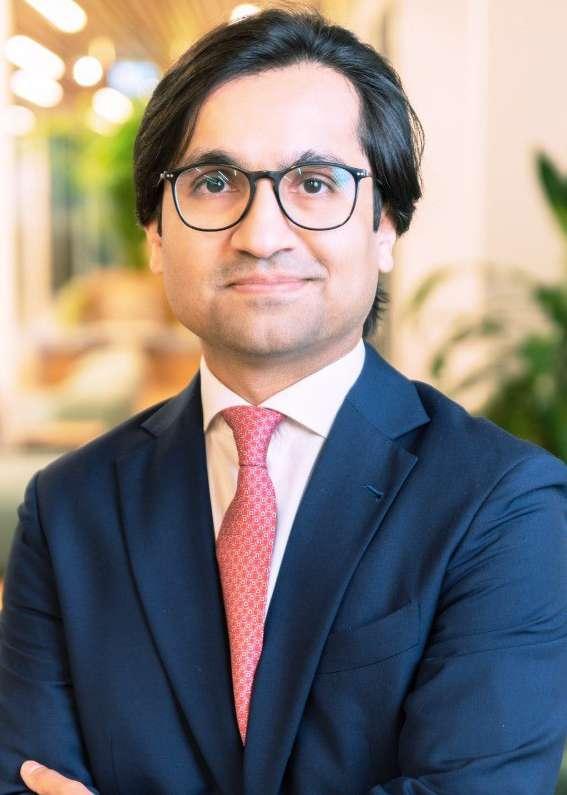
Hasan Iftikhar
Partner
Deloitte Consulting.
MULTI-AGENT AI LAY
FOUNDATION FOR AGIREADY ENTERPRISES, SAYS COGNIZANT’S CHIEF AI OFFICER
Babak Hodjat, Chief AI Officer at Cognizant, explains how agentic architectures are helping organisations move from isolated AI experiments to scalable, governed systems that deliver measurable ROI and long-term operational resilience.
Enterprises are moving beyond isolated generative AI experiments towards systems that can operate reliably, adaptively, and at scale. Agentic architectures are increasingly shaping this transition, redefining how AI is designed, deployed, and governed within complex organisations.
Babak Hodjat, Chief AI Officer at Cognizant, shared a practitionerled perspective in an interview with Sandhya D’Mello, Technology Editor, CPI Media Group on the evolution from early single-agent assistants to today’s modular, multi-agent systems.
Hodjat explains why multi-agent approaches are proving essential for navigating fragmented data, legacy infrastructure, and intricate workflows. Agentic AI will enable incremental ROI, reshape digital operations over the next decade, and brings organisations closer to AGIlike capabilities while embedding governance, trust, and accountability from the outset.
Interview excerpts:
How do you see the evolution from single-agent systems like early voice assistants to today’s modular, multi-agent architectures?
When we developed the Dejima
technology, the natural language technology behind Siri, there were no AI assistants, and the state of the art was based on grammatical analysis of language. Our main innovation was to represent various functionality and services as simple AI agents in a network of agents, collaborating in response to user queries and commands. Today, we are able to fit the entire knowledge of humanity into an AI agent in the shape of an LLM, which is able to understand, generate, and communicate using natural language. Today’s multi-agent systems are composed of specialised agents which collaborate—planning, retrieving context, using tools, and coordinating with one another—so they can carry out complex workflows with reliability. This shift enables enterprises to dynamically respond to evolving needs and goals, moving from static Q&A to adaptive orchestration, where agents can reason collectively and selfcorrect, reliably responding to previously unforeseen situations and context.
Why is a multi-agent framework emerging as the most practical path for enterprises that operate with fragmented data, legacy apps, and complex workflows? Enterprises are messy by nature: legacy systems, large amounts of often disparate applications, and
siloed data. Agentic architectures let us represent disparate data sources and APIs with collaborating agents, working together to provide coherent knowledge retrieval, and tool use, making the complexities transparent to the organisation. Modernisation in the form of upgrades and consolidation of API and data systems is still beneficial, making systems more efficient and exposing more functionality, but this can now happen less painfully and more incrementally, with the unified interface and mapping from intent to processes being handled by the agents. This approach also reduces risk because agents can be deployed in controlled domains before scaling across the enterprise. Multi-agent frameworks, like our open-source Neuro AI multi-agent accelerator, are easy to upgrade, wrap legacy systems by providing a bridge between natural language and data retrieval and API calls. This enables enterprises to coordinate and orchestrate AI agents from various sources, whether internal or third-party. This interoperability means businesses can adopt an agile iterative process for AI projects that is guided by measuring efficiency, productivity, and quality gains while guaranteeing trust and safety are built into all elements of design and implementation. This approach empowers all elements of the organisation to contribute and expand
AI use through a process of sandboxing and governance, ensuring safe and rapid scaling.
Many organisations struggle to realise ROI from AI. How do agentic systems enable incremental adoption while still delivering measurable business impact early on?
Agentic systems let you start small. Automate one endtoend workflow— service desk, claims, supply chain planning—measure cycletime, errorrate, and handoff reduction, then scale to adjacent processes. The gains show early because agents attach to existing systems and encode operational checks. This means enterprises can demonstrate tangible
business impact within weeks, not years, while building confidence for broader transformation. It’s a pragmatic path that aligns with today’s expectations: low upfront investment, measurable KPIs, and scalability baked in. In fact, our own multi-agent system that we launched in mid-2025 at Cognizant for our employee intranet, 1Cognizant, has already resulted in
45% reduction in incident tickets across 11 million inquiries.
What will this shift mean for how businesses build, manage, and scale digital operations over the next decade?
Digital interactions are still largely human-to-machine, or code to code. The Agentic Web is a fast-advancing evolution of how the internet currently operates, where robust, future-proof, semi-autonomous agents will increasingly handle transactions, negotiations and exchanges on behalf of individuals and organisations. For operations, this demands systems capable of orchestrating workflows, contextaware decisioning, and selfservice—with governance programmed in endto-end. Traffic from autonomous agents is already growing, this means organisations will increasingly have to ensure that systems are coherent, reliable, and efficient for software intermediaries. As autonomous AI agentic systems begin to represent users, businesses will need to create digital environments that machines can read and understand clearly or risk losing visibility with these new digital customers in the marketplace. There is also an immediate need for trust protocols and standards for inter-agent communication.
Looking ahead, how do multiagent architectures move us closer to AGI-capable systems — and what guardrails must enterprises put in place to adopt them responsibly?
Before AI is close to what we consider ‘AGI’, there will still need to be several fundamental breakthroughs: Large Language Models are still struggling with key AGI markers such as memory retention and online learning. But what multi-agent systems do already very well is combining specialisation (by breaking complex workflows into individual tasks), coordination (by enabling collaborative interaction and communication), and reliability (by facilitating collective reasoning and error mitigation). To deploy them responsibly, organisations need to apply oversight and controls like our
TRUST framework—which is itself a multi-agent system that provides realtime auditability, governance, testing and validation, transparency and documentation, balancing innovation with accountability.
Given your experience at Cognizant, where do you see the fastest adoption of enterprisegrade AI agents in the Middle East, and what differentiates this region’s readiness?
Building on a mix of the region’s entrepreneurial spirit, progressive regulation, AI talent and cost-effective data centers, the Middle East has the ingredients to be ahead on widespread adoption and innovation in multiagent systems. There have been early investments in core open-source AI models here, which have kept the region at the forefront of research and development in core AI. Building on this momentum, localised agentic systems for consumer and business use are conceivable. The region can also pioneer inter-institutional multiagent systems by facilitating standards and sandboxes for validating agentic systems that would span consumer, financial, and business networks in a trustworthy manner, enabling increased reliable autonomy of agentic systems.
What misconceptions do business leaders still have about AGI or agentic systems, and how should they be reframing their expectations?
As businesses turn to AI to automate long, complex, businesscritical processes, leaders should remain mindful that bigger doesn’t automatically mean better. Here’s why: today’s large language models struggle with long, multi-step reasoning. They can make catastrophic mistakes after only a couple of hundred reasoning steps, and in enterprise workflows, these mistakes aren’t small—they compound. That’s why organisations are hitting a ceiling with AI agents. Recent research by our Cognizant AI Lab suggests a better approach: to use many smaller AI agents working together. Our new system, MAKER, solved a million-step reasoning
problem with zero errors—something no single model has ever done. Error correction methods, analogous to what made telecommunications systems viable, will unlock reliable, enterprisegrade multi-agent systems.
As AI agents begin to collaborate, reason, and self-optimise, how should enterprises rethink talent, workflows, and governance?
AI will increasingly move from just augmenting our work to AI agents as team members, with a level of autonomy in their operations and human-on-the-loop oversight.
When it comes to talent, the workforce needs to evolve from prompt engineers to agent orchestrators. These roles will focus on designing multiagent systems, managing, maintaining, and extending agentic systems. Domain experts will become ‘agent product managers,’ pairing business and systems knowledge with technical oversight to ensure agents deliver measurable and accurate outcomes. This requires enterprise-wide skilling programmes and organisations empowering their employees to take ownership of innovating and responsibly building their own systems. Workflow processes will shift from siloed applications to agentified ecosystems where connected agents handle multi-step tasks seamlessly. Instead of employees navigating multiple, siloed systems, agents will negotiate and collaborate behind the scenes, improving speed and consistency. Enterprises should prioritise modular multi-agent architectures and adopt an LLMagnostic approach for robustness and future-proofing. For governance, controlled autonomy and engineered innovation are key. Let teams build their own agents, but plug them into a discoverable, governed multi-agent ecosystem with observability and auditability built in, including logs of agent decisions and redundancy mechanisms like ‘agents monitoring agents’. Finally, humans must remain involved to take responsibility for consequential decisions, ensuring trust and compliance as AI scales across the enterprise.
Radisson Blu Hotel & Convention Center Riyadh Minhal
12th April 2026 06:30 PM onwards
In November, CPI will be hosting the inaugural Future Enterprise Awards in Riyadh. The awards are designed to recognize IT and business leaders that are driving rapid digital transformation across the Kingdom.
The KSA Awards want to acknowledge those who are championing change, whether it be from a private or public sector organization, we want to pay tribute to the fearless trailblazers forging a new path and a new identity for the KSA. For more information about the event and nomination details, please visit the event website below :https://tahawultech.com/ksa-futureenterpriseawards/2026/
OFFICIAL PUBLICATIONS HOSTED BY GOLD SPONSORS
MIDDLE EAST EMERGES AS STRATEGIC ENGINE FOR BITCOIN MINING, SAYS MINING GRID’S FOUNDER, CEO
Rami Alsridi, Founder and CEO of Mining Grid, explains how regulatory clarity, energy integration, and institutional capital are positioning the region as a long-term pillar of the global crypto economy.
Rami Alsridi, Founder and CEO of Mining Grid, offers a clear-eyed view of how the Middle East—anchored by the UAE—is emerging as a strategic centre for Bitcoin mining and digital assets. Alsridi reflects on the significance of Bitcoin approaching full issuance, the shift from scale-driven mining to efficiency and sustainability, and the region’s growing appeal for institutional investors.
The interview also explores how regulatory clarity, energy infrastructure, and long-term capital are shaping investor behaviour and positioning the Middle East as a critical pillar of the global crypto economy.
Interview excerpts:
How do you assess the current Bitcoin and crypto landscape across the Middle East?
The Middle East led by the UAE, has rapidly positioned itself as one of the world’s most dynamic crypto hubs. Clear regulation, sovereign wealth participation, and strong capital inflows have created an environment where institutional miners, exchanges, and innovators can thrive. Abu Dhabi and Dubai are not only attracting global players but also shaping digitalasset strategy at a regional level. What sets the Middle East apart is
its combination of regulatory clarity, abundant energy resources, and its unique role as a financial bridge between Asia, Europe, and Africa. Together, these factors make the region a cornerstone of the global crypto economy.
With nearly 95% of total BTC already mined, what does this milestone signal for miners and investors?
Crossing the 95% threshold marks a fundamental shift in Bitcoin’s mining economics. The era of abundant block rewards is ending, and the focus is moving toward efficiency, sustainability, and integration with energy infrastructure. For miners globally, success will increasingly hinge on access to renewable energy, advanced hardware, and smart grid partnerships. For investors, this milestone reinforces Bitcoin’s scarcity narrative, supply is essentially fixed, and highlights the growing importance of transaction fees and long-term network resilience. It’s a turning point where optimisation, not raw capacity, defines the future of mining.
What is driving the renewed surge in Bitcoin mining activity globally and regionally?
The renewed surge in Bitcoin mining activity is being driven globally by institutional adoption, ETF inflows,
and the race to secure efficient energy sources. In the Middle East, momentum is fueled by regulatory clarity, sovereign wealth engagement, and significant investment in renewable energy and advanced grid systems. These factors are coming together to make the region one of the most attractive destinations for industrial-scale mining. Importantly, this surge is not just about chasing short-term profits, it reflects a broader shift toward sustainable, integrated mining models that align with national energy strategies
How do Bitcoin price cycles shape sentiment and decisionmaking among Middle East investors?
While halving cycles remain symbolic in reinforcing Bitcoin’s scarcity, their direct impact on sentiment is less pronounced than in earlier years. Institutional investors now anchor their strategies around macro drivers ETF flows, regulatory clarity, and global liquidity, viewing Bitcoin as a long-term diversification tool rather than reacting to halving events alone. Retail investors still respond to halvings, but their enthusiasm is increasingly tied to price momentum and media coverage of new highs. Overall, decision-making in the region is shaped more by institutional adoption, infrastructure development, and integration into broader financial
Rami Alsridi Founder and CEO Mining Grid.
strategies than by the halving narrative itself.
Is the region’s infrastructure ready to support large-scale Bitcoin mining and blockchain adoption?
The UAE and GCC states have
invested heavily in renewable energy, advanced grid systems, and forward-looking regulatory frameworks. These investments are not only enabling industrial-scale mining but also embedding mining into national energy strategies. By aligning mining operations with
sustainability goals, the region is positioning itself as a global leader in both Bitcoin mining and broader blockchain adoption. The infrastructure is not just ready, it is being actively designed to scale, integrate, and set new standards for the industry worldwide.
UAE-based Yango Group published its inaugural Impact Report today, the company’s first comprehensive overview of its social, economic, and environmental contributions across more than 30 countries. The report establishes a long-term framework for how Yango measures, scales, and communicates its impact as a global technology company.
The inaugural report reflects Yango Group’s evolution from a single ride-hailing service in 2018 into a multi-service digital ecosystem supporting millions of people daily. The report highlights how Yango’s digital ecosystem empowers local businesses, expands earning opportunities for partners, and invests in the next generation of STEM talent, equipping countries with the skills and foundations needed for future digital cities and economies.
“This inaugural report marks an important milestone for Yango Group,” said Daniil Shuleyko, CEO of Yango Group. “We are committed to scaling not only our technology, but also our positive impact on communities, local economies, and future generations. Our goal is to help build the digital cities and digital opportunities of tomorrow — together with the countries we serve.”
According to the report, partners across Yango Group’s platforms earned more than $4 billion globally, reflecting the company’s focus on building inclusive digital platforms
that expand earning opportunities and support sustainable livelihoods across markets, including the Middle East and North Africa.
Yango’s partner network includes:
• 6,000 businesses partnered with Yango Group’s ride-hailing and delivery services
• 2.1 million registered partner drivers
• 600,000 registered partner couriers
Across Yango Delivery, 40% of users are small and mediumsized businesses, relying on Yango’s infrastructure to scale operations and reach new audiences. Additionally, Yango Group’ partner-first operating model was designed to support flexible income opportunities across global markets, including culturally-sensitive partner support initiatives across MENA such as Ramadan-focused features and community-based assistance programs.
Community Investment and Cultural Inclusion
Community investment and cultural inclusion sit at the heart of Yango Group’s ESG strategy. The Impact Report highlights how its platforms are built to reflect local culture, traditions, and everyday realities across diverse markets—from Arabic-first, culturally aware AI such as Yasmina, to Yango Maps’ “comfortable routes,” which factor in more than 800 air-conditioned public transport stops in Dubai to optimise journeys while reducing emissions. During Ramadan 2024, initiatives like Muslim Mode in the Yango Pro app supported prayer schedules and mosque access for partner drivers. Yango Play, the MENA region’s first AI-powered entertainment super
WE ARE COMMITTED TO SCALING NOT ONLY OUR TECHNOLOGY, BUT ALSO OUR POSITIVE IMPACT ON COMMUNITIES, LOCAL ECONOMIES, AND FUTURE GENERATIONS.
app, advanced digital responsibility through the launch of the InstaBlock Lab in the UAE to combat piracy and by signing the UAE Children’s Digital Wellbeing Pact. Beyond the region, the group supported digital inclusion for visually impaired students in Angola and backed youth football academies in Côte d’Ivoire and Zambia.
Strengthening Local Economies Through Technology
Yango’s technology is helping cities operate more efficiently while strengthening local economies. Electric mobility pilots in Pakistan and Côte d’Ivoire support national sustainability goals by cutting emissions and modernising urban transport. Yango Food Delivery expands access to local restaurants and everyday essentials, boosting consumer activity, supporting urban food markets, and creating flexible earning opportunities for couriers. Meanwhile, Yango Buy & Sell and Yango Ads are enabling thousands of small merchants to increase visibility, build customer trust, and participate more effectively in the digital economy.
Investing in STEM
Investing in STEM education is a core focus of Yango’s Impact Report, reflecting its commitment to helping countries build talent pipelines for digital economies and AI-enabled cities. Through these initiatives, young people gain practical skills to actively shape their nations’ digital futures. The Yango Fellowship was launched in Zambia to support 30 high-potential STEM students—including partner drivers and couriers—with full financial assistance, mentorship, and workshops, and was expanded to Côte d’Ivoire in early 2025. In parallel, more than 800 participants joined mobility and smart-city hackathons across six African countries to develop applied data science and machine learning skills, while 2,200 learners in Ghana, Côte d’Ivoire, and Zambia completed a free SQL data analysis course under the Yango Education programme.
HELPING YOUNG PROFESSIONALS BECOME
INDISPENSABLE IN AIDRIVEN LABOUR MARKET
As companies increasingly integrate artificial intelligence (AI) into their operations, a critical question emerges: are we — as a society that includes employers, educators, policymakers, and technology providers — preparing young people for a workplace where essential AI skills will very soon become the norm while many traditional entry-level tasks may soon be automated? In order to achieve this goal, our collective efforts need to address three fundamental challenges.
The Urgency Gap
Despite AI’s growing influence across industries, the urgency for workers to upskill in AI remains low. In a recent marketing study, researchers found that the more knowledge people have about AI, the less likely they are to embrace it. In addition, there may be a misconception that AI literacy only matters for those in technical fields. This belief is dangerous.
Generative AI tools have democratized access to powerful AI capabilities, making these technologies relevant to virtually every industry and role. The administrative assistant drafting communications, the marketing coordinator analyzing campaign data, and the HR specialist screening resumes—all will need to work alongside AI tools that augment their capabilities. Most workers don’t recognize how quickly AI literacy has shifted from optional to essential, leaving many graduates unprepared
for even entry-level positions that increasingly require these skills. That’s why we need to keep raising awareness of the importance of continuous learning – and there’s no time to lose when AI advancements are striking at lightning speed.
Deepened Education-Industry Collaboration
While some higher education institutions have begun incorporating AI into their curricula, AI companies have a role in helping accelerate this movement. As a result of the rapid pace of technology transformation, the “half-life of skills”—the time it takes for a skill to lose half its relevance—is shrinking exponentially. Research found that it has collapsed from 10-15 years to five years, and even shorter for technical skills. In this environment, professionals must embrace building the habit of everyday learning through small, manageable lessons to ensure their skills never expire, even as technology advances at lightning speed. Our educational systems weren’t designed for this pace of change. The gap is particularly pronounced at institutions serving underrepresented or underserved communities.
According to the National Bureau of Economic Research, colleges with wealthier students are more likely than those with lower-income students to offer courses that incorporate cuttingedge knowledge.
That’s why it’s important to have enhanced public-private partnerships that bring real-world AI applications
directly into classrooms. AWS Academy is a program that provides free AI and cloud computing curricula to over 6,600 institutions globally. Most recently, we expanded our offering by giving AWS Academy students free access to advanced AI training and resources and AWS Certification vouchers. Industryrecognized certifications are a great way to demonstrate to employers that candidates have the practical skills and knowledge to excel in their roles.
The Skills Taxonomy Vacuum
It’s clear that people need to evolve their skillsets as technology evolves, but what’s unclear is the specific new skills required for each profession in the AI era. For instance, what specific AI literacy should a marketing graduate possess versus a finance major? How should a humanities student approach AI to remain competitive? These questions remain largely unanswered, creating a paralyzing uncertainty for graduates and educators alike. We need industry-specific consortia to develop clear taxonomies of AI skills required for entry-level roles.
Our recent research with Draup, a data intelligence company, identified in-demand entry-level technology roles and the AI skills that are necessary to secure them. This type of framework is critical to provide crucial guidance to students, empowering them to pursue training that can translate to employability. This is just the beginning. The private sector, policymakers, and educators will need
to collaborate to identify AI skills taxonomies for different professions to help prepare individuals, especially early-career professionals, for an AIdriven labor market.
A Collective Responsibility
The rapid advancement of AI presents both unprecedented opportunity and risk. Used properly, AI can eliminate the most mundane aspects of entry-level work, allowing young professionals to engage in more
EMPLOYERS MUST MOVE BEYOND AI ADOPTION TO DEVELOP COMPREHENSIVE WORKFORCE TRANSFORMATION STRATEGIES.
meaningful, strategic contributions from day one. But this future depends on collective action.
Employers must move beyond AI adoption to develop comprehensive workforce transformation strategies. Educational institutions must accelerate curriculum updates through industry partnerships. And students need accessible pathways to develop AI literacy regardless of their field of study.
No single entity can solve this
challenge alone. The future of work— and the success of an entire generation of workers—depends on our collective ability to close the AI skills gap today. The stakes couldn’t be higher. If we fail, we risk creating a two-tiered workforce: those with AI literacy who thrive, and those without who struggle to gain economic footing. By acting now, we can build a future where AI enhances human potential across all segments of society—starting with those just entering the workforce.
Michelle Vaz Managing Director
AWS Training and Certification.
NINTEX NAMES SAMIR AKEL AS REGIONAL VICE PRESIDENT FOR EMERGING MARKETS
Akel joins to drive growth in the region and bolster the company’s partner ecosystem.
Nintex, the global leader in agentic business orchestration, announced the appointment of Samir Akel as Regional Vice President for Emerging Markets, overseeing operations across the Middle East, Africa, and Eastern Europe.
With more than two decades of experience driving digital transformation across the public and private sectors, Akel has held senior leadership positions at leading global technology firms, including Oracle, BMC Software, and Udacity. In his role at Nintex, Akel will lead the company’s regional growth strategy, strengthen its partner ecosystem, and champion customer success across some of the world’s most dynamic digital economies.
“We are thrilled to welcome Samir to the Nintex leadership team. His deep understanding of the region
and proven track record in delivering large-scale digital transformation make him the ideal leader to accelerate our growth and strengthen our commitment to the Middle East and beyond,” said Tad Finer, CRO at Nintex.
“The region’s vision for innovation aligns perfectly with our mission to simplify and orchestrate the way people work.”
Akel will drive adoption of the
MY FOCUS IS ON HELPING GOVERNMENTS AND ENTERPRISES MOVE BEYOND SIMPLE AUTOMATION INTO TRUE ORCHESTRATION, WHERE HUMANS, AI, AND SYSTEMS WORK
TOGETHER.
full Nintex agentic business orchestration portfolio, including Nintex K2, Nintex CE, and Nintex for Salesforce, empowering organizations to reimagine processes and build the foundation for AI readiness.
Nintex’s business orchestration platforms are already helping organizations in the region to accelerate their digital transformation by automating workflows across departments such as sales, HR, legal, and finance.
“My focus is on helping governments and enterprises move beyond simple automation into true orchestration, where humans, AI, and systems work seamlessly together,” said Samir Akel, Regional Vice President, Emerging Markets at Nintex.
“Emerging markets are home to some of the world’s most ambitious digital transformation programs, and Nintex is proud to be a trusted partner in making those visions a reality.”
Under Akel’s leadership, the company will further align with regional transformation blueprints such as the UAE’s Zero Bureaucracy mandate and Saudi Vision 2030, empowering national strategies through no-/low-code platforms that simplify and accelerate service delivery.
Nintex supports thousands of organisations across the public sector, financial services, manufacturing, and energy industries, streamlining operations and vendor processes through secure, scalable, and intelligent automation.
Samir Akel.
The CIO Leadership Awards is an annual event hosted by CPI that brings key stakeholders from the entire IT ecosystem together.
Our CIO Leadership Awards is designed to get all the prominent CIOs from the Middle East region into the one room to discuss how they have overcome certain challenges, their plans to capitalize on future opportunities and of course to celebrate the incredible success they have engineered for their respective companies.
The CIO Leadership Awards at its core, and since its inception, has always been a knowledge-driven event, and that is evidenced by the high-quality panel discussions, keynote presentations and fireside chats that we have every single year.It is an event that recognizes excellence and engages in robust conversations around the technologies that are reshaping IT. Dubai 05th February 2026 6:30 PM onwards
OFFICIAL PUBLICATIONS
FASSET NAMES RAFIZA GHAZALI, MD, CONSUMER BANKING; TO DRIVE GLOBAL STABLECOIN-LED BANKING STRATEGY
Fasset, the global banking and investment platform, has appointed seasoned banker, Rafiza Ghazali, as Managing Director, Consumer Banking, as the company accelerates the rollout of regulated consumer and SME banking services following its provisional approval from Malaysia’s Labuan FSA regulator to launch the world’s first stablecoin-based Islamic digital bank.
Rafiza brings over two decades of experience across central banking, capital markets, Islamic finance, and digital banking. She has led the end-to-end establishment and public launch of KAF Digital Bank, Malaysia’s second Islamic digital bank, from initial setup through full operationalisation, placing her among a small group of leaders in Southeast Asia with firsthand experience overseeing a digital bank across its full lifecycle.
• Experienced financial services executive to spearhead global consumer banking strategy
• Harnesses Ghazali’s experience to accelerate trusted Shariahaligned digital banking
Rafiza Ghazali said: “Fasset’s mission to expand financial access and build inclusive digital infrastructure regardless of geography or background strongly resonates with me. I look forward to shaping consumer banking operations and deepening engagement
• Cements Fasset’s position as the fastest-growing Islamic digital bank
that serves both global aspirations and local needs.”
Effective as of 1 February 2026, the appointment aligns with Fasset’s ambition to build trusted, Shariahaligned banking services anchored in regulatory discipline and institutionalgrade governance that can be used by customers across the world. The
I
TO SHAPING CONSUMER
platform is currently amongst the fastest growing Islamic digital investment platforms, with 1 million retail app downloads in 2025, $12 billion annualised volume, and an enterprise user base of over a thousand SMEs.
In her new role, Rafiza will drive Fasset’s global stablecoinled banking strategy with a focus on retail, private, SME, and trade finance segments. She will also be responsible for scaling digital banking operations from Malaysia under the Labuan regulatory framework, leveraging Fasset’s multi-jurisdictional banking and compliance infrastructure across the world.
Prior to her role at KAF Digital Bank, Rafiza served as Group CEO of Cradle Fund Sdn Bhd, where she led the transformation of Malaysia’s startup support framework in partnership with government ministries. Her earlier career spans senior roles across both public and private financial institutions. These include executive positions at RHB Investment Bank, Bank Negara Malaysia, Thomson Reuters, and Cagamas. Together, these experiences align closely with Fasset’s objective to scale consumer banking operations that meet the expectations of regulators, institutional partners, and global markets.
Mohammad Raafi Hossain, CEO and Co-Founder of Fasset, added: “Rafiza brings firsthand end-to-end experience in building and running a regulated digital bank. Her knowledge of the Islamic finance world also enables us to build on our foundations to become a multi-jurisdictional Shariah-compliant digital bank. We’re excited to welcome her to our leadership team as we shift from licensing to execution in our mission to scale trusted, Shariahaligned banking infrastructure.”
Rafiza Ghazali.
Dubai
05th March 2026 9:00 AM to 1:00 PM
In alignment with International Women’s Day 2026, TahawulTech.com, organised by CPI, invites you to the Women in Technology Forum & Awards 2026 — a flagship platform dedicated to advancing leadership, inclusion, and impact across the technology ecosystem.
The forum brings together CEOs, technology decision-makers, innovators, policymakers, and trailblazers to explore how organisations that actively invest in women — through mentorship, leadership pathways, skills development, and visibility — gain stronger innovation, resilience, and long-term growth.
Whether you are a technology leader, changemaker, or organisation committed to shaping a more inclusive digital future, this forum offers a powerful space to contribute, connect, and lead.
We look forward to welcoming you to Dubai this March as we come together to Give to Gain.
OFFICIAL PUBLICATIONS
For more information about the event and nomination details, please visit the event website below :https://www.tahawultech.com/women-in-tech/2026/
GBM OMAN APPOINTS FADI DERNAIKA TO LEAD NEXT PHASE OF DIGITAL GROWTH
Gulf Business Machines (Oman), an end-toend digital solutions provider, announced the appointment of Fadi Dernaika as its General Manager in Oman.
The appointment reflects GBM Oman’s continued commitment to supporting Omani organisations in achieving their strategic goals, fostering innovation and enhancing operational efficiencies. In his new role, Fadi will lead the company’s overall strategy and operations while advancing GBM Oman’s role as a trusted technology partner for public and private sector organisations.
Fadi Dernaika General Manager GBM Oman.
With more than 18 years of experience in the Omani market, Fadi brings a deep understanding of customer priorities and a strong record of driving business transformation across the technology sector. He joins GBM Oman from SAP, where he led cloud-driven digital
HR transformation initiatives across the region. Prior to SAP, he held leadership positions at Cisco, Mohsin Haider Darwish (MHD) and Mideast Data Systems (MDS), where he consistently demonstrated his ability to grow market share, foster longterm client partnerships and mentor high-performing teams.
Under Fadi’s leadership, GBM Oman aims to build on its legacy of delivering innovative technology solutions while aligning with Oman’s 2040 vision for digital transformation and economic diversification. His
I AM HONOURED TO JOIN GBM OMAN AT A TIME WHEN TECHNOLOGY IS CENTRAL TO NATIONAL PROGRESS AND ORGANISATIONAL SUCCESS.
local market insight, combined with his ability to translate global best practices into regionally relevant strategies, will enable GBM Oman to not only advance its offerings but also deliver tangible value to its customers.
Marwan Faraj Bin Hamoodah, Chairman of GBM, said: “We are pleased to welcome Fadi Dernaika to GBM Oman. His experience in the local market and his customer focused approach position him to lead the organisation through its next phase of growth while delivering meaningful outcomes for businesses and communities across Oman.”
Fadi’s appointment comes at a pivotal time as Oman strengthens its position as a regional hub for technology and innovation. With GBM Oman’s robust portfolio of enterprise-grade solutions and Fadi’s expertise in scaling businesses, the company is poised to play a significant role in the country’s pursuit of its digital ambitions.
Fadi Dernaika, General Manager, GBM Oman, added: “I am honoured to join GBM Oman at a time when technology is central to national progress and organisational success. I look forward to working closely with our clients and partners to deliver solutions that not only meet their needs but also contribute to fulfilling Oman’s broader aspirations for digital transformation and economic growth.”