



Coursera



The Cognitive City and the Octopus
Why data quality, not algorithms, will decide future of AI ISSUE 334 // FEBRUARY 2026 Mayo Clinic Platform advances collaborative model for AI in healthcare UAE enterprises accelerate

Coursera
The Cognitive City and the Octopus
Why data quality, not algorithms, will decide future of AI ISSUE 334 // FEBRUARY 2026 Mayo Clinic Platform advances collaborative model for AI in healthcare UAE enterprises accelerate
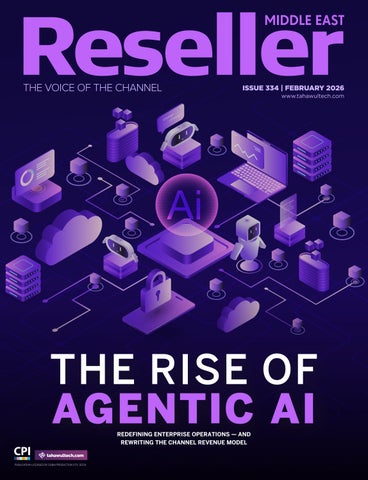
February’s issue captures a decisive shift underway across the regional channel — from enabling digital transformation to engineering intelligent autonomy.
Agentic AI takes centre stage in this edition, not as a futuristic concept but as a structural turning point for enterprise IT. Businesses across the Middle East are moving beyond experimentation. AI is no longer confined to copilots and dashboards; it is increasingly embedded into operational workflows, security response, financial reconciliatio n and customer experience orchestration. The implications for the channel are profound.
Partners are being called to design governance frameworks, sovereign cloud architectures, AI-ready infrastructure, and resilient data foundations that allow autonomy to scale safely. Integration, compliance, and measurable outcomes now matter more than feature checklists. The opportunity is not simply about selling AI tools; it is about building recurring value models around resilience, uptime, optimisation, and risk reduction.
This issue reflects that evolution. From Commvault recognising f earless cyber resilience across emerging markets, to Sophos extending CISO-level intelligence through acquisition, and from Dell Technologies deepening AI collaboration with Ooredoo to NTT DATA accelerating enterprise AI at scale, the ecosystem is aligning around execution and accountability.
Sustainability also continues to intersect with technology stra tegy. Cemvita’s circular bio-oil initiative in Brazil highlights how engineering discipline and innovation can expand the feedstock base for sustainable aviation fuel.
E-mail: sandhya.dmello@cpimediagroup.com
Facebook: www.facebook.com/ TahawulTech
Twitter: @TahawulTech
Instagram: @TahawulTech
Across our interviews and opinion features, a common thread emerges: autonomy without governance is risk, but autonomy with structure is a competitive advantage. Whether in healthcare AI deployment, AI-powered workforce infra structure, CX orchestration, cognitive urban systems, streaming under peak demand, or data integrity frameworks, success depends on orchestration, trust, and measurable outcomes.
The regional channel is entering a new revenue chapter. Recurring services tied to resilience, compliance, sovereign cloud, and AI governance will define long-term growth.
Reseller Middle East continues to spotlight the partners, vendors, and leaders shaping that transformation. The rise of agentic AI is not just a technology story — it is a channel story. And the next billion-dollar opportunity belongs to those ready to build it.
Engineering
Cemvita and Radix announced progress in front-end engineering for a first-of-its-kind circular bio-oil project in Brazil, focused on converting crude glycerin, a biodiesel byproduct, into ultra-low carbon intensity bio-oil used as a feedstock to produce sustainable aviation fuel (SAF) and other advanced biofuels.
Brazil has historically been a global leader in biofuel, primarily through bioethanol. This collaborative project takes a different path. Cemvita’s proprietary biomanufacturing platform converts crude glycerin into a versatile bio-oil that can be upgraded into highvalue, drop-in feedstocks, including coprocessing in existing refineries and/or Hydro-processed Esters and Fatty Acids (HEFA)-based SAF, expanding both the feedstock base and the decarbonisation potential of the fuel value chain.
The collaboration focuses on translating Cemvita’s biomanufacturing process, de-risked through years of pilot and scale-up work, into an industrially executable configuration. Leveraging its deep engineering expertise and global experience supporting large-scale industrial projects, Radix is responsible for developing the engineering, industrial design basis, and scalability framework for the project.
Radix, a technology solutions services company delivering innovative industrial solutions, worked alongside Cemvita to define operating boundaries, pressure-test assumptions, and align the biology with realworld industrial constraints. The result advances the project toward a buildable asset and materially reduces execution risk.
“This project demonstrates how innovation and industrial engineering can work together to enable energy transition,” said Luiz Mello, Head of Energy at Radix. “Cemvita has developed a unique and differentiated


technology. Our close collaboration aims to ensure that this technology can be engineered, built, and operated at an industrial scale with the discipline and quality required for long-term success.”
Cemvita’s process enables crude glycerin, traditionally a low-value byproduct of biodiesel production, to become a strategic input for ultralow Carbon Intensity (CI) fuels. With Radix’s engineering leadership, the project is being designed in a way that could be deployed across biodiesel facilities, supporting broader adoption and long-term growth.
“What the teams have accomplished in the past six months reflects a very high level of engineering collaboration and discipline,” said Luciano Zamberlan, VP of Operations and Engineering at Cemvita. “Together with Radix, we successfully tropicalised a project initially designed for the
U.S., adapting equipment selection, utilities, layout, and integration strategies to Brazil. This approach enabled close to a 40% reduction in cost per ton of biooil produced, while leveraging strong synergies with existing industrial assets and local capabilities.”
This engineering approach intends to be replicable and scalable across biodiesel facilities, enabling crude glycerin to shift from a low-value byproduct into a strategic input for ultra-low Carbon Intensity (CI) fuels. Beyond its technical and commercial relevance, the project supports the development of a more circular bioeconomy by upgrading waste streams into higher-value products and enabling new pathways for sustainable fuels.
The project continues to advance through development phases with the objective of reaching the Final Investment Decision within 2026.
Regional and local partners from the entire Emerging ecosystem, including VARs, Distributors, and MSPs, were recognised in Oman.

Commvault, a leader in unified resilience at enterprise scale, has announced the winners from today’s Emerging Partner Summit Awards, celebrating partners across the region, which includes META, CIS, and CEE, who have shown fearless devotion to cyber resilience in the face of digital threats, market barriers, and business disruption.
Unveiled live at the event held at the Shangri-La Barr Al Jissah Resort on February 5th, the awards celebrate nine standout partners across the Emerging Region – ranging from industry leaders and cloud pioneers to managed service experts and rising stars – each demonstrating Commvault’s customer-first mindset and unified, cloud-native approach to AI-driven resilience.
“Our partners across Emerging Markets exemplify what it means to be resilient,” said Havier Haddad, Channel & Distribution Lead, Emerging Markets, Commvault. “These awards recognise regional partners who deliver exceptional customer outcomes by strengthening enterprise
readiness and resilience through unified data security, governance, identity resilience, and cyber recovery. Together, we are helping organisations across Emerging Markets reduce risk, operate securely in complex hybrid environments, and harness the power of AI to drive growth and long-term competitiveness.”
From regional leaders to local superheroes, this year’s winners represent the most trusted and tenacious names across the Commvault Emerging partner ecosystem:
• Top Partner Award: MDS for Computer Systems
• Top Distributor Award: AlJammaz Technologies
• Rising Star Award: Diyar United Company
• Best Project Award: Data Sciences Corporation
• Partner-Led Business: Storage One
“Organisations today face a storm of constant cyber threats, intensified by the AI era, which is
why we are looking toward unified resilience to combat these incidents, integrating the three key pillars which include recovery, security, and identity resilience,” said Fady Richmany, Corporate Vice President, Emerging Markets, Commvault.
“With the backing of our ecosystem’s important go-to-market channels, partnered with our industry-leading technology, we have all the tools needed to help our customers enable resilience operations (ResOps)where protection, detection, and security operate collaboratively and seamlessly.”
The full list of this year’s Emerging Partner Summit honourees from across the region include:
• Top KSA Partner: MDS for Computer Systems
• Top Gulf Partner: Emircom
• Top CBT Partner: Datacore Information Systems
• Top South Africa Partner: DMP South Africa
• Top Africa Partner: Tenece Professional Services
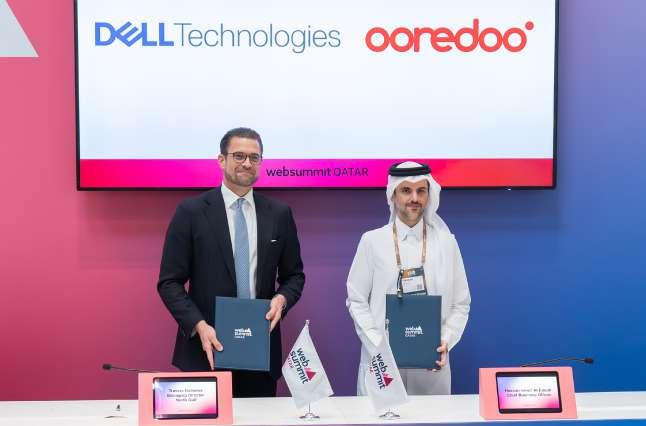
Dell Technologies and Ooredoo announced the signing of a Memorandum of Understanding (MoU) to deliver and power modern AI services.
The MoU was signed by Travers Nicholas, Managing Director, North Gulf at Dell Technologies, and Hassan Ismail Al-Emadi, Chief Business Officer (CBO) at Ooredoo Qatar.
Travers Nicholas, Managing Director, North Gulf at Dell Technologies, added:
“At Dell, we are dedicated to empowering organisations to harness the full potential of data and AI. This collaboration with Ooredoo combines our advanced AI and infrastructure solutions with their forward-thinking approach to telecommunications, enabling meaningful digital transformation. Together, we aim to deliver cutting-edge solutions that drive measurable outcomes and equip businesses with the tools to seize new opportunities.”
Under the agreement, Ooredoo and Dell intend to make AI-as-a-Service available through Ooredoo’s Sovereign AI Cloud. Powered by Dell, this service is planned to offer organisations
secure and scalable AI capabilities, hosted within a locally governed cloud infrastructure, to enable innovation and improve operational efficiency across industries.
Hassan Ismail Al-Emadi, Chief Business Officer (CBO) at Ooredoo Qatar, said:
“This agreement underscores our
dedication to delivering exceptional, future-ready digital experiences to our customers. With Dell’s unparalleled expertise in advanced infrastructure and AI capabilities, Ooredoo will be able to drive innovation that will transform industries and create meaningful impact for businesses and communities in Qatar.”
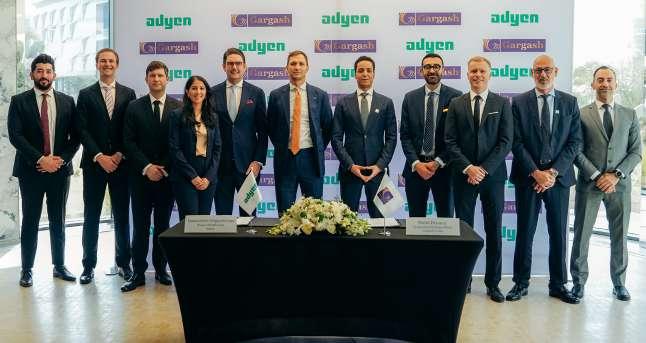
Gargash Group has partnered with Adyen, the global financial technology platform for leading businesses, to enhance its payment ecosystem. The partnership was officially announced during a signing ceremony held on February 11 at the Mercedes-Benz Brand Center in Dubai Design District, reinforcing Gargash Group’s commitment to adopting advanced technologies that elevate customer experience while empowering employees and partners.
As the first phase of this collaboration, Adyen’s payment solution has been successfully implemented at Sixt UAE, part of
the Gargash Group portfolio. The new system delivers a seamless, secure, and frictionless payment experience across online, in-store, and mobile channels, supporting a wide range of transactions, including deposit payments, pre authorisations, chargebacks, refunds, fines, and toll payments, while providing complete control and oversight of all activities. Since its implementation, the solution has achieved meaningful operational improvements. Staff now spend significantly less time on repetitive payment tasks, allowing them to focus on higher-value activities. The centralised platform
provides a 360-degree view of transactions, improving data quality, reporting, and reconciliation accuracy, while enhanced control and audit capabilities increase transparency, security, and accountability.
This strategic partnership with Adyen marks a key milestone in Gargash Group’s ongoing digital transformation efforts. The group continues to invest in technology –from deploying OpenAI for Enterprise and introducing a cutting-edge retail audit platform, to expanding its enterprise-grade productivity and project management capabilities and hosting an AI hackathon for the local
community. Together, these initiatives reflect a proactive approach to innovation and sustaining competitive advantage in an evolving market landscape.
Walid Hizaoui, Group Chief Strategy Officer at Gargash Group, said: “This partnership with Adyen reflects our broader digital transformation agenda, focused on driving operational efficiency through automation, stronger systems, and data integrity at scale. By investing in the right infrastructure, we are streamlining processes, enhancing accuracy, and building a connected ecosystem powered by reliable data. It is a deliberate step in advancing our AI and digital capabilities while reinforcing scalable, future-ready operations across the group”.
Daumantas Grigaravicius, Head of Middle East, Adyen, said: “In the automotive sector, payments are often high-value and operationally complex - from deposits and pre-authorisations to refunds and reconciliations. Gargash Group recognised the need for a more connected and transparent approach. By unifying these processes on a single platform, we’re helping reduce friction, improve control, and create a smoother
experience for both customers and teams. This is about enabling innovation behind the scenes, so the buying journey feels seamless from start to finish.”
Building on this success, Gargash Group is evaluating the phased expansion of Adyen’s platform across additional business lines within the group. Future initiatives under consideration include enhanced POS integration to support preauthorisation payments, as well as greater automation of fines, toll processing, and reconciliation to
further streamline operations and strengthen financial oversight.
With a strong focus on governance, sustainable partnerships, Emiratisation, digital enablement, and community engagement, the Group continues to align its operations with the UAE’s broader sustainability and economic development goals. By embedding technology, efficiency, and social impact into its business strategy, Gargash Group is building a resilient, forward-looking enterprise designed to create lasting value for stakeholders and the wider community.
Lifesize Plans Dubai, an Australian-based global leader in lifesized architectural projections with a focus on Augmented Reality (AR), VR technologies and life-sized scale projections, has witnessed a growing demand for immersive visualisation solutions across the UAE’s real estate and construction sectors.
Since entering the market in 2023, the company has supported developers and consultants seeking greater certainty during the pre-construction phase by bringing architectural plans to life at a true 1:1 scale perfectly aligned with the UAE’s fast-paced, high-value development environment.
Georges Calas, CEO of Lifesize Plans
Dubai, said, “Immersive technologies are fundamentally changing how real estate is experienced in the UAE. From virtual walkthroughs that support off-plan sales to full-scale spatial visualisation that reduces risk before construction begins, AR/VR and lifesized scale projections are becoming essential tools for developers and investors alike. As the UAE continues to attract global capital and push the boundaries of innovation, immersive technologies will play a central role in strengthening the market’s transparency, efficiency and long-term competitiveness.”
As the UAE continues its drive towards smart, sustainable urban
development, the role of immersive technologies within real estate is set to expand further. By enhancing collaboration, improving buyer confidence and enabling more informed investment decisions, these technologies will help to reshape and revolutionise the future of the UAE real estate market. This transformation will be further supported by the country’s strong government, digital transformation initiatives and sustained investor interest.
The rapid growth of the immersive technologies sector is playing an increasingly important role in reshaping the UAE’s real estate sector, as the country continues to
strengthen its position as a global hub for innovation, investment and smart urban development. The adoption of these advancements is enhancing how properties are designed, sold and experienced, while delivering greater efficiency, accuracy and customer engagement across the real estate value chain.
The UAE immersive virtual reality (VR) market alone generated approximately Dh366.148 million in revenue in 2024 and is expected to grow more than fourfold to reach Dh1.612 billion by 2030, expanding at a compound annual growth rate (CAGR) of around 28%, according to market intelligence platform ‘Grand View Research’. This strong growth is being driven by increasing demand for immersive digital experiences across sectors, including real estate, where VR is streamlining decision-making, reducing costs and accelerating sales cycles.
Within the UAE real estate sector, VR adoption is transforming both pre-construction and sales stages. Immersive virtual walkthroughs allow
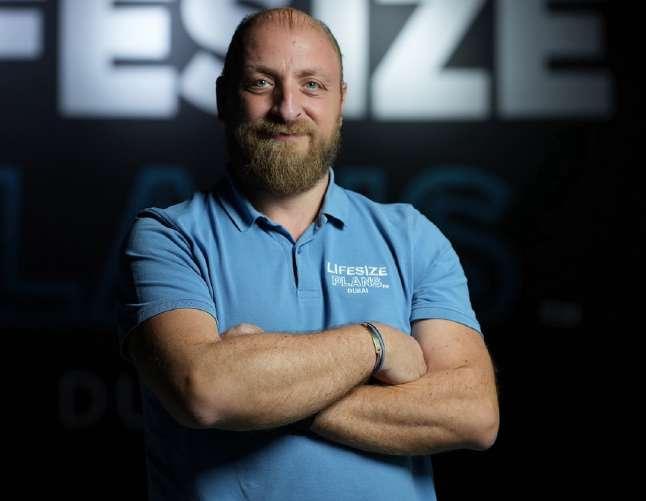
Georges Calas, CEO of Lifesize Plans Dubai.
developers, investors and buyers to experience properties before they are built, improving design accuracy, minimising costly revisions and enabling faster approvals. For sales
and leasing, VR enables international and remote buyers to explore developments in detail, supporting the UAE’s appeal as a global investment destination.
The acquisition enables Sophos to deliver AI-enhanced cybersecurity governance to an underserved market, giving organisations the clarity, control, and decision-making needed to manage cyber risk.
Sophos, a global leader of innovative security solutions for defeating cyberattacks, today announced it has acquired UKbased Arco Cyber, a cybersecurity assurance company dedicated to helping organisations improve their security posture while staying ahead of compliance requirements and emerging threats.
The acquisition is an important step in Sophos’ strategy to help organisations strengthen cybersecurity strategy and governance across all levels of maturity, delivered through the company’s global partner ecosystem. Sophos refers to this as Sophos CISO Advantage, a set of capabilities designed to scale the
knowledge, judgment, and operating discipline of a world-class CISO to organisations with or without dedicated security leadership, combining agentic AI, integrated platforms, and trusted human expertise delivered in partnership with managed service providers (MSPs) and managed security service providers (MSSPs). Advances in agentic and AIassisted systems now make it possible to deliver real-time insight into control performance, while remaining grounded in human oversight and judgment.
Arco Cyber accelerates this vision by adding capabilities that help organisations continuously validate whether security controls are effective,
map controls to risk and compliance frameworks, and present clear, executive-ready insight that supports better decision-making.
“There is no shortage of exemplary security technology in the market,” said Joe Levy, CEO of Sophos. “What’s missing for most organisations is the ability to govern those tools, understand whether controls are actually working, and make informed decisions about risk. Arco has built a platform and a team that offers clarity, accountability, and proof. That work directly supports our strategy, and it gives customers a stronger foundation for simplifying compliance and managing cyber risk with confidence.” A critical element of Sophos CISO
Advantage is the role of MSPs and MSSPs in delivering these capabilities at scale. Most organisations rely on trusted partners to translate insight into action, provide context, and guide day-to-day decisionmaking. Sophos CISO Advantage is designed to strengthen that relationship by equipping partners with AI-driven governance, continuous assurance, and clear risk insight, enabling them to deliver CISO-level leadership as a service. This approach allows MSPs and MSSPs to elevate their role from technology operators to strategic security advisors, while giving customers greater clarity, control, and confidence in how cyber risk is managed.

There are an estimated 359 million organisations worldwide, yet fewer than 32,000 have a Chief Information Security Officer (CISO) . Those with CISOs or other dedicated security leadership also require clear risk assessments, governance, prioritisation, and demonstrability of security effectiveness to boards, regulators, and insurers.
“As cybersecurity matures beyond alerts and point solutions, organisations are increasingly focused on proving impact, not just activity,”
said Phil Harris, Research Director, Governance, Risk and Compliance Solutions at IDC. “Boards, regulators, and insurers want clear evidence that security investments are reducing risk and strengthening governance. Platforms that integrate detection and response with assurance, advisory, and risk-based measurement are better aligned with how organisations actually operate. The Sophos and Arco Cyber combination represents a new category of platform-led cybersecurity that connects operations, assurance, and risk-based outcomes.”
For organisations with a CISO
or similar leadership, Sophos CISO Advantage will provide a more efficient, integrated way to manage risk, track progress, and communicate outcomes. For organisations without one, it will deliver practical, CISO-level guidance that helps them take control of their security posture and decisions.
“Arco was founded to help organisations move from assumption to proof in cybersecurity,” said Matt Helling, CEO and co-founder of Arco Cyber. “By joining Sophos, we can deliver against that mission and reach far more customers who are struggling to demonstrate control effectiveness, prioritise risk, and justify security decisions. Sophos shares our belief that cybersecurity should deliver clarity, confidence, and control, not just data. Together, we can help organisations of all sizes turn security into a managed, defensible business discipline.”
Arco Cyber will join Sophos as a dedicated team to advance Sophos CISO Advantage. Its technology and expertise will be integrated into Sophos Central, the platform which delivers Sophos’ broader ecosystem including advisory services, managed detection and response (MDR), and partner-delivered services that enable MSPs and MSSPs to scale cybersecurity strategy for their customers.
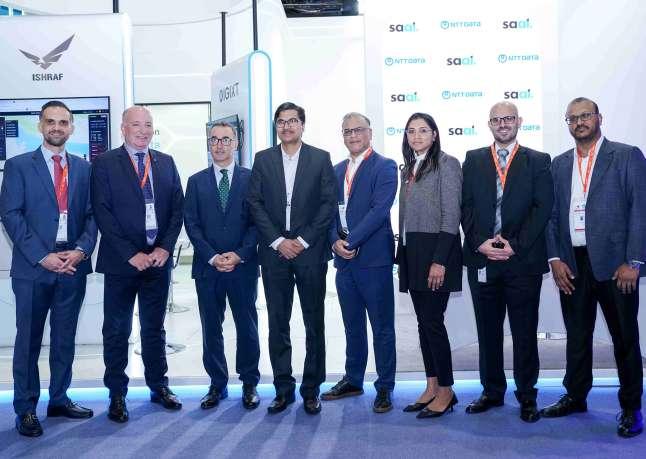
NTT DATA, a global leader in AI, digital business and technology services and Saal.ai, a leading provider of artificial intelligence and big data solutions, announced a collaboration to jointly deliver next-generation AI solutions, AI-ready infrastructure and industry-focused innovations for enterprises.
The collaboration combines Saal.ai’s portfolio of big data, UAE-developed AI products and industry solutions with NTT DATA’s global delivery
scale, deep industry expertise and secure digital infrastructure. Together, the organisations aim to accelerate responsible AI adoption, modernise legacy environments and drive data-led transformations across key industries in the region.
Under the alliance, Saal.ai and NTT DATA will focus on the joint development and deployment of advanced AI and machine learning solutions, including generative AI, agentic analytics, intelligent
automation and industry-specific use cases for the market. This will be supported by robust data engineering, real-time analytics and governed data platforms. The partnership will also address the design and implementation of scalable, secure and resilient AI-ready infrastructure across cloud, hybrid, on-premises and edge environments. This includes containerised AI workloads, machine learning operations platforms and high-performance data pipelines.
“This collaboration with NTT DATA represents a significant step forward in our mission to operationalise AI at scale for enterprises,” said Vikraman Poduval, Chief Executive Officer of Saal.ai. “By bringing together Saal.ai’s industrialised AI and big data solutions with NTT DATA’s global expertise, we aim to deliver practical, responsible and industry-relevant AI solutions that drive measurable business impact.”
“Partnering with Saal.ai strengthens our ability to help clients accelerate their AI journeys with confidence,” said Muhannad Khattab, Managing Director for NTT DATA in the UAE. “Together, we will focus on delivering secure, scalable and responsible AI solutions that modernise enterprises, unlock value and support long-term digital transformation across industries.”
Dubai Chambers has signed a Memorandum of Understanding (MoU) with Pemo to strengthen access to alternative financial solutions for SMEs across the emirate.
The initiative aims to address key operational and growth challenges by equipping businesses with advanced tools including alternative saving accounts, corporate cards, working capital solutions and seamless digital payments. The collaboration reflects Dubai Chambers’ ongoing commitment to fostering a more dynamic, inclusive and digitally enabled business ecosystem in line with Dubai’s ambition to reinforce its status as a leading global hub for entrepreneurship and innovation.
For Pemo, this commitment reinforces a shared vision of empowering founders with modern financial infrastructure that simplifies operations, increases transparency and gives businesses back the time and control they need to scale with confidence.
Ayham Gorani, Co-Founder of Pemo, said: “SMEs are the backbone of Dubai’s economy, yet too many business owners still spend valuable time firefighting manual financial
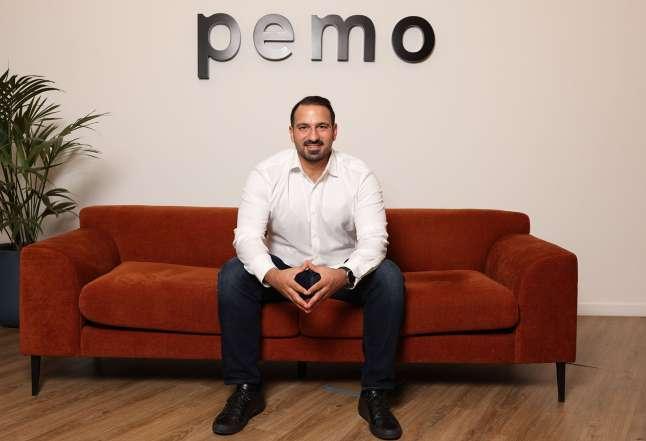
processes instead of focusing on growth. We are proud to partner with Dubai Chambers, and our collaboration represents a meaningful step towards helping to change that.
“Through this partnership, we are giving local businesses access to instantly issued corporate cards, AIpowered spend management and realtime visibility over company expenses, all designed to simplify operations,
return time to founders and finance teams, and make their corporate tax and VAT reclaim filings FTA compliant.
“Dubai has built one of the most dynamic business ecosystems in the world. By working closely with Dubai Chambers, we are helping ensure SMEs have the financial infrastructure they need not just to operate, but to scale confidently and competitively in a digital-first economy.”
New devices deliver specialised capabilities for today’s intelligence economy.
Zebra Technologies Corporation, a global leader in digitising and automating workflows to deliver intelligent operations, announced the availability of the TC501 and TC701 mobile computers for logistics and postal organisations looking to connect their frontline and automate last mile operations with future-ready AI.
The TC501 and TC701 empower teams with a range of capabilities ideal for the logistics industry, including route optimisation, parcel locating and scanning along with a verifiable chain of custody. With features like realtime tracking, proof of delivery, and uninterrupted connectivity, teams can minimise downtime and master any task. Operations are future-proofed with AI capabilities and expertise by Zebra and its trusted ecosystem of partners.
The devices are designed to lower the total cost of ownership with an extended device lifespan and enterprise durability. They also provide the latest multi-modal data capture, communication, tracking, and security capabilities for distribution centre staff, delivery drivers and door-todoor postal workers.
“To achieve long-term growth, logistics companies need trusted partners who can help them navigate today’s challenges, from shrinking margins to higher delivery expectations,” said Phil Sambrook, Transport and Logistics Vertical Strategy Lead, EMEA, Zebra Technologies. “The key is empowering their frontline with the right technology and constant connectivity to meet these demands.”
The TC501 and TC701 mobile computers digitise and automate logistics operations with a range of capabilities, which include:
• Faster workflows with instantaneous proof-of-delivery capture, fast route calculation, and on-device multimodal AI with the Qualcomm® Dragonwing™ Q-6690 processor.
• All-day outdoor performance with easier-to-read screens in any

weather condition with the new ultra-bright 1500-nit OLED display readable in direct sunlight; up to 40% extended shift life.
• Improved proof of delivery with clear images of delivered parcels and their condition to reduce disputes and fraud via the high-quality 50MP camera for superior image capture and ultrawide lens options.
• Enhanced asset tracking and better visibility of critical assets in sorting centres and across delivery networks with less required infrastructure via integrated UHF RFID, enabling highvalue package tracking.
• Highly accurate locationing and uninterrupted coverage so frontline workers stay connected for live tracking and communication with Wi-Fi7 and 5G connectivity. These devices also support dual-carrier connectivity.
• Simplified fleet management at scale, so less time is spent on IT overhead, fewer lost or stolen assets and more efficiency with Zebra DNA Cloud suite and a 10-year lifecycle which provides a stable, long-term platform from a reliable, long-term partner.
• Secure business operations with Secure Element to prevent physical hardware attacks, device compliance with new Google StrongBox requirements, authorisedonly security, Common Criteria certification, Zebra Guardian suite and LifeGuard™ for Android™.
Zebra’s study with Oxford Economics titled, The Impact of Intelligent Operations Report: Logistics showed that nearly 40% of respondents are using AI tools for demand forecasting, and over two-thirds are deploying or piloting them for inventory management. Another two-thirds are deploying or using AI for predictive estimated time of arrival, and 57% are doing so for route planning and optimisation.
The intelligence in the TC501 and TC701 mobile computers is powered by Zebra’s Frontline AI Suite. It consists of the Frontline Enablers suite of on-device AI models and APIs to build smart applications; Frontline AI Blueprint templates to automate critical workflows; and Zebra Companion AI agents for on-demand procedural and product knowledge.
“Effective frontline AI needs to be fast, reliable, and intuitive, delivering insights in any environment from a busy distribution centre to a suburban street or a rural delivery route,” said Sambrook. “Our TC501 and TC701 mobile computers powered by Zebra’s Frontline AI Suite digitise environments, operationalise intelligence, and maximise workflows. It’s all about equipping teams with the instant insights they need to get every delivery right, the first time.”


Radisson Blu Hotel & Convention Center Riyadh Minhal
12th April 2026 06:30 PM onwards
In November, CPI will be hosting the inaugural Future Enterprise Awards in Riyadh. The awards are designed to recognize IT and business leaders that are driving rapid digital transformation across the Kingdom.
The KSA Awards want to acknowledge those who are championing change, whether it be from a private or public sector organization, we want to pay tribute to the fearless trailblazers forging a new path and a new identity for the KSA. For more information about the event and nomination details, please visit the event website below :https://tahawultech.com/ksa-futureenterpriseawards/2026/

OFFICIAL PUBLICATIONS HOSTED BY GOLD SPONSORS
AI is moving from reactive copilots to proactive decision-makers — and the channel must now architect autonomy.
Generative AI captured boardroom attention by producing content, analysing data and assisting employees in real time. A new phase is now unfolding where Agentic AI moves beyond assistance into execution, where these systems do not simply respond to prompts; they pursue goals, make decisions, coordinate across applications, and refine outcomes with minimal human intervention.
Enterprises are beginning to explore AI agents that can autonomously manage IT tickets, optimise logistics routes, reconcile financial records, or
detect and respond to cyber threats. Such capabilities signal a shift from productivity enhancement to operational autonomy.
The opportunity for the channel is significant as organisations no longer seek standalone AI tools; business leaders want measurable outcomes: reduced costs, improved resilience, and faster decision cycles. Delivering those outcomes requires integration, orchestration, and governance expertise — precisely where partners can add value.
Recent global research underscores that agentic AI is moving rapidly from concept to enterprise reality. According
to studies from Deloitte and IBM, agentic systems represent a structural shift in operating models, enabling AI to autonomously plan, execute and optimise workflows while embedding governance and oversight.
McKinsey & Company reports that nearly a quarter of enterprises are already scaling advanced AI capabilities beyond pilot stages, signalling growing operational adoption. Meanwhile, Gartner forecasts that AI agents will account for a significant share of enterprise software revenue over the next decade, and analysis from Boston Consulting Group suggests agent-driven automation can
accelerate core business processes by up to 50%. Together, the research positions agentic AI not merely as an efficiency tool, but as a catalyst for enterprise-wide transformation and new recurring revenue models.
The Autonomous Enterprise is built on three pillars:
• Self-monitoring systems that continuously analyse performance and risk
• Predictive and prescriptive intelligence that recommends and executes actions
• Governed autonomy with human oversight and compliance controls
Agentic AI acts as the orchestration layer across cloud platforms, enterprise applications and data environments. Rather than relying on isolated automation scripts, AI agents coordinate workflows across ERP systems, CRM platforms, cybersecurity tools and collaboration suites.
Momentum is particularly strong in the Gulf. Government-backed AI strategies, smart city programmes
BY
INTO DAY-TO-DAY IT PROCESSES, PARTNERS CAN DELIVER RECURRING VALUE TIED TO UPTIME, RISK REDUCTION AND SPEED OF RECOVERY.
and cloud-first policies have laid digital foundations. Many enterprises already operate in hybrid and multicloud environments. Such maturity creates fertile ground for agent-based architectures. Technology leaders increasingly view autonomy not as a futuristic concept but as a competitive necessity. Speed of execution, operational resilience and cost
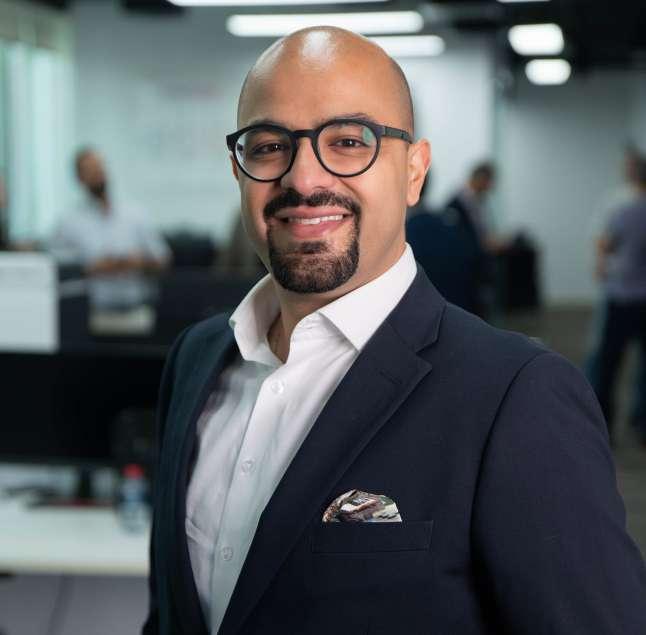
Mena Migally, Regional Vice President - EMEA East,
optimisation have become strategic priorities. Agentic AI addresses all three.
Every major technology inflection point reshapes the partner ecosystem. Agentic AI is no exception. Early generative AI projects often bypassed traditional integrators, with departments experimenting independently. Enterprise-wide deployment tells a different story. Agent-based systems require:
• Secure API integration
• Data harmonisation
• Infrastructure optimisation
• Identity and access governance
• Ongoing monitoring and refinement
Few organisations possess all these capabilities internally. Channel partners can step in as AI systems integrators, building customised agent frameworks aligned to industryspecific needs.
Revenue potential extends far beyond initial deployment.
Designing AI agents that align with enterprise KPIs demands deep process understanding. Partners can monetise workflow mapping, orchestration design, and integration services.
Autonomous systems must remain auditable and secure. Demand is
rising for monitoring frameworks, bias detection tools and policy enforcement layers. Regulatory scrutiny around AI ethics will further expand this segment.
Industry-specific agents represent a high-margin opportunity:
• Banking agents for fraud detection and reconciliation
• Retail agents for demand forecasting and inventory management
• Healthcare agents for triage and administrative automation
• Public sector agents for citizen services
Customisation differentiates partners from commodity providers.
Recurring revenue models will dominate. Continuous optimisation, AI performance tuning and security oversight create annuity-style income streams. Autonomous SOC services alone could transform cybersecurity portfolios. Combined, these services form what analysts increasingly describe as a multibillion-dollar AI services economy.
Enterprise AI adoption is also reshaping the commercial model for partners. Licence-led transactions are giving way to measurable outcomes tied to resilience and operational performance.
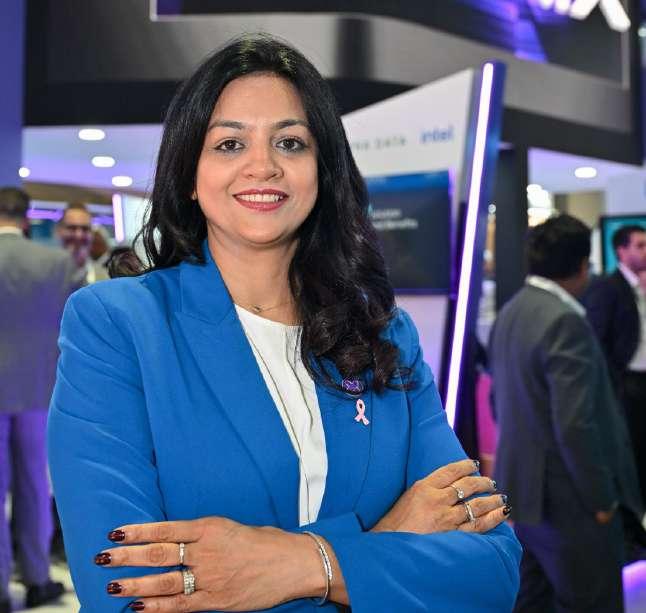
Mena Migally, Regional Vice President - EMEA East, Veeam, said, “We’re shifting from a resale-led model to an outcomes-driven approach, where partners monetise automation, orchestration, and operational impact rather than licences alone. That means enabling the channel to package AI and agentic capabilities into managed services, from autonomous recovery workflows and compliance automation to AI-driven resilience operations. By embedding agentic intelligence into
Shaista Ahmed, Director – Channel & Ecosystem, Middle East & Africa, Nutanix.
day-to-day IT processes, partners can deliver recurring value tied to uptime, risk reduction and speed of recovery. This moves AI from a feature to a business outcome, creating predictable, high-margin revenue streams and longterm customer stickiness.”
Migally added: “We’re investing across three critical areas: AI governance, cyber resilience, and regional data sovereignty. This includes strengthening data visibility, policy-driven controls, and auditability to ensure AI operates on trusted, compliant data. We’re also doubling down on cyber resilience, protecting AI pipelines, models, and data from ransomware and disruption. Finally, we’re enabling partners with sovereign and hybrid cloud expertise, ensuring customers can meet local residency and regulatory requirements without sacrificing innovation. In a region focused on digital independence, resilience and trust are now prerequisites for AI adoption, and we’re building capabilities to support that at scale.”
Such positioning reframes AI from a technical enhancement to a resiliencedriven business strategy.
Infrastructure: The Foundation of Autonomy
Agentic AI cannot function without resilient infrastructure. Highperformance computing, scalable cloud environments, and low-latency connectivity are prerequisites. Multicloud strategies are becoming standard. Enterprises distribute workloads across hyperscalers and private environments to optimise cost and performance. AI agents must operate seamlessly across these domains.
Security considerations intensify in autonomous environments. AI agents interact with multiple systems, APIs and datasets. Identity governance, zero-trust architectures, and observability platforms become mission-critical. Opportunity emerges for partners aligned with hyperscalers, cybersecurity vendors and data platform providers. Infrastructure modernisation and AI readiness assessments are already driving new project pipelines.
Edge computing will also gain prominence. Autonomous manufacturing systems, smart city deployments and logistics operations require real-time decision-making at the edge. Partners capable of integrating AI agents into distributed environments will command strategic value.
Platform vendors are also repositioning themselves around AI-ready infrastructure rather than standalone products. Shaista Ahmed, Director – Channel & Ecosystem, Middle East & Africa at Nutanix,
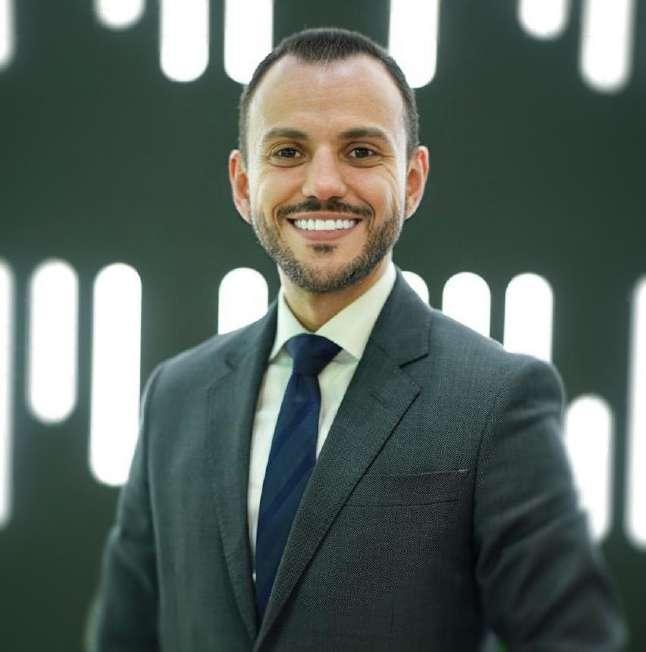
believes the monetisation opportunity lies in enabling partners to build recurring services on hybrid multicloud foundations.
Ahmed, said: “We are repositioning our business model to monetise AI-driven automation and agentic workflows by focusing on platform value, not product resale. Through our hybrid multicloud infrastructure, integrated Kubernetes, and AIready stack, we enable customers to operationalise AI across edge, core, and cloud environments.
“We are enabling partners to build
Ehab Adel, Director of Cybersecurity & AI, Mindware.
recurring services around AI-ready hybrid multicloud infrastructure, Kubernetes platforms, data modernisation, and automated operations. Through training, certifications, and joint go-to-market programs, partners can deliver outcome-based solutions such as AI infrastructure lifecycle management, self-healing IT operations, and intelligent workload orchestration. By embedding automation and APIdriven capabilities into our platform, we empower partners to lead AI transformation engagements— monetising measurable business outcomes, efficiency gains, and longterm managed services relationships.”
Nutanix is investing in capabilities that strengthen digital sovereignty, AI resilience, and secure data control across the region.
“We are investing alongside partners to strengthen digital sovereignty, AI resilience, and secure data control across the region. Together, we are advancing data governance frameworks, integrated
ransomware protection, zero-trust security architectures, and automated compliance capabilities embedded within our hybrid multicloud platform. We are also enabling partners to deliver sovereign cloud solutions with data localisation, workload isolation, and air-gapped deployment models aligned to national regulations. By building partner expertise in secure Kubernetes, AI-ready infrastructure, and lifecycle automation, we empower the ecosystem to deliver resilient, compliant AI environments that ensure innovation without compromising control or independence,” said Ahmed. Hybrid, sovereign-ready platforms will determine which partners can deliver autonomy without compromising compliance.
The Skills Shift: Rise of the AI Systems Integrator
Channel transformation is inevitable. Traditional resale models centred on hardware and licensing offer limited differentiation in an agent-driven future. Outcome orchestration becomes the new currency.
Roles are evolving:
• Prompt engineers transition into agent designers
• DevOps teams expand into AI workflow architects
• Compliance specialists move into AI governance consulting Training and talent acquisition will determine competitive advantage. Partners that invest early in AI engineering capabilities will secure enterprise trust. Cultural adaptation is equally critical. Selling autonomy requires consultative engagement with business leaders, not only IT departments. Discussions revolve around KPIs, transformation goals and operational redesign. Partners that remain product-centric risk marginalisation. Distributors are also redefining their role in the AI value chain. Ehab Adel, Director of Cybersecurity & AI at Mindware, says the company has moved decisively beyond product resale. Adel said, “We have already moved beyond just reselling AI products as we design and deliver complete AI-driven solutions that automate security and business operations. Instead of selling tools
only, we combine AI infrastructure, cybersecurity platforms, and professional services into one solution.”
Mindware solutions include AI-powered SOC, automated risk management, and intelligent monitoring. Mindware’s AI-related offerings include consulting, deployment, and managed services.
“We help our partners and their clients find ways to get clear results, faster response time, lower costs, and sturdier compliance. Such an approach allows all involved parties to, essentially, monetise real business outcomes powered by AI automation. By combining AI performance with robust security, Mindware enables both businesses and governments to build secure AI solutions that are autonomous, compliant, and – of course - effective,” added Adel.
Mindware has been continually investing in secure AI infrastructure, data governance, and AI-driven cybersecurity across many of the countries we cover in MEA. The brand currently focuses on private AI environments, on-prem and sovereign deployments, and strong data protection.
“Our main goal is to build expertise in data classification, AI risk management, compliance, and automated threat detection. Moreover, we have been gradually strengthening Mindware’s AI-powered SOC and identity security capabilities in an attempt to help governments and regulated industries adopt AI while keeping full control of their data. By combining AI, cybersecurity, and governance, Mindware supports digital independence, regulatory compliance, and long-term resilience across the region,” added Adel.
Autonomous systems remain dependent on data quality. Fragmented datasets undermine agent performance. Many organisations still grapple with legacy infrastructure and siloed information flows. Governance frameworks are evolving. Clear policies around accountability, auditability and ethical deployment remain works in progress. Cybersecurity risks also increase
when AI agents hold decision-making authority.
Overpromising autonomy could damage credibility. Enterprises require phased implementation strategies, combining automation with controlled human oversight. Balanced messaging will differentiate trusted advisors from opportunistic vendors.
Regional Momentum: Why the UAE Is Poised to Lead
Digital transformation agendas across the UAE create a supportive backdrop. Smart government initiatives, AI research hubs, and pro-innovation regulation accelerate adoption. Enterprises in finance, energy, aviation and retail operate at scale and complexity levels well-suited to agentic solutions. Competitive pressure drives experimentation with autonomous optimisation. Global vendors increasingly view the region as a testing ground for advanced AI deployments. Channel partners with local expertise can bridge global innovation with regional compliance requirements. Momentum suggests that adoption curves will steepen between 2026 and 2028. Early movers stand to capture disproportionate market share.
AI agents collaborating with other agents represent the next frontier. Digital workforces may soon coordinate procurement, compliance checks, and customer engagement with minimal human direction. Such scenarios raise profound strategic questions. Governance structures must mature. Workforce models will evolve. Ethical frameworks must keep pace. Agentic AI shifts enterprise value from isolated productivity gains to systemic transformation. Designing and governing that transformation will not be a software-only exercise. It will require architecture, integration, and continuous refinement. Enterprises will not ask whether to adopt Agentic AI, but will ask who can design it responsibly, integrate it securely, and optimise it continuously, that responsibility — and opportunity — defines the channel’s next billion-dollar chapter.


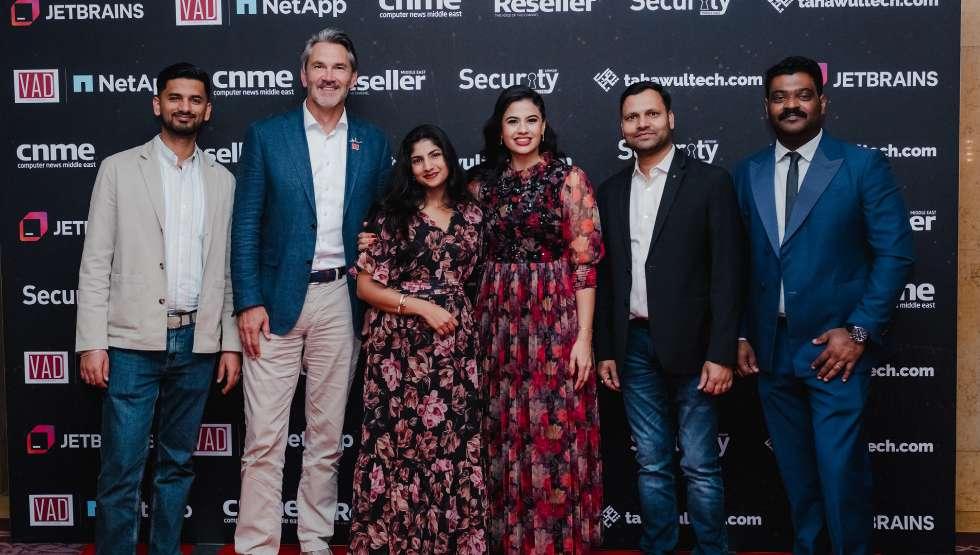
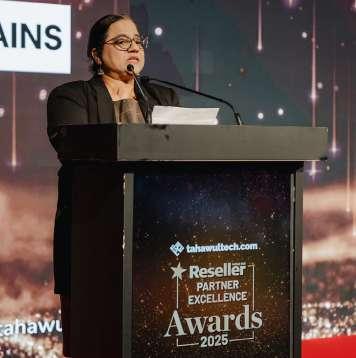
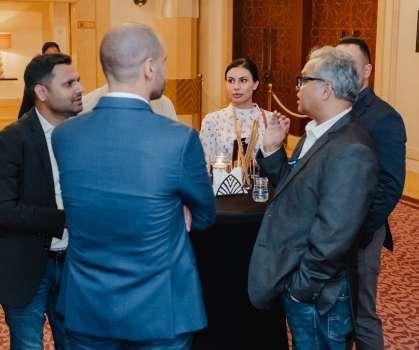
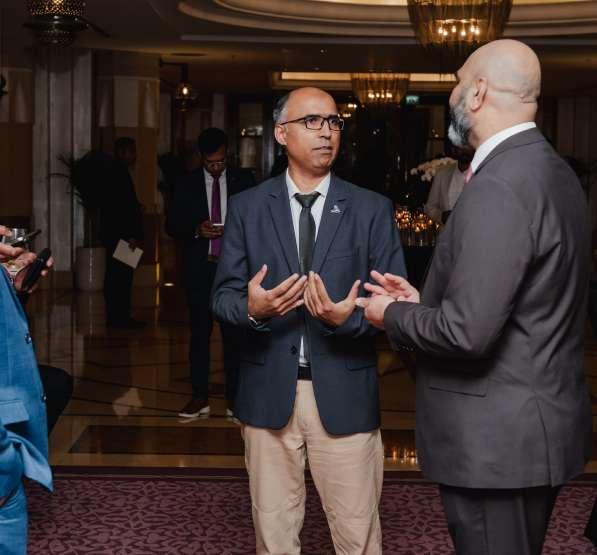
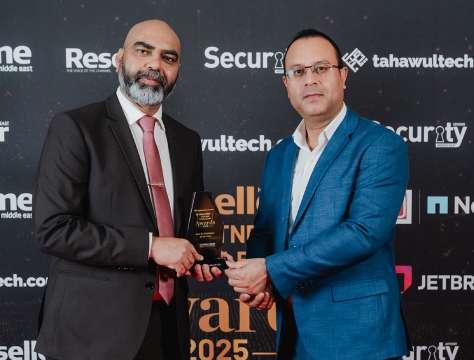
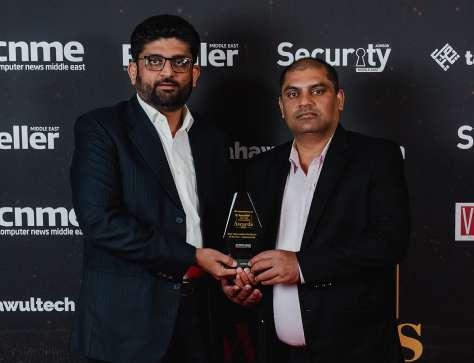
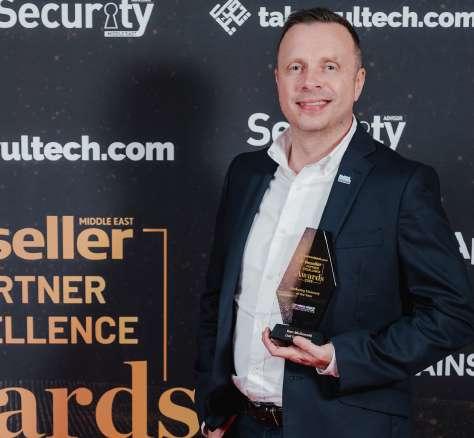
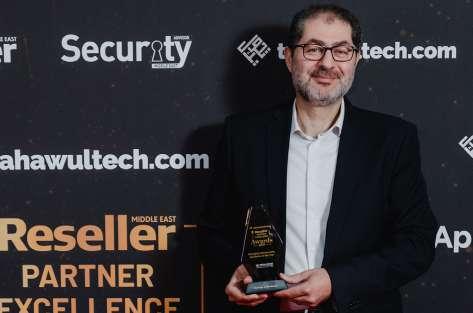
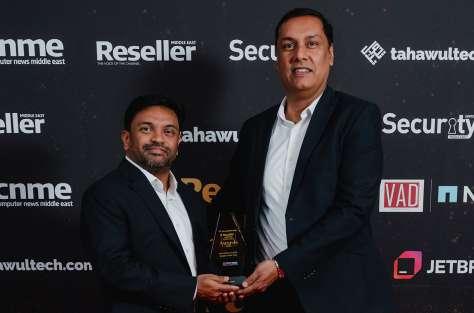
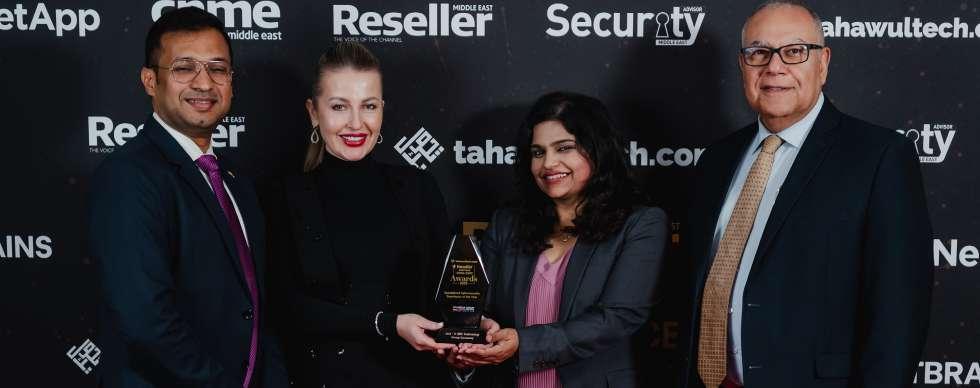
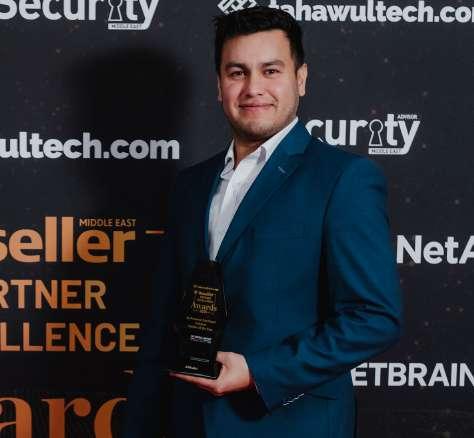
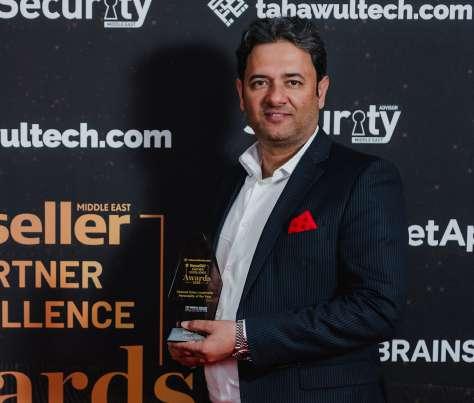
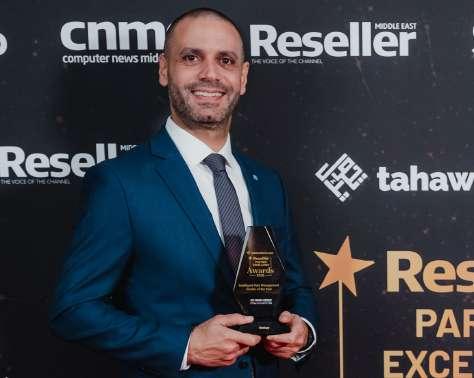
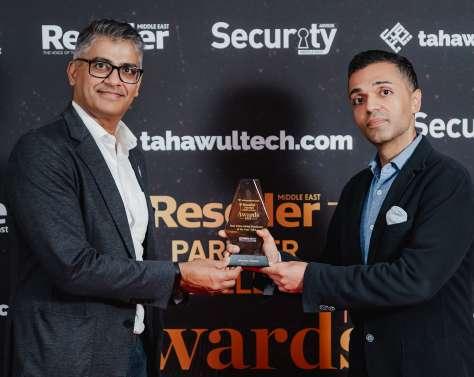
Channel executives and businesses from across the region were celebrated at the recent Reseller Middle East Partner Excellence Awards 2025. The ceremony was hosted by the publishing group CPI Media, at the spectacular Ritz Carlton JBR, Dubai.
of the regional channel business whilst also saluting the resilience of individual executives and firms. The evening was supported by Gold Sponsors JetBrains, VAD Technologies and NetApp

The Reseller Partner Excellence Awards are an annual event that celebrates acclaimed players at the forefront of the channel space that display pioneering strategies and solutions. The awards serve as a platform to recognise entities that have demonstrated unparalleled excellence and innovation in the field.
In its 16th year, the event showcased the successes
“The Reseller Partner Excellence Awards 2025 reaffirmed the critical role our channel ecosystem plays in turning regional digital ambition into tangible outcomes,” said Sandhya D’Mello, Editor, CPI Media Group. “From AI and cloud to cybersecurity and data infrastructure, our partners are not only enabling transformation but shaping the future of the region’s technology landscape through innovation, collaboration, and measurable impact”.












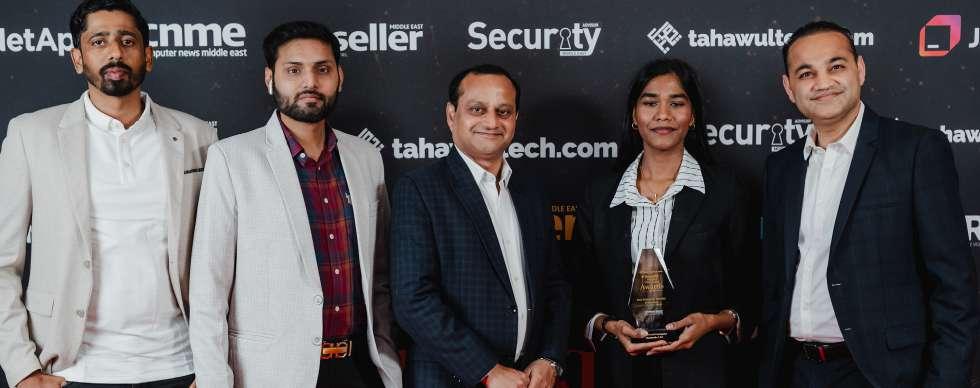

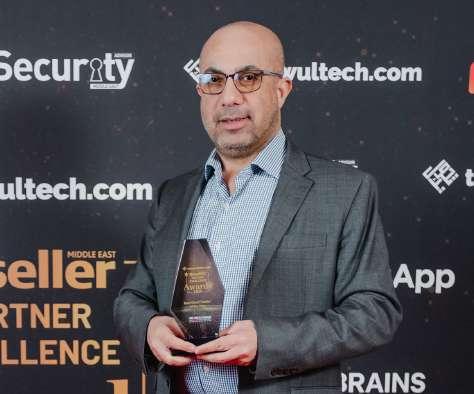
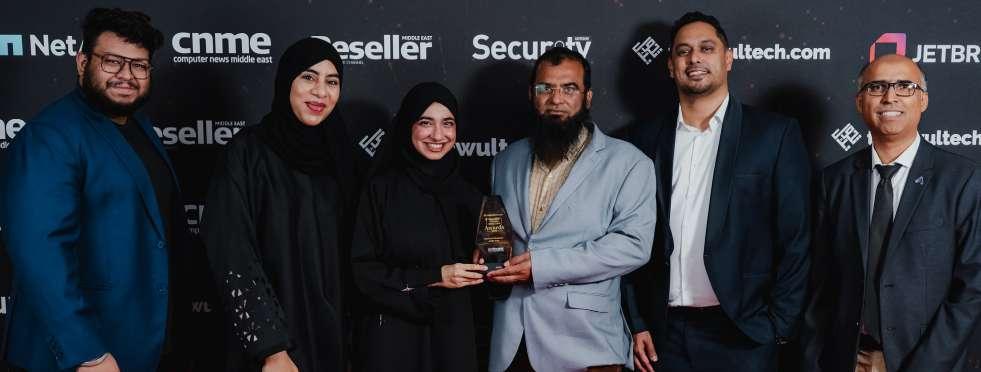
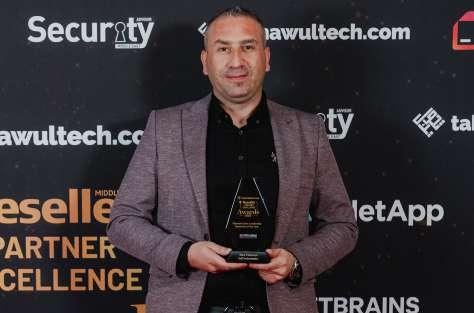
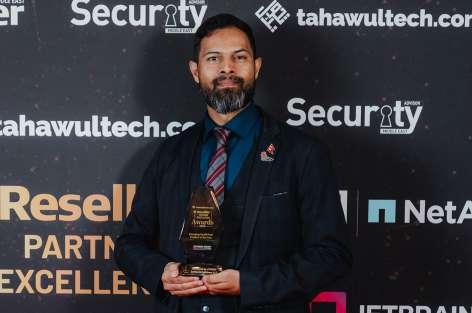

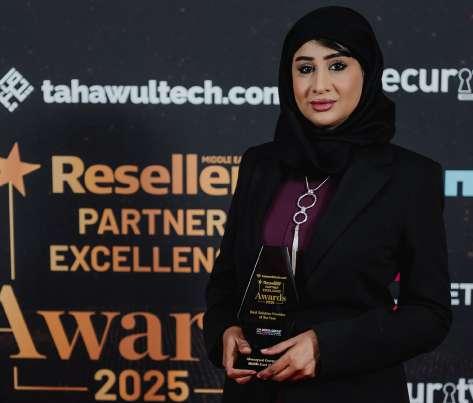
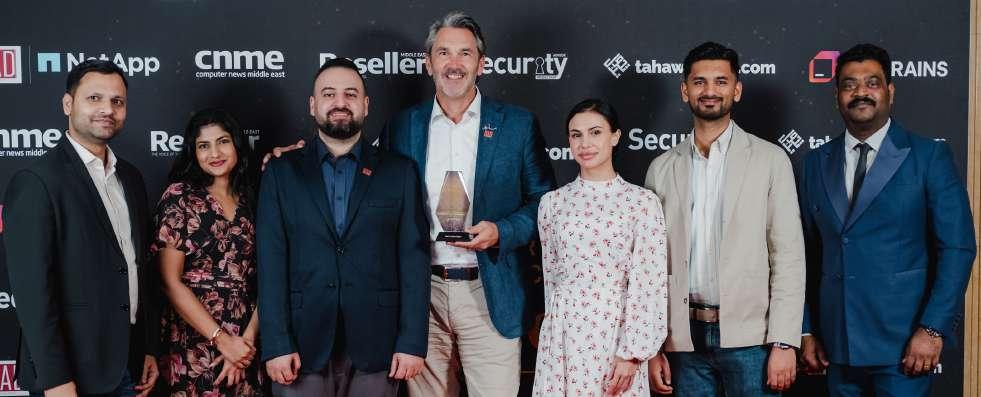
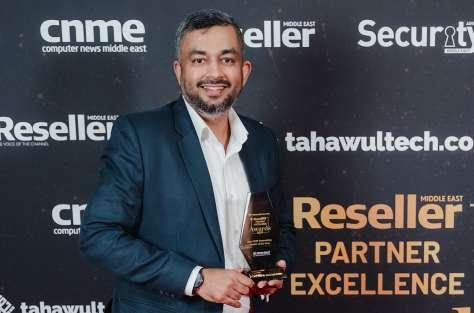


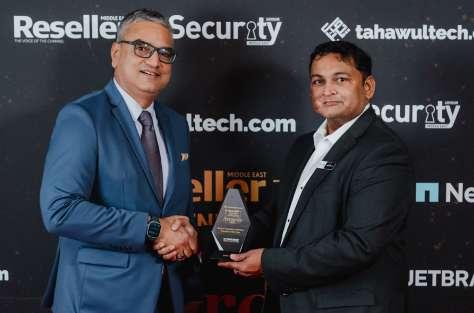

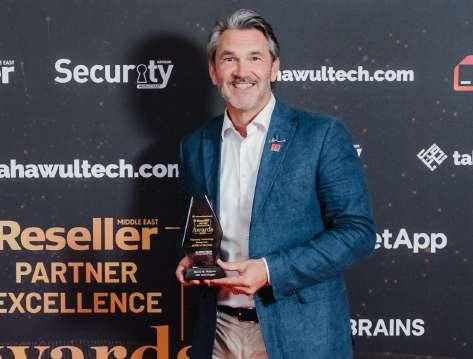
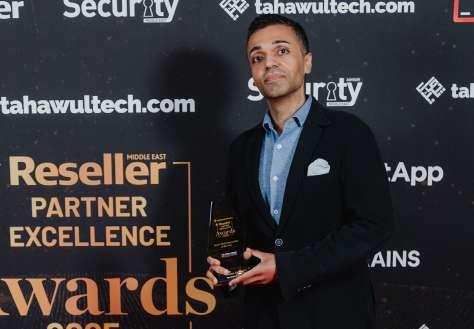
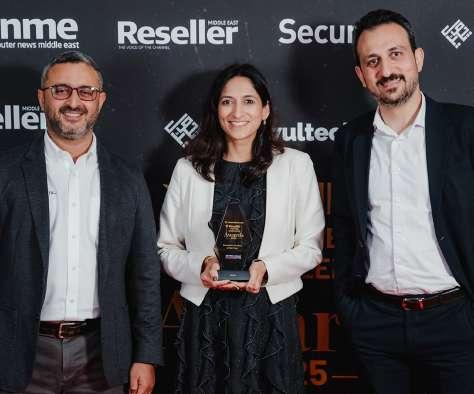

OT Cyber Evangelist of the Year

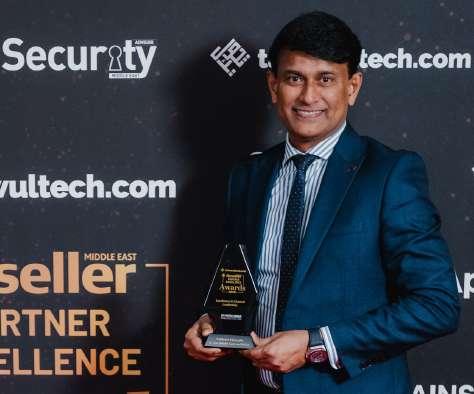
and

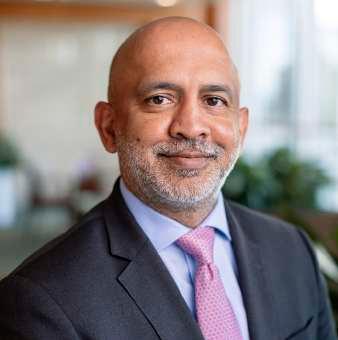
From early diagnosis to faster clinical integration, Maneesh Goyal discusses building a continuous learning ecosystem that improves outcomes worldwide.
Artificial intelligence has moved beyond experimentation in healthcare, yet sustainable return on investment remains elusive for many organisations. Success depends less on algorithms alone and more on how health systems redesign clinical and operational processes to embed intelligence into everyday care.
Maneesh Goyal, Chief Operating Officer, Mayo Clinic Platform, outlines why process reengineering, disciplined measurement, and global collaboration are critical to unlocking measurable value.
Goyal, discusses how federated data networks, independent clinical validation, and pre-integrated solutions reduce risk while accelerating deployment across diverse healthcare environments.
From redefining ROI metrics and overcoming adoption barriers to safeguarding patient privacy and supporting digital-first strategies in markets such as the UAE, Goyal shares how a collaborative, continuously learning ecosystem can transform clinical decision-making worldwide.
Interview excerpts:
From your vantage point, what separates AI pilots that deliver real clinical and operational
ROI from those that fail to move beyond experimentation?
AI pilots succeed when organisations rethink how care is delivered rather than simply layering technology onto existing processes. If you put AI on top of a manual or outdated workflow, it usually increases cost instead of creating value.
What is required is clinical or business process reengineering. For example, if AI can predict surgical complexity in advance, the scheduling process must be redesigned to allocate the right operating room time. If that change is made, throughput improves and wasted time is reduced, which creates measurable ROI.
At Mayo Clinic, we focus on two outcomes. Either the technology fundamentally changes a clinical or operational process, or it becomes part of the standard way care is delivered, like an MRI machine or a stethoscope. Many AI projects fail because organisations expect the technology to be a magic solution without transforming the underlying processes. We currently run more than 320 algorithms that diagnose or predict conditions continuously. Some of these help identify diseases in patients who have no symptoms yet. Moving from symptom-based care to early intervention changes outcomes and creates real value.
How are leading health systems defining and measuring impact when evaluating AI in digital health?
Each solution must be evaluated against a clearly defined objective. That objective could be clinical outcomes, financial performance, operational efficiency, or patient access.
Healthcare organisations need to decide which lever they are trying to pull and then measure success against that specific metric. There is no single universal measure for AI. The key is clarity on the intended outcome and disciplined tracking of results.
What are the biggest adoption barriers healthcare providers face when scaling AI, and how can platforms like Mayo Clinic Platform reduce risk and build trust?
One of the biggest risks is repeating mistakes from other industries, such as pharmaceuticals, where solutions are tested on narrow patient populations before being deployed globally.
Many AI tools are developed using limited data sets, often from a single geography. When applied to diverse populations, they may not perform as expected.
Our approach is to build a global, federated data network from the start. Today, the Mayo Clinic Platform

includes more than 55 million patient lives across multiple continents. Solutions developed on this broader data set are more likely to work across different populations and care models. We also run a qualification process where our clinical teams evaluate each solution’s claims. We compare what vendors promise with what the data actually shows, and we produce a clinical report. This independent validation reduces risk for healthcare providers. Finally, we pre-integrate validated solutions into the platform. This allows hospitals, whether small or large, to deploy tools quickly without heavy integration costs, enabling faster and safer adoption.
How is Mayo Clinic Platform operationalising data and AI to deliver measurable outcomes for global hospital partners?
Mayo Clinic invests more than a billion dollars annually in research. Within the platform ecosystem, more than 150 companies are also building solutions, representing a combined investment that likely exceeds $10 billion. By running these solutions against a global data set, we have reduced the time from idea to clinical integration from about three years to nine months. Once a solution is validated, it can be deployed across partner hospitals worldwide. For example, we have developed cardiology algorithms that enable earlier diagnosis and made them available to partners in countries such as Nigeria. This approach allows patients to benefit from high-quality clinical insights regardless of where they receive care. Instead of waiting a decade for research to translate into clinical practice, validated insights can be embedded directly into clinical workflows, improving outcomes much faster.
How will data-driven clinical intelligence reshape decisionmaking and benchmarking across global health systems? The shift will be towards collaborative, continuous learning systems. The Mayo Clinic Platform is designed not as a technology product, but as a shared learning environment.

A hypothesis may start at Mayo Clinic and be validated locally. It is then tested across global partner institutions. As the model is deployed in different geographies, it continues to learn and improve. That feedback loop benefits all participants. This is not a top-down model where one institution dictates best practices. It is a collaborative ecosystem where every partner contributes data, insights, and improvements, creating a collective intelligence that raises the quality of care globally.
What is your perspective on the UAE’s digital-first healthcare strategy?
The UAE is starting from a strong position because it is not constrained by legacy infrastructure, as many other countries are. The nation’s focus on large-scale genomic sequencing and digital health records creates the foundational data sets required for AIdriven healthcare. These components enable knowledge generation, better disease understanding, and more efficient service delivery. Globally, healthcare systems face a supply-anddemand imbalance as populations age
and require more care. Digital-first strategies, like those in the UAE, can help distribute knowledge and services more evenly, improving access and outcomes.
How does the Mayo Clinic Platform address patient data privacy in global collaborations?
Our approach is based on the principle of “data behind glass.” Patient data never leaves the institution that owns it. Each partner retains its data within its own environment and under its own regulatory controls. Instead of moving data, we send questions to the data. The results returned are aggregated and de-identified, ensuring compliance with regulations such as GDPR (General Data Protection Regulation). Patients are consented into the model, and if they withdraw consent, their data can be removed immediately. This approach minimises risk and ensures that institutions, regulators, and patients retain full control over their data. It is a collaborative model designed to enable global learning without compromising privacy or regulatory compliance.
Give to gain. Powering women in tech Gala Dinner Event

30th March 2026
Dubai

6:00 PM onwards
In alignment with International Women’s Day 2026, TahawulTech.com, organised by CPI, invites you to the Women in Technology Forum & Awards 2026 — a flagship platform dedicated to advancing leadership, inclusion, and impact across the technology ecosystem.
The forum brings together CEOs, technology decision-makers, innovators, policymakers, and trailblazers to explore how organisations that actively invest in women — through mentorship, leadership pathways, skills development, and visibility — gain stronger innovation, resilience, and long-term growth.
Whether you are a technology leader, changemaker, or organisation committed to shaping a more inclusive digital future, this forum offers a powerful space to contribute, connect, and lead.
We look forward to welcoming you to Dubai this March as we come together to Give to Gain.

For more information about the event and nomination details, please visit the event website below :https://www.tahawultech.com/women-in-tech/2026/
Founder and CEO Avinav Nigam discusses Tern’s push to create a governed, predictive operating layer for healthcare recruitment, retention and long-term workforce planning.
Healthcare systems worldwide are grappling with an unprecedented workforce crisis, marked by chronic talent shortages, rising care demands and mounting regulatory complexity.
TERN Group is positioning itself at the forefront of this disruption with an AI-powered workforce infrastructure platform designed to transform how health systems recruit, deploy and retain clinical talent. Rather than functioning as a traditional staffing intermediary, TERN is building a governed, auditable operating layer that enables faster hiring, predictive workforce planning and long-term career development — all underpinned by human oversight and regulatory alignment.
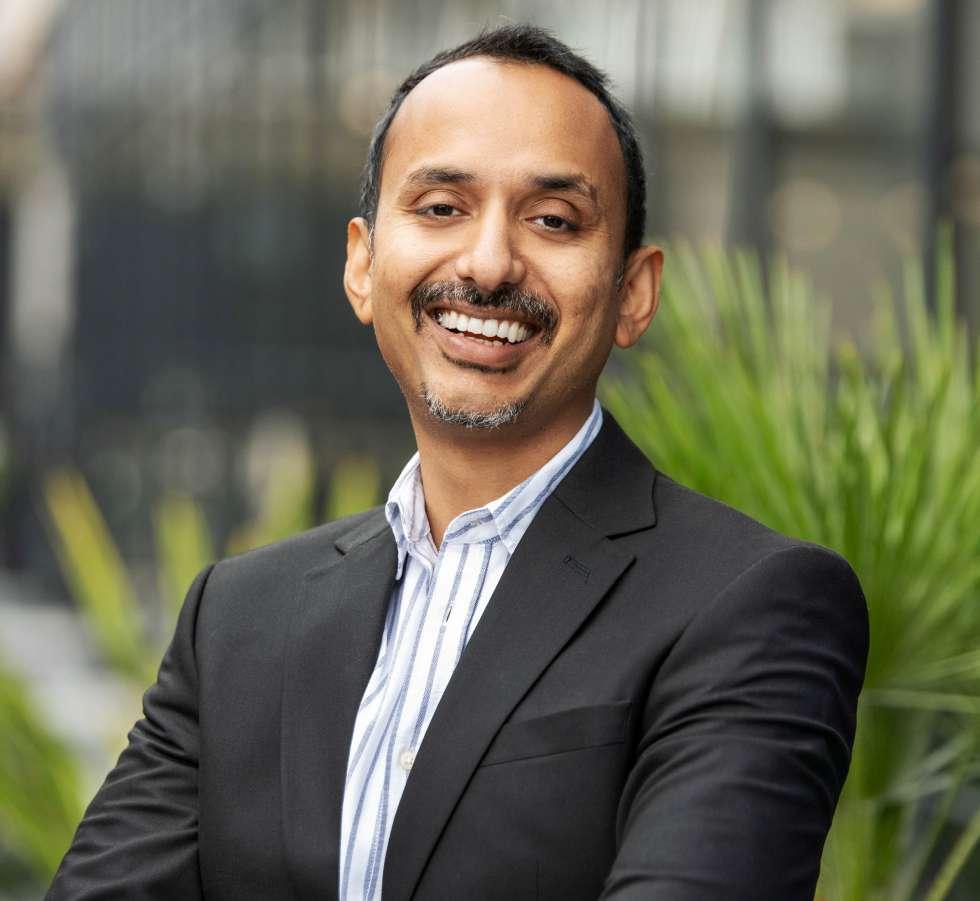
Avinav Nigam, Founder and CEO of TERN Group, sits at the intersection of platform-building and purpose-led healthtech. A founderinvestor with deep experience in fintech, recommerce and large-scale marketplaces, he is now applying those same infrastructure principles to one of healthcare’s most urgent challenges: workforce continuity.
Interview excerpts:
How many healthcare professionals have been recruited across EHS assets in
the UAE using your platform to date, and what scale targets have you set for the next two years?
We’re still early in the UAE journey, so it would be premature for me to quote a precise number today. What I can share is that in pilot deployments we’ve demonstrated end-to-end recruitment cycles completed in as little as three days—from screening to final interviews—with shortlist accuracy strong enough that the top candidates were hired. Globally, we’ve delivered thousands of placements across multiple health systems, and in the UAE we’re seeing strong appetite as we move from pilots toward national-level rollout with Emirates Health Services.
Do you see AI-powered workforce infrastructure becoming as critical to healthcare systems as electronic health records and financial governance platforms?
We’re facing historic global gaps in healthcare and elderly care staffing, and the answer isn’t just recruiting faster— it’s building a long-term workforce operating layer that supports retention, career development, learning, coaching, and wellbeing. The goal isn’t a broker model; it’s a 30-year career companion approach, similar in importance and depth to the EHR stack, but focused on people and capacity.
How are the platform economics and network effects you built in fintech and marketplaces shaping the future of healthcare workforce intelligence?
Healthcare workforce is uniquely complex—deeply clinical, contextheavy and regulated—so it can’t be solved with generic recruitment tech. What translates from marketplaces is the idea of building trusted infrastructure at scale: standardised processes, transparency, and removing information arbitrage and exploitation in cross-border hiring. Personally, my motivation also came from seeing the system fail close to home—both with a friend in the UK affected by care continuity issues, and with exploitation in overseas recruitment—so TERN is built around ethical mobility and long-term support, not transactional placements.
Could predictive AI soon enable governments to forecast healthcare talent shortages years in advance rather than months?
Absolutely, and it requires connecting education, skilling and workforce demand into a faster feedback loop. The UAE is leaning into skills assessment—not just knowledge—and that’s the right direction for an AI era where empathy, communication, leadership, and pattern recognition
Avinav Nigam, Founder and CEO, TERN Group.
become more valuable. If governments align skilling programmes with real workforce needs and continuously update national frameworks, forecasting and planning can move from reactive to proactive over multiyear horizons.
What will it take for regulators to fully trust AI-driven credential verification and competency assessment at a national scale?
Trust comes from collaboration, auditability and closing the gaps that exist today. We want to work hand-in-hand with government
frameworks and approved providers— credentialing, education verification and compliance processes—while adding what AI can do uniquely well: technical and language competency assessment, identity and fraud detection, and scanning risk signals across datasets where permitted. The aim is safer, more defensible decisions with human oversight, and fewer blind spots that can lead to patient risk.
How do you see AI agents evolving in workforce planning over the next five years?
We’ve moved from basic chatbots
to audio interactions, and now into lifelike two-way video agents— our nursing workforce AI agent is already live, with more agents being developed for leadership development, career coaching, and staff wellbeing. The next leap is physical AI: combining human care with AI companions that support continuity between visits, especially for ageing populations and dementia care. That includes medication prompts, hydration and mobility support, tracking vital signs, and reducing loneliness—because continuity of care and continuity of connection are becoming equally important.
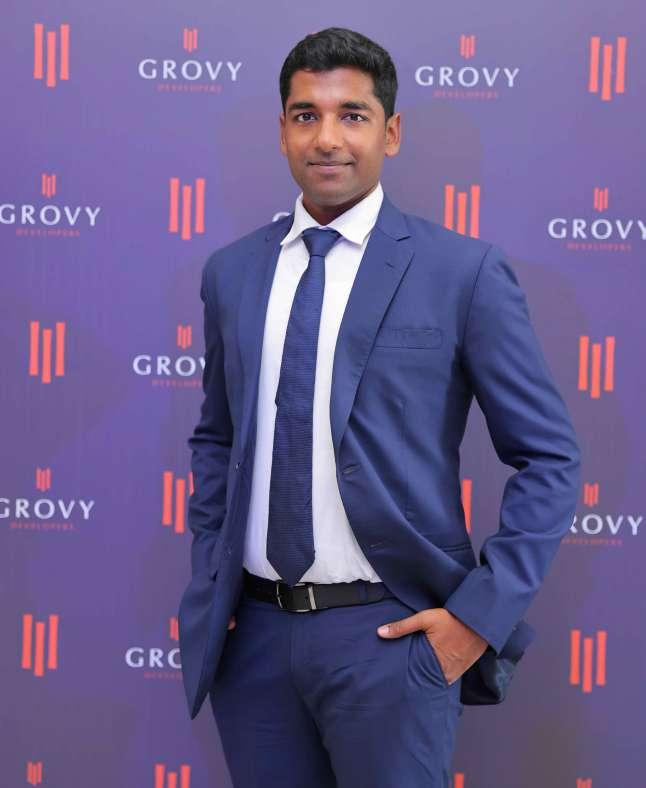
Abhishek Jalan, CEO of Grovy Developers, shares candid insights on BIM implementation challenges, measurable ROI from BMS adoption, evolving facilities management roles, and why lifecycle data will increasingly influence property valuation in the UAE.
Digital transformation is no longer a future ambition for the UAE property sector — it is an operational imperative. From AI-assisted design to predictive maintenance powered by Building Management Systems (BMS), technology is steadily reshaping how buildings are conceptualised, constructed, and managed across their lifecycle.
Real estate developers are under growing pressure to move beyond marketing-led PropTech adoption and embrace deeper engineering integration. Tools such as Building Information Modelling (BIM), Construction Management Technology and remote BMS monitoring are redefining efficiency, reducing rework, lowering operational expenditure and extending asset lifespan.
Rising buyer sophistication and increasing demand for lifestyle-led communities, digital capability is emerging as a differentiator — not just during development, but long after handover.
Abhishek Jalan, CEO of Grovy Developers, shares candid insights on BIM implementation challenges, measurable ROI from BMS adoption, evolving facilities management roles and why lifecycle data will increasingly influence property valuation in the UAE.
Interview excerpts:
How is digital innovation blending with the property sector?
The UAE is unquestionably a technology-forward nation. Many innovations launched here are later adopted globally. In real estate, digital integration is evolving across three critical stages — pre-design, construction and post-construction. Much of PropTech marketing focuses on customer experience, but the real transformation is happening behind the scenes. AI is now integrated into tools such as AutoCAD and BIM platforms, assisting architects and engineers in optimising drawings and planning. This accelerates workflows and reduces manual effort.
During construction, management technologies enable better coordination, progress tracking and snag detection. Post-construction, digital systems such as Building Management Systems (BMS) support performance monitoring and predictive maintenance. Technology is moving rapidly. Implementation, however, remains the true challenge.
Where do most developers struggle when trying to link BIM data to long-term building operations, and how did you avoid that gap?
The difficulty lies in how deeply BIM is implemented. Many developers stop at construction-level BIM — typically around LOD 350 — which helps detect clashes between architectural, structural and MEP elements before execution.That alone is valuable. It reduces rework and material wastage. However, higher Levels of Detail — such as LOD 450 and 500 — enable live data integration. When BIM is linked with BMS, facility management teams can use the 3D model posthandover to identify precisely where an issue is occurring. The gap appears when BIM is treated as a design coordination tool rather than a lifecycle asset management platform. Bridging that gap requires foresight during the design stage, even if it adds time upfront.
Building Management Systems have evolved considerably. What business insight did digital maintenance tracking reveal that surprised you beyond just faster response times? Initially, we hesitated to adopt BMS because of cost concerns. From our second project onward, we implemented it — and the results were revealing. The biggest surprise was not response speed. It was cost structure transformation. We reduced manpower requirements by nearly 33% in one building. Operational costs declined
significantly because predictive maintenance prevented failures rather than reacting to them. In our earlier project, outdoor AC circuit boards frequently failed during peak summer. Each board cost approximately Dh1,000–1,200. After implementing BMS, failures dropped to virtually zero because systems operated within optimal ranges and alerts were acted upon early. Utility and MEP services account for nearly 80% of operational costs. Even marginal improvements translate into meaningful savings for residents.
How is remote BMS monitoring changing the skillset and role of on-site facilities teams today?
Remote monitoring has reshaped facilities management entirely. Today, one individual can supervise multiple buildings from a central location. Any electrically powered asset can be monitored remotely. The skillset required is evolving. Technical teams now need software proficiency, data interpretation skills and remote troubleshooting capabilities — not just mechanical know-how. Digital literacy is becoming as critical as engineering expertise.
What’s the clearest sign that a PropTech investment will deliver ROI rather than just look impressive in marketing?
ROI becomes evident when technology reduces rework and improves lifecycle efficiency. BIM implementation at the design stage delivers immediate value. Without BIM, clashes between services are discovered during construction, leading to costly adjustments and material wastage. With BIM, these issues are resolved virtually before work begins.BMS also delivers measurable returns. While vendors may claim savings of up to 40% in repair costs, our experience shows realistic savings of around 7–8% — which remains substantial across a building’s lifecycle. Technology that lowers operational expenditure and extends asset lifespan delivers genuine ROI. Marketing aesthetics alone do not.
Will lifecycle building data soon influence property valuation and
buyer trust in the UAE market? It already does — even if buyers do not articulate it in technical terms. When entering a community, residents immediately sense whether a building is well-maintained. Rental premiums and resale values reflect maintenance standards, operational efficiency, and design quality. Lifecycle data enhances long-term asset performance. Better-maintained buildings command stronger returns. However, lowering service charges at the expense of maintenance can undermine longterm value. Mandating BIM and BMS integration across developments would elevate overall market standards.
With population growth accelerating in the UAE, what property trends are emerging? Dubai is shifting from a short-term
residency mindset to long-term settlement. The average stay duration is increasing, and buyers are planning for extended living and retirement.
Key trends include:
• Younger buyer demographics
• Higher disposable income
• Demand for lifestyle and wellnessoriented communities
• Willingness to pay a premium for integrated amenities
Sales velocity is strongest in projects offering community-driven living. Market behaviour is also becoming more selective — not every project sells at the same pace, indicating gradual maturity. Population growth remains the core driver of demand. The market will continue to move in cycles, but the long-term trajectory remains upward.
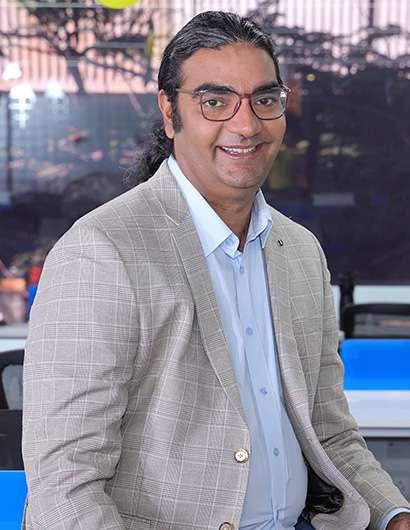
Sachin Bhatia outlines how unified memory layers, AI-human orchestration, and data-sovereign infrastructure are redefining customer experience across the region.
Enterprises across the Middle East are entering a new phase of customer experience transformation, where AI is no longer confined to isolated pilots but is becoming core digital infrastructure. Against this backdrop, Exotel has introduced Harmony, its agentic AI-led CX orchestration platform, designed to unify voice, messaging, AI agents, analytics, and human interactions into a single, context-aware system. The move comes as the regional conversational AI market accelerates towards an estimated USD 2.3 billion by 2031, driven by national digital agendas such as the UAE National AI Strategy 2031 and Saudi Vision 2030.
Speaking to TahawulTech, Sachin Bhatia, Co-Founder and Chief Growth Officer at Exotel, explains that the next wave of customer experience will not be defined by automation alone, but by how effectively organisations combine AI efficiency with human judgment, empathy, and governance. He argues that fragmented CX architectures—built on disconnected tools and point solutions—are giving way to unified platforms built around real-time customer memory, AIhuman orchestration, and continuous supervision.
Bhatia also highlights how data sovereignty, regulatory compliance, and trust are shaping enterprise AI strategies in markets such as the UAE and Saudi Arabia. As billions of
AI agents are expected to manage customer interactions in the coming years, he believes CX platforms will evolve into critical digital infrastructure, with memory, context, and human oversight at their core.
The UAE positions itself as a “digital-first” nation. Where do you see the country heading? If you look at every major tech shift— mobile, internet, apps—the UAE has always adopted technology very fast, largely because of the diaspora and the pace of consumer adoption here. With AI, though, I’m seeing something different for the first time: consumers are not automatically excited. When people are frustrated, they usually want a human, not a machine.
We work with a food aggregator across the Gulf, where people call when they’re hungry and angry— “Where is my order?” What’s surprising is the success rate we’re seeing in Kuwait or Saudi Arabia is higher than the UAE. We always assumed the UAE would be more digitally receptive, but early AI experiments weren’t very successful, so trust is still being built here.
At the same time, one thing is clear: the top-down push—from government and boardrooms—is driving adoption beyond experimentation. The key is managing consumer behaviour: when someone is anxious or frustrated, they
should be able to speak to a human; when it’s transactional, bring in the machine.
And honestly, what’s happening on the ground in the UAE is unprecedented compared to other emerging markets. I recently got my Emirates ID, went for a medical examination, and saw an autonomous coffee machine. There was also a robot distributing water. These are practical use cases where you don’t need a human carrying a tray all the time— automation makes sense. Overall, I think the UAE is far ahead of other markets we’ve seen.
In a world where billions of AI agents manage customer interactions, what will the customer experience platform of 2030 look like?
The early promise of AI was split into two narratives: AI will make humans better, and AI will replace humans. Both are true depending on the use case. In CX, I believe the future is about combining the best of both worlds.
When a task is repetitive, the platform should bring in an AI agent. When there’s anxiety, fear, or judgment involved, a human should come in. The centrepiece of this future platform is memory—customers shouldn’t have to repeat themselves.
If I’ve already spoken to an AI agent and it has collected information, when a human joins the conversation, they
shouldn’t start with “How can I help you?” They should start with context— “I see you were trying to block your card. Let me help you.”
The goal is a central memory and context layer across channels— WhatsApp, email, phone—so the customer feels heard and not like a stranger every time. That’s why we launched Harmony in the UAE—so enterprises can have humans and AI agents working together across channels, instead of piecemeal solutions for individual use cases.
Do you see AI agents eventually handling entire customer journeys autonomously, with humans stepping in only for complex emotional or strategic moments?
It depends on the use case. In areas like medical triaging, accountability still sits with humans because of legal and regulatory frameworks. I don’t see bots doing more than collecting information there—at least for now. Technology can make recommendations today, but governance and accountability frameworks aren’t ready for that shift yet. For most other use cases, I do see a blend. Humans will do what only humans can do—take judgment calls, soothe customers when emotion is involved, handle anxiety. Most context and data collection will be handled by AI agents.
How will agentic AI reshape the role, skills, and value of contact centre agents over the next five years?
Historically, contact centre agents were trained to communicate clearly and follow scripted conversations. I think scripted conversations will die— you won’t need them anymore. And frankly, scripted work is a minimal use of human intelligence and creativity. Humans bring perception, judgment, and the ability to read what isn’t explicitly said. In the future, contact centre agents become what I call the “last line of defense” for an enterprise. They’ll handle the cases where policies don’t solve the customer’s problem. A machine can block a card— authenticate and block, done. But “I
lost my job and I can’t pay my EMI this month” is not a conversation I want a machine to have right now. You need a human to empathise, suggest solutions, and make judgment calls.
So yes, volumes will reduce because transactions get automated, but you can’t get those human conversations wrong. The accountability and impact of the human layer will become very high. Customer experience will become front and centre—because products and offerings will look the same, and experience will be the differentiator.
Could real-time customer memory layers evolve into predictive systems that resolve issues before customers even reach out?
Think about YouTube or Spotify—they understand your mood and preferences because they’ve observed what you listen to and when. The same will happen in customer conversations. Also, look at how companies measure customer experience today— surveys. Who fills surveys? I haven’t filled one in the last 30 days, but I’ve definitely had conversations with service providers. My view is: if you listen, you don’t need to ask.
If the CEO of a company could listen to every conversation, they would have a crystal-clear view of what’s wrong in the organisation. With these conversations, a perceptive memory layer will be built for each customer. So when someone calls, the system can predict why. It can say, “I see you lost your luggage—let me track it,”
or “We know your flight is delayed,” without the customer explaining everything again. I think that future is coming faster than people expect, because the memory layer is built from real conversations and models.
Will future CX platforms become critical national digital infrastructure as data sovereignty and compliance requirements intensify in the Middle East?
Governments want sovereignty and governance of data to remain with the owner of the data. What you don’t want is data going outside without your knowledge and being used for other purposes.
Frameworks like GDPR addressed parts of this, but now we need to extend that thinking to AI. Governments and large enterprises have to be conscious of this.
That’s why we invested heavily in local infrastructure—in the UAE and Saudi Arabia—so consumer data doesn’t go out if an enterprise wants full control. For heavily regulated sectors—government, banks, insurance—this is non-negotiable. It might slow speed, but it’s the right way. Anyone designing for these enterprises has to be ready to invest in sovereignty platforms, because trust depends on it—especially when financial and national data is involved.
Harmony is built around a realtime customer memory layer and AI–human orchestration. How does this change CX strategy versus layering AI on legacy systems?
Earlier, enterprises approached AI by building point solutions—one sales bot, one collections bot, one service bot—mostly as proof of concept. But going forward, those piecemeal approaches won’t make sense because you need to understand the customer across the full journey.
Harmony is built for that. The memory layer works across channels and conversations—email, chat, phone—everything. And the orchestration is the key: if I already understand a customer and I suspect they’re frustrated, I don’t need to put
a bot in front of them; I can route to a human. If it’s a simple task like blocking a card, there should be no queue—an AI agent should handle it instantly.
Large enterprises also can’t replace legacy platforms overnight. So I see incremental shifts: first, remove the IVR “press 1, press 2” layer and use an AI agent to understand intent and route correctly. Once that’s in place, you start automating specific intents, step-by-step. Then the memory layer grows, so the experience becomes contextual even before the customer speaks.
I’ll give you a real example from a large food aggregator: “Where is my order?” sounds simple, but people started asking extra things—change the rider, avoid plastic cutlery, and more. Unless you train for those intents, the bot fails. So we created an observer loop—review conversations daily and reinforce learning back into the bot. Today, about 70% of those conversations are handled by the bot, but it took six months to get there. The promise is big, but it takes hard work to make it effective without losing customer trust.
Harmony enables up to 60% automation with Human-inthe-Loop supervision. How should enterprises rethink governance, accountability, and measurement?
First, the 60% is not theoretical—we’ve seen it in real deployments. In our largest use case, we handle about 3.6 million conversations a year, and we’ve reached about 70% containment. But it’s not universal—containment varies by use case. Transactional tasks can be highly automated; emotional and anxiety-driven conversations start low and require trust-building over time.
Customers often try to bypass automation—like pressing 9 in an IVR to reach a human. So you win trust gradually. The bot can say, “I’ll transfer you to a human—can I first understand why you’re calling so I route you correctly?” Then, sometimes the bot can resolve it quickly, and the customer may not even need the human.
From an enterprise point of view, my recommendation is: don’t build
standalone bots. Think governance first. You need observability. If AI is answering something wrong—or promising something incorrect— you must catch it, because AI is representing your company.
So you need an observer and governance layer across channels and use cases that can flag when a conversation has gone bad and bring in a human to repair it. This can’t be something you discover every quarter. It has to happen in near real time— every minute.
Will this disruption impact the BPO/contact centre industry itself?
BPO business models will change. The original reason BPOs existed was to manage non-core operations, handle seasonality, and support overflow without enterprises staffing for peak demand. That logic still matters, but the “seat-based” model—selling human agents by volume—won’t survive as-is. BPOs will need to move to outcomebased models. Instead of selling seats and agent hours, they’ll sell outcomes priced per resolution or per business result—and they’ll augment delivery with AI. If BPOs stay protective of the old model, they will be disrupted.
I also agree that more large enterprises will bring these functions in-house because of governance and data sovereignty. BPOs will still exist, but they’ll shift toward niche, specialised tasks and outcome-based delivery. And this change won’t be limited to BPOs—IT services will also move from effort-based models to outcome-based models, especially as software coding is being disrupted.
Do we see a lot of upskilling and reskilling happening in the BPO industry?
No doubt. You will have AI supervisors. Agents will do non-scripted, highaccountability conversations. And the people most impacted by this shift will have to adopt AI the most to remain relevant and add value. This won’t be a stepping-stone job for freshers anymore—it becomes a last line of defense for the enterprise, where judgment, empathy, and decisionmaking matter.

You’re One LEAP Away
From 13-16 April 2026
Riyadh Exhibition and Convention Center - Malham, Saudi Arabia
Secure your pass now
Amazon reveals what residents in the UAE and KSA asked for most in 2025
Amazon shared a snapshot of what customers loved most in the past few months, reflected in Alexa usage trends across the UAE and KSA. The findings provide an overview of the regional interests, music preferences, and household activities that define the customer experience.
What the region loved listening to Music remains one of the most personal ways people engage with Alexa. According to data, the most requested songs in Saudi Arabia and the UAE included “Khatfouny” by Amr Diab, “Ahla Rasma” by Fadel Chaker, and “Malakat Jamal Al Kawn” by Tamer Hosny.
In terms of artist popularity, Amr Diab, Tamer Ashour, and Nancy Ajram were the most requested Arabic artists. Within the Khaleeji genre, Ayed, Hussain Al Jassmi, and Abdul Majeed Abdullah topped the list of most-loved voices.
Love is in the air
Beyond everyday tasks, Alexa interactions often reveal something more personal, reflecting a unique rapport between the smart AI voice assistant and customers. Over the past 90 days, that affection was expressed frequently, with “Alexa, I love you” said more than 170,000 times. The playful nature of these interactions is further highlighted by 12,000 marriage proposals and 3,000 requests for Alexa to “flirt” with them. Customers also turned to Alexa for expressive moments, requesting romantic music over 7,000 times and seeking out love poems.
Who people loved to talk about Curiosity, like affection, often centers on people we admire. In the UAE, Kaka and Cristiano Ronaldo were the most-searched celebrities. Customers also frequently sought information about athletes’ personal lives, with Mohamed Salah, Lionel Messi, and Ronaldo leading queries related to marital status.
Football continues to be the most popular sport in the region. Fans primarily tracked updates for Real Madrid CF, FC Barcelona, and Al Hilal SFC.
Everyday routines people loved
Over the past year, Alexa supported millions of daily moments across the region, from spiritual practice to managing life at home:
• Spirituality: The most requested Sura is Surat Al Baqara, with Maher Al-Mu’aiqly as the most popular Qari.
• Smart Home & Routines: Features related to home automation and custom routines were among the most utilized tools.
• Cooking: For hands-free assistance in the kitchen, Penne Alfredo and Kabsa were the most requested recipes.
For those looking to celebrate Valentine’s Day at home, the new Echo Show 8 (3rd Gen) and Echo Show 11 feature a sleek industrial design with edge-to-edge glass and an improved processor for faster responses. Both devices offer a hands-free way to celebrate Valentine’s Day, whether you’re asking, “Alexa, give me gift ideas” or “Alexa, will you be my valentine?” to start a fun interaction.

Dr. Raf Fatani
Regional General Manager, Amazon Alexa, presenting latest insights at Amazon’s headquarters.


TikTok released TikTok Next 2026, its sixth annual global trend forecast in the METAP (Middle East, Turkey, Africa, Pakistan & South Asia) region, revealing how audiences are shifting away from passive consumption towards more intentional, emotionally driven engagement and what this means for brands looking to stay relevant in the year ahead.
The report introduces “Irreplaceable Instinct” as the defining cultural theme for 2026, signalling a renewed focus on connection, curiosity, and presence. These are human qualities that technology can amplify but never replace. As regional audiences navigate economic pressure, cultural change, and evolving priorities, data shows they are actively seeking meaning, authenticity, and value in how they engage, discover, and shop. With a global community of over one billion users, TikTok continues to be where culture is shaped in real-time, powered by AI-driven insights and brought to life through human creativity, conversation, and community.
Three trend signals shaping 2026, according to TikTok Next report:
• Reali-TEA: Fantasy is fading in favour of real connection. This reflects a shift toward honesty, relatability, and shared reality, with communities bonding over unfiltered life moments rather than polished perfection. Audiences embrace authenticity over escapism, sharing real stories, humour, and emotion as a way to navigate everyday life together. Brands that listen closely and reflect how people truly feel will earn trust and relevance.
Visit Abu Dhabi, for instance, has built one of the strongest organic presences among tourism boards on TikTok by sharing the realitea of travel, authentic, relatable
moments that highlight culture, leisure, and entertainment. Using TikTok One Content Suite, which enables brands to seamlessly amplify genuine user-generated (UGC) content as native ads, the brand surfaced high-performing organic videos and repurposed them as paid ads, maximising reach while keeping storytelling genuine. By leaning into community-driven content, the campaign boosted engagement, encouraged organic sharing, and strengthened trust and brand affinity.
• Curiosity Detours TikTok has become a powerful discovery engine, where users arrive with intent but leave with new ideas, interests, and unexpected paths to brands through search, comments, and creators. Discovery on TikTok is nonlinear. Users explore interests through unexpected cultural intersections, niche communities, and creator-led journeys, creating multiple entry points for brands to be discovered beyond their core category.
• Emotional ROI Purchase decisions are increasingly driven by meaning, community validation, and trusted tastemakers. Consumers may use AI for information, but they turn to TikTok for the human context that brings confidence and joy to buying decisions. Shoppers are redefining what is “essential”, prioritising emotional return on investment and rewarding brands that clearly justify the reason to buy.
This shift is already playing out on TikTok in the region. A recent example is Property Finder which strategically partnered with TikTok creators who aligned with the brand’s values and target audience. By collaborating with creators who have a genuine connection with their followers, the campaign effectively leveraged authentic content
to drive awareness and spark conversations around Property Finder’s offerings. These partnerships not only helped amplify the #PFforEveryLife message but also created a sense of community and trust, leading to higher levels of engagement and more organic app installs. Property Finder saw remarkable success in driving strong Ad Recall and reinforcing its position as the leading property portal in the UAE.
Shadi Kandil, General Manager, Global Business Solutions for Middle East, Turkey, Africa, Central and South Asia, TikTok said, “By 2026, the way people engage online will continue to deepen. Users are increasingly following their curiosity, exploring content with more intention, and expecting real value in return for their time. For brands on TikTok, this creates an opportunity to move beyond visibility toward meaningful participation: showing up in ways that feel timely, culturally connected, and useful. The brands that win will be the ones building on what already works, combining human insight with smarter AI tools and richer data to create content that feels relevant, responsive, and genuinely worth engaging with.”
TikTok Next 2026 is powered by the platform’s own suite of marketing and analytics tools, including TikTok Market Scope, TikTok One Content Suite, and Symphony Creative Studio, and many others, enabling marketers to move from insight to execution in minutes.
TikTok is where culture evolves in real time, where people explore identity, redefine value, and discover what matters next. As 2026 unfolds, brands are encouraged to sharpen what makes them human: listen deeply, create with intention, and show up authentically.
By doing so, brands can stop reacting to trends and instead partner with the platform to lead culture forward, turning insight into impact and curiosity into connection.
Network Security, product management, and critical thinking see fastest growth among UAE enterprise learners.
Enterprises in the UAE are accelerating measurable investments in both advanced technical capabilities and critical human skills to compete in an AIpowered economy, according to new data from Coursera, a leading global online learning platform.
Drawing on insights from six million enterprise learners across nearly 7,000 institutions, the Job Skills Report 2026 analyses skill trends across three indemand career areas that are driving value and innovation—Data, IT, and Software & Product Development. The report also examines GenAI skills that are becoming essential across job roles.
GenAI adoption accelerates across roles
Enterprise GenAI enrollments in the UAE grew 105% year-over-year, while enrollments in Professional Certificates across all career areas increased 95%, reflecting growing demand for agile, industry-recognised micro-credentials that provide verifiable proof of skills mastery. The Job Skills Report 2026 also indicates that AI proficiency is expanding beyond traditional technical roles, with professionals layering role-specific AI capabilities on top of foundational skills. This highlights that AI adoption is designed to augment, not replace, human expertise.
The surge in enrollments reflects a broader national imperative. With GenAI projected to contribute up to $81 billion to the UAE economy, workforce readiness is emerging as a key enabler of the country’s long-term economic ambitions. Enterprises are responding by embedding AI literacy across functions while investing in the infrastructure and governance capabilities required to scale adoption responsibly.
Foundational tech skills form the digital backbone
As AI integration deepens, UAE organisations are strengthening their technical foundations. Network Security enrollments have surged 136%, while Cloud Computing and Software Development rose 76% and 67%, respectively. In Data, enterprise learners continued to prioritise essential capabilities such as Data Analysis (69%) and SQL (53%), showcasing sustained demand for the foundational skills that power AI systems and business intelligence.
These trends align with projections from the World Economic Forum’s Future of Jobs Report 2025, which identifies AI and Big Data, Networks and Cybersecurity, and technological literacy among the fastest-growing skill areas by 2030. Together, the findings signal a workforce preparing not only
to adopt new technologies, but to build, secure, and operationalise them at scale.
Human and strategic skills rise in the AI era
Demand for uniquely human and leadership capabilities is accelerating as routine tasks become automated. Coursera data shows Critical Thinking enrollments grew by 107% among UAE enterprise learners, alongside a 63% increase in Change Management. At the same time, organisations are strengthening strategic execution skills, with Business Management enrollments rising by 85% and Product Management by 123%.
The rise of these ‘human-in-the-loop’ skills underscores a clear dynamic: while AI enhances productivity, human judgment, adaptability, and strategic oversight remain central to responsible deployment. This demonstrates the importance of pairing deep technical expertise with cognitive and leadership capabilities to navigate ongoing disruption and support long-term competitiveness.
“Our data shows UAE enterprises are not only accelerating AI adoption, but investing in the human and technical capabilities required to deploy it responsibly and at scale,” said Kais Zribi, General Manager for the Middle East and Africa at Coursera. “From
foundational tech to leadership and strategic skills, organisations are taking a skills-first approach, building resilient teams that can translate AI ambition into measurable business impact.”
Among learners worldwide who are specifically pursuing GenAI skills, Content Creation is the fastest-growing skill, complemented by Image Analysis (#4) and Multimodal Prompts (#8), signifying AI’s expanding influence across business functions. The report also spotlights continued progress toward a more inclusive AI workforce, with female participation in enterprise GenAI enrollments rising globally from 36% in 2024 to 41% in 2025, and growing engagement in technical learning across Data, IT, and Software & Product Development.
Coursera’s Job Skills Report 2026 provides invaluable insights for businesses, governments and educational institutions looking to understand the fastest-growing skills shaping the future of work.

Kais Zribi, General Manager, Middle East and Africa, Coursera.

Global streaming platforms often treat scale as a universal challenge. In reality, scale varies significantly depending on where you operate. In the MENA region, streaming is shaped by linguistic diversity, uneven infrastructure, intense live-viewing demand, and deeply local consumption habits. Global technology models are often misaligned with how this market actually behaves.
Audiences across the region stream in multiple languages, across a wide range of devices, and under highly variable network conditions. TOD data reveals that viewing behaviour shifts quickly around major live sports events, when expectations for speed and reliability are at their highest. In those moments, the experience is not defined by content breadth or interface design, but by delivery.
This is why the concept of an “average viewer” quickly breaks down in this region. Live events bring millions online at once, often under uneven viewing conditions. Platforms designed for ideal scenarios tend to falter when demand peaks. Those built for pressure are the ones audiences return to. If the stream fails, nothing else matters.
Data cannot be treated as a retrospective optimisation tool, used only to explain what has already happened. It must be applied in real time to help teams anticipate pressure
points before they arise. Behavioural insight informs how content is scheduled, how recommendations are shaped, and how performance is prioritised as conditions shift. In such a dynamic region, reacting late is the same as reacting incorrectly.
Building for MENA means planning for reality rather than perfection. Systems must perform just as reliably during peak periods as on a quiet day. Variability is the baseline. Platforms that assume stable conditions struggle under pressure. Those who expect disruption and design accordingly earn trust through consistency rather than novelty.
The same principle applies to product development. Features that work well in mature, homogeneous markets can introduce friction in more complex ones. Product innovation in MENA must be grounded in observing audience behaviour. The most effective products are not always the most feature-rich; they are often the most intuitive when demand is highest.
Reducing friction becomes the work itself. Faster access to live content, seamless performance across devices, and navigation that feels obvious rather than impressive are not refinements; they are foundational. When viewers don’t have to think
Fatma AlNaimi, Data Scientist, TOD.
TOD DATA REVEALS THAT VIEWING BEHAVIOUR SHIFTS QUICKLY AROUND MAJOR LIVE SPORTS EVENTS, WHEN EXPECTATIONS FOR SPEED AND RELIABILITY ARE AT THEIR HIGHEST.

about buffering, load times, or reliability, they stay. When they do, they leave.
This is where science quietly shapes loyalty. Retention in MENA isn’t driven by novelty or personalisation alone. It’s driven by platforms that work when it matters most. Trust is built invisibly, through systems designed to absorb pressure and decisions informed by how audiences actually behave, not how we expect them to.
Ultimately, success in this region starts with listening. MENA is a market that behaves differently to the global stage, shaped by local habits. Global approaches don’t always hold and the platforms that fail to adapt quickly, fall behind.
Audience-centric strategies matter because it is our audiences who set the pace, define demand, and move the market. Here, designing for your audience is what sustains performance, scale, and quality.
One has been around for millennia: the octopus, a creature whose distributed intelligence challenges our very definition of cognition. The other is a distinctly modern idea: the cognitive city, envisioned as an urban environment that can sense, learn and respond in real time. Bringing these two together is not a metaphorical stretch; it’s an opportunity to rethink how we design cities that are as responsive and resilient as the most remarkable minds in nature.
There are striking, and not so obvious, similarities between the two. Both rely on decentralised intelligence, where decision-making happens across many nodes rather than from a single centralised location.
Whilst the octopus does have a central brain, a donut-shaped ring around it’s esophagus, its intelligence is remarkably decentralised. Each
arm has its own network of neurons that can sense, process, and respond, almost like having eight semiindependent minds. It’s a living example of distributed thinking, the same idea that underpins the vision of a cognitive city, where decisions aren’t made in one central control room, but across a connected, responsive urban system.
What if our cities used every asset to think, and to think together? Imagine streetlights, traffic signals, water networks, and buildings all acting as a set of distributed minds, making localised decisions but sharing data and information with each other to enable more orchestrated city operations, much like how an octopus relies on multiple clusters of neurons within each arm to sense, interpret, and respond locally. Each arm of the octopus acts independently, without knowing exactly where the others are, yet they still coordinate seamlessly through a distributed sense of awareness. In the same way, decision-making in a cognitive city can happen locally rather than through a rigid hierarchy, while still ensuring that each action
WE NEED AWARE CITIES, COGNITIVE CITIES THAT CAN INTERPRET WHAT THEY SENSE, APPRECIATE THE CONSEQUENCES OF DECISIONS, AND ADAPT IN WAYS THAT GENUINELY IMPROVE URBAN LIFE.
supports the city’s overall, shared objectives.
Traditional cities are built in silos, with fixed chains of command and slow responses; cognitive cities must be fluid, allowing decisions to emerge at the edges but in alignment with the whole system so all parts can adapt in real time to changing needs.
The future city needs a different frame. We need aware cities, cognitive cities that can interpret what they sense, appreciate the consequences of decisions, and adapt in ways that genuinely improve urban life. Cognitive cities make sense of patterns, anticipate needs, and adjust in real time. They change the way choices are made, for example; how people move across the city, the products and services people buy, when and where energy is stored and released to satisfy demand. As a result, the people, society, economy and infrastructure of the Cognitive City behave differently in order to achieve better outcomes.
In this model, there is not a topdown controller, but a digital and data ecosystem which enables ubiquitous awareness, coordination, and distributed decision-making to deliver benefits to the public, society and the environment.
The march toward cognitive cities makes the role of the designer even more critical. To shape a city that can truly sense, think, and respond, you need people who understand how cities actually function: the systems that underpin them, the components that make them up, and the everyday decisions that need to be taken across
key city elements such as transport, energy, housing, public space, and governance. These designers must be as fluent in urban planning and social dynamics as they are in data, architecture, and AI. They must be able to translate human needs and civic goals into technical patterns, interfaces, and behaviours that work at city scale.
Cognitive city designers will be responsible for setting the rules, defining the guidelines, principles, and policies that determine what data is shared, with whom, and for what purpose. They will design a shared, distributed data architecture that allows cognitive capabilities to operate collectively across the entire urban fabric, rather than in isolated silos. As part of this, designers will specify and shape the data orchestration backbone, a function that supports city-wide cognitive services to deliver rich, integrated experiences for all who live in, use, and invest in the city. Crucially, these designers will also steward compliance with these principles and policies across all projects and systems, so that every part of the city contributes coherently to its overall cognitive performance.
Cities that thrive will be those that sense, adapt, and learn collectively. At Parsons, we integrate these principles into our strategy, design, and delivery of Smart city and urban technology projects across the region. Drawing on our global experience, we recognise that the cognitive city concept is essential for enhancing the quality of life for residents and visitors. By taking cues from evolutionary biology, we can reimagine the built world: as cities move past being just smart and become cognitive, they will be even more driven by data and continuous learning. They cease to be merely artificial and begin to mimic the complexity, responsiveness, and resilience of natural systems. Like the octopus, a truly cognitive city will think with all its limbs at once, responding to real needs in real time, with coordination emerging from many local decisions rather than a single central command.

The United Arab Emirates’ cybersecurity sector is expected to be worth US$543.47 million in 2025 and shows no signs of deceleration in the coming year. Revenues are projected to keep growing at a CAGR of 6.88% to 2030, to reach US$757.98 million. But while threat actors continue to bolster their arsenals with the latest developments in generative and agentic AI, the country’s enterprise decision-makers are wondering if their cyberinvestments will pay dividends.
As 2026 dawns, UAE business leaders will be aware they are in the final furlong of Vision 2030. Anxious to avoid a stumble, many will ramp up protection of their digital assets. Subsequently, cybersecurity competition will continue to heat up as players from global vendors to local integrators jostle to provide the latest capabilities — zero-trust architecture, AI-powered analytics, and managed and cloud-native security services. Amid the white noise of sector growth, how should the cybersecurity channel approach the challenge of differentiation? What do end customers really care about and how can channel partners build a narrative to reach them? We believe the key to winning modern cybersecurity customers’ hearts and minds is Value at Risk (VAR).
Why should a VAR care about VAR?
Value-added resellers and other channel players have long focused on value propositions built around complementary services. By focusing on Value at Risk (which from here on I shall call “VAR”), these partners can demonstrate to customers the value of a long-term security relationship. The VAR approach involves quantifying the real-world costs of their inaction. Through cyber-risk quantification (CRQ) the channel can guide customers to an understanding of the potential for lost revenue and the likelihood of that loss occurring. For a
business leader, numbers talk, so if the channel can express threats and risks in financial terms, potential customers will begin to think in terms of the impact of inaction rather than the expense of action. The truth is many enterprises lack a formal mechanism to categorise risks or to amend those categorisations over time. In a surprising number of cases, C-level executives gain cyberawareness from the headlines. After a high-profile incident happens to somebody else, internal due diligence involves investigating whether the organisation has the same vulnerability as the headline victim. In early 2025, the UAE Cyber Security Council warned that more than 223,800 domestically hosted digital assets were vulnerable, and reported that half of all critical vulnerabilities had lain unpatched for more than five years. This situation will go unaddressed if we wait for more headlines.
THE TRUTH IS MANY ENTERPRISES LACK A FORMAL MECHANISM TO CATEGORISE RISKS OR TO AMEND THOSE CATEGORISATIONS OVER TIME.
The challenge faced by value-adding partners is how to inspire customers to action. Connecting money spent to risk averted is a strong starting point. Another bold step is to work with customers to quantify their risks and to use these quantifications to prioritise budget allocation. If you find they have two issues with potential business impacts but one has a 10% chance of impact and the other a 20% chance, you may be tempted to prioritise the
Hadi Jaafarawi, Regional VP – Middle East & Africa, Qualys.
issue with the higher probability of impact. But if the lower-probability issue is going to hit a business unit that generates, say, AED20 million a year, while the higher-probability issue impacts a unit bringing in AED2 million, then it is important to discuss context. It is reasonable to multiply probability and value to get a deeper understanding of risk. We can think of a potential risk of AED2 million compared to a potential risk of AED 400,000. This is CRQ, and hence VAR, at work. By quantifying risks like this we account for not just the likelihood of impact but the extent of the realworld harm.
If we are to tackle the complexity of the modern threat landscape, risk management must become an operational process, just as cybersecurity did before it. An effective Risk Operations Center (ROC) needs
data from multiple sources. Channel partners have an important role to play in this ecosystem. They can guide customers to implement their own ROCs by demonstrating how customers will receive better insights and drastically mitigate potential future impact. Partners can also provide managed ROC services to their customers, where that data is delivered as a service based on customers’ deployments and potential security gaps.
Either scenario is a path to a longterm business relationship. Channel partners can be consultants on risk by individualising the advice they give. They can assess each customer’s environment for risks and deliver the threat intelligence that is relevant to that customer’s set-up. They can offer periodic updates to risk scoring that ensure customer businesses can shrewdly adjust their risk postures over time. And they can keep customers up
to date on the real-world impact and potential consequences of each security issue, allowing for more prudent budget allocations.
The UAE cybersecurity channel faces the usual changing headwinds in 2026. IT is changing, architecture is changing. Cybersecurity and its providers must also change. Concentrating on Value at Risk starts to address the age-old challenge of meeting customers where they are. Business leaders who want to address the complexities of cyber through risk management will need support from the channel to deliver effective ROCs. If, through these new partnerships, the channel can also address the longstanding cybersecurity conundrum of prioritisation, they will be heroes. So, talk about money and link it to impact. Draw the map of peril and trace the route to safety.
As artificial intelligence becomes embedded into the operating fabric of enterprises and governments, a sharper question is emerging: what will actually determine whether AI succeeds at scale?
Despite constant debate around model performance, speed, parameters, benchmark scores, the industry is still looking in the wrong place. The decisive constraint is no longer algorithmic capability. It is whether the underlying data can be trusted.
That trust breaks down in familiar, structural ways. Incomplete or unrepresentative datasets hard-code bias into automated decisions. Duplicated records create contradictions that derail integration and training. Outdated information rapidly loses relevance. And data
trapped in silos prevents AI systems from forming the coherent, unified view of reality they are meant to interpret.
These failures do more than reduce accuracy, they erode confidence. When data integrity is weak, AI outputs become harder to explain, harder to validate, and ultimately harder to adopt. In the real world, that trust deficit becomes a deployment ceiling long before model sophistication becomes a differentiator.
The consequences are already visible. Gartner projects that through 2026, 60% of AI initiatives will be abandoned due to the absence of AI-ready data, as projects stall at pilot stage or fail to deliver measurable business value. Across sectors, AI programs are faltering not because models lack capability, but because data environments remain fragmented, poorly governed, and increasingly misaligned with regulatory and sovereignty requirements. International studies consistently
point to the same pattern: data quality and integration failures are the dominant causes of unsuccessful deployments. The conclusion is clear: governance and data integrity, not algorithms, will determine who scales AI successfully.
For most of the last decade, AI progress was framed as an algorithmic race. That focus delivered extraordinary breakthroughs, but it is now producing diminishing returns. Systems built on weak data foundations may appear impressive in controlled settings, yet fail under real-world complexity, regulatory scrutiny, or operational scale. Today, the competitive advantage is shifting. Sustainable AI growth requires a different foundation: models deployed in environments where data quality is measurable, access is governed, lineage is traceable, and accountability is built in. In this new phase, organisations will not be separated by who has the most advanced model, but by who has the most AI-ready data estate.
In response to escalating data risk and accelerating AI adoption, organisations can no longer afford to manage unstructured data through fragmented, siloed initiatives. Discovery, governance, security,
and infrastructure modernisation must operate as a single model, not as disconnected programs that react after issues surface. The era of static policies and one-time cleanups is over. What is required now is continuous visibility, policy-driven control, and lifecycle accountability embedded directly into everyday data operations.
This shift requires more than governance frameworks; it requires operational capability. Organisations must combine deep data discovery with automated governance and action, enabling them to continuously identify redundant, obsolete, and sensitive data, enforce retention and access controls, and securely migrate, archive, or retire information across on-premises and cloud environments.
Just as critically, accountability must move closer to the business through role-based transparency and self-service workflows, while centralised guardrails ensure consistent compliance, security, and regulatory alignment at scale.
Without this transformation, unstructured data will remain a growing source of operational risk, regulatory exposure, and uncertainty in AI-driven decisionmaking. Organisations that act decisively can turn this challenge into advantage, converting unstructured information into a governed, reliable asset as it moves and evolves. Those that delay will find themselves addressing yesterday’s issues while tomorrow’s risks accelerate.
As AI moves from experimentation to large-scale deployment, the Middle East is emerging as a distinctive leader through a deliberate, resilient approach that treats data governance, sovereignty, and quality as foundational capabilities, not afterthoughts.
This shift is already measurable.
PwC reports that 30% of Middle East organisations plan to implement responsible AI practices in the next 12 months, reflecting a growing
Rajeev
Nair,
Chief Delivery Officer, Core42.

recognition that trust, governance, and regulatory alignment will determine who can deploy AI sustainably.
By embedding accountability and operational discipline into their data environments, organisations across the region are building AI systems designed to perform under real-
world complexity. In doing so, the Middle East is establishing a credible blueprint for responsible AI at scale, one grounded not in short-term model advantage, but in strong data foundations that make trust possible.
This opinion piece is authored by Rajeev Nair, Chief Delivery Officer, Core42.
New team to drive SaaS-first transformation, enterprise leadership, and partner engagement.
Veeam Software, the Data and AI Trust company, announced a significant boost to its EMEA
Channel strategy with the appointment of three new leaders: Nick McAlister as Channel Director UKI, Charbel Zreiby as Channel Director EMEA East, and Roman Brandl as Enterprise Channel Director EMEA.
The appointments reflect the company’s ongoing commitment to drive growth, innovation, and customer value across the region, under the leadership of Senior Director of EMEA Channel Sales, Kinda Baydoun.
“Veeam is setting a new standard for what partnership means in the data resilience space,” said Kinda Baydoun.
“With Nick, Charbel, and Roman on board, we’re doubling down on SaaS transformation, leading the way in enterprise data resilience, and ensuring our ecosystem has the innovation and support needed to thrive.”
Recent strategic moves, including the acquisition of Securiti AI and the expansion of the Veeam Data Cloud (VDC) SaaS portfolio, reflect Veeam’s vision for a secure, intelligent, and unified approach to data management. Veeam is helping partners and customers harness the benefits of AI-driven innovation at scale as organisations modernise their data protection strategies.
Nick McAlister brings over 20 years

of experience in partner network development and enterprise channel management across EMEA, including senior roles at VMware.
• Led multi-billion-dollar channel programs and delivered measurable revenue growth.
• Specialised in streamlining operations and developing marketleading go-to-market strategies.
Nick McAlister, Director, UKI Channel, Veeam Software.
Charbel Zreiby has more than two decades of IT sector expertise, driving channel strategies across Turkey, the Middle East, and Africa. He previously held leadership positions at Dell Technologies.
• Recognised for building trusted relationships and delivering successful channel initiatives in diverse markets.
• Focuses on partner engagement and enabling teams through authentic, collaborative leadership.
Roman Brandl’s background centers on supporting large PanEMEA partners and driving enterprise channel success for leading IT vendors.
• Experienced in managing strategic alliances and accelerating growth
VEEAM
KINDA BAYDOUN


with top enterprise partners.
• Committed to strengthen Veeam’s presence and results in the enterprise segment.
Veeam continues to optimise partner coverage, accelerating VDC adoption, and maximising investment across the region. Under Kinda Baydoun’s leadership, Veeam is further strengthening its partner network and delivering innovative solutions that address the evolving needs of customers in today’s digital landscape.
“With the addition of these veteran channel leaders, we are reaffirming our commitment to our partners and customers,” Kinda Baydoun said.
“Their expertise will be instrumental in advancing our channel strategy— enabling us to create new synergies and develop multidimensional partnerships, especially through deeper engagement with Alliances and GSIs in the Enterprise space. We are positioning our ecosystem for even greater success as we continue to lead in enterprise data resilience and SaaS transformation.”
KnowBe4, the worldrenowned platform that comprehensively addresses human and agentic AI risk management, announced the appointment of Kelly Morgan as Chief Customer Officer. In this role, Morgan will oversee the organisation’s end-to-end global lifecycle and lead the KnowBe4 Customer Success, Customer Support, Managed Services and Professional Services organisations.
The appointment comes at an exciting time for KnowBe4 as it continues to expand its footprint in
the Human and AI Risk Management market. Reporting directly to Bryan Palma, CEO of KnowBe4, Morgan will focus on delivering a seamless outcomes-driven customer experience across every touchpoint of the lifecycle, with an emphasis on measurable risk reduction, retention, and long-term customer value.
“Our customers are at the heart of everything we do, and welcoming Kelly to our leadership team reinforces our commitment,” said Bryan Palma, CEO of KnowBe4. “Kelly’s extensive expertise in building high-performing global teams and his proven track record of driving durable retention, improving profitability, and scaling customer value will be instrumental as we enter our next phase.”
Morgan brings over 20 years of executive experience leading
THE ORGANISATION HAS ALREADY ESTABLISHED ITSELF AS A LEADER IN HUMAN RISK MANAGEMENT, AND I AM EAGER TO PARTNER WITH THIS TALENTED TEAM TO HELP CUSTOMERS REALISE MEASURABLE OUTCOMES.
global customer success and post sale teams. Most recently, he served as Chief Customer Officer at Docusign. Prior to that, Morgan held the Chief Customer Officer and General Manager position at Sykes and founded Seven Two Seven, a boutique consultancy advising SaaS and technology companies.
“I am excited to join KnowBe4 at such a critical time in cybersecurity,” said Kelly Morgan, Chief Customer Officer at KnowBe4.
“The organisation has already established itself as a leader in Human Risk Management, and I am eager to partner with this talented team to help customers realise measurable outcomes - reducing human and AI-driven risk while maximising the value they derive from the platform.”
The appointment of Morgan reinforces KnowBe4’s commitment to providing a world-class, valuecentric customer experience as the organisation continues to innovate in delivering training for humans and AI agents. By strengthening its focus on customer outcomes and lifecycle value, KnowBe4 remains positioned to deliver long-term value and help organisations worldwide navigate the complexities of modern cyber threats.
Kelly Morgan, Chief Customer Officer, KnowBe4.

AMD and Meta announced a 6-gigawatt agreement to power Meta’s next generation of AI infrastructure across multiple generations of AMD Instinct GPUs.
This agreement expands on the companies’ existing strategic partnership and aligns roadmaps across silicon, systems and software to deliver AI platforms purposebuilt for Meta’s workloads. The first deployment will use a custom AMD Instinct GPU based on the MI450 architecture to deliver AI platforms that are optimised for Meta’s workloads at gigawatt-scale.
Shipments supporting the first gigawatt deployment are scheduled to begin in the second half of 2026 powered by the custom AMD Instinct MI450-based GPU and 6th Gen AMD EPYC CPUs, codenamed “Venice,” running ROCm software and built on the AMD Helios rackscale architecture. AMD Helios was developed jointly by AMD and Meta through the Open Compute Project to enable scalable, rack-level AI infrastructure.
“We are proud to expand our strategic partnership with Meta as they push the boundaries of AI at unprecedented scale,” said Dr. Lisa Su, chair and CEO, AMD. “This multi-year, multi-generation collaboration across Instinct GPUs, EPYC CPUs and rackscale AI systems aligns our roadmaps to deliver high-performance, energyefficient infrastructure optimised for Meta’s workloads, accelerating one of the industry’s largest AI deployments and placing AMD at the center of the global AI buildout.”
“We’re excited to form a long-term partnership with AMD to deploy efficient inference compute and deliver personal superintelligence,” said Mark Zuckerberg, founder and CEO of Meta. “This is an important step for Meta as we diversify our compute. I expect
AMD to be an important partner for many years to come.”
In addition to the collaboration on GPUs, AMD and Meta are expanding their AMD EPYC processor partnership. Meta has been a close partner over multiple generations, deploying millions of AMD EPYC CPUs and significant deployments of AMD Instinct MI300 and MI350 series GPUs across their global infrastructure. As AI infrastructure grows in scale and complexity, CPUs are a strategic pillar of the AI compute stack, enabling efficiency, scalability and orchestration alongside GPUs.
Building on deep roadmap alignment, Meta will be a lead customer for 6th Gen AMD EPYC CPUs, codenamed “Venice,” and “Verano,” a nextgeneration EPYC processor designed with workload-specific optimisations to deliver leadership performance-perdollar-per-watt.
As part of the agreement, to further align strategic interests, AMD has issued Meta a performance-based warrant for up to 160 million shares of AMD common stock, structured to
vest as specific milestones associated with Instinct GPU shipments are achieved. The first tranche vests with the initial 1-gigawatt of shipments, with additional tranches vesting as Meta’s purchases scale to 6 gigawatts. Vesting is further tied to AMD achieving certain stock price thresholds and exercise is tied to Meta achieving key technical and commercial milestones.
“We expect this partnership to drive substantial multi-year revenue growth and be accretive to our non-GAAP earnings per share, marking another significant step forward in delivering on our ambitious long-term financial model,” said Jean Hu, EVP, CFO and treasurer, AMD. “The performancebased structure also tightly aligns AMD and Meta around execution and long-term value creation.”
Together, AMD and Meta are collaborating across silicon, systems, and software to enable AI infrastructure at a global scale that accelerates AI innovation and brings AI-powered services and experiences to billions of users.