ISSN 2348-3156 (Print)
International Journal of Social Science and Humanities Research ISSN 2348-3164 (online)
Vol. 10, Issue 3, pp: (276-284), Month: July - September 2022, Available at: www.researchpublish.com

ISSN 2348-3156 (Print)
International Journal of Social Science and Humanities Research ISSN 2348-3164 (online)
Vol. 10, Issue 3, pp: (276-284), Month: July - September 2022, Available at: www.researchpublish.com
COLLEGE: BENNETT UNIVERSITY
DOI: https://doi.org/10.5281/zenodo.6985341
Published Date: 12-August-2022
Abstract: This research paper essentially revolves around the era of the economic reforms of 1991, which was a tumultuous time for the prevailing government, while implementing the economic reforms. This paper explicates on the various views and perspectives developed by scholars and academicians coming from diverse walks of life, throughwhichacomprehensiveunderstandingofthetopicwillbegainedbythereader.Furthermore,theresearcher has formulated his own understanding of the theme, based on which he has framed certain research propositions and has given his hypothesis as well. To test his hypothesis, the researcher has conducted a survey using the snowball approach, based on which he has evaluated the hypothesis and framed his concluding arguments.
Keywords: Economic reforms, liberalization, privatization, globalization, Indian economy.
The largest democracy in the world, India, with an estimated population of 1.31 billion is an ancient civilization having a very rich and diverse culture, coupled with an intellectual tradition and a budding economy. What is more intriguing is that India is a nation of global interest. India stands at the zenith of the economic development which took place post the colonial period in the 2nd part of the 20th century. One of the key characteristics of India is state planning after attaining independence (in 1947) post two centuries of being ruled by the British. However, India gained independence, but with the cost of being divided into separate countries, India and Pakistan, the consequence of which has been decades of bloodshed, wars, conspiracies and an eternal cold- war like atmosphere between the two nations. This has inadvertently resulted in antidevelopmental and undiplomatic actions being undertaken by both the sides. With the coming of modern diplomacy however, good neighbourliness is being used extensively to bridge the gaps. Holistically speaking, the economic growth of India ranges from colonialism to economic strategizing to economic reforms and ultimately, in the creation of a free market economy, with the introduction of groups of countries such as ASEAN and other young and developing nations like the UAE, who chose having free enterprise as the “golden” means of progress.
Economic planning is a word that refers to the government's long-term plans for coordinating and developing the economy while making the most effective use of available resources. Economic planning in India began in 1950, following independence, since it was believed important for the country's economic development and prosperity. First Prime Minister Jawaharlal Nehru derived the concept of five-year planning from the former Soviet Union, which was influenced by socialism. The process of economic growth and development in India may be separated into two phases: I pre-reform and (ii) post-reform. Following the expansion of heavy industry through a state-led strategy combined with an inward-oriented and import-substituting mentality, India found itself in a severe fiscal crisis in the late 1980s. As a result, officials must consider alternate strategies for developing the country and resolving the economy's current predicament.
India's substantial economic reforms began in earnest in 1991. Prior to the reforms, India's economy was mostly state directed, with public sector enterprises (PSEs) taking the helm. The intended objectives guided the controlled prices, exchange rates, and investment. Until the early 1980s, India's macroeconomic policies were generally seen as conservative and inward-looking. Current revenue surpluses deteriorated into deficits in the early 1980s as a result of slack fiscal
ISSN 2348-3156 (Print)
International Journal of Social Science and Humanities Research ISSN 2348-3164 (online)
Vol. 10, Issue 3, pp: (276-284), Month: July - September 2022, Available at: www.researchpublish.com
measures. The rising disparity between government revenue and spending resulted in increasing fiscal deficits, which had to be financed by domestic borrowing. Additionally, the constantly expanding gap between the economy's revenue and spending resulted in substantial current account deficits in the balance of payments, which were funded by foreign borrowing. The revenue shortfall had increased from 0.2% of GDP in 1981-82 to 3.3% of GDP in 1990-91. However, the most concerning development was a sharp increase in the gross budget deficit, which increased from 5.7 percent of GDP in 1980-1981 to 6.6 percent in 1990-1991. Due to the necessity of financing this fiscal deficit by borrowing, the central government's internal debt rapidly increased from 35% of GDP in 1980-1981 to 49.8% of GDP in 1990-1991. Additionally, interest payments on these debts increased at an alarming rate. Obviously, this increased the cost of debt payment.
Given the status of Indian economic affairs, it was determined that changes and improvements, particularly in the economic arena, were essential.
India's post-1991 reforms have been extensively examined in a variety of situations and at differing levels. The majority of us feel we comprehend the process that has been going on for more than two decades. Nonetheless, its breadth of coverage, logical foundations, and social, political, and economic implications are far from intuitive. Not unexpected, given the process's inherent complexity and diverse character.
This article describes and analyses India's experience with regional income disparity during the previous two decades, after the country's major economic reforms in 1991 and its rapid integration into the global trade system. There is much dispute over the effect of economic reforms on regional income disparity in growing economies such as India and China, primarily because both nations prioritise equality above efficiency. India's power basis, as a democratic country, is based on the wellbeing of its citizens across its states. Economic reform plans are contingent upon voters in the majority of the country agreeing that they are equally beneficial, as disparity across states might jeopardise the nation's unity and integrity.
Furthermore, through the medium of this paper, the readers will be able to develop a crystal-clear perspective on the living conditions of the people during the years the Indian economy remained ‘closed’ and the ideal of self-sufficiency and selfreliance was emphasized upon, before foreign companies and Multinational Corporations (hereinafter referred to as “MNC’s”) permeated the Indian ecosystem and competed with the domestic firms. This not only gave a huge impetus for the domestic producers to hone their skills and to put to use the resources available in the country and reach their maximum output potential.
India eventually broke out of the low growth trap in the 1990s, which was euphemistically referred to as the "Hindu growth rate" of 3.5 per cent per year. In the 1990s, real GDP growth averaged 5.7 percent per year, but surged to 7.3 percent per year in the 2000s. A hallmark of the period's development acceleration was that, as industry and services expanded, agriculture contracted. This was because no significant scientific breakthrough occurred until the mid-1960s "green revolution," which witnessed a dramatic rise in crop yields, notably in northern India. By the 1990s, the "green revolution's" pace had slowed.
As a result, yield gains in the 2000s were significantly smaller than those seen even in the 1990s. Notably, the decade of the 2000s marked a turning point in the economic trajectory, with annual average GDP growth of almost 9% during the five-year period 2004–08. During this period, growth surged in all areas of the economy, including agriculture. The global financial crisis, however, halted this growing trend.
Following that, average growth fell to 7.8% in 2009-11, owing to a substantial downturn in agriculture and industry. GDP growth slowed significantly in FY12, owing mostly to elevated interest rates, inflation, and a major decline in industrial production. The growth patterns transformed the Indian economy's structure, with agriculture's contribution declining from 28.4 percent in the 1990s to about 15% in 2009-11.
During the same period, the percentage of services, including construction, increased from 52% to 65%. What is concerning is that industry's percentage of GDP has stayed stable at roughly 20%. This indicates that the services sector has been the primary driver of India's rapid acceleration during the previous two decades. Annual industrial growth had accelerated from 5.7 percent in the 1990s to 9% in 2004-08 before being halted by the global financial crisis.
In the present context, it is noteworthy that (Veer) had stated that the economic reforms lead to the generation of losses as well as profits, and that the losses will be specifically borne by a certain group. Therefore, it will be more perceptible as
ISSN 2348-3156 (Print)
International Journal of Social Science and Humanities Research ISSN 2348-3164 (online)
Vol. 10, Issue 3, pp: (276-284), Month: July - September 2022, Available at: www.researchpublish.com
compared to the profits, which will be distributed amongst the population and thus will be comparatively imperceptible. Moreover, he was emphasized on the fact that the most visible and foremost impact of the economic reforms was on the employment sector of India, which witnessed a surge. Furthermore, the boost seen in the number of marginal and the small land holdings post 1991 cannot, however, be said to have been due to shortcomings of the reforms.
Additionally, (Ahluwalia) had contested the previously mentioned opinions by stating that the world’s largest democracy, India, had witnessed comparatively moderate levels of development and growth in the economic sphere and allured average levels of FDI, i.e., foreign direct investment, albeit they followed the footsteps of the economic policies in contrast to China, who is one the biggest beneficiaries of foreign direct investment. He further provides a contrasting view with respect to the budding question – whether the economic reforms could be realized by the slow yet steady social ameliorations or by revolution, as seen in the case of the East Asian financial crisis of 1997.
The perspective that the middle classes are easily identifiable through the success of the economic reforms was propounded by (Ahluwalia, India’s economic reforms: Achievements and next steps) , who had been invited to study the improvement in the middle classes so as to magnify the depths of our comprehension of the political aspects of the economic reforms.
It is imperative to note at this junction that the political sustainability of the reforms have been brought into the limelight by (Kumar), as he had put forth the argument that democracy in the developing nations constricts the politicians from enforcing the reforms should be adequately addressed. Moreover, he also pointed out the scarcity of the studies in the politics of the economic reforms in developing countries such as India.
The universal entitlement of the subsidies that were carried on even after the economic reforms had been severely critiqued by (Saikia), who had put forth the argument that subsidies were being utilized for bridging the gaps created by the inefficaciousness of the Food Corporation of India. As per them, what was necessary was a more specific and targeted approach, which will aid in alleviating poverty, in contrast to the subsidies which are given universally, which are not advantageous for the extremely poverty-stricken peasants.
It was (Sadashivam) brought into the light the effects of the socialism propounded by Nehru after independence. It essentially traced its roots to the capital savings and accumulations. Moreover, she emphasized on the shortcomings of the land redistribution amongst the farmers during 1950’s, along with all the censuring that this particular policy brought with it.
The growth and the development of the industrial licensing in the period after independence, under the prime ministership of Jawaharlal Nehru has been explicated upon by (Singh). They characterized this period as an era where technology, location and the scale of the projects were controlled and overlooked by the government, with who’s approval relocation, expansion and initiation and transformations in the output or input of the industries was governed. The constrictions which were imposed on the access domestic equity markets along with the debt finance and the method in which the capital disputes, import licensing and the price controls have proved to be safeguards to the producers in the “priority industries”
The reforms brough in the labour sector are still not finished and continue to remain a blot on the initial wave of the economic reforms, according to (Nagaraj) He argues that changing the labour laws in its entirety, with special regulations that command the method through which the employees are employed and given notice, and the human resource dispute resolution mechanism, have been overdue for a period longer than expected, according to the World Bank. The underlying perception in this is that since the Indian economy expands and becomes more globalized and joins the global chain of supply, the labour laws come across to be highly constricting and thus unsuitable.
(Venkantanarayanan) had made a highly fascinating inquiry. He focussed upon the issue as to till what extent do the predictions made with respect to the neo-classical model sustain in an economic surrounding, in which the government is the key stakeholder and being involved adequately. This comes with the precondition that the neo-classical model presumes that there are no interventions by the government and thus the economy is deemed to be free. Soo had conducted this study, or rather an inquiry, keeping in mind the Indian context, having a special bearing on the manufacturing industry.
Additionally, the crucial aspects of the industry level users, who utilized certain practices like anti-dumping tariffs during 1988-2004, were acknowledged by (Nisa). They gave the instances of chemical manufacturers and arrived at the conclusion that the beneficiaries and the users of such policies had to confront a lot of competition from the goods being imported and that such policies were distorting the activities and destroying the impetus and incentives in the Indian economic scenario.
ISSN 2348-3156 (Print)
International Journal of Social Science and Humanities Research ISSN 2348-3164 (online)
Vol. 10, Issue 3, pp: (276-284), Month: July - September 2022, Available at: www.researchpublish.com
It was (Mehta), who while critiquing (Kolte) had written that terms such as deregulation, corruption and democracy are not well comprehended, specially in a country like India because of the prevailing diversity. The semi-privatized banks and the financial organizations, theentryof theprivatebanks,mutualfunds,andseveralotherfinancial intermediaries, acurtailment in the statutory liquidity ratio and the cash reserve ratio, adopting the Basel norms and institutionalizing Securities and Exchange Board of India have been discussed at length by (Das), who believes that they are the bedrock of the economic reforms process of 1991.
Moreover, (Basu) had conducted an analysis in order to examine the presumption that the various states which have relatively better infrastructure and equipments tend to bring towards them more investments. The apparent distinction between the states with respect to the inequalities, both before and after the economic reforms of 1991.
The method through which the public sector banks have now emerged as the sources of low-cost finances for the Indian government in the era prior to that of 1991, is expounded upon by (Namp). Through their study, they had highlighted that it is the system of “administered interest rates” which had been taken up by India, which has led to credit rationing.
Last,butnottheleast, (Carlin)had stated thatattributessuch asrisk,sizeofthemarket, humancapital,previousinternational experience and financial market development, in its relative forms, do make an impact on the interactions of the foreign investors in India to a comparatively large extent.
This research, in our opinion, establishes a foundation for empirical development and practical applications. The approach used in this study also serves as a constraint. One of the most critical issues that arises while conducting surveys is the issue of question bias. This indicates that the researcher are posing questions in such a way that the researcher will receive the responses the researcher seek. In other words, the researcher are "asking" people to answer.
Selection bias is a concern since it results in replies that are not representative of the population. While a statistically valid sample size is desirable, an excessively large and irrelevant sample size is not. If the sample size is too big, the replies the researcher receive may not correctly reflect the population the researcher are attempting to represent.
Certain individuals have the difficulty of receiving duplicate replies. This skews the survey statistics since the same person answers the survey many times.
Another frequent concern with surveys is the presence of excessively long or wordy questions. When questions are excessively lengthy, it's easy to lose track of their significance. Additionally, when the questions are overly lengthy, the respondent may feel overwhelmed or even lose attention. The finest inquiries are succinct, straightforward, and direct. They serve a specific function and often include concise, easy-to-understand response alternatives.
When the researcher develops a survey that is too lengthy, the researcher will experience increased dropout rates, which will impact the response rates. Individuals are more likely to quit a lengthy, detailed survey than they are to abandon one with a few simple questions. Complicated questionnaires are difficult for respondents to complete. Additionally, it is impolite to ask two inquiries in one. Both of these difficulties impair the ability to create reliable surveys. If the researcher asks unrelated questions, the researcher may be certain that the survey will be wrong. Do not ask respondents questions in which they are uninterested, or which have no bearing on the survey's goal.
After thoroughly scrutinizing the diverse views of the scholars and academicians in the section on the literature review, one tends to find answers to the following questions:
1. Were the economic reforms actually successful in achieving their aim in their entirety?
2. Albeit smaller producers had been given ample opportunity and resources to domestically produce their goods and services, were they still able to compete in the global market?
3. Did trade relations really improve post the opening up of the economy in 1991?
4. Were there any steps which could have been undertaken by the government, but were overlooked by them?
ISSN 2348-3156 (Print)
International Journal of Social Science and Humanities Research ISSN 2348-3164 (online)
Vol. 10, Issue 3, pp: (276-284), Month: July - September 2022, Available at: www.researchpublish.com
H1: Based on the research question one can assume that the three essential elements, that is, globalization, privatization, and liberalization, were successful in its entirety and that the ameliorations brought about by them have only had positive consequences.
H2: The researcher further hypothesises that albeit the reforms did encourage the smaller producers to enhance their production capacity using domestic resources, still it led to the downfall of some smaller producers, owing to unfathomable competition in the Indian market through the entry of foreign firms and MNCs.
H3: Last but not the least, the researcher presumes that the trade relations between India and the foreign nations witnessed a positive impact post the opening of the Indian economy in 1991.
It is evident from the above given diagram that the inter-play of the three key features of Indian economic reform which took place in 1991, i.e., liberalization, privatization and globalization have emerged as a major benefactor of the growth and prosperity in the Indian scenario.
It is settled that the fundamental goal of liberalisation was to eliminate such constraints that hampered the nation's development and progress. Liberalization occurs when government control is loosened in a country and private sector enterprises begin operating without or with fewer limitations, and the government allows private actors to develop for the country's progress. Further, this is the second policy in LPG's three-part series. It is the expansion of the private sector's dominating position and the contraction of the public sector's function. In other terms, it is the process through which a government-owned enterprise's management gets divested. Additionally, it is a term that refers to the process of integrating a country's economy into the global economy. The primary focus of globalisation has been on international commerce and individual and institutional foreign investment. This is the final LPG policy to be applied. The term "globalisation" refers to a highly complicated phenomenon. The primary objective is to move the globe toward independence and global integration via the establishment of numerous strategic strategies. Globalization is striving to create a borderless society in which a country's needs may be met by a global economy.
This research consists of data which has been collected using the snow-ball approach. The researcher, based on the hypothesis and the research questions, had conducted a survey, consisting of 4 questions, which had been designed keeping in mind the probable biases and the prejudices that might creep in while framing the questions and during the conduction
ISSN 2348-3156 (Print)

International Journal of Social Science and Humanities Research ISSN 2348-3164 (online)
Vol. 10, Issue 3, pp: (276-284), Month: July - September 2022, Available at: www.researchpublish.com
of the survey, on a sample size of 80. Table 1 (which is given below) reflects the responses which have been well tabulated for analysing the data.
Scale Questions Highly Disagree Disagree Neutral Agree Highly Agree
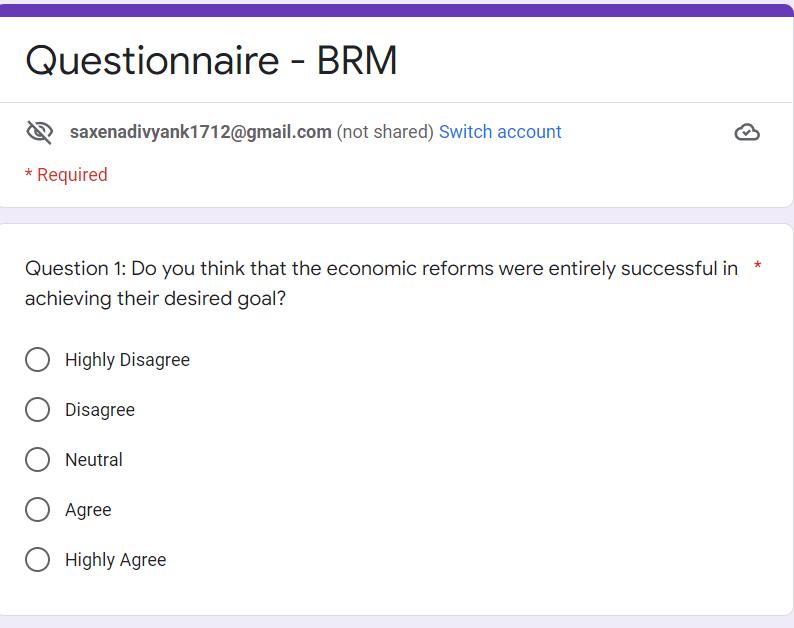
Question 1: Do you think that the economic reforms were entirely successful in achieving their desired goal? 3 3 7 6 3
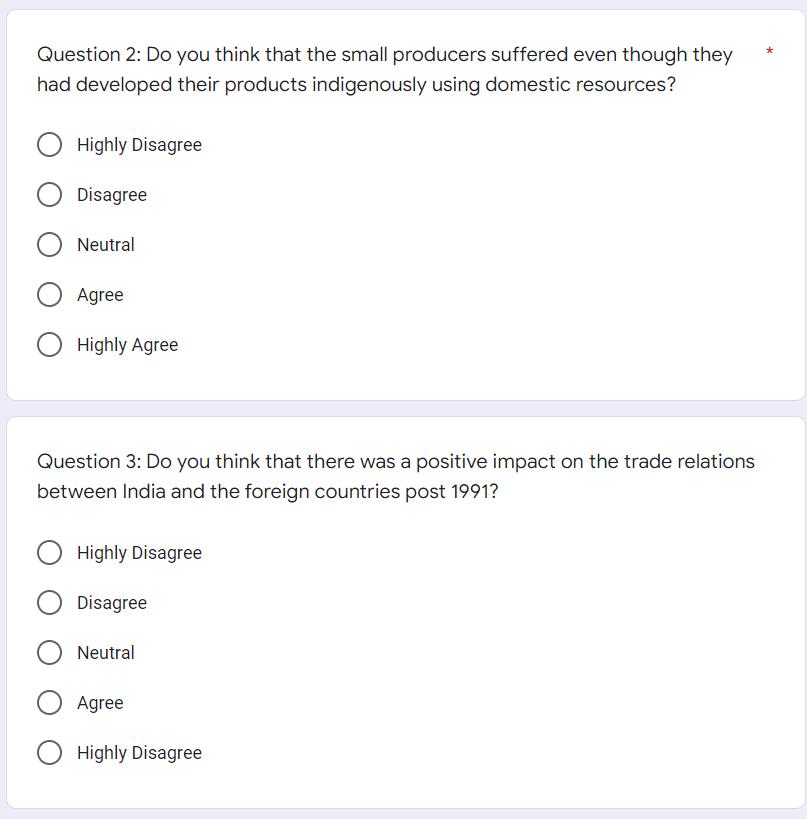
Question 2: Do you think that the small producers suffered even though they had developed their products indigenously using domestic resources? 0 4 6 3 2
Question 3: Do you think that there was a positive impact on thetraderelations between India and the foreign countries post 1991? 3 3 9 4 8
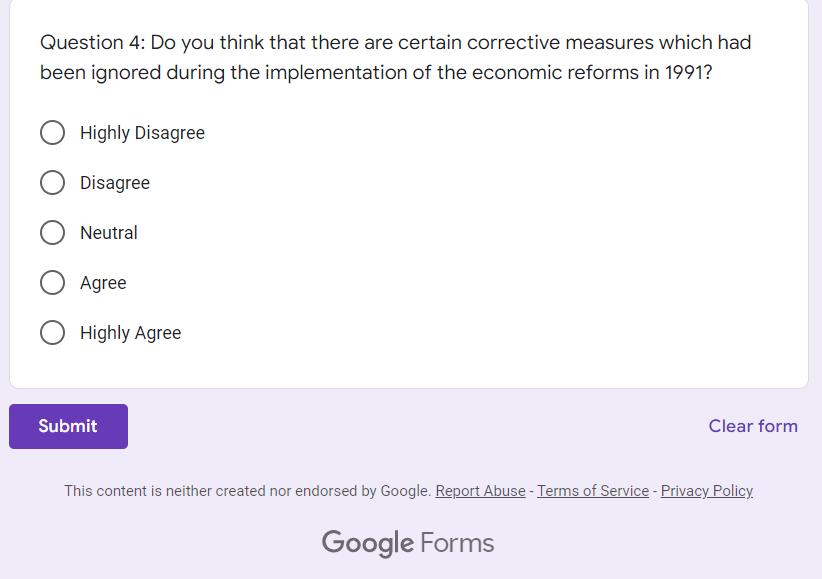
Question 4: Do you think that there are certain corrective measures which had been ignored during the implementation of the economic reforms in 1991? 2 5 4 2 3
In this survey, there were close-ended questions, which were essentially designed to ask the opinion of the respondents on the economic reformsof1991.They had to select oneout of the 5availableoptions, i.e., Highly Disagree, Disagree,Neutral, Agree and Highly Disagree.
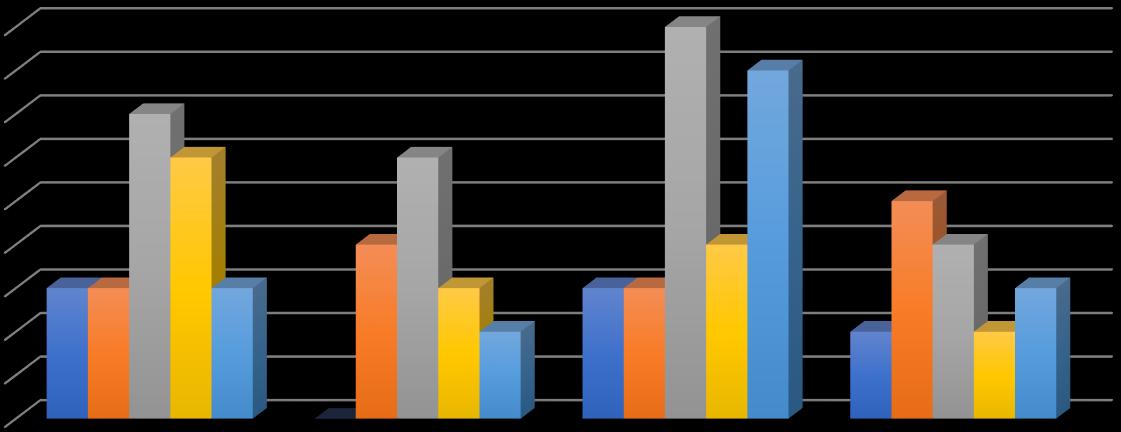
The following is the distribution of the responses that have been recorded by the researcher have been represented in a multiple bar diagram, which is given as follows:
ISSN 2348-3156 (Print)
International Journal of Social Science and Humanities Research ISSN 2348-3164 (online)
Vol. 10, Issue 3, pp: (276-284), Month: July - September 2022, Available at: www.researchpublish.com
It can be very clearly seen that the respondents have shown a rather neutral response to the questions that were asked. This can be equated to what is known as Socially Desirable Responding (SDR), which essentially translates to the tendency of respondents to provide answers in a manner which will be seen as favourable in the eyes of the others. This tendency can be observed in majority of the questions. This also reflects how interested the respondents were while filling the form, due to which the risk of receiving fake responses increases manifolds and thus can lead to a distortion in the data.
Going by the statistical data that was received inresponse tothe questions (For thequestionnaire, kindlyrefer to the attached appendix), it can be seen that in Question 1, the majority respondents gave a neutral response when asked about if they felt that the economic reforms were able to achieve the desired aim holistically. A similar pattern was seen in the case of Question 2 and Question 3, where the majority respondents had given a rather neutral responses when asked whether they believed that the small and the marginal producers suffered at the hands of the LPG policies and if they believed that the trade relations between India and the foreign nations had improved significantly post the implementation of the reforms respectively. In Question 4, the majority of the respondents felt that there were no other reformative or corrective steps which could have been undertaken by the government of that era, which essentially means that they were satisfied with the reforms and found them to be adequate.
In essence, upon looking beyond the neutral responses to the questions asked, it can be found that the 80 respondents show a positive inclination towards the economic reforms and they appear to be satisfied with the actions undertaken by the government in 1991.
On analysing the diverse views of the scholars and academicians mentioned in the section on literature review and taking into consideration the data collected and its subsequent analysis, it can be seen that H1 has been proven to be right, i.e., the hypothesisthat the LPG policies were entirely successful in their attempts in bringing perceptible changes in the functioning and administration of the Indian economy and that the respondents do not feel that any steps had been missed out by the Indian government while enforcing the economic ameliorations and thus filling in the economic deficits. H2, however, seems to have been disproved, considering that the population, even though having a neutral response, seems to have opine that the smaller producers did not suffer due to the foreign competition, contrary to what the researcher had hypothesized. Last, but not the least, H3 seems to have been proved right, considering that the hypothesis made by the researcher and the response received as per the questions framed by him are in tandem with each other. Therefore, it can be seen that 2 hypothesis out of 3, i.e., H1 and H3 have been proved, while H2 has been contradicted and thus proven wrong.
[1] Critical Exploration of Indian Economic Reforms of 1991: a lesson for developing economies
[2] Economic Reforms in India since 1991: Has Gradualism worked?
[3] India’s economic reforms: Achievements and next steps
[4] Economic Reforms and their macro-economic impact
[5] India’s Road to Economic Reforms
[6] The 25 years of Economic Reforms in India – Where are we?
[7] Economic Reforms in India
[8] What has happened since 1991? Assessment of India's Economic Reforms
[9] Economic Liberalization in 1991 and Its Impact on Elementary Education in India
[10] Economic Reforms and its Impact on Developing Countries - A Case of India
[11] Economic Reforms, Technological Intensity and Industrial Development in India
[12] A Contrary view on Indian Economic Crisis of 1991
[13] Sectoral Convergence, Economic Reforms and Growth In The Indian Economy: An Overview
[14] The Pattern and Causes of Economic Growth in India
[15] Economic Reforms and Urban Poverty: A Situational Analysis
[16] Institutions and Economic Reforms
ISSN 2348-3156 (Print)


International Journal of Social Science and Humanities Research ISSN 2348-3164 (online) Vol. 10, Issue 3, pp: (276-284), Month: July - September 2022, Available at: www.researchpublish.com
ISSN 2348-3156 (Print)
International Journal of Social Science and Humanities Research ISSN 2348-3164 (online) Vol. 10, Issue 3, pp: (276-284), Month: July - September 2022, Available at: www.researchpublish.com