International Journal of Healthcare Sciences ISSN 2348-5728 (Online)
Vol. 10, Issue 1, pp: (217-221), Month: April 2022 - September 2022, Available at: www.researchpublish.com

International Journal of Healthcare Sciences ISSN 2348-5728 (Online)
Vol. 10, Issue 1, pp: (217-221), Month: April 2022 - September 2022, Available at: www.researchpublish.com
–
1Dr. Bhgah Ibrahim Yusuf, 2Dr. Hamza Abdullah Mohammed Adam
1(BPEH – MPEH- Ph.D), 2(BPEH – MPEH- Ph.D)
1Department of Health Education and Promotion - College of Public Health and Tropical Medicine -Jazan UniversityK.S.A
2Department of Epidemiology - College of Public Health and Tropical Medicine -Jazan University- K.S.A https://doi.org/10.5281/zenodo.7010124
DOI: Published Date: 19-August-2022
Abstract: This is a descriptive cross- sectional study which was carried out at Elobied town in the period 2012 -2014 to assess the turbidity and residual chlorine of vended water quality. 55 samples were collected for analysis of turbidity and residual chlorine from vended water. The calculation of samples according to (1) samples per (10000) population, plus 10 additional samples (W.H.O 1993). Turbidity reached 90 NTU, The results illustrates high turbidity of vended water, where residual chlorine concentration was from (0.00 – 0.02 mg/l), which was not match with the W.H.O guidelines and SSMO (2007) recommend that the turbidity after treatment must be 5NTU or below.
Time and Place Limitation: This study was carried out during 2012 to 2014 at Elobeied Town North Kordofan State - Sudan.
Constrains: The natural constrains (Personal hygiene , Winds, rains and floods which affect in samples reading).
Keywords: (Vended water - Turbidity – Treatment – Residual chlorine).
Vendors selling water to households or at collection points are common in many parts of the world where scarcity of water or faults in or lack of infrastructure limits access to suitable quantities of drinking water. Water vendors use a range of models of transport to carry drinking water for sale directly to the consumer including tanker trucks and wheelbarrows/trolleys (1). There are a number of health concerns associated with water supplied to consumers by water vendors; these include access to adequate volumes and concern regarding inadequate treatment or transport in inappropriate containers, which can result in contamination (W.H.O – 2008). Where the source of water is uncertain or the quality of the water is unknown, water can be treated or re-treated in small quantities to significantly improve its quality and safety. The simplest and most important treatment for microbial contaminated water is disinfection. If bulk supplies in tankers are used, sufficient chlorine should be added to ensure that a free residual chlorine concentration of at least 0.5mg/ liter after a contact time of at least 30min. is present at the delivery point. Tankers should normally be reserved for potable water use. Before use, tankers should be either chemically disinfected or steam cleaned. Local authorities should implement surveillance programs for water provided by vendors and where necessary, collection, treatment and distribution of water to prevent contamination (W.H.O – 2006).
Water scarcity is a relative term; it depends on location, climate, season, and potential use by humans. The scarcity value of water is determined by the quality of water, the quantity of water, and the number and types of water users. It is greatly
International Journal of Healthcare Sciences ISSN 2348-5728 (Online)
Vol. 10, Issue 1, pp: (217-221), Month: April 2022 - September 2022, Available at: www.researchpublish.com
influenced, therefore by the integrity of watersheds, overexploitation of ground water, cost of water transport and distribution, density of populations, and water pollution levels. What is being seen and is clearly demonstrated by the rapid rise of bottled water use, is that the urban issue is one of scarcity of clean and potable water, which is also a reason behind rain water harvesting becoming more and more relevant for cities , most of the world does not treat water as a scarce resource, the fore most challenge related to water scarcity in developing countries involves inefficient water use in agriculture and urban areas and by industry, inefficient water use is linked to subsidized rural and urban water use, in line with this, irrigation water is essentially not priced, the price of water in cities does not cover the cost of delivery, and capital investment decisions in all sectors are divorced from the management of this resource, it is not uncommon for water subsidies to go disproportionately to the better of irrigation farmers and urban water users connected to public systems (Arthur – 2003).
1.2
There are many links between water and poverty, one of these links is the economic link which is best illustrated by the dramatic effect it has on the poor getting connected to piped water, poor people either have no access to piped water and must buy water from vendors or they have access but service is very poor (Arthur – 2003)..)
Water is essential to sustain life, and satisfactory supply must be made available to consumers (WHO – 1993)
The basic physiological requirements for drinking water have been estimated at about 2 liters per headper day (park -2002), this is just for survival , but from the standpoint of public health and improvement of the quality of life, water should be provided in an adequate volume. It will help to reduce the incidence of many water-related diseases among the people most at risk. The consumption of water, however, depends upon climatic conditions, standard of living and habits of the people. A daily supply of 150 - 200 liters per captia is considered an adequate supply to meet the needs for all domestic purposes (park - 2002).
Water vending is probably as olds human society and trade, but in recent centuries it has been overshadowed by the expansion of network piped system. Water vending is now often taken as a symptom of failure in these piped systems, which still provide water to only a minority of urban dwellers in many parts of the world when collecting international statistics on access to water, those who buy reasonable access to an improved water supply along with people who get their water from unimproved wells or surface water sources, in many cities, water vending is actively discouraged (Marline and Gordan Mcgrandan -2006
Water vending (to engage in selling) can refer to any form of sale of water strictly speaking utilities that charge of water deliveries are water vendors, albeit vending more typically refers to (peddling), (hawking) or (selling by meansof avending machine) (dictionary.com -2004).
In the water literature, vending does not refer to utility sales, but rather to the reselling or on word distribution of utility water, or water from other sources. One early and very important survey of water defined the practice as fallows:
Water vending, the sale and distribution of water by the containers, ranges from the delivery of water by tank trucks, to carrying of containers by individuals. The water may be obtained from private or municipal taps. Stand posts, rivers or wells and sold either from public vending station or door to door
Vendors may either sell water directly to consumers or act as middlemen, selling water to carriers who in turn serve the consumers (Zaroff and Okum – 1984).
Whittington teal (1984) State that all vending systems have one or more of three types of vendors:
- Wholesale vendors obtaining water from a source and selling it to distributing vendors
- Distributing vendors obtaining water from a source or a wholesale vendor and selling it to consumers door to door
- Direct vendors – selling water to consumers coming to the source to purchase water
Vendors / resellers are three categories:
- Stand pipe vendors: Small entrepreneurs who operate stand pipe installed by the city water concessionaire
International Journal of Healthcare Sciences ISSN 2348-5728 (Online)
Vol. 10, Issue 1, pp: (217-221), Month: April 2022 - September 2022, Available at: www.researchpublish.com
-Licensed water resellers: micro entrepreneurs contracted to resell water piped to their homes and who may invest in standpipe installation and network extension
-Unlicensed household water resellers, who are not seen as professionals, Although they do provide water to a major share of the market.
Visible turbidity reduces the aesthetic acceptability of drinking-water. Turbidity can vary in color and appearance, ranging from milky-white clay-based particles to muddiness from sediments and soils, red-brown iron-based particles and black manganese-based particles. At high levels, turbidity can lead to staining of materials, fittings and clothes exposed during washing.
Many consumers equate turbidity with safety, and consider turbid water as being unsafe to drink. This response is exacerbated when consumers have been accustomed to receiving high-quality water. As a guide, “crystal-clear” water has turbidity below 1 NTU, and water becomes visibly cloudy at 4 NTU and above. This is well above the levels expected in well-maintained and treated surface water supplies, and in most groundwater supplies. Although turbidity may be caused by particles with little health significance, complaints about unexpected turbidity should always be investigated because they could reflect significant faults or breaches in distribution systems. Aesthetic impacts can lead to indirect health impacts if consumers lose confidence in a drinking-water supply and drink less water, or choose to use lower turbidity alternatives that may not be safe. (3)
For a chemical or an agent to be potentially useful as a disinfection in water supplies, it has to satisfy the following criteria:
a- It should be capable of destroying the pathogenic organisms present, within the contact time available and not unduly influenced by the range of physical and chemical properties of water encountered particularly temperature, PH and mineral constituents.
b- Should not leave products of reaction which render the water toxic or import colour or otherwise make it un potable.
c- Have ready and dependable availability at reasonable cost permitting convenient, safe and accurate application to water.
d- Possess the property of leaving residual concentration to deal with small possible recontamination.
e- Be amenable to detection by practical rapid and simple analytical techniques in the small concentration ranges to permit the control of the efficiency of the disinfection process. (Park 2002)
Chlorination is one the greatest advances in water purification. It is a supplement, not a substitute to sand filtration. Chlorine kills pathogenic bacteria, but it has no effect on spores and certain viruses except in high doses. Apart from its germicidal effect, chlorine has several important secondary properties of value in water treatment it oxidizes iron, manganese, and hydrogen sulfide. It destroys some taste and odour. Producing constituents, it controls algae and slime organisms, and aids coagulation.
Action of chlorine: When chlorine is added to water, there is formation of hydrochloric and hypochorous acids. The hydrochloric acid is neutralized by alkalinity of the water. The hypochlorous acid ionizes to form hydrogen ions and hypochlorous ions, as follows:-
H2O + Cl2 HCl + HOCl
HOCl H + + OCl -
Principles of chlorination: The addition of chlorine to water is not chlorination. There are certain rules which should be obeyed in order to ensure proper chlorination:
1- First of all, the water to chlorinate should be clear and free turbidity.
2- Secondly, the “chlorine demand” of the water should be estimated.
3- Thirdly, the contact period. The presence of free residual chlorine for a contact period of at least one hour is essential of kill bacteria and viruses.
International Journal of Healthcare Sciences ISSN 2348-5728 (Online)
Vol. 10, Issue 1, pp: (217-221), Month: April 2022 - September 2022, Available at: www.researchpublish.com
4- The minimum recommended concentration of free chlorine is 0.5mg/l for one hour. The free residual chlorine provides margin of safety against subsequent microbial contamination such as may occur during storage and distribution.
5- The sum of the chlorine demand of the specific water plus the free residual chlorine of 0.5mg/l constitutes the correct dose of chlorine to be applied.
-Turbid meter (Nephelometer)
-Beam of light passed through water sample.
-Amount of light scattered at a 90° angle measured.
-Residual chlorine meter
2.1 Sample size:
Water samples which were selected according to WHO guidelines (1993). Were 55 samples
The calculation of samples according to (1) samples per (10000) population, plus 10 additional samples (W.H.O 1993).
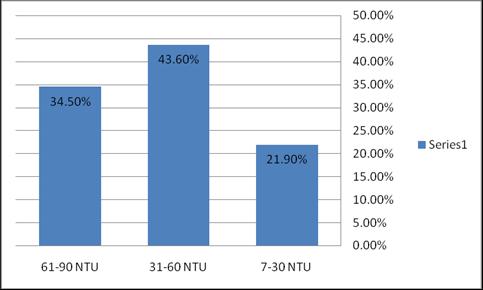
Figure 3.1: Turbidity of vended water in Elobeid town 2012 -2014
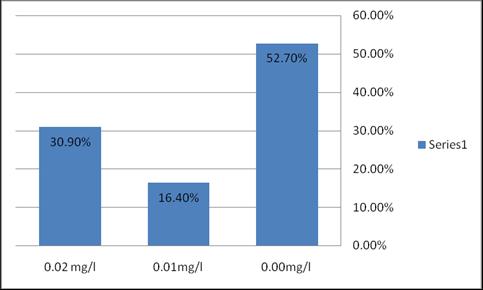
Fig 3.2: Residual chlorine of vended water in Elobeid town 2012 -2014
International Journal of Healthcare Sciences ISSN 2348-5728 (Online)
Vol. 10, Issue 1, pp: (217-221), Month: April 2022 - September 2022, Available at: www.researchpublish.com
The result illustrates the high turbidity and low residual chlorine after treatment (in winter) which was 55NTU above the W.H.O guidelines and SSMO (2007) recommend that the turbidity after treatment must be 5NTU or below. This high turbidity is due to in proper treatment of water and the low efficiency of the treatment plant. This result is corresponding with Park (2002), who stated that turbidity in drinking water is caused by particulate matter that may be present as a consequence of inadequate treatment.
The high turbidity recorded in these areas which was not complying with W.H.O guidelines and SSMO 2007 standards. The results were (23 NTU – 25NTU - 21NTU - 28NTU - 15NTU - 10NTU). This turbidity may be due to in sufficient treatment which is clear from these results, and also may due to problems in the distribution system, According to Parks (2002), turbidity may be from suspension of sediments in the distribution system, and turbidity interferes with disinfection and microbiological determination.
The turbidity before treatment was 33NTU and after treatment was 32NTU. This means that the efficiency if any of the treatment plant is rather low, and it is neither operating properly (quality) nor according to it is full capacity (quantity).
The water turbidity before treatment was 786 NTU in the rainy season, and this is clear because the surface water in Elobeid Town depends on water harvesting. The run off (rain water) washes pathogens and particulates on the ground. Also the turbidity after treatment was 370 NTU. This was the highest turbidity recorded in all the three seasons, and there is no comparison between this results and the W.H.O and SSMO (2007) guidelines, which recommends the turbidity after treatment to be 5NTU. This result illustrates also the low efficiency of the treatment plant. . It was certain that there was shortage in chemicals for coagulation and disinfection (personal communication – Chemical Engineer of Elobeid Treatment Plant).
Water treatment is inadequate in terms of the quality, the turbidity of water ranged 19 NTU to 670 NTU across the year. In rainy season the poor water quality in terms high turbid water in different areas in the town. I recommend Turbidity of treated water should be maintained below 5NTU in the distribution system and before entering the distribution system. Residual chlorine in vended water was 0.00mg/l in 52.70% from the samples , and 0.02 mg/l by 30.90%.
I would like to thank the Professor Ahmed Agab Eldour, University of Kordofan , who provide valuable advices guidance through the study
[1] Frank R. Spellman , Water and Wastewater Treatment Plant Operations , Second Edition , Printed in the United States of America , Pages 430 – 433 , 2009.
[2] Joanne E. Drinan , Water and waste water treatment , A guide for the non engineering professional , CRC PRESS , Boca Raton London New York Washington, D.C., pages 25 – 30 , 2001.
[3] World Health Organization, Water Quality and Health - Review of Turbidity: Information for Regulators and Water Suppliers, Technical Brief, WHO/FWC/WSH/17.01, Pages 2-9, 2017.
[4] Elizabeth Myre & Ryan Shaw, The Turbidity Tube: Simple and Accurate Measurement of Turbidity in the Field , Department of Civil and Environmental Engineering , Master’s International Program , Michigan Technological University , Pages 1- 16 , Written April 2006.
[5] World Health Organization. , Guidelines for Drinking-water Quality, 3rd Ed: Volume 1 –Recommendations. Geneva, 2004.
[6] Park, K, Text Book of Preventive and Social Medicine, M/s Banarsidas Bhanot, Jabalpur 482001, India, 2002.