ANTIQUES: Peep eggs were optical devices from Victorian era, F8








REICH: The many benefits of sowing in seed flats, F4 HOME: How to prepare when selling your home, F6













ANTIQUES: Peep eggs were optical devices from Victorian era, F8
REICH: The many benefits of sowing in seed flats, F4 HOME: How to prepare when selling your home, F6
By Jeanne Huber
The Washington Post
IT’S SPRING AT LAST — the perfect time to get outdoors. Although it’s tempting to sit in the sunshine watching the birds and flowers, taking some time to complete these maintenance tasks now can help make the coming warmer months more enjoyable, both indoors and out.
This ritual started in a time when people needed good weather to lug rugs outside and beat them to release dust and mites. Vacuum cleaners ended that chore, but we have hung onto the idea of spring cleaning and decluttering. Pick a room or two and devote a chilly day to cleaning from the ceiling to the floor.
Dust the ceiling and walls with a microfiber cloth wrapped around broom bristles, wash the blinds and light fixtures, clean closets or bookshelves and sell or donate things you no longer use. Finish by washing or vacuuming the floor.
If you’re tackling the kitchen, use warm, soapy water to wash walls and cabinets. Dry wood with a clean cloth immediately to avoid soaking it.
To eliminate grease stains on painted walls, the AnswerLine of Iowa State University’s Extension and Outreach recommends a solution of equal parts white vinegar and hot water, or a paste with 3 tablespoons of baking soda and a cup of warm water. Ammonia — diluted at a ratio of 2 cups per gallon of hot water — also works, but gloves and good ventilation are essential.

Even if you don’t need air conditioning yet, you might want to run the fan to filter out pollen. If you’re allergic and have must-do outdoor chores, tackle them when trigger plants aren’t at peak bloom. To check whether it’s a good time, consider signing up for emails or web access to local pollen counts from the National Allergy Bureau. Wearing a disposable respirator while working also helps.
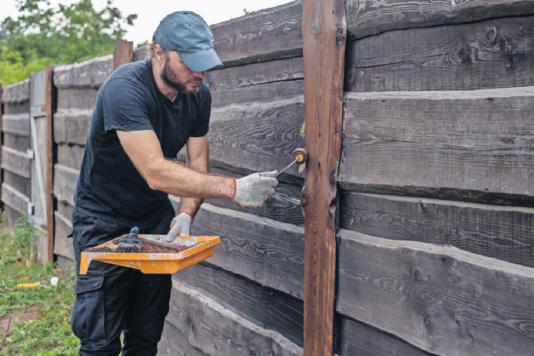
If your fence looks grungy, scrub and hose it off, or use a power washer. Then consider applying a fresh coat of stain or paint, but only if it’s already painted (paint can peel and might need more maintenance than a stained or naturally weathered fence).
If the fence is wobbly or leaning, check for rotted posts. You can replace the post, but that’s hard to do without taking down adjoining fence sections. Consider fortifying the existing post with an anchoring system such as the Fix-A-Fence repair bracket.
It has an offset base, which in most cases should allow it to work even if the post is set into concrete. To install the anchor base, dig a hole 18 inches deep and 6 inches across parallel to the post and mix a 60-pound bag of concrete.
Once the concrete sets, screw the top of the brace to the post.
If you have a sprinkler system, set the timer to manual and test one zone at a time. Look for nozzles that are broken or not adjusted to spray efficiently; you want water delivered relatively uniformly to all areas of a lawn, not to pavement. If you have a drip system for perennial beds or a vegetable garden, turn on the water and make sure it isn’t shooting out from broken connector lines. Inspect each line and replace or clean any clogged emitters. If your automatic watering systems leave patches of landscaping too dry, consider replanting with species that thrive in drier soil. Once established, many native plants suited to the sun or shade can thrive on rainfall alone.
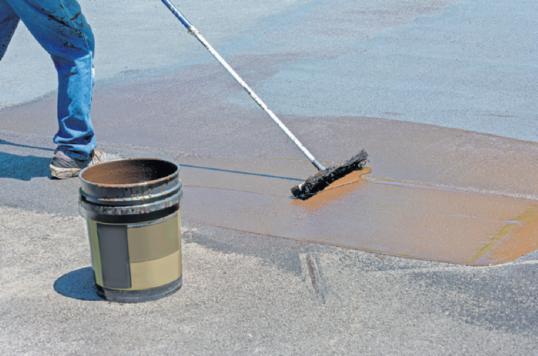
If you have an asphalt driveway where bare stones show, late April may be a good time to reseal it. Buy the sealer first, then follow instructions on the label, starting with choosing a good time to begin. You’ll need at least two dry days (one to clean, one to coat) and nights that aren’t too cold; check the product label for ideal temperatures. You might need a primer over oil stains. And if the pavement is cracked, you’ll need a crack-filler with a liquid or putty-like consistency, depending on the width of the cracks. To choose the best sealer, look at the length of the warranty. Latex-ite, for example,
makes sealers labeled as Ultra Shield, Optimum and Airport Grade. Coverage rates on these products are identical, and the basic mixture in the bucket is the same. But a customer service representative for Dalton Enterprises, which owns the brand, said there is one key difference: Ultra Shield has the most polymer so it will last the longest. Thus, it has a 10-year warranty. Optimum’s is eight years; Airport Grade’s is four. Of course, if you want to reseal your driveway frequently so it’s uniformly black, or if you are getting a house ready to sell, the least-expensive sealer might be the best bargain. For most people though, it’s a no-brainer to spend a bit more to get six years’ more life from a coating.
Dining outdoors is one of the great pleasures of spring and summer. Now’s the time to get furniture in tiptop shape. Teak. If the wood is blotchy or black with mildew, scrub with a teak cleaner and a synthetic or brass pad. One-part cleaners are safest; they don’t rough up the wood. Rinse and let dry. Apply teak oil if you want the wood to stay its natural color, or skip it if you’d rather have wood that ages to a mellow gray. Wrought iron. Use a wire brush to scrub off any rust damage, ideally down to bare metal. Scuff up other areas by sanding lightly. Apply a rust-inhibiting primer, then repaint.
Strap or plastic wicker. Remove brittle plastic, then weave on new vinyl strapping. A lattice pattern with a double wrap on the frame is more durable than simple horizontal straps. Find materials by searching for “patio furniture repair” online. Plastic. Even inexpensive chairs need a thorough cleaning. If you can’t get them clean, spruce them up with paint. Try Zinsser Bulls Eye 1-2-3 water-based primer, topped by any outdoor water-based paint. Or use a spray paint such as Krylon fusion all-in-one.
7. Care for the deck
Do an inspection, beginning with the ledger board where the deck is attached to the house. Poke at the wood to make sure it is solid and well attached, not rotting or pulling free. Also check railings and handrails on stairs to make sure they’re solid and don’t wiggle. Remove, or at least move aside, any furniture or potted plants and sweep thoroughly. Then dampen the area, spray on soapy water and scrub down the boards.
On wood or traditional (uncapped) composite decking, use warm, soapy water or a deck cleaner such as Behr premium all-in-one wood cleaner. For capped composite decking, just use warm, soapy water. Scrub with a nylon-bristle brush in the direction of the boards. If you use a power washer, set the pressure no higher than 3,100 pounds per square inch, use a fan nozzle and keep the tip at least 8 inches from the boards.




































































Lee Reich | In the Garden
MY WIFE DEB IS always impressed at the almost nonstop march of home-grown lettuce that makes its way into our kitchen and then to salads and sandwiches each year. Not just a leaf here and there, or even the paltry amount in “side” salads served up in restaurants. No, I’m talking about day upon day lots of lettuce, often even whole heads — even here in zone 5.
The key to this abundance is sowing seeds every couple of weeks or so. Not right out in the garden, but in seed flats; mine are 4 inches wide by 6 inches long and a couple of inches deep. After filling a flat with potting soil, onto the soil I press down a 4-by-6 inch board to which I’ve glued four dowels, each 4 inches long and three-sixteenths of an inch in diameter. The result is four mini-furrows running from one long side of the flat to the other.
Sowing in flats, which requires only a pinch of seeds in each furrow, makes economical and efficient use of both seeds and space. That seed flat takes up only 24 square inches of space, space which might be on a sunny windowsill or a table with “grow lights,” not even in the garden.
Sowing a different variety in each of the four furrows adds interest as far as flavor, texture, and appearance to salads and sandwiches.
Sowing in flats also makes good use of time. I could sow lettuce out in the garden now, but cool or cold weather would slow seed germination and subsequent growth of seedlings.
Sown outdoors a few weeks ago, seeds would have just sat in the cold soil, waiting for warmth before they’d sprout. Indoors, my seed flats are gently warmed on a soil heating mat made for this purpose.
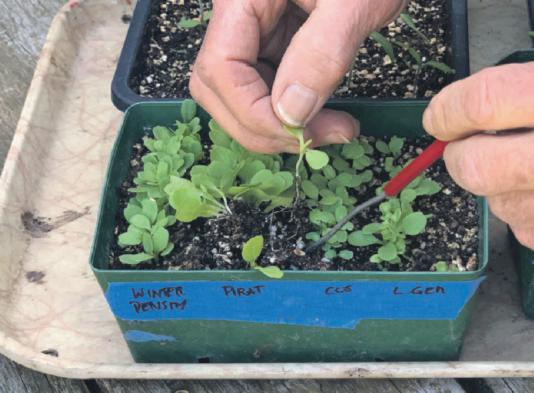
Of course, once weather warms sufficiently, lettuce seeds would sprout just fine outdoors. Starting the seeds in flats — and the next step, to be described — let’s a whole row of lettuce spend its youth in just a couple of square feet of space on a table or bench outdoors.
Lettuce seed doesn’t germinate very well in very warm soil. In the heat of summer, I put my seed flat of lettuce on a bench near the north wall of my home. There, with cooler temperatures, lettuce seeds germinate just fine.
Once seedlings are up and showing their true leaves, optimum conditions for them change. The ideal, then, is bright light and cooler weather, which promotes sturdy growth that will be better able to face the great outdoors, when that time comes.
Years ago, I graduated to a greenhouse, where my seedlings bathe in abundant sunlight. An unobstructed, south-facing window, especially if the room isn’t heated too much, is also fine. Same goes for near some “grow lights.”
Just a few day’s growth and it’s time — as the Brits term it — to “prick out.” Timing
is not supercritical. Pricking out is gently lifting a small seedling by its leaves while, at the same time, pushing up from below with a small spatula or butter knife so as to avoid damaging the delicate plantlet.
Most critical is the stem, which is why plantlets are lifted by their leaves. These plantlets can afford to lose some leaf area or some roots but if I happen to accidentally damage a plantlet’s stem, it will die.
The ideal second home for the pricked out seedlings is a multi-celled, larger flat where each seedling has a small volume of potting soil all to itself. I have some commercial ones that measure eight by twelve inches and hold either 40 seedlings or, with a larger new home for each seedling, 24 seedlings. In either case, that’s a lot of plants in only two-thirds of a square foot.
Most of my multi-celled flats sit on a capillary mat one end of which dunks into a water reservoir. As the cells of soil gradually dry, they suck up more water from the capillary mat through their drainage holes; the capillary mat replenishes that water from the reservoir below.
The next meeting of the Agawam Garden Club will be held on Tuesday, April 14, at 6:30 p.m. at the Agawam Public Library, 750 Cooper St. After a short business meeting Evan Abramson, founder of Landscape Interactions, will present a talk on “Building Resilience through Biodiversity: Scalable and Replicable Stormwater Management Designs.” In this presentation, he will explore diverse strategies for storing and managing runoff while simultaneously supporting at-risk native pollinator species. Abramson holds a master of science in ecological design from the Conway School of Landscape Design as well as certificates in permaculture design and biodynamic gardening. All meetings are open to the public and not restricted to Agawam residents.
The Hampden Garden Club will be hosting Dan Ziomek from Sugarloaf Gardens on Thursday, April 16, at 7 p.m. Ziomek will be presenting his program “Backyard Orchards.” The program will be held at the new meeting location at the Town Hall (formerly Thornton W. Burgess Middle School), 85 Wilbraham Road, Hampden, Room A7. Guests are asked to use the library entrance. There is a $5 fee for nonmembers of the garden club.
Ziomek will discuss growing fruit trees and other fruit bearing plants in our backyards. His talk will include tree selection, pruning, and pest control. This is Ziomek’s 39th year in horticulture and he will share his experiences with fruit growing. New members are welcome. Membership fee for the year is $15 and includes admission to all programs.
The Hampden Garden Club also will be meeting at
the Hampden Senior Center, 104 Allen St., Hampden, on Saturday, April 18, at 9 a.m. for Earth Putter Day. They will be weeding and sprucing up the gardens at the Senior Center and the Gazebo at the Hampden Town Hall from 9 to 11 a.m. Club members are asked to bring their garden tools.
Monson Garden Club is sponsoring its Guest Night program “Xeriscaping” with Master Gardener Kathi Gariepy on Monday, April 6, 7 p.m. in First Church of Monson on High St. Xeriscaping is the art of landscaping with plants that require little water for upkeep. This process helps with water conservation while beautifying an area.
Gariepy contributes to community enrichment and education as a lead teacher for Massachusetts Horticultural Society and education coordinator for Mass Audubon. She is actively involved in the Attleboro Garden Club and Massachusetts Master Gardener Association. As a master gardener, she shares research-based horticultural knowledge and experience with the public.
This program is open to the public with light refreshments to be served. A suggested donation of $5 will include a chance to win plants for sustainable gardening.
The Springfield Garden Club has been hosting a series of programs for anyone interested in gardening or just escaping the winter for an hour. The final program of the series will be held at the Monkey House in Forest Park at 10 a.m. Admission is free to all with paid park admission. More information can be found on the club’s website at www. springfieldgardenclubma. org or on Facebook.
I grow lots of seedlings and this setup significantly reduces my watering time.
During the outdoor growing season, I count on having to transplant seedlings out of their cells and into the ground after only about three weeks. During that time, I can pop grown seedlings here and there in the garden as space becomes available. Summer or winter, the nice thing
about this method is, I need devote only a couple or so square feet of space to about a month’s worth of lettuce.
During their time in seed flats I can tailor conditions to suit seedlings’ needs.
And I can devote real estate out in the garden to other plants during seedlings’ month or more of development from seed to transplant size. I also like the intimacy of this whole process.
All I have to do is to remember to sow every couple of weeks.
Hampden.
Saturday, April 11, 10 a.m., “Planning and Growing a Bountiful Flower Garden” presented by Becky Sadlowski.
The West Springfield Garden Club has announced that two $2,000 scholarships are available for qualified high school seniors or post-secondary students during the spring of 2026. Any West Springfield resident currently enrolled in an accredited institution of higher education with a focus in horticulture, agriculture, ecology, botany, environmental studies, landscape design or forestry, Applications are available on the Garden Club or the Park and Recreation website and must be completed by April 10.
The Wilbraham Garden Club has announced that applications are being accepted for two $1,000 scholarships. Applications are being accepted from graduating high school seniors, undergraduates, and graduate college students majoring in or who plan to major in, one of the programs listed below. Eligible students must be residents of Wilbraham or
All applicants must be enrolled in one of these fields of study: Botany, Horticulture, Conservation, Environmental Science, Earth Systems, Forest Management, Natural Resources, Plant, soil and Insect Science, Sustainable Agricultures, Sustainable Horticulture, Food and Farming, Turf Grass Science & Management, Landscape Design & Management Technology, Landscape Architecture, Oceanography, Clean Energy Technology, Floral Design or Land Management.
Applicants must include a personal essay of 100-200 words, official high school or college transcript(s), two letters of recommendation, college acceptance letters(s) if available, along with the completed Wilbraham Garden Club Scholarship application. All required documentation must be received on or before April 30. Notifications will be made by mid-May, and the recipients will be awarded their scholarships at the annual meeting of the Wilbraham Garden Club on June 5. Scholarship applicants will be available at the Wilbraham and Hampden Public Libraries, Minnechaug Regional High School and Wilbraham Monson Academy. They can also be found on the Wilbraham Garden Club Facebook page. Contact howella413@gmail. com with questions or to receive an application.
Send items for Garden Notes to pmastriano@repub.com two weeks prior to publication.
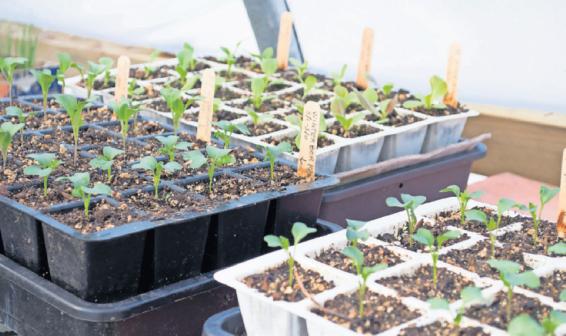
Seedlings can grow to transplant size in their cells, getting a jump on the season or waiting until space opens up as vegetables are harvested to free up space outdoors.









By K aitlyn K eegan The Hartford Courant
WITH SPRING ON ITS way, it’s a popular time for homeowners to consider selling their homes. It can be daunting to think about listing your home so where do you start? Being able to get the best first impression is crucial, according to Julie Sirois, a realtor with Berkshire Hathaway HomeServices New England Properties.
That first impression starts with the photos you take. There are some buyers, especially in the high-end
market, that are still buying sight unseen and go off of the photos. Before your home even hits the Multiple Listing Service, you’ll have some work to do to best present it.
You’ll want to start with curb appeal, Sirois said, since that is the first thing a buyer will see online or when they pull up to the driveway. Some things you’ll want to consider are mulching, cutting the grass, washing the house, addressing any wood rot issues and cleaning up the shrubs and plants.
“This is your first impression of the home so make it count,” Sirois said.
From there, address any maintenance items — even small ones.
“If a buyer can see small mainte-

Before your home even hits the Multiple Listing Service, you’ll have some maintenance work to do to best present it.
nance issues, they worry about what they cannot see,” Sirois said. “Take care of those in advance.”
can be anything from chipped paint to scuff marks, burned out bulbs or ripped screens.
Those small maintenance items
Tick season is almost here. Here’s what you need to know.
By Jane Sykes The Washington Post
Q. What is the safest way to get a tick out of my dog’s body? Should I use tweezers or gloved hands? Are there ways to prevent ticks from sucking on his body?
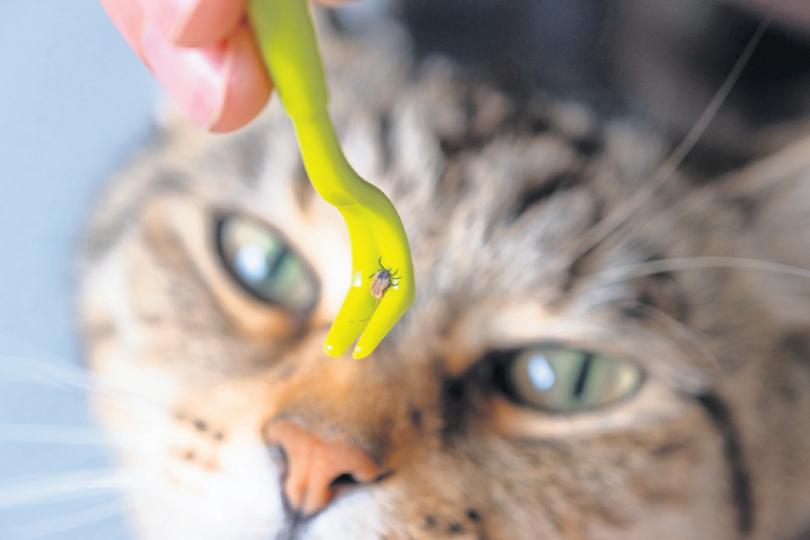
A. Whatever you do, don’t remove ticks from your pet with your teeth (yes, people do this, and one man then developed the tick-borne disease Rocky Mountain spotted fever). Don’t use your hands either, because you’re more likely to crush the tick, force tick-borne pathogens into your pet or break in your skin and leave the tick’s mouthparts behind (which can cause skin irritation and infection). Instead, place a tick-lifting tool or curved tweezers between your pet’s skin and the tick’s body, use gentle upward pressure to remove the tick, then flush it down the toilet. There’s a variety of tick-lifting tools available online, but fine-tipped curved tweezers also work well.
Your question is timely, with tick season just around the
corner. Ticks will suck your pet’s blood, and they transmit some nasty infectious diseases. Pets also sometimes carry unattached ticks into the home, which can spread tickborne diseases to people and other pets. Here’s what you
need to know about ticks, the diseases they spread and the best ways to prevent them. What ticks should I be worried about?
Ticks — and the diseases they transmit — vary depending on where you live. There’s a long list of tick-borne
diseases, so I’ll focus on the most common ones in dogs and cats, some of which also affect people. There are four groups of ticks you need to know about.
Black-legged ticks (Ixodes).
Black-legged, or deer ticks (Ixodes scapularis) transmit
bacteria that cause Lyme disease (Borrelia burgdorferi) and granulocytic anaplasmosis (Anaplasma phagocytophilum). These diseases are most common in the Northeast and the Upper Midwest. Lyme disease is the number one vector-borne disease in the United States, and in some parts of the Northeast, up to 80 percent of adult ticks can be infected. Behind the scenes is the cute little white-footed mouse, which can be infected with large numbers of these bacteria and acts as a source of infection (a reservoir) for uninfected ticks.
If you live on the West Coast, don’t be lulled into a false sense of security. In California, Oregon and Washington, a related tick, the western black-legged tick (Ixodes pacificus), transmits the same diseases. This tick prefers to feed on lizards, which don’t make great reservoir hosts, so Lyme disease in the west is relatively rare. Many wildlife species can act as reservoirs in the west, but western gray squirrels are thought to be the most important.
The most common sign of Lyme disease in people is a bull’s eye-shaped rash at the site of a tick bite. Dogs don’t get the bull’s eye rash, and less than 5 percent of dogs get sick after infection. For these dogs, it takes a month or two before signs of illness appear, most commonly fever, decreased appetite, lethargy, and swelling and pain of multiple joints (a condition called polyarthritis). These signs typically respond well to a 4-week course of the antibiotic doxycycline. The most feared manifestation of Lyme disease in dogs is a condition called Lyme nephritis, which tends to affect retriever breeds. Dogs with Lyme nephritis develop kidney failure and lose protein in their urine, and the disease is usually fatal.
Like Lyme, anaplasmosis can be accompanied by fever and polyarthritis, and because ticks can carry both Anaplasma and Borrelia, dogs and people can acquire Lyme and anaplasmosis at the same time. Some dogs with anaplasmosis develop neurological signs (neck pain and rarely seizures), but the disease is rarely fatal and responds well to a short course of antibiotics.
American dog ticks (Dermacentor variabilis). Mostly found in the southeast, these ticks can transmit a variety of diseases to humans and dogs. One of the most serious is Rocky Mountain Spotted Fever (RMSF), which is caused by the bacteria Rickettsia rickettsii. When R. rickettsii gets into the body, it infects and damages small blood vessels, so that blood and fluid leak into tissues, including critical organs and the brain. Humans develop a spotted rash, and both humans and dogs can develop fever, neurological signs like seizures, organ failure and death. Although RMSF in both dogs and humans can be effectively treated with doxycycline, a delay in treatment (or the wrong antibiotic) for even two or three days can mean the difference between life and death. If your dog is diagnosed with RMSF and you become ill, immediately tell your doctor, because you and your dog might have been exposed to the same ticks.
Lone Star ticks (Amblyomma americanum). These ticks are of greatest concern in the southeast and south-central states. But with climate change, Lone Star ticks have been spreading north toward Ohio. They transmit Ehrlichia ewingii to dogs and humans, which causes an anaplasmosis-like disease.
Lone Star ticks can also transmit a serious disease to cats known as cytauxzoonosis (sightoh-zoh-uh-NOH-sis). It’s caused by a single-celled organism that tears apart red blood cells and causes rapid multiorgan failure and death. Last (but not least), Amblyomma ticks transmit hepatozoonosis (heh-PAT-oh-zoh-uhNOH-sis) to dogs. This is a chronic disease with fever, bone pain and muscle wasting. These infections must be treated with special antiprotozoal drugs — they don’t respond to antibiotics. Brown dog ticks (Rhipicephalus sanguineus). These can be found all over the United

Inspect your pet for ticks after outdoor activities. The sooner ticks are removed, the better.
(ADOBE STOCK IMAGE)
States, but they are most widespread in the southeast. Brown dog ticks transmit one of the most common infectious diseases of dogs worldwide, canine monocytic ehrlichiosis (CME). Most infected dogs show no signs. Some develop an acute disease with signs of fever, polyarthritis, lethargy, lymph node enlargement and sometimes bleeding. An even smaller percentage of dogs develop a chronic persistent infection that can result in bone marrow failure; often this is fatal. In the southwestern states, brown dog ticks can also transmit RMSF. This has been a major problem for people in Mexico and on tribal lands in Arizona.
How can I prevent these diseases?
Reduce the chance of tick exposure. Remove brush and long grass in your yard, and when hiking, try to keep your dog on the trail (which can also help to protect you from exposure to poison oak or poison ivy oils — dogs also carry these into your car and home).
Inspect your pet for ticks after outdoor activities. The sooner ticks are removed, the better. After tick attachment, it takes about two hours before Ehrlichia can be transmitted, eight hours for Anaplasma, and at least 24 hours for Borrelia. After you have removed the tick, antibiotics are not recommended because there’s a low chance of infection, and overuse of antibiotics puts your pet at risk of future antibiotic-resistant infections. They also aren’t recommended if your dog happens to test positive for these infections at a wellness check, but this is a sign that you and your dog are getting exposed, so work on prevention. Consider vaccinating your dog against Lyme. If you spend time with your dog in parts of the country where Lyme disease is common, get your dog vaccinated so they can. Vaccinated dogs develop antibodies against Borrelia that the tick ingests when it sucks blood. The antibodies destroy Borrelia inside the tick before it infects your dog.
Use parasite prevention products. A variety of long-acting parasite prevention products are available to prevent tick infestations and the diseases that ticks transmit. Your vet can prescribe the right product based on location and lifestyle.
You will want to remove any pet items in the home. This will help eliminate any odors.
“Removing pet items will help any buyers who have allergies or are not fond of pets,” Sirois said.
Make sure to address clutter.
“Anything smaller than the palm of your hand should be put away,” Sirois said of the general rule declaring what is clutter and what is not. “Start packing. You’ll ultimately be moving anyway so start that process.”
You will want to remove unnecessary furniture, she said. It makes the space look small.
Another thing most homeowners don’t think about is their personalization. These are things such as family photos, collections or sports memorabilia.
“Buyers basically want to envision themselves in the home,” she said. “Too many personalized items makes it feel like the seller’s home and not a potential home for themselves.”
When it comes to storage spaces, you could have all the storage in the world in a home, but if it looks packed to the brim and doors won’t close, that won’t be a selling point.
“If storage spaces are overflowing, it looks like there’s not enough storage space,” Sirois explained.
“Think about open closets, the basement and the garage. Pare down storage spaces. It’s a better look for showings.”
Most people do think about paint when they are about to sell their home, but it’s not just about fixing chipping paint.
“If the home already has neutral colors and it’s in good condition, there’s no issue,” she said. “Light neutrals are best. Buyers can envision their own belongings there instead of being overwhelmed by color.”
Sirois said you don’t just
have to paint the home gray.
“You can go white or warmer beiges. It just has to be neutral enough that you aren’t walking into an alarming color like purple or turquoise,” she said.
A lot of people miss this tip, Sirois said. Make sure all of your spaces have one purpose.
“A bedroom with a treadmill and a desk makes buyers question if the house is too small. It indicates there is no room for a gym and no room for an office,” she said. “You don’t want to remind them of anything negative in the home.”
Hiring a realtor that stages will help with many of these items. A third-party person coming in and looking at the space will think of things you have not. One of the things a stager may notice is better ways to move your furniture to highlight the home’s best features.
“A couch may be up against a fireplace,” Sirois said. “That fireplace is a good feature. You’ll want to move that.”
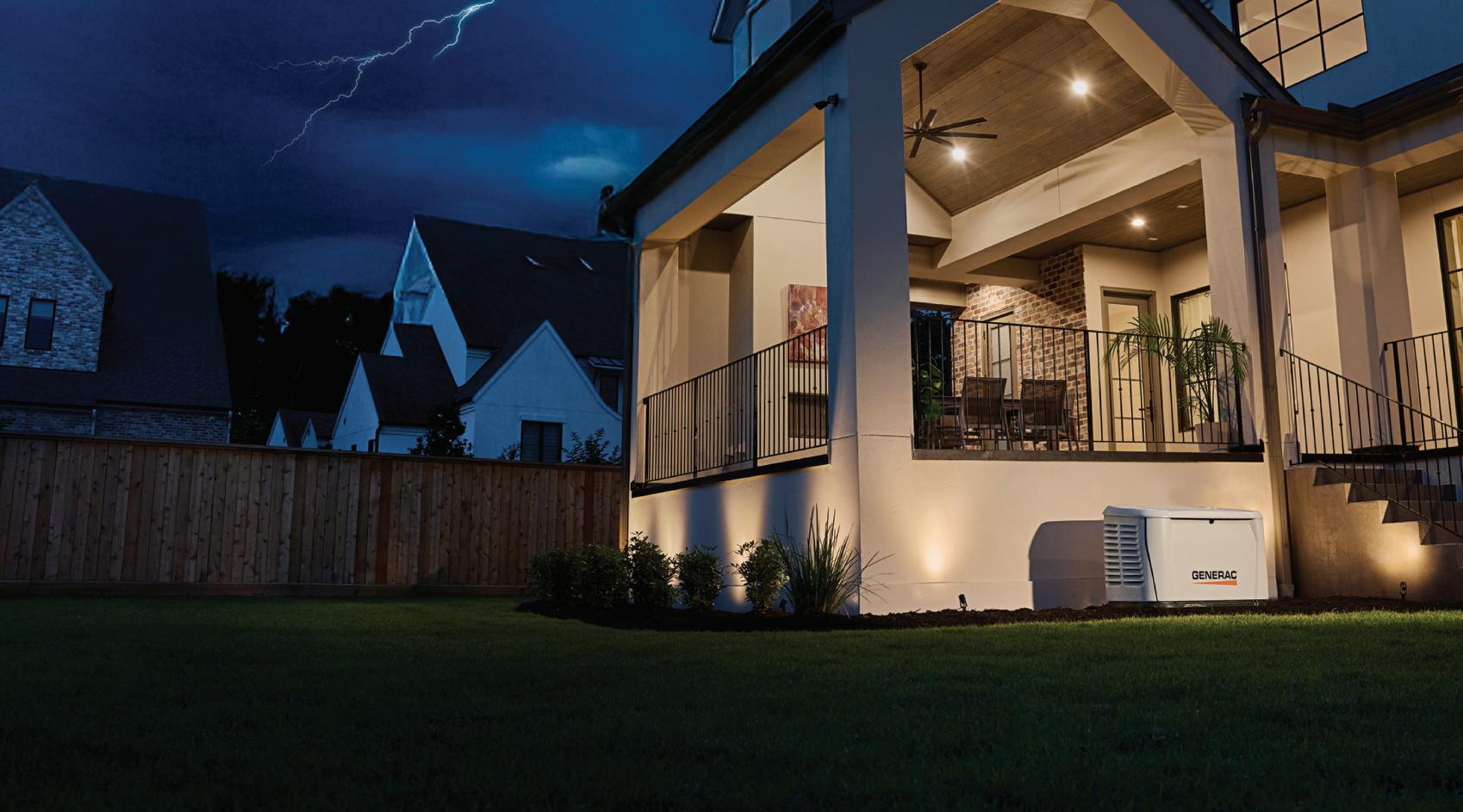
You also want to consider lighting and how your home looks at night.
“Many showings are in the evenings,” she said. “You want to make sure there is enough light to showcase the home.”
Think you have to update your kitchen or bathroom before putting the home on the market? Think again.
“If you’re going to update for yourself and for your quality of life, go ahead and do it,” Sirois said. “Small adjustments can make a big impact. For instance, changing out the laminate countertops instead of doing a full kitchen overhaul or updating the backsplash. It won’t look dated and doesn’t create a huge financial impact.”
Overall, you’ll want to help buyers envision themselves in your home and doing a little bit of prep work before going on the market will help sell your home.
The article originally appeared in the Hartford Courant.
Terry & Kim Kovel | Antiques & Collecting
APEEP EGG MIGHT SOUND like an Easter treat. As a white egg-shaped object, often painted with colorful decorations, like the two that sold together at Austin Auction Gallery for $215, it might look like one, too. Peep eggs are actually Victorian optical devices. At the time, advances in photography and technology, plus increasing travel and tourism, led to the creation and popularity of many optical toys, which often displayed photographs of exotic locations and famous sites.
The taller of the two eggs shown here, measuring 6 inches in height, has photographs of Niagara Falls inside it. The shorter egg contains images of the Crystal Palace in London and the Paris Exhibition.
There is a lens at the top to look through, and the side handles can be turned to rotate through the pictures inside. The eggs are made of alabaster, which is translucent, allowing light to pass through and illuminate the pictures. There were some complex versions that have moving parts to alter the amount of light that reaches the picture, simulating day and night. However, most peep eggs had simple designs like these, with still images and minimal controls, which made them popular souvenirs.
Q. I purchased about 50 antique postcards from the former owner of our house a number of years ago. Most of them are dated from the early 1900s and some have been mailed from Brussels, Belgium or Berlin. There are several Easter cards with designs like children playing with rabbits; rabbits driving a car, riding in a sedan chair, or playing instruments. They have greetings in German or French. They are a true treasure. Can you tell me what they would be worth?
A. Your entire collection could be worth about $50 to $120. Individual cards may be worth anywhere from about $2 to $20. Collectors consider the years 1900 to about 1920 the “golden age” of postcards. The most popular cards of this time had colorful lithographed designs. Many were printed in Germany, even if they had English inscriptions. Some designs were used for greetings in multiple languages. The German and French

Unlike Easter eggs, these Victorian peep eggs aren’t filled with chocolate. The treat inside is a photographic view enhanced by the light passing through the alabaster shell. (PHOTO COURTESY AUSTIN AUCTION GALLERY)
greetings on yours may increase their value.
Postcards picturing anthropomorphic animals are often worth more, too, especially in unusual designs. There are many Easter cards that have rabbits driving a car, but a sedan chair is much less common, so that postcard may have a higher value. If any of your postcards have the words “Private Mailing Card” printed on the back (used from 1898-1901) or have an undivided back (1902-1907), they will be worth more. Other factors that increase the value of a postcard include moving parts (called mechanical cards), “hold-to-light” features, unusual materials like fabric or metal, or a signature from a well-known artist.
Q. I would like to know the value of my set of D’Arques-Durand cut crystal claret wine glasses.
A. Verrerie Cristallerie d’Arques was established in 1892 after a merger of multiple glassworks in Arques, France. The company was managed by Georges Durand starting in 1897. The Durand family became the owners of the company in 1916. It was sometimes called JG Durand, not to be confused with the Durand art glass company that operated in New Jersey in the 1920s to 1930s.
In the mid-20th century, Verrerie
Cristallerie d’Arques introduced new processes to automate the production of glassware. The Cristal d’Arques brand, created in 1968, was the world’s first lead crystal produced by automation, which allowed the company to sell it at lower prices than other cut glass. The company now operates as Arc International and still produces Cristal d’Arques glass, along with other brands for retailers and restaurants.
Unlike the cut glass of the late 19th to early 20th century, Cristal d’Arques glassware, which was made by automation in the mid-20th century, generally sells for fairly low prices. Sets of four Cristal d’Arques claret glasses are usually worth about $20 to $30.
TIP: To clean alabaster, first dust with a soft brush. Then wipe with turpentine or dry-cleaning fluid. Do not use water. Alabaster dissolves in water. Some people like to polish it with paste furniture wax, but the wax will eventually yellow slightly.
Kovels answers readers’ questions sent to the column. Send a letter with one question describing the size, material (glass, pottery) and what you know about the item. Include only two pictures: the object and a close-up of any marks or damage. Be sure your name and return address are included. By sending a question, you give full permission for use in any Kovel product. Names, addresses
Current prices are recorded from antiques shows, flea markets, sales and auctions throughout the United States. Prices vary in different locations because of local economic conditions.
Hutschenreuther, figurine, bird, cardinal, male, red, perching on branch, marked, mid-20th century, 7 inches, $50.
Inkstand, wood, walnut, oval, brass bound, glass bottle, pen tray, 5 3/4 x 12 1/2 inches, $75.
Glass-contemporary, vase, aqua, ribbed, short-flared neck, tapered base, scalloped foot, hand blown, label, Pilgrim Glass Works, c. 1970, 29 inches, $125.
Pottery-contemporary, vase, round, multicolor, round carved panels, alternating corn stalk and sun face, signed, Elson Seckletstewa, Hopi, 5 inches, $250.
Advertising, can, Bala Club, Pale Dry Ginger Ale, cone top, green circle logo, black banner, white lettering, 12 ounces, 5 1/2 inches, $330.
Rug, art deco, stylized flowering branch, multicolor, hanging lamp, midnight blue ground, hand knotted, wool, Chinese, 9 feet 6 inches x 7 feet 8 inches, $345.
Opaline, box, hinged, egg shape, pale green, uranium glass, gilt leafy scrolls, gold tone mounts, 1800s, France, 6 inches, $550.
Furniture, chair set, dining, Marcel Breuer, Cesca, cane seat & back, black wood trim, tubular chrome frame, cantilever, two with arms, 32 inches, six pieces, $625.
Meissen, tray, square, multicolor flower spray in center, gilt trim, gilt scallop shells in corners, pierced handles, crossed swords mark, 16 inches, $765.
Silver-sterling, coffeepot, hinged dome lid, pear shape, engraved flower panels and fruit baskets, short foot, marked, James McKay, Edinburgh, 1842, 12 1/2 inches, $1,280.
or email addresses will not be published. We do not guarantee the return of photographs, but if a stamped envelope is included, we will try. Questions that are answered will appear in Kovels Publications. Write to Kovels, The Republican, King Features Syndicate, 300 W. 57th Street, 41st Floor, New York, NY 10019, or email us at collectorsgallery@kovels. com.
By A lex Veiga Associated Press
The average long-term U.S. mortgage rate climbed for the fifth straight week, reaching its highest level in nearly seven months, another setback for home shoppers in the midst of the spring homebuying season.
The benchmark 30-year fixed rate mortgage rate rose to 6.46% from 6.38% last week, mortgage buyer Freddie Mac said Thursday. One year ago, the rate averaged 6.64%.
The last time the average rate was higher was Sept. 4, when it was at 6.5%.
When mortgage rates rise, they can add hundreds of dollars a month in costs for home shoppers, limiting what they can afford to buy.
Only five weeks ago, the average rate had dropped to just under 6% for the first time since late 2022, but it has been rising as skyrocketing oil prices due to the war with Iran fuel worries about high inflation.
Meanwhile, borrowing costs on 15-year fixed-rate mortgages, popular with homeowners refinancing their home loans, also rose this week. That average rate rose to 5.77% from 5.75% last week. A year ago, it was at 5.82%, Freddie Mac said.
Mortgage rates are influenced by several factors, from the Federal Reserve’s interest rate policy decisions to bond market investors’ expectations for the economy and inflation. They generally follow the trajectory of the 10-year Treasury yield, which lenders use as a guide to pricing home loans.
The 10-year Treasury yield was at 4.3% in midday
trading on the bond market Thursday, down from 4.42% a week ago. The yield was at just 3.97% in late February, before the war with Iran sent oil prices soaring.
Treasury yields have been climbing as higher oil prices raise expectations for higher inflation. As long-term bond yields rise, that pushes up mortgage rates.
Higher inflation could also keep the Fed from cutting interest rates. The central bank doesn’t set mortgage rates, but its decisions to raise or lower its short-term rate are watched closely by bond investors and can ultimately affect the yield on 10-year Treasurys.
The U.S. housing market has been in a slump since 2022, when mortgage rates began to climb from pandemic-era lows. Sales of previously occupied U.S. homes were essentially flat last year, stuck at a 30-year low. They have remained sluggish so far this year, declining in January and February versus a year earlier.
The recent ramp up in rates makes it tougher for prospective homebuyers, threatening to put a damper on home sales during what’s traditionally the busiest time of the year for the housing market.
While the average rate on a 30-year mortgage is still down from a year ago, the recent upward trend has already led to a slowdown in mortgage applications.
Mortgage applications fell 10.4% last week from the previous week, according to the Mortgage Bankers Association. Much of the decline stemmed from fewer applications for mortgage refinancing loans.
“Looking ahead, stability in the mortgage rate environment will be key to bringing buyers back into the market,”
MBA CEO Bob Broeksmit said in a statement.
Alison M. Bartlett-O’Donald, representative, and Cecile Piquette, estate, to Colleen K. McGonagle and John P. McAdoo, 105 Edgewater Road, $397,000.
Diane Devivo-Panico, David J. Devivo and Brian F. Devivo to Connor Devivo and Taylor Hildack, 122 Cottonwood Lane, $464,500.
Karisa M. Rogers, trustee, Alan P. Rogers and Alan & Karol-Ann Rogers Family Irrevocable Trust, trustee of, to Laurie Ellen Connors and Kevin M. Connors, 24 East View Drive, $584,000.
Kimberly F. McMullin, Kimberly I. McMullin and Kimberly I. McIntyre to Ivan Liang Irrevocable Trust, trustee of, 44 DePalma St., $425,000.
Michael D. Johansen and Andrea B. Johansen to Sean C. Kennedy, 85 Red Fox Drive, $517,500.
Ruth Noemi Vasquez and Eric Nicholas Vasquez to William J. Frink and Diana L. Frink, 22 Cooley St., $340,000.
Steven D. Venne and Patricia A. Venne to Andrea Johansen and Michael Johansen, 47 Roberta Circle, $401,000.
Charles J. Delaney to Matthew St. Louis, Spruce Corner Road, $185,000.
Joshua M. Slovack and Maureen E.G. Slovack to Alyssa Maggi, Woodland Lane, $135,000.
Kellye Barton Lupica and Paul Lupica to Nabil Fahmy, 10 Cottage St., $282,000.
Kaileigh M. Keizer and Ciara Lawrence to Derek Lafreniere and Rachael Larriu, 58 Dana Hill, $370,000.
Donald C. Foster Jr., to Kevin M O’Malley, 405 Palmer Road, $242,617.
Shihui Pang and Jinlian Qiu to Nathan Corriveau, 43 Tower Hill Road, $595,000.
Van K. Nguyen and Kim Ames to Kevin Paul Anctil, 14 Paige Hill Road, $615,000.
Michael B. Cronin and Megan Cronin to Konstantin P. Khodunov and Leah G. Khodunov, 654 Skyline Trail, $380,000.
Joyce V. Murphy to David A. Hewes and Julie A. Hewes, 100 South St., $60,000.
Andrew M. DiStefano and Jessica Marie Gannon to Nancy Marie Richter, 269 Chicopee St., Unit 6, $200,000.
Dow Jones & Co., Inc., to UFPT MA LLC, 0 Burnett Road, $40,000.
Ernesto Bonilla Jr., to Julianne Tauscher, Aaron Tauscher and Donna Oberle, 343 Chicopee St., Unit 14, $196,000.
Jaclene M. Newhall to Phyllis P. Chouinard, 38 Applewood Drive, $215,000.
Kamlesh Mistri and Rachna Mistri to Yanir Stein, 32 Nassau St., $510,000.
Penelope Ann Gagnon to Tyler Douglas Cyr, 25 Ross Ave., $321,000.
Phyllis P. Chouinard to Dylan Donoghue and Thalia Phok-Donoghue, 15 Hyde Ave., $315,000.
George W. Laubin, personal representative of the Estate of Sally Laubin Jones, “aka” Sally Jones-Laubin, to Leana R. Taft, 3A Adams Court, Unit 21 Commons of Deerfield, $336,000.
Emily R. Quinn and Kyle Quinn to Harry Horton and Marisa Horton, 31 Canterbury Circle, $634,900. Gina Calabrese to Casey M. Moriarty and Matthew Boucher, 62 Cooley Ave., $289,000.
CitiMortgage Inc., to Robin R. Sheldon, 245 Park St., $209,480.
Paul E. Truehart and Darcy G. Truehart to Samuel Domina and Victoria Donescu, 41 South St., $265,000.
Lisa M. Fitzpatrick and James F. Fitzpatrick to Michael Joseph Natale and Rebecca Benigno Natale, 4 Laurel Drive, $579,000.
Lazy D Construction LLC, to Avery N. Chartier and Jacqueline R. Staub, 10-12 Glen Cove Place, $750,000.
Nathan T. Mercer to Nathan T. Mercer and Devon Henrichon, 32 Amherst St., $100.
Dominic Dowd to Holly Dowd, 55 Pleasant St., $100. Ann Marie Bragiel to Robert M. Barry, 149 Pleasant St., $156,000.
Barbara A. Mundy, “fka” Barbara A. Duprey, to Emma Morrow and Jane Weaver, 4 Pickett Lane, $545,000. BHO Realty LLC, to Lydia Gottwald and Isaac Gustafson. 50-52 Canada Hill Road, $320,000.
Lorraine Yasinski, trustee, and Joe Kabat Family Trust to Barbara A. Lagoy, trustee, and Lagoy Investment Trust, 62 Bridge St., $400,000.
Alice Kennedy to Lindsey Peterson, 33 Vassar Circle, $380,000.
Jeffrey R. Auer, Kathleen E. Phelps and Kathleen E. Auer to William Joseph Sullivan, 94 Vermont St., $445,000.
Lead Funding LLC, to Tori Laverdiere, 25-27 Elmwood Ave., $410,000.
Nicholas P. Boccio, trustee, and 15D Maple Crest Circle Realty Trust, trustee of, to Dominique A. Napoli and Dominique Napoli, 15 Maple Crest Drive, $190,000.
Sarah B. Bates, Sarah B. Dunn and James M. Dunn to Ross L. Anjos, 165 Lincoln St., $355,000.
SR Homebuyers LLC, to Edwin Diaz, 286 Westfield Road, $405,000.
SEE DEEDS, PAGE F10
Jade L. Fleury to Luca Nova Webb, 4 Stage Road, $225,000.
Chong Yuan Zhang, Zhen-Zhen Zhang and Zhen Zhen Zhang to Xian Wu and Mengdi Wang, 303 Captain Road, $610,000.
Elizabeth A. Kendall and Vaibhav Krishna Irugu Guruswamy to Sean Germain and Iona Holloway, 11 Nevins Ave., $422,000.
Bretta Construction LLC, to Jeffrey M. Reed, 26 Swan Ave., $599,900.
Daniil Gerasimchuk and William Rivera to Michael T. Gonzalez and Jennifer L. Gonzalez, 143 James St., $469,000.
Dans Construction Service Inc., to James Robert Donais and Cheri Ann Ulrich, Balsam Hill Road, Lot 78, $950,000.
Mary Gromack, Christine Matera, Anna Poitras and Casimir S. Lopata, estate, to Bretta Construction LLC, Loopley Street, Lots 158-161, $100.
Clayton J. Lizak, trustee, and John W. Lizak Revocable Indenture of Trust of, trustee of, to Renata Talmont, Hovey Road, $50,000.
Antony Rudie to John Marinelli, 31 Park St., $285,000.
Richard C. Merriott, personal representative of the Estate of Cecil G. Merriott, “aka” Cecil C. Merriott, and Richard C. Merriott and Susan K. Merriott, individually, to Martin Wiedersheim and Jessica Wise, 8 Craig Ave., $358,000.
Jacqueline M. Burt to Lori D. Reynolds, 633 Ryan Road, $166,500. Iris Realty LLC, to Wotsedom LLC, 110 Pleasant St., $850,000.
Stephen R. Watson and Hugh D. Jones to Pablo F. Medina and Kassie Rubico, 218 Elm St., $800,000.
Alvania Castillo and Randoll A. Fernandez to Alvania Castillo, 218 East Main St., $100.
Trystan M. Nardone to Travis Dumais, 549 East Main St., $282,000.
Zulma L. Lopez and Stanley R. Castillo to Carlos Morales Torres and Cailyn Benitez, 34 Commercial St., $350,000.
Frank Citino and Karen Traub to Zachary P. Finkle and Kate Finkle, 29 Gulf Road, $305,000.
Brian R. Beneway and Andrea Beneway to Roger Bush and Linda Bush, 81 Pomeroy Terrace, $20,000.
Michael J. McGrath to Kurt E. Vollherbst and Linda L. Vollherbst, trustees of the Vollherbst Living Trust, 85 Lake Drive, $635,000.
Jeffrey M. Reed to Stephen J. Ruel, 5 Olde Plains Hollow, $382,500.
Paul R. Catalano III, personal representative, Judith A. Comforte, personal representative, Paul Robert Catalano, estate, and Paul R. Catalano, estate, to Adriao M. Dos Reis and Ester S. Rodrigues, 41 Woodbridge St., $582,000.
Jeffrey V. Bertrand and Stephanie N. Bertrand to Brandee Thomas, 116 Granville Road, $465,000.
Arslan Asif and Aisha Navabjan Shah to Shakira M. Guzman, 63 Peer St., $264,000. Healthy Neighborhoods Group
LLC, to Damian Lopez, 51-53 Abbe Ave., $435,000.
Christopher J. Jacque to Cameron M. Gilrein, 120 Bridle Path Road, $370,000.
Citizens Bank to S&M Holdings LLC, 23 Eldert St., $175,000.
Deborah Martin to Victoria Wilson Vasquez and Adje Wilfried Wilson, 10 Castlegate Drive, $250,000.
Douglas Dichard to Ann Marie Carmody, 181 Marsden St., $269,900. Eleanor LLC, to Matthew Jarrett, 22-24 Eleanor Road, $388,000.
Frank D. Roda to Jared Arias, 46 Overlea Drive, $358,000.
Fumi Realty Inc., to Marco Lervin Nunez Rodriguez and Alondra Vilorio Castro, 62-64 Bristol St., $410,000.
Graham & Lumpkin LLC, to Christopher Ledoux and Veronica Ledoux, 19 Westford Ave., $375,000.
Hummad Ijaz to Anabel Ortiz, 141 Hood St., $336,000.
Jack B. Beaudry Jr., trustee, and St. James Nominee Trust, trustee of, to New Journey Investments LLC, 580 St James Ave., $225,000.
James Fiore, trustee, and James Fiore Revocable Indenture of Trust, trustee of, to Kevin E. Szymanski and Kevin Szymanski, 71 Nassau Drive, $214,000.
Jaylon D. Charles, trustee, and 63 Hope Street Realty Trust, trustee of, to Hedge Hog Industries Corp. Inc., 63 Hope St., $245,000.
Jessica Kuelling to Kenia Liz Hernandez, 251 Edendale St., $300,000.
Jose Olique-Ortiz to Ruben Zeno, 41 Olive St., $255,000.
Kelnate Realty LLC, to OnStar Properties AA LLC, 834 Carew St., $758,000.
Lindsay D. Edwards and Adam Behling to Kyla R. Hill, 44 Nassau Drive, Unit 44, $226,000.
Megan J. Landry and Daniel J. Perreault to Megan J. Landry, 68 Kane St., $100.
Mindruns Properties LLC, to 446 Liberty LLC, 446 Liberty St., $565,000.
Mitchell I. Clionsky to Life Enrichment & Psychological Services LLC, 155 Maple St. Unit 200-201, $295,000.
Paula Ventura, trustee, and Paula Ventura Revocable Living Trust,
trustee of, to Warner Greenfield LLC, 19 Warner St., $875,000.
Robin C. Smith to Devan J. Washington, 30 Sunset Drive, $180,000.
Stella Olayiwola and Joseph Olayiwola to Lincoln Edwards, 189 Essex St., Unit K, $205,000.
Tracy M. Kelley to Dnepro Properties LLC, 15 Crestmont St., $200,000.
Van Truong to Willy Pimentel Cuevas, 88 Brunswick St., $270,000.
Verna Martin to MHI Properties LLC, 52 Lebanon St., $162,500.
Victor M. Santiago and Carla M. Santiago to Angel Manuel Acevedo Jr., 225 Osborne Terrace, $260,000.
Wesley H. James, Sr., and Eulah Marie James to A. Solomon Enterprises LLC, 47-49 Brooks St., $300,000.
William G. Sintiris and Susan B. Hagen to Lisa Mejia, 571-573 Carew St., $412,000.
Zain Azam and Zaim Azam to Emtay Inc., 55-57 Oak St., $236,000.
Michael J. McGrath to Kurt E. Vollherbst and Linda L. Vollherbst, trustees of the Vollherbst Living Trust, 85 Lake Drive, $635,000.
Julia D. Kulessa and Peter A. Kulessa, trustees of the Julia D. Kulessa Living Trust, and Julia D. Kulessa and Peter A. Kulessa, trustees of the Peter A. Kulessa Living Trust, to Rt. 116 Properties LLC, 62 Amherst Road, $350,000.
Kat Vacation Rentals LLC, to Jacqueline McDowell and Eric McDowell, 6 Path Road, $459,000.
Marc H. Morrissette and Ann Morrissette to Andrew Morrissette and Alysia M. Cloutier, 8 Mountain View Drive, $100.
Patricia A. Smola to Jacalyn M. Huck, 3 Sunny Hill Drive, $100. Country Bank for Savings to Bright Star Enterprises LLC, 73 Main St., 75 Main St., and 4 Bank St., $425,000.

Ware Senior Living LLC, to 73 South Street Propco LLC, 73 South St., $28,193,817.
Andrea Barstis, Andrea L. Astle and Andrea L. Barstis to Kemran Lachinov, 63 Allston Ave., $140,000.
Ann A. Sikorski, Sandra J. Calabrese, Tami Lynn Ceccarini and Tami L. Maurice to Samuel E. Bienia, 404 Brush Hill Ave., $370,000. Diana Panetta, Diana L. Frink and William J. Frink to Jennifer A. Courtney and James F. Courtney Jr., 10 Beauregard Terrace, $585,000.
Leora J. Fafard, representative, Sandra J. Barrett, estate, and Sue Barrett, estate, to Jason A. Brazee, 23 Hickory St., $350,000.
PAH Properties LLC, to Donald Lamica Jr., 61 Clarence St., $380,000.
West Co. Investments LLC, to WMass Land Acquisitions LLC, Somerset Heights, Lot 2, $100,000.
Chad P. Meyer, representative, and Earl J. Meyer Jr., estate, to ARPC LLC, 274 Prospect St. Extn, $315,000.
Clifford W. Laraway and Clifford Laraway to Jason Schrecke, 113 Franklin St., $427,000.
Gordon F. Tatro Jr., representative, and Gordon F. Tatro, estate, to Raymond Turgeon and Jeanne Turgeon, 178A Falcon Drive, $325,000. Gretchen L. Ingraham to Peter Cardullo and Emily Cardullo, 605 Granville Road, $174,000.
Robert J. Corcoran to Vyacheslav Babinov, 31-33 George St., $382,500.
Justin E. Fillip, personal representative of the Estate of Constance A. Kelsey to Andrew Placzek, 7 Christian Lane, $377,000.
Wilson & Family Real Estate LLC, to Kazimierz Borawski and Danuta Borawski, 4 Hillcrest St., $625,000.
Fumi Realty Inc., to Alexander Ouimet, 3076 Boston Road, $389,000.





MORTGAGEE’S SALE OF REAL ESTATE AT PUBLIC AUCTION
Tuesday, April 7, 2026
1:00 PM - SPRINGFIELD 1192 Bay Street sgl fam, 979 sf liv area, 0.19 ac lot, 5 rm, 2 bdrm, 1.5 bth, Hampden: Bk 25121, Pg
NORTH CHELMSFORD (978) 251-1150 www.baystateauction.com
MAAU#: 1029, 2624, 3039, 116, 2484, 2919, 3092, 3107, 0100030, 3099




OnMarch19,2026,theHolyokeBoardofHealth promulgatedregulations governingunregulated THCproducts,kratom, postingrequirements, theoperationandinspectionoffoodestablishments,retailpermitting requirements,restrictionsonthesaleandstorageofunauthorizedproducts,andpenaltiesfor violationswithintheCity ofHolyoke,Massachusetts.Theseregulations shallbeeffectiveJune30, 2026. Copiesoftheregulations areavailableforreview attheHolyokeBoardof Healthofficeand/oron the City’s official website. (April 5 2026)
TERMSOFSALES:DEPOSITSINTHEAMOUNTS SPECIFIEDABOVEARETO BEPAIDBYTHEPURCHASER(S)ATTHETIME ANDPLACEOFEACH SALEBYCERTIFIEDOR BANKCHECK.ALLBALANCESDUEARETOBE PAIDWITHIN30DAYSOF EACHINDIVIDUALSALE. OTHERTERMS,IFANY, TOBEANNOUNCEDAT EACH SALE. CALL OUR AUCTION