Better Health


TRAVEL: A guide to visiting the National Parks, D5 THEATER: Play marks journey of clergy abuse survivor, D9
HEALTH: Nurse practitioners take on more geriatrician roles, D9


TRAVEL: A guide to visiting the National Parks, D5 THEATER: Play marks journey of clergy abuse survivor, D9
HEALTH: Nurse practitioners take on more geriatrician roles, D9


By M ark Johnson
The Washington Post
Scientists led by a team at Columbia University have trained a model to predict how the genes inside a cell will drive its behavior, which could be a powerful tool with the potential to broaden our understanding of cancer and genetic diseases, and even to pave the way for cell-specific gene therapies to treat them.
The researchers trained the new artificial intelligence tool, an algorithm dubbed General Expression Transformer, or GET, using an approach similar to that used by creators of the language program ChatGPT.
While ChatGPT learned the grammar of language, GET has learned underlying rules governing genes: how they are turned on or off like a light switch, or dialed up or down like a volume control. This complex process, known as gene expression, determines which proteins we make and whether we make them in the correct amounts, crucial work given that proteins play a role in virtually every action in the body - fighting disease, moving, breathing, even thinking.
Although GET is at a much earlier stage of development, it could play a similar role to AlphaFold2, the AI system that predicts the three-dimensional structure of proteins. The transformative technology was recognized with the

2024 Nobel Prize in chemistry and has now been updated to AlphaFold3.
The regulation of genes and the structure of proteins both are fundamental to life, and problems in either can trigger disease.
“Biology is being transformed into something that is a predictive science,” said Raul Rabadan, one of the authors of a paper reporting the work in the journal Nature and director of the Program for Mathematical Genomics at Columbia. “We’re seeing a revolution in biology.”
sion and the binding of key proteins called transcription factors.
“This is a field poised to have this type of advancement by AI,” Gerstein said.
While other scientific groups have trained models using abnormal cells such as those found in different cancers, Xi Fu, a graduate student in Rabadan’s lab, decided to train GET using information from cells in normal human tissue. The training used data

of Health, said learning about one cell type and then making predictions about another is an especially daunting challenge.
“In some ways, it’s like if I handed somebody a bunch of books in English, and said: ‘Okay, now this is in Russian. What does it say?’ And they say: ‘Ah. I understand grammar, syntax and words. I’m going to make predictions about this even though it is written in a different lan-
the human body contain the same complete set of DNA.
“Yet each cell type - be it a neuron, a muscle cell, or a skin cell - expresses a unique set of genes,” Ma said. Humans have about 20,0000 genes, some of which may be turned on in a retinal cell, but off in a skin cell.
While “much of this regulatory grammar remains poorly understood,” Ma said, “The GET model takes an important step toward decoding this
Scientists hope the model will help in other ways, such as in development of gene therapies to correct a mutation - an error in the genetic code that harms a specific kind of cell. Such therapies have to be precisely designed so that they fix the cells harmed by a disease without disrupting other cell types.
Mark Gerstein, a professor of biomedical informatics at Yale School of Medicine, who was not involved in the new study, said that for 15 to 20 years experts have been systematically trying to make predictions about gene regulation, building on a trove of carefully made datasets. The data examined all genes in specific types of human cells for example, retinal cells or neurons measuring, among other things, gene expres-
from more than 1.3 million cells, spanning 213 different types found in the human body.
Rabadan’s team found that they could omit one cell type from the data for example, astrocytes, which are found in the central nervous system and the model could make accurate predictions about astrocytes based on what it had learned from all of the other cells.
Mike Pazin, a program di-
rector at the National Human Genome Research Institute, part of the National Institutes
guage.’ I would be like, ‘Wow, is that possible?’”
The work described in the Nature paper “directly tackles one of biology’s major challenges: understanding how the same genome can drive such diverse behaviors in different cell types,” said Jian Ma, professor of computational biology and director of the Center for AI-Driven Biomedical Research in the School of Computer Science at Carnegie Mellon University. Ma, who was not involved in the new study, commented by email. All 30 trillion or so cells in
language.”
Understanding the language of gene regulation holds the potential for great benefit to human health, said Yang E. Li, assistant professor in the departments of neurosurgery and genetics at Washington University School of Medicine in St. Louis.
“We want to learn the grammar and prioritize the key players in different cell types,” Li said, “because many human diseases are caused by a disruption of that grammar.”
Scientists hope the model will help in other ways, such
as in development of gene therapies to correct a mutation - an error in the genetic code that harms a specific kind of cell. Such therapies have to be precisely designed so that they fix the cells harmed by a disease without disrupting other cell types.
“We can design gene therapies that deliver a gene that is only expressed in one cell type, and not in another,” Rabadan said. Being able to predict which genes are turned on, off, up or down in different cells could help determine the cell of origin for a disease.
A model that makes accurate predictions about gene regulation also holds the promise of lessening one of the more grueling tasks in science: deciding which of a massive number of possible experiments are the ones most likely to answer the researcher’s question.
A cancer, for example, may contain more than 1,000 mutations in the genome that have developed after conception. The effects of most of these mutations are unknown, Rabadan said. That leaves scientists with the enormous task of determining where to start.
“The number of potential genetic combinations is more than the number of atoms in the universe,” Rabadan said. “What are the ones that are relevant?”





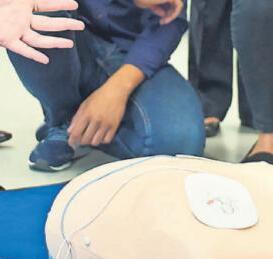













Cardiopulmonary resuscitation, better known as CPR, is a life-saving technique that can be employed when someone goes into cardiac arrest or if a person’s heart is not beating strongly enough to circulate blood to the organs and brain.
The American Heart Association says more than 350,000 incidents of cardiac arrest occur outside of hospitals in the United States each year. Bystanders who are able to perform CPR can save a life by prolonging blood and oxygen flow until professional care can be administered.
What to do if you suspect a person’s heart has stopped or they are not breathing?
The first step is to assess the situation and ask another person to call 911 or the local emergency service number for the country where you reside. If there is an automated external defibrillator (AED) nearby, have someone get it. Next is to think of ABC to determine whether CPR should be administered, says the Cleveland Clinic.
A - airway: Tilt the person’s head back and check for any obstructions in the mouth or throat that could indicate choking.
B - breathing: Lean in closely to the person’s face and listen for breaths for 10 seconds. In addition, try to determine if their chest is rising and falling.
C - circulation: Feel the side of the person’s neck just below the jawline for a few seconds to check for a pulse. It is vital to perform CPR if the person is not breathing and there is no pulse.
Chest compressions are a key component of CPR that help blood reach vital organs until a regular heartbeat returns. The American Red Cross CPR guidelines recommends 100 to 120 chest compressions per minute, 30 at a time.
● Place two hands centered on the chest.
● Your shoulders should be directly over your hands with elbows locked.
● Compress the chest at least 2 inches.
● Follow the rate of compressions at 100 to 120 per minute. Songs that align with the recommended rate include “Stayin’ Alive,” “Dancing Queen,” “I Will Survive,” and “Can’t Stop the Feeling!” Humming one of these songs can keep you at the correct tempo.
● Allow the person’s chest to return to a normal position after each compression.
to
mouth-to-mouth Recommendations vary regarding mouth-to-mouth resuscitation. The American Red Cross advises giving two
breaths in between each set of 30 compressions.
● Open the airway to a past-neutral position by tilting the head and lifting the chin.
● Pinch the nose shut, take a normal breath, and make a complete seal over the person’s mouth with your mouth.
● Ensure each breath lasts about one second and makes the chest rise; allow air to exit before offering the next breath. The American Heart Association now recommends bystanders perform only hands-only CPR when a person goes into cardiac arrest. This means just chest compressions. Studies show people are less willing to help if they think they have to give mouth-to-mouth to strangers, and the AHA notes rescue breaths delay compressions. There’s also the increased risk of disease transmission. Certain medical experts say that in many cases, mouthto-mouth does more harm than good when performed by untrained individuals.
How long should CPR continue?
CPR should continue until the person starts breathing or a paramedic arrives. Switch off with another person if you get tired. Consistent CPR performed for as long as it takes offers the best chances that a person will survive.





The natural beauty of the great outdoors compels millions of people to incorporate nature into their daily routines.
Whether it’s a morning walk around the neighborhood, an oceanfront weekend spent with toes in the sand or an afternoon lounging on a lake, there’s no shortage of ways to enjoy the great outdoors.
Camping is a wildly popular way for outdoor enthusiasts to enjoy nature. Spending daylight hours in a wooded area or forest may not be unusual for outdoor enthusiasts, but camping under the stars at night can be intimidating for first-timers accustomed to comfortable, climate-controlled bedrooms. The right gear can calm any nervousness firsttime campers may have,
and the following are some items to take along.
A tent is obviously a musthave when planning to spend the night under the stars. Shelter protects campers from the elements, insects and wildlife, so it’s imperative that first-time campers bring along enough tents to accommodate everyone on the trip. Novice campers may be overwhelmed by the assortment of options available when they look to buy a tent, so it’s best to visit a local outdoor retailer for advice. Share the specifics of the trip, including how long it will be and how many people will need to be accommodated. Such information will help to determine the best tent for your trip.
A sleeping bag is another necessity, but it’s also important to bring along a sleeping pad. Temperatures drop at night, so a well-insulated sleeping bag can keep campers warm at night. A multi-season sleeping bag can be an especially useful investment that helps campers prepare for fluctuating



temperatures. No matter how comfortable a sleeping bag may seem, the hard ground does not typically increase the chances of a good night’s rest. That’s why a sleeping pad is vital, particularly for first-time campers unaccustomed to sleeping in anything other than a bed. Round out your sleeping must-haves by bringing along a pillow.
Of course, camping trip comfort isn’t all about sleeping. A comfortable and foldable chair for everyone in the party is another essential. Chairs should be sturdy and ideally not too heavy, particularly if the campsite is a long walk from the car.
Kitchenware:
Cooking is a fun part of camping, especially when campers remember to bring along the appropriate kitchenware. A camp stove with two burners can make it easy to whip up just about anything. A single burner stove might suffice for small camping parties, but the double burner stove enables cooking more than one item at once. In addition to a sturdy stove, bring alone some forks, knives and plates.
Bug spray: Bugs won’t get the hint that campers don’t want them around the campsite, so don’t forget to pack some bug spray to repel these unwanted guests.
Sunscreen:
Even if you’re staying in a wooded area or forest with ample shade overhead, you’ll want to apply sunscreen to avoid skin damage. Even a mild sunburn can make sleeping in a tent for the first time more difficult, so apply sunscreen early and reapply as directed on the bottle.
Miscellaneous items:
Lighting to augment light coming from a campfire, toiletries to ensure bathroom breaks are as comfortable as possible, garbage bags and containers to secure trash and reduce the risk of attracting wildlife, and a few books or magazines to read while resting at the campsite are some additional items first-time campers won’t want to forget. Camping is a fun activity that’s even more enjoyable when campers remember to pack the right gear.




Though that’s likely no surprise to people who suffer from lower back pain, the scope of the problem is perhaps wider than many may realize.
A recent study conducted by the Institute for Health Metrics and Evaluation at the University of Washington found that lower back pain affects 619 million people across the globe. Researchers behind the study, which was published in The Lancet Rheumatology in 2023, estimate that 843 million people will suffer from lower back pain by 2050. Lower back pain can have an adverse effect on quality of life. The good news is that people are not helpless against lower back pain. In fact, the American Association of Neurological Surgeons notes roughly 90 percent of lower back pain cases are temporary and treatable without surgery. Stretching can help individuals alleviate lower back pain, and the following are four stretches that can be performed at home without expensive equipment.
bent and feet flat on the floor. Grab one leg beneath the knee with both hands, interlocking your fingers, while keeping the other leg flat on the floor. Pull the knee up toward your chest, holding the stretch for 15 to 30 seconds. New York Presbyterian advises keeping the lower back pressed to the floor for the duration of the stretch, which can be repeated with the opposite leg. Perform the stretch between two and four times for each leg.
Trunk rotation stretch
When beginning a trunk rotation, lie on your back and bring the knees up toward your chest. The online medical resource Healthline notes the body should be positioned as if you’re sitting in a chair. Extend arms out to the sides fully, with palms facedown on the floor. With knees together and hands on the floor, roll both bent knees to one side and hold for 15 to 20 seconds. Return to the starting position and then do the same for the opposite side, repeating several times for each side.
Cat-cow stretch


flat on the floor and arms positioned straight under the shoulders and knees directly below the hips. Breathe in as you drop your stomach toward the floor, arching the back and looking up to the ceiling. Hold for one to two seconds, then reverse. Breathe out as you pull your stomach back toward the back, rounding your back upwards and dropping the head toward the floor.
Seated
hamstring stretch





Awareness of the importance of recognizing mental health issues has grown considerably in recent years. Prominent individuals from various industries have come forward to speak about their struggles, and that has done much to remove the stigma that was long associated with mental health. Though recognition of the importance of addressing mental health issues has increased in recent years, there’s still much to be done, particularly regarding men and mental health. A 2019 study published in the American Journal of Men’s Health noted that men have historically been more hesitant than women to seek help for mental health difficulties. That hesitancy can have grave consequences, as the Centers for Disease Control and Prevention notes that men are more likely to die by suicide than women. Recognition of the symptoms that suggest someone is experiencing mental health troubles could compel men to seek treatment or lead to their family members encouraging them to get help. The NIMH notes that men and women can experience the same mental health conditions,
such as depression and anxiety. However, that does not mean their experiences will be the same. In fact, experiences can differ widely among men as well. A 2017 study published in the Journal of Counseling Psychology found that men who exhibit stereotypically masculine personality traits often have worse mental health outcomes than men who do not exhibit such traits.
Despite the differences in responses to mental health issues, it’s still important for individuals to learn the symptoms of mental health issues. Such recognition may compel individuals to seek help for their own issues or serve as warning signs to concerned friends and family members, potentially prompting them to initiate discussions that can save a loved one’s life.
According to the NIMH, the following are some symptoms of mental health problems.
■ Anger, irritability, or aggressiveness
■ Noticeable changes in mood, energy level, or appetite
■ Difficulty sleeping or sleeping too much
■ Difficulty concentrating, feeling restless, or on edge
■ Increased worry or feeling stressed
■ Misuse of alcohol and/or drugs
■ Sadness or hopelessness
■ Suicidal thoughts
■ Feeling flat or having trouble feeling positive emotions
■ Engaging in high-risk activities
■ Aches, headaches, and/or digestive problems with out a clear cause
■ Obsessive thinking or compulsive behavior
■ Thoughts or behaviors that interfere with work, family, or social life
■ Unusual thinking or behaviors that concern other people
The NIMH urges individuals in crisis or people who suspect someone is in crisis to call 911 or to call or text the 988 Suicide & Crisis Lifeline at 988.
More information about mental health can be found at nimh.nih.gov.

Various yoga exercises, including the cat-cow, can help to alleviate lower back pain. The British Heart Foundation recommends beginning slowly when attempting to alleviate lower back pain, doing the cat-cow 10 times, once or twice a week. Kneel on all fours with hands
Knee-to-chest stretch
This stretch is straightforward. Lie on your back with your knees





The seated hamstring stretch can be beneficial because Healthline notes tight hamstrings are believed to be a common contributor to lower back pain. Stretching the hamstring muscles helps to release tension in the spine. Sit on the floor with one leg out in front of you and hook a bath towel around the heel of your foot. Gently bend forward at the hips, brining the belly down to the thighs. Keep your back straight as you grab the towel so you can bring the belly closer to your legs. Healthline advises keeping the stretch until you feel mild tension in the lower back and the back of the leg. Hold for 10 seconds, rest for 30 seconds and repeat three times for each leg. Lower back pain is a common but treatable problem. These stretches and more can help people overcome lower back pain and improve their quality of life.















Inflammatory bowel disease (IBD) affects between 2.4 and 3.1 million people across the United States, according to the Centers for Disease Control and Prevention.
Data from a U.S. National Health and Nutrition Examination Survey showed 1 percent of U.S adults may have diagnosed IBD. Also, the National Institutes of Health report an estimated 322,600 Canadians were living with IBD in 2023. Canada has one of the highest rates of IBD in the world.
The Mayo Clinic notes that IBD refers to disorders involving chronic inflammation of
tissues in the digestive tract. The two most common types of IBD include ulcerative colitis and Crohn’s disease. Both diseases typically develop in teenagers and young adults, although they can occur at any age. Ulcerative colitis and Crohn’s disease affect men and women equally, and symptoms are very similar. Understanding the differences between colitis and Crohn’s can direct people to the best courses of treatment for their ailments.
Crohn’s disease
Crohn’s disease is characterized by inflammation of the lining of the digestive tract, anywhere from the mouth to the anus. However, the small intestine is most often

affected. According to UCLA Health, when a person has Crohn’s disease, there are healthy parts of tissue mixed in between inflamed areas. Because Crohn’s disease affects more of the GI tract, WebMD says doctor’s may see sores in the mouth, on the lips or tongue, or even anal tears and rectal infections.
Ulcerative colitis
Ulcerative colitis is a form of IBD that is limited to the colon. It affects the inner most lining of the colon, while Crohn’s disease can occur in all of the layers of the bowel walls. With colitis, there are no healthy areas of tissue in the colon between inflamed spots; the inflammation is continuous.




Doctors use various tests to diagnose IBD. A colonoscopy checks the large intestine. A sigmoidoscopy examines only the lower part of the large intestines, while an esophagogastroduodenoscopy checks the lining of the esophagus, stomach and the duodenum. Additional testing may be used to examine the small intestine or bile and pancreatic ducts, says WebMD. Even after various imaging tests, doctors still may be unsure if Crohn’s disease or ulcerative colitis is responsible for symptoms.
Scientists are working to improve blood tests to help diagnose ulcerative colitis and Crohn’s. These tests check levels of certain antibodies
found in blood. Most often people with ulcerative colitis have the pANCA (perinuclear anti-neutrophil) antibody present, while those with Crohn’s disease have the ASCA (anti-Saccharomyces Cerevisiae) antibody present. These tests are not always accurate, so other diagnostic criteria should be used.
Treatment
The goal of IBD treatments is to reduce the inflammation that triggers symptoms. Anti-inflammatory drugs often are the first step in the treatment of IBD as well as immune system suppressors.
The Mayo Clinic says biologics are a newer category of therapy for IBD, and are aimed at neutralizing proteins in the body that are causing inflammation. When dietary changes and medication are not completely effective for IBD, doctors may suggest surgery. The Mayo Clinic says up to twothirds of people with Crohn’s disease will require at least one surgery in their lifetime. The damaged portion of the digestive tract is removed and then the healthy sections are joined together. Surgery for ulcerative colitis may include removing the entire colon and rectum and using an internal pouch for bowel movements. Inflammatory bowel diseases can affect people in many ways and require treatment to restore quality of life.














By L auren M atison and Ruffin P revost
New York Times
The
Firings, resignations and delays in seasonal hiring have clouded the coming vacation season at the 433 sites and 85 million acres managed by the National Park Service. Parks are already closing campgrounds, cutting hours and reducing services, and insiders are predicting a challenging summer.
Weeks after President Donald Trump took office, the administration abruptly dismissed more than 1,000 permanent, full-time NPS workers, and at least 700 more took buyouts. The park service usually operates with about 20,000 total employees, including approximately 7,000 seasonal workers.
Conflicting court rulings have since reinstated laid-off employees and then given the government permission to fire them again. Another round of buyouts announced in early April could increase the total number of staff departures to around 2,500, according to Kristen Brengel, senior vice president for government affairs at the National Parks Conservation Association. On top of all this, many of the reinstated employees have simply decided not to return to their posts.
The chaos comes after the national parks, already chronically underfunded, welcomed a record 332 million visitors last year. This summer is likely to bring bigger crowds, longer entry waits, closed trails, uncleaned toilets, uncollected trash and more. If you go, plan ahead to avoid headaches: Buy a single-park or federal lands pass at recreation.gov in advance, and don’t wait to make reservations: Prime campsites and popular tours are already booking up.
Officials at the individual parks either declined to comment or referred questions about the cuts to NPS leadership, which did not offer specific responses. But through dozens of interviews and
exchanges with tour guides, former park workers, elected officials and others, we compiled tips for visiting 10 of the most popular national parks in this summer of uncertainty.
In 2024, a near-record 3.96
million travelers flocked to Acadia’s rugged shorelines, spruce-fir forests, granite peaks and more than 155 miles of trails in Maine. The main attraction for many visitors is Cadillac Mountain, which requires a reservation to drive to the summit between May 21 and Oct. 26. At 1,527 feet, Cadillac is the tallest mountain on the U.S. Atlantic Coast.
The park typically needs to recruit about 150 seasonal workers, but issues like a lack of affordable housing have plagued the park for years; only four seasonal trail crew members were hired last summer, even though funding allowed for 22.
With long lines at fee stations on the horizon, arrive before 9 a.m. and score a spot at busy parking lots like the main Hulls Cove Visitor Center and Sand Beach. Travelers can also ride the free Island Explorer bus, which links sites around the park, or take Oli’s Trolley, which is expanding its tours (from $65 per person).
Because of its warm Arizona climate, Grand Canyon National Park, which drew almost 5 million visitors last year, attracts crowds earlier and later in the season than many other parks. Heavy spring break traffic, combined with staff cuts, has already led to waits of 90 minutes or longer at the South Entrance, said Patrice Horstman, 71, a Coconino County supervisor whose district includes the park’s South Rim area.
Because of the traffic, the Grand Canyon’s Instagram account has cautioned against using the South Entrance from 9:30 a.m. to 4 p.m., and instead recommends using the Desert View Entrance, on the east side. Scott Cundy, a
co-founder of the Wildland Trekking tour company, said visitors should avoid the park on weekends, and enter from the North Rim — “an overlooked secret” — which opens May 15.
Summer temperatures on the canyon floor routinely top 100 degrees. Visitors should
“wildlife brigade,” said Samantha Strauss, 29, a local tour guide for Natural Habitat Adventures. You can leave your car in Jackson and ride a bike or an e-bike to the park (a relatively manageable 5 miles). Cycling the more than 50 miles of easy, mostly flat paved path-

always have plenty of their own water, which is scarce across most of the park.
Just 10 miles south of Yellowstone National Park, in Wyoming, Grand Teton National Park attracts everyone from hard-core mountain climbers to picnickers with its dramatic peaks and pristine alpine lakes.
But summer traffic in the park can get bad — especially when drivers stop to watch grizzly bears and other animals along the roadside. Traffic jams are largely managed by a trained volunteer
ways in and around Grand Teton is a great way to see more, reduce traffic and get some exercise, she said.
Aaron Pruzan, 56, the owner of Rendezvous River Sports in Jackson, advised hiking in the middle of the day, driving late or early, and arriving before 9 a.m. at the park’s busiest spots, like Jenny Lake and Taggart Lake. Or visit lesser-known gems like String and Leigh Lakes and Schwabacher Landing.
Great Smoky Mountains
The perennial champion among the nation’s busiest
national parks, Great Smoky Mountains, in Tennessee and North Carolina, logged 12.2 million visits last year.
But all those visitors may be scrambling for places to camp, picnic and hike this summer. Seven picnic sites and six easily accessible campgrounds are listed as closed on the park’s website. They have also been blocked from future reservations on recreation.gov.
Much of the North Carolina section of the park was “hit pretty hard in September by Hurricane Helene,” said Steve Woody, an emeritus board member of Friends of the Smokies, the park’s official nonprofit partner. That includes major sections of the nearby Blue Ridge Parkway.
He cautioned that several storm-damaged trails were closed or restricted. The park has 150 backcountry trails covering 848 miles, with 100 backcountry campsites. The firings at the park included about a half-dozen trail maintenance workers, said Bill Wade, 83, the executive director of the Association of National Park Rangers.
Joshua Tree National Park, in the Southern California desert, has no lodging or dining facilities, and 84% of it is managed as designated, potential or proposed wilderness. So even though nearly 3.3 million people visited in 2023, staffing shortages are less likely to affect the overall experience than at most other parks.
By most accounts, operations have been running smoothly this year during the typical peak period of March and April. But Kelly Herbinson, executive director of the Mojave Desert Land Trust, a local conservation group, worries that reduced staffing could “make it extremely difficult to mitigate visitor interaction with the fragile desert ecosystem and its most at-risk species.”
The city of Twentynine Palms owns the property just outside the park where the Joshua Tree National Park
visitor center sits. Seeking to avoid its potential closure as the NPS considers canceling some leases, elected officials there began working in March to transfer the building’s lease from the NPS to the Joshua Tree National Park Association, the park’s nonprofit partner, Cindy Villescas, the city clerk, wrote in an email. Olympic
Olympic National Park covers nearly 1 million acres of the Olympic Peninsula in Washington, featuring alpine highlands, beaches, hot springs and temperate rainforests, where you can find the world’s largest spruce tree, a Sitka roughly 1,000 years old. Easily accessible without a car via a two-hour ferry ride from Seattle, the park had 3.72 million visitors last year. Among other positions, the firings affected maintenance workers responsible for keeping the road open to Hurricane Ridge, one of the park’s most popular areas for hiking and stargazing.
When the parking lot fills up at the Hoh Rain Forest, a high-traffic area set to reopen in May, the fee station manages a “one car out, one car in” policy, often resulting in twoto-three-hour delays during peak season. Rangers play an important role in providing updates, via radio, about the number of available spots, and the cuts mean delays could be even longer.
Hoh is the park’s biggest attraction, with its 200-foottall Western red cedars, lush ancient groves and resident herd of Roosevelt elk. Arrive very early during peak season to avoid long lines to get into the popular Hall of Mosses, or consider exploring the stunning yet overlooked South Fork Hoh Trail.
Rocky Mountain A 90-minute drive northwest of Denver, Rocky Mountain National Park offers access to crystal-clear alpine lakes, wildflower meadows and some
12,000