Better Health
PROFILE: STCC grad uses acting skills for health care training, D7
HEALTH: 10 healthy aging tips for older Americans, D7
TRAVEL: Making national parks accessible to more people, D7


PROFILE: STCC grad uses acting skills for health care training, D7
HEALTH: 10 healthy aging tips for older Americans, D7
TRAVEL: Making national parks accessible to more people, D7

It may seem like adolescence is the time in a woman’s life when most of the biological changes she will experience take place.
After all, puberty brings with it hormone fluctuations that can affect both physical and emotional health in various ways. However, as a woman enters mid-life and beyond, she may notice that she has to reevaluate her lifestyle to accommodate the evolution of her body and health. Preventive health screenings and additional strategies can keep women fit and well as they reach age 40 and beyond.
Annual mammograms
Most doctors now recommend that women get annual mammograms starting at age 40. Mammograms can detect breast cancer early on at its most treatable stage. Manual breast exams conducted at home and by a doctor also can be vital tools.
Colorectal cancer screenings
A colonoscopy is recommended for all women between the ages of 45 and 50 (on the earlier side of that spectrum for African



American women). This test can reveal the presence of polyps and cancerous growths.
Vision
Annual eye exams should be a part of everyone’s vision care strategy. The American Optometric Association says that, between ages 41 and 60, people may notice differences in their vision. Some changes may happen more frequently, requiring new prescription eyeglasses. Therefore, it helps to visit an eye care professional to take corrective steps. It’s also important to note that, as one ages, the vitreous (clear jelly) in the eye can thicken, leading to increased floaters and flashes that should be checked by an ophthalmologist, as they may lead to retinal tears or detachment that can threaten vision.
Cholesterol screening
Heart disease is the leading cause of death among women, says the Centers for Disease Control and Prevention. Cholesterol screening and other cardiovascular screenings can detect the presence of heart disease or indicate a person’s risk for it.
Annual physical exams likely will include cholesterol checks as well as tests investigating other lipids in the blood.
Vitamin D check
Deficiency in vitamin D is a recognized
pandemic. People are not naturally producing enough vitamin D from sun exposure, nor absorbing enough from the foods they eat. Vitamin D deficiency can be a serious concern in adult women, particularly those above the age of 40. Vitamin D deficiency can adversely affect mood, and an article published in 2018 in the Journal of Family Medicine and Primary Care found vitamin D determines the pattern of post-menopausal bone loss and age-related osteoporosis. Verywell Health also says vitamin D is an important nutrient for preventing diabetes, cancer and age-related weight gain.
Routine gynecological screening and Pap/HPV testing
The American College of Obstetrics and Gynecologists say that it is important to visit a gynecologist annu ally for a woman’s health checkup. New guidelines emerged some time ago that indicate it is not neces sary to get a Pap test at each visit. The recent guidance
indicates women between the ages of 30 and 65 can opt for both a Pap and HPV test every five years; have a Pap test alone every three years; or only get the HPV test every five years. After age 65, cervical cancer screenings can cease if there has never been an indication suggesting the presence of abnormal cervical cells.
Moving into middle age brings about changes. Women should evolve health care plans accordingly to stay as healthy as possible.





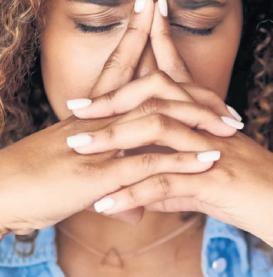










Stress can be paradoxical. A certain amount of stress can motivate people to get things done. But having too much can cause a person to resist doing anything at all.
The Cleveland Clinic says stress is the body’s response to daily events that occur in life. When stress becomes chronic, it can be negative and destructive, making it hard to adapt and cope.
Chronic stress is a concern for many women. The Office on Women’s Health says women are more likely than men to report symptoms of stress, including headaches and upset stomach. They’re also more likely to have mental health conditions that are exacerbated by stress, including anxiety and depression.
Learning the facts about stress can help women care for their mental well-being. Here are eight things to know.
1. Stress can manifest in emotional, cognitive or physical symptoms. Notable physical symptoms include muscle tension and headaches as well as fatigue and low energy. Emotional symptoms may include increased worry, mood swings or irritability.
2. Stress can lead to unhealthy habits. Women have higher risk of overeating due to stress, and may become inactive or smoke to cope with stress, says the American Heart Association.
3. Common causes of longterm stress include poverty and financial worries. Women in poverty who care for children or other family members may develop more severe stress, says the Office of Assistant Secretary for Health.
4. Women respond to stress differently. Healthline indicates women have a higher percentage of perception of stress than men, and also are more apt to realize they must
manage it. Seventy percent of women have tried to reduce stress over the past five years.
5. Research reported on by the American Psychological Association says women are more likely to internalize stress, leading more readily to both physical and mental disorders. Men tend to be better at disassociating from stress.
6. Women are more likely to cancel plans due to stress than men, despite realizing they could use more social support.
7. Stress can disrupt hormonal balance in women, leading to menstrual irregularities.
8. Stress can trigger increased pain sensitivity, making women more prone to tension headaches and migraine attacks.
Stress can take its toll on anyone, including women. Recognizing help is needed, setting measurable targets and being realistic about managing stress can help women feel better.








Few things can be as distracting as a beautiful day. When the weather outside is welcoming, it can be hard to focus on indoor activities, including work and tasks around the house. Though it’s not advisable to ignore responsibilities at work and at home when the

weather outside beckons, it can be beneficial to spend ample time in nature when circumstances allow.
People tend to flock to the
great outdoors in spring, summer and fall, and some are even so devoted that they bundle up and head outside throughout winter. Whether they know it or not, people who love to spend time in nature are doing their mental and physical health a lot of good by embracing the great outdoors.
The National Alliance of Mental Illness notes that a growing body of research supports the idea that time in nature is good for mental health. A 2015 study from researchers at Stanford University found that people who walked in a natural area for 90 minutes exhibited decreased activity in a region of the brain associated with depression compared to those who walked in high-traffic urban settings.
The United Kingdom-based Mental Health Foundation also touts the mental health benefits of the great outdoors. According to the MHF, research shows that people who are connected with nature are more likely to report their lives





are worthwhile than those with no such connectedness. In addition, the MHF notes time in nature has been shown to generate positive emotions, including calmness and joy, and promote greater creativity. When seeking to capitalize on the mental health benefits of time in nature, people should know that where they spend time outdoors matters. As the Stanford study indicated, time outside in high-traffic urban settings may not produce as profound an effect as time spent in natural settings, like forests, that tend to be more serene. People who live in cities or other densely populated areas can still benefit from time outdoors, but they might experience even greater health gains if they make consistent efforts to spend time in more natural settings.
The physical health benefits of time in nature are equally notable. Perhaps the most obvious physical benefit is related to physical activity. People tend to embrace physical activity when spending time in nature. Hiking, jogging, walking, nature-based recreational activities like kayaking, and playing sports like basketball or pickleball all involve physical activity, which can help people avoid the consequences of a sedentary lifestyle, such as an increased risk for chronic diseases. More specifically, the New York State Department of Environmental Conservation notes the physical health benefits of spending time outside include:
▶ A stronger immune system ▶ Lower blood pressure
▶ Increased energy levels
▶ Improved sleep
Each of those benefits contributes to greater overall health, making time outdoors among the more beneficial behaviors a person can embrace. There’s no shortage of benefits to spending time in nature. That’s something to keep in mind the next time welcoming weather beckons you to
some