Each month, 27,000 copies of Atlanta Intown are mailed to homes and distributed to businesses in and around ZIP codes 30306, 30307, 30308, 30309, 30324 and 30329. For delivery information, delivery@RoughDraft.news
To subscribe to home delivery, ($75 / year) email delivery@RoughDraft.news
Advertising sales@RoughDraft.news
Deborah Davis Account Manager | Sales Operations deborah@RoughDraft.news
Jeff Kremer Sr. Account Manager jeff@RoughDraft.news
Linda Ostrowski Sr. Account Manager Linda@RoughDraft.news
Savannah Pierce savannah@RoughDraft.news Published By
(Photo by Sarra Sedghi)
A summer evening out EDITOR'S NOTE
My BFF Tina turned 56 in June, and to celebrate, I took her to dinner at the newly reopened Eats and to see The Human League, Soft Cell, and Alison Moyet at The Fox Theatre. It was a perfect Friday evening out in the city.
EDITOR'S NOTE
Collin Kelley
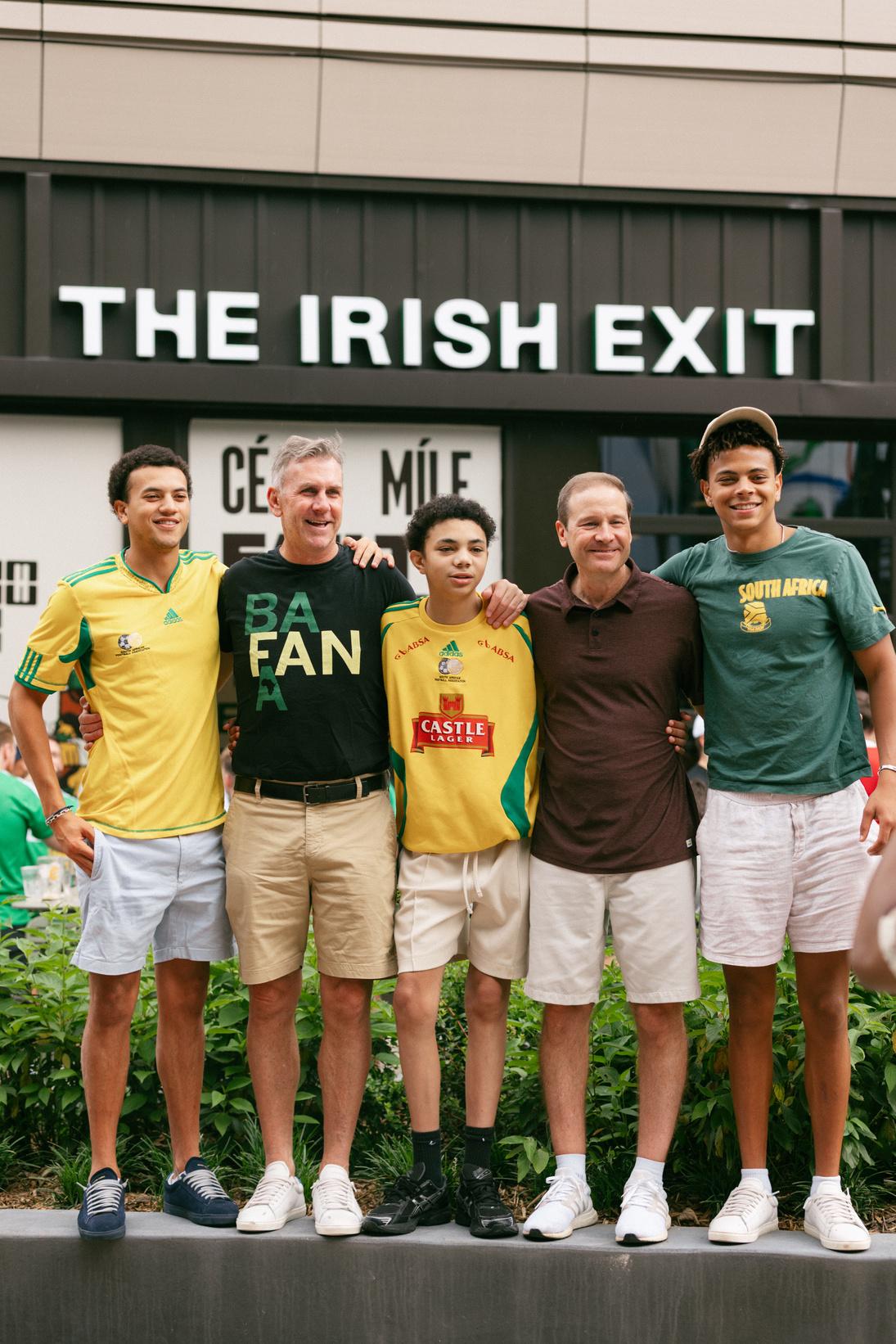
Our Google Maps route from Midtown to Eats, which is now inside Wild Heaven Brewery in the Lee + White development in West End, took us right past Centennial Park and MercedesBenz Stadium, all decked out for the FIFA World Cup. There was a throng of people trying to get into the FIFA Fan Fest, which has been at capacity and welcomed nearly 400,000 visitors since it opened. I’m a footie fan, but standing outside in the blazing Georgia sun to watch a match on a big screen is not my idea of a good time.
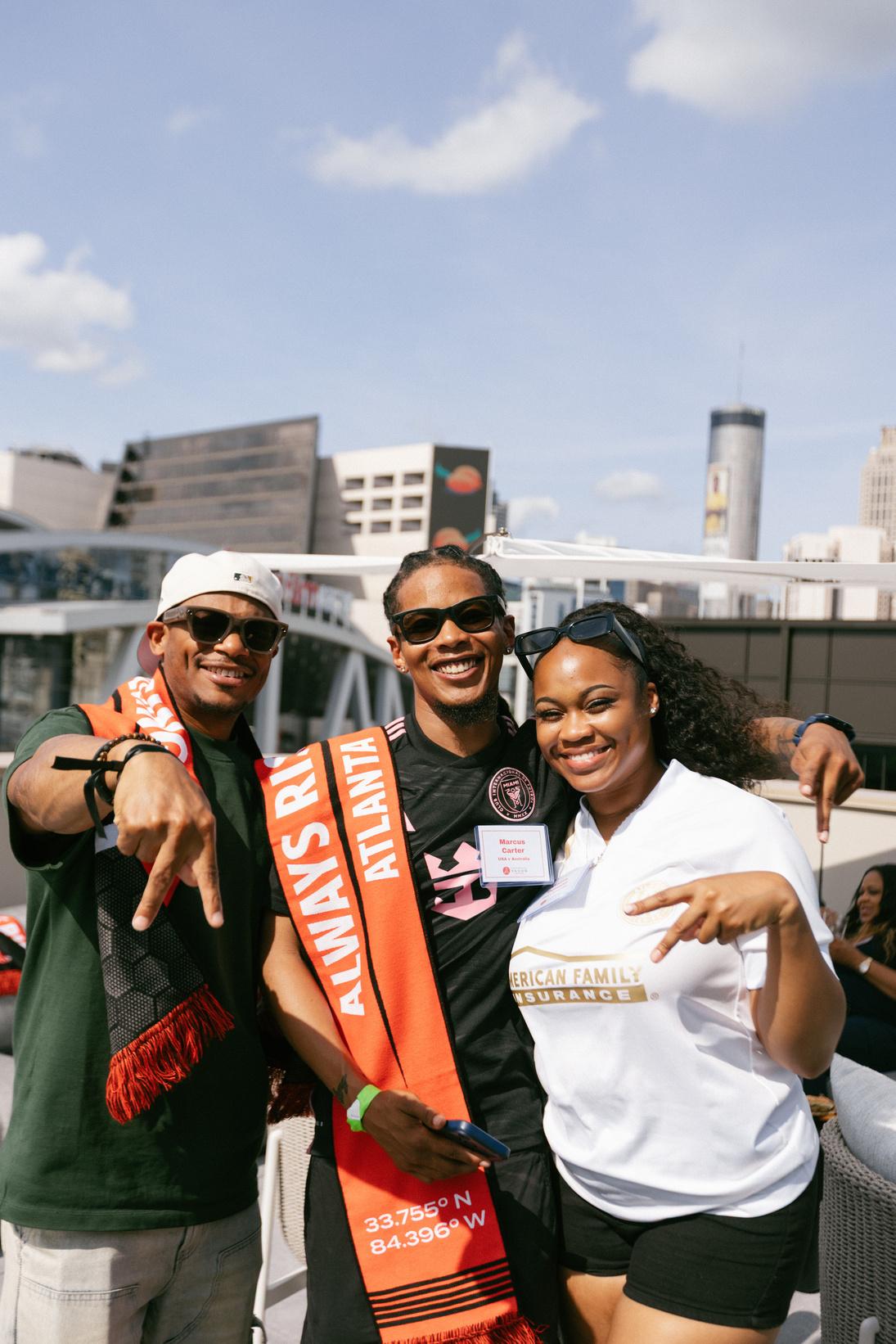
Luckily, Eats and Wild Heaven had the USA vs. Australia match playing while fans enjoyed their jerk chicken, pasta, and beer.
The return of the pasta menu (which disappeared during the pandemic closure when the iconic restaurant was still on Ponce) is what drew us to Eats, and it did not disappoint. The tortellini and spaghetti with marinara tasted exactly how we remembered them. So did the garlic bread. Plus, the U.S. won its match!
We came back to my Midtown condo and made the short stroll to the Fox for the concert. The Fox is still my favorite place to see a show, and we were
surrounded by fellow Gen Xers who were ready for a night of 80s tunes.
Alison Moyet took the stage at 8 p.m. on the dot, and we were off to the races. She did a mix of her solo work (“Love Resurrection”) and absolutely storming versions of her Yazoo hits “Don’t Go” and “Situation.” I usually cringe when an artist holds out the mic for the audience to sing a line, but the roar from this crowd exceeded expectations.
I must admit I’m not a huge fan of Soft Cell, which is now just Marc Almond and a great backing band following the death of David Ball last year. The band is considered a one-hit wonder in the states with their cover of “Tainted Love,” which is mashed up with a cover of The Supremes’ “Where Did Our Love Go.” However, in their native U.K. and in Europe they had a number of other hits like “Memorabilia” and “Say Hello, Wave Goodbye.” Almond remains in fine voice, so this performance was a pleasant surprise.
Then it was on to The Human League, which rolled out a set of nothing but hits and fantastic harmonies between Phil Oakey, Susan Ann Sulley, and Joanne Catherall. The set included “Don’t You Want Me,” “Love Action,” “(Keep Feeling) Fascination,” “Being Boiled,” “The Lebanon,” and a beautifully rendered “Human.” Since Tina and I didn’t see Human League back in the day, this felt like another bucket list item being crossed off.
So, if you haven’t been to Eats and you haven’t been to a show at The Fox lately, I highly recommend both for a night out on the town.
The Human League performs at The Fox. (Photo by Collin Kelley)
Driven by Good Energy
As a Proud Partner of TOUR Championship, we’ve helped the tournament generate more than $71 million for its five charitable beneficiaries. We believe good energy makes a lasting impact in our communities that can be felt for generations.
Inside FIFA Fan Fest
The World Cup celebration continues at Centennial Park
By Sarra Sedghi
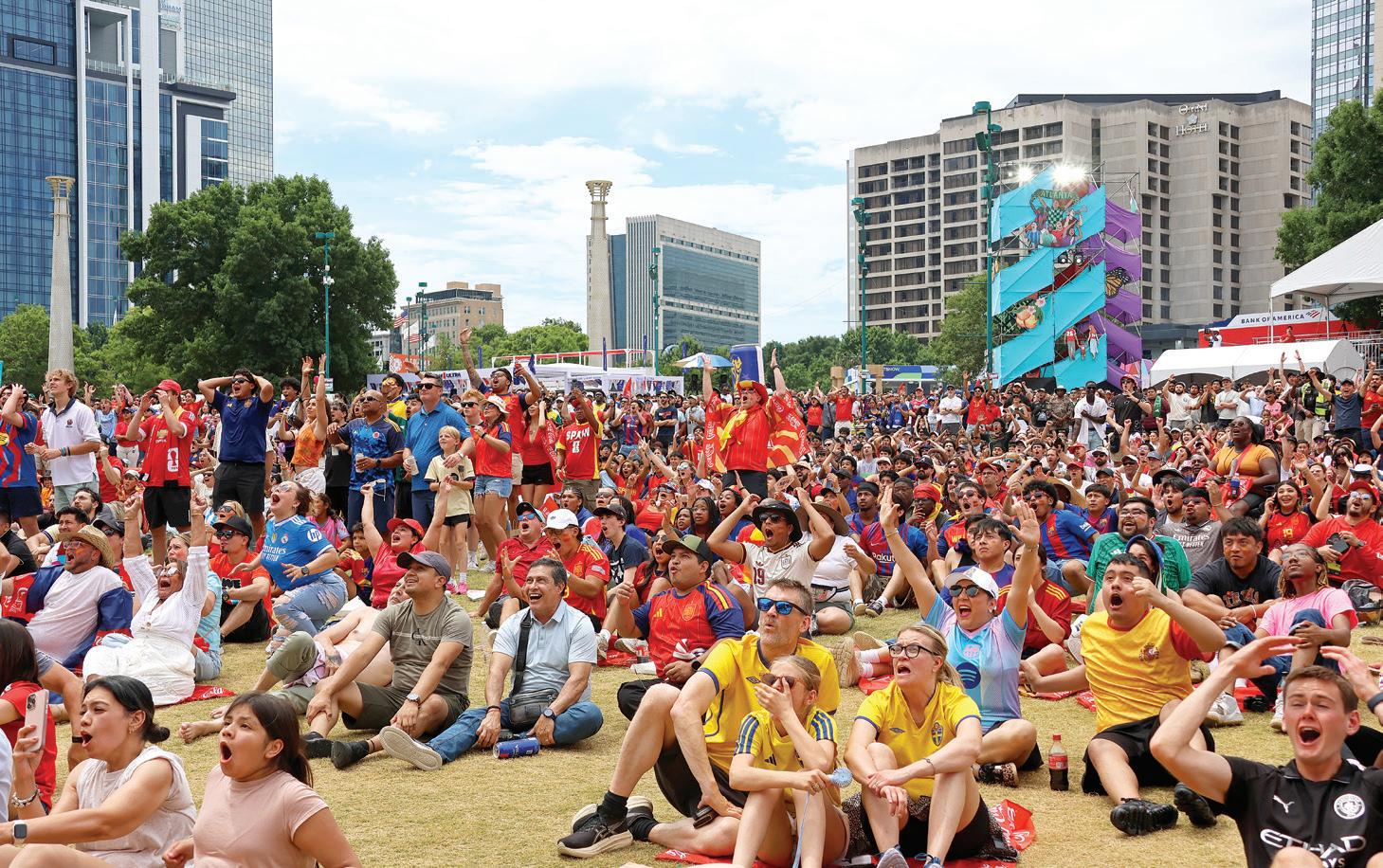
The FIFA Fan Festival experience at Centennial Olympic Park in Downtown Atlanta isn’t merely succeeding. It’s repeatedly proving misgivings about the city’s preparedness for the World Cup wrong. Nearly 400,000 visitors attended the festival during the month of June.
While the festival’s opening day on June 11 came with a few hiccups — extreme heat and a lack of shade overwhelmed visitors, volunteers, and employees at the park — by match day on June 15 in Atlanta, everything seemed to be running smoothly.
People dodged rain showers on June 18, before returning
to watch the Czechia versus South Africa match. The festival also had to shut down hours earlier than planned that day due to the impending rain from the remnants of Tropical Storm Arthur. The free event has become the most popular FIFA Fan Festival in the country, with attendance swelling to capacity on multiple occasions.
As with any other multi-week, outdoor festival, there’s been a learning curve. Let’s just call those first few days a dress rehearsal.
The scene
People attending Atlanta’s FIFA Fan Fest have learned a few things, too.
■ The festival maintains a clear bag policy, barring even opaque bags brought directly from Atlanta Stadium after matches.
■ People can bring clear water bottles to fill up at free hydration stations.
■ The weather remains unpredictable in Atlanta during the summer, where blaring heat and thunderstorms can easily interchange within an hour and delay or cancel FIFA Fan Fest.
■ Food concessions come in epic proportions and are better off shared.
■ Once attendance crosses a capacity threshold, tickets — even the paid VIP ones — can’t guarantee entry.
■ While visitors may travel in for 24 hours to see their team play at Atlanta Stadium, the population at FIFA Fan Fest skews mostly local.
To that last point, the festival delivers on the promise of providing a gathering spot for fans to watch matches together.
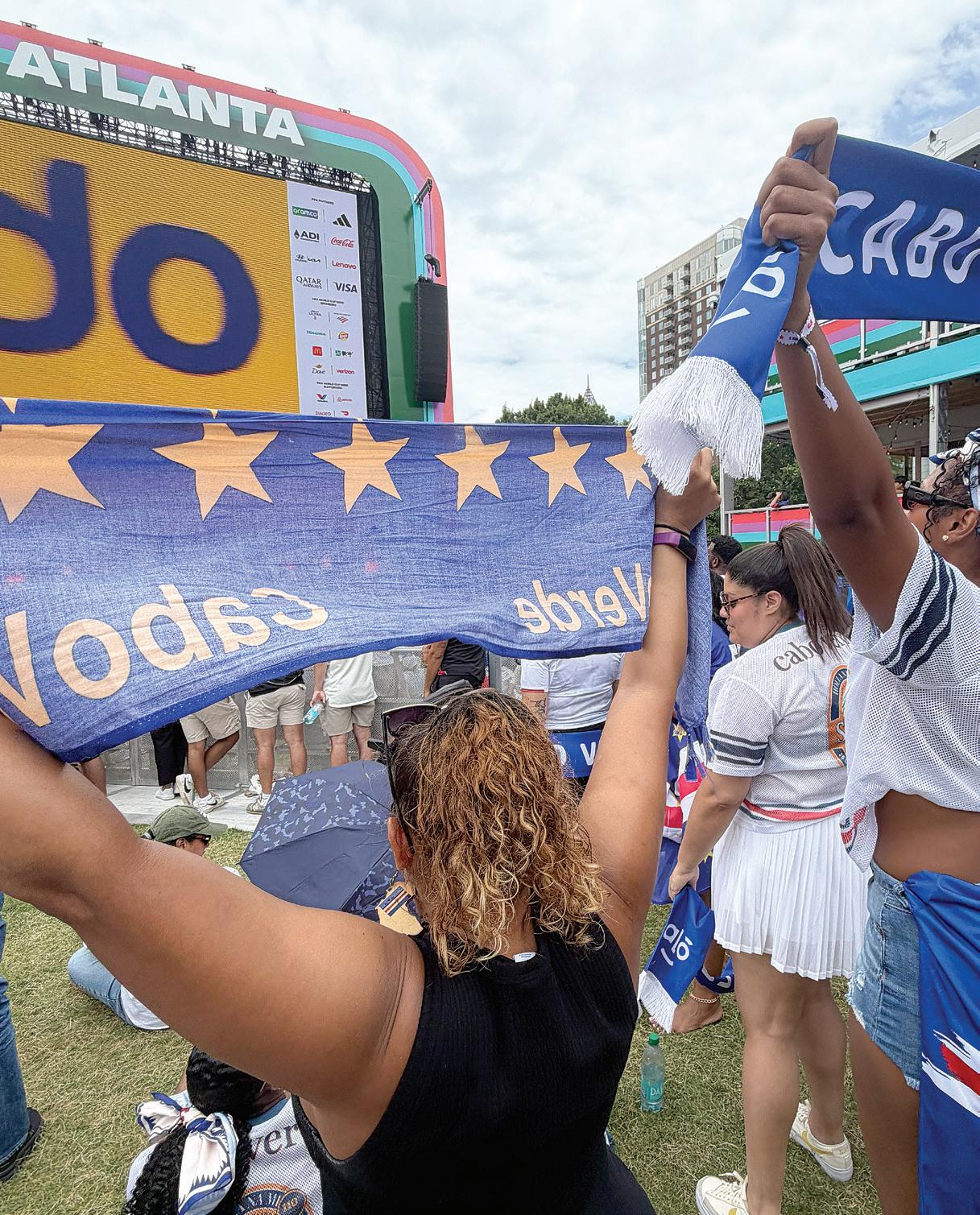
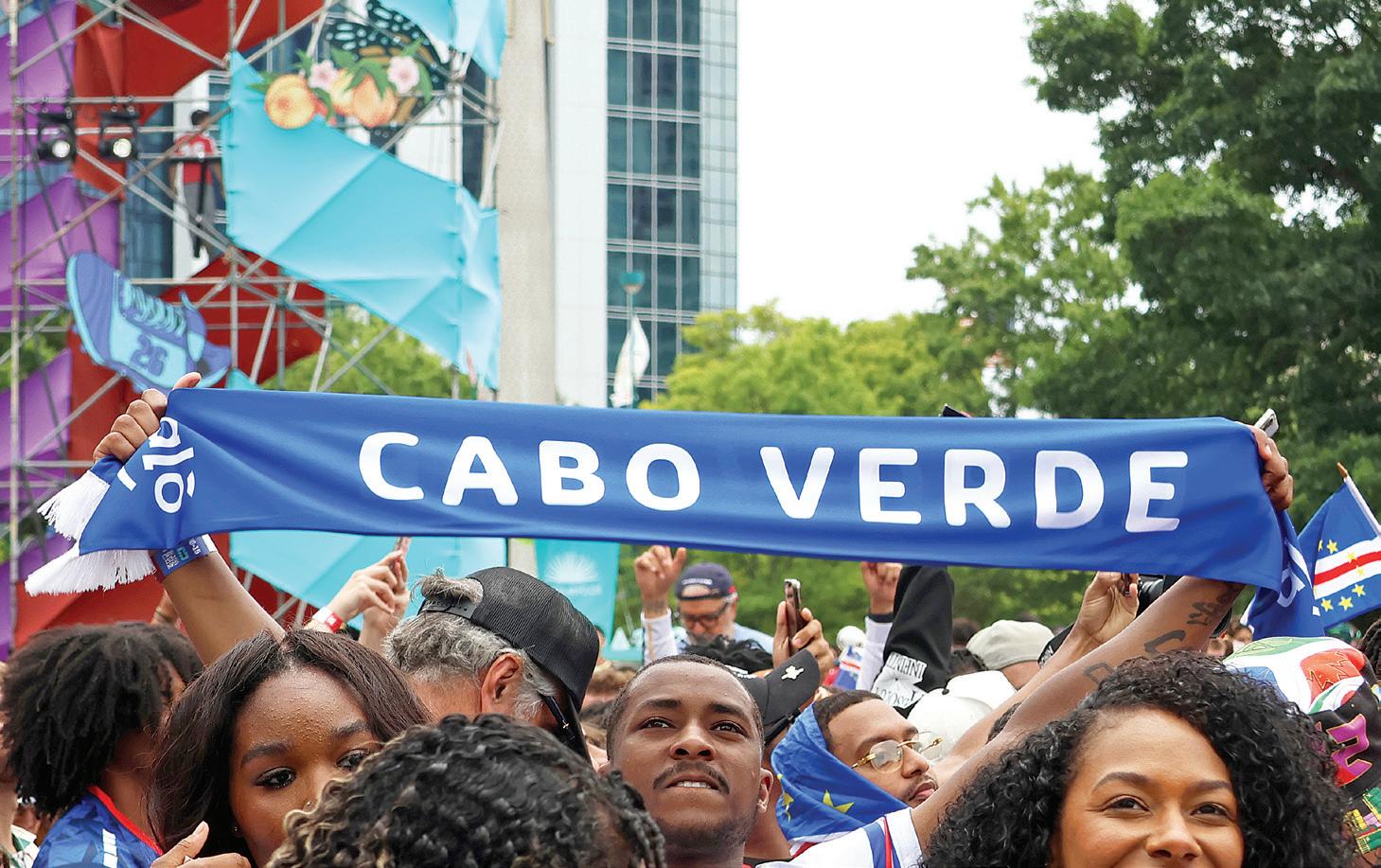
The park lawn faces a giant screen and attracts clusters of people from around the metro who come to cheer for their favorite teams. For Cabo Verde fans on June 15, that also meant breaking out into impromptu dance parties throughout the match against Spain. The tiny West African nation – a country smaller in population than the city of Atlanta – held heavily favored Spain to a 0-0 draw. At the final whistle, Cabo Verde fans at the festival erupted in cheers as if they had won the match. They knew this was a history-making moment at the World Cup.
When South Africa faced Czechia on June 18, the celebratory dance parties returned to the festival. That game ended in a 1-1 draw.
Higher-stakes teams like Mexico and the United States drew so many attendants the festival had to start turning them away.
Things to do
Fan activations abound at the festival, with Bank of America and Coca-Cola’s experiences (and quality free swag) drawing the longest lines.
Bank of America offers people the chance to create customizable World Cup charm bracelets with ties to Atlanta. CocaCola Fan Zone includes DIY face-painting stations.
Kids can flex their soccer skills on a private pitch, or get creative by customizing toy jerseys at the LEGO booth.
Home Depot’s activation, Beckham’s Backyard, provides complimentary bucketshaped cardboard fans featuring a coloring page on one side.
A FIFA pop-up shop sells World Cup gear and team jerseys.
Food and music
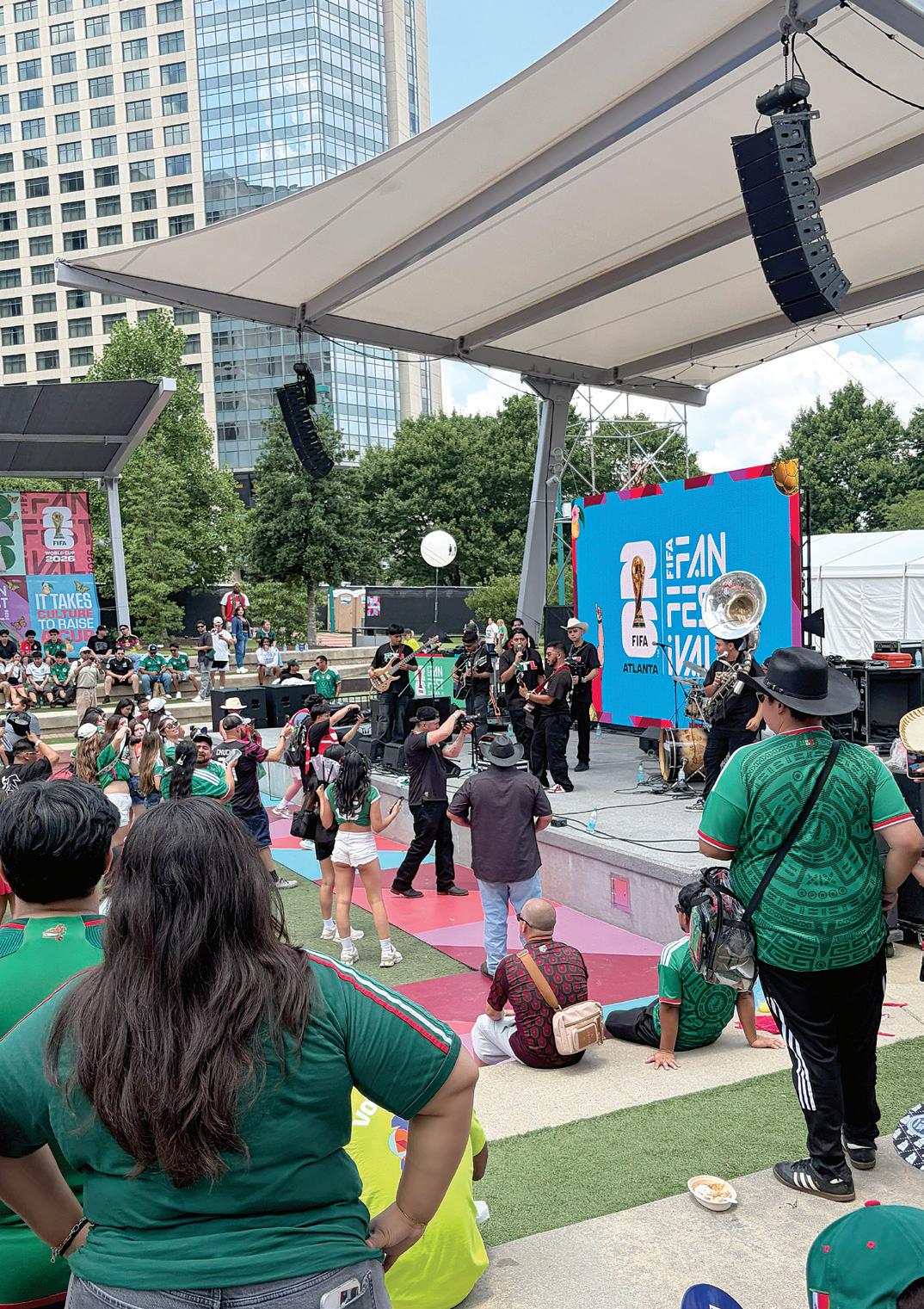
Live music brings a steady flow of soccer fans to the Southern Company Amphitheatre at the park throughout the day. At night, music acts like Ceelo Green, Ludacris, and Summer Walker take the main stage.
Steps from the park, food trucks line a two-block stretch of Walton Street. The caravan comprises Global Grub
FIFA Fan Fest photos by Ansley Kelly and Sarra Sedghi.
INDIVIDUAL AGENT, SOTHEBY'S INTERNATIONAL REALTY ®
Continued from page 6
Alley, a collaboration between Showcase Atlanta and the Food Truck Association of Georgia.
Many food truck vendors told Rough Draft that they hope to attract a mix of tourists and locals, including nearby office workers on their lunch breaks. It’s easy to miss Global Grub Alley, especially on nonmatch days with much less foot traffic. Despite a large, inflatable red archway marking the entrance to the food truck corridor, crowds, the novelty of police officers on horseback, and the pomp on display at Fan Fest can make it hard to spot.
Seek out these local food trucks, which
offer a variety of dishes, like curried goat, pupusas, gourmet grilled cheeses, ChineseCaribbean fusion fare, tacos, and barbecue. You’ll also find a local lemonade stand, Italian ices, and fresh juices.
Daniel Ray, founder of grilled cheese truck Cheez’d and Confuzed, said his operation is hoping for more customers this weekend. However, he’s incredibly grateful “just being part of [a] once-in-alifetime kind of thing.”
Mesha Claybourn, founder of Beneficial Sips, looks forward to increased exposure for her company.
“We just got this truck in October. The company turned one year old on April 2. I’m just happy to be here so everybody can learn about my products, follow me
on social media, and just continue to shop with me and support me and my growth,” Claybourn said.
With two more group stage matches to go in June at Atlanta Stadium, FIFA Fan Fest will really be put to the test in July when the city hosts two knockout matches and a coveted semifinal. If predictions hold true, Atlanta could see crowds swell in July as some of the tournament’s past champions vie for a spot in the final during the knockout stage and semifinal matches.
In July, FIFA Fan Fest returns on July 1, 7, 11, 14, and 15. Global Grub Alley runs on Atlanta match days and the days before matches on Walton Street.
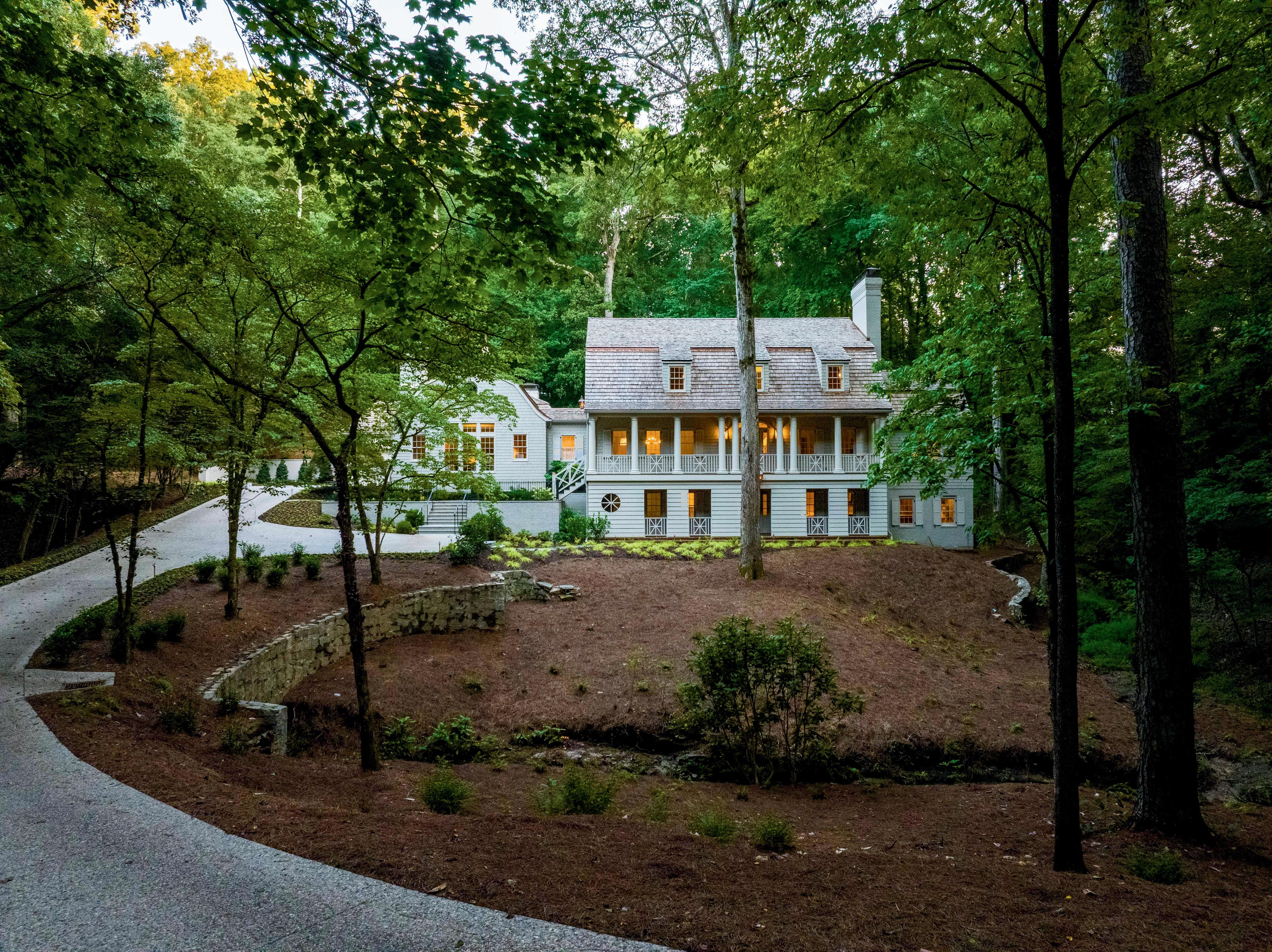
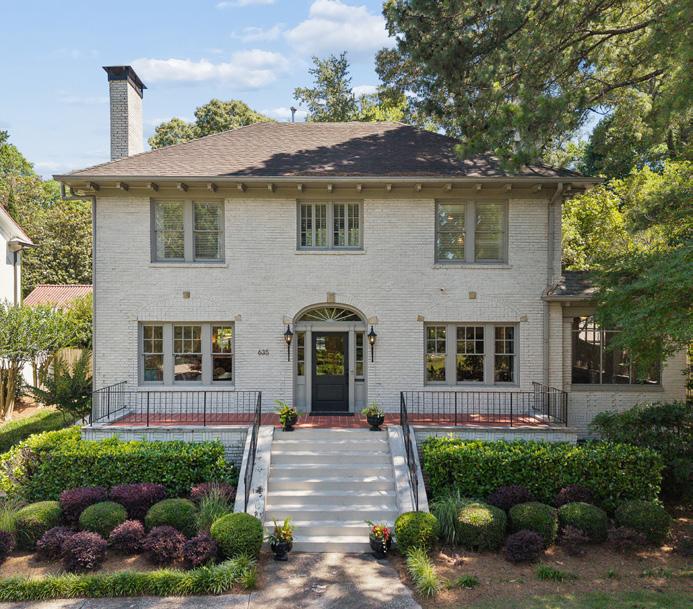
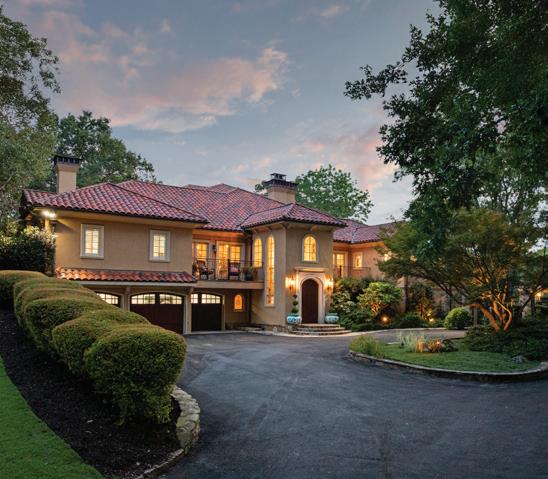
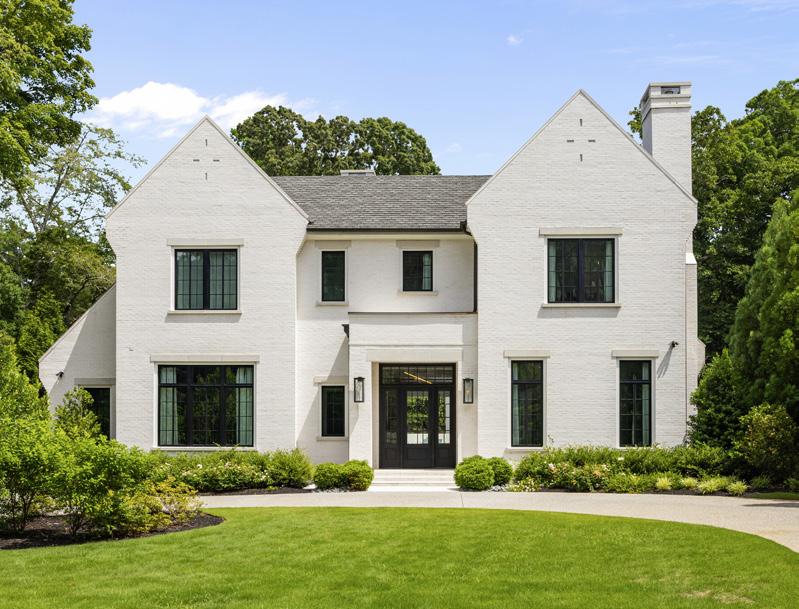
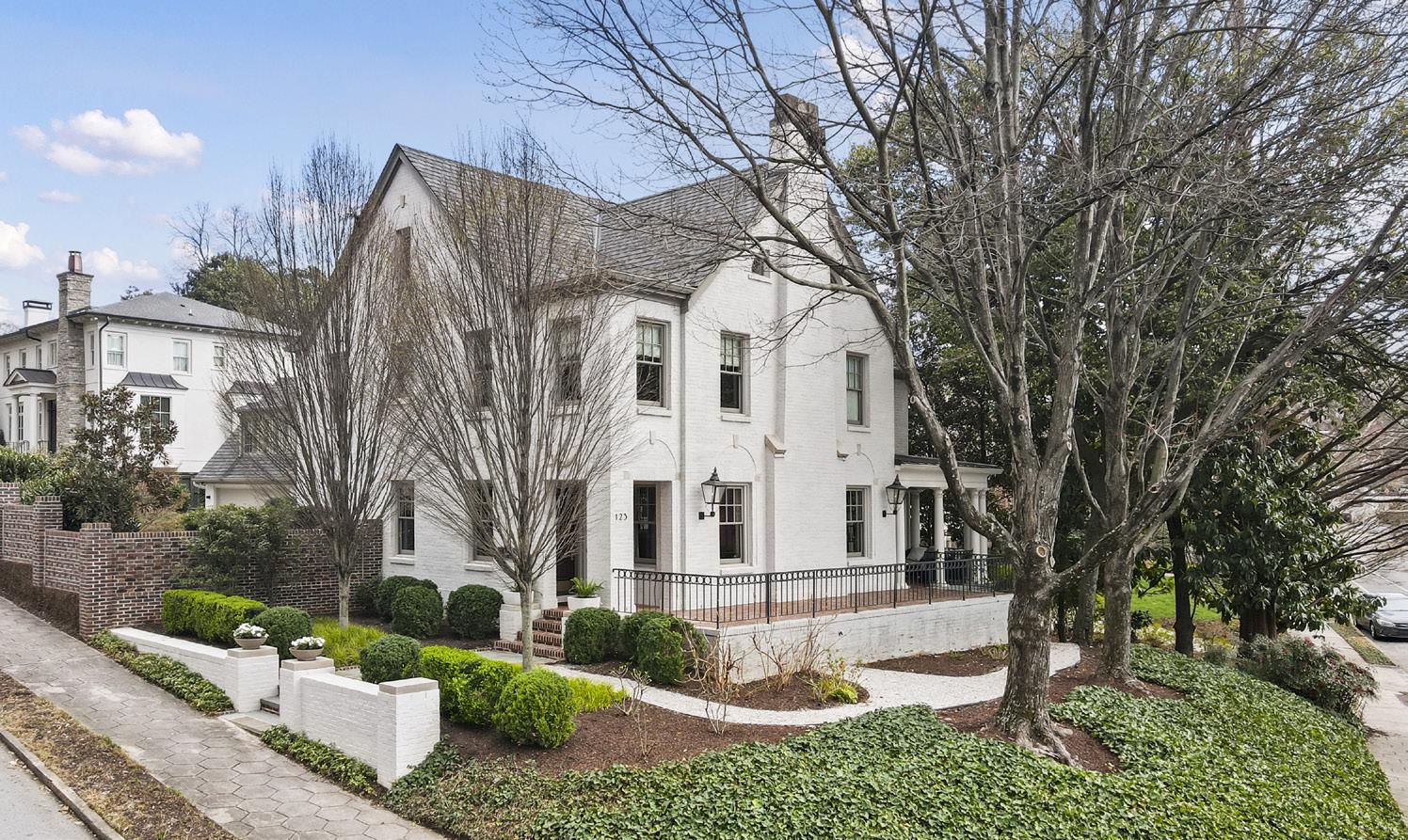
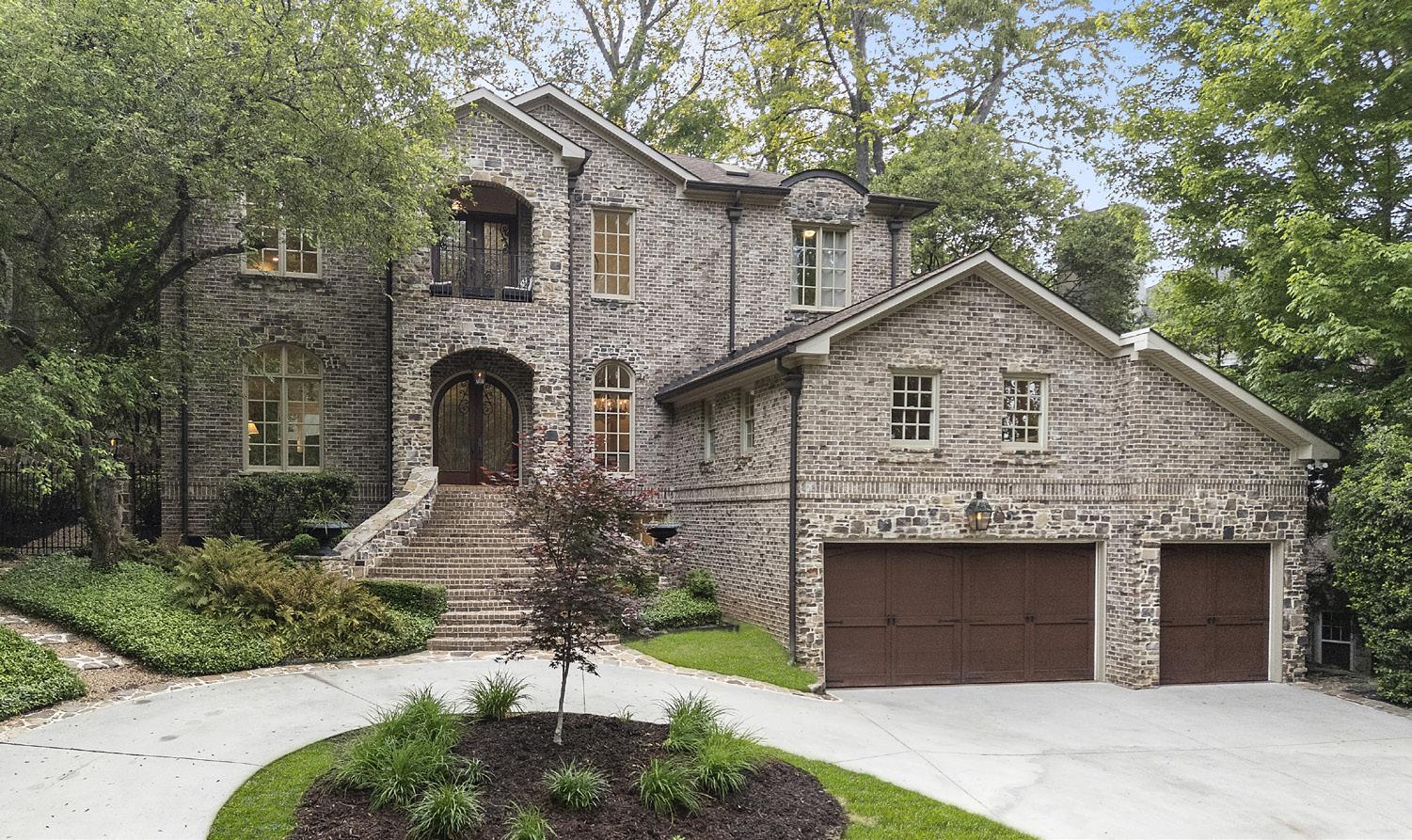
3990 Paces Ferry Road NW, Buckhead
Offered for $5,995,000
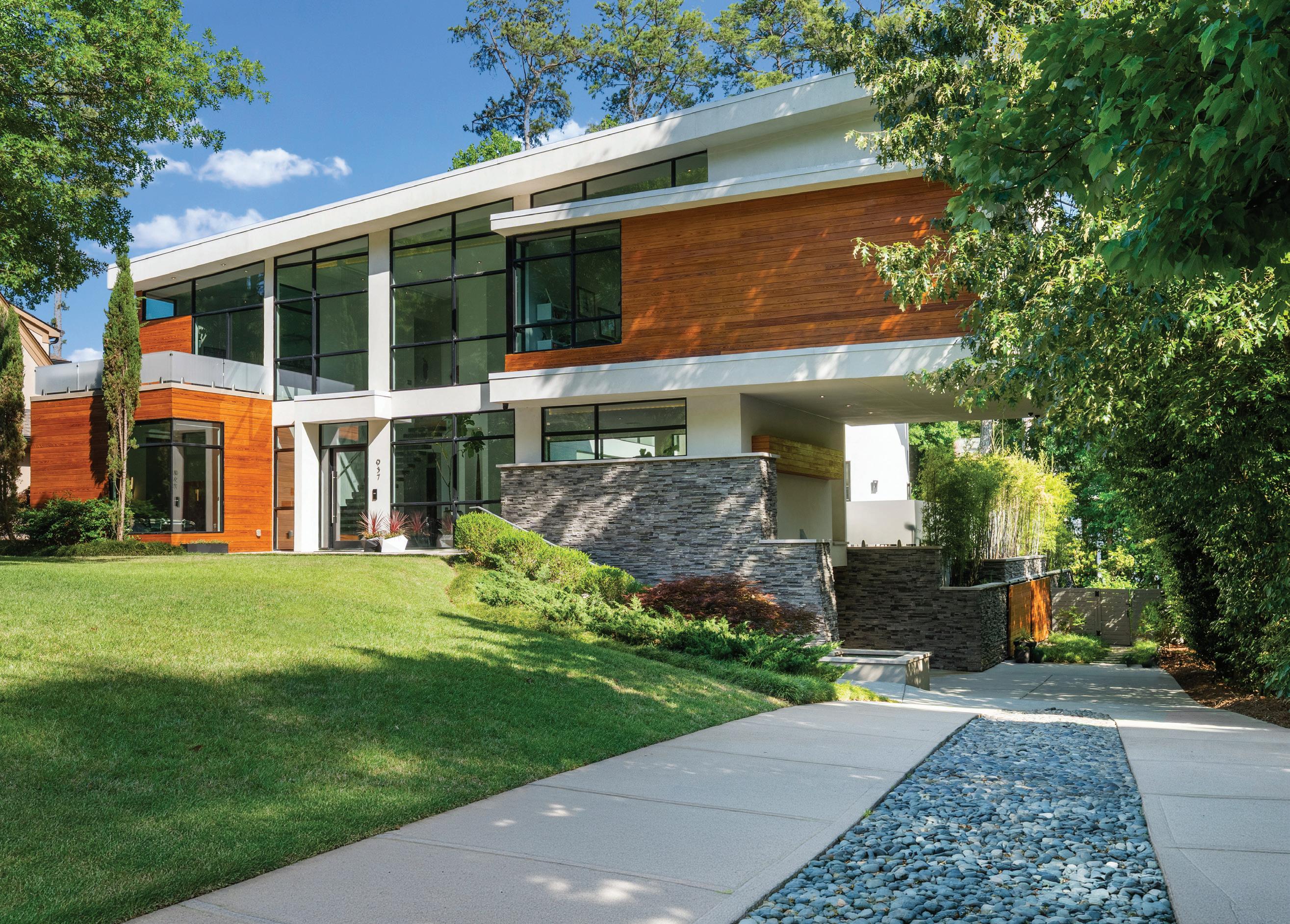
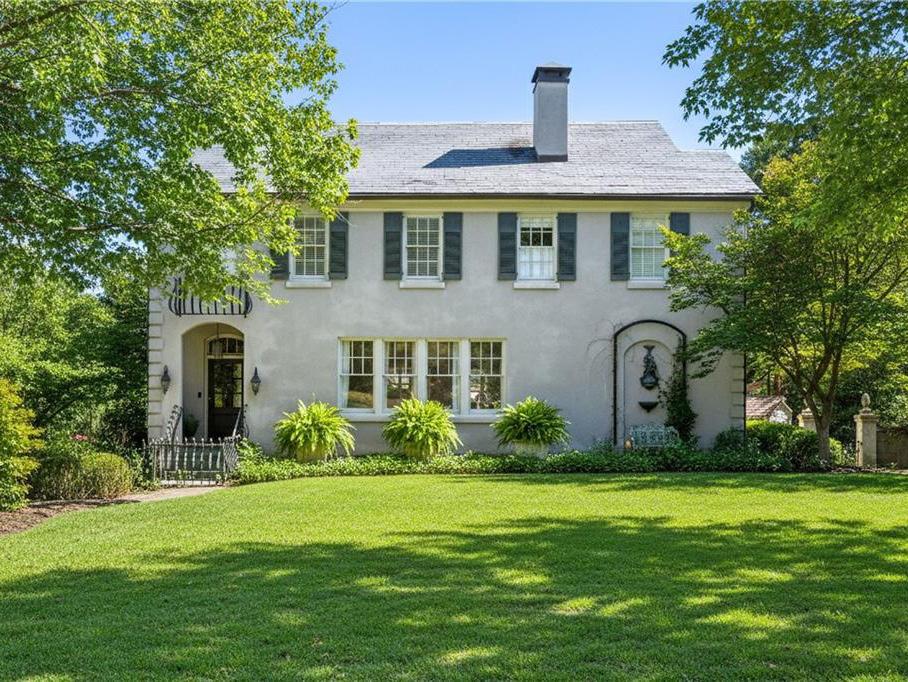
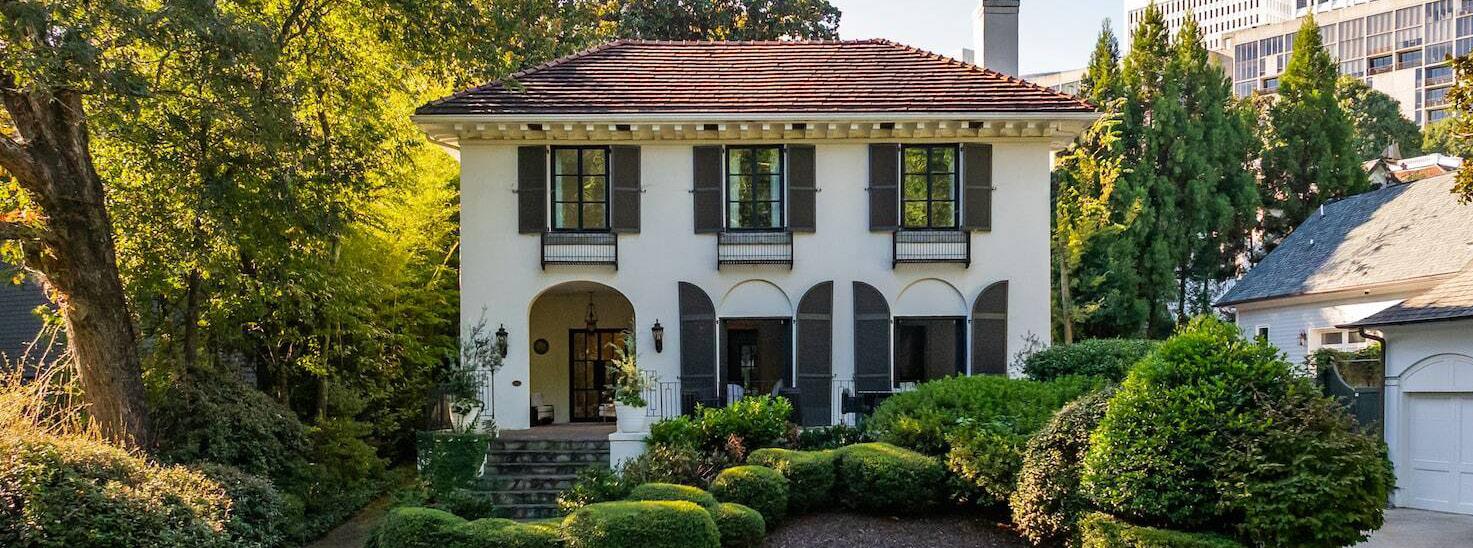
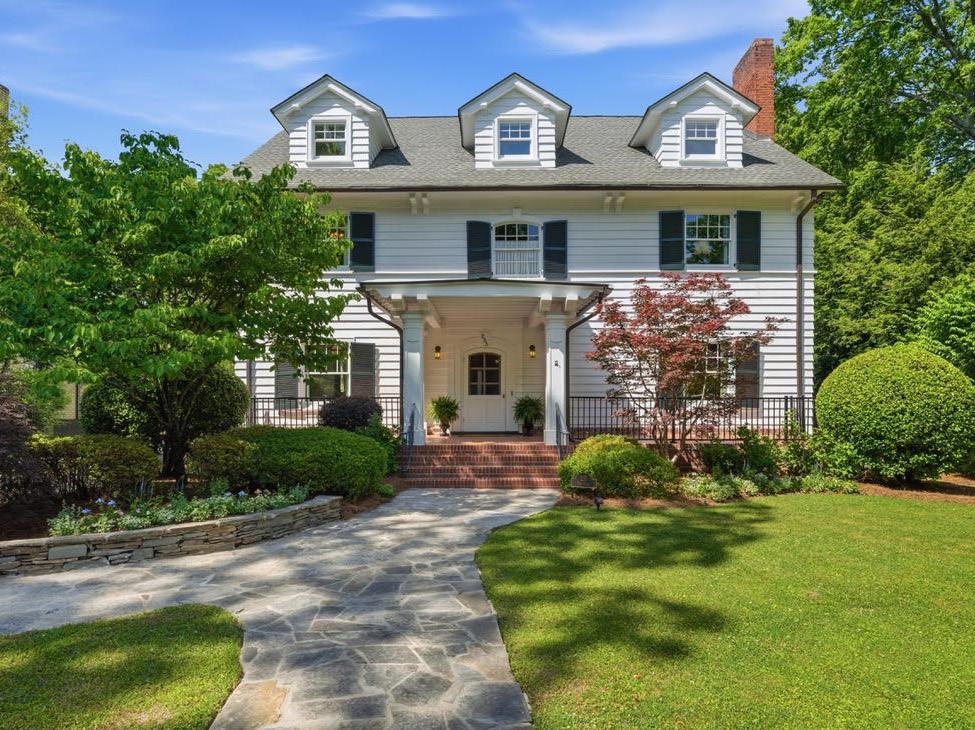
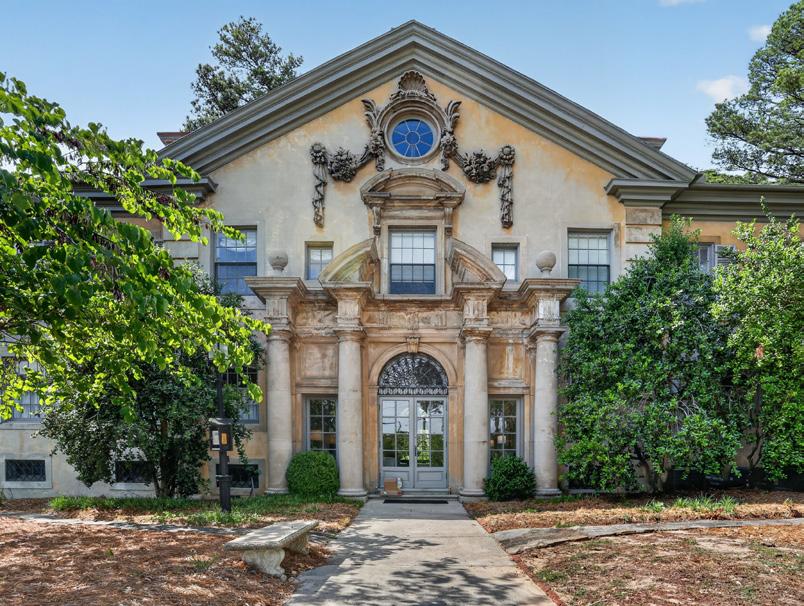
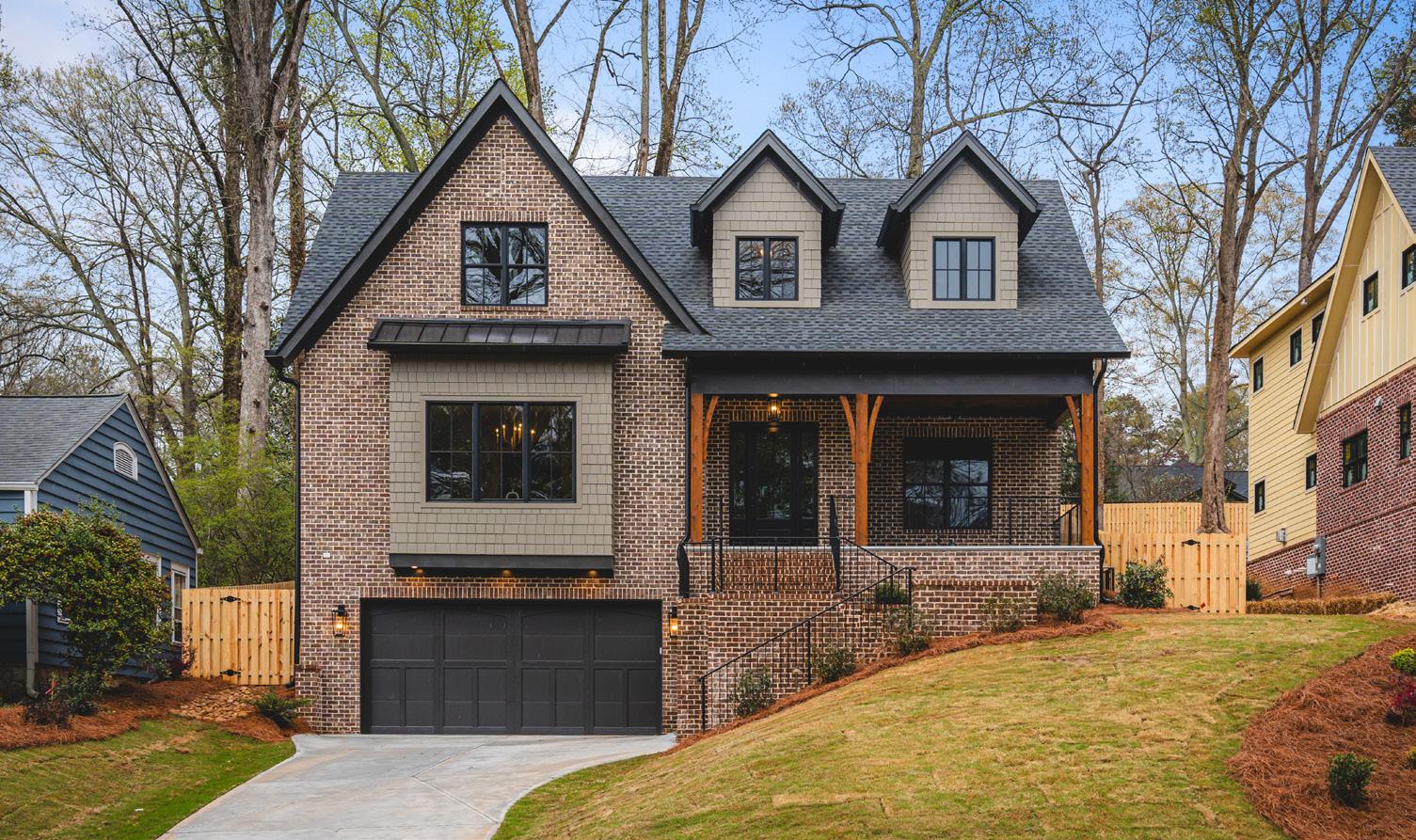
Designed in 1968 by Francis Palmer Smith, one of the architects who shaped Atlanta's skyline is thoughtfully reimagined by architect, John Plaster, Harvin Green e, T2Greene & FIELD Landscape Architecture.
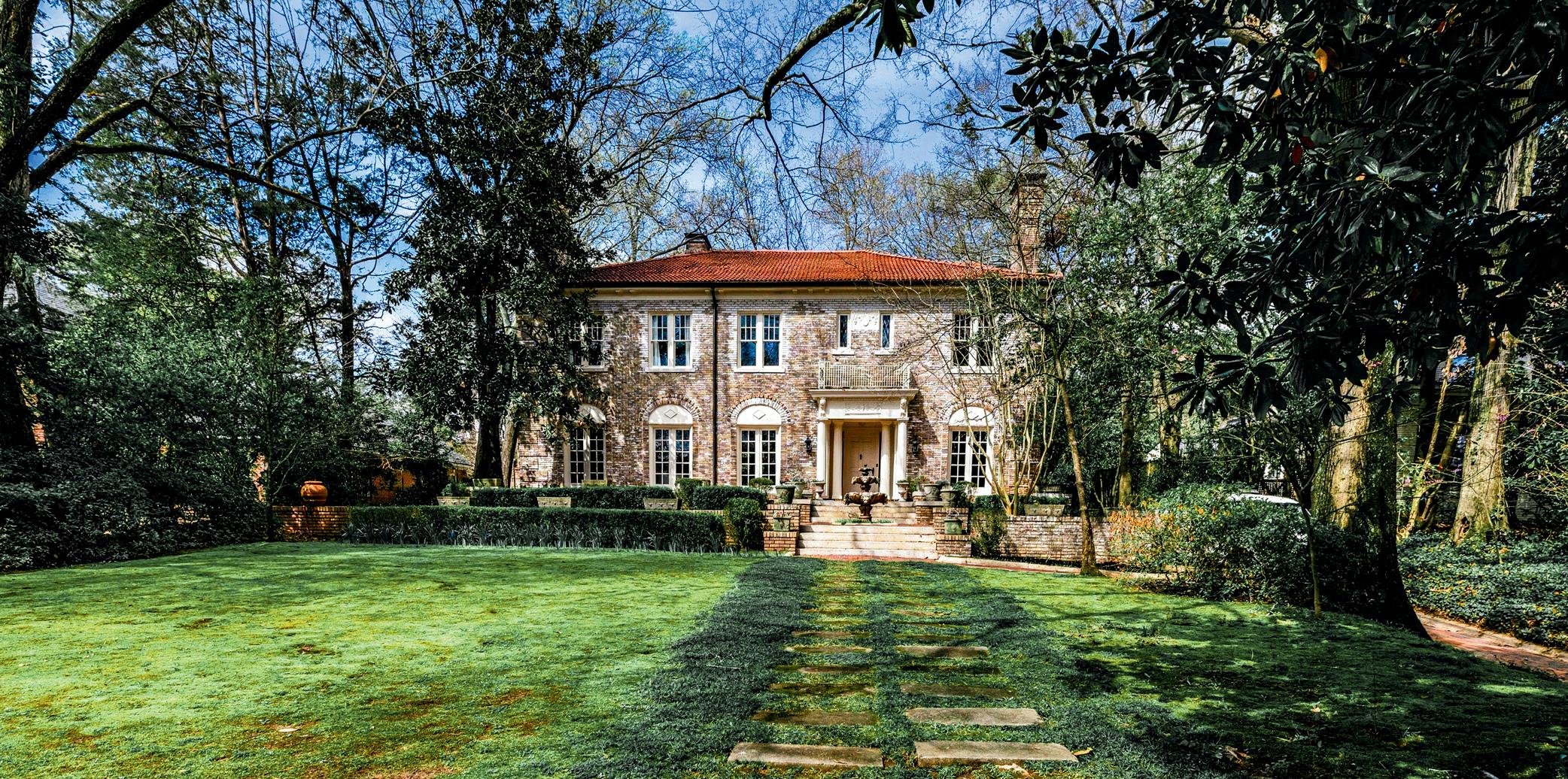
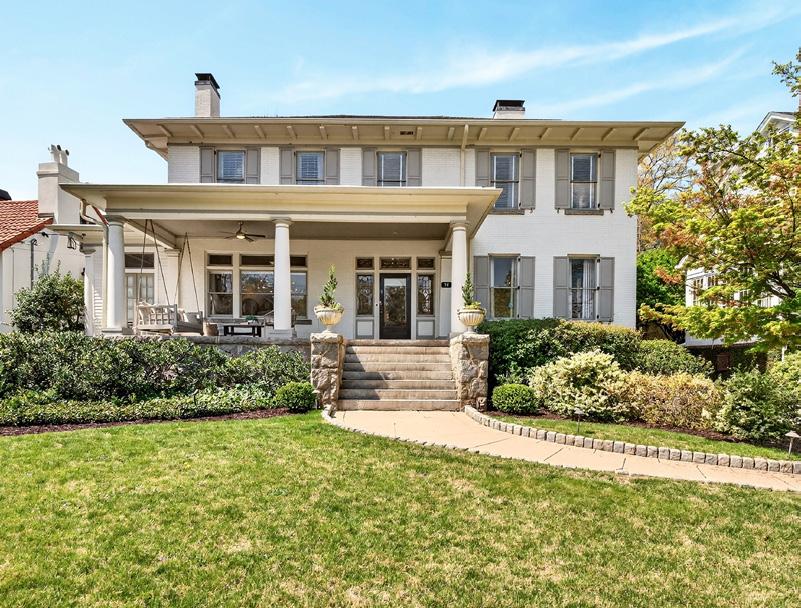
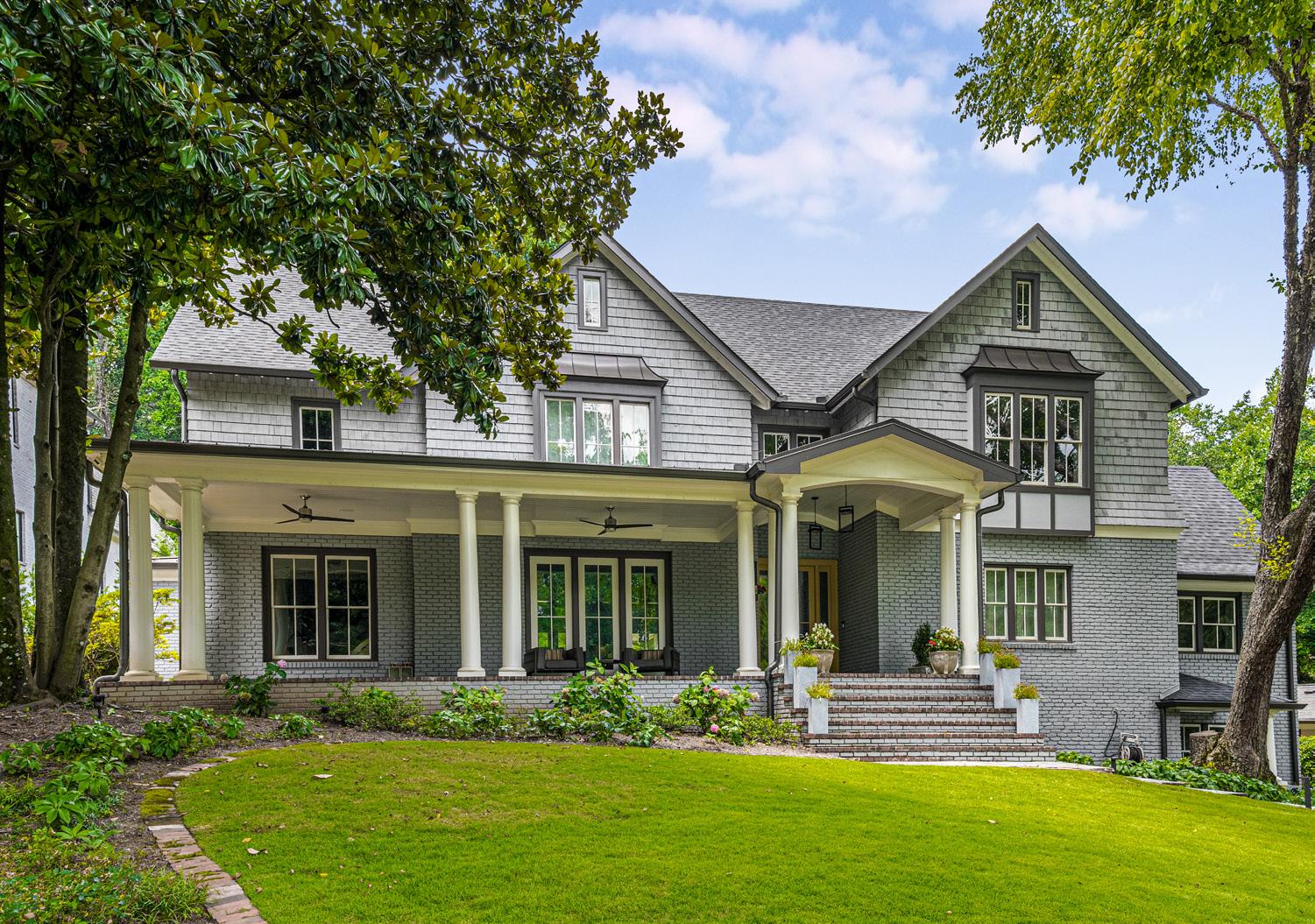
794
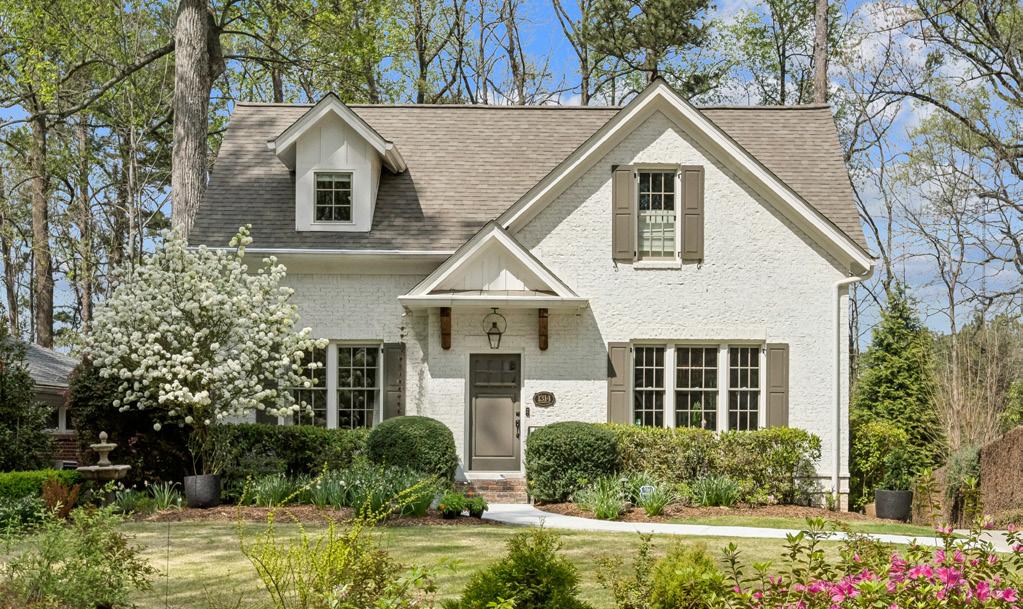
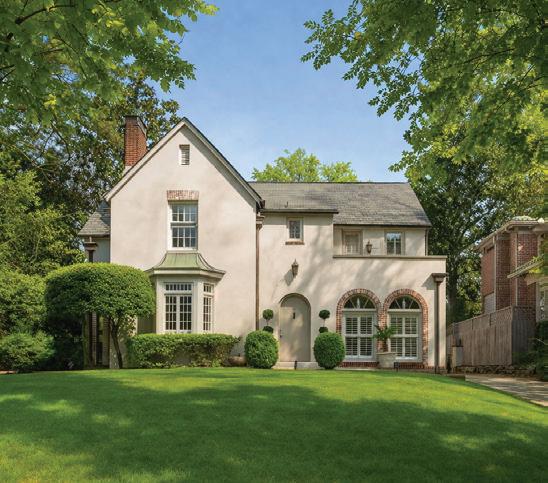
Springdale Rd. NE, Historic Druid Hills
Offered for $5,750,000
“Boxwood “is
Runoff elections set November matchups
By Collin Kelley
Georgia voters settled several of the state’s most closely watched primary contests on Tuesday, setting up high-profile November matchups for U.S. Senate, governor and other statewide offices.
Turnout for the runoff was significantly lower at around 500,000 voters compared to the 1.5 million who voted in the May primary.
The governor’s race produced the night’s biggest surprise as billionaire Rick Jackson defeated Lt. Gov. Burt Jones in the Republican runoff despite Jones’ endorsements from President Donald Trump and outgoing Gov. Brian Kemp. Jackson will face Democrat Keisha Lance Bottoms in the general election. Republicans also finalized nominations
for several statewide offices, including victories by Greg Dolezal for lieutenant governor and Tim Fleming for secretary of state.
In the Republican U.S. Senate runoff, U.S. Rep. Mike Collins, who Trump endorsed, defeated former football coach Derek Dooley to win the GOP nomination and advance to a November showdown with Democratic incumbent
Jon Ossoff.
In metro Atlanta’s most closely watched local race, attorney and former Fulton County commissioner Mo Ivory defeated incumbent Robb Pitts in the Democratic runoff for chair of the Fulton County Board of Commissioners, ending Pitts’ tenure atop the county government. Ivory will face Republican Eric Tatum in November.
Voting advocates celebrate delay on redistricting
By Katie Burkholder
Voting rights advocates are celebrating the decision by Georgia lawmakers to scrap talks of redistricting during a special session called mainly for that purpose.
Hours before the special session called by Gov. Brian Kemp began on June 17. Speaker of the House Jon Burns sent a letter to Kemp announcing the decision to hold off on redrawing the voting districts.
“Changes to Georgia’s maps should take place only when members of the General Assembly and citizens have been given ample opportunity to gather the facts, provide input and engage in meaningful discussion,” Burns wrote in the letter.
“We believe it is prudent to allow the judicial process to continue developing in other states and to carefully evaluate how courts rule on newly adopted district maps across the country,” Senate President Pro Tempore Larry Walker said in a statement. “With this guidance, we are confident that Georgia’s new districts will ultimately withstand legal scrutiny and that Georgia will prevail in defending its position in court.”
Black Voters Matter Fund were among the coalition of speakers who advocated against the redistricting during a press conference at the Capitol on Wednesday. Other organizations represented in the coalition included the Georgia Coalition for the People’s Agenda, the ACLU of Georgia, Southern Poverty Law Center, and the Georgia NAACP.
Local faith leaders also hosted an interfaith prayer service and rally against the redistricting at Big Bethel A.M.E. Church on Wednesday morning.
Kemp called the special session in May following the Louisiana v. Callais Supreme Court decision, which limited the use of a section of the Voting Rights Act that allowed the creation of majority-minority districts to address racial disparities.
Advocate groups for voting rights have argued that this decision will further disenfranchise Black voters and benefit Republican candidates. According to a projection by Fair Fight Action and the Black Voters Matter Fund, Republicans could secure up to 19 U.S. House seats nationally because of the decision.
“Gov. Kemp’s special session is a direct attack on the political power that Black, Brown, and working-class Georgians have spent decades building,” Fair Fight Action wrote in a press release. “Experts believe the new voting maps for 2028 will be designed to erase electoral gains made by communities of color that helped reshape Georgia’s political landscape.”
Lauren Groh-Wargo from Fair Fight Action and Cliff Albright from the
“Too often folks segment the LGBTQ community as other, but in Georgia all but one of the seven publicly out LGBTQ+ legislators currently serving in the Georgia legislature are people of color. The majority of them are Black and LGBTQ+,” Noël Heatherland, the Statewide Organizing and Outreach Director for Georgia Equality, said during the church rally. “Therefore, this is a clear attack on Black political power and also the political power of all LGBTQ+ people.”
While advocates are celebrating the decision to delay redistricting, they are also preparing to continue fighting for equal voting rights for Georgians.
“Georgians spoke up, organized, and made it clear an attack on Black and brown representation would not go quietly. Today, that pressure worked,” the Black Voters Matter Fund wrote on social media.
“Notice what didn’t happen: an apology, an admission this was always wrong. Just a tactical retreat… It’s still unclear whether Georgia Senate Republicans will try to push their own maps through on their own.”
Keisha Lance Bottoms Rick Jackson
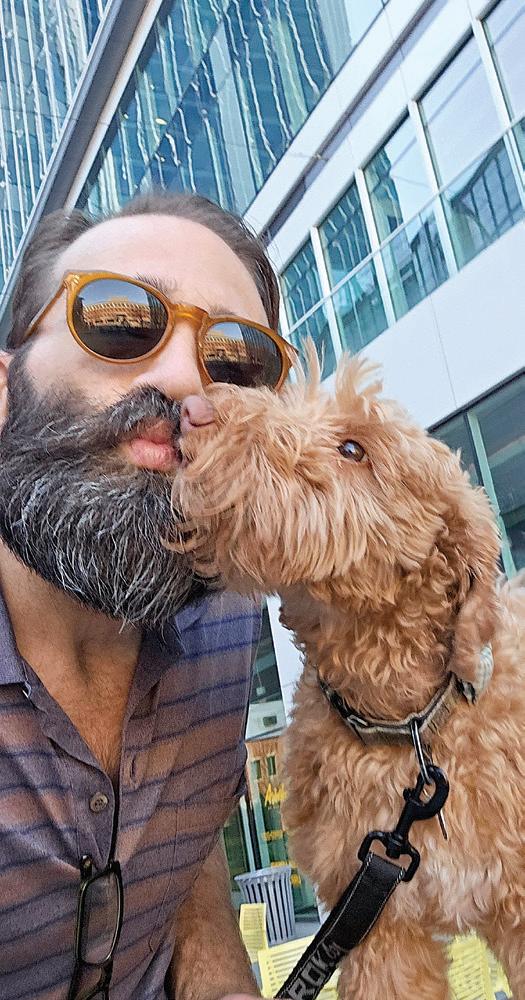
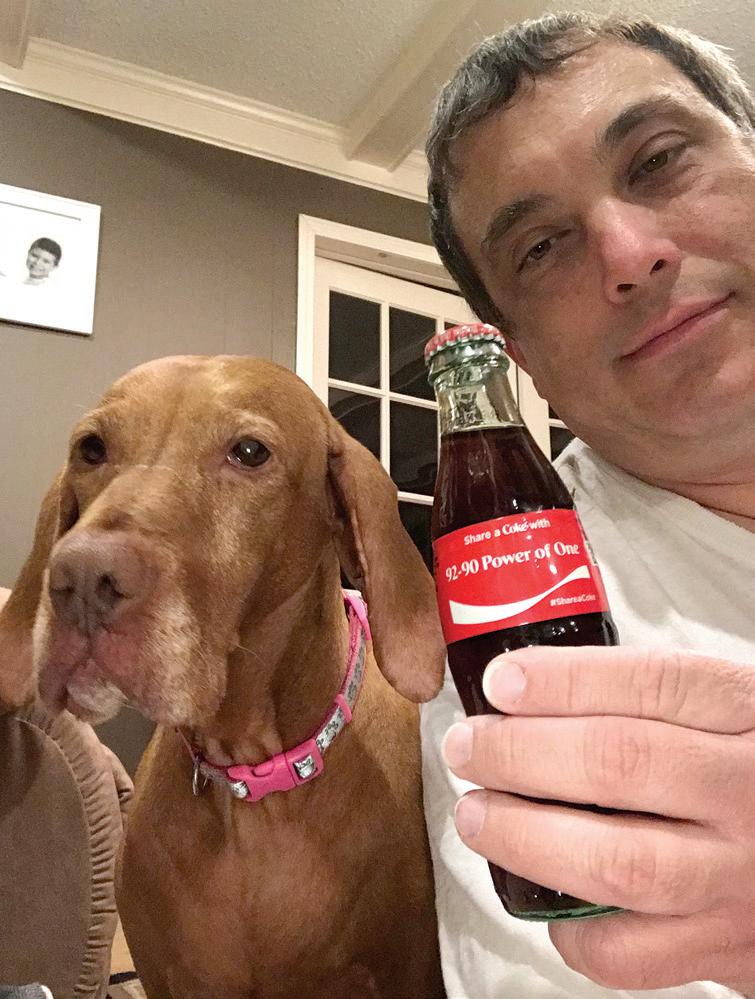
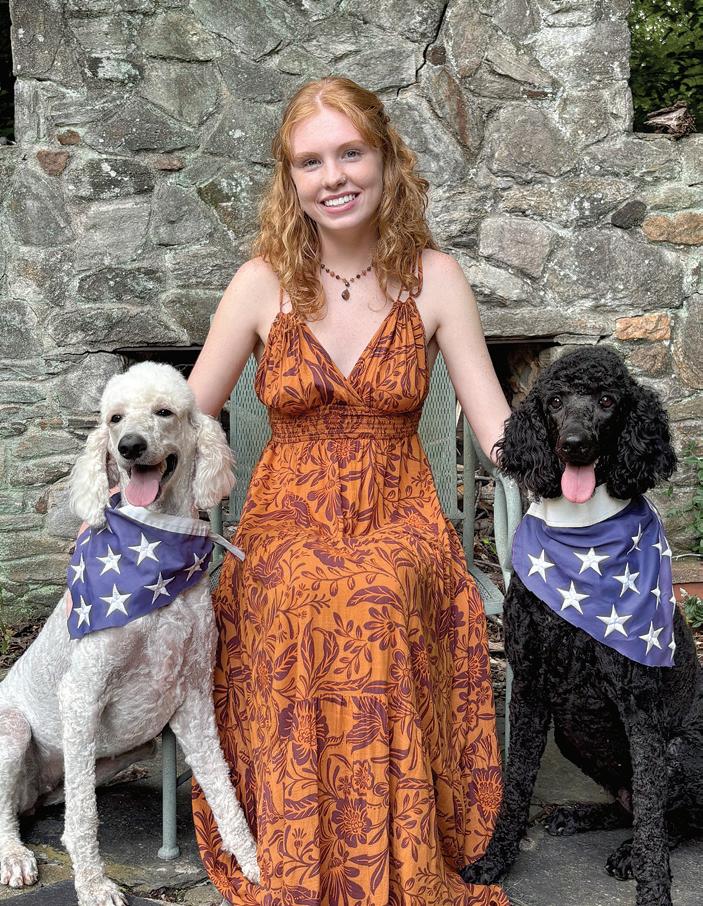
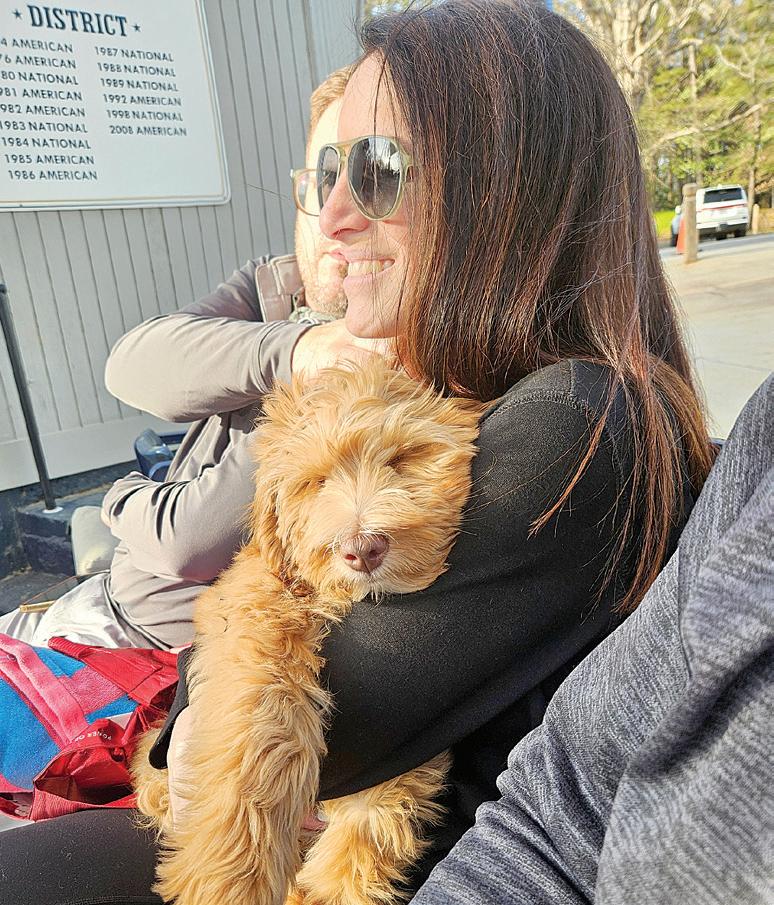
Pets & Their People
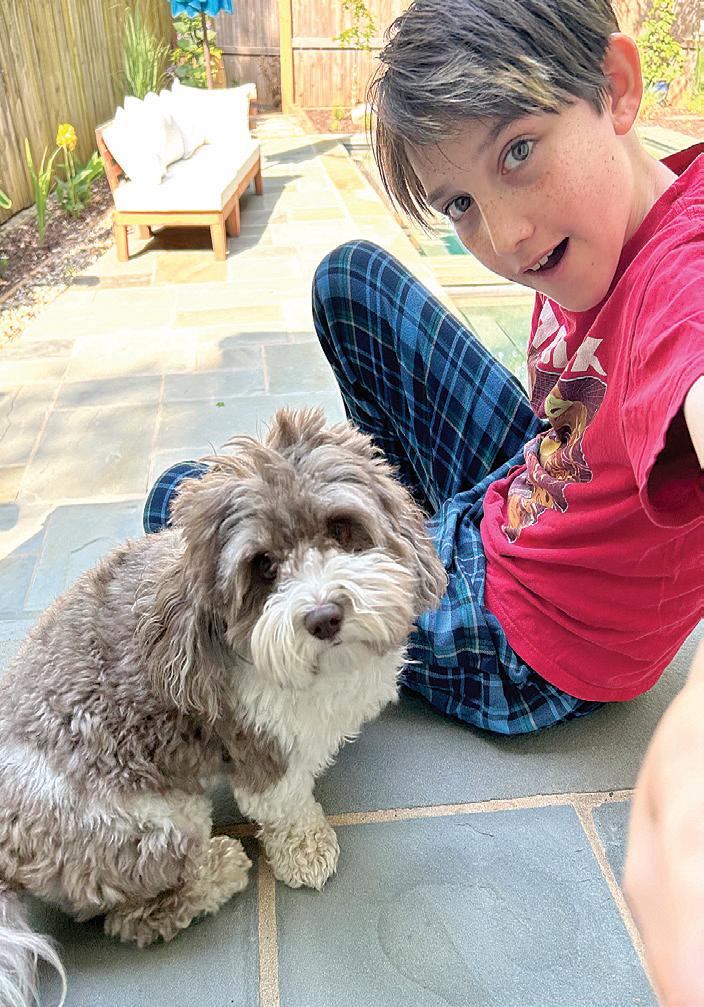
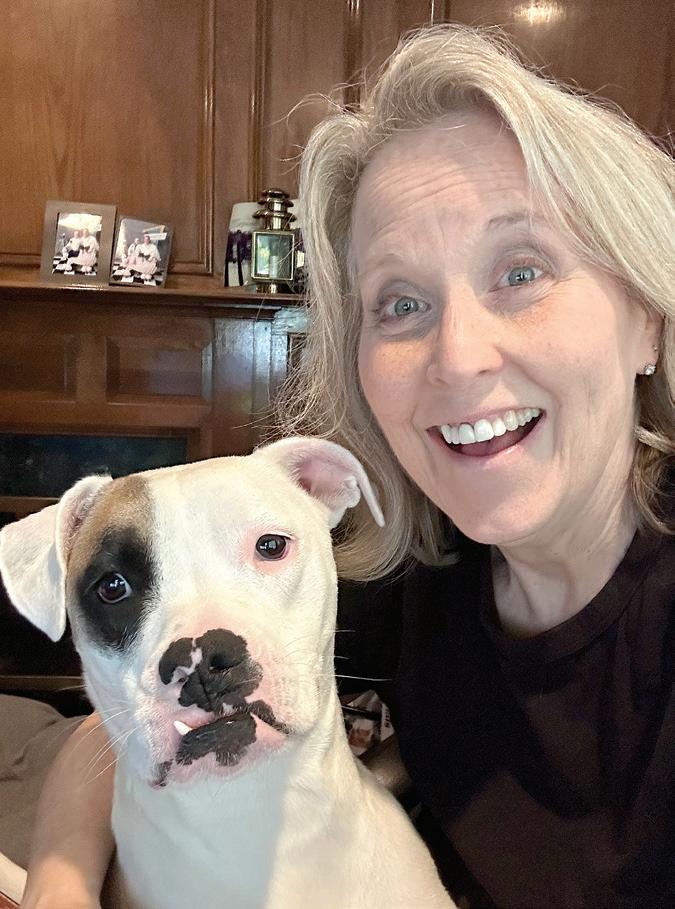
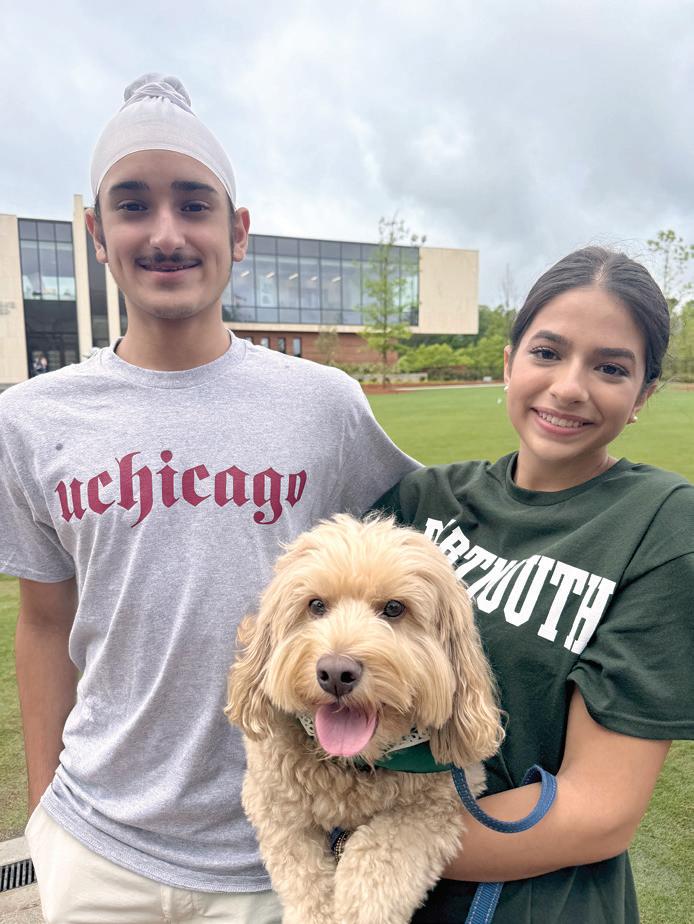
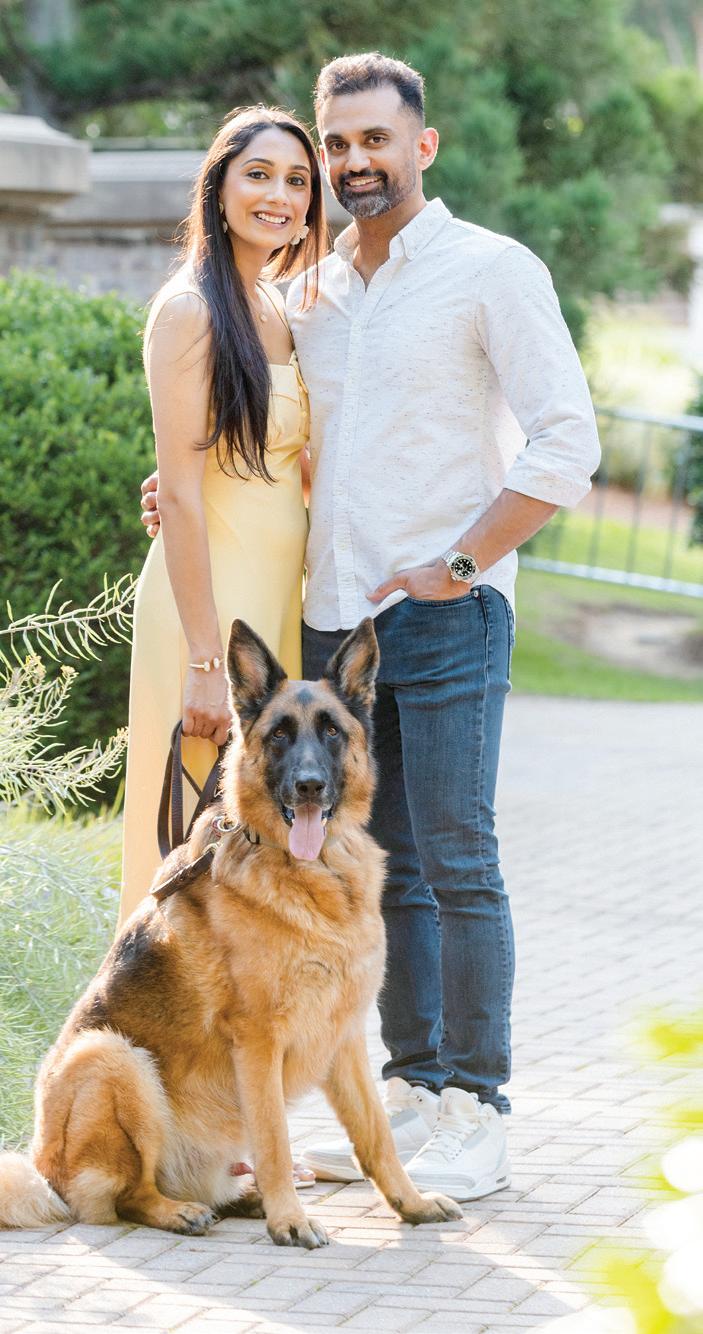
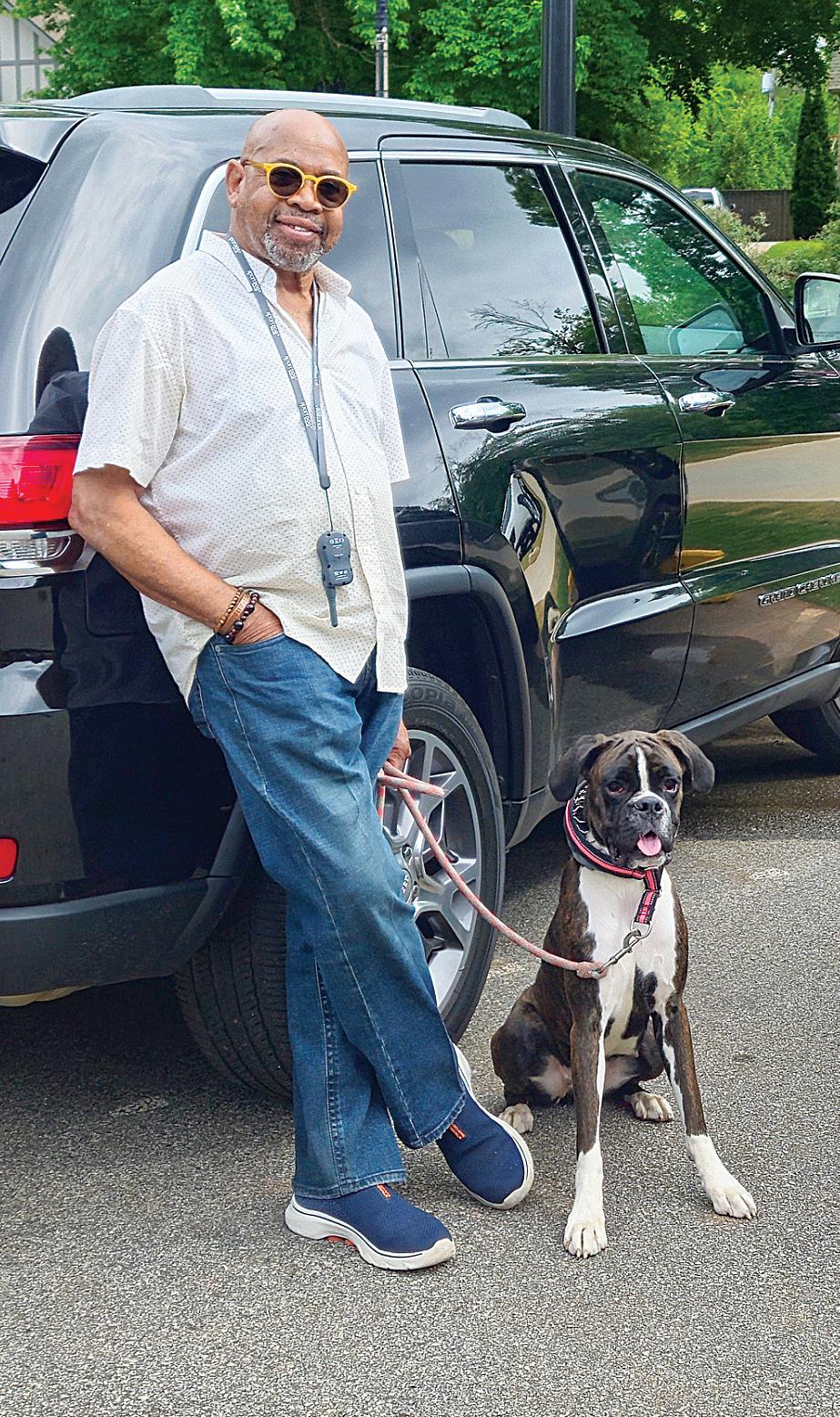
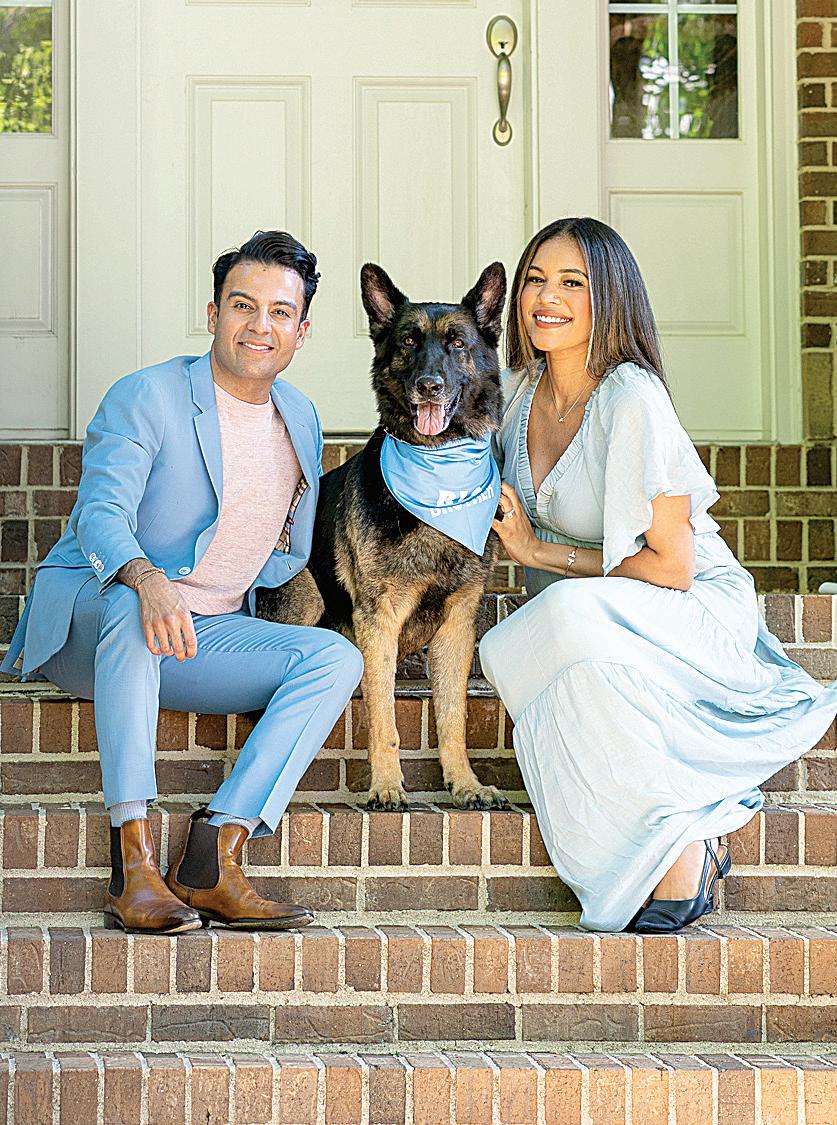
We put out the call for photos of you with your beloved furry friends and you answered us! Our annual “Pets & Their People” issue is one of our favorites to assemble as it gives us a great opportunity to showcase our readers and their BFFs.
Enjoy! – Cathy Cobbs, Managing Editor
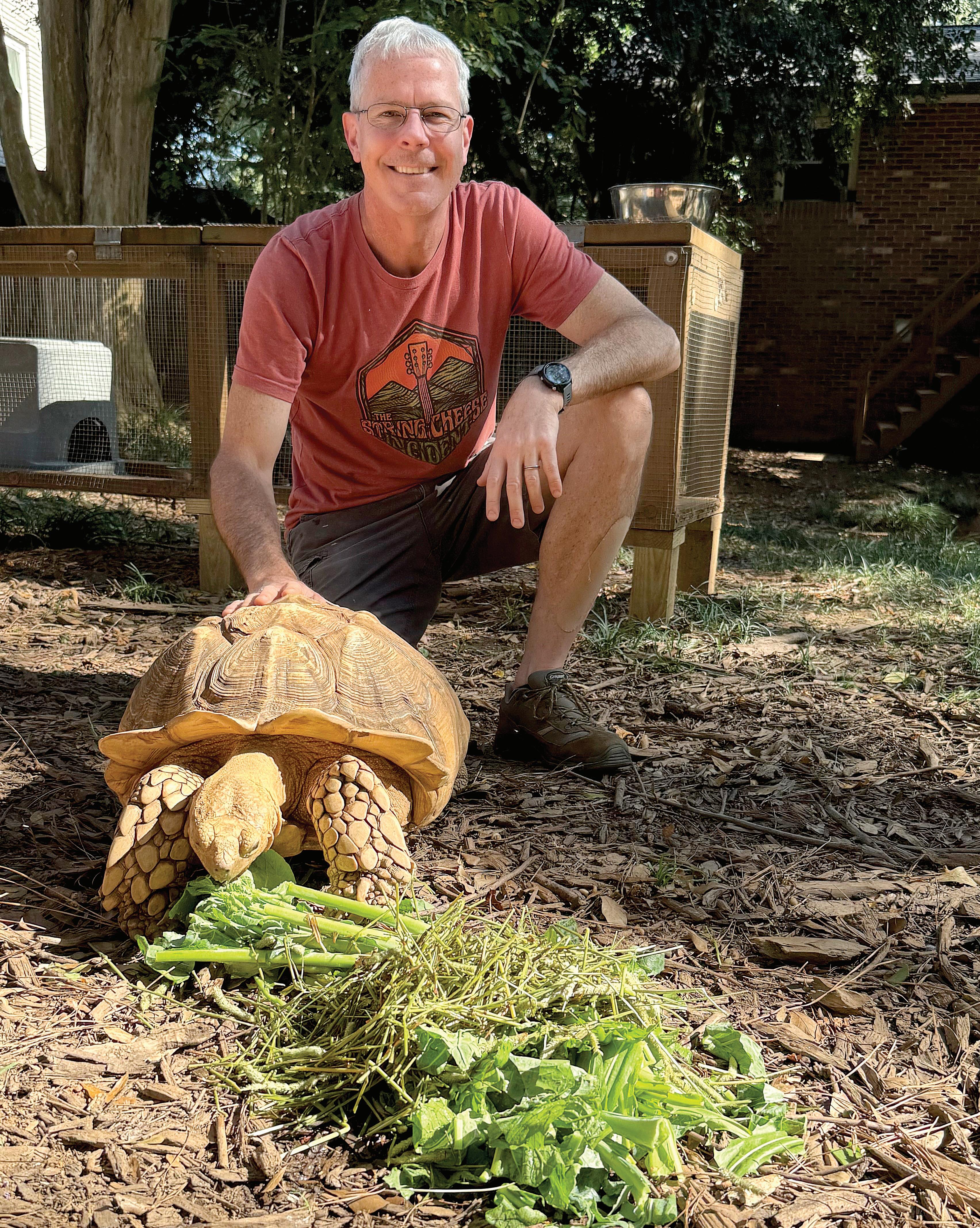
Jim Nark with his tortoise, Attila.
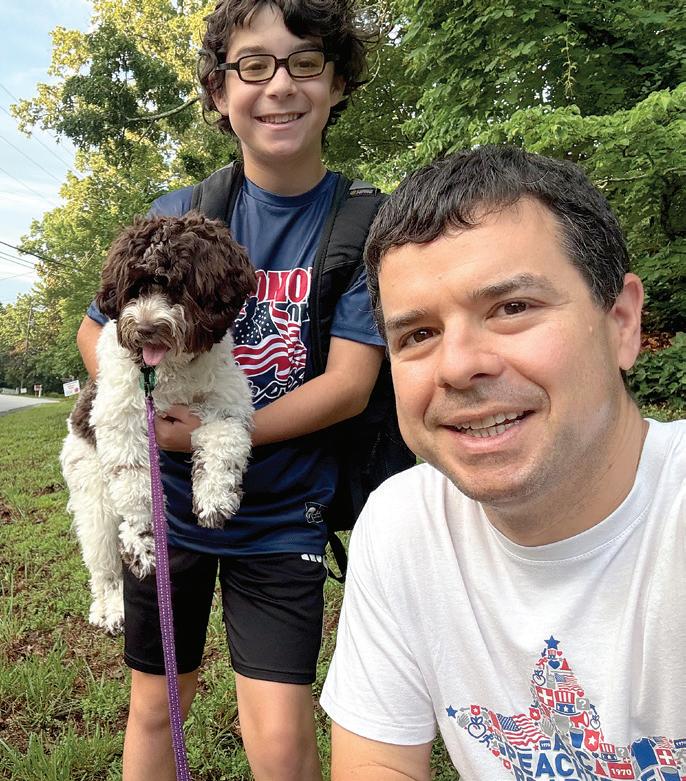
David and Micah Ziskin and Hazel
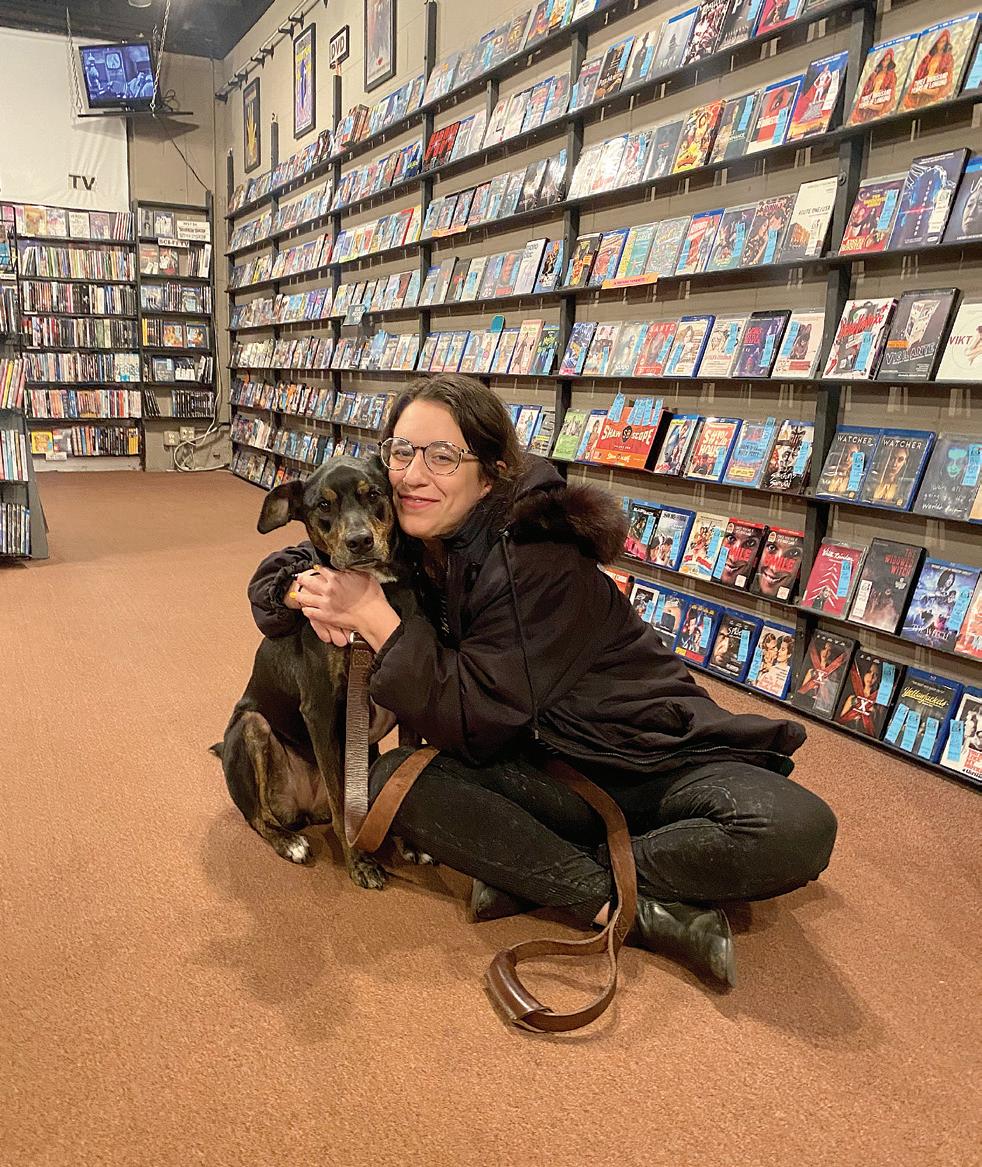
Brooke Sonenreich and Kiki
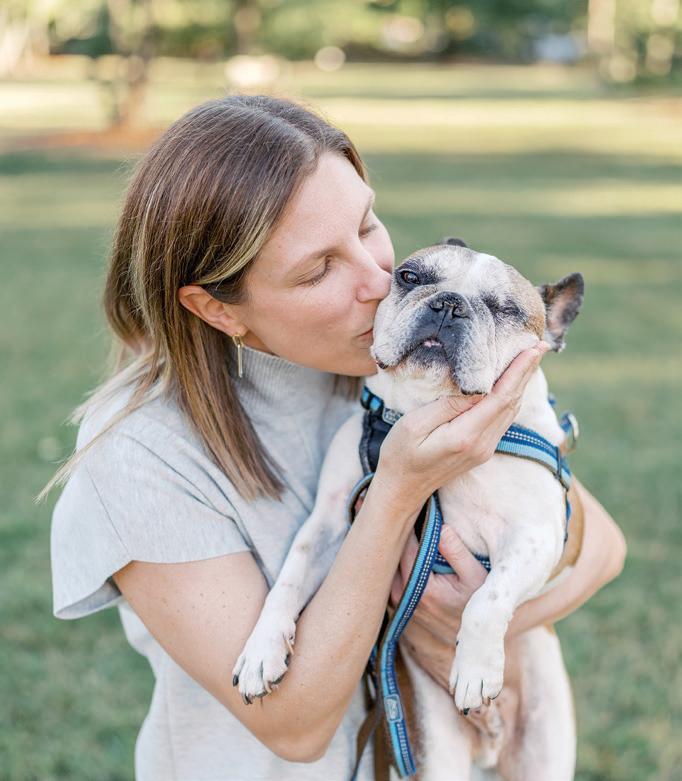
Sarah Gedert and French Bulldog Oscar
Kristie Madara and Sasha
Adalyn Kline and Lola
Coby and Rex Torres with Maisie
Curt Morey and Diana
Sam Haskell and Sutton
Susan Miller and Frankie
Eric Wallens and Oubie
Wisteria Grace Brady with Figgy and Jam
Theo Di’Natale and Luna
Mary Paguaga and Zucca
Dana Rifkin and Poppy
Heather Friedman and Mia
Veer and Saachi Singh and Hudson
Kheva Desai and Neil Patel with Leo
Sam Johnson and Josie
Melissa Haghighat and Ax
Faizan and Kayla Moosa and Maximus
Olympic cauldron to leave Summerhill, sparking backlash
By Logan C. Ritchie
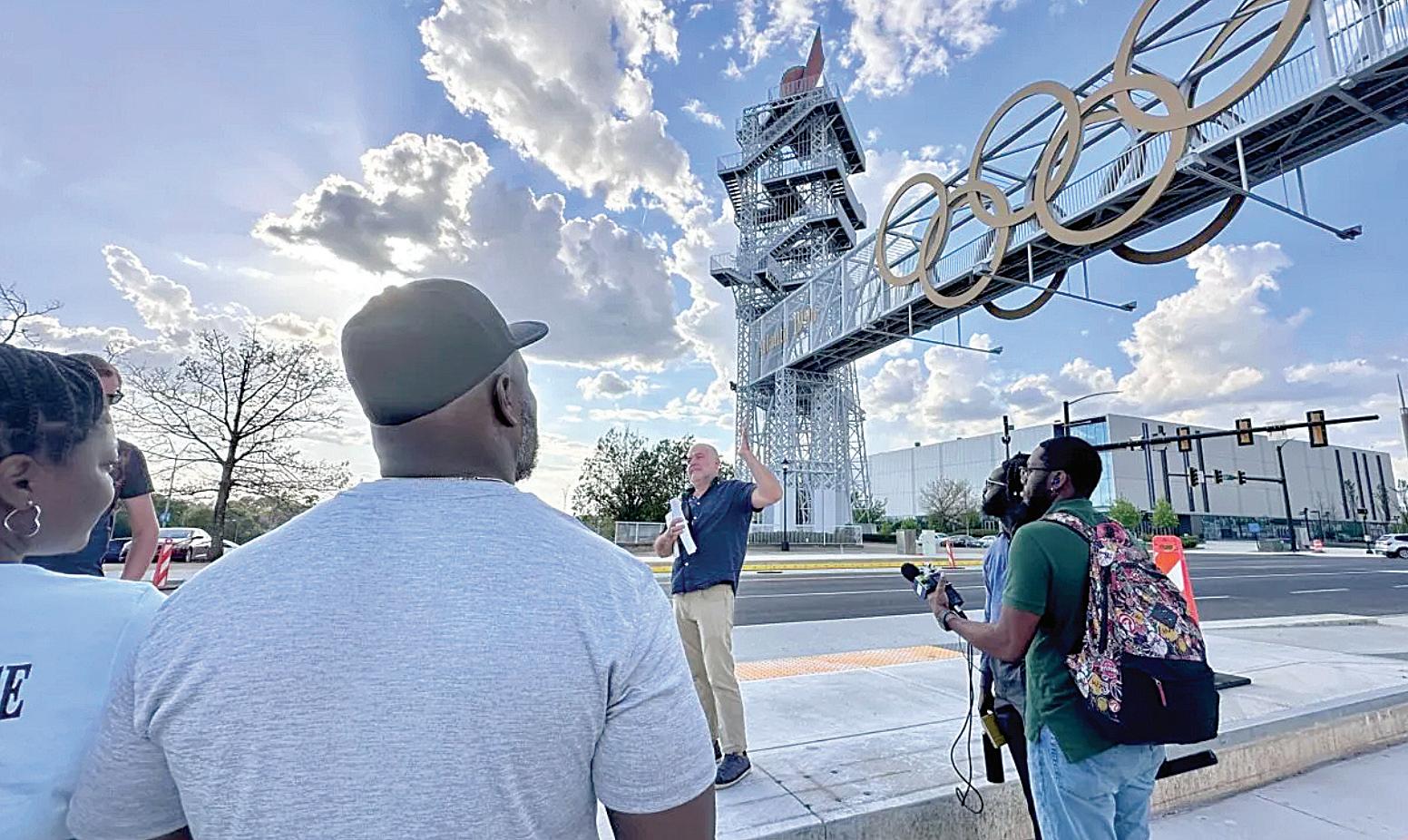
Georgia State University announced it will move the Olympic flame cauldron from the Summerhill neighborhood, where it has been located since Atlanta hosted the 1996 Olympic Games, to Centennial Olympic Park in Downtown.
The 120-foot Olympic Flame Tower, cauldron, and rings became not only a reminder of the Olympic Games but also a symbol of pride, resilience, and part of the area’s branding. While the cauldron will find a new home in Centennial Olympic Park, the tower structure and bridge will remain over Hank Aaron Drive.
For two years, Summerhill leaders have been asking for the cauldron to be restored and remain in place, stating in a letter to GSU that they thought their opposition had been registered – until Thursday’s announcement.
The letter was signed by John Helton, president of Organized Neighbors of Summerhill; Cheron Pitchford, executive director of Summerhill Neighborhood Development Corp; State Rep. Phil Olaleye, a Summerhill resident; and Atlanta City Council member Jason Winston.
“Our position was, and remains, that preserving and showcasing its legacy does not require taking it from the community that has sat in the shadow of its tower for 30 years,” the letter states.
Summerhill was the first neighborhood established by formerly enslaved people after emancipation, playing a foundational role in Atlanta’s history. Later home to Jews, Greeks and African Americans, Summerhill thrived in the early 1900s.
When the neighborhood was redeveloped in preparation for the 1996 Olympic Games, tens of thousands of residents were displaced, businesses and institutions closed and “community ties were broken in service of an event that brought worldwide recognition and charted an upward trajectory for our city,” the letter states.
Olaleye, a Summerhill resident, posted on social media: “People should never come second in their own city,” suggesting the process be paused to give residents a seat at the table.
“Through hard-fought and overdue revitalization in the past 10 years, the torch has become the manifestation of Summerhill’s revitalized identity,” the letter states. “Historic neighborhoods deserve a meaningful voice in decisions that shape
their identity, preserve their history, and define their future. Our fervent request remains that the Olympic torch stay where history placed it—in Summerhill.”
Georgia State University President M. Brian Blake said the project reflects both preservation and progress.
“Georgia State is honored to help preserve and advance Atlanta’s Olympic legacy. The story of the Olympic Flame Tower is also the story of Summerhill and Georgia State’s evolution. We are committed to celebrating the history
that shaped Atlanta while creating new opportunities for students, residents and visitors,” Blake said.
A GSU representative said the university does not have a response to the letter.
On June 15, the Atlanta City Council passed a resolution to keep the cauldron in the Summerhill community, and that any action to relocate include transparent community engagement.
Brennan Collins of GSU gives a tour of Summerhill in March 2026 at the foot of the Olympic Flame Tower. (Photo by Logan C. Ritchie)
Council approves Neighborhood Reinvestment Initiative
By Logan C. Ritchie
Atlanta City Council members approved the Neighborhood Reinvestment Initiative, a public-private collaboration to address underserved neighborhoods, in a 13-2 vote – but there’s a catch.
The NRI will go into effect when and if Atlanta Public Schools or the Fulton County Commission gives Mayor Andre Dickens the green light to take out bonds.
Tax allocation districts (TADs) are defined areas, whether a commercial center like the Beltline or a neighborhood like South Downtown. Property tax is reinvested into infrastructure, development projects, and redevelopment rather than schools.
Open for a defined amount of time, TADs are meant to provide a windfall for schools when they are complete. When Atlantic Station’s TAD closed in 2024, the school system saw about a $16 million boost, closing the budget gap. School board Vice Chair Ken Zeff voted against the 30-year TAD extension in March, claiming that extending the Beltline TAD would cost APS approximately $80 million annually.
The NRI will be funded by TADs through Invest Atlanta, the official economic development authority for the City of Atlanta.
Why is the NRI controversial?
At budget review meetings in May and June, public commenters questioned the validity of the NRI’s goal to end generational poverty, combat displacement, and create equitable neighborhoods.
Rohit Malhotra, a civic leader and policy expert, said there’s “a deep and concerning culture of performative hypocrisy in Atlanta.” He said TADs are “specifically designed to raise property taxes, a tool that has historically created displacement for so many families.”
“There is no evidence, there is no research, there is no data that says that this tool solves inequality. In fact, data shows the opposite,” Malhotra said. “The truth is that the entity that will be hit hardest by this is our Atlanta Public School system.”
Royce Mann, an APS graduate, agreed.
“If we move forward with this plan without APS, who pays 50% of the funds, the goals will not be achievable. And if we move forward with this plan with APS, then APS’s goals of achieving universal pre-K [and] expanding college and careerbased education will be unachievable,” Mann said.
Community advocate Rodney Mullins said the NRI will be “a nail in the coffin” of many communities because residents haven’t read the legislation.
Council members Liliana Bakhtiari and Kelsea Bond voted against the NRI. Bond said there are areas across the city in dire need of funding, not just those inside a TAD.
“I do not believe that [TADs are] capable of repairing these historic and very, very real inequalities that exist in the city of Atlanta,” Bond said. “I wish that the time had been taken to actually deliberate and use research and data to determine what that mechanism is, but this is not it.”
Council member Antonio Lewis, who voted in favor of TADs, said the proposal includes changes made by conversations held with colleagues and constituents.
“This proposal moves us closer to addressing the longstanding issues and disparities in our city,” Lewis said. “It creates an opportunity to bring critical infrastructures to the heart of Atlanta and to the people that need it most, and it will close those gaps that have existed for generations.”
What’s next for the NRI?
A new TAD Investment Review Committee will review agreements, assess community benefits, and issue a report to the Atlanta School Board by Oct. 1.
Changes made to the original plan include adding an anti-displacement clause and allowing the Beltline and
Perry Bolton TADs to expire in 2031 and 2041. Westside, Eastside, Campbellton Road, Hollowell-Martin Luther King Jr., Metropolitan Parkway and Stadium TADs will be extended another 30 years.
“Many people came and spoke during public comment today, hoping and praying that this initiative will not continue to displace Atlanta residents, and that is exactly what I’m afraid of,” Bond said. “Decades of TADs have failed because of loose guard rails or no guardrails at all because they lacked specific and clear goals. What we are voting on today does not contain redevelopment plans. It does not contain clear project lists.”
Bond plans to focus on accountability, ensuring the TADs are benefitting Atlanta residents – not developers, real estate companies and corporations.
“I hope that I’m wrong about what this legislation will do,” Bond said.
Council member Michael Julian Bond had the last word before the vote.
“This is just as important as the World Cup, just as important as the Olympics, just as important as every other major initiative that the City of Atlanta has ever enacted, going all the way back to Mayor Hartsfield buying a racetrack and turning it into an airport,” Michael Julian Bond said.
MILLION-DOLLAR MARKETING
Atlanta’s dirty rain problem SUSTAINABILITY
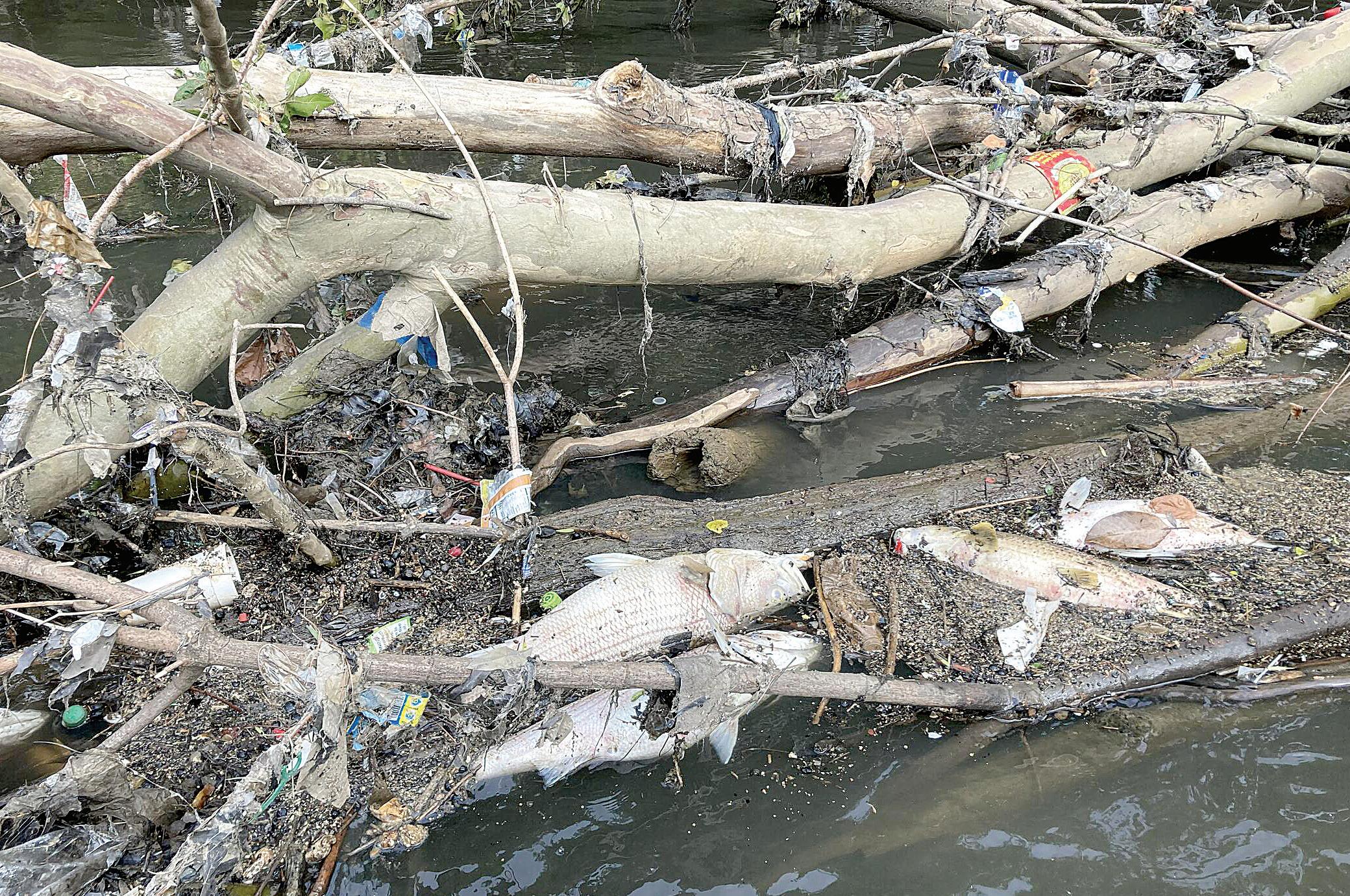
Nearly 20 miles downstream from Atlanta, the water in the Chattahoochee River was strangely dark and mustysmelling when Chattahoochee Riverkeeper’s Jason Ulseth launched his boat at dawn in late May.
Then, he saw the fish.
ABOVE THE WATER LINE
Thousands of them of every size, all dead and dying. As he motored upstream in the growing light, Jason could see that the river’s banks were coated with thick, black mud, releasing a foul odor, as flotillas of dead fish drifted downriver in the current.
Immediately, Jason knew there had been a disaster upstream, likely an overflow from the City of Atlanta’s sewage and stormwater management facilities. The black muck on the shoreline was decomposing organic matter in oxygen-depleted (hypoxic) water. Without enough oxygen in the river, the fish and other species had suffocated. It was a heartbreaking catastrophe.
Thirty-six hours earlier, a sudden, torrential rainstorm had hit Atlanta in the midst of a severe drought, flooding the 14 lanes of the city's Downtown Connector. An inch and a half of rain fell in just thirty minutes during the extreme event, followed by several more inches.
Describing the storm and its impacts in Forbes, Dr. Marshall Shepherd, a leading expert in weather and climate, noted: "Intense rainfall and impervious surfaces are a recipe for urban flash floods. Now consider a stormwater removal system [gutters, drainage inlets, pipes, and culverts] that may be impeded by blockages or engineering assumptions for last century’s rainstorms.”
Clear Water to a Black River
Jason reported the situation to state emergency responders, and then contacted Atlanta's Watershed Commissioner Greg Eyerly. Within an hour, the commissioner arrived at the river to meet the Chattahoochee Riverkeeper (CRK) team. With monitoring equipment onboard, they continued upstream in the black water to the confluence of Peachtree Creek and the river.
A week before, the river had been extremely low and clear when CRK took a group of college students to observe this section of the Chattahoochee, where the city withdraws its drinking water and, a short distance downstream, discharges treated wastewater and treated stormwater after rain events.
Dirty
A few hundred yards up Peachtree Creek, there is an emergency spillway for the West CSO (combined sewer overflow) tunnel: a massive storage chamber designed to hold and eventually treat as many as 177 million gallons of combined stormwater and sewage during large rain events. The vast majority of this volume consists of stormwater that has flowed across pavement and rooftops, picking up contaminants and heat in warmer seasons. In May, these hard surfaces were scorching-hot from weeks of drought and high temperatures. Heated water (thermal pollution) reduces dissolved oxygen in a river, increasing biological stress for fish and other species.
Jason suspected that the West CSO facility had experienced problems during the high-intensity, isolated storm on May 20. He was correct. An overflow had taken place for the second time in the 18 years since the stormwater infrastructure – a component of the consent decree that settled CRK’s lawsuit against the city in the 1990s – was completed. The other overflow occurred in 2009, when historic flash floods virtually paralyzed the city for days.
What triggered this recent catastrophe? The city, state and federal environmental agencies, and CRK are actively pursuing answers to this question. An independent engineering firm has been hired by Commissioner Eyerly to conduct an evaluation and make recommendations.
The situation appears to have been a convergence of multiple negative factors; in other words, a perfect storm.
A Perfect Storm
Those negative factors include a climate-influenced drought, urbanization, an inadequate and aging stormwater system, and infrastructure deficiencies caused by poor maintenance and minimal investment.
Beginning last fall, the severe drought in the Atlanta region sucked moisture out of the ground and hardened the soil, causing rain to run off immediately instead of seeping into the ground. Also, the drought-impacted Chattahoochee was extremely low at Peachtree Creek and the water was hot. Aquatic species were likely struggling to consume enough dissolved oxygen. Longer, more intense droughts are a sign of a changing climate, as are unpredictable, intense, and localized downpours.
Flooding and polluted stormwater have increasingly plagued the city of Atlanta. Its poorly maintained and undersized stormwater system includes 900 miles of storm pipes and other components, most designed for the type of storms that occurred fifty years ago. Planning and engineering must consider the weather and climate of the present with the future in mind — not the past.
Finally, the West CSO tunnel did not function as designed. According to the city, the tunnel was not draining properly prior to the deluge. When the downpour
occurred, it was already holding too much water and debris, thereby reducing its capacity to contain the storm’s runoff. The consent decree requires an annual cleaning of the tunnel; however, it appears that maintenance has not occurred in the past year. Other operation and maintenance issues likely contributed, as have staff turnover across the years and poor oversight by overburdened and/or inexperienced managers.
Stormwater Utility Needed
More than 40 other local governments in metro Atlanta raise funds to manage rain runoff and flooding to protect public health, safety, and welfare through a dedicated fee system called a stormwater utility: a mechanism used successfully in thousands of cities since the 1970s. While Atlanta officials have invested in some notable stormwater control projects, they have kicked the utility creation can down the road for decades, while professing to be “studying” the measure. It’s past time to demand leadership and action from Mayor Dickens and the Atlanta City Council.
On the Chattahoochee, weeks after the storm, CRK’s water monitoring shows that the river is slowly healing itself from the man-made catastrophe. Fish and other creatures are beginning to move into the 20-mile section that became septic during the May deluge. It will take time – who knows how long – for this part of the river to return to its previous abundance.
Sally Bethea
Stormwater and Sewage
The May 20, 2026 extreme weather event overwhelmed the City of Atlanta’s wastewater and stormwater infrastructure, which led to a fish kill in the Chattahoochee River. (Photo courtesy Chattahoochee Riverkeeper)
By Logan C. Ritchie
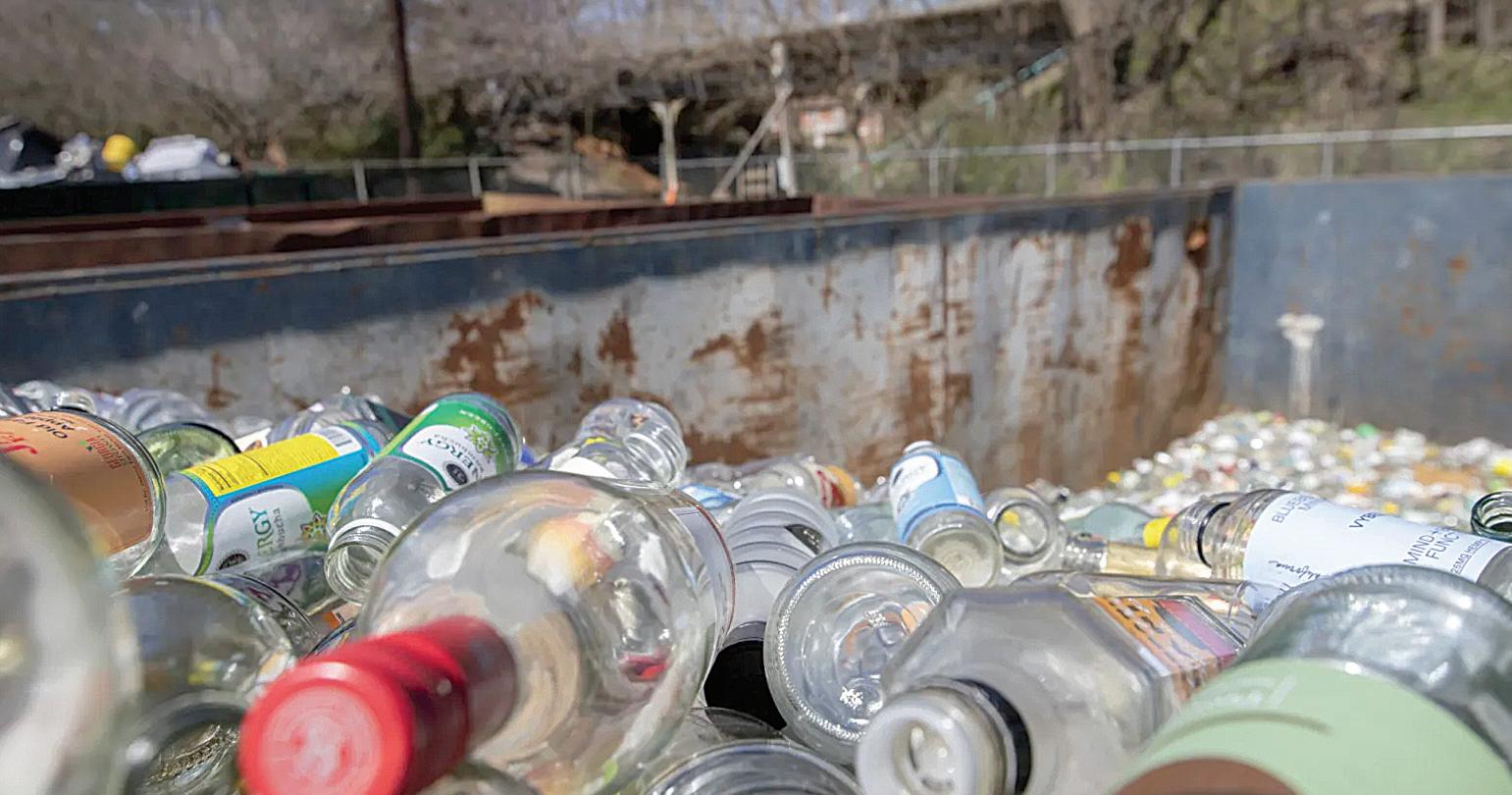
The Center for Hard to Recycle Materials Atlanta (CHaRM) announced it will relocate after 11 years in Chosewood Park, moving to Bankhead by the end of 2026.
With locations in Fulton and DeKalb County, CHaRM handles the recycling of styrofoam, household chemicals and paint, appliances, electronics and a wide range of plastics that cannot be processed through city recycling.
CHaRM is currently subleasing the four-acre property at 1110 Hill Street, owned by Atlanta Housing, from the City of Atlanta. When the lease expires this year, the recycling center will relocate to the Bowen Homes redevelopment site in northwest Atlanta – another Atlanta Housing property.
The Bowen Homes redevelopment, which received a $40 million federal grant in 2023 and broke ground in 2025, is set to become mixed-income housing, parks, community spaces and integrated trails.
Peggy Whitlow Ratcliffe, founder and executive director of Live Thrive, said she never expected to have the opportunity to remain in one location for more than a decade.
“Remaining in the same location for 11 years was truly a gift. During that time, we built a wonderful and supportive community around our mission. Together, we helped thousands of residents and businesses responsibly recycle materials that would otherwise end up in Atlanta’s landfills and waterways, and we are proud of the impact we have made,” Ratcliffe said.
Ratcliffe said CHaRM will remain focused on supporting the community as it transitions to the next chapter.
The reason for CHaRM’s move remains in the minds of Atlantans. David Mitchell of the Atlanta Preservation Center said Chosewood Park has been the fastest-growing park and neighborhood in the City of Atlanta, keeping real estate desirable. Still, people need a place to drop
off items they no longer need or cannot use.
“The promise of increasing facilities and opportunity is great, and while historic preservation is anchored to concepts of singular, old buildings, preserving our society also has a value,” Mitchell said.
Mitchell said Atlanta Housing, the Beltline, and the City of Atlanta and the neighborhood should want to keep CHaRM on Hill Street.
“If we’re already struggling with economic return on recycling, moving CHaRM to a location further away from your current client base doesn’t seem to be the way to promote it,” said Mitchell.
Georgia Tech environmental scientist Iman Maxberry said the university’s Zero Waste 2050 goal is supported by programs like CHaRM. His department, the Office of Solid Waste and Recycling, is dropping styrofoam and plastics at CHaRM weekly.
“From an environmental standpoint, and as an Atlanta native, the city’s infrastructure has a ways to go to be able to recycle items outside of plastic and aluminum, which is why CHaRM has been so pivotal,” Maxberry said.
CHaRM Atlanta has welcomed more than 500,000 visitors, 250 school groups and 500 corporate and civic groups. Since 2021, Live Thrive’s Corporate + Community Challenge has collected more than 600,000 pounds for proper reuse and recycling. Last month alone, both locations reached maximum visitor capacity on Saturdays – a reflection of the increasing demand for services, a CHaRM spokesperson said.
“CHaRM is an invaluable asset to congregations and individuals working to reduce waste because they accept such a wide range of hard-to-recycle materials. We’re excited that Live Thrive is expanding its facilities, and we hope their move will help even more communities sustainably part with these materials,” Hannah Shultz, program director at Georgia Interfaith Power and Light (GIPL), said.
CHaRM recycling center (File)
ARTS & ENTERTAINMENT
By Laura Scholz
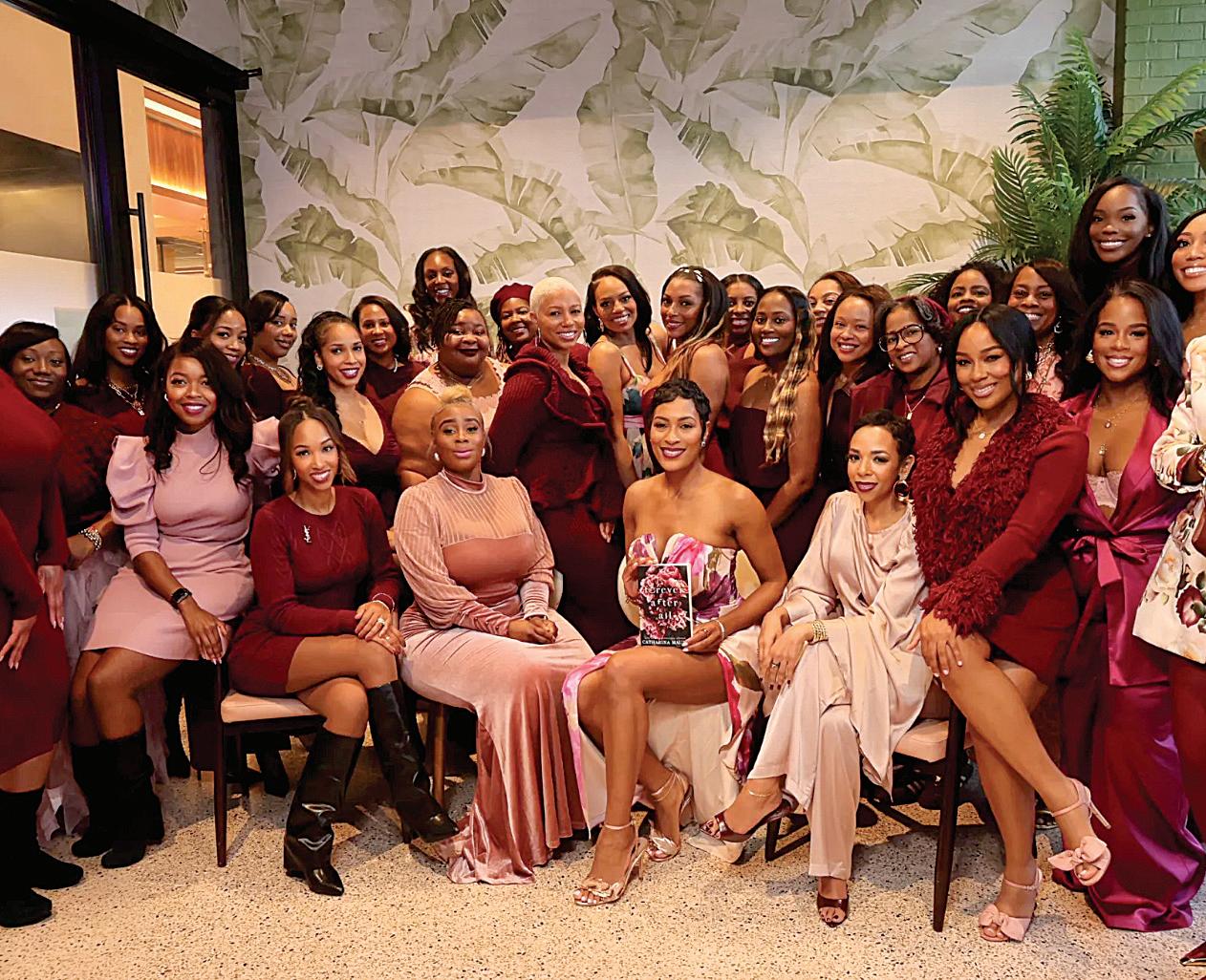
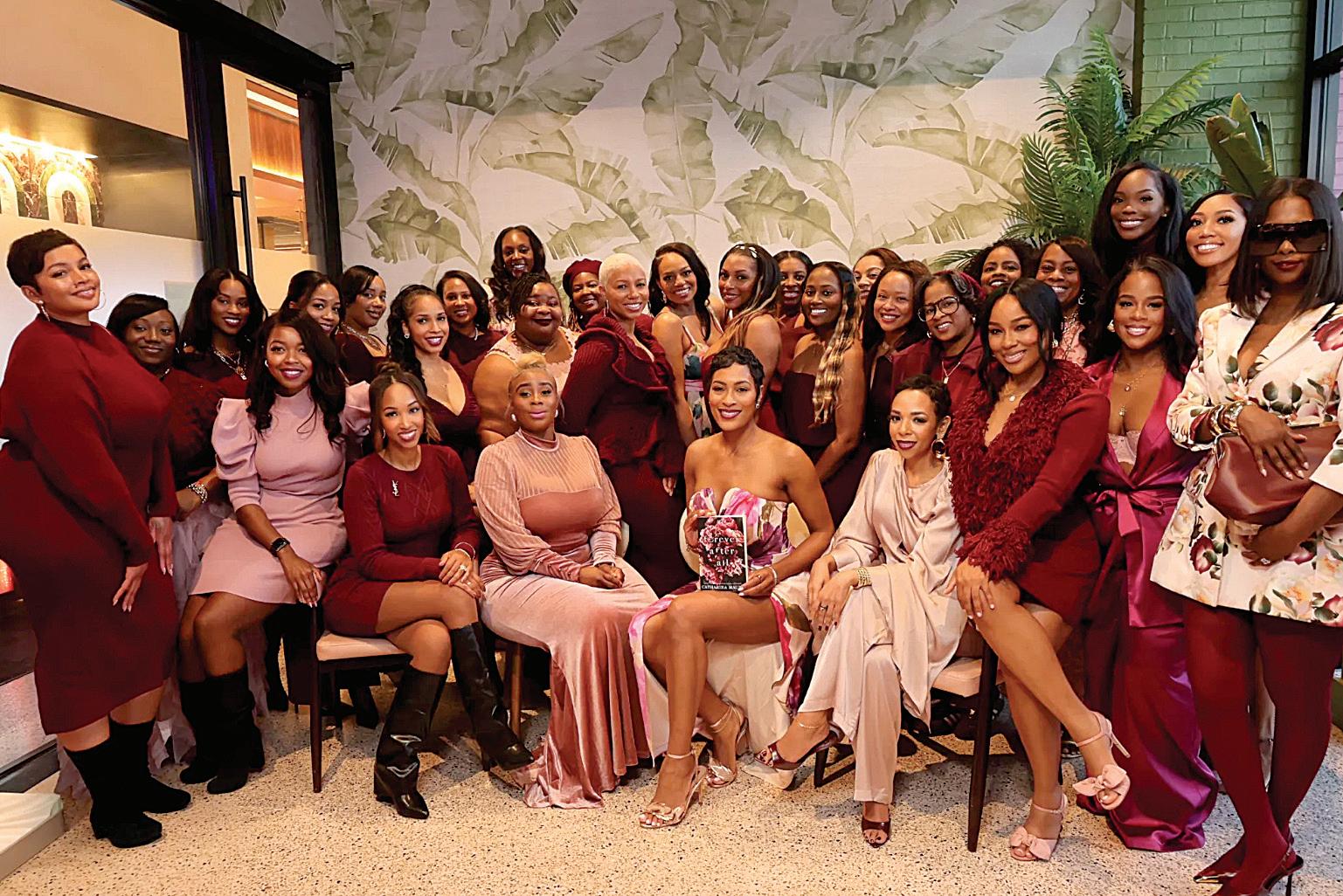
In 2016, marketing executive Brittney Young hosted a small group of friends
at her Atlanta home to discuss Liane Moriarty’s novel, “The Husband’s Secret.” That intimate gathering was the first official meeting of Books & Bordeaux, a
book club for Black women that now includes over 100 members. They meet monthly at elaborately planned events with playlists, food and wine pairings, and outfits inspired by each book they’re reading.
While book clubs have roots in 18th-century salons and reading circles, modernday book groups like Books & Bordeaux represent a new generation of readers, like Millennials and Gen Z, who seek to replace solo doomscrolling with intentional, communityfocused events.
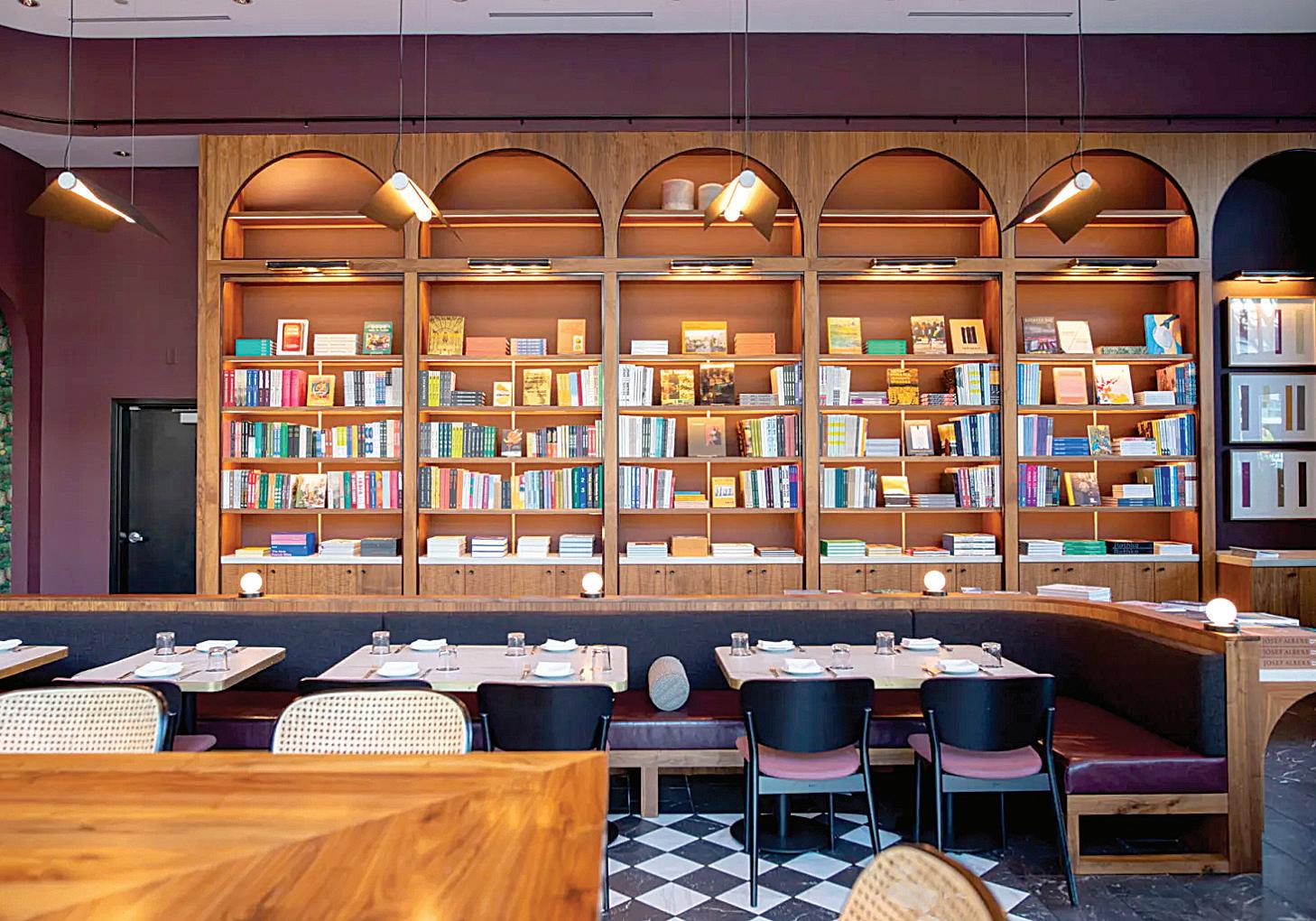
“Book clubs offer both tangibility and connection, which are two things that seem to be increasingly threatened by today’s digital world,” said Katie Barringer, co-owner of Lucian Books & Wine in Buckhead and forthcoming Sargent in Old Fourth Ward.
Barringer and the team at Lucian recently launched Bouquinistes, a monthly book club named for the iconic Parisian booksellers who line a three-mile stretch of the Seine River. Each month, Bouquinistes members receive two newly published art and design books. The June selection features a catalog of a National Portrait Gallery exhibition of work by Lucian Freud, the Buckhead restaurant’s namesake.
Eventually, Barringer hopes to host book pick-up parties at Sargent for members to discuss the latest selections, similar to previous “Books and Bubbles” events.
Real-world connections
Real-world connections are also key to the success of Books & Bordeaux. At the club’s recent gathering for a discussion of “These Heathens,” members arrived at Mary Mac’s Tea Room in Atlanta donned big hats to pay homage to Black church culture. Then they sat down to a fellowshipstyle dinner of fried chicken, collard greens, and peach cobbler before discussing the book.
“In a world where so much of our communication happens online, many people are looking for opportunities to gather in person and build meaningful relationships,” said Books & Bordeaux cofounder J. Denelle Robinson.
That’s exactly why avid reader and healthcare product developer Katie Roan has become a regular at Atlanta gatherings of the Silent Book Club. Hosted in coffee shops, breweries, and other community spaces, these events include an hour of independent reading, followed by optional social time and book discussion.
Roan, who reads over 100 books each year, said book clubs are a “low-pressure” way to connect with new people.
“I work from home, so it is also an opportunity to get out of my house and see people, since I don’t have an office setting,” she said.
Why now?
Since participating in Silent Book Club, Roan has become a regular at local independent bookstores like All the Tropes
A Books & Bordeaux event. (Photo by Joshua Ross)
The bookshop portion of Lucian in Buckhead. (File)
in Kirkwood and VaHi Books in VirginiaHighland. Like book clubs, independent bookstores are also on the rise. According to the American Booksellers Association, 422 new independent bookshops opened in 2025, a 31% increase from 2024.
In Atlanta, forthcoming Long Story Books recently launched a viral book vending machine near the main entrance of Krog Street Market, while longstanding bookshops like Decatur’s Little Shop of Stories are also experiencing a resurgence in book club participation for children and adults.
Diane Capriola, co-owner of Little Shop of Stories, said the store recently started a “Banned Books” club for teens and adults in response to increased book censorship.
“We are living in a time where people are craving real—not digital—connection and looking to escape into books and be in community with other readers,” said Capriola.
Metro Atlanta book clubs:
The Atlanta Book Club (IG @theatlantabookclub)
Atlanta Book Group (IG @atlbookgroup)
ATL Queer Book Club (IG atlqueerbookclub)
Books and Beans Book Club (IG @booksandbeansbookclub)
Books & Bordeaux (IG @booksandbordeaux)
Literary League (IG @literaryleague)
My Cousin’s Book Club (IG @mycousinsbookclub)
Noname Book Club (IG @nonamereads)
Silent Book Club Atlanta (IG @atlsilentbookclub)
Silent Book Club Decatur (IG @silentbookclubdecatur)
Little Shop of Stories (File)
Movie Review: Milly Alcock
By Sammie Purcell
In an interview with IndieWire, “Supergirl” – the second film after last year’s “Superman” in the relaunch of the DC Universe – director Craig Gillespie said that the tone of his less “Guardians of the Galaxy” and more Mad Max – “The Road Warrior,” to be specific.
But “Supergirl” is less “Road Warrior” than it is “Fury Road” – and less of an homage to that aesthetic than it is a total cribbing.
Despite a committed effort from star Milly Alcock, “Supergirl” is immensely derivative of other, better films in a way that’s impossible to ignore – not least of all because the movie insists on calling attention to that fact. But “Supergirl” also runs into issues that plague any superhero movie trying to aspire to harsh, complicated themes while still attempting to stay palatable enough to garner a PG13 rating. It’s an unenviable task, and “Supergirl” certainly has moments where it gets close to walking the line in a way that works. But a poorly balanced narrative and the inevitable comparisons the movie invites drag it down.
We briefly met Kara (Alcock) –AKA, Supergirl, Superman’s (David Corenswet) equally powerful cousin – in 2025’s “Superman,” but the beginning of
“Supergirl” catches us up on all we need to know. As Clark Kent is a bit of a square, Kara is a bit of a mess. As the film opens, an indie pop song plays while Kara rolls through an endless cycle of drinks and hangovers. She’s a bit of a problem child and would rather hang out with her dog Krypto and shoot back whiskeys than even think about saving the world.
But, maybe she’s a little more like Clark than she’d care to admit. When a group of thugs gang up on Rutheye (Eve Ridley), a 13-year-old girl looking for revenge on Krem of the Yellow Hills (Matthias Schoenaerts), the brigand who murdered her family, Kara immediately steps in to help. She draws the line, however, at accompanying Rutheye on her revenge trip – until, that is, Krem takes a shot at Krypto. An attack on her dog is something Kara cannot abide.
Part of what makes “Supergirl” a frustrating watch is that the idea of the type of superhero that Kara represents is one ripe for exploration, particularly in the way that Alcock captures the character’s rage – a far cry from Corenswet’s twinkling Midwestern charm in “Superman.”
“Supergirl” is not particularly funny (although it tries to be), but Alcock shines when she’s diving into Kara’s everdeepening anger.
Kara originally doesn’t want to go with
Rutheye, not because she doesn’t want to help her, but because she doesn’t want Rutheye to enact her revenge and feel forever changed by it – so, she ends up taking on the darker aspects of the journey on Rutheye’s behalf. Unlike Superman, she is not a beacon of goodness. She exists to protect others by taking on their pain so they don’t have to feel it.
This is a fascinating and dark concept for a superhero, particularly a female superhero as opposed to her male counterpart. But beyond one meaningful
moment at the film’s end, “Supergirl” often pulls its punches, and its poorlywrought structure makes it unclear what experience Kara has with revenge in the first place.
Read Sammie’s full review by scanning the QR code.
Milly Alcock in “Supergirl.” (Courtesy of Warner Bros. Pictures)
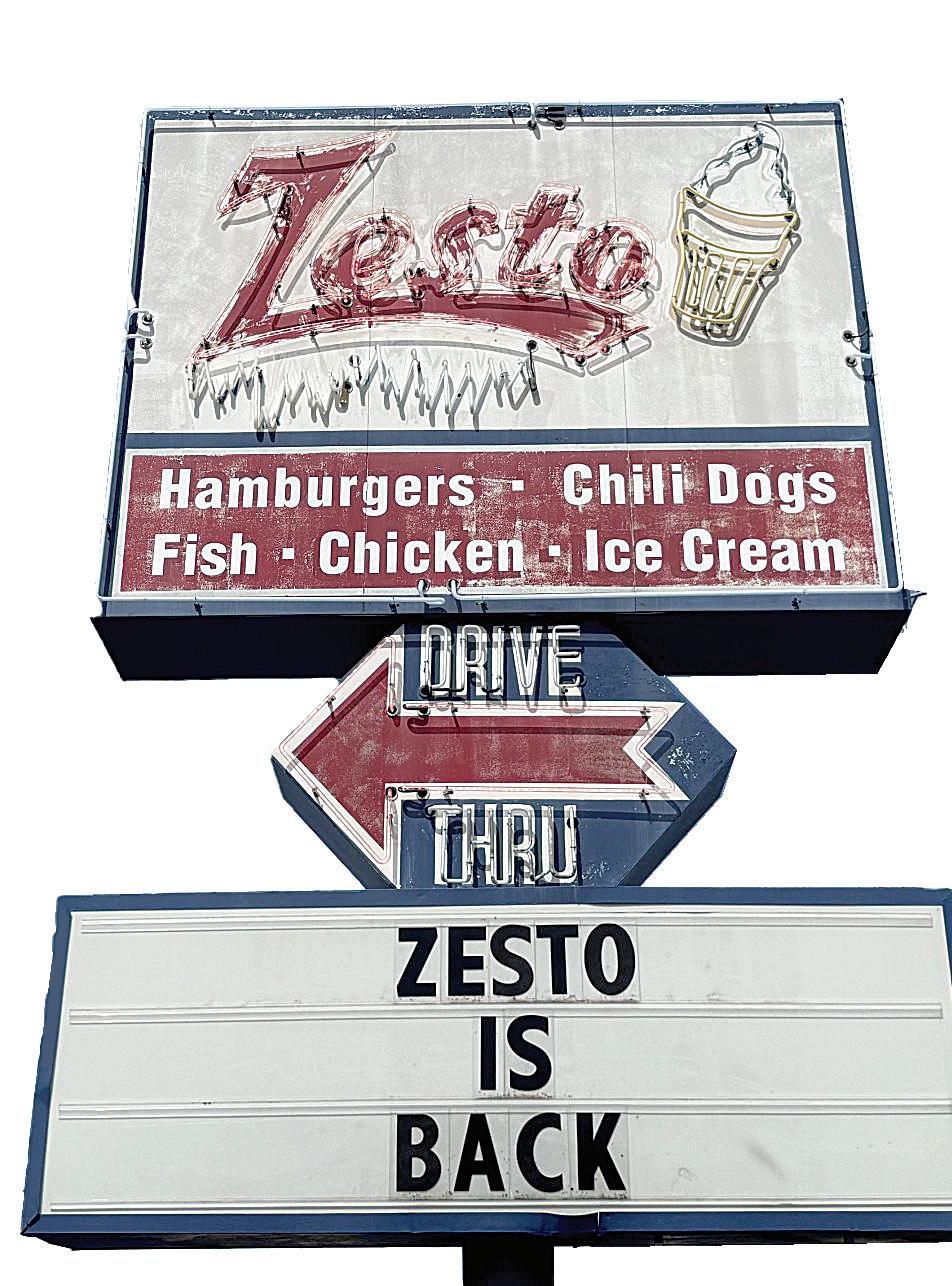
New generation positioning Zesto for an Atlanta comeback
By Hayden Sumlin
The Livaditis family has run Zesto Drive-In and Big John’s Christmas Trees for more than 77 years.
At its peak in the 1980s, Zesto had 10 locations across metro Atlanta. After multiple recessions and a global pandemic, however, only East Atlanta and Forest Park remain open under family control.
But a new generation of Livaditis family members have taken over Zesto in hopes of reviving the iconic Atlanta restaurant brand, betting on people’s nostalgia and cravings for its Chubby Deckers (double-stack burgers) and softserve ice cream.
Brothers beef up operations
Lucas and John Livaditis, the grandsons of Zesto founder “Big John,” took over operations earlier this spring from their parents, Jimbo and Leigh Ann.
“My brother and I were here for 80 hours a week the first two months,” Lucas Livaditis told Rough Draft. “That March was the biggest we’ve had in six years … and then April was the second biggest.”
Fifteen minutes before the Forest Park Zesto started taking orders on a recent Friday, Lucas said his older brother John was opening the East Atlanta Zesto and grabbing some inventory to bring south.
metro Atlanta to patronize their family business.
“At least once a day, someone comes in with their kids or grandchildren and says, ‘I’m bringing my kids because my grandparents brought me here when I was a kid,’” Livaditis said. “People come in here as a part of their family tradition. I’m shocked at how far people come from [to eat here].”
On the day of Lucas’ college graduation in 2021, his family learned that a tree had fallen on the Little Five Points Zesto. That location officially shuttered a few months later.
A little more than a year after that, his parents made the difficult decision to sell
The brothers do just about everything inside the retro fast-food joint: taking orders, filling inventory, training staff, and cleaning tables. If you go to a Zesto, there’s a Livaditis somewhere in the restaurant.
The Forest Park location is less than a 10-minute drive from Hartsfield-Jackson Atlanta International Airport. Lucas, vice president of strategy for Big John’s and Zesto, said people come from all over
the Buckhead Zesto property on Piedmont Road. The family had already closed a longtime location on Ponce de Leon Avenue, which is now Cook Out.
“Every single day, John and I talk about getting back to Ponce de Leon,” Livaditis said. “We were
there for 65 years. My dad designed that huge neon building … but they sold it in 2014 … I did work on the last day at Ponce, though, and I’ll never forget it.”
Working toward a century
The Livaditis brothers’ focus is now on perfecting operations, but they’re eyeing a return to the border of Atlanta’s Old Fourth Ward and Midtown. Their goal is straightforward: “restore Zesto to the Ponce glory.”
“Ponce was a genuinely productive store that was probably in the upper quartile of restaurant volumes in Atlanta,” Livaditis said. “Seventy-seven years is longer than I can fathom. We have to be worthy of that, keep earning return visits, and welcome new people.”
Despite the Forest Park location being in an industrial area, surrounding neighbors, churchgoers, and hungry drivers still peel into the drive-thru for a snack.
Livaditis said it’s no mystery why the family business has shuttered its locations in recent years, and that city planners across metro Atlanta probably don’t want to hear it.
“Little 5 and Piedmont didn’t have a drive-thru,” he said. “I don’t think it’s a coincidence that those are the ones that closed in the last five years. The ones that have them are still here.”
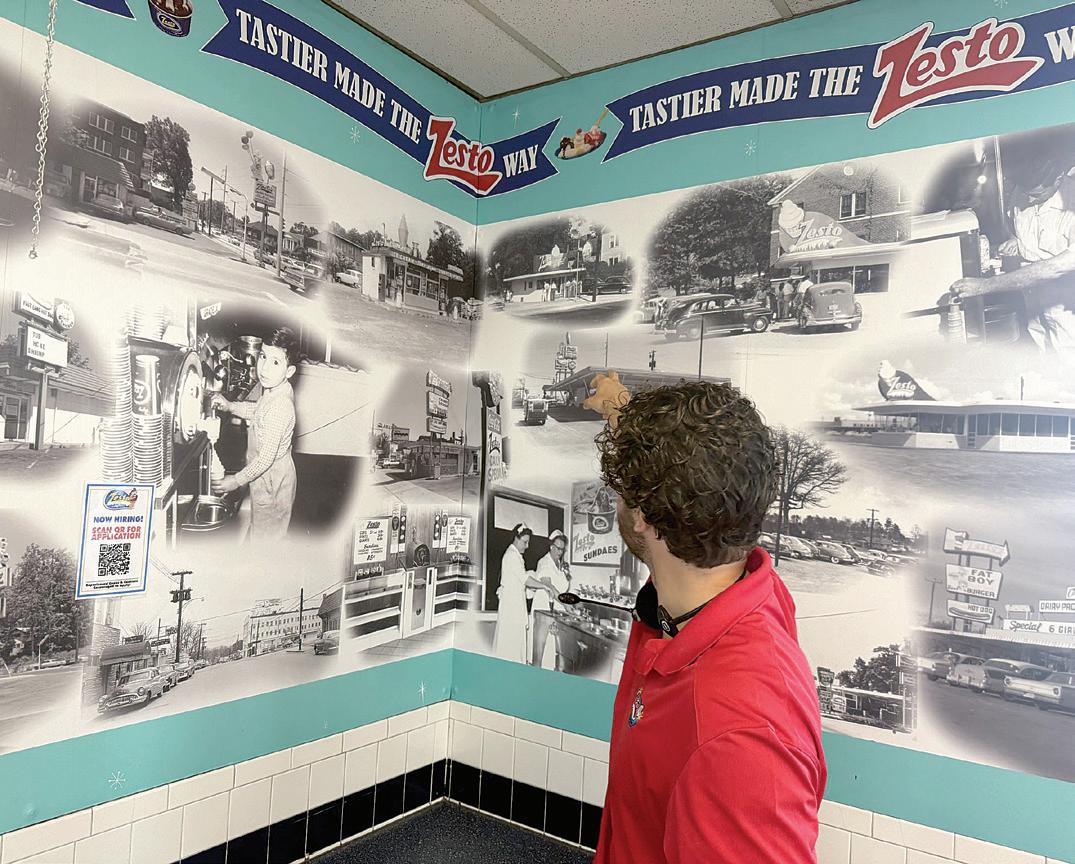
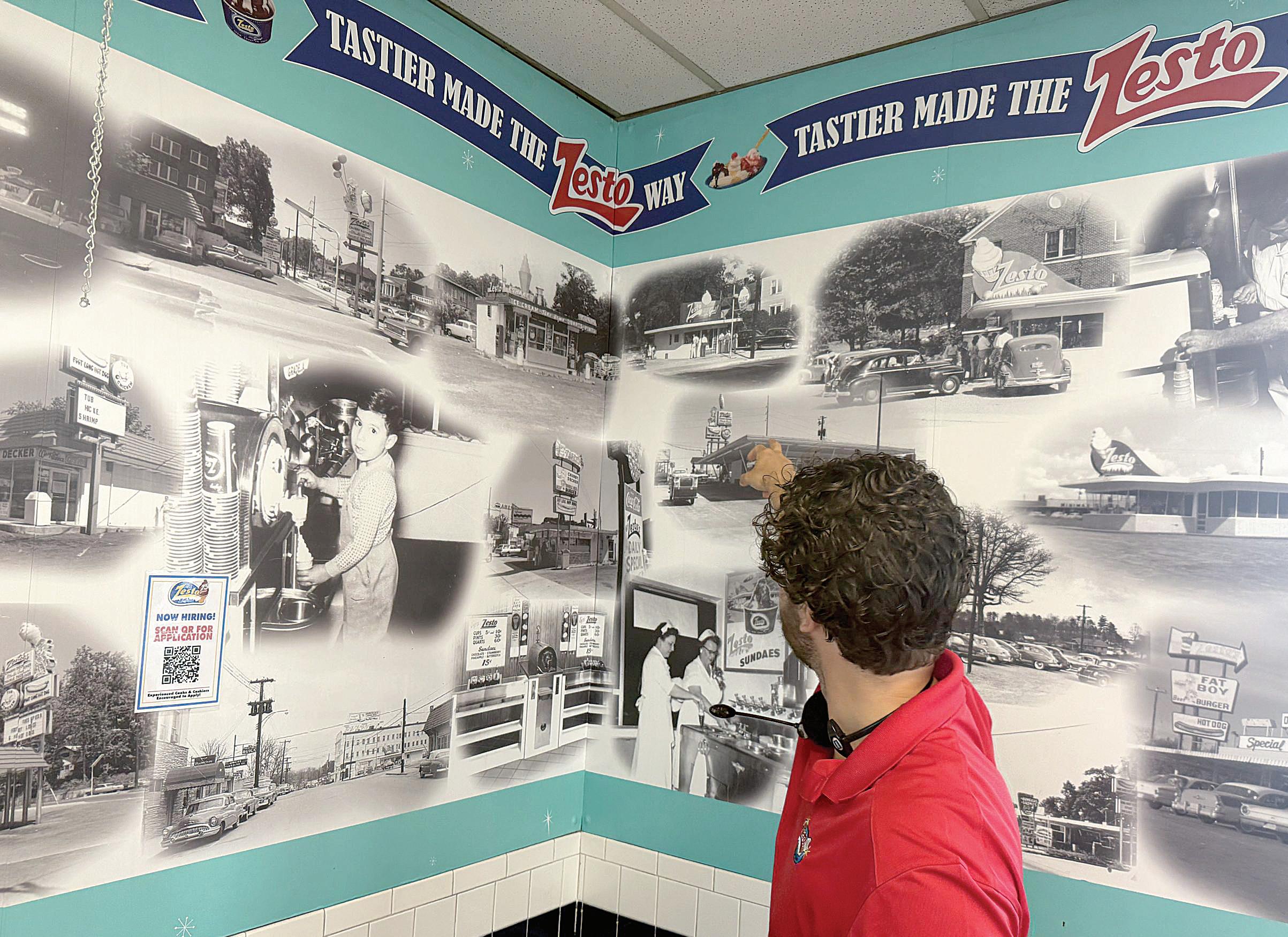
Zesto VP Lucas Livaditis points at Zesto ice cream shop vintage photo mural showing historic locations and staff from mid-20th century. (Photo by Hayden Sumlin)
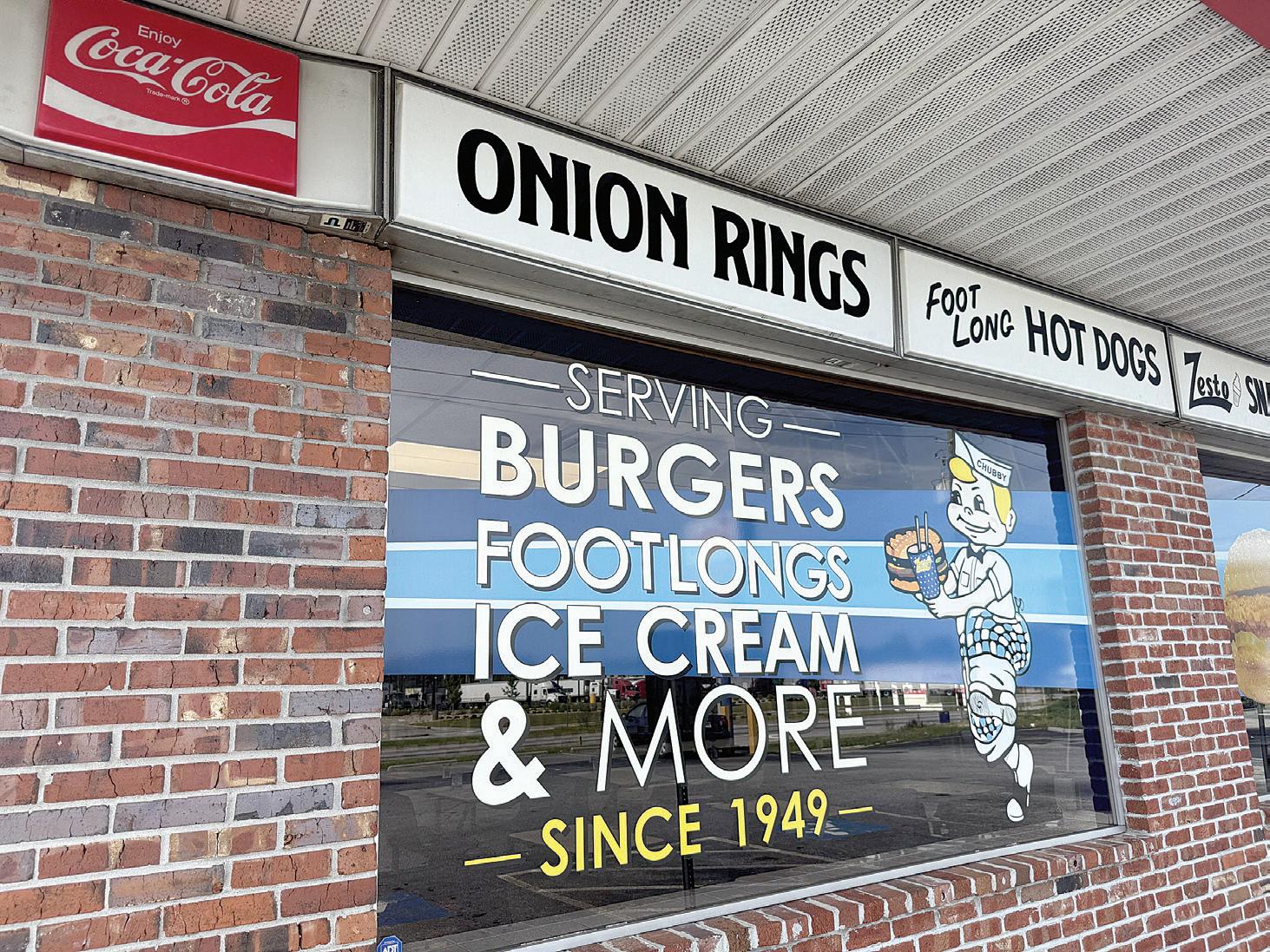
The Forest Park Zesto has a freshly painted window facade advertising the retro-style, fast-food restaurant near Hartsfield-Jackson Atlanta International Airport in Clayton County. (Photo by Hayden Sumlin)
Year-round: Saturdays, 8:30 a.m. until noon
Meet the longtime regulars of Poor Calvin’s in Midtown Atlanta
By Laura Scholz
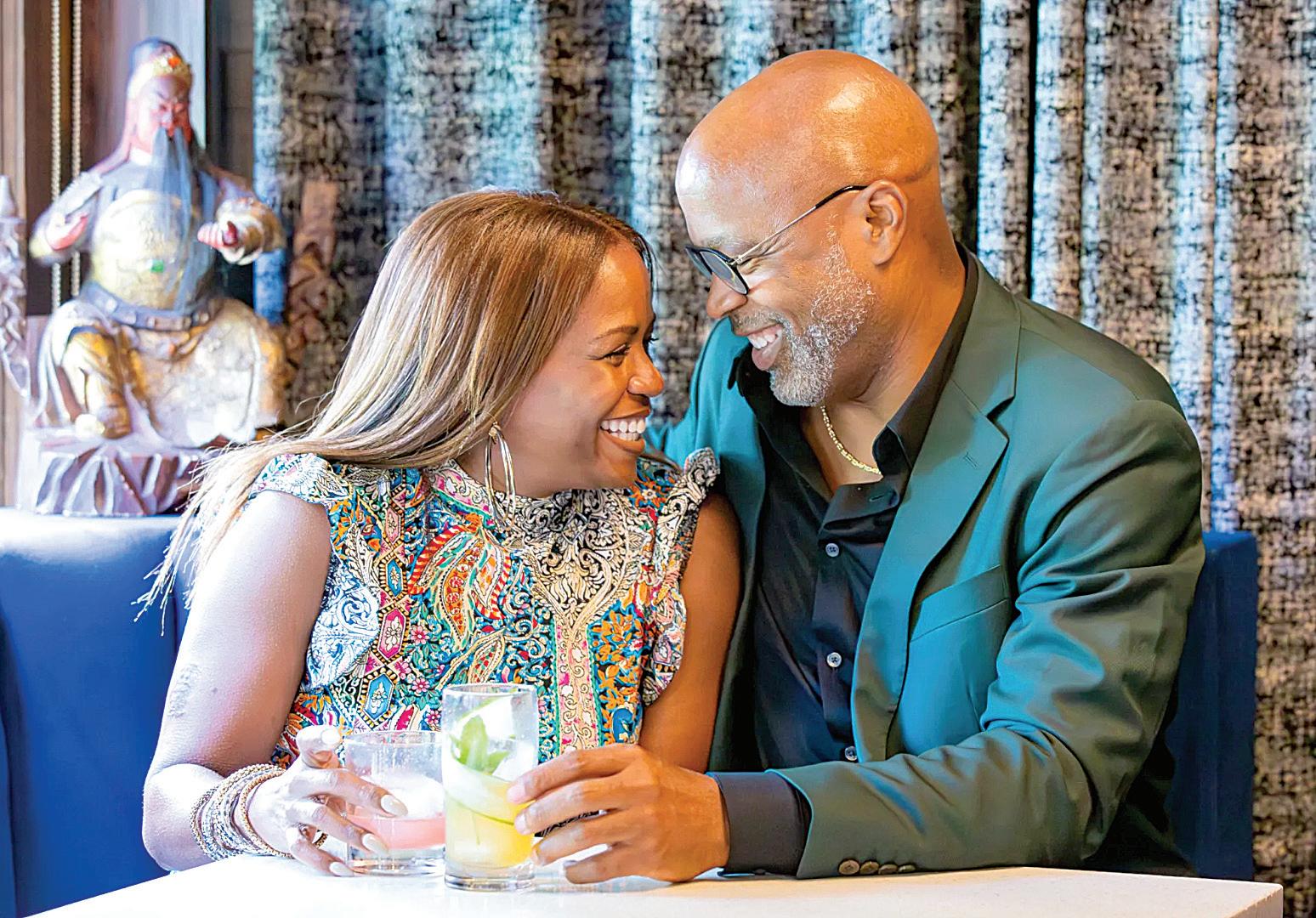
In 2012, one of Jamilah and Isaac Washington’s first dates was a leisurely weekday lunch at Poor Calvin’s, an Asian-meets-Southern restaurant on the edge of Midtown in Atlanta.
Both widowed, the now-married couple credit their two daughters — close childhood friends who attended the same dance school — with bringing them together.
“The kids really manifested this into a courtship,” said Isaac, a commercial banking executive who worked at nearby Atlantic Station at the time. He often met Jamilah, a beauty and real estate entrepreneur, at Poor Calvin’s during his
That courtship continued at Poor Calvin’s, where the duo bonded over platters of lobster fried rice (Jamilah’s favorite) in the intimate dining room. They married in 2014 and have been regulars at the Piedmont Avenue restaurant ever since. Despite living in Stone Mountain, they stop by once
or twice a week to sample chef-owner Calvin Phan’s daily specials or to grab a quick nightcap at the bar.
“As empty nesters, our most expensive bill is eating out, and Poor Calvin’s is one of the finest establishments we’ve been to around the world,” said Isaac. “The food quality, the service, and ambiance are just that good.”
For more than a decade, the Washingtons have made Poor Calvin’s their go-to spot for birthday parties, anniversary dinners, and family meals with their three now-adult children.
“Jamilah and Isaac live quite a distance away and have a busy schedule, so it means a lot when they choose to spend special occasions with us or bring friends in for dinner,” said James Omarly, general manager of Poor Calvin’s.
Even if they don’t have a reservation, or the restaurant is full, Omarly always makes room for them at the bar or finds
Continued on page 30
Jamilah and Isaac Washington. (Photo by Ryan Fleisher)
Lobster tail fried rice. (Photo by Ryan Fleisher)
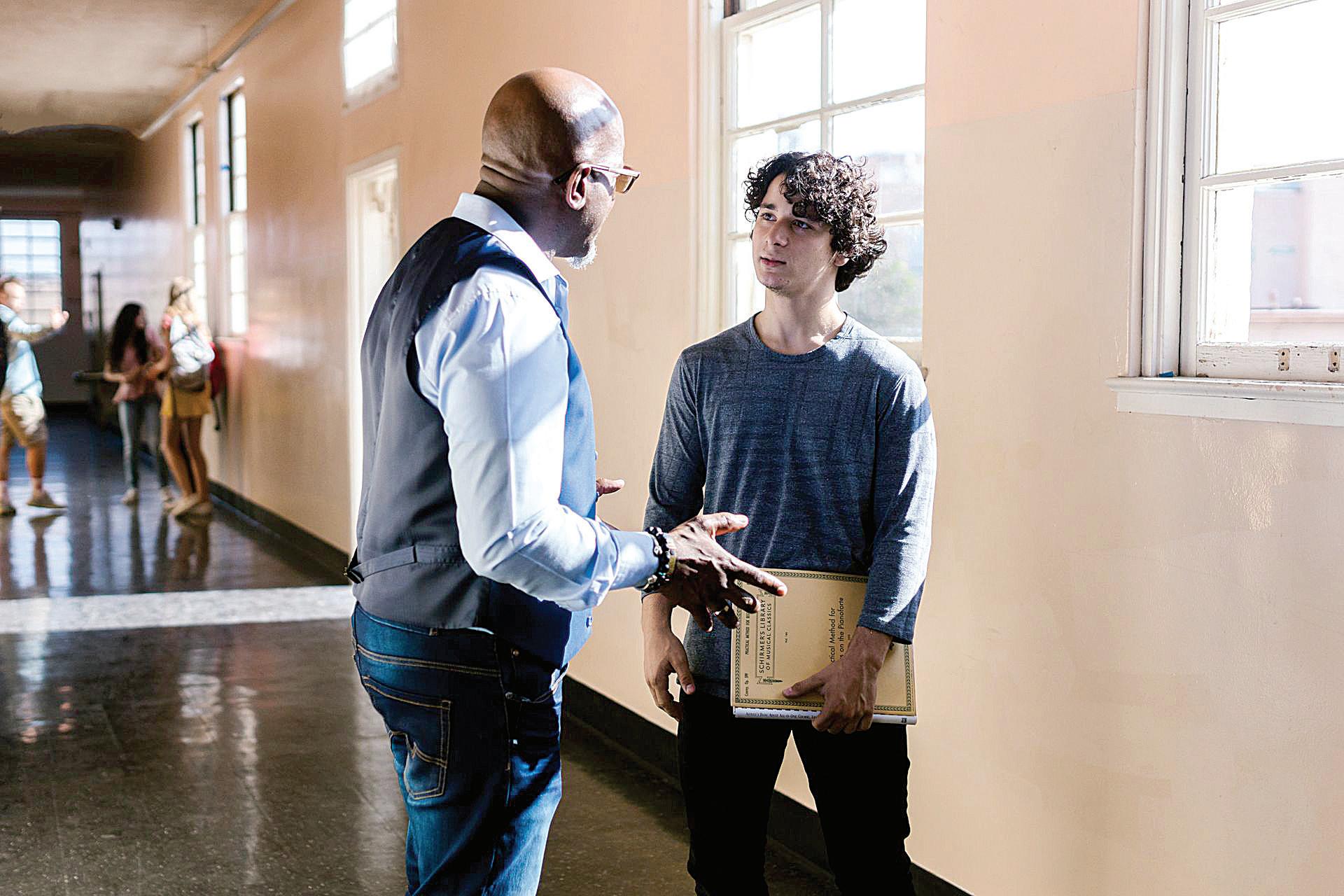
When ‘Talk to Your Counselor’ feels pointless
By Jaden Holtz
EDITOR’s NOTE: This story is a partnership with VOX ATL, a youth-led nonprofit media organization that prepares teens for life, career, and community by harnessing the power of youth voice and uncensored self-expression. Find out more at voxatl.org.
When starting high school, you often hear the most common advice: build connections.
Whether it be with your teachers, admins, clubs, or most importantly, your counselors.
Counselors are supposed to be your biggest supporters; you go to them for transcripts, schedule changes, emotional support, and advice on college applications. That’s how it’s supposed to go, at least; however, in DeKalb County, the common consensus among teens is that counselors are simply useless.
Many students go their entire four years without ever meeting their counselors. The main reason for this is that it is extremely difficult to schedule a meeting with them.
Stone Mountain High School teen, Brett Thomas, 17, says, “I’ve been trying to get a meeting with mine since I moved here last semester. I frequently visit the office and try to schedule, but they usually just say some bullsh— excuse.”
“They act nice when you come in, but when you try to actually get something
done, it takes horribly long, months long,” said Tucker High School teen James Sims, 18. Clarkston High School teen, Issac Gayflorsee, 15, says, “I asked her what types of AP classes they offered, and she had no clue, couldn’t even search on her computer.”
However, counselors aren’t just for academic guidance; they are also meant to support mental health. They are intended to help students with the stresses that come with being a teen and transitioning into adulthood.
DeKalb County has reported over 90,000 students in the district, but only 183 full-time counselors. That makes the student-to-counselor ratio almost 500:1, which is double the 250:1 recommended by the American School Counselor Association (ASCA).
All of this is not on the counselors, but rather the District.
When asked why she’s never gone to her counselor, Stone Mountain High School teen, Aamiyah Robinson, 16, replied, “Because why would I go out of my way to talk to people I don’t know, that means they’re strangers.”
Photo via RDNE Stock project/Pexels
a cozy nook in the dining room.
The Washingtons say that next-level hospitality is why they keep coming back—and that Phan sets the tone at the top.
“He does it all—bringing out food, serving, and hosting,” said Jamilah. “And the staff are always all hands on deck to make it all come together, and that makes it feel special every time we come in here.”
The feeling is mutual.
“What I appreciate most about Jamilah is how attentive she is,” said Omarly. “She notices the little changes in our space and genuinely remembers our team members.”
She and Isaac are now members of the staff group chat and have dubbed themselves “Poor Calvin’s ambassadors,” often befriending people at neighboring tables and recommending the restaurant to everyone in their friends and family circle.
“Our kids know if they ever need to find us, we’ll be at Poor Calvin’s,” said Jamilah.
Poor Calvin’s (poorcalvins.com), 510 Piedmont Ave., Midtown. Open daily for dinner.
Seafood drunken noodles. (Photo by Ryan Fleisher)
21-story condo building proposed
By Collin Kelley
The Midtown Development Review Committee (DRC) reviewed a proposal for a 21-story condo building on 14th Street at its June meeting.
Florida-based Kolter Urban is the developer of the building, called Fourteen Park, at the corner of 14th Street and 14th Place. In 2019, Toll Brothers announced plans to build a condo tower on the 1.3-acre site, but that plan was scrapped after the pandemic and neighborhood pushback against the proposed density.
Kolter Urban purchased the property late last year and recently acquired the townhomes that line the west side of 14th Place to create a larger development. The far northern portion of the site will retain 20 existing rowhouse-style units.
According to plans submitted to the DRC, the residential high-rise will have 101 residential units, a main lobby and amenities on the west side, and
four guest suites (for residents’ invitees only) on the east side, flanking a central driveway. This driveway, along with a second driveway on 14th Place, leads to a four-story screened parking podium with 218 spaces.
Bike storage, two loading bays, and trash service are located along 14th Place, which will be widened by about three feet. An amenity level on the 5th floor will include a pool.
The DRC recommended removing the
proposed 14th Street driveway or modifying it to a 12′-wide ingress-only driveway to reduce potential contact with sidewalk pedestrians and cyclists or scooter riders in the adjacent bike lane.
The board also recommended that Kolter Urban consider retail spaces on the ground floor to benefit the building’s residents and the users of Piedmont Park
Bike storage facilities were suggested to be increased to 40–50 secure spaces, in line with demand found in similar residential buildings in Midtown. This space can be taken from underutilized areas on the east side of the building.
Kolter Urban is expected to address the DRC concerns and submit new plans to the committee.
Gun Club Park to become affordable housing, public space
By Logan C. Ritchie
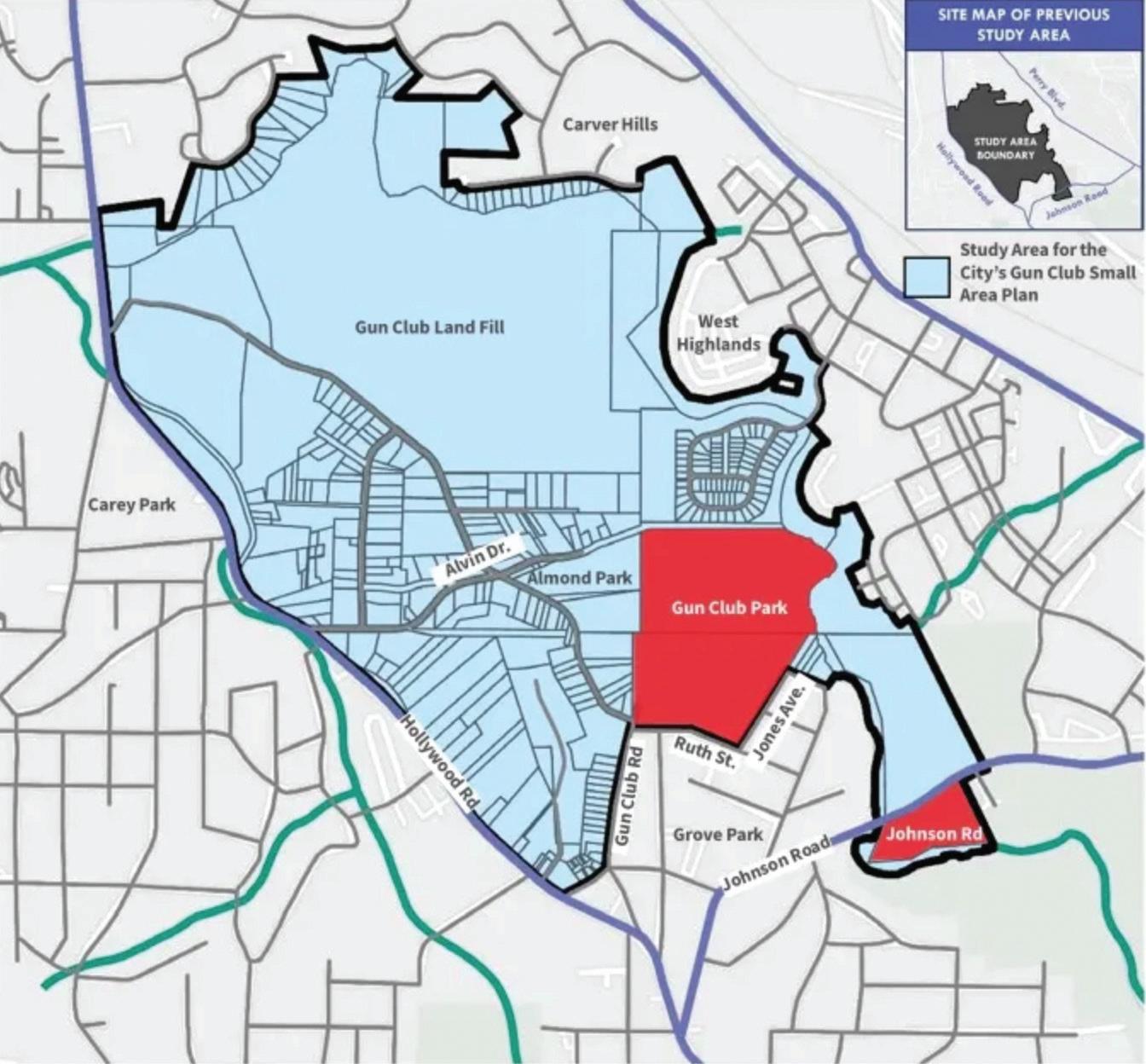
The redevelopment of abandoned property west of Atlanta continues, as Mayor Andre Dickens announced a 44acre project at the former Gun Club Park through the Neighborhood Reinvestment Initiative (NRI).
Located near the Westside’s Shirley Clarke Franklin Park and Boyd Elementary School, Gun Club will join nearby Bowen Homes in transforming land into affordable rental units, for-sale homes, a multi-use trail, and a public park. The development will include the Proctor Creek Greenway, a key component of the TrailsATL network that connects neighborhoods across the city.
Naturalized almost entirely into forest space since its abandonment as a city park in 2003, Gun Club Park is owned by the City of Atlanta. It was established in 1928 as a gun range and transformed into a public park in 1964. Since the 1990s, the property has been severely underused, resulting in regular dumping.
The project represents a major milestone in addressing Atlanta’s housing needs while fostering economic opportunity and community vitality,
according to a press release.
“This groundbreaking partnership exemplifies our vision for inclusive growth and community-centered development,” Dickens said. “By bringing together best-in-class developers committed to affordability and quality, we are advancing toward our goal of creating and preserving affordable housing while creating a blueprint for how publicprivate collaboration can transform neighborhoods and expand opportunity for all Atlantans.”
Set to kick off in early 2027, the project is a collaboration between Atlanta Urban Development Corporation (AUD) and Brock Built Homes.
“This project demonstrates how thoughtful redevelopment of parkland abandoned three decades ago can deliver multiple community benefits at once— new housing, expanded affordability, public greenspace and trail connectivity. The location along the Proctor Creek Greenway will help connect residents to parks, schools and neighborhoods across Northwest Atlanta while creating new opportunities for recreation and mobility for generations to come,” Council member Dustin Hillis said.
A rendering of Fourteen Park (Courtesy Midtown DRC)
City council blight tax penalties for stalled Midtown building
By Logan C. Ritchie
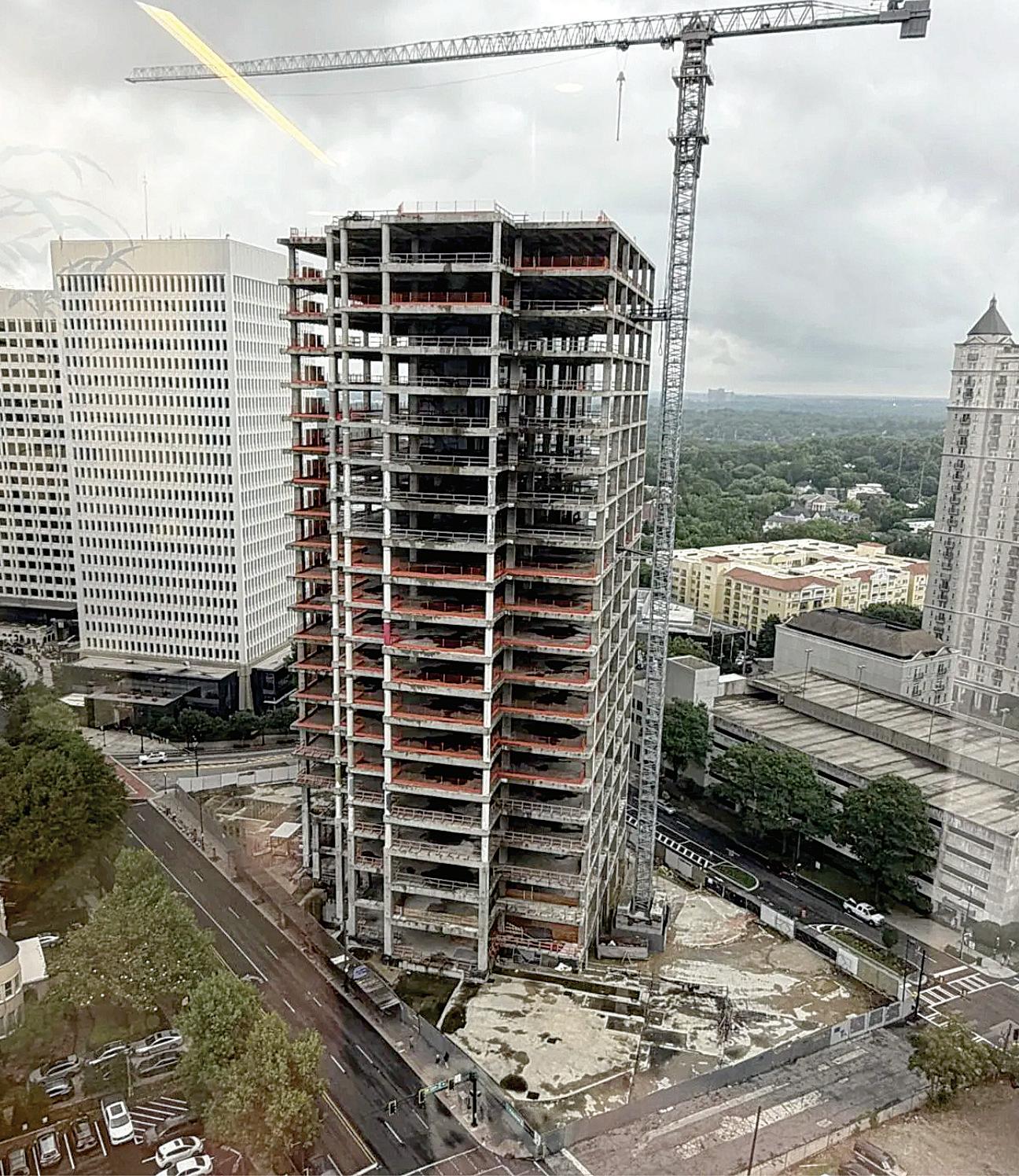
The Atlanta City Council approved a resolution directing the city to pursue blight tax penalties against ownerdeveloper John Dewberry for the stalled renovation of 1155 Peachtree St. in Midtown.
The tax penalties could be equivalent to 25 times the current millage rate for Dewberry and owners of other blighted properties in the city.
After the city posted a safety warning on the site of 1155 Peachtree Street on May 19, Midtown residents began circulating a petition, which has gained 3,000 signatures, asking city officials for transparency and swift action.
The 20-story office building – known as The Campanile or The Midtowne – at 1155 Peachtree Street was purchased by Dewberry in 2019. The project has been stalled since 2020, and has remained in a state of structural disrepair according to city documents.
Construction permits for the site expired in October 2025. Yet, workers were spotted at the building on May 30 replacing old plywood with temporary safety railing commonly used to prevent workers, tools, and materials from falling during construction.
Atlanta City Council members Kelsea
Bond and Matt Westmoreland introduced the resolution at the June 1 meeting asking Mayor Andre Dickens’ office to levy a blight tax on the Dewberry property. It was passed during the June 15 regular council meeting.
Bond told Rough Draft the city passed an ordinance two years ago to create a blight tax, but the mechanisms to levy that tax have not yet been put in place.
“There have been recent developments to work towards getting the blight tax up and running, so council members are asking the city to explore using it on this specific site which, since the construction permits expired, may qualify as an abandoned site,” Bond said.
►The city passed an ordinance two years ago to create a blight tax, but the mechanisms to levy that tax have not yet been put in place.
Atl anta, meet your new pl ayground.
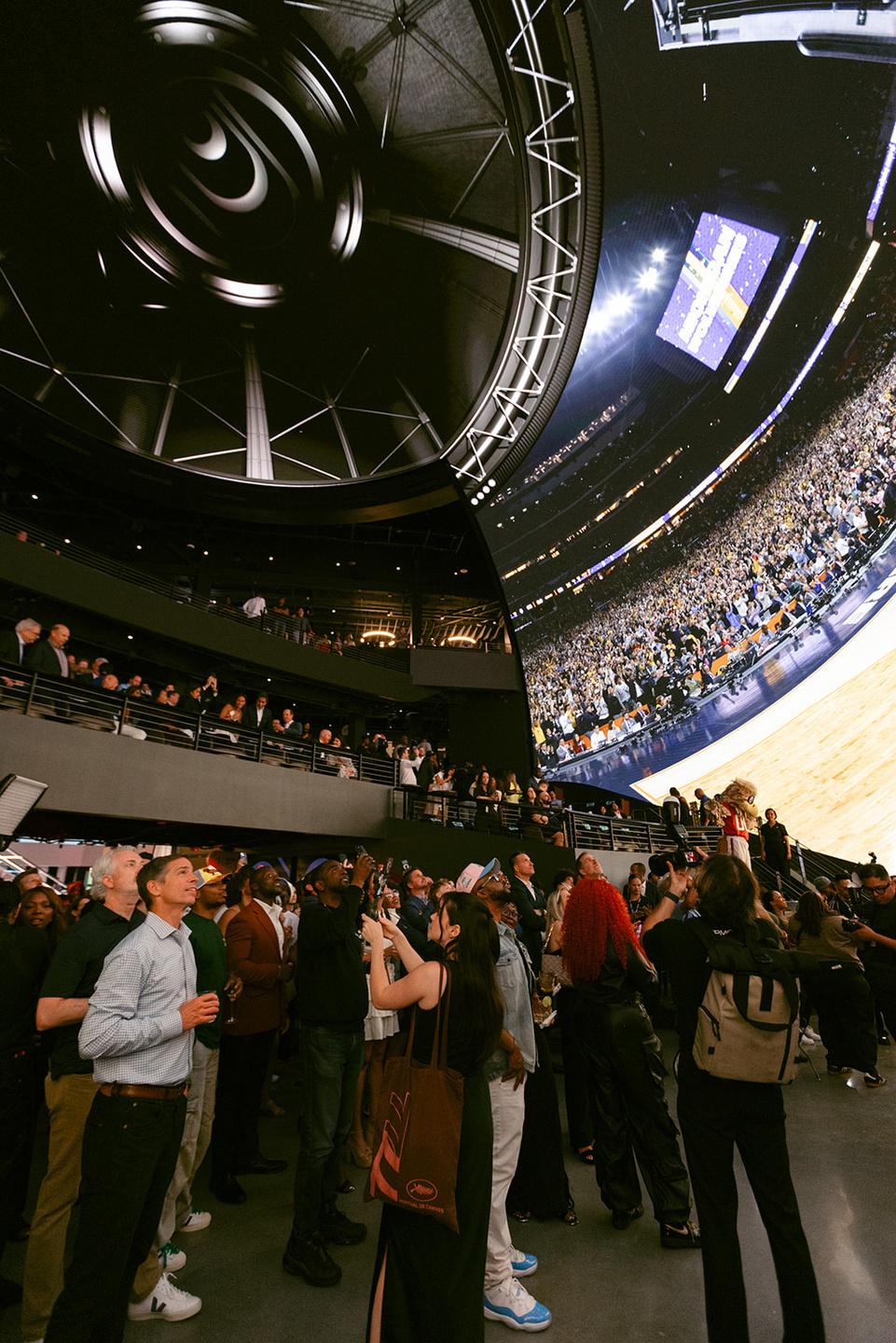
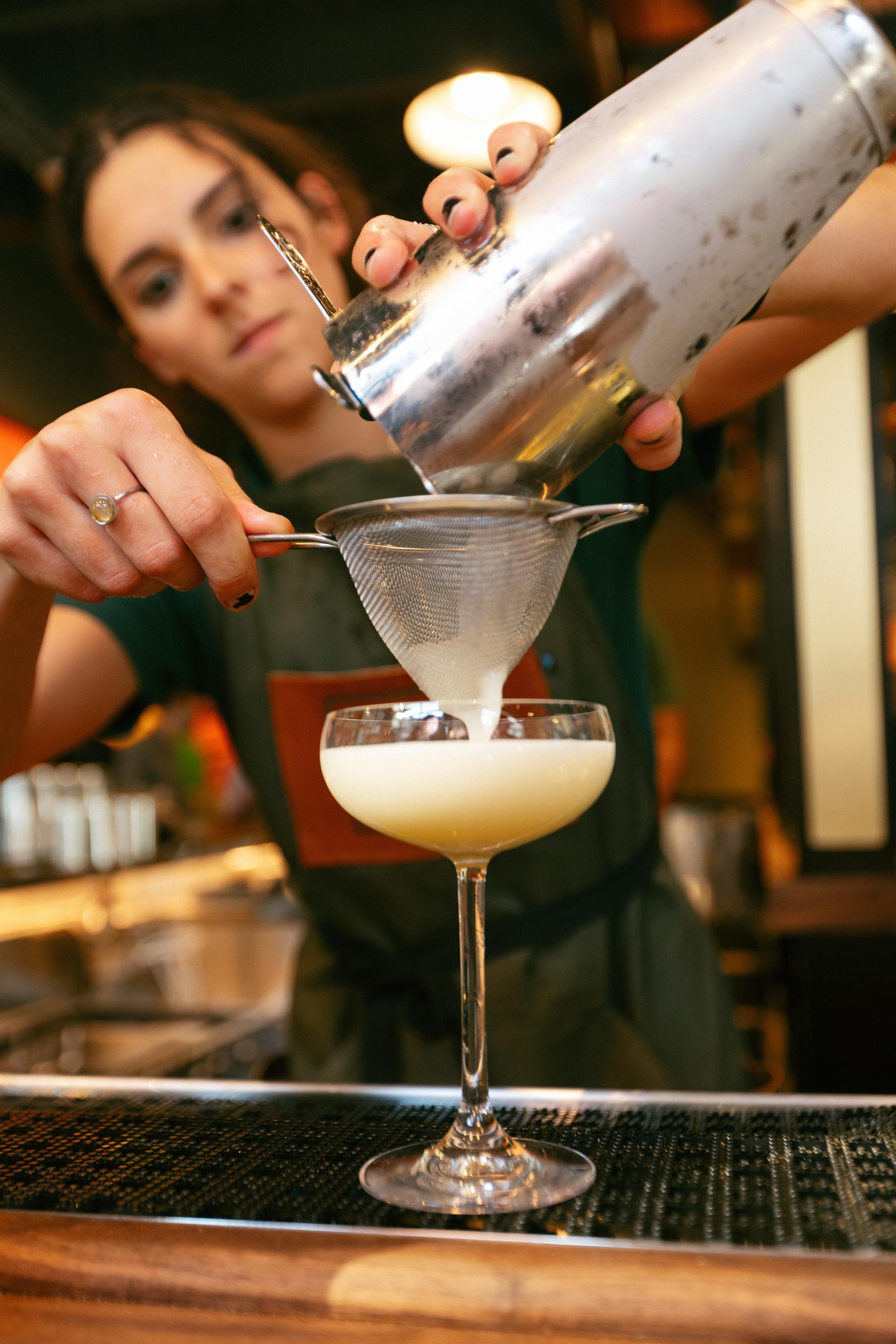
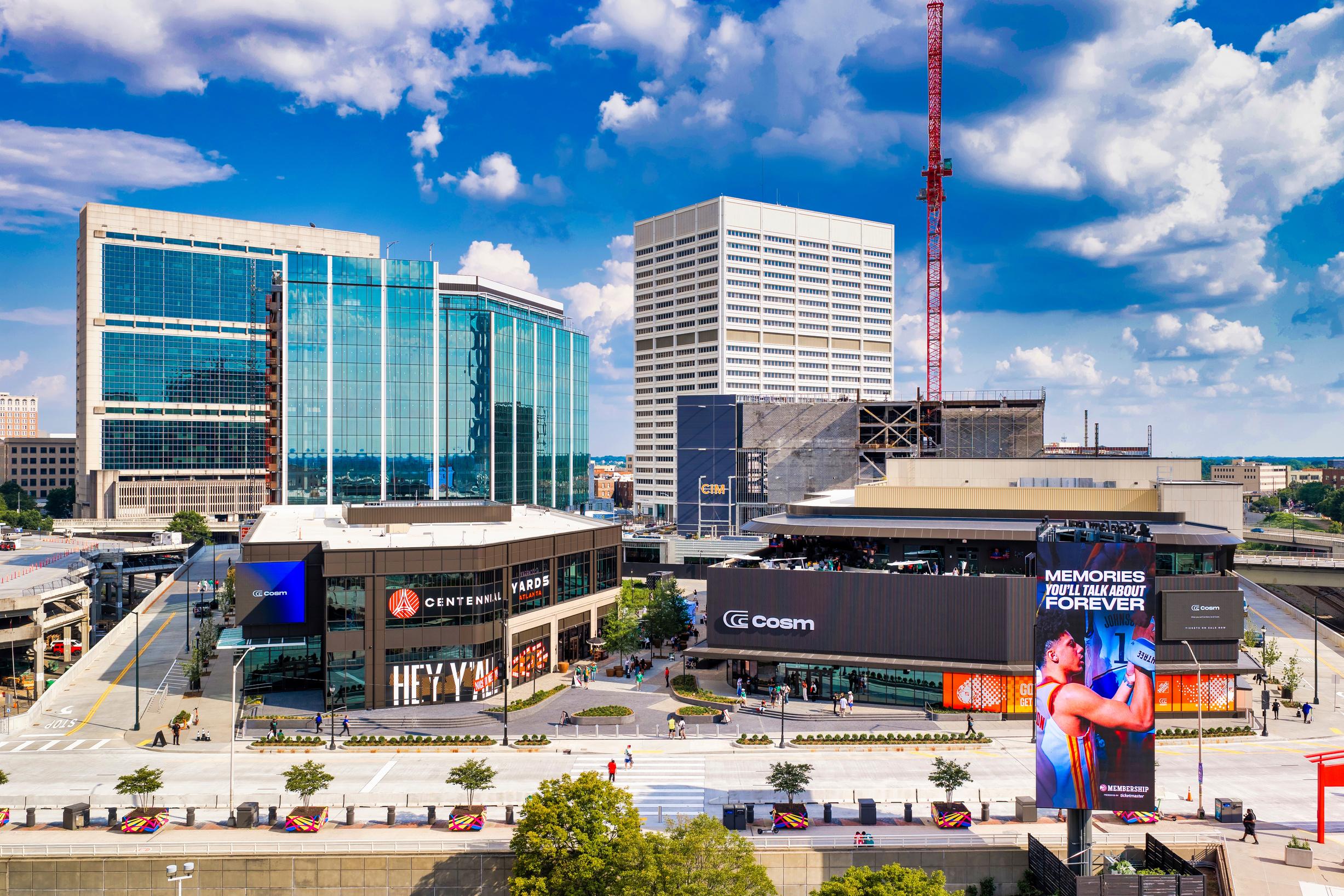
Centennial Yards’ Entertainment District is officially open sip at The Irish Exit, immerse yourself in Cosm, and get a first look at the unforgettable experiences still to come.