WW1 Imperial German Uniforms History, Design, and Battlefield Evolution
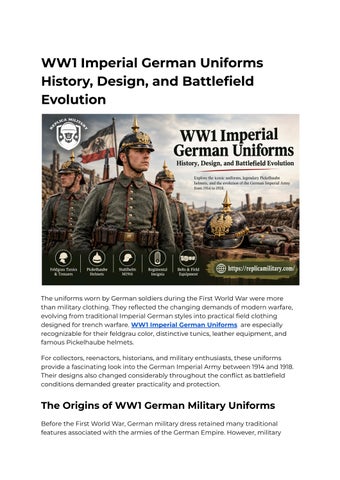
The uniforms worn by German soldiers during the First World War were more than military clothing. They reflected the changing demands of modern warfare, evolving from traditional Imperial German styles into practical field clothing designed for trench warfare. WW1 Imperial German Uniforms are especially recognizable for their feldgrau color, distinctive tunics, leather equipment, and famous Pickelhaube helmets. For collectors, reenactors, historians, and military enthusiasts, these uniforms provide a fascinating look into the German Imperial Army between 1914 and 1918. Their designs also changed considerably throughout the conflict as battlefield conditions demanded greater practicality and protection.
The Origins of WW1 German Military Uniforms Before the First World War, German military dress retained many traditional features associated with the armies of the German Empire. However, military
planners recognized that brightly colored uniforms were increasingly unsuitable for modern combat. The feldgrau (field-gray) uniform had already been introduced before the war and became the standard field appearance of German troops when Germany entered World War I. The muted gray-green shade was considerably more practical for field operations than older parade uniforms. Important characteristics included: ● ● ● ● ● ●
Feldgrau wool tunics and trousers Regimental and branch-specific insignia Leather belts and field equipment Military boots Shoulder straps showing unit or rank details Distinctive headgear such as the Pickelhaube
These features created a recognizable appearance while still allowing differences between individual German states and military branches.
The Famous Feldgrau Tunic One of the defining elements of WW1 Imperial German Uniforms was the feldgrau tunic. The early M1910 field uniform retained several traditional details, including colored piping and an eight-button front. As the war continued, uniforms became simpler and more economical to manufacture. The M1915 uniform represented an important step toward a more functional battlefield design. Its simpler construction reduced unnecessary decoration and made production easier during wartime. The tunic typically featured: ● ● ● ● ● ●
A practical wool construction Front pockets for useful storage Shoulder straps or boards A standing or turn-down collar depending on the model Subdued buttons and insignia Branch or regimental identification through specific details
This evolution illustrates how German WW1 uniforms changed from traditional military fashion into clothing designed around the realities of industrial warfare.
Pickelhaube: The Iconic German Spiked Helmet
Few pieces of military equipment are as strongly associated with Imperial Germany as the Pickelhaube helmet. Made primarily from leather in its traditional form, the helmet featured a distinctive spike and metal fittings. At the beginning of World War I, the Pickelhaube remained an important part of the German soldier's appearance. However, its protection was limited compared with the demands of artillery-heavy trench warfare. Cloth covers were also used in the field to reduce visibility and protect the helmet. The Pickelhaube remains one of the most recognizable elements for anyone interested in WW1 German Army uniforms, historical collections, or military reenactment.
From Pickelhaube to the Stahlhelm As the war progressed, battlefield experience encouraged Germany to improve head protection. The Stahlhelm M1916 was introduced in 1916 and provided substantially more practical protection against battlefield hazards than the earlier helmet. This change was part of a much wider transformation in military clothing. Soldiers increasingly needed equipment that could withstand: ● ● ● ● ●
Trench warfare Artillery fragments Harsh weather Mud and difficult terrain Long periods of field service
The combination of the feldgrau uniform and Stahlhelm became one of the defining visual images of the later Imperial German Army.
Why WW1 Imperial German Uniforms Remain Popular Today, WW1 Imperial German Uniforms attract attention from collectors and reenactors because they combine historical importance with distinctive design. Every detail—from the cut of a tunic to the style of shoulder boards—can help identify a particular period, regiment, or military branch. When studying or collecting these uniforms, enthusiasts often look at: ● M1910 and M1915 tunics ● Feldgrau wool construction ● Imperial German insignia
● ● ● ●
Pickelhaube helmets M1916 Stahlhelm designs German military belts and field equipment Regimental colors and shoulder insignia
Understanding these details makes it easier to appreciate the differences between early-war and late-war German military clothing.
Choosing Historically Inspired German WW1 Reproductions Original First World War uniforms can be difficult to find and may be expensive or fragile. High-quality reproductions offer collectors, reenactors, museums, theatrical productions, and history enthusiasts an accessible alternative. A good reproduction should pay attention to the historical silhouette, fabric appearance, insignia placement, buttons, and overall construction. Researching the specific period is particularly important because a 1914 soldier's uniform could look noticeably different from clothing issued later in the war. For anyone interested in historical military clothing, studying WW1 German Army uniforms, feldgrau tunics, Imperial German insignia, and Pickelhaube helmets can provide valuable context before choosing a reproduction.
Conclusion WW1 Imperial German Uniforms represent a fascinating chapter in military history. From the traditional Pickelhaube and early feldgrau tunics to the simplified M1915 designs and protective Stahlhelm, German uniforms evolved alongside the changing nature of World War I. Their combination of historical detail, practical design, and distinctive Imperial character continues to interest collectors, reenactors, and military-history enthusiasts today. If you are looking for historically inspired military clothing and want to explore German First World War styles, visit Replica Military to discover a range of reproduction uniforms and related historical attire. Explore WW1 Imperial German Uniforms → Visit Replica Military