Buy All WW1 Military Uniforms A Guide to Historical Military Clothing and Collecting
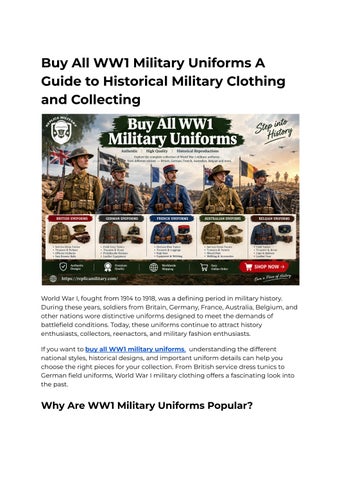
World War I, fought from 1914 to 1918, was a defining period in military history. During these years, soldiers from Britain, Germany, France, Australia, Belgium, and other nations wore distinctive uniforms designed to meet the demands of battlefield conditions. Today, these uniforms continue to attract history enthusiasts, collectors, reenactors, and military fashion enthusiasts. If you want to buy all WW1 military uniforms, understanding the different national styles, historical designs, and important uniform details can help you choose the right pieces for your collection. From British service dress tunics to German field uniforms, World War I military clothing offers a fascinating look into the past.
Why Are WW1 Military Uniforms Popular?
World War I uniforms represent more than historical clothing. They reflect the military traditions, manufacturing techniques, and changing battlefield requirements of the early twentieth century. Collectors and reenactors value these uniforms for several reasons: ● Historical significance: Each design tells a story about the army and period it represents. ● Authentic appearance: Uniform details help recreate the look of soldiers from 1914–1918. ● Collection value: Reproduction uniforms allow enthusiasts to build themed historical collections. ● Reenactment use: Suitable clothing helps create a more convincing historical impression. ● Educational purposes: Uniforms can help students and researchers understand military history. When shopping, decide whether you need a display piece, a reenactment outfit, a costume, or a historically detailed reproduction.
Popular Types of WW1 Military Uniforms World War I involved many nations, each with its own uniform traditions. Exploring these styles is a useful starting point when looking for WW1 military uniform replicas.
1. WW1 British Military Uniforms British soldiers commonly wore khaki service dress uniforms. A typical outfit included a wool tunic, trousers, puttees, and suitable military headgear. Officers often had different tailoring and equipment arrangements from enlisted soldiers. Popular items include: ● ● ● ● ●
British WW1 service dress tunics British military trousers and puttees WW1 British officer uniforms Sam Browne belts and leather accessories Period-inspired caps and other headgear
These pieces are popular with collectors interested in British Army history and First World War reenactment clothing.
2. WW1 Imperial German Uniforms
German military uniforms are recognizable for their distinctive field-grey appearance and traditional design features. Depending on the unit and period, uniforms could include field tunics, trousers, leather equipment, boots, and different styles of headgear. When selecting a German WW1 uniform replica, consider the intended unit, historical period, fabric, buttons, collar details, and overall cut. These details can make a major difference to the final appearance.
3. WW1 French Military Uniforms French uniforms changed significantly during the early years of the war. Early-war clothing is associated with more colorful traditional designs, while horizon-blue uniforms became strongly associated with French soldiers later in the conflict. Collectors interested in French military history should pay attention to the shade of the fabric, cap style, insignia, and the particular year being represented.
4. WW1 Australian and Belgian Uniforms Australian soldiers serving during World War I generally wore uniforms influenced by British military patterns, with distinctions depending on the unit and service context. Belgian military clothing also reflected the country's own military traditions and changing wartime needs. These uniforms are valuable options for collectors who want to explore military history beyond the most commonly represented British and German styles.
What to Check Before Buying WW1 Military Uniforms Choosing a suitable reproduction involves more than finding a design that looks appealing. Consider the following factors before placing an order.
Historical Accuracy Look for details appropriate to the nation, branch, unit, and year you want to represent. Buttons, collars, pockets, insignia, and headgear can vary between uniform patterns.
Fabric and Construction Many period uniforms used wool or wool-blend fabrics, although materials varied. Examine the fabric description, stitching, lining, fastenings, and overall construction to understand what you are purchasing.
Size and Fit Check the seller's sizing chart and compare it with your measurements. If you plan to wear the uniform over other clothing, allow for suitable room without making the outfit look incorrectly oversized.
Accessories and Completeness A tunic alone may not create a complete historical outfit. Depending on your chosen impression, you may need trousers, puttees, belts, boots, headgear, and other period-appropriate accessories.
Product Descriptions and Photographs Review available photographs, included-item lists, material details, shipping information, and return policies. Confirm whether the item is a reproduction, a costume, or an original historical piece.
How to Choose the Right WW1 Uniform for Your Collection Start by deciding which country and period interest you most. A British service dress uniform, a German field-grey tunic, and a French horizon-blue outfit represent different historical appearances. Next, establish your budget and prioritize the essential pieces. Buying a coordinated uniform set can be more convenient than sourcing each item separately, but confirm exactly what the package includes. For reenactment, check event requirements and historical guidelines before buying insignia or accessories. For display, focus on construction, presentation, and the historical story you want your collection to communicate. It is also important to distinguish reproduction items from genuine antiques. Original World War I uniforms may require specialist assessment, and their age and condition can affect both handling and value. Never assume an item is original simply because its description uses historical terminology.
Find WW1 Military Uniforms and Historical Accessories Building a World War I collection is an opportunity to explore the clothing and equipment worn by soldiers from different countries. Whether you are interested
in British service dress, German field uniforms, French military clothing, or other national styles, careful research can help you make an informed choice. Replica Military is a place to explore historical military uniforms and accessories for your collection. Compare available designs, check product details, and select pieces that match your interests and intended use. Ready to explore historical military clothing? Explore Replica Military — Browse Uniforms and Accessories