GET SOCIAL e @ebrha_rentrospect G facebook.com/EastBayRentalHousingAssociation @EastBayRHA
EAST BAY
RENTAL HOUSING ASSOCIATION
Volume 6 Number 2 | Spring 2026
EBRHA OFFICE
3664 Grand Ave., Suite B, Oakland, CA 94610
TEL 510.893.9873 | FAX 510.893.2906
ebrha.com
CHIEF EXECUTIVE OFFICER
Derek Barnes aemail@ebrha.com | 510.893.9873
COMMUNICATIONS AND MEDIA RELATIONS
Chris Tipton communications@ebrha.com |
ADVERTISING AND MEMBERSHIP SALES
Danielle
EBRHA OFFICERS
PRESIDENT Wayne C. Rowland
FIRST VICE PRESIDENT Luke Blacklidge
TREASURER Chris Moore
SECRETARY Fred Morse
EBRHA BOARD OF DIRECTORS
Francisco Acosta, Luke Blacklidge, Maya Clark, Jorge Jimenez, Carmen Madden, Chris Moore, Courtney Morse, Fred Morse, Joshua Polston, Wayne C. Rowland, Jack Schwartz, Maria Recht, Aaron Young
PUBLISHED BY East Bay Rental Housing Association
PUBLISHER Derek Barnes
EDITOR Michelle Gamble
ART DIRECTOR Bree Montanarello
Rental Housing (ISSN 1930-2002-Periodicals Postage Paid at Oakland, California. POSTMASTER: Send address changes to RENTAL HOUSING, 3664 Grand Ave., Suite B, Oakland, CA 94610.
here’s an eviction moratorium operating in parts of California right now. It applies to thousands of rental units. It protects renters who have stopped paying rent. And it has been put in place without a single emergency declaration, without a legislative vote, and without any of the public scrutiny that formal policy is supposed to require.
That’s because they aren’t calling it an eviction moratorium. And that’s the point.
What makes this more than a property owner grievance, what elevates it from a private contract dispute to a genuine public policy crisis, is who else is losing. Because it is not only property owners who are bearing the cost of misguided housing policies. It is the cities that enacted them. It is the state that is looking the other way. And it is the public revenues that fund schools, roads and services, quietly draining away with each month of unpaid rent.
A SYSTEM BUILT ON ONE ASSUMPTION
California’s unlawful detainer framework rests on a foundational premise that is not complicated: when a renter fails to pay rent, the rental owner has a right to act. Not immediately (the law requires a three-day notice to pay rent or quit), but promptly, and through a summary court process designed to resolve these disputes quickly.
This framework exists because the alternative, an open-ended right of occupancy, detached from any obligation to pay, is not a rental market. It is something else entirely. The Legislature understood this when it built the unlawful detainer system, and designed it accordingly, to be fast, predictable, and uniform. Ensuring that the most basic term of any tenancy can be timely enforced.
That system is now being quietly dismantled. Not at the state level, where it would require a vote and invite scrutiny. Instead, it’s happening at the local level, through ordinances written in deliberately technical language, by city councils that understand exactly what they are doing and are counting on nobody noticing.
ARTFUL NULLIFICATION
The playbook is worth understanding in detail, because it is sophisticated, intentional, and most importantly replicable. Cities cannot directly override California’s unlawful detainer process. That is state law, and the state has made clear that eviction procedure is its domain. But preemption
doctrine draws a distinction between procedure, how an eviction works, and substance, when an eviction is permissible. The former is clearly controlled by the state. The latter is where things get conveniently murky and where local governments have learned to exploit the resulting ambiguity with precision.
A city cannot simply require rental owners to wait 60 days before filing for eviction. That would read as procedural interference and invite a preemption challenge. But a city can prohibit eviction for nonpayment until unpaid rent exceeds a specified threshold, say, one or more months of fair market rent for the particular unit size, in the metro area. If it takes 60 days or more to reach that threshold, the practical result is identical. The delay is achieved without ever touching procedure.
The three-day notice becomes performative. The summary process ceases to be summary. And just like that, you have an eviction moratorium, only without calling it one.
WHO BEARS THE COST
The standard political framing of the need for these ordinances presents the issue as a moral contest between vulnerable “tenants” and wealthy corporate “landlords.” That framing is both convenient and largely false. But setting aside its inaccuracy, it misses a more inconvenient truth: the financial damage from these policies is not limited to rental owners alone. It radiates far outward, touching nearly every layer of public finance.
THE FIRST AND MOST VISIBLE CASUALTY: PROPERTY OWNERS
The majority of California’s rental housing is not owned by institutional investors but by small and mid-size property owners. Many are individuals who have invested in one, two, or a handful of units, often as a retirement vehicle or a family legacy. These are not entities with large balance sheets capable of absorbing months of nonpayment. They carry mortgages, property tax bills, insurance premiums, and maintenance obligations that do not pause because a renter has stopped paying.
For these owners, a single prolonged nonpayment event, the kind these ordinances specifically enable, can trigger a loan default. For larger operators, the effects are slower to materialize but no less real: reduced income stream, declining asset valuations, higher financing costs that price
in regulatory risk, and projects that no longer pencil out under the new uncertainty.
In Oakland, for example, several large, newly built apartment complexes have recently been lost through foreclosure. In other instances, building owners have surrendered ownership back to the lenders.
THE STATE OF CALIFORNIA: A SILENT TAX LOSER
When a rental owner collects rent, that income is reported to the Franchise Tax Board and taxed through a schedule E or business return. It is a real economic transaction, part of the state’s taxable base. But when a renter stops paying rent and a local ordinance shields that default from timely enforcement, the income simply falls off the grid. The owner has nothing to report because nothing was received. No rent was paid, no taxable income was realized, and the state collects nothing on money that ordinarily would have entered the tax system.
Unpaid or forgiven rent does not become a 1099 event. No imputed income is assigned to the renter. No withholding occurs. Yet, in practical terms, the renter receives the equivalent of thousands of dollars in untaxed income or housing value, while the state receives no corresponding tax revenue.
At scale, across multiple cities and thousands of units, this represents a very large number, hiding in plain sight. It is a recurring tax loss embedded directly into local housing policy. Growing steadily with every ordinance that delays enforcement and every month of legally mandated nonpayment.
THE COUNTY ASSESSOR: ERODING THE PROPERTY TAX BASE
Property values in California are assessed in part on income potential, particularly for income-producing residential and commercial properties. When the regulatory environment degrades the enforceability of rental income, lenders and appraisers reprice that risk into their valuations. Properties in jurisdictions with aggressive anti-enforcement ordinances lose value relative to comparable properties where lease obligations can be enforced.
Lower assessed values mean lower property tax revenue. But the lost revenue doesn’t disappear quietly, it falls on county budgets that fund schools, libraries, fire departments, and social services. The cities that enact these ordinances are, in effect, passing a portion of their policy costs downstream to county governments and the state school funding formula.
CITIES WITH GROSS RECEIPTS TAXES: UNDERMINING THEIR OWN REVENUE BASE
Several California cities impose a gross receipts tax on rental income. A tax calculated not on profit but on total rents received. San Francisco, Los Angeles, Oakland and many others have used this mechanism to extract revenue from the rental market specifically.
The fiscal irony is rich. These same cities, many of which are among the most aggressive adopters of anti-enforcement ordinances, are simultaneously taxing gross rental receipts while enacting policies that reduce the gross rental receipts available to tax. Every month of legally protected nonpayment is a month of gross receipts that never materializes. The tax base shrinks in direct proportion to the policy’s reach.
NOTHING FROM NOTHING LEAVES NOTHING
The City of Oakland provided a particularly clear example of this irony late last year. In response to lower gross rent tax collections, it passed an ordinance increasing penalties for nonpayment of these taxes. Apparently under the belief that the problem was insufficient enforcement rather than insufficient income. But penalties do not create revenue. They only pursue it. And when the underlying income has not been received, there’s nothing to pursue.
POLICY CHOICES, REVENUE STREAMS AND PARCEL TAXES
Taxpayers are ultimately dragged into the quagmire. By taxing gross rental receipts, while simultaneously suppressing those receipts, cities create a system that cannot sustain itself. The predictable result is a turn to parcel taxes, shifting the burden to taxpayers to make up for revenue that policy choices have deliberately diminished.
CALIFORNIA LEGISLATURE HAS A CHOICE TO MAKE
None of this is happening in a legal vacuum. The state of California created the unlawful detainer system and still controls the procedural framework governing eviction. With that authority comes a corresponding obligation to ensure that local governments cannot nullify that framework through clever substantive repackaging.
The state also has a direct fiscal stake in the outcome. Every month of uncollected rent is a month of rent that is neither taxed nor reported. Every downward appraisal of rental property in jurisdictions that have aggressive anti-enforcement policies weakens the property tax base that the state ultimately helps backstops through school funding. The fiscal consequences of inaction are substantial and ongoing. They accrue to the same budget that Sacramento is perpetually trying to balance.
The legislature should act without delay on both legal and fiscal grounds, by enacting preemption language sufficiently broad to close this drafting loophole. The language must extend not only to existing ordinances, but to the broader strategy itself, namely the use of substantive repackaging to produce proceedural delay and effectively override state law.
This action is necessary and no longer deferrable, as the artful nullification endures only in the loophole-sized void left open by the absence of state action on this matter.
Upcoming Events
FIND THE LATEST EBRHA EVENTS & REGISTER AT WEB.EBRHA.COM/EVENTS
APRIL 7
2-3:30PM The Roundtable Presented by EBRHA Board President Wayne Rowland
* APRIL 5 Easter Sunday
* APRIL 14-15 Legislative Days in Sacramento
APRIL 21
2-3:30PM
How to Spot Red Flags on Credit Reports
* APRIL 22 Earth Day
APRIL 23
2-3:30PM
The Rental Housing Forum Presented by Dan Lieberman
APRIL 29
5:30 - 7:30PM April Networking Mixer at the EBRHA offices
APRIL 30
2-3:30PM
How to Transfer Property Without Triggering a Tax Reassessment, Pt. 2
* MAY 5 Cinco de Mayo
MAY 12
2-3:30PM The Roundtable Presented by EBRHA Board President Wayne Rowland
MAY 16
9:00AM-2:00PM EBRHA Next Housing Innovations and Tech Conference Holy Names University
* MAY 25 Memorial Day
MAY 26
2-3:30PM How to Avoid a Notice of Violation from Renters
JUNE 9
2-3:30PM The Roundtable Presented by EBRHA Board President Wayne Rowland
* JUNE 14 Flag Day
JUNE 18
2-3:30PM
The Rental Housing Forum Presented by Dan Lieberman
* JUNE 19 Juneteenth
JUNE 25
2-3:30PM How to Recover Unpaid Rent After Eviction Presented by Jonathan Fleming.
JUNE 30
2-3:30PM
Top 10 Renter Screening Mistakes Owners and Managers Make
* NON-EBRHA EVENTS
Some dates may be subject to change. Please visit our website to verify dates and times: ebrha.com/events/ If you would like to submit an event, please send an email to editor@ebrha.com
Spring Forward
EBRHA CEO, DEREK BARNES
Derek Barnes
As we “spring forward” into 2026, let’s start with a hard truth. The Bay Area has a housing crisis that is largely driven by a shortage of leadership, imagination, execution, and accountability. California lawmakers tell us they are unlocking more housing. At the same time, cities keep announcing new taxes, new spending commitments, new plans, new protections, new processes, new studies, and new frameworks. But on the ground, property owners are trying to keep older buildings safe and habitable, navigate rent control laws, comply with new rules, and make the numbers work.
An Oakland parcel tax raising $34 million annually is on the June 2 ballot to close a budget deficit, while $10 million of those funds is earmarked for union employees and raises. An added tax relief measure is also on the ballot, backed by Mayor Barbara Lee and Councilmembers Janani Ramachandran and Zac Unger. To attract and retain businesses, the relief provides a targeted “tax holiday” for small businesses that make less than $1 million per year and new businesses of any size. However, it leaves out new rental owners and our struggling rental business operators who could also use some relief.
The message from municipal leaders and policymakers is very clear. They don’t see rental property owners as small businesses that need support or resources to sustain and grow their operations. But they’ll use owners as a piggy bank to cover budget shortfalls or to extract essential services in an imminent crisis.
TENSION IS IN THE SYSTEM. WHO IS IT SERVING?
For years, Sacramento has pitched accessory dwelling units (ADUs) as the elegant, backyard-sized answer to California’s housing crisis. But across the East Bay, many owners are learning the same frustrating reality. If ADUs are allowed and there is full buy-in, are they really feasible as a faster, lower-cost form of housing production?
Between local interpretations, redesigns, utility delays, permit bottlenecks, and city-by-city inconsistencies, the reality of building housing remains far more complicated than the headlines suggest. In Oakland, for the last several years, there’s been a consistent ADU bottleneck at about 200 permits annually. This isn’t a supply problem. It’s an execution problem.
But there’s good news on the horizon with the Alameda County Scalable Housing Investment Funding Toolkit (SHIFT), a pilot program designed to accelerate affordable housing with pre-permitting, standardized designs, and regulatory streamlining for unused parcels and lots. EBRHA supports this innovative approach. We believe this model can be scaled across the Bay Area once we learn more during the pilot.
SB 436 (Wahab, Unlawful Detainer: Notice to Terminate Tenancy) is a reminder that some of the most costly housing policies arrive wrapped in the language of fairness and justice. Too often, lawmakers promote “protections” that sound humane. On paper, they look great. In practice, they quietly shift risk and financial burdens onto the very people maintaining the housing stock. Put plainly, Sacramento and local municipalities issue complex invoices and then write checks against your operating budget.
Meanwhile, our region remains a patchwork of rules, fees, registries, and hearing/petition systems that can only be enforced through costly litigation. Berkeley and Oakland’s Rent Board policy and procedural changes, Rent Program compliance, and rent registry requirements continue to add recurring administrative and financial obligations for housing providers, especially small rental owners/ operators.
Alameda has its own registry system. Richmond and Antioch remain active rent-program jurisdictions. Dublin, by contrast, offers something far rarer in today’s East Bay: relative predictability. No local rent control. No city-specific just-cause ordinance. No local rent registry. Strong renter demand. Stable fundamentals. That contrast matters. It proves that policy environments are not neutral. They shape outcomes.
WHY SHOULD HOUSING PROVIDERS CARE ABOUT MUNICIPAL CONTRACTS?
As if housing were not complicated enough, our broader
civic systems are now exposing a second, related crisis: Oakland’s recently released 2024 Disparity Study found that women and minority-owned business participation in the city’s half-billion-dollar contract awards were significantly lower than expected based on marketplace availability, highlighting opportunities to improve fairness, transparency and enforcement in procurement. That may sound like a city business issue, but it is also a housing issue.
Housing is not built, repaired, retrofitted, landscaped, financed, inspected, or modernized in a vacuum. It depends on the living ecosystem of contractors, engineers, vendors, suppliers, and service firms. When procurement systems are exclusionary, contracts are poorly structured, or vendor payments are slow and unreliable, the small local businesses that keep cities functioning get squeezed out. That weakens competition and the same local service network our members rely on every day.
When only large, non-local firms win city contracts, we see the same pattern in housing as in other sectors: consolidation through institutional investment. This typically leads to higher costs, weaker relationships, and community instability. Economic leakage occurs when tax dollars do not circulate enough times within the city where they are collected and spent.
A newly formed small business leadership cohort, including EBRHA, was created to address procurement reform. The reform is centered around forensic priorities in Mayor Barbara Lee’s 10-Point Plan. If Oakland cannot fairly contract with and promptly pay the small businesses that fix, build, maintain, and modernize this city, then it cannot expect to solve its housing crisis through public-private partnerships. We cannot build a healthy and dynamic housing market on top of broken city systems and a non-competitive marketplace.
WHAT’S NEW ON THE HORIZON?
This issue is not all red flags and warnings. There is also momentum. Our cover and feature on women property owners reminds us that the future of East Bay housing is being shaped by leaders who bring resilience, business discipline, and relationship-centered management to the table. The piece on co-living, a twist on boarding homes and rooming houses of the past, shows that the market is adapting to different housing needs, forms and styles. Sometimes the “new solution“ is just a return to, or a remix of, an old one when the current system has priced people out of everything else. To address affordability pressures that traditional models fail to meet, renters and prospective homebuyers also need to adjust their housing requirements —paying more and getting less.
I am excited to announce that we relaunched our Rental Property Management (RPM) series and launched
the new EBRHA Academy in March — a space using our new learning management system for continuous learning at your own pace. Our spring events calendar is also packed with educational webinars focused on tools/tricks of the trade, new screening and fraud-detection techniques, and tax-planning strategies, including the EBRHA Next Innovation and Technology Conference on Saturday, May 16, at 10:00 am
What I know for sure is that critical solutions to our housing and homelessness problems in the East Bay will not be enacted through slogans and campaign rhetoric. Progress happens when municipal leaders avoid quick fixes or shortcuts and ensure all key stakeholders are at the table. We’ve seen amazing results when housing providers show up, demand to be heard, and insist that systems serve all housing stakeholders equitably.
So, here is my challenge. Don’t read and move on. Don’t just complain. Organize, show up, and bring others with you. This is the work we must all do collectively. In today’s political reality: if you’re not at the table, you’re not just on the menu — you’re probably paying for the meal too.
MEET TODAY’S HOUSING PROVIDERS
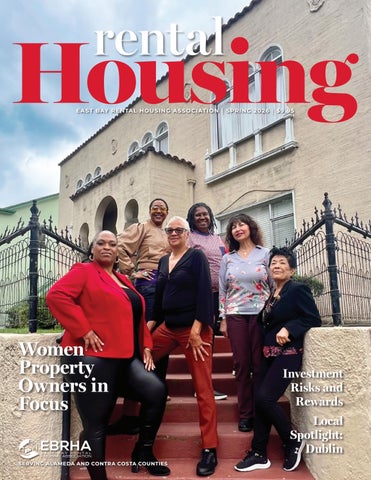
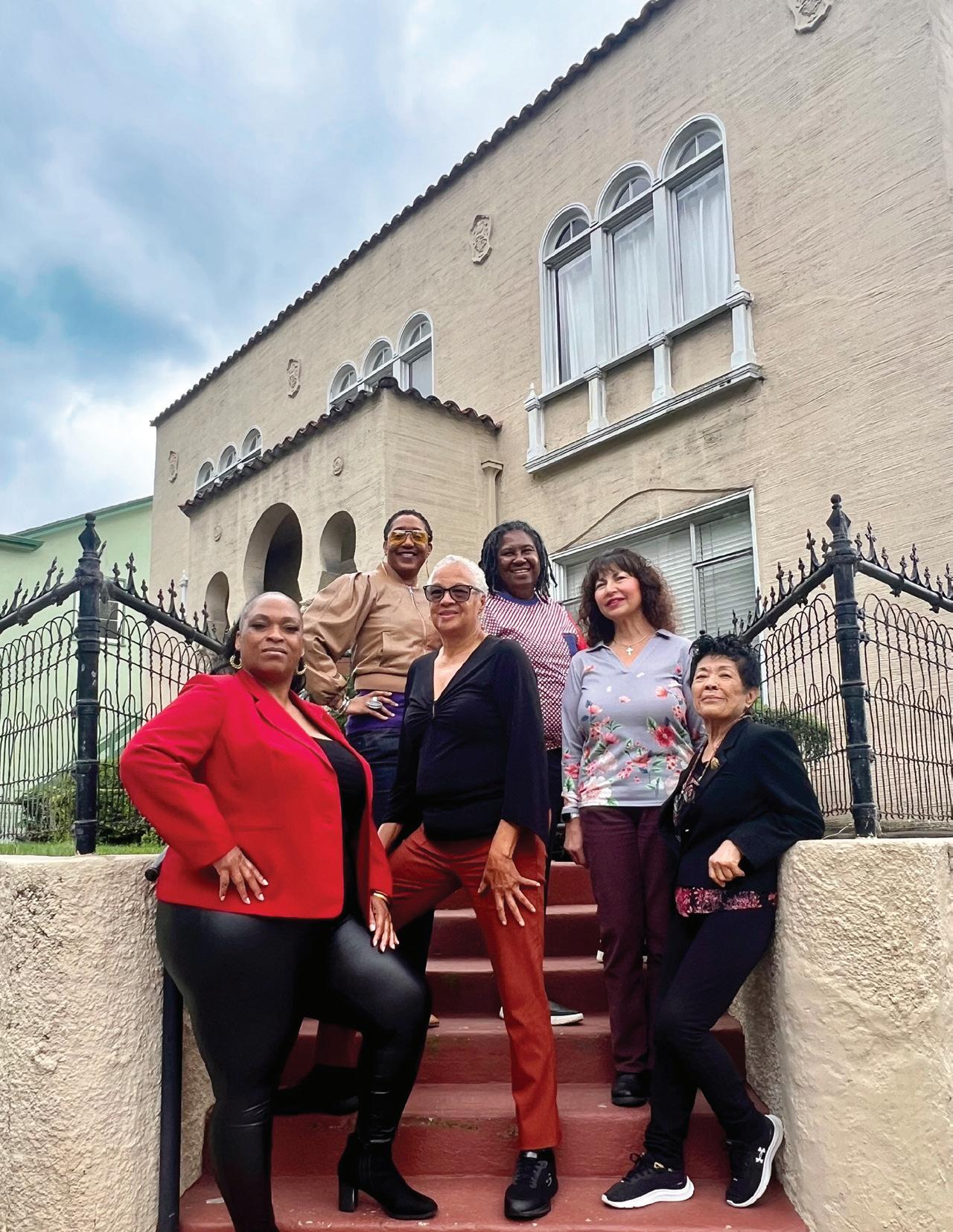
L-R: Deon Sailes, Mary Mockel, Latanya Campbell, Tomoko Nakama, Lakisha Brooks, and Sedalia Benton
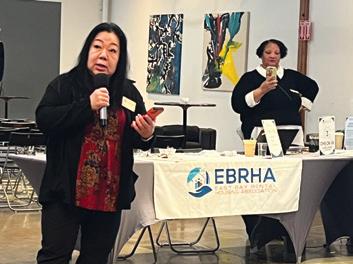
EBRHA MEETINGS, SPECIAL EVENTS, AND MEMBER MIXERS
L-R Alameda County Supervisor Lena Tam, EBRHA Housing Program Specialist, Itonya Connor. 2026
L-R EBRHA Members, Zina Henderson, Tomoko Nakama, and Lavelle Brown. EBRHA Board President, Wayne Rowland, and member Randall Whitney—March Networking Mixer, La Pinata, San Leandro
2026 Candidates for California Governor—Urban League Annual MLK Breakfast (Jan), William J Ruttter Center, San Francisco
L-R CA Assemblymember Matt Haney, Carol H. Williams’ Creative Director Carol Hood, EBRHA CEO Derek Barnes—Bay Area Film Night’s Oscars in Oakland (Mar), High 5ive Rooftop Bar, Oakland
L-R Joseph Villarreal, Executive Dir., Contra Costa Housing Authority, Patricia Wells, Executive Director of the Oakland Housing Authority, 2026 EBRHA Housing Collaborative Panel Discussion (Jan) BLOC15, Oakland
L-R Alameda County Supervisor Nate Miley, Toni Alexander, EBRHA CEO Derek Barnes, Council President’s Chief of Staff Patricia Brooks—Black & White Scholarship Ball (Jan), Hilton Concord, Concord
L-R EBRHA CEO Derek Barnes, Secretary of State Shirley Weber—CDP Black Caucus Honors / Democratic Convention (Feb), Museum of African Diaspora (MOAD), San Francisco
L-R EBRHA CEO Derek Barnes, Senator Alex Padilla’s Policy Advisor Adrienne Ullman Epstein—NAA Advocate Week (Mar), Hart Senate Building, Washington DC
L-R EBRHA CEO Derek Barnes, OAACC President Cathy Adams, Carol Wyatt, EBRHA Member Petra Brady — 2026 EBRHA Housing Collaborative (Jan), BLOC15, Oakland
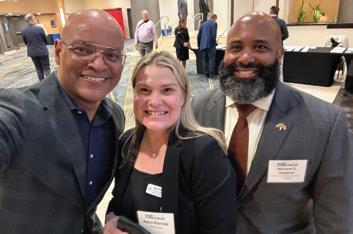
L-R EBRHA CEO Derek Barnes, Adee Parnes, Oakland City Auditor Michael Houston—SF Business Times Mayor’s Economic Forecast (Jan), Marriott City Center, Oakland
L-R Alameda County DA Ursula Jones-Dickson, San Francisco DA Brooke Jenkins, Toni Alexander, Contra Costa County DA Diana Becton, Patricia Brooks—Nate’s 7th Annual Brunch (Mar), Lake Chalet Seafood Bar & Grill, Oakland
EBRHA CEO Derek Barnes, Congresswoman Lateefah Simon— NAA Advocate Week (Mar), US Capitol Building, Washington DC
L-R
Breaking Down Bills
2,833 BILLS INTRODUCED IN 2025, PART 2 OF 2
BY RON KINGSTON
HABITABILITY LAW: REFRIGERATORS AND STOVE MANDATE
AB 628 (TINA MCKINNOR)
Assembly Member McKinnor felt that the current habitability law is outdated and does not address basic household appliances. This bill requires that residential property owners MUST, within 30 days after being notified of a recall by a manufacturer or notice from a renter, either repair or replace a refrigerator or stove that is not in “good working order.” The bill imposes this new mandate for a new lease or a lease that is amended or extended on and after January 1, 2026.
This bill is important for property owners to be aware of as they will be required to repair or replace the defective appliance(s) within 30 days after being notified in writing by renters. Renters may elect and inform the owner that they are to provide and maintain their own refrigerator as provided in the new law. It is important to note that renters are now armed with the possibility of raising a new habitability defense.
REAL ESTATE:
DIGITALLY ALTERED IMAGES
AB 723 (GAIL PELLERIN)
AB 723 (Pellerin) identified an issue with real estate listings. The author noticed that some real estate listings used AI-manipulated images or digitally staged photos to show enhanced versions of the property that was being listed. The author found that in a few cases consumers were harmed by these misleading photos despite existing law that prohibits false or misleading advertising. The bill combats the
problem by requiring that a digitally altered image used in an advertisement or other promotional material for the sale of real estate include a conspicuous statement located on or near the image stating that the image has been digitally altered.
The new law is important for property owners because it not only requires a digitally altered image in an advertisement for the sale (not rental) to include a conspicuous statement on or near the image. It also requires language indicating that the unaltered images can be accessed on a linked internet website or QR code. An exception to the new disclosure requirement applies to images using common photo-editing software that adjusts lighting, color balance, angle, cropping and exposure.
PLANNING AND ZONING ANNUAL REPORT
AB 726 (ANAMARIE AVILA FARIAS)
AB 726 (Farias) was created to fill a gap that assists in maintaining affordable housing in the state. Currently, annual progress reports are required by all jurisdictions. The reports must provide housing information annually to the department of Housing and Community development. In California, there are several dwelling units that need to be rehabilitated. This bill creates an option for a local government to include in the housing element progress section of their annual report the number of units of existing deed-restricted affordable housing that are at least 15-years old and have been substantially rehabilitated with
at least $60,000 per unit in funds from a local government in the prior year.
This bill is impactful because, according to the author, for a good part of California’s history the Department of Housing and Community Development funded housing that had extremely affordable rents and did not exceed the development’s annual operating costs. This means that developments do not have extra money to fund long-term repairs. This bill incentivizes local governments to approve and promote investment in the rehabilitation of affordable housing by giving them a housing element credit. This will help, for example cities that have little if any available property that can be used, helping that they meet the state housing element law requirements, help communities provide and promote economic revitalization, and rental property owners who want to improve their property. This is a win-win new state law.
SERVICE OF PROCESS ACCOUNTABILITY, REFORM AND EQUITY (SPARE ACT)
AB 747 (ASH KALRA)
AB 747 (Kalra) addresses an issue where 90% of consumers do not appear in court to defend themselves in debt collection lawsuits every year in California. According to the author of the bill, this is due to fraudulent or improper service of process. This bill fixes the process by strengthening procedural protections for defendants by increasing accountability for process servers, clarifying the standard for substituted service, requiring photographic documentation of service, and enhancing access to post-judgment relief when service was unlawful.
The bill strengthens procedural protections by increasing accountability for process servers. Now, the standard for substituted service, photographic documentation of the service and it enhances post-judgment relief when service was unlawful. Owners/agents may wish to include
in a renter’s file copies of photographs the location of the substituted service.
REAL PROPERTY AND UNSOLICITED OFFERS
AB 851 (TINA MCKINNOR)
AB 851 (McKinnor) addresses an issue that was identified during the wildfires in January of 2025. According to the author, many homeowners were being targeted by unscrupulous businesses, scam artists, and predatory buyers. Furthermore, some of these actors engaged in illegal price gouging. They would also make unsolicited offers to people who lost their homes due to the wildfires. This bill prohibits anyone from making an unsolicited offer to purchase residential real property in Los Angeles, in zip-codes covered by the executive orders, until January 2, 2027. This bill would also mandate that the buyer and seller, before the transfer of the title, execute a written attestation that they were compliant with this mandate. The executed attestation is to be recorded by the buyer. Failure to record the attestation will not affect constructive notice imparted by the deed and does not affect the rights of any BFP or encumbrancer.
ARTIFICIAL INTELLIGENCE (AI)
AB 853 (BUFFY WICKS)
AB 853 (Wicks) addresses an issue of doctoring images. According to the author, generative AI tools make it easy to create, edit, and doctor images, video, and audio. This gives leeway for bad actors to spread disinformation, and to create a lack of trust in the content consumers and users of technology see online.
The bill requires manufacturers of capture devices such as cameras, smartphones with cameras, scanners, audio recorders and other devices that are capable of storing and transferring digital media to provide users including rental property owners and agents with the ability to embed provenance data in the content they capture.
RESIDENTIAL REAL PROPERTY: LEASE REQUIREMENTS
AB 863 (ASK KALRA)
AB 863 (Kalra) addresses the vast diversity of the state and how judicial summons function and how to read a summons for an action for an unlawful detainer. It is argued that current law poses challenges for those that are not fluent in English.
This bill requires that the Judicial Council creates a single summons form for mandatory use, in action, for an unlawful detainer. This form must be in English, Spanish, Chinese, Tagalog, Vietnamese, and Korean. Furthermore, Judicial Council is also required to publish this form on their website.
ACCESSORY DWELLING UNITS
(ADU’S)
AB 1154 (JUAN
CARRILLO)
AB 1154 (Carrillo) limits owneroccupancy requirements for junior accessory dwelling units (JADU’s). All rentals of JADU’s must be for a term longer than 30 days, thus short term rentals would be prohibited.
This bill limits owner-occupancy requirements for junior accessory dwelling units (JADUs). Currently, the law requires that an ordinance provides for creation of a junior accessory dwelling to mandate owner-occupancy in the single-family residence where the JADU is permitted. This bill states that the owner-occupancy requirement would not apply unless the JADU has shared a sanitation facility with the existing structure. This bill is important to property owners because, according to supporters, it accelerates housing production, reduces construction costs, and eliminates outdated restrictions that prevent affordable housing growth.
SB 9 (JESSE ARREGUIN)
SB 9 (Arreguin) addresses accessory dwelling units and owner occupancy requirements. According to the author, owner-occupancy requirements create
a barrier to ADU development and restrict the amount of rental property that can be available in the various communities. The author also argues that owner occupancy requirements have already been lifted from homeowners who constructed their ADU post 2020; and, through that lift, California has had a massive market increase in that type of affordable development.
This bill mandates that a local agency must submit a copy of an ADU ordinance to the department of Housing and Community Development and must respond to the HCD’s findings within specified timeframes. If the local agency does not comply with these mandates, the ordinance mandating the ADU law will be considered null and void.
HOUSING INSURANCE STUDY
AB 1339 (MARK
GONZALEZ)
AB 1339 (Gonzalez) creates a housing insurance study. According to the author, rising insurance costs, shrinking coverage, and insurer withdrawals are creating financial hardship. These issues specifically affect affordable housing providers. The author believes that a study will provide the critical data necessary to create recommendations that inform policy solutions that ensure affordable housing remains available, viable, and protected.
This bill mandates that the California Department of Insurance (CDI) conducts a study on the availability of property, liability, and builders’ risk insurance coverage for certain affordable housing entities. The study must (1) collect information from relevant entities, (2) identify barriers to keeping the affordable housing entities appropriately insured, and (3) analyze and request any other relevant information that may help the department analyze the availability of property, liability, and builders’ risk insurance coverage for specified affordable housing entities. Furthermore, this bill would have the study analyze how insurers consider specific determina-
tions of offers or rate setting. This bill would also require the department to create and submit a report on their study to the Senate Insurance and Assembly Insurance Committee.
SUMMARY PROCEEDINGS
FOR OBTAINING POSSESSION OF REAL PROPERTY
AB 1384 (STEPHANIE NGUYEN)
AB 1384 (Nguyen) addresses courts authority to postpone unlawful detainer proceedings in California. The author argues that flexibility is appropriate and necessary in residential tenancy cases to protect renters, but it ends up hurting owners of commercial properties. The author’s goal was to be able to assist these commercial property owners while allowing judges to have more discretion in residential cases.
AB 1384 expands on existing law that ensures that for an action of unlawful detainer, courts can delay a hearing to a later date for good cause. This bill would limit the court’s authority to set dates of later hearings to cases with good cause and only involving residential tenancy. This bill came off the back of AB 2347 (Kalra, 2023) that modified hearing timelines in unlawful detainer proceedings. The bill did not distinguish between residential and commercial cases for unlawful detainers. This led to issues where delayed proceedings, stalled lease negotiations, and operational uncertainty plagued commercial property owners. This bill makes that distinction so that way commercial property owners no longer have to worry about delayed proceedings.
LANDLORD TENANT: INTERNET SERVICE PROVIDER SUBSCRIPTIONS
AB 1414 (RHODESIA RANSOM)
AB 1414 (Ransom) was brought to the legislature to address how internet service providers (ISPs), property owners, and renters interact. The bill mandates that a property owner must
allow a tenant to opt out of paying for any subscription from a third-party internet service provider. This can affect how rental property owners pay for their internet as they normally have bulk agreements with ISPs, and renters pay into the bulk agreement. It may be argued that implementation of this measure will be particularly problematic because of a requirement of the internet service provider to have all renters, not just a few of the renters, subscribe to the internet service. It is argued that internet service provides investment heavily in apartment complexes which translates to significant upfront and continuing investment in apartments. According to the author, internet service providers bundle their packages with property owners. Property owners then provide renters with working internet at a fixed cost that all renters contribute to as a part of their lease. The author argues that this impacts renters’ rights to seek out alternate internet service providers, and it makes it extremely burdensome for renters to seek out competitive rental prices. This argument is predicated on the idea that renters who agree to these lease agreements must, in part, pay for internet service bundles even if they use alternative internet service providers.
HOUSING
ELEMENT: PROHIBITING USING DESIGNATIONS
SB 262 (AISHA WAHAB)
SB 262 (Wahab) updates current pro-housing designations. In 2019, the Legislature enacted AB 101 which mandated that the Department of Housing and Community Development designate certain cities and counties as pro-housing. To obtain that designation, their local policies must facilitate the planning, approval, or construction of housing. The goal of this bill is to add to this list.
This bill adds new local policies related to tenant protection, housing stability, and homelessness and assigns them as pro-housing policies. These
policies are to be taken into consideration by the Department of Housing and Community Development to determine whether a city or county can be designated as pro-housing.
DWELLING UNITS: MAXIMUM OF INDOOR TEMPERATURE
SB 655 (HENRY STERN)
SB 655 (Stern) addresses climate change and extreme heat. According to the author, these issues are becoming the most alarming and deadly in the state. The author mentions how some might view the heat as uncomfortable, but they pose serious health risks. The goal of this bill is to ensure a safe temperature that ensures Californians are not at risk of succumbing to these extreme temperatures.
This bill declares it is an established policy of the state that all dwelling units must be able to achieve and maintain a safe maximum indoor temperature. Current law demands that the California Building Standards Commission (CBSC) approve and adopt building standards and codify those standards in the California Building Standards Code. Additionally, the bill requires certain state agencies to consider the maximum safe indoor temperature when revising, adopting, or establishing policies, programs, and criteria, including grant criteria and when revising, adopting, or establishing regulations.
Ron Kingston is president of California Strategic
Advisors.
East Bay Apartment Advisor
As an owner of East Bay multiunit properties for 25 years, John Caronna has the knowledge and 14 years of invaluable experience to assist in anything regarding your property! John Caronna
COMING SOON
5 units on Walker Ave, in Grand Lake neighborhood
328 Forest St. 4 plex in Oakland
Sold over listing price. Represented Seller.
987 Vermont street, Oakland 4 plex in Oakland
Sold! Represented Seller.
778 20th Street Oakland. Triplex. Represented Seller.
Dublin, California stands out as one of the East Bay’s most attractive markets for rental property investment due to its strong economic base, highly educated workforce, and housing demand.
Strategically located along the I-580 corridor with direct access to BART, major employment centers, and top-rated schools, Dublin consistently draws high-income renters seeking quality housing close to Silicon Valley and Tri-Valley job hubs. Limited land availability, steady population growth, and a predominantly professional renter base combine to support stable occupancy, above-average rents, and long-term investment resilience — making Dublin a compelling choice for property owners focused on durability rather than speculation.
That investment stability is driven first and foremost by renter choice. Dublin continues to attract renters who are selecting the city for its quality of life, convenience and long-term livability. Renters are drawn to Dublin’s modern housing stock, well-planned neighborhoods, and proximity to major employment centers, while benefiting from strong schools, expansive parks, and reliable transit access. For many households, Dublin offers the balance of suburban
Dublin
BY LYNN KREHER
comfort and urban connectivity — making it not just a place to rent, but a place to stay.
That renter demand becomes especially clear when looking at the specific features that make Dublin one of the Tri-Valley’s most desirable places to live. From its highly rated schools and thoughtfully designed neighborhoods to its extensive park system, retail centers, and convenient transit options, Dublin offers amenities that directly support renter lifestyles. Easy access to BART and major freeways, proximity to major employment opportunities, and a strong emphasis on safety and community planning combine to create a living environment that consistently resonates with professionals, families and long-term tenants alike.
GOVERNMENT
Dublin’s local government generally maintains a pragmatic, business-oriented approach toward rental property owners, shaped by the city’s em-
phasis on growth, economic development, and long-range planning rather than aggressive housing regulation. Unlike some neighboring jurisdictions, Dublin has not adopted local rent control, a rent registry, or city-specific just-cause ordinances, instead relying primarily on statewide requirements. The city’s policies tend to reflect an effort to balance renter protections mandated by California law with the recognition that private property owners play a central role in meeting housing demand, particularly in a market defined by limited land availability and continued population pressures.
Here are three important laws and regulations that property owners should know about.
While Dublin does not have its own local rent control ordinance, most rental properties are subject to California’s Tenant Protection Act (AB 1482), which places limits on annual rent increases and requires just cause for evictions once a rent-
er has met the minimum occupancy thresholds. Property owners should be aware of which units are exempt, ensure required disclosures are provided when applicable, and carefully track rent adjustments to remain compliant with state law.
Dublin also maintains firm restrictions on short-term rentals. In most cases, rentals of fewer than 30 days are prohibited unless the property is owner-occupied and specific conditions are met. These rules significantly limit the use of residential properties for vacation or transient lodging purposes and reflect the city’s emphasis on preserving long-term housing availability.
In addition, property owners must comply with Dublin’s zoning regulations, building codes and safety standards. This includes adherence to permitted use requirements, occupancy limits and local development standards, particularly for property improvements, unit conversions, or accessory dwelling units. Early coordination with city planning and building departments is often essential to avoid delays or unexpected compliance costs.
Taken together, Dublin presents a rental housing environment defined by strong renter demand, relatively predictable regulation, and a local government approach that emphasizes planning and compliance over aggressive intervention. For property owners, the city offers the advantages of a high-income renter base, modern infrastructure, and long-term market stability, balanced against the need to navigate statewide renter protections and local development standards with care. Understanding how Dublin’s policies, market dynamics and renter preferences intersect allows owners to make informed decisions, manage risk, and position their properties for sustained performance in one of the East Bay’s most resilient rental markets.
Lynn Kreher is a local Bay Area writer.
DEMOGRAPHICS • RACE AND ETHNICITY
Asian: 53.5%
White: 27.9%
Black or African American: 3.9%
Two or More Races: 10.9%
American Indian and Alaska Native: 0.6%
Native Hawaiian and Other Pacific Islander: 0.3%
Hispanic or Latino (of any race): 10.8%
White alone, not Hispanic or Latino: 25.1%
A Good Read
THE PROPERTY INVESTOR’S BOOKSHELF
Staying profitable in today’s rental market requires more than experience — it demands constant learning. The most successful property owners are the ones who treat real estate like a craft, sharpening their strategy through books written by the industry’s sharpest minds. Investing books distills decades of trial, error, negotiation, and market wisdom into a few hundred pages, giving owners a competitive edge without paying the price of someone else’s mistakes. If you want stronger returns, smarter decisions and fewer surprises, your best investment might just be the one you make in your own knowledge.
Building Wealth One House at a Time by John Schaub
Recommended by Todd Hutcheson, MBA Roofing
I highly recommend John Schaub’s book, Building Wealth One House at a Time The book gives practical advice that can be used by those just getting started and more experienced investors who may want to transition from flipping to holding. It is one of those books you will want to revisit every few years to get back to the basics. The two best chapters for me were picking the right neighborhoods and how to find renters who are more likely to stay for a long time. He also teaches an unconventional way to find unlisted deals on homes, knocking on doors in neighborhoods where you want to own.
From the Ground Up by Sean Woolley
Recommended by Georgina Shaw, Marketing Director, Shaw Marketing
From the Ground Up is an insiders’ guide to buying Spanish property and was written to share Sean Woolley’s years of experience, real life stories, tips and tricks with buyers interested in investing in Spanish Real Estate. It’s a great choice for anyone planning on investing in property in Spain (insights apply to all property owners) to generate rental
income. Throughout the book, there is excellent advice and information on selecting a property if you’re planning to rent it out, such as being clear on what you’re going to do with the property at the outset and sharing with your agent if rental income is your main motivation for the purchase.
There’s an entire chapter on making money from your property, as well as a chapter on the costs of buying and owning property, so you can work out whether it will be a good investment. Sean is an experienced property investor and runs through the fundamentals he always sticks to when purchasing a property for rental, such as choosing the best possible location, caring for your property, and trying to get your timing right. It includes real life examples, tips and insights to ensure you make the right choice and fully understand the Spanish system and the costs of purchasing and owning property and is a great resource for anyone looking to purchase properties for rental.
Recommended by Andy Nathan, Licensed Realtor and General Contractor, Creative Smart Contractors
Think and Grow Rich isn’t a real estate book, but it’s still essential reading if you own rentals. It’s about mindset, which matters more than people think. Real estate isn’t just numbers and budgets. You need clarity, persistence, and the ability to handle problems when things blow up, which they will. Nobody stumbles into being a successful property owner. You commit to a vision and execute
consistently. I work with investors daily on renovations and stabilization. The technical stuff is learnable. What’s hard is sticking with it when renters don’t pay, deals drag or costs spike. The stuff Napoleon Hill talks about — persistence, knowledge, picking the right partners — that’s what separates amateurs from pros running real businesses. If you’re stuck or burnt out, this book can reset your approach. It puts mindset first, business second. That shift alone can be the difference between owning a few random properties and building something that lasts.
Becoming a Boss Lady Real Estate Investor by Krista
Goodrich
Recommended by Krista Goodrich
I’m recommending the book because I wrote it for the beginner investor looking to grow their wealth through real estate investing. While the principles in the book apply to men and women, there are so many real estate books by men that I wanted to create one that speaks specifically, and intentionally, to women. The book explains how to get started in real estate investing, various types of real estate investing, where to find funding options and more ... but it also has fun with it – each chapter pays homage (through the titles and subtitles) to songstresses from the Material Girl to Taytay to Beyonce and more. The book uses terminology and analogies that speak to women. I love so many of the real estate books out there that have been written by men, but I think you will find this one really helps women learn AND enjoy learning about real estate investing.
Think and Grow Rich by Napoleon Hill
The Clean Fix
ADUs AND THE EAST BAY REALITY CHECK
BY BOB VAUGHN
California has not only an affordable housing crisis but also a shortage of units or homes in general. California lawmakers have positioned accessory dwelling units (ADUs) as a potential solution to the state’s housing shortage, streamlining approvals and overriding many local restrictions in an effort to accelerate production. Yet across the East Bay, the promise of ADUs often collides with realities that make construction far more complicated than policy talking points suggest. For many property owners, the question is no longer whether ADUs are allowed, but whether they are feasible. Many property owners would add ADUs to properties if these projects didn’t get
bogged down in so much red tape.
Despite state-level mandates, East Bay homeowners continue to encounter a layered mix of regulatory, financial and logistical barriers that slow or derail projects altogether. Local zoning interpretations, setback and design constraints, and neighborhood-specific standards frequently limit buildable space, particularly on older or irregular lots. At the same time, rising construction costs, permit and impact fees, and financing challenges strain project economics, even for owners who are otherwise eager to add housing.
Compounding these challenges are prolonged approval timelines and utility-related delays, especially
when electrical, sewer or water upgrades are required. Coordination between planning departments, building divisions and utility providers can stretch simple ADU projects into months-long processes, undermining the very efficiencies state law intended to create. Together, these barriers reveal a critical disconnect between policy goals and implementation — one that continues to constrain ADU development across the East Bay.
“Many property owners face delays due to discretionary approval processes, cumulative permitting fees, utility requirements, and design review overlays,” said Bruce Mars, Real Estate consultant in the Bay Area. “These hurdles often increase costs and extend project timelines, undermining the streamlined ADU approval framework intended under California law.“
“After building ADUs for 15-plus years around the Bay Area, the biggest obstacle isn’t construction; it’s navigating misinformation from the very city officials who are supposed to help,” said Yoni Asulin, Licensed General Contractor at ASL Remodeling. “I just dealt with this nightmare in Oakland last year. Client wanted an ADU above their garage extending into the main house. First plan
checker flat-out told us ‘you’re not allowed to do that.‘ We trusted them (big mistake), completely redesigned the project; added an interior staircase through the garage plus exterior access. It took months of work. Thousands in redesign fees. Client was furious. Right before final approval, a different source told us the original plan checker was wrong. We were allowed to do it the first way all along. Had to reverse the entire permit back to the original ADU design.”
OVERCOMING OBSTACLES
For East Bay property owners who move past the headline promise of “by-right” ADUs, the first real obstacle often emerges at the local level. While state law limits outright denial, cities retain authority over setbacks, height limits, lot coverage, and design standards, and those rules are not applied uniformly. On older properties with irregular lots, easements or nonconforming structures, these constraints can shrink the buildable footprint or force costly redesigns. The most effective way to overcome this barrier is early feasibility analysis. Property owners who engage a designer or builder experienced with their specific city — not just California ADU law in general — can identify constraints upfront and avoid submitting plans that trigger multiple rounds of correction or discretionary review.
Cost remains the most significant deterrent to ADU construction in the East Bay. Between labor, materials, permits, impact fees, and required upgrades, total project costs can escalate quickly and undermine the financial case for building. Many owners underestimate fees tied to fire access, grading, or school and utility impacts until late in the process. To manage this barrier, owners should demand comprehensive cost modeling before design begins, including worst-case utility scenarios. Exploring standardized or pre-approved plans, phased
“ For many property owners, the question is no longer whether ADUs are allowed, but whether they are feasible.”
construction strategies, or detached versus garage-conversion options can also materially change the economics without sacrificing livability.
Even when plans are compliant and financing is secured, permitting and approval delays frequently slow progress. While state law sets review timelines, real-world approvals are often extended by plan-check backlogs, interdepartmental coordination, or unclear correction notices. Property owners who succeed tend to treat permitting as an active process rather than a passive one. Assigning a single point of contact — either the owner or a project manager — to track submissions, respond quickly to corrections, and follow up with departments can shave weeks or months off approval timelines.
Utility infrastructure is another common and underestimated hurdle. Electrical service upgrades, sewer lateral capacity, and water meter requirements can introduce long delays, particularly when third-party utilities are involved. In some cases, utility timelines — not construction — become the critical path. Owners can mitigate this risk by initiating utility assessments early, even before final plan approval, and by working with professionals who understand how to sequence construction around utility lead times rather than waiting for them to become bottlenecks. Finally, confusion itself is a barrier. The patchwork of local rules across the East Bay creates uncertainty that discourages otherwise willing property owners from moving forward. Those who overcome this challenge typically rely on city-specific expertise, not generalized advice. Clear guidance, realistic expectations and disciplined project management
consistently separate stalled ADU proposals from completed units. Together, these barriers do not negate the value of ADUs, but they do explain why production lags behind policy intent. For property owners willing to plan strategically, assemble the right team, and anticipate friction points early, ADUs remain achievable. The path is simply more complex than the headlines suggest.
Mars provided the following advice:
· Engage knowledgeable architects and contractors who understand local ADU regulations.
Research city-specific requirements before submitting applications.
· Prepare complete, detailed plans to minimize revisions and delays.
· Consider hiring a permit expeditor if the city review process is particularly complex.
PRACTICAL HOUSING
Accessory dwelling units remain one of the most practical ways to expand housing in the East Bay, but their success depends on execution, not intent. While state laws have eased some restrictions, local interpretation, rising costs, and infrastructure constraints continue to slow progress. For property owners, careful planning, city-specific expertise, and early coordination with utilities and permitting departments can make the difference between a stalled project and a completed unit. Until policy goals are matched by clearer and more consistent local implementation, ADU production will continue to lag. Even so, with the right strategy and team, ADUs remain an achievable and valuable addition to the region’s housing supply.
Bob Vaughn is a Bay Area writer.
Hidden Costs of SB 436
BY DAN LIEBERMAN
One of the bills that the Assembly will soon vote on is SB 436 (Wahab). The bill provides that a notice to terminate a tenancy, or the notice to “pay rent or quit” is to now prohibit the owner/agent from serving that notice to the renter for 14 days (instead of three days from the time rent is due).
Renter rights groups argue that “three days is not enough time for financially vulnerable renters to come up with the rent, whereas many renters could do so in 14 days. The sponsors of the senate bill did not offer any evidence that supports their contention.
First, let’s look at existing law. The procedures for obtaining possession of real property include an unlawful detainer action against a renter who unlawfully remains in possession of the property, and it sets timelines regarding the filing of a complaint and defendant’s response, including a demurrer or motion to strike. The law also provides that a tenant has committed an unlawful detainer when they continue in possession of the rent property without the owner’s permission after the tenant’s nonpayment of rent and service of a three-day notice to pay or quit, stating the amount that is due.
Further, the law provides that a tenant has committed an unlawful detainer when they continue in possession of the property without the owner’s permission after the renter has breached a covenant of the lease or failed to perform other conditions under the lease and service of the threeday notice requiring performance of the lease covenants or conditions.
Current law also requires in an unlawful detainer action that the owner
serve upon the renter a copy of the complaint that must contain certain information including the facts upon which the owner is seeking recovery of the rental property and the method used to serve the renter with notice. Finally, the law requires a plaintiff in a civil action to serve upon the defendant a summons that is signed by the clerk of the court in which the action is pending. That summons is to include specified information including the time for responding and consequences for failing to respond.
The author, Senator Wahab, argues that California should change the statutes to bring it in line with Massachusetts, Minnesota, New York, Tennessee, Vermont, Virginia, and Washington. Do you see a pattern or similarity in the other state laws?
Under current practice it is important to note the true timing of this legal process in our state. Yes, eviction proceedings begin with the three-day notice. If a renter fails to pay or move out within the three days, the owner may file an unlawful detainer complaint with the court for recovery of the rental unit. The owner must simultaneously serve a copy of the complaint and a summons on the renter. The renter has 10 days to file an answer to the UD complaint. Failure to respond within 10 days the court may grant a default judgment. Should the renter respond on time the court shall hear the matter within 10 days (which, under most cases rarely happens that among other things the 20-day time period cannot include Saturdays, Sundays and other judicial holidays). It is important to note few owners begin this process on the following day when rent is due.
“...a single financial emergency can mean losing their home. ”
Owners delay the process as a general rule for a few days until they contact the non-paying renter to determine if the renter needs a few more days to pay the rent. And it must be stated that there is no renter that we are aware of that does not know when rent is due.
Renters, including the Western Center on Law and Poverty and Tenants Together, argue that nonpayment of rent is the leading cause of eviction and for many renters, “a single financial emergency can mean losing their home.” They observe that in the City of Los Angeles, the Department of Housing states that from February 2023 through mid-November 2024 that over 165,000 eviction notices were filed with the court and 94 percent of those notices were for nonpayment of rent.
Here is the question: Would renters unilaterally delay their rent payments until the middle of every month regardless of financial need or mutual agreement? Should this bill become law would rental property owners become involuntary creditors? Will this incentivize rental property owners to raise rents as much as legally possible so as to compensate for the extension of payment of rent? Will the bill allow property owners to delay their payments to utility companies, repairmen, mortgagors, maintenance companies etc.? The answers are obvious.
Dan Lieberman works for Milestone Properties.
Coalition Over Fragmentation: How Partnership Drives Smart Housing Policy in the East Bay
BY THE EXECUTIVE DIRECTOR, BERKELEY PROPERTY OWNERS ASSOCIATION (BPOA)
Krista Gulbransen
In to-
day’s housing policy environment, one thing has become abundantly clear: harmful ideas do not stay within city limits. Policies conceived in Berkeley often reappear in Oakland. Proposals piloted in Richmond surface months later in Concord. What begins as a “local” policy can quickly become a “regional” trend — and if left unchecked, a statewide precedent. That reality is precisely why coalition-building is no longer optional. It is essential.
At the Berkeley Property Owners Association (BPOA), we have long understood that working in isolation is a losing strategy. Our partnership with the East Bay Rental Housing Association (EBRHA) reflects a deliberate and necessary shift toward regional coordination — one grounded in shared intelligence, aligned advocacy, and a unified voice in the face of increasingly complex and coordinated policy efforts.
THE SPREAD OF POLICY — AND THE NEED FOR A UNIFIED RESPONSE
Over the past decade, we have watched a growing movement of “social housing” advocacy groups advance increasingly aggressive proposals aimed at devaluing the rental housing market. But these efforts are rarely confined to
just one jurisdiction. Instead, they are strategically replicated, refined and reintroduced across neighboring cities.
This creates a compounding effect where once the policy gains traction in one city, it is easily rebranded and introduced in another. The advocates will take lessons learned in one fight and use it to strengthen subsequent proposals in another.
Without the rental housing industry’s coordinated response, housing providers, policymakers and stakeholders are left reacting in a piecemeal format that is often too late.
Through BPOA’s partnership with EBRHA, we have been able to identify these patterns early, share insights across jurisdictions, and mount informed, proactive responses before policies take root.
A CASE STUDY IN COALITION SUCCESS: DEFEATING TOPA
Perhaps the clearest example of the power of coalition-building is our recent success in defeating a five-year push to implement a Tenant Opportunity to Purchase Act (TOPA) in Oakland and Berkeley.
TOPA, as proposed, would have f undamentally altered the sale of rental housing by:
· Granting renters a right of first refusal
Granting renters a right of first offer
· Imposing extraordinary hurdles on the sales process
In practice, this would have slowed transactions, reduced market liquidity, and introduced substantial uncertainty into the housing market — ultimately discouraging investment and limiting the very housing supply our
communities need.
This was not a one-off proposal. It was a sustained, multi-year campaign, advancing across multiple cities in California with coordinated messaging and political action.
Defeating it required more than opposition — it required alignment of our industry. By working together we were able to:
Share legal and economic analysis across jurisdictions
· Coordinate messaging to policymakers and the public
· Engage members and stakeholders in a unified advocacy effort
· Highlight real-world impacts on housing supply, financing, and transaction viability
Equally important, we expanded our coalition beyond rental housing organizations.
PARTNERING WITH REALTORS: BRIDGING POLICY AND MARKET REALITY
A critical component of our success was collaboration with local Realtor associations. While housing policy is often framed in abstract (and anecdotal!) terms, its real-world impacts can be devastating.
By working alongside realtors – who are at times small rental housing providers themselves, we were able to:
Demonstrate how policies like TOPA would delay or derail transactions
Highlight the financial uncertainty introduced for buyers and sellers
Provide data on how regulatory friction impacts pricing, inventory, and community investment decisions
This partnership grounded the policy conversation in reality rather than a
fantasy world.
It also sent a powerful message: the consequences of poorly designed housing policy extend far beyond property owners—they affect the entire housing ecosystem, including tenants, buyers, sellers, and even tenants.
The cities of Berkeley, Oakland, Richmond, or Concord may differ in character, but they are increasingly connected by shared policy trajectories. Advocacy efforts do not recognize municipal boundaries—and neither can we.
Our work with EBRHA reflects a broader strategic shift:
· From city-by-city reaction to region-wide coordination strategy
· From defensive posture to proactive engagement
By aligning our efforts, we are better positioned to anticipate emerging policy and trends and respond with more consistency and credibility. Our ultimate goal is to protect the longterm viability of rental housing across the East Bay region.
LOOKING TO THE FUTURE
The defeat of TOPA was a significant win — but it is not the end of the conversation. The same ideas will continue to evolve, reappear, and be reintroduced in new forms. New policies by social housing activists include increased opportunities for eviction moratoria, first-in-time applicant preferences, and the criminally convicted as a protected class.
Our responsibility is to remain vigilant, collaborative and forward-looking.
Coalition-building is not simply about defeating bad policy. It is about shaping better outcomes — ensuring that housing policy reflects economic reality, supports investment, and ultimately contributes to the creation and preservation of housing across our communities.
But success in this environment does not come from organizations alone — it
comes from engaged members. When we ask for participation — whether that is attending a council meeting, submitting a comment letter, or simply paying attention—it is not just procedural. It is strategic. Policymakers are influenced by voters who show up, who speak, and who demonstrate that they are paying attention. If one side participates more heavily than another, only that perspective is reflected in the outcome.
Too often, we hear after the fact that a policy “came out of nowhere” or that its impacts were unforeseen. The reality is that these proposals develop over time, in public forums or behind closed doors, and with multiple opportunities for input. Engagement at the early stages is where outcomes are shaped — not after policies are already in place.
The strength of BPOA and our coalition with EBRHA is directly tied to the willingness of our members to engage when it matters most. When we show up together — organized, informed and unified — we are not just reacting to policy. We are influencing it.
Looking ahead, that level of engagement will only become more important. The policy environment is accelerating, and the stakes continue to rise. Our ability to protect and advance the rental housing industry depends not just on strong organizations, but on an active and responsive membership willing to heed the call when it comes.
Because in today’s environment, the only way to meet coordinated challenges is with a coordinated response.
Krista Gulbransen is the Executive Director of the Berkeley Property Owners Association, a grassroots organization championing rental housing providers in Berkeley. She brings more than 25 years of business experience in consulting, real estate investing, and regulatory oversight.
Women Property Owners
LEADING THE WAY
BY MICHELLE GAMBLE
Women are shaping the future of rental housing in the East Bay. With roughly 52% of EBRHA’s membership now made up of women, the industry is seeing a dynamic shift toward collaborative leadership, long-term stability and community-centered ownership. Women property owners bring a distinctive blend of business acumen, resilience and relationship-driven management that strengthens the rental housing ecosystem for both investors and residents.
Their impact isn’t just growing — it’s redefining what successful property
ownership looks like in the Bay Area. EBRHA’s membership, their impact isn’t just visible — it’s foundational to the future of rental housing in the East Bay. And as more women step forward to invest, lead and innovate, the industry will continue to grow in strength, resilience and heart. It isn’t just growing — it’s redefining what successful property ownership looks like in the Bay Area.
Why do so many women get involved in property ownership and how does their leadership and management style differ from their male counterparts? Female property own-
ers often bring a distinct leadership and management style that sets them apart from their male counterparts. Women tend to approach property ownership with a strong emphasis on communication, relationship-building and long-term stability. They are often more proactive in addressing renter concerns, more detail-oriented in maintenance planning, and more engaged in educational and compliance programs that keep their operations running smoothly. While male property owners may lean toward transactional or growth-driven strategies, women frequently balance business discipline with relational intelligence — resulting in fewer conflicts, longer tenancies, and a more sustainable, community-minded approach to rental housing.
Women gravitate toward this business often as a full-on career or sometimes just stumble into it and find it makes nice side income. “I first got into rental property ownership when my grandparents wanted to purchase a home in my small Wyoming mountain town so they could escape thesouthern heat,” said Maddie Hamilton, an independent property owner. “They funded the project, and my husband and I did all the work/sweat equity. I was able to rent the property when my grandparents weren’t using it. I started my family in college and didn’t finish my degree. This allowed me to exercise my passion for architectural interior design. When we took down all the walls and completely changed the flow, the 900 sq/ft space looked huge. It felt great to want to do something and actually be good at it.”
Kristin Boekhoff, CEO of Bright
Door Homes, explained that her career fell that direction, as she loved the business itself. “My professional career has been in real estate for over two decades now because I really love creating physical spaces where people can live and work. I previously made two attempts to develop larger ($20 million+) projects on my own, but was ultimately unsuccessful. I became quite frustrated because I was reliant on other people (mostly men) to invest in the projects to make them viable. Then a couple of years ago while I was on a wellness retreat, a series of coincidences led me to figure out that I could invest in real estate on my own with the resources that I had if I focused on much smaller projects. Because my background was in larger commercial projects, initially I wasn’t interested in single-family homes, but I found a mentorship program that gave me my start and I now own a small multifamily property and have an expanding house flipping business. I really enjoy the freedom and flexibility that real estate investing brings.“
RELATIONS-BASED MANAGEMENT
Women property owners aren’t just participating in the rental housing industry — they’re also changing its tone, pace and effectiveness through a markedly different leadership style. Women tend toward what is called relations-based management, which means they lead with empathy and relational leadership aimed at understanding renters’ needs and not just financial concerns.
“I lend a woman’s empathy to my renters – that is, I realize they work hard to pay my rent, so I try to give them value for their dollar,” said Maria Pontones, digital marketing manager, Tacuna Systems. “As soon as there is a maintenance problem, for example, I begin to resolve it immediately. I also clean the place between renters as if I were the one moving in. Since the
building has 24-hour security at the door, I try to seek women as renters who would benefit from the added safety this provides.”
“I love that I am in control of my financial future and that the only upward limit is the one that I put on myself,” said Boekhoff. “I created a couple of small networking groups of women who are investing in real estate, and I think that we have several things in common: We want to make a difference as well as make money. (We like revitalizing a community by renovating a vacant property or giving housing to a single mom.) We put people first. All of us in the group have had renters that have not paid their rent. Sometimes we do need to evict them, but it is not the first tool we use. We see if we can work with the tenant to find a solution and tend to be more understanding of life setbacks. We are very collaborative. We share the names of plumbers, contractors, etc. We share our stories and lessons learned so that other people in the group don’t have to go through the same issue.”
“I feel like as women we have an eye for which neighborhoods appeal to families, what upgrades are most valued and vision for what a home needs,” said Diane Sautman Story, Principle L7 Properties, LLC. “Early on and now one of the biggest obstacles was finding people who were honest about numbers. Honest without trying to sell a package or a program, honest without inflating it for television, but what is a realistic amount to aim for, what to make, how to screen renters. People just didn’t want to talk about it. I learned a lot on my own and because of that, I try to share freely what I know.”
FREEDOM
For women, one of the most attractive aspects of going into the property business is the freedom to flex hours and financial wins. “It helped me to accomplish something that I knew was
possible with research and a little bit of work,” said Jane Merten, founder and CEO, AllOut Advisors. “It gave me the flexibility to build an extra stream of income outside of my regular corporate job. What do women uniquely bring? I would say simply it’s the ‘If I can do it, so can you.’ inspiration for other women to consider real estate.”
“What I wanted from a rental property investment was stability and no time commitment,” explained Dr. Amanda Baes, Healing Hands Chiropractic. “When I realized one tiny rental property could pay for itself and give me a monthly income, I felt in charge and stable. I also feel safer with a rental property. I make money from my rental property assets independent of my employment schedule. Women often have patience and the ability to communicate well, which helps us build strong relationships with our renters, identify and fix issues with our properties, and make smart decisions about our rental portfolios’ growth.”
As these stories show, women in rental property ownership bring far more than investment power to the industry — they bring vision, empathy, ingenuity and a deep commitment to community wellbeing. Whether they enter the field by design or by chance, women consistently transform the spaces they manage and the neighborhoods they serve. Their leadership blends business savvy with relational intelligence, resulting in stable tenancies, revitalized properties and a more human-centered approach to housing. With women now representing a majority of EBRHA’s membership, their impact isn’t just visible — it’s foundational to the future of rental housing in the East Bay. And as more women step forward to invest, lead and innovate, the industry will continue to grow in strength, resilience and heart.
Michelle Gamble is the editor of Rental Housing Magazine.
Less Space, More Sharing
CO-LVING: WHAT'S OLD IS NEW AGAIN
BY BREA HARPER
Once considered a housing model from another era, the boarding house is quietly making a comeback in California — only now it’s rebranded, modernized and marketed as co-living. As housing costs continue to outpace wages and renters seek flexibility, community and affordability, shared living arrangements are gaining traction across the state. From urban centers to college towns and job-rich corridors, co-living is emerging as a pragmatic response to California’s housing pressures, blending private space with shared amenities in a way that feels both contemporary and oddly familiar. What’s old, it turns out, is new again.
What is the difference between co-living and the old fashioned boarding house? Co-living is a modern housing model built around shared space and cost, but with a level of intentional design and management that distinguishes it from its historical cousin, the boarding house. At its core, co-living typically offers renters a private bedroom — often with a private or semi-private bathroom — paired with shared kitchens, living areas, workspaces, and sometimes amenities like gyms or communal lounges. Leases are usually flexible, utilities and Internet are often bundled into the rent, and properties are professionally managed with clear rules around use of space, cleanliness and conduct. The model is designed to appeal to renters who value affordability, convenience, and some degree of built-in community without committing to long-term leases or full apartments.
“Co-living simply means sharing your home, whether with people you
know or people you do not,” said Denise Supplee, co-founder of The Co-Investing Club by SparkRental. “Depending on the property, an owner may rent out individual bedrooms or bedrooms with en-suite bathrooms that include a private bath. All occupants share common areas such as the kitchen and living spaces, and the homeowner may establish rules around how the home is shared. A boarding home is very similar. One key difference is that the owner generally does not live in the home. Another difference is that boarding homes are more commonly used for college students and in lower-income areas. In recent years, however, I have seen a growing trend of boarding homes being used to house the senior population.“
“In some ways, co-living does echo the boarding houses of the past, especially in offering furnished private rooms, shared kitchens or bathrooms, and affordability for transient or transitional renters,” said Rany Burstein, founder of Diggz “But today’s model has evolved into a more organized, scalable and tech-enabled housing product, with varying levels of service and structure. Some co-livings operate more like extended-stay hostels, while others resemble modern boutique hotels with community perks.“
WHY CO-LIVING IS TRENDING
Co-living is trending in California primarily because it offers a practical response to a widening gap between housing costs and what many renters can realistically afford, especially in job-rich urban and suburban markets. As rents continue to climb and homeownership remains out of reach for
a growing segment of the workforce, co-living allows renters to access desirable locations by trading square footage and exclusivity for lower costs, flexibility and bundled services. For many Californians — particularly young professionals, students and mobile workers — the appeal is less about lifestyle branding and more about necessity: co-living provides a way to remain near employment, education and transit without committing to unsustainable rent burdens. In this sense, its rise reflects market pressure rather than novelty, echoing earlier periods in California’s history when shared housing models expanded in response to affordability constraints. Burstein outlined some key points as to why the new housing model is gaining traction in popularity. Burstein cited the following reasons:
Affordability: Co-living is often easier to qualify for (lower deposits, flexible terms) even if not always the cheapest on paper. It’s ideal for people priced out of traditional apartments or those looking to move quickly without the hassle of setting up furniture or utilities.
Work-from-Anywhere: The rise of digital nomads and work-from-home professionals has boosted demand for shorter-term, move-in-ready housing.
Gap in Transitional Housing: Whether it’s interns, traveling nurses, exchange students, or those relocating temporarily, there’s a shortage of housing for in-between life stages or for mid-term. Co-living fills that niche.
Investor Interest: We’re seeing a wave of small property owners turning single-family homes into co-livings (~10% of rooms on our platform are
“Some co-livings operate more like extended-stay hostels, while others resemble modern boutique hotels with community perks.”
live out property owners). Some are repurposing short-term rental properties into room-by-room rentals, following Airbnb regulation changes. Many are being coached into the co-living model as a new yield-maximizing strategy.
The co-living model though does have its downsides. A key problem that can arise is renter conflicts with other renters. It’s important for harmony to be created in these spaces, especially since property owners will struggle to maintain occupancy if just one renter causes friction.
“Co-living often involves the uncertainty of whether everyone will get along, and it can become uncomfortable for the homeowner if conflicts arise among renters,” explained Supplee. “Boarding homes are more likely to experience issues with nonpayment, which can lead to the need for eviction. There may also be a higher likelihood of conflicts between boarders.
“Overall, both co-living and boarding homes can be effective ways to get started in real estate investing,” added Supplee. “That said, it is critical to understand state, local and federal property owner/renter laws. Having a well-written, detailed lease with clear rules and regulations is equally important.“
Brea Harper is a Bay Area writer.
Bay Area Bin Support
NANCY FIAME
Bay Area Bin Support
Bay Area Bin Support provides reliable, on-site trash and recycling management services for multifamily and commercial properties throughout the Bay Area. They handle dumpster staging, overflow prevention, enclosure maintenance, and cleanliness monitoring to help property owners reduce waste issues, improve tenant satisfaction, and stay compliant with local regulations. Their hands-on approach saves owners time, cuts unnecessary hauling costs, and keeps properties clean, orderly, and professionally maintained.
Q: How do you customize your bin support services for different property types and site constraints (tight access, hills, garages, shared enclosures)?
At Bay Area Bin Support, we start with the understanding that no two properties operate the same way. Every site has its own layout, access limitations, renter habits, and operational challenges, which means there is no onesize-fits-all approach to bin support or trash management.
That’s why every new service begins with a site visit and a conversation with the owner or manager about their specific pain points. One of my favorite questions to ask is, “If you had a magic wand, what would your trash program look like?” That question often reveals the real issues — whether it’s tight garage access, steep grades, shared enclosures, or ongoing cleanliness concerns.
From there, we build a customized service plan. We document each property with photos and highly detailed service instructions within our routing software so our technicians know exactly where bins are stored, how they should be staged, and — just as importantly — how they should be returned securely and left clean and organized after service.
We also assign consistent technicians to each property so they become deeply familiar with that site’s unique process. Over time, they know the trash rooms, access points and nuances like the back of their hand. That consistency allows us to deliver reliable service, even in challenging environments, while minimizing disruption for renters and owners alike.
How do you coordinate with waste haulers to help property owners reduce push/pull fees, overages, or missed-pickup issues?
We truly see ourselves as a waste concierge for our clients, and a big part of that role is acting as the direct point of contact with the hauler on the owner’s or property manager’s behalf. That proactive coordination removes a lot of the day-to-day friction and rising waste costs that property owners often face. When pickups are refused due to contamination in recycling or compost bins, we document the issue with photos and share them with the client so they clearly understand what caused the refusal. We then help identify what tenant instructions may be needed and provide decontamination services to ensure bins are properly prepped for the next scheduled pickup — reducing the risk of repeat refusals and contamination fines.
If bins are constantly overflowing, we work with owners to address the root cause. That may include helping order bin locks, evaluating different bin sizes or service frequencies, or finding practical ways to eliminate overflow and overage fees that can add up quickly over the course of a year.
In the case of a missed pickup, we contact the hauler immediately and follow up until a resolution is in place. We also keep the owner informed so they’re not caught off guard by tenant complaints — they already know what happened and what’s being done to fix it.
Finally, when it comes to push-pull, distance, or elevation fees (each hauler labels them a little differently), we often provide those services at a lower
cost than the hauler, with the added benefit of trash spillage cleanup at the storage and collection site and ongoing hauler coordination included. For many properties, that combination results in fewer headaches, more predictable costs, and a cleaner, better- managed waste program overall.
What is your process for communicating and resolving problems like overflow, contamination, illegal dumping, or missed service — and how quickly are owners notified?
We’ve built our operations around fast response and clear communication. With crews working around the clock and a dedicated client services team, issues identified in the field are immediately relayed back to our office so action can begin right away.
Owners and property managers receive same-day communication whenever a collection-related issue occurs. Our team notifies the client of what happened, what the next steps are, and who is taking action. For us, the day isn’t considered complete until all affected clients have been informed of any pending issues. Communication then continues the following morning until the issue is fully resolved. Once a solution is in place — whether that’s decontamination, overflow removal, illegal dumping cleanup, or coordination with the hauler — we close the loop with the owner so they know the matter has been handled.
One of the most consistent pieces of feedback we receive from clients is how fast and reliable our communication is. That transparency, combined with strong field execution, gives owners peace of mind that problems won’t linger unnoticed or unresolved.
How do you help property owners support renter compliance with local recycling and composting requirements (education, signage, monitoring)?
We support renter compliance by combining hands-on services with
clear education. As a zero-waste facilitator, we don’t just point out problems, we actively help correct them through sorting, monitoring and ongoing communication.
In jurisdictions like San Francisco, where large refuse generators are subject to strict waste audits and compliance ordinances, we work with clients who are facing significant fines due to contamination. In those cases, our team physically sorts through all material generated onsite, separating items into the correct waste streams to maximize diversion and bring properties back into compliance.
For smaller apartment buildings in the East Bay, our approach is more preventative. We provide regular pre-collection sorting and decontamination services, along with photos and clear explanations that owners and managers can share directly with tenants. When needed, we supply appropriate signage, flag recurring contamination issues, and call out commonly misunderstood items. such as plastic bags in recycling— so patterns can be addressed before they become costly problems.
We also believe education is key to long-term success. Beyond sorting, signage and reporting, we provide waste-sorting presentations to elementary schools, because building good habits early helps create more compliant and informed renters in the future.
How do you measure success for a property, and what performance standards or service guarantees do you provide?
We believe true accountability comes from performance, not long-term contracts. That’s why we don’t lock clients into extended agreements. If a client is ever dissatisfied, they can discontinue service at any time. That standard keeps us focused on delivering consistent, high-quality service every single week.
Over the past ten years, we’ve maintained a very low customer attri-
tion rate, which we see as one of the strongest indicators of success. While no operation is perfect and occasional issues do happen, what matters most is how quickly and seriously they are addressed. When something goes wrong, we respond with urgency, communicate clearly, and resolve the issue before it escalates.
We also believe in standing behind our work. If a mistake is ours, we take responsibility — whether that means refunding or covering associated costs — and we put safeguards in place to prevent the same issue from happening again. For us, success is measured by trust. When clients continue working with us year after year, or expand our services across multiple properties in their portfolio, it’s a clear sign that our approach is working. Longterm relationships built on reliability, transparency, and responsiveness are the ultimate service guarantee.
And how is your relationship with EBRHA valuable?
We’ve been a proud member of EBRHA since 2015, and for us, the greatest value has always been the sense of community they create. EBRHA is incredibly proactive in bringing members together and creating meaningful opportunities to connect, share best practices, and learn from one another within the rental housing industry. Through EBRHA, we’ve built strong relationships with property owners, managers, vendors, and industry partners—connections that have helped us grow thoughtfully and better serve our clients. The organization fosters collaboration rather than competition, and that environment ultimately benefits property owners and residents alike. Being part of EBRHA has allowed us to stay engaged, informed and connected to the needs of the local rental housing community, and we’re grateful to be part of an organization that genuinely invests in its members.
Trusted by Property Managers for Rental Turnovers, Resale Prep & Commercial Installs Since 1972
TRUSTED BY BAY AREA PROFESSIONALS
Your go-to flooring partner for rentals, commercial spaces, and more.
FAST TURNAROUNDS, LOCAL EXPERTISE
Family-owned and built for speed — because timing matters.
FOCUSED ON WHAT YOU NEED We work the way you work — fast, flexible, and reliable.
Housing Innovation & Technology Conference
16 th
About the Event
Harness the power of technology to elevate your rental housing business. Be prepared for a day of expert presentations, panel discussions, and networking opportunities with the industry's top technology players!
The Right Capital Investments Reduce Risk & Protect Value
BY MICHELLE GAMBLE
In California’s increasingly complex rental housing environment, the most effective capital investments are no longer optional — they are strategic. With aging building stock, rising insurance requirements, stricter safety and habitability standards, and growing regulatory oversight, property owners who focus their capital on core building systems consistently achieve better results.
Investments in roofs, plumbing, electrical infrastructure, life-safety upgrades, and building envelopes do more than preserve property value, they reduce liability, stabilize operating costs, support long-term tenancy, and strengthen a property’s position with insurers, lenders and regulators. In today’s California complex, highly regulated market, disciplined capital planning isn’t just good management, it’s essential for sustainable rental ownership. The kind of ownership that pays off and makes the investment worthwhile, not just cosmetic and attractive (even though that matters, but attractiveness when it fails doesn’t cost more money).
For California rental property owners, capital investments should be prioritized based on the outcomes they deliver rather than their visual appeal. The highest-value investments are those that protect the asset and eliminate risk, beginning with roofs and the building envelope, which prevent water intrusion, mold, structural deterioration, and insurance non-renewals; plumbing infrastructure upgrades that reduce leaks, habitability claims, and costly renter displacement; and electrical system improvements that lower fire risk, support modern electrical demands, and meet insurer and lender requirements.
Next in priority are life-safety and compliance investments, including smoke and carbon monoxide detection, fire alarm systems, emergency lighting, and seismic retrofits, all of which reduce liability exposure, support regulatory compliance, and strengthen a property’s position with insurers and financing partners. Once these fundamentals are addressed, owners achieve strong returns by focusing on operating cost control through HVAC replacements, insulation, energy-efficient windows, LED lighting, and wa-
ter-conserving fixtures, which stabilize cash flow, reduce maintenance volatility, and improve renter satisfaction. Investments that enhance security and livability — such as improved doors and locks, exterior lighting, noise mitigation, in-unit laundry, and functional storage or parking — further protect income by reducing turnover and vacancy. Only after these core categories are completed should owners allocate capital to kitchens and bathrooms, where durable, functional upgrades can support leasing performance and renter retention without overspending on cosmetic finishes that do little to improve long-term asset performance.
The real question becomes how do you determine strategic priorities in your investments? “I use a precise mathematical formula to determine the year’s net profit and balance it against capital improvement costs,” said Ali Zane, personal finance expert and CEO at IMAX Credit and Identity Theft Repair Services Firm. “For instance, a $15,000 renovation that yields $1,500 in annual rent increases yields a 10 percent return. I need to see a return of at least eight percent on any improvement I make. I consider renter turnover costs, including loss of rent during the vacancy and expenses for cleaning, painting and re-leasing, which are often the largest financial drain on performance. The largest financial drain on performance is often renter turnover costs. Strategic improvements that reduce turnover or extend a renter’s stay usually exceed my eight percent minimum, making them a strong financial case to ignore.”
“I evaluate cost recovery, factoring in increase in rental income, over a five to 10-year period and also consider how long the improved fixture will last. If an upgrade reduces maintenance and improves retention and marketability, it’s more than likely worth the cost,” said Ben Mizes, co-founder of Clever Offers.
“I try to focus my upgrades on things that will last longer than one renter,” explained Krista Goodrich, Author of The Boss Lady Investor™ book series. “There is very low risk in updating lighting as it’s infrequently damaged and gives a rental a fresh and current look.”
“The first thing I always look for with capital improve-
“It’s time to seriously examine what California is doing wrong and right, and compare it to Texas, which appears to be managing housing more effectively.”
ments are things that can lower my operating costs while also attracting more renters, said Martin Orefice, CEO, Rent To Own Labs. High-efficiency appliances top the list here. New heat pumps, induction ranges, etc. are major selling points that also keep my utility and repair bills lower.”
OPINIONS ON TOP PRIORITIES
Property owners cite different top priorities to focus on for capital improvements. Some say the roof or the HVAC and others emphasize overall renovations. It’s important to consider your properties’ position in the marketplace. For example, an average property located in a middle- to low-income market demands different standards be upheld versus a property in a high-end market where aesthetics often matter more to the renter. Higher-end property owners might emphasize updating and renovating the property’s interior as a sale’s point.
When evaluating what investments make sense, consider your audience of prospective renters, and that will guide your choices. For California rental property owners, capital investments should be prioritized based on the outcomes they deliver rather than their visual appeal, while also accounting for a property’s position in its local market.
Owners often cite different top priorities—some emphasize roofs or HVAC systems, while others focus on broader
renovations—but the most effective approach begins with understanding the asset itself and the renter it serves. The highest-value investments are those that protect the building and reduce risk, starting with roofs and building envelopes that prevent water intrusion, mold and insurance complications; plumbing infrastructure that limits leaks, habitability claims and renter displacement; and electrical system upgrades that reduce fire risk and meet insurer and lender standards. Life-safety and compliance improvements, including smoke and carbon monoxide detection, fire alarm systems, and seismic retrofits, follow closely by reducing liability exposure and supporting regulatory compliance.
Once these fundamentals are addressed, owners can improve operating performance through HVAC replacements, insulation, energy-efficient windows, LED lighting, and water-conserving fixtures, all of which help stabilize cash flow and improve renter satisfaction. At the same time, market context matters. An average property in a middle- to lower-income market typically requires a strong focus on safety, functionality, durability, and operating efficiency, whereas properties in higher-end markets face renter expectations that place greater emphasis on aesthetics, interior finishes, and overall presentation. In those cases, interior renovations may play a larger role as a leasing or sales driver. Ultimately, the most effective capital planning aligns investment decisions with the expectations of prospective renters, ensuring that improvements support both the property’s competitive position and its long-term financial performance.
What improvements have noticeably attracted better-qualified renters or increased demand for owners’ units? When it comes to long-term rental, Goodrich said, “Beautiful kitchens, decent closet space and updated bathrooms help my units to stand out from the crowd. For small bathrooms, simple fixes like ditching the pedestal sink and installing a sink with a cabinet can make a world of difference in a tight market. Also, always get professional pictures.”
CORE IMPROVEMENTS
While cosmetic upgrades often get the most attention, the strongest returns on investment in rental housing are rarely tied to what a renter can see on day one. Long-term asset performance is far more influenced by the reliability, efficiency and risk profile of a property’s core building systems. Plumbing, HVAC and water-delivery infrastructure quietly determine operating costs, insurance exposure, renter stability, and the likelihood of costly emergencies. For property owners focused on sustainable returns rather than shortterm optics, capital improvements to these foundational systems represent some of the most strategic and significant investment decisions they will make.
“It is common for energy-efficient upgrades to appear very expensive,” said Zane. “However, they generate operational savings that transform their cost over time, capturing value over the years. As an example, I spent $18,000 on a complete LED lighting system and new HVAC at one of my largest residential properties. It seemed expensive, but after a year, property heating and cooling costs dropped by 34 percent. Additionally, I increased rents by $120 per month because the new HVAC system reduced utility costs. That property
generates an additional $1,440 in rent and $6,120 in utility savings, totaling $7,560 in benefits over one year. That yields an ROI of $7,560 on an $18,000 investment, and the utility cost benefits will continue to accrue. That is coupled with the financial relief renters will receive.”
Beyond mechanical systems, renter experience is increasingly shaped by how well a property supports daily living and work habits. Improvements that reduce noise, enhance comfort, and create functional shared spaces can directly influence satisfaction, retention, and a renter’s willingness to renew. “Renters really appreciate when soundproofing and better insulation are added, especially in units that share walls,” said Mizes. “Many renters also appreciate common areas when they have co-working areas or fitness amenities.”
AESTHETIC RENOVATIONS
Once a property’s core systems are stabilized, interior renovations become the next opportunity to increase value in ways that are immediately tangible to renters. Unlike major mechanical upgrades that protect against future risk, interior improvements influence day-to-day comfort, usability, and perception of quality — factors that directly affect
renter satisfaction, retention and achievable rents. When approached strategically, interior renovations are not about luxury finishes, but about aligning the living space with how renters actually live, work and share space.
“Kitchens and bathrooms offer the best ROI on renovations,” said Mizes. “Even replacing countertops or appliances with energy-efficient versions will increase property value and rental rates significantly. Improvements made to the property’s curb appeal as well as landscaping and exterior paint can yield surprisingly high returns on investments as well.”
One way to retain renters is also to emphasize amenities and cost-saving extras for renters – and sometimes it’s just the little touches that add up to valuable results. “Building high demand and attracting qualified renters has been made easier by offering in-unit laundry,” explained Zane. “For $16,000, I added stackable washer-dryer combos to five of my units, each costing $3,200. I priced the units with laundry at $150 to $200 more each month than the other identical units without laundry. Offering laundry amenities in my units resulted in a significant decrease in vacancy periods.
“On average, I reduced the vacancy period from 45 days to 16 days,” added Zane. “This improvement protected and preserved my rental income. In one year, my vacancy reduction resulted in about $8,400 in additional revenue and an extra $9,000 in rent premiums. The investment paid for itself in one year, giving me a competitive edge to increase my occupancy and keep it well above the average.”
Goodrich concurred and added, “Quality appliances, a nice kitchen and staying on top of repairs as they are needed. If an appliance breaks or has issues, fix it or replace it quickly. Ask your renter if they are okay with you making upgrades
along the way – this makes the home constantly have a new feel for the renter and keeps it relevant compared to other newly renovated listings.”
OUTCOME-DRIVEN INVESTMENTS
Ultimately, the most successful rental property owners are those who treat capital improvements as a disciplined, outcomes-driven strategy rather than a reaction to trends or renter turnover. In California’s highly regulated and risk-sensitive housing environment, investments that protect the asset, reduce liability, and stabilize operating costs consistently outperform upgrades driven purely by appearance. Roofs, plumbing, electrical systems, life-safety compliance, and energy efficiency form the backbone of longterm property performance, while thoughtfully chosen interior and amenity upgrades enhance livability, retention and market competitiveness.
The common thread across owner experiences is clear: capital improvements deliver the strongest returns when they are durable, renter-relevant and aligned with both the property’s market position and long-term financial goals. Whether the objective is reducing vacancy, lowering operating expenses, satisfying insurers and lenders, or attracting better-qualified renters, the right investments are those that last beyond a single tenancy and compound value over time. In the end, strategic capital planning is not about spending more — it’s about spending smarter, protecting the investment, and ensuring rental ownership remains both profitable and sustainable in an increasingly complex market.
NAVIGATING 2026
Sales Preparation and Finding Opportunities
BY GRANT CHAPPELL
With a relatively dry winter, and “dry January” for some readers of this column, both the ski season and real estate market are off to a slow and rocky start. Redfin noted December 25’ witnessed the highest number of real estate cancellations since they started tracking in 2013. High interest rates and inventory equate to more choices, but affordability remains an issue. What should be a “buyer’s market”, does not necessarily feel that way. The commercial market for investment properties also feels like a buyer’s market, but deals with high returns are scarce, absent major issues with the properties themselves.
With Spring selling season around the corner, we will jump into types of capital improvements to prepare a property for sale to maximize price. Too often we engage with clients who spent precious capital in the wrong areas, with little recoup on sale. We will also dive into strategy to source and execute on good purchases this year.
Market update: Zumper’s January 25’ report noted San Francisco rents continue to set record growth with 16% annual median rent growth for a 1-bedroom unit to $3,670/month. New York still holds the #1 spot at $4300/month. Oakland continues to hover in the 14th - 15th spot with a median one-bedroom rent at $1980/month, down just 1% over the last year. Return to office and an AI surge in San Francisco (SF) has not yet translated into a spike in East Bay rents, though many owners have noted an uptick in renter traffic for vacant units.
Stubbornly high inflation has kept interest rates for commercial debt high as yields on US treasuries have not trended down as some experts expected going into 2026. Interest rate policy and who will ultimately take over for Powell at the Federal Reserve continue to siphon more media and investor attention. Kevin Warsh’s nomination in January sent Gold and Silver prices tumbling, along with a heavy dip in Bitcoin and other crypto currencies. While good intentions from our political class note the importance of the Fed’s Independence,
Local leadership at the Mayoral, City Council and Supervisor level must inspire confidence for investors to make moves. San Leandro’s recent move to enact rent control with striking similarities to Oakland’s does not help the “business friendly” image it carried for years as Oakland’s neighbor. SF’s new mayor has been extremely proactive in cleaning up the city and bringing companies back to the office full time.
SF, like most large cities, is facing budget issues due to lower property tax revenue related to falling commercial property values.
As we alluded to record-setting apartment rents, much of that is due to expansion in AI firms as they account for roughly ⅓ of the demand for new office space in SF, according to a report from the Business Times. Class A Office rents in the most sought after spaces have surpassed pre-COVID rents in some cases, even though the city sits at 30% vacancy rate with approximately 30 million sq ft of vacant office space. Continued layoffs in technology firms across the country and region puts the Tech industry with a net loss of jobs over the last year, despite the gains SF is experiencing with AI.
SELLER PREP
Supply and demand distort the reward mechanisms for property capital improvements. Pre2020, we had clients who went overboard on turnover to create “condo quality units”, or a product that would mirror new construction. This model worked well in attracting higher wage earning / high credit tenants who could afford and also appreciated a higher quality unit. The deluge of new rental units in Oakland / Berkeley, along with an urban flight of renters seeking to lease in secondary/cheaper markets under new Work From Home company policies, caused an estimated 20 to 30% drop in rents.
Securing third party reports, similar to selling a single family home, serves as a catalyst to undercover and address any maintenance issues before going to market. A vast majority of the items in reports come up inside the units with residents living there, so curing them rarely is feasible. In a competitive market to secure buyers, just having reports and some flexibility to work with a buyer in crediting some of the cost can make the difference between having, or not having, a deal that gets to the finish line.
Whether you own a four-unit, or 15-plus units, delivering a vacancy or two prior to going to market makes a big impact on value and buyer pool. Too often, we enter the scene and begin the marketing process only to find an owner has leased units in the last few weeks. The lack of vacancy reduces the buyer pool for an owner-user. “But they can just do an owner
“Drought friendly landscaping remains popular.
EBMUD offers incentives to convert lawns or other long patches of grass into less water intensive options.”
move-in eviction themselves.”
A first-time buyer primarily targets two- to four-unit properties due to 30-year fixed rate debt options. What many owners do not grasp is the mindset of a soon-to-be first-time buyer. The laundry list of reports and docs to review, on top of going through the loan and appraisal process, poses immense stress and fatigue. Karma is another factor – many buyers simply do not want to do an eviction and do not show up for open houses unless they know that they will have a vacancy at close of escrow.
With vacancy, there is a happy medium where too many vacancies (25% or more of the building) can create issues on financing and insurance. The vacancy condition also can impact financing if the unit does not seem “rent ready” or is missing appliances, heating systems or other critical items. However, we tend to advise to not over improve a vacancy given a new owner may have different tastes or standards in property improvements. Establishing a strong “market rent” on a vacancy after a full remodel is important, but it takes time to recoup that cost and it’s often better to leave it up to the buyer.
Curb appeal enhancements are crucial to allow professional drone and exterior shots to capture the property in the best light. Full exterior paint is not necessarily needed, but pressure spraying the exterior grounds and property can remove some discoloration at a much lower cost. Drought friendly landscaping remains popular. EBMUD offers incentives to convert lawns or other long patches of grass into less water intensive options.
We crafted a lengthy piece on insurance last year after the Malibu/Palisades fires. More than a year later, insurance continues to rise in cost, especially on older properties with aging plumbing and electrical systems. While a full electrical upgrade can be expensive and time consuming, partial upgrades can help. We’ve had success in shopping for new insurance policies with various brokers, shaving thousands off of the annual premium prior to going to market.
FINDING VALUE AND DEALS ON THE MARKET
To understand worthwhile capital improvements, it’s important to understand value-add buyer strategy and targets. “Value-add” tends to get used more loosely than it should in marketing, but the key focus is curing pain and issues that force some owners to sell. Like a developer going through the entitlement, permitting and construction / delivery process, value-add buyers seek to handle as much of the con-
struction work and improving property operations, short of building from the ground up. In fact, many residential developers started with “value-add” residential projects.
Until the last couple of years, I’d never thought we’d GRM’s under 10 in Berkeley near campus and around the Lake. The notion of an incredibly low basis (price/unit and per foot) going in on a deal is critical to the investor community. Historically, buyers could get away with paying a higher per/unit cost in an environment with much higher market rents, along with lower interest rates. Making deals pencil in this market offers less room for error if construction costs exceed budget or rents do not meet their target.
For 1031 buyers, the challenge to find cash flow remains extremely tough in the “A” locations. For what feels like a buyer’s market, property owners in good neighborhoods with low debt and stable rent rolls can hold out for higher prices. With five-year fixed apartment loans in the 5.5% to 6.0% range, finding a real 6% Cap Rate property is a persistent trait of this market. We’ve been fortunate in some of the opportunities we sourced on and off market last year in helping our buyers complete their 1031 exchanges.
Each year we find ways to work with new investors seeking to diversify liquid assets in real estate. The income tax advantages in utilizing passive losses to offset personal income can not be overstated in higher tax, blue states. Furthermore, we’ve sourced other debt options for 5+ unit properties allowing for a lower down payment to hit break even vs positive cash flows
LOOKING AHEAD
Ever since the Federal Reserve started lowering interest rates in late 2024, many industry experts expected some relief by 2026. In spite of all the talk and demands for lowering rates like the European Union, Powell has resisted the pressure. The economy continues to grow with solid corporate earnings and major investments in Tech and AI. As long as economic news stays positive and inflation higher than 2%, interest rates will stay hover at uncomfortable levels.
This type of ecosystem possesses all the traits of a vibrant market. The lingering distress in property operations and leasing, along with high interest rates and foreclosures on large assets elevates risk in investing, yet also increases rewards. We have not seen sales prices this cheap in 10+ years. Are we at the bottom, or are we back on the upswing?
Fire & Water Damage Recovery 510.826.5256 maria@waterdamagerecovery.net
Great Escape Service and Inspections 415.566.1479 service@greatescapeservice.com Greentree Property Maintenance 415.854.9495 greentreemaintenance.com info@greentreemaintenance.com
Fidelity Roof Company 510.547.6330 fidelityroof.com
General Roofing Company 510.536.3356 generalroof.com
SAFETY & SECURITY
Signal Security - Berkeley/ Oakland/Hayward 510.941.0500 eastbay@teamsignal.com
SEISMIC ENGINEERING & RETROFITTING
DW Hamilton Construction 510.919.0046 contact@ dwhamiltonconstruction.com
Quake Brace Manufacturing Company 510.495.1575
info@quakebracing.com quakebracing.com
West Coast Premier Construction 510.271.0950 info@wcpc-inc.com wcpc-inc.com
WASTE & RECYCLING Bay Area Bin Support 888.920.2467 customerservice@ bayareabinsupport.com bayareabinsupport.com
California Waste Solutions 510.836.6200
Clean Composting 415.269.8803
michelle@cleancomposting.com cleancomposting.com
Trash Scouts 510.788.0462
pedrito@bawaste.com trashscouts.com
City of Oakland Rent Adjustment Program
Recent Changes to Rent Increases
For banked rent increases, property owners must provide a copy of their current Business Tax Certificate. For CPI only increases, property owners must provide a copy of their current Business Tax Certificate or a copy of a payment plan with the City for delinquent business taxes.
Contact a RAP Housing Counselor at 510-238-3721 or rap@oaklandca.gov.
CPI Announcement
Effective August 1, 2025 to July 31, 2026, the CPI is 0.8%.
Banking
Effective January 1, 2026, banked rent increases are reduced from ten (10) years to five (5) years. Banking is currently capped at 2.4%.
The RAP Notice
Every rent increase notice must include the Notice to Tenants of the Residential Rent Adjustment Program form (known as the "RAP Notice").
RAP Appointment Request
Portal
To request an appointment with a RAP Housing Counselor or Rent Registry Staff, visit http://apps.oaklandca.gov
RAP FEE Increase
Council has approved an increase to the Rent Adjustment Program Fee from $101/unit to $137/unit. Collection at the new rate begins January 1, 2026. Owners who timely pay the annual RAP fee are allowed to pass on half of the fee ($68.50) to tenants for the current year.
Upcoming Workshops
Security Deposits Workshop
April 8, 2026, 5:30 pm- 7:00 pm
Small Property Owner Workshop
April 29, 2026, 5:30 pm- 7:00 pm
Small Property Owner Workshop
June 10, 2026, 5:30 pm- 7:00 pm
To register or view the 2026 Workshop Calendar, visit our website at www.oaklandca.gov/RAP. For RAP updates, join the our listserv at tinyurl.com/rapsignup.
Best Dog Parks
THE EAST BAY AREA IS HOME TO MANY OPTIONS
The East Bay is home to some of the most beloved dog parks and dog-friendly regions in California. Renters who have canine companions and want to be close to a great dog park will enjoy the regional settings. Visiting any East Bay dog area, it’s always helpful to check whether the park is fenced, whether there are separate areas for small and large dogs, and what the leash rules are — especially on open trails. Some of the most popular parks get busy on weekends, so early morning visits can provide a calmer experience.
What’s great is that dog owners have plenty of options for active play and outdoor adventures, and here are just a few.
Point Isabel in Richmond is one of the iconic dog parks. With expansive off-leash areas, waterfront trails, and room for even the highest-energy dogs to run, it’s a favorite for locals and visitors alike.
Heather Farm in Walnut Creek is another famous destination, offering large, fenced play areas with separate spaces for small and large dogs, making it ideal for safe socializing.
ad index
Berkeley’s Ohlone Dog Park has a loyal community following and remains a mainstay for neighborhood pet owners looking for a reliable fenced environment.
In Fremont, Central Park Dog Park draws consistent crowds thanks to its convenient location and ample space for dogs to roam and play.
San Leandro’s Marina Dog Park offers something a little different with its waterfront setting — dogs can enjoy the ocean breeze while owners take in the views.
Pleasant Hill’s Paso Nogal Dog Park is a smaller, community-focused favorite with designated spaces for different dog sizes.
El Cerrito’s Bruce King Memorial Dog Park, located along the Ohlone Greenway, serves as a convenient stop for local residents looking for a quick outing.
Castro Valley’s Earl Warren Dog Park is another dependable community spot with plenty of room for canine fun.
Alameda Dog Park remains a trusted, well-reviewed location where dogs can enjoy generous space to run.
“...dog owners have plenty of options for active play and outdoor adventures...”
Moraga’s Rancho Laguna Park rounds out the list with a quieter, more intimate setting that makes a pleasant stop during a day out with your dog.
Acceptance of an advertisement by this magazine does not necessarily constitute
express or implied, of the advertiser or any goods or services offered.
EAST BAY
LOCAL KNOWLEDGE, LOCAL SUPPORT, LOCAL ADVOCACY, WHEN YOU NEED IT.
RENTAL HOUSING ASSOCIATION (EBRHA) is a nonprofit trade organization representing rental owners and managers of apartment buildings and communities, small multi-unit properties (2-4 homes), condominiums, and single family homes. EBRHA members range in size from small investors with just one property to large property management companies that own or manage hundreds of units. Our membership consists of more than 1,500 rental housing owners, property managers, attorneys and other service contractors. Altogether, EBRHA represents over 43,000 rental units and serves over 25 cities throughout Alameda and Contra Costa counties.
EDUCATION,
NETWORKING, & EVENTS:
• Monthly Mixers to meet other housing providers in our community
• Annual in-person events to learn about industry resources and trends
• Open Q+A sessions with board members, industr y experts, and other seasoned providers
• Weekly Webinars featuring new services, products, laws, forms, and more!
INDUSTRY UPDATES:
• Subscription to bi-monthly Rental Housing magazine, monthly Rentrospect newsletter, and weekly digest.
• Newsflash, Red Alerts, and more virtual message updates from EBRHA
COMPLIANCE
• EBRHA RPM Certification Courses included with membership
• 1:1 support to help you navigate current laws
• The latest Rental Forms with optional 1:1 consultations (available 24/7 through our digital library)
• Reliable renter screening services through Intellirent
ADVOCACY
• Committees organized around our efforts and mission
• Legal & Political Action Funds
• Rallies, designated lobbyist efforts, and active bill tracking
WHY SHOULD YOU RENEW YOUR EBRHA MEMBERSHIP? ASK YOURSELF:
Has managing rental property expectations/ relationships been a challenge in recent months?
Are there unit vacancies you need to fill right now?
Is it difficult to constantly navigate all the housing legislative changes?
Are you worried about the protection of your property rights?
Do you have at-risk renters who have been paying rent reliably this year? Have any of your renters not paid rent OR are they paying reduced rent?
Are you unsure who’s defending your business interests?
8. Why not join EBRHA?
Are you concerned about the health of your rental housing business in 2025?
If you answered “YES” to any of the questions above, then EBRHA is a partner that you can’t afford to be without. Membership provides endless benefits!
DID YOU KNOW?
SERVES ALAMEDA AND CONTRA COSTA COUNTIES
California: Alameda County
Founded: March 25, 1853
Population: 1,510,000 Area: 821 Seat: Oakland
California: Contra Costa County
Founded: February 18, 1850
Population: 1,050,000 Area: 804 Seat: Martinez
Your Trash Costs are High
You’re tired of paying exorbitant overflow, push-pull and contamination fees to your waste hauler.
Your Property is in Chaos
Illegal dumping, abandoned mattresses, and trash on the floor is wreaking havoc at your property.
Your Tenants are Unhappy
You want to eliminate tenant complaints about messy, smelly enclosures and create a community people are proud to call home.
You Don't Mind the Smell
Your tenants are happy with the cleanliness and lingering odors coming from your trash enclosures.
You’re Prepared for Fines
You aren’t worried about the risk of city citations for improper sorting & overflow under SB 1383 regulations.
You Love Moving Bins
You prefer your maintenance team to spend their time cleaning chute rooms, moving bins, and managing missed pickups rather than handling high value repairs.