Participate: web.ebrha.com/events GET SOCIAL e @ebrha_rentrospect G facebook.com/EastBayRentalHousingAssociation @EastBayRHA
EAST BAY
RENTAL HOUSING ASSOCIATION
Volume 6 Number 3 | Summer 2026
EBRHA OFFICE
3664 Grand Ave., Suite B, Oakland, CA 94610
TEL 510.893.9873 | FAX 510.893.2906
ebrha.com
CHIEF EXECUTIVE OFFICER
Derek Barnes aemail@ebrha.com | 510.893.9873
COMMUNICATIONS AND MEDIA RELATIONS
Chris Tipton communications@ebrha.com |
ADVERTISING AND MEMBERSHIP SALES
Danielle
EBRHA OFFICERS
PRESIDENT Wayne C. Rowland
FIRST VICE PRESIDENT Luke Blacklidge
TREASURER Chris Moore
SECRETARY Fred Morse
EBRHA BOARD OF DIRECTORS
Francisco Acosta, Luke Blacklidge, Maya Clark, Jorge Jimenez, Carmen Madden, Chris Moore, Courtney Morse, Fred Morse, Joshua Polston, Wayne C. Rowland, Jack Schwartz, Maria Recht, Aaron Young
PUBLISHED BY East Bay Rental Housing Association
PUBLISHER Derek Barnes
EDITOR Michelle Gamble Kreher
ART DIRECTOR Bree Montanarello
Rental Housing (ISSN 1930-2002-Periodicals Postage Paid at Oakland, California. POSTMASTER: Send address changes to RENTAL HOUSING, 3664 Grand Ave., Suite B, Oakland, CA 94610.
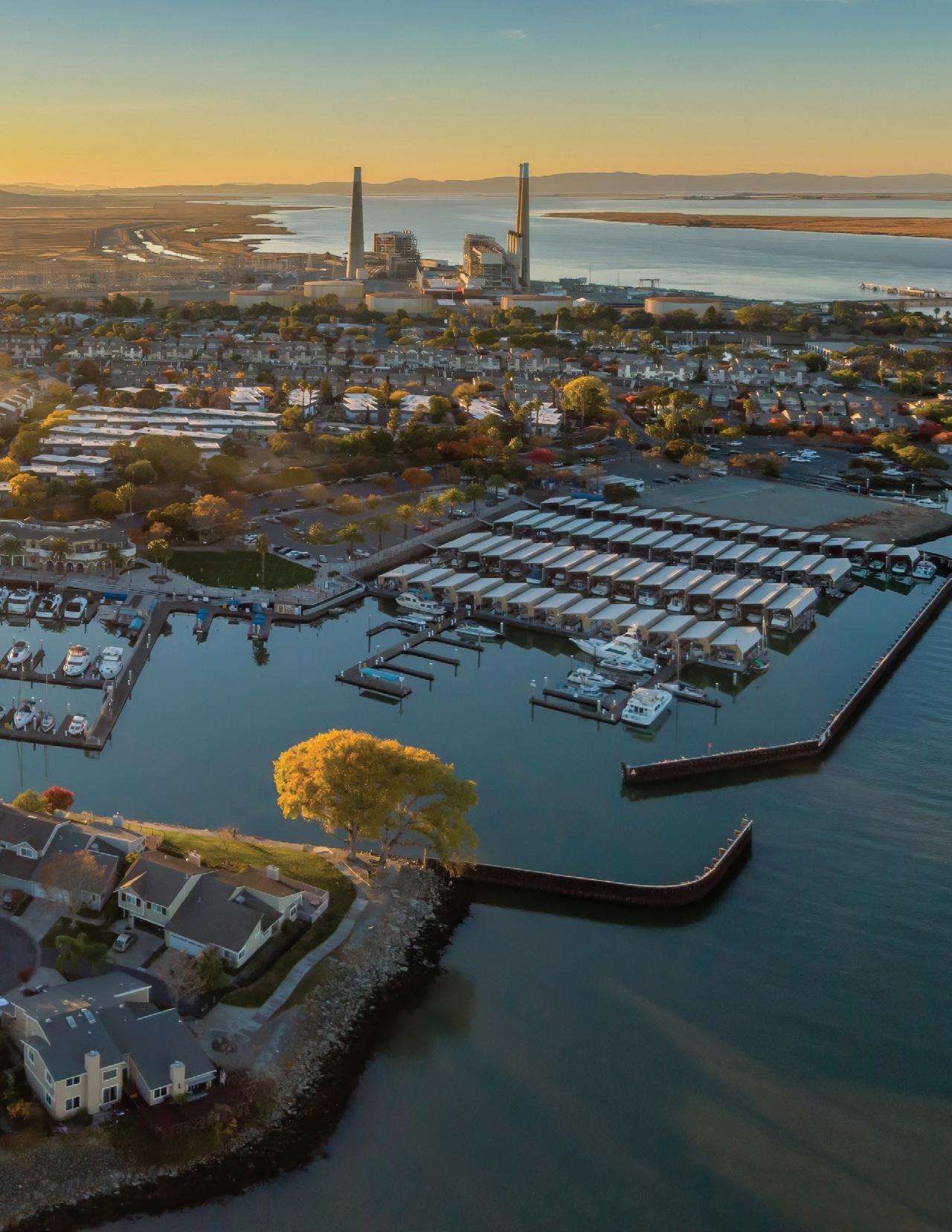
Sunset over a calm river in Pittsburg, California.
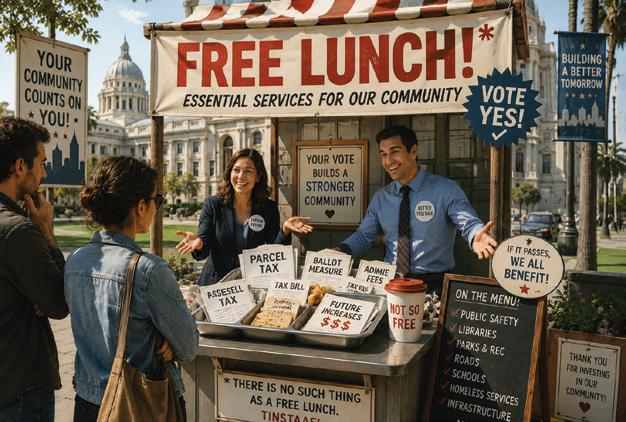
TINSTAAFL
EBRHA BOARD PRESIDENT, WAYNE ROWLAND
We’ve all heard the saying that a picture is worth a thousand words. That’s why politicians stand in front of construction projects, ribbon cuttings and smiling children whenever possible. Pictures communicate quickly. No words needed. But pictures aren’t the only shortcut in communication. There’s also the acronym — a handful of capital letters that can stand in for an entire phrase, making an idea easier to express and often easier to remember. In business and everyday life, acronyms have become a language of their own. IRS, DMV, GPS, FAQ, DIY, and BTW have become so familiar that we hardly notice we’re speaking in shorthand.
Here’s one you may not know, but one worth adding to your vocabulary: TINSTAAFL.
It stands for There Is No Such Thing As A Free Lunch. Economists have used the term for decades because it expresses a truth that never seems to go out of style.
In a sense, most of us are already familiar with TINSTAAFL, even if we’ve never heard the acronym. The “free” cell phone comes with a two-year contract. The cost of “free” shipping is already built into the price. The “free” trial quietly becomes a monthly subscription unless you remember to cancel it. The truth is, whenever there’s anything of value on the table, somewhere, somehow, somebody pays. There is no such thing as a free lunch. We instinctively understand this.
And, judging from the results of recent elections, California voters may have sent a message that they understand it, too.
For years, business as usual for local governments has been to treat parcel taxes as the municipal equivalent of a free lunch. Whenever budgets tighten or a new priority arises, the familiar solution is a new parcel tax. If it passes, the money rolls in. If it fails, officials regroup, rebrand the measure, adjust the campaign, and try again at the next election … and the one after that.
For taxpayers, the process often feels less like an occasional request and more like a treadmill that never stops churn-
ing. Every election cycle brings another campaign. Another promise that this tax will finally solve the problem. Another warning that disaster lies just ahead if voters say no. Fire stations will close. Teachers will be laid off. Libraries will shut down. Essential services will disappear. The details vary, but the storyline stays the same, election after election, like a rerun stuck on repeat.
The problem lately is that taxpayers have memories. Many taxpayers can no longer remember just one parcel tax. They remember several. They remember being told each one was essential. They remember promises that the money would solve a pressing problem. They also remember being back at the ballot box a few years later, hearing almost identical arguments in support of yet another tax.
Eventually, people begin asking uncomfortable questions. If the last measure solved the problem, why are we here again? If it solved only part of the problem, why wasn’t that made clear in the first place? If the money was spent as promised, why is another tax needed to accomplish the same thing?
These questions are both reasonable and difficult to dismiss. They become even more compelling when taxpayers watch money approved for one purpose later find its way somewhere else. Oakland, as usual, supplied its own cautionary tale. Public confidence in Measure NN, approved in 2024, eroded after revenue voters approved for public safety was redirected to other uses. Meanwhile, the city continues to collect the tax despite not maintaining police staffing at the level the measure was intended to support. Whether one believes those decisions were justified or not, experiences like these naturally leave taxpayers wondering whether the next tax will actually be spent as promised.
None of this means local governments face imaginary financial challenges. Cities such as Oakland confront genuine problems involving public safety, homelessness, deteriorating infrastructure, rising labor costs, and pension obligations. These issues are expensive and often difficult to solve. Pretending otherwise serves no one.
But acknowledging these realities is different from assuming taxpayers will continue approving new parcel taxes whenever another budget shortfall appears.
Revenue is finite. Household budgets are finite. Voter patience is finite. Trust is finite, too. Yet, of all these, trust may be the hardest to restore once it’s spent. Governments earn trust by treating every public dollar with the same care as the
Wayne Rowland
taxpayer who earned it. TINSTAAFL is a reminder that every public dollar first belongs to someone else. Before it became government revenue, it came from the wallet in someone’s back pocket or the purse slung over someone’s shoulder.
Interestingly, this year’s election results suggest TINSTAAFL didn’t just stop in Oakland. It packed its bags and set out on a California road trip. It stopped in communities large and small, where voters were considering parcel taxes for an assortment of worthy causes. One city sought more money for public safety. Another asked for infrastructure improvements. Elsewhere, the appeals centered on libraries, parks, housing, schools, and even cemetery maintenance. The causes were different. The campaigns were different. The communities themselves could hardly have been more different.
Yet, when the votes were counted, a distinct pattern emerged. Voters in at least 13 California municipalities rejected new parcel tax proposals. That does not necessarily mean they rejected the public services those measures were intended to support. It may instead reflect a growing reluctance to accept the premise that every fiscal challenge requires a new tax, particularly when taxpayers continue to ask what became of the revenue from the last one. Before asking for more, many voters seem to be saying, demonstrate that the money already being collected is being spent wisely.
Oakland’s parcel tax rejection may have attracted the most attention, but it was hardly an isolated event. From one end of the state to the other, many voters seemed to be delivering the same message: There Is No Such Thing As A Free Lunch. Or perhaps this time around, voters found an acronym of their own.
ENOUGH.
“The truth is, whenever there’s anything of value on the table, somewhere, somehow, somebody pays”
rental housing?
NEW MEMBER PROMO
New members receive a $40 account credit when they join.
REFERRAL PROMO
Existing members refer a new member to EBRHA and receive a $50 account credit.
Upcoming Events
FIND THE LATEST EBRHA EVENTS & REGISTER AT WEB.EBRHA.COM/EVENTS
Register for events online
* JULY 4 Independence Day
JULY 9 2 – 3:30PM Fighting AI-Driven Fraud While Staying Fair and Compliant
JULY 23 2:00PM – 3:30PM Hoarding, Habitability, and Housing Compliance
AUGUST 7 12 – 1:00PM Member Mentor Mixer
AUGUST 11 2 – 3:30PM The Roundtable Presented by Wayne Rowland, Board President
AUGUST 20 2 – 3:30PM
The Forum Presented by Dan Lieberman
AUGUST 25 2 – 3:30PM
Non-Smoking Legislation in Alameda County (Webinar)
AUGUST 26
5:30 – 7:30PM
Networking Mixer
In-Person EBRHA Office
SEPTEMBER 4 12 – 1:00PM
Member Mentor Mixer
* SEPTEMBER 7
Labor Day
SEPTEMBER 8 2 – 3:30PM
The Roundtable Presented by Wayne Rowland, Board President
* SEPTEMBER 11 Patriot Day
SEPTEMBER 15 2 – 3:30PM
Your Guide to Multifamily Energy Efficiency Presented by BAMBE
SEPTEMBER 30
5:30 – 7:30PM
Networking Mixer
In-Person EBRHA Office
* NON-EBRHA EVENTS
Some dates may be subject to change. Please visit our website to verify dates and times: ebrha.com/events. If you would like to submit an event, please send an email to editor@ebrha.com
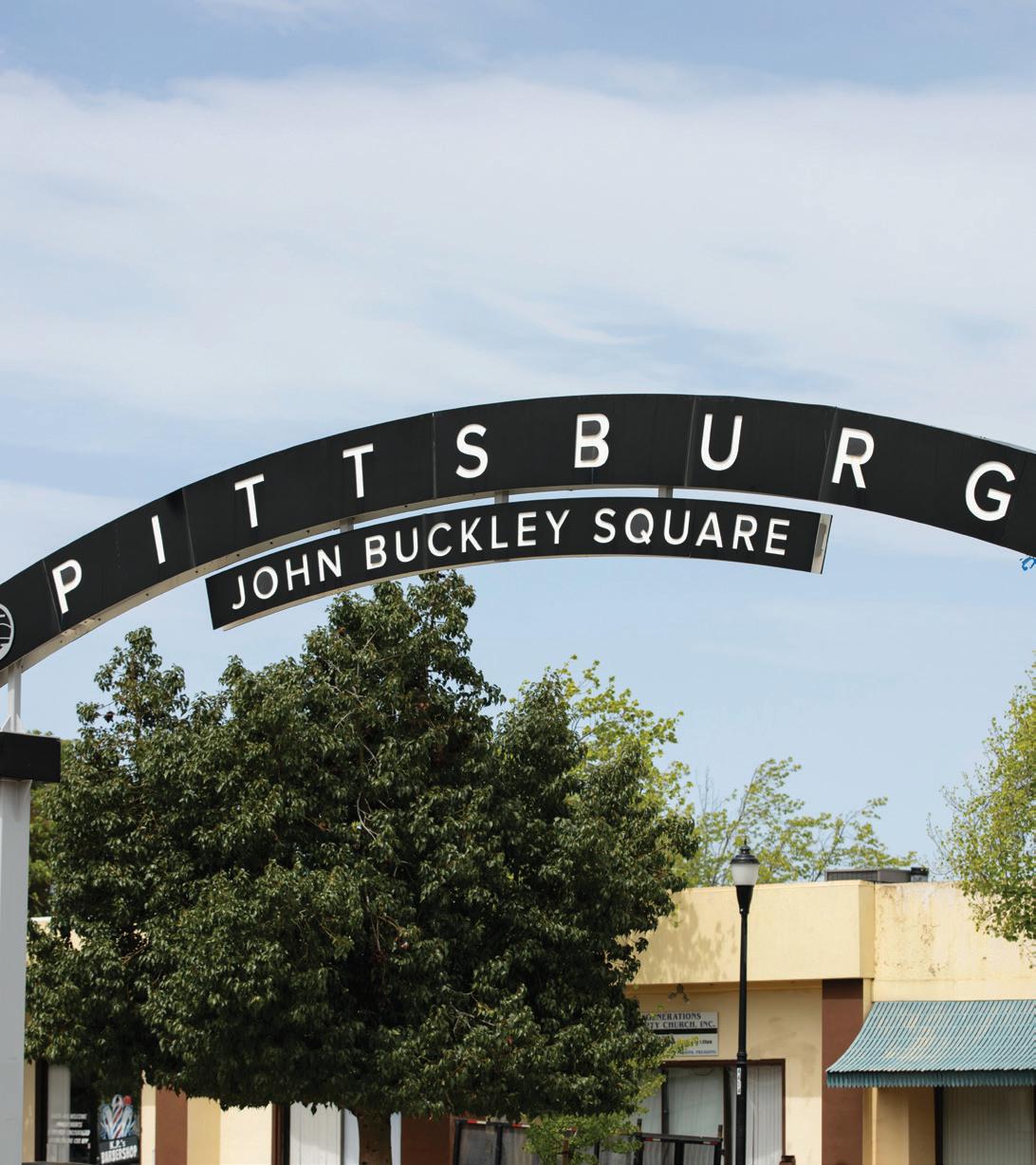
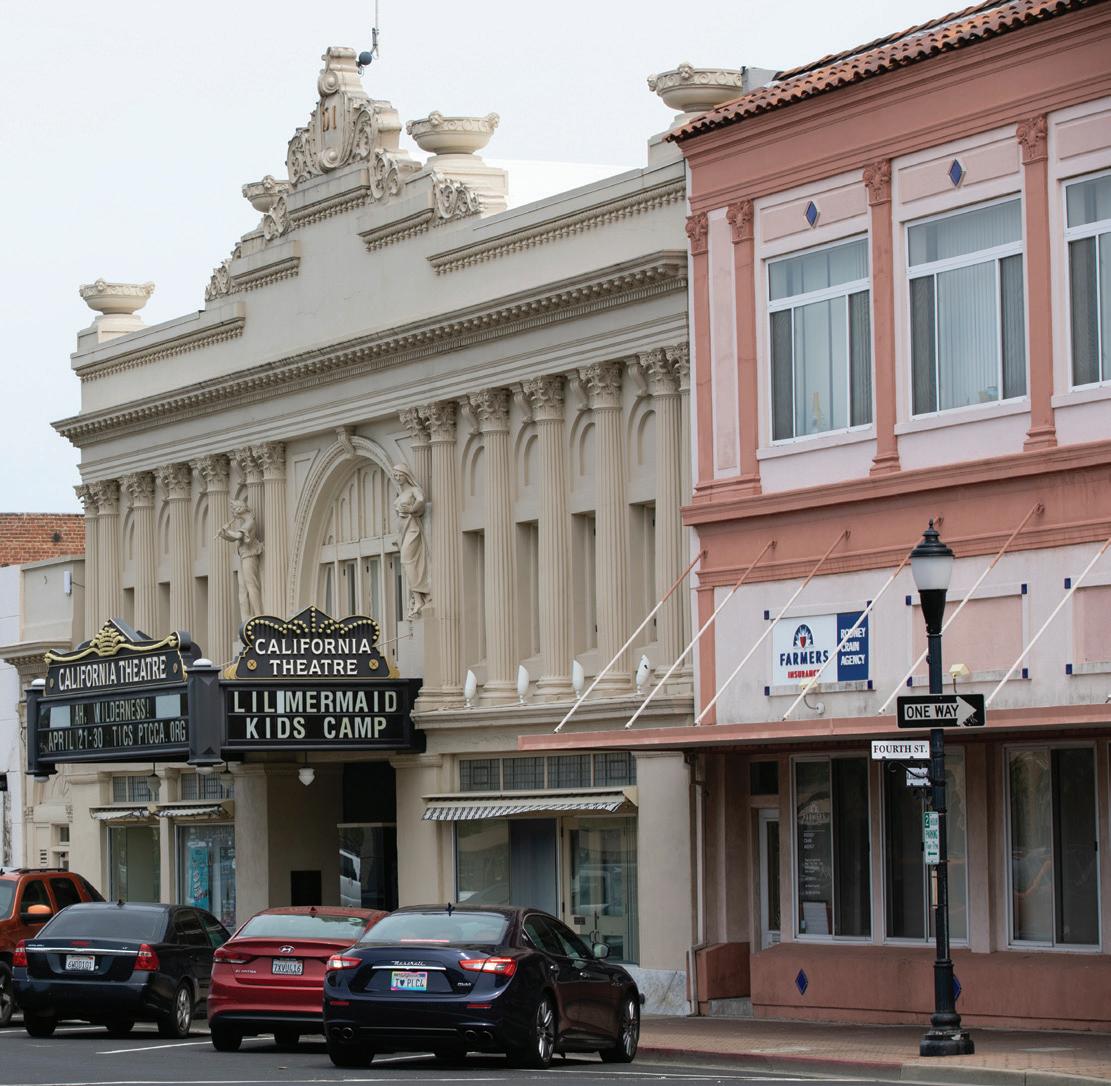
The historic urban core of the Contra Costa County city.
A Quiet Crisis
EBRHA CEO, DEREK BARNES
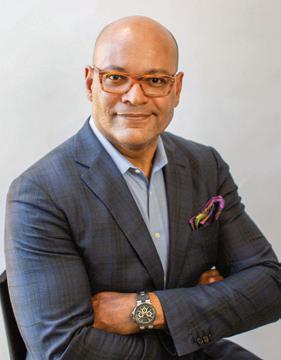
Derek Barnes
If you own or manage housing in the East Bay, you don’t need a think tank or industry report to tell you that the ground is moving beneath your feet. You feel it every time you review an application that doesn’t quite look right, walk past an encampment on the way to a neighborhood or building you care about, or read about another “solution” funded with millions of public dollars that somehow leaves your street and community looking exactly the same.
The quiet crisis is not only about housing supply, homelessness or regulation. It is the steady erosion of trust among the people and institutions that have to make housing work.
Every year, we devote an issue of Rental Housing magazine to community and social enterprise. Our summer issue features organizations and elevates their current reality. It contains stories about important stakeholders trying to make housing work—owners, property managers, renter advocates, nonprofits, local municipalities, and state government. Adding to an already crowded policy landscape, new federally imposed immigration, housing and social services mandates linked to more than 260 presidential executive orders and H.R. 1 officially took effect June 1, 2026. All of this is happening within systems where fraud, regulatory complexity, incompetence, and mismanagement collide in an ecosystem where key stakeholders have different interests. My job, and yours, is not simply to endure this collision. It’s time to turn confusion into clarity and friction into function by closing the ideological gaps that divide us.
Let’s start with homelessness because that’s where the headlines in this issue, including “Leading the Charge to Solve Homelessness,” meet the daily reality many of us see—the real human impact. California has spent tens of billions of dollars on housing and homelessness in recent years, yet too many neighborhoods still experience tents, trash and tension instead of stability. Property owners
aren’t abstract observers of that failure. We pay higher insurance premiums, absorb new taxes and fees, navigate community complaints and make hard decisions about property investment in blocks that feel less predictable than they did even five years ago.
WANING PUBLIC CONFIDENCE
Features in this issue ask a blunt question: How can so much money be spent with so little lasting impact? It echoes a truth many of us understand instinctively. There is no such thing as a free lunch, as EBRHA Board President Wayne Rowland reveals in his member message. Every new housing policy, tax, fee, or bond measure ultimately lands on someone’s financial ledger. When voters around the state started rejecting parcel taxes, as in the failure of Measure E in Oakland’s June special election, they weren’t rejecting public safety or schools. They were rejecting the assumption that every fiscal problem should be solved by charging the same people without producing meaningful results … one more time.
At the same time, we are also facing a very silent threat— one that doesn’t make the evening news as often but shows up in your inbox, rental applications, screening reports and credit reports. A quiet crisis of eroding trust is turbocharged by artificial intelligence, tighter housing inventory and a more competitive economic landscape. Rental fraud and identity theft are now part of the operating environment. If you saw my recent interview with Luz Peña on Channel 7, you understand that rental scams are no longer edge cases; they are mainstream opportunities for consumer fraud and identity theft.
VILLAINS VS. VICTORS
On the renter side, we arm consumers with common-sense information to protect their interests. On the owner side, industry data confirms what many of us have already seen in applicants’ documents—falsified pay stubs, altered bank statements, synthetic identities and AI-generated documents designed to slip through outdated screening processes. The result is unpaid rent, expensive and protracted evictions, and damaged properties that fuel the very instability policymakers claim they are trying to fix
This issue’s article on “Seamless Renter Screening” makes an important point: Systems built to manage risk
“Every new housing policy, tax, fee, or bond measure ultimately lands on someone’s financial ledger.”
can create new risks when they become too complex, too costly or too opaque. Layered fees, unclear criteria and repeated application costs can drive qualified renters away while leaving owners with a smaller and more desperate applicant pool. The answer is not to lower standards. It is to sharpen them through reusable reports from trusted sources where possible, transparent approval criteria and fee structures tied to real opportunity rather than volume. That is compliance, transparency and accountability without unnecessary friction. This is the kind of practical, results-based change we will address in upcoming legislative proposals, courses and member forums.
Overlay these operational challenges with what is happening in local policy. Alameda County cities such as Alameda, Hayward and San Leandro have moved from pandemic-era eviction moratoriums into a landscape of additional rent caps, renter protections and rental registries designed to track ownership, expanding housing requirements well beyond AB 1482 compliance. In Contra Costa County, local leaders are wrestling with a different problem: decades of housing underproduction, rising housing costs and sluggish home sales that threaten the county’s broader economic potential because it has not built enough homes.
As higher-income residents move east in search of more affordable options, legacy and long-time residents may be pushed farther from the urban core markets they helped build. Both county challenges end up on our doorstep. In Alameda County, they appear as more complex rules, capped rents and reporting expectations. In Contra Costa County, they appear as scarcity, rising operating costs and intensified competition for every available rental unit, assuming those units can be properly maintained.
WHERE DOES THAT LEAVE EBRHA, AND WHERE DOES IT LEAVE YOU?
It leaves us with responsibility but also leverage. When we convene owners and managers at our virtual roundtables, in-person Monthly Member Mixers or signature events such as the upcoming EBRHA 360 Housing Trade Expo on Oct. 17, we are not simply trading business cards or having idle conversations. We are exchanging signals and information: early warnings about market shifts, practical
fixes for broken processes and real-world expertise about how local ordinances are working on the ground. Isolation has become an operational liability. Community is now a competitive advantage.
Building greater trust leaves us with a clear agenda. We need to fight fraud by educating renters, owners and legislators alike and by promoting policies and practices that are disciplined, fair and enforceable. We need to insist on accountability in affordable housing and homelessness spending, and in local tax policy, not because we oppose solutions, but because we know that poorly measured programs without good outcomes and broken social contracts lead to further erosion of trust. Ultimately, this corrosion hurts the very communities we are connected to and here to serve.
We are essential stakeholders in a complex housing network. We need to stay in the room together as Alameda and Contra Costa counties refine tenant protections and housing plans so that owners’ lived experience remains part of the conversation, not an afterthought, especially within our small, women- and minority-owned rental housing businesses.
This issue is full of examples of people like you already doing that work by finding trusted resources and expertise, partnering with other service providers, and discovering overlooked resources and valuable information through networking and staying informed. Communities such as Pittsburg are balancing affordability with steady demand in a regulatory environment that upholds and enforces state law. Let’s replicate more of this model.
My invitation is simple: Read these enclosed articles and stories not as disconnected learning opportunities, but as pieces of a playbook you can adapt for success.
We can’t make the East Bay’s housing challenges completely disappear with a magazine or a meeting. But we can refuse to be passive targets of fraud, inept policy, unfunded mandates, municipal mismanagement, and unequal fees and taxes. We can choose to be informed, organized problem-solvers. And when we adopt a “no free lunch” mindset, we do not surrender or abandon our hopes or our humanity. We make our goals more reasonable, more attainable and more sustainable.
Thank you for the work you do, the risks you carry and the communities you help hold together.
EBRHA MEETINGS, SPECIAL EVENTS, AND MEMBER MIXERS
L-R EBRHA CEO Derek Barnes, Cesley Frost (Chief of Staff for Lena Tam), Chiamaka Ogwuegbu with guests–Samuel Merritt University Health Impact Awards (Apr), Rotunda Building, Oakland
L-R Earnestine Nettles, OAACC CEO Cathy Adams, OCCC Board President Stephanie Tran, Petra Brady— League of Women Voters Rally the Town & Awards (Apr), Henry J Kaiser Center for the Arts, Oakland
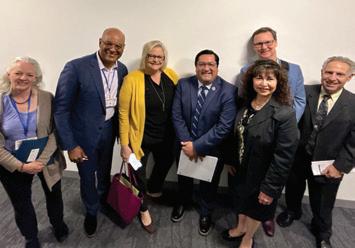
L-R EBRHA CEO Derek Barnes, BPOA Executive Director Krista Gulbransen, CA State Senator Jesse Arreguin, EBRHA Board Member Aaron Young with EBRHA Members—CalRHA
L-R OAACC CEO Cathy Adams, Oakland City Councilmembers: Ken Houston, Charlene Wang, Janani Ramachandran, Kevin Jenkins with EBRHA CEO Derek Barnes—Ramachandran Re-election Party (Apr), Scott’s Seafood Grill & Bar, Oakland
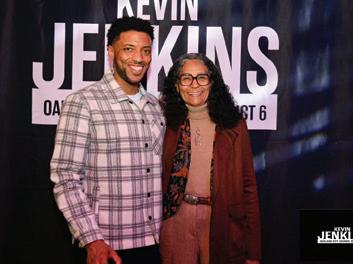
L-R Oakland Council President Kevin Jenkins, EBRHA Member Deleign Thompson–Jenkins Re-election Party (Apr), Fluid510, Oakland
L-R EBRHA MarCom Mgr Chris Tipton, EBRHA Board President Wayne Rowland, EBRHA CEO Derek Barnes with EBRHA Members—CalRHA Lobby Day (Apr), California State Capitol, Sacramento
L-R Guthrie Morgan, Larkin Street Youth Services CEO Sherilyn Adams, CA Housing and Homelessness Agency Secretary Tomiquia Moss (2026 Stanton Award Honoree)—Larkin Street Paving the Way Gala (Apr), The Conservatory, San Francisco
L-R EBRHA CEO Derek Barnes, Dist. 3 Chief of Staff Cesley Frost, Dist. 3 Supervisor Lena Tam, Dist. 3 Policy Advisor Michael MaNguyen, EBRHA Board Member Jorge Jimenez— District Team Meeting (May), San Leandro District Office, San Leandro
L-R Toni Alexander, EBRHA CEO Derek Barnes, League of Women Voters Rally the Town & Awards (Apr), Henry J Kaiser Center for the Arts, Oakland
L-R EBRHA CEO Derek Barnes, Oakland Housing Authority CEO/ Executive Director Patricia Wells— CalRHA Lobby Day (Apr), Prelude Kitchen & Bar, Sacramento
L-R Oakland Mayor Barbara Lee with Former Oakland Mayor Elihu Harris—Ramachandran Re-election Party (Apr), Scott’s Seafood Grill & Bar, Oakland
L-R Alameda County Supervisors: Nate Miley (D4), Lena Tam (D3), Elisa Marquez (D2) with Alameda County Assessor Phong La—Annual Phong La Heroes Awards, Scott’s Seafood Grill & Bar, Oakland
EBRHA MEETINGS, SPECIAL EVENTS, AND MEMBER MIXERS
L-R EBRHA CEO Derek Barnes, Former EBRHA Exec. Director Jill Broadhurst, Kos Read Group President Isaac Kos-Read—Annual Phong La Heroes Awards, Scott’s Seafood Grill & Bar, Oakland
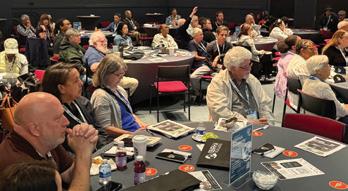
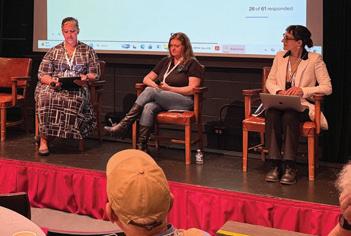
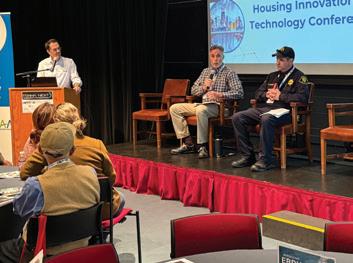
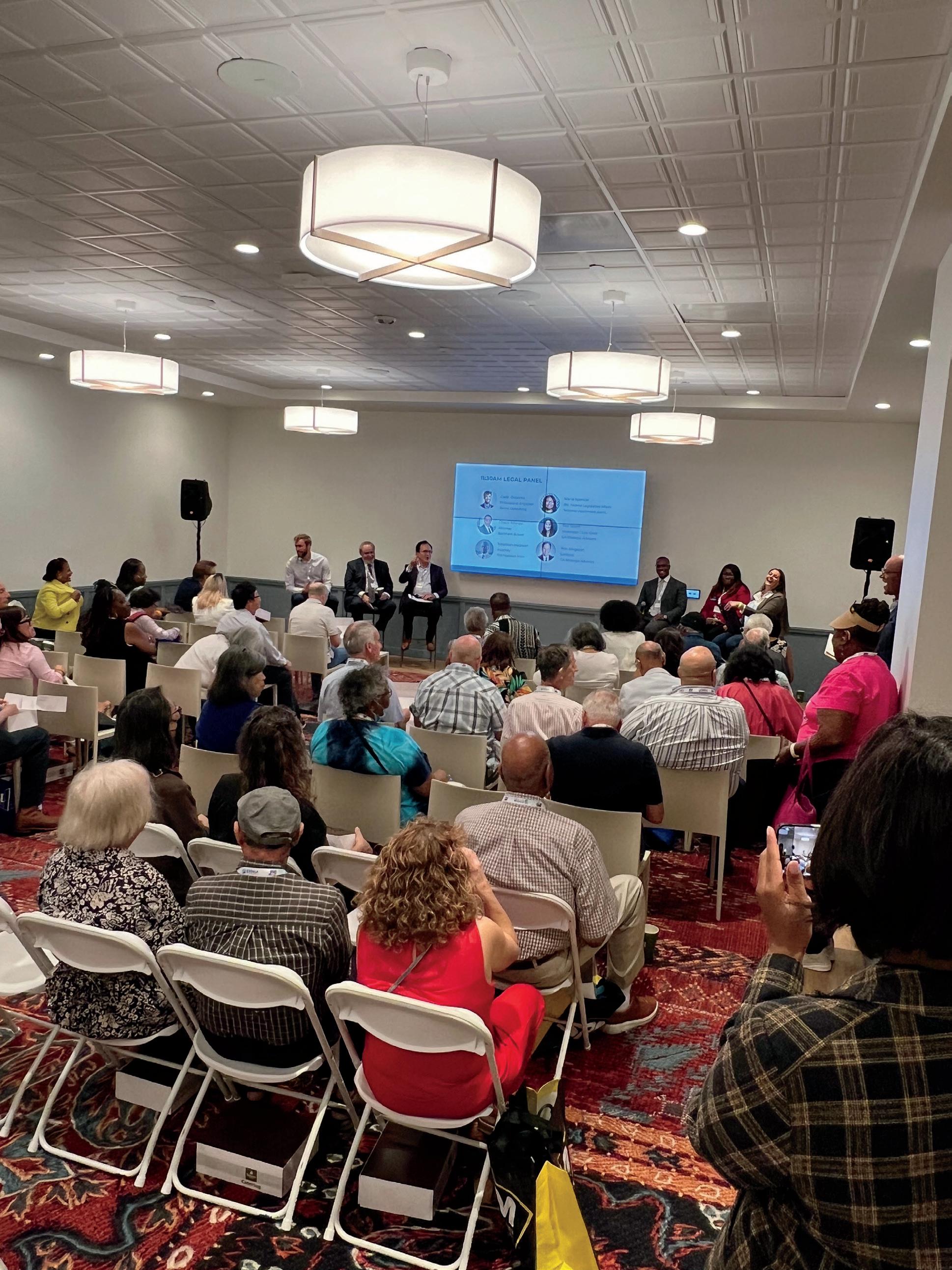
L-R EBRHA Members and attendees engage in a panel discussion focused on deterring fraud in rental housing— 2026 EBRHA Next Innovation & Tech Conference (May), Valley Center for the Performing Arts, Oakland
L-R EBRHA Board President Wayne Rowland, EBRHA Member John Protopappas-- Member Monthly Mixer and Chris Tipton Farewell Party (May), Lake Chalet Seafood Bar & Grill, Oakland
L-R EBRHA CEO Derek Barnes, Petra Brady, Donald Lacy Jr. Oakland Rotary President Joseph Goralka, Charles Farrier (Crumble & Wisk), Loren Taylor—Oakland Rotary Summer Mixer (Jun), Henry J Kaiser Center for the Performing Arts, Oakland
L-R Visit Oakland CEO Peter Gamez, Oakland Metro Chamber of Commerce CEO Barbara Leslie, EBRHA CEO Derek Barnes—Oakland’s Multi-Cultural Chamber Mixer (May), Scott’s Seafood Grill & Bar, Oakland
L-R NAA SVP Information & Technology Angel Baltimore, Aventis Management Crystal Jessup, and Beacon Properties Vanessa Guerra, 2026 EBRHA Next Innovation & Tech Conference (May), Valley Center for the Performing Arts, Oakland
L-R EBRHA Board President Wayne Rowland, EBRHA Member Tammy Chen, EBRHA Board Member Jorge Jimenez, EBRHA MarCom Mgr. Chris Tipton—Member Monthly Mixer and Chris Tipton Farewell Party (May), Lake Chalet Seafood Bar & Grill, Oakland
L-R Oakland Council Member AtLarge Rowena Brown, EBRHA CEO Derek Barnes—Pride Celebration Flag Raising Ceremony (Jun), Oakland City Hall, Oakland
L-R EBRHA MarCom Mgr. Chris Tipton, Attorney Steven Williams, Alameda County Sheriff Department Lt. Paul Liskey, 2026 EBRHA Next Innovation & Tech Conference (May), Valley Center for the Performing Arts, Oakland
L-R EBRHA Members: Carrie McAlister, Blain Carter, Reed Robertson— Member Monthly Mixer and Chris Tipton Farewell Party (May), Lake Chalet Seafood Bar & Grill, Oakland
L-R City Council President Chief of Staff Patricia Brooks, Alameda County DA Ursula Jones Dickson, EBRHA CEO Derek Barnes—DA Election Night Watch Party (Jun), Mad Oak, Oakland
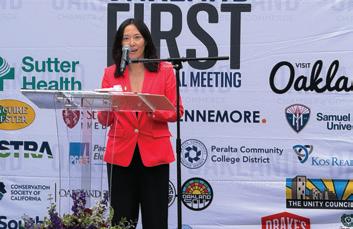
East Bay Asian Local Development Corporation (EBALDC) CEO Janelle Chan receiving the 2026 Community Catalyst Award—Annual Oakland Metro Chamber of Commerce Awards Celebration (Jun), Children’s Fairyland, Oakland
Remote Virtual Inspection Program
BY RON KINGSTON
Finally, the California Legislature is acting on a bill that should be helpful to all residential property owners and managers.
AB 1738 (Carrillo) would require a city, county, and city and county to establish a remote virtual building inspection program for certain residential modifications or improvements by July 1, 2027.
The primary focus of the measure is to expedite local government inspections. The bill would require a local government to offer owners or contractors the option of requesting an inspection for all of a subset of inspections required by a building permit for:
· Water heaters
· Heating, ventilation and air conditioning systems (HVAC)
· Reroofs
· Minor electrical work
· Minor plumbing work
· Photovoltaic and energy storage systems
· Smoke and carbon monoxide detectors
· All inspections for the permitting of ADUs or junior ADUs that are 800 square feet of less (with the exception of foundation or framing inspections and
· Home hardening and defensible space
For single family and duplexes the city, county, and city or county shall offer the owner or contractor of a single-family and duplex unit a similar remote inspection of:
· Drywall
· Exterior siding
· Insulation
· Signs
· Window replacement
· Light Foundations and footings
· Fireplace inserts
· Patios or decks
· Demolition
· Removing natural gas lines
· Residential additions and storage sheds under 800 square feet.
The offsite inspections would use videoconferencing or recorded photos and videos at the direction of the owner or contractor. This could be very helpful and should be viewed as a cost and time-saving bill.
In addition to the above, the local government would be permitted to retain a digital record of the remote inspections.
The cost of the new inspection program could not exceed the cost of an in-person inspection. Liabilities and immunities applicable to the local government would not change.
This bill is one in a series of bills designed to expedite and lower the cost of ownership. The last time the legislature agreed to take on the task of lowering the cost of residential ownership was last year. The bill, AB 1308 (Hoover) requires all local governments to complete inspections within 10 business days for specific residential projects and further provides that the failure to meet the deadline constitutes a violation of the Housing Accountability Act.
Another noteworthy bill is AB 1827 (Chen) which increases and standardizes the amount in controversy limit for our small claim’s courts.
The bill increases and standardizes the jurisdictional monetary limits for small claims courts to an amount in controversy of fifteen thousand ($15,000) or less.
The bill also increases the number of small claims filings with an amount in controversy in excess of two thousand five hundred dollars ($2,500) a person may file in a calendar from two to three cases.
In 2023 the Legislature restructured the amount in controversy levels for small claims courts, limited civil and unlimited civil matters with the enactment of SB 71 (Umberg ). Unlike limited and unlimited civil cases which generally had a standard amount in controversy jurisdictional limits, small claims jurisdictional limits varied widely by case type. SB 71 modified small claims jurisdictional limits but left others untouched. The bill raises and standardizes the limits for small claims court jurisdictional limits to $15,000 for all causes of action. The bill also provides litigants one additional small claims action per year for cases with an amount in controversy exceeding $2,500.
Unlike other civil matters, small claims courts have varied jurisdictional limits. Prior to the enactment of Mr. Umberg’s bill, limited and unlimited had consistent jurisdictional limits. All matters exceeding the jurisdiction of small claims court yet with an amount in controversy of $25,000 were deemed limited civil cases and subject to specialized discovery and evidentiary rules. All cases exceeding $25,000 were deemed unlimited civil cases. SB 71 simply changed all of this. All cases exceeding $25,000 were deemed unlimited civil cases. The bill simply changed the $25,000 threshold to
$35,000. Pre-SB 71 jurisdictional limits ranged from $6250 to $10,000. SB 71 increased some of those thresholds, including the $10,000 cap to the $12,500 limit in existing law, but left other limits unchanged.
The variation in limits reflected the unique nature of small claims court, including the fact that litigants are not permitted to be represented by counsel, and were designed to ensure that more sophisticated plaintiffs’ count did not prey upon average litigants. Since the enactment of SB 71 the widely varying jurisdictional limits appear to be generating more confusion rather than solving problems, especially when unrepresented litigants are trying to determine the appropriate venue for which to file their civil cases.
Ron Kingston is president of California Strategic Advisors.
Pittsburg
BY LYNN KREHER
Population: 76,000+
Average Rent for 1 or 2 Bedrooms: $2,250
Vacancy Rate: 5.6%
Rent Control: No
Just Cause Ordinance: No
(State law applies)
Rent Registry: No
Pittsburg, California presents a uniquely balanced opportunity in the East Bay rental market, offering a combination of relative affordability, waterfront access, and steady demand from working-class and commuter households. Positioned along the Sacramento-San Joaquin River Delta and anchored by a BART extension, the city has evolved from its industrial roots into a growing residential hub with increasing appeal for both renters and investors.
Strategically located with access to Highway 4 and BART, Pittsburg attracts renters seeking more attainable housing options while maintaining connectivity to larger employment centers throughout Contra Costa County and beyond. Compared to higher-priced neighboring cities, Pittsburg offers larger units, more space, and a cost structure that appeals to long-term renters, families, and workforce households. This dynamic supports consistent occupancy and positions the city as a practical alternative within the broader East Bay housing ecosystem.
That stability is reinforced by renter demand rooted in necessity and value. Pittsburg continues to draw residents who prioritize affordability, access and livability over luxury positioning. With
a mix of older housing stock, newer developments, and waterfront revitalization efforts, the city provides a range of options that meet diverse renter needs. Parks, marina access, and community infrastructure contribute to an environment that supports everyday living rather than transient occupancy.
Demand becomes even more evident when examining the city’s evolving amenities and infrastructure. The presence of BART, ongoing redevelopment near the waterfront, and proximity to regional job corridors all contribute to Pittsburg’s growing appeal. While it may not carry the prestige of higher-cost East Bay cities, it offers a grounded, functional lifestyle that resonates strongly with renters seeking stability and value.
GOVERNMENT
Pittsburg’s local government generally takes a moderate, compliance-focused approach to rental housing, balancing the need for renter protections with the realities of maintaining housing supply. The city has not implemented local rent control, rent registry requirements, or its own just-cause eviction ordinance, instead relying primarily on California’s statewide regulations to govern landlord-tenant relationships.
Here are three important laws and regulations that property owners should know about.
While Pittsburg does not have a local rent control ordinance, most rental properties fall under California’s Tenant Protection Act (AB 1482). This law limits annual rent increases and requires just cause for eviction after a renter meets occupancy thresholds. Property owners should understand exemption qualifications, provide
proper disclosures, and maintain accurate records to ensure compliance.
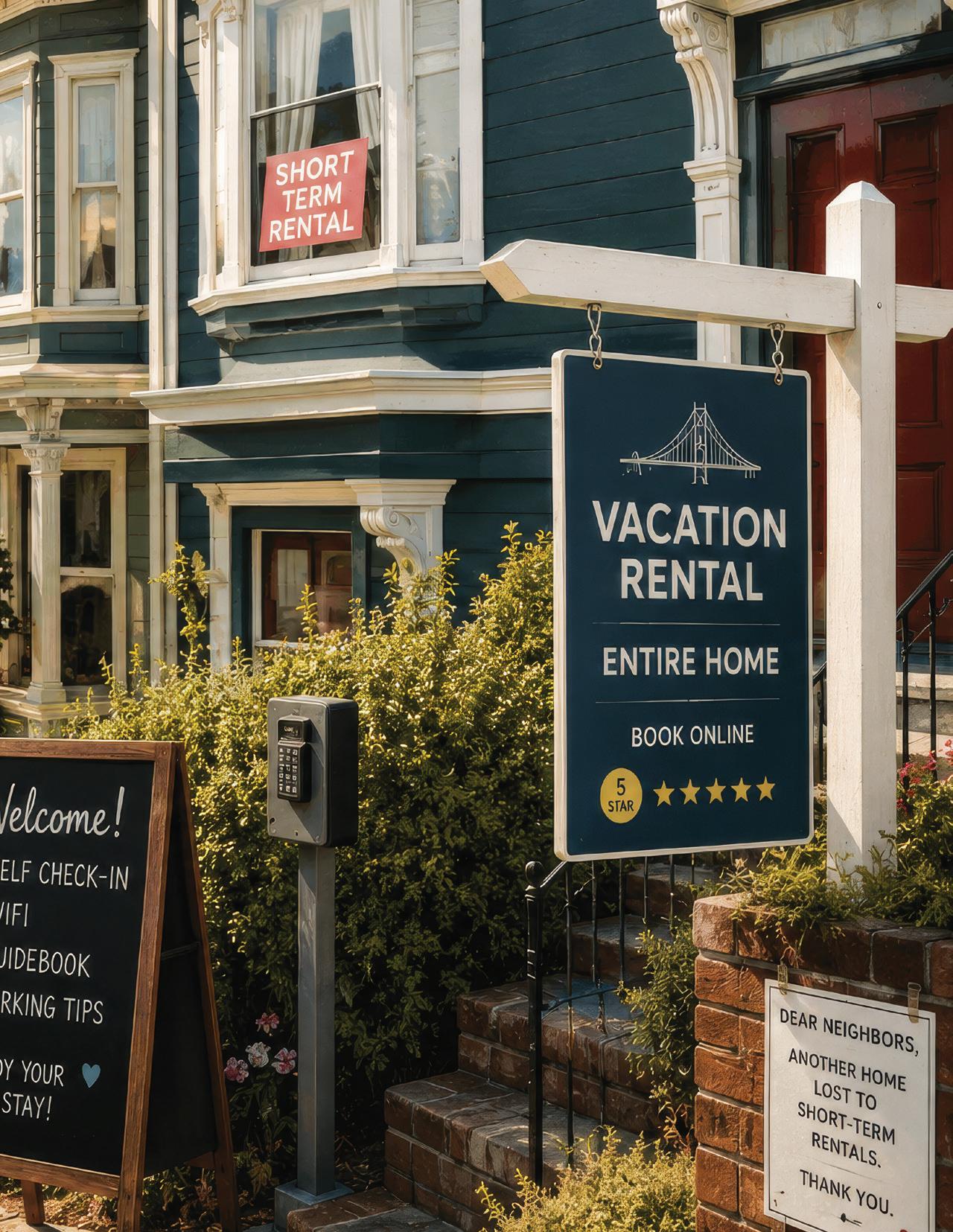
Short-term rental regulations in Pittsburg are more limited compared to some neighboring cities, but property owners should still verify zoning requirements and local restrictions before operating rentals under 30 days. In many residential zones, use as a short-term rental may be restricted or subject to specific permitting requirements, particularly as cities across the region continue to evaluate impacts on housing supply.
Additionally, property owners must comply with Pittsburg’s zoning laws, building codes and safety standards. This includes adherence to occupancy limits, permitted uses and requirements for property improvements or accessory dwelling units. Coordination with city planning and building departments is often necessary when making changes to existing structures or developing new units.
Taken together, Pittsburg offers a rental market defined by accessibility, steady demand, and a regulatory environment that is predictable but still shaped by statewide legislation. For property owners, the city provides an opportunity to operate within a more affordable segment of the East Bay while benefiting from consistent renter demand and improving infrastructure. Understanding how Pittsburg’s market positioning, renter demographics, and regulatory framework intersect allows owners to make informed decisions and maintain stable, long-term performance.
Lynn Kreher is a local Bay Area writer.
“While it may not carry the prestige of higher-cost East Bay cities, it offers a grounded, functional lifestyle..”
DEMOGRAPHICS • RACE AND ETHNICITY
White: 20.1%
Black or African American: 19.8%
Asian: 16.5%
Two or More Races: 12.4%
American Indian and Alaska Native: 0.7%
Native Hawaiian and Other Pacific Islander: 1.2%
Hispanic or Latino (of any race): 44.2%
White alone, not Hispanic or Latino: 11.8%
Aerial view of Pittsburg at sunset.
A Good Read
UNEXPECTED SURPRISES: BOOKS PROPERTY OWNERS WILL LOVE
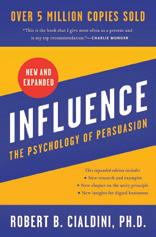
Influence by Robert Cialdini
Recommended by Zach Fertig, Co-Owner, Property Leads
The book Influence by Robert Cialdini was surprisingly practical, especially for someone like me in the real estate marketing side. Reading the book helped me realize that volume alone won’t solve your problems with conversion. I’ve seen investors still struggle despite all the volume they get simply because they fall into the trap of treating every lead in the same way. What Cialdini posits about reciprocity, scarcity, authority, and commitment is essentially what I see happening in real time inside CRM pipelines every day. Timing and framing matters more than raw intent. For instance, a motivated seller isn’t just responding to price or necessity but also to how quickly trust is established in the first interaction. This changed how I think about the structure of inbound leads and how I deliver them to our clients.
The Checklist Manifesto by Atul Gawande
Recommended by Subhajit Mondal, founder of Reverse Sales Tax Calculator.
One book that surprised me for property owners is The Checklist Manifesto by Atul
“A simple checklist can save more money than a fancy system if people actually use it.”
Gawande. I work closely around taxes, billing, small business tools, and messy operational details. This book helped me understand something very practical: most problems do not happen because people are careless. They happen because small repeated steps get missed. For property owners or managers, that is rent follow-up, inspection notes, maintenance calls, deposit records, tax calculations, lease renewal dates, vendor payments. None of these are complex alone. But when there are many renters or properties, small misses become expensive. What surprised me is that the book is not about real estate at all. It is about hospitals and aviation. Still, the lesson fits property management very well. A simple checklist can save more money than a fancy system if people actually use it.
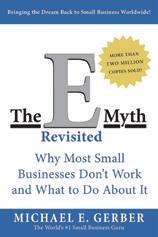
The E-Myth
Revisited by Michael E. Gerber*
Recommended by
Olivia Bennett, Viking Property Management
This book surprised me because it is not technically a property management book, yet it changed the way I approached operations, communication and long-term growth in property-related projects. Before reading it, I used to think success mostly depended on working harder and solving problems daily as they appeared. But the book explained the difference between constantly working in a business versus
building systems that allow the business to function smoothly without chaos. That mindset became extremely useful in property management and project coordination.
One thing that stayed with me was how small operational inefficiencies quietly grow into larger financial and renter-related problems over time. After reading the book, I started paying much more attention to repeatable systems, maintenance scheduling, client communication processes, and long-term planning instead of reacting emotionally to every issue. It also changed how I looked at infrastructure decisions. For example, many property owners today are investing in durable solutions like steel building systems because long-term maintenance, operational simplicity, and cost predictability matter much more than people initially realize. The book also helped me understand that many property owners unintentionally create stress for themselves because everything depends entirely on them personally. Strong systems reduce that pressure significantly. What surprised me most was how applicable the lessons were outside traditional entrepreneurship. Even though the book talks mainly about small businesses, the ideas around structure, consistency, delegation, and long-term thinking apply very naturally to property management and housing operations.
*This book was recommended by five reliable sources as well.
Unreasonable Hospitality by Will Guidara
Recommended by Jonathan Ayala, Real Estate Agent and Founder, Real Estate Photography
The book that has probably added the most value for me in real estate has been Unreasonable Hospitality by Will Guidara. As the title describes, the book is about the service industry and restaurants in particular. Because of that, I never thought there would be a direct link between the book and real estate marketing, property management, and how we deal with clients. I was very wrong. The book finalized a thought I had, which is: people remember experiences, not transactions. In real estate and property management, this is true in spades. When selling a condo, managing communications, onboarding residents, or even just leading a buyer through the process, the emotional experience of the buyer based on the service provided and the manner in which the sale/transaction is completed is often the most memorable and is of most importance. Probably the most valuable takeaway for me was the lesson that the little things build trust. How a property is presented, how the agent or agency personnel/troop deals and communicates with their clients, is all perceived cheaply by the client. In the things that I have done that deal with visual marketing, photography, and condo sales, this book put everything in order for me, even how listings are presented on the MLS and how we deal with clients.
Seamless Renter Screening Practices
BY BOB VAUGHN
There’s a growing tension in today’s rental market that many property owners are quietly navigating—one that sits at the intersection of risk management and opportunity. Screening has always been part of the process. But in an increasingly competitive property market, the question isn’t whether to screen—it’s how far that screening should go before it starts working against the very outcomes property owners desire.
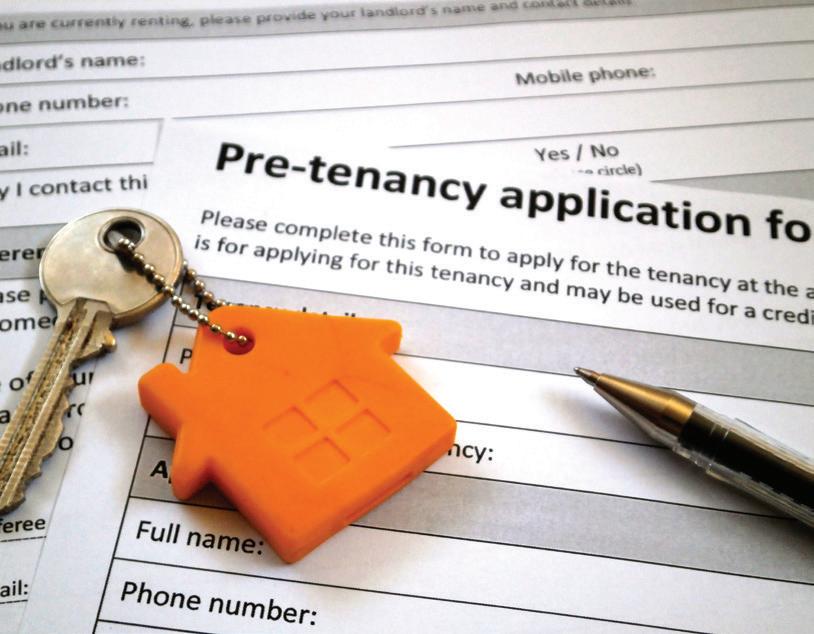
On paper, the modern rental application process looks thorough. Credit reports, income verification, background checks—these tools exist for a reason. They help protect assets, reduce risk, and create a level
of predictability in an unpredictable business. But layered on top of these safeguards are rising application fees and a system where renters are often applying to multiple properties at once, absorbing repeated costs with no guarantee of placement. That dynamic introduces a subtle but important risk for property owners: the possibility of unintentionally filtering out highly qualified renters.
When application costs stack up, strong candidates may become more selective—or simply opt out—leaving behind a pool that doesn’t necessarily reflect the best available options, but rather those most willing or able to keep paying to apply. “When an applicant is unable to meet the requirement
of being able to pay the monthly rent, they are faced with high costs of applying for each rental application as well as additional costs such as having to pay a fee each time they apply to multiple properties or for similar documents already provided, and there being a lack of knowledge of how long it takes for a rental application decision,” said Neil Webzell, CEO of Trafalgar Wireless “In a competitive rental market, it can take approximately five to 10 applications for an applicant to be approved to rent an apartment.”
“Rental application requirements start to cross the line into unfair barriers when they shift from confirming basic renter reliability into producing costly, repetitive financial hurdles that do not really improve screening accuracy in a measurable way,” said Adrian Lawrence, founder of Accountancy Capital and FCA. “This usually shows up when applicants are asked to pay multiple non-refundable fees across several competing properties, but the whole process is not standardized in any meaningful sense either in method or in results.
“In competitive rental markets, rising application fees and repeated screening costs are increasingly pushing renters to make upfront financial commitments at scale, often before they even understand their probability of approval,” continued Lawrence. “This seems to build a sort of financial gatekeeping thing, where lower or even middle-income applicants are not limited just by creditworthiness alone but by the overall pile of costs to apply. For renters who put in applications for multiple properties, those expenses can add up fast, turning
into hundreds of dollars, and that hits younger renters, job changers, and mobile workers in particular.”
Transparency also plays a critical role here. When renters are asked to submit non-refundable fees without a clear understanding of competition, criteria or process, it can erode trust before a lease is ever signed. For property owners, that lack of clarity doesn’t just affect perception—it can impact long-term relationships and retention. Unreasonable fees leave a bad taste in renters’ mouths. The immediate reaction might beg the question, do I want to work with a property owner who might end up being difficult or unfair? The next question is one of efficiency. Is the current application model truly optimizing outcomes for property owners, or is it introducing friction that slows leasing, narrows the applicant pool, and creates missed opportunities? “Property managers have a basic obligation to disclose approval criteria, vacancy statuses and fee breakdowns before accepting any payments from renters,” said Jonathan Carcone, principal, 4 Brothers Buy Houses. “Getting non-refundable money for units that are already filled or hidden benchmarks is close to behavioral predation. True transparency will enable prospective renters to self-screen accurately, therefore prevent financial loss and provide ethical leasing practices in a tight market.”
“From the point of view of market efficiency, this can mess with choices, leading people to submit applications more sparingly, or to wait longer, even though they might be fully qualified,” said Lawrence. “Property owners and managers still have a duty to keep application practices transparent and standardized, especially when there are non-refundable fees involved, and they should clearly spell out what is being evaluated and why. Transparency is also important for reducing distrust, and improving how fair the rental process feels, which then shapes the
“When application costs stack up, strong candidates may become more selective...”
strength of the applicant pool. There is also a fairly strong argument that screening processes that are too split up, create inefficiencies for landlords themselves, like really in practice. When tenants who are qualified get discouraged from applying, due to the cost or the hassle involved, properties can wind up with longer vacancy stretches or with a smaller applicant group than they actually need. In that sense, poorly organized application systems might end up rejecting otherwise strong tenants, not because of risk, but because of friction.
In a market where every decision carries weight, reexamining how applications are structured isn’t about lowering standards—it’s about refining the process to ensure it attracts, rather than unintentionally excludes, the right renters. “It has been demonstrated that property owners miss many opportunities to obtain good renters due to their reliance on large amounts of documentation without clearly defined supporting documentation,” said Webzell. “Therefore, the optimal rental application process would include using one single, reusable report wherever possible; making the screening criteria public prior to charging the applicant reasonable rental application fees; and charging an applicant only when they reach a reasonable likelihood of being approved to rent a specific rental unit. All of which would save property owners and managers money on unnecessary administrative expenses and frustration for applicants for a more accurate and detailed decision-making process between property managers/ owners and applicants for a rental unit.”
The path forward doesn’t require property owners to lower their standards—it requires them to sharpen them. A more efficient rental application process is ultimately a competi-
tive advantage. Clear criteria, upfront communication, and a more streamlined approach to screening don’t just benefit renters—they position property owners to attract stronger, more qualified applicants from the start. When expectations are transparent and costs are aligned with genuine opportunity, the process becomes less about filtering volume and more about identifying the right fit. Something rarely mentioned and overlooked-that gut feeling. A feeling that property owners should consider. Does this renter even present as a prospect the owner can trust? Often people forget that their gut has answers worth paying attention to.
There’s also a practical upside. Reducing friction in the application process can shorten vacancy timelines, expand the applicant pool, and improve overall leasing outcomes. In a market where delays are costly and good renters move quickly, the ability to engage qualified candidates early—without unnecessary barriers—can make the difference between a seamless placement and a prolonged search. At its core, this isn’t just about fairness— it’s about business capabilities and efficiency. Screening systems that rely on excessive fees, repeated documentation, and unclear benchmarks risk creating noise rather than clarity. And in that noise, strong renters can—and do—slip through the cracks.
For property owners, the opportunity is clear: build a process that reflects both diligence and discipline, but also efficiency and transparency. Because the goal isn’t simply to avoid risk—it’s to secure the best possible renter. And the systems designed to protect that outcome should never be the very thing standing in its way.
Bob Vaughn is a Bay Area Writer.
Leading the Charge to Solve Homelessness
BY BREA HARPER
If nothing else comes of it, the one thing that Spencer Pratt’s run for mayor (by the time this publishes the race will be decided) accomplished is spotlighting the tragedy of homelessness not in Southern California but the entire state. Citizens united with Pratt to find a voice to speak out. Awareness had already been created when the State Auditor cited $24 billion spent over 2018 to 2023 on homelessness and housing-related problems. The rub came when people realized that billions spent and an actual increase in homelessness occurred. The rough math as reported by CalMatters went from 161,000 homeless in 2020 to now 187,000 people by 2024. This problem affects communities in numerous detrimental ways, including noise, litter, sanitation issues, unclean and less usable public spaces and sidewalks, and it ultimately makes people uncomfortable in their own neighborhoods.
For property owners, the impact is immediate and tangible—measured not in headlines, but in higher expenses, operational challenges, and the
long-term stability of their investments. This social challenge isn’t a distant policy issue—it shows up in real time through rising costs, increased risk, and shifting demand that directly affect how properties are managed, valued and occupied.
Renters don’t want their homes being blocked by tent encampments. A major California study (UCSan Francisco’s California Statewide Study of People Experiencing Homelessness, 2023) found: about 37% reported regular illicit drug use; and about 65% reported lifetime substance use issues (including alcohol). This means residents face not just an unhoused person, but often a drug addict right at their doorsteps. For property owners this detriment affects attracting good renters. Common sense explains why. Who wants to have potential drug addicts parked near or around their homes?
It’s also just as personal for property owners who also may live in the area, because the line between “investment” and “home” disappears quickly—what affects the neighborhood affects their daily life. They’re not just reviewing spreadsheets; they’re hearing the noise, noticing the changes in safety and cleanliness, adjusting routines, and fielding concerns from neighbors and renters alike. The same conditions that influence property performance— maintenance costs, renter stability, insurance considerations—also shape whether they feel comfortable walking their own street or enjoying their own space. In that sense, the impact isn’t abstract or distant; it’s immediate, lived and woven into both their financial decisions and their quality of life.
WHAT’S THE UNDERLYING ISSUE?
It’s time to pull up the hood and ask the hard questions: how can billions of dollars go toward solving the problem, yet the problem got worse? At some point, the conversation has to shift from how much is being spent to how effectively it’s being used, which was the gist of what Pratt spotlighted. Where is the money actually going? Which programs are producing measurable results—and which are simply recycling funding without changing outcomes? Without clear accountability, consistent tracking, and a willingness to evaluate what’s working versus what isn’t, even well-intentioned efforts can drift into inefficiency or drift into fraud. The issue isn’t just spending—it’s strategy, execution and oversight. And until those pieces are aligned, the gap between investment and impact will continue to raise legitimate concerns from the very communities footing the bill.
“The issue in California regarding homelessness and housing is less about ‘missing’ funds and more about lack of visibility; even though the state has invested approximately $24 billion in programs designed to combat homelessness and provide access to affordable housing, audits have found inconsistent reporting on how much has been spent, what programs have performed effectively, and what types of outcomes have occurred from these programs,” said Neil Webzell, CEO, Trafalgar Wireless. “Without proper reporting on how many people have been placed into housing each month, as well as how many of these individu-
als are maintaining their housing over time, it is difficult for taxpayers, property owners and local governments to have the confidence necessary to continue providing resources toward these types of programs.”
TIME TO TAKE ACTION
Property owners sit in a unique position to have influence and impact on the problem. It feels better than passively watching your properties’ value decrease while renters suffer. What can property owners do to turn it around?
Property owners can influence and impact day-to-day realities than policymakers, and with a direct stake in both outcomes and accountability. Rather than passively watching property values erode while renters struggle with instability, they can take a more active role in shaping solutions that work on the ground. That might mean supporting responsible screening practices that don’t unintentionally exclude qualified renters, partnering with local programs that focus on prevention and re-housing, or advocating for smarter use of public funds and clearer performance metrics. In many ways, property owners are not just participants in the housing ecosystem—they’re positioned to help stabilize it, protect their investments, and contribute to practical, real-world progress.
“By participating in a collaborative environment, property owners can assist with reducing risk associated with housing vouchers through established processes and services that assist in creating stability in the resident’s housing,” said Webzell. “Some examples of how property owners can help would be by providing lease guarantees, establishing damage reserves, providing rapid reimbursement for rent payments to property owners, partnering with service providers to provide case management support for residents, implementing inspection processes for both the property and resident, and offering one point
of contact when issues arise within the housing unit. One of the easiest ways to implement this collaborative relationship would occur by property owners working alongside service providers to collect and report accurate occupancy and resident stability data, as well as information regarding the length of time that residents maintain their housing.”
Property owners can also step beyond their individual portfolios and engage directly with local government and community leadership to help drive meaningful change. That means showing up at city council meetings, participating in housing advisory boards, working with local law enforcement and service providers, and demanding transparency around how funds are allocated and measured. By organizing collectively—through associations, coalitions, or even informal networks—property owners can bring real-world insight into policy discussions that too often happen in a vacuum. They can advocate for programs that prioritize accountability, support effective re-housing strategies, and ensure that both community safety and housing stability are addressed in tandem. When those closest to the impact speak up consistently and constructively, they can help shape policies that are grounded in reality, not just intention.
In the end, addressing homelessness in California will require more than funding—it will require alignment between policy, execution, and the lived experiences of the communities affected. Property owners, renters, local leaders, and service providers all have a role to play, but it starts with asking better questions, demanding better answers, and staying engaged in the process. The goal isn’t just to spend more—it’s to solve the problem. And that only happens when those with both a stake in the outcome and a voice in the conversation choose to use it.
Brea Harper is a local Bay Area writer.
Practical Ways Property Owners Can Make a Difference
· Build relationships with your renters.
· Open communication helps identify issues early—before they turn into crises or displacement.
· Offer stability where possible.
· Reasonable lease terms and fair renewals can reduce turnover and keep good renters housed.
· Maintain clean, well-lit properties.
· Simple things like lighting, upkeep, and security measures improve safety for everyone nearby.
HUD Funding Changes Raise Questions for East Bay Providers
The U.S. Department of Housing and Urban Development (HUD) has introduced significant changes to how federal homelessness funding will be awarded through its Continuum of Care (CoC) program, prompting providers across the East Bay to evaluate how the new priorities could affect local services. HUD says the revised funding approach places greater emphasis on transitional housing, recovery-oriented services, employment assistance and measurable outcomes. The agency has also indicated that this year's funding competition will place increased focus on program performance and accountability.
For many East Bay organizations, the changes could require adjustments to programs that have long centered on permanent supportive housing and rapid rehousing. These models have formed the backbone of homelessness response systems in Alameda and Contra Costa counties, particularly for individuals experiencing chronic homelessness or living with disabilities. While HUD says the new direction is intended to help people achieve greater independence and longterm stability, providers are weighing how existing programs will score under the revised funding criteria.
Some housing advocates have expressed concern that shifting priorities could make it more difficult to sustain programs serving people with the highest needs. Others note that organizations may need to redesign services or pursue new partnerships to remain competitive for federal funding. The revised guidance has also created uncertainty as communities prepare grant applications while federal policy continues to evolve. For East Bay providers, the immediate challenge is understanding how the new requirements will translate into future funding decisions. Whether the changes ultimately improve outcomes or create additional barriers remains to be seen, but there is broad agreement that organizations will need to adapt quickly as HUD's new priorities begin shaping homelessness programs throughout the region.
East Bay Apartment Advisor
As an owner of East Bay multiunit properties for 25 years, John Caronna has the knowledge and 14 years of invaluable experience to assist in anything regarding your property!
COMING SOON
5 units on Walker Ave, in Grand Lake neighborhood
328 Forest St. 4 plex in Oakland
Sold over listing price. Represented Seller.
987 Vermont street, Oakland 4 plex in Oakland
Sold! Represented Seller.
778 20th Street Oakland. Triplex. Represented Seller.
Sierra Pacific Properties develops, owns and manages
Northern California communities focused on long-term investment, quality housing, and well-cared-for places to live and work.
Q: What trends are you currently seeing in the Northern California rental market, and how are they shaping your approach as a property owner/operator?
Renters today are highly focused on value and overall quality of living. It’s not just about the apartment itself; it’s about whether the community is well cared for, responsive and easy to live in. At the same time, costs have continued to rise, so we’ve had to be more intentional about where we invest. That has meant staying on top of maintenance, prioritizing improvements that truly matter to residents, and paying attention to how people experience the community day to day. At its core, we’ve found that consistency makes a significant difference. When the basics are done well and issues are handled quickly, residents tend to stay longer, and communities run more smoothly.
In today’s competitive rental environment, how do you balance thorough screening with creating an accessible and fair experience for renters?
For us, it starts with a clear and consis-
tent screening process that we apply fairly across the board. The goal is to place qualified residents while ensuring everyone is treated with respect throughout the process. We also work to keep the process as simple and transparent as possible. That means being upfront about criteria, answering questions quickly, and making sure applicants know what to expect at each step. At the same time, screening plays an important role in establishing stable communities. Done properly, it helps ensure residents are placed in homes where they can be successful long term. We don’t see it as a barrier; it’s about creating the right fit from the start.
What systems or processes have made the biggest difference in maintaining property value while also supporting long-term renter satisfaction?
One of the biggest improvements has been shifting toward a more proactive maintenance approach. Regular inspections, preventive work and quicker turnaround on service requests have helped us stay ahead of issues and maintain asset quality. We’ve also seen how much impact day-to-day responsiveness has. When residents feel their concerns are taken seriously, it builds trust and naturally leads to longer stays.
On the investment side, we focus on improvements that are visible and meaningful, such as refreshing common areas, improving curb appeal, and updating interiors where it makes sense. Over time, these efforts work together to create stability, as well-maintained properties tend to attract residents who want to stay.
What’s one of the biggest challenges you’ve faced in recent years, and what did you change in your business as a result?
One of the biggest challenges in recent years was the uncertainty during the COVID-19 pandemic. Like many in the industry, we had to adjust quickly to changing regulations, safety protocols and evolving resident needs. It reinforced the importance of staying flexible and maintaining strong communication, both with residents and within our teams. We also developed better systems to stay organized and keep operations running smoothly in a constantly changing environment.
Since then, we’ve improved our internal processes and become more adaptable when unexpected situations arise. While it was a difficult period, it ultimately strengthened how we operate day to day.
How do you see property owners playing a role in addressing broader housing challenges in California?
California’s housing challenges are complex and require coordination among property owners, housing providers, policymakers and local communities. There is no single solution, but property owners play a meaningful role in maintaining quality housing and supporting stable communities. We also see resident stability as part of the bigger picture. When people feel supported where they live, they are more likely to stay, which creates consistency for both residents and neighborhoods.
For us, it comes down to being responsible stewards of the communities we manage: keeping properties well cared for, being responsive, and continuing to invest in ways that improve long-term livability.
Looking ahead, what opportunities do you see for property owners who are willing to adapt and innovate?
Property owners who are willing to adapt have a clear opportunity to stand out in a competitive market. Expectations have shifted, particularly around convenience, responsiveness and overall ease of living. We’re seeing opportunities in areas such as technology, efficiency, sustainability and resident engagement. However, innovation doesn’t always require large-scale changes; it can also come from refining everyday processes or making small improvements that reduce friction for residents.
Looking ahead, the owners who perform best will be those who stay flexible, listen closely to residents, and continue improving how their communities operate over time.
Connections that Pay Off
BY MICHELLE GAMBLE KREHER
Not every property owner is wired for small talk, name tags and crowded, even uncomfortable mixers. Walking into a room of strangers, especially for a shy person, can feel daunting. For those who prefer to keep their heads down and operations efficient, the idea of “networking” can feel like an unnecessary drain on time and energy, or worse, a performative exercise with little real return. When your focus is managing properties, handling maintenance, or keeping numbers in line, stepping into a room full of strangers can feel for some socially exhausting.
But here’s the quiet reality: in today’s rental landscape, isolation is more costly than discomfort. Markets shift quickly, regulations evolve, and the difference between reacting late and acting early often comes down to who you’re connected to. Networking isn’t about becoming the loudest or most charismatic person in the room— it’s about gaining access to information, perspective and opportunities that rarely show up in a spreadsheet. For property owners who don’t see themselves as “social,” the goal isn’t to change who you are—it’s to recognize that even a few strategic connections can become one of the most valuable tools in protecting and growing your investment. Also, maybe property owners should look to it more as an opportunity to find like-minded friends while forging what could become lifelong business partners.
“Networking is the absolute best thing you can do in real estate and in life,” said David Switzer, a specialist in leasing and buying and selling properties. “Surrounding yourself with
people who are doing the same thing as you is the quickest way to learn and grow. For myself, networking led me to meeting a property investor in California who taught me a new way to think about and invest in commercial real estate. It is a niche that is very commonly overlooked, and he was kind enough to share his method with me. I went from knowing nothing about real estate to owning four commercial condos (leased to retail) in two years.”
“One of the biggest advantages of networking with other property owners is gaining faster and more re-
liable insight during uncertain market conditions. Property ownership comes with constant moving parts that no automated system fully predicts—and in this industry, isolation is an operational liability while community acts as a financial cushion,” said Federico Zimerman, CEO and property revenue manager at RevFactor. “What I value most about networking is hearing the small warning signs early. Other owners will usually say what they are seeing before it turns into a clear market trend whether that is a change in traveler behavior, insurance concerns, staffing shortages, vendor delays or some local
operational issue. That shared information helps owners make changes while there is still time to protect revenue instead of scrambling later.”
Ryan Chaw, founder of Newbie Real Estate Investing, agreed with Zimerman and added, “Networking with other property owners helped me realize that real estate is a long game. When you speak with investors who have years of experience, you realize that wealth takes time to build. Often, a portfolio really starts taking off around years eight to 10. Talking to other investors has helped me develop patience and stay in the business.”
BENEFITS
When property owners invest—even modestly—in building the right relationships, the returns tend to show up in practical, bottom-line ways. Conversations with other owners can surface off-market opportunities, reliable vendors, or small operational tweaks that save thousands over time. A quick text to a trusted contact can solve a problem faster than hours of online searching, whether it’s navigating a new regulation, finding a solid renter lead, or pressure-testing a pricing strategy. Over time, these connections compound into something more valuable than any single deal: a circle of informed peers who help you see around corners, avoid costly missteps, and move with confidence in a market that rarely stands still.
Chaw cited two specific beneficial outcomes from networking: “Peer owners: Specifically, investors who have been in the game longer than I have. Learning from their mistakes is much cheaper than making them yourself (and I probably wouldn’t be in business anymore without their advice). Legal experts: Real estate comes with risks—for example, issues with contractors or renters. Having good lawyers in your network is key.”
The value of connecting with others who have more experience and expertise can inform property owners of experience-based, niche knowledge.
“When I started out in commercial real estate, I thought buying a property with a renter in place was the best way to go,” said Switzer. “Hey, it’s already cash flowing, right? After meeting and speaking with my investor friend in California, I learned that buying cash flow gives you very little ability to add value. He taught me his method, which was buying an empty unit and finding the renter yourself. The value added here is you’re paying for an empty unit (no NOI), and then adding a renter (long-term lease), so you immediately increase the value of the building.”
“I once had a peer investor point out that I was underpricing rent on three units by about $200/month each,” said CEO Luke Babich, an active real estate investor. “I thought I was being competitive, but she showed me comparable listings in the same neighborhood that were higher. That conversation alone is worth $7,200 a year in recurring revenue. That’s the kind of insight you only get from someone who’s actually running properties in your market, not from a real estate website or a vendor.”
In the end, networking doesn’t require a personality overhaul—it requires a shift in perspective. It’s less about working a room and more about building a few meaningful, reliable connections over time. For property owners, those relationships become a quiet advantage: a source of real-time insight, hard-earned wisdom, and opportunities that rarely show up unless owners open up to peers. You don’t have to attend every event or know everyone in the room. Start with one conversation, one introduction, one trusted contact. Because in a business where margins, timing and decisions matter, who you know isn’t just helpful—it can be the difference between staying afloat and steadily moving ahead.
Michelle Gamble Kreher is the editor of Rental Housing Magazine.
10 TIPS TO BREAK THE ICE
These are low-pressure, no-cringe icebreakers that actually work in a room full of property owners:
“What kind of properties do you usually work with?”
“How long have you been in real estate?”
“What’s been your biggest surprise as a property owner?”
“Are you seeing anything weird or changing in the market right now?”
“Do you manage your own properties or use a manager?”
“What’s one thing you wish you knew when you started?”
“Have you found any vendors you’d recommend—or avoid?”
“What area are you investing in lately?”
“What’s been your best (or worst) renter experience?”
“What’s working really well for you right now?”
If you want the secret sauce: ask, listen, and let them talk.
People love sharing what they’ve learned—and suddenly you’re not “networking,” you’re just having a real conversation.
Stage for Living
BY BREA HARPER
There’s a subtle shift happening in how smart property owners think about staging—and it’s changing more than just first impressions. The move from “show-ready” to “live-ready” isn’t about perfection; it’s about believability. Instead of presenting a space that looks untouched, perfectly manicured, and just out of reach, today’s most effective staging invites renters to see themselves already living there—morning coffee at the counter, a laptop open in a quiet workspace, shoes tucked neatly into a functional entry.
That shift is doing more than filling up vacancies. It quietly influences who is attracted enough to the property
to apply, how long they stay, and even how they treat the property over time. When a space reflects real life—complete with thoughtful storage, purposeful layouts and everyday usability—it signals something deeper: this is a place designed to be lived in, not just looked at. And in a market where renters are weighing multiple options, that difference matters.
“Shifting from show-ready to liveready staging has noticeably improved the quality of renters we attract and how long they stay,” said Luke Babich, CEO, Clever Real Estate. “When prospects can picture their morning coffee at a real kitchen table or their laptop on an actual desk, they sign faster and
treat the unit more like home from day one. Show-ready staging sells a fantasy. Live-ready staging sells a routine, and routines keep renters renewing.”
“When renters evaluate a space today, they aren’t just looking at couch placement—they’re mentally mapping their remote workdays,” said Nick Haschka, OnPoint Generators. “The ultimate ‘live-ready’ feature isn’t actually aesthetic; it’s operational reliability. We’ve found that properties highlighting functional, resilient infrastructure—like integrated backup power—see much higher renter retention. It directly addresses the modern anxiety of a power outage disrupting
their livelihood, shifting the property from just a pretty space to a highly functional, secure home.”
LIVE-READY SPACE DESIGNS
Property owners can easily create a live-ready space by building a clear, intentional impression of how the space functions day to day. It’s less about adding more and more about choosing the right cues—subtle, practical touches that answer the renter’s unspoken question: What would my life look like here? A small desk positioned near natural light suggests a productive work-from-home routine. A clean, open kitchen counter with just enough space to prepare a meal signals ease and flow. Thoughtful storage, visible but not overwhelming, reassures renters that their belongings will have storage space. Even the way furniture is scaled and arranged can communicate comfort, movement and livability. When these elements come together, the space stops feeling staged and starts feeling intuitive—allowing renters to mentally move in before they’ve even signed the lease.
“We saw an important change when we went from staging our rentals as if they were showrooms without any real use and instead began to stage rentals that would reflect actual day-to-day use,” explained Deepak Shukla, founder and CEO of Pearl Lemon Properties. “The rooms where people felt that they could actually live emotionally, as opposed to rooms that were visually perfect but had no emotional connection for the occupant, would be the ones to retain renters who took good care of the property and stayed longer. Choices made for functional staging, such as providing actual office spaces and storage spaces, and creating dining areas that one could actually eat in, made the rental decision process faster as renters imagined themselves moving in.”
The question becomes what exactly does livability mean in terms of visual staging? Jennifer Hunter, interior design specialist, said, “Incorporating subtle personal elements like a set dining table with everyday dishware
and a simple centerpiece encourages prospects to imagine family meals or work-from-home lunches, reducing decision time by highlighting usability over formality. Strategic placement of lighting, such as adjustable task lamps in living areas alongside ambient overhead fixtures, allows renters to mentally map evening routines, from reading to relaxation, creating an intuitive connection to the space. Integrating neutral yet textured textiles, including layered rugs and throw blankets on seating, provides tactile cues that prompt visualization of comfort during seasonal changes, often leading to quicker applications as the environment feels authentically inviting.”
She also added, “Functional additions like dedicated workspace nooks with integrated power outlets and modular storage solutions significantly influence positive renter behavior over time. These elements promote organized living, which correlates with higher property maintenance standards—renters are more likely to preserve surfaces and fixtures when the design supports efficient use rather than forcing adaptation. In client scenarios involving multi-unit properties, such touches have reduced wear-and-tear claims by encouraging mindful habits, such as designated zones for work materials that prevent clutter in high-traffic areas.”
In the end, the most effective staging doesn’t ask a renter to admire a space— it invites them to step into it. “Liveready” design works because it aligns with how people actually live now: flexible, functional and routine-driven. For property owners, that shift isn’t just aesthetic—it’s strategic. When a space answers real-life needs from the first walk-through, it builds an immediate sense of ease and belonging that no perfectly fluffed pillow ever could. And that feeling—subtle but powerful—is what turns interest into commitment, short stays into long-term tenancy, and a rental unit into a place someone is proud to call home.
Brea Harper is a Bay Area journalist.
QUICK TIP SHEET: CREATING LIVEREADY SPACES
Define a purpose for every area—no “mystery corners.”
Add a small workspace where natural light hits.
Keep kitchen counters partially clear for real use.
Show practical storage—don’t hide it all.
Use lighting to suggest daily routines (task + ambient).
Scale furniture for comfort, not just appearance.
Create a functional entry drop zone (shoes, keys, bags).
Layer textures (rugs, throws) to signal comfort and livability.
Stage dining areas for actual meals, not display.
Highlight reliability features (outlets, Wi-Fi spots, power solutions).
Strategies For Investing and Selling in This Digital Market
BY GRANT CHAPPELL
With the Spring season behind us and global conflicts continuing to impact interest rates and financial markets, summer can’t come soon enough. Middle to high end homes in San Francisco and South Bay are the hottest commodity, while East Bay apartments struggle to find buyers unless the price feels discounted. The competition for San Francisco Apartment buildings shows no sign of waning as rents continue to rise and shatter records. Similar to getting in “early on an emerging tech stock,” how does one wisely invest or sell/1031 in this market?
FINANCIAL MARKET CONDITIONS
In May, the Senate confirmed Kevin Warsh as Chairman of the Federal Reserve, partially putting an end to feuds between the current administration and Jeorome Powell. With Powell staying on as a Governor for the foreseeable future, the likelihood of any rate cuts is low. I noted in prior articles that more rate cuts were predicted in 2025 and 26, yet surveys with economists suggest a rate hike this year is on the table due to inflation. The May Fed Board meeting noted four dissenting votes on interest rate hikes, the most since 1992.
Warsh has been clear in his desire to reduce the Fed’s balance sheet, a 180 turn from the Bernake/Yellen policy of “quantitative easing” to keep interest rates low to help the economy. Borrowing rates for residential and commercial properties have remained stubbornly high since 2022, with no relief in sight. US Treasury yields play a more important role in setting commercial and residential debt costs. When the Fed started lowering short term rates in Q3 24, the 10year treasury yields trended higher after, never reaching the 3.7% rates it achieved then.
TECH + AI = RECORD RENT GROWTH
As we enter Q3 2026, the most casual observer notes the dramatic pivot San Francisco has taken with a new mayor and the efforts to solidify San Francisco’s position as the AI Capital of the world. Oakland continues to lag behind in rent and job growth, though rental data and apartment sales show investors who are bullish, the city will reap benefits as
housing demand eventually spills over to the East Bay.
Both the San Francisco Chronicle and Business Times astonishing reporting on home sales in San Francisco reflects the speed in which Tech/AI growth has transformed the city. A recent headline noted a home in Cow Hollow listed for 7.95 million and sold for $15 million, almost double the asking price. A Compass report noted that the sales price to asking price ratio hit 135% in May, the highest since 2022 when the pandemic and low interest rates fueled a home buying spree. Nowadays, a turnkey, ready to move in home, will fetch a premium vs a modest fixer that may go through a year or more of permitting.
Weekly headlines continue to show San Francisco defying gravity with sky high apartment and commercial rents, along with a couple of AI companies, Anthropic and Open AI, jockeying for position as the most valuable AI startup in history(1 trillion dollar plus target). Space X announced it will be going public, seeking to raise $65 billion, more than any IPO in history. These numbers are staggering, yet happening with such velocity, that no one really knows how big of an impact this will have on the Bay Area, though I remain bullish the AI race will continue to benefit Bay Area apartment rents.
The headlines with layoffs at major Tech firms, including Meta’s announcement to fire 10% of employees, counters the positive job and rent growth figures. Gitlab, Oracle, Intuit, Linkedin, and a host of others also announced massive layoffs. As one client with several holdings in the South Bay noted: “We’re in a recession down here. This feels like some of the biggest layoffs we’ve seen in Tech, yet related to AI.” Meta noted that the layoffs (and not filling 6,000 open positions), were meant to “operate more efficiently and pay for huge investments in AI,” according to a press release.
On the one hand, we have massive job and rent growth related to AI, yet job cuts from other major firms to cut costs and make AI expenditures. Over the last couple of years, more companies pivoted back to five days a week in the office, adding to additional momentum to the Bay Area rental market. Several AI companies offer rent stipends for an employee to live walking distance from their office or furnished corporate housing to lure top talent.
Zumper’s May 26 report showed San Francisco broke its
“Zumper’s May 26 report showed San Francisco broke its previous 1-bed rental rate surpassing $4,000 for the first time.”
previous 1-bed rental rate surpassing $4,000 for the first time. While San Francisco trails New York at $4,680, the report notes that turnover in New York is especially low and new supply wanes as developers choose to build Condos vs rentals. Both cities’ 2-bedroom rents are tied at $5,500/month, further demonstrating demand and job growth in both cities. San Francisco’s rents in both 1-bed and 2-bed units are up almost 21% annually,unprecedented in recent memory.
Oakland remains in the #15 spot nationally, though the #10 spot, Chicago, is only $210 higher. Spots #14 - #11 start with Anaheim, Santa Ana, Los Angeles and San Diego. PreCOVID, Oakland ranked as high as #4 nationally. From a commercial standpoint, Oakland office buildings continue to sell at a fraction of the pre-COVID values. I spoke with Brad Banker, a local commercial broker with LCB Associates. He relayed that the basis is so low on the office building purchases that new landlords will be able to charge a fraction of the rents the prior owners needed to charge in order to meet their debt and operating expenses and felt optimistic Oakland will turn a corner in a couple of years.
1031 BUYERS
Year to year, 50% plus of our business typically involves 1031 on the buyer or seller side, or both. For sellers, the more you can position your property as turnkey to fit your budget, the better your odds of securing the buyer willing to pay a premium for a quality property.
In speaking with Tim Warren, a broker in our Walnut Creek office, he relayed that: “The East Bay continues to attract investors seeking value, with long-term rent growth potential. At the same time, we continue to source 1031 buyers from other Bay Area markets looking in the A+ areas of the East Bay willing to pay a premium as they are priced out of San Francisco and South Bay.”
While the myth of good “off-market deals” distracts from openly marketed properties, we continue to find incredible value and upside with properties that sit for a few weeks before receiving a price reduction closer to a realistic valuation. The most prudent investors are patient and stick to their underwriting and location criteria, often making 10+ offers before one gets accepted.
A couple of mentors in the biz stressed early on: “Invest in what you know and make sure you have some cashflow”. A property value may continue to go down after purchase for a multitude of reasons outside of your control: economy/ jobs, tariffs, global conflicts, pandemics, interest rates or any black swan event. The ability to ride out tough times with
low leverage sets the best investors to take advantage of the bottom of the market and future upswings.
INSPECTOR/VENDORS
The most experienced investors retain a rolodex of contractors, engineers, electricians, plumbers, lawyers and consultants to navigate a purchase. Most investors have gone through the home purchase experience in which a full disclosure set, along with termite and home inspections, are available prior to making an offer, often in a competitive environment.
When diving into larger 8-15+ units purchases, the level of disclosures/reports provided prior to offers, tends to be light, or in some cases, non-existent. Consequently, per/unit and GRM(gross rent multiplier) metrics, also decline compared to 2-4 unit properties, resulting in better intrinsic values for the buyer. Conventional financing for larger properties entails more stringent underwriting, further limiting the buyer pool, while also delivering lower per/unit values and higher cash on cash returns.
MAKING MOVES OR SITTING ON THE SIDELINES?
The Bay Area finds itself in an influx of capital, mainly allocated to AI, and companies with supporting services. Landlords from the early 2000s know well that Tech bubbles can burst, leading to rent declines and job losses. The euphoria in 2026 feels similar with massive IPO’s and double digit rent growth in San Francisco.
From 2009 to March 2020, San Francisco experienced positive payroll growth every quarter. It’s one of my favorite statistics to cite when contrasting a pre vs post-COVID world. Recent layoffs serve as a reminder that companies adapt to remain competitive and profitable. As a client commented on the proposed Billionaire tax: “Even if a few of them leave, CA will create a few more this year.”
I forecast more distressed sales as interest rates remain high. We’ve noted foreclosures on larger new construction projects in the East Bay in prior articles. Logically we will see more on smaller properties as we did in 08-11, but it does not feel as severe this time around. If anything, we see more owners seeking to exit the market at lower valuations than they would have achieved in a lower interest rate environment. It’s still one of the better buying markets I’ve ever seen as the price per/unit and price/foot metrics are the lowest since the Great Recession. Whether we’ve hit the bottom or not, I’m excited to see how sales volume plays out in the remainder of the year.
Grant Chappell is principal at NAI NorCal.
Trusted by Property Managers for Rental Turnovers, Resale Prep & Commercial Installs Since 1972
TRUSTED BY BAY AREA PROFESSIONALS
Your go-to flooring partner for rentals, commercial spaces, and more.
FAST TURNAROUNDS, LOCAL EXPERTISE
Family-owned and built for speed — because timing matters.
FOCUSED ON WHAT YOU NEED We work the way you work — fast, flexible, and reliable.
Long-Term and Short-Term Rentals
WORKING TOGETHER
BY MICHELLE GAMBLE
There’s a quiet transformation happening across the East Bay. It’s happening house by house, unit by unit, as longterm rentals quietly slip into the short-term market. What was once a duplex leased to a local family is now a rotating door of weekend guests. A condo that used to anchor a renter for years is suddenly priced by the night, not the month. This impacts the marketplace and changes the supply/demand and shapes neighborhoods.
Short-term rental platforms like Airbnb and Vrbo have transformed the economics of housing, offering property owners a compelling alternative to traditional leases. In high-demand regions like Oakland, Berkeley, and surrounding East Bay communities, the math can be hard to ignore: a steady stream of short stays can outpace the predictable— but often capped—returns of long-term renters.
But that shift comes with tradeoffs. As more units migrate to the short-term market, the supply of long-term rentals tightens, pushing rents higher and reducing stability for residents who rely on consistent housing. For renters, it can feel like the ground is subtly moving beneath their feet— fewer listings, more competition and rising costs. For neighborhoods, the change raises questions about community cohesion, as familiar neighbors are replaced by a revolving cast of visitors. This isn’t just a story about platforms or profit margins—it’s a story about how housing is being redefined in real time. And in the East Bay, where demand is already high and supply perpetually constrained, the ripple effects of short-term rentals are becoming impossible to ignore.
“What changed most over the past three to five years is how quickly entire homes started shifting from long-term housing into full-time vacation rentals,” said Federico Zimerman, CEO/Property Revenue Manager of RevFactor. “In some of the areas we watch closely, active short-term rental listings grew by more than 30% within roughly three years while long-term rental options became tight enough that some property managers started waitlisting renters. Once owners saw how much more income nightly bookings could bring compared to traditional yearly leases, more homes gradually disappeared from the long-term rental market.“
“Speaking for San Diego, I would say that STRs do have an impact on housing affordability in the market, but it may be hard to exactly quantify just how much it is contributing,” explained Johana Williams, Utopia Management. As an expensive market, there are a lot more factors that directly contribute to unaffordability in San Diego. STRs are just one of them, and may not even be the biggest. But the effect is certainly felt enough for the local government to pass the Short-Term Residential Occupancy ordinance in 2023. Although it didn’t restrict STRs to the same extent as they are restricted in cities like San Francisco, it does contain provisions that would make San Diego a relatively restrictive city when it comes to STRs. Although it’s hard to say that STRs are making a huge
impact on housing prices in the metro as a whole, their presence is noticeably having an impact locally on coastal and high-demand neighborhoods like Pacific Beach, Mission Beach, Ocean Beach, La Jolla, and neighborhoods near the city center.
“In general, the most affected sectors are the local renters, moderate-income households, and younger renters who want to keep close to the areas that are most affected by the presence of STRs,” explained Williams. “Before we had the 2023 ordinance, entire homes and condos had effectively been removed from the long-term housing market and converted into full-time vacation rentals. That reduction was significant in a market already suffering from historically low inventory and high housing costs. Even now after the 2023 ordinance, San Diego still has one of the larger STR footprints in California.
TRANSFORMING COMMUNITIES
Short-term rentals impact and transform local communities—and in many cases, they do so in ways that bring meaningful benefits. They create new income opportunities for homeowners, support tourism, and inject fresh energy into local economies that might otherwise remain underutilized. Service industries like restaurants, cafes and tourist-related businesses tend to follow these types of rentals.
Short-term rentals quietly change the rhythm of local communities. As these properties expand, they often attract a wave of service-oriented businesses eager to meet the needs of a more transient population. Restaurants, cafés and boutique shops begin to cluster nearby, shifting the commercial landscape toward tourism-driven demand. While this can energize neighborhoods with new economic vitality, it may also alter the character of once-stable residential areas. Longtime residents can find themselves living in places that feel less like communities and more like destinations, where familiar routines gradually give way to a faster, visitor-focused pace of life.
“Short-term rentals do reduce long-term housing availability, but the impact is very uneven,” said Ubhajit Mondal, founder of Reverse Sales Tax Calculator. “In areas with tourism, colleges, hospitals, or business travel demand, even a small shift of apartments from yearly leases to nightly stays can tighten supply quickly. From what I have seen working around tax and small business numbers, the biggest hit is usually on local renters first. First-time buyers also feel it later, because investor demand keeps prices firm.”
“The people feeling it the most have been middle-income renters, first-time buyers and local workers tied to tourism-heavy communities,” continued Zimerman. “We started seeing smaller homes that once appealed to local families getting bought primarily for vacation rental use instead. That pushed many younger families, teachers, hospitality
“Short-term rentals are reshaping local housing markets in ways that are both financially compelling for property owners and increasingly noticeable for renters.”
workers and restaurant staff farther outside the areas where they worked because housing costs were rising much faster than local wages.”
“Two things happen at once. Rents go up because longterm supply shrinks,” said Juan Cava, Florida Cash Buyer. “And the neighborhood character changes, because the people in the houses are not neighbors, they are weekend visitors. I have had sellers tell me they want out specifically because their street stopped feeling like a street. Different cars every weekend. Trash cans are never put away on the same day. Noise on a Tuesday. That is not nothing.”
IMPACTS ON RENTS
Short-term rentals are reshaping local housing markets in ways that are both financially compelling for property owners and increasingly noticeable for renters. For owners, the appeal is clear: higher potential income, flexible use of their property, and the ability to respond to seasonal demand rather than being locked into fixed leases. In high-demand areas, a well-managed short-term rental can significantly outperform traditional long-term rents, offering a level of control and profitability that’s hard to ignore. At the same time, as more units shift into the short-term market, longterm rental supply can tighten, placing upward pressure on rents and making it more challenging for local residents to find stable, affordable housing.
“Density and neighborhood stability: once STR penetration reaches some 3-5% of neighborhood housing stock, the increase in rents for long-term rental housing ranges between 3%-8%, whereas resident turnover increases because touristy blocks lack resident social infrastructure needed for holding neighborhood stability,” said Daniel Cabrera, owner of Sell My House Fast SA TX. “Caps and limitations on short term renting: San Francisco registration requirements reduce the number of Airbnb listings between 20%-27% and lower long-term housing prices, according to the research by Purdue and 2025 Wiley article. Airbnb’s one host one home research done by Purdue reduces long-term housing rental and housing prices by some 3%. Realistic outcome of any cap on short term rentals would be slight reduction in long-term housing prices and increase in rental housing inventory.“
How does this translate in terms of rental costs? “Local
renters in the $1,800 to $2,800 a month range get hit the hardest,” said Cava. “They are the ones competing for the exact kind of 3-bed/2-bath house that also makes the best short-term rental. First-time buyers feel it too, because investors with cash and a nightly-rate spreadsheet will outbid a family with a mortgage every time. The income groups getting squeezed are working families — nurses, teachers, service industry, small business employees — the people the city actually needs in order to function.
“And the affordability gap on the buy side has gotten brutal,” continued Cava. “A rehabbed house in Miami Gardens costs about $650,000 right now. These are houses that are over 50 years old, just upgraded to 2026 standards. For roughly half that price — around $350,000 — you can buy brand new construction two to three hours north of here. Not only is the price half, but because those are sold by builders, you can get them with 4.75% to 5% interest rates through the builder’s preferred lender. A regular resale mortgage in South Florida right now is closer to 6%. So a middle America family looking at South Florida is being asked to pay nearly double the price at a worse rate for a house twice as old. A lot of them are just leaving.“
In the end, the conversation around short-term and longterm rentals is not about choosing one over the other—it’s about finding a workable balance that reflects the realities of modern housing. Short-term rentals have opened new doors for property owners and local economies, bringing flexibility, income, and growth. At the same time, longterm rentals remain the backbone of stable communities, providing the consistency and accessibility that residents depend on.
The East Bay sits at the center of this evolving dynamic, where demand, opportunity, and community needs intersect. As cities, property owners, and residents navigate this shift, the path forward will likely require thoughtful policies, creative housing strategies, and a willingness to see both sides of the equation. Because ultimately, the goal isn’t to stop change—it’s to shape it in a way that allows neighborhoods to thrive not just as destinations, but as places people can truly call home.
Michelle Gamble is the editor of Rental Housing Magazine.
AFFILIATIONS
ALN Apartment Data
800.643.6416 alndata.com
National Apartment Association (NAA) 703.248.9440
California Rental Housing Association (CalRHA) 916.656.5959 info@cal-rha.org
ASSOCIATIONS
Berkeley Property Owners Association 510.525.3666 bpoa.org
Concord Chamber of Commerce 925.658.1181
ATTORNEYS & LEGAL SUPPORT Burnham Brown
510.444.6800 burnhambrown.com
Barth Calderon LLP
714.704.4828 barthattorneys.com
Bornstein Law 415.409.7611
daniel@bornstein.law
California Strategic Advisors
916.447.7229 calstrategic.com
Fried, Williams & Grice Conner LLP 510.625.0100 info@fwgc.law fwgc.law
Law Office of John Gutierrez 510.647.0602 jgutierrezlaw.com
The Law Offices of Alan J. Horwitz alanhorwitzlaw.com
For banked or CPI only rent increases, property owners must provide a copy of their current Business Tax Certificate. For CPI only increases, property owners can provide a copy of a payment plan with the City for delinquent business taxes. Be sure to include the RAP Notice! (applies only to covered units)
Contact a RAP Housing Counselor at 510-238-3721 or rap@oaklandca.gov.
CPI Announcement
Effective August 1, 2026 to July 31, 2027, the CPI is 2.3%.
Banking
Effective January 1, 2026, banked rent increases are reduced from ten (10) years to five (5) years. After Aug. 1, banking will be capped at 6.9%.
Just Cause for Eviction
Quick Reminder: Tenants of units covered under the Just Cause Ordinance cannot be evicted due to sale or transfer of ownership.
RAP Appointment Request
Portal
To request an appointment with a RAP Housing Counselor or Rent Registry Staff, visit http://apps.oaklandca.gov
RAP FEE Increase
Council has approved an increase to the annual Rent Adjustment Program Fee from $101/unit to $137/unit. Collection at the new rate began January 1, 2026. Owners of RAP covered units who pay the fee by March 1 may pass on half of the fee ($68.50) to those tenants for the current year.
Upcoming Workshops
Small Property Owner Workshop
August 19, 2026, 5:30 pm- 7:00 pm
屋崙市的租⾦管制和迫遷 (Mandarin)
September 9, 2026, 5:30 pm- 7:00 pm
屋崙市的租⾦管制和迫遷 (Cantonese)
September 23, 2026, 5:30 pm- 7:00 pm
To register or view the 2026 Workshop Calendar, visit our website at www.oaklandca.gov/RAP. For RAP updates, join the our listserv at tinyurl.com/rapsignup.
Algeciras hiking trail
10 Hiking Trails Worth Every Step
1 Tilden Regional Park — Orinda/ Berkeley Hills, California
Tilden is the East Bay’s classic walking paradise, blending eucalyptus groves, rolling hills, shaded creek paths, and sweeping bay views. Trails like Wildcat Gorge and Nimitz Way offer everything from peaceful nature walks to ridge-top panoramas.
2 Reinhardt Redwood Regional Park — Oakland, California
This hidden redwood forest in the middle of urban Oakland feels out of place in the best way. Towering coast redwoods, fern-lined trails, cool foggy air, and quiet creek paths create one of the most serene walking experiences in Northern California.
3 Briones Regional Park — Martinez/Lafayette, California
Briones is famous for its rolling golden hills, grazing cattle, oak woodlands, and massive open skies. Walkers love the park’s peaceful ridgelines and long scenic loops that showcase classic East Bay landscapes. During spring, the green hills and wildflowers are spectacular, while the higher trails deliver sweeping views toward Mount Diablo and beyond.
4 Wildcat Canyon Regional Park — Richmond, California
Wildcat Canyon combines dramatic ridgeline scenery with shaded creekside trails and broad grasslands filled with wildlife. It’s quieter than many East Bay parks, making it a favorite for walkers seeking solitude.
5 Mount Diablo State Park — Near Walnut Creek/Danville, California
Mount Diablo offers some of the most
jaw-dropping walking views in all of California. On clear days, hikers can see hundreds of miles across Northern California from its trails and summit areas. The mountain features waterfalls, rocky ridges, oak forests, and dramatic elevation changes that make every walk feel adventurous.
6
Coyote Hills Regional Park — Fremont, California
Coyote Hills delivers a completely different East Bay experience with marshlands, shoreline paths, birdwatching, and open bay views. Flat trails make it perfect for easy scenic walking while still offering beautiful landscapes and wildlife encounters.
ad index
It’s especially popular at sunset when the wetlands glow and migratory birds fill the skies.
7
Ohlone Wilderness Trail — Fremont/Sunol/Livermore Region
The Ohlone Wilderness Trail is one of the East Bay’s most legendary long-distance hikes, stretching through remote ridges and untouched backcountry landscapes. It offers rugged beauty, steep climbs, wildflowers, and panoramic solitude rarely found so close to the Bay Area.
8 Garin Regional Park — Hayward, California
Garin Regional Park combines pastoral hills, eucalyptus groves, ranch history,
BUILDING SUPPLIES & REMODELING
Bay Area Contract Carpets p. 36
CONSTRUCTION & RESTORATION
West Coast Premier Construction p. 5
GOVERNMENT AGENCIES
Oakland Rent Adjustment Program (RAP) p. 45
Oakland Housing Authority p. 35
LANDLORD & EVICTION ATTORNEYS
The Shepherd Law Group . . . . p. 15
LEAD, MOLD & PEST MANAGEMENT
Alameda County Healthy Homes Department. . . . . p. 37
and expansive Bay views into one of the South East Bay’s best walking destinations. The trails range from gentle scenic strolls to more demanding hill climbs, making it ideal for walkers wanting both exercise and beautiful natural scenery in a quieter setting.
9 Hayward Regional Shoreline — Hayward, California
For walkers who love waterfront scenery, Hayward Regional Shoreline is hard to beat. The flat bayfront trails stretch for miles beside marshes and open water, creating peaceful sunrise and sunset walks. Birdwatchers especially adore this area because pelicans, herons and shorebirds are constantly visible along the shoreline paths.
10 East Bay Skyline National Recreation Trail — Oakland/Berkeley/East Bay Hills
The Skyline Trail is the East Bay’s ultimate scenic connector, weaving through multiple regional parks along ridge-top terrain with nonstop panoramic views. Walkers experience redwood groves, grassy hills, eucalyptus forests, and dramatic overlooks all within a single trail system.
PROPERTY MANAGEMENT SOFTWARE
Yardi Breeze Inside Front Cover
SEISMIC ENGINEERING & RETROFITTING
Quake Brace Manufacturing Company p. 27
REAL ESTATE BROKERS & AGENTS
NAI Northern California p. 1
East Bay Apartment Advisor (John Caronna) p. 25
WASTE MANAGEMENT
Bay Area Bin Support Back Cover
Trash Scouts p. 37
Acceptance of an advertisement by this magazine does not necessarily constitute any endorsement or recommendation by EBRHA, express or implied, of the advertiser or any goods or services offered.
EAST BAY
LOCAL KNOWLEDGE, LOCAL SUPPORT, LOCAL ADVOCACY, WHEN YOU NEED IT.
RENTAL HOUSING ASSOCIATION (EBRHA) is a nonprofit trade organization representing rental owners and managers of apartment buildings and communities, small multi-unit properties (2-4 homes), condominiums, and single family homes. EBRHA members range in size from small investors with just one property to large property management companies that own or manage hundreds of units. Our membership consists of more than 1,500 rental housing owners, property managers, attorneys and other service contractors. Altogether, EBRHA represents over 43,000 rental units and serves over 25 cities throughout Alameda and Contra Costa counties.
EDUCATION,
NETWORKING, & EVENTS:
• Monthly Mixers to meet other housing providers in our community
• Annual in-person events to learn about industry resources and trends
• Open Q+A sessions with board members, industr y experts, and other seasoned providers
• Weekly Webinars featuring new services, products, laws, forms, and more!
INDUSTRY UPDATES:
• Subscription to bi-monthly Rental Housing magazine, monthly Rentrospect newsletter, and weekly digest.
• Newsflash, Red Alerts, and more virtual message updates from EBRHA
COMPLIANCE
• EBRHA RPM Certification Courses included with membership
• 1:1 support to help you navigate current laws
• The latest Rental Forms with optional 1:1 consultations (available 24/7 through our digital library)
• Reliable renter screening services through Intellirent
ADVOCACY
• Committees organized around our efforts and mission
• Legal & Political Action Funds
• Rallies, designated lobbyist efforts, and active bill tracking
WHY SHOULD YOU RENEW YOUR EBRHA MEMBERSHIP? ASK YOURSELF:
Has managing rental property expectations/ relationships been a challenge in recent months?
Are there unit vacancies you need to fill right now?
Is it difficult to constantly navigate all the housing legislative changes?
Are you worried about the protection of your property rights?
Do you have at-risk renters who have been paying rent reliably this year? Have any of your renters not paid rent OR are they paying reduced rent?
Are you unsure who’s defending your business interests?
8. Why not join EBRHA?
Are you concerned about the health of your rental housing business in 2025?
If you answered “YES” to any of the questions above, then EBRHA is a partner that you can’t afford to be without. Membership provides endless benefits!
DID YOU KNOW?
SERVES ALAMEDA AND CONTRA COSTA COUNTIES
California: Alameda County
Founded: March 25, 1853
Population: 1,510,000 Area: 821 Seat: Oakland
California: Contra Costa County
Founded: February 18, 1850
Population: 1,050,000 Area: 804 Seat: Martinez
Your Trash Costs are High
You’re tired of paying exorbitant overflow, push-pull and contamination fees to your waste hauler.
Your Property is in Chaos
Illegal dumping, abandoned mattresses, and trash on the floor is wreaking havoc at your property.
Your Tenants are Unhappy
You want to eliminate tenant complaints about messy, smelly enclosures and create a community people are proud to call home.
You Don't Mind the Smell
Your tenants are happy with the cleanliness and lingering odors coming from your trash enclosures.
You’re Prepared for Fines
You aren’t worried about the risk of city citations for improper sorting & overflow under SB 1383 regulations.
You Love Moving Bins
You prefer your maintenance team to spend their time cleaning chute rooms, moving bins, and managing missed pickups rather than handling high value repairs.