March in New Orleans feels like a pause button, in the best way. Carnival has wrapped no later than the 9th, the beads are (mostly) put away, and the city settles into a slower rhythm. It’s the moment when we catch our breath and prepare for festival season. And it’s also one of the most beautiful and temperate times of year.
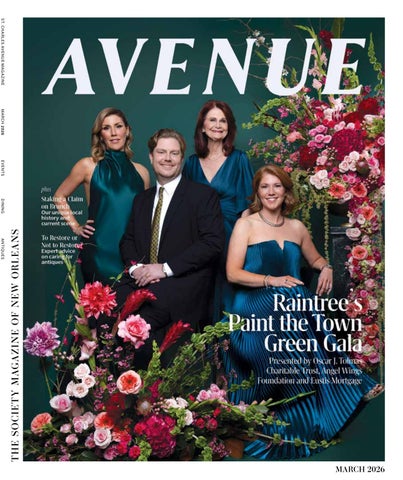
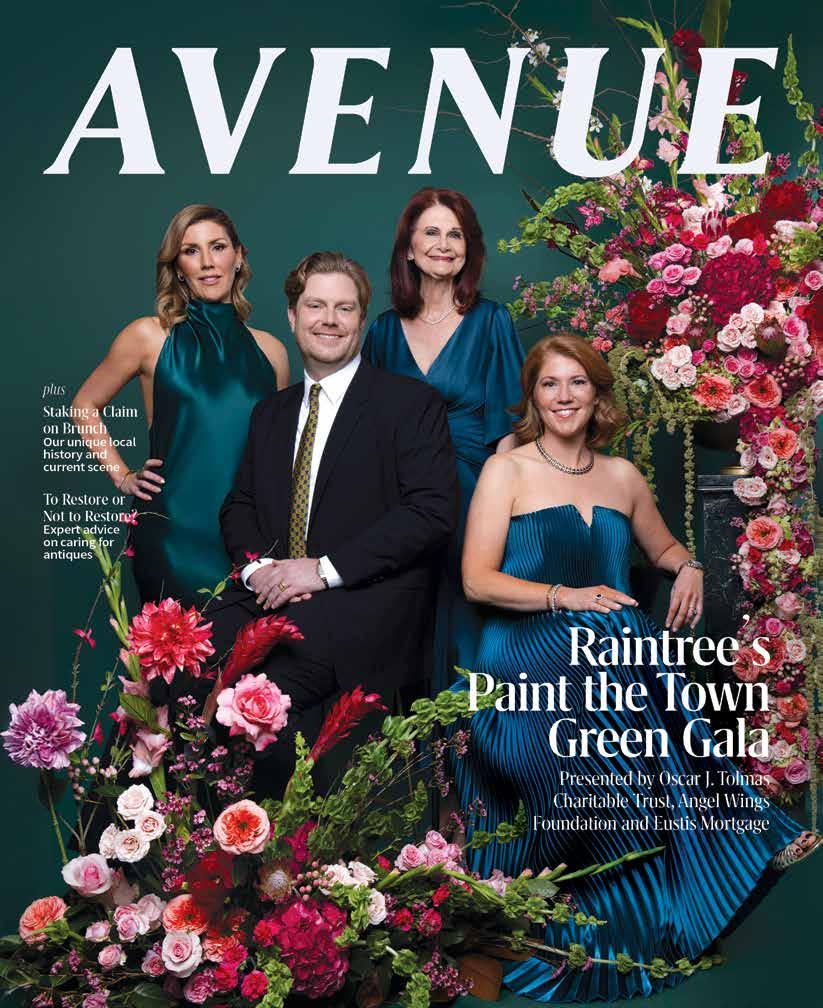
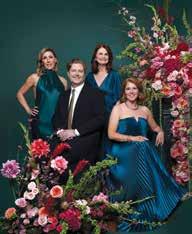
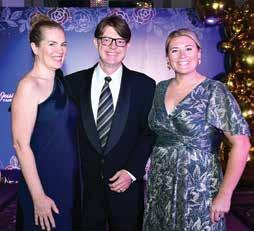
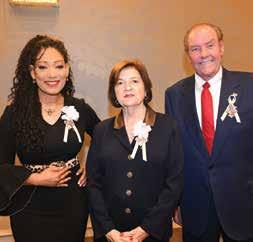
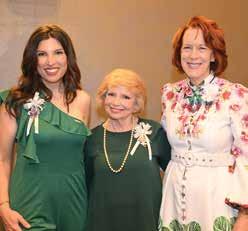
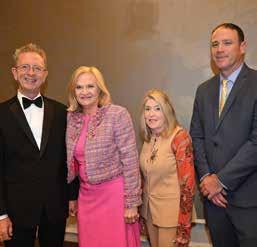
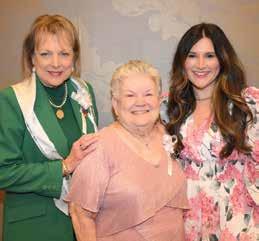
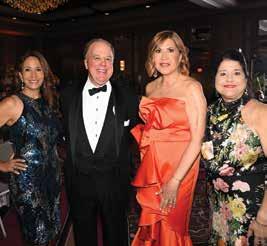
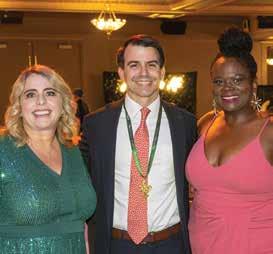
On this month’s cover, we shine a spotlight on Raintree’s Paint the Town Green Gala, a milestone celebration marking 100 years of Raintree Children & Family Services as a steadfast beacon for youth in our community. For a century, Raintree has helped generations of young people find stability, opportunity and hope.
In our feature on antiques, we explore a question familiar to many New Orleanians: to restore or not to restore? With our distinctive climate, and equally distinctive heirlooms, there is no one-size-fits-all answer. Experts weigh in on whether it’s better to restore or simply repair—and how to make those decisions thoughtfully, whether you’re caring for furniture, fine art, or heirloom jewelry.
From preservation, we move to one of New Orleans’ most beloved traditions: brunch. More than a meal, brunch here is a cultural ritual steeped in history, hospitality, and indulgence. We take a look at how brunch became a cornerstone of local life and explore today’s scene through standout dishes and must-visit spots that continue to define the experience.
As always, we round out the issue with a curated look at seasonal fashion trends, local cultural events, and nonprofit fundraisers that deserve a place on your calendar.
As we move into spring, we hope this issue encourages you to slow down, savor what matters, and celebrate the people and traditions that make New Orleans feel like home.
ANDY MYER, EDITOR
Style Meets Savings –Don't Miss Out! Get $5 off a new subscription.
Must order online, new subscribers only expires March 31, 2026.
On the Cover
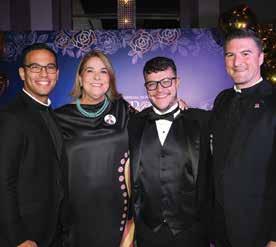
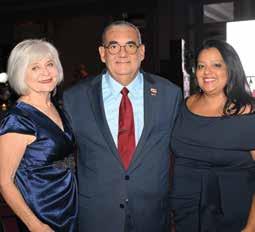
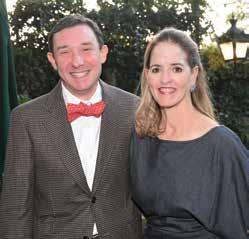
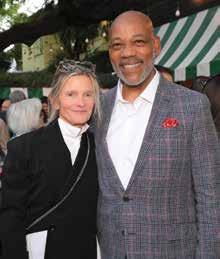
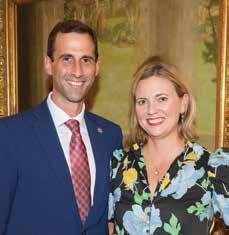
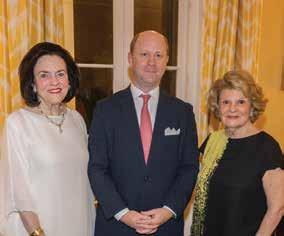
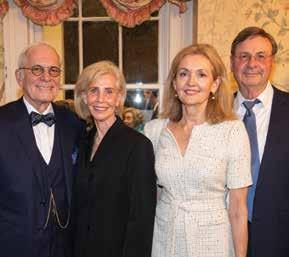
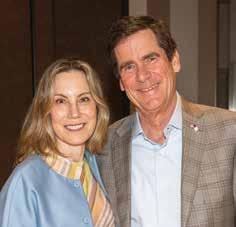
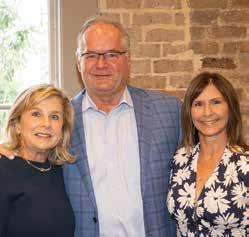
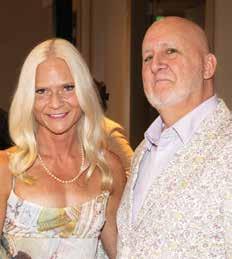
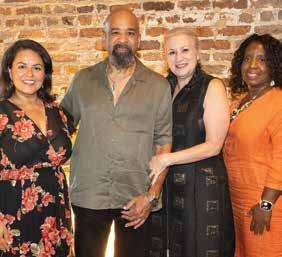
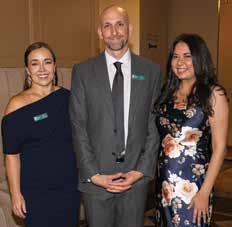
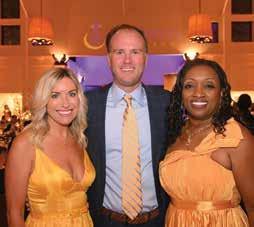
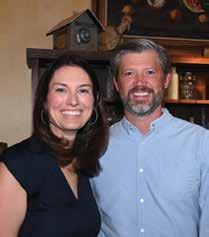
From left: Kate deKay, Joey Walker, Cindy Paulin and Charlotte Sapir representing Raintree's Paint the Town Green Gala. For more visit: raintreeservices.org/pttg26
Florals by Heirloom South
Photograph by Theresa Cassagne
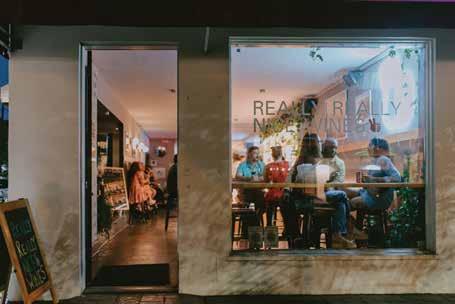
Really Really Nice Wines
For married couple Miriam Matasar and Darrin Ylisto, hospitality has always been a part of their relationship. They met years ago while working as managers at a French Quarter restaurant, and although their circumstances have changed over time, their enthusiasm for the industry has remained constant. After several job transitions, a return to social work school, and the disruptions of COVID, when Miriam and Darrin learned that Spirit Wine was up for sale, they jumped at the opportunity. Since 2023, their cheek -ily named Really Really Nice Wines (RRNW) has taken off, evolving beyond a wine store and into an inviting space where guests can grab a small bite to eat and explore new wines.
RRNW has been going strong for a while now; what do you think sets your business apart? Miriam: We specialize in natural, low intervention wines. Small vineyards that care about their impact
on the planet and have a forwardthinking ethos. We constantly update our selection of producers, always tasting and improving. We also strive to be not just a retailer or a bar, but a neighborhood gathering place.
Which idea came first, opening a wine store or a wine bar?
The bar was in the vision, and we would not have done it without the opportunity to open a bar in addition to the shop. We wanted to offer the communal experience of finding something new and special in a space that we would genuinely want to hang out ourselves.
What does the name mean?
It’s something that we found people just say all the time, “Oh that’s a really really nice wine.” It is also a line from an obscure LCD Soundsystem song that we love.
What kind of food do you serve?
Our amazing chef, Luci Winsberg was mentored by Sue Zemanick (of Gautreau’s) and served as Chef de Cuisine at Sukeban. She manages our seasonal rotating menu and staple snack offerings. Popular items include the Anchovy Toast (sourdough with salted butter, anchovy filet, lemon zest and salt), duck fat popcorn and anchovy stuffed olives. We also offer oysters, rotating cheese and charcuterie plates.
What is the Wine Club?
This is a monthly subscription service that allows you to try two or four of our recommendations, based on a theme. For example, our February wine club offered full-bodied Italian white wines from Tuscany, Umbria and Sicily that were cold weather appropriate, not out of place apres-ski, but also account for the fluctuating temperatures. Additionally, Wine Club members have access to our quarterly wine events.
Look for this and more every Wednesday in the Avenue newsletter. What local finds should we feature next? Email shoptalk@myneworleans.com
Can you tell us more about the home and gift items you carry at the store as well?
We carry houseware, bar and entertaining-adjacent items; things like new and vintage glassware, cheese boards and gourmet snacks from all over the world. We try to select unique items from small makers, pulling from hands-on research and travel inspiration.
What’s up next?
You can come by from 5p.m.-7p.m. every Thursday for free tastings from four different producers. They are always different. Also, always check our website for upcoming events. We try to sneak in (almost monthly) fun, special events, workshops and pop-ups at the store.
“The Katrina List: The Untold Story of Hurricane Katrina”
New Orleans African American Museum, 1417-1418 Gov. Nicholls St., 504-218-8254, noaam.org
March 28 - Aug. 30
“I Am the Face”
Ogden Museum of Southern Art, 925 Camp St, 504-5399650, ogdenmuseum. org
Through Sept. 17
“Michalopoulos: Mystical Expressionism”
Louisiana State Museum, The Cabildo, 701 Chartres St., 800-5686968, louisianastatemuseum.org
Carlo Saraceni’s “Our Lady of Loreto and Peruvian Viceregal Statue Paintings”
New Orleans Museum of Art, One Collins C. Diboll Circle, City Park, 504-658-4100, noma. org
Through Jan. 10, 2027
Burke’s Delight: The Stacey and Michael Burke Collection
Ogden Museum of Southern Art, 925 Camp St, 504-5399650, ogdenmuseum. org
March 20, 2026-Jan. 17, 2027
American Revolution: The Augmented Exhibition
Historic New Orleans Collection, 520 Royal St., 504-523-4662, hnoc.org
Through May 15, 2027
“Origins of New Orleans Black Carnival Society: The Story of the Illinois Clubs” Louisiana State Museum, The Presbytere, 800-568-6968, louisianastatemuseum.org
March 4 - 15
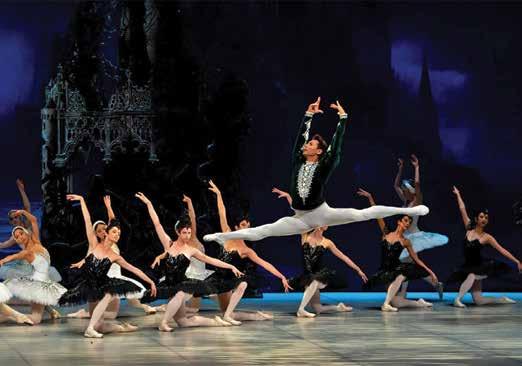
“The Phantom of the Opera” Saenger Theatre, 1111 Canal St., 504-5251052, saengernola.com
March 5 – 29
“Guys and Dolls: A Musical Fable of Broadway” Le Petit Théâtre, 616 St. Peter St., 504-5222081, lepetittheatre. com
March 6, 7
French Fables & Fantasies
Louisiana Philharmonic Orchestra, New Marigny Theatre, 2301 Marais St.; Fuhrmann Auditorium, 128 W. 23rd Ave., Covington, 504-523-6530, lpomusic.com
March 6-15
“Frozen”
Jefferson Performing Arts Society, Jefferson Performing Arts Center, 6400 Airline Dr., 504885-2000, jpas.org
March 7
Morgan Jay: The Goofy Guy Tour
Mahalia Jackson Theater, 1419 Basin St., 504-287-0351, mahaliajacksontheater. com
March 8
Brubeck Brothers Quartet
New Orleans Jazz Market, 1436 Oretha Castle Haley Blvd., 504636-8390, jazzandbluesmarket.com
March 6-22
“All Shook Up” Rivertown Theaters for the Performing Arts, 325 Minor St., Kenner, 504-461-9475, rivertowntheaters.com
March 8
Pat Metheny Orpheum Theater, 129 Roosevelt Way, 504274-4871, orpheumnola.com
March 12
Napoleon Dynamite! Live
Mahalia Jackson Theater, 1419 Basin St., 504-287-0351, mahaliajacksontheater. com
Smoothie King Center, 1501 Dave Dixon Dr., 504-587-3822, smoothiekingcenter. com
March 31
Santana Saenger Theatre, 1111 Canal St., 504-5251052, saengernola. com
Compiled by Sue Strachan
Art on Film
“George Dureau: New Orleans Artist” brings a cinematic look at the life and work of the groundbreaking artist, who was also a major influence on photographer Robert Mapplethorpe. A native of New Orleans and a habitué of the French Quarter, Dureau’s works ran the gamut of photography to paintings.
A screening of the movie, part of the Friends of the Cabildo Film Series, is March 25 at 6 p.m. at the New Orleans Jazz Museum (400 Esplanade Ave.) Complimentary wine provided by Moises Wine/Bizou Wines. FOC members tickets are $10, general admission, $20. friendsofthecabildo.org, @friendsofthecabildo
Booked & Busy
March is when New Orleans shakes off Mardi Gras and cold weather, welcoming the verdant panoply of spring. Not only are flowers blooming, but so are literary festivals.
The NOLA Book Festival at Tulane University, March 12-15, is when the reading and revelry kicks-off. A free event at the university’s Uptown campus, the festival always has a stellar line-up, featuring this year Ken Burns, Susan Orlean, Richard Campanella, Kara Swisher, Ken Auletta, Wally Lamb, Nicole Richie, Charles Blow, Mitch Landrieu, among others, in a variety of panels, discussions and more, with Sunday now officially Family Day. bookfest.tulane.edu; @nolabookfest
Oysters Y’All
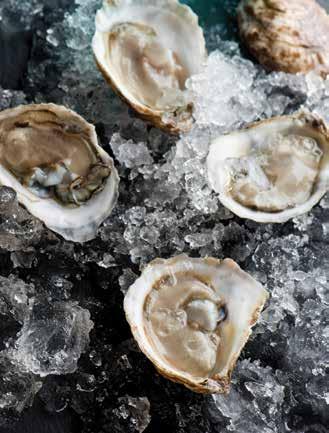
As anyone from Louisiana can tell you, the state’s oysters are the best. On March 26, the Coalition to Restore Coastal Louisiana not only celebrates the bivalve, the group serves it up at its Shell-A-Bration.
The benefit, held at the Audubon Zoo’s Louisiana Swamp Exhibit (6500 Magazine St.), offers oysters in a variety of ways, via the state’s oyster farmers and local shuckers and NOLA Oyster Queen. Dickie Brennan & Co. will round out the menu with additional seafood dishes, while live music from T Marie and the Bayou Juju sets the mood. A silent auction gives partygoers a chance to raise even more funds for CRCL while learning about the organization’s oyster recycling and coastal conservation efforts — work that plays a vital role in strengthening Louisiana’s fragile ecosystems. The event is 7:30 p.m.-10:30 p.m, VIP starts at 6:30 p.m. Tickets start at $85. crcl.org; @crcl1988 – By Sue Strachan
Outdoors Overtures
Young Leadership Council (YLC) Wednesday at the Square presented by Abita has been bringing free concerts to Lafayette Square in the Central Business District for more than 25 years. The 2026 edition launches on March 11 featuring Big Sam’s Funky Nation, with opener Zahria Sims Collective, continuing March 18 with Jon Cleary & the Absolute Monster Gentlemen, with Electric Ramble as opener and March 25 with Bonerama, with Bon Bon Vivant as opener. The series continues through April, and the last show is May 6. Concerts are 5 p.m.-8 p.m. and feature food, drink, art and crafts for sale.
ylcwats.com, @ylcwats
Garden Party
Ellen Biddle Shipman was a trailblazing landscape architect, not only as a woman in a male-dominated field, but for her designs, including the gardens at Longue Vue (7 Bamboo Rd.).
Her legacy will be celebrated at “Shipmania: In the Spirit of Pioneering Women,” March 25-28 at the historic home and of course, its gardens. The four-day Design Symposium will feature discussions with Galerie Editor-in-Chief Jacqueline Terrebonne, landscape architect Kate Orff, artist-in-residence Renee Royale, interior designer Barrie Benson, a performance by Giovanna Joseph with Opera Creole and a reception honoring Shipman’s biographer, Judith Tankard. Tickets start at $250 and registration required.
Community Design Day on March 28 is free and offers activities geared around the symposium theme. Registration not required.
The funds raised at the Design Symposium are dedicated for historic preservation at Longue Vue, focusing on the house’s wall coverings.
longuevue.com; @longuevuehg
Marking 40 years, the Tennessee Williams/New Orleans Literary Festival is set in the French Quarter that the event’s namesake so loved. The Stella and Stanley Shouting contest at the New Orleans Jazz Museum (400 Esplanade), 2 p.m.-5 p.m., starts things off early on March 21, followed the festival appearances March 25-29 that include Robert Olen Butler, Maurice Carlos Ruffin, Addie Citchens and Skye Jackson. Complementing the festival is the Saints & Sinners LGBTQ+ Literary Festival, March 27-29.
Tickets vary per event, passes available starting at $40 a day.
tenneseewilliams.net; @twfestnola
FRIENDS OF THE CABILDO
Spring Silks
By Amy Gabriel
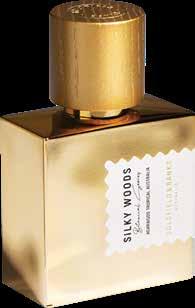
A beautiful bottle of Silky Woods EDP by Goldfield & Banks, with notes of cinnamon Ceylon, saffron agarwood, suede and ylang ylang, makes a sensual addition to your perfume collection. Madame Aucoin Perfume, 608 Bienville St., 833-5257847, madameaucoinperfume.com.
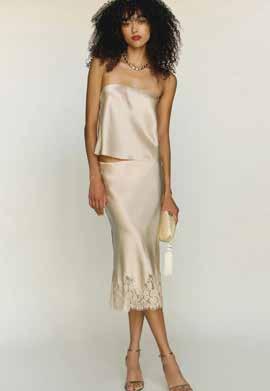
Slink into spring in a strapless Spritz cami and skirt combo of a lightweight charmeuse fabric made from 100% silk, shown in a luxurious almond colorway. Reformation, 3909 Magazine St., 225-325-2487, thereformation.com.
An Ellis cocktail slide, handloomed and hand-woven dyed silk ikat fabric topped with a dazzling detail, is the chicest way to dress up for brunch. Baldiz, shopbaldiz.com.
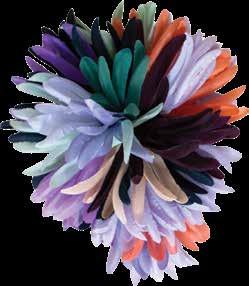
Petal perfection, add a pop of color and whimsy to your outfit with a 100% recycled silk crepe brooch handmade in Paris. Ever the versatile, the flower is finished on the back with lambskin leather, a metal pin closure and an elastic band that you can wear on a garment, as a headband or as a bracelet. Pilot and Powell, 3901 Magazine St., 504-8271727, pilotandpowell.com.
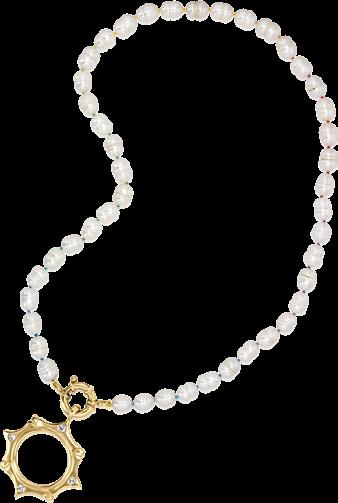
A luxury piece, the SOL shine freshwater pearl necklace features a rainbow silk cord, a 14K gold sun pendant drop design, as well as 0.4 Carat S2, G Cultured Diamonds for an elegant mix. Mignon Faget, 3801 Magazine St., 504891-2005; 3301 Veterans Memorial Blvd., 504-8352244, mignonfaget.com.
Classically Trained
Carleton Young’s creativity and style are rooted in the classic beauty of traditional architecture and interiors, informing her fresh take on home design.
Designer Carleton Young grew up in Greenville, Alabama, in the same well-decorated, circa-1800s home in which her father grew up. Creativity and a good eye run in Young’s family; her mother and grandmother both designed wedding florals.
“Growing up in an environment of, one, strong-driven women, and two, being surrounded by beautiful environments, whether it be my mom creating beautiful weddings or our home, resonated with me,” says Young.
Young met her husband, Louisiana native Brooks Young, at the University of Alabama, while earning her degree in interior design. In 2010, after college, the couple moved to New Orleans. Soon, Young began working at Moss Antiques and Keil’s Antiques on Royal Street, where she honed her knowledge of antiques.
Approximately a year later, eager to move into her design career, Young started working for Curtis Herring Interior Design, where she would stay for about six years before branching out on her own. Young’s first significant
project was a family friend’s condo in the St. Elizabeth building on Napoleon Street in Uptown.
“I loved that she took a leap of faith on me,” says Young, who lives Uptown with her husband and two daughters, ages 4 and 6, not far from that first project. “I was just getting started. So, she fully trusted me. And it was honestly kind of a dream first project because they bought this condo and were starting from scratch.”
Inspired by everything from childhood travels to Europe and the work of iconic designers such as Bunny Williams, to a love of midcentury modern design and daring pattern play, Young injects her projects with a sense of breezy, yet sophisticated, timelessness. While her designs lean toward classic, over the years Young has become more adventurous with both pattern and color.
“I want spaces to feel full of energy and warmth,” she says. “[To] give people a sense of calm, but also feel alive.” – By Melanie Warner Spencer
carletonyoung.com; @carletonmyoung
Has the Duchess of Sussex invigorated your desire for pretty penmanship?
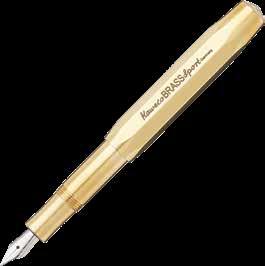
Practice makes perfect with a laser engraved and hand polished Kaweco sport fountain pen that is milled from solid brass. Lionheart Prints, lionheartprints.com.
Chic Correspondence
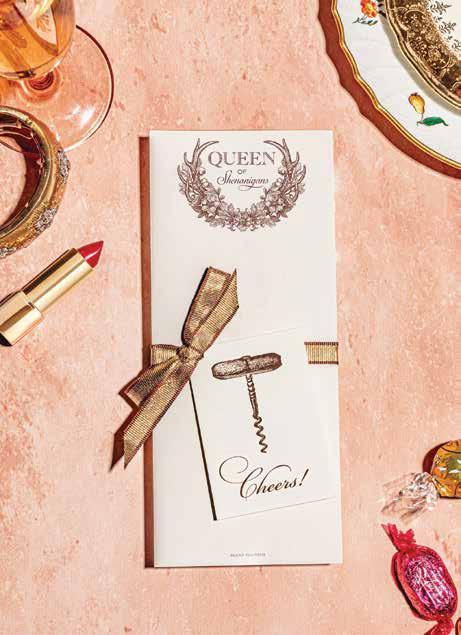
Make a to-do list more treat than task when jotting down reminders on your Queen of Shenanigans long pad. Each is designed with a cheeky hand-drawn illustration and flat printed on USA-made, Ecru textured 80# paper, right here in New Orleans. Alexa Pulitzer, shop.alexapulitzer. com.
By Amy Gabriel
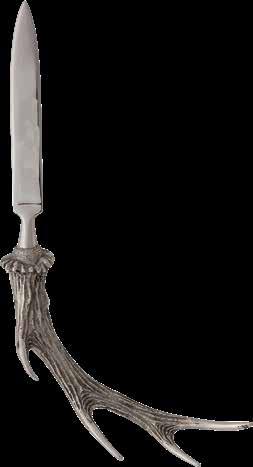
Tearing into an envelope is gauche. Open your correspondence with a pewter handle antler letter opener. Generously sized, this timeless piece also makes a stylish statement on your desk. Friend & Company Fine Jewelers, 7713 Maple St., 504-866-5433, friendandcompany.com.
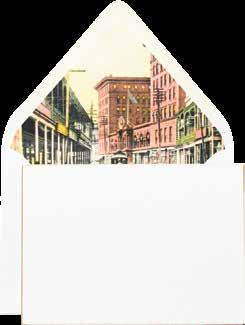
Always be prepared to send a hand-written note by keeping a set of On The Avenue liner stationery on hand. The pack includes 6 gilded cards and 6 envelopes lined with a vintage illustration of St. Charles Avenue. Scriptura, 5423 Magazine St., 504-897-1555, scriptura.com.
Sending out spring wedding invitations?
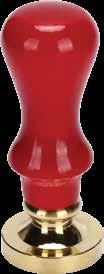
Uplevel the envelope aesthetic with a wax seal and use a colorful mini wooden handled stamp to complete the job. Papier Plume, 842 Royal St., 504-988-7265, papierplume.com.
As a longtime hospitality worker, Olivia McCoy grew up in a family of chefs and got her first restaurant job at the age of 15. She saw firsthand the way that this industry can lead to statistically higher rates of depression, anxiety, and other mental health struggles for its staff. To help address this immense need for mental health resources, she founded WeHelp NOLA in 2019.
“I was essentially trying to find a way to provide accessible therapy and mental health services to the hospitality industry, because they have such high rates of mental health and substance abuse issues, along with all the other systemic issues we see within the industry,” said McCoy. Financial barriers, as well as difficulties navigating mental healthcare resources within traditional healthcare systems, can leave many hospitality workers on their own.
Hospitality Membership and Crisis Management Programs
WeHelp NOLA’s flagship offering is a hospitality membership program. They partner with hospitality venues whose owners pay a low-cost monthly subscription, and through that the entirety of the staff has no-cost access to their therapy and mental health services. It operates at a cost as low as $10 per employee per month, paid by the employer.
Olivia McCoy
Founder, WeHelp NOLA
In addition, WeHelp NOLA’s emergency counseling crisis program works in response to emergency events in the area. Their past initiatives have been during Covid-19, Hurricane Ida, and the 2025 attack on Bourbon Street. This is a grant and donation-funded program. It offers the same therapy and mental health services as their hospitality membership program, but it does not rely on membership. Individuals are welcome to seek no-cost therapy through them, regardless of employer membership.
The demand for these services is significant. Since 2020, they have provided over 7,500 free therapy sessions. McCoy also visits venues in-person and speaks to the restaurant employees as a fellow hospitality worker to help break down some of the stigma surrounding mental healthcare in the industry. “Mental health is something that everyone deals with on a daily basis, and the more support that we can get for people, the better,” said McCoy. The organization’s long-term plan is to expand to its first city outside of Louisiana in 2027, with an ultimate goal to provide services to many cities on a national scale.
A Necessary Service
This counseling service tends to be well-utilized by the participating hospitality venues. In fact, the
team has never had a venue join and not use their offerings. As McCoy explained, even owners or managers who might be a bit hesitant to try out the resources are often surprised when they see the usage rates, which are reported back to them. (Names are never disclosed, and the use is confidential.) Usage rates generally fall between 30 to 70 percent. “It just goes to show how necessary it is in an industry that is plagued with mental health challenges and struggles,” said McCoy. “So, we are excited that we are able to serve a community in need.”
According to 2025 surveys, on average their clients see anxiety decrease by 38%, depression decrease by 37%, and a 56% improvement in their relationship with substances and with substance use. Restaurants overall have experienced a 46% increase in team morale, and a 55% improvement in employee/employer relationships. The program supports both the individuals receiving the services, as well as the employers who see the positive effects on their staff members.
Get Involved
Exposure is crucial to WeHelp’s success, and the team does a lot of outreach to hospitality venues to make sure they know these services are available. In addition, McCoy encourages anyone who works in
WeHelp NOLA, wehelpnola.com, @wehelpnola
restaurants, bars, coffee shops, or any other space in the service industry to spread the word about WeHelp. The team also loves to partner with other nonprofits and infrastructure-driven initiatives in the city. This furthers their ability to network and promote resources to those in need.
WeHelp NOLA also utilizes grant funding and donations. Donate via their website or Instagram. These funds keep the emergency program ongoing and accessible, and it supports the low- cost subscription program for hospitality owners. They host fundraisers throughout the year, including WeHelp Wednesday during the month of May. WeHelp NOLA partners with dozens of local hospitality businesses in the area in honor of Mental Health Awareness Month, and the participating bars, restaurants, and other venues donate portions of their proceeds to WeHelp NOLA. It provides an excellent way for people to get involved. By supporting the bars and restaurants that they love, they also give back to a mental healthcare program for hospitality.
– Lindsay Mack
Cachapas, sweet cornmeal pancake, venezuelan cheese and extra flavors; Cluck Norris Chicken Sando, fried chicken glazed with duck sauce, kimchi, lemon mayo, gruye’re & cucumbers on a pretzel bun at Origen Bistro
STAKING THE CLAIM ON
BRUNCH
The Rich History and Vibrant Present of New Orleans’ Brunch Scene
By Jyl Benson | Photography by Jess Kearney
With the arrival of spring, New Orleanians embrace brunch as a cherished weekend reward. Across the city’s eateries, brunch is celebrated as an indulgent, leisurely affair—one where festive libations flow and laughter fills the air. Signature drinks like Champagne, Mimosas, milk punch, and Bloody Marys accompany decadent, flavorful foods, enjoyed by guests who dress smartly for the occasion.
As with many things that are a little bit naughty or extravagant—cocktails, Mardi Gras, jazz, and muffulettas—New Orleans claims the origins of brunch, if not the term itself. The word “brunch” was first coined in a 1895 article in the British magazine Hunter’s Weekly, where author Guy Beringer imagined a new, cheerful, and sociable meal to replace heavy post-Sunday service breakfasts. Beringer wrote, “It puts you in a good temper... It sweeps away the worries and cobwebs of the week.”
Brunch gained popularity in America during the 1930s, especially among wealthy train travelers stopping in Chicago for hearty late-morning meals.
Elizabeth Begue, known as Madame Begue, arrived in New Orleans from Bavaria in 1854. She joined her brother, a French Market butcher, and soon married Louis Dutrey, owner of a coffeehouse near the market. Observing the hunger of market workers by midmorning, Elizabeth began serving multi-course, family-style meals at 11 a.m. in a room above the coffeehouse. Her menus, inspired by the market’s bounty, always included an egg course—rare at the time—and wine with every dish. The meal concluded with cheese, fruit, and café noir flamed with cognac.
After Louis Dutrey’s death, Elizabeth married Hypolyte Begue, the bartender, and together they ran Begue’s Exchange. The restaurant became famous during New Orleans’ Gilded Age, especially after the 1884 Cotton Exposition. Madame Begue’s breakfast attracted tourists who wrote months in advance for seats at the single
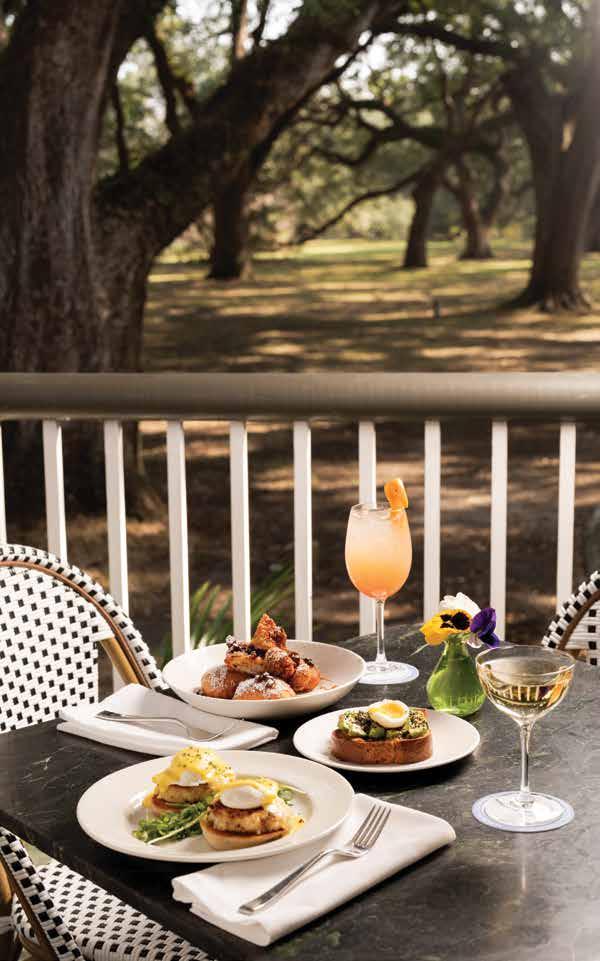
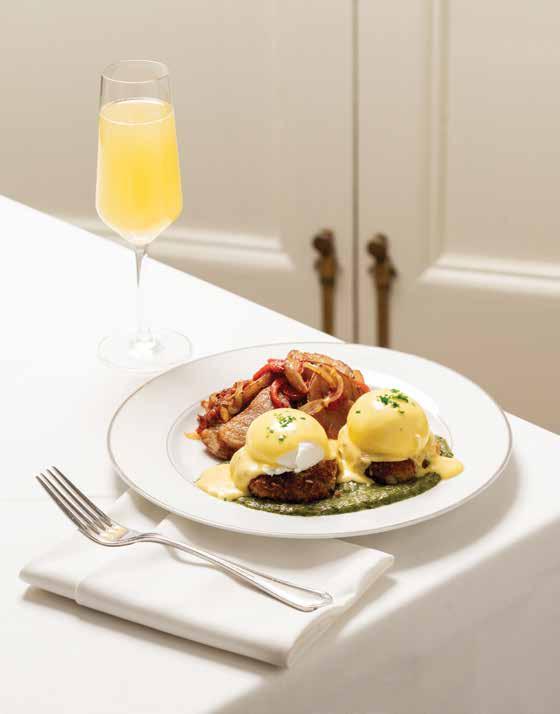
Crabcake Benedict, lump crab cakes, poached eggs, English muffin, hollandaise; Avocado Toast 12, chili crunch mayo, furikake, soft cooked egg, toasted brioche at Audubon Clubhouse
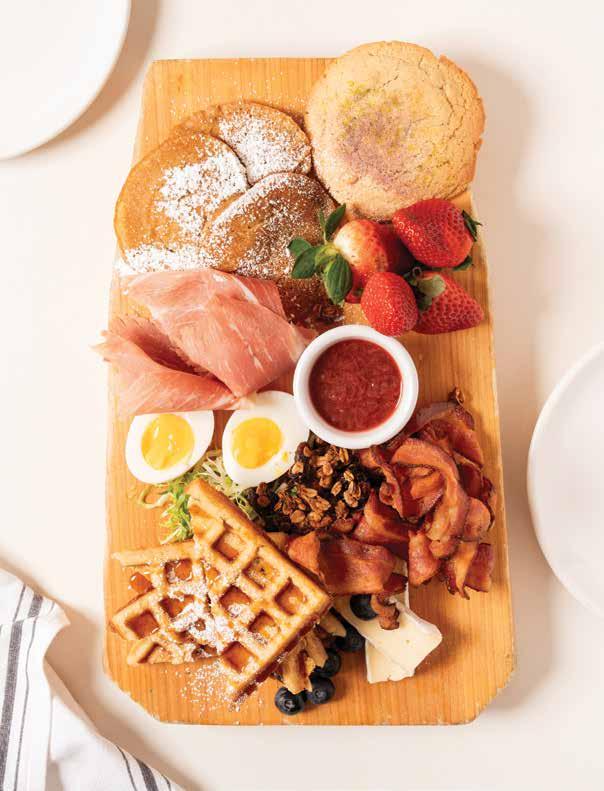
Brunch Board, bacon, prosciutto, waffle, mini donuts, mini pancakes, fruit, seasonal jam, granola with nuts, cookies, triple crème brie, soft boiled eggs at Birdy’s
Try This
Bywater Bakery
Breakfast jambalaya, crawfish cornbread with egg, and freshly squeezed orange juice.
Paladar 511
Homemade pappardelle with spicy sausage ragu, arancini with short-rib ragu and lemon, warm banana bread with candied hazelnuts and salted butter.
daily seating, enhanced by one of the city’s first telephones. Her passing in 1906 was national news, earning her the title of America’s first celebrity chef.
The tradition continued after her death: Hypolyte Begue married her kitchen helper, keeping her dishes alive until the property was sold to Tujague’s in 1917. Tujague’s, a landmark for its multi-course meals, still honors these brunch traditions today.
Celebrating its 170th year, Tujague’s stands as one of America’s longest-running dining institutions. Its reputation rests on the endurance of Creole traditions, served consistently. The 1856 Brunch Special, priced at $18.56, offers a two-course brunch Friday through Sunday, featuring dishes such as BBQ Shrimp & Grits, Roast Beef Debris Po’Boy, and Muffaletta Chopped Salad. A Grasshopper cocktail
is available for $1.70, honoring the signature drink introduced by bartender Philip Guichet in 1918. The concept of jazz brunch was born in the early 1970s when Dick Brennan, Sr. invited a jazz trio to play at then-fledgling Commander’s Palace for the post-church crowd. Dickie Brennan, Jr. recalls distributing flyers encouraging tourists to take the streetcar to the Garden District for jazz brunch. The
idea was an instant hit, creating a new dining genre where Sunday mornings could be as debauched as Saturday nights before a leisurely afternoon nap. Today, the tradition thrives at Commander’s Palace and has inspired many others.
New Orleans’ brunch spots offer diverse experiences, with most emphasizing flavorful food—whether reinventing classics, showcasing regional specialties, celebrating ethnic cuisines, or serving comfort fare. Atmosphere is equally important. At Broussard’s, diners enjoy brunch at white-clothed tables overlooking a tropical courtyard, accompanied by a strolling jazz trio. Dishes include Eggs Josephine, wild mushroom and Gruyere omelets, and bottomless Mimosas or endless Rosé. If it is an outing on the low down that
you seek, Mr. B’s can deliver. Few know about it, but one can pull into Solari’s garage right in the thick of things at 721 Iberville Street and duck right into the always-in-demand restaurant through a secret (maybe not so secret anymore!) door from the garage, which will take you right past the kitchen to your awaiting table. This luxury will cost you $5 for three blissful hours of secure parking.
The Gumbo Ya Ya is legendary, the fried chicken a well-kept secret, and the Strawberry Waffles and Brunch Veal Napoleon will scratch that itch. Check out the new-ish Pear Cosmopolitan from the bar to kick things off.
Nearby Brennan’s is celebrating its 80th anniversary this year. It is home to a daily belt-busting, overthe-top breakfast, as well as flaming
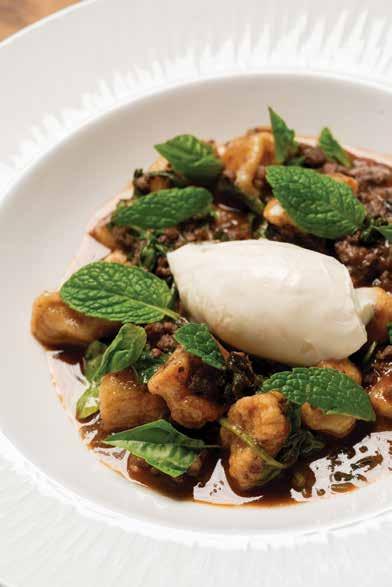
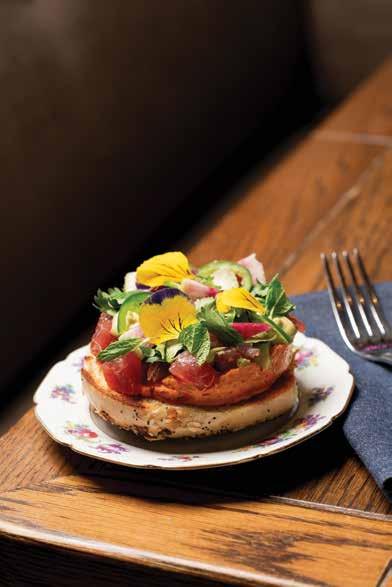
Semolina Dumplings with goat bolognese and whipped ricotta and Tuna Bagel with tartare, Calabrian cream cheese, soft herbs, on an everything bagel at Compere Lapin
Bananas Foster prepared tableside via a gueridon, the drama of which can make you feel like a child at a hibachi restaurant. Kick things off with Brûlée Grapefruit, followed by Owen’s Scotch Eggs, and wash it all down with copious amounts of the de rigeur Champagne that goes hand in hand with this experience.
A few blocks away, Palm & Pine, a vibrant, cozy spot, explores the cuisine and libations of Louisiana, the South in general, and South of that (the Caribbean, Mexico, and Central America). Chefs/Owners Amarys Koenig Herndon & Jordan Herndon have been James Beard Award SemiFinalists for Best Chef South in both ‘23 & ‘24. Leave the country without leaving your seat with a pandan cinnamon roll and/or chilaquiles Blancos, kicked back
Try This
Redfish Grill
Alligator chorizo butternut hash paired with bottomless brunch cocktails for $22.
Café Degas
Enjoy grillades and grits in a treehouse-like setting.
Copper Vine
Wine Pub Breakfast with house-smoked heirloom tomatoes, crispy hash brown, soft scrambled eggs with Gruyère, butter croissant, and thick-cut bacon.
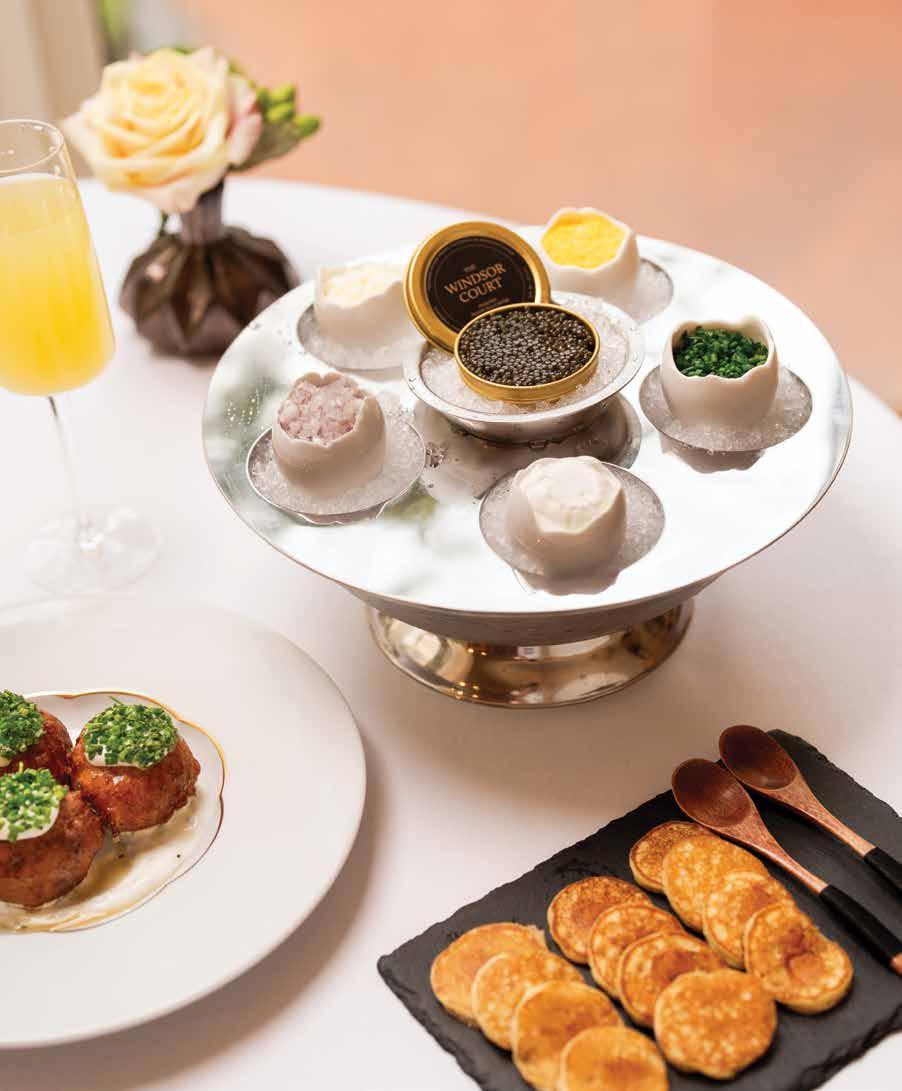
Caviar Service 200 and Crab Beignets 24 at the Windsor Court Grill Room
with Bloody Marias. Do your best to nab a spot at the kitchen counter.
Although it is just a block from Jackson Square, in a carriage house built in the late 1700s, Sylvain still feels like a secret. As familiar and cozy as a childhood blanket, this restaurant-bar mashup beckons locals with a lack of pretense, oodles of romance, and a sense of humor. Case in point: Party Pairing options for the table include fries with a bottle of Champagne Gonet-Medeville, fries with a bottle of either Riesling or Pinot Blanc, or fries with a sixer of the Champagne of Beers (Miller High Life) so “your bottle count can be a little closer to your fry count.”
Executive Chef Andrew Lowrey’s menu covers all genres of protein, but his vegan and vegetarian options are anything but afterthoughts. For brunch, blueberry buttermilk pancakes and chicken grillades & grits are hard to beat.
While brunch is a natural fit for the city’s elegant, old-line eateries, many casual restaurants also enjoy thriving brunch patronage. At Origen Bistro the new-ish colorful Latin American eatery in Bywater, the daily vibe is decidedly sexy and there are all-day and brunch menus. Chef Julio Machado suggests approaching brunch with a range of small plates — cheesy tequeños with black beans and rice; tostones with a fried egg and avocados; cachapas (a Venezuelan corn pancake) with cracklings on the side. He says his cachapas develop a delicate sweet-savory flavor when they hit the flat-top grill.
Chris and Bonnie Borges’ new neighborhood bistro and wine bar, Charmant highlights modern European flavors created with local resources, a robust wine list, a curated cocktail program, and a warm and welcoming space that feels very charmant aka. charming. The PhoMo is a tribute to Chef Michael Gulotta’s MoPho, which used to occupy the space. It combines braised beef short ribs with star anise, bean sprouts, herbs, grits, and a soft egg. The Brussels Sprout Salad is not to be missed. Really.
Uptown, Darrin Ylisto and Miriam Matasar run Really Really Nice Wines. They upped the game when they brought on Chef Luci Winsberg as culinary director, offering a limited menu of seasonal, chef-driven
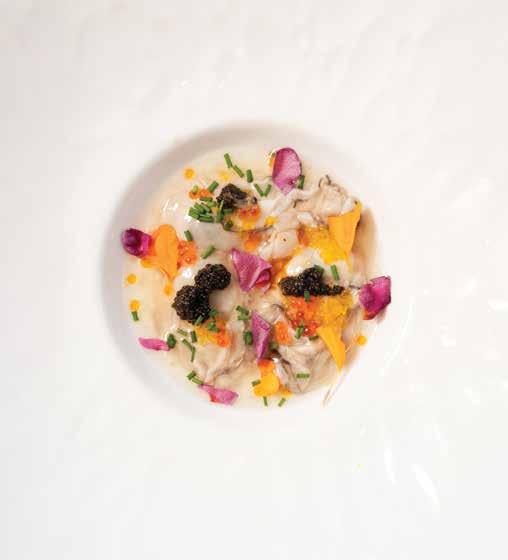
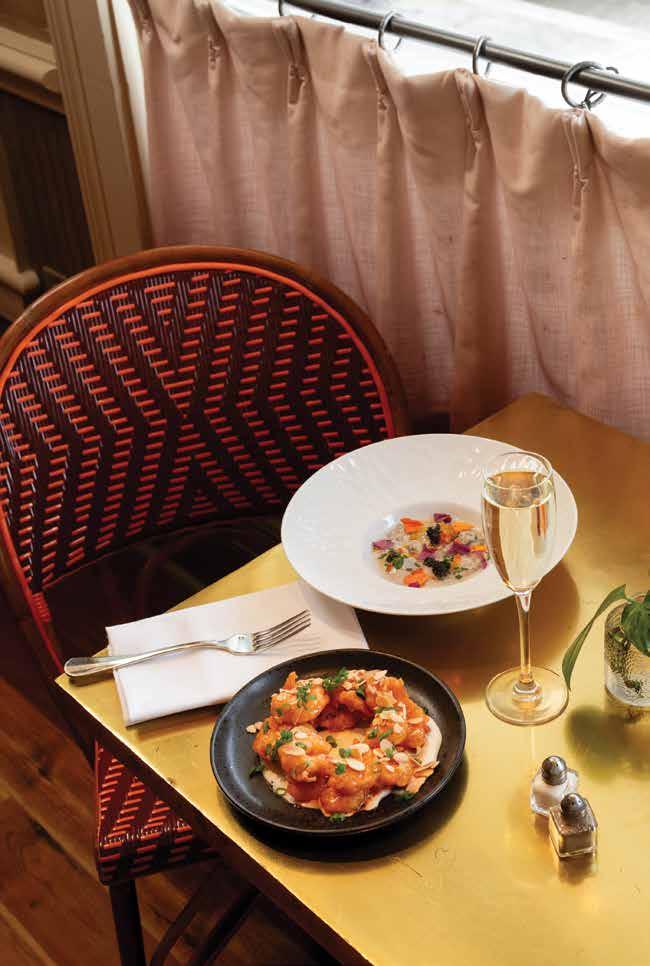
Oysters, Pearls & Cavia;, apple pearls, Meyer lemon, smoked paprika oil, Cajun caviar and Shrimp Skully; tempura fried Gulf shrimp smoked almonds, Skully’s crystal & pepper jelly reduction, soy-ginger cream at Ralph’s on the Park
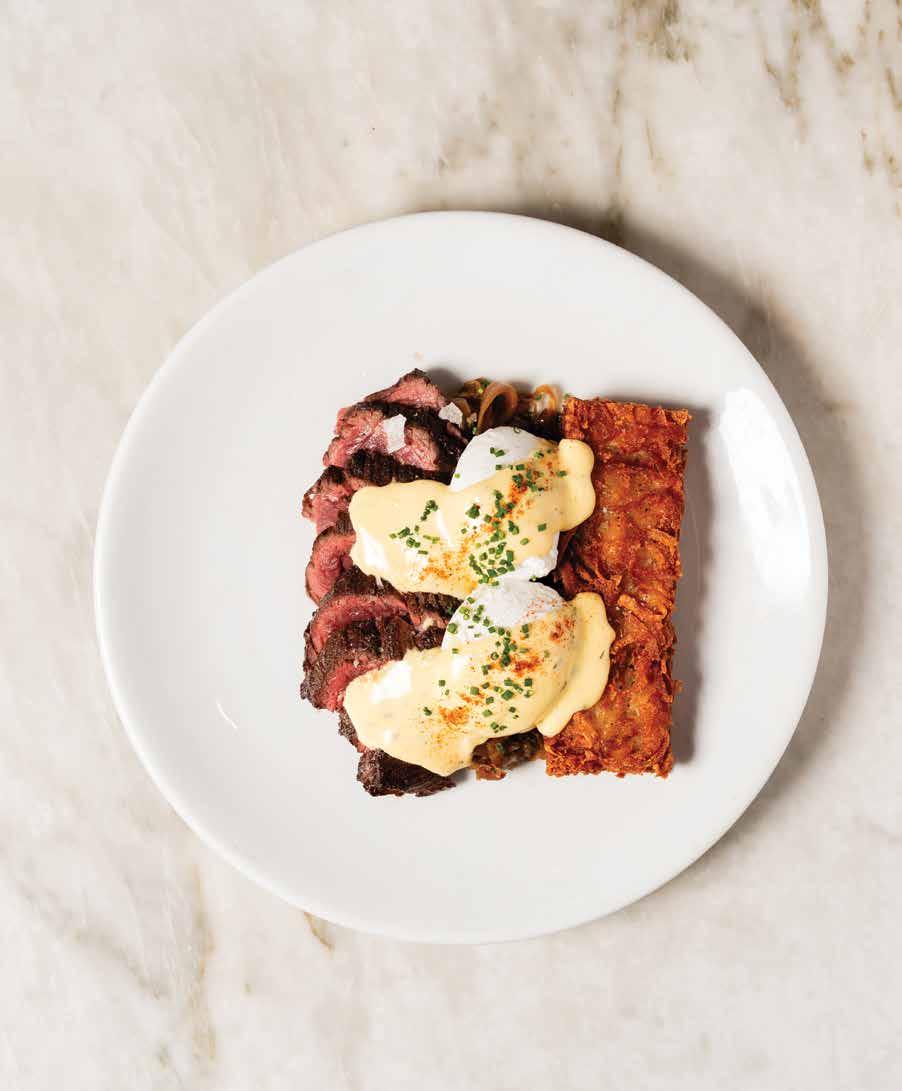
Steak and eggs, caramelized onions, hash brown, poached eggs and Béarnaise at The Chloe
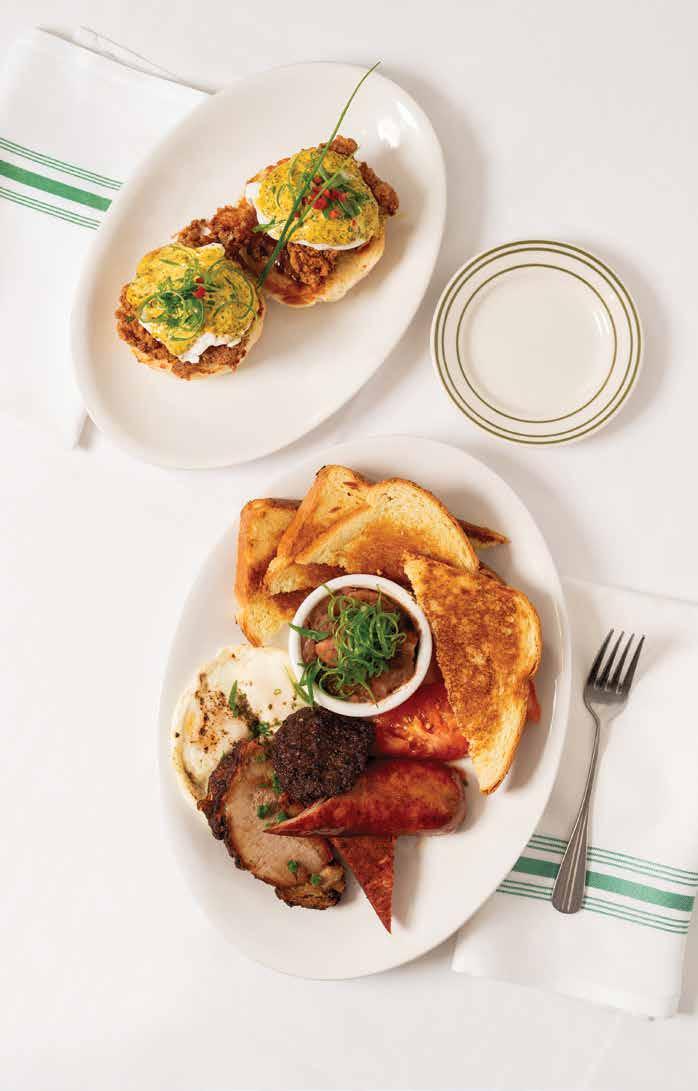
Eggs Rue St. Louis; buttermilk biscuit, corn flour fried oysters, bacon jam, poached eggs and sauce Bearnaise. Butcher's Breakfast, smoked back bacon, grilled local boudin, andouille, grilled tomato, red beans, two eggs, duck fat fry bread and orange marmalade at Tujague’s
Eggs Josephine; blue crab cakes, herbsaint creamed spinach, poached eggs and Bearnaise sauce with Lyonnaise potatoes at Broussard’s
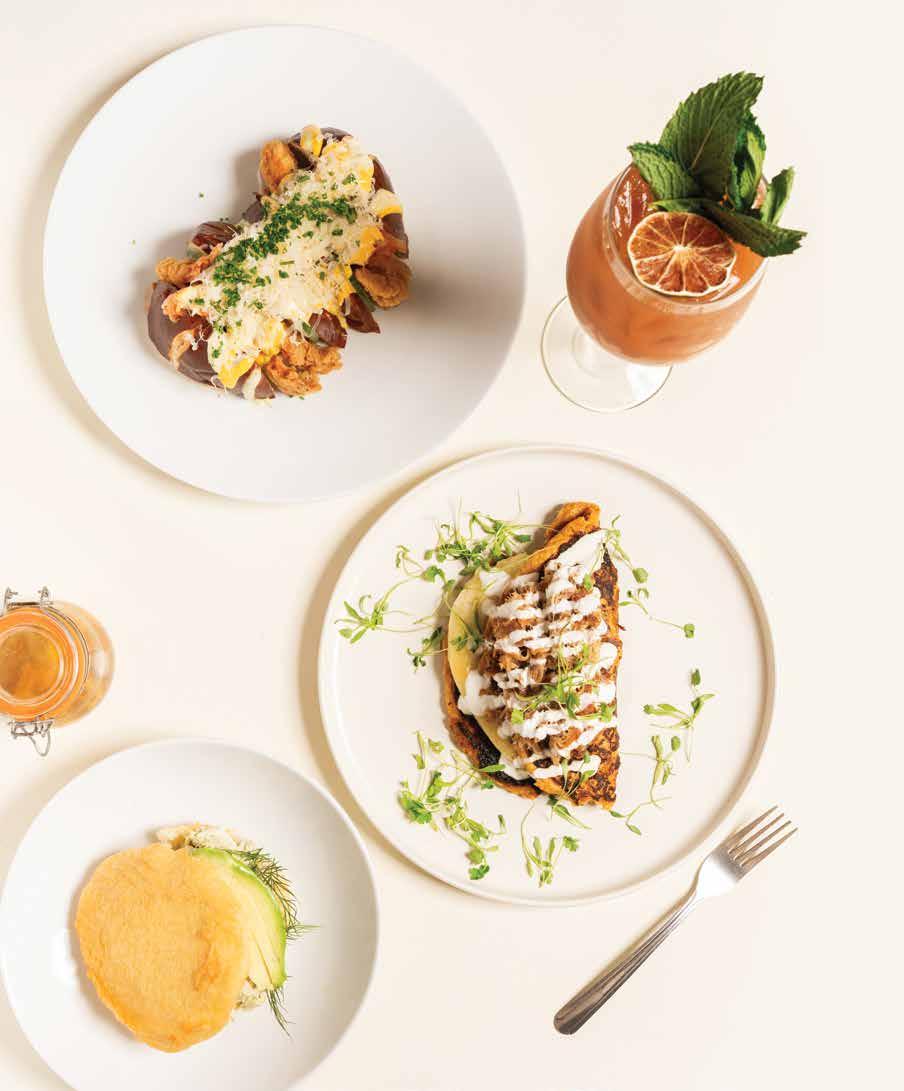
shareable small plates alongside their selection of uncommon natural wines in a pale-wood setting that feels more like a relaxed, upscale snack shop than a restaurant. The space functions as both a wine shop and a hangout. Brunch appropriate choices include Ricotta Toast and the Lyonnaise Salad.
With The Chloe, Róbert LeBlanc of LeBlanc+Smith created a microcosm of Uptown New Orleans culture within an Uptown hotel, restaurant, bar and, of sorts, club. Indoors and out, LeBlanc and designer Sarah Ruffin Costello’s vision merges the historic with the contemporary in a seamless fashion while wresting every bit of available space to fabricate
nooks and intimate gathering places as one moves a serpentine path through the property, continuously imparting a thrilling feeling of discovery. Inside, moody hues and abundant natural light offset architectural details. At night, carefully chosen dim fixtures and lamps offer sensual illumination. Culinary and cocktail services are available in all communal spaces. The “restaurant” is anywhere you want it to be. For brunch, try the peerless steak and eggs. If the weather is fine, adjourn to the pool. Uptown’s newest darling, Café Malou, connects directly to Octavia Books. There is indoor and outdoor seating on the tree-lined sidewalk. Try
Try This
Ruby Slipper
Four locations offering brunch favorites like the Trifecta, a mashup of three Benedicts: Cochon, Chicken St. Charles, and Bayou Shrimp.
Ralph’s on the Park Oysters, Pearls & Caviar, and Shrimp Skully.
Mister Mao
$52 brunch for two with a weekly changing menu. Dim sum cart highlights include Kashmiri Fried Chicken, Pani Puri, Fairy Bread, and Pink Noise Cocktail.
the Warm Crustless Quiche and Kale Caesar Salad with a Cardamom and Orange cold brew.
Operated by The Dickie Brennan Restaurant Group at the Audubon Golf Clubhouse, weekend brunch is served to the sound of singing birds in the park’s oak canopy. Brunch is a family favorite as children can run about in the park a bit while adults supervise from the deep, breezy wrap-around porch over Bloody Marys or Mimosas. crabcake Benedict or the chicken and waffle sandwich.
There are far worse—and few finer—ways to usher out a trying week or usher in a new one.
TO RESTORE OR NOT TO RESTORE
A GUIDE TO ANTIQUE CARE
BY KELCY WILBURN
IN NEW ORLEANS
As a multicultural port city with over 300 years of history, the New Orleans of today maintains its charm through the lasting craftsmanship of the New Orleans of old. An appreciation for the well-built and exquisitely designed furnishings of the past is evident in the number and quality of local antique dealers and the proliferation of antique furniture and lighting in historic local homes and businesses. Each piece tells a story, and part of that story is present in its scratches, dents, discoloration, or missing parts.
While age alone does a number on hand-crafted works of the past, New Orleans’s humid climate and propensity for pests can exacerbate the deterioration of antiques. But as owners, heirs, or custodians of these items, is that flaw or imperfection the story we want to tell? What if that part of the story means that the piece doesn’t function? Perhaps the chair is missing a leg or the lamp doesn’t light. How does a person know when to fix an item, when to restore an item, and whether or not they’re the same thing?
Stepping into the world of antique restoration and conservation can lead down countless rabbit holes, and while the internet offers an answer for everything, it’s not always—or often in this case—the best answer. So, let’s start with the basics. What does it mean to conserve versus restore an antique? According to Bill Rau, third-generation owner and CEO of M.S. Rau, conservation is about prevention—protecting an object from future damage and extending its life. Restoration, meanwhile, is taking corrective measures
and addressing existing issues to return a work to its intended appearance. Merchant House founder Rosa Dunlap offers some examples; to prevent further deterioration, conservation efforts might include gluing a wood split to prevent a fracture, using oil and steel wool on rust to prevent further decay, or supporting a fragile quilt with backing fabric to prevent further tears. Does that mean you should do those things? Not necessarily. But maybe. Confusing, right?
According to Rau, the first place to start with your potential conservation or restoration project is asking yourself, “Why?” Are you trying to protect the value, improve function, or better enjoy the piece?
“If the object is important and genuinely needs work, restoration is usually worth it,” he says. “But it must be done by a true specialist. This is an area where expertise matters, and cutting corners almost always costs more in the end.”
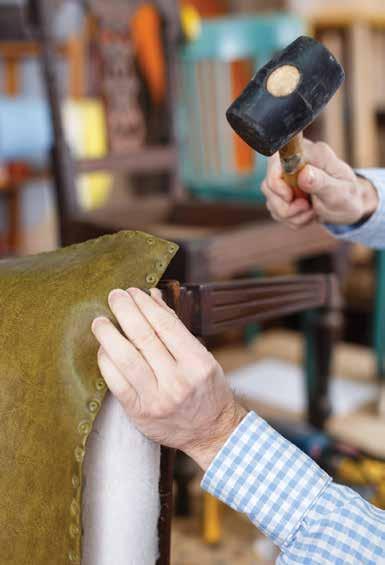
For some types of antiques, restoration is not only accepted but also expected. With furniture, for instance, reupholstery is expected and often necessary due to historic textiles’ inability to survive centuries of use.
“With silver, marble and bronze, originality is more important, and examples often survive in better condition,” says Rau. “Clocks fall somewhere in between, where mechanical servicing is essential and replacement of minor elements is generally understood.”
Owner and restorer at New Traditions Furniture Restoration, Jen Brunjes emphasizes the importance of understanding your piece’s historical integrity and provenance.
“If the original finish, patina, or wear tells an important story about how the object was made or used, preservation is often the better choice,” she says. “Restoration makes sense when damage compromises structural stability or function, but my goal is always to intervene as little as possible to meet the needs of the piece while respecting the object’s history and provenance.”
If monetary value is your goal, Dunlap finds that true antiques (items over 100 years old) are typically valued much higher when they show little or no restoration or repair. At Merchant House, when a customer has a piece requiring repair in order to be functional, Dunlap recommends a skilled professional.
If there’s one thing I’ve learned from talking with local antiques professionals, it’s that antique restoration and conservation—simply put—is not a DIY field.
“We’re fortunate to have extraordinary talent in New Orleans, and many members of our conservation team [at M.S. Rau] have been with us for decades,” says Rau. “Trust is everything. If work must be outsourced, it’s only through personal recommendations. There’s simply too much at stake to take chances.”
Common mistakes are aplenty in the antique field, and for Brunjes, the most difficult restoration projects are often those with extensive previous
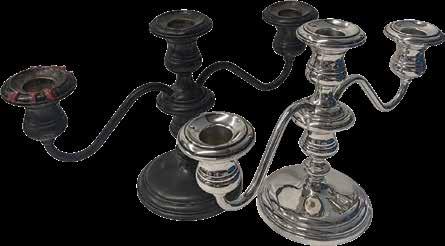
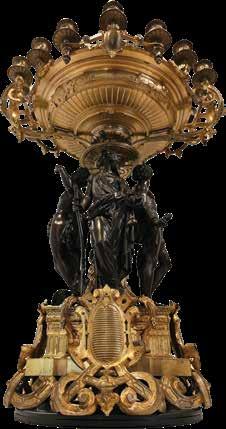
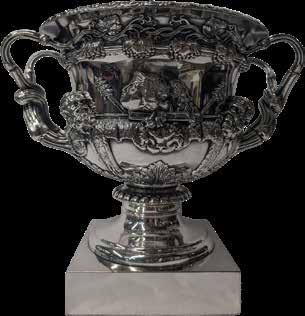
Three examples of Zito’s Plating & Polishing Works
repairs done incorrectly. She says that undoing old but well-intended damage while preserving what remains original can be far more complex than starting with an untouched piece.
“There was a chair I remember in particular with a damaged leg—the client had let their handyman try to fix it for them, and he sunk so many screws into that thing and left globs of glue and epoxy everywhere,” she says. “The leg had lost pretty much all of its structure to screw holes and inevitably broke again. It was definitely a journey restoring that one.”
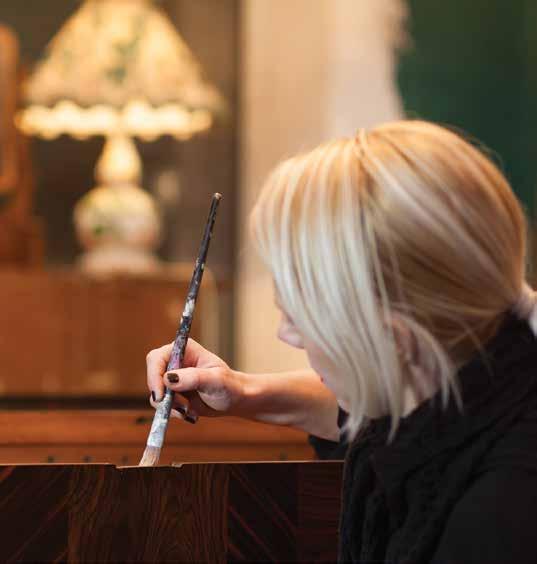
At Merchant House, Dunlap has watched people make the common mistake of chasing design trends through harsh stripping and refinishing of wood pieces, which forever alters the original finish and color of a piece.
“In the ‘80s and ‘90s everyone was stripping the original dark finishes,” says Dunlap. “Then in the 2000s came the painted look and of course the chalk paint. Most recent are the proclamations that brown is back.”
Dunlap’s advice is to let trends come and go and stick to the original, time-honored finish. Preserving the original finish not only maintains value but also honors the environmental impact already invested in that piece and
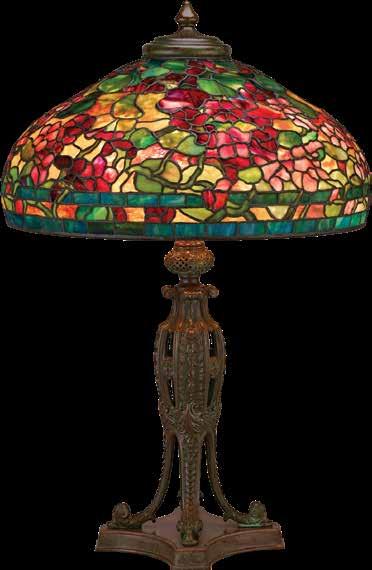
Tiffany Studios Nasturtium Lamp rewired by M.S. Rau
Contacts
M.S. Rau rauantiques.com Merchant House merchanthouse.com
Zito’s Plating & Polishing Works zitosplatingandpolishing.com
New Traditions Furniture Restoration newtraditionsrestoration.com
Symmetry Jewelers symmetryjewelers.com
avoids the chemicals and waste of unnecessary restoration.
Brunjes sees another common mistake: using the wrong products to clean an item.
“There was a life hack going around suggesting people use mayonnaise to get rid of water rings on your furniture and another one suggesting using olive oil to restore a dull finish,” says Brunjes. “It is generally a terrible idea to use food products to restore furniture—they go rancid and can ruin your finish further.”
This advice extends to the restoration of metals as well. At Zito’s Plating & Polishing Works, Owner Corey McCloskey says the internet is by far the worst culprit when it comes to these antique-damaging life hacks.
“If you think there is a magical solution, unfortunately there is not,” he says. “When you hear ketchup, sugar, vinegar, and lemon juice as a great concoction to help you in your [polishing] endeavor, please stay away.”
McCloskey also cautions against another common mistake: polishing with steel wool or Scotch-Brite when hand polishing doesn’t work. Doing so, he says, can put large scratches into the metal or remove the plating altogether.
“If you don’t know, just stop and give us a call,” he says. “It’s the easiest way to avoid any heartache.”
McCloskey now runs the business that his great-grandfather started in 1946 and that his father expanded in 1976. Zito’s has restored lighting for some of the most iconic buildings in the city, including Gallier Hall, St. Louis Cathedral, Temple Sinai, and Municipal Auditorium. Beyond large-scale projects like
these, McCloskey’s expertise is sought by locals for chandeliers and antique lamps, which require the balance of maintaining historical authenticity and making a piece functional and safe for modern use.
“Holding onto historical value is my main goal, but I am also here to do whatever the customer may want for themselves—although, safety is key and cannot be skipped over,” he says. “I can always replace inner workings of a fixture while keeping the stamped shell exterior, providing the same style of wire and grounding it to keep it up to code.”
The same goes for Brunjes and her work with furniture.
“Our furniture isn’t just there to look pretty; it’s there to function and function safely,” she says. “My priority is to preserve original materials and design, but when updates or structural changes are necessary, I try to make them discreet, reversible, and clearly distinguishable to future restorers so the history remains intact.”
So, let’s say your antique is functional, but maybe it’s got a few scratches. Does that mean your piece has less value? Not necessarily.
“With particular pieces of provenance, surface wear, minor scratches, and natural patina often add value and authenticity,” says Brunjes. “These signs of age shouldn’t be mistaken for damage. As long as the finish is stable, leaving those elements intact preserves its character and tells its story.”
In New Orleans, climate-related damage is common. Some damage can and should be repaired, but as we learn from Rosa Dunlap’s antique sideboard, some things are better left alone.
“I have an antique sideboard with a clear water line about eight inches off the ground, and while I don’t know which flood it endured, I find it incredible that it lived to tell the story just fine,” she says. Restoration can address structural concerns without erasing decades of natural aging and the evidence of challenges the antique survived.
Does restoration affect the value of a piece? Absolutely. How much? Unfortunately, there’s no one straight answer. As a third-generation owner of a more than 100-year-old gallery, Rau has seen it all.
“It depends entirely on the quality and intent of the work,” says Rau. “Poor or excessive intervention almost always reduces value. But if a significant object truly needs work, thoughtful, professional restoration almost always adds value by stabilizing the piece and preventing future issues.”
Rau emphasizes that the skill of the restorer is critical—there’s nothing worse than seeing a great object permanently compromised by careless hands. Dunlap agrees and recommends a “less is more” and “slow and steady” approach.
Before pursuing restoration of a piece, it seems prudent to consider what the piece means to you. Maybe your piece of metalwork would hold more monetary value with its patina, or maybe it would hold more value polished. What aesthetic value would it hold left alone, and what aesthetic value—to you—would it hold polished? Does an antique with the water stain of your ancestor’s cup hold more value to you than it would with a newly refinished surface?
You can—and should—consult antiques professionals with your questions, but they can’t answer what the value and meaning each piece holds for you. Let the history of the piece guide your curiosity and process.
Jewelry
Beyond furnishings, another type of antique that isn’t “just there to look pretty” is jewelry. Well—it is just there to look pretty, but it’s not meant to sit in a case. As Anna Hollinger says, jewelry—including antique jewelry—is meant to be worn. Managing partner at Symmetry Jewelers, Hollinger finds that what makes jewelry so alluring is its impracticality—it elegantly expresses the beauty and sentiment of a moment. Considering this, should you restore your great-grandmother’s brooch? Should you polish a 100-year-old gold wedding ring?
As with other types of antiques, first assess your goal. Is it a piece you’ll wear often? Hollinger laughs at the number of questions she’ll ask a client to get at the best solution for how to restore or preserve a piece. Common antique jewelry issues include missing stones, thin prongs, or discolored metals, all of which can be repaired or restored. An important note before polishing—according to Hollinger, alloys used in some antique jewelry can cause a patina that a customer might actually prefer over a complete polish. Polishing a 100-year-old rosy-looking metal could result in a shiny yellow gold.
In the jewelry business, it seems there are two main goals in dealing with antiques. One is being careful not to do too much. The second is preserving the original craftsmanship wherever possible. There are times when Hollinger and her team have had their hearts broken watching a client choose to melt an antique of expert craftsmanship. Since jewelry is meant to be worn and its craftsmanship displayed, she tries to find a solution that balances preservation and functionality to save the piece.
Hollinger offers a few tips for prolonging the life of your jewelry. The more you wear jewelry, the less it oxidizes, she says. She adds that the more you wear pearls, the shinier they’ll become (though they may need restringing). For estate and antique pieces, Hollinger recommends against wearing them while showering, doing dishes, gardening, or the like. However, anything that happens from those activities can likely be repaired. Sterling silver has a tendency to oxidize quickly, so she recommends keeping it in a ziplock bag. And one final tip, for both your sake and the jewelry’s: do not sleep in your jewelry, she says, even your rings.
SOCIETY
Written
Sue Strachan
by
The New Orleans Garden Society Bewitching: Fleur de Gris Gris
All sorts of spirits were on hand when the New Orleans Garden Society hosted Bewitching: Fleur de Gris Gris on Oct. 22 at the Metairie Country Club.
More than 175 costumed guests stepped into an enchanting “haunted garden,” as the ballroom was transformed into a magical landscape where the “spirits” of Jean Lafitte, Marie Laveau, Baroness Pontalba and the Rougarou, as well as the Krewe des Fleurs mingled.
Margaret Orr was mistress of ceremonies, overseeing the day’s program, which included music, tarot readings, fortune telling and a costume contest.
A highlight of the afternoon was the presentation of the Civic Award to the New Orleans Museum of Art’s Sydney and Walda Besthoff Sculpture Garden. Brenda Higgins made the presentation, and Thomas Torres, manager of the garden’s planting team, accepted on its behalf.
More funds for the society — which was founded in 1919 — were raised through the Skeleton’s Silent Auction, Mummy’s Mystery Drawing, Headless Horseman’s Hat Auction, Witches Wine Pull and the jeweled Fleur de Lis centerpieces designed by artist Jane Wonnell.
The century-old society’s mission — educating and sharing knowledge about plants, as well as providing support to local organizations — remained at the heart of the magical evening.
Event chair was Ember Mandell.
Fun Fact: In addition to the Civic Award, the garden society provides funds for the Yellow Rose Garden at Longue Vue House and Gardens, as well as City Park Botanical Gardens.
1. Noelle Mandell, Ember Mandell, Barbara Ferguson 2. Alice Reese, Brenda Higgins 3. Constance Cowart Young Margaret Orr 4. Debbie Smith, Connie Baer 5. Thomas Torres, Lisette Wands 6. Lynn Skidmore, Pat Williamson
St. Michael Special School Blue Rose Ball
The 47th annual St. Michael Special School Blue Rose Ball, presented by the Ray and Jessica Brandt Family Foundation and the Oscar J. Tolmas Charitable Trust, took over the Hyatt Regency’s Empire Ballroom on Sept. 27 to celebrate — and raise funds while doing it.
Guests began the night with cocktails before moving into a seated dinner, with the Harry Hardin String Trio setting a sophisticated tone. Later, the dance floor filled as Mixed Nuts kept the energy high well into the evening.
The live auction featured four packages: a coastal fishing trip, a Sonoma Valley wine experience, a private party for 40 at Acme Oyster House, and an intimate culinary evening for eight hosted by Gregg and Shari Barrios featuring Gonzo’s Smokehouse. Keith Spera teamed with emcee Mark Romig to encourage generous bidding during both the live auction and paddle raise.
“The Blue Rose Ball plays a critical role in sustaining the high-quality, individualized programs we provide at St. Michael Special School. It reflects the extraordinary generosity and unwavering belief our sponsors and supporters have in our mission and, most importantly, in the incredible students we are honored to serve,” said Dr. Cissy LaForge, Head of School.
Event co-chairs were Mary Spera and Sarah Block.
Fun Fact: St. Michael is the only school of its kind in the area, serving more than 230 students with special needs. The school strives to keep tuition affordable; as a result, tuition does not cover the annual operating budget. For that, St. Michael relies on the support of the New Orleans community.
1. Mary Spera, Keith Spera, Sarah Block 2. Sal Randazzo, Jessica Brandt, Vincent Giardina 3. Dr. Cissy LaForge, Anne Raymond, Elizabeth Fluellen 4. Ron Paulin, Cindy Paulin, Nancy Colomb, Kevin Colomb 5. Rev. Andrew Gutierrez, Lori Ourso Babin, Thomas Ross Babin, Rev. Kurt Young 6. David Briggs, Mark Romig
Cancer Crusaders Celebration of Life Luncheon
The 24th Celebration of Life Cancer Survivor Luncheon brought inspiration to the Marriott Hotel on Oct. 3, as survivors, families and supporters came together to honor journeys of resilience and hope.
The annual event spotlighted 12 honorees whose stories were shared by Fox8 News’ Maddie Kerth: Carol Barbera, Barbara Bellevue, Donald “Boysie” Bollinger, Dr. Jessica Cambre, Seanne N. Falconer, Taysha Gibbs, Dr. Diane Roussel McDonald, Brooke Pritchard, Liz Reyes, Margaret Ruffin, Patricia Sharpe and Kathryn Weidner.
Entertainment was provided by Kenny Karth and the Bionic Babes, Dancers of Hope.
A silent auction of more than 200 items had Cancer Crusaders supporters bidding high and many took a chance in the diamond jewelry raffle courtesy of Lee Michaels Fine Jewelry, the Brahmin purse raffle sponsored by Lake Lawn, and the parade of prizes. More than $150,000 was raised to support cancer care and survivorship programs.
Medical leaders Dr. Stefan Grant of the Tulane Cancer Center and Dr. Augusto Ochoa of LSU Health Sciences Center were also in attendance, emphasizing the link between these organizations and the Cancer Crusaders.
“The 2025 Celebration of Life Luncheon was the most successful so far and we are looking forward to 2026 as Cancer Crusaders celebrates its 50th anniversary and its 25th Celebration of Life Luncheon,” said Janice Scioneaux, who was event co-chair with Debbie Buchler.
Fun Fact: The luncheon was the same month as Halloween and the theme was The Spider Web, chosen to signify the Web of Life, showing incredible strength and durability.
1. Janice Scioneaux, Debbie Buchler, Kathy Pastorek, Marian Gibbs 2. Dr. Jessica Hof Cambre, Carol Barbera, Taysha Gibbs 3. Liz Reyes, Dr. Diane Roussel McDonald, Boysie Bollinger 4. Seanne Falconer, Pat Sharpe, Margaret Ruffin 5. Gregory Ricks, Stacey Ricks, Katie Abboud, Chris Lopiccolo 6. Kathy Weidner, Barbara Bellevue, Brooke Pritchard
Hispanic Chamber of Commerce of Louisiana Excelencia Gala
The Hispanic Chamber of Commerce’s Excelencia Gala recognized the leadership, achievement and contributions that continue to uplift and empower Louisiana’s Hispanic community.
Held at the Hyatt Regency New Orleans Hotel on Sept. 19, the event also recognized Hispanic Heritage Month and the independence of Central America.
The focal point of the gala was the presentation of the 2025 Excelencia Awards. Honorees included Corporate Partner: Pan American Life Insurance Group; Small Business of the Year: Julio Melara, Melara Enterprises; President’s Choice Award: Jones Walker; Community Leader: New Orleans Jazz Museum; and Young Professional of the Year: Julissa Olivares. The awards were designed by Arlyn Jimenez Sanchez, who is from the Dominican Republic.
Chef Edgar Caro of Brasa Steakhouse concocted the menu, while entertainment showcased an impressive lineup of talent curated by the The New Orleans Jazz Museum. Performers included Javier Olondo & Ashe Son, Julio & Cesar, DJ Dotcommer, the Ritmeaux Krewe dance group, vocalist Santiago Linares and pianist Ronald Rodriguez.
The chamber’s Young Professionals group hosted the silent auction featuring more than 140 items, with coveted contributions from Boudreaux’s Jewelers, Becky Fos, Terrance Osborne, Drew Brees and the Hyatt Regency Hotel.
Event co-chairs were Kimberly Schexnayder and Julissa Olivares.
Fun Fact: This year’s theme honored Colombia. Mardi Gras Productions created themed accents.
1. Patty Riddlebarger, Bill Hines, Mayra Pineda, Paula Duplantis 2. Dennis Bautista, Soraya Bautista, Julio Melara, Daniel Hammer 3. Ronnie Mains, Jenny Mains, Janet Brewster, Pat Brewster 4. Daniel Toro, Andrea Toro, Heidi Kiesling, Robert DiCianni 5. Stanton McNeely, Stephanie McNeely, Sherwood Collins, Amy Collins 6. Sandra Dartus, Anselmo Rodriguez, Raiza Pitre
Garden District Association's Fall Affair
The tradition of holding its Fall Affair at the historic Commander’s Palace continued when the Garden District Association gathered members on Sept. 28 for this annual fête.
The Autumn Harvest cocktail, a blend of Apricot brandy, ginger beer and fresh lime, was a welcome refreshment upon arrival at the party, followed by a three-course dinner prepared by Chef Meg Bickford: blue crab and butternut squash bisque, cochon du lait osso bucco, and salted brown butter corn cake. All were paired with fine wines.
Joe Simon Jazz brought musical flair to the evening.
Michele Reynoir, Ann and Jim Geary were the event co-chairs of this event, which according to the organization, had the largest crowd in its history.
Fun Fact: The GDA launched “New Orleans Garden District: Profiles In Preservation” in December. The book serves as a comprehensive visual and historical record of this neighborhood that was able to maintain its collective architectural significance; it is a National Historic Landmark District. More than 100 homes are featured with their narratives by noted historians and illustrated with new and old photos. The book is available via the organization’s website, David Spielman Gallery or in bookstores.
1. Jim Geary, Ann Geary, Chef Meg Bickford, Michelle Reynoir 2. Susan Johnson, Lally Brennan
3. Katie Rafferty, Laura Moise, Andrea Bland 4. Carolyn Fitzpatrick, Jim Perrier, Pam Reynoir 5. Jacob Gardner, Julie Shugar 6. Beth Lambert, Troy Scroggins
Historic New Orleans Collection Laussat Gala
Thanking donors is good business and good karma, so when the Historic New Orleans Collection hosted its Laussat Gala on Sept. 30, the organization created a festive atmosphere for these generous people to enjoy.
The setting was the beautiful Garden District home of Erika and Ted Elliott, where Ralph Brennan Catering & Events created the menu for the event and pianist Paul Weber, and the band Pardon My French, brought just the right melodic atmosphere.
“The evening was a celebration for all that support HNOC generously as Laussat Society and Bienville Circle members, our premierlevel memberships. HNOC’s work would not be possible without these people, and we are grateful for their support,” said Lisa Wilson, who in addition to being the event chair, is the chair of the Laussat Society and Bienville Circle and a HNOC board member.
These two membership groups, through their annual donations, support acquisitions and an annual exhibition.
“In 2026, HNOC will mount an exhibition showcasing the support of both levels. ‘Bunny Matthews: His Life, Art and Obsessions’ will be sponsored by the Bienville Circle and feature a large collection of his drawings, acquired in 2023 with support from the Laussat Society,” she said.
Fact: The Elliott’s home is the former Garden District home of HNOC’s founders General L. Kemper and Leila Moore Williams.
1. Daniel Hammer, Celeste Marshall 2. Dr. Rand Voorhies, Dr. Terry Voorhies, Christine LeBlanc, Price LeBlanc 3. Erin Greenwald, State Rep. Mike Bayham, Heather Hodges 4. Eleanor Farnsworth, Marshall Hevron, Andree Moss 5. Tod Smith, Kenya Smith 6. Johnathan Durr, Treva Lincoln
Fun
James Beard Foundation Taste America
Afour-course meal prepared by noted New Orleans chefs that’s paired with fine wines? Yes, please!
On Sept. 24, James Beard Foundation’s Taste America presented by Capital One arrived in New Orleans, bringing this event that celebrates independent restaurants to Calcasieu, part of the Link Restaurant Group.
Traveling throughout the U.S., the foundation organized a cohort of chefs, representing 20 markets across the country and known as the TasteTwenty.
For the New Orleans iteration, TasteTwenty Chef Nicole Cabrera Mills of Pêche collaborated with Chef Camille Cook of Mosquito Supper Club to create the menu.
Guests were welcomed with a Tito’s Shiso Gimlet, followed by the first course of Gulf Shrimp with watermelon, cantaloupe and peanuts paired with Château Les Mesclances Charmes Provence Rose 2024, a second course of crab pancit with egg noodles, cherry tomatoes and fried garlic paired with Clemens Busch Mosel Riesling Kabinett 2023, an entrée of Gulf fish with eggplant, okra and tamarind paired with Clusel-Roch Coteaux du Lyonnais Traboules Gamay 2021 and dessert was a floating island with peaches and benne seed brittle paired with Vietti Moscato d’Asti NV.
Fun Fact: Proceeds from the events go directly to the participating chefs to support their businesses as well as the James Beard Foundation’s national programming, which develops resources, provides tools and mobilizes the community to ensure the success of the independent restaurant industry.
4.
1. Stephen Stryjewski, Jaime-Faye Bean, Cameron Link, Donald Link 2. Camille Cook, Alice Glenn, Nicole Cabrera Mills 3. Mary King, Kip Schellhaas
Kia Brown, Christy Brown 5. Kathy Crouch, Jim Crouch, Janet Dellacroce 6. Ingrid Alvarado, Ronald Moore, Darlene Averick, Valerie Wheatley
The Pro Bono Project Justice For All Ball
The Pro Bono Project rolled out the red carpet on Sept. 19 for the 37th Annual Justice For All Ball at the Orpheum Theater.
Themed “Second Line for Justice,” the festivities begin with the patron party at the Double Dealer, the speakeasy tucked beneath the Orpheum, before the main gala took center stage upstairs in the theater.
Food and drink from some of the city’s top restaurants and chefs kept partygoers sated, while a raffle and silent auction lured them with one-ofa-kind works by local artisans, distinctive gifts from boutiques and eateries, travel packages and a striking painting, “Lady Justice,” by artist Robert Santopadre. Retro Punkz provided the music.
The Pro Bono Project’s mission is to provide free, quality cvil legal services to the underserved members of our community. The volunteer attorneys, law students and private citizens render pro bono services in Orleans, Jefferson, Plaquemines, St. Bernard, St. Tammany and Washington parishes.
“There is no greater professional calling than to stand as a lawyer at the bar of justice and breathe life into the Constitution, the Bill of Rights, and the statutory and case law by defining, asserting and defending the rights of citizens,” event Honorary Chair Walter J. Leger, Jr.
“Lawyers play many vital roles on the world’s stage but none more important than preserving, protecting and perpetuating the rights of citizens –particularly those least able to afford their services.”
Event co-chairs were April Davenport and Ryan Swayze.
Fun Fact: St. Augustine’s Brass Band led a second line from the patron party in the Double Dealer, upstairs to the gala in the theater.
1. April Davenport, K. C. Leger, Walter J. Leger Jr., Ryan Swayze 2. C.C. Kahr, Matt Slaughter, Judge Rachael Johnson 3. Chief Justice John Weimer, Scott Sternberg, Mark Romig 4. Cherrell Taplin, Erin Lorio 5. Gregg Barrios, Shari Barrios 6. Jena Weinstock, Gabe Harvey, Briana Nelms
Lighthouse Louisiana Soirée de Lumière
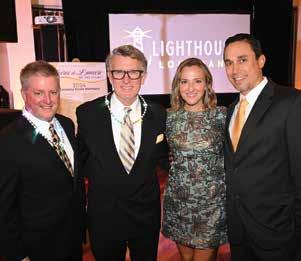
Lighthouse Louisiana brought a warm glow to the Audubon Tea Room on Sept. 18 at its Soirée de Lumière, when many of the guests arrived in shimmering shades of gold, as requested by the invitation.
The celebration featured a three-course seated dinner by Dickie Brennan & Co. Between courses, supporters turned their attention to fundraising efforts that will help Lighthouse Louisiana continue its mission of serving individuals who are blind, visually impaired, deaf, or hard of hearing.
The live auction was led by Chuck Muntz of Black Tie Auctions, who kept the energy high and the paddles moving. The best-selling lot was a seven-day trip for eight to Burgundy, France, while the top lot in the silent auction, which featured 45 items, was a two-night stay at The Windsor Court. A lively game of Heads or Tails also brought guests together for a bit of friendly competition while boosting the fundraising total.
“Every Soirée de Lumière reminds me how fortunate we are to be surrounded by a community that shows up with such generosity and heart,” said Lighthouse Louisiana President and CEO Dee Budgewater. “This event celebrates what Lighthouse Louisiana stands for, and the people who make that work possible.”
1. Abby Currie, Cameron Currie, Dee Budgewater
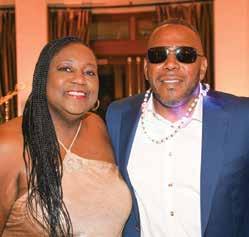
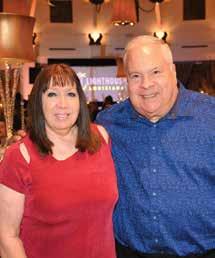
2. Bill Finegan, Joan Ureta, David Perryman, Blair Monroe 3. Scott Miller, Matt Fiorini, Megan Majoué, Garett Majoué 4. Julia Tessitore, C.J. Tessitore
5. Glenda Spears, Dr. Duronne Walker 6. Lynn Schoen, Stan Schoen
Fun Fact: Entertainment for the evening was provided by Groovy 7, who created an energetic mix of music.
Le Petit Théâtre
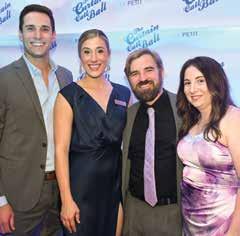
Curtain Call Ball
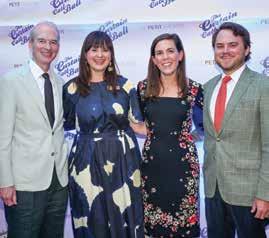
The stage was ready for Le Petit Théâtre’s Curtain Call Ball on Sept. 5 when supporters gathered in the theater and Tableau to raise funds and celebrate this beloved institution founded in 1916.
Tableau not only was the place to start the festivities, it was where the night’s signature cocktail was served, as was the night’s cuisine.
The entertainment and live auction took place in the adjacent theater. Mark Romig was the auctioneer helping keep bids high for lots such as “Walking to New Orleans” staycation package; the “Dinner with Friends” onstage dinner package; and the “Luck be a Lady” walk-on role in “Guys and Dolls.” In addition, there were six silent auction items.
The entertainment included performances by Keith Claverie, Leslie Claverie, Patrick Cragin, Donald Jones-Bordenave, Queen Shereen Macklin and Josie Oliva with piano accompaniment by Frank von Hoven and violinist Noah Hazzard. There were also performances by the theater’s Young Conservatory students from the summer production of “Slowpoke! The True Story of a Tortoise and Hare” featuring Asiiya Ledet GilleylenAmire, Jacob Parsons and Caroline Womack.
While the event raised overall funds for Le Petit Theatre, some of the paddle raise donations went towards its Young Conservatory and Workforce Development student education programs; its student matinee performances; and towards design aspects of the 2025-26 season’s shows.
Fun Fact: In addition to the performances by the Young Conservatory students, a highlight of the evening was the closing song, “One Play More,” based on “One Day More” from “Les Miserables,” customized with many of the event’s top sponsors.
1. Edwin Bragg, Elizabeth Bryan Bragg, Carroll Gelderman Zimmer, Emory Zimmer 2. Charlie Van Horn, Kathleen Van Horn 3. Mary Beth Benjamin, Judith Young Oudt, Marilee Hovet, Andrew Hovet 4. Patrick Abry, Stephanie Abry, David Rigamer, Christine Rigamer 5. Janet Daley Duval, Charles Urstadt, Wendy Lodrig Bart 6. Daniel Rigamer, Rich Arnold, Joseph Mace
Guests supported NOCHI (New Orleans Culinary and Hospitality Institute) when it held its Cooking for a Cause presented by Hancock Whitney on Sept. 10. at NOCHI's headquarters.
A whole roasted pig presented by Link Stryjewski was paraded into the space in a “Swine Second Line” at the end of the patron party, accompanied by the N’Fungola Sibo African dance and drum troupe.
NOCHI alumni chefs and their dishes included: Patrick Teagle: speck, stracciatella and date crostini; Martha Gilreath: roasted chestnut and apple cheesecake; Lizzie Algero: barbecue shrimp bites; Alvin Johnson: beet kirfo and red lentil hummus; Necie Johnson: Creole beef skewers with remoulade sauce; Tia Monet: Tahini chicken skewers; Krystle Pitcher: smoked salmon tart; Jaleel Mosley: pork tonkatsu sliders; Kizzy Danner: vegan mushroom arancini and sauce pomodoro; Dominique Melancon: strawberry pound cake, chocolate-covered strawberries, served with champagne.
Raising more funds was the online auction of 62 one-of-a-kind hospitality experiences, which included an oyster farm tour in Port Fourchon with Dickie Brennan and friends.
“This event, and the generous support behind it, helps us fulfill our mission of training the next generation of culinary and hospitality professionals for long-term success within our industry,” said Gerald Duhon, executive director of NOCHI.
Event co-chairs were Wendy McCarthy Beron and Lizabeth Boulware.
Fun Fact: Beginning this year, the CFAC menu features items prepared by alumni chefs.
NOCHI Cooking for a Cause
1. Lizabeth Boulware, Ti Martin, Wendy McCarthy Beron 2. Brian Kish, Riley Chavez, Jennifer Killian 3. Lauren Brower, George Brower, Joy Bollinger, Boysie Bollinger 4. Lindsey Wands, Rite Moisio, Robert Hopkins 5. Julie George, Ted George, Carol Markowitz 6. Greg Reggio, Lucy Bustamante
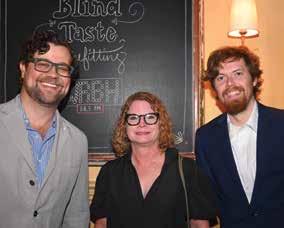
WRBH Reading Radio A Blind Taste
La Petite Grocery was the place to be on Sept. 10 when it hosted the WRBH Reading Radio’s A Blind Taste.
The benefit’s menu, prepared by Chef Justin Devillier, was: first course: cured cobia and Gulf Shrimp with lemongrass, cucumber and lime; second course, broccoli agnolotti with aged cheddar velouté and garlic bread crumbs; third course: confit chicken leg with grilled sweet potato, haricots verts and ras-el-hanout hot honey and fourth course: vanilla bean panna cotta with apple compote and ginger snap crumble. Each dish was paired with a fine wine, and in the case of dessert, calvados, courtesy of NOLA Wine Merchant.
There was a silent auction of 21 items and a live auction, helmed again by Charles Smith, of four lots — including a crawfish boil “with a twist” hosted by WRBH’s Executive Director Zack Frosch.
“Blind Taste is more than a fundraiser for WRBH — it’s a joyful celebration of our mission. By taking sight out of the experience, the event builds empathy, sparks connection, and mirrors how our listeners engage with the world every day,” said Frosch.
“At the same time, it generates critical support that allows WRBH to provide free, accessible spokenword programming and ensure everyone has access to information with dignity and independence.”
Fun Fact: In the mid-1970s, Dr. Robert McClean, a blind mathematician who believed that the blind and print-impaired should have the same access to information as their sighted peers, leased airtime from WWNO and began reading local newspapers over the radio. McClean expanded the mission in 1982 when he purchased the 88.3 FM signal, establishing WRBH as the first full-time reading radio station on the FM dial in the U.S.
1. Samuel Ford, Lena Al-Dujaili, Ahmed Mohiuddin, Jennie Meyer 2. Kim Nguyen, Michael Mantese
3. Geoff Wordon, Anne Wordon 4. Krista Bolton, Mathew Bolton 5. Katie Rodriguez, Christian Rodriguez 6. John Norris, Jill Frosch, Del Agnew
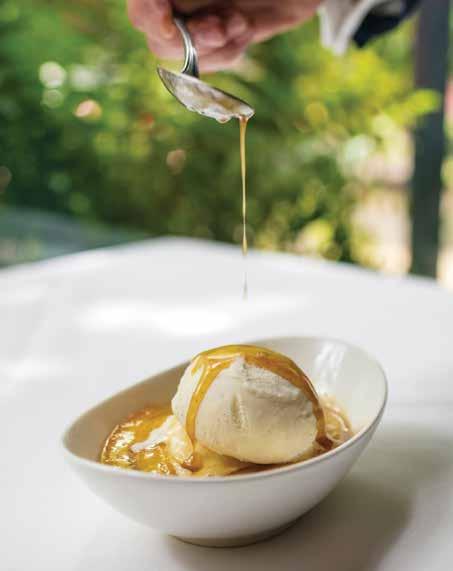
Bananas Foster
Celebrating 75 years of the flaming dessert
This year, Brennan’s, aka “The Big Pink,” one of New Orleans’ most storied restaurants, is celebrating 80 years in business as well as the 75th Anniversary of Bananas Foster. In those 75 years, a bajillion bananas (35,000 pounds a year to be exact) have met the sword for the flaming dessert. Chef Paul Blangé concocted it on the fly in the 1940s with the assistance of Ella Brennan to honor Richard Foster, a restaurant regular, who had just been appointed to the city’s Crime Commission. It is based on the sautéed bananas with cinnamon that Ella’s mother routinely made for her large Irish family when Ella was a child.
The decision to jack the humble dish up with rum
and flambé it tableside was a brilliant use of pantry staples that paid off in spades. The dramatic result is now the most-ordered item on Brennan’s menu. Bananas were introduced to North America after the Civil War. Some decades later, when widespread consumption took hold, New Orleans became a major center for banana imports from Central and South America. At the time of the dessert’s invention, John Brennan, father of Ralph Brennan, the restaurant’s current proprietor, was running Brennan’s Processed Potato Company, a produce company with a surplus of bananas.
– By Jyl Benson
Bananas Foster
Courtesy of Brennan’s Restaurant
Serves 2-4
1/4 cup unsalted butter
1/2 teaspoon ground cinnamon
1/4 cup dark rum
1/4 cup banana liqueur
1 cup brown sugar
4 bananas, cut in half lengthwise, then halved
4 scoops vanilla ice cream
Combine butter, sugar, and cinnamon in a large sauté pan. Place the pan over low heat and cook, stirring, until the sugar dissolves. Stir in banana liqueur, then place bananas in the pan. When bananas soften and begin to brown, carefully add rum. Continue cooking the sauce until the rum is hot, then tilt the pan slightly to ignite the rum. When the flames subside, lift the bananas out of the pan and place 4 pieces over each portion of ice cream. Generously spoon warm sauce over ice cream and serve immediately.
The Expert: Ralph Brennan, President of The Ralph Brennan Restaurant Group and third-generation proprietor of Brennan’s Restaurant, a place that was, quite literally, his childhood playground. As a high-schooler, he started his career at the restaurant as a summer prep cook, boning chickens and peeling shrimp.
What to Drink with Bananas Foster
Sommelier and Beverage Director Braithe Gill suggests ‘Essential by Brennan’s’ Champagne Brut NV, which was created specifically for the cuisine at Brennan’s by Piper-Heidsieck. Royal Tokaji Late Harvest, 2019, will also do the trick.
The Expert: Braith Gill elevated Brennan’s cellar to earn to Wine Spectator’s Grand Award under her leadership. She crafted Brennan’s exclusive private-label Champagne in 2023 with Piper-Heidsieck’s Émilien Boutillat.
CHRIS GRANGER PHOTO
NAD+
Why this longevity molecule Is everywhere — and what the science really says
If you’ve spent any time in the wellness space lately — from podcasts and supplements to IV clinics and spa menus — you’ve likely heard about NAD+. It’s often described as a longevity molecule, tied to energy, metabolism and cellular repair, and it’s generating real curiosity among people who care about aging well, not just aging longer.
Why NAD+ has our attention
Inside every cell in the body is NAD+ (short for nicotinamide adenine dinucleotide), a compound essential for turning food into usable energy. It also supports cellular repair, inflammation regulation and mitochondrial function — helping cells work efficiently and recover from stress.
Because NAD+ plays such a foundational role, it’s linked to several processes people associate with aging:
• Energy metabolism – helping generate ATP, the cell’s energy currency
• DNA repair and cellular upkeep – supporting enzymes that maintain cell integrity
• Aging-related signaling pathways – including sirtuins, proteins often described as cellular caretakers that help regulate stress response and resilience.
“When we talk about aging, we’re really talking about cellular maintenance,” explains Rebecca
Crews, PhD, a researcher with Renue By Science, who joined me on my FUELED Wellness + Nutrition podcast. “NAD+ is involved in almost every system that keeps cells functioning well.”
What happens to NAD+ with age
As we age, NAD+ levels naturally decline. By midlife, many adults have roughly half the NAD+ levels they had in their younger years. That drop happens for two reasons: our cells use more NAD+ to repair accumulated damage from inflammation, UV exposure and oxidative stress, while at the same time becoming less efficient at making it.
“When NAD+ drops, cells simply don’t function or repair themselves as efficiently,” Crews explains. This helps clarify why lower NAD+ levels are associated with fatigue, brain fog, metabolic changes and reduced exercise capacity.
Supplements, precursors and delivery
Which brings us to the practical side of NAD+: how do we optimize levels in the body?
“The challenge is getting NAD+ inside the cell,” says Crews. “It’s a large molecule that doesn’t cross the cell membrane easily, and it also breaks down quickly in digestion.” Because of that, most supplements focus on precursors — smaller compounds the body can convert into NAD+ once they’re inside the cell.
The two most common oral precursors are NMN (nicotinamide mononucleotide) and NR (nicotinamide riboside). Both have been shown in human studies to raise NAD+-related biomarkers. Doses used in studies for each range from about 250 to 1,200 milligrams per day, with many people starting on the lower end and adjusting over time.
Injections and infusions in clinical settings
IV clinics have added another layer to the conversation, offering NAD+ through infusions, subcutaneous injections or nasal delivery. These approaches bypass digestion and deliver NAD+ directly into our circulation.
While this area is still evolving, smaller human studies and clinical experience suggest potential short-term effects related to energy and mental clarity, with ongoing research exploring how delivery methods may influence outcomes.
Setting realistic expectations
“You don’t feel your DNA aging,” Crews says. “A lot of the processes NAD+ supports happen quietly at the cellular level.”
That helps explain why NAD+-related strategies, when they help, tend to feel subtle. Some people report steadier energy, improved mental clarity or better recovery. Others notice very little change at all. These compounds are not stimulants, and they’re not designed to create an immediate or dramatic effect.
Putting NAD+ in perspective
NAD+ is not a magic fix. It won’t replace foundational habits like consistent movement, balanced nutrition, adequate protein intake, quality sleep or stress management. It won’t reverse aging, cure chronic disease or compensate for an otherwise unhealthy lifestyle.
As Crews puts it, the value of NAD+ support is more about health span than hype — supporting cellular processes that may help us function better over time, rather than chasing instant results.
The bottom line
The science around NAD+ is compelling and still developing. Boosting NAD+-related markers is clearly possible. Whether that translates into noticeable benefits depends on the individual — and expectations matter as much as the molecule itself.
For those already prioritizing the fundamentals — nourishing food, regular movement, sleep and stress resilience — NAD+-related supplements or therapies may be one more tool worth considering. – By Molly Kimball, RD, CSSD
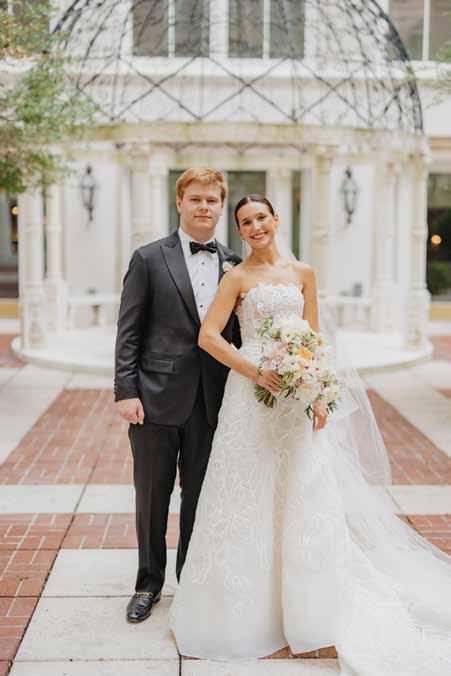
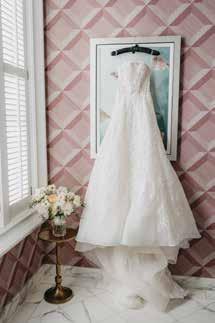
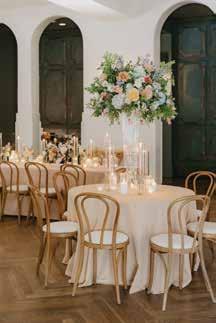
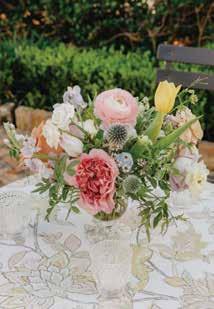
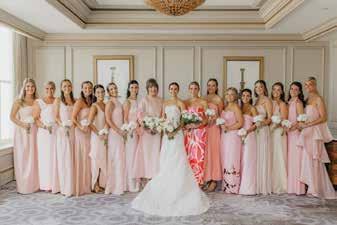
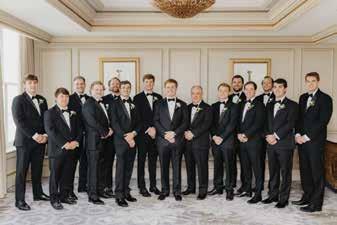
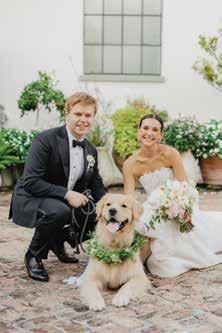
Mutual friends introduced Emery Rome to Andrew “Drew” McMahon soon after beginning their freshman year at University of Alabama. They were interested in each other almost immediately, and that interest grew after getting to know one another better. After dating throughout most of their college years, Emery and Drew felt ready to take the next step in their relationship.
During a private moment at his grandparents’ house, Drew proposed and Emery joyfully said “yes.” Their close family and friends then joined them for a night of celebrating. The couple then began planning their wedding in the bride’s hometown, New Orleans.
Family traditions were especially important to them. Therefore, Emery and Drew were thrilled to have their rehearsal dinner at Commander’s Palace, in the very same room where her parents had their rehearsal dinner in 1991.
On August 23, 2025, they carried on another tradition when they were married at Holy Name of Jesus Church, where Emery’s parents and several other family members had said their vows. After Father Mark Thibodeaux pronounced them husband and wife, they and their guests headed to Il Mercato for an unforgettable reception.
Il Mercato had the perfect balance of character and room for creativity, allowing Drew and Emery to bring their garden party vision to life. The venue
Rome-McMahon
was decked out in soft, colorful pastels, with decor that added texture and dimension to an already-lovely space.
As guests took in the beauty of the decor, they enjoyed passed hors d’oeuvres created by Joel Catering. Joel crafted a stellar menu, and a Lucky Dog cart added to the fun, casual
atmosphere. The wedding cake and groom’s cake, both by Bittersweet Confections, added the perfect bit of sweetness.
The sweetest moment of all was the couple’s first dance to “Still the One” by Shania Twain. Emery grew up listening to that song, and the newlyweds felt it was the perfect song to
begin their life together.
Once the dance floor opened, D’Play kept it packed all night long! Knowing they would have a high-energy evening, Emery and Drew arranged espresso martinis and mini beignets for the end of the celebration. Guests left with full stomachs, full hearts, and a bevy of custom favors—tennis balls from the couple’s two-year-old Golden Retriever (Tush), tattoos, tambourines, beads, cups, napkins, and matches.
After saying goodbye to their family and friends, Drew and Emery spent a week at Amanyara, a tropical resort in Turks and Caicos, where they had a chance to relax and unwind. They then returned to their home in the groom’s hometown, Birmingham, AL, where Emery is a pilates instructor and Drew is an associate at Ligon Industries. – By Megan Holt
Reception Décor: Distressed
Rentals, Luminous Events
Coordinator: Iris and Oak Events
Ceremony Music: Holy Name of Jesus Church Wedding
Gown: Mira Zwillinger, Neiman Marcus Bridal Salon (Dallas, TX)
Bridesmaids’ Dresses: Light pink dress of their choosing Groom’s Attire: Brogue and Cuff (Birmingham, AL) Groomsmen’s attire: Their own tuxedos
Engagement Ring: Levy’s Fine Jewelry (Birmingham, AL)
Bride’s Wedding Band: Levy’s Fine Jewelry (Birmingham, AL)
Groom’s Wedding Band: Levy’s Fine Jewelry (Birmingham, AL)
Tony Latino, a native of Contessa Entellina in Sicily, Italy, moved to New Orleans in the 1880s. A profitable saloon keeper, he opened a wholesale liquor business around 1900 and ran it from his home at 1301 Chartres St. (at Barracks). He was a highly esteemed businessman in New Orleans, and a member of the Elks and the Giovana Birsaglieri Italian society. When he died at age 58 after a brief illness, his 1916 obituary referred to him “as one of the best of the city’s Italian citizens.”
Tony and his wife Laura had two daughters and four sons. All four of the Latino sons were involved with the spirits business in some way. Sam and Nunzio both operated bars at various times; John and Ben joined their mother in running their father’s wholesale business, moving it to 515 St. Philip St. and renaming it Tony Latino’s Sons.
one of the fastest growing and largest liquor and wine distributors in the area. Both brothers held office in the Louisiana Wholesale Liquor Dealer’s Association and were known well in society. They moved the business to 114 Common St. in 1939.
Starting in 1850, the building at 114-116 Common St (corner of Camp St.) served as offices for ship merchants, life insurance and law firms, watchmakers, investment companies, and more. From 1918 to 1925, it was the local office for the Eli Lilly Pharmaceutical company. Tony Latino’s Sons operated out of the space from 1938 till 1956, when the building was demolished.
During the Prohibition years, they all self-described as being in the fruit and produce business, and in 1927, John entered the real estate world. In 1933, as soon as alcohol was legalized again, Tony Latino’s Sons was back in business. Within a few years, they were
Tony Latino’s Sons closed in 1956, when the Common St. building was demolished. Ben transitioned into real estate, while John opened a real estate and life insurance firm. Both continued to be very active in charitable organizations, in particular the Elks, Kiwanis, and Lions Clubs, as well as religious organizations attached to St. Mary’s Italian Church and St. Louis Cathedral, both located in the French Quarter. Socially, they were prominent figures in the Italian Union and the Contessa Entellina society, which was the largest of the Italian American societies in New Orleans. They were also involved in Carnival organizations: the krewes of Cynthius, Elenians, MidCity, and Adonis. John died in 1976 and Ben in 1985. – By Seale Paterson
Camp Guide
Summer Vacation brings with it a whole world of discovery, wonder, and fun. Make this year the best Summer ever at these New Orleans Camps!
Love Swimming
Come make a splash year-round with Love Swimming, where confident swimmers are made every day. Serving swimmers from six months of age to full-grown adults, Marshall Love began educating students at Love Swimming over twenty-four years ago, and his outreach has only grown, with more adults seeking out swimming lessons than ever before. Watch your child, or yourself, go from a wall holder to an aquatic acrobat one stroke at a time. Love Swimming offers a warm environment for fun, safe, professional lessons focused on water safety, proper technique, and love for the water. Personalized attention is also available for private, semi-private, and even group lessons. With enrollment open seven days a week, twelve months a year, there’s no reason to wait!
Please contact us at loveswimmingnola@gmail. com with any questions. For easy online class sign-up, please register today at loveswimming.com
The Historic New Orleans Collection
Has your teen always wanted to go behind the scenes at a museum? Do they get excited by history, art, storytelling, or design? Then the Historic New Orleans Collection’s Curator Camp is the perfect one-week summer destination.
Through daily hands-on workshops, Curator Camp teens explore the skills and ideas that bring history and museums to life at HNOC and at other French Quarter museums. Examine real historical artifacts, attend a mock auction to learn how museums acquire rare objects, talk to curators about what goes into making an exhibition, and visit different museums in the French Quarter, including the Hermann-Grima House, New Orleans Pharmacy Museum, and Louisiana State Museum, Cabildo and Presbytère. Campers will also enjoy a live jazz performance at the legendary Preservation Hall.
Curator Camp is open to students ages 12 to 17. Camp runs Monday–Friday, June 8–12, 2026. Tuition for the week is $250; scholarships are available. No experience is necessary. Just bring your curiosity! (We’ll bring the snacks.)
KidCam Camps
Kidcam Camps is excited to offer three amazing New Orleans summer camp locations, giving families the flexibility to plan up to 10 weeks of camp that fits their schedule. Attend just one location or mix and match camps to keep summer fun, fresh, and exciting—all hosted in trusted community partner facilities parents know and love.
Choose from Kidcam Camp at New Orleans City Park’s Carousel Gardens, proudly serving families for 16 years; Every Day Away, our adventure-style camp for older campers featuring daily field trips throughout Uptown New Orleans; or our newest location at Tulane University’s Reily Center, bringing the Kidcam experience to campus recreation.
Designed for parents and loved by kids, Kidcam offers week-to-week scheduling, flexible options, and engaging programming that includes sports, creative arts, STEM, movement, life skills, swimming, and Kidcam traditions. Campers look forward to talent shows, counselor competitions, and unforgettable summer moments—week after week.
Ages vary by location. Dates available up to weeks this summer, starting May 26, 2026. Learn More & Register online today—spots fill quickly at KidcamCamps.com
St. Martin’s Episcopal
Spend the summer at St. Martin’s, where fun, growth, and lifelong memories come together! On StM’s beautiful 18-acre Metairie campus, campers from early childhood through rising 12th grade explore, create, and thrive through a wide range of engaging programs. From classic Summer Day Camp full of water days, arts, athletics, STEM challenges, and Red Cross swim lessons, to specialized offerings like Theatre Camp, an AI Summer Intensive, and athletic and enrichment camps, there’s something for every passion and personality. An optional Uptown Shuttle makes getting to campus easy, and before- and after-care options support busy family schedules. Younger campers build confidence and motor skills with age-appropriate play and exploration, while older campers dive deeper into creative, athletic, and academic experiences. See all the offerings at stmsaints.com/summer.
Home
If a home is where the heart is, make your heart a little more full this Spring with something special from The Shop at the Collection!
Not just another French Quarter gift shop, the Shop at the Collection sits within a world-class free local museum, the Historic New Orleans Collection (HNOC). At the Shop, products reflect the mission of the museum—to support Louisiana culture, art, and history. Find items inspired by the museum’s exhibitions, pieces by a variety of local artists, dozens of book titles for adults and children, unique jewelry, elegant stationery, kids’ gifts, and more. While there, stop by the museum cafe for a beverage and a bite in the beautiful historic courtyard. Serving coffee from local New Orleans roaster Mammoth Coffee, the cafe also offers sandwiches, sweet and savory pastries, and a soup du jour made from scratch. Escape the same old French Quarter tourist traps and enjoy browsing items that are curated just as thoughtfully as our museum exhibitions. No matter how long you linger, the Shop at the Collection offers an experience you won’t find anywhere else. Learn more at shophnoc.com.
PUBLISHER’S NOTICE: All real estate advertised herein is subject to the Federal Fair Housing Ace and the Louisiana Open Housing Act, which make it illegal to advertise any preference, limitation, or discrimination because of race, color, religion, sex, handicap, familial status, or national origin, or intention to make any such preference, limitation, or discrimination. We will not knowingly accept any advertising for real estate which is in violation of the law. For more information, call the Louisiana Attorney General’s Office at 1-800-273-5718.
PREMIER
PROPERTIES
The Grand Hotel
Artful Days and Iconic Pampering in Fairhope
Times may have changed since the Grand Hotel opened on the shores of Mobile Bay in 1847, nearly two hundred years ago. But, people still come to this nostalgic Southern bolthole to slow down. Here, croquet mallet in hand at sunset or golf club at the ready at sunrise, they connect with family and friends, appreciate unsullied nature and revel in the remnants of Southern manners that may have fallen by the wayside in other settings. This revered coastal retreat likely hosted your grandparents on their honeymoon. Or, it might be where you had your first kiss, learned to fish from a pier or mastered swimming across the pool beneath sunny summer skies. It’s a place to put down your phone or close your computer to meditate over a magnolia blossom or appreciate that swag of Spanish Moss that festoons a nearby tree. It’s a hotel where you’ll hear stories, Southern style, with syrupy accents that sound like music. Once requisitioned as a hospital during the Civil War and later housing World War II officers meeting about critical operations, the hotel’s been an anchor to the community for eons. It boasts a spa, three pools, world class golf, a grand lawn and restaurants.
At 4 o’clock each day a canon fires, the mesmerizing reminder that it’s time to toast the day.
Though a hideaway destination in itself, Grand Hotel Golf Resort & Spa, Autograph Collection, now part of Marriott’s collection of noteworthy historic hotels, stands out as an ideal place to base when exploring this Gulf Coast region. Head to charming Fairhope, five miles from the hotel, to partake of a plethora of activities and amusements—including a nearly 1500-foot fishing pier, unique boutiques, hiking paths and monthly art walks. Visit March 20-22 to shop the 74th Fairhope Arts and Crafts Festival, a buzzy affair, which showcases more than 200 juried artists. Set up along pedestrian-friendly streets, the festival transforms the downtown into a convivial museum and gallery space. Browse booths that brim with exceptional artworks: handcrafted jewelry, furniture, paintings, fine art photography, pottery and more. Expect live music, a children’s art tent and that carnival food you’ve loved since childhood. - Becca Hensley