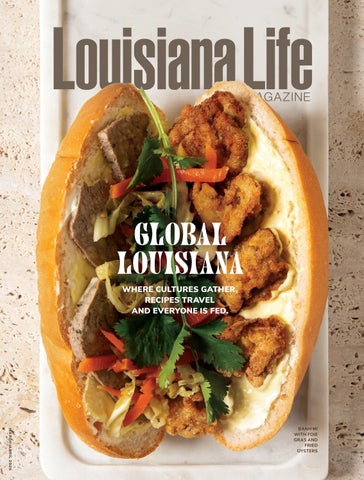
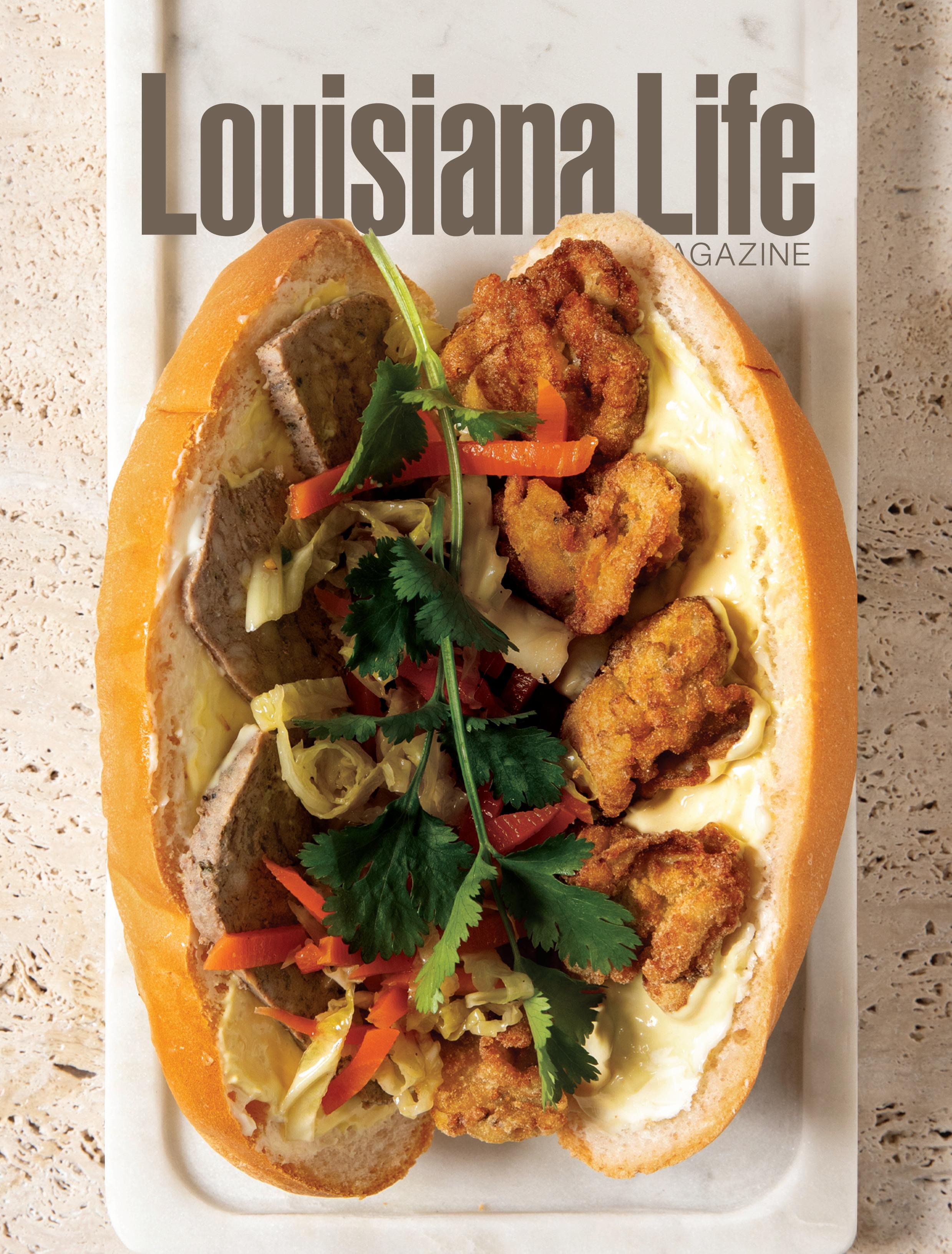
GLOBAL LOUISIANA
WHERE CULTURES GATHER, RECIPES TRAVEL AND EVERYONE IS FED.
BANH MI WITH FOIE GRAS AND FRIED OYSTERS



March/April
10
EDITOR'S NOTE A Louisiana Literary Milestone
18
PELICAN BRIEFS News and updates around the state
20
LITERARY LOUISIANA Stories of place and time
22 IN TUNE
The Sound and Soul of Marc Broussard
24
LOUISIANA MADE
A furniture tradition that started in 1965 builds a future in Natchitoches
28
ART
A Poet and Painter Explore the “Human Spirit”
30
KITCHEN GOURMET Recipes for springtime
62
FARTHER FLUNG New Braunfels Brims with German Influences and Artsy Hill Country Soul
64
PHOTO CONTEST
NATURAL STATE Listening to Our National Champion Bald Cypress
There are four things I always do when I’m in Baton Rouge: Visit the LSU Museum of Art at the Shaw Center for the Arts, get coffee at The Vintage, take a walk on the Louisiana State Capitol Grounds and eat at Cocha. These are the non-negotiables, for reasons I’ll soon elaborate upon, but there are, of course, plenty of other things to do in the Red Stick — it’s the state capital after all and it is steeped in history.
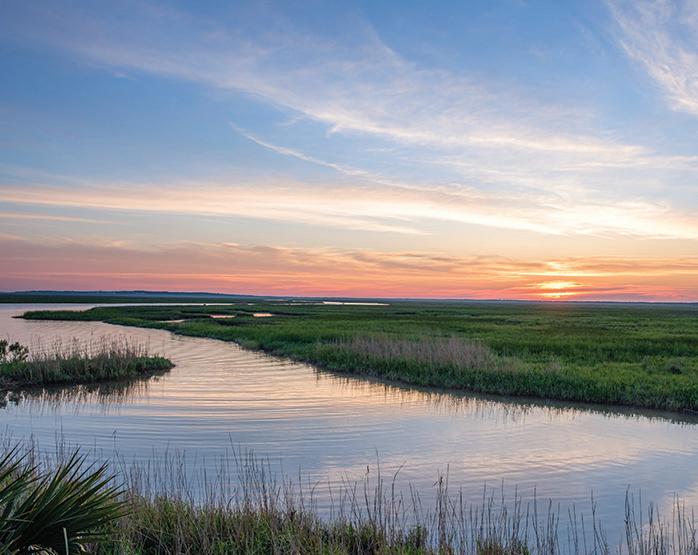
The day fades into a fiery glow over the marshes, as seen from the Intracoastal Waterway Bridge, also known as the Gibbstown or Conway LeBleu Memorial Bridge. 58
Carencro p. 22
Natchitoches p. 24
Shreveport p.28
Church Point p.28
5. West Feliciana Parish p.54
6. Baton Rouge p. 58
7. Cameron Parish p. 64


A Louisiana Literary Milestone

THIS YEAR, the Tennessee Williams & New Orleans Literary Festival celebrates its 40th anniversary. Forty years! If you’ve never made it to New Orleans at the end of March to attend this festival, I can tell you it’s a really special, unique event. As a disclaimer, I’ll share that I am connected with this festival, but I’ve been attending and then volunteering for a very long time. When I try to explain what the festival is all about to people, it feels a little like a magical thing you can’t quite find the words for. Sure, it’s a literary festival, which means there are lots of authors there talking about their work or holding master classes. That’s pretty typical fare for a literary festival. But wait. There’s also music and theatre events. And readings and evening events. The Stella shouting contest is a fun way of showcasing that iconic scene from Williams’ "A Streetcar Named Desire." I could touch on some programming highlights that are really exciting, but that still wouldn’t capture the spirit of the festival and what sets it apart from any other book or literary festival.
We’d be getting warmer if I pointed you to the cardboard cutout of Tennessee Williams that waits to greet everyone when they enter the festival. Or the cozy feeling of spending the day in the French Quarter, at the beautiful Hotel Monteleone, with like-minded bookish people. Maybe, it’s the random encounter in the hallway with an author you admire or a fellow writer you haven’t seen in years. But one thing for certain is the joy and excitement, the warmth and intimacy, of the festival. People are happy to be there, and that’s something you don’t always see at these kinds of events.
The only way a literary festival can last this long surely must be because people love it — both those who attend and the ones behind the scenes. It’s a group effort to ensure that each year’s festival is special, thoughtful and memorable.
Here’s to 40 more.
Cheers!
Reine Dugas EDITOR REINE@LOUISIANALIFE.COM
Follow Us Subscribe
louisianalifemagazine
louisianalifemag
louisianalifemag
Celebrate festivals and flavor with this special deal! Get $10 off a new subscription.
*Must order online, new subscribers only, expires April 30, 2026.
EDITORIAL
Editor Reine Dugas
Art Director Sarah E.G. Majeste
Copy Editor Liz Clearman
Web Editor Kelly Massicot
Digital Editor Alyssa Schiaffino
Contributors Cheré Coen, John R. Kemp, Lisa Leblanc-Berry, Jeremy Marshall, Misty Millioto, Kevin Rabalais, Jeffrey Roedel, Christopher Louis Romaguera, Danley Romero, Melanie Warner Spencer, Eugenia Uhl, Liz Williams
SALES
Sales Manager Rebecca Taylor 337-298-4424 / 337-235-7919 Ext. 7230 Rebecca@LouisianaLife.com
Renaissance Publishing
PRODUCTION
Digital Director Rosa Balaguer Arostegui
Senior Production Designer Ashley Bravata
Production Designer Czarlyn Ria Trinidad
MARKETING
Marketing Manager Haley Nash
Sponsored Content Coordinator
Jeremy Marshall
Visual Media Producer Mallary Wolfe
CIRCULATION
Distribution John Holzer
ADMINISTRATION
Office Manager Emily Ruiz
Chief Executive Officer Todd Matherne For Subscriptions Call 877-221-3512
110 Veterans Blvd., Suite 123 Metairie, LA 70005 504-828-1380
128 Demanade, Suite 104 Lafayette, LA 70503 337-235-7919 ext 7230
LouisianaLife.com






Liz Williams
Writer
Liz Williams founded the Southern Food & Beverage Museum and authored several books about food and culture, especially New Orleans food culture. Her podcast, Tip of the Tongue, about food, drink and culture, appears weekly. She is a graduate of LSU Law Center and has practiced law in Washington, DC and Louisiana. She has served as judge in many cooking competitions and consulted internationally on the food of New Orleans. Travel is an excuse to eat in new places.
What Are You Reading?

Liz Williams
How to Cook a Coyote by nonagenarian food writer, Betty Fussell. It is a book about aging with a metaphor of a coyote laughing at us about our lives. It is funny and realistic. And it is peppered with food.

Give
the World by
She’s a newly divorced single mother who takes her son to the Far East in 1958. Very descriptive writing. You feel like you are there. Armchair traveling.

Cheré Coen Twenty-Seven Minutes by Ashley Tate. A deadly accident occurs upon a bridge but why did the driver wait 27 minutes to call an ambulance? The book offers a gripping mystery that doesn’t reveal its answer until the very last pages.

Eugenia Uhl is a photographer and a native New Orleanian. Her photographs have been featured in New Orleans Magazine, New Orleans Homes & Lifestyles, Southern Accents, Metropolitan Home, GQ Magazine, Essence, Travel & Leisure and Vegetarian Times. Her clients include Ralph Brennan Restaurant Group, International House Hotel, Volunteers of America, Galatoire’s and Tulane University. She has completed multiple cookbooks, including Commander’s Kitchen for Commander’s Palace and New Orleans Home Cooking by Dale Curry, Pelican Publishing.
Cheré Dastugue Coen is a food and travel writer, photographer and author and owner of the whimsical blog, Weird, Wacky & Wild South. Her fiction includes two series of Louisiana romances and the “Viola Valentine” paranormal mystery series under the pen name of Cherie Claire. She remains passionate about her home state of Louisiana, believing that gumbo, crawfish étouffée and chicory coffee makes all things right with the world.
Eugenia Uhl
Me
Leila Hadley.
Festival of Francophones
A Cajun Celebration at Lafayette's Festival International de Louisiane
BY LISA LEBLANC-BERRY
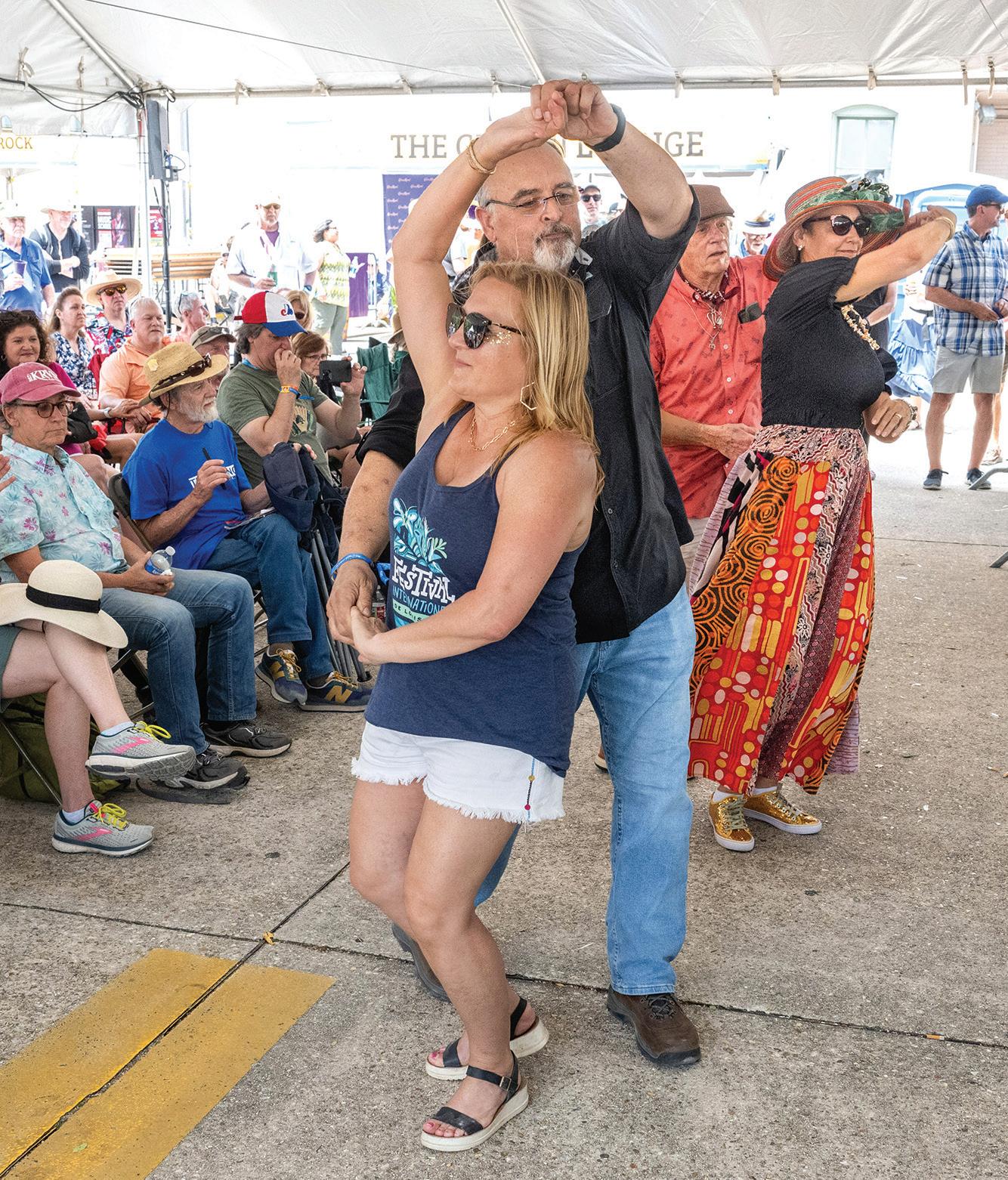
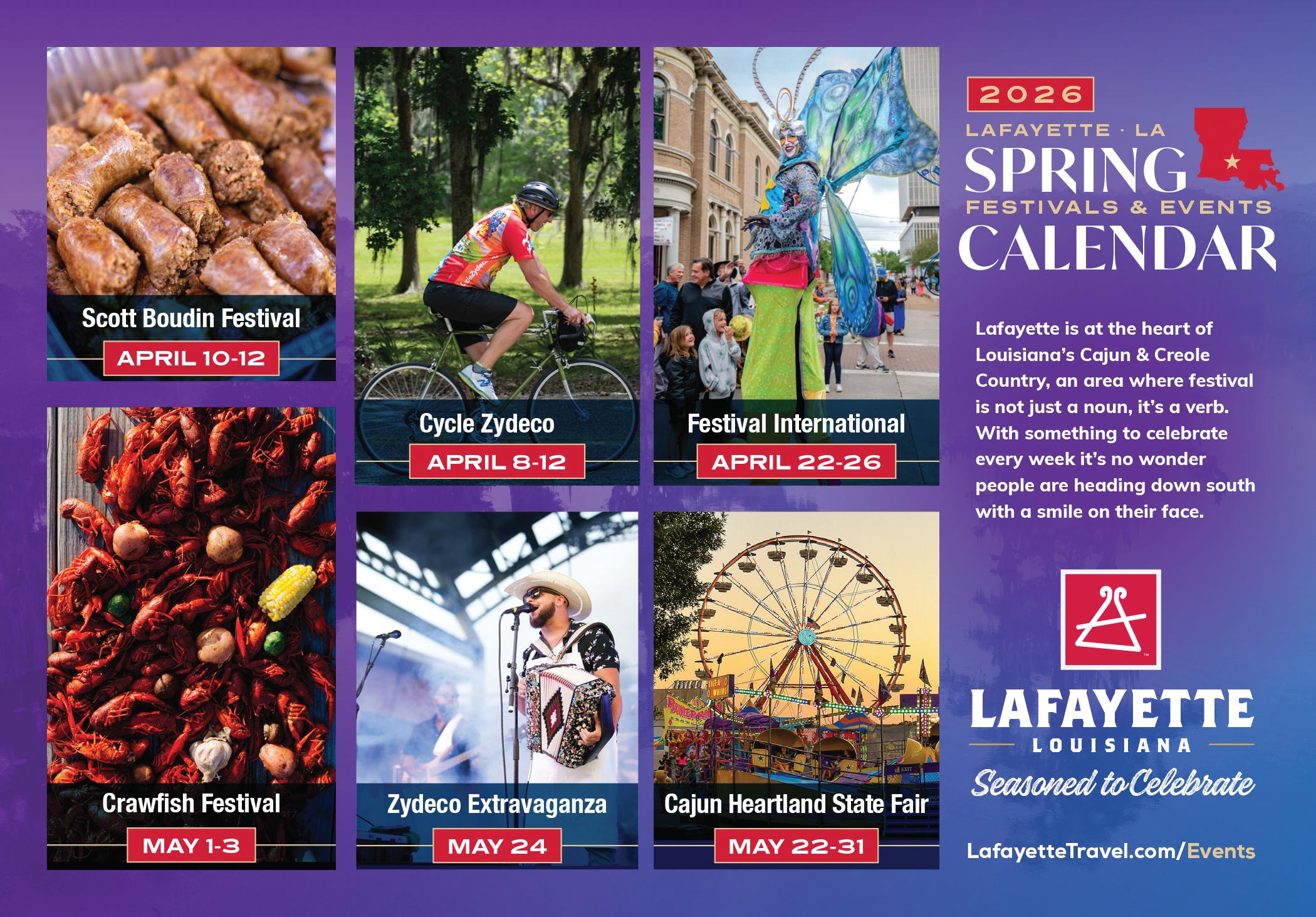
Festival International de Louisiane (April 22-26) brings an international array of Francophone musicians and celebrated Cajun headliners to commemorate the 40th anniversary in downtown Lafayette. The festival’s official 2026 poster, pin and artwork by Francis Pavy (aka the Picasso of Zydeco) debuts on March 1, showcasing the acclaimed artist’s inaugural collaboration with daughter, Annabelle Pavy. Their unique partnership captures the multigenerational spirit of the festival and its vibrant Francophone heritage.
Awards of Distinction
The Louisiana Endowment for the Humanities recently announced the 41st annual Bright Lights Awardees. Two-time Grammy winner Michael Doucet, founder of BeauSoleil and a recipient of a National Heritage Fellowship for his work revitalizing French language and Cajun culture, has been named the 2026 Humanist of the Year. Esteemed author Kevin Rabalais, a professor of English at Loyola University and a regular contributor to Louisiana Life and Acadiana Profile magazines, has been named the 2026 Documentary Photographer of the Year.
WEST MONROE Racing Ducks for Bucks
Northeast Louisiana’s largest festival, RiverFest (April 2425) held in downtown West Monroe features live duck races and a rubber duck drop into the Ouachita River (with very generous cash prizes). Live music, food trucks, art vendors and a kids' zone add to the family fun.
NEW ORLEANS Music on the Menu
Don’t miss the star-studded first weekend of the New Orleans Jazz Festival (April 23-May 3) featuring such hitmakers as Jon Batiste (presenting Swamp), Lorde, Stevie Nicks, Tyler Childers, Nas, Rod Stewart and David Byrne. Closing out the second weekend on Sunday (May 3) is headliner Teddy (“Lose Control”) Swims making his Jazz Fest debut with those raspy, soulful love songs, and the hot, rhythmic melodies of Trombone Shorty that prompt irrepressible dancing.
VERNON PARISH A Woodpecker Comeback
The red-cockaded woodpecker, living on the edge of extinction for more than four decades, is making a comeback in the Kisatchie National Forest. Biologists have been tracking the small woodpeckers for years, finding their nests high above the ground in the trunks of tall longleaf pines. The bird’s habitat was disappearing as trees were cut for timber, agriculture and development. Fifty years of forest conservation efforts are finally paying off.

Now and Then Stories of place and time
BY CHRISTOPHER LOUIS ROMAGUERA

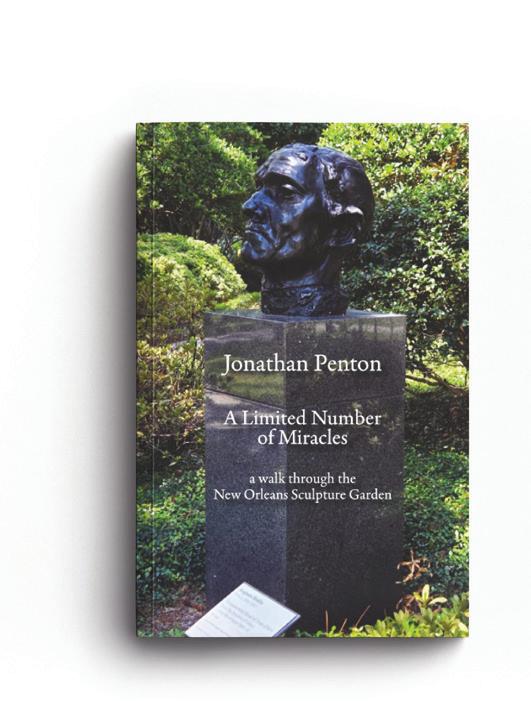
A Limited Number of Miracles
New Orleans poet Jonathan Penton writes a beautiful and poignant book exploring 66 pieces from the sculpture garden in New Orleans’ City Park. Penton meditates on what the sculptures “know” as he writes about family, relationships, grief and sexuality. Penton’s book explores dark, personal topics, using poetic forms and the sculptures to explore grief. One of the forms that Penton uses is the haibun, which is a prose poem followed by a haiku. Penton's deeply moving poems will resonate with every reader. 94 pages, $19.95
The Jailhouse Lawyer
"The Jailhouse Lawyer" tells the story of Calvin Duncan, who was imprisoned from 1982 to 2011 for a crime he didn’t commit, including 23 years where Duncan served as a “jailhouse lawyer” at the Louisiana State Penitentiary, aka Angola. This memoir, penned by Duncan himself as well as Cull, the latter of whom is a criminal justice reform advocate, shows how Duncan fell in love with the law while in prison, after winning an early legal victory for some older inmates who couldn’t eat the food without teeth (and how that win got them dentures). Since this book has been released, Duncan has won an election to become the New Orleans clerk of court. "The Jailhouse Lawyer" is a great book that gives the reader insight into the injustices that are all too common in our criminal system, while also giving the reader some hope for how those wrongs can be righted. 400 pages, $32.00
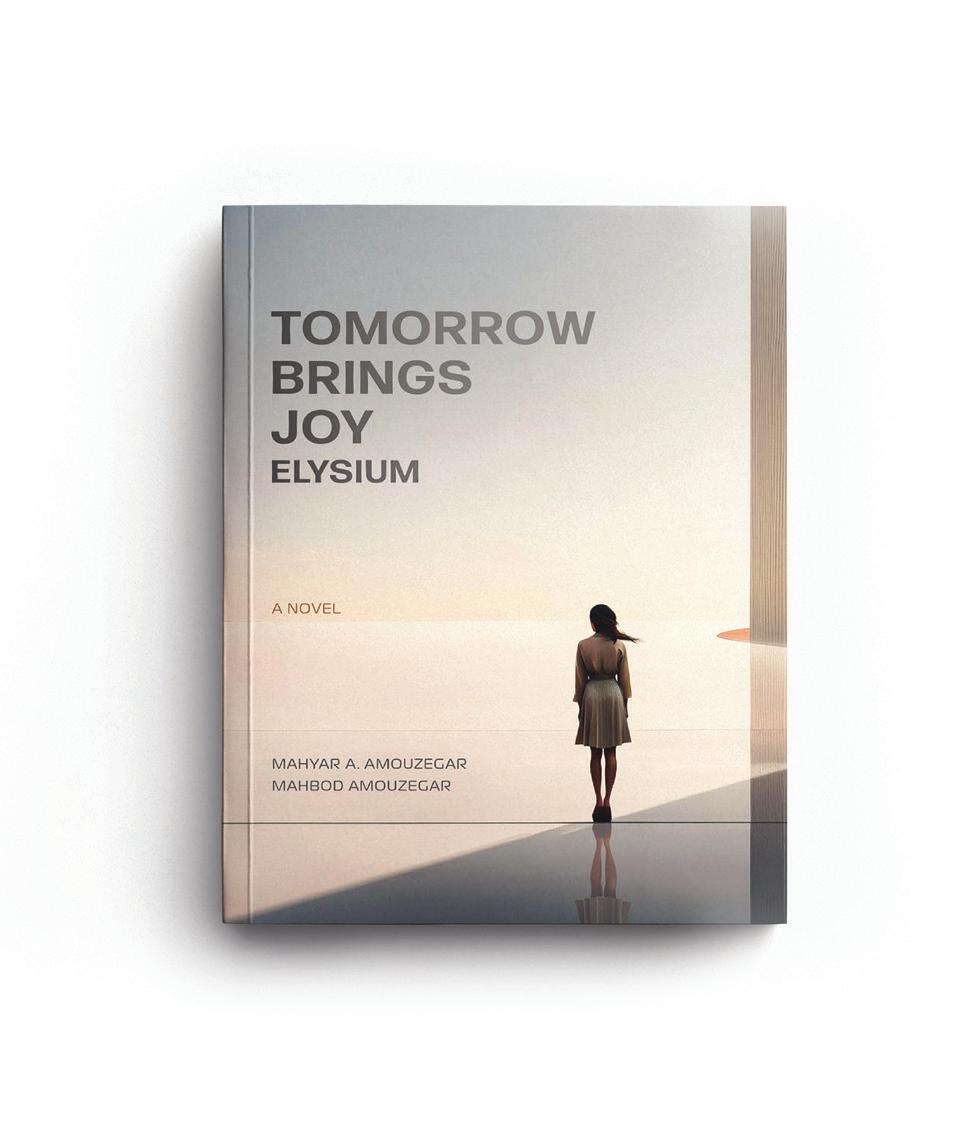
Tomorrow Brings Joy: Elysium
"Tomorrow Brings Joy: Elysium," is a novel that explores the relationship between humans and androids in the future. The heroes of the story are a human, Dolores, and her eccentric android companion, named KR. They start to learn the mysteries of Elysium, which was designed to abolish the traditional hierarchies of the world and achieve perfect harmony for all. It is easy to see the parallels to our world when the protagonists run into the “Walled City.” Mahyar and Mahbod are brothers who wrote a beautiful novel with compelling characters and philosophical questions, published by UNO Press. 425 pages, $28.95
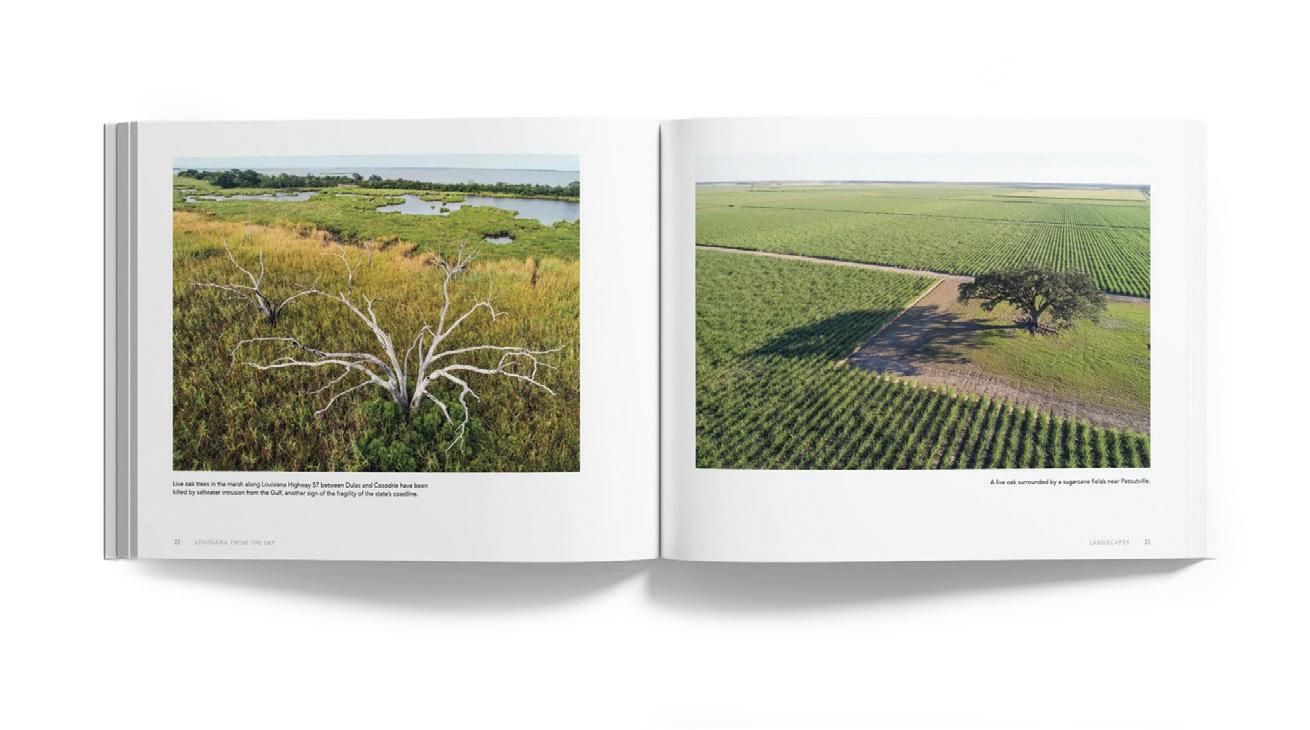
Louisiana from the Sky
Philip Gould has been taking photographs of Louisiana since 1974. In "Louisiana from the Sky," Gould takes photos of Louisiana that show its expansive landscape, different terrains and immense beauty. The photos also show in clear pictures the challenges that the state faces, as Louisiana loses a piece of land greater than the size of Manhattan every year. The folklorist Ben Sandmel gives context to the photographs with lyrical prose in his essays. "Louisiana from the Sky" is a powerful book, and was published by UL Press. 216 pages, $34.95

Bringing it Home
The Sound and Soul of Marc Broussard
BY JEREMY MARSHALL
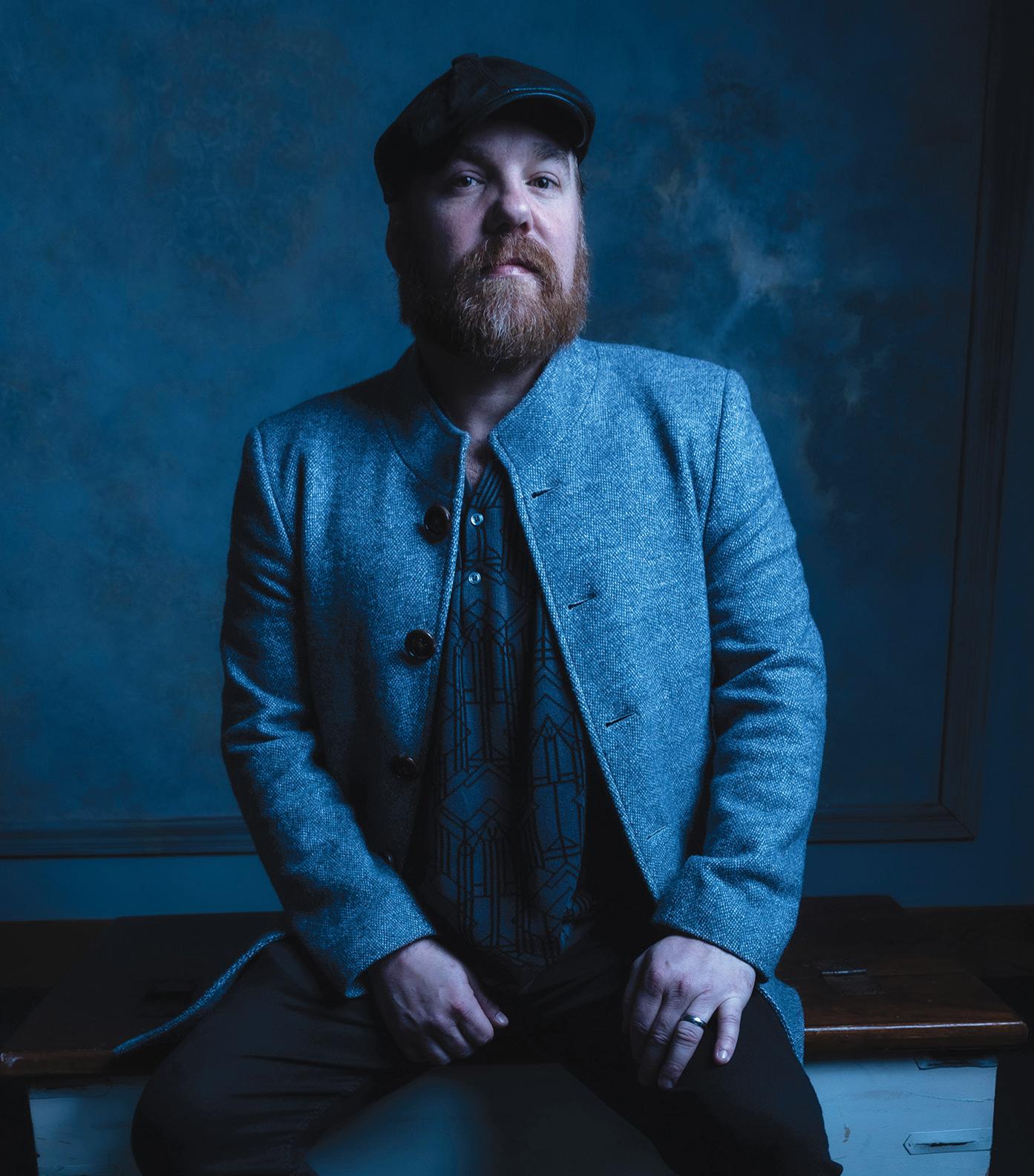
A LOCAL ARTIST of international renown for over twenty years now, Marc Broussard is once again cross-pollinating his chameleon-like genre dexterity with his patented soulful sound to manifest some lasting good to the Acadiana community he still proudly calls home. As the latest entry in his now five-part S.O.S (Save Our Soul) album series, of which partial proceeds go directly to area charities, “S.O.S. V: Songs of the '50s” has Marc excavating some of the most meaningful songs ever written and performed. The band covers iconic tracks from Ray Charles, Bobby Darin, Fats Domino and more to support Love of People, a nonprofit organization working to help individuals, families, service industry workers,
musicians, artists and the elderly. While the S.O.S. series is known for its distinctive eras and genres, including a collection of lullabies for S.O.S. 3, the fifties era sound came essentially on a last-minute whim of inspiration, lending an urgency that only enhances the immediacy of each rollicking track.
“We actually had a playlist locked of seventies soul. Then, two weeks before we started recording, I realized that the fifties era holds such a special place in this country,” says Marc. “So I opened up Spotify and intuitively put together the best playlist that we could. While my manager always wants us to choose only hits, we also dug a little bit and made sure to choose some B-sides that would make the band happy.”
Marc chose “Love of People,” where he and his family have been volunteering for years. As a concierge service that is able to assist with everything from lawn care to hospice needs, Love of People has been making a difference in Acadiana.
“The Blue Monday program is a way for our aging musical legends in the community to get some work performing and through that, access to quality-oflife services,” explains Marc. “After working with that program, I began digging in and discovered just how robust and essential their mission is to people in the area — most recently, feeding 5000 people over Thanksgiving.”
As both a working musician and family man, Marc has little time to rest on laurels or accolades when there are gigs to play and albums to cut — currently, a staggering sixteen and counting. While there have certainly been several birthdays and holidays missed over the years of touring and performing, being a devoted father and husband hasn't slowed Marc’s passion for the music; if anything, it has lit a passion that grows hotter each passing year.
“Having kids just made me hyperaware that I needed to go and work, that I had people relying on me,” says Marc. “This year will be the first time I’m home for Mardi Gras in 20 years. But their support has really just lit a fire under my butt and motivated me.”
Marc will soon bring his unique brand of Southern soul overseas for his latest European tour before returning home for a set at Jazz Fest and a rematch with the venue that just last year he feared would be his final bow. After feeling awful before taking the stage in 2025, Marc was overwhelmed with what he feared might be a heart attack, leading him to tell his drummer in all sincerity that “this might be the last song I ever sing.”
“It was extremely frightening and something I had never experienced before,” remembers Marc. “It turned out to be severe dehydration, but walking off the stage, I was sobbing uncontrollably. It was really a rough one, and I’ll certainly be hydrating a hell of a lot before Jazz Fest this year.”
As “S.O.S. V: Songs of the 50s” is set to release, it’s safe to say that Marc Broussard’s last song is far from sung. While his soul remains with his family, his sound will continue to delight music lovers around the world, with a style all his own, a charitable heart, and hopefully, plenty of electrolytes.
BY
PHOTO
JEFF FASANO

Family Trees
A furniture tradition that started in 1965 builds a future in Natchitoches
BY JEFFREY ROEDEL
PHOTOS BY ROMERO & ROMERO
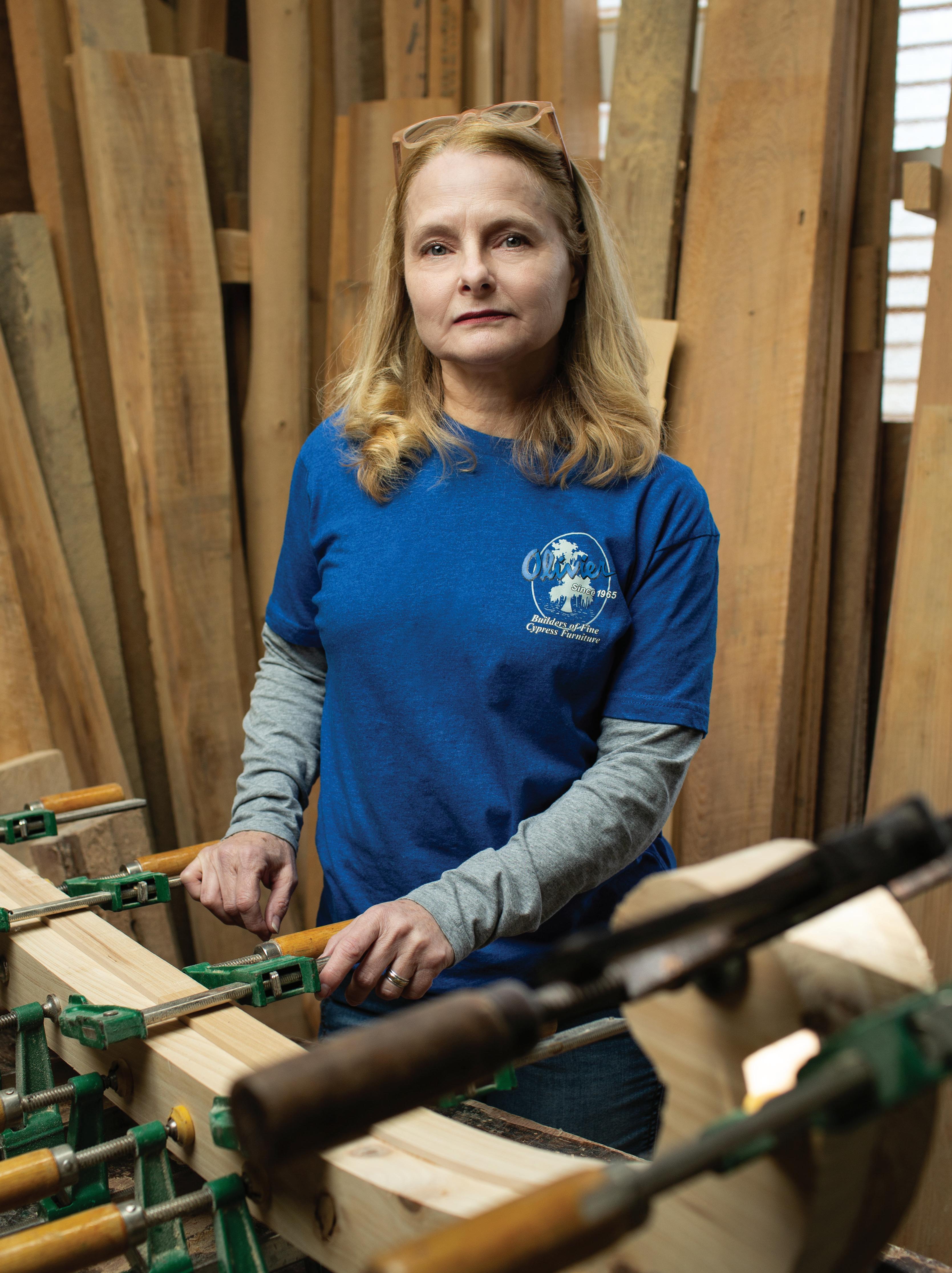
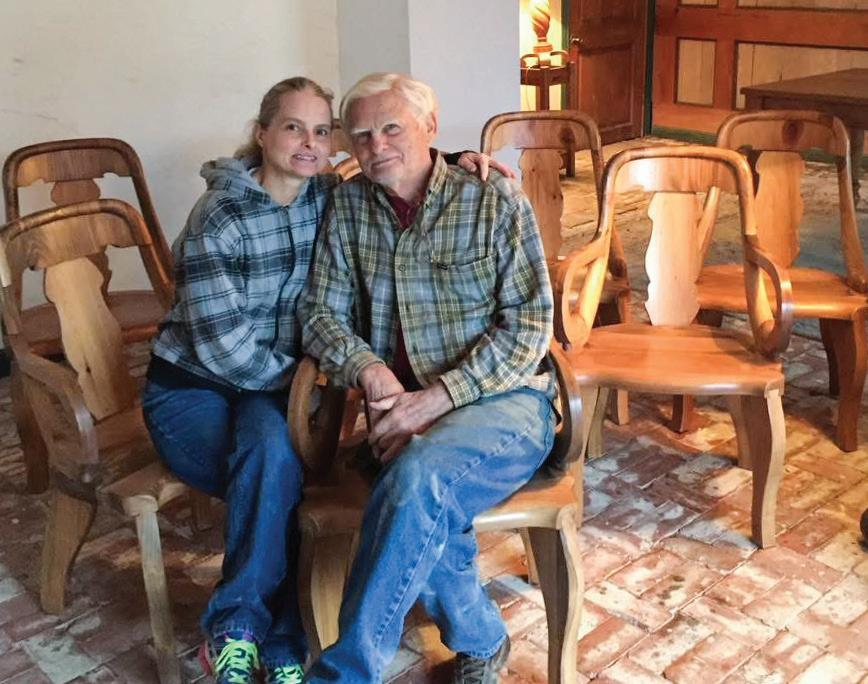
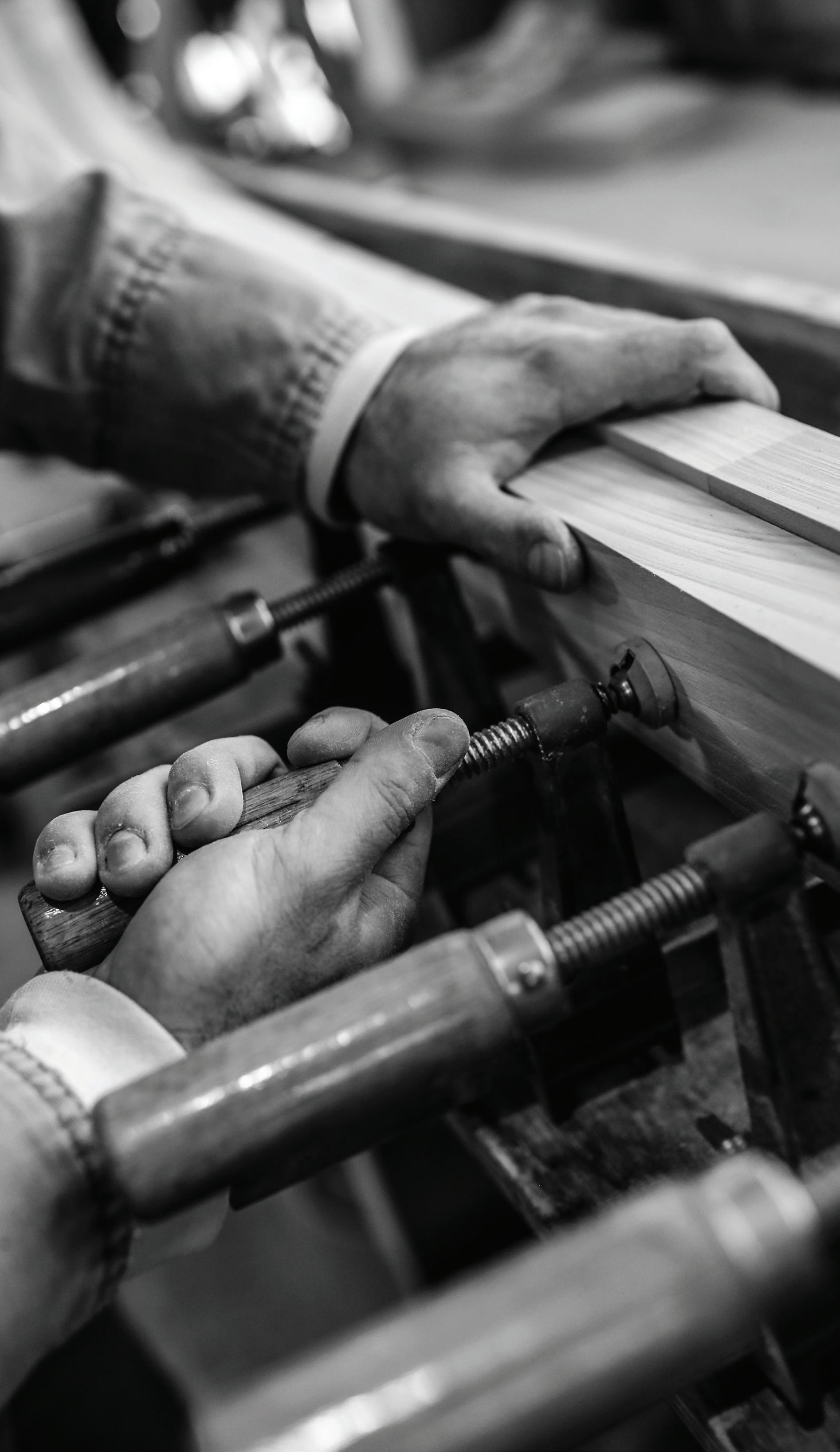
FOR SOME, childhood memories can feel like stardust, distantly elusive but brilliant when only we decide to look for them. For Natchitoches furniture maker Chalon Ahbol, those memories are more like sawdust — and a lot of sweat. And they are ever-present in each nook and cranny, in every well-worn turning tool or steep stack of rough lumber across her woodshop.
“My brothers and I, we say we grew up underneath the table saw, you know,” Ahbol recalls of her formative years watching her father, George Olivier, in this same shop, building his hand-finished cypress furniture business Olivier Woodworks from the ground up, and her first cutting into her own little wood scraps, too. “And we use the old methods that my dad came up with

in the ‘60s, and his classic patterns, and a lot of the machinery he custom made back then, we still use today. He was just a genius.”
After leaving his agricultural studies at Northwestern University to provide for his wife and newborn child, New Orleans native George Olivier’s first craftsman commission in Natchitoches was designing and constructing an altar for Immaculate Conception Church. Now, eight years after his passing, Olivier’s daughter continues this act of creation as a spiritual practice with a daily devotion to handcrafted furniture as the focal point for her worship.
CHALON AHBOL
OCCUPATION
CEO/Furniture Designer, Olivier Woodworks
WEBSITE olivierwoodworks.com
SOCIAL MEDIA @olivierwoodworks
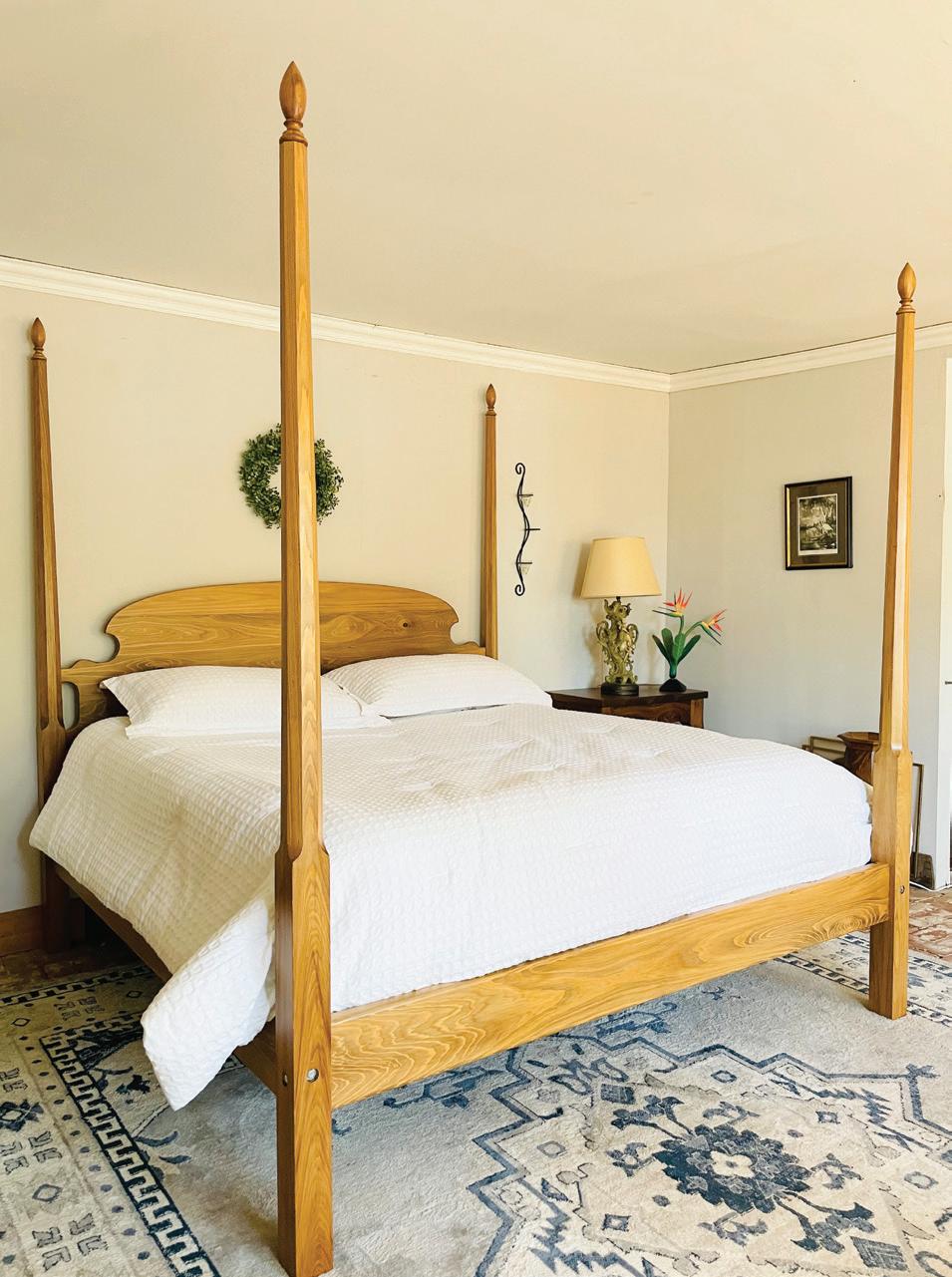
With classic French-Creole and Shaker-inspired lines, Ahbol’s work, like her father’s did for decades, includes four-post beds, chests and dressers, tables and chairs and more — all cut and shaped by cypress sourced from mills and lumber suppliers in Shreveport and Alexandria, and finished by hand to a slick, grain-rich sheen in her Natchitoches shop.
“Detail is everything,” says the 58-year-old mother of three. “And I think that the more I do this, the better I get. My dad could look across the shop at somebody working on the lathe, and he knew whenever some little detail was not right. And now I can kind of do that.”
King-size chests, bookcases and buffet cabinets all roll out of the shop Ahbol runs with one full-time employee and two part-timers.
After years in the Navy and a stint at Olivier Woodworks, Ahbol’s son Alix is living in Oregon, and furniture making there.
“I would define her as the handiest person I know,” Alix says. “Once she puts her head down into something, she’s all in it. She’s committed.”
Like his mother and grandfather before him, Alix Ahbol appreciates the act of turning something raw and powerful into something useful and refined.
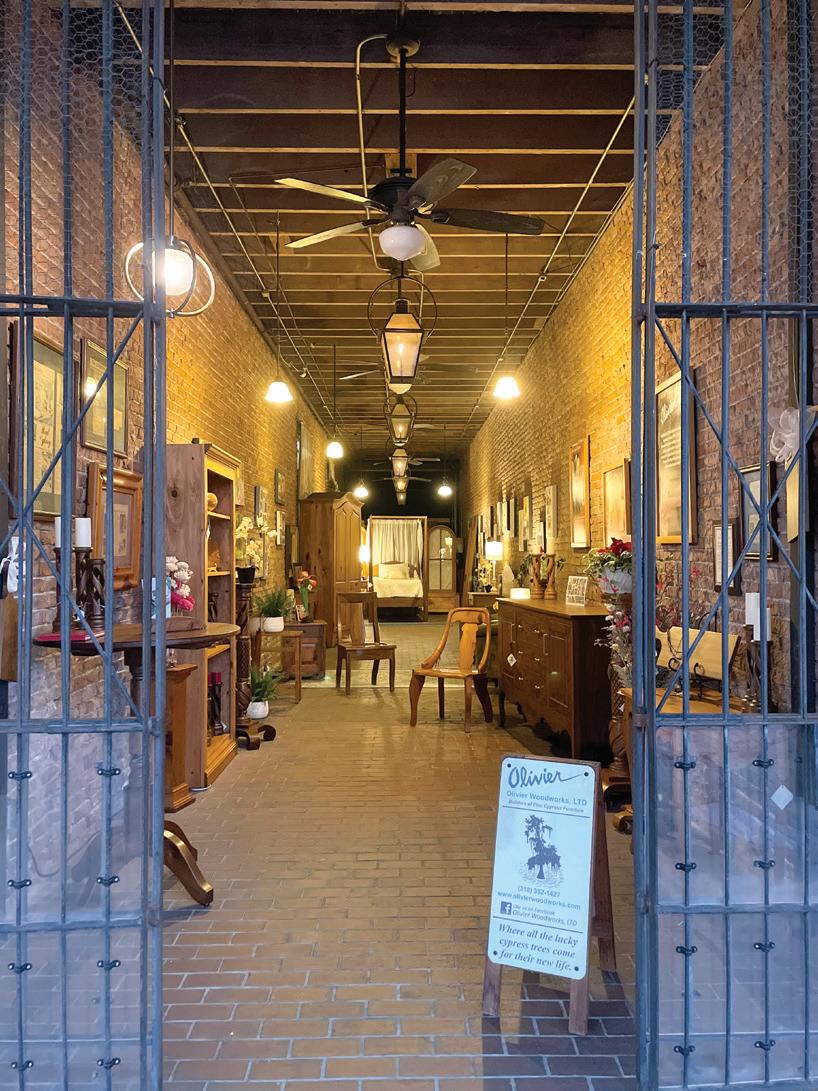
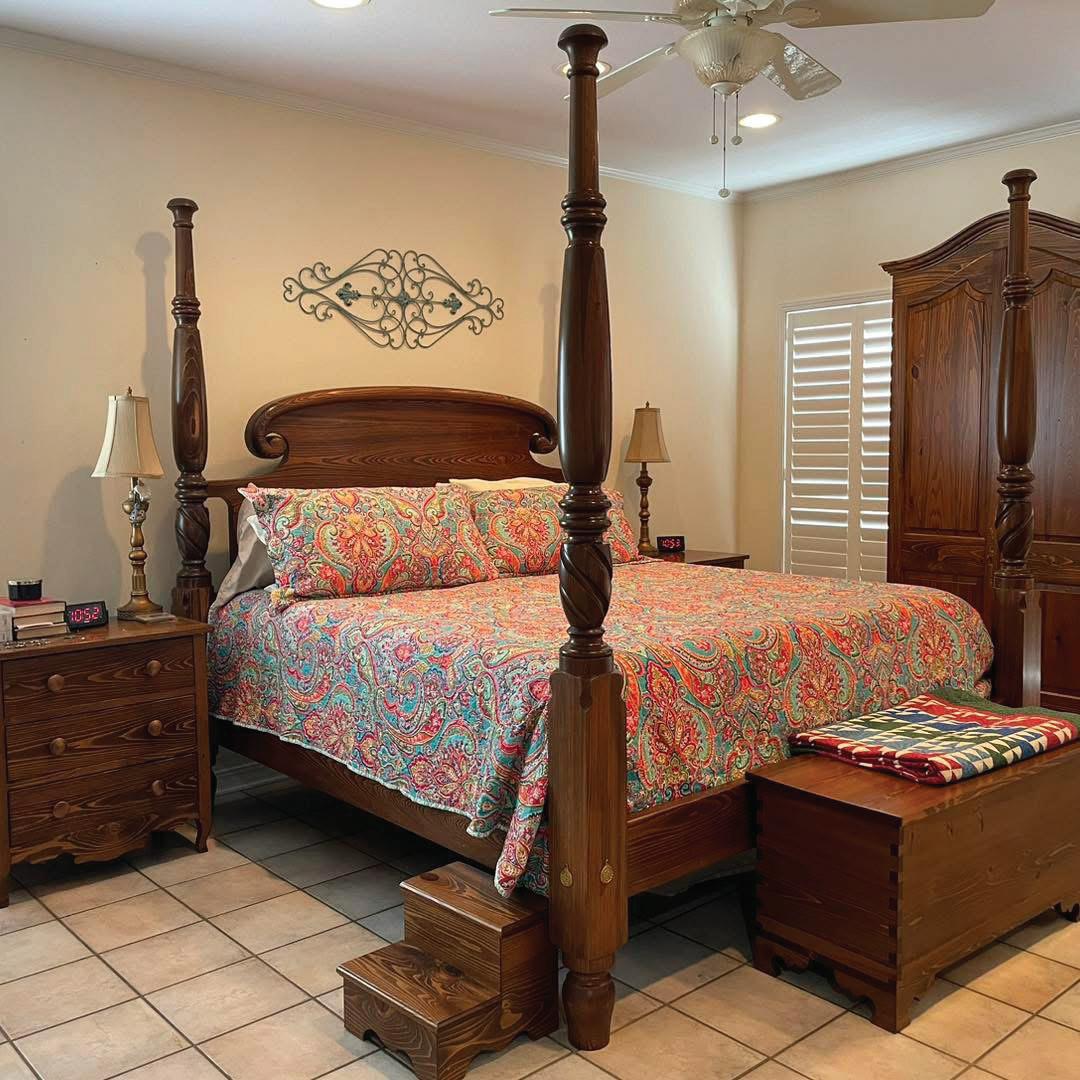
Recognizable for its iconic Louisiana look, Olivier pieces are more than physical objects for storage or rest or display — they are passed down through families and carry a continuation of important stories across the generations.
“Chalon really needs to be celebrated,” Jones says. “She’s graceful, and her furniture shows that. It reflects her French-Creole heritage, and it makes a house a home.”
During the famous annual Natchitoches Christmas Festival, conversation trends the same way with visitors to the shop effusively telling Chalon and Alix how many pieces of Olivier furniture they own and have used for decades.
“It just feels so special to be a part of the community in that way,” Alix says. “We have some true evangelists.”
“Love the fact that we can take a rough saw and lumber and create a shape out of that,” he says. “And it’s not just the shape of the piece, but the shapes within it that elevates it. All the grain and the patterns and knots, we place those with intention, and my grandfather was always preaching that.”
At the edge of Natchitoches, on land once heralded for pecan harvests, Denise Jones owns a renovated five-bedroom she debuted as a rental property six years ago. It is filled with Olivier beds, dressers and tables.
“Cypress connects us back to the land and to the bayous of Louisiana, so we are just caretakers of it,” Jones says. “Olivier furniture brings a soulful elegance to the space. All of it is really woven into the guest experience.”
Connection is always Ahbol’s goal. First with the cypress, the design and her father’s wisdom, and then with her clients. When she makes furniture she can feel her dad’s presence, as if he’s still there, and she’s the little girl he’s telling not to practice on scraps, but to just get to work. “He was basically telling me to trust and believe in myself, to take my time and just do it,” Ahbol says. “That is the best advice I’ve ever gotten.”
The creative entrepreneur’s favorite step might be the final one. She and her husband, Rob, offer “white glove” delivery — they’ve driven as far as Knoxville — to personally connect with the families who will be living with her work for many years to come.
“We do everything with detail in mind,” Ahbol says. “It’s all very hands-on. Which makes it a slower process, but you know what? That’s not a bad thing. Because things made slowly, and with great care, are the things that are going to last forever.”
Q&A
What do you love to do for fun in and around Natchitoches? We love walking along the brick-lined walkways by the river downtown. The city does an amazing job keeping it beautiful. You can almost always find a festival or event happening somewhere around our historic town. The Fort St. Jean Baptiste State Historic Site and the Louisiana Sports Hall of Fame are wonderful, too. Dark Woods is another favorite spot, their miniature gold is so much fun. We have several new restaurants I really enjoy— Natchitoches Picnic Co. and Sweetie’s BBQ—along with the local staples Lasyone’s, T-Johnny’s on the River, and Merci Beaucoup. And my husband and I just bought new kayaks to use on Cane River and Sibley Lake.
What’s something curious about wood that most people don't know? Real wood moves with the seasons—expanding in humidity and tightening in the cold. So don’t be surprised and don’t think it needs to be fixed, if your furniture shifts a little as the weather changes. That’s just nature doing its work.
If you could make a piece of furniture for anyone wellknown, who would it be, why and what would you make? I would want to build a table with Jesus, the perfect craftsman. And then share bread together.
Creating Magic
A Poet and Painter Explore the “Human Spirit”
BY JOHN R. KEMP
A GILDED SUNRISE, a field of poppies, a mean innercity street or perhaps an artist’s painting — visual artists and poets respond to images that free our imaginations to see the world and “human spirit” through
their eyes. Such is the case with two-time Louisiana Poet Laureate Darrell Bourque and the work of Shreveport artist Bill Gingles.
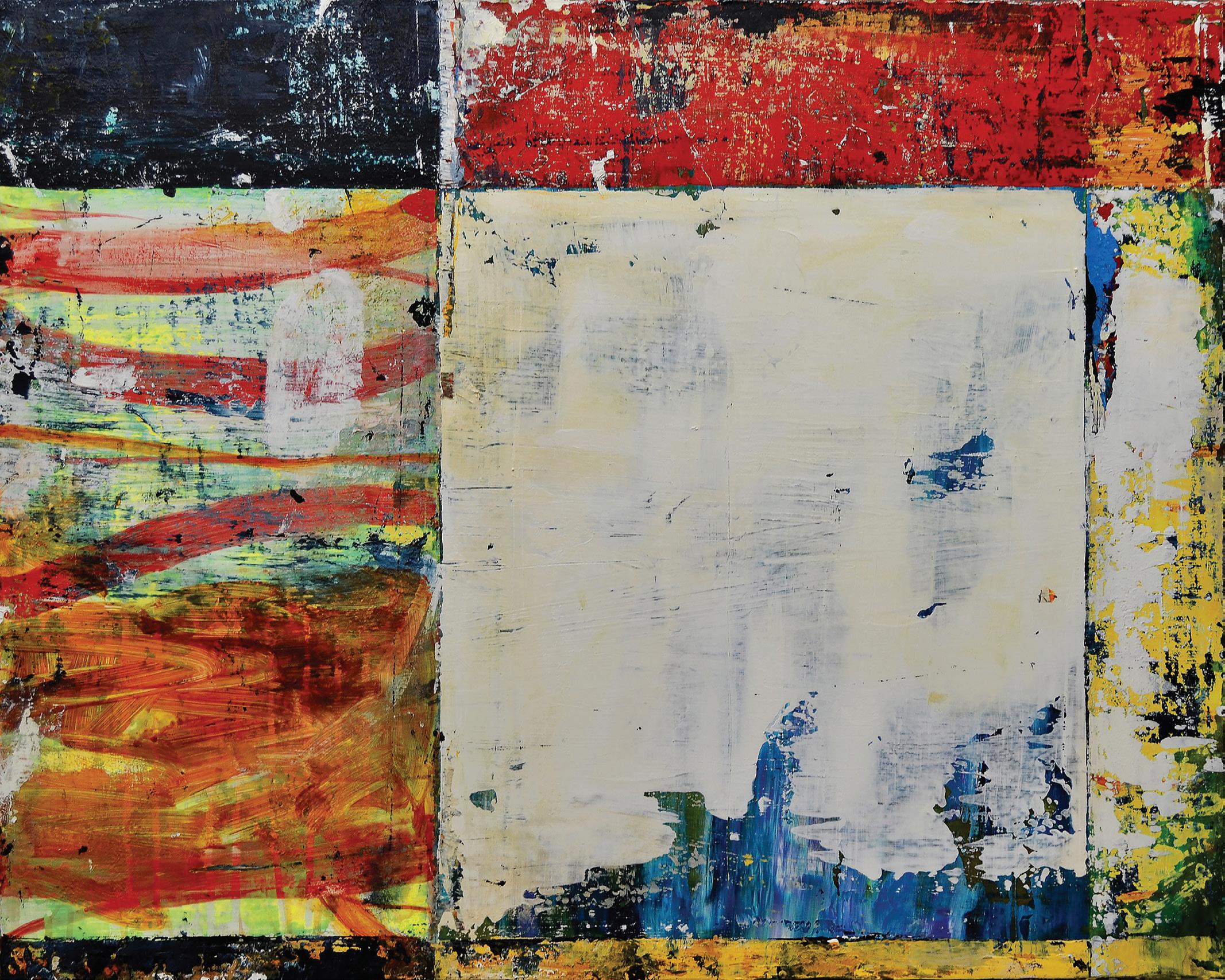
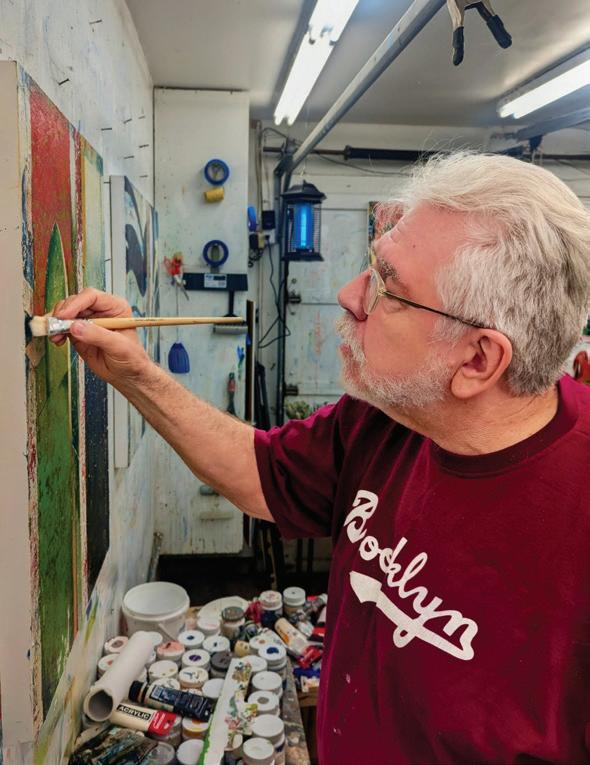
Over the last decade, Gingles, an internationally acclaimed painter represented by galleries in North America, Europe and Asia, and Darrell Bourque, an award-winning poet and professor emeritus at the University of Louisiana at Lafayette, have collaborated on four books in which Bourque reflects upon Gingles’ abstract paintings — paintings that draw viewers deep into the imagery in search of meaning. Together, the poems and paintings create a soul-defining journey into one’s own conscience to remind us of who we are and, equally important, who “they” are.
In their 2019 book “migraré,” Bourque, who resides in rural St. Landry Parish, responds to those visual images through his poetry, not as literal interpretations of the painter’s intent but as impressions.
“The poems are not retelling or recontextualizing or creating a narrative from the images in the visual
(Top) “This.” (Facing page, top) Former Louisiana Poet Laureate Darrell Bourque (Left) “The Last Overture” (Right) Shreveport artist Bill Gingles
work,” says Bourque. “These poems build around the tensions, composition, line, color and the theater created in abstract expressionistic artworks by one particular artist — Bill Gingles. The poems are keyed to the paintings rather than extrapolated from them. The result is often a musical relationship rather than a visual-lexical one.”
Bourque writes that his poems “are an attempt to ‘move into’ the experiences of Others so that we might begin to see each other more clearly, more justly, more humanely, see each other as occupants of place, respectful of difference, diversity, tribe, roots, clans and race, but more so, respectful of the overriding commonality of Being and the inherent Rights of Being . . . It is my hope that readers see in these poems their own histories.”
He says the “idea of Other is pervasive, insidious and ubiquitous. It knows no particular geography or culture or people or history or ancestry. We must be ever vigilant not to separate ourselves from each other in destructive and debilitating ways.”
Each poem and painting takes viewers on that introspective journey. In “The Last Overture,” for example, Gingles “troweled, scraped and scumbled” large rectangular swaths of paint with vague markings brushed and wiped into those fields of color. In the last stanza of the accompanying poem, Bourque writes, “What if in pour la fin du temps we hear the names of all those who’ve walked to some other shore: hear ... names we call ourselves, hear all we call beloved in the last overture.”
For this and two other books, Bourque paired Gingles’ existing paintings with his poems. In a more recent book, “Until We Talk,” Bourque wrote poems based on Colum McCann’s 2020 novel “Apeirogon,” which explores the Israeli-Palestinian conflict and the lives of two fathers, one an Israeli and the other Palestinian, who become peacemakers after the loss of their two daughters.
These poems, Bourque says, “are parallel stories connected to internments, sieges, settlements, reservations, slavery, plantation mentalities and erasures of every kind. The stories here link themselves to generational and historical traumas wherever they occur.”
Gingles’ paintings, Bourque continues, have “the expansiveness and gravitas to match what I wanted this set of poems to do.”
As Bourque completed his poems, he sent them to Gingles to pair them with his paintings.
“I looked for something in the poem that could invite one of my paintings,” Gingles says. “Sometimes it was the title, sometimes a phrase, an event in the poem, the tone, sometimes a single word. I wanted the poem and the painting to be comfortable next to each other.”
The poem “She Was Ten,” paired with the painting “This,” struck Gingles. “I could see the father carrying the picture of his murdered daughter,” he says. “I could feel the pressure in the room as he pointedly slid the picture across the table for the senator to see. This. This is my daughter. You are responsible for this. This is the loss I live with.”
Gingles says he doesn’t “set about to illustrate any of those ideas, nor am I trying to symbolize anything. I’m not conveying any message. I’m just painting what feels right. What feels true.”
For each painting, he says he makes “all of the decisions. But as the painting wake up and begins to assert itself, I try to allow it to lead the way. If I’m too controlling, the painting can choke. If I let go too soon or too often, it can falter. That moving balance is where the magic happens.”

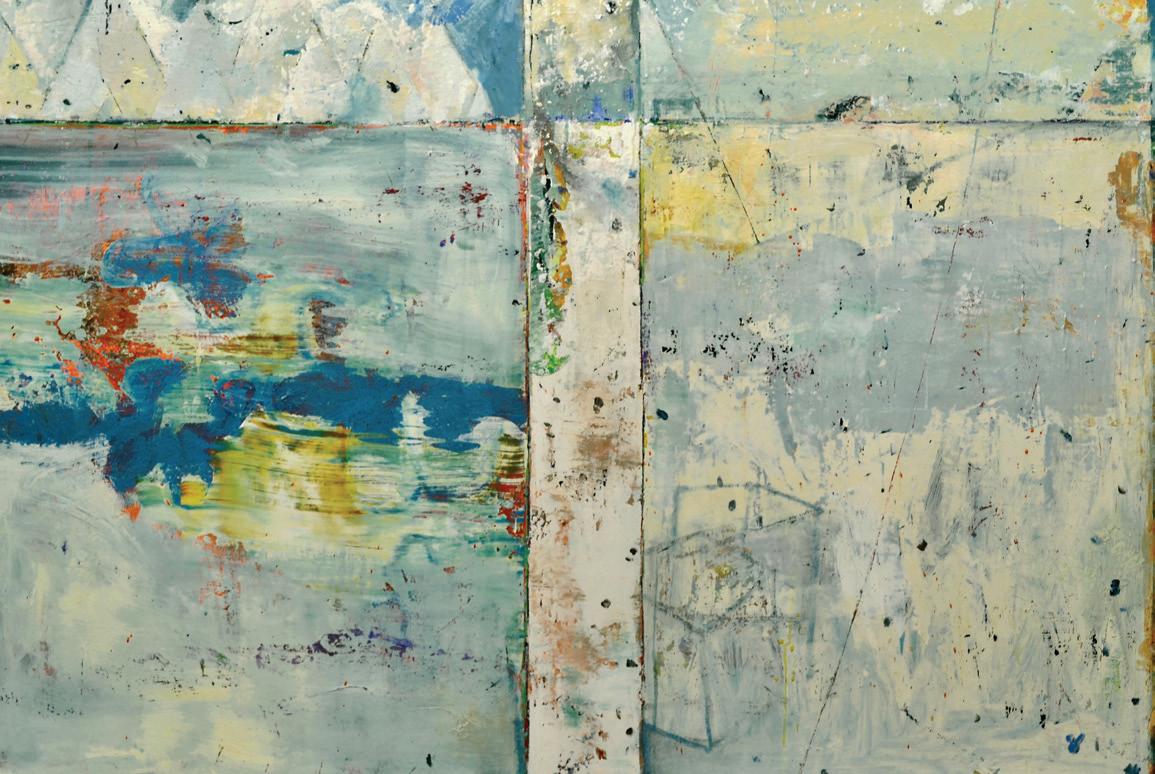
In poetry or the visual arts, Gingles wants others “to feel the wonder and mystery of the human spirit as only the arts can convey.”
Exhibits
CAJUN
Rodrigue: A Louisiana Cowboy. Cajun Cowboys, the West and Rodrigue’s love of the land and open road, through April 4. Historic City Hall & Cultural Center, Lake Charles. visitlakecharles.org
CENTRAL Enduring Concepts. Artists approach themes of people, place, emotion, spirituality. Permanent show. Alexandria Museum of Art. themuseum.org
NOLA
Herman Leonard: Images of Jazz. Work by famed post-WWII jazz photographer, through July 12. Ogden Museum of Southern Art, New Orleans. ogdenmuseum.org
NORTH Bloom! Juried exhibition exploring beauty of outdoors with power of artistic expression, March 26 through May 17. R.W. Norton Art Gallery, Shreveport. rwnaf.org
RIVER PARISHES
Daphnis and Chloe and Other Lovers: Lithographs by Marc Chagall, through May 24. LSU Museum of Art, Baton Rouge. lsumoa.org
Light and Breezy
Recipes for springtime
BY LIZ WILLIAMS PHOTOS AND STYLING BY EUGENIA UHL
AS WE LEAVE the winter behind us, it is not only time to start thinking about flowers and lovely weather, it is a time to think about eating lighter and maybe even using the oven less. If we can open a window or be outside, let’s take advantage of not being inside with the doors and windows shut to keep the heat out. This is our chance to be comfortable in the fresh air. It is also a time to think about cooking outdoors, enjoying the spring weather and cooking without heating the house. I think of spring cooking as the time that we can enjoy meals outside with friends. One of the best meals for
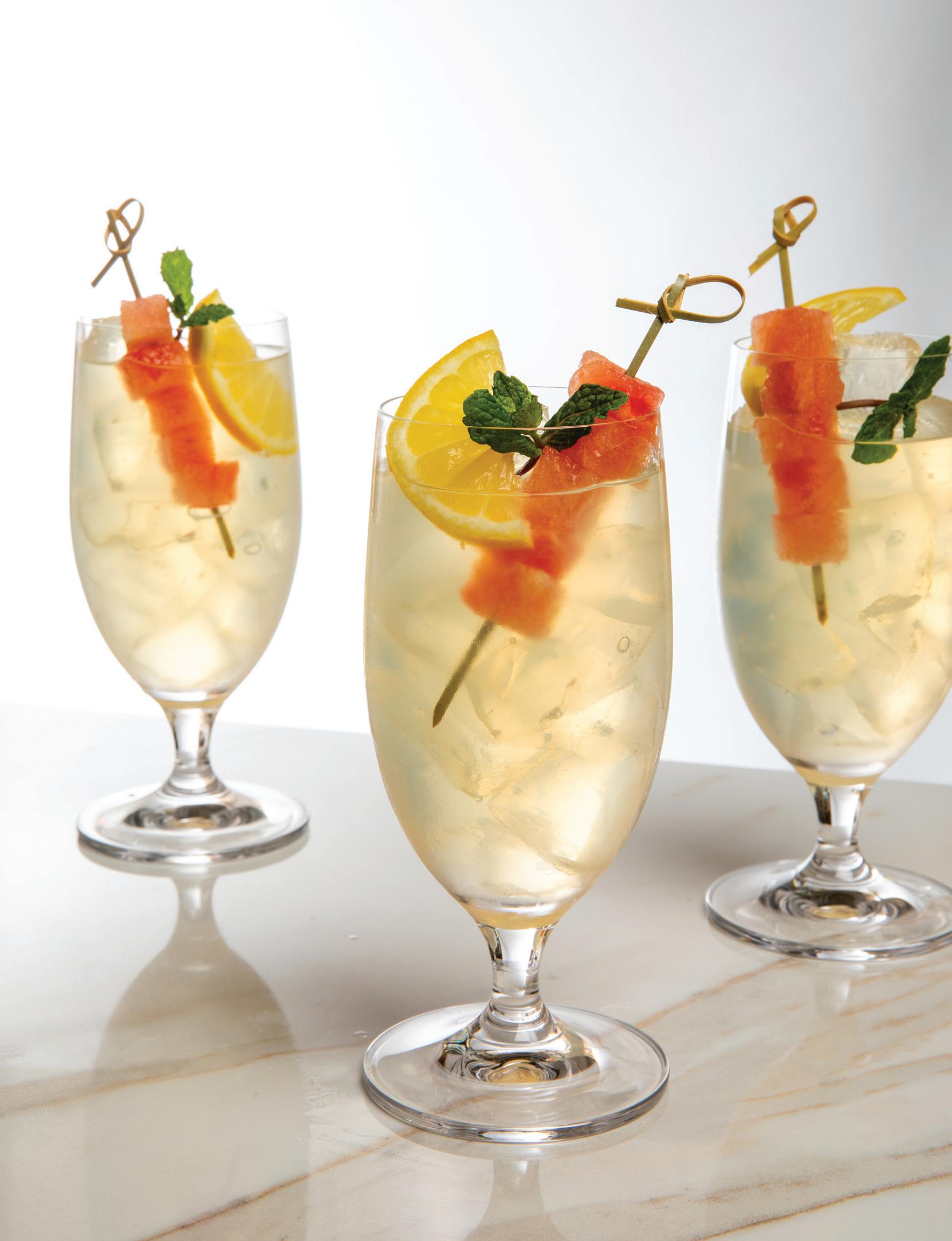
Adult Lemonade
Sitting outside with lovely weather, adults can enjoy a lemonade with the kids.
6 cups water
1 cup sugar
1 cup fresh lemon juice Sprigs of mint or cubes of watermelon for garnish.
1. TAKE 1 cup of water and heat it in a pot on the stove. When tiny bubbles form around the edge of the pot, turn off the flame and add the sugar. Stir until all of the sugar is dissolved. Set the simple syrup aside and allow it to cool.
2. AFTER 10 minutes, add the syrup, lemon juice, and 5 cups of water. Stir well. Place in refrigerator for chilling. This is the lemonade for adults and children.
3. FOR THE ADULT VERSION of the lemonade, fill the glass with ice and lemonade. Add 2 ounces of spirits and stir. I happen to like tequila, but you might prefer vodka or gin. I suggest that you add it with each glass so that the children don’t mistake your lemonade for theirs.
eating outside is one that begins with gazpacho. It is served at room temperature and doesn’t require cooking. And because it tastes best after the flavors have melded for a few hours, you can make it ahead and just serve it when you’re ready. I consider gazpacho a Louisiana dish, even though it is inspired by Spain, because it uses all sorts of vegetables and fruits that grow well in Louisiana, like tomatoes and cucumbers.
Spring is also a great time for hearty salads. I don’t think that there can be enough recipes for chicken salad in my collection. This one is a favorite with spring herbs and unexpected things like tomatillos and pomegranate seeds. It is beautiful to look at as well as delicious to eat.
I am not a believer in standing over the stove or the grill too long. So a few simple dishes like deviled eggs and a tasty tapenade make your table complete without making you take too long away from the fun outdoors. You can decide whether you want a black olive tapenade with garlic and an anchovy for depth of flavor or a green olive tapenade with almonds. Both are great on grilled bread brushed with olive oil.
Our period of beautiful weather during this time of year just screams for us to enjoy it. And it will remind us over glasses of lemonade, iced tea, wine or a cocktail, just how wonderful life in Louisiana can be.
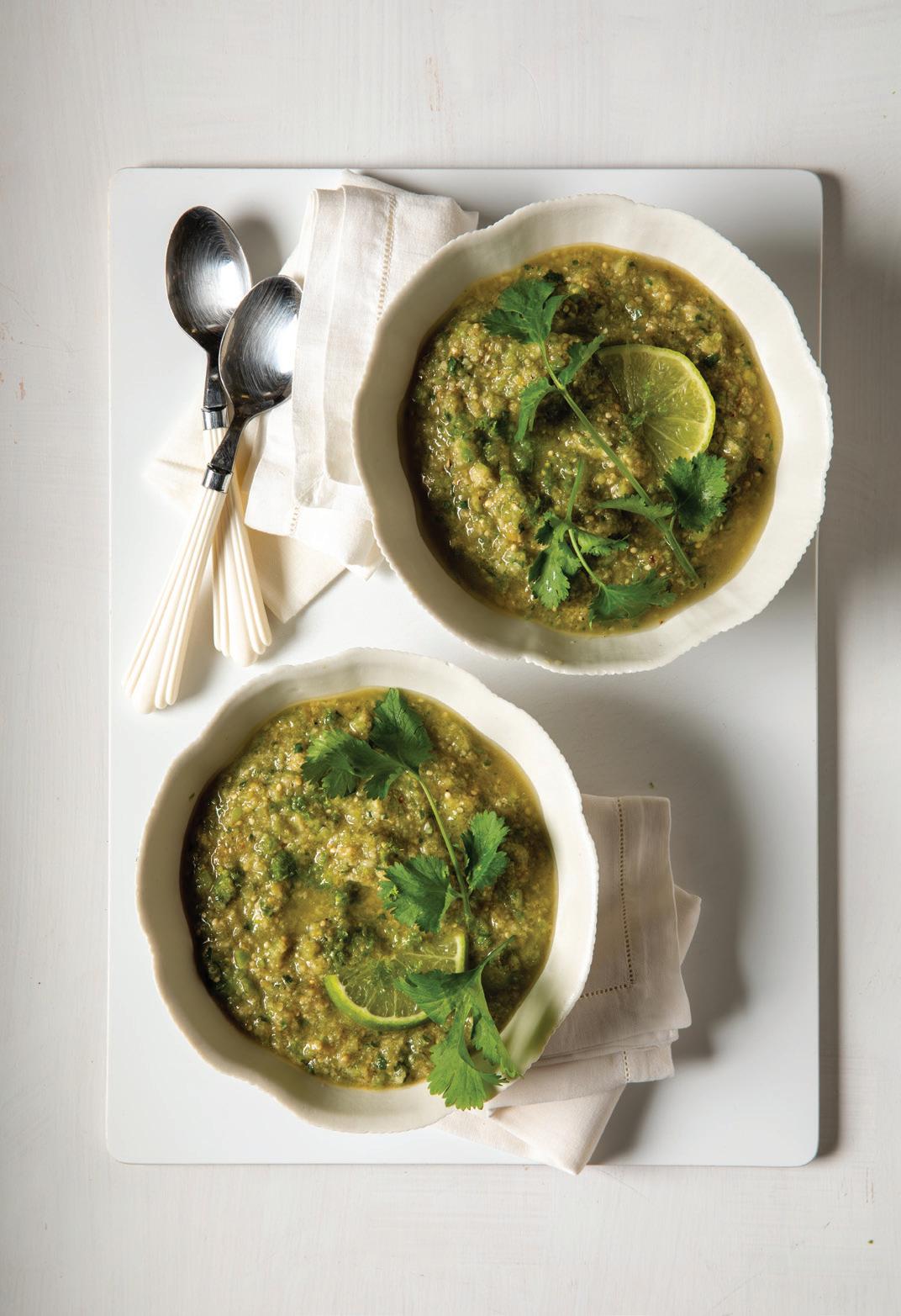
Green Gazpacho
2 pounds tomatillos, husks removed, and roughly chopped
1 cup green grapes
2 cucumbers, peeled, seeded and roughly chopped
2 cloves garlic, chopped ½ bunch fresh cilantro
(including tender stems)
2 to 4 tablespoons sherry vinegar or good apple cider vinegar, to taste
½ cup good olive oil
3 to 4 slices country white bread, crusts removed and torn into pieces
2 teaspoons salt
2 teaspoons black pepper
Garnish with lime zest (optional)
1. PLACE the tomatillos, grapes, cucumbers, garlic and cilantro into the bowl of a food processor. (Do this in batches, if necessary, pouring the finished batches into a large pot.) When all of the vegetables have been ground to the degree of your liking, mix them well.
2. ADD the vinegar. (Start with 2 tablespoons and wait to add more until all of the ingredients have been added.)
3. ADD the olive oil and bread to the food processor. Process until uniform, but leaving the bread with some texture. Add the contents of the food processor bowl to the vegetables. Stir well. Add the salt and pepper and stir again. Taste. Adjust the vinegar to your taste.
4. COVER the pot with the lid or plastic wrap. Place in the refrigerator for at least 4 hours or overnight. Remove from the refrigerator about an hour before serving time. Stir before ladling into bowls. Serves 4 to 6
Chicken Salad
Head of butter lettuce to line the bowl, more if needed
Drizzle of olive oil
Baked chicken breast and legs, skinned and chopped
½ cup chopped celery
½ cup chopped red onion
1 red bell pepper, cleaned and chopped
1 bunch parsley, loosely chopped
1 cup chopped pistachios
1 cup cooked chickpeas (use a whole can of chickpeas, drained)
1 cup mayonnaise
1 tablespoon minced fresh ginger
3 cloves fresh garlic, minced Juice of 2 limes
½ cup olive oil
1 teaspoon soy sauce
1. LINE a large bowl with a layer of lettuce leaves, and drizzle a bit of olive oil over the leaves.
2. PLACE the next 7 ingredients in a separate large bowl and toss.
3. PLACE the mayonnaise, ginger, garlic, limes, olive oil and soy sauce in a jar. Stir with a fork. Pour the sauce onto the chicken mixture and toss. Then add the chicken mixture in the large bowl lined with the lettuce leaves. Serves 4 to 6
This gazpacho surprises with the citrusy taste of tomatillos. Many groceries carry tomatillos, but if yours doesn’t you can usually find them at a store that carries foods from Latin America. I like it served with lime at the table. You can either grate a bit of zest into your bowl, or squeeze a bit of juice. It’s your choice!
GLOBAL
LOUISIANA
WHERE CULTURES GATHER, RECIPES TRAVEL AND EVERYONE IS FED.
BY LIZ WILLIAMS
PHOTOS BY EUGENIA UHL
LOUISIANA CUISINE IS A WONDERFUL REFLECTION OF THE WORLD.
We have, of course, our Native American roots which reflect the bounty of nature and human intervention that forms a firm base for our cuisine. The layers of food influences that were built upon the very strong base are myriad and have contributed to the exciting cuisine that we all enjoy. The African, French and Spanish influences are well known and celebrated. But there are people from all over the world who have helped make our food unique and delicious.
In Louisiana, we have also been fortunate enough to embrace food that has been introduced by various peoples that might be different from what our family has provided. Exploration into those flavors, techniques and ingredients has made the food of Louisiana joyful and complex at the same time. As my grandmother used to say to new people she met, “If you can cook, come sit by me.”
The Italians who migrated to New Orleans at the turn of the 20th century came after 19th century work in the sugar cane fields. Most of that migration was of people from Sicily. They too had a strong food tradition that had been transformed by the tomato from America. They brought their transformed cuisine to Louisiana farming in some parts of the state and bringing in macaroni factories and new tastes like zucchini, breadcrumbs and olive salad.
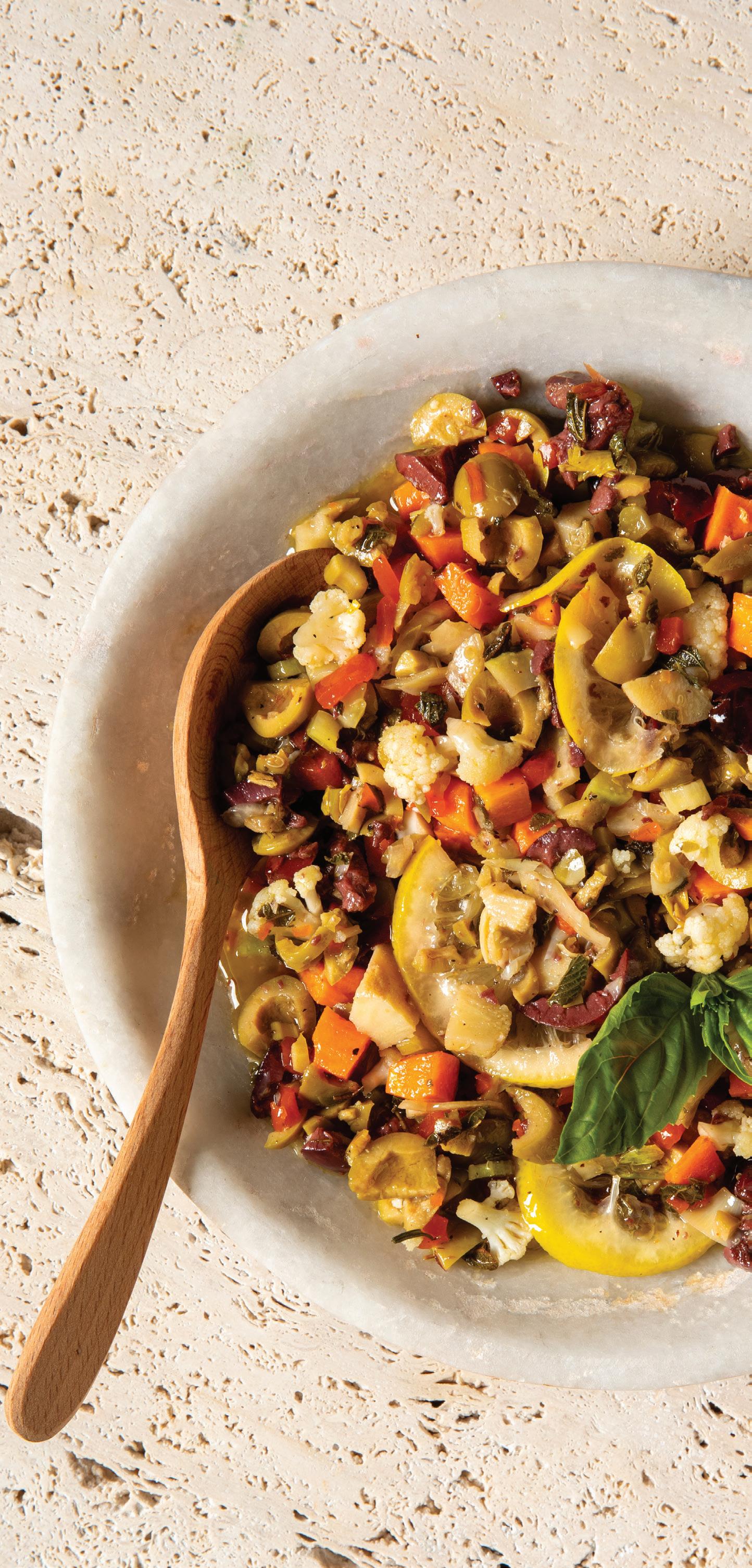
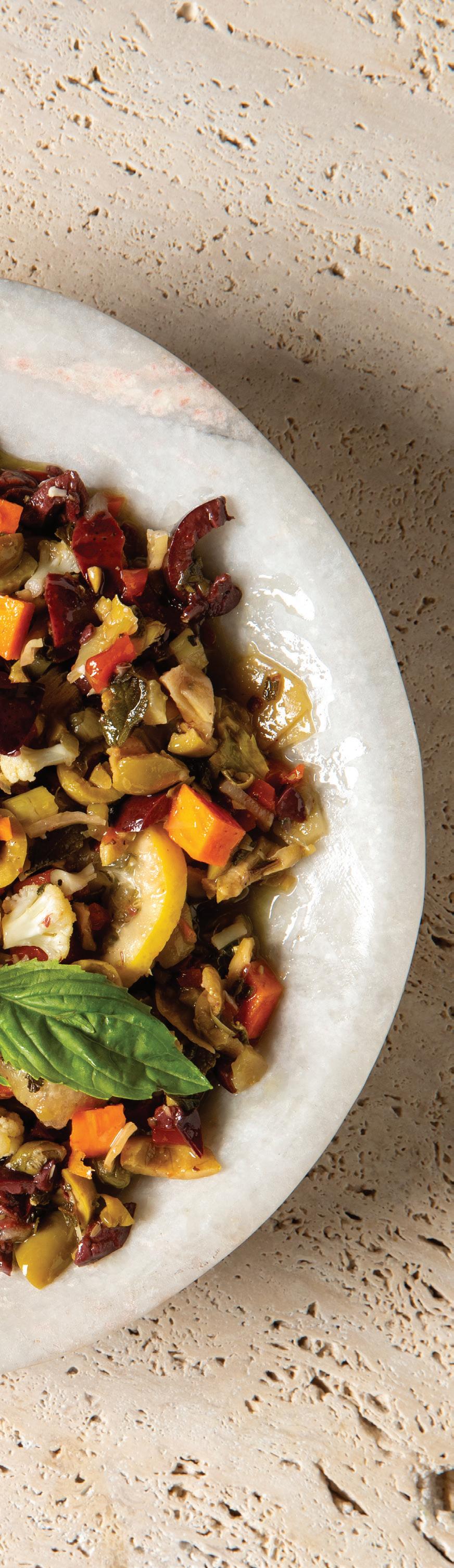
NOT YOUR MAMA’S OLIVE SALAD
Although we definitely love olive salad on a Muffuletta, I have tried to use my Sicilian heritage to bring the New Orleans Olive Salad into the 21st century. I hope you like it.
Fresh artichokes are best, but if you use frozen, that’s about 2 packs, boiled and cooled. In a pinch, canned can be substituted, but the taste and texture will be inferior.
1 anchovy filet
About 1½ cups fruity olive oil
About 10 boiled and quartered baby artichokes
3 cups coarsely chopped cured pitted green olives with pimento
2 cups coarsely chopped pitted black olives
1 cup finely diced celery
1 cup finely diced raw carrot
1 cup finely diced raw cauliflower (optional)
2 very, very thinly sliced lemons, including any juice you can save (Leave the skin on the lemons)
¼ cup fresh lemon juice
1 fennel bulb sliced thinly
4 garlic cloves, minced
6 tablespoons chopped fresh oregano, or 3 tablespoons dried
¼ cup coarsely chopped capers
Freshly ground black pepper, to taste
Salt (optional)
1 cup fresh basil leaves (optional)
1. In a large bowl, mash the anchovy with 1 tablespoon of the olive oil until the anchovy totally dissolves. If you think you need more olive oil, add another tablespoon. Mix in all other ingredients except the remaining olive oil and the basil leaves.
2. Add enough olive oil to barely cover the mixture. Stir well so that everything is evenly distributed. Let it sit an hour, then taste. If it needs more acidity, add a bit more lemon juice. Because of the olives and anchovy, this salad will probably not need additional salt, but add it if you like. Add in the fresh basil leaves right before serving and toss gently. Serve on a buffet table. Makes a gallon
The Germans helped settle Louisiana and farmed and provided food along what is now the Côte des Allemands. They brought sausage-making traditions, which took on French names but had German roots. Our special Louisiana andouille bears no relationship to French andouille. Ours is truly special and delicious. The early settlers would not have survived without the productive German farmers. And the beer culture of New Orleans would not exist without the Germans.
And there’s the Irish. Irish immigrants have certainly influenced the drinking culture of the city. The cabbage, stews, potatoes and simple dishes they made can still be found in pubs and the pub culture of the city. Irish families have been successful in the restaurant trade, promoting the food of Louisiana around the world.
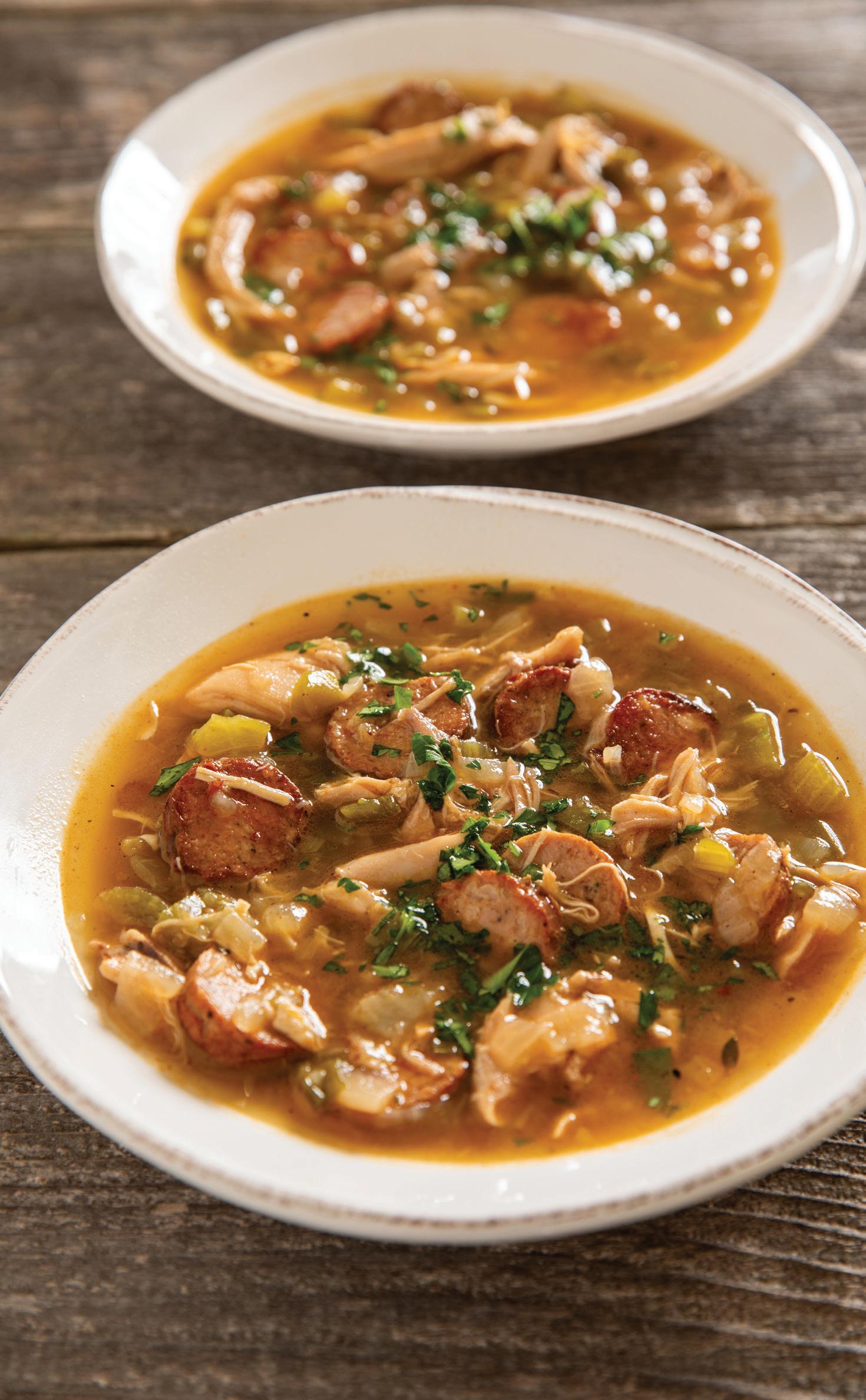
CHICKEN AND ANDOUILLE GUMBO
This dish, served over potato salad instead of rice, reflects the German sausage-making traditions and the Irish love of potatoes. But today we don’t analyze what we are eating. We forget to acknowledge their roots. We just celebrate its goodness!
While its exact origins are unknown, gumbo is believed to be a dish of mixed origins of African, French, Spanish, Native American, Caribbean and German influence.
GERMANY
¼ peanut oil or bacon fat
(or duck fat, if you have it)
1 pound andouille, sliced into rounds ¼ inch thick
¼ cup flour
2 large onions, chopped
1 bunch chopped scallions
3 stalks of celery, chopped
One large green bell pepper, chopped
Garlic , minced, at least 3 cloves
64 ounces unsalted chicken stock
2 bay leaves
1 teaspoon dried thyme
1 tablespoon unsalted Louisiana spice mix (Your own or a commercial mix)
Meat of 1 large rotisserie chicken, shredded Salt and pepper
Bunch of parsley, chopped
Filé and hot sauce for the table
1. Heat the fat in the soup pot. Then add the andouille to brown. Remove the andouille when it begins to brown, about 5 minutes, and set aside, leaving the fat in the pot.
2. Add the flour to the pot, making a dark roux. Do this over a low medium heat stirring constantly. This should take at least 20 minutes. When the roux has reached the right color (to your taste) add the chopped onions and scallions. Stir well and allow the onions to begin to caramelize. Add celery and bell peppers. Add garlic. When the vegetables are all soft (about 5 more minutes), add the sausage back to the pot. Add the stock to the pot.
3. Add the bay leaves , thyme, and Louisiana seasoning. Stir. Add the chicken.
4. Simmer at least 2 hours so that the flavors can meld. Taste and adjust seasonings – especially salt and pepper. (The andouille and rotisserie chicken will be salty, so taste before you add more salt)
5. Serve over potato salad. Add the chopped parsley as garnish on each bowl. Serves 4 to 6
POTATO SALAD
4 cups peeled and diced
Yukon Gold or russet potatoes, medium dice
1 teaspoon salt
3 hard-boiled eggs, peeled and chopped
½ red onion, diced
2 stalks celery, diced
Thanks to the Irish for popularizing potatoes in Louisiana’s predominantly rice cuisine. Potatoes are the perfect foil for Chicken and Andouille Gumbo. If you don’t make your own mayonnaise, use a really good brand.
2 tablespoons chopped dill pickles
1 cup mayonnaise
2 tablespoons yellow mustard
1 teaspoon unsalted Creole seasoning Greens from 1 bunch scallions, chopped for garnish
1. In a medium pot, add potatoes, salt and enough water to cover potatoes by about 1 inch. Add salt to the water. Boil until tender, (about 15 minutes, depending on the size of the diced potatoes). Drain the potatoes and transfer the cooked potatoes to the refrigerator until cool. (They will cool faster if you spread them out in one layer on a platter or sheet pan.)
2. Place the cooled potatoes in a large serving bowl. Mix in the eggs, red onion, celery, dill pickles. Add the mayonnaise, yellow mustard and Creole seasoning. Gently stir the mixture to an even consistency so that all of the potatoes are covered with the mayonnaise, mustard and seasoning. Top with fresh green onions and serve. Serves 6 as a side dish or in bowls of gumbo
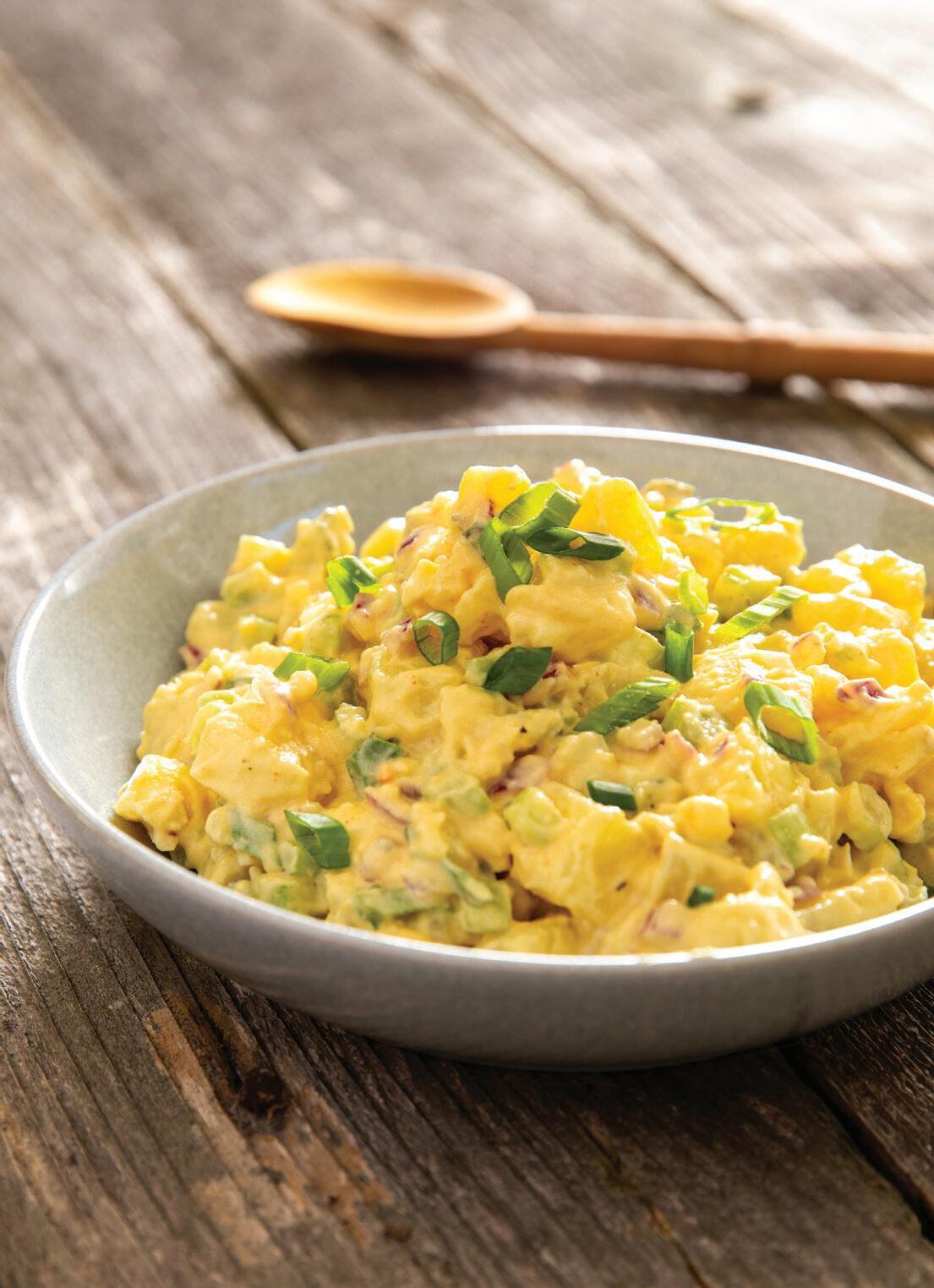
Though the potato may be Irish, American potato salad most likely originated from recipes brought to the U.S. by way of German and other European immigrants during the nineteenth century.
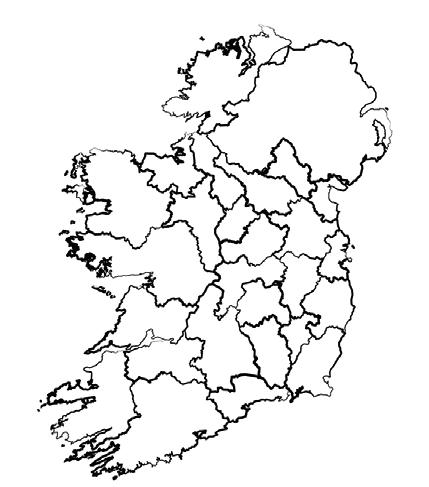
IRELAND
The most profound influence on the food of Louisiana is that of the Africans who were taken here against their will as enslaved people. They were brought here in part because they had technical knowledge of agriculture, especially sugar and rice. They cooked for those who enslaved them. And through their work we now have okra married to the American tomato. We have rice-influenced dishes as simple as red beans and rice or black eyed peas.
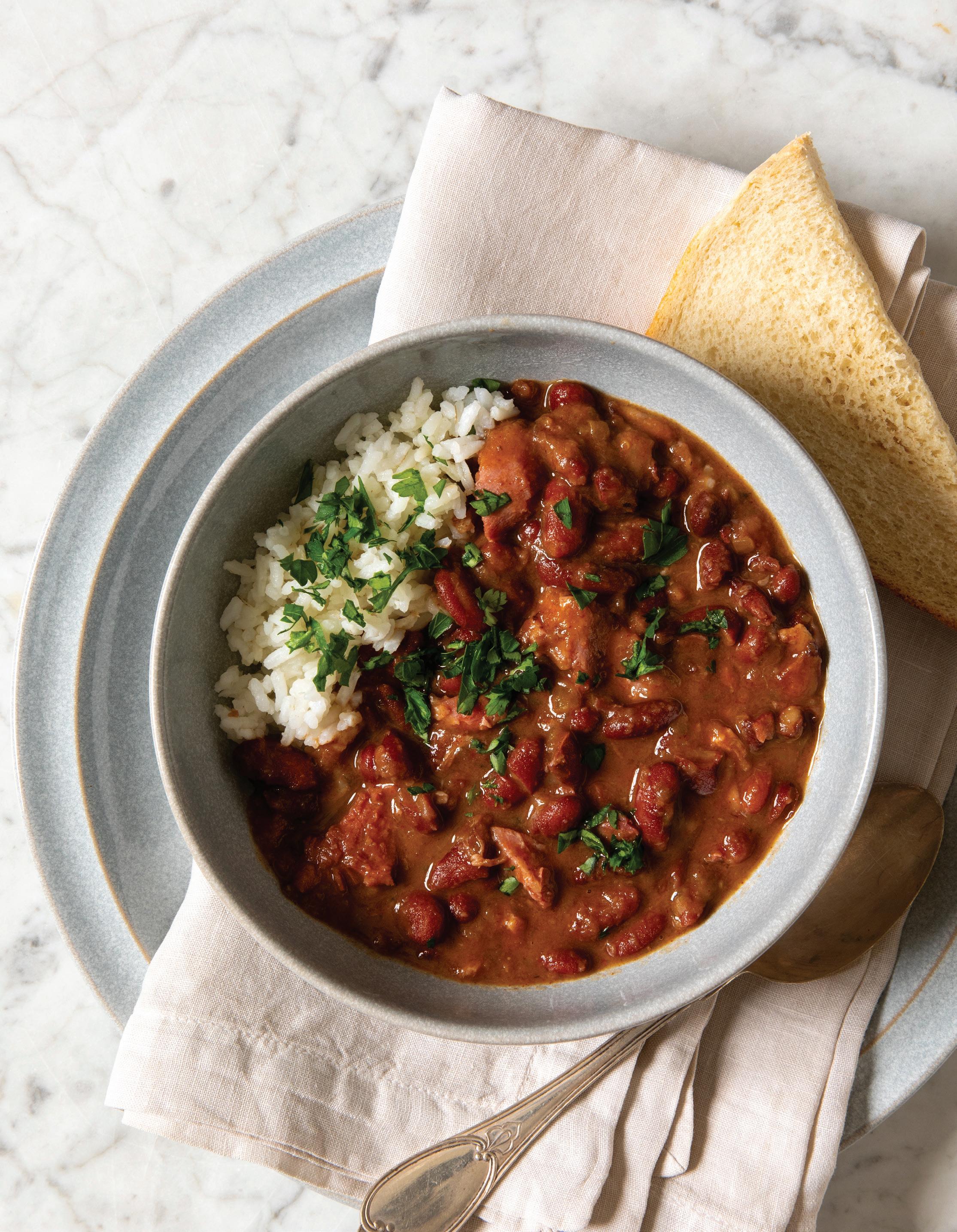
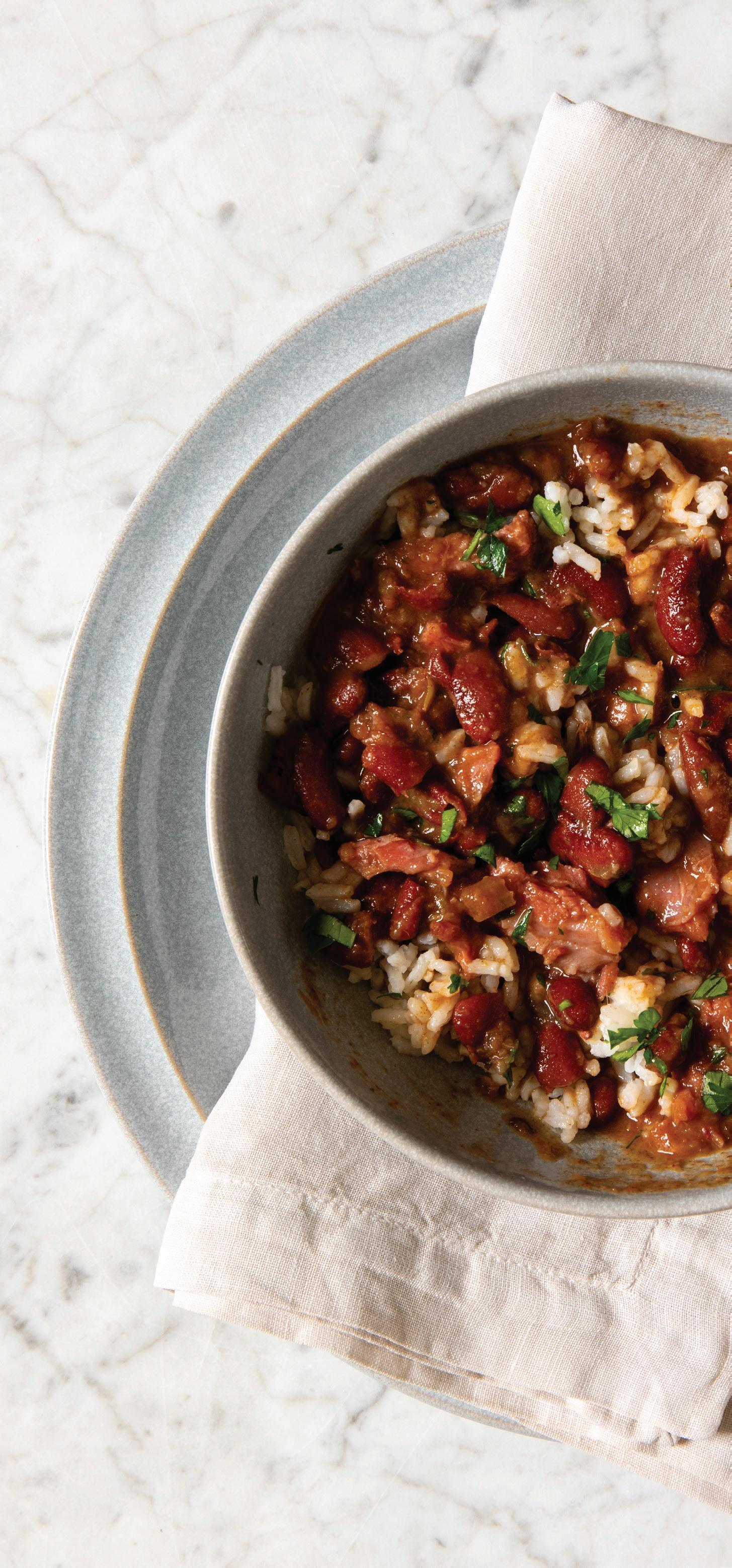
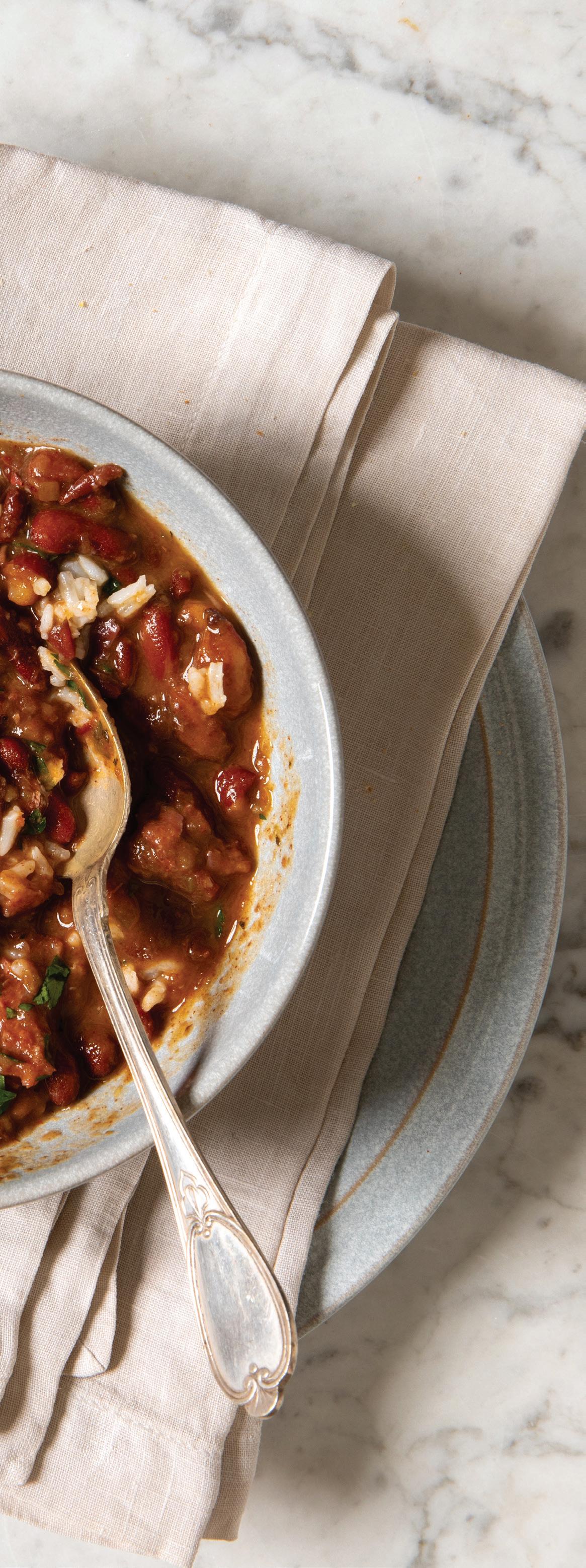
RED BEANS AND RICE
In the past, enslaved Africans ate peas and rice. Louisiana didn’t have peas, but we had beans in abundance. Red beans were substituted for the peas of the African homeland and this Louisiana staple was born.
3 tablespoons bacon fat
2 onions, chopped
1 green bell pepper, chopped
3 stalks celery, chopped
3 cloves garlic , minced
1 teaspoon cayenne pepper
¼ teaspoon ground cloves
2 teaspoons sweet paprika
1 teaspoon dried thyme
3 bay leaves
6 cups water
1 can beer
1 pound dried red beans (also known as red kidney beans)
1 meaty ham bone (if you don’t have a ham bone, use 3 or 4 ham hocks)
2 teaspoons salt
2 teaspoons black pepper
6 cups cooked rice
1. Place the bacon fat in a large soup pot with a heavy bottom on medium heat. Add the chopped onions and saute for about 6 minutes until they are soft and beginning to become translucent. Add the green peppers and celery. Cook another 3 minutes. Add the garlic, cayenne pepper, cloves, paprika, thyme, and bay leaves and bloom them for 1 minute by stirring them into the oil and vegetables.
2. Add the water and beer and stir well. Bring the liquid to a boil and then add the beans and ham bone. After the mixture returns to a boil, reduce the flame and keep cooking at a simmer. Cover the pot and cook for 1 ½ hours. Uncover the pot and cook for another hour. Stir occasionally. Taste the beans for salt. If the ham has salted adequately, adjust the amount of salt to suit your taste. Add the black pepper.
3. With a fork, mash some of the beans against the side of the pot to increase the creaminess of the beans. Cook for another hour. If more liquid is needed, add more water and stir well. Remove the ham bone and serve over rice. Serves 8

You may notice that there is no instruction to soak the beans overnight. While it does reduce the cooking time, it isn’t necessary. This recipe allows you to decide to have beans that very day instead of thinking of it the night before. But if you do think of it the night before, perform all of the instructions in step 1 above. Then add everything to a crock pot (the cooked vegetables, water and beer, and the beans). Set the crockpot to low and cook all night. The next day, you will have perfect red beans.
AFRICA
Both the delicious bread and the herbaceous, spicy toppings make the banh mi the ideal sandwich.
The influences from Meso-America, now Central America, are old and new. The old include chocolate, vanilla and mirliton. More modern influences include oyster tacos and papusas. As the Spanish introduced wheat flour into what became their colonies in Central America, the mingling of culture began. As those cultures did business through the port of New Orleans, often moving to New Orleans, we ate empanadas seasoned with peppers and cumin. And even after the wave of immigrants from Mexico and Central American post Hurricane Katrina, we embraced plantains and papayas and mangos.
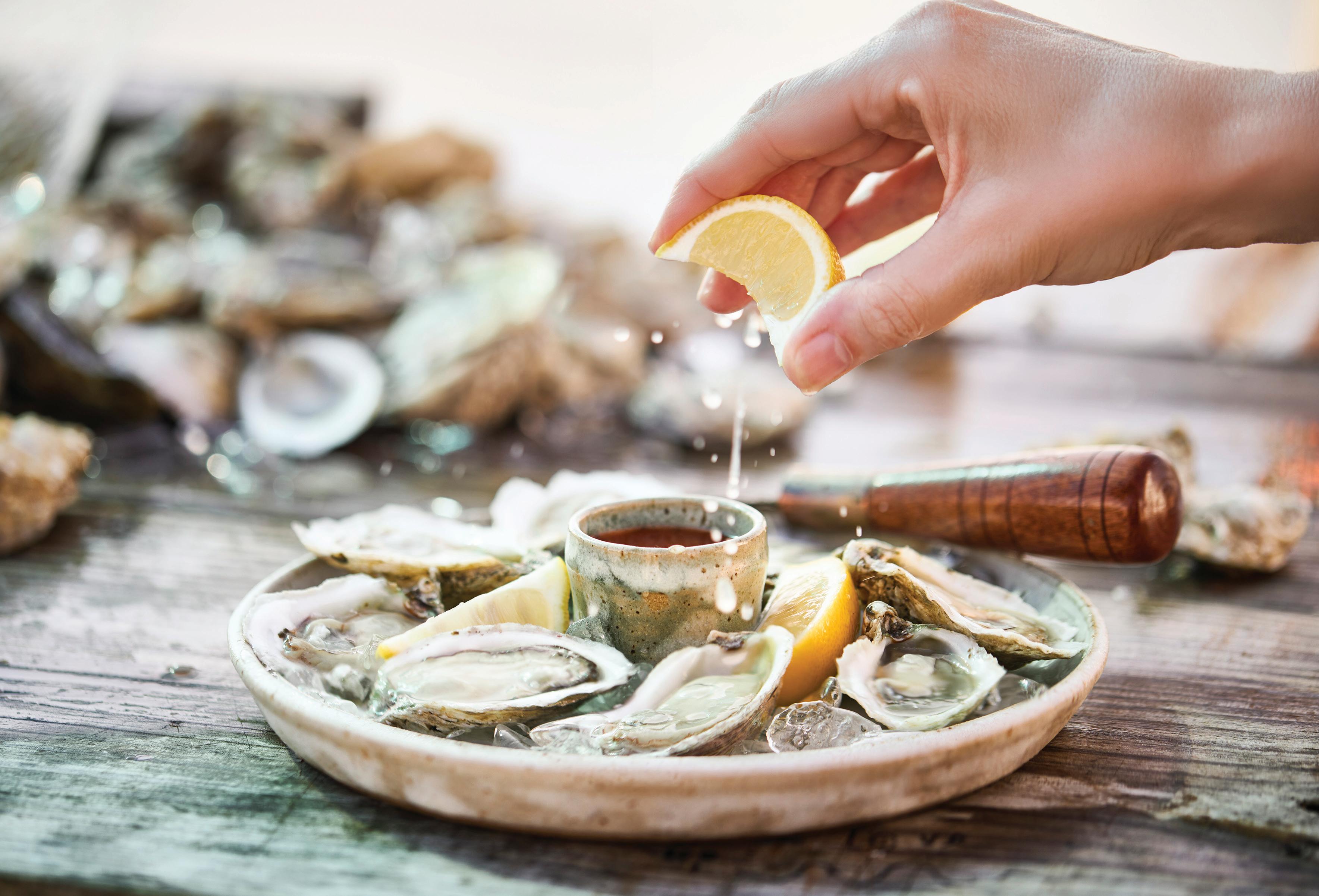
The Vietnamese influence continues to develop. Since their arrival in the late 1970’s after the fall of Saigon, their special cuisine with familiar French influences, but entirely made their own, has merged with the food of Louisiana. Baking, influenced by the long French occupation of Vietnam, is not unfamiliar. But the Vietnamese breads have a unique texture and flavor because of both their unique techniques and the addition of rice flour with the wheat. The banh mi, so reminiscent to the po’boy, made them welcome participants in po’boy festivals. The use of lemon grass as a seasoning, the quick pickles of the banh mi, and the very best king cakes have made the tables of all of New Orleans notice.
This is just a sampling of some of the dishes influenced by these many cultures. T
4 banh mi buns
4 tablespoons softened butter
4 tablespoons good mayonnaise
6 ounces foie gras
1 dozen fried oysters
1 cup fresh pickled carrots, cabbage, and cilantro from a Vietnamese market
1 bunch fresh cilantro
1. Preheat oven to 325 F
2. Place the banh mi buns in the oven to crisp the outside. Remove them after 5 minutes.
3. Slice open the buns leaving a “hinge” of bread to hold the top and bottom together if they are not precut. Butter each inside (top and bottom) of the buns. Then spread mayonnaise over the butter on each bun.
4. Add ¼ of the foie gras to each bun. Add 3 fried oysters over the foie gras to each bun.
5. Add ¼ cup of the fresh pickles and additional cilantro if desired. Eat immediately. Serves 4
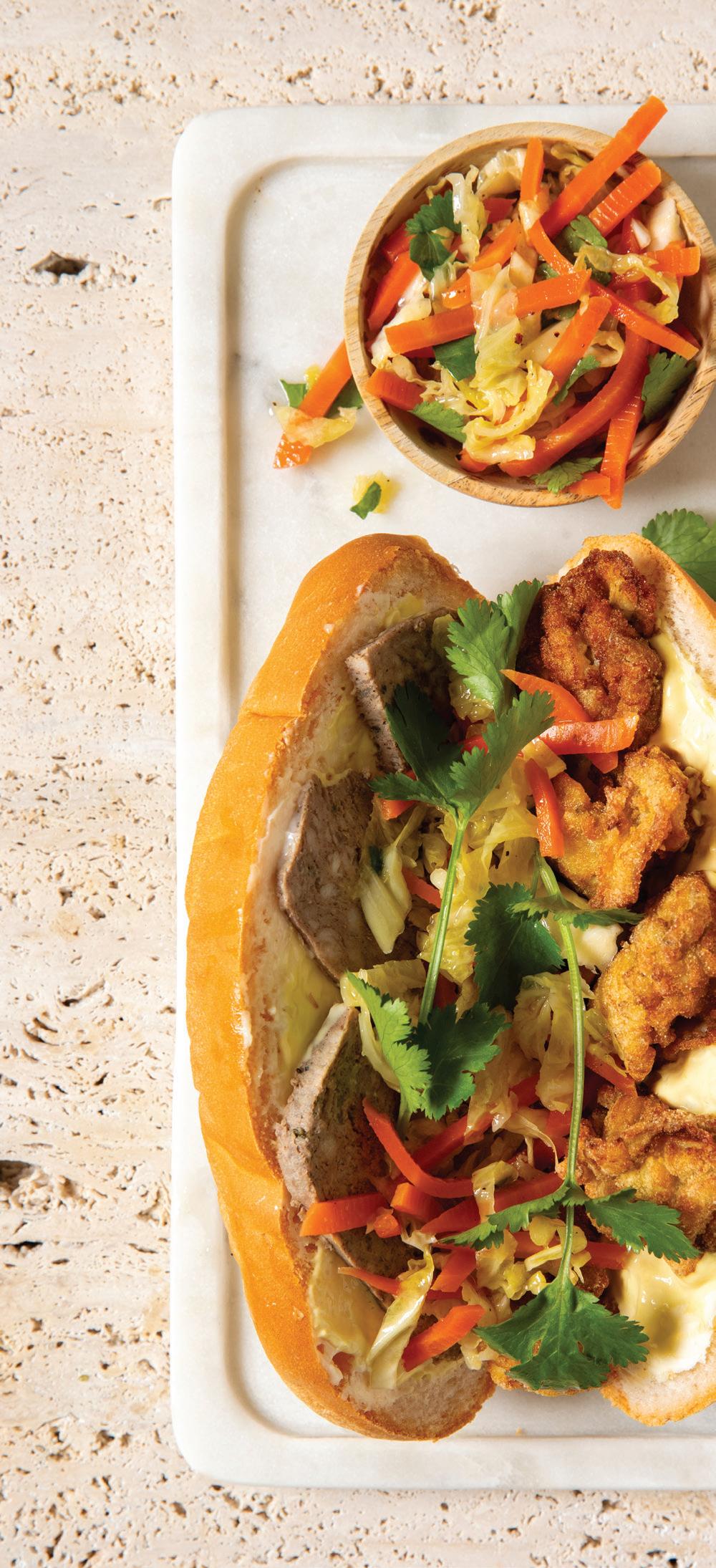
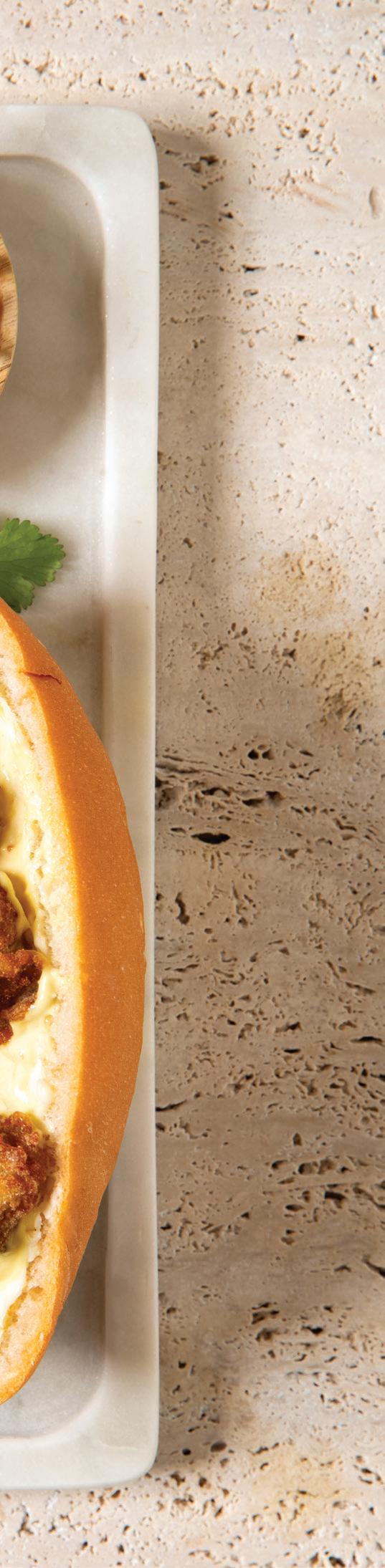
NEW ORLEANS BANH MI
I first ate a variation of this sandwich at Dong Phuong Bakery in New Orleans. I thank them for the inspiration. They assured me that the fried oysters could only happen in New Orleans.
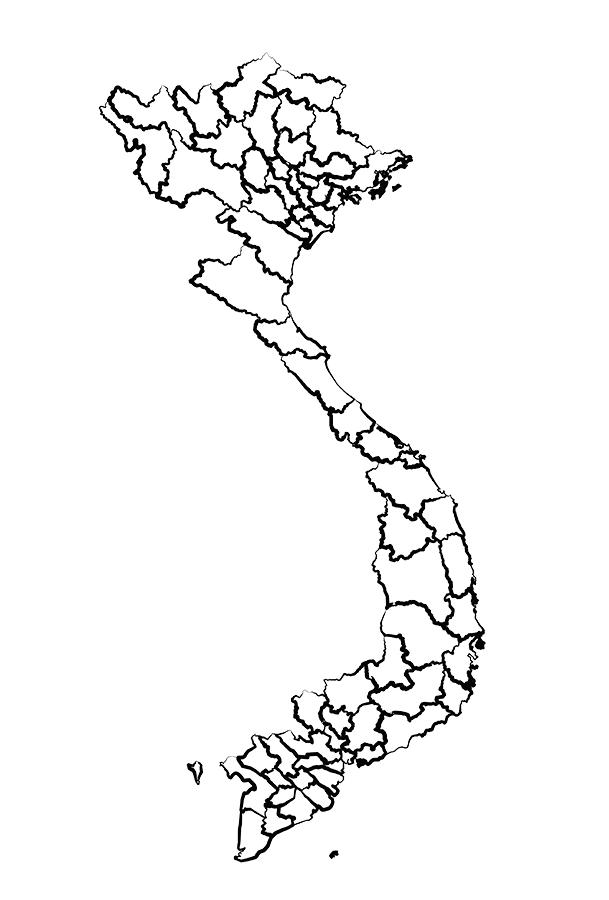
VIETNAM
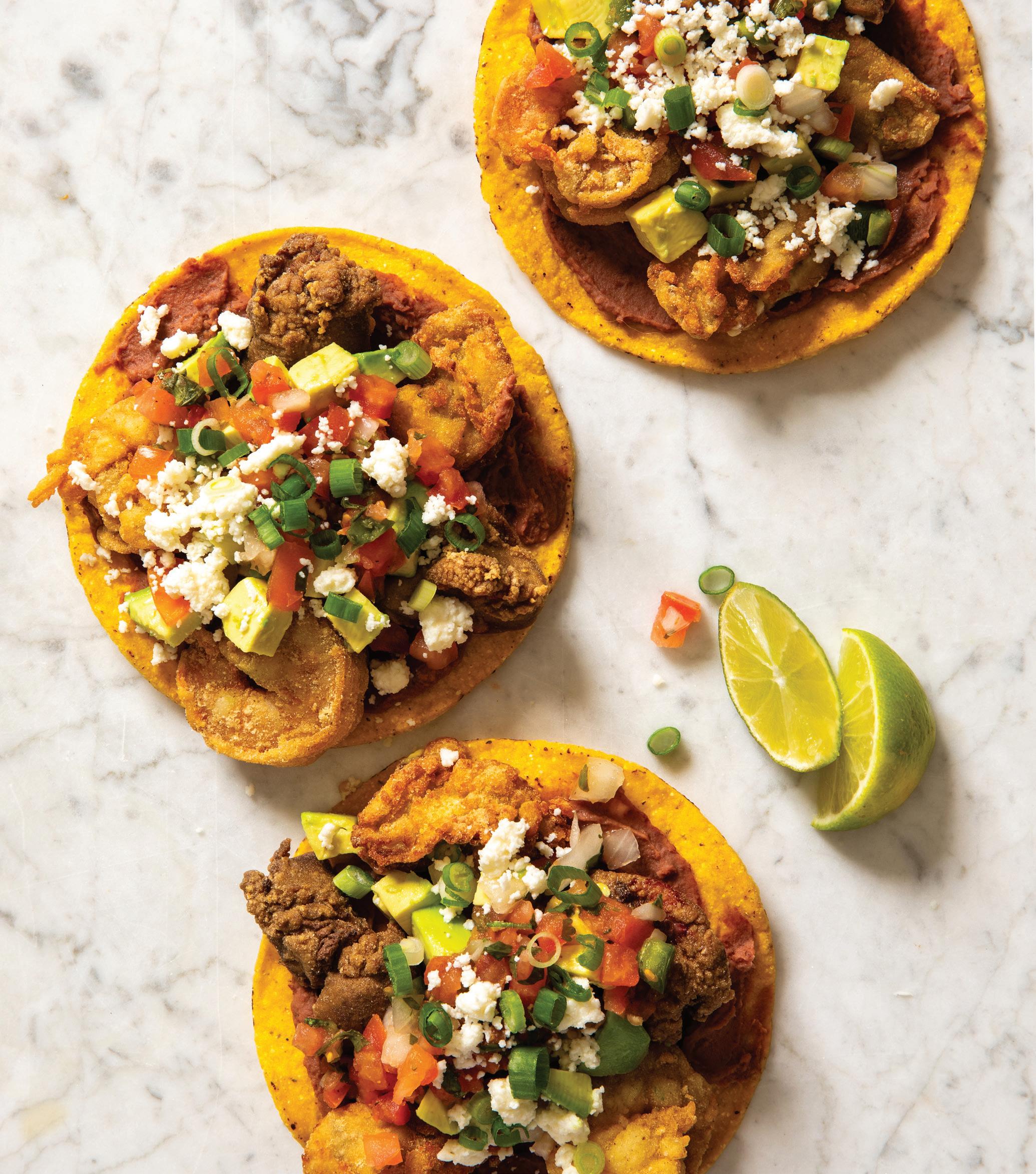
These crunchy tostados are filled with flavor — acid from lime and tomatoes, decadent umami from the livers and oysters. Just about every texture is included as well. The perfect dish.
LOUISIANA TACOS
These popped up everywhere after Hurricane Katrina — each taco truck making its own variation of this this fabulous, non-traditional taco. The Louisiana flavors are unmistakable.
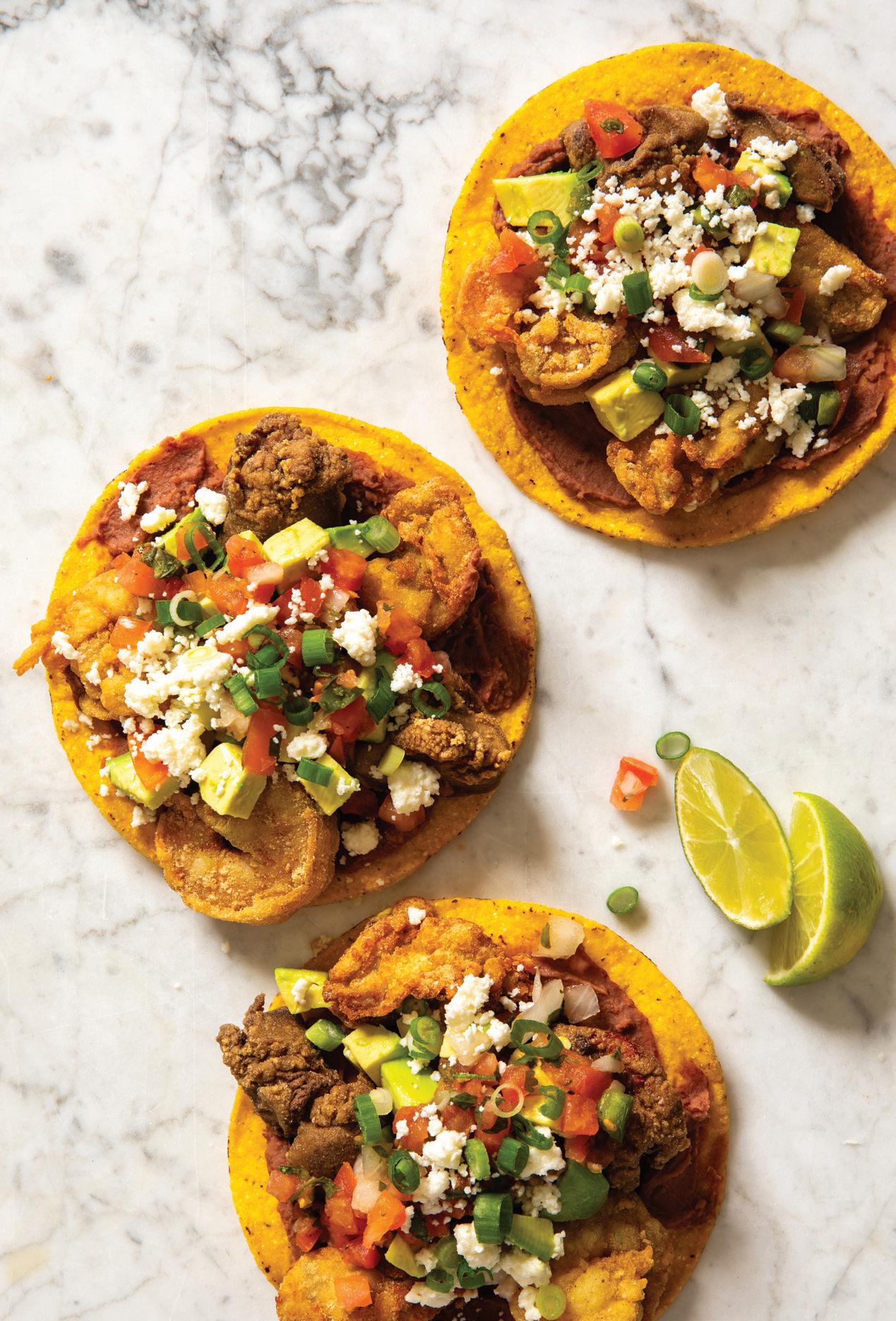
For each taco:
A hot, just-fried corn
tortilla*
2 tablespoons refried beans
2 fried oysters
2 fried chicken livers
2 fried shrimp
Chopped avocado
Chopped tomatoes
Chopped scallions
1 tablespoon crumbled queso fresco
Chopped cilantro
Pico de gallo salsa to taste
1. Spread the fried tortilla with a good slather of refried beans. Add 2 fried oysters, 2 fried chicken livers and 2 fried shrimp.
2. Add a tablespoon of chopped avocado, a tablespoon of chopped tomatoes, a bit of chopped scallions and queso fresco. Finish with chopped cilantro and pico de gallo.
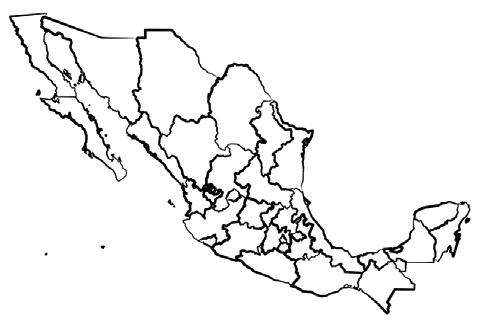
MEXICO
MANY WAYS TO ENJOY WHAT’S NEW ON THE GULF COAST
Planes, Trains and

Automobiles
BY CHERÉ COEN

St. Louis because you’re in the marshes,” he said. “You get to see a lot of the country that you wouldn’t see along the interstate.”
AUGUST SAW GREAT FANFARE
with the launch of the restored Gulf Coast Amtrak railway line — now dubbed the Mardi Gras Service.
Louisiana residents can now hop on a train in New Orleans, kick up their feet and visit stops between the city and Mobile, Alabama. The new line has goten so popular, it became one of the most successful service launches in Amtrak’s history and exceeded rider expectations.
“Ridership has been building every month,” said Knox Ross, chairman of the Southern Rail Commission that has partnered with Amtrak to bring the service to fruition. “The first three months we were past 40,000 passengers. It’s
been very successful — more than double the projections.”
The first month alone saw 18,000 passengers with a 96% customer satisfaction rate, according to the Southern Rail Commission — the highest customer satisfaction rate of any of Amtrak’s routes across the nation. That may well be due to the laissez faire attitude of its passengers and crew.
“The crews on the train have sort of taken the service on their own,” Ross said. “There are lots of bloody marys being served. It’s a different vibe. There’s so much you can do on this train. It’s what do you want to do?”
So far, ridership has been mostly day trippers and some business travel, Ross explained, with some passengers claiming that the ride is so peaceful, they have given up traversing Interstate 10.
“The ride is serene, especially between New Orleans and Bay

Extra cars have been added for special events such as Saints games and Ross expects to continue that trend due to its popularity.
“We are well on track to double the original estimate,” said Amtrak Board Chairman Anthony “Tony” Coscia in a press release surveying the first year. “Demand is very high across our network.”
For those wishing to visit the Gulf Coast on the Mardi Gras Service, which involves four stops in Mississippi and Mobile,
you can leave the driving to others. Of course, Gulf Shores and Orange Beach — now being promoted as “Alabama’s Beaches” — still require a car since the emerald waters remain a good hour’s drive from I-10.
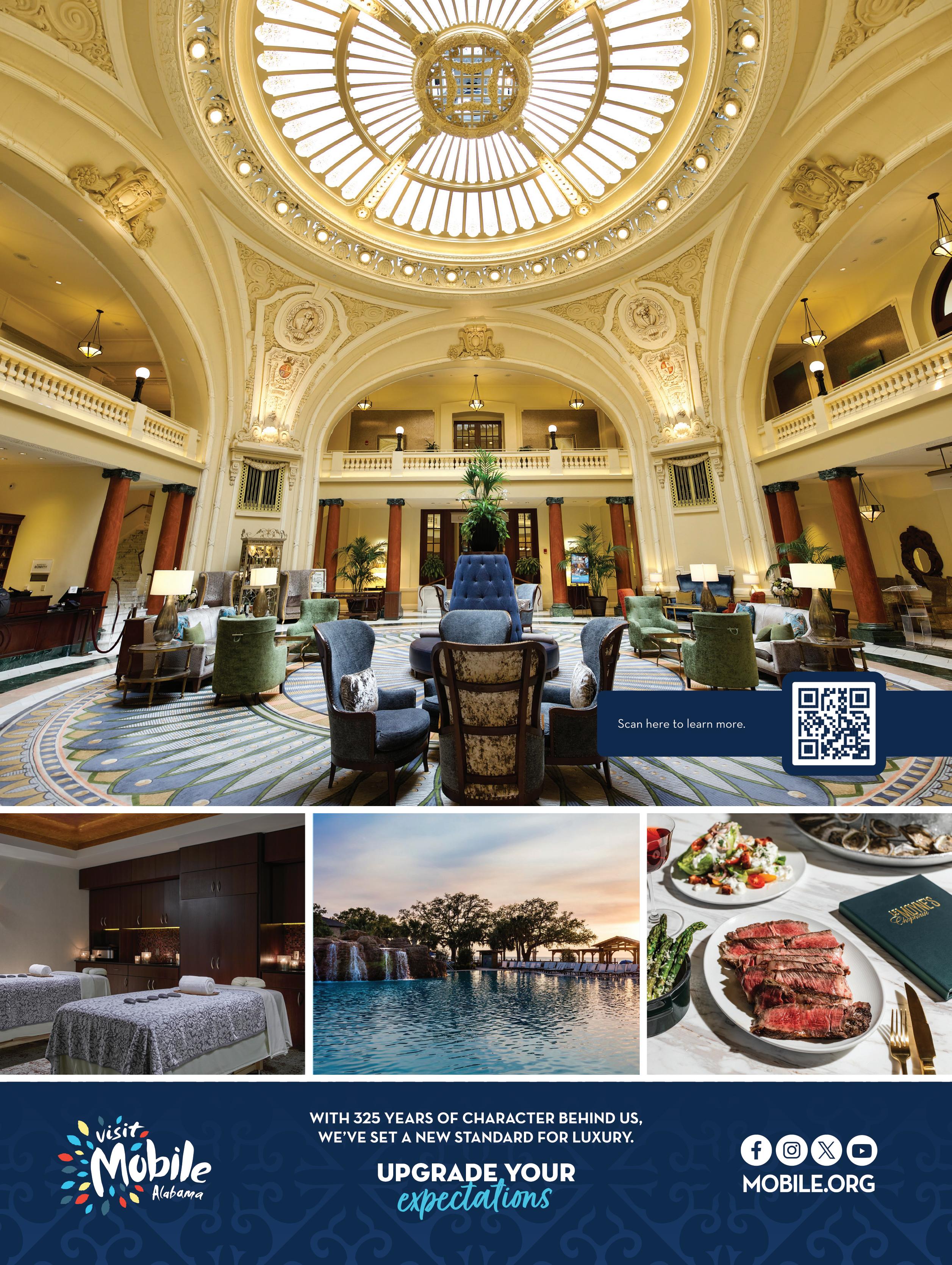
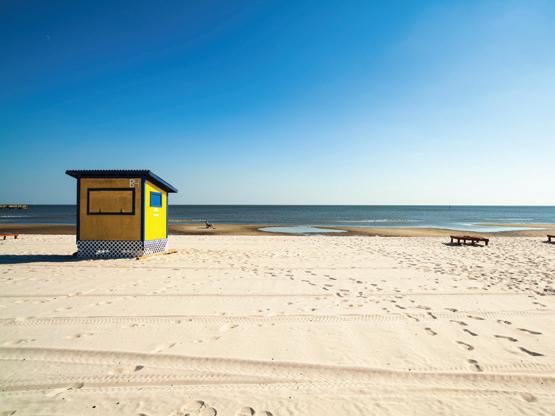
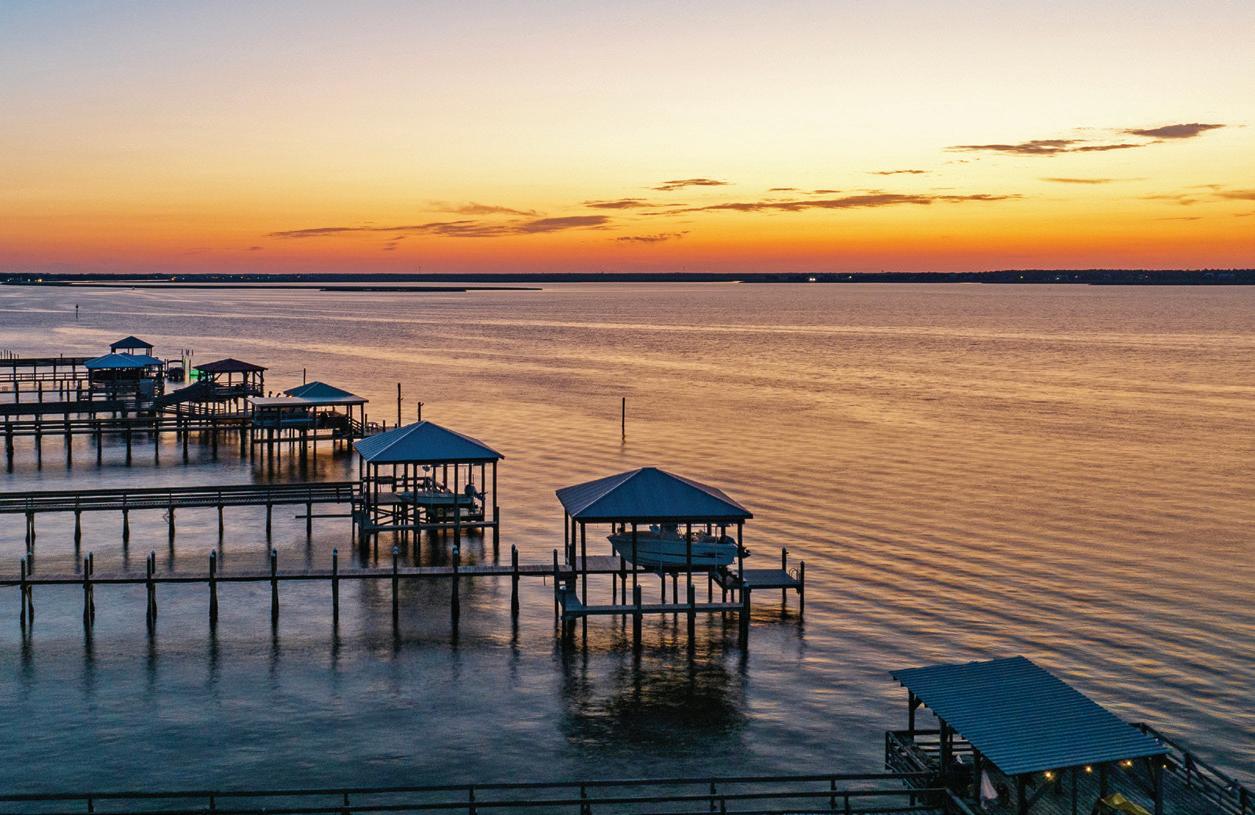
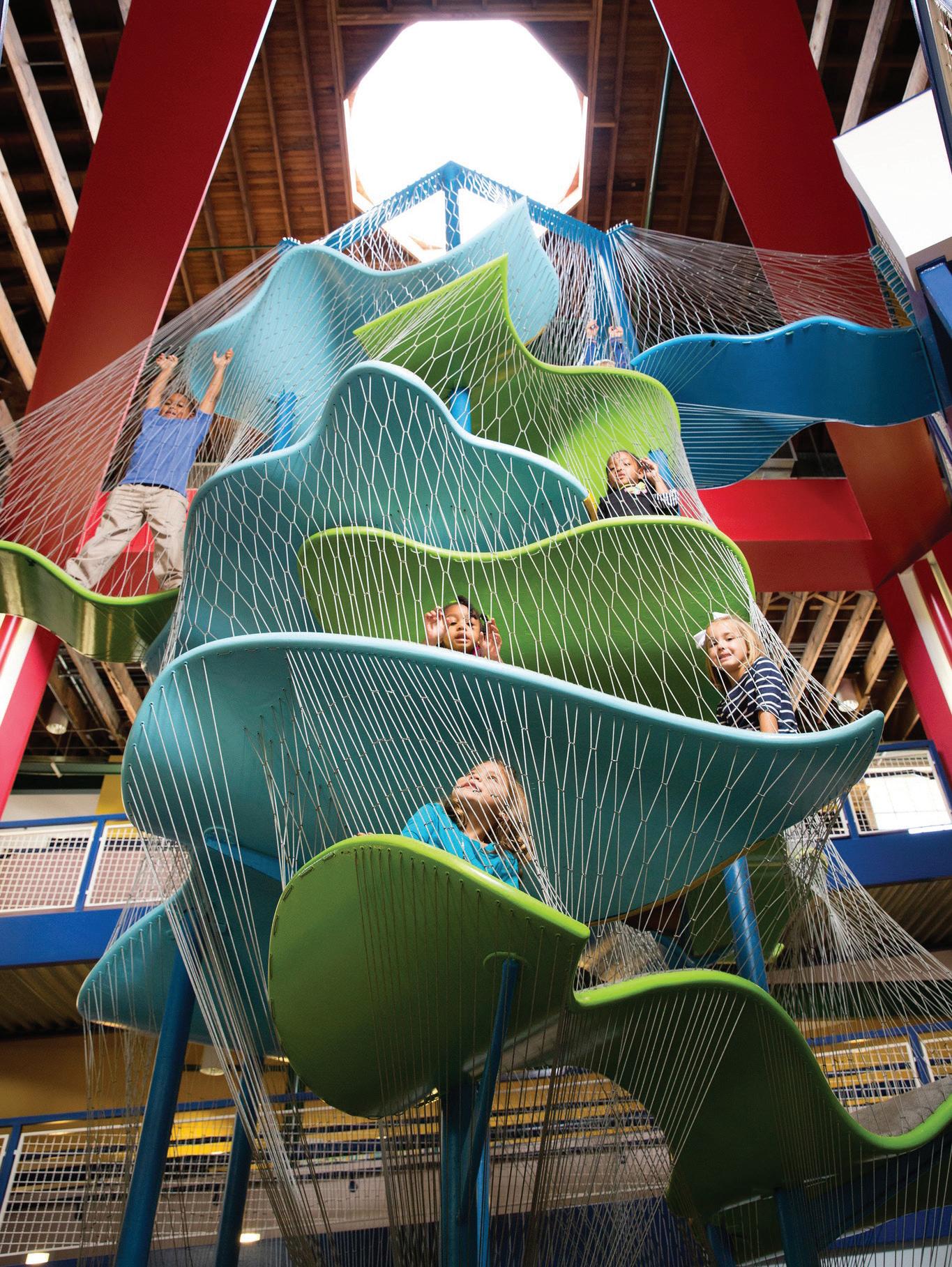
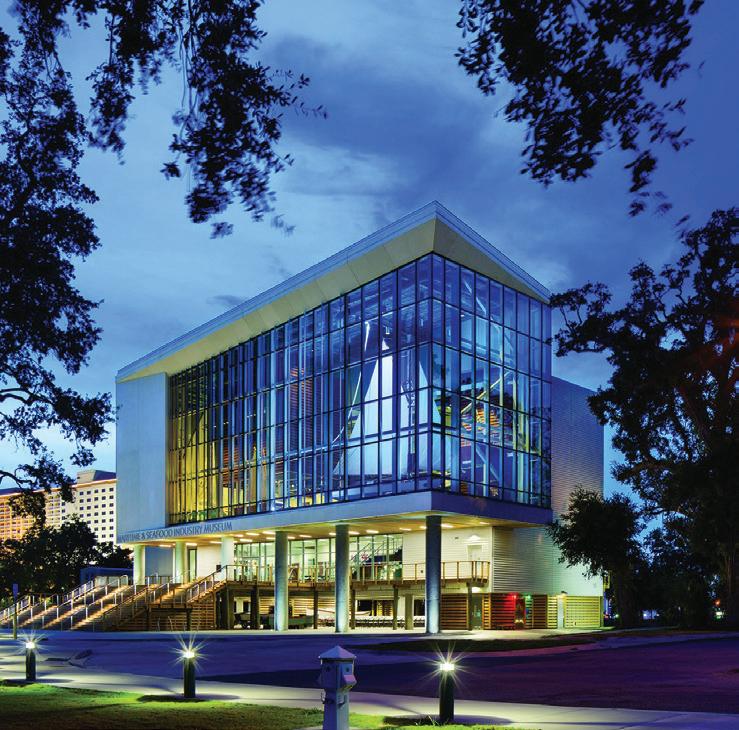
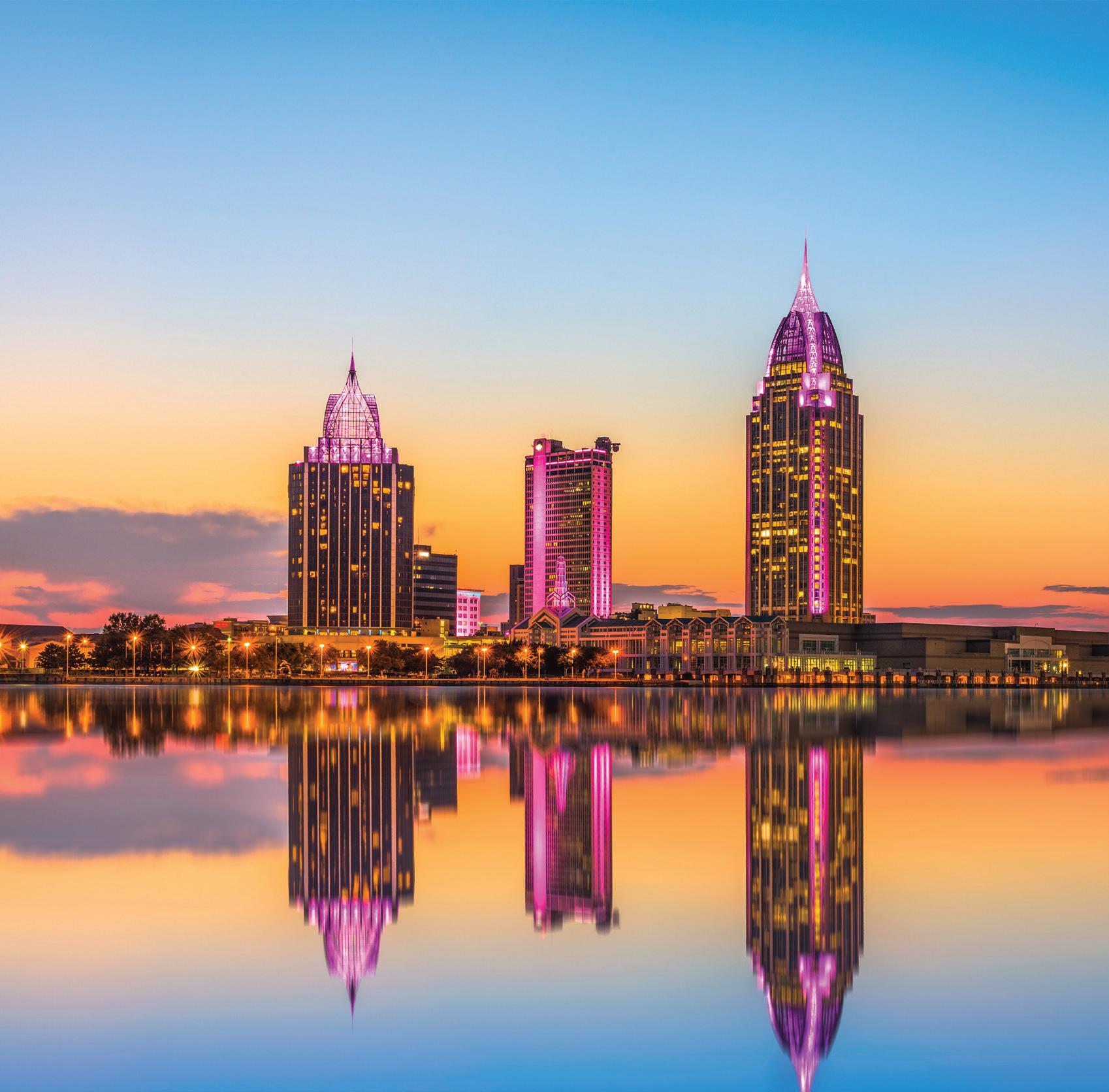
(Left) Piers in Bay St. Louis (Top) Biloxi Beach (Right) Lynn Meadows Discovery Center (Facing Page, Left) Maritime & Seafood Industry Museum (Right) Mobile skyline
For now, Amtrak offers connector bus services in many cities across the country and although a bus transport from Mobile to Alabama’s Beaches is not presently in the works, it’s a grand idea.
“Having a connector to Gulf Shores would be awesome,” Ross said.
Until then, we’ve broken down the options of visiting by train, car and air.
BY TRAIN
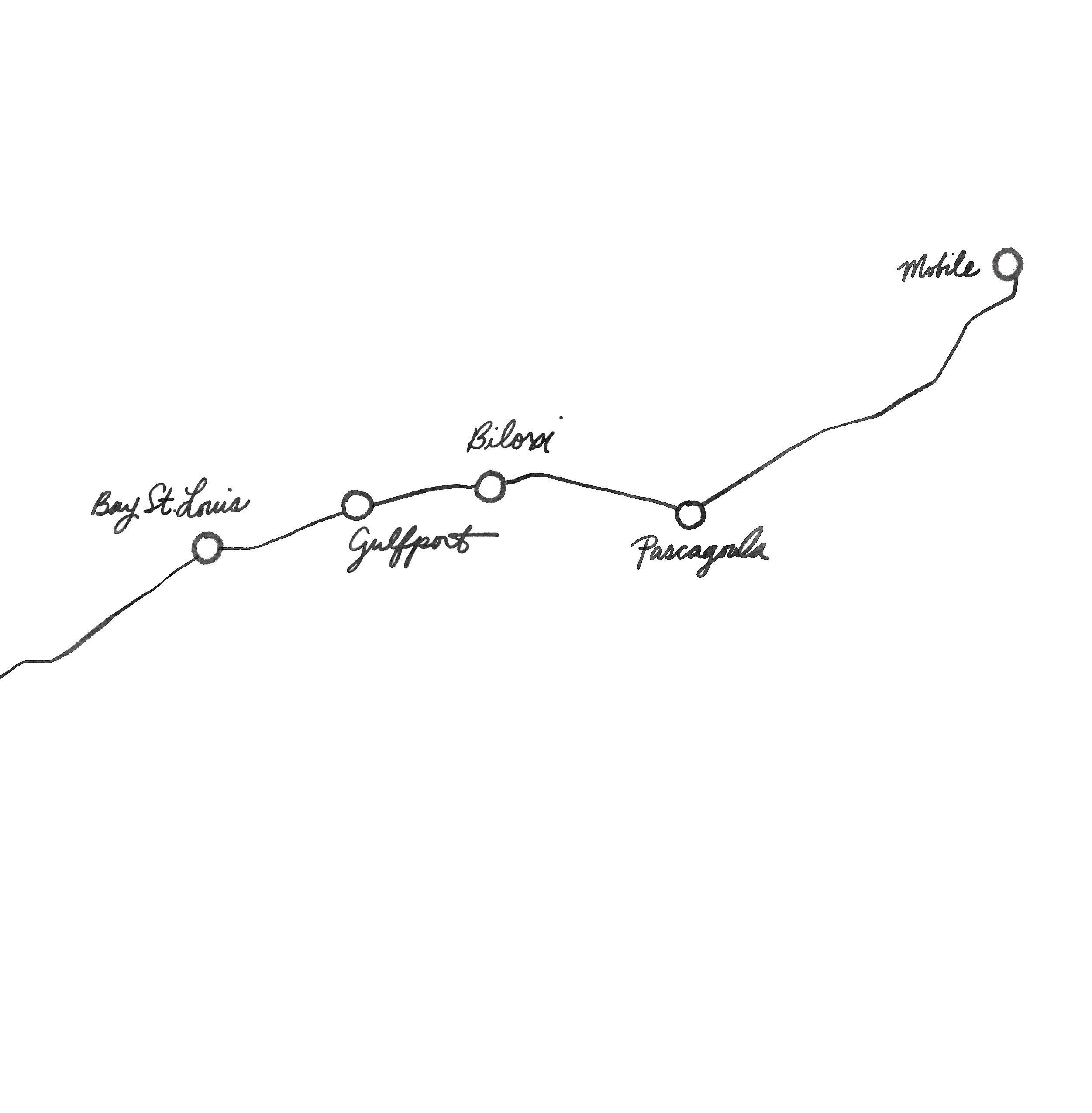
Amtrak Mardi Gras Service operates twice daily between New Orleans and Mobile, with stops in Bay St. Louis, Gulfport, Biloxi and Pascagoula before concluding in Alabama. The route offers onboard Wi-Fi, locally sourced menu items, no middle seats and occasional views of wetlands and Gulf Coast waters. Passengers wishing for a quick visit to the five
Gulf Coast cities may return to New Orleans that evening, so day tripping is an option.
“You don’t need a car,” Ross said, adding that the train drops visitors off at the downtowns of each city. “It’s nice, and it’s not expensive.”
Visitors depart Old Town Bay St. Louis with antique shops, restaurants and museums steps away. Gulfport’s station places passengers near Lynn Meadows Discovery Center, Ocean Adventures Marine Park, Gulf Islands Waterpark and the Mississippi Aviation Heritage Museum, among other downtown attractions. The train pauses in downtown Biloxi within walking distance of the Maritime & Seafood Industry Museum, casinos and Howard Avenue restaurants and boutiques. Mississippi’s final depot lies in the heart of Pascagoula, with its shopping and dining options.
Ocean Springs is not a stop on the Amtrak service but
Places to Stay
Hotels close to Mississippi depots run the gamut. A few of note include the Pearl in Bay St. Louis, Hotel Whiskey in Pass Christian and Pascagoula and Beau Rivage in Biloxi. Ocean Springs has numerous accommodations from boutique hotels to chains.
it’s a quick Uber or Lyft ride from Biloxi, Ross added. The service pauses in downtown Mobile close to the Mobile Cruise Terminal, the Arthur R. Outlaw Mobile Convention Center, several attractions, 50-plus restaurants and bars, many of which are locally owned, including The Noble South, which earned a Michelin nod on the 2025 Bib Gourmand list, said Ashley Rains, senior public relations and communications manager for Visit Mobile.
New to the city is the Hall of Fame Walk on Mobile’s downtown waterfront honoring six Hall of Fame athletes who were born and raised in Mobile.
The honorees include National Baseball Hall of Fame members Henry “Hank” Aaron, Satchel Paige, Billy Williams, Ozzie Smith and Willie McCovey, as well as Pro Football Hall of Fame inductee and former Houston Oiler Robert Brazile Jr. Coming soon to downtown is a new stateof-the-art arena that will include a professional hockey team.
Carnival’s Spirit cruise ship returns this month and continues sailings through October. The cruise line will return to year-round cruising in 2027 and bring in its larger Valor ship for trips from the Port of Mobile to the Caribbean. American Cruise Lines’ Symphony has added Mobile as a port of call as well.
If walking’s not an option, bikes and golf cart vendors are a call or text away from the Mobile depot and “happy to take you anywhere you want to go,” said Rains.
“Our downtown is so convenient,” she said. “You’re right where you want to be.”
BY CAR
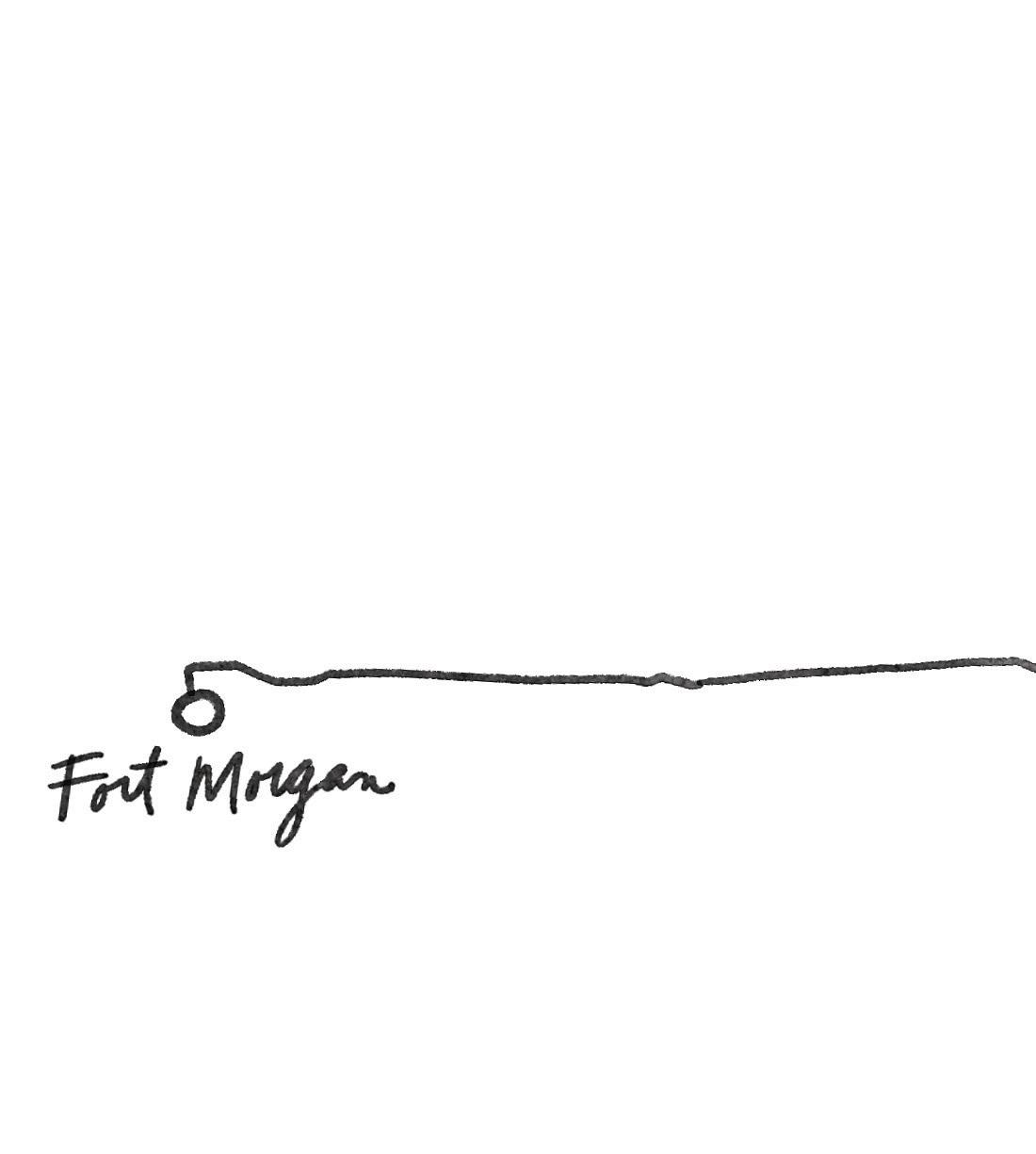
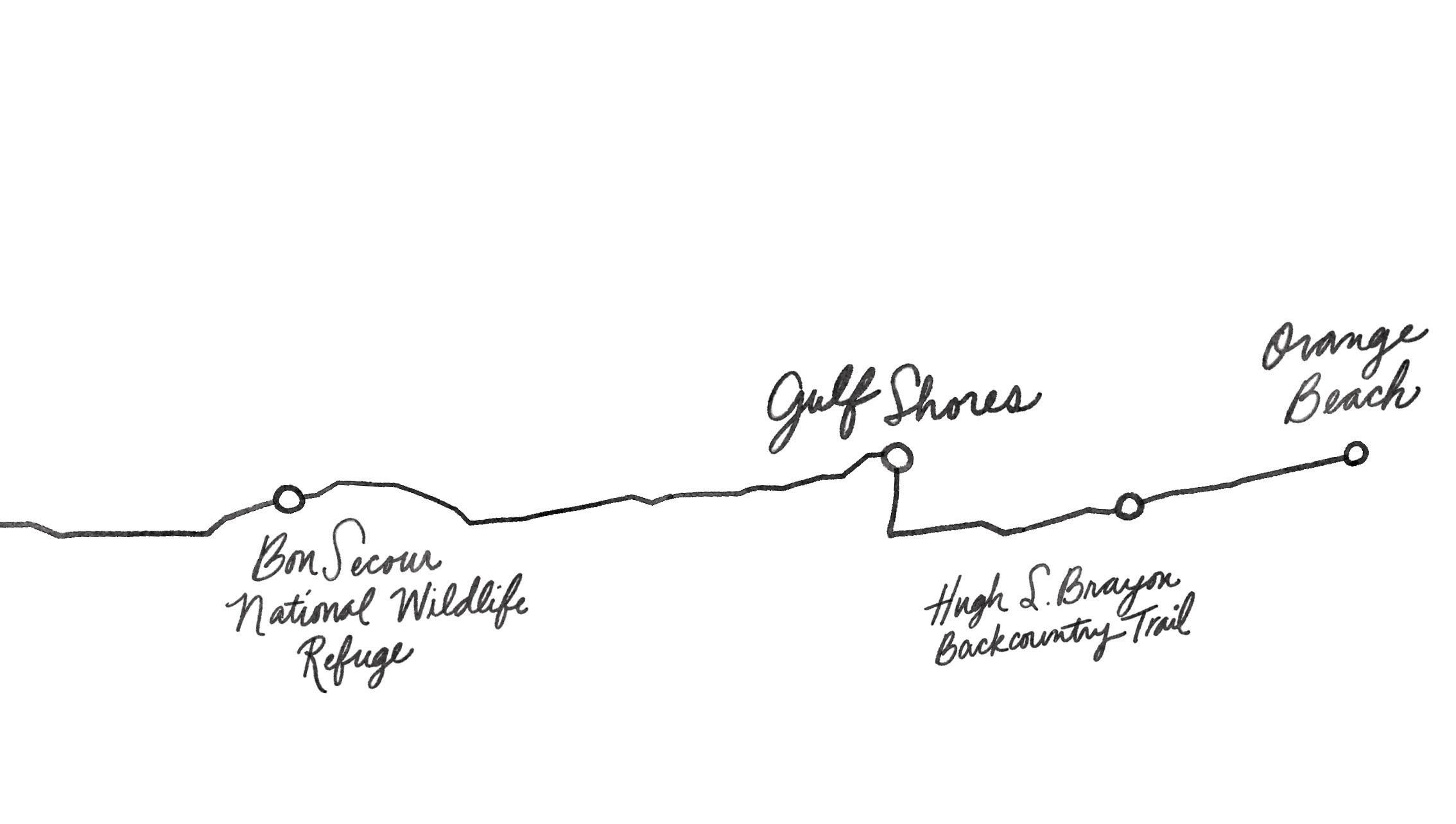
Alabama’s Beaches require transportation from Mobile if traveling by train but most will prefer a car to explore the 32 miles of white quartz sand beaches, the award-winning Hugh S. Branyon Backcountry Trail at Gulf State Park and the wildlife of Bon Secour National Wildlife Refuge. The cities of Gulf Shores, Orange Beach and Fort Morgan offer numerous accommodations, attractions and dining options.
One of the most exciting new attractions to Gulf Shores is the Gulf Coast Center for Ecotourism & Sustainability, which opened in April adjacent to Gulf State Park. The facility and its 12 acres were born from a $13 million RESTORE Act grant distributed from funds from the 2010 BP oil spill. The nonprofit Gulf Coast Eco Center was built through a partnership with the City of Gulf Shores in 2018.

Places to Stay
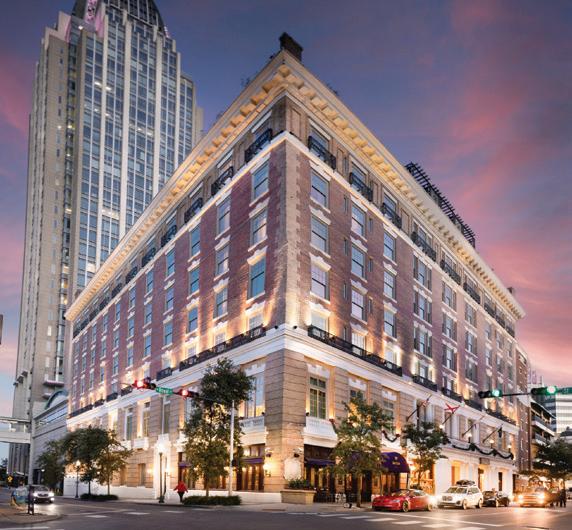
In Mobile, downtown luxury hotels include the historic Battle House Renaissance Mobile Hotel & Spa, the newly renovated Admiral Hotel and boutique properties such as the Malaga Inn and the historic Fort Condé Inn bed-and-breakfast. The Gulf Coast Center for Ecotourism & Sustainability isn’t located inside Gulf State Park but just adjacent. The park does provide accommodations, including its Eagle Cottages, Lakeside Cabins and The Lodge at Gulf State Park on the beach, itself achieving LEED Gold, SITES Platinum, and FORTIFIED Commercial certifications.
“The nonprofit was formed to bring new environmental programs and a facility to the Gulf Coast, primarily to focus on camps, school programs and environmental education,” said Executive Director Travis Langen.
The center’s campus includes a day-use facility that’s close to receiving LEED Gold certification for its sustainability design features. Visitors will discover organic gardens, rainwater collection systems, habitat restoration demonstrations and the building’s energy-efficient design — all open to the public for examination. In addition to teaching environmental education to area school children, the Eco Center offers a variety of classes that range from storm resilience and recycling to craft classes utilizing natural elements, such as the wreathmaking class over the holidays.
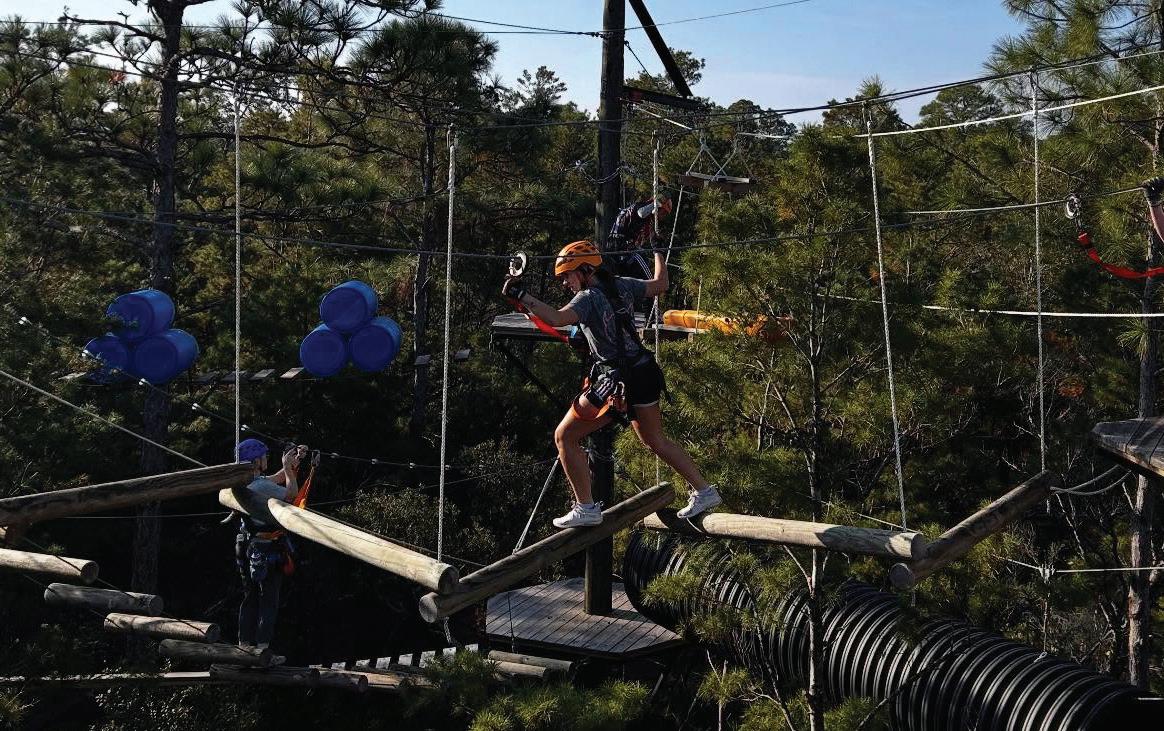
In the summer, the Eco Center hosts Gulf Camp day camps for both residents and visitors. Children ages 7-13 may enjoy kayaking, biking,
beach days, surfing, outdoor cooking and a high ropes course, among other adventures.
“It’s a good way to get kids out to enjoy our balmy summers on the Gulf Coast,” Langen said, adding that he hopes to expand the program this year to accommodate more students.
In addition, the Eco Center works with Jean-Michel Cousteau’s Ambassadors of the Environment, an environmental education and eco-based tourism program that inspires youth to take stewardship of the planet. Langen worked for 19 years in the program on Catalina Island off the coast of Los Angeles before coming to Alabama.
“Nature provides the basics of a sustainable life,” he said. “Kids learn how nature works, how every critter has a role and then we turn it toward the human world. We learn from experience that in nature everything is recycled. Nature inspires us to learn how to be more sustainable.”
Anyone can learn that lesson, Langen insisted, by visiting the center. The sustainable landscaped campus contains examples of habitat restoration, how to recycle and compost, what trees to plant and a milkweed garden that attracts pollinators. Visitors may wander the trails or enjoy a picnic here.
“We’re like a botanical garden,” he said.
For the more adventurous, the aerial ropes Lookout Adventure Course is available for groups but plans for the future include more open hours for visitors. Bikes may be rented for use throughout the center’s acreage or the many trails of nearby Gulf State Park.
The facility is also available to rent for events such as wedding and baby showers, sports team events and family reunions.
“It’s such a pretty natural setting,” Langen said. “It’s a magical space.”
Langen also hopes visitors will be inspired to give something back. They rely on volunteers to
operate the facility, and so they welcome visitors to lend a hand.
“We’re really going to lean into voluntourism this year,” he said.
BY PLANE
Depending on where you live in Louisiana, the Gulf Coast may be a short drive or train ride, or it may be quicker to take a plane.
The Gulfport-Biloxi International Airport is serviced by five major airlines with nonstop flights to Atlanta, Charlotte, Dallas/Fort Worth and Houston. Gulf Shores International Airport, three miles from the beach, offers nonstop commercial flights to 13 cities.
Next year, the new Mobile International Airport opens, to be located near the Interstates 10 and 65 interchange. The larger international airport will be a five-minute drive to the Amtrak terminal, said Ashley Rains, senior public relations and communications manager for Visit Mobile.
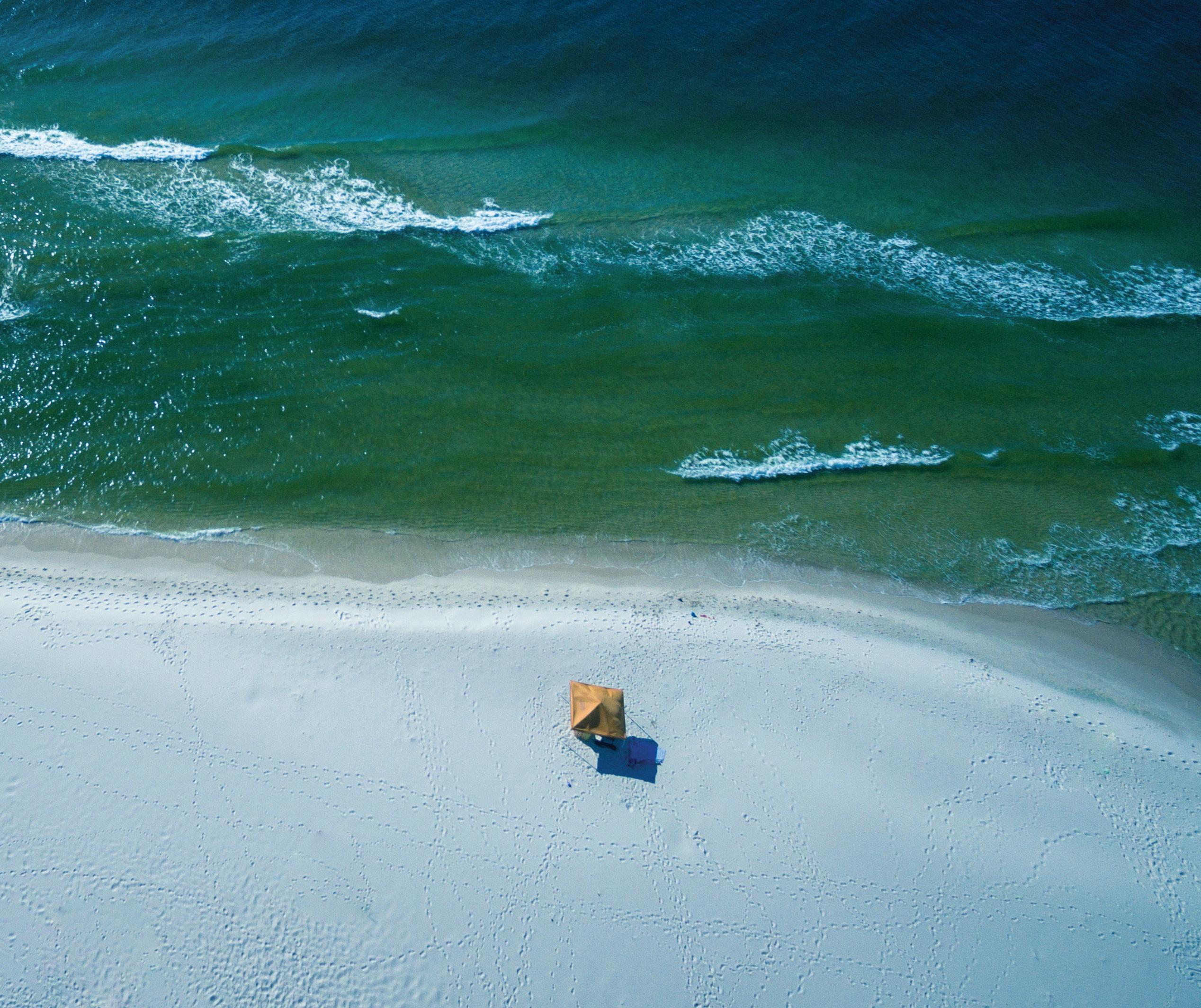
(Left) Gulf Coast Center for Ecotourism & Sustainability (Bottom) Battle House Renaissance Mobile Hotel & Spa (Right) Gulf Shores beaches near Fort Morgan
SPRING TRAVEL
SPRINGTIME IS HERE, AND THE SOUTH IS OPEN FOR BUSINESS. FIND YOUR NEW FAVORITE HIDEAWAY WITH THESE STERLING TRAVEL DESTINATIONS.
Lafayette CVC
Spring is here, and Lafayette is waiting with open arms. The heart of Cajun and Creole Country is just the place to shake off the winter cold and find your favorite flavor of dance, community, and cuisine.
Baseball is back as the University of Lafayette Ragin’ Cajuns take on the LSU Tigers on March 4th. McNeese State University on March 11th and 31st, and Southeastern Louisiana on March 24th, and a series against ULM from March 27th to 29th at M.L. "Tigue" Moore Field at Russo Park. Join the Celtic Bayou Festival for a St. Patrick’s Day on March 15th, with a kick-off pub crawl taking place on March 14th. And if your taste buds need some attention, visit during the World Championship Crawfish Étouffée Cook-Off on March 31st, with professionals and amateurs competing side by side for the coveted distinction of being “world champion”, alongside live Cajun and zydeco music, plenty of dancing, and tons of étouffée.
Learn more about these exciting events and so much more at lafayettetravel.com.
West Baton Rouge
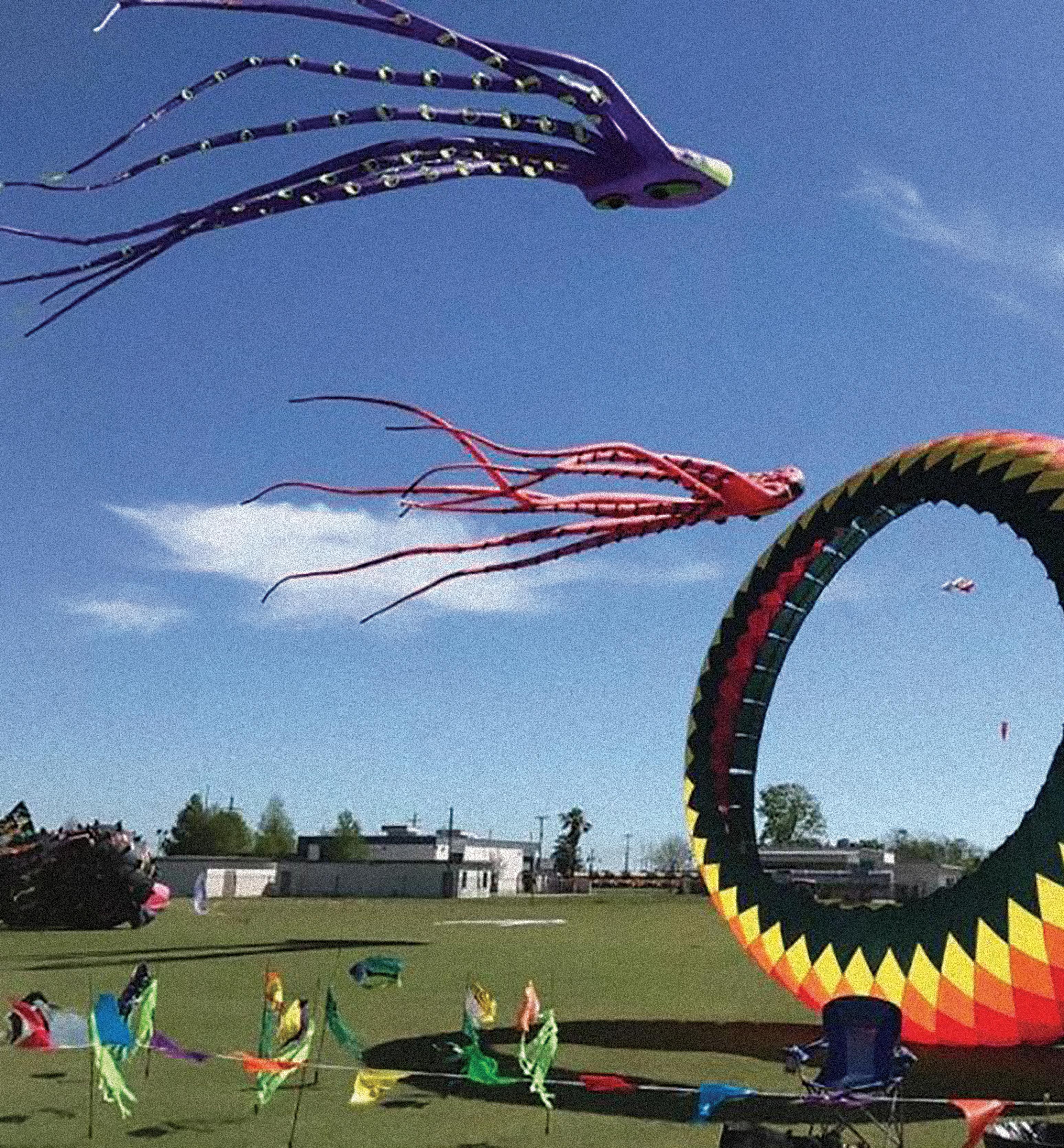
After the king cakes are sold and the Mardi Gras beads thrown, pack your bags and hit the road! Our parish celebrates spring with great family fun at the annual Kite Fest Louisiane’, where the skies are filled with kites of all sizes and shapes. Bring the family, & lawn chairs to enjoy kite flying, food vendors, live music, team kite flyers, along with fireworks, and a night kite flying extravaganza to close the fest. When staying with us, be sure to visit our accredited WBR Museum to learn more about our bittersweet story of sugar in Louisiana, along with “The Juke Joint” which features historical happy hours, open jams focusing on Cajun, bluegrass, and folk music. The pace of this parish is soothing and peaceful, with charm whichever direction you choose to take. Springtime travel is right around the corner, so let West Baton Rouge Parish be the heart of your next Cajun adventure. Discover more at westbatonrouge.net.
Port Arthur CVB
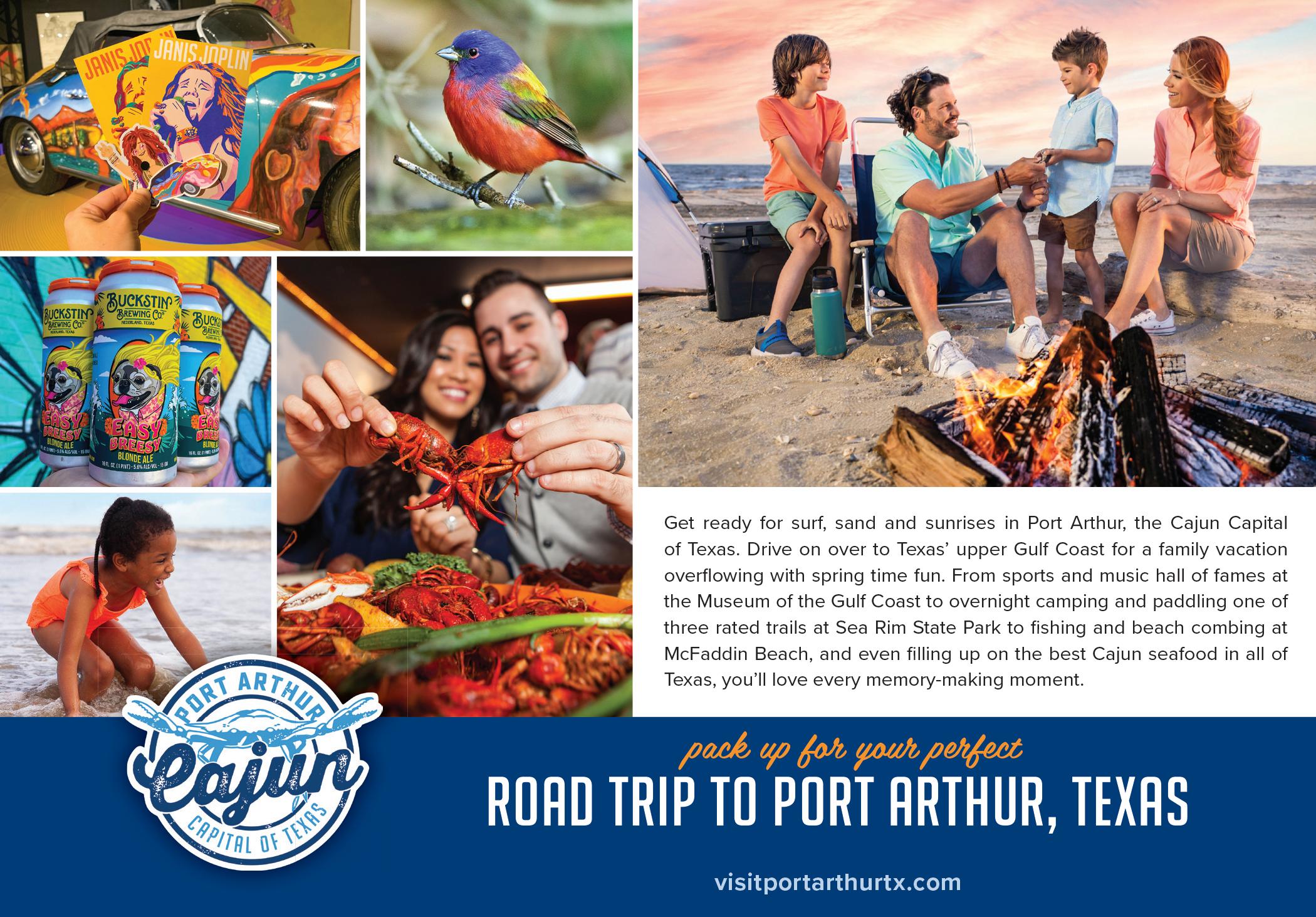
Port Arthur is a paradise for outdoor enthusiasts, where wide-open waters, wild landscapes, and a vibrant coastal culture come together to create one unforgettable destination. Bordered by the Gulf of Mexico, Sabine Lake, and the Neches River, this Southeast Texas gem offers endless opportunities for boating, paddling, and worldclass saltwater fishing. Anglers can cast a line for redfish, trout, and flounder while paddlers glide through calm marshes alive with birds and Gulf breezes.
As the official Cajun Capital of Texas, the city offers an irresistible mix of flavor, live music, and heritage. Explore it all at the Museum of the Gulf Coast, then savor spicy seafood and Tex-Mex, boudin, and Gulf-fresh delights on a waterfront patio while local musicians set the soundtrack. Visit Port Arthur—true Texas with a Cajun twist!
Discover more at visitportarthurtx.com.
Louisiana Office of Tourism
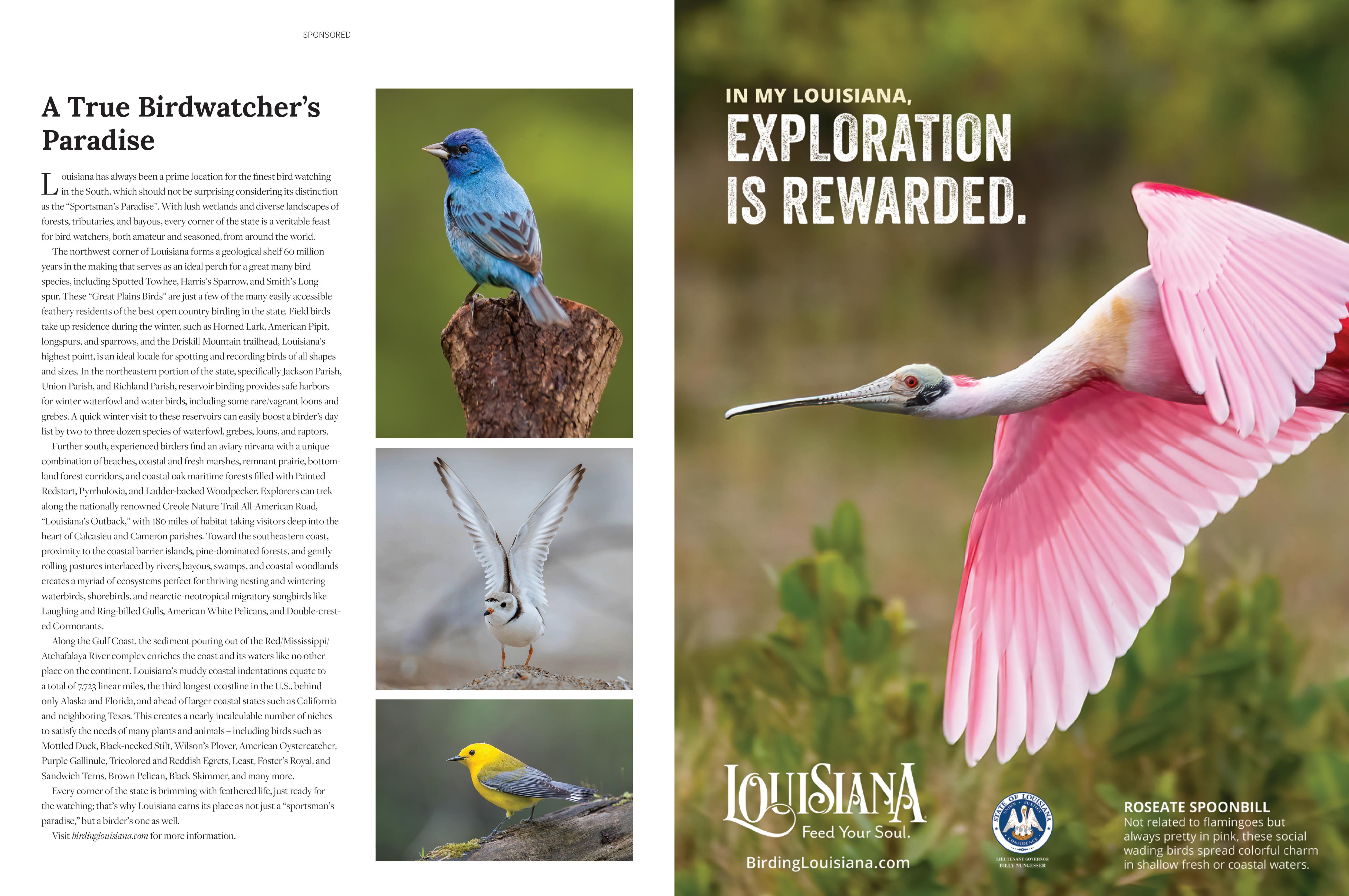
With diverse landscapes and abundant wetlands, Louisiana is a haven for birds and a bucket list destination for birdwatchers of all levels. From the majestic Bald Eagle soaring over the cypress swamps to the Tricolored Heron exploring the coastal estuaries of Grand Isle State Park, our state boasts an incredible array of feathered friends. With more than 7,000 miles of coastline next to hundreds of miles of open water, Louisiana presents an ideal stopover for birds heading in all directions. The influx of human visitors through migration seasons is no coincidence, as the state’s bird population evolves through breathtaking ebbs and flows.
Whether you're a seasoned birder or a curious nature enthusiast just starting out, Louisiana's birding scene promises an unforgettable adventure. So fine-tune your wish list and let your daydreams take flight! Learn more and start planning your visit at BirdingLouisiana.com.
Visit Mississippi
Spring brings out the best in us, from food to culture and people to share it with. The best flavors of all of these can be found in Mississippi. From Natchez to Gulfport, from Biloxi to Jackson, there’s always something new, exciting, and unexpected to find in the Magnolia state.
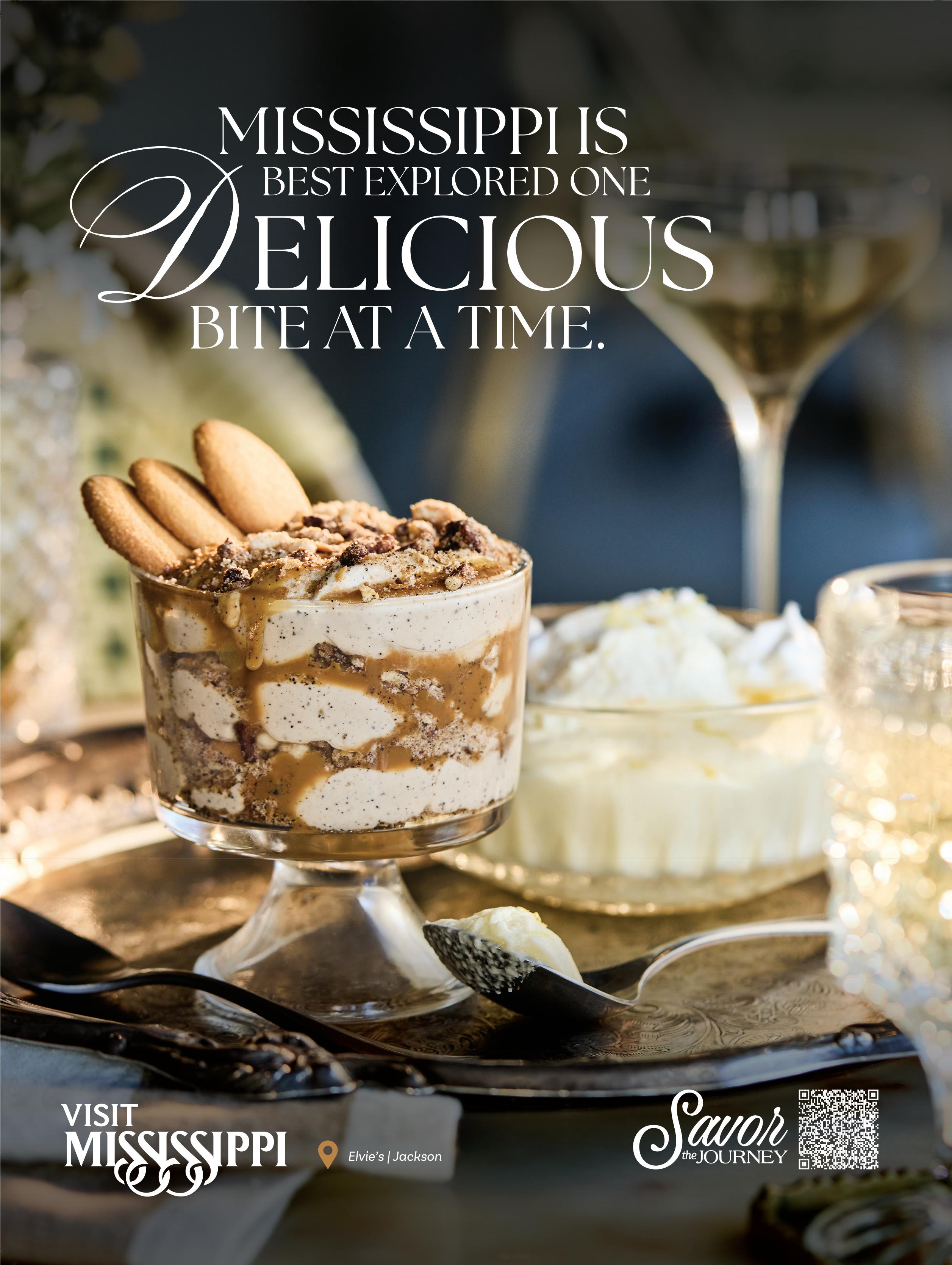
If you’re in the mood for world-class cuisine, Mississippi is the place to be, with the recent announcement of Hunter Evans of Elvie’s in Jackson and Austin Sumrall of White Pillars in Biloxi as James Beard Award Semi-Finalists for Best Chef: South. A Jackson native, Chef Hunter Evans has earned acclaim for his modern Southern-French cuisine at Elvie’s, located in the historic Belhaven neighborhood, while Chef Austin Sumrall, owner of the award-win-
ning White Pillars in Biloxi, celebrates his third James Beard semifinalist recognition for Best Chef: South. But that’s not all. With ten culinary visionaries awarded the prestigious MICHELIN Guide at its inaugural American South ceremony, culture is always on the menu in Mississippi.
Learn more at visitmississippi.org.
Big Cypress Lodge
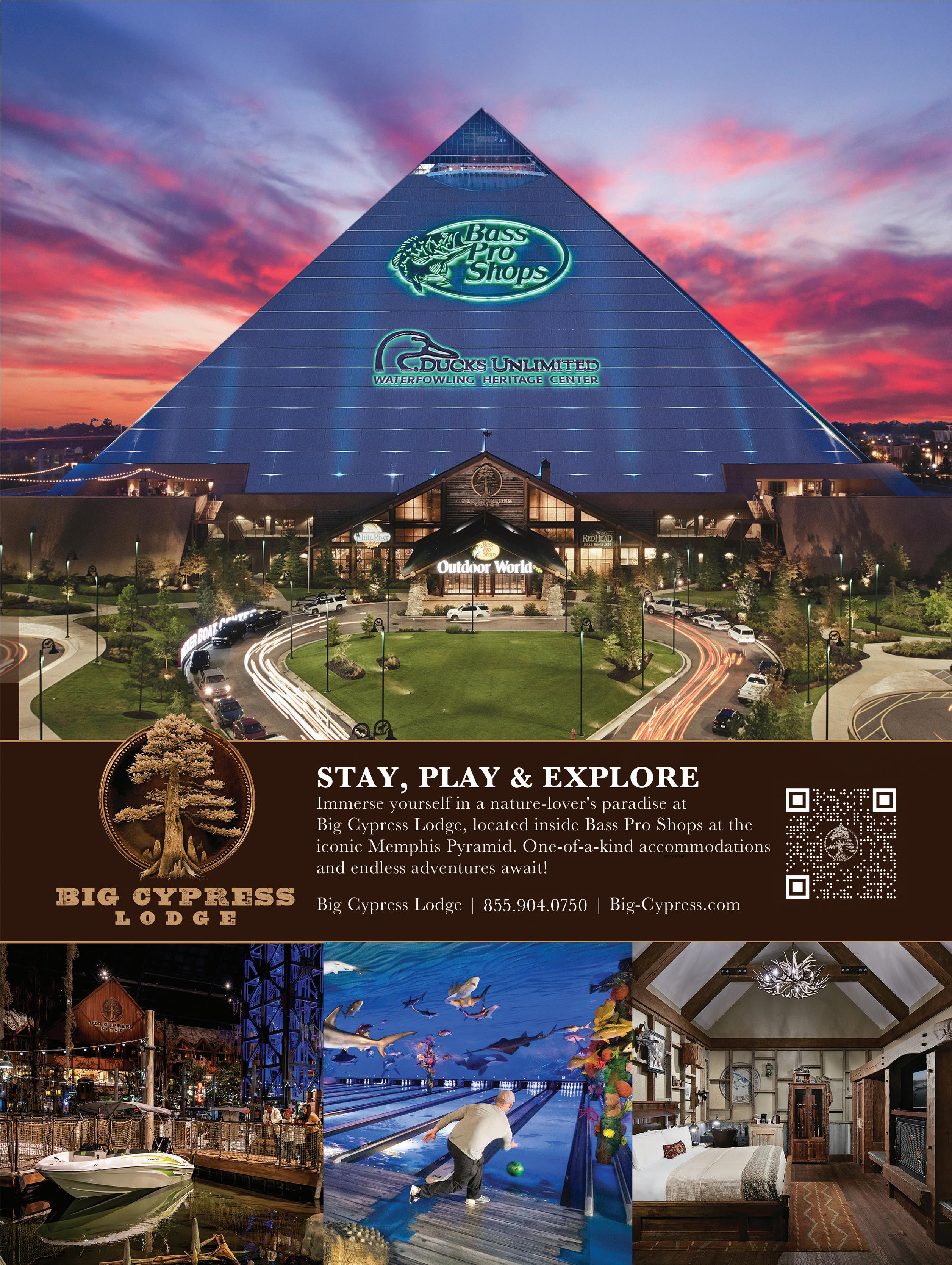
Rising unexpectedly from the banks of the Mississippi River, Memphis’s iconic Pyramid is home to Big Cypress Lodge, a one-of-a-kind destination inspired by the great outdoors featuring 103 guest rooms that blend rustic elegance with modern comfort and front porches overlooking Bass Pro Shops at the Pyramid.
Handcrafted finishes and views of the river or the Memphis skyline complement the cozy electric fireplaces and luxury bathrooms.
Dining is an experience of its own, from elevated Southern flavors at The Lookout, perched 300 feet above the city, to casual bites at Wahlburgers Wild and craft cocktails enjoyed with panoramic views. Spring invites adventure, whether it’s riding the country’s tallest freestanding elevator, exploring the indoor swamp with live alligators, bowling inside the Pyramid, or venturing out to nearby downtown Memphis landmarks.
Equal parts lodge retreat and urban escape, Big Cypress Lodge offers a stay unlike anywhere else in the South.
Learn more at big-cypress.com. T
Visit Mississippi
Awe and Wonder
Listening to Our National Champion Bald Cypress
STORY AND PHOTOS BY KEVIN RABALAIS
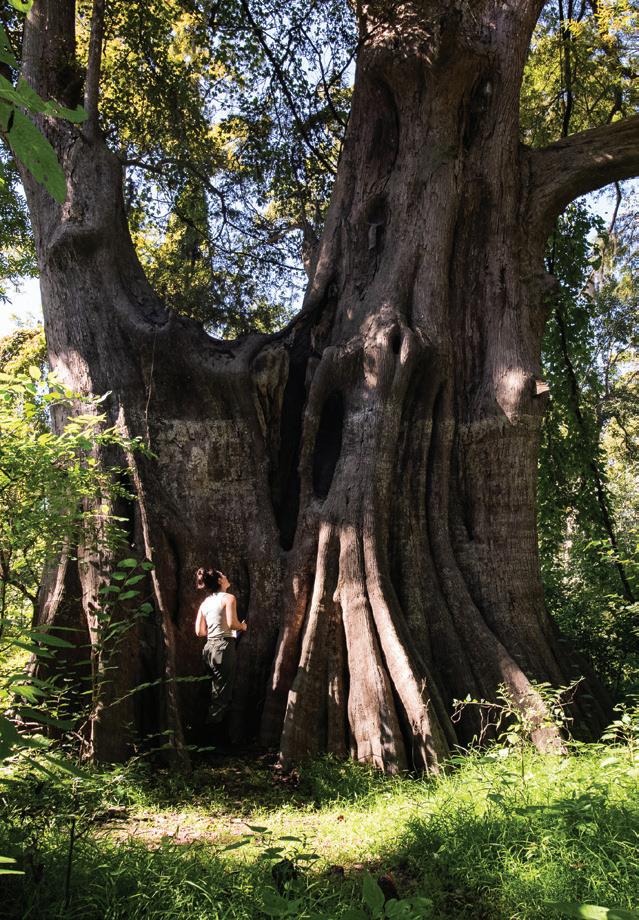
THE EVENING BEFORE, she chose silence. Megan Poole wanted to be alone. Most of all, she needed to listen. Poole went to Cat Island Wildlife Refuge to bathe in the proximity of America’s National Champion Bald Cypress. This was pure pilgrimage, a chance to experience what the tree and its approximately 1,500 years of knowledge had to teach. Halfway down the trail, she had to turn back.
“Of course there are snakes here,” she says the next morning, laughing from the passenger seat as she sets out for another attempt to visit what many call The Big Tree. “I saw it in the middle of the trail and thought, ‘We’re all going to kumbaya together.’ But it wouldn’t
move, and I wasn’t wearing my boots. A woman got foiled by a snake. How derivative!”
Beside her, William Daniel, president of the Friends of Cat Island, steers his F-250 along flood-ravaged Creek Road. “I’ve seen three snakes here in 20 years,” he says, deadpan, and now Poole laughs harder. As the truck slaloms to avoid potholes, she consumes the landscape, this mix of bottomland hardwood and upland forest, a lone black squirrel that darts into a curtain of water oaks.
“Do you mind if we roll down the window?” she asks.
It’s August, cloudless, the kind of morning when walking feels like wading in a Jacuzzi, but who could deny a request when it’s posed with such joy? Daniel
“Getting here is an excursion,” says Daniel. That’s why The Big Tree remains a mystery, for many a myth as much as a place that you can visit.
does the rolling for her, and Poole closes her eyes before leaning out the window. And that’s when it all begins to make sense. In her new book, “Listening to Beauty,” the Cameron Parish native examines an aspect of scientific studies that often remains hidden to outsiders. It’s the side, she writes, “that lingers in awe and wonder.” In her life and work, Poole seeks to understand “how to listen to beauty presently before us, and how to be empathetic witnesses to all we don’t yet know.” She’s come here a week after the book’s publication, venturing to Cat Island to listen and bear witness to the famous tree.
By the time Poole opens her eyes, Daniel’s truck has crossed into the refuge. Together, they catalogue the frenzy of trees: overcup oak, green ash, huckleberry, bald cypress, tupelo, persimmon, sycamore, bitter and sweet pecan. Then Poole mentions yet another failed attempt to spend time with The Big Tree. On that occasion, there was no snake, but she arrived to find Bayou Sara flooded, the single road into the refuge impassable.
“Getting here is an excursion,” says Daniel. That’s why The Big Tree remains a mystery, for many a myth as much as a place that you can visit. Even those who live 40 minutes away in St. Francisville would need to drive 10 miles an hour along Creek Road for much of that journey — and then they would only have access during the six to eight months of the year when the refuge isn’t under water.
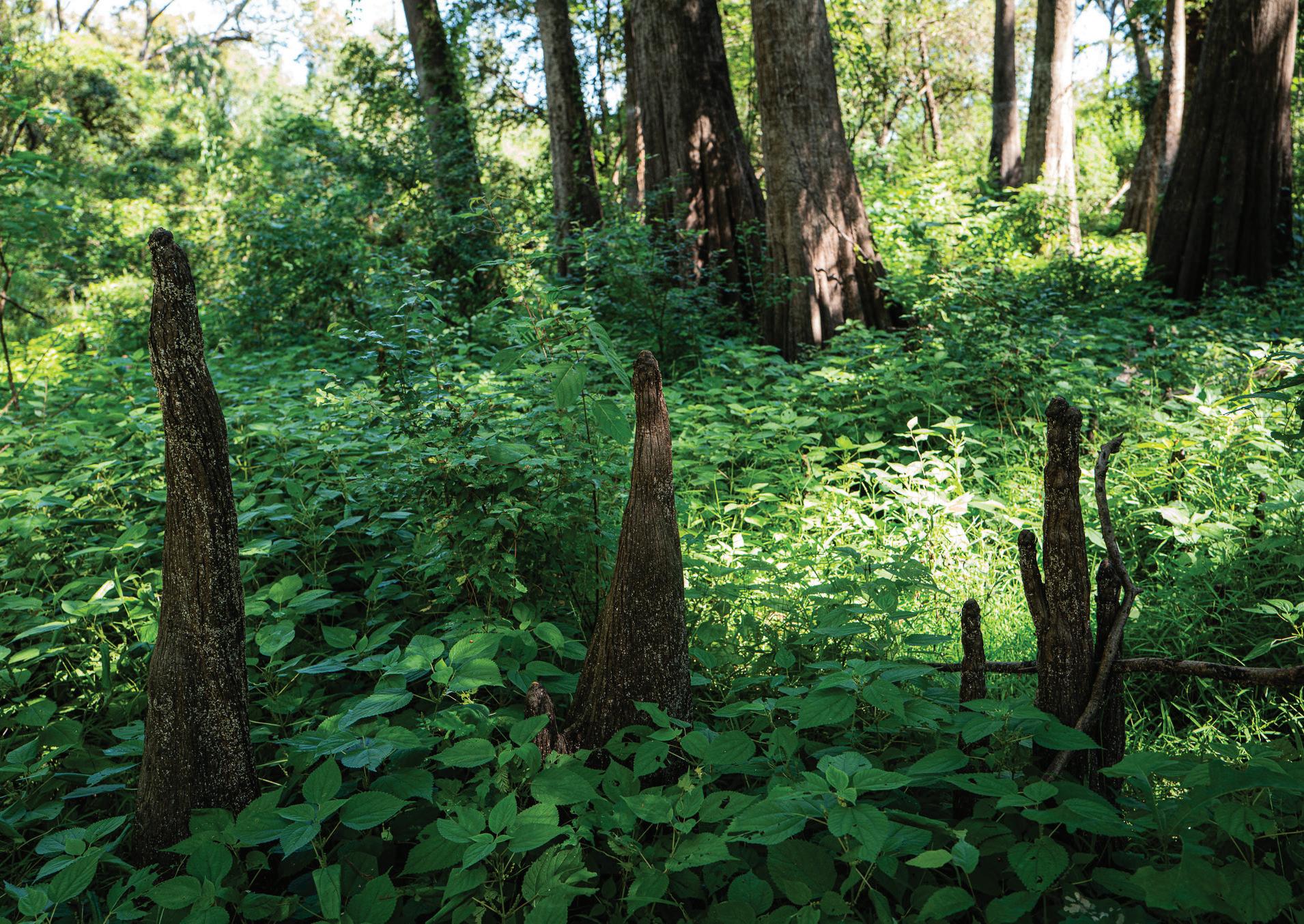
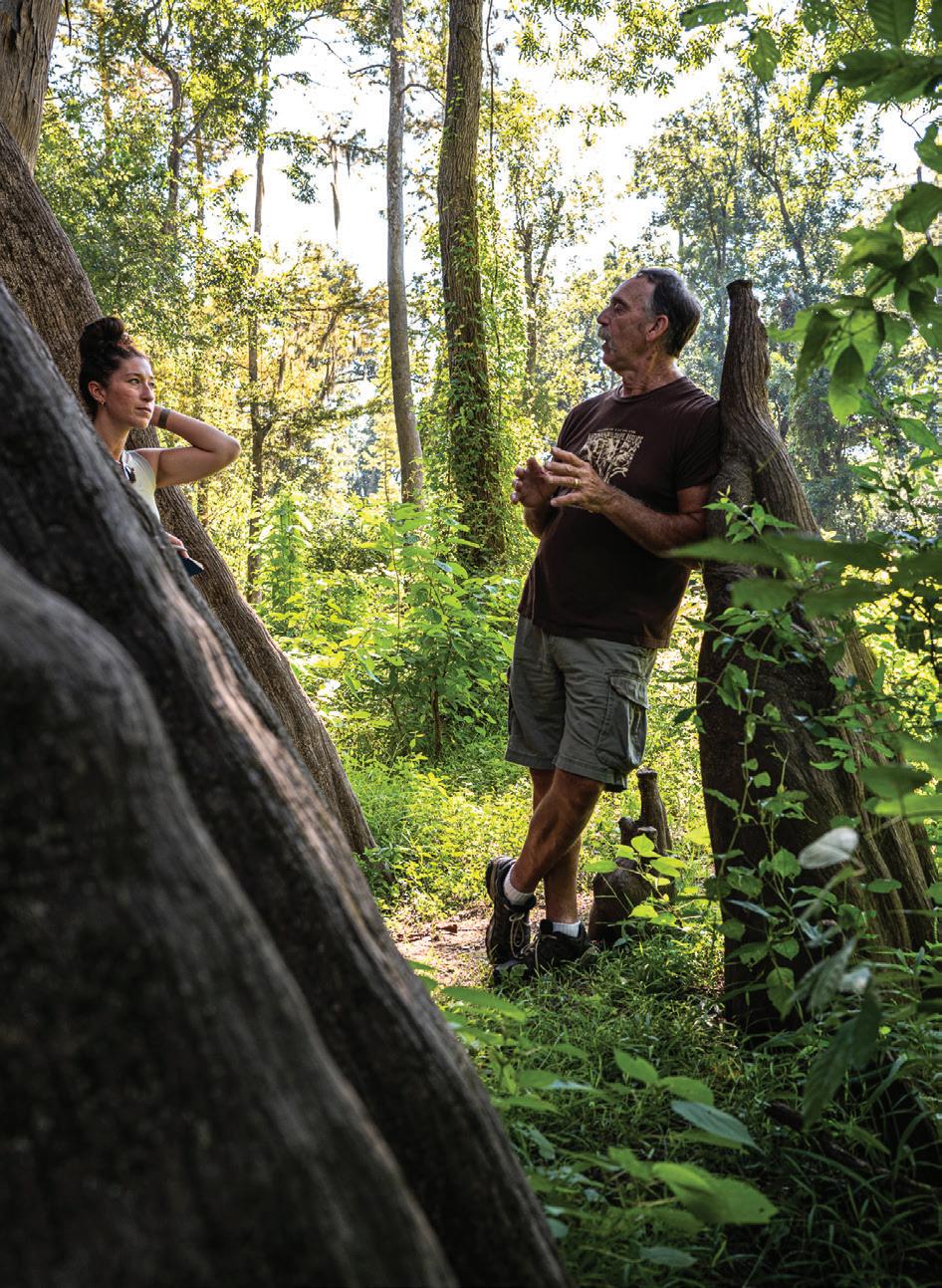
Despite annual flooding and regular storms, Daniel says he hasn’t seen many changes to The Big Tree in the past dozen years. He turns right into a parking lot and from the back of the truck gathers a sign that marks the trailhead. Each year before the flood, he detaches the sign to prevent its ruin. The sign now back in place, he and Poole begin the 10-minute walk to The Big Tree. Daniel tells her about what visitors sometimes see here: deer, hogs, beavers, rabbits, otters, minks. “Typical swamp stuff,” he says.
LOCATION
West Feliciana Parish
DID YOU KNOW?
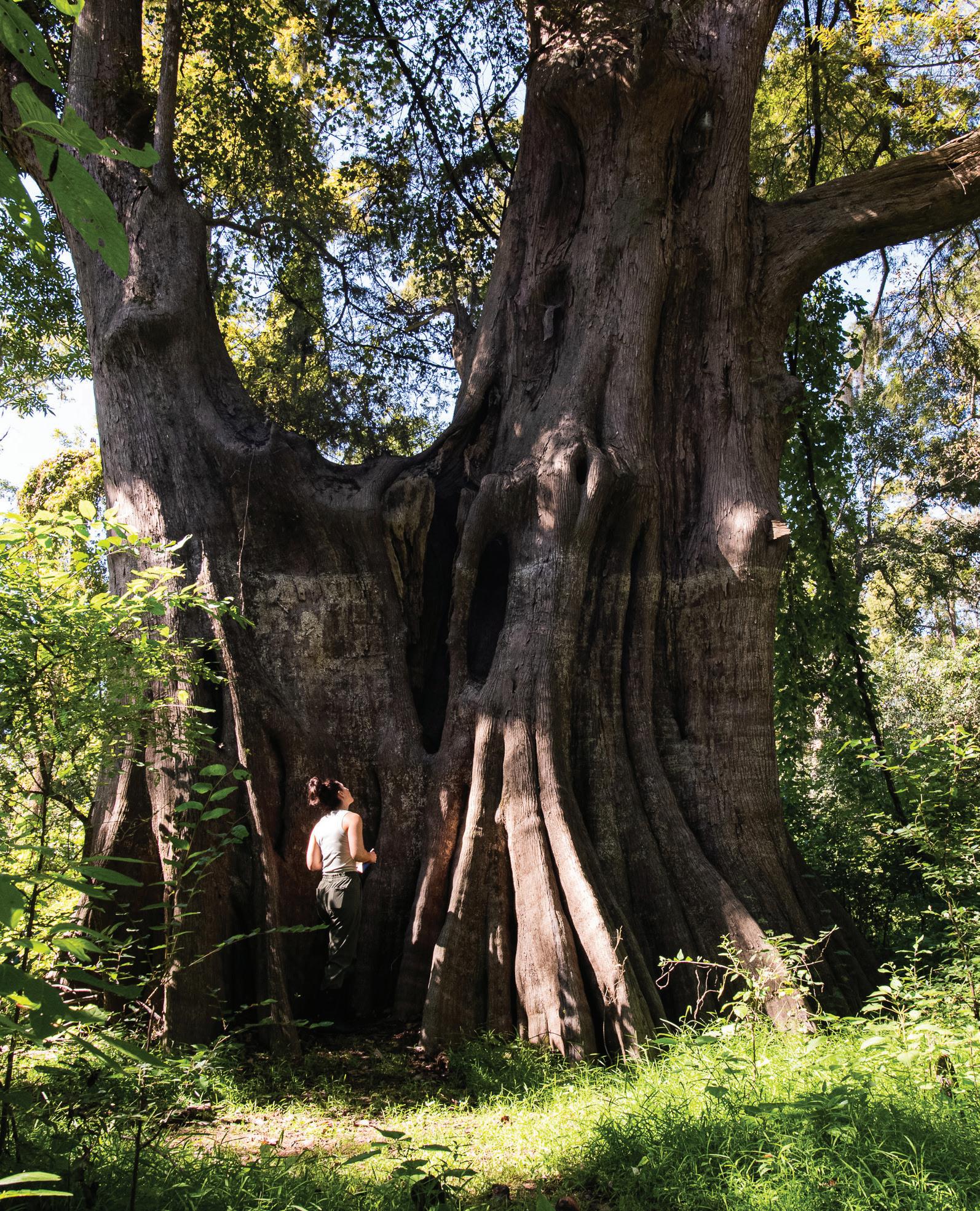
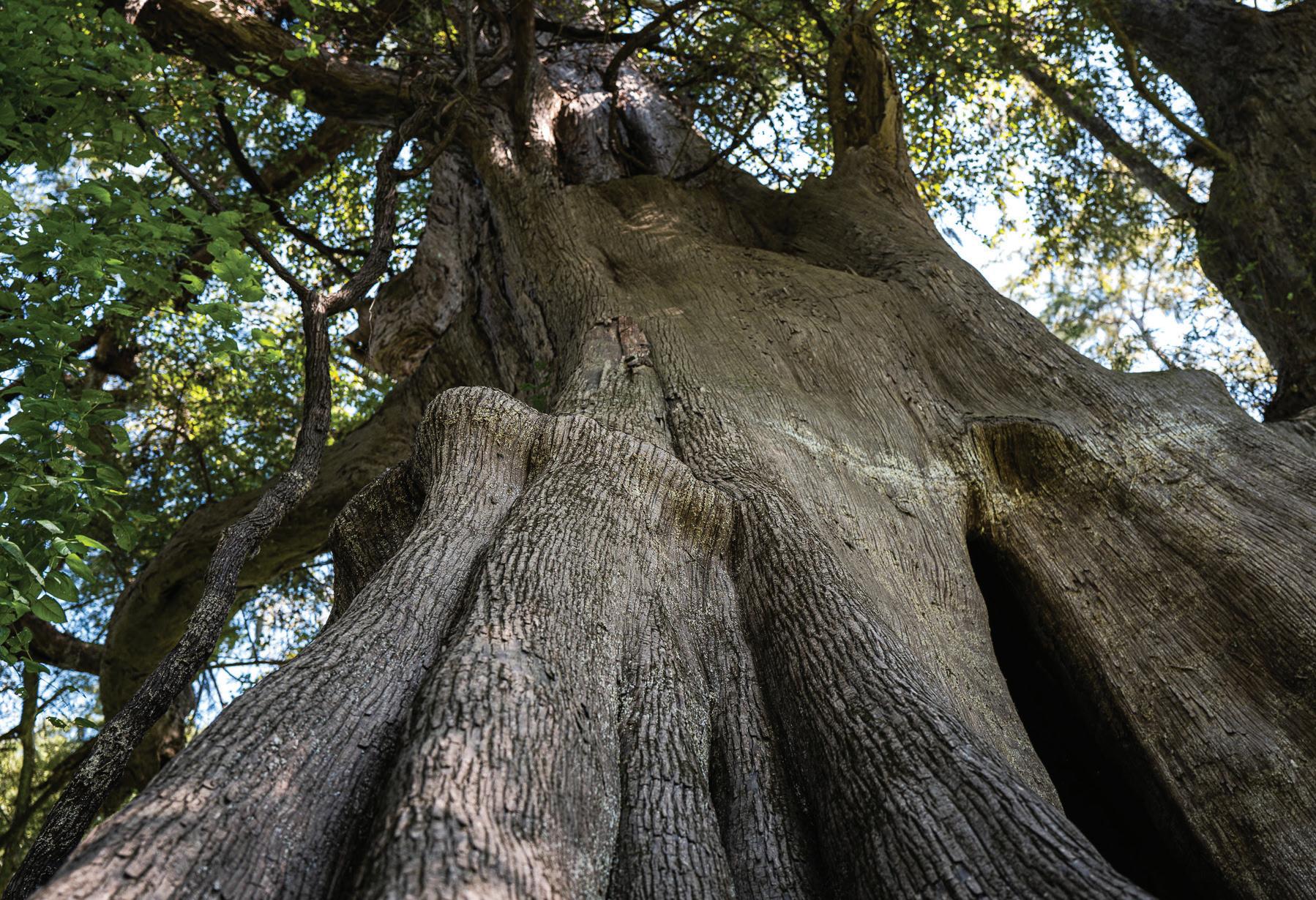
The National Champion Bald Cypress, a.k.a. The Big Tree, is one of the largest trees in North America east of the Sierra Nevada. With a height of 91 feet and crown spread of 86 feet, The Big Tree rises inside the Cat Island National Wildlife Refuge. From St. Francisville, it’s a 40-minute drive to the trailhead and less than a half mile walk to the tree itself. Public access is limited due to annual flooding that lasts, on average, between four and six months.
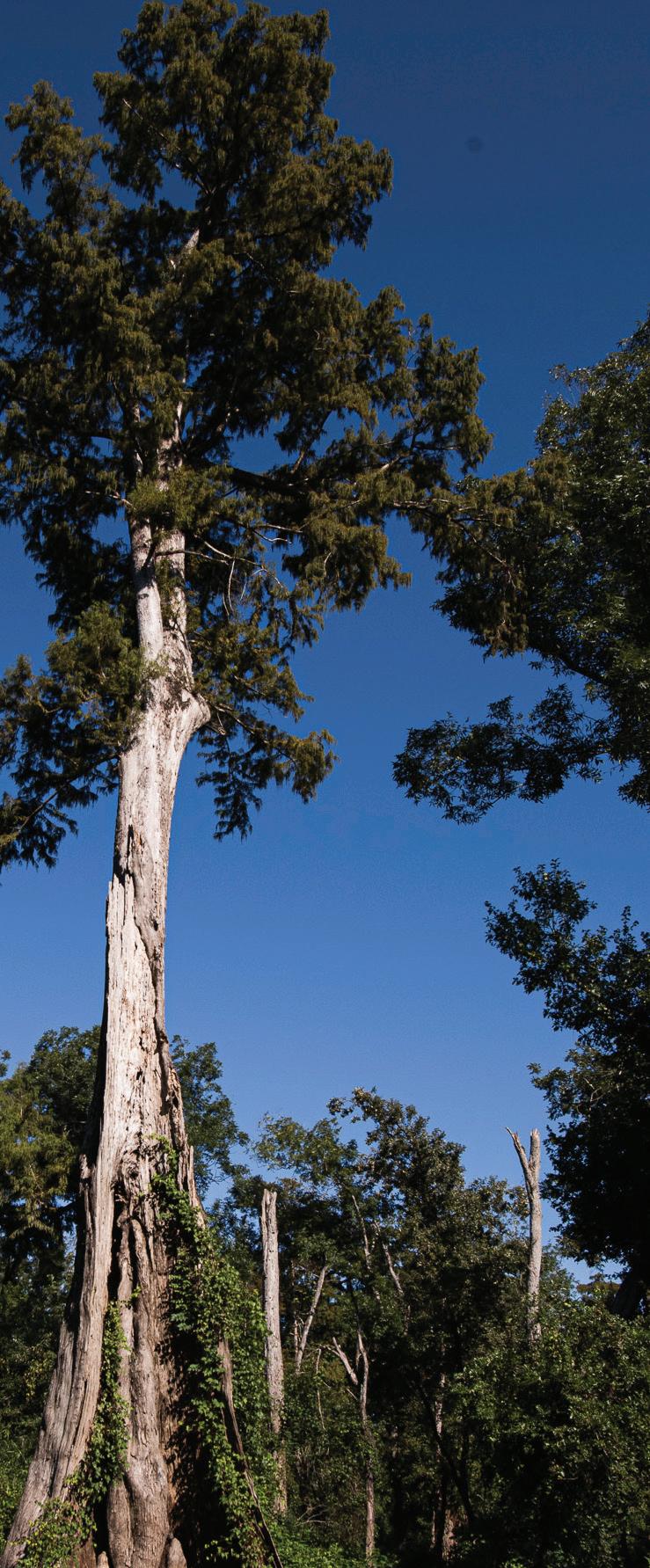
“You have snakes,” Poole says. “But I have my boots now. I can be cocky.” They climb over a tree toppled by a recent storm, and after another 50 yards, they mount another. From this one, Poole leaps off, joyous. Another hundred yards, and then they reach a slight bend in the trail, and there it looms in the distance, unmistakable.
Poole stops to allow herself a moment of silence. “I see why there would be a doubt if it’s one tree or two,” she says.
“They do debate,” Daniel says. And then they approach together. For the next hour, Poole rounds it alone. She stops to speak to Daniel. They examine it together. She steps aside to write in her notebook. One by one, the pages turn.
While writing “Listening to Beauty,” Poole says she learned from her subjects to set aside preconceived notions so that she can be fully present, that some truths remain hidden until you enhance the quality of your listening. “Maybe that’s how it always is with listening,” she says. “You learn as much (if not more) about yourself as about the person, or tree, honoring you with their presence.”
When it’s time to leave, she peers one last time — for now, at least — into the hollow of The Big Tree. After a moment, she steps back. “William, how do you tell it goodbye?” she asks.
“You wave,” he says. And in one more moment of silence, Poole waves before setting off down the trail.
Capital Views
In Baton Rouge, enjoy views of the Mississippi River and more museums than you can shake a (red) stick at while eating and drinking your way through the state’s historic capital city
STORY
AND PHOTOS BY MELANIE WARNER SPENC
ER
THERE ARE FOUR THINGS I always do when I’m in Baton Rouge: Visit the LSU Museum of Art at the Shaw Center for the Arts, get coffee at The Vintage, take a walk on the Louisiana State Capitol Grounds and eat at Cocha. These are the non-negotiables, for reasons I’ll soon elaborate upon, but there are, of course, plenty of other things to do in the Red Stick — it’s the state capital after all and it is steeped in history.
Before French settlers converged upon the area in 1699 and named it Baton Rouge — after the red posts used by Native Americans to mark tribal boundaries — it was home to the Bayougoula and Houma tribes. Conflicts with European traders and other tribes ultimately pushed the Houma peoples, known for
fishing, trapping and their traditional crafts, particularly palmetto basketry, down the Mississippi River to settle in Terrebonne, Lafourche and other coastal parishes. (Worthy of note: The United Houma Nation was recognized in Louisiana in 1972, but is still seeking federal recognition.) Downtown’s Capitol Park Museum explores the traditions of Chitimacha, Houma and other tribes in various exhibits and is worth a visit while you are in town. Seven flags have flown over Baton Rouge (French, Spanish, West Florida Republic, British, Confederate States of America, United States of America and, of course, Louisiana) and it would be 118 years before the city was incorporated, then 1849 before it became the state capital. Capitol Park Museum covers all this and more, so history buffs won’t want to miss it.
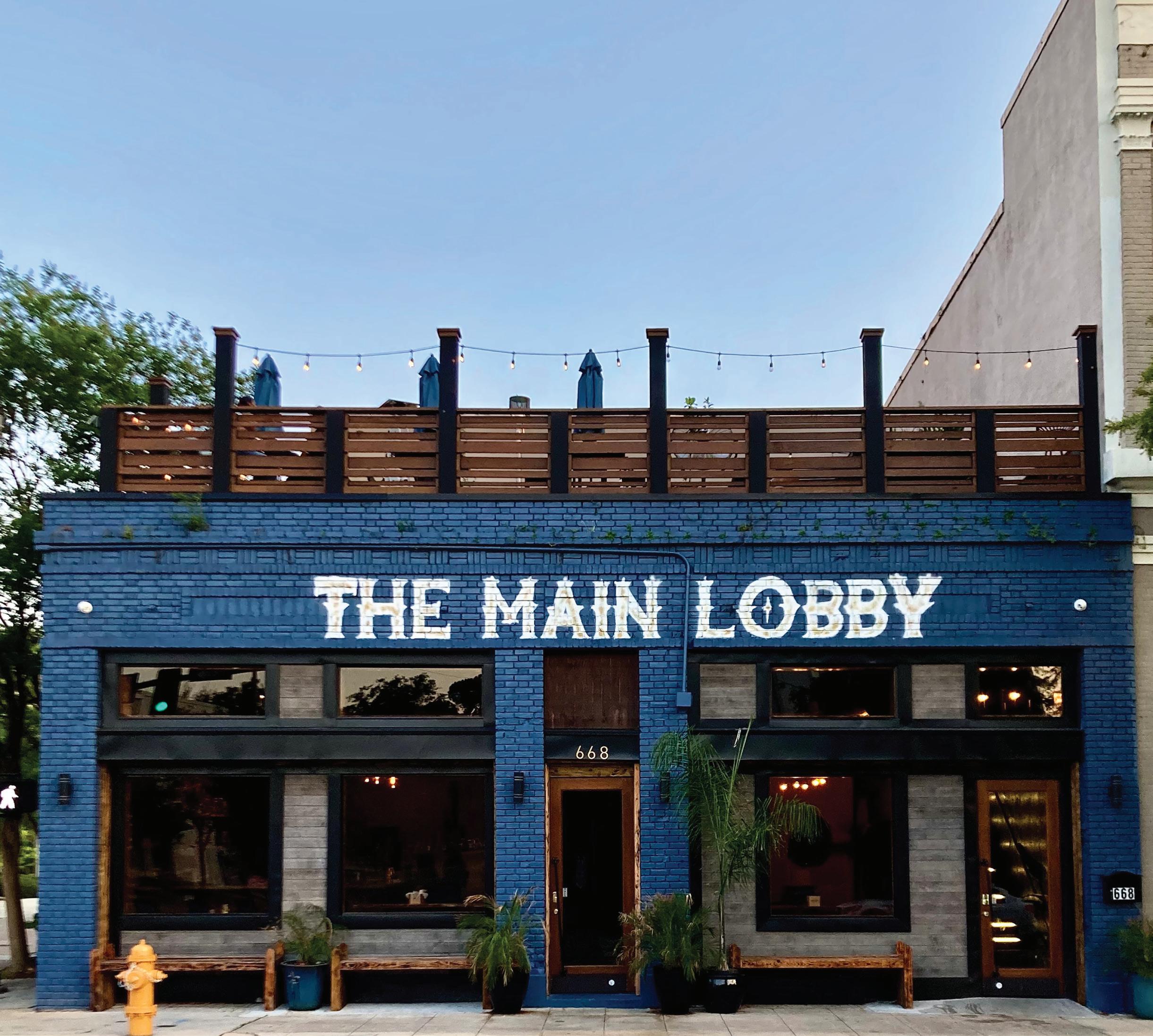
If all that history made you thirsty, you are very much in luck, because downtown has a bounty of coffee shops, bars and restaurants. Proximity to the Louisiana State University Campus (about 2.5 miles) means yes, there are a lot of college bars, but grown folks can enjoy grown-up drinks at places like The Vintage (as mentioned above), which specializes in coffee beverages and beignets, as well as Champagne and cocktails. Additional options include Blend Wine Bar and The Main Lobby. My husband would call all of the above bougie, and he’s probably right, so if you prefer hyper-casual vibes, he recommends Happy’’s Irish Pub. Whether you are in town on business, a road trip for a wedding or to root for the LSU Tigers, there’s a bar for you. If you are visiting for a game though, you’ll probably want to go to The Chimes, over by campus, for a large selection of draft beer and all the pub food your heart desires.
If you get over to campus early enough, spend some time at University Lakes (also known as LSU Lakes) for a walk, run, biking or fishing. Outdoors types will also want to hop in the car for a 15-minute drive northeast of downtown to Bluebonnet Swamp Nature Center. This free, 103-acre conservation and recreation area features gravel paths and boardwalks winding through a variety of habitats, including hardwood forests, cypress-tupelo swamp and beech-magnolia. Birders will thrill at the hundreds of species that inhabit and migrate to the nature center throughout the year. In the 9,500-square-foot exhibit building, see live animals, artifacts and rotating ecology and art exhibits.
Back downtown, tour the plethora of museums within walking distance to one another, including the Baton Rouge African American Museum; Louisiana Art & Science Museum; Louisiana's Old State Capitol; not to be confused with the Louisiana State Capitol (and again, take time to tour the beautiful, park-like
Bars, cafes, greenspaces, museums and historic homes and buildings abound in downtown Baton Rouge. The downtown area is walkable and perfect for a weekend road trip.
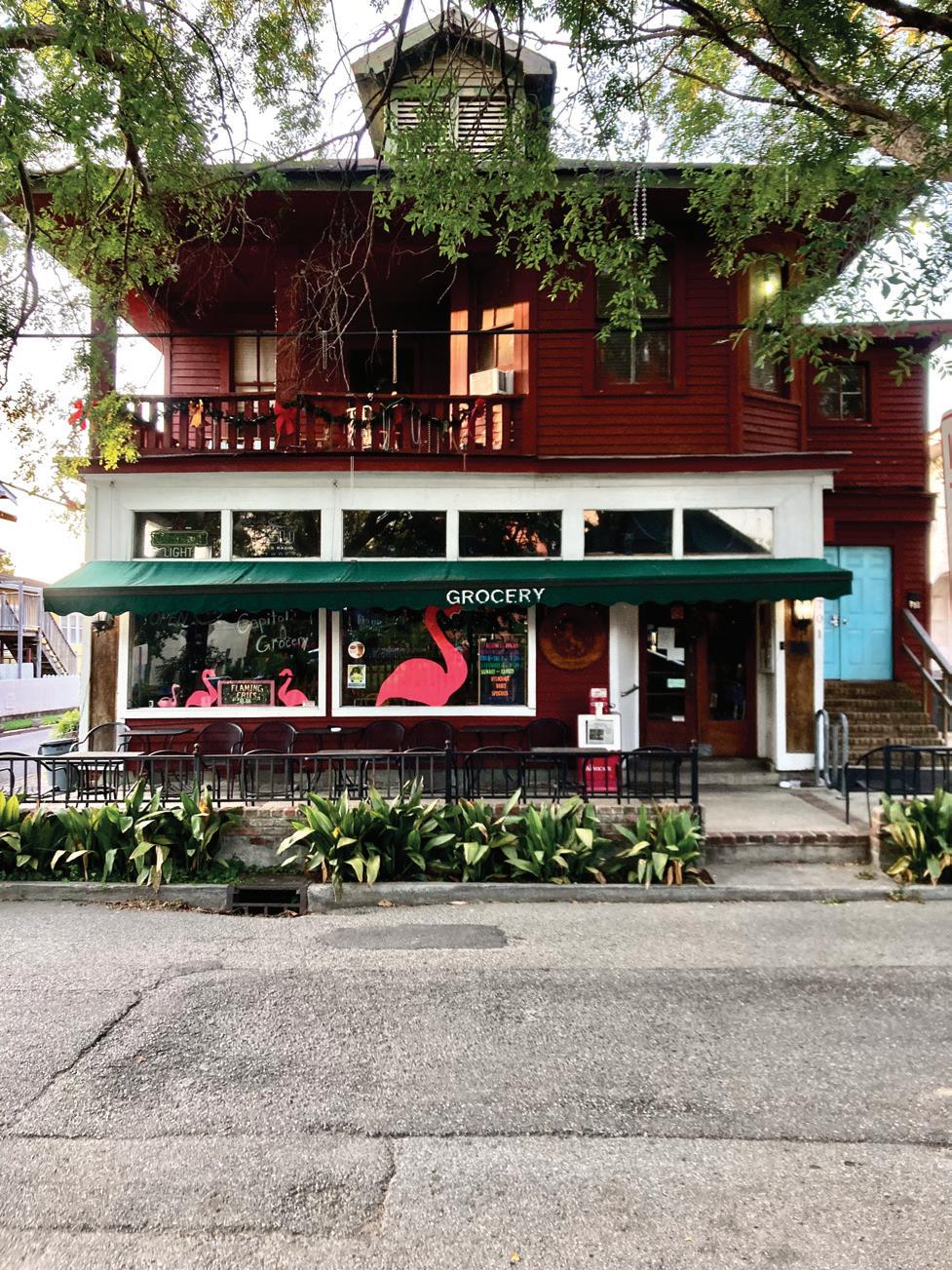
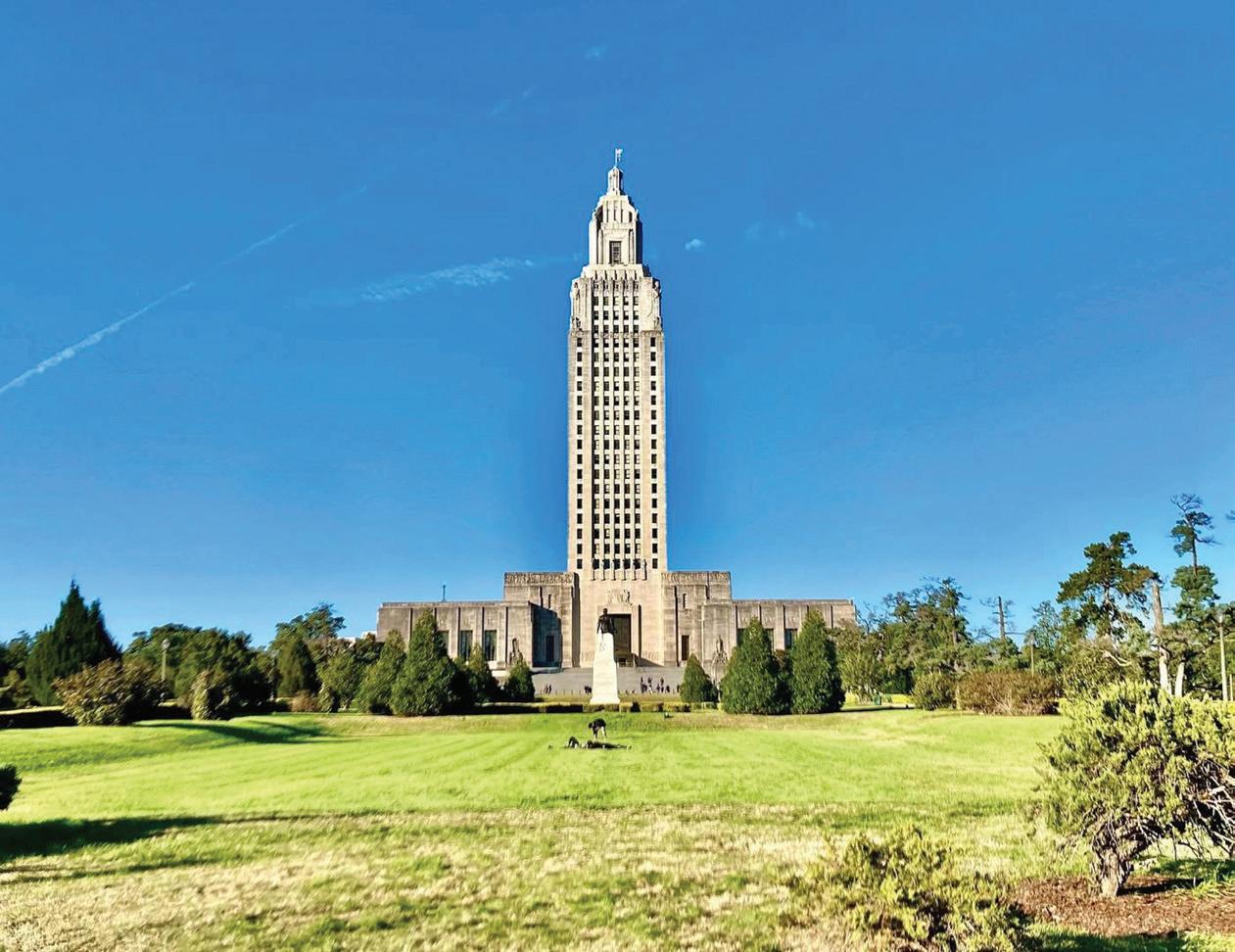
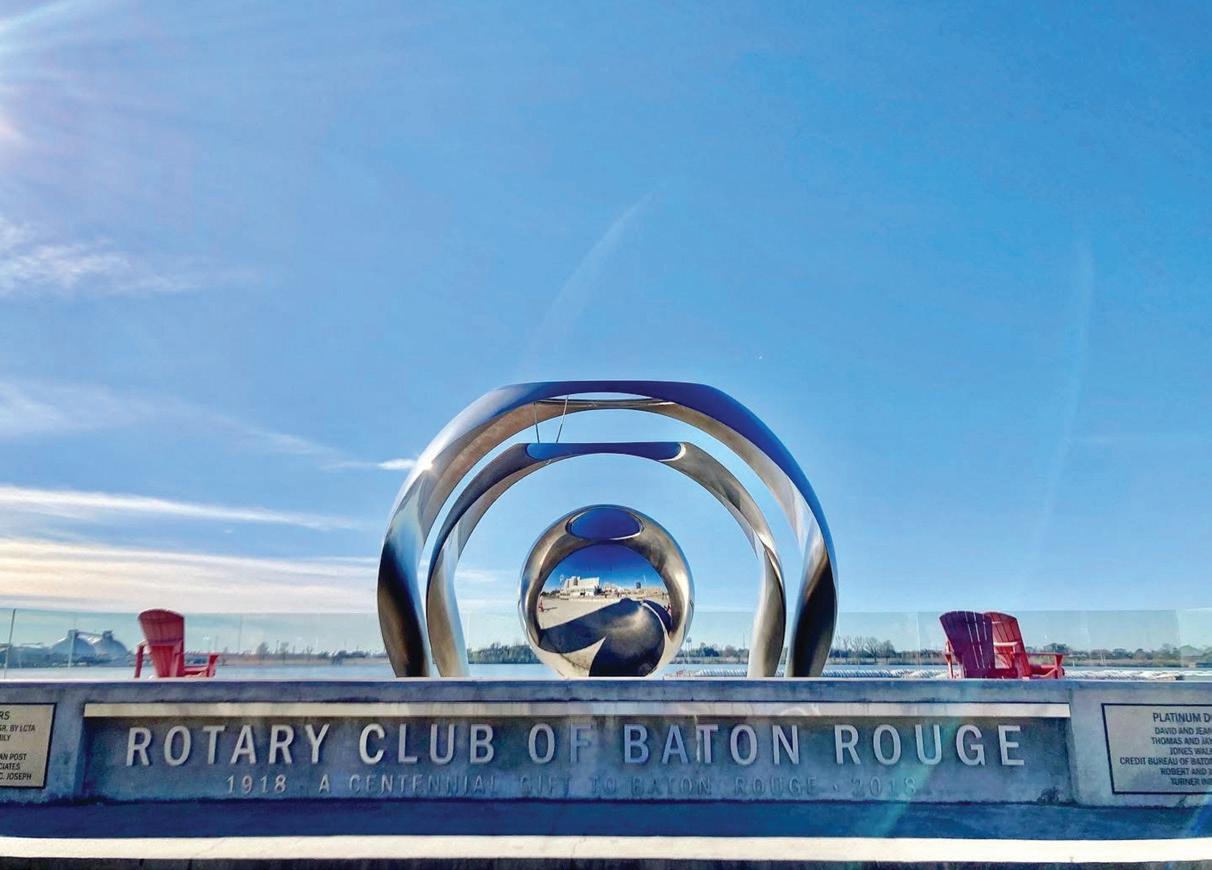
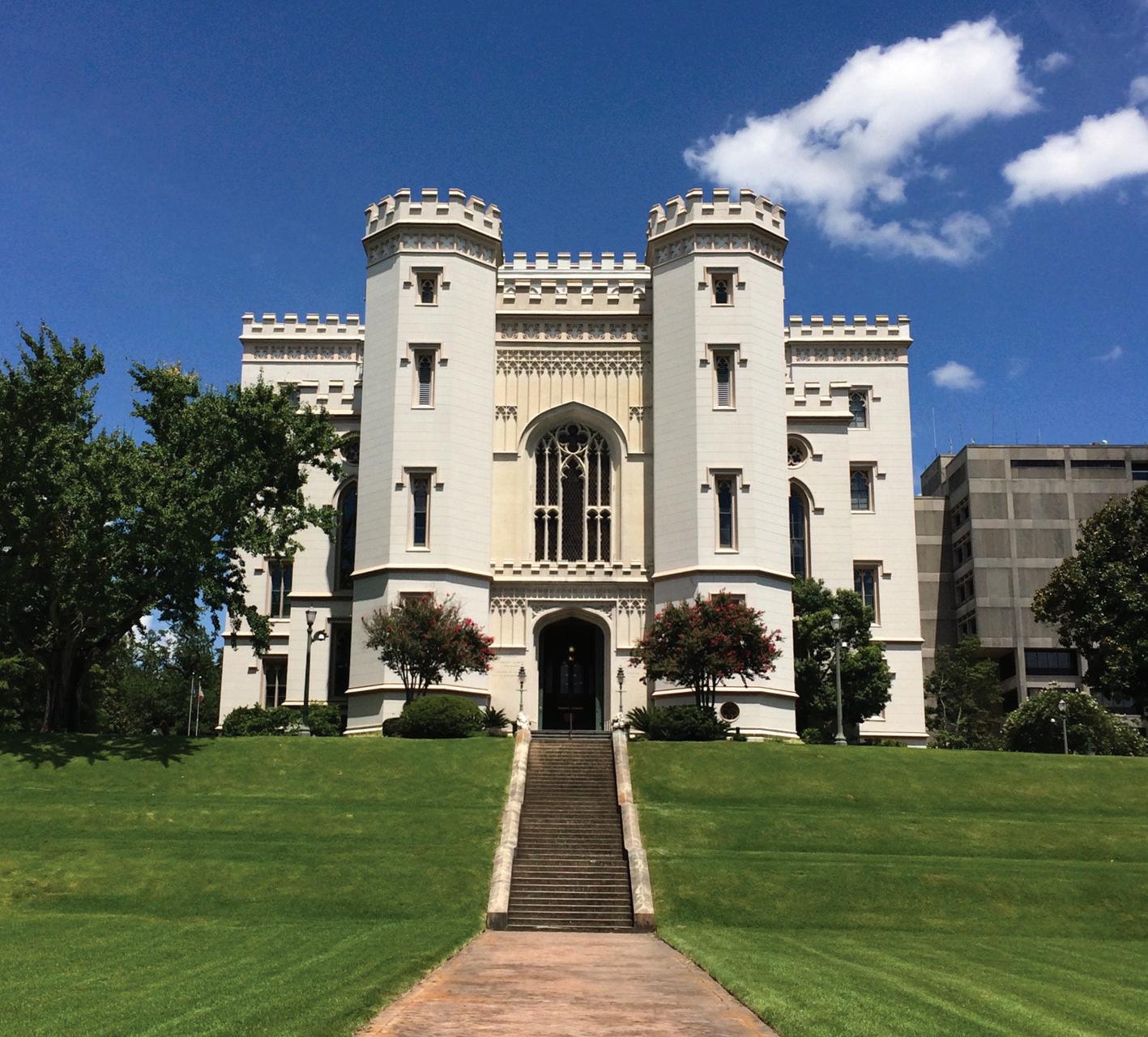
grounds); Louisiana's Old Governor's Mansion; Old Arsenal Museum; the Robert A. Bogan Baton Rouge Fire Museum; and the USS KIDD Veterans Museum. My personal favorite, however, is the LSU Museum of Art at the Shaw Center for the Arts. The permanent collection includes a comprehensive cache of decorative and fine arts from Louisiana, national and international artisans and artists, while the rotating exhibits are always thoughtful and impressive. The exhibit, “Daphnis and Chloe and Other Lovers: Lithographs by Marc Chagall” is on view through May 24 and worth much more than the $5 price of admission, but if you go on a Sunday, it’s free.
Now, there are plenty of places to eat downtown, but I’m going to leave you with my favorite, Cocha, because
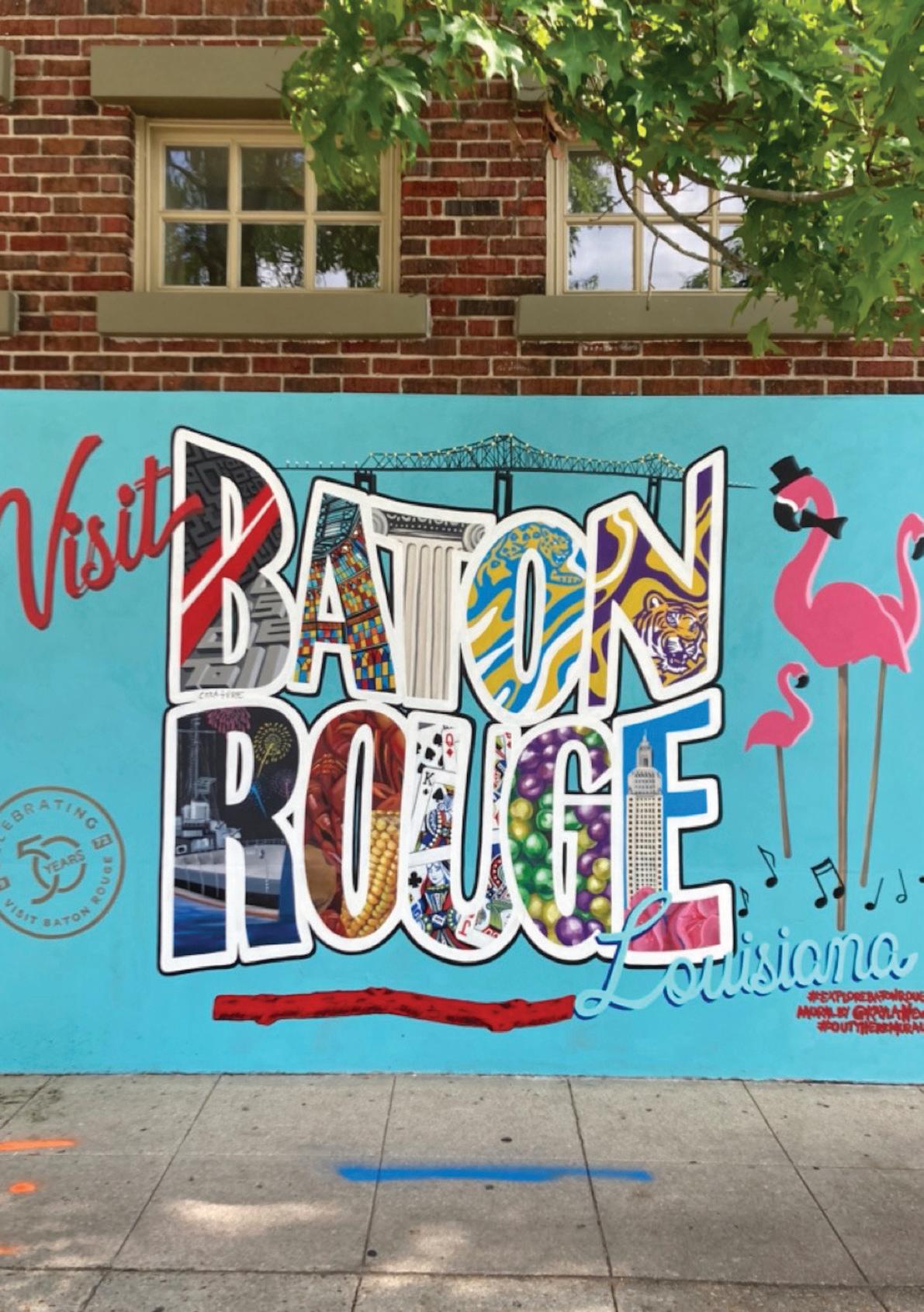
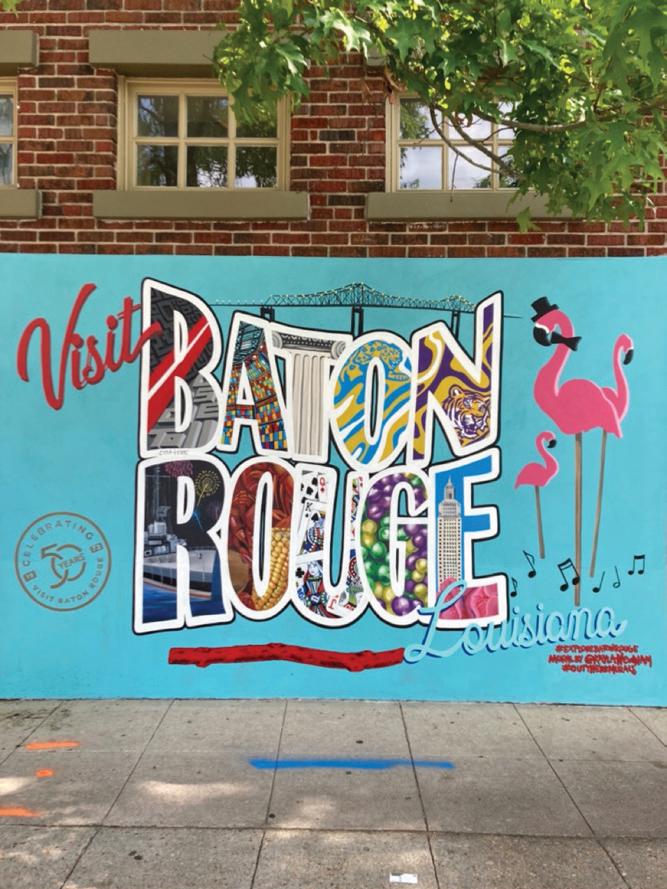
Mark Twain infamously describe the Old State Capitol building a "Little sham of a castle" and an "architectural falsehood in his work, "Life on the Mississippi," but it's worth a visit to see for yourself. Murals and public art abound downtown, adding another layer of fun to your too-ing and fro-ing.
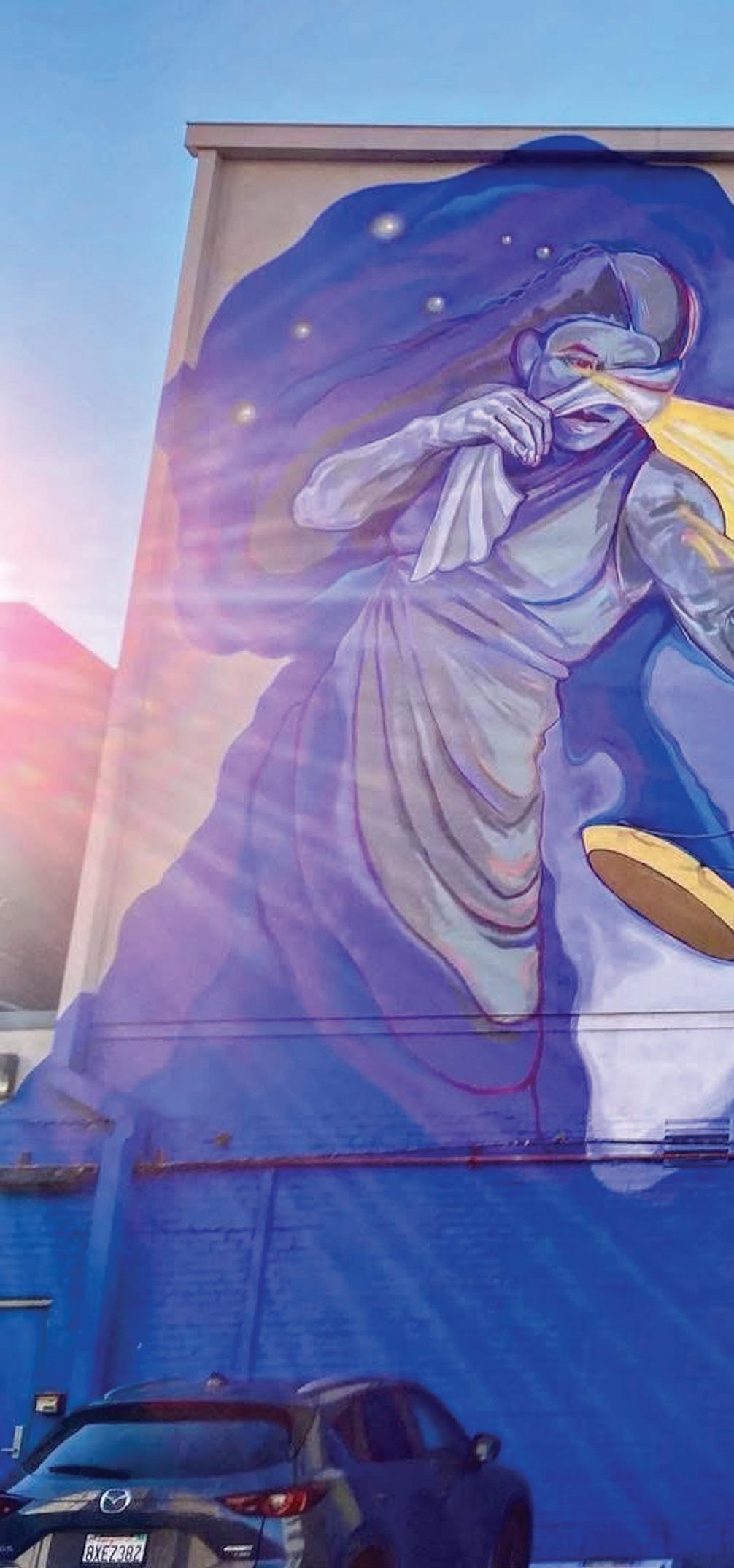
in my opinion, it’s the best choice. Go for lunch and dinner during the week and weekends with brunch also in the mix on Saturday and Sunday. There’s something for everyone including vegan, vegetarian and gluten-free options, as well as delightfully presented and delicious full- and zero-proof cocktails. The menu is chock full of local, seasonal, sustainable fare with global flavors and flair. Venezuelan corn cakes, St. Louis ribs and sous-vide
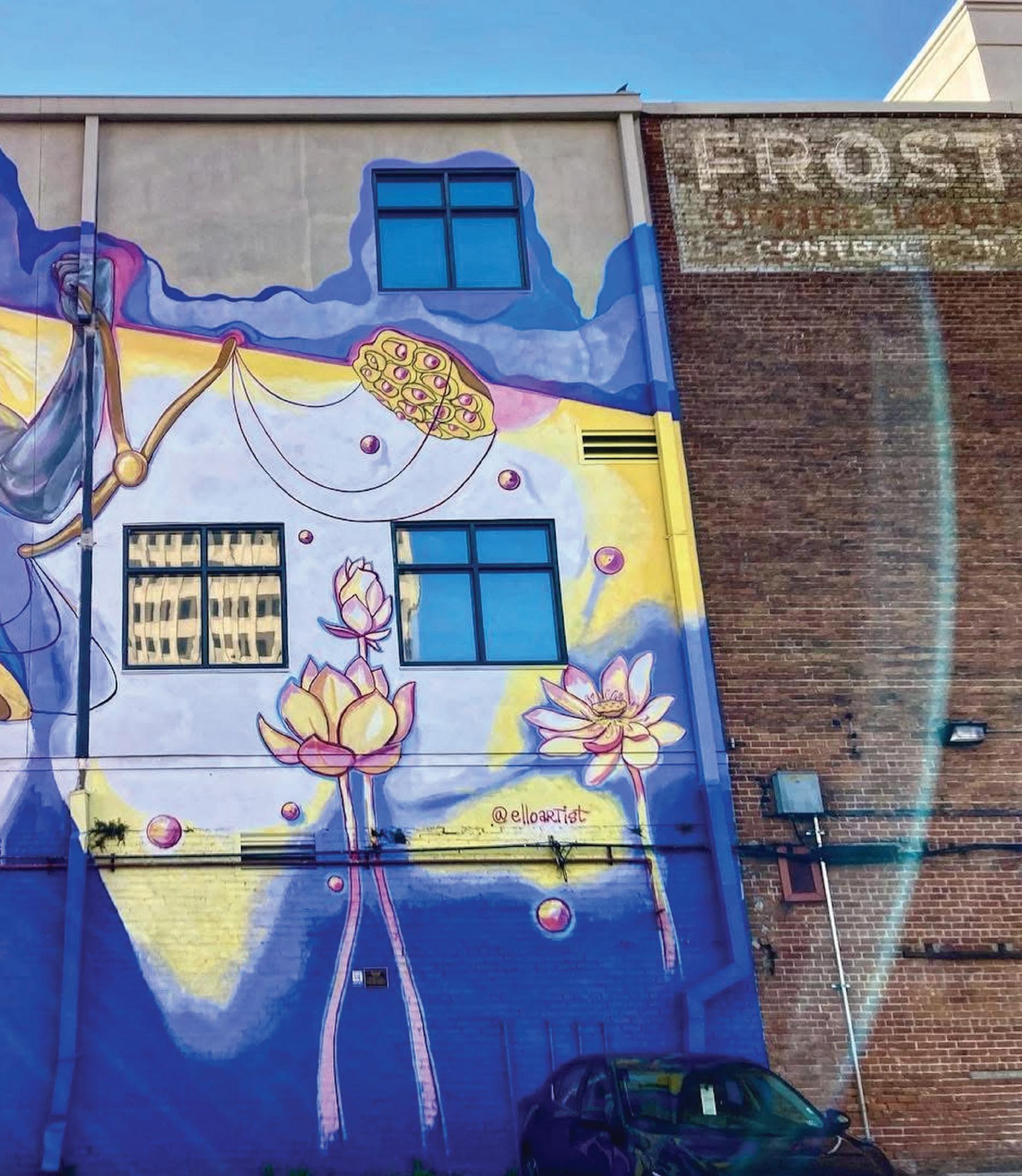
and grilled octopus all make sense when you are seated at the table with a cocktail or glass of wine in hand. Sip and savor to satisfaction.
At the end of the day, if you’ve done yourself a favor and booked a room at the Watermark or the Historic Hilton Baton Rouge Capitol Center, you’ll have an incredible night’s sleep and be ready to paint the Red Stick red again the next day.
LOCATION
Baton Rouge
1699
French soldier, explorer and trader Pierre Le Moyne d'Iberville first visited the area now known as Baton Rouge and is credited with coining the name, which translates to “Red Stick.”
1849 Baton Rouge becomes the state capital of Louisiana.
1972
The United Houma Nation is recognized in Louisiana.
Not Your Grandma’s Small Texas Town
New Braunfels Brims with German Influences and Artsy Hill Country Soul
BY BECCA HENSLEY
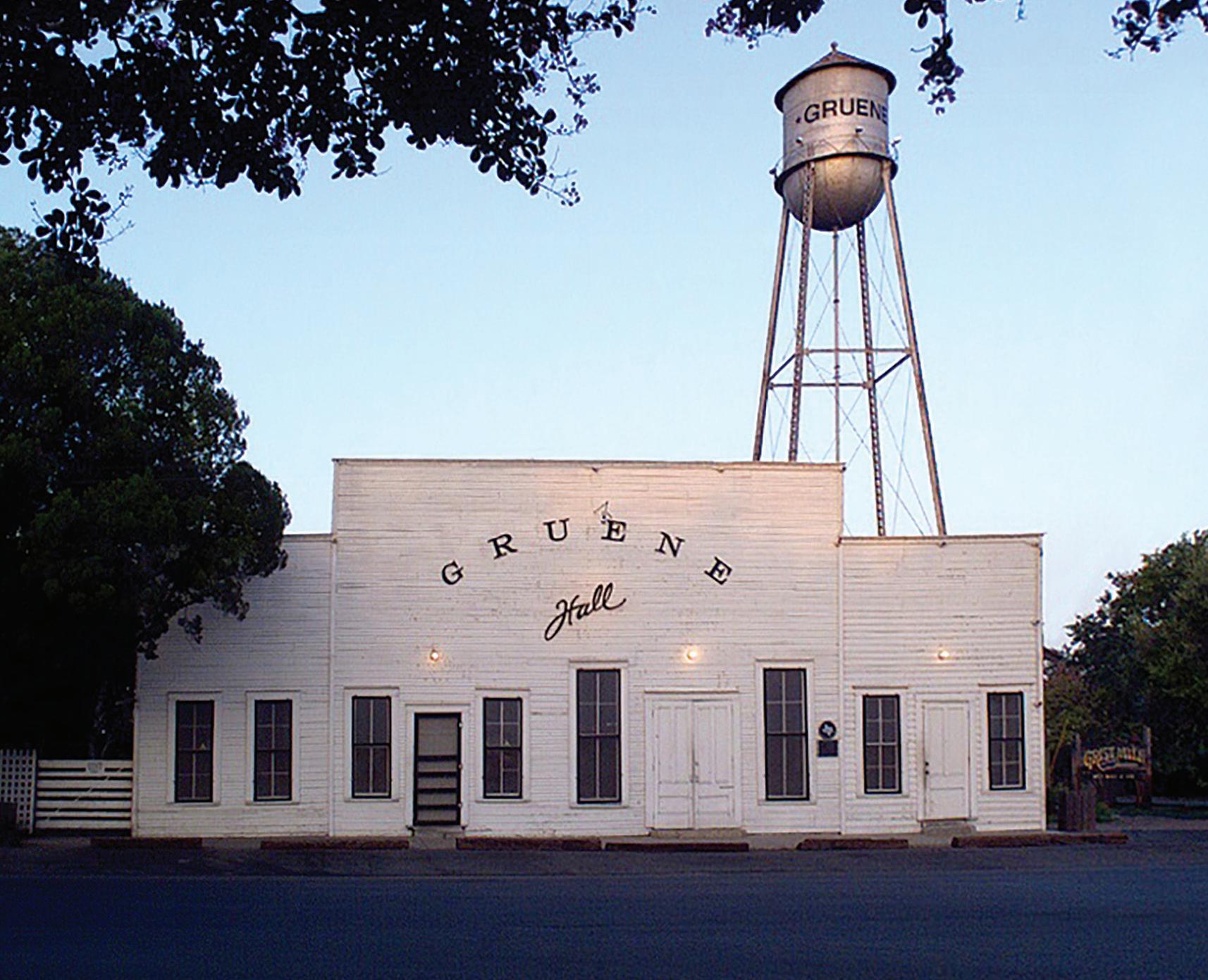
WITH A RADIO STATION that plays polka songs and waltzes, bakeries that turn out Munich-worthy strudel, oompah bands blaring from the Main Square’s bandstand, a lingering aroma of grilled sausages wafting through the air and residents capable of conversing in a 19th-century dialect known as Texas German, New Braunfels isn’t the cowboy and tumbleweed Texas some imagine. Instead, it surprises visitors with extraordinary vestiges of bygone German settlers. They’ve left
their mark with Teutonic architectural elements, an Oktoberfest-inspired annual fete (Wurstfest), and a Texas-meets-Bavaria cultural bravado that manifests in local traditions today. Affable and cozily nostalgic, New Braunfels, at the confluence of two rivers, set between Austin and San Antonio, is also a threshold to astonishing nature and the vineyard-rife Texas Hill Country.
DAY ONE
MORNING - Check into your hotel, newly renovated Hacienda del Rio. It occupies prime real estate on the banks of the Guadalupe River in Gruene, a one-time cotton town, now a storied historic district in New Braunfels. You’ll find it minutes from downtown. With a leafy “beach,” stylish guest rooms, a pickleball court and a romantic swimming pool, the boutique Hacienda del Rio exudes South Texas chic and local gravitas. Launch your day at Naegelin’s, Texas’ oldest bakery, and a veritable rite of passage for visitors. After sampling savory kolaches or peach strudel, wander Landa Park’s verdant 50 acres. It’s an oasis that holds playgrounds, golf, a mini train, paddle boats and historic Comal Springs. Alternatively, explore the Sophienburg
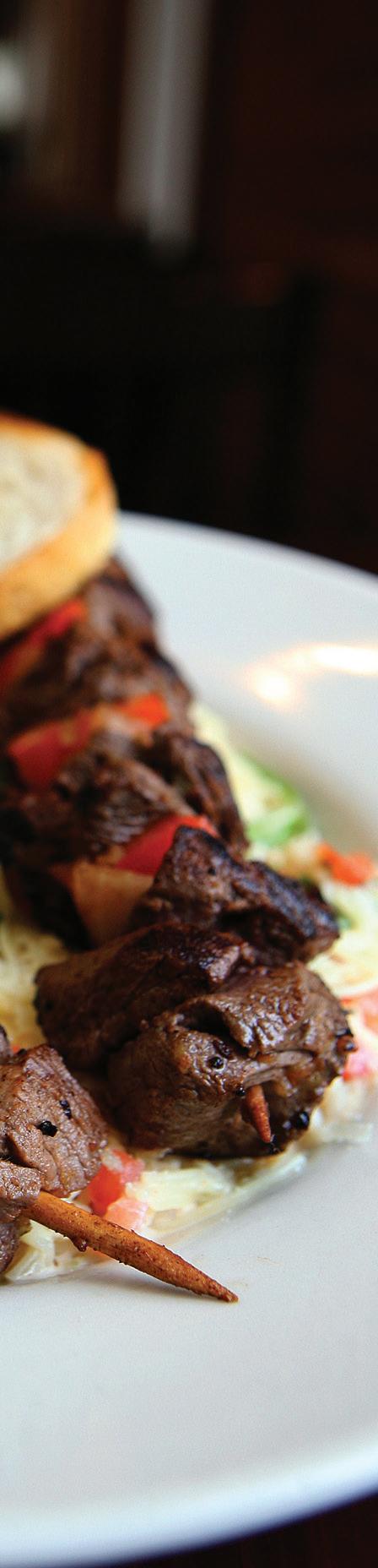
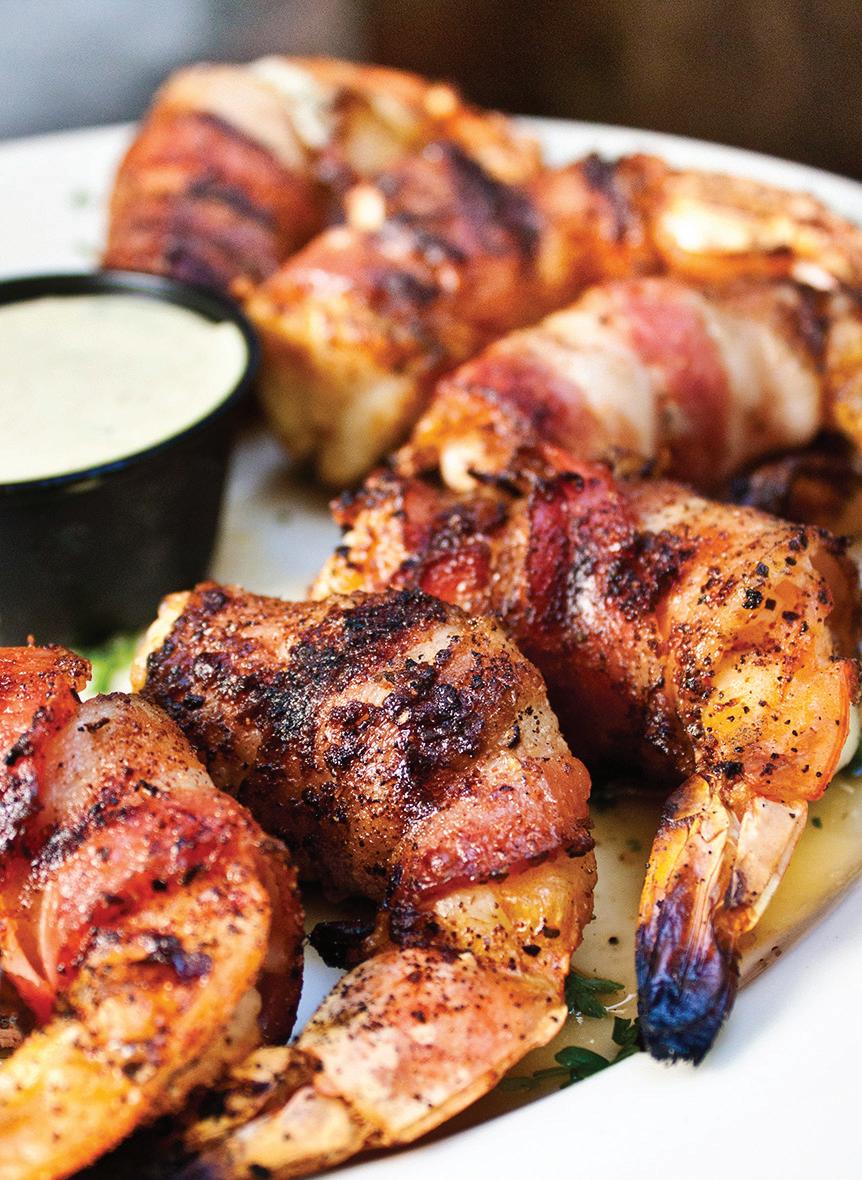
Museum, a trove of local history that tells the story of the first German immigrants, who followed Prince Carl of Solms-Braunfels to this Eden-like region.
AFTERNOON- Back in Gruene (pronounced Green), order a longneck beer at Gristmill River Restaurant & Bar, a feisty haven on the banks of the Guadalupe River. Try Gristmill’s Texas Torpedoes, sinfully deep-fried, bacon-wrapped jalapeños, stuffed with cheese. Work lunch off with a shopping spree in either downtown New Braunfels or Gruene, both of which flaunt pleasant shops and galleries, awash in curiosities and unique bounty. Arts and craft lovers should plan their trip for the third weekend of the month to enjoy Gruene Market Days, an impressive shopping fete that features some 100 artisans.
EVENING - Do the Texas two step on the soulful floors of Gruene Hall, a landmark dance and music venue established in 1878. With past performers as famous as Willie Nelson and Jerry Jeff Walker, Gruene Hall offers live music daily, as well as special events from dance lessons to Friday Afternoon Club, a vivified happy hour. Mozie’s, just across from Gruene Hall, is a popular, casual hotspot for pre- or post-performance suppers or snacks.
DAY 2
MORNING - Do brunch near your hotel at The Birdhouse, which serves classic dishes with a Southern riff — think chicken-fried Benedict capped with jalapeño hollandaise. Nourished, you’ll be ready to take on the rivers. Two converge in New Braunfels. Float either the spring-fed Comal, which undulates through town or the wilder Guadalupe, where you’ll also see paddleboarders and kayakers. Equipment rental companies can be found throughout town.
AFTERNOON - Take a break for some German cuisine. Either gobble up bratwurst at Wurst in Gruene, a food truck, or devour quintessential schnitzel at renowned Krause’s Cafe, beloved by locals. Return to the river. If you tried the Comal, switch to “the Guad.”(Don’t forget your sunscreen.) Or, drive into the Hill Country to experience some of the region’s boutique wineries. La Cruz de Comal Wines and Dry Comal Creek Vineyards lie less than 15 minutes from downtown.
EVENING - Grab an early dinner at one of New Braunfels’ stellar breweries, then meet up for a spooky, 90-minute walk with New Braunfels Ghost Tours. Eradicate those goosebumps with a grand finale nightcap at Sidecar, a speakeasy-like bar at the Prince Solms Inn. Moody jazz music and an inventive “After Dinner Cocktail” menu seal the deal.
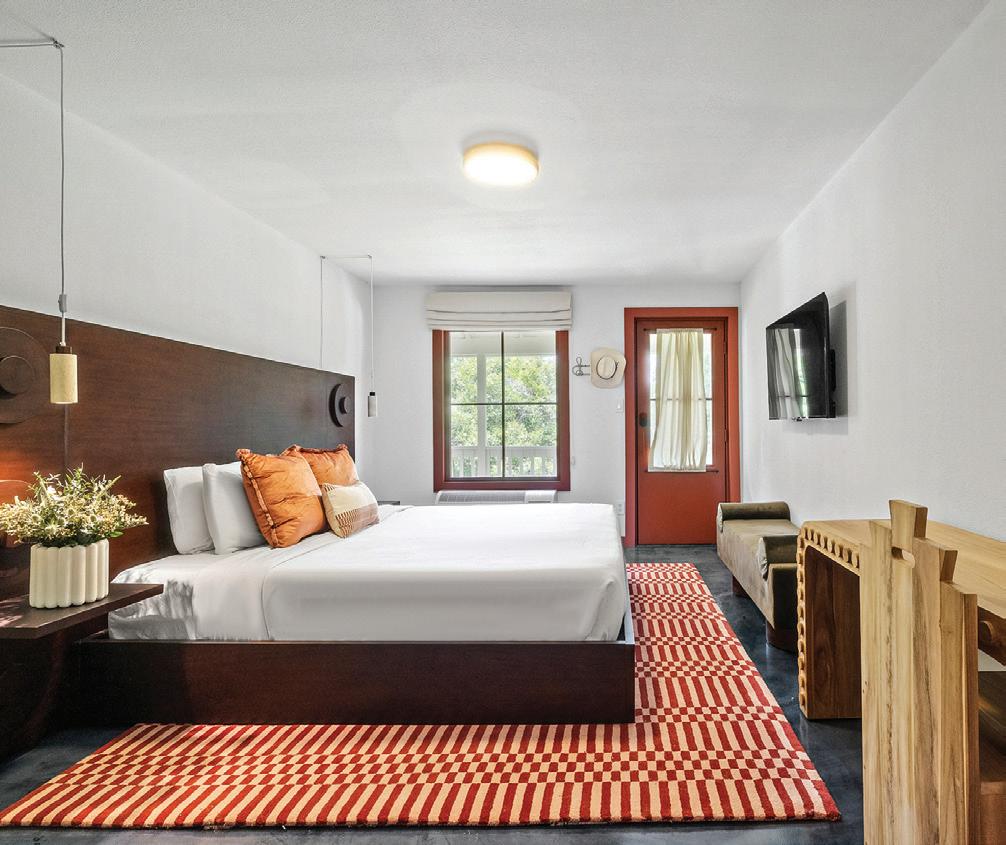
(left to right) Gruene Hall; Mozie’s kebabs; Gristmill’s baconwrapped shrimp; Hacienda del Rio
Sunset Finale
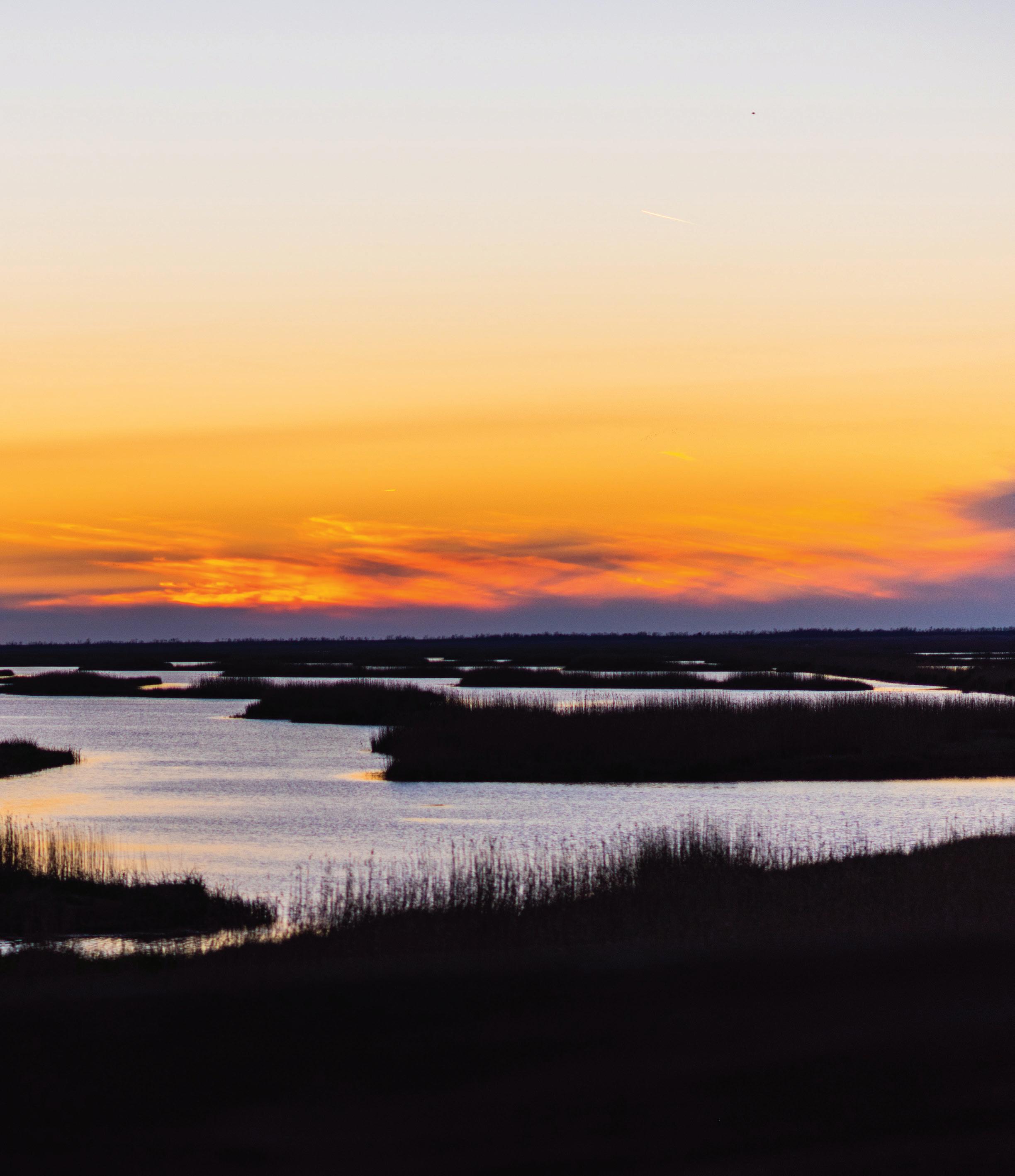
The day fades into a fiery glow over the marshes, as seen from the Intracoastal Waterway Bridge, also known as the Gibbstown or Conway LeBleu Memorial Bridge.
BY KATHRYN SHEA DUNCAN, LAKE CHARLES