
Why Community Stewardship needs to
be at the core of what we do.


By Clinton Daley, Chief Executive Officer, New Litho Group.

WHILE MUCH of my role involves overseeing investments, improving large-scale output, and enabling our senior leaders, the most rewarding aspect of leading New Litho Group is our ability to support the community. It is truly a gi to be in a position where our business success allows us to contribute to the success of others. Real estate icon John McGrath speaks about the importance of a “burning platform”, that core purpose and reason you get out of bed. His company, for that matter, like so many other real estate rms, has been a signi cant part of our success story over an incredibly long period. For me, my burning platform is the belief that education is the great equaliser in life.
In Australia, we o en see “tall poppy syndrome,” where success is viewed with cynicism. However, I hope more leaders realise that merging personal passions with social impact is not an act of self-promotion, but a genuine privilege. When we align our “burning platform” with corporate strategy, we create an authenticity that resonates across every generation of our workforce.
A GLOBAL BRIDGE: THE INTERSECTION OF EDUCATION AND TECHNOLOGY
Our commitment to education reaches well beyond our borders through the Bali Children Foundation. Serving on their



board has shown me how collective e ort can change perceptions of what is possible. Dinda, a young lady we support, is a testament to this. Coming from rural Bali, where girls are o en steered towards labour rather than school, Dinda is now studying law at Gadjah Mada University. She is living proof that the glass ceiling isn’t bulletproof.


HANDS ON LEARNING AND KOALA KIDS


Our dedication continues through our partnership with Hands On Learning, a program that re-engages students through practical, tactile projects.


In these rural communities, technology is the great bridge. The introduction of tools like Starlink has been a game-changer, enabling children in remote areas to access world-class information and digital tools. By bringing the digital world to rural villages, we aren’t just giving children permission to dream; we are giving them the tools to achieve them.
LOCAL IMPACT: PRINT AS A LIFE-CHANGING TOOL
Closer to home, we use our cra to support Life Education Victoria. I was shocked to learn that in Boroondara, where I grew up and where our company was long based, 38.1% of children have been exposed to family violence. To help address this, New Litho Group is printing health and wellbeing journals for primary school students from Prep through to Grade 6.
We o en oversimplify what we do as “putting ink on paper,” but when that ink reaches a child learning resilience, it becomes more than a commercial product; it becomes a life-changing tool. A small thing for us becomes a big thing for them, setting young people up for healthy, con dent futures.
We are also proud to support Koala Kids by printing their storybook, Santa and his Brother Down Under, providing therapeutic support and joy for children undergoing cancer treatment. Whether it is practical skills or emotional support, we believe in providing a safety net for those who need it most.
A CULTURE OF GIVING: IT’S IN OUR DNA
This focus is not just a corporate strategy; it is a value our team has lived for decades. I am inspired by our own people. Dean Manns, National Sales Manager at NEO, has participated in the World’s Greatest Shave for 22 years. During that time, he has raised over $100,000 for blood cancer research, an incredible display of dedication.
To me, true stewardship means looking at the bigger picture; it’s about more than just the bottom line. Success for us is de ned by a broader vision: one that balances essential ‘numbers’ with our environmental responsibility, the wellbeing of our people, and our lasting contribution to the community.
LEGACY, LUXURY & LETTERBOXES
The Nick Renna Interview.
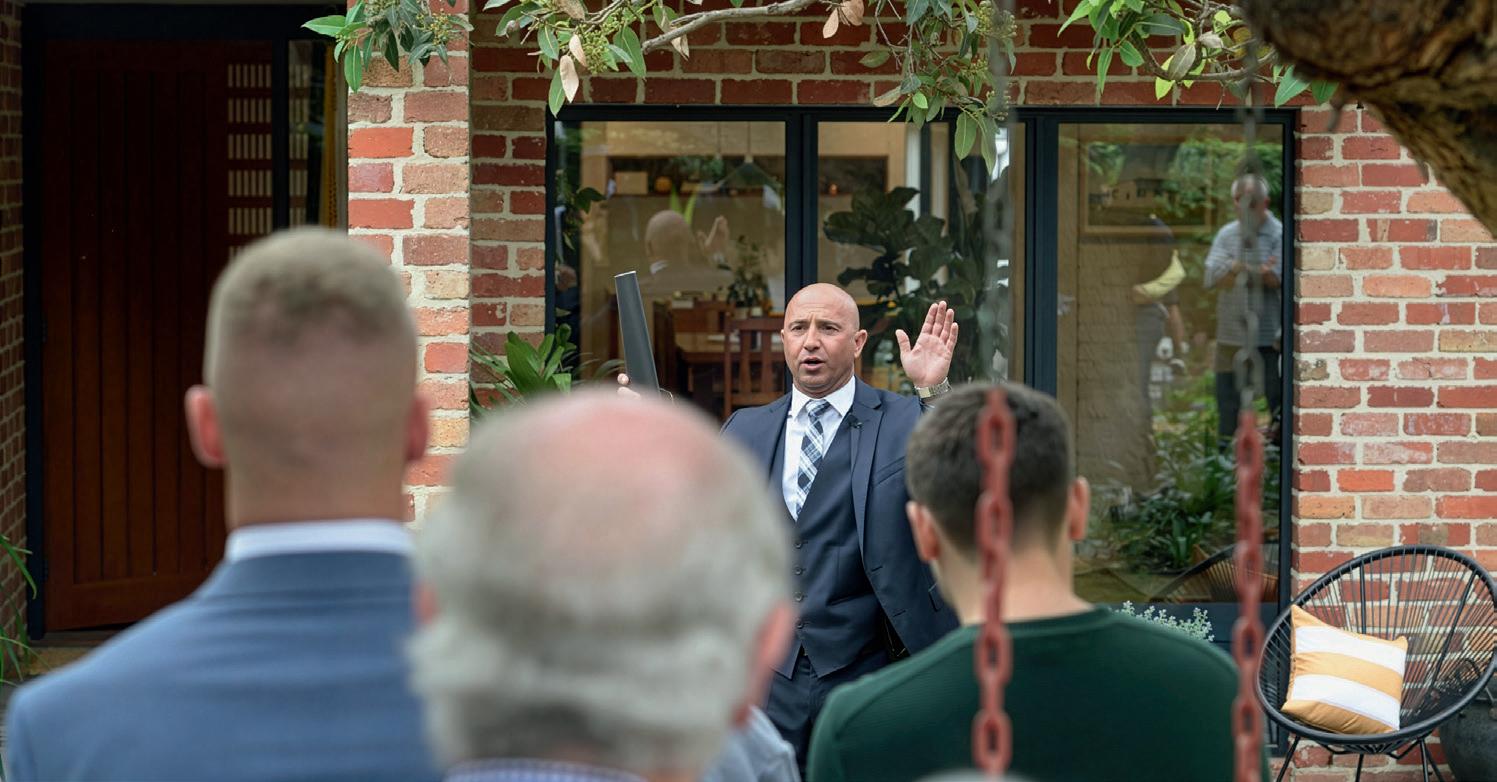
Specialty Areas/Suburbs: Brighton and Bayside area of Melbourne all suburbs across Bayside & Glen Eira
Top Residential Agents of 2022 on realestate.com.au: Ranked 3rd
REB Top 100 Agencies of 2022: Bentleigh Office Ranked 18th
by Dean Manns, National Sales Manager

NEO is proud to partner with many of the country’s leading real estate brands, offices, and agents. Over the years, we’ve had the privilege of seeing first-hand how some of the industry’s most successful businesses have been built, not just through hard work and determination, but through smart, consistent marketing that keeps them at the forefront of their communities.
For us, it’s never been just about putting ink on paper. We collaborate closely with our clients to craft print marketing strategies that are both powerful and practical, ensuring their brand is seen, remembered, and trusted.
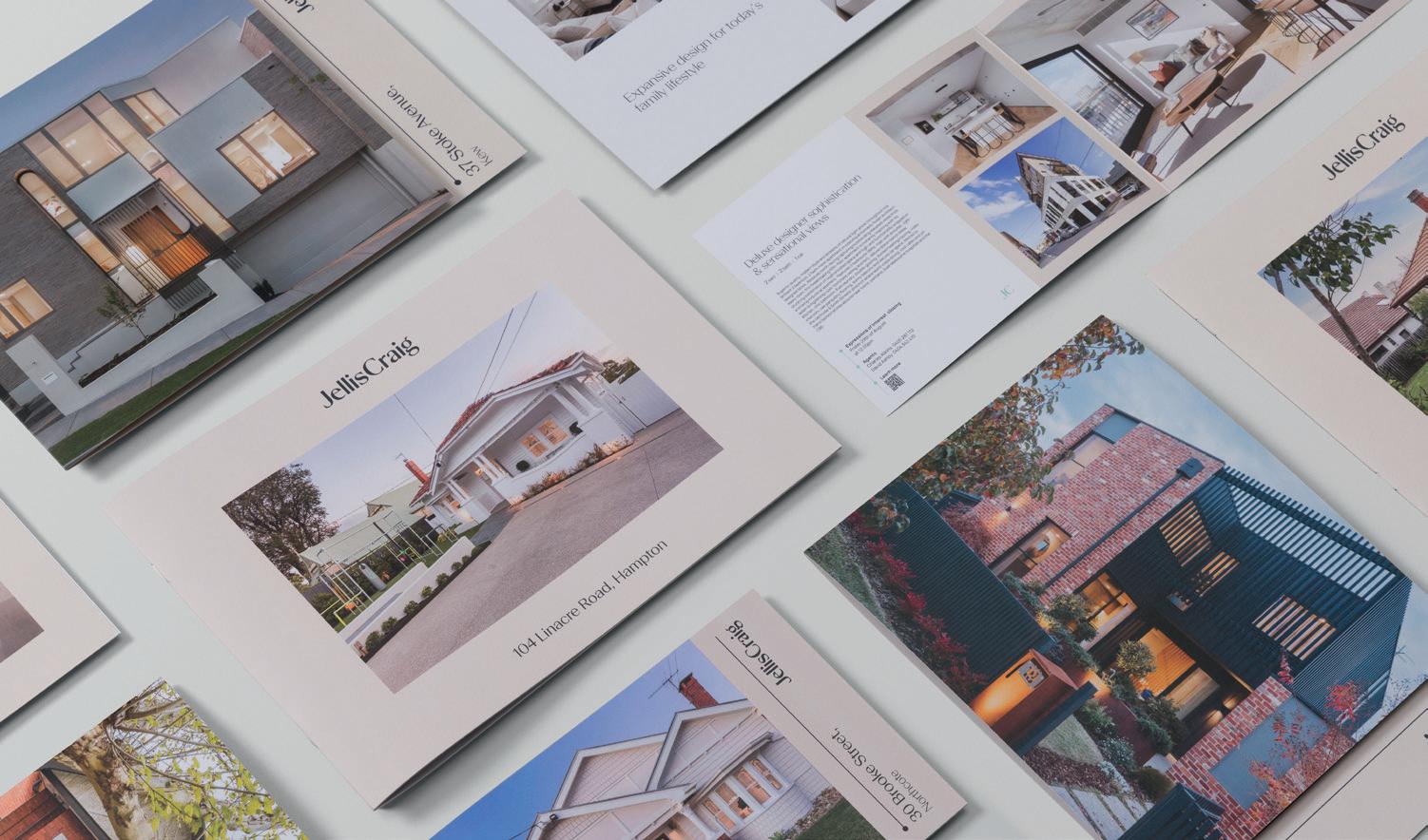
From neighborhood mail drops to luxe brochures and premium property magazines, our focus is on positioning agents as the first choice when anyone begins a property journey.
Following our recent conversation with Alex Jordan, we continue our series on industry excellence by sitting down with Nick Renna. With over three decades of experience, Nick has witnessed the industry’s evolution firsthand. We spoke with him about why, in an increasingly digital world, the “tangible” nature of high-end print remains a cornerstone of the Jellis Craig brand and a vital tool for building lasting authority.
Interview
How have you seen the industry change over this time?
Over three decades, I’ve seen the industry become far more sophisticated and competitive. Technology, data, and buyer expectations have evolved, but at its core, real estate is still about relationships, trust, and delivering results.
What role has marketing played in building trust and authority within your core areas?
Consistent, high-quality marketing has been central to building our reputation here at Jellis Craig. As a prestige brand, I certainly feel our marketing stands out from the crowd
How have you seen your disciplined, multi-channel marketing approach benefit your business?
Our consistent letterbox campaigns keep us top-of-mind. They complement our digital platform & social media presence by driving enquiry, and, importantly, reach people who may not be actively searching online but are thinking about their next move.
Why do you continue to make print marketing a core part of your strategy?
Print cuts through in a way digital can’t. It’s tangible, it lingers in the home, and it builds familiarity. Buyers often take a property brochure home after an inspection, it sits on the kitchen bench, sparking conversations and keeping the property top-of-mind. In many cases, that letterbox drop or brochure has been the start of a long-term client relationship
How does premium marketing shape buyer and vendor perceptions?
High-end brochures, signboards, and photography etc. tell a story of quality of the product, For buyers, it frames the property as something special. For vendors, it shows we’re investing in their campaign and taking their sale seriously.
Have you noticed a difference in response when using highquality tactile marketing?
Absolutely. People keep a beautifully produced brochure, it becomes a talking point and helps properties stand out in a crowded market.
DEAN IS TAKING PART IN THE WORLD’S GREATEST
Does print help reinforce your brand in a crowded digital environment?
Yes, it certainly does. When inboxes are overflowing and feeds move quickly, a well-designed printed piece makes a more lasting, physical connection with the audience.
What collateral do you ensure open house visitors take away?
We provide premium brochures, professional written and branded Property Information Sheets, our beautifully designed Weekly Listing Guide as well as the teams marketing collateral. It’s all designed to show the depth of our market knowledge and the standard of our marketing.
What do you use and leave behind in listing presentations?
We use a tailored presentation kit with a detailed proposal, premium marketing samples, and case studies. I always leave a beautifully produced booklet outlining our process and results, it keeps our value front-ofmind after I’ve left the meeting.

IN SEARCH OF THE PERFECT WORD
By Paul Daley, Group Executive Chairman

THE
WRITTEN word
is the cornerstone of graphic design and visual communication.
The ancient Egyptians (3300-3200 BCE) used hieroglyphics and created an alphabet comprising of simple pictures of living creatures, objects used in daily life, and symbols. However, they didn’t have a simple comprehensive ‘dictionary’ in the modern sense. Today, concise spelling, reference to a dictionary – regardless of the language – is the starting point of typography and graphic design. Paul Daley, re ects on the genesis of the modern dictionary.
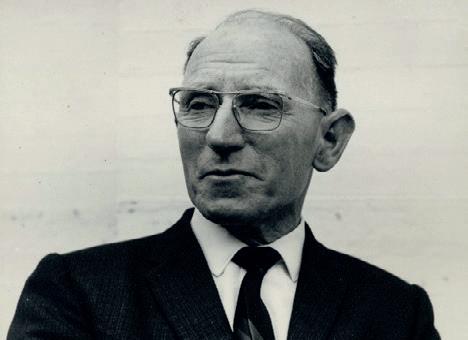
“There’s always the perfect word”. It was 1962, and my year eight English teacher was giving the class some pointers in essay writing. Mr Bill ‘Squizzy’ Taylor was one of Carey Grammar School’s legends, and when it came to teenage boys, he had every trick in the book to engage, encourage, and where necessary lay down the law. Written on the blackboard was the word – beautiful – an adjective, that in Squizzy’s opinion was not to be used in our essay writing. Beautiful day, beautiful girl, beautiful house etc. etc., and the like were on Squizzy’s hit list. “There’s always the perfect word”, and he went on to challenge us to think of alternative adjectives, check their spelling in the dictionary, and use the thesaurus to nd a synonym that could also be used as an alternative.
The Carey Archives recall: Squizzy had a knack of inspiring students with his love of learning, his astute judgement and his ne sense of the ridiculous.

Australians love nicknames, a classic being ‘Bluey’ for redheads, and the God-fearing teacher from Carey Grammar with the surname Taylor was an easy target. The moniker Squizzy was inherited from Joseph Theodore ‘Squizzy’ Taylor – a Melbourne gangster with a fearsome reputation in the 1920’s. His crimes ranged from pickpocketing, assault and shop breaking to armed robbery, and murder.
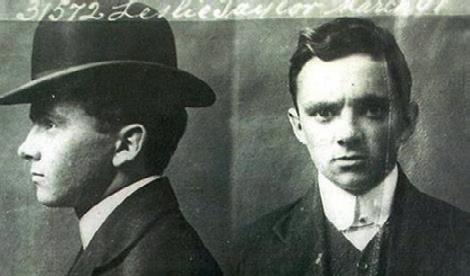


Not content with just those skills, he also derived income from sly-grog selling, two-up schools, illegal bookmaking, extortion, prostitution and cocaine dealing. He was wounded in a gun ght in Carlton and died in St Vincent’s Hospital. Today, Walking Tours of Melbourne conduct an extensive walk through the incredible era of Squizzy’s Melbourne (1888 – 1927).
From my early secondary school days, the dictionary and thesaurus have been essential “tools of trade” – in hard copy format when I worked as a journeyman compositor, proof-reader, and sub-editor in the early 1970’s, through to today where the online availability and the embedded spell and grammar checks are a vital tool.
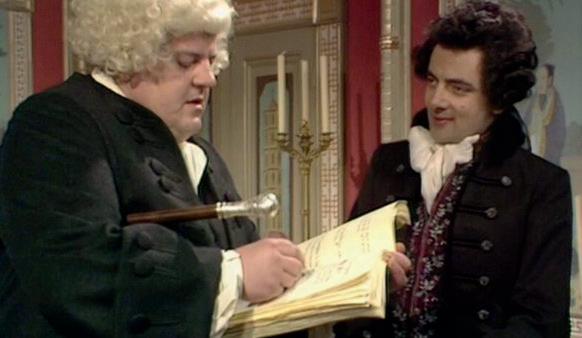
When it comes to de ning the starting point for the publication of the modern dictionary, there’s possibly a perfect example of “the sublime and the ridiculous”. So, let us start with the ridiculous, and who better than Rowan Atkinson to get the historical ball rolling on the advent of the rst Dictionary. With an IQ of 178, and a net worth now of over $450 Million, Atkinson is an actor, screenwriter and one of the masters of physical comedy. He is probably best known as the character ‘Mr Bean’. One of his most iconic projects was a TV show called Blackadder, that began in 1983. It was Black Adder the Third, that had Episode 2, ‘Ink and Incapability’. It centred on Edmund Blackadder’s (Rowan Atkinson) attempts to secure the patronage of Dr. Samuel Johnson. Here is the plot:
Dr. Samuel Johnson arrives to present the Prince Regent with the only manuscript of his life’s work, the rst comprehensive Dictionary of the English Language, and
Mr Bill W.H. ‘Squizzy’ Taylor courtesy of Carey Archives
Joseph Theodore ‘Squizzy’ Taylor Police photograph
Dr. Samuel Johnson with his Dictionary being humiliated by Blackadder (Rowan Atkinson)
hopes the Prince will become its royal patron. Blackadder, the Prince’s butler, is initially dismissive of the dictionary, calling it “the most pointless book since ‘How to Learn French’ was translated into French”, and is also annoyed that Johnson ignored a novel manuscript he had sent him. During a meeting, Blackadder tries to undermine Johnson by inventing a barrage of long, non-existent words (like “contra bularities” and “pericombobulation”) to make Johnson question his dictionary’s completeness and expertise. The plot continues with twists, turns, and results in the dictionary consigned to the re.
Now, the more serious, or “sublime” history of the dictionary, and Wikipedia is a helpful resource. By the mid-18th Century, the rise of literacy among the general public, combined with the technical advances in the mechanics of book making and binding meant that for the rst-time books, texts, maps, pamphlets, and newspapers were widely available to the general public at a reasonable cost. Such an explosion of the printed word demanded a set pattern of grammar, de nition, and spelling of those words. This could only achieved by means of an authoritative dictionary.
In 1746, a consortium of London’s most successful printers set out to satisfy and capitalise on this need, and contracted Dr Samuel Johnson to write a dictionary for the sum of 1,500 Guineas (the equivalent of about $650,000 AU today). He took seven years to complete the work, although he claimed he could have nished it in three! He did so singlehandedly, with only clerical assistance to copy the illustrative quotations that he had marked in books. Johnson produced several revised editions during his life.
This rst edition of the dictionary contained a 42,773-word list, to which only a few more were added in subsequent editions. Johnson introduced humour or prejudice into several his de nitions. Among the best-known are: Excise: a hateful tax levied upon commodities and adjudged not by the common judges of property, but wretches hired by those to whom excise is paid Lexicographer: a writer of dictionaries; a harmless drudge that busies himself in tracing original and detailing the signi cation of words
Oats: a grain which in England is generally given to horses, but in Scotland supports the people
Monsieur: a term of reproach for a Frenchman
Patron: One who countenances, supports, or protects. Commonly a wretch who supports with insolence and is paid with attery.
Occasionally a two-volume set of a Dictionary of the English Language comes up for sale. Recently, Abe Books o ered for sale a set which was issued a er Johnson’s death in 1784 and printed in 1785, is the last edition. Its condition is generally very clear with minor expected page toning in handsome calf leather binding with strong shelf presence price US $2,250. Copies of various Editions regularly come up for sale on eBay also.
The major English Dictionaries such as Dr. Samuel Johnson’s were prescriptive texts telling their readers what words should mean and how they should be spelt, pronounced and used. ‘The Dictionary People’ by Sarah Ogilvie gives an excellent insight.
In 1857, the London Philosophical society embarked on the creation of “an entirely new Dictionary; no patch upon old garments, but a new garment throughout”. Herbert Coleridge produced the rst Edition of the New English Dictionary as the Oxford English Dictionary was rst called. He died two years into the job and was replaced in 1879 by the London School Master, James Murray. The OED was the Wikipedia of the nineteenth century, a huge crowd sourcing project in which over seventy years, between 1858-1928, members of the public were invited to read the books they had on hand and to mail to the Editor of the Dictionary examples of
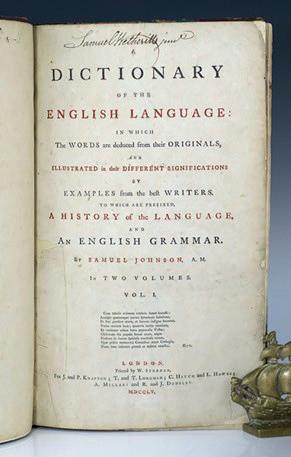
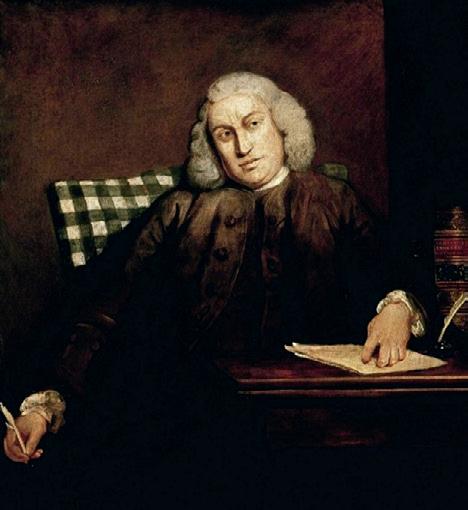

Dr. Samuel Johnson
how words were used in those books. The volunteers – ‘readers’ – were instructed to write out words and sentences on a small 4x6 inch pieces of paper known as ‘slips’.

Over the rst twenty years, this system of crowd sourcing enlisted the help of several hundred ‘readers’. James Murray sent out a global appeal through newspapers, journals, schools, universities and hundreds of clubs and societies throughout Britain, America, and the rest of the world. The response was massive. In order to cope with the volume of post, the Royal Mail installed a red pillar box outside Dr Murray’s house to receive the post (it is still there today). The OED still makes appeals and invites contributions from the public on its website. The rst Australian National Dictionary was published in 1988 and is modelled on the Oxford English Dictionary and is much more than just a dictionary – it tracks words and meanings over time, those that are distinctively Australian. It is not a general-purpose dictionary of all words, but a record of words that re ect Australian history, culture and identity. It is “Australian English” – emphasising we no longer had to ask Britain who we were when it came to language. What about dictionaries for Australian First People’s languages? At the time of British colonisation there were 250 Indigenous Australian languages. Today there are at least 123 distinct languages spoken. The number of words in an Australian Aboriginal language varies by language but most have about 10,000 words with the most comprehensive dictionary to date for Warlpiri listing over 11,000 words. Languages now have specialised vocabulary used for speci c contexts like songs, rituals and jokes.
Continued on Page 8...
Samuel Johnson’s First Edition, Dictionary of the English Language
BEING A REAL BRAND
By Jackson Morris, National Operations and Commercial Manager

In an age where brands appear on our screens, demand our attention for a moment, and then disappear without a trace, something quietly countercultural is happening. Businesses are rediscovering the value of being real. Not louder, not faster, not more optimized, just real.
THIS IS NOT a rejection of digital tools or modern marketing, it is a correction. It is a recognition that while technology has made it easier than ever to reach people, it has also made it harder to be remembered. We scroll past hundreds of brands every day. We click, like, skim, and forget. The sheer volume of digital communication has diluted its impact. Research consistently shows that while digital campaigns can capture attention quickly, they struggle to leave a lasting impression. Brands built entirely on pixels and momentum o en nd themselves here today and gone tomorrow, remembered brie y, if at all.
Contrast that with the feeling of receiving something tangible. A handwritten note, a thoughtfully printed piece, or a product that feels deliberate in its weight, texture, and nish. These moments land di erently. They slow us down and register. They signal that someone, somewhere, took the time to create something real for us. That human e ort lingers in a way a eeting online interaction rarely does.
The attraction of a digital-only brand strategy is easy to understand. Online audiences are vast, growth can be rapid, and barriers to entry are low. For many startups, the promise of scale without infrastructure is irresistible. Yet the digital world has a habit of rewarding speed while punishing shallowness. Brands that grow too quickly without forming genuine connections o en discover that attention is not the same as loyalty.
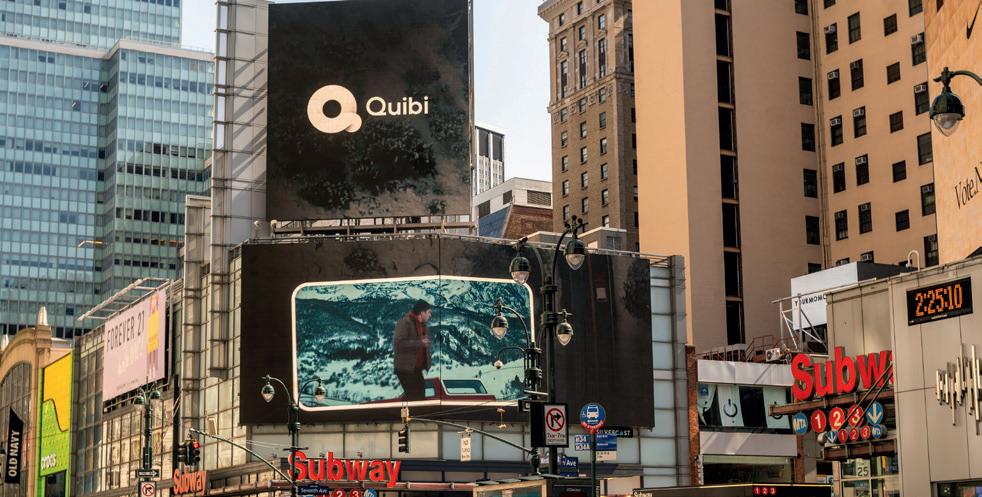
There are few clearer cautionary tales than Quibi. Launched with close to $2 billion in funding and enormous media support, the mobile-only streaming platform was positioned as the future of entertainment. It collapsed in less than a
year. Despite its technology, its celebrity backing, and its marketing spend, it failed to embed itself in people’s lives. It existed entirely on screens and vanished just as easily. Quibi’s downfall was not just a content problem, it was a reminder that brands without depth, context, or tangible presence struggle to endure.
The digital economy is littered with similar stories. Apps that spike and vanish, or directto-consumer brands that dominate social feeds for a season and then fade. Digital attention is volatile by nature. Marketing research has long pointed out that while digital campaigns excel at quick engagement, they are also easily forgotten. Without anchors in the real world, brands dri
By contrast, brands that invest in physical presence give customers something to hold onto, both literally and emotionally. A store you can walk into, a printed piece you can return to, or a product that earns its place in your home. Even companies born online have recognized this. Businesses that operate exclusively online place a natural ceiling on their growth. Physical presence is no longer an outdated relic, it is a strategic tool for trust, di erentiation, and longevity.
There is something fundamentally human about tangible experience. We are not designed to live entirely through screens. Touch, weight, texture, and proximity matter. A face-to-face conversation builds trust faster than a chain of automated emails. A physical object carries meaning beyond its function, it demonstrates e ort, intent,
and care. Studies consistently show that tangible marketing materials create stronger emotional bonds and are retained in memory longer than purely digital interactions.
When a brand invests in something physical, it communicates commitment. It signals that the relationship is worth more than a click. High-quality print, inperson engagement, or carefully packaged delivery all send the same message: we took the time. As specialists in print communications have observed, physical materials o en resonate on a subconscious level, reinforcing credibility in ways digital advertising struggles to replicate.
Importantly, this response to tangibility is not limited to older audiences. Younger generations, o en assumed to be entirely digital, are demonstrating a strong appetite for physical brand experiences. Research shows that Gen Z and Millennials are highly responsive to physical communications. For many, there is a genuine sense of anticipation in receiving something in the mailbox that is not a bill or a generic yer. That moment of opening an envelope, feeling its weight, and realizing it contains something considered rather than automated creates a small spark of excitement. In a world saturated with digital noise, physical communication stands out precisely because it feels intentional, deliberate, and human.
As businesses accelerated their digital transformation, many stripped away physical and personal elements in the pursuit of e ciency. Storefronts were replaced by

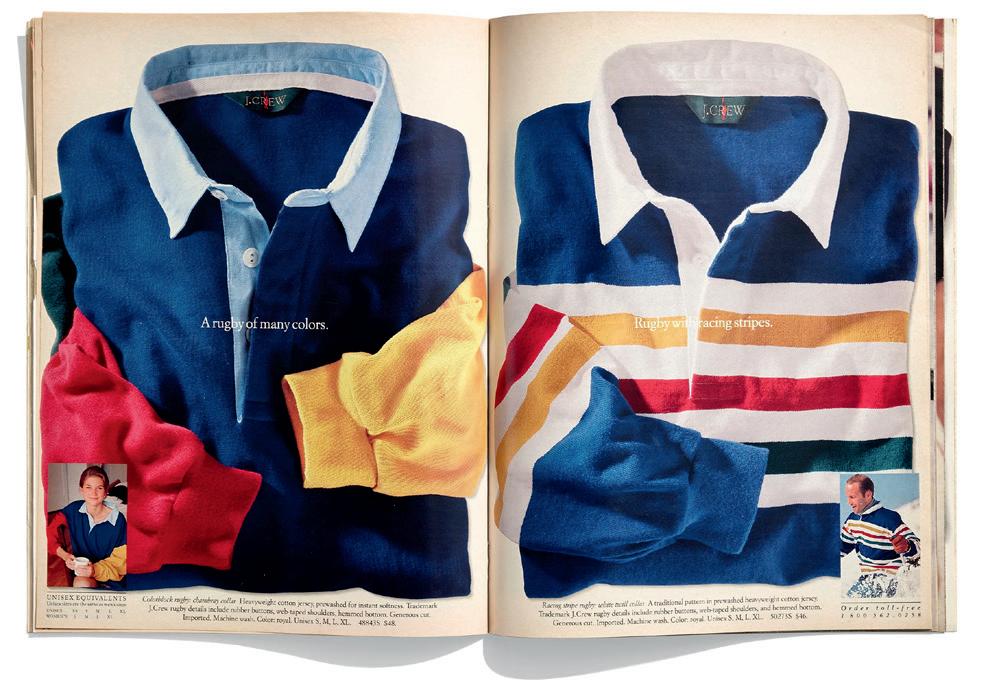
Source: Ode to the J.Crew Catalog – HOMMEGIRLS
apps, printed materials gave way to email automation, and customer service shi ed to chatbots. While this was meant to empower consumers, in practice, it o en le relationships feeling transactional and disposable. Convenience alone does not build loyalty. When something goes wrong, customers want to know there is a real organization behind the interface, a place, a team, and a process. Even the largest digital players have acknowledged this limitation. Amazon, the ultimate online retailer, opened physical bookstores and supermarkets. These decisions were not nostalgic, they were strategic. They recognized that brands anchored only in the digital realm struggle to feel substantial or enduring. Physical operations allow businesses to demonstrate reliability and accountability in visible ways. When a brand oversees everything from production to delivery, it takes responsibility in a way that customers instinctively trust. This is where heritage brands o en hold a distinct advantage. Longevity carries weight. A business that has operated through economic cycles and technological shi s o ers proof that it has earned trust over time rather than borrowed attention. In sectors where trust matters, cra smanship and heritage remain decisive factors. Consumers associate longevity with quality, expertise, and reliability. Cra smanship reinforces this perception. It implies care, skill, and human involvement. In an era of automation, cra smanship feels almost radical. Whether it is the way a product is nished or a project is managed, cra smanship signals pride in
work. It tells customers that there are real people behind the brand who care about the outcome. Heritage brands also tend to retain key capabilities in-house, protecting quality and accountability. Trust grows when responsibility is clear. None of this suggests that innovation should be resisted. The strongest brands today blend traditional principles with modern tools. Physical and digital experiences are most powerful when they reinforce each other, such as a printed piece that leads seamlessly to a digital interaction. Modern data can enhance traditional methods, allowing brands to use insights to deliver physical materials that feel individual rather than generic. Personal connection is emerging as the true di erentiator. Brands that surprise customers with care rather than frequency earn loyalty that cannot be bought through advertising alone. In a crowded, fast-moving marketplace, the brands that endure are those that remember the human fundamentals. Digital tools drive e ciency, but authenticity builds trust. Being a real brand means creating experiences people can feel through physical presence, cra smanship, and consistency. As consumers tune out generic digital noise, they lean towards brands that feel deliberate and human. The future belongs to businesses that combine modern capability with timeless connection. In the end, people rarely remember what a brand promised, they remember how it made them feel. That feeling, built through real experiences and real e ort, is what turns a brand into something lasting.
3 MORE HIT 30


Cheers to Sandro for 30 years of integrity, design excellence, and passion at Eastern Press. Whether he’s advocating for clients or sharing a laugh about his beloved Carlton Blues, Sandro’s reliability and wit make him an irreplaceable part of our team.
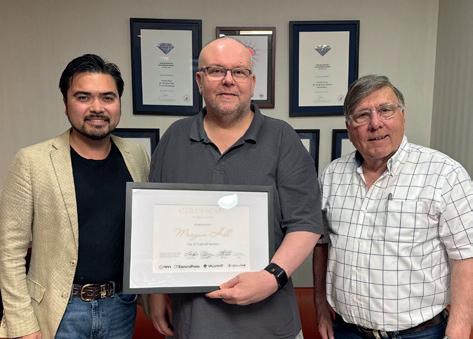
Having been part of the family since age nineteen, Morgan is the technical powerhouse whose mastery of color and systems makes our work stand out. His directness and industry-leading brilliance have earned him immense respect from partners like Heidelberg and our entire team.
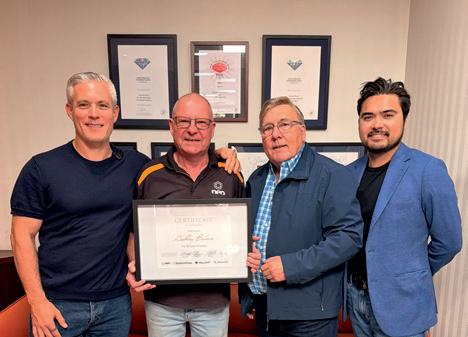
Celebrating 30 years at the company, “Uncle Ash” has evolved from a printer to a vital leader and the ultimate “go-to” man for any challenge. His technical versatility and lifelong readiness to help—whether mentoring the team or lending a personal hand—make him the heart of our workplace.
Clinton Daley, Sandro Maio and Paul Daley
Clinton Daley, Morgan Hill and Paul Daley
Seth Watts, Ashley Baker, Paul Daley and Clinton Daley
TRUST IN PRINT:
What a 128-Year Partnership Teaches Us About Business Longevity
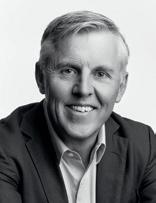
By Alastair Troedel, National Key Accounts Manager and Industry Ambassador
INA LANDSCAPE
de ned by disruption, a 128-year client relationship isn’t just a milestone, it’s a masterclass in business longevity. Ours with Xavier College, Kew, Victoria is one of those rare stories, spanning ve generations and proving that while technology is eeting, trust is the only constant.
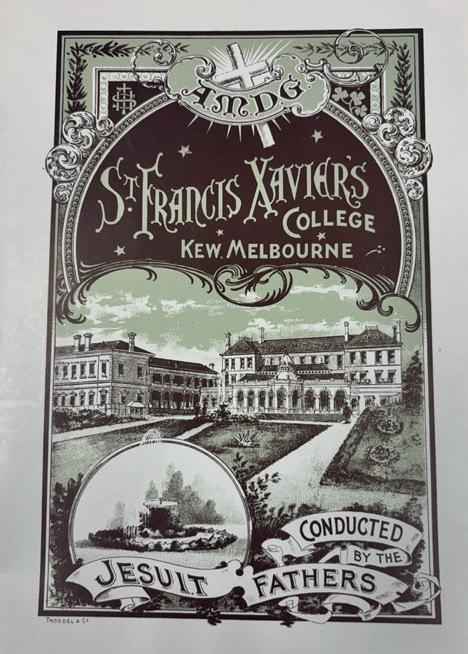

The connection began in 1898 when my great-great-grandfather, Charles Troedel, set type for the very rst edition of The Xavierian. At a time when print was purely a hands-on cra , this initial publication laid the foundation for a legacy partnership.
Fast forward to today, and the printing industry is fundamentally di erent. The hand-cranked press has been replaced by complex digital work ows and a non-stop cycle of investment. Yet, the expectations that underpin this decades-long collaboration remain exactly what they were in 1898: accuracy, reliability, and care.
Longevity in partnership is not accidental. It is built on a simple, challenging principle: you must earn trust repeatedly. It requires us to listen, adapt our technology to their changing needs, and operate beyond a transactional level. We pride ourselves on understanding the rhythms of the school year, the importance of deadlines for prospectuses, the precision required for Valete Books, and the signi cance of every communication piece that connects students, families, and alumni.
This ongoing commitment is what transforms a supplier into an essential, trusted partner.
As Xavier College prepares for its 150th anniversary, this relationship is a living example of shared values of quality and respect. We are proud to be entrusted with telling the College’s story through print during such a signi cant chapter, and we are committed to supporting the next one, just as the generations before me have done.
In an era where relationships are o en short-term and price-driven, this enduring collaboration reminds us of the profound value of trust earned over time.
IN SEARCH OF THE PERFECT WORD
continued from page 5
Today, dictionaries regularly publish lists of new words, the latest being the Cambridge Dictionary, which has listed 6212 new words, phrases and meanings, all of them added in the past 12 months.
EPILOGUE


Rowan Atkinson now has a net worth of $450 million and spends $250,000 a day, but he only spends $12 on his daily Pizza. His wardrobe is simple with most items coming from high street brands.
So where does that $250,000 a day go? Atkinson has donated millions to Charitable causes including over $15 million to education initiatives aiming to provide opportunities for disadvantaged children and support Schools in need.
In addition, he has contributed $5 million to mental health organisations advocating for better options and support for those struggling with mental health issues. He is also a vocal supporter of environmental causes, having donated $7.5 million to initiatives aimed at protective wild re and reducing Carbon emissions.
Despite his global fame and wealth, Rowan leads a humble lifestyle and focuses his nancial resources on causes he cares deeply about.
Lithonet is produced wholly at New Litho Group, printed using four colour process with spot matte and gloss varnish and the stock is ecoStar+ 100% Recycled Silk.
St. Francis Xaviers College Publication printed by Troedel & Co.
Rowan Atkinson
The Quiz.
01. What year did Australia change currencies from the Pound to the Dollar?
02. What is the name of the longest continuously operating university in Australia?
03. Which planet in our solar system has the shortest day length?
04. What unit is used to measure electrical resistance?
05. What is the name of the process by which plants convert sunlight into energy?
06. Which country was the first to grant women the right to vote at a national level?
07. What musical instrument has keys, pedals, and strings but is not a piano?
08. What is the hardest natural mineral on Earth?
09. Which continent contains the greatest number of countries?
10. What is the term for animals that are active primarily at night?
11. What streaming platform released the series Stranger Things?
12. Which gas makes up the largest percentage of Earth’s atmosphere?
13. What does the acronym PDF stand for?
14. In which decade did the World Wide Web become publicly accessible? 15. Who painted the ceiling of the Sistine Chapel? 16. What cooking method involves sealing food in a vacuum bag and cooking it in water at a precise temperature? 17. Who was the first woman to win a Nobel Prize? 18. What is the busiest shipping canal in the world by traffic volume?
19. Which film director is known for Jaws, E.T., and Jurassic Park?
20. What sport uses the terms “love”, “deuce”, and “advantage”?
21. In Greek architecture, what are the three classical column orders?
22. Which company introduced the first commercially successful smartphone?
23. What language has the most native speakers worldwide?
24. What Italian city is considered the birthplace of the Renaissance?
25. What term describes a word that sounds like the noise it represents?
Deano’s Haiku
Twenty sixth dawn breaks Traverse the web of intrigue The brave prosper
Word Search.
Find 28 animals
Lion
Tiger
Elephant
Dolphin
Armadillo
Crocodile
Gorilla
Whale
Leopard
Bear
Eagle
Shark
Fox
Penguin
Zebra
Wolf
Antelope
Buffalo
Camel
Otter
Rabbit
Hippopotamus
Deer
Kangaroo
Koala
Octopus
Squid
Cheetah
Get it solution. hint - measuring device

Answers.

24.
25.
Get It - Hourglass
1966
University of Sydney
Jupiter
Ohms
Photosynthesis
New Zealand
Harpsichord
Diamond
Africa
Nocturnal
Netflix
Nitrogen
Portable Document Format 14. 1990s
Michelangelo
Sous vide
Marie Curie
Panama Canal
Steven Spielberg
Tennis
21. Doric, Ionic, Corinthian
Apple 23. Mandarin Chinese
Florence
Onomatopoeia