
revue

Member Platform Login
If you have not set up your login on the new member platform please do so as soon as possible. The new system requires you to set up a new login (step by step instructions were emailed to members on 24 March). Please use the email address we have for you on our records as your username. If you have any issues please contact us.

Copy deadline date for the Winter Revue issue is Friday 15 May, 2026. A one page article is 700 words approx. including an image.
STOP PRESS!
We hope you enjoy the refreshed, modern design of Revue, aligned with our newly launched digital experience for VPELA members and the wider community. Our redesigned website and enhanced member platform are now live, offering improved navigation and easier access to resources, events and updates. The platform is built to strengthen connection, collaboration and professional growth across the sector.
We appreciate your patience as Revue was delayed slightly due to the redesign and launch. As always we welcome your feedback on the new look Revue and the member platform as we continue refining and improving the experience for all users.
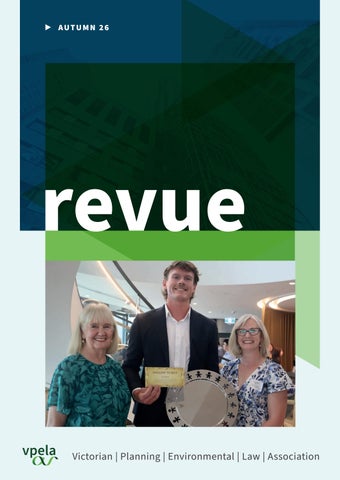
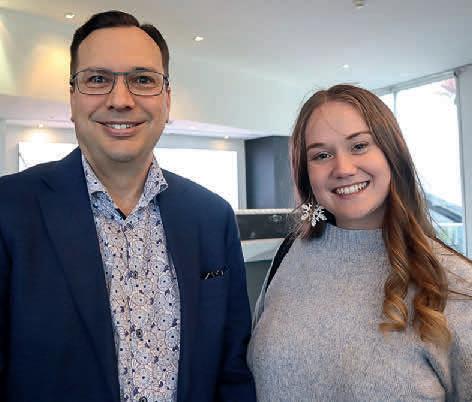
Cover: Kathy Mitchell AM and Jodi Kennedy, VPELA President, pictured with Nic Watson, Department of Transport and Planning, the 2026 Kathy Mitchell Award recipient

Newsletter editors:
Amanda Ring
M: 0419 332 473
E: aring@upco.com.au
T: 8648 3500
Holly McFall
M: 0459 321 020
E: hmcfall@upco.com.au
T: 8648 3500
VPELA PO Box 1291 Camberwell 3124
www.vpela.org.au
E: admin@vpela.org.au
T: 9813 2801
VPELA acknowledges the Traditional Custodians of Country throughout Australia, their Elders and ancestors, recognising their rich heritage and enduring connection to Country and the ongoing sovereignty of all Aboriginal and Torres Strait Islander Nations.
From the Editors
The future starts today, not tomorrow – Pope John Paul II


Is it just us, or does time really fly these days? It must have something to do with the pace of modern professional life; the emails, the phone calls, the text messages, the Teams and Zoom meetings. Nothing seems to be important these days; instead, everything is urgent. Many of us have unwittingly jumped onboard under the guise of workplace flexibility and so we find ourselves steaming towards the end of another April and, before we know it, the end of another year. So, we are guessing that most of the membership (and our team at VPELA HQ) is focussed on ensuring that we do not waste it.
We have a wide variety of contributions in this Autumn edition and are thankful for each of them. Some were prompted by the call-out in VPELA’s recent online and email updates. Others are from regular contributors or those who have contributed before. However, it is especially pleasing to see contributors appearing in the edition on debut.
In our first edition of 2026 we reflect on the significant career contributions of two VPELA Fellows and winners (in 2023 and 2024 respectively) of the Richard J Evans Award for outstanding contributions to planning in Victoria. John Rantino leaves professional practice to enjoy life away from Maddocks and the Tribunal and Catherine Heggen leaves a long career in consulting to contribute to the work of Panels Victoria and give more attention to her other interests in life.
Unusually, we publish an article on a serious topic having agreed to provide its author with anonymity. At one time or another, whether as a child, teen or adult, many of us can recall being the subject of bullying and know the negative feelings and heartbreaking consequences that can come with it. For many of us, those experiences were left in the playground years ago or, when experienced in later life, put down to personality differences and the nature of human competitive behaviour that one simply had to ‘tough out’. But nobody should have to ‘tough it out’. Bullying is widespread, perhaps now more than ever in the digital age, and the focus must be on routing it out and ensuring that bullies are held accountable for their actions and impact.
Also, unusually, we recognise an Australia Day Honours recipient who is not a member of VPELA perhaps because the lion’s share of his working life was behind him by the time VPELA was formed in 1989. Dr Brian Harper OAM was a big contributor to town planning during his professional life and his initiatives in respect of the Mornington Peninsula are especially noteworthy. Aside from recognising his award, it is important that the younger among us understand that innovative planning initiatives are not simply something of the present, but a well-worn and often difficult path forged in an earlier time by now older professionals. What is it they say? Not all heroes wear capes.
Finally, notification of the loss of any member of VPELA’s variously represented industries and professions always stirs great sadness. This is particularly so when the loss is of one so young and still in the very early stages of building a productive and fulfilling career.
It is often said that young people are our world’s future. While we and many other members will not have known Michael Hurst personally, this edition includes a lovely tribute prepared by Anna Borthwick and Mia Zar that embodies Michael’s many fine and engaging attributes and conveys the energy, enthusiasm and fellowship that young people can and do bring to the future, including to professional life. It is tragic that his young life was taken far too soon, albeit doing something he loved.
Despite the sad note recorded in this edition we encourage you to read it from front to back and enjoy:
● Recollections and photographs of social events in the lead up to Christmas ‘25 and the New Year
● The first article from new Association President, Jodi Kennedy, and some insight to new Board Members, Will Bromhead, Steve Myers and Sarah Thomas
● Mark Sheppard’s reflection on his term as the recent past President of VPELA
● The Kathy Mitchell Award citation and Nic Watson’s response
● Tasma Eddy’s experience of the always well subscribed Moot Court Program
● Legislation updates from Matthew Townsend (Planning Amendment (Better Decisions Faster Bill 2025) and Meg Lee (EPBC Act)
● In Case You Missed It and Rory’s Ramble
● Articles about the burden of compliance and regulation from Robert Stopajnik, data centres from Ben Cooke and Natasha Campbell and aerial imagery from Stan Zaslavsky.
We extend our best wishes for the months ahead, strength and determination to stay abreast of change and, as always, an invitation for feedback. In the meantime, happy reading.
Amanda and Holly
Amanda Ring and Holly McFall are part of the team at UPco –the Urban Planning Collective
Amanda Ring UPco
Holly McFall UPco
President’s Column Building on strong foundations

Welcome to the first Revue of 2026 and my first as President of VPELA. What an honour it is to lead this amazing organisation, especially at a time of significant reform in both the planning and environment sectors.
Before I discuss what has been happening and what is planned for 2026, I would like to acknowledge Mark Sheppard, who led VPELA for the last four years and, as I stated at the Christmas Party, he had big shoes (in terms of heels and sparkles) to fill taking over the Presidency from Tamara Brezzi. However, Mark made those shoes his own and the Board and I have valued his thoughtful, engaging, and collaborative leadership style. Looking back, Mark ensured the Board delivered for our membership including:
● Establishment of an Endowment Fund
● Preparation of a Strategic Plan for 2023-2028
● Development of more transparent governance arrangements for the Board and committees (including rewriting our rules of association)
● Extensive government engagement including regular meetings with the Planning Minister and senior executives, representation on committees, submissions and Fellows Forums
● Our first Reconciliation Action Plan
● Establishment of a Mentoring Program
● Reintroduction of regional events
● Establishment of training for planning panels
● Introducing the Kathy Mitchell Award
● Commencement of the Small Business Collective
● Initiation of regular member surveys.
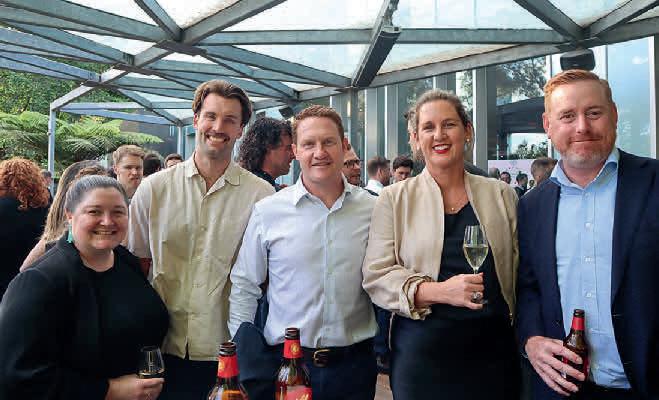
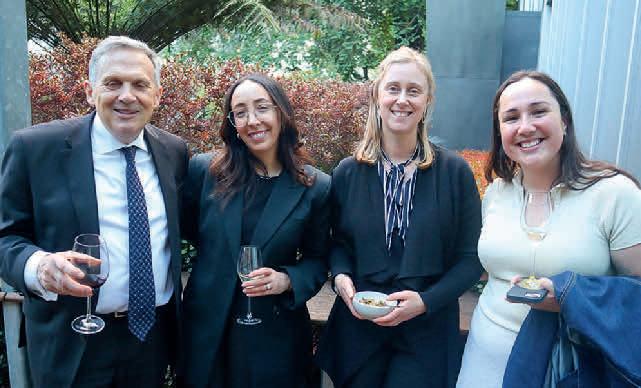
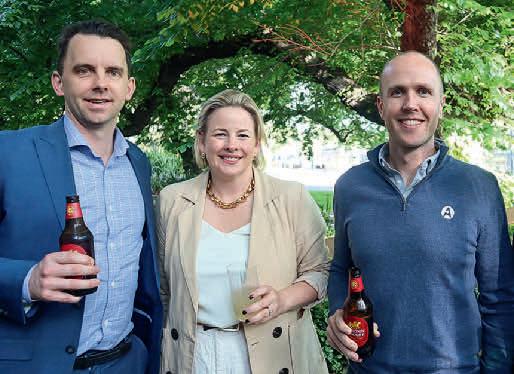
As always, our Christmas Party was well attended and the weather was perfect for our members to mingle and network before the Holiday break – by the noise in the room there was plenty to discuss.
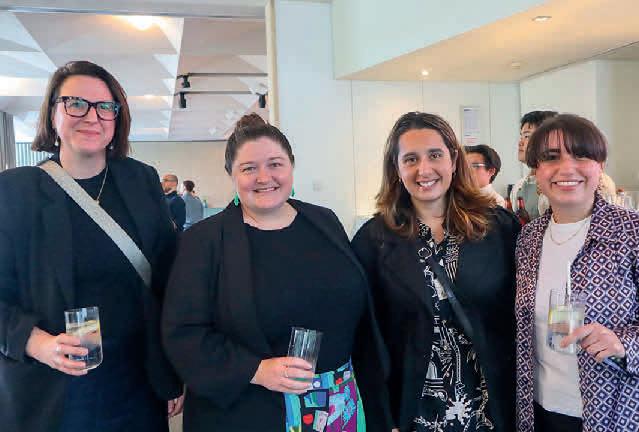
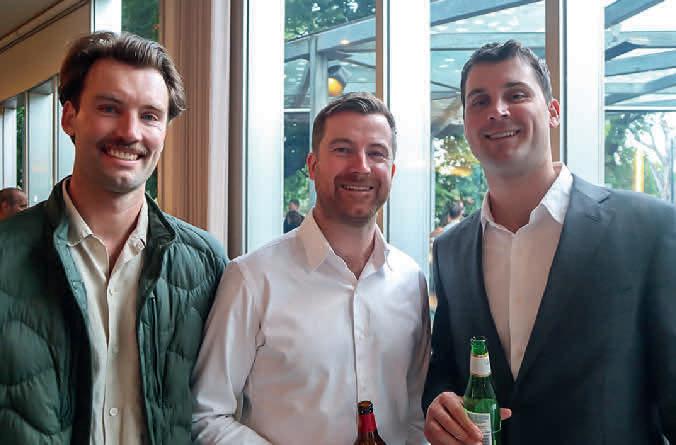
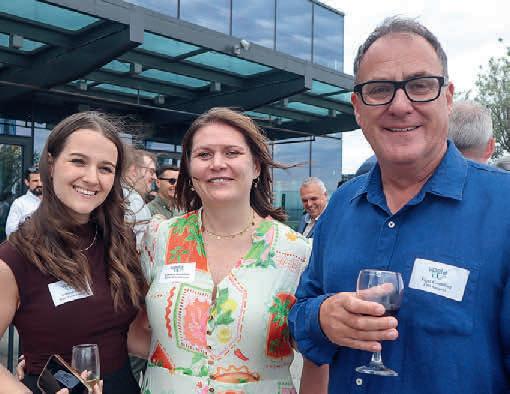
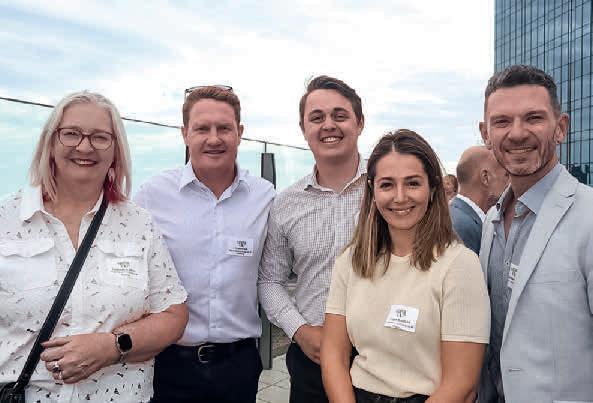
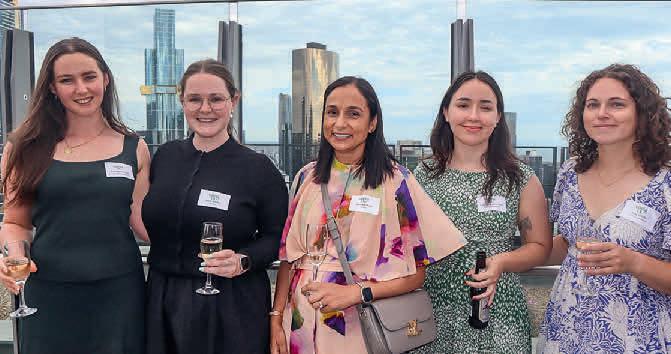
We commenced 2026 with another networking event: our Summer Soiree. At this event we also announced the 2026 winner of the Kathy Mitchell Award which went to Nic Watson from the Department of Transport and Planning –congratulations Nic and enjoy the golden ticket to all the VPELA events this year! This is the third year of the Kathy Mitchell Award, an award that provides the winner with a fantastic opportunity to get to know others in our membership, network, learn and importantly progress their career.
This year the VPELA Board is looking forward to continuing with a number of our regular events such as; Meet the Minister, Red dot decisions, Moot Court etc, but we are also looking to introduce new events which we are currently in the process of developing. If you have anything you would like us to run a seminar on, please reach out to one of the Board members.
VPELA is also continuing to get out and about in the regions and we have recently put out an EOI for regional champions to assist making this happen.
We saw 2025 finish with a significant amount of planning reform which continues in 2026 with the Planning Amendment (Better Decisions Made Faster) Act 2026 receiving Royal Assent on 17 February 2026.
The Bill is anticipated to come into full effect by 29 October 2027. This will allow time for supporting changes to the planning system including changes to the Planning and Environment Regulations 2015, preparing new Ministerial guidelines, updating the Victoria Planning Provisions, and other updates to Victoria’s planning schemes and guidance materials.
VPELA understands the State government has and will be undertaking consultation with key stakeholders in preparing this suite of reform and we will contribute and, where appropriate, run seminars to hopefully influence decisions for the betterment of our sector and more importantly to achieve better outcomes for our communities.
Our Young Professional Group has two new Co-Convenors, Felicity Karakiklas and James Aloi. They have hit the ground running and are joined by seven new members. The Board met with the newly formed Young Professional Group in February and its energy and enthusiasm was contagious.
It has been a bit of a whirlwind settling into the role of President – I have met with various leaders in our sectors, including the Minister for Planning and we are looking to engage more regularly with the Minister for the Environment. This year the Board is keen to continue to put a spotlight on planning reforms from a continuous improvement perspective. We are also keen to understand and contribute to the reforms around EES processes.
This Autumn edition of Revue has some great articles, and I encourage everyone to consider contributing. Various views and opinions ensure we have robust discussions that align with or challenge our thinking and lead to better outcomes for our communities.
Jodi Kennedy is President of VPELA and General Manager Community & Culture at Bass Coast Shire

Jodi Kennedy Bass Coast Shire
People
Signing off as VPELA President
Last October, I finished my term as VPELA President. I’m thrilled that the board elected Jodi Kennedy as the new President, supported by Vice Presidents Meg Lee and Tim McBride-Burgess. They are already doing an outstanding job in these roles, and I know that they will lead VPELA to new heights.
Over the last few months, I’ve had the opportunity to reflect on this special chapter of my professional life and what it is that makes VPELA so unique. Being the face of the Association has beewn a huge honour and privilege that I will forever look back on with great pride.
The opportunity to lead our engagements with the Minister for Planning and represent the Association in numerous dealings with government and other agencies has been an unparalleled experience that I am deeply grateful for. However, my greatest reward has been the opportunity to collaborate and deepen friendships with the incredible team of dedicated professionals that has made up the VPELA Board and Secretariat over my term. I could not have asked for a more supportive, engaged and insightful group of colleagues, and I’m extremely proud of what we’ve collectively achieved over the last few years.
Needless to say, we stood on the shoulders of giants, building on the prodigious work of our predecessors to strengthen the foundations of the Association while also exploring new directions. We have always sought to retain the traditions most loved by our members, while introducing new offerings that we hope will, in time, become equally loved traditions.
A highlight of my time as President was the establishment of our Endowment Fund. Conceived and made possible by the shrewd financial management of previous boards, this growing nest egg not only secures the long-term future of the Association but is already funding ‘special projects’ that cannot be afforded through our ordinary operating budget.
The Kathy Mitchell Award for excellence in a young or new professional working in the Victorian Public Sector, our RAP, the Small Business Collective and our mentoring program are but a few further examples of how our offer to members has expanded over recent years.
VPELA is a truly special organisation that punches well above its weight in terms of its positive influence on the planning and environment sector, including the capability, career development, professional enjoyment and wellbeing of its participants. Our events are outstanding, whether they be social, educational, inspirational or, most likely, a mix of all three. Our behind-the-scenes impact on policy is profound, cultivated through careful and considered engagement with policymakers where we are recognised as a critical, independent, expert voice. Our awards are widely acclaimed, with many recognising the quiet achievers who have outsized influence but do not seek the limelight.

Mark Sheppard Urbis
VPELA is a unique organisation. As my fellow board member Marji Kennedy puts it so succinctly, we provide a forum for conversations about the things that matter to the planning and environment sector. The multi-disciplinary and multi-sector nature of our membership ensures that these conversations are holistic and balanced. The fact that our goal is to promote discussion and knowledge, rather than forming definitive positions to advocate for, ensures that these conversations are inclusive and constructive.
And all of this with 2½ staff! Of course, Anna, Grace and Katherine are outstanding at marshalling their experience, skills and time to greatest effect. But the secret sauce of VPELA is its army of volunteers, from board members to the Conference and YPG Committees, from Revue editors and contributors to seminar speakers, and not forgetting the multitude of contributors to our many submissions and consultation committees. The willingness of so many busy professionals to contribute their own time speaks volumes about the importance of VPELA and its role in the industry.
In closing I’d like to thank those who have provided the most vital support for me during my term: Tamara Brezzi, who encouraged me both to stand for the board and to put myself forward for this role; Jane Power, who chaperoned me through the first period and Anna Aughterson who has effortlessly shielded me from all but the most important tasks ever since; Kathy Mitchell, who provided invaluable mentoring and connected me with the Association’s foundational tenets; and not forgetting my wife and my employer, who granted me the freedom to take on this role. My heartfelt thanks, too, to all the members who’ve offered reassuring remarks over the past few years—your encouragement has been much appreciated.
Renewal is an essential means for injecting fresh energy and new ideas into any organisation, and VPELA is committed to ongoing turnover in our ranks. I encourage all of you to put your hand up to contribute to the Association in some way, whether it be membership of a committee, speaking at a seminar or contributing to Revue or a submission. The rewards in a sense of achievement and new connections far outweigh the effort.
I look forward to seeing VPELA grow and evolve in the years ahead, and to remaining an active part of this vibrant Association.
Mark Sheppard is Immediate Past President of VPELA and a Partner at Urbis.
People
New Board Members

William Bromhead CEO, Ratio Consultants
William Bromhead is CEO of Ratio Consultants, a national consultancy spanning planning, transport, urban design, waste management, landscape architecture and civil engineering. Elected to the VPELA Board in 2025, Will brings more than three decades of planning experience to the role, along with a genuine enthusiasm for the profession and the people in it.
Despite leading Ratio’s multidisciplinary team, Will still considers himself a town planner at heart. He remains firmly ‘on the tools’ for some of the most complex and high impact developments across Victoria, driven by a passion for problem solving and better planning outcomes.
Will’s career began at Henshall Hansen Associates, a firm ahead of its time in combining planning and economics. Surrounded by strong mentors and ambitious peers, he developed a respect for the broader forces that shape cities. He then worked at Hansen and Contour before landing at Ratio in 2008 with a clear goal to pursue directorship. At that time, the firm comprised around 25 people and was primarily focused on statutory planning and traffic engineering. Today, Ratio provides six services and is a team of over 100 across Australia. As CEO, Will is proud of the firm’s evolution into a truly multidisciplinary consultancy and of the culture that underpins it. He is particularly passionate about investing in younger professionals and creating opportunities for them to grow in confidence and capability.
Will has worked across a wide range of strategic and statutory planning projects. He regularly appears as an expert witness at VCAT and Panels Victoria, and his experience spans residential,
commercial, industrial and retail developments, along with aged care, retirement living, compensation matters and infrastructure projects. Will continues to enjoy helping clients navigate the planning system and aims to show them that, while challenging at times, the process can deliver positive and enduring outcomes.
Will believes planners have a critical role to play in responding to Victoria’s housing challenges. He is especially interested in initiatives that support students, retirees and older members of the community. He also sees significant opportunity to better integrate land use planning with transport infrastructure to deliver sustainable communities and longterm economic growth.
One project that stands out in his career is working with the Melbourne Indigenous Transition School, which supports Indigenous students from across Australia to access education in Victoria while providing vital pastoral care. For Will, projects like this demonstrate the meaningful social impact that planning can have when it is guided by purpose.
As a VPELA Board member and part of the Conference Organising Committee, Will is keen to see the Association continue to lead informed, respectful debate on the issues shaping the industry. He values VPELA as a forum for collaboration between planners, lawyers, consultants and decision-makers, and is motivated to help it remain forwardlooking and inclusive.
Outside work, Will enjoys playing tennis, cooking delicious and elaborate meals, and spending time with his wife Catherine and their three almost-grown-up children. He maintains a healthy sense of humour about both life and planning. After all, a profession that once required him to seek approval for the Sphinx in Geelong has taught him to expect the unexpected.


Steve Myers Director, Myers Planning & Associates and MPAA Studio
Steve Myers is the founder and Director of Myers Planning & Associates and its sister building design practice, MPAA Studio, based in Warrnambool and working across regional Victoria.
Appointed to the VPELA Board in 2025, Steve brings more than two decades of experience across local government, State Government and private practice.
His career began at Bendigo City Council in the early 2000s and later included roles in State Government across Bendigo, Geelong and Warrnambool before moving into private practice more than a decade ago. He continues to enjoy helping clients navigate complex planning pathways and believes the system, while challenging at times, can deliver enduring and positive outcomes.
Steve grew up in regional New Zealand and has built his professional life in regional Victoria. That grounding continues to shape how he sees the profession. In smaller communities, planning decisions land close to home and influence livelihoods, identity, housing supply, local business confidence and long-term resilience. He is passionate about supporting practitioners working in regional areas and ensuring those perspectives are represented in statewide conversations.
While planning remains his profession, he is also the owner of CoLab, a co-working space, and Allee Espresso in Warrnambool’s CBD. CoLab was founded with a simple ambition to create a “third space” for Warrnambool, somewhere between home and work where ideas and community could take root. Together with Allee, both located in a once overlooked laneway, these ventures reflect his belief that shaping place does not always require a major project. Often it is about small, sustained interventions that gradually change how a street or laneway feels.
In addition to his Board role, Steve serves on the VPELA Conference Organising Committee and is part of the Small Business Collective, a forum he values for connecting practitioners around the practical realities of running and sustaining professional practices.
As a Board member, Steve is keen to strengthen regional engagement within VPELA, support professionals at all stages of their careers, and contribute to thoughtful, crossdisciplinary conversations about the future of planning, environment and development across Victoria.
He joined the Board because he believes VPELA plays an important role in bringing good people together and that when thoughtful professionals connect across disciplines and regions, better places tend to follow.
Outside of work, Steve is married and shares life, and occasionally the office, with Pippin, a miniature wirehaired dachshund who is small in stature but significant in personality.

Sarah Thomas Associate Director, UPco
Sarah is an Associate Director at the Urban Planning Collective, with more than 20 years’ experience working as a town planner in both the public and private sectors. Over that time, she has worked in local government roles assessing and managing planning applications, and in consultancy roles preparing and managing applications for applicants.
Having spent substantial time in both environments, she has a solid understanding of how planning decisions are made, the pressures faced by responsible authorities, and the challenges applicants and consultants deal with in practice.
In her earlier career, Sarah worked in a Council setting, where she was responsible for assessing a wide range of planning applications and managing them through to decision. This experience gave her a strong grounding in statutory assessment, policy interpretation and decision making processes. She draws on that background and experience in her current role.
Sarah has extensive experience appearing at VCAT, having acted in advocacy roles for both Councils and private clients. She is now looking to build her town planning expert role, and apply her experience and judgement in an independent capacity.
Sarah enjoys the challenge that comes with complex matters and values careful preparation, attention to detail and the ability to respond clearly under pressure. There is nothing she loves more than detailed 54, 55 and 58 assessments – and a good debate about what does and does not comply! She is keenly keeping an eye out for ‘red dot’ decisions addressing a few contentious matters!
As a Board member, Sarah is keen to contribute to discussions affecting the planning profession broadly. Having worked in both the public and private sectors, she understands the different pressures and expectations faced by planners in each setting. This perspective allows her to approach industry issues with a balanced and practical mindset, and to advocate for fair and workable outcomes for practitioners in both sectors.
Outside work, Sarah has recently moved back to the suburbs with her 12 year old daughter, Chloe, who has started secondary school. While the move was a big change, they have settled in well. Their four year old Pomeranian, Luna, adapted quickest of all and is loving her back yard.
When she is not spending time with her daughter, Sarah is a regular gym-goer and at the risk of sounding like an Instagram influencer-wannabe she’s a big advocate for “win the morning, win the day”.
Sarah sees her role on the Board as a chance to connect with peers outside her usual work environment, contribute to constructive conversations, and support initiatives that benefit the planning industry as a whole.
People
A message from your YPG Co-Convenors
We are pleased to introduce ourselves as the 2026 CoConvenors of VPELA’s Young Professionals Group (YPG). As we step into another year, we are delighted to welcome seven new Committee members, Ruby Bell, Hans Gao, Lily Green, Eliza Kane, Tristan Layton, Brigette McKay and Nic Watson. Their fresh perspectives, enthusiasm and diverse skill set further strengthen the YPG’s ability to curate and deliver high-quality events that continue to be enjoyed year on year.
We also extend our sincere thanks to our outgoing Committee members, Bridget Goodear, Caroline Graham, Dinan McMahon, Tom Morrison and Joshua McLennan. Over the course of their three-year tenure, each brought energy, creativity and dedication to the YPG, leaving a lasting impact on the Group’s culture and success.
We would also like to express our gratitude to Charlie Wurm and Dani Ferretti for their contributions as YPG Co-Convenors. Their leadership, presence at events and genuine commitment to the group have left the YPG in an exceptionally strong position. We hope to see all outgoing members at future events and remain part of the YPG community.

James Aloi onemilegrid

Felicity Karakiklas Contour Consultants
We have already hit the ground running in 2026 with another successful Speed Networking event. Throughout the year, we will continue to deliver our regular calendar of events, including Trivia Night and the Masterclass Series, alongside a range of additional events designed to strengthen industry connection and professional development.
The YPG provides an invaluable platform for early-career professionals to collaborate, build meaningful networks and engage more broadly within the industry.
If you would like to know more about the YPG or get involved, please reach out to us or any Committee members.
Get to know your YPG Committee
For the first time in many years, the YPG has two new Co-Convenors and seven new Committee members. In what’s set for a busy year, you will have the opportunity to meet them throughout the year at YPG and broader VPELA events. For now, you can get to know them through these short bios that follow. – Eds.
Shaping tomorrow’s cities and communities begins with planning
At Urbis, our urban consultants work with you throughout the entire planning process to deliver outstanding results in the public and private sectors – including due diligence, strategy, strategic planning and development facilitation.
No matter what size your project is, we take the time to understand your vision and
Get in touch with our team
position it for success. Our planners are the most experienced and awarded in the country, guiding projects from vision to approval and beyond.
In addition to our core services, we offer expert advice in key growth areas such as Transport A dvisory and Social O utcomes & E ngagement
People Get to know your YPG Committee

James Aloi (Co-Convenor)
James is a Senior Engineer at onemilegrid and begins his role as Co-Convenor in his 4th year on the Committee. James works on a wide variety of traffic and transport projects, with a growing flavour for new urbanism and public realm active and sustainable transport integration. Outside work, James continues to plug away with NBA spreadsheets and fantasy basketball, optimistic about his Minnesota Timberwolves. James is not very excited for the heightened expectations of the St Kilda Football Club and would prefer to block out the noise with the sounds of Melbourne Bounce and minimal techno.

Felicity Karakiklas (Co-Convenor)
Felicity is a Senior Planner at Contour Consultants, with experience across a broad range of planning matters including residential, mixed-use, industrial, retail and commercial developments of all scales. She is results-driven and passionate about delivering positive, innovative planning outcomes. This marks Felicity’s fourth year on the YPG Committee and her first year as YPG Co-Convenor. She is excited about the opportunities and achievements the year ahead will bring! Outside work, Felicity is a passionate Carlton supporter who enjoys travelling, cooking delicious food, and spending time with family and friends.

Ruby Bell
Ruby is a Lawyer in the Environment and Planning team at MinterEllison. Ruby regularly assists private clients with a broad range of strategic and statutory planning matters. She also has a keen interest in assisting clients with their ESG and decarbonisation goals. Outside work, Ruby is an avid runner who loves exploring Melbourne on foot, trivia and games nights with friends, and discovering new bakeries and restaurants.

Hans Gao
Hans is a Senior Consultant at Eukai and 1st year YPG Committee member. He provides traffic engineering advice across a range of projects and has a particular interest in major retail and mixeduse precincts. He regularly assists
Eukai experts in preparing evidence for VCAT appeals, Planning Panels, land acquisition claims and a rare Environment Effects Statement. Outside work, you’ll find Hans on his bike exploring all that Melbourne has to offer.

Lily Green
Lily is a Traffic Engineer at Amber Organisation. She works across a variety of projects and has a particular interest in digital advertising assessments, as well as supporting the preparation of traffic evidence at VCAT. Outside work, she enjoys pilates and relaxing with an episode of Love Island. Lily is excited to join the YPG Committee this year and cannot wait to see what happens for young professionals in 2026!

Campbell Gullock
Campbell is a Senior Urban Designer at the Department of Transport and Planning and is in his second year on the YPG Committee. He primarily completes design reviews across significant Development Facilitation Program projects and other Ministerial matters – including projects in the Central City, Fishermans Bend and State delivered projects. Outside work, he is a keen DIYer and loves spending time with his fiancé and their muchloved toy cavoodle.

Lizzy Henry
Lizzy is a Project Traffic Engineer at onemilegrid. She enjoys working on the traffic engineering and waste management aspects of a variety of projects of different scale, including small townhouse developments, subdivisions, hospitals and major multi-storey developments. Outside work, you’ll find Lizzy spending time with her friends, sewing, and snuggling up on the couch with her two cavoodles and latest book.

Steven Huang
Steven is a Senior Statutory Planner at Maroondah City Council, playing a key role in community consultation in strategic planning. Driven by a passion for efficiency and transparency, he works to refine and streamline planning processes in the public sector.
Steven stays current with the latest planning legislation and emerging trends, ensuring best-practice approaches in his work. Outside the office, you’ll find him exploring coastlines and diving beneath the waves to discover the unique and fascinating marine life.

Eliza Kane
Eliza is a graduate planner at Cogency Australia. Eliza’s recent experience includes advising on renewable energy, resource recovery and property projects. Formerly a construction lawyer specialising in major infrastructure procurement, she is passionate about sustainable construction and decarbonisation of the built environment. Eliza regularly enjoys watching films at Cinema Nova and most Saturday mornings can be found at a Groov3 hip-hop dance class. This is Eliza’s first year on the YPG Committee.

Tristan Layton
Tristan is a lawyer at Planning & Property Partners and works across all areas of planning and environment law, including VCAT appeals, planning panels, and DFP applications. Tristan particularly enjoys assisting residential developers to navigate Victoria’s regulatory framework and deliver high-quality, well-located projects across the state. Outside the office, you’ll probably find him spoiling his cat or down at the pub talking about trains and politics. This is Tristan’s first year on the YPG Committee.

Brigette McKay
Brigette is a Planner at UPco (Urban Planning Collective), where she has risen through the ranks since commencing as a student planner in 2022. With her strong work ethic and laser focus, Brigette has been instrumental in projects ranging from residential and heritage, through to industrial and commercial, and her dedication earned her a spot in the FY26 ‘500 Women in Property’ program. When off-duty, Brigette can be found throwing her energies into refereeing basketball and working to prove that the art of knitting is actually cool (she likes a challenge).

Lauren Goldstine
Lauren is an Associate in the Government, Planning and Environment team at Russell Kennedy. She works on a wide range of planning and environment appeals, advice, and prosecutions, for both local government and private clients. Out of the office, Lauren enjoys dog-spotting, hunting down Melbourne’s best hot chocolate, and keeping her indoor plants alive. This year is her second on the YPG Committee.

Chloe Moorcroft
Chloe is a manager in the national Planning and Design team at KPMG, working within the wider Infrastructure, Assets and Places Division. Providing both statutory and strategic planning services across Australia, Chloe enjoys working with different internal teams, private and public sector clients. Based in Geelong, Chloe spends a lot of time on the V/Line with a good book in hand. This is Chloe’s third year on the YPG Committee.

Lewis Moore
Lewis is an Associate: Planning & Urban Design at Ratio Consultants and has worked across both private and public sectors. Lewis enjoys working on a range of projects at the nexus between planning and urban design, often assisting with preparation of expert evidence for presentation before VCAT and Planning Panels, involving interaction and negotiation with multiple stakeholders and disciplines. He particularly enjoys this aspect of work due to his collaborative and curious nature. The objective of Lewis’ work is to facilitate projects that reinforce a strong sense of place and create a high degree of social cohesion and connection with nature. In his spare time, you’ll find him at the gym, playing tennis or guitar with friends, cooking or enjoying watching the mighty Hawks take strides toward their next three-peat.

Maya Rychner
Maya is an environmental planner at Biosis and has experience in securing environmental approvals at the local, state and commonwealth level. She is particularly interested in bushfire planning, the emerging space of ‘nature positive’ and is passionate about integrating biodiversity principles into Melbourne’s urban growth planning. Outside the office, Maya divides her time between her many hobbies including yoga, oil painting and her most recent – trying (and failing) to learn Spanish.

Nic Watson
Nic is a Senior Planner within the Department of Transport and Planning, working in State Planning Assessment and Facilitation. He enjoys projects that sit at the intersection of planning, innovation and mixeduse outcomes, particularly where emerging technology is reshaping development and economic opportunities. Nic values the collaborative nature of his work, especially navigating and guiding complex proposals with a diverse mix of stakeholders. On weekends, you’ll usually find him exploring the Surf Coast or rucking for the local footy team. This is Nic’s first year on the YPG Committee. He is also this year’s recipient of the Kathy Mitchell Award.
People The Kathy Mitchell Award Recipient 2026
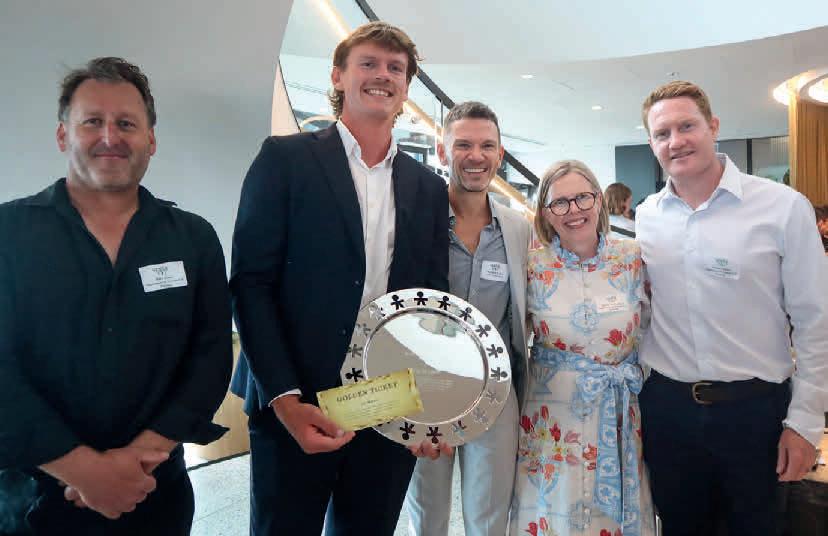
L>R Ben Gane, Nic Watson, Matthew Cohen, Alison McFarlane and Grant Logan, Department of Transport and Planning.
The following citation was delivered by Jodi Kennedy, VPELA President at the Summer Soirée to announce the Award Recipient.
Nic Watson
Senior Planner, Development Assessment in the State Planning Assessment and Facilitation Division at the Department of Transport and Planning (DTP)
After moving to Victoria at the start of 2025, Nic joined the Development Assessment team and commenced working on priority projects lodged via the Development Facilitation Program.
He has had a huge impact on planning work and quickly become the ‘go-to’ person for coordinating different agencies, bringing people together, smoothing out issues, and helping projects move forward.
Nic has worked on some of the largest and highest profile private sector projects in Victoria. Nic rapidly learnt the Victorian planning system and built contacts across the public and private sectors. He has quickly become a lead planner for high profile projects that require case management and timely decision making, drawing praise for his attitude and communication style with proponents.
Nic is known for always putting up his hand to assist others, to take on any project that requires urgent action and making sure stakeholders are heard and considered.
He is a willing sharer of new insights across the team and is always looking to take on professional development opportunities to expand his knowledge of planning.
Nic’s main areas of experience at DTP have included fast track assessment of major private sector proposals in priority
areas, including major housing applications, multi-level office towers in Activity Centres, renewal projects in Central Geelong, quarries, hospitals and the defence industry sector.
On top of his planning work, Nic has also taken real initiative in supporting staff wellbeing, which has had a genuinely positive effect on the team. He is approachable, reliable, and consistently proactive; qualities that have earned him respect across government. For his leadership, his collaborative approach, his care for his colleagues, and the immediate impact he has had since arriving in Victoria, Nic is a standout choice for the Kathy Mitchell Award.
Response from Nic Watson
Receiving the Kathy Mitchell Award was an incredible honour, and something I am genuinely humbled by. Kathy’s contribution to planning in Victoria is something so many of us look up to and to be recognised in her name is extremely meaningful. It is also a reminder of why public service matters and the positive impact good planning can have on communities.
I am very grateful to my colleagues at DTP for their support over the past year. Moving from WA to Victoria was a big transition, but being welcomed into such a supportive, encouraging and driven team has made all the difference. I have been fortunate to work on a wide range of Ministerial applications, and I have learnt a huge amount from the people around me.
A highlight of receiving the award was telling my grandmother. She was absolutely stoked and is now proudly telling her café friends that I have “done very well in my little planning thing” (her words, not mine). So, if the Kathy Mitchell Award was not already meaningful enough, it now comes with the full endorsement of the Como Lawn Bowls Club, which my grandmother assures me is very prestigious.
Thank you again to VPELA, to Kathy, and to everyone I have worked with this past year. It is a privilege to be part of this profession and to contribute, even in a small way, to shaping good outcomes for Victorian communities.
People
Vale — Michael (Mick) Hurst

It is with great sadness that we mourn the loss of Michael Hurst, who tragically passed away earlier this year while in Japan. Michael had just embarked on a year-long career break that would see him travelling and working in the ski fields with his partner.
It seems true to Michael’s character that this tragedy occurred while he was pursuing an exciting and challenging adventure. Michael loved the outdoors, and you could often find him surfing down at Jan Juc or running with friends. While he relished adventures and the outdoors, he was also devoted to his family and loved ones and often spoke of them to colleagues.
Although he was just starting out in his career, Michael made a significant impact amongst his peers and colleagues, many of whom became his close friends.
Michael began his planning career with KBR as an intern in the middle of the COVID pandemic but quickly became an integral part of the team and stayed on after graduating from RMIT. During his time at KBR, he worked on some of Melbourne’s largest infrastructure projects, where he began developing his craft as a planner.
In late 2022, Michael joined Tract, where he threw himself into new challenges with the same enthusiasm he brought to life outside of work. His warmth, humour and genuine interest in others saw him quickly form strong friendships across the team. Mick’s positive attitude, eagerness to learn and willingness to support others left a lasting impression on everyone who had the privilege of working alongside him. Michael was a down to earth, full of life person who will be greatly missed and fondly remembered. Our thoughts go out to his family, partner and friends.
Vale – Michael (Mick) Hurst
Thank to you Board members Anna Borthwick, KPMG and Mia Zar, Tract, who both worked with Michael, for preparing this tribute.

People Dr. Brian Harper OAM
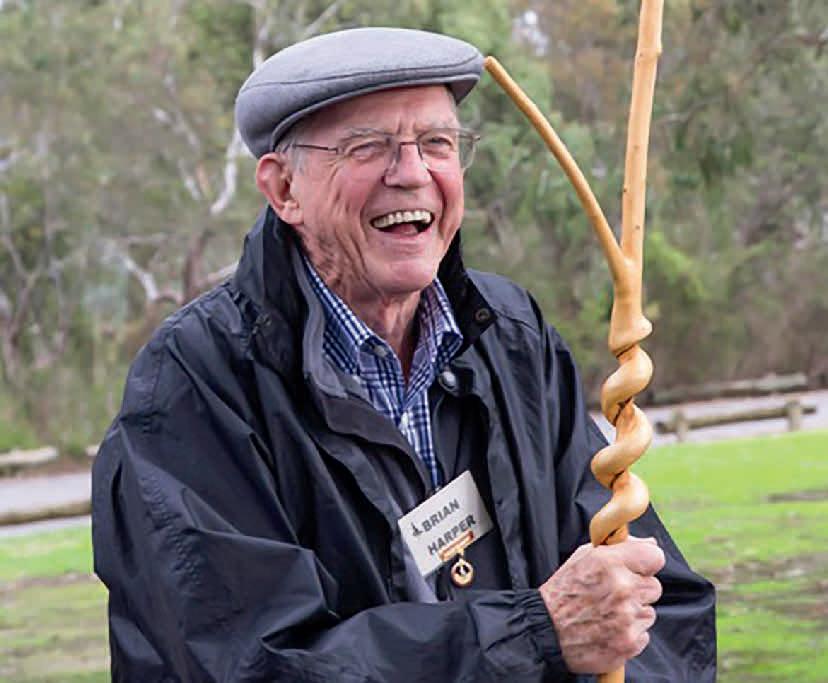
Dr Brian Harper was awarded an OAM in the 2026 Australia Day Honours. He is a Traffic Engineer and a Town Planner who energetically served our collective interests over a long and intellectually creative career.
In what might be seen as a simple and obvious contribution as a Traffic Engineer, amongst many things, he introduced reserved parking places in car parks for the less ambulant. As we know, they are now commonplace and an important public benefit.
But it was in the Town Planning arena that his leadership made its greatest contribution.
Brian Harper had a thirst to make a difference.
In the early 1970s, through the Western Port Regional Planning Authority (WPRPA) Brian as Director took up the challenge from the government of the day, to create a planning system that would protect and manage the distinctive landscape character and biological integrity of the Southern Mornington Peninsula.
By the end of the 1970s he had led his team to successfully deliver the Conservation Plan.
“…the Conservation Plan was the most radical and objectivebased environmental planning venture of the 1970s in Australia…
The fact that it has not been cast aside, in a planning and legislative sense, demonstrates its validity and relevance…” (1) Jones 2010.
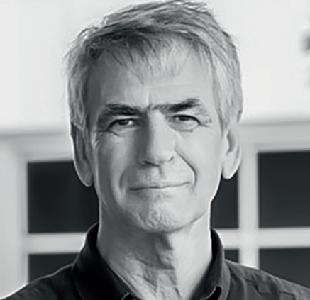
Tim Biles
Tim Biles Project
The leadership that gave birth to this plan started with the Premier of the day – ‘Dick’ Hamer, supported by his Ministerial colleague and local member, Alan Hunt, leading the quest for a Conservation Plan in a remit to the WPRPA contained in Statement of Planning Policy No.2 (Mornington Peninsula).
It was a bold challenge taken up by Harper and his team.
In essence, the WPRPA was requested to re-invent town planning logic in Victoria and invest it robustly with scientific validity …” (2) Jones 2022
In a profession still relying on zones to manage the complex sensitivities of landscape significance and ecological values, the Plan was revolutionary in its conception and application. It was a plan that introduced comprehensive overlays covering natural systems and cultural elements, which translated the theories of McHarg’s Design with Nature into a statutory format that had not been achieved anywhere else in the world at that time.
The concept of ‘overlays’ brought nuance and sophistication to an existing system of land management by zoning, that in many ways was failing to protect the diverse nature of ecosystems. Grounded in advice from George Seddon, Winty Calder and others, the plan transformed the structure of planning methodology, proving its success by the results we see today on the ground and our continued refining of the techniques employed in 1975.
The Conservation Plan was too much for the conservative voices of our industry and those championing individual property rights who regarded it as ‘rather too complex’. History tells us that 50 years on the Peninsula is the better for the courage and intellect behind this plan.
As Jones says, it was a radical plan that attracted criticism that led to the erosion of political and employment careers. Lesser souls might have capitulated to the invective, but Harper and his team did not capitulate, and the Peninsula is the beneficiary of this wisdom and Brian’s strength of purpose recognized in the OAM.
He made a difference.
Congratulations Dr Brian Harper OAM
1. David Jones, Innovation in Ecological Planning: The Mornington Peninsula Conservation Plan. Paper to the 10th Australasian Urban History, Planning History Conference Feb 2010
2. David Jones, Cultural Landscape Conservation: The Case of Mornington Peninsula 2022
People From the fast lane to new chapters: two planning leaders’ legacies

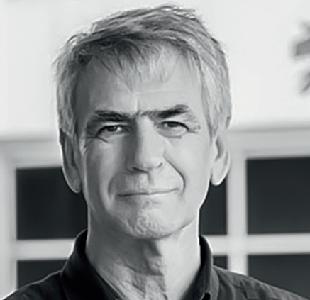
In our first edition of 2026 we reflect on the significant career contributions of two VPELA Fellows and winners (in 2023 and 2024 respectively) of the Richard J Evans Award for outstanding contributions to planning in Victoria. One leaves professional practice to enjoy life away from the ‘fast lane’ and the other leaves consulting to make a contribution to the work of Panels Victoria and give more attention to her other interests in life. Our thanks are extended to Terry Montebello for preparing a fine summation of John’s career and to Tim Biles for assisting us with Catherine’s. – Eds.

John Rantino
For both Maddocks, the planning industry and the legal fraternity, a significant milestone is about to occur. After over 40 years of committed service to Victorian planning and environment law and the legal profession, John Rantino retires from practice in March 2026.
To neatly summarise John Rantino’s contribution to the law, to local government and the planning industry generally, is an impossible task in such a short slot. Since 1985, when John was employed by the City of Broadmeadows as its inhouse lawyer, not his first role as a lawyer by the way, John has dedicated himself to the local government and planning jurisdictions. This includes advising and representing councils, developers and various government agencies and authorities, including the Minister for Planning. In that time, he has been a significant part of the intellect that has led to the testing and making of local government and planning law.
Renowned for his expertise, his calm and always courteous courtroom manner, John has been a formidable advocate for his clients before various judicial bodies, including over 1,000 Magistrates Court prosecutions, well over 650 appearances at VCAT and its predecessor, and over 90 planning panels and advisory committees. This astonishing track record reflects the trust that his clients have had in him, his deep dedication to his clients, and to his standing in the legal profession.
His outstanding contribution to planning in Victoria was recognised by his admission to the VPELA as a Fellow and then some years later, by being awarded the prestigious Richard J Evans award in 2023. On more than one occasion he has been deservedly recognised as either preeminent or “best” by various legal profession publications. John is one of the limited numbers of accredited specialists in planning, environment and local government under the Law Institute’s specialisation scheme and was for many years Chairperson of the Law Institute of Victoria Local Government, Planning and Environment Law Specialisation Advisory Committee.
At Maddocks, John has been instrumental to the team and the development of the Planning & Environment practice, including mentoring several generations of planning lawyers. His ‘Ask John’ sessions each week, in which he makes himself available to answer any questions junior team (and some of his peers) may have, will be sorely missed. He joined Maddocks at a time when Maddocks had in the order of 20 partners and has now grown to 98 partners. He has been part of the stewarding of the growth of Maddocks as a modern Australian law firm.
His intellect, expertise, creativity, and commitment to his clients and our firm and particularly the planning team has been crucial in the stability, stewardship and growth of the practice.
We are sure that John has and will retain many fond memories of his time at Maddocks, from acting on behalf of the Hells Angels Motorcycle Social Club in a planning dispute over its planned Tractor Tug of War weekend to sitting in with an understandably agitated Minister for Planning the day after the Corkman Hotel was demolished.
John leaves a remarkable legacy not only at Maddocks but in the legal profession. While he will no longer be a formal member of the Maddocks team, he will always remain a dear friend and colleague. We wish him now a fulfilling retirement with his wife Pauline, his children and grandchildren.

Catherine Heggen
A conventional career biography of Catherine Heggen would acknowledge her more than 40 years of private sector practice principally in urban design analysis, visual impact assessment of development impacts in landscape and heritage settings, urban strategy, medium density housing and campus planning.
It would go onto say that her early career at Tract was foundational in her lifelong interest in the power of landscape architecture and urban design to demonstrate what planners seek to distil through statutory control. A 12-month interlude from Tract saw her working in the UK at the City of Westminster on the then proposed extension to the National Gallery on Trafalgar Square. It was a project which furthered her interest in the management of careful change in heritage contexts. Catherine returned to Melbourne and Tract and was later appointed a director of the firm.
This was the 1980s and a less conventional career biography would recognise that private sector consultancy and the development industry was dominated by men. Whilst senior
Terry Montebello Maddocks
Tim Biles Tim Biles Project
positions in local and state government were opening to women, the private sector board room meeting required a steely determination and calm resolve for a professional female usually the only one at that table. Along with a small cohort of other women, Catherine navigated this territory with skill to intelligently break new ground.
The world of consulting is challenging at any time and particularly so in the period Catherine was expanding her career. Advice that is respected and taken must come from a depth of experience delivered with insightful equanimity.
Appearing regularly as an expert witness means a client’s interests have been heard, but that is not enough as Catherine well understood. It needs insight and skill to shape the project in a way that can at times be unpalatable to a client but necessary to satisfy the approval agency.
Catherine made the quest for equality in our profession digestible for those who resisted and a pleasure for those who supported it. At the same time, she crafted a reputation for balanced and insightful commentary. She is a role model to her peers and those that followed.
She set herself her own challenges. In 1995 she founded Fulcrum Town Planners. She led the firm with others, and it operated as a well-regarded practice for 15 years. The careers of many young planners were nurtured and given opportunities at Fulcrum that set them on their own career arc. During this time, she was appointed as a member and then as Chair of Victoria’s Heritage Council successfully leading the Council through a period of legislative change. Consideration of cultural heritage significance was broadened beyond buildings and designed gardens to include landscapes, objects and post contact archaeology. This experience strengthened her expertise in policy analysis and management of change in development sensitive urban, regional and rural areas.
Catherine was subsequently appointed to Committees at the University of Melbourne in relation to matters of heritage as well as the Building Committee of the Queen Victoria Women’s Centre 2005-2012. She has been a trustee of the Melbourne Heritage Restoration Fund and a jury member for awards conferred by the Panning and Landscape Institutes.
In 2010 she joined Message Consultants and helped shape it into a collaborative planning and urban design practice. Following its merger with Ratio in 2020, she continued her work in project advice, built form analysis and expert evidence presentation in various forums.
All careers are a journey, and they are invariably made richer by being curious and having interests outside the day-today life of the profession. Catherine’s journey is filled with music, theatre, history and travel. Stop for a moment with her over coffee and it is easy to slip into a conversation that is thoughtful and informed.
In 2024 she was deservedly recognised for her ‘outstanding contributions to planning in Victoria’ with the Richard J Evans Award for Excellence. This award follows appointments as a Fellow of the Planning Institute of Australia as well as a Fellow of the Victorian Planning and Environmental Law Association.
She has been a mentor to many early career professionals and is an example of a professional life ‘lived through the doing’ at the highest levels of expertise, diligent application and resolve.
Catherine has made a choice to leave Ratio but not retire. She is joining Panels Victoria as a sessional member and will give more attention to her other interests in life. We wish her well in these next steps in a rich and professionally rewarding career.
https://www.vpela.org.au/iCore/Events/Event_display.aspx?EventKey=GALA26DISP
FRIDAY 8 MAY 2026
7PM TO MIDNIGHT
CENTREPIECE AT MELBOURNE PARK
Dress up for Winter, Icy Tones or Black Tie
RSVP
Thursday 23 April 2026 (no cancellations after this date however substitutions will be accepted)


Places VPELA Moot Court 2025

An evening of insight and professional growth
Ecology and Heritage Partners – A Fyfe Company, were once again proud to continue its annual sponsorship of the VPELA Moot Court Program. The Program, held in November last year, once again brought together students, practitioners, barristers and members of the Victorian Civil and Administrative Tribunal (VCAT) for an engaging and professionally enriching evening focused on planning and environmental law advocacy.
Following welcome remarks and introductions, the event transitioned into four concurrent moot hearings, each conducted in a tribunal-style format. Attendees were invited to choose which proceeding to observe before reconvening later in the evening for networking and informal discussion.
Across the four moots, a diverse range of planning issues was explored. Advocates appeared for parties including Council, permit applicants and objectors, supported by expert witnesses spanning the planning, heritage, traffic, bushfire, economics and contamination spheres. The structure closely mirrored real tribunal proceedings, requiring participants to present structured submissions, engage with technical evidence and respond to questioning from experienced moderators, including senior barristers and tribunal members.
In the hearing I observed, the matter concerned a permit application for a proposed childcare centre within an established residential area. The scenario reflected the layered nature of contemporary planning disputes and required careful balancing of competing considerations. Neighbourhood character featured prominently, with submissions examining whether the scale and operational characteristics of the proposal were consistent with the existing streetscape and broader planning policy objectives.
Strategic need was also debated, particularly in circumstances where similar facilities were already operating within the surrounding locality. Advocates were required to interpret planning policy and consider whether evidence of community demand justified approval of the development.
Traffic, parking and noise impacts formed another key component of the discussion. Submissions addressed whether increased vehicle movements and peak-hour activity would adversely affect residential amenity, and whether those impacts could be appropriately managed through design refinements or permit conditions. A tree with heritage significance located within the site’s curtilage was also considered as part of the overall planning matrix, particularly in relation to site layout and protection measures. The hearing illustrated that planning decisions rarely hinge on a single issue; rather, they demand a careful and integrated assessment of policy, evidence and context.
Across all four rooms, the standard of advocacy was impressive. Participants demonstrated strong preparation, a clear understanding of statutory frameworks and the ability to respond thoughtfully under scrutiny. The interactive exchange between advocates and moderators was a defining feature of the evening. Questions challenged assumptions, tested interpretation of policy and prompted clarification of reasoning, replicating the realities of appearing before a tribunal.
A particularly valuable component of the Moot Court was the constructive feedback provided at the conclusion of each hearing. Tribunal members offered practical guidance not only on legal substance but also on advocacy technique. Competitors were encouraged to slow their pace to enhance clarity, structure submissions deliberately and clearly guide the decision-maker through their arguments. Emphasis was also placed on making logical transitions between issues, linking each submission coherently and using clear, precise language.
These observations reinforced that effective advocacy depends as much on communication and structure as it does on technical legal knowledge. In planning matters, where expert evidence and statutory interpretation often intersect, clarity and organisation are essential.
Beyond the formal proceedings, the Moot Court continues to play an important role in fostering professional connection and shared learning within the planning and environmental law community. The opportunity to observe high-quality advocacy, receive meaningful feedback and engage in discussion reflects the collaborative and forward-looking spirit of the profession.
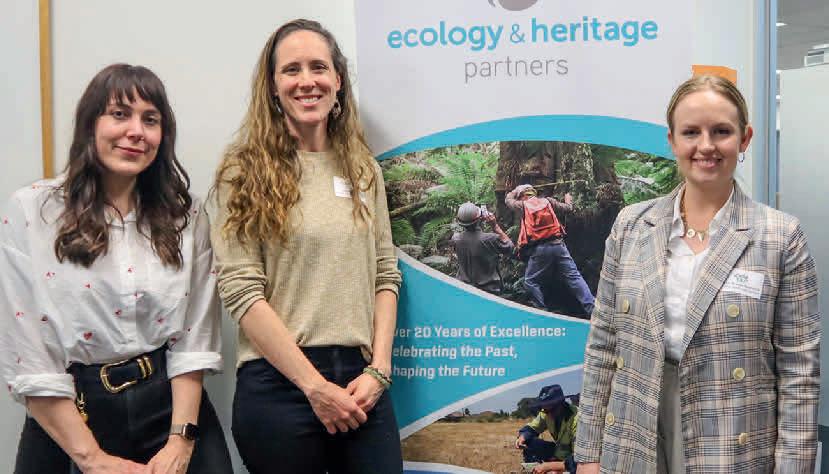
L>R: Bianca Waldie, NGH, Anneke Martin and Lexie BrandaPawlaczyk, Ecology and Heritage Partners – a Fyfe Company.
Lexie Branda-Pawlaczyk Ecology and Heritage Partners
The 2025 VPELA Moot Court once again showcased the depth of emerging talent within the sector. The professionalism, analytical rigour and composure displayed by participants provide strong confidence in the future of planning and environmental law in Victoria.
Ecology and Heritage Partners – A Fyfe Company extend its sincere thanks to VPELA for the opportunity to sponsor and support this important event. We also acknowledge and thank the organisers and the barristers who generously gave their time and expertise to moderate and provide feedback throughout the evening. Their commitment continues to ensure the Moot Court Program remains a valuable and inspiring experience for all involved.

Tasma Eddy Graduate Planner
Beveridge Williams
Finding my voice at VCAT
Participating in the VPELA Moot Court Program was an incredibly rewarding and eyeopening experience.
Before taking part, the realm of the Victorian Civil and Administrative Tribunal (VCAT) felt quite foreign to me. I had observed a handful of hearings and skimmed through various decisions, but I still had not fully grasped the nuances of how the Tribunal operates or what it truly takes to construct and deliver a strong, persuasive argument.
The workshops with experienced professionals were invaluable. The practical tips, real-world insights, and honest advice on both the Advocate and Expert roles gave me a much clearer understanding of how to structure a compelling case. Being able to practise with my peers and receive direct feedback from such respected practitioners was an opportunity I really appreciated.

In the leadup to the hearing, the nerves definitely kicked in. Even though it was a mock scenario, I wanted to take it seriously and present the strongest case as an Advocate that I could. On the day, the VPELA crowd was so warm and welcoming, which made the experience feel a lot more supportive and comfortable.
When I began presenting, I could hear the shakiness in my voice and feel my throat tighten from nerves. But as I continued, I found my feet and felt my confidence grow. The most rewarding moment was receiving feedback from a VCAT member, Deputy President Daicic, who offered encouraging and constructive insights. A highlight I will continue to treasure was her comparison of my crossexamination style to that of Nick Tweedie SC, something I will be proud of for a very long time.
I left the evening feeling capable, energised and far more confident in my understanding of VCAT procedures and effective advocacy. I am genuinely excited to apply these skills in realworld practice one day.
I recommend and encourage anyone in the planning industry, especially those with limited exposure to VCAT, to take part in the program. You will walk away feeling more knowledgeable, more empowered and prouder of what you can achieve. Thank you, VPELA, for this valuable opportunity!

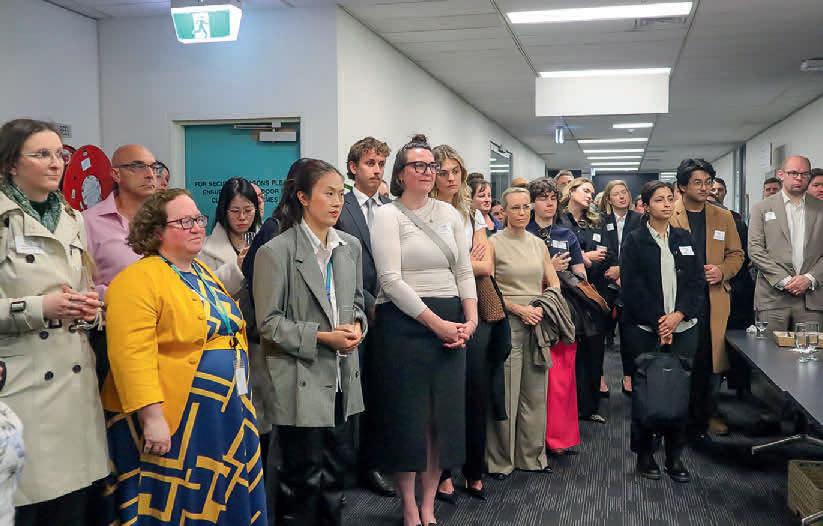
L>R Chiara Randazzo, Nikhil Shah, Jacinta Chan (participant) and Lucy Johnston, City of Boroondara
Moot Court attendees at VCAT
Molly McCarthy, Nick Harries (participant) and Amy King both from Contour Consultants
Places
Workplace bullying – one can rise above it
We have agreed to the keep the name of the author of this edition’s article on Workplace bullying private for reasons which all readers will surely understand. It is not our usual practice but, in this case, felt it important that the issue –which so often flies ‘under the radar’ – have some light thrown on it to remind ourselves that it still nefariously lurks among us in number and intensity that is shameful. — Eds

“You’re not leaving because of me?” That was the moment I knew that they knew.
WorkSafe Victoria (2025) defines bullying as “repeated, unreasonable behaviour directed at an employee or group of employees that creates a risk to health and safety.”
I had hoped, perhaps naively, that the playground antics of our youth would subside as we progressed from marbles and Tamagotchis to blazers and business calls. Alas, no <INSERT SIGH>, that would not be the case. In my career to date, I have experienced bullying firsthand and on the sidelines; watching in angst as someone else’s mental health deteriorates under the persistent wrath of their bully.
Perhaps wrath is dramatic, however I use it here to emphasize the very serious nature of this issue. I set out to write this article to draw attention to bullying statistics and offer hope, by way of advice and resources, to all of readers Revue. If there is only one thing you take away from this article, it is that you must never lose hope.
Bully Territory
It is troubling that 9.7% of working Australians (APS Employee Census, 2022) reported that they were subject to harassment or bullying in their (current) workplace. Shockingly, this increases to 60% when taking account of a career in full. Impacts to employee well-being and mental health,
including sense of self-worth and self-assurance, are certain, with damage generally extending to negatively impacting productivity and performance. That is, there is both a moral and economic business case to be made for addressing bullying head on.
A notable challenge of being on the receiving end of workplace bullying is assessing the situation for what it is. Feelings of self-doubt and uncertainty inevitably worsen one’s clarity and approach to addressing concerns. Is it really as bad as I think it is? Or is it just my own insecurities? The same questions may arise in the context of bullying-adjacent behaviour, for example, harassment. It is a paradoxical situation. How is one meant to remain clear-headed and rational, when someone else is perpetuating a cycle of dwindling confidence?
In my case, I sought confirmation of my experience from two independent parties: the first being an industry peer and the second a social worker. Both swiftly confirmed, ‘that is bullying!’ WorkSafe Victoria reaffirms that confiding in someone trustworthy is a helpful starting point.
Experiences of bullying are varied. Critically, whatever the approach, intensity or nature of it is, none of it is appropriate, nor should it be tolerated.
“Adult bullying can be subtle or overt, but its impact is always significant.” (Psych Professionals, 2025)
Why?
“There are a number of reasons why adults bully. Bullying can arise from a desire to exert dominance, a need to bolster one’s own fragile self-image, or from a profound lack of empathy or recognition of wrongdoing.” (Psych Professionals, 2025)
In my experience, it is most productive to focus on how to ameliorate the situation. Optimistically, the aim is to have the bullying cease. Trying to understand the bully’s ‘whys’ may provide some insight into their underlying frustrations and feelings of inadequacy but, also, it may prove impossible if their menace or low self-esteem has very little to do with you, and everything to do with them.
What are the solutions?
As the bully’s actions towards me progressed, I felt as though I was amplifying or exaggerating the experience. I felt increasingly more constrained in my ability to talk to anyone about it without disrupting the ‘homeostasis’ of the office. After some investigation, WorkSafe Victoria recommends people with similar experiences pursue the following:
1. Address the bully: If you can, tell the person that their behaviour is unreasonable/inappropriate, that you are offended, and want it to stop. It is recognised that this takes courage, especially if the bully is your senior and influential in your workplace.
2. Seek advice:
o From your health and safety representative (HSR); or
o From people you trust, including at your workplace (e.g. a supervisor, manager, HSR, union representative or someone from human resources).
3. Document : Keep a record of events that includes the names of people involved including, for example, witnesses. Make sure the records focus on the facts of the situation, what happened, including dates and times and, if relevant, copies of any documents.
4. Report : Use the workplace or occupational health and safety (OHS) procedure to report the situation.
5. Seek professional counselling and/or advice: If your workplace has an Employee Assistance Program (EAP), use this.
It is important to note that your workplace has an obligation to eliminate risks to health and safety so far as reasonably practicable under the Occupational Health and Safety Act 2004.
What if your workplace does not respond in the expected and correct way?
This is a tricky one, as navigating bullying can be complex. A workplace must undertake their due diligence to understand both sides and take appropriate action. Personality differences, seniority, experience and bias may all interfere with a clear-cut assessment of what is occurring.
Importantly, I would caution that an immediate solution may be unlikely. Notwithstanding, I urge you to hold out during the process so that a solution or rectification process is given airtime, and you may comfortably retain the right to work in an otherwise safe environment.
For additional mental health support, please review the following free and valuable resources:
Headspace (1800 650 890 & online chat)
Beyond Blue (1300 22 4636 & online chat)
Lifeline (13 11 14 & online chat)
If inaction persists, there are more serious measures such as reporting a workplace to WorkSafe Victoria or Fair Work, however these should remain as a last resort.

Christmas 2025



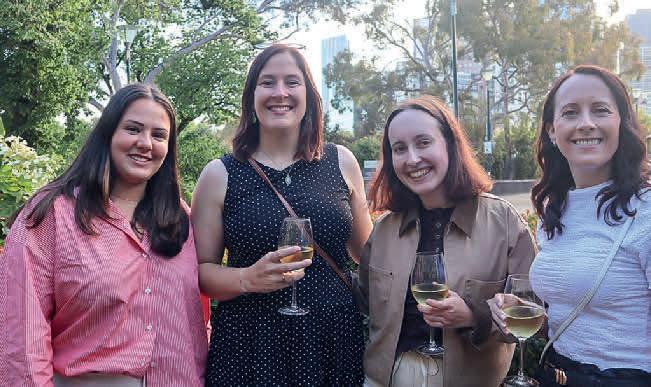
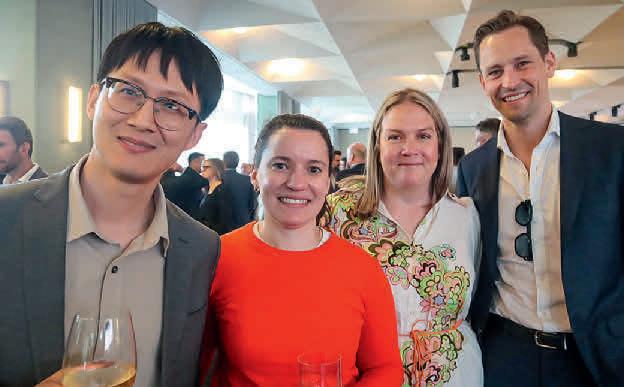
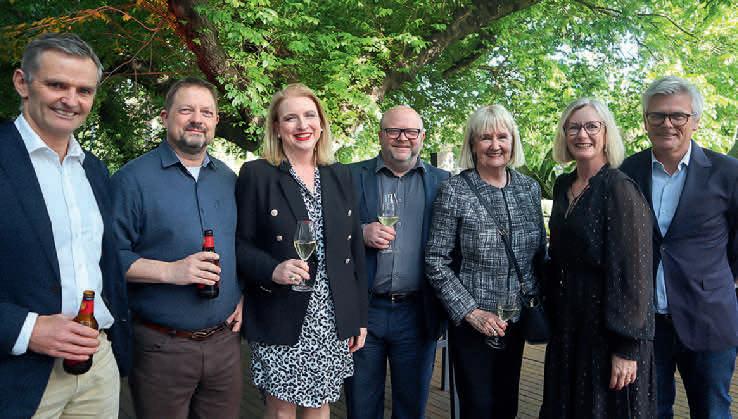
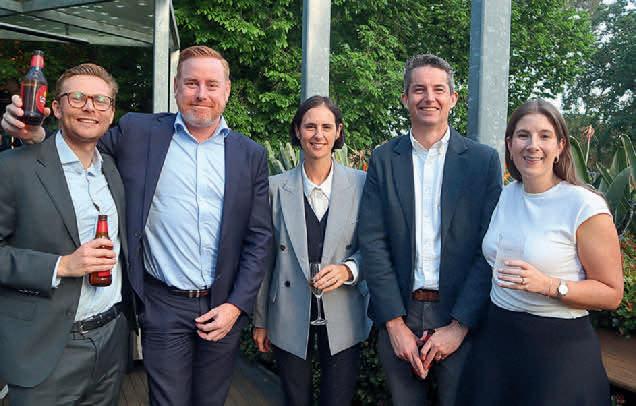
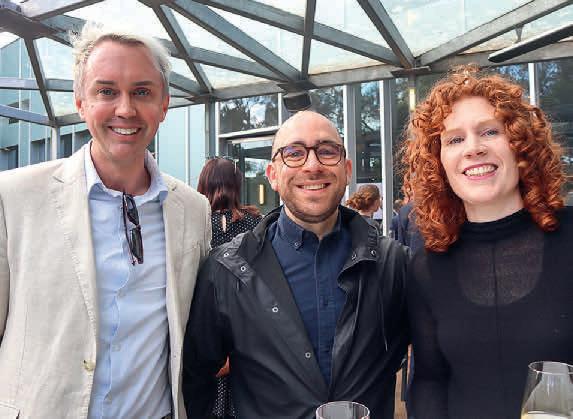
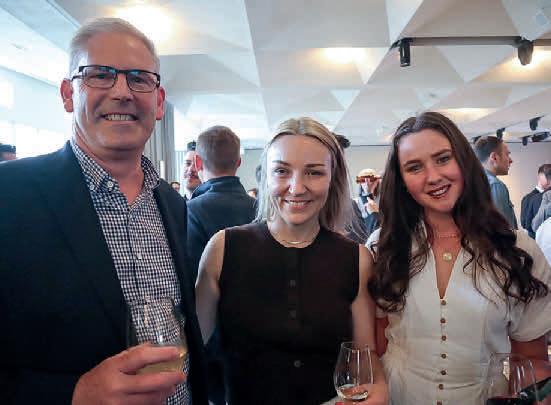
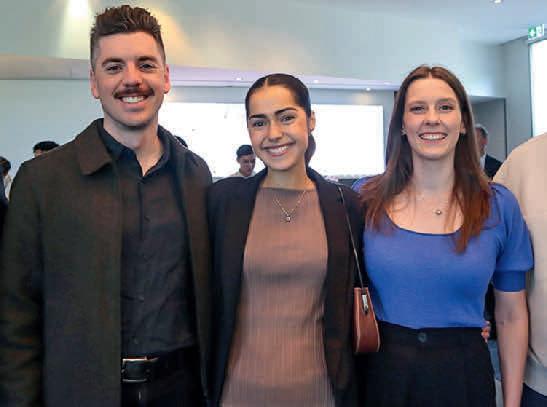
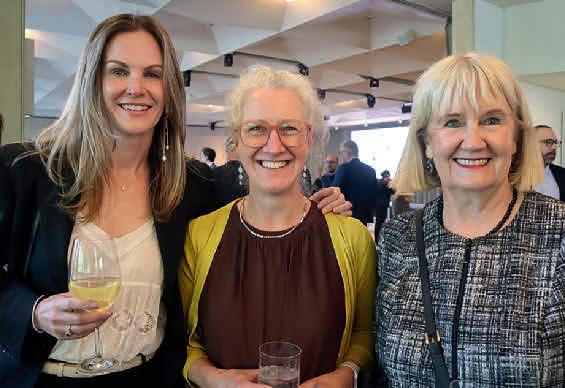
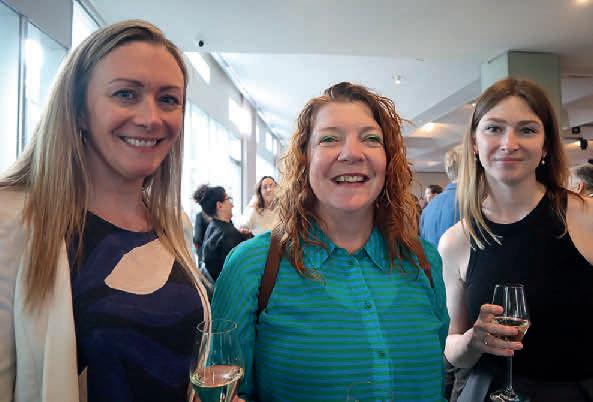
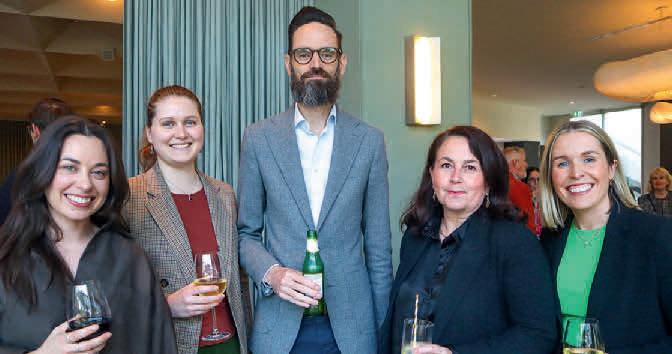
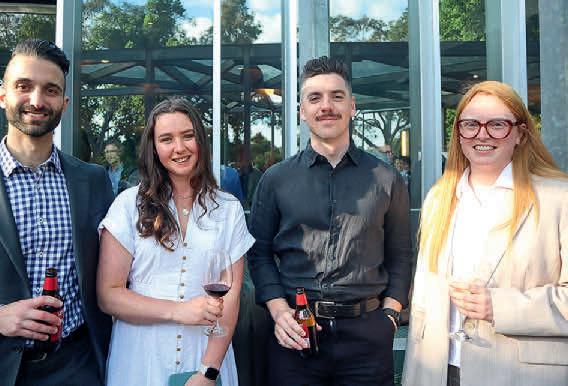
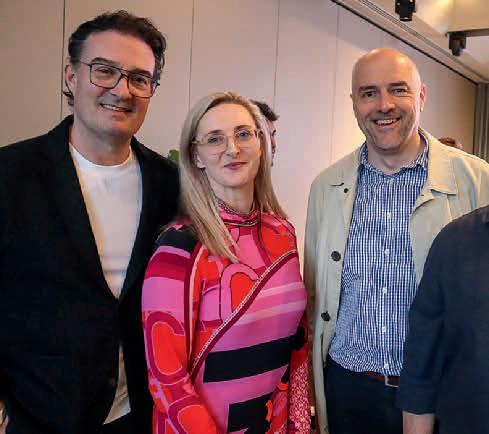
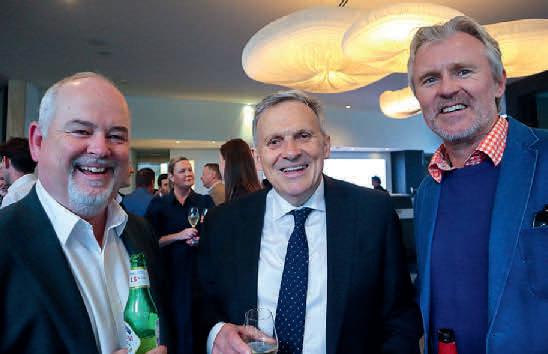
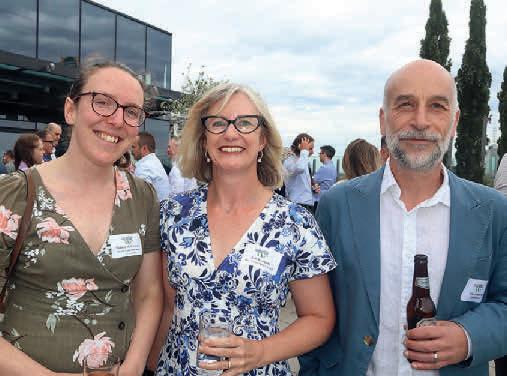
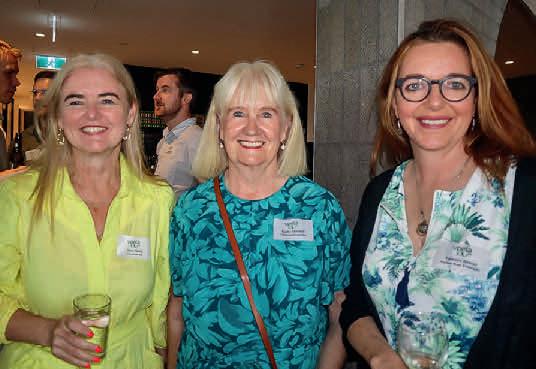
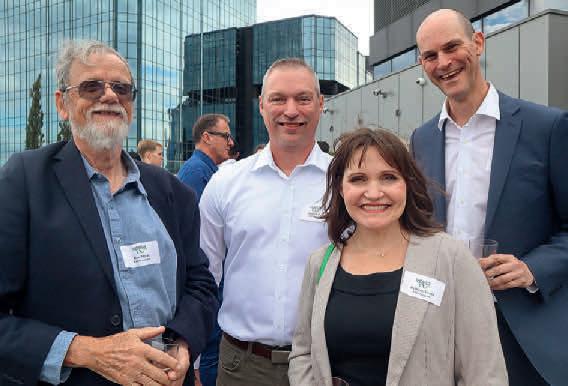
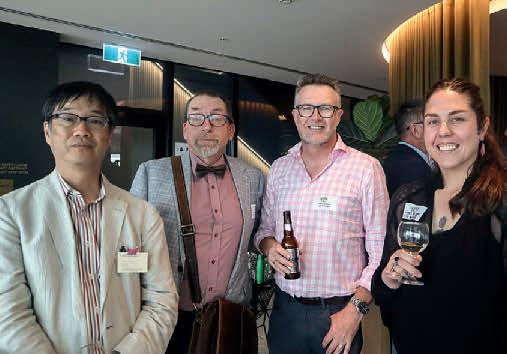
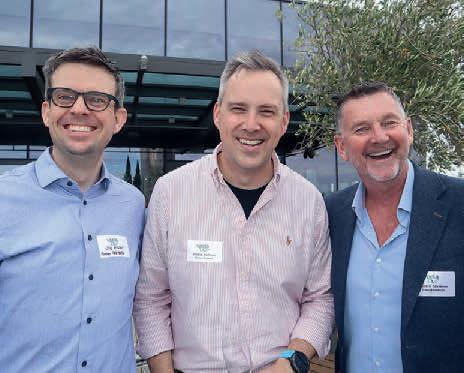
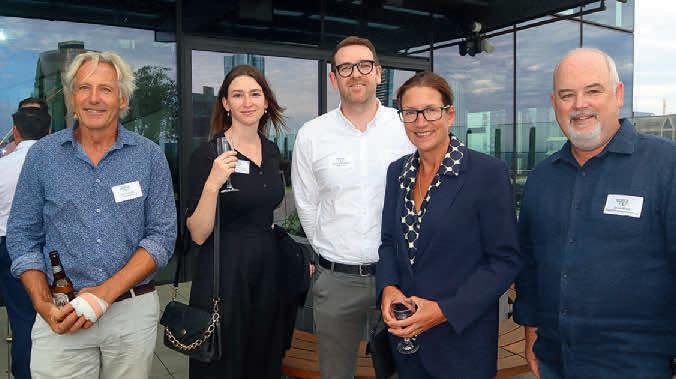
Our still mysterious Christmas Party correspondent was not able to attend the festivities held at Zinc as another busy year drew to close. Like them, I was not able to attend but your co-editor, Holly McFall, did, and she reported another well attended and relaxed event where the chat moved from the usual professional humdrum to what were the pending festive season holidays and what many considered to be a wellearned rest.
But, while our mystery correspondent was sadly absent, our event photographers were not. They have again provided a wonderful photographic record that speaks to the popularity of the event with members and what is always an upbeat ‘rounding out’ of the year by the President. As part of her message, Jodi Kennedy took the opportunity to thank all the people who in one way or another contribute to making the Association the successful organisation it is and one that continues to grow and broaden its membership.
The new year has since got off to a flying start and before we know it, we will be nudging closer to another Christmas party and, hopefully, the return of our mystery correspondent who can attribute their unique recollections of what will surely be one of the year’s most popular events.






Summer Soirée












Nexus Ball 2025
The Planning & Property Partners Boot Scootin’ Nexus Ball at the Old Melbourne Gaol in November went full Wild West bringing plenty of outlaw energy to the historic cells. Guests embraced the theme and arrived in hats and boots ready to hit the dance floor. The highlight of the night was a stomping round of line dancing to “Thunderstruck” led by Amaya De Silva. Congratulations to our best costume winners Lizzy Henry, onemilegrid and Taylor Hine, Charter Keck Cramer
Thank you to sponsors Planning & Property Partners, Bold Urban Planning, Biosis, Marshall Day Acoustics and Ratio Consultants.









The Business Planning Amendment (Better Decisions Made Faster) Act 2026
Filling a significant void in the efficient and fair use and development of land in Victoria
The Planning Amendment (Better Decisions Made Faster) Act 2026 (Act) received Royal Assent on 17 February 2026.
The Act contains two significant changes to the regulation of restrictive covenants in Victoria.
First, it is proposed that planning policy can be considered in the decision to remove or vary a restrictive covenant. The new section 60(2) will provide:
Before deciding on a type 2 or 3 application which would allow the removal or variation of a restriction (within the meaning of the Subdivision Act 1988), the responsible authority must also consider the following—
(a) the impact of removing or varying the restriction on the material interests of the owner of any land benefited by the restriction (other than an owner who, before or after the making of the application for the permit but not more than 3 months before its making, has consented in writing to the grant of the permit) in terms of —
(i) loss of amenity; and
(ii) loss arising from change of character to the neighbourhood; and
(iii) any other material detriment, other than financial loss, that may be suffered;
(b) the impact of the restriction on the ability to deliver—
(i) the objectives of planning in Victoria; and
(ii) any applicable State planning strategy, regional planning strategy or planning strategy for the area covered by the planning scheme; and
(iii) the objectives or purposes of the planning scheme;
(c) whether a matter that is the subject of the restriction to be removed or varied is also regulated by the planning scheme;
(d) if the removal or variation of the restriction is proposed in conjunction with an application for a permit for a use or development that would breach the restriction, for the purpose of considering a matter under paragraph (a), (b) or (c), whether that use or development is acceptable having regard to the matters set out in subsections (1), (1AA), (1A) and (1B) 15 (if relevant).
The current wording of section 60(2) requires that the impacts on beneficiaries be resolved before planning policy can be considered. As explained in Waterfront Place Pty Ltd v Port Phillip CC [2014] VCAT 155:
o the tests in section 60(2)(a) to (d) are applied in ‘absolute terms’; and
o thereafter, consideration of the planning merits may occur:
5. The Tribunal stated that in applying the tests set out in s. 60(2) it is not a question of balancing the loss suffered by a benefiting owner in each of the categories set out in paragraphs (a) to (d) against the planning benefits of removal or variation of the covenant. The tests must be applied in absolute terms. Consideration of the planning merits can occur only if the tests are satisfied and the discretion to grant a permit thereby enlivened. This Tribunal respectfully agrees.
Under the new regime, the planning merits and the impact on beneficiaries of removal or modification of a covenant will be considered simultaneously.
The new section 60(2)(b) also invites the responsible authority to expressly consider the impact of the covenant on the ability to achieve:
o the objectives of planning in Victoria;
o any applicable State planning strategy, regional planning strategy or planning strategy for the area covered by the planning scheme; and
o the objectives or purposes of the planning scheme.
To this end, the Act updates the objectives of planning in Victoria to include an objective to ‘increase housing supply, diversity and affordability’:
(g) to increase housing supply, diversity and affordability and facilitate the provision of social and affordable housing in Victoria; …
Section 60(5) of the existing Planning and Environment Act 1987 is also to be repealed for covenants created before 25 June 1991. The existing section 60(5) of the Planning and Environment Act 1987 has been described as “a high barrier that prevents a large proportion of proposals”.
Without any exaggeration, the ‘perceived detriment’ test in s60(5) means that someone could complain that the proposed discharge of a covenant would make their curtains fade, and the decision maker would be obliged to refuse the application. Nobody sensible will mourn its revocation.
The second major change is that the Minister or responsible authority will be able to grant a planning permit that will breach a restrictive covenant under the new section 61(4):
Matthew Townsend Victorian Bar
(4) Without limiting subsection (1), the responsible authority may grant a permit that would authorise anything which would result in a breach of a registered restrictive covenant.
This removes a considerable burden from local councils that regularly need to seek legal advice on the proper construction of covenants to avoid granting a permit that may breach a restrictive covenant.
But covenants themselves will remain enforceable until they are removed or varied.
The Act creates a new scheme with three types of permit applications.
o Type 1 applications would:
● be a replacement for the current ‘VicSmart’ application process;
● process simple low risk proposals envisaged by the applicable zoning and overlay;
● not require public notice; and
● allow a permit subject to this application type to be deemed approved if the responsible authority does not decide the application within a prescribed timeframe.
o Type 2 applications would:
● apply to applications for uses or developments that are intended to comply with specified codes (such as those for town homes and low-rise developments);
● not require notice to be given unless the code or planning scheme specifies notice must be given; and
● apply to applications that do not require referral to a referral authority.
o Type 3 applications would:
● be the default process;
● closely mirror the existing planning permit assessment process;
● provide for public notice and referral where required;
● be applicable to proposals that are more complex and represent a higher risk of negative impact to nearby landowners and the community; and
● balance state and local policy, and a determination of appropriateness against the purpose and
decision guidelines of the zone or overlay controls that apply to the land.
Section 60(2) (dealing with removal or modification of a restrictive covenant) will only apply to Type 2 and Type 3 applications:
Before deciding on a type 2 or 3 application which would allow the removal or variation of a restriction (within the meaning of the Subdivision Act 1988), the responsible authority must also consider the following—
However, section 61(4) (dealing with a permit endorsing breach of a covenant) is seemingly open to any application type, including type 1 applications.
In other words, if the proposal in breach of the covenant is permitted uncontroversially under the relevant controls (for example, it is a section 1 use envisaged by the applicable zoning and overlay, or would have been subject to a VicSmart application previously), then a type 1 application may be made, and deemed approved if a decision is not made within the relevant timeframe.
The section 84 process in the Supreme Court of Victoria may remain the preferred choice of jurisdiction for certain types of restrictive covenant applications, such as:
o uncontroversial applications;
o applications for declarations; and
o applications not supported by state policy (such as an application to increase the height or number of storeys of a single dwelling) —
appreciating that the Supreme Court tends to be much faster and ultimately less expensive than VCAT (and one that doesn’t ordinarily involve council planners or solicitors).
But for ambitious changes to restrictive covenants where multiple dwellings are proposed over the objections of beneficiaries, the proposed new process creates a regulatory framework in which planning policy may be given significant weight in a decision to amend or discharge a restrictive covenant.
This fills a significant void in Victoria where land is often suitable for medium or high-density housing, yet there is no application process that allows the balancing of planning policy against the objections of beneficiaries, short of a combined permit and scheme amendment process under section 96A of the Planning and Environment Act 1987 (Vic)
Those parts of the Act concerning restrictive covenants will not come into operation until 29 October 2027.

The Business
EPBC Act reform: an overdue overhaul
The highly anticipated reforms to the federal Environment Protection and Biodiversity Conservation Act 1999 (Cth) (EPBC Act) were passed on the final sitting day for 2025, following a Senate agreement with The Greens. The reforms include the Environment Protection Reform Bill 2025 (EPR Bill) and the National Environmental Protection Agency Bill 2025 (NEPA Bill).
1.1 Key takeaways
National Environmental Standards (NES): The Minister must ensure decisions are consistent with binding NES, which set objectives and outcomes for environmental protection; draft standards for environmental offsets and matters of national environmental significance (MNES) are out for consultation.
Unacceptable impacts: The Act now includes a defined test for ‘unacceptable impacts’ for each protected matter, and projects with such impacts cannot be approved or offset and must be redesigned.
Net gain compensation: All residual significant impacts must be compensated to a ‘net gain’ standard, with specific guidance still pending, via offsets or payments to the Commonwealth.
National interest exception: The Minister may approve certain projects in the national interest, but fossil fuel projects are excluded from this exception.
National Environmental Protection Agency (NEPA): A new independent regulator with enhanced compliance and enforcement powers, including orders and higher penalties.
Streamlined assessments: Several pathways are consolidated into a single streamlined process to reduce approval times, with fossil fuel projects excluded from this fasttrack.
Regional Forest Agreements: Exemptions for RFAs end from July 2027, bringing them under EPBC oversight.
Bilateral agreements: State and territory assessments can be accredited only if they meet the NES, with powers to suspend or revoke accreditation if standards are not met.
Bioregional planning: New plans will map development and conservation zones to guide project siting and planning.
First Nations engagement: Establishes an Indigenous Advisory Committee and commits to a future NES for First Nations consultation.
Climate disclosures: Proponents must provide Scope 1 and 2 emissions and mitigation measures, though this is not a standalone approval criterion.
1.2 New National Environmental Standards
The EPR Bill empowers the Minister to make, vary and revoke NES, which are binding on certain decisionmakers, marking a substantive uplift from a previous “not inconsistent with” test to a more stringent “be consistent with” requirement secured by Greens’ amendments. Decisions to approve actions or amend approval conditions must be consistent with the relevant NES, as prescribed in regulations. NES must set outcomes or objectives, and can include parameters, principles, processes or actions, while maintaining consistency with international agreements and ensuring that any changes do not lessen environmental protection. The NES are central to the reform architecture but are not yet embedded in the Bill; two draft standards – for environmental offsets and MNES – are out for consultation until 30 January 2026.
For example, for Ramsar Wetlands, objectives include maintaining, protecting, conserving, and – where in decline – restoring ecological character. The article notes that the practical effect and consistency of decisions will depend on the final NES and their application.
1.3 New definition of ‘unacceptable impacts’
Previously, ‘unacceptable impact’ was an undefined, discretionary declaration by the Minister; the reforms now codify a legally defined test within Part 3 of the Act, making it a mandatory consideration for all project approvals, and prohibiting approval if an unacceptable impact is found.
The definition is tailored by MNES in proposed section 527F, with different criteria for different matters. For Ramsar wetlands, an unacceptable impact includes a significant impact that seriously impairs ecological character or undermines the ability to meet Ramsar listing criteria. For threatened species, an unacceptable impact for critically endangered, endangered, or vulnerable listings includes impacts that seriously impair viability or cause serious damage to irreplaceable critical habitat necessary for survival in the wild. Where an unacceptable impact is identified, offsetting is not permitted, and refusal or redesign to avoid impacts below the threshold is required.
1.4 Net gain compensation requirements
Responding to the Samuel Review’s critique of ineffective and inconsistent offsets, the EPR Bill requires all residual significant impacts on nationally protected matters to be compensated to a ‘net gain’ standard, with the term to be defined in future guidance. A residual significant impact is one that remains after avoidance, mitigation, or repair. Compensation can be delivered through proponentled offsets or via a restoration contribution charge payable
Meg Lee Hall & Wilcox
to the Commonwealth, with quantum to be specified in regulations or, failing that, set by the Minister. The aim is greater clarity and consistency across projects, and proponents are urged to monitor the evolving requirements for feasibility and budgeting.
1.5 National interest exception
Ordinarily, approvals must be consistent with NES, avoid unacceptable impacts, and compensate residual impacts to net gain. A new national interest proposal pathway in s 136B(2) allows the Minister to override these three requirements, although fossil fuel actions are expressly excluded by s 146P(1A). The Minister may consider defence, security or strategic interests, or treaty obligations in determining national interest. The article critiques this as broader than the Samuel Review’s recommendation for an extraordinary and rare power, noting the elasticity of “strategic interests” and questioning why, even if inconsistent with NES or involving unacceptable impacts, projects should not at least face net gain compensation.
1.6 New National Environmental Protection Agency
The NEPA Bill establishes NEPA, an independent regulator with expanded compliance and enforcement powers, including appointing independent auditors, requiring audits without notice, and issuing environment protection orders (EPOs), conservation orders, remediation determinations, and remediation orders, alongside higher penalties. NEPA’s CEO maintains a register of registrable decisions and can deploy EPOs to stop work where there is an imminent risk of serious environmental damage. While NEPA’s creation aligns broadly with the Samuel Review’s call for stronger compliance settings, the Minister remains the decisionmaker for impact assessment and approvals.
1.7 Streamlined assessment pathways
In response to the Samuel Review’s critique of complexity and underutilised pathways, the EPR Bill repeals three pathways –assessment on referral information only (Div 3A), preliminary documentation (Div 4), and public environment report (Div 5) – and replaces them with a single streamlined process in Div 5A, alongside existing options such as accredited assessment, environmental impact statements, and public inquiries. The streamlined pathway may be used where the Minister is satisfied it enables an informed decision and GHG information has been provided (s 87(5)), and it is unavailable for fossil fuel actions (s 87(5A)).
1.8 Regional Forest Agreements (RFA) sunset date
As part of the Senate deal, items 115A–115F introduce a sunset date – 12 months after 1 July 2026 – after which Part 3 of the EPBC Act will apply to RFA forestry operations, ending the longstanding exemption and subjecting RFAs to Commonwealth referral and approval requirements. Existing RFA operations completed before the sunset remain exempt.
1.9 Bilateral agreements
Under the reformed Act, state and territory impact assessment processes can be accredited only if they meet the NES, pass net
gain, and avoid unacceptable impacts, formalised via bilateral agreements. The Minister may suspend, vary, or revoke accreditation under s 35 if standards are not met, following consultation, provision of written reasons, and publication of the decision, with limited continuity for commenced actions under s 35B. The reforms aim to make bilateral agreements more durable to statutory changes, though the interaction with the suspension power remains to be clarified where state processes evolve away from NES consistency.
1.10 Bioregional planning
A new bioregional planning regime will allow mapping of regions into development and conservation zones, with developmentzone actions proceeding upon registration (still requiring approval) and conservationzone actions generally prohibited unless exempt, supporting earlier clarity for proponents and informed site selection.
1.11 Transitional provisions
Part 3 of Schedule 1 provides transitional arrangements to avoid undue disruption to existing projects, confirming that the new requirements are prospective rather than retrospective. Proponents are advised to seek projectspecific advice to understand the reforms’ implications for current and future pipelines.
1.12 Conclusion
The reforms constitute a substantial overhaul of the EPBC Act’s assessment, approval, and enforcement architecture, anchored by binding National Environmental Standards, a codified ‘unacceptable impacts’ test, net gain compensation for residual impacts, and a new independent regulator with enhanced powers. The streamlined assessment pathway, sunset of RFA exemptions, stronger bilateral accreditation, bioregional planning, and First Nations engagement collectively aim to improve environmental outcomes while providing certainty and efficiency – with notable caveats around the breadth of the national interest discretion and the practical effect of future NES and regulations still to be finalised.
Meg Lee is a Partner at Hall & Wilcox

The Business
Data Centres – A planning perspective
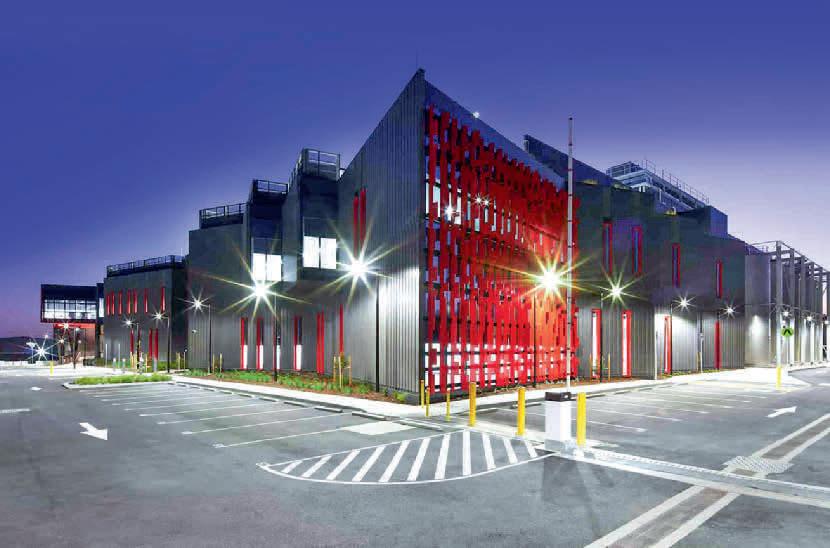
Next DC – M3 Melbourne DC (Source: https://www.hdrinc.com/ au/portfolio/m3-melbourne-data-centre)
The new infrastructure frontier
Historically, water reservoirs were built to secure supply for a growing city population. Electricity cables were laid out across our suburbs, improving comfort levels and living standards for many, and telecommunication antennas have been retrofitted to prominent buildings to enable phone reception and internet connectivity. In a not-so-dissimilar fashion, the explosion of Data Centres (DCs), identified by the Australian Government as nationally critical infrastructure (1), is emerging as the most strategically significant form of contemporary urban infrastructure of our time.
DCs are specialised facilities that store, process and distribute digital information, acting as the physical backbone of cloud computing, artificial intelligence (AI), ecommerce, telecommunications and effectively every digital service that we rely on.
Planning for the digital age
For planning practitioners, DCs present both strategic opportunities and complex challenges. As an industry, admittedly, we are navigating what is still a relatively new land use and development typology. The pace of project delivery, scale of infrastructure and supporting utilities (power and water), unparalleled flow of global capital, approval pressures, as well as the long-term implications for our cities require careful interrogation and advocacy.
In contrast to other development outcomes, such as medium-density housing or high-street retail stores – which are typically conceived and delivered at local scale – DCs


operate in a hyper-globalised economy. Project decisions are influenced by global trends and multinational technology companies, yet the ‘real life’ planning and community impacts remain local in their manifestation.
At their core, DCs are highly engineered facilities. Their master planning and siting requirements are specific and largely non-negotiable. Key site characteristics include the need for large (and ideally, regular) sites to accommodate substantial floorplates and capacity to manage logical placement of onsite infrastructure, including substations, plant and generators. Access and circulation for heavy vehicles is required to allow for skid delivery, plant replacement, and speedy construction methods. Integrally, proximity to reliable power supply, access to water, and permissible planning controls are the primary drivers of site-specific selection.
Keeping up with Data Centres
Until recently, a ‘Data Centre’ was not a listed land use term in the Victorian Planning Provisions. Amendment VC159 (gazetted 2019), introduced the term ‘Data centre’ with no formal definition; its categorisation remaining a ‘Utility Installation’. From a statutory planning perspective, DCs are broadly permissible across industrial (INZ1, INZ3) and commercial (C2Z) zones, with some also approved in Mixed Use Zone (MUZ) localities. The conventional Council planning permit approval pathway is available, however, as of September 2023, there is also the ability to pursue approval under the State Government Clause 53.22 – Significant Economic Development pathway, provided the project meets the relevant economic thresholds (which, undeniably, is the case for all Data Centre propositions).
So, where do they go?
DCs are typically located within brownfield or greenfield contexts, particularly in existing or proposed industrial precincts with strong alignment with MICLUP State and Regional designations. In metropolitan Melbourne, this is especially evident in the western and northern growth areas, where larger parcels of land are available, power and water infrastructure is accessible and applied industrial and commercial zoning provides an aligned land use and development setting.
Key planning considerations when considering projects include (inter alia):
● Amenity considerations – these often centre on acoustic impacts, particularly relating to noise emitting from plant equipment (chillers, MEPs, generators, etc.). This is more relevant when a DC has a proximate interface to sensitive uses.
Natasha Campbell Tract
Ben Cooke Tract

Infrastructure MEL02 DC (Source: https://www.stackinfra.com/locations/asia-pacific/melbourne/)
● Engineering – as highly specialised facilities, this plays a pivotal role in understanding site capacity, physical limitations and the ultimate architectural proposition.
● Physical security – this is an essential requirement for DC clients (perimeter fencing, secure vehicle entry, etc.) which, in turn, can make it challenging to achieve desired urban design and meaningful landscape outcomes.
A global challenge
There has been significant media attention regarding the surge in DC developments across Melbourne and, more broadly, Australia. Energy consumption, water use and land demand are regularly discussed and debated. Internationally, governments are grappling with similar concerns.
The Netherlands, Ireland and Singapore (2) have implemented moratoriums in recent years which have resulted in restrictions or pause on new DC developments; primarily driven by energy grid constraints, sustainability concerns and limited land availability. These examples raise important questions for planning and DC delivery in Victoria, including:
● Should the State Government be more prescriptive about preferred DC locations and/or built form expectations?
● Should there be stronger policy guidance to facilitate co-location of DCs proximate to existing or planned major power generation, transmission and water infrastructure?
● How can coordination with power and water authorities be improved in a planning approval process?
● Should a holistic package of DC planning objectives/ principles be developed (such as a Guidance Note or Practice Note or similar).
● Should sustainability assessments be more nuanced and specific to DCs?
● How do we plan for adaptive reuse, given the highly specialised nature of these facilities?
New expectations
As of March 2026, the Federal Government released a set of ‘expectations’ for data centre and AI infrastructure developers
(3). The expectations aim to incentivise investment consistent with our national interests and ensure the benefits of AI are shared by the Australian people.
The expectations are focused on the following subject matter:
● Prioritising Australia’s national interest.
● Supporting Australia’s energy transition.
● Sustainable and efficient water usage.
● Investment in Australian skills and workforce.
● Research, innovation and local capability.
At the time of writing, its not clear how these high-level expectations will be interpreted and used to guide State and local government statutory assessment processes, other than the following description: ‘The government will also work with states and territories and market participants to implement the expectations in their processes, particularly through the Energy and Climate Change Ministerial Council’.
The data-driven future ahead
The speed and scale of DC infrastructure – and the rapid evolution of the technologies they support – present an exciting strategic and statutory environment for planning practitioners to work. There’s an opportunity to learn in a fastevolving industry, to facilitate appropriately located and welldesigned outcomes and advocate for continued interrogation of improved processes and outcomes. We, like many, eagerly await what comes next.
(1) Australian Government, Trade and Investment Commission (https://international.austrade.gov.au/en/do-business-withaustralia/sectors/technology/ai-and-data-centres).
(2) Tech Monitor, Inside the Data Centre Moratorium Movement (https://www.techmonitor.ai/hardware/cloud/inside-the-datacentre-moratorium-movement
(3) Expectations of data centres and AI infrastructure developers (https://www.industry.gov.au/publications/expectations-datacentres-and-ai-infrastructure-developers)
Natasha Campbell is a Senior Town Planner and Ben Cooke is Principal Town Planner at Tract.
STACK
The Business Addicted to compliance at the cost of housing
From time to time, we all ask ourselves about the worth of more and more legislation, regulations and rules; what it achieves and how much it is adding to our economy and our communities? Over the past 30 years, and until relatively recently, the property industry has been ‘a big winner’ and while regulation and compliance will continue to be a boon for government and professional services, it may not be for the ‘ordinary every-day Australian’. Robert Stopajnik, in his article about our addiction to compliance, proposes a better and more innovative way to go about business. — Eds
How the property industry’s dependence on regulation is choking housing supply and the opportunities unlocked by breaking the addiction.
Australia’s housing deficit is more than a supply-demand mismatch. The system prioritises regulation rather than the rapid delivery of homes. This has created an unproductive market where professional services are highly reliant (or even addicted) to the application and growth of regulation.
Regulation fosters trust within fragmented supply chains, though it inevitably creates friction. Unfortunately, revenue generation opportunities for professional services exists within this friction.
This dependency is unhealthy. It creates the incentive to increase process “sludge” and encourages protectionist behaviour by professionals. As a result, we have created a system that prioritises compliance over delivery. One which we are now so desperately trying to reverse.
Why did we ignore the telltale signs for so long? Perhaps because ambiguity, complication and confrontation are good for both government and professional service businesses. It is just not good for new homeowners.
“The jobs of tomorrow will only be completed when the weight of the paperwork equals the weight of the building.”
Jeff Bryar – Founder of JBA service engineering.
Throughout my 30 years in the property sector, compliance demands have only increased. In government, my experience is that compliance has often overshadowed identification of key issues and practical solutions to address them. It has taken priority over everything else. The burgeoning of regulation and compliance has led to busier workloads and mechanised outputs. Frustratingly, it has stifled innovation when the ambition has always been to encourage it.
So much of a project’s detail is now more frequently subject to peer review, consultation, and circular debate – resulting in extended project timelines and, inevitably increased project
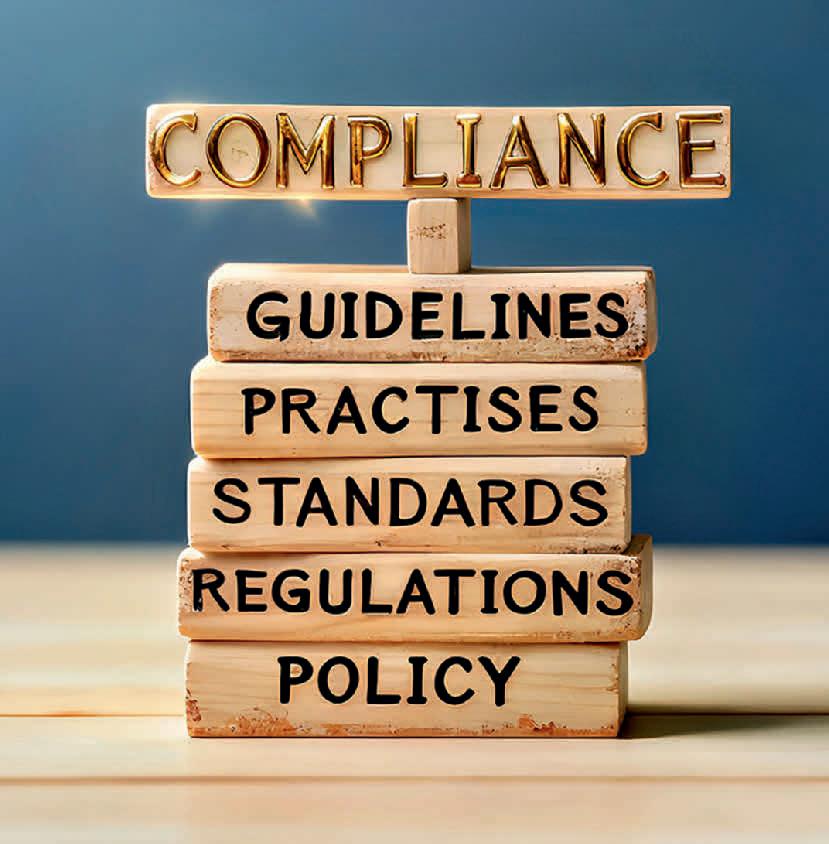
costs. For example, I once had a local council request an engineer peer review a typical fence post footing.
Currently, and perhaps unsurprisingly, the federal government views productivity as the solution, with regulatory review being a top priority. But what is the expected outcome of the regulatory review?
The advantages of regulation are frequently diminished by the expenses involved in administering it and the market’s incentive structure has become ineffective – turning skilled professionals into compliance officers.
All of us in the property industry have witnessed an increase in the engagement of consultants or intermediaries to interpret increasingly complex legislation, regulation and rules, or delegate risk. Unknowingly, we have become part of the problem. If more regulation and rules mean more work, where is the incentive to change? Not confronting this head on, will leave it in the wake of the coming AI age. But, with change, comes amazing opportunity.
We desperately need a mindset shift that celebrates the ingenuity of the professional services sector and government agents. We need to move away from compliance being the primary metric of our success, to one which rewards output.
Robert Stopajnik Unstoppable Labs
In late 2019, I conceptualised and aided in the development of the first global automated planning tool, eComply – a Victorian government-led initiative that proved regulation automation was possible. Although local acceptance of this has been lukewarm, we are seeing derivatives of this solution become popular in North America. The most exciting aspect of this story is that Australian companies are spearheading this technology, which is helping to build a local digital economy. Here lies the opportunity to revolutionise the current flawed incentive model, by flipping the status quo.
To drive eComply’s growth, we developed a distinctive funding strategy. The first principal was to accept that regulation was unavoidable. It was how we managed it that was transformational. We valued the annual cost of productivity lost and apportioned a fraction of this to build a solution. It was a shift in perspective, which we labelled monetising inefficiencies. This mindset change provided clarity in what the problem was and how much was at stake if not corrected. Archistar went on to evolve eComply into eCheck, a now recognised global product.
There is an incredible future awaiting the government and professional service industry – if they are willing to embrace this mind shift. Rethinking our regulatory dependency does not mean reducing critical regulation. This approach would accelerate data collection to enhance the delivery quality of building goods and services. It would certainly facilitate
the establishment of digital passports essential to the circular economy and improving protection for residential homeowners.
It also quickens our ability to consider new collaboration and self-governance approaches that local residential communities have been demanding, like Decentralised Autonomous Organisations (DAO). This is no longer just a theory. Global cities are already experimenting, introducing DAOs as an alternative yet more efficient means of community participation. (Check out Decidim.org)
All this is possible without burdening the delivery sector of the industry. If anything, it cracks open a plethora of downstream opportunity. Digitising the front end of the supply chain enables the adoption of technologies essential for boosting productivity in construction at the back end. It brings forward the utilisation of digital twins on site, leading to game changing user cases for Augmented Reality.
Let’s get ready to develop and implement innovative frameworks, new market incentives and digital technologies. Our industry can become global leaders, rather than serve as local traffic wardens.
Robert Stopajnik is a seasoned development director, specialising in transforming urban complexity through innovative solutions.

TRAFFIC, TRANSPORT & WASTE PRACTICAL. PROPORTIONATE. PROVEN.
one mile grid is a Melbourne based boutique consultancy specialising in traffic engineering, transport planning and waste m anagement.
We work alongside planners, lawyers, architects and local government to navigate through projects, from early feasibility and design through to delivery.
Our work spans everyday traffic and waste strategy, including access, car parking, servicing and operational design, as well as expert evidence.
We are known for clear, practical advice grounded in first principles thinking and real world operation, focused on what genuinely matters to move projects forward.
Alongside our technical work, one mile grid operates as a carbon neutral business and embeds sustainable transport and waste outcomes across our projects.
The Business
When aerial imagery isn’t enough: the limitations of drone photography for VCAT hearings
It often starts with a simple decision. A large residential subdivision needs supporting visual amenity evidence for a planning application. The site is in an upmarket suburb with wealthy residents, and the development is likely to be contested at the Victorian Civil and Administrative Tribunal (VCAT). Drone and street-level photos are captured quickly. Photomontages are prepared, and the proposal appears clear and convincing on screen.
However, as the project progresses to VCAT, the fundamental question becomes clear: will aerial photomontages be compliant with the standard for visual amenity evidence? Drone imagery may appear persuasive, but panel members may challenge its validity by inquiring about the camera’s location and height, and whether the perspective accurately represents a pedestrian’s or neighbour’s view. This is the essence of the limitations of drone imagery in meeting key evidentiary standards.
Having been an expert witness at numerous VCAT hearings, I am well aware that when evidence on key points is tested through cross-examination, the strength of the case has potential to weaken. Any unresolved doubts about the methodology of deliverables risk undermining the proposal’s credibility.
Why planning happens at eye level, not from the air
Drone photography is mostly used to capture the built environment from above, often at a height significantly higher than a human’s viewpoint. This provides valuable context, but it also changes how buildings are perceived. Height, bulk, and setbacks appear reduced, and the relationship between a proposed building and the street or neighbouring properties can seem softened by the elevated perspective.
Typical photomontages are intended to illustrate how a proposal would appear from a footpath, road, or nearby dwelling – the places or positions from which most in the community experience built form. These viewpoints sit within a narrow height range (usually 1.5 to 1.7m) and relate to how people experience scale and visual bulk. Even a small change in camera height can significantly alter what the frame captures.
Although altitude data might be recorded, it does not offer the same certainty as a fixed camera and measured tripod height. This makes it very difficult to prove a drone image matches a specific, repeatable viewpoint.
Lens width affects how scale and distance appear in an image. Most drones use very wide-angle lenses to capture as much


of the scene as possible in a single frame. While useful for context, this spreads visual information across a wide field of view, making buildings appear smaller, farther away, and less dominant than they do from a human viewpoint.
Human vision works differently. Our field of view is wide, but we focus centrally, maintaining a steady sense of scale. This is called subjective constancy. People intuitively judge height, bulk, and proximity as they move through space. Wide-angle lenses do not replicate this effect, as they compress depth and stretch space in a single image.

Stan Zaslavsky Eagle Vision
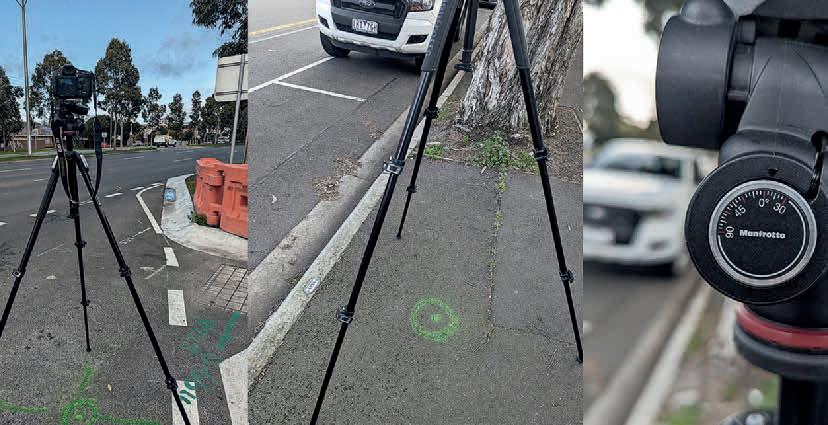
Accuracy is a process, not a photograph
The differences between drone imagery and planning-grade visual amenity photomontages are clear. Drone photographs are taken from elevated spots, use wide-angle lenses, and feature variable camera heights. These factors affect how scale, bulk, and distance are perceived. While helpful for context, drones differ greatly from the fixed, eye-level vantage points.
Visual amenity material is examined very closely by legal and planning experts for objecting parties when projects reach VCAT and so too, by permit applicant representatives and the Tribunal. Questions focus on how a view was created, if it reflects a realistic human experience, and if it can be explained or revisited. Drone imagery is more challenging to justify, especially when the camera height, lens settings, or viewpoint are not fixed.

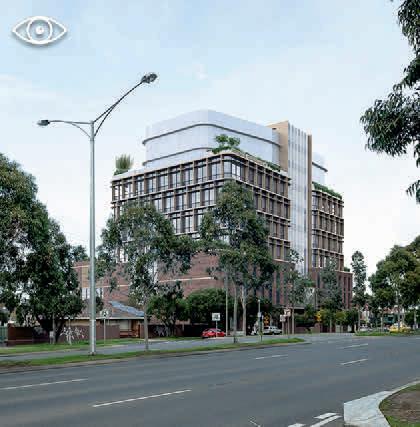

In planning or VCAT settings, it is not about how impressive an image looks, but how clearly it can be explained and relied upon to explain how a proposal will appear on completion. Visual amenity evidence must be collected from defined viewpoints, using consistent camera settings, and through a transparent process that allows images to be tested under scrutiny.
Aerial drone photomontages are valuable for context and early design, but their variable viewpoints, camera heights, and lens characteristics do not satisfy the stringent PNVCAT 2 requirements to be used for visual amenity evidence.
To your development and planning success.
Stan Zaslavsky is Principal at Eagle VIsion
Welcome to our new members…

Jack Alemis White & Case
Simran Ambavane Student
Bernhard Andersson Urbis
Ruby Bell MinterEllison
Henry Blood onemilegrid
Manasi Chopdekar In Urbe
Anabel Coffey Tract
Joshua Corner-Walker Student
Shehara Deen Student
Ava Dicello Whiteman Property and Associates
Anton Dunhill Hunt & Hunt Lawyers
Sam Eccleston Cogency
Aliza Fischer-Webberley proUrban
Katie Fox Stantec
Cameron Hayes CJH Town Planning
Majella Howey Tract
Matt Hughes Cornwalls
Eliza Kane Cogency Australia
Sophie Kusznirczuk Colliers Urban Planning
Sara Leon PE Law
Daniel Letty proUrban
Arthur Lim Environmental Resource Management (ERM)
Vasudha Mahajan Contour Consultants
Prue Maloney Upco - Urban Planning Collective
Krutika Meshra Student
Joshua Moss Maddocks
Lauren Murrant Urbis
Daniella Natautama Hume City Council
Tim Norton UPco - Urban Planning Collective
Johann Ollquist Student
Felicity O’Sullivan UPco - Urban Planning Collective
Matthew Pignata Ratio Consultants
Renzo Pombuena Renzo Tonin & Associates
Zoe Porlai Spiire
Tiana Preston Ecology Australia
Georgina Rule proUrban
Ailish Ryan Colliers Urban Planning
Maria Scarlett CEA Australia
Benjamin Sette Student
Anna Shaw Hunt & Hunt Lawyers
Mircea Stancu Student
Sean Thompson Atom Modular
Matthew Tran BSP Lawyers
Dale Wines Cossill and Webley Consulting Engineers
Katie Xiao Kinscope
Hannah Yang Student
Name
Company
Name
Company
The Business Rory’s Ramble Delivering housing for liveability, sustainability and affordability
Development of new communities has come a long way since the post-war subdivision boom of the 1950s and ‘60s.
Long straight roads, large quarter-acre blocks with ample front and back yards provided typically three-bedroom, one-bathroom homes with no separate lounge area, study or entertainment space. Families added decks and other spaces as families grew.
The 1970s and ‘80s gave us curvilinear streets, a footpath on one side of the street, larger houses and slightly smaller lots.
Now, the form and future of housing in Victoria largely comes down to four factors: streamlined planning, affordability, better design and community connections.
The toughest handbrake on new housing in growth and regional areas is the planning system. If we want to boost supply, we have to cut through increasing red tape that slows developers, builders and ultimately homeowners who want to get projects off the ground.
It’s not just holding back new housing, it’s making it financially impossible to deliver
Some reforms are under way to assist inner and middle urban housing consolidation but we will not meet supply targets without greenfield and regional cities doing their bit as well.

Rory Costelloe Villawood Properties
We need swifter and streamlined approval timelines. When projects move quickly, supply increases. When supply increases, demand is better serviced and competition helps drive affordability.
At present, too many regional housing opportunities are being stalled. Developer contribution levies are hitting eye-watering levels – up to two or three times higher than in metropolitan locations. Add to this a shift from government, now requiring developers to pay for State infrastructure, and it makes for outof-reach feasibility.
The amount of red tape facing new projects is many times what it was 20 years ago.
A more equitable planning regime could and should dramatically change the housing landscape.
We all want housing to be more affordable and liveable to contribute to healthier lifestyles, stronger community ties, greater energy sustainability and environmental values. And we all seek to significantly reduce the burden on the public purse across all these areas.
Smarter thermal design, particularly strong passive design principles, can genuinely change the game. Homes built well can maintain comfortable indoor temperatures — around 18 to 25 degrees year-round — without heaters or air conditioners.


Layer in rooftop solar and photovoltaic systems, and energy bills can shrink dramatically — in some cases close to zero. These homes can charge electric vehicles, wiping out petrol costs. EVs can feed energy back into the house when needed.
On top of this, cutting the increasing Heat Island Effect with increased tree canopy in streets and backyards will reduce temperatures – now approaching 50 degrees in summer –placing people at risk, especially the elderly and vulnerable in times of blackout and brownouts.
Greener communities will boost flora and fauna biodiversity, helping the environment and its healthy impact on people. Unfortunately, some councils provide for only one tree per home.
Another important aspect of future housing is the holistic care factor.
Increasingly, social and health facilities in new neighbourhoods improve lifestyles, as well as physical and mental health. Neighbourhoods of the future have more community spaces, including pools, gyms, cafes, events, playgrounds, gardens, parent and function centres, sports courts.
These are designed to bring people together rather than isolate them, as occurs too often in high-rise development and inner-urban living. One only has to review the range of UDIA entries and award-winning projects to see how far this has come.
The good news? This vision is not unrealistic.
With the right policy settings and clearer planning pathways, we can deliver housing and communities that are more affordable, more sustainable and more connected, and sooner rather than later.
Rory Costelloe is Founder and Executive Director at Villawood Properties
Your acoustic specialists for:
Planning
Environmental Impact
Expert Witness
Renewable Energy
Earth Resources

The Business Fast Lane



Peter Malley Ratio Consultants
Late last year the Victoria Government rolled out the most significant change to land use car parking in decades with little notice and little fanfare. Amendment VC277 fundamentally changes how car parking across the State is provided.
There is a lot to unpack with these changes. And we mean a LOT!
Everything, everywhere, all at once
Amendment VC277 dropped on 18 December, right before the Christmas break, and less than 24 hours after the first Department briefing session to industry.
The key “Why” from the Victoria Government was that major car parking reform was required to right size land use car parking requirements and align them with Action 5 of Plan for Victoria to:
- Make better use of land;
- Reduce the cost of housing;
- Support housing supply and emissions reduction targets by encouraging sustainable transport in wellserviced locations; and
- Reduce pressure on the transport network.
And, by and large, we agree that reform was needed1.
The amendment revised Clause 52.06, introducing new land use parking rates and four Car Parking Categories (Categories 1–4). New Car Parking Requirement Maps (CPRMs) were also introduced to determine which Car Parking Categories apply to what land.
The application was Statewide. But the impacts are less so.
Targeting: Activity Centres
From a zoomed-out view of the CPRMs it is plainly evident that the focus of these reforms is on inner and middle ring activity centres: existing ones, and future ones through the new tram and trains zones.
This should not be a surprise given that the CPRMs are based on the Public Transport Accessibility Level (PTAL) index. Originally developed in London in the early 1990s, PTAL measures how well a location is served by public transport based on walk access and service frequency.
Victoria is only the third jurisdiction to use PTAL to inform land use car parking requirements after Greater London and the City of Sydney, and the first to do so on such a broad scale and across the total rural-urban continuum.
PTAL assesses:
- Walking distance to public transport access points (bus stops, tram stops, train stations); and
- Service frequency and reliability at those access points.
Notably, it does not assess:
- Where services travel;
- Network connectivity or transfer penalties;
- Travel time competitiveness compared to private vehicles; or
- Service frequency outside peak periods.
As applied in the Victorian model, PTAL calculations are based on AM weekday peak hour services only and walkability considers connections via the street network. As such, the model fails to acknowledge the frequency of public transport services in outer metropolitan and regional areas often reduces significantly outside peak times and preferences finergrain permeable urban form that provides greater walkability.
In practice, we agree that adoption of a PTAL metric as the basis for informing car parking requirement categories is a reasonable approach in areas that are highly walkable and public transport dense.
However, in outer Melbourne and regional Victoria — where service options are fewer and less frequent — the correlation between PTAL category and actual mode choice behaviour is less certain.
Making sense of the car parking requirement maps
The Victorian PTAL model and associated CPRMs operate on a 200-square-metre grid. Accessibility is calculated from the centre of each grid cell using the public street network.
From review of the CRMPs (ours and others) there are:
- Holes in Category 3 and 4 areas that should logically be included; and
- Irregular applications of Category 2 in outer metropolitan and regional locations where only some stops on a route qualify or where coverage appears between routes.
These anomalies likely come down to the scale of the grid adopted for the PTAL model and that walking calculations do not appear to include private thoroughfares such as arcades and easements.
Aaron Walley Ratio Consultants
Ben Thomson Ratio Consultants
They may also reflect the thresholds adopted between each category – information that is not publicly available.
Future known public transport service improvements do not appear to have been considered, with Department of Transport’s (DTP) advice that the PTAL model is based on route and timetable information at the time of analysis. As such, areas around the new Arden Station and future Tarneit West Train Station, scheduled to open later this year, are subject to Category 1 and 2.
DTP has advised that the CRMPs will be reviewed annually to capture changes to public transport timetables, stops and infrastructure. Whilst ensuring currency, this also creates a dynamic system whereby categories, and therefore car parking requirements, could change based on decision making outside the planning system.
The mechanics of how these updates will occur and how they will be communicated remain unclear.
Right-sizing car parking rates
Beyond mapping, Amendment VC277 substantially revises the parking rates themselves.
The base Category 1 rates reflect the previous Category A rates, but with a few key changes, notably:
- Medical centres are now assessed on a floor area basis rather than per practitioner, and;
- Restaurant has been removed as a separate category, defaulting to the broader Food and Drink Premises rate.
Across Categories 2, 3, and 4, rates generally reduce progressively. In Categories 3 and 4, minimum rates transition to maximums.
However, there are significant deviations from this pattern — particularly for dwellings and for employment-focused land uses such as offices, industry, and warehouses.
For these employment-focused land uses:
- Category 2 minimum rates are 6 to 8 times lower than Category 1 minimums;
- Category 3 and 4 maximum rates revert to the general trend.
The Category 2 minimums sit at or below observed parking demand in many middle and outer suburban locations.
This is a clear signal that the State is targeting employee and commuter mode shift, not just in activity centres, but for any location deemed to have sufficient access to public transport.
While minimum rates do not prevent development from supplying additional parking, provision above minimums will increasingly become a commercial decision, rather than a statutory one.
Given that Category 2 extends across substantial portions of middle and outer Melbourne, and central areas of Geelong, Ballarat, Bendigo and other regional centres, any widespread uptake of reduced parking provision may shift pressure toward public on-street supply. Management of that supply falls primarily to local government.
Changes to dwelling parking requirements include:
- Removal of the explicit requirement for visitor parking; and
- Decoupling of parking rates from bedroom numbers.
Category 1 and 2 rates will allow for larger dwellings to be provided with fewer cars. The Category 3 and 4 maximum rates support market flexibility within Activity Centres.
However, the overall shift in dwelling car parking requirements is relatively modest, and the Category 3 and 4 maximums differ from the approaches adopted in both London and City of Sydney, where dwelling car parking rates are aggressively targeted.
In Sydney, apartment parking rates are explicitly linked to vehicle ownership data. The City’s December 2024 review identified that oversupply of residential parking can incentivise owners to rent unused spaces, potentially undermining parking maximums for commercial uses.
A similar dynamic has been observed locally. The City of Melbourne 2030 Transport Review found that residential parking spaces outnumber vehicles owned by approximately 40 per cent. This occurs despite long-standing parking overlays that cap residential parking at one space per dwelling across much of the municipality.
The mechanics
Structurally, Clause 52.06 remains largely familiar.
Clause 53.06-3 includes a grandfathering provision that allows the maximum number of car parking spaces to be exceeded if this is an existing condition and no further parking is proposed.
The methodology for calculating required spaces remains consistent, as does the process for seeking parking reductions or off-site provision.
The clause now also permits applications to exceed maximum parking rates. The assessment process mirrors that for reducing minimums, albeit with slightly different decision guidelines.
The approach is logical, but for councils unfamiliar with parking maximums, this may represent a shift in mindset.
For uses not specified in Table 1 of the Clause, parking provision remains to the satisfaction of the responsible authority, with the guidance in Practice Note 22 remaining a policy and benchmarking-based approach.
How this will apply across parking category areas and parking minimums and maximums remains to be tested.
To sum up
The Amendment VC277 reforms are big and clearly signal a change to the way land use car parking is considered and provided. But will they achieve the goals that the State Government has outlined?
Maybe, but it is only one part of the bigger puzzle… Peter Malley is a Director, Ben Thomson is an Associate: Transport and Aaron Walley is a Director at Ratio Consultants
The Business
In case you missed it

Hew Gerrard Glossop Town Planning
Is 5 business days a week or…?
The Tribunal requires submissions to be filed 5 business days before a Hearing. Ignoring any public holidays many, including yours truly, took that to be the week prior. That is, if a Hearing started on a Monday submissions were due the previous Monday.
In Ashmark Investments Pty Ltd v Greater Geelong CC [2025] VCAT 353 the filing of submissions became the subject of an application for an order to dismiss the proceeding because of a failure of the applicant and the council to comply with the five-business day requirement for the filing of submissions. In short:
- The Hearing was on a Wednesday
- The respondents filed their submissions on the Tuesday evening
- The applicant and the Council filed their submissions on the Wednesday.
The Tribunal recorded:
19. The applicant then advised that in its view the submissions were not late as they were received by the Tribunal before 4:00pm on the 12 March 2025, being what it says is five business days, or one calendar week, before the hearing. Both the applicant and the council submitted they regularly filed submissions on the fifth business day before a hearing without issue. The applicant further submitted that if five business days was calculated as being Tuesday 11 March 2025, then the submissions of Mr Winkler and Mr Chalifour were also late, as they were received after 4:00pm on the 11 March 2025.
20. I commented at the hearing that there was at times confusion between parties as to whether five business days required circulation on the fifth business day prior to the hearing, or before the fifth business day. I agree with Mr Chalifour that to be submitted five clear business days before the hearing would require circulation by 11 March 2025. However, I also acknowledged that regulation 4.32(5) of the Victorian Civil and Administrative Tribunal Rules 2018 (Vic) states that in calculating the time any document must be lodged or filed with the Tribunal, a document that is lodged or filed after 4:00pm is taken to have been lodged or filed on the next day the registry is open. In accordance with this rule, any submission filed after 4:00pm on Tuesday 11 March 2025 was not filed and received five business days before the hearing.
Rumour has it that the Tribunal will be specifying specific dates for the filing of submissions etc. in near future.
30% tree canopy coverage sought per lot?
Action 12 of Plan for Victoria references a target for 30% tree canopy coverage in urban areas. Amendments VC283 introduced this target through Clause 12.06-1S. In Mackay v Boroondara CC [2025] VCAT 855 the Tribunal invited further submissions on a matter in light of VC283. The applicants for review contended that as the tree canopy coverage on the site was only 20.4% it therefore was not acceptable. The Tribunal disagreed stating:
32. With regards to these policies, I note the reference to the tree canopy target relates to urban areas and not to individual lots and to urban areas that include both the public and private realms. Accordingly, I do not consider the proposal results in an adverse impact on the achievement of the tree canopy target set out under the policy.
33. I also consider the proposal achieves an acceptable response regarding urban heat. There is a balance to be struck, and I consider the proposal achieves this through providing for passive heating with northern orientation of habitable rooms, provision of eaves, compliance with garden area requirements and landscaping that includes canopy tree planting.
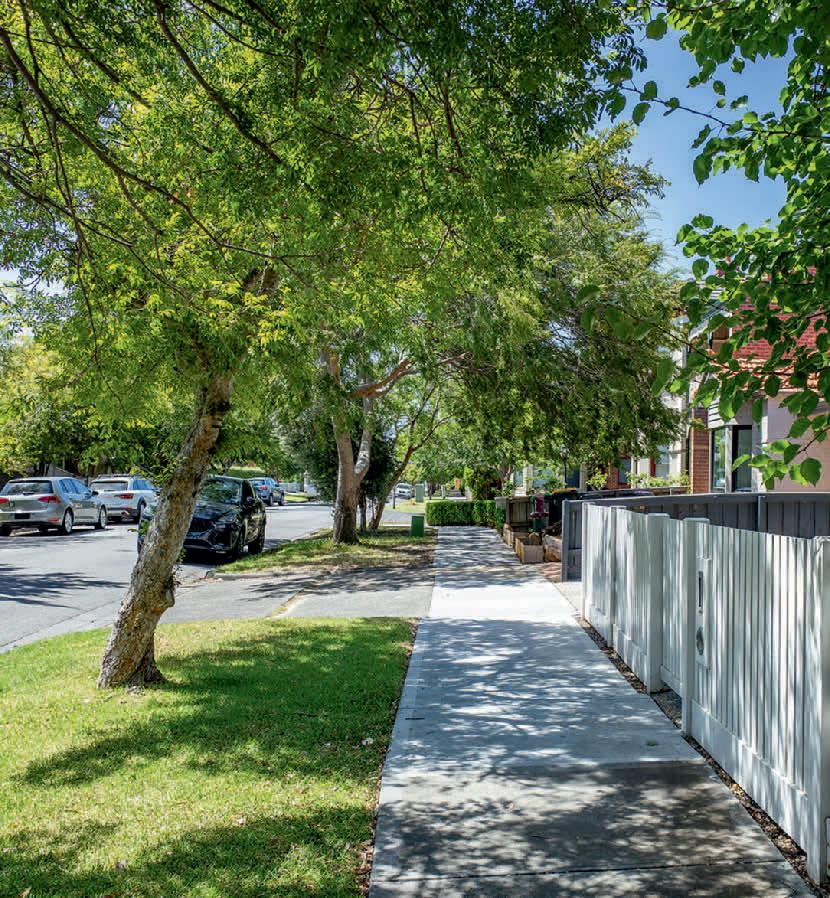
The consequence of deleting Clause 52.27
In Ballarat Cinemas Pty Ltd v Ballarat CC (Red Dot) [2025] VCAT 1029 a permit holder sought to cancel a permit and three subsequent amendments all solely concerning an on-premises liquor licence granted under then Clause 52.27. In granting the request the Tribunal made the following comments:
17. Effective on 1 July 2025, clause 52.27 was removed from the planning scheme when Amendment VC286 (‘VC286’) commenced. VC286 was prepared, adopted and approved by the Minister for Planning without notice.
18. VC286 included no savings provisions for permits issued under clause 52.27 or transitional provisions for applications for permission made under cl 52.27 but not yet determined by a responsible authority or the Tribunal.
19. It would have been possible for VC286 to have included a savings provision that permits issued under clause 52.27 (or a specified category of them) continue to have the same status, operation and effect as they had if clause 52.27 had not been removed from the planning scheme.
20. The explanatory report for VC286 and the Minister’s published ‘reasons for decision to exercise power of intervention’ (‘Minister’s reasons’) to prepare, adopt and approve VC286 make no reference to whether it was intended that permits issued under clause 52.27 should be saved.
21. As a matter of completeness, clause 52.27 was not removed and replaced with a different provision to similar effect to clause 52.27. I make this observation simply to note that the repeal and re-enactment provisions in section 30 of the Interpretation of Legislation Act 1984 (Vic) are not engaged.
22. The implication from the text of VC286 as a whole is that there was no intention to save permits issued only under clause 52.27.
In its summary the Tribunal stated:
There are many permits in Victoria issued under the clause. Some of them are issued in conjunction with other clauses of the relevant planning schemes. The resolution of any disputes about whether those permits were in force could require time consuming and expensive ad hoc Tribunal or Court proceedings. The Tribunal therefore observed that there would be merit in considering a general provision in the PE Act that avoided such proceedings. The Tribunal pointed to proposed PE Act section 69D in the Planning Amendment (Better Decisions Made Faster) Bill 2025 which may, if enacted, be an applicable general provision.
In other news…
It seems that the DTP’s Development Facilitation Program (DFP) is starting to bite. Planning application fees are a good source of income for local government coffers, but the penny (or lack of pennies) has finally dropped. Councils must now offer a competitive service and it is great to see the City of Frankston is one of the first out of the starting blocks. More Councils will surely follow but how will they compete with the ‘no notice and review’ provisions that make the Minister’s process attractive? Time will tell.
Frankston City Council has introduced its new Priority Development Program, a significant initiative aimed at improving how major projects are planned and delivered across the municipality. The program establishes an expedited and wellcoordinated assessment pathway for eligible largescale development, offering priority case management, clear early guidance and a commitment to decisions within 16 weeks. This approach is designed to give developers and investors greater certainty while encouraging highquality outcomes.
The program supports housing, commercial and mixeduse proposals that align with Frankston City’s strategic direction, planning framework and design aspirations. Eligible applications will benefit from enhanced preapplication support, streamlined assessment and increased postpermit assistance to help progress projects efficiently while maintaining strong urban design and community expectations.
This initiative forms part of Council’s broader work to facilitate housing supply, attract investment and strengthen activity within the Frankston Metropolitan Activity Centre and other key growth areas. Further details, eligibility criteria and application information are available at: https://www.frankston.vic.gov.au/ Planning-and-Building/Planning/Priority-Development-Program or you could introduce yourself to Council’s Jamie Barbakos, Coordinator Major Development.
Hew Gerrard is a Senior Associate at Glossop Town Planning

The VPELA Small Business Collective (SBC) meets quarterly and aims to bring small business members together to broaden their networks within the VPELA community and stay connected throughout the year and at VPELA events. Agendas for these sessions will include industry updates, small business issues and initiatives, and informal discussion and support for these matters. If you would like to be part of this group and receive an invitation to the next informal catch please contact Ellen Tarasenko who will add you to the mailing list.

YPG Speed Networking
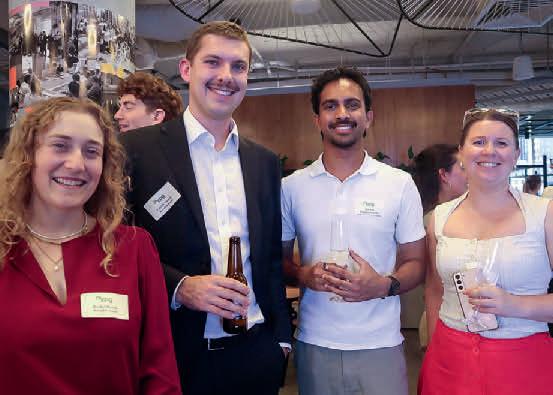




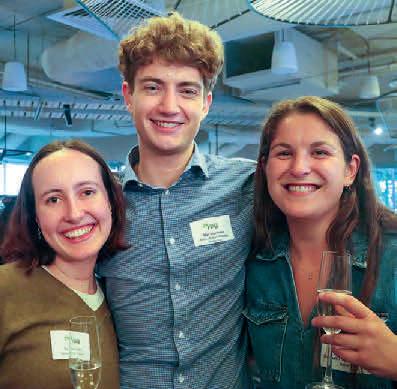
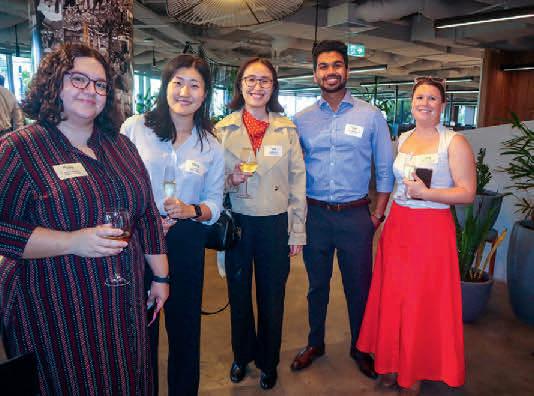
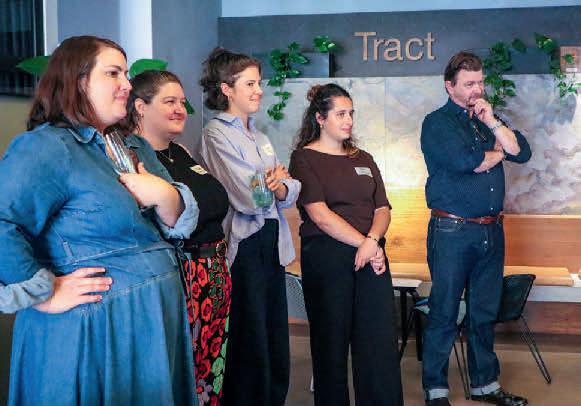
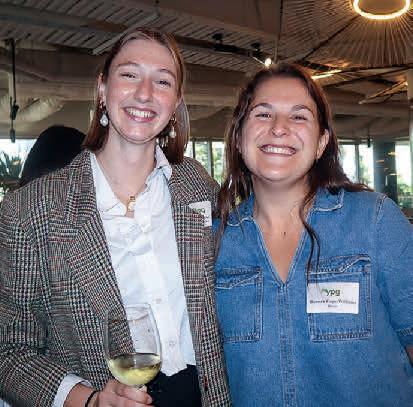


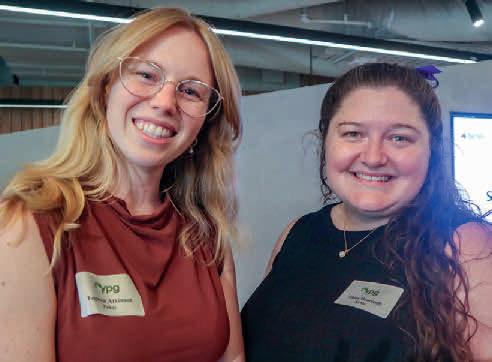



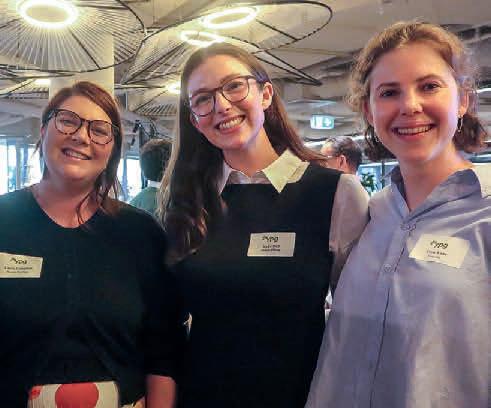
Established in 1989, the Association holds regular seminars, social events and a conference annually. It also reviews legislation, provides high level advice to Government and makes submissions to all aspects of land use planning. If you have any questions or are interested in joining the Association, contact Anna Aughterson, Executive Officer – admin@vpela.org.au