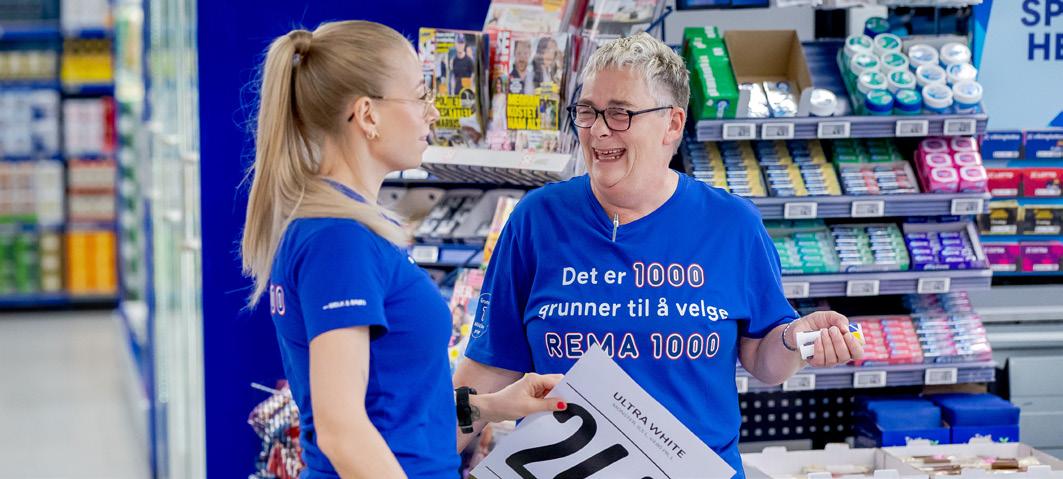
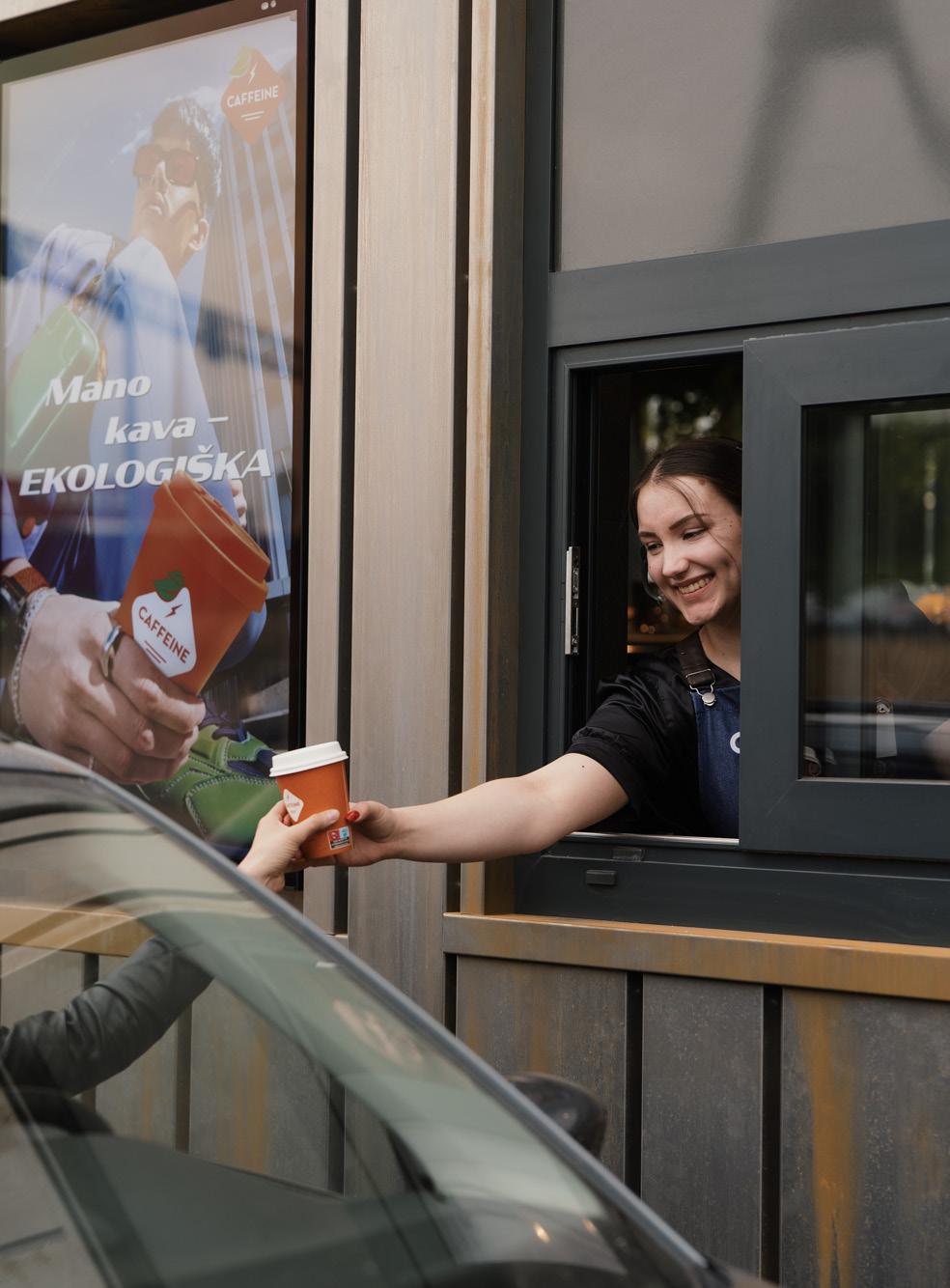
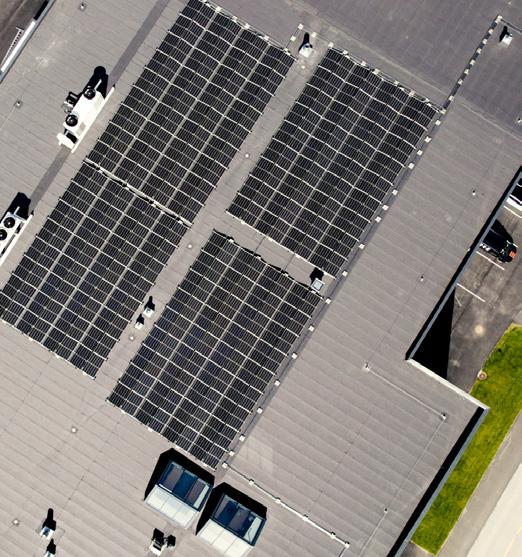
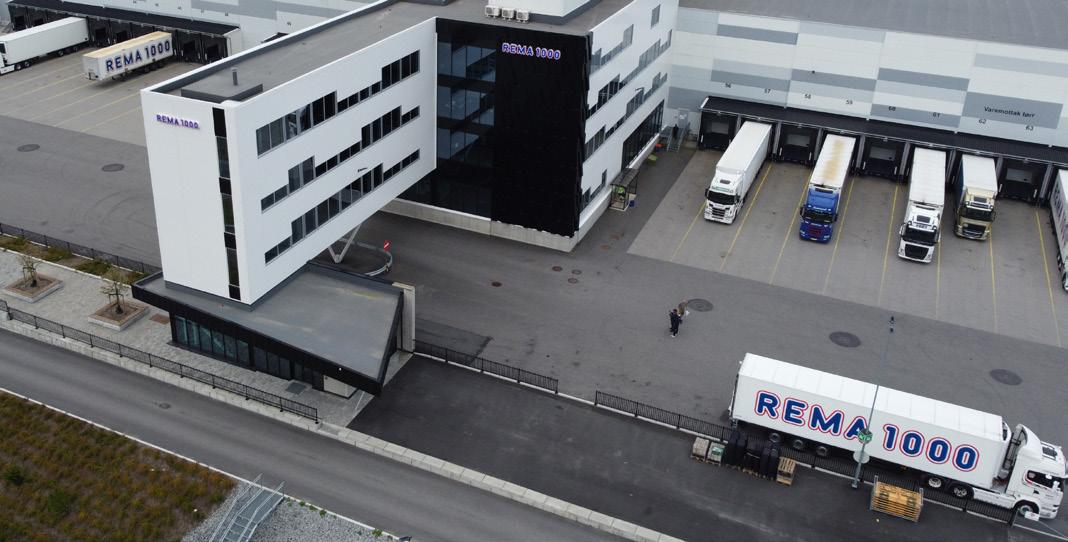
Dear stakeholders, 2025 demonstrated the strength, resilience and long-term capacity of Reitan Retail, in a year marked by profound global uncertainty and rapid technological change. Our ability to stay true to our values while adapting to a fast-moving world and customer demands has positioned us well, in the past and for the decades ahead.
Our strategy “2.0.3.0” sets direction for our next chapter as a valuedriven and innovative company, with the aim to be recognised as Europe’s most value-driven retailer.
Our strategy “2.0.3.0” sets direction for our next chapter as a value-driven and innovative company, with the aim to be recognised as Europe’s most value-driven retailer. We remain financially robust, while delivering on our strategy to strengthen our core, innovate to create new business and grow where we can make a difference.
In addition to considerable investments in our core business in 2025, we established Reitan Retail Innovation, a future-thinking hub where brilliant minds come together to develop low-carbon products and solutions for coming generations. We also acquired a one-third stake in the Nordic reward platform Spenn, and we bought the one-stop-shop EV charging pioneer Elton.
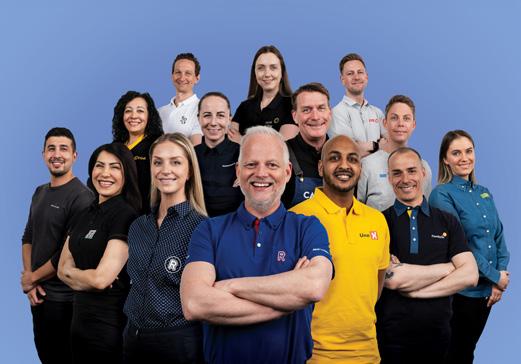
Our strategy towards 2030 and beyond reflects the potential, ambitions and dreams of 46,000 Nordic and Baltic colleagues who shape our company and our future. We continue to build for generations, guided by our purpose, our philosophy and our responsibility to the customer, our people and society.
Solid 2025 performance
Our results for the year demonstrated robust operational performance and strong cash flow development across all business areas. Systemwide sales grew to NOK 134 billion, operating profit for 2025 to NOK 3.9 billion and profit before tax to NOK 2.4 billion.
Positive and proactive franchisees and employees across all business areas have done a tremendous job in keeping the wheels turning, ensuring customer trust, maintaining reliable and efficient operations, and managing costs effectively.
2025 highlights per business area:
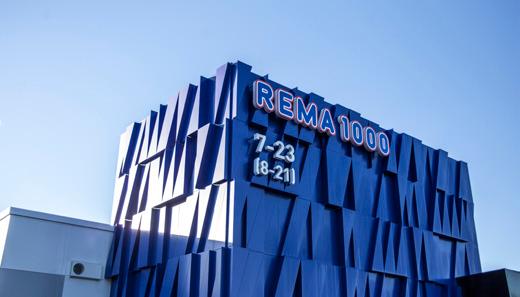
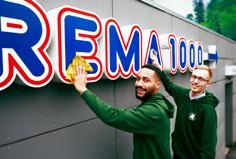
REMA 1000 Denmark continued to gain market share and position, again perceived by Danish consumers as the number one brand in the YouGov Best Brand Rankings annual survey. On the operational side, our new distribution centre for dry goods continued to improve efficiency throughout the year, upping capacity and enabling reliable deliveries to franchisees and partners across Denmark.
REMA 1000 Norway delivered solid growth, while investing in digital customer offerings and accelerating efforts to reduce carbon emissions. A new initiative, “The Blue Wave”, is focusing on nudging the customer towards better choices for their health and the climate. Underpinning climate leadership, REMA 1000 Norway
received an A score by CDP (Carbon Disclosure Project), the highest possible rating, placing us among the top 2 percent globally.
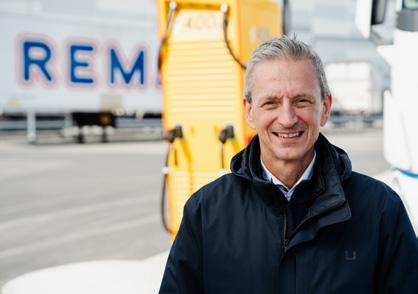
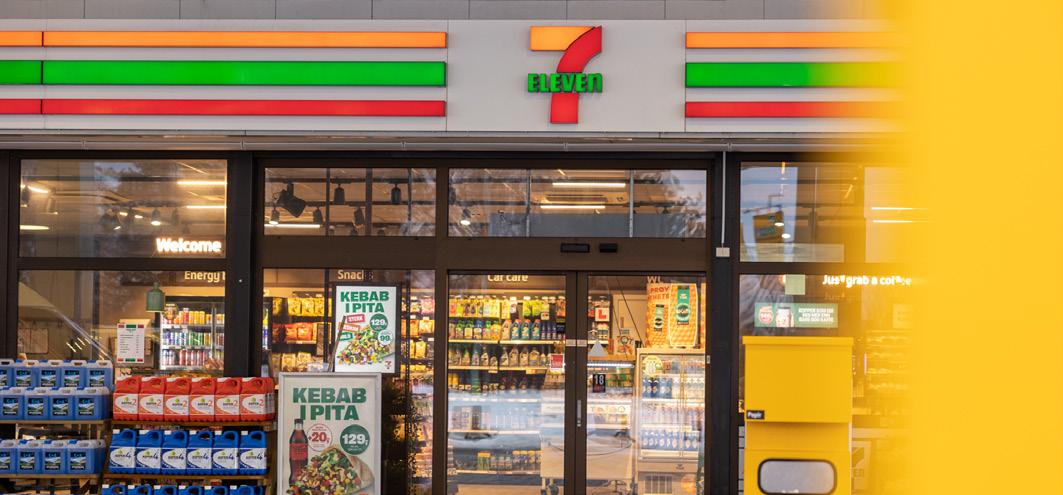
Uno-X Mobility recorded strong results and continued to expand EV charging initiatives. The Elton acquisition marked a milestone in our growth strategy, providing access to unique technical and entrepreneurial knowhow. UnoX Mobility Cycling also delivered. The women’s team achieved consistent top results at WorldTour level, while the men’s team secured WorldTour status and a stage victory in the Tour de France, reinforcing our longterm commitment to our cycling teams.
Reitan Convenience saw growth across the company, delivering solid performances in Sweden, Denmark and Lithuania, while manoeuvring a rapidly changing landscape and meeting customer demands for convenience on the go. Forceful and effective portfolio restructuring in Norway and Finland continued, giving a solid foundation for positioning our convenience business as the first choice for food and drinks on the go in the region.
Reitan Retail’s total investments amounted to NOK 2.4 billion in 2025, supporting efforts to strengthen the customer journey through digital developments, store upgrades, new customer solutions, operational efficiency, innovation and continued investments in future mobility.
Value-driven progress
We aim to be recognised as the most value-driven retailer in Europe, with a culture built on trust, accountability and high ethical standards. This is our identity and our compass as we navigate change and build the future.
Our commitment remains firm, with ambitious goals in the areas of climate, health, people and the value chain. We regard innovation through collaboration as a key for our ambitions, while we continue to deliver on our sustainability pillars with key deliveries in 2025:
Climate: We reduce climate emissions. In 2025, we continued to integrate our climate action planning and reporting into our core business planning processes. Based on more accurate CO2 emissions data, we reestablished our climate action plan, integrated into our business plan. Along with innovative efforts to curb emissions, we remain committed to our established ambition to halve emissions from the products we sell by 2030, compared to 2022, aiming for net zero by 2050.
Health: We contribute to public health. We work constantly to reduce salt, sugar, fat and additives, while improving our category and product mix to
ensure healthier customer offerings, in line with Nordic nutrition recommendations. Sales of fruits, berries and vegetables increased slightly throughout the year, while other healthier categories, such as fish and wholegrain products, need further push going forward.
People: We promote diversity, inclusion and equality. We play a key role in providing meaningful jobs for a variety of people, avoiding marginalisation and social exclusion. The overall gender balance is within 40/60 percent target across the group, but we still need to address local gaps. Our ambition to become the most attractive employer was crowned with recognition in 2025, when Reitan Retail was included in the Fortune Top 100 Best Companies to Work for in Europe.
Value chain: We work for transparency across the value chain. We continued to develop systems for responsible sourcing, adopting a high-risk commodities policy across our business areas. In close collaboration with suppliers, all business areas have made significant progress towards phasing out palm oil from all food and beverages by the end of 2028.
Our past is our future
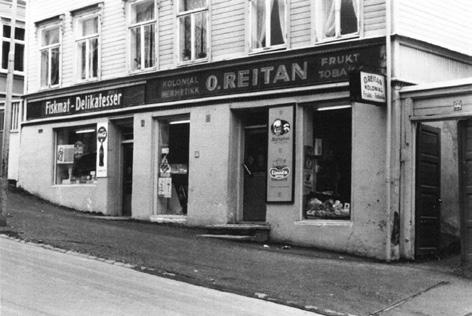
Uncertainty, inequalities and a more unpredictable everyday life are shaping the world and our customers. Much is uncertain, but some things are not. People will continue to need food and mobility: our core business and competence, built up since Ole and Margit Reitan opened their first grocery store in Nonnegata, Trondheim, in 1948.
Our proud history is the foundation of our future. We build great people and strong brands, we operate efficiently, with a solid financial position and responsible value chains that give us insight and flexibility. These are core strengths that we will protect, strengthen and continue to develop, while we innovate for new business and grow where we can make a difference.
Our 2.0.3.0 strategy sets an ambition for each segment:
Reitan Retail’s competitive strengths give us a solid starting point. With a unique franchise model, valuedriven leadership and local ownership, we create engagement and real ability to reach high and act, always with the customer as our ultimate boss.
Safety, trust and a clear moral compass matter more than ever. The future belongs to those who think long term, dream big, adapt and deliver. In 2026, we will continue to pursue that direction.
Dream it. Do it. Do it right.
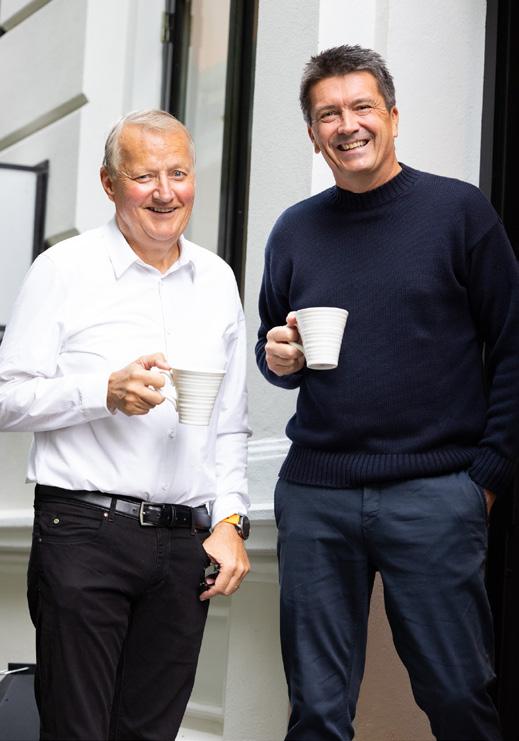
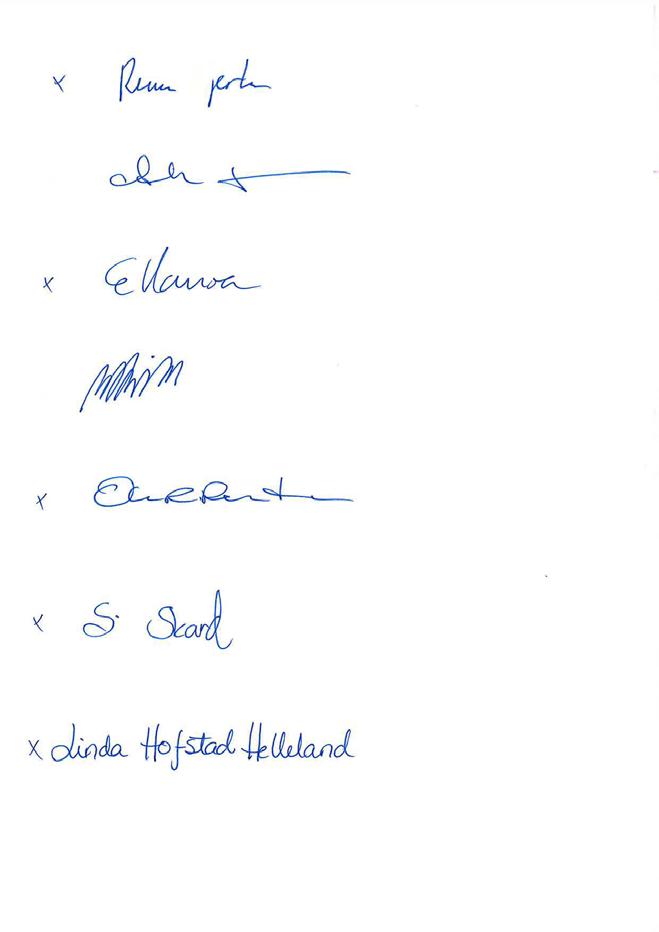
Rune Bjerke Chair
Ole Robert Reitan CEO
1.3 History and accomplishments
Building on years of proud retail history, Reitan Retail was established at the beginning of 2021 as a result of REITAN’s decision to organise all its retail operations in a single business area. Since the first grocery store opened in Trondheim in 1948, the retail business has today grown to 3,400 sales outlets across seven countries. The continuous growth has come through both organic expansion and selective mergers and acquisitions.
1948
Ole and Margit Reitan open the family’s first grocery store in Trondheim
1979
Opening of the first REMA store in Trondheim, Norway
1990
REMA 1000 goes nationwide in Norway
1994
REMA 1000 is established in Denmark
2000
Reitan Narvesen created, adding Narvesen (Norway, est. 1894), Pressbyrån (Sweden, est. 1899) and 7-Eleven (licence in Norway, Sweden and Denmark, est. 1927) to the Group
2021
Uno-X Mobility launches Nordic Swan Ecolabelled car wash in Norway and Denmark
2021
Redefining sustainability for poultry production at our new poultry factory at Orkanger (Norway)
2019
Opening of a highly automated distribution centre at Vinterbro (Norway)
2019
Acquisition of Caffeine (Baltics)
2016
Launch of a digital journey through “Vigo” in REMA 1000 Denmark and “Æ” in REMA 1000 Norway
2014
REMA 1000 Norway commits ESG to its purpose
2012
Acquisition of R-Kioski, more than 1,000 outlets in Finland, Estonia and Lithuania
2008
Acquisition of Lidl’s store network in Norway
2006
Acquisition of Hydro Texaco (Norway and Denmark)
2022
Entering the HoReCa wholesale business in Norway through Kolly
2022
Uno-X Mobility opened its first ultrafast EV charging location
2023
Uno-X Mobility opened its first ultrafast heavy-duty EV charging concept in Norway and Denmark
2023
ALDI acquisition approved by Danish competition authorities, first stores converted to REMA 1000
2023
Opening a highly automated distribution centre in Horsens (Denmark)
2024
Reitan Retail, Norgesmøllene, Felleskjøpet Agri and Yara join forces to develop and produce low-carbon bread
2024
Uno-X Mobility completed the addition of fuel sales and car wash services at all former Shell 7-Eleven stations (57) in Denmark
2024
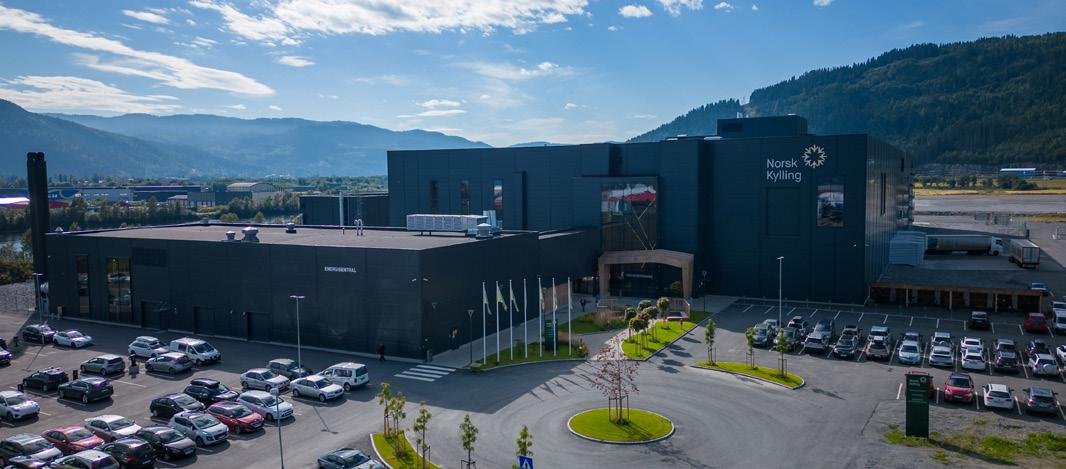
Norsk Kylling named “Årets Miljøfyrtårn” for its industryleading animal welfare, renewable energy concept and efforts in reducing emissions
2024
All YX 7-Eleven stations in Norway rebranded to Uno-X 7-Eleven
2025
2025 REMA 1000 Norway ranked top in climate leadership, earning CDP’s highest score for the 9th consecutive year
2025
REMA 1000 Denmark opened store number 431, further expanding presence following the acquisition of ALDI’s store network in Denmark
2025
REMA 1000 Denmark ranked by consumers as the strongest brand in Denmark in YouGov brand ranking
2025
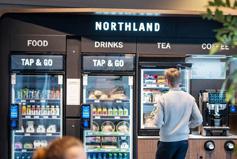
Reitan Convenience launched first unmanned store concept at Oslo airport, as an extension of the Northland brand
2025
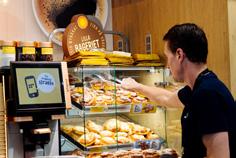
Portfolio optimisation in Reitan Convenience to support growth, accelerating growth in food-to-go, hot and cold beverages and bakery
Uno-X Mobility’s women’s and men’s teams participated in Tour de France, including their first stage victory by Jonas Abrahamsen
2025
Reitan Retail Innovation established, dedicated to driving emission reductions by developing next-generation products and services
1.4 Governing bodies
Reitan Retail AS is a fully owned subsidiary of REITAN AS, which is owned by the Reitan family. Odd Reitan, Ole Robert Reitan and Magnus Reitan, with his family, each owns 33.3 percent of the shares in REITAN AS through their individually owned holding companies.
Reitan Retail (the Group) is organised with a parent company, Reitan Retail AS, responsible for overall corporate governance. Subsidiaries that are defined as core business areas are referred to as business areas. These are REMA 1000 Norway, REMA 1000 Denmark,
Reitan Convenience and Uno-X Mobility. Each business area is led by an executive vice president and chief executive officer (CEO). In addition, the Group holds a portfolio of retail properties presented as a separate segment, Real Estate, being reported separately to the CFO of Reitan Retail.
Reitan Retail adheres to REITAN’s philosophy by structuring its operations to minimise the gap between accountability and authority and operational execution. This entails implementing and adhering to routines and internal controls across all organisational areas. These robust routines ensure consistent and ongoing monitoring of the Group’s activities, providing management with the most up-to-date information for decision-making purposes.
Management model
Reitan Retail is led by Chief Executive Officer Ole Robert Reitan (Group CEO), who is responsible for the day-to-day operations and leads the Corporate Management Board in accordance with applicable laws and the authority granted by the Board of Directors of Reitan Retail AS. In 2025, the Group’s Corporate Management Board consisted of eight employees, evenly split between four men and four women. The Group CEO reports directly to the Board of Directors, which is responsible for overseeing the overall management of Reitan Retail AS.
Corporate Management Board
Reitan Retail has a Corporate Management Board, which acts as an advisory management body for the Group CEO and assists and supports the Group CEO in carrying out the day-to-day management and decision-making of Reitan Retail. The Group CEO appoints and determines the composition of the Corporate Management Board. The board of each business area appoints the CEO for the respective business area.
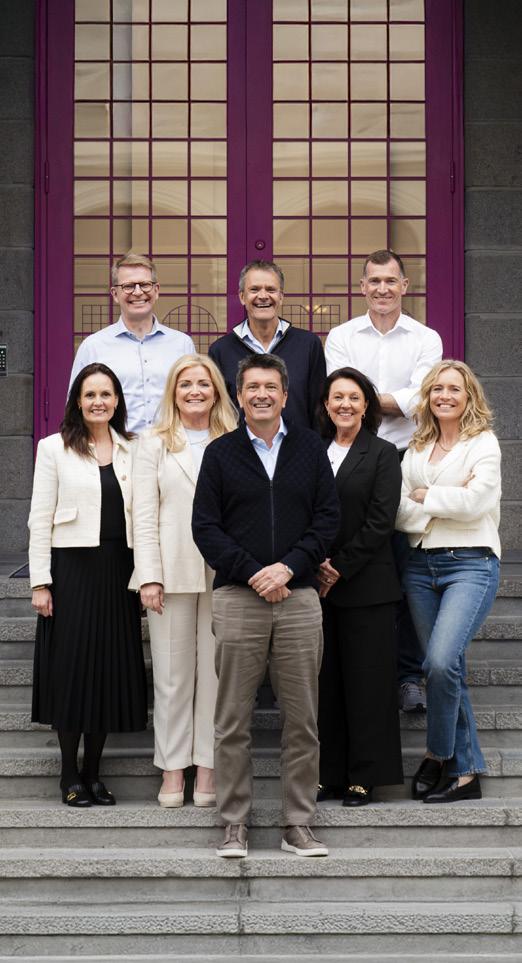
The Corporate Management Board of Reitan Retail consists of the Group CEO Ole Robert Reitan, Executive Vice President (EVP) and Chief Financial Officer (CFO) Kristin S. Genton, EVP and Chief Operating Officer (COO) Monica Ødegaard, EVP and Chief Communications Officer (CCO) Inger Sethov, EVP and CEO of REMA 1000 Norway Christian Hoel, EVP and CEO of REMA 1000 Denmark Henrik Burkal, EVP and CEO of Reitan Convenience Mariette Kristenson and EVP and CEO of Uno-X Mobility Vegar Kulset.
The members of the Corporate Management Board have a collective duty to safeguard and promote the corporate interest of Reitan Retail and to promote Reitan Retail’s strategic, financial and other objectives and targets. In addition, the role of the Corporate Management Board is to:
• Provide support and advice to the Group CEO regarding overall leadership, strategic development and the annual planning and reporting cycle.
• Provide governance and strategic support to the Business Areas in respect of finance, accounting, tax, sustainability, HR, compliance, communication and investor relations.
• Ensure that Reitan Retail is properly organised and that adequate steering, risk management and control systems are in place to provide a sufficient basis for an overview of risk exposures and compliance with applicable laws and regulations.
Board of Directors
In accordance with Norwegian law, the Board of Directors in Reitan Retail (the Group) assumes the overall governance of Reitan Retail, ensures that appropriate management and control systems are in place and supervises the day-to-day management as carried out by the Group CEO.
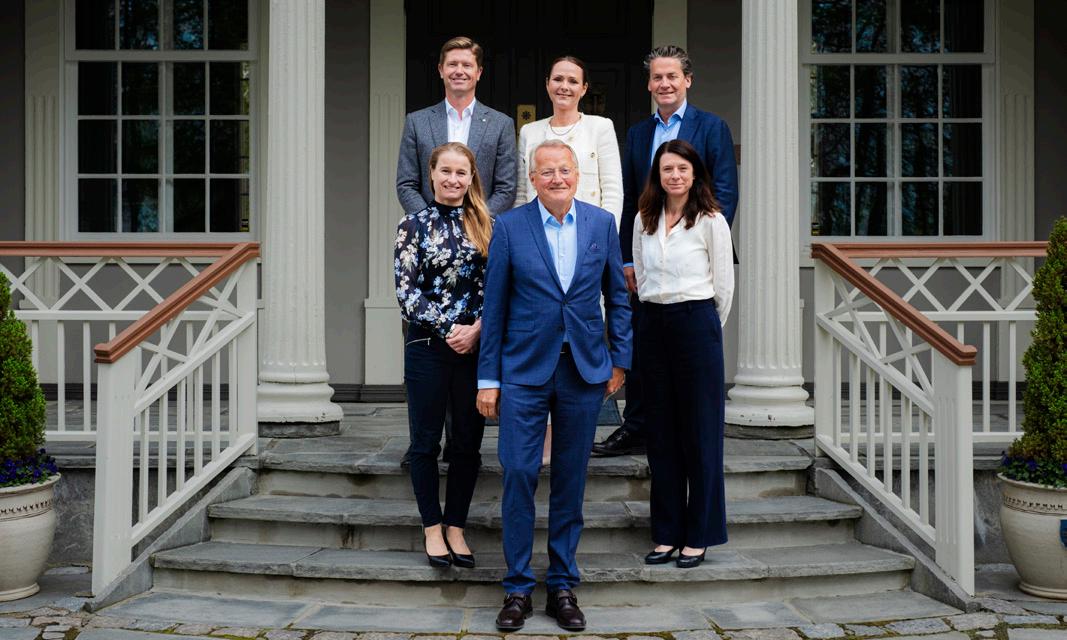
The Board of Directors in Reitan Retail comprises six members, reflecting a diversity in competence and background, of which 3 are men and 3 are women.
The tasks and responsibilities of the Board of Directors at Reitan Retail are laid down in the “Board of Directors rules of procedure”. This document governs the work and procedures of the Board of Directors of Reitan Retail AS within the framework of the applicable laws, rules and regulations. It is stated in the “Board of Directors rules of procedure” that the Board shall ensure that the activities of Reitan Retail are properly organised, approve plans, keep itself informed about the Group’s financial position and shall be obliged to ensure that the operations, accounts and asset management are subject to adequate control. The Board may also issue guidelines for the activities of the Group.
The Board shall, on an annual basis, evaluate the content and the need for any amendments to these Rules of Procedure as part of the Board’s review of governance documents.
As a part of its management of Reitan Retail’s activities, the Board shall approve the overall organisation of the Group, including determining, in collaboration with the CEO, the overall strategy for Reitan Retail.
On a general basis, the Board shall ensure that Reitan Retail has sound internal control and systems for risk management that are appropriate for the extent and nature of the Group’s activities. The Board shall also ensure that the Group uses proper and effective management and control systems, including systems for risk management, that continuously provide a satisfactory overview of the Group’s risk exposure. In addition, The Board shall ensure that the control
Rune Bjerke (b. 1960), Chair of the Board Education: Degree in economics (Exam.Oecon) from the University of Oslo and a master’s degree (MPA) from Harvard University.
Former experience: Finance counsellor in Oslo and business leader, most recently as CEO of DNB from 2007-2019.
Current assignments: Chair of the board of Wallenius Wilhelmsen and Norsk Hydro and Deputy Chair of the board of Vend.
Competences: Digitalisation, Innovation, IT and cybersecurity, Financial Investor and capital market relationships.
Linda Hofstad Helleland (b. 1977), board member Education: Media management, political science and sociology from the Norwegian University of Science and Technology (NTNU) and BI Business School.
Former experience: Norwegian Minister of Culture and Sports, Digitalisation and children and families (2015–2021), Vice President of the World Anti-Doping Agency (WADA), Member of Parliament for the Conservative Party (Høyre) (2001-2005 / 2008-2025).
Education: Economics from BI Business School, Oslo.
Former experience: Started his first IT company at 15 years old. Founder and CEO of Mamut until the company became part of Visma. Head of Visma SMB.
Current assignments: CEO of the global learning platform company Kahoot!.
Competences: Large-scale leadership and corporate management, finance, digitalisation, sustainability, business strategy and entrepreneurship.
Siv E. Rosendahl Skard (b. 1977), board member
Education: Ph.D. in Marketing, Norwegian School of Economics (NHH).
Former experience: Researcher in consumer behaviour and branding, member of Reitan Retail’s Future Advisory Board on climate strategy.
Current assignments: Professor of Strategy and Management, NHH, board member SK Brann and Ullevaal Stadion AS.
Competences: Consumer behaviour, branding, circular economy and sustainability.
Magnus Reitan (b. 1975), board member
Education: Economics from NHH Norwegian School of Economics, Bergen, and BI Business School, Oslo.
Former experience: CEO of Reitan Convenience, CFO of Reitangruppen.
Current assignments: CEO of Reitan Kapital.
Competences: Financial, risk management, mergers and acquisitions and strategy
Annika Sigfrid (b. 1974), board member
Education: Master of Science in Business and Economics from Stockholm School of Economics.
Former experience: Most recently Global Head of Equity Capital Markets (ECM) at Nordea, and previous positions at ABG Sundal Collier, Carnegie and Merrill Lynch.
Current assignments: Independent advisor in capital market transactions and several board positions.
Competences: Investment banking, equity capital markets, advisor and investor.
functions work as intended and that the necessary measures are taken to reduce extraordinary risk exposure. The Board shall also ensure that satisfactory routines are in place to ensure follow-up and compliance with principles and guidelines laid down by the Board in relation to ethical behavior and compliance, including in respect of anti-corruption, health, safety and working environment and social responsibility.
With regards to external auditing, the Board shall ensure that Reitan Retail has a proper auditing system that is appropriate to the extent and nature of the Group’s activities. The external auditor shall, at least once a year, present to the Board a review of the Group’s internal control procedures, including identified weaknesses and proposals for improvement. The Board shall approve and implement measures to ensure that the Group’s financial position is satisfactory, undertake periodical reviews of results compared with financial plans, investment frameworks and adopted target figures and approve periodic accounts.
The Board shall also determine the overriding strategy and the financial targets for the Group, in collaboration
with the CEO, and approve the Group’s investment frameworks and financial plans as prepared by the Group CEO.
A proposal for an annual plan for the Board’s work should be prepared by the Group CEO, in consultation with the Chair of the Board, at the end of each year. The plan should state how and at what time the Board will carry out its functions pursuant to the Rules of Procedure and applicable legislation, with particular emphasis on objectives, strategy and implementation.
The Board shall, as a minimum, meet four times per year and otherwise as often as the Group’s operations necessitate or if any board member or the Group CEO so demands. The Group CEO shall prepare matters to be considered by the Board in consultation with the Chair. A matter shall be prepared and presented in such a way that the Board has an adequate decisionmaking basis, including recommended decisions.
In 2025, a total of five board meetings were held in accordance with the annual board meeting plan, as well as 3 extraordinary meetings.
2.1 About Reitan Retail
Business overview
Reitan Retail is a leading retail company in the Nordic and Baltic regions with operations in discount grocery, convenience and mobility across seven countries. Reitan Retail’s operating model is based on a unique franchise model, the Reitan Format Franchise Model.
Reitan Retail is a family of 46,000 positive and proactive people and strong brands, including REMA 1000, Narvesen, R-kioski, Pressbyrån, 7-Eleven, Caffeine, Norsk Kylling, Kolly and Uno-X Mobility. Based on strong values, efficient operations and local ownership, we aim to create the best customer experiences. Our unique franchise model is at the heart of our business, and the customer is our ultimate boss. Our ambition is to make it easier to make good choices for our customers – at home and on the go. At Reitan Retail, we share strong values and a common purpose: to make everyday life a little bit easier and the world a little bit better.
Reitan Retail consists of four retail segments, also referred to as business areas: REMA 1000 Norway, REMA 1000 Denmark, Reitan Convenience and Uno-X Mobility. In addition, Reitan Retail holds a portfolio of retail properties presented as a separate segment, Real Estate. Reitan Retail is headquartered in Oslo, Norway. The business areas are operated from Oslo (Norway), Stockholm (Sweden), Copenhagen and Horsens (Denmark), Helsinki (Finland), Riga (Latvia), Tallinn (Estonia) and Vilnius (Lithuania).
Reitan Retail AS is a wholly-owned subsidiary of REITAN AS.
REMA 1000 Norway is a pioneer in franchisebased retailing and the inventor of discount grocery in Norway. REMA 1000 Norway has accomplished steady growth in systemwide sales with the business idea “customers prefer us because we always offer the lowest prices on high-quality products – produced and sold in a responsible way”.
REMA 1000 Denmark is a fast-growing discount grocer, ranked among Denmark’s strongest brands. Based on the same franchise model as REMA 1000 Norway and ambition to offer quality products at low prices, the concept is known in Denmark as “Much more discount” and “Discount with values”.
Reitan Convenience is a leader in operating franchise-based convenience stores and has strong positions in the Nordic and Baltic regions, operating a range of well-known kiosks and convenience brands, aiming to make convenience sustainable and sustainability convenient.
Uno-X Mobility is a leading provider of mobility solutions in Norway and Denmark, covering fuel stations, electric vehicle charging facilities, car wash services and lubricants. Its mission is to develop and promote solutions for future mobility.
Real Estate consists of an actively managed real estate portfolio within the retail segment. Its overall mission is to secure access to strategically important locations, making it an important enabler for the growth of Reitan Retail and its franchisees.
Our philosophy
We believe in enthusiastic and skilled individuals with the ability and commitment to get things done. Reitan Retail follows REITAN´s philosophy, and we organise our activities in a way that makes the distance between accountability, authority and operational execution as short as possible. Building a logical structure and defining clear areas of responsibility ensures that we don’t create unnecessary work for each other.
At Reitan Retail, we treat employees, suppliers, partners and customers with respect. We like to keep it simple –and we want to be the very symbol of common sense, retail and a down-to-earth mindset. We encourage everyone to be proud of their own accomplishments while at the same time admiring others for their achievements and success.
Our philosophy brings us together, and our strong values define us and lead us forward. We know where we are going without forgetting where we came from.
Our values
We are a value-driven company. Our values are the foundation for making customers, employees and partners feel valuable, creating long-term financial value and conducting our activities with integrity.
We have eight values that define and guide us:
1. We stick to our business model
2. We keep high moral standards
3. We are committed to be debt-free
4. We encourage a winning culture
5. We are positive and proactive
6. We talk with each other, not about each other
7. The customer is our ultimate boss
8. We work for fun and profit
Our values define what we believe is worth striving for. These values are our internal compass, guiding our mindset and decisions. Clearly defined values are the basis for a strong culture.
Reitan Retail is owned by REITAN AS. Our values have evolved through REITAN’s extensive history and are a natural part of Reitan Retail’s DNA. Our eight values are carved in rocks and obelisks placed at REITAN’s cultural and financial heart at Lade Gaard and several of our locations in the Nordics and the Baltics.
We use our philosophy, mindset and values to build as many champions and jobs as possible, where people thrive and are engaged. Valuebased leadership is part of our philosophy and involves building great people who inspire action by building trust.
Conducting business in an ethical and transparent manner aligned with our values to inspire trust is essential for us. Being a value-driven company, we depend on trusting each other throughout our organisation, and we are dependent on trust from our customers, suppliers, partners, owners, authorities and society at large.
Our business model
Franchise – our main competitive advantage
The Reitan Format Franchise Model has been the heart and key driver of the successful development since the first REMA 1000 store opened in Norway in 1979. Reitan Retail was the first company in Norway to implement franchising and streamlined this model of operation through REMA 1000. REMA 1000 is the only purely franchise-based grocery player in the Nordics. Franchise is also the main operating model for Reitan Convenience.
The franchise model is a win-win partnership, enabling us to benefit from large-scale economies as well as
agile and small-scale economies due to a decentralised decision-making structure with aligned performance incentives for the franchisor and franchisees.
Franchising represents a close collaboration between two independent parties: the franchisor and the franchisee. It’s about striking a balance between the freedom to make individual choices and a commitment to shared standards and systems. The franchisee is an independent business owner and operates within the concept and philosophy established by the franchisor.
Our strategy 2.0.3.0
Reitan Retail operates in an environment marked by geopolitical uncertainty, technological change and shifting consumer behavior. While external conditions are increasingly volatile, the underlying demand for food, convenience and mobility remains structurally resilient. This provides a solid foundation for long-term value creation, provided we continue to adapt, execute with discipline and invest with a long-term perspective.
Reitan Retail’s strategy is anchored in our values, decentralised operating model and strong local ownership. These characteristics have supported
Grocery
The number one in the Nordics
Convenience
consistent value creation over time and remain central to the strategic direction going forward.
The strategy, named “2.0.3.0”, sets direction for the next chapter as a value-driven and innovative company, with the ambition to be recognised as Europe’s most value-driven retailer.
Reitan Retail’s strategic goal is to strengthen our leading positions in our core segments, while building a platform for long-term growth beyond today’s business.
The long-term ambition for each business segment:
The first choice for food and drinks on the go in the Nordics and Baltics
Mobility
The strongest mobility brand in Europe
To deliver on our ambitions, Reitan Retail focuses on three overarching strategic priorities:
Strengthen the core
We prioritise continuous improvement of our existing businesses, leveraging our franchise model, strong brands, efficient operations and robust value chains. Operational excellence, cost discipline and customer relevance remain key drivers for competitiveness.
Innovate for new business opportunities
We actively explore new business opportunities, technologies and partnerships that can enhance customer experience and create new revenue streams. Digitalisation and data-driven decisionmaking are central enablers in this effort.
Grow where we can make a difference
We seek growth where we can create long-term value, make a meaningful difference for customers and society, and build sustainable positions wherever we operate. Capital allocation is guided by strategic fit, scalability and return potential.
Reitan Retail’s strategy reflects the ambitions and commitment of our organisation and franchisees. With a longterm perspective, a strong culture and disciplined execution, we are well positioned to navigate uncertainty and continue to create value over time.
2.2 Financial position of Reitan Retail
The consolidated financial statements of Reitan Retail AS and its subsidiaries (Reitan Retail or the Group) have been prepared in accordance with IFRS® Accounting Standards as issued by the International Accounting Standards Board (IASB) and endorsed by the EU and the additional requirements of the Norwegian Accounting Act, effective on December 31, 2025.
In the view of the Board of Directors, the Group has a solid financial position. In accordance with Section 2-2 of the Norwegian Accounting Act, the Board confirms that the prerequisites for the going-concern assumption exist and that the financial statements have been prepared based on a going-concern basis.
The Group’s results and financial position are affected by uncertainty, especially related to accounting estimates when determining the impairment of nonfinancial assets, incremental borrowing rate to measure lease liabilities and contingent liabilities.
The key figures for the Group and its business areas consist of both IFRS measures and alternative performance measures (APMs). The following APMs are referred to in the next sections: Systemwide sales, growth in systemwide sales, like-for-like growth in systemwide sales, total systemwide and distribution sales and growth in revenue. In addition, the Group closely monitors the non-financial performance measure number of sales outlets. See the section Performance measures and definitions for further details on all of the Group’s APMs and non-financial performance measures.
In the view of the Board of Directors, the Group has a solid financial position.
Systemwide sales represent sales in all sales outlets under the Group’s concepts and banners, whether operated by the franchisees, Reitan Retail, dealers or commission-based retailers.
Total systemwide and distribution sales consist of systemwide sales and distribution sales. Distribution sales is the Group’s sale of goods to other external customers not included in systemwide sales.
To exclude the impact of foreign currency translation, growth in systemwide sales, like-for-like growth in systemwide sales and growth in revenue are measured in local and constant currency rates.
Sales from franchise-operated sales outlets are reported by the franchisees and represent their revenues from sales at franchise-operated sales outlets. Sales from franchise-operated sales outlets are not recorded as revenue by Reitan Retail and are not included in the Group’s consolidated financial statements. However, the Group’s revenue from the sale of franchise services is computed based on the sales made by the franchisees, and, as a result, sales from franchise-operated sales outlets have a direct effect on the Group’s revenue from the sale of franchise services and profitability. The systemwide sales measure allows management to assess changes in the Group’s overall system performance, the health of our concepts and banners, the financial health of the franchisee base and the strength of our market position relative to our competitors.
Sales outlets include all stores and mobility locations under the Group’s concepts and banners, whether operated by franchisees, Reitan Retail, dealers or commission-based retailers.
Numbers in parentheses represent last year’s figures.
2025 results
Reitan Retail’s systemwide sales* in 2025 came to NOK 134,396 million (132,111), corresponding to a growth* of 4.5 percent. Like-for-like growth in systemwide sales* was 2.8 percent. Revenue in 2025 was NOK 111,692 million (109,326), corresponding to a growth* of 5.1 percent. Both revenues and systemwide sales were impacted by general inflation, volume growth primarily through new stores in grocery, as well as positive impacts from a weakening NOK vs relevant currencies.
Operating profit in 2025 was NOK 3,899 million (3,769). The results in 2025 were higher than in 2024 primarily due to higher franchise fees resulting from higher systemwide sales and strong operational performance across the business areas. This was partly offset by restructuring costs in Reitan Convenience and broadbased cost inflation.
Profit before taxes amounted to NOK 2,427 million in 2025 (2,379) with profit for the year of NOK 1,921 million (1,968).
Development in key figures for the Group’s segments is discussed in more detail below.
Cash flow and investments
Cash flow from operating activities (before interest and income tax) in 2025 amounted to NOK 10,539 million (8,349). The increase from last year is mainly related to reduction in working capital elements (change in inventories, change in trade and other receivables and change in trade and other payables) and increased operating profit before amortisation, depreciation and impairments (EBITDA).
Net cash flow from investing activities in 2025 amounted to NOK -2,362 million (-3,003). The decrease in investing activities in 2025 compared to 2024 is
mainly attributable to 2024 being impacted by the acquisition of ALDI’s store network in Denmark adding a significant real estate portfolio.
Net cash flow from financing activities in 2025 amounted to NOK -6,400 million (-4,240). In 2025 a dividend of NOK 2,078 million (1,364) was paid.
The Group’s ability to finance its own investments is considered good.
Balance and liquidity
As of December 31, 2025, total assets amounted to NOK 64,161 million (63,681), similar to the level as of December 31, 2024.
Cash and cash equivalents as of December 31, 2025, amounted to NOK 752 million (889) of which NOK 33 million (90) relates to restricted cash, as described in note 22 in the consolidated financial statements. As of December 31, 2025, undrawn borrowing facilities amounted to NOK 6,340 million (5,673).
At the end of 2025, total equity amounted to NOK 14,241 million (14,235), resulting in an equity ratio of 22.2 percent (22.4).
Geopolitical tensions and macroeconomic uncertainties
The global environment remains marked by geopolitical tension and macroeconomic uncertainty. Wars, conflicts and rising protectionism contribute to a less predictable world, while rivalry between major economies increases the risk of trade barriers, supply chain disruptions and market volatility. These developments affect sectors central to Reitan Retail, including grocery retail and mobility industries.
Reitan Retail has no people, assets or direct operations in areas currently affected by armed conflict, but we closely monitor geopolitical developments, regulatory changes and sanctions in all markets where we operate. This ensures that indirect effects, whether regulatory, financial or operational, are identified and managed as early and effectively as possible.
Inflationary pressures have persisted, although easing from the peak in 2022 and 2023, resulting in a structurally higher cost base. Consumer behavior continues to shift towards affordability and value-for-money options as household budgets remain strained. Reitan Retail works continuously to manage our own cost base responsibly to keep prices as low as possible.
The regulatory framework in the EU and the countries where we operate is evolving quickly, creating both challenges and opportunities for the retail sector, related to issues including such as labormarket regulations, sustainability and reporting requirements. Recent EU rulings regarding the Part-Time Work Directive over the right to overtime pay for part-time employees, might have implications for Reitan Retail and its franchisees. However, it is too early to determine the impact, pending legal developments in each country.
In an environment of sustained uncertainty, Reitan Retail remains focused on adaptability, long-term value creation and responsible operations. Safeguarding the wellbeing of employees, franchisees and partners is a key priority, particularly in markets and regions exposed to heightened geopolitical tension.
Statement of objections from the Norwegian Competition Authority
On August 21, 2024, the Norwegian Competition Authority (NCA) imposed an administrative fine of NOK 1,293 million on REMA 1000 Norge AS and
REITAN AS for an alleged breach of Section 10 of the Norwegian Competition Act and Article 53 of the EEA Agreement, which prohibits anti-competitive cooperation.
The decision is based on the NCA’s assessment that REMA 1000 Norge, NorgesGruppen and Coop have cooperated in a way that enables mutual access to a comprehensive gathering of current, publicly available shelf prices through the use of so-called “price hunters” and that this practice has had an anti-competitive effect in the grocery market.
Reitan Retail disagrees with NCA’s decision and appealed to the Norwegian Competition Appeals Tribunal. On August 20, 2025 the Norwegian Competition Appeals Tribunal upheld the decision from the NCA. Reitan Retail has brought the decision of the Norwegian Competition Appeals Court before Gulating Court of Appeal.
The Group considers it not likely that a present obligation exists as of December 31, 2025, or at the time of signing the consolidated financial statements.
For further information, see note 35 in the consolidated financial statements.
Events after the reporting period
No significant events have occured after the reporting poeriod.
2.3 Segment performance
REMA 1000 Norway
Introduction
REMA 1000 Norway is the franchisor for REMA 1000 stores run by independent franchisees and is the only grocery retailer in Norway based entirely on a pure franchising model.
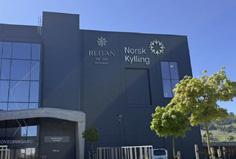
The franchisor provides a set of services to the franchisees, including concept, location, marketing, procurement and assortment, in addition to distributing and selling goods to the REMA 1000 stores in Norway. The distribution activities also include external customers, including deliveries to the HoReCa sector (hotels, restaurants and catering companies) and to several convenience stores, including the 7-Eleven and Narvesen stores in Norway. In addition, REMA 1000 Norway has ownership in selected companies producing a range of private labels, including the stateof-the-art chicken producer Norsk Kylling. The business area also includes three Innom stores, a compact urban format offering grab-and-go food, coffee and selected REMA 1000 assortment at low prices. REMA 1000 Norway is headquartered in Oslo, Norway.
REMA 1000 Norway’s business model is based on high sales productivity and low costs, and the business idea is that “customers prefer us because we always offer the lowest prices on high-quality products – produced and sold in a responsible way”. REMA 1000 Norway has a proud history as the pioneer of discount grocery in Norway. Since the opening of the first REMA 1000 store in 1979, REMA 1000 has been a significant contributor to the maturity of the discount segment in Norway. Over the past 40+ years, REMA 1000 Norway has seen steady growth in systemwide sales and number of stores.
2025 results
REMA 1000 Norway’s systemwide sales* in 2025 came to NOK 57,219 million (54,483), corresponding to a growth* of 4.9 percent. Like-for-like growth in systemwide sales* was
REMA 1000 Norway has a proud history as the pioneer of discount grocery in Norway
4.4 percent. Revenue in 2025 was NOK 43,813 million (41,115), corresponding to a growth* of 6.6 percent. Both revenues and systemwide sales were impacted by relatively high levels of inflation. Inflationary pressures have persisted, keeping food price levels high and placing continued pressure on household finances, which has driven a sustained shift toward value-formoney product alternatives and discount formats. REMA 1000 Norway’s growth for the year was mostly in line with the overall Norwegian grocery market, ending the year with a market share of 24% (Konkurransetilsynets Dagligvarerapport 2025). The number of sales outlets at year-end 2025 was 691, including 3 Innom stores, up from 680 at year-end 2024.
Operating profit in 2025 was NOK 2,145 million (2,147). The results in 2025 were in line with last year with higher franchise fees from increased systemwide sales and improvements in industry being offset by cost inflation.
Outlook
Continuous development of the REMA 1000 concept through assortment, digitalisation, store upgrades and reduced complexity will contribute to an improved shopping experience for customers and increased efficiency throughout the entire value chain. Establishing new stores in attractive locations will also be a strategic priority.
The close collaboration with our fully and partially owned suppliers remains important. Continued improvements across the portfolio will support a more competitive and efficient value chain, supporting our ability to deliver high-quality products at consistently low prices.
REMA 1000 Denmark
Introduction
REMA 1000 Denmark is the franchisor for REMA 1000 stores run by independent franchisees and is the only grocery retailer in Denmark based entirely on a pure franchising model. REMA 1000 Denmark provides a set of services to the franchisees, including concept, location, marketing, procurement and assortment. In addition, REMA 1000 Denmark also sells and distributes goods to the REMA 1000 stores in Denmark and to several convenience stores, including the 7-Eleven stores in Denmark. REMA 1000 Denmark is headquartered in Horsens, Denmark.
REMA 1000 Denmark’s business model is based on high sales productivity and low costs. REMA 1000 Denmark has had a presence in the Danish grocery store market since 1994 when the first two stores were opened. REMA 1000 Denmark inherits its profile and customer-centric mindset from REMA 1000 Norway, and the two share the same ambition of offering quality products at low prices. In Denmark, this is branded as “Much more discount” and “Discount with values”.
In 2025, REMA 1000 Denmark was perceived as the strongest brand in Denmark (YouGov) and the most sustainable brand among grocery retailers (SBI). This exemplifies the solid foundation for further growth in the Danish grocery market.
2025 results
Systemwide sales* in 2025 was NOK 40,639 million (38,303), corresponding to a growth* of 5.4 percent. Like-for-like growth in systemwide sales* was 1.0 percent. REMA 1000 Denmark’s revenue in 2025 was NOK 45,239 million (42,919), corresponding to a growth* of 4.7 percent. Both systemwide sales and revenues benefited from the many stores opened in 2024, most of them from the ALDI acquisition, giving a strong full-year effect in 2025 and highlighting the continued momentum for REMA 1000 Denmark. The trend towards value-for-money
REMA 1000 Denmark’s business model is based on high sales productivity and low costs
and discount options was also evident in Denmark. In 2025, REMA 1000 Denmark had an estimated market share of close to 20 percent of the traditional Danish grocery market, well above the estimated 19 percent in 2024. The number of sales outlets at year-end 2025 was 431, up from 423 at year-end 2024.
Operating profit in 2025 was NOK 1,518 million (1,367). Operating profit increased compared to last year due to higher franchise fees from increased systemwide sales, improvements in distribution and ALDI one-off costs impacting 2024. The improvements were partially offset by cost inflation.
Outlook
REMA 1000 Denmark remains committed to its core business model — offering low-priced goods with clear requirements regarding the goods’ quality and impact on people and the environment. This includes a continued focus on organic and sustainable groceries and reduced food waste.
Following the acquisition of ALDI’s Danish store network and significant amount of store openings in 2024, 2025 was a year where focus shifted from expansion to integrating these stores and establishing strong, consistent operations. In 2026, we will continue building on this progress by further improving operational performance and strengthening the customer experience, while still adding new stores to expand our presence. Our new distribution centre for dry goods in Horsens became significantly more efficient during 2025, and in 2026 we will continue to stabilise and optimise its operations to ensure an even more robust and efficient supply chain.
Reitan Convenience
Introduction
Reitan Convenience is a leading player in the convenience market in Norway, Sweden, Denmark, Finland and the Baltics. With limited exceptions, the portfolio is based on franchising as the operating model. Reitan Convenience consists of leading international brands and national legacy brands in local markets, including Narvesen in Norway, Latvia and Lithuania, Pressbyrån in Sweden, 7-Eleven in Norway, Sweden and Denmark, R-kioski in Finland, R-kiosk in Estonia, Lietuvos Spauda in Lithuania, Northland in Norway, Caffeine in Lithuania, Latvia and Estonia and PBX in Sweden.
Reitan Convenience has a proud history in convenience retailing going back more than 130 years. The convenience retail operations seek to be the preferred choice for food-to-go and beverages in the Nordics and Baltics. Reitan Convenience aims to make convenience sustainable and sustainability convenient.
2025 results
Systemwide sales* in 2025 was NOK 17,312 million (16,879), corresponding to a growth of 1.1 percent. Likefor-like growth in systemwide sales* was 1.9 percent. Reitan Convenience’s revenue in 2025 was NOK 6,129 million (5,803), corresponding to a growth* of 4.4 percent. Systemwide sales and revenues grew despite 119 fewer stores by the end of 2025 compared to the end of 2024. At year-end 2025, the number of sales outlets stood at 1,559, down from 1,678 in 2024. This reflects an active portfolio strategy, balancing new store openings in attractive locations with the closure of smaller, less profitable stores, primarily in Norway, Finland and the Baltics.
Operating profit in 2025 was NOK -99 million (167). Operating profit decreased in 2025 due to restructuring costs of approx. 250 million, mainly in Norway and
Reitan Convenience aims to make convenience sustainable and sustainability convenient
Finland, reflecting optimisation of the store portfolio to adjust to changed consumer behavior. Adjusted for restructuring costs and special effects, operating profit is slightly above last year, with particularly solid development in Denmark and Sweden.
Outlook
Reitan Convenience is a specialist in developing and operating franchise-based convenience concepts. Organic growth in existing stores and new store openings is a core part of Reitan Convenience’s business. Reitan Convenience will continue to focus on food-to-go, beverages and bakery, supported by innovation and digital solutions, to improve customer offering and performance, attract new and existing customers and strengthen the portfolio.
Uno-X Mobility
Introduction
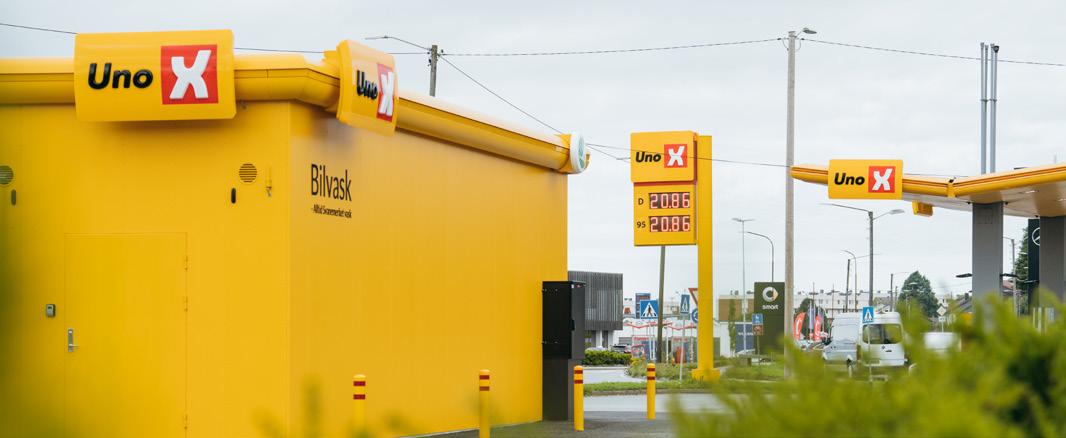
Uno-X Mobility operates in Norway and Denmark under the Uno-X brand providing efficient and accessible mobility services. Uno-X Mobility offers liquid fuel, EV charging, automated car wash facilities and lubricants. Uno-X Mobility owns and operates the Uno-X professional cycling team, which is organised within Uno-X Mobility and supported as a joint Reitan Retail initiative to promote cycling as part of future mobility. Over time, Uno-X Mobility has developed from a primarily liquid fuels-based business into a broader mobility platform, with the mission to develop and promote solutions for future mobility.
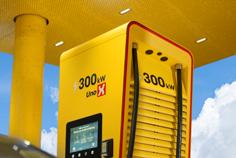
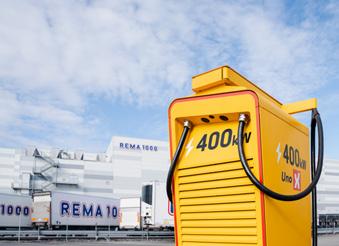
EV charging is a key growth area for Uno-X Mobility. Uno-X Mobility operates a growing network of ultrafast charging solutions for passenger vehicles, often co-located with REMA 1000 and 7-Eleven and develops high-power charging solutions tailored to the operational requirements of heavy-duty transport.
Throughout the year, Uno-X Mobility has made significant investments in EV charging infrastructure. By the end of 2025, Uno-X Mobility operated 633 charging points for passenger vehicles and 66 for heavy-duty vehicles across Norway and Denmark, corresponding to 103 and 13 locations, respectively.
2025 results
Total liquid fuel volume sold (measured in 1,000 m³) in 2025 was 1,390 (1,560), corresponding to a decline of 10.9 percent. Systemwide sales and revenues declined in 2025 compared to 2024, driven by lower volumes as well as reduced prices for refined oil products.
Operating profit in 2025 was NOK 716 million (293). Operating profit increased in 2025 due to solid operations and negative one-off effects in 2024. The results reflect a continued solid development for liquid
Uno-X Mobility remains committed to the transition to lower-emission mobility
fuel operations but a softening market and decline in liquid fuel volumes.
The number of mobility locations at the end of 2025 was 728, up from 710 at the end of 2024.
Outlook
Uno-X Mobility remains committed to the transition to lower-emission mobility. Uno-X Mobility will continue to develop and offer mobility solutions with lower environmental impacts, while ensuring an efficient and financially viable fuel network. Expanding EV charging infrastructure is a strategic priority for Uno-X Mobility, supported by significant investments to improve access to electricity for road transport and accelerate electrification. These efforts are aligned with national and international climate policies and are based on measurable targets and transparent reporting in line with regulatory requirements.
As part of Reitan Retail’s strategic ambition, Uno-X Mobility has begun exploring potential opportunities for its EV charging concept outside Norway and Denmark. This work is at an early stage but builds on strong customer reception and operational experience in its home markets.
Real Estate
Introduction
Real Estate consists of an actively managed real estate portfolio within the retail segment. Its overall mission is to secure access to strategically important locations, making it an important enabler for the growth of Reitan Retail and its franchisees.
Reitan Retail has direct ownership of a real estate portfolio in Denmark as well as the Norsk Kylling factory in Norway. In Norway, REBUS Utvikling, a subsidiary of REBUS Handelseiendom, is responsible for identifying and developing potential locations for Reitan Retail. Reitan Retail is actively involved through representation on the Board of Directors and Investment Committee, with the partnership being governed by a service-level agreement. REBUS Handelseiendom is owned by REITAN through Reitan Eiendom.
2025 results
Operating profit in the Real Estate segment in 2025 was NOK 123 million (133). The results in 2025 were in line with last year reflecting both similar level of rental income as well as revaluation of investment properties.
The Real Estate segment overall mission is to secure access to strategically important locations, making it an important enabler for the growth of Reitan Retail and its franchisees
The carrying amount of the real estate portfolio at fair value at the end of 2025 was NOK 4,632 million (4,432).
Outlook
The Real Estate segment will continue to secure access to strategically important locations and will be an important enabler for the growth of Reitan Retail and its franchisees.
2.4 Financial position of the parent
The separate financial statements of Reitan Retail AS (the parent company) have been prepared in accordance with simplified IFRS pursuant to the Norwegian Accounting Act, section 3-9, subsection 5 (“Regulations on simplified use of international accounting standard”) issued by the Norwegian Ministry of Finance on February 7, 2022.
In 2025, other income amounted to NOK 2,304 million (1,806). Other income consists of dividends and group contributions from subsidiaries. Profit for the year amounted to NOK 1,757 million (1,425).
As of December 31, 2025, total assets amounted to NOK 12,087 million (11,914), while total equity was NOK
5,438 million (5,844). This corresponds to an equity ratio of 45.0 percent (49.1). As of December 31, 2025, total liabilities were NOK 6,649 million (6,070).
In December 2025 Reitan Retail AS entered into a multicurrency credit facility, replacing the credit facility which was established in 2021. The loan is financed by a bank syndicate consisting of six banks. The refinanced facility is a revolving credit of NOK 10,000 million, of which NOK 5,000 million matures in 2028 and NOK 5,000 million matures in 2030. Both tranches include two one-year extension options.
The parent company’s ability to finance its own investments is considered good.
For further details, please see note 13 in the separate financial statements of Reitan Retail AS.
2.5 Risks and risk management
Reitan Retail is a leading retail company, operating in the discount grocery, convenience and mobility sector across seven countries, and our operation is exposed to ordinary financial, operational and sustainability risks related to these types of activities.
The risk picture is complex, with several risks interlinked by underlying factors. Mitigating the risks requires a comprehensive set of mitigating actions. Several of our risks affect our global value chains. Although we, in later years, have come a long way to improve transparency, further improving transparency remains a key focus moving forward.
Identifying and managing risks is an integral part of strategic planning as well as of the control and management of the business. Risk management and internal controls are given high priority by the Board of Directors, and they are responsible for ensuring that the necessary and adequate systems are in place. Furthermore, Reitan Retail’s management is responsible for establishing and maintaining sufficient internal controls.
Exiting 2025, Reitan Retail has initiated work to update and clarify its approach to strategic risks, with the aim of strengthening transparency, governance and the integration of risk management into strategic planning and decision-making.
Our most prominent risks and mitigating actions are described below.
Reitan Retail operates in competitive and dynamic markets that require presence in customers’ everyday lives, relevant concepts, as well as flexible and agile people and franchisees to meet customers’ needs
Cyber security risks
The general trend shows an increasing frequency of large cyber attacks that are more advanced and more difficult to detect and predict. Socially critical sectors such as food and mobility are vulnerable targets. To mitigate this risk, we have a continuous focus on training employees, ensuring necessary security
systems are installed and up to date and continually monitoring systems and services.
Market risks
Inflation levels have eased since their peak in 2022, but cost levels remain structurally higher than previously and are putting continued pressure on household economies and businesses alike. Our operations in the discount grocery, convenience and mobility industries experience higher costs for the majority of our goods for sale and other input factors across the value chain. This risk is mitigated through a strict focus on costs and efficiency. Historically, Reitan Retail has shown resilience throughout inflationary cycles due to strong operational efficiencies and benefits of scale.
Reitan Retail operates in competitive and dynamic markets that demand a strong everyday presence, relevant and customerfocused concepts, and flexible, agile people and franchisees who can meet customers’ needs. To stay up to date on trends and developments, the market is constantly monitored and forms the basis of our strategy.
Value-chain risk from geopolitical and climate disruptions
Geopolitical unrest, war and conflicts, trade restrictions and climate impacts such as drought and flooding pose rising risks, especially to food and energy supply. Disruptions drive up costs and increase volatility and may lead to operational delays, margin pressure, heightened compliance and reputational risk. To strengthen resilience, we assess supplier risk through
structured due diligence guided by our Responsible Procurement Policy. We engage with suppliers to ensure ethical and sustainable practices, and we diversify sourcing where critical risks are identified.
Climate-related risks, including regulatory change, supply instability and physical disruption, are integrated into our risk management and strategic planning. Climate risks are evaluated alongside other operational, financial and strategic risks, ensuring that both physical and transition risks are identified, prioritised and followed up through established governance routines. See more in Chapter E1 Climate change.
Risk of injury or harm to people or the environment
With over 46,000 colleagues, 3,400 sales outlets, industrial facilities and distribution centers across seven countries, Reitan Retail is exposed to operational risks that may cause injury to people or harm to the environment. Such incidents may result in human impact, environmental damage, legal liability, reputational harm and business disruption.
To mitigate these risks, we operate robust health, safety and environment (HSE) systems across the business. These are regularly audited and updated to ensure compliance with national regulations, internal standards and environmental obligations. We view a safe working environment as essential to performance and long-term value creation.
Risk of lacking the right skills and capabilities
Our industry is undergoing rapid transformation, driven by digitisation and evolving ways of working. These shifts bring new challenges – and with them, a growing need for different skills and capabilities. The workforce of tomorrow will require competencies that differ significantly from those of today. At Reitan Retail, we are committed to attracting, developing and retaining people with the right mindset and the skills needed to succeed in a changing retail landscape. In the recruitment process, requirement specifications are prepared for each position, which, together with thorough evaluations, interviews and test tools, ensure we find the best-qualified candidates. We run several skill development courses
and programmes for our employees and people, and through individual employee interviews, we identify and define career goals and corresponding development plans. The Group also promotes internal career development, and vacancies are first advertised internally. Succession planning is a tool used to ensure and preserve competence, diversity and gender equality within the Group.
Regulatory risks
Our operations may be affected by forthcoming new and amended laws and regulations, within areas such as packaging, reporting, transparency, marketing, pricing and cybersecurity.
To ensure we comply with current laws and regulations, we are monitoring the law amendment processes to be prepared and ready when the changes apply. We plan ahead to ensure we have the necessary systems and resources in place to meet forthcoming regulations. We also take an active role as a constructive dialogue partner for authorities and policymakers on local, national and European levels.
Financial risks
Reitan Retail is exposed to financial risks in the form of currency risk, interest rate risk, credit risk, liquidity risk, risk related to financing and capital structure and inflation risk.
This is mitigated by following established strategies and guidelines for managing financial market risk. Reitan Retail’s ambition regarding financing and capital structure is referred to in our value principle no. 3: “We aim to be debt-free”. This value principle should be read as a guidance and target to have a robust financial position, with a capital structure allowing us to balance risk and flexibility to act on opportunities. The Group has a solid balance and significant liquidity reserves, including undrawn borrowing facilities, providing the Group with the strength and capacity to handle unforeseen operational challenges and market fluctuations.
Financial risks are covered in more detail in Note 3 in the consolidated financial statements.
2.6 Organisation
Ownership and group organisation
Reitan Retail AS is a wholly owned subsidiary of REITAN AS, owned by the Reitan family. Odd Reitan, Ole Robert Reitan and Magnus Reitan, with his family, each own 33.3 percent of the shares in REITAN AS through their individually owned holding companies.
Reitan Retail (the Group) is organised with a parent company, Reitan Retail AS, responsible for overall corporate governance. Subsidiaries that are defined as core business areas are referred to as business areas. These are REMA 1000 Norway, REMA 1000 Denmark, Reitan Convenience and Uno-X Mobility. Each business area is led by an executive vice president and chief executive officer (CEO). In addition, the Group holds a portfolio of retail properties presented as a separate segment, Real Estate, which is reported separately to the CFO of Reitan Retail.
Reitan Retail is led by Chief Executive Officer Ole Robert Reitan (Group CEO), who is responsible for the day-to-day operations and leads the Corporate Management Board in accordance with applicable laws and the authority granted by the Board of Directors of Reitan Retail AS. In 2025, the Group’s Corporate Management Board consisted of eight employees, evenly split between four men and four women. The Group CEO reports directly to the Board of Directors, which is responsible for overseeing the overall management of Reitan Retail AS.
In accordance with Norwegian law, the Board of Directors in Reitan Retail is responsible for the overall governance of Reitan Retail, ensures that appropriate management and
control systems are in place and supervises the day-to-day management as carried out by the Group CEO. The Board of Directors in Reitan Retail comprises six members, reflecting a diversity in competence and background, of which three are men and three are women. The Board meets as often as required and otherwise as often as the Group’s operations are necessitated or upon request by any board member or the Group CEO. In 2025, a total of five board meetings were held in accordance with the annual board meeting plan, as well as 3 extraordinary meetings.
The board members and the CEO of Reitan Retail AS and its subsidiaries are covered by a directors and officers liability insurance policy for their potential personal liability towards the company and third parties. The insurance also covers any employee acting in a managerial capacity.
In 2025, the board of directors across all business areas and all seven countries of Reitan Retail had at least 40 percent representation by each gender, in line with Norwegian legislation requiring board diversity. Reitan Retail considers such regulations fundamental and has implemented the same standard across all boards throughout the company regardless of geographical location.
Working environment
Reitan Retail is committed to being a safe and attractive workplace for everyone, with diversity, equality and opportunities in focus. Great emphasis is placed on motivating and developing employees in line with the Group’s values and culture. Reitan Retail wants to give all employees a common platform and cultivate a sense of collective pride across the business areas. Hence, employee development is central to the Group and the business areas, and Reitan Retail has several development programmes, including value training,
talent- and trainee programmes, offers of trade certificates and various individual programmes.
The Board of Directors is satisfied with management’s follow-up on working environment matters and considers the overall working environment in the Group to be good.
In total, Reitan Retail had 6,841 employees at the end of 2025 and 45,961 systemwide employees, including franchisees and their store personnel.
Among 266 employees in top and middle management in 2025, 36 percent are women and 64 percent are men, compared to 35 percent and 65 percent in 2024. Our definition of top and middle management has been
adjusted during the year to better align with positions of significant strategic, financial and operational importance, regardless of personnel responsibility.
Out of the total number of employees, 744 (619) are temporarily employed or working as non-guaranteed hours employees, most of whom are in company operated sales outlets.
Flexible working hours, home office solutions and parental leave for both genders promote opportunities for both women and men to balance their careers and family lives. During 2025, 269 employees were on parental leave, of which 51 percent were women and 49 percent men.
SYSTEMWIDE EMPLOYEES
Including franchisees and their store personnel
45,961
FRANCHISEES Share
2,008
As a large employer, we play an important role for both our employees and society in supporting those on sick leave in their return to work
Employee sick leave in 2025 was 5.8 percent compared with 5.7 percent in 2024. A total of 86 injuries resulted in sick leave in 2025. Out of the 86 work-related injuries in 2025, the majority involved cut injuries, sprains and strains from twisted limbs, falls on stairs and minor burns from boiling water.
There have been no incidents of material damage considered significant for financial reporting purposes.
As a large employer, we play an important role for both our employees and society in supporting those on sick leave in their return to work. Cooperation with local authorities, such as the Norwegian Labour and Welfare Administration (NAV) in Norway, is key to this effort. We accommodate employees with reduced work capacity due to age and/or illness, offering opportunities for reduced positions (partly without sick pay or with no reduction in pay). Most of the Group’s sites meet modern standards and are adapted for employees with physical disabilities.
We value competence and potential over demographic, cultural and socioeconomic differences. We have zero tolerance for discrimination and harassment at all workplaces, as established in our Code of conduct.
In Reitan Retail, efforts to promote equality and prevent discrimination are an integrated part of our people and leadership policies. This includes implementing measures and preventive initiatives to ensure equal opportunities and to avoid discrimination. We do not
tolerate any form of harassment, discrimination or behaviour that is perceived as threatening, offensive or degrading. Companies in Norway that fall within the statutory thresholds are required to comply with the Aktivitets og redegjørelsesplikten. As part of this work, a pay assessment for the 52 employees in Reitan Retail AS was carried out for the 2025 financial year. The results show some gender-based differences, with women in two of the three job categories earning slightly more than men. The findings from the 2025 pay assessment will be used to guide further improvements in ensuring equal pay and equal opportunities at Reitan Retail AS. For more information, see Chapter 3.3
Franchisees and store personnel
We hold great pride in our franchisees and the diversity they represent. In 2025, 32 percent of our franchisees were women and 68 percent were men, compared with 33 percent and 67 percent in 2024. Of the total 2,008 franchisees, 9 percent were aged 19-29, 33 percent aged 30-39, 31 percent aged 40-49, 22 percent aged 50-59 and five percent aged 60 and above. In 2025, the total number of store personnel was 37,112, evenly split between men and women. Our sales outlets can serve as a first step into working life for young people or a way back for individuals who face challenges and need work experience, skills development or a second chance. Both the franchisees and Reitan Retail see this as a valuable opportunity to contribute to the local community and society.
2.7 Responsibility
At Reitan Retail, our purpose is to make everyday life a little bit easier and the world a little bit better. We recognise that everyday choices have a significant impact on society and the environment, and that we as a retailer play an important role in shaping these choices. Through our operations in the food and mobility sectors, we are part of complex global value chains. It is therefore a strategic priority for Reitan Retail to take a leading position in sustainability by making good choices easier for customers.
Our sustainability work is guided by four focus areas: Environment, Health, People and Value chain. These priorities are rooted in our purpose, values, operations and stakeholder dialogue. In 2025, we continued to strengthen our strategy through our double materiality assessment, which has helped us
identify where our activities have the most significant impacts, risks and opportunities. This work will continue in 2026 to ensure our strategy and actions address our most material topics.
2025 was characterised by both urgency and opportunity. As expectations of businesses continue to rise and the impacts of climate change and social inequality become increasingly visible, the need for faster and more transformative action has become clearer than ever. Sustainability therefore remained a key element of our strategic direction during the year.
In the following sections, we present key highlights from our sustainability work in 2025. Further details are provided in Chapter 3 – Sustainability Statement. As we continue to develop our reporting in line with the requirements of the Corporate Sustainability Reporting Directive (CSRD) and the European Sustainability Reporting Standards (ESRS), we will also further strengthen our strategy, policies, procedures and training programs across our four focus areas to ensure that our most material sustainability topics are addressed in a structured and consistent way.
Environment and climate Health People Value chain
We aim to halve the emissions from all our products
We will simplify healthier choices, supporting the Nordic nutrition recommendations
We will contribute to diversity and inclusion and create safe workplaces
We must ensure that the products we sell are traceable and responsibly produced
Environment and climate
At Reitan Retail, we strive to operate in a way that minimises our environmental footprint while ensuring responsible retailing. We consider this increasingly important in a time marked by climate change, rapid loss of biodiversity and exploitation of natural resources. Global warming caused by GHG emissions and decline of biodiversity impacts people, planet and societies negatively, and causes reduced and volatile supply of food and fuel. Therefore reducing emissions from our own operations and value chains is an important focus in Reitan Retail. Our ambitious targets are in line with the Paris Agreement and the Science-Based Targets initiative (SBTi), and our approach is structured and science-based. To achieve our targets, each business area develops action plans.
2030 targets
1. Reduced emissions: Achieving carbon neutrality in our own operations and reducing emissions in our value chain by at least 43 percent by 2030 from a 2022 base year – aiming for net zero by 2050
2. More renewable energy in road transport: Increasing the renewable share of the energy we sell for road transport to at least 30 percent
3. Reduced food waste: Reducing food waste in our sales outlets by 50 percent
4. Circular packaging: Making all packaging recyclable
Status
During 2025, we further integrated climate action planning and reporting into our core business operations. With more accurate CO₂ emissions data, our climate action plan has been revised and strengthened, and we remain committed to our established ambition to reduce emissions in our value chain by 43% by 2030 and reach net zero by 2050. Although there is still a gap between our projected 2030 emissions and our 43 percent reduction target, this gap has narrowed significantly over the past year. We have also taken concrete steps to close the remaining gap, including the establishment of Reitan Retail Innovation, which is tasked with accelerating new value-chain solutions that will
further reduce emissions. Implementing and following our 2030 action plan will be a key focus moving forward.
Our 2025 emissions totalled 8.7 million tonnes of CO2. In our own operations, Scope 1 and 2, we reduced our emissions by 18.8 percent from 2024 to 2025 through key initiatives such as increasing renewable energy adoption, improving energy efficiency and increasing the share of low-emission transport. With 99.7 percent of our emissions stemming from our value chain, Scope 3 is an important focus. Our overall emissions were reduced by 5.0 percent in 2025, mainly from reduction in sales of fossil fuel, scaling electric and lowemission logistics, shifting sales to less carbon-intensive products and packaging optimisation.
By year-end, Uno-X Mobility offered 12.2 percent renewable energy, representing a increase from 10.7 percent in 2024.
We have also taken further steps to reduce waste and resource consumption across our operations. In 2025, around six million edible products were saved through various initiatives. Despite geographical challenges, enhanced sorting and recycling infrastructure has increased the use of recycled materials in both packaging and operations. In 2025, 79 percent of our sales outlets had access to commercial or public recycling systems, and 71 percent of the total waste generated throughout Reitan Retail was recycled.
Through our DMA, we have identified additional material topics and continued to address them in 2025. Although partly covered, we have identified the need to continue developing certain ESRS topics more specifically in our targets, policies and ways of working.
Looking ahead
In 2026, we will continue progressing towards our targets and define clear goals and actions for material ESRS topics where gaps have been identified – especially within pollution, water, biodiversity and circular economy. Reducing GHG emissions remains a key priority. To reach our targets, we are reinforcing action plans and focusing on decarbonising outlets and transport, shifting sales to lower-carbon products, developing new plant-based or hybrid-protein edible products, reducing food waste and collaborating with suppliers to cut value chain emissions.
Health
Reitan Retail is committed to providing access to high-quality products and services to all, by promoting healthier choices and inspiring sustainable and active lifestyles for consumers across all markets. With a broad presence in grocery, convenience and mobility across seven countries, we strive to make essential products available, affordable and accessible to all, regardless of socio-economic background.
We aim to leverage our market influence to positively impact consumer health and accessibility, ensuring that all customers can make informed and responsible choices. A core part of our impact lies in making healthier food options more accessible. We consider sustainable consumption not just our responsibility but also a competitive advantage. Our efforts align with the Nordic Nutrition Guidelines.
2030 targets
1. Develop more of healthier products: Develop new and existing products and alternatives within relevant categories in a healthier direction.
2. Increased sales of healthier products: Offering more healthy options like fruits, vegetables, berries, whole grains, white meat, fish and seafood in our stores.
In addition, we wish to inspire and nudge healthier habits and lifestyles by supporting local organisations and community partners through our business areas and their franchisees.
Status
In 2025, we broadened our definition of healthier products to include white meat as well as water. Healthier products such as fruits, berries, vegetables, legumes, whole grains, fish, seafood, white meat and keyhole-labelled items accounted for 33.6 percent of all food and beverage units sold in REMA 1000 Norway and Denmark, representing a slight decline from 34.1 percent in 2024.
We continued our product development of existing and new products in a healthier direction, by reducing
salt, sugar, fat and additives across our assortments, increasing the sale of fruit, berries and vegetables, and overall finding ways to enhance our product and category mix in line with the Nordic Nutrition Recommendations.
Communicating and campaigning to nudge our customers to make healthier choices in store remains a priority. Reitan Convenience continue keeping a strong focus on promoting nutritious, lower-impact options and increased the share of healthier campaigns in 2025 to 43 percent of total campaigns, compared to 37 percent in 2024.
We also strengthened partnerships in Denmark and Norway to promote healthy eating, food joy and increased food competence among children and young people. Through camps and activities, including programmes that encourage physical activity and mental well-being, as well as cooking schools, these partnerships help inspire healthier habits and build confidence and curiosity around food.
Looking ahead
Onwards, we will continue to make healthier products more accessible, through product development and innovation, promoting sales of such products, nudging customers towards healthier choices and continuing to encourage healthy habits and lifestyles.
People
With 46,000 people across seven countries, we recognise both our opportunity and responsibility to build inclusive, safe and fair workplaces. Our positive and proactive workforce is our greatest asset, essential to long-term growth and success. We are committed to fostering diversity, inclusion, gender balance and equality across our organization by promoting a culture of belonging, respect and stability for all. We believe that different backgrounds, skills and perspectives create new opportunities, lead to better decision-making and strengthen our business. By offering meaningful employment opportunities to a broad range of people, we help prevent marginalisation and social exclusion in society.
As a value-driven company, our philosophy and core values shape the workplace we aspire to be and the culture we foster. Several of our eight values emphasis people and culture, including we encourage a winning culture, we are positive and proactive, we talk with each other and not about each other and we work for fun and profit. These values are supported by our Code of conduct, which sets clear expectations for working conditions, nondiscrimination, equal opportunities and workplace safety, ensuring alignment with laws and regulations.
2030 targets
1. Be the preferred employer: Being the preferred employer in our respective industries and markets and getting more people into work
2. Gender balance: Aiming for full equality and a stable gender balance of 40-60 percent throughout the company
Status
In 2025, we continued our work through a diverse set of actions. To track our score as a preferred employer, we conduct several surveys yearly in all markets. In 2025, our ambition to become the most inclusive and preferred employer was recognised when Reitan Retail was included in the Fortune Top 100 Best Companies to Work for in Europe.
We made progress in improving gender balance in leadership recruitment, but did not reach our KPI scorecard goal of increasing the representation of the underrepresented gender in management roles across all parts of the company. We also continued to face imbalance among franchisees in some business areas and countries. This will remain an area of focus going forward.
To continuously develop our people, we offer a range of training and skills development programmes. Some of these are run by our own Value Academy and focus on value-based leadership. REITAN NEXT, an internal development programme for talents under 35 across companies in Norway, Sweden and Denmark, is also part of this effort. The programme builds relationships, strengthens collaboration and reinforces value-based trust leadership.
Looking ahead
Moving forward, we are committed to strengthening equality, improving gender balance and continuing the development of our people. We will continue to refine our recruitment and leadership programmes to ensure equal opportunities at all levels, and strengthen our focus on career progression and economic participation, including equal pay for work of equal value. Expanding training initiatives, such as Value Academy, and promoting internal career growth remain key priorities. By addressing barriers to inclusion and supporting diverse talent, we aim to build a more balanced and dynamic workforce that reflects our values and drives long-term success.
Value chain
Engaging with around 14,000 suppliers and production facilities in agriculture, food and energy worldwide, our value chains are long and complex. Our activities influence local communities, the social rights of individuals, and ecosystems across multiple regions. We recognise the responsibility this entails and work to ensure that the products we sell are traceable and responsibly produced to prevent people and planet from harm or negative impacts.
Strong supplier engagement, due diligence and advocacy for fair labor practices are necessary to ensure safe and dignified work across our value chain and avoid negatively impacting local communities. Our Code of conduct, Supplier code of conduct, Responsible procurement policy and Policy on high-risk commodities are our key governing documents and clearly state how we work as one company, and the requirements suppliers and partners must adhere to.
2030 targets
1. Responsible supply chains: Ensuring decent working conditions and respecting fundamental human rights in our supply chains through responsible sourcing practices and increased transparency and traceability
2. Less negative environmental impact: Reducing our negative impact on biodiversity and helping stop deforestation and the extinction of species
3. Better animal welfare: Contributing to improved animal welfare and a reduced environmental footprint from animal husbandry
Status
During 2025, we reinforced our approach to high-risk commodities by completing our policy, expanding supplier assessments, and deepening risk insights through site visits and collaboration with partners. The number of suppliers assessed for risk remained stable, and due diligence expectations were strengthened across the organisation. In 2025, a total of 11,400 suppliers were risk evaluated in due diligence assessments, accounting for
79 percent of all reported suppliers in our operations. Our statement in accordance with the Norwegian Transparency Act, emphasising human rights and decent working conditions, is available on reitanretail.no.
Building on this work, we place particular emphasis on fundamental human rights, decent working conditions and environmental risks when conducting risk assessments and sustainability due diligence. We will increase the use of certifications and third-party evaluations for high-risk commodities, to strengthen the traceability and mitigate social and environmental risks when producing these products. Palm oil is a high-risk commodity and one of the leading causes of rainforest deforestation, with severe consequences for biodiversity. In 2025, we continued our efforts to phase out palm oil from food and beverages with a common approach for REMA 1000 and Reitan Convenience in dialogue with our suppliers.
Reitan Retail has made significant investments over the years to improve animal welfare in chicken production, introducing better, slower-growing breeds and enhanced living conditions. A learning centre supports industry collaboration and knowledge-sharing to drive further improvements to animal welfare.
Looking ahead
We will continue to build on our efforts to mitigate environmental and social risks in our value chain and support suppliers and producers. We aim to develop our working methods, risk data quality and governance to support our transition away from commodities linked to negative impact on people and the planet.
2.8 Outlook
Reitan Retail enters 2026 from a position of financial strength, with a resilient business model, a common strategic direction and strong market positions across the business areas. Demand for our products remains structurally robust and the diversified portfolio within discount grocery retail, convenience and mobility provide both stability and flexibility in an increasingly uncertain external environment.
While macroeconomic and geopolitical uncertainty is expected to persist, Reitan Retail is well positioned to navigate continued volatility, through a network of 46,000 engaged and competent people, strong financial position, strong cash generation and a decentralised operating model that enables rapid execution close to customers.
Annika Sigfrid Board Member
Hofstad Helleland Board Member
Reitan Retail’s competitive strengths give us a solid starting point. With a unique franchise model, valuedriven leadership and local ownership, we create engagement and ability to reach high and act, always with the customer as our ultimate boss.
In 2026, we will continue to pursue our strategy to strengthen our core, innovate to create new business and grow where we can make a difference.
Trondheim, May 13, 2026
Rune Bjerke Chair of the Board
Eilert Hanoa Board Member
Siv E. Rosendahl Skard Board Member
Magnus Reitan Board Member
Robert Reitan CEO
Linda
Ole
3. Sustainability statements
2025 was a year marked by both urgency and opportunity. As expectations on business continue to rise and the impacts of climate change and social inequality become increasingly visible, the need for faster and more transformative action has never been clearer.
The work of obtaining even more accurate information about where we stand, and the impact we have within ESG, has also been challenging. A lack of shared data, transparency and traceability across value chains makes it difficult to systematically determine which activities contribute to our goals.
Sustainability continued to shape our strategic direction throughout the year. Our double materiality work has helped us understand where our responsibilities are greatest and where our efforts can make the most difference, supporting the priorities we set for Reitan Retail. In this chapter, we present developments within the sustainability topics most relevant to our business and to the people, markets and global value chains we depend on.
During the year, we further strengthened our climate transition plans, improved the quality and robustness of our data, and launched Reitan Retail Innovation, designed to accelerate progress towards our 2030 climate ambitions through science, partnerships and new solutions. We also deepened our due diligence efforts in sourcing, with a stronger focus on ethical supply chains and on commodities associated with the highest ESG (environmental, social, governance) risks.
We remain humble in the face of the scale of our overall impact and recognise that this work is taking longer than we had hoped. However, through several strategic initiatives, for example within procurement and climate analysis of our assortment, we have established the conditions needed to systematically reduce some of our most significant negative impacts on both the planet and people.
Dialogue and collaboration were key throughout 2025. Together with stakeholders at national and European level, we focused on advancing healthier diets and lifestyles, improving animal welfare in chicken production, and supporting the transition towards a low-carbon society through increased electrification of road transport.
While our sustainability work is grounded in a long-term perspective, we know that people and nature face the consequences today. The challenges we face require clarity, courage and follow-through, and they remind us that progress comes from making practical choices that move us forward every day.
3.1 ESRS 2 –General information
As sustainability reporting requirements continue to develop, we remain committed to ensuring accuracy, reliability and integrity in our disclosures. Last year’s report was inspired by the principles of the Corporate Sustainability Reporting Directive (CSRD), and this approach will continue to guide us until full compliance is required under the forthcoming Omnibus amendments.
Our first full report under the new framework will be for the 2027 financial year. Until then, we draw inspiration from the standards and adapt our reporting step by step, at a pace that brings the entire organisation along in the transition.
Our 2025 reporting is based on the same ESRS framework as was in place at the beginning of the year. This ensures continuity, comparability and methodological stability. We are following regulatory developments closely and will adjust our reporting once the final requirements are adopted and enter into force. Throughout this transition, we maintain a pragmatic approach rooted in our values and strong corporate culture.
Our sustainability statement is prepared on a consolidated basis, ensuring alignment with the financial reporting scope for 2025 and fulfilling the requirements set out in §2-2 of the Norwegian Accounting Act. This approach guarantees consistency and reflects our commitment to integrating sustainability into our overall corporate disclosures. The scope covers our own operations, including stores and stations, as well as upstream and downstream elements of our value chain. This includes multiple tiers
of suppliers, production facilities and related processes, logistics and distribution centres, product use and endof-life considerations, providing a comprehensive value chain perspective in line with the principle of full value chain reporting.
We are preparing to meet the revised CSRD requirements, subject to the final outcome of the proposed Omnibus Directive (amendments to the Accounting Directive). Our first full report under the new framework will be for the 2027 financial year. Until then, we draw inspiration from the standards and adapt our reporting step by step, at a pace that brings the entire organisation along in the transition. This approach strengthens our ability to comply and ensures engagement across all business areas. The sustainability disclosures are grounded in our double materiality assessment (DMA), capturing both actual and potential impacts on people and the environment, as well as financial risks and opportunities that may affect the company’s development, performance and position.
Sustainability at Reitan Retail
Our sustainability efforts are guided by our purpose to make everyday life a little bit easier and the world a little bit better, with the aim of being recognised as Europe’s most value-driven retailer. Sustainability is integrated into Reitan Retail’s strategy “2.0.3.0” and supports our long-term ambitions. Our sustainability priorities are embedded across the
three strategic focus areas: strengthening our core operations, innovating to develop new business opportunities, and pursuing growth where we can create lasting value for customers, society and the environment. Through this integrated approach, sustainability is a natural part of how we operate, innovate and grow.
Our pathway to 2030 is defined through our sustainability strategy, focusing on four strategic focus areas: environment, health, people and value chain.
Our sustainability strategy
Our pathway to 2030 is defined through our sustainability strategy, focusing on four strategic focus areas. We are committed to promote good public health, reduce greenhouse gas emissions, foster greater diversity and equality in working life and support more sustainable and transparent value chains. These priorities reflect both our values and the role we want to play in society. Each business area contributes to the strategy by aligned targets, action plans and
monitoring the results in ways that are tailored to their relevant markets and stakeholders.
The double materiality assessment (DMA) conducted in 2024 and revised in 2025, strengthens our strategy by supporting our prioritisation. Our DMA serves as a cornerstone for our sustainability disclosures and ongoing integration of ESG considerations into strategy and risk management. Read more about our DMA on page 74.
Environment and climate Health People Value chain
We aim to halve the emissions from all our products
We will simplify healthier choices, supporting the Nordic nutrition recommendations
We will contribute to diversity and inclusion and create safe workplaces
We must ensure that the products we sell are traceable and responsibly produced
Sustainable development at Reitan Retail
Focus area Topic and Target
Reduce emissions in own operations (Scope 1 and 2)
Achieving carbon neutrality in our own operations Reduce emissions in the value chain (Scope 3)
Reducing emissions in our value chain by at least 43 percent by 2030
Climate and environment
Overall status
On track We continued to phase in low-emission refrigerants and reduce transport emissions by transitioning to low-emission vehicles. While our overall electricity consumption remained stable, lower electricity emission factors in our markets contributed to reduced Scope 2 emissions.
ESRS E1
Need to speed up
We built understanding of role-specific contributions to climate reductions and secured broad alignment in re-establishing the climate action plan. Our reduction target is ambitious, yet we are dedicated to achieving it. Accurate data and specific actions help us make informed decisions on partnerships, procurement and assortment planning towards 2030.
ESRS E1
–
The renewable share in energy sold in Norway and Denmark in 2025 was 12.1 percent, consisting of 10.8 percent biofuels and 1.3 percent renewable, up from 10.2 percent in 2024.
The 30 percent target will be reassessed in 2026.
ESRS S4
Need to speed up
A baseline was established with categorised waste fractions, and the data will support knowledge sharing and accelerate progress across business areas.
Attention needed In 2025, we completed our first joint data collection across all Reitan Retail businesses. The dataset provides a starting point for further work, with efforts needed to improve completeness, comparability and supplier requirements. We rephrased this target in 2025 to ensure alignment with the updated EU Packaging and packaging waste regulation (PPWR).
ESRS E5
Need to speed up
Assortment development has proven difficult to evaluate across markets and segments. We have mapped current innovation and the strong work already under way, including efforts to reduce calories, salt and sugar, adjust portion sizes, and develop healthier alternatives. We will continue working to identify how best to measure the development of products that that can become preferred customer choices.
ESRS E5
ESRS S4
Focus area Topic and Target 2030 Status
Health Increased sales of healthier products
Offering more healthy options like fruits, vegetables, berries, whole grains, white meat, fish, and seafood in our stores
Be the preferred employer
Being the preferred employer in our respective industries and markets, and getting more people into work
People
Gender balance
Aiming for full equality and a stable gender balance of 40-60 percent throughout the company
Value chain
Transparent supply chain
Ensuring decent working conditions and avoiding violations of fundamental human rights through traceable and transparent supply chains
Less negative environmental impact
Reducing our negative impact on biodiversity and helping stop deforestation and the extinction of species
Work is ongoing to clarify the scope, status and measurement
Better animal welfare
Contributing to improved animal welfare and a reduced environmental footprint from animal husbandry
Work is ongoing to clarify the scope, status and measurement
Work is ongoing to clarify the scope, status and measurement
Overall status 2025 development
Need to speed up
Continuous work within each market to optimise categories and assortment in line with national nutrition recommendations has been carried out. Yet, slight decrease in development shows that further innovation and stronger incentives are needed to encourage healthier consumption of food, snacks and beverages.
Read more here
S4
On track
Through a strong focus on diversity and inclusion in everyday activities, we strengthen our role as responsible and attractive employers. Third-party surveys measuring workplace satisfaction show that employees report a high sense of belonging, fairness and loyalty.
S1
Need to speed up
We continued to focus on gender balance across the company at all levels, particularly in leadership positions. In 2025, 47 percent of leadership recruitments were women. We acknowledge the need for a better balance across geographical locations. markets and business areas.
Need to speed up In 2025, we strengthened the foundation for more transparent value chains through the introduction of our High-risk commodity policy and increased internal focus on risk-based procurement. Supplier dialogue and assessment remain key to securing human rights and decent working conditions. 633 highrisk suppliers were identified and assessed as well as 231 high-risk production sites providing private labelled products. Data collection is improving year by year and is still ongoing and not yet complete.
Attention needed
High-risk commodity policy was introduced early in the year and follow-up work has not yet resulted in the data needed to document progress. Internal efforts across business areas have been strong, yet we still have a way to go in developing a consistent approach for validating products containing high-risk raw materials. We are well underway to meet our sub-target to phase out palm oil from food and beverages by 2028.
S1
Need to speed up
The strong results achieved in Norsk Kylling will inform and support development in other areas. We are working to transfer relevant learnings to other proteins and markets, although a coordinated, group-wide approach to animal-based proteins is not yet established.
ESRS S2 and S3
E4
G1
ESRS
ESRS
ESRS
ESRS
ESRS
Our value chain and stakeholders
Reitan Retail is a leading retail company in the Nordic and Baltic regions with operations in discount grocery, convenience and mobility across seven countries. We are part of global value chains involving around 14,000 suppliers and producers. The illustration presents a simplified view of our value chain, from the origin of raw materials and agricultural production through manufacturing, logistics and retail, and onwards to the consumer and the outflow of resources.
3,400
46,000 people
730
Stakeholder input
Given our complex value chain, active engagement with stakeholders is a fundamental aspect of our sustainability work. This engagement ensures that we push ourselves by setting ambitious targets and that we develop the required strategies, business models and action plans to reach them. In 2025, internal and external stakeholders have been a critical factor in developing our strategic approach by involving stakeholders to operationalise our action plans. By maintaining an open and transparent dialogue, we ensure that our business strategy remains dynamic, responsible and aligned with the needs of the people and communities we serve. Our most significant stakeholder groups may be split into internal and external stakeholders.
The internal stakeholders include our own workforce, hereunder the employees and the franchisees.
Among employees we involved the sustainability teams, together with key resources from procurement, category, finance, communication, HR and executive management. This involvement was held in forms of working groups and dialogues.
The external stakeholders are a more diversified group, including suppliers, value chain workers, affected communities, consumers and end-users, media and decision-makers. Given our complex value chains, the supplier dialogue provides critical insights into risks and opportunities we are not exposed to in daily operations. The dialogue was through individual meetings and larger group summits.
The table on the next page showcases the stakeholder groups, how engagement is organised, the purpose of and outcome from engagements.
Stakeholders Organisation Purpose Outcome
Own Workforce
• Employees
• Franchisees
Value chain workers
• Suppliers
• Producers
• Workers
Affected communities
• Local communities (sales outlets and local production)
• Remote communities (production and sourcing of products outside the Nordics and the Baltics)
Consumers and end users
• Via annual engagement, inclusion and workplace evaluation surveys
• Communication and information through our company web “Together”
• Annual company meetings (in smaller and larger groups) to discuss strategy, results and possibilities together with franchisees, management and employees
• Report concerns and incidents through the whistleblowing mechanism
• Interviews and surveys
• Procurement dialogues
• Participate in industry collaborations and expert groups
• Require data and information from suppliers
• Revisions and third-party verifications
• Site visits at production, such as wine farms in South Africa or fish farming in Norway (REMA)
• Via NGOs with specific focus on local affected community and/or specific topics (transport workers, migrant workers, etc)
• Cooperation with local labour authorities
• Support local clubs and associations
• Via customer feedback surveys, data and online reviews
• Data through system sales
Media and decision makers
• National regulators and policy makers
• National industry associations
• National Media
• EU regulators and policy makers
• Meetings, briefings and public events
• Annual and sustainability reports, social media reach, etc
• Foster a collaborative and meaningful workplace through employee participation
• Enhance quality of strategy and business plans, support services, recruitment and education through input from employees and franchisees
• Convey important information from internal processes and analysis conducted
• Improved and engaged business culture
• Ranked number three at the Fortune Top 100 Best Companies to Work for in Europe (REMA)
• Updates of internal policies, ways of working, strategic direction, etc
• Open and inclusive communication that engages more people
Suppliers
• Suppliers of private labels
• Suppliers of brands
• Supplier audits
• Annual ESG reports
• Supplier code of conduct
• Day to day correspondence
• Increase traceability and transparency in value chains
• Developing fair labour practices and sustainability initiatives
• Identify high-risks within workers’ rights
• Follow up on risk assessments and concerns to mitigate risks
• Secure strategic ambitions on traceability and to help our customers make good choices
• Developing community engagement and support programmes
• Addressing social and environmental impacts
• Increase awareness of healthy diets and active lifestyle
• Provide for increased inclusion in the labour market
• Strengthen local supply of future labour force
• Mitigate ESG-risks in production in high-risk countries
• Understanding consumer needs and preferences
• Ensuring products meet sustainability standards and consumer expectations
• Maintain transparent communication
• Pushing financial, political and media stakeholders towards high sustainability ambitions
• Upholding our duty to keep the public informed of all ESGrelated information
• Develop our industries and markets toward sustainable ambitions and secure level playing fields
• Close collaboration to secure progress towards sustainability targets and mitigate ESG-risks
• Develop more healthy products
• Create low carbon solutions with less impact on biodiversity
• Increase decent working opportunities
• Increased focus on labour conditions across the value chain
• Intensified work on due diligence and risk assessments
• Develop stakeholder dialogues and link to risk assessments
• Create awareness on our responsibility for mitigating activities
• Understanding the importance of alignment of business operations with community needs and environmental standards
• Understanding of the challenges with minimum living wages, water management and housing
• Secure local labour force and customer satisfaction
• More precise analyse from risk assessments
• Enhanced product sustainability and customer satisfaction
• Transforming assortments and products sold
• Shaping marketing and purchase
• Showcased specific issues such as slowly growing chicken breeds, Nordic eating-habits and the nutrition recommendations
• Create regulatory and economic incentives for sustainable production
• Responses to public queries
• Aligning communication of our (sustainability) strategy to regulators, financial stakeholders and the public
• Managed supplier expectations
• Secure supplier requirements, identify challenges and solutions
• Create collaborative decarbonisation and positive biodiversity progression through phase out of palm oil
Sustainability governance
Administrative, management and supervisory bodies
The highest-level management position responsible for sustainability-related issues is the Group CEO, and the Corporate Management Board has a collective responsibility to deliver upon the sustainability goals for Reitan Retail.
Responsibility and long-term business development are integral to our strategic planning, overseen and followed up by both the Corporate Management Board and the Board of Directors. Follow-up and analysis of how the business develops takes place at different levels and with different frequencies. The Board of Directors reviews the status of the sustainability targets and follows up on progress and governance on a regular basis.
On a more operational level, regular status meetings and quarterly sustainability forums are held with sustainability managers in the business areas together with the group head of sustainability, group ESG controller and other relevant contributors. These forums represent arenas for sharing knowledge and best practices, as well as collaborating across business areas and geographical borders. In addition, the forums provide guidance on policy orientation and strategic activities in the respective business areas to their management groups and Boards of Directors.
In 2025, we integrated our climate action plans with our financial business plans. This alignment of sustainability and business plans and follow-up, enables more precise management tools to further improve our action plans to reduce our emissions.
Governing documents
Although being a value-driven company, we recognise that strong governance is essential for fostering trust among stakeholders and ensuring long-term business success. Therefore, we have implemented robust policies that address critical aspects of our corporate responsibility. We aim to build policies, procedures and robust training programmes anchored to all material ESG topics. Our policies are based on our strategic priorities, severity and likelihood of negative and positive impacts, consideration of input from stakeholders and relevant regulations such as the OECD Policy guidelines for multinational enterprises and national and European legislations.
We operate based on a structured set of governance documents that ensure responsible business practices while enabling decentralised decision-making. These documents outline mandatory requirements for Reitan Retail AS, all subsidiaries and employees, providing a clear framework for ethical and sustainable operations. Each business area adapts these requirements to its specific entity, organisational unit or market, and supplement with policies, guidelines and other governing documents relevant to each business. Our governing documents are briefly addressed below.
Code of conduct
At the core of our governance structure is the Code of conduct, which reflects our values and applies to everyone working on behalf of Reitan Retail and our subsidiaries. Our Code of conduct sets the foundation for ethical business practices and responsible decision-making. It aligns with our corporate values and is mandatory for all employees, franchisees, consultants and others working on behalf of Reitan Retail and our subsidiaries.
Compliance is monitored by the Corporate Management Board, with the Board of Directors overseeing any deviations to maintain accountability and uphold our ethical standards. All employees are encouraged to report any deviations from the Code of conduct using the company’s whistleblowing channel.
Anti-corruption and anti-money laundering policy
Reitan Retail has a zero-tolerance policy toward corruption, bribery and financial misconduct. Our Anti-corruption and anti-money laundering policy ensures compliance with applicable regulations and provides clear guidance to prevent unethical practices in business transactions.
Whistleblowing process
Our whistleblowing process ensures that employees and external stakeholders can report concerns safely and confidentially through independent channels, with options for anonymity and strong protection against retaliation. Reports are handled promptly, objectively and in line with our Code of Conduct and legal requirements.
Supplier code of conduct
Our Supplier code of conduct establishes clear expectations for ethical, social and environmental responsibility across our supply chain. It covers key areas such as human rights, labour rights, environmental protection and anti-corruption measures. Suppliers with signed agreements and those
providing goods sold in our stores are required to sign and adhere to this code. We conduct regular audits and compliance reviews to ensure adherence.
Responsible procurement policy and High-risk commodity policy
Our Responsible procurement policy integrates sustainability principles into our procurement processes. This policy ensures that all purchasing decisions align with international human rights standards, environmental sustainability goals and ethical business conduct. Animal welfare is a priority within this policy, and we are committed to ensuring that animals in our supply chains are treated with care and respect. We apply due diligence and risk management approach to assess supplier compliance, complemented by supplier training programmes to enhance awareness and implementation.
Our High-risk commodity policy was finalised and adopted in 2025 and plays an important role in strengthening our business practice and Responsible procurement policy. It defines our approach to prioritised high-risk commodities and outlines measures to cease, prevent and mitigate negative impacts, including eliminating deforestation and strengthening social safety measures. The policy applies to food and beverage sold in our stores, as well as non-food commodities such as wood and rubber listed under the EU Regulation on deforestation-free Products (EUDR).
Sustainability-related performance in incentive schemes
At Reitan Retail, sustainability is an integral part of our business strategy, as one of six strategic priorities. To ensure focus and progress on strategically important areas, a key performance indicator (KPI) scorecard is developed on an annual basis to identify the top priorities. Furthermore, the executive remuneration and compensation structure is connected to the performance on the KPIs. In 2025, the scorecard consisted of four financial and seven operational KPIs. Three of the operational KPIs are sustainability related, particularly focusing on the climate impact and diversity.
The sustainability-linked KPIs include:
• Reestablished our climate action plan based on more accurate CO2 emissions data – to integrate the climate action plan into business planning towards 2030.
• Gender balance in top and middle management positions – New recruitments and promotions shall strengthen gender balance in both the short and long term.
• Ensure responsible procurement - Map all resale suppliers and establish tools to assess risks related to suppliers, production sites and commodities.
Read more about the work in ESRS E1 Climate, S1 Own workforce and S4 Affected communities.
The Board of Directors’ approval of sustainabilitylinked performance incentives ensures that Reitan Retail’s long-term sustainability commitments are integrated into leadership accountability and decision-making. New sustainability KPIs have been added to the 2026 KPI scorecard.
Statement on due diligence
In Reitan Retail, we strive to offer our customers products that are sustainably sourced. We are therefore committed to responsible business practices and continuously work to improve supply chain transparency and mitigate risks. Our sustainability due diligence approach is risk-based, and founded on accountability, transparency, collaboration and proactive engagement with our stakeholders across our own operation and our value chains. It ensures that we identify, assess and mitigate all sustainability-related risks and impacts, both close to home and further out in our value chains.
Our sustainability due diligence framework is aligned with the OECD Guidelines for Multinational Enterprises, the UN Guiding Principles on Business and Human Rights and the requirements set forth in the Norwegian Transparency Act (Åpenhetsloven). Furthermore, it is an integral part of our governance framework, and embedded in our Supplier code of conduct, Responsible procurement policy, High-risk commodity policy, and our routines for risk management and ESG reporting.
All employees involved in procurement are responsible
for following our sustainability due diligence process. Our Board of Directors oversees the process and ensures that sustainability risks are embedded into corporate decision-making and that we continuously improve our governance and compliance mechanisms.
Reitan Retail’s Due Diligence Framework (6 Steps)
1. Embed responsibility in policies and governance Establish and integrate responsible business conduct into relevant policies and management systems.
Examples include Code of conduct and supplier requirements, sustainability and human rights policies, and integration into governacne structures and decisionmaking processes such as procurement
2. Identify and assess actual and potential adverse impacts Map and assess risks of negative impacts arising from own operations, the supply chain, and business relationships.
Examples can include risk assessments, supplier and/or production site mapping and screening and to identify risks related to countries, products and sectors.
3. Cease, prevent, and mitigate adverse impacts
Take appropriate action to stop ongoing harm and prevent or reduce potential negative impacts.
Examples can be to conduct corrective action plans together with suppliers, changes in sourcing practises or improve internal processes and controls.
4. Track implementation and results
Monitor the effectiveness of measures taken and ensure continuous improvement.
Examples would be to act by setting KPIs and performance indicators, conduct audits and follow-ups and update policies and action plans regularly.
5. Communicate how impacts are addressed
Provide transparent and relevant communication on how adverse impacts are managed.
Examples would be sustainability or ESG reporting, stakeholder communication and public disclosures (e.g. annual reports).
6. Enable remediation and grievance mechanisms
Ensure or cooperate in remediation where harm has occurred, and establish or support mechanisms for raising concerns.
Examples of mechanisms would be whistleblowing channels, processes for remediation and compensation and conducted dialogues with affected stakeholders.
Our Double Materiality Assessment
We seek to focus our energies on areas where we may make the bigger impact. This implies understanding the impact our operation and value chains have on the people and planet, but also the risks and opportunities we face. The approach to understanding this is a double materiality assessment (DMA). We conducted our first DMA in 2024 and have made minor adjustments in 2025. The 2024 assessment identified a broad range of sustainabilityrelated impacts, risks and opportunities (IROs). Applying defined materiality thresholds, a selection of these were assessed as material. While all ESRS topics are material, the number of identified IROs within them varies. Climate change (E1), workers in the value chain (S2) and business conduct (G1) represent the areas with the highest concentration of material IROs. Overall, all ten ESRS topics are considered material to our business, and the assessment remains valid and continues to form the basis for our sustainability reporting.
The 2025 adjustments are based on new insights from an updated DMA focusing specifically on Uno-X Mobility, and risks, opportunities and impacts related to fossil fuel, biofuel and electric energy value chains. This DMA, with assessment of scale and likelihood of Uno-X Mobility specific IROs, have led us to adjust our overall DMA for Reitan Retail. In summary, this has resulted in seven negative impacts, and one financial risk are no longer considered material, and one positive impact has been added. Read the full DMA outcome in the Uno X-Mobility 2025 Annual report
Reitan Retail updated DMA is based on a long list consisting of 91 impacts and 48 financial impacts. When considering our material thresholds, 74 impacts and seven financial impacts are found material. Relatively few of our financial impacts are deemed material, and this is largely due to our diversified portfolio of companies and that operations across different geographic markets and sectors helps mitigate the severity of sustainability-related risk.
Sustainability topics
We aim to halve the emissions from all our products
We will simplify healthier choices, supporting the Nordic nutrition recommendations
We will contribute to diversity and inclusion and create safe workplaces We must ensure that the products we sell are traceable and responsibly produced
Our DMA highlights key environment, social and governance-related impacts, risks and opportunities. Brief summaries of our perspective on these three topics follow below.
Our material impacts, risks and opportunities span the full breadth of our value chain, from upstream sourcing to our own operations and downstream activities. This overview illustrates how our environmental, social and governance topics are distributed across the value chain, highlighting where we create positive and negative impacts, and where we face risks or opportunities. Each topic is described and addressed in the corresponding ESRS chapters.
Looking ahead
Our initial efforts to identify and assess our material impacts, risks and opportunities were comprehensive and strategic in 2024, with a review in 2025. Although we have a solid understanding of the material impacts and have come a long way in integrating climate emissions with our business plans, we still recognise a need for further internal alignment.
In the agrifood sector the lack of shared data and across value chains makes it difficult to systematically trace products to risks and negative impact. We remain humble in the face of the scale of our overall impact and recognise that reducing environmental and social negative impact is more challenging than we had hoped.
However, through several strategic initiatives, for example within procurement and climate analysis of our assortment, we will continue to systematically reduce some of our most significant negative impacts on both the planet and people.
Into 2026, our focus will be to further incorporate sustainability into our business activities. This includes better alignment with strategic planning, governance and operations. Sustainability must be an integrated part of all decision-making. We will further strengthen the local ownership to foster a culture where sustainability is fully embedded in daily operations and long-term business strategies. We will continue establishing and developing structured mechanisms for continuous monitoring, evaluation and adaptation. This includes incorporating findings into our management and operational decisions, developing and improving action plans for key material topics and refining processes to enhance responsiveness to evolving risks and opportunities.
We are committed to an annual reassessment of our DMA, ensuring it remains dynamic and reflective of emerging trends, regulatory shifts and changes in the external environment. Periodic comprehensive reviews will further refine the framework, allowing us to proactively adapt to future challenges and opportunities while maintaining a strong foundation for responsible growth.
Into 2026, our focus will be to further incorporate sustainability into our business activities. This includes better alignment with strategic planning, governance and operations. Sustainability must be an integrated part of all decision-making.
3.2 Environment
Climate change
At a glance
Reitan Retail recognises that climate change is one of the most significant environmental challenges linked to global food and fuel value chains. With operations and sourcing spread across around 14,000 suppliers and distribution partners, our business depends on stable climate conditions and resilient supply chains, while also carrying a responsibility to reduce greenhouse gas emissions across our operations and value chain.
Climate-related impacts in our value chain stem from both direct and indirect emissions, with 99.7 percent of total emissions coming from Scope 3 activities such as procurement of goods, logistics, product use and end-of-life treatment. These drivers expose our operations to physical and transition risks, including crop vulnerability, volatile input costs and regulatory shifts, underscoring the need for accelerated decarbonisation.
To address this, we integrate climate considerations into procurement, logistics and assortment development, and work systematically to reduce emissions through energy efficiency measures, increased use of renewable energy, low emission
transport solutions and more climate friendly product choices. Our efforts are anchored in science based targets and supported by governance structures that embed climate action into decision making. We collaborate with suppliers, policymakers and customers to advance low emission solutions and contribute to the broader transition towards a low carbon economy.
In 2025, we strengthened our climate action plan and implemented measures across the business, including renewable energy adoption, energy efficient store upgrades, low emission logistics and shifts in product assortment. Total emissions for 2025 were 8.7 million tonnes CO₂, reflecting continued reductions from the 2022 baseline of 14 percent. Looking ahead, we will further develop our approach to emissions related to the FLAG sector, while scaling efforts to decarbonise operations and the value chain, including electrification of transport, strengthened supplier collaboration and measures that support more climate friendly consumer choices.
This chapter further elaborates on these issues and our ongoing work to transition towards a low carbon future.
Material impacts, risks and opportunities
11 impacts and four risks and opportunities are identified as material within the framework of ESRS E1 – Climate Change. As part of our assessment, the three sub-topics Climate Change Mitigation, Climate Change Adaptation and Energy were accordingly evaluated. The findings provide a structured foundation for understanding our material climate-related challenges and opportunities, which are further detailed below.
Climate change adaptation
The impact identified relates to the need for agricultural supply chains to adapt to changing climate conditions. Rising temperatures, extreme weather and shifting precipitation patterns threaten key commodities such as coffee, tea and cocoa, requiring new farming practices, supply chain diversification and responsible sourcing strategies. While adaptation measures, such as crop diversification, regenerative agriculture and supplier partnerships can enhance resilience, they also pose environmental and socio-economic challenges, including potential displacement of farming communities and higher production costs.
The same climate changes that affect food systems and commodity availability also pose significant risks to Reitan Retail’s supply chains, infrastructure and operations. Increasing scarcity and the vulnerability of key crops are driving up procurement costs, causing supply shortages and heightening price volatility. As climate conditions become increasingly unpredictable, ensuring stable and reliable sourcing of commodities is becoming more difficult, escalating both financial and operational risks.
The accelerating transition away from fossil fuels represents a significant opportunity for Reitan Retail through Uno-X Mobility. Regulatory developments, including potential bans on new fossil fuel vehicles and the gradual phase-out of internal combustion engines, are expected to increase demand for low- and zero-emission mobility solutions. As a longstanding provider of liquid fuel in Norway and Denmark, UnoX Mobility is proactively adapting to this shift by reallocating capital from fossil fuel infrastructure to renewable energy. A central part of this transition is the expansion of its ultrafast EV-charging network for both passenger and heavy-duty vehicles. This strategic pivot strengthens Reitan Retail’s position in a rapidly evolving market, aligns the business with a low carbon future and unlocks new revenue opportunities as demand for electric mobility continues to grow.
Climate change mitigation
POSITIVE IMPACT (2)
Reitan Retail’s operations and value chain generate significant greenhouse gas (GHG) emissions, with both direct (1 and 2) and indirect (Scope 3) emissions contributing to climate change. The total emissions in Reitan Retail in 2025 were 8.7 million tonnes CO₂. With 99.7 percent of total emissions falling under Scope 3, Reitan Retail’s climate impact is primarily driven by indirect emissions from upstream and downstream activities in the value chain. Upstream emissions result from the procurement of goods and services, transportation and distribution, business travel and waste management, reflecting the embedded carbon footprint of sourcing, logistics and operational processes. Downstream emissions are primarily linked to product distribution, customer use of sold products and the products’ eventual disposal, making these categories the dominant contributors to Reitan Retail’s overall emissions profile.
Uno-X Mobility, as a provider of liquid fuels, represents a major contributor to downstream Scope 3 emissions, with approximately 75 percent of its total Scope 3 emissions stemming from the use of sold products in private and commercial transport. Additionally, 25 percent of its Scope 3 emissions come from the fossil fuel value chain upstream, including production, refining and distribution.
Uno-X Mobility plays an active role in the transition from fossil fuels to renewable energy in road transport. By increasing customers’ access to easy and efficient EV-charging alternatives, Uno-X Mobility helps reduce greenhouse gas emissions from the transport sector and supports the shift away from fossil fuel dependency. Across Reitan Retail, we also contribute positively to climate change mitigation by reducing energy use in our grocery operations. Since 2015, we have lowered emissions through energy-efficient cooling systems, low-impact refrigerants and LED lighting, supporting our long-term ambition to reduce our overall climate footprint.
FINANCIAL RISK (1)
The evolving regulatory landscape is considered a financial risk for Reitan Retail. We are closely monitoring ongoing amendments to the Corporate Sustainability Due Diligence Directive (CSDDD), the updated Packaging and Packaging Waste Regulation (PPWR), and the Deforestation-Free Supply Chains Regulation. As these frameworks remain subject to final political agreement, their scope and requirements may still change. We will update our assessment once the legislation is formally adopted and implementation obligations are clarified. Potential changes may influence the extent of due diligence expected of companies, increase data and traceability requirements, and necessitate operational adjustments across the value chain. NEGATIVE IMPACT (8)
Our approach and policies
Reitan Retail takes a structured and science-based approach to decarbonisation, integrating climate action across our operations and value chain. Our strategy rests on clear policies, solid governance and open reporting, and we work with suppliers and industry partners to develop climate-resilient food systems and mobility solutions.
Greenhouse gas emissions are reported in accordance with the GHG Protocol, and we have set ambitious Scope 1, 2 and 3 reduction targets in line with the Paris Agreement and the Science Based Targets initiative. These targets guide our work, including implementation of energy-efficiency measures, transition to renewable energy, shift in assortment and development of new and less climate-intensive products, and the reduction of fossil fuel reliance in logistics and retail operations.
To strengthen our internal capacity, we are improving our understanding of our climate impact across the organisation. This includes raising awareness of how our activities drive emissions and identifying practical actions employees can take to support our long-term ambitions. By combining operational improvements with capability-building, we aim to embed climate considerations in everyday decisions.
At Reitan Retail, climate targets are integrated into our business strategy and form part of how we measure performance across the organisation. The Corporate Management Board is evaluated through a CEO scorecard that combines financial, operational and sustainability KPIs, ensuring that climate ambitions are considered alongside other core business priorities. In 2025, the climate KPI focused on re-establishing our climate action plan towards 2030.
Linking climate performance to leadership evaluation strengthens accountability and supports sound decision making. By embedding climate targets into the same performance structures that guide the rest of our business, we ensure that climate action is followed up with the same weight and consistency as other strategic priorities.
At Reitan Retail, climate targets are integrated into our business strategy and form part of how we measure performance across the organisation
Policies
Through supplier engagement and our Supplier code of conduct, we set expectations for how climate considerations are to be integrated in the value chain. We highlight the importance of reducing greenhouse gas emissions, supporting the transition to low emission production and safeguarding natural resources that are essential for a stable climate. We encourage our suppliers to contribute to climate resilient practices in their own operations and to work towards the same long term climate ambitions as Reitan Retail.
Risk management
Climate risk management is essential to ensuring the long-term resilience and adaptability of our business. Understanding both physical and transition risks posed by climate change enables us to make informed decisions, safeguard operations and value chains and position ourselves to respond to regulatory, market and environmental shifts.
We assess climate related risks through the same structured processes that guide our broader risk management work. Climate risks are evaluated alongside other operational, financial and strategic risks, ensuring that both physical and transition risks are identified, prioritised and followed up through established governance routines. By integrating climate considerations into our overall risk framework, we maintain a clear understanding of how climate change may influence our operations and value chain over time, and we ensure that identified risks are addressed with the same level of attention and discipline as all other risks the business faces.
Targets
We are committed to a science-based, long-term climate strategy with ambitious targets to reduce GHG emissions across our operations and value chain.
By 2030
Achieve carbon neutrality in our own operations
By 2030
Increase the renewable share of the energy we sell for road transport to at least 30 percent1
By 2030
Reduce emissions in our value chain by at least 43 percent
In our sustainability strategy we have committed to a 2050 target:
Net-zero emissions across our entire value chain, aligning with the Paris Agreement and the 1.5°C global warming threshold
As part of our alignment with ESRS E1 Climate Change, we commit to setting additional targets for material climate-related impacts, risks and opportunities (IROs) identified through the DMA that are not already addressed by our existing targets. These targets will be designed to reduce environmental impact and strengthen climate resilience across our business and value chain.
To ensure transparency and accountability, we track and report our progress minimum annually and will continue to refine our approach as new requirements and insights emerge. By keeping our climate targets science-based and relevant, we aim to contribute to the broader shift the world needs and ensure that our own efforts remain robust, measurable and aligned with long-term climate action.
Status and 2025 actions
The greenhouse gas accounting for 2025 shows total emissions of 8.7 million tonnes CO₂, representing a 14 percent reduction from the 2022 baseline and 5 percent reduction compared to 2024. Carbon intensity, defined as tonnes of CO₂ emissions per NOK million in systemwide and distribution sales, has fallen by 27 percent since 2022 and by 8 percent from 2024. In 2025, tonnes of CO₂ emissions per NOK million in systemwide sales, carbon intensity is 57.
Key actions in 2025 are:
• Our climate action plan was strengthened when we took significant steps to advance our climate ambitions by re-establishing the plan to make it more comprehensive, better supported by high-quality data, and more firmly integrated into daily business operations. Through this process, the organisation mobilised strongly, translating climate ambitions into everyday practice.
• The re-establishment effort engaged colleagues across business areas, strengthening both understanding and ownership of our climate targets. This work contributed to a broader appreciation of the importance of emission reductions and how operational choices influence our progress. As a result, climate considerations became more firmly embedded in daily decisions, collaboration structures and strategic discussions across Reitan Retail
• Our CEO scorecard continues to reflect our climate ambitions in 2025, with a climate KPI linked to re-establishing our climate action plan towards 2030. This embeds the work more firmly in our management follow-up and influences the remuneration framework for the CEO, the Corporate Management Board and other parts of our organisation.
• Reitan Retail Innovation was established as a unit to accelerate the development of solutions that can meaningfully reduce emissions across our value chain, recognising that major emissions reductions will require new value chains built on alternative raw materials, low emission products, innovative
agricultural production methods, renewable energy sources and circular systems, alongside reduced dependence on fossil energy. Reitan Retail Innovation is designed to help close the gap between today’s measures and the ambitions we have set by developing the next generation of products and services. The unit, which has around ten dedicated resources, works through a structured innovation process from research and insight to concept development, piloting and commercialisation, and collaborates closely with all business areas within Reitan Retail as well as with national and international research communities and companies that share our ambitions.
Carbon intensity, defined as tonnes of CO₂ emissions per NOK million in systemwide and distribution sales
OUR TOTAL CARBON FOOTPRINT 2025 - tCO2
The emission reduction in Scopes 1 and 2 in 2025 compared to the 2022 baseline is 46 percent. Reduction to comparable year is 19 percent, achieved by implementing several key initiatives across our sales outlets, logistics and industrial operations.
Key 2025 initiatives in our own operations include:
• We have expanded the use of solar panels across store locations and distribution centres, reducing our reliance on the national power grid and increasing the share of renewable electricity. In 2025, our own production generated 11,528 MWh, corresponding to 2.6 percent of total electricity consumed, up from 1.7 percent in 2024.
• Energy efficiency improvements continued through the upgrading of cooling and lighting systems in stores and warehouses. The roll - out of LED solutions and AI - driven energy management systems supported more efficient energy use across our operations.
• We strengthened our low-emission logistics by increasing the share of renewable-energy vehicles used in the distribution of goods to our sales outlets across both Norway and Denmark. Low-emission
vehicles operated by REMA 1000 in Norway and Denmark accounted for 77 percent of our own operated fleet, compared with 75 percent in 2024. Our aim is to reach a 100 percent share in 2026.
• In Norway, low - emission trucks operated by REMA 1000 represented 62 percent of the fleet, comprising vehicles powered by electricity and biogas. We continued developing ultrafast EV- charging infrastructure for passenger and heavy - duty vehicles in both Norway and Denmark through Uno -X Mobility. In addition, REMA 1000 Norway expanded the collaboration with Gasum on biogas, including the establishment of a biogas station at the Vinterbro distribution centre, where part of the biogas used in the trucks is produced from food waste, including waste from REMA 1000 Norway’s stores. In Denmark, all trucks operated by REMA 1000 have been fully electric since 2024, accounting for 21 percent of the total fleet in 2025.
• New and renovated stores in 2025 follow strict energy-efficiency standards. The company works actively to reduce its carbon footprint and ensure responsible resource use in property development through energy optimisation, environmental certifications and circular economy initiatives.
Value chain (Scope 3) and Reitan Convenience continued to adjust their assortments and engage consumers in less climate-intensive choices. Across all markets, plant-based selections were expanded, including new protein-rich alternatives and dairy-free options, supported by targeted marketing campaigns and in-store promotions.
In 2025, our Scope 3 emissions were 8.6 million tonnes CO₂, representing a 14 percent reduction from the 2022 baseline and a 5 percent reduction compared with 2024 (corresponding to 444 tonnes of CO₂). As Scope 3 emissions account for the dominant share of our climate footprint, we advanced a broad set of initiatives across the value chain to strengthen supplier collaboration, accelerate product- related emission reductions and improve data quality.
Key 2025 initiatives in the value chain include:
• Scaling electric and low-emission logistics. Low-emission vehicles operated by our logistics partners delivering goods to our 1,600 sales outlets in Norway and Denmark accounted for 20 percent of the total fleet in 2025, compared with 18 percent in 2024. With continued efforts to roll out ultra fast EV-charging infrastructure and strong partnerships, we aim to reach a 34 percent share in 2026. The expanded charging network will support the existing fleet of electric trucks and is expected to motivate additional transport partners to adopt electric vehicles by ensuring reliable charging access and reducing operational barriers.
• In 2025, REMA
• REMA 1000 Denmark have introduced more products with reduced share of beef and increased share of vegetables. In 2025 they had a reduced total volume of beef sold by 25 percent compared with 2024. Reitan Convenience has intensified its focus on less carbonintensive meal options. This includes all plantbased sandwiches and chicken hot dogs, complemented by product innovations such as sausage recipes with 27 percent chicken to reduce the share of red meat. Across the business area, the total share of red meat in the selection decreased by 4 percent, supported by closer collaboration with suppliers to source more sustainable ingredients.
• Collaboration with key suppliers continued focusing on shared climate ambitions towards net zero by 2050 and short-term targets aligned with SBTi. In parallel, our sales outlets promoted plant-based protein and lower-emission animal proteins, including chicken, helping to create market demand for lower-carbon production. This demand is essential to support suppliers and producers in their climate transformation and to reduce the carbon footprint of our overall product mix.
• An example from 2025, is when Gram Slot, one of Denmark’s largest organic farms and 49 percent owned by Reitan Retail, joined Arla Foods’ FarmAhead™ initiative, which uses data-driven precision feeding on organic farms to reduce the climate footprint of milk production and enhance Scope 3 insights and supplier collaboration
• Packaging optimisation helps reduce emissions by using less material and improving how products are packed and transported. By moving to lighter and more compact formats, such as shifting from loose goods to vacuum-packed alternatives and
redesigning packaging to use fewer materials, we lower the climate impact of production, handling and transport. Improvements are evident across categories including plastic bags, baby food pouches, salad bowls and waste bags. These changes help reduce emissions while maintaining high product quality and efficient operations.
• Implementing AI-driven discounting and expanding third-party surplus food sales platforms contributes to overall reduction in store-level food waste, directly cutting methane emissions from landfills.
• Initiatives that promote circular economy and resource efficiency often reduce greenhouse gas emissions while also delivering broader environmental benefits. In 2025 we recycled 83 thousand tonnes of waste, with a recyclable rate of 71 percent of total waste generated in own operations. The remaining 34 thousand tonnes were either incinerated or sent to landfills, and the resulting emissions account for 95 percent of all CO₂ emissions from waste in our own operation.
Our work to cut food waste, increase recycling and improve waste management is described in more detail in ESRS E5 Circular economy.
Translating climate ambitions into everyday practice Throughout the year, we strengthened our understanding of our climate impact across our companies and business areas and translated these insights into concrete internal actions. The year saw the introduction of several important initiatives, including:
• Identifying practical adjustments in day-to-day decision-making that enable employees to positively influence suppliers, partners, and customers.
• Strengthening internal governance by refining organisational structures and clarifying climate-related roles and responsibilities.
• Appointing internal ambassadors to enhance climate competence and support colleagues across business areas.
These efforts helped build momentum and strengthened the connection between our commercial priorities and our climate ambitions. Together, they have put us in a stronger position to make informed decisions, prioritise the most relevant actions and prepare for the opportunities that follow from the transition to a lower carbon economy.
Looking ahead
Towards the end of 2025, we re - established the integration of climate actions with the financial business plans for the period leading up to 2030. This strengthened collaboration across Reitan Retail and sharpened the focus on both challenges and opportunities linked to the business transition.
Building on the mobilisation and increased understanding developed during the year, we will continue to reinforce the integration of climate targets into operations and decision - making. A key priority is to deepen our understanding of our climate emissions through a more granular approach, enabling improved management and more effective prioritisation of measures.
In particular, in 2026 we will further develop our understanding of emissions related to the FLAG sector (Forest, Land and Agriculture). A clearer distinction between FLAG and non - FLAG emissions is essential to assess risks and opportunities accurately and to apply tools and measures that reflect the specific characteristics of these emission sources. This increased level of granularity enables a more precise climate strategy, supports better decision - making, strengthens the integration of emissions from product sales into financial planning, and enables more targeted and credible climate actions towards 2030 and beyond.
Key initiatives in the re - established climate action plan are grouped into the following areas:
Own operations (Scope 1 and 2)
• Continue the transition to low-emission energy sources, such as electricity and biogas, in the distribution of goods sold in our stores and across other mobility needs in our own operations.
• Advance the transition to low-emission mobility in our operations and in society by expanding ultrafast EV-charging infrastructure.
• 100 percent renewable energy in our own operated distribution trucks has already been achieved in
Denmark, while Norway aims to reach the same milestone by the end of 2026.
• Switch to biopropane in the remaining stationary combustion and adopt less climate-intensive refrigerants in in-store coolers and freezers.
Value chain (Scope 3)
• Increase sales of proteins with lower emission intensity.
• Expand innovation and sales of products aligned with Nordic nutrition recommendations.
• Expand plant-forward assortments through co-development with suppliers.
• Increase sourcing of Nordic agricultural products with lower climate impact, including categories where suppliers invest in regenerative and organic practices, improved soil management and reduced fertiliser emissions.
• Shift to lower-emission feed ingredients for animal production.
• Strengthening supplier collaboration in red meat and dairy, including product innovation and increased sales of items with lower emission intensity.
• Increase the use of recycled and low-carbon packaging materials in collaboration with suppliers.
Closing the gap
The reduction-actions, together with market expectations of lower fossil fuel sales, are estimated to deliver a total reduction of 2.3 million tonnes of CO₂ in 2030 compared to 2025 emissions, amounting to 3.7 million tonnes reduced since the 2022 baseline. Total estimated reduction is 37%. Carbon intensity, defined as tonnes of CO₂ emissions per NOK million in systemwide and distribution sales, is expected to fall by 38 percent towards 2030, representing a total reduction of 55 percent since 2022.
ESRS E1 Climate change
DEVELOPMENT IN ESTIMATED EMISSIONS
Emissions from operational growth are estimated to increase by 10 per cent by 2030 compared with 2022. The largest overall reduction, estimated at 25 per cent, is driven by declining market expectations for liquid fuel sales and increased blending of bio-based components in fuels.
Collaboration with suppliers and internal efforts to reduce emissions from private label products are key to lowering emissions from the products sold in our sales outlets. This includes initiatives such as increasing the share of soy-free feed in livestock production, exploring measures to reduce emissions from animal farming, and
driving innovation in alternative protein products.
In-store initiatives, including a gradual shift away from carbon-intensive products towards alternatives aligned with the Nordic Nutrition Recommendations, are expected to contribute to lower greenhouse gas emissions.
In addition, measures such as the electrification of transport, reduced resource intensity in packaging, smarter packaging solutions to lower transport volumes, and continued efforts to prevent and reduce food waste across the value chain are expected to support overall emissions reductions.
YEARLY DEVELOPMENT IN ESTIMATED EMISSIONS
The annual development indicates a relatively stable reduction over the coming period, with a somewhat higher reduction towards the end of the period. This reflects external expectations of joint and coordinated solutions for carbon reductions within the agricultural sector.
The positive trend in sales alongside a 55 percent reduction in carbon intensity from 2022 to 2030 shows that decarbonisation can support sustainable financial growth, provided that emission reduction action plans are maintained.
Certain topics in our complete reduction-action plan involve various degrees of uncertainty, with some carrying a high or very high degree of uncertainty as underlying data, methods and assumptions continue to evolve. We are clear that our approach to estimating future emissions is developing, and we are strengthening a shared understanding of these limitations across the organisation. There is a gap between the estimated total emissions in 2030 of 6.3 million tonnes of CO₂ and our goal of reducing emissions by 43 percent from the 2022 baseline to 5.8 million tonnes of CO₂ in 2030. The effects of the identified climate actions leave an estimated gap of 0.6 million tonnes of CO₂, equivalent to six percent.
Reitan Retail Innovation was established in 2025 to help close the remaining emissions gap and to accelerate the development of new value-chain solutions. The work now continues through a broad portfolio of more than thirty projects planned for 2026. The initiatives below illustrate selected activities with particular relevance for emissions reduction and circular resource use.
Food2Feed explores circular feed production by converting food waste into insect-based feed ingredients. Planned 2026 activities include experimental testing and system design using food waste and by-products, including waste from REMA 1000 stores, as inputs to insect cultivation. Conducted with NTNU (Norwegian University of Science and Technology), Sintef (The Foundation for Scientific and Industrial Research), Norsk Kylling and REMA 1000 Norway, the project aims to generate knowledge and concepts that could reduce upstream Scope 3 emissions by replacing conventional, resource-intensive feed materials with locally sourced circular alternatives.
CIRCFeed aims to develop circular feed value chains based on low-trophic species as alternative raw materials. In 2026 the project will be initiated under SINTEF’s lead, with Norsk Kylling as a key partner, including the establishment of a piloting platform at Tjeldbergodden Biopark. Planned work includes biological piloting and assessment of emissions-reduction potential by using side streams, cooling water and captured CO₂ to produce polychaete worms and microalgae as substitutes for conventional feed ingredients.
Tables to ESRS E1 Climate change
The E1 tables provide quantitative climate data that offer a structured overview of our greenhouse gas emissions and energy use. The tables include Scope 1 and 2 emissions by source, energy consumption and energy mix, and supplementary market-based and location-based figures. They also present Scope 3 emissions across relevant categories, including purchased goods and services, transportation, waste, business travel and the use of sold products. These data show how emissions vary across business areas and emission categories.
GHG accounting Scope 1 and 2
The base year for calculating Scope 1 and 2 emissions is 2022. The reduction in emissions in 2025 compared to 2024 is 19 perc ent while the reduction compared to the base year is 46 percent.
GHG accounting Scope 3
tonnes CO2e)
0 percent of Reitan Retail's Scope 1 emissions come from regulated emission trading schemes. 1Investments consist of REMA 1000 Denmark's ownership of 49 percent of the shares in Gram Slot, one of Denmark's largest organ ic farm, and REMA 1000 Norway's ownership of 20 percent of the shares in Bama Gruppen. Our share of the investment's Scope 1 and 2 emissio ns is accounted for. Reitan Retail have also included our 30.13% share of The Oslo Company.
For Scope 1 and 2 combined the reduction in emissions in 2025 compared to 2024 is 19 percent while the reduction compared to the base year is 46 percent. For Scope 3, the reduction in emissions in 2025 compared to 2024 is 4.9 percent, while the reduction compared to the base year is 14.1 percent. This results in a total reduction across all scopes of 5 percent compared to 2024 and 14.3 percent compared to the base year.
Indirect Land Use Change (ILUC) emission factors applied in Uno X Mobility are based on standardised figures outlined in the EU Renewable Energy Directive. Emissions accounting includes all liquid fuel volumes released for consumption from excise duty registered storage depots. This ensures that all relevant volumes subject to national fuel regulations and excise duties are captured in our climate reportin g.
GHG emissions data is verified by PwC - PricewaterhouseCoopers AS, based on limited assurance in accordance with the ISAE 3410 standard. Verification statement can be found on pages 196 -197.
GHG accounting per business are - Scope 1 and 2
Scope 1, 2 and 3
1Investments consist of REMA 1000 Denmark's ownership of 49 percent of the shares in Gram Slot, one of Denmark's largest organ ic farm, and REMA 1000 Norway's ownership of 20 percent of the shares in Bama Gruppen. Our share of the investment's Scope 1 and 2 emissio ns is accounted for. Reitan Retail have also included our 30.13% share of The Oslo Company.
2 Other includes Reitan Retail AS and Gladengen Drift AS, as well as eliminations of emissions from goods produced and sold wit hin the Group, together with emissions from shared transportation services provided by REMA 1000 Distribution in Norway and Denmark to Reita n Convenience in the same countries.
Scope 3 breakdown of category 1 - Purchased goods and services
A detailed analysis and understanding of our Scope 3 emissions within the purchased goods and services category remain crucia l to our ongoing efforts to reduce emissions. In 2025, we introduced a revised classification that seperates goods purchased for operational u se, goods distributed to third-parties and goods sold in our sales outlets. This categorisation provides clearer insight into the underlying drivers of our emissions and strengthens the way the category is actively utilised across our companies as we progress towards achieving net -zero emissions throughout the entire value chain.
Reitan Retail (in tonnes CO2e)
Emissions related to food and non -food sold, both at our outlets and to third party, has a decrease of four percent from baseyear. The total for purchased goods and services has an increase of two percent from baseyear.
1Breakdown of processed meat
Emissions from products sold at our sales outlets (in tonnes CO 2e)
Emissions from products sold to end-users at our sales outlets (in tonnes CO2e)
The table provides an overview of emissions included in Scope 3, category 1 - Purchased goods and services and category 11 - Use of sold products, which are linked to products sold to the end -user at our sales outlets. These emissions represent the area where we have the greatest potential to influence reductions through assortment choices, supplier engagement and customer -facing measures. Products distributed to thirdparty partners have increased since 2022, contributing to the total emissions in this cat egory. Other products in scope 3 category 1 - Purchased goods and services are for example packaging, raw materials from production and water consumption. Products sold to end -user have a decrease of 16 percent since base year when excluding the other products in category 1 and products distributed to third -party partners.
Scope 3, category 1 - Purchased goods and services, breakdown
1Breakdown of processed meat
2 Other includes Reitan Retail AS and Gladengen Drift AS, as well as eliminations of emissions from goods produced and sold wit hin the Group, together with emissions from shared transportation services provided by REMA 1000 Distribution in Norway and Denmark to Reita n Convenience in the same countries.
Company-owned aircraft and leased business aircraft
Reitan Retail
Rely AS, owned by REITAN AS, operates aircraft on behalf of both REITAN AS andReitan Retail AS. These aircraft are used for b usiness travel and for private travel by members of the Reitan family.
In 2025, Reitan Retail AS acquired a Cessna Citation 680A and thereby became the owner of the emissions associated with both business travel and private use of this aircraft. Emissions from company owned aircraft increased in 2025, as the ownership structure requires the inclusion of additional emission components. These emissions are reported under Scope 1 – transportation. Emissions from business travel conducted with aircraft owned by REITAN AS are reported under Scope 3 – business travel.
Reitan Retail also leased aircraft from external providers on a few occasions for business purposes. In 2025, emissions from all aircraft used by Reitan Retail, including the company owned aircraft, aircraft owned by REITAN AS and aircraft leased from external providers, were allocated as 77 percent business travel and 23 percent private use. In 2024, all reported flights were classified as business travel, a s Reitan Retail did not own an aircraft and therefore did not include emissions from private use.
Emissions from company-owned aircraft and third-party providers
Company-owned aircraft and leased business aircraft
REITAN
REITAN AS calculates and reports the total greenhouse gas emissions from company owned aircraft and from leased aircraft in R eitan Retail’s Annual and Sustainability Report for 2025, as REITAN AS does not publish a full greenhouse gas emissions account.
Rely AS, owned by REITAN AS, operates aircraft on behalf of both REITAN AS and Reitan Retail AS. These aircraft are used for business travel and for private travel by members of the Reitan family. Aircraft from external providers have been used on a limited number o f occasions for business purposes.
Emissions from company owned aircraft, used for both business travel and private travel are reported under Scope 1 – transportation. Emissions from business travel using aircraft by third -party provider are reported under Scope 3 – business travel.
In 2025, emissions from all aircraft used by REITAN, including the company owned aircraft, the aircraft owned by Reitan Retai l and aircraft leased from external providers, were allocated as 65 percent business travel and 35 percent private use. The distribution was unchanged from 2024.
As of the signing of this Annual Report, Rely’s portfolio consisted of two aircraft: a Cessna Citation 680A owned by Reitan Retail AS and a Dassault Falcon 2000LXS owned by REITAN AS. The Falcon is in an advanced divestment process and is expected to be exited from the portfolio in Q2 2026. REITAN AS is in process of acquiring a Gulfstream 500, which is expected to enter into operation in Q2. All aircraft in REITAN’s portfolio are operated by Rely AS.
Emissions from company-owned aircraft and third-party providers
1Consists of electricity sold from REMA 1000 Distribution to Uno X Mobility, which is further sold to customers in Scope 3, returned to the energy grid, or used for employee charging.
The consumption of energy sources for stationary combustion decreases due to a better understanding of the data, leading to m ore accurate reporting. There has also been a gradual phase -out of stationary combustion for heating as more energy -efficient systems, including the reuse of excess heat within business operations, have been implemented. Also, there has been a shift away from stationary combustio n toward district heating and self -produced energy. Consumption in 2023 includes emissions from several ALD I stores that were closed in 2024 and reopened later in the same year or in 2025.
Energy consumption and mix
Reitan
1Biomass also comprising industrial and municipal waste of biologic origin, biogas, renewable hydrogen, etc. 2Energy includes electricity, heat, steam, and cooling
The mix from 2023 to 2024 has a notable reduction in fossil energy use and a shift toward renewable sources, driven by change s in the energy mix for electricity and district heating in Reitan's operating countries. In 2025 there is a slight increase in consumption o f fossil energy. While the share of nuclear power remains relatively stable. Additionally, self -generated renewable energy increases significantly as a result of a stronger focus on independent energy production.
Renewable energy shares of Scope 1 and 2
The renewable energy share is based on location based data and the respective countries’ share of electricity production from renewable sources, according to the IEA.
Pollution
At a glance
Reitan Retail recognises that pollution is a significant environmental challenge across our global food and fuel value chains. With sourcing that spans around 14,000 suppliers, our operations interact with environmental pressures such as chemical runoff, plastic waste, air emissions and water contamination, giving us both the responsibility and the opportunity to reduce pollution across our value chain.
Pollution in our value chain arises at multiple stages. Agricultural production contributes to water and soil contamination through pesticides, fertilisers and antibiotics, while food processing and packaging generate waste and emissions. Marine pollution is driven by unsustainable fishing practices and plastic leakage, and emissions from fuel related activities and road transport further impact local air quality. These drivers affect ecosystems, biodiversity and human health, underscoring the need for more sustainable solutions, production and sourcing practices.
To address these challenges, we are working to strengthen risk assessments and due diligence for products and processes that may contribute to pollution across air, water and soil. We integrate these considerations into procurement expectations through our Responsible procurement policy and High-risk
commodity policy. We recognise that measuring, mitigating and reporting pollution impacts remains complex and that substantial work is still required to improve data quality and methodological consistency. While we do not yet have dedicated targets for pollution, we have identified eight material impacts under E2 that will guide the development of future policies, targets and management tools as our understanding of pollution drivers and risks continues to evolve.
In 2025, we finalised our High-risk commodity policy, which reinforces responsible sourcing and outlines how high-risk commodities will be traced, certified and verified through third-party mechanisms. This builds a stronger basis for reducing contamination of air, water and soil linked to our value chain.
Looking ahead, we aim to strengthen supplier due diligence in high-risk categories, improve access to pollution-related risk data and assess how new tools can support better monitoring of emissions, hazardous substances and microplastics across our value chain. We also seek to deepen collaboration with NGOs, researchers and industry partners to advance knowledge, improve transparency and support more responsible choices. Through this work, we aim to build a stronger understanding of pollution drivers and risks across our value chain.
This chapter elaborates on these issues and our ongoing work.
Material impacts, risks and opportunities
Eight impacts are identified as material within the framework of ESRS E2 Pollution. As part of this assessment, the five sub-topics Microplastics, Pollution of air, Pollution of living organisms and food resources, Pollution of soil and Pollution of water were accordingly evaluated. The findings provide a structured foundation for understanding our material impacts on water and marine resources, which are further detailed below.
Microplastics
Reitan Retail buys and sells products wrapped in significant amounts of plastic, contributing to plastic waste. As plastic breaks down, it forms microplastics that enter ecosystems and pose risks to wildlife and human health. Many non-food products, including clothing, hygiene items, cosmetics and seasonal goods, also contain plastics and microplastics that accumulate in food chains and disrupt ecosystems. Their chemical compounds raise growing concerns due to potential toxicity and long-lasting environmental impacts.
Although greenhouse gas (GHG) emissions are primarily reported under ESRS E1, other forms of air pollution, such as particulate matter, nitrogen oxides and sulphur dioxide, are released through the combustion of fossil fuels. These pollutants contribute to respiratory diseases, reduced air quality and harm to ecosystems. Additionally, emissions from our transportation chain, including deliveries to and from our stores and suppliers, contribute to local air pollution, affecting both human health and biodiversity.
Pollution of living organisms and food resources
Reitan Retail’s impact on pollution of living organisms and food resources arises from several parts of our value chain. Agricultural production can contaminate soil and water through the use of pesticides, fertilisers and antibiotics, affecting ecosystems and biodiversity. Microplastics from packaging, hygiene products and other non-food items can persist in nature. Intensive farming practices and monocultures weaken soil health and increase dependency on chemical inputs. Food waste across our operations and supply chain further contributes to avoidable emissions and inefficient use of natural resources.
Pollution of soil
NEGATIVE IMPACT (1)
Reitan Retail’s sourcing of food links us to soil and water pollution through pesticides, herbicides, fertilisers and intensive agricultural practices. These chemicals can contaminate soil and groundwater, leading to habitat loss, reduced crop yields and long-term ecosystem degradation. The impact extends to livestock farming, where antibiotics and hormones can enter natural water systems, affecting aquatic life and water quality.
Pollution of water
NEGATIVE IMPACT (1)
Agriculture is the largest global consumer of water, accounting for 70 percent of total fresh-water use, and is a major contributor to non-point-source pollution in surface and groundwater. Intensive farming practices lead to soil erosion, salinity increases and excessive use of fertilisers and pesticides, which contaminate both groundwater and surface water. Organic livestock waste, antibiotics, silage effluents and processing waste from large-scale plantations further contribute to water pollution, affecting both biodiversity and human water supplies.
Our approach and policies
Reitan Retail’s value chain contributes to pollution in various ways, affecting air, water and soil quality. We have identified several key areas where our activities and supply chain exert environmental pressure, particularly through plastic waste, air emissions, chemical contamination and agricultural pollution. As of today, we do not address these impacts in a sufficient way but recognise the need for policy and governance tools as well as targets and metrics on this topic. We are starting to recognise the scale of our overall impact, and acknowledge that reducing environmental and social negative impact is more challenging than first expected and believed.
We recognise the need for a dedicated strategy and action plan to address pollution to effectively manage activities that mitigate negative impacts across our
value chain, covering both upstream and downstream initiatives. We are continuing to develop our approach to measuring and managing environmental impacts, while taking early action to reduce and address effects on nature. Our ambition is to further strengthen our understanding of pollution drivers and risks across our value chains. It will involve a deeper collaboration with local communities, regulatory bodies, suppliers and partners to ensure a comprehensive and proactive approach to manage our environmental impacts.
Policies
Our supply chain and how we conduct procurements are key to minimising negative environmental impact in the supply chain, including pollution. The basis for our work on sustainable business practice and supply chain management in our procurement is formed by our Responsible procurement policy, which outlines the requirements and practices we expect our business areas to
adhere to. Furthermore, this policy is supported by our Highrisk commodity policy, Code of conduct, Supplier code of conduct, and associated internal processes and routines.
Targets
At present, we do not have specific targets or comprehensive data related to pollution. As part of our alignment with ESRS E2 Pollution, we are committed to establishing relevant targets based on the impacts we identify.
Status and 2025 actions
In 2025, we finalised our High-risk commodity policy that specifically addresses environmental risks, reinforcing our commitment to responsible sourcing and mitigating risks such as contamination of air, water and soil. The policy defines a minimum list of high-risk commodities, identified using ESG risk data from multiple sources and assessed based on material and strategic impacts, regulatory requirements and insights from our operations
and stakeholders. The ESG-risks will be mitigated through certifications and third-party verifications as a complement to supplier engagement, enhanced due diligence and monitoring.
Looking ahead
As we continue to mature our environmental governance, we recognise that our work under ESRS E2 Pollution is still at an early stage. We currently lack the data and analytical depth needed to fully understand our pollution-related impacts across the value chain. As our foundation strengthens, the material impacts identified to date will guide where further assessment and development are most needed. Based on these material impacts, we will increase our focus on the following areas. Key initiatives include:
• Understanding our environmental footprint remains a priority. In 2026, we aim to further explore pollution risks across our value chains and continue developing approaches for measuring, calculating, and reporting environmental impacts. The aim is to enable us to focus our efforts where environmental impacts are most significant.
• Strengthening supplier due diligence by including pollution impact criteria in supplier assessments.
In 2025, we finalised our Highrisk commodity policy that specifically addresses environmental risks, reinforcing our commitment to responsible sourcing and mitigating risks such as contamination of air, water and soil.
• Transitioning away from production practices causing contamination of air, water and soil by strengthening our procurement practices with use of risk data covering pollution-related risks and to establish forward-looking action plans aimed at mitigating risks and adverse impacts.
• Actively developing knowledge and management tools in collaboration with NGOs, industry experts and researchers, ensuring that our approach is informed by the latest scientific understanding and best practices.
• We aim to build greater awareness among customers and stakeholders about the importance of sustainable production practices that help prevent the contamination of air, water and soil, as well as responsible consumption choices that limit microplastic pollution.
Water and marine resources
At a glance
Reitan Retail recognises that water and marine resources are significantly affected across our global food and fuel value chains. Agriculture, seafood sourcing and fuel production all depend on healthy water systems, while at the same time contributing to pressures such as over-extraction, pollution, habitat degradation and marine biodiversity loss. These challenges highlight our responsibility to understand and mitigate water-related impacts across our operations and supply chain.
Water-related impacts arise from several stages in our value chain. Agricultural production in water-stressed areas contributes to groundwater depletion, freshwater ecosystem degradation and reduced crop yields.
Unsustainable fishing practices, habitat destruction and aquaculture expansion threaten marine resources and biodiversity. Fuel extraction and refining are water-intensive and can introduce pollution and ecosystem disturbance. Even though our own operations are located primarily in the Nordics, where water scarcity is low, responsible water management remains essential, particularly in segments with higher consumption such as food production, industrial facilities and car washes.
To address these challenges, we are strengthening risk assessments and due diligence for products with a high risk of negative impact on water and marine resources, integrating these considerations into procurement expectations through our Responsible procurement policy and High-risk commodity policy. We recognise that measuring, mitigating and reporting on impacts in this area remains complex, and that further work is needed. While we do not yet have dedicated targets, we are committed to developing clear targets over time based on improved understanding and management tools.
Looking ahead, we aim to enhance supplier due diligence, improve access to risk data and deepen our knowledge through research-based assessments, while raising awareness among customers, suppliers and employees. Progress will rely on close collaboration with suppliers, industry partners and certification schemes. Although reducing negative environmental and social impacts is more challenging than expected, targeted initiatives, particularly within procurement and assortment analysis, will support continued, systematic reductions of our most significant impacts on people and the planet.
This chapter further elaborates on our impacts, risks and ongoing work to protect water and marine ecosystems.
Material impacts, risks and opportunities
Three impacts are identified as material within the framework of ESRS E3 Water and marine resources. As part of our assessment, the two sub-topics Water and Marine resources were accordingly evaluated. The findings provide a structured foundation for understanding Reitan Retail’s material impacts on water and marine resources, which are further detailed below.
NEGATIVE IMPACT (1)
The seafood industry plays a significant role in our supply chain, and unsustainable fishing practices, habitat destruction and the expansion of aquaculture pose direct risks to biodiversity and ecosystem stability. Overexploited fish stocks and poorly managed fisheries contribute to marine resource depletion, while habitat destruction from bottom trawling and aquaculture development can disrupt coastal and deep-sea ecosystems. In addition, Reitan Retail’s involvement in fuel retailing indirectly links us to offshore energy production, where fossil fuel extraction and wind power development can introduce noise pollution, habitat disturbance and emissions, further impacting marine environments.
NEGATIVE IMPACT (2)
As a food retailer Reitan Retail is inherently linked to activities that exert pressure on water systems and marine resources. The increasing demand for food from the sea contributes to a range of environmental challenges, including pollution, biodiversity loss, seabed damage, overexploitation, the spread of nonindigenous species, marine litter, underwater noise and the effects of ocean warming and acidification.
Water usage within our own operations is mainly linked to grounds maintenance, cleaning and facilities such as bathrooms, cafeterias and kitchens. Additionally, our ownership of breweries and food production means that water-intensive processes are necessary for production. While our operations are based in the Nordic countries, where water scarcity is not a critical issue responsible water management remains essential, particularly for businesses with higher water consumption.
The most significant water-related impacts occur within our supply chains, where food and beverage sourcing contribute to water stress and eco-system degradation in vulnerable areas globally. Agricultural production in water stressed areas can contribute to further water scarcity, groundwater depletion and freshwater
ecosystem degradation, particularly in rivers, lakes and wetlands. As climate change intensifies, these risks are expected to escalate, already causing reduced crop yields, supply chain disruptions, operational difficulties and increased costs.
Our approach and policies
To reduce our impact on water and marine ecosystems, we are strengthening supply chain due diligence, ensuring that biodiversity and water management considerations are embedded into procurement policies. We are also enhancing supplier requirements to promote more sustainable water use, supporting certification schemes and collaborating with industry partners to develop more responsible sourcing frameworks. By integrating these measures into our sustainability strategy, we aim to mitigate our environmental footprint while ensuring long-term business resilience.
As of today, we do not have a specific environmental strategy addressing water and marine resources. We recognise the need to manage activities across our value chain, encompassing both upstream and downstream initiatives to mitigate risks and enforce positive impacts. It will involve engaging with local communities, regulatory bodies, suppliers and partners to ensure a holistic approach. We aim to protect water quality, safeguard marine life and work together with stakeholders to find sustainable ways of managing our shared water resources.
Policies
Our supply chain and how we conduct procurements are key to minimising negative environmental impact in the supply chain, including on water and marine resources. The basis for our work on sustainable business practice and supply chain management in our procurement is formed by our Responsible procurement policy. It outlines the requirements and practices we expect our business areas to adhere to. Furthermore, this policy is supported by our High-risk commodity policy, Code of conduct, Supplier code of conduct, and associated internal processes and routines.
Targets
At present, we do not have specific targets or comprehensive data for water and marine resources. As part of our alignment with ESRS E3 Water and marine
resources, we are committed to establishing relevant targets based on the impacts we identify.
As part of our sustainability strategy, we have established targets to protect biodiversity and reduce environmental risks linked to the procurement of highrisk commodities. Water and marine resources are key parts of this scope and will be considered in our efforts to monitor and reduce impacts across our supply chain and operations.
Status and 2025 actions
In 2025, we finalised our High - risk commodity policy, which specifically addresses environmental risks and reinforces our commitment to responsible sourcing, including risks linked to water use and pressures on marine resources. The policy sets a minimum list of high - risk commodities, including fish and seafood identified through ESG risk data from multiple sources and assessed against material and strategic impacts, regulatory requirements and insights from our operations and stakeholders. These risks are mitigated through certifications and third - party verifications, complementing supplier engagement, enhanced due diligence and ongoing monitoring. We will monitor progress by measuring the share of products containing high - risk commodities that are certified or verified by an independent third party.
Our business areas primarily rely on municipal water supply systems across all countries, with most withdrawal originating from groundwater sources. Some business areas have a greater dependency on water, requiring further assessment of related impacts. Norway and Denmark, where our water use is highest, are considered low-risk for extensive water use and baseline water stress according to the WWF Water Risk Index, while the Baltic countries, where we also operate, face a low-to-moderate risk.
Water management is integrated into our subsidiary management approach, with some areas already taking steps to mitigate their environmental impact.
Water consumption in Reitan Retail is largely linked to the development and production of own-brand products, such as Grans and Kolonihagen, where water is used as an ingredient and in food processing.
Looking ahead
We are actively working to reduce the harm our value chain causes to water and marine resources, thereby making our value chains for food and fuel more sustainable. Onwards, we focus on the following initiatives:
• Strengthening supplier due diligence by ensuring water and marine resources impact criteria are included in supplier assessments and enhanced due diligence.
• Transitioning away from commodities produced in areas with high water stress by strengthening our procurement practices with access and use of high-quality risk data covering risks of poor water management and geographical data indicating areas with high water stress.
• Actively developing knowledge and management tools in collaboration with NGOs, industry experts and researchers, ensuring that our approach is informed by the latest scientific understanding and best practices.
• Understanding our environmental footprint remains a priority. In 2026, we aim to further explore how our sourcing choices affect water and marine resources across our value chains and continue developing approaches for measuring, calculating, and reporting environmental impacts. The aim is to enable us to focus our efforts where environmental impacts are most significant.
Tables to ESRS E3 Water and marine resources
The E3 table provide quantitative data on water use across our operations. The table include figures on water withdrawal, water consumption and water discharge, offering a structured overview of how water is used and managed across business areas.
Biodiversity and ecosystems
At a glance
Reitan Retail recognises that biodiversity loss and ecosystem degradation are among the most pressing environmental challenges linked to global food and fuel value chains. With sourcing activities spanning around 14,000 suppliers and production facilities worldwide, we depend on healthy ecosystems and have both the opportunity and responsibility to reduce nature related impacts across our operations.
Biodiversity challenges in our value chain stem largely from agricultural production, including land use change, deforestation, monocultures and pressures on marine ecosystems. These drivers undermine essential ecosystem services such as pollination, soil fertility, clean water and carbon sequestration services that our business relies on for resilient supply chains and long term food security. As these natural systems are increasingly under strain, the need for responsible production and nature positive practices becomes critical.
To address this, we integrate biodiversity considerations into procurement, sourcing standards and supplier assessments. We work to prevent deforestation and biodiversity loss through strict due
diligence processes and by setting strict requirements for suppliers through our policies on responsible procurement. We are also reducing our dependency on high-risk commodities by phasing out palm oil, limiting soy in animal feed and increasing the share stemming from production aligned with recognised environmental standards. We have strategic targets to improve traceability, increase share of high-risk commodities from production aligned with recognised standards, and a full phase out of palm oil in food and beverage products by the end of 2028.
In 2025, we strengthened our initiative to phase out palm oil, aligned with Reitan Retails firm commitment to avoid deforestation, and finalised our High risk commodity framework to reinforce responsible sourcing. Looking ahead, we will continue building knowledge, strengthening impact assessments and engaging suppliers, customers and partners to drive more sustainable choices across our value chain. The use of external certifications such as Fair Trade and Rainforest Alliance will be important tools to strengthen risk mitigation and increased traceability among the products that is identified as having the highest ESG risks.
This chapter further elaborates on these issues and our ongoing work to protect biodiversity and ecosystems.
Material impacts, risks and opportunities
Five impacts are identified as material within the framework of ESRS E4 Biodiversity and ecosystems. As part of our assessment, the three sub-topics Direct impact drivers of biodiversity loss, Impacts on the state of species and Impacts and dependencies on ecosystem services were evaluated accordingly. The findings provide a structured foundation for understanding Reitan Retail’s material biodiversity and ecosystem-related impacts, which are further detailed below.
Direct impact drivers of biodiversity loss
The most significant environmental impact in our value chain is linked to food production. The global food system is the primary driver of biodiversity loss, with agriculture alone threatening 86 percent of at-risk species (24,000 species at risk of extinction). Land-use change, deforestation and habitat fragmentation driven by agricultural expansion contribute to the decline of species and ecosystems. Additionally, unsustainable farming practices result in soil degradation, water pollution and loss of genetic diversity.
Impacts and dependencies on ecosystem services
NEGATIVE IMPACT (2)
Reitan Retail sources food and beverages from across the world, and food production significantly affects ecosystem services. Agricultural activities have a profound impact on natural processes, particularly in areas such as pollination and soil fertility, where monocultures and pesticide use threaten pollinators and degrade soil health. Additionally, excessive irrigation and land degradation contribute to water scarcity and pollution, further straining vital ecosystems. Deforestation and habitat destruction also disrupt the planet’s natural ability to absorb carbon, diminishing carbon sequestration capacity and accelerating climate change. These interconnected challenges highlight the critical need for sustainable agricultural practices that preserve ecosystem balance while ensuring long-term food security.
The production of food and raw materials in our value chain is highly dependent on ecosystem services, including pollination, pest control, soil fertility and water regulation. The decline of these services due to environmental degradation poses long-term risks to food security, supply chain stability and business continuity.
NEGATIVE IMPACT (1)
Impacts on the state of species
NEGATIVE IMPACT (2)
Despite conservation efforts, the European continent continues to experience a decline in protected habitats and species. Factors such as urban sprawl, climate change, pollution and overexploitation of natural resources contribute to habitat destruction, affecting both terrestrial and aquatic biodiversity.
Unsustainable fishing practices, particularly deep-sea bottom trawling, pose significant risks to marine biodiversity. These practices cause habitat destruction, disrupt ocean ecosystems and lead to high levels of bycatch. Marine mammals, seabirds and endangered species, such as sea turtles, are often unintentionally caught in fishing nets, further contributing to biodiversity loss.
Our approach and policies
We recognise that the preservation of biodiversity and the health of ecosystems are fundamental to sustainable development, resilient food systems and long term business continuity. Our operations, particularly within agriculture and food retail, depend on healthy soils, pollinators, clean water and balanced ecosystems. While our understanding of our impacts and dependencies on nature is still developing, we acknowledge the need for a more structured and transparent approach to identifying and managing these risks.
We adhere to the overall ambition of the EU to strengthen and support organic farming practices and farmed food products. In Norway, REMA 1000 is committed to the national intention agreement for organic agriculture. This commitment supports the development of organic farming by increasing the availability and visibility of organic products, contributing to more sustainable and nature friendly agricultural practices.
Reitan Retail promotes organic products as part of its broader effort to strengthen biodiversity, reduce environmental impacts and support responsible consumption. By expanding the range and accessibility of organic alternatives, we enable customers to make more informed and sustainable choices, and we contribute to production systems that place stronger emphasis on soil health, nature stewardship and reduced use of synthetic inputs. This supports the transition to more resilient agricultural practices in line with EU ambitions.
As part of our wider commitment to responsible business conduct, we are integrating biodiversity and ecosystem considerations into procurement practices and supplier assessments. Environmental impact is becoming an increasingly important evaluation criterion in sourcing decisions, enabling us to support more sustainable and regenerative production methods. Through this work, we aim to reduce harm to nature while strengthening the resilience of the value chain and the ecosystems on which we rely.
REMA 1000 demonstrates that organic products can
succeed in a discount model, offering responsible choices without compromising on price or quality. In Norway, this commitment is reinforced through the Kolonihagen brand, which exclusively offers organic products and expands the market for more nature friendly food. In Denmark, our collaboration with Gram Slot, one of the country’s largest organic farms, supports sustainable cultivation, nature management and circular practices. Together, these initiatives turn our biodiversity commitments into practical actions across the value chain.
Policies
Our supply chain and how we conduct procurements are key to preserving biodiversity and minimising negative environmental impact in the supply chain. The basis for our work on sustainable business practice and supply chain management in our procurement is formed by our Responsible procurement policy, which outlines the requirements and practices we expect our business areas to adhere to. Furthermore, in 2025 we finalised our High-risk commodity policy, that plays a particularly important role in strengthening our business practice. It identifies the commodities with the highest environmental risks and establishes a practice of sourcing these from sustainable production according to third party and established standards. By using certifications such as Fair Trade and Rainforest Alliance we strengthen risk mitigation and increase traceability among the products that is identified as having the highest ESG risks. Our work to increase market accessibility for responsible produced products remains to be developed ahead.
As part of our commitment to reducing deforestation and habitat destruction, we phase out palm oil from all edible and drinkable products in close cooperations with our suppliers and producers. Our target is to have a palm oil free food and beverages assortment by the end of 2028. We work towards reducing and ultimately eliminating palm oil from all products (including nonfood). A similar strategy applies to soy in animal feed, acknowledging its role in both biodiversity loss and animal welfare concerns. These are proactive steps to limit our contribution to deforestation and land degradation linked to commodity production.
ORGANIC PRODUCTS
Organic products in share of food and beverage products
Targets
The following targets with impact on biodiversity and ecosystems are defined as part of our sustainability strategy:
By 2030
Ensure decent working conditions and avoid violations of fundamental human rights through traceable and transparent supply chains
Of all organic food and beverage products, private-label items account for
By 2030
Reduce our negative impact on biodiversity and help stop deforestation and the extinction of species
Work is ongoing to clarify the scope, status and measurement
High-risk commodities in Reitan Retail: Palm oil, soy, cattle, coffee, cocoa, wood, rubber, tea, nuts, fish and seafood
By 2030
Contribute to improved animal welfare and a reduced environmental footprint from animal husbandry
Work is ongoing to clarify the scope, status and measurement
As part of our alignment with ESRS E4 Biodiversity, we commit to setting more specific targets related to biodiversity based on the outcome of the DMA that are not already addressed by our existing targets. This work will remain a focus area for us in the coming years.
Status and 2025 actions
We are committed to protecting biodiversity and minimise environmental harm caused by our value chain. These were our most important actions in 2025:
• Finalised our High-risk commodity policy, which specifically addresses deforestation risks and reinforces our commitment to responsible sourcing and ecosystem protection. The policy defines a minimum list of high-risk commodities, identified using ESG risk data from multiple sources and assessed based on material and strategic impacts, regulatory developments and insights from our operations and stakeholders. ESG-related risks linked to these commodities will be mitigated through the use of certifications and third-party verification schemes, complemented by supplier engagement, enhanced due diligence and ongoing monitoring.
• We continued developing Gram Slot as a leading example of regenerative and biodiversity enhancing agriculture within Reitan Retail. As one of Denmark’s largest organic farms, Gram Slot has expanded its use of agroforestry by planting strips of fruit and nut trees between fields, strengthening natural pest control, improving pollination and gradually transforming the area into a more diverse and resilient ecosystem. Ongoing work to restore natural grasslands, maintain ecological crop rotations and create habitats for insects, birds and smaller species further supports long term soil health and biodiversity gains.
• We strengthened our joint efforts across Reitan Retail to phase out palm oil, palm kernel oil and palm-oil derivatives in food and beverages by the end of 2028. REMA 1000 Denmark and Reitan Convenience accelerated their work through full assortment mapping, targeted category changes and extensive supplier engagement, while REMA 1000 Norway continued to lead the way. The business areas collaborated closely, sharing practices and coordinating supplier dialogues.
• Continue to rise awareness among customers, suppliers and stakeholders of the impact our value chains have on biodiversity and environment. An
initiative to provide insight into how the business is strengthening responsible sourcing and improving the sustainability profile of its assortment is the platform The Inconvenience Truth, launched by Reitan Convenience. The platform outlines ongoing efforts to phase out palm oil, reduce nature-related impacts in high-risk commodities and develop product ranges that support better environmental outcomes. By openly sharing both progress and challenges, the initiative aims to build a more accountable and biodiversity-aware value chain.
• Initiated a structured process for collecting data on products containing high-risk raw commodities, including initial mapping of products and the share covered by recognised certifications, verification programmes or audits. The dataset gathered in 2025 is not yet sufficient to establish baselines, and we will continue strengthening our data collection efforts accordingly.
• Innom introduced an assortment approach that resulted in a markedly higher share of organic products compared with REMA 1000 Norway, supporting a product range with stronger ecological and biodiversity value.
Looking ahead
We are working to reduce the impact of our value chains on biodiversity and ecosystems and to strengthen responsible sourcing across our food and fuel operations. Looking ahead, we will focus on the following priorities:
• We will further integrate biodiversity and environmental criteria into supplier assessments and enhanced due diligence, while expanding the use of recognised sustainability certifications, third - party verified sustainability programmes, or a supplier ESG audit for high-risk commodities.
• We will continue our work to establish relevant baselines and targets. The product-level data collected in 2025 is not yet sufficient to establish robust baselines for our biodiversity footprint. We will therefore continue to strengthen data collection to support the development of reliable baselines for
biodiversity impacts related to high-risk commodities and verified responsible sourcing. These baselines will form the foundation for setting quantitative targets and defining actions aligned with our 2030 ambitions.
• We will continue to reduce deforestation-related risks by transitioning away from commodities linked to deforestation and conversion. This includes phasing out palm oil and reducing the use of soy in animal feed. In Denmark, REMA 1000 participates in the Danish Alliance for Responsible Soy, which aims to ensure that all soy used in Danish value chains is verified deforestation- and conversion-free (DCF).
• Across our markets, we support the European ambition to increase organic farming and more sustainable food production. Our business areas in Norway, Denmark and Sweden work with suppliers and partners to expand the availability of organic products and strengthen responsible sourcing practices. In Denmark, this includes the continued development of Gram Slot as a leading organic and regenerative farm, where initiatives such as agroforestry, habitat restoration and long-term soil-health programmes contribute to both sustainable
Tables to ESRS E4 Biodiversity
production and positive biodiversity outcomes.
• We will continue collaborating with suppliers, research institutions and industry partners to improve transparency and reduce environmental impacts across our value chains. In 2025, we entered into a partnership with SINTEF to support research and innovation related to low- carbon solutions and biodiversity.
• Our business areas promote biodiversity through market-specific initiatives, including efforts to reduce pesticide use and antibiotics in animal production, expand organic product ranges such as REMA 1000 Norway’s Kolonihagen brand, and increase the availability of certified and responsibly sourced products.
• We will further strengthen our assessment of biodiversity-related risks across our value chains and continue to develop methods to measure, calculate and report environmental impacts. This work will support the prioritisation of actions in areas where impacts are most significant.
The E4 table present quantitative data on biodiversityrelated product volumes in our systemwide sales. The table show the number and volume of edible organic products sold during the year, offering insight into customer demand for products produced with practices that support more naturefriendly farming.
Circular economy
At a glance
Reitan Retail recognises that the transition to a circular economy is essential to reducing environmental pressure across our grocery, convenience and mobility value chains. As a retailer with extensive product flows and packaging needs, we play a significant role in both the consumption of natural resources and the generation of waste. Food waste, resource use for packaging and packaging waste are among our most material impacts, influencing climate emissions, biodiversity, resource efficiency and the long-term sustainability of our value chain.
Circularity challenges occur throughout our operations and supply chains. Resource inflows rely on renewable and non-renewable materials with environmental footprints, while resource outflows such as food and packaging waste lead to avoidable emissions and the loss of valuable materials. These challenges underline the need to reduce resource use, improve recyclability and prevent waste across the value chain.
To address these impacts, we are working to map and understand our use and dependence on different resource flows in order to develop more circular solutions and secure strategic and regulated ambitions, strengthen procurement practices and dialogue on circularity with producers and suppliers, improve the use of recyclable and recycled materials, and further integrate circular economy principles into sourcing, marketing and product design. As part of our sustainability strategy, we are committed to
reducing food waste in our sales outlets by 50 percent by 2030 and ensuring that all packaging is recyclable. Our Responsible procurement policy and High-risk commodity policy guide expectations for suppliers, while we continue developing our governance tools, targets and data systems needed to manage circularity more effectively. We recognise that measuring and improving circular outcomes is complex and that significant work remains. We remain humble in the face of the scale of our overall impact and recognise that reducing use of virgin raw materials and increase circular solutions is more challenging than we had hoped.
In 2025, we advanced this work by finalising our High risk commodity policy and implementing a range of circularity measures, including recycling 82,700 tonnes of waste with a 71 percent recycling rate, strengthening preparations for new EU packaging regulations and saving large volumes of food through partnerships with Too Good To Go, Karma and ResQ Club. We also continued efforts to minimise food waste both in our sales oulets and at consumer level through improved product design, portioning and marketing practices.
Looking ahead, we will further reduce packaging, increase the use of recycled materials, enhance supplier due diligence and expand circular solutions across our value chain.
This chapter outlines our ongoing work to build a more resource efficient and circular business.
Material impacts, risks and opportunities
Seven impacts are identified as material within the framework of ESRS E5 Circular economy. As part of our assessment, the three sub-topics Resource inflows, Resource outflows related to products and services and Waste were accordingly evaluated. The findings provide a structured foundation for understanding Reitan Retail’s material impacts on water and marine resources, which are further detailed below.
Resource inflows, including resource use
NEGATIVE IMPACT (2)
Reitan Retail relies on large resource inflows for its grocery and convenience segments, as well as for hardware and construction materials used in our retail infrastructure. In the grocery and convenience segment, resource inflows primarily consist of food and beverage products, packaging, non-food items such as hygiene and cleaning products. While we actively promote recyclable and recycled materials, much of our packaging still contributes to overall waste generation. Hardware and construction materials used in our stores, infrastructure and mobility locations contribute to the depletion of rare earth metals, plastics and minerals, including conflict minerals such as tantalum, palladium and platinum. Construction materials, such as concrete, metal and wood, also have environmental implications due to high resource extraction and energy-intensive production processes.
Resource outflows related to products and services
NEGATIVE IMPACT
(1)
Our resource outputs mainly include products sold to customers, food waste and packaging waste. Packaging is a significant part of our resource outflows, including packaging from virgin raw materials which currently make up a large share of our packing, recycled and recyclable packaging materials. While we actively promote recyclable and recycled materials, much of our packaging still contributes to overall waste generation.
Waste
NEGATIVE IMPACT (3) POSITIVE IMPACT (1)
As a grocery retailer with numerous sales outlets, Reitan Retail generates a significant amount of food waste. Overstocking, product damage, spoilage and excess prepared food all contribute to this challenge. Food waste also occurs upstream in food production and downstream in households, making it an issue that spans the entire value chain. Globally, one third of all food produced is lost or wasted, and this contributes to unnecessary emissions, the loss of valuable resources and pressure on biodiversity.
Beyond our own operations, sales promotions and marketing strategies can unintentionally influence consumer behaviour. Campaigns such as “3 for 2” can drive over-purchasing, increasing the risk of waste at the household level. Packaging waste presents a related challenge. Most goods delivered to our stores are wrapped in plastic or paper, and products sold to customers generate large volumes of packaging waste downstream. While packaging protects products and increases shelf life, it also contributes to resource use, waste accumulation and recycling pressures across society.
Reitan Retail is actively working to reduce food waste in our sales outlets, with a goal to cut waste by 50 percent by 2030. REMA 1000 Norway has already reduced food waste by 44 percent since 2015, demonstrating both the effectiveness of structured waste-reduction measures and the significant potential retailers have to drive further improvements. By improving ordering routines, reducing spoilage, applying responsible pricing measures and strengthening in store processes, we can reduce our climate footprint while lowering operational costs.
We also recognise our ability to influence consumer behaviour in a positive direction. Responsible marketing practices, improved product information and better assortment strategies can support customers in reducing waste at home. Similarly, more sustainable packaging solutions and improved recyclability provide an opportunity to reduce material use and environmental impact, while still protecting product quality and safety.
Our approach and policies
Reitan Retail’s value chain generates significant resource flows, contributing to waste generation and environmental pressure on natural resources. In our assessment we find key challenges related to plastic waste, packaging, food waste and resource inefficiency, as well as emissions and contamination linked to agriculture and production processes.
Currently, we recognise that our efforts to address these impacts are not yet sufficient, and we acknowledge the need for stronger policies, governance tools and measurable targets to improve circularity across our operations and supply chain. Moving forward, we are committed to enhancing waste reduction initiatives, improving recyclability and integrating circular economy principles into our business strategy, ensuring compliance with ESRS E5 requirements and developing more sustainable resource management.
Policies
We recognise the need for a dedicated circular economy framework addressing the management of waste, resource use, packaging and food waste across our value chain and own operations. Our overall policy approach aims to mitigate negative impacts, seize opportunities to create positive change and develop solutions that are appreciated by our customers. This will involve collaborating with suppliers and partners as well as research institutes and regulatory bodies to ensure a comprehensive and proactive approach. By actively asking for and requiring recyclable packaging made from recycled materials, designed to recycle we can use procurement practises and supplier dialogues to reduce negative impact including resource management, food waste and packaging waste. The basis for our work on sustainable business practice and supply chain management in our procurement is formed by our Responsible procurement policy, which outlines the requirements and practices we expect our business areas to adhere to. Furthermore, this policy is supported by our Code of conduct, Supplier code of conduct, and associated internal processes and routines.
Targets
As part of our sustainability strategy 2030 we have two defined targets related to circular economy.
Status and 2025 actions
By 2030
Reduce food waste in our sales outlets by 50 percent
By 2030
Make all packaging recyclable
Our work to integrate circular economy principles is progressing and has strengthened our understanding of circularity-related impacts across both our operations and our value chain. As this work evolves, we acknowledge that additional data and more specific targets will be required to address all material impacts. To align with ESRS E5 Circular economy, we will define further targets where impacts fall outside our current commitments, and we will continue to strengthen data collection to improve how we measure, mitigate and report on these impacts.
Throughout 2025, we strengthened our work on circular economy by coordinating efforts across business areas to address two of our most material impacts: food waste and packaging waste. Dedicated cross-company working groups focused on mapping packaging types, gathering new data on both private-label and branded products, and assessing single-use packaging, particularly relevant to Reitan Convenience.
The process also highlighted structural differences in existing IT and reporting systems across our business areas. These differences currently limit our ability to establish a robust and comparable baseline for how much of today’s packaging is recyclable. In parallel, the upcoming requirements under the EU’s Packaging and Packaging Waste Regulation (PPWR) reinforce the need for more consistent data and greater circularity in our packaging choices. As a result, we will continue to strengthen our data systems and methodologies in the coming years to ensure that all business areas can report in line with ESRS E5 requirements and prepare for compliance with PPWR, while increasing our ability to design and source more circular packaging.
Packaging optimisation
Adjusting packaging sizes and reducing plastic use has led to lower material consumption and improved recyclability across product categories, including plastic bags, baby food pouches, salad bowls and waste bags. We are continuing this work by shifting more of our packaging to monomaterials, increasing the use of recycled content and choosing simpler, lighter and more recyclable solutions. These changes strengthen circularity, reduce the amount of material we use and help ensure that our packaging has a lower environmental footprint. A concrete example is the upscaling of bottles for private label liquid laundry detergent in REMA 1000 Denmark, which is now made of 95 percent recycled plastic, with caps made of 85 percent recycled plastic. The reduction of plastic used per bottle amounts to 13 percent, corresponding to an annual saving of approximately 20 tons of plastic. Examples like this show cases the true potential of circularity.
Enhanced sorting and recycling infrastructure has increased the use of recycled materials in both packaging and operations
Food waste reduction
Reducing food waste remains a strategic priority in line with our target to cut food waste in our own sales outlets by 50 percent by 2030, measured against a 2020 baseline. In 2025, we collected food waste data across all business areas for the first time, providing a unified baseline that strengthens our ability to track progress and target reductions going forward.
We generated 26,906 tonnes of food waste in 2025, marking an 8 percent reduction relative to the 2020 baseline. Through partnerships and in-store optimisation, we actively reduce food waste in our sales outlets by donating surplus food and improving inventory planning.
• Despite a range of initiatives, food waste in our REMA 1000 stores in Norway and Denmark increased from 2024 to 2025, by an average of 900 kilograms per store. Reitan Convenience experienced a similar trend, with an average increase of 65 kilograms per outlet, driven partly by a shift towards more food-focused concepts across the seven countries where we operate. While these developments are not satisfactory, improved and more complete data enable us to intensify our efforts and identify targeted measures for further reduction going forward.
• In 2025 REMA 1000 Denmark continued their work to reduce food waste through strengthened partnerships with donation organisations and systematic in store routines. Across the country, stores donated 1,4 million products, ensuring that surplus food was redistributed rather than discarded.
• In 2025, Reitan Convenience saved over 4,7 million products through various initiatives, an increase from 4,3 million in 2024. The initiatives include food
rescue apps, such as Too Good To Go, Karma and ResQ Club, discounted sales near closing time and donations to organisations.
• Continued efforts to minimise food waste in our sales oulets and in customer households. Activities include marketing strategies to impact consumer behaviour and adjusting packaging and sizes, such as the sizes of baked goods sold by Reitan Convenience.
Recycling and waste management
Enhanced sorting and recycling infrastructure has increased the use of recycled materials in both packaging and operations. However, geographical challenges remain, particularly in areas where commercial or public recycling systems are limited. In 2025, 79 percent of our sales outlets had access to such systems, and 71 percent of total waste generated throughout the Group was recycled.
• Recycled 83 thousand tonnes of waste, with a recyclable rate of 71 percent of total waste generated. The remaining 34 thousand tonnes were either incinerated or sent to landfills, and the resulting emissions account for 95 percent of all CO₂ emissions from waste in our own operation.
• Conducted training on the EU regulation for packaging, The Packaging and Packaging Waste Regulation (PPWR), to understand the impacts and requirements posed on our operations. Prepared for systematic collection of data by setting up digitalised supplier data systems and developed access and use of qualitative ESG-data. We will continue to refine and develop our work to increase circular packaging design and recyclable solutions to support societies’ reduced reliance on virgin resources.
FOOD WASTE IN OUR
SALES OUTLETS
6.2 million +44% saved products in our operation in 2025 since 2024
Looking ahead
Recognising the environmental impacts linked to circularity across our value chains and operations, we are working to strengthen responsible sourcing, supplier engagement and due diligence. We aim to strengthen procurement expectations, promote more circular packaging solutions, improve logistics efficiency and continue efforts to reduce food waste across the value chain. Going forward, we will focus on:
• Improving waste management and reducing excess packaging by further optimising inventory and logistics to minimise food waste at our sales outlets, assessing marketing practices that may contribute to unintended consumer food waste, and increasing the use of recyclable and reusable materials.
• Considering sub-targets for plastics, microplastics and single-use plastics in food and non-food packaging, in line with materiality assessments and
requirements under the EU Packaging and Packaging Waste Regulation (PPWR).
• Strengthening procurement and supplier requirements by improving access to high-quality data on packaging materials, and ensuring that criteria for recyclability, waste reduction and material efficiency are integrated into supplier expectations, assessments and due diligence processes.
• Using innovation and cooperation to transition away from packaging types and practices that lead to food waste or rely on non-circular or virgin raw materials, while enabling more circular design solutions across private-label and branded products.
• Continuing to improve data systems and methodologies to ensure that all business areas can report in line with ESRS E5 requirements and prepare for PPWR compliance, while increasing our ability to design and source more circular packaging.
Tables to ESRS E5 Circular economy
The E5 tables provide quantitative data that offer a structured overview of resource use and circularity across our operations. They include figures on total waste generated, waste sorting rates and the distribution of waste fractions. The tables also present food-waste volumes and the number of products saved through waste-prevention initiatives such as apps and donations. Together, these figures help track progress in reducing waste, improving sorting performance and strengthening circular practices across the value chain.
Waste sorting in sales outlets1
1Sales outlets, not including fuel and energy locations.
Waste generated in our operations Reitan
The data foundation and quality has significantly improved throughout the reporting period and are reflected in the table.
Waste generated outside our operations - offsite
Organic waste generated offsite is estimated based on the national statistics for food waste, multiplied by the market share for REMA 1000 in Norway and Denmark respectively. For Reitan Convenience, it is presumed that food waste at the consumer level is lower com pared to REMA 1000, given the nature of their operations. To reflect the convenience sector, national statistics stating the amount of total waste from the service and convenience goods industry in Norway was retrieved and applied as a multiplicato r. The equation provides an estimate of the food waste generated at the consumer end (e.g., thrown away or not fully consumed) from Reitan Convenience's sold food produc ts. This indicator was not available for all geographical locations across Reitan Convenience. As such, most of the estimates are base d on the Norwegian statistic multiplied with the countries market share. The data foundation and quality have significantly improved t hroughout the reporting period and are reflected in the table.
Material used by weight or volume
Reitan Retail are continuously improving our efforts with regards to data collection. There is a significant reduction in vir gin plastics, mainly due to lower purchase volumes in Reitan Convenience. Recycled plastics increased substantially, driven by REMA 1000 Norway.
Food waste at our sales outlets
Retail (in tonnes)
In 2025, we collected food waste data across all business areas for the first time, establishing a unified baseline for Reita n Retail. The data quality continues to improve and remains a priority in all business areas. Reducing food waste is a strategic priority for Re itan Retail and supports our target to cut food waste in our own sales outlets by 50 percent by 2030, measured against a 2020 baseline. With this consolidated dataset in place, we will continue to analyse the data in greater depth to identify shared opportunities for reduction and coordinated actions across Reitan Retail.
Food waste reduction actions - Number of saved products per country
Reitan Retail (in thousand)
Data collection efforts have improved significantly in recent years, particularly from 2024 onwards. As a result, year to year changes cannot always be interpreted as actual performance developments, since increases or decreases may reflect improved data input rather than underlying shifts in activity.
As part of our ongoing efforts to minimise food waste, several measures have been implemented across the business. In Reitan Convenience, prices of selected products are reduced towards closing time. Across other business areas, products approaching their expirat ion date are similarly discounted. These initiatives help reduce food waste while offering customers more affordable options, ensuring tha t products are used rather than discarded.
Across our markets, digital tools and partnerships are used to minimise food waste. The app Too Good To Go is used across cou ntries, while RC Sweden uses the app Karma, and RC Finland and RC Estonia use ResQ Club for the same purpose. In Denmark, REMA 1000 Denmark donates imperfect products or items close to their expiry date to local charity organisations, including through collaboratio n with Stop Spild Lokalt. REMA 1000 Denmark is also exploring new product development, where products that previously migh t have been discarded due to minor imperfections are instead used as ingredients in new products.
3.3 Social
ESRS S1
Own workforce
At a glance
Reitan Retail have always recognised that our people are our most valuable asset and the basis of our success, fundamental to delivering great customer experiences. With 46,000 people engaged through our brands across seven countries, including 6,800 directly employed, we hold both an opportunity and a responsibility to ensure inclusive, safe and fair workplaces grounded in our value based leadership philosophy.
Equality, working conditions and access to opportunities are our most material workforce related impacts. Key workforce impacts arise from gender imbalances in leadership and franchise roles, occupational risks in stores, warehouses and mobility operations, and differences in labour market structures across the Nordics and Baltics. These dynamics affect career opportunities, fair pay and wellbeing. At the same time, our operations generate positive social outcomes by providing employment opportunities for young people, individuals with disabilities and others facing barriers to the labour market.
To address these impacts, we build on a long-standing, value-driven culture supported by our Code of conduct, responsible leadership expectations and labour-related standards. Training, dialogue and our Value Academy reinforce our philosophy across
Reitan Retail and among our franchisees. We remain firmly committed to fair treatment, non-discrimination and internationally recognised human rights, supported by transparent reporting, structured skills development and targeted diversity initiatives.
In 2025, we strengthened efforts on inclusion, training, and gender balance. We maintained internal career progression as a priority and kept gender balance in leadership roles among our eleven KPIs on the corporate scorecard. Across Reitan Retail, women accounted for 47 percent in leadership recruitments, and held 46 percent of board members. Employee surveys across business areas showed strong satisfaction and workplace culture results. Looking ahead, we will further strengthen equality and inclusion, enhance gender balance among our franchises, expand leadership development and explore introducing diversity as a dedicated KPI on the corporate scorecard.
This chapter provides further detail on our own workforce related impacts and ongoing initiatives, covering all franchisees, employees and those working for our brands across Reitan Retail. As required by ESRS S1, employee data is reported by headcount, including full-time and part-time, regardless of contract type or location.
Material impacts, risks and opportunities
Six impacts are identified as material within the framework of ESRS S1 Own workforce. As part of our assessment, the three sub-topics Equal treatment and opportunities for all, Other work-related rights and Working conditions were accordingly evaluated. The findings provide a structured foundation for understanding Reitan Retail’s material workforce-related impacts, which are further detailed below.
Equal treatment and opportunities for all
Gender imbalances in key positions can reinforce structural inequalities, limiting equal access to economic opportunities and career progression. The underrepresentation of women in franchisee and leadership roles may contribute to unequal influence in decisionmaking, reduced diversity in leadership and potential barriers to career advancement. Conversely, male underrepresentation in certain business areas could result in occupational segregation and limited perspectives in traditionally female-dominated roles.
Persistent gender imbalance also poses a risk to equal pay for work of equal value, as unequal representation across job categories may reinforce gender-based pay disparities. Additionally, a lack of stable progress despite recruitment efforts suggests that systemic factors hinder gender equality beyond conventional business measures, necessitating a reassessment of approaches.
If unaddressed, these imbalances can exacerbate societal inequalities, reinforce occupational stereotypes and restrict fair participation in the labour market, ultimately affecting broader efforts to advance gender equality. For us, this means potentially missing out on perspectives, knowledge and experience that are essential for development and sound decision making, and it underscores the importance of reflecting the diversity of the people we meet in our stores.
Reitan Retail’s focus on diversity and skills development contributes to greater workforce inclusion, particularly for young people, individuals with disabilities and those from disadvantaged socioeconomic backgrounds. By providing accessible employment opportunities, individuals who may otherwise face barriers to labour market entry gain economic independence and long-term career prospects.
Structured training and skills programmes contribute to lifelong learning, increasing employee qualifications and employability beyond initial job roles. This supports social mobility, reduces long-term unemployment and strengthens local communities by enabling more individuals to participate fully in the economy.
By fostering a workforce that reflects societal diversity, these efforts also help reduce inequalities, promote fairer representation in various job levels and contribute to a more inclusive and socially cohesive society.
Working conditions
NEGATIVE IMPACT (3)
Despite strong health and safety regulations and established management systems, occupational risks remain present across the company. In sales outlets and warehouses, employees may experience injuries and workplace accidents due to heavy lifting, repetitive movements and the operation of machinery such as forklifts. Additionally, those working late hours or in higherrisk areas may face situations involving robbery, physical threats, or psychological strain, which can impact their sense of security and wellbeing.
Employees in mobility locations, including car wash and tank facilities, may work with fuel and other substances, requiring careful handling to ensure safe operations and minimise environmental risks. While safety measures are in place, ongoing attention is needed to maintain a secure working environment.
Labour conditions also vary across regions, with differences in collective bargaining structures. While Scandinavian countries have a wellestablished framework for collaboration between the state, labour unions and employers, collective bargaining is less common in parts of the Baltics. This difference in approach may influence how employees engage in dialogue on wages, working conditions and job security, depending on national labour traditions and regulatory frameworks.
Our people
Our people refers to the combined dataset covering franchisees, store personnel in both franchise-operated and company-operated stores, as well as employees. Employees are individuals employed directly by the company, including those working in logistics, industrial companies, administrative roles and other operational functions across the business. The data are based on headcount at the end of the reporting period. While our reporting currently reflects binary gender categories, we recognise and respect individuals’ right to self-identify and are working to enable more inclusive reporting going forward.
+
Our approach and policies
At Reitan Retail, building great people is a strategic priority. Ensuring good working conditions and promoting equal treatment and opportunities for all are central to how we manage our impacts on people. We believe that when individuals feel safe, respected and empowered, they create great customer experiences. Recognising that everyone has potential, we work to provide a supportive and engaging workplace that encourages learning, development and collaboration.
Our culture and values guide how we attract, develop and retain talent across our business. These principles are reinforced through our policies and Code of conduct, which set clear expectations for fair treatment, non-discrimination, responsible leadership and a healthy and safe working environment. Together, these principles form the foundation for how we manage both the positive and negative impacts our operations may have on people, and they underpin our commitment to strengthening our culture, enhancing our practices and continually improving together.
Value-driven company
At the heart of our company culture is value-based leadership, which guides how we create financial value and conduct business with integrity and responsibility. Our operations are built upon the REITAN philosophy, as described in Blåboka (“The Blue Book”), which defines our eight core values and eleven success factors. This philosophy is embedded across all business areas and subsidiaries, ensuring alignment with our principles at every level.
Our values are equally embedded in our franchise operations. Franchisees run their stores based on the same philosophy, principles and leadership expectations as our own leaders, ensuring that culture, customer experience and people practices are aligned across the entire system. Through training, dialogue and close cooperation, we support franchisees in anchoring the REITAN values in their daily operations and in the way they lead and develop their sales personnel. This shared foundation helps ensure a consistent culture and responsible business conduct
throughout our store network. The Chief Executive Officer (CEO) in each business area holds the responsibility for ensuring alignment with the REITAN philosophy, while managers drive cultural development within their respective subsidiaries. By maintaining a strong value-driven culture, we ensure that our workforce operates within a framework of ethical leadership, integrity and long-term responsibility. This way we shape a work environment that reflects our commitment to sustainability and people-centric leadership.
To further reinforce these values, REITAN’s Verdiskole (Value Academy) serves as our internal leadership academy, providing training in value-based leadership, culture and philosophy. In 2025, leaders across Reitan Retail participated in the Value Academy alongside local training sessions, discussions and courses tailored for franchisees, employees and leaders.
REITAN NEXT has also become an important development arena for talents under the age of 35 across the REITAN system. Through focused sessions on our philosophy, value compass and shared culture, the programme strengthens value-based leadership early in employees’ careers and builds relationships across companies and countries.
Policies
As a responsible employer, Reitan Retail is committed to responsible labour practices and to respecting internationally recognised human rights. Our Code of conduct sets clear expectations for working conditions, non-discrimination, equal opportunities and workplace safety, ensuring compliance with local labour laws.
Through transparent reporting, we identify and address workforce-related impacts, aligning our approach with regulatory requirements, stakeholder expectations and evolving sustainability standards. Policies and procedures guide how we manage risks related to occupational health and safety, fair employment practices and labour rights, supported by training, risk assessments and workplace safety measures designed to reduce hazards and strengthen employee wellbeing. Recognising regional
To support a culture of openness and accountability, we encourage all employees, franchisees and store personnel to speak up if they experience or witness any violations of our policies or ethical standards
differences in regulatory frameworks and labour market conditions, we regularly evaluate and adjust workforce policies to maintain compliance and consistency across our operations. This approach aligns our practices with key international standards, including the UN Guiding Principles on Business and Human Rights, the ILO Core Conventions and the OECD Guidelines for Multinational Enterprises.
Whistleblowing and accountability
To support a culture of openness and accountability, we encourage all employees, franchisees and store personnel to speak up if they experience or witness any violations of our policies or ethical standards. We also expect and encourage our business partners, suppliers and customers across our value chain to uphold the same principles and to raise concerns when they observe behaviour that does not align with our standards. Whistleblowing channels are available and accessible, ensuring that concerns can be reported confidentially and without retaliation. See Chapter G1 – Business conduct for more information about our whistleblowing process.
Diversity and inclusion
At Reitan Retail, we remain committed to advancing inclusion and ensuring safe, fair and stable workplaces for all. We believe that different backgrounds, skills and perspectives open up new opportunities, lead to better decision-making and strengthen our business.
Collective bargaining and social dialogue
Our company and business areas operate in regions with varying traditions of organised labour. While the Scandinavian countries have a well-established framework based on tripartite collaboration between the state, labour unions and employers, the tradition of collective bargaining is less pronounced in the Baltics. In Estonia and Latvia, collective bargaining structures remain relatively weak due to historical factors, particularly the legacy of statecontrolled trade unions during the Soviet era. Since regaining independence, individual agreements have largely replaced collective negotiations in many sectors. In Lithuania, collective bargaining is allowed by law, but its complexity means adoption depends on employee initiative and companyspecific circumstances.
Reitan Retail’s sales outlets are mostly organised as franchises, with wage bargaining for most of the 37,000 individuals conducted locally between the franchisee and their employees. The use of collective bargaining agreements as a tool is less common, which may be attributed to the relatively high turnover and the large proportion of young and/or parttime employees working in sales outlets. Around 6,800 employees in administration, distribution centres and industrial companies negotiate wages with their respective companies, in some cases in collaboration with labour unions.
Targets
As part of our sustainability strategy 2030 we have two defined targets related to own workforce.
Status and 2025 actions
To ensure long-term growth and success, our positive and proactive workforce remains our most important asset. Our focus has been on training and skills development, diversity and inclusion, gender balance and remaining an attractive employer.
Training and skills development
By 2030
Be the preferred employer in our respective industries and markets, and getting more people into work
By 2030
Achieve full gender equality and a stable gender balance of 40-60 percent throughout the company
As part of our alignment with ESRS S1 Own workforce, we commit to setting additional targets related to our own workforce based on the outcome of our DMA that are not already addressed by our existing targets. These targets will be designed to improve gender balance and strengthen our work on inclusion and equity across our business.
We offer various programmes and resources to support employee growth and provide lifelong learning opportunities, including skill development courses. A central part of our skills development and fostering a value-based workplace is our Value academy, where employees, franchisees and managers participate in brief courses, training sessions and discussions. All activities are rooted in the value foundation set out in Blåboka, with some delivered in collaboration with the Business School of Trondheim.
In addition, REMA 1000 Norway uses its dedicated training arena at Ladevollen in Oppdal for franchisee development, while REMA 1000 Denmark uses Gram Slot as a training venue to deepen understanding of the “Discount with attitude” concept and strengthen leadership and cultural alignment.
Another key element in our people development is REITAN NEXT, an internal programme for talents under 35 across our companies in Norway, Sweden and Denmark. The programme brings participants together for shared learning, collaboration and reflection, strengthening value-based leadership early in their careers and building relationships across business areas.
Diversity and inclusion
In 2025, REMA 1000 Norway launched an “Inclusion Manual” for all franchisees, now openly available on the company’s website. The manual is grounded in a strong belief in the individual and in the potential that emerges when people’s strengths are developed. It emphasises seeing people not only for who they are today, but for who they can become, and supports franchisees who want to build inclusive workplaces where each store plays an active role in its local community. Franchisees
are encouraged to share the manual with NAV (the Norwegian Labour and Welfare Administration) and other partners to strengthen transparency and collaboration around inclusive recruitment. At REMA 1000, grades matter less than character, and the Inclusion Manual aims to make recruitment through inclusion a natural and widely adopted practice.
In Denmark, similar efforts are carried out through REMA 1000 Denmark’s collaboration with LEV Job, an initiative under Landsforeningen Lev, which provides people with cognitive disabilities the opportunity to take on supported roles and become part of a workplace community. This work reinforces our shared commitment across markets to create accessible and inclusive workplaces where more people can participate and contribute.
Succession planning plays a key role in maintaining competence, diversity and gender balance across Reitan Retail. Through individual assessments and development discussions, we identify career aspirations and create tailored growth plans for employees aiming to advance. We prioritise internal career progression, ensuring that vacancies are first advertised within the organisation.
Gender balance
In 2025, we continued to embed gender balance as one of the 11 KPIs on our corporate scorecard, strengthening how we track and drive balance in recruitments and promotions for leadership positions. Women accounted for 47 percent of leadership recruitments, reflecting continued progress, although the KPI target was not met across all business areas. We also maintained strong gender representation at governance level, with women holding 46 percent of board positions, supporting balanced decision making and long term accountability.
The gender balance among franchisees and store managers is influenced by national and industryspecific factors. In Finland and the Baltic countries, women make up the majority of store managers. In these markets, targeted recruitment efforts are directed towards attracting more men into being franchisees and store managers to build a more balanced gender distribution. In contrast to Finland and the Baltic,
franchisees in Norway and Denmark are predominantly male. We are aiming for full equality and a stable gender balance of 40-60% throughout the company among franchisees and we acknowledge that the measures implemented have not led to the progress we had hoped for in 2025.
MANAGERS AND MANAGEMENT
OF DIRECTORS
GENDER PER YEAR FRANCHISEES AND STORE
MANAGERS
33% women and 67% men
37% women and 63% men
GENDER PER COUNTRY IN 2025
Norway
23% women and 77% men
Sweden
52% women and 48% men
39% women and 61% men
40% women and 60% men
41% women and 59% men
Denmark
9% women and 91% men
Finland
67% women and 33% men
Baltics
80% women and 20% men
Equal pay for work of equal value
We remain committed to fair and equitable pay, recognising that closing pay gaps is both a moral responsibility and important for an inclusive and competitive workplace. Our business areas continued their own programmes and assessments in 2025 to strengthen insight and enable adjustments where findings are identified. While no consolidated group -wide analysis was carried out, this ongoing work supports our broader ambition to ensure transparent, responsible and equitable remuneration across our organisation.
Being an attractive employer
In order to remain an attractive place of work and to further strengthen this position, we conduct third-party surveys to measure our workplace satisfaction. This approach is important and provides unbiased and transparent feedback on key areas such as corporate credibility, respect, fairness, a sense of security, decent working conditions, pride and a sense of community. The types of surveys used by our business areas vary due to differences in operations and national regulation. In general, the results among our people are strong, showing high work satisfaction and pride in their workplace. In
2025, Reitan Retail was recognised on the Fortune Top 100 Best Companies to Work for in Europe. The recognition highlights the results of our long term focus on culture, leadership and inclusion, and the daily contributions of colleagues who foster a positive work environment and a strong sense of shared success.
Most of our employees are located in Norway and Denmark. In Norway, the annual Great Place to Work (GPTW) measures work satisfaction among all administrative workers. The results show that we were once again recognised as one of Norway’s best workplaces in the category of large companies with more than 500 employees. The recognition is based on employee feedback and an independent culture audit.
In Denmark, the main survey are the legally required workplace risk assessment, (APVs). The survey was not conducted in 2025, so the focus has been to explore and follow up on previous results related to work satisfaction and the mental and physical working environment. This follow-up process is valuable and important input to the upcoming APV.
With operations in seven countries and four business areas, several more local surveys are being conducted. This provides important insight into the people’s satisfaction and pride in their workplace. Both employees, franchisees and store workers, among others, are included. Read more details on these results directly in the annual reports of each business area.
The results from these surveys are reported back to the organisation, and relevant action plans are developed to improve results. This is a continuous process where the action plans are modified when based on the most recent results.
Looking ahead
Moving forward, Reitan Retail is committed to strengthening equality, improving gender balance and fostering the development of our employees. We will continue to refine our recruitment and leadership programmes to ensure equal opportunities at all
levels. Expanding training initiatives, such as our Value Academy, and promoting internal career growth remain key priorities. By addressing barriers to inclusion and supporting diverse talent, we aim to build a more balanced and dynamic workforce that reflects our values and drives long-term success.
As we develop our approach to labour relations, we aim to strengthen our understanding of collective agreement coverage across our business areas and raise awareness around organised labour. By deepening our engagement with collective bargaining structures and adapting to diverse regulatory and cultural contexts, we seek to foster constructive dialogue between employers and employees, ensuring fair and transparent working conditions throughout our operations. In Latvia, government incentives, such as tax benefits for companies with collective agreements, have driven greater engagement in collective bargaining. We are interested in exploring whether similar initiatives could enhance labour relations across Reitan Retail more broadly.
We will explore introducing diversity as a dedicated KPI in the corporate scorecard, reflecting our ambition to further strengthen equality, inclusion and representation across all business areas. We will intensify our efforts to improve gender balance in leadership positions and among franchisees through targeted leadership development programmes and a stronger focus on diversity in recruitment.
People are our most important resource, and our philosophy reminds us that great results are created by people who experience trust, responsibility and real opportunities to grow. In 2026, we will continue to strengthen this foundation by focusing on our sustainability strategy and investing in our people. Our ambition is to be the preferred employer in our industries and markets, helping more people into work while fostering an inclusive culture with strong gender balance across the organisation — in leadership, in boardrooms, among franchisees and across our wider workforce.
Tables to ESRS S1 Our own workforce
The S1 tables present quantitative data that provide a structured overview of our own workforce. Our workforce, also referred to as our People consists of employees, franchisees and workers employed by the franchisees performing work in our operations. The tables include information on employees, franchisees and other non-employed workers, and present distributions such as gender and age, employment types, new hires and turnover.
Our people - Employees and workers who are not employed Employees and workers performing work in our operations. The data is compiled by the use of head count at the end of the repo rting period.
Reitan Retail - Our people
In 2025, we adjusted the definition of leading roles. The revision now defines managers and management as roles with signific ant financial and/or strategic influence on the company, regardless of whether they include personnel responsibility. As a result, managers with personnel responsibility but without such financial or strategic influence were reclassified between the category Co -workers - Team leader and Co workers – office. The change has been restated for 2024. Figures for 2022 –2023 remain unchanged from what was previously reported.
1 The prerequisites that enable non-guaranteed hours contracts are not present in REMA 1000 Denmark, and for that reason REMA 1000 Denmark does not use this form of employment.
Workers who are not employees
Workers who are not employees
Workers in Reitan Retail, defined as individuals who are not employees, are our franchisees and their store personnel. Workers and managers in company operated outlets are reported as employees. The data are compiled using headcount at the end of the reporting period.
Employees
Employees in the company, not including franchisees and their store personnel. The data is compiled by the use of head count at the end of the reporting period.
In 2025, we adjusted the definition of leading roles. The revision now defines managers and management as roles with signific ant financial and/or strategic influence on the company, regardless of whether they include personnel responsibility. As a result, managers with personnel responsibility but without such financial or strategic influence were reclassified between the category Co -workers - Team leader and Co workers – office. The change has been restated for 2024. Figures for 2022 –2023 remain unchanged from what was previously reported.
Diversity and equal opportunity
In 2025, we adjusted the definition of leading roles. The revision now defines managers and management as roles with signific ant financial and/or strategic influence on the company, regardless of whether they include personnel responsibility. As a result, managers with personnel responsibility but without such financial or strategic influence were reclassified between the category Co -workers - Team leader and Co workers – office. The change has been restated for 2024. Figures for 2022 –2023 remain unchanged from what was previously reported.
Diversity in Board of Directors
Members of the Board of Directors
In 2025, the Board of Directors across all business areas and all seven countries of Reitan Retail had at least 40 percent re presentation by each gender, in line with Norwegian legislation requiring board diversity. Reitan Retail considers such regulations fundament al and has implemented the same standard across all boards throughout the company regardless of geographical location.
Work-related ill health
Work-related injuries related to the employees in Reitan Retail, not including franchisees and their store personnel. Out of the 86 work -related injuries in 2025, the majority involved crush and cut injuries, sprains and strains from twisted limbs, heavy lifting, fallin g, and minor burns from boiling water.
Injuries from accidents are somewhat common in professional cycling, typical accident -related injuries are not specifically reported within Uno-X Mobility Cycling, part of the Uno -X Mobility business area.
Annual total compensation ratio
Reitan Retail operates across seven countries, encompassing a diverse range of subsidiaries, salary structures and payroll sy stems. Given this complexity, we apply a standardised approach to compensation reporting to ensure transparency and comparability across our op erations.
To provide a comprehensive and representative overview of compensation distribution within Reitan Retail, we report the annua l total compensation ratio using intervals, averages and medians, compiled from data across the subsidiaries within our business area s. The reported figures reflect variations in local wage structures, collective agreements and job classifications, ensuring alignment with R eitan Retail’s commitment to fair and competitive remuneration practices across all markets.
Occupational health and safety
Promotion of worker health
In addition to regulatory occupational injury insurance, companies may provide access to extended medical and healthcare serv ices, through partnerships and insurances.
1 Franchisees and their store personnel. Reitan Retail generally does not hold information on additional insurance coverage pro vided by franchisees; however, 7,190 store personnel in REMA 1000 Denmark over the age of 20 have extra health insurance through PFA (pension fund - Gjensidige Insurance). Uno X Mobility Cycling AS provides health insurance for its support staff. Riders are covered through different arrangements: Norwegian riders are insured under statutory occupational injury insurance in Norway, wh ile non Norwegian riders are covered by international insurance schemes for professional cyclists. These schemes cover injuries and medical treatment but are not structured as standard Norwegian health insurance.
Workers covered by occupational health and safety management system
Reitan Retail is committed to ensuring a safe and healthy working environment across all business areas. All subsidiaries fol low companyspecific Health, Environment, and Safety standards, supported by personnel handbooks that outline employee rights, accident p revention measures, and reporting procedures. A structured safety management system is in place to monitor risks, enforce compliance wi th labor laws, and provide regular safety training. Additionally, franchise agreements include health, environment, and safety standards, ensuring consistent safety practices across operations. Sector -specific initiatives address store retail, industrial companies, distribution, and professional cycling (Uno-X Mobility Cycling), each with tailored risk management measures. Continuous improvement is ensured through safety audits, in cident reporting, and employee feedback. Through these efforts, Reitan Retail upholds its commitment to worker safety and compliance across its value chain.
Workers in value chain
At a glance
Reitan Retail recognises that ensuring fair treatment and decent work for people working across our value chain is part of our responsibility as a retailer with global sourcing practises. Our value chains spans thousands of people in agriculture, manufacturing, fuel production and logistics, where working conditions vary widely. This makes it critical to safeguard equal opportunities, safe workplaces and respect for fundamental labour rights for people, not only in our own operations, but everywhere our value chain extends.
Workers in global supply chains often face elevated risks linked to unsafe conditions, low wages, excessive working hours and limited freedom of association. These risks are particularly severe in high-risk commodities such as palm oil, soy, cocoa, coffee and timber, where social and environmental challenges frequently overlap. In many sourcing regions, weak labour enforcement, informal work, exposure to chemicals, child labour and forced labour continue to affect vulnerable groups, including seasonal and migrant workers. These realities highlight the need for robust human rights due diligence and responsible procurement practices.
To address these challenges, we integrate environmental and social due diligence across the value chain, combining supplier risk assessments, dialogue with Non-governmental organisations and expert input. Our Code of conduct, Supplier code of conduct, Responsible procurement policy and Highrisk commodity policy define clear expectations for suppliers, including zero tolerance for harassment, violence and breaches of human rights. By linking social and environmental risks such as deforestation and labour exploitation, we aim to prevent and mitigate negative impacts more effectively and support long term improvements in working conditions.
In 2025, we strengthened this work by finalising our High-risk commodity policy, expanding supplier assessments and deepening our understanding of risks through site visits and collaboration with partners such as Ethical Trade in Norway and Sweden. We increased the number of risk-assessed suppliers and reinforced due diligence expectations across the organisation. Looking ahead, we will continue to strengthen supplier due diligence, improve risk data quality, expand our knowledge base and raise awareness among employees, franchisees and partners.
This chapter provides further detail on our impacts, risks and ongoing efforts to promote ethical, safe and fair working conditions throughout our value chain.
Material impacts, risks and opportunities
13 impacts are identified as material within the framework of ESRS S2 Workers in the value chain. As part of our assessment, the three sub-topics Equal treatment and opportunities, Other work-related rights and Working conditions were accordingly evaluated. The findings highlight where our influence on workers’ rights and conditions is greatest, guiding our priorities for action.
Equal treatment and opportunities
Equal treatment and opportunities encompass critical issues such as gender equality, equal pay, skills development, inclusion of people with disabilities, and ensuring workplaces are free from violence, harassment and discrimination. Women in agriculture often face barriers to land ownership, credit and essential inputs, limiting economic independence and opportunities. Persistent wage gaps and entrenched social norms continue to restrict women’s participation in decision-making and control over resources. In the fuel sector, women remain underrepresented in technical and operational roles and are concentrated in administrative and support functions, where pay disparities are still significant.
Violence and harassment of workers remain significant risks in parts of our value chain, particularly in regions with weak labour laws, inadequate enforcement, political instability, or deep-rooted social inequalities. The agricultural sector is especially vulnerable, with heightened risks in countries such as Bangladesh, India, Pakistan, China, Mexico, Brazil, South Africa, Indonesia and the Philippines.
Other work related rights
Operating within food, agriculture and mobility, Reitan Retail’s global supply chains involve risks of child and forced labour, particularly in high-risk industries and regions.
Child labour remains a concern in agriculture industry. Commodities such as cocoa, coffee, sugarcane, tea, palm oil, fruits and vegetables and rice are linked to hazardous conditions like extreme heat, chemical exposure, heavy loads and long hours.
Forced labour is prevalent in agriculture, solar energy and transportation. Workers in key agricultural sectors may face exploitation, debt bondage and poor wages. Silicon, metal and cobalt, used in solar panels and electric vehicle batteries, originates from regions with longstanding human rights abuses. Additionally, reports highlight forced labour risks in the road freight transport sector in Europe, particularly among migrant workers.
NEGATIVE IMPACT (8)
Reitan Retail’s global supply chain, particularly in agriculture and fuels, carries significant risks to working conditions, especially for seasonal and migrant workers. Many faces insecure employment, low wages, excessive hours and a lack of legal protections, leaving them vulnerable to exploitation and financial instability. Workers involved in the production of cocoa, coffee, sugar, palm oil and bananas often earn below living wages and are subject to unstable contracts with limited labour rights. Barriers to unionisation and collective bargaining in key sourcing regions, including China, India, Pakistan and Brazil, further restrict their ability to advocate for fair wages and safe working conditions. The oil and gas sector presents hazardous working environments, with long hours, toxic exposure, fire risks and heavy machinery accidents. Across both industries, poor work-life balance, seasonal pressures and lack of healthcare access further impact on the worker wellbeing.
Our approach and policies
Ensuring fair treatment and decent work in global supply chains is a strategic priority for Reitan Retail. We address these issues through enhanced supplier engagement, robust due diligence and advocacy for fair labour practices. By linking human rights and environmental risks, we seek to reduce severe impacts and create lasting improvements for workers across our value chain. Read more about the six steps of due diligence to identify, prevent, mitigate and account for adverse impacts in ESRS 2 General information.
Policies
We have several policies in place to ensure fair treatment and decent working conditions in our value chains. These include our Code of conduct, the Supplier code of conduct, Responsible procurement policy and High-risk commodity policy. In addition, we address critical aspects of our corporate responsibility, in the Policy on anti-corruption and anti-money laundering. Our Code of conduct and Supplier code of conduct are clear about the required zero tolerance all our suppliers and partners must adhere to regarding harassment, violence and other breaches against human rights and safe working conditions. It adheres to both the workplaces where our suppliers and producers have direct control and the workplaces where they have potential impact through their value chains.
We are committed to strengthening due diligence, supplier engagement and proactive measures to protect workers’ rights and fair working conditions. The basis for our work on sustainable business practice and supply chain management in our procurement is formed by our Responsible procurement policy, which outlines the requirements and practices we expect our business areas to adhere to. Furthermore, this policy is supported by our High-risk commodity policy, our code of conduct and associated internal processes and routines. Our High-risk commodity policy plays a particularly important role in strengthening our business practice. It defines our approach to prioritised high-risk commodities and outlines measures to cease, prevent and mitigate negative impacts, including eliminating deforestation and strengthening social safety measures. The policy applies to food and beverage
commodities sold in our stores, as well as non-food commodities such as wood and rubber listed under the EU Regulation on deforestation-free Products (EUDR).
In addition to robust procurement-related policies, supplier risk assessments, and follow-up processes, Reitan Retail uses whistleblowing channels for raising concerns. These channels enable employees and workers in our value chains to safely report potential labour rights violations and unethical practices across both our own operations and our supply chain. Read more about the policy frameworks and results in ESRS G1 Business Conduct.
Gender equality and equal possibilities
Reitan Retail promote equal treatment and inclusion across our operations and value chain. We expect suppliers to ensure fair pay, prevent discrimination and provide grievance mechanisms, while supporting training and career development for underrepresented groups. We aim to lead by example, demonstrating that
gender equality is both possible and necessary in the industries we represent. Read more about our efforts under ESRS S1 - Own Workforce.
Human rights and decent working conditions
To ensure human rights and decent working conditions, we conduct risk-based due diligence across our value chain in line with the Norwegian Transparency Act (Åpenhetsloven). This includes assessments of suppliers providing goods, fuel, energy and essential operational inputs. Key risks in our sectors include forced labour, child labour, corruption, lack of freedom of association, discrimination, inadequate living wages and environmental degradation. These risks are expected to intensify under climate change, alongside other systemic pressures on global supply chains.
Our due diligence efforts covers around 14,000 suppliers and production facilities and provide an overview of key risk categories that require prioritised follow-up and mitigation.
High-risk categories in our supply chain
As part of our supply chain risk assessment, we have identified several supplier categories with elevated risk levels due to their potential impact on people and the environment. Our most material and high-risk categories are outlined in the following boxes, and these represent areas where we concentrate our due diligence and implement targeted measures to reduce negative impacts.
Food and non-food – Most of our suppliers deliver the goods sold through our almost 2,700 discount grocery and convenience stores. Commodity supply chains continue to pose high risks for human rights violations, particularly in tea, coffee, cocoa, nuts, cane sugar and tropical fruit, where child and forced labour remain significant concerns. Migrant and seasonal workers in European agriculture also face exploitative conditions, including low wages and lack of legal protections. Health risks from pesticide exposure add to these challenges. Environmental and social risks often intersect, for example through deforestation linked to palm oil and cocoa production. These factors make commodities and sourcing regions a key focus for our due diligence and risk mitigation efforts.
Fuel and biofuel – The oil and gas sector has inherent human rights risks, which we mitigate by sourcing from large Scandinavian suppliers with strict monitoring policies. However, biofuels present risks related to land use change. Uno-X Mobility takes a cautious and informed approach to biofuel sourcing and distribution, ensuring compliance with regulations and focusing on solutions that contribute to lower emissions.
Transportation – Global trade growth has intensified risks in transport and logistics, particularly in road transport, where low wages, informal work, long shifts and traffic-related health, safety and environmental risks are prevalent.
Fixed assets – Building materials, inventory and office supplies originate globally. Due diligence at the operational level ensures qualified risk assessments.
Electronics – Our operations rely on PCs, mobile phones, cameras and other electronic devices sourced from an industry with widespread subcontracting, environmental challenges and mineral supply chain risks. Key concerns include unsafe mining conditions, forced and child labour, community displacement and conflict financing.
Packaging – Plastic and paper packaging production involves hazardous chemicals and unsafe working environments, particularly in countries with weak labour protections.
Operational services and contracted labour – A range of services contribute to the company’s operations and require contracted labour, such as cleaning services, security services, maintenance and repair. These areas may pose potential risks, including labour rights violations, health and safety concerns and compliance with ethical sourcing standards.
Duty to provide information
Reitan Retail received 98 inquiries under the Transparency Act, primarily concerning country of origin. A significant share of these inquiries was linked to consumer campaigns opposing products from Israel. Other requests related to the origin of raw materials, production facilities and animal welfare. All inquiries were responded to within the required deadline.
The full statement required under the Norwegian Transparency Act is published separately simultaneously as the annual and sustainability report. The statement provides a detailed account of our approach to human rights due diligence, including how we conduct risk assessments, apply the OECD’s six- step model and follow up identified risks. It also outlines examples from our work where risks have been identified and addressed, and describes the measures implemented to ensure continuous improvement across our value chain.
Targets
We have established targets that influence workers’ rights and conditions across the value chain.
By 2030
Ensure decent working conditions and avoid violations of fundamental human rights through traceable and transparent supply chains.
Work is ongoing to clarify the scope, status and measurement
By 2030
Reduce our negative impact on biodiversity and help stop deforestation and the extinction of species.
Work is ongoing to clarify the scope, status and measurement
Going forward, we will use insights from the materiality assessment to refine our actions and introduce further measures where appropriate. Strengthening this area remains a key focus for us.
Status and 2025 actions
In 2025 our focus was to implement due diligence practises in line of our Policy on responsible procurement and focus on high-risk commodities. Some of our key measures are:
• We have finalised the High-risk commodities policy, which strengthens responsible sourcing and addresses human rights, working conditions and environmental risks across our value chain. The policy applies to a limited amount of food and beverage commodities and non-food items such as wood and rubber. Out of ten identified commodities, seven falls under the EU regulation on deforestation-free products (EUDR). It defines our approach to these high-risk commodities and sets measures to prevent and mitigate negative impacts, including eliminating deforestation and reinforcing social safeguards through certification, third-party verification and enhanced due diligence.
• We have strengthened the implementation of our responsible procurement policy in Reitan Retail, through in-depth risk assessments and several working group meetings. As anyone in our organisation who influences procurement plays a key role in supporting human rights and ensuring decent working conditions, training and raising awareness remain essential to ensuring successful implementation.
• We have strengthened our understanding of specific risks in our value-chains, such as forced labour, migration workers and working hours through site visit in China, and workshops on working conditions risk management in collaboration with Ethical Trade Norway and Sweden. See our Statement on due diligence in ESRS 2 General information for full reporting.
Looking ahead
Onwards, we will continue to actively work to protect workers in the value chains from unsafe or unhealthy working conditions and support equal treatment and opportunities. Our focus will be on the following actions:
We have finalised the Highrisk commodities policy, which strengthens responsible sourcing and addresses human rights, working conditions and environmental risks across our value chain
• Strengthen supplier due diligence processes with supplier management and internal government structures. Follow up on identified KPIs such as share certified or verified products. Develop knowledge about certifications and work to improve the market access of certified products. Work across the company with stakeholder dialogues and difficult issues on affected communities, working conditions and human rights.
• Improve risk data quality to account for fastchanging geopolitical or environmental events with impact on human rights and workers in our value chains. Secure information on the origin of all commodities and products.
• Actively develop knowledge and management tools in collaboration with NGOs, industry experts and researchers, ensuring that our approach is informed by the latest scientific understanding and best practices.
• Raise awareness among customers and stakeholders to drive positive changes for workers in the value chains. We will educate and guide our employees, franchisees and customers, and keep open dialogues with suppliers, partners and industry peers to better understand the issues and share best practices.
Tables to ESRS S2 Workers in the value chain
The S2 tables present quantitative data that offer a structured overview of workers in our value chain. They include information on the number of suppliers and production facilities assessed, the types of risks identified and the severity and likelihood of these risks, as well as the outcomes of our duediligence processes. The tables also show figures related to supplier engagement, including selfassessments, onsite audits, noncompliance findings, corrective actions and followup measures. Together, these data help monitor labourrights conditions in our value chain and support efforts to strengthen responsible business practices.
Due diligence assessments of suppliers with emphasis on fundamental human rights and decent working conditions
Reitan Retail
1Contract terminations were incorrectly reported as two for the year 2024 in last year’s reporting. The correct number is zero.
In 2025, Reitan Retail expanded the number of reported and risk -assessed suppliers, reinforcing our commitment to transparency and accountability. All business areas and subsidiaries continue to strengthen their due diligence processes, progressively incor porating more suppliers and production facilities into assessments.
Parts of our organisation have implemented a new supplier risk evaluation system, leveraging real data to enhance accuracy an d adaptability in risk assessments. This shift has led to a reduction in high -risk suppliers, driven by both a streamlined supplier base and refined risk classification methodologies.
In 2025, we have included a divide in on -sites visit, where we separate on-site visits through a third party and through the business areas.
Duty to provide information
In 2025, Reitan Retail expanded the number of reported and risk -assessed suppliers, reinforcing our commitment to transparency and accountability. All business areas and subsidiaries continue to strengthen their due diligence processes, progressively incor porating more suppliers and production facilities into assessments.
Parts of our organisation have implemented a new supplier risk evaluation system, leveraging real data to enhance accuracy an d adaptability in risk assessments. This shift has led to a reduction in high -risk suppliers, driven by both a streamlined supplier base and refined risk classification methodologies.
In 2025, we have included a divide in on -sites visit, where we separate on-site visits through a third party and through the business areas.
Duty to provide information
Business area
Production
sites - Private label
In 2025, we collected information on the private label production sites across our business areas. For private label products, we have a particularly significant responsibility to oversee fundamental human rights and decent working conditions in the associated v alue chain.
Reitan Retail
Results from assessments of high risk production sites
with signed code of conduct
2025 is the first year in which we have begun collecting this information on production sites, and comparative figures for pr evious years are therefore not available.
Affected communities
At a glance
Reitan Retail recognises that our global value chain can significantly affect local and indigenous communities in sourcing regions. Agricultural expansion, land use and extraction of natural resources may influence livelihoods, access to land and water and overall community well-being. Our assessments show that communities in high-risk sourcing areas face heightened exposure to displacement, deforestation, water pollution and loss of cultural and economic rights, making it essential to strengthen responsible sourcing and safeguard fundamental community rights. While our own operations have limited direct impact on communities in the Nordic countries, our most significant community-related impacts and risks arise upstream in sourcing regions.
Social impacts in our upstream value chain arise where environmental degradation, weak labour enforcement and complex land rights intersect. Communities may face reduced access to natural resources, pressure on traditional territories and health impacts from pesticide use, water contamination and habitat loss. Indigenous communities are particularly exposed to exclusion from decision-making, loss of cultural heritage and violations of free, prior and informed consent. While these impacts dominate our risks, we also work with local partners where feasible to support community well-being, recognising that meaningful improvements take time.
To address these challenges, we combine due diligence, supplier accountability and NGO collaboration to better understand and mitigate community related impacts across our value chain. Our Code of conduct, Supplier code of conduct and Responsible procurement policy set clear expectations for respecting indigenous rights and protecting communities’ civil, political, economic, social and cultural rights. Together with our High-risk commodity policy, these tools guide our work to prevent human rights violations, strengthen supplier performance and reduce the likelihood of severe impacts on affected communities.
In 2025, we strengthened our understanding of community risks through dialogue with NGOs, suppliers and experts on topics such as living wages, water management and working conditions. These insights informed improvements to our responsible procurement practices and the development of the High-risk commodity policy.
Looking ahead, we will advance our due diligence, improve access to risk data, deepen collaboration with civil society and industry peers, and raise awareness across our organisation about how value chain decisions affect communities.
This chapter describes our material impacts and how we plan to support resilient, inclusive and respectful community relationships across our value chain.
Material impacts, risks and opportunities
Nine impacts are identified as material within the framework of ESRS S3 Affected communities. As part of our assessment, the four sub-topics Communities’ civil and political rights, Communities’ economic, social and cultural rights, Particular rights of indigenous communities and Interaction with local communities were accordingly evaluated. The findings provide a structured foundation for understanding Reitan Retail’s material impacts related to workers’ rights and conditions, which are further detailed below.
Communities’ civil and political rights
Communities’ economic, social and cultural rights
Reitan Retail’s upstream value chain poses a significant risk of negatively impacting local communities, particularly concerning their civil and political rights. Our DMA highlights that land use, resource extraction and supply chain operations in high-risk sourcing regions can lead to displacement, restricted access to natural resources and conflicts over land rights.
In agricultural and fuel sectors, human rights defenders (HRDs) advocating for workers’ rights, indigenous land claims and environmental protection face severe threats, including violence, intimidation and legal persecution. Countries such as Brazil, Colombia, Honduras, Mexico, the Philippines and Peru present particularly high risks, with the Amazon region being a focal point of land and resource conflicts. Colombia and the Philippines have some of the highest recorded killings of HRDs. Given these risks, there is a heightened responsibility to ensure that suppliers operate with full respect for human rights, maintain free and informed consultation with affected communities and prevent any complicity in human rights violations within our supply chain.
Our upstream value chain presents a risk of negatively impacting local communities’ economic, social and cultural rights. Agricultural expansion and resource extraction can lead to land appropriation, displacement and loss of access to traditional territories, particularly for indigenous communities. Deforestation and habitat destruction threaten local livelihoods, reducing the ability to farm for subsistence and disrupting cultural heritage. The shift to monoculture farming diminishes biodiversity and the availability of culturally significant foods, while industrial agriculture outcompetes small-scale farmers, leading to economic displacement and job losses.
The use of chemical pesticides and fertilisers poses additional risks, contaminating water sources and impacting community health and sanitation. Water pollution and over-extraction for agricultural use can deplete vital resources, exacerbate water scarcity and reduce overall quality of life. These environmental and economic pressures contribute to the erosion of community resilience and cultural identity, making land-related rights violations a key concern in high-risk sourcing regions.
26
POSITIVE IMPACT (1) Interaction with local communities
Through active engagement and partnerships, we also create positive impacts in interaction with local communities by supporting local initiatives on health and well-being, such as vacation schools for children where they learn to cook. These efforts aim to create lasting positive impacts while reinforcing our commitment to community engagement and well-being.
Particular rights of indigenous communities
27 NEGATIVE IMPACT (3)
Reitan Retail’s upstream value chain presents a risk of negatively impacting the particular rights of indigenous communities. Agricultural expansion and land use changes can lead to displacement, loss of access to traditional territories and degradation of ecosystems vital to their cultural and economic survival. Indigenous communities are often excluded from decision-making processes related to large-scale agricultural projects, facing coercion or misinformation that undermines their right to free, prior and informed consent. Environmental impacts such as deforestation, soil degradation and water pollution further threaten biodiversity and cultural heritage, disrupting traditional practices and livelihoods. Violations of internationally and nationally recognised rights, including land and resource rights, as well as cultural and religious freedoms, remain a critical concern in high-risk sourcing regions.
Our approach and policies
With our complex and global supply chains, there is a high likelihood of severe social impacts. Addressing these issues and ensure safe and dignified work across our value chains requires stronger supplier engagement, due diligence and advocacy for fair labour practices. In our own local communities, where we have sales outlets, franchisees and customers, we seek to ensure that our presence contributes to social development and resilience, by constantly working to inspire healthy and active lifestyles, contributing with working opportunities and fostering strong community relationships. Read more about our efforts to promote healthier lifestyles in ESRS S4 Consumers and end-users.
Policies
We currently have no specific policy framework or targets dedicated solely to affected communities. However, several elements of our governance structure address economic and social risks with direct and indirect impacts on communities.
Our Code of conduct and Supplier code of conduct clearly state that we have zero tolerance for violations of basic human rights. All suppliers and partners must respect the rights of indigenous communities, as well as economic, social, cultural, civil and political rights. It adheres to both the workplaces where our suppliers and producers have direct control, and the workplaces where they have potential impact through their value chains. Read more about policies and due diligence in Sustainability governance and statement on due diligence in ESRS 2 General Information.
We are committed to strengthening due diligence, supplier engagement and proactive measures to protect affected communities’ rights. The basis for our work on sustainable business practice and supply chain management in our procurement is formed by our Responsible procurement policy, which outlines the requirements and practices we expect our business areas to adhere to. Furthermore, this policy is supported by our High-risk commodities policy that requires us to use certified or verified production in order to mitigate negative risks and support traceability. We believe that a certification that have a broad and systematic approach
to risks, can make a substantial difference to the local community. Read about risks and our due diligence process in ESRS 2.
Targets
Through our 2030 sustainability strategy, we are committed to two targets with impact on affected communities.
By 2030
Ensure decent working conditions and avoid violations of fundamental human rights through traceable and transparent supply chains.
Work is ongoing to clarify the scope, status and measurement
By 2030
Reduce our negative impact on biodiversity and help stop deforestation and the extinction of species.
Work is ongoing to clarify the scope, status and measurement
As part of our alignment with ESRS S3 Affected communities, we commit to setting additional targets related to affected communities based on the outcome of our identified impacts that are not already addressed by our existing targets. This work will remain a focus area for us in the coming years.
Status and 2025 actions
We are committed to targeting negative impacts on communities’ rights and supporting healthy and active lifestyles locally. These were our most important actions in 2025:
• We have strengthened our understanding of responsible sourcing through in-depth stakeholder dialogue with non-governmental organisations and suppliers of coffee, grapes, transports, ethical trade and certifications. The discussions focused on living wages and certifications, impacted local communities and working conditions. The insights have been used to finalise our high-risk commodity policy. See our Statement on due diligence, in ESRS 2 General information for full reporting.
• We finalised our High-risk commodity policy, which strengthens our ability to manage social and community-related risks in high-risk sourcing regions. The policy defines a minimum list of high-risk commodities based on ESG risk data and assessments of potential impacts on local communities, including risks related to land use, labour conditions and access to natural resources. These risks will be mitigated through certifications and third-party verification schemes, complemented by supplier engagement, enhanced due diligence and ongoing monitoring. By reinforcing responsible sourcing expectations, the policy helps reduce the likelihood of severe impacts on affected communities and improves our ability to prevent human rights violations across our value chain
• Established a structured process for collecting data on high-risk commodities within our assortment. This includes mapping the number of products containing high-risk commodities, the associated sales volumes and the share of these products covered by recognised certifications, verification programs or audits.
Looking ahead
We work to protect workers in the value chains from unsafe or unhealthy working conditions and support equal treatment and opportunities. Onwards, our focus will be on the following initiatives:
• Strengthening supplier due diligence processes with supplier management and internal government structures. Ensure systematic follow-up on social and environmental impacts on communities’ rights and environmental and economic pressures that may weaken community resilience and cultural identity.
• Improving risk data quality to account for fastchanging geopolitical or environmental events with impact on communities in high-risk areas or industries. Secure information on the origin of all commodities and products to enhance the accuracy of risk assessments.
• Actively developing knowledge and management tools in collaboration with NGOs, industry experts and researchers, ensuring that our approach is informed by the latest scientific understanding and best practices.
• Increase number of site visits to strengthen supplier dialogues and relations. Support increased use of third party revisions. Raising awareness among employees and stakeholders about the implications our value chains have on affected communities and how to avoid it, working with due diligence and dialogues. We will drive stakeholder dialogues and cooperate with peers to learn more about challenges, impacts and risks but also share best practices on solutions.
Consumers and end-users
At a glance
Reitan Retail recognise the important role we play in supporting consumers’ access to healthier choices and more affordable and sustainable products across our grocery, convenience and mobility operations. With a broad presence in seven countries, we aim to make responsible choices more accessible by offering renewable mobility solutions, nutritious food and inspiration to healthier and more active lifestyles. Our identified impacts show that we have significant opportunities to positively influence consumer behaviour through our assortment, product development and market presence.
Consumers increasingly seek healthier and more sustainable options, yet barriers such as habits, affordability and availability remain. By expanding responsibly produced, plant-based and certified products, we help make healthier and lower-impact choices easier. By offering competitively priced EV charging and gradually expanding our charging network for both passenger vehicles and heavy transport, we support the transition to renewable
mobility. Across our markets, we also promote physical and mental well-being through partnerships and community activities that encourage active lifestyles.
To strengthen our contribution, we work closely with suppliers to improve nutritional profiles, increase access to healthier food categories and shift best-selling products towards better ingredients. Our procurement policies and targets support more sustainable consumption, alongside our commitment to increase the share of renewable energy sold for road transport to at least 30 percent by 2030.
In 2025, we continued our work to develop and offer healthier and more nutritious products across our businesses. We also strengthened partnerships that promote food knowledge, enjoyment and healthy habits among children and young people. In addition, we advanced the phased removal of palm oil from food and beverage products and finalised our High-risk commodities policy to support responsible sourcing.
This chapter further elaborates on these impacts and the actions we take to support healthier and more sustainable choices for consumers.
Material impacts, risks and opportunities
Two impacts are identified as material within the framework of ESRS S4 Consumers and end-users. As part of our assessment, the two sub-topics Social inclusion of consumers and end-users and Consumer preferences were accordingly evaluated. The findings provide a structured foundation for understanding Reitan Retail’s material impacts related to consumers and end-users, which are further detailed on the following page.
Social inclusion of consumers and end-users and Consumer preferences
Consumer preferences are shifting towards more sustainable and climate-friendly alternatives in food and fuel. However, many customers still face barriers in adopting healthier and lower-impact options, whether due to habits, availability, experienced quality or cost. As a retailer, Reitan Retail has a unique opportunity to inspire and guide consumers towards better choices by expanding our range of more responsibly produced, plant-based and certified products. We aim to strengthen our role in transforming the food system by supporting farmers and suppliers in transitioning to more sustainable agricultural practices, particularly in plant-based production. By promoting certifications that ensure high standards for people, animal welfare and the environment, we can make it easier for consumers to make more responsible choices.
Beyond food, Uno-X Mobility supports the transition to electrical energy by offering some of the most competitively priced electric vehicle (EV) charging solutions in the market. Thereby making future EV mobility for passenger and freight on road more accessible. Additionally, we promote physical and mental well-being through sponsorships, grassroots sports collaborations and partnerships with organisations that encourage active lifestyles.
Our approach and policies
We aim to leverage our market influence to positively impact consumer health and accessibility, ensuring that all customers can make informed and responsible choices. A core part of our impact lies in expanding access to healthier options without compromising on quality and price. We actively work with suppliers and manufacturers to develop products with improved nutritional profiles, shift best-sellers’ recipes towards better ingredients and explore alternative protein sources to meet changing dietary demands and challenges such as rising obesity rates. Through our strong market position, we can increase the availability and visibility of healthier options, ensuring that all consumers have access to nutritious choices at competitive prices.
By promoting more sustainable consumption, we meet both our health and environmental responsibilities while strengthening our competitive position. Providing healthier and lower-impact alternatives in food and energy builds trust, deepens loyalty and differentiates us in the market. This enables long-term growth and more meaningful customer engagement.
Our efforts are aligned with the Nordic Nutrition Guidelines, guiding our work to promote healthier diets. REMA 1000 Norway and REMA 1000 Denmark increase access to fruits, berries, vegetables, nuts, seeds, legumes, whole grains, white meat, fish and seafood, while Reitan Convenience integrates the recommendations into its assortment strategy and nudges customers toward healthier choices. In line with the Nordic authorities, we recognise that white meat should not replace red meat on a one -to - one basis nor be consumed in increasing amounts; instead, it serves as a transitional protein source that can support a gradual shift toward more diverse and plant -forward eating patterns, including fish, legumes and nuts. In response to global food - system challenges such as urbanisation, rising obesity rates and food insecurity, we remain committed to offering affordable, responsibly produced food and raising awareness through campaigns and consumer education.
Targets
Through our 2030 sustainability strategy, we are committed to three targets with impact on consumers and end-users.
By 2030
Develop new and existing products and alternatives within relevant categories in a healthier direction
By 2030
Offer more healthy options like fruits, vegetables, berries, whole grains, white meat, fish and seafood in our sales outlets
1
By 2030
Increase
As part of our alignment with ESRS S4 Consumers and end-users, we commit to setting targets on topics related to consumers and end-users that are identified as material and not already addressed by our existing targets. This work will remain a focus area for us in the coming years.
Status and 2025 actions
Reitan Retail is committed to strengthening the positive impact on consumers’ and end-users’ consumption choices, lifestyles and health. We have focused our efforts on the following actions:
• In 2025, we broadened our definition of healthier products to include white meat as well as water. Healthier products such as fruits, berries, vegetables, legumes, whole grains, fish, seafood, white meat and keyhole-labelled items accounted for 33.6 percent of all food and beverage units sold in REMA 1000 Norway and Denmark, representing a slight decline from 34.1 percent in 2024.
• Reitan Convenience increased the share of healthier campaigns in 2025 to 43% of total campaigns (37% in 2024), reflecting a stronger focus on promoting nutritious, lower-impact options.
• Increased product development of existing and new products such as reduction or minimisation of saturated fats, added sugars, salt and calories and/or increased share of whole grains in products. We work to expand the range of products that can be considered healthier alternatives from a nutritional perspective and to make these options available at competitive prices, with the ambition of giving customers more choice.
• REMA 1000 Denmark continued its work to make everyday meals more varied by reducing the amount of beef and increasing the share of vegetables in selected products, including the launch of two new items in the “Kød & Grønt” series. These products are now part of the core assortment and have contributed to a 25% reduction in the sales of meat from beef in 2025 compared to 2024.
• As of year- end 2025, Uno -X Mobility delivered 12.1 percent renewable energy as part of the total energy sold for road transport in Norway and Denmark, consisting of 10.8 percent biofuel and 1.3 percent renewable electricity. This represents an increase from 10.7 percent in 2024.
• We offer 103 EV- charging locations, up from 74 in 2024, enabling 633 EVs to charge simultaneously at Reitan Retail locations in Norway and Denmark. For heavy- duty EVs, the number of locations increased from 10 to 13 in 2025, providing a total of 66 charging plugs across the two countries.
• In 2025, REMA 1000 Norway formed a collaboration with Matjungelen to strengthen efforts to promote healthy food and environmental habits among children. The agreement enables Matjungelen to continue providing training for staff in kindergartens and after-school programmes, and to reach even more children through activities that encourage healthy eating, food joy and increased food competence.
• Throughout 2025, we intensified our work to operationalise the groupwide decision made in 2024 to phase out all palm oil from food and beverage products across Reitan Retail by the end of 2028, including palm oil, palm kernel oil and palm-oil derivatives. Building on this commitment, we strengthened collaboration with suppliers across all business units, improved data collection on product ingredients, and aligned expectations and timelines through coordinated dialogues. Palm oil is a major driver of rainforest deforestation, with severe consequences for biodiversity, and we remain committed to ensuring that neither we nor our customers contribute to this environmental impact. Our work started in REMA 1000 Norway, where the phase-out was initiated back in 2014.
• In 2025, we strengthened our approach to responsible procurement by committing to work towards a higher degree of third - party assurance for all high - risk commodities. Depending on the commodity and the availability of established
schemes, this assurance may take the form of recognised sustainability certifications, third - party verified sustainability programmes, or a supplier ESG audit. Together, these mechanisms support responsible sourcing by helping to ensure that the specific high - risk commodity is produced in line with environmental and social standards.
103 EV charging
13
Heavy-duty
699
Charging plugs
50
Looking ahead
We are actively working to strengthen the positive effects of our operations on customers and end-users’ lifestyles while supporting global efforts to improve public health. Onwards, our focus will be on the following initiatives:
• Developing new and existing products in a healthier direction, for example by reducing salt, sugar, saturated fat, additives and calories, and by replacing high emission protein sources such as red meat with organic proteins, white meat or hybrids of plant and animal-based proteins. In 2026, we plan to proceed our joint efforts to decrease calories, additives and other ingredients that might cause harm to health and develop more products with a lower carbon footprint and protecting biodiversity. We will establish a reporting approach to progress, with expected outcomes including lower carbon emissions over time, a healthier food and «foodvenience» offering in stores, and increased EVcharging infrastructure.
• Continuing to innovate to make the healthier option more accessible and attractive to our customers through campaigns and marketing, economic incentives, improved quality and taste of alternative products and greater accessibility in stores. Following up sales and customer data more in detail to make nudging and product development activities more efficient.
• Working together with the food and retail industry to promote organic and sustainable sourcing in line with the EU ambition of 30 percent organic produce in Europe by 2030 to support biodiversity- and more climate friendly farming and secure self-sufficiency in nutritious food.
• Raising awareness among customers and stakeholders to drive positive change. We will educate and generate engagement and enthusiasm among our customers, suppliers and employees on the importance of healthy lifestyles, how to eat in a healthier way and inspire to physical activities.
Tables to ESRS S4 Consumer and end-users
The S4 tables provide quantitative data on healthier product choices across our systemwide sales. They include figures on the share and volume of healthier options within total food and beverage sales, as well as the share and volume of Keyholelabelled products. These data give insight into how our assortment supports healthier consumption patterns.
Sale of healthier food and drink options in REMA 1000 Norway and REMA 1000 Denmark Systemwide sales (SWS) and units
1 REMA 1000 Norway: Fresh and frozen fruit, vegetables, berries and legumes. Additionally, 100 percent juice and smoothies are included. REMA 1000 Denmark: Fresh fruit, vegetables and berries.
2 REMA 1000 Norway: Products labelled with Grovhetsskalaen and other whole grain products with keyhole label. REMA 1000 Denmark : Products labelled with Fuldkornsmærket.
3 REMA 1000 Norway: Fish and seafood products consisting of 100 percent fish, including fresh and frozen fish, as well as Keyho le-labelled fish and seafood products. REMA 1000 Denmark: Keyhole -labelled fish and seafood products.
4 White meat products consisting of 100 percent chicken and poultry, including fresh and frozen varieties, as well as Keyhole labelled chicken and poultry products.
5 Water with or without gas, and without flavouring.
6 All keyhole labelled products not included in the rows above.
Keyhole labelled products in REMA 1000 Norway and REMA 1000 Denmark
(SWS) and units
3,620 keyhole labelled products were available in REMA 1000 Norway and Denmark during 2025 compared to 3,560 in 2024. In Denmark, a new regulation on the use of the Keyhole label entered into full effect on 1 October 2024, meaning that only pr e packed fruit and vegetables with a nutrition declaration may carry the label within our category Fruit, vegetables, berries and legumes. H owever, we have chosen to continue including fruit and vegetables in the Danish figures (814), as these are consolidated with the Norweg ian data and reported as one combined total.
Campaigns promoting healthier options in Reitan Convenience
Each Reitan Convenience subsidiary has independently defined healthier options, supported by targeted promotions and campaign s. Across all markets, there is a strong focus on food, with a gradual shift in the assortment from red meat to white meat and plant -based alternatives.
3.4 Sustainability governance
ESRS G1
Business conduct
At a glance
Reitan Retail recognises that responsible business conduct is fundamental to how we create value, build trust and ensure ethical practices across our operations and supply chain. With activities spanning seven countries and around 14,000 business relationships, our governance practices significantly impact our internal culture and our stakeholders. Our DMA identifies business conduct as a material topic with impacts linked to corporate culture, whistleblower protection, supplier relationships, corruption and bribery, animal welfare and political engagement.
Complex global supply chains expose us to varying regulatory standards, corruption risks and ethical challenges, underscoring the need for strong compliance and transparent reporting mechanisms. Ensuring accessible and trusted whistleblowing channels, protecting human rights and responsible sourcing of high-risk commodities are essential components in mitigating these risks. At the same time, we have opportunities to support positive change through constructive political engagement, for example in animal welfare in chickens and the transition to low-emission mobility, where we demonstrate that sustainability and long-term competitiveness go hand in hand.
Our governance is supported by a comprehensive set of policies, and they form the foundation of expectations for ethical conduct, responsible sourcing and zero tolerance for corruption or breaches of human rights. Our whistleblowing system, managed by an independent third party and accessible across all markets, strengthens accountability by enabling safe, confidential reporting. Training and awareness efforts ensure these standards are understood and embedded across our organisation.
In 2025, we strengthened our governance through a comprehensive mapping of sustainability-related policies across the organisation and identifying room for improvement. We also strengthened due diligence practices and clarified supplier expectations, supported by the implementation of our High-risk Commodity Policy. Looking ahead, we will continue strengthening policy alignment, expand training and awareness efforts and ensure readiness for upcoming CSRD requirements.
This chapter further outlines our impacts, risks and approach to responsible business conduct across Reitan Retail.
Material impacts, risks and opportunities
12 impacts and four risks and opportunities are identified as material within the framework of ESRS G1 – Business conduct. As part of our assessment, the seven sub-topics Corporate culture, Protection of whistleblowers, Animal welfare, Political engagement, Management of relationships with suppliers including payment practices, Corruption and bribery and disruptions caused by external factors were accordingly evaluated. The findings provide a structured foundation for understanding Reitan Retail’s material workforce-related impacts, which are further detailed below.
Animal welfare
NEGATIVE IMPACT (1)
Reitan Retail operates in industries involving risks of poor animal welfare and violations of animal rights. As both a purchaser and producer of food products containing animal proteins, we recognise the importance of ensuring responsible treatment of animals, whether products are procured from external suppliers or produced within our own operations. However, regional differences in regulatory frameworks and enforcement create higher risks in certain countries. Addressing these risks requires awareness and oversight across the supply chain to mitigate potential welfare concerns.
FINANCIAL RISK (1)
Raising animal welfare standards across all products can involve higher financial costs. These include investments in new production methods, increased costs from brand suppliers and the development of integrated value chains for more animal proteins. Ensuring responsible sourcing and improved welfare conditions requires long-term commitments and financial resources, balancing ethical considerations with economic feasibility.
POSITIVE IMPACT (1)
Building on an already high standard in chicken breeding and production, we focus on continuously improve and engage in collaboration and knowledge sharing to help drive positive change in our own operations and offer a better choice of chicken products to our customers. The transformation of the chicken production during the last decade are still ongoing. Recognising the importance of knowledge-sharing and industry collaboration, Reitan Retail has established a learning centre at its production facility, designed to facilitate meetings, share best practices and support industry players seeking to improve animal welfare in their own supply chains. By actively engaging with industry stakeholders including national and European regulators, Reitan Retail aims to support broader improvements in animal welfare through knowledge exchange, best practices and continuous innovation.
FINANCIAL OPPORTUNITY (1)
An increasing number of consumers value ethical and sustainable practices, including animal welfare. This presents an opportunity for Reitan Retail to earn trust through high standards, traceability, local sourcing and minimal use of antibiotics.
Corporate culture
POSITIVE IMPACT (2) 33
As a family-owned company, Reitan Retail’s culture and corporate values serve as a guiding tool in decision-making and daily operations. We foster an environment where individuals and teams feel empowered to act, take initiative and explore new solutions, ensuring that inclusion and individual potential are recognised and valued.
With 46,000 people in our system, around 14,000 business relationships and around two million daily customers, our impact extends far beyond our organisation. Upholding our values and Code of conduct is essential in maintaining an ethical corporate culture and ensuring responsible business practices across all interactions.
Corruption and bribery
NEGATIVE IMPACT (4)
With as many as seven identified tiers in our supply chain and an estimated around 14,000 business relationships, we face an inherent risk of corruption and bribery. Our business activities span countries with varying levels of corruption tolerance and enforcement, increasing exposure to unethical practices. Given the nature of our core operations within the sectors of food and fuel, we recognise the importance of strict compliance measures to mitigate these risks.
Food fraud is another corruption-related risk in the grocery and convenience industry, where mislabelling, misrepresentation, or fraudulent ingredients in purchased products can compromise food safety and consumer trust. Ensuring traceability and transparency in the supply chain is critical to preventing unethical sourcing practices.
Furthermore, inadequate anti-corruption compliance measures and training can exacerbate the risk of unethical business conduct. Strengthening detection, prevention and due diligence processes is essential to ensuring compliance and maintaining trust across the value chain.
Disruptions caused by external factors
FINANCIAL RISK (1)
Disruptions caused by external factors such as cyber-attacks can disrupt our supply chain, affecting business, customers and suppliers.
Read more in Chapter 2.5 Risk and risk management
Management of relationships with suppliers
NEGATIVE IMPACT (2)
Reitan Retail operates long and complex supply chains involving high-risk commodities from multiple supplier tiers, including regions with elevated risk. Limited transparency can lead to uncertainty about origin, ethical practices and environmental or social impacts.
Challenges remain due to knowledge gaps, limited procedures and insufficient systems, making full visibility and responsible sourcing difficult to achieve.
FINANCIAL RISK (1)
There is a potential risk that evolving regulatory and ESG expectations will outpace existing data capabilities in the industry. Without sufficient traceability and analytical insight, we could face rising compliance and reputational risks, along with increased future costs for system upgrades and workforce development.
37 Protection of whistleblowers
Political engagement and lobbying activities
Reitan Retail is active in the development to transform our industries towards a low-carbon society, and we identify dialogue and political engagement as key tools to enable systemic change. Focus lies on animal welfare in chicken production and the transition from fossil to electric road transport as priority examples where we use our operations to demonstrate that business strategy and sustainability go hand in hand. By actively engaging with industry stakeholders in Norway and Europe, Reitan Retail aims to strengthen animal welfare standards and contribute to the build out of charging infrastructure, using collaboration, knowledge exchange and innovation to advance sustainable practices in both areas.
As a large organisation with extensive operations and a broad supplier network, Reitan Retail relies on monitoring and transparent reporting mechanisms to uphold ethical standards. With over 14,000 business relationships, ensuring that our people and supply chain workers can safely report concerns is essential to identifying and addressing risks related to labour rights violations and unethical practices. NEGATIVE IMPACT (1) 38
Our approach and policies
At Reitan Retail, conducting business with integrity, transparency and accountability is at the core of our operations. Our governance is built on our REITAN philosophy and set of values, where high business ethics is one of the core elements. See a comprehensive list of our governing documents in ESRS 2 General information and read more about our philosophy and how we strengthen our corporate culture in ESRS S1 Own workforce.
Corporate culture
Value-based leadership is at the heart of our company culture, and guides how we create financial value and conduct business with integrity and responsibility. Although a value-driven company, we recognise the need for governance. To strengthen awareness and ensure compliance with our values and our governance principles, all companies in Reitan Retail provide relevant training through internal platforms, including e-learning modules, workshops and onboarding sessions. These are designed to make it simple for all employees to understand and apply our philosophy, codes and policies in their daily work. Our philosophy and governance topics are introduced from day one, supporting a shared understanding of what responsible conduct means in practice and contributing to a culture where ethical choices come naturally.
Supplier and business partner relations
The procurement function is key to responsible retail. Therefore, we place strong emphasis on establishing riskbased purchasing procedures in line with the OECD’s six steps for due diligence of suppliers, production sites, and products in order to identify and mitigate ESG risks (read more about this process in ESRS 2 General information).
A fundamental basis are our policies and governing documents that identify how we work to ensure ethical business conduct, compliance with legal requirements and promotion of responsible business practices. These documents support our corporate culture and clarify expectations for how employees, suppliers and business partners act in line with our values. To enhance compliance and responsible business practices across our value chain we collaborate with suppliers and business partners through capacity-building initiatives. By fostering a culture of ethical awareness and accountability, we reinforce our commitment to responsible corporate governance and sustainable business development.
Corruption and bribery
Reitan Retails Anti-corruption and anti-money laundering policy is clear on our zero-tolerance for corruption, bribery and financial misconduct. All employees and representatives are encouraged to
complete digital training on anti-corruption measures, and suppliers are required to follow the anti-corruption provisions set out in our Supplier Code of conduct.
No incidents related to fraud, corruption, bribery or breaches of anti-trust rules were reported in 2025. Information regarding the statement of objections from the Norwegian Competition Authority concerning the ongoing case from 2020 can be found in Note 35 – Contingent liabilities in the consolidated financial statements.
The company received no convictions or fines for violations of anti-corruption or anti-bribery legislation during the year, nor was it subject to any legal action relating to corruption or bribery.
Animal welfare
As both a purchaser and producer of food products containing animal proteins, we recognise the importance of ensuring responsible treatment of animals, and therefore good animal welfare is a focus in our sustainability strategy. We recognise that animal welfare is a complex topic, with a wide range of impacting factors and without any globally recognised standard. Each of our business areas maintains its own animal welfare policy and follow-up practices as part of their procurement processes. Although we regularly consider adopting a shared Reitan Retail approach, we currently believe in our local adaptation due to market differences, numerous factors to assess and the lack of international standards.
We believe we may leverage our expertise and experience to improve animal welfare beyond our own value chains. Read more under political engagement and lobbying activities.
Political engagement and lobbying activities
Through political engagement we believe we can make an impact that reaches beyond our own value chains. This is why we engage in political stakeholder dialogues and lobbying activities in selected topics.
Over the past ten years we have made significant improvements in animal welfare on chicken in Norway,
through our transformation of the Norsk Kylling value chain. Through this work we have gained significant expertise and experience that may benefit others. In addition to pushing the national phase out of fast-growing chicken in Norway, we believe we can make an even greater impact. We seek to influence the revision of EU Animal welfare legislation, with our fundamental belief being that animal welfare, innovation and sustainability are interlinked topics that ought to be approached holistically, and can support European resilience, food security and competitiveness. We share our experience and expertise through political engagement and dialogues with stakeholders such as representatives of the European Commission, the European Parliament, research institutions and NGOs.
Also in the mobility field, we actively participate in policy discussions that support the development of low-carbon and more sustainable road transport at national and EU levels. We contribute to fact-based policymaking, through engagement on topics such as renewable energy, access to electricity and grid capacity, and tariff structures suitable for charging particularly for heavyduty vehicles.
Whistleblowing
Our whistleblowing process is an important measure to encourage a culture of openness and accountability. Through confidential and secure whistleblower channels employees and external stakeholders can report unethical behaviour or concerns anonymously, without risking retaliation. Regular awareness campaigns inform and encourage employees to report concerns safely and confidentially.
Our whistleblowing channel is managed by an independent third party and available to all stakeholders through reitanretail.no. Given our operations in seven countries, each business area and its subsidiaries also maintain local whistleblowing channels, ensuring accessibility in the relevant languages.
Through our whistleblowing channel we detect and address concerns early, thereby strengthening our ability to act on potential breaches of our ethical standards.
In 2025, a total of 114 incidents were reported, with most cases involving potential violations of laws and regulations, followed by cases related to discrimination and harassment. See the Whistleblowing incidents table on the next page.
There were no severe human rights incidents in the period, and therefore, no fines, penalties or compensation were paid to remedy this.
The relatively low use of our whistleblower function may indicate insufficient awareness or accessibility. Factors such as geographical distribution, regulatory differences and varying levels of worker representation may impact the willingness or ability to report concerns. Strengthening promotion, accessibility and trust in our whistleblower channels is key to improving engagement and effectiveness.
Status and 2025 actions
Internal and external factors are changing our needs for internal governance frameworks and policies. Since the start of Reitan Retail in 2021 the external regulatory requirements have grown to be more complex and demanding, and our operations have been growing. As a result, we see the need to develop and strengthen the way we organise, structure, and follow up sustainability governance. Our focus in 2025 has been on the following initiatives:
• We introduced the KPI “Ensure responsible procurement” to our CEO scorecard 2025, to strengthen our work in conducting thorough risk assessments of suppliers, production sites and commodities (step 2). This served as a key accountability measure, ensuring that supplier mapping is completed and that a robust risk assessment framework is fully integrated into our procurement processes.
• We strengthened our governance framework with a new High-risk commodity policy, which was formally adopted by the Corporate Management Board. It primarily addresses the food commodities in our value
chains with the most negative impact on people and planet, and provides a unified approach, outlining stricter requirements for suppliers and enhancing mechanisms for mitigating risks through third party evaluations and standards. To ensure focus on relevant commodities, Uno-X Mobility has developed a separate High-risk commodities policy covering fossil fuels, biofuels, lubricants and chemicals. Furthermore we strengthened our approach to responsible procurement by implementing our new policy through structured supplier dialogues and establishing and building internal awareness of the strengthened due diligence procedure. As part of the roll-out, we conducted supplier audits, strengthened grievance mechanisms and enhanced reporting on use of validated and certified products containing high-risk commodities.
• We mapped our sustainability-related policies, including the policies of Reitan Retail and those of all four business areas. This provides a foundation to learn from best practice, align where relevant, and further strengthen our entire governance framework going forward.
• We initiated a review of our existing Reitan Retail policies to simplify and strengthen our governance.
Looking ahead
In 2026, we will build upon the initiated work to further strengthen our governance. Specific actions include:
• We will continue the mapping and reviewing of our sustainability policies. The purpose is to ensure compliance with CSRD by identifying and closing gaps, strengthen our governance by learning from best practices, and strengthen our position as one company by aligning policies where relevant.
• We will continue our work on training and awareness and strengthen the implementation of our policies within our organisation. We will develop appropriate KPIs and action plans in order to secure development towards our targets.
Tables to ESRS G1 Business conduct
The G1 tables present quantitative data on whistleblowing. The tables show the number of cases reported across Reitan Retail during the year and a categorisation of the topics raised.
3.5 Sustainability appendix
GHG accounting methodology
Methodology
Reitan Retail applies greenhouse gas (GHG) inventory accounting principles consistent with the GHG Protocol Corporate Standard (GHG Protocol). Our methodology covers CO₂, CH₄, N₂O, HFCs, PFCs, SF₆ and NF₃, converting emissions to CO₂-equivalents (tCO₂e) using Global Warming Potential (GWP) factors from IPCC AR6 over a 100-year horizon.
The GWP source for each emission factor is determined at the commodity level, following the recommendation of the original source where available and considering the accessibility of updated and comparable data. This ensures that each factor reflects the most accurate and relevant scientific basis for the specific activity or material reported.
Our methodology applies to Scope 1, Scope 2 and Scope 3 emissions, supporting alignment with our 2030 climate targets. Emissions are reported annually in accordance with ESRS requirements and the GHG Protocol.
GHG emissions accounting has, as of 2025, no globally agreed method for calculating emission factors. Our 2025 methodology applies factors recognised by CEMAsys as credible, sourced from internationally acknowledged databases such as DEFRA, IEA and Ecoinvent. CEMAsys is transparent about its sources and calculation methods and strives for consistency across reporting periods. Where methodology changes occur, these are communicated clearly. Emission factor list presenting main factors is on page page 192
In addition, Reitan Retail actively participates in initiatives to improve data quality. REMA 1000 Norway is a participant in the Bærekraftsutvalget i Dagligvarehandelen (BUD) collaboration, which has agreed on a common approach for calculating emission factors and the use of the RISE NO factor database. In
2025, REMA 1000 Norway recalculated its historical emissions using RISE NO factor database, under its own licence. These factors will apply going forward and will be integrated into CEMAsys during 2026, making them available for our Norwegian companies. The factors are determined at the commodity level, ensuring accuracy and comparability across activities and materials.
Eliminations
In 2025, Reitan Retail revised its GHG reporting structure to ensure that all emissions are reported at gross level by the respective reporting units. Historically, emissions were reported by the company selling goods to the end customer, in order to avoid reporting the same emissions multiple times. As several of our industrial companies manufacture products that are distributed through our distribution companies and subsequently sold in our sales outlets, this previous approach did not fully capture the operational ownership of emissions across the value chain.
Examples of elimination include internal sales of goods between the industrial companies in REMA 1000 Norway and REMA 1000 stores, and the elimination of transport emissions related to the delivery of goods from our distribution companies to stores. Elimination also applies to internal flows of goods and associated transport between REMA 1000 and Reitan Convenience in both Norway and Denmark.
Historical data for 2022–2024 have been restructured to ensure full comparability across the business areas. This restructuring does not affect the total emissions reported for Reitan Retail.
Base year and recalculations
The base year for Scope 1, Scope 2 and Scope 3 emissions is 2022, and aggregated data from operations under operational control is reported for the period 2022–2025.
Historical emissions have been recalculated to accurately reflect updated methodology and our portfolio following recent acquisitions. These adjustments ensure consistency in tracking greenhouse gas (GHG) emissions over time and align with best practices for corporate emissions reporting.
Recalculations performed in 2025
REMA 1000 Norway recalculated historical emissions for 2022-2024 according to common approach in Bærekraftsutvalget i Dagligvarehandelen (BUD) described in “Methodology”. In addition, the assortment from Kolly had at large previously been excluded from the calculation due to insufficient data. Due to their significant organic growth, a re-calculation was conducted for the period 20202024. This involves a new calculation of all products previously reported in the business areas GHG Accounting. During the process, REMA 1000 Norway increased the inclusion rate of non-food products that have previously been excluded. The result is an inclusion rate of the range from 95% to almost 100% of their assortment across all units.
The academic field of sustainability reporting has been developing greatly over the last four years. This has led to some methodological deviations in the historical figures compared to the current guidelines. These deviations have also been re-assessed during the process. In example, the inclusion of emissions from land-use changes (LUC) in accordance with SBTi’s FLAG Guidance. The business area has also used the process to close data gaps where this has been relevant. The effect of the recalculation for Reitan Retail’s reference year, as well as the previous reporting year, is stated in total tCO2e and percentage per Scope below. More details on the re-calculation are described in REMA 1000 Norway’s methodology description.
REMA 1000 Denmark recalculated historical emissions for 2022–2024. A review of earlier data showed that certain products had been incorrectly classified as margarine rather than butter. As butter carries a higher emission factor, these items have now been reassigned accordingly, resulting in higher reported emissions for the affected products.
There have not been significant recalculations in Reitan Convenience and Uno-X Mobility.
Restatements of information
As our sustainability reporting matures, our GHG accounting continues to evolve. With improved data quality and a deeper understanding of emission sources, minor adjustments have been made compared with the GHG accounting disclosed in our 2024 Annual and Sustainability Report. The figures reflect the combined effect of recalculations and minor restatements, amounting to 2.2 percent in our baseline year 2022 and 1.7 percent in the comparable year 2024.
Organisational and operational boundary
Reitan Retail uses the operational control approach under the GHG Protocol, covering emissions from activities where we have the authority to set operating policies, regardless of ownership.
We have operational control over our business areas, REMA 1000 Norway, REMA 1000 Denmark, Reitan Convenience and Uno-X Mobility across seven countries in the Nordics and Baltics. All subsidiaries under these business areas are included in our consolidated sustainability reporting. GHG emissions from facilities, logistics and retail operations under operational control are reported under Scope 1, 2 and 3 in alignment with IFRS treatment of operating entities.
Although franchises are not consolidated in our financial statements, emissions from REMA 1000 Norway, REMA 1000 Denmark and Reitan Convenience franchise stores are included in Scope 1, 2 and relevant Scope 3 categories. This is due to Reitan Retail’s operational control over franchise operations. As such, these emissions are not reported under Scope 3 category 14 (franchises).
For minority-owned companies such as Gram Slot, BAMA and The Oslo Company, where Reitan Retail does not have operational control but holds equity interests, we report our proportional share of Scope 1 and 2 emissions based on ownership share. Scope 3 emissions from these entities are accounted for through purchased goods and services as part of our value chain emissions.
Scope 1
Scope 1 includes all direct emissions from sources owned or controlled by the company. This encompasses emissions from the combustion of fossil fuels in vehicles and stationary sources, as well as emissions from refrigerants.
Data collection involves several steps. Emissions from the company’s own cars and trucks, including both diesel and biogas, are reported. This data is collected from fuel suppliers and includes the consumption of AdBlue. For stationary combustion, emissions from sources such as heating oil, LPG and propane are reported. The consumption of these fuels is measured and recorded. Emissions from refrigerants are reported based on the refilling and draining of refrigerants in the company’s
stores, distribution centres and industrial facilities. Data is collected from suppliers and invoices.
The calculation of emissions is primarily based on activity data, such as the amount of fuel consumed or the amount of refilled refrigerant. Where activity data is not available, estimates based on historical data or
industry standards are used. Although non-Kyoto gases are typically not included in Scope 1 under the GHG Protocol, NF₃ and other fluorinated compounds are reported for completeness.
Scope 2
Scope 2 accounts for GHG emissions from purchased electricity, heating and cooling consumed across all Reitan Retail facilities. In line with GHG Protocol and ESRS E1-6 guidance, we report both location-based and market-based emissions. Location-based calculations primarily use country-specific factors from the International Energy Agency (IEA), while Energinet data provides more granular accounting for Denmark following the discontinuation of previous national guidance.
For operations where Guarantees of Origin (GoOs) and Renewable Energy Certificates (RECs) are purchased, market-based emissions are calculated using factors from the Association of Issuing Bodies (AIB).
Scope 2 includes electricity and district heating for all owned and leased buildings, including stores, stations, distribution centres, industrial facilities and offices.
Purchased Goods and Services
Capital Goods
Fuel-and-energy related activities
Upstream transportation and distribution
Waste
Business Travel
Employee Commuting
Relevant, assessed as complete Relevant, assessed as complete Relevant, assessed as complete Relevant, assessed as complete
Relevant, assessed as partially complete
Relevant, assessed as complete
Relevant, assessed as complete
Relevant, assessed as complete
Relevant, assessed as complete
Relevant, assessed as complete
Upstream Leased Assets Not applicable
Downstream transportation and distribution
Relevant, assessed as complete
Processing of sold products Not applicable
Use of sold products
End-of-life treatment of sold products
Relevant, assessed as complete
Relevant, assessed as partially complete
Downstream leased assets Not applicable
Franchises
Investments
Included in Scope 1 and 2
Relevant, assessed as complete
Relevant, assessed as complete
Relevant, assessed as complete
Relevant, assessed as complete
Relevant, assessed as complete
Relevant, assessed as complete
Relevant, assessed as complete
Not applicable
Not applicable
Not applicable
Relevant, assessed as partially complete
Relevant, assessed as partially complete
Relevant, assessed as complete
Included in Scope 1 and 2
Relevant, assessed as complete
Relevant, assessed as complete
Relevant, assessed as complete
Relevant, assessed as complete
Relevant, assessed as complete
Relevant, assessed as complete
Relevant, assessed as complete
Not applicable
Relevant, assessed as partially complete
Not applicable
Relevant, assessed as partially complete
Relevant, assessed as partially complete
Not applicable
Included in Scope 1 and 2
Not applicable
Relevant, assessed as complete
Relevant, assessed as complete
Relevant, assessed as completed
Relevant, assessed as completed
Relevant, assessed as completed
Relevant, assessed as completed
Not applicable
Not applicable
Relevant, assessed as complete
Relevant, assessed as complete
Relevant, assessed as complete
Relevant, assessed as complete
Relevant, assessed as complete
Relevant, assessed as complete
Relevant, assessed as complete
Not applicable
Relevant, assessed as partially complete
Not applicable Not applicable
Relevant, assessed as complete
Not applicable
Not applicable
Not applicable
Not applicable
Relevant, assessed as partially complete
Relevant, assessed as partially complete
Relevant, assessed as complete
Included in Scope 1 and 2
Relevant, assessed as complete
Consumption data (MWh) is obtained from meters or utility providers, with estimates applied where direct measurement is not possible, such as in malls or airports.
The calculation of Scope 1 and 2 emissions is assessed as complete and is not expected to change significantly in the coming years.
Scope 3
Scope 3 includes emissions from Reitan Retail’s value chain, with each business area screening relevant categories for reporting. As in previous years, emissions have been calculated for these categories, though ongoing refinements will improve data quality, granularity and alignment. While methodologies continue to evolve, some differences remain that will be addressed in future reporting.
The relevance of each category is reassessed annually to ensure that changes in operations are accurately reflected. As our business expands and methodologies improve, Scope 3 calculations have evolved and are expected to continue evolving in the coming years.
Table 1 provides an overview of our Scope 3 reporting, including methodology details for each category.
Scope 3 emissions are quantified using the GHG Protocol framework, identifying emissions across various categories. Subsidiaries within Reitan Retail tailor their reporting approaches based on their specific operations. Data is sourced from suppliers, transportation providers and other relevant stakeholders. Where direct data is unavailable, industry benchmarks or historical data estimates are used.
Category 1 - Purchased goods and services
Scope 3 emissions from purchased goods and services include cradle-to-gate emissions for all relevant products across Reitan Retail’s business areas and subsidiaries, in line with the GHG Protocol and ESRS E1 requirements. This category is significant due to the nature of our business within discount grocery, convenience and mobility, involving a wide range of products and services.
Calculations are primarily based on activity data, using
detailed sales lists with sufficient product information and relevant emission factors. Where a specific factor is unavailable, the main ingredient’s factor is applied, or average factors are used. Supplier-provided emission factors take precedence when available.
Double counting is avoided through structured allocation based on sales lists. Emissions from products sold in stores are reported by the company operating the outlet, while B2B distribution to third parties is accounted for by the distribution companies.
At least 95% of all products in this category are included based on activity data, aligned with SBTi best practice. Items purchased for consumer use in stores, such as plastic bags and packaging for baked goods, are also included.
Other purchased goods and services for administration, distribution centres, stores and subsidiaries are calculated using a hybrid approach, combining activity data, spend-based estimates and industry averages. Spend-based calculations cover office-related purchases such as supplies, marketing and professional services. Legal and consulting services are excluded due to low emissions relative to cost.
Looking ahead, we aim to increase the share of supplier-specific emission factors and improve data quality through digital integration and collaboration.
Category 2 - Capital goods
Scope 3 emissions from capital goods encompass emissions from the purchase and use of goods that are capitalised in the financial accounts of Reitan Retail’s various business entities. This category includes items such as store fixtures, office furniture, construction projects and purchases of larger machinery and electrical equipment. Emissions calculations are primarily based on a spend-based approach, with activity data used where available.
Category 3 - Fuels-and-energy-related activities
Emissions accounted for in the category stem from upstream emissions associated with energy consumption, primarily covering the well-to-tank
(WTT) emissions of fuels and electricity used in their operations. These emissions are calculated based on activity data from Scope 1 and Scope 2 consumption, meaning they account for all upstream emissions linked to purchased energy sources.
Category 4 - Upstream transportation & distribution
Emissions in Reitan Retail originate from logistics operations before products reach stores or customers, including third-party and supplier transportation. These emissions are calculated using a hybrid method that combines activity-based data and estimates to ensure full value chain emissions are reflected as well-to-wheel (WTW) emissions.
Transportation processes vary across business units. Some operations primarily track emissions from transport between distribution centres and stores, using trucks powered by diesel, biogas or electricity. Others account for supplier deliveries directly to stores, based on supplier-reported data such as fuel consumption and kilometres driven. Where necessary, additional adjustments are applied to cover unreported transport activities.
Variations also exist in transport modes, where some rely on third-party trucking, rail freight and sea cargo between supplier storage and distribution centres, while others incorporate customer-driven last-mile logistics into upstream emissions. Fuel distribution is included in some operations but reported differently depending on procurement and ownership of transportation.
To prevent double counting, some well-to-tank (WTT) emissions are reported under Purchased Goods and Services rather than Transportation and Distribution. Reporting methodologies follow best practices to ensure consistency and comprehensive emissions tracking.
Category 5 - Waste
Waste emissions across the business are calculated using a hybrid method, primarily based on activity data from waste management suppliers at distribution centres and stores. Where available, emissions are determined according to treatment methods reported by suppliers.
Data granularity varies between business units due to differences in supplier reporting and waste collection infrastructure. Some store outlets lack access to detailed supplier-specific data, particularly when operating within shared waste management systems. As a result, waste volumes for certain locations are extrapolated from representative samples.
Beyond standard operational waste, additional sources are included where relevant. Some units account for wastewater from carwash services, as well as excavation waste from mobility locations. However, minor waste streams, such as general waste bins at fuel stations, are considered immaterial and excluded from GHG accounting. The methodology follows best practices, ensuring consistency while accommodating data availability constraints.
Category 6 - Business travel
Business travel emissions across the organisation are calculated using a combination of activity-based data and estimates where necessary. This category includes emissions from flights, trains, rental cars and reimbursed employee travel using personal vehicles for work purposes, among other travel-related activities.
In addition, emissions from hotel stays and meals consumed during business trips are included where data is available. These elements are not required under the GHG Protocol for Scope 3 Category 6 but are reported voluntarily to ensure completeness and transparency.
Calculation methodologies vary across business units depending on data availability and reporting structures. Some units have access to detailed travel data from corporate travel agencies, while others rely on expense reports and estimated travel distances. Differences also exist in how emissions from accommodation and meals are accounted for, with some units incorporating them into their reporting and others focusing primarily on transportation-related emissions.
Category 7 - Employee commuting
Employee commuting emissions are estimated across all seven countries where we operate, with calculations based on the number of employees, franchisees and
store personnel in each business area, as well as the number of working days in the reporting year. Home office days are also factored into the calculations.
As the majority of our colleagues are employed in Norway and Denmark, national travel surveys form the basis for estimates in these countries. In Norway, calculations use data from Statens Vegvesen’s 2024 Travel Survey, with Oslo-based companies applying specific data for Oslo and Akershus. In Denmark, estimates are based on Danmarks Tekniske Universitet’s 2024 Transport Survey. Similar national statistics are applied in Sweden, Finland, Latvia, Estonia and Lithuania.
In line with our transportation methodology, commuting emissions reflect full value chain emissions (well-towheel, WTW).
Category 8 – Upstream
Leased Assets
Upstream Leased Assets is a category where Norsk Kylling reports its emissions from chicken breeding. This includes Scope 1 and 2 emissions from farms where Norsk Kylling’s chickens are bred, even though these farms are not owned by Norsk Kylling or REMA 1000 Norway. Emissions are reported using activity data.
Category 9 – Downstream transportation and distribution
Emissions in this category arise from the transport of goods sold through Reitan Convenience stores when third-party logistics or home delivery services are used, and Reitan Retail is not the paying party. It also includes transport emissions from REMA Industrier to external customers – that is, organisations not owned by Reitan Retail.
Category 10 – Processing of sold products
Not applicable
Category 11 - Use-of-sold products
This category is based on activity data from our item list and accounts for emissions generated during the use phase of fossil fuel products sold in our operations to both private consumers and business customers. The main source of emissions comes from the combustion of fossil fuels sold at our stations, while a smaller portion
includes emissions from butane-containing products, such as lighters.
Category 12 - End-of-life treatment of sold products
This category covers emissions from the disposal and treatment of products sold during the reporting year at the end of their life. Due to data limitations, calculations are based on estimates for how products from the Purchased Goods and Services category are treated. For example, we assume most food products are consumed but include a share of food waste based on national statistics in the markets where we operate.
We also assume that all packaging purchased is treated at end-of-life, with customers choosing environmentally sound recycling options. Similarly, all paper products are assumed to be recycled. While data for all products is challenging to obtain, we are working to increase coverage and improve accuracy in this category.
Category 13 - Downstream leased assets
Greenhouse gas emissions from assets owned by the company but leased to third parties are included in this category. For example, in Denmark, this covers a distribution centre in Horsens where a third-party company rents part of the building. Scope 1 and Scope 2 emissions from the tenant’s activities are calculated based on activity data and reported under this category.
The category also includes mixed-use and redevelopment projects where parts of buildings are temporarily leased to commercial or private tenants. This may involve properties acquired with existing tenants or developments where residential units are constructed alongside retail premises, often as part of planning requirements. Emissions from such leased assets are reported where the company retains ownership or operational responsibility during the reporting period.
Category 15 - Investments
This category includes indirect emissions from Reitan Retail’s investments during the reporting year that are not already included in Scope 1 or Scope 2. This applies to businesses in which we hold an ownership
interest but do not have operational control. Emissions are calculated by multiplying the investee companies’ total Scope 1 and Scope 2 emissions by Reitan Retail’s ownership share. Activity data is reported for this category.
Emission factor list
In accordance with the application requirements in ESRS E1, the following list outlines the main sources of the different emission factors used in Reitan Retail’s GHG emissions accounting. A complete overview has been provided as part of the verification process.
Scope and category
Scope 1
Scope 2
Scope 3
Category 1 - purchased goods and services
1.1 Food products
Source
DEFRA (2025)
Renewable Energy Directive (2023)
Norwegian Environmental Agency (2025)
Svenska Energimyndigheten (2025)
Drivkraft Danmark (2025)
Dansk Gasteknisk Center (2025)
IPCC Global Warming Potential Values (2024)
Linde Gas (2019, 2022)
A-gas (2024)
Honeywell (2014, 2025)
Kaltra (2024)
Opteon (2016)
IEA (2025)
Energinet (2025)
AIB (2025)
Energiforetagen (2025)
Fjernkontrollen (2024, 2025)
Energistyrelsen (2025)
Fjernvarme Miljoenetvaerk Hovedstaden (2025)
Orkland Energi Varme, 2024
DEFRA (2025)
RISE (2019, 2022, 2023, 2024). The Open access list - an extract from the RISE Food Climate Database
Agribalyse 3.1(2022)
Concito (2021, 2022)
Mogensen et al. (2016)
Agri-footprint 6.3 (2022)
Ecoinvent 3.12
Supplier provided emissions Cemasys calculations
Scope
and category
1.2 Beverages
1.3 Non-food products
1.4 Admin purchases
1.5 Packaging
1.6 Raw materials used for production
1.7 Water consumption
1.8 Fuels, chemicals and refrigerants
1.9 EV charging (upstream)
Category 2 - Capital goods
Category 3 -Fuels- and -energy-related activities
Category 4 - Upstream transportation and distribution
Category 5 - Waste
Category 6 - Business travel
Category 7 - Employee commuting
Category 8 - Upstream leased assets
Category 9 - Downstream transportation and distribution
Category 11 - Use of sold products
Category 12 - End of life treatment of sold products
Category 13 - Downstream leased assets
Category 15 - Investments
Source
Agribalyse 3.1
Concito (2021, 2022)
RISE (2019, 2022, 2023, 2024). The Open access list - an extract from the RISE Food Climate Database
LCA studies
Swedish match (2021)
UNIFARCO, 2021
Ecoinvent 3.12
Cemasys calculations
EPA (2024) v1.3
Ecoinvent 3.11
DEFRA (2025)
LCA studies
DEFRA (2025)
Ecoinvent 3.11 and 3.12
RISE (2019, 2022, 2023, 2024). The Open access list - an extract from the RISE Food Climate Database
Agribalyse 3.1(2022)
Concito (2021, 2022)
DEFRA (2025)
Ecoinvent 3.11 and 3.12
Renewable Energy Directive (2023)
IEA (2025)
EPA (2024) v1.3
Ecoinvent 3.11
DEFRA (2025)
IEA (2025)
DEFRA (2025)
DEFRA (2025)
EPA (2024) v1.3
Renewable Energy Directive (2023)
DEFRA (2025)
Ecoinvent 3.10 and 3.11
DEFRA (2025)
EPA (2025)
Calculations based on engine
National travel surveys, DEFRA (2025)
DEFRA (2025)
IEA (2025)
AIB (2025)
DEFRA (2025)
DEFRA (2025)
Renewable Energy Directive 2023
Ecoinvent 3.11
DEFRA (2024)
Ecoinvent 3.11 and 3.12
Energinet (2025)
Energistyrelsen (2025)
DEFRA (2025)
Energistyrelsen (2025)
Wolf, J., Asrar, G. R. and West, T. O. (2017). Revised methane emissions factors and spatially distributed annual carbon fluxes for global livestock
EU taxonomy
The EU Taxonomy is a cornerstone of the European Union’s sustainable finance framework, developed under the EU Green Deal to direct capital towards activities that make a substantial contribution to environmental objectives. It provides a common language for sustainability by defining which economic activities can be considered environmentally sustainable, ensuring transparency and comparability for companies, investors, and policymakers.
eligibility and alignment of their activities with the Taxonomy. For companies outside CSRD, including Reitan Retail which will remain outside until 2027, disclosure remains voluntary but is increasingly considered best practice for transparency and comparability.
In 2025, we did not conduct a detailed mapping of Taxonomy-eligible activities. The reason is that the EU Taxonomy still does not include a specific classification for the food and agriculture sector under its six environmental objectives. As a result, our core activities remain outside the defined criteria for reporting. Instead, we have focused on preparing for upcoming requirements under the Corporate Sustainability Reporting Directive (CSRD) and the Omnibus Regulation, which will apply from 2027 and demand more comprehensive data and methodology for assessing Taxonomy alignment.
EU taxonomy’s environmental objectives
1. Climate change mitigation (CCM)
2. Climate change adaptation (CCA)
3. Sustainable use and protection of water and marine resources (WTR)
4. Transition to a circular economy (CE)
5. Pollution prevention and control (PPC)
6. Protection and restoration of biodiversity and ecosystems (BIO)
The framework is closely linked to the Corporate Sustainability Reporting Directive (CSRD), which requires companies within its scope to report annually on the
Although we have not carried out a full mapping exercise, we have identified areas within our operations and value chain that may be relevant for future reporting, including:
CCM and CCA
Energy: Opportunities related to renewable energy generation (solar PV and CSP), electricity storage and distribution, and district heating/cooling.
Water and waste: Renewal and operation of wastewater systems, anaerobic digestion and composting of bio-waste.
Transport: Optimisation of freight transport services by road and exploration of inland water freight options.
Construction and real estate: Renovation of existing buildings and ownership of low-carbon properties.
Research and innovation: Close-to-market R&D initiatives supporting circular solutions and emissions reduction.
Environmental objectives WTR, CE, PPC and BIO Activities such as wastewater treatment, recovery of bio-waste, and restoration of habitats and ecosystems.
To the Board of Directors of Reitan Retail AS
Independent practitioner’s limited assurance report on Reitan Retail AS’s Greenhouse Gas (GHG) information
We have undertaken a limited assurance engagement in respect of Reitan Retail AS’s GHG information for the year ended 31 December 2025, comprising the tables GHG accounting Scope 1 and 2 and GHG accounting Scope 3 on page 98 in chapter 3.2 Environment - ESRS E1 Climate change in the Annual and sustainability report 2025 ("GHG information"), with accompanying GHG accounting methodology in chapter 3.5 Sustainability appendix on pages 186-193.
The applicable criteria against which the Greenhouse Gas information has been evaluated is the Greenhouse Gas Protocol - A Corporate Accounting and Reporting Standard (Criteria), applied as explained in the methodology statement on pages 186-193 in chapter 3.5 Sustainability appendix in the Annual and sustainability report 2025.
Reitan Retail AS’s responsibility for the GHG information
Reitan Retail AS is responsible for the preparation of the GHG information in accordance with the applicable Criteria. This responsibility includes the design, implementation and maintenance of internal control relevant to the preparation of GHG information that is free from material misstatement, whether due to fraud or error.
GHG quantification is subject to inherent uncertainty because of incomplete scientific knowledge used to determine emissions factors and the values needed to combine emissions of different gases.
Our independence and quality management
We have complied with the independence and other ethical requirements as required by relevant laws and regulations in Norway and the International Code of Ethics for Professional Accountants (including International Independence Standards) issued by the International Ethics Standards Board for Accountants (IESBA Code), which is founded on fundamental principles of integrity, objectivity, professional competence and due care, confidentiality and professional behaviour
Our firm applies International Standard on Quality Management 1, which requires the firm to design, implement and operate a system of quality management including policies or procedures regarding compliance with ethical requirements, professional standards and applicable legal and regulatory requirements.
Our responsibility
Our responsibility is to express a limited assurance conclusion on the GHG information based on the procedures we have performed and the evidence we have obtained. We conducted our limited assurance engagement in accordance with International Standard on Assurance Engagements 3410, Assurance Engagements on Greenhouse Gas Statements ('ISAE 3410'), issued by the International Auditing and Assurance Standards Board. That standard requires that we plan and perform this engagement to obtain limited assurance about whether the GHG information is free from material misstatement.
A limited assurance engagement undertaken in accordance with ISAE 3410 involves assessing the suitability in the circumstances of Reitan Retail AS’s use of the Criteria as the basis for the preparation of the GHG information, assessing the risks of material misstatement of the GHG information whether due to fraud or error, responding to the assessed risks as necessary in the circumstances, and evaluating the overall presentation of the GHG information. A limited assurance engagement is substantially less in scope than a reasonable assurance engagement in relation to both the risk assessment procedures, including an understanding of internal control, and the procedures performed in response to the assessed risks.
The procedures we performed were based on our professional judgment and included:
• Making inquiries of the persons responsible for the GHG information;
• Obtaining an understanding of the process for collecting and reporting the GHG information, including relevant internal controls;
• Performing limited substantive testing on a selective basis of the GHG information to test whether data had been appropriately measured, recorded, collated and reported;
• Evaluating the overall presentation of the GHG information;
• Performing analytical procedures and inquiries to assess the completeness of the emissions sources, data collection methods, source data and relevant assumptions applicable to Reitan Retail AS’s operations.
The procedures performed in a limited assurance engagement vary in nature and timing from, and are less in extent than for, a reasonable assurance engagement. Consequently, the level of assurance obtained in a limited assurance engagement is substantially lower than the assurance that would have been obtained had we performed a reasonable assurance engagement. Accordingly, we do not express a reasonable assurance opinion about whether Reitan Retail AS’s GHG information has been prepared, in all material respects, in accordance with the Criteria.
Limited assurance conclusion
Based on the procedures we have performed and the evidence we have obtained, nothing has come to our attention that causes us to believe that Reitan Retail AS’s GHG information for the year ended 31 December 2025 is not prepared, in all material respects, in accordance with the Criteria.
Oslo, 13 May 2026
PricewaterhouseCoopers AS
State Authorised Public Accountant
Consolidated statement of profit or loss
*EBITDA, or earnings before interest, taxes, depreciation and amortisation, is an alternative performance measure. For more in formation, see section Performance measures and definitions.
Consolidated statement of comprehensive income
Consolidated statement of financial position
Consolidated statement of financial position
Lease liabilities Trade and other payables
Other current liabilities
Total current liabilities
Total liabilities
Total equity and liabilities
Consolidated statement of changes in equity
See note 24 - Other reserves for further details.
Consolidated
statement of cash flows
Notes to the consolidated financial statements
Note 1 – General information
Reitan Retail AS (the parent company) is registered and domiciled in Norway. The head office is located in Gladengveien 2, Oslo. Reitan Retail is a retail company and the principal activities of the parent company and its subsidiaries (the Group) are described in note 6 – Segment information.
The Group consists of five segments, of which four are retail segments (also referred to as business areas): REMA 1000 Norway, REMA 1000 Denmark, Reitan Convenience and Uno -X Mobility. In addition, the Group holds a portfolio of retail properties presented as a separate segment; Real Estate. The group companies operate from Oslo, Stockholm, Copenhagen, Helsinki, Riga, Tallinn and Vilnius.
Note 2 – General accounting policies
2.1 Basis of preparation
The consolidated financial statements of Reitan Retail AS and its subsidiaries (Reitan Retail or the Group) have been prepared in accordance with IFRS® Accounting Standards as issued by the International Accounting Standards Board (IASB) and endorsed by the EU, and the additional requirements of the Norwegian Accounting Act, effective on December 31, 2025.
A list of material subsidiaries is included in note 17.
The financial statements have been prepared on a historical cost basis, except for investment properties and certain financial instruments that are measured at fair value
The financial statements are presented in Norwegian kroner (NOK), rounded to the nearest million unless otherwise stated.
The financial statements have been prepared on a going concern basis.
The accounting policies that have been applied as well as significant judgements, estimates and assumptions are disclosed in relevant notes to the consolidated financial statements. The accounting policies outlined in this note are applied throughout the financial statements.
2.2 Basis of consolidation
The consolidated financial statements comprise the financial statements of Reitan Retail AS and its sub sidiaries
Reitan Retail AS is a wholly owned subsidiary of REITAN AS. REITAN AS is 100 percent owned by the R eitan family through three holding companies. REITAN AS’ head office is located at Lade Gaard in Trondheim. Reitan Retail AS is included in the consolidated financial statements of REITAN AS, which are available on REITAN’s website at www.reitan.no
The ultimate parent of the Group is Odd Reitan Private Holding AS.
The consolidated financial statements of Reitan Retail AS were approved by the company’s Board of Directors on May 13, 2026.
2.3 Summary of other accounting policies
2.3.1 Foreign currencies
The Group’s consolidated financial statements are presented in NOK, which is the parent company’s functional currency.
Foreign exchange differences related to the Group’s working capital are recognised within operating profit for the period. Differences related to financing activities are included in net financial items. Fair value changes in hedging derivatives are recognised within operating profit or net financial items dependent on whether the hedge relates to operating or financing activities.
The Group has foreign entities with functional currency other than NOK. On consolidation, assets and liabilities of foreign operations are translated into NOK at year-end exchange rates. The results of foreign operations are translated into NOK at average rates of exchange each month during the reporting year. The financial statements of foreign operations are translated into NOK on an individual basis, and not using the step-by-step method.
2.3.2 Cash flow statement
The cash flow statement is prepared using the indirect method.
Note 2 – General accounting policies (continued)
2.4 Changes in accounting policies
2.4.1 New and amended standards and interpretations adopted by the Group Reitan Retail has applied the following standards and amendments for the first time for its annual reporting period commencing January 1, 2025:
• Amendments to IAS 21, “Lack of exchangeability”
This amendment does not have a significant impact on the Group’s consolidated financial statements.
2.4.2 Standards and revisions effective for future periods
No new standards or amendments to existing standards, effective in 2025, will have a significant impact on Reitan Retail's consolidated financial statements.
The following new standard is effective for annual periods beginning after January 1, 2026, which the Group has not applied in preparing these consolidated financial statements:
IFRS 18 Presentation and Disclosure in Financial Statements was issued in April 2024, replacing IAS 1 Presentation of Financial Statements . IFRS 18 introduces new requirements for presentation within the statement of profit or loss, including specified totals and subtotals. Furthermore, entities are required to classify all income and expenses within the statement of profit or loss into one of five categories: operating, investing, financing, income taxes and discontinued operations, whereof the first three are new. The standard
requires disclosure of management -defined performance measures, subtotals of income and expenses, and it also includes new requirements for aggregation and disaggregation of financial information.
The standard will be effective on January 1, 2027. Identified impacts on Reitan Retail’s financial statements so far from IFRS 18 are, as follows:
• Share of profit of associates and joint ventures will be classified in the investing category within the statement of profit or loss. However, the IASB has published an Exposure Draft (February 2026) proposing amendments to IAS 28 related to the option to apply the fair value method to investments in associates and joint ventures. If these amendments are adopted, the election of the fair value method may have implications for presentation under IFRS 18. The Group will assess the consequences in more detail once the final amendments have been issued.
• Foreign exchange differences will be classified in the category where the related income and expense from the item giving rise to the foreign exchange difference is classified.
• A new disclosure for management -defined performance measures will be added to the financial statement
Further impacts will be disclosed as the implementation project progresses.
Note 3 – Financial risk management
The Group’s core operations include discount grocery stores (REMA 1000 Norway and REMA 1000 Denmark), convenience (Reitan Convenience), and mobility (Uno-X Mobility) In addition, the Group holds a portfolio of real estate in Denmark.
The Group's activities involve various financial risks: market risk (including currency risk, interest rate risk and price risk), credit risk and liquidity risk. The Group's overall risk management plan is to minimise potential negative effects on the Group's financial performance. The Group makes use of financial derivatives such as interest rate swaps to hedge against certain risks.
The Group's risk management is performed by a central finance department, in accordance with instructions which have been presented to and approved by the Board of Directors. The Group's finance department identifies, evaluates and manages financial risk in close cooperation with the different operational units. The Board of Directors approves the principles for overall risk management, and provides guidelines for specific areas such as currency risk, credit risk, use of financial derivatives and use of surplus cash.
3.1 Market risk
3.1.a Currency risk
The Group’s operations are located in Scandinavia, Finland and the Baltics, and the Group is exposed to currency risk in several currencies. The risk is particularly related to Swedish kroner, Danish kroner and Euro. Currency risk arises from future retail transactions, assets and liabilities recognised in the balance sheet, and net investments in international operations. This risk is still limited, as our operational units mainly have their revenue and costs and keep their accounts in local currency. The Group has investments in foreign subsidiaries, where net assets are exposed to currency risk in foreign currency translation. The Group tries to limit this exposure by ensuring an overall debt portfolio composition which to the greatest possible extent is adapted to the individual currency's and country's relative importance in the Group's activities.
The effect of a 10 percent weakening of Norwegian kroner is shown in the table below. A 10 percent strengthening will have the opposite effect. The effects are calculated on the basis of the Group's net assets (liabilities) in each currency as at December 31, 2025 and at December 31, 2024.
December 31, 2025
Million NOK
(loss)
December 31, 2024
Million NOK DKK SEK EUR
Currency gain (loss) -182
*Other comprehensive income (OCI)
3.1.b
Security price risk
The Group’s exposure to changes in prices of securities investments is limited, as financial assets at fair value through profit and loss represent a small proportion of total assets.
3.1.c Interest rate risk
The Group’s interest rate risk is related to borrowings, lending and bank deposits. Borrowings within the Group are entered with floating interest rate and represent an interest rate risk for the Group’s cash flow. To a certain extent, interest rate swaps have been established to reduce the interest rate risk related to borrowings in both NOK and foreign currency. The Group's borrowings are in NOK, DKK, SEK and EUR. The Group’s borrowings amounted to NOK 6,138 million as at December 31, 2025 (NOK 6,672 million as at December 31, 2024) with corresponding interest rate swaps with par value of NOK 313 million as at December 31, 2025 (NOK 312 million as at December 31, 2024).The effects related to borrowings of a one percentage point increase in market interest rates is shown in the table below. A one percentage point decrease will have the opposite effect.
December 31
Million NOK 2025 2024
Decrease (increase) in interest expenses -58 -64
Effect on OCI
The Group’s interest-bearing receivables and cash and cash equivalents amounted to NOK 988 million as at December 31, 2025 (NOK 1,101 million as at December 31, 2024) See section Performance measures and definitions for further details The effects related to interest-bearing receivables and bank deposits of a one percentage point increase in market interest rates are shown in the table below. A one percentage point decrease will have the opposite effect
December 31
Million NOK 2025 2024
Decrease (increase) in interest expenses 10 11
Effect on OCI - -
Note 3 – Financial risk management (continued)
3.2 Credit risk
The most significant part of the Group's operating revenues comes from the sale of goods and services to franchisees. The Group, as franchisor, has a good overview of each franchisee's financial situation. The Group also has established routines for credit assessment and follow-up of business customers other than franchisees such as hotels, restaurants, catering and grocery companies. Historically, the Group’s losses on accounts receivables have been low. A certain credit risk also arises from committed transactions with customers , as well as from derivatives and deposits with financial institutions. Counterparties in derivative contracts and financial deposits are limited to financial institutions with high creditworthiness. Uno-X Mobility is exposed to credit risk through its receivables from end customers. Thorough analysis of the credit quality of new customers and corresponding routines for assessment of existing customer relations have been implemented
3.3 Liquidity risk
The Group operates in markets with high turnover and large volumes. Cash flows are high and relatively stable, but volatile within a week/month. The Group manages its liquidity risk by ensuring a sufficient amount of cash in combination with sufficient availability of undrawn borrowing facilities Management monitors the Group's liquidity reserves consisting of various borrowing facilities ( note 26) and cash equivalents (note 22) through rolling forecasts based on expected cash flow. Management follows the Group’s liquidity reserves separately for each main currency (NOK, DKK, SEK and EUR). The table below specifies the Group’s borrowings and net-settled derivative financial liabilities into relevant maturity groups based on the remaining period to the contractual maturity date at the balance sheet date. The amounts are undiscounted contractual cash flows. Interest payments are estimated based on the terms at the balance sheet date.
December 31, 2025
Million
December 31, 2024
3.4 Risk related to financing and capital structure
In December 2025 Reitan Retail AS entered into a multicurrency credit facility, replacing the credit facility which was established in 2021 The refinanced facility is a revolving credit of NOK 10,000 million, of which NOK 5,000 million matures in 2028, and NOK 5,000 million matures in 2030. The total undrawn amount as at December 31 was NOK 4,421 million. Both tranches include two one-year extension options. In addition, Uno-X Mobility AS holds a working capital facility agreement including an overdraft facility of NOK 1,400 million Please see note 27 – Loan Agreements for further details.
Reitan Retail’s ambition regarding financing and capital structure is referred to in our value no. 3: “We aim to be debtfree”. This value shall be understood as providing guidance and a target for maintaining a robust financial position , with a capital structure allowing us to balance risk and flexibility to act on opportunities.
Reitan Retail has a solid financial position and significant liquidity reserves, including undrawn borrowing facilities, providing the Group with the strength and capacity to handle unforeseen operational challenges and market fluctuations. To improve capital structure, the Group may adjust its investment level, exploit available credit facilities, sell financial investments or adjust the amount of dividend paid to shareholders.
3.5 Inflation risk
The Group is exposed to the general inflationary pressure which affects the prices on goods we purchase for resale to our customers as well as salaries, supply costs (including freight), energy costs and rental costs. Inflationary pressures have persisted across the countries in which the Group operates, with 2025 being a year with somewhat rising inflation compared to 2024, although easing from the peak in 2022 and 2023. See table below for general inflation in the seven countries in which we operate.
December 31
Harmonised
(Source: Eurostat)
The Group seeks to mitigate this risk by strict focus on cost and by being a streamlined and efficient player in the market, as well as working proactively with suppliers, landlords and other partners/stakeholders to mitigate price increases. Historically, the Group has been able to show resilient margins throughout inflationary cycles, due to the strong operational efficiencies and benefit of scale
Note 4 – Climate change
In preparing the consolidated financial statements, the Group has considered the impact of climate change
Climate risk management is essential to ensuring the longterm resilience and adaptability of our business. Understanding both physical and transition risks posed by climate change enables us to make informed decisions, safeguard operations and value chains and position ourselves to respond to regulatory, market and environmental shifts.
We assess climate-related risks through the same structured processes that guide our broader risk management work. Climate risks are evaluated alongside other operational, financial and strategic risks, ensuring that both physical and transition risks are identified, prioritised and followed up through established governance routines. By integrating climate considerations into our overall risk framework, we maintain a clear understanding of how climate change may influence our operations and value chain over time, and we ensure that identified risks are addressed with the same level of attention and discipline as all other risks the business faces.
Climate-related risk has not been identified as having any significant effect on the 2025 consolidated financial statements. In particular, the Group has considered the impact of climate-related risks when assessing the following:
Regulatory risk
The evolving regulatory landscape is considered a financial risk for Reitan Retail. We are closely monitoring ongoing amendments to the Corporate Sustainability Due Diligence Directive (CSDDD), the updated Packaging and Packaging Waste Regulation, and the Deforestation -Free Supply Chains Regulation. As these frameworks remain subject to final political agreement, their scope and requirements may still change. We will update our assessment once the legislation is formally adopted and implementation obligations are clarified.
Impairments
The impact of climate-related risks has been considered in relation to indicators of impairment and the forecast of cash flows used in the impairment assessments of non -current assets, including goodwill. At the end of 2025, no material climate-related risk has resulted in write -downs of nonfinancial assets.
The immediately quantifiable impacts of climate change , and costs expected to be incurred in connection with the Group’s net zero commitments, are included in the Group’s financial prognosis approved by management which have been used to support the impairment reviews, with no material impact on cash flows.
The Group has carried out sensitivity analyses on the reasonably possible changes in key assumptions in the impairment tests for each group of cash generating units to which goodwill has been allocated. Due to significant headroom, the Group considers it unlikely that climate -related risks will lead to impairment in the short term. See note 13 and 14 for further information.
Useful lives
The impact of climate-related risks on the useful lives of assets has been considered in determining the carrying value of non-current assets. As at December 31, 2025, the Group has not identified any climate-related risks that would lead to a revision of the useful lives applied. Replacement of, for example, refrigeration systems in sales outlets and transitioning the Group’s vehicle fleet to biogas trucks and electric vehicles take place gradually and to the extent possible as existing assets reach the end of their useful lives.
The Group continues to monitor and assess the regulatory environment and any new standards that may be developed in the future. See notes 13 and 14 for further information.
Provisions for asset retirement obligations and environmental liabilities
The impact of climate-related risks has been considered in relation to the Group’s provisions for asset retirement obligations and environmental liabilities.
Asset retirement obligations and environmental liabilities are primarily related to the Group’s mobility locations through its Uno-X Mobility business. The Group has assessed whether the expected useful lives of these mobility locations and the amount of environmental restoration costs require adjustment as a consequence of climate change or related legislation.
Climate change or related legislation could result in earlier closing of mobility locations, and hence earlier settlement dates. This would result in an increase in a previously recognised provision, as a result of the impact of discounting. Changes in the estimated cost relating to environmental restoration as a result of climate-related matters may also impact the measurement of the Group’s environmental obligations.
Currently, the expected useful lives of the Group’s mobility locations have not been materially reduced as a result of the identified climate-related risks. The Group does not expect any reasonable change in the expected useful lives of the mobility locations to have a material effect on the asset retirement obligations.
Note 4 – Climate change (continued)
In regards of the environmental liabilities, the Group has not identified any material increase in restoration costs as a consequence of climate-related matters, and as such, the estimated environmental liabilities have not materially increased due to the identified climate -related risks.
Though climate-related risks are not considered to have any significant effect on the Group’s 2025 consolidated financial
statements in relation to provisions for assets retirement obligations or environmental liabilities, the Group continuously considers whether there are any changes in legislation that may result in new obligations or changes to existing obligations. See note 25 for more information on the Group’s provisions.
Note 5 – Significant accounting judgements, estimates and assumptions
The preparation of financial statements requires management to make use of judgements, estimates and assumptions that affect the reported amounts of assets and liabilities at the date of the financial statements and the reported amounts of revenues and expenses during the reporting period. This note provides an overview of significant judgements, estimates and assumptions. Detailed information about each of these is included in other notes together with information about the basis of calculation for each affected line item in the financial statements.
Significant judgments in applying the Group’s accounting policies
• recognition of revenue from sale of goods to the franchisees, note 7
• recognition of revenue in relation to the franchisees’ access to the Group’s store premises, note 7
• classification of revenue in relation to excess duties, note 7
• judgements in relation to allocation of goodwill to cashgenerating units, note 13
• classification of property as owner-occupied with regards to the franchisees’ access to the Group’s store premises, note 14
• determination of the lease term of contracts with renewal options, note 15
• consolidation considerations in relation to agreements with franchisees, note 17
• judgements in relation to claims and litigation, note 35
Key sources of estimation uncertainty
• estimated impairment of non-financial assets, note 13 and note 14
• estimation of incremental borrowing rates in relation to leases, note 15
Note 6 – Segment information
Accounting policies – Segment information
Segment information for 2025 and 2024 is reported in accordance with the reporting to the CEO (Reitan Retail’s chief operating decision maker) and is consistent with financial information used for assessing performance, profitability and capital alloca tion.
The Group consists of four reportable retail segments (also referred to as business areas): REMA 1000 Norway, REMA 1000 Denmark, Reitan Convenience and Uno -X Mobility. In addition, the Group holds a portfolio of retail properties presented as a separate reportable segment; Real Estate. Other units include the parent companies Reitan Retail AS and REMA 1000 AS. No operating segments have been aggregated to form the above reportable operating segments.
Transfer prices between operating segments are on an arm’s length basis in a manner similar to transactions with third partie s. Group contribution and dividends within Reitan Retail are not included in the consolidated statement of profit or loss for th e segments.
The segment information is presented in accordance with the Group’s accounting policies, with an exception for measurement of properties owned by the Real Estate segment and used by another segment in the Group. These properties are in the consolidate d financial statements measured at cost as they are considered owner -occupied property. For the Real Estate segment, these properties are considered investment properties and carried at fair value. The effect of the measurement differences on the consolidated accounts is illustrated in a separate column in the presentation of financial information per operating segment.
Reitan Retail generates revenues from franchise -based retailing (REMA 1000 Norway and REMA 1000 Denmark), franchise -based convenience services (Reitan Convenience), sale of fuels, lubricants, EV charging and car wash services (Uno -X Mobility) and real estate activities (Real Estate).
Financial information per operating segment 2025
Specification of other income
Note 6 – Segment information (continued )
Financial information per geographical area
Non-current assets as presented in the table below do not include financial instruments, deferred tax assets or pension assets.
1EBITDA, or earnings before interest, taxes, depreciation and amortisation, is an alternative performance measure. For more in formation, see section Performance measures and definitions.
2Total investments are the sum of purchase of intangible assets, investment properties , property, plant and equipment and properties held for sale as presented in the consolidated statement of cash flow, see section Performance measures and definitions for further details.
Note 7 – Revenue
Accounting policies – Revenue
Revenue is income arising from the sale of goods and services in the ordinary course of the Group’s activities.
The Group determines the transaction price to be the amount of consideration it expects in return for transferring the promised goods and services to the customer, net of discounts and sales related taxes. In markets where products are purchased excludi ng excise duties, revenues from sales to customers are reported net of excise duties. In markets where products are purchased including excise duties, revenues and costs of goods sold are reported including these duties.
The Group has generally concluded that it is the principal in its revenue arrangements, because it typically controls the goo ds or services before transferring them to the customer. One exception is the sale of transport tickets, lotteries, telephone cards and gift cards through company operated sales outlets where the Group acts as an agent and consequently presents revenue on a net basis.
Sale of franchise services
The Group’s retail concepts are based on franchising within the market of discount grocery stores and convenience. Services promised in a franchise agreement typically include license to one of the Group’s trade names and operating methods, store access, as well as franchising leadership and support. The store access represents a service accounted for in the same way as the other revenue from sale of franchise services, for further information see section below regarding judgements in recognising revenue from sale of franchise services.
The franchise fee is based on a percentage of a store’s sales or contribution margin. The promised franchise services are acc ounted for as a single performance obligation. Agreed franchise fees are recognised over time as the services are rendered in accord ance with the franchise agreements.
Significant judgements in recognising revenue from sale of franchise services
- The franchisees’ access to the Group’s store premises
The Group’s franchise agreements may grant a franchisee access to one of the Group’s store premises, provided that the franchisee follows the terms of the agreement and any further or changed instructions on the use of the premises as given by the franchisor. The Group has evaluated and concluded that the franchisee does not have the right to direct the use of the store premises. This mainly relies on the fact that it is the franchisor who controls the decision -making rights that most affect how and for what purpose the premises are used, such as the mix and pricing of goods. Hence, the store access is not considered to represent a lease component. Rather, it represents a service accounted for in the same way as the remaining revenue from sale of franchise services.
Sale of goods to franchisees
The Group sells goods to franchisees in the market of discount grocery stores and convenience stores. Revenue and a trade receivable are recognised on delivery to the franchisee.
Significant judgements in recognising revenue from sale of goods to franchisees - Agreements with franchisees
Whether the franchisees are agents acting on behalf of the Group as the principal is an important factor to consider when assessing the overall question of how the Group should recognise revenue from the sale of goods, as the assessment determines which party is the Group’s customer and when the Group transfers control of the goods. The Group has determined that the franchisees obtain control of the goods upon delivery to the stores and are thus the Group’s customers. This is based on several factors, including the fact that the franchisees obtain formal ownership of goods upon receipt at the sales outlets, and that they can determine their use (such as determining which end -customer to sell to and pledging the goods while held in inventory). In contrast, the Group cannot require a franchisee to return or send those goods to other franchisees or instruct the franchisee to sell a good to a specific customer and therefore no longer controls the goods upon delivery to the franchisee.
Sale of goods in dealer and commission operated sales outlets
The Group sells goods in dealer and commission operated sales outlets in the market of convenience stores and mobility locati ons. Dealer and commission operated sales outlets are based on commission sales where the Group own s the inventory and pays a commission fee to the dealer or commission -based retailer. Revenue is recognised when the end customer obtains control of the goods, which is when the transaction is completed in -store.
Note 7 – Revenue (continued)
Accounting policies – Revenue (continued)
Sale of goods in company operated sales outlets
The Group sells goods directly to retail customers in company operated sales outlets. Revenue is recognised when the customer obtains control of the goods, which is when the transaction is completed in -store.
Sale of goods to other external customers
In addition to the above, the Group sells goods directly to external business customers such as hotels, restaurants, catering and grocery companies. The Group also sells liquid fuel to external business customers. Revenue and a trade receivable are recogn ised on delivery of the goods at the customer’s location.
Sale of other services
Revenue from sale of other services includes marketing income, agent income and revenue from sale of car wash services.
Marketing income is recognised as revenue when the Group provides a distinct good or service to a supplier. To the extent tha t a payment from a supplier is related to a specific ad or campaign that the supplier has agreed to cover its share of, the payme nt is deducted from the period's marketing costs. Other payments from suppliers that are not made in exchange for a specified good or service are recognised as a reduction in cost of goods sold.
The Group recognises agent income related to sale of transport tickets, lotteries, telephone cards and gift cards through com pany operated sales outlets. In these agreements, the Group acts as an agent and as such, only the commission is reported as
Agent income is recognised as it is earned, i.e. when sold to end customers.
Payment for revenue transactions is typically due within 30 days. See note 19 - Trade and other receivables for the opening and closing balances of trade receivables, and note 32 – Classification of financial instruments for accounting policies of financial assets.
The Group’s revenue from contracts with customers
* The segments REMA 1000 Norway and REMA 1000 Denmark sell goods to franchisees within REMA 1000 and Reitan Convenience in Norw ay and Denmark. In the specification of revenue from sale of goods above, sales to franchisees within the segments are included in the line item Rev enue from sale of goods to franchisees, while sales to franchisees outside each segment are included in the line item Revenue from sale of goods to other external cu stomers. For the Group, these revenues represent sales to franchisees, with reclassification reflected in the elimination column.
Excise duties
The following table summarises the Group’s excise duties which are collected on behalf of third parties and excluded from rev enue.
Significant judgements in relation to classification of excise duties
Excise duties are duties which relate to the Group’s sale of refined oil products, sugar sweetened and alcoholic beverages. T hey are determined and paid directly to the tax authorities and then invoiced to customers by being included in the sales price.
The analysis of the criteria set by IFRS 15 led the Group to determine that it was acting as an agent in these transactions. This conclusion mainly relies on the fact that the Group can reclaim the excise duties in the event the products are not sold, and the fact that the excise duties are not considered levied until the moment of the sales transaction. As such, the excise duties are ef fectively considered sales-related and recoverable from the tax authorities. In markets where products are purchased excluding these excise duties, revenues are reported net of excise duties. In markets where the products are purchased including excise dutie s, revenues and cost of goods sold are reported including these excise duties.
Note 8 – Other income
Note 9 – Salaries and personnel costs
Key management compensation
Key management personnel, also referred to as the Corporate Management Board, consists of Group CEO Ole Robert Reitan, Executive Vice President (EVP) and Chief Financial Officer (CFO) Kristin S. Genton, EVP and Chief Operating Officer (COO) Mon ica Ødegaard, EVP and Chief Communications Officer (CCO) Inger Sethov, EVP and CEO of REMA 1000 Norway Christian Hoel, EVP and CEO of REMA 1000 Denmark Henrik Burkal, EVP and CEO of Reitan Convenience Mariette Kristenson, and EVP and CEO of Uno -X Mobility Vegar Kulset.
The table below outlines the compensation paid to the Group CEO of Reitan Retail for 2025 and 2024.
The CEO is entitled to severance pay equal to twelve months of the annual base salary from the expiry of the notice period. A ny severance pay entitlement is conditional upon the CEO waiving the employee protection rights under local law and is applied i n situations where resignation is requested by Reitan Retail. The CEO’s own resignation will not trigger severance payment, and the severance payment is also forfeited in cases of summary dismissal from the company. The CEO is part of the bonus scheme for all employees in Reitan Retail AS.
The table below outlines key management compensation for 2025 and 2024 for all key management except the Group CEO Cost of hiring the CFO from REITAN AS is not included in the table See note 34 – Related party transactions in regards of fee paid for key management personnel services to REITAN AS
excl. Group
and CFO
Loans and security for loans to employees, executives, etc.
The Group had no loans to employees as at December 31, 2025 or as at December 31, 2024 No loans have been granted to, nor security pledged for, the chief executive officer, the chair of the board or other close associates.
Note 9 – Salaries and personnel costs (continued)
Remuneration to the Board of Directors
Information about the individual remuneration to the members of the Board of Directors is provided in the following table:
Rune Bjerke (Chair of the Board from May 2022)
Magnus Reitan (Board Member from May 2010)
Eilert Giertsen Hanoa (Board Member from May 2022)
Annika Marie Sigfrid (Board Member from June 2024)
Siv Elisabeth Rosendahl Skard (Board Member from November 2024)
Linda Cathrine Hofstad Helleland (Board Member from November 2024)
The Chair has no agreements regarding bonus or severance pay upon termination of office.
Company shares owned by directors , executives and their related parties
Ole Robert Reitan, Group CEO of Reitan Retail, and Magnus Reitan with his family, Board Member of Reitan Retail, own 67 perce
of the shares in REITAN AS, which is the parent company of Reitan Retail AS.
Pensions
The Group has several pension schemes for its employees. There are various schemes in the different countries that Reitan Ret ail operates in, and the schemes also vary between companies within the same country. The majority of the companies within the Group offer their employees defined contribution plans. The Norwegian companies in the Group are subject to, and complies wit h, the requirements of the Norwegian Mandatory Company Pensions Act. As at December 31, 2025 the Group has defined contribution plans with 4,869 members (4,714 members as at December 31, 2024) and defined benefit plans with 306 members (327 members as at December 31, 2024).
For defined contribution plans, the Group pays contributions to privately administered pension insurance plans on a mandatory , contractual or voluntary basis. The Group has no further payment obligations once the contributions have been paid. The contributions are recognised as employee benefit expense when they are due.
A defined benefit plan typically defines an amount of pension benefit that an employee will receive on retirement, usually dependent on one or more factors such as age, years of service and compensation. In addition to defined benefit plans funded through insurance companies, the Group also has unfunded pension liabilities covered by operations.
Specification of pension costs
All amounts relating to audit fees specified above are exclusive of VAT. Audit fees covered on behalf of franchisees are not included in total fees to auditors.
Note 10 – Other operating expenses
Accounting policies - Other operating expenses
Cost of distributing goods from the Group's distribution centres or fuel storage sites to sales outlets or mobility locations are included in other operating expenses.
Expenses reported in "Other items" include costs related to marketing, external personnel, fees (legal, audit and other consu ltancy fees), travel, office equipment and insurances.
Note 11 – Net financial items
of interest paid as presented in the consolidated statement of cash flow:
Accounting policies – Income taxes
The tax effect on items recognised in comprehensive income are included in the comprehensive income statement. The same applies to any tax effects of equity transactions that are entered directly to equity.
Deferred tax assets and liabilities are offset to the extent that the deferred taxes relate to the same fiscal authority, and there is a legally enforceable right to offset current tax assets against current tax liabilities.
Deferred tax assets related to tax losses carried forward are recognised if there is convincing evidence that sufficient taxa ble income will be available through future taxable income.
Income tax expenses and income tax payable
The nominal tax rates in the countries where the Group operates were as follows in 2025 and 2024; 22.0 percent in Norway, 20.6 percent in Sweden, 22.0 percent in Denmark, 20.0 percent in Finland, 16.0 percent in Lithuania (15.0 percent in 2024), 0.0 pe rcent in Latvia, and 0.0 percent in Estonia. In Latvia a tax rate of 20.0 percent is payable on dividend payments. In Estonia, a tax r ate of 22.0 percent is payable on dividend payments (20.0 percent in 2024). Note 12 –
Note 12 – Income taxes (continued)
Tax effect of temporary differences
Deferred tax assets (DTA)
Net deferred tax assets (liabilities)
As at December 31, 2025, the Group has NOK 1,507 million in deferred
assets that have
as at December 31, 2024). The amounts not recognised are mainly related to Norway and Denmark and may
indefinitely.
OECD’s BEPS Pillar 2
The Group is within the scope of the OECD Pillar Two rules effective from January 1, 2024. Under the legislation, the Group i s subject to top-up tax for the difference between their Global Anti -Base Erosion effective tax rate (“GloBE tax rate”) per jurisdiction and the 15 percent minimum rate. The Group has performed an assessment of the potential exposure to Pillar Two income taxes taking into consideration transitional safe harbours. Based on the assessment, the Group expects that the Pillar Two rules wi ll not have material impact on its financial statements. The Group applies the mandatory exception to recognising and disclosing information about deferred tax assets and liabilities related to Pillar Two income taxes. Note 12 –
Note 13 – Intangible assets
Accounting policies – Intangible assets
The Group amortises licences, IT and trademarks with a limited useful life, using the straight -line method over their useful economic lives of five to ten years.
The Group’s trademarks include R-kioski (Finland), R-kiosk (Estonia) and Lietuvos Spauda (Lithuania). The R -kioski, R-kiosk and Lietuvos Spauda trademarks are considered to have indefinite useful lives. Trademarks that have indefinite useful lives, since they are expected to provide economic benefits to the Group indefinitely, are not amortised, but tested for impairment annually or more frequently should events or changes in circumstances indicate that they might be impaired.
Intangible assets
The Group has not recognised any significant impairments in 2025 or 2024
Estimate for measuring recoverable amount
Impairment is determined by assessing the recoverable amount of each cash generating unit (CGU) to which the goodwill or trademarks relates. If the recoverable amount of a CGU is less than its carrying amount, an impairment loss is recognised.
The recoverable amount is determined based on value in use calculations using cash flow projections from financial prognosis approved by management, covering a three to five year period. A terminal value is calculated for the period beyond the initia l prognosis period, using a constant nominal growth rate, corresponding to country specific expected long -term inflation
Note 13 – Intangible assets (continued)
The cash flow projections are based on past performance, expected market development and strategic plans, with the three most important parameters being expected growth in sale of goods and services to franchisees (driven by overall expected growth in systemwide sales*), EBITDA* (operating profit before amortisation, depreciation and impairment) and number of sales outlets. The existence of any immediate or short -term physical risks due to climate change were also considered in assessing for any indication of impairment.
The Group constantly monitors the latest government legislation in relation to climate -related matters. At the current time, no legislation has been passed that will impact the Group. The Group will adjust the key assumptions used in value in use calcul ations and sensitivity to changes in assumptions should a change be required. For further information on climate -related risk and its impact on impairment of non-financial assets, see note 4.
The Group uses observable market data, such as risk-free rates and market risk premiums obtained from recognised financial data services, for the calculation of discount rates. In the recoverable amount assessment, the Group has applied estimated cash flows after tax and corresponding discount rates after tax. The recoverable amounts would not have changed significantly if pre-tax cash flows and pre-tax discount rates had been applied instead.
Goodwill and trademarks are allocated to CGUs or groups of CGUs as shown in the following table :
Sensitivity
Goodwill and trademarks with indefinite useful lives are related to financially strong business areas. The Group has carried out sensitivity analyses on the reasonably possible changes in key assumptions in the impairment tests for each group of CGUs to which goodwill or trademarks have been allocated. Neither a reasonably possible increase of 2.0 percentage point in discount rates, nor a decrease of 2.0 percentage point in long-term growth rates would indicate impairment in any group of cashgenerating units to which goodwill has been allocated.
Significant accounting judgements in relation to allocation of goodwill to cash -generating units
Judgements are required when allocating goodwill to cash -generating units. The significant part of the Group’s goodwill is allocated to the Group’s retail segments REMA 1000 Norway, REMA 1000 Denmark and Reitan Convenience, and followed up and tested collectively for the group of cash -generating units that constitute these retail segments. Goodwill has been allocated to these segments as this is the level where synergies are expected and goodwill is monitored for internal management purposes.
*Systemwide sales and EBITDA are APMs. For more information, see section Performance measures and definitions.
Note 14 – Property, plant and equipment
Accounting policies – Property, plant and equipment
Property, plant and equipment are held at historical cost less accumulated depreciation and any recognised provision for impairment.
Depreciation is calculated using the straight -line method to allocate the cost of the assets, net of their residual values, over their estimated useful lives as follows:
• Buildings and plants: 10-25 years
• Fixtures: 5-10 years
• Vehicles: 5-25 years
• Office equipment: 3-5 years
Gains and losses on disposal are recognised in the consolidated statement of profit or loss under Net gains (losses) and cons titute the difference between net proceeds and carrying amount.
At each reporting date, the Group reviews the carrying amounts of its property, plant and equipment to determine whether ther e is any indication of impairment. If any such indication exists, the recoverable amount is estimated.
Impairment exists when the carrying value of an asset or cash-generating unit (CGU) exceeds its recoverable amount, which is the higher of its fair value less costs of disposal and its value in use. The fair value less costs of disposal calculation is ba sed on available data from binding sales transactions, conducted at arm’s length, for similar assets or observable market prices les s incremental costs of disposing of the asset. The value in use calculation is based on a discounted cash flow model (DCF). The cash flows are derived from budgets for the next three to five years. Impairment losses are included in the consolidated statement of profit or loss in the line item Depreciation and impairment of property, plant and equipment.
Significant accounting judgements - Classification of property as owner-occupied with regards to the franchisees’ access to the Group’s store premises
The Group’s franchise agreements may grant a franchisee access to one of the Group’s store premises, provided that the franchisee applies the terms of the agreement and follows any further or changed instructions on the use of the premises as gi ven by the franchisor. The Group ha s evaluated and concluded that the franchisee does not have the right to direct the use of the store premises. This mainly relies on the fact that it is the franchisor who controls the decision -making rights that most affect how and for what purpose the premises are used, such as the mix and pricing of goods. Hence, the store access is not considered to represent a lease component and the properties are measured at cost as they are considered owner -occupied.
For information on climate-related risk and its impact on impairment assessments and the useful lives of asset, see note 4 – Climate risk.
Note 14 – Property, plant and equipment (continued)
Property, plant and equipment
Purchase of property, plant and equipment as presented in the cash flow statement
Proceeds from sale of property, plant and equipment as presented in the cash flow statement
Impairment losses recognised in the year
The impairment losses recognised in the year mainly related to a NOK 104 million impairment of the real estate portfolio in R EMA Denmark. The recoverable value of the portfolio, measured based on the agreed selling price, was determined to be lower than its carrying amount. The impairments were recognised in connection with properties disposed of during the year as well as followi ng reassessments performed at year end.
Property, plant and equipment
Assets pledged as security
As at December 31, 2025, properties with a carrying amount of NOK 1 57 million (NOK 166 million as at December 31, 2024) were subject to borrowings secured by collateral. See note 26 – Borrowings for further details
Assets held for sale and restricted assets
The Group had no assets classified as held for sale or as restricted as at December 31, 2025, or as at December 31, 2024.
Note 15 – Leases
Accounting policies – Leases; the Group as a lessee
At the lease commencement date, the Group recognises a lease liability and corresponding right -of-use asset for all lease agreements in which it is the lessee, except for the following exemptions applied:
• Short-term leases (defined as 12 months or less)
• Low-value assets (defined as assets with a new value of NOK 100 000 or less)
For these exempted leases, the Group recognises the lease payments as other operating expenses in the consolidated statement of profit or loss when they are incurred.
The lease liability is initially measured at the present value of the remaining lease payments during the assessed lease term The discount rate used to calculate the present value of future lease payments is the interest rate implicit in the lease, if ava ilable.
Significant accounting estimates and judgements
Determining the lease term of contracts with renewal options
The lease term represents the non-cancellable period of the lease, together with periods covered by an option to extend the lease if it is reasonably certain to exercise the option, or any periods covered by an option to terminate the lease, if it is reas onably certain not to exercise the option.
The Group has several lease contracts that include extension options. The Group applies judgement in evaluating the certainty as to whether or not the option to renew the lease will be exercised That is, it considers all relevant factors that create an economic incentive for it to exercise the renewal options, such as major premises renovations or specific requirements in a franchise agreement. After the commencement date, the Group reassesses the lease term to see if there is a significant event or change in circumstances that is within its control and affects its ability to exercise the o ption to renew.
Estimating the incremental borrowing rate
The Group cannot readily determine the interest rate implicit in its leases, therefore, it uses its incremental borrowing rat e (IBR) to measure lease liabilities. The IBR is the rate of interest that the Group would have to pay to borrow , over a similar term, and with a similar security, the funds necessary to obtain an asset of a similar value to the right -of-use asset in a similar economic environment. The IBR therefore reflects what the Group ‘would have to pay’, which requires estimation when no observable rate s are available (such as for subsidiaries that do not enter into financing transactions) or when they need to be adjusted to re flect the terms and conditions of the lease. To arrive at the incremental borrowing rate , the Group applies the respective country’s (economic environment) risk-free rate for the term corresponding to the lease term, and a credit premium. The credit premium corresponds to the market credit premium for companies with similar credit ratings as the tenant.
Accounting policies – Leases; The Group as a lessor
The Group has classified its lease agreements in which it is a lessor as operating leases since substantially all the risks a nd rewards of ownership are not transferred to the lessor
Lease payments for operating leases are recognised as income and distributed over the life of the lease on a straight -line basis. Note 14 –
Note 15 – Leases (continued)
The Group as a lessee
The Group operates franchise-based businesses in the markets of discount grocery stores and convenience. As such, it has a longterm need for appropriate properties in the right locations – for sales outlets as well as warehouses and logistics operations. The large number of leases with options to extend the lease ensure s flexibility and future performance.
Right-of-use assets
Additions
The decrease in additions of right -of-use assets related to sales outlets in 2025 primarily relates to the impact in 2024 from the sale and leaseback of a substantial real estate portfolio in Denmark. These sale and leaseback transactions did not result in any significant gain or loss. A significant portion of properties involved in the sale leaseback transactions were properties acquired as part of the ALDI transaction. For more information, see note 36 – Significant transactions.
Remeasurements
The remeasurements of right-of-use assets relating to sales outlets mainly result from changes in lease term s as well as changes in indexes used to determine the lease payments
Note 15 – Leases (continued)
Additions
The decrease in additions of lease liabilities related to sales outlets in 2025 primarily relates to the impact in 2024 from the sale and leaseback of a substantial real estate portfolio in Denmark. These sale and leaseback transactions did not result in any significant gain or loss. A significant portion of properties involved in the sale leaseback transactions were properties acq uired as part of the ALDI transaction. For more information, see note 36 – Significant transactions.
Remeasurements
The remeasurements of lease liabilities relating to sales outlets mainly result from changes in lease terms as well as changes in indexes used to determine the lease payments.
Variable lease payments
Some property leases contain variable payments that are linked to sales generated from a sales outlet. Variable payment terms are used for a variety of reasons, including linking rental payments to store cash flows and reducing fixed cost.
The following table provides information on the Group’s variable lease payments, including the magnitude in relation to fixed payments:
Note 15 – Leases (continued)
that are not capitali sed
related to leases
Reconciliation of lease payments presented in consolidated statement of cash flow
lease payments for non-cancellable lease contracts that have not yet commenced as at December 31
The Group as a lessor
The Group has operating lease arrangements in which it is a lessor, mainly related to lease of fixture to REMA 1000 stores, as well as some leases related to retail premises and fuel infrastructure. Rental income
Maturity analysis of undiscounted fixed lease payments to be received
Note 16 – Investments in associates and joint ventures
Accounting policies – Investments in associates and joint ventures
Associates and joint ventures are accounted for by applying the equity method, and the share of profi t of associates and joint ventures is presented as part of operating profit as investments in companies engaged in retail, fuel or real estate -related business activities are considered to be part of Reitan Retail’s core operating activities.
None of the Group's associates or joint ventures are publicly listed. The associates and joint ventures had no material conti ngent liabilities as at December 31, 2025 or as at December 31, 2024.
The Group had no material investments in joint ventures as at December 31, 2025 or as at December 31, 2024.
Material associates
Company name Office address Ownership Business
BAMA Gruppen AS Oslo, Norway 20.0% Wholesale of fruit and vegetables
The list shows direct ownership. The Group's voting right in BAMA Gruppen AS is identical to its ownership interest.
BAMA Gruppen AS prepares its financial statements in accordance with the Norwegian Accounting Act and generally accepted accounting principles in Norway. In the consolidated financial statements of Reitan Retail, the figures of BAMA Gruppen AS ar e restated to comply with IFRS. Adjustments primarily relate to amortisation of goodwill and actuarial gains/(losses) not recog nised in profit or loss
The following tables set forth summarised financial information of BAMA Gruppen AS, and reconciliation with the carrying amou nt of the investment for the Group: Statement of financial position
Note 16 – Investments in associates and joint ventures (continued)
Note 17 – Investments in subsidiaries
Accounting policies – Investments in subsidiaries
Subsidiaries are entities controlled by the Group. The Group ‘controls’ an entity when it is exposed to, or has rights to, va riable returns from its involvement with the entity and has the ability to affect those returns through its power over the entity. The financial statements of subsidiaries are included in the consolidated financial statements from the date on which control commences until the date on which control ceases.
Significant accounting judgements - Agreements with franchisees
The Group operates franchise-based businesses in the markets of discount grocery stores and convenience under the Reitan Format Franchise model. Within the franchise agreement, the franchisee controls the majority, or in some cases all, of the ac tivities related to efficient store operations, hiring and training of employees, financing and investment activities. The Group has p ower to direct other activities, however, the rights to direct those activities are to a large extent protective rather than substant ive. Therefore, the franchisees have power over the entity. Both parties have the ability to direct different relevant activities, however, it is the Group’s opinion that the franchisee is subject to greater exposure with regard to variable return and to a greater extent has the ability to use its power to influence the variable return. Based on a judgement of the criteria in IFRS 10, the Group has determined that it does not control its franchisees and the franchise es are therefore not consolidated.
Material subsidiaries
The list shows direct ownership and voting rights in 2025 and 2024
Total non-controlling interests as at December 31, 2025 was NOK 159 million (NOK 153 million as at December 31, 2024) and originate from immaterial subsidiaries
Accounting policies – Financial investments
Financial investments are measured at fair value with changes in fair value recognised in the consolidated statement of profi t or loss as net gains (losses) on financial investments, see note 32 - Classification of financial instruments.
When no quoted market price is available, fair value is estimated using different valuation techniques such as discounted cash flow models or valuations based on prices derived from transactions with external parties. The fair value measurement hierarchy of all the Group’s financial assets and liabilities is provided in note 33 - Fair value measurement
through other comprehensive
Note 19 – Trade and other receivables
Accounting policies – Trade and other receivables
Trade and other receivables are adjusted for provision for impairment in accordance with the expected credit loss model. The Group applies the simplified approach for trade receivables, measuring loss allowance at an amount equal to lifetime expected credit losses. To calculate the expected credit losses the Group uses its historical experience, individual assessments and forwardlooking information. Impairment for expected credit losses is recognised in the consolidated statement of profit or loss and updated at each reporting date.
Current receivables
Non-current receivables
Provision for expected credit losses and loss on receivables
Historically, the Group’s losses on receivables have been low. See further information on credit risk in note 3 – Financial risk management.
Note 19 – Trade and other receivables (continued)
The effective interest rate on interest -bearing receivables was 2.7 percent as at December 31, 2025
Non-current interest-bearing receivables due in more than five years, mainly consist of start -up loans related to funding of inventories for new franchisees and loans to associated companies.
Trade and other receivables are denominated in the following currencies
Note 20 – Other non-current assets
Note 21 – Inventories
Accounting policies - Inventories
Inventories are valued at the lower of cost and net realisable value. Cost is determined using the first -in, first-out method. For goods for resale and work in progress, cost consists of costs for product design, cost of materials, freight, other direct costs and indirect production costs (based on normal capacity) . Payments from suppliers, other than those related to a specific ad or campaign that the Group has expensed and for which the supplier has agreed to cover its share of, are recognised as a reducti on in cost of goods sold. Net realisable value is the estimated selling price in the ordinary course of business, less applicable variable sales expenses.
Inventories
Note 22 – Cash and cash equivalents
Accounting policies – Cash and cash equivalents
Cash and cash equivalents in the consolidated statement of financial position comprise cash and bank balances and other shortterm highly liquid investments with original maturity of three months or less.
The amount of cash placed in escrow accounts as at December 31, 2025 and as at December 31, 2024 is related to sale of real estate portfolios at the end of the year. Escrow accounts are classified as cash equivalents as the amounts are subject to an insignificant risk of changes in fair value and have a maturity of less than three months from the acquisition date.
Note 23 – Earnings per share
Accounting policies – Earnings per share
Earnings per share is calculated by dividing the profit for the year attributable to owners of the parent by the weighted average number of outstanding shares during the year.
The table below shows the number of shares used when calculating earnings per share:
There are no instruments that could result in dilution.
Note 24 – Other reserves
Note 25 – Provisions
Accounting policies – Provisions
Provisions are measured at the present value of the expenditures expected to be required to settle the obligation using a pre -tax rate that reflects current market assessments of the time value of money and the risks specific to the obligation. The increa se in the provision due to passage of time is recognised as a financial expense.
The discount rate used in the calculation of the asset retirement obligations and the environmental obligations is a pre -tax riskfree rate based on the applicable currency and time horizon of the underlying cash flow
Asset retirement obligations
Asset retirement obligations exist where the Group has a legal obligation to restore leased assets to their original conditio n upon termination of the lease. These obligations primarily relate to leases of mobility locations within Uno -X Mobility, as well as to leases of REMA 1000 store locations in Norway and Denmark. Where the Group is required to settle an asset retirement obligati on, the Group has estimated and capitalised the net present value of the obligations and increased the carrying value of the rela ted right-of-use asset. Provisions for asset retirement obligations are based on management’s estimates of the reasonably possible outcomes in terms of both the range of settlement dates and amount of expenses, as well as probabilities to be assigned to ea ch of the reasonably possible outcomes.
Environmental liabilities
The Group has environmental liabilities related to its mobility locations within Uno -X Mobility. Activities such as purchasing, storing and selling petroleum products may over time have environmentally negative impact on the land areas where these activities take place. This could give rise to environmental clean -up obligations that will have to be fulfilled at a future date.
The Group performs a comprehensive environmental review of the operations in both Norway and Denmark annually. This forms the basis for estimating existing environmental liabilities. The outcome of the review, combined with knowledge of how environmental liabilities arise, give the Group a basis for estimating further development of environmental liabilities. Tota l estimated environmental liabilities are based on estimated environmental liabilities per location. The calculations make use of specific information for each mobility location, such as age, number of tanks, as well as a specific assessment of the stations’ environmental conditions and factors, such as the distance to drinking water sources. The estimates are uncertain as they are based on average costs and timing. The estimations have been performed with assistance from third -party experts. There is no assurance that future changes in environmental regulation, if any, will not adversely affect the Group’s accounting for environmental liabilities.
For information on climate -related risk and its impact on asset retirement obligations and environmental liabilities, see note 4 –Climate change
Note 25 – Provisions (continued)
Note 26 – Borrowings
Accounting policies – Borrowings
Fees paid on the establishment of loan facilities are recognised as transaction costs of the loan to the extent that it is pr obable that some or all of the facility will be drawn down. In this case, the fee is deferred until the draw -down occurs. To the extent there is no evidence that it is probable that some or all of the facility will be drawn down, the fee is capitalised as a pre -payment for liquidity services and amortised over the period of the facility to which it relates.
Assets pledged as security are related to collateral borrowings and the working capital facility agreement of
Uno-X Mobility.
(continued)
The exposure of the Group's borrowings to interest rate changes and contractual re -pricing dates at the end of the reporting period is as follows:
The re-pricing structure includes interest rate swaps.
Carrying amount of the Group's borrowings is denominated in the following currencies:
at December 31, 2025
rates as at December 31, 2024
The interest rates do not include interest rate swaps, commitment fee s and arrangement fees. See note 30 – Derivative financial instruments for more information about interest rate swaps.
Fair value of borrowings
The Group’s borrowings are mainly at floating interest rates. The carrying amount is a reasonable approximation of the fair value for all borrowings. Interest rate swaps are booked at fair value and are not considered in the assessment of fair value of borrowings.
Changes in the carrying amount of borrowings are distributed as follows:
Note 27 – Loan agreements
The Group has the following material loan agreements:
Multi-currency credit facility - Reitan Retail AS
In December 2025 Reitan Retail AS entered into a multi-currency credit facility, replacing the credit facility which
in 2021. The loan is financed by a bank syndicate consisting of six banks. The refinanced facility is a revolving credit of NOK 10,000 million, of which NOK 5,000 million matures in 2028, and NOK 5,000 million matures in 2030. Both tranches include two one -year extension options The drawn amounts as at December 31, 2025 are included in "Other bank loans" in note 26 - Borrowings.
Note 27 – Loan agreements (continued)
The following financial covenants appl y to the multi-currency credit facility in Reitan Retail AS:
of measurement
Net interest -bearing debt and equity share are measured excluding IFRS 16 leases. EBITDA is adjusted for IFRS 16 lease payments. The financial covenants remained unchanged from the previous credit facility. During 2025 and 2024, Reitan Retail AS was in compliance with these covenants , and there is significant headroom also going forward
Working capital facility agreement - Uno-X Mobility
In 2010, Uno-X Mobility AS and DNB entered into a credit and corporate account agreement with collateral in subsidiaries, receivables and inventories, the latter limited to Norwegian subsidiaries only. The agreement includes an overdraft facility of NOK 1,400 million, limited to a percentage of the Group’s outstanding receivables and the Norwegian companie s’ inventories. Uno-X Mobility AS is the owner of the facility. Drawn amounts as at December 31, 2025 were NOK 380 million (NOK 907 million as at December 31, 2024) and are included in "Bank overdraft" in note 26 - Borrowings
All subsidiaries are members of the credit and corporate account agreement and have provided an on -demand guarantee as collateral for Uno-X Mobility AS and its obligations according to the working capital facility agreement.
The following financial covenants apply to the working capital facility agreement in Uno-X Mobility AS:
Covenants (Q4 2010 and later)
During 2025 and 2024, Uno-X Mobility AS was in compliance with these covenants, and there is significant headroom also going forward
Other material loan agreements
The Group has cash pooling arrangements with legally enforceable rights to offset cash and overdraft balances. Where there is an intention to settle on a net basis, cash and overdraft balances relating to the cash pooling arrangements are reported on a n et basis in the consolidated statement of financial position.
Most subsidiaries in REMA 1000 Norway and REMA 1000 Denmark are members of a cash pool agreement entered into between REMA 1000 AS and Danske Bank. The agreement includes an overdraft facility of NOK 500 million. Drawn amounts as at December 31, 2025 were NOK 0 million (NOK 271 million as at December 31, 2024) and are included in "Bank overdraft" in note 26Borrowings. No financial covenants apply to this agreement.
Within the Reitan Convenience segment, there are several cash pool agreements in the various countries where it is represente d. They include overdraft facilities of NOK 200 million in Norway, SEK 75 million in Sweden, DKK 30 million in Denmark and EUR 7 million in Finland. Drawn amounts of all these overdraft facilities as at December 31, 2025 were NOK 103 million (NOK 176 million as at December 31, 2024) and are included in "Bank overdraft" in note 26 - Borrowings. No financial covenants apply to any of these.
Note 28 – Other non-current liabilities
Note 29 – Guarantees
The Group provided guarantees for off-balance sheet liabilities limited to NOK 84 million as at December 31, 2025 (NOK 102 million as at December 31, 2024). The guarantees are mainly provided on behalf of associated companies.
Derivative financial instruments are included in the line items "Other current assets", "Other non -current assets" and "Other current liabilities" in the consolidated statement of financial position. Changes in fair value are recognised in the consoli dated statement of profit or loss as other income or net other financial items dependent on whether the hedge relates to operating or financing activities, unless they are designated and effective hedging instruments. The effective portion of gains or losses related to derivatives designated as hedging instruments is recognised in the consolidated statement of comprehensive income in the cash flow hedge reserve, while any ineffective position is recognised immediately in the consolidated
of
or loss.
financial instruments (continued)
Information about derivative financial instruments related to financing activities recognised in profit or loss
All interest rate swaps are floating-to-fixed and related to the Group's borrowings.
Information about derivative financial instruments
All foreign exchange forward contracts are related to the
Note 31 – Trade and other payables
Other current non-interest-bearing liabilities mainly include accrued expenses related to goods and services delivered and not invoiced to the Group.
trade and other payables
Both current and non-current trade and other payables are non-interest-bearing.
Trade payables
The Group has established a supplier finance arrangement that is offered to some of the Group's suppliers in REMA 1000 Denmar k. It is at the suppliers’ own discretion to participate in the arrangement. Suppliers that participate in the arrangement will receive early payment on invoices sent to the Group from the Group’s external finance provider, while the Group benefits from extende d payment terms.
If suppliers choose to receive early payment, they pay a fee to the financial institution, which the Group is not a party to. Before the financial institution settles a purchase invoice from a supplier, the underlying goods or services must have been deliver ed to the Group, and the invoice approved by the Group. The financial institution settles invoices with the suppliers, and the Grou p settles the original invoices with the financial institution according to the agreed payment terms with the supplier.
The agreement of earlier payment is a transaction between the supplier and the external finance provider and does not involve the Group.
All trade payables subject to the supplier finance arrangement are included in trade payables in the consolidated statement o f financial position.
Payment terms and accounting values as at the balance sheet date are shown below:
Liabilities that are part of supplier finance arrangements
Trade payables that are not part of an arrangement
Carrying amount of trade payables that are part of a supplier finance arrangement
Of which suppliers have received payment
There were no significant non-cash changes in the carrying amount of the trade payables included in the Group's supplier finance arrangement.
Note 32 – Classification of financial instruments
Accounting policies – Classification of financial instruments
Financial assets
Financial assets at fair value through profit or loss
Financial assets at fair value through profit or loss include equity instruments and derivatives with a positive value.
Financial assets at amortised cost
The Group’s financial assets at amortised cost include trade receivables, other receivables and cash and cash equivalents. Wi th the exception of trade receivables that do not contain a significant financing component, the Group initially measures these fina ncial assets at fair value plus transaction costs. Subsequently, these assets are measured at amortised cost less impairment using the effective interest (EIR) method. Gains and losses are recognised in the consolidated statement of profit or loss when the ass et is derecognised, modified or impaired. The Group applies the simplified approach for trade receivables, measuring loss allowance at an amount equal to lifetime expected credit losses. To calculate the expected credit losses the Group uses its historical experience, individual assessments and forward-looking information Impairment for expected credit losses is recognised in the consolidated statement of profit or loss and updated at each reporting date.
Derivatives designated as hedging instruments at fair value through other comprehensive income
The effective portion of the gain or loss on the hedging instrument is recognised in other comprehensive income (OCI) in the cash flow hedge reserve, while any ineffective position is recognised immediately in the consolidated statement of profit or loss.
Financial liabilities
Financial liabilities at fair value through profit and loss
Financial liabilities at fair value through profit or loss mainly include derivatives. Derivatives are carried as assets when the fair value is positive and as liabilities when the fair value is negative. Such derivative financial instruments are initially rec ognised at fair value on the date on which a derivative contract is entered into and are subsequently re -measured at fair value through profit and loss. Gains or losses are recognised in the consolidated statement of profit or loss for the reporting period in which they arise.
Financial liabilities at amortised cost
Interest-bearing loans and borrowings are initially recognised at fair value net of directly attributable transaction costs. Subsequently, these liabilities are measured at amortised cost using the EIR method. Gains and losses are recognised in the consolidated statement of profit or loss when the liabilities are derecognised. The EIR amortisation is included as finance c osts in the consolidated statement of profit or loss. Liabilities are measured at their nominal amount if the effect of discounting i s immaterial.
Derivatives designated as hedging instruments at fair value through other comprehensive income
The effective portion of the gain or loss on the hedging instrument is recognised in other comprehensive income (OCI) in the cash flow hedge reserve, while any ineffective position is recognised immediately in the consolidated statement of profit or loss.
Accounting policies – Fair value measurement
All assets and liabilities for which fair value is measured or disclosed in the financial statements are categorised within t he fair value hierarchy, described as follows, based on the lowest level of input that is significant to the fair value measurement a s a whole:
Level 1 – Quoted (unadjusted) market prices in active markets for identical assets or liabilities.
Level 2 – Valuation techniques for which the lowest level input that is significant to the fair value measurement is directly or indirectly observable.
Level 3 – Valuation techniques for which the lowest level input that is significant to the fair value measurement is unobservable.
*Reitan Retail holds a limited portfolio of investment properties. These properties, located in Norway, Finland, and Denmark, consist primarily of retail premises. Investment properties are initially measured at acquisition cost, including related transaction costs. After initial recognition, the properties are carried at fair value. Changes in fair value of investment properties are included in other income in the consolidated statement of profit or loss in the period in which they arise
Note 33 – Fair value measurement (continued)
Note 34 – Related party transactions
Reitan Retail is a wholly owned subsidiary of REITAN AS and included in the consolidated financial statements of REITAN AS (REITAN). REITAN AS is owned by the Reitan family through three holding companies.
Reitan Retail’s related parties include its management personnel, subsidiaries, associates , group companies in REITAN and parent company. The Group has ownership interests in 16 associated companies, see note 16 – Investment in associated companies. For benefits to key management, see note 9 – Salaries and personnel costs For guarantees to related parties, see note 29 –Guarantees.
The related party transactions disclosed consist of transactions carried out with related parties that are not eliminated in the consolidated financial statements.
The following transactions were carried out with related parties:
company REITAN AS
1Of
Non-current receivables from related parties are unsecured and interest-bearing. The interest rate is determined based on market rates including a premium
Current receivables from related parties are unsecured and non-interest-bearing. These are receivables arising from purchases and sales of goods and services, as well as accrued interest on loans.
Lease liabilities are related to leases of outlets and warehouses from other group companies in REITAN.
Note 35 – Contingent liabilities
Accounting policies – Contingent liabilities
A contingent liability is a liability of uncertain timing and amount. Contingencies are not recognised in the consolidated st atement of financial position because the existence can only be confirmed by the occurrence or non -occurrence of one or more uncertain future events not wholly within the control of Reitan Retail or because the risk of loss is estimated to be possible but not probable or because the amount cannot be measured reliably.
Significant accounting judgements in relation to claims and litigation
In the ordinary course of business, Reitan Retail is party to certain claims and litigations etc. of varying content and scop e, one of which is referred to below. There is significant uncertainty related to predicting the outcome of claims and litigations as t hey depend on relevant applicable proceedings, such as negotiations between the parties affected, government actions and court rulings. Reitan Retail is required to exercise judgement to determine whether the risk of loss is possible but not probable.
Statement of objections from The Norwegian Competition Authority
On August 21, 2024, the Norwegian Competition Authority (NCA) issued a decision against REMA 1000 Norge AS, NorgesGruppen and Coop for a breach of Section 10 of the Norwegian Competition Act and Article 53 of the EEA Agreement, which prohibits ant icompetitive cooperation. The decision imposed an administrative fine of NOK 1,293 million on REMA 1000 Norge AS and REITAN AS. The decision is based on the NCA’s assessment that the three companies cooperated in a way that enabled mutual access to comprehensive gathering of current, publicly available shelf prices through the use of so -called “price hunters”. According to the NCA, this practice was carried out under a mutual understanding regarding the implementation of the “Industry Norm for Comparative Advertising in the Grocery Sector” (Bransjenorm for Sammenlignende Reklame i Dagligvarebransjen) from 2010. The NCA considers that this resulted in increased price transparency in the market and influenced the parties’ pricing incentives , resulting in an appreciable negative effect on competition.
Reitan Retail disagrees with NCA’s decision and appealed to the Norwegian Competition Appeals Tribunal. On August 20, 2025 th e Norwegian Competition Appeals Tribunal upheld the decision from the NCA. Reitan Retail has brought the decision of the Norwegian Competition Appeals Court before Gulating Court of Appeal. The case is scheduled from October 12 to December 14, 2026. The Group considers that the practice of the industry norm and the collection of current, publicly available shelf pric es through price hunters, does not constitute anti -competitive cooperation with anti -competitive effects under Section 10 of the Norwegian Competition Act or Article 53 of the EEA Agreement. The Group considers it not likely that a present obligation exi sts as of December 31, 2025, or at the time of signing the consolidated financial statements.
Note 36 – Significant transactions
Acquisition of a majority of ALDI’s Danish grocery store network
On January 16, 2024, the Group acquired 100 percent of the shares of ALDI Danmark ApS, a non -listed company based in Denmark. The transaction gave access to a portfolio of real estate locations, including 113 store locations (84 fully -owned stores and 29 leased stores) and three distribution centers, well -suited for the REMA 1000 format, paving the way for accelerated growth in an attractive market. The transaction is assessed to be an asset acquisition in the financial statements. The payment of the purchase price and capital expenditures related to the ALDI acquisition was financed by a DKK 1,300 million term loan with 2 -year maturity, financed by the same bank syndicate as Reitan Retail’s existing multi -currency credit facility.
Allocation of acquisition cost
The table below presents the Group’s allocation of acquisition cost to identifiable assets and liabilities based on their rel ative fair values. Assets held for sale is measured at fair value less costs to sell. The fair values of the remaining acquired properties were determined using an income-based valuation approach.
*As presented in Reitan Retail’s 2023 consolidated financial statements, Note 36 – Events after the reporting period
**Other assets consist of cash and cash equivalents and receivables
Properties held for sale and sale and leaseback
Properties not intended for own use in REMA 1000 Denmark are presented as held for sale in the table above. Properties held for sale, along with related capital expenditures incurred after the transaction date, are included in the line item ‘Purchase of properties held for sale (ALDI transaction)’ as presented in the consolidated statement of cash flow. All properties presented as held for sale were disposed of in 2024. Proceeds from these sales are included in the line item ‘Proceeds from sale of properties held for sale (ALDI transaction)’ as presented in the consolidated statement of cash flow
Of the 64 real estate locations disposed of in 2024, 37 were leased back by the Group without any significant gains or losses Right-of-use assets and lease liabilities recognised in 2024 in relation to these leases amount ed to NOK 936 million.
Statement of comprehensive income
Statement of changes in equity
* Dividend approved after year end, but before approval of the annual accounts is recognised as dividend and other payables a s at December 31, 2025 in accordance with NRS 3 Events after the balance sheet date.
Note 1 – General information and summary of significant accounting policies
Reitan Retail AS (the parent company) is the parent company in the Reitan Retail group.
The separate financial statements of Reitan Retail AS have been prepared in accordance with the simplified IFRS pursuant to the Norwegian Accounting Act, section 3 -9, subsection 5 (“Regulations on simplified use of international accounting standard”) issued by the Norwegian Ministry of Finance on February 7, 2022
Reitan Retail AS’ accounting policies are consistent with the accounting principles for the Group, as described in note 2 of the consolidated financial statements. Where the policies for the parent company are substantially different from the policies for the Group, these are described below. Otherwise, refer to the notes to the consolidated financial statements.
Shares in subsidiaries, joint ventures and associates
Shares in subsidiaries, associates and joint ventures are recognised at cost in Reitan Retail AS’ financial statements.
Dividend and group contribution
Entities that are required to keep accounts and prepare company accounts in accordance with the regulations pursuant to Secti on 3.9 of the Norwegian Accounting Act, regardless of other provisions in these regulations, can choose to recognise dividends and group contributions in accordance with the provisions of the Norwegian Accounting Act. Reitan Retail AS has chosen to make us e of this exception. This means that dividends and group contributions received and paid by the parent company will be recognis ed the year prior to when the receipt or payment is adopted. The same applies to any tax effect of such transactions.
Note 2 - Other income
Note 3 – Salaries and personnel costs
Note 3 – Salaries and personnel costs (continued)
Remuneration of the CEO and Board of Directors
In 2025, the CEO received a total compensation of NOK 11.3 million (NOK 12.3 million in 2024), of which NOK 10.2 million is salary and other short-term benefits and NOK 1.1 million is pension costs.
The CEO is entitled to severance pay equal to twelve months of the annual base salary from the expiry of the notice period. A ny severance pay entitlement is conditional upon the CEO waiving the employee protection rights under local law and is applied i n situations where resignation is requested by Reitan Retail. The CEO’s own resignation will not trigger severance payment, and the severance payment is also forfeited in cases of summary dismissal from the company. The CEO is part of the bonus scheme for a ll employees in Reitan Retail AS.
Information about the individual remuneration to the members of the Board of Directors is provided in the table below.
(Chair of the Board from May 2022)
Reitan (Board Member from May 2010)
Hanoa (Board Member from May 2022)
Marie Sigfrid (Board Member from June 2024)
Siv Elisabeth Rosendahl Skard (Board Member from November 2024)
Linda Cathrine Hofstad Helleland (Board Member from November 2024)
The Chair has no agreements regarding bonus or severance pay upon termination of office.
Loans and security for loans to employees, executives, etc.
Reitan Retail AS had no loans to employees as at December 31, 202 5 or as at December 31, 2024. No loans have been granted to, nor security pledged for, the chief executive officer, the chair of the board or other close associates.
Fees to auditors (exclusive of VAT)
Note 4 – Pension obligations
As at December 31, 2025, Reitan Retail AS had 52 employees (45 employees as at December 31, 2024). The company is obligated to provide an occupational pension scheme in accordance with the Norwegian Mandatory Occupational Pension Act. Reitan Retail AS’s pension scheme satisfies the requirements of the Act.
Reitan Retail AS has a defined contribution plan for its employees with a contribution rate of 6 percent for salaries from 0G to 7 1G and 9 percent for salaries from 7.1G to 12G. A separate pension scheme has been established for employees with salaries above 12G. Total pension costs for 2025 are NOK 7.3 million (NOK 6.3 million in 2024). G is the basic amount of the Norwegian National Insurance Scheme. As at December 31, 2025, 1 G amounts to NOK 130,160
In addition, Reitan Retail AS has several defined benefit plans arising from operations in previous years. The defined benefi t plans primarily consist of secured pension plans financed through insurance companies.
Financial assumptions
Number of retirees covered by the defined benefit plan s
There were no active members in the defined benefit plans as at December 31, 202 5
Note 4 – Pension obligations (continued)
Return on pension funds
Actual return on plan assets was 6 1 percent in 2025 (4 9 percent in 2024). Expected premium payment Expected premium payments for 2026 is NOK 0.1 million.
Note 5 – Related party transactions
Guarantees
Reitan Retail AS has issued guarantees on behalf of subsidiaries of NOK 21 million as at December 31, 2025 (NOK 24 million on behalf of subsidiaries as at December 31, 2024).
Note 6 – Income taxes
Note
7 – Investments in subsidiaries
Note 8 – Investments in associates and joint ventures
Note 9 – Receivables
Reitan Retail AS has provided loans to subsidiaries maturing on December 31, 2030 The effective interest rate is 4.0 percent as at December 31, 2025 (5.2 percent as per December 31, 2024). The company has not made any provisions for losses on receivables as at December 31, 2025 or as at December 31, 2024, nor have any such losses been realised in 2025 or 2024
Note 11 – Property, plant and equipment
Note 12 – Share capital and shareholder information
The share capital consists of 105,000,000 shares with a nominal value of NOK 1.01 each. All shares carry equal rights in the company and are owned by REITAN AS.
Note 13 – Liabilities
Reitan Retail AS has the following loan agreement as at December 31, 2025:
Multi-currency credit facility - Reitan Retail AS
In December 2025 Reitan Retail AS entered into a multi -currency credit facility, replacing the credit facility which was established in 2021. The loan is financed by a bank syndicate consisting of six banks. The refinanced facility is a revolving credit of N OK 10,000 million, of which NOK 5,000 million matures in 2028, and NOK 5,000 million matures in 2030. Both tranches include two one -year extension options.
The following financial covenants appl y to the multi-currency revolving credit facility in Reitan Retail AS:
Net interest -bearing debt and equity share are measured excluding IFRS 16 leases. EBITDA is adjusted for IFRS 16 lease payments. During 2025 and 2024, Reitan Retail AS was in compliance with these covenants, and there is significant headroom also going forward. Other payables
To the General Meeting of Reitan Retail AS
Independent Auditor’s Report
Opinion
We have audited the financial statements of Reitan Retail AS, which comprise:
• the financial statements of the parent company Reitan Retail AS (the Company), which comprise the statement of financial position as at 31 December 2025, the statement of income, statement of comprehensive income, statement of changes in equity and statement of cash flows for the year then ended, and notes to the financial statements, including a summary of significant accounting policies, and
• the consolidated financial statements of Reitan Retail AS and its subsidiaries (the Group), which comprise the statement of financial position as at 31 December 2025, the statement of profit or loss, statement of comprehensive income, statement of changes in equity and statement of cash flows for the year then ended, and notes to the financial statements, including material accounting policy information.
In our opinion
• the financial statements comply with applicable statutory requirements,
• the financial statements give a true and fair view of the financial position of the Company as at 31 December 2025, and its financial performance and its cash flows for the year then ended in accordance with simplified application of international accounting standards according to section 3-9 of the Norwegian Accounting Act, and
• the consolidated financial statements give a true and fair view of the financial position of the Group as at 31 December 2025, and its financial performance and its cash flows for the year then ended in accordance with IFRS Accounting Standards as adopted by the EU.
Basis for Opinion
We conducted our audit in accordance with International Standards on Auditing (ISAs). Our responsibilities under those standards are further described in the Auditor’s Responsibilities for the Audit of the Financial Statements section of our report. We are independent of the Company and the Group as required by relevant laws and regulations in Norway and the International Ethics Standards Board for Accountants’ International Code of Ethics for Professional Accountants (including International Independence Standards) (IESBA Code), and we have fulfilled our other ethical responsibilities in accordance with these requirements. We believe that the audit evidence we have obtained is sufficient and appropriate to provide a basis for our opinion.
Other Information
The Board of Directors and the Managing Director (management) are responsible for the information in the Board of Directors’ report and the other information accompanying the financial statements. The other information comprises information in the annual report, but does not include the financial statements and our auditor’s report thereon. Our opinion on the financial statements does not cover the information in the Board of Directors’ report nor the other information accompanying the financial statements.
In connection with our audit of the financial statements, our responsibility is to read the Board of Directors’ report and the other information accompanying the financial statements. The purpose is to consider if there is material inconsistency between the Board of Directors’ report and the other information accompanying the financial statements and the financial statements or our knowledge obtained in the audit, or whether the Board of Directors’ report and the other information accompanying the financial statements otherwise appear to be materially misstated. We are required to report if there is a material misstatement in the Board of Directors’ report or the other information accompanying the financial statements. We have nothing to report in this regard.
PricewaterhouseCoopers AS, org.no.: 987 009 713 MVA, Statsautoriserte revisorer og medlemmer av Den norske Revisorforening Advokatfirmaet PricewaterhouseCoopers AS, Org.no.: 988 371 084 MVA, Medlemmer av Advokatforeningen. advokatfirmaet@pwc.com PwC Tax Services AS, Org.no.: 962 066 321 MVA, Autorisert regnskapsførerselskap, Medlem av Regnskap Norge Dronning Eufemias gate 71, Postboks 748 Sentrum, NO-0106 Oslo, T: 02316 (+47 952 60 000) www.pwc.no
Based on our knowledge obtained in the audit, it is our opinion that the Board of Directors’ report
• is consistent with the financial statements and
• contains the information required by applicable statutory requirements.
Responsibilities of Management for the Financial Statements
Management is responsible for the preparation of financial statements of the Company that give a true and fair view in accordance with simplified application of international accounting standards according to the Norwegian Accounting Act section 3-9, and for the preparation of the consolidated financial statements of the Group that give a true and fair view in accordance with IFRS Accounting Standards as adopted by the EU. Management is responsible for such internal control as management determines is necessary to enable the preparation of financial statements that are free from material misstatement, whether due to fraud or error.
In preparing the financial statements, management is responsible for assessing the Company’s and the Group’s ability to continue as a going concern, disclosing, as applicable, matters related to going concern and using the going concern basis of accounting unless management either intends to liquidate the Group or to cease operations, or has no realistic alternative but to do so.
Auditor’s Responsibilities for the Audit of the Financial Statements
Our objectives are to obtain reasonable assurance about whether the financial statements as a whole are free from material misstatement, whether due to fraud or error, and to issue an auditor’s report that includes our opinion. Reasonable assurance is a high level of assurance, but is not a guarantee that an audit conducted in accordance with ISAs will always detect a material misstatement when it exists. Misstatements can arise from fraud or error and are considered material if, individually or in aggregate, they could reasonably be expected to influence the economic decisions of users taken on the basis of these financial statements. For further description of Auditor’s Responsibilities for the Audit of the Financial Statements reference is made to: https://revisorforeningen.no/revisjonsberetninger
Oslo, 13 May 2026
PricewaterhouseCoopers AS
State Authorised Public Accountant
5.1 Performance measures and definitions
5.1 Performance measures and definitions
1. Alternative performance measures
In the reporting of financial information, Reitan Retail (“the Group”) has adopted various so -called alternative performance measures (APMs). These measures are not defined by International Financial Reporting Standards (IFRS) and may not be directly comparable to ot her companies’ APMs, including those in the Group’s industry. APMs should be considered as supplementary measures, and are not intended to be a substitute for, or superior to, IFRS measurements. The Group believes that these APMs assist in providing additional useful information on th e underlying trends, performance and position of the Group. Consequently, APMs are used by the management for performance analysis, planning and reporting.
The following sections contain definitions and reconciliations of the Group’s APMs to the closest IFRS measure s. Due to rounding, numbers presented may not add up precisely to the totals provided in the consolidated financial statements.
Performance measures per retail segment 1 2025
1These performance measures relate to the Group’s retail segments. As such, measures for the Real Estate segment are not prese nted. Performance measures per geographical area
Performance measures and definitions | Annual report 2025
1.1 Systemwide sales
Definition: ‘Systemwide sales’ represents sales in all sales outlets under the Group’s concepts and banners, whether operated by the franchisees, Reitan Retail, dealers or commission-based retailers
Sales from franchise-operated sales outlets are reported by the franchisees and represent their revenues from sales at franchise -operated sales outlets. Sales from franchise -operated sales outlets are not recorded as revenue by Reitan Retail and are not included in the Group’s consolidated financial statements. However, the Group’s revenues from sale of franchise services are computed based on the sales made by t he franchisees and, as a result, sales from franchise -operated sales outlets have a direct effect on the Group’s revenue from sale of franchise services and its profitability.
The systemwide sales measure allows management to assess changes in our overall system performance, the health of our brand, the financial health of the franchisee base and the strength of our market position relative to our competitors.
The Group believes this APM is an important supplemental measure of operating performance because it highlights trends in the Group’s business that may not otherwise be apparent when relying solely on GAAP financial measures.
‘Systemwide sales’ includes excise duties and excludes VAT.
The closest IFRS measure to ‘Systemwide sales’ is the line item ‘Revenue’ as recorded in the consolidated statement of profit or loss.
1.1.1 Components of ‘systemwide sales’ 2025
1 Not recorded as revenue by the Group.
2 Incl. excise duties reported net by the Group, see note 7 - Revenue in Reitan Retail's consolidated financial statements.
1.1 Systemwide sales (continued)
1 'Revenue from sale of other services' (ref. note 6 - Segment information in Reitan Retail's consolidated financial statements) is for the purpose of this reconciliation split between 'Revenue from sale of services in company, dealer and commission operated sales outlets' and 'Revenue from sale of services to other external customers'.
1.1 Systemwide sales (continued)
1.1.3 Reconciliation of ‘Systemwide sales’ to revenue 2025
1 Revenue is reported net of these excise duties by the Group, see note 7 - Revenue. Excise duties on sugar sweetened beverages and alcohol reported net by the Group are included in line 'Sale of goods and services - franchise-operated sales outlets'.
2 Not recorded as revenue by the Group.
3 'Revenue for Reitan Retail excl. Uno -X Mobility' and 'Systemwide sales for Reitan Retail excl. Uno -X Mobility' are used when calculating growth in revenue and systemwide sales, see section 1.5 and 1.2 respectively.
1.2 Growth in systemwide sales
Definition: ‘Growth in systemwide sales’ refers to the percentage change in systemwide sales in one period from the same period in the prior year measured at constant currency.
To exclude the impact of foreign currency translation ‘Growth in systemwide sales’ is measured in local currency at constant foreign exchange rates, using the currency rate from prior comparable period . The Group believes excluding the impact of foreign currency translation provides a better year over year comparability.
To eliminate fuel price volatility in the comparison, ‘Growth in systemwide sales’ is not calculated for Uno -X Mobility and hence not included in the growth figure of Reitan Retail excl. Uno-X Mobility
‘Growth in systemwide sales’ is a ratio that measures year -on-year movement in systemwide sales. It is considered a good indicator of how rapidly the business is growing.
1.2.1 Calculation of ‘Growth in systemwide sales’ 2025
1 'Systemwide sales' is recalculated based on previous period's currency rates, refer to table below.
Recalculation of systemwide sales based on constant currency rates
NOK
1 'Systemwide sales' is recalculated based on
Recalculation of systemwide sales based on constant currency rates
1.3
Like-for-like growth in systemwide sales
Definition: ‘Like-for-like growth in systemwide sales’ is calculated as the percentage growth of comparable systemwide sales from last year.
Only sales outlets that operate under the same conditions in two comparing periods are considered to be comparable and hence included in the like-for-like growth figure. Exemption is made for sales outlets which are temporarily closed for less than 30 days.
To exclude the impact of foreign currency translation , like-for-like growth in systemwide sales is measured in local currency at constant foreign exchange rates. The Group believes excluding the impact of foreign currency translation provides a better year over year comp arability.
As the consolidated growth figure consists of companies with different local currencies, growth is weighted based on the comp anies' relative share of systemwide sales last year (in NOK).
To eliminate fuel price volatility in the comparison, like -for-like growth in systemwide sales is not calculated for Uno -X Mobility and hence not included in calculation of like -for-like growth in systemwide sales for the Group.
The Group believes that disclosing ‘Like -for-like growth in systemwide sales’ provides additional useful analytical information to investors regarding the operating performance of Reitan Retail , as it neutralises the impact of, for example, newly acquired or closed sales outlets, in the calculation of systemwide sales growth.
1.3.1 Calculation of ‘Like -for-like growth in systemwide sales’ 2025
Business areas excl. Uno-X Mobility
NOK
(B)
1 'Systemwide sales' is recalculated based on previous period's exchange rates, refer to section 1.2.
2 Only sales outlets that operate under the same conditions in two comparing periods are considered to be comparable and hence included
for-like growth in systemwide sales.
Reitan Retail excl. Uno-X Mobility
1 As the consolidated growth figure consists of companies with different local currencies, it is weighted based on the companie s' relative share of systemwide sales last year (in NOK).
1.3 Like-for-like growth in systemwide sales (continued)
areas excl. Uno-X Mobility
(C = A/B-1)
1 'Systemwide sales' is recalculated based on previous period's exchange rates, refer to section 1.2.
2 Only sales outlets that operate under the same conditions in two comparing periods are considered to be comparable and hence included in likefor-like growth in systemwide sales. Reitan Retail excl. Uno-X Mobility
excl. Uno -X
Weighted like-for-like growth in systemwide sales 2024 (E = C*D)
1 As the consolidated growth figure consists of companies with different local currencies, it is weighted based on the companie s' relative share of systemwide sales last year (in NOK).
1.4 Total systemwide and distribution sales
Definition : ‘Total systemwide and distribution sales’ consists of systemwide sales and distribution sales. Distribution sales is the Gr oup’s sale of goods to other external customers not included in systemwide sales.
The Group uses ‘Total systemwide and distribution sales’ as an internal measure of business operating performance and as a pe rformance measure for benchmarking against the Group’s peers and competitors.
‘Total systemwide and distribution sales’ includes excise duties and excludes VAT.
The closest IFRS measure to ‘Total systemwide and distribution sales’ is the line item ‘Revenue’ as recorded in the consolida ted statement of profit or loss.
1.4.1 Reconciliation of ‘Total systemwide and distribution sales’ to revenue 2025
1 Revenue is reported net of these excise duties by the Group, see note 7 - Revenue. Excise duties on sugar sweetened beverages and alcohol reported net by the Group are included in line 'Sale of goods and services - franchise-operated sales outlets'.
2 Not recorded as revenue by the Group.
1.5 Growth in revenue
Definition: ‘Growth in revenue’ refers to the percentage change in revenue in one period from the same period in the prior year measured at constant currency.
To exclude the impact of foreign currency translation ‘Growth in revenue’ is measured in local currency at constant foreign e xchange rates, using the currency rate from prior comparable period. The Group believes excluding the impact of foreign currency translation provi des better a year over year comparability.
To eliminate fuel price volatility in the comparison, ‘Growth in revenue’ is not calculated for Uno -X Mobility and hence not included in the growth figure of Reitan Retail excl. Uno -X Mobility.
1.5.1 Calculation of ‘Growth in revenue’
1 Revenue is recalculated based on previous period's currency rates, refer to table below.
1 Revenue is recalculated based on previous period's currency rates, refer to table below.
Recalculation of revenues based on constant currency rates
1.6 EBITDA, or earnings before interest, taxes, depreciation and amortisation
Definition: Operating profit before amortisation, depreciation and impairment.
EBITDA is considered to be a useful measure to understand the overall picture of profit generated in the Group and its segments’ operating activities.
1.7 Equity ratio
Definition: Shareholders’ equity as a percentage of total assets at the end of the period.
Measures the amount of leverage used by the Group.
Calculation of equity ratio
1.8 Interest-bearing receivables and bank deposits
Definition: Current interest-bearing receivables, other non -current receivables and cash and cash equivalents.
This figure is useful when evaluating the Group’s interest rate risk and liquidity needs.
The closest IFRS measure to ‘Interest -bearing receivables and bank deposits’ is the line items ‘Trade and other receivables’, ‘Receivables’ and ‘Cash and cash equivalents’.
1.8.1 Components of ‘Interest-bearing receivables and bank deposits’
1.8.2 Reconciliation of ‘Interest-bearing receivables and bank deposits’
1.9 Operating profit
Definition: Profit before net financial items and tax.
Indicates profitability of operating activities.
1.10 Operating profit as a percentage of revenue
Definition: Operating profit as a percentage of revenue for the period.
This ratio is an important indicator of the Group’s operating efficiency.
1.10.1 Calculation of ‘operating profit as a percentage of revenue’
1.11 Operating profit as a percentage of systemwide sales
Definition: Operating profit as a percentage of systemwide sales for the period.
This ratio is an important indicator of the Group’s operating efficiency.
1.11.1 Calculation of ‘operating profit as a percentage of systemwide sales’
1.12 Total investments
Definition : Investments in intangible assets, investment properties and property, plant and equipment paid during the period according to the consolidated statement of cash flow.
‘Total investments’ is a measure of investments made in the operations in the relevant period and is considered useful in eval uating the capital intensity of the operations.
‘Total investments’ is the sum of the line items ‘Purchase of intangible assets’, ‘Purchase of investment properties’ , ‘Purchase of property, plant and equipment’ and ‘Purchase of properties held for sale (ALDI transaction) ’ as recorded in the consolidated statement of cash flow.
1.12.1 Reconciliation of ‘Total investments’
Total
per segment
as recorded in the statement of cash flows
2. Definitions and non-financial performance measures
The specific definitions outlined below add context to our non -financial performance measures and other metrics used in this report.
2.1 Sales outlets
Definition: ‘Sales outlets’ includes all stores and mobility locations under the Group’s concepts and banners, whether operated by franchisees, Reitan Retail, dealers or commission-based retailers.
Commission operated sales outlets are also referred to as sales outlets under a franchise -light model. Sales outlets in Uno-X Mobility are also referred to as mobility locations.
2.2 Systemwide e mployees
Definition: ‘Systemwide employees’ includes all employees of Reitan Retail AS and its subsidiaries, as well as all people being employed or selfemployed in the sales outlets operated by independent third parties (e.g. franchisees) under the Group’s concepts and banners (e.g. pursuant to a franchise agreement).
Systemwide employees are also referred to as ‘people’.