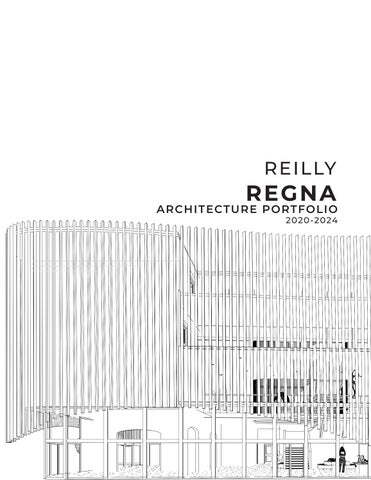
about the designer. table of contents.
Hello and welcome! I am Reilly Regna, a devoted architecture student with a passion that resides deeply in the heart of urban design and sustainability. My architectural education began at the University of Missouri, where each lecture, project, and piece of knowledge has been a crucial stepping stone in shaping my vision and design philosophy. I now have the privilege of continuing my education at Washington University in St.Louis Sam Fox School of Design and Visual Arts where I will be graduating in 2027 with a Master of Architecture. Here I plan to refine my craft and learn various design perspectives from some of the most renowned architects in the world.

My ethos is simple : architecture should be a beautiful synergy between innovation and sustainability, where each structure contributes positively to its urban surroundings and the natural environment. I see architecture as more than just buildings; it’s a powerful medium that can foster community, enhance ecological balance, and promote sustainable ways of living. 02. 01. 03. 04.
Driven by curiosity and a desire to make a difference, my designs are inspired by a commitment to creating spaces that resonate with ecological integrity and a sense of community. Through a blend of contemporary aesthetics and sustainable practices, I aim to push the boundaries of conventional design and create spaces that are not only visually captivating but also generate a positive societal and environmental impact.
This portfolio paints a picture of my educational journey in Architecture and depicts the evolution of my design processes and personal philosophies. From the foundational sketches of my early coursework to the complex, sustainable structures that later took shape, every project encapsulates a piece of the learning curve that I have grown from.
Join me on this journey, where aesthetics meets sustainability, and where each design embodies a commitment to enhancing the vibrancy and resilience of our urban spaces.
Pg.14-21
Pg.22-31
Pg.4-13 columbia ecovillage miscellaneous projects the sound factory dartmouth apartments
Pg.32-33
dartmouth apartments.
international housing studio, december 2025.
design concept.
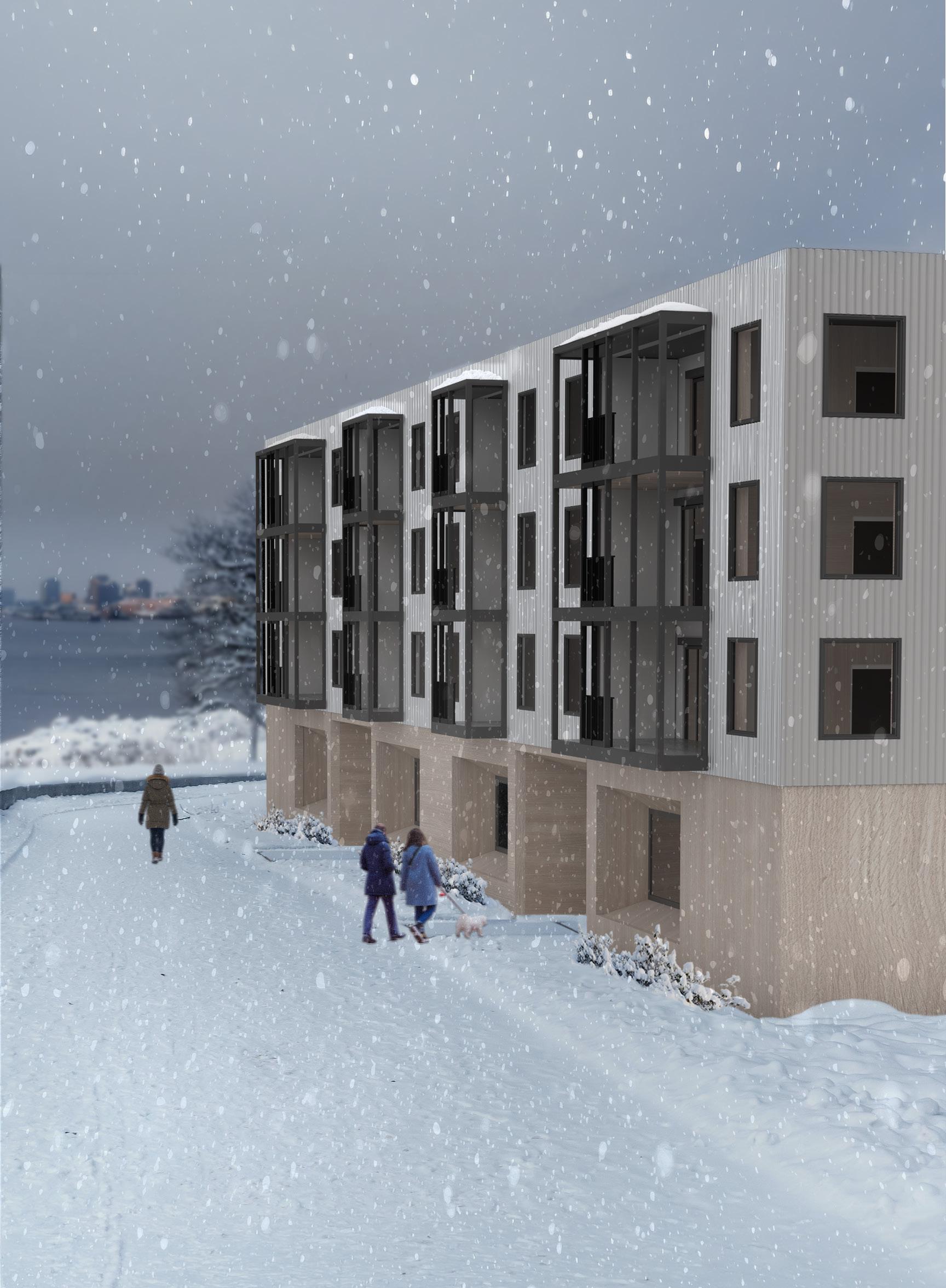
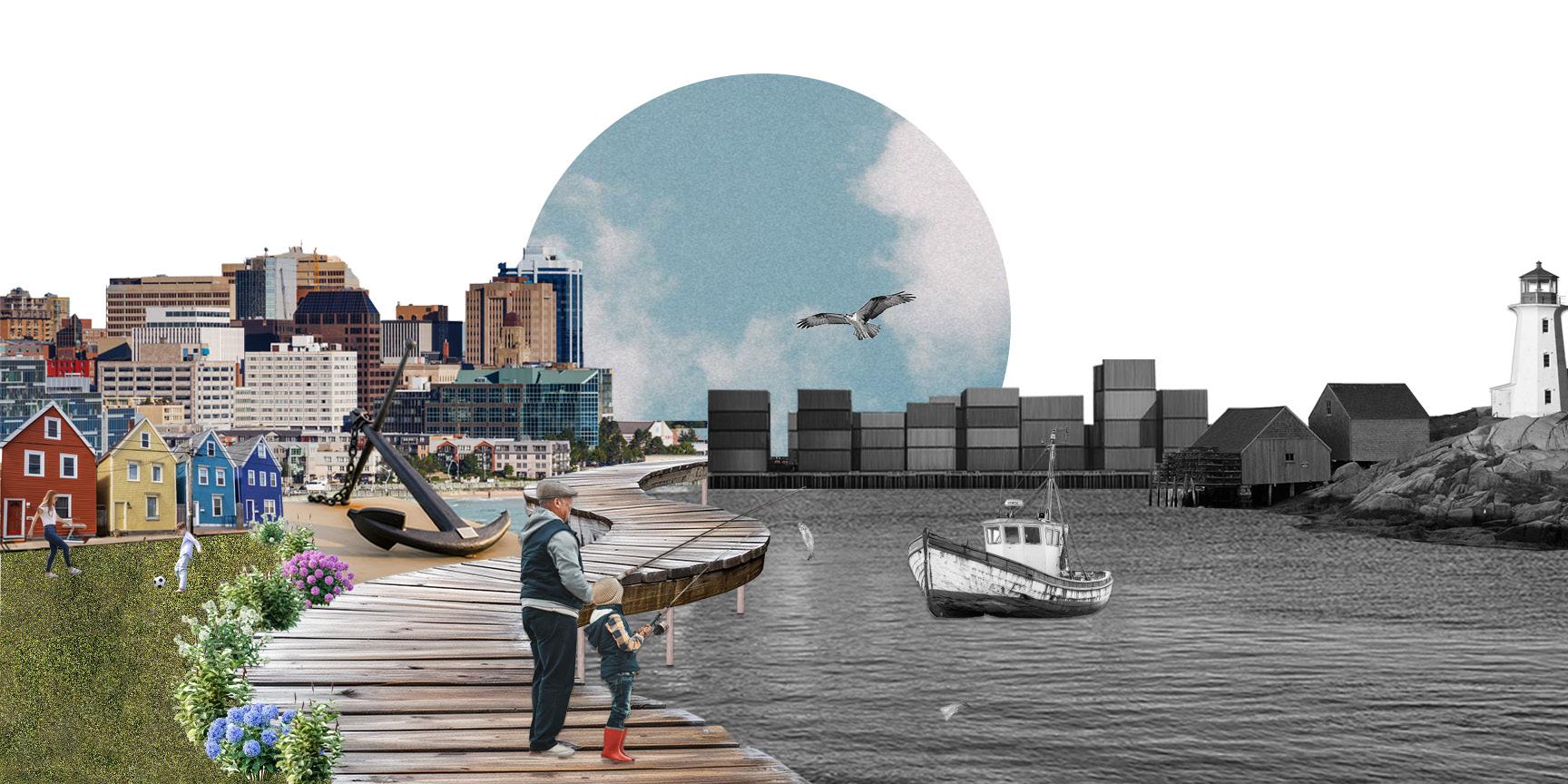
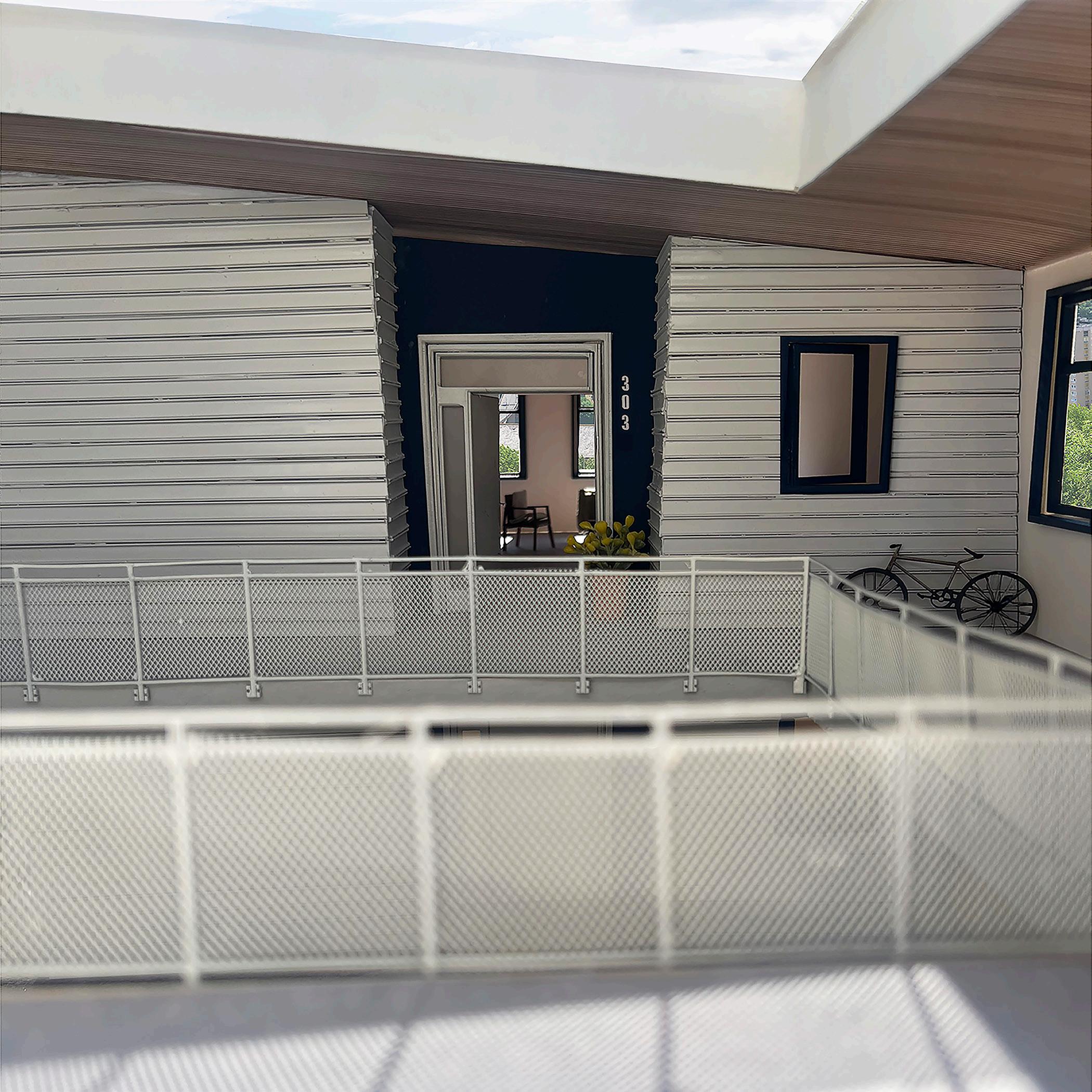
dartmouth apartments is a mixed-use multifamily apartment complex in dartmouth, nova scotia, just outside halifax. the project includes two- and three-bedroom units, with a coffee shop and Pilates studio on the ground floor to create an active public edge. limiting HVAC use was a key design goal, making natural ventilation central to the project’s concept. winter gardens on the east and west facades provide residents with protected outdoor space during the winter months, while sliding glass doors and juliet rails allow apartments to open to cooling harbor breezes in the summer. the material palette features recycled corrugated aluminum, referencing the shipping containers of the harbor while offering durability against the region’s snow, rain, and wind. treated wood is also introduced at the ground floor, acknowledging the importance of wood within Nova Scotia’s culture and building traditions.
halifax cultural image.
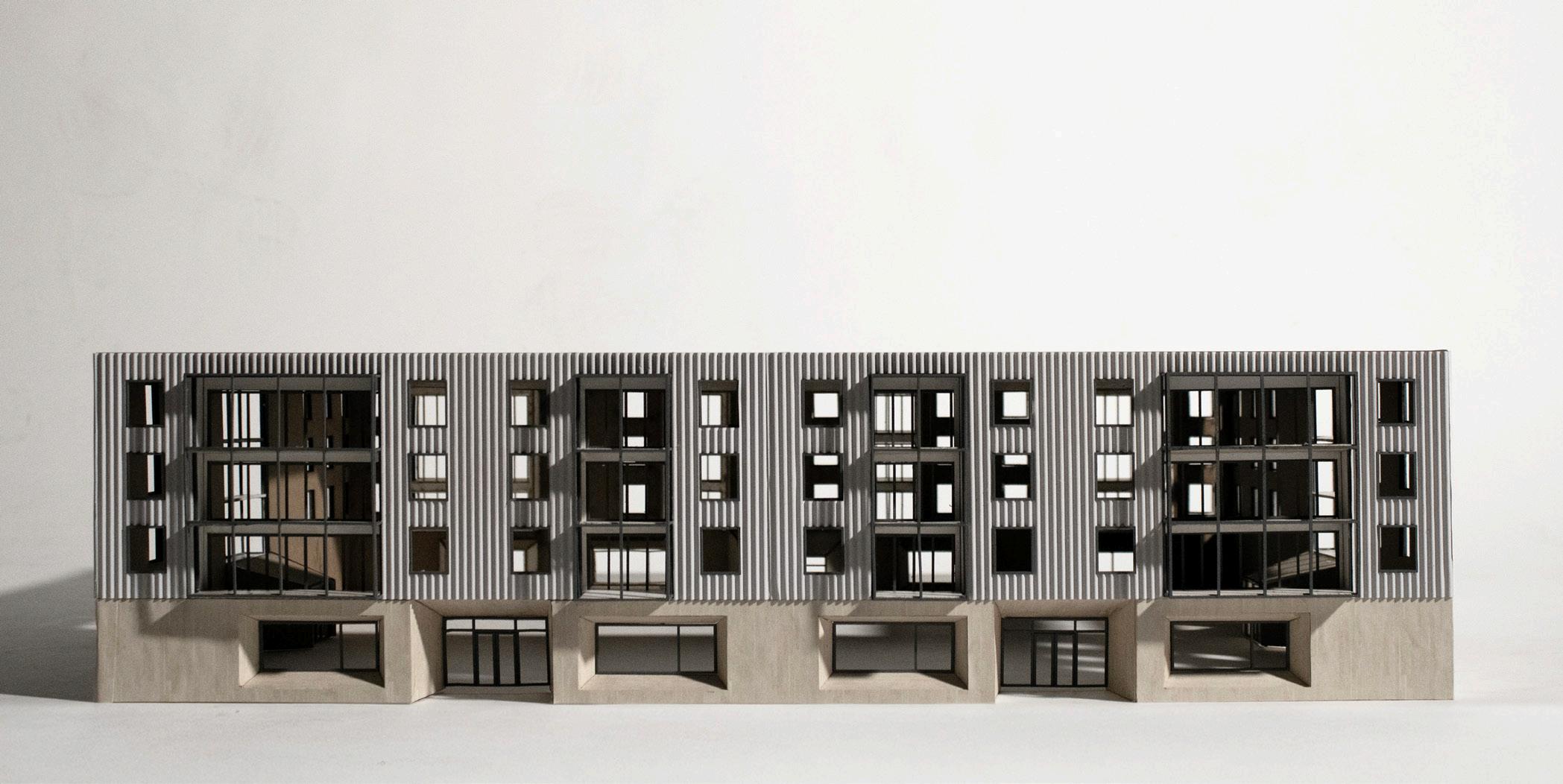
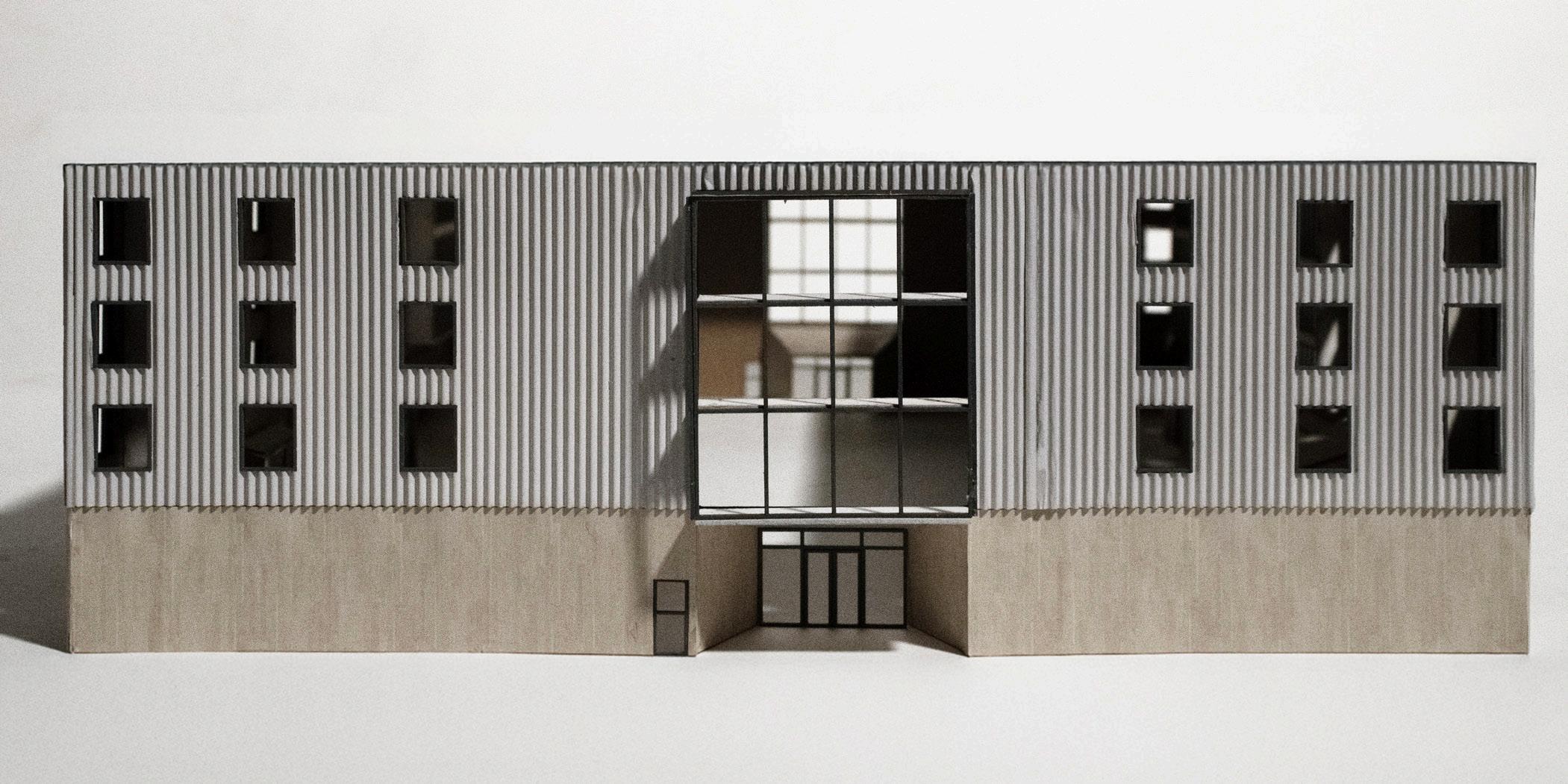
exterior model elevations.
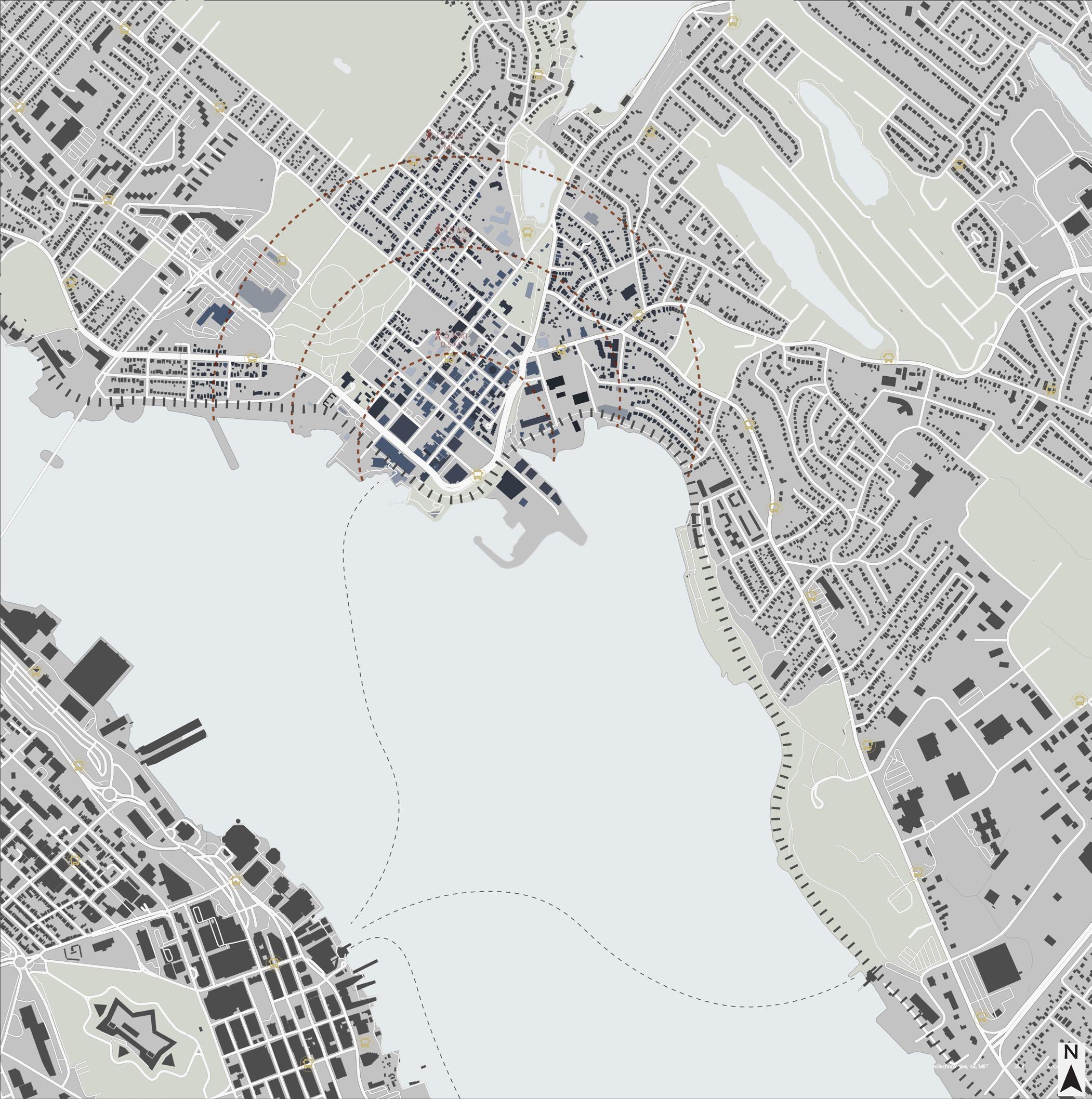
site plan.
dartmouth apartments are located in dartmouth, nova scotia which is across the harbor from halifax and on the peninsula in the darmouth cove. this area is mixed use with both residential and commercial buildings. the site is under construction, but is the future home to other apartment complex’s and a grocery store. the surrounding site led to the decision to make the apartment mixed use as well.

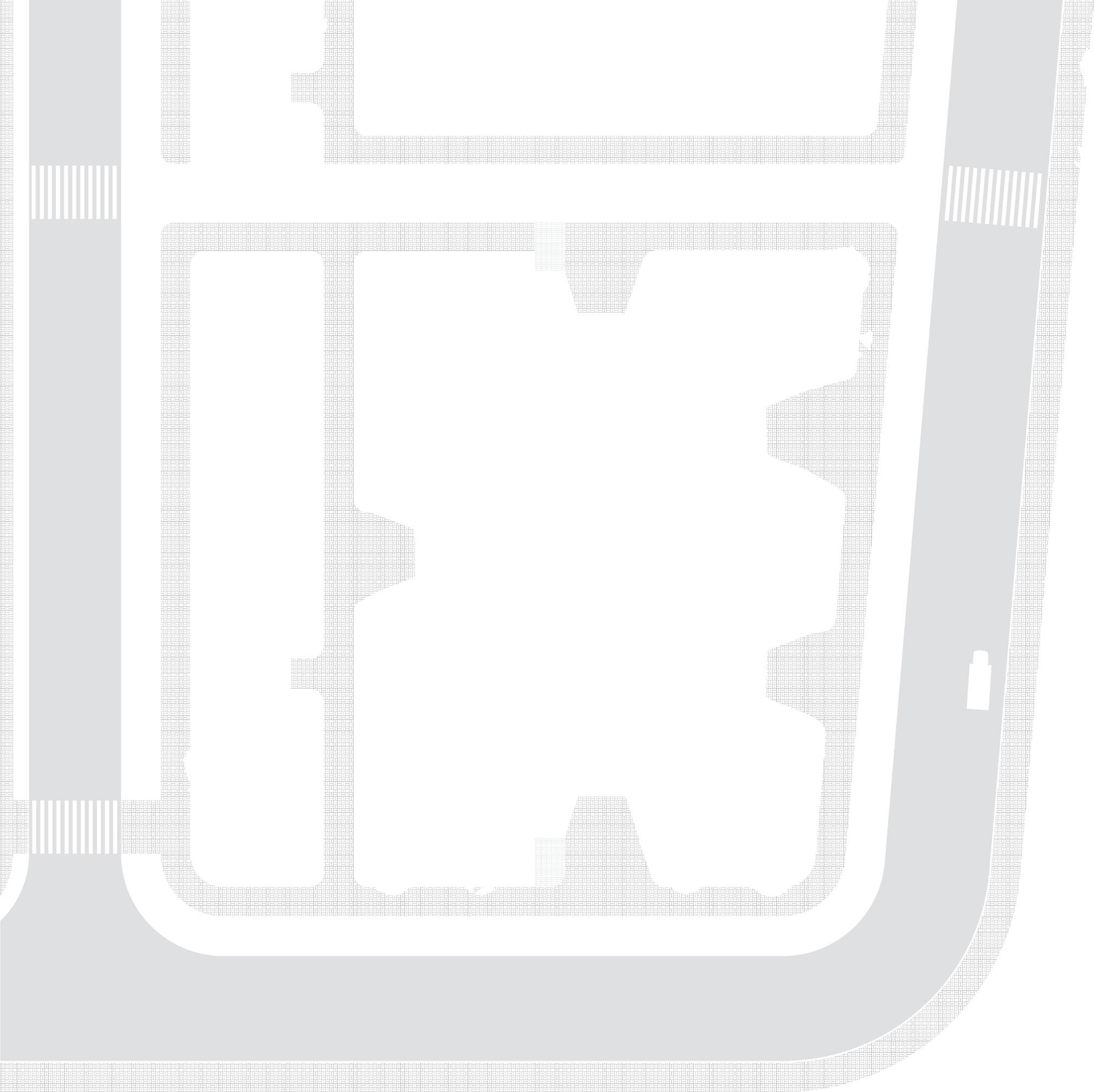
floor & site plan.

ground
aggregated floor plan.
two bedroom plan.
three bedroom plan.
structural section & elevation.
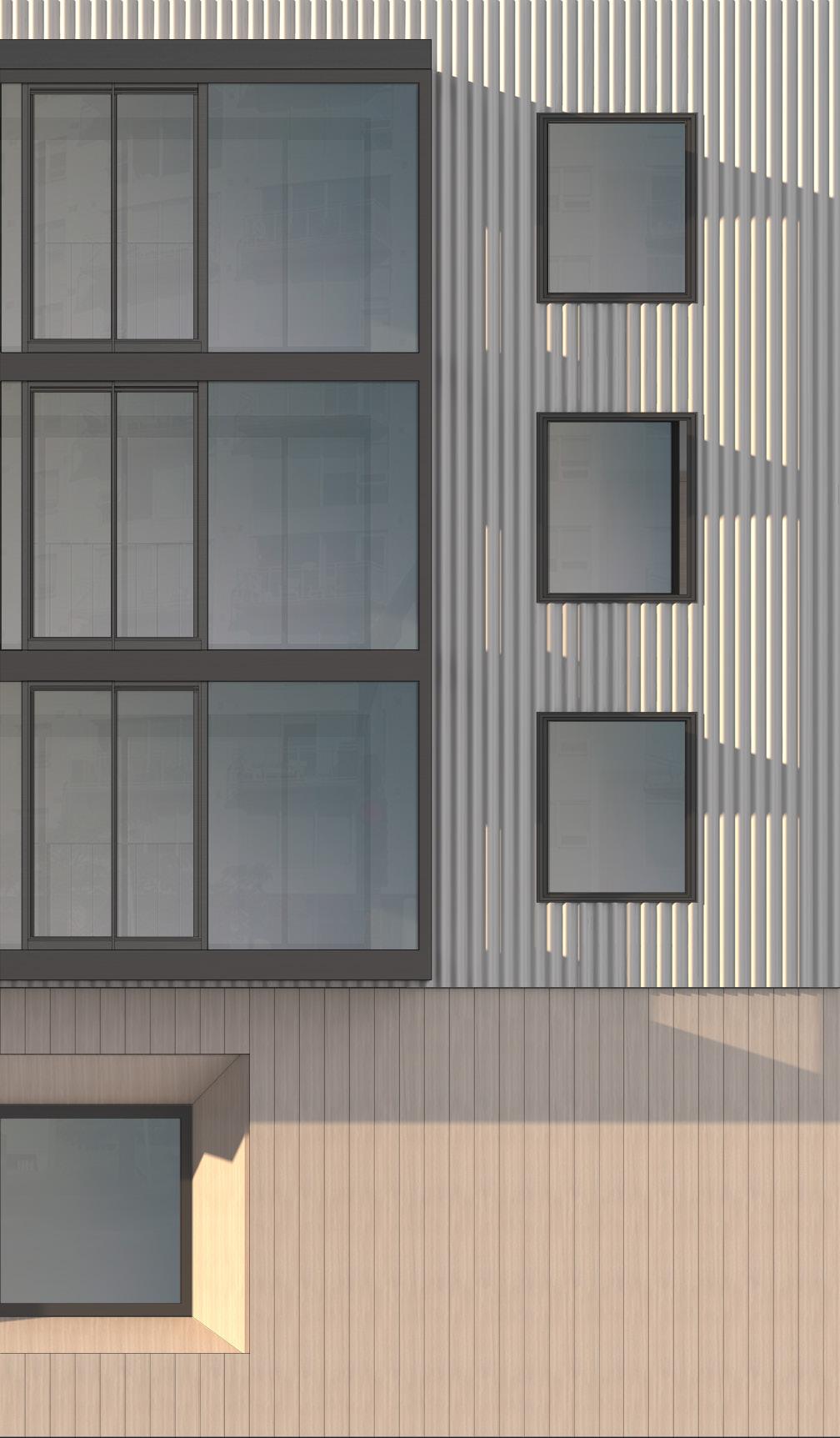



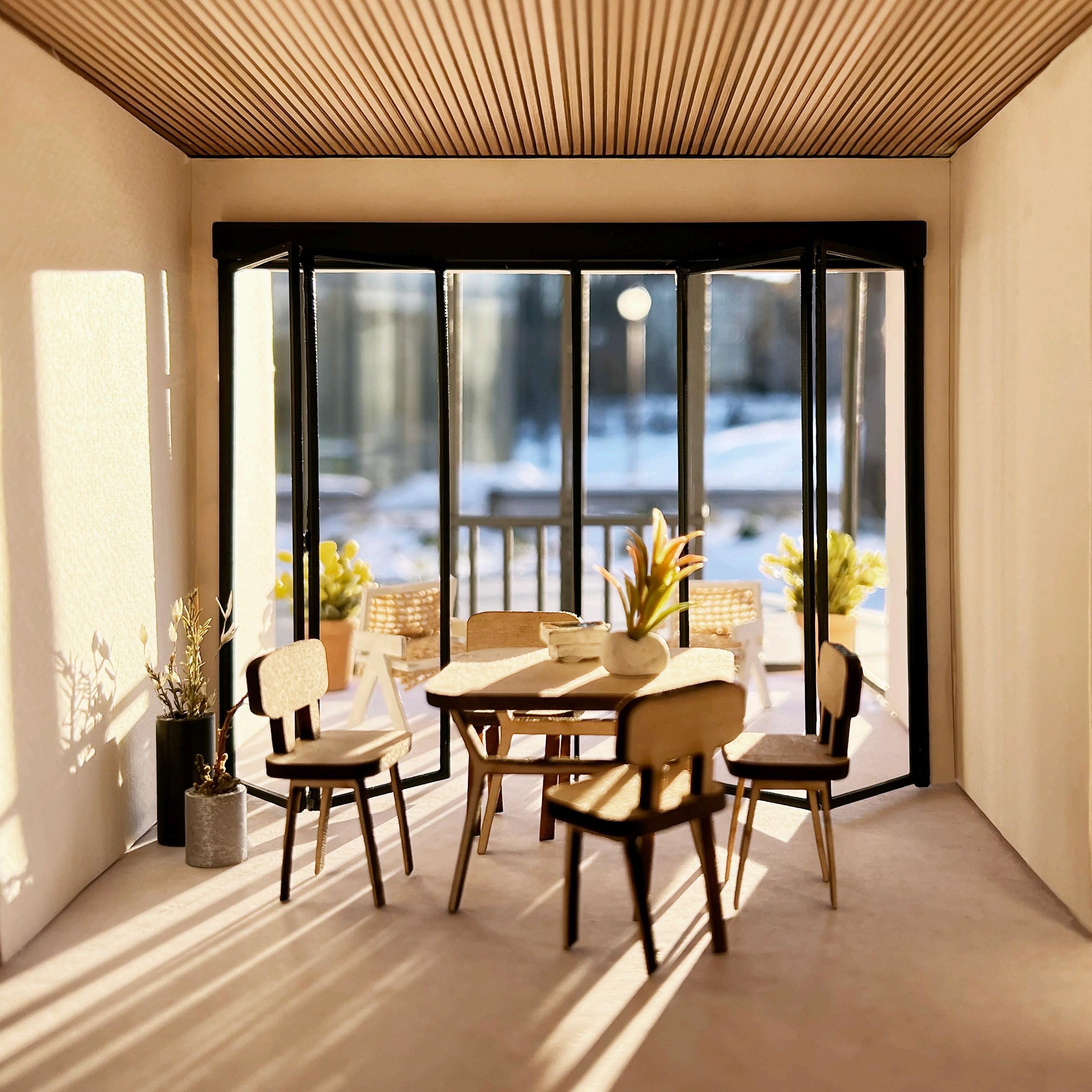
threshold model. dining room & winter garden.
threshold model. hallway.
the sound factory.
st.louis school of jazz.
jazz school project, may 2025.
explore therelationship between concept, program, and place through the making of spaces for collective and public use with a particular focus on spatial sections in relation to both program and the ground. the studio builds on the tectonic, ecological, and social focus of the previous 317 core studio in addition to investigations in model-making and representation
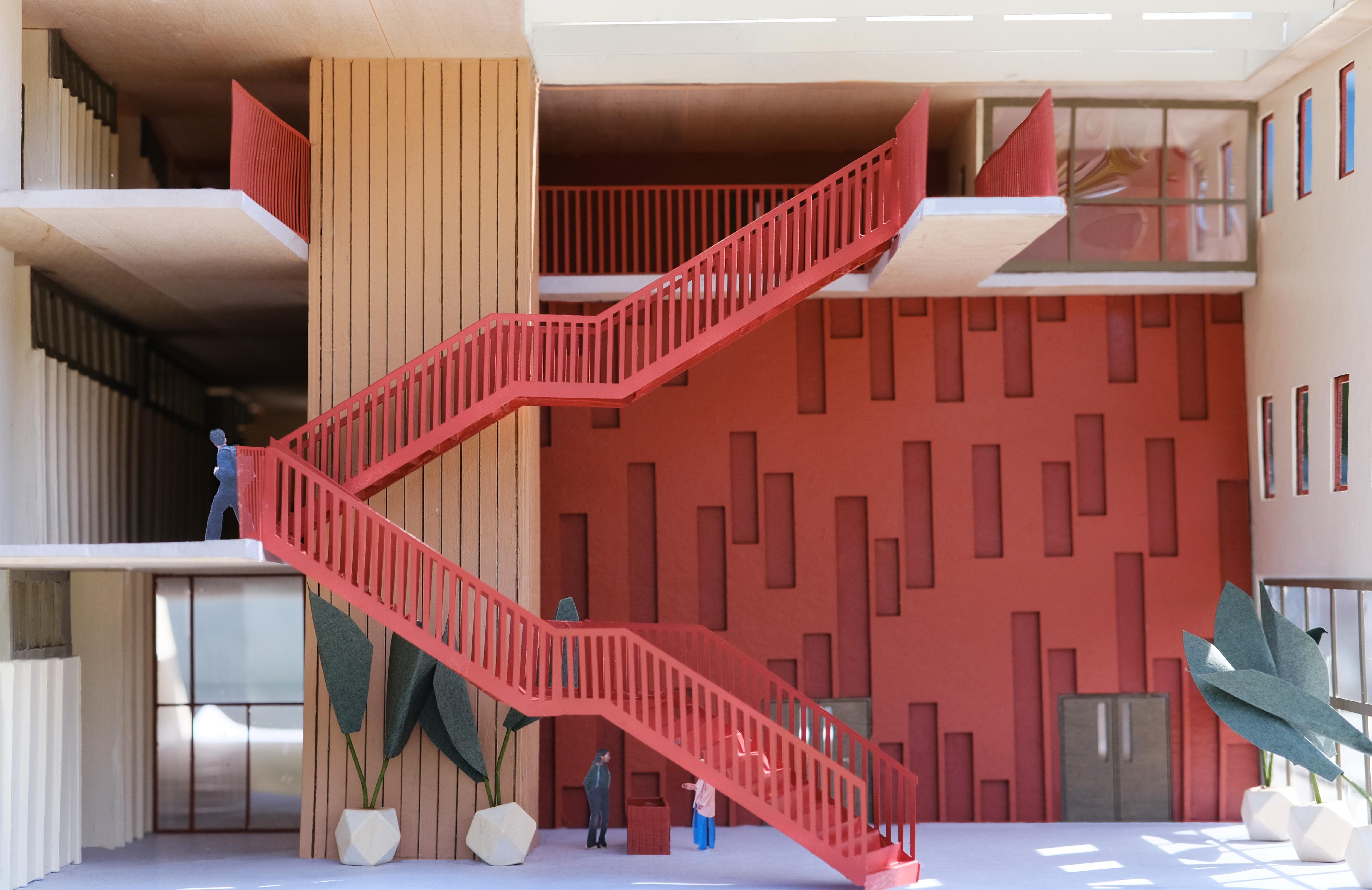
interior physical model.
design concept.
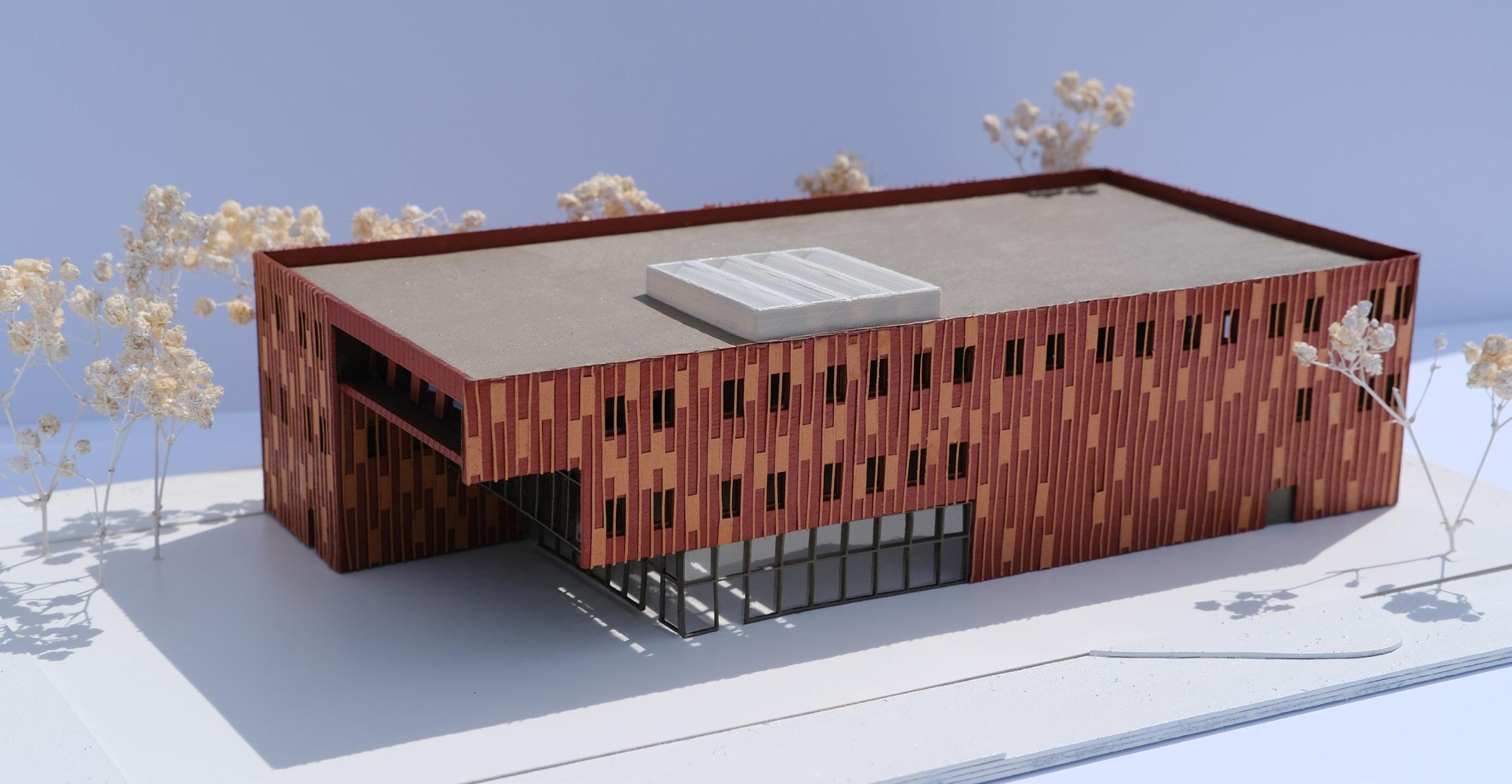
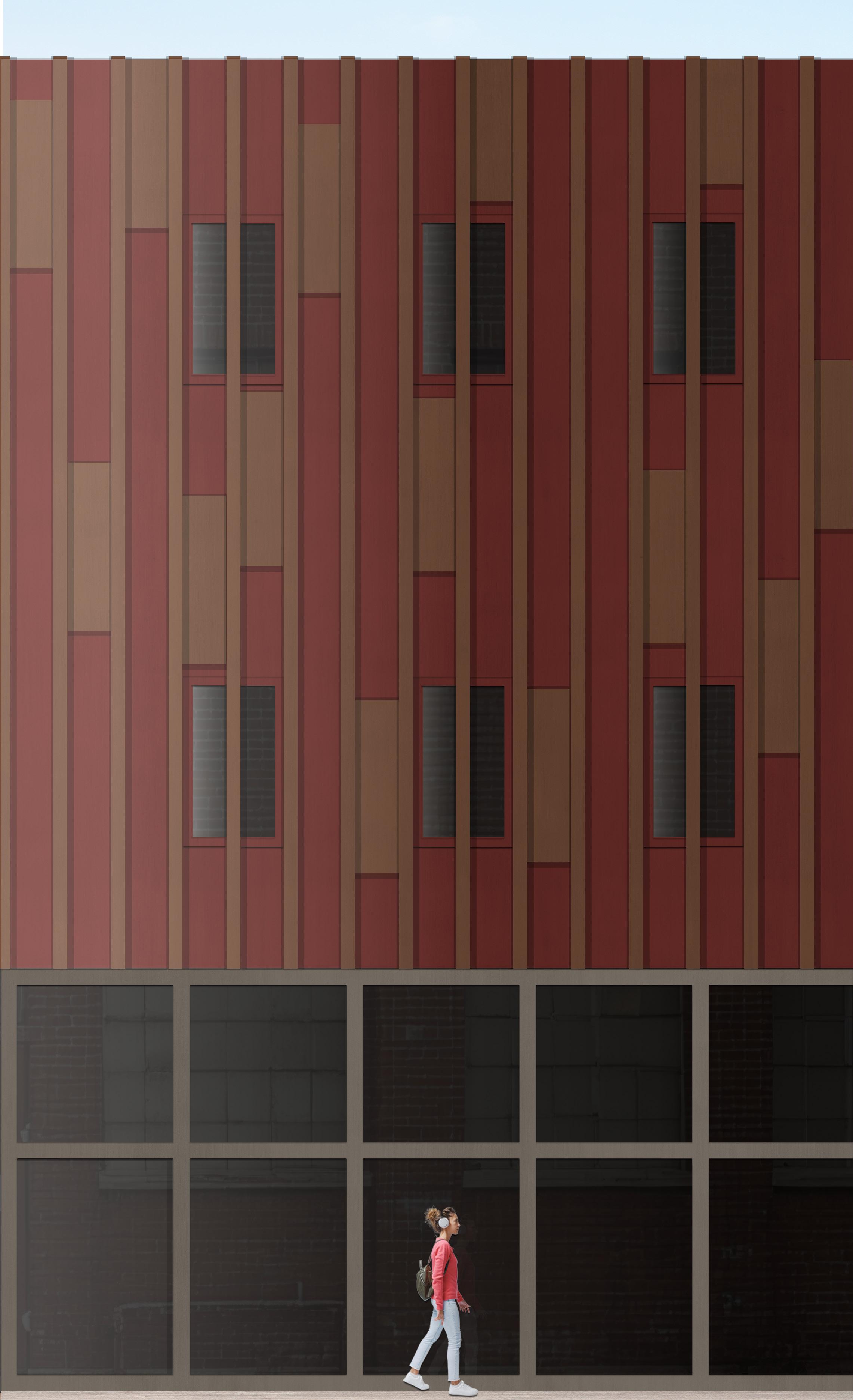
the goal of this project was to connect the built environment with present day without creating a gap between traditional and modern architecture. the form of the project is uniform to match the built environment with straggering cantilevers to act as shading devices and open space for the restaurants down below. the exterior has parametric facade modeling that resembles a music sheet as a rhythmic pattern, this same pattern acts as a interior facade on the music hall entrance. for the interior the colors are supposed to be vibrant and lively yet grounded. the jazz school is constructed with cross laminated timber and the facade is recycled aluminum.
site plan.
the site is 12 lemp avenue. this site is the lemp factory next to the silos infront of the crossroads of cherokee and lemp avenue. the site is an abandoned factory with many empty lots that allow for an expansion of the jazz school. a parking lot is part of the new construction to the southeast of the project. there is a bus stop a 4 minute walk south of the site which makes accessing the school easy. there is a coffee shop up the street and a bed and breakfast down the street and shops all around the area. this area is working to become as busy as it once was and new construction such as the sound factory is the key to do so.
exterior physical model.

construction section.
scale=1/8”=1’-0”
the structure of the project is cross laminated timber in combination with pre-cast concrete. most spaces are constructed with cross laminated timber except the orchestra space on the main level that opens up to the second floor. the building facade is recycled aluminum and a reflective materials is used for the roof in order to reflect sunlight as a tool to cool down the building. alongside the contruction efforts to create an eco-friendly building there are also sustainable technologies and design techniques implemented. deciduous trees were planted on the west facade to create shade since the sun can be the most harsh on this side. canadian wells are a huge part of the hvac system of this project. canadian wells are underground pipes that circulate air into the building. the pipes being underground can cool the air or keep the air hot when necessary. the canadian wells in combination with the operable windows create cross ventilation to improve air quality and aid in natural cooling
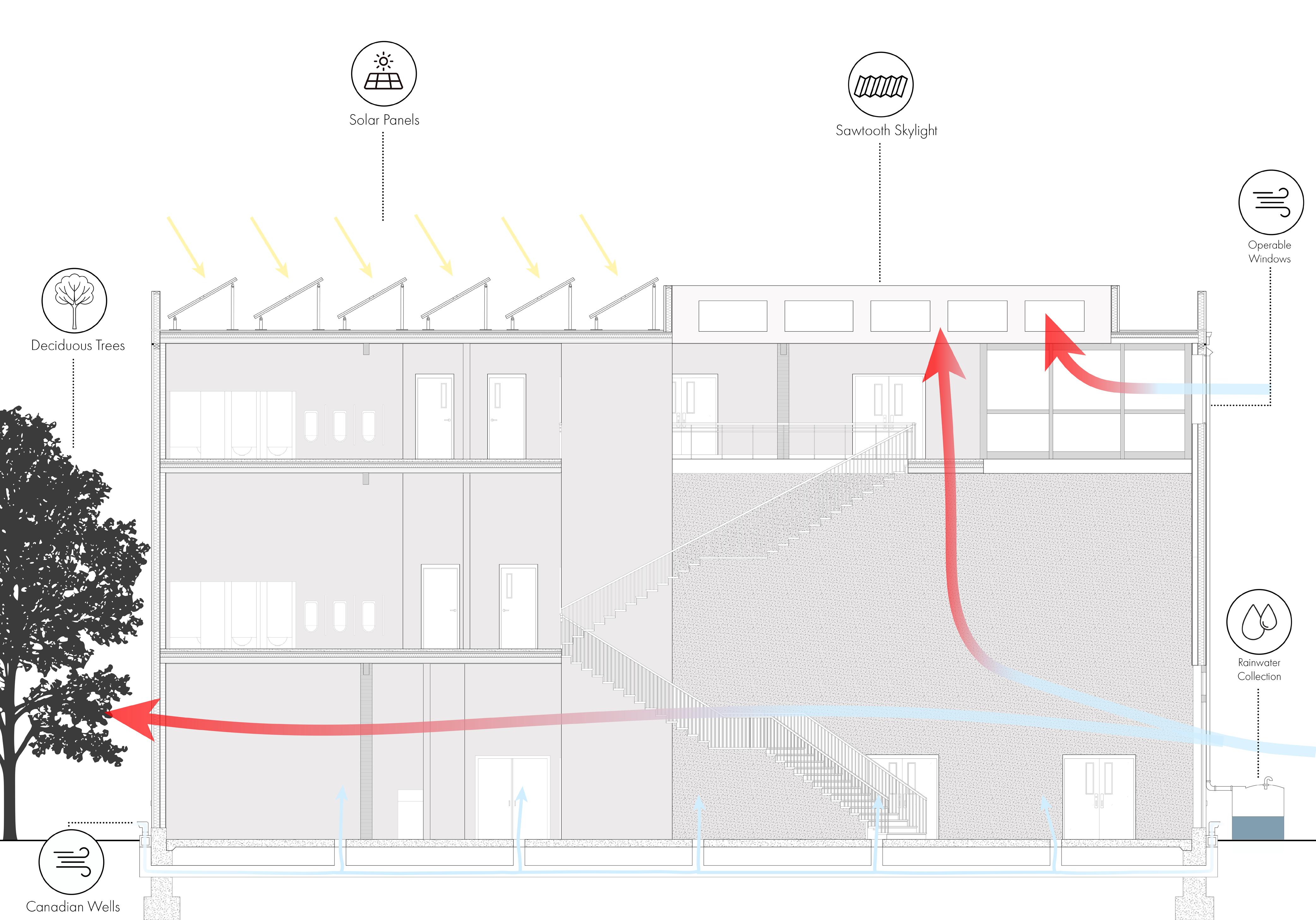
however, hot air does rise so it was important to include a sawtooth skylight with operable windows that allows for hot air to escape the building. the sawtooth skylight also allows for indirect sunlight to enter the space so occupants can have the benefit of natural sunlight. finally, solar panels and rainwater collection technologies were also very important for the projectin in order to alleviate the buildings ecological footprint and costs. the solar panels are facing west since that direction is when the sun is most intense and collects the most energy. rainwater collection tanks are meant to fill the toilets in the project and although the collection system only fills a small percentage of water in the project it does help alleviate the costs of the project. ultimately, all of these techniques are meant to benefit the occupant and the overall user experience while lowering its building footprint.
Arch . 22 Arch .23

mixed use multi-family apartment complex for the solar decathlon competition, december 2023.
group project in collaboration with turmaloshni asokan & emily wyninegar
project description.
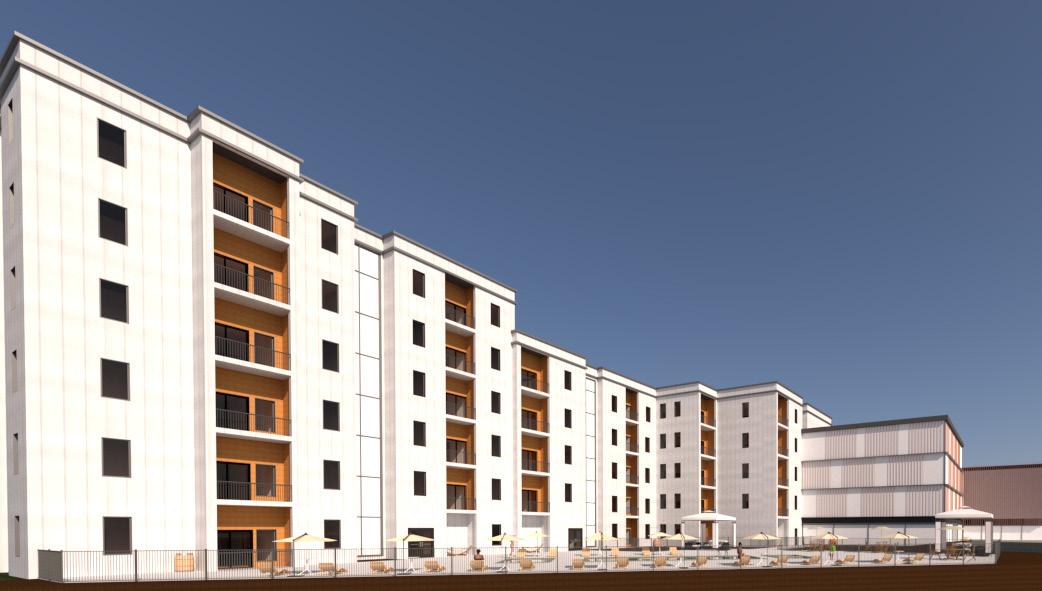
columbia ecovillage is a mixed use multi-family apartment complex in columbia, missouri’s art district that is meant to compete in the 2024 solar decathlon competition. In the beginning of this project the main goal was to create a net-zero energy building, but as the project went on it seemed it was possible to push past the original goal and aim for net-positive energy. The design challenge portion of the solar decathlon competition describes a zero energy building is defined as a high-performance building with a renewable energy system that offsets the building’s total annual non-renewable energy consumption. However, alongside the net-zero requirements there is a list of 10 other requirements in which the categories are-Architecture, Engineering, Envelope, Efficiency, Grid-Interactivity, Life-cycle, Health, Market, Community and Presentation that directly need to be applied to the project.
design concept.
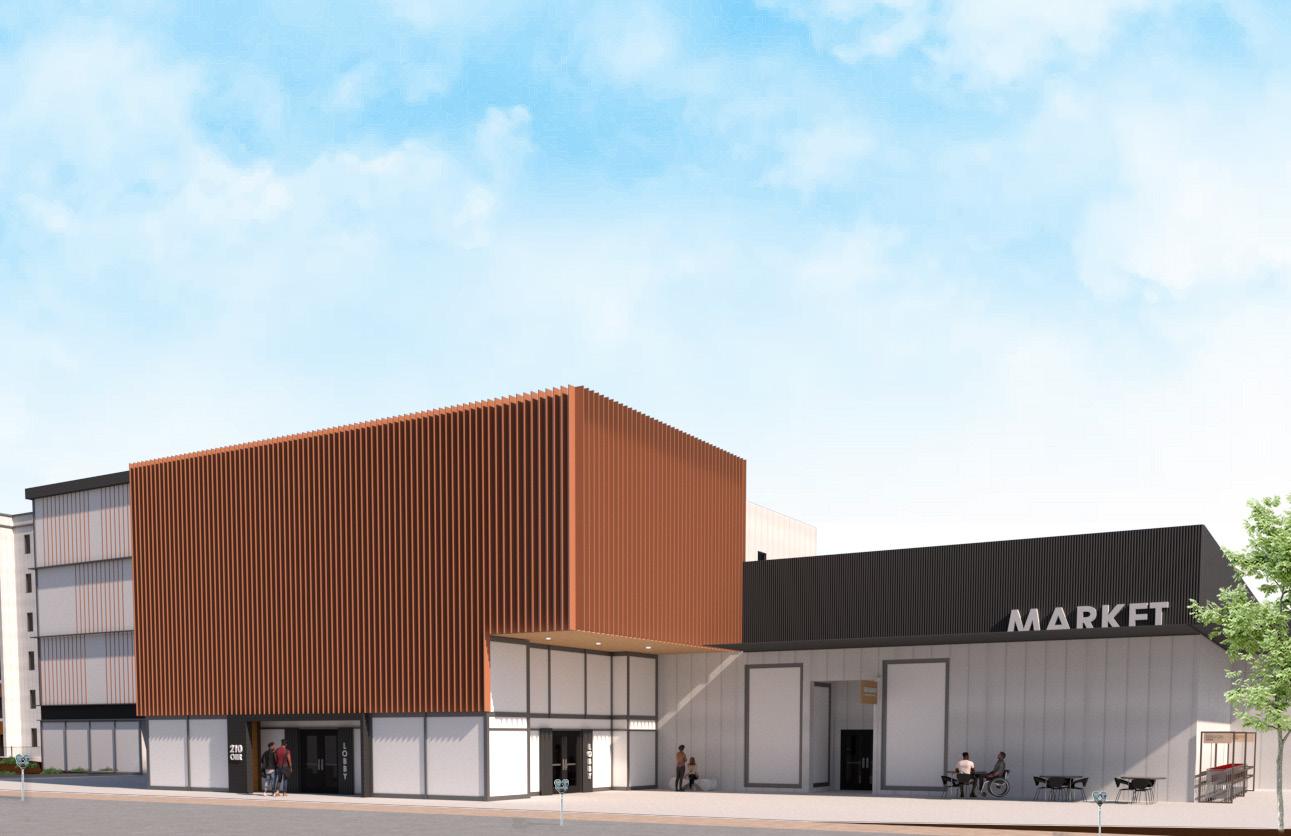
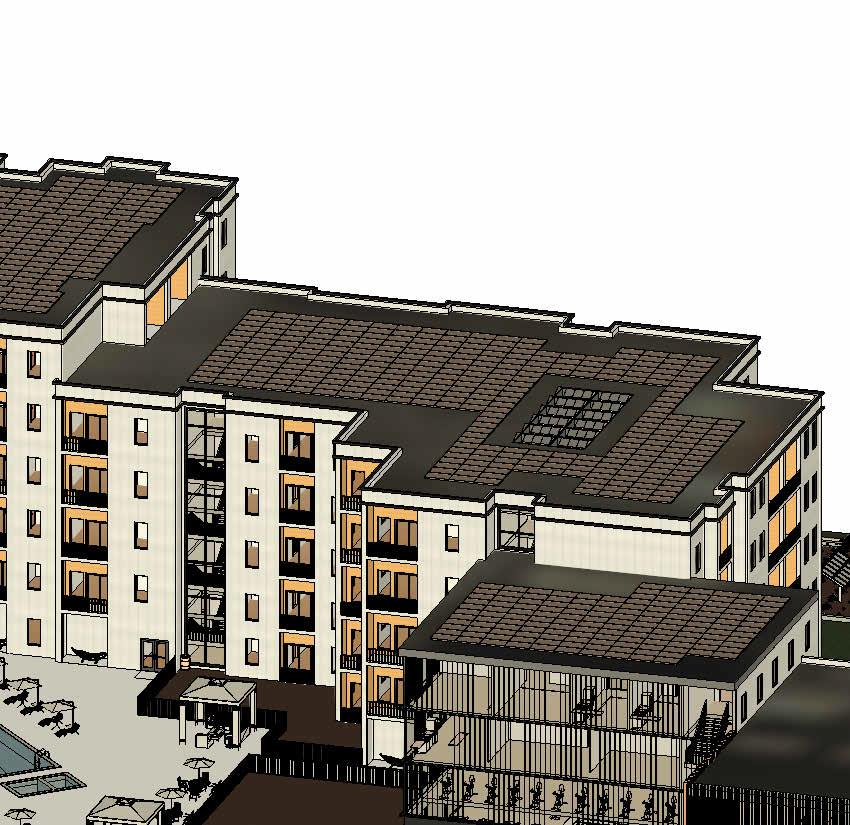
columbia ecovillage aims to blend modern styles alongside european facade elements. being that the occupant are international students and international early career educators the project needed to not only resemble american architecture. however, being that there are many sustainable design efforts that have to be included in the project there was a limit in how ornate the facade design could be. As for the building form, the project really listened to the shape of the site and made sure building flowed vertically with push and pull effect throughout for shading and depth purposes. Ultimately, the project blends proper sustainable design alongside a blend of aesthetics.
site plan.
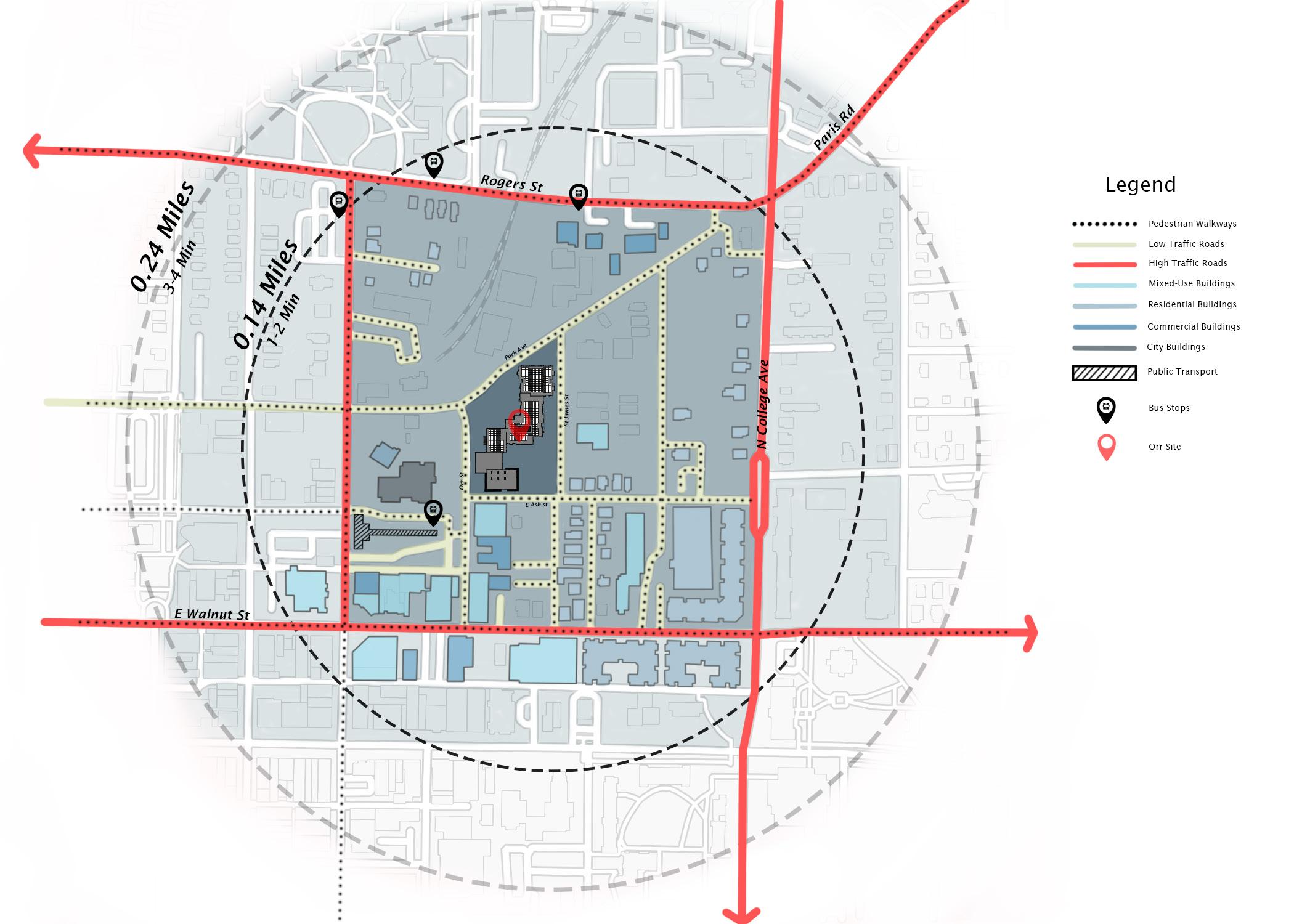
The site is 210 Orr Street in Columbia, Missouri. The site is in the city’s art district and is 10 minutes from the University of Missouri, Stephens College and Columbia College campuses. The site is across the street from a bus stop allowing for quick access to public transportation, but for those who have vehicles multiple metered spots line the boundary of the site. There is a multitude of businesses in the area including bars, restuarants and there is even a
yoga studio across the street. Although there is a presence of commercial buildings in the area there is also a huge residential presence creating a great balance of community and tranquility within the site. There is also main roads a couple streets over from the site making it even more accessible to get to surrounding areas in Columbia.
site analysis.
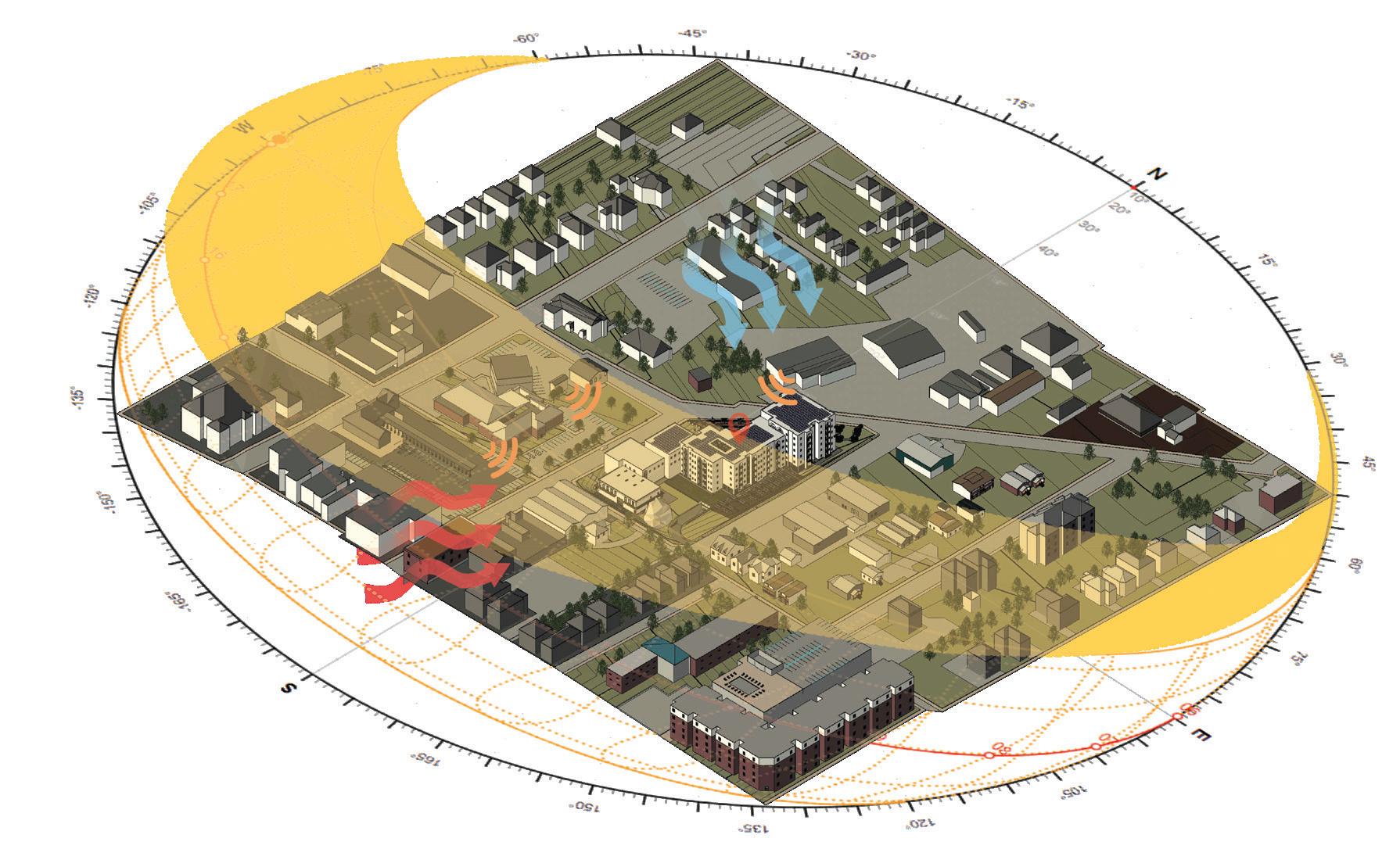
210 Orr Street was initially a brownfield, which is a plot of land that was previously developed on. So this is a huge environmental benefit for the site since no demolition is necessary. The site is also in climate zone 4A which calls for a mixture of weather throughout the year. Also being where the site is it is important to look at wind patterns and since 210 Orr Street in the middle of the United States a lot of weather comes from different angles. So, it should be noted that cold fronts come from the northwest and warm fronts come from the west. As for noise pollution, being that the site is in the art district and so close to downtown there may be some noise that travels. However, the most noise pollution will come from the fire station and music hall across the street.
International Students Per Year
the occupant for columbia ecovillage is international students and international early-career educators. it was important for the project to create an environment that supports the building occupant after transitioning into a new country, making adapting to their new surroundings and lifestyle easier.Providing the building’s students with affordable housing relatively close to the university’s campus would reduce their living costs significantly.
the average apartment resident for this building will be a graduate student between the ages of 22-26. however, they should be looking for a change of pace from undergraduate to a more mature, sustainable lifestyle. massing process.
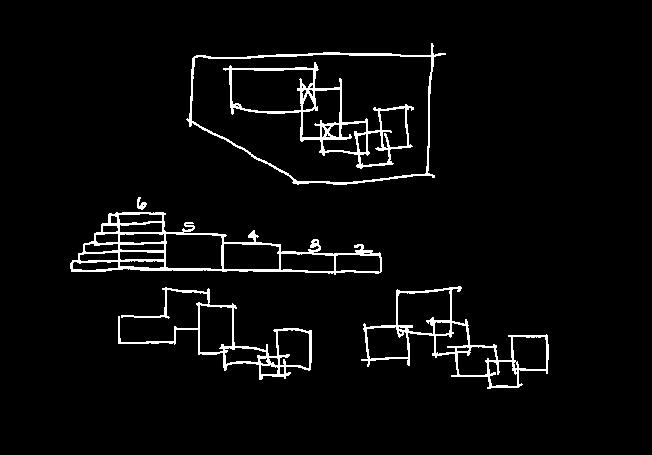
Draw and Extrude rectangle
Carve out rectilinear shapes to create a stacking effect and space for balconies
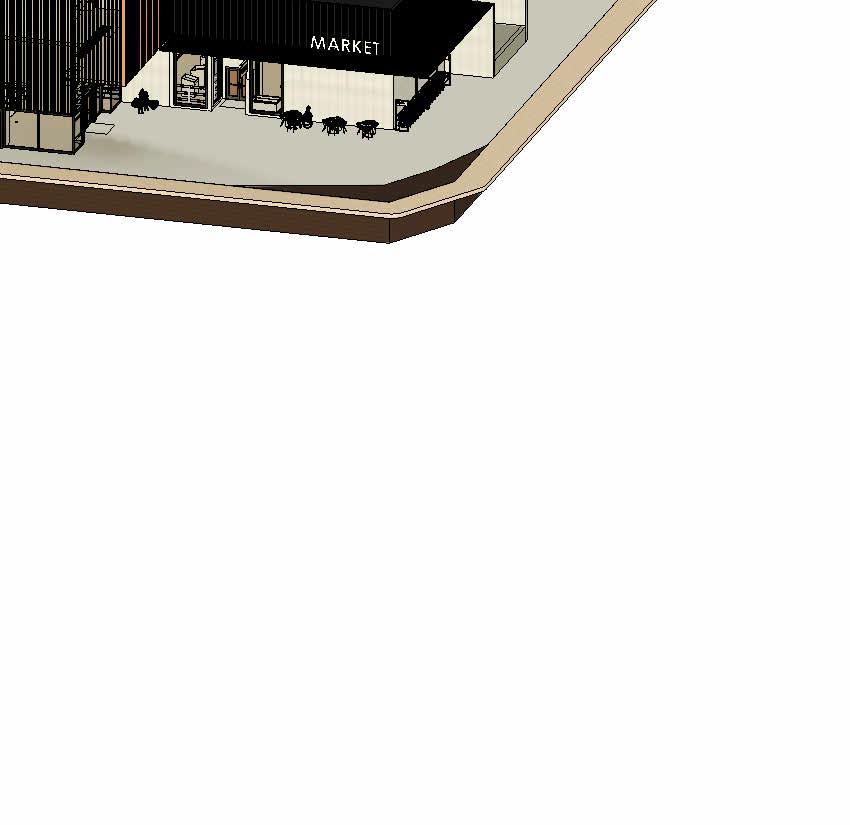
Push in facades for the gym and market to create depth
Void cut openings for commercial entrances
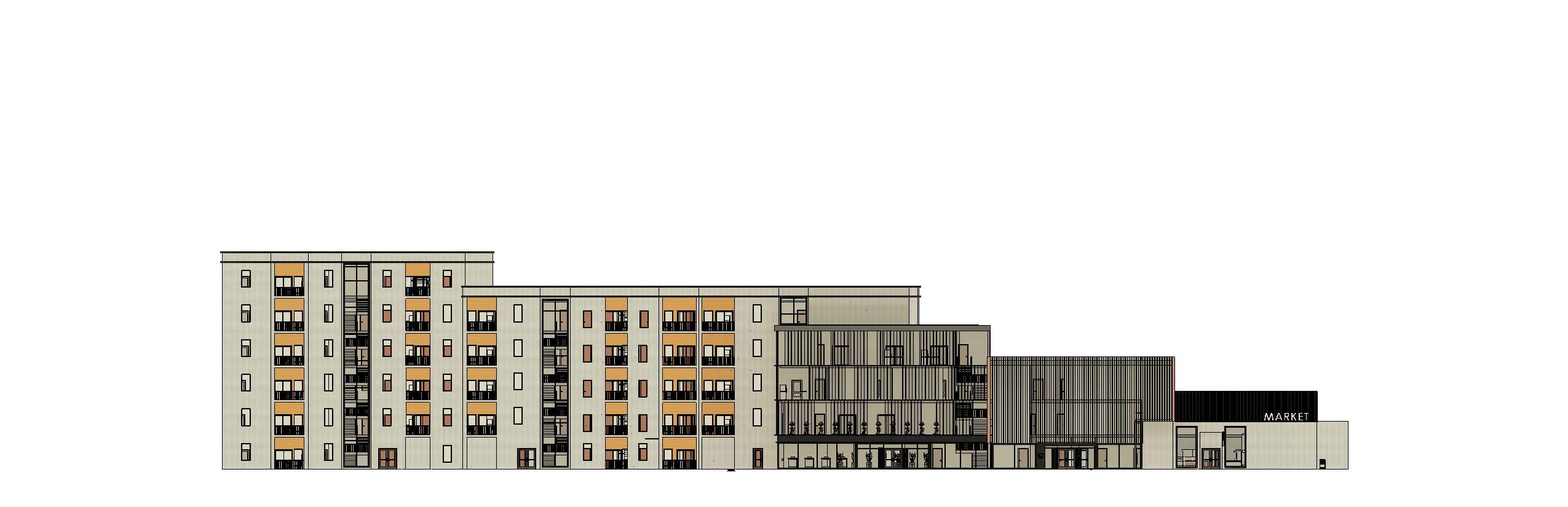
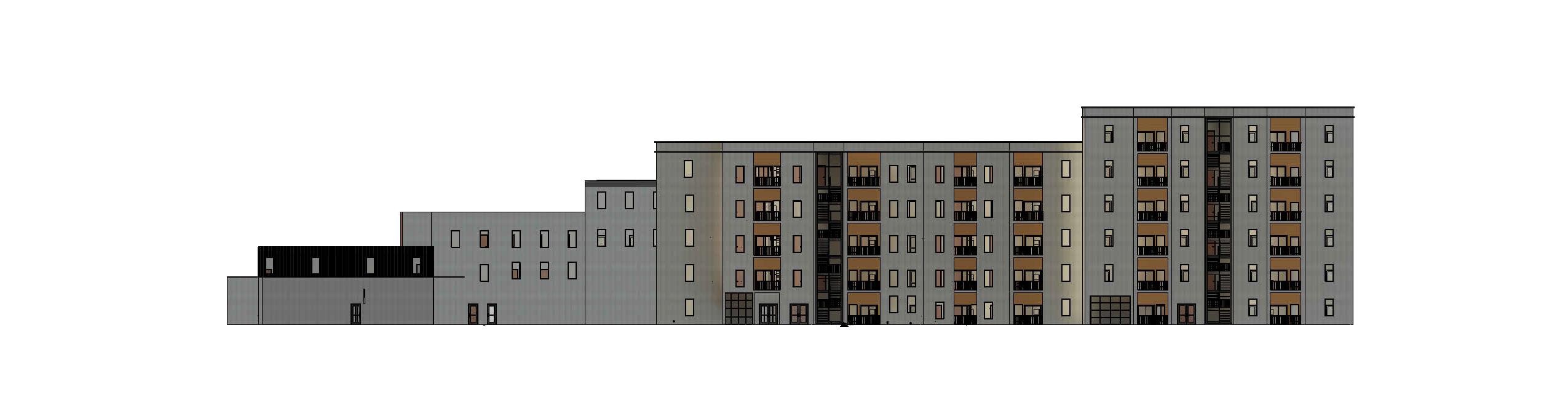
elevations.
scale=1/64”=1’-0”
south elevation.
sections. scale=1/64”=1’-0”
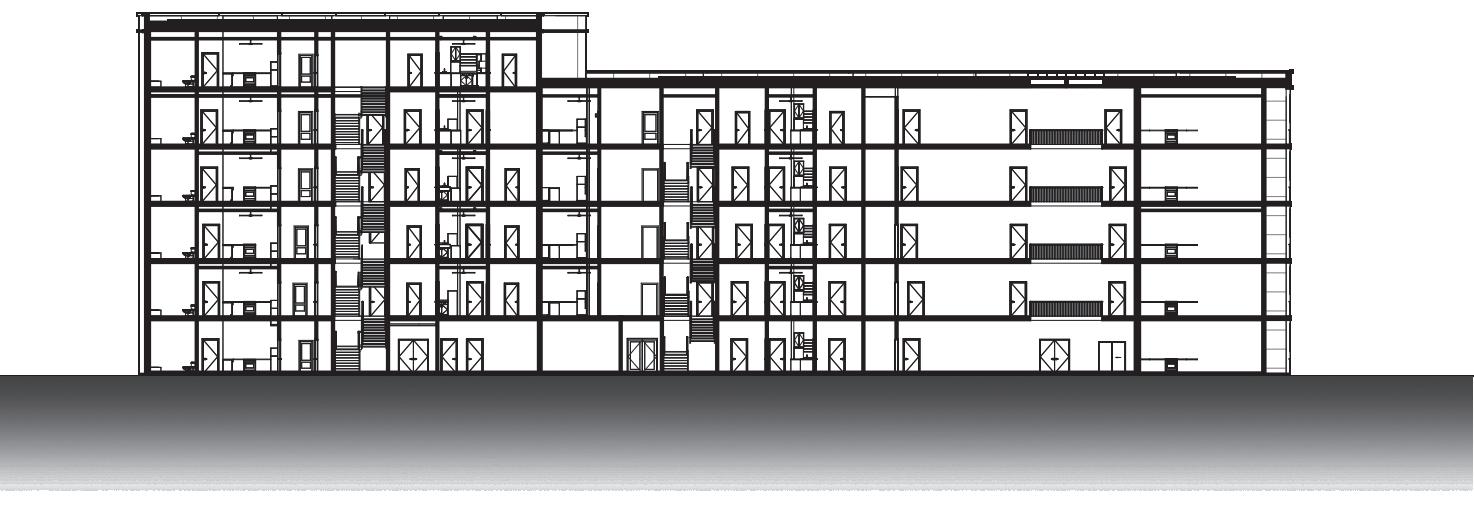
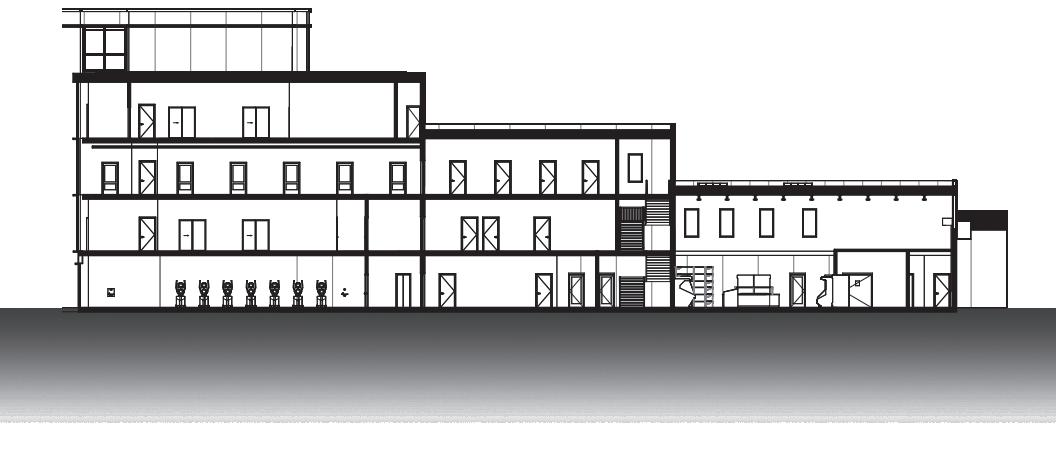
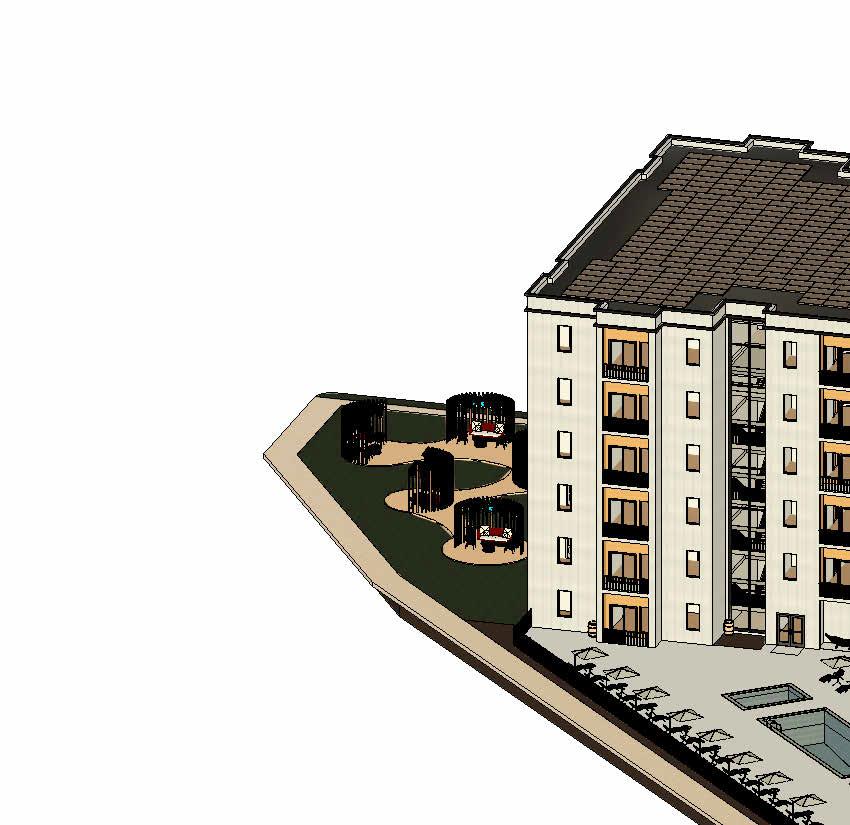
{3D}

1.1 BEDROOM APARTMENT
2.2 BEDROOM APARTMENT
3.3 BEDROOM APARTMENT
4.STUDIO APARTMENT
5.ECO GYM
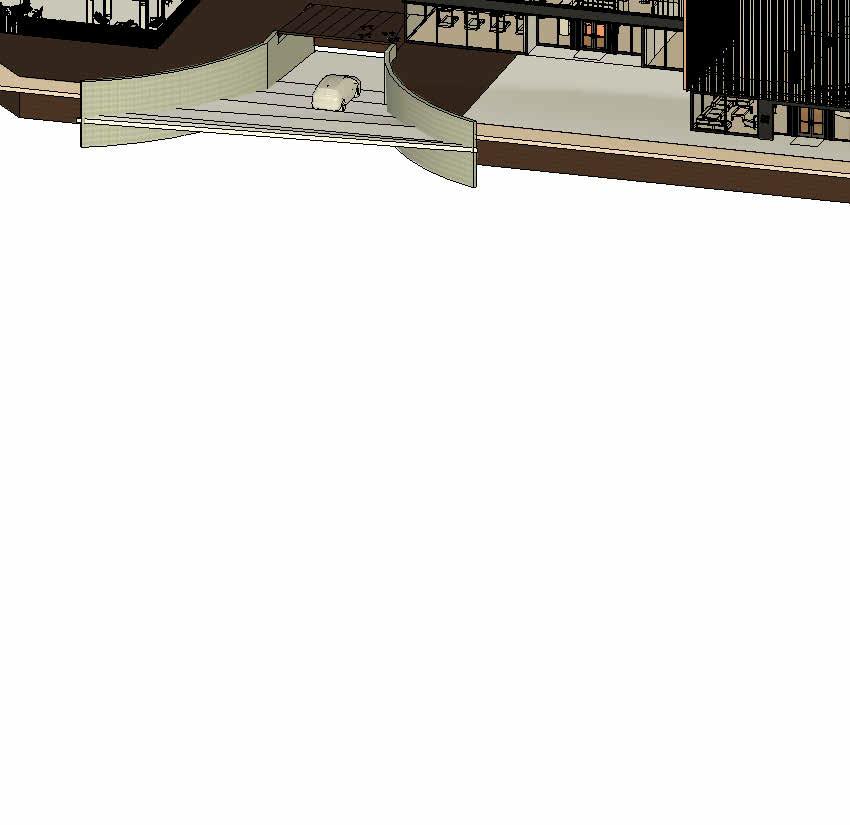
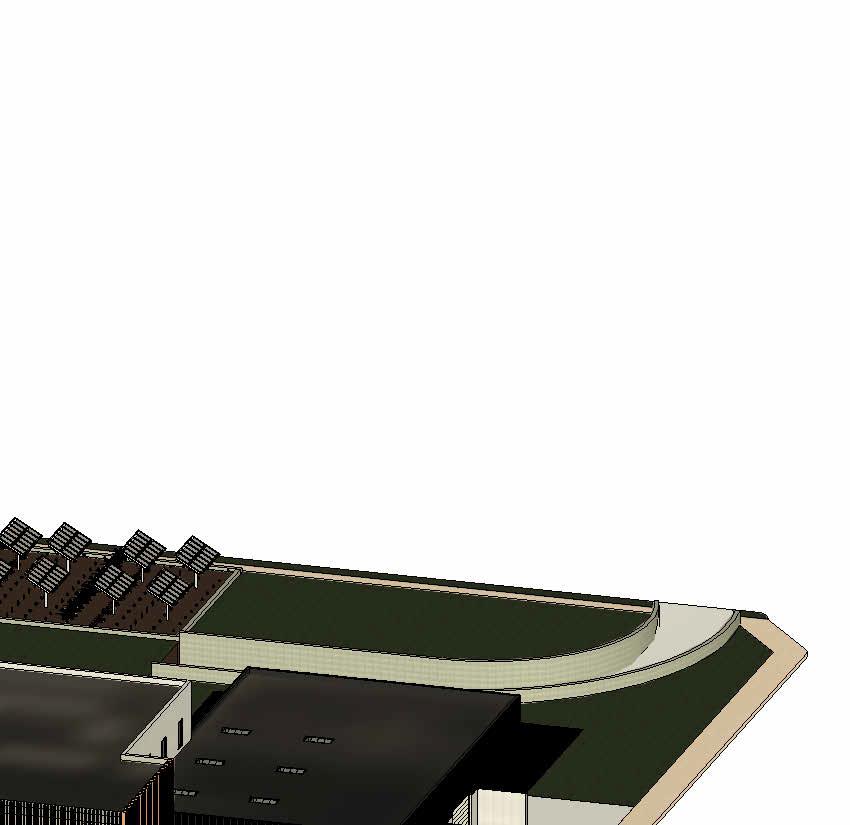
in order to keep columbia ecovillage net-zero energy there has to be a variety of sustainable design strategies involved in the project. there is an array of solar panels on three of the roofs and this will be doing a majority of the energy collection. Rainwater collection will be used as the projects water source and aims to be fully self sustaining. There is also an agrovoltaic garden which will grow a variety of produce that will be used for the ecovillage’s market and will generate more energy for the project. In order to allow for amentities the project opts for sustainable alternatives, such as underground parking that allows for more greenspace while still offering parking options. There will also be a natural swimming pool, which uses greywater and biophilic systems to push filtered water into a separate pool where people swim. Lastly, there will be a outdoor community space which doesn’t impact the sustainability of the project but instead benefits the occupant by fostering community and promoting spending time outside.
building envelope.
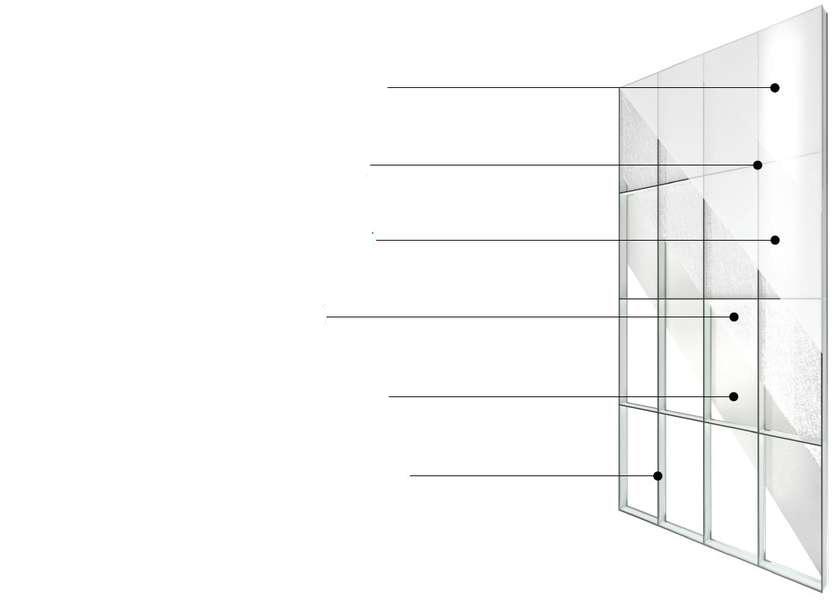
Within the project there is two types of exterior walls-aluminum and kal walls. Both were strategically selected to ensure that the project maintains the lowest EUI possible. What is a Kal Wall?
A translucent, structural sandwich panel that is a great alternative to glazing for those trying to limit the solar heat gain within the project. Although these panels are not as translucent as glazing, Kalwalls still provides quality daylighting Weather
Exterior Wall.
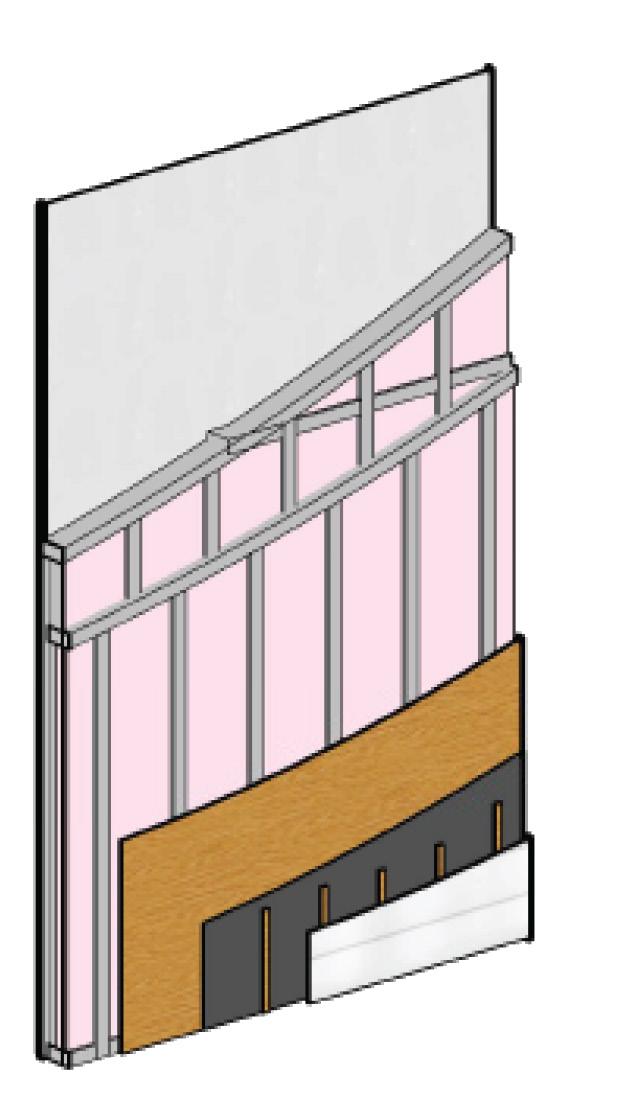
Gypsum board (1/2”)
Double Metal Stud
Blown Cellulose
Insulation
Plywood
Vapor Barrier
Furring Strips
Aluminium Cladding
To ensure there is a proper airflow in the building alonside keeping the building insulated the project uses this building envelope. The structure is assembled with a staggered metal stud in order to limit sound pollution between apartment units. The interior walls will be painted gypsum board and the exterior will be aluminium cladding since this material can be customized in a variety of ways.
6.LOBBY
7.MAIL ROOM
8.MARKET
9.MARKET BACKROOMS 10.MECHANICAL
8.MARKET
4.STUDIO APARTMENT
5.LAUNDRY ROOM
6.UPPER GYM
7.LEASING OFFICES
8.MARKET OFFICES
9.STUDY ROOMS