Copyright 2026 by Marr & Company, LLC. All rights reserved. Cherry Creek Magazine is published twice annually. Reproduction without permission of the Publisher is prohibited. Marr & Company, LLC and its affiliates, employees, contributors, writers, editor (Publisher) accepts no responsibility for inaccuracies, errors or omissions with information and/or advertisements contained herein. The Publisher has neither investigated nor endorsed companies and/or products that advertise in the publication or that are mentioned editorially. The Publisher assumes no responsibility for the claims made by the Advertisers or the merits of their respective products or services advertised or promoted in Cherry Creek Magazine. Publisher neither expressly nor implicitly endorses such Advertiser product, services or claims. Publisher expressly assumes no liability for any damages whatsoever that may be suffered by any purchaser or user for any products or services advertised or mentioned editorially herein. Opinions expressed in the magazine and/or its advertisements do not necessarily reflect the opinions of the Publisher.
Local Looks Good at Home.
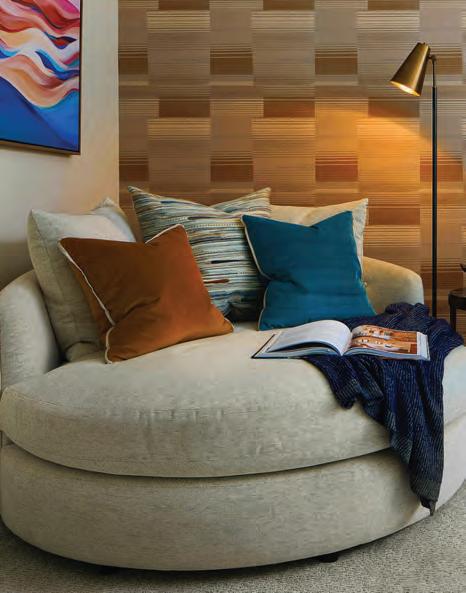
There’s something different about shopping local. The pieces feel more personal, the service more thoughtful, and every room begins to tell a better story.
Explore HW Home’s ever-changing showroom of hand-selected furniture, one-of-a-kind accents, and in-stock pieces ready now.
Visit us before our next chapter begins at 9th & Colorado, coming early summer!
Every once in a while, a story finds you at exactly the right time.
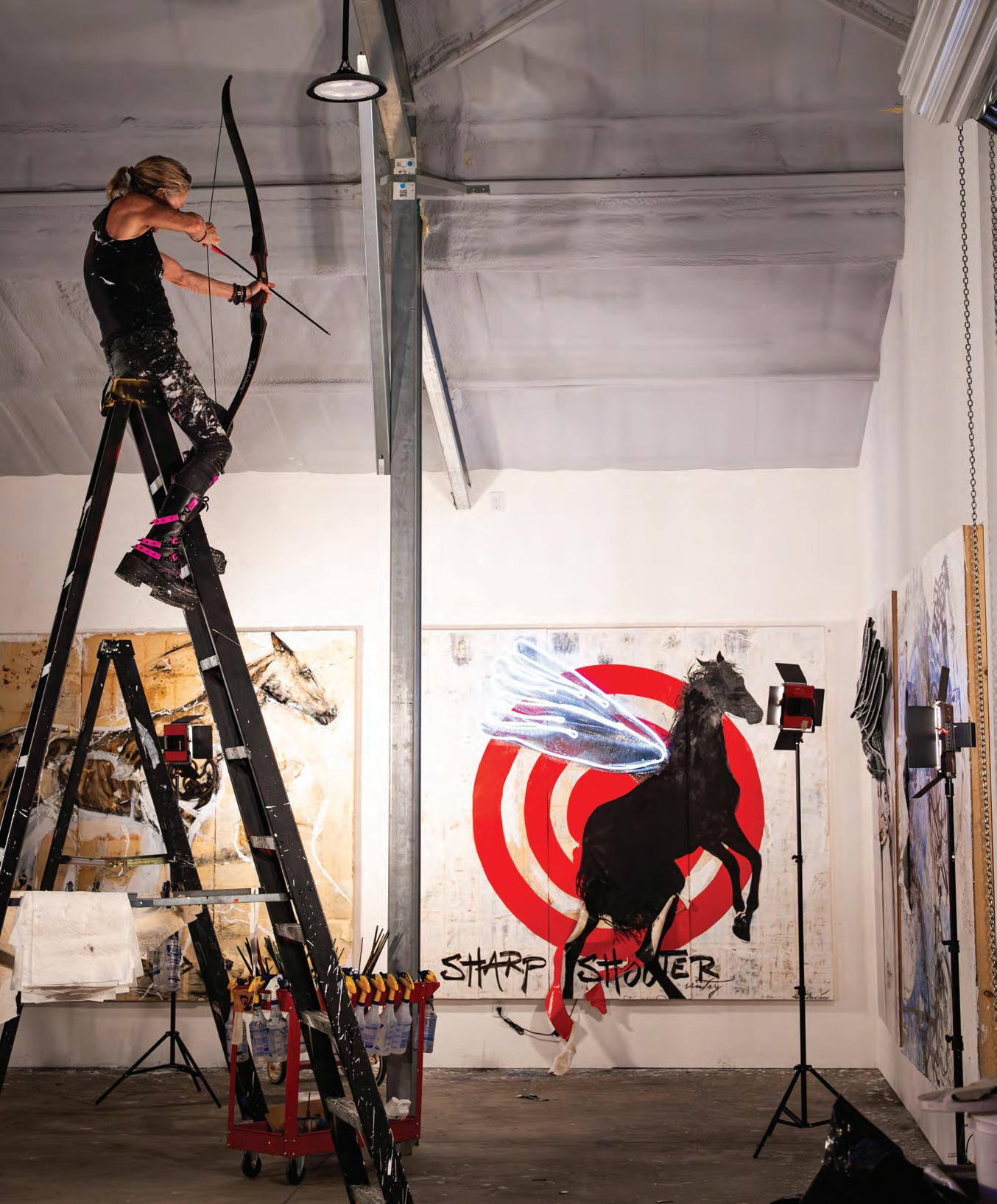
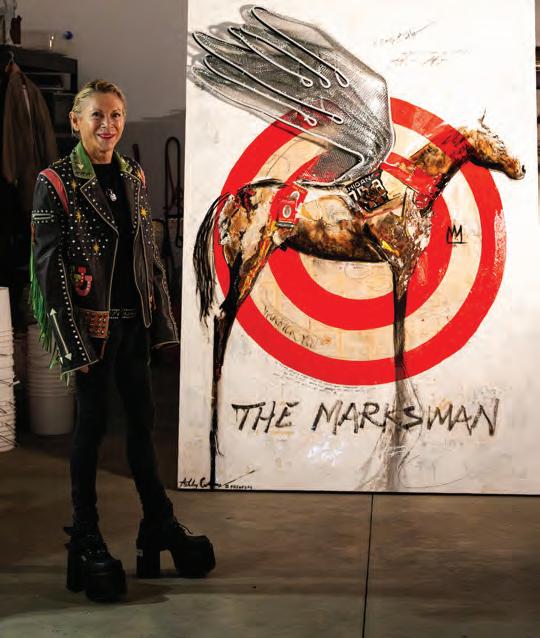
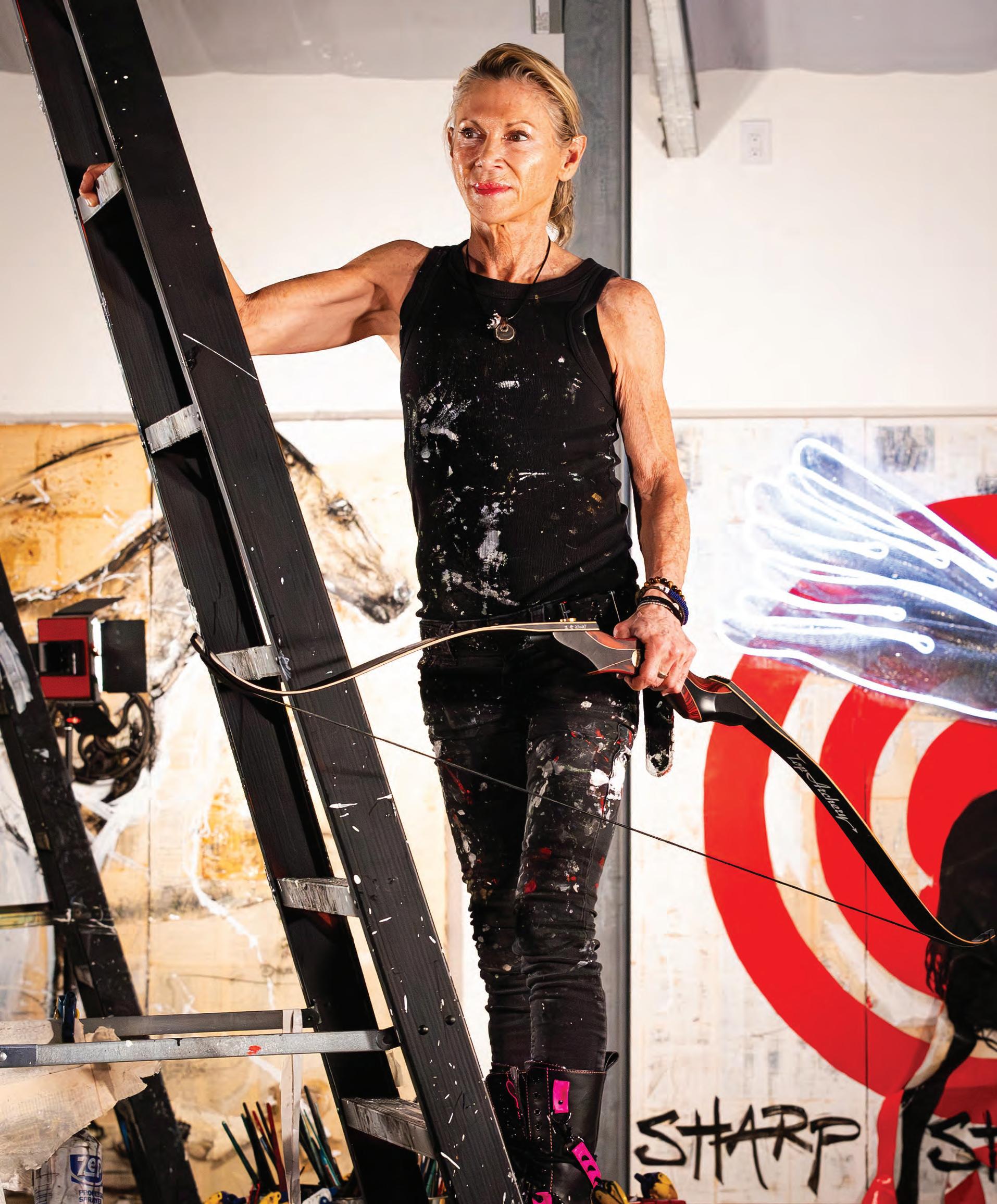
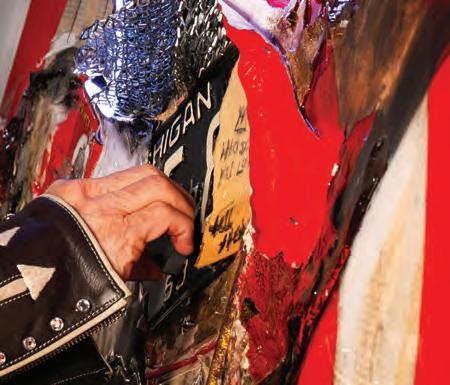
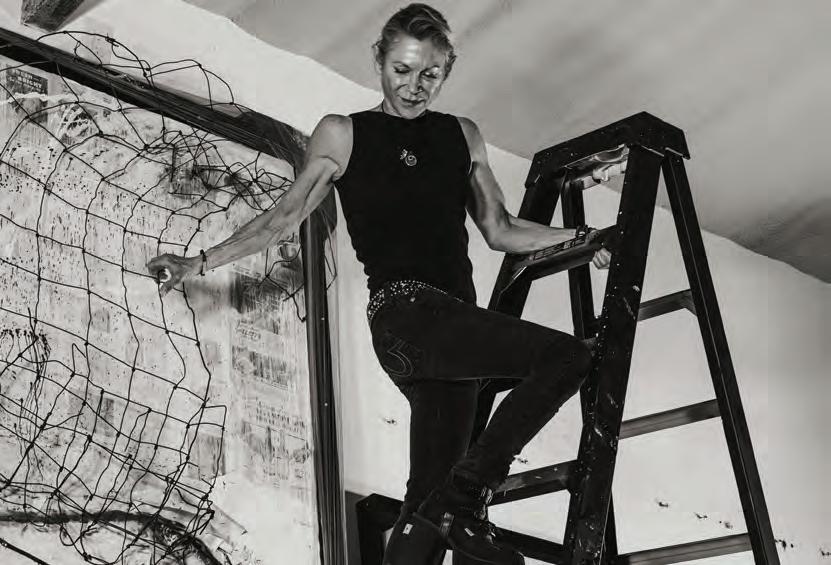
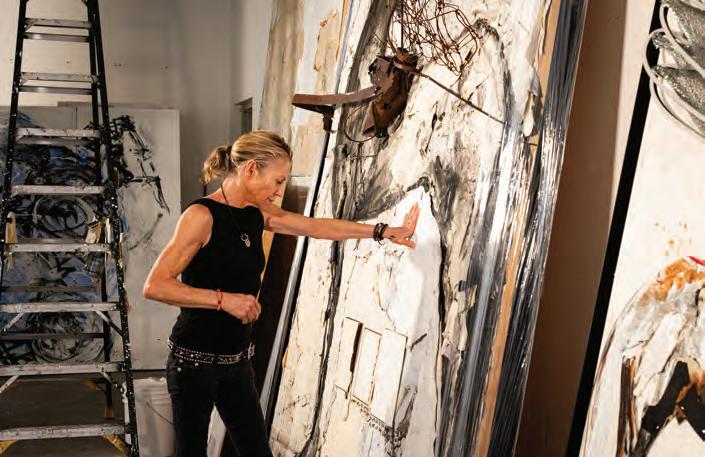
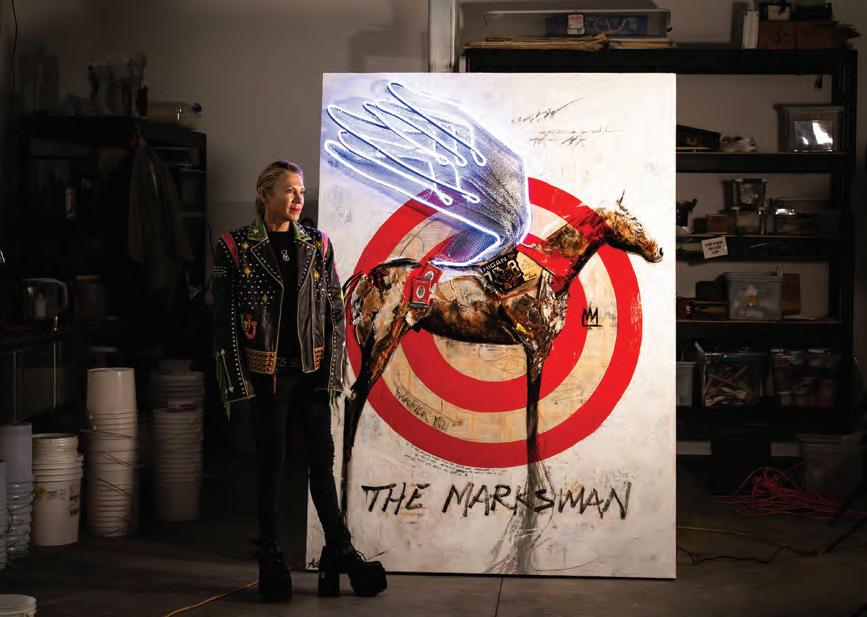
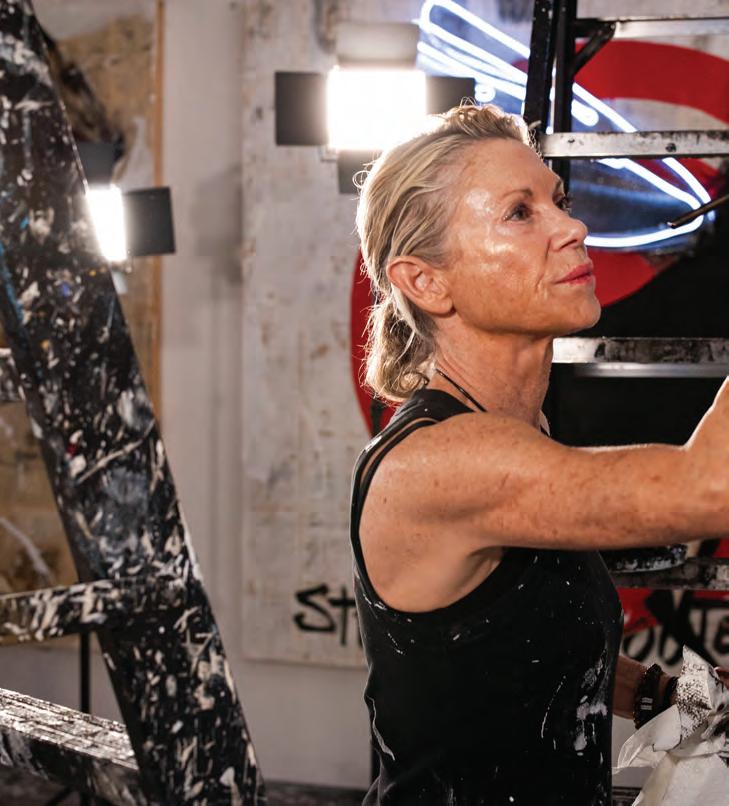
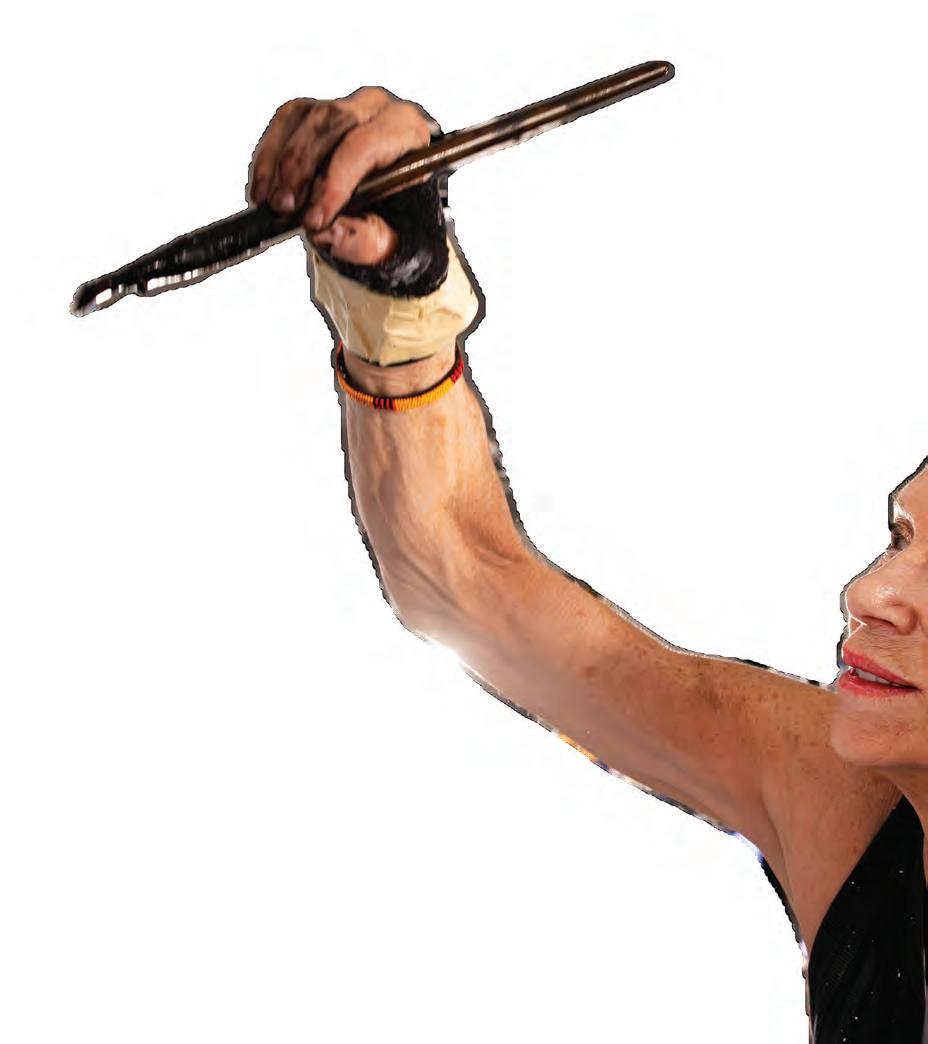
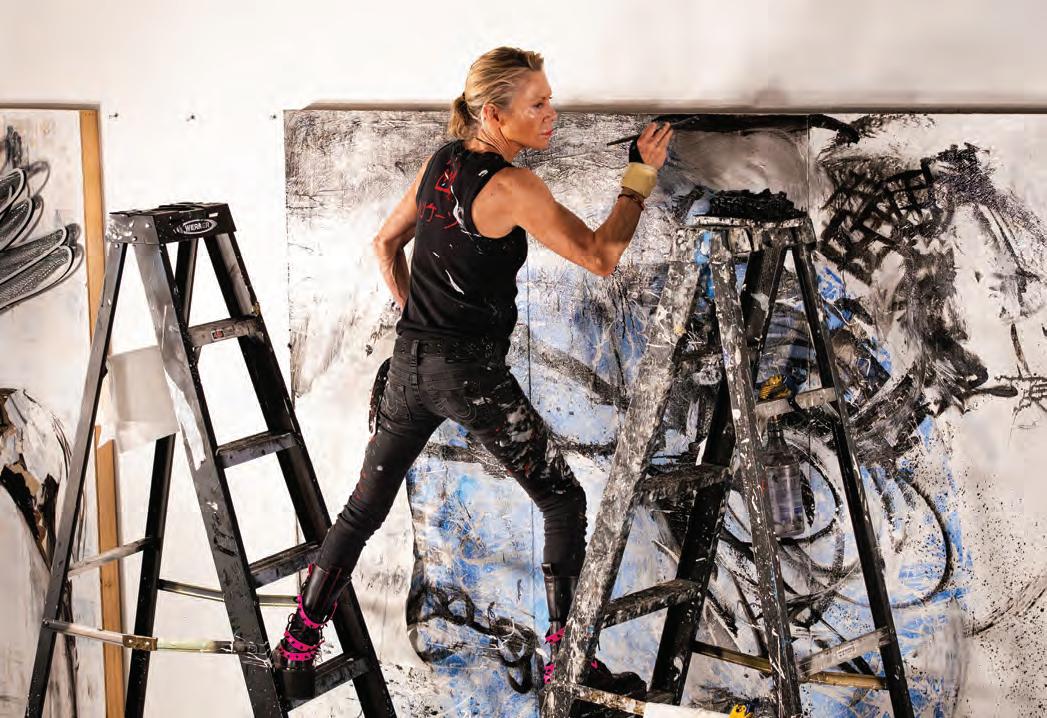
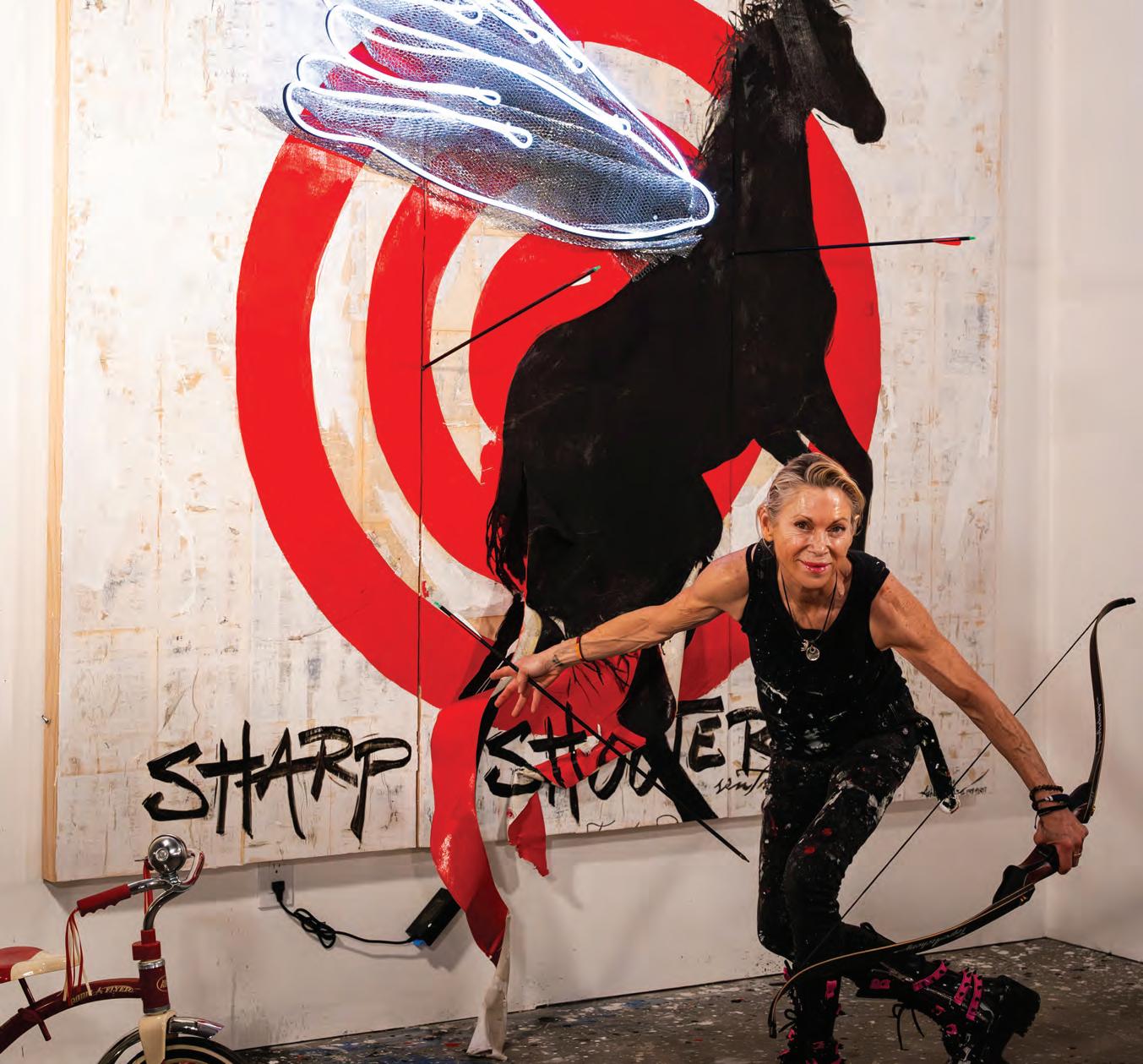
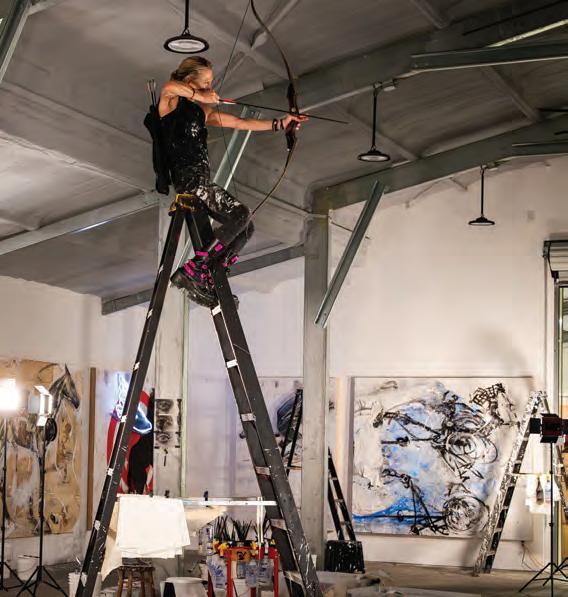
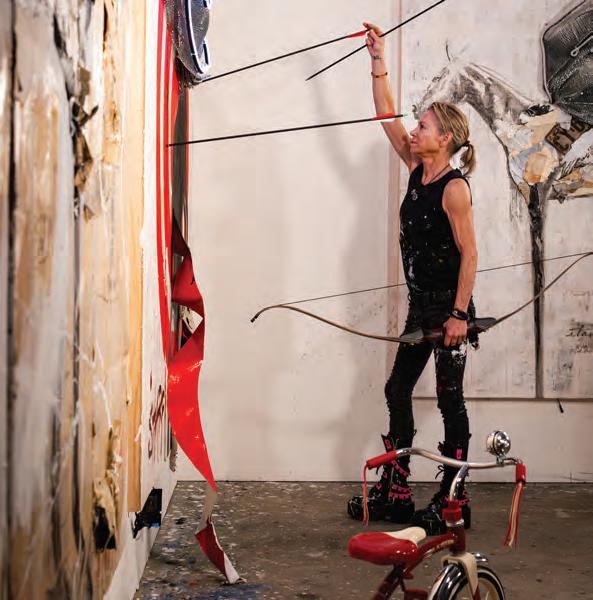
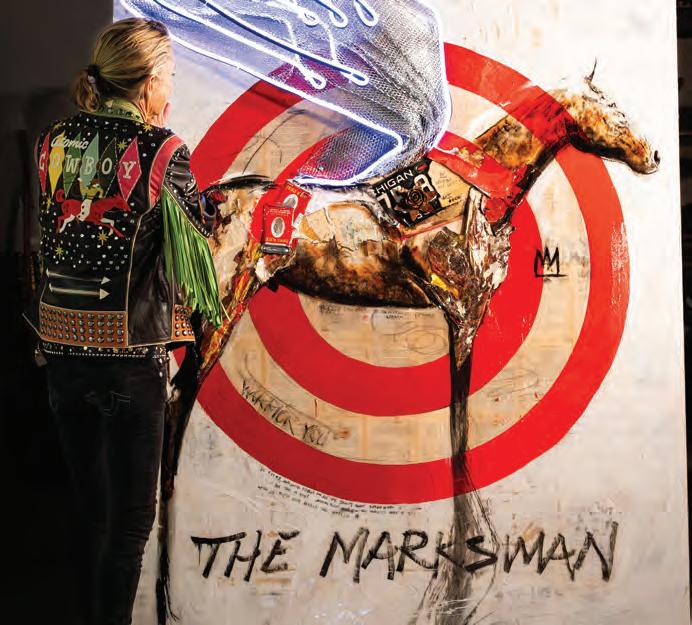
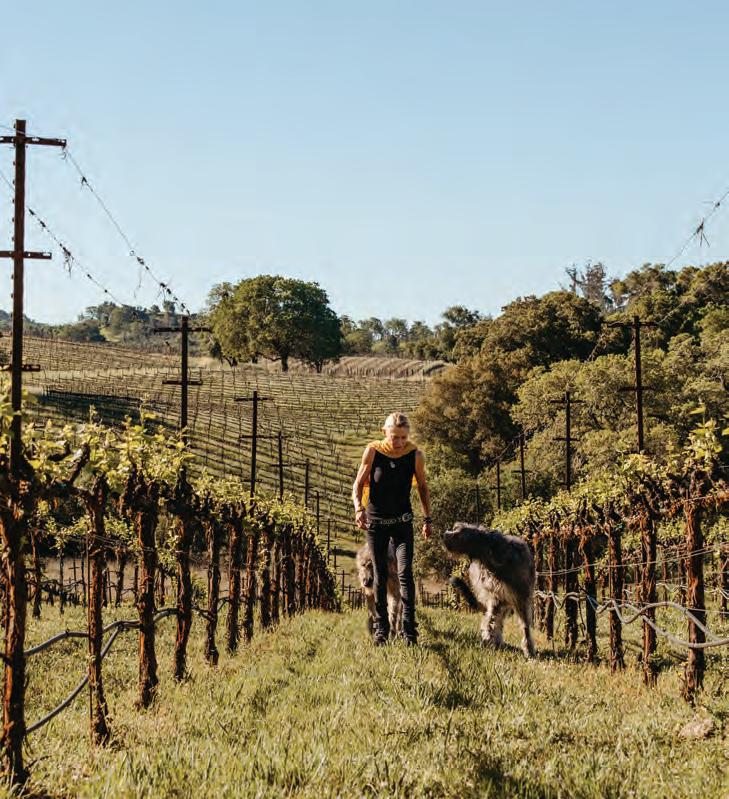
When I first began learning about Ashley Collins ( Horsepower, page 52), I knew there was a compelling artist on the other side of the conversation. The scale of the work, the collectors, the mythology, the sheer visual force of her paintings all made that immediately clear. But what I did not expect was how much the woman behind the work would stay with me.
Ashley’s story is not a tidy one. It is not polished into something easy or palatable, and that is precisely what makes it powerful. It is a story of survival, reinvention, grit, faith, rebellion, beauty and force. It is about what a person can build after life has tried, more than once, to break her. It is about taking pain and refusing to let it be the final word.
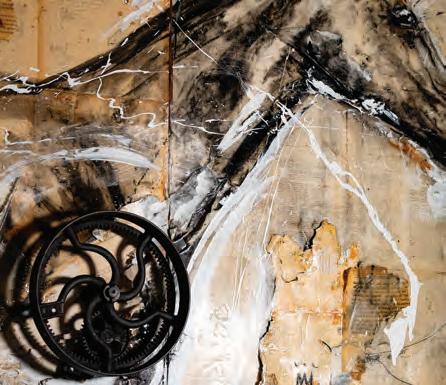
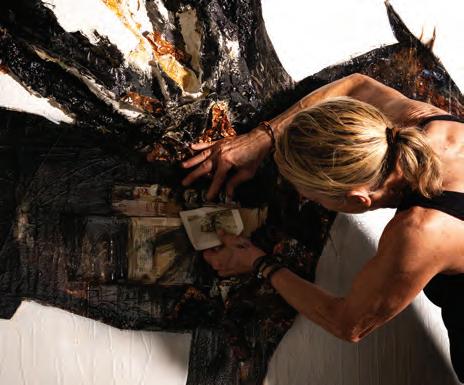
In many ways, that is what her paintings do, too. They do not whisper, they arrive. They take up space. They are layered with history, memory, fragments, motion and muscle. There is strength in them, but also vulnerability. There is glamour, but there is also grit. There is the unmistakable sense that something has been endured, transformed and made larger than life.
note from our publisher
That theme of resilience resonated with me deeply. As women, as mothers, as business owners, as people simply trying to hold the many pieces of life together, we all understand, in different ways, what it means to keep going. To create through exhaustion. To rebuild when the plan changes. To become stronger without becoming hardened. Ashley’s story reminded me that power is not always loud in the obvious ways. Sometimes it is the decision to keep going anyway.
It was an honor to tell her story in these pages, and it has become an unexpected gift to now call her a friend. She is bold, funny, intense, generous, wildly talented and impossible to categorize. She has lived a life that would have flattened many people, and instead she has turned it into work that fills walls, commands rooms and gives other people permission to be a little less afraid of their own complexity.
That, to me, is the heart of this issue.
Yes, spring is a season of travel, style, openings, escapes and all the beautiful things we love to celebrate in Cherry Creek Magazine. But beneath all of that, this issue is also about movement. The places we go. The lives we build. The people who inspire us to see possibility differently. The art, homes, restaurants, resorts and stories that remind us that beauty is never frivolous when it helps us feel more alive.
I hope Ashley’s story moves you the way it moved me. I hope it reminds you that strength can be elegant, survival can be creative, and resilience can become something magnificent.
Yours in style, Betsy Marr
Where it’s been summer vacation since 1965.
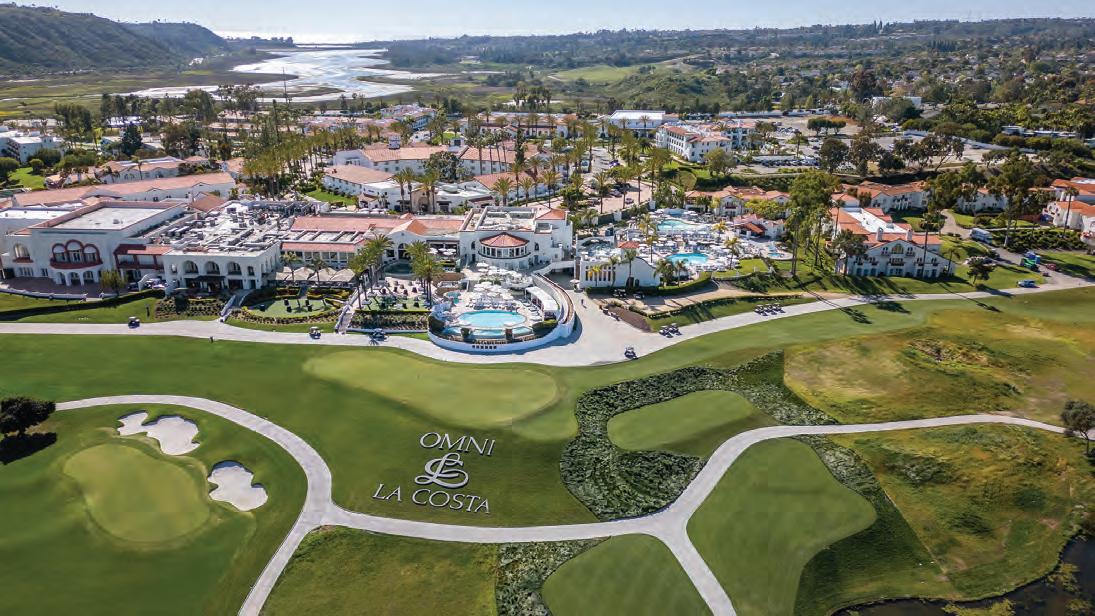
Discover Omni La Costa Resort & Spa, a sun-soaked escape in Carlsbad, California.
With direct flights from Denver into Carlsbad, your sunshine escape couldn’t be easier. Enjoy Spanish-inspired charm amongst refreshed guest rooms, sparkling pools, championship golf courses, tennis courts and rejuvenating spa days. With warm days & effortless access to beaches, it's the perfect place to trade snow for sunshine.
ENJOY UP TO 25% OFF + $100 RESORT CREDIT
CHERRY PICKED
It’s sort of comical how you think that you’ve made a choice that exempts you from the fashion industry when, in fact…you’re wearing a sweater that was selected for you by the people in this room… from a pile of “stuff.”
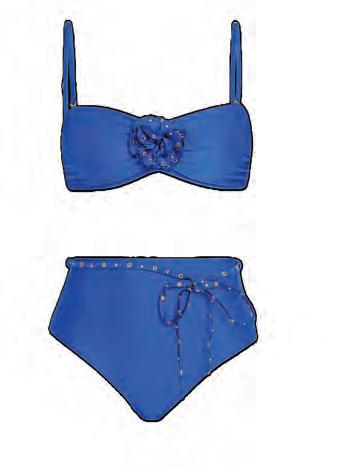
1. Lisa Marie Fernandez Broderie Anglaise High Waisted Bikini, $845 Net-a-Porter
Framebridge, the leading custom framing company, has settled in on Clayton in Cherry Creek. The store is the brand’s 46th location and the latest in its coast-to-coast retail expansion across 15 states and Washington D.C.
Expert designers guide customers through the process, exploring design options to create the perfect look. Customers can see their vision come to life and get inspired by styled gallery walls, framing not just artwork, but meaningful memorabilia—from jerseys and concert tickets to baby clothes and travel souvenirs. The store also features tabletop frames for same-day digital photo gifting.
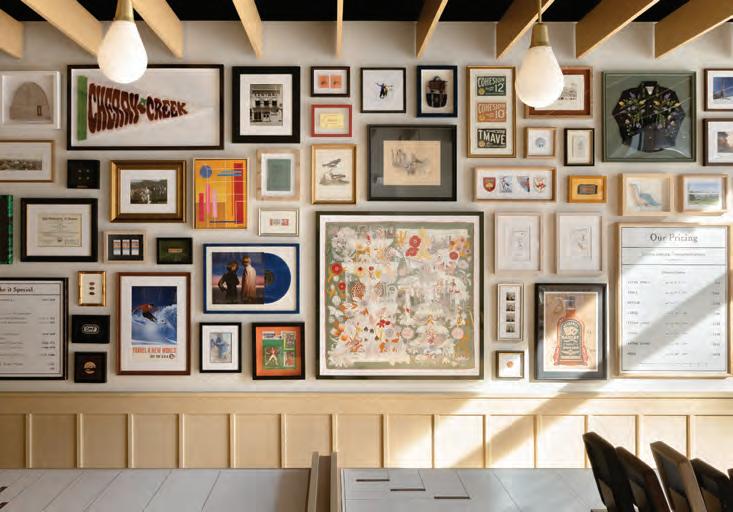
Every store features a communityfocused gallery wall that celebrates the people, places, and things that make up its unique neighborhood. Visitors to the Cherry Creek location will delight in seeing a vintage 1932 Diploma from the University of Denver, a Casa Bonita bandana, patches from beloved Colorado Ski Resorts, a belt buckle from the Western Stockshow, a Denver Nuggets Nikola Jokic jersey, and original watercolors from Denver artist Fikka Chica, among other local treasures.
“From its thriving arts scene and loyal sports culture to how the community celebrates their unbelievable outdoor adventures, Denver truly has its own identity, and now we can’t wait to be part of this community in person and see what everyone brings in store to frame,” says Susan Tynan, CEO and Founder of Framebridge.
+ MORE VIA // framebridge.com
MADELINE OPENS IN MAY
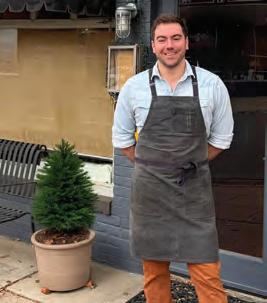
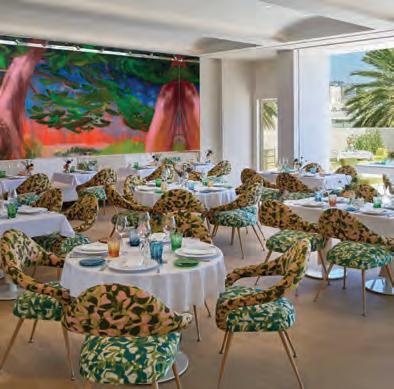
One of Denver’s most beloved dining rooms is getting a next act. Madeline, the debut brick-and-mortar restaurant from Chef Quincy Cherrett, opens May 7 in the former Fruition space, bringing a deeply personal, family-run concept to one of the city’s most storied culinary addresses. Named for Cherrett’s newborn niece, the restaurant is built around the idea of fine dining technique without the fine dining stiffness, a neighborhood spot where the cooking is precise, the service is warm and the menu has just enough surprise to keep things interesting.
Cherrett, a Culinary Institute of America graduate, has spent time in the kitchens of Colt & Gray, Death & Co. and Izakaya Den, with earlier chapters in Jackson Hole helping shape his appreciation for Japanese and Thai flavors. At Madeline, those influences show up in a menu that starts with familiar comforts and then takes a well-timed left turn: oysters with radish and green apple mignonette, beet carpaccio with Thai red curry peanut sauce and lemon goat cheese, crab cake with red miso shrimp bisque and lamb agnolotti with spring pea, mint and morels. Entrées continue the theme, including scallops with white miso celery root purée and jasmine tea-pickled pears, and a halibut dish with green curry and black forbidden rice that Cherrett has reportedly been perfecting for years.
The beverage program follows the same spirit, balancing comfort with discovery. The wine list will build on the cellar inherited from Fruition, while batch cocktails bring a more playful edge, including the Sumu Punch, made with tequila, rum, lime, orgeat, coconut milk, yuzu, nutmeg and cherry, and the Beck & Call, a savory Manhattan with Sazerac Rye, Montenegro, honey syrup and a touch of soy. The space itself, led by Kevin Nguyen of REGULAR Architecture, will preserve some of Fruition’s cottage-like charm while introducing a fresh identity, with natural materials, custom murals by Lena Dechamps and a cheeky hotel-key installation nodding to Cherrett’s family background in hospitality. In other words, Madeline is not trying to erase what came before. It is simply setting the table for what comes next.
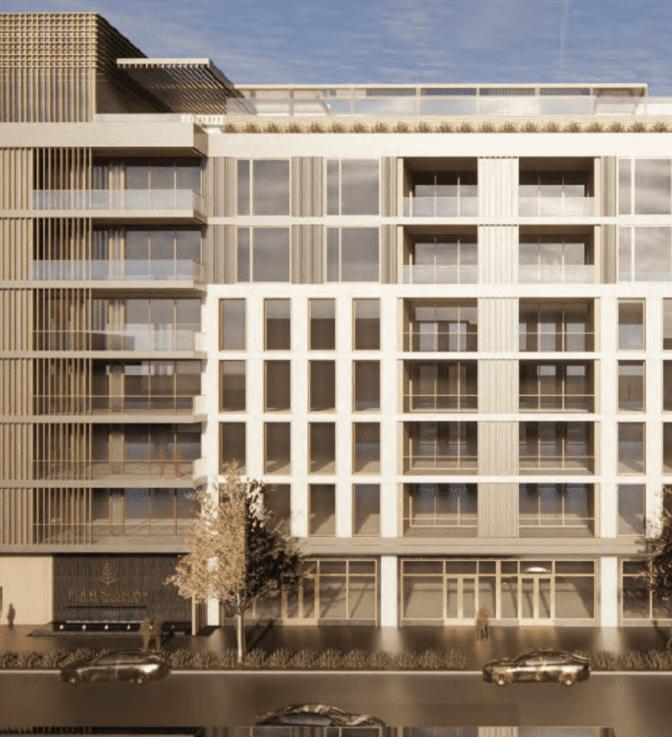
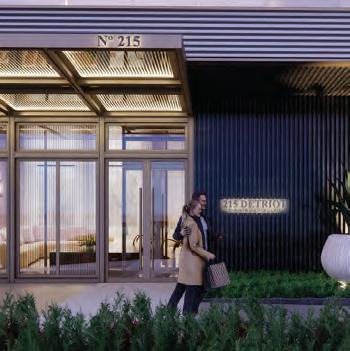
Plans have been submitted for Four Seasons Private Residences in Cherry Creek North, proposing a new luxury condominium development on Detroit Street. The project calls for an 8-story building with approximately 42 residences, replacing a string of retail buildings.
The proposal includes ground-floor retail, resident-focused amenity spaces, and underground parking, with a design intended to integrate into Cherry Creek North’s established, walkable mixed-use environment.
The development is being led by Stillwater Capital and Wexford Real Estate Investors, alongside Brue Baukol Capital Partners and Zabel, in partnership with Four Seasons. If approved, the project would introduce a new branded residential offering in one of the country’s fastestgrowing luxury markets.
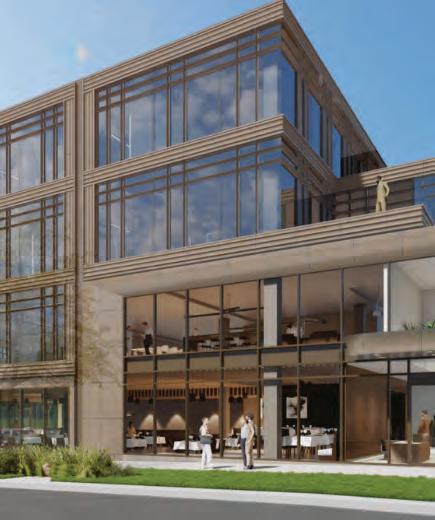
A longtime Cherry Creek North corner could be headed for a major transformation. Plans have been filed to redevelop the property at 3rd Avenue and St. Paul Street, the current site of neighborhood Italian eatery Cucina Colore. Under the new proposal, the existing building would be demolished and replaced with a four-story mixed-use office and retail project.
The development is planned at approximately 88,000 square feet and would include two levels of below-grade parking, ground-floor retail space, and three levels of office above. Street-level plans show retail and restaurant space lining both 3rd Avenue and St. Paul Street, with an office lobby located at the corner.
Upper floors would be dedicated to nonmedical office use, with the building stepping back at higher levels to meet Cherry Creek North massing requirements and protect nearby residential areas.
HW’s New Home
After more than two decades as a cornerstone of Cherry Creek North, HW Home is entering its next chapter. In late spring 2026, the doors will open to a new 10,000- squarefoot flagship showroom at 9th & Colorado (9+CO) into a forever home at 8th Avenue and Albion Street.
“We’re entering our next era of design-driven living. This is a flagship move. A homecoming. A transformation that reflects years of growth, evolution, and resilience in a changing Cherry Creek North landscape,” said Ron Werner, owner and founder of HW Home. “9+CO sits at the epicenter of some of Denver’s most iconic neighborhoods where many of our customers live and provides incredibly easy access, great visibility along Colorado Boulevard – one of the busiest roads in the Metro area – and lots of free parking.”
“We could not be more excited to welcome HW Home and their customers to the 9+CO community,” said Matt Schartz, Director of Asset Management at Continuum Partners.
“With a prime location at the corner of 8th and Albion and 10,000 square feet of space, HW Home will essentially be a new anchor tenant for this thriving community and an ideal complement to our existing retail offering.”
center of attention
Cherry Creek Shopping Center is preparing for a major redevelopment, as Simon Property Group launches a $250 million investment aimed at reimagining one of Denver’s most important retail destinations for its next era. The project will focus on modernizing the luxury shopping environment with upgraded storefronts, refreshed architecture, enhanced flagship retail spaces and a more polished experience for shoppers and tenants alike.
The timing is notable. Cherry Creek as a whole is entering a new phase of growth, with several major projects poised to reshape the district. Just west of the mall, the large-scale Cherry Creek West redevelopment is preparing to move forward with new mixed-use buildings, retail space, residential offerings and a significant public park. Across the street, the Cherry Lane project is already underway, bringing additional housing and street-level retail to the neighborhood.
Together, the projects point to a broader evolution of Cherry Creek from luxury shopping district to a denser, more dynamic urban center, where retail, restaurants, residences, offices and public spaces are increasingly connected. For Cherry Creek Shopping Center, the investment signals a continued commitment to maintaining its position as the region’s premier retail address. Construction is expected to begin in 2026, with new tenant announcements to follow.
SPRING IN BLOOM AT The Jacquard Hotel
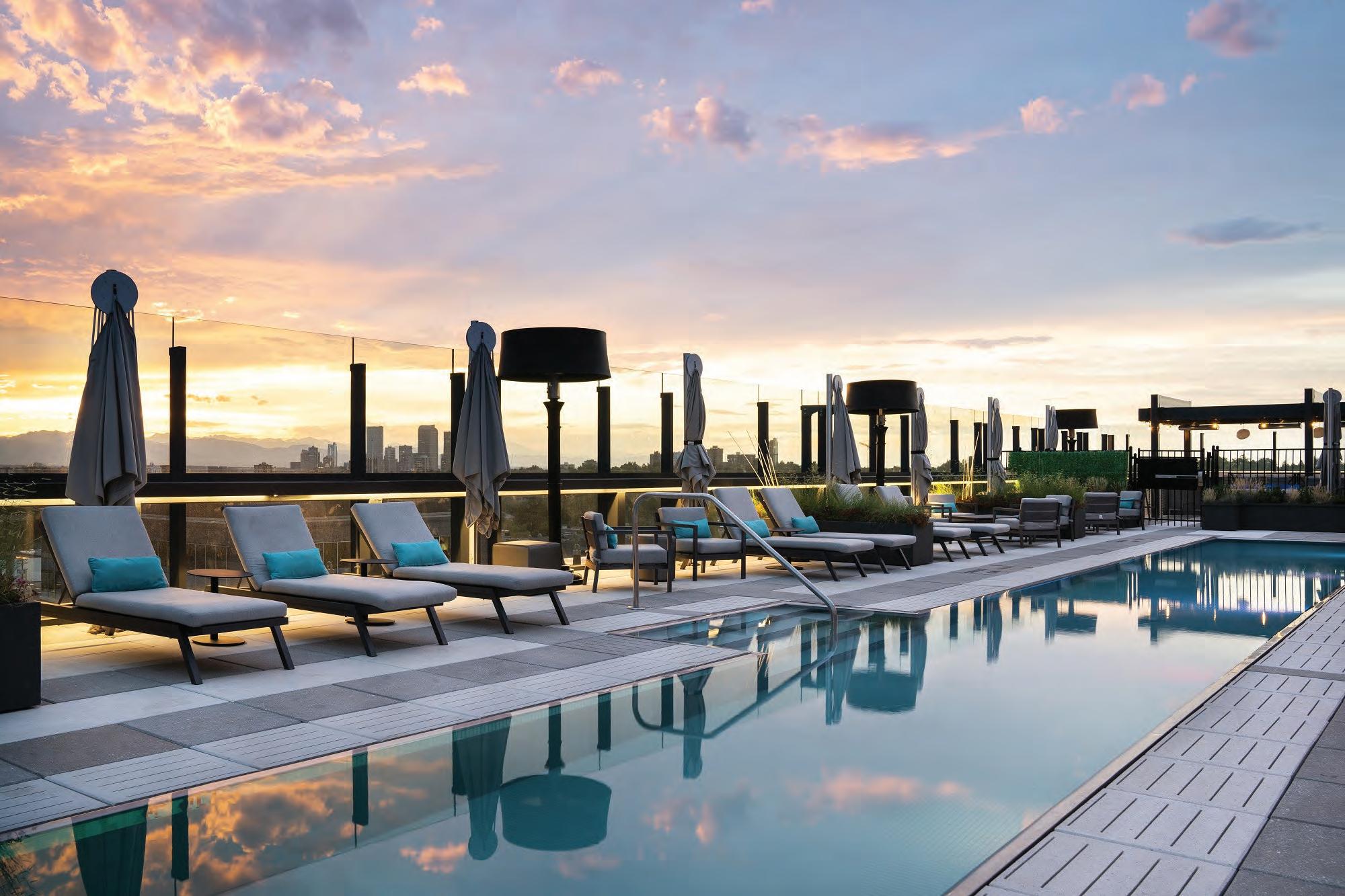
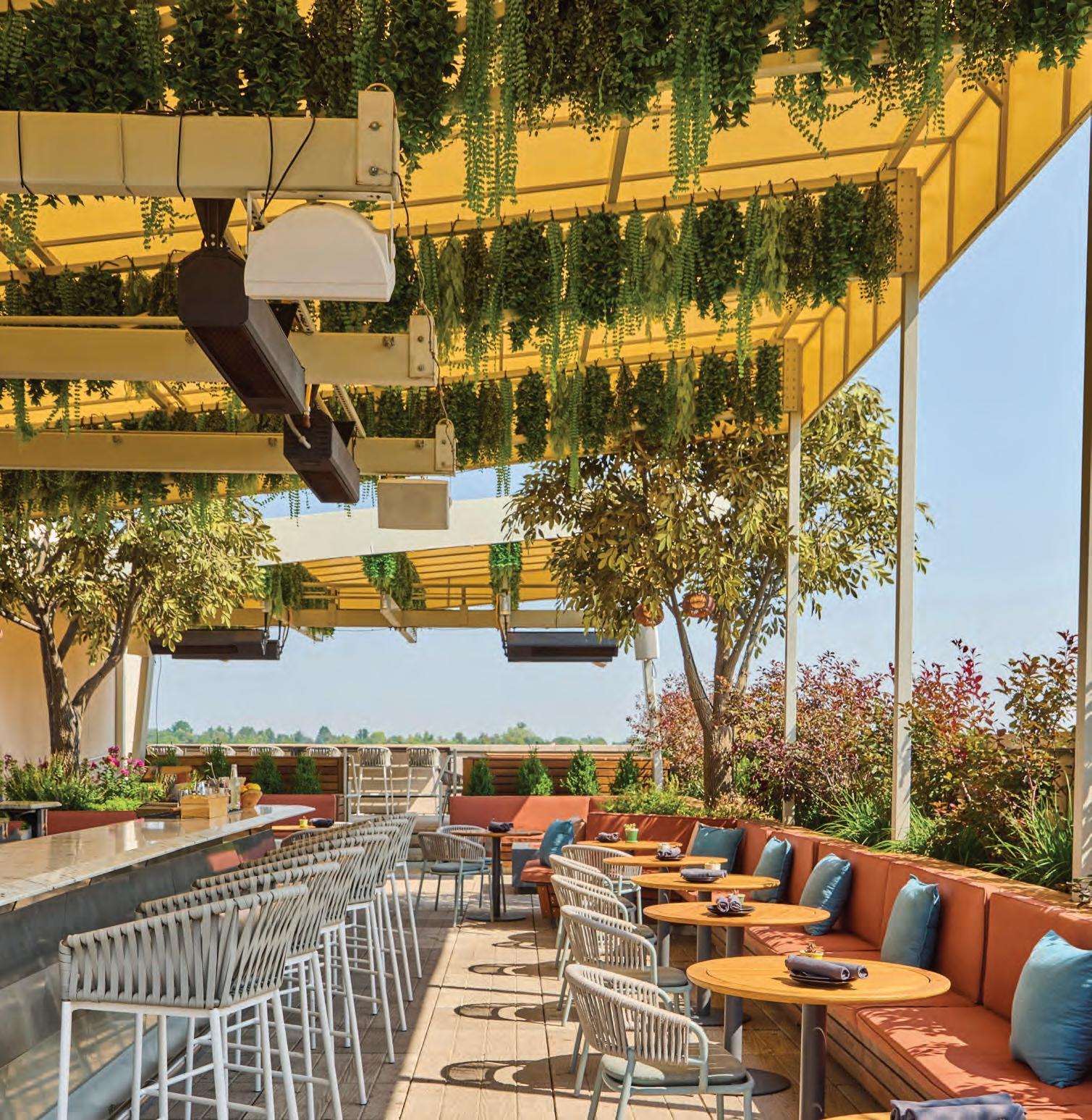
The Jacquard Hotel & Rooftop invites you to stay with us in Cherry Creek as warmer days, blossoming trees, and vibrant energy bring new life to Denver’s most walkable and stylish district.
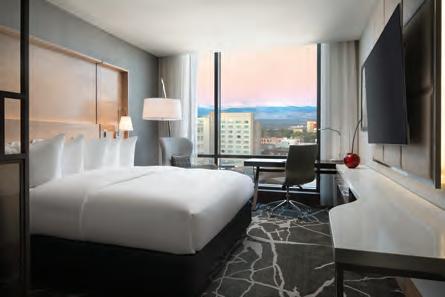
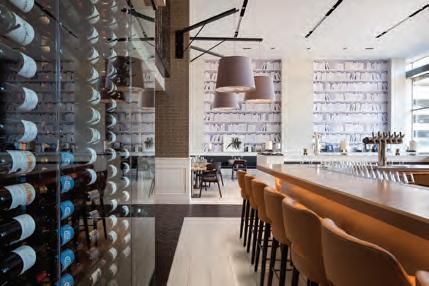
Relax in our lavish and thoughtfully designed guest rooms, indulge in storied food and drink at our award-winning on-site restaurant, Narrative, and discover inspired events and thoughtfully curated experiences that celebrate the spring.
Rooftop Season Returns
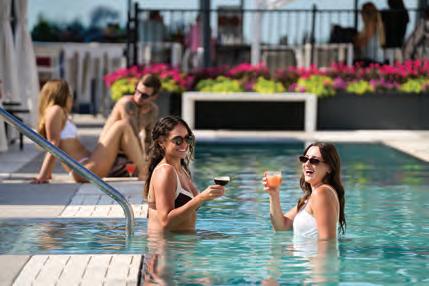
Kisbee on the Roof reopens Memorial Day weekend, offering elevated poolside lounging, vibrant cocktails, and lively weekend DJ sets, all set against sweeping views of the Rocky Mountains and downtown skyline. We’d love to host you!
BOOK YOUR SPRING STAY:
thelist
THE BEST OFF-THE-BEATEN-PATH RESORTS IN CO
DUNTON HOT SPRINGS
1 2 1 3 4
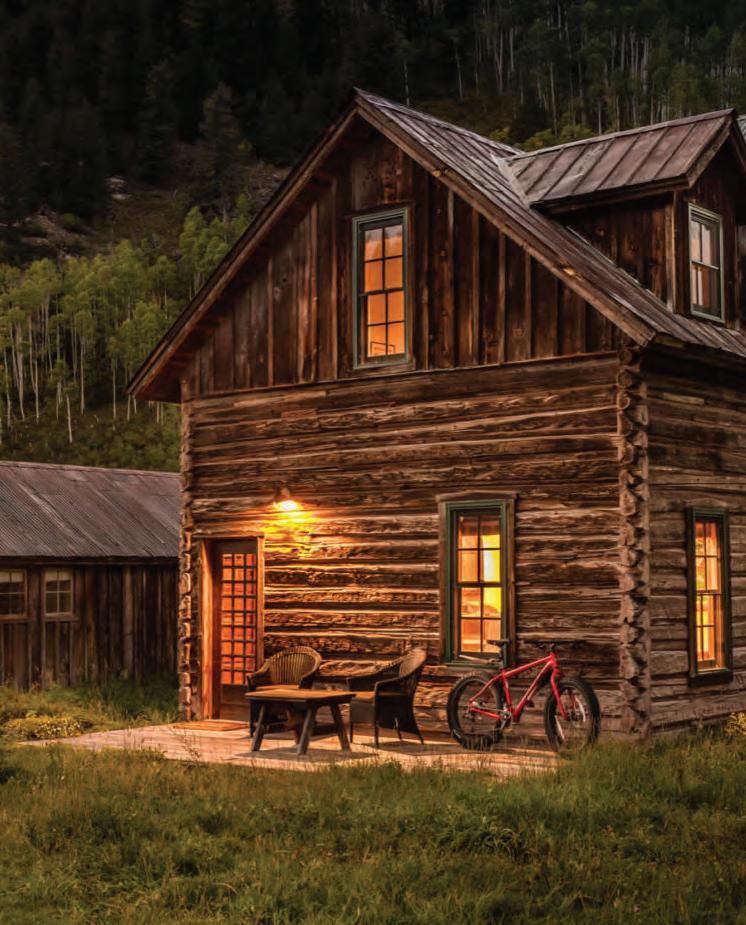
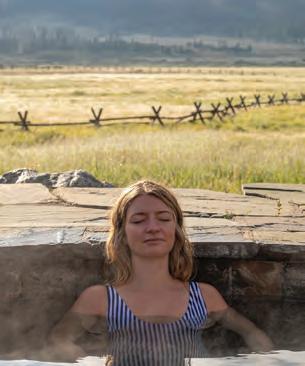
Dunton Hot Springs is Colorado fantasy at its most cinematic: a restored 19th-century ghost town tucked deep in the San Juan Mountains, where hand-hewn log cabins, mineral hot springs and mountain silence do most of the talking. The property is intimate, exclusive and wildly transportive, with restored cabins, a life-worn saloon, elevated dining, spa treatments and hot springs set beneath the peaks. It is rugged and refined in equal measure, which is exactly the trick. You can soak beneath the stars, sleep in a cabin with serious history, dine beautifully and still feel like you have escaped into a very expensive Western novel. It is not the kind of place one stumbles upon. It is the kind of place one plots around.
duntondestinations.com
DEVIL’S THUMB RANCH
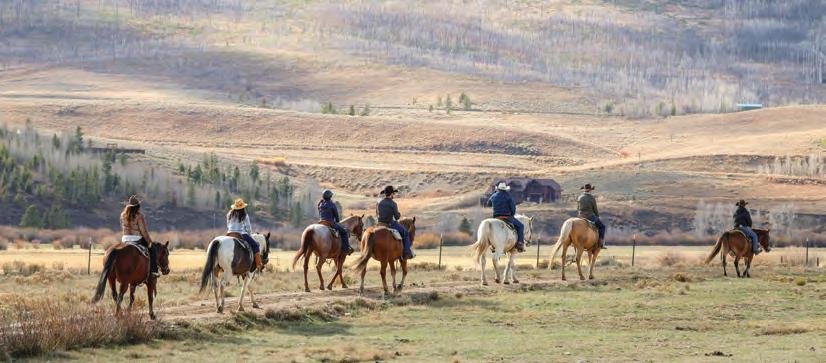
Devil’s Thumb Ranch is not exactly unknown, but it still feels like a proper escape once you are there. Set outside Winter Park in Tabernash, the ranch offers that big-sky Colorado experience people imagine when they say they want to “get away,” only with better food, better sheets and a spa. Guests come for horseback riding, cross-country skiing, fly fishing, hiking, biking, yoga and the kind of mountain air that makes city problems seem mildly embarrassing. What makes it work for this list is that it still has a sense of place. The luxury is there, but it does not sand down the Western character. You can spend the morning on the trails, the afternoon in the spa and the evening pretending you are the kind of person who casually knows what to do around horses. Close enough for a long weekend, far enough to feel like you actually left.
BUENA VISTA SURF HOTEL
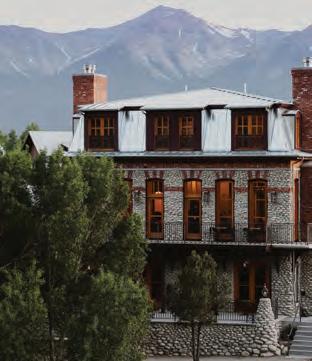
A surf hotel in Colorado sounds like a punchline until you arrive in Buena Vista and realize it completely works. Set along the Arkansas River in the South Main neighborhood, Surf Hotel brings a cooler, more design-forward sensibility to one of the state’s most quietly fun mountain towns. The hotel describes itself as a riverfront retreat where luxury and adventure cross paths, inspired by European design and the independent spirit of Colorado. Translation: good looking, low-key and not trying too hard. The appeal is the blend: boutique hotel, river-town hangout and “wait, why don’t we come here more often?” energy. You can raft, hike, soak, fish, catch live music, eat well or do very little beyond watch the river move past. Buena Vista has become the sweet spot for people who want Colorado without the performance of Colorado, and Surf Hotel is its best dressed address.
SURFHOTEL.COM
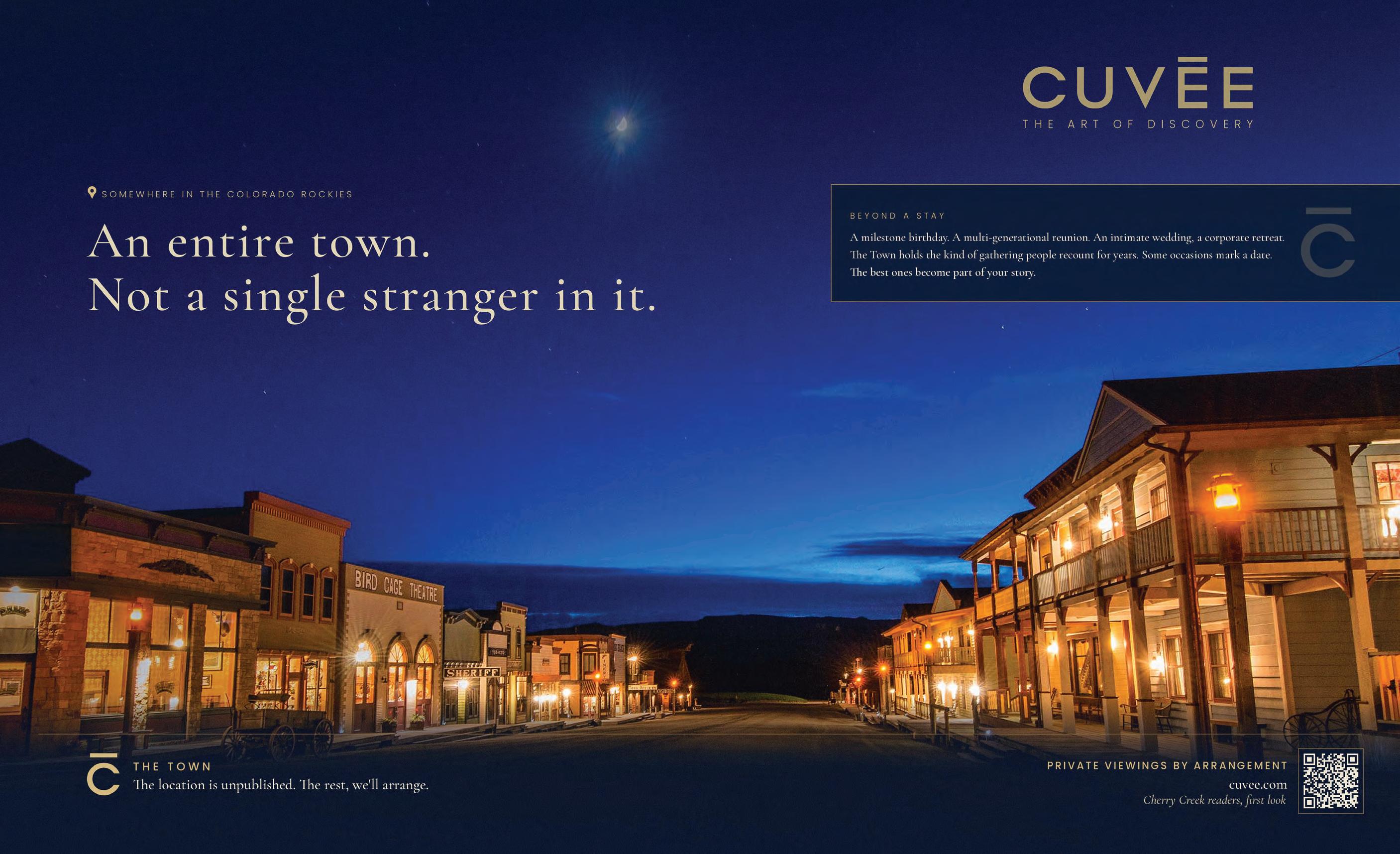
THE TOWN BY CUVÉE
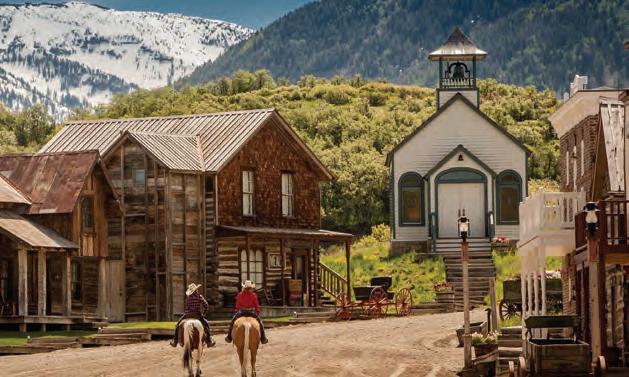
The Town is the Colorado escape that comes with its own zip code. Set at 7,500 feet on the western slope of the Rockies, inside 5,500 acres of wilderness, it is a fully restored 19th-century frontier town you book in its entirety. Seventy-two period buildings, from early homesteads to lavish Victorians, restored down to the brass beds and stained glass, with room for up to fifty guests. Call it the most ambitious group escape in the state. It is also the largest privately held museum of Western American artifacts in the world, which means every saloon, parlor, and storefront actually holds the real thing. Days run toward cattle drives down Main Street, fly fishing, horseback rides, and whiskey tastings in the saloon, with tomahawk throwing, blacksmithing, and custom hat-making for the more committed. Evenings turn to dinner under the stars and Akaushi Wagyu from the property’s own reserve. The location is unpublished and the security is real, with four airports within two hours and helipads on site. Discreet by
C LAZY U RANCH
C Lazy U is the rare ranch that manages to feel both deeply traditional and genuinely luxurious. Set on 8,500 acres near Granby, the ranch has operated for more than a century and offers an allinclusive experience with lodging, daily meals, horseback riding, seasonal children’s programming and many on-site activities included. It is the kind of place where Western fantasies come alive without sacrificing comfort. Days include trail rides, fly fishing, hiking, mountain biking, yoga, snowshoeing, sleigh rides or spa time, depending on the season. There is something wonderfully old-fashioned about the place, but not in a dusty way. More like summer camp with better luggage, better wine and someone else in charge of the schedule.
GATEWAY CANYONS RESORT
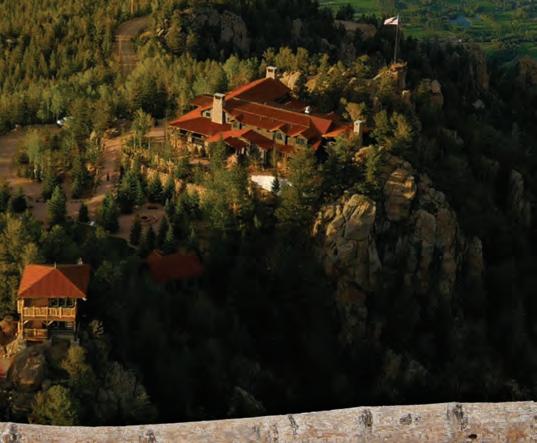
Gateway Canyons makes you wonder why we do not talk about the western part of the state more. Set in the secluded Unaweep Canyon of Western Colorado, the resort trades alpine clichés for desert grandeur: red rock walls, and wide-open skies. The resort offers dining, spa treatments, hiking, horseback riding, UTV adventures and access to some of the state’s most cinematic landscapes, but the setting is the headline. Gateway sits along the Unaweep/ Tabeguache Scenic Byway, surrounded by the Piñon Mesa and the La Sal Mountains. It feels less like a standard Colorado resort and more like a beautifully appointed basecamp for people who want their vacation with a little dust on it. Remote, dramatic and deeply underrated.
BEYUL RETREAT
Beyul Retreat is the kind of place people describe as “near Aspen,” which is technically true and spiritually misleading. This is not Aspen. This is cabins, river, sauna, cold plunge, trails, meadows, waterfalls and deep-exhale territory. The property calls itself a backcountry adventure lodge meets wellness retreat, set about an hour from Aspen with cozy cabins, yoga, hiking, sauna, cold plunge and outdoor adventure. Set on 32 private acres along the Frying Pan River, Beyul includes meadows, forest, creeks, waterfalls and ponds, with trails leading into the White River National Forest. It has the wellness appeal of a retreat, but without the overly earnest energy. This is where you go to vanish beautifully, read by a fire, hike before breakfast and return home acting casual about how restored you feel.
UNVEILING 101 GLENMOOR LANE
ASHLEY COLLINS “HORSEPOWER” DEBUT
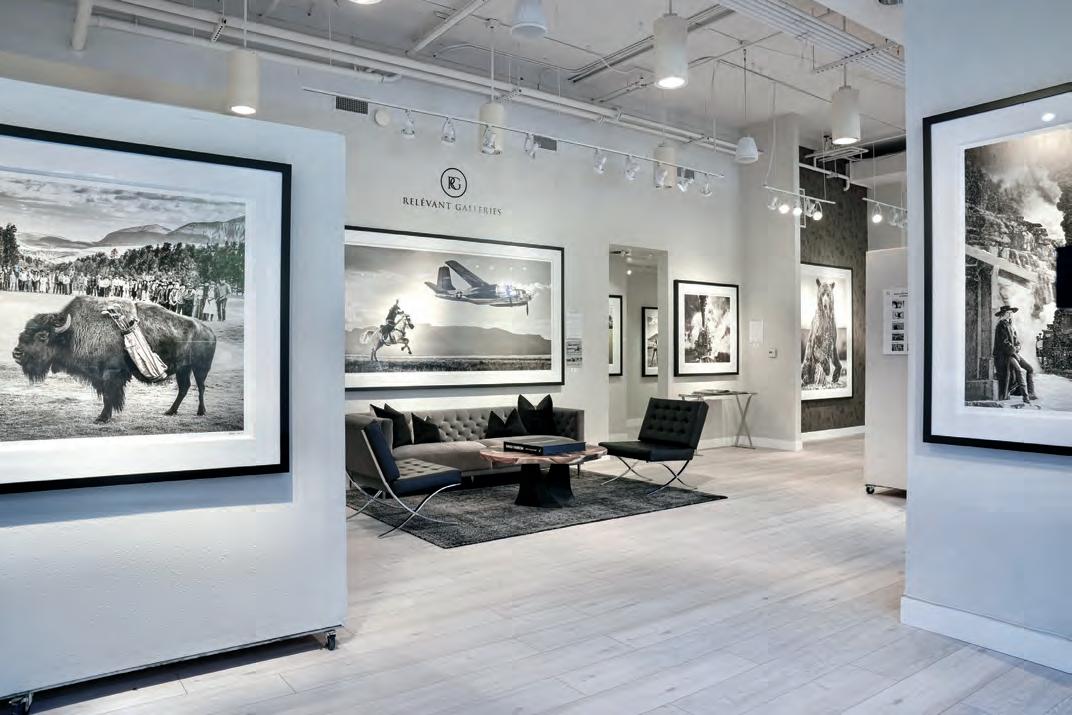
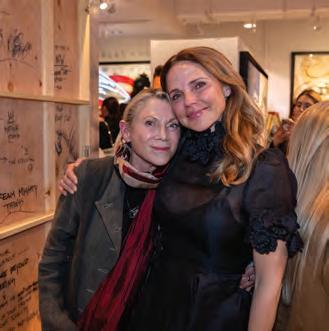
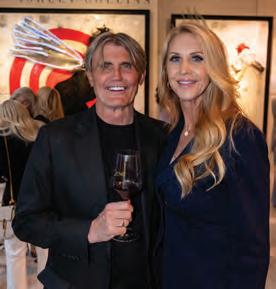
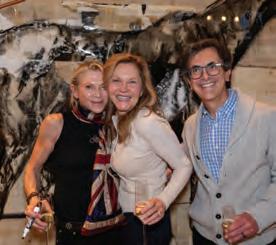
Relevant Galleries welcomed guests for an intimate VIP evening with acclaimed Napa-based artist Ashley Collins, whose powerful, layered works have made her one of the most compelling voices in contemporary art. Against the backdrop of her large-scale paintings, collectors and guests gathered for cocktails, conversation and a live Q&A exploring Collins’ remarkable story, process and singular point of view. The evening offered a rare, up-close look at an artist whose work feels both cinematic and deeply personal, and whose presence in Cherry Creek brought a little Napa grit, glamour and horsepower to the gallery.
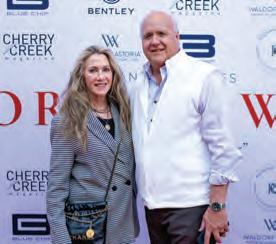
1. Dawn & Reilly Raymond, who exclusively represent sponsor Waldorf Astoria Residences Cherry Creek 2. AD Galleries owners Mike Olson and Lynette Zueger-Olson 3. Jamie & Michael Kennedy
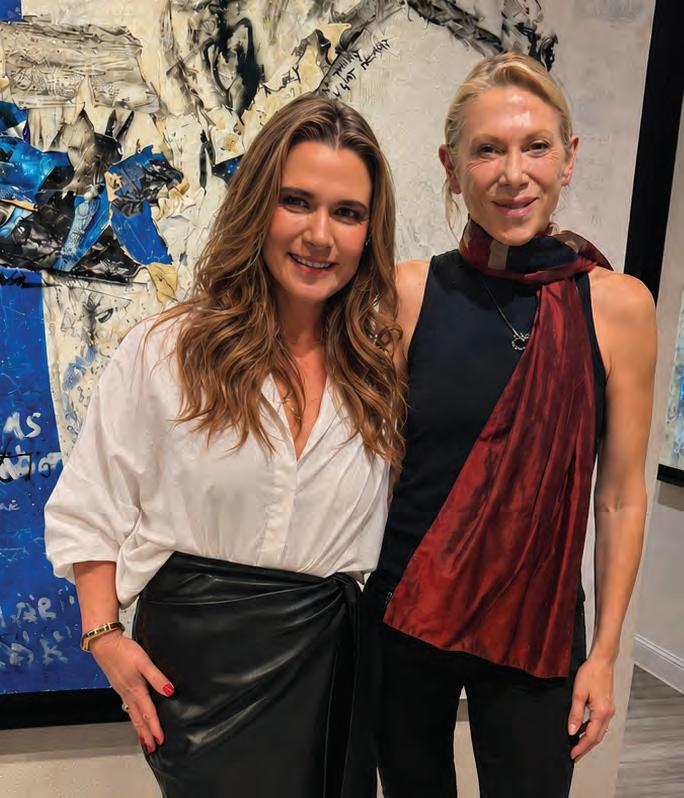
4. Jennifer and Josh Behr 5. Artist Ashley Collins with collectors Monica Palko-Farano & Jerry Farano 6. Artist Ashley Collins with collector Martina Mullaney 7. Michael Ditchfield & Jacqui Palisi 8. Relevant Galleries Director Courtney Olson with Cherry Creek Magazine Publisher Betsy Marr
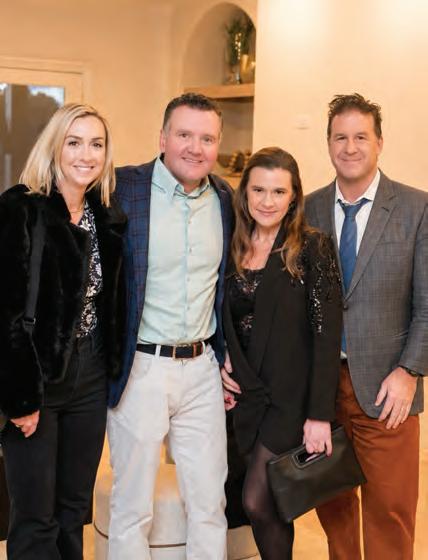
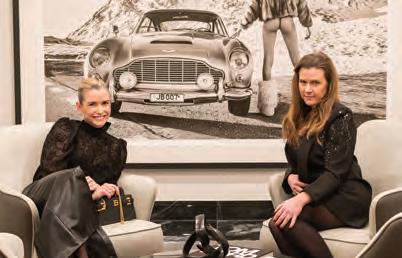
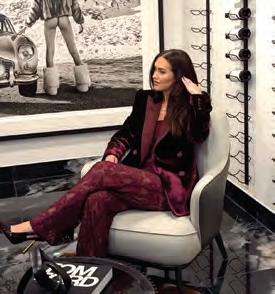
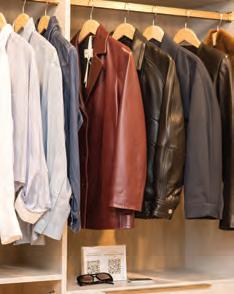
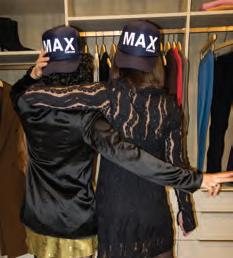
At 101 Glenmoor Lane, Shelby and Mac Richardson opened the doors to their exquisitely reimagined Glenmoor Country Club home for an intimate evening celebrating design, development and the art of living beautifully. Guests gathered inside the couple’s thoughtfully transformed residence, where classic architecture, modern polish and deeply personal details reflected the Richardsons’ shared eye for possibility. 1. Shannon and Jimmy Hasson with Betsy and Kevin Marr 2. Guests Amy Stewart and Shannon Hasson 3. Shelby Richardson of Richardson Development/ LIV SIR 4. MAX fashion 5. Natalie Kakaty and Betsy Marr 6. Developer Mac Richardson chats with guests 7. MAX Denver installed a curated collection of fashions in the primary closet.
bar cart
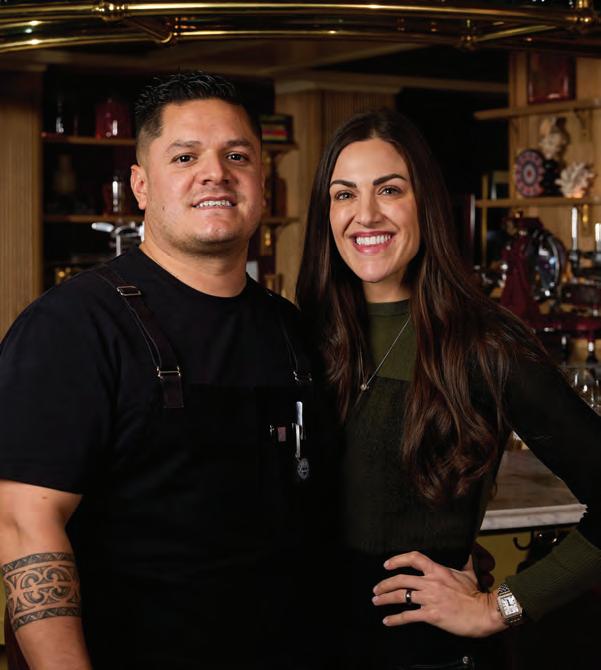
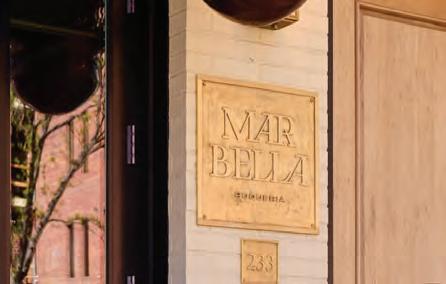
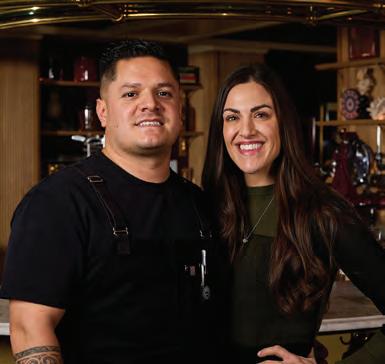
JOHNNY & KASIE CURIEL, MAR BELLA
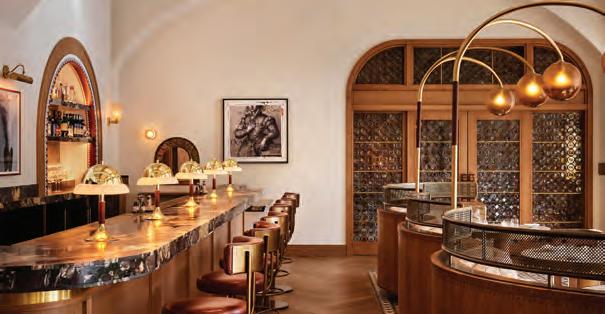
This is hardly just another wine bar. Nothing about what Michelin Star Chef Johnny Curiel and his wife and business partner, Kasie do, is like all the rest. So, when Mar Bella Wine Bar opened its doors and popped its bottles in Cherry Creek on the ground floor of Clayton Hotel & Members Club, the Spanish neo-bistro and wine bar piqued our interest immediately. Without further ado, we go behind the bar in this latest installment of Bar Cart with Johnny and Kasie.
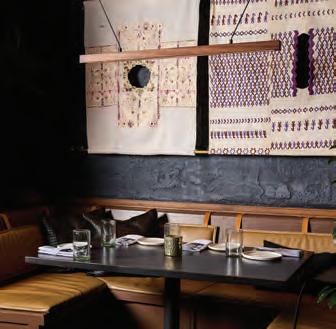
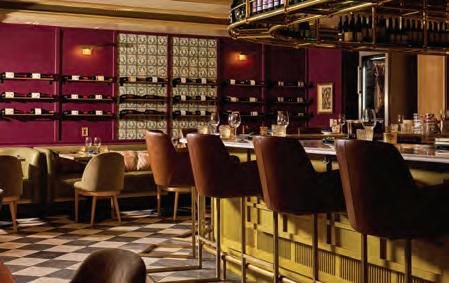
Mar Bella feels unlike anything else in Cherry Creek, and perhaps this part of the country. How would you describe the scene and overall vibe? (JC) We created Mar Bella Wine Bar out of a deep passion and respect for Spanish food and culture. It was the first country I visited in Europe and since that first trip, it has always held a special place in my heart. That’s why Mar Bella Wine Bar is a vision years in the making after exploring Spain’s different regions. Spanish people have such a fierce pride in where they come from and their region’s distinct culture, which I relate to a lot. In terms of the space and vibe, we designed it to have the elegance of a European bistro with the energy of Spanish restaurants that we’ve always been so drawn to.
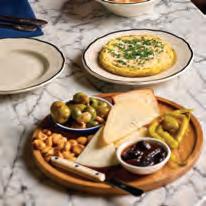
What are your personal favorite menu items at the moment? (JC) The Croquetas De Jaiba, the Marinos, the Piquillo Rellenos and our Tortilla De Patatas.
Your passion for Spain is well documented. Why was now the right time to bring that homage to life, and why in Cherry Creek North? (JC) This winter, we had the opportunity to bring it to life in the space across from Alteño, and we felt the timing and location were just right. The space’s dual counters let us display the jamon like they do in jamonerías and offer our signature chef’s counter experience. The patio flows nicely out onto Clayton which is a huge part of al fresco dining in Spain. Cherry Creek North has embraced us with open arms since the opening of Alteño, and with Mar Bella Wine Bar, we hope to keep contributing to what makes dining in this neighborhood so special.
Mar Bella means “beautiful sea.” Your love and respect for seafood is a constant in your cooking and restaurant concepts. Talk about that. (JC) Beyond my personal love for seafood, it’s a huge part of Spanish tradition because the country has miles of coastline bordering three different seas: the Mediterranean, the Atlantic, and the Cantabrian. Our seafood-focused tapas, house-made conservas, and dry-aged fish program honor those coastal traditions. Sourcing is so important to us, which is why we work with the best seafood purveyors from around the world to fly in fresh fish regularly.
For a first-time guest, what food and drink pairing best captures the Mar Bella experience, and why?
(KC) We recommend sitting at the chef’s counter to interact with our chefs, and get an up-close and personal look at our Spanish meats and cheeses including our freshly-hand sliced jamon. We’re also very proud of the Spanish wine list curated by our wine director Justin Mueller. Ask our sommelier to pair wines for your courses or explore our list of Spanish wines by the bottle.
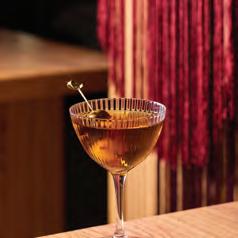
What’s the best drink at Mar Bella that we’ve never had? (KC) The Spanish Martini. It brings back so many great memories we shared together in Spain while remaining distinctly our own.
What’s your drink of choice at Mar Bella? (KC) Again, the Spanish Martini! It’s perfectly balanced and pairs with so many of our favorite courses.
Was opening Mar Bella next to Alteño a happy coincidence, or was there a larger strategy behind creating neighboring concepts, similar to Alma Fonda Fina and Mezcaleria Alma? (JC) The opportunity to occupy the space across from Alteño arose and we felt that it was right. The kitchens connect in the back which is nice for many reasons, but I love seeing our staff interact and support each other, as they do at Mezcaleria Alma and Alma Fonda Fina.
artist in residence meet
JAMES JENSEN of MASTERS GALLERY
A son of an artist. A musician. A connection with a gallery heavyweight that launched his career in the art world. James Jensen paints with profound purpose, but also with a reckless abandon that translates the finality into a distinct impression that commands every space that it graces. In this case, Master’s Gallery in Beaver Creek serves as the mountain temple for Jensen’s magic brushes and strokes. Apropos of our spring travel issue, take a ride and get away with our Artist in Residence.
When were you first introduced to painting and what captured your love for it? My father was a watercolor artist, so there was already a green light in my early life to embrace creativity and express myself artistically. His studio was a magical place - the materials, processes and even the smells were of immediate interest to me. He was a quiet man but had a voice through his art, and I realized that is an important early lesson of any aspiring artist.
You love the color red. That’s very specific. Why does that color speak to you the way that it does? Colors in art are firstly emotional for the artist and especially the viewer. Red probably evokes the strongest responses from a person viewing the painting. I can drench a painting in red and find it very satisfying. Having said this, I’ll challenge myself to omit red completely to find alternative colors to match that same impact of strong red.
How would you describe your style, and what types of subject matter do you gravitate to with your paintings and why? I was trained as a classic still life artist. I think it is important for an artist to understand the science of paint mixing, chemistry of materials, and the process of correct composition, which includes weight, balance and priority of subject. As I mastered this arena enough, I became restless and envious of artist with free, almost chaotic strokes with their brushes and materials. I jumped in on big canvases, trusted my learned skills and started a whole new messaging with paintfree form abstract images with depth of color. I didn’t abandon my background in realism. It’s amazing how a lively aggressive contemporary painting can still have the building blocks of classic art. My paintings have a wild start of painting with chaos and sheer joy of paint. They are uplifting and assertive, and then I introduce elements of architecture and form to reel it all in. So there, in every painting, is a ‘battle’ (the art world calls it vibration) between chaotic paint and orderly composition. The illusion of depth is a shading technique drawn straight from my realist background.
What’s something about the art industry that most people don’t know? There are two sides to the art industry, which are immovable. Those are the artist and their creative mind, and the commerce of art. Sometimes they clash and sometimes they are united. I’ve been lucky, at an early part of my career, to have a benefactor/art dealer that understood the growth of an artist and the space they need to create. There can be a ‘be careful what you ask for’ moment as well because success may come suddenly and the expectations can trample all over one’s delicate creative mind. The business of art is aggressive, competitive, and a language that artists need to learn to stay in business.
You work with Master’s Gallery in Beaver Creek. Talk about that partnership and how that came about. The gallery is actually a family of galleries, that has navigated decades of a competitive art world. The patriarch, Paul Zueger, discovered me as a student in New York, and literally grew me as an artist.
From your travels, which place has shaped you most and what work came from it? Inspiration can come from travel and that is not wasted on my imprinting. Notably, when going to art school, I would alternate between New York and Florence, Italy. This is where I learned a lot about oil painting, and the beautiful elegant way the Florentines live life in general. There is a reverence for beauty, nature, and the human existence among all that…plus riveting history.
Do you have a particularly unforgettable moment as an artist?
I’ll call this one a leap of faith moment. A savvy client with a lot of foresight was in my studio as I was struggling with that gap between traditional realism and my first attempts at non-representational art. She earnestly challenged me to do a commission based solely on letting myself dive into a project blindly with nothing but my feelings and emotions to guide me. Like a big door opening, I was using paint expressively with widely almost uncontrolled paint strokes, laying images and subsequently tearing some right back off. I learned that I love the process of layers and the unknown part of creating a painting. Once that all is in play and you’re enlivened, you can also create just a mess. I once again trusted my skills of composition and color knowledge, and I completed that commission and it was a successful painting. She bought 30 more over the years.
Tell me something most people don’t know about you. I I’m a musician and, in my mind, I still think as a musician. That sounds poetic, but there is a lot of math at the base of music theory and, as I insert a lot of architecture in my paintings, it’s a similar base for both music and art…at least in my application. I currently play the bassoon in local ensembles and there’s a big grand piano right in my studio. There is something very honest and clear about playing an instrument. There are no vocals to tell the story, but expression through intonation and vibration. It’s a lot like a painting.
The Whole Picture of wellness
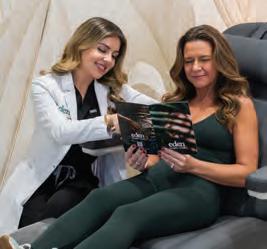
A year ago, I thought I was going to Eden Health Club to get healthier. What I did not realize was that Eden would become the place where all the fragmented pieces of wellness started to make sense together.
Like many women, I had treated health, fitness, beauty, and aging as separate categories. Strength belonged in the gym. Bloodwork belonged in a doctor’s office. Recovery was something I squeezed in when I was exhausted. Skincare was a cabinet full of products I hoped were working. Aesthetics felt like something to consider only when something suddenly looked “off.” Eden changed that. It gave me a more integrated way to think about my body, my face, my energy, and the life I am asking all of it to keep up with.
My journey began with functional health. Through comprehensive lab work, hormone optimization, peptide therapy, InBody scans, and a care team that looks for patterns instead of waiting for problems, I began to understand what was happening beneath the surface. Eden helped me stop guessing. That alone was powerful.
From there, fitness made everything click. Strength training, small-group classes, and one-on-one coaching helped me build muscle, resilience, and confidence in a way I had never fully committed to before. I was not just trying to look better. I was trying to become stronger, more capable, and more connected to my body. At Eden, movement is not treated as punishment or vanity. It is medicine, strategy, and self-respect.
Recovery is built into that same philosophy. Infrared sauna, red light therapy, compression, massage, IV therapy, and the simple act of being encouraged to slow down have become part of how I function. For someone who runs a business, raises children, and often treats “busy” like a personality trait, that matters. Eden has taught me that recovery is not a reward. It is part of doing life well.
More recently, I began exploring Eden’s aesthetic services, and it has been another education entirely. What I appreciate most is that the approach is not about chasing a different face. It is about restoring balance, softness, structure, and vitality in a way that still feels like you.
I get Daxxify, which has become my preferred alternative to Botox. For me, it kicks in quickly, lasts beautifully, and keeps my expression looking natural while softening the lines that make me look more tired than I feel. I also recently did full-face harmonization with filler, which helped address the volume loss that came with weight loss. It was not about looking “done.” It was about looking less depleted. The goal was not transformation, but restoration.
Layered into that plan was Sculptra, which I think of as the long game. Unlike traditional filler, it works more gradually by helping stimulate collagen over time. It is subtle, strategic, and very much in line with Eden’s larger philosophy: the best results are often the ones built patiently.
Then there is the skin. I do monthly DiamondGlow facials, which have become as non-negotiable to me as a workout. They leave my skin clearer, brighter, smoother, and more hydrated without downtime. I also use Eden’s medical-grade skincare religiously, which has finally made my at-home routine feel less like trial and error and more like a plan.
That is what Eden does so well. It connects the dots. Fitness supports metabolism. Functional medicine supports energy, hormones, and longevity. Recovery supports performance. Aesthetics support confidence. Skincare supports the work you are doing in the treatment room. Nothing exists in isolation.
Eden Health Club is not just a gym, a med spa, or a wellness clinic. It is a place where all of those things live under one roof, guided by people who understand that looking well and feeling well are deeply connected.
For me, Eden has become less about fixing anything and more about maintaining the woman I want to be: strong, clear, energized, polished, and present.
That is the whole picture of wellness. And once you experience it, it is very hard to go back to anything less.
READ MORE @ cherrycreekmag.com
CHERRY CREEK MAGAZINE READERS...
For a limited time, you are invited to schedule a comprehensive functional medicine consultation with our compliments (a $100 value)
OFFER EXPIRES AUG 15, 2026. MENTION CODE CCM Includes a comprehensive health history intake, a detailed symptom questionnaire, and an InBody body composition analysis.
“Eden is not just a gym, a med spa, or a wellness clinic. It is a place where all of those things live under one roof, guided by people who understand that looking well and feeling well are deeply connected.”
BetsyByMarr
Zuma heads for the hills
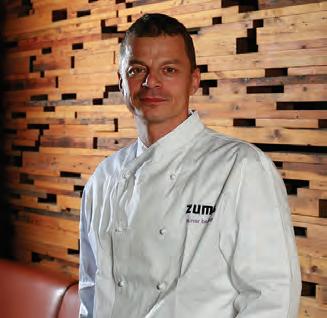
Vail’s après-ski scene is getting a serious global upgrade. Zuma, the London-born contemporary Japanese restaurant known for its sleek izakaya-style dining, robata grill, polished bar program and big-city energy, is opening its first U.S. alpine outpost inside The Sebastian Vail this winter. The Vail location joins Zuma’s stateside restaurants in Miami, New York, Las Vegas and Boston, bringing with it the brand’s signature mix of sushi, sashimi, robata dishes and late-night atmosphere.
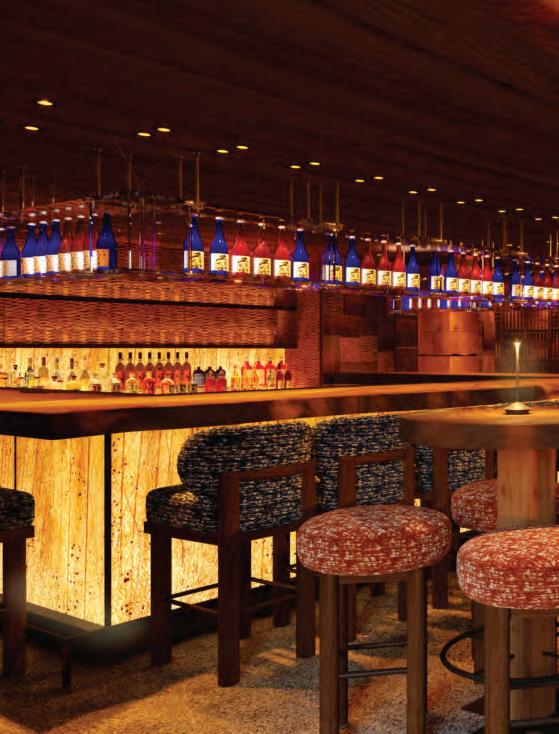
Designed with carved timber screens, Japanese beams, soft amber lighting and boucle-lined booths, the restaurant promises the kind of warm, moody glamour that feels tailor-made for a post-slope dinner that somehow turns into one more cocktail. Menu highlights are expected to include marinated black cod in hoba leaf, chu toro maki with oscietra caviar and Norwegian king crab with ponzu, alongside a bar program featuring more than 40 premium sakes, 250 global wines and Japanese whiskies. In other words, Vail just got a little less Gore-Tex and a lot more Tokyo by way of Mayfair.
+ MORE VIA // zumarestaurant.com
beyond the creek
J’Adore DIOR
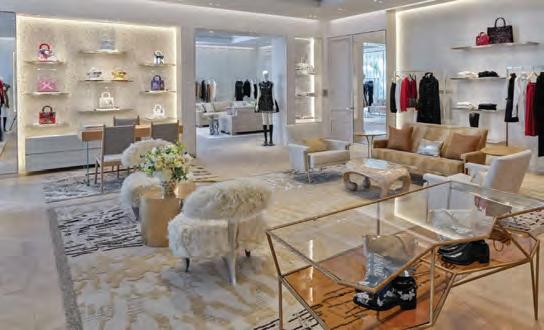
For those whose idea of a weekend getaway includes a little retail pilgrimage, Dior has given Rodeo Drive a new reason to book the flight. The newly opened House of Dior Beverly Hills is the Maison’s latest West Coast flagship, a four-floor ode to couture, California and Hollywood glamour. Designed by architect Peter Marino, the space draws on Christian Dior’s lifelong love of nature and florals, pairing the house’s ready-to-wear, leather goods, jewelry, shoes, accessories, fragrance and beauty worlds with a curated selection of artworks and objets.
Like Dior’s 30 Montaigne address in Paris, the Beverly Hills flagship is conceived less as a store than a full immersion into the universe of the brand. The interiors mix fashion history with modern fantasy, from sculptural design details and custom furnishings to commissioned art that turns shopping into something closer to a gallery visit. It is the kind of place where a handbag appointment can easily become an afternoon, particularly once you factor in the VIP salons, private lounges and secluded terrace with views over Beverly Hills.
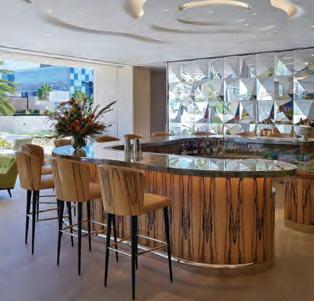
The real scene-stealer may be the third floor, where Monsieur Dior debuts as the Maison’s first restaurant outside Paris. Helmed by three-Michelin-starred chef Dominique Crenn, the restaurant brings a culinary layer to the Dior experience, with a menu inspired by the house’s archives, iconic silhouettes and longstanding ties to Hollywood. For Cherry Creek travelers who treat Los Angeles as an easy long-weekend escape, consider this a new stop on the itinerary: part boutique, part design destination, part lunch reservation worth planning around.
+ MORE VIA // dior.com
taking stock
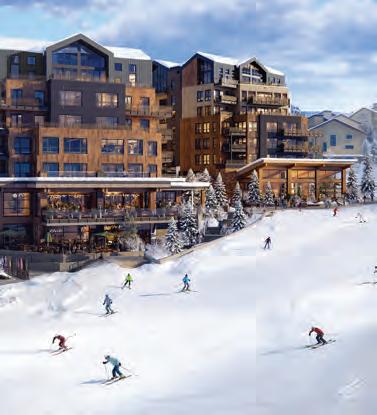
Steamboat Springs is preparing for a serious luxury lift. The Stockman, Auberge Collection, is slated to debut in 2030 at the base of Steamboat Resort, bringing the destination its first ultra-luxury ski-in, ski-out resort and residences. Breaking ground in 2026, the nine-story property will pair Auberge’s polished sense of place with Steamboat’s decidedly less-polished charm, which is exactly the balance that makes the news interesting: Champagne Powder, Western ease and a full-service spa, but make it Auberge.
Designed by OZ Architecture with interiors by Nunzio Marc DeSantis Architects, The Stockman will include 59 guest rooms and suites, along with 95 private residences ranging from one- to five-bedroom mountain homes. The look is expected to lean elevated Western, with hand-crafted furniture, tactile textures and slope-side sophistication that still feels rooted in the spirit of Steamboat. Translation: the kind of place where you can come in from the mountain still smelling faintly of ski wax and end up at a beautifully designed bar before dinner.
Food and drink will be a central part of the experience, with three culinary venues planned: a signature destination restaurant, an après bar with an outdoor ski-up deck and sweeping mountain views, and a cozy Living Room bar with a serious craft cocktail program. All will include outdoor patios or al fresco seating, a fitting move in a town where the view is often the whole point. The resort will also introduce a Wellbeing by Auberge concept, complete with a full-service spa and pool, built around thermal bathing and a sensory journey of heat, water, herbs and contrast. For now, it is one to watch. By 2030, it may be the place in Steamboat to check in, ski out and stay awhile.
Capital Gains
Lone Tree is getting a little more polished. The Capital Grille recently opened, bringing its brand of clubby fine dining, dry-aged steaks, fresh seafood and big-bottle confidence to the south metro dining scene. For a part of town better known for business lunches, Park Meadows runs and quick pre-theater dinners than old-school steakhouse glamour, the arrival feels like a grown-up new anchor, the kind of place built for milestone birthdays, client dinners, date nights and the occasional “let’s order the good bottle” Tuesday.
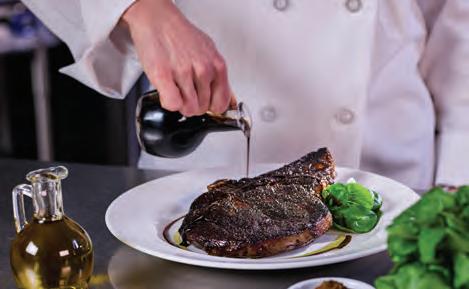
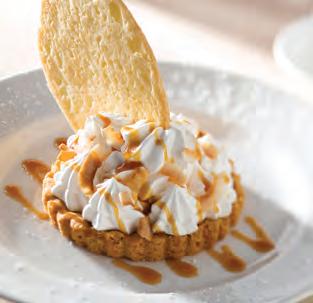
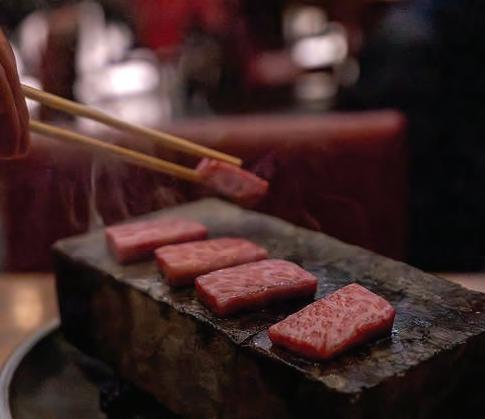
The restaurant is known nationally for steaks dry-aged in-house for 18 to 24 days, then hand-cut daily by an in-house butcher. Signature dishes include the Dry Aged Bone-in New York Strip with Shallot Butter, Porcini-Rubbed Bone-In Ribeye with 15-Year Aged Balsamic and Sliced Filet Mignon with Cipollini Onions, Wild Mushrooms and Fig Essence. Beyond the steakhouse standards, expect fresh seafood, Pan-Fried Calamari with Hot Cherry Peppers, Lobster and Crab Cake with Lemon Basil Aioli and the kind of sides that tend to steal the table, including Lobster Mac ‘N’ Cheese. Desserts are made from scratch each morning by a pastry chef, with The Capital Grille Cheesecake served brûlée style and Coconut Cream Pie among the signatures.
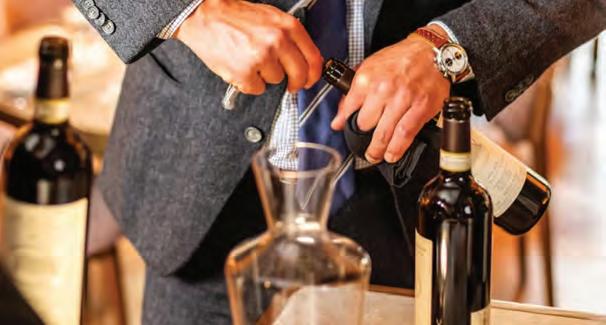
The nearly 9,000-square-foot restaurant includes a lounge and four private dining spaces, making it as much a power-dining address as a neighborhood indulgence. The wine program is equally serious, with more than 350 selections and a floor-toceiling, temperature-controlled cellar holding more than 3,000 bottles. Guests can choose from 30 wines rarely offered by the glass, including library vintages and limited bottlings, while private wine lockers are available by annual lease for those who like their cabernet with a brass nameplate and a little ceremony.
Helmed by Managing Partner Mike Corcoran, a 31-year restaurant veteran and Colorado resident since 2018, the opening also brings 90 new jobs to the Lone Tree area. Dinner is served nightly, with weekday lunch for those who believe a proper steakhouse lunch still very much has a place in the world.
+ MORE VIA // thecapitalgrille.com
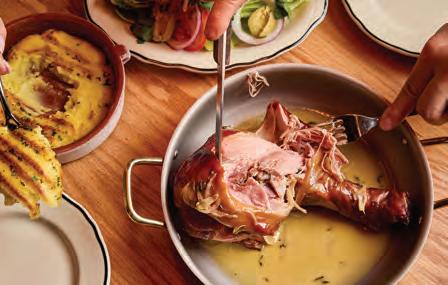
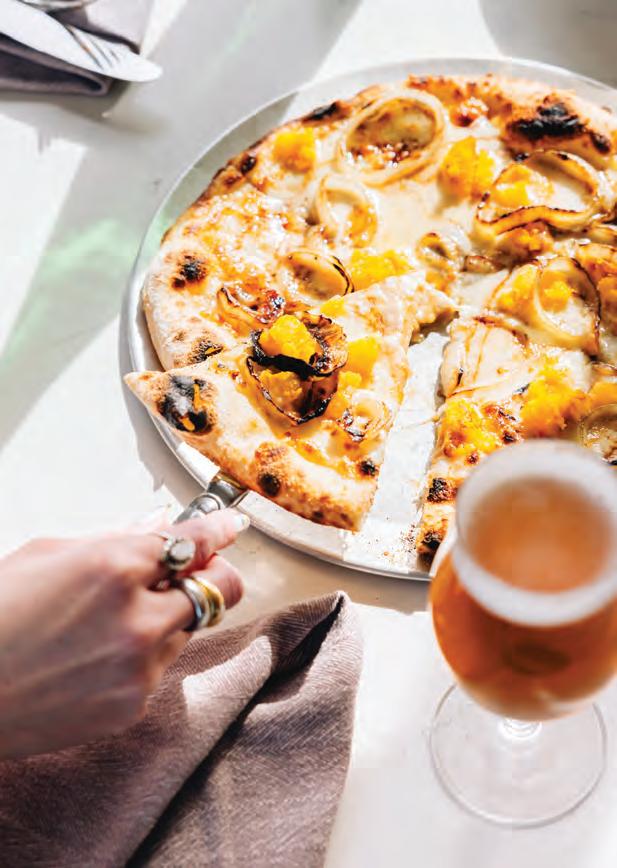
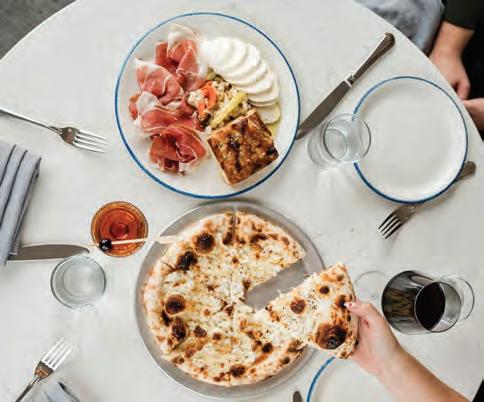
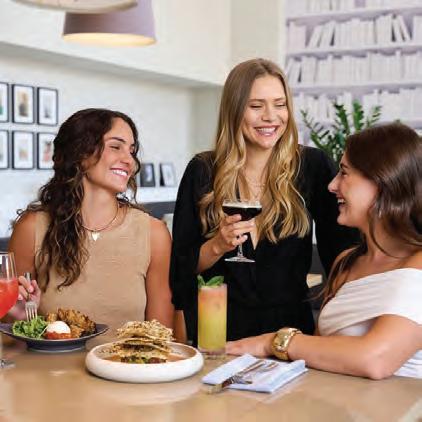
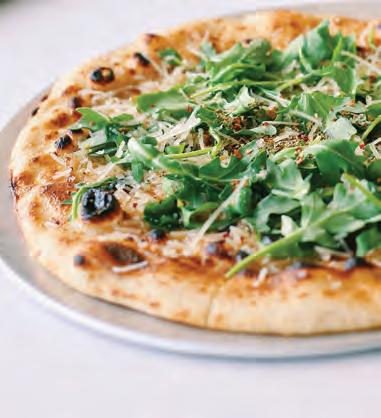
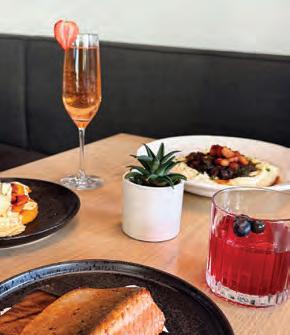
There’s a renewed sense of warmth at Clayton Hotel & Members Club, where wood-fired pizzas, charcoal-grilled favorites, and Italianinspired dishes are crafted with intention. Linger a little longer and enjoy the company
pasta with a pour
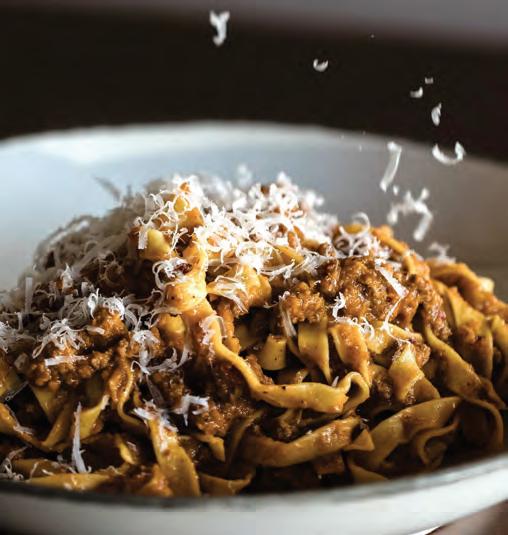
RiNo’s next neighborhood haunt comes with Michelin credentials and a very good wine list. Soda Club, the four-time Michelin Bib Gourmand-awarded fresh pasta, natural wine and cocktail bar from James Beard Award-nominated restaurateur Ravi Derossi, is slated to open this August inside The Ramble Hotel at 1260 25th Street. Derossi, a Colorado native and one of the founders behind Death & Co, helped bring the acclaimed cocktail bar to The Ramble in the first place. Now, he is returning to the same address with a more relaxed kind of polish: fresh pasta, natural wine, grappa-anchored cocktails and the kind of low-lit room that makes one more glass feel inevitable.
Derossi and partner and wine director Drew Brady opened the original Soda Club in New York’s East Village in 2021, inspired by European natural wine bars that function as true neighborhood gathering places. The Denver outpost will carry that same spirit, with an intimate, moody dining room planned for the former Super Mega Bien space, seating 70 inside and 30 on the patio. Dinner will be served nightly, with late hours that stretch to midnight during the week and 1 a.m. on Fridays and Saturdays, which already makes it one of the more civilized answers to the eternal Denver question: where do we go after dinner?
The menu comes from Executive Chef Amira Gharib, whose Sicilian-inspired, Arab-influenced cooking gives Soda Club its point of view. Expect signature and seasonal fresh pastas, plus Roman-style pinsa, a lighter, airier cousin to pizza made with long-fermented dough and a blend of wheat and rice flours. The team also plans to bring its popular monthly pasta-making classes to Denver, for those who prefer their carbs with a little coursework. Brady, a Wine Enthusiast Future 40 Tastemaker, will curate a 200-plus bottle natural wine list focused on small, independent producers, while the cocktail program promises the same level of intention Derossi has brought to Death & Co and Amor y Amargo. In short: RiNo is getting pasta, but not the predictable kind.
+ MORE VIA // sodaclubnyc.com
PERFECT HOURS IN CHERRY CREEK 36
Friday Evening
4 p.m. | Check into Hotel Clio
Begin your weekend at Hotel Clio, where Cherry Creek’s polished side feels both effortless and exacting. The rooms are refined without being fussy, the location is unbeatable, and the lobby has the sort of energy that makes checking in feel less like an errand and more like the start of something.
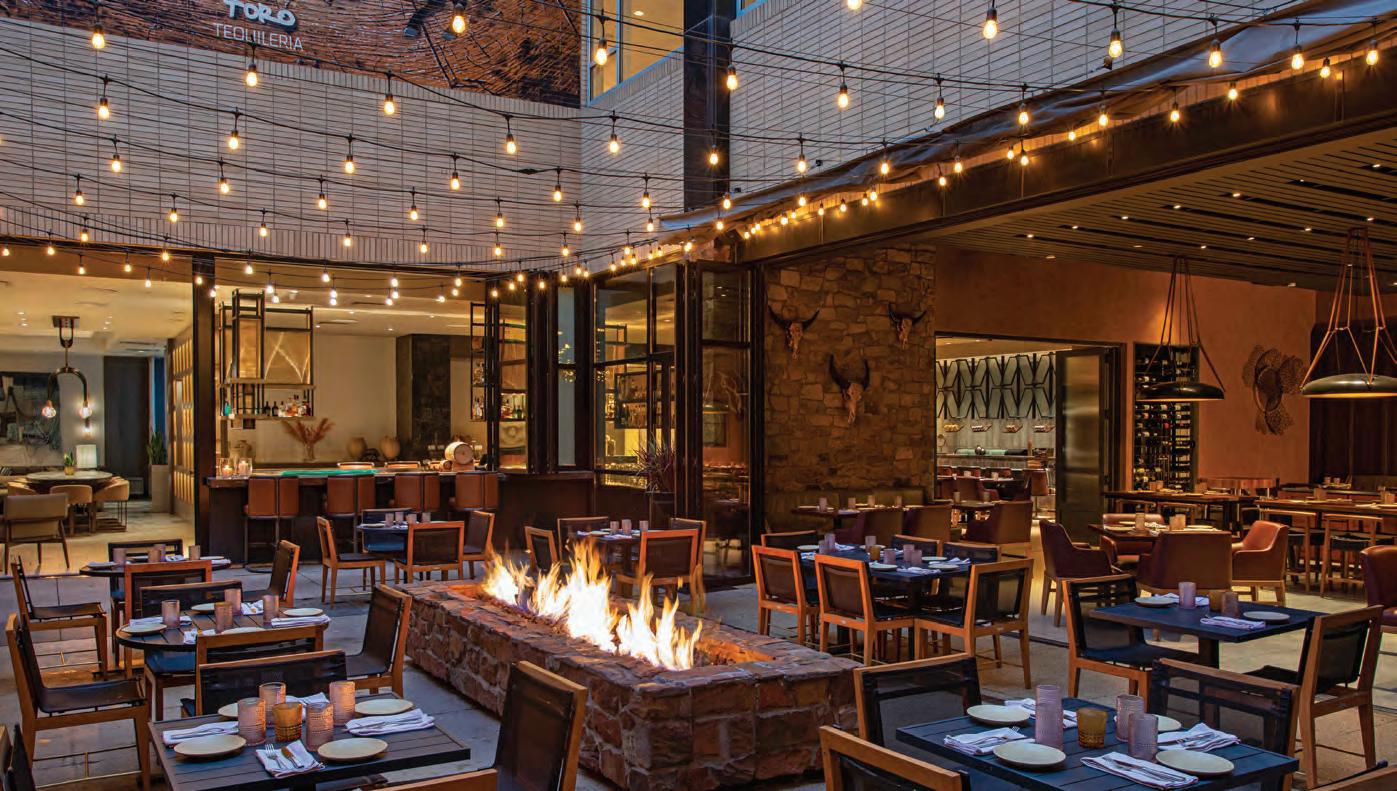
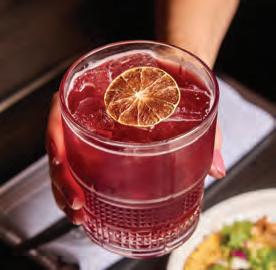
5 p.m. | Margaritas and Ceviche at Toro
Before heading out, stop into the second floor lounge for a perfectly made cocktail in an atmosphere that feels intimate, polished, and quietly glamorous. It is the kind of place where conversations linger and the lighting always flatters.
6 p.m. | Reset at Hydrate IV Bar
Before dinner, make a very Colorado detour to Hydrate IV Bar. Whether you are adjusting to the altitude, recovering from the week, or simply indulging in a little pre-dinner wellness theater, consider this your chic reset button before the real weekend begins.
7:30 p.m. | Dinner at Uchiko
Summer is when the neighborhood shows off, with patios bustling, storefronts brightening, gardens blooming, and every cocktail suddenly tasting better in daylight. From altitude recovery and art stops to fashion finds, sushi, steak, rooftop drinks, and a little luxury retail therapy, this is Cherry Creek in full summer mode.
Cherry Creek’s dining scene continues to raise the stakes, and Uchiko arrives with serious pedigree. From the team behind Uchi, the restaurant brings a refined, modern approach to Japanese cuisine, balancing pristine fish, fire, texture, and flavor with the kind of precision that makes dinner feel like an event.
9:30 p.m. | Nightcap at Ay Papi
End the evening at Ay Papi, where the lighting is low, the energy is high, and the cocktails know exactly what they are doing. It is lively, a little seductive, and just the right amount of trouble for a Friday night.
Saturday morning
8:30 a.m. | Coffee and Pastries at Aviano
Saturday begins with a proper Cherry Creek ritual: coffee at Aviano. Order something strong, choose a pastry that feels like a reward for simply being alive, and take your time. Spring mornings in the Creek are best enjoyed slowly.
10:00 a.m. | The Latest Blooms at Denver Botanic Gardens
From there, head to Denver Botanic Gardens for a dose of spring in its most photogenic form. The gardens are one of Denver’s great treasures, and this time of year they feel especially alive, with color, texture, and enough fresh air to make you briefly consider becoming a person who gardens.
11:30 a.m. | Patio Lunch at Le Colonial
Return to Cherry Creek North for lunch on the patio at Le Colonial. The room is transportive, the patio is even better, and the menu makes a very convincing case for lingering. Order the papaya salad, add a cocktail, and pretend for a moment that your afternoon has no obligations whatsoever.
Saturday AFTERNOON
2:00 p.m. | Lobby Wine and People Watching at Hotel Clio
Head back to Hotel Clio for a glass of wine in the lobby and one of Cherry Creek’s most underrated pleasures: people watching. There is always something to observe, whether it is a well-dressed couple checking in, a business lunch drifting into happy hour, or someone carrying a shopping bag that looks suspiciously like a major life decision.
3:00 p.m. | Local Finds and Fashion Stops
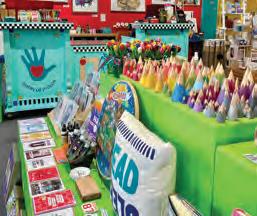
Before dinner, carve out time for the shops that give Cherry Creek its character. Stop into Show of Hands, Artisan Center, and White Peacock for gifts, home accents, and objects you will not find everywhere else. Then turn your attention to fashion with Lou Collective, Inspyre, and Mariel, each locally owned and full of pieces that feel more personal than predictable. This is the fun kind of shopping, where you did not technically need anything, but suddenly everything makes sense.
Saturday evening
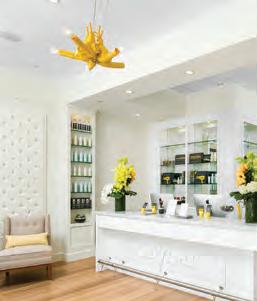
5:30 p.m. | A Blowout at Drybar
Because dinner deserves good hair, make a pre-evening appointment at Drybar. A fresh blowout has a way of making even a simple outfit feel intentional, and by now, you are far past simple anyway.
7 p.m. | Dinner at Broadway 10
For dinner, head to Broadway 10, the newest steakhouse to bring big-night-out energy to Cherry Creek. Expect polished service, a buzzy room, and the kind of menu built for ordering generously. Steak, seafood, wine, sides for the table. This is not the moment to be restrained.
9:30 p.m. | Nightcap at Alteño
After dinner, settle in at the bar at Alteño for one final Saturday night drink. It is moody, elegant, and just intimate enough to make the evening feel like it is winding down on purpose, not simply ending.
Sunday morning
10 a.m. | Vinyl Brunch at Local Jones
Sunday starts with brunch and music at Local Jones. Vinyl Brunch brings the perfect weekend mood: a little nostalgic, a little indulgent, and exactly relaxed enough for the morning after a very full Saturday. Order coffee, order cocktails, order both.
11:30 a.m. | Luxury Retail Therapy
Now for a very different kind of Sunday service. Head to Cherry Creek Shopping Center, where you will be greeted by all your old friends: Gucci, Louis Vuitton, Hermès, Chanel, Burberry, Saint Laurent, and Tiffany. It is a who’s who of luxury, and whether you are browsing, buying, or simply absorbing the atmosphere, it is hard not to enjoy the spectacle.
Sunday afternoon
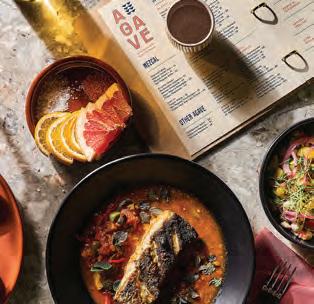
1:30 p.m. | Lunch at Ash and Agave
For lunch, make your way to the newly opened Ash and Agave. It is a fitting final meal for a spring weekend in Cherry Creek: fresh, lively, and perfectly timed for one last round of conversation before the spell starts to break.
3 p.m. | Cocktails at Kisbee on the Roof
black book
Hotel Clio: 303.316.2700, 150 Clayton Lane
Toro: 303.253.3000, 150 Clayton Lane
Hydrate IV Bar: 720.259.3395, 285 Saint Paul Street
Uchiko: 303.444.1922, 299 Fillmore Street
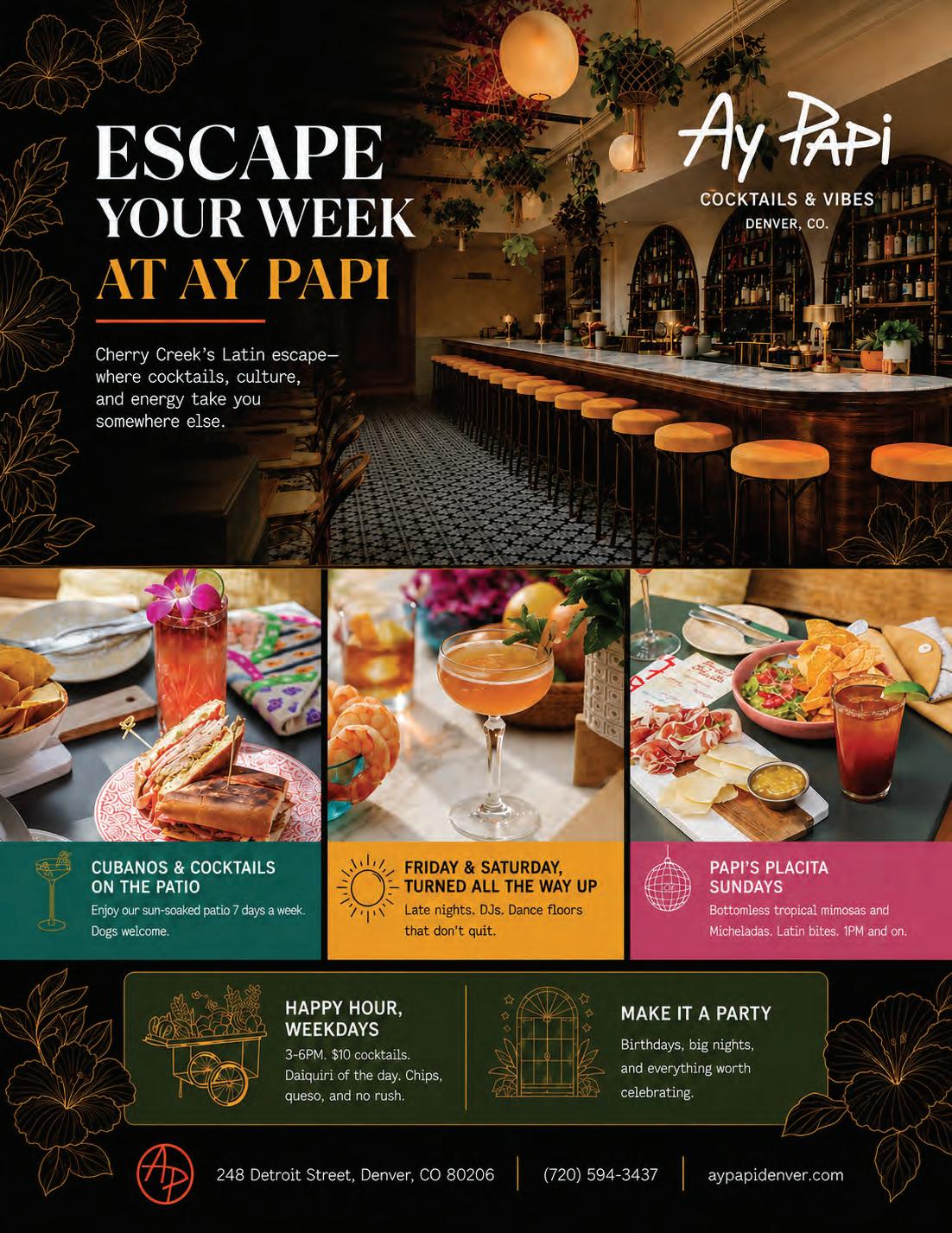
Ay Papi: 720.693.8917, 248 Detroit Street
Aviano Coffee: 303.399.2304, 244 Detroit Street
Denver Botanic Gardens: 720.865.3500, 1007 York Street
Le Colonial: 720.994.5255, 255 Fillmore Street
Relevant Galleries: 720.577.4312, 180 Clayton Lane
Finish the weekend with a rooftop cocktail at Kisbee on the Roof at The Jacquard. By now, you have checked into the hotel, recovered from the altitude, eaten beautifully, shopped locally, seen the art, booked the blowout, done the brunch, and flirted with the handbag section. All that is left is to raise a glass above it all before heading back to reality.
Show of Hands: 303.399.0201, 200 Fillmore Street
Artisan Center: 303.333.1201, 2757 E. 3rd Avenue
White Peacock: 303.954.8333, 2440 E. 3rd Avenue
Lou Collective: 303.322.1037, 2445 E. 3rd Aveue
Inspyre Boutique: 303.333.3331, 171 Detroit Street
Mariel: 303.623.1151, 3000 E. 3rd Avenue
Drybar Cherry Creek: 720.459.3357, 3290 E. 1st Avenue
Broadway 10: 303.900.0810, 2345 E. 3rd Avenue
Alteño: 303.532.4999, 249 Clayton Street
Local Jones: 720.772.5022, 249 Columbine Street
Cherry Creek Shopping Center: 303.388.3900, 3000 E. 1st Avenue
Ash and Agave: 720.464.3819, 3000 E. 1st Ave., Suite 185
Kisbee on the Roof: 303.515.2000, 222 Milwaukee Street
DIRECTION -
VAIL VALLEY, CHECKED IN
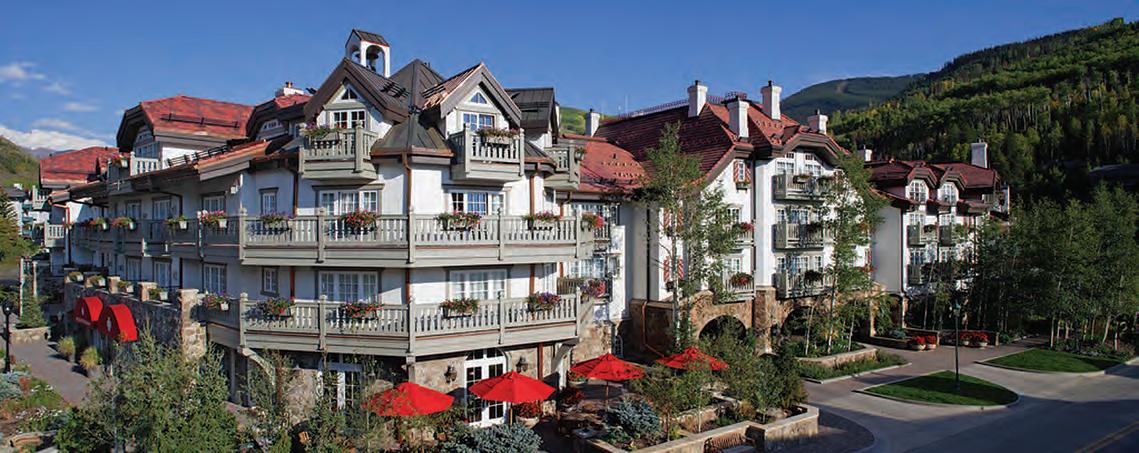
There are mountain towns, and then there is the Vail Valley, a rarefied little stretch of Colorado where alpine fantasy, old-world hospitality, serious dining and very polished leisure all seem to exist in perfect formation. Vail brings the European village dream, all cobblestones, chalet roofs, bluebird ski days and après-ski theater. Beaver Creek, just down the road, offers its own quieter brand of luxury, more tucked-away, more residential, more famously civilized. Together, they make one of Colorado’s most elegant winter and summer escapes, equally suited to a powder weekend, a spa pilgrimage, a culinary crawl or a family trip where everyone somehow ends up better dressed by dinner.
Consider this your guide to the valley’s two great personalities: Vail, with the Sonnenalp as its Bavarian-hearted anchor, plus the restaurants, boutiques and little rituals that make the village feel so endlessly cinematic; and Park Hyatt in Beaver Creek, its serene neighbor, where luxury is softer, slopeside living is seamless and the pace feels deliberately unhurried. One valley, two moods, and plenty of reasons to check in.
BY BETSY & KEVIN MARR
THE SONNENALP VAIL
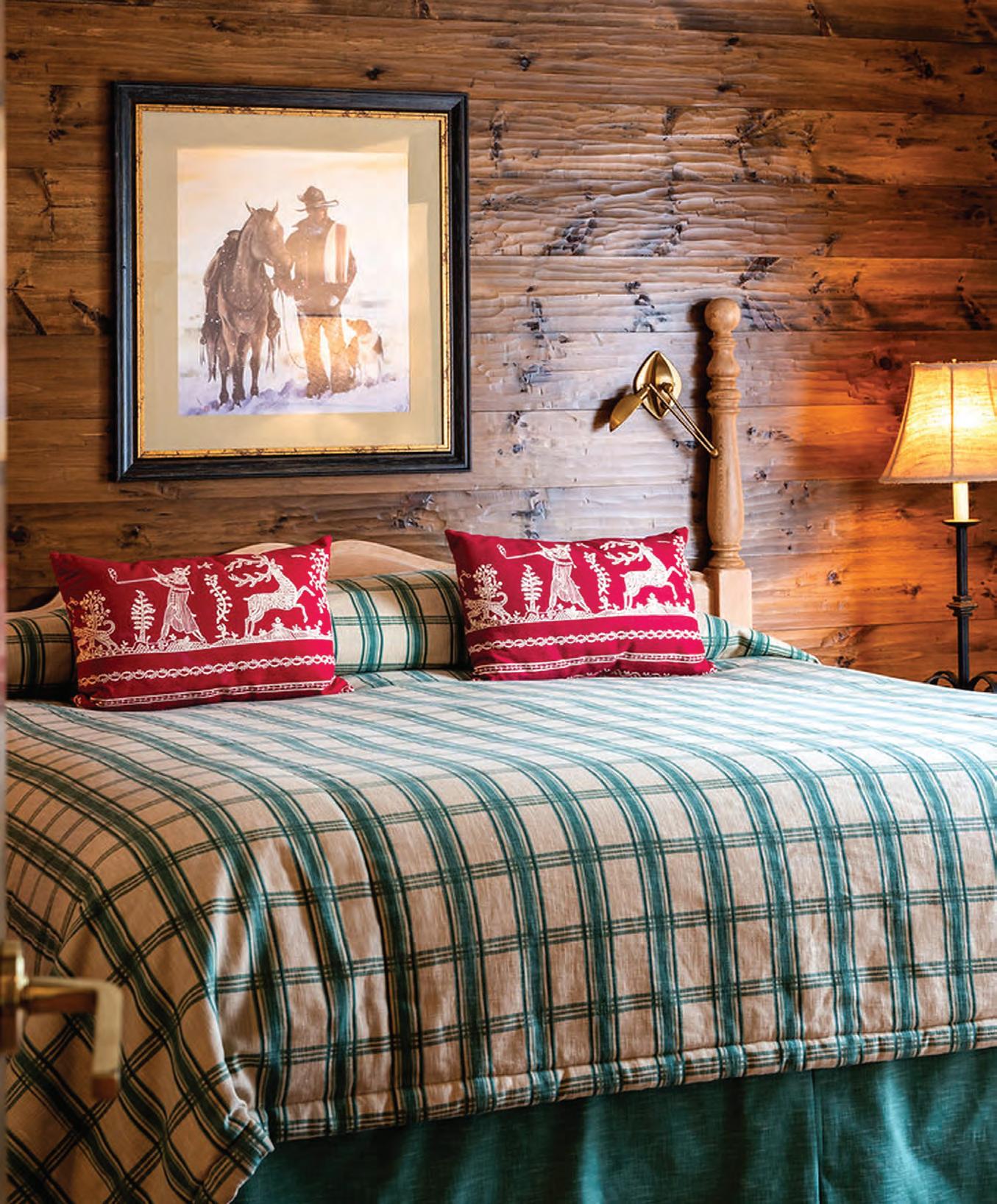
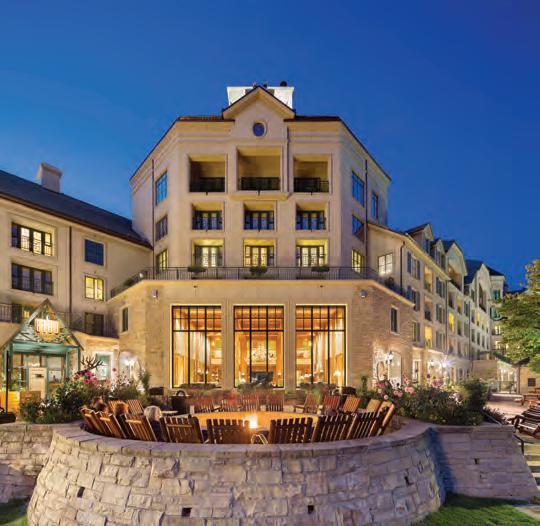
The Sonnenalp does not feel like a hotel that arrived in Vail so much as one that helped Vail become itself. Tucked into the heart of Vail Village, where cobblestone streets wind past glowing shop windows and chalet roofs, the family-run property has the strange and increasingly rare quality of feeling inevitable. Vail may have been built with Europe in mind, but the Sonnenalp gives the fantasy weight, history and a proper sense of welcome. It is not alpine cosplay. It is Bavaria with a Colorado pulse.
The hotel opened in Vail in 1979, though its story begins much earlier, with the Faessler family’s original inn in Ofterschwang, Germany. Five generations later, that legacy of European hospitality has found its American expression in one of the country’s most polished mountain villages. Sonnenalp Vail has 112 suites and 15 hotel rooms, many with fireplaces, heated marble bathroom floors, deep soaking tubs and views toward Gore Creek or Vail Village. It is a member of Leading Hotels of the World, received One MICHELIN Key in 2024 and is noted as Colorado’s first LECS Certified Hotel.
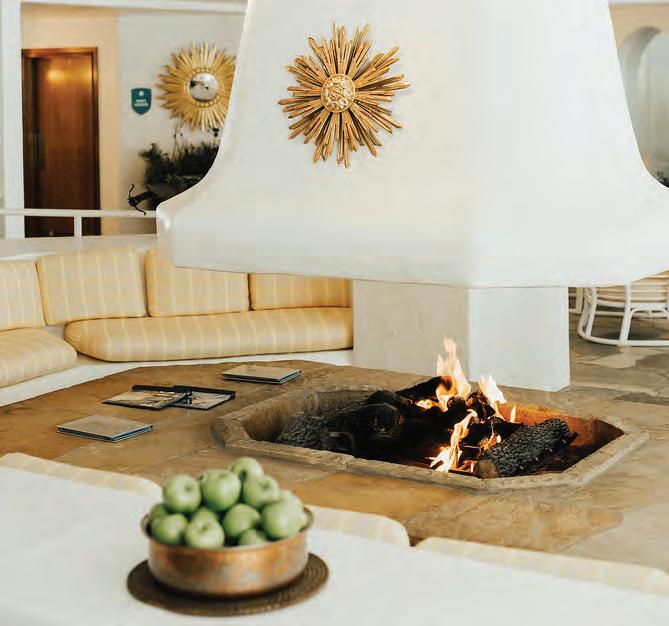
The first impression is less “grand hotel” than “private alpine address,” which is precisely the point. Sonnenalp does not announce itself with icy minimalism or velvet-rope bravado. It is warm, layered, personal. The design nods to Bavarian ski lodges, with carved wood, beams, fireplaces and the sort of old-world detail that cannot be downloaded into a mood board. In an era when too many luxury hotels have perfected the art of looking expensive and feeling anonymous, Sonnenalp is refreshingly specific. It has a point of view. It also has a sense of humor about comfort, which may be the most luxurious thing of all.
That comfort extends, deliciously, to the table. The Sonnenalp’s dining program is not an afterthought attached to a room key. It is a small alpine ecosystem, with four restaurants and a range of experiences that move from fondue to fireside drinks to the kind of breakfast one takes seriously because skiing, shopping or doing absolutely nothing all require fuel. The hotel’s dining options include Swiss Chalet, Bully Ranch, King’s Club, Ludwig’s
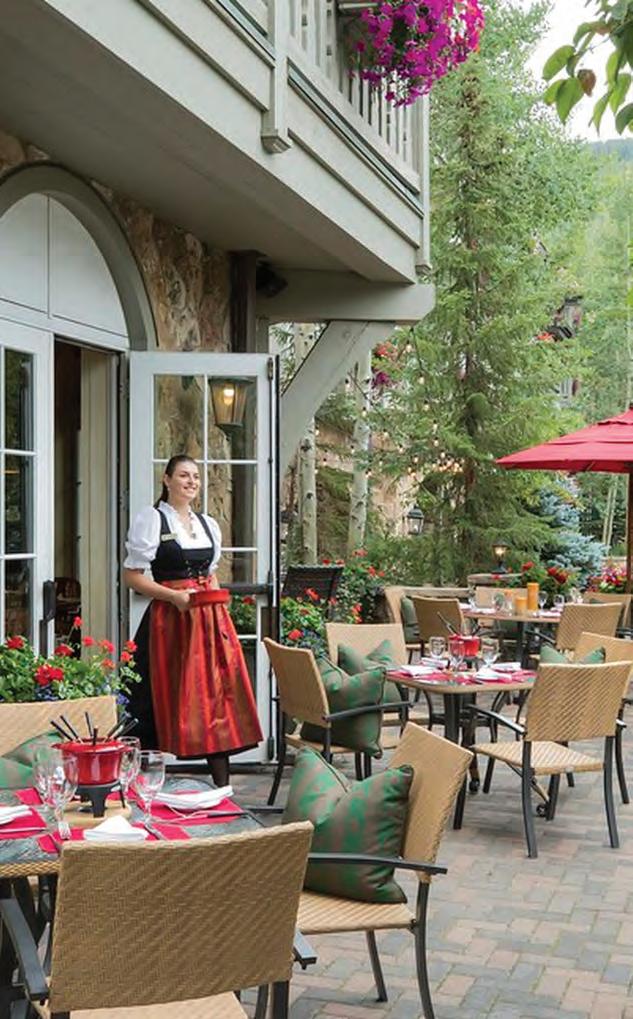
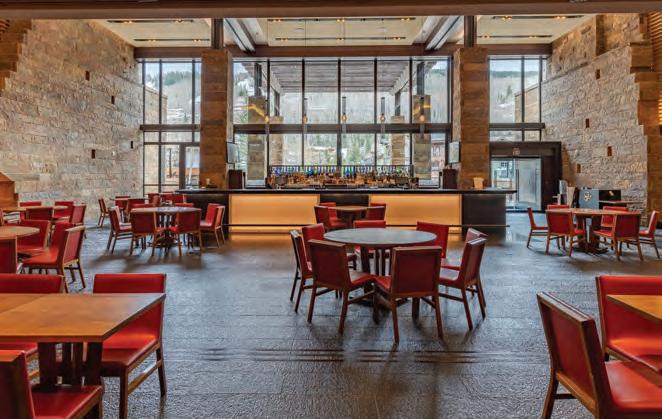
Swiss Chalet is perhaps the most literal expression of the Sonnenalp fantasy, and thank goodness for that. In a town where everyone eventually gives in to the idea of après, fondue is not nostalgia. It is strategy. This is the room for bubbling cheese, red cheeks, boots still somewhere near the door and the sort of meal that makes perfect sense after a day in the mountains. Bully Ranch, by contrast, leans more Western and relaxed, the kind of place where families, locals and very well-dressed visitors can find common ground over hearty mountain fare. King’s Club is the hotel’s living room in spirit, if not in name, with the clubby ease of a place designed for lingering. Ludwig’s, with its glassed-in elegance and breakfast pedigree, reminds you that a hotel morning can still be a civilized affair.
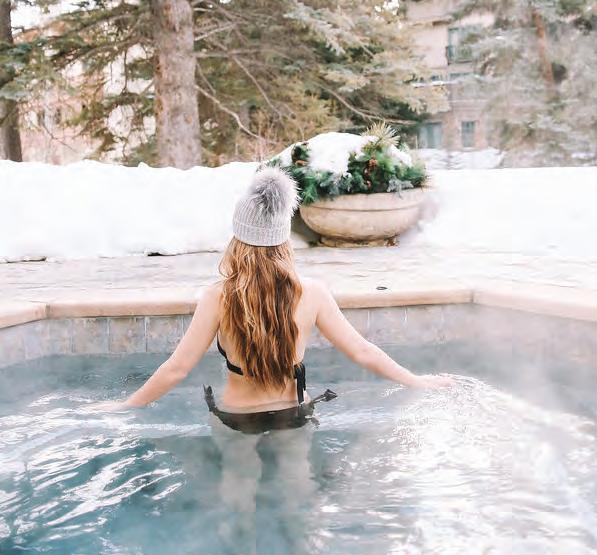
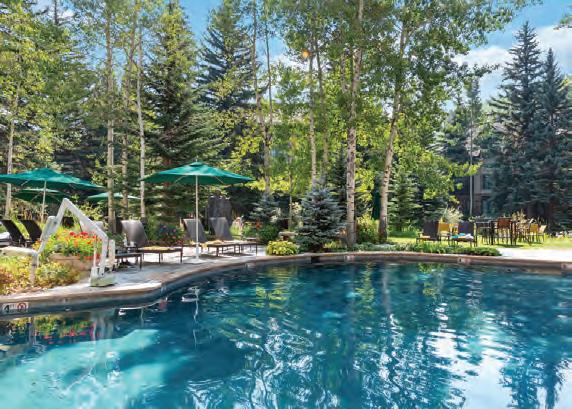
Then there is the spa, which may be Sonnenalp’s most persuasive argument for staying put. The property’s spa and fitness offerings include massage, beauty treatments, aromatherapy, yoga, indoor and outdoor pools, co-ed indoor and outdoor whirlpools and a riverfront sun deck overlooking Gore Creek. It is very easy, in Vail, to organize the day around doing. Skiing, hiking, shopping, dinner, drinks, repeat. Sonnenalp quietly makes the case for the opposite. Book the treatment. Order the tea. Sit by the water. Let other people have ambition for the afternoon.
In winter, the hotel feels almost storybook, with Vail Village outside and the lifts just a short walk away. In summer, it becomes something softer: flowers in boxes, Gore Creek moving in the background, long lunches, late light, and the added draw of Sonnenalp’s own Golf Club in Edwards, about 13 miles west of Vail Village. The resort’s sustainability work gives the old-world hospitality a more modern conscience, with the hotel noting commitments to reduce, reuse and recycle, and local conservation support through Eagle Valley Wild.
The trick of the Sonnenalp is that it never makes luxury feel like a performance. There are no sharp edges, no overproduced moments, no desperate insistence that you notice the thread count. Instead, there is the increasingly uncommon pleasure of being cared for by people who understand that service is not hovering. It is timing. It is warmth. It is someone remembering what matters before you have to ask.
Vail has no shortage of beautiful hotels, but Sonnenalp has something rarer than beauty. It has continuity. It has a family story that began in Bavaria and somehow landed in the Rockies. In the end, that may be why it feels so at home here. Vail has always been partly a dream of Europe in Colorado. Sonnenalp is where the dream checks in, unpacks, orders fondue and stays awhile.
VAIL HAS ALWAYS BEEN PARTLY A DREAM OF EUROPE IN COLORADO. SONNENALP IS WHERE THE DREAM CHECKS IN, UNPACKS, ORDERS FONDUE AND STAYS AWHILE.”
DINING IN VAIL VILLAGE
TAVERNETTA VAIL
If Vail has a power table, it may well be at Tavernetta, the mountain outpost from the Frasca Hospitality Group, led by Master Sommelier Bobby Stuckey and chef Lachlan Mackinnon-Patterson. The original Tavernetta in Denver helped redefine what Italian dining could look like in Colorado: polished but not stiff, deeply informed but never joyless, a room where the wine list is serious and the pasta still gets to flirt. In Vail, that formula feels particularly well matched to the setting. This is Italian mountain glamour with just enough sprezzatura to keep it from taking itself too seriously.
Located at Four Seasons Resort Vail, Tavernetta brings the group’s Northern Italian sensibility into a space that reads alpine, urbane and alive. It is the restaurant you book when you want dinner to feel like the main event, not the thing wedged between shopping and a nightcap. There is a cinematic pleasure to it: the glow of the room, the confident choreography of service, the sense that everyone there has either just skied beautifully, shopped well or made a very good decision by ordering a second round.
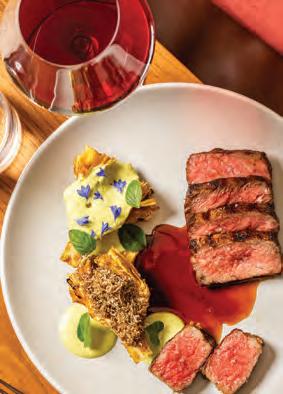
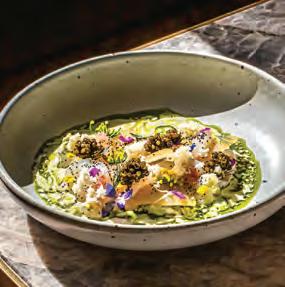
The menu leans into the kind of Italian cooking that rewards attention without demanding a dissertation. Think elegant pastas, seasonal ingredients, crudo, refined mountain-friendly dishes and the sort of sauces that make one suddenly more interested in bread. Tavernetta Vail’s published menus include spritzes and aperitivi such as a Venetian Spritz, San Polo Spritz and Limoncello Spritz, all of which feel less like cocktails than an argument for arriving early.
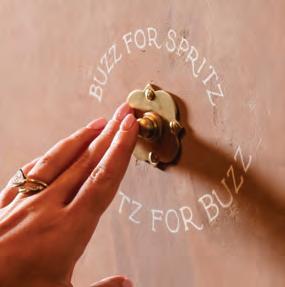
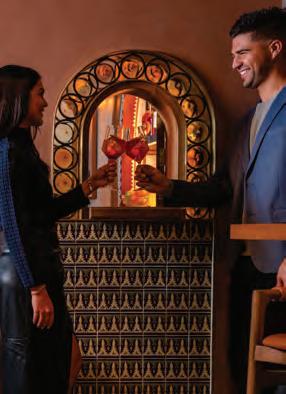
And then there is the Spritz Window, which is exactly the sort of detail that makes a restaurant stick in the imagination. Inspired by the wine windows of Tuscany and Northern Italy, Tavernetta’s “Buzz for Spritz” window lets guests order seasonal spritz cocktails and receive them
through the window with a wink of theater. At Four Seasons Vail, the Spritz Window is listed daily from 3 to 9 p.m., making it a civilized après ritual for people who understand that orange liqueur, prosecco and mountain air are a legitimate lifestyle.
Of course, Bobby Stuckey’s presence means wine is not merely available. It is foundational. Tavernetta’s wine culture is part of the draw, whether you are in the hands of the sommelier team for a special bottle or simply asking what belongs next to your pasta. In a valley full of restaurants that can feel designed for occasion, Tavernetta feels built for return visits. It has polish, pedigree and just enough sparkle. In short, arguably the top restaurant in the valley behaves exactly as it should: beautifully, confidently and with a spritz in hand.
MATSUHISA VAIL
Matsuhisa Vail is one of those restaurants that does not need to shout. It has the kind of name recognition most dining rooms would kill for, but in Vail, its magic lies in how naturally it fits into the pulse of the village. Located in Solaris Plaza in the heart of Vail Village, Matsuhisa brings Chef Nobu Matsuhisa’s signature new-style Japanese cuisine to the mountains, with a dining room that opens nightly and a menu built around sushi, sashimi, nigiri, wine, sake and cocktails.
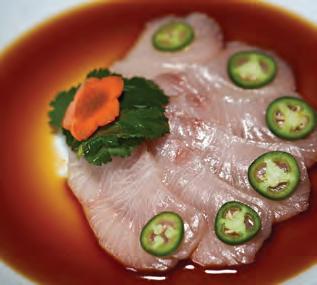
The room has the appealing glamour of a place where everyone looks slightly better than they did at breakfast. It is sleek without feeling cold, energetic without tipping into chaos, and sophisticated in the way Vail does best when it remembers not to overdecorate the point. Matsuhisa is not trying to be alpine. It is a cosmopolitan counterpoint to the chalet fantasy, which is precisely why it works. After a day of mountain air, fondue fantasies and shearling sightings, the snap of yellowtail, jalapeño and yuzu feels almost medicinal.
The menu carries the DNA of Nobu Matsuhisa’s global style, shaped by classical training in Tokyo and influences from Peru, Argentina and beyond. Signatures such as Yellowtail Sashimi with Jalapeño, Black Cod Miso and Whitefish Tiradito remain the sort of dishes people order even when they swear they are going to try something new. The Vail menu includes sushi, sashimi, nigiri and Japanese dishes, alongside wine, sake and cocktails.
The pleasure here is in pacing. Start cold and clean, then let the meal build: sashimi, crispy rice, miso, something from the robata or kitchen, perhaps another round of sake because altitude has a way of making optimism feel practical. Matsuhisa is equally good for the glamorous group dinner, the date night that required a reservation, or the solo seat at the sushi bar where one can pretend to be spontaneous while ordering with great precision.
In a town where some restaurants lean hard into mountain coziness and others into expense-account spectacle, Matsuhisa occupies a more seductive lane. It is polished, reliable, famous for a reason and still somehow fun. You come because you know the name. You return because the food, the room and the Vail Village setting make the whole thing feel like a very chic habit.
-Betsy Marr
Vail shopping is best approached as sport, but not the kind requiring a helmet. The village is made for wandering: cobblestone streets, chalet facades, snow-globe scenery and boutique windows filled with exactly the sort of things one suddenly needs at altitude. Designer finds, Western glamour, beauty essentials and polished mountain fashion are all part of the circuit.
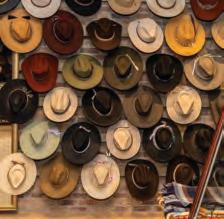
Start at Kemo Sabe, where the smell of leather alone could sell the fantasy. The brand is known for upscale Western wear for men and women, including cowboy hats, boots, buckles and custom Western goods. In Vail, it offers the irresistible collision of ranch, runway and après. The boutique is known for custom cowboy hats shaped on-site, along with hand-tooled belts, boots and Western accessories. It is the place to buy the hat you claimed you would “never wear enough” and then proceed to wear all weekend.
For women’s fashion, Perch is the polished stop. The boutique focuses on contemporary designer fashion, mixing established names with emerging designers, along with clothing, shoes, accessories and styling services. It has the feel of a carefully curated closet, the sort of place for both daytime pieces and something special for a night out. Translation: go in for a sweater, leave with a look.
DUE Luca Bruno brings a more European note to the village. Located at 40 East Meadow Drive, the boutique carries modern clothing and accessories for men and women, along with classic cuts, gifts, bath and body items and unexpected little luxuries. Its point of view is Italian quality meets mountain chic, which is also not a bad dress code for Vail itself.
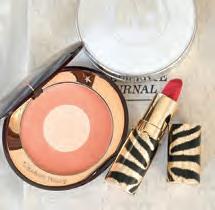
Finish at Cos Bar, the beauty institution that began in Aspen in 1976 and has grown into a luxury beauty retailer with expert, client-centered service. The Vail boutique is located at 188 Gore Creek Drive and stocks favorites from prestige beauty and fragrance lines. It is the practical stop disguised as indulgence: sunscreen, fragrance, moisturizer, a better lipstick than the one currently in your ski jacket pocket. In Vail, that counts as preparation.
-Betsy Marr
PARK HYATT BEAVER CREEK
The view from the terrace could have doubled as a braggadocios postcard.
Beaver Creek Mountain in all its glory. Skiers schussing down a gleaming white, powdery canvas, cladded in every color under the Rocky Mountain sun. Hundred-foot pines convene for the most surreal of tree lines. The quiet hum of the chairlift transporting its precious cargo to the next session of shred. A gentle wind – the call sign of this exclusive gated enclave tucked high above its contemporaries –soothes the senses with a calm and subtle reminder of how special this mountain paradise truly is.
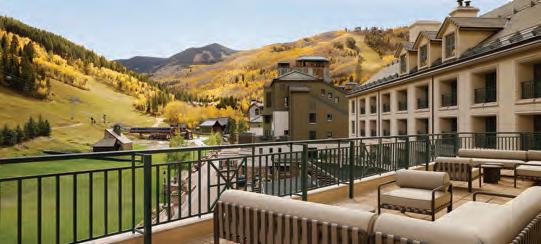
The wonderland confines of Park Hyatt Beaver Creek Resort & Spa make it the king of the hill for a reason. Location. Dining. Spa. Renovated rooms. Service. Shopping. Access to a myriad unforgettable adventures. Breathtaking scenery. It’s a hospitality dream for families, business, romantic getaways, and the incomparable gateway to all things mountain and the great outdoors regardless of the season.
“Elevated” isn’t just pertaining to how many feet it is above sea level (8,100). This head turning property is one of the Vail Valley’s most prestigious addresses.
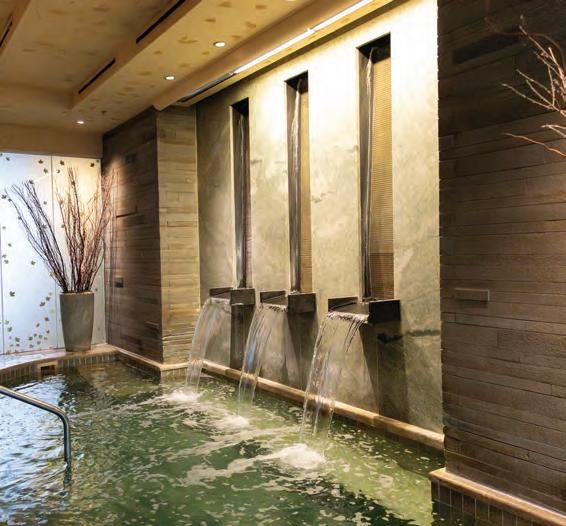
For me, it starts with the spa. Yes, I am a spa guy. Loud and proud, baby. Whirlpool. Sauna. Chic tiled contour lounges in a private setting that is steps away from the utmost in therapeutic soaking and sweating. Pop in the earbuds and forget about work, kids, spouses and selfishly (and deservedly) accept a few hours of wellness pampering and escape. It boasts an award-winning resume that stands out among the countless mundane versions from its Colorado brethren.
Time for a massage? In my world…always. If Exhale Spa (so perfectly monikered) doesn’t have the service, then it doesn’t exist. Whether your body is the epitome of “wear and tear” like mine or not, you leave feeling like a brand-new human being ready to walk among the living again…and there’s such a euphoric feeling from strutting your renewed you around Beaver Creek Village.
I don’t know about you, but I’m always famished after such a long and arduous spa day, so dinner at the resort’s famed 8100 Mountainside restaurant lent further proof that life can be so beautiful and delicious.
The Colorado Farm Chopped Salad is a meal in itself, so, of course, I started with that. You get a salad here because the hotel’s resources for fresh ingredients is one their many flexes - romaine, black garlic Caesar dressing, bacon, pretzel croutons, hydroponic tomato, shaved alpine cheese, pickled onion. BOOM. Perfect for a day where I was tirelessly relaxing for the afternoon. They brought out bread, which I try to regulate with my daily diet, but when in Rome, do as the Romans do. Three different selections that were accompanied by heavenly, soft butter filled up my tank, but there was more of the menu on the way. Speaking of Rome, there’s no way I’m not seizing the day with one of their locally raised steaks, so the 16- ounce Ribeye was the call, and it will forever live in lore in my personal food bank with its tender, buttery, melt-in-your-mouth experience. Dessert was a no brainer with a premium scoop of vanilla and strawberry ice cream, so much so that I had to fight the temptation of ordering more through room service later.
An evening stroll through Beaver Creek Village to stretch the legs and ditch a few calories capped off the night before an unheard of 11 hours of sleep on one of the most comfortable mattresses you’ll ever hope to retire to.
Needless to say, it was a wonderful break from reality. Sans wife and kids, Park Hyatt Beaver Creek cured what was ailing. The perfect Rocky Mountain high.
-Kevin Marr
home COMING AMONG THE VINES IN NAPA VALLEY
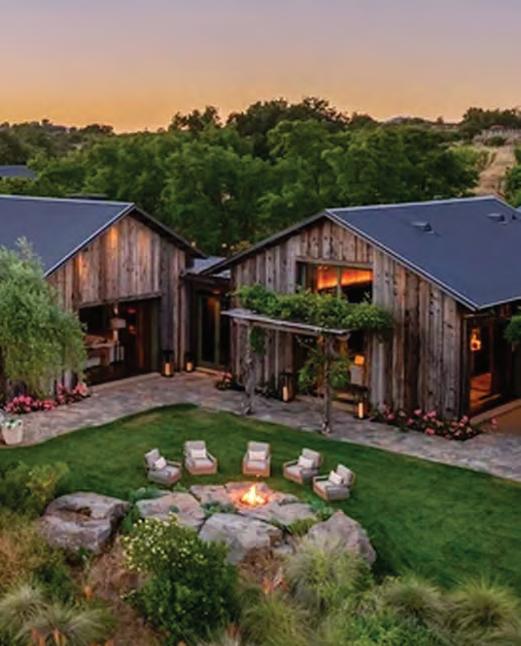
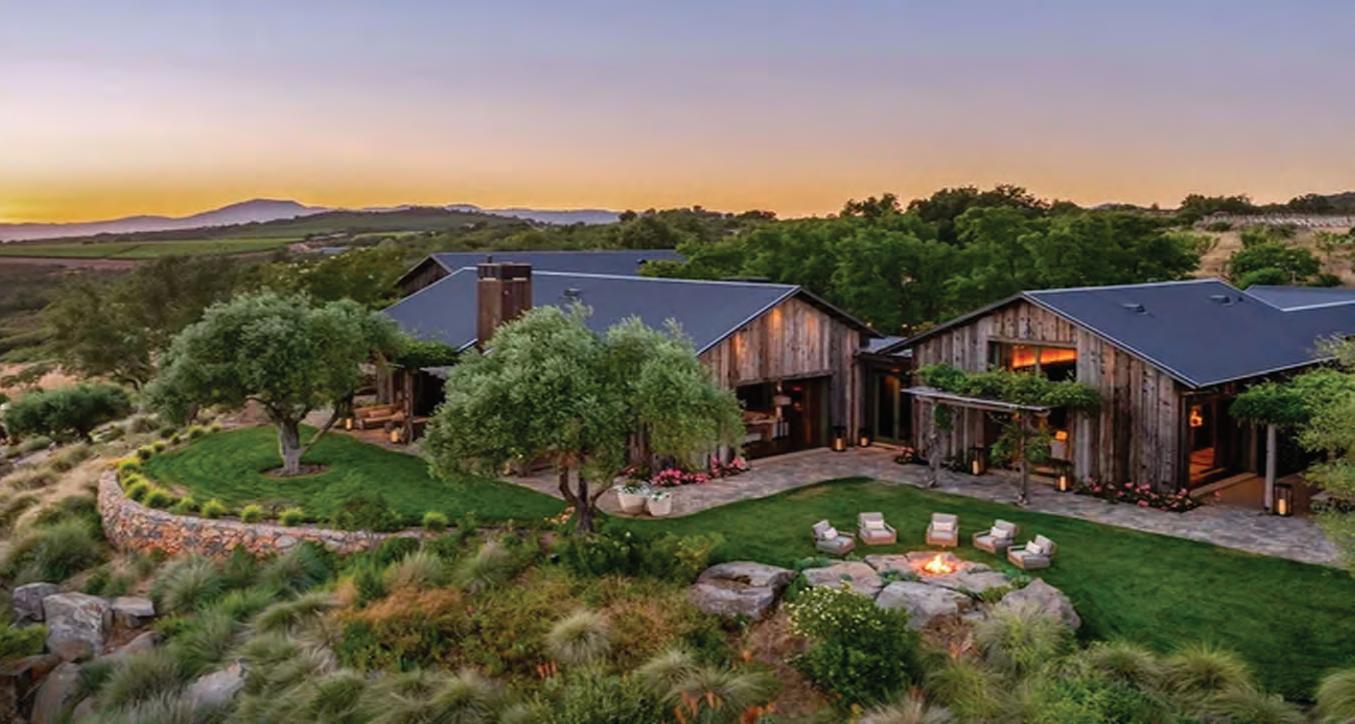
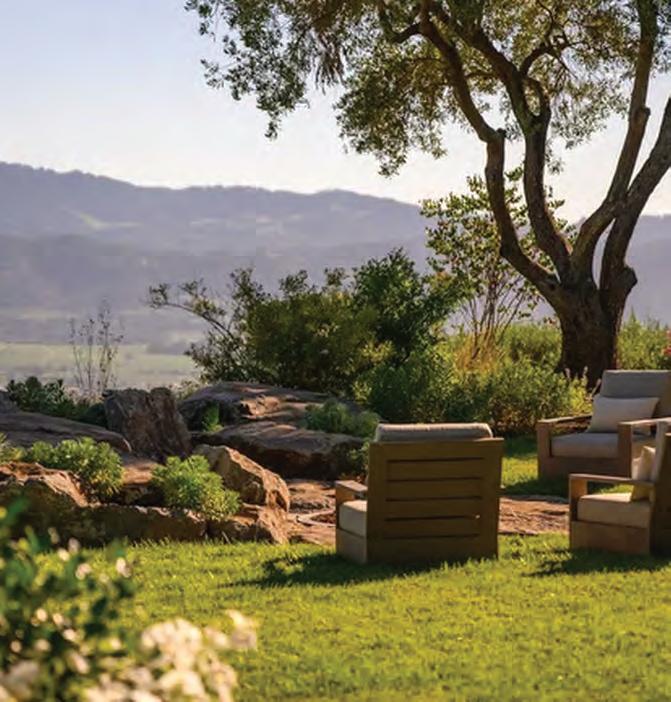
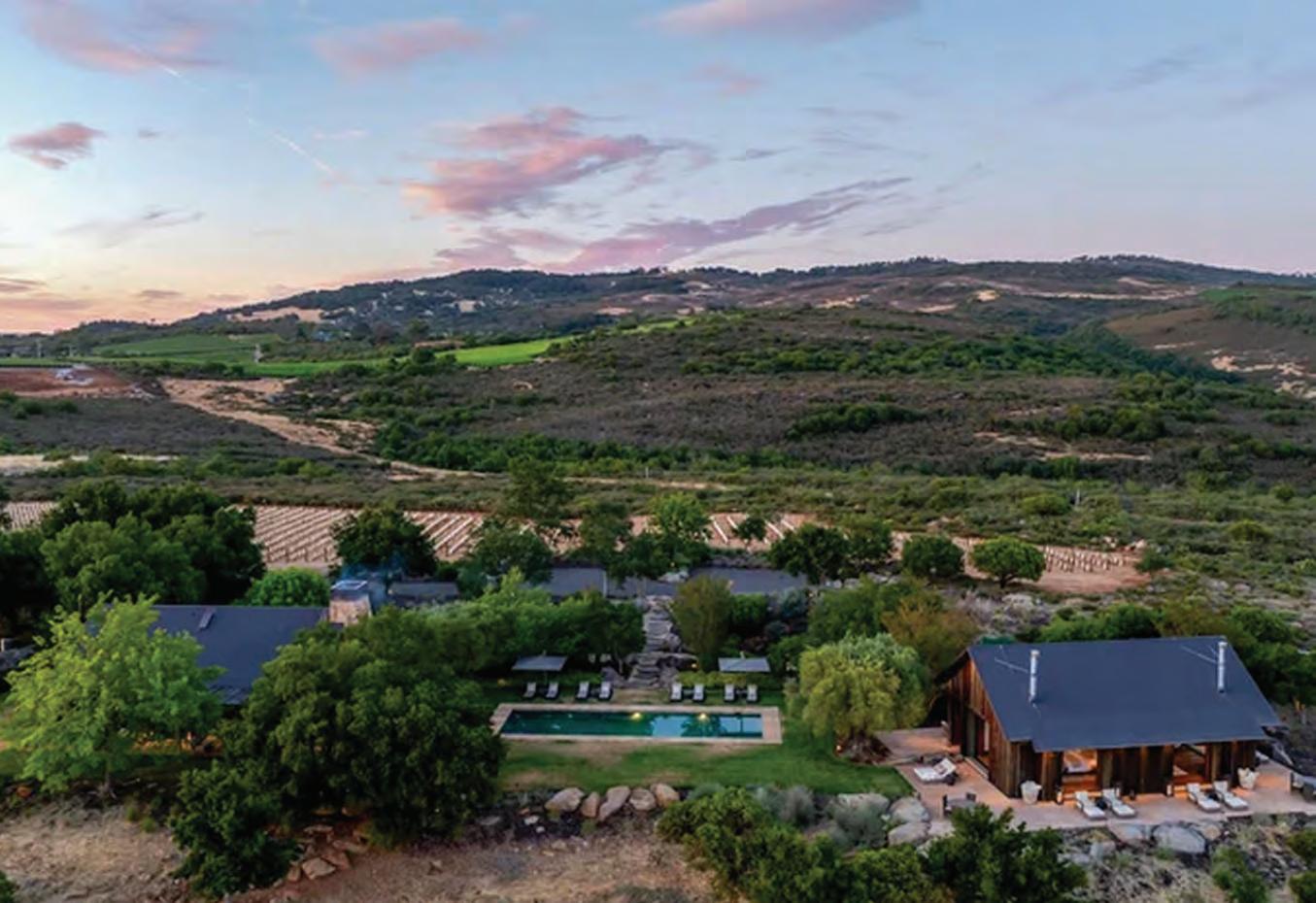
Some houses are designed to impress at first glance. Others are designed to linger. Set high on the coveted slopes of Pritchard Hill, Cuvée’s new Howard Backen Estate belongs to the latter category, although there is nothing modest about its setting. The estate sits within one of Napa Valley’s most storied landscapes, surrounded by vineyard rows, rolling hills, manicured lawns, and views that unfold slowly, as if the valley is revealing itself in layers.
Designed by the late Howard Backen, one of Napa Valley’s most revered architects, the property is a fully realized expression of modern wine country living. Often credited with helping define the architectural language that has come to symbolize luxury Napa living, Backen became known for creating homes, wineries and hospitality projects that feel inseparable from their surroundings. His work favored natural materials, generous indoor-outdoor connections and a quiet sense of restraint, replacing showmanship with craftsmanship and an almost effortless relationship to the landscape. More than an architect, he helped shape the visual identity of modern wine country, making estates like this feel less imposed upon the land than discovered within it.
For Cuvée, Napa Valley is a natural next chapter. The Denver-based bespoke luxury travel brand has built a global portfolio of ultra-luxury villas and chalets in the world’s most desirable destinations, then layered each with the kind of singular, once-in-a-lifetime experiences that turn a beautiful trip into a private world. It is luxury travel at its most personal: exceptional properties, rare access, and a level of detail that makes each stay feel entirely its own.
Estates of this caliber are never listed. They surface quietly, by introduction, among people who already move in the same world. It began in Punta Mita, where Cuvée hosted the Phelps family of Joseph Phelps, the legendary Napa winery behind Insignia. What stayed with them was not the villa alone, but everything surrounding it: seamless access, deeply personal service, and meals that rivaled the finest restaurants. A private chef herself, one family member arrived with exacting standards and left convinced Cuvée’s culinary team had delivered “the best private chefs I’ve ever experienced.” She continued by praising Cuvée thoughtful menus, impeccable presentation, and instinctive understanding of the family’s preferences. The experience made such an impression that the Phelps family offered an introduction of their own: Thomas and Jim Keller, who would later entrust one of Napa’s most coveted private estates to the Cuvée portfolio. “Access like this is never bought,” says Larry Mueller, Cuvée’s founder. “It is built, one relationship at a time.”
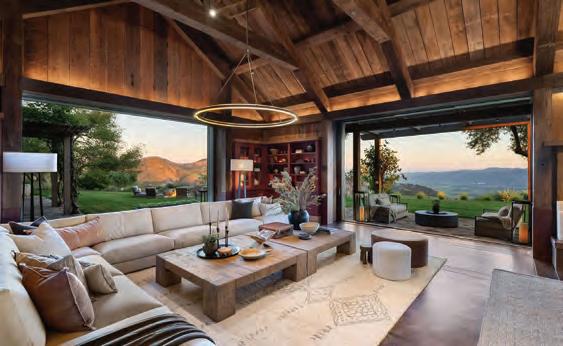
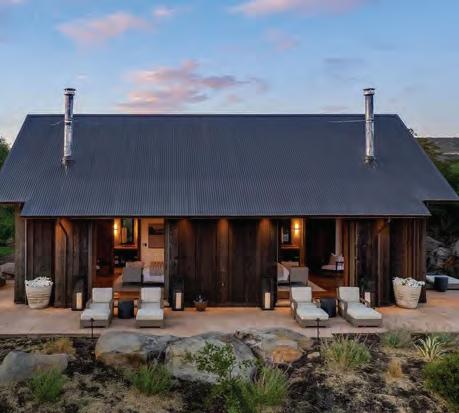
Backen’s signature language is immediately present: natural wood finishes, vaulted ceilings, grand sliding glass doors, stone terraces, and interiors that appear to dissolve into the landscape. The architecture does not compete with the view. It frames it, softens it and lets it do the real talking.
Here, the experience is less about checking into wine country and more about inhabiting it. Guests arrive not to observe Napa from a distance, but to live inside its most polished version, one where vineyard walks, long lunches, private tastings, wellness rituals, and candlelit dinners all feel part of the house itself.
The main house is the center of gravity. Its grand dining room seats 14 and is flanked by elegant living spaces anchored by an oversized fireplace. Expansive doors open onto terraces and sweeping valley views, making the transition from indoors to outdoors nearly imperceptible. It is a house designed for long conversations, late breakfasts, bottles opened at just the right hour and the unhurried pleasure of staying exactly where you are.
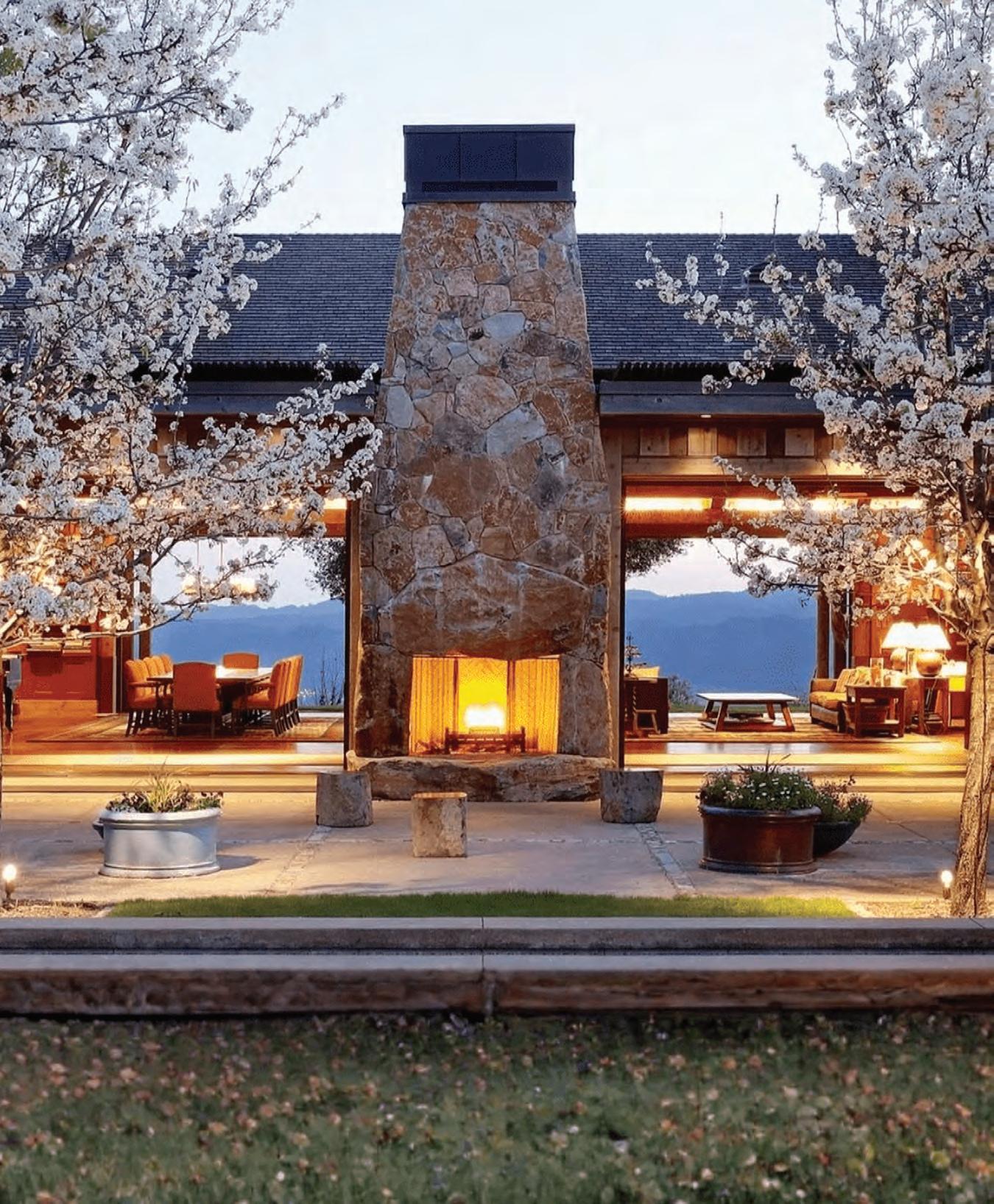
THIS PAGE: The estate’s central courtyard brings the architecture and landscape into conversation, with a stone fireplace, blooming trees and multiple terraces opening toward the view. It is the kind of outdoor room that feels as considered as the interiors
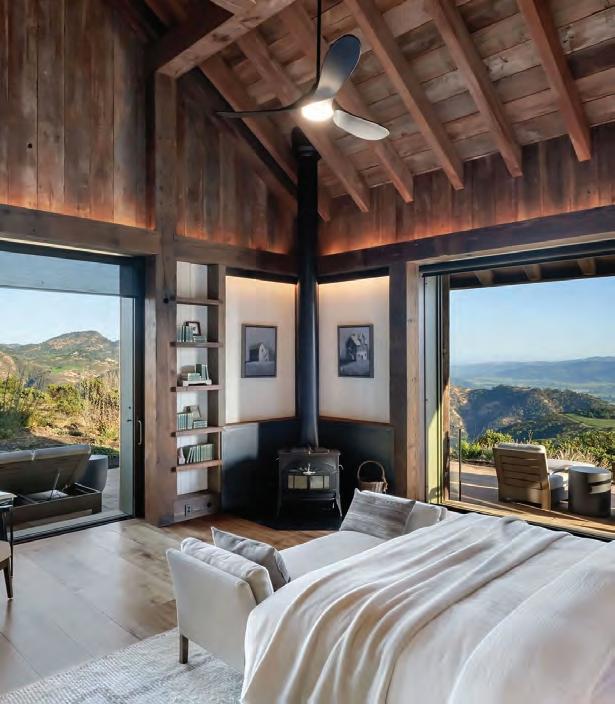
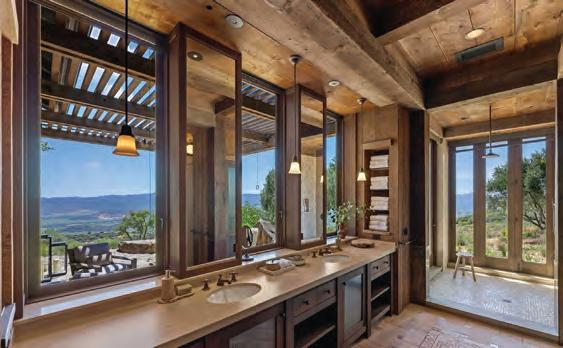
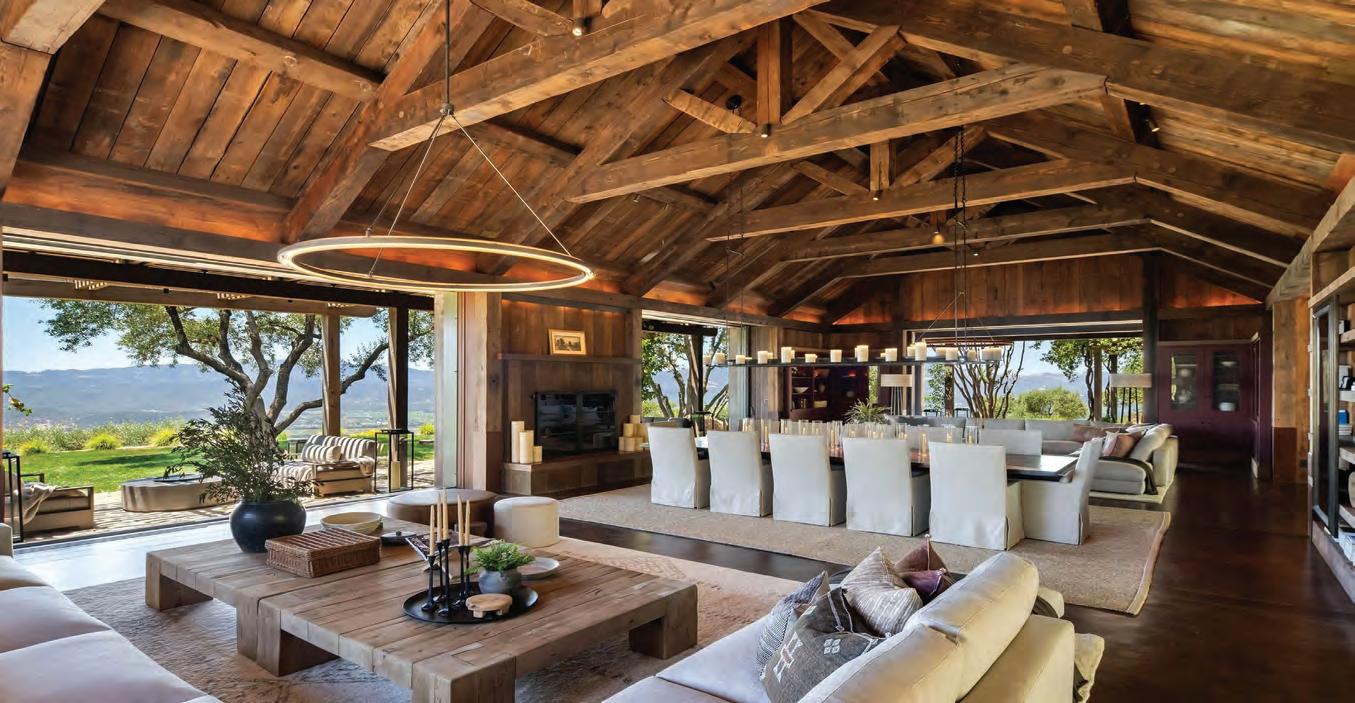
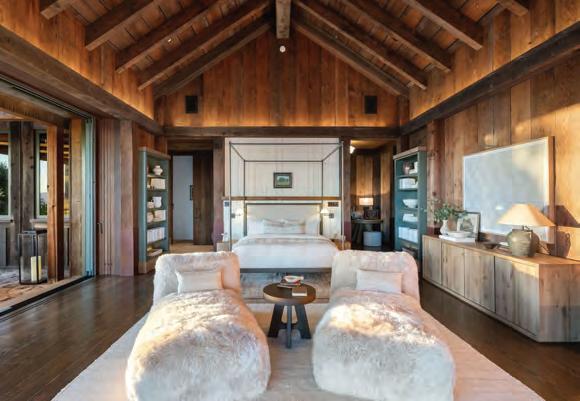
TOP: An aerial view reveals the estate’s true scale: more than 10,000 square feet across a main house, guest house and two private cottages, all tucked into the coveted slopes of Pritchard Hill. Stone paths, manicured lawns and open-air gathering spaces create the feeling of a private wine country compound rather than a single residence. ABOVE, TOP RIGHT: The main living space captures Backen’s signature vocabulary: warm wood, broad glass openings, sculptural lighting and a seamless connection to the terraces beyond. It is grand without feeling formal, designed for long lunches, late conversations and the kind of gathering that makes staying in feel like the point. ABOVE, BOTTOM RIGHT: A bath framed in natural wood and glass keeps the same material restraint found throughout the estate. The effect is quietly luxurious, with the landscape still present even in the most private corners of the house. ABOVE, LEFT: In one of the guest cottages, vaulted wood ceilings, a freestanding wood-burning stove and floor-to-ceiling glass doors turn a bedroom into its own private retreat. The cottages are positioned at the southern end of the estate, each with separate entrances, terraces and some of the property’s most striking valley views.
Throughout the property, the design favors natural materials and ease over opulence. Wood, stone, glass, and linen do much of the work, creating a palette that feels both elevated and tactile. The modern farmhouse references are unmistakable, but never literal. This is wine country refined through restraint, where scale and proportion matter more than ornamentation. Mueller puts it plainly: there is not a piece of plaster in the house. No drywall, nothing synthetic. The materials are the architecture.
The restraint extends to what is missing. There is almost no audio-visual, near-heresy at this level. No bedroom televisions, and the great room’s lone screen rolls into a closet built to hide it. The point is the valley, not a screen.
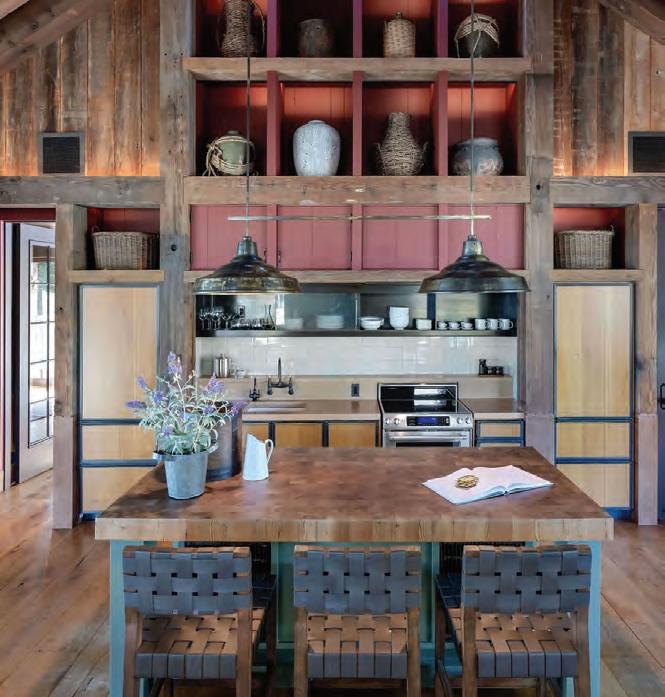
The estate’s kitchens make a strong case for staying in. The main house includes a gourmet kitchen with an adjoining butler’s pantry, Hestan cookware, and Keller’s own signature knives. Across the compound, three fully equipped kitchens support everything from quiet mornings to private chef dinners. Outside, an alfresco dining area, BBQ, and wood-fired oven create a more relaxed counterpoint, the kind of place where pizza night can still feel like an occasion.
The guest accommodations are equally thoughtful. Seven bedrooms are spread across the main house, guest house and cottages, allowing privacy without disconnecting guests from the larger experience. The guest house includes its own kitchen, dining area, living room, and stone fireplace, while the two cottages offer private entrances, courtyards, fireplaces, terraces, and some of the estate’s most striking views.
What makes the property feel especially Cuvée, however, is the way the house extends into a larger world of experiences. Guests can walk the newly planted Keller Estate Vineyard, taste wines tied to the hillside terroir, or arrange private tastings at neighboring Pritchard Hill estates. Ovid, among the hill’s most coveted labels, is close enough to walk to, and it belongs to Colorado’s David Duncan, also the name behind Silver Oak. Because the Keller connection is personal, the culinary reaches places reservations cannot: a five-course estate dinner from the Thomas Keller Restaurant Group, private meals with Michelin-starred chefs, a tour of the French Laundry kitchen and cellar, and a table even when the list runs months long. For something looser, a Neapolitan pizza masterclass waits at the estate’s own wood-fired oven.
Few settings are more fitting for an extraordinary wine tasting than the estate. Here, Cuvee’s own Master Sommelier leads an intimate tasting featuring iconic producers alongside coveted bottles from the valley’s most compelling small estates. Woven throughout the evening are the stories behind each vintage, the personalities who shaped them, and the nuances that make every pour memorable, all experienced within the timeless architecture of Backen’s remarkable work.
Wellness is woven in with the same sense of ease. The main house includes a fitness room suited for yoga, stretching and
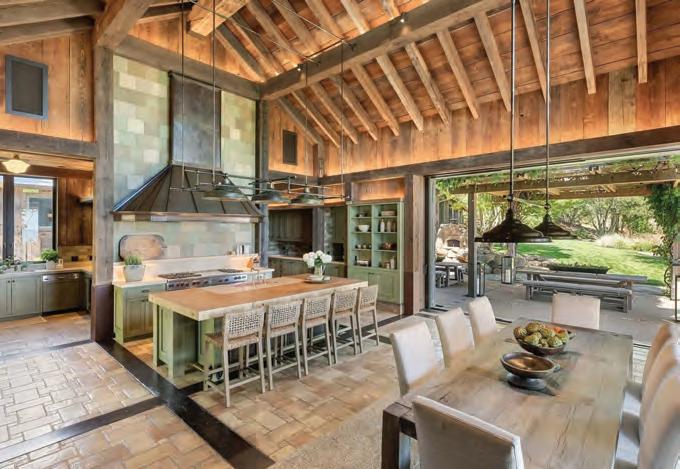
TOP: The main house kitchen makes a strong case for staying in. Outfitted with Hestan cookware, Thomas Keller signature knives, an adjoining butler’s pantry and generous prep space, it was designed for everything from slow mornings to private chef dinners.
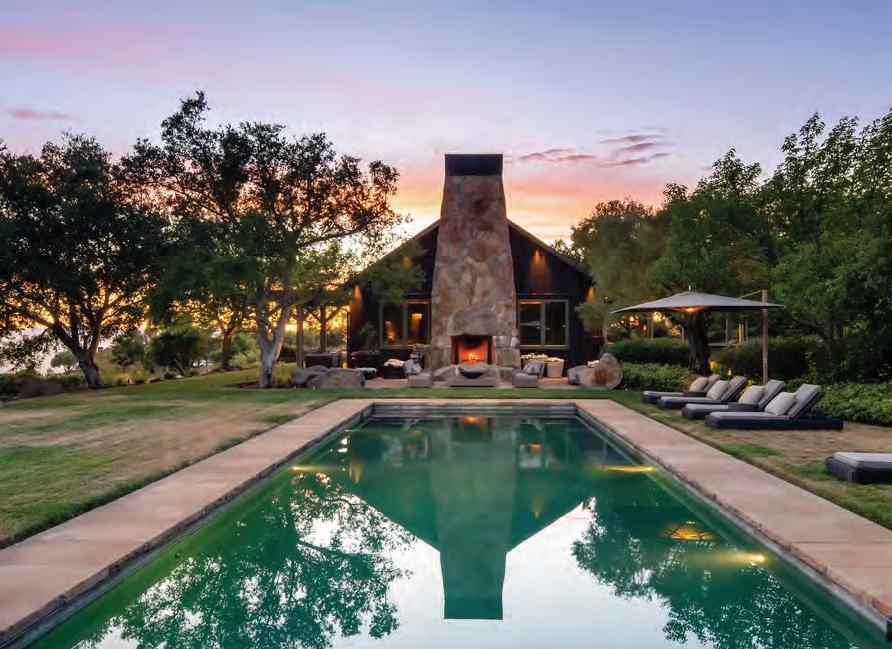
CENTER: At dusk, the Howard Backen Estate reads like a Napa Valley stage set: stone chimney glowing, pool reflecting the last light, and the surrounding trees softening the architecture into the hillside. Set high on Pritchard Hill, the estate was designed for exactly this kind of indoor-outdoor theater, where the view, the fire and the landscape do most of the talking.
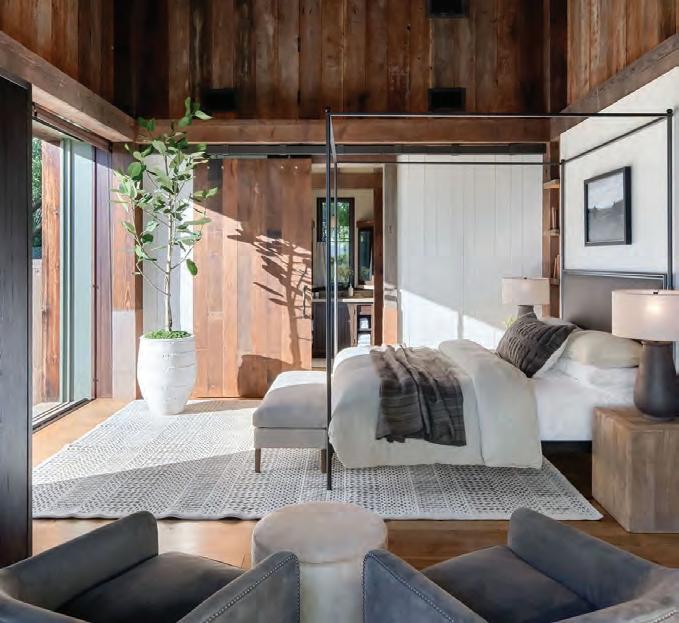
RIGHT: A guest suite pairs wine country warmth with hotel-level polish, balancing rustic wood, clean-lined furnishings and direct access to the outdoors. Across the estate, seven bedrooms are distributed among the main house, guest house and cottages, offering privacy without sacrificing connection.
mindful movement, while Cuvée can arrange guided sound baths, private yoga, custom massage, and IV therapy. The pool, tucked between the guest house and cottages, offers a quieter kind of luxury: a place to read, drift, recover, and take in the hillside. An outdoor jacuzzi faces due west, the whole valley going gold as the sun drops.
Beyond the estate, Napa remains close at hand. Guests can float over Yountville by hot air balloon, explore the valley in a convertible Bentley or Aston Martin, board the Napa Valley Wine Train, or retreat to Calistoga for geothermal hot springs and mud baths. But the beauty of this property is that leaving never feels required. The valley comes to you, through the view, the wine, the food and, most importantly, the experience. One that is unmistakably Cuvée.
In the end, the Howard Backen Estate is not defined by a single grand gesture. Its strength is in the way everything relates: architecture to landscape, privacy to gathering, refinement to comfort. It is an estate built for people who understand that the best kind of luxury often looks effortless, even when every detail has been considered.
For Cuvée, Napa Valley feels less like a new destination than a natural arrival. The estate distills what the brand has long done best: pair extraordinary properties with extraordinary access, then make the whole thing feel personal. On Pritchard Hill, that philosophy finds an especially fitting address.
Available exclusively through Cuvée’s private portfolio SEE THE COMPLETE GALLERY VIA CHERRYCREEKMAG.COM
complete with Napa Valley just outside.
OPPOSITE PAGE
BOTTOM: From above, the estate’s relationship to the land becomes clear: vineyard rows, rolling hills, private pool, guest structures and terraces all arranged within the larger sweep of Pritchard Hill. For Cuvée, the address distills the brand’s sweet spot: an extraordinary home paired with the kind of access, privacy and experience that makes the destination feel personal.
TOP RIGHT: One of the private guest cottages sits apart from the main house, offering its own entrance, terrace and quiet sense of remove. The layout gives guests the privacy of a standalone retreat w hile keeping them connected to the larger estate experience.
BOTTOM RIGHT: Inside the cottage, layered textures soften the rustic architecture. A fireplace, vaulted ceiling and sliding glass doors give the space the feeling of a private hideaway,
TOP LEFT: A jewel-toned tile shower adds a vivid counterpoint to the estate’s otherwise restrained palette of wood, stone, linen and glass.
TOP RIGHT: The guest kitchen brings the estate’s hospitality into its own private quarters, with soaring wood ceilings, open shelving, warm cabinetry and a generous island made for gathering.
SHOWN HERE: The great room is the heart of the main house, with a dining table for 14 flanked by elegant seating areas and anchored by Backen’s soaring wood ceiling. Expansive sliding doors open the room to the terraces and valley views, making the boundary between inside and out nearly disappear.
Ashley Collins occupies rare territory in contemporary art.
A blue-chip artist with a fiercely devoted collector base, she was the first woman in America to break the $100K mark, a milestone that says as much about her audacity as it does about the art world that once failed to take her seriously.
Her paintings are monumental, tactile, soulful, and instantly recognizable, carrying the force of myth alongside the scars of a woman who refused to break.
One of the most successful living female contemporary artists in the world, Collins is a painter whose market and reputation were built against the usual rules of what art was supposed to be.
WORDS BY BETSY MARR
PHOTOS BY MADISON SCARLATA
n a sunny afternoon in Napa, Ashley Collins moves between her vineyard, studio, and her elegant sprawl of home with little of that mythology on display. Petite and blonde, she is a tour de force whose size belies her giant persona. Warm, soulful, and entirely unassuming, she does not perform importance. She simply possesses it. There is no grand theater to her, no self-conscious mystique. Instead, there is the far more compelling confidence of someone who has already survived enough to stop announcing herself.
That quality - that quiet self-assurance - is all over her work.
Collins is, of course, often associated with horses, but to call her simply an equestrian artist is to miss the scale of both the woman and the work. She is not painting animals in any literal sense, and she is quick to make that distinction. “People get very confused when I say I don’t paint horses,” she says. “I paint the soul of someone who helped me survive as a child. It just happened to be in the form of a horse.” In her work, the horse becomes something even larger: a “spiritual mirror,” as she puts it. A carrier of freedom, wisdom, burden, and hope. The image, in other words, is not genre. It is language.
That distinction comes into especially sharp focus with Horsepower, her upcoming exhibition with Relevant Galleries in Denver, framed as “An Understanding of Power.” The show pairs Collins’ paintings with photography by David Yarrow and positions the horse alongside the sculptural beauty of the automobile, exploring what the gallery calls “the timeless language of power.” It is an elegant premise, but Collins’ own interest in power runs deeper than style. “Horsepower is indeed embedded within our very core,” she says. “Power itself is seductive.” Then, in classic Ashley fashion, she redirects the idea toward something moral rather than glamorous. “True power,” she says, “lies in what one does with it.”
Power is a word that keeps resurfacing around Collins, though she defines it differently than most people do. She has no interest in power as showmanship. “I am a very shy person by nature,” she says. “My expression is by paintbrush and canvas rather than voice. The greatest power,” she adds, “can be as simple as a single word. No. So quiet, yet so powerful.”
And yet she knows another form of power too, the louder one demanded by hardship. “For all of us, there are times when we are forced to raise our wings and fight like furious angels with every ounce of strength we have.”
That is not metaphor in her case. It is biography.
Her life story has been told before, but in person it lands with far more force than any boilerplate art-world legend. Collins arrived in Los Angeles in 1988 with no contacts, no money, and little besides conviction, then spent years homeless, sleeping on concrete studio floors, in her car, and in abandoned boats while trying to create, all the while forcing open a door into a world that kept rejecting her. She has also spoken about the art establishment’s resistance both to horse imagery and to the idea of a woman artist operating at that scale and ambition. At one point, she promoted “Ashley Collins” as a reclusive male artist just to get the work seen.
That history is not merely backstory. It lives in her work itself. Collins’ paintings do not feel manufactured from comfort so much as weathered into being. Each canvas begins with antique pages from Harper’s Monthly Review, giving stories from the past a new life within the piece itself. Those pages are filled with essays, poetry, and illustrations documenting the evolution of humanity and culture. She uses them as a way of allowing older voices to whisper beneath the surface of the present. “Each page carries a century of human hope,” she says. “I give it a new heartbeat.”
That combination of history, touch, and emotional force is central to Collins’ visual language. She is drawn to things that have already been handled, already weathered, already shaped by time. “All my paintings include actual pages from the 1800s within the work,” she says. “Those pages have been touched by thousands of hands by the time they found their way into my studio.”
But the Harper’s pages are only the beginning. Collins’ works are mixed-media pieces where oil paint is only one part of the vocabulary. She shoots arrows into a canvas and leaves them there. She battles a piece with a sword and lets the blade or its damage become part of the final work. She incorporates objects like locks, chains, and bolts, sometimes as symbols of rupture and repair, sometimes as literal invitations for the viewer to engage with the piece by breaking something open and putting it back together. She climbs towering ladders to work across monumental surfaces, attacking and building, layering and revising, until the painting carries not just an image but the record of a struggle. Even the back of each work is part of the story - written on, marked, or inscribed as though the painting were a private journal before it ever became a public object. The effect is not merely nostalgic, but physical and cumulative. Her paintings do not just suggest memory. They bear its evidence.
People get very confused when I say I don’t paint horses. I paint the soul of someone who helped me survive as a child. It just happened to be in the form of a horse.”
It is the same with beauty. Collins loves beauty, but she has no use for something decorative that does not go deeper. “That’s such a great word, decorative,” she says, laughing. “I like to call it couch art.” The phrase is funny, but the contempt is real. Her own work is meant to reveal itself over decades. “I paint for generations,” she says. “Part of the many layers are so that people still find surprises after having a painting for 30 years.” This is not couch art. It is work built to remain alive.
Scale is part of that ambition too. Collins speaks with real delight about working large, and about the mismatch between her physical size and the size of her canvases. “I love scale,” she says. “I think because of my small size, 5’3”, I wanted everything larger than life. I still do.” She has described assembling massive multi-panel works in tiny spaces, pulling them outside to fit them together, then dragging them back in to keep going. Monumentality, for Collins, is not flourish. It is an emotional necessity. “The beauty of life sometimes demands something greater than what we can normally see.”
The art world eventually caught up with this ethos. Collins’ work now lives in private and institutional collections that read less like a patron list than a map of cultural and financial power: Peter and Melanie Munk, Kristy Walton, Alice Walton, Steven Spielberg and Kate Capshaw, Robert Redford, Stan Kroenke, Jerry Jones, Tony Robbins, Brian and Veronica Grazer, the Horchow family, Post Malone, and Lady Gaga, among others. Museum and corporate collections include the Laguna Art Museum, Singapore Art Museum, U.S. Embassy Collections, Barrick Gold, 20th Century Fox, and Warner Bros. Entertainment. It is the kind of roster that signals not flash, but reach.
That breadth matters because it helps explain something essential about Collins. Her appeal is not niche, regional, or trendbound. It stretches across worlds: art, film, business, philanthro -
py, old money, new money, and the kind of private collectors who have long since stopped buying what they are supposed to buy and started buying what they love. Collins herself puts it simply. “The common denominator among my collectors is not status, but that they have moved beyond convention. They respond to work that does not merely decorate, but lives with them,” she explains.
The Hollywood thread is real too, though Collins speaks about it less as celebrity adjacency and more as artistic kinship. She says the relationship between her paintings and the film world began years ago through collectors from that sphere, including Robert Redford, whom she calls one of her early collectors and friends.
More recently, her work entered Taylor Sheridan’s orbit through Landman, which she frames as a natural meeting of sensibilities. “Taylor Sheridan does not just create programs. He creates worlds, telling stories on a grand scale while slipping in more complex questions without seeming beholden to anyone.” Collins says it was “a special treat” to have collectors calling to ask whether the paintings onscreen were hers, and she specifically thanks Taylor and Nicole Sheridan for bringing the work into that universe. The same page notes Billy Bob Thornton, Demi Moore, Ali Larter, and Andy Garcia in connection with the paintings’ screen presence.
What is notable, though, is not merely that Collins’ work can hold its own in a cinematic world. It is that Sheridan’s universe and hers are speaking a similar language. Both are interested in power, moral force, land, loyalty, mythology, violence, and survival. Both understand that scale can be emotional, not just visual. And both know that beneath all the grandeur, the real story is usually about endurance. Collins herself has spoken admiringly not just of Sheridan, but of the women in his worlds, including the grit and grace she sees in the real-life women whose strength helped inspire Landman
He does not just create programs. He creates worlds, telling stories on a grand scale while slipping in more complex questions without seeming beholden to anyone.”
-COLLINS,
ON CLIENT AND FRIEND TAYLOR SHERIDAN
Yet what makes Collins interesting is that she never mistakes visibility for substance. She is far more compelled by meaning than by fame. “I wanted to change the world through love,” she says. “And that makes people uncomfortable.” It is a startling sentence, especially now, when irony is often mistaken for sophistication. Collins has little patience for what she sees as the art world’s appetite for the “wow of the moment,” its tendency to chase sex, politics, spectacle, or easy provocation. She wants something slower and harder to dismiss. Work that consoles without pandering. Work that strengthens rather than shocks. Work that remains.
That helps explain the unusual emotional weather of her paintings. They are beautiful, yes, but never merely ornamental. Mythic, but never hollow. Large, but somehow intimate. She once described her process as listening rather than asserting, entering what her husband calls a “fugue state” where time falls away and she no longer knows whether she has been painting for two hours or eight. “I am listening to each soul tell me what it needs,” she says. It is a mystical line, but also a revealing one. Collins does not paint like a cynic. She paints like someone convinced the unseen is real.
That conviction becomes even more powerful when the conversation turns to hardship. Collins has spoken candidly about being raped, about the trial that followed, about police escorts because of threats, and about the profound shift that came after. After the harrowing experience, she made a photographic series in which she wrote across her own body, “I am not a Victim,” a phrase she still returns to with force. She rejects the passivity of victimhood not because she denies pain, but because she refuses to let it author the rest of her life. “I believe that was the start of an empowerment,” she says. “To recognize the empowered and ennobled warrior within me.”
That phrase, “warrior within,” feels central to understanding both the artist and her art. There is no victim energy in Ashley Collins’ paintings. They do not ask for sympathy or beg for adoration. They ask for recognition. They ask the viewer to meet them with courage. During our conversation, she returned again and again to the idea that “we are warriors,” and to another line that felt equally revealing. “We are all born artists. We have to stay that way.” In her telling, artistry is not profession so much as spiritual state, a refusal to let the world deaden one’s sensitivity, wonder, and instinct for truth.
The same is true of the way she talks about being a woman in the art world. She has spoken bluntly about early dismissals and about the difficulty of being taken seriously on her own terms. But her instinct is not grievance, it is action. “There is a saying that the best revenge is success,” she remarks. She takes pride in having opened doors for others, yet always returns to the same point: if you want to change the world, do the work. Build something. Give something. Lift someone.
That is where her philanthropy comes in, as one of the clearest expressions of her purview. Collins has funded more than 10,000 cleft palate surgeries, along with thousands of vaccines, operations for women throughout Africa, camps for children with cancer, schools for girls in Morocco, and sewing schools in Cambodia intended to help keep girls out of trafficking pipelines. For Collins, charity is intrinsic to her success, not incidental to it. “Abundance is meaningful only if it circulates,” she says with vigor.
She speaks just as frankly about enjoying the fruits of success. She loves vineyards and beautiful cars like the Bentley she poses with in her sprawling studio. She sees no reason to apologize for a life well lived, particularly after the years when even simple comforts were out of reach. But for Collins, luxury without generosity is empty.
“Money is one of the most powerful forces in the world,” she says. “It can be used for good, or for evil. The question is balance. Enjoy life, yes. But lift others along the way.” That tension, between beauty and responsibility, glamour and gratitude, is part of what makes her work resonate so widely.
Asked what she hopes viewers in Denver feel when they stand in front of these paintings, Collins does not say awe. She does not say admiration. She says, instead, “Empowerment, ennoblement, and recognizing their own strength and gifts they have to shine.” Then she goes further: “The exhibition is not about me. It is about reminding others of how wondrous and powerful they are.” It is an unusually generous answer for an artist of her stature, and perhaps the most revealing thing she says.
Ashley Collins’ canvases may begin with stories from the past, but her work is not about nostalgia. It is about what survives. What rises. What refuses to be diminished. And that, in the end, is what lingers most powerfully: not just the grandeur of the work, but the force of the woman behind it. Fierce, soulful, unbroken, and entirely her own.
Summer 2026
THE CASE FOR DINING OUT(SIDE)..
Denver doesn’t ease into summer. It barrels in. Patios fill, reservations get harder to come by, and menus quietly start doing what they do best this time of year. Think peak produce, seafood, fresh herbs, and the kinds of dishes you’ll find yourself ordering twice before Labor Day.
HOW IS THIS SEASON DIFFERENT FROM OTHER YEARS?
HAPA SUSHI Chef Scott Nakasone
This unexpected warm weather has been drawing more people out and getting everyone excited for summer. All four of our locations have patios, and there’s something special about seeing them fill up in the spring and summer. Watching people eat, laugh, and enjoy the sunshine is such a great vibe—it always reminds me of Hawaii!
NARRATIVE
(JACQUARD HOTEL) Chef Charles Albright
Narrative is about contrast and nostalgia working together. In years past, our summer dishes leaned heavily into lightness for the sake of seasonality—but this year, we’re allowing comfort to stay on the plate while introducing brightness and lift. You’ll see that in dishes like split pea and ham soup sitting alongside tuna carpaccio, or a smash burger sharing space with a more refined wagyu strip loin. It’s a more honest reflection of how people actually want to eat—seasonal, yes, but still grounded and satisfying. We will also have a bigger emphasis on global influence—with subtle nods like hoisin in our short rib dish or with our halo-halo-inspired oranges and cream parfait dessert—while still keeping the foundation rooted in approachable, recognizable flavors.
CLAYTON HOTEL & MEMBERS CLUB Jordan Aldrich/Sous Chef
This season feels more intentional and refined compared to years past. I’m focusing less on complexity and more on letting high-quality seasonal ingredients speak for themselves. The goal is cleaner execution, stronger flavors, and dishes that are both elevated and approachable. It’s about creating food that feels thoughtful but not overworked, aligning with where modern dining is heading—ingredient-driven and guest-focused.
LOCAL JONES (HALCYON HOTEL) Charlie Hall/Director of Food & Beverage
We have a lot of new leadership in the space and are working on some exciting changes to our food offerings during dinner that we feel brings us back to our brand identity. We are also focused on driving events within the space that give us an opportunity to better connect with our community. We are very excited for the direction we are going and look forward to sharing these changes with our neighbors as we move along.
SEÑOR BEAR Andrew Johnson, Chef de Cuisine
Personally, this season has a little different feel to it because it’s my first as CDC of Señor Bear and, while operating a successful restaurant of eight years has some of its routines, innovation and improvement is always something we strive for. Shaking off the frost, stretching our legs and gearing up for the busy season is a part of our cycle. Our name rings true in that fashion. So, at the helm, I’m excited for what this season offers ingredients wise, attitude wise, and culture wise for us to bring our best product to you from a hospitality standpoint.
NAR -
HAPA SUSHI This time of year, our chefs roll out plenty of shareable dishes perfect for large groups and family-style dining. With so many graduation celebrations in the spring, we love offering a variety of fun appetizers and rolls that everyone can enjoy.
NARRATIVE (JACQUARD HOTEL) Our seasonal menu will be dynamic and layered—moving between bright, fresh compositions and rich, comforting plates without feeling disjointed. Key plates we’d like to highlight are: • Light, raw, and chilled: tuna carpaccio; beef tartare; shrimp cocktail • Fresh and vibrant salads and shareables: panzanella; melon & jamón; succotash dip • Pasta and grain-driven dishes: salmon with orzo; peas and pesto pasta • Comfort-forward entrées: pork schnitzel; short rib with hoisin demi and soba noodles; half chicken roulade • Approachable anchors: smash burger; milk bread with citrus honey butter. It’s a menu that invites guests to build their own experience—whether that’s a lighter, shareable meal or something more indulgent.
CLAYTON HOTEL & MEMBERS CLUB The menu is bright, fresh, and seasonal, built around peak ingredients like asparagus, herbs, citrus, and early berries. You’ll see a balance of lighter preparations, clean flavors, and a mix of composed dishes and shareable plates. There’s also a focus on vegetable-forward options and simple, bold flavor combinations that highlight the product rather than mask it.
LOCAL JONES (HALCYON HOTEL) Our menu will fully embrace a focus on elevated comfort food. Our direction is timeless American comfort, placing an emphasis on seasonal ingredients and how we can utilize an ingredient first approach where quality, consistency, and craveability take priority.
SEÑOR BEAR When I think of summer I think of fresh, flavorful ingredients sprouting up from the spring and grilling meats over charcoal or open wood fire. Things like garlic, fresh huacatay, English peas, fresh peppers and heirloom carrots are stables for the spring. Fruit wise, things like pineapples, blackberries and mangoes make me smile. Proteins like bone-in lamb shoulder steak, Picanha steaks, ribeye, chicken legs, pork tenderloins all marinated and grilled over open flame with complimentary sauces like aji de huacatay, chimichurri, and salmuera to finish them out. As a concept we always like to focus on our fresh fish dishes like our ceviches, tuna tartare and tuna tiradito going into the spring. Expect all the above on the new menu.
WHAT DISH ARE YOU MOST EXCITED ABOUT?
HAPA SUSHI It’s an exciting time for us as a company. We feature weekly specials that give our chefs the chance to showcase their own creations, and it’s always fun to see what they come up with. The only rule is that each dish has to be completely different from what’s already on our menu. Expect lots of Japanese fish, fresh fruits, ceviches, and more. I can’t pick just one dish I’m excited about— it’s all of them.
NARRATIVE (JACQUARD HOTEL) The short rib with hoisin demi and soba noodles really stands out to me. It captures the direction of our new spring menu perfectly—deeply comforting, but balanced with acidity, texture, and a subtle global influence. It’s rich without being heavy, familiar but still unexpected. That balance is what defines this season for us.
CLAYTON HOTEL & MEMBERS CLUB I’m most excited about dishes that highlight simplicity at a high level—something like a perfectly executed spring vegetable dish or a clean seafood preparation with citrus and herbs. Those types of dishes really showcase technique, sourcing, and restraint, which is where great cooking stands out.
LOCAL JONES (HALCYON HOTEL) There will be plenty to rave about as we focus in on our tentative dinner menu relaunch date. Our lunch and brunch menus will stay mostly as they are now, with a few new dishes working their way alongside existing guest favorites.
SEÑOR BEAR I think the tuna tartare is a hit, diced tuna tossed in a salsa roja with chopped bell peppers, cilantro steams, shallots, Sherry vinegar, and served with crispy chicharrónes as a vessel and Bear spice for a kick. I’m also excited to incorporate open flame grilling to this spring menu. Normally done outside in the backyard, we are going to load our grill up with white oak wood and pick up all our proteins over this grill. The bone-in lamb shoulder steak is a dish I’m excited for. Marinated in a Puerto Rican mojo spice blend, charred on the grill to perfection and served over an aji huacatay sauce.
HAPA SUSHI My ideal menu right now would be the chukka seaweed salad, followed by the taro poke with yellowtail, then our Yakiniku Bowl with salmon. To finish all that off, the lilikoi sorbet, which is a passion fruit sorbet topped with vegan whipped cream and berries!
NARRATIVE (JACQUARD HOTEL) Start with our milk bread with orange citrus honey butter and tuna carpaccio and beef tartare to share. Then the Succotash dip with hushpuppies and the Panzanella salad. For the middle course, go with the peas and pesto pasta or salmon with orzo. The main course would be the short rib with hoisin demi and soba noodles. For dessert, it’s our oranges and cream parfait (halo-halo inspired).
CLAYTON HOTEL & MEMBERS CLUB Start with our spring pea and mint soup with crème fraîche and lemon oil. Then the burrata with local greens, strawberries, honey, and pistachio. For the third course, it’s the asparagus and artichoke salad with shaved Parmesan and a citrus vinaigrette, followed by either our flounder with spring vegetables and herb beurre blanc, or the roasted chicken, fingerling potatoes, lemon, and thyme jus with a side of grilled asparagus and hollandaise. For dessert, try the lemon olive oil cake with whipped mascarpone and berries or the rhubarb tart with vanilla custard.
LOCAL JONES (HALCYON HOTEL) I’ll keep this somewhat speculative, with a few hints of directions we are working on. To start, a nice grilled artichoke with a more delicate vinaigrette to compliment paired with a crab dip inclusive of seasonal greens followed by a lovely corn and lobster chowder as a mid-course. For the entrée course, we would move into a new seasonal set on our Colorado striped bass or braised short rib served paired with delicious cheddar grits. Desserts will also see some familiar favorites, with our pastry chef actively developing ideas around a delightful cheesecake offering to conclude the meal.
SEÑOR BEAR Start with our Peruvian Rice Nigiri or fresh Ceviche. Moving onto the main course, I like our jerk chicken, or ribeye with Chimichurri. For Smaller Sides I’d like a leafy green like our Curry Crunch Salad and a starch like the Papas a la Huancaina or the infamous Bear’s Coconut Rice. Finish it out with some freshly fried churros and I’m a happy table.
SUMMER 2026
A5 STEAKHOUSE
1600 15TH STREET
303.623.0534 / A5DENVER.COM
ASH’KARA
2005 W 33RD AVENUE
303.537.4407 / ASHKARADENVER.COM
AVIANO COFFEE ON 2ND
215 ST PAUL ST. SUITE 180 720.389.9948 / AVIANOCOFFEE.COM
AY PAPI
248 DETROIT STREET AYPAPIDENVER.COM
BAR DOUGH
2227 W 32ND AVENUE
720.668.8506 / BARDOUGHDENVER.COM
CLAYTON HOTEL & MEMBERS CLUB
233 CLAYTON STREET
303.551.1600 / CLAYTONDENVER.COM
FORGET ME NOT
227 CLAYTON STREET
720.259.5369 / FORGETMENOTDENVER.COM
FOX AND THE HEN
2257 W 32ND AVENUE
303.862.6795 / FOXANDTHEHEN.COM
HAPA SUSHI
3030 E SECOND AVENUE
303.322.9554 / HAPASUSHI.COM
KUMOYA
2400 W 32ND AVENUE
303.862.6664 / KUMOYADENVER.COM
LOCAL JONES
249 COLUMBINE STREET
720.772.5022 / HALCYONHOTELCHERRYCREEK.COM
MATSUHISA DENVER
98 STEELE STREET
303.339.6628 / MATSUHISARESTAURANTS.COM
MISTER OSO
103 S OGDEN STREET
303.955.0352 / MISTEROSODENVER.COM
MAGNA KAINAN
1350 40TH STREET
720.524.8684 / MAGNADENVER.COM
NARRATIVE
222 MILWAUKEE STREET, IN THE JACQUARD
720.571.8080 / NARRATIVECHERRYCREEK.COM
SENOR BEAR
3301 TEJON STREET
720.572.5997 / SENORBEARDENVER.COM
TAP & BURGER
2219 W 32ND AVENUE
720.287.4493 / TAPANDBURGER.COM
TORO LATIN KITCHEN & LOUNGE
150 CLAYTON LANE
303.253.3000 / TORODENVER.COM
CHERRY CREEK the faces of
Behind every great brand is a great mind. The Faces of Cherry Creek spotlights the leaders, creators, and changemakers driving Denver’s most dynamic neighborhood forward.
PHOTOS BY CARLY SWAN
ART & CULTURE
CULINARY
REAL ESTATE HOME & ENTERTAINING
THE FACES OF CHERRY CREEK
A Curated Legacy: Courtney Olson’s Eye for What’s Next
For Courtney Olson, art was never something kept at a polite distance. It was part of the architecture of her childhood: dinner table conversations, late nights at exhibition openings, Aspen and Vail galleries that felt less like workplaces and more like family rooms with better lighting and more interesting guests.
Now, as the third generation behind one of Colorado’s most established gallery families, Olson is helping shape what fine art collecting looks like next. In 2021, she helped launch Relevant Galleries in Cherry Creek, bringing fresh, visceral energy to the local art scene while honoring a legacy that stretches back more than 50 years. “We exist to connect extraordinary art with people who understand its gravity,” Olson says. “We represent artists whose work stops you in your tracks and introduce them to collectors ready to live with something that actually means something.”
That sentence could easily serve as the gallery’s thesis. Relevant is polished but not precious, serious but not intimidating. The roster includes names with international gravity, from David Yarrow and Russell Young to Ashley Collins, whose layered, emotionally charged work has become one of the gallery’s most compelling recent discoveries.
Olson took a chance on Yarrow early, helping elevate fine art photography in a market that was ready for it, even if it did not yet fully know it. Since then, Relevant has expanded to Vail, Park City and two locations in Scottsdale, with Cherry Creek remaining its flagship and emotional center. “Cherry Creek isn’t just where our flagship gallery lives,” Olson says. “It’s where our family has been rooted for over 50 years.”
Her approach is instinctive, but never casual. She describes her style as a mix of intuition, full commitment and refinement, which suits someone building the next chapter of a legacy business without preserving it under glass. “We have 50 years of history, and we’re not resting on it,” she says. “That combination is rare.”
At the gallery, Olson wants the experience to feel less like entering a rarefied room and more like stepping into the best part of your day. No pressure. No posturing. Just extraordinary work and people who know how to listen.
The current exhibition, Horsepower, brings together Ashley Collins and David Yarrow in a pairing Olson describes as unexpected and powerful. “David’s work needs little introduction,” she says. “But Ashley is an experience you have to have in person. Her work stops you. We knew the moment we encountered her that she belonged in this conversation.”
Looking ahead, Olson’s calendar reads like an ambitious art-world itinerary: a David Yarrow solo show in Vail and Denver, an Ashley Collins show in Aspen, a traveling exhibition with Russell Young across five locations, a possible pop-up she is “genuinely obsessed with,” and five new artists joining the roster over the next six months. Still, the heart of it remains simple. For Olson, the work is about championing artists before the rest of the world catches up, building trust with collectors and creating experiences that make people feel something. “Art should feel exciting, not intimidating,” she says. “We hold a high bar for the work we show, but the door is genuinely open to everyone.”
BANKING WITH A BLUEPRINT: Inside
Brian Weldon’s Approach to Wealth and Legacy
Brian Weldon describes himself as a financial solutions engineer, which sounds like a tidy turn of phrase until you understand how literally he means it.
Before his work in private banking and wealth management, Weldon studied mechanical engineering, business and economics, a combination that shaped the way he sees complicated financial lives. Not as a set of disconnected parts, but as a system. One decision affects another. One opportunity may create exposure somewhere else. One family goal, business need or legacy plan can shift the entire equation.
It is exactly that kind of complexity that energizes him.
“I thrive off working with different companies and customizing solutions around their needs,” he says. “First Western Trust has the platform and support to allow me to do this, and it brings real joy and fulfillment to my day-to-day life.”
At First Western Trust, Weldon is part of a private bank and trust company built around a notably personal idea: wealth is best managed by people who actually know you. Not a rotating cast of departments. Not a distant institution with a script. A coordinated team of local experts who understand the full financial picture and can work together with clarity.
“We deeply believe that relationships and direct access to a coordinated team is the best approach to supporting our clients and their financial pictures,” Weldon says.
That word, coordinated, matters. First Western Trust is not simply a bank, though banking is part of its offering. Its backbone is wealth management, with private banking, trust services and planning working together to support clients across the full arc of their financial lives.
His own approach begins with listening.
“I enjoy getting to know our clients, their passions and their stories before describing what it is that I do,” he says.
It is a telling answer. Weldon is not interested in leading with a pitch. He wants to understand what matters first: the business being built, the family being protected, the legacy being considered, the nonprofit being supported, the next chapter being planned. From there, the work becomes more precise.
“We listen and put our clients’ needs above ours,” he says. “Everything is customized to their priorities and goals.”
That philosophy extends to one of the firm’s more defining distinctions. First Western Trust’s fiduciary approach means the team is willing, when appropriate, to “sell against ourselves,” as Weldon puts it, if a client is already well served by a financial tool or relationship elsewhere. It is not about forcing every answer in-house. It is about helping clients get into the best position to reach their goals.
For Weldon, First Western Trust’s strength has never been about being the loudest name in the market. It has been about being the right name for clients who value discretion, sophistication and a deeply personal approach to wealth. The firm’s reputation has been built relationship by relationship, often across generations. But as more families and business owners look for local expertise paired with integrated wealth and banking strategy, Weldon believes the moment is right to tell that story more clearly.
We aren’t just a bank, we are a wealth management company at our core, with a banking arm.”
For Weldon, the point is integration. A client’s banking needs, investment strategy, estate goals, business interests and family priorities should not be treated as separate conversations.
“You can’t modify one area without affecting another,” he says.
In an industry increasingly shaped by consolidation, scale and acquisition, First Western’s local, relationship-driven model feels deliberately countercultural. The firm was founded in Denver in 2002, where its headquarters remain, and Weldon sees that local leadership as more than a point of pride. It allows the team to be responsive, nimble and closely connected to the clients and communities it serves.
“While other institutions react to acquisitions, scale pressures or short-term priorities, First Western Trust stays committed to the communities and clients we serve,” he says. “We provide stable, integrated guidance so clients can take ownership of their financial journey with confidence.”
That stability is especially meaningful in private banking, where trust is not built through a single transaction. It is built over years of showing up well, giving clear advice and understanding the personal context behind the numbers. Weldon’s ideal client is someone who values that kind of partnership, someone who wants a local team of experts coordinating each aspect of their financial picture and understands that the best planning comes from full context, not isolated products.
“We aren’t just a bank,” he says. “We are a wealth management company at our core, with a banking arm.”
It’s an important distinction. At its best, First Western Trust uses its banking platform as one part of a much larger financial strategy, helping clients grow, protect and align their resources with the life they are building and the legacy they want to leave.
The community piece is just as important. With Colorado as its home and headquarters, First Western Trust is deeply invested in the local economy, supporting businesses, volunteering with nonprofits, sharing expertise and creating job opportunities for Coloradans.
Looking ahead, Weldon is focused on making First Western Trust’s presence more widely known while preserving the very qualities that have made it distinctive: independence, local decision making, trusted expertise and a family office-like level of support.
“There is nothing more exciting than getting to work with our clients and see them succeed,” he says.
For Weldon, the work is not about making financial services feel bigger. It is about making them feel smarter, closer and more connected to the people they are meant to serve.
CHERRY CREEK
JEWELRY WITH A SOUL: Meet Carol Ferguson of Element 79
CAROL FERGUSON
2703 E. 3rd Avenue Denver, Colorado 80206 Element 79 Fine Jewelry
There’s magic in giving old jewelry a second life. It’s honoring where it came from while letting it evolve with you.”
There’s a certain kind of alchemy that happens when gold meets meaning. It is what drives Carol Ferguson, founder of Element 79, and what gives her Cherry Creek boutique its quiet, magnetic energy. “Jewelry should make you feel something,” she says, a belief that guides every ring, bracelet and heirloom she helps bring to life.
For Ferguson, fine jewelry is storytelling, an expression of who we are, what we have lived and what we choose to hold close. “It’s wearable art,” she says. “A collection built over time, marking the moments that matter most.”
A bench jeweler and custom designer with more than two decades of experience, Ferguson opened Element 79 to bring Denver something she felt was missing: a beautifully curated, contemporary jewelry store that felt personal, relaxed and alive with discovery. Named for gold’s place on the periodic table, Element 79 is devoted to collectible pieces with soul, from hand-fabricated designs and custom bridal work to vintage finds, modern heirlooms and Ferguson’s own Bee, Classic Gold and Fusion collections.
Since opening in Cherry Creek, Ferguson has redefined the way Denver women experience fine jewelry. Her store, warm and artfully understated, feels less like a boutique and more like a private atelier. It is the kind of place where clients linger, designers are discussed like artists and discoveries unfold naturally. The curated cases gleam with intention: minimalist gold bands, sculptural earrings, singular gemstones, baroque pearls, mixed metals and pieces that hum with personality.
What makes Element 79 distinct is not simply the jewelry, though the pieces are exquisite. It is Ferguson’s eye. She understands proportion, patina, sentiment and edge, and she knows how to help a client find the piece that feels like it was waiting for them. Her approach is intimate without being precious, stylish without being intimidating. Clients come in for an anniversary gift or redesign and often leave with something more enduring: a clearer sense of their own style.
There is also a welcome sense of play in her world. Ferguson understands that fine jewelry can be serious without feeling stiff, and that the most memorable pieces often carry a little surprise: an unexpected stone, a sculptural line, a vintage detail made suddenly current again. Her philosophy remains refreshingly human. She helps clients transform inherited jewelry into contemporary designs, blending memory and modernity with ease. “There’s magic in giving old jewelry a second life,” she says. “It’s honoring where it came from while letting it evolve with you.”
Inside Element 79, every detail reflects that ethos: craftsmanship, connection and beauty without intimidation. “Over time, your collection becomes a reflection of your life,” Ferguson says softly. “It tells your story, one piece at a time.”
A TRUST WELL EARNED: Inside Ann Kerr’s Next Chapter in Luxury Real Estate
Ann Kerr has the kind of résumé that could easily announce itself before she enters a room. Years in Denver’s luxury real estate market. A finance background. A long record of high-level client representation. Deep community ties. The kind of professional polish that only comes from time, discipline and having seen enough deals to know what matters. And yet, what people tend to remember first is not the pedigree. It is the warmth.
Kerr, who recently joined LIV Sotheby’s International Realty after many successful years with Kentwood, has built her career on something increasingly rare in luxury real estate: substance without spectacle. No posturing. No pretense. Just trusted expertise, honest guidance and the kind of calm, personal attention that makes clients feel both protected and understood.
“I provide trusted expertise with a personal touch,” Kerr says. “Every client deserves skilled representation, honest guidance and genuine care from the first conversation to the closing table and beyond.” It is a philosophy shaped by a life of movement, discipline and perspective. Growing up, Kerr moved often as her father’s career in the oil business took the family from Missouri to Utah to London and eventually Oklahoma. She was also a competitive swimmer, an experience that instilled the focus, drive and stamina that still define her work.
Before real estate, Kerr earned a finance degree, worked toward an MBA, planned budgets and served as a contract analyst in exploration and production. Today, that foundation shows up in the details: pricing, market positioning, contract negotiation and the strategic judgment required when discretion and precision matter.
Real estate, for Kerr, is never just transactional. “I understand how meaningful home is,” she says. “Real estate is both a major financial decision and a very personal life transition.” Her ideal client is someone who sees the relationship as a true partnership, built on trust, respect and shared goals. In return, Kerr brings the kind of seasoned representation that is thoughtful, strategic and deeply personal. She is not trying to be everything to everyone. She is focused on serving the right clients exceptionally well and maximizing the outcome for those she has the privilege to represent.
That local trust has been built over years of meaningful community involvement, from the Junior League of Denver and the Cherry Hills Village Planning and Zoning Commission to longtime support of Cherry Creek Lacrosse, University of Denver Lacrosse, the University of Oklahoma and Southern Methodist University. Most recently, Kerr serves on the Steering Committee for Swim Across America, which has raised more than $1.4 million since 2018 to benefit Children’s Hospital Colorado.
Now, her move to LIV Sotheby’s marks what she calls “a fresh, elevated chapter,” pairing her years of experience with a global platform and renewed momentum. “I’m looking forward to benefiting from this powerful global platform to serve my clients at an even higher level,” she says.
ANN KERR 101 St. Paul Street, Ste 200 Denver, Colorado
LIV Sotheby’s International
I understand how meaningful home is. Real estate is both a major financial decision and a very personal life transition.”
THE FACES OF CHERRY CREEK
THE ART OF THE RESET: Inside Hydrate IV Bar’s Cherry Creek Wellness Ritual
Katie Gilberg
Amy Dickerson 2721 E. 3rd Avenue Denver, Colorado 80206 Hydrate IV Bar
“We are committed to people over profits. We value our team and clients, and we know business success follows when you treat people well.”
There is a reason Hydrate IV Bar does not feel clinical, even though the work is rooted in science, medical oversight and experienced nursing care. From the beginning, Katie Gillberg wanted IV therapy to feel less like something reserved for crisis and more like a thoughtful part of everyday wellness: approachable, restorative and delivered in a setting where people could actually relax.
That vision found new momentum when Gillberg met Amy Dickerson through the Cherry Creek Chamber of Commerce. Katie came from a business and medical sales background. Amy, an aesthetician by trade, brought deep experience in beauty, spa operations and client care. Both were entrepreneurs, both were active in the Cherry Creek business community, and both understood that wellness, when done well, is about more than the service itself.
“We are committed to people over profits,” they say. “We value our team and clients, and we know business success follows when you treat people well.”
Together, Gillberg and Dickerson helped expand Hydrate IV Bar from a Colorado-born wellness concept into a growing national franchise system, now celebrating its 10-year anniversary with 50 units sold across the U.S. Still, the heart of the brand remains clear: wellness from within, delivered by trustworthy medical and wellness professionals in a relaxing, spa-like atmosphere.
At Hydrate IV Bar, clients come in not only when they feel depleted, but proactively and routinely to keep their health baseline high. “IV therapy is not only for those not feeling well,” they say. “Proper nutrition and hydration are some of the basics of health.”
That approach has made Hydrate IV Bar part of a modern self-care rhythm: open seven days a week, welcoming walk-ins and offering home visits for clients who prefer the service come to them. The comfortable setting matters, but Gillberg and Dickerson say the team is what truly sets the brand apart. Their nurses and wellness professionals create an experience that extends beyond the medical service itself, offering care that feels capable, calm and human.
The menu reflects that mix of practicality and polish, from NAD+ therapy to the Katie Cocktail, the brand’s most popular IV and part of a nationwide giving program that donated more than $75,000 to local charities in 2025. This year, the brand is also preparing to introduce new service items, including peptides, as it continues expanding coast to coast.
For Gillberg and Dickerson, Cherry Creek is where the partnership began and remains an important part of the story. “We are proud to call Cherry Creek home,” they say.
At Hydrate IV Bar, wellness is intentional, consistent and designed for the way people actually live: one restorative visit at a time.
CHECKING IN WITH STYLE: Inside
Tommy Lloyd began his hospitality career the old-fashioned way: early, close to the floor and paying attention. He started working in restaurants at 13, moved through fast casual concepts and eventually found his way into hotels, where the work became less about service as a function and more about hospitality as a craft.
His leadership career began at The Ritz-Carlton, Denver, an experience that shaped his understanding of culture, operational discipline and the kind of service people actually remember. Since then, Lloyd has built his career around a deceptively simple idea: the best hospitality is never just about the room, the reservation or the cocktail. It is about how people feel when they walk through the door. “I would describe my approach as people first, hands on and deeply rooted in hospitality,” he says. “Great leadership comes from being present, building genuine relationships and creating a culture where both guests and associates feel valued, inspired and connected.”
At The Jacquard Hotel & Rooftop, that philosophy has a fitting home. Part of Marriott’s Autograph Collection, the hotel carries the brand’s “Exactly Like Nothing Else” spirit with a distinctly Cherry Creek point of view. Inspired by the artistry of the Jacquard loom, it weaves together design, fashion, culture and personalized service in a way that feels polished but not stiff, stylish but still genuinely welcoming. “The Jacquard is more than just a hotel in the neighborhood,” Lloyd says. “We are part of the community and genuinely want to be here.”
That distinction matters. In a neighborhood known for luxury, The Jacquard’s strength is not simply that it looks the part. It behaves like a gathering place. Guests check in, locals meet for dinner at Narrative, friends gather at Kisbee on the Roof, and Cherry Creek becomes not just the address but the atmosphere. “What makes The Jacquard special is that there is always something happening,” Lloyd says. “Whether someone is staying with us, dining with us, meeting friends for cocktails or enjoying rooftop experiences, we strive to create something welcoming, vibrant and connected.”
For Lloyd, the ideal guest is not defined by a demographic, but by curiosity. The Jacquard naturally connects with travelers who want more than a place to sleep, people who care about design, food, culture, neighborhood energy and a sense of discovery. The goal is to make them feel both inspired and at ease, which is where Lloyd’s particular brand of hospitality comes through most clearly. He is quick to credit the team. “What truly sets us apart is our people,” he says. “At the end of the day, people are the key to any great hotel and the driving force behind every memorable guest experience.”
His own inspiration is equally personal. Lloyd points first to his wife and children, who keep him grounded and motivated, and then to the mentors who taught him the importance of humility, service and culture. Travel inspires him. Community inspires him. But mostly, it is the possibility of creating moments that last beyond the stay.
Looking ahead, Lloyd is focused on keeping The Jacquard evolving without losing the thread: individuality, community and hospitality that feels personal rather than programmed. With summer at Kisbee ahead, the hotel’s lifestyle energy is rising quite literally to the top.
WWW.THEJACQUARD.COM
The Jacquard is more than just a hotel in the neighborhood. We are part of the community and genuinely want to be here.”
May you dip your toes in the sand on shores far away. May you collect experiences, not extravagances.
May you have adventures, not ordeals. May you live for today, plan for tomorrow and revel in tonight. May you get wildly lost in a place that you ardently love. And above all, may you fly with brave wings
PICTURED HERE: Actress Carol Channing vacationing with her family at Colorado’s legendary Broadmoor resort in the 1960s, Courtesy of The Broadmoor
THE SKY’S THE LIMIT
CLOUD CAMP AT THE BROADMOOR
A Peak All-Inclusive Retreat Where Adventure Awaits
High above Colorado Springs, The Broadmoor’s Cloud Camp o ers an exclusive retreat surrounded by stunning vistas and fresh mountain air. Whether taking the time to reconnect with a partner or yourself, every moment allows the opportunity to slow down and savor nature’s peace. Experience an unrivaled, all-inclusive getaway that includes luxurious accommodations, seamless transportation, gourmet meals, unlimited beverages, exciting daily activities, and exclusive amenities—at one exceptional rate. Whenever you stay, time spent at Cloud Camp will inspire lasting memories that linger long after you return to the world below.
FOR MORE INFORMATION OR TO BOOK YOUR WILDERNESS GETAWAY, VISIT BROADMOOR.COM OR CALL 855.421.3429.