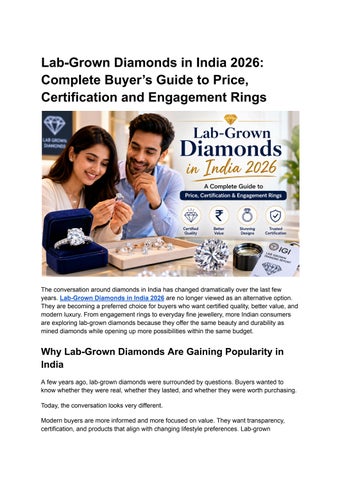
Lab-Grown Diamonds in India 2026_ Complete Buyer’s Guide to Price, Certification and Engagement Ring
Lab-Grown Diamonds in India 2026: Complete Buyer’s Guide
to Price, Certification and Engagement Rings
The conversation around diamonds in India has changed dramatically over the last few years Lab-Grown Diamonds in India 2026 are no longer viewed as an alternative option They are becoming a preferred choice for buyers who want certified quality, better value, and modern luxury. From engagement rings to everyday fine jewellery, more Indian consumers are exploring lab-grown diamonds because they offer the same beauty and durability as mined diamonds while opening up more possibilities within the same budget
Why Lab-Grown Diamonds Are Gaining Popularity in India
A few years ago, lab-grown diamonds were surrounded by questions. Buyers wanted to know whether they were real, whether they lasted, and whether they were worth purchasing
Today, the conversation looks very different
Modern buyers are more informed and more focused on value They want transparency, certification, and products that align with changing lifestyle preferences Lab-grown
diamonds have entered that space successfully because they deliver the appearance and performance of natural diamonds at a significantly lower price.
India has also become one of the most important global centres for lab-grown diamond production, with Surat playing a major role in manufacturing and supply
What Are Lab-Grown Diamonds?
Lab-grown diamonds are real diamonds
They are made from carbon and have the same physical, chemical, and optical properties as mined diamonds. They score 10 on the Mohs hardness scale, which makes them one of the hardest natural materials available
The only difference between lab-grown and natural diamonds is their origin.
Natural diamonds form underground over billions of years through geological processes Lab-grown diamonds are created in controlled environments using advanced technology that replicates those natural conditions.
Once completed, even experts require specialised equipment to identify whether a diamond is lab-grown or mined
How Lab-Grown Diamonds Are Created
There are two major methods used to create lab-grown diamonds
1. Chemical Vapor Deposition (CVD)
CVD is one of the most widely used processes in India. In this method, carbon-rich gases are introduced into a chamber where carbon atoms gradually form layers and grow into a diamond crystal
This process allows excellent control over quality and consistency.
2. High Pressure High Temperature (HPHT)
HPHT recreates the natural conditions found deep within the earth by applying intense heat and pressure to carbon material.
The result is a real diamond with the same structure and brilliance as a mined stone
Both methods typically produce diamonds within several weeks instead of requiring geological timescales
Lab-Grown Diamonds vs Natural Diamonds
One of the biggest questions buyers ask is whether lab-grown diamonds are different from natural diamonds.
From a visual perspective, they are almost impossible to distinguish
Here is what buyers should understand:
● Same sparkle and brilliance
● Same durability and hardness
● Same grading standards
● Different origin
● More accessible pricing
For many buyers, especially younger consumers and couples shopping for engagement rings, this difference in origin does not outweigh the advantages of affordability and flexibility
Understanding Diamond Certification
Certification is one of the most important factors when buying any diamond.
Whether natural or lab-grown, a certified diamond provides assurance about quality and authenticity
Trusted certification bodies evaluate diamonds using internationally recognised standards
Key areas included in certification:
Cut
Determines how effectively the diamond reflects light
Colour
Measures how colourless the diamond appears.
Clarity
Evaluates internal and external characteristics
Carat
Represents weight and overall size.
These four factors together are known as the 4Cs
Before purchasing, buyers should always ask for a certification report and review the grading details carefully
Price of Lab-Grown Diamonds in India in 2026
Pricing remains one of the strongest reasons behind growing adoption
Lab-grown diamonds generally cost significantly less than comparable natural diamonds.
This pricing advantage gives buyers greater flexibility
Instead of compromising on size or design, consumers can often choose:
● Higher carat weights
● Better clarity grades
● Premium ring settings
● Custom jewellery options
For engagement ring buyers, this creates an opportunity to invest in design and craftsmanship while staying within budget
Price still varies based on certification, cut quality, carat size, and overall finishing
Why Engagement Ring Buyers Are Choosing Lab-Grown Diamonds
Engagement jewellery has become one of the fastest-growing categories for lab-grown diamonds
Modern couples are approaching purchases differently than previous generations.
They are prioritising:
● Design over tradition
● Value over convention
● Quality over assumptions
Lab-grown diamonds allow buyers to select larger centre stones, personalised settings, and contemporary ring styles without increasing overall spending
From solitaire rings to halo settings and minimal modern bands, lab-grown options provide extensive design freedom.
How to Choose the Right Lab-Grown Diamond
Buying a diamond becomes easier when the process is broken into simple steps
Define Your Budget
Start with a realistic spending range before comparing stones
Prioritise the 4Cs
Understand which characteristics matter most to you
Verify Certification
Never purchase without proper grading documentation.
Compare Designs
Choose settings that suit long-term wear and personal style
Ask About After-Sales Support
Services such as resizing, maintenance, and cleaning can improve long-term ownership.
Common Myths About Lab-Grown Diamonds
Myth 1: Lab-Grown Diamonds Are Fake
False Lab-grown diamonds are real diamonds
Myth 2: They Do Not Last
False They have the same hardness and durability as natural diamonds
Myth 3: They Look Different
False Their appearance and brilliance are virtually identical
Myth 4: Certification Is Not Necessary
False Certification remains essential regardless of origin
Understanding these facts helps buyers make informed decisions instead of relying on outdated assumptions.
India’s Growing Role in the Global Diamond Industry
India has become a major force in the lab-grown diamond industry
Manufacturing capabilities, skilled craftsmanship, and increasing consumer awareness continue to strengthen India’s position globally
Surat remains one of the leading centres supporting growth and innovation in this category.
As awareness increases, lab-grown diamonds are expected to become an even more established part of India’s jewellery market.
Is a Lab-Grown Diamond Right for You?
The answer depends on your priorities
If you value tradition above all else, natural diamonds may still appeal to you.
If you want certified quality, larger carat options, modern design flexibility, and stronger value for your investment, lab-grown diamonds offer a compelling alternative
There is no universal right choice
There is only the choice that fits your expectations, style, and budget.
Final Thoughts
Lab-grown diamonds have moved beyond being a trend and are becoming a mainstream choice for Indian buyers With advanced production methods, trusted certification standards, and greater affordability, they offer a practical and premium jewellery experience.
Whether you are planning an engagement, shopping for a special occasion, or simply exploring modern diamond options, understanding pricing, certification, and buying factors will help you make a more confident decision.
The future of diamond buying in India is becoming more transparent, more flexible, and more buyer focused than ever before.