Diamond Resale Value: How Pricing and Market Trends Work
Diamonds have long been regarded as symbols of luxury, commitment, and lasting value. While many people purchase diamonds for engagement rings, heirloom jewelry, or investment purposes, there often comes a time when owners consider selling them Understanding how diamond resale value is determined can help sellers make informed decisions and maximize returns
Unlike many consumer products, diamonds do not always retain their original retail value. Their resale price depends on a combination of quality, certification, market demand, and prevailing industry trends Knowing these factors allows sellers to approach the resale process with realistic expectations and confidence.
What Determines Diamond Resale Value?
Several important factors influence how much a diamond is worth in the resale market Buyers carefully evaluate these characteristics before making an offer.
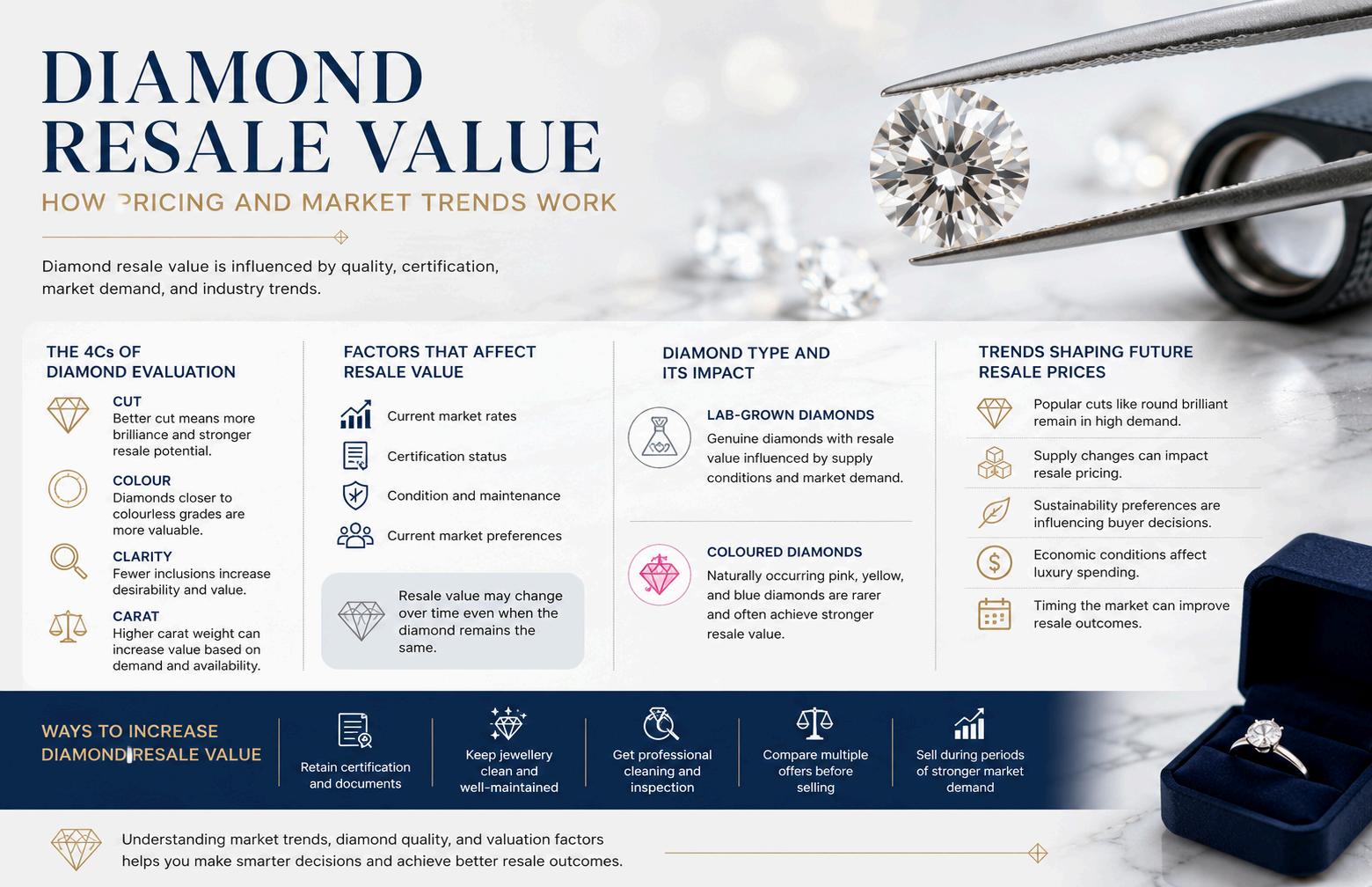
1. Diamond Quality (The 4Cs)
The quality of a diamond remains the most important factor affecting its resale value Buyers assess:
● Cut: A well-cut diamond reflects light beautifully and is generally more valuable
● Color: Colorless or near-colorless diamonds typically command higher resale prices.
● Clarity: Diamonds with fewer internal inclusions or external blemishes are considered more desirable
● Carat Weight: Larger diamonds are generally worth more, although overall quality significantly affects pricing
These internationally recognized grading standards play a major role in determining resale value.
2. Certification
Diamonds accompanied by certificates from respected gemological laboratories usually receive better offers than uncertified stones Certification provides buyers with confidence regarding the diamond's authenticity and quality.
3. Market Demand
Like any valuable asset, diamond prices are influenced by supply and demand When consumer demand increases, resale values often improve. During periods of lower demand, buyers may offer reduced prices
4. Brand and Designer Value
Diamonds sold as part of jewelry from well-known luxury brands may attract additional value due to brand recognition, craftsmanship, and collector interest
5. Overall Condition
The condition of both the diamond and its jewelry setting can influence resale value Well-maintained pieces generally receive stronger offers than damaged or heavily worn items.
How Different Diamond Types Affect Resale Value
Not all diamonds perform equally in the resale market The type of diamond plays a significant role in determining value.
Lab-Grown Diamonds
Lab-grown diamonds possess the same physical and chemical properties as natural diamonds However, because production continues to increase, their resale value is generally lower than that of natural diamonds
Fancy Colored Diamonds
Rare naturally colored diamonds, including pink, blue, and yellow diamonds, can command exceptional resale prices Their scarcity and growing demand make them attractive to collectors and investors.
Natural Diamonds
Natural diamonds continue to perform well in the resale market, particularly those with excellent quality grades and recognized certifications Their limited natural supply supports long-term value
How Diamond Prices Change Over Time
Diamond resale values are not fixed They fluctuate based on changing market conditions and consumer preferences
Market Trends
Global economic conditions, jewelry trends, and consumer buying behavior all influence diamond prices. During strong economic periods, resale values may increase, while economic uncertainty can reduce demand
Changing Consumer Preferences
Modern buyers increasingly consider sustainability, ethical sourcing, and environmental responsibility These evolving preferences have contributed to growing interest in lab-grown diamonds while continuing demand for certified natural diamonds.
Supply and Availability
Limited availability of high-quality natural diamonds can help support resale prices. Increased production or oversupply of certain diamond categories may place downward pressure on resale values
Tips to Maximize Diamond Resale Value
If you plan to sell your diamond, following a few best practices can help you receive a better offer
Keep Original Documentation
Maintain all original certificates, purchase receipts, grading reports, and warranties Proper documentation increases buyer confidence and may improve resale value.
Preserve the Diamond's Condition
Avoid unnecessary wear or damage. Regular professional cleaning and proper storage help maintain the diamond's appearance and overall value
Obtain a Professional Evaluation
Before selling, have your diamond evaluated by a qualified professional. An accurate assessment helps you understand its current market value
Compare Multiple Buyers
Do not accept the first offer you receive Comparing quotes from reputable buyers allows you to identify the most competitive price
Understand Current Market Conditions
Research current diamond market trends before selling Timing your sale during periods of strong demand may result in a better return.
Frequently Asked Questions
1. What is the resale value of a diamond?
The resale value depends on several factors, including the diamond's cut, color, clarity, carat weight, certification, market demand, and overall condition
2. Why are resale prices lower than retail prices?
Retail prices include business operating costs, marketing expenses, manufacturing, and retailer margins Resale prices reflect the diamond's current market value rather than its original purchase price.
3. How do certifications affect resale value?
Diamonds with certificates from recognized gemological laboratories generally receive stronger resale offers because buyers trust independently verified quality information
4. Are lab-grown diamonds valuable in resale?
Lab-grown diamonds do have resale value, but they often sell for less than comparable natural diamonds due to increasing supply and changing market dynamics.
5. How can I improve my diamond's resale value?
Maintaining the diamond's condition, preserving all documentation, obtaining professional evaluations, and comparing offers from multiple buyers can improve resale outcomes
Conclusion
Understanding diamond resale value is essential for anyone considering selling a diamond. Multiple factors including the 4Cs, certification, market demand, diamond type, and overall condition work together to determine how much a buyer is willing to pay
Although resale prices may differ from the original purchase price, careful preparation and knowledge of current market trends can help sellers achieve the best possible outcome By maintaining documentation, protecting the diamond's condition, obtaining professional evaluations, and comparing offers from trusted buyers, owners can make informed decisions and maximize the value of their investment