JOHN CARUSO
President
JEFF GOSNEAR
Vice President, Strategic Plannin Co-Chair
ED BROWN
Secretary, Golf Course Task Force Chair
JOHN MCCOOEY
Treasurer, Finance Chair
WILLIAM BOOTH
Executive At Large, Governance Chair
DANIEL COAR
Strategic Planning Co-Chair
STEPHEN FENNELL Legal Affairs
JAMES A. HORTY, III
Clubhouse Chair
DANIEL LUCKENBAUGH Membership Chair
MIKE MCGUINESS Greens Chair
ANDREW METZ Recreations Chair
PHILIP MORSE Racquets Chair
SHARON COVGINTON
Immediate Past President
CARPIU “C” CHERECHES
GM/COO - Ex Officio
ED BROWN
Golf Course Task Force Chair, Board of Governors
BILL ALLAN
PAT AMENDOLA
RON BARROWS
JOHN CARUSO President, Board of Governors
JEFF CHATHAM PAUL COWAN
NANCY FREEBERY
JOHN MCCOOEY Treasurer, Board of Governors
MIKE MCGUINESS Board of Governors
CHRIS VANUGA
BRITNY WHITBY
CARPIU “C” CHERECHES GM/COO
ALAN FITZGERALD
Superintendent
PAT MASTRIAN Director of Golf
BETHANY WILLIAMS
Membership and Communication Director
Dear RBCC Members,
July 9, 2026
We hope by now you have had the opportunity to thoroughly review the Vision 2030 document shared in March, along with our weekly Eagle Tracks, monthly Eagle Point newsletter, and Board Briefs. In Vision 2030, the RBCC Board and Leadership team presented a plan for carrying us into our next 100 years. This document was developed from listening to you, the membership, in the two surveys conducted last year as well as ongoing discussions. From your feedback and our analysis, the Board has developed a RBCC Strategic Plan with related initiatives to provide a framework for how to sustain and grow this beautiful Club in the future Throughout this process, we have maintained a listening ear, understanding heart, and thoughtful mind to ensure the transparency and clarity needed to make these important decisions
If you have read our monthly letters, you know we have been talking about the need for Capital Dues to cover the growing obligatory costs necessary to maintain the campus and facilities. During these months, the Board, Talon Tribe members and Club Committees have spent well over a thousand hours going through a thorough analysis of the Club’s capital assets and the repair and replacement needs. In addition, we’ve spoken to scores of you--in committee meetings, in focus groups, at Coffees with C, and casual conversations--to learn and to listen to your thoughts about RBCC and the need for Capital Dues. A consistent theme we heard was how much the Members love the experience at RBCC and how much they want to support a plan for the future that is fiscally responsible, transparent, fair, and accountable.
We have developed this communication to explain the WHY, the HOW and the WHAT of Capital Dues. It is important that you know and comprehend the deep dive we’ve taken to understand the need, before coming to the Board’s unanimous decision to recommend to membership a vote to institute Capital Dues As one of our Core Values states, our stewardship requires “ a responsibility to care for the well-being of RBCC today and for the future ” Let’s think of the decision to approve Capital Dues as our gift for the Centennial and beyond!


John Caruso Carpiu “C” Chereches President, Board of Directors General Manager/COO

Member Q&A Meetings
Dedicated Coffee with C
The Vote
Golf Course Architect Joel Weiman
Contractor McDonald & Sons
George, Miles and Buhr LLC (GMB)
DNREC
DelDOT
Sussex Conservation District
Etc. ANY MORE??
Because, simply put, we have a drainage problem
The land RBCC currently occupies was purchased in 1958, when the Club relocated from its downtown location to Bald Eagle Point Between 1958 and 1962, the developer, Great South Beach, raised the surrounding land to create home sites, which negatively impacted the golf course’s drainage Tide gates and piping were installed which are still the same ones we use today The golf course officially opened in 1962 and has since become a stunning, low-lying property along the bay, framed by homes around its perimeter. While this setting is a significant part of its appeal, it also presents ongoing challenges. The following information is from the RBCC Seal Level Rise/Resiliency Report by Brent Jett, P.E., Coastal Resiliency Leader at George, Miles and Buhr, an architectural and engineering firm in Salisbury, MD. The study and report were completed in April 2024.
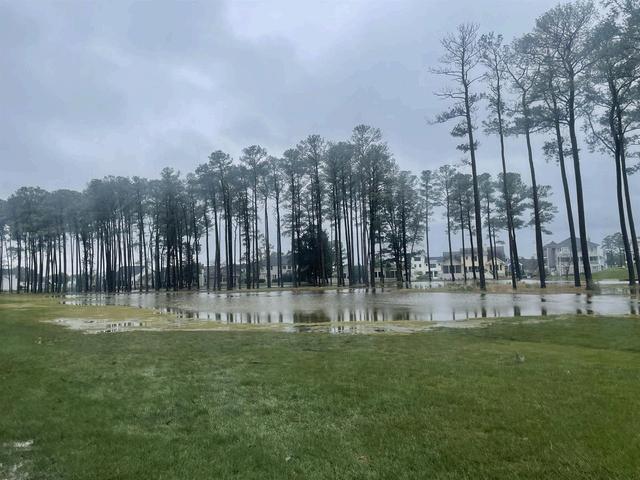
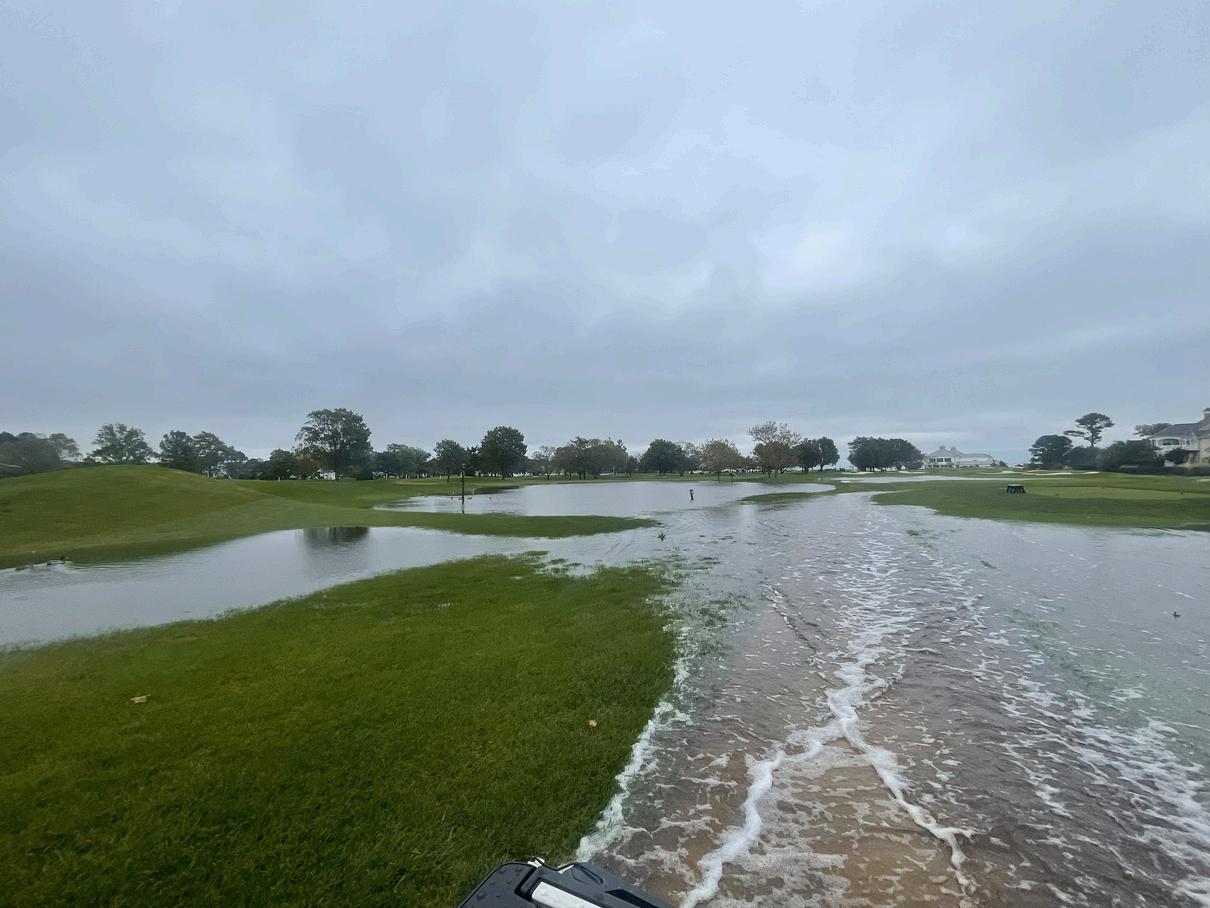
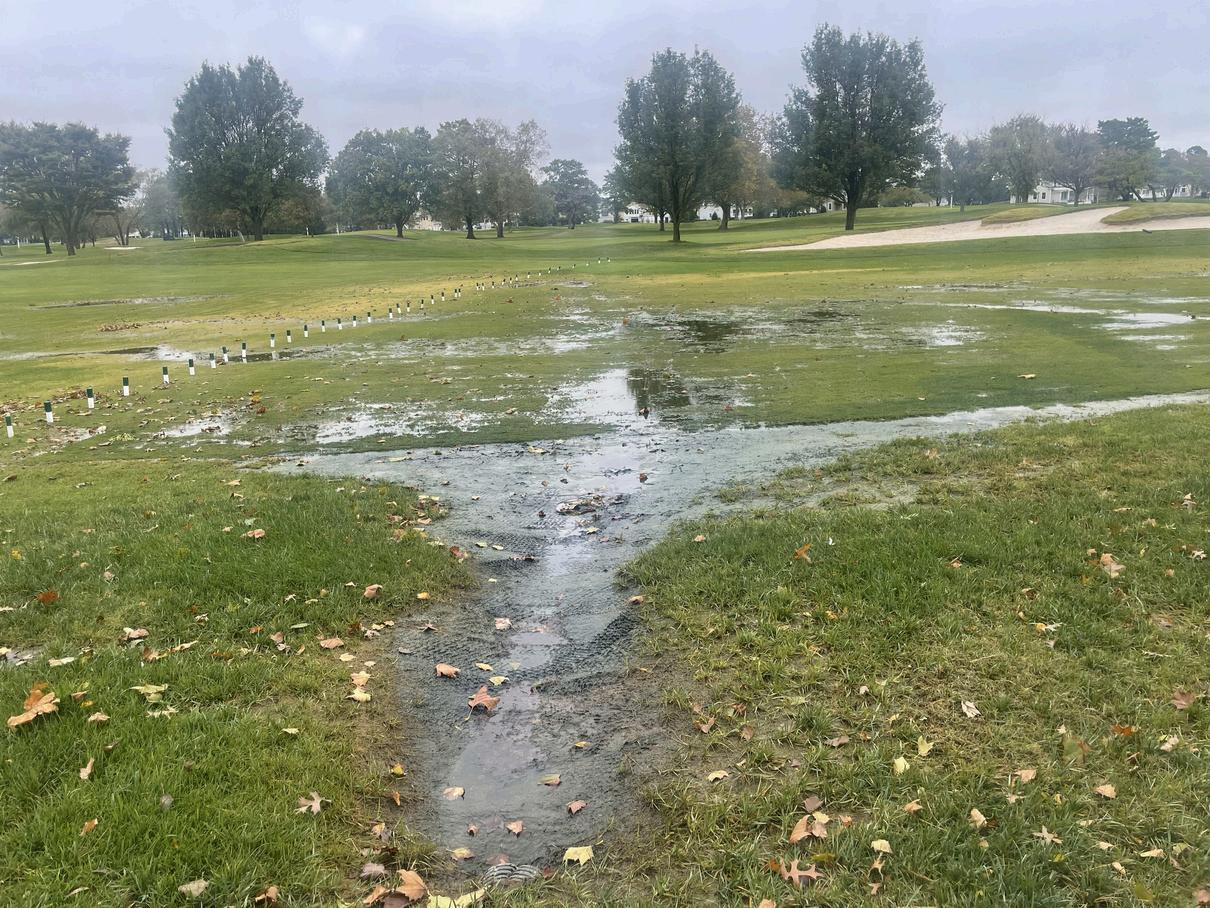
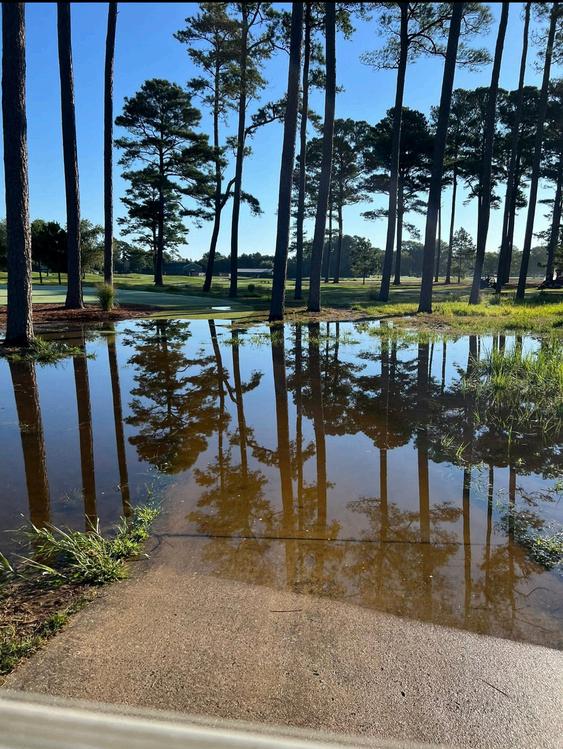
Sea levels are rising. Tides are running higher. Storms are more intense What used to happen occasionally is now happening more often If we don’t plan ahead, flooding will increasingly interrupt play, damage turf, weaken the fairways and stress the infrastructure
What’s Actually Happening? Sea Levels Have Already Risen
Since 1920, sea level has risen about 16 inches
Another 16 inches is expected by 2050
What felt like “extreme” tides in early 2024 could become normal high tides in 20–25 years
That means water sits higher, drains slower, and sticks around longer
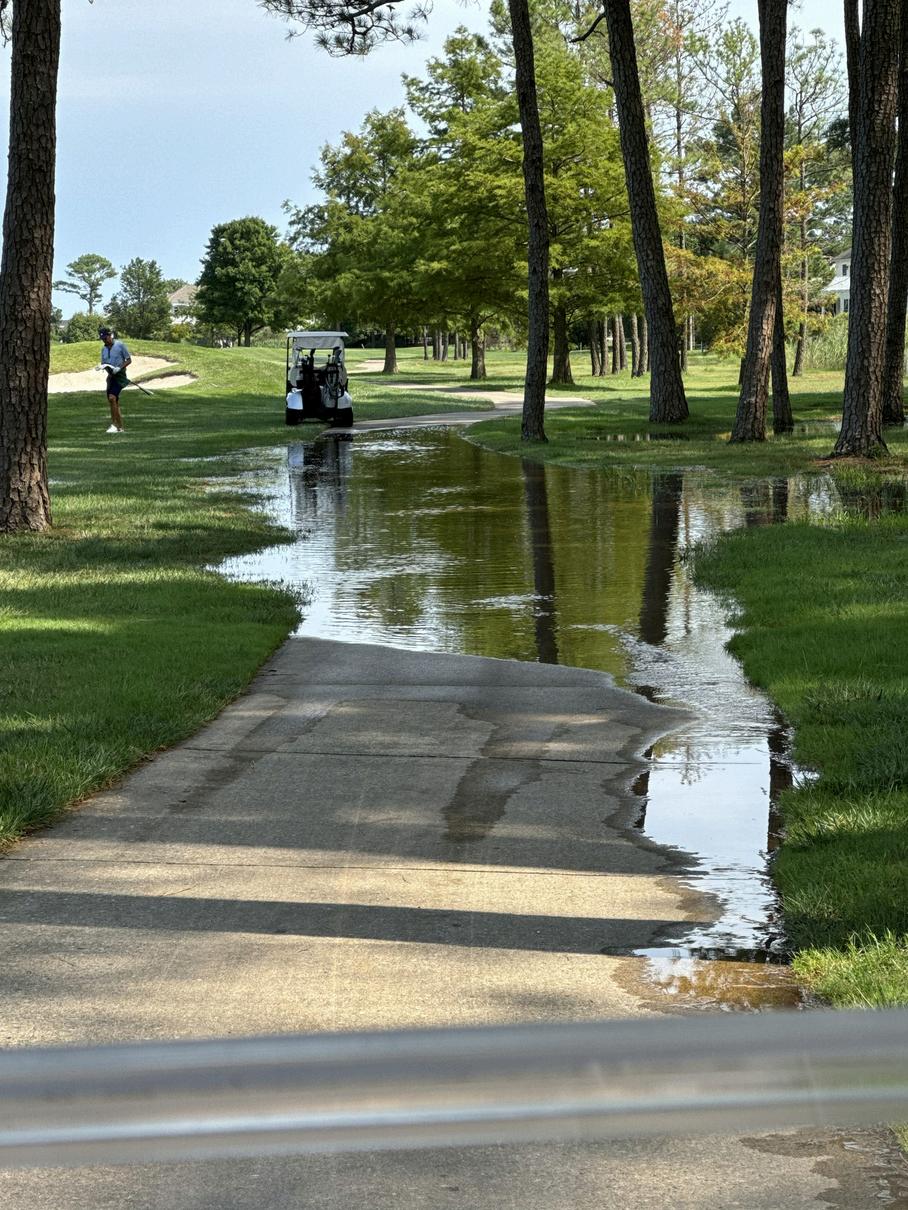
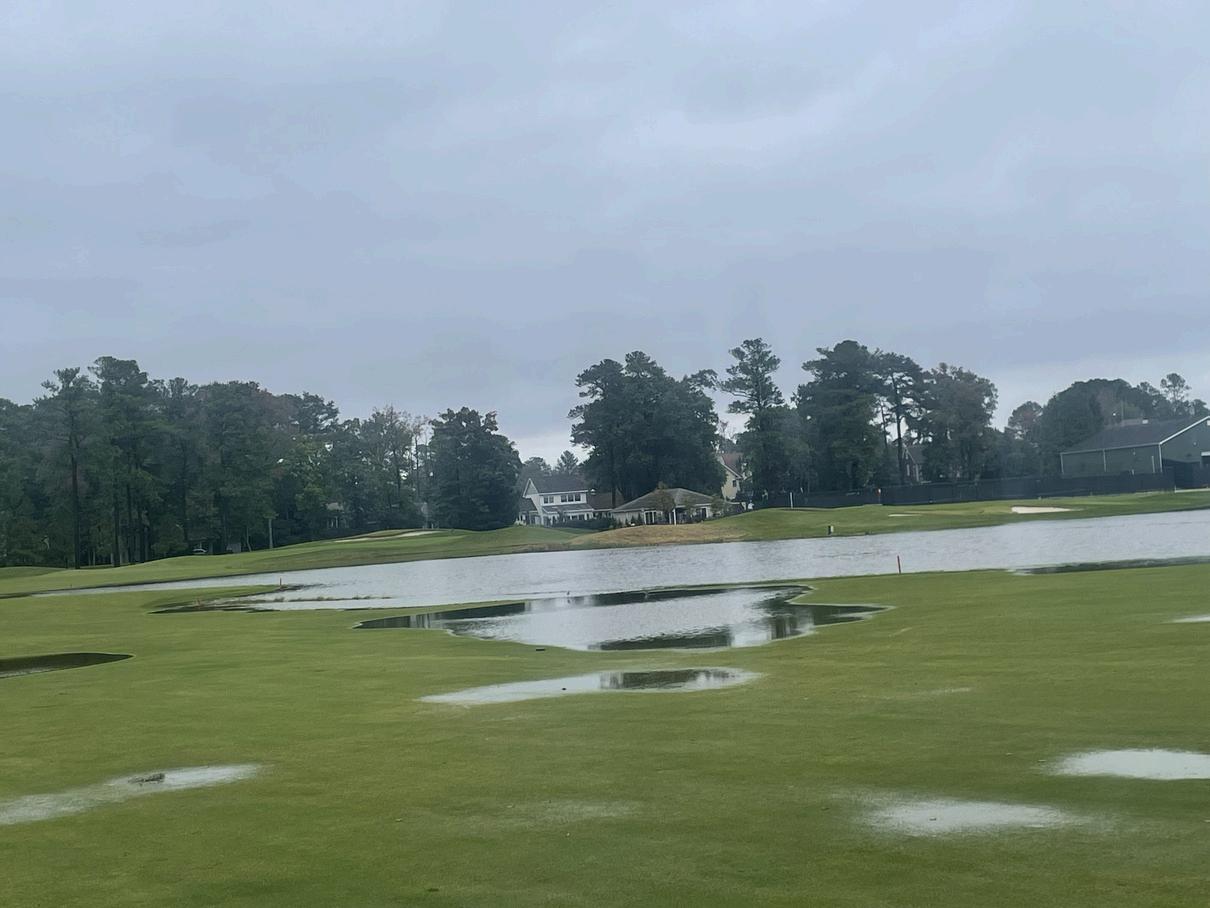
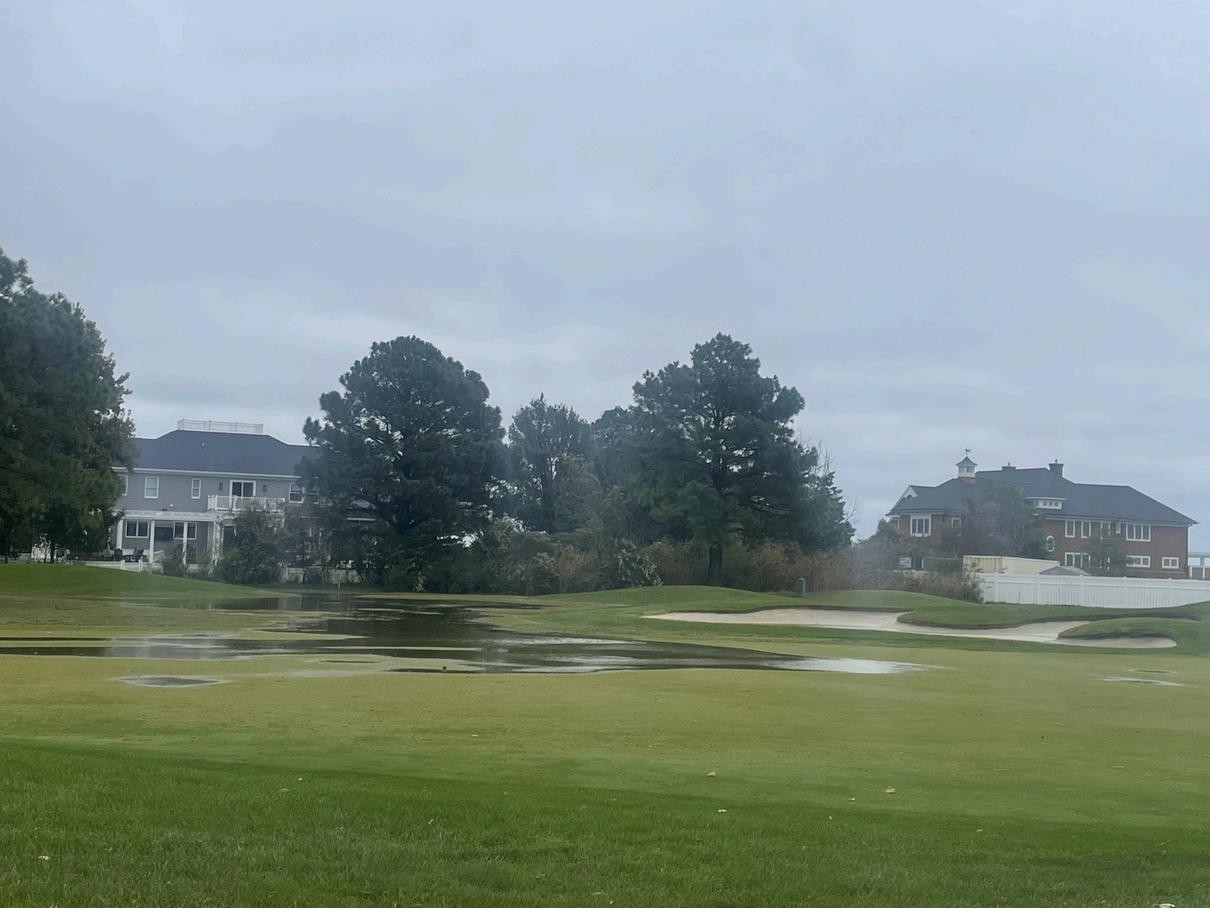
Flooding Is Becoming More Frequent. When tides are high:
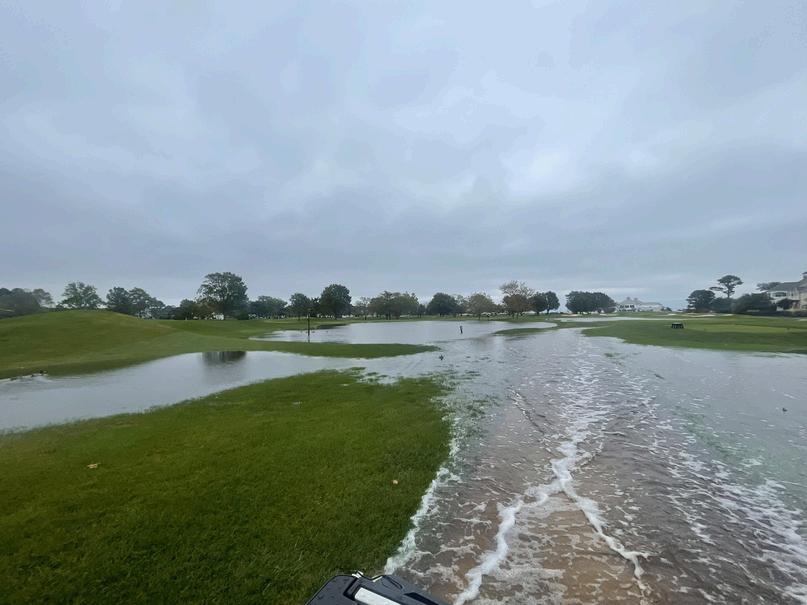
Water cannot drain off the course
Tide gates must stay closed to prevent saltwater from coming in If it rains while gates are closed, water has nowhere to go Fairways flood
Cart paths go underwater
Turf suffers from saltwater damage
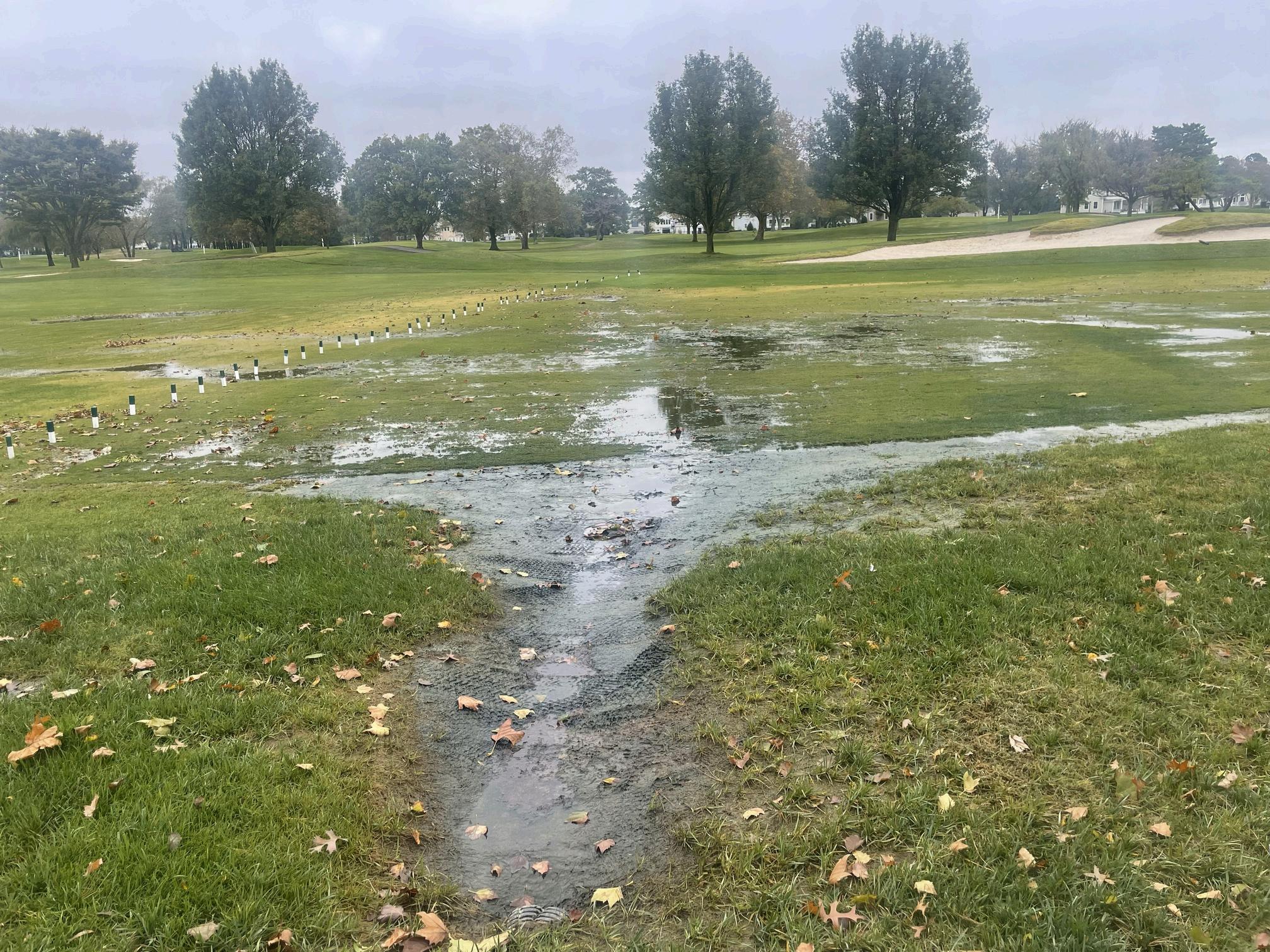
In short, Sea levels have already risen. Flooding is becoming more severe and frequent We have a drainage problem and that affects playability, maintenance, revenue, and future revenue.
Built in the 1960s, the course was not designed to manage current water levels, storm intensity, or saltwater intrusion, and its underlying drainage limitations have never been fully addressed. As a result, saltwater which is highly damaging to turf is impacting larger portions of the course each year, while standing water continues to weaken fairways and stress infrastructure Areas once limited primarily to Holes 16 and 18 have expanded to include Holes 11, 13, 17, and others, with the total affected acreage increasing annually (can we specify an acreage number?).
These conditions are driving rising repair costs, with the Club a spending thousands of dollars each year on turf replacement, labo materials, expenses that are expected to increase as flooding bec more frequent and severe (Can we make a statement here resodding Hole 18 three times, etc.) However, these repairs provid temporary relief, as they address symptoms rather than root c creating a cycle of recurring investment without long-term resol Operationally, the impact is equally significant The course cur experiences approximately five to six full closures during the golf s each year due to flooding, in addition to numerous “walking-only” day limit accessibility and diminish the overall playing experience. As cond worsen, the risk of multiple holes becoming unplayable at the same time increases, potentially preventing the Club from maintaining a full 18-hole playing course.
Click here for a detailed explanation on Hole 15 Winter Kill and the Poa Annua
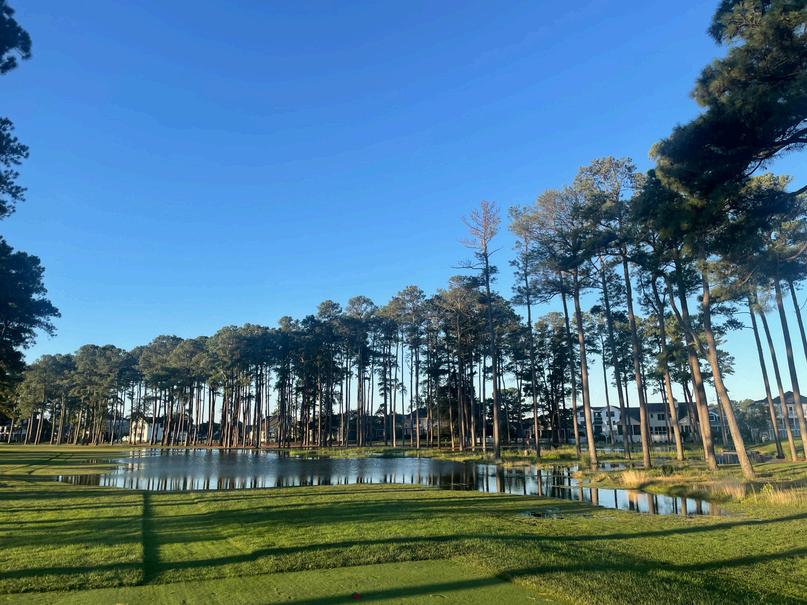
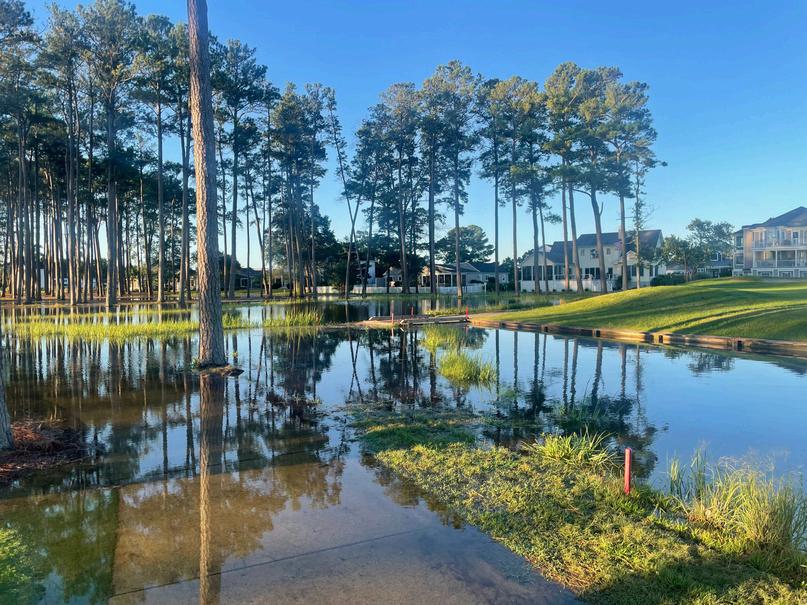
Beyond playability, the environmental effects are becoming more evident, including tree loss in flood-prone areas such as Hole 16 due to prolonged saltwater exposure These challenges collectively impact not only the physical condition of the course but also the consistency, quality, and reliability of the member experience Frequent closures, compromised conditions, and visible turf damage are not aligned with the expectations of a premier private club and, over time, can affect member satisfaction, engagement, and perceived value Without addressing the underlying causes, sea level rise and flooding will continue to escalate costs, disrupt operations, and erode both the quality of the golf course and the long-term sustainability of the Club
Based
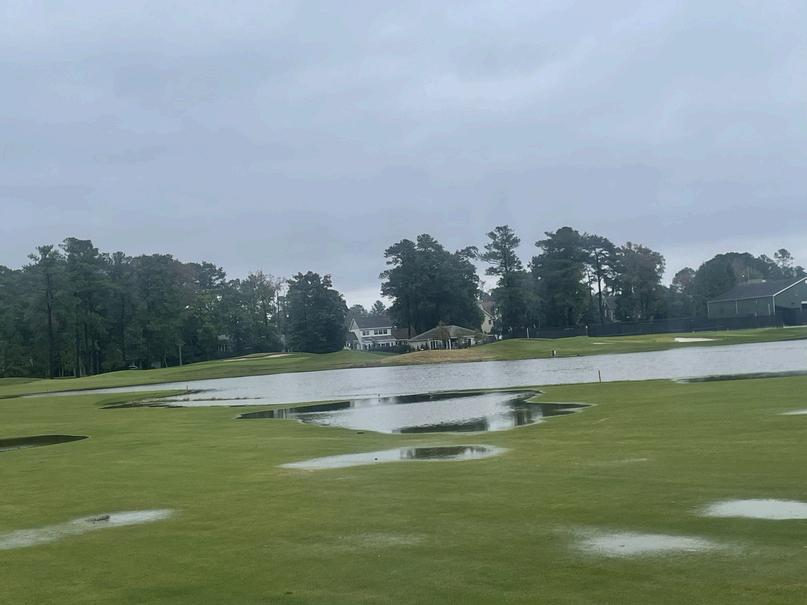
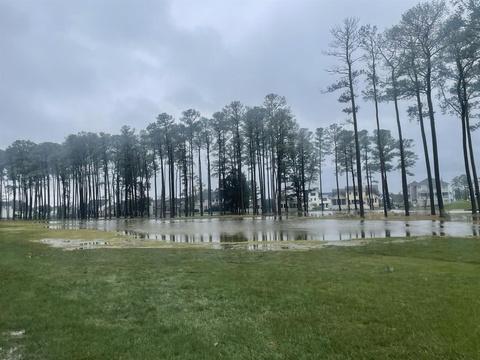
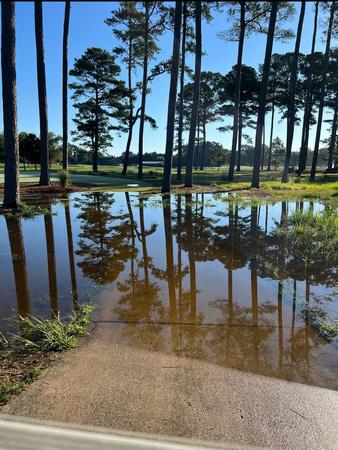
How did we move from this study to the plan?
The “Future of the Golf Course” initiative began as a study to evaluate how best to address the Club’s growing drainage and flooding challenges while positioning the course for long-term success The Board authorized the Golf Committee to engage golf course architect Joel Weiman to develop a conceptual plan, during which the 2024 Sea Level Rise and Resiliency Report was completed.
As the study progressed, it became clear that addressing surface-level improvements alone, such as bunkers, tees, and aesthetics would not solve the underlying issues. Changing water patterns, increased tidal flooding, and inefficient drainage required a more comprehensive, infrastructure-first approach. Extensive hydrologic studies, regulatory coordination, and multiple on-site evaluations were conducted to fully understand the property and define viable solutions. This process also included numerous meetings and ongoing coordination with DNREC, DelDOT, the Sussex Conservation District, and surrounding HOAs to ensure alignment with environmental regulations and neighboring properties. ⟵ any info to back this up that we’re all on board. This will come after meetings/in July.
Throughout this process, the Task Force also carefully evaluated several alternative approaches One of the primary alternatives considered was completing the project in two phases over separate construction periods While this approach may initially appear less disruptive, it presents significant challenges, including increased costs due to remobilization, inflation, and extended contractor timelines, as well as the need for two separate major course closures It would also prolong disruption to golf operations, member experience, and club revenue across multiple years, while increasing the risk of inconsistencies in construction, drainage performance, and turf establishment between phases Even under a phased approach, the course would still likely be closed for the majority of each construction cycle, resulting in the loss of approximately nine months of golf per phase while extending both the overall timeline and cost of the project
Additional variations of a phased approach were explored, including maximizing work in the first construction season and completing remaining elements the following year if needed. While this remains a contingency option, it carries many of the same operational and financial drawbacks. The Task Force also evaluated the possibility of addressing only selected holes or isolated drainage areas. However, because the course’s water management systems are fully interconnected, partial improvements could unintentionally shift drainage issues to other areas of the property, as has been experienced in the past. Similarly, continuing smaller, incremental drainage repairs was considered, but while these efforts can provide temporary relief, they do not address the underlying infrastructure limitations impacting the course.
These evaluations reinforced that a comprehensive, single-phase approach provides the most effective and responsible long-term solution Addressing the course as one complete system ensures that drainage infrastructure functions cohesively, elevations and water movement are properly coordinated, and irrigation and pumping systems operate as an integrated network, without creating unintended issues in adjacent areas
This work informed a competitive bidding process, resulting in the selection of McDonald and Sons Inc as the project contractor In parallel, the Golf Course Task Force, Finance Committee, and Membership Committee conducted detailed financial planning, including five-year cash flow projections, evaluation of the Club’s financial position and debt capacity, and discussions with Fulton Bank regarding funding options Independent guidance from Club Benchmarking and research from similarly affected clubs further strengthened the process and reinforced a commitment to transparency
At the same time, the Club’s Strategic Plan was being updated, and member feedback was gathered through focus groups, ensuring alignment between the project and broader Club priorities.
The result is a well-informed, fully vetted plan that shifts from piecemeal fixes to a holistic solution focused on drainage, water management, and long-term resiliency. By addressing infrastructure and course features together, the plan not only improves playability and conditions but also protects the Club’s investment and positions the golf course for sustained success for decades to come
McDonald & Sons was selected through a comprehensive evaluation process that considered cost, experience, project approach, and overall capability. Their proposal offered a competitive price, within XX amount of one contractor and XX amount under the other, while demonstrating a deep understanding of the site, supported by a proven track record of delivering projects on time and within budget, including prior work at RBCC on... They presented a detailed schedule with a logical construction sequence, along with clearly defined project resources, including a team of 49 personnel and 58 pieces of equipment to ensure timely execution Read more about their timeline and resources on page XX. Additionally, their subcontractor team of whom have previously worked at RBCC on clearing, pond excavation, and irrigation, brings valuable site familiarity and continuity The combined strength of McDonald & Sons and the architect/builder team, both recognized for successfully completing similar projects, provided strong confidence in their ability to execute this project efficiently and effectively
This section waits until we know exactly how we’re planning to pump water off the property
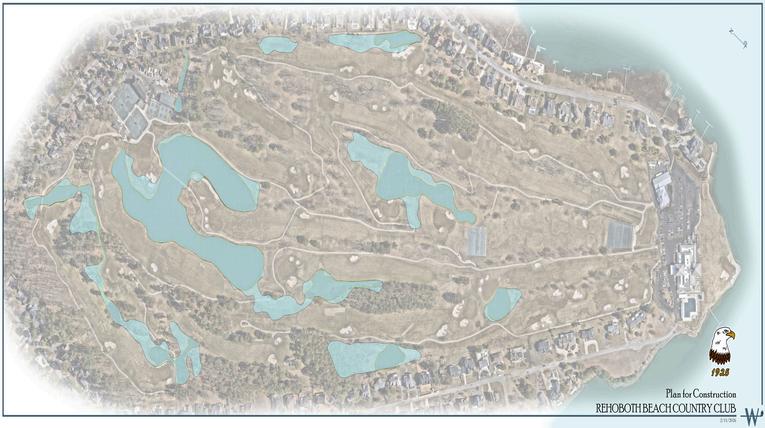
There are 5 Key Improvement Components to this plan All the components highly focus on water mitigation and management Below and on page X you will see the 5 Key Improvement areas and how they change from one stage to the next The first image (top L) showcases the golf course as it is today Here are the 5 Key Improvement Components of the Future of the Golf Course plan
1 Pond Excavation, Enlargement, & Water Management
The fill from pond excavation allows for raising and contouring of tees and fairways
The connection of ponds with leveler pipes allow for all ponds to work together
The larger ponds provide water storage and release for the property and surrounding areas
This helps during heavy rain and higher tides.
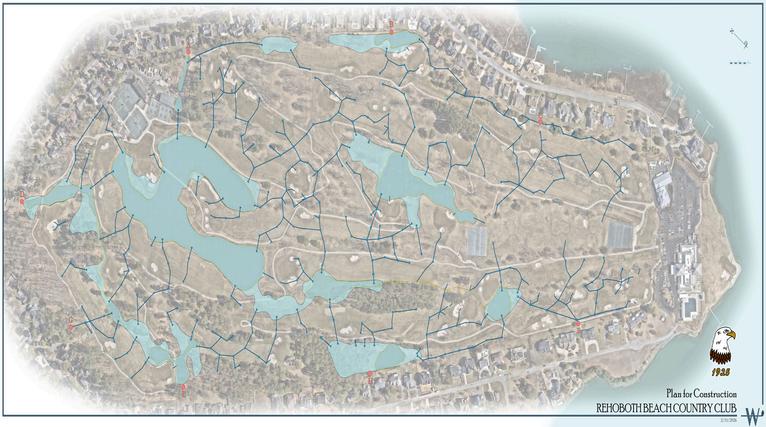
2.Integrated Drainage System
As shown in image 2 the blue lines indicate the integrated webbed drainpipe pattern that interconnects the entire property.
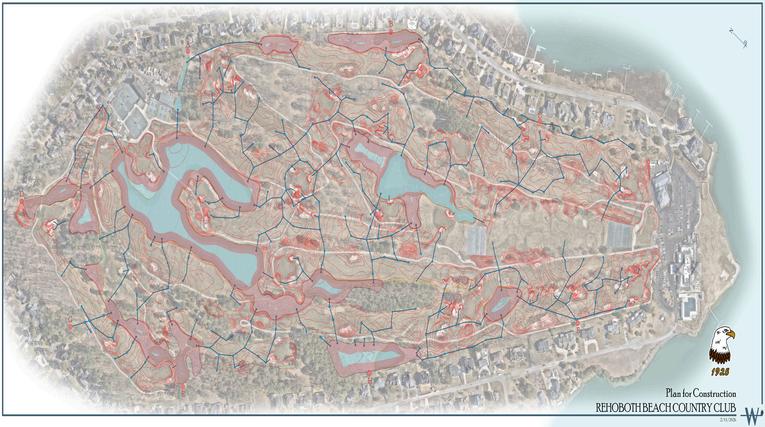
3.Gate Valve & Pump Station Implementation
As shown in image 2&3, the red lettered dots indicate the gates that provide unified water elevation and electric pumps provide a permanent pool with the ability to pump water
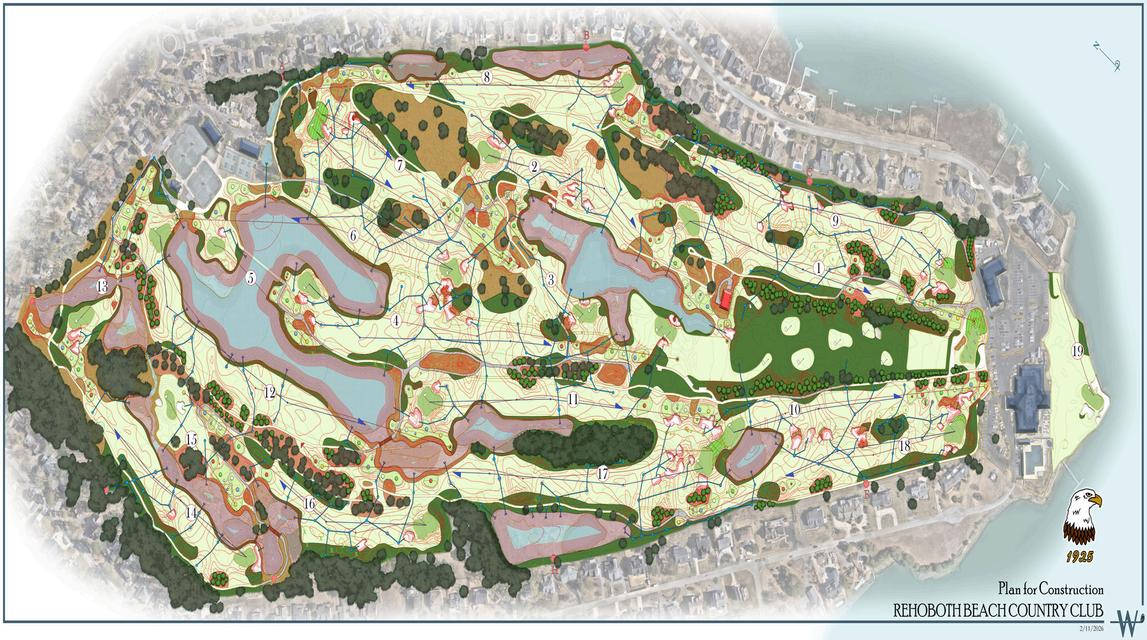
4 Raising & Contouring Key Playing Areas
As shown in image 4, raised fairways prevent flooding and surface drainage pushes water towards piping, catch basins (small blue dots), and ponds allowing for positive drainage rather than the water sitting on the fine turf areas and not being able to escape
5.Enhanced Playability & Visuals
While addressing the drainage challenges, we have the opportunity to enhance playability and visuals.
Enhanced playability and visuals:
Upgraded Bentgrass turf with free-flowing fairways and melded fairways/teeing pads
Addition of 625 newly planted trees
Ten (10) fewer bunkers all rebuilt to Billy bunker specs, easier access for entrance into the bunkers for players, Billy Bunker specs will alleviate maintenance issues from wash outs ← is there better wording?
Addition of pine straw beds throughout the golf course
More playable for higher handicaps with reduction of rough Golf course is stretched giving all members the flexibility to play the yardage that best suits their game
Pictures and link to visuals of what the course will look like.
Click here for an explanation on what Hole 15 taught us and why Bentgrass is the selected as the turf
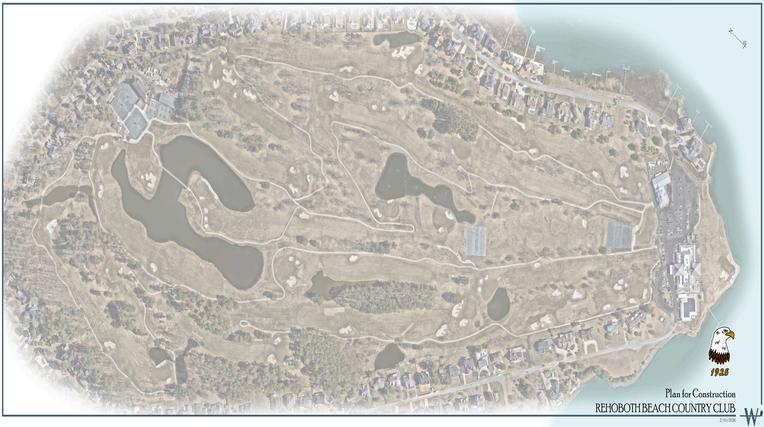
One of the most impactful outcomes of the the Golf Course project is the significant imp in overall playability for Members of all skill le the earliest stages of the design process, arc Weiman approached the project with a clea creating a course that is both acces strategically engaging. By incorporating flex areas, expanding fine turf around gre introducing more thoughtful angles of renovated course will offer a more dyn enjoyable experience for every golfer.
A central element of the design is wha describes as a “rubber band effect,” where th
has been both stretched and compressed This approach introduces greater variety in hole lengths and playing strategies The addition of expansive, free-flowing teeing grounds, rather than fixed tee boxes allows the golf staff to adjust setups daily, ensuring players can experience the course from distances that best match their abilities while also keeping the layout fresh and engaging
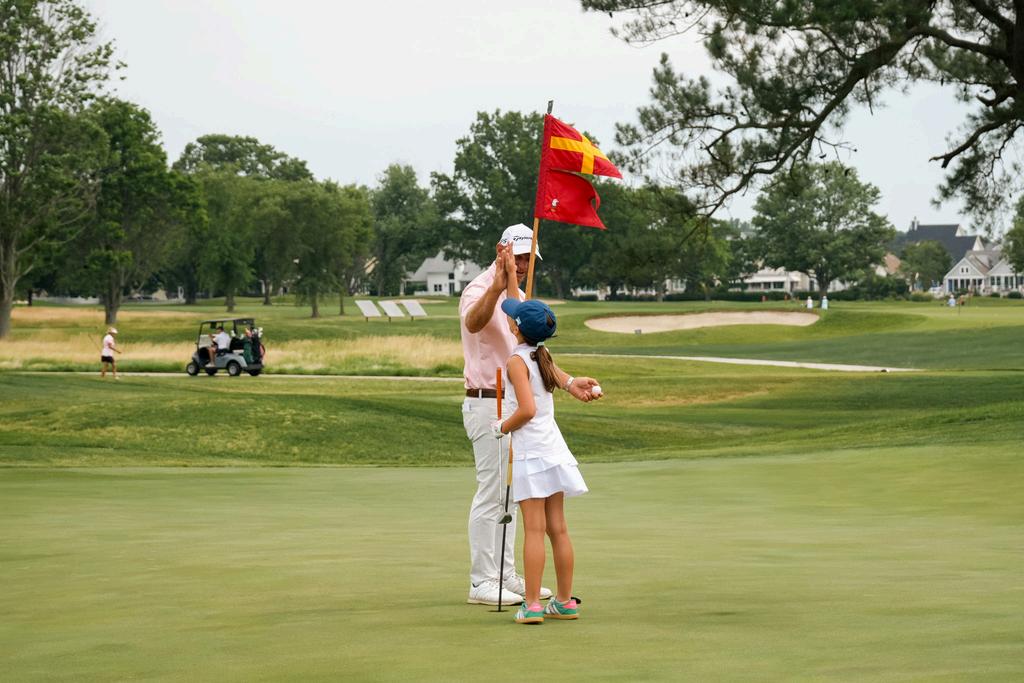
For higher-handicap players, the project introduces a more forgiving and enjoyable playing environment The expansion of closely mown, fairway-height turf around greens replaces many areas that were previously dense rough This change allows for a wider range of simpler recovery options such as putting, bump-and-run shots, or basic chips rather than consistently facing difficult lies As a result, players will experience less frustration, improved pace of play, and greater confidence in their short game Additionally, more accessible landing areas and thoughtful routing will help shorter hitters navigate the course more effectively.
For lower-handicap players, the same design elements create a more strategic and demanding test of skill. Closely mown areas around greens require precision and thoughtful decision-making, as players must choose the appropriate shot, whether putting, chipping, or playing a more creative recovery, from tighter lies. The course’s emphasis on angles further enhances this challenge, rewarding proper positioning off the tee rather than simply distance. Longer hitters, in particular, will encounter narrower landing zones and more complex approaches, introducing meaningful risk-reward decisions throughout the round
In addition, redesigned bunkering will improve both playability and strategy for all golfers. Bunkers will feature more accessible entry and exit points while maintaining their role as key strategic elements. Collectively, these enhancements create a golf course that is more flexible, more strategic, and more enjoyable offering multiple ways to play each hole while ensuring that golfers of every ability level are both challenged and rewarded
The timeframe of mid-August 2027 through the end of May 2028 represents the most strategic and responsible approach for completing the Future of the Golf Course project when considering financial, operational, and long-term performance factors.
The timeframe of mid-August 2027 through the end of May 2028 represents the most strategic and responsible approach for completing the Future of the Golf Course project when considering financial, operational, and long-term performance factors
While construction will begin in mid-August, preparation for the project will start earlier. Turf areas will begin to be treated in July, which will cause the grass to turn brown in advance of construction. Starting in midAugust is critical to the overall success of the timeline. The early start allows for pond excavation during late summer, with the removed soil needing time to dry during typically drier fall conditions before being redistributed and contoured across the golf course. The approximately two additional weeks gained in August are essential to keeping the project on schedule and avoiding early delays that could impact spring completion.
Completing the project within a single construction window significantly reduces overall cost and risk Phasing the work over multiple years would add an estimated $1M or more due to contractor remobilization, increased labor costs, and material price escalation These costs are not linear and are further impacted by market volatility All contractors consulted also bid the project at one-year, reinforcing this approach
A single timeline also ensures material consistency and allows the Club to purchase materials directly rather than through the contractor, creating additional cost savings Without the ability to store materials longterm, a phased project would require sourcing from different production runs, creating potential inconsistencies in appearance and performance across the course
From an operational standpoint, this schedule minimizes disruption and shortens the overall impact on Club revenue and the member experience The goal is to reopen around Memorial Day 2028, preserving the important summer and fall seasons While the course is closed, other Club amenities will remain open, helping maintain engagement and offset revenue loss
Equally important, completing the project at once reduces construction fatigue for both Members and staff. Due to the golf course having only two primary construction access points, behind the Golf Shop and from the Maintenance building, construction activity would impact the entire course regardless of where work is taking place. Phasing the project would extend this disruption over multiple years, while a single construction period contains it to one defined timeframe.
Finally and most importantly, the project is designed to function as one integrated system, with drainage, ponds, and infrastructure all working together Completing this work in a single phase ensures proper performance and allows all course features to mature at the same time, creating more consistent playing conditions long-term This timeline minimizes cost uncertainty, reduces disruption, and ensures the delivery of a cohesive, high-performing golf course built for long-term success
The proposed timeline is achievable due to the contractor’s thorough preparation, detailed planning, and commitment of significant resources Throughout the pre-construction and bidding process, McDonald & Son demonstrated a high level of engagement, working closely with the project architect and the Club’s Superintendent to fully understand the scope and refine their execution strategy prior to final pricing
Their proposal included the most comprehensive construction schedule, along with a substantially higher allocation of manpower and equipment than competing bidders. The plan calls for approximately 40 personnel on-site, including managers, operators/shapers, laborers, and mechanics, supported by 58 pieces of equipment such as large excavators, dozers, haulers, mini-excavators, and track loaders. Each machine will be staffed by a dedicated operator, ensuring maximum efficiency and productivity.
Click here to see McDonald & Sons a graphic of the Equipment and Manpower and project comparisons
The use of experienced subcontractors for excavation, hauling, and shaping further accelerates production and strengthens execution. By subcontracting much of the ground work, McDonald & Son can simultaneously focus on regrassing the greens, creating parallel workstreams that improve overall schedule efficiency Combined with built-in contingency time and a proven ability to manage weather impacts, the schedule is considered realistic and achievable
Additionally, the schedule includes reasonable contingency time and remains achievable even under challenging weather conditions Based on similar past performance, including minimal weather-related delays, there is strong confidence that substantial portions of the course can be completed and established well ahead of the targeted reopening
All bidding contractors also recommended completing the work in a single, continuous construction period. This approach minimizes total disruption, avoids remobilization inefficiencies, reduces costs, and ensures the project is delivered within the most efficient and practical timeframe.
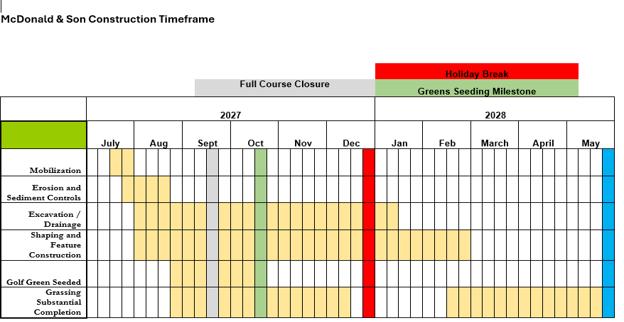
The Club will be open for normal business operating hours for all departments except golf. The driving range will remain open throughout the project with minimal closures taking place when work is being done surrounding the range.
After reviewing member feedback, it became clear that while there is strong interest in expanded playing access, there was also concern that establishing broad reciprocal agreements could create significant longterm demand on our own golf course in the future. With that in mind, the Club has taken a more strategic approach focused on securing limited access opportunities, if the course renovation project is approved. At this time, the Club has received proposals and secured limited tee time “blocks” for our membership at both Baywood Greens and Bear Trap Dunes These arrangements are intended to help provide additional playing opportunities for Members during the renovation process while maintaining flexibility and protecting the long-term interests of the Club
In addition to these prearranged blocks, our Golf Operations staff will work closely with Members to assist in securing starting times at other public and semi-private facilities throughout the area whenever possible We are also continuing conversations with several private clubs where reciprocal relationships already exist to explore whether additional availability may be possible during select offseason periods should the renovation move forward
Need facts here on what is decided regarding no aerification, limited events,. guest play, etc.
A large portion of the golf course already floods regularly, particularly on holes 14, 16, and 18. Without intervention, these conditions will only worsen, with additional holes becoming impacted over time. Drainage will continue to be ineffective, recovery times will lengthen, and turf loss will accelerate. As a result, play interruptions will become more frequent, and the overall consistency and quality of the golf experience will decline Major storm events could temporarily place several holes underwater, further compounding disruption and damage At the same time, repair, maintenance, and labor costs will continue to rise significantly, requiring ongoing financial investment simply to sustain current conditions
These challenges extend beyond the course itself Continued deterioration directly impacts the Club’s ability to attract new members, particularly at a time when initiation fees are at a premium and prospective members have high expectations for course conditions and overall quality A declining golf experience can weaken the Club’s brand as the foremost private country club on the Delmarva Peninsula This has a direct impact on overall operations, as increased maintenance spending diverts resources away from enhancing amenities, services, and Member offerings. In effect, choosing not to act not only increases long-term costs, but also risks both the member experience and the Club’s reputation.
As stated in the explanation of the plan to protect the golf course, the Club will need a total of $16M. After accounting for the $1M operating account, the $1.5M Emergency Fund and the $130K CIP Loan Repayment reserves, we ended FY26 with $4.8M in cash/capital. The Board plans to allot $3M of that to the Golf Course project, if approved The balance of the estimated $16M needed would come from a member assessment
The Board recognizes that asking to fully fund and collect $18M per year over the next 10 years is a big request We believe that reducing that to approximately 75 percent of that amount, or $13M per year, positions us well to fund most of our needs and have cash reserves (accumulated from Initiation Fees) as a back-up if needed, thus avoiding loans and assessments.
HOW WILL THE ASSESSMENT, CASH RESERVES, & OBLIGATORY CAPTIAL BE MANAGED?
WHAT SORT OF MEMBERSHIP ASSUMPTIONS HAVE WE FACTORED INTO THE FUTURE OF THE GOLF COURSE PLAN?
If the Future of the Golf Course initiative does not pass, the Task Force will revisit member feedback to better understand key concerns and evaluate whether any minor modifications could be made That said, the Task Force believes the current proposal represents the most effective long-term solution after thoroughly evaluating all practical alternatives Continuing to address isolated issues on a piecemeal basis, dividing the project into multiple major closures, or delaying critical infrastructure improvements would likely result in higher long-term costs and an overall negative impact on Member experience all while failing to fully resolve the underlying drainage and irrigation challenges facing the golf course Can we expand more? What about oligatory capital? Other projects being placed on hold for funding?
Submittedquestionsduring
Just as we recognized the need for Member focus groups before making the decision on how to structure the Future of the Golf Course and developing this kickoff communication, we recognize the need for Member meetings to further open up the communication and answer important questions to ensure the membership is fully informed before the vote on the Future of the Golf Course
MEETING DATES: INFORMATION BELOW FROM CAPITAL DUES USED AS PLACEHOLDER
June 22 | 3pm - 4pm
June 28 | 4pm - 5pm
July 19 | 5:30pm - 6:30pm
Meetings will be held on the second floor of the Clubhouse in the Bayview Room Zoom access will be available for those who can’t make it in person To register for a Member Meeting, use the ForeTees app, Club Website or call the Club at 302-227-3811 YOU CAN ALSO CLICK HERE TO REGISTER!
Assessments can only be passed where at least 40% of the Club’s stock are represented in person or by proxy.
A quorum of 33 ⅓ must be met to pass the vote.
The Board requests the Stockholding Membership of Rehoboth Beach Country Club review the Future of the Golf Course plan and vote by Saturday, September 5 at 10am.
Three ways for Stockholding Members to vote will be available which include the following with more details below:
Mailing in a ballot
Digital voting via emailed ballot
In person at the Club on Saturday, September 5
Can’t attend a Member Q&A Meeting, but have a question?
Click here to submit a Question for someone to contact you personally.
Mailed proxies will be sent to each Stockholding Member on Friday, June 21 and must be received by Parkowski, Guerke & Swayze, P.A. 909 Silver Lake Blvd, Dover, DE 19904 by
Emailed proxies will be sent to each Stockholding Member of Rehoboth Beach Country Club on Friday, . You must submit your digital proxy on or before 4:00pm on For questions regarding digital proxies, email the Club at office@rehobothbeachcc.com.
By email to mteichman@pgslegal.com. For your proxy to be counted, a signed and checked copy of this proxy must be attached to your e-mail as a .PDF file. Please make sure that the subject line of the e-mail reads “RBCC Proxy.”
In-person voting will be available in the Clubhouse Lobby on from 8:00am to 11:00am. You may deliver your completed ballot in a sealed envelope to the General Manager no later than