Safe installation of buried pipework
ISU 132: IGEM/G/1 Gas Safe
Ready to renew? 2026/27 registration fees announced Digital licence cards

Safe installation of buried pipework
ISU 132: IGEM/G/1 Gas Safe
Ready to renew? 2026/27 registration fees announced Digital licence cards
There are lots of conversations about the risks posed by social media, smartphones – and disinformation. Without wanting to dismiss those arguments, it’s also important to acknowledge the massive benefits these technologies have.
You now have, literally in your hand, the ability to run your business, book appointments, order parts, speak to technical support, look up industry guidance or detailed technical specifications for any appliance you encounter. You can find customers and customers can find you.
For the Register, it’s also about understanding how to work in a world with this technology and how digital channels can be best used to communicate with you. We have had a really positive response to the first few editions of our monthly enews, and we are continuing to innovate.
You can now see news stories first on the Registered Gas Engineer website and we are launching dedicated RGE channels on Instagram and LinkedIn – look for @registeredgasengineermagazine. It’s all about adding new options and we always want to know what you think.
We also know you like to see the law being enforced and this edition includes several updates about the recent prosecution of illegal gas workers. But it’s you who are often best placed to see illegal and dangerous gas work first – and you can make a real difference by reporting it to Gas Safe Register and HSE.
Scott Darroch, managing editor
Gas Safe Register, PO Box 631, DARLINGTON, DL1 9GD
Email: enquiries@gassaferegister.co.uk, register@gassaferegister. co.uk or technical@gassaferegister.co.uk
Managing editor: Scott Darroch, scott.darroch@accenture.com
News editor: Sue Harker, suzanne.nee.harker@accenture.com
Features editor: Nicki Shearer, editorial@registeredgasengineer.co.uk
Publisher: publisher@registeredgasengineer.co.uk
Technical consultants: Rob Walkerdine, Jonathan Palmer, Helen Shepherd
Advertising enquiries only: Mike Allen, mike@360publishing.co.uk
Tel: 07917 588511; Ian Tournes, ian@360publishing.co.uk
Tel: 07814 970732
Registered Gas Engineer is produced on behalf of Gas Safe Register. Gas Safe Register, PO Box 631, DARLINGTON, DL1 9GD

Jan-Dec 2024
Issue 190 | March/April 2026
The views expressed in this magazine are not necessarily those of Gas Safe Register. The publishers will accept an advertisement or other inserted material only on the condition that the advertiser warrants that such advertisement does not in any way infringe copyright or contravene the provisions of the Trade Descriptions Act. All copy is subject to the approval of the publisher, who reserves the right to refuse, amend, withdraw or otherwise deal with advertisements submitted to it at its absolute discretion and without explanation. All advertisements must comply with the British Code of Advertising Practice. ABC membership approved 19 March, 2009.

Have you seen Gas Safe Register’s
Many of you will soon receive an invitation to renew your Gas Safe registration and choose your licence card options
Check in on the results of Gas Safe Register’s latest ad campaign PLUS let Gas Safe Register know how it can support you
The paper Benchmark Checklist is being phased out and moving to digital only
23 LPG regulators
A reminder from Liquid Gas UK to check and replace LPG regulators regularly 24 Controls
Zoning can provide great flexibility without the need for expensive pipework modifications – but it may not be right for everyone 26 Your business
Where might you find it, why it’s dangerous, how to recognise it and what you should do if you disturb it 22 Benchmark update
What skills will you need to evolve your business in a changing industry, and how can you work smarter not harder? Making Tax Digital HMRC’s new rules will be here on 1 April, replacing self-assessment. It’s a new way for self-employed people report their income and expenditure
30 Towards net zero
The government’s long-awaited Warm Home Plan set out its plans to lower energy bills and provide energy efficiency upgrades. But what did some of those around the industry think of it?
11 ISU 132 - IGEM/G/1
Edition 3
Defining the boundaries between the Network, primary meter installation and installation pipework 12 Buried pipework
Essential considerations when fitting pipework in internal floors and burying it outside
16 Technical FAQs
Gas Safe Register’s Technical Team share some of the questions they’ve been asked on the helpline recently
18 Asbestos
32 Towards net zero
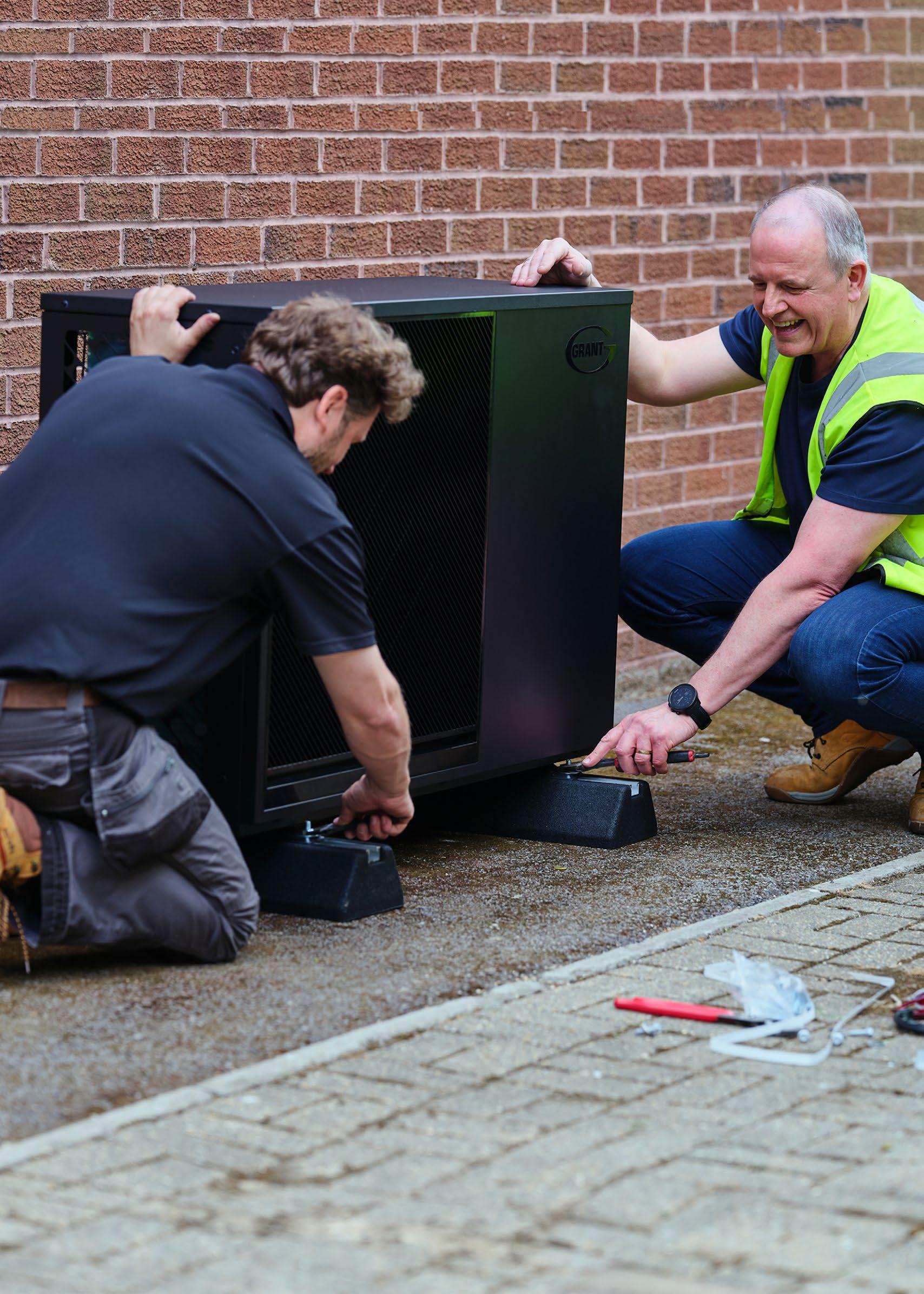
Gas engineers are well placed to support the transition to heat pumps, as one engineer found out for himself
Many gas engineers will be receiving the invitation to renew their registration soon and the fees for registration from 1 April 2026 are on the right.
Fees are based on the renewal start date not the date that renewal is made and paid for, and you can renew when you log into your Gas Safe Register online account.
You’ll also need to choose the type of licence card you prefer. You can have either a physical or digital (or both) licence and you must confirm which type you wish to receive before you renew.
By default, all registered businesses are set to automatically receive both a digital and a physical licence card, so please make sure update your choice when you log in.
After you have renewed, Gas Safe Register will not be able to change the card type or give a refund if you choose an incorrect option.
You can select one of the following three options via the My Account section:
1. Both digital and physical cards (default)
You will receive both versions. An additional fee applies for each physical card issued.
2. Digital card only
This is included in the registration and engineer fee. The digital card will be emailed
to you or to the responsible person. Instructions on how to add the digital licence card to your mobile wallet will be included. The card can also be downloaded from the Engineer Details area in My Account. Please make sure the email addresses for both the engineer and responsible person are up to date. You can update these in Business Details and Engineer Details.
Note: If your mobile phone is protected by workplace security controls, your internal IT team may need to enable access to be able to add them to your Apple or Google Wallet.
3. Physical card only
A physical card will be issued at an additional cost per engineer. If a business logo has been provided, it will continue to be printed on the card. n
You can find out more and renew your registration when you sign into your online account at: www.GasSafeRegister.co.uk/sign-in


The first wave of Gas Safe Register’s 2025/26 winter ad campaign finished in late December and we wanted to share some early results.
The campaign was all about letting millions of consumers know that Gas Safe Register is the only official place to find and check their gas engineer is legally registered. They can breathe easy knowing they have done the
right thing by using a Gas Safe registered and qualified engineer.
You may have caught the ads on commercial TV stations including ITV, Channel 4, Channel 5 and Sky News. Or perhaps seen them in the Daily Mail, The Sun, Metro, the Mirror, the Irish News, the Belfast Telegraph, TV Times and Woman magazine. Or even spotted them on Facebook,
Instagram and LinkedIn. We look forward to sharing the full campaign results next time.
Ad impacts*
TV (Oct-Nov) = 71 million
Radio = 38.5 million
Newspapers and magazines = 42.3 million
Digital advertising = 35.9 million
Social media ads = 32.5 million *at 30 January 2026.
Registered Gas Engineer enews is now a few issues in and we are very grateful for your positive feedback about the new monthly email from us. Please do keep your comments coming in – it’s important that we know what information you value.
We hope you find it useful and will stay with us but you can unsubscribe via the link at the bottom of each issue.
Please let us know what you like or don’t like at: editorial@ registeredgasengineer.co.uk
Follow us too
For even more ways to stay up to date, why not follow us on LinkedIn and Instagram? Just look for @registeredgasengineermagazine

Have your say on the Register’s support for you
Some 98% of registered businesses are SMEs, so the Register wants your feedback to better understand how it can support you and how you use the Register. Please consider completing this short survey, which will help to tailor the Register’s support for you. You can either scan the QR code or go to: https://forms. cloud. microsoft/e/ FySZzrSFcF If you have any specific areas of concern or suggestions for improvement, please email: SME@ GasSafeRegister. co.uk
A lapsed gas engineer has been handed a suspended prison sentence after carrying out illegal gas work in Torquay that left a property with dangerous defects.
Exeter Court heard that Benjamin Owen, trading as BPS and Ben the Plumber, attended the house on Barton Hill, Torquay in February 2023, where he removed an old boiler and installed a new one.
Following the installation, the boiler did not work properly, said HSE, prosecuting. The homeowners arranged for another company to check it. This company called the Emergency Service Provider, which found an escape on the gas supply pipe and capped the supply. Gas Safe Register inspectors found further defects with the installation.
Mr Owen was not Gas Safe registered, although he had been until October 2021.
Ben Owen, of Peter Street, St Hellier, Jersey. pleaded guilty to breaching Sections 3(3), 26(1) and 27(1) of the Gas Safety (Installation and Use) Regulations 1998. He was sentenced to 15 months’ imprisonment, suspended for 18 months, ordered to carry out 150 hours of unpaid work and to pay costs of £1,000.
An illegal gas worker and his Gas Safe registered father have been ordered to carry out unpaid work and given a community order after working at two houses in Cheshire.
An HSE investigation found that Scott Lodge, 37, fitted a new boiler at two addresses in Northwich in April 2022 and December 2022 despite not being Gas Safe registered.
Chester Magistrates’ Court also heard that Scott’s father Brian, who is a registered gas engineer, signed off the work at one property as being safe although he had not attended and checked the boiler for safety.
When one of the homeowners complained to Gas Safe Register, a qualified engineer inspected the installation and found defects that resulted in the boiler being classified as At Risk and Immediately Dangerous. The defects included a lack
of support for the chimney/flue system (pictured).
Scott Lodge, 37, of Adlington Drive, Northwich, pleaded guilty to breaching Regulation 3(3) of the Gas Safety (Installation and Use) Regulations 1998. He was given a 12-month community order and told to complete 200 hours of unpaid work. He was also ordered to pay £2,500 in costs plus £1,460 to one of the affected homeowners.
Brian Lodge, 67, of Merriman Avenue, Knutsford, pleaded guilty to breaching Section 3(2) of the Health and Safety at Work etc Act 1974. He was given the same sentence as his son and ordered to pay the same amount in costs.
Following the hearing, HSE inspector Ian Betley said: “This was a deliberate breach of gas safety legislation by Scott Lodge, who undertook gas work which he knew he
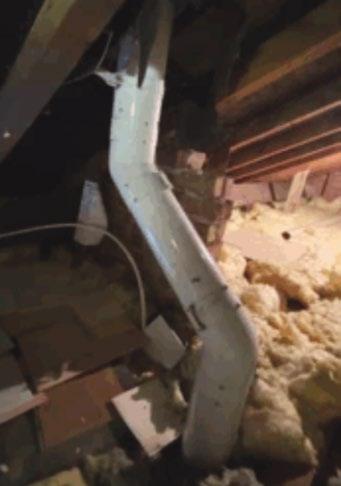
Defects included a lack of support for the chimney/ flue system
was not registered to do. His failures could have led to catastrophic and tragic consequences for the homeowners.
“To make matters worse, Brian Lodge knowingly signed off the work as safe, despite not examining or testing it.”
An illegal gas worker has been prosecuted after he left work in a dangerous condition in Glasgow and Edinburgh and falsely claimed to be Gas Safe registered.
Glasgow Sheriff Court heard that Syed Hussain, from Motherwell, had been given a Prohibition Order by HSE in September 2020 that banned him from carrying out gas work until he became registered. But he ignored the order
and continued to work.
Between May 2019 and February 2024, he worked at several properties in Glasgow and Edinburgh.
The court heard that he “culpably and recklessly” undertook the installation and fitting of gas boilers and gas service pipework, leaving them in an Immediately Dangerous and defective condition.
Mr Hussain falsely claimed
to be registered by using the number of a genuine gas engineer.
He pleaded guilty to breaches of the Gas Safety (Installation and Use) Regulations 1998 and the Health and Safety at Work etc Act 1974.
The court ordered him to carry out 250 hours of unpaid work and tagged him for 12 months, requiring him to stay indoors from 7pm to 7am.
An illegal gas fitter has been sent to prison for 12 months after carrying out dangerous work and faking documents.
Prosecuting at Croydon Crown Court, HSE said Israel Jackson had been contracted to carry out a boiler installation at a 90-year-old man’s home in Croydon but he lied about his qualifications and the company failed to check that he was registered.
Mr Jackson, who has never been registered, installed the boiler at the man’s home in May 2022. He also issued a fraudulent gas safety certificate with a Gas Safe registration number. The pensioner’s relatives raised concerns when they noticed the hot water wasn’t working and they could smell gas.
He returned to carry out repairs more than once, even
after a British Gas engineer had issued an Immediately Dangerous notice. One day after the notice was issued, Mr Jackson demanded that his taxi fare be paid to come back to the house and, while there, he completely ignored the notice and put the boiler back into use.
A year later, in June, a gas engineer from BT Heating and Property issued another Immediately Dangerous notice before replacing the boiler.
Gas Safe Register inspectors confirmed that Mr Jackson was not registered when he installed the boiler and issued the fake certificate. HSE said he had been prosecuted for illegal gas work in 2015 but had continued to work since his previous conviction.
Israel Jackson, of Sandbach Place, London, pleaded guilty
to contravening Regulations 3(3) and 3(7) of the Gas Safety (Installation and Use) Regulations 1998 and was jailed for 12 months.
HSE Inspector Lucy Ellison-Dunn said: “Israel Jackson did not think that the law applied to him. Despite a previous conviction for the same offence, he continued to carry out gas work, in this case putting the life of a vulnerable man at risk.
“He fraudulently told people he was a registered gas engineer despite not having the competence to install the boiler and pipework correctly.”
Mr Jackson had been sent to install the boiler by U-Works Services Ltd. He had told them he was qualified to carry out gas work but the company did not check and verify his registration. HSE issued the company with an immediate Prohibition Notice.
If you find work that you think may have been carried out illegally, you can report it by filling in the “Report Illegal Gas Workers” form in the engineers’ section of the Gas Safe Register website at: www.gassaferegister.co.uk/gas-safety/concernsreporting-illegal-gas-work/ Alternatively, you can call on 0800 408 5577 or report your concerns by email at: nonreg@gassaferegister.co.uk
An illegal gas worker has received a community order and been ordered to pay £2,000 in costs after his work risked the lives of an Ulverston family.
Lee Lancaster, 38, fitted a gas combi boiler and gas pipework at the home in February 2024. Barrow-inFurness Magistrates’ Court heard that, after he had finished the work, one of the occupiers smelled gas near the meter box.
HSE, prosecuting, said the householder contacted Cadent, which found three separate gas leaks. The gas supply to the house was then
shut off for six weeks, leaving the family of four without heating or hot water.
Gas Safe Register investigations officers classified Mr Lancaster’s work as Immediately Dangerous. The HSE investigation found he was not qualified nor competent to carry out gas work and was not Gas Safe registered.
Lee Lancaster, of New Market Street, Ulverston, pleaded guilty to breaching Regulations 3(1) and 3(3) of the Gas Safety (Installation and Use) Regulations 1998. He was sentenced to a 12-month community order,
where he must carry out 200 hours of unpaid work, and was ordered to pay £2,000 costs.
After the hearing, HSE inspector Matthew Shepherd said: “Mr Lancaster knew he was unqualified and not Gas Safe registered yet still took on this work, putting a family in very real danger.”
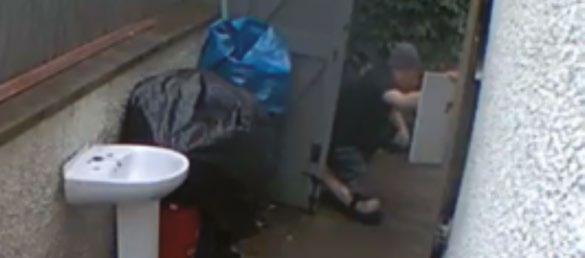
Above: Lee Lancaster carrying out illegal gas work
What’s the worst gas work you’ve seen lately?
You can share your photos with the Gas Safe engineer community on our Wall of Shame by emailing us at: editorial@registeredgasengineer.co.uk
FROM NATHAN SMITH
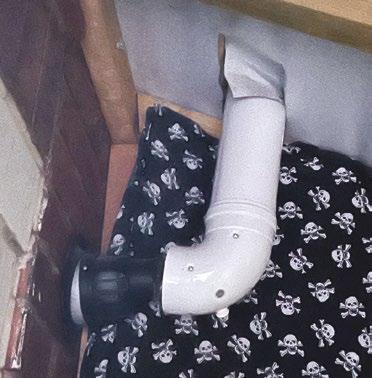
This boiler’s owner had built a lean-to over the original flue terminal and made his own makeshift vertical flue. Nathan turned the boiler off and relocated a new one in an upstairs cupboard.
FROM NICK PROUDMAN
FROM RAKESH GOHIL
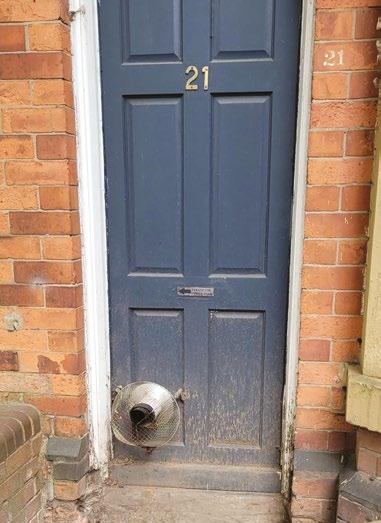
We’ve all seen cat flaps. But a flue flap was a new one for Rakesh.
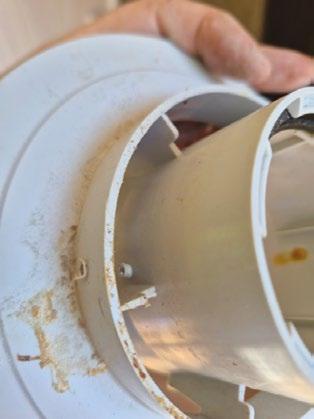
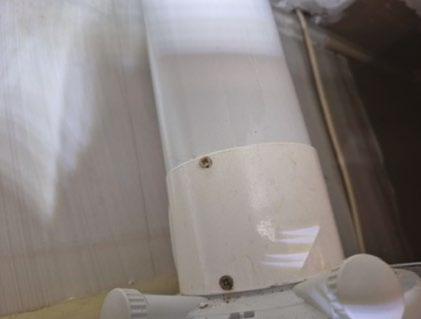
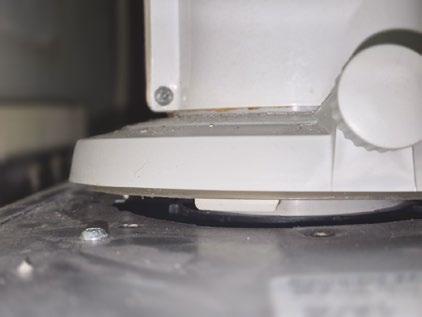
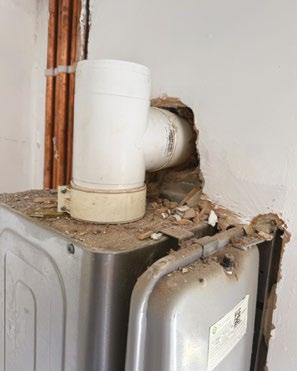
There were a lot of problems with this boiler flue: the connector was not the correct part and the screws securing the collar were also wrong, penetrating through to the inner flue. Add insufficient supports on the flue run and Nick had his hands full to make the installation safe and correct the faults.
FROM ROOSHTM PATALA
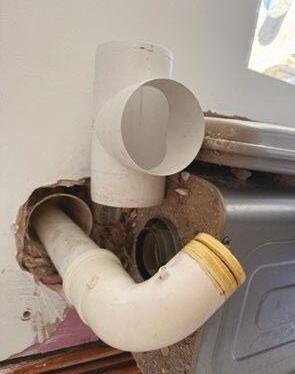
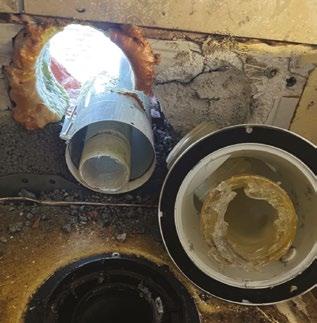
Kitchen nightmares for Rooshtm, who discovered that a kitchen fitter had removed the boiler’s flue elbow and substituted it with a soil pipe connection. He replaced it with the correct fitting.
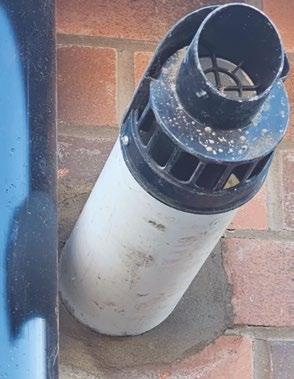
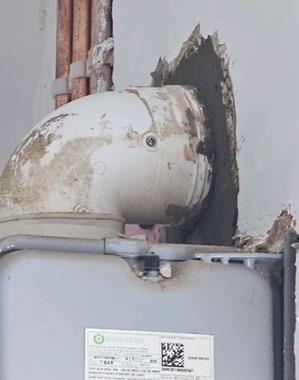
Michael’s customer asked him to fix a leak from the boiler, caused by a split manifold. But the flue was in an even sorrier state, likely caused by condensate due to the telescopic flue being over-extended, he told us. Michael made safe and then fitted a new manifold and flue.
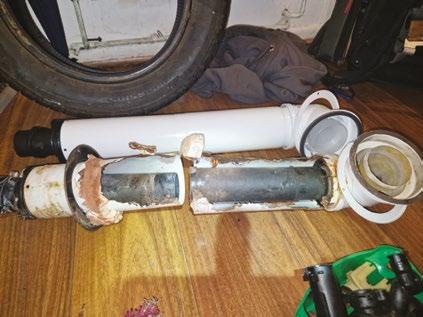
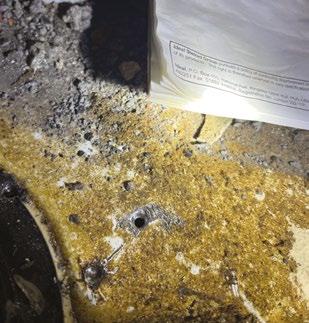
A customer had complained of yellow flames and not much heat from his gas fire. Mario reckons it had never been serviced, so he cleaned the fire and jets thoroughly and left everything working as it should.
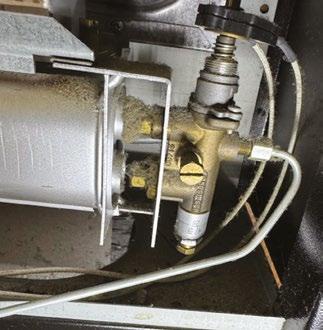
During a landlord’s gas safety record check, Matthew discovered this incorrect flue that someone had attempted to seal with silicone –along with a puncture hole on the top of the boiler casing. The gas supply was disconnected, a warning notice issued and the boiler was replaced.
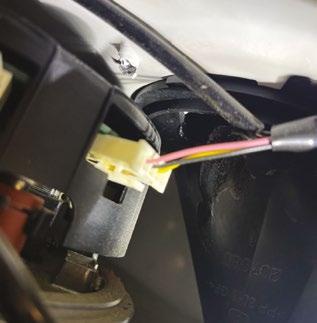
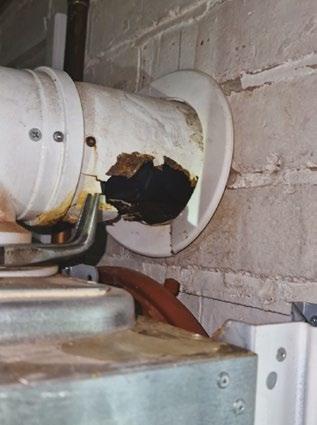
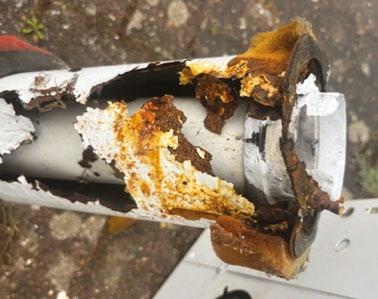
As soon as Esabul attended a non-working boiler, he saw rust and corrosion damage inside the appliance. But the damage to the flue was really something to see. He made safe and replaced the boiler.
FROM OLEH KRAWEC
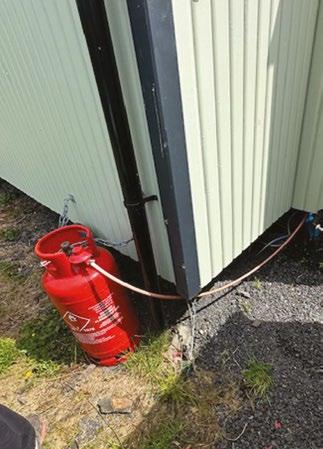
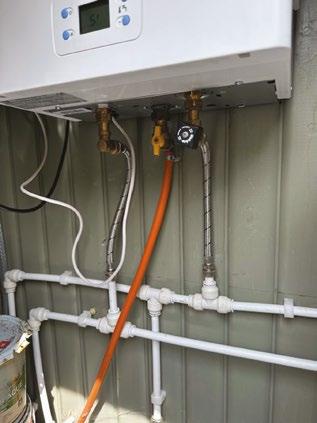
LPG safety supporters should look away. Here’s an LPG feed to a water heater fitted to a shepherd’s hut. Oleh made safe and repiped with an auto changeover on a two-bottle system with safety device.
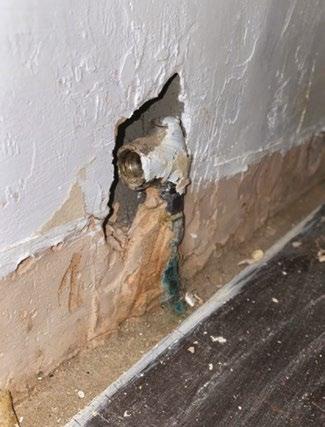
FROM MARK AND STEVEN HALL
A father and son, who are both gas engineers, had a surprise when they removed a fireplace and electric fire at the son’s new house and found this. They made safe by capping the installation pipework at the meter.
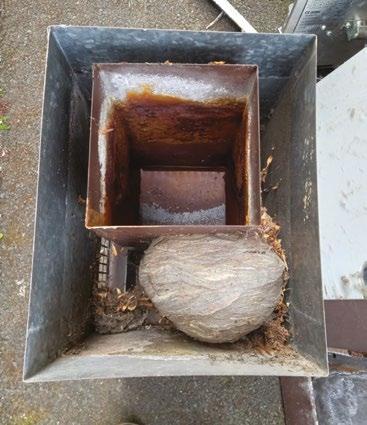
The wasps’ nest at the bottom of the floor-standing boiler was invisible until the flue had been removed. Rob was due to replace the boiler anyway but says he’s not a fan of the old ‘built-in hive’.
RAL 9016 Traffic White & A7016 Anthracite Grey AVAILABLE FROM STOCK

Get colour radiators within 14 working days!
Applicable for all high output Premium Panels, Column, Concord, Caliente Rails, Concord Rails and Classic Towel Rails.


Industry Standard Update 132
Date issued: 19 January 2026
This Industry Standard Update provides an overview of the recently published revised Industry Standard IGEM/G/1 Edition 3 – Defining the boundaries between the Network, primary meter installation and installation pipework, and highlights areas of significant change that the revision has introduced.
Introduction
During November 2025, IGEM published a revision to IGEM/G/1 Edition 2 Defining the end of the Network, a meter installation and installation pipework(1). IGEM/G/1 Edition 3 – Defining the boundaries between the Network, primary meter installation and installation pipework(2) (Communication 1902) supersedes Edition 2 (Communication 1765), which is now obsolete.
The following is a brief overview of the amendments made in IGEM/G/1 Edition 3.
General
As well as the title, the standard has been updated to give a broader and clearer scope, with explicit focus on the three distinct boundary interfaces rather than just the end of the network.
There is a shift from a single end point to a boundary-based framework, with the term ‘end of network’ being replaced with ‘boundaries of the network’.
Some of the definitions in Section 4 have been expanded, primarily that of an Emergency Control Valve (ECV). Where previously there was limited guidance for complex sites or multibuilding premises, there is now expanded guidance for these types of installation. Additionally, the terms Thermal Cut Off valves (TCO) and Excess Flow Valves (EFV) have been introduced to the standard, with the requirements of the valve when included in an installation. Where installed, both valves shall be deemed part of the ECV.
This section has been expanded to include new installations that do not meet the requirements for standard supply arrangements. It states that while any new installation should normally have to comply with the requirements of a relevant standard, not all new installations are able to meet these where an existing onward distribution system exists downstream of the primary meter installations. Wherever deviation is required, certain conditions must be met, which are given in this section.
Legacy sub-deduct arrangements are no longer acceptable and need to be reported to the relevant gas transporter (GT).
Summary
As previously stated, this Industry Standard Update is only a brief overview of the information contained in the amended standard. Registered businesses should be aware that they have a responsibility to ensure that they are fully apprised of all the requirements of the whole published standard and its practical application.
Bibliography
(
1) IGEM/G/1 – Edition 2 –Defining the end of the Network, a meter installation and installation pipework (Communication 1765). (2) IGEM/G/1 – Edition 3 –Defining the boundaries between the Network, primary meter installation and installation pipework (Communication 1907)
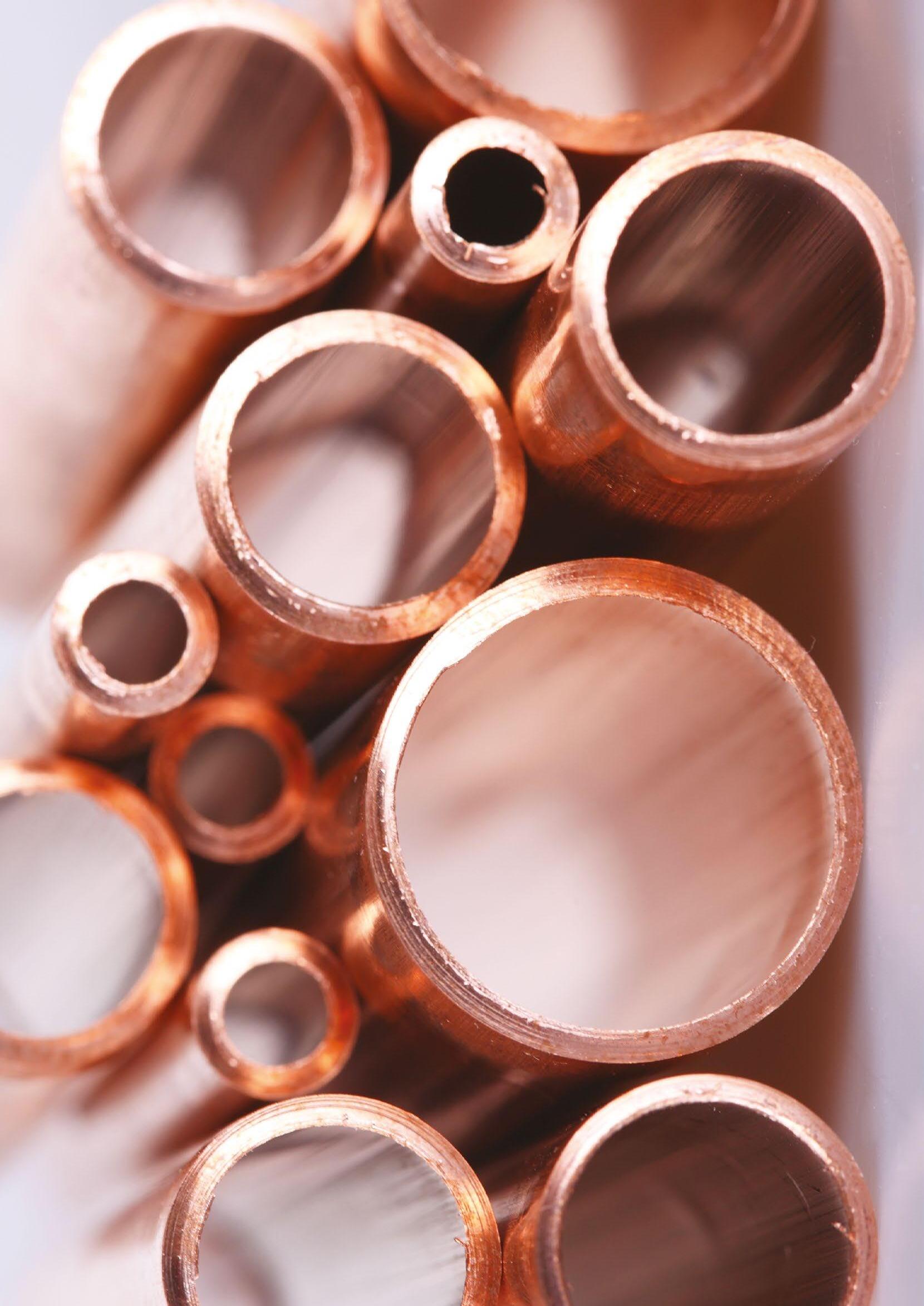
Gas Safe Register’s Technical Team highlight the main points to consider when installing pipework (downstream of a primary meter) in internal floors, as well as burying pipework externally.
Ground floors in older properties are often wooden suspended floors or a solid concrete oversite floor with a further screed on top. Both these traditional types of flooring construction can be a source of heat loss, partly because of the underfloor ventilation needed for wooden floors and because they lack insulation (although insulation can be installed to wooden suspended floors retrospectively).
It is relatively straightforward to run supported gas pipework within, between or under the joists of an existing wooden suspended floor. But in a new housing development, you’ll face different floor constructions that are designed for greater energy efficiency.
Many use a ‘beam and block’ construction on the ground floor, in which a membrane sits above the insulation and below the final screed or concrete floor surface. In these constructions, the gas pipework shall be run above the membrane and sometimes under the insulation. However, pipes will often be installed within the screed floor and there are some important considerations for either method.
Wherever pipework is installed within or is likely to come in contact with a corrosive environment,
such as cement/moisture with screed flooring, then suitable measures shall be taken to protect the pipework from degradation.
Buried external buried pipework shall be inherently resistant to or otherwise adequately protected against corrosion and degradation. Consideration shall be given to the soil type and its likely corrosion impact over time. Metallic pipework to be buried underground shall either be:
• Pre-insulated copper tube with solid covering conforming to BS EN 13349 (normally a roll of annealed factory-coated copper tube), or
• Pliable corrugated stainlesssteel tube with a factoryapplied cover of suitable 0.5mm thickness, which has been specified by the manufacturer’s instructions for direct burial. Always refer to the manufacturer’s instructions.
An alternative to metallic pipework is to use polyethylene (PE) pipework – the same material used for gas service pipework – provided that it is only used externally and transitions to metallic pipework before entering a property. Joints are usually above ground and it is important that the above-ground PE
is protected from UV light and accidental damage by enclosing it in a suitable sleeve.
All types of buried pipework should be continuous in length, without joints underground wherever possible. Any joints used underground shall be specified for this application and will often require additional corrosion protection.
Depending on its location, pipework shall be buried to the minimum depth shown in BS 6891: Table 5 (below)
These dimensions are from the finished ground surface to the top of the buried pipe, which means the trench itself is normally dug out up to 75mm deeper. A minimum of 250mm
drives with light vehicular traffic
Private drives where there is a likelyhood of heavy traffic (such as LPG road tankers)
and agricultural land
private ground
➪
clearance shall be maintained between pipework, foundations and known other utilities unless this is not reasonably practicable. Pipework should not be installed under the foundations of a building.
The bottom of the trench will have a backfill layer of cohesive or granular material such as sand: when the pipework is laid on top, it will have the same material backfilled up to 75mm above it. This is done to protect the pipework from larger/sharp stones when backfilling with suitable previously excavated topsoil. Hard chalk is not suitable for backfill, and wet clay next to pipework should be avoided.
The trench can be backfilled, leaving any joints exposed prior to carrying out a gas tightness test. When gradually backfilling, a yellow plastic gas marker tape indicating the location of the pipework shall be laid 100mm-300mm above the pipe, unless the route of the pipework is obvious, adequately recorded or other means are available to confirm pipework location.
If indicator tape is used in the installation of PE pipework, it is preferred that this tape has a metal core incorporated so it can be identified/located using a suitable instrument. n
✓ Wherever possible, use pipework that has a protective factory-finished coating, such as plastic-coated copper and steel. Corrugated stainless-steel tube (CSST) with a protective sheath is designed for this sort of application.
✓ Joints buried in floors shall be kept to a minimum and shall only be soldered or threaded.
✓ Pipework without a factory coating or any exposed joints shall be wrapped and protected using PVC wrapping tape or self-bonding silicone tape and can be painted using bituminous paints, following the manufacturer’s instructions. Older properties often have a steel ‘carcass’ pipework buried in screed floors that were painted this way.
✓ Pipework may be galvanised or painted but will often require additional on-site corrosion protection.
✓ Grease-impregnated tape can be used – but may require additional PVC wrap (see Technical Bulletin 106).
✓ Assembled pipework shall be gas tightness tested before applying added protection against corrosion and before the screed finish cover is applied.
✓ When installed within a screed, pipework shall have a minimum 25mm covering of screed above the installed pipework.
✓ The flooring insulation can be notched to allow for gas pipe to be run beneath wet underfloor heating circuits but shall not be run under electric underfloor heating.
✓ Pipework shall be run at 90° to the wall.
✗ Install pipework in structural elements of the floor, such as concrete slabs, structural floorings or power-floated floors.
✗ Install rigid stainless-steel pipe in floor screeds.
✗ Install mechanical fittings and press end fittings in solid floors, floor screeds or concrete slab
✗ Damage the membrane by securing clips. Pipework laid within the screed or under the insulation above a membrane will be secure in place without the need for any securing clips
✗ Install any gas pipework in the void beneath a suspended concrete floor or a suspended timber compartment floor. There is no provision in BS 6891 that permits the installation of gas pipework in this area.
✗ Install polyethylene (PE) pipework inside a property.
Bibliography
BS 6891:2015
+A1:2019 –Specification for the installation and maintenance of low pressure gas installation pipework of up to 35mm (R1¼) on premises
Technical Bulletin 106: Corrosion protection of gas installation pipework using grease-impregnated tap
BS EN 13349: 2002 –Copper and copper alloys. Pre-insulated copper tubes with solid covering

For every budget and every application, discover the VITODENS range today

+ Combi, storage combi, system and heat only models
+ Stainless steel heat exchanger
+ Up to 12 years boiler warranty as standard*
+ German engineered quality
+ Comprehensive pre-sales and post-sales support
+ VPlus loyalty programme rewards
*when registered via VPlus


Bibliography
BS 5440-2 –
Flueing and ventilation for gas appliances of rated input not exceeding 70kW net (1st, 2nd and 3rd family gases). Specification for the installation and maintenance of ventilation provision for gas appliances
Gas Safe Register’s Technical Helpline receives around 5,000 calls every month. The team deal with a variety of queries from gas engineers about the gas regulations and relevant guidance documents. These questions are just some of the questions that have been asked recently.
Q: Does a flat or multi-occupancy building always require an Additional Emergency Control Valve (AECV)?
A: An AECV is required when the Emergency Control Valve is located remotely from the dwelling or building it serves. Therefore, if the meter is located away from the flat/ multi-occupancy building –for example, in a basement, external meter bank, meter room or communal area –an AECV must be provided at the point of entry to that individual dwelling.
If the meter is directly attached to the flat itself (ie, supplying only that dwelling and adjacent to/part of the structure), an AECV is not required.
Q: What are the ventilation requirements for a flueless cooking appliance where there is no door or window to outside?
A: A flueless gas cooking appliance may require a permanent air vent depending on the room volume. Table 4 (above) of BS 5440-2 gives the specific guidance. In addition, the room requires purge ventilation that communicates directly with the outside atmosphere. This can be provided by a cooker extractor or separate mechanical extraction fan.
You should also refer to the relevant Building Regulations for the relevant geographical area for more detailed guidance.
Minimum permanent opening equivalent free area for flueless appliances
Type
A cooking appliance eg, domestic oven, hotplate, grill or any combination thereof(C)
NOTE: Further information on ventilation for tumble dryers with input up to 6kW is given in BS 7624 Further information on particular space heaters of nominal heat input not exceeding 6kW burning 2nd and 3rd family gases is given in BS 5871-4. Ventilation requirements for moveable cabinet heaters are given in BC EN 449:2002+A1:2007
A) Alternative acceptable forms of opening include any adjustable grille or louvre, hinged panel or other means of ventilation that opens directly to outside air. This is in addition to the permanent air vent requirement.
B) Where no openable window direct to outside is available, other products shall be sought (see 8.4)
C) The appliance, unless a single burner hotplate/boiling ring, shall not be installed in a bed/sitting room on less than 20m3 volume
D) If the room or internal space containing these appliances has a door which opens directly outside, no permanent opening is required.
Q: I’ve been asked to replace a boiler but the existing flue terminates over the boundary into the neighbour’s garden. Do I need to relocate the flue?
A: Yes. The boiler must be installed in accordance with current Gas and Building Regulations. This means the flue termination must comply with the manufacturer’s instructions, Gas Safety (Installation and Use) Regulations, relevant standards, and Building Regulations.
A flue can not legally terminate over a boundary, so it will need to be relocated as part of the replacement work.
Q: What competencies are required to work on a BBU and BBF?
A: An engineer working on a back boiler unit (BBU) with an attached boiler-backed fire (BBF) unit must hold both HTR1 and CENWAT competencies. This requirement still applies if the boiler section has been left non-operational but the customer retains and continues to use the fire.
Q: Can I notify a stand-alone unvented hot water cylinder through Gas Safe Register?
A: No. A stand-alone unvented hot water cylinder cannot be notified through Gas Safe Register. It must be connected to a gas appliance to be eligible for notification. You should notify the installation of the cylinder through an appropriate Competent Person Scheme.



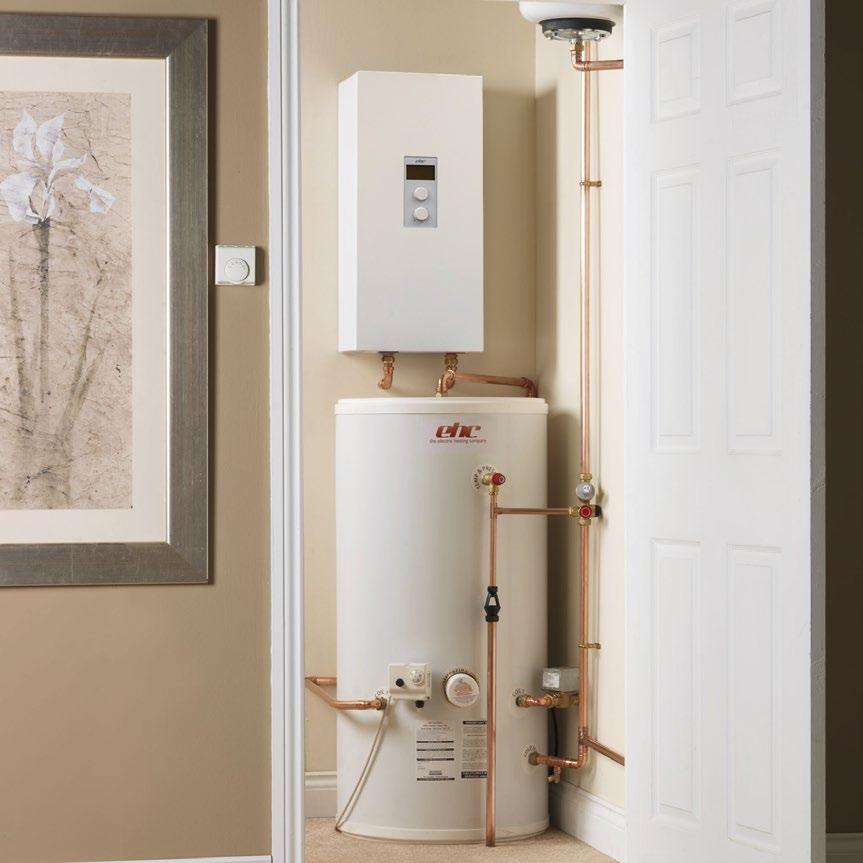


Asbestos hasn’t gone away: thousands of people die every year from previous exposure to the material. You may well come across it in your work and it’s important to know how to spot it, how to stay safe – and what to do if you disturb it by accident.
Exposure to asbestos is the greatest cause of work-related deaths in Great Britain. If you’re a gas engineer, you’re at risk because the materials can be found in a range of household settings, particularly in older properties.
You might find asbestos in lagging around old boilers and old pipework, plasterboard, between cavity walls, under floorboards and in loft spaces – and in other areas too. And there are serious risks to your health if asbestos is disturbed or damaged and harmful fibres are released into the air.
If you are self-employed you must legally take the same steps to protect yourself and others from its dangers as if you were an employee. That includes knowing whether you are likely to disturb asbestos during your work and knowing what to do if you discover or disturb and release asbestos accidentally. This is set out under the Control of Asbestos Regulations.
You must also make sure any work that disturbs asbestos is risk-assessed, planned and completed by appropriately trained and competent workers.
Because you are working on the structure of a building, the activities that could put you at most risk include:
• maintenance and repair
• refurbishment or retrofitting
• demolition
• installation, for example of smart meters.
You are also more likely to be at risk if:
• the areas you are due to work in have not been inspected for asbestos-containing materials beforehand
• information about asbestoscontaining materials was not passed on to you by the people in charge of the work
• you have not had appropriate training to recognise and work safely with asbestos
• the building you are working in was built or refurbished before 2000.
Why asbestos is dangerous
Around 5,000 people die every year from asbestos-related diseases. These diseases typically take decades to develop and cannot be cured. Left alone and in good condition, the risk from asbestos is low. However, once it is disturbed, asbestos fibres can be released and you can breathe them in. The fibres can cause serious diseases that cannot be cured, most commonly:
• mesothelioma
• asbestosis
• asbestos-related lung cancer. These diseases will not affect you immediately: they often take a long time to develop. But once you have been diagnosed, it is often too late to do anything.
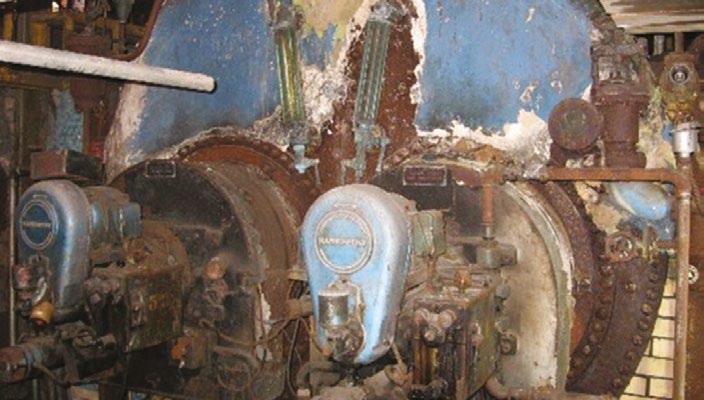
Asbestos lagging is usually found in or on heating systems such as around boilers or calorifiers and around pipework. It’s mostly a fibrous material that flakes and powders easily. When applied to pipes, it is often covered in a protective coating (or painted) which can be any colour and may make it more difficult to identify.
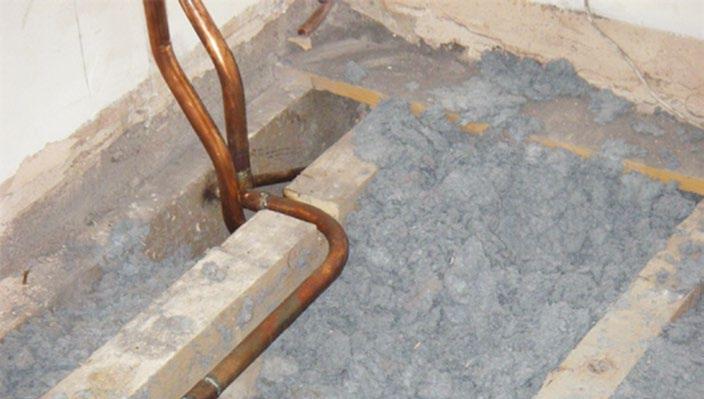
Loose-fill cavity insulation can be found between cavity walls, under floorboards and in loft spaces. It is a loose, fluffy insulation material (similar to candyfloss), which may be blue-grey or whitish in colour.
This is probably the most dangerous asbestos-containing material. Loose fill is made up of pure asbestos and, if disturbed, can release large amounts of fibres into the air.

This was commonly used for fire protection in a range of locations, including internal partition walls and bulkheads above ceilings, fire door panels, lift-shaft linings, ceiling tiles, external soffits and panelling surrounding windows. AIB can be in normal building items such as wall panel boards, ceiling tiles and plasterboard.
It is difficult to tell the difference between AIB items and nonasbestos equivalents. It may also be sandwiched between or surfaced with non-asbestos products.
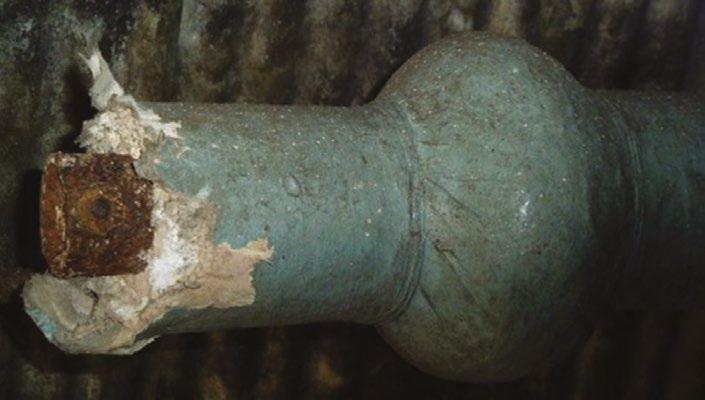
This is one of the most dangerous materials containing asbestos. You are more at risk from breathing in asbestos fibres because disturbing the lagging or insulation releases fibres very easily.
Any work must be carried out by an HSE licensed contractor.
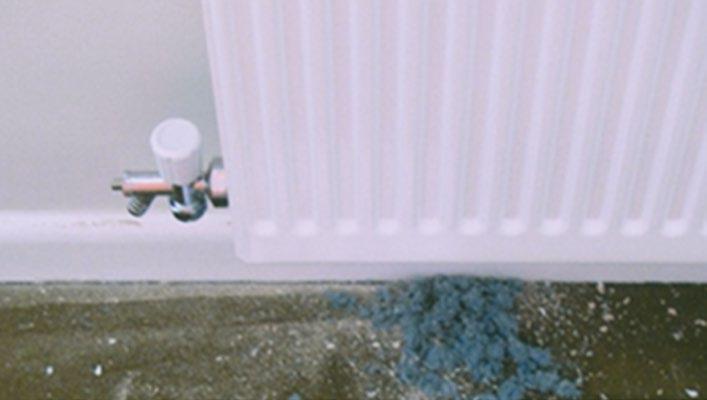
Do not work on this material under any circumstances. Loose fill is made up of pure asbestos and, if disturbed, can release large amounts of fibres into the air.
Any work must be carried out by an HSE licensed contractor.
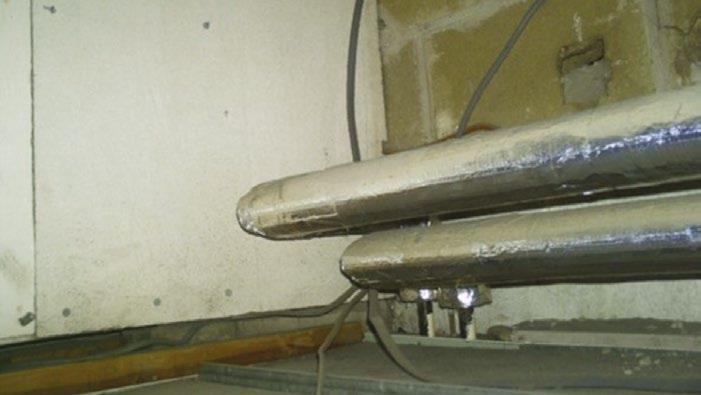
Some short-duration work for small or minor maintenance tasks on AIB can be carried out by non-licensed workers. Some work may be notifiable non-licensed work. Examples of lower-risk, non-licensed work include: painting undamaged AIB, repairing minor damage (for example the broken corner of a panel), removing pins or nail heads sticking out from AIB, drilling holes into AIB to attach fittings, removing a single AIB ceiling tile, and removing a fire door with AIB sandwiched within it.
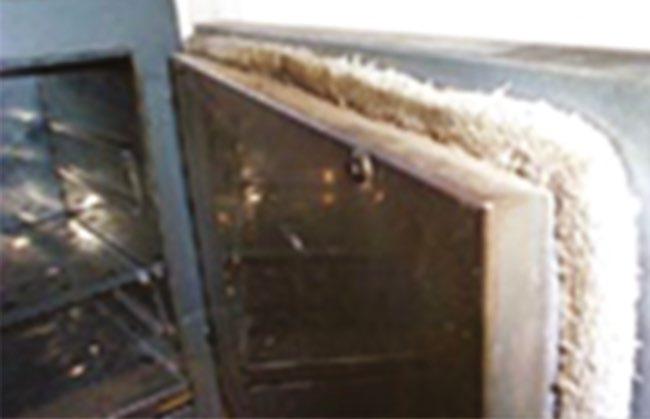
These can be found in fuse boxes behind the actual fuse and in old plant and equipment such as ovens. Asbestos string was widely used in the past by plumbers for sealing various screw thread joints. Asbestos rope seals and gaskets can be found in gas or electric heating appliances. A wide range of asbestos gaskets were used for sealing pipe and valve joints in industrial plant but they may also be found in some older domestic boilers.
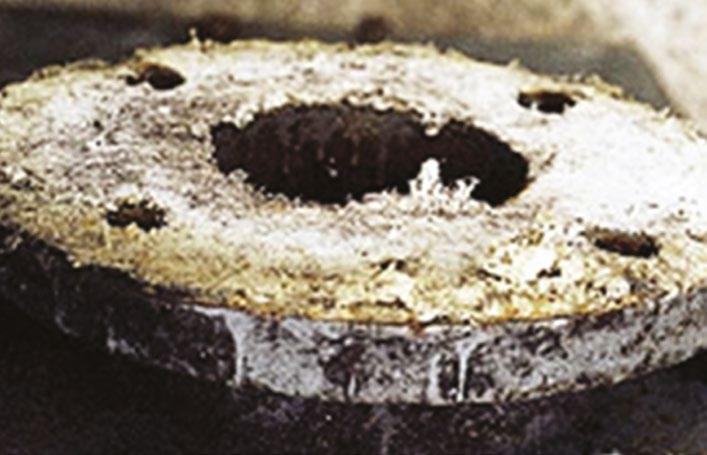
Maintenance and low-risk work can be removing gaskets so they remain virtually intact without substantial breakage. Tasks on these materials should be carried out by non-licensed workers who are trained to recognise and work safely with asbestos. If the gasket or seals are substantially broken up or damaged during removal then the work will be notifiable non-licensed work.
If
asbestos is disturbed during your work, it
• If during your work you discover materials that you believe to be asbestos, STOP WORK IMMEDIATELY. Put up a warning sign and ensure nobody enters the area.
• Report the problem to whoever is in charge and arrange to have a sample of the material analysed. If it does not contain asbestos then work can continue. If the material does contain asbestos then follow the flow chart opposite to decide whether the work needs a licensed contractor.
• Alternatively, presume that the material contains the worst type of asbestos and apply the appropriate controls, using a licensed contractor if required.
• If you are employed, remember to tell your manager to update the
asbestos management plan; otherwise report it to your customer.
Accidental release of asbestos
If you accidentally disturb and release asbestos during your work, it must be dealt with quickly and appropriately.
The clean-up of lower-risk asbestos materials where the fibres are firmly bound in a matrix but are essentially in good condition (ie, mostly intact), such as asbestos cement, bitumen products, papers, textiles, small-scale release of asbestos insulating board (AIB), etc, will generally not require a licensed contractor.
Emergency procedures
• Warn anybody who may be affected
• Exclude from the area anyone not needed to deal
with the release
• Identify the cause of the uncontrolled release
• Regain adequate control as soon as possible
• Make sure anyone in the work area affected who is not wearing personal protective equipment (PPE), including respiratory protective equipment (RPE), leaves the affected area immediately.
• Minimise the spread of asbestos by ensuring they are suitably decontaminated
• Clean up dust and debris (see HSE asbestos guide em7)
• Decontaminate anyone who is contaminated with dust and debris
• Ensure rags, clothing or PPE are decontaminated or disposed of as contaminated waste
• Alert the property owner/ manager. n
Further reading This article is based on HSE’s comprehensive guidance on asbestos at www.hse.gov.uk/ asbestos/ It includes the regulations, examples of where it can be found, and what your responsibilities are. A Worker’s Guide to Asbestos Safety covers where asbestos-containing materials may be found, how to protect yourself, and understanding which work must only be carried out by a licensed asbestos contractor www.hse.gov.uk/ asbestos/workers. htm
em1 – What to do if you discover or accidentally disturb asbestos during your work
Flow chart
Discovered materials that could contain asbestos?
Stop work immediately!
Keep everyone else out of the area
Report the problem to the person in charge as soon as possible
Put up a warning sign ‘ Possible asbestos contamination’
Arrange a sample to be analysed
Does it contain asbestos?
Presume it contains the worst type of asbestos
Apply the appropriate controls, using a licensed contractor if required
No action required
Update the asbestos management plan
Health and Safety Executive
Damaged materials that could contain asbestos?
Stop work immediately!
A little, eg dust on sleeves/ shoes Is there dust or debris on clothing?
A lot, eg contaminated clothes, hair, footwear
Stay put, avoid inhaling dust, put on RPE if possible, damp wipe outer clothing if possible, then remove outer clothing before moving away from source.
Seek help. Helper to put on PPE and RPE before entering area
Wipe down with damp rags
Damp wipe all contaminated items: clothing (as necessary), footwear and skin/hair until visually clean.
Decide if need to wash hair and shower
Put contaminated clothes, towels etc in a plastic bag and dispose of as asbestos waste
Dispose of rags as asbestos waste and keep a record of the event
Decide if the work needs a licensed contractor
3 of 5 pages
Benchmark is changing. Here, HHIC director Stewart Clements explains why the traditional paper checklist is being phased out and replaced by Benchmark Online, supported by an app.
For many years, the Benchmark Checklist has been a familiar part of the heating engineer’s routine. Supplied within appliance installation instructions, it has provided a clear record that an appliance has been installed, commissioned and serviced in line with manufacturers’ instructions, Building Regulations and the relevant British Standards, and that the engineer has explained the system to their customer.
The move to digital is designed to make life easier for heating engineers, ensuring installation and servicing compliance and providing a record for both householders and appliance manufacturers.
The change brings immediate, practical benefits on site. Completing the Benchmark Checklist online is quicker and more intuitive, reducing paperwork and saving time during installation and annual servicing. Once

completed, the heating engineer can send the householder a copy of the checklist by email straight away, removing the risk of paperwork being lost and ensuring they have a clear, accessible service history for their heating system.
Benchmark Online provides a single digital record covering installation, commissioning and ongoing servicing for boilers, heat pumps, hybrid systems and hot water storage. Appliance manufacturers will start to withdraw the paper versions and replace them with the online format, with continuous improvements being made as the platform develops.
Crucially, Benchmark Online is referenced within Building Regulations and schemes including as MCS, reinforcing its role as a recognised route to proving compliance.
As part of the move to the digital platform, all future changes to standards and additions to the Benchmark checklist will only be completed in the digital version and paper versions will be obsolete. This means heating engineers will be required to use the new platform and either complete Benchmark
“Changes to standards and additions to the Benchmark checklist will only be completed in the digital version and paper versions will be obsolete.”
online or download the app to use their smart device.
A significant development is the inclusion of water treatment testing results. Heating engineers will be able to record water quality data directly on to the Benchmark app, including inhibitor checks at commissioning and at each annual service.
Having this information clearly recorded online supports engineers during future service visits, enabling them to identify the inhibitor used, choose the correct on-site test kit and top up concentrations where needed. By reducing paperwork, improving access to records and including water treatment testing as part of the checklist, Benchmark Online supports compliance, efficiency and professionalism. ■
Find out more about Benchmark Online and how to download the app at: www.benchmark.org.uk/
Liquid Gas UK is reminding holiday and caravan park owners and managers to make sure they check LPG regulators on static caravans, holiday homes and communal facilities.
LPG is a safe, efficient and low-carbon fuel when maintained properly. But regulators, which control the pressure of gas from cylinders into appliances, can degrade over time and pose serious safety risks if not replaced in line with the manufacturer’s guidance. This is often every 10 years from the date of manufacture. A visual inspection only is NOT satisfactory.
Richard Hakeem, director of Technical and Safety Policy, says: “LPG regulators play a vital role in keeping gas appliances safe by reducing the pressure from the cylinder to a suitable level.
“A failed or aged regulator can cause over-pressurisation and lead to a dangerous gas leak or even explosion if
LPG regulator safety tips
✓ Replace regulators 10 years after manufacture
✓ Never force a regulator on to a cylinder valve: if it doesn’t fit, it’s not compatible
✓ Avoid using excessive force on the mechanism
✓ Never use US POL regulators with UK cylinders. They may look similar but the fittings are different
✓ Make sure you use an over-pressure shut-off (OPSO) device with your regulator. Some OPSOs are built into the regulator.
✓ Never tamper with or try to adjust non-user-adjustable regulators
✓ Avoid buying or using second-hand regulators.
there is a source of ignition.
“All regulators should be clearly marked with their date of manufacture. If the original manufacturer’s instructions aren’t available, a good rule of thumb is to replace them no later than 10 years from this date.”

Park managers should ensure that maintenance checks across their sites include inspection and timely replacement of all LPG regulators. Where possible, use regulators with built-in overpressure protection to safeguard hoses, pipework and appliances in the event of a fault.
These warnings come following an incident at a holiday cottage in Staffordshire, where a faulty, aged regulator was found to be the cause of an explosion.
With thousands of holidaymakers relying on LPG for heating, cooking and hot water, park owners have a crucial role in ensuring equipment is safe and up to date.
Richard adds: “We encourage all park managers to include regulator checks in their pre-season inspections and to speak with a qualified Gas Safe engineer if unsure about the safety of any equipment.” ■
For more guidance, you can download Liquid Gas UK’s Consumer Guidance Sheet 33 on the safe use of regulators at: www.liquidgasuk.org
Drayton’s Merlin Millner looks at the speedy evolution of smart heating controls and why it’s important to keep up with the curve.
Basic time and temperature controls have evolved into smart, connected solutions. Understanding the evolution –and knowing what is expected as standard – is essential to delivering systems that meet customers’ needs and preparing for future regulations and technologies.
Early smart heating controls focused primarily on convenience. Remote access via smartphone apps, basic scheduling and manual overrides gave homeowners more flexibility and helped them manage rising energy costs. Over time, these systems have developed into more intelligent solutions.
Now they use data to optimise system performance. Features including optimum start and stop, weather compensation and learning algorithms mean that controls adapt to both the property and external conditions. Rather than simply following a
clear step up from singlethermostat systems.
Customer expectations are changing: they are no longer just looking for connectivity but expect controls to provide real efficiency gains and integrate seamlessly with other technologies in their home.
Smart heating controls are part of a broader smart home system. Window and door sensors, temperature and humidity sensors, and even motion detectors can influence how heating systems operate. For example, heating can be reduced automatically if a window is left open or if humidity levels indicate that ventilation is needed.
Systems that bring these elements together under a single app or interface are becoming increasingly important to simplify installation and commissioning.
“Customers expect controls to provide real efficiency gains and integrate seamlessly with other technologies.”
fixed schedule, systems can anticipate heat demand and adjust output accordingly, reducing unnecessary run time and energy waste.
Multi-zoning is a key part of this evolution. Heating individual rooms rather than the entire property can significantly improve comfort while cutting energy consumption. It’s a
The demand for sustainable homes is also evolving and today’s installations should take account of how they will perform alongside future heat sources.
Heat pumps, underfloor heating and hybrid systems all require more precise, responsive control than

traditional gas boilers and smart heating controls are well placed to meet this challenge.
Home energy management systems (HEMS) are expected to play a growing role in how energy is managed in the home. They aim to balance generation, storage and consumption, especially as homes adopt EV chargers, solar PV and battery storage. Smart heating controls will be a critical part of this ecosystem, helping to manage one of the largest energy loads in the property.
As systems become more sophisticated, the role of the heating engineer continues to evolve. Customers are increasingly looking to them not just to fit equipment but to advise on the most suitable solutions.
Future-proofing starts with choosing controls that support new technologies and regulations. It also means taking the time to understand the full capabilities of the systems being installed, from zoning and smart modes through to integration with sensors and other connected devices. n www.draytoncontrols.co.uk
A smarter approach can provide tangible benefits, writes Resideo’s Steve Warrington.
Recent consumer research from Resideo1 indicates that concerns around energy consumption remain widespread.
The survey found that 43% of homeowner respondents focus on heating only occupied rooms to achieve comfort when and where it is needed: this is where smart heating controls can be a key enabler.
Smart heating controls can provide a relatively simple but highly effective way to manage when and where heating energy is used. The ability to monitor and adjust temperatures remotely via a smartphone or tablet gives users greater visibility over their energy consumption and a stronger sense of control over household running costs.
For many customers, the transition to smart heating does not need to be complex. A small step can be replacing an older mechanical room thermostat with a connected digital alternative.
One of the most practical ways to meet the demand for room-level control can be zoning. This approach is particularly effective in homes with varied occupancy patterns, where different spaces are used at different times of the day. By dividing a property into independently controlled zones, heating can be tailored to actual usage rather than running across the entire home unnecessarily.
These systems use wireless radiator controllers to monitor and regulate temperatures in multiple zones. Individual rooms or defined areas can be heated independently, making the system well suited to properties where daytime occupancy may be limited to a home office, kitchen or living area.
Zoning technology introduces greater flexibility without the need for extensive pipework modifications, while also improving comfort and control for occupants.
More advanced systems

“Zoning provides greater flexibility without the need for extensive pipework modifications.”
can also communicate directly with the heat source, enabling output to be adjusted dynamically based on real-time demand.
While zoning can provide clear benefits, it may not be the right solution for every household. Some may prefer a simpler or more cost-conscious approach: here, smart controls provide an alternative route to energy efficiency without full room-by-room control.
Features such as geofencing adjust heating schedules automatically based on occupancy. Using smartphone location data, the system can detect when homeowners are leaving or returning, reducing heating when the property is empty and restoring comfort as occupants head home.
Taking the time to demonstrate basic functions such as temperature adjustment and schedule setting can help homeowners feel confident using their new system. It can also strengthen long-term relationships and positions the installer as a trusted adviser. n www.resideo.com/gb/en/
1 November 2025 UK Thermostat Survey. Results based on the responses of 500+ adult homeowners, ages 18 and older, living in the UK, who completed an online survey.
How can you evolve your business in a changing
Demand for low-carbon technologies is growing, skilled professionals are harder to find and businesses are facing extra pressure to deliver against growing customer expectations on speed. Against this backdrop, business success not only depends on meeting customer needs but also on developing the skills, resilience and tools to adapt and grow in a changing industry.
City Plumbing’s Taking the Temperature report, based on research with 500 plumbing and heating installers, highlights how capabilities in renewables, attracting the next generation and wider adoption of digital tools can all help shape the industry for success. It found the most significant opportunity for skills development is in renewables.
More than half (58%) of professionals surveyed have already trained in heat pumps, with a further 34% planning to do so within the next year. Although this shows the sector is recognising the importance,
pace is struggling to match capacity needs. Nearly threequarters of installers say a lack of skilled professionals in renewables is a major barrier to growth.
Regional variations further complicate matters. Wales, the East Midlands, the North-west and Scotland report the highest rates of trained installers. Other regions have lower capacity but good appetite to upskill. Northern Ireland, for example, reported the lowest training uptake but more than 70% of professionals there plan to train over the next 12 months.
Motivations behind upskilling in renewables include rising customer demand, competitive advantage and personal interest in sustainable technologies. The barriers, however, include training costs, lack of local provision and the need to take time away from paid work.
Alongside that, almost one-third of heating engineers aged 55+ say they have no plans to enter the renewables space, highlighting the importance of attracting and
retaining the next generation of skilled workers.
The majority (78%) of installers say apprenticeships are vital to the future of the industry. However, the likelihood of employing apprentices varies depending on the company’s size. Nearly 80% of businesses with up to 49 employees hire apprentices but just 29% of sole traders do so.
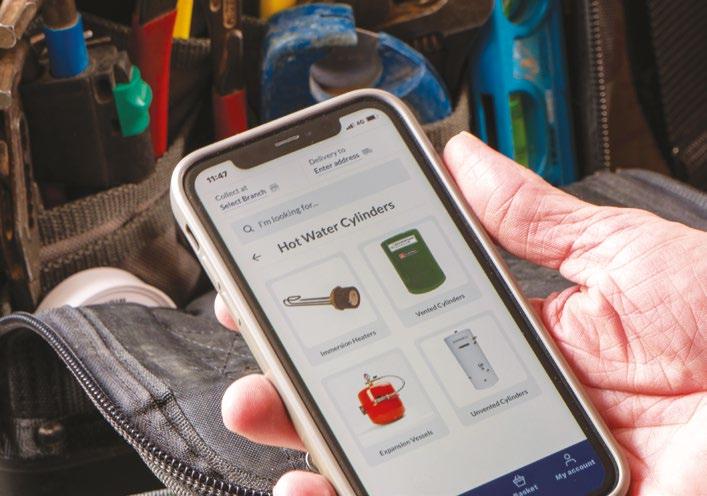
Digital tools could also help drive efficiencies and standards. Installers report losing time to non-billable tasks, including sourcing parts and preparing estimates. Using digital tools is helping businesses reclaim this time, improve productivity and increase first-time fix rates.
Most installers already use them to identify parts and diagnose boiler faults –and sole traders are not far behind larger businesses in using digital tools. These can be particularly helpful during the winter breakdown period when customer expectations, time sensitivity and operational pressures rise.
The sector has the ability to adapt but doing so requires investment in renewables training, digital tools and talent development. With regulations and demands changing, there is a clear opportunity for the industry to modernise.
Businesses that prioritise new skills, talent and technologies will be best placed to compete in an increasingly complex market and build a more sustainable, resilient and successful industry. n
City Plumbing is investing in renewables training to increase access to accredited courses, delivered through partnerships, centres of excellence, mobile training rigs and umbrella schemes in lieu of MCS accreditation.
Most gas engineers didn’t struggle to find work last year: the real challenge comes with running the business, according to Gas Engineer Software’s 2025 Heating & Plumbing Report.
Beyond the day-to-day work, there is a complex business reality sitting behind the tools. Pricing decisions, admin work, planning time off, monitoring cashflow and booking new jobs all play a major role in how sustainable (and enjoyable) the job really is.
Based on survey results and anonymous data, Gas Engineer Software’s 2025 Heating & Plumbing Report provides a bigger picture of the industry. For most businesses, 2025 was a successful year. Around 85% of respondents described the year as average or better and had increased consumer interest.
More than half saw a sizeable increase in revenue, too, with roughly one-third reporting an increase of 5%15%, and one in five reporting 15%-30%. Given that fewer than one in 10 hired additional staff, this growth appears to have been driven by productivity gains from existing work hours, systems and processes, not additional manpower.
Pricing remains one of the most sensitive areas and only around 60% of businesses raised their prices last year. Since 2018, hourly rates have risen by around 45%, outpacing roughly 30% inflation over the same period.
Competitive pressure, customer pushback and rising costs were all cited as key challenges and frustrations, all of which feed into pricing hesitation.
Self-employed engineers spend a lot of time off the tools. On average, respondents spent more than seven hours a week on paperwork, invoicing, scheduling and customer follow-ups.
For sole traders, this type of ‘non-billable’ work is often pushed into evenings or weekends. Nearly 3 in 10 said time management and workload were a problem, outweighing everything else.
When it comes to time off, the picture is mixed. Engineers take 24 days off a year on average, but many sit on either end of the scale. More than half felt they should be able to take more time off.
One area where the data is particularly encouraging is repeat business. Automated service reminders showed a conversion rate of around 33%, meaning one in three reminders resulted in a booked job.
Despite steady work levels, cashflow continues to cause frustration. Data shows only 16% of invoices are paid on day one, and around half take two weeks or more to be settled. Late payments create stress, additional admin and uncertainty around income.
Being able to have oversight over invoice status and implement a follow-up procedure is critical to many businesses, as is shown by the average business being owed more than £6,000 in unpaid invoices.
The report paints a clear picture: the businesses performing best are not necessarily working harder but they are working more deliberately. They prioritise repeat work, value their time and put systems in place that reduce friction. n
Gas Engineer Software is an all-in-one software platform for heating and plumbing companies. Its easy-to-use job management software helps more than 6,000 companies schedule jobs, build quotes, send invoices, issue certificates and get paid faster. www. gasengineer software.co.uk
Scan the QR code for a full copy of the report and further insights.







From this April, HMRC is introducing new rules for selfemployed people that will change how they report their income and expenditure. Laura Cumins, from the Low Incomes Tax Reform Group (LITRG), an initiative of the Chartered Institute of Taxation, outlines what you need to know.
Making Tax Digital (MTD) for income tax is a new way to tell HMRC about your income and expenditure. It will replace Self Assessment for those affected. If MTD applies to you, you will need to:
• Use compatible commercial software to keep digital records of your income and expenses.
• Submit quarterly updates to HMRC.
• Complete an annual, year-end tax return using your MTD software. There is no change to how your tax is calculated, or the due date for your tax bill: MTD only affects the way you report your income and expenses to HMRC.
Do I need to? take part in MTD?
You will need to take part in MTD from April 2026 if both the following apply:
• You are self-employed as a sole trader, including those who operate under the Construction Industry Scheme (CIS), and/or receive income from renting out a property.
• Your total gross income from these sources was more than £50,000 on your 2024/25 tax return. From April 2027, the threshold will drop to £30,000 (based on your 2025/26 tax return) and then £20,000 in April 2028 (based on your 2026/27 tax
return). So even if you don’t have to take part in MTD yet, you might need to do so in the next couple of years.
MTD doesn’t apply if you are employed or trade through a limited company. You also won’t need to take part if you trade as a partnership.
However, if you have other MTD income aside from this – for example, rental income – then you might still need to take part if that income exceeds the threshold.
will need to buy a special type of software, called bridging software, to convert these records into a format that can be sent to HMRC digitally.
What if I find software difficult to use?
You might want to appoint a bookkeeper or tax adviser to help you. If you struggle to access digital technology, you might be able to apply to HMRC for an exemption.
If your business is VAT
“Even if you don’t have to take part in MTD yet, you might need to do so in the next couple of years.”
How do I find commercial software?
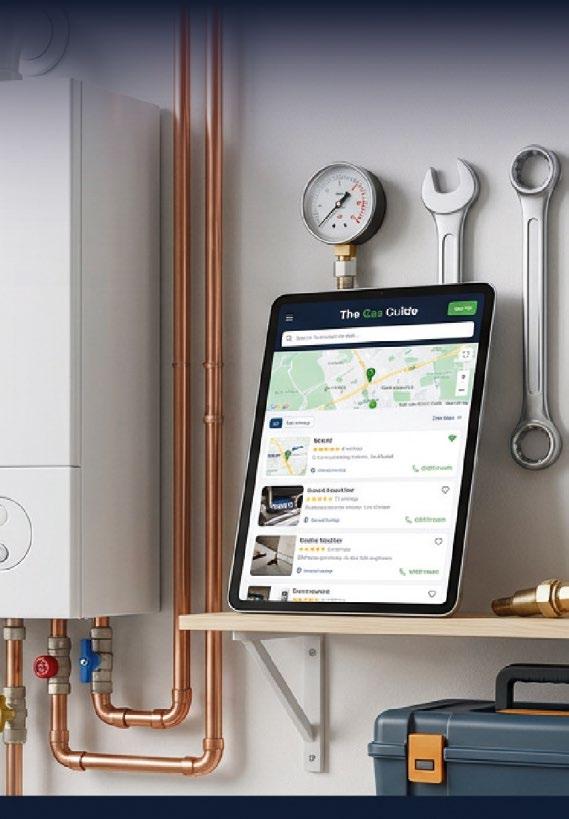
HMRC has an online tool on GOV.UK that you can use to find software for MTD. It is up to you to find a product that suits your needs. HMRC won’t be providing any software. If you are already using software to track your income and expenses, you should check it is compatible for MTD. If not, you may need to find new software. You will not be able to use HMRC’s current online filing service.
If you use spreadsheets to record your business income and expenses, you can keep doing so if you wish but you
registered, you will already be in MTD for VAT. But MTD for income tax is a separate scheme, so you will need to make sure you follow both sets of rules.
Will HMRC contact me?
If you have filed your 2024/25 tax return and your gross income from self-employment and/or rental income was more than £50,000, HMRC may have already written to tell you to join MTD.
If you haven’t received a letter,or still need to file your return, you still need to get prepared because HMRC will not automatically sign you up. ■
Find out more Search for ‘Making Tax Digital for Income Tax’ on GOV.UK or visit LITRG’s MTD guidance at: www.litrg.org. uk/making-taxdigital-incometax
The government finally unveiled its long-awaited Warm Home Plans, which it says will lower energy bills as part of a comprehensive plan to upgrade homes in the UK.
£15 billion will be available to upgrade up to 5 million homes, addressing both energy affordability and efficiency, it says. The devolved governments in Scotland, Wales and Northern Ireland will be able to ensure that homes in those countries can benefit from upgrades too.
The Warm Homes Plan targets help at low-income families, alongside a universal offer for those able to pay. People will be able choose the technologies that work for them and apply for government-backed, low and zero-interest loans to install solar panels. Loans will also be available for batteries and heat pumps.
Low-income households and those in fuel poverty could receive support that would cover the full cost of having
solar panels put on their rooftop or insulation installed, alongside new rules to ensure that landlords invest in upgrades to cut bills for renters and social tenants.
A three-pillar programme will provide support to low-income families, those who are able to pay and renters.
Low-income families will receive free packages of upgrades, depending on what technologies are most suitable for their home. Upgrades could include fully funded installations of solar panels and a battery, to the full average cost (currently £9,000-£12,000).
For those not on low incomes, there will be zero and low-interest loans for solar panels. And the government says it will be easier to get a heat pump through the Boiler Upgrade Scheme.
For renters, landlords will be responsible for making sure that properties are safe and warm and the government says
it will support them to make these upgrades fairly over several years.
Home upgrades available under government schemes will include solar panels (PV and thermal), heat pumps, home and heat batteries, smart controls, insulation (wall, floor and roof) and draught-proofing.
A new Warm Homes Agency will aim to knit together the currently fragmented and complex energy upgrade systems from initial advice through to installation. It will bring together existing functions from across the regulator and other government arms-length organisations, removing duplication and waste and providing new consumer support.
The government plans to consult with the finance sector and consumer groups before sharing more information on how people will be able to access low-interest loans. It says it will provide more detail later in the year. n

The Warm Homes Plan sets a target for 450,000 heat pumps to be installed annually by 2030 - a big downgrade from the previous target of 600,000 per year by 2028.
“At face value, the confirmation of £15 billion allocated budget to support the delivery of the plan is welcome. Dig deeper into the detail, however, and there are some aspects which are disappointing.
“Firstly, there is no mention of the role that hybrid heat pump systems can play in the heat transition. There is an ever-growing body of evidence to support the roll-out of this technology in the UK and effective policy examples in EU member states to learn from.
“Secondly, there is insufficient detail or action on reducing electricity pricing beyond what has been previously announced. A critical factor to mass-market uptake of heat pumps and electrification will be the ‘spark gap’; more work is needed here if we are to achieve the stated ambition of 450,000 annual heat pump installations by 2030.”
Jeff House, director of external affairs & policy, Baxi
“The Warm Homes Plan will accelerate progress towards net zero. It will make it cheaper to install and run low-carbon heating, making heat pumps even more attractive, particularly when they are paired with solar PV and battery technologies.
“The ability to apply for a low or zero-interest loan on top of the Boiler Upgrade Scheme grant is particularly welcome, as it will encourage more householders to invest in this technology.”
Hamid Salimi, Daikin UK
“Sadly, ECO failings have meant insulation funding has been downgraded. This is a missed opportunity to strengthen consumer protections and provide a direct remediation and complaints procedure that would prevent the failures of the past from being repeated.”
Mark Krull, LCL Awards and Logic4training
“It is absolutely right that government is looking to address the issues of energy efficiency and fuel poverty. However, [the] plan does little to address the needs of rural homeowners and tenants, many of whom are most impacted by these dual issues [energy efficiency and fuel poverty]. For many of these homes, heat pumps and additional insulation are simply not an option due to the fabric of the building.”
George Webb, chief executive, Liquid Gas UK
“Vaillant welcomes Warm Homes Plan as an important step forward, providing long-term certainty for the market and a clear signal on the UK’s transition to low-carbon heating.
“The ambition for 70% of heat pumps sold in the UK to be manufactured domestically, alongside continued support through the Boiler Upgrade Scheme and further investment in installer skills via the Heat Training Grant, gives industry the confidence to plan, invest and scale with purpose.
“This rounded approach, including investment in the broader supply chain, from manufacturing to installation, not only strengthens the domestic manufacturing base but also fosters a robust ecosystem for skilled jobs and growth.”
Henrik Hansen, managing director, Vaillant UK and Ireland

The Future Homes Standard is expected to be implemented in early 2026 and is likely to make solar panels mandatory as standard.
A new CIPHE technical guide aims to support the industry’s transition to lowertemperature, more energyefficient heating systems
An Introduction to LowTemperature Hydronic Heating Systems explains the principles of lowtemperature system design and provides step-by-step guidance for designing efficient hydronic heating systems operating at 55°C and below, including 45°C for heat pump installations in new-build properties.
Key topics include heatloss calculations, system and pipework design, domestic hot water systems, relevant standards and reference information.
Building Regulations
Part L requires that all systems in both new builds and refurbishments must operate at ≤55°C flow temperature, and ≤45°C where heat pumps are specified.
These changes have fundamentally reshaped how heating systems are designed and specified, says CIPHE, making lowtemperature heating systems the default approach.
The guide aligns with CIPHE’s Level 3 Diploma in Low Temperature Heating Systems, and accompanies sister publication Low-Temperature Heating and Hot Water Qualification Guide, providing a clear learning pathway for professionals.
The Heat Pump Association, Ground Source Heat Pump Association and Heat Pump Federation have joined forces to become Heat Pump Association UK (HPA UK), a single, unified trade body. A new identity, logo and interim website are already in place and a new website and expanded member services will follow.
HPA UK’s chief executive Charlotte Lee says: “Bringing these organisations together is a big, positive step forward for our industry. It means we can speak with one clear voice and work more effectively to grow the heat pump sector.
“Our focus is on bringing together each part of the supply chain to enable heat pumps to play a pivotal role in the UK’s energy transition.”
Combining expertise from across the domestic, commercial, industrial, ground source and heat network sectors, HPA UK says it will provide:
• Stronger, more consistent representation to government and key stakeholders
• Clearer, more visible messaging on the role of heat pumps in decarbonising space and process heat and hot water
• Streamlined governance and enhanced services
• A single point of contact for industry collaboration and engagement. www.hpauk.org.uk
As a Gas Safe heating engineer, now is the time to build on your existing expertise and expand into the growing heat pump market with OFTEC’s training and registration options.
Why register with OFTEC?
9 Self‑certify your work* – save time and reduce paperwork.
9 Free workmanship warranty on installations.
9 Listed on “Find a Technician” – helping customers discover you.
9 MCS registration available.
9 Expert technical support when you need it.
9 Industry updates to keep you ahead of the curve.
9 Exclusive discounts from carefully selected partners.

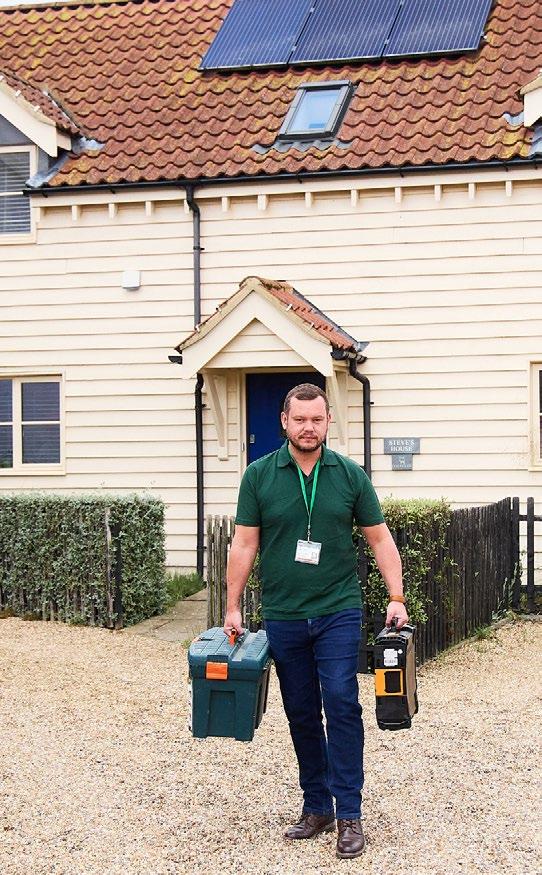
We’ve all been hearing about a transition to heat pumps: here, we talk to one gas engineer who has made his own transition at home before offering them to his customers.
Gas engineers are well placed to add heat pumps to their business offering because their skills in fitting boilers are very much transferable. And heat pumps are front and centre of the government’s cleaner home heating plans.
We know that many are already thinking about making the leap to heat pumps, but just how easy is it? One gas engineer who found help and funding to make the journey to heat pumps is Tom Newman of Newman Combustion, based in Hindhead, Hampshire.
“I’ve spent over 20 years working with gas and oil, specifying, installing and
to terms and conditions, provides newly trained and experienced oil and gas installers in England and Wales with a fully funded Grant Aerona air source heat pump, smart controller and cylinder to fit in their own home, backed with the support from the company’s training, design and technical teams.
The scheme is designed to build confidence and experience so heating engineers can go on to offer air source heat pumps to their customers in the future.
Before the heat pump could be installed, Tom re-insulated the roof and walls of his bungalow and fitted a wet underfloor
“I’m keen to see how it performs on running costs and I hope to push heat pumps in my business.”
servicing high-efficiency boilers for commercial and domestic heating systems across Surrey and Hampshire,” says Tom.
“Last summer I moved into a three-bedroom 1960s timber-frame bungalow. The place was completely off-grid for gas, heated only by old electric night storage heaters. Its heating bills were sky-high, the heat was patchy and the system was dated.
“A heat pump had been on my mind for years so instead of staying electric or hunting for another fuel, I was keen to try a heat pump in my own house.”
Tom heard about the NESTA-backed Start with Grant scheme, which, subject
heating system throughout. Once the cylinder was in place, Tom carefully routed the pipework and installed the 6.5kW Grant Aerona 290 air source heat pump. The setup and commissioning was carried out by a Grant in-house engineer and the installation signed off under MCS.
“I’m keen to see how it performs on running costs and I hope to push heat pumps in my business as a good alternative to conventional fuels. So far, the system is running smoothly and provides even heat with no cold spots.
“Once we’ve got a full season of data, including electricity use, running costs

Under the Start with Grant scheme, installers receive an Aerona heat pump up to 12kW, hot water cylinder up to 210 litres, a 50-litre volumiser, smart controller, and a full heat pump installation kit. The company provides end-to-end support throughout the design and installation process, including training, product specification, technical assistance, on-site commissioning and sign-off of the installation under MCS.
Following completion, Grant also provides a £1,500 contribution towards installation costs, which is transferred from the remaining balance of the Boiler Upgrade Scheme grant (subject to eligibility criteria and T&Cs).
www.grantuk.com/professional/support/startwith-grant/
and comfort levels, we’ll see the true savings and efficiency gains compared to the old storage heaters.”
Making the transition to heat pumps has been a smooth journey so far for Tom, and Grant UK’s Anna Wakefield says: “The scheme is all about helping oil and gas installers understand heat pump technology, building their confidence so they become genuine advocates for this low-carbon heating solution.” ■

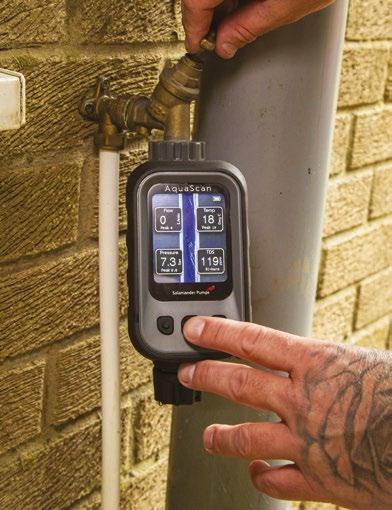
By Andrew Carver, research and design manager at Salamander Pumps.
Accurate water measurements are essential for reliable system performance and meeting customer expectations. When installers can trust their readings, potential issues are identified sooner and systems can be specified with confidence.
Traditional measurement methods often involve multiple tools and lack accuracy, which impacts both precision and efficiency and leads installers repeating tests or questioning their results.
Salamander Pumps’ AquaScan addresses these challenges. Our 4-in-1 digital water multimeter is designed to give clear, precise insights into water flow, pressure, temperature and hardness (via total dissolved solids).
How installers are using AquaScan
AquaScan is a practical investment that supports confident, data-led decision making. It is regularly used by our installer community to support a wide range of dayto-day tasks, including:
• Selecting suitable products for mains-fed systems
• Checking water pressure
and identifying issues within mains pipework
• Monitoring water temperatures across gravity and mains-fed outlets
• Supporting commissioning and routine servicing
• Producing accurate project quotes through effective specification.
Saving time with fast, efficient measurements
For busy installers, completing work more quickly without sacrificing quality or service can significantly improve profitability.
One installer, who measures water flow, pressure, temperature and hardness three times a week, reported that AquaScan was nine times faster overall than traditional methods.
By removing guesswork, AquaScan enables installers to work more efficiently and deliver more accurate diagnostics. Systems can be optimised from day one, reducing call-backs and strengthening professional reputation.
One member of our installer community said: “I did some full findings with
AquaScan from a combination boiler that was delivering 15 L/min downstairs on two taps and the upstairs taps were doing as little as 10 L/m: this was down to a TMV valve being installed under the floor.”
AquaScan also eliminates the need to carry and use multiple tools. Even short trips back to the van add up over time, before factoring in the inefficiencies of traditional testing methods.
The ability to test quickly at multiple points also helps installers diagnose issues more effectively. I.R.B Heating told us about their use of AquaScan, which is “mainly using it for doing surveys for new boilers”.
“When I’m looking to fit a new combi, it’s good to know what flow rate they have so I can select the correct output boiler.”
How installers are perceived by both existing and potential customers plays a critical role in winning work. Using digital measurement tools instead of traditional analogue methods
helps reinforce a modern, professional image.
One installer we spoke with, called Ryan, said: “I recently went to quote a combination boiler installation. The customer had already been quoted a 38kW boiler which just wouldn’t work under an 8 L/m flow rate.
“I was able to show the customer this result quite clearly and advise on the correct sized boiler for the job.
AquaScan also allows installers to clearly demonstrate and verify their recommendations. Installers can show customers accurate readings directly on the screen, explain what the data means and outline the most appropriate solution.
Ultimately, AquaScan delivers fast, accurate results while supporting a higher standard of professionalism.
Stephen, an installer we spoke with, said: “AquaScan makes it easier to explain findings to customers, thanks to its clear display. I would absolutely recommend it to other installers – in fact, I’d say it’s an essential piece of kit.”
Baxi’s Cascade Configurator tool helps simplify choosing equipment in the Quinta Ace range of commercial gas boilers.
The digital tool provides consultants, contractors and specifiers with flexible and scalable boiler cascade configurations, with options for aluminium or stainlesssteel plate heat exchangers, low-loss headers or air dirt separators.
It gives instant and downloadable specifications and quotes via email for tailored
solutions to specific output or cascade requirements for projects of any size. The documentation comes ready to use in tenders, design submissions and customer proposals.
After the customer has answered some quick questions about the project, the Cascade Configurator generates a personalised cascade solution with estimated costs. A local Baxi Technical sales manager can provide expert support and advice.

Commercial business director Shane Suter said: “This new tool promises to greatly streamline the system design process and provide stakeholders with the freedom to tailor this to meet the unique demands of their projects.”
https://shorturl.at/qikd6
New AI-powered features on the Powered Now job management platform can help you spend less time on admin.
Users can proofread existing text, build on what has already been written, and generate new text from a simple prompt. Text can be customised to match your own tone and style.
The software update improves invoicing capabilities, with users now able to split quotes into sections and turn them into multiple invoices in just a few clicks – ideal for a staged job, or part-payments.
Every invoice clearly shows what is due and the online version updates to show what’s been paid and
what’s still outstanding, enabling easier cashflow management.
You can create documents straight from appointments, with no need to re-enter details and customise templates to your own brand,
The latest software upgrade supports Making Tax Digital from 1 April 2026. www.powerednow.com
Stay up to date at: www.registered gasengineer.co.uk
Tado’s digital hydronic balancing feature provides a smart alternative to the traditional process of balancing heating systems.
Hydronic balancing is recognised as the best practice for maximising heating system efficiency, whether a boiler or a heat pump is used. It ensures hot water is distributed evenly across the home.
The traditional method requires draining down the system and replacing physical radiator valves. But when using Tado’s X smart radiator thermostats, the system automatically manages water flow to ensure even heat distribution. Intelligent flow management ensures the boiler or heat pump operate at peak performance, reducing energy consumption.

Stelrad’s heat-loss calculator and radiator sizing tools have been updated to be more comprehensive and simpler to use.
There are improvements to both the basic heat-loss calculator and the advanced version, incorporating the latest recommended room temperatures and air changes from NHBC Standards 2024 Ch.8.3. and associated T&Cs that include the latest
CIBSE u-values used. An additional step chooses between electric and conventional heating, with a revised calculation algorithm.
Users can now also choose between hot water or electrical heating and display products accordingly.
Marketing communications manager Sarah Baker said: “Even with better levels of insulation in homes, lowertemperature heating systems
Hydronic balancing made digital with Tado will need larger radiators to ensure the levels of comfort heating needed to keep today’s homes warm and comfortable. It’s essential that our guides to helping people to select the right radiators for each room are up to date and give people the best chance to get the radiator sizing calculations correct.” You can download the updated versions at: www.stelradprofessional.com
Apprenticeship provider JTL has opened its newly refurbished London South training centre in Orpington, following a £1 million investment to expand electrical, plumbing and heating training in London and Kent.
The Orpington site includes plumbing and electrical training bays, providing industry-standard equipment, including heat pumps, solar thermal systems and energy efficiency technologies.
JTL London South is designed to meet the evolving needs of employers and support the transition to greener heating solutions.
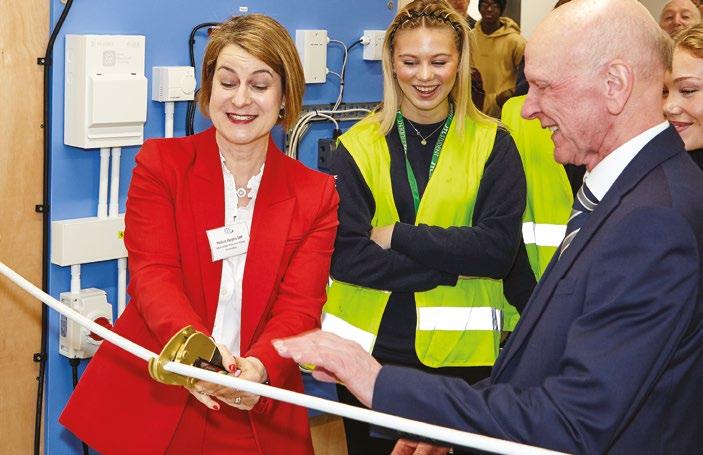
It supports apprentices and aligns closely with regional skills priorities in construction and retrofit.
The centre was opened by Helen Hayes MP, chair of the House of Commons Education Select Committee, who said: “Facilities like this are vital in ensuring young people and career changers can access high-quality technical training, while supporting the development of skills needed for the future, particularly in areas such as plumbing, heating
and energy efficiency.”
Chris Claydon, Chief Executive of JTL, added: “Our London South centre demonstrates JTL’s long-term commitment to the highly skilled trades of electrical and plumbing services.
“Each apprenticeship depends on employer backing to give them the work placement so we are committed to supporting employers in meeting demand, and pressing the government to make these commitments a reality.”
Ideal Commercial Heating has created an installation video that shows how fast a highperformance cascade boiler system can come together.
The video is designed for contractors and commercial heating engineers and follows the assembly of three 80kW Imax Xtra 2 floor-standing commercial condensing boilers in real time. It demonstrates a complete build from first part to final connection, ultimately achieving up to 840kW of heating capacity in less than 90 minutes.
Focusing on the practical on-site assembly experience, every step is time-stamped, showing the installers’ progress as they position the wheeled boilers, align them using the prefabricated header kits, and hydraulic separation. The result is a three-boiler cascade assembled more quickly than many expect from a floorstanding commercial system.
The Imax Xtra 2’s compact footprint means it fits through standard doorways. It’s fitted with wheels as standard.
Additionally, the Imax Xtra 2 Cascade Configurator is an online tool that enables contractors to design the optimal cascade in minutes. By answering a few projectspecific questions, users receive a complete component list that can be downloaded as a PDF or emailed directly.
Smart Energy Training has added the Energy Training Centre in Nottingham to its portfolio of gas, plumbing and heating centres.
The facility on Whitemoor Court will soon include domestic gas courses, air source heat pump training and apprenticeship programmes in its domestic and commercial gas qualifications.
CEO Gregg Scott said: “This acquisition means Smart Energy Training now has three centres in the East Midlands – in Ashbourne, Lutterworth and Nottingham – with further plans for expansion as we help to ensure the nation has the skilled engineers to cope with the transition to greener energy.”
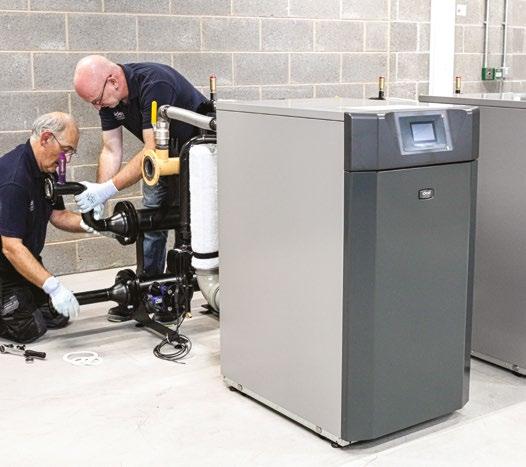
Free commissioning by experienced Ideal Commercial Heating engineers is available
on Imax Xtra 2 boilers. When commissioning is carried out within three months of installation, an additional five-year warranty is applied at no extra cost.
https://shorturl.at/7F1H5