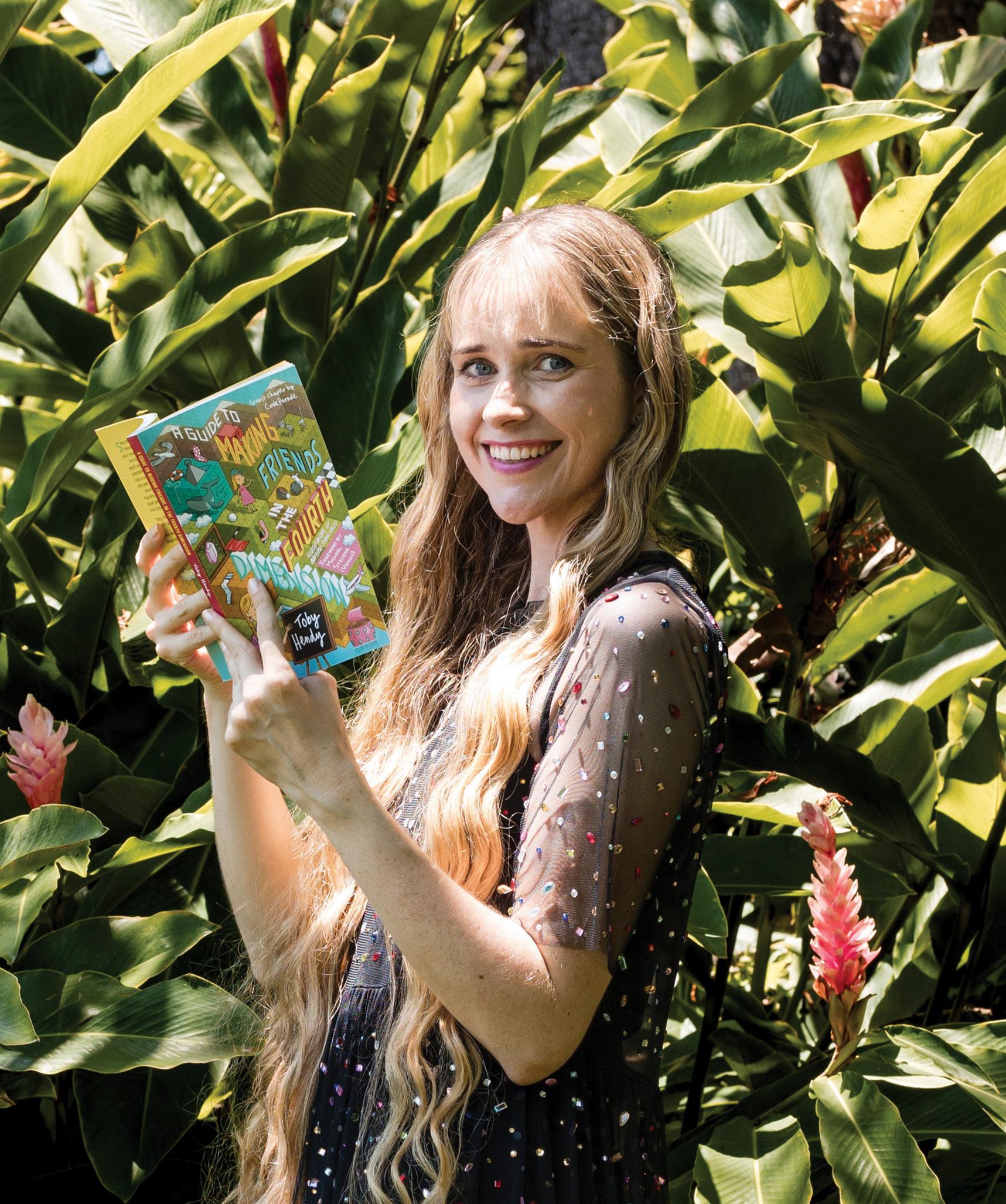
Mathematician + Author

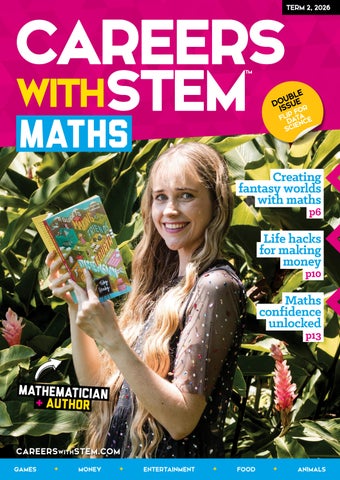
Mathematician + Author
ARE YOU SO EXCITED ABOUT SCIENCE THAT YOU CAN’T WAIT TO MAKE AN IMPACT?
Macquarie’s Summer Research Internship Program gives science and engineering students the opportunity to enrich their studies and develop hands-on research experience in the lab or field, led by expert academics. As well as a generous scholarship, you may even be able to publish a paper.
If you love maths, for example, you could model airflow over an aeroplane wing, explore sequential decision-making problems, use machine learning tools to deal with messy datasets, contribute to the open-source Curve Shortening Flow Project or develop a statistical package to better visualise sports injury data.
Majoring in maths at Macquarie builds broad, transferable skills and prepares you for dynamic, creative careers in today’s technology-drive world. So if you’re ready to earn while you learn, do real research and see just how far your ideas can go, visit mq.edu.au/study/find-a-course for more information.
From ancient ideas to modern technology, maths shapes how we understand the world and imagine what comes next
Maths is one of humanity’s oldest languages – born from the need to count, measure and navigate – and it still underpins how we understand the world today. What I find especially powerful about maths is that it belongs to all of us.
The story of maths is written across cultures and centuries: in ancient systems of counting and measurement, in geometry developed for land, building and astronomy. It’s in the great mathematical traditions of India, China, the Middle East, Mesoamerica and beyond. It’s also woven through the knowledge systems of Aboriginal and Torres Strait Islander peoples, in patterns of navigation, observation and relationships to Country.

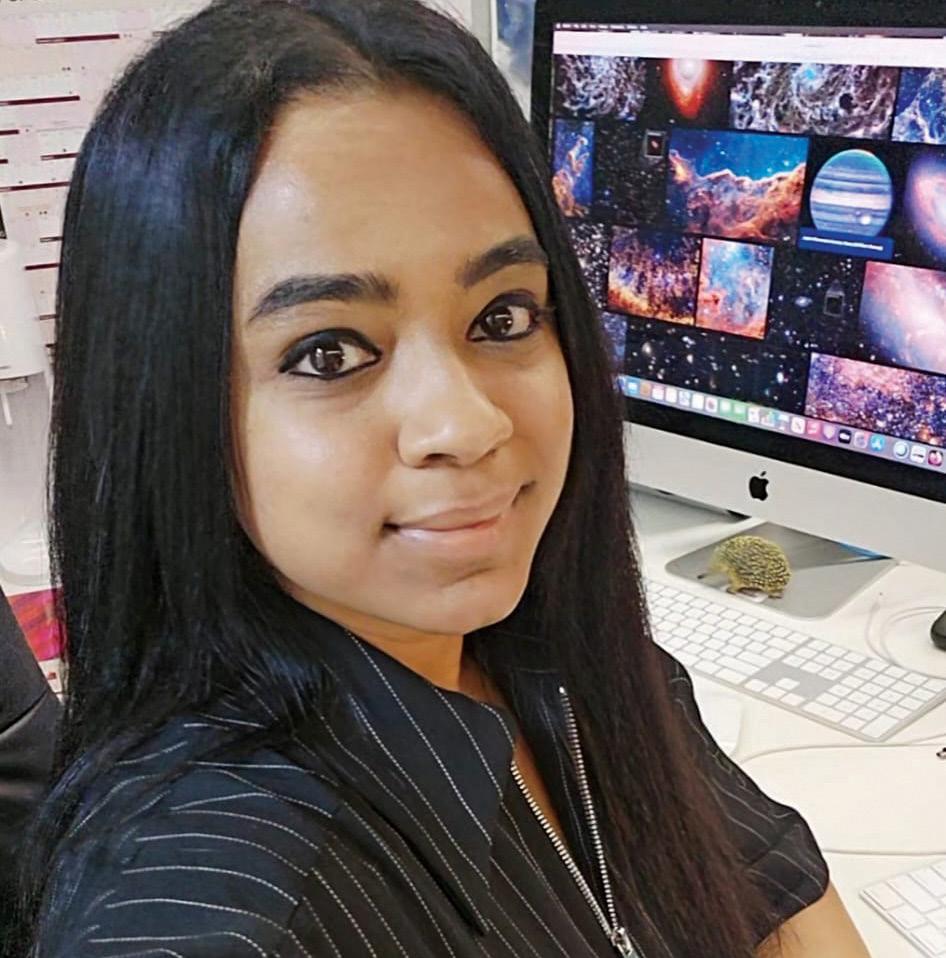
Too many young people step away from maths early or are made to feel that maths is only for a select few. It is not.
Maths is not about being the fastest in the room or never getting stuck. It’s about curiosity, persistence and learning to think clearly through complexity. If you enjoy patterns, puzzles, logic or asking why things behave the way they do, then maths may be one of the most empowering subjects you could study.
Maths underpins climate modelling, medicine, finance, cryptography, AI and data-driven decision-making across almost every sector.
what i find especially powerful about maths is that it belongs to all of us”
devika kamath
associate professor and Head of school, mathematical and physical sciences, macquarie university
As an astronomer, I use maths to explore the universe – to interpret light from distant stars, trace the dynamics of galaxies and understand phenomena far beyond our physical reach. Yet the same language also shapes the world we live in.
Mathematical training opens doors to diverse futures, including roles that do not yet exist. It builds resilience, adaptability, and confidence – qualities that matter far beyond the classroom.
At Macquarie University, maths sits alongside physics, astronomy and statistics – a reminder that the big questions of our time do not respect disciplinary boundaries. The world is becoming more complex, not less. Maths gives us a way to navigate that complexity with confidence, imagination and purpose.
Associate Professor Devika Kamath Head of School, Mathematical and Physical Sciences
Macquarie University
P5 Invisible maths superpowers The hidden skills that can power up your career
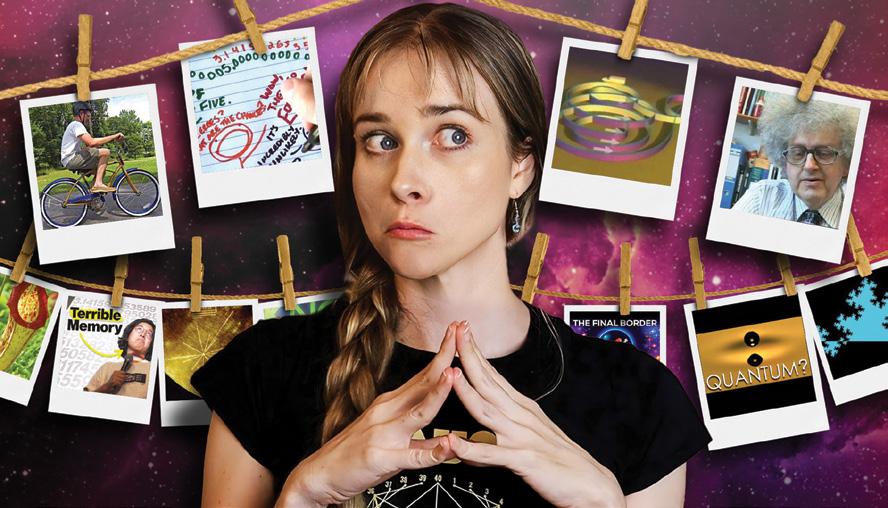
P6 Let me entertain you We catch up with YouTuber Toby Hendy to explore the algorithm
P8 Where can I work with maths? Meet the top
Double issue: flip over for data science careers

STEM + X =
Combine Maths (STEM) with your passion (+X) to find the right career fit
Maths + …
P10 Money
Multiply your money with maths skills
P14 Food

Maths is the secret ingredient in these food careers
P18 Animals
Spot the patterns, it’s maths on the wild side

There are numerous reasons to keep your maths skills up – even if they’re not immediately obvious!
Ever sat in a maths class, wondering to yourself: ‘When am I ever going to use this?’
While that specific quadratic equation may never vex you again, it’s actually secretly helping you develop skills you’re going to use everywhere!
Maths helps us do A LOT of important mental muscle building. Here are some superpowers that maths gives you to use in the real world.

2
At its core, maths is really the study of patterns. You can use these patternspotting skills directly, for things like computer modelling, or indirectly in language and people-heavy roles.
1
Wherever you end up working, you can guarantee you’ll have problems you need to solve. With every maths problem you puzzle at, you’re getting better at using the tools you have to find creative solutions.
3
It’s likely you’re going to run into stats and data at some point in your career. This sort of info is great when it’s reliable – but it often isn’t! With some simple statistical knowledge, you’ll be able to tell the difference, and data sets will become way less overwhelming.
4
As you move through the workforce, you’ll need to make choices in unfamiliar environments. And what could be more unfamiliar than an abstract maths problem? It’s giving you a crash course in dealing with new situations.
… with maths! We spoke to Toby Hendy, a.k.a. Tibees on YouTube, about why maths and entertainment are a great mix
CwS: Hey Toby! What was the first maths video you posted on YouTube?
T: It was one from 2011 about time travel but was very speculative. I was in high school and I wanted to try out videomaking. I found it to be very fun, and the topic I knew the most about was science, so it seemed like a natural subject for my videos.
CwS: Tell us all about your Joy of Mathematics videos!
T: It’s a series of videos inspired by Bob Ross’ The Joy of Painting (a TV show from the 80s). At a chalkboard, I would solve problems or tell maths stories in a calm and fun style. My hope was it would make maths seem less stressful.
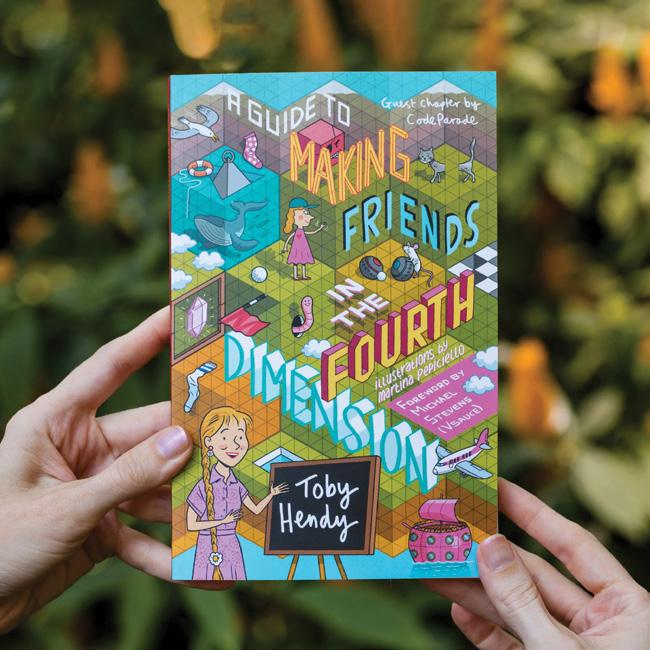
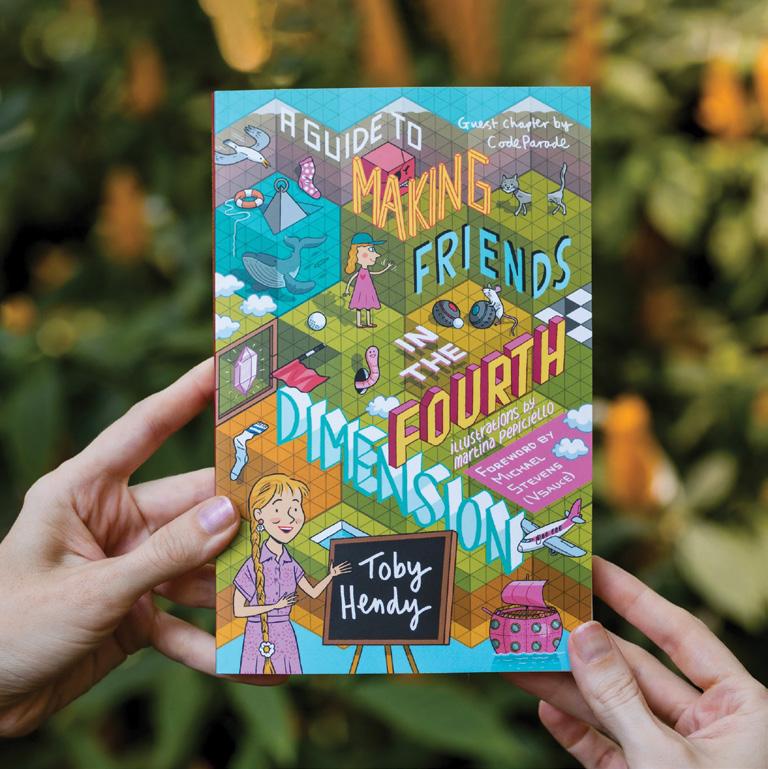
CwS: You wrote a book called A Guide to Making Friends in the Fourth Dimension and we heard it can help beat ‘mathsphobia’…
T: My book explores what may lie beyond our three dimensions of space. Thinking about higher dimensions is a geometric puzzle, and I found it fun to imagine fictional scenarios that fit into that
puzzle. Readers who are drawn to the puzzle, and to the fictional characters, may find themselves thinking about maths without realising it.
CwS: How have you used maths in your videomaking and book writing?
T: I am often reading books or papers written by mathematicians. Having a background in maths helps me to understand these documents and to make content about them.
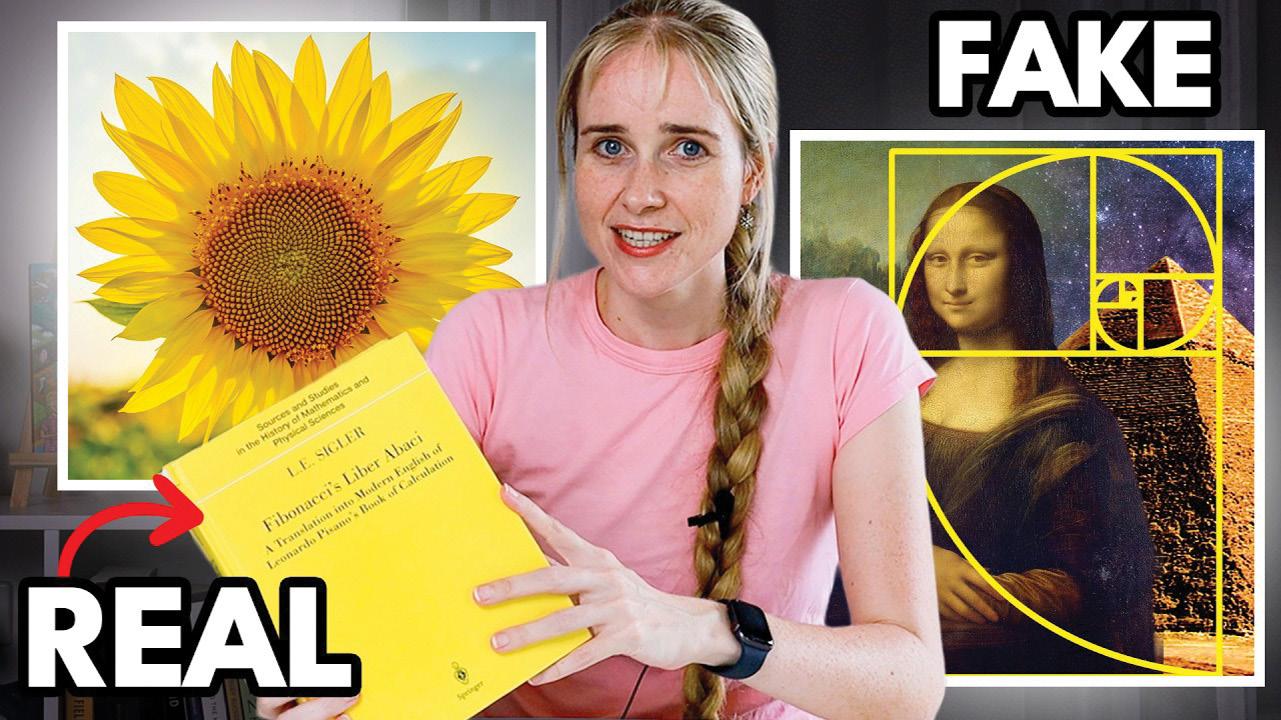
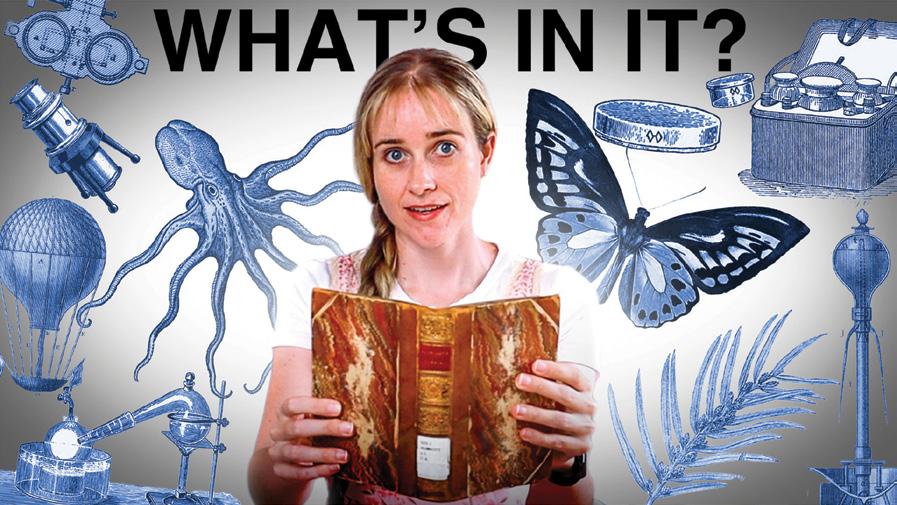
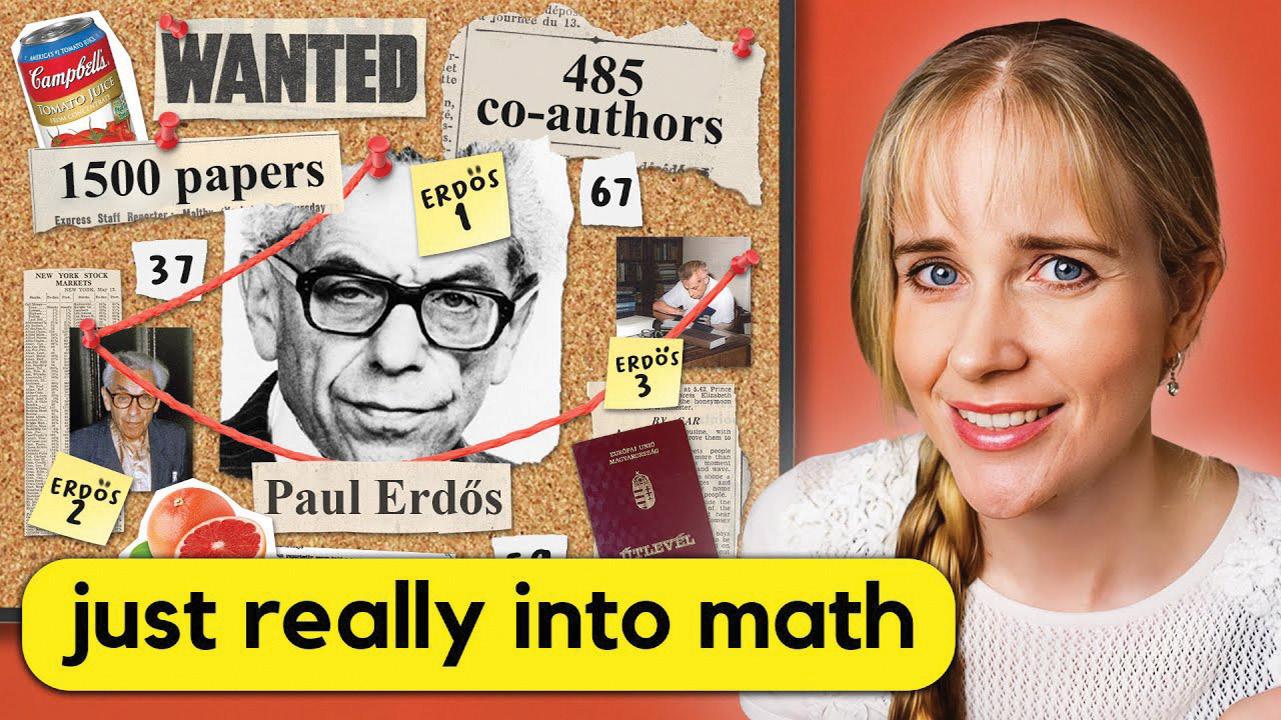
5 entertaining maths activities

Check out
Toby’s videos at youtube.com/tibees and her book at tibees.com
1. Building an epic base in Minecraft
2. Choreographing a dance
3. Knitting and crochet
4. Performing magic tricks
5. Playing a musical instrument

YouTube uses maths to decide what you see, thanks to an algorithm. YouTube’s algorithm takes a channel’s subscriber count, video views and minutes watched to quantify the quality of that content. Then, YouTube will either recommend that channel’s video content to users or bury their clickbait deep within the pages of a search. YouTube’s recommendation algorithm drives about 70% of all views!
1. 3D modeller
2. Animator
3. Cinematographer
4. Game developer
5. Lighting designer
6. Science/maths consultant for TV and film
7. STEM communicator
8. Technical artist
9. Visual effects artist
10. YouTuber
CwS: Why do you think mixing maths with entertainment is so important?
T: Maths is inherently about solving different kinds of puzzles and that’s something that people enjoy. When framed right, maths is actually very popular and is gaining a lot of attention on social media and in books.
CwS: Advice for students who want to follow a maths + entertainment path?
T: Being a YouTuber is a job that many young people aspire to. What I have seen is that people who are already an expert in something other than making videos have an easier path to growing an audience on social media. Don’t disregard the importance of doing well in school and gaining the experience that can help you become an expert in something worth sharing.
Employers highly rate employees with solid maths skills! Keep these five on your watch list
Help the ABS provide official statistics on a range of economic, social, population and environmental matters.

Mix maths and the environment to provide weather forecasts and warnings for a living.
Work as a data scientist, analytics engineer, financial modeller or an auditor at this major bank.
Maths pros are needed in cyber security, intelligence analysis, operations research and aerospace engineering.
This professional services provider needs expert problem-solvers to work in data analytics, actuarial services, tax and auditing.
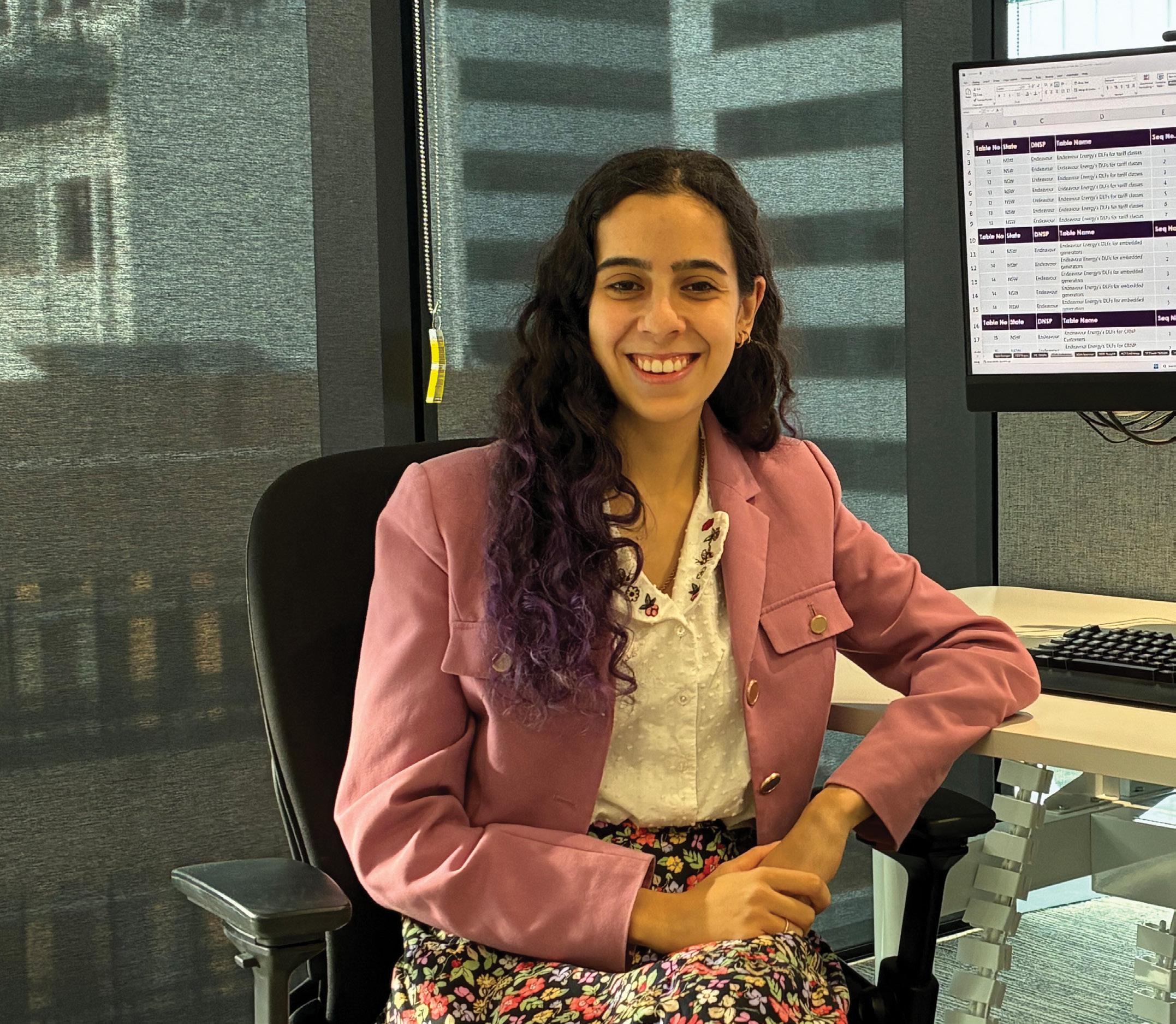
After completing a Bachelor of Mathematics (Operations Research) at QUT, Kate Brunetto was quickly snapped up by an employer
Kate is a graduate market analyst at the Australian Energy Market Operator (AEMO), a job she found through her connections at QUT!
“At uni, I was president of the QUT Maths Society,” Kate says. “One of the previous presidents was interning at AEMO and spoke highly of his experience there.”
When the opportunity came up, Kate interviewed for a summer internship at AEMO, landed it, and was then offered a part-time role while finishing their studies. After graduating, she accepted a full-time graduate position there.
Now, Kate is part of a team that calculates different factors in the electricity market. She also helps with data analysis and uses problem-solving strategies she learnt in her degree.
If you love maths, Kate encourages you to pursue it. “There’s no need to worry about whether a maths degree is valued in the industry – it definitely is.”

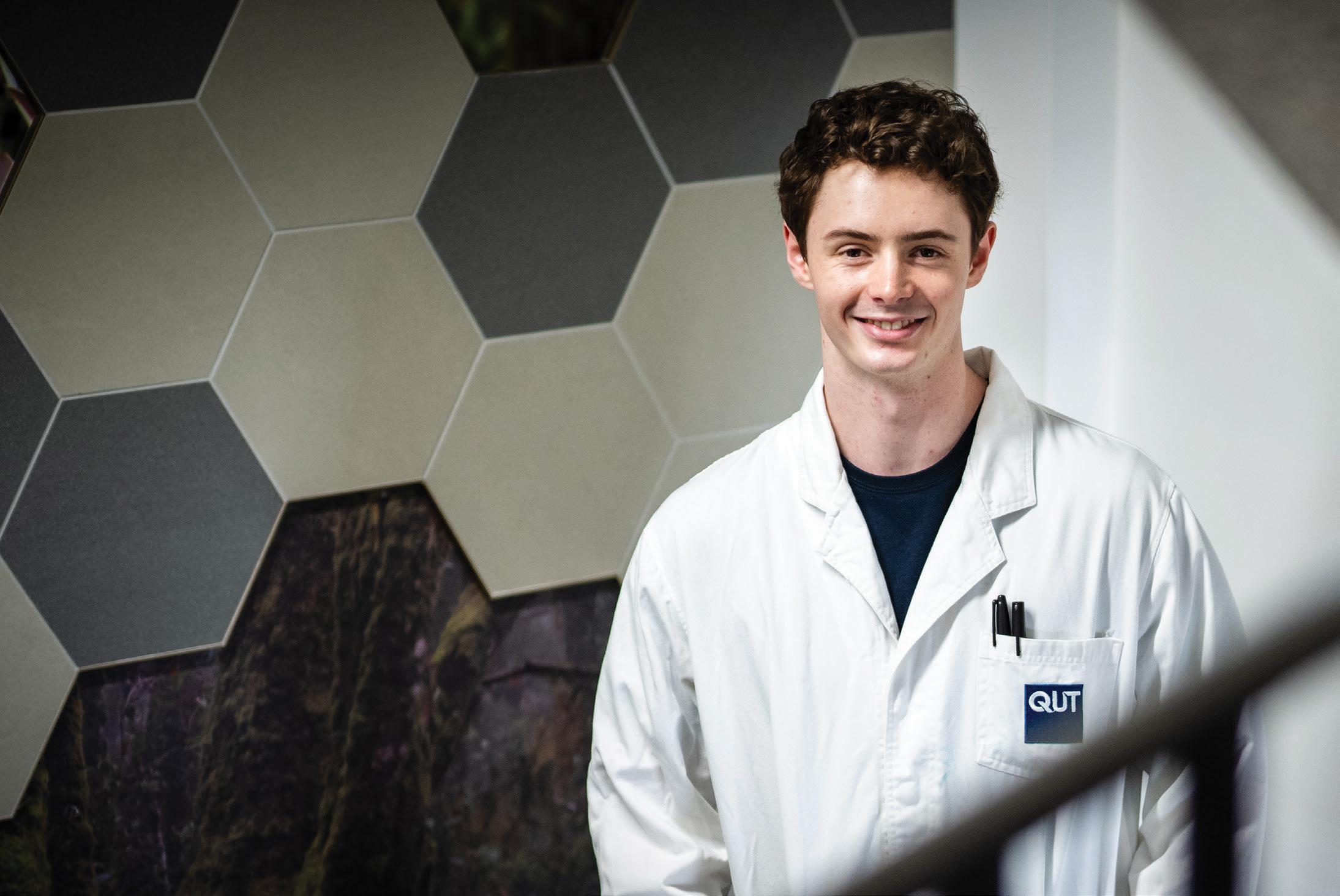
Combine two of your interests with a QUT double degree. QUT Mathematics and Science
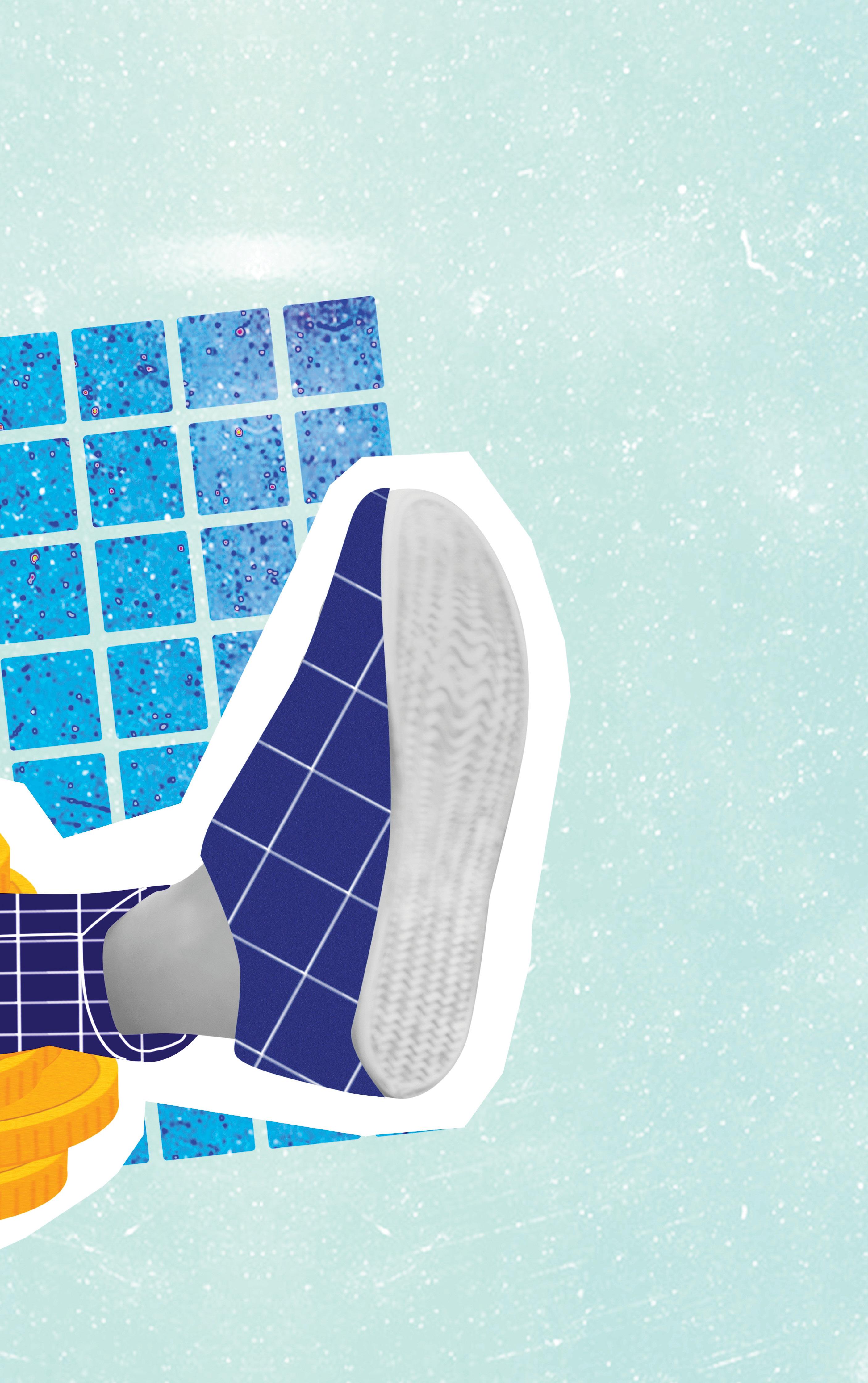
Imagine your dream life after high school.
Perhaps you’ve gone to uni and landed your dream job, or maybe you’re ready to travel around the world! But here’s the catch: whichever path you choose, you’re going to need maths + money skills to make your dream a reality.
Lending manager
The architects of lending. They oversee the entire cycle of how people borrow money for homes, cars and credit cards.
Accounts manager
People who look after clients. They’re a facilitator between an organisation like a bank and people’s money needs.
Compliance officer
The rule-keepers. They are all about making sure an organisation is following the financial ‘rule book’ so a company’s systems keep its money safe.
Banking consultant
A money coach for banks or credit institutions, checking out lending strategy and risk control. They ensure banks stay profitable.
Taxation manager
They usually work with tax advisors, helping to develop and implement tax strategies. They oversee reporting and provide advice.
The money that makes Australia go round is worth $2.64 trillion. That’s our gross domestic product (GDP), a measurement of a country’s economic activity.

With the cost of living hitting hard, it might feel like your dream life is financially out of reach. But don’t stress, you’re not alone. Australians aged 17 and under have a median savings balance of just $1,135
The good news? With maths as your secret weapon, there are plenty of smart ways to build your savings – and you could even turn some of them into a career. You could become an entrepreneur using maths and data to make your ideas profitable, a forensic accountant investigating financial crimes, or a financial advisor helping clients to grow their wealth. Whichever you choose, maths could be the key to turning your goals into reality.

Coming from a small town in Victoria, Jack Tossol followed the numbers and laughs to forge a unique career. By day, Jack’s your trusty financial advisor, ready to run the numbers and “present them in a way that the common man or woman can understand,” he says. By night and on weekends, he swaps spreadsheets for punchlines, writing sketches and jokes for his TikTok and Instagram channels, which have 352,000 combined followers!
Jack’s ‘sliding doors’ moment Jack stumbled into his career in content creation by “pure luck”. Finding himself isolated during a 12-week COVID lockdown, he started posting videos on TikTok to get laughs from his mates.
“I think the first one got about 600 views, which I was amazed at because I didn’t have 600 people I knew,” Jack says.
Today, he collaborates with corporate giants like Toyota, Amazon Prime and the AFL, and says being a creator is like running a small business.
“You need all the financial know-how of how to structure things correctly and manage the income and expenses for tax deductions,” he says.
Jack’s advice for young people wanting to pursue a similar path? “Be fluid and open to taking chances and calculated risks.” You never know where a little TikTik video might take you!
Leigh Murray’s head said commerce, but her heart was with mathematics
“Iwasa very ambitious teenager,” says master’s student Leigh. Keen on marketing or finance, she went straight into a Bachelor of Commerce after school. But Leigh loved maths, so she enrolled in a Diploma of Mathematics alongside her commerce degree.
“The more I studied, the more I found I was far more interested in my math subjects than I was in my business subjects,” Leigh says.
With her wide skill set, Leigh found an internship with Future Fund, an organisation that invests over $300 billion on behalf of the Australian government.
Her team improved processes across different teams, drawing on psychology and technical skills.
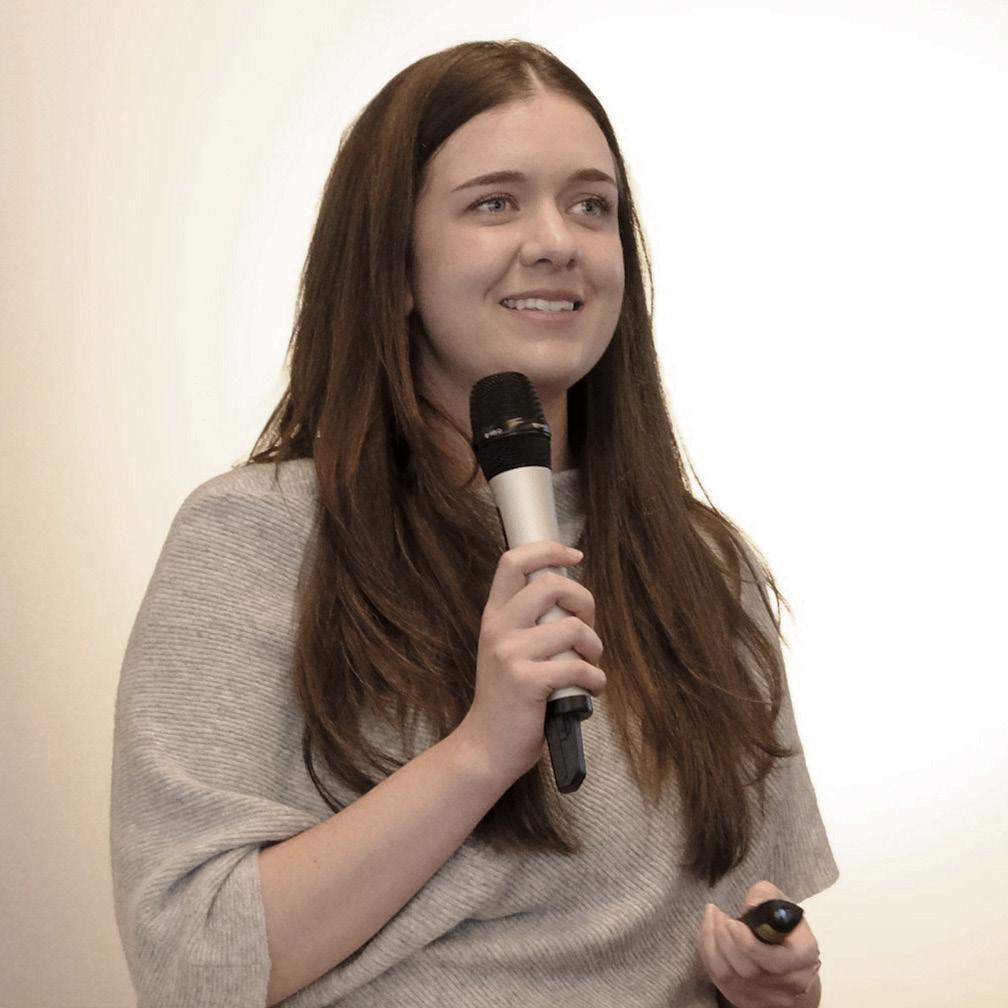
i was a very ambitious teenager”
Now, as part of her Master of Financial Mathematics, she’s doing another placement with Future Fund, this time in a different area. It’s one more step in a very promising career!
“They trade derivatives in order to protect the fund against extreme movements in, for example, the US dollar exchange rate,” Leigh says.

Fraud, theft, false accounting. Financial crimes like these need special investigators, and Alison Coker is just that: a forensic accountant.
Forensic accounting is the process of profiling accounts, identifying and investigating suspect transactions and tracing how money was spent.
“But the purpose is to follow the trail of money, to identify any evidence of financial crime and present it in a format which is ready for court,” Alison says.
Alison started her career with a Bachelor of Commerce in applied finance and accountancy, before landing a job at major accounting firm KPMG.
She then worked for smaller accounting firms and gained practical skills that helped her land a job investigating allegations of police corruption.
Alison recommends applying for graduate and work experience programs. “It’s hard to know what you want to do straight off the bat. So you really need to have a taste test of different areas.”
Curious about studying maths, but want extra support to take the plunge? Macquarie University has you covered
There’s plenty of peer support while studying at Macquarie University! Macquarie Maths & Stats Society (MASS) is free and connects you with study groups, social events and more!
See what MASS is up to on Instagram: @mmassmq
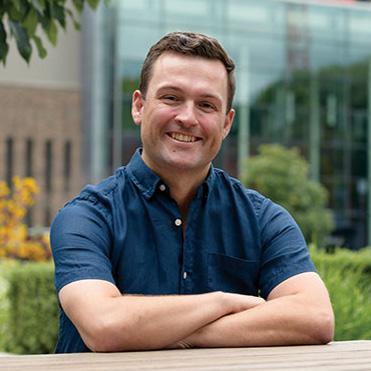

Macquarie’s Numeracy Centre supports first-year uni students with...
A free drop-in service
Weekly workshops
Bridging programs
Prep courses
Online resources
uilding maths confidence is not about getting everything right the first time. It’s about sticking with it and building your skills. Macquarie’s Numeracy Centre is your maths safety net, cheer squad and problem-solving support rolled into one. You can drop into the Numeracy Centre and get free, one-on-one help from people who explain first-year maths in ways that click. Pick from on-campus or online. No booking needed, and no judgment if you’ve forgotten something from year 9.
The Numeracy Centre also offers workshops to help you stay on track, plus bridging courses if you want to level up your skills before the semester kicks off.
Macquarie’s approach is designed to help more students access maths-heavy degrees and actually succeed, not just scrape through.
Best of all, maths at Macquarie starts with curiosity thanks to lecturers like Dr Christian Thomas, who uses a vibrant mix of short videos and collaborative lectures.
“I teach first-year linear algebra using a flipped classroom approach”, he says.
Then, in second year, study zombie apocalypse scenarios, applying maths to population and infectious disease models.
“I like to use popular culture in my modelling unit, with examples inspired by Harry Potter, Munchkins and Oompa Loompas,” says Christian.
You don’t have to arrive at uni as a maths genius. Just be prepared to have fun!
With built-in support from the Numeracy Centre, an industry-based project, and flexible study options, this degree helps turn maths curiosity into real-world opportunities.
This article was produced in partnership with Macquarie University
Picture a farm brimming with numbers and algorithms. Sensors monitor livestock health in real-time. Satellite imagery helps inform how soil will respond to a forecast drought. Drones whizz by, pinpointing where to target pesticides. At a desk, an analyst decides which fertiliser will bring in the best return.
You don’t need to time travel to see this – it’s how some farms already operate! Agriculture has always needed people with strong maths skills to calculate risks, yields and prices. As the climate changes and tech advances, these people are in even greater demand.
If you’ve got a passion for numbers and patterns, it’s time to choose your own maths and food adventure.
Your job: AGRICULTURAL SCIENTIST
With a growing population, it’s crucial Australia (and the world!) gets better at managing resources to ensure there’s enough food and fibre for everyone. If you’re comfortable with stats, that’s a strong start for a career in agricultural science. Check out our Agricultural Science Job Kit
With stats you could…
• Use your skills to establish the most sustainable ways to plant, grow and harvest crops.
• Track rainfall, reservoirs and irrigation.
• Help model global supply chains and analyse how to make them more efficient.
• Dip into economics to match farming practices with markets.
There are lots of opportunities for a maths lover!
The United Nations declared 2026 the International Year of the Woman Farmer, spotlighting the essential roles women play across agriculture and our food systems. Thanks to all the women putting food on our plates, with a side helping of maths.





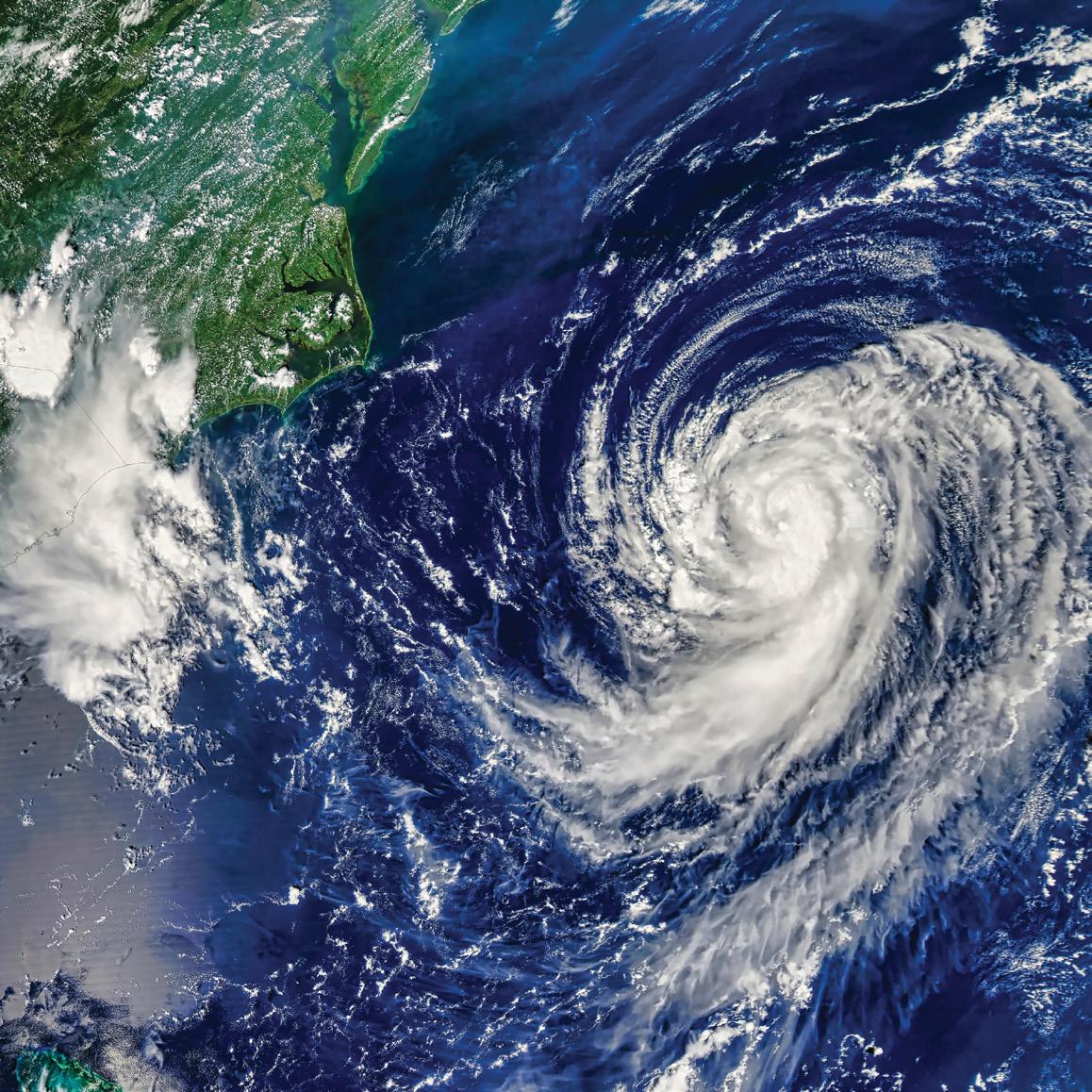
Accurate weather forecasts are a powerful tool in farming.
As our climate and weather patterns change, it’s becoming harder for farms to plan and get steady yields.
Luckily, we’re getting better at tracking and predicting weather. Data experts are helping to build super-accurate models of coming seasons.
If seeing the future is your thing, you might explore a career in meteorology, modelling or computer science.
a carbon calculator
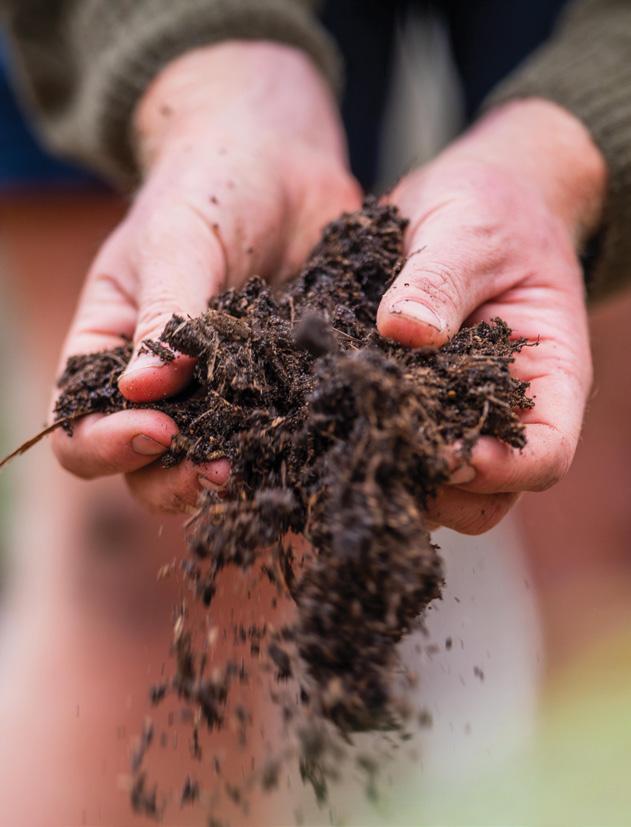
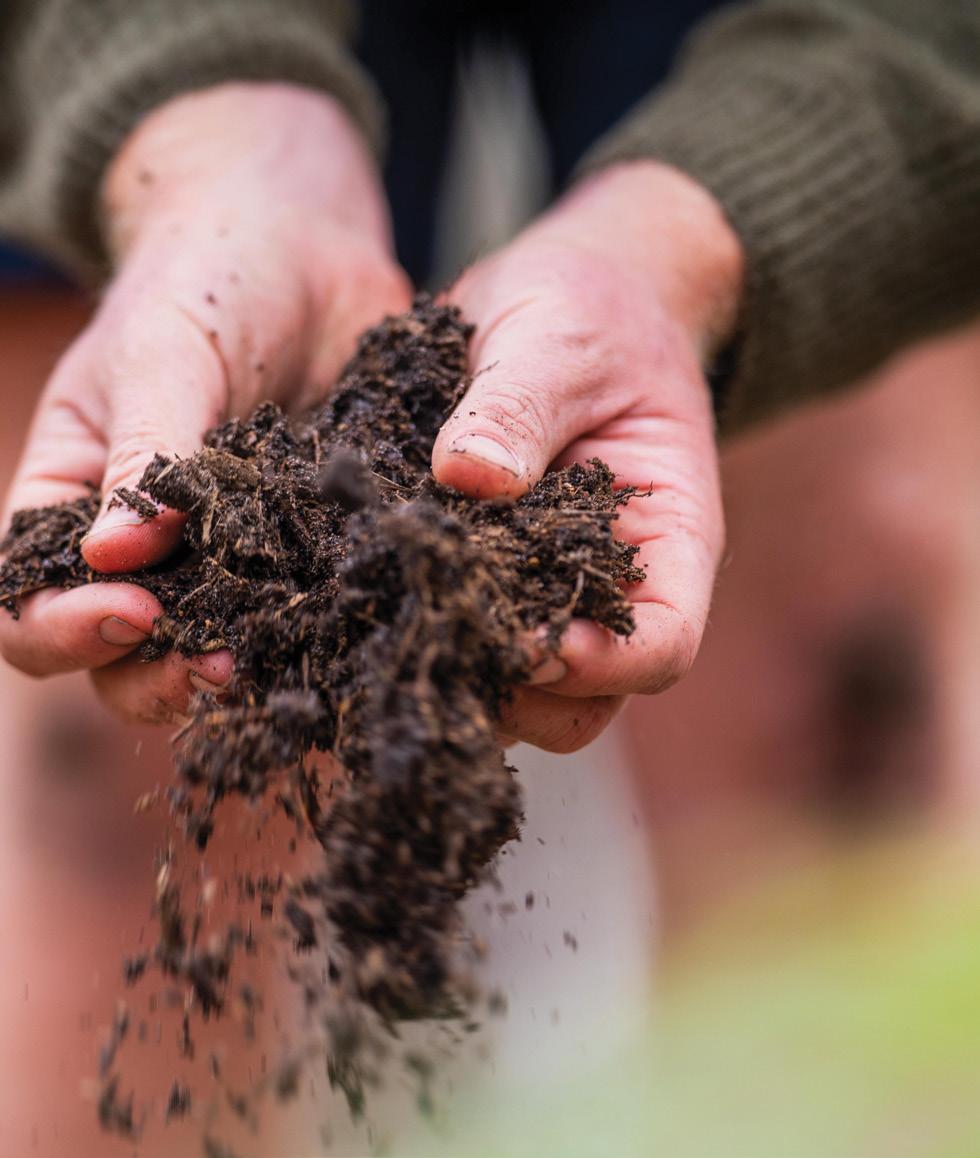
Farms can become big CO2 absorbers through plant growth and careful soil management. And with carbon credits, farmers can even be paid to store more! But it’s not easy figuring out exactly how much CO2 gets stored in each patch of land.
If you’re good with numbers and want to help the environment, you might find work in carbon accounting for government or industry.

Want to run experiments? You might test seeds, soil and fertiliser to see what grows best. Use stats and data to turn field results into smarter farming decisions.
Juggle budgets, yields and weather forecasts to keep food production profitable and sustainable. Maths will help you calculate costs, predict harvests and decide when to plant, feed or sell.
Translate drone images, sensor readings and yield numbers into clear insights. Use stats and coding to help farmers grow more food with fewer surprises.
START YOUR CAREER HERE
MATHS + FOOD + STUDY
Bachelor of Agribusiness, The University of Queensland
Bachelor of Agricultural Science, Charles Sturt University
Bachelor of Agribusiness, University of New England
Bachelor of Food Science, UNSW Sydney
MATHS + FOOD + JOBS
Agronomist
$56K–$102K
Farm manager
$50K–$99K
Data analyst
$60K–$118K
Food scientist
$50K–$124K
*Salaries according to payscale.com
Regina Huang works at Lyka, an Australian-founded pet food company on a mission to make dogs healthy from the inside out
As a food scientist at Lyka, it’s Regina’s job to search for ways to make their dog food better.
“We make gently cooked dog food that’s fresh and nutritious so that puppers can live their best life!” she explains.
Regina and the research and development team do this by running countless trials throughout the year.
Every day is different, which Regina loves. She might be in the office one day, then at the manufacturing facility the next assisting with product development.
“There’s never a dull moment as a food scientist,” she says.

“I use maths every day in my job – it’s an important part of food science. Oftentimes I’m using maths to formulate recipes or do costing analysis,” says Regina. She believes studying maths at school is important for any STEM career because being able to explain your thought process to others makes you a more desirable job candidate and employee.
9am: Arrive at work, make coffee, run through my tasks for the day and prioritise in terms of urgency and importance. I’ll also check my emails and read through any unread messages on Slack.
10.30am: One-on-one meeting with my manager to discuss new and ongoing projects and provide updates on my work. Then straight into some research reading through peer-reviewed journal articles.
12pm: Lunchtime! Head out with co-workers for a bite to eat. Our office is dog-friendly, so sometimes we bring our puppers with us.
1pm: In the research and development kitchen space conducting some small-scale benchwork. Then back to the desk to document my work in a report.
4.30pm: Wind down by getting some admin work done while chatting to my co-workers. Then, head home.
Some tips to make your cooking more mathematical, and your maths more delicious!
One of the places maths shows up frequently in the food industry is measurement. Whether it’s calculating the kilojoules in a biscuit, or making sure a business is producing as many tonnes of grain as they say they are, it’s important to establish and check standards and measurements. If maths is your thing, you might be interested in this sort of work!
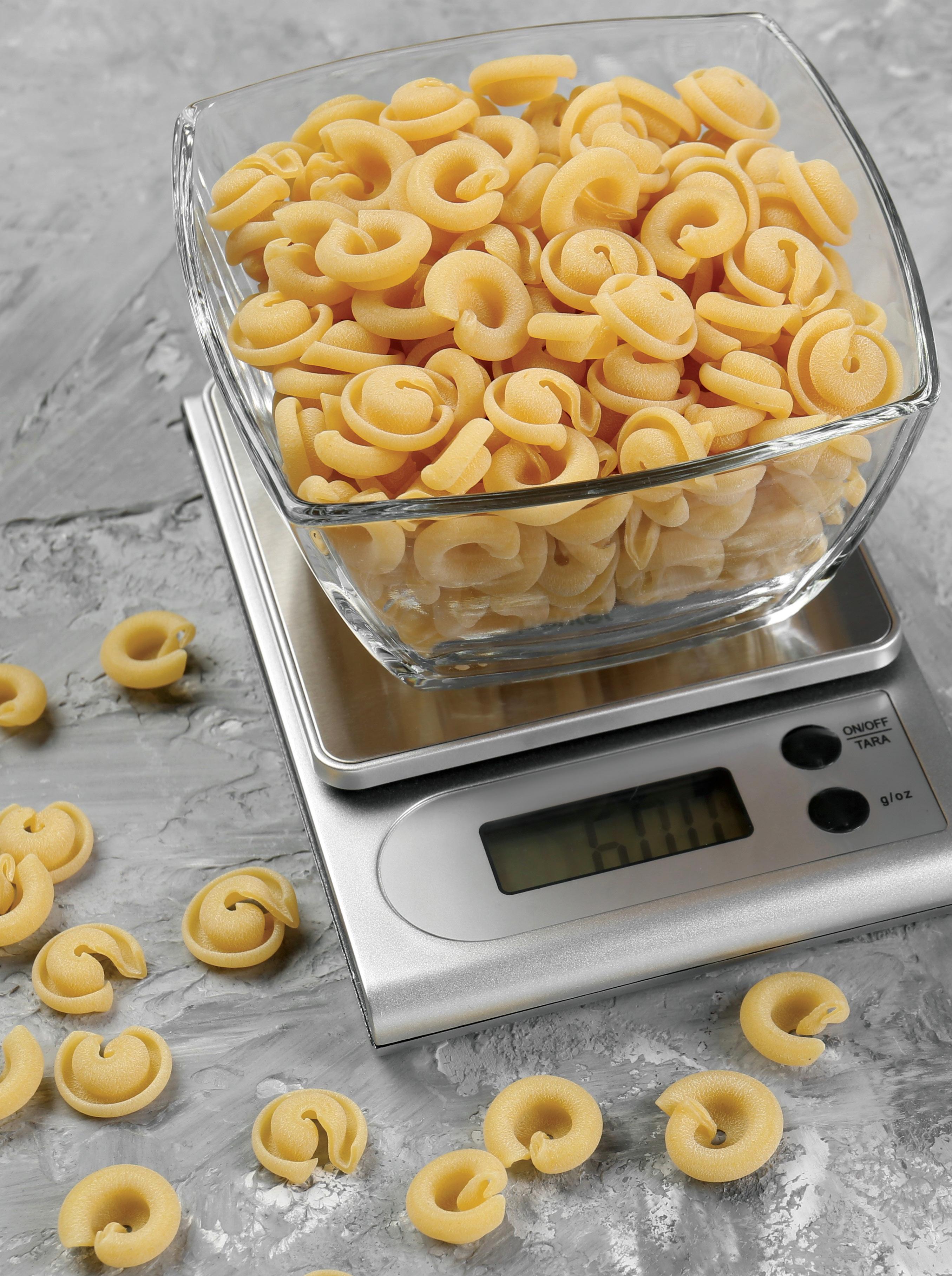
If you’re following a recipe from overseas, watch your tablespoons! The Australian tablespoon is bigger than tablespoon measures in most other countries: 20 mL versus 15 mL elsewhere. The head of the National Measurement Institute once said the difference “bugs him”. But the institute has higher priorities: it develops and maintains Australia’s measurement system, works on ultra-precise timekeeping for high-tech applications, and provides advice on how to track things like carbon emissions.
Get precise with displacement
Got a recipe that calls for half a cup of butter, or strawberries, or something equally tricky to get in or out of a cup?
Add a cup of water to a measuring jug, and then watch the waterline go up as you add your ingredient.
Why can’t you cook cupcakes twice as fast by doubling the oven temperature?
To start, 200°C isn’t twice as hot as 100°C because 0°C is a human-chosen temperature. This is easier to spot if you convert temperatures to the Fahrenheit scale (°F): 100°C is 212°F, while 200°C is 392°F.
Also, with a large item, a higher temperature risks burning the outside before the inside of the food is cooked.
statistics reveal about two of Australia’s most iconic species
Ecology’s superpower is (surprise!) maths.
Ecologists use maths to study how animals interact with each other and the environment so we can protect them better. By using data, stats and modelling, they can identify patterns and provide reliable information to inform species action plans. So how exactly can you make a career using numbers to help save our native species?
Let’s find out!
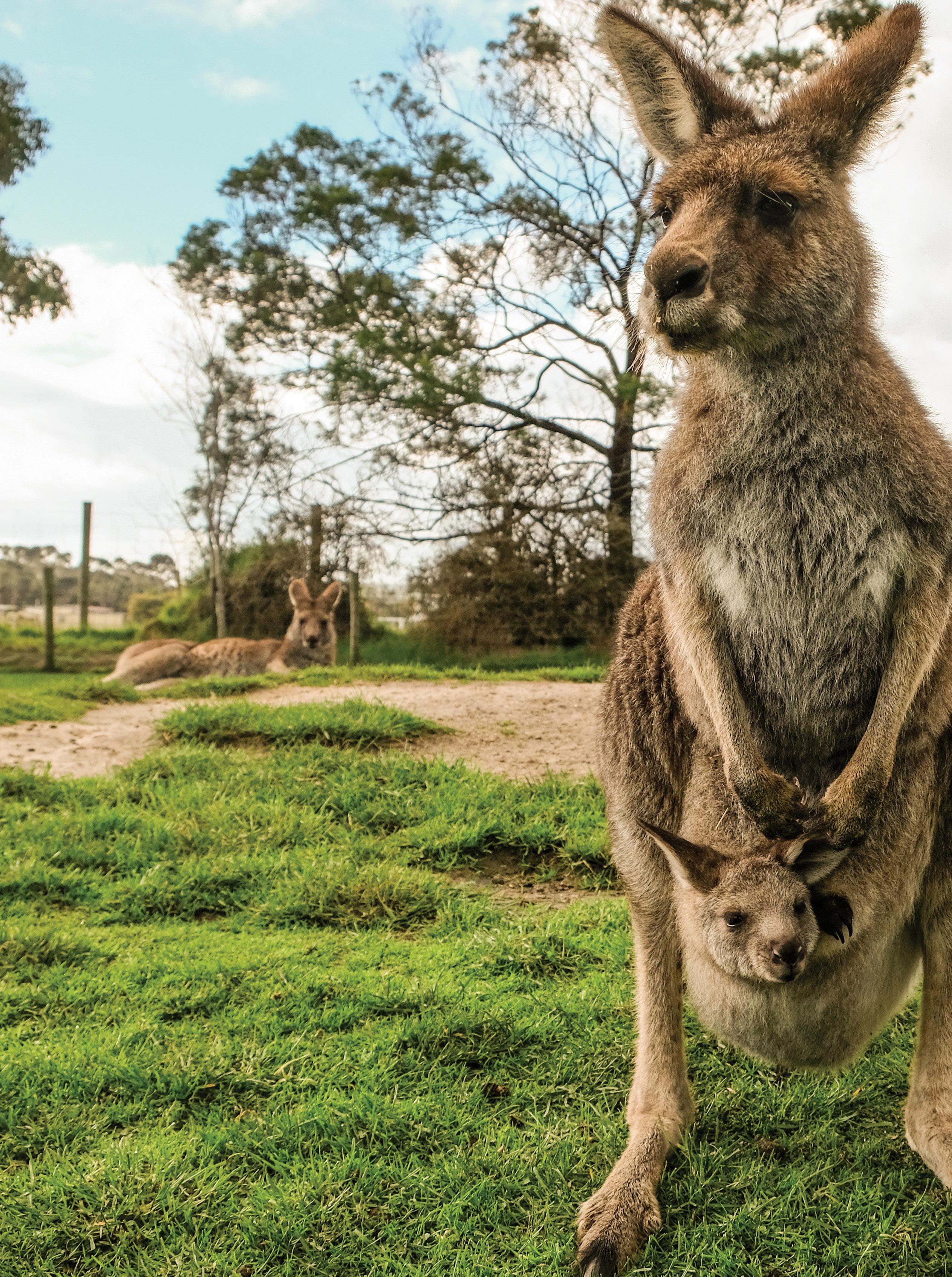
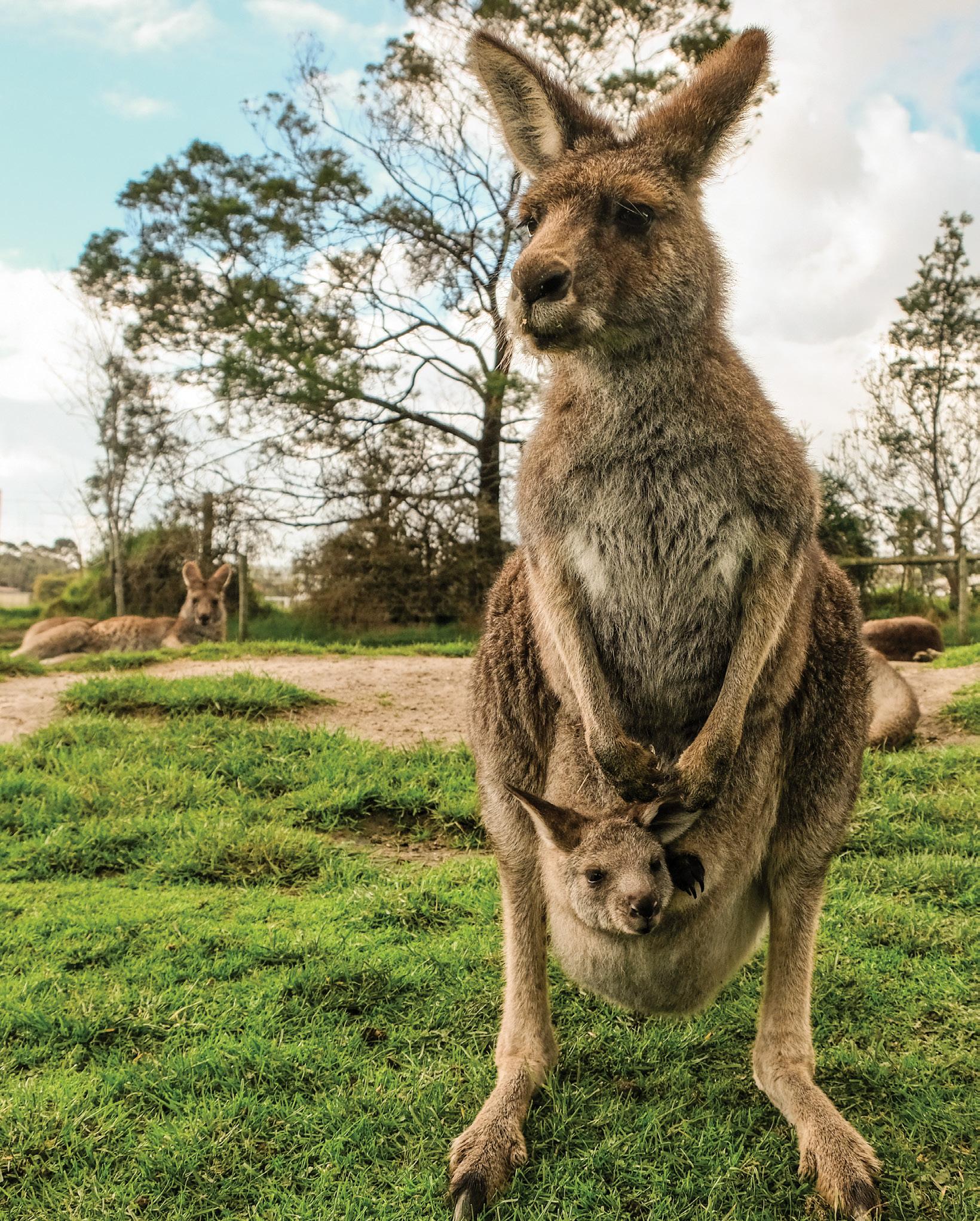
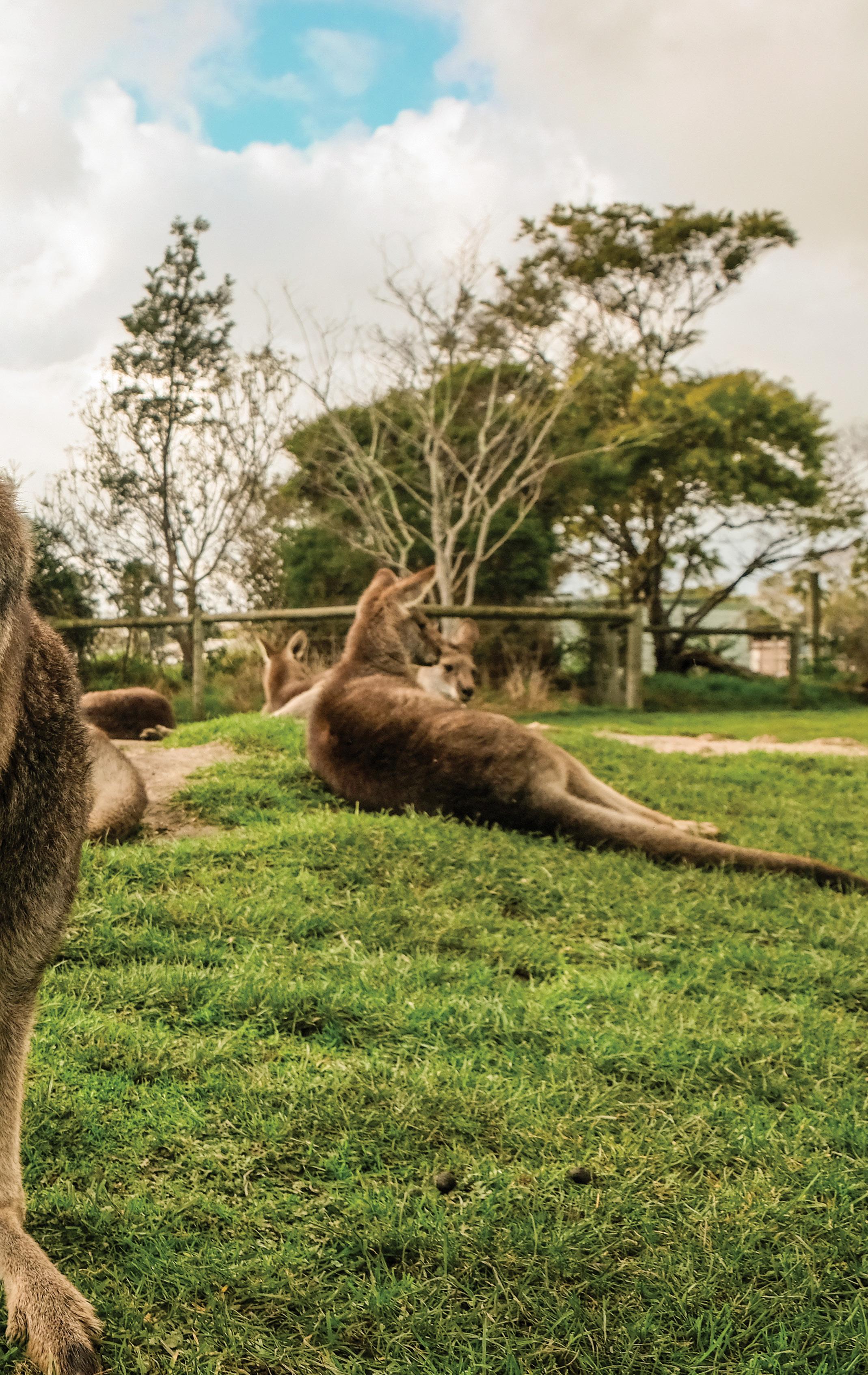
Kangaroos are national icons, but they can also sometimes be considered pests. RMIT University’s Dr Lily van Eeden is devising ways to understand human relationships with native species, such as kangaroos.
Have you ever filled in a survey that asked how much you disagree or agree with a statement – usually on a scale from one to five? This is called a Likert scale, a tool used to measure attitudes about a certain topic. Lily uses Likert scales to understand human attitudes towards species, preferences for management, and much more.
She then uses regression analysis, looking at variables and estimating a best-fit line to show the relationship on a graph. One example of a relationship is whether spending time in nature means you’re more likely to protect it.
“This research informs behaviour change interventions to encourage positive interactions between people and environment,” Lily says.
“I encourage young people to pursue a career in environmental social science to see their work translate into real, visible progress on environmental challenges!”
Bachelor
Social science researcher
Have you considered these maths + animal jobs?
Use data modelling to track and predict disease outbreaks in animal populations.
Model risk, life expectancy and claims data for pet or livestock insurance.
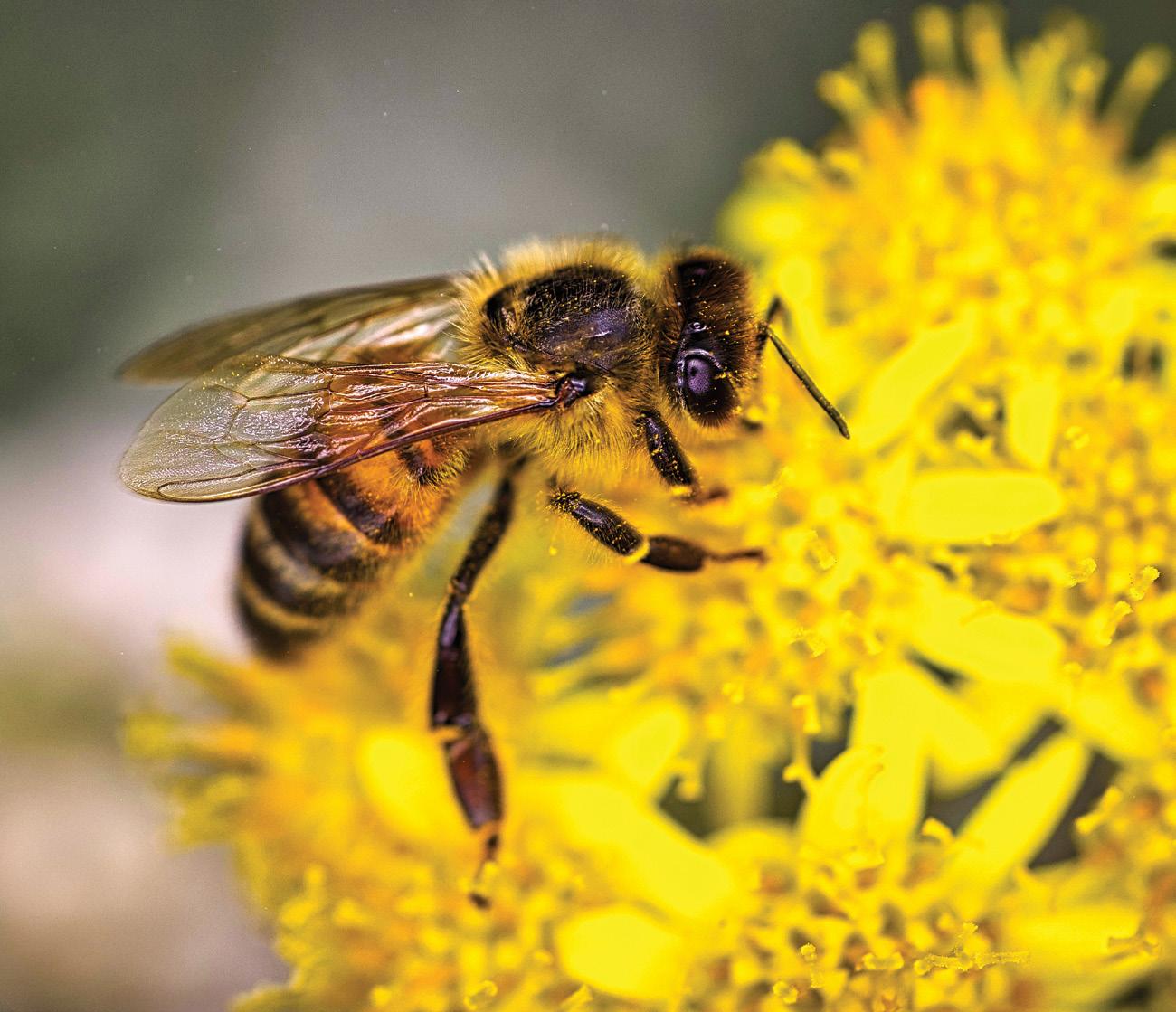
WhenYolŋu people in Arnhem Land began noticing odd things happening in nature, they knew something was amiss. Seasons weren’t arriving on time, birds weren’t returning from migration, and when it came time to celebrate guku (honey) harvest, there wasn’t any honey. So, where were the bees?
Bee researcher Clancy Lester was involved in groundbreaking collaborations between the Yolŋu people, the late Professor Brian Djangirrawuy Gumbula-Garawirrtja and The University of Melbourne’s Dr Rachele Wilson and Professor Margie Mayfield to investigate native Australian honeybees.
During his master’s research, Clancy used DNA sampling to determine which bees gathered pollen from which flowers. Clancy used maths sequences called diversity indices to analyse regional abundance, paired with DNA metabarcoding to understand why honey harvests were not fruitful.
Combine field ecology with coding and stats to protect endangered species.
Mix probability and genetic modelling to improve livestock traits like health, growth and yield.
Analyse animal sounds like whale songs, frog calls and bird chirps using signal processing and stats.
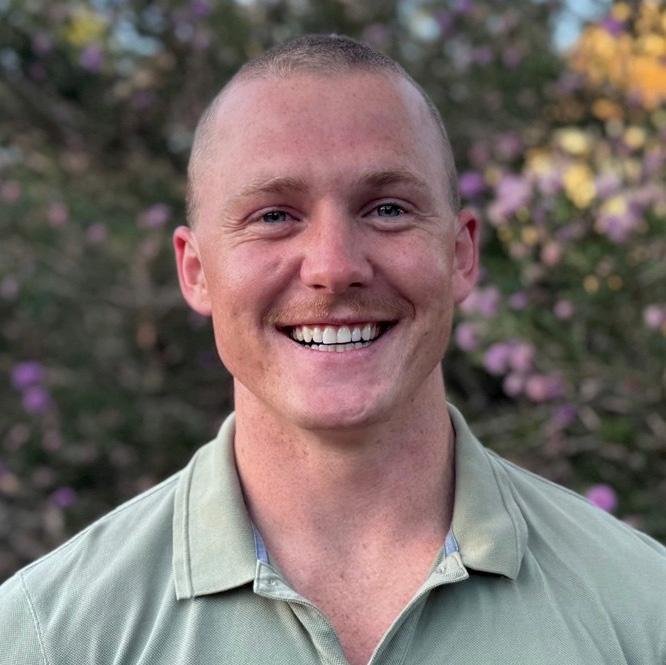
“We know so much about European honeybees, but barely anything about our own native honeybees!” Clancy says. “As a bee researcher, you might be the first person ever to have witnessed a species, and then to save them.”
MATHS+ ANIMALS + STUDY
Bachelor of Science, The University of Melbourne
Bachelor of Science/ Bachelor of Mathematics, QUT
Bachelor of Mathematics (Applied Mathematics), Adelaide University
Bachelor of Engineering (Honours) (Bioinformatics), UNSW Sydney
Master of Biological Science, The University of Western Australia
MATHS+ ANIMALS + JOBS
Wildlife biologist
$51K–$78K
Data analyst
$60K–$118K
Environmental advisor
$67K–$150K Statistician
$63K–$103K
Geospatial analyst
$59K–$117K
*Salaries according to payscale.com
Uncover the challenge, the wonder and the beauty of maths
Electives checklist
✔ Game theory ✔ Topology ✔ Cryptography ✔ Applied maths
Skills to succeed
✔ Creativity
✔ Problem-solving
✔ Attention to detail
✔ Collaboration
Set a money goal
Want a new phone, outfit or computer? Get a job, set a savings goal and calculate how long it’ll take to save up. When you hit your goal? Bliss!
Try some maths craft Crochet a hyperbolic coral or fold a flat, four-faced flexagon – there are plenty of ways to get hands-on with maths!mathscraftnz.org/resources
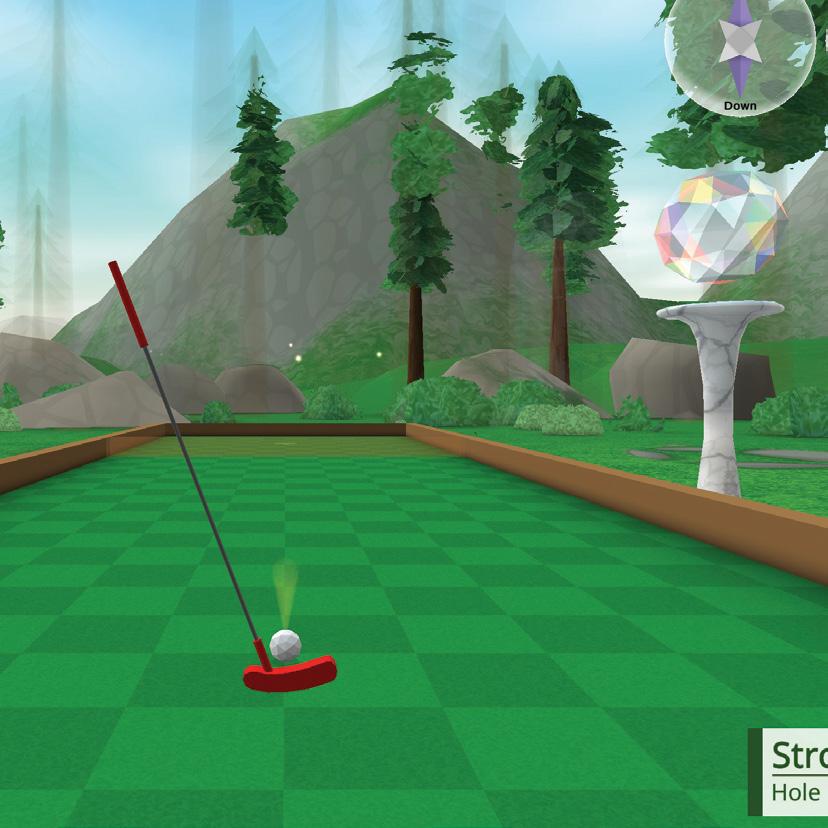
Exactly what it says on the box: why not try a round of golf in four dimensions! bit.ly/4DgolfCwS
Hyperbolica
A circle always has 360 degrees, right? This game explores a world where space itself is curved. bit.ly/HyperCwS
This brain-bending puzzle series explores all facets of the mathematical universe. But don’t worry! You don’t need to know calculus or trigonometry to crack them. bit.ly/TedEdCwS
The best mathematicians in the world guide you through their favourite numbers, questions and mathematical experiments. youtube.com/@numberphile
Careers with STEM: Maths 2026 is a publication and trademark of Refraction Media. Copyright © 2026 Refraction Media, all rights reserved. No part of this publication may be reproduced in any manner or form without written permission. If you would like to reproduce anything from this magazine, email: info@refractionmedia.com.au.
We acknowledge the Traditional Owners of country throughout Australia and recognise their continuing connection to land, waters and culture. We pay our respects to their Elders past and present.
This issue went to press on 17 April 2026.
Printed in Australia by IVE.
Cover image: Josephine Carter Photography
Produced and published by: Refraction Media
Co-founder, CEO & Publisher: Karen Taylor-Brown
Partnerships Manager : Rachel Jones
Managing Editor: Jasmine Fellows
Deputy Editors: Louise Meers and Ellen Phiddian
Sub Editor: Amelia Caddy
Art Director: Katherine Power
Writers: Jasmine Fellows, Louise Meers, Ellen Phiddian, Charlotte Read, David Shaw, Samantha Wheeler
SUBSCRIBE AND ORDER COPIES: CareerswithSTEM.com /subscribe
EDITORIAL & ADVERTISING ENQUIRIES: Email: info@refractionmedia.com.au
POSTAL ADDRESS: PO Box 154, Oyster Bay, NSW 2225, Australia CareerswithSTEM.com
ISSN 2209-1076