REED MAGAZINE
Wildflowers. Tango. Culture. These Reedies are preserving the delightful things we hold most dear.
When
Spring 2026 Volume 105, No. 1
EDITOR
Katie Pelletier ’03
ART DIRECTOR
Tom Humphrey
WRITERS/EDITORS
Bennett Campbell Ferguson
Cara Nixon
CLASS NOTES EDITOR
Joanne Hossack ’82
REEDIANA EDITOR
Robin Tovey ’97
GRAMMATICAL KAPELLMEISTER
Virginia O. Hancock ’62
PROJECT MAESTRO
Caitlyn Schock
COMMUNICATIONS SPECIALIST
Autumn Barber
CREATIVE DIRECTOR
Lauren Rennan
CHIEF COMMUNICATIONS OFFICER
Sheena McFarland
Reed College is an institution of higher education in the liberal arts and sciences devoted to the intrinsic value of intellectual pursuit and governed by the highest standards of scholarly practice, critical thought, and creativity.
Reed Magazine provides news of interest to the Reed community. Views expressed in the magazine belong to their authors and do not necessarily represent those of Reed College.
Reed Magazine (ISSN 08958564) is published three times a year by the Office of Strategic Communications at Reed College. Periodicals postage paid at Portland, Oregon.
Postmaster:
Reed Magazine
3203 SE Woodstock Blvd. Portland, Oregon 97202-8138
reed.magazine@reed.edu www.reed.edu/reed-magazine
On a Friday morning a few weeks back, I felt like I was spinning my wheels at work. My head was full of the worries of a working mom: arranging childcare in advance of a week of school closures, buying bigger rainboots for the kids, filling out insurance forms, tackling a daunting inbox. In need of inspiration, I pulled from my shelf Mary Barnard: Complete Poems and Selected Translations, a new book by Sarah Barnsley ’95 , whose essay in this issue recounts her first encounter with the poet and translator (see p. 26).
Mary Barnard ’32 may be best recognized among Reedies as the alumna whose groundbreaking translations of Sappho many of us read in Hum 110. Beyond those translations, I knew little of her poetry. Like Sarah, I found it bracing. Working in the imagist tradition, Barnard’s poems are spare, exacting, and deeply rooted in the Pacific Northwest. Sarah has noted that Mary’s unsentimental poems “were ahead of the eco-poetry curve that came to prominence in the U.S. in the second half of the 20th century through younger poets like fellow Reed alumnus Gary Snyder.”
Barnard’s poems attend to the natural world while simultaneously making an argument about poetry itself— about how to see, and how to render what one sees. Reading them required something of me. Not speed, not productivity, but attention.
Attention is often the companion to beauty. To notice what is before us—to look closely at a landscape, a line of verse, a piece of music, a crafted object—is already to begin valuing it. In that sense, beauty is less a spectacle than a practice.
The connecting thread of our collection of feature stories in this issue, “The Beauty Of . . .” is alumni who devote themselves, in one manner or another, to asking us to notice things. They seem to ask, “Do you want to experience something wonderful?”
On that Friday morning, reading Barnard’s poems did not empty my inbox, but it steadied my gaze. I hope the pages that follow offer you a similar moment.
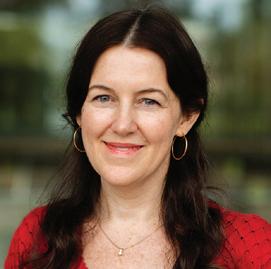
—Katie Pelletier ’03, Editor
Wildflowers. Tango. Fashion. Music. Curation. Reedies are creating, protecting, and sharing things that delight us.
• A Walk with the Wildflower Woman
• Voices of Justice
• Weaving Joy
• A Musical Rescue Mission
• The Sound of History
• A Kinesthetic Force
• Curation as Creation
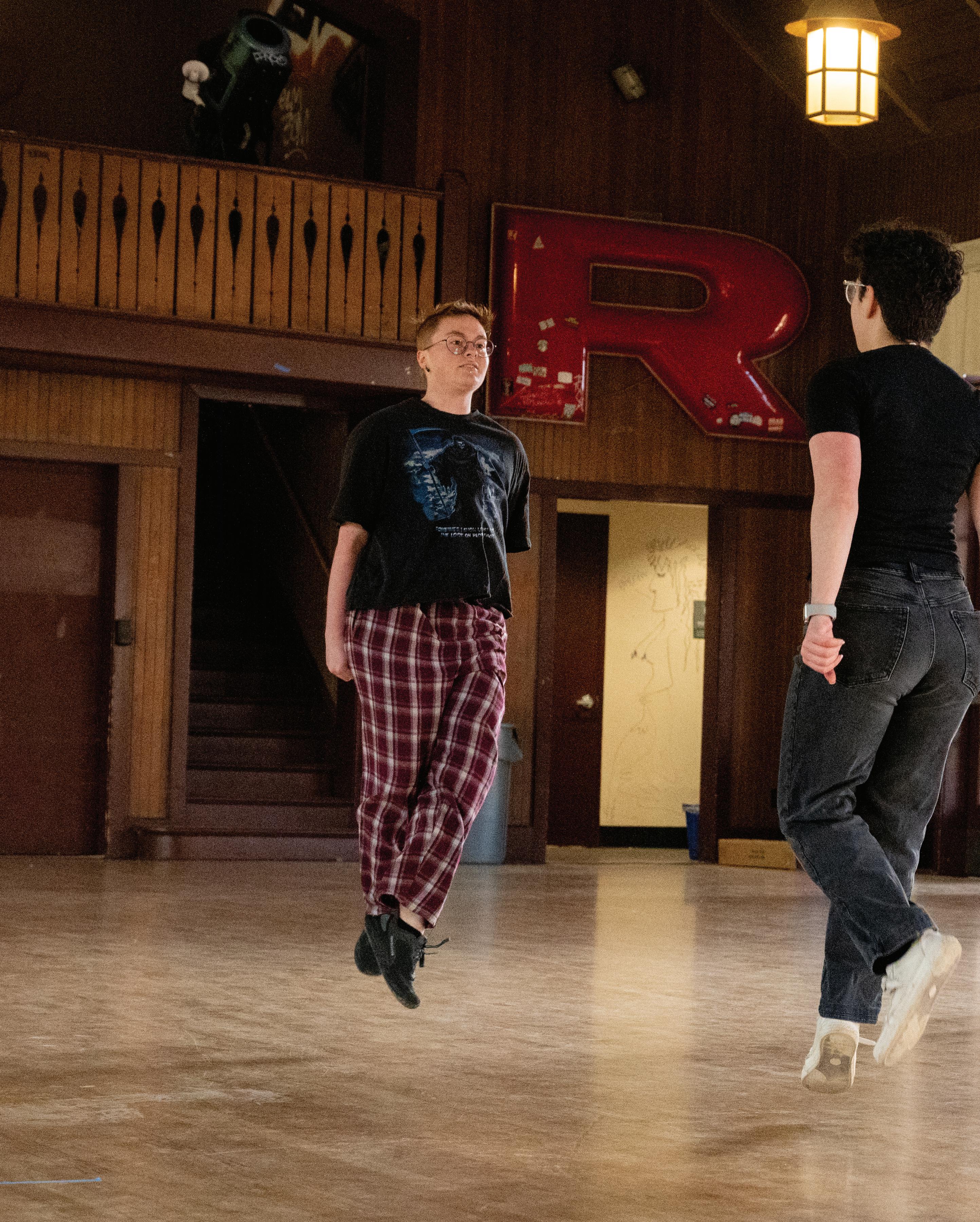
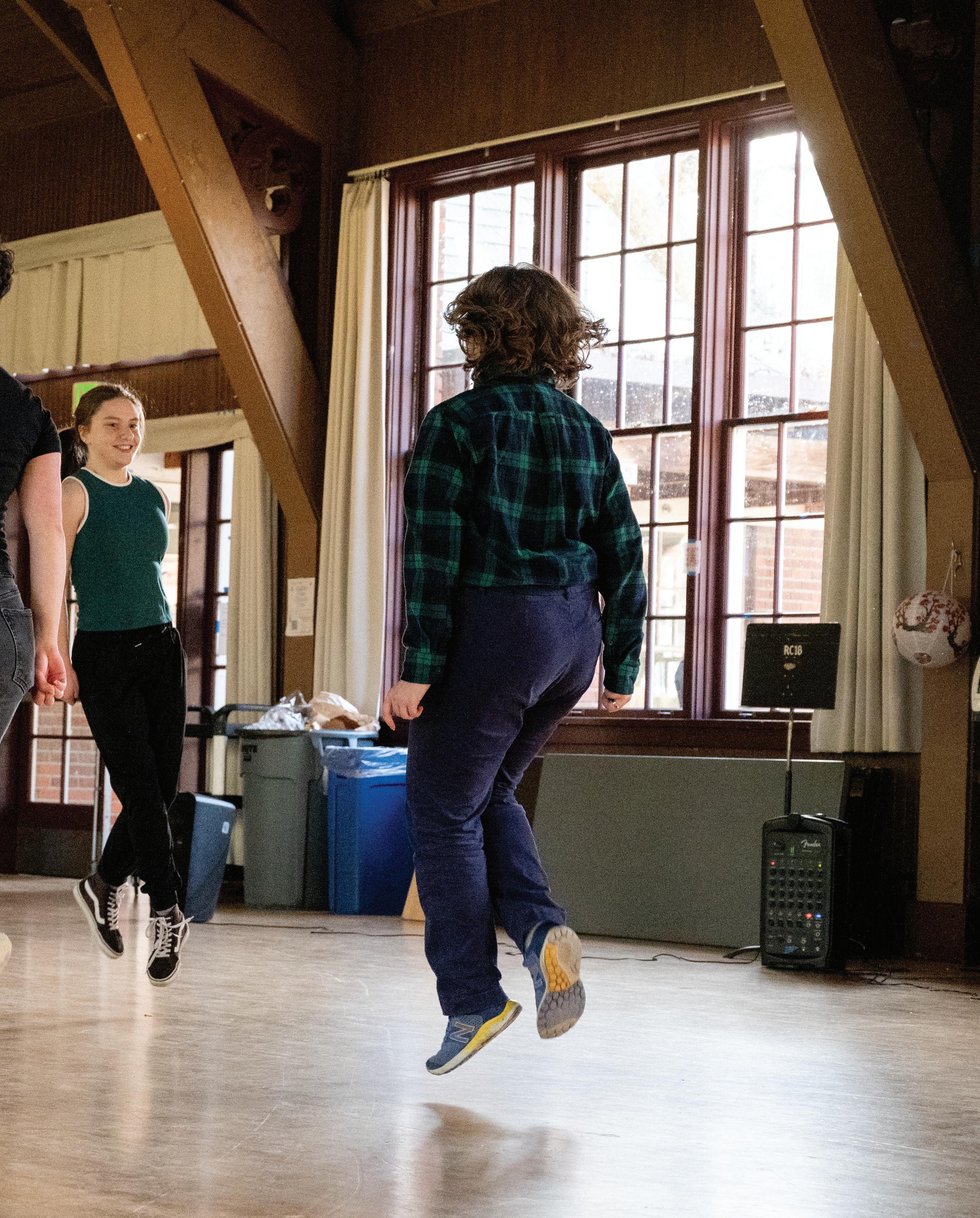
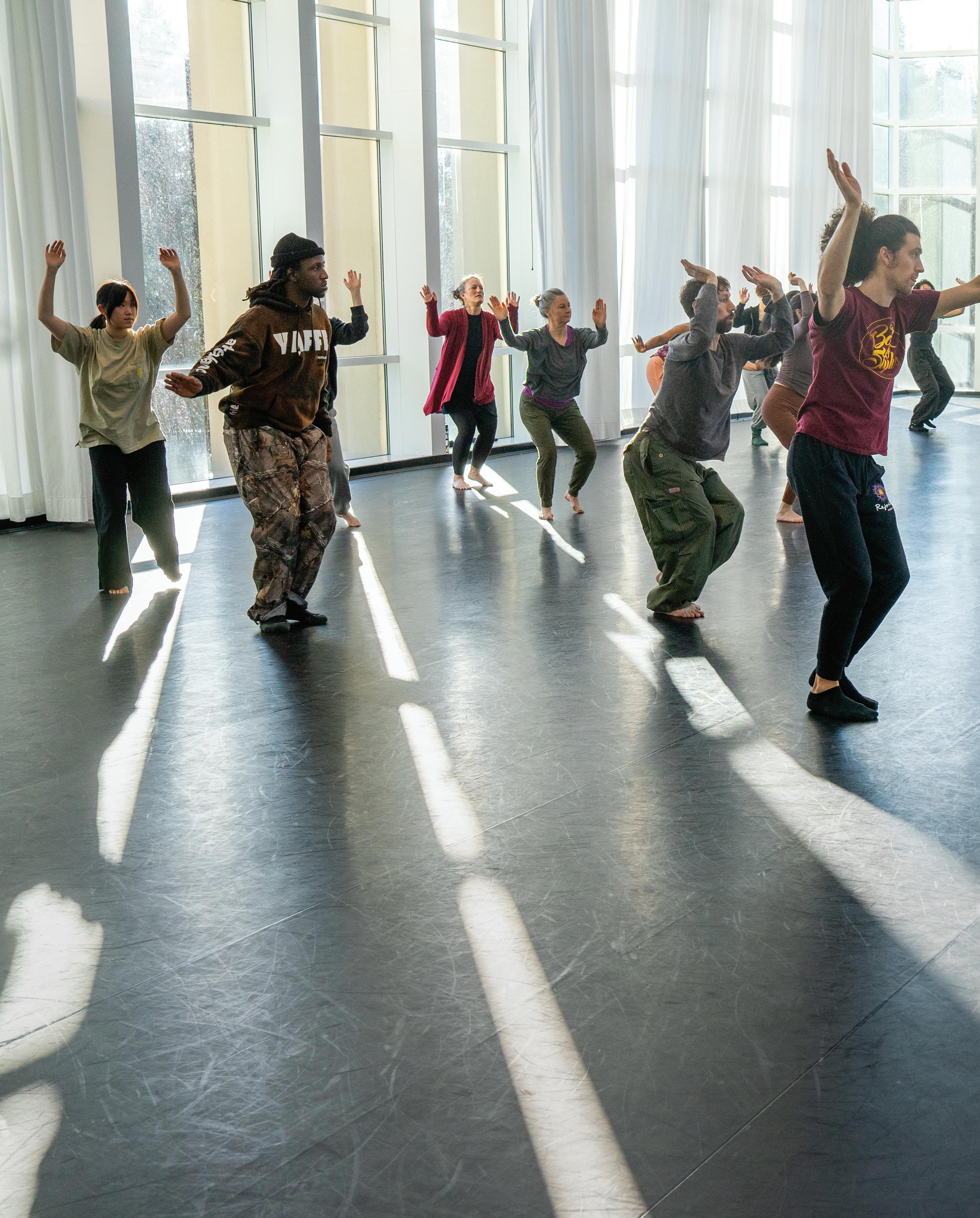
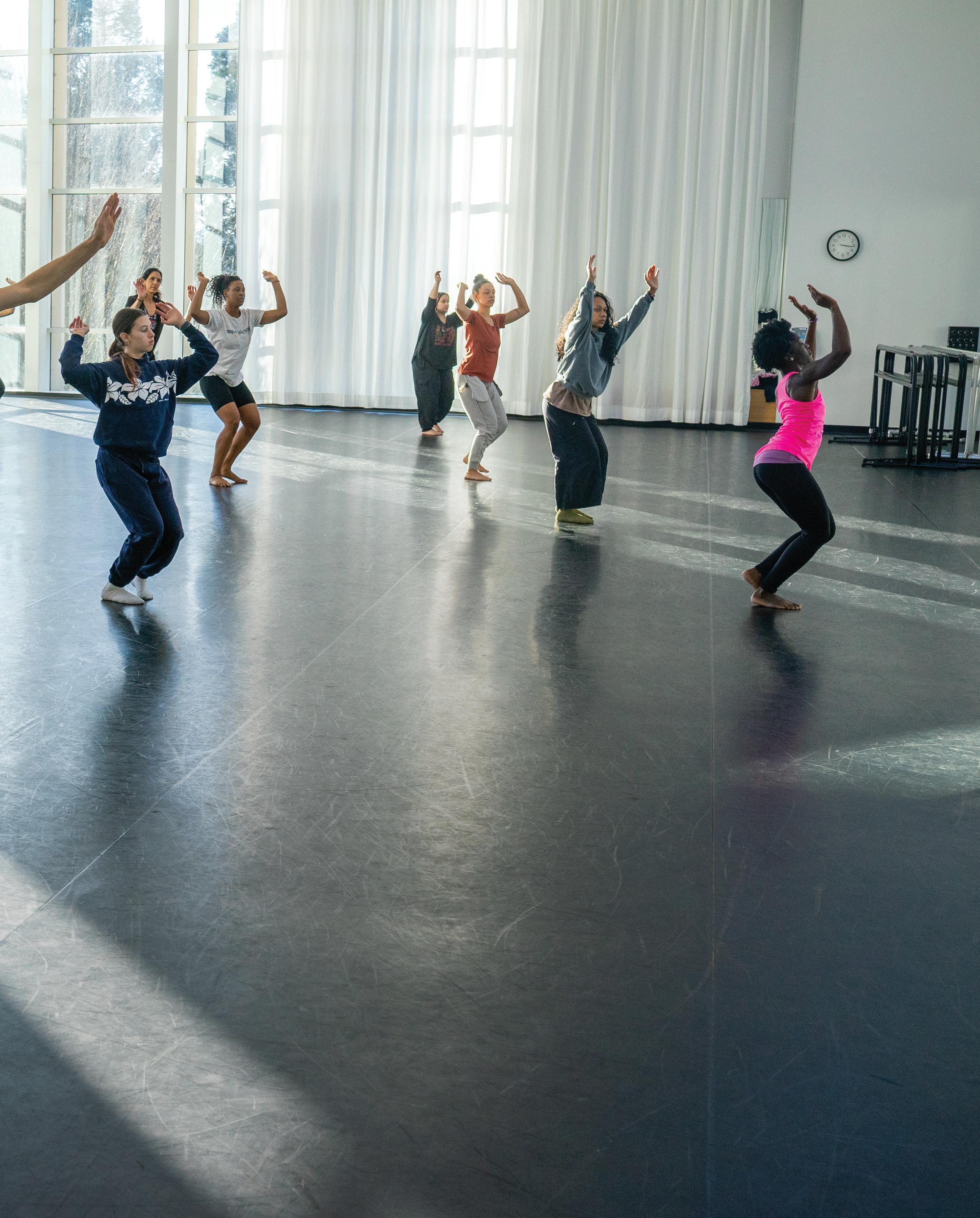
Whether they were preparing the perfect cheese appetizer, honing their wildlife tracking skills, or mastering Irish dance (pictured here), Reedies embraced Paideia, Reed’s annual festival of learning, with gusto. To learn more about (or relive) Paideia 2026, go to the Reed College Newsroom (to read Cara Nixon’s chronicle of three memorable courses) and to the Reed Magazine website (to check out Bennett Campbell Ferguson’s reflections on teaching a Paideia course on the cinema of Christopher Nolan).
How Barry Hansen ’63, a.k.a. Dr. Demento, built a legacy of lyrical laughter.
In 1970, Barry Hansen ’63 played Nervous Norvus’s oft-banned novelty song “Transfusion” (about an incurably reckless driver) on KPPC-FM in Pasadena, California—and earned the ire of the station manager’s secretary.
“You gotta be demented to play that shit on the radio,” she told him. Rather than take offense, Barry took inspiration for his on-air moniker: Dr. Demento, the name he bore throughout his 55-year career as a radio DJ with an unmatched passion for parody songs.
Part pundit, part ringmaster, and part starmaker, Dr. Demento has arguably the highest degree of cultural saturation possible for a Reedie who didn’t become a beat poet or invent the iPhone. Without Barry, many people might never have heard Pinkard & Bowden’s “Elvis Was a Narc” or “Weird Al” Yankovic’s “Another One Rides the Bus.”
“If there hadn’t been a Dr. Demento, I’d probably have a real job now,” Yankovic confessed in 2000. In fact, he was so grateful for Barry’s patronage that he featured
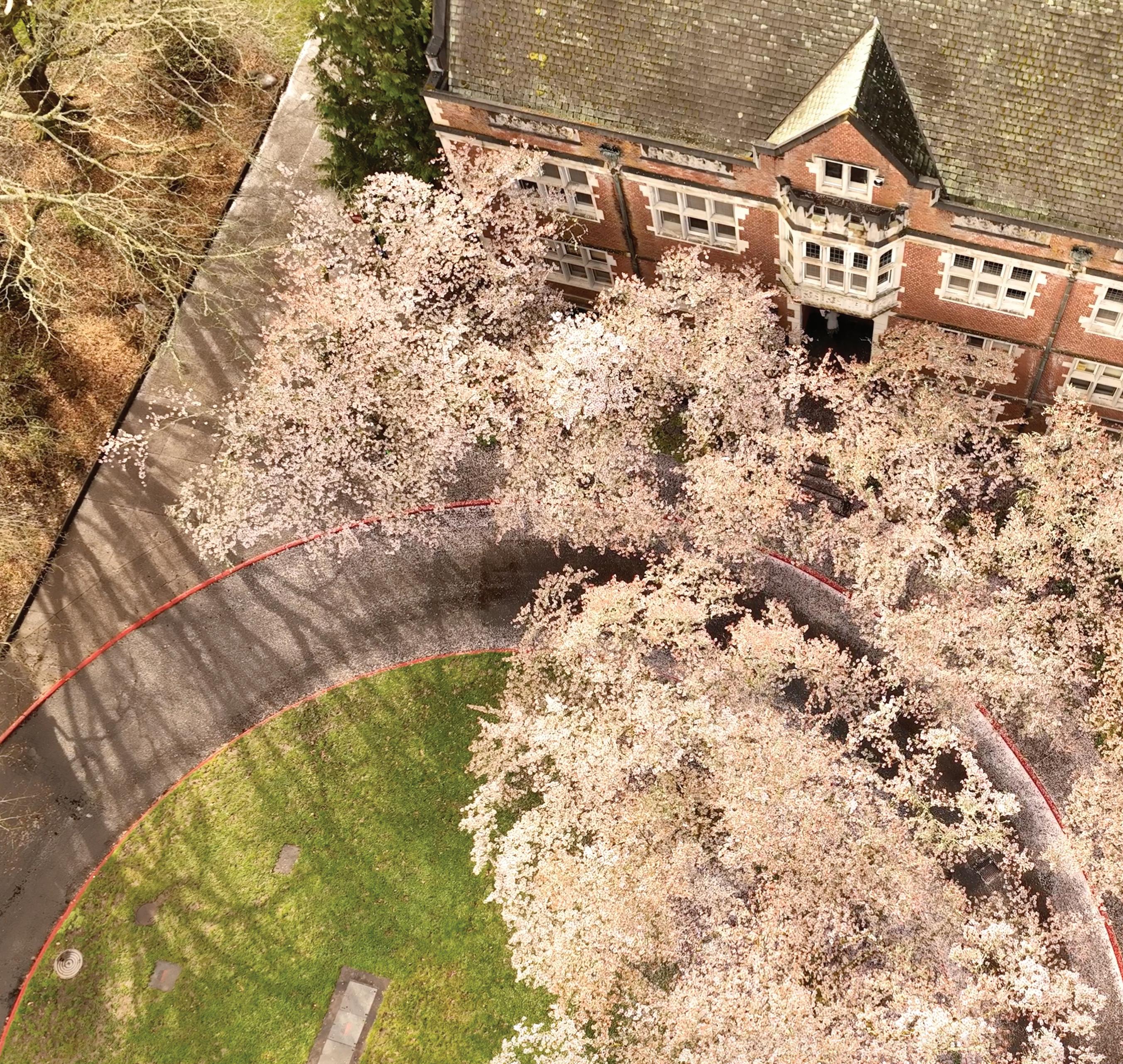
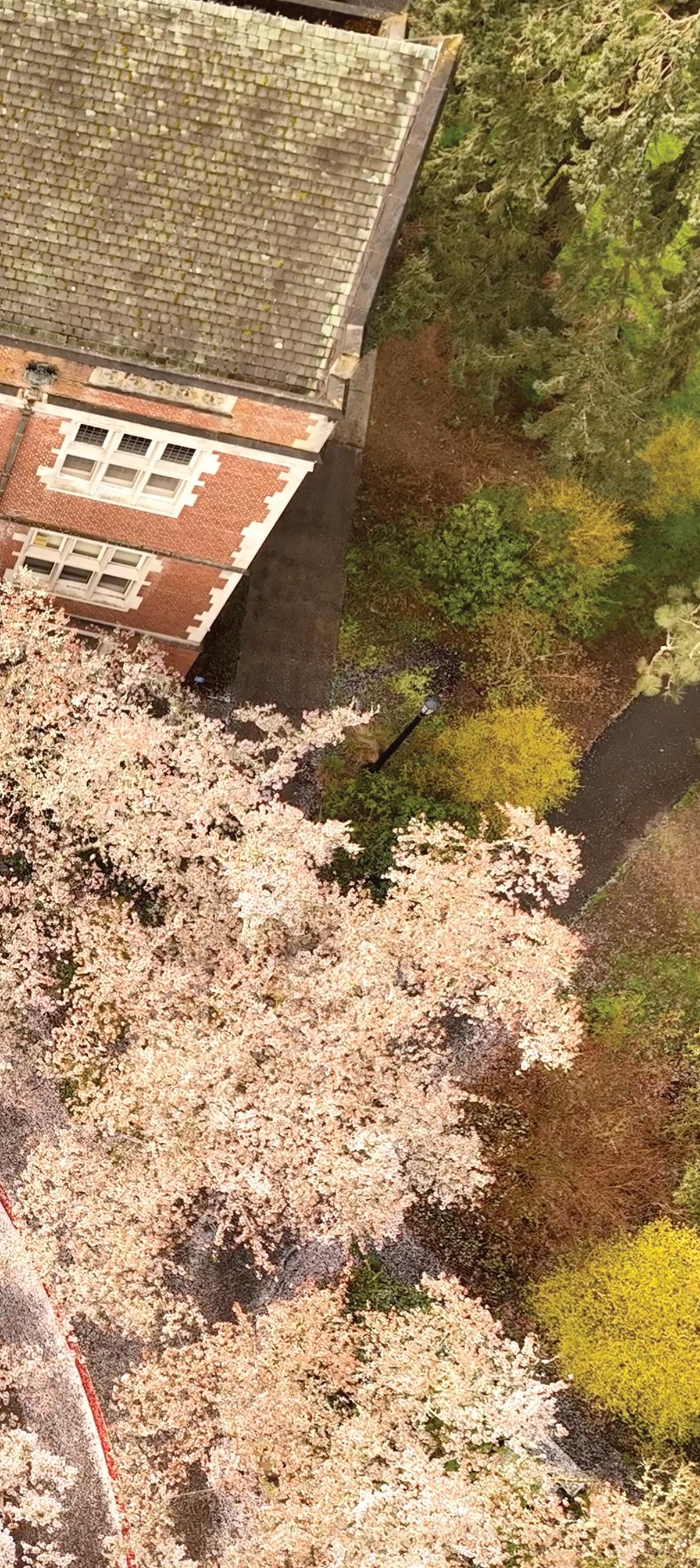
We’ll eventually have to say goodbye to the current famous cherries of Eliot Circle, but, just as spring is sure to return, so too will a new batch of blossoming trees.
a version of him in the satirical biopic Weird: The Al Yankovic Story (in which Rainn Wilson sports Dr. Demento’s signature crimson bow tie).
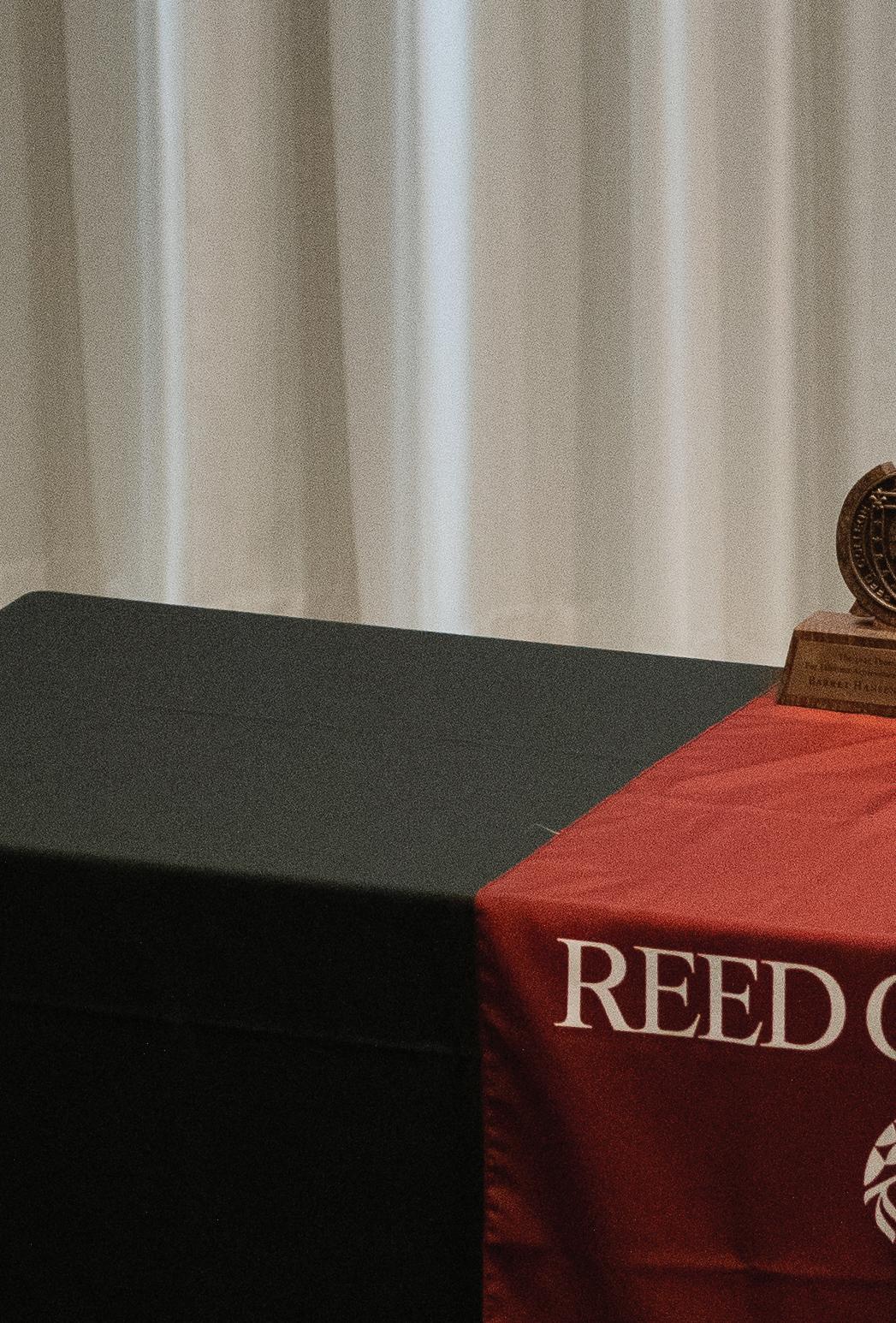
On October 9, 2025, Barry was awarded the Thomas Lamb Eliot Award for Lifetime Achievement by a Reed College Graduate and presented a lecture titled “Dr. Demento: A Century of Comedy” in Vollum. It was a breakneck voyage through a history of tomfoolery—and a testament to the radical power of goofiness that he celebrated on his show.
Born in 1941, Barry attracted Reed’s attention while he was attending University High School in Minneapolis, Minnesota. At the time, he had grown his beard for a senior class production of The Playboy of the Western World—and his whiskers were noticed by a visiting recruiter, who later recognized him on the Reed campus.
“He looked at me and said, ‘Oh, you’re the guy with the beard in Minneapolis, aren’t you? You know, I did this whole trip, and you were the only person I saw who really looked like a Reed student,’” Barry recalled in a 2007 interview.
Barry distinguished himself at Reed, becoming involved in KRRC and writing his thesis on post-Wagnerian opera—a topic
Each winter, a heavy gloom hangs over Portland.
Reed’s inhabitants know these months of overcast well, but also know that soon, the clouds will part and the cherry blossom trees adorning campus will bloom once again. After months of waiting, spring will indeed come.
The cherry blossoms have long been a marker of the season’s turn from the cold and dark to the warm and vibrant. In Eliot Circle, a hallmark of campus, the blossoming of the cherries is celebrated each spring with revelry.
Karen Leibowitz ‘99 recalled in a 2006 Reed Magazine article how much she loved spring classes in Eliot, “because the view from the east end of the third floor looked
that might surprise fans used to his analysis of comedic songs, but not those familiar with his work as an ethnomusicologist (or his collection of over 100,000 records).
After graduating from Reed, Barry earned his MA at UCLA and eventually established himself as the mischievous musical tastemaker of the airwaves, bringing The Dr. Demento Show to over 150 radio stations.
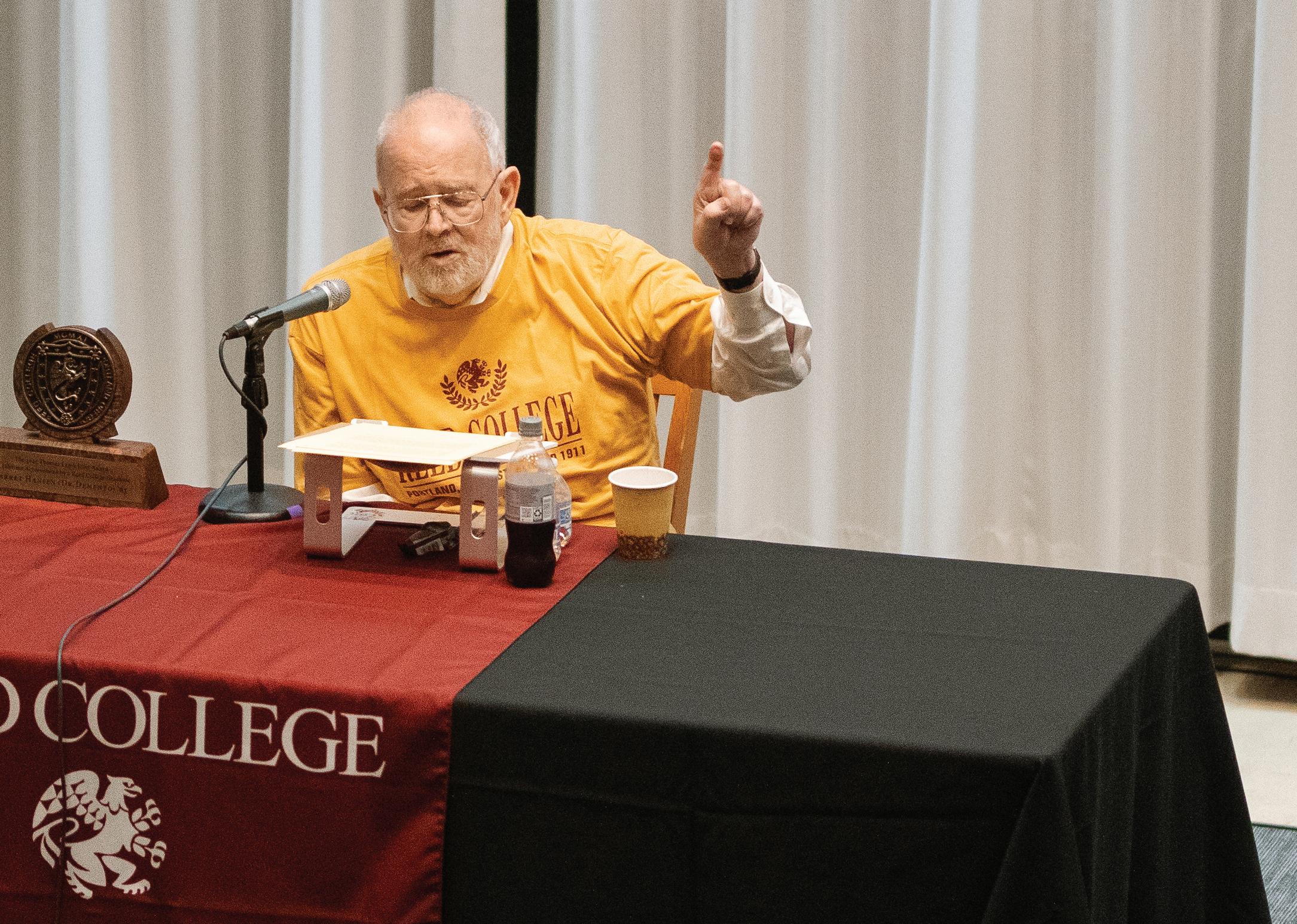
Per listener requests, he focused on what he affectionately called “funny music,” while regularly wearing a top hat and calling upon audiences to “Staaaay DEMENTED!”
The hat was finally hung up last October, when Barry hosted his farewell episode of The Dr. Demento Show (which was devoted to the top 40 songs in the show’s history). Yet he remains an influential voice
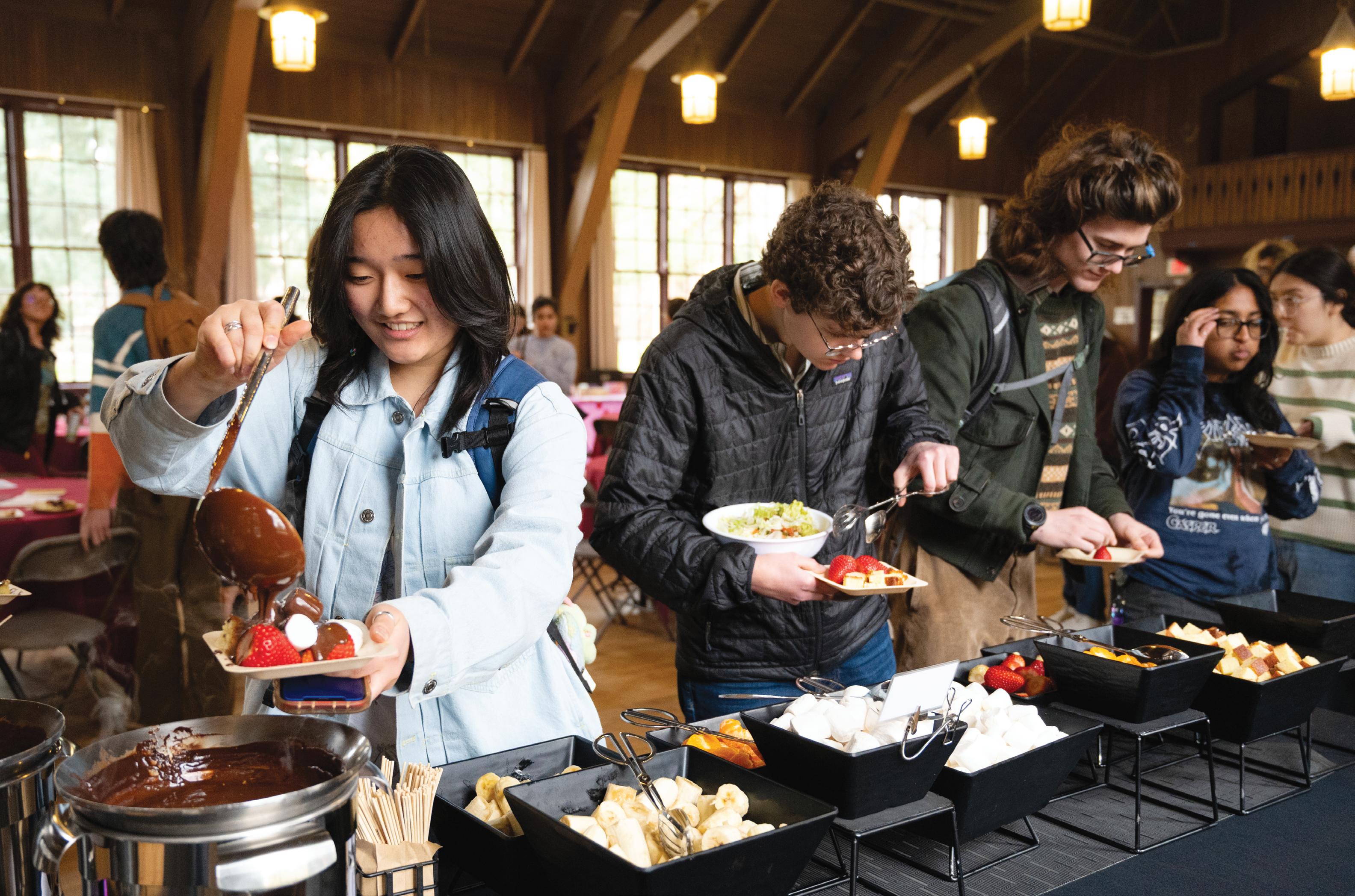
Reading Reedies gathered in the library this Valentine’s Day to celebrate all things romance with a special event: Smut in the Stacks. Attendees sipped on mocktails and enjoyed a panel discussion about sex and sexual health in romance novels, surrounded by the “Romance is for Everyone” collection, which uplifts BIPOC and LGBTQ voices in the genre—and yes, it includes Heated Rivalry
to music and comedy lovers, including the Reed students who eagerly questioned him during a lunch following his Eliot lecture. “What’s your favorite genre of music now?” one student asked. “Well, funny music, of course,” Barry replied without hesitation. After a short absence, the doctor was back in—or, perhaps, he never left.
—Bennett Campbell Ferguson
out onto the cherry blossoms.”
It was long rumored that the planting of the Eliot Circle cherry trees was connected to a student thesis, though this seems to be only myth. Rather, the cherries were planted in the 1980s as part of renovations to the middle of campus, which transformed a large parking lot into Vollum, paths, and new landscaping.
The trees, now around 40 years old, have surpassed the typical lifespan of their species. One of the trees near the Vollum entrance had to be removed in early January because of its age and proximity to a heavily used walkway, and Facilities is developing a plan to eventually replace all of the Eliot Circle cherry blossoms.
“More details on this will follow as we work through a planting plan to begin fostering new cherry trees in the circle to begin filling in for loss of mature trees,” Executive Director of Facilities Operations Steve Yeadon said in an email.
Cherry blossom trees have long existed elsewhere at Reed, too— in total, over 70 decorate other spaces on campus. Almost anywhere you wander at Reed, you can find a pink cloud of blossoms in the spring.
So though the cherry blossom trees will come down, they will be replanted—just as the gloomy Oregon winter will hang over campus, but each year we know: spring will come again.
—Cara Nixon
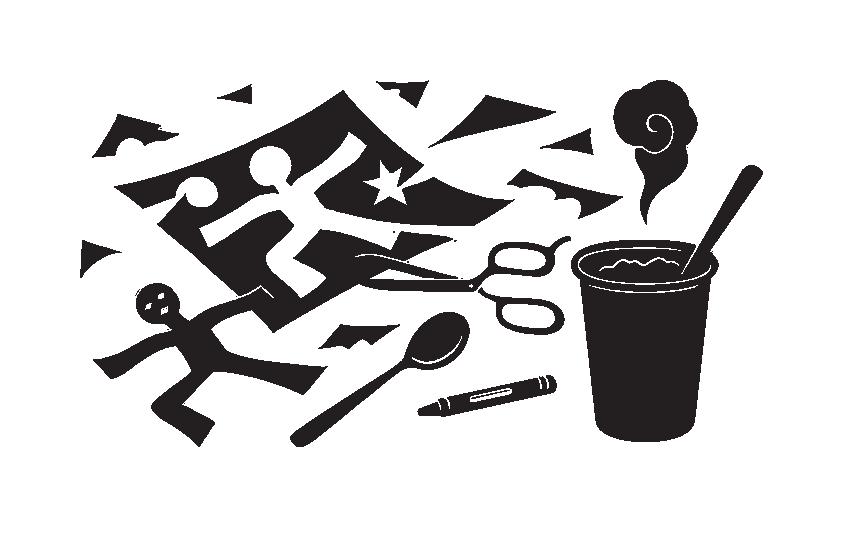
served at the inaugural Community Table: Soup and Scribble event, where attendees designed positive posters, sang karaoke, and celebrated one another after a successful fall semester.
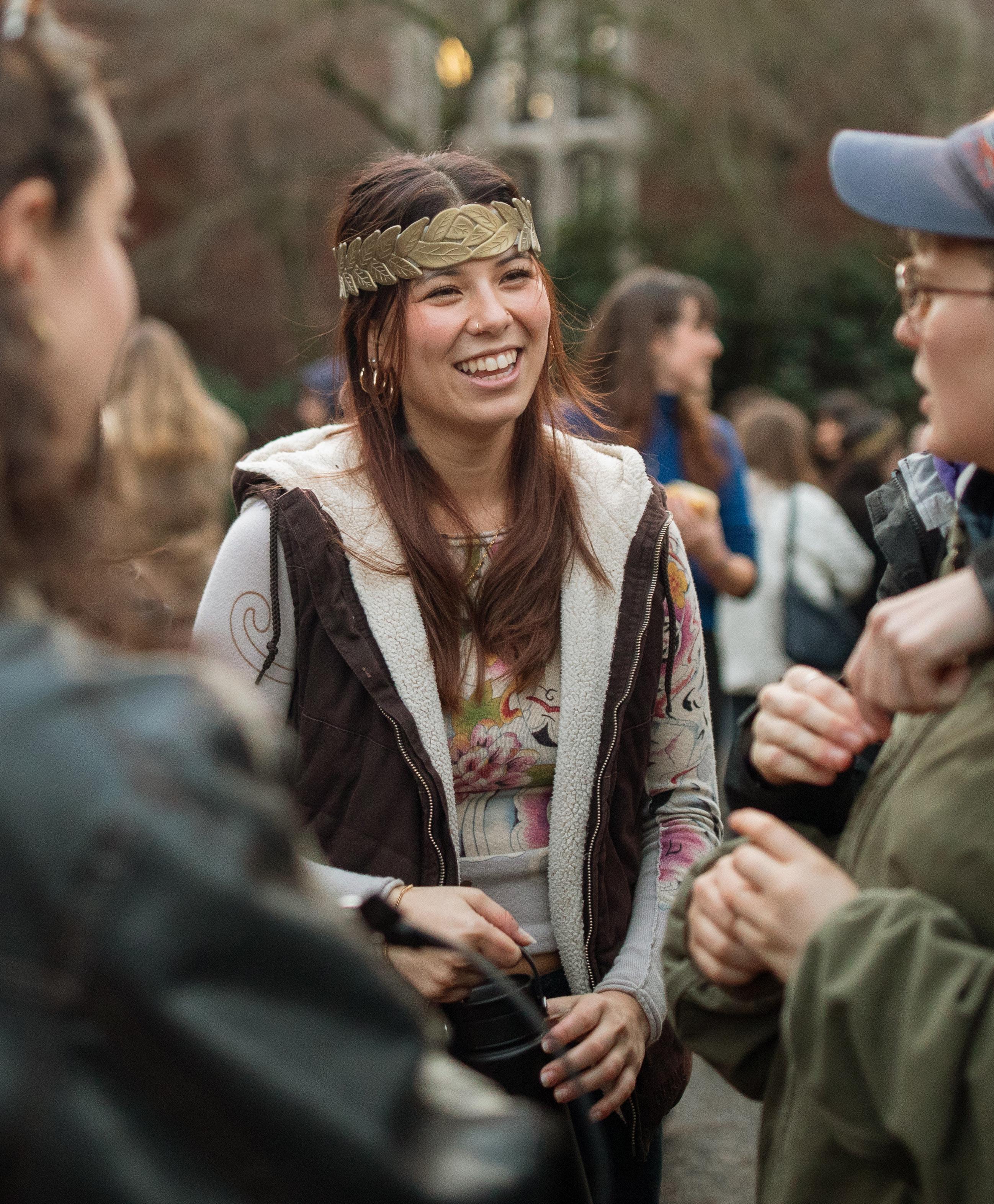
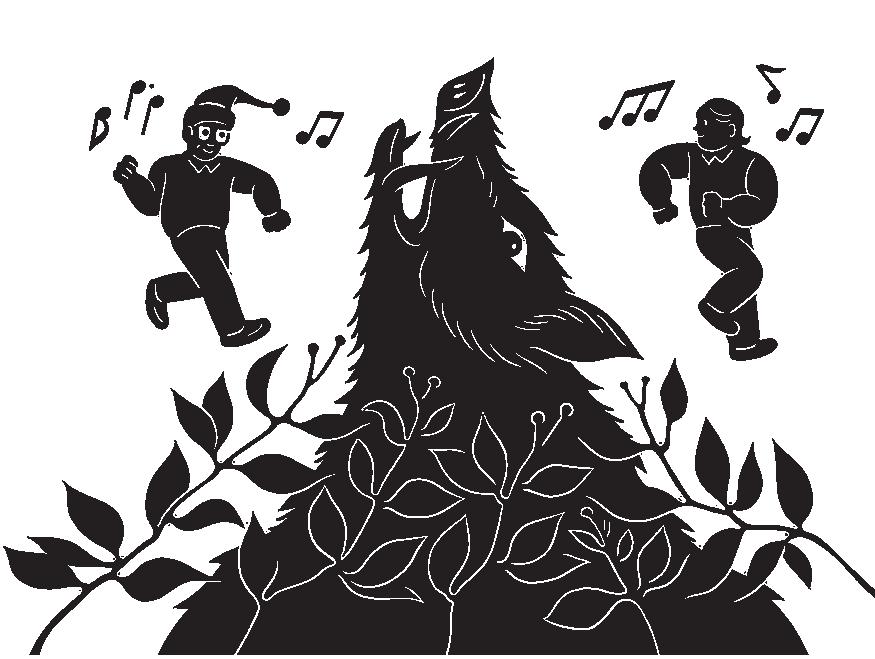
This year’s Alumni Holiday Party saw 134 attendees representing 66 years of Reed history, with graduates from 1959 to 2025. Reed’s eponymous boar has taken many forms: taxidermy, papiermaché, spit-roast, and even an ice sculpture. Boaris III made a tour of Commons to be lofted above current students, giving them a taste of their eventual alumnal fate.
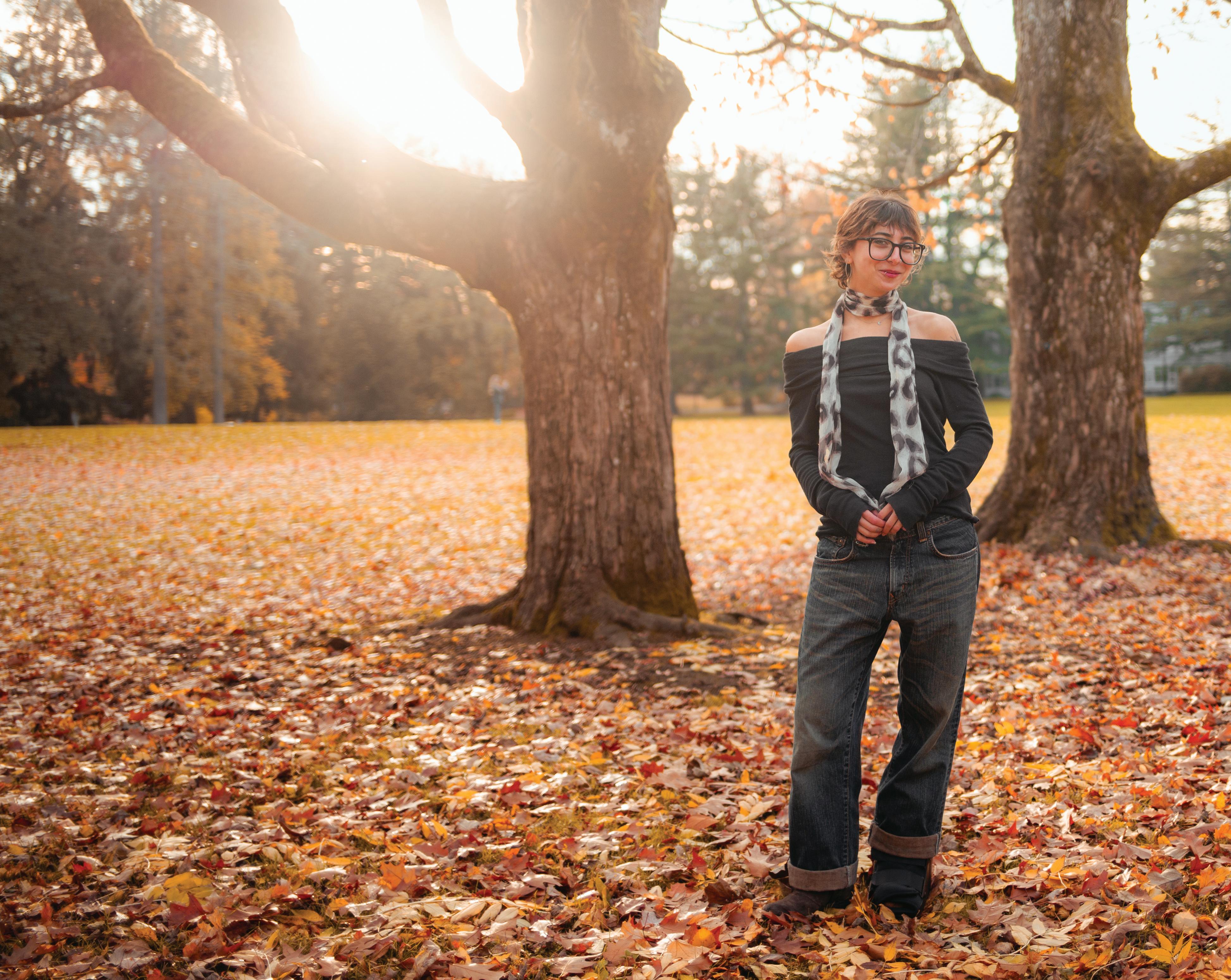
Reed student publishes research on early modern French tabloid in Tufts Historical Review.
One day, “world permitting,” Zoe Fleysher ’26 says they want to be an expert in their field.
“I want to be able to bring underrepresented voices and lenses onto the presentation of history, not only with queerness, but from a woman-centered lens and from a literary lens,” they say. “Because I feel like people often neglect that.”
Now they’re one step closer to realizing their dream with a paper of theirs newly published in the Tufts Historical Review.
The article, which was Zoe’s final preparatory paper for their junior seminar with Professor Michael Breen [history and humanities], analyzes an early modern French tabloid that focused on women as perpetrators of crime. Zoe’s paper analyzes how women were treated in these pamphlets, what it means corporeally to be a woman, and how womanhood is transgressive to the norm.
It was Breen who initially inspired Zoe
to take on the subject matter, and who encouraged them to submit the paper to a few journals for publication.
“I think it’s a testament to my capability,” Zoe says of being published. “. . .It’s very gratifying and very validating to hear from an institution that they want to publish my work.”
While at Reed, Zoe says they feel like they’ve built a strong academic support system of adults they trust, including Breen.
“I am so impressed with Zoe’s work and their accomplishment,” says Breen. “The

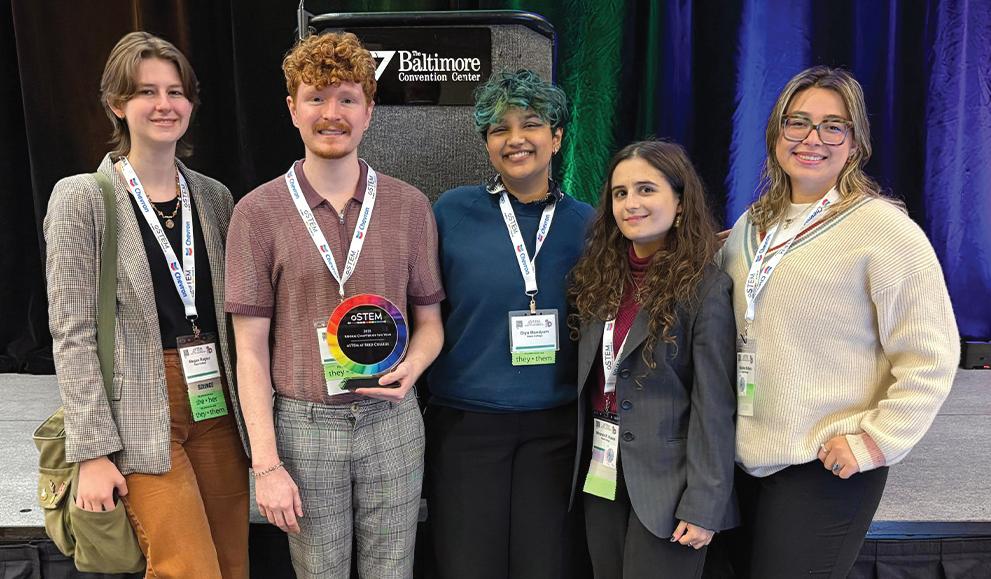
The club, founded in 2024, headed to the Out in STEM Conference in October to celebrate the win.
In mid October 2025, Reed’s Out in STEM club landed in Baltimore, Maryland, for a special event. The 15th annual oSTEM Conference marked a time to celebrate, as they officially accepted their recently won award: Rookie Chapter of the Year.
The award celebrates the achievements of chapters that are just getting started. It recognizes the student leaders who successfully navigate the difficulty of starting something new and who accomplish change on their campuses.
the club members who traveled with us to the conference.”
Miranda originally joined oSTEM as secretary during its founding, and has found it deeply rewarding to be part of the club’s growth. What began as a small gathering of queer STEM students has evolved to a group of 160 members on its mailing list. The club has hosted Reed’s first student-run Lavender Graduation, connected members with alumni mentors, and led a series of workshops focused on maintaining authentic identity while finding career fulfillment.
initiative and hard work Zoe put into not only reading these sources, but developing an insightful analysis of them, is remarkable.”
After graduation, Zoe hopes to attend a history or comparative literature PhD program and one day become a professor or archivist.
“My work and my thoughts are now in this cloud of information,” Zoe says, “which just feels really special, because that’s where I want my brain to be forever.” —Cara Nixon
A nonprofit professional association for LGBTQ+ people and allies in the STEM community, oSTEM has been represented on campus since 2024.
Among the conference attendees were oSTEM President Miranda Kubek ’26 and Vice President Diya Mandyam ’26. Miranda called the conference and receiving the award a “validating experience.”
“It was great to have that work recognized,” Miranda says, “but I was especially happy to be able to share the moment with
According to Miranda, the club “creates a space for us to celebrate a part of our personal identities that we’ve often been told to minimize in our public and professional lives.”
Diya says that receiving the Rookie Chapter of the Year award helps justify the amount of work the club members have put into making the Reed oSTEM chapter fun and engaging.
“This award gives me hope that our club will not only continue to be successful,” Diya says, “but will also provide an important space for queer voices in the Reed community as well as in the larger STEM fields.”
—Cara Nixon
By Bennett Campbell Ferguson
When you step into one of Reed’s language houses, you might wander into a poetry corner, hear a student playing the piano, or smell the aroma of fresh pastries—the components of a community that is both lived-in and well loved.
“Everyone can go to every single country in the world and have a conversation with someone in two different languages,” says Dr. Alberto del Río Malo, associate dean of global education and director of international programs at Reed, noting how technology like Google Translate has reshaped cross-cultural interactions. “But we all know that when you learn a language, you have a key that will open the door to a culture.”
Opening doors to as many cultures as possible is the purpose of the language houses and the Language Scholar Program, which was founded in 1985 through the relentless dedication of former Director of International Programs Paul DeYoung. For 40 years, the program has immeasurably enriched campus life, allowing Reedies to discover not only languages, but entire cultures.
“It’s a feature every fall of our return to campus that we get to meet the new cohort of language scholars,” says President Audrey Bilger. “They are delightful, energetic, enthusiastic, eager to be here. From my first year at Reed, back in 2019, I could see right away how special this program is and how the scholars inspire our students.”
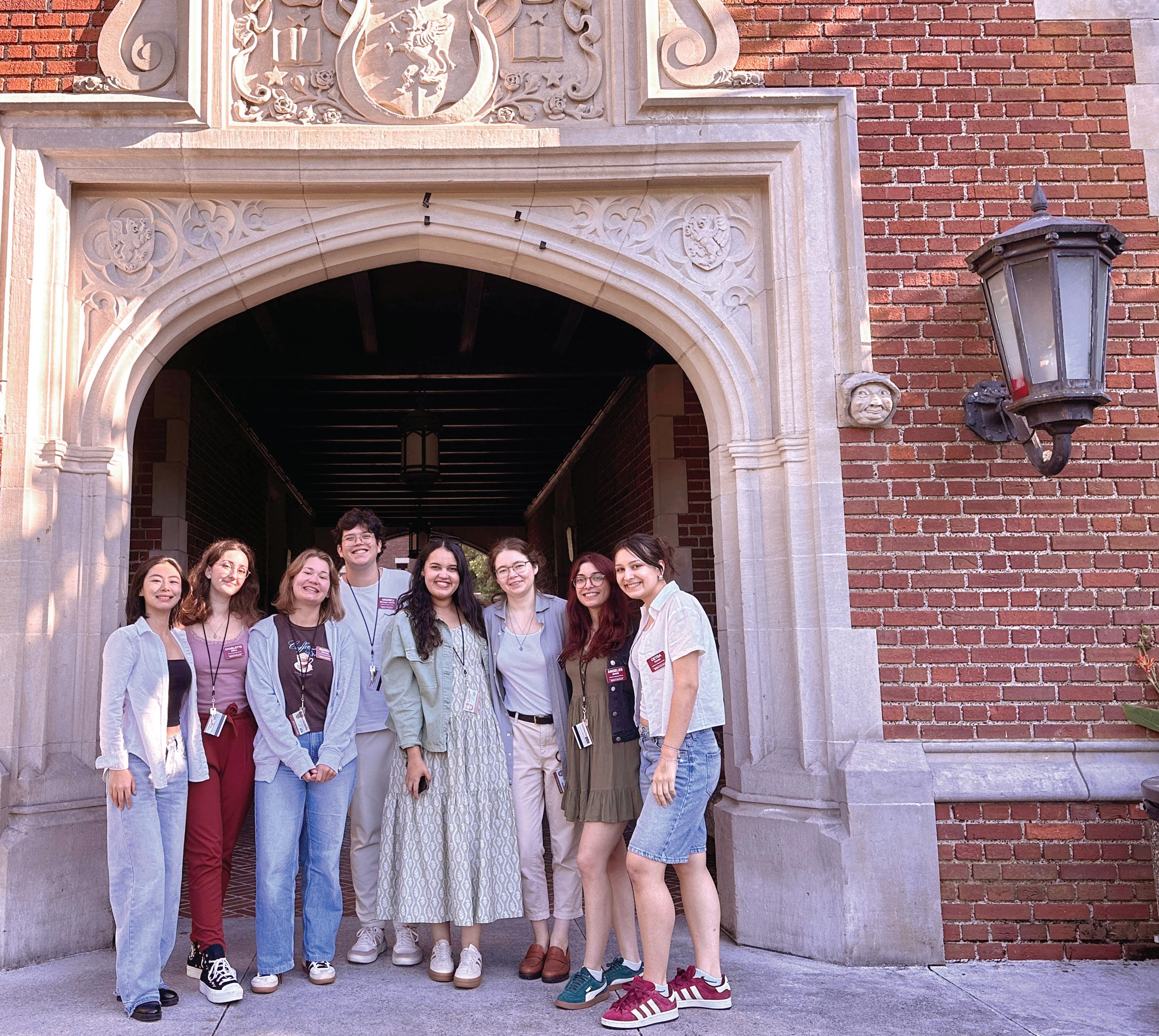
This year’s Language Scholars are Asma Souhail [Arabic], Deng (Rachel) Xue [Chinese], Charlotte Billon [French], Margot Ribourg [French], Ceyda Kovan [German],
Anastassia Bobyleva [Russian], Ángeles Bellitti [Spanish], and Andreu Borrego Asensi [Spanish]. All of them assist with language learning at Reed and live in the language houses.
“Language scholars are required to take a course, so they are really both students and teachers,” says Professor Jing Jiang [Chinese & humanities]. “They’re not outside the intellectual culture of the Reed student body. They’re curious about the world—and they’re also intellectually curious.”
That curiosity is encouraged in the language houses, which are clustered on the southeastern side of campus (reflecting the program’s commitment to community, the Chinese House was moved from the other side of campus to be closer to the other language houses).
“It’s a model for residential living,” says Libby Drumm, John and Elizabeth Yeon Professor of Spanish and Humanities. “They’re small communities with a shared interest. There’s a sense of purpose.”
That sense of purpose is built upon a simple, powerful idea: that living in a language house and being mentored by a language scholar extends students’ linguistic and societal horizons. Which is why students living in the houses are encouraged to speak daily in the house the language that they are studying—something that is not strictly enforced but strongly encouraged.

“If we rely on everything being translated into English,” Jiang notes, “it’s some kind of linguistic imperialism.” That sentiment reflects the proudly cosmopolitan spirit of the Language Scholar Program—a spirit nurtured by del Río Malo, who is from Barcelona and has two decades of experience in international higher education and intercultural exchange.
“I remember Paul DeYoung, and how passionate he was when he explained about Reed and this program—and he was right to be,” says del Río Malo. “When Paul created this program, the reality on campus was that we didn’t send many students abroad. So he thought, ‘If we
cannot send students abroad, let’s bring scholars on campus to create opportunities for our students.’”
Forty years later, Reedies are studying abroad and embracing the Language Scholar Program, which continues to attract students from around the globe. It is a legacy that will be commemorated at a springterm celebration, which will honor not only the program’s success, but
the effort Reed students invest in learning languages.
“It’s a living, breathing thing,” Drumm says. “It’s a completely different type of mastery than students get in their other courses. As I tell them on their first day of class, ‘Learning Spanish well will change your life. Trust me.’”
Bilger agrees. “We talk about the importance of breadth and
depth as a feature of Reed’s academic program,” she says. “The language houses and scholars help to expand our students’ knowledge of the global context and illustrate for them on a daily basis that we’re part of this big world. I think that’s one of the most important things that bringing people together on our campus from lots of different backgrounds and cultures does.”
Does it feel like dancing tango? Like wrapping yourself in colorful kente cloth sent to you by your father in Ghana? Like an ancient song played on an African mbira or Presach songs sung by your grandmother who has long since died?
These Reedies exemplify what it means to not only see beauty in the world around us, but to feel it.
Barbara Robinson ’68 has dedicated her life to protecting the Columbia River Gorge. Amanda Lucier ’02 and I took a walk with her to witness that work firsthand.
By Faolan Cadiz ’25
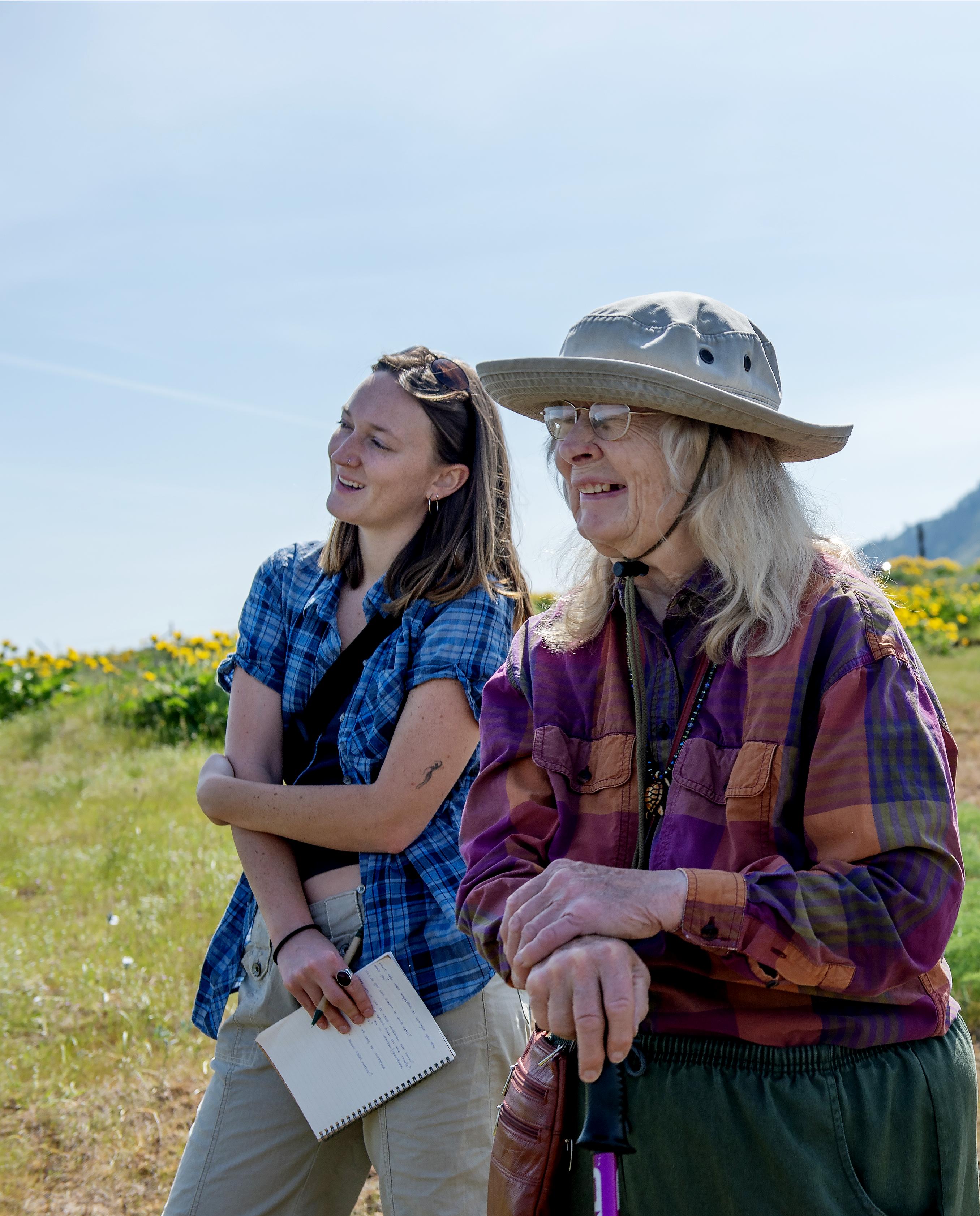
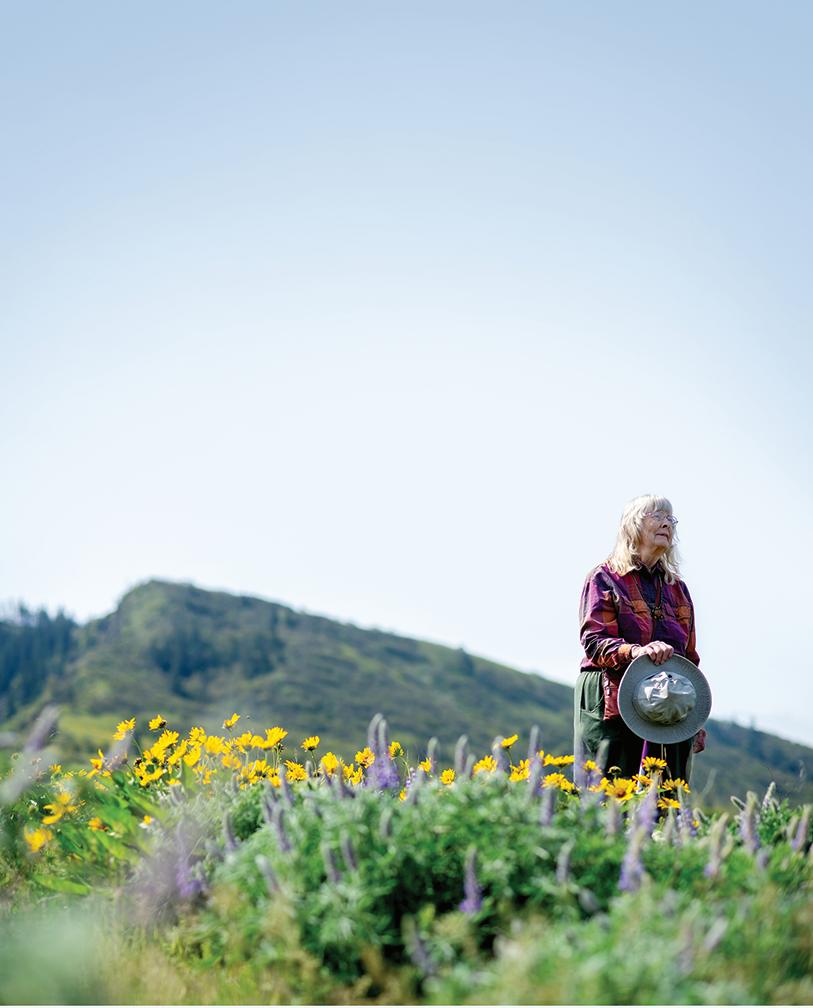
Faolan Cadiz ’25, left, and Barbara Robinson ’68, along with photographer, Amanda Lucier ’02, marked three generations of Reedies who adventured through the Columbia Gorge together last spring.
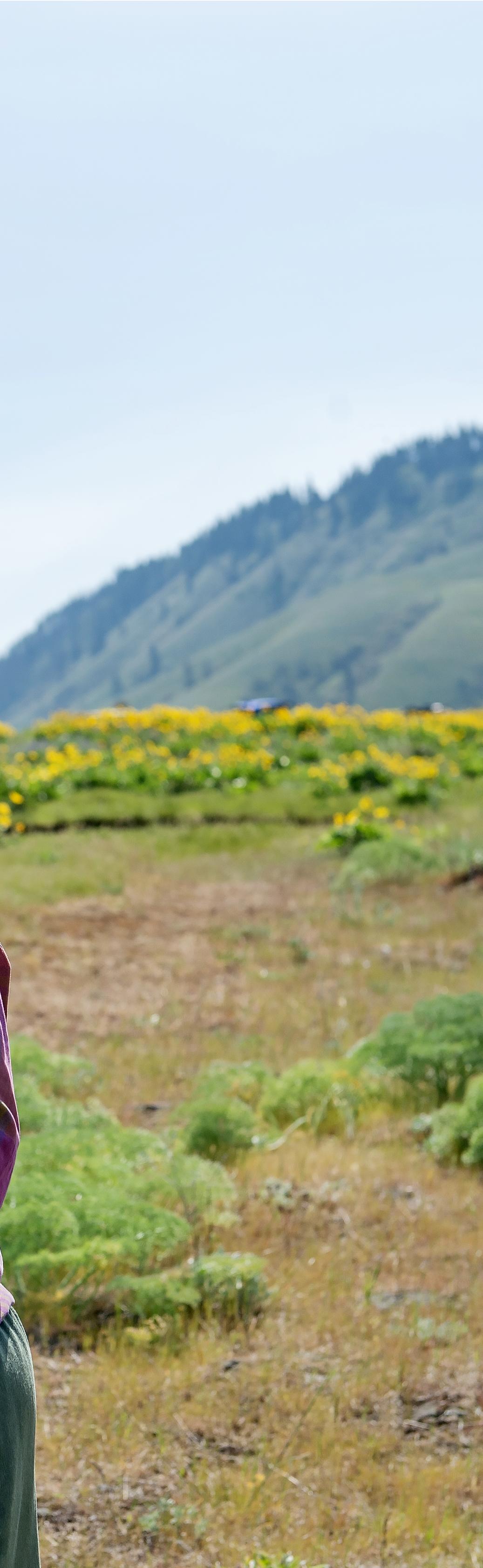
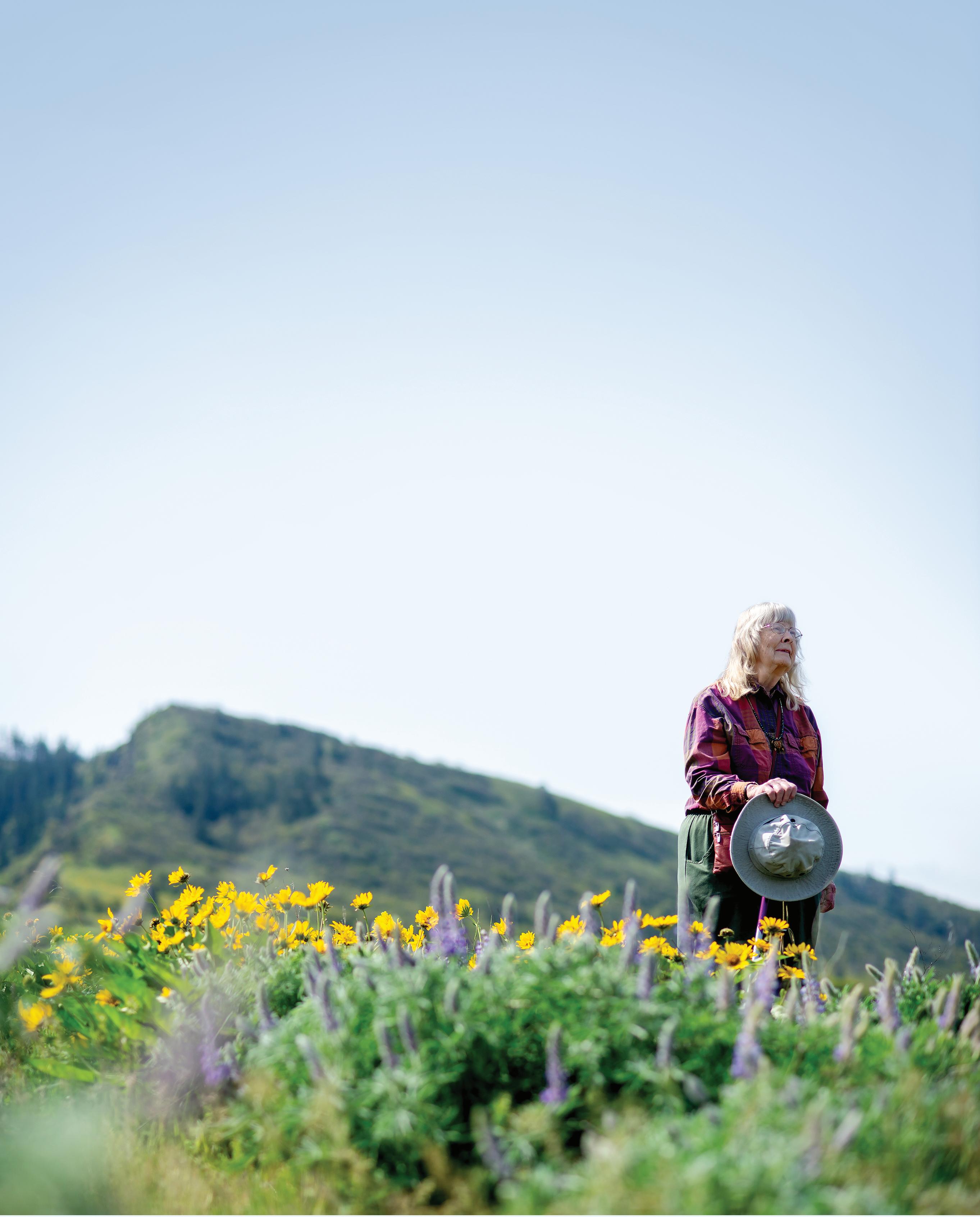
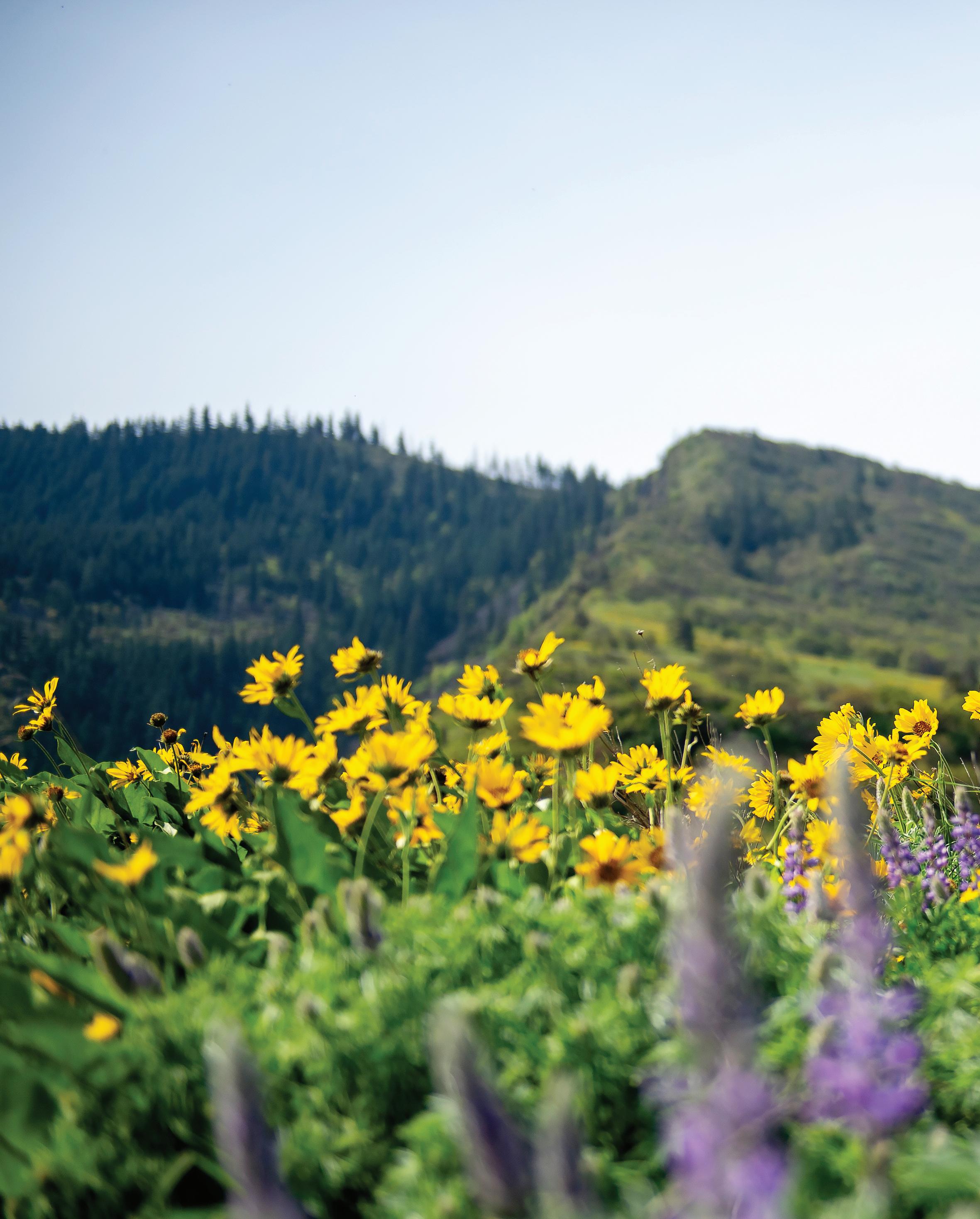
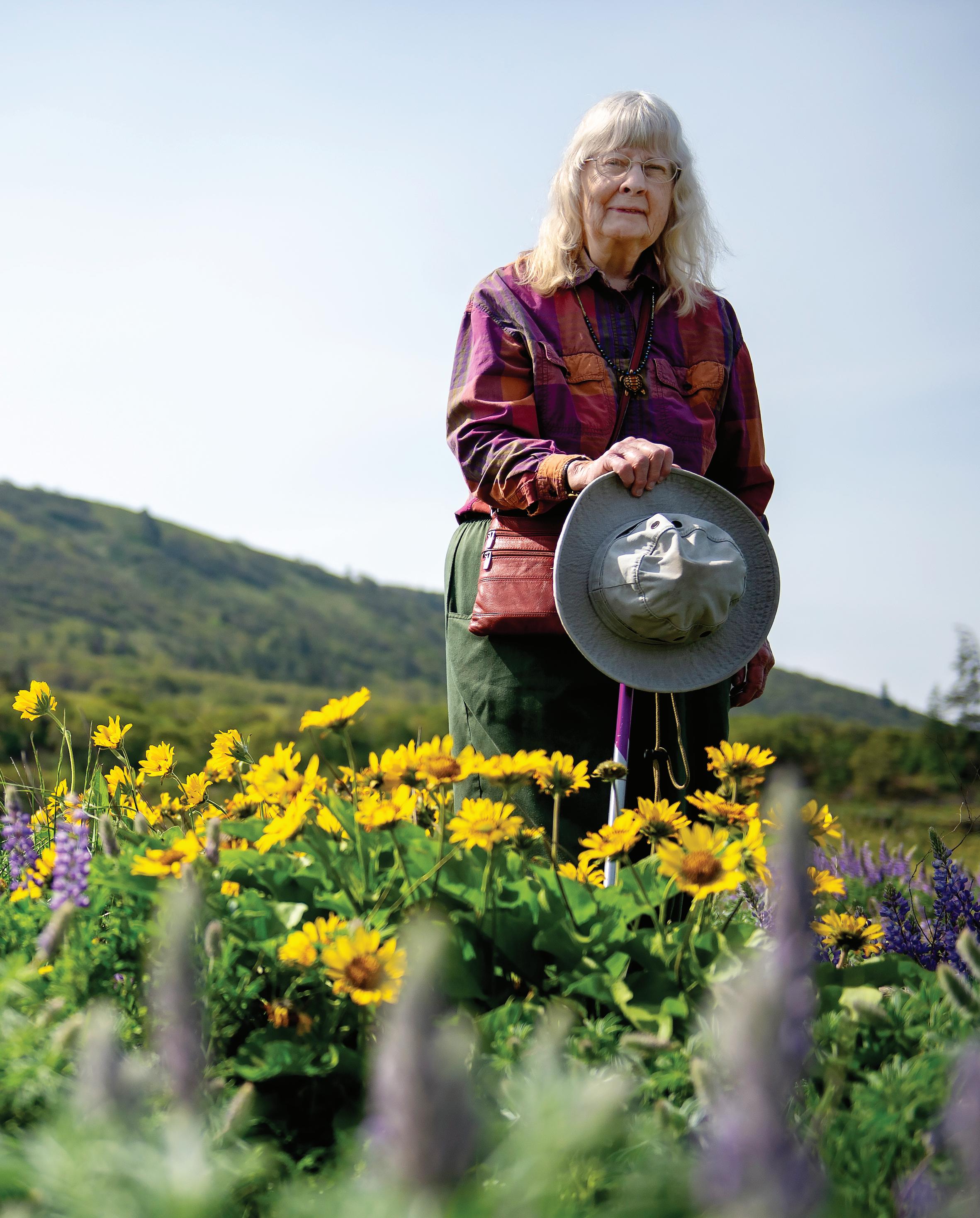
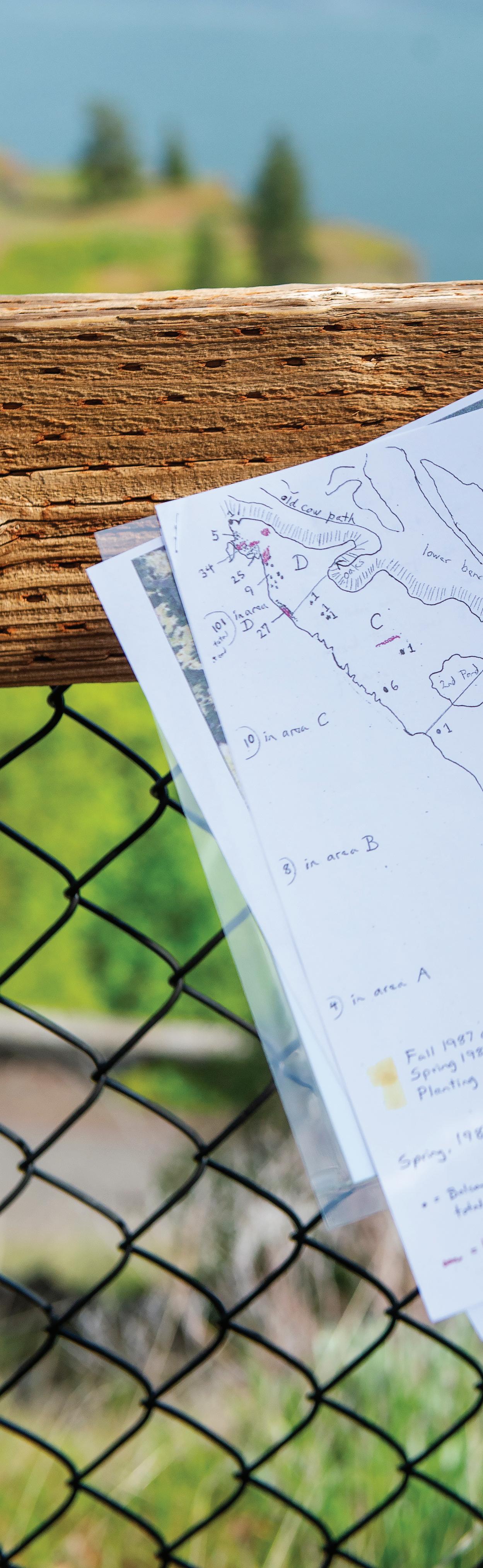
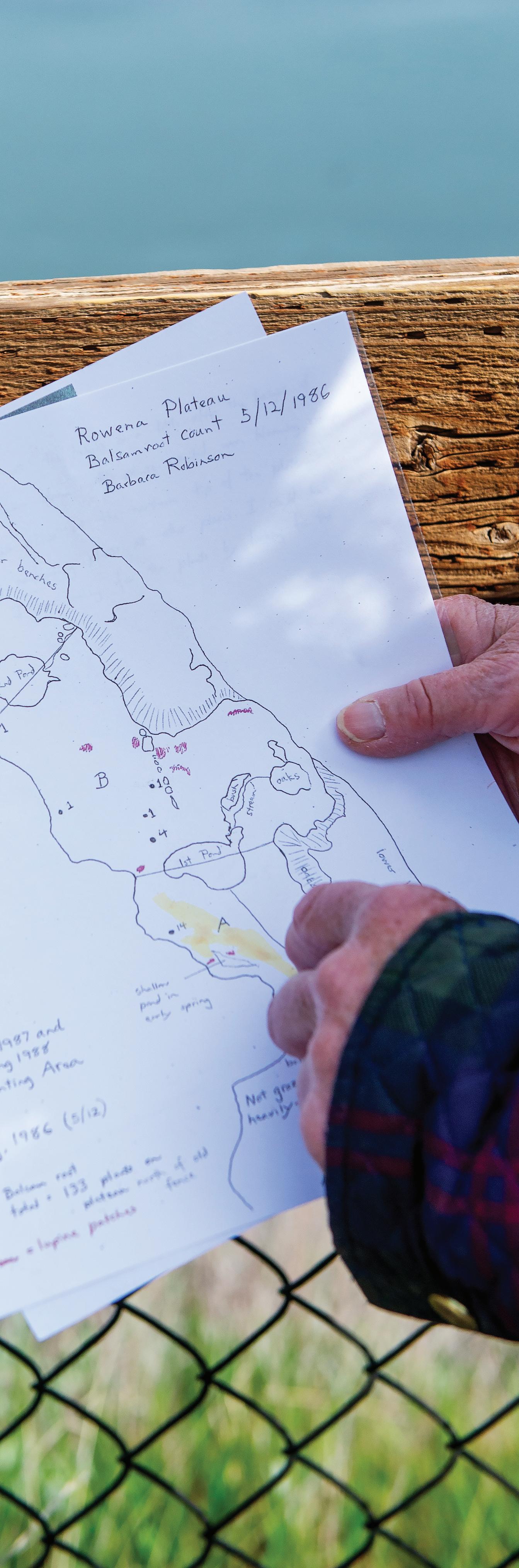
Master botanist Barbara Robinson ’68 has long helped preserve the public lands of the Columbia River Gorge. Dubbed “the wildflower woman,” Barbara received a lifetime achievement award from the Washington State Trails Coalition in 2024, a testament to her decades of commitment to protecting the beauty of the Pacific Northwest. Last spring, three generations of Reedies connected in the wilds to enjoy Barbara’s life’s work, as she, English student Faolan Cadiz ’25, and photojournalist Amanda Lucier ’02 went on a special trek through the trails of the Gorge
When I arrive at the Rowena Crest Overlook to meet Barbara Robinson ’68, she’s sporting a floppy gray hat and carrying a ski pole. A wrong exit on the freeway left me 30 minutes late, but she doesn’t seem to mind. “I have something I want to show you,” she says.
Holding up a hand-drawn map against the view of the overlook, she explains the entirety of the geography. She points to a small mass of land in the middle of the Columbia River and identifies it as Memaloose Island; she had recently helped rescue a friend who was stranded near there with his kayak. Her hand waves over to the plateau on the left. “There’s the land I owned for all of 24 hours,” she says— in 1978 Barbara bought 34 acres of the Rowena Plateau for $5,000 and sold it to the Nature Conservancy the very next day. Mt. Adams looms over the river, the only mountain Barbara ever climbed. She motions across the river to a small town, traces her finger along the main street, stops and points out her own house.
“This is for you,” she says, handing me her map and a sign that says, “Please enjoy the beauty, and Stay on the Trail!”
Growing up in Chicago, Barbara felt the deficit of nature around her, which led her to the Pacific Northwest and to Reed. Her first train ride out west before her freshman year was filled with other East Coast and Midwest Reedies, waiting for the first glimpse of the trees and mountains.
As a young student, she intended to study physics. “Space, time, matter, energy, mind,” she says, were the
most interesting things to her. But she ended up graduating as a double major in philosophy and psychology. She’d been fascinated by the powers of the brain, and philosophy and psychology, she explains, allowed her to access and address consciousness as a philosophical issue.
As we begin our trek, Barbara and I are joined by another Reed alum, esteemed photojournalist Amanda Lucier ’02. We head towards a nearby trailhead that takes us right over the bluff. Every couple of sentences, Barbara leans down to identify a plant for me. She always starts with the scientific name and then the common name. She explains her dismay with the ever-changing scientific names, saying, “I love the knowledge, but hate the name changes.”
When she left Reed, Barbara headed south to study psychobiology at UC Irvine. In the end, though she was still fascinated by the functioning of the brain, she decided that the academic life of “publish or perish” was not for her. She also knew that she would have to accept any job she was offered, and was diametrically opposed to living in a major metropolitan city. She moved back to Portland and began working as a professor at Portland Community College, where she taught psychology and biology.
Purchasing the Rowena Plateau land marked the start of Barbara’s involvement in fighting for its preservation and for the wildflowers and native plants that inhabited it. In 1985 she raised the money to buy the 64-acre hilltop south of the plateau (McCall Point) for the Nature
Conservancy. And in 1988 she started a formal experiment with the Nature Conservancy on the Tom McCall Preserve—a survey where she planted 760 balsamroot seeds in 23 test plots on the preserve. The goal was to see if the native sunflower could be reestablished from seed, and how much and how far the seeds would reproduce and spread over a certain period.
Our second destination is a trailhead located at a pullout off a winding road: the Old Scenic Hwy. After a short upward trek we arrive at a meadow of wildflowers surrounded by beautiful, small oak trees. Barbara instructs us to follow her, and we carefully step through the grass so as not to trample the balsamroots and lupines and Indian paintbrush— and to avoid poison oak.
Barbara tells a story about her friend Nancy Russell, a founder of the Friends of the Columbia Gorge and passionate environmental activist, whose work contributed to the creation of the Columbia River Gorge National Scenic Area. Barbara and Nancy, who suffered from ALS before her passing in 2008, had spent a substantial amount of time devoted to fostering the growth of the white oaks on Sevenmile Hill. Barbara brought Nancy to the trail for their last time there together, and they spent some of that time weeding and picking up cigarette butts. “What we understood was that this place is spiritual—it’s where people can fall in love with nature,” Barbara says.
Barbara pulls out an old plastic bag that she keeps in the back seat of her car. It’s filled with small bags of Doritos, Cheetos, Welch’s Fruit Snacks, and small tins of chicken salad. She offers me and Amanda the first picks; we both opt for Doritos. “Oh good,” Barbara sighs, “the Cheetos have always been my favorite.” Over our delicacies from her snack bag, we compare our experiences at Reed. Barbara lived in Westport Hall in the Old Dorm Block, while I lived in Foster.
Throughout her time at Reed, Barbara spent more time in the canyon than on the Great Lawn. Her sophomore year, she convinced Professor Bertram G. Brehm [biology 1962–93] to let her run an independent survey on the plant life in the canyon. “I wanted to get into the wild stuff,” she says. I tell her about the recent Earth Day celebration and my experience pulling weeds in the canyon without any gloves. “I never use gloves. You don’t need them,” she reassures me.
We spend an hour walking around the grounds of the Columbia Gorge Discovery Center, of which she was essential in the planning and planting. As we walk toward the building, Barbara stops and points down to one brick among many that bears her and her daughters’ names engraved on it. The path is paved with the names of all the donors and volunteers who made the construction of the Discovery Center possible. Opened in 1997, the Discovery Center has information about the Columbia River, the Gorge, and Indigenous peoples’ involvement.
As we walked around the grounds Barbara held a long screwdriver in her hand—her favorite tool for weeding— and stopped her story every five minutes to bend down and dig an invasive weed out of the ground. “There were a few days where I spent eight hours weeding,” she says. “And you learn humility because something without a brain, and even without nerve cells, can outsmart you.”
As we walk back to our cars and bid farewell I notice a pole sticking out of the ground. “Is that yours?” I ask. “Yes,” she replies. She had left one of her ski poles stuck in the ground a few days ago when she was out weeding. We laugh and she tells me, “I’ve been absolutely absent-minded my whole life. I used to tell my students that I was so absent-minded, I had to be a professor.”
Before I walk away I apologize for my tardiness. Barbara smiles and says, “It seems that you and I belong to the same family.”
Amanda Lucier ’02 is a documentary and editorial photographer who focuses on agriculture, the intersections of urban and rural communities, and the American West. A frequent contributor to The New York Times, she is the recipient of numerous grants and recognitions and has one forthcoming monograph, Tidewater, scheduled for 2026.
By Bennett Campbell Ferguson
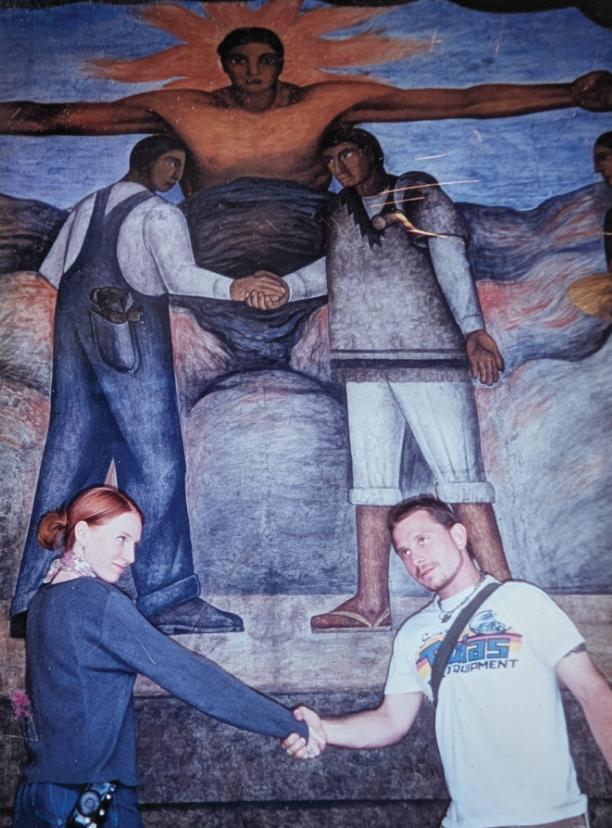
Rebecca Cannara ’98 first met Noah Bardach ’98 in front of the Reed Library. “Within two months, we knew we wanted to get married,” Rebecca says. The enormity of that realization was undeniable—and unnerving. “I’m not ready to have met you yet,” she told Noah.
In the three decades following that fateful encounter, Noah and Rebecca helped create the Universal Human Rights Initiative (UHRI), a nonprofit group that works with the United Nations and academic institutions to strengthen access to information about human rights. Founded in 2016 by Noah and Hope Rieser Farley (the organization's first executive director), UHRI reflects Noah and Rebecca’s longstanding fascination with communication, which dates back to their days at Reed.
“I think this is an often-heard critique of higher education: That it’s inward looking, the ivory tower, sealed off from what’s happening in society,” Noah told me. “For better or worse, Reed was a place where we could just dedicate ourselves to our developing intellects.”
An idea of how to translate values into action subsequently occurred to Noah when he looked up the Nigerian translation of the Universal Declaration of Human Rights on the United Nations’ website—only to realize that there was no way to listen to the translation online.
“The Universal Declaration of Human Rights is the most translated document in the world…but if you’re one of the 900 million-plus people who are illiterate, you are
locked out of this critical information,” Noah told me. That realization led not only to the creation of the UHRI—with Noah as chief technology officer—but to the UDHR Audio/Video Project, which features native speakers reading over 300 translations of the Universal Declaration of Human Rights (sent to schools and nonprofit organizations around the world).
“My dream is that UHRI can increase people’s openness to getting more curious about and less distant from their neighbors and ultimately get more involved in their local community,” Rebecca says. “We know from intergroup research that the more connected we stay, the less polarized we will be, and the more we will see ourselves in each other.”
In the future, UHRI will continue that work without the couple who molded much of its mission. Rebecca, who is currently the organization's executive director, plans to step back to focus on her role as regional director of social services at the nonprofit LifeSTEPS—and, sadly, Noah passed away from ALS while this article was being written.
“I think we need to resist that creeping feeling of helplessness and continue to pour our energy into the initiatives we have created to date,” he told me last July. He was speaking to the present moment—and to the moments yet to come.
Selorm Fefeti ’11 is fusing fashion and cultural preservation with his New York/ Ghana-made clothing brand.
By Cara Nixon
For Selorm Fefeti ’11 , it started with a gift.
A few years ago, his father, Simon, sent him a package. Inside sat a colorful coat, hand-woven with kente cloth from their hometown of Agotime Kpetoe, Ghana. It was a piece of home, a piece of the culture Selorm had missed after moving to New York City a decade ago.
Selorm knows how to pull something off. So he didn’t hesitate to don the vibrant, uniquely-patterned coat on the streets of the city. People stopped him with compliments, and he began to think: “Maybe we have something here.”
Thus Fefeti, a fashion brand centered around the national
cloth of Ghana, was born. Since 2023, Selorm has been working with his father to bring hand-woven kente fabrics from Ghana to New York, where he works with Black-owned and other marginalized manufacturers to bring the cloth to life. Kente cloth is usually reserved for special occasions in Ghana—weddings, funerals, the like—but Fefeti, a word which means “the importance of joy,” revives the textile into coats, blazers, and bucket hats fit for everyday wear.
“Kente is more than fabric,” Selorm says. “It’s a living story of heritage, identity, and pride. Each pattern carries deep cultural meaning. Through Fefeti, I aim to preserve and reimagine kente— giving it new life in modern
fashion while supporting the artisans who keep this centuries-old tradition alive.”
Keeping the tradition alive is no easy feat. The craft of kente has begun to fade in recent years because of cultural programs lacking funding and younger generations moving away from the art form. In October 2025, Ghana granted kente Geographical Indication protection, a way to ensure the fabric stays in Ghanaian hands. Fefeti carries similar values forward with a focus on preserving these cultural traditions.
Selorm works full time as a product manager with Fefeti as his side passion, but he says the two are not very different. “Building Fefeti feels like launching a product—finding a gap, shaping an idea, and bringing it to life—except here, the product is heritage, craft, and culture,” he says.
Breaking into the fashion industry is difficult and

expensive. But Selorm says the skills he gained at Reed—challenging conventions, connecting ideas, and building meaningful things from the ground up—have helped him on the path. Plus, the community he met at Reed has given him the courage to keep going.
Lately, he’s had two big wins. Last fall, a Fefeti collection appeared in a SoHo boutique for in-person browsing and purchasing. And filmmaker Spike Lee posted a picture of himself on Instagram sporting a Fefeti limited-edition New York Knicks inspired bucket hat. “It was exciting for me,” Selorm recalls. “It was like validation in a sense.” (Lee has also since worn a Fefeti blazer to a few awards shows.)
Last summer, Selorm visited his hometown for the 30th anniversary of the Agotime Kpetoe Festival, an event that highlights the rich history of kente weaving. He and Lucy Sexton ’12, an Emmy-award winning filmmaker, are working up an idea for a short documentary about the fabric. The festival marked a chance for Selorm to reconnect with his roots, and to meet with the local artisans who are helping to make Fefeti possible.
With his clothing brand, Selorm hopes to infuse heritage, craftsmanship, and culture into everyday life. To him, Fefeti embodies those ideas by transforming kente into visually striking, culturally significant pieces of art—as he puts it: “Beauty, to me, is where story meets craft.”
Fefeti products are created with the hand-woven kente cloth of Selorm's hometown, Agotime Kpetoe, Ghana.
All around the world, heritage music is endangered. Zack Youcha ’21 is helping communities save theirs.
By Cara Nixon
In Zack Youcha’s ’21 grandfather’s house, piles and piles of tapes sit inside cabinets and boxes. Recorded with a reel-to-reel machine, they’re sound bites of Zack’s family. Conversations on the couch. Television programs. Holiday feasts.
A couple of tapes are mislabeled “morse code” and “cantor.” What they really contain are recordings of a Passover dinner from the mid-late 1970s. When Zack listened to them for the first time seven years ago, his heart stopped. Through the crackles of feedback, he heard a woman singing Presach songs: his grandmother’s mother, who had died before he was born.
“Here I am listening to my great-grandmother, who was a refugee from Istanbul, singing these songs she grew up with,” Zack says. “It was just so deeply moving.
It was like, this is me. This is what was brought over. This is what was there.”
If it weren’t for his grandfather’s obsession with tape recording, Zack might never have gained access to that glimmer of his great-grandmother. In the grand scheme of things, he’s lucky— most people, unless they have written accounts or well-kept oral stories passed down, don’t know the lived experiences of their forebears: who they were, what they loved and hated, the music they listened to. For many, much of that may be forever gone. But, Zack says, perhaps not all of it.
Traditional heritage music around the world is endangered, at risk of being lost completely to time, pressure to assimilate, war, genocide, and climate change. The good news: some of it can still be saved. And Zack is ensuring that happens before it’s too late.
In early 2025, he founded Music is Culture, or MiC, a nonprofit organization dedicated to helping people worldwide conduct and publish their own music preservation efforts—particularly works related to music of cultural significance that might otherwise be lost, destroyed, or forgotten.
The reasons why heritage music is being lost vary from culture to culture, but the motivations behind preserving it are mostly the same: To capture a time and place that no longer exists; to remain connected to one’s culture and ancestors; and to ensure that all can enjoy the traditional music tied to their family history.
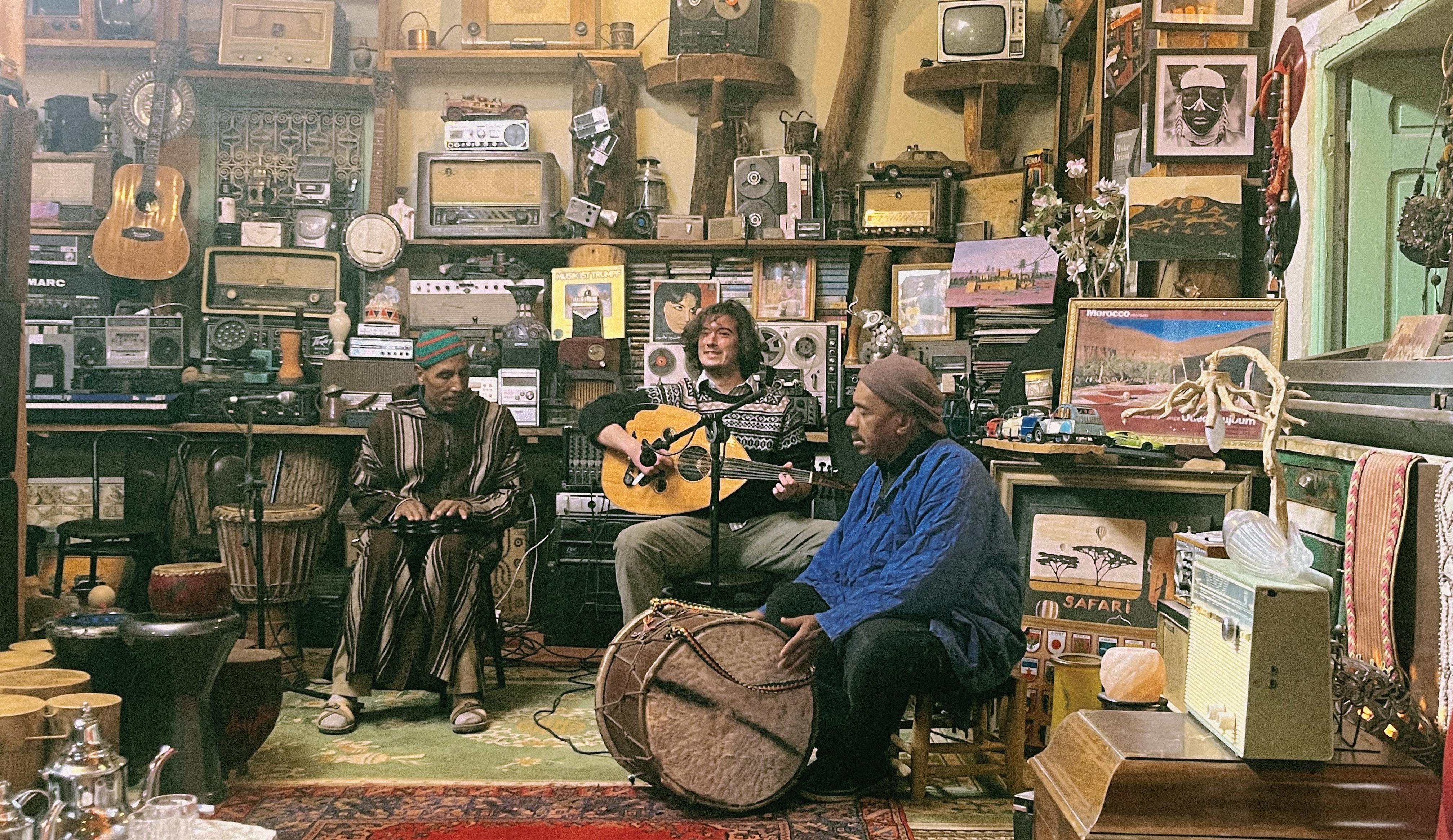
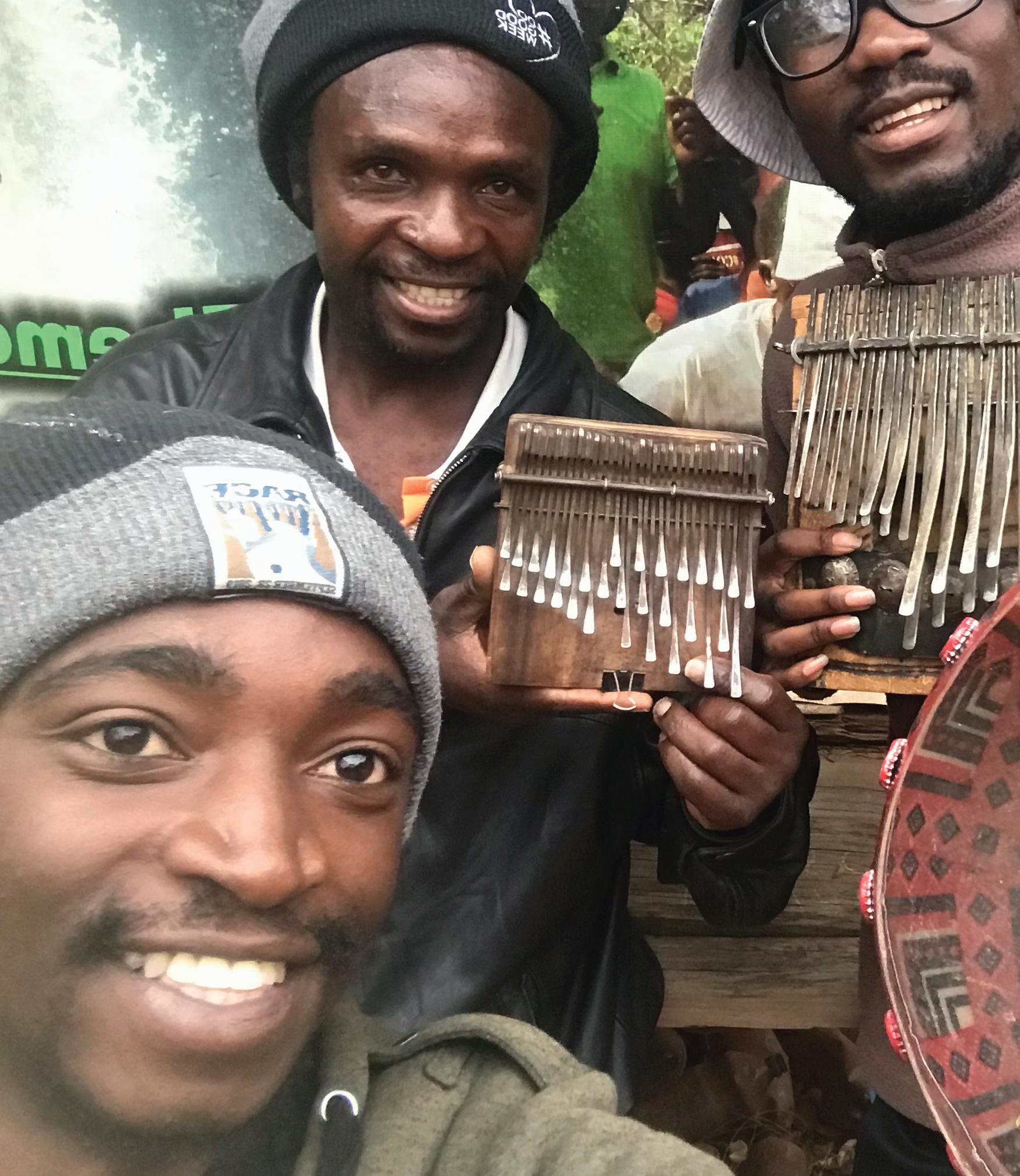
MiC works with people around the world to revive their heritage music. Music instructor Anesu Ndoro ’21, whom Zack befriended at Reed, is working in southeastern Zimbabwe and central-western Mozambique to document traditional instrument-building processes and rhythms and melodies of indigenous Ndau music (see page 23). Stateside, musician Ara Dinkjian and community historian
Harout Arakelian are cataloging more than 1,800 recordings pressed in the U.S. featuring Armenian musicians. Through MiC, the music from these projects will be published as digital databases and physical objects, like CDs, DVDs, and books.
Musical historians Fahad Harbo Kheder and Rênas Babekir came to Zack with a specific proposal: help publish cassette tapes to heal wounds from genocide. After surviving the 2014 Yazidi genocide, in which thousands of Yazidis were killed and trafficked by ISIS, Kheder sifted through the rubble of his hometown, Shingal, Iraq, and unearthed over 500 cassettes ISIS had attempted to destroy. Kheder is working with Babekir to digitize and catalogue these rescued tapes. MiC will host the recordings on its website as a digital archive, giving access to listeners worldwide.
Zack knows what musical loss feels like because it’s happening to him. When Sephardic Jews, a diaspora population associated with Jewish communities of the Iberian Peninsula, immigrated to the United States, they had to choose which aspects of their culture to preserve. Music was not a primary concern, and religious music was considered more important to preserve than folk music. That means much of the latter, and its unique styles and dialectical ways of singing, has been lost.
Shortly after hearing his great-grandmother on those tapes, Zack was studying Russian at Reed, far away from his home state of Virginia and the bluegrass music he grew up with, but still singing, taking lessons in the music department, and playing guitar between schoolwork. On a trip to New York City in 2019, Zack watched a distant cousin of his perform traditional Sephardic music, sung in Judeo-Spanish. Zack says he “lost it,” crying at hearing the music of his ancestors live for the first time.
“These songs evoke a time and a place that doesn’t exist any more,” Zack says. “They tie me to a history I can’t access through my family. Music is this way to touch a place you can’t go. It’s a way of intergenerationally connecting to your family, to your community.”
But anywhere humans are victims, Zack says, arts and culture are victims, too, because the people who make them begin to disappear. “We’re staring down the barrel of global change,” he says. “There’s going to be a lot more musical endangerment in the future. It seems like an important thing to start figuring out how to address.”
Preserving traditional cultural music takes money, time, and care. MiC is an enabling force that provides support to people so they don’t have to worry about the money and time and can instead focus on the care—making the effort to preserve their heritage music so others can access it for free.
“Something should really be out there to do this kind of work,” Zack says, “to allow people to represent the music from their communities in a way that’s authentic and beneficial to the community, before it’s a commodity that anyone can buy.”
That’s precisely what he hopes MiC can continue to do. And Zack knows this work doesn’t matter just for the present, but for generations to come. “We’re enabling people to make educational tools, so their grandkids can look back and say, ‘Thank you, Grandma, you did this for me. I have my culture, I have my heritage,’” he says. “That’s the kind of future I want to build with this.”
By Bennett Campbell Ferguson
While studying anthropology at Reed at the peak of the pandemic, Anesu Ndoro ’21 was disturbed by a peculiar phenomenon: unusually aggressive “missed connection” notices, posted by people attempting to fill the social void created by COVID-19. “I think people were confused, just about what the state of the world was,” Anesu says. “This was happening
after the 2020 protests around George Floyd’s death. I think a lot of people didn’t know what was going on—or didn’t have the ‘right language’ to describe what was going on.”
Rather than contribute to the cacophony, Anesu cofounded Honest Connections, a podcast created to connect isolated Reedies. “It is possible to just ask questions and not lead with assumptions about people,”
he says. “At least in the time that we did [the podcast], we felt like it was something productive to do with our time, rather than just sit and be upset at the fact that no one was really listening to each other.”
Since returning to Zimbabwe, his home country, Anesu has continued to act on his instinct to connect communities through sound. Currently, however, he is focused not on podcasting, but on preserving the music of the Ndau people, who are indigenous to Zimbabwe and Mozambique.
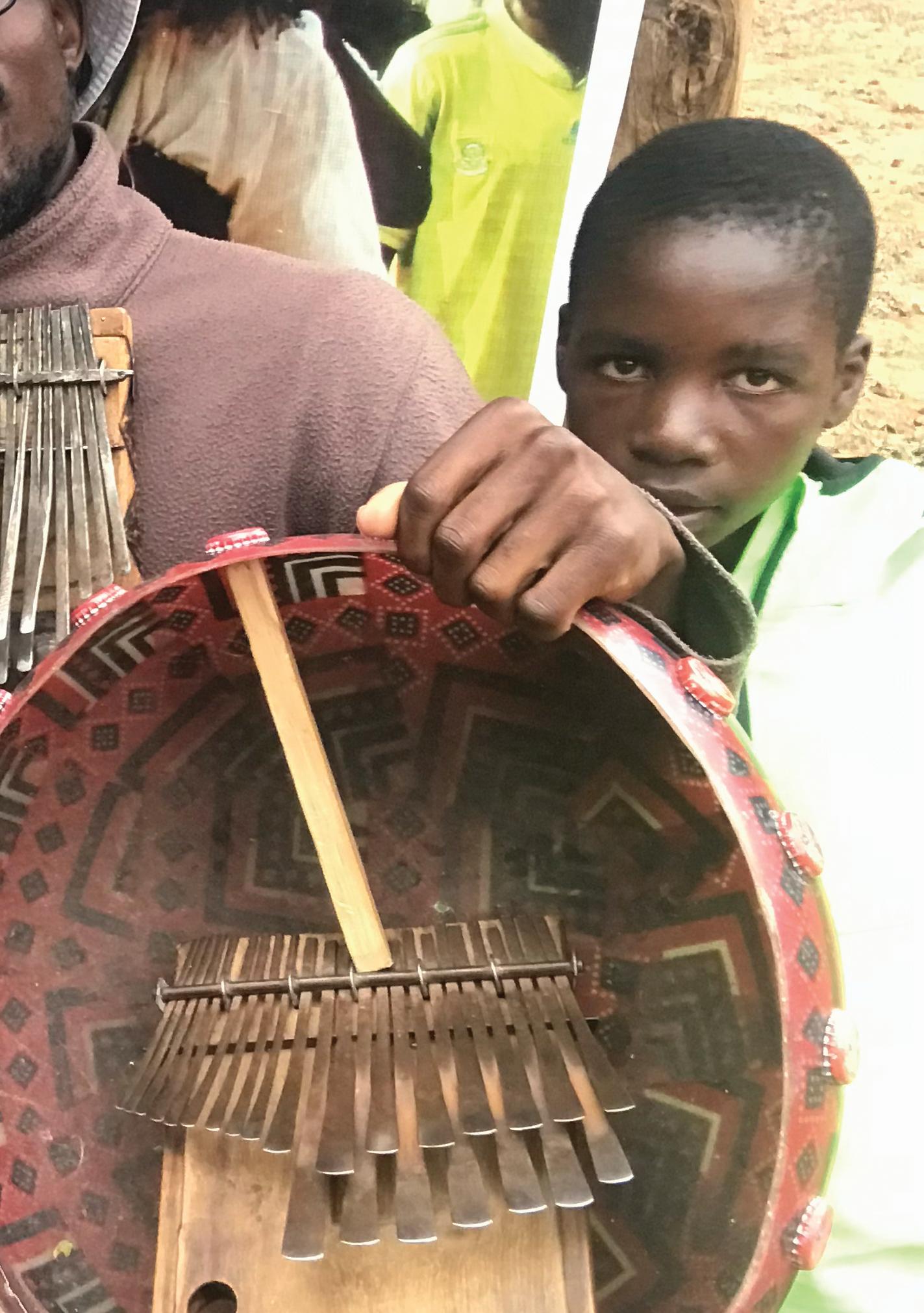
“You start playing [Ndau string and wind instruments] and some older people will be like, ‘Oh, I last saw that when my grandfather was playing it in the 1940s or ’50s or even ’30s,’” Anesu says. “You really have to go to the more remote, rural areas—and even then,
“ You really have to go to the more remote, rural areas.”
it might be one or two people who know how to play this thing or that thing.”
Throughout history, the Ndau have been brutalized by oppressors, including European settlers and missionaries. While these invaders forced the Ndau onto reservations, they failed to extinguish Ngoma dzaVaNdau (the music of the Ndau people).
Fans of Ndau music treasure the singular sonic
landscape it creates, using double-headed drums (similar to congas) and a six-note scale—which, to the uninitiated, sounds strikingly different from the more common five- and seven-note scales.
“If a person comes from another tradition, you can follow what’s going on, but [Ndau music] feels like a person who’s walking and then they skip, but those skips can be a little unpredictable,” Anesu says. It is an unpredictability he’s nurturing in collaboration with Music is Culture (see page 21) and Solomon Madhinga, one of the last living master builders and players of Ndau instruments. By working with Madhinga to create a building guide for Ndau instruments, documenting repertoires, and hosting music workshops, Anesu hopes to sustain existing traditions and inspire future generations of Ndau musicians (the music they document will be released by Music is Culture).
In this process, Anesu stresses that Solomon Madhinga continues to be a driving force. “Mostly, I feel like I’m helping facilitate something that’s happening—that Solomon is actually the person doing most of the contribution," Anesu says. "I mean, we’re showing up with recording equipment and laptops and whatnot, but that’s not the thing of value.”
As always for Anesu, the greatest value lies in honest connections—and the sounds that make them possible.
For Tango Berretín owner Alex Krebs ’99, the beauty of tango lies not in how it looks, but how it feels.
By Bennett Campbell Ferguson
Alex Krebs ’99 had settled into a routine: Get out of bed, check his email, prepare a playlist, take a shower, eat breakfast, teach five hours of Argentine tango lessons, and go dancing. He did this seven days a week, varying his schedule only to teach classes on the road.
“I never took vacations, I never had weekends,” Alex says. “Someone asked me the other day, ‘Oh, when do you plan to retire?’ I’m like, ‘Never.’”
Only during the pandemic did Alex begin to modulate his pace, reluctantly teaching virtual classes at Tango Berretín, the dance school he owns and operates in Portland’s Foster-Powell neighborhood. Amid the carnage of COVID-19, he remained in motion, yet felt robbed of his life’s purpose.
“COVID was brutal,” Alex says. “That was hard for me emotionally—to not be around people, to not be teaching the thing that I really do well. I was put on this planet to teach and dance.”
To appreciate the weight of those words, you have to hear Alex speak them. He’s not hyperbolic or braggy; he simply has a singular sense of purpose. An awareness that for him, tango long ago stopped being a pastime or a profession, evolving into a soul-nourishing obsession rooted not in how it looked, but how it felt.
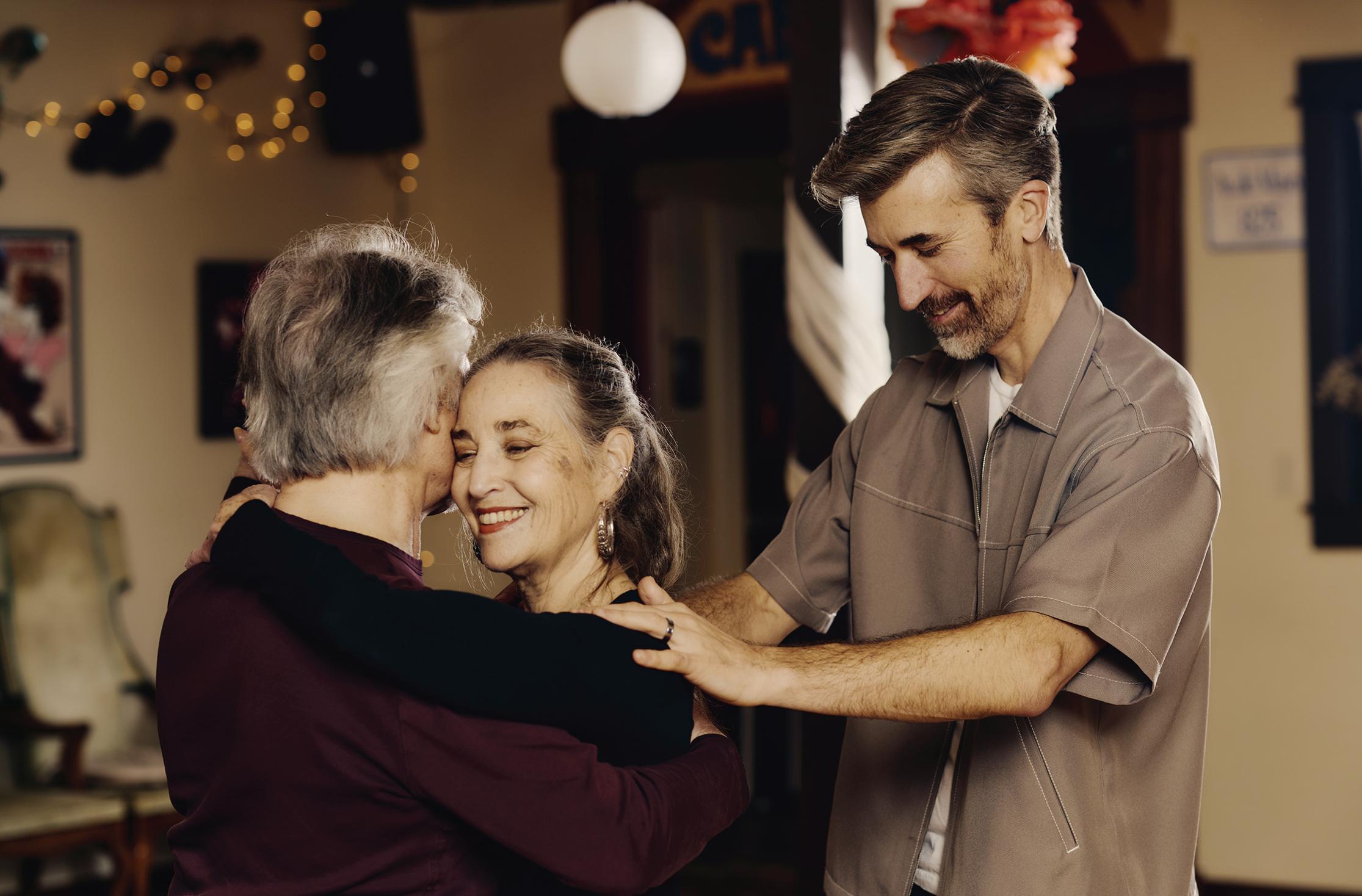
“Aesthetically, from the outside, [tango] looks beautiful,” Alex says. “We stand up straight, it’s elegant-looking movement. But really, for the people that do tango, it’s a kinesthetic beauty. It’s a pleasurable feeling more than it is an aesthetic thing.”
It’s a feeling that Alex has spent most of his life chasing, from Reed to Argentina and back to Portland.
“When you shift weight, the weight is in the ball of your foot—and then your whole foot is making contact with the floor,” Alex says. “Really feel your heel, your toes, the bottom of the floor. That’s what’s balancing us and that’s what’s powering us.”
It’s August 2, 2025. I’m taking my first class at Tango Berretín, and it’s not going well. Actually, that might give you the wrong impression. It’s going terribly—so terribly that I’m tempted to brandish a copy of Reed Magazine before the other dancers to prove that I do some things well.
“One of the nicest ways to get into tango posture is to open the ribcage and then just relax the arms,” Alex instructs. “We don’t want to overanalyze it too much.” Maybe that’s why none of this is
“It’s a pleasurable feeling more than it is an aesthetic thing.”
computing for me: I’m analyzing everything, unable to reach that transcendent state where tango is not a series of moves, but one ceaseless move.
I wonder if Alex faced similar struggles when he first started dancing. “I’d never danced until I got to Reed freshman year,” he says. “I didn’t know anything about tango.” He was, however, intrigued enough to sign up for a ballroom class taught by Scott Qazzaz, a decision that proved formative and fateful.
“At the end [of class], he [Scott] would always say, ‘What rhythm—foxtrot, cha cha, whatever—do you want to listen to and dance to for the last 10 minutes of open dancing?’ And I was always
like, ‘Tango! Tango!’” Alex says. “I don’t know why I was so drawn to it. I’d be the only one with an opinion about it.”
Though the allure of tango was mysterious to Alex, it was also undeniable. While pursuing a BA in music at Reed, he danced at a studio on Southeast Powell, biking from campus while wearing a pair of dress shoes he’d purchased at a thrift store. He was committed, and he had to be. Otherwise, how could he have embarked on a two-month sojourn to Buenos Aires in 1998, dancing 10 hours a day?
Known as the tango capital of the world, Buenos Aires is where tango music and dance blossomed into a cultural force, mixing Argentine, African, and European influences in the city’s working-class neighborhoods during the 19th century. It’s a place you’d expect a devotee of Argentine tango to feel at home, yet Alex never quite did.
“Down there, I’d be dancing and I’d smile and people would be like, ‘Why are you smiling? It’s sad music, the economy’s crap, we’ve just had four presidents in one week,’” Alex recalls. “Inflation was so bad at one point that you bought bread in the morning because by the afternoon, it was twice the price.”
For the next decade, Alex returned to Buenos Aires every year. Yet the culture clash that he experienced (between ingrained optimism and well-earned pessimism) forced him to accept that while the source of his passion was born in Argentina, his future wasn’t there. It was in Portland.
Back at Tango Berretín, I’m still galumphing. Despite being a tango neophyte, I’d hoped I might thrive thanks to Alex’s genderless approach to teaching tango, which allows both male and female-identifying students to choose between leading and following. Maybe, I speculated, being allowed to follow would mitigate my learning curve.
Alex opened Tango Berretín in 2002, calling upon fellow tango dancers to help him paint, finish the floors, and install drywall—in a mere three weeks.

In tango, following isn’t simply a matter of being led, but about responding to the slightest shift in your partner’s weight. Seeing me stumble, Alex steps in, taking the lead so seamlessly that I briefly believe I’m a better dancer than I am. I don’t feel weightless, but I do feel as if I’m dancing in adjusted gravity.
“The people that stay in tango are there for a reason that’s beyond the dance,” Alex tells me a few days before the class. “It’s about them and how they relate to other people. Maybe it’s more of an American thing that touch relates to sex. That doesn’t work in tango. If you’re there to go home with someone, you’re better off at the bar.”
Alex began building a community that afforded that level of comfort shortly after 9/11, when he bought a fixer-upper on Foster that he deemed promising— despite the Scientology posters papering the walls and the two-by-fours keeping the building from collapsing.
“I got a home inspector to come in here and he said, ‘If I were you, I would run from this building,’” Alex says. “I was 24 years old, I just saw possibilities.” He cut short a trip to Europe, calling upon fellow tango dancers to help him paint, finish the floors, and install drywall—in a mere three weeks.
Tango Berretín opened in February of 2002, and in the years that followed, it became so prominent that it was featured in The New York Times. Alex, however, was never entirely happy with the article, which accurately described him (“owner, teacher and acclaimed dancer”) without ever capturing his contagious fervor for tango.
“The people that stay in tango are there for a reason that’s beyond the dance. It’s about them and how they relate to other people.” A
Expressing the beauty of tango to the world, Alex says, is difficult. If he uses the word “kinesthetic” more than any other human being alive, it’s because it’s the only way to reveal the intimacy and motion of tango—which is palpable to dancers, but difficult to explain to audiences and outsiders.
“How do I put that on display, aesthetically, for you to see what I’m experiencing internally with this person in this moment?” Alex muses. “It’s like someone reading your diary.”
As a music major, Alex once fantasized about becoming a film composer. He worshiped maestros like Danny Elfman, Bernard Herrmann, and John Williams, but ultimately decided that while he admired them, he couldn’t be them.
“I don’t know if I’m genius enough to be able to make it to a Danny Elfman kind of place,” Alex says. “I’m just not
is that tango is a big part of my identity, but I don’t use it to feed my ego—I just love the art form.”)
Mindful of my own struggles to separate ego from enthusiasm, I told Alex about my work as a journalist and critic— which has become synonymous with both my ambitions and my insecurities.
“Maybe as a critic, you have to be the voice of confidence: This is my opinion,”
that good.” He is, however, that good a dancer and instructor, able to demonstrate and teach moves as elegant and pungent as an Elfman choral riff.
“I might be the only person teaching Argentine tango full time in Portland,” Alex says. “I rent out the studio, I have my band, I have multiple sources of income. My ego is not tied to it.”
(When Alex and I reconnect a few months later, he qualifies his comment, noting that “when I mention my ego is not tied to it, I guess what I meant to say
Alex says. “I think the difference in tango is, I’m not teaching you which steps to do in which moment. I’m teaching you, ‘If you want to balance on one foot, this is the body mechanics of how to do it.’ It’s like learning to paint: You need to know a little bit of color theory, shading.”
Remembering those words, I start to get it. Not enough to be a great tango dancer, but enough to think that maybe, the beauty of tango isn’t so hard to convey after all.
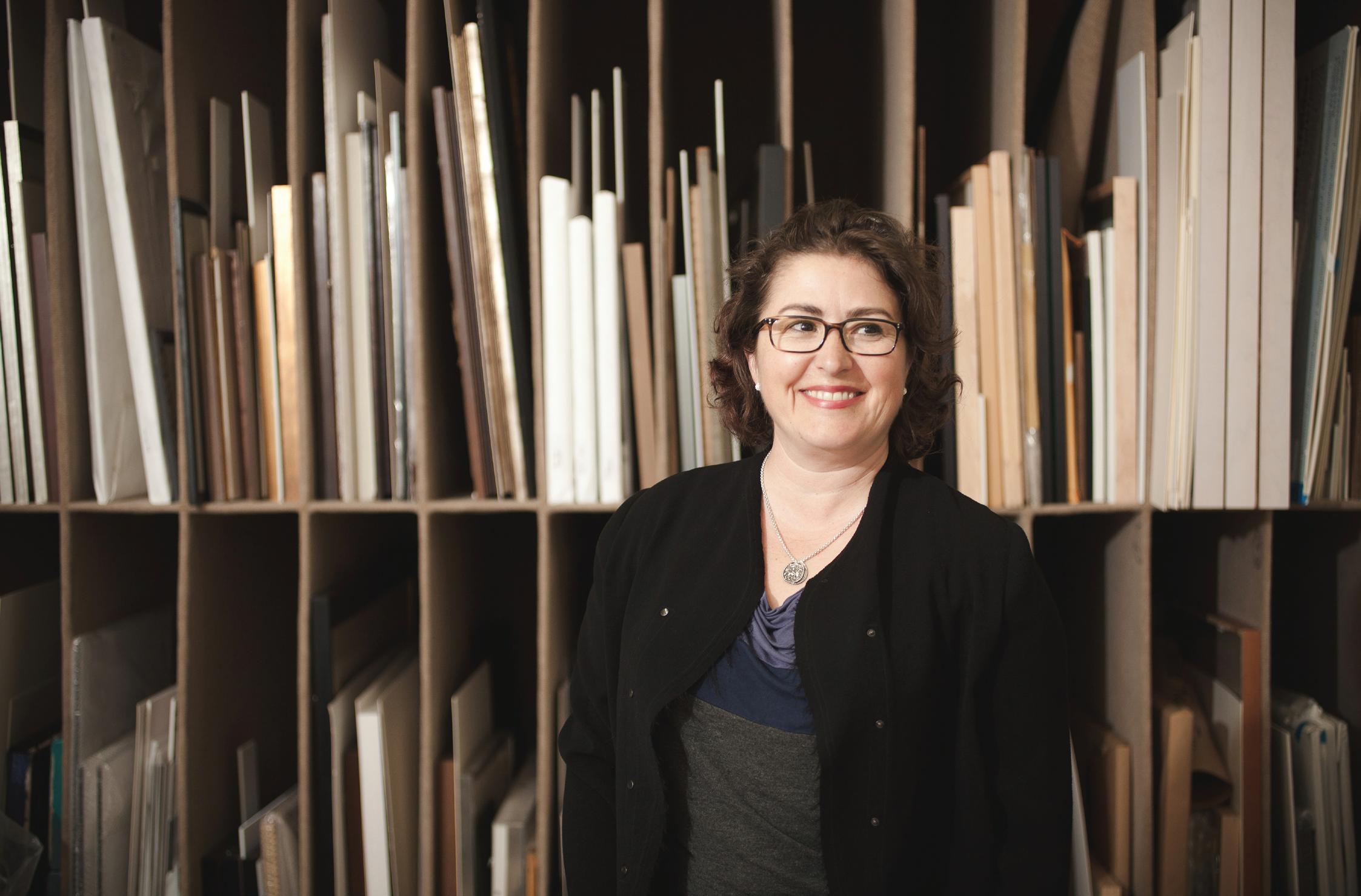
Cooley Gallery curator Stephanie Snyder ’91 reflects on her retirement and a life of enriching Reed’s artistic community.
By Bennett Campbell Ferguson
When Stephanie Snyder ’91 was studying art history at Columbia University, she had a revelation: the confines of her major were too narrow to contain her ambitions as a scholar, curator, and educator.
“I realized after a couple of years that that is what I loved doing—studying art history, but also being of service to others to help them realize their goals,” says Stephanie, who retired from Reed in 2025. “I didn’t want to be just an artist in a studio or an academic.”
That perspective has helped enshrine Stephanie as a Reed icon—as a student, as the curator and director of the Douglas F. Cooley Memorial Art Gallery, and as the co-founder of Reed’s calligraphy endowment (which she and her husband, Jonathan Snyder ’91, started with a $100,000 pledge).
“Reed College has been so lucky to have someone with Stephanie’s deep knowledge of art history, her commitment, her creativity, and her sheer capacity for joy managing the Cooley Gallery for these last two decades,” says Professor Jay Dickson [English and humanities], who collaborated with Stephanie on exhibitions at the Cooley.
Stephanie has been part of the Cooley since its inception. When the gallery opened in
1988, she served as an intern, savoring her interactions with artists like Kit-Yin Snyder and Lee Black. “It was actually a really powerful influence on me,” Stephanie says. “What I had never experienced before, especially as a young person, was to actually work with an adult professional artist.”
After graduating from Reed, Stephanie earned her master of education at Columbia, studying both art history and art education. “The art history department really didn’t like [me studying both]; they thought of [education] as a lesser field, but I didn’t care,” she says. “I was a Reedie, and I knew better.”
When Stephanie returned to Reed to run the Cooley, it was desperate for refurbishment—all yellow ceiling and aged gray carpet. Yet physically transforming the space was merely the first step in her quest to create an arena for the work of world-renowned contemporary artists like Gregg Bordowitz (whose exhibition exploring his life making art and living with AIDS was presented at the Cooley in 2019).
Collaborating with Stephanie on an exhibition of Susan Weil paintings inspired by James Joyce, Dickson saw firsthand Stephanie’s zeal and skill as a curator. “Working on these projects with Stephanie has been one of the highlights of my Reed career,” says Dickson, who also worked with her on two symposiums. “I found her extraordinary energy and imagination inspiring.”
During her time at the Cooley, Stephanie’s vision extended beyond the gallery. She also founded the Scriptorium program with Gregory MacNaughton ’89, helping reestablish calligraphy at Reed— leading to a recent $1 million anonymous gift to the college’s calligraphy endowment.
Stephanie’s stewardship of the Cooley is also reflected in successes less easily quantified—in the experiences of the Reed students who have been able to visit MOMA or the Art Institute of Chicago (thanks to the Cooley’s programs) and in the triumphs of former protégés like Stella Cilman ’16 (currently an assistant curator at Artists Space in New York). It’s all part of Stephanie’s lifelong mission: to translate the world to those who seek to understand it through art. “That’s what a good curator does,” she says.
Edited by Robin Tovey ’97
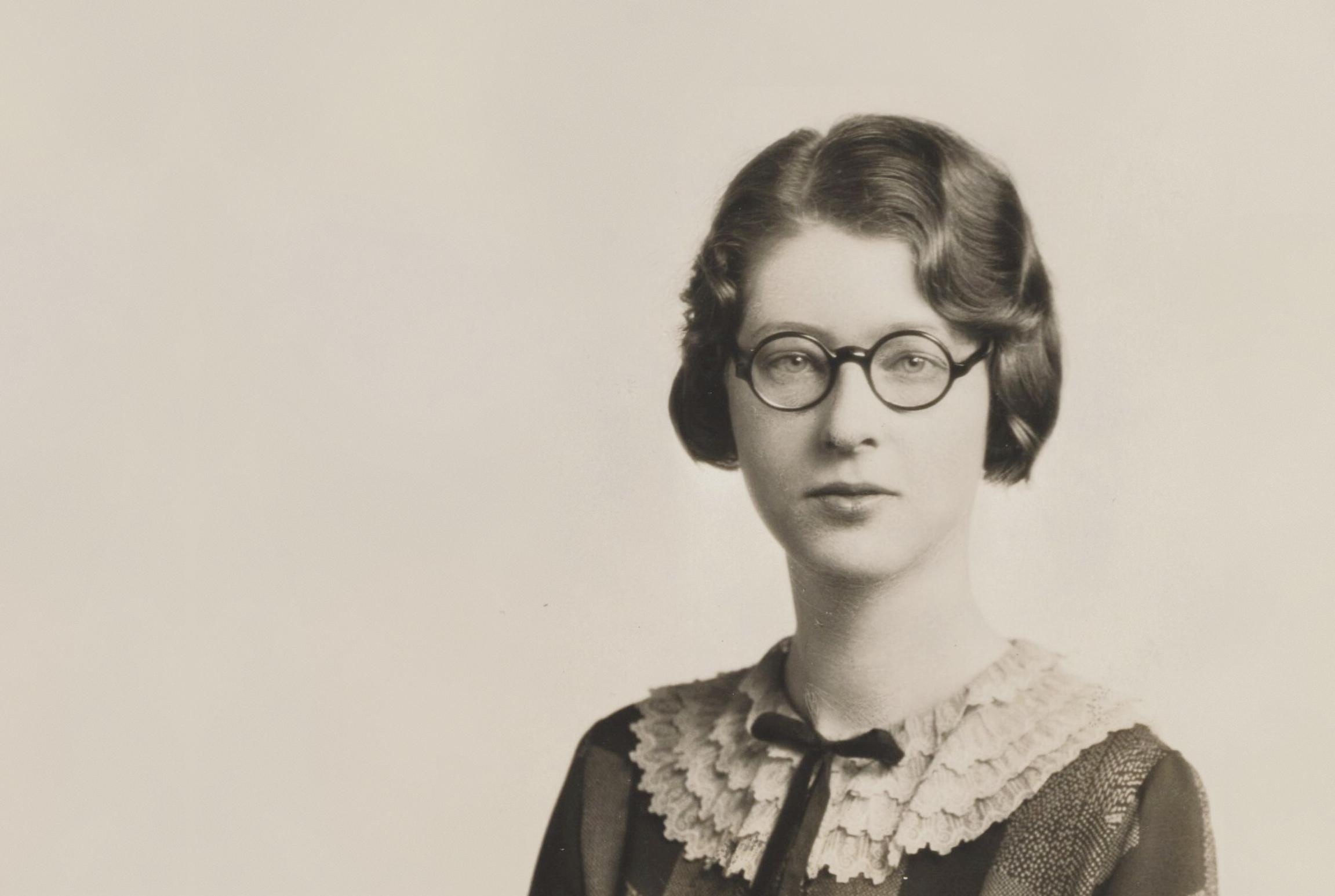
Sarah Barnsley ’95 discovered a thesis topic and a life’s work in the poetry of Mary Barnard ’32.
Thirty years ago this spring, I sat in the Reed College library amidst the seniors writing their theses. On the shelf above me were books by my subject—poet, translator, and Reed alumna Mary Barnard ’32. Friends photographed me at my desk looking wistfully up to the books in a professorial pose. We were “the Brits,” at Reed on a year’s exchange.
I had no idea where the thesis was going. I couldn’t stop thinking about the poems—they were astonishingly good, but I couldn’t explain why. I didn’t know then that Barnard had experienced similar paralysis when attempting her own senior thesis over 1931–32, so much so that her exasperated professors let her submit poems in place of a critical thesis. But the overlaps didn’t stop there. I loved the modernist poets, studying them in a legendary class run by Reed professor Ellen K. Stauder [English 1983–2013]. Barnard had also been drawn to the modernists because of a similar torch
lit at Reed by another legendary professor, Lloyd Reynolds, recalling of her junior year:
I no longer know which came first, the day I wrote a poem liberated, at least, from a whalebone corset, or the day when Lloyd wrote out several lines of Pound’s poetry on the blackboard, waved his arms about, and proclaimed, “The man who could do that could do anything!” [. . .] I copied the lines in my notebook, feeling skeptical, yet intrigued. The lines were from the “Homage to Sextus Propertius” [. . .]. They bit deep. I returned to Gill’s bookstore the copy of the Harriet Monroe anthology that my mother gave me for my birthday, and brought home [Pound’s] Personae instead. I was beginning to know at last the country I wanted to explore. (Assault on Mount Helicon, p. 39, 1984)
Scratching around for a thesis topic— a requirement was that “the Brits” write
a thesis connected to their US locality— Ellen said, “Well, there is this one poet, Mary Barnard. I think you’ll like her work.” She could even introduce us if I should like. It is one of the biggest regrets of my life that I didn’t take her up on it—I was shy, awkward, and 20 years old. But like Barnard, I was beginning, myself, to “know at last the country I wanted to explore.”
It was while doing my master’s dissertation on literary translation that Barnard’s poems spoke to me again. Not only had Barnard written a ground-breaking translation of Sappho, but it had also endured—a bestseller since its publication in 1958. I wanted to know the linguistic basis that made it so good. That was the easy part. What was difficult was the customary literature review— who was Mary Barnard, and what have others said about her?
I had answers to the first question (born 1909 in Vancouver, Washington; correspondent of Ezra Pound; relocated
to New York in 1936 on Pound’s advice, where she met William Carlos Williams and Marianne Moore; inaugural curator of the Poetry Collection at the University of Buffalo, New York; researcher to Carl Van Doren; returned to the Pacific Northwest in the 1950s; winner of the Elliston Award for Collected Poems in 1979 and the Western States Book Award for Poetry in 1986). But for the second question—very little.
If the critical literature on Mary Barnard wasn’t there, I decided I should correct the balance and write it myself. I enrolled in a PhD program determined to find out substantially more about “Barnard country” and firmly place her work in the American literary canon.
The research took in several more libraries, the most wonderful being the collection of Barnard’s friend and literary executor, Elizabeth J. Bell, also in Vancouver, Washington, who had the mammoth task of collating the wealth of literary material in Barnard’s condo following her death in 2001. Betty generously donated Barnard’s archive to the Beinecke Rare Book and Manuscript Library at Yale, to join the American literature collection, home also to the Pound and Williams archives.
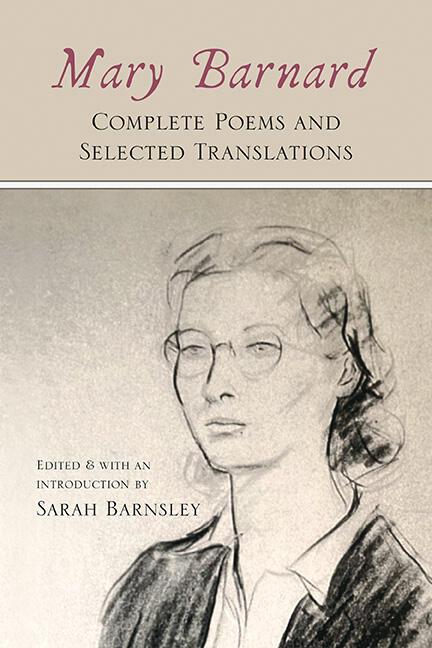
Mary Barnard: Complete Poems and Selected Translations. (SUNY, 2025)
Following a Beinecke fellowship, I transformed my PhD into Mary Barnard, American Imagist (SUNY, 2013). I still have that shelf of Barnard’s books, all but her Sappho now out of print, at home with me in the UK. They’re joined this month by a companion volume I’ve edited, Mary Barnard: Complete Poems and Selected Translations, which brings her life’s work into one place, amplified by previously unpublished poems, literary correspondence, and Barnard’s reflections on her creative practice. For poetry lovers, scholars and writers: here be Barnard country! —Sarah Barnsley ’95 This essay is excerpted and reprinted with permission of SUNY Press, where it first appeared as a guest blog post.
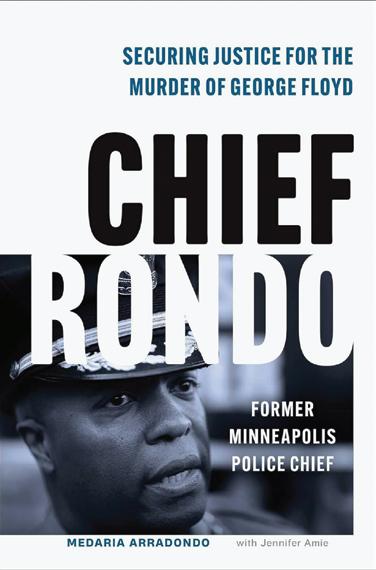
Leading up to the fifth anniversary of the murder of George Floyd, Jennifer Amie ’91 coauthored a book with Medaria “Rondo” Arradondo, the first Black police chief of the Minneapolis Police Department. The man who led a city during a historic protest movement and nationwide reckoning on race and policing, Chief Rondo took decisive actions that led to a stirring social-justice victory: the conviction of four officers responsible for Floyd’s murder.
(Diversion Books, 2025)
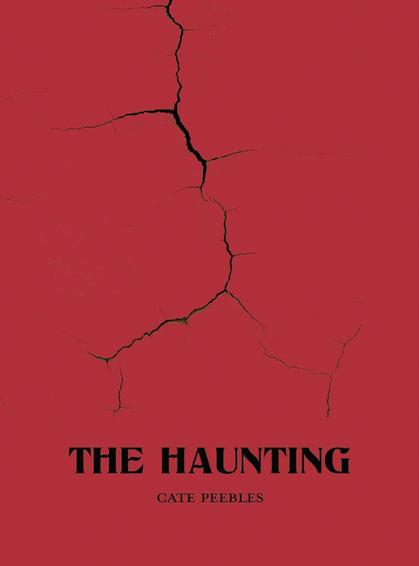
A second poetry collection by Cate (Katie) Peebles ’02 is concerned with how the living and the dead coexist, maternal ambivalence, and the drive to create. Drawing from sources including Mary Shelley’s Frankenstein , Emily Brontë’s Wuthering Heights , the Velvet Underground, and Ovid, this volume explores the anxieties of ancestral and artistic inheritance, rage, transformation, and motherhood. Her chapbook, Sun King, was the 2024 Editor’s Selection for the Tomaž Šalamun Prize. (Tupelo Press, 2025)
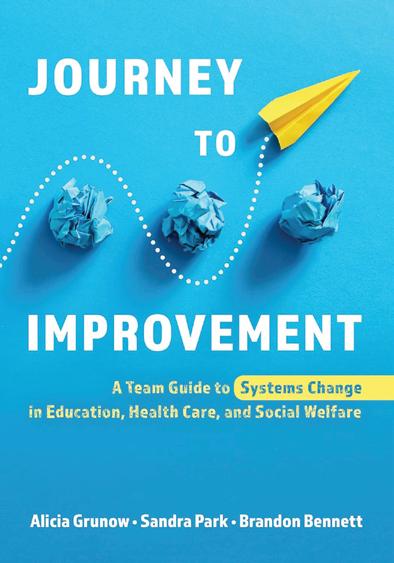
Offering “A Team Guide to Systems Change in Education, Health Care, and Social Welfare,” Alicia Grunow ’99 and coauthors draw upon on-the-ground experience to offer a road map for using an improvement-science approach to redesign our social systems for the well-being of communities. Their narratives highlight the personal, relational, and technical aspects of the journey as illustrated through realworld examples. (Rowman & Littlefield Publishers, 2024)
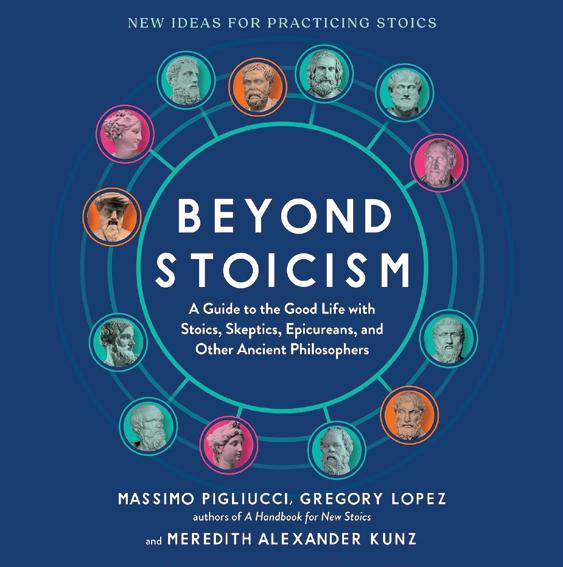
Gregory Lopez ’99 and his coauthors have brought Greco-Roman philosophy to the masses as a timeless coping strategy. This “Guide to the Good Life with Stoics, Skeptics, Epicureans, and Other Ancient Philosophers” provides an overview of classical thinking and reminds us that while times change, the quest for eudaimonia stays the same . . . and the wisdom of the ancient sages still applies. (Blackstone Publishing, 2025)
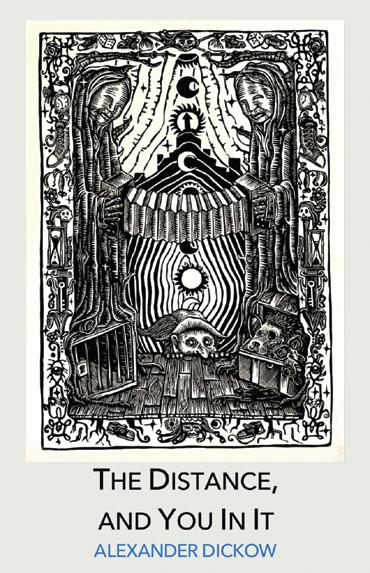
Called a “farce in verse,” this narrative by Alexander Dickow ’02 embraces both swordplay and wordplay in a poetic exploration of the search for meaning within a cosmic context. Hob the trickster extracts himself from the void and tangles with a pair of genderless lovers in “a seriously tongue-in-cheek model for navigating lives gone beyond our control ad absurdum.” Also, Alexander coedited the Dictionnaire Max Jacob, a literary reference work in French. (BlazeVOX Books, 2025)
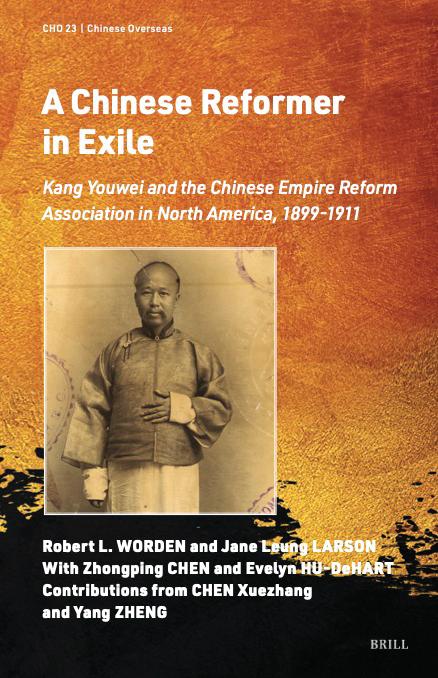
This open-access book by Jane Leung Larson ’67 and coauthors documents the exile years (1899–1911) of imperial China’s most famous reformer, Kang Youwei, and the political organization he mobilized worldwide to transform China’s autocratic empire into a constitutional monarchy. Based on Robert Worden’s 1972 Georgetown University PhD dissertation, this encyclopedic reference work contributes new insights from 50 years of additional scholarship and previously unknown archival materials. (Brill, 2025)
A new book by Kinari Webb ’95, based upon her pioneering work as founder of Health in Harmony and her collaborations to reduce deforestation and improve health outcomes in Indonesian Borneo, reveals how solutions emerge from the wisdom of communities themselves. Enhanced by poetry and stories of Indigenous and local communities devising climate solutions, Kinari and coauthor Patricia Plude translate methodology into actionable steps that help readers listen more deeply, respectfully, and effectively. (Indepenently published, 2025)
David Evers ’91 published an open-access book on urbanization rates (“land take”) as well as densities and morphology (“sprawl”). He offers analysis and discussion on the impact of spatial-planning instruments and other public-sector interventions at a time when “land take” is high on the EU policy agenda. This book peers into the future by drawing up urbanization scenarios for 2050 and reflects on their sustainability. (Springer International Publishing, 2025)
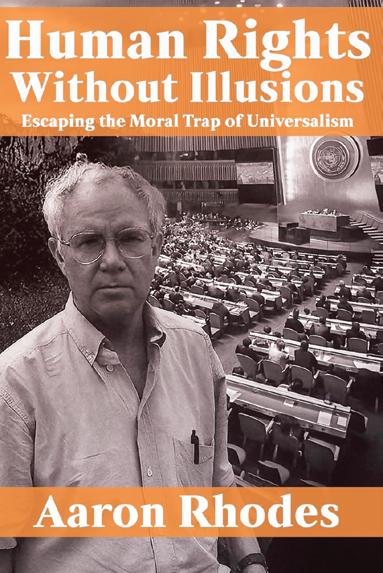
Aaron Rhodes ’71 traces the political and religious traditions that have led to prioritizing consensus among diverse nations as a prerequisite for upholding universal principles. He lays out how the modern human-rights regime sits on the foundation of Hellenistic stoicism and medieval Christendom, wherein humanity was morally unified. Aaron considers defending human rights to be a moral duty but asserts that related advocacy needs to free itself from the corruption of institutionalized universalism. (Academica Press, 2025)
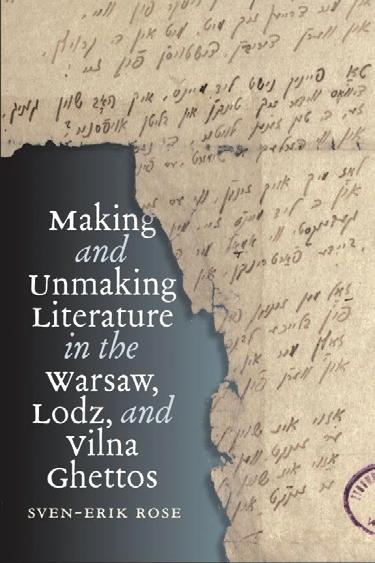
From Sven-Erik Rose ’91 comes the first study of how authors grappled with life in Nazi ghettos by writing within, at the limits of, and against an array of literary scenarios. Conventions they subverted included the realist social novel, the detective story, and the gothic horror tale. Contending with desperate conditions and the looming threat of murder, inhabitants of ghettos in Poland made them sites of rich literary thinking in extremis. (Brandeis University Press, 2025)
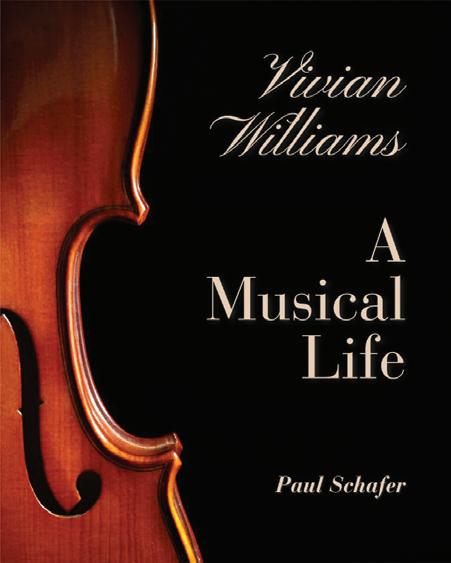
Peter Langston ’68 edited a biography of Vivian Williams ’59 , champion fiddler, professional bluegrass musician, composer, recording artist, musical historian, fiddle teacher, and author. Book 1 in this two-volume series by author Paul Schafer also focuses on her husband, Philip Williams ’58 , and their legacy as founding members of the Pacific Northwest traditional-music scene, including the Northwest Folklife Festival and the Seattle Folklore Society. (Independently published, 2024)
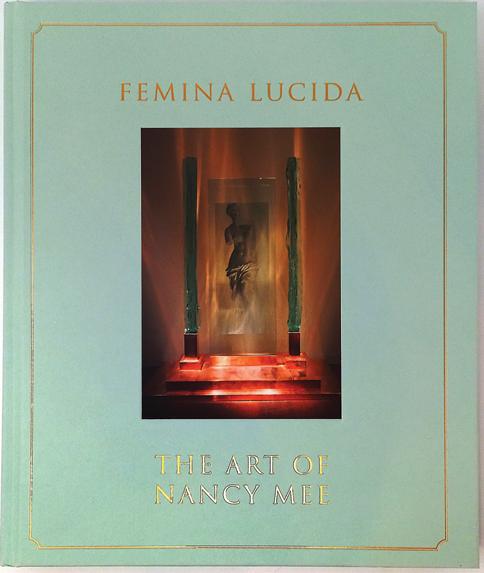
The latest book by Matthew Kangas ’71 explores more than 50 years in the career of Seattle artist Nancy Mee, showcasing her artwork in a range of media including welded steel, fused glass, and various photographic processes. This art-historical monograph features interviews with the artist and discussions of her origins as painter and printmaker through her early work at the Pilchuck Glass School. (Utopian Heights Studios, 2024)
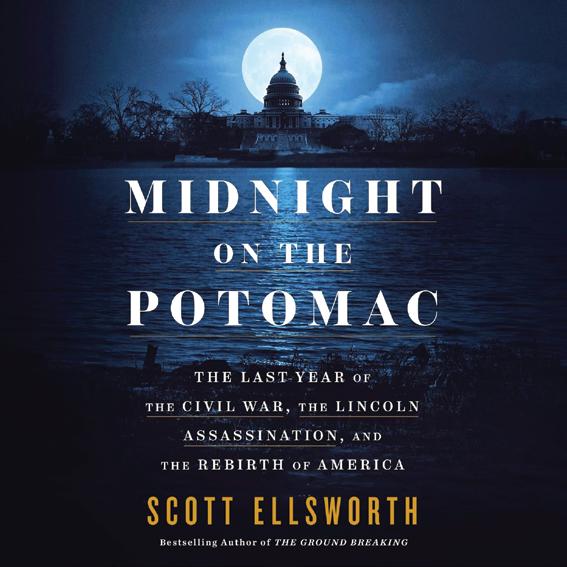
The latest from Scott Ellsworth ’76 is a narrative history about the last year of the American Civil War, including a terror war against the civilian population of the North launched by the Confederacy. Moving beyond the battlefield and the White House to hospital wards and encampments of the formerly enslaved, the tale highlights a remarkable coalition of Americans—men and women, Black and white, nativeborn and immigrant—who came together to save the country.
(Penguin Random House, 2025)
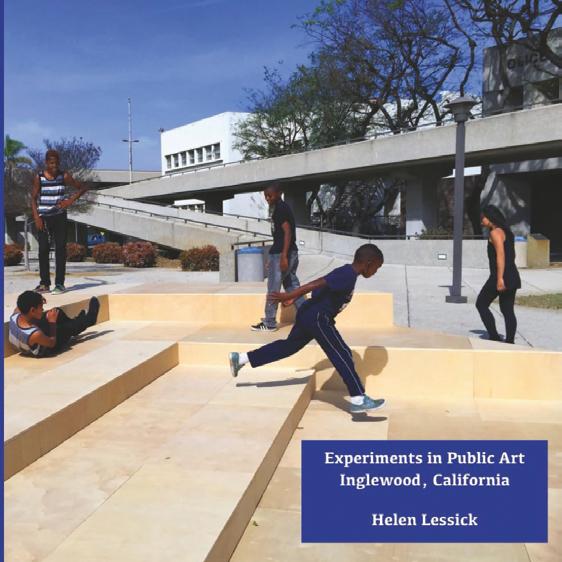
This volume by Helen Lessick ’76 documents 85 years of public-art history in the minority-majority city. The book includes essays by local cultural leaders to illustrate “what happens when a conceptual artist and a musical artist, poet, painter, and sculptor walk into a city hall.” Also, her 2025 monograph, TimeFrame, showcases a selection of environmental public-art projects—domestic and international—and features a 2024 conversation with her 1976 Reed thesis adviser, artist and educator William J. Hoppe
(Independently published, 2025)
Arianna Rebolini ’12 on surviving suicidality.
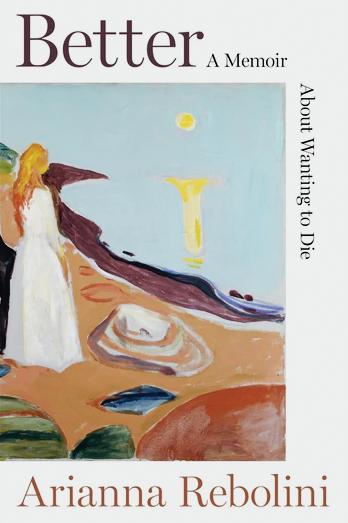
Better may sound like the title of a self-help book, but it is in fact an intricate melding of memoir and scholarly inquiry on the subject of suicide. Arianna Rebolini ’12 takes an intellectualizing approach to the cultural history, medical documentation, and literary notions of the desire to die and treats it with destigmatizing care. Informed by her own suicide attempts, a stint in a psychiatric ward, and an English major’s sensibility, she is remarkably candid about the allure of the darker, more macabre aspects of suicidality and speaks with unsentimental curiosity about its grip.
Arianna describes the undulations of a life consumed with suicide ideation and how, even on good days, the thought can be a persistent companion, even as it is transmuted: “I was no longer actively preoccupied with my death, but it was as if its absence required a substitute. And so I swapped in [her son’s death], and that fixation flowed along a spectrum between preparation and prevention.” In moments when he senses her distress, her young son asks questions that tug at her heart and evoke practical as well as philosophical reflections. As Arianna explores the nuances of caregiving relationships, she draws provocative connections between concepts of worry, burden, reciprocity, and autonomy. In the process, she goes beyond self-interest to consider what it is to survive someone else’s suicidality, revealing her brother’s diagnosis, his treatment, and its impact on the family.
Better is an intimate look at her own struggle broadened by an interrogation of societal factors and the systems that fail those who are most vulnerable. In doing the delicate dance of asking for and receiving help, Arianna’s own coping strategies are not above critique; at one point she admits, “I figured out how to experience the catharsis of sharing suicidality while avoiding the discomfort of vulnerability.” This level of unflinching introspection leads her to ponder the emotional relief we all seek in our desire to be known: “Is it selfawareness or self-destruction when our need to understand ourselves quashes our ability to connect with others, or when our richly developed interior world becomes the only one we trust?” —Robin Tovey ’97
Edited by Joanne Hossack ’82
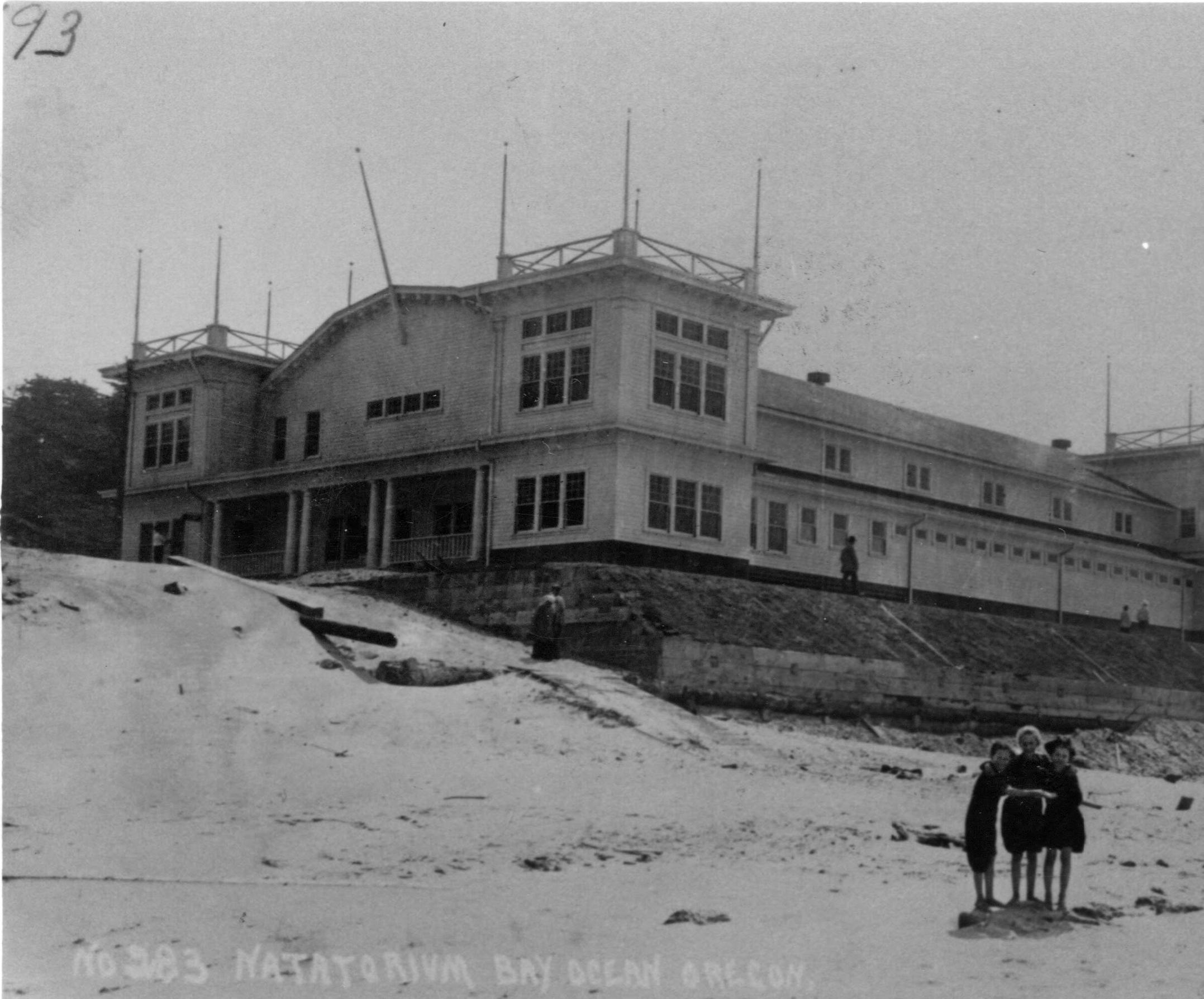
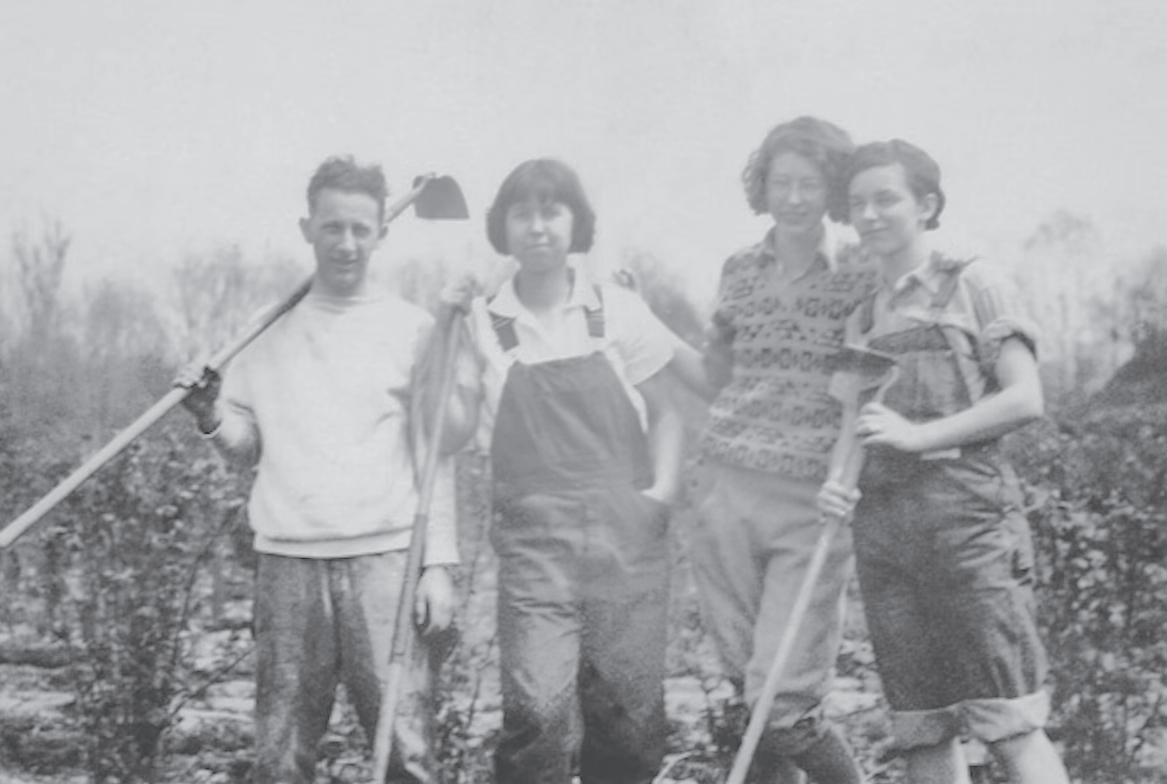
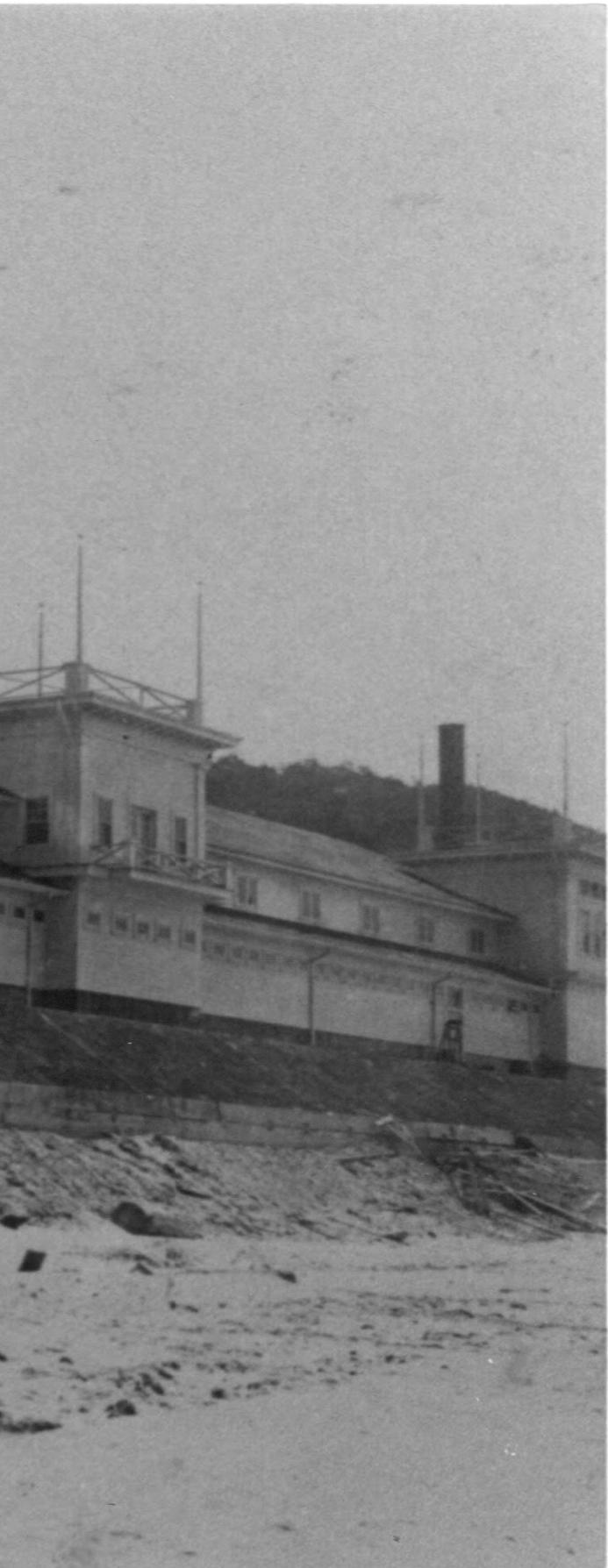
1921 FROM THE ARCHIVES Summer 1921. A ragtag group of Reedies. One goal: Keep a struggling resort town running. John Van Etten ’21, James Hamilton ’22, and James Gantenbein ’22 aren’t here to tell the tale, but you can read about it in our digital exclusive “One
Historic Summer: The Bayocean Bunch” at https://www.reed.edu/ reed-magazine/.
1952
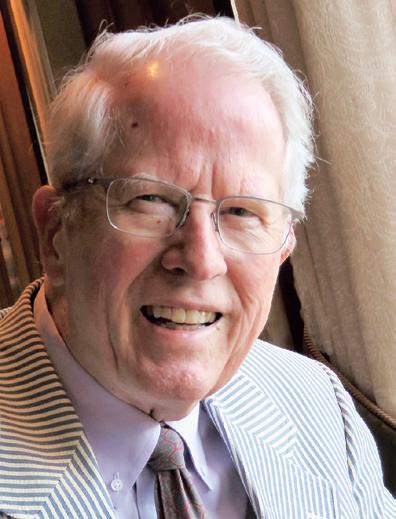
John Boswell Hudson writes, “I’m still here. Anybody else out there? My post in the winter issue about
a possible Iowa City Reed club— GryphonHawks—stimulated some interest. When we receive a sufficient number of replies, I will send out an invitation to get together. All Reedies or Reedites (appellation in the old days) in the Iowa City area are invited to respond to JohnBoswellHudson@gmail.com.”
1953
Arthur Levin has now fully retired to senior living in Ashland, Oregon, after many decades as a native-born New Yorker. His move was necessitated by health issues and the fact that all his family is now on the West Coast; he has fewer good friends
still around NYC, and his handicap restricts his enjoyment of the city’s attractions.
1956 70TH
World welcomes Geena Davis, Dorothy Hamill, and David Sedaris.
1957
Two teenage boys meet at a church fête in a suburb of Liverpool. The rest is history.
1958
Sharon (Chapin) Toji writes, “My husband, Hitoshi Toji, died January 11, 2024. He was 95 years old, and had attended Reed reunions with me during the more than 40 years of our marriage. The sign company he founded, H Toji and Company, had become nationally known in the field of accessible (ADA) signage, and was celebrating its 70th anniversary. He founded it with money he earned after being released from Manzanar, the Japanese-American concentration camp where he and his mother and brothers and sisters had been sent during World War II.”
1959–60
First star placed on Hollywood Walk of Fame.
1961
2025 was the last of Jon Quitslund’s four years on the Bainbridge Island, Washington, City Council.
“Previously, I was on the Planning Commission for nine years. Since retiring in 2000 and returning to the place where I grew up, I’ve been very active in community affairs; I’ve been fascinated with the predicaments that planners identify as ‘wicked problems’—affordable housing, for instance.”
1962
Psychology According to Shakespeare, by Robert Johnson and the late Philip Zimbardo, has won the 2025 William James Book Award for the best book published within the last three years that
Class Notes are the heart of Reed Magazine—send us your news! Email reed.magazine@reed.edu or find our form at https://www.reed.edu/reed-magazine/.
These Class Notes reflect information we received by December 31. The deadline for our next issue is April 31.
integrates subdisciplines of psychology and related fields. The award is given by the Society for General Psychology & Interdisciplinary Inquiry of the American Psychological Association. Woo hoo! (See Reediana, Summer 2024.)
1963
Stanley “Shimke” Levine writes, “I moved back to NYC five months ago, but I think I already reported that. After a career and a life that took me all over the U.S. and abroad as well, I am trying to once again establish roots and a network of friends here in the city. Happily retired, active lifestyle, still inquisitive mind.”
Ken Nickerson, at the University of Nebraska since 1973 and retired since 2020, recently joined a dubious group called BART (Bad for Retirement), meaning that he still runs an active research group in microbial physiology, studying farnesol and the fungus Candida albicans. Evidence for BART came from half of his publications being after age 65 and 16 after retirement. “It all started in organic chemistry when Prof. John Hancock [chemistry 1955–89] taught us how to think like a carbon atom.”
1964
Jim Kahan has finally published The Pig Paradox and Similar Folk Tales, which he started to work on in 1978 while at the Netherlands Institute for Advanced Studies (NIAS). Over the years, Jim collected 14 stories of sieges where the besieged attempt to fool the besiegers by deliberately wasting what food they have left. The paradox is that, if successful, they avoid starvation or worse by
getting rid of their food. After sporadically working on this for 48 years, Jim finally put it together and privately published it through Reed’s Print Services.
Peter Bergel is working to defend democracy by working with Salem Region Indivisible, One Million Rising, De-ICE Oregon, the Stop Nuclear WorkGroup, and others who seek to protect our democracy (such as it was) from the Trump administration’s ongoing attacks. He thinks it is time for everyone who believes in the Constitution to stand up and take action. No one else is coming to save us.
From Marsha Epstein: “My wife, Mary Aviyah Farkas, volunteers at the Holocaust Museum of Los Angeles because her father was a Holocaust survivor. Our temple, Beth Chayim Chadashim, the first LGBT synagogue in the world, is honoring her for her volunteer work. She also wrote a book, Overcoming Deepest Grief, A Woman’s Journey, Grief, Acceptance, Gratitude and Joy , after her first wife died suddenly after 18 years together. Her book has won four awards. I helped edit the book.”
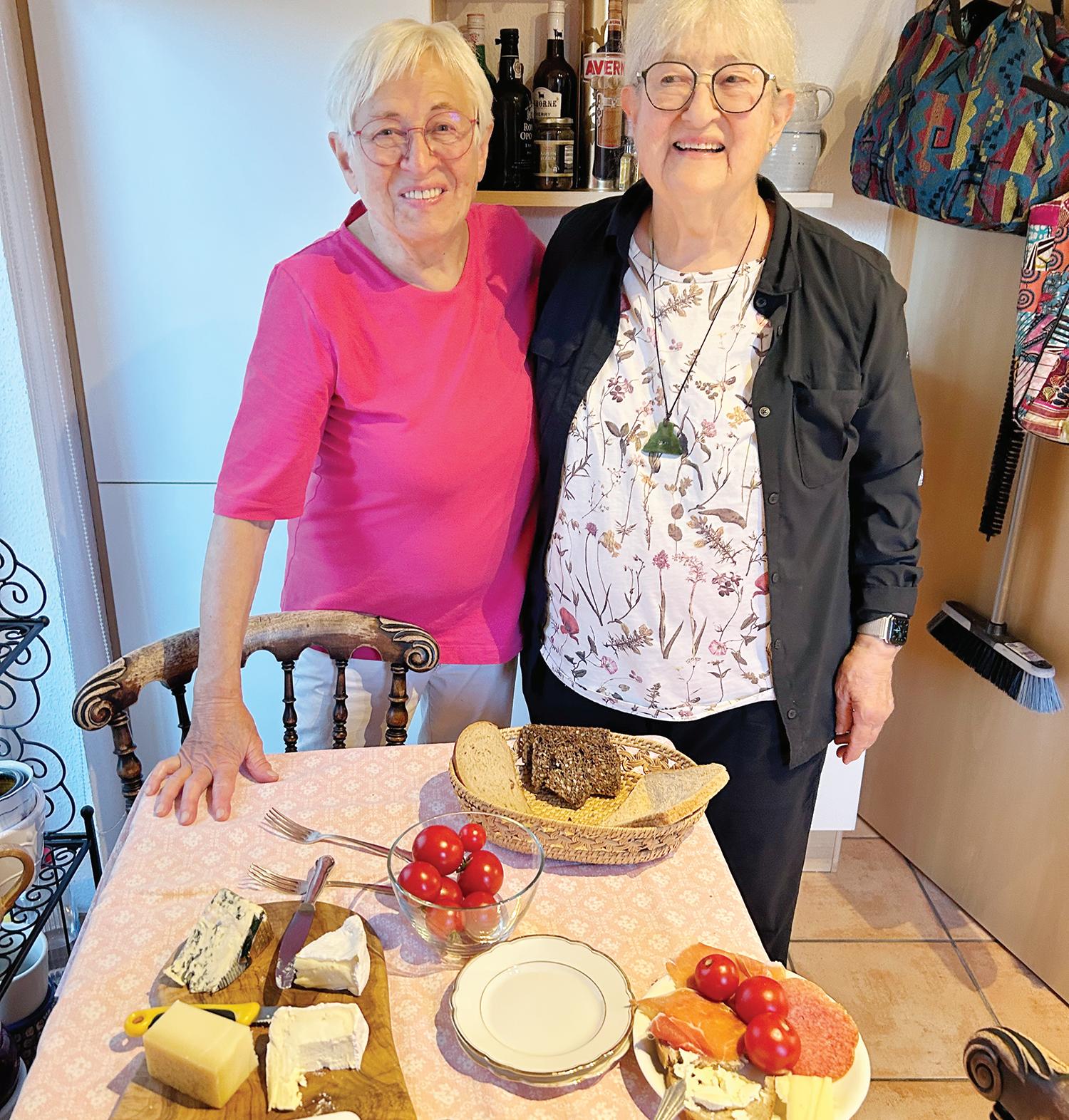
Ann Burton Goetcheus visited numerous class members this year: Julia Gerdes Dubnoff in Cambridge, Massachusetts; Steve Morris in Manchester, New Hampshire; Irina Harris Robertiello in Manhattan; and Elfriede Hontze in Hameln, Lower Saxony, Germany. Ann also, along with John Ullman , Irene Namkung, and Peter Bergel , with help from the Reed alumni office, hosted a party for the class 60th anniversary, inviting adjacent alumni as well to her home in Woodstock. Ann is still living independently, with a garden designed to flower year-round, to delight her and those who pass by her corner. The joy of zone 8a gardening was a major factor in Ann’s move to Portland from Brooklyn, New York, in 2012 after nearly 40 years
in New York City. Ann notes that Elfriede would welcome renewed contact from the many Reedies who were her friends at Reed and/or who hosted her in her time at Reed and travel in the U.S. thereafter.
Will (Bill) Jacobs reports he is still failing retirement, continuing instead as an active physicist. Recent evidence: giving an invited talk at the Intersections of Particle and Nuclear Physics Conference (CIPANP25) and missing the 60th Reed class reunion.
Dennis McGilvray just finished writing a book manuscript: A House for Every Daughter: Matrilocal Marriage in Sri Lanka and South India . Now he’s shopping for a publisher.
Constance Putnam writes, “Settling into life in a retirement community is not the easiest thing I’ve ever done—but it was a sensible and good thing to do. After 2+ years I still have file cabinets full of papers that need to be sifted through, what to keep, etc. I figure if I wait long enough, the job will get easier—because it will be clear that I don’t need to keep any of it. I’m not yet in that frame of mind, however. I still have writing projects I am not willing to abandon.”
David Ritchie climbed Mt. Fansipan in North Vietnam in April 2025, floated Grand Canyon on a dory in May 2025, and, as of September 2025, was planning to kayak Komodo National Park in October 2025. David also has two books in clearance review at Cambridge University Press.
Until earlier this year Steve Wax was the board chair of Heyday Books in Berkeley, California. Steve is still a member of the Heyday board. He also hosts a podcast for bookstore owners called StoryBrand , focused on presenting new models for independent bookstores, drawing on extraordinary wins around the country and in some cases in other countries. “ I’ve also helped to edit and launch a new book from Sibylline Press titled Harvesting
History: Farming the Flats about an extraordinary woman, Aggie Murch, who was a farmer in Bolinas, California, while raising four children and worked as a radio producer and midwife. I’m also executive producing a film about a Berkeley poet and People’s Park, plus I’m just beginning to develop a new bookstore in my hometown. I have four kids and two grandchildren and besides everything else, I’m a sports car addict. I own a ’62 Morgan +4 and a 2004 Porsche Boxster Special Edition—and I’m about to buy another English sedan from the ’50s. All I can say as I review these notes is, whew! ” Whew, indeed, Steve!
Elisabeth Field Wheeler got it done! “Only took a decade or two to finish—Anatomy of Hardwoods of the United States and Canada. An Atlas of Photomicrographs of Selected Trees, Shrubs, and Vines— 160 pages, 240 species briefly described, over 1,250 photomicrographs, BRIT Press. Bert Brehm [biology 1962–93], my adviser, is included in the dedication. Now on to finish the 40+-year-old project on fossil woods from Yellowstone National Park.”
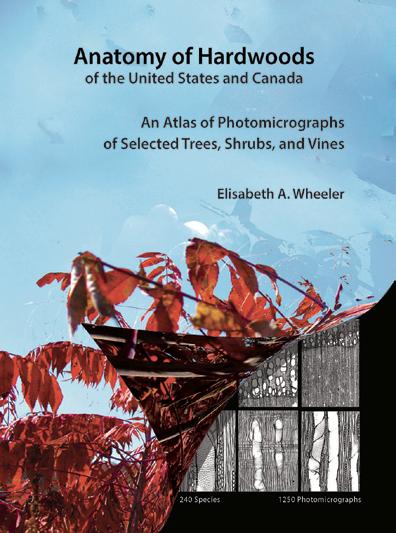
Adam Wilkins is now posting a weekly Substack article concerning how particular subjects in biology impact human affairs. The articles are about 2500–3000 words each, with references at the end, and are written to benefit both lay people and biologists. The feedback so far has been very positive. Adam has been running the column since June 2024. The articles can be accessed (free or paid subscription) at Adam Wilkins/Substack/BioBuzz.
Maryann Collins writes, “Turned 80. Three new diseases were lying in wait. Survived the generally deadly one. I’ve been remembering protesting HUAC with other Reedies in 1963(?). Hope it’s a tradition that continues in these days of ICE.”
Judith Hendershott is living a relaxed retirement in southeast London and enjoying visits with grandchildren Louis, aged 14, and Isabella, aged 12.
1967
John Cushing finished the Portland Half Marathon. He placed first in his division.
1968
Over the past couple of years, Peter Langston helped edit a book about Vivian Williams ’59 (and Phil Williams ’58 ) titled Vivian Williams—A Musical Life . Peter notes that he was close with the couple “both because we were all Reedies and because we were all folk musicians. Of course it didn’t hurt that they introduced me to my wife, Marlena, in 1963.” Peter also runs the American Banjo Camp in Port Orchard.
1969
Hello, gorgeous.
1970
Tamim Ansary sent us a little news about his doings of late: He wrote a postscript for a new edition of his
book Destiny Disrupted; A History of the World Through Islamic Eyes. The book was published in 2007 and has been translated into some 20 languages. He also wrote a postscript this year for his 2019 book The Invention of Yesterday (a world history for the global age), which is coming out in paperback in February. It sounds like breaking up may be hard to do for Dean R. Gerstein. . . . “A throughline: In summer 1965, I attended a Purdue University program for high school students funded by the National Science Foundation. In the ’70s after Reed, my NSF graduate research fellowship supported coursework at Harvard and sociological field research in San Diego. In the ’80s, I coauthored a National Academy of Sciences 10-year plan for social science research, backed mostly by NSF. In the ’90s, I led a NORC/ University of Chicago proposal team that won the contract to do NSF’s national surveys of PhDs. In the ’00s I helped information science and STEM education faculty at Claremont Graduate University secure NSF grants. Now at Pomona College, I review for NSF’s graduate fellowship program and serve as a PI, co-PI, consultant, and proposal developer on four respective NSF grants. At this age I might be considering retirement—but I don’t know if I can break up with NSF.”
Matthew Kangas and Sara Patton cohosted the Reed College Dining Club at Joyale Seafood Restaurant in Seattle on August 7. New members inducted were Wayne Grytting ’70, and Laura Fisher ’68, the latter visiting from Utah. Geoff Robison ’71 also attended with Sarah Bullock and Laura’s husband, Bob Bissland. The group toasted absent friends including Tim Rowan ’71 (1949–2024) and Professor Emeritus Samuel Danon [French 1962–2000], who is busy trying to determine the fate of his extensive correspondence with Jacques Derrida, René Girard, Roland
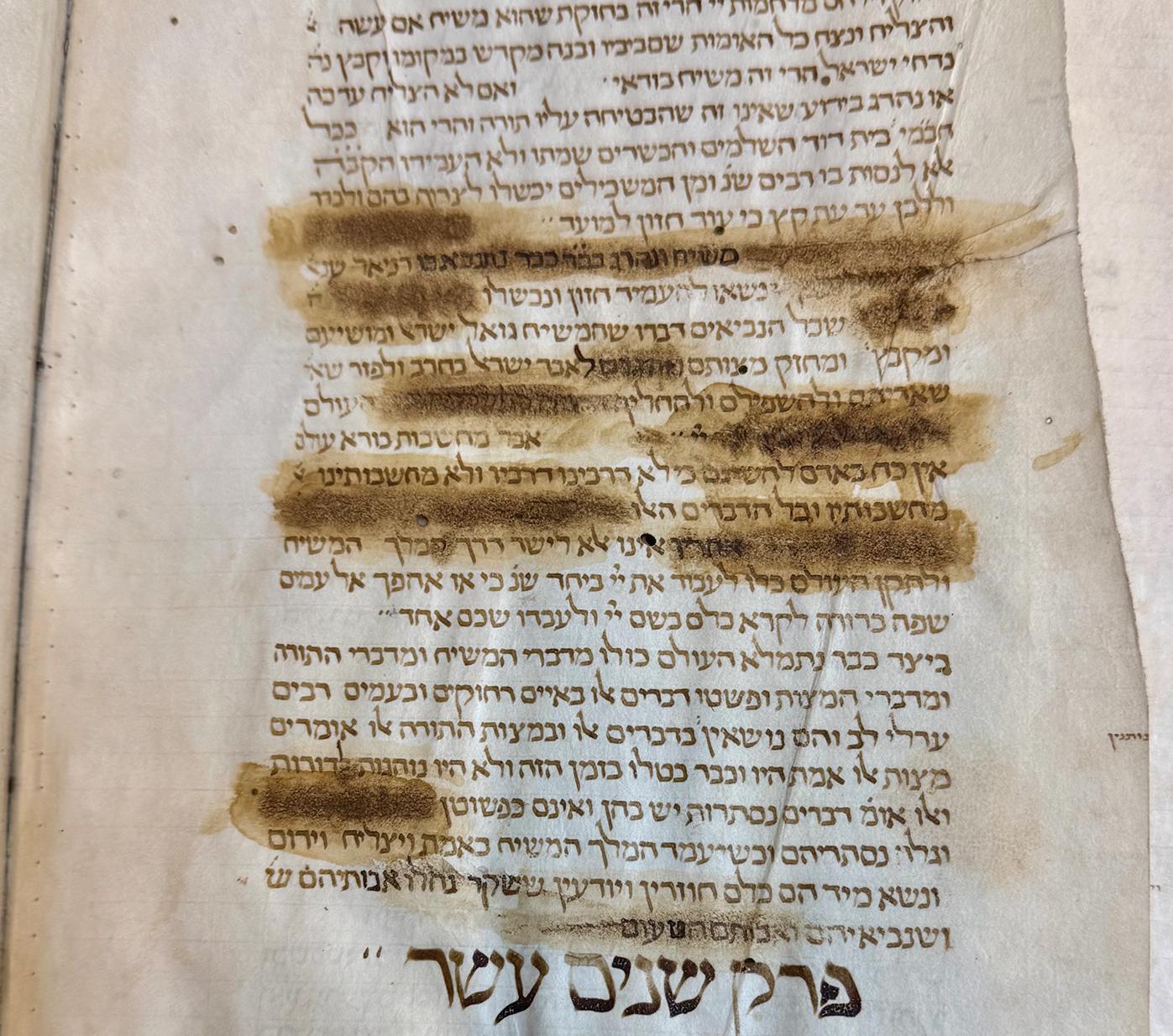
Barthes, and Stewart Lindh ’70 Stewart recently retired from the critical studies department at California Institute of the Arts in Santa Clarita. It was while studying with Professor Danon at Reed that Stewart became inspired to study with Roland Barthes; he later wrote a tribute to Barthes in the San Francisco Chronicle, which also appeared in Libération in Paris. Like Professor Danon, who studied with René Girard at Johns Hopkins, Geoff worked under Girard at SUNY Buffalo.
Diane Rosenbaum just completed two years as chair of the board of the Oregon Humane Society, where they completed a major expansion to provide low-cost veterinary care for Oregonians who love their pets but can’t afford the care they need.
Martin Rosenberg writes: “The story of the Portuguese Synagogue of Amsterdam is the incredible saga of a people tormented by the Inquisition for centuries emerging from that hell to contribute to a welcoming Netherlands. The community graciously welcomed me this fall to give me a chance to learn about it fully.”
Spencer Smith has received numerous publishing awards from the Maine Writers and Publishers Alliance, and would be glad to
A 13th-century Maimonides manuscript in the oldest continuously operating Jewish library in the world, from Martin Rosenberg ’71.
consult with any Reedie on their nonbook project. See www.seapointbooks.com.
Sibylle Hechtel is still teaching skiing—now at Telluride, in the beautiful San Juan mountains—and hopes to be able to teach skiing for another few years!
Encouraging news from Seth Wittner : “It’s never too late. I’ve been writing short stories for a few years, but only recently started to submit them to journals. I just had my first published story, ‘The Signal.’ It appeared in Inglenook Literary Magazine, online. The story is a bit of speculative fiction, with a gentle departure from reality.”
Lauri Scheyer won a 2025 American Book Award for editing and writing the scholarly introduction to Between the Night and Its Music: New and Selected Poems by A.B. Spellman.
Mary Jane White sent us videos of her talk about Mary Barnard ’32, translator of Sappho and poet, at the 31st Ezra Pound International Conference the week of July 9, 2025, in celebration of the 100th birthday of Barnard’s good friend of 40 years, Mary de Rachelwiltz, the daughter of Ezra Pound and Olga Rudge, at Brunnenburg Castle, Dorf Tirol, Italy, where Mary Barnard wrote her important literary memoir (much in it about Reed), Assault on Mount Helicon. The full, longer version of the talk is expected to be published by Vox Populi (https://voxpopulisphere.com/), an online site curated by poet-novelist Michael Simms, at a later date. In the meantime, the videos may be seen on YouTube: search for v=r-8jwxVLKno and v=RStobnwm0mM.
After nearly 40 years of practice as an interventional cardiologist,
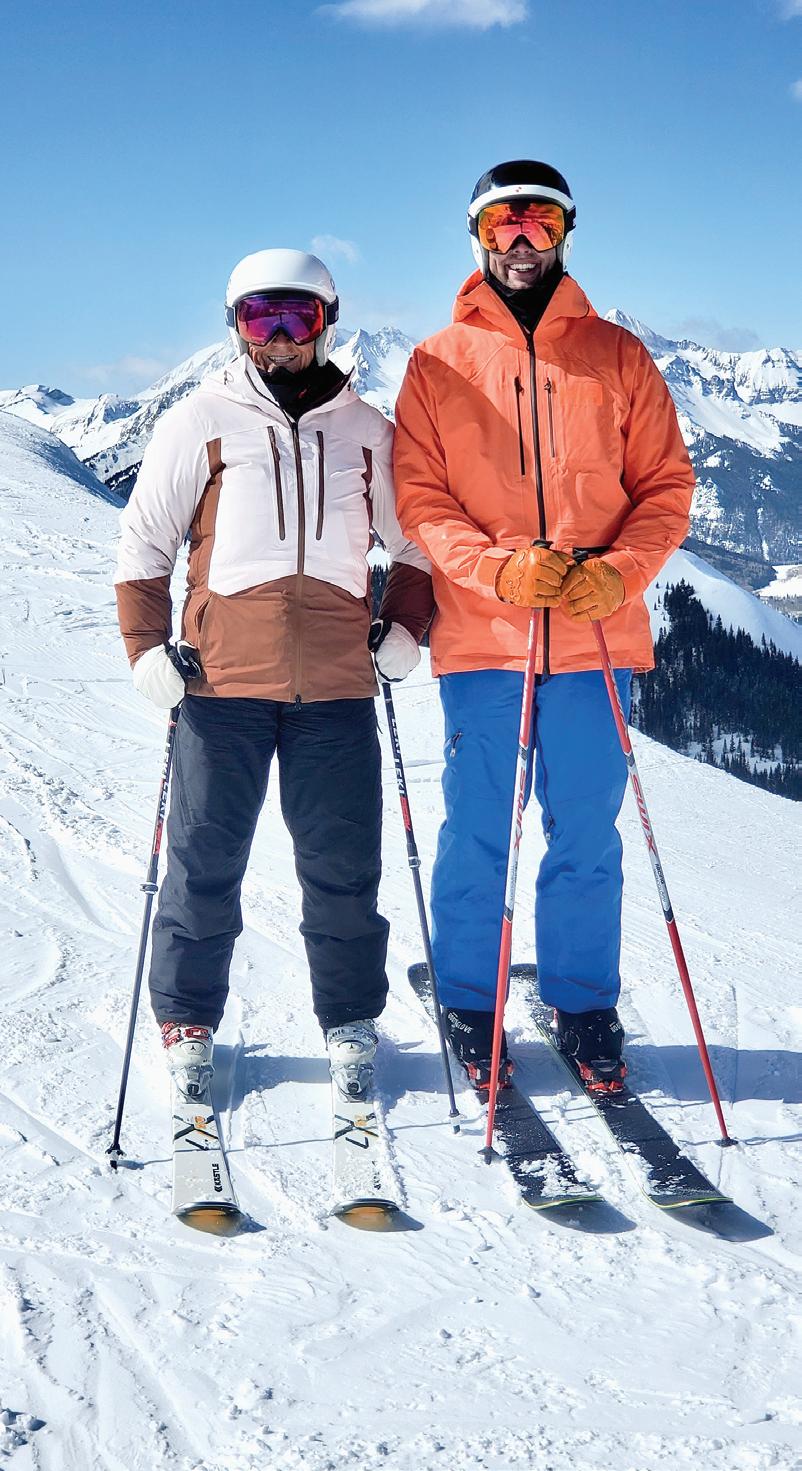
Harton Smith has retired and moved to Tiverton, Rhode Island, where he enjoys life with his wife, Mary Bandura ’77, and Pearl, the wonder dog. Since retiring, Harton has found himself fielding more and more questions from friends and neighbors about their heart problems and about health-related items they see online or in the newspapers. Thinking about where people can actually go for reliable medical information inspired him to launch a Substack newsletter, The Cardiology Corner, to provide trustworthy information—current, evidence-based, and accessible—for people without medical training. You can subscribe at thecardiologycorner.substack.com; Harton requests that you ignore the “pledge” button, as he intends to keep the newsletter free. Also, Harton and Mary have been advocating for state approval of a railwith-trail bicycle and pedestrian pathway in their area. It’s been a long uphill battle, but the pathway has finally been included on the list of Rhode Island’s Transportation Improvement Projects. “We still
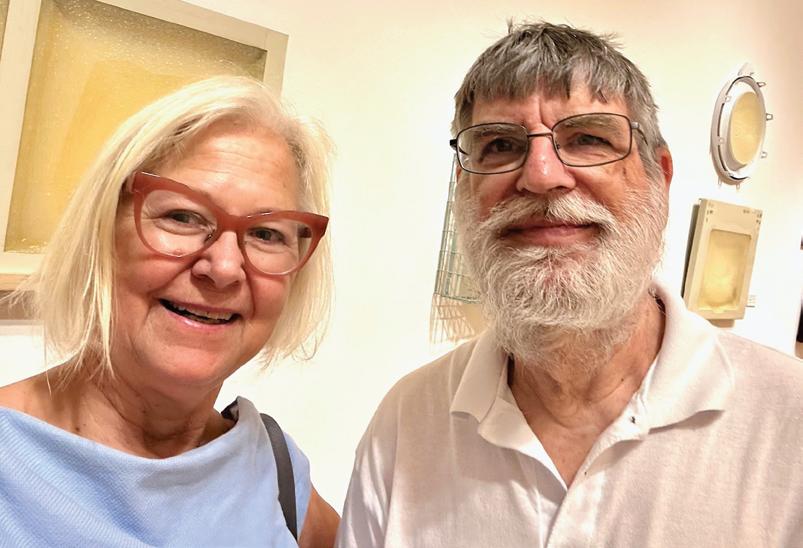
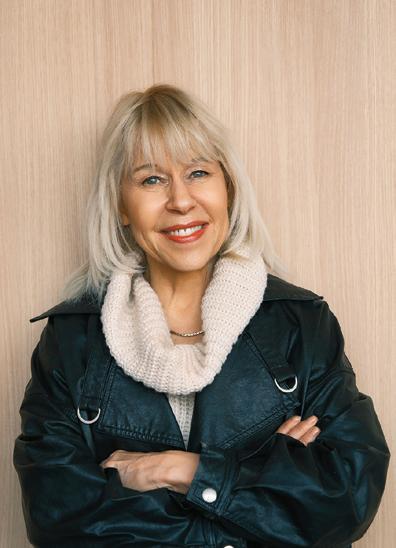

have a long way to go, but this is a critical first step—good for our community and the environment!”
1976 50TH REUNION
Jim Bondelid has retired from a 40+ year career in value investment management, including visits to the Berkshire Hathaway annual meeting. After serving on the board of Astral Artists and the Artistic Committee of Gretna Music, he has assumed the chairmanship of the Cornwall Manor Concert Series, hiring musicians from the Philadelphia Orchestra to come to central Pennsylvania Amish country for what is now a sold-out series. His daughter moved to Norway, so Jim and his wife Marti have to travel a lot to see their two grandchildren.
1977
Kirsten Bey is back in town! “After 35 years (exactly half my life—how in the heck did I get to be 70 years old!) living in Alaska, I just returned to Portland. Now living just a few blocks from where I grew up and where my parents lived while I attended Reed. Happy to be back in
4. Take My Husband, which David Henry Sterry ’78 is writing and producing, had a distinguished lineup for its Zoom table read.
Portland but I do miss the cold and snow, seriously.”
Morgan T. Paine retired in August 2025 from Florida Gulf Coast University after teaching there for 28 years. Morgan was the founding faculty member of the studio art program when FGCU opened its doors to students in fall 1997. It was really quite an adventure for Morgan to be the program leader (and sole full-time faculty member) of an art department at a brand-new institution in its first few years, while FGCU was striving to define itself and function within the Florida state university system. Morgan was celebrated with an exhibition of his paintings, Making a Clear Mark: 1997–2025 , in FGCU’s Wasmer Gallery, August 29–September 25, 2025. Longtime friend and fellow artist Helen Lessick ’76 wrote a lovely and insightful essay that was published in the exhibition brochure, which is available online (search for Morgan’s name at fgcu. edu/artgalleries). We thank Morgan’s wife, Janice T. Paine ’77, for sharing this news.
David Henry Sterry cocreated America’s Next Great Author , the first reality TV show made by and for writers. It will premiere in January 2027 on Kanopy, a streamer that supplies movies and TV shows to libraries all over the world. David is also writing and producing a TV show called Take My Husband which recently had a Zoom table read featuring Lisa Kudrow and Richard Kind. His debut album will be released in spring 2026. But most importantly, his favorite, and only, daughter Olive started at Smith College this fall.
1979
President survives rabbit attack.
1980
Lucinda Herrick helped develop the new museum for the Oklahoma National Guard to open in 2026.
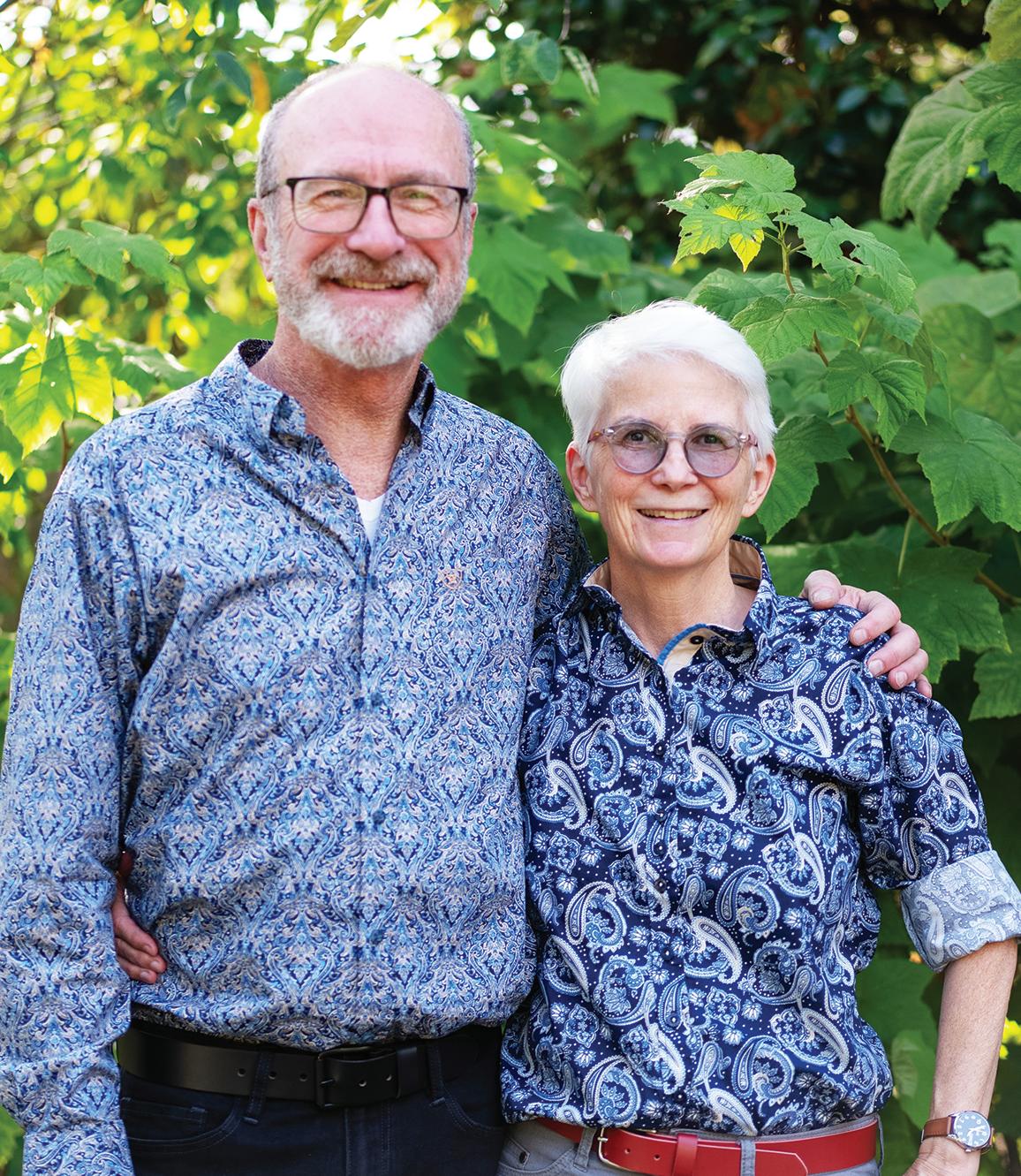
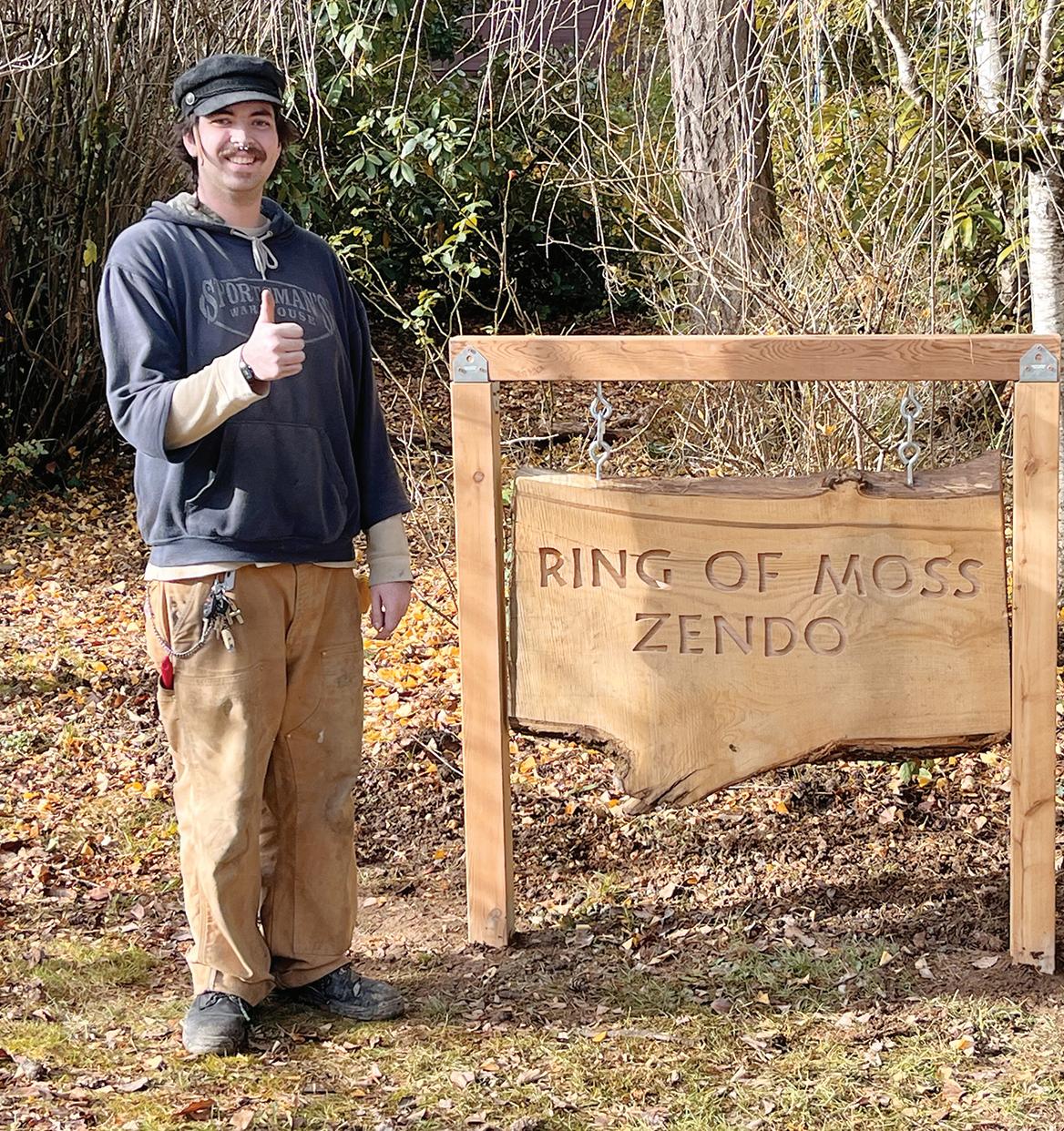
“Spent the money on trips to France, Greece, and Italy. Fun, fun!”
1981 45TH REUNION
Congrats to Carey Booth on her union with Jack Coleman! “Jack and I got married on September 20 in our living room with two friends and two family members. We had an open house a week later with more friends and family. We celebrated by singing at open mics almost every night the week in between. We met at Bike Happy Hour in 2023.”
Thomas David Kehoe completed Wyoming’s 96-mile Wind River High Route, considered to be the most difficult off-trail backpacking route in the lower 48. His blog post (with pictures) is on Medium. com under the title “Always Be Exploring: Andy Skurka’s Wind

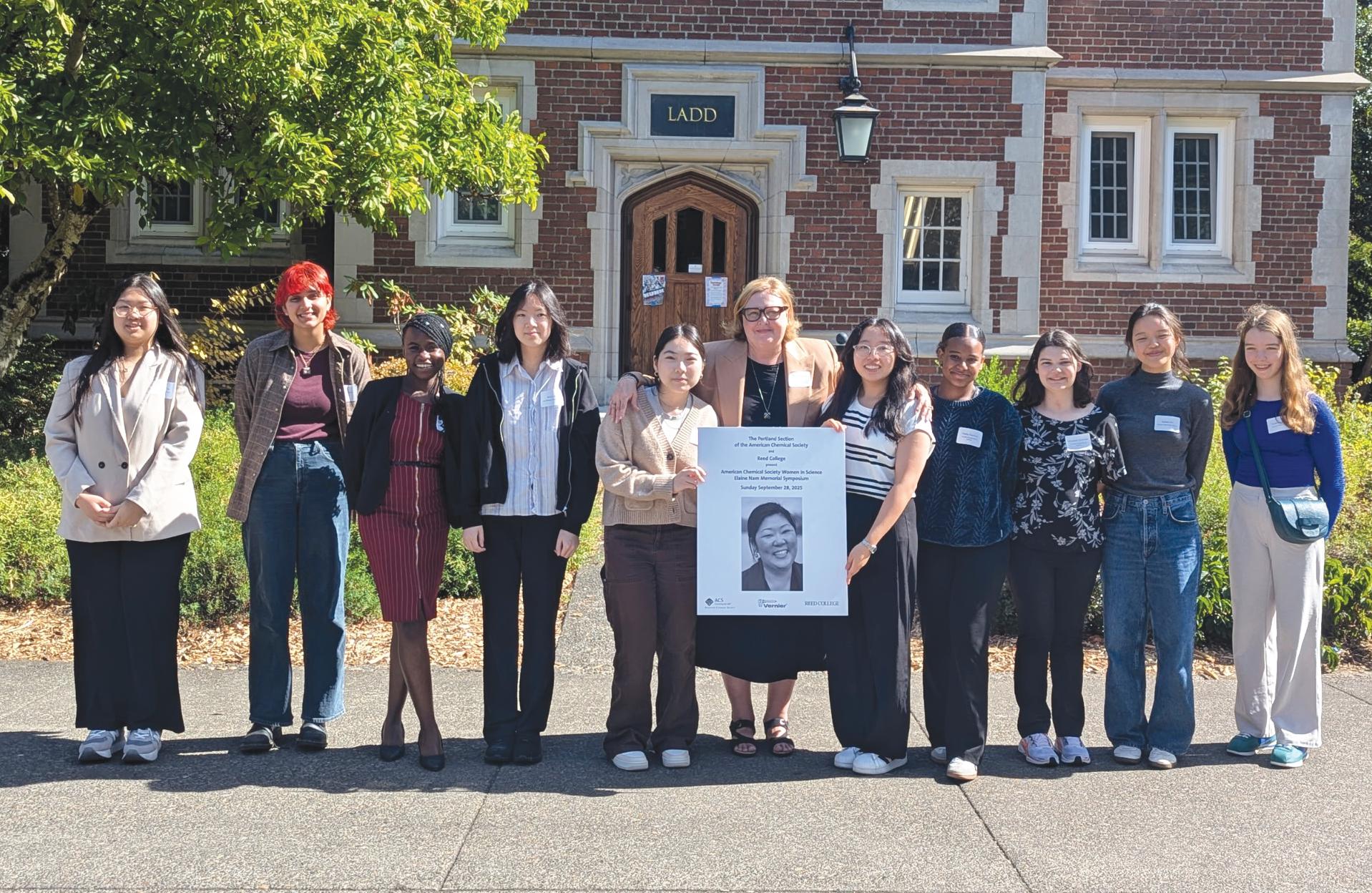
River High Route.” He also redid the NOLS Wilderness First Responder course. He leads hikes around Boulder, Colorado. He was also a guest on the Conversations with Strangers podcast, hosted by Micah Loughman, in the episode “How Lying (and Catching Lies) Drove Human Evolution, Sparked Language, and Kindled Civilization.”
Tracey Scherban organized the American Chemical Society Women in Science Elaine Nam Memorial Symposium, held at Kaul Auditorium on Sunday September 28. The event drew 50 high school and college students and 35 STEM professionals. There were fascinating talks, engaging panel discussions on “Finding Your Path,” networking opportunities, and even science cookies. Participating in
this event were four Reed professors, three alumni, a reactor advisor, and five students.
1984
RIP Ansel Adams.
1985
Cambridge University Press recently published a post by Frank J. Garcia, “Coercion Will Fail, but Trade Will Endure,” on its author blog.
1986 40TH REUNION
World welcomes the alphamagic square, because we all need a little alphamagic.
1987
Ken Belson ’s book Every Day Is Sunday, about the NFL’s meteoric rise over the past 30 years, was chosen as one of the 100 Notable Books of 2025 by The New York Times. As part of his promotional tour, Ken visited Portland and stopped by Reed to talk with students about journalism, book writing, and reporting on the country’s most prominent sports league.
1988
Laura Wilhelm won a Female Voice Award for global visionary leadership from the WomELLE Corporation in March 2025. The award was presented at a business summit in Las Vegas, Nevada. Laura is also VERY EXCITED to announce the publication of her CTRC book chapter that describes the founding and operation of her West Hollywood–based business.
1989
Robert Smith is hosting a new podcast for Pushkin Industries called Business History . It does exactly what it says in the title. When he’s not talking about Thomas Edison, Robert continues to teach audio journalism at Columbia and host special projects at NPR’s Planet Money.
1990
Josh Kurzweil was an avid pool player at Reed and rediscovered it in his 50s when he joined a league in Berkeley, California. Josh recently started a blog that combines his pool hobby with his professional interests in the science of learning; he is a teacher, teacher trainer, and educational consultant. The blog is called The Learning Cue and is free on Substack: kjosh.substack.com.
Chloe Lewis started a tiny farm. Andrew Mason has been busy on his zafu with the Diamond Sangha since graduating and has been the lead teacher at Ring of Moss Zendo for seven years, carrying forward the Mountains and Rivers form of Zen set forward by Gary Snyder ’51. Over the next three years, with high aspirations of animating Reed’s strong role in landing Zen in the West, Ring of Moss has plans for renovating an old farmhouse and barn in Milwaukie, Oregon, about a mile south of campus. “Come on by and sit with us!”
1991 35TH REUNION
Shula Neuman is putting her history degree to good use. She won the American Jewish Press Rockower Award for reporting on anti-Semitism. The award recognizes her long-form article exploring St. Louis’s unexamined relationship with Charles Lindbergh.
1992–94
Sears eliminates catalog sales. So much for buying that house. . . .
1995
Yi-Kang Hu has been appointed mayor of Tigard, Oregon. A longtime Tigard resident and community leader, Yi-Kang has served on the Tigard City Council since 2023 and previously chaired the city’s planning commission. Professionally, he is an attorney focusing on FDA food and drug regulatory law and holds a PhD in biochemistry and molecular biology. As mayor, Yi-Kang
is focused on strengthening community engagement, advancing sustainable growth, and ensuring transparent, collaborative local government.
After 25+ years of working in the private sector, Josh Kahr finally succumbed to the siren song of academia and was appointed as a clinical assistant professor at New York University. He is happily teaching real estate finance, risk & portfolio management, and other lighthearted subjects.
Leo Macdonald has been teaching high school chemistry, forensics, and oceanography for 14 years in New Hope, Pennsylvania. It’s a fine art of engaging explosions and collaborative academics.☺
1998
RIP Sonny Bono.
You may recall Dan Hill and Brett Rogers performing as the Atomic Swerve, playing laundry rooms, Midnight Theater, and Nitrogen Day in the late ’90s and at the Reed Centennial in 2011. The duo have just recorded and released two new songs—their first since their 1999 Reed album Giant Planet-Eating Robots—under the name Secretly
1. Malena Marvin ’01 helps “depave” for a new garden at the bike works by p:ear–Rosewood Initiative site in east Portland.
2. Darlene Pasieczny ’01 has started her own law practice!
3. Dan Hill ’99 is secretly a dinosaur. Facts.
a Dinosaur, which you can find on Bandcamp. (You can find the full GP-ER album there, too.) This spring they hope to record and release more S.A.D. tunes. Brett will also spend this spring working on a book about Classical Cascadia, in which Reed threatens to appear.
Which was better, the green ketchup or the purple?
After 12 years living in coastal Alaska, Malena Marvin moved back to Portland this year to take a dream job as the executive director at Depave PDX. The organization brings people together to transform Portland’s over-paved community hubs—often historically disenfranchised through redlining and facing disproportionate urban heat challenges—into green oases that promote public health, safer active transportation, and community wellbeing. Malena is still riding her bike everywhere, and believes Portland should plan for “life after cars” by boldly prioritizing safe micromobility and convenient transit.
After more than a decade with one of Portland’s oldest law firms, Darlene Pasieczny rang in the new year by starting her own litigation and appellate law practice: Pasieczny Law LLC, based in Portland, focused on trust and estate litigation, securities litigation/FINRA arbitration, and civil appeals. Darlene is also scratching her academic itch by teaching Securities Regulation as an adjunct professor at Lewis & Clark Law School in spring 2026.
Caryn (Garner) Rothschild wrote last year, “Our 100-year-old cozy cottage in Altadena, which we thought was our forever home, was a total loss in the Eaton fire in January. While the magnitude of the loss for our entire community is unfathomable, we are continuing to put one foot in front of the other. I have been in major gifts
at Occidental College since 2018 and went out of my comfort zone and was interviewed about the fire for Occidental magazine: https:// www.oxy.edu/magazine/issues/ spring-2025/life-after-fire. PSA: check your homeowners or renters insurance coverage—you probably need more!”
Andrew Schpak has been inducted into the College of Labor & Employment Lawyers, a non-profit professional association honoring the leading lawyers nationwide in the practice of labor and employment law. Andrew is a managing partner at Barran Liebman LLP.
Tyler Williams published a book in 2024, an academic anthology on the understudied topic of television animation history. Hanna and Barbera: Conversations was published by the University Press of Mississippi. Tyler coedited the volume with Kevin Sandler of Arizona State University.
2003
In Cape Cod this summer there was a Beer Nation/Woodbridge reunion
with progeny: Michael Hoppa ’04 and Avery (Larson) Hoppa with daughters Zelda and Dagny, Julia (Sandler) Wenegrat and Jacob Wenegrat ’04 with sons Ezra and Levi, Tia (Swett) Keeling ’04 and Sat Sang Keeling with sons Teg and Jasper, Jamie Ford ’04 and daughter Amelia. A rousing game of Telestrations caused hilarity, beer was drunk, and a lot of corn was eaten.
Mohamed Anees Ahmed sent an update! “I got married in August 2023. My Reed classmate Marisa attended the reception in Salem. We are on the verge of moving into our first home in the greater Seattle area. I am approaching three years into practicing as a primary care physician. My wife is from Canada and we had a protracted immigration journey, and we are finally looking forward to some bigger and better things!”
Jessica Barbata Jackson was named the director of social studies teaching at Colorado State University in 2024, and was awarded the Provost Teaching Scholar Award for faculty excellence
Beer Nation/ Woodbridge reunion in Cape Cod: Michael Hoppa ’04 and Avery (Larson) Hoppa ’03 with daughters Zelda and Dagny, Julia (Sandler) Wenegrat ’03 and Jacob Wenegrat ’04 with sons Ezra and Levi, Tia (Swett) Keeling ’04 and Sat Sang Keeling with sons Teg and Jasper, and Jamie Ford ’04 and daughter Amelia.
in 2025. She created a new social studies program called History Matters to bring local and untold history to public schools. She lives in Colorado with her husband and two small children.
World welcomes glamping, microblogging, and butt-dialing.
Lauren Hudgins got married in July 2025 to Eric Dreschel. Thanks to Michelle David for letting us know. Matthew Kielt is an attending neonatologist at Nationwide Children’s Hospital in Columbus, Ohio, and was recently promoted to associate professor of pediatrics at The Ohio State University College of Medicine. His research program centers on identifying precision medicine therapeutics for ventilator-dependent preterm infants with bronchopulmonary dysplasia. His research is supported by a K23 Career Development Award from the NIH/NHLBI titled “Lung Injury Biomarkers to Endotype Respiratory Trajectories in Established Bronchopulmonary Dysplasia: The LIBERATE-BPD Study.”
Clio Reese Sady ’s update: “Completely crazy with bipolar disorder. Don’t study too hard.”
Rabbi Emily Kapor-Mater has founded the Portland Open Beit Midrash, a learning institution dedicated to traditional, radical, and egalitarian study of traditional Jewish texts. The Beit Midrash is midway through its second year of Talmud study, and welcomes learners of all backgrounds and abilities for future study cohorts.
2008 Platypus genome decoded.
2009
Nick Silverman represented the “DC sandwich guy,” Sean Dunn, who was federally prosecuted after
throwing a Subway sandwich at a CBP officer. Sandwich throwing may be impolite, but it’s not a federal crime. Dunn was acquitted.
Martin Souza is the editor of The Instant Film Magazine, a new project to produce the world’s only print publication completely dedicated to instant photography. The first issue was released in August, and Issue 02 is slated for May 2026. After that, they aim to publish quarterly. See www.instantfilmmagazine.com/.
Emily Nostro got out of America, but she left her heart in MiamiDade County.
Last fall, Selorm Fefeti showcased his brand at Flying Solo, a boutique for independent designers in Soho, NYC. Attendees explored Fefeti alongside other emerging brands.
In the last year, Alex Johnson finally took an adult job as an assistant professor at Brandeis, bought a house, and had a baby (in that order). “Reed alumni have been incredible mentors in my career path, so I extend my offer to assist other young Reedies interested in careers in the life sciences.”
After graduating in political science at Reed in 2011, Sam Williams earned his law degree from Lewis and Clark Law School in 2016 and his master of library and information science degree from the University of Washington Information School in 2017. After all of those years of education, Sam returned to school. He is a reference and instruction librarian and tenured associate law professor at the University of Idaho College of Law. He has published articles in numerous law reviews and academic journals on topics including legal research and technology, Star Wars, the laws of cannibalism, and the jurisprudence of sandwiches. Sam lives in Boise, Idaho, where his interests include games of all sorts, film, and guinea pigs.
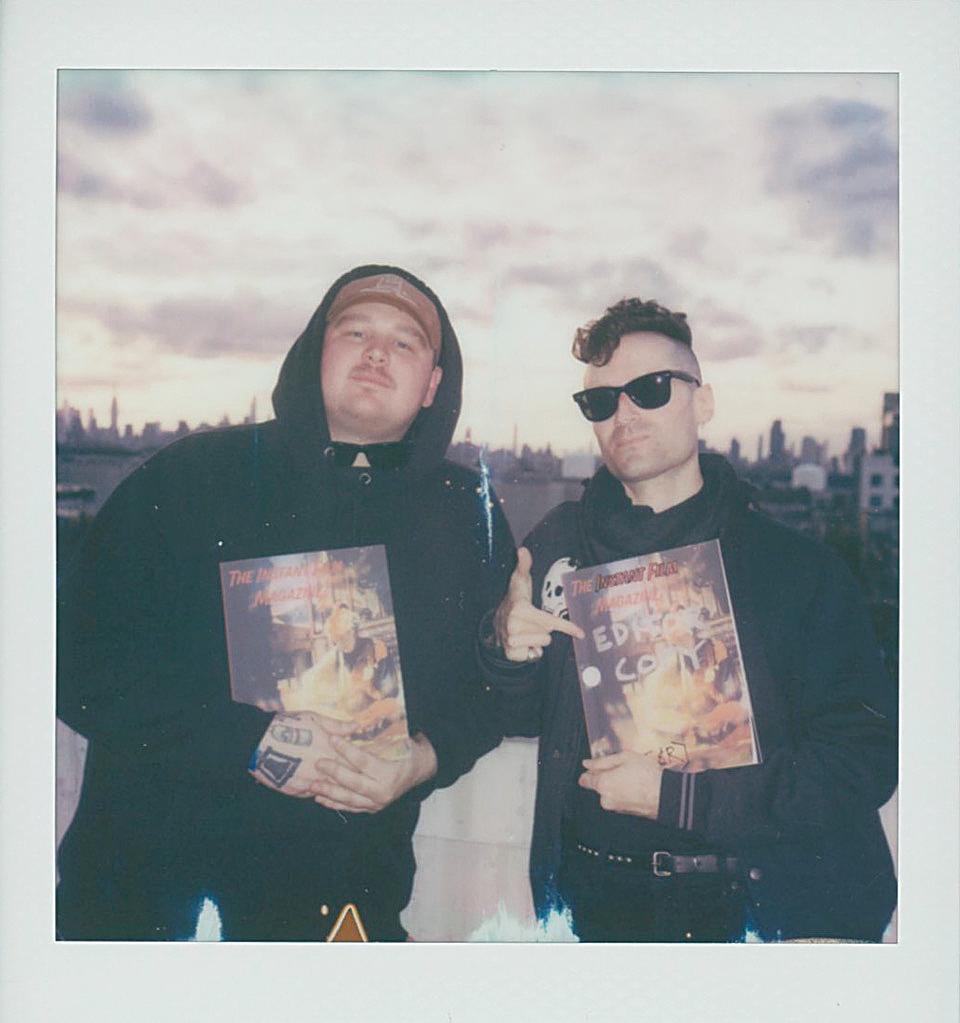
Stop playing Candy Crush and get back to your thesis!
On October 11, 2025, Samuel Guss was married to Willa Michaelsen, who didn’t attend Reed but did hang out.
“In addition to all of our other loved ones, there were Reedies in attendance of between two and four generations, depending on how you count them! We thought that readers of all ages might find an old friend here.”
But is a hot dog a sandwich?
UN declares International Year of Pulses.
What about a taco?
Gabriel Richardson has joined Faegre Drinker Biddle & Reath LLP in Minneapolis as an associate in
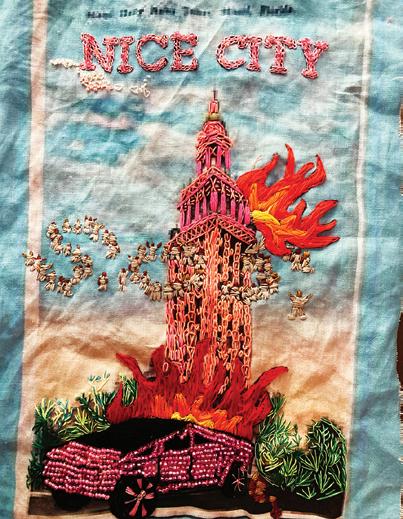
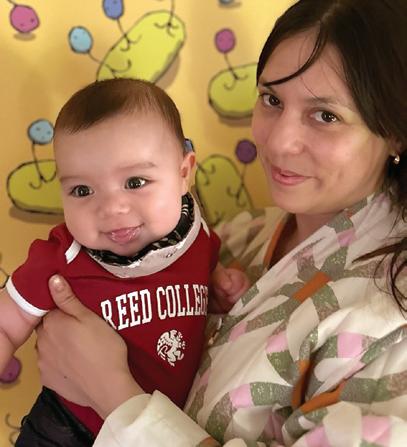
3. Baby Elio, offspring of Alex Johnson ’11, at work with bacteriophage and Alex’s wife Megan.
4. Martin Souza ’09 (right) and publisher/manager Roy Vice show off advance copies of The Instant Film Magazine issue 01 at PolaCon NYC.
5. Attorney Gabriel Richardson ’18 has joined Faegre Drinker Biddle & Reath LLP in Minneapolis.
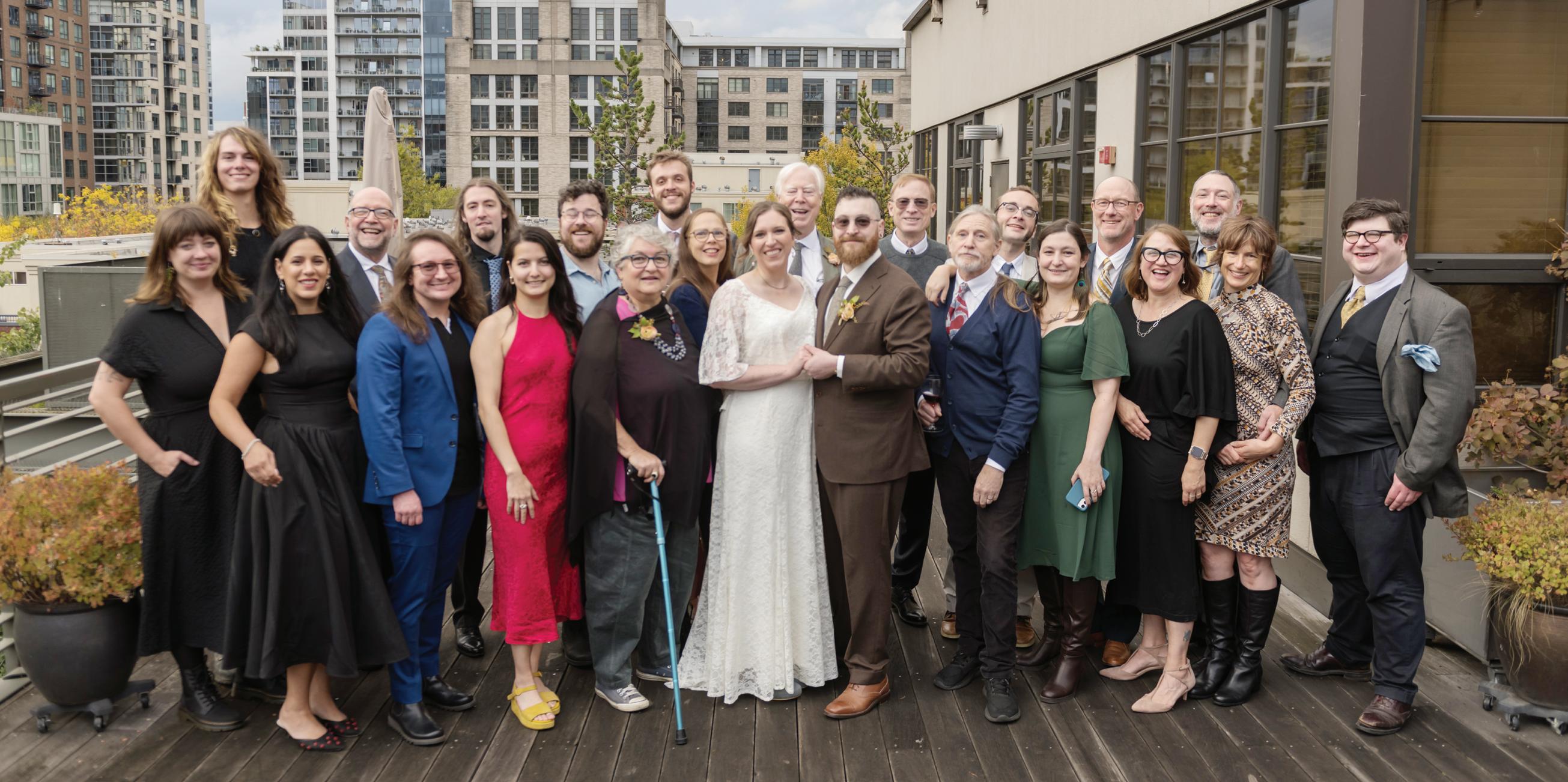
the firm’s Corporate group. Gabriel recently completed a JD from the University of Minnesota Law School and an MBA from the Carlson School of Management. While at Minnesota, he served as president of the Professional Student Government and as a board member of the University of Minnesota Alumni Association. His prior experience includes legal compliance roles at major financial institutions, M&A tax at a Big Four accounting firm, experience at the SEC’s Miami regional office, research with the University of Chicago Urban Labs, and work at the Clinton Foundation. Gabriel received a BA in political science from Reed and studied economic law at Sciences Po in Paris. He was selected as a ROMBA Fellow in recognition of his leadership supporting LGBTQ+ inclusion in business, and was recently elected to the board of the Minnesota Lavender Bar Association.
Austin Magleby has joined Tonkon Torp LLP as an associate in its litigation department. Austin’s practice is focused on complex litigation matters, including civil antitrust issues and commercial real estate disputes.
Austin graduated summa cum laude from Lewis & Clark Law School, where he was lead article editor at the Lewis & Clark Law Review, treasurer of the school’s Data Privacy Group, and a research assistant for Professors Samir Parikh and Hadley Van Vactor. Prior to launching his law career, Austin worked for several years as a freelance technical writer and data analyst, including as an associate media analyst with Wieden+Kennedy.
2020 A burrito?
Lynette Yetter’s 2020 MALS thesis, Domination and Justice in the Allegorical Story “La reunión de ayer” by Adela Zamudio (1854–1928) Bolivia, inspired her to start a small publishing company in 2022. Fuente Fountain Books, publishing progressive and bilingual feminist multicultural books, was honored with a 2025 Oregon Literary Fellowship and so far has published three books, with a fourth on the way. Lynette notes that her journey from thesis to publisher was nudged along by taking Lena Lencek’s [Russian 1977–2022]
spring 2021 Literary Translation Workshop. The press’s first publication, Adela Zamudio: Selected Poetry & Prose, bilingual edition (2022), translated from the Spanish by Lynette, was a 2023 PEN Award for Poetry in Translation finalist. In 2024, the press published there are ginkgo leaves on the window: letters to my deceased grandmother by Cara-Julie Kather, a German feminist scholar now living in Canada. Next was Vertigo: Science Fiction by Adela Zamudio (2025), also translated by Lynette; her translation has been reprinted in the Routledge Anthology of Global Science Fiction Origins (2025). The novel Heaven off the Coast by M.S.A. Bacon, a California hapa family’s coming-of-age story, is forthcoming in June 2026. See fuentebooks.com.
California court rules that bumblebees can legally be considered fish under the California Endangered Species Act.
Milo Gardner-Stephens writes, “I was on senate for a semester and it was very silly.”
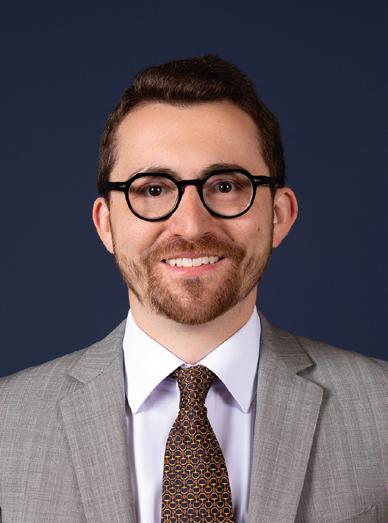
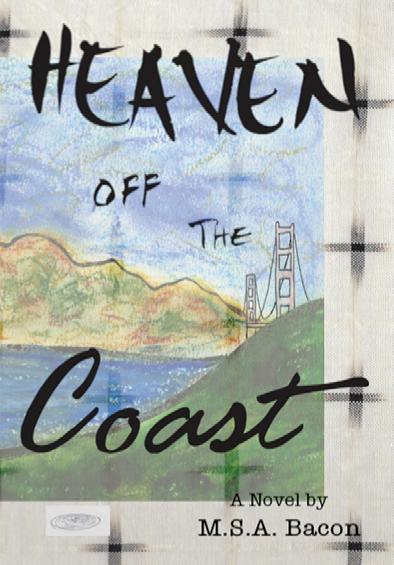
6. (Mostly) Reedies at the wedding of Samuel Guss ’14 and Willa Michaelsen, left to right: Rachel Mossey ’11, Opal Click ’16, Cecilia D’Anastasio ’13, Brian Graham-Jones ’81, Spike Horbinski ’13, Matt Shedden ’17, Allie Buckner ’17, Stewart Green ’15, Annie Lionni ’79, Carter Thomas ’17, Jenny Cravens, bride Willa, Peter Guss ’78, groom Samuel, Jon Guss ’81, Gavin Guss ’87, Rick Peterson ’14, Mai Lionni Guss ’11, Van Havig ’92, Emily Headen ’92, Rob Mack ’93, Joy Fyfield ’96, and Andrew Dubay ’11.
7. Attorney Austin Magleby ’19 has joined Tonkon Torp LLP as an associate in its litigation department.
8. Fuente Fountain Books, the publishing company established by Lynette Yetter MALS ’21, will publish the novel Heaven off the Coast by M.S.A. Bacon in June 2026.
Edited by Bennett Campbell Ferguson
Robert Richter ’51 February 16, 2025, in New York City, from complications of heart failure.
Robert Richter was an independent filmmaker, a producer of nearly 90 documentaries, and one of the last surviving producers of CBS Reports (launched as Edward R. Murrow and Fred Friendly’s See It Now). He received three Oscar nominations, an Emmy Award, multiple Peabody Awards, and three duPont-Columbia Broadcast Journalism awards, TV’s equivalent of the Pulitzer Prize.
Born and raised in New York, Bob was the son of Irving S. Richter and Nadia Atlas, who fled Ukraine’s post–World War I epidemics. He began his filmmaking career at Occidental College, participating in an experimental Telluride Association Program, and studied general literature at Reed, writing his thesis (“The House of Atreus in Four Modern Plays”) with advising by Professor Frank W. Jones [literature and humanities].
After graduating from Reed, Bob joined the Iowa Writer’s Workshop and became a CBS news fellow at Columbia University, where he was awarded an MA in public law and government. Being a news fellow was just the beginning of Bob’s work for CBS, paving the way for him to serve as the network’s national political editor from 1965 to 1968.
Looking back, Bob credited Edward R. Murrow for inspiring him to pursue a career at CBS. “Watching the Edward R. Murrow documentary about Senator Joseph McCarthy was a turning point in my life,” Bob told Reed Magazine in 2006. “I saw
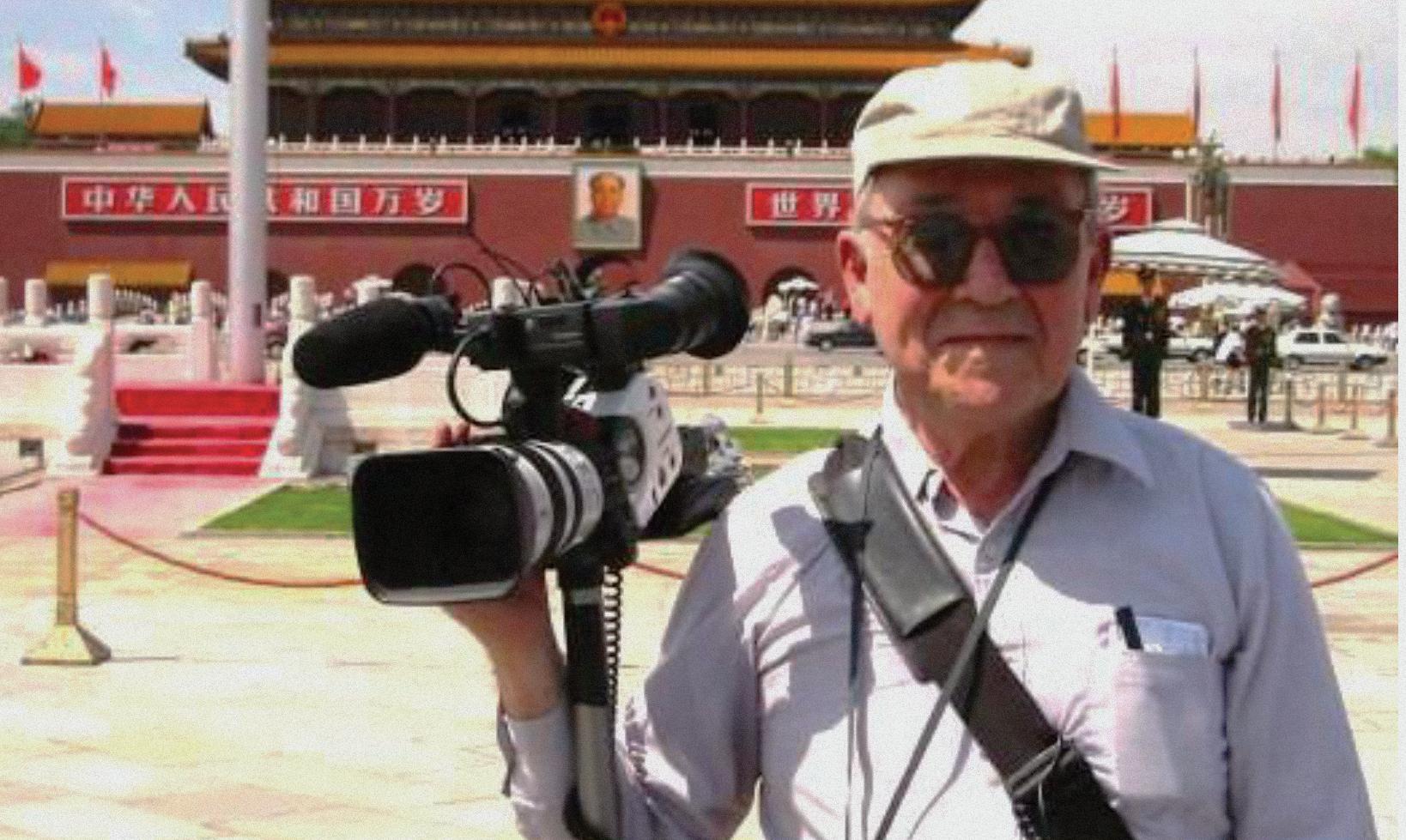
how powerful it was in helping to bring down McCarthy. I can still see the room I was in, the chair I was sitting on—I was sitting on it backwards, leaning with my chest against the back of it. I set my target right there: I wanted to work for Murrow.”
With Walter Cronkite as anchor, Bob was one of a team of producers of four 1967 onehour documentaries on the assassination of President John F. Kennedy, which were seen by the largest U.S. audience to view TV documentaries at the time. He also produced a 1964 documentary on Robert Kennedy’s Senate campaign (and was CBS’s anchor producer covering RFK’s assassination).
After five years with CBS, Bob formed Richter Productions, Inc. Filming in 42 countries, he focused on both the poorest and the most powerful people in the world, ranging from garbage dump residents to White House aspirants. His most persistent themes included courageous people, human rights, peace activism,
war, business ethics, injustice, the environment, politics, science, and technology.
By committing to the causes he believed in, Bob earned both profuse praise and notable enemies. In 1980, two PBS documentaries about the unregulated export of products banned and restricted in the U.S. to developing countries led Shell Oil to describe Bob as corporate America’s most dangerous media producer—which didn’t stop the films from receiving the top duPont-Columbia Broadcast Journalism award ( The New York Times wrote that Bob “beat the networks, with all their money, at their own game”).
A leader and mentor over many decades, Bob also led the committee that launched what developed into the nation’s largest funder of documentaries by independent producers: the Independent Television Service (ITVS). The committee was established during the dozen years Bob was volunteer chair of the Association of Independent Video and Filmmakers.
In 2022, Bob completed his memoir, Documentaries and Serendipity. Its publication marked a moment to look back on a career overflowing with achievements, from his work as founding chair of the Salem, Oregon, chapter of the American Civil Liberties Union to his service on the national ACLU media committee (not to mention his time as a Reed Board of Trustees member).
To Bob, making documentaries was not only a profession—it was a calling. “When college students say to me, ‘I’m thinking about making documentaries,’ I always tell them, ‘If you’re only thinking, it’s not for you,’” he said. “It’s like the priesthood. These are important subjects and the hope is that you can change minds and motivate people.”
Bob is survived by his wife of 43 years, Elizabeth (Libby) Bassett, and four daughters, Roxanne, Allison, Rowena, and Isabella. His first wife of 29 years and the mother of his children, Anne Kerrebrock Richter, predeceased him.
Mela Kunitz ’87
October 30, 2025, in Portland, Oregon, from complications related to multiple sclerosis.
A dedicated cultivator of Reed traditions, Mela Kunitz was born and grew up in Davis, California. She transferred to Reed from Berkeley after visiting her thenboyfriend for one weekend. The relationship didn’t last, but she discovered she was a Reedie.
Mela majored in political science, writing her thesis, “This Issue Path: An Analysis of Abortion,” with advising by Professor Stephen Kapsch [political science 1974–2005]. In 2001, she obtained a master’s degree in organizational communications from Marylhurst University.
After graduating from Marylhurst, Mela returned to Reed as assistant director in Alumni Relations (before departing to work for the Southwest Neighborhood Association, for Hanset Stainless Steel, and as an administrative assistant in the OB/GYN department at OHSU). She later rejoined the alumni office, finding great joy in planning events on campus, from Centennial Reunions for 2,000 people to a Foster-Scholz Club luncheon for 40.
“My
December 2020, Mela shared the top 10 things that she loved about working at Reed in a heartfelt speech. “My role was dealing with 5,001 details and herding cats,” she said. “John Sheehy ’82 so aptly described it as: ‘weaving together the many threads that comprise the alumni body, a group that famously resists all attempts to fall into line.’”
After retirement, Mela loved keeping up with a wide range of Reedies, including former
role was dealing with 5,001 details and herding cats.”
—MELA KUNITZ ’87
Mela’s commitment to Reed was matched by her sly sense of humor, which she displayed with her first contribution to the Annual Fund as a staff member: $19.87, in honor of her graduation year, and written on a Snoopy check. Her passion for Peanuts shared equal space with feminist politics, pop culture, world travel, cute desk accessories, and running (in honor of her 40th birthday, she completed the Portland Marathon). When she retired from the college in
student workers and alumni volunteers (she was a regular at the alumni holiday party, where she especially enjoyed the boar’s head procession). Even after multiple sclerosis limited her mobility, she continued baking for friends, attending James Taylor concerts, and breaking out “the good chocolate” for deep conversations at her kitchen table.
In keeping with Mela’s deep commitment to Reed, she asked that gifts in her memory be made to the Reed Basic Needs Initiatitive. She is survived by her sister, Judith, and nephew, Dean. —Robin Tovey ’97
Erin Merritt ’89
May 31, 2025, in Berkeley, California, of ALS. Erin Merritt lived for the stage. Her involvement with theatre began early, when, as a mid dle schooler, she was cast in the title role of Berkeley High School’s production of Pan . Flying through the air above a cast of older kids proved decisive.
At Reed, Erin was an actor, a director, and a producer. In addition to her work with the theatre department, she arranged roving mummer per formances at Renn Fayre and a night of short Brecht pieces rehearsed over Paideia (and was a frequent contributor to Mid night Theater).
Busy with her studies though she was (she graduated with honors), Erin was gener ally up to something. Her thesis was a production of Brecht’s A Man’s a Man , as well as a paper: “Logical Brecht: What He Did, Why He Did It, How We Do It,” written under Professor Kathleen Worley [theatre 1985–2014], who would remain a valued friend and colleague. Brecht continued to be a touchstone for Erin throughout her theatrical career.

Honor your professors and classmates with a gift to Reed in their name. You can make Reed possible for the next generation.
On graduating from Reed, Erin returned to the Bay Area, working as an actor and director. Impatient with the few roles available for women in Shakespeare, she began an all-women’s Shakespeare company, Woman’s Will, in 1998 and produced plays for 12 seasons.
Production ended when Erin followed her husband to Kansas City, where he was hired as a professor. When her marriage ended in divorce, Erin returned to the Bay Area with her children, Imogen and Sabrina, continuing her work as a director and producer. She was a fearless defender of what she knew to be right, her love for (and exasperation with) theatre never waning.
Diagnosed with ALS in the fall of 2022, Erin assembled books for her children filled with reminiscences, advice, and ruminations. In a section on college, she noted the many people she knew from Reed who stepped up for her during her illness—including William Abernathy ’88, Coriander Reisbord, Steve Lew ’89 , Vangie Peaslee (née Bonds), and Laura Rittall, who all provided material and emotional support during her years with ALS.
After her diagnosis, Bay Area theatre community members raised funding for Erin to direct Tea Party by Gordon Dahlquist ’83 (silenced by ALS, Erin directed through a computer–assisted speech program and notes read by an assistant). Though this was her last act as an artist, Erin continued to read ambitiously and followed the news voraciously.
To the end, Erin was deeply independent, arranging for her own care. An array of devices, including an improved laser pointer Abernathy devised, enabled her to read and communicate as her paralysis
deepened. She remained a fierce and discerning participant in the world, passionate and hilarious.
Erin died peacefully in the garden of her childhood home with her mother, sister, and children at her side. —Anne Washburn ’91
Judith LaFollette Sorem ’50
July 6, 2025, in Pullman, Washington. Judy was born in 1928 in Wisconsin to Isabelle Bacon LaFollette and Phillip Fox LaFollette, who served two terms as governor of Wisconsin. After high school graduation, Judy moved out west to pursue an education at Reed, where she remained for two years before returning to her home state.
After a year at the University of Wisconsin and a secretarial course in New York City, Judy moved to Minneapolis, where she worked for several years for Sears and met her first husband, geologist Ronald Sorem. Judy and Ronald married in 1953 and lived in the Philippines for two years, where their daughter Kaia was born.
Upon moving back to the United States, Judy and Ronald had sons Keith, Sam, and Tom, and settled in Pullman, Washington. Judy spent years as a homemaker and piano teacher before moving to work outside the home at local businesses such as the Pullman Herald , the Bank of Pullman, the Neill Public Library, Seattle-First Bank, and Washington State University.
Judy ultimately returned to school at WSU, where she earned her bachelor’s and master’s degrees in English. She taught for a year at the College
of Eastern Utah, then moved back to Pullman and taught in the WSU English department for a decade before retiring in 1994.
After she and Ron divorced in 2000, Judy married retired chemistry professor Maurice Windsor in 2003. She was preceded in death by Maurice and is survived by her four children.
Herbert Joseph Semler ’50
July 12, 2025.
Herbert Semler was a pioneering cardiologist, inventor, and entrepreneur. Born in Portland in 1928, he was raised with three siblings—including Alysmae Nudelman ’46 and attended Reed for a short period, going on to earn his bachelor’s degree from the University of Washington in 1949 (and obtaining his medical degree from the University of Oregon Medical School, now Oregon Health & Science University, in 1953).
After completing an internship at Hennepin Healthcare in Minneapolis, Herbert served in the United States Air Force with the Strategic Air Command at Fairchild Air Force Base in Spokane, Washington, until 1956. On a blind date orchestrated by his mother, he fell head over heels for Shirley Lesman, at the time a model at Meier & Frank. They married in 1955, and while Herbert was stationed at Fairchild, the first of their five children was born.
Two months later, Herbert joined the Mayo Clinic in Rochester, Minnesota, as a fellow in internal medicine and cardiology. During that training, he found his true calling in cardiology. He returned to his Portland roots in 1960 to begin his distinguished 60-year career as Oregon’s first cardiologist in
private practice, affiliated with St. Vincent Hospital.
Herbert also taught as a professor of cardiology at OHSU, which culminated in over 90 peer-reviewed publications in cardiovascular medicine. He devoted his career to helping people live longer and more productive lives, exemplified by the medical device company he founded in 1969: Instromedix, Inc., which developed and marketed portable heart-monitoring equipment.
Internationally recognized in cardiology and medical technology, Herbert’s idea of transmitting patient vital signs over the phone has been used in the care of millions of patients worldwide. He is also known for cofounding Semler Scientific, Inc., which develops and markets medical devices and software to aid in the early detection of chronic diseases.
Known for being young at heart and fun-loving, Herbert was known as “Herb” to his friends and “Pops” to his grandchildren. His greatest pleasure was being with his soulmate, Shirley, with whom he established the Semler Scholarship to support future generations of Reedies.
Herbert is survived by Shirley, his wife of 70 years, and their five children.
June 29, 2025.
Harry Mark Makler was born in Lynn, Massachusetts, in 1953 to Dr. Mark Makler and Bettina Makler. Over the course of his childhood, Harry lived all over the world: in Boston, New York City, Vermont, South Africa, England, and Portland.
At Reed, Harry earned his bachelor’s degree in economics and completed a thesis on the escalator clause with advising

by Professor Carl M. Stevens ’42. A Renaissance man in the making, Harry rehearsed for a production of The Mikado while taking his junior qual— and received good news during intermission, when Professor George Hay [economics 1956–83] told him, “By the way, I believe you passed.”
After graduation and a year of working in South Africa, Harry was en route to the University of Chicago to begin a master’s of business administration program, but paid a visit to the department of sociology at Columbia University. In Harry’s telling, he was enrolled in a PhD program the next day. Shortly thereafter, Anita Cramer ’61 joined Harry in New York, and they were married in 1980.
As a PhD candidate and later professor at Dartmouth College and the University of Toronto, Harry led many first-of-their-kind field studies in Portugal and Brazil. He learned Portuguese and made lifelong colleagues and friends through this work. Harry also trained many future social scientists and took great satisfaction in the growth and accomplishments of his students and colleagues.
Harry’s greatest joy was his family and friends (he loved sneaking chocolates, ice cream, and potato chips to children, and sometimes pets). His unique voice and speech pattern—layered accents and Yiddisher goofiness, perhaps—was and is imitated by all his grandchildren with great delight.
Harry and Anita remained involved with Reed together after graduation, participating in Reed’s Oral History Project and serving as admission alumni volunteers. Harry is survived by Anita and their two children.
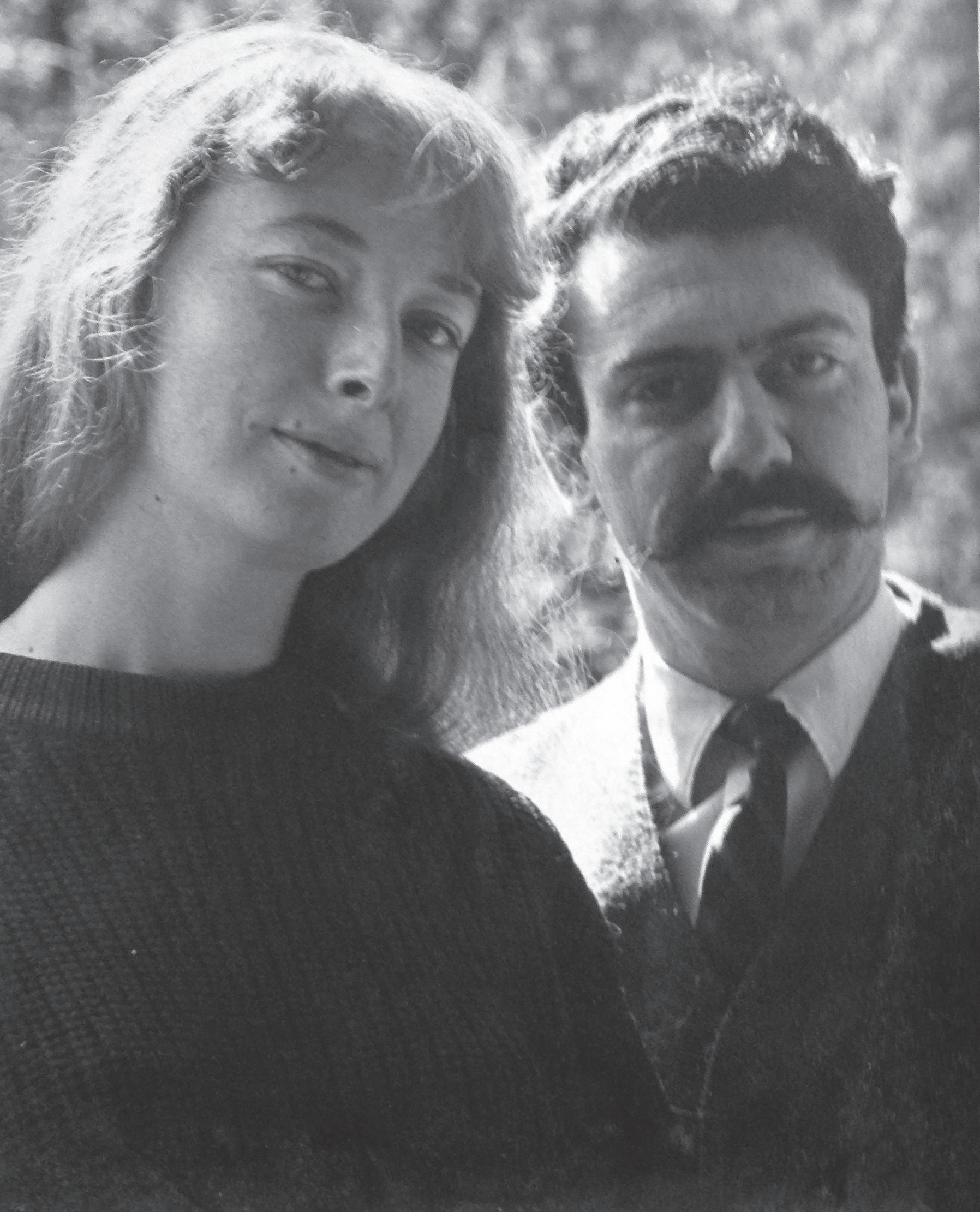
Joseph Samuel Uris ’62
March 9, 2025.
Joseph “Joe” Samuel Uris was born during World War II into a secular Jewish socialist household in New York City. When he was six, his mother, Ruth, and father, George, moved the family to California, where Joe experienced both poor rural isolation and Hollywood high society, attending a one-room school, working as Groucho Marx’s gofer boy, and attending his actress aunt Dorothy Tree’s parties.
During the McCarthy era, both Joe’s aunt and his screenwriter uncle, Michael Uris, were blacklisted. Joe was deeply affected by the ominous experience of government agents coming to the door—and later

YOU OR A LOVED ONE.
made front-page headlines in Oregon when he followed in his aunt and uncle’s footsteps by refusing to testify in front of the House Un-American Activities Committee.
Though Joe attended Reed for a short time, his years there were seminal. In the first week of his first year, he met Char lotte Asendorf (who would become his wife of 63 years), and in 1962, he organized the first anti–Vietnam War march in Portland. Throughout the ’60s and ’70s, he became known for his anti-war work.
Joe later received a doctor ate in sociology from Portland State University and became known as an irreverent, caring, and informative talk radio host for KGW and KBOO. In 1982,

When you establish a charitable gift annuity at Reed, you can:
• receive fixed payments for life;
• earn a charitable income tax deduction;
• reduce recognition of capital gains taxes by donating stock;
• make a lasting impact on the Reed community.
Contact Santi Alston to receive a custom gift calculation at:
• alstons@reed.edu or


he took his role as a city council candidate seriously, creating a political platform later taken up by Mayor Bud Clark and others in city government.
Broad life experience informed Joe’s core values and activism. At different points, he worked as a window dresser, head of faculty at Clackamas Community College, cocreator and performer at the Storefront Theatre, writer for The Oregonian, and visiting professor at Portland State University.
In the last years of his life, Joe had dementia and suffered two ministrokes. He died at the age of 84, and is survived by his two daughters and by his wife, Charlotte Uris ’62
March 15, 2025, in Arlington, Virginia, from complications of surgery.
Marian Alice Langworthy was born in 1944, in Wendell, Idaho, about 100 miles southeast of Boise. Her father, Ed, was a fish culturist at the nearby U.S. Fish and Wildlife Service fish hatchery in Hagerman; her mother, Helen, was a public school teacher there.
In 1962, Marian arrived at Reed and began studying American literature. In a series of thumbnail memoirs that she called Langstoryworthy and gave to her daughter, she credited her art class with Professor Lloyd Reynolds [English and art, 1929–69] with stimulating her “reverence for the beautifully written word”—and, in later years, a commitment to daily meditation.
After a break of several years to work in Portland, Marian reenrolled at Reed and in 1970 received her BA. Her thesis was titled “Jay Gatsby’s Errand into the Wilderness,” written under the supervision of Professor
Donald E. MacRae [English 1944–73]. In her Reed years, she formed lifelong friendships, including with Eleanor Mathews ’67, Patti Morris ’66, and Elizabeth (Shaw) Cronbach ’66.
Marian moved to San Francisco for a few years, a period in which one of her Reed friends, Gregg Forte ’68, came to visit. Romance ignited, and in 1973, Marian moved to Fairfax, Virginia, where Gregg was working as a newspaper reporter. They were married in 1974 in Annapolis, Maryland.
By 1976, Marian and Gregg were living and working in Washington, DC, Gregg as an editor for organizations focused on public policy and Marian as a meeting planner for the Council for Advancement and Support of Education (CASE). They adopted their daughter, Carolyn, while in Washington, then moved across the Potomac River to Arlington, Virginia.
Marian’s talent for convening people with shared interests and needs blossomed in the years of raising Carolyn, and it continued to develop. She helped lead a group of wouldbe adoptive mothers in discussions of childcare and adoption, who became close friends and have met most months over the past 40 years.
Marian also became active in the Washington-area meditation community and helped sustain monthly meetings of two support groups. After her passing, one meditation partner wrote, “I loved her spirit. She was openhearted but could still be edgy and funny. She was my first real spiritual friend.”
In later years, Marian’s circle of friends grew when she joined a weekly hiking group. She was known for her design of hikes through DC
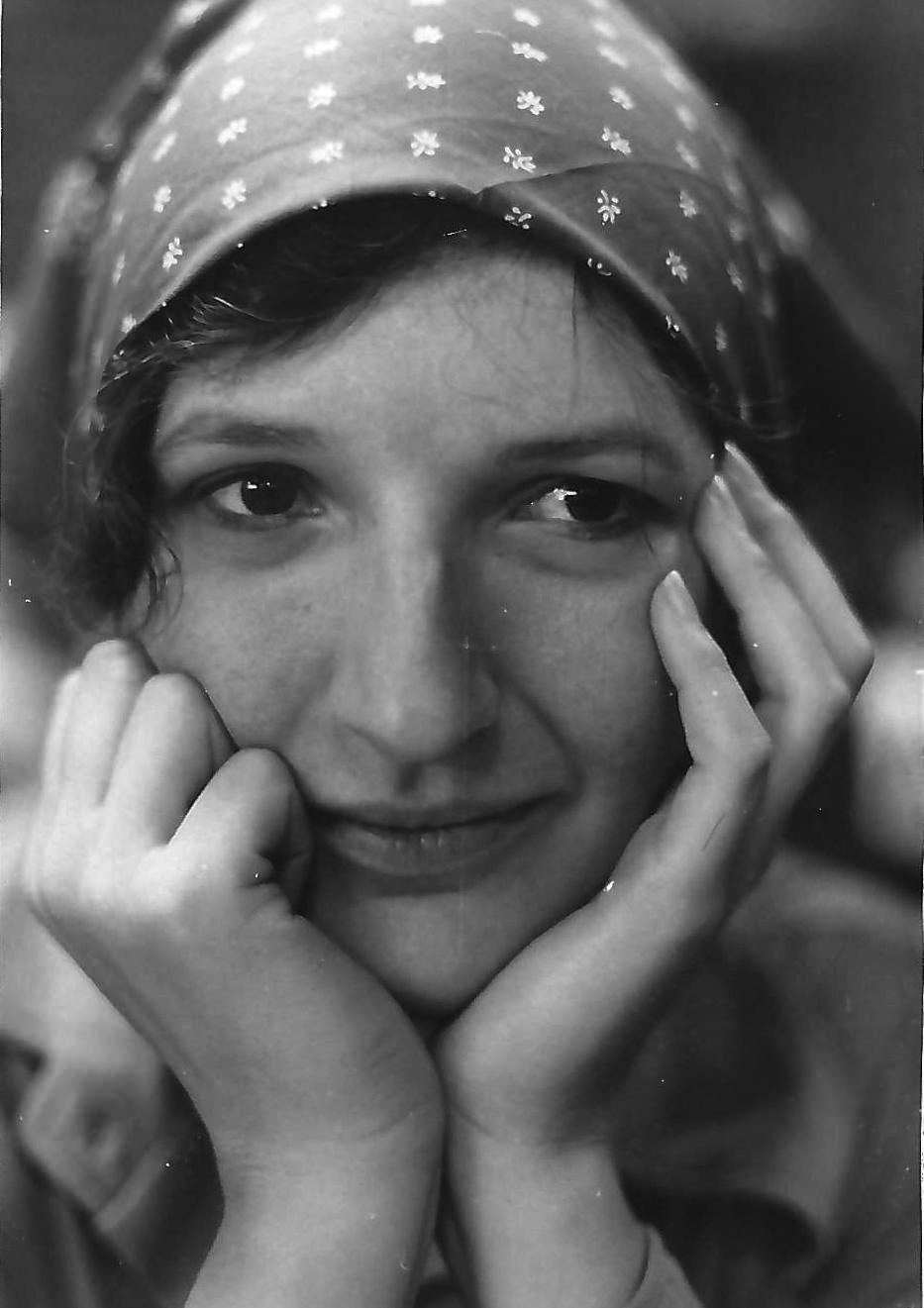
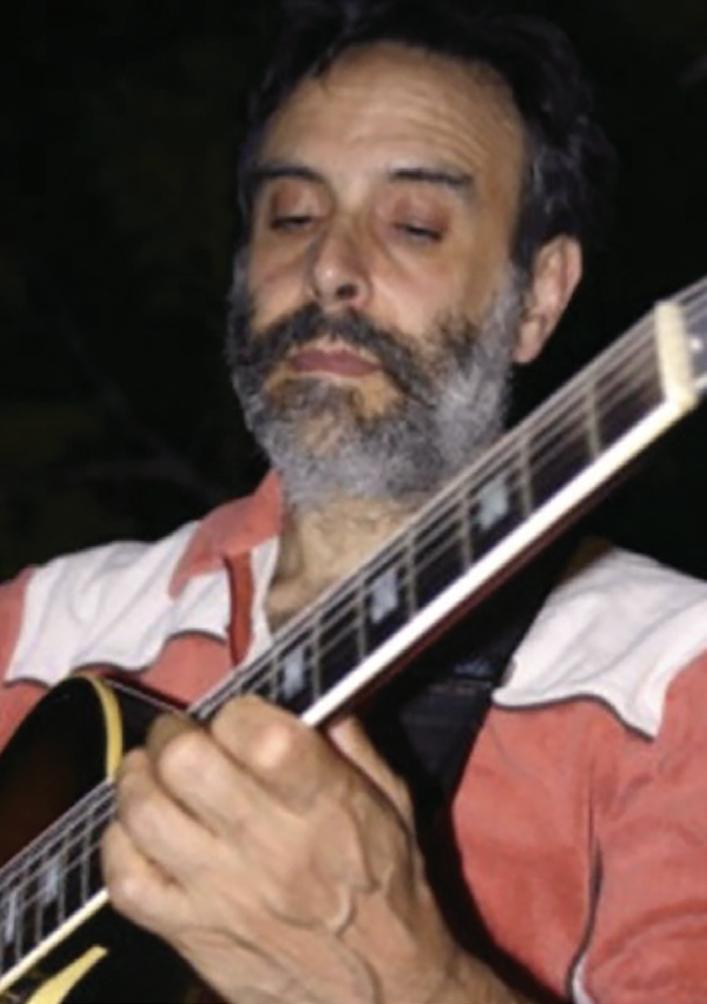
neighborhoods, sometimes with handouts describing historical backgrounds and notable homes.
Marian died at age 80 from acute pulmonary embolism related to the hip-replacement surgery she had received a month earlier. She is survived by her husband, Gregg, and her daughter, Carolyn.
January 26, 2024 in Oakland, California, of Alzheimer’s disease.
A musician who was awarded a National Endowment for the Arts Music Fellowship, David Robert Widelock was born in Manhattan and lived in Greenwich Village (“i.e., I’m cool,” he said). He came to Reed in 1964 at the age of 16, ultimately graduating with a BA in literature.
While studying at Reed, David was the lead guitarist in the band Laura and the Vipers, headed by pianist and vocalist Laura Fisher ’68. He played with the group at Reed reunions in 1998, 1999, and 2003, and at a gig in 1999 at Smiley’s Schooner Saloon in Bolinas, California.
“I stayed in loose old-pals touch with David well into
the 2000s, but my most vivid memories are from our freshman year at Reed,” Debbie Guyol ’68 recalled. “He was only 16, a baby really. He wore geeky glasses and had a funny flat-footed walk, but he was adorable. I loved his wry deadpan humor. I did not even appreciate, then, that he was a versatile and accomplished musician.”
After graduation David went to San Francisco, where he studied improvisation and played jazz, Latin, funk, and pop on the guitar. He played with Dave Brubeck, Lionel Hampton, and Woody Shaw, yet still found the time to graduate from UC Berkeley’s Landscape Architecture Design program (and to found the David Widelock Landscape Design Company).
In 1992, David toured Europe with the Brubeck family (Matt Brubeck played bass on many of David’s recordings). Skating on the Sidewalk , the last of David’s five albums, was released in 2009—the culmination of a composing career that included his memorably titled 1985 debut album Too Many Vitamins , 50 pieces for small jazz ensembles,
and three pieces for large ensembles.
An older brother, John, died of Alzheimer’s in 2017 in Australia. Though David was able to visit him, he started showing early signs of dementia himself a few years later. He moved into the Elder Ashram in Oakland in December of 2021, the year that his companion, psychotherapist and photographer Eva Brown, passed away.
David is survived by many friends from Reed who remember him fondly—including John Cushing ’67 (the original), with whom he shared a few marathon cross-country car trips. —John Cushing ’67 (the original)
Randal Davis ’77 August 31, 2025.
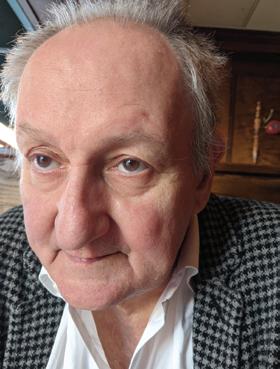
Randal Davis was a composer, arts administrator, archivist and historian. He majored in psychology, writing his thesis on phenomenology and schizophrenia with advising by Professor Linda J. Gummow [psychology].
After graduating from Reed, Randal worked at Portland Center for the Visual Arts and co-founded the influential new music group Concentration City. On his return to Oregon in 2007, he moved to Leland Iron Works, the studios and gardens of artists Lee Kelly and Bonnie Bronson. Randal managed their estates, writing monographs about their work and curating exhibitions.
Despite being profoundly deaf, Randal composed electronic music and supported musician friends in their work. He passed after a brief illness and is survived by his partner, Kassandra Kelly, and her children, Carter and Lucy Stirling.
Janelle L. Cooper ’78
July 19, 2025, from heart failure after an arduous fight against cancer.
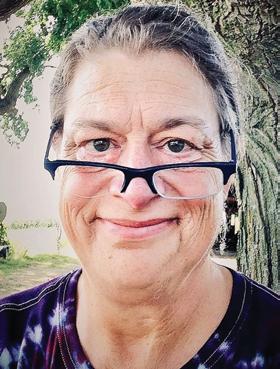
Affectionately known as Doc, Doctor Cooper, Jan, GranJan, Coop, and Chief, Janelle Lunette Cooper impacted the lives of many as a physician, neurologist, teacher, advocate, and friend. She studied chemistry and Russian at Reed, writing her thesis under Professor Marshall Cronyn [chemistry 1952–89].
Born in 1955 in Ann Arbor, Michigan, to Robert and Madeline Cooper, Janelle attended Reed while working her way up the ranks as a nurse’s aide and medical technologist in Seattle, Washington. But it was at Reed that she met her first wife, with whom she had two children, Lena and Nicholas.
After graduation, Janelle and her family relocated to Nashville, Tennessee, where she obtained her medical degree from the Vanderbilt School of Medicine and served her internship and residency at Vanderbilt University Hospital. In her medical career, she worked in many positions—as an emergency room physician, clerkship director, neurology professor, neurologist, and more.
Alongside these roles, Janelle was involved with multiple community-service organizations. Such work earned her the International Woman of the Year Award twice, the American Medical Association Physician’s Recognition Award six times, and a Service Award for Outstanding Contributions to the Rape and Sexual Abuse Center.
Eventually, Janelle founded and served as the director of Northern Neurosciences in Escanaba, Michigan,
specializing in Alzheimer’s and memory care. While in Escanaba, her son lived with her as he served in the National Guard. Nick’s emails and letters to Janelle during these years were treasured and saved.
Janelle’s passion for research and special approach to treating patients with dementia led her to Gundersen Lutheran Medical Center in La Crosse, Wisconsin. Her colleagues say she was known for her “blend of brilliance, kindness, and sharp wit,” which helped her care for her patients effectively. Unfortunately, she was forced to retire in 2015, following a devastating back injury.
Janelle’s love of nature led her to establish a certified organic garlic farm and apple orchard called Chicken Ridge Orchard in La Crescent, Minnesota. There, she loved to care for animals, especially chickens and ducks. She also had a passion for native trees and took great care to plant native varieties across the property.
In 2004, Janelle became a grandmother through her daughter Lena. She also shared a special bond with Lena’s husband, Joshua, who found Janelle’s empathy and listening skills to be a tremendous comfort, due to his own military career and trauma.
After a long life of giving of herself unconditionally and wholeheartedly, Janelle found a partner who gave that back in equal measure when she met her eventual wife, Kathleen Hanson. Together, they enjoyed visiting and building relationships at marine and art museums on the northeast coast (especially the New Bedford Whaling Museum).
Janelle’s other passions included flying and owning her “Moonie-bird” plane. She had a lifelong love of flying,
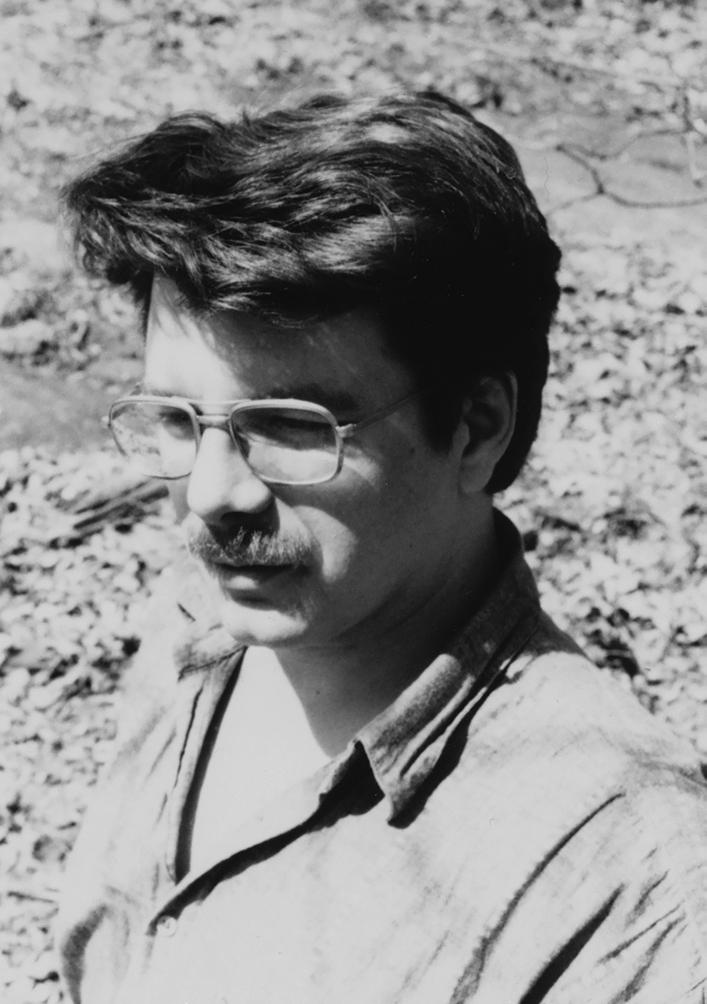
stemming from her father’s work with NASA on the space shuttle, and her personal pilot’s license gave her great joy, from grand adventures to simple state-line hopping with her daughter as she learned to fly. When not flying, Janelle loved boating and sailing, being a rifle instructor and an instructor of American history, playing games with friends on TribeNet (the gaming community Janelle says saved her life), and planting nearly a hundred trees across Wisconsin and at her farm in La Crescent. She is survived by her wife and her children.
August 21, 2024, in Longview, Washington. Born in Paris, France, Henry was raised in Glen Ridge, New Jersey. He was a visionary drummer, an accomplished systems developer, an advocate for Pacific Northwest tribal fisheries, and a recognized authority on Bigfoot.
Henry wore “every hat in the data center.” In the 1980s, based in New York City, he was a systems developer for the Switzerland Cheese Association, building a series of computer
systems to track the trade of Swiss Cheese between Switzerland and North America. Then, in the 1980s, he moved back to the Pacific Northwest to begin a two-decade career managing data systems in support of fisheries management and the protection and restoration of Columbia basin native fish.
A participant in research studies and a coauthor of reports that culminated in the closing of dams, Henry joked to his friends that his clients were the fish. He also represented Native Americans on the Lower Columbia River Watershed Council, assisting with salmon recovery and restoration projects.
In 1977, Henry founded the group Face Ditch with longtime friend and bassist Fred Chalenor and keyboardist Neil Minturn ’79. Face Ditch pushed the boundaries of music, merging punk, prog rock, and free improvisation into a sound that was uniquely their own, and released eight recordings and performed nationally until 2003. A master of polyrhythmic drumming who blended complex time signatures with an undeniable groove, Henry later went on to form another band, Caveman Shoestore.
Deeply fascinated by the mysterious and unexplained, Henry was an expert on Bigfoot. He contributed to documentaries and wrote two books on the subject (most recently Failing in a Cooler Way: Why I Never Found Bigfoot), but his influence was not confined to his musical prowess or his intellectual pursuits. He was a master storyteller and could captivate friends and acquaintances with his wit and charm.
Henry often amazed friends with his confidence and abilities. Edward Oppenheimer ’79 remembers, “When Henry
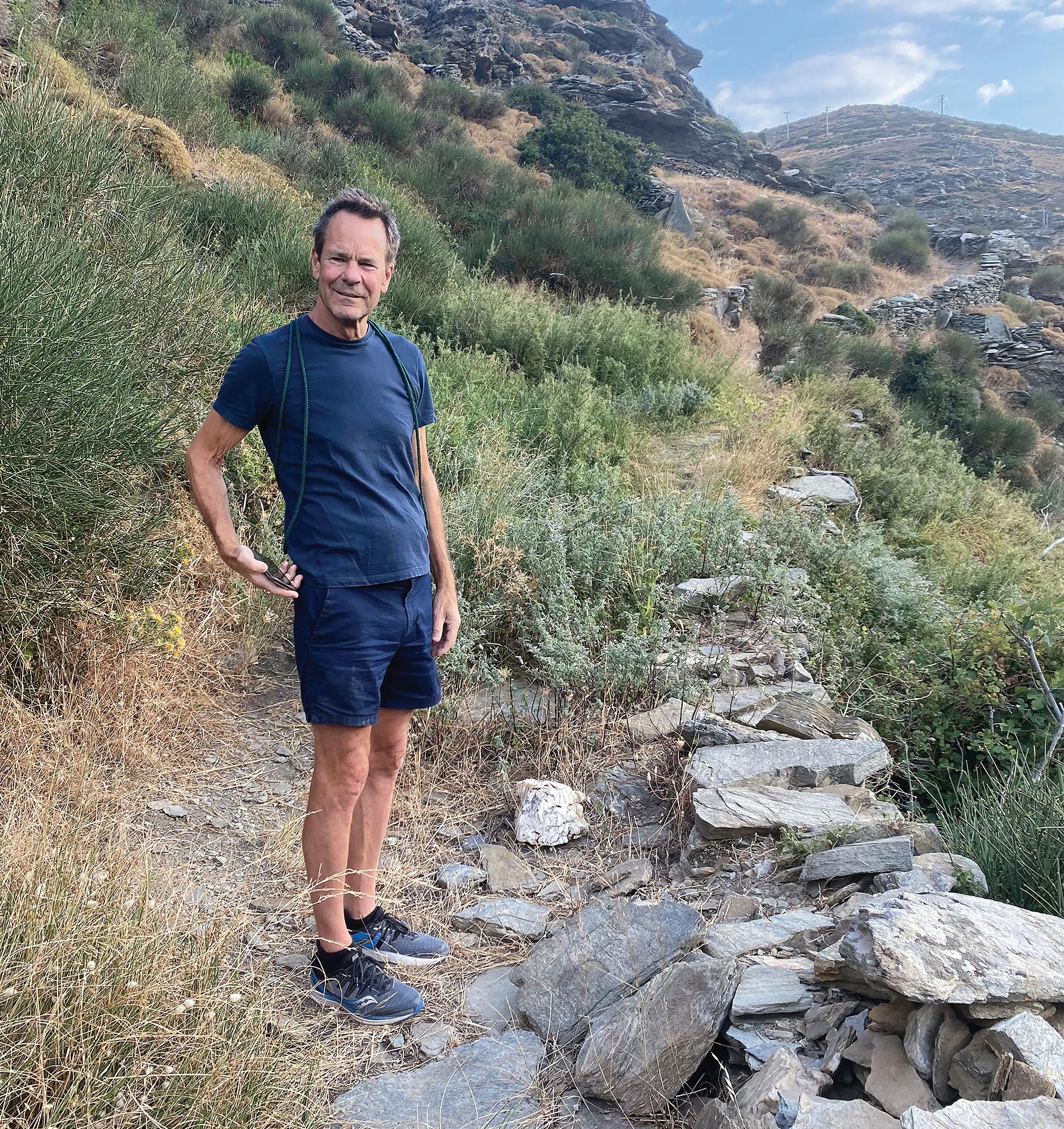
said ‘I’ll do it,’ in a sense it had already been done,” regardless of the complexity of the task at hand. He will be remembered for his commitment to Columbia River native fisheries, his innovative approach to music, his contributions to understanding Bigfoot, his insatiable curiosity, and his generous spirit.
Henry is survived by his wife, Heidi, and his sisters. Liza and Amanda.
June 19, 2025, in Washington DC, of a brain tumor.
A well-traveled economist, Wesley McGrew majored in international studies at Reed. He wrote his thesis, “Ethos Versus Opportunity: A Discussion of Entrepreneurial Development in Colbert’s France,” under Professor Peter Sinclair [economics 1976–77].
After graduating from Reed, Wes went on to study economics at the University of Chicago, earning a PhD. His work experiences included the U.S. Treasury and the IMF, serving as representative in Athens, Greece.
Wes loved games and physical activities (some of his favorites were tennis, basketball, scuba, bowling, bridge, and Boggle). He is survived by his wife, Robin; his twin adult children, Nicholas and Susanna; and his father, Bill McGrew ’56
Elaine DeMartinWebster ’80
January 13, 2025, in Eugene, Oregon, from brain cancer.
Elaine was born in New Haven, Connecticut, in 1958. Her father, Dennis DeMartin, was in the Foreign Service, and her mother, Monique Gourjon, was born in Paris and emigrated to
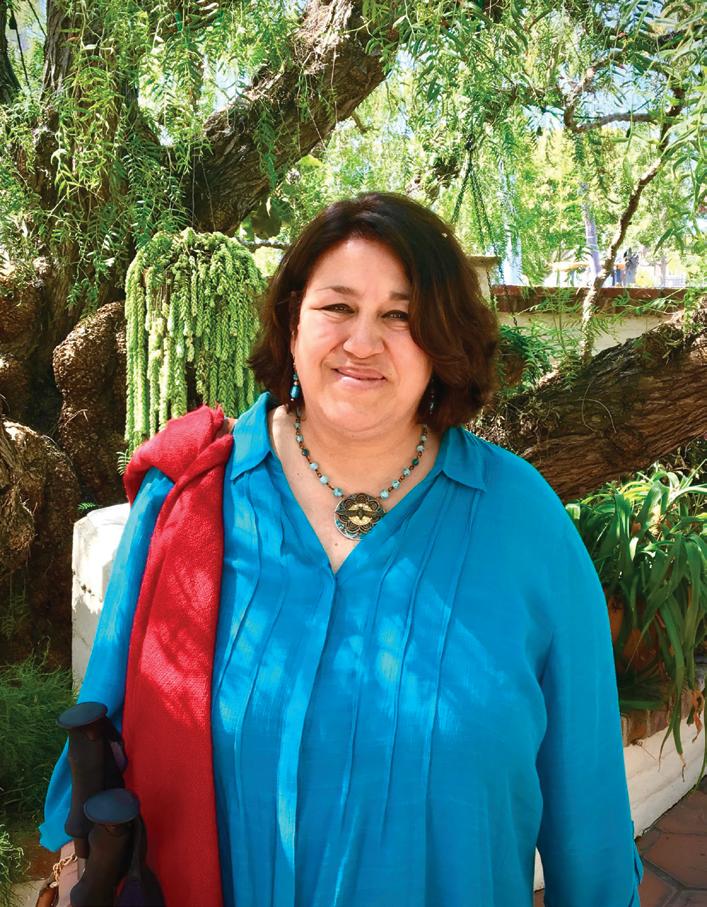
the United States after marrying Dennis.
Most of Elaine’s childhood was spent overseas at the U.S. embassies that her parents were posted to. After Dennis died of a heart attack in South Africa, Monique joined the Foreign Service and moved her family to Morocco (and, eventually, Tunisia). Elaine was greatly influenced by her time living in North Africa and revisited many experiences in her memoirs and poetry.
After graduating from high school at Aiglon College in Chesières, Switzerland, Elaine moved back to the U.S. to attend Reed. She wrote her thesis, “U.S. Policy Toward South Africa Under Nixon, Ford, and Carter,” under Professor Edward Barton Segel [history 1973–2011]. Later, she received her MFA in poetry at the University of Southern Maine’s Stone Coast Writers program.
In 1988, Elaine married Steve Webster. After living in Düsseldorf and Stuttgart, Germany, they moved to Paris, where Elaine attended the Sorbonne and graduated with a magister degree. They returned to the DC area in 1994 and later relocated to Seattle.
Elaine followed Steve to Asia for two years while he worked
on projects in Taiwan, Indonesia, and Mainland China. In 2009, the couple moved to Eugene, where Elaine attended and taught French at OLLI (Osher Lifelong Learning Institute).
Elaine was active in the French community in Eugene and was also a docent at the Jordan Schnitzer Museum of Art on the University of Oregon campus. She is survived by her husband, Steve.
Claire deVroede ’22 March 28, 2025.
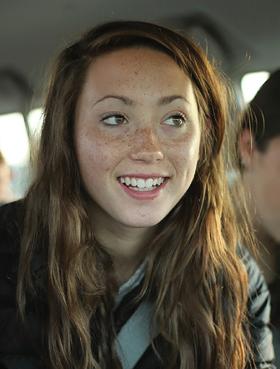
Claire was a cherished friend, daughter, sister, cousin, and niece who lived with deep care—for her family, friends, community, and the planet. A passionate reader and music lover, she found joy in language and culture, leading to her fluency in Hebrew and Bahasa Indonesia.
Claire and her twin brother, Hunter, were born in Berkeley in 2000. She attended Beach Elementary, Piedmont Middle, and Piedmont High, where she cocaptained the varsity volleyball team and was named second-team all-league. Her classmates voted her “Most Chill.”
After high school, Claire traveled through Europe, Hong Kong, and Indonesia before enrolling at Reed (and studying nine months at Hebrew University in Jerusalem). At Reed, she was on the debate team and Judicial Board, helping uphold the college’s Honor Principle.
Claire’s senior thesis, “A Comparative Study of the IPCC 6th Assessment Report and the Qur’an,” was written with advising by Professor Michael Foat [religion and humanities]. It explored how the Qur’an
motivates moral action, in contrast with the clinical language of climate science—and has been cited in nearly 40 published papers.
In 2022, Claire graduated with a double major in religion and political science. She briefly worked at the Portland law firm Samuels Yoelin Kantor before continuing her travels, living abroad on an organic farm near Amsterdam, then in Berlin.
Claire later returned to the Bay Area for a CivicSpark fellowship, focusing on public policy for residential electrification. She presented to city councils and spoke at conferences and at colleges, including Stanford. Afterward, she joined Faith in Action East Bay as a political organizer, championing quality-of-life issues in Oakland, particularly around gun violence and illegal dumping.
Remembered for her wisdom, goofy absentmindedness, and intellectual brilliance, Claire had a fierce, insistent empathy for others. She is survived by her parents, Baener Lucas and Peter deVroede, and her twin brother, Hunter.
Professor Karen Lever [English 1973–78]
March 29, 2025, in Portland, Oregon.
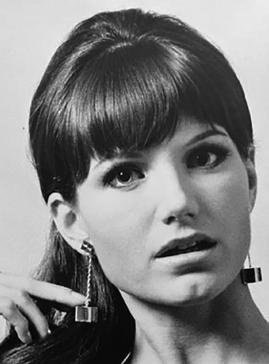
The first of two children born to Avis Janke and James Lever, Karen Marie Lever was born in Columbia Heights, Minnesota. Uninspired in school, her academic life was suddenly turned around when her father brought home a gas station copy of Wuthering Heights one day. She subsequently fell in love with art and literature, becoming the first person in her family to go to college.
Karen worked part-time jobs ranging from photo and illustrative fashion modeling for a Minneapolis department store to a summer decapitating chickens. She also won a scholarship to the University of Minnesota, followed by a full ride to Johns Hopkins University, where she earned a master’s degree in literature and a PhD.
After working as a professor of English at Reed, Karen ran the Women’s Program at Clackamas Community College. She loved Portland’s milder winters, Reed colleagues who tried to convince her to eat geoducks, and Reed students who could juggle Indian clubs while riding unicycles at the same time.
Karen was also a stalwart docent at the Portland Art Museum, serving and conducting tours for the public for decades. She is survived by her brother, Jim.
Garrett
1988–2010] October 13, 2025, of complications from inclusion body myositis.
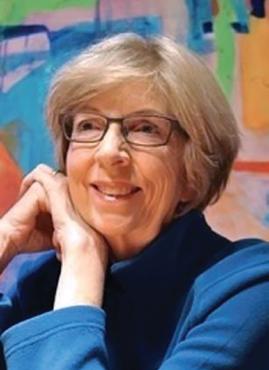
Bonnie Garrett, best known to Reedies as a director of private music instruction in the 2000s, was born in 1944 to George and Evelyn Jackson. She grew up on the family farm near Mt. Gilead, Ohio, which embodied not only Bonnie’s ancestral roots but also the influence of the Quaker traditions and values that animated Bonnie’s thinking throughout her life.
After college in Illinois, Bonnie’s graduate studies took her to Indiana University, where she met a fellow graduate student, Lee Garrett, whom she married in 1968. Together, they developed a keen interest
in music of the 17th and 18th centuries and related performance practices.
After teaching appointments in Colorado and Ohio, Bonnie and Lee moved to Oregon in 1973, where Bonnie embarked on a long career as teacher and performer. At Reed, she taught piano and harpsichord for nearly four decades, organizing student performances in numerous concerts on campus. She also developed and curated the acquisition of the Reed College Early Keyboard Collection as a working laboratory.
As a harpsichordist, Bonnie performed with the Portland Baroque Orchestra, Oregon Bach Festival, and the Oregon Symphony (and at numerous festivals, universities and galleries in the Northwest). In addition, she founded Portland Pro Musica, an ensemble devoted to music of the 17th and 18th centuries, presenting concerts with notable artists from the Northwest and Europe.
In 2023 Bonnie was diagnosed with the rare condition inclusion body myositis. During the last period of her life, she constantly expressed gratitude for the blessings of family, friends, and the care of her hospice providers. She is survived by a sister, Janet Tatevosian; her husband of 57 years, Lee; son Christopher Garrett; and daughter Brinnon Mandel.
Upcoming obituaries: Dorothy Freedman ’49, Jane Rondthaler ’52, Kai T. Erikson ’53, Dennis Tuchler ’60, Kathleen E.B. Manley ‘62, Sandra Douglass Fitz-Henry ’64, Tom Coffin ’67, Vanessa Koelling ’00, Maynard “Jerry” Smith ’04, Peter Carmine, Ineke Steele.
Some obituaries in In Memoriam are adapted, edited, and expanded from previously published materials.
This exquisite shell is home of the Pteropoda or sea butterfly, a whimsical sea snail known for its winged feet, and an object we study in CRWR 321: Dancing in the Mud: Ecological Play and the Playful Imagination. These quixotic sea angels can be found in all the world’s oceans. They form part of a rich water ecosystem, avid devourers of zooplankton and delicious prey for the mackerel. As the oceans
struggle to contain our glut, absorbing excess carbon dioxide and making their waters acidic, this delicate ecosystem is under threat. Made of calcium carbonate, these fragile shells are the first casualties and principal sirens of our excess, quick to dissolve in acidic waters and render their inhabitants homeless. This devastation happens far from our human senses, making it mysterious and alien to us. Devoid of
its fleshy inhabitant, the pteropod shell is rendered delicate, an empty home spiraling in the ocean, a eulogy beckoning us. Might we inhabit it? Might we find kinship with the ocean and its inhabitants? CRWR 321 is concerned with just that: forging kinship with the worlds around us through art and narrative. —Novuyo Tshuma, Assistant Professor of Creative Writing
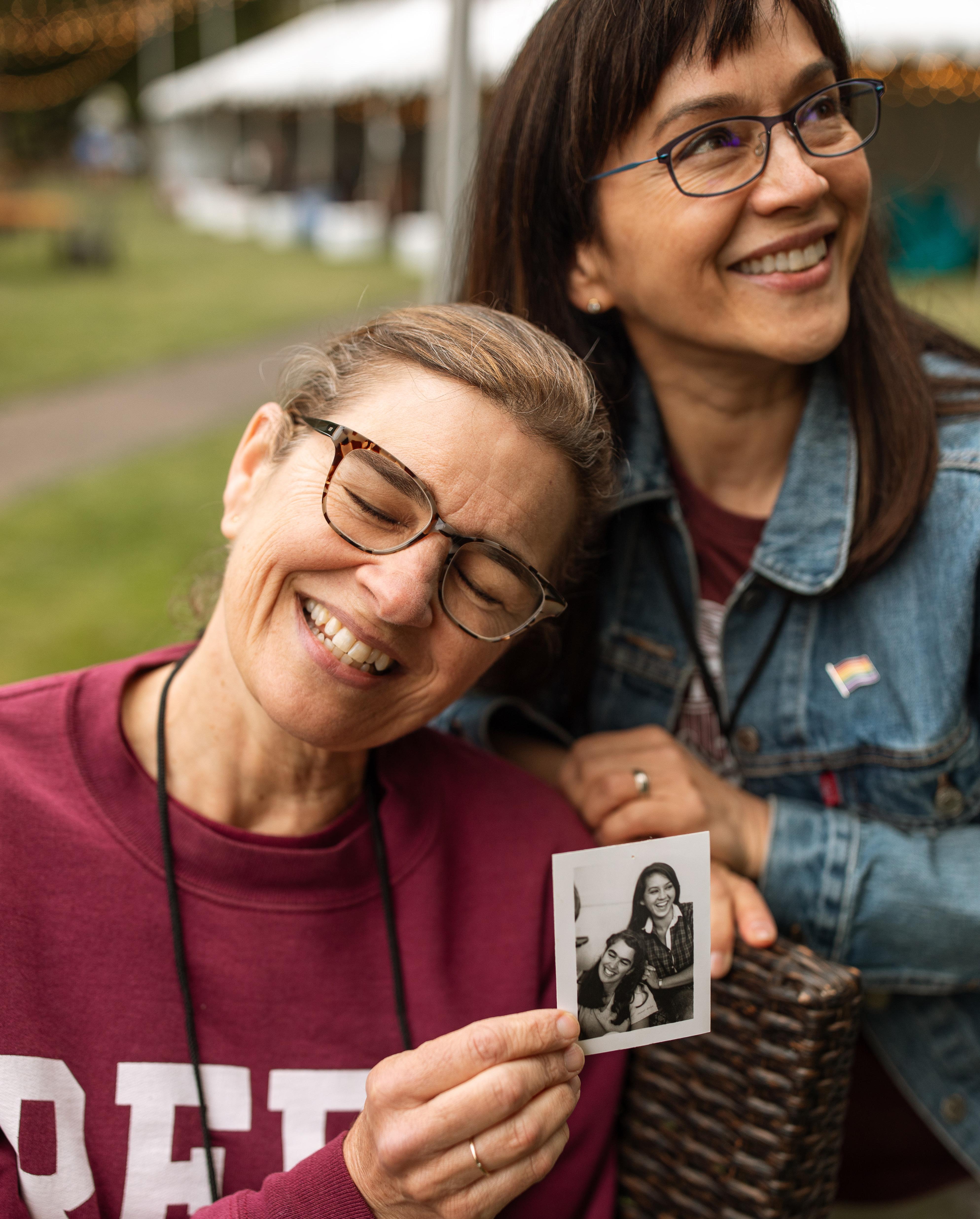

3203 SE Woodstock Blvd. Portland, Oregon 97202-8138