1032 Arch Street, 3rd Floor Philadelphia, PA 19107
215.625.9850
GRIDPHILLY.COM
Controlling the Past
You know the story about George Washington and his confession to his father about chopping down a cherry tree? Historians agree that it’s a myth, or if you are feeling less charitable, a lie. The story was not introduced until 1806 in the fifth edition of a Washington biography by Mason Locke Weems, a minister and bookseller, who claimed he heard it from an anonymous family friend. No other mention of the incident can be found, but the story, which reflects so well on the moral character of our Founding Father, still echoes in our consciousness today.
A lesser known but undeniably real chapter in our history is that of Ona “Oney” Judge, a slave who belonged to Washington. She lived with him, at what is now 6th and Market streets, at the President’s House, which was home to Washington and then second president John Adams from 1790 to 1800 when the White House was built.
Judge was a seamstress, like her mother, and was the personal maid of Martha Washington. In 1797, she escaped from the President’s House and boarded a boat to New Hampshire, where she was free from being a slave, but still a fugitive.
The Washingtons were furious that she had run away. They tried to bring her back, placing an ad in the newspaper offering a $10 reward for her return. Washington, protective of his public image, had Frederick Kitt, the steward of the household, sign the ad. At any time she, and her subsequent children, could have been recaptured and reclaimed by the Washingtons.
Oney Judge lived 51 more years as a free woman. Though she endured much heartbreak — she outlived her husband and three children — she died a free woman.
Last Thursday, National Park Service employees pried loose the plaques at the slavery exhibit from the President’s House where Judge’s story, and the story of other slaves of our first president, were on display. The exhibit had been there since 2010, but it fell victim to the Trump administration’s goal to have only parts of our history on display.
Unfortunately, being patriotic in this country is complicated. Our history includes slavery and our profoundly cruel and barbarous treatment of Native Americans. We aspire to be the land of the free, so examining our roots causes cognitive dissonance. Yet there is no choice but to accept that cruelty is in our creation story. These are the facts.
The deluge of lies that comes from our highest office recalls this chilling quote from George Orwell’s character Winston Smith in “1984”:
“Who controls the past, controls the future: who controls the present, controls the past … Past events, it is argued, have no objective existence, but survive only in written records and in human memories. The past is whatever the records and the memories agree upon. And since the Party is in full control of all records, and in equally full control of the minds of its members, it follows that the past is whatever the Party chooses to make it.”
Past events do have objective existence, even if the president feels these markers about slavery “inappropriately disparage Americans past or living.” Coming face to face with our country’s original sins means we need to address them; hiding them allows for the poisonous logic that guided the decision to withdraw funds meant for local environmental justice organizations like the Overbrook Environmental Education Center and Philly Thrive. But these groups, as Sarah Ruiz reports, persist in their efforts.
Washington’s successor Adams famously invoked a British proverb when he said, “Facts are stubborn things.” But so are lies. In the face of a fascist government trying to whitewash the past, we are tasked with keeping our history alive.
Striking Gold
Tshatshke Jewelry Studio brings a fresh perspective to locally-driven, sustainable jewelry by emily
kovach
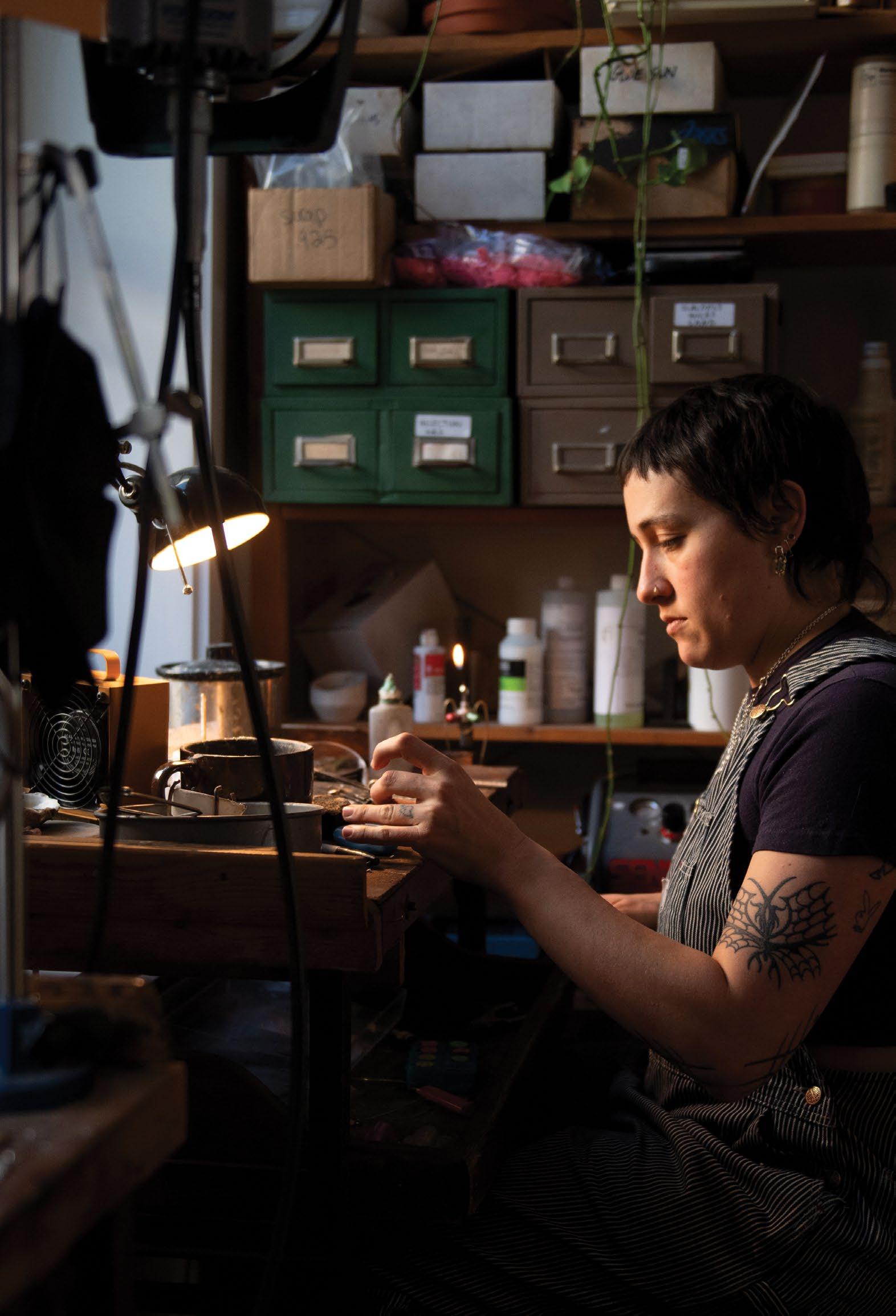
Growing up, maddy h irsch wanted two things: to make useful things with her hands and to own her own business. Guided by those goals, she enrolled in Temple University’s entrepreneurial studies program, only to feel disillusioned with what she saw as its narrow focus on traditional and tech startups. She transferred to the Tyler School of Art & Architecture, but found it too centered on conceptual art.
“I wanted to understand how my work moves through the world on a very physical level,” Hirsch says. “I like making tangible things that people can interact with every day.”
Before dropping out of Tyler, she took a jewelry-making class that helped bring her path into focus. Here was a medium that blended art and craft and opened up a feasible avenue toward entrepreneurship.
“Making jewelry made perfect sense to me: It’s practical, fun and pretty,” Hirsch notes. “So in 2017, I started working for a jeweler in Philly, and I’ve been doing this ever since.”
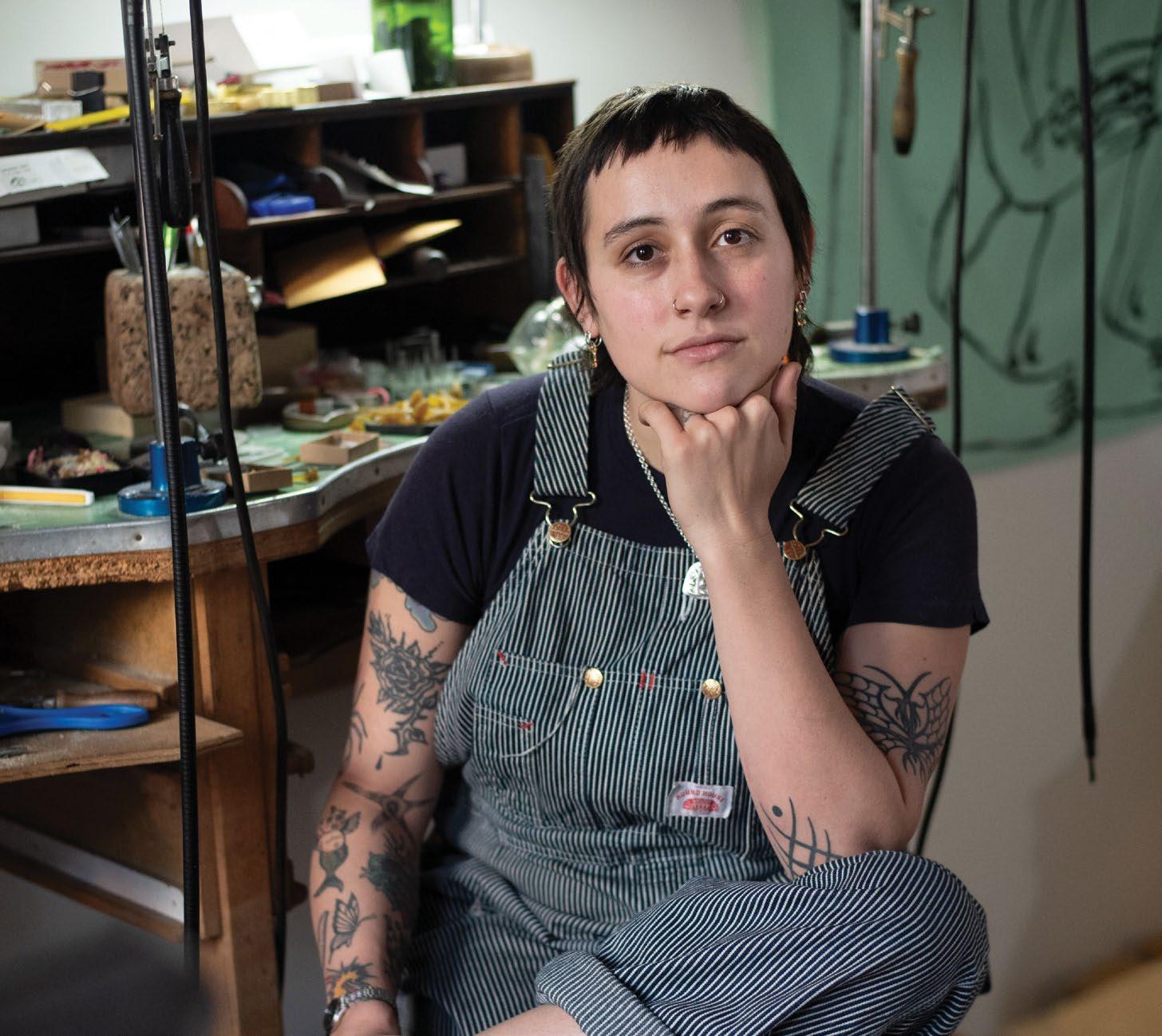
After a few years working her way up — from running errands on Jewelers’ Row to setting diamonds at a hip-hop jewelry store on South Street — Hirsch opened her own brick-and-mortar shop, Tshatshke Jewelry Studio (Tshatshke is pronounced “CHOTCH-kee”) in Philadelphia’s Port Richmond neighborhood.
Hirsch was drawn to the location after her friend mentioned that he was opening a record shop, Launderette Records, on Richmond Street. Commercial rent on the block was cheap, and after finding a raw space a few doors down, she decided to go for it.
“Having my own shop and studio was always my end goal,” Hirsch says. “I’m so invested in in-person interactions with my customers and the neighborhood.”
She pooled her savings and small loans from friends and family, completed a do-it-
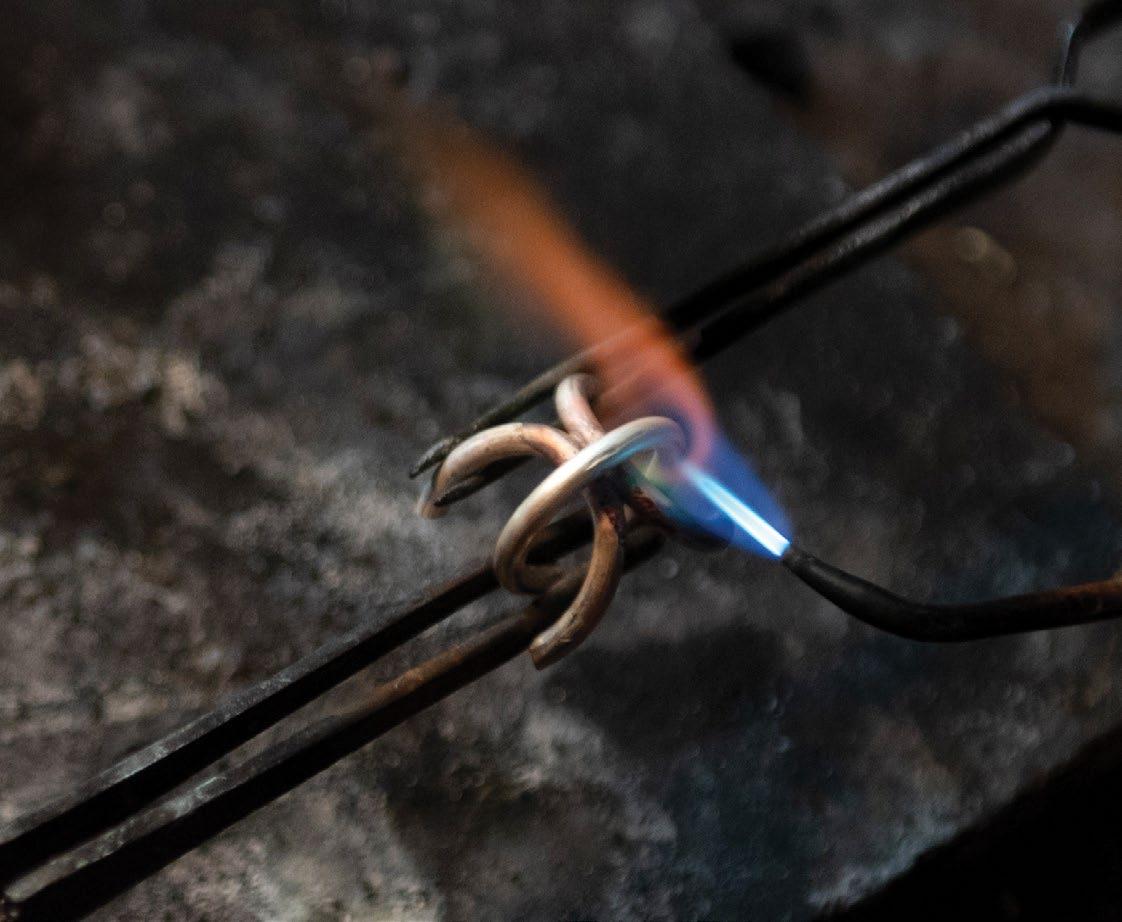
Maddy Hirsch integrates practices, including reusing and ethically sourcing stones, to lower the environmental impact of her jewelry making business.
Making jewelry made perfect sense to me: It’s practical, fun and pretty.”
maddy hirsch
yourself renovation and furnished the space with studio equipment she had collected over the years, along with secondhand furniture and display cases. Tshatshke opened in May 2022.
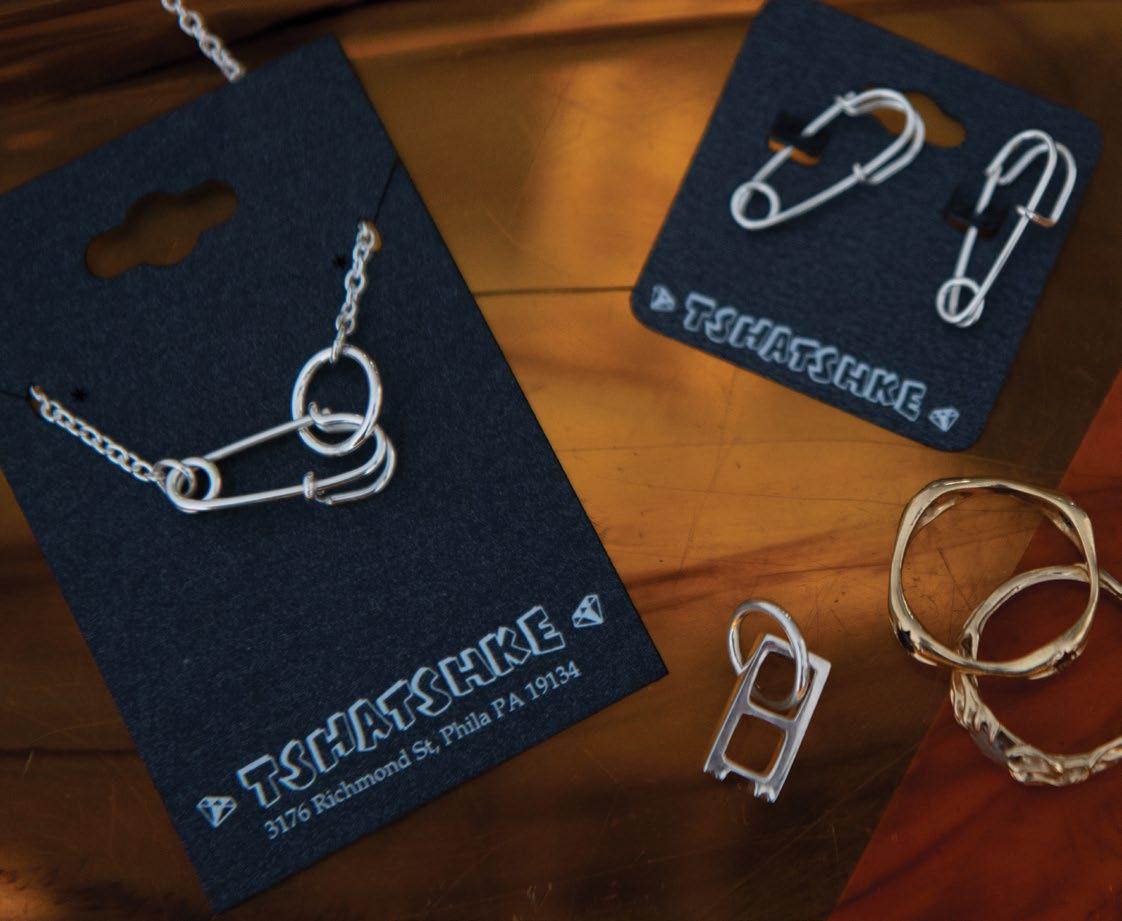
Tshatshke offers custom fine jewelry, curated ready-to-wear pieces made by Hirsch and other local jewelers, and jewelry repair. The custom work, which includes engagement and wedding rings, is where Hirsch lets
her artistic vision and sculptural skills shine.
“I really love honing in on what someone wants and making something super unique,” she says. “Like right now, I’m working on a platinum engagement ring with three repurposed diamonds that echoes a matching tribal tattoo that the couple has.”
Giving heirloom stones new life is just one way Hirsch creates pieces while minimizing environmental impact. Although jewelry making is a historically exploitative industry, Hirsch says, she tries her best to operate outside of harmful systems.
“I buy my gold and silver from a local business that I’ve been working with for my whole career, and I send my scrap out to them to have it refined,” she explains. “I buy almost all my gemstones either from customers who are scrapping pieces with me, or from very well-researched and reputable companies that track mine-to-market stones.”
As a small-business owner, sustainability means more to Hirsch than recycling metals and eschewing plastic packaging. Her main focus is on creating a responsible, equitable workplace for herself and Tshatshke’s two employees.
“My priority right now is looking at the structure of the business and figuring out profit sharing, livable wages and paid time off for my team,” she says. “This business has enabled me to start my life, so I want to create a situation where my employees can do the same.”
Love Bug
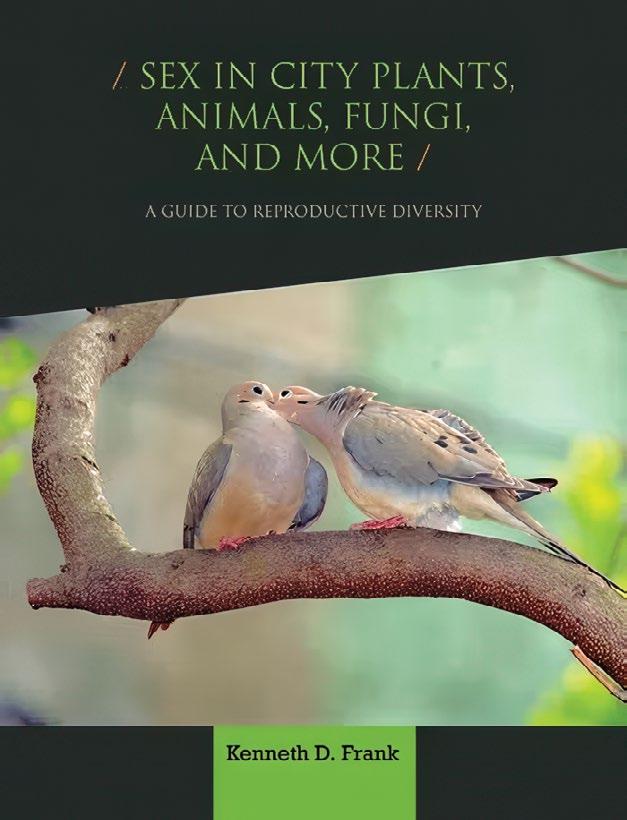
Naturalist’s book documents the fascinating and varied sex lives of our city’s wildlife by
bernard brown
Will you find yourself alone again for Valentine’s Day? It can be hard to find the right someone, but you’re not alone. Female oriental cockroaches can also have a hard time finding a mate. But when one gives up on finding a male to settle down with, she moves on to plan B: The female oriental cockroach can reproduce all on her own through the ultimate act of self-love, laying a clutch of eggs that hatch out as her clones.
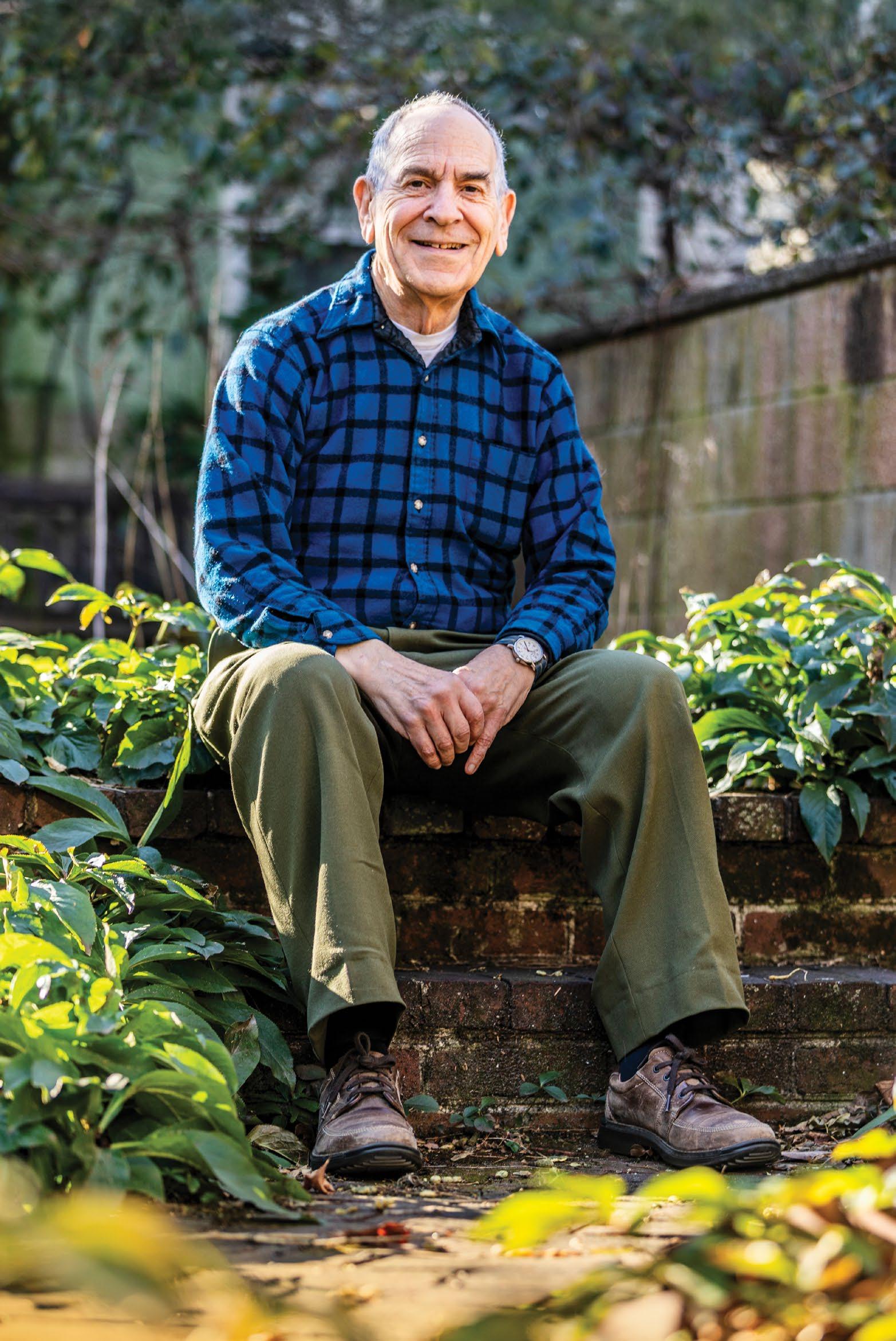
The story of the lonesome cockroach is just one of dozens profiled in Kenneth D. Frank’s “Sex in City Plants, Animals, Fungi, and More: A Guide to Reproductive Diversity,” the second work by the author of “The Ecology of Center City, Philadelphia.” Frank, a naturalist and retired physician who lives in the Fitler Square neighborhood, has long been fascinated by mosses and other diminutive plants that grow between the bricks of his sidewalk. He says the idea for the book came from his study of primitive plants called liverworts. “They’re so tiny, and some require both sexes to produce spores. And you wonder how they get together.” Beyond
the natural limitations faced by immobile plants, Frank realized the urban landscape erects other barriers: buildings, roads and fragmented habitats. “It came to me that it would be fun to look at specific organisms and probe into how they do it.”
In biology, sexual reproduction refers to two organisms combining their genomes to produce offspring, whether they are in close physical contact or far apart. But plenty of plants (and some animals, such as your lonely cockroach housemate) can reproduce asexually — in other words, without mixing genes with a partner.
And some make it even more complicated. Male umbrella liverworts produce sperm on star-shaped platforms. They wait for rain to wash the wee swimmers over to a waiting female’s umbrella-shaped reproductive structure, where they merge with her ova. Those fertilized ova develop into tiny, dangling offspring that themselves produce spores. Those spores can be blown or washed away to eventually grow into new males and females. Frank thinks that one reason liverworts thrive underfoot is that sidewalk cracks help channel water, and thus sperm, from males to females. But even if sex doesn’t do it for the family-minded liverwort, “it has a backup system,” Frank says. A male or female liverwort can asexually produce tiny copies all on its own.
Female bedbugs might wish they had that option. You probably don’t need another reason to loathe the little bloodsuckers, but they practice what biologists call traumatic insemination. The male bedbug uses his sharp reproductive organ to pierce his partner’s abdomen and inject his sperm.
That’s not the only form of insect reproduction better suited for Halloween than
SICK TRANSITION
Has a bout with the flu or a fierce stomach bug ever left you feeling not quite like yourself? Some of the common pillbugs (aka roly-polies) you find under rocks in your garden are vulnerable to a bacterial infection transmitted in the eggs laid by females. When the bacterium infects male pillbugs, it can cause them to change sex. The new females are able to lay eggs and pass on the infection.
for Valentine’s Day. Praying mantis females famously enjoy having males for dinner, though it turns out most of the hopeful guests don’t manage to get lucky before they get profoundly unlucky.
The male mantis would tell you (if his head hadn’t just been bitten off) that love can make a fool of anyone. This is perhaps most tragically true for males of our common eastern firefly. The male beetle flashes in a species-specific pattern as he flies above a field, hoping for an answer from an eager female waiting in the grass below. But some of those signals come from females of lightning bugs in the genus Photuris. These femme fatales have evolved to imitate the females of other firefly species so that when the duped suitor lands, the Photuris gals can eat him while they wait for one of their own males to fly by.
For true romance, look to the gray garden
slug. When one amorous slug encounters another, they begin to dance. Slowly they circle on a bed of mucus as they get to know each other. The circle shrinks, the slugs grow closer and, finally, they touch, now rushing (albeit at slug speed) to embrace. Slugs are hermaphrodites, with male and female sex organs, and both partners can lay eggs after their slimy rendezvous. Having all the equipment really opens the field of options for romantic slugs, but some mushrooms (or rather, the fungi that produce mushrooms) take it to the opposite extreme to ensure compatibility. These fungi mostly consist of masses of threadlike tendrils called hyphae that digest wood or other dead plant matter in the soil. When the tip of a hypha contacts one from a different member of the same species, the two can mix genomes and produce mushrooms, which then disperse spores. Fungi of the same “mating type” are reproductively incompatible, but luckily, there are so many mating types that the odds of encountering a suitable partner are extremely high. The common inky caps you see sprouting out of garden mulch have 143 such mating types. Although many organisms have options, some find themselves limited by human choices. The threadstalk speedwell requires cross-pollination to produce seeds. The small plants can grow from fragments, whether intentionally divided by a gardener or scattered by a spinning lawnmower blade. It turns out that the plants originally exported from threadstalk speedwell’s native range in Türkiye and Georgia are clones, meaning that the pretty lavender flowers in Philly lawns are reproductively futile, unable to be fertilized. “How sad,” Frank says. “They’re doomed to celibacy.” ◆
PHOTO BY KENNETH D. FRANK
Parks and Reconciliation
Anthony Sorrentino is bringing a “happy warrior” mindset to his new role as CEO of the Fairmount Park Conservancy by
kyle bagenstose
The fairmount park Conservancy, Philadelphia’s largest parks-focused nonprofit, has tread perilous ground over the past several years as it leads one of the largest open space transformations in the city’s recent history: a $250 million overhaul of Franklin Delano Roosevelt (FDR) Park in South Philadelphia. The conservancy has caught flak from some community and advocacy groups that are critical of elements of the plan. As reported in Grid #187, it is just the latest chapter in a long history of controversy over public park management in Philadelphia dating back to colonial times. Despite these circumstances, Anthony Sorrentino, who became chief executive offi-
cer of the conservancy in October, is taking a decidedly optimistic — and open — approach to the job. Even before his first day, Sorrentino was waxing poetic and engaging in conversation about Philadelphia’s park system in a LinkedIn post. During an interview with Grid at the conservancy’s West Fairmount Park offices in November 2025, Sorrentino opened with an offer to “call me Tony” and said he planned to serve as a “happy warrior” for Philadelphia’s parks, boosting not only their physical quality but their profile in civic life.
“The conservancy is 28, going on 29 years of age, and has been going through its own growth spurts all that time, and I think it’s matured into an organization that’s kind of
ready to be more than one or two things,” Sorrentino said, noting that it has traditionally served in a fundraising capacity. “There’s a moment for greater, lower-‘a’ advocacy. That might be the next level of maturity for the organization.”
Elaborating on what that advocacy could look like, Sorrentino pointed to the Park Friends Network, an umbrella group organized by the conservancy that includes approximately 140 nonprofits of various sizes supporting the city’s constellation of parks and playgrounds.
Sorrentino is working in the parks space for the first time. An urban planner by training, he spent most of his career at the University of Pennsylvania, working in the university’s executive offices as a sort of “glue guy,” with a portfolio that included liaising with both local and business communities, overseeing public affairs and determining urban policy.
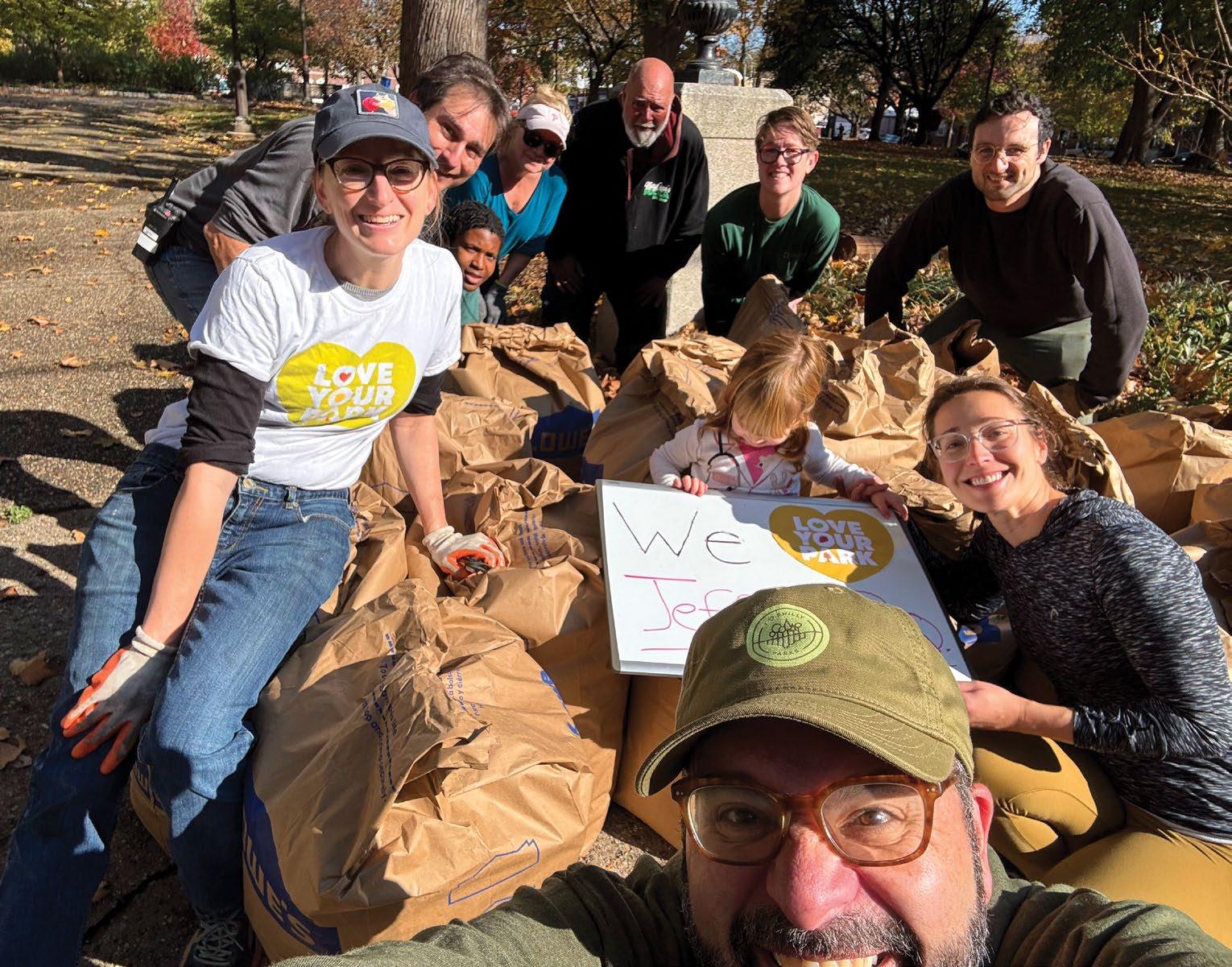
To orient himself, Sorrentino spent several Saturdays in the fall visiting with about a dozen Park Friends groups during Love Your Park Week and getting his hands dirty alongside the other volunteers across the city. He found that the “motivations” of volunteers were the same no matter the size of the park and saw the possibilities of what could be.
“People are interested in their little corner of the world and seeing what they
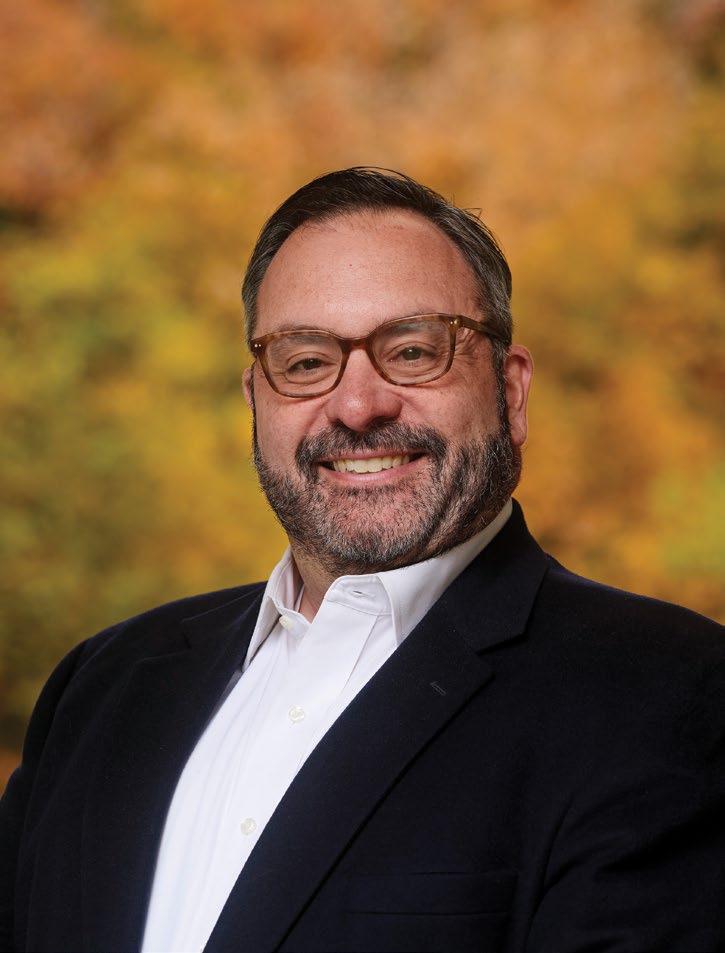
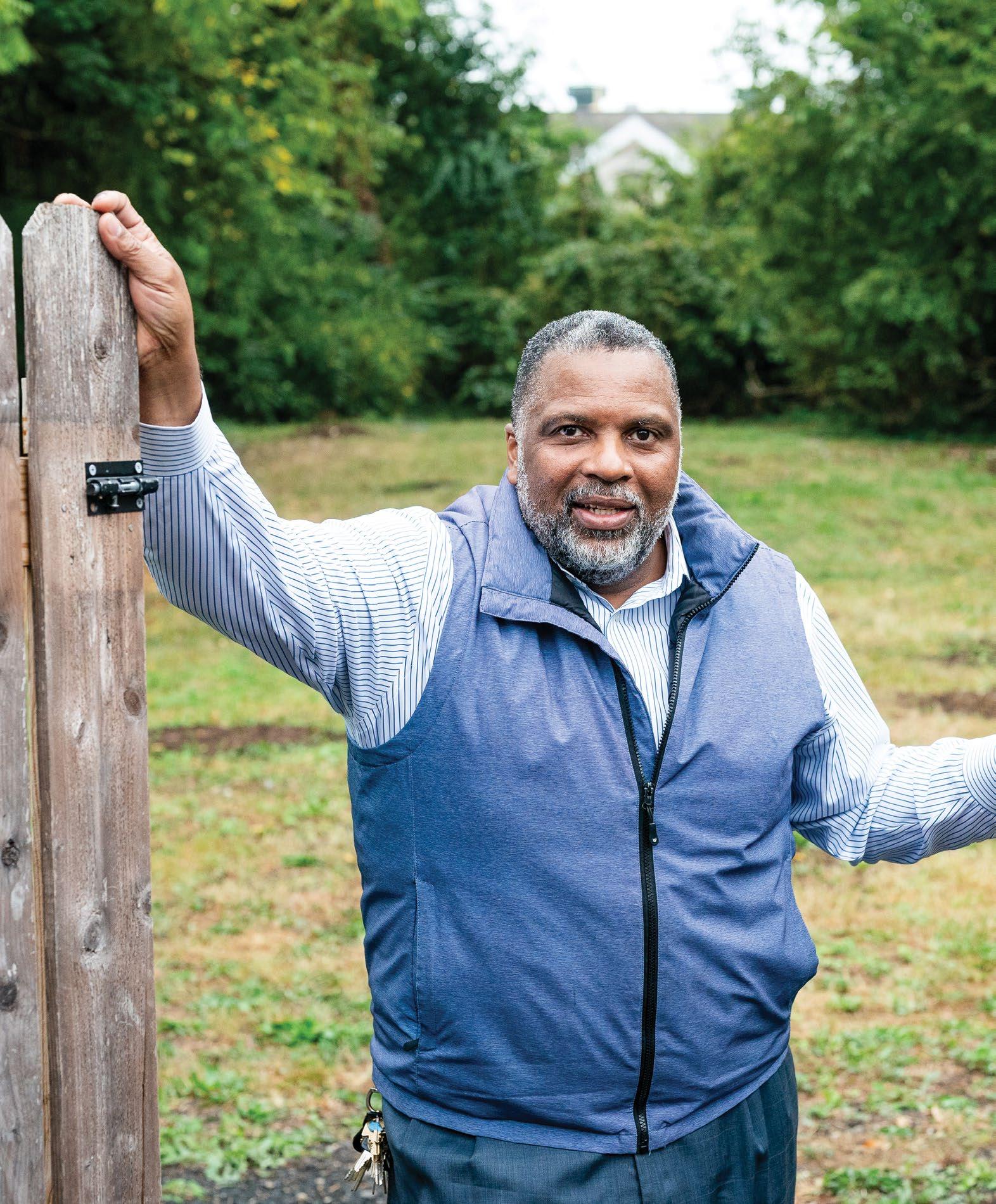
Anthony Sorrentino, who worked at the University of Pennsylvania for 25 years, now heads the Fairmount Park Conservancy.
can do to make it better,” Sorrentino said. “Honest to God, if we built up those 140 Park Friends groups to be the most robust, self-sustaining groups they could be, then the advocacy [for improving park spaces] happens very organically at that point.” Of course, that’s easier said than done.
calendar staple — along with private donors and other powerful stakeholders who don’t always agree on what’s best for Philadelphia’s parks. Inequality in the parks system remains a concern, and some advocates believe that’s driven in part by philanthropic interests holding too much
In my 25 to 30 years doing urban work in Philadelphia, I’ve never seen a project that delivered everything everyone wanted all of the time. And you have to tolerate that.”
anthony sorrentino
In addition to coordinating with more than 100 park groups, Sorrentino will have to navigate relationships with City officials — biweekly meetings with Philadelphia Parks Commissioner Susan Slawson are now a
decision-making power.
Sorrentino has an answer for how he’d handle that:
“I think if somebody is coming to the table and saying, ‘Here is a large amount of money,
I want you to do what I want to do,’” Sorrentino offers, “we’d probably say, ‘Thank you so much for your interest and passion; tell me more about why you’re interested in it, why you’re passionate, and tell us about what your strategic priorities are,’ and see if there’s a way to reconcile those things.”
But he also says that it’s impossible to please everyone all the time. He believes the planning process that went into the FDR Park overhaul was “high quality” and reflected public input. But that doesn’t mean that people will see specific things exactly as they asked for, which he thinks is the source of strife. So even as he takes an optimist’s approach to the work, the example serves as a reminder of what happens when one’s intentions — even if good — enter the arena of public opinion.
“I think you can’t overcommunicate,” Sorrentino says. “But at the same time, you have to draw a line at some point. In my 25 to 30 years doing urban work in Philadelphia, I’ve never seen a project that delivered everything everyone wanted all of the time. And you have to tolerate that.”
If a Tree Falls in the City…
The Philadelphia Reforestation Hub is reducing waste while building careers by daniel sean
kaye
Deep inside Fairmount Park, some hardworking dreamers are changing the way Philadelphia treats, uses and benefits from trees that historically would have been thrown in a dump.
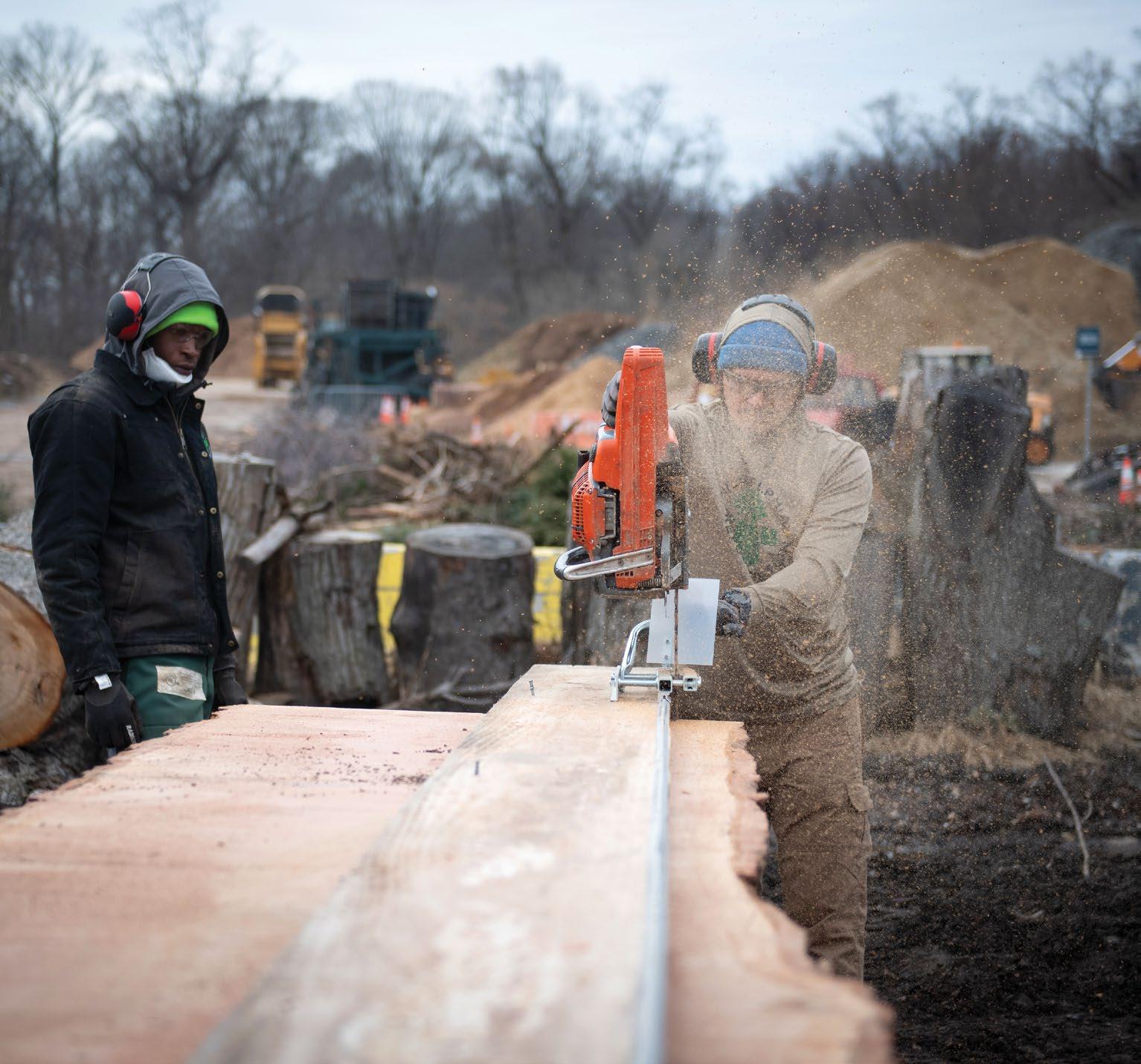
The Philadelphia Reforestation Hub, found within the park’s Organic Recycling Center (ORC), is focused on integrated wood waste diversion. Part of its approach to urban forestry management, the hub assesses logs salvaged from across the region — the result of ice and snow, wind, storms and removals for manicured parks — for possible new uses. In 2024, the hub divert-
ed nearly 450 logs from waste piles, milling enough to remove more than 20 metric tons of carbon dioxide equivalent from the atmosphere. And at least 15% of the proceeds generated from lumber sales that year went to TreePhilly, which plants trees in the city.
At the heart of the hub are Carlos Alvarez, director of social enterprise operations, and sawmill operations manager Freddy Ortiz. Together, they have graduated four trainees and taught hundreds of Philadelphia schoolchildren about the social and environmental benefits of saving, using and repurposing fallen trees, while spotlighting best practices for safety and proper tree care.
The hub’s beginnings date back to 2019, when Philadelphia Parks & Recreation sought to increase ORC’s projects.
The Parks & Rec sustainability team looked to the Baltimore Wood Project, a group that operates an urban sawmill, to learn how it diverted wood waste and created economic opportunities. Alvarez, an Urban Wood Academy graduate, became the project lead in 2022 after PowerCorpsPHL won a contract to create a permanent lumber yard and urban sawmill two years earlier.
Today, the hub makes garden bed kits, stump stools, outdoor benches and wood rounds for arts and crafts, among other items, from freshly sawed green and airdried lumber, according to Alvarez.
Ortiz, the sawmill operations manager, believes what they do has the potential to change people’s lives. “Many people see only blue-collar jobs, but there are tons of people who want a green job, who want to be connected with nature and be part of something that connects them with the outdoors,” he says. PowerCorpsPHL trainees can apply for a one-year term as a sawmill operator apprentice, during which they learn to maintain chainsaws, skid steers, sawmills and related tools, and about arboriculture, tree identification and causes for tree failure in cities.
In late 2023, the Pennsylvania Horticultural Society (PHS) partnered with the hub to use the city’s downed trees to create stakes for the PHS Tree Tenders tree-planting program. The initial order of 1,000 stakes soon grew to 2,500. Dana Dentice, trees field operations manager for PHS, explains that the hub’s upcycling of discarded wood to support juvenile trees is growing the next generation of the region’s urban forest. “The work is fostering both a better environment and a skilled workforce, with skills that transfer across industries,” she says.
The hub has created various wood products for groups such as the Fairmount Park Conservancy, Greenland Nursery and Farm Philly, and has provided specialty pieces for the Wintergarden on the Greenfield Lawn in Dilworth Park and mycelium for Thomas Jefferson University.
“This has been a great partnership with the City,” says Alvarez. “So many young people have seen the importance of having a closer relationship with nature. There are jobs they never would have learned about, and now they see a chance for a different future.”
Carlos Alvarez trims a log from a fallen tree so it can be processed into lumber. PHOTO
Candy Gram
Fueled by social media, entrepreneurs open a sweet brick-and-mortar shop story by
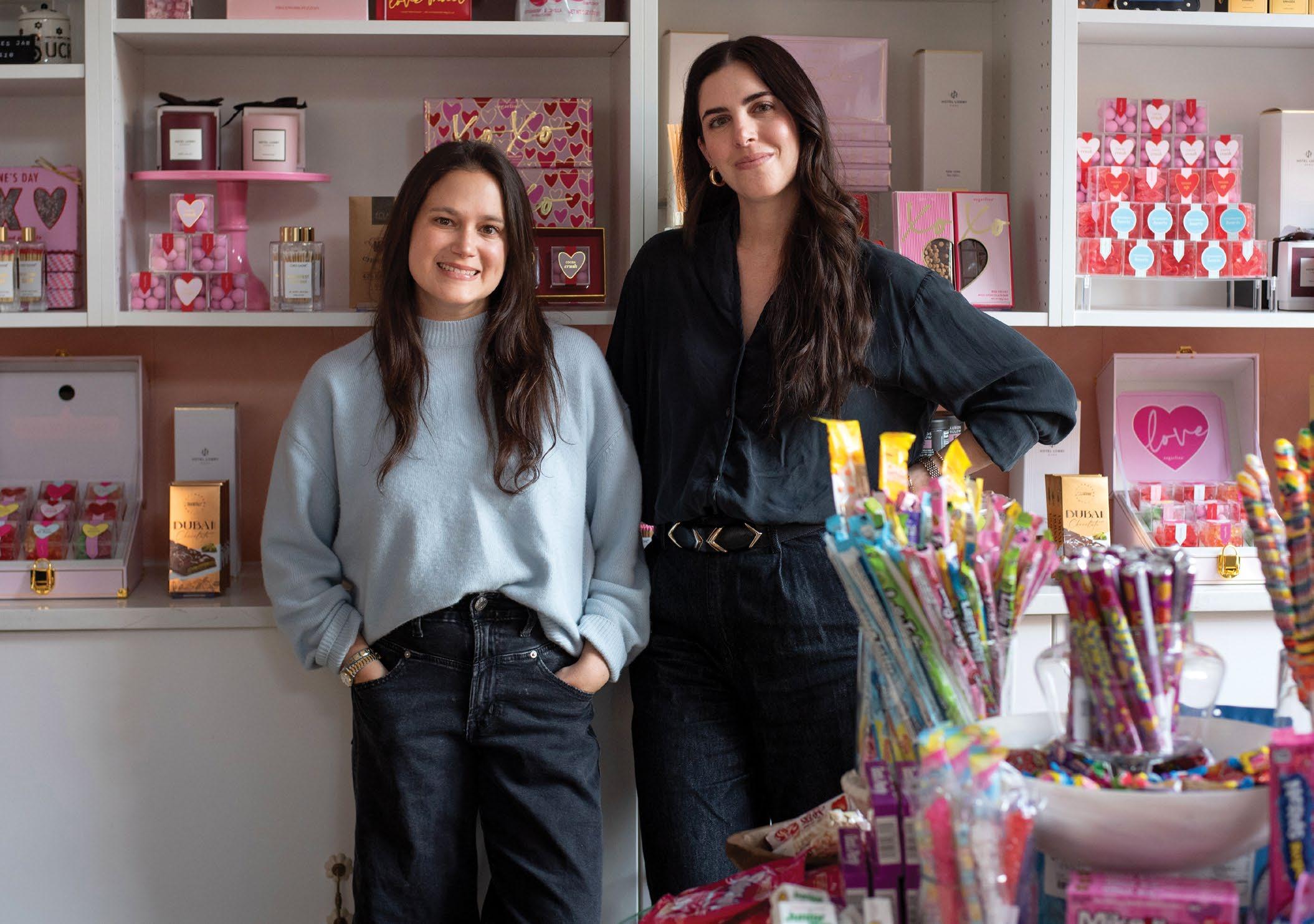
Emily grossman and alyssa Bonventure, co-owners of All Aboard Candy, opened their Rittenhouse Square store last June with a clear mission. “If you’re an adult, we want you to feel like a kid again,” says Bonventure. “And if you’re a kid, we want to introduce you to the joy of feeling like a kid in a candy store.”
People of a certain age will recall when penny candy stores were as common as convenience stores are today. Luckily for candy lovers of all ages, Grossman and Bonventure believe “candy is having a moment,” in large part thanks to social media.
marilyn anthony
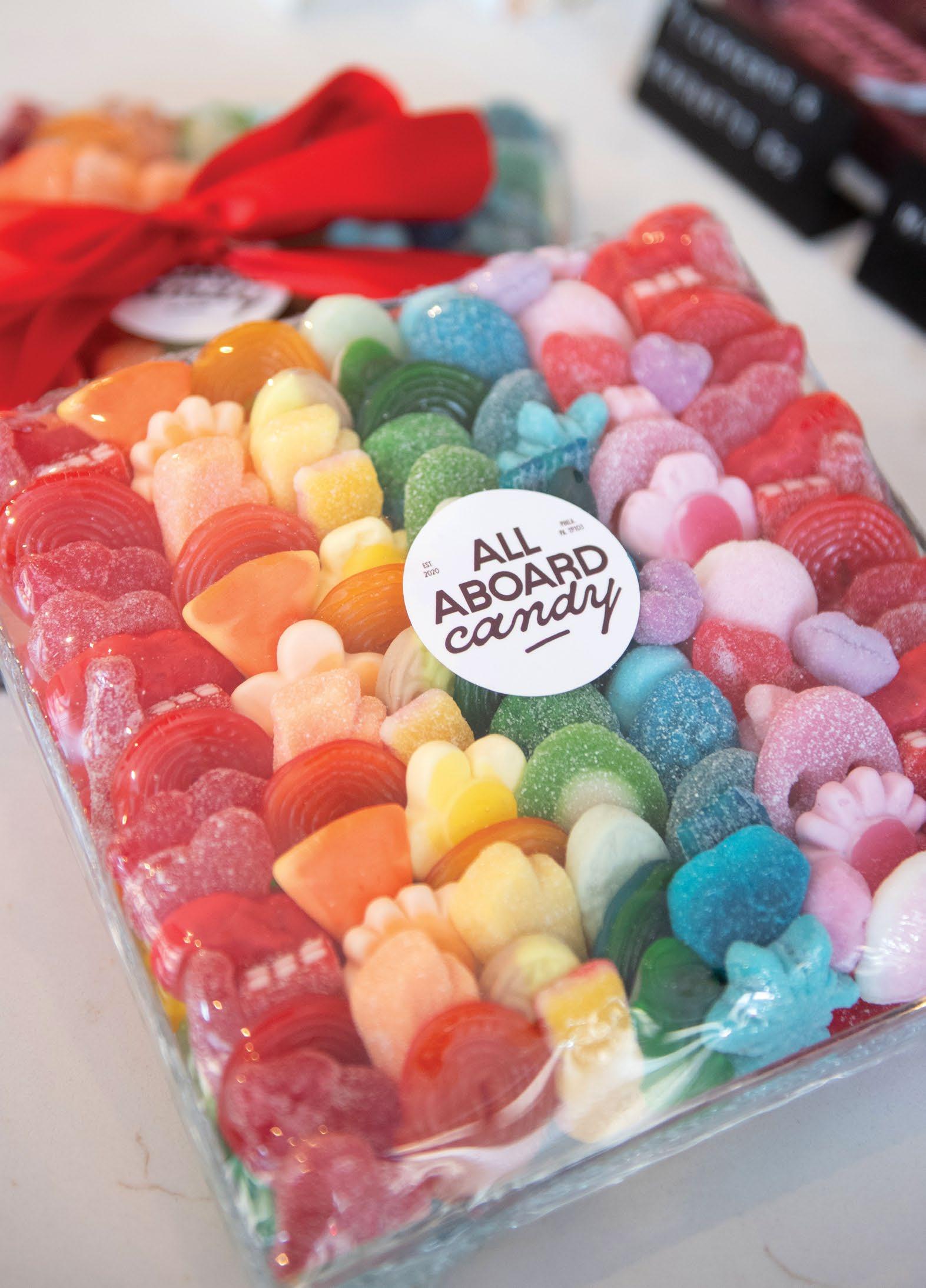
Friends since the sixth grade, the two 30-somethings saw their peers experimenting with cool hobbies when the COVID-19 pandemic began. They brainstormed business ideas, giving jewelry making a try, but found it way too complicated. Then Bonventure remembered a bachelorette party she had attended in New York where the hostess created a “charcuterie” tray of colorful bulk candies. She and Grossman thought they could have fun with the candy board concept and maybe even sell some. Both women grew up in “fun food” households where candy was taboo-free. Grossman’s great-grandmother kept chocolates in
her bedside table, and her mother “never went to synagogue without a bag of Haribo gummies in her pocket.” Bonventure, meanwhile, fondly remembers frequenting the Candy Kitchen in Ocean City, Maryland, as a child. Partnering on a candy business just felt right.
To test the idea, they assembled a candy board for a relative’s graduation party in 2020. They posted photos on Instagram, and the enthusiastic response launched their business. Soon, they were shipping candy boards nationwide. In April 2022, the pair diversified into candy catering, creating colorful “candy bars” — self-serve displays of sweet pick-and-mix treats.
Bonventure, a hospitality marketing professional, knows the power of social media. Before opening their store, the partners built an online presence with ASMR-style videos featuring Grossman scooping a variety of candies. Soon they attracted over 4 million views. Moving from online to brickand-mortar was a bold move, but Bonventure says, “We saw a lot of candy stores pop-
Alyssa Bonventure (left) and Emily Grossman curate an array of sweets for every occasion in their Rittenhouse candy store.
We want to introduce you to the joy of feeling like a kid in a candy store.”
alyssa bonventure
ping up around other cities, and we were just kind of like, if one of those expands into Philadelphia and it’s not us, after we’ve been doing this for five years, we would be sad.”
Those craving the Danish salted black licorice trending on TikTok or a dazzling selection of Swedish gummies will find a colorful wall of choices available by the ounce at All Aboard Candy. There’s also a
tempting table of old-school favorites like Junior Mints, Caramel Creams and Peanut Chews, plus a wide array of candy-adjacent gifts like candles, cards and games. When it comes to giving candy as a gift this Valentine’s Day, Bonventure advises, “Don’t overthink it. I think when in doubt, a candy gift is a really easy gift that will bring joy.” The co-owners say customers routinely
CANDY COCKTAILS
If you want to up your candy game by creating a candy-inspired cocktail, All Aboard Candy’s collab with Dolce Italian Restaurant offers some options for adult beverages that will make sweet additions to any Valentine’s Day celebration.
Candy Sour
2 ounces cucumber-infused vodka
½ ounce Midori
1 ¼ ounces green Chartreuse
½ ounce fresh lime juice
½ ounce simple syrup
Ice
1 piece sour kiwi candy
Cucumber “ribbon”
• Add all ingredients except garnish to a cocktail shaker filled with ice. Shake vigorously.
• Strain into a coupe glass and garnish with a fresh cucumber ribbon and sour kiwi candy.
Panda Mocha Martini
2 ounces vanilla vodka
½ ounce chocolate liqueur
½ ounce coffee liqueur
1 ounce chilled espresso
Ice
3 chocolate panda gummy bear candies
• Add all ingredients except the panda gummies to a cocktail shaker filled with ice. Shake vigorously.
• Strain into a martini glass. Serve chocolate panda gummy bear candies in a side dish.
enter the store with phone cameras rolling. One couple filmed their selections from the candy wall, then paused outside the store window to feed each other candy in a very cinematic moment. “This happens all the time,” Grossman says with a smile. ◆
“Every Shift Counts”
Narberth refillery sells sustainable household products by weight story by julia
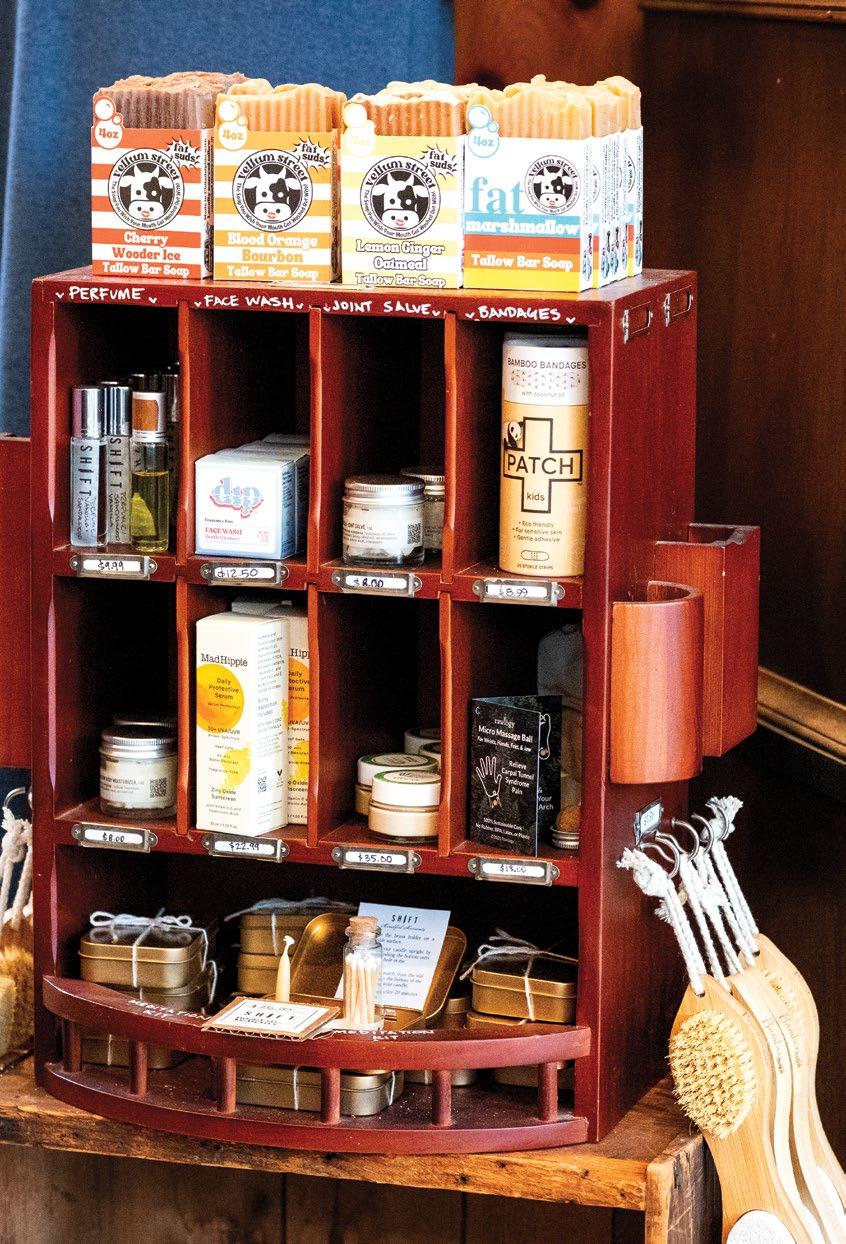
When people walk into SHIFT Sustainable Goods + Services, after the aroma of eucalyptus welcomes them in, they might find themselves looking at the chalkboard and wall of glass jars, feeling like they’ve stepped into a general store from a previous century.
But at SHIFT, rather than creating nostalgia, reducing waste and protecting the earth for future generations is the number one goal.
“People will come in sometimes and they’ll say, ‘Do you have a trash can?’ And we’ll say, ‘No, we don’t,’” says SHIFT co-founder Eleisha Eagle. “‘We don’t have a trash can here.’”
“We actually don’t make trash here,” adds co-founder Kimberley Bezak.
Tucked on Haverford Avenue in Nar -
lowe
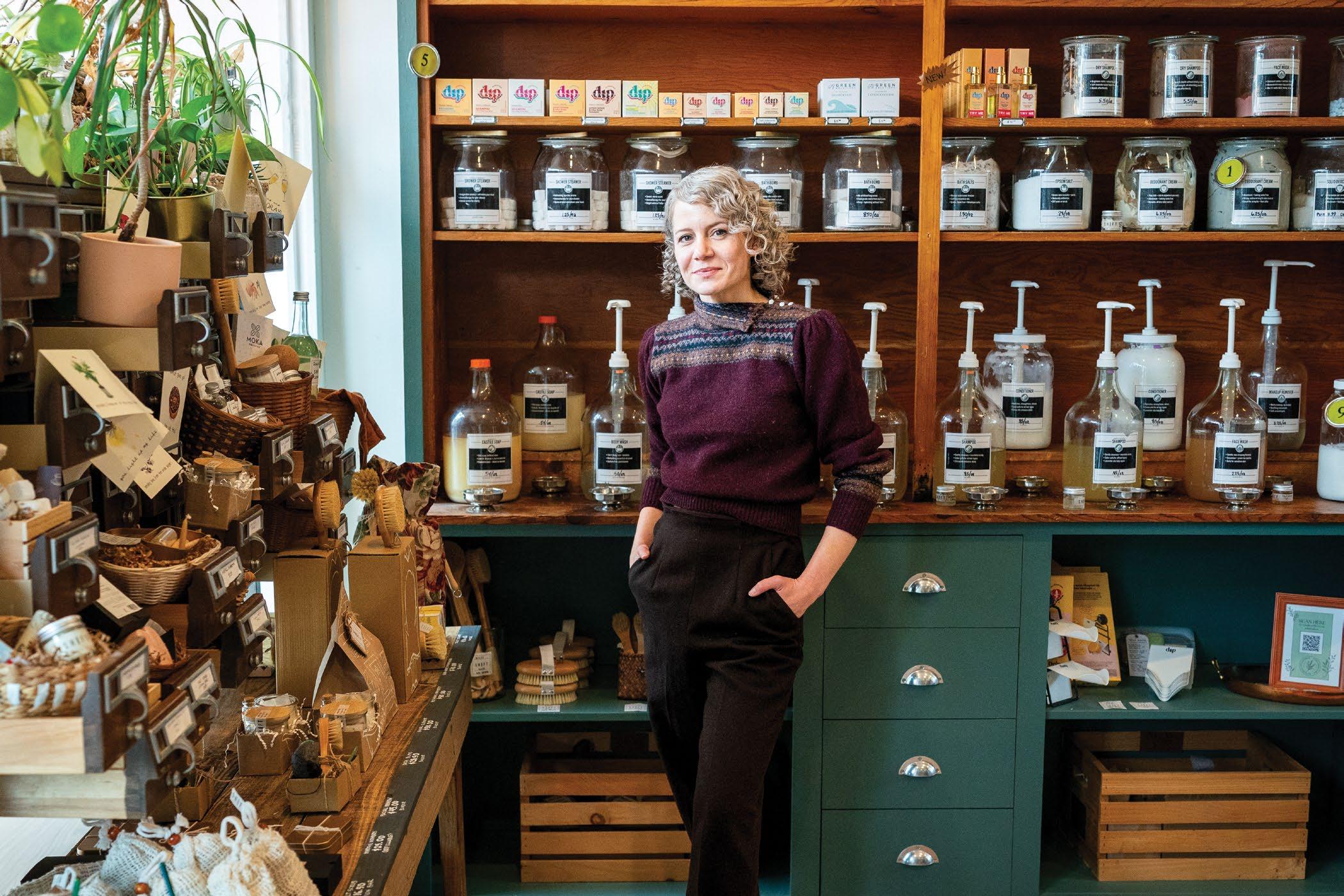
berth, SHIFT is a refillery, where customers can bring their own containers (or purchase one at the store) and buy any of more than fifty liquid household products by weight, such as laundry detergent, deodorant and hand soap.
When it comes to the containers customers bring to fill, Eagle and Bezak have seen it all:
glass jars, an old whiskey growler — one customer even ran over from a nearby laundromat with a drinking glass, filling it with just enough detergent for their load of laundry.
These small, individual choices to avoid buying products packaged in single-use plastics are at the core of SHIFT’s values.
“Every shift counts,” Bezak says.
Eagle calls the store a “judgment-free zone” for folks who might be new to living lowwaste lifestyles. She and Bezak love teaching customers about easy swaps they can make.
Eagle and Bezak, both originally from Louisiana, founded SHIFT in 2021. They met at a lecture Bezak gave about zero-waste living at the Narberth Library. At the time, it was hard to consistently find packaging-free products in brick-and-mortar stores, so the two created SHIFT as a one-stop shop for low-waste and waste-free products.
We actually don’t make trash here.”
kimberley bezak
SHIFT began as a pop-up at the American Family Market down the street before moving to their current space in June 2022. When they first started, they sold a handful of the basics they still offer today: hand soap, shampoo, compostable dental floss
Eleisha Eagle, cofounder of SHIFT, in front of the refillery options available to her customers, which include house cleaners and body soaps.
and other daily personal care products.
Eagle says that their expanded space has allowed them to spread the idea that lowwaste living is an option, and that it can be an easy one.
They’ve added other plastic-free household and personal care items, like shave soap bars, toothpaste tablets and dog treats, to their inventory as well.
“The shop doesn’t look like what we thought it would have looked like, because we grow with our customers,” Eagle says.
The store is split into two rooms: on the left is the refillery, and on the right is a boutique selection of local secondhand clothing, home goods, glassware and more. This side of the store features products from other local businesses, and is an educational space for SHIFT’s workshops and events, which range from clothing mending to monthly knife sharpening and candle refill events.
That community of shoppers and event attendees that SHIFT has built has made a measurable impact: Since opening, SHIFT has diverted 75,000 single-use containers from landfills.
Bezak says that every day, SHIFT’s customers are voting with their dollars. “And they’re more committed than ever, understanding this is where they are able to have an individual impact on their community and on the planet.” ◆
Fill ’er up
Looking for a refillery close to home? Check out these options in three Philly neighborhoods
SOUTH PHILLY
Good Buy Supply
goodbuysupply.co • 1737 E. Passyunk Ave. • Open Tuesday-Sunday • Founded: November 2020
What do you consider as your specialty? Emily Rodia, owner: Having all of these sustainable products under one roof. What do you think draws people most to your business? The refill station for sure. The fact that we have a lot of natural products here … in a pretty walkable spot. What product would you most like to see a zero-waste version of next? There are products out there that could become solid. Those are excellent swaps. I love all the bar versions of things.
NORTHERN LIBERTIES
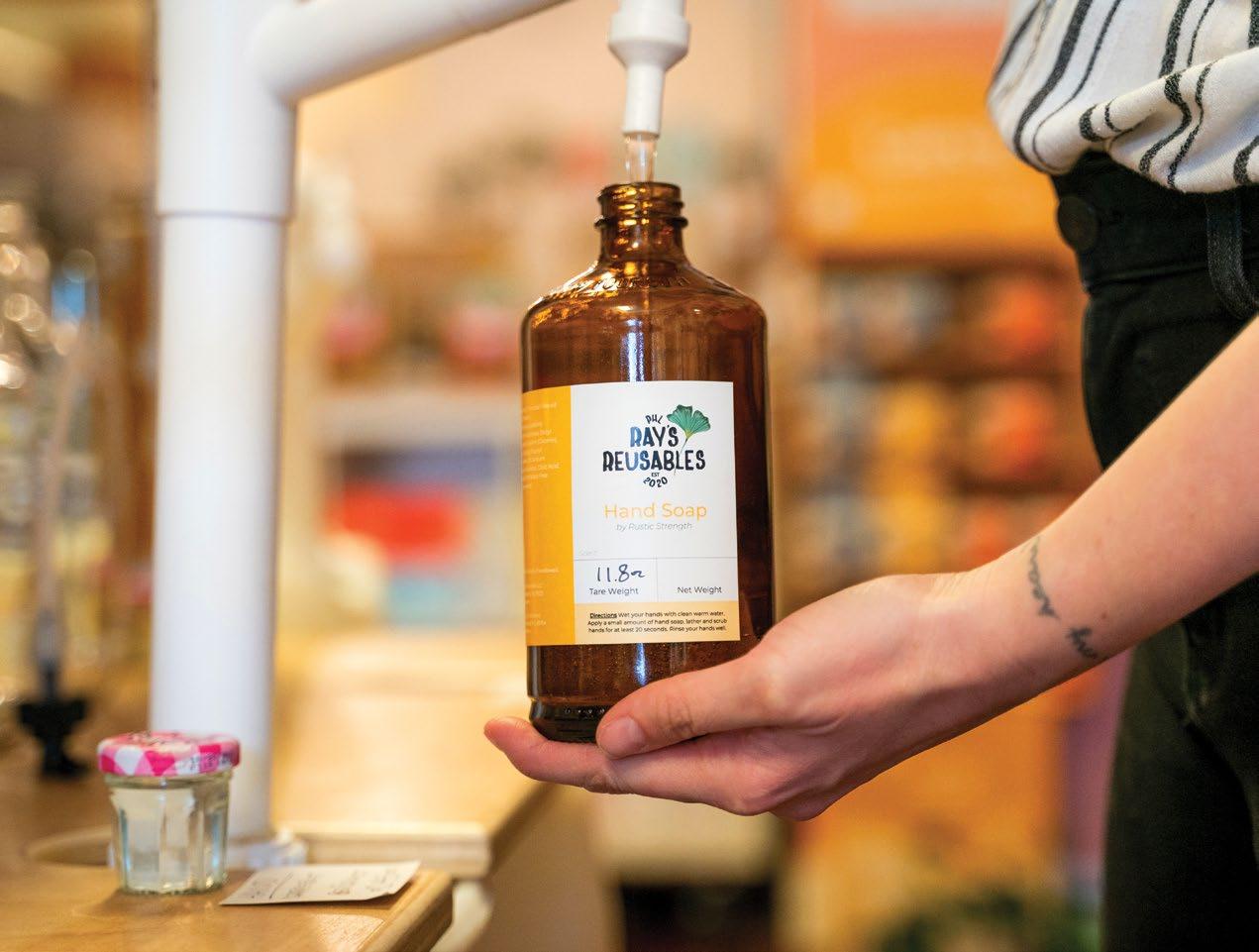
Ray’s Reusables
raysreusables com • 935 N. 2nd St • Open Wednesday-Monday • Founded: January 2020
What do you consider as your specialty? Ray Daly, owner: The bulk refills on cleaning and body products. We make some stuff in-house as well. What do you think draws people most to your business? The fact that we carefully vet all the products coming in to be clean and green, plastic-free or with minimal packaging, and [have a] responsible supply chain. What do you use the most at home? The shampoo and conditioner bars. Or the bar soap.
MOUNT AIRY
Perennial Refill Hub
perennialrefillhub com • 6669 Germantown Avenue • Open Wednesday-Sunday • Founded: March 2024
What do you consider as your specialty? Susan Barry, owner: Meeting people where they are in the quest to lower household waste, without judgement, and supporting them in finding what works best for them. What do you think draws people most to your business? Our customers love shopping in a light and airy 1740 schoolhouse building fitted out with vintage and upcycled display furnishings. The setting recalls a more traditional, pre-plastic way of procuring everyday necessities. What do you sell the most of?We sell plenty of dish, hand and laundry soap, planet-friendly kitchen and pantry supplies, shampoo and conditioner bars and natural deodorant.
REGROUP. REGROW. SURVIVE.
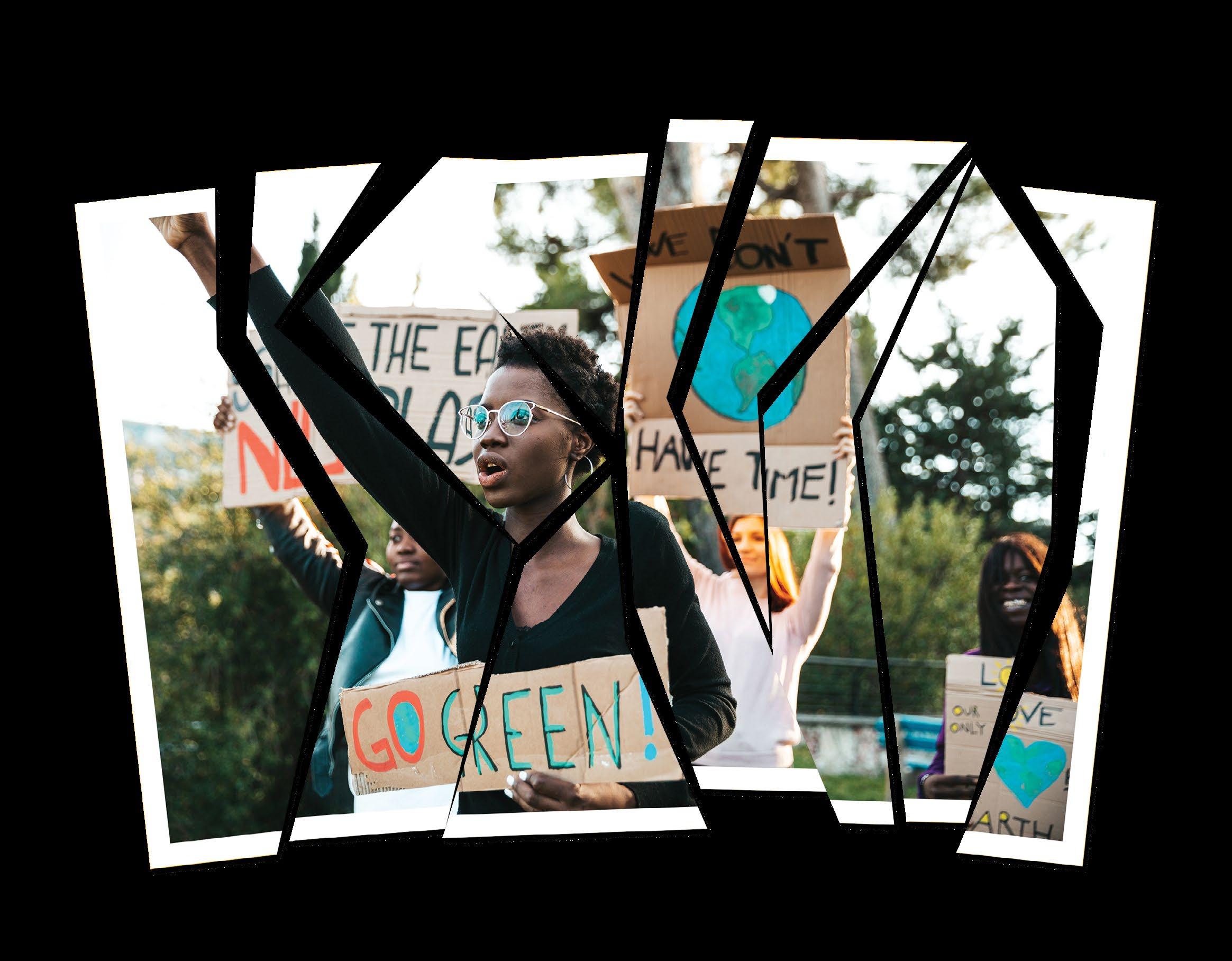
Philly-area environmental justice groups are finding resilience in the wake of federal funding cuts
BY SARAH RUIZ
It was going to be transformational. A place for neighbors to shelter during extreme heat or cold. To receive relief and support after natural disasters. To learn about large forces like climate change and environmental justice and understand how they intersect in this corner of South Philly called Grays Ferry. The building would host teachins and green job training and provide a new home for Philly Thrive, the community organization instrumental in shutting down the Philadelphia Energy Solutions oil refinery that had been poisoning the neighborhood for more than a century.
The Grays Ferry Resilience Hub, as envisioned by neighborhood resident and Philly Thrive board president Sonya Sanders, was going to be a place
PHOTO BY JARED
where people could come to get their needs met, whether that was food assistance, home repairs or resources to help neighbors advocate for their rights.
The hub was to be a central operating location for all of Philly Thrive’s programming — a physical representation of their holistic approach to environmental justice. The staff already had its eyes on the perfect building.
Then, with the issuance of a single executive order, their plan went up in smoke.
$20 million lost, a year spent trying to regroup
When Philly Thrive and their partners at the Energy Coordinating Agency of Philadelphia (ECAP) and Habitat for Humanity applied for a Community Change Grant from the U.S. Environmental Protection Agency, they were told their resilience hub idea was one of the strongest proposals the agency had ever seen. The group was awarded $20 million to launch the hub, provide climate-safe home repairs and establish workforce training programs.
But that was in 2024, before President Donald Trump assumed office again and environmental justice became one term on a list of hundreds for which grants and programs could get flagged as wasteful spending and subsequently terminated.
Almost immediately after the new administration took office, Philly Thrive co-managing director Alexa Ross says, the organization found its access to grant funds
nearly $100,000,” Ross says.
The termination rocked the organization, forcing the halt of its active programming and the layoff of all but Ross and two other employees, who are paid for just eight hours a week but work many more to keep the organization afloat. They have had to pivot to emergency fundraising to try to fill that $100,000 gap. The building they’d hoped to buy was sold to someone else.
“Everything was based on the federal grant coming,” says Sanders. “It would have changed our lives.”
Finding strength in local networks
Philly Thrive may be among the hardest-hit organizations in the Philadelphia area, but it is far from the only one. Public Environmental Data Partners, a volunteer group dedicated to preserving federal data, estimates that cuts to the EPA’s environmental justice grants have cost Philadelphia County more than $50 million in direct and indirect eco-
The hub was to be a central operating location for all of Philly Thrive’s programming — a physical representation of their holistic approach to environmental justice.
was frozen. Advisors told staff to get started on the work anyway.
“We were being told from the start in January, both by ECAP and by the technical assistance that was being provided to groups, that ‘it’s very important — so that they can’t terminate your grant — that you move forward on the work,’” says Ross.
Ross and her team began what work they could, paying out of the organization’s operating funds, unsure when they could secure reimbursement. According to Ross, a May court injunction ordered the EPA to reinstate grantees’ access to the reimbursement portal, but a week later, the agency sent a formal termination letter, shutting off access to any money not already paid out.
“That window closed right in front of our faces to get back what was, at that point,
nomic impacts. Organizations such as the Overbrook Environmental Education Center and Bartram’s Garden, projects such as the Eastwick Flood Resilience strategy, and research groups at most Philadelphia-area universities have lost federal grants.
“Folks are now trying to figure out what next steps look like and what learning opportunities came out of it,” says Jerome Shabazz, who heads the Overbrook Center. “Some folks are thinking about how they have to have enhanced community engagement. Others are thinking about how to model different aspects of environmental work that is now de-emphasized federally. And some are getting very specific in terms of how to create new language to explain what it is that they’re doing, taking out those terminologies that have been disfavored.”
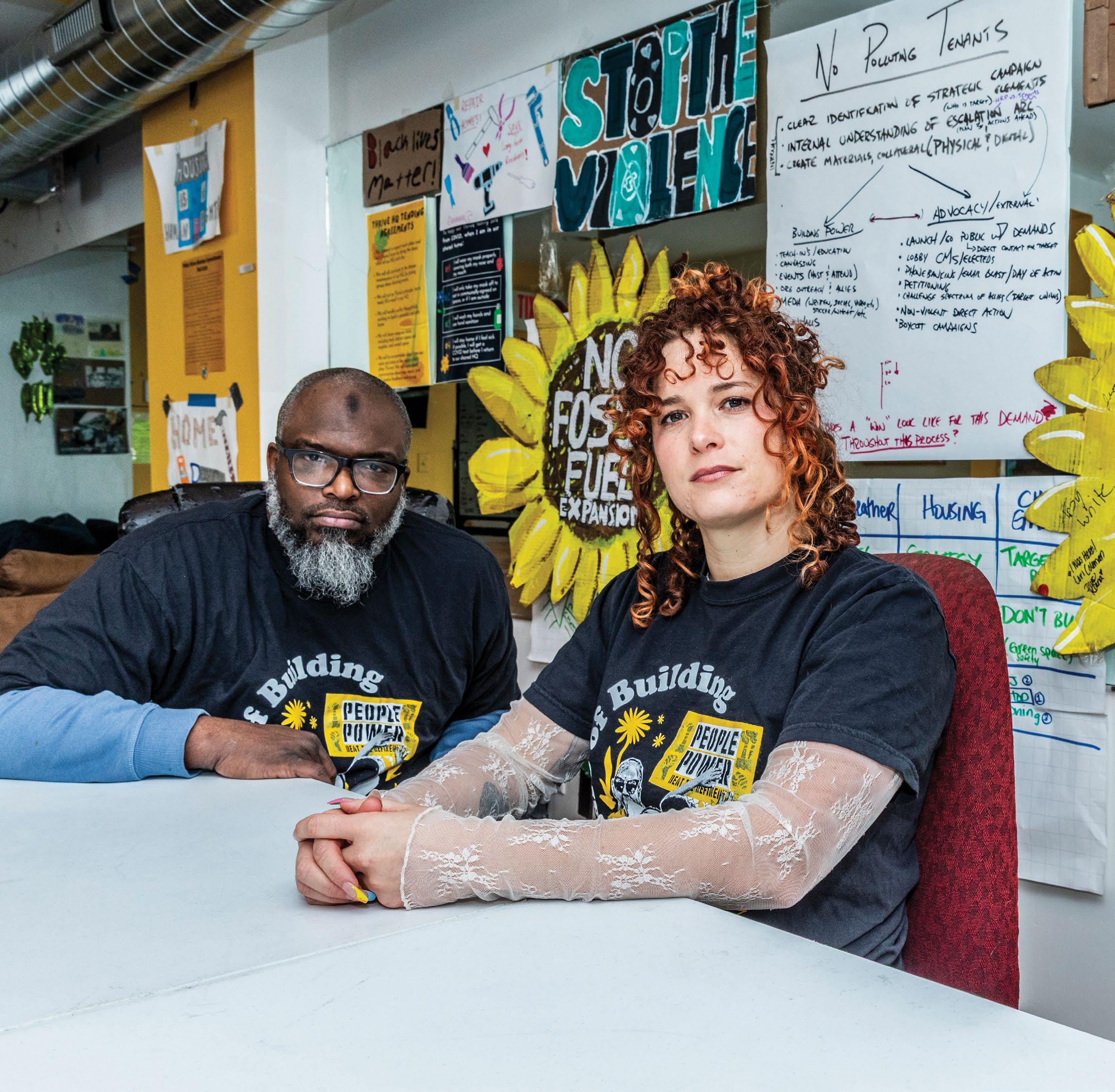
Shawmar Pitts and Alexa Ross lead Philly Thrive as it navigates funding losses that impact its environmental justice work.
Before the cuts, Overbrook was designated as a local “hub organization” under the EPA’s Thriving Communities Technical Assistance Centers (TCTAC) program. The program provided tools and advice to support environmental justice organizations in the complicated process of applying for grants. Through TCTAC, Overbrook was part of a larger network of organizations across the Mid-Atlantic that exchanged knowledge and helped each other troubleshoot similar challenges. In turn, Overbrook played the support role for smaller environmental justice organizations around Philadelphia. The TCTAC program was cancelled in February 2025, and that regional connection was severed with it. But Shabazz says Overbrook was lucky to maintain some ability to continue acting as a local resource hub, thanks to other funding sources.
“We want to be able to see ourselves as a partner to this work and whoever needs that help,” says Shabazz.
As federal funding becomes less reliable and even hostile to the work of environmental justice, Shabazz sees an opportunity for community groups, researchers and city leaders to enhance cross-organizational collaboration. It’s that solidarity and resource sharing within Philadelphia’s environmental justice community that has touched co-managing director of Philly Thrive Shawmar Pitts most during this moment of turmoil. When the organization launched its fundraiser, it was largely other local organizations that stepped up. As of December, Philly Thrive had managed to raise about 75% of its fundraising goal.
“They’ve been the ones that kept us here alive,” Pitts says. “We still haven’t met the goal, but we are definitely inspired by all of the support that we’ve gotten from all of the different organizations, and even the everyday people that [are] part of the community.”
Beyond the money
In addition to the money lost, the federal cuts will create cascading effects that place communities at risk in the long term, according to vice provost and executive director of The Environmental Collaboratory at Drexel University Mathy Stanislaus.
“You have direct resources that are not available,” he says. “But then you also have [the loss of] the science, data and enforce-
ment that are crucially necessary to protect a community.”
Data loss, particularly related to environmental hazards, Stanislaus says, will have major consequences. Federal agencies have scrubbed their websites of many of the same terms that grants are being flagged for, including “climate science” and “environmental quality.” The Environmental Justice Screening and Mapping Tool (EJScreen), a federal portal that hosted data about environmental burdens like air and water pollutants, as well as demographic indicators including income, race and English language proficiency, has been taken down.
“As you pull back the data, communities will fail to understand and invest in the prevention and preparedness to prevent death, injury, damage to homes, damage to
the economic conditions of neighborhoods,” says Stanislaus.
Publicly funded information is how Pitts first learned about climate change. He says he spent his childhood watching documentaries on WHYY-TV 12, Philadelphia’s public broadcasting station, about sea-level rise. Years later, when he encountered Ross speaking on behalf of Philly Thrive in Stinger Square Park about the injustice of the oil refinery’s placement and the abnormality of cancer and asthma rates in the neighborhood, he was able to connect the organization’s mission to a bigger environmental picture. He hoped that the Grays Ferry Resilience Hub would become a place where all neighbors could experience that connection for themselves.
“It would give everyone the opportunity
Jerome Shabazz of the Overbrook Environmental Education Center has had to adjust plans that were tied to now-lost federal grants.
We still haven’t met the goal, but we are definitely inspired by all of the support that we’ve gotten from all of the different organizations, and even the everyday people that [are] part of the community.”
shawmar pitts
to have that awakening of environmental justice, climate justice, and how to reverse climate change. [It would] give people the opportunity to understand what’s going on and get that information,” says Pitts.
Without federal support, communities will have to find workarounds to access the same information that was, until months ago, freely accessible. Public Environmental Data Partners has preserved a copy of the EJScreen website, as well as dozens of federal climate and environmental databases, for public access. Without funding to continue underlying research, however, these archived versions will slowly fall out of date.
“It just makes it a lot harder to do this work,” says Temple University professor Christina Rosan. Rosan had worked with Clean Air Council on a federally-funded planning grant to combine locally collected air quality data with government datasets in a tool that communities could use to identify local environmental justice concerns. Planning grants are intended to fund the prep work for larger, longer-term projects, but given the cancellation of the EPA’s environmental justice programs, Rosan says, there’s no longer a federal avenue to build out that project.
“I don’t see how it helps make people healthier and safer not to know about what’s in their neighborhoods,” says Rosan. Shabazz hopes that communities themselves might be able to fill in data gaps. He uses the example of environmental “report cards” that could help communities understand risks like extreme heat and air pollution at a hyperlocal level.
“If we don’t have the resources to do that big thing, we should do it where we are,” says Shabazz.
Surviving for the community
For Philly Thrive, co-managing director Ross says it could take some time before the organization is able to find its new path forward. Meanwhile, the repercussions of the lost grant continue to echo. Though other grant recipients have joined in active class action lawsuits to challenge the termination, ECAP decided to formally close out the resilience hub grant at the end of 2025. The closeout process requires all recipients to compile and submit final reports and provide any supplemental documentation on request. Philly Thrive could be accountable
to the government for months to come, despite never receiving a single federal dollar.
But through the exhaustion, grief and complications, Ross says the organization is still finding new ways to get its work done, because the needs of Grays Ferry residents have yet to be met.
“Folks have not gotten any type of justice, and that keeps us at Philly Thrive up at night and showing up every day, even despite how tough this year has been,” says Ross.
Philly Thrive’s vision for justice still includes the resilience hub, but staff are looking at a much longer timeline to realize it. The organization is pursuing a grant from the William Penn Foundation to help it survey the community and isolate the most pressing needs, something Ross says it would have liked to do before applying for the Community Change Grant. She views this redirection as an opportunity.
“We can now work with the community to polish exactly how the hub functions, what services are most important to offer, and then when we have more of the community interested, excited, committed for the resilience hub vision, then we’ll be able to pursue the funding for it,” says Ross.
Philly Thrive is also continuing to engage in City housing policy, advocating for home repair and housing support for low-income residents across the city. Since the shutdown of the refinery, Sanders says neighbors have felt the pressures of gentrification accelerate. The redevelopment of the refinery land into a warehouse district has opened the area to new business interests, and the Children’s Hospital of Philadelphia has broken ground on and plans to finish building a parking garage in the neighborhood this fall. Long-term residents, who suffered the health impacts of the refinery for decades, may yet be priced out of the neighborhood while others enjoy the benefits of its closure. This is not an outcome that Philly Thrive will accept without a fight.
“We want to be treated fairly. We want good homes too. You know that our lives do matter. Our health matters,” says Sanders.
So despite the setbacks of a tumultuous year, Pitts says the organization will, as ever, keep pushing for justice.
“We’re holding on and trying to survive,” says Pitts. “We want to be resilient, and we want to just weather the storm, because we know that good times will come again.” ◆
GRATE EXPECTATIONS
A crowdsourcing stormwater management project in Camden dodges the “woke DEI grant” purge BY
BERNARD BROWN
On feb. 11, 2025, U.S. Sen. Ted Cruz released a database of 3,483 National Science Foundation grants that the Senate Commerce Committee, headed by Cruz, described in a press release as “woke DEI grants.” Cruz had previously used the list of grants to prepare an October 2024 report claiming that the Biden administration had politicized science.
Buried in the list was a 2022 grant for $449,633 to Drexel University to develop a pilot program to crowdsource stormwater inlet cleaning in flood-prone neighborhoods in Camden, New Jersey. The pilot project survived both its mention in Cruz’s database and the funding chaos of the first year of the Trump administration, but the episode sheds some light on what is at risk as the political winds shift against environmental justice programs, and how these efforts can survive.
“We wrote this grant many years ago,” Drexel Engineering professor Franco Montalto says.“What it has turned into is the development of an app that enables crowd sourced inlet cleaning to reduce flooding.”
As anyone who has had to circumnavigate a giant puddle at a street corner knows, a clogged stormwater inlet can lead to flooding. Water that should be draining into the stormwater system can spread up the street, creating barriers to transportation and flooding property. Many cities have crews that regularly clean trash out of the inlets, but cash-strapped Camden often falls behind, says Montalto.
Christina Allen, who lives in the Waterfront South neighborhood in Camden, says streets flood routinely when it rains for a prolonged period of time. “It doesn’t have to be really heavy,” she says. When the neighborhood’s main street, Ferry Avenue, floods, “You have to travel around the whole area to get home.”
So when she heard about the app, called Cleanlet, at a community meeting a couple years ago, she gave it a shot. She wasn’t working at the time, and the app offered a little extra money as well as a meaningful task to devote herself to. “It was something to look forward to,” she says.
Allen was one of 25 Camden residents who signed up to use Cleanlet. Montalto’s team gave them rakes, shovels, gloves and other basic tools and supplies. The users volunteered to adopt nearby stormwater inlets, and the app notified them when
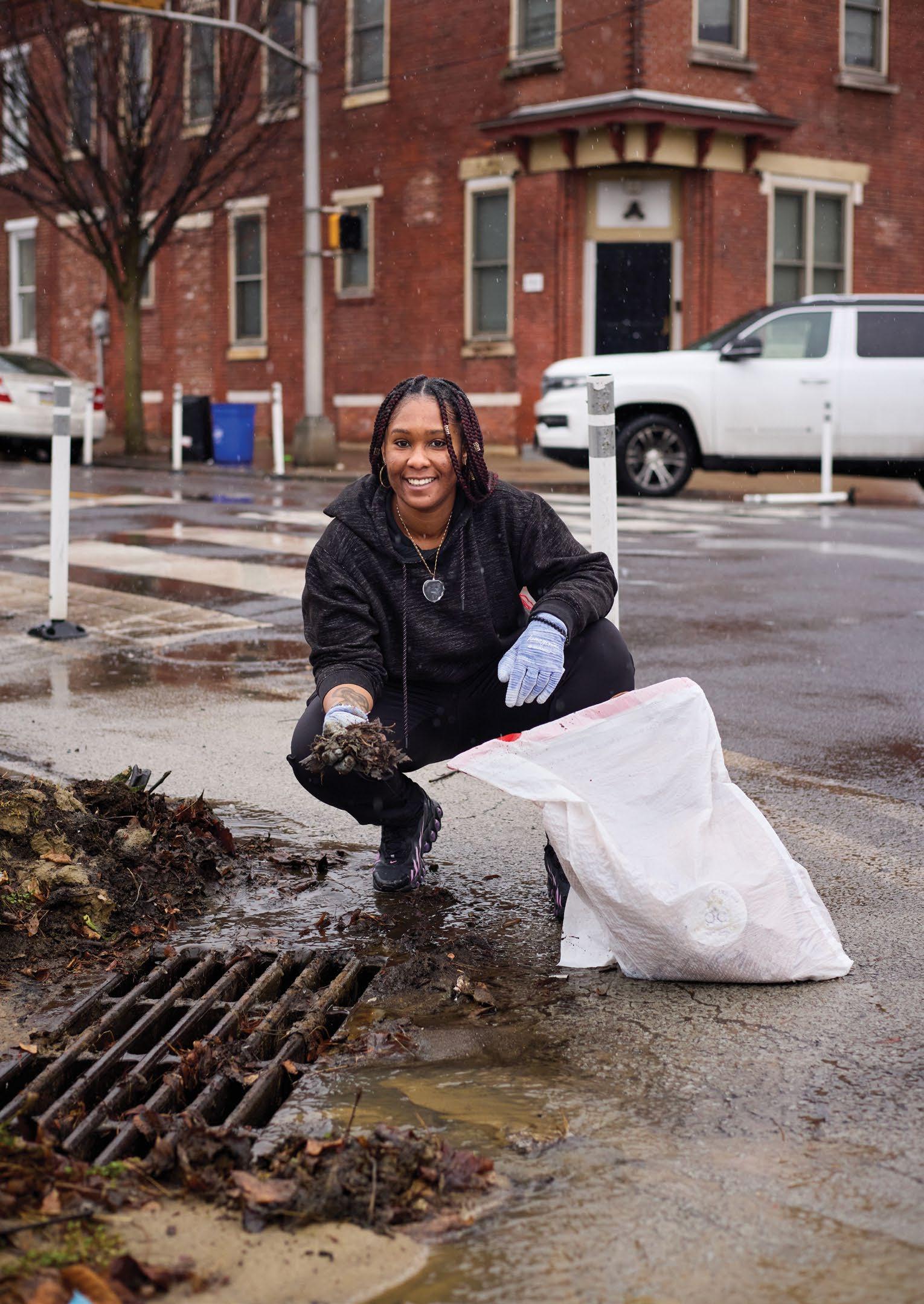
Camden resident Christina Allen was a Cleanlet participant and continues to clean storm drains before rainfall.
rain was on the way so they could clean out trash ahead of time. A photo before and after would prove they had cleaned the inlet, earning them points that could culminate in a financial reward.
At Cruz’s direction, staff from the Commerce Committee had searched a public database of National Science Foundation grants for “DEI keywords and phrases,” such as “under-represented” and “minority,” which Montalto’s team had used to describe Camden’s Cramer Hill neighborhood in the grant description.
Despite landing in Cruz’s database, the pilot ran to its originally planned conclusion. It did run into practical hurdles, such as dry weather that reduced user interest. “Last summer we had a drought,” Montalto says. “We launched the pilot and then it was like ‘who cares, it’s not raining.’” Montalto’s team had also planned to monitor flooding at inlets to measure the impact of cleanings, but vol-
Many cities have crews that regularly clean trash out of the inlets, but cash-strapped Camden often falls behind.
unteers ended up choosing inlets convenient for them to clean, not necessarily where the researchers could place sensors.
Such hiccups are to be expected in a pilot, and Montalto plans to use what they learned through the Cleanlet experience to develop next-generation resiliency crowdsourcing apps.
Montalto says the changing political climate won’t scare him off from researching resiliency. He has already found funding from the William Penn Foundation to continue working in Camden. “I’m going to work where I think the research has the greatest impact. I think people should continue to do that.”
Back in Waterfront South, Allen is still cleaning out her local stormwater inlets. “What opened my eyes was the app,” she says. “It’s still in my head that when it rains, it’s time to clean out the inlets.” ◆
GREEN PAGES
BEAUTY
Hair Vyce Studio
Multicultural hair salon located in University City servicing West Philly & South Jersey since 2013. We specialize in premier hair cuts, color & natural hair for all ages. (215) 921-9770 hairvyce.com
BOOKS
Books & Stuff
The Giving Book Shop! Help me donate books next month by purchasing books I donated this month! books-stuff.com
COMPOSTING
Back to Earth Compost Crew
Residential curbside compost pickup, commercial pick-up, five collection sites & compost education workshops. Montgomery County & parts of Chester County. First month free trial. backtoearthcompost.com
Bennett Compost
The area’s longest running organics collection service (est 2009) serving all of Philadelphia with residential and commercial pickups and locally-made soil products. 215.520.2406 bennettcompost.com
EATS
Fifth of a Farm
Our jams are a tribute to Philly, capturing its rich heritage in every jar. Whether you’re a longtime resident or passing through, take home a taste of the local tradition. Find yours @ fifthofafarm.com
EDUCATION
Kimberton Waldorf School
A holistic education for students in preschool-12th grade. Emphasizes creativity, critical thinking, nature, the arts & experiential learning. Register for an Open House! (610) 933-3635 kimberton.org
ELECTRICIAN
Echo House Electric
Local electrician who works to provide high-quality results on private & public sector projects including old buildings, new construction, residential, commercial & institutional. Minority business. echohouseelectric.com
FARM
Hope Hill Lavender Farm
Established in 2011, our farm offers shopping for made-on-premise lavender products in a scenic environment. Honey, bath & body, teas, candles, lavender essential oil and more. hopehilllavenderfarm.com
Shop your values at these local businesses
FASHION
Stitch And Destroy
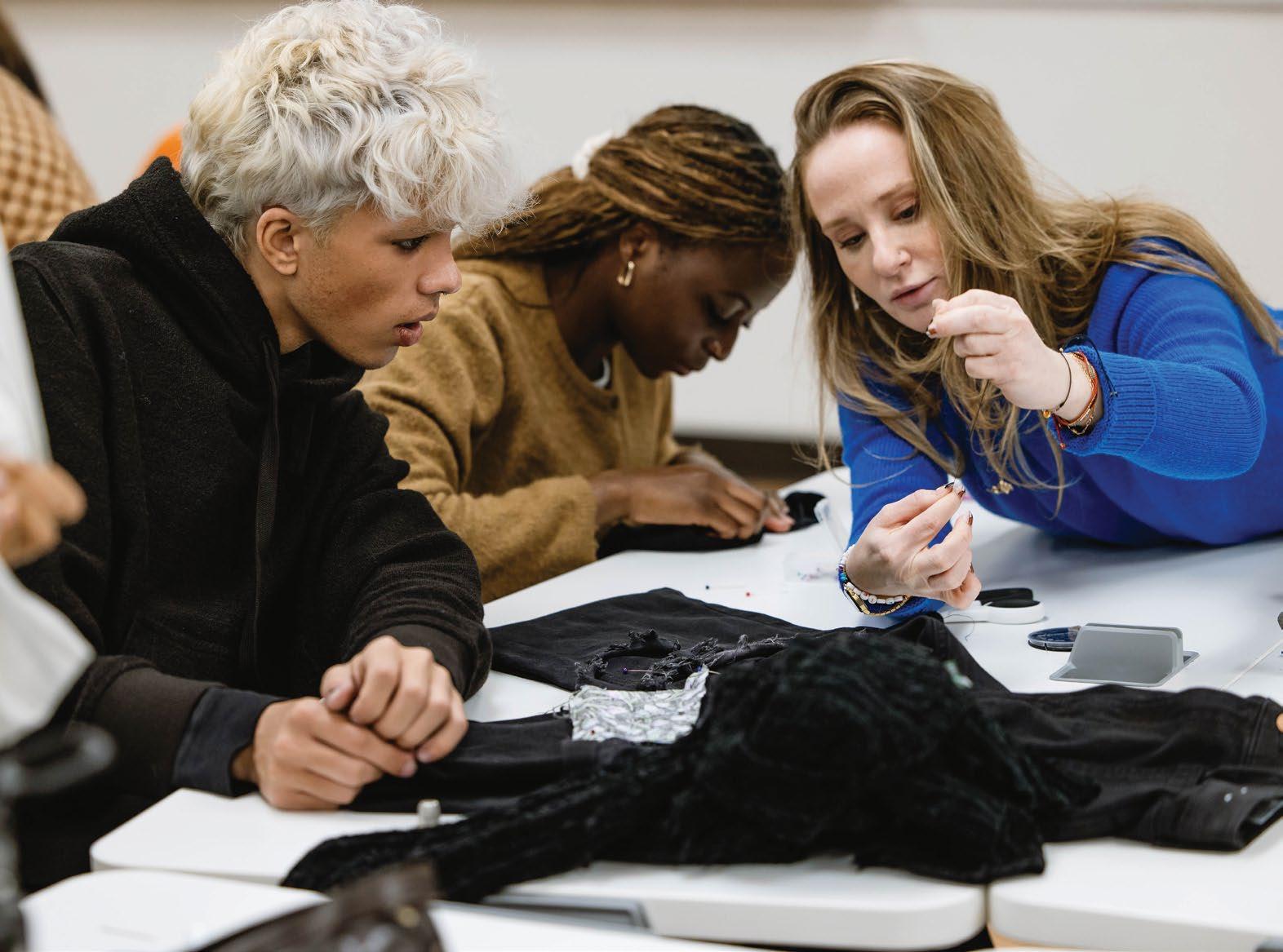
STITCH AND DESTROY creates upcycled alternative fashions & accessories from preloved clothing & textile waste. Shop vintage, books, recycled wares & original fashions. 523 S 4th St. stitchanddestroy.com
GREEN BURIAL
Laurel Hill
With our commitment to sustainability, Laurel Hill Cemeteries & Funeral Home specializes in green burials and funerals, has a variety of eco-friendly products to choose from, and offers pet aquamation. laurelhillphl.com
GREEN CLEANING
Holistic Home LLC
Philly’s original green cleaning service, est 2010. Handmade & hypoallergenic products w/ natural ingredients & essential oils. Safe for kids, pets & our cleaners. 215-421-4050 HolisticHomeLLC@gmail.com
GROCERY
Kimberton Whole Foods
A family-owned and operated natural grocery store with seven locations in Southeastern PA, selling local, organic and sustainably-grown food for over thirty years. kimbertonwholefoods.com
MAKERS
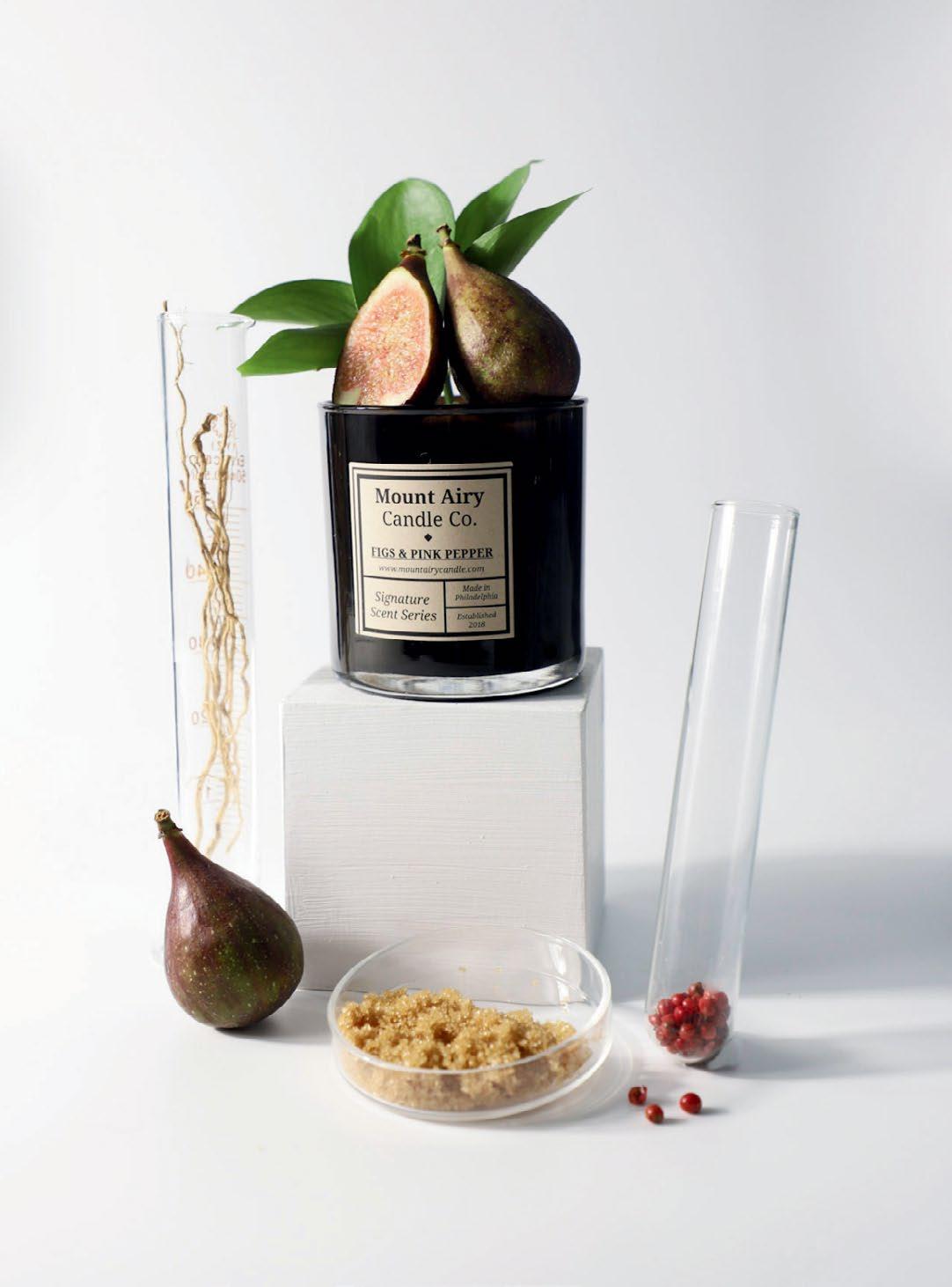
Mount Airy Candle Co.
Makers of uniquely scented candles, handcrafted perfumery and body care products. Follow us on Instagram @ mountairycandleco and find us at retailers throughout the region. mountairycandle.com
RECYCLING
Philadelphia Recycling Company
Full service recycling company for office buildings, manufacturing & industrial. Offering demo & removal + paper, plastics, metals, furniture, electronics, oils, wood & batteries philadelphiarecycling.co
WELLNESS
Center City Breathe
Hello, Philadelphia. Are you ready to breathe? centercitybreathe.com
ATTENTION: Makers, small businesses and green entrepreneurs: Place your ad here! email alex@gridphilly.com
MOVING THE NEEDLE
PA Fibershed’s University Ambassadors educate peers on textile sustainability
BY JULIA LOWE
Cristina de jong, a master’s student studying textile engineering at Thomas Jefferson University, is a fervent reader of clothing labels, carefully assessing fiber content before purchasing new garments.
“I’ve sort of given myself a reputation among my friends and family,” says De Jong. “I will be your sustainable clothes consultant. Like, tell me if you’re going to buy something and I’ll tell you if this is a good purchase for you or not.”
De Jong is president of the Jefferson University chapter of Pennsylvania Fibershed’s 2025-26 student ambassador cohort, an application-based program that operates as an on-campus organization. Alongside five other Jefferson student ambassadors, De Jong is a peer educator on sustainability in textiles and fashion, and helps facilitate on-campus events like clothing swaps and natural dye workshops.
The ambassador program, in its first year, also has a chapter of six students at Drexel University, where Pennsylvania Fibershed co-founder Rachel Higgins is a professor of fashion design. Higgins formed Pennsylvania Fibershed with Leslie Davidson in 2023 to strengthen connections across the state’s fiber, textile and fashion industries, building up circular and sustainable supply chains. Educational programming has always been a core component of the nonprofit, which now has its 12 peer educators sharing information about the impacts of fast fashion and overconsumption.
“The idea behind the ambassador program is that we can train students from all across the state, who can then work on their own campuses to spread more of our mission and further the work of Pennsylvania Fibershed,” says Higgins.
While Gen Z has a growing awareness of sustainable fashion consumption, the fash-
ion industry remains one of the most environmentally detrimental, generating 10% of global carbon emissions and consuming 1.5 trillion liters of water annually. Fast fashion, defined by mass-produced garments made mostly with synthetic fibers, particularly targets younger consumers with low prices and rapid trend cycles. And millions of tons of textile waste end up in landfills every year. As Davidson puts it, we have six generations of clothing on this planet — enough to clothe everyone.
The cohorts include both undergraduate and graduate students representing a wide range of fields of study, from fashion design and textile engineering to law. Pennsylvania Fibershed provides the ambassadors with training, resources and access to industry events and workshops, equipping them to spark conversations with their fellow students, whether that’s at a tabling event or in a classroom.
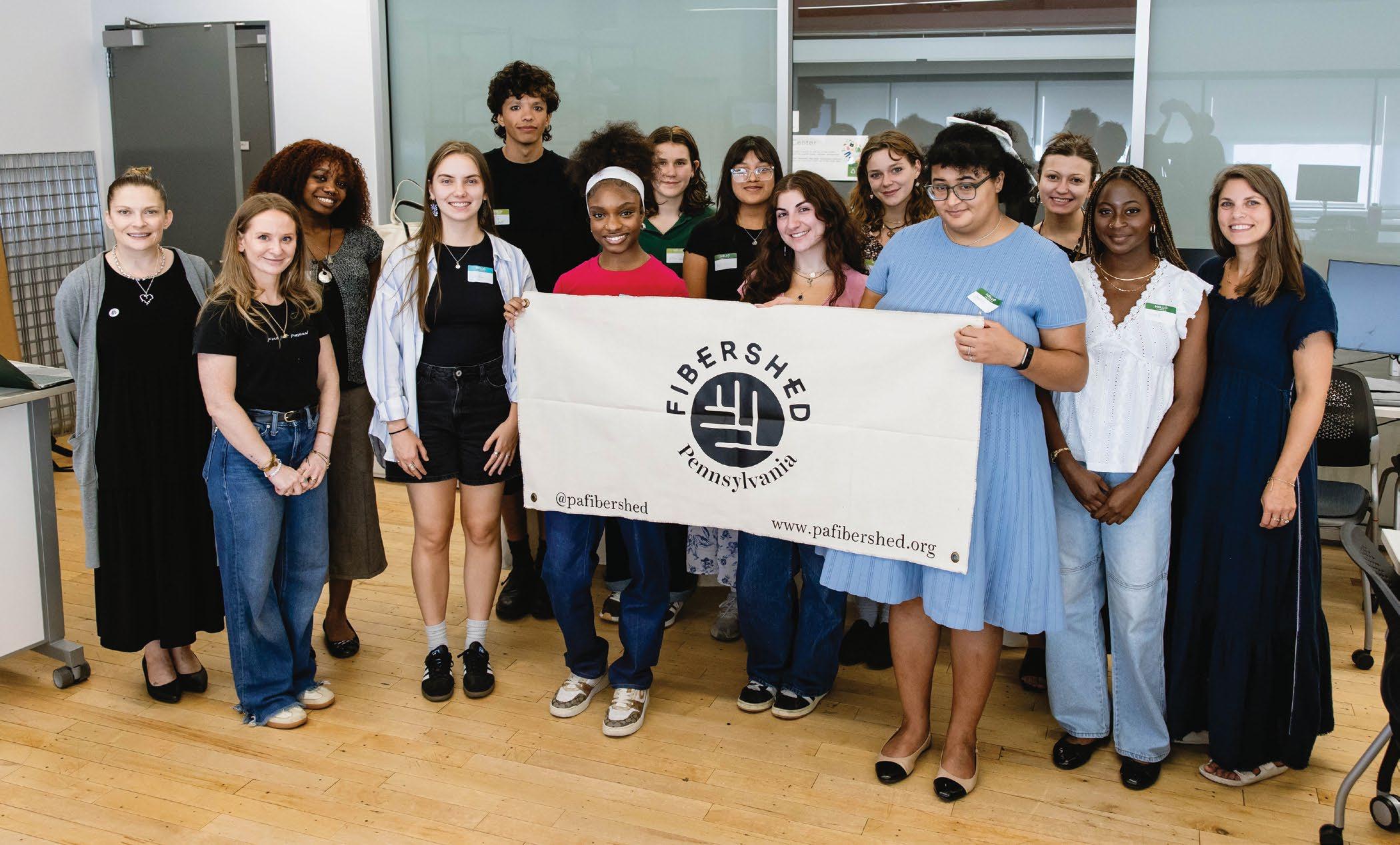
Pennsylvania Fibershed co-founders Leslie Davidson (second from left) and Rachel Higgins (far right) with the 2025-26 cohort of student ambassadors.
I think it’s very meaningful when you can see the production line of where the fiber was first found to where it was spun, where it was made, all the way to cut and sew.”
maggie robinson, Student Ambassador
“I think that 90% of the time, people are very open to the ideas that we’re putting out there. People want to do the right thing,” says De Jong. “But the biggest pushback is, ‘oh, well, it’s expensive.’ And with repairing, it’s just not convenient.”
Ambassadors on both campuses are tackling the convenience issue by hosting clothing swap events and creating other on-campus donation points. Both cohorts held end-of-semester clothing swaps in the fall, where students could drop off unwanted garments they gathered while moving out of their dorm rooms, or exchange them for other donated clothes. On Drexel’s campus, ambassadors have set up a “downcycling” center — a station of bins where students can drop shoes, jeans, socks and bras, which are not typically donatable. Drexel ambassadors also manage Reworn, a secondhand clothing store on campus featuring curated pieces from student donations. Items are offered on a pay-what-
you-wish basis, with proceeds helping fund the ambassador program.
“It’s a great way to build a circular system. They get to really see how that can work firsthand,” says Higgins.
Student ambassadors gain experience in event planning, marketing and outreach, and they have full control over their events calendar. While clothing swaps and mending workshops target issues like fast fashion and overconsumption, ambassadors have also organized events around the science of fibers. Maggie Robinson, events coordinator of the Jefferson chapter and a third-year student majoring in textile product science, works on an alpaca farm during the summers. She hopes to organize a field trip to the farm this spring for her fellow ambassadors to see an upcoming shearing and learn how fleece is processed.
“I think it’s very meaningful when you can see the production line of where the fiber was first found to where it was spun, where it was
made, all the way to cut and sew.”
While ambassadors are not paid, they do receive a free yearlong Pennsylvania Fibershed membership, giving them access to members-only events and monthly meetings. Fibershed also provides what Davidson described as a “120-page handbook” with resources for networking, event planning, email and social media outreach and more. “We want to make sure that, yes, they’re sharing this [information], but also developing their personal skills that they can put on their resume and that can further them in their careers.”
Robinson cites Pennsylvania Fibershed’s supply chain directory as a favorite resource of hers, both for networking and for better understanding the industry players. She and her fellow students have used it to identify internship opportunities and learn more about the mills, farms, designers and others along the textile supply chain.
Robinson and De Jong are planning events for the rest of the spring, focusing on attracting students outside the fashion and textile disciplines. To start, those plans include a larger end-of-year clothing swap, but Robinson said it also means “going out of our comfort zone, going to spaces we as textile majors never get to see, going into different buildings and putting up a poster.”
That outreach effort is already paying off. A natural dyeing workshop they hosted in November drew mostly pre-med students, Robinson said. Jennifer Rhodes, a Pennsylvania Fibershed board member, led the workshop and demonstrated how to dye fabric swatches using turmeric.
“We wanted it to be that anyone could explore natural dyeing, whether you are a textile major or not,” Robinson said.
The student ambassador program will continue for a second year this fall, Davidson says, with plans to expand the program to additional universities across Pennsylvania.
“For me, the most important part about working with this younger generation, this next generation of sustainability leaders and advocates, is their influence on what comes next for our world.” ◆
Pennsylvania Fibershed will hold an information session for university students or faculty members across the state who are interested in joining the ambassador program on March 27. More information can be found at pafibershed org
1. South Street Bridge
WE RIDE in PHILLY
A new photography project features portraits and interviews with the people who roll through Philly’s streets
STORY AND PHOTOS
BY JORDAN TEICHER
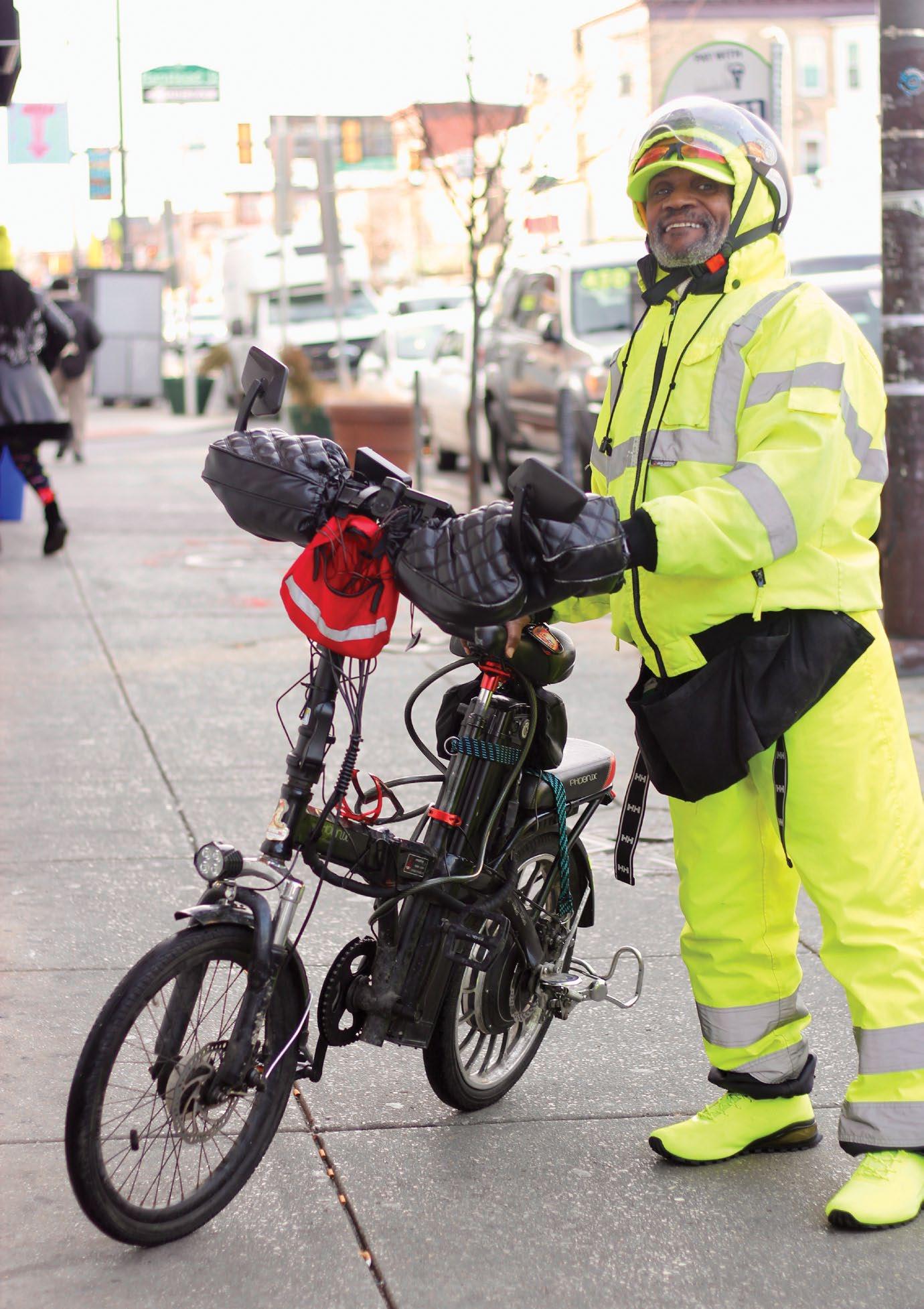
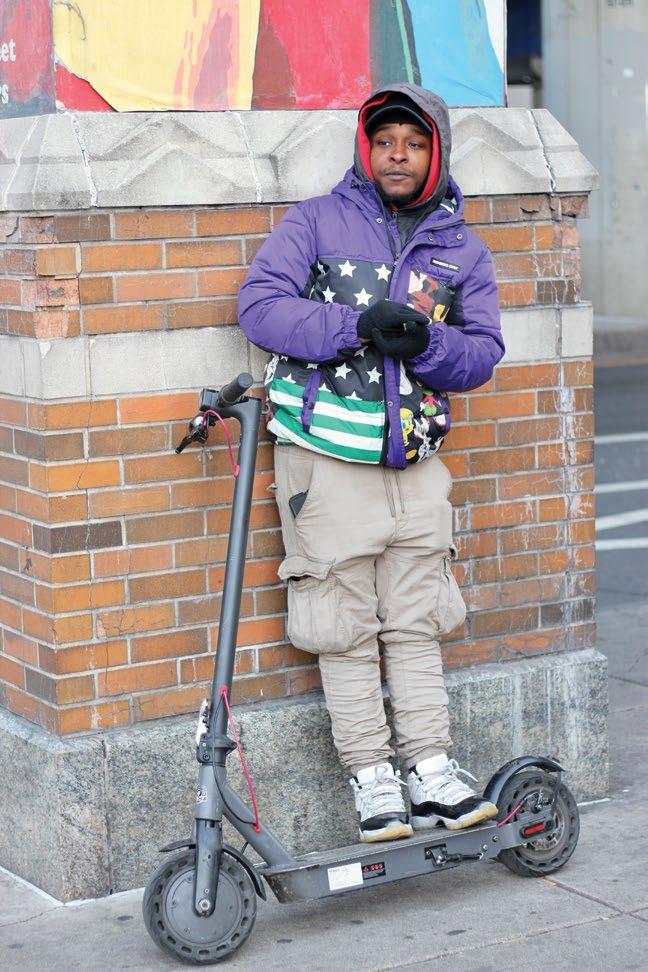
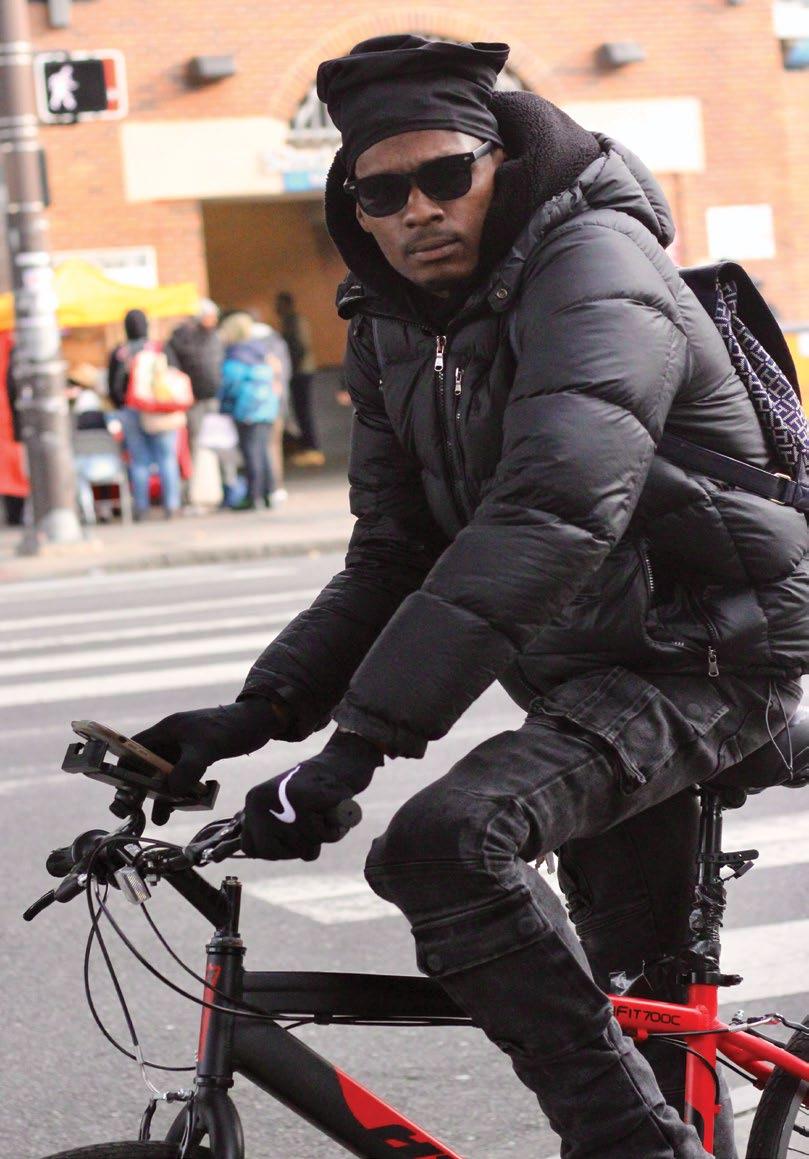
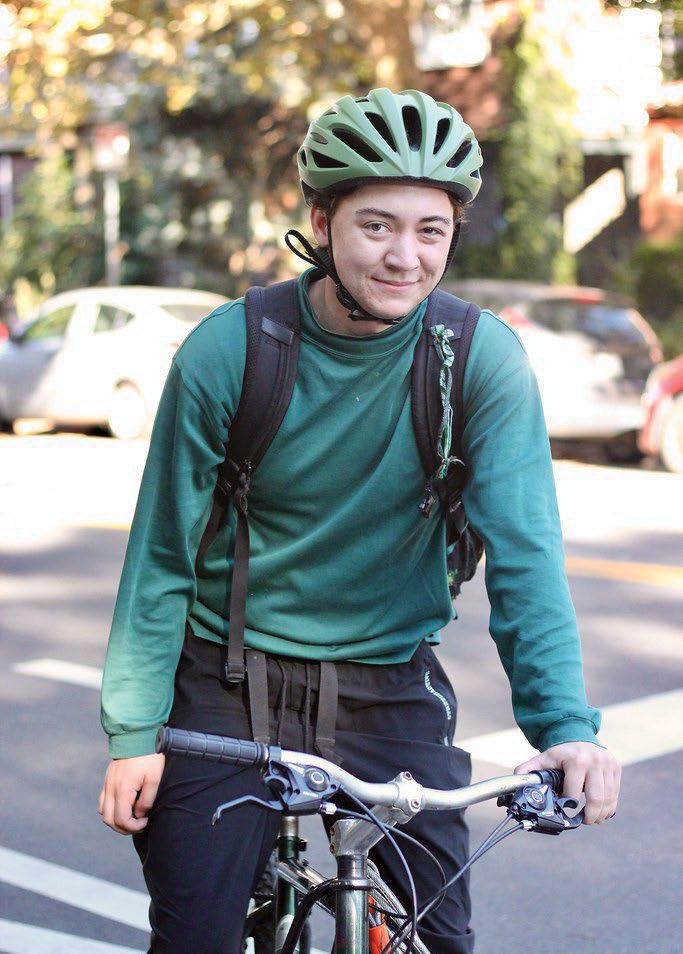
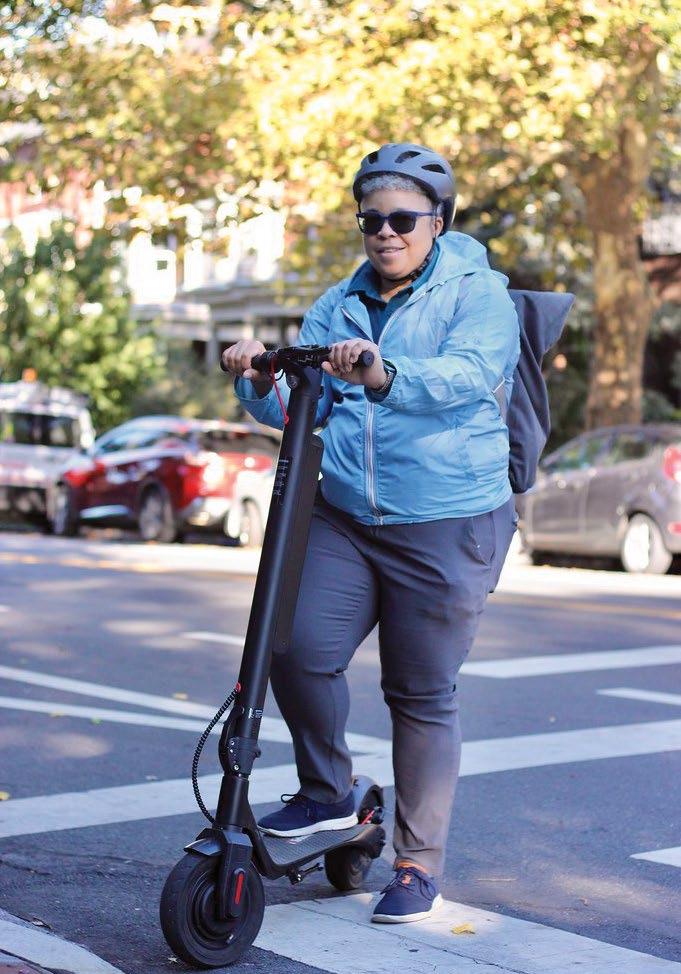
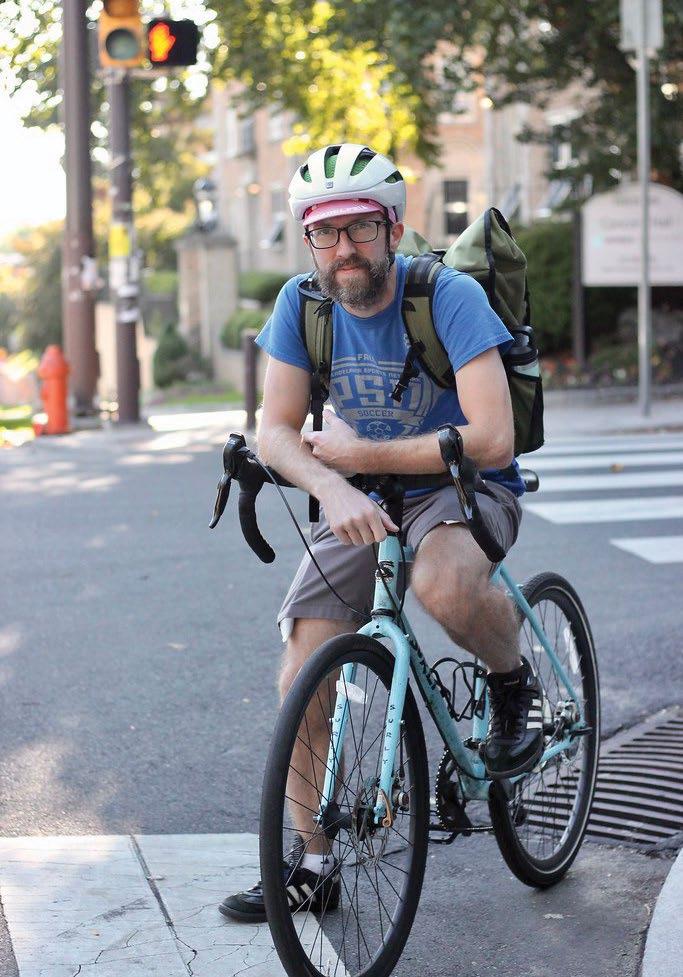
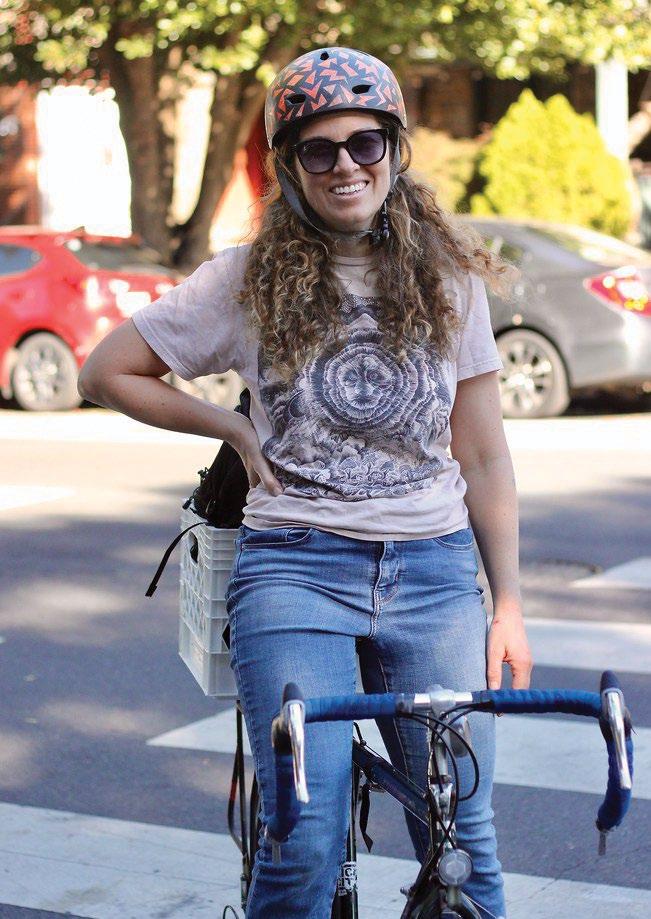
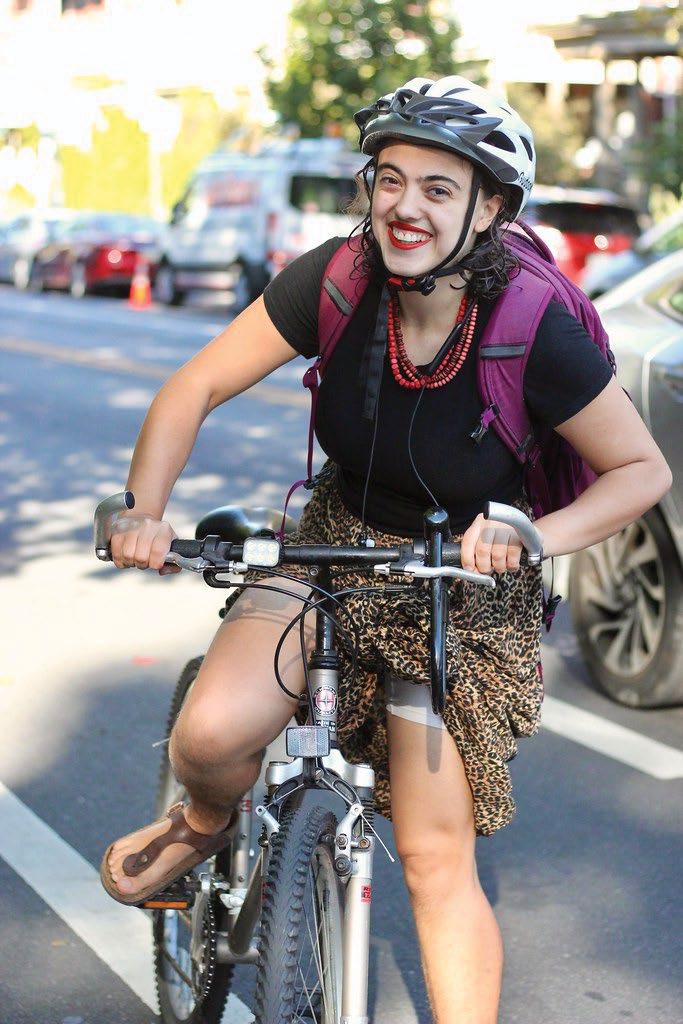
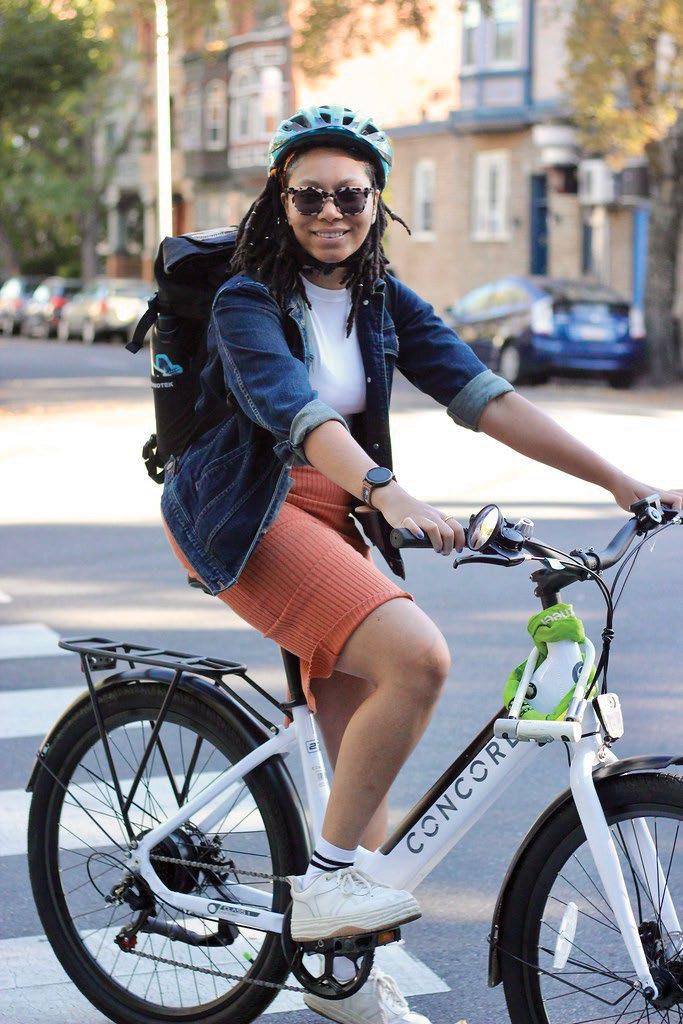
Who rides in Philly? There’s the stereotype: the white, male, hip, young, upwardly mobile cyclist. And then there’s the much more diverse reality: the immigrant e-bike delivery riders, the scooterists, the skateboarders, the kids pedaling their way to school.
“We Ride in Philly” is a project, in conjunction with the grassroots bike advocacy organization Philly Bike Action!, to uncover the broader spectrum of micro-mobility users in the city. We set up at a fixed location and talk to whomever will stop to chat. We seek to not only see but to understand: Why do these Philadelphians ride? What dangers do they face on the street? And how do they use the city’s growing network of protected infrastructure?
The share of the population that rides in Philadelphia is ultimately pretty small. According to the U.S. Census, about 2% of Philadelphia workers commute by bike. That is, in large part, because many Philadelphians don’t feel comfortable getting around in the city’s current bike lane network. That begs the question: Who else might ride in Philly if we made it safer?
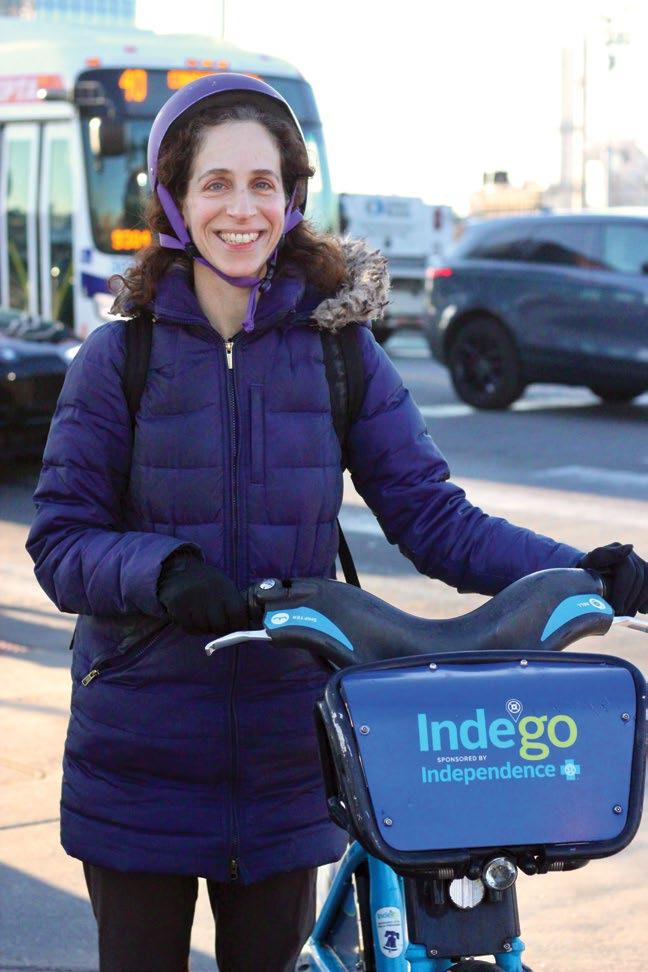
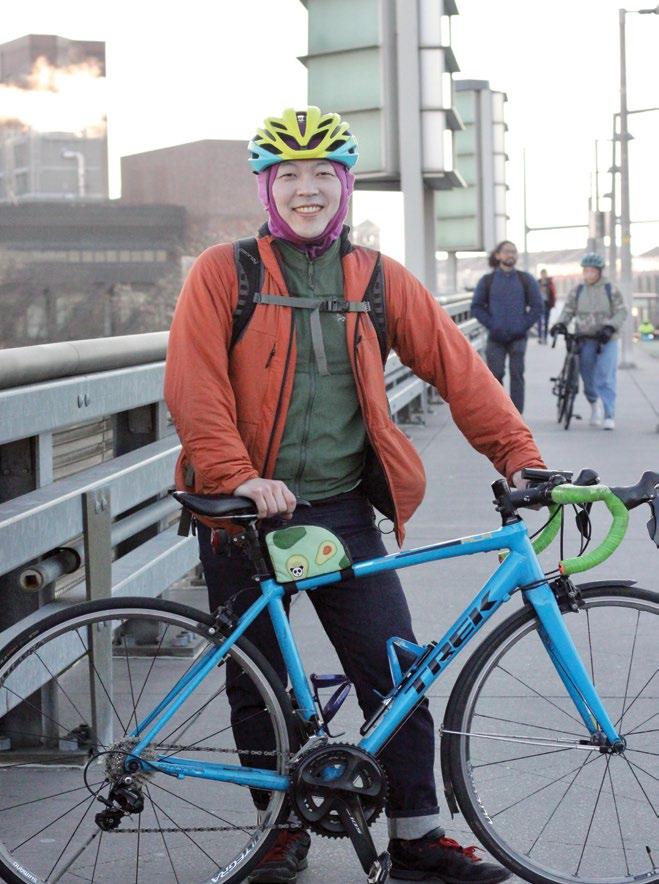
January 2026 → The South Street Bridge is one of the most-traveled micro mobility corridors in the entire state. According to the Bicycle Coalition’s 2024 bike count, nearly 300 cyclists crossed the bridge every hour.
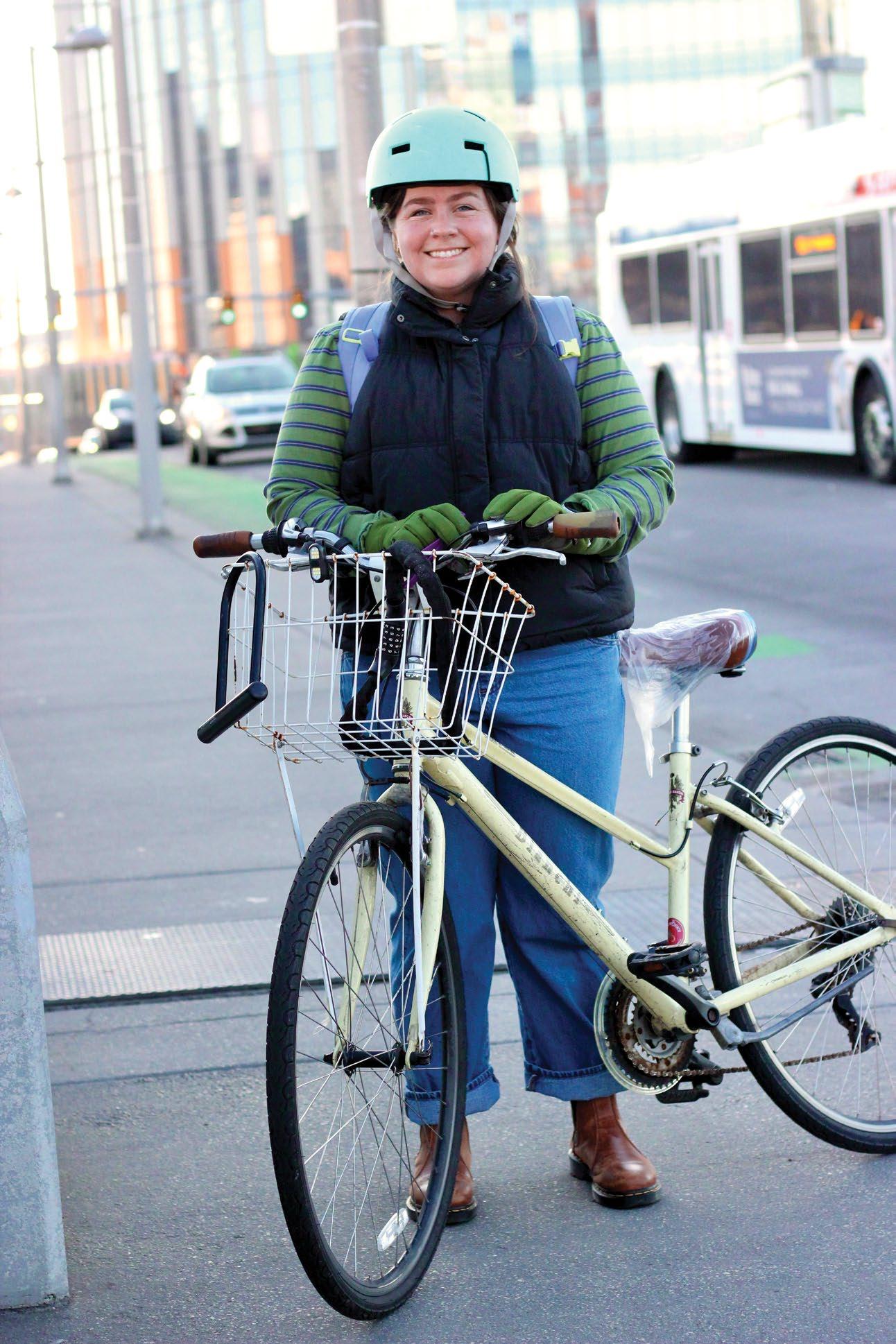
Zoey
“I’m headed to my job at Penn Medicine. This is my usual route. On the bridge I’m mostly terrified, especially the turn coming onto the bridge. That’s where the protected bike lane ends, and so cars are constantly dipping over into the lane. Some of them will turn and their wheels go up on the sidewalk, leaving absolutely no space for a biker and a driver to turn at the same time. It’s a mess every day. You never know what you’re going to get.”
→
Kerry
“I like to bike to work because it both gets me where I need to go and it’s exercise. It’s invigorating to be out on a nice day, getting fresh air before heading into the office. But it’s a little harrowing. I think it would be nice if there were a physical barrier. I’ve definitely seen accidents at this intersection.”
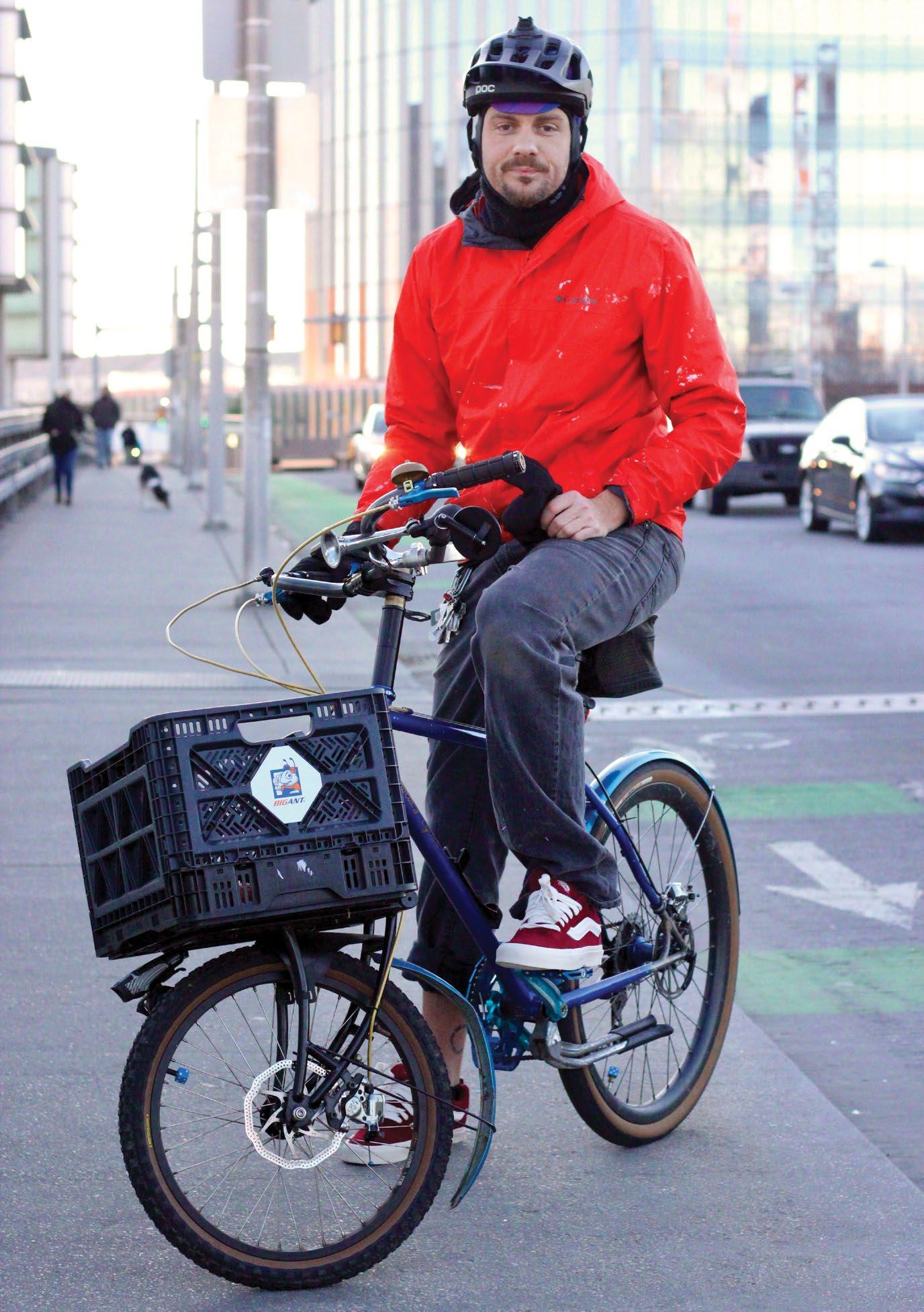
Max
“I work at Neighborhood Bike Works. Bikes are a very large portion of my life. It’s pretty integral to my transportation, my mental health as well. It’s my outlet for doing something creative and active. This is my cargo bike. It’s an old mountain bike that I scored off eBay for super cheap. I put a Crust [brand cargo] fork on it and made it into my grocery-getter. I’ve got some errands to run after work, so I’ve been riding this thing, but it’s very slow and it’s a lot to push.”
↑Hao
“I work at Penn and I commute from Port Richmond. It’s like six to seven miles— 40 minutes, give or take, depending on which red lights I hit along the way. I like to maintain my bike. This is something that I’m nurturing. It’s not quite like our pets, but it does have the same feeling of something I’ve invested time and effort in, and that I care for.”
2. 52nd Street
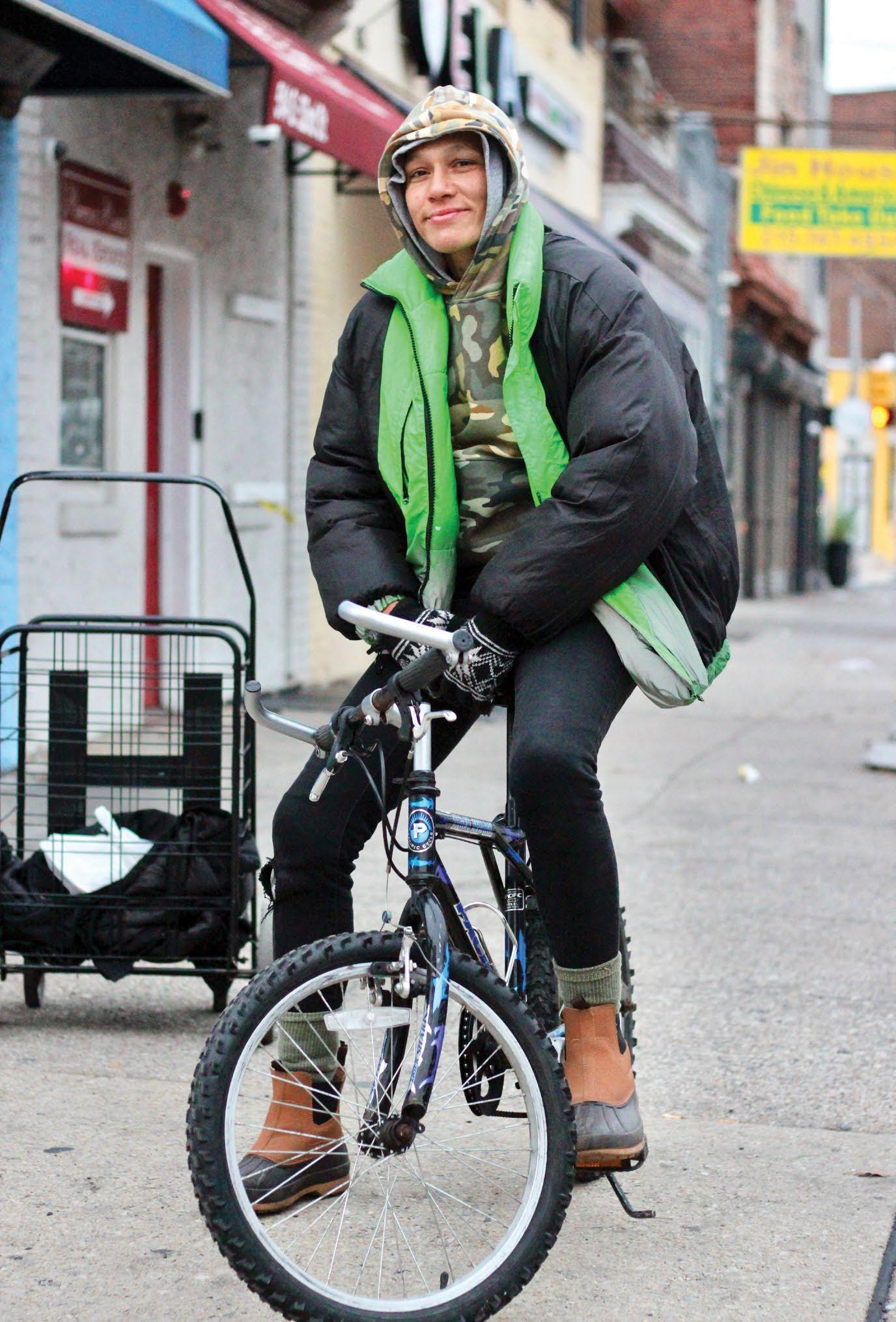
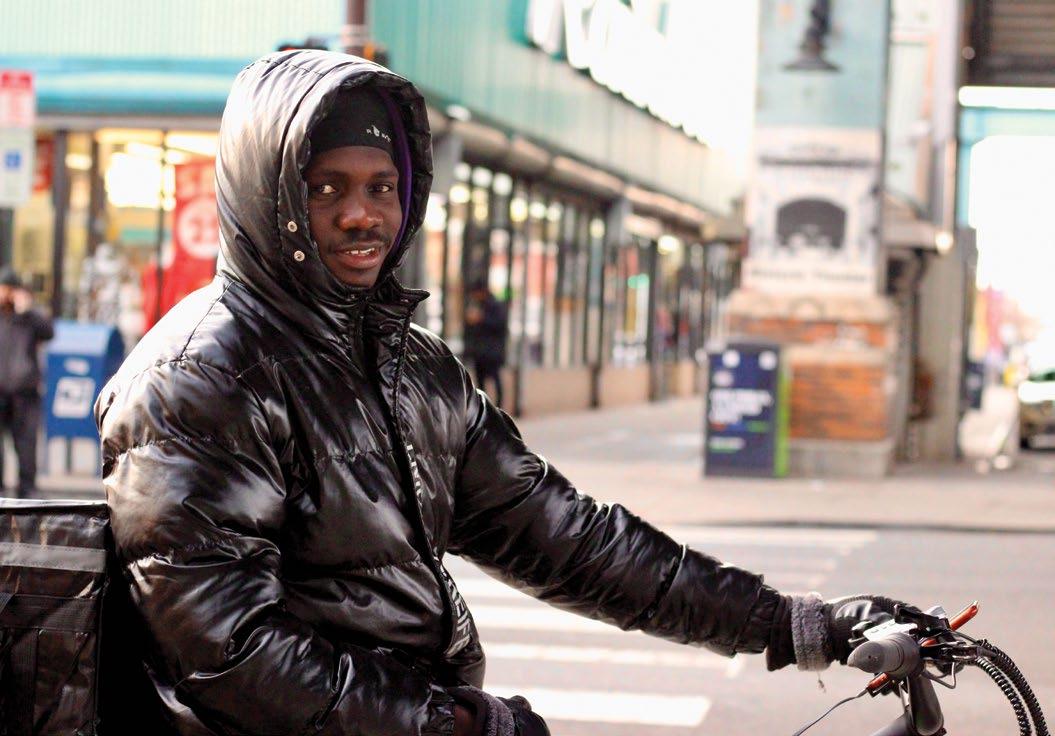
December 2025 → West Philly’s bustling 52nd Street—also known as Philly’s “Black Main Street”— doesn’t have any dedicated bike lanes, but it is full of cyclists and scooterists.
→ Streets
“I’m homeless, and I use my bike for everything. It’s transportation, work, errands. Someone actually let me use the cart today because I had to grab some groceries. Bikes can get you everywhere, and without gas. I’ve had my bike stolen a few times. And it’s not a good feeling, especially because you use it for everything. My bike is something I keep dear to my heart. So, my bike is my heart.”
Mouhamed
“Sometimes I apply for work at the warehouse and can’t find it. So I deliver food by bike to find some money. I’m new here. I came here 8 months ago from Haiti. “
Larry
“For [people] that don’t got cars or don’t feel like walking, a scooter can still get you around, you feel me? This scooter I’ve had for like three weeks. It’s like my sixth scooter. They all just broke.”
Yusuf
“I bought this because I didn’t want anybody telling me that they didn’t see me in the road. These people riding e-bikes in the middle of the street, in the middle of the night, wearing all black, they expect you to see them. How can I see you, man?”
↑TJ
“Riding my bike is helping me get my leg back together. I got in a motorcycle accident in August. It’s the third time I had to learn how to walk.”
3. 45th & Spruce
September 2025 → In a neighborhood with several protected bike lanes—on Walnut, Chestnut, 47th and 48th—Spruce Street is unprotected, but is still a popular bidirectional route for riders.
Moss
“I’m new to the city from Wyoming about a month ago, so I’m getting used to biking here. I don’t feel super confident when there aren’t bike lanes.”
Winniferd
“Commuting definitely raises my cortisol in the morning. I have to do a little chill before and after, but it’s worth it to me. This is a really easy bike, walking, biking, scootering city. I also take SEPTA. I actually have a car. I barely use it and I like that. It vibes with how I want to live.”
Mick
“I mostly ride to get to and from work. It’s cheap and it’s good exercise. I usually head up Chestnut to the protected bike lane. The protected lanes are hit or miss, because there’s often cars parked in them. I’ve had cars try to hit me deliberately.”
→ Anna
“Biking is often the fastest way to get places. I don’t like driving, and I don’t own a car. I usually try to stick to roads with bike lanes, which has been pretty easy in West Philly. I like the protected bike lanes on Walnut and Chestnut.”
←
Taryn
“I’ve been in the city for like 15 years and I’ve noticed the new infrastructure and it’s awesome. One of the things I love about Philly is that it’s so geographically dense that it’s possible to be a bike commuter for everyday stuff.”
↑
Tara
“It’s nice to be able to get to work in a decent amount of time, get some fresh air, see things. I choose Spruce because I feel like a lot of drivers are prepared for bikers to be around, and they’re a lot less aggressive on Spruce.”
Breaking Free
A decade after my first smartphone, I decided to flip the script
by gabriel donahue
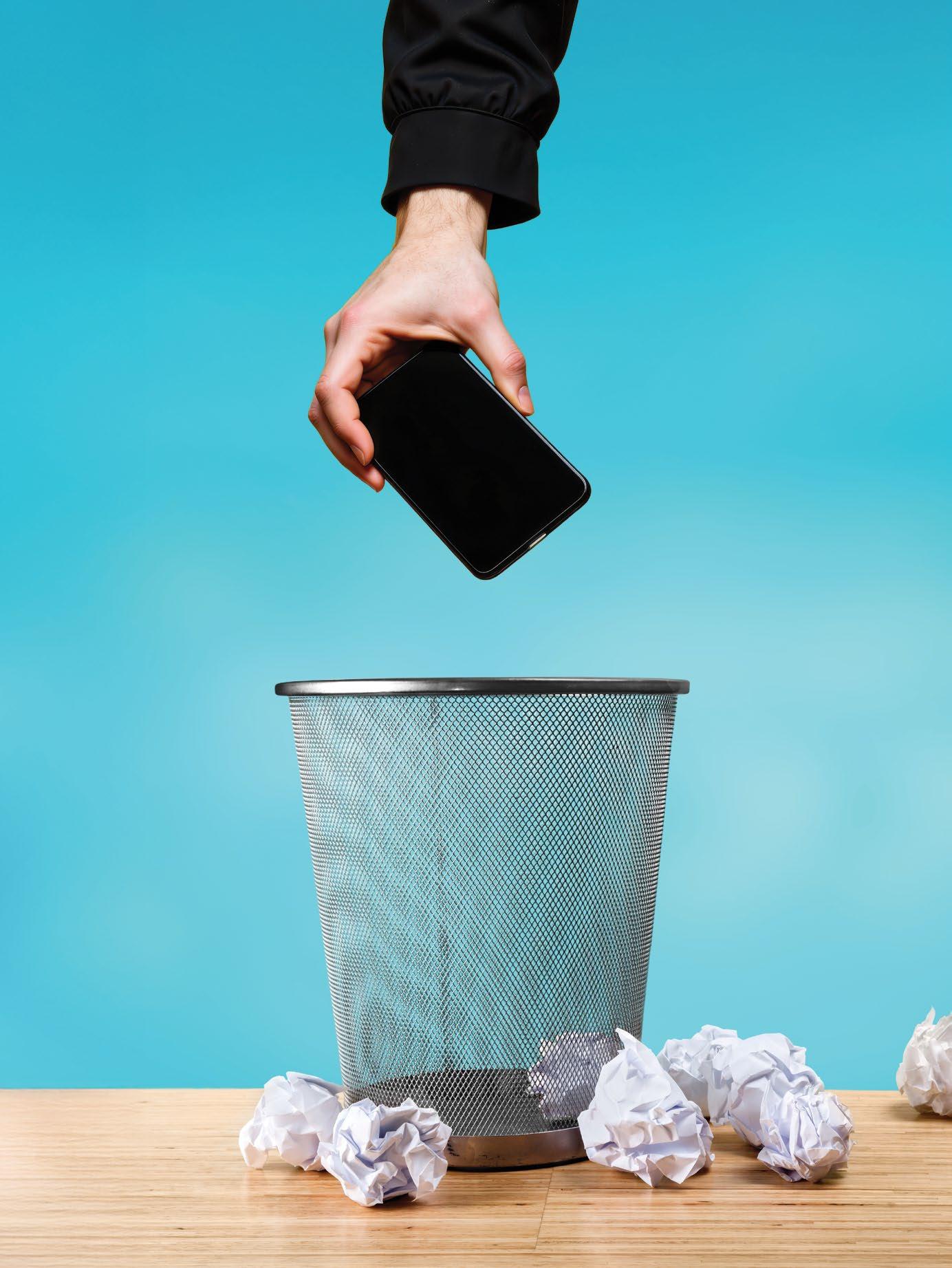
Shortly before my 24th birthday, I decided to replace my iPhone with a flip phone. I have abstractly considered making the change on numerous occasions, tired of the Internet following me around everywhere I go, always on the verge of being mindlessly lured to it.
During the short portion of my life when the Internet was stationary, I spent a lot of time sitting at the family computer. I was jealous of my older sister when she got a cellphone. I begged my parents for an iPod Touch, making do for a while with a handme-down Samsung that wasn’t connected to a phone number and only worked on WiFi. When I finally got a smartphone in eighth grade, I was congratulated.
Yet after a decade of smartphone ownership, I’m unsatisfied. It hasn’t improved my life, it’s made it worse. How much time has been lost to a bottomless feed? How often have I gone to check the weather, but instead open Twitter, browse for ten minutes before ripping myself away and locking the screen, only to return to my physical surroundings and realize that I still don’t know the forecast?
It took one misunderstanding — I thought I’d left my iPhone at work — that, in the resulting wave of relief over the freedom to spend an evening without that predator lurking in my home, without its claws resting on my skin, ready to dig in and trap me in the endless scroll that brings me so much misery and shame, dissatisfaction and regret, combined all the instances I’d sworn to myself I’d spend less time on my phone, all the half-steps, self-imposed limits and usage guidelines that never fully disarmed the beast, to produce one declarative statement: I’m ready to quit.
I was disappointed and even disturbed when, later that evening, I found the phone in my room. I felt that just touching it would ruin the bliss of my decision.
A week of giddiness followed that subtly gave way to an itching anxiety over the reality of living without a smartphone for the first time since early adolescence.
I anticipated an explosion of relief, free-
After a decade of smartphone ownership, I’m unsatisfied. It hasn’t improved my life, it’s made it worse. How much time has been lost to a bottomless feed?
dom and joy in reclaiming my life, pride over my willingness to take this bold step. I imagined leading a flash mob down the street in celebration! But when the hour of conversion came, I felt doubtful. What was I doing? I felt overly dramatic, that I was doing something extreme. And for what? All the reasoning I’d piled up against smartphone ownership seemingly vanished.
I sit now with conflicting feelings. I’m happy with my decision and the benefits that I know are forthcoming. Besides, I’ve told my friends, so I can’t backtrack without embarrassment or a sense of failure.
The dopamine rush produced by smartphones and social media has made instant gratification the norm. I know this experience will be gratifying, and I don’t want to have a smartphone again if I can help it. This time, I think the confirmation that I did something right won’t reveal itself for a while. And sometimes, isn’t that the truth of real life? ◆
Co-op membership has its perks. Here’s a new one:
PROVISIONS
Co-op Wholesale
®
• Access to our primary supplier’s full catalog — thousands of items by the case at a discounted rate.
• Volume discount tiers: The more you buy, the more you save.
• Shop Co-op Deals for even deeper discounts.
• Weekly pick up available at our Germantown or Ambler stores.
Become a member today!
Seeking energy solutions with an opportunity mindset
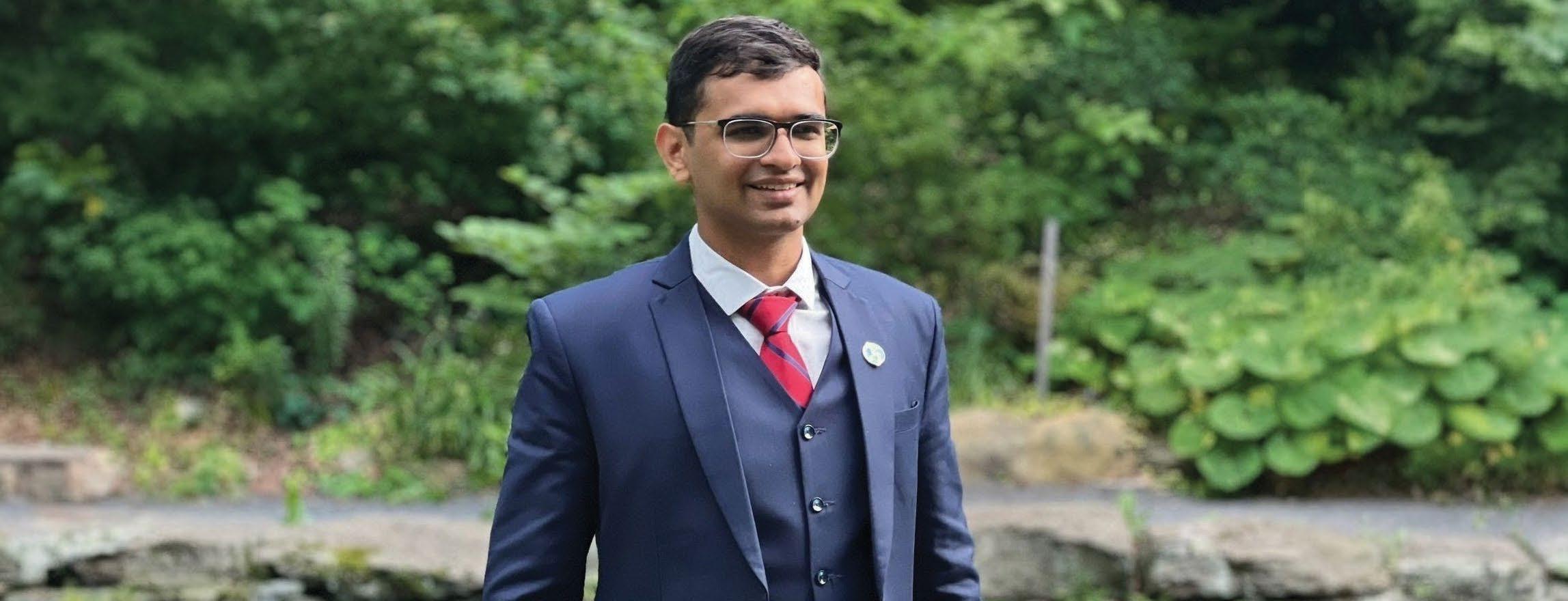
“While I was earning my chemical engineering degree in India, I always looked through the lens of sustainability; asking, how do we make this industrial process more sustainable so that there are no effluents?” begins Shrey Mehta (MES ’25). While many of his classmates entered traditional careers in the oil and gas industries, Shrey chose to forge a path toward sustainable and equitable energy solutions. Eager to learn about energy sustainability, policy, and access, Shrey applied to Penn’s Master of Environmental Studies program.
As Shrey prepared to come to the US, a program alumna advised him on seeking extracurricular opportunities on campus. “I implemented all of that advice and made the most of my Penn experience,” he says. In addition to joining clubs and student organizations, Shrey applied for grants and fellowships to supplement his curriculum. As a Kleinman Birol Fellow, he worked at the International Energy Agency (IEA) in Paris one summer, conducting heatwave and electrical grids research. Another fellowship brought him to Washington, DC, to meet energy policy makers. And grant funding allowed him to attend the energy industry conference CERAWeek in Houston, TX.
While his courses in energy, sustainability leadership, negotiations, and more built his subject knowledge and essential soft skills, his work outside the classroom expanded his professional network and his research and industry experience. Today, Shrey is working as a project engineer at a clean energy technology company on an emissions reduction project that will cut costs as well as reduce pollution in a local community.
For prospective MES students ready to forge their path at Penn, Shrey offers his own advice: “Go into the program with an opportunity mindset, and then you will thrive.”