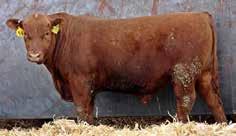
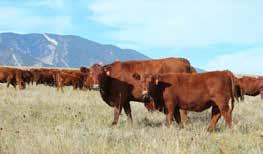
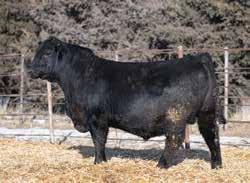
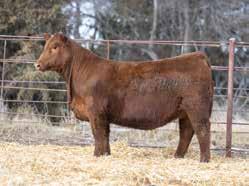
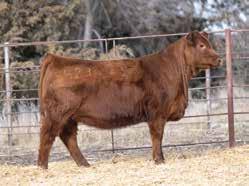
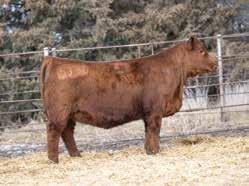
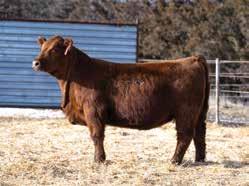
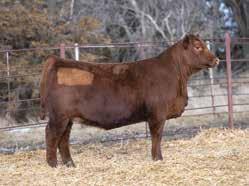
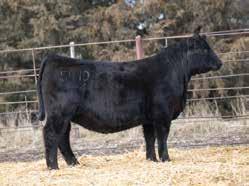
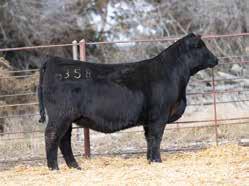
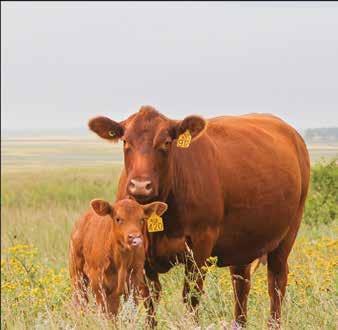
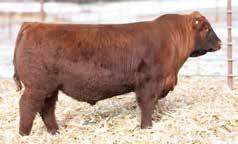
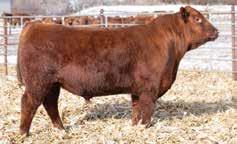
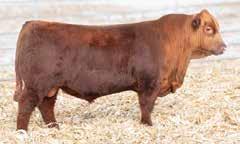
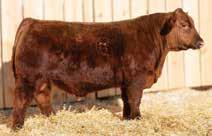
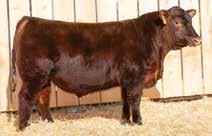
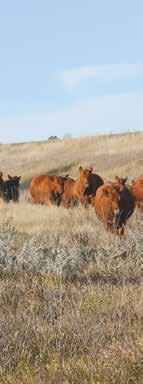
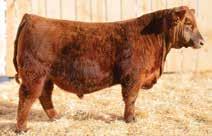
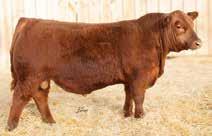
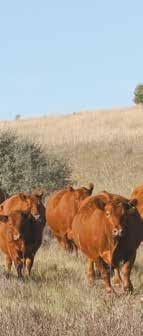
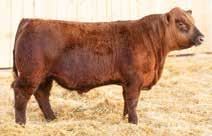
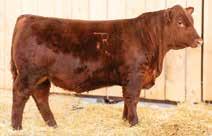
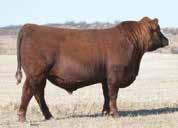
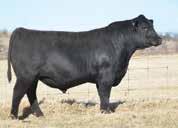
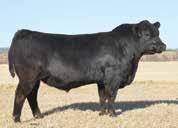
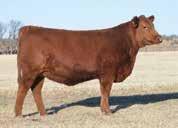
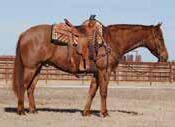
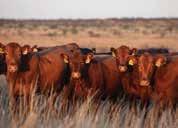
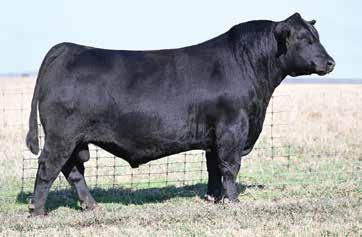
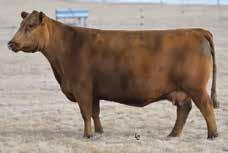
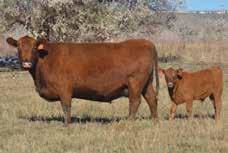
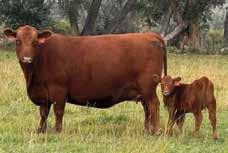
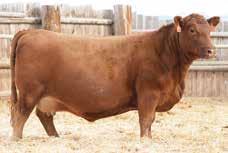
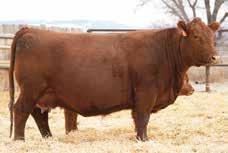
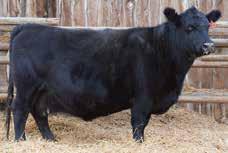
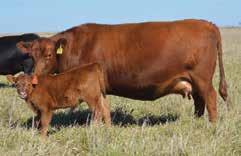
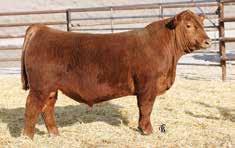
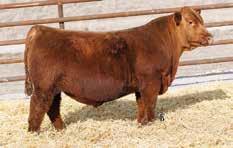
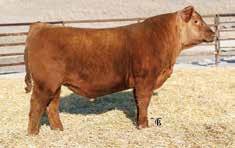
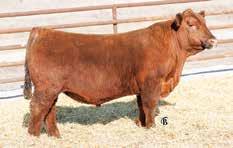
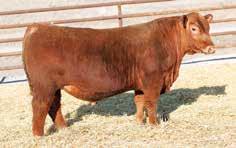
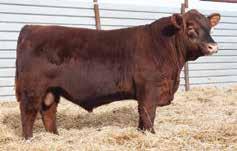
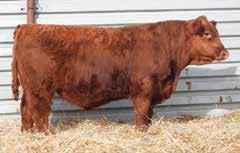
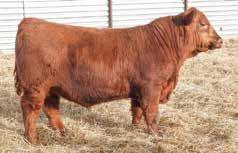
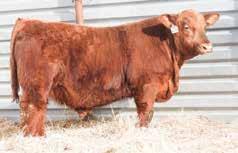
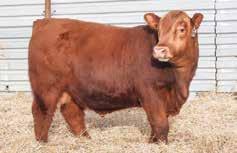
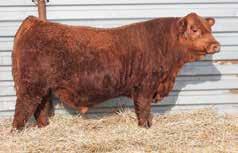
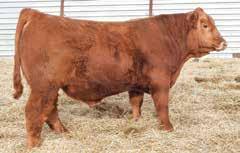
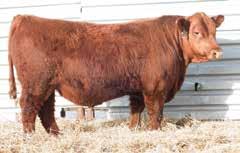
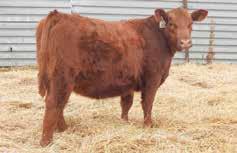
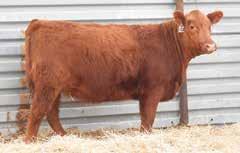
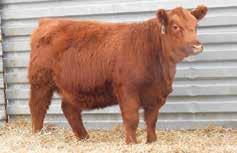
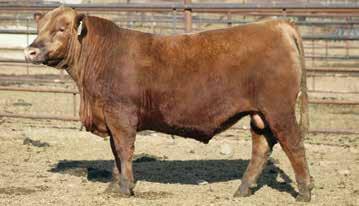
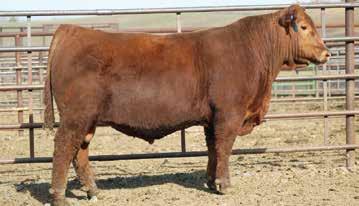
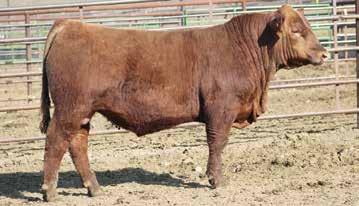
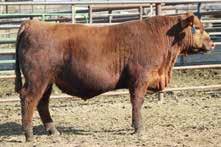
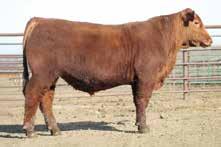
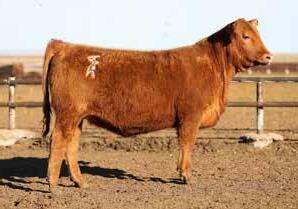
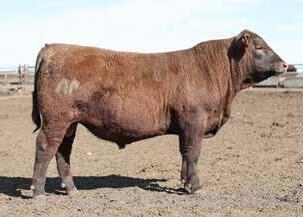
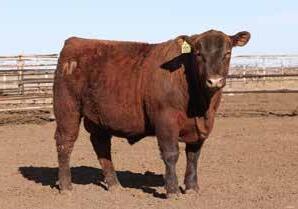
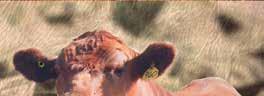
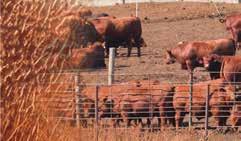
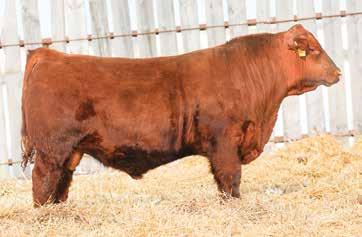
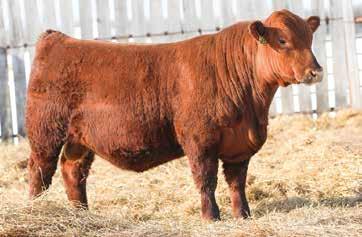
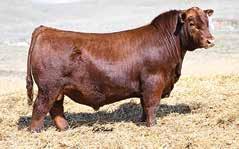
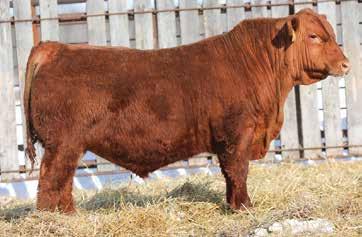
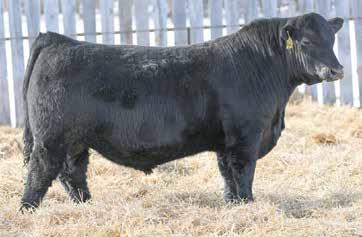
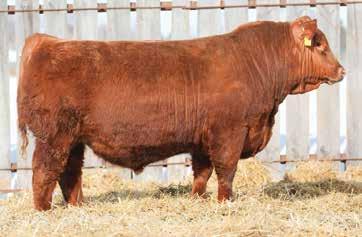
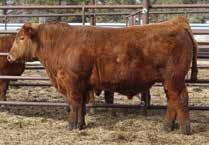
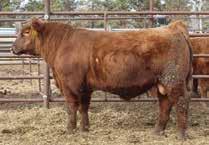
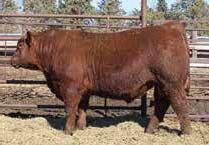
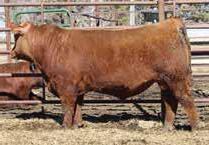
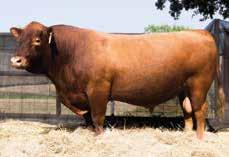
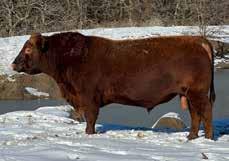
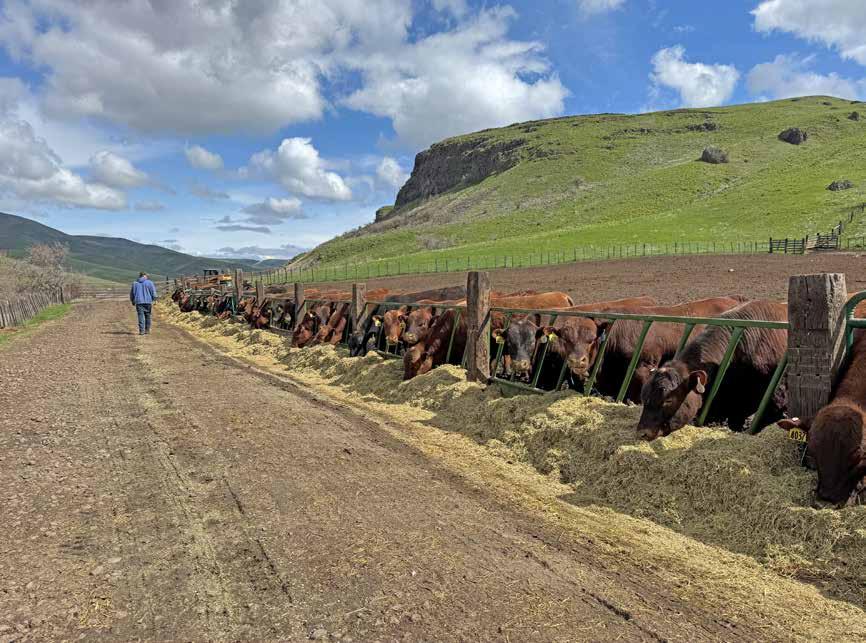
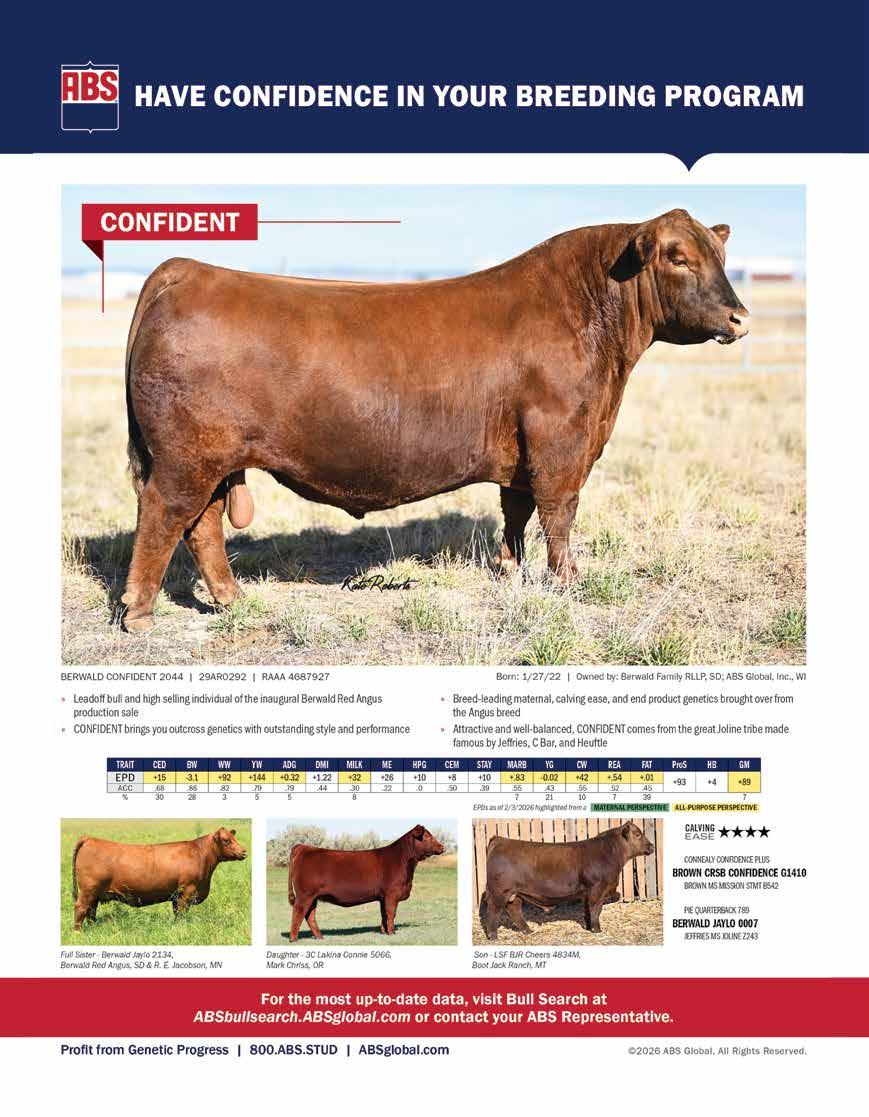
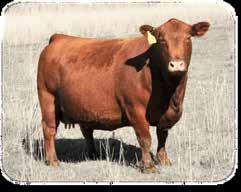
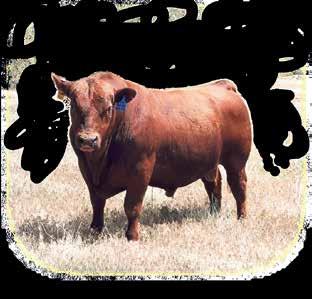
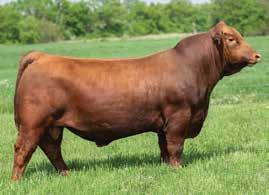
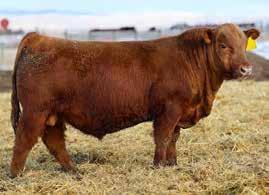
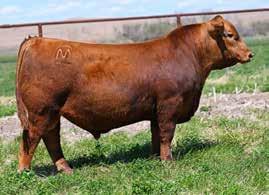
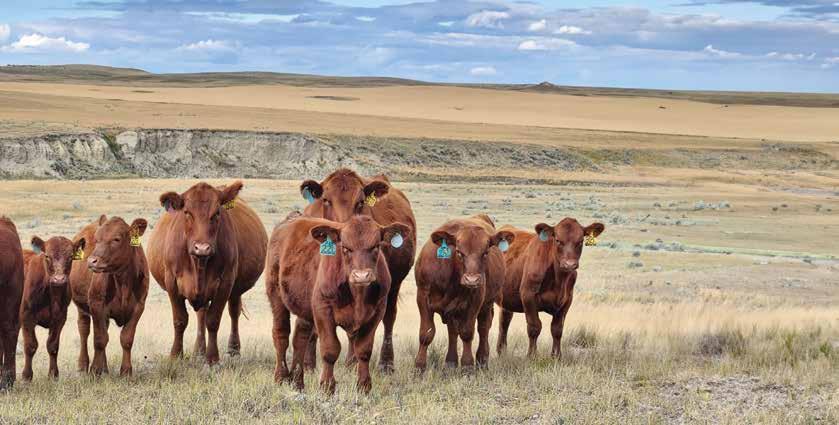
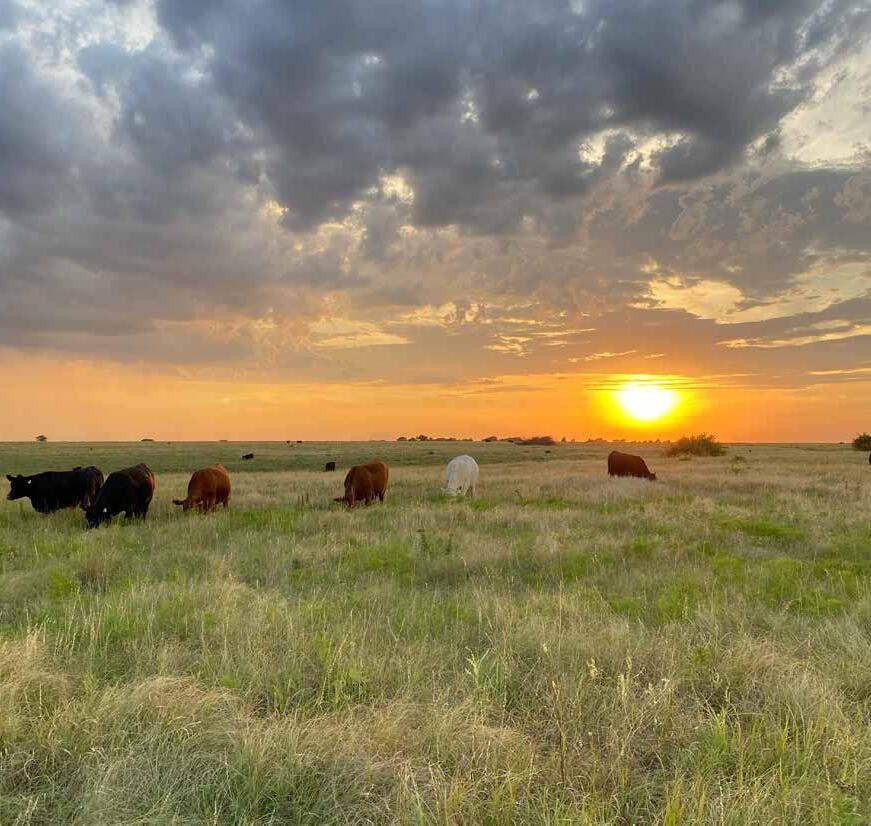
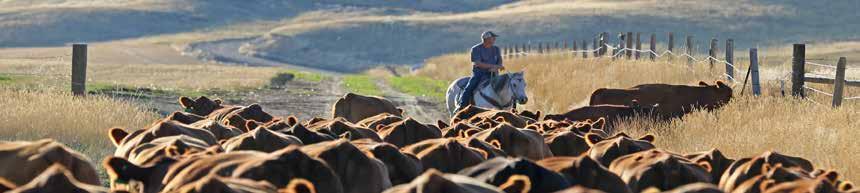
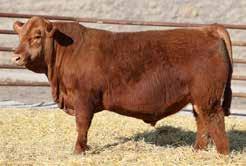
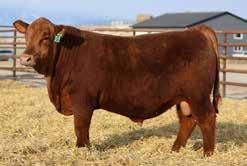
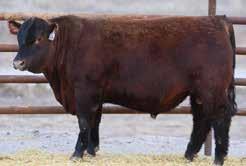
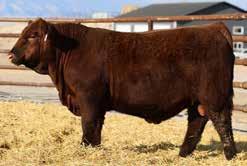
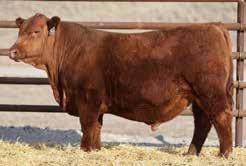
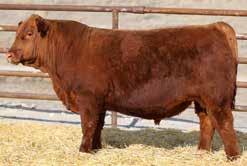
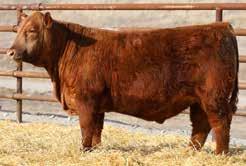
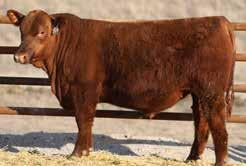
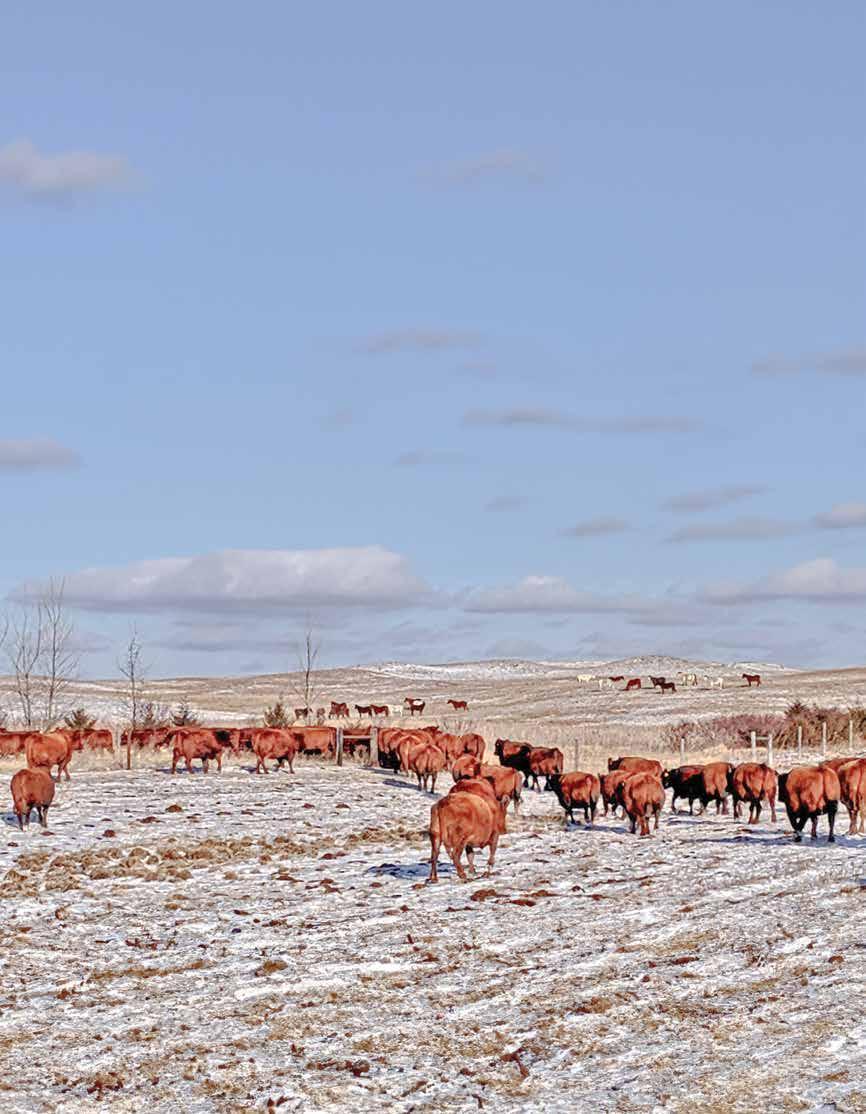
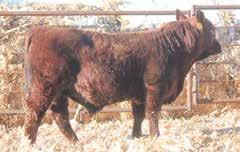
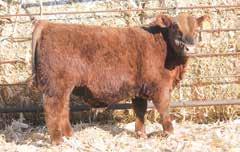
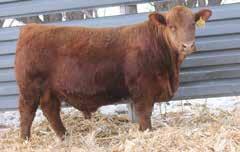
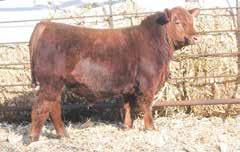
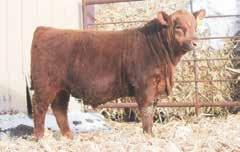
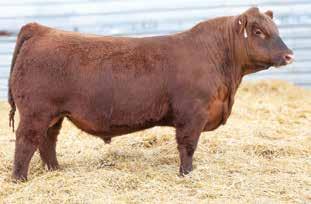
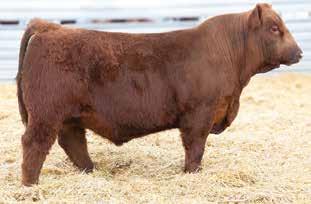
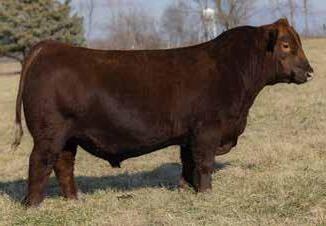
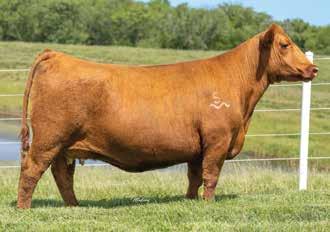
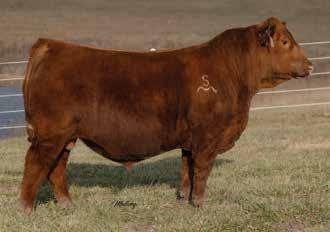
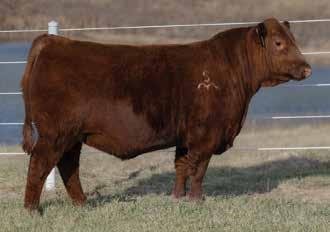
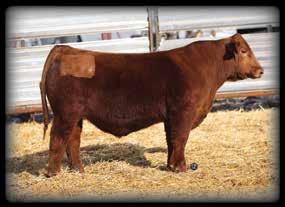
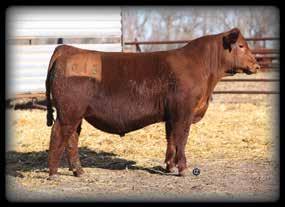
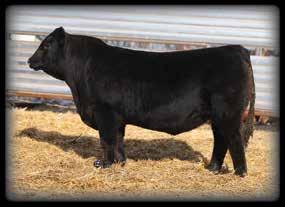
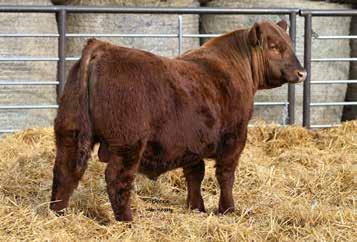
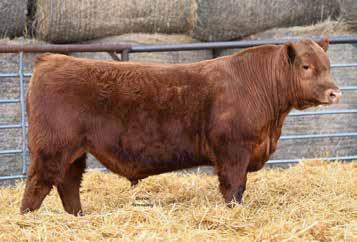
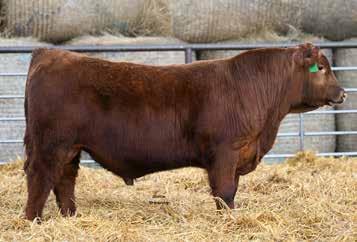
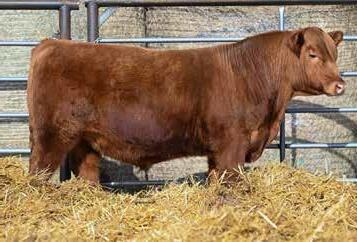
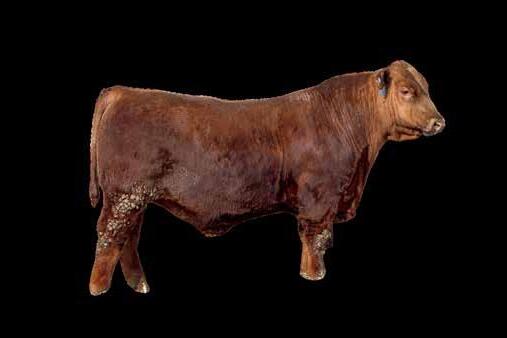
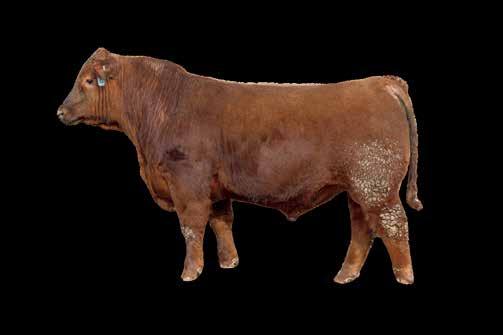
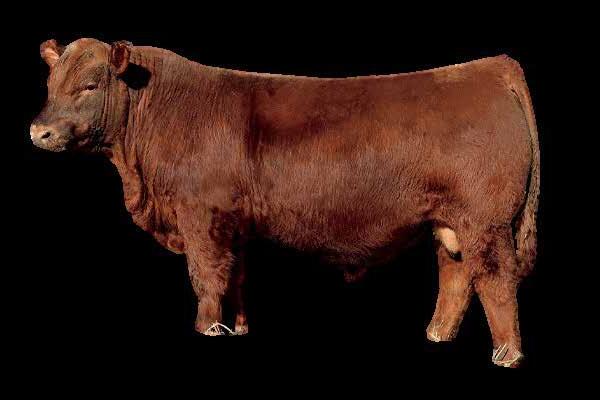
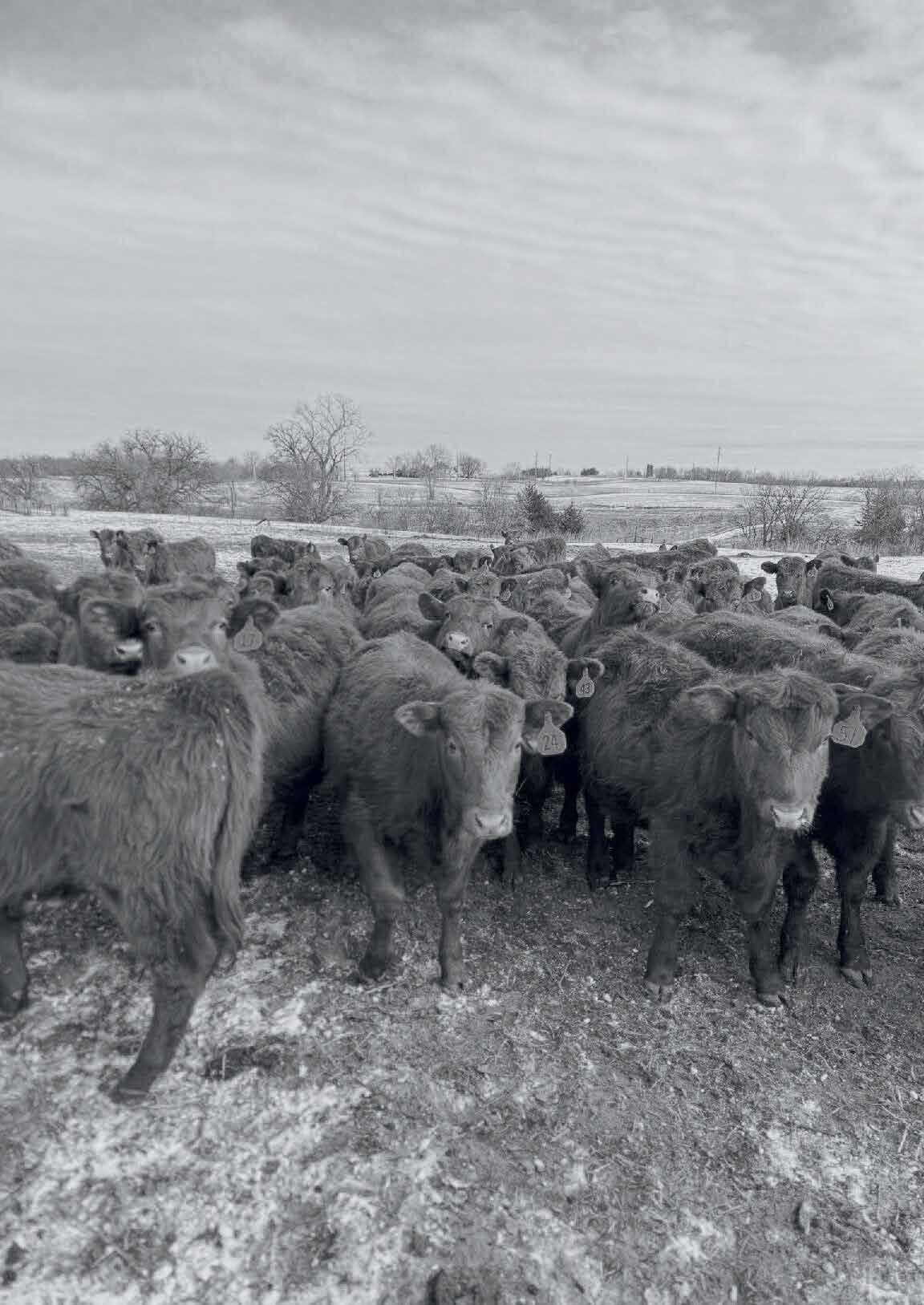
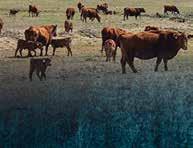
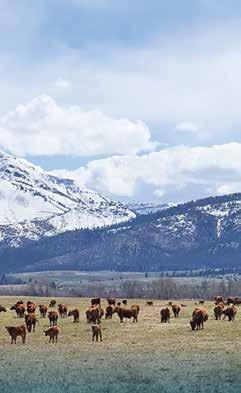
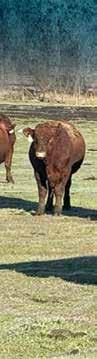
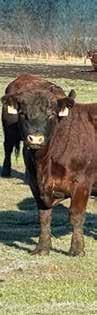
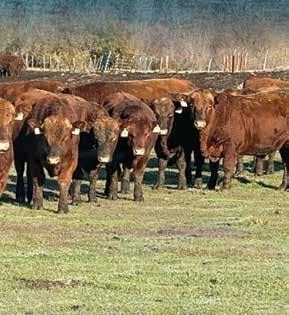
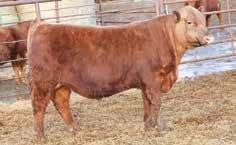
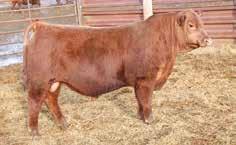
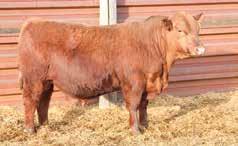
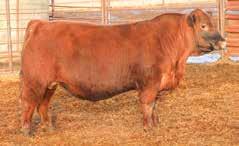
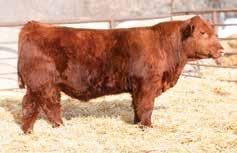
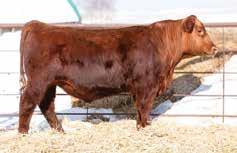
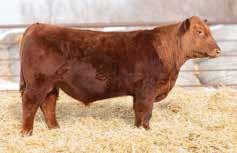
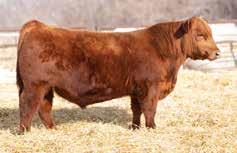
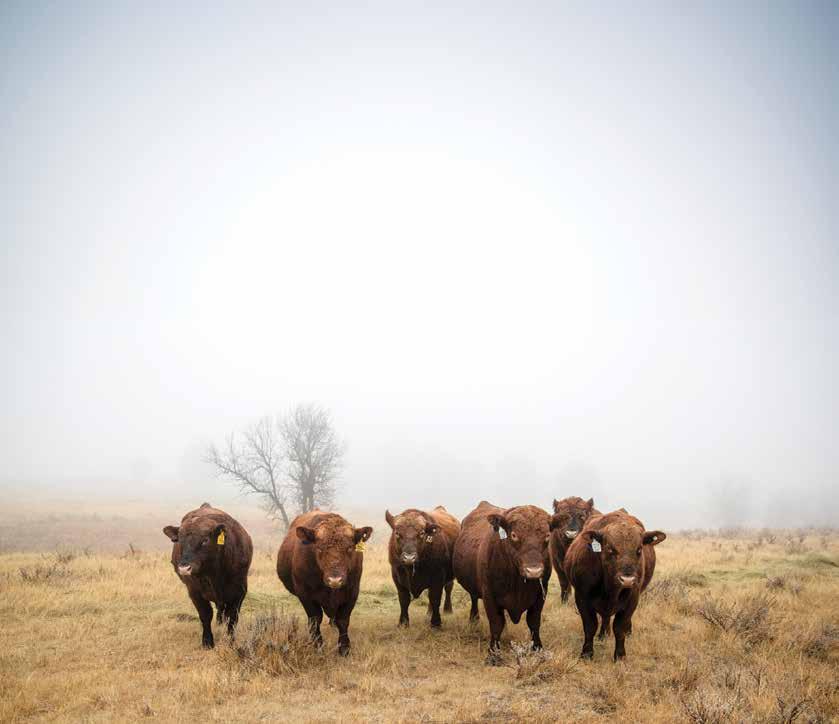
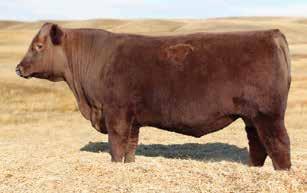
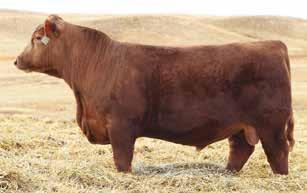
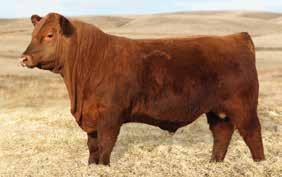
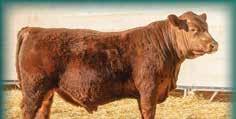
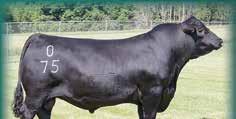
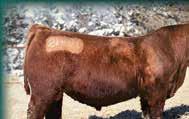
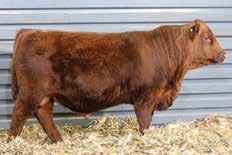
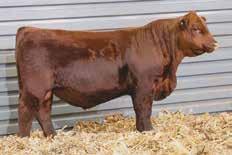
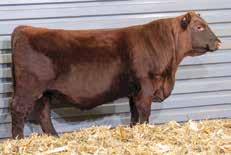
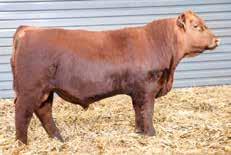
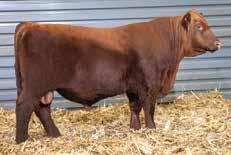
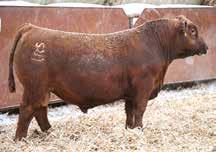
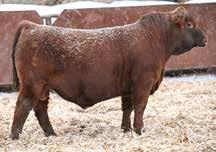
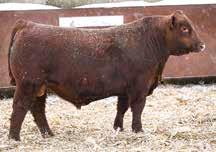
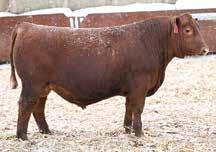
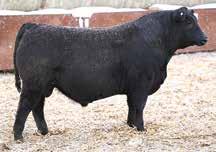
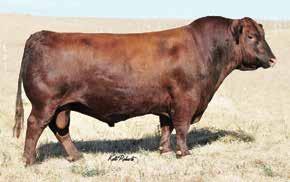
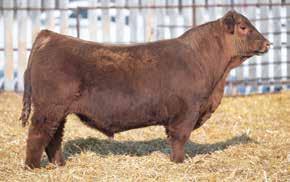
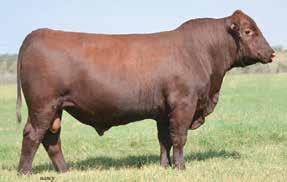
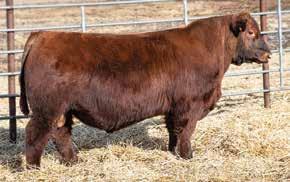
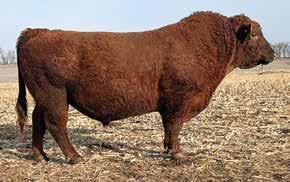
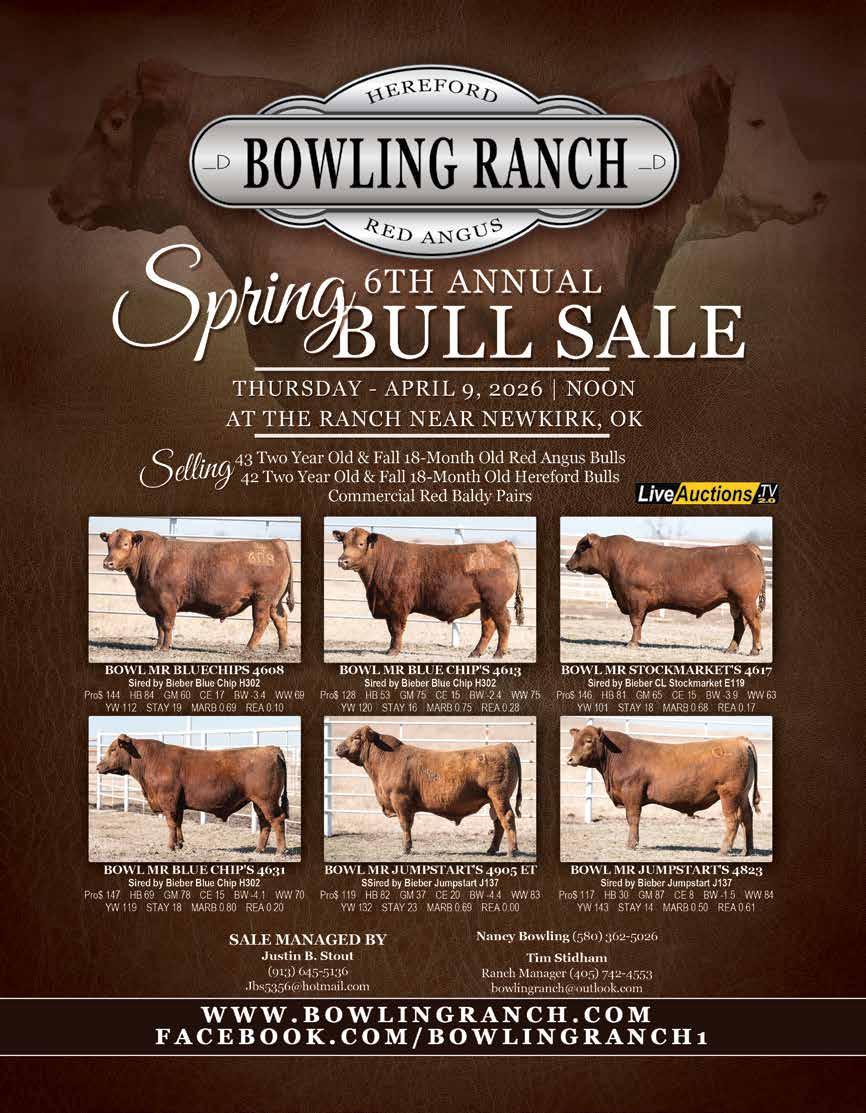
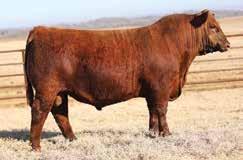
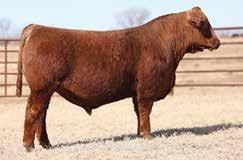
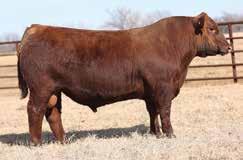
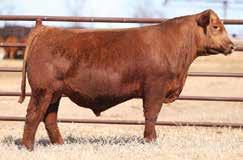
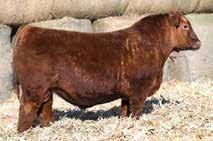
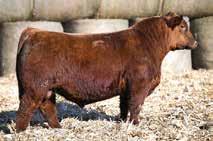
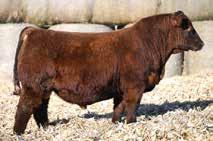
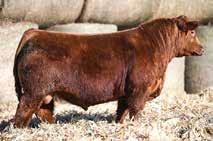
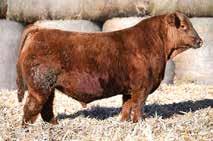
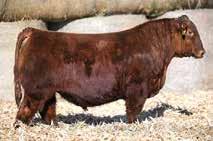
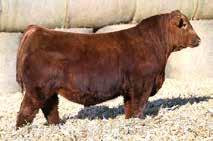
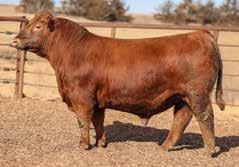
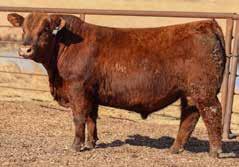
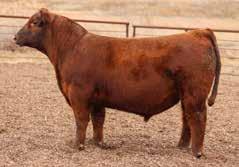
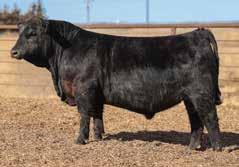
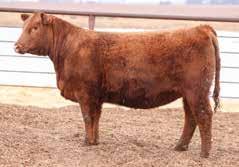
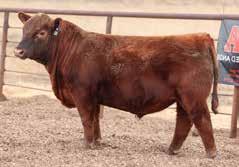
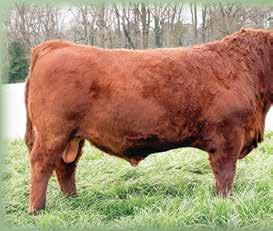
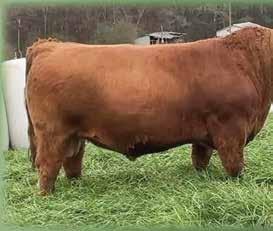
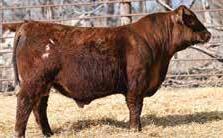
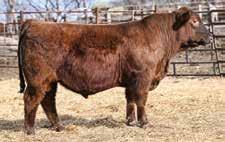
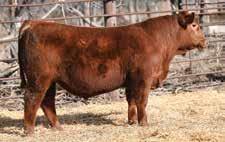
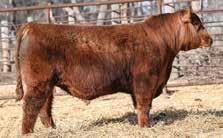
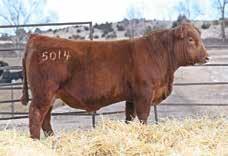
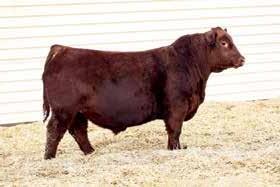
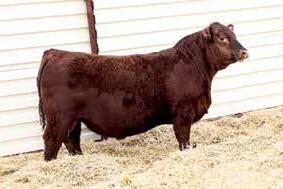
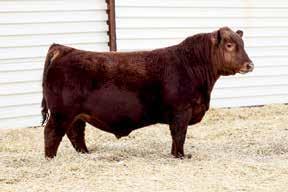
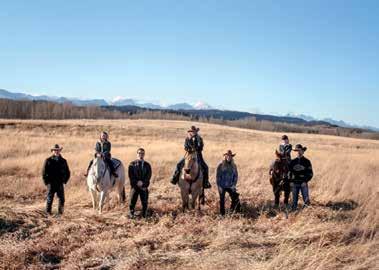
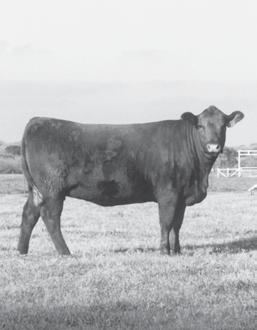
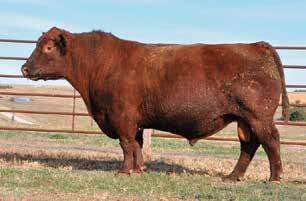
Beckton's 81st Anniversary Bull and Heifer Production Sale
Tuesday, April 14, 2026
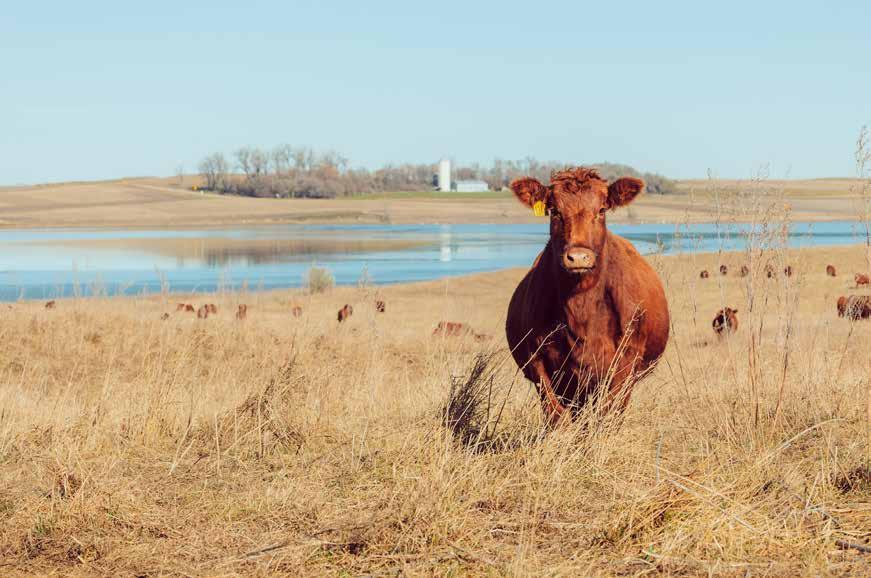
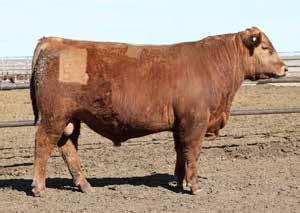
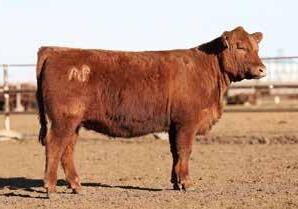
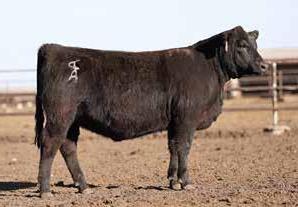
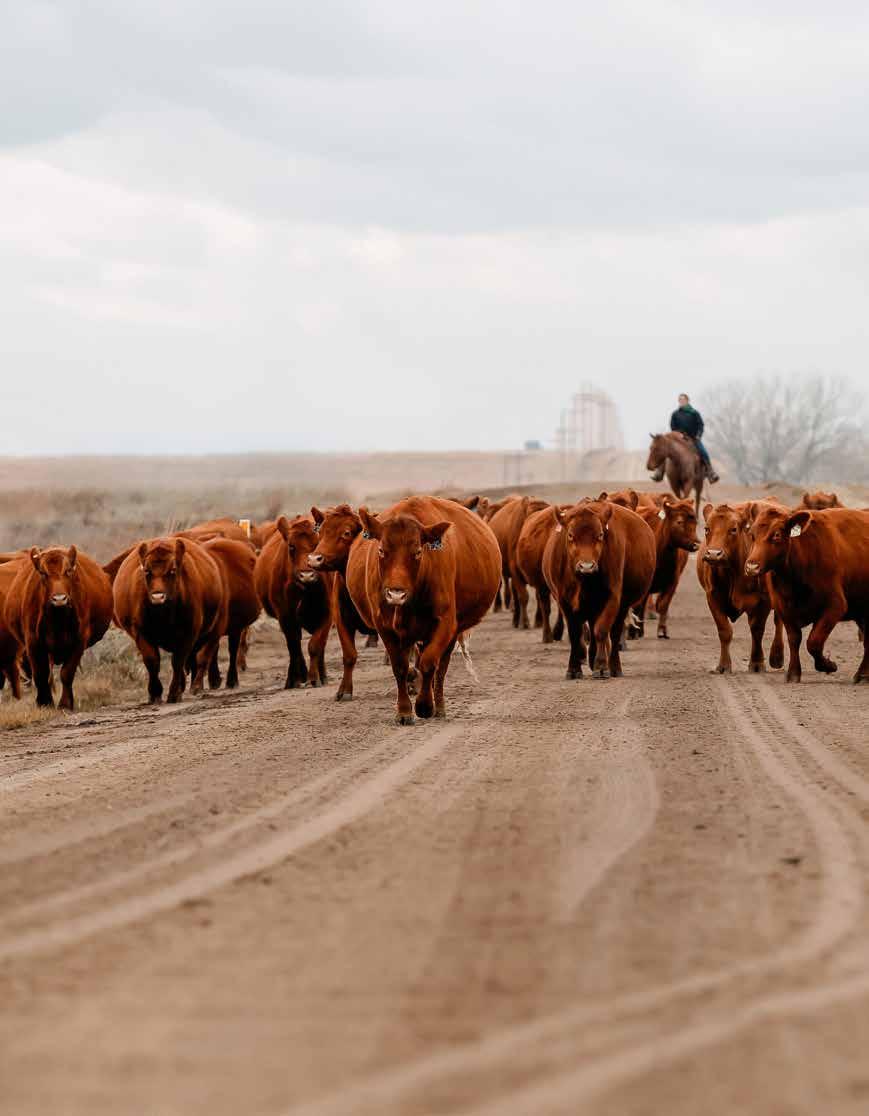
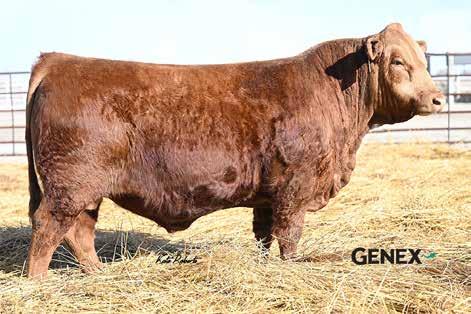
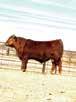
Selling 260 Red Angus
220 Bulls and 40 Heifers
1:00 pm at our ranch 10 miles west of Sheridan
Online bidding will be available on DV Auction and Superior Livestock
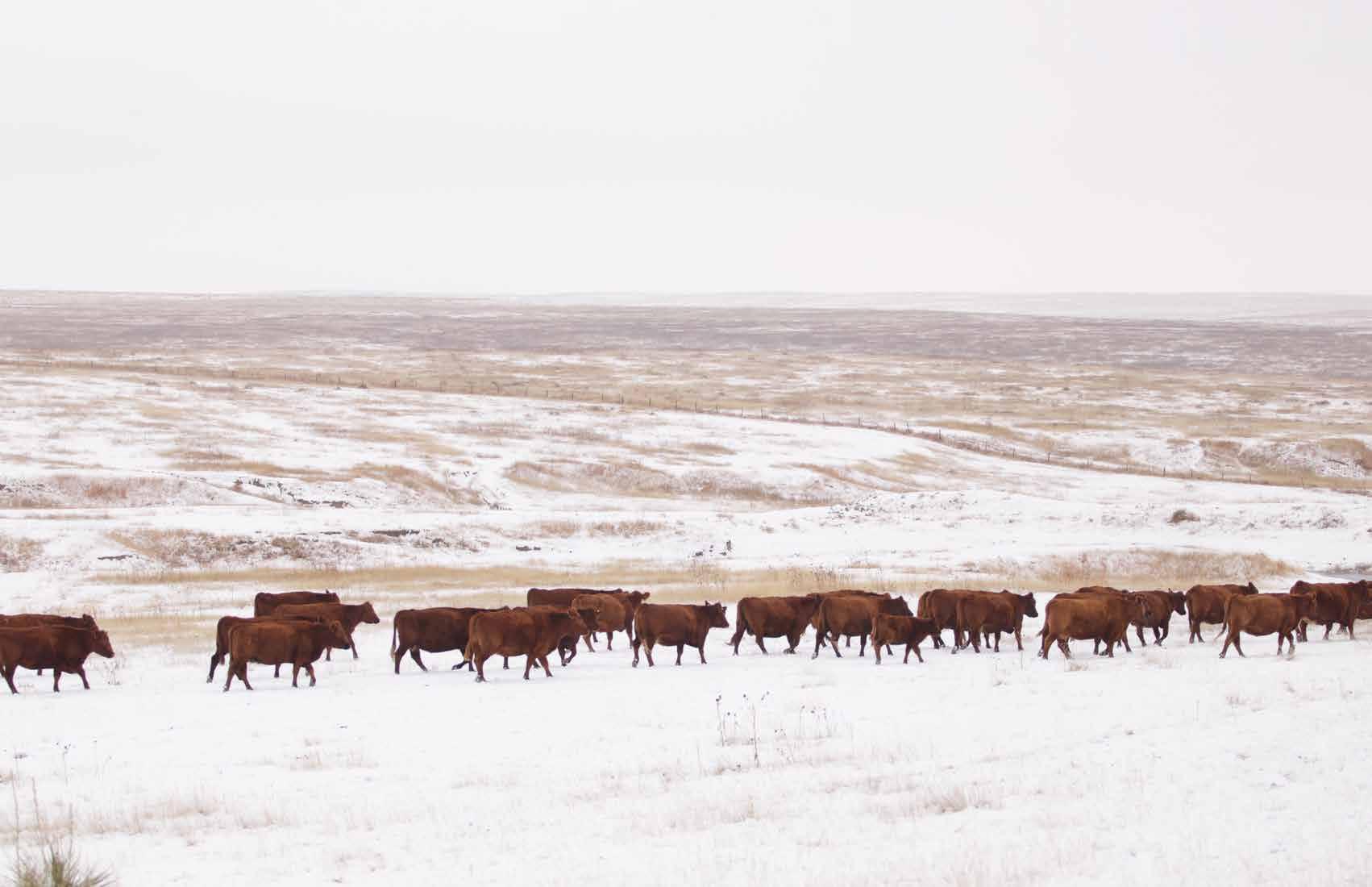
Beckton is the Foundation Herd of the Red Angus breed
80 years of performance evaluation and genetic selection brings you industry leading genetics for Total Efficiency
Calving Ease and Calving Percentage Efficiency
More total live calves per cow in the herd - 17 of the top 20 sires in the entire Red Angus breed for Calving Ease EPD are Beckton sires or descended from Beckton sires.
Cow Herd Efficiency
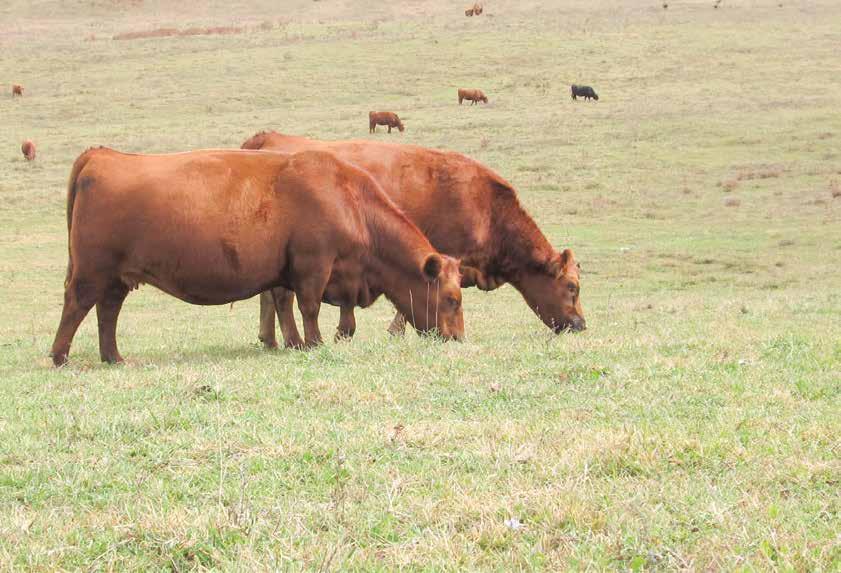
Moderate sized cows have lower feed maintenance requirements.
More cows per acre means more calves per acre.
The average size of our mature cow age 5 and older is 1100-1150 pounds.
We list the actual weight of each dam for every bull in our sale catalog.
Growth and Feed Conversion Efficiency
Rapid and cost efficient gain to market weight - 13 of the top 20 sires in the entire Red Angus breed for Dry Matter Intake EPD are Beckton sires or descended from Beckton sires.
Overall Profitability
16 of the top 20 sires in the Red Angus breed for HerdBuilder Index are Beckton sires or descended from Beckton sires.
Additional Facts:
19 of the top 20 sires in the breed for low Birth Weight EPD are Beckton sires or descended from Beckton sires.
16 of the top 20 sires in the breed for Heifer Pregnancy EPD are Beckton sires or descended from Beckton sires
12 of the top 20 sires in the breed for Stayability EPD are Beckton sires or descended from Beckton sires
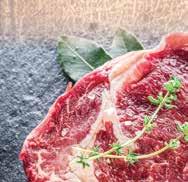
Finally: On the consumer's dinner plate - Beckton's many generations of DNA selection for beef tenderness make our cattle very popular for specialty beef marketing programs
Magazine
Official Publication of the Red Angus Association of America Volume 62, Number 3
18335 E 103rd Avenue, Suite 202 Commerce City, CO 80022
940-387-3502 • Fax 888-829-6069 RedAngus.org
Publisher/Advertising Director Tracey Koester 701-391-5440 • tracey@redangus.org
Affiliated with National Cattlemen’s Beef Association Beef Improvement Federation U.S. Beef Breed’s Council National Pedigreed Livestock Council
GENERAL INFORMATION
Published 10 times annually by the Red Angus Association of America at the national headquarters (18335 E. 103rd Ave., Suite 202, Commerce City, CO 80022). A non-political magazine dedicated to the promotion and improvement of breeding, feeding and marketing Red Angus cattle. Subscription rate: U.S., 1 year - $30; 2 years - $55. Canada and Mexico, 1 year - $44, 2 years - $82 (Payable in U.S. Funds Only). International Air Mail, 1 year - $55; 2 years - $100 (Payable in U.S. Funds Only). These rates are based on Third Class Bulk mailed from Jefferson City, Missouri. Add $20 per year for First Class.
EDITORIAL AND ADVERTISING POLICY
Advertising and editorial content are not limited to any particular class of product or subject matter. However, we reserve the right to refuse publication of any material not within the bounds of high agricultural ethics. While we devote the utmost care to the preparation of each advertisement, we cannot be held responsible for ads received after the ad deadline. Furthermore, the accuracy and content of copy received over the telephone is entirely the responsibility of the advertiser. No adjustment for incorrect ad copy will be considered for ads that are received after the ad deadline or that are placed over the telephone.
All unused reserved advertising space that is not canceled by the advertising deadline will be billed to the advertiser.
ADVERTISING RATES
RAAA Board of Directors
PRESIDENT
Jeff Pettit | Sebree, Kentucky jeff@diamondpcattle.com
FIRST VICE PRESIDENT
AREA 4 DIRECTOR - SOUTHWEST
Tony Ballinger | Morgan Mill, Texas anthony.ballinger@adm.com
SECOND VICE PRESIDENT
AREA 6 DIRECTOR - GREAT PLAINS
Jason Anderson | Oberlin, Kansas jasonea9@hotmail.com
AREA 3 DIRECTOR - ROCKY MOUNTAIN Ron Christensen | Sterling, Utah hotshoeredangus@gmail.com
AREA 7 DIRECTOR - NORTHEAST
Rob Hess | Hershey, Pennsylvania hessfarm@verizon.net
AREA 8 DIRECTOR - SOUTHEAST
Michael Watkins | Harrison, Arkansas watkinscattleco@windstream.net
AREA 9 DIRECTOR - MIDWEST
Will Andras | Manchester, Illinois andras@irtc.net
Board Commentary
Red Angus Cattle –Where the Cow Meets Carcass
by
Jason Anderson, Area 6 Director, Great Plains, Second Vice President
Red Angus has long been the most desired female in the industry. A female that requires less effort from a labor standpoint is attractive to anyone. Red Angus seedstock producers perfected that female by taking the approach of mandatory data reporting. Total Herd Reporting and the more recent low-accuracy threshold for EPD blanking gives genetic providers higher accuracy tools to help drive genetic advancement. Together, Red Angus genetics and THR provide producers with reliable tools to consistently deliver the high-quality beef demanded by today’s consumers.
THR requires breeders to report performance data on every calf born within the herd, rather than selectively reporting only top-performing animals. This comprehensive approach increases the accuracy of expected progeny differences, particularly those related to carcass traits such as marbling, ribeye area and carcass weight. By eliminating reporting bias, THR ensures Red Angus carcass data reflects true herd performance, allowing commercial producers to make informed breeding decisions with greater confidence.
From a consumer standpoint, consistency and eating quality are critical. Consumers increasingly expect beef that is tender, flavorful and visually appealing, regardless of where or when it is purchased. Red Angus cattle excel in these areas due to their strong genetic propensity for marbling. Higher marbling levels contribute directly to improved tenderness, juiciness and flavor, which are primary drivers of consumer satisfaction. Through THR, breeders can identify and propagate genetics that reliably achieve Choice and Prime quality grades, helping meet these expectations.
Carcass quality is not solely about marbling. Consumers also value beef with a bright red color, fine texture and adequate shelf life. Red Angus cattle are known for their calm disposition, which reduces stress during handling and transport. Lower stress levels help prevent dark cutting beef, a condition that negatively impacts appearance and consumer acceptance. The predictability gained through THR further supports management decisions that enhance these quality attributes across the entire herd.
Efficiency and sustainability are also growing concerns among beef consumers. Red Angus cattle are moderate in mature size and efficient in feed utilization, allowing them to reach desirable carcass endpoints without excessive resource use. THR supports these goals by identifying cattle that combine carcass quality with reproductive efficiency and longevity. This whole-herd approach promotes sustainable production while maintaining a consistent supply of high-quality beef.
For producers, THR-backed carcass data translates into improved market access and potential premiums. Value-based marketing systems increasingly reward cattle that meet specific carcass criteria, such as quality grade and yield consistency. Red Angus cattle, supported by robust THR data, are well positioned to perform in these systems and deliver predictable results from pasture to plate.
Red Angus cattle are known for their highly maternal approach to the beef business. Those traits not only serve the cow-calf producer well, but also provide the entire beef business with the quality product that the consumer desires. So, whether you calve them, feed them or process them, Red Angus is uniquely qualified to provide what the market demands. //
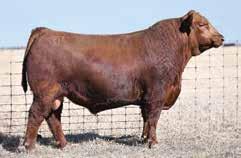
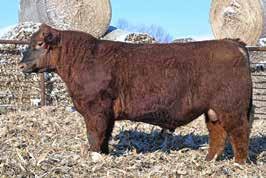
HRP LAKEISA L3293-N5305 reg#: 5113061
BW: -0.2 | WW: 100 | YW: 176 MB: 0.53 | RE: 0.78
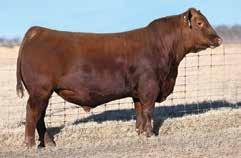
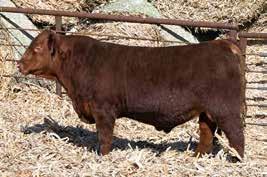
HRP ENVY 0215-N5423 reg#: 5113687
BW: -4.4 | WW: 66 | YW: 103 MB: 0.80 | RE: 0.26
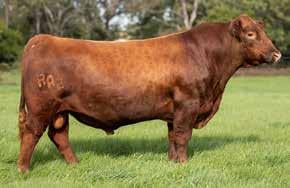
HRP RAINDANCE K250-N5330 reg#: 5113199
BW: -2.9 | WW: 89 | YW: 149 MB: 0.45 | RE: 0.37
HRP REBELLA L3280-N5301 reg#: 5113071
BW: -1.7 | WW: 88 | YW: 154 MB: 0.51 | RE: 0.43
HRP ABIGRACE 0019-N5370 reg#: 5113621
BW: -3.8 | WW: 63 | YW: 102 MB: 0.86 | RE: 0.02
HRP MS CHLOE K270-N5406 reg#: 5113179
BW: -1 | WW: 77 | YW: 119 MB: 0.57 | RE: 0.36
HRP RAIN LASS 013-N5410 reg#: 5113667
BW: 0.1 | WW: 88 | YW: 149 MB: 0.90 | RE: 0.55
HRP DELLA L3324-N5358 reg#: 5113611
BW: -1.9 | WW: 100 | YW: 173 MB: 0.81 | RE: 0.61
HRP ABIGRACE 0019-N5427 reg#: 5113695
BW: -1.8 | WW: 86 | YW: 148 MB: 0.87 | RE: 0.32
Powered by Genetics ...
Koester Red Angus combines over 20 years of genomic DNA testing with practical, hands-on selection to deliver bulls that perform both on paper and in the pasture. While advanced data drives our decisions, we never compromise structure, muscle and phenotype. Our bulls are built to produce efficient, high-performing cattle and long-lasting females – ensuring commercial cattlemen get results that are as reliable as they are profitable.
Proven Genetics. Reliable, Profitable Results.
KOESTER CHARTER 425 (#5086009)
Calving ease plus performance, 425 offers a rock-solid EPD profile that blends growth, maternal strength and carcass merit without sacrificing balance. Backed by a powerful 9917 x Domain dam, he’sll sire market-ready steer calves and high-producing replacement heifers.
KOESTER WARRANT 4104 (#5086155)
Maternal brother to last year’s lead-off bull, 4104’s Warrant x E119 mating is backed by a proven, high-producing dam. He offers exceptional balance in both his phenotype and EPD profile, with a gentle disposition.
Selling 60 age-advantaged bulls in conjunction with
KOESTER WARRANT 466 (#5086083)
Backed by a ranch-favorite dam, 466 combines proven production with a strong Warrant x Marksman mating. He’s a low-birth, long-sided bull chock-full of muscle with an impressive phenotype that stands out in the bull pen. Built to sire calves that tip the scale on weaning day.
KOESTER CHANCELLOR 4111 (#5086169)
Long profiling and super attractive, 4111 is a thick-made Chancellor son with eye appeal that draws attention. His dam is quickly rising to the top of our favorites, posting near-perfect udder and foot scores. Built right and easy to like.
Request a catalog: Leland Red Angus Friday, March 13, 2026
1 p.m. MT • At the Ranch • Sidney, MT 185 Red Angus Bulls 65 Commercial
KOESTER INSIGHT 479 (#5086109)
Backed by a stacked 9917 x E119 pedigree, 479 is supported by generations of proven females with growth and carcass strength. He brings a powerful phenotype with muscle, length and volume, built to sire calves that perform and females that excel in production.
KOESTER JEFFERSON 4119 (#5086181)
Big-time growth and carcass with an outcross pedigree, 4119 is built for today’s top-value market. He’s backed by a high-performing dam that consistently brings in a good one. He’ll sire heavy, high-demand calves that fit the market.
EDITOR & WRITTEN CONTENT SPECIALIST Maclaine Shults-Mauney 970-234-9685 | maclaine@redangus.org
SHOW SPECIALIST
Erin Dorsey 970-396-5420 | erin@redangus.org
MEMBERSHIP & ACCOUNTS RECEIVABLE
Jaeden Schneider Ext. 7 | jaeden@redangus.org
JUNIOR PROGRAM COORDINATOR
Taylor Dorsey 970-397-0356 | taylordorsey@redangus.org
RECEPTIONIST
Tabitha Romero Ext. 3 | receptionist@redangus.org
Association Commentary
Refining Our Strategy
by Greg Ruehle, Executive Vice President
The January 2026 Red Angus Board meeting was significant for me – it was my first time being face-to-face with the Board, and we spent more than a day reviewing and refining the RAAA Strategic Plan.
You may be curious what is meant by “refining a strategy.” Google describes the Board’s work as “a continuous process of analyzing, adjusting and improving an existing plan by making minor, targeted changes based on performance data, feedback and new information.”
Since the time the Strategic Planning Committee put the finishing touches on the existing plan in 2020, much has changed in the cattle and beef industry, as well as specifically for the Red Angus breed, including:
• The smallest U.S. cow herd since the 1950s;
• Unprecedented consumer demand for U.S. beef;
• Uncharted market prices for live cattle and beef products;
• Near elimination of live cattle imports and beef exports; and
• Unbridled demand for Red Angus genetics as live cattle (bulls and females), as well as genetics (embryos and semen).
During their review, the Board made no changes to the Mission, Vision and Values statements crafted by the Strategic Planning Committee.
They did spend time reviewing and updating the four critical objectives as outlined below:
Critical Objective No. 1:
Create Market Demand
• Redefine and improve RAAA commercial marketing efforts and talent.
• Support and expand the utilization of EID tags within Angus Access and Allied Access programs to strengthen program value and industry competitiveness.
• Develop demand-side programs with retailers that pull Red Angus-influenced beef through the value chain.
• Combine animal origin with beef-quality attributes for domestic and international markets.
Critical Objective No. 2:
Quantify and Communicate Red Angus Advantages in Stakeholder Profitability and Sustainability
• As the U.S. beef cow herd rebuilds, position Red Angus as a critical breed based on numerous attributes: moderate size, docile, maternal strengths, efficient dry matter conversion, heat tolerant and carcass quality, among others.
• Red Angus is a complementary breed and brings heterosis to any breeding program.
• Absence of the diluter gene helps Red Angus maintain more consistent red color.
Commercial Marketing Team and Value-Added Programs staff is on page 24
• Ensure we are telling our story in a timely and impactful manner.
Refining Our Strategy
Critical Objective No. 3:
Attract, Develop and Retain Talent
• Focus on developing job descriptions and performance evaluations that improve staff alignment and performance.
• Strategically align workforce capabilities with the Association’s priorities to drive performance and growth.
• Ensure the organizational structure remains agile, effective and positioned to support future opportunities.
• Enhance in-office engagement to foster collaboration, alignment and a high-performing team environment. Return to pre-Covid work arrangements.
Critical Objective No. 4: Create and Improve Genetic Prediction Tools
• Assure performance data is returned to producers in a timely manner
“These
• Increase staff communications with breeders regarding genetic prediction tools and evaluations, including using new technologies to deliver information more timely.
• Do not shy away from utilizing outside resources to help breeders understand and utilize genetic prediction tools.
• Increase the value of the website and/or add other technology platforms through improvements to navigation and organization of web tools.
As we advance the work outlined in our strategic plan, we are encouraged to identify and engage subject matter experts who can help us explore opportunities, refine our approach, and develop new strategies when needed. Leveraging external expertise allows us to make informed decisions,
strengthen our initiatives and ensure we are positioning the Association for long-term success.
In conjunction with the above bullet points, we plan to advance a culture of exceptional customer service across the organization to deliver a consistent, high-quality member experience, deepen trust and engagement, and strengthen overall organizational impact.
These refinements to the strategic plan are being incorporated into the existing plan document. These changes are foundational to the future of the Red Angus breed, and will be used to guide Association leaders and staff over the next several years. My thanks to the RAAA Board of Directors for having the vision and strength to lead this discussion. //
Big Sky Genetics ... Where Performance
1 – FEDDES FULL BACK 636D-5604
A full brother to Pieper Commander 0100, Hollywood’s dam, the 0019 donor at Hansine and the 0018 donor at Berwalds. is bull will produce donor cows. He is a phenotypic standout with a top YW, 128 gain ratio, 107 IMF-R and 118 REA-R. Proven pedigree. We plan to use this bull in our herd. ree full brothers sell. LOT 4 –
LOT 9 – FEDDES PAYDAY 389-5224
Reg. # BW 205-Wt. WW-Ratio 5115865 85 673 116
BIEBER PAYDAY K113 X BIEBER CL ENERGIZE F121
ProS HB
CED BW WW YW ADG DMI M 116 32 84 9 -0.9 100 166 0.41 1.45 28
ME HPG CEM ST MA YG CW REA FAT 15 11 4 13 0.65 0.12 49 0.35 0.03 5224 is a Payday son from the elite maternal Blockana cow family. He has the look to go with his powerful growth and carcass data. We’re calving our rst Payday daughters now and are very happy with them.
A PayDay son with big-time performance: 113 WR and a 109 YR, also a 113 REA ratio. He is a phenotypically correct bull with a solid foot and leg set! Dam’s MPPA: 105 LOT
8 – C-T
and
and volume, along with a wide back and stance! Dam C-T Linsey
is also the dam to the C-T Reputation
bull and one of the top cows in our donor pen! Dam’s MPPA: 105
LOT 13 – FEDDES HOLLYWOOD 806-5253
Reg. # BW 205-Wt. WW-Ratio 5115807 80 659 ET
PIE HOLLYWOOD 222 X BIEBER ROMERO 9136
ProS HB GM CED BW WW YW ADG DMI M 108 9 100 8 -1.8 89 158 0.43
A bull that will add as much growth and carcass as any in the sale with top 1% GM, 2% WW, 1% YW, 1% ADG, 5% Milk, 16% Marb, 1% CW & 10% REA. He posted ratios of 109 IMF, 106 REA & 116 gain ratio.His dam produced on our ranch until she was 16 and was one of the most in uential cows we have ever raised.
LOT 17 – FEDDES COMPLETE 806-5286 Reg. # BW
KJL/CLZB COMPLETE 7000E X BIEBER ROMERO 9136
A Complete son out of the great Sleek 806 donor. Top growth and carcass numbers. Landed at the top end of the o ering for IMF ratio and Gain ratio. A bull that covers all the bases, will add growth and power without sacri cing female quality. CE** View videos of the sale lots at www.feddesredangus.com or www.ctredangus.com
RAAA Names Luke Bolin Director of Communications
by Maclaine Shults-Mauney, Red Angus Magazine Editor
The Red Angus Association of America has named Luke Bolin as its new director of communications, bringing extensive experience in agricultural communications, creative services and team leadership to RAAA’s staff.
In this role, Bolin will lead RAAA’s communications strategy across print, digital and social platforms, working closely with staff, leadership and members to strengthen the Association’s brand presence and enhance member engagement. He will oversee content development, design, messaging and marketing support for key programs and initiatives that advance Red Angus cattle and Red Angus-influenced genetics in the beef industry.
“Luke brings tremendous experience in communications and graphic design that will complement the ongoing efforts of the RAAA communications team,” said Greg Ruehle, RAAA executive vice president. “I look forward to seeing his leadership reflected in a refreshed visual identity that further increases Red Angus visibility and acceptance across the beef industry.”
Bolin resides in Arkansas and is a graduate of the University of Arkansas, where he developed the foundation for his career in agricultural communications and creative services. Before joining RAAA, he spent more than 10 years in a leadership role with Sullivan Supply, where he significantly grew the communications department and helped elevate the organization’s visual and digital presence. His background includes graphic and brand design, content development and building communication strategies that resonate across diverse audiences.
“Luke is a talented, visionary and creative professional who comes to us with years of industry experience,” said Halla Ramsey, RAAA execu-
tive director of operations. “We are excited to leverage his graphic design expertise to elevate the Red Angus breed and his leadership skills to guide our communications team into new areas of growth and impact. The Association’s strategic plan will serve as his compass as he brings fresh perspective, innovation and momentum to RAAA.”
Throughout his career, Bolin has worked within the livestock and agriculture sectors, combining creative talent with practical industry knowledge. His experience building and managing high-performing creative teams, developing integrated campaigns and supporting producer-focused organizations positions him well to serve RAAA’s membership and stakeholders.
“I’m excited to step into the role of director of communications for the Red Angus Association of America at such a great time for the breed and the organization,” Bolin said. “Red Angus has an incredible story to tell, and I’m grateful for the opportunity to help share it through clear, consistent and thoughtful communication. I look forward to working closely with our members and team to build a communications program that strengthens connections, encourages engagement and supports the long-term success of Red Angus.”
As director of communications, Bolin will support RAAA’s ongoing efforts to provide strong, consistent messaging around its value-added programs, breed improvement tools and member services, while showcasing the strengths of Red Angus cattle throughout the beef supply chain.
Luke Bolin
Red Angus Commercial Marketing Team and Value-Added Programs
DIRECTOR OF COMMERCIAL MARKETING
Kelly Smith 417-855-9461 | kelly@redangus.org
COMMERCIAL MARKETING SPECIALIST
Cory Peters | cory@redangus.org 402-418-2351
COMMERCIAL MARKETING SPECIALIST
Taylor Ohlde | taylor@redangus.org 913-626-2715
COMMERCIAL MARKETING SPECIALIST
Elizabeth Caskey | elizabeth@redangus.org 706-513-4951
ENROLL IN VALUE-ADDED PROGRAMS AND ORDER TAGS: tags@redangus.org 940-477-4593
Weekly Email Marketing Service of Feeder and Finished Cattle
The Red Angus show list informs feedyard managers, order buyers and other interested parties of Red Angus-influenced cattle. Producers can market feeder or finished cattle through this free service when selling through a sale barn, video auction or private treaty. The weekly show list is emailed to potential buyers through the Red Angus FeederFax email service. To upload information about cattle or to view cattle available, visit RedAngus.org/showlist.
To receive the weekly FeederFax marketing service that will highlight that week’s show list, please visit bit.ly/RAAAFeederFax.
Marketing Update
Why the Story Matters to the Bottom Line
by Taylor Ohlde, Commercial Marketing Specialist
As snow begins to melt and calves start to find their next gear, pastures green up and give us the foresight and motivation that remind us why we endure harsh winters and cold temperatures year after year. It is an energizing time across cattle country, and that optimism is reflected clearly in today’s marketplace.
It’s no secret the cattle market remains strong, continuing to set records across the country at sale barns, video markets and through private-treaty transactions. As feeder cattle pushed to all-time highs this fall and into winter, some producers have taken time to reevaluate the programs they participate in, whether that is Angus Access, Allied Access or other third-party verified programs. Those conversations are real and I understand why the question arises.
From my perspective in the field, I view participation in these programs as a form of insurance for the future. We all know what goes up must eventually come down. While I do not foresee the cattle market taking a major hit, some level of correction is inevitable at some point. When that time comes, it is typically the operations that stayed committed to a consistent program or standard during the good times that see the greatest long-term reward.
Cory and I often discuss this with guests on the Red Angus Remarks podcast: success today is about more than the cattle themselves. It is about telling the full story – not only of the cattle being marketed, but of the ranches behind them. Staying dedicated to a program through strong markets helps establish credibility when conditions become more challenging. It signals to buyers that the cattle have always met a standard of quality and have consistently been worth the added effort of enrollment in a verified program.
When the market tightens, we tend to see interest in program “badges” increase, and for good reason. However, I often see newer or recently enrolled sets of cattle struggle to compete against long-established program ranches that consistently deliver quality cattle along with a proven story. Over time, that consistency matters.
Another trend I frequently see in the field is producers utilizing programs such as Angus Access exclusively on steer calves. That approach is valuable and continues to help tell a strong story to buyers and procurement professionals. At the same time, I see just as much value in enrolling heifers that are being sold as replacements. In addition to age and source verification, these programs provide breed verification, something that carries increasing weight in today’s replacement female market.
I will never shy away from bragging on the Red Angus female. There are few better ways to tell the story of a high-quality set of red-hided replacement heifers than with the recognizable yellow Angus Access tag in their ear, giving buyers confidence in their investment. As replacement females continue to command more dollars, they become a long-term commitment for buyers. Being able to verify genetics and demonstrate those females are truly “one brand” has never been more valuable.
With that in mind, don’t hesitate to reach out to any of us on the marketing team. We are always available to discuss how these programs can help you better tell the story of the hard work being done in your operation every day. //
IT’S TIME TO GET A PINKEYE PLAN
Setting a strategy now can prevent ROI from being blindsided.
It’s never too early, and certainly not too late, to develop a plan to address bovine pinkeye. But where do you start? According to Dr. Dustin Loy, associate professor of Veterinary Diagnostic Microbiology, Nebraska Veterinary Diagnostic Center, University of Nebraska-Lincoln, “An ideal strategy would involve consultation with the producer to fully understand their production systems in addition to disease history and current vaccine and prevention programs. This, combined with a herd visit to understand potential risk factors and causes, can be helpful to develop a strategy that helps meet the producer’s goals.”
VACCINATION FLY CONTROL PASTUREMANA G TNEME
Risk factors for bovine pinkeye come in several forms. Among the highest are face flies, woody grasses, hay bales, sawdust and sand. That’s why talking about proper management for these potential eye invaders is key. Also, starting the conversation about eye patches, antibiotics and pour-overs is important. Preventive measures, such as vaccines like Bovilis® 20/20 Vision® 7 and Bovilis® Piliguard® Pinkeye, can also keep healthy cattle healthy and protect profits.
Once you’ve completed your consultation and risk investigation, it’s essential to follow up with the prescribed strategy. “Our research shows that because of the time it takes to induce immunity, I would really support that recommendation of treating early and treating as prescribed,”says Dr. Philip
Griebel, professor and Canada Research Chair in Neonatal Mucosal Immunology, University of Saskatchewan.
“Because there’s probably very limited value vaccinating in the face of an outbreak, you need to treat often and treat early.”
Dr. John Angelos, DVM, PhD, DACVIM, professor of Medicine and Epidemiology, University of California, Davis, echoes the sentiment of treating early.
“The point of giving vaccines sooner is it will allow the animal time to develop an immune response. The general recommendation I have is to start a vaccine series at least four weeks before you would
“Because there’s probably very limited value vaccinating in the face of an outbreak, you need to treat often and treat early.”
Dr. John Angelos, DVM, PhD, DACVIM, professor of Medicine and Epidemiology, University of California, Davis
typically expect to see the cases starting to crop up in the herd. Designing herd health programs to help prevent the disease and develop standard operating procedures is fundamental.”
When it comes to preventing pinkeye, prevention is the best medicine, and right now is the time to start the conversation with your vet and get a plan in place. That way, you’ll be well on your way to keeping your animals healthy, pain-free and profitable for your operation.
For more information, visit StopCattlePinkeye.com
When infectious bovine keratoconjunctivitis (IBK), also known as pinkeye, is introduced into
Poor herd health can lead to decreased market value for beef and decreased milk production for dairy.
Calves infected with pinkeye can be 30-40 lbs lighter at weaning than healthy calves.1
Dairy milk production losses can cost up to $352 per animal.2
Vaccinations are an integral tool for preventing disease and for maintaining herd health.
For vaccinations to increase market value and productivity for both beef and dairy cattle, they need to be administrated according to label directions.
Producers should work with their veterinarians to decide on an optimum vaccination strategy for their herd.
“ Weight losses, due to pinkeye, have been measured and quantitated in beef cattle. Economic losses in beef and dairy cattle due to antibiotic treatments should also be considered as a consequence of pinkeye.”
- Dr. John Angelos, DVM, PhD, DACVIM Chair, Department of Medicine and Epidemiology, UC Davis School of Veterinary Medicine
For more information about the potentially devastating effects of bovine pinkeye and how vaccination can protect your herd, visit MAHcattle.com.
PIE ABSOLUTE 2415 #4704275
KJL/CLZB COMPLETE 7000E x PIE ONE OF A KIND 352
LEM INVASION 2016 ET #4653529
PELTON WIDELOAD 78B x PIE ONE OF A KIND 352
START-UP 1294 #4520443
PIE MIDAS 154 #4543927 PIE QUARTERBACK 789 x PELTON WIDELOAD 78B
PIE QUARTERBACK 2195 – #4704031
PIE CAPTAIN 057 – #4388923
WILLOW TOP PICK 750-1919 – #4205558
DK IMPECCABLE H819 – #4318945
DK RESOURCE J316 – #4490335
RED WILBAR TANNERITE 605L – #5025503
SCHULER PROFESSIONAL 3387 – #4842270
SNOW F121 ENERGIZE E7313 15L – #4799048
RIVER K21 #4956372
QUARTERBACK 2195 #4704031 PIE QUARTERBACK 789 x 9 MILE FRANCHISE 6305
CONNEALY CRAFTSMAN – 20132505
STELLPFLUG HOFFMAN RISEABOVE – 20516965
ILCC DIPLOMAT N103
ILCC DIPLOMAT N103
LEVEL 5023
ILCC NEXT LEVEL 5023
CAPTAIN M55
ILCC EXPRESSION 5995
ILCC BRAWN 5014
DARNOLD N220
High Profit, Outcross Genetics...
Our 26th sale features the first sons of PROPONENT. This one is out of a 110 MPPA Black/Red Ashland daughter. 16 CED to 140 YW spread, .97 Marb (1%), .49 REA (3%). Two half-sisters also sell!
Here’s a half-brother to last year’s $60,000 high-seller by TRANSCENDENT out of the 107 MPPA dam of RANCHMASTER 17 CED to 142 YW spread with 1.16 Marbling (1%), $22,752 $Profit (2%), 204 $Feeder (1%).
The first sons & daughters to sell by WEDEL GRAND SLAM 3377. This one sells paired with a half-sister as one of the 10 lots of U-Pick-Em heifers. Several donors will be found in the 10 pairs of sisters that sell on March 10th.
Black/Red daughter of G A R FIREPROOF out of a Complete 7000E daughter. Off-the-Charts indices of 231 ProS (1%) and 138 GridMaster (1%) plus 19 CED to 128 YW with 1.51 Marbling (1%).
Tuesday, March 10, 2026 Noon (CST) • at the ranch, Leoti,
Black/Red TRUE BALANCE son out of a Complete 7000E daughter. 19 CED to 137 YW spread with 1.10 Marbling. 176 Pros (1%), 103 GridMaster (1%) and outstanding phenotype
10 “U-Pick-Em” open yearling heifers will sell. This one by ALC PROPONENT L72 comes with 16 CED to 127 YW spread, 1.03 Marb (1%), plus 180 ProS (1%) and 109 GridMaster (1%).
This PRIME-TIME son out of GRAND SLAM’s Dam comes with 15 CED to 154 YW spread , 1.10 Marbling (1%), with Top 1% $Profit, and Top 1/10 of 1% $Feeder. 115 IMF & 111 REA ratios. The first sons of BROWN IDEAL K1377 will sell. This one out of a 110 MPPA PRIME-TIME daughter. 17 CED to 153 YW, .97 Marb (1%) and Top 1% ProS and GridMaster.
Member Service Reminders
• The third installment of 2025 fall THR was billed Feb. 14 and is due March 25.
• The fourth and final installment of 2025 fall THR will be billed March 14 and is due April 25.
How to Spot Genetic Defect Suspects in Your Herd
by Andi Inmon, DNA Customer Service Specialist
Many members wonder whether defect testing is necessary when submitting a DNA sample. The Red Angus Association of America currently monitors six genetic defects – MA, OS, DD, AM, CA and NH – which members may notice when reviewing an animal’s pedigree.
When using an animal for breeding, defect monitoring varies depending on whether calves are produced through natural service, AI or embryo transfer. For natural-service calves, defects are tracked three generations back on both the sire and dam sides.
For AI-sired calves, defects are tracked all the way back on the sire side and three generations back on the dam side. For ET calves, defects are tracked all the way back on both the sire and dam sides.
This distinction explains why a member may have used a sire naturally with no progeny flagged for “U” status, then later used the same animal as an AI sire and had progeny flagged. A “U” status indicates that defect testing is required.
Sign up for THR
Text Message Reminders: https://bit.ly/RedAngusReminders
When an animal is flagged for defect testing, members have two options:
1) Test the animal itself to clear it of the defect
2) Identify which parent carries the defect in its pedigree and test that parent
Testing the sire or dam allows all future progeny from that animal to be cleared if the parent tests free of the defect.
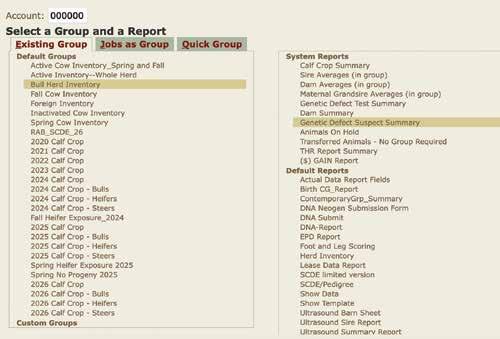
To check animals for defects in their pedigree, log in to REDSPro, click the Herd Reports/Downloads tab and select My Reports. Members can choose a group from the default groups box on the left, then select the Genetic Defect Suspect Summary Report on the right.
Need a little one-on-one help?
Schedule a meeting by scanning the QR code or visiting: RedAngus.org > Herd Management > Red Angus Alley
ReDs EaRn
ReWaRdS
In the Yard and on the Grid
Chappell Feedlot is seeking Red Angus feeder cattle to purchase or custom feed. Your calves are bred to earn – put them in a program focused on performance, gain and carcass value to capture grid-driven returns. Cattle are finished for grid success, then processed through Sustainable Beef – a plant that rewards premium-quality Angus genetics which meet the Red Angus Live Animal Specifications.
“Sustainable Beef is appreciative of Red Angus genetics and the quality of beef they provide us with for our Angus label.”
– Mark Nelson, Director of Procurement, Sustainable Beef LLC
“We like feeding Red Angus cattle. They do well in the feedlot and they tie into our relationship with Sustainable Beef to fill our chain space with quality Angus carcasses.”
– Tom Williams, Co-Owner, Chappell Feedlot
How to Spot Genetic Defect Suspects in Your Herd
This report generates a downloadable Excel file displaying the selected group’s animal data, including defects in the pedigree, testing status and the number of generations back the defect appears. If the columns are blank, there are no defects in the animal’s pedigree and no testing is required.
If an animal shows a defect with “carrier in pedigree” listed in the adjacent column, progeny may need defect testing depending on the number of generations back and the mating type.
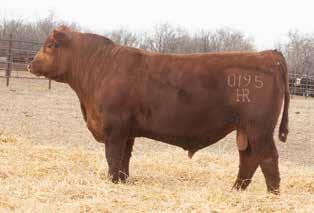
The bull below has an OS carrier 14 generations back in its pedigree. If used as a natural sire, progeny will not require testing. If used as an AI sire, progeny will need OS testing.
If an animal shows a defect with “carrier” listed in the adjacent column, that animal is a confirmed carrier and all future progeny must be tested for that specific defect. The bull below is an OS carrier, so all progeny will require OS testing regardless of mating type.
If an animal shows a defect with “tested free” listed in the adjacent column, the animal has a carrier in its pedigree but has been tested and confirmed free of the defect.
Progeny from that animal will not need to be tested. The bull below has an AM carrier in his pedigree but has tested free, so progeny do not require testing.
Using the Genetic Defect Suspect Summary Report helps members identify potential defect carriers before an animal is placed on “U” status. It also helps determine which tests are needed when submitting DNA for the first time, rather than requiring additional sample pulls later if a defect surfaces.
For questions, contact the DNA department at dna@redangus.org. //
Red U2Q Playboy 2197K x Bieber CL Stockmarket E119
CED: 13 BW: -1.0 WW: 71 YW: 114
Color and Consistency in Crossbred Calves
by A.J. Knowles, Director of Breed Improvement
Uniformity is one of the most important drivers of profitability in today’s cattle market, with buyers consistently paying premiums for groups of calves that look alike. And it’s not because they’re nicer to look at – uniform loads of cattle are easier to sort, manage and tend to perform more consistently on feed.
However, for producers utilizing crossbreeding, particularly in the Southeast where crossing with Brahman cattle is popular, variation can arise due to the genetic combinations created. With the rollout of the updated American Red program at RAAA, I wanted to learn more about the color variation we can expect in these calves and how this compares to other crosses.
To find out more, I reached out to Emilie Baker, Ph.D., and Paul Holland, Ph.D., of West Texas A&M University and Texas A&M University–Kingsville, respectively. Baker’s work has consistently revolved around utilizing genetics to enhance feedlot profitability, and Holland’s studies have specifically involved research into the coat colors of Bos indicus cattle and their crosses.
To qualify for the American Red program, calves can have a maximum of 25% Brahman or other Bos indicus content, such as Nellore. To make these crosses, it is common to utilize Red Angus bulls on Brahman cows to make an F1, or first-generation, cross, then breed the resulting offspring back to Red Angus, yielding calves that are 75% Red Angus and 25% Brahman.
When asked what we can expect in the F1, Baker said, “Crosses between Red Angus and Brahman consistently produce calves with a red base coat, since all Red Angus animals possess the red allele for
color. However, the gene for brindling can create variation, leading to the classic red brindle pattern, darker chocolate shades, or red with little to no black pigmentation.”
When considering the color of the American Red calves produced through backcrossing Red Angus bulls on F1 Red Angus x Brahman females, Holland noted, “While the F1 females can have a range of phenotypes, crossing Red Angus bulls back to F1 Red Angus x Brahman females could reduce the variation, with more calves tending to be solid red, although there will still be some brindling and variations in shades. Simply put, as more Red Angus genetics enter the herd, the more that the offspring will look like Red Angus.”
Holland had some thoughts on the color patterns observed and performance when Red Angus bulls are used on the popular F1 Brahman-Hereford female as well. “This cross produces a calf that is 50% Red Angus, 25% Hereford and 25% Brahman. The benefit of this cross is that both the calf and dam have maximum heterosis, which would allow for higher levels of performance for traits like growth.”
Holland also noted that while the calf crop will be more uniform in terms of coloration and brindling, about 50% will still have a bald or brockled face.
“Reducing the amount of white on the face may reduce the risk of ‘eye cancer,’ or bovine ocular squamous cell carcinoma, and helps increase uniformity. Using Red Angus genetics also helps with market acceptability by adding carcass merit in with hardy Brahman genetics,” Holland added.
Finally, when asked how Red Angus
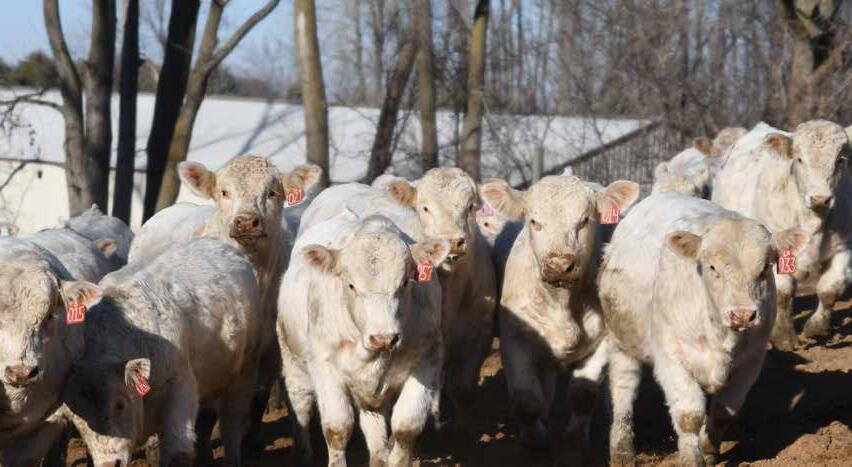
compared to other breeds of sires when crossed with Bos indicus genetics, Baker said, “By comparison, Charolais sires introduce more variation than Red Angus because of the dilution locus, which causes the calf crop to range from red to cream or straw-colored. Hereford sires can be similar, adding bald faces and also introducing the ‘silver’ dilution phenotype, causing lighter, or ‘washed-out,’ brindling patterns.”
Baker went on to add, “In both of these cases, the visibility and intensity of the dilution can be quite variable and will depend on the particular combination of base color genes contributed by both parents. Crossing Red Angus with Brahman produces calves with consistent coat color, as neither breed adds alleles beyond those determining the red base and the brindle pattern. Therefore, the Red Angus x Brahman cross provides the most uniform coat color among crossbred calves found in the Southeast.”
Ultimately, when uniformity matters, coat color plays a huge role in capturing the value of production. Red Angus offers producers a predictable path forward when working with commercial cattle of all kinds: heterosis, consistency and market acceptability. For producers targeting programs like American Red, or simply aiming to market consistent loads of high-performing calves, Red Angus genetics provide a practical tool to improve consistency. //
Paul Holland, Ph.D.
Emilie Baker, Ph.D.
LMG Gills Jumpstart 9696
LMG Gills Amazing 8798
LMG Gills Jumpstart 4001
LMG Gills Asset 187C
Gill Energize 3059
Gill Energize 3055
Bulls Like These Sell!
redalliance.biz
Thursday, March 12, 2026
Sale starts at 11:00 a.m. (Note new start time!)
Groesbeck Auction & Livestock · Groesbeck, Texas
Conveniently located 25 miles west of Buffalo, Texas, and I-45
Featuring Bulls & Females 35 Stout, Registered Red Angus Bulls
Offering a select group of coming yearling and bred heifers.
15 registered Red Angus bred heifers and 10 yearling open heifers – excellent herd-building quality!
Cattle developed in grass pastures –the same way you raise 'em!
More than two decades and 35 sales of experience in developing highperformance Red Angus bulls and females.
Our program is built for commercial producers but powerful enough for seedstock breeders.
Pedigrees from some of the best cattle in the Red Angus breed, with EPDs that work in our Deep South environment.
Scan the QR code to view our catalog!
These two herd sires represent the quality offered by their progeny in this sale. Sired by two of the most well-known and used sires in the breed, 3SCC Domain A163 and Mann Red Box 55C, over the past 5 years. Heavily used for good reason. Their dams are equally renowned.
McCann Red Angus Lewiston,
Idaho
Thank You Buyers & Supporters!
Our 6th Annual Bull Sale went great this year! Thank you to everyone who supported us. We look forward to seeing you at our 7th Annual Bull Sale, Thursday, February 25, 2027. Scan to be added to our 2027 mailing list today!
Diamond H Ranch
“Dependable cattle from our pasture to yours!” Annual Production Sale
March 25, 2026
CHARGER, BRUNO, HOSS & MANY MORE...
Developing cattle that are genetically and phenotypically balanced, will increase efficiency, carcass and maternal traits, and will not give anything up in growth...is something we take great pride in!
Let’s take your herd to the next level...we’ve got something for everyone!
The next generation of great progeny starts here » « are you ready??
Breeding for BALANCE
Right-Sized Cows, Real-World Profit
by Brandi Buzzard, for the Red Angus Magazine
“Profit equals income minus expense.”
Five short, but very meaningful words, from Jason Rowntree, Ph.D., which sound basic but are inherently more complex beyond first glance.
Rowntree, the C.S. Mott Chair for Sustainable Agriculture at Michigan State University, explained most of the variation associated with profitability in cow-calf systems are expense-driven, meaning expenses in a cow-calf business will largely indicate which operations will or won’t be profitable every year.
Input costs such as fertilizer and machinery, coupled with limiting labor challenges, have pushed producers to examine further measures to improve efficiency, which has led to increased discussion around right-sizing cows for a specific operation and how it relates to profitability.
As a benchmark, the “right-sized” cow is not uniform across the industry – she will vary by region – but is instead a cow that matches her forage resources and management system to optimize efficiency and reproductive performance while maximizing pounds of calf weaned.
According to Rowntree, the majority of expenses for a cow-calf operation are tied up in nutrition, hence having fewer nutrition input costs is going to be very important in determining profitability.
“We all know nutrition costs are going to be the largest factor influencing profitability in a cow-calf system. So, what really happens is a combination of having more forage-efficient cows that wean a greater percent of their body weight.”
Rowntree manages the Red Angus herd at Michigan State University and has more than 15 years of data collected,
Right-sized cows match forage and management, weaning efficient calves with fewer inputs – proving profitability starts with measuring, fertility pressure and smart selection.
including calving weights, weaning weights and mature cow weights, coupled with grazing data, and his findings have been consistent.
“What our data would show is the lighter weight cows are generally weaning a greater percent of their body weight, i.e., they have more biological efficiency.”
Rowntree attested that simply having smaller cows doesn’t necessarily guarantee larger calves but instead producers should pressure their cow herd from fertility and forage efficiency perspectives and let the cows sort themselves out.
“That’s what we’ve tried to do for a long period of time – apply fertility pressure. For example, maybe we only allow our heifers to have one and a half cycles, versus just two, and let that pressure which cows get to stay because they breed back in a way that is profitable from a fertility standpoint,” he explained. “And whatever size they are, they get to stay.”
Bigger Isn’t Always Better
Ryan Rathmann, Ph.D., agreed and offered insight on how to identify those cows with fertility, longevity and forage efficiency and make them the banner cows of the herd.
“The size of a cow a ranch chooses to operate is fundamentally one of the most important decisions an operator makes and is probably undervalued in most people’s minds,“ stated Rathmann, professor and John W. and Doris Jones professorship holder in the department of animal & food sciences at Texas Tech University.
Ryan Rathmann, Ph.D.
Jason Rowntree, Ph.D.
Right-Sized Cows, Real-World Profit
“There’s so many variables at play and it’s a very complex subject. So, maybe the nature of its complexity is probably why most people choose not to tackle it,” he added.
According to Rathman, the complexity is how the industry has arrived at 1,500 lbs. cows and feeding cattle to 1,6001,800 lbs.
“Our nation’s cattle inventory is down and to continue to produce at a level that meets our great beef demand, the only option has been to run bigger cows and feed bigger calves in the feedlot. We’ve been put in a position, genetically speaking, through our seedstock suppliers, to have these high-octane, big-appetite, long-growing cattle that can sustain reasonable feed efficiency to very heavy final weights.
I think the problem is we’re overlooking the impact this has at the cow-calf level. Most cow-calf operators are still merchandising their calves at or soon after weaning, so perhaps they need to reconsider and take a deeper look at the real trade-offs when they choose to run larger cows versus holding on to a more sensible cow size.”
The biggest problem in this complex issue, Rathmann attested, is the average rancher has no idea how much grass each individual cow is consuming daily, and because of that, can’t measure it.
“If they can’t measure it, they won’t dive into the subject of the tradeoff of running a bigger cow versus a smaller cow. It’s a black box – nobody knows what’s happening in it.”
The consensus from several industry thought leaders seems to be the lack of measurements is holding producers back from more efficient cows and, therefore, more profit. Capturing basic data points such as matching the calf to the cow, recording calving dates, individual calf calving and weaning weights, and mature cow weights can start putting
the picture together of calf weight weaned relative to cow weight.
Glynn Tonsor, Ph.D., professor in the department of agricultural economics at Kansas State University, saw the same thing in his work with Extension and producer data.
“If a producer doesn’t have accurate books in terms of knowing their cost per cow, revenue per cow and the reality of their labor inputs on the operation, it’s very easy to make managerial decisions that may not be in their best interest,” he explained.
Tonsor also pointed to genetic changes over time that have succeeded in higher beef quality or increased feeding efficiency in the feedyard, but those genetic changes have manifested at the cow-calf level instead, such as increasing frame.
“Genetic changes over time have not solely been for cowcalf efficiency, but they show up at the cow-calf level, which gives us these bigger cows.”
Cracking the Code
Rathmann’s “black box” presents a problem – how are producers expected to make forage efficiency and cow profitability decisions if they’re unable to measure forage intake?
Producers in more arid climates, such as southern Colorado, are more prone to choose a cow that requires fewer inputs and doesn’t milk as heavily, so pregnancy rates aren’t compromised.
Shane White Glynn Tonsor, Ph.D.
Right-Sized Cows, Real-World Profit
Measuring harvested forage intake, such as hay or silage, on an average per head basis is a good start but real value lies in measuring grass intake during prime grazing season.
Thankfully, there are a few technologies on the marketplace that are helping address the information gap when it comes to grazing behavior and grass intake.
One such technology, CERES TAG, is a direct-to-satellite animal intelligence platform that allows a solar-powered smart sensor ear tag to automate phenotypes, including grazing, drinking, resting, ruminating and walking minutes for individual animals.
The data are run through a series of algorithms that have been scientifically designed – and third-party verified by a Ph.D. researcher – to predict pasture feed intake, estrous alerts or calving alerts, to name a few. Simply put, the CERES TAG devices can give producers real-time, valuable data on grass intake for their cows, essentially addressing the “lack of measurements” issue.
Shane White, national sales manager at CERES TAG, explained the data collection and analysis process.
7AR103 STRA
SARGENT
4657003 | General x SPARTACUS
SARGENT has entered proven status as a Calving Ease and high phenotype specialist. He offers a great spread for Calving Ease to YW ranking in the top 25% for each. His dam, Tina, is one of the most prolific cows in the breed and her first four sons to sell at Twedt’s recent production sale averaged $62,750!
AMSTERDAM 7AR111 FEDDES
4787662 | Drifter x SPARTACUS
AMSTERDAM is the hidden gem within our lineup offering exceptional Calving Ease and added look. Moderate framed, heavy muscled and easy fleshing, this bull sires cattle that are the right kind and highly sought-after. Sired by the now deceased TCA Drifter, AMSTERDAM offers many of the same traits of added density and fleshing ability.
From Feddes Red Angus, MT
7AR116 MUSHRUSH
4926528 | Top Tier x Forager
TOP SECRET is an exciting new outcross sire offering elite indexes and exceptional phenotype. Study his data closely. He ranks among the best in the breed for economically relevant traits like CE, YW, ADG, MILK, STAY and MARB. His pedigree, mating flexibility, data set and eye appeal make him easy to use.
From Mushrush Red Angus, KS
From Twedt Red Angus, ND
Right-Sized Cows, Real-World Profit
Resources Conservation Service data, which reveal the percentage of dry and wet season grasses that exist in a 10-kilometer square where the animal triggered the grazing behavior. Those pieces of data are used to predict the dry matter intake of every cow that wears a CERES TAG device with 90% accuracy.”
White further explained the process is not as simple as small cows eat less and big cows eat more.
“We may very well have a 1,500 lbs. cow that eats less than a 1,200 lbs. cow, and that’s insanely important information for the producer to be able to factor into the conversation of ‘I want right-sized cows.’ We need to right-size cows based upon how they eat in their environment, not how they interact with a supplemental feed bump.”
Therein lies another issue. There is no one right-sized cow for the entire beef industry, as moisture, growing season and forage availability varies greatly from one region to the next.
Making Up for Forage Differences
In southwest Texas, the farther west producers operate, into more semi-arid or arid environments, the more they need an easier fleshing cow that fits those conditions better. Droughts are more frequent in this region, so producers err on the side of safety and choose a cow that requires fewer inputs and doesn’t milk as heavily, so pregnancy rates aren’t compromised.
Conversely, in higher-rainfall areas, most people assume having more grass makes a larger cow more advantageous. Neither Rathmann nor Rowntree agree with that conclusion. In the upper Midwest, Rowntree said the growing season may only be 130 days, so stockpiling grass reduces the amount of hay producers must feed in the winter.
“We can use cover crops, annual systems and graze crop residues to help extend the grazing season and fill windows. But generally, one thing I’ve learned is we can find lower quality forage that meets nutrient requirements easily, whereas for producers in a drought scenario, forage becomes really hard to come by,” said Rowntree.
Similarly, while drought may be more prevalent across the northern Plains, many producers in that region are more likely to run a larger cow to get through the winter. Producers in the northern Plains are also more likely to retain ownership after weaning, which leads to the cow-calf genetic efficiencies and larger end-weight cattle mentioned by Tonsor earlier.
Rathmann cautioned, though, to that approach.
“I think we still need to re-examine whether a bigger cow is truly more profitable in those environments. When you work through the math – starting with a fixed amount of grass, forage or feed and allocating it based on cow size – it often favors a smaller cow. You can wean a greater number of calves, even if they’re lighter, compared to running fewer big cows that wean heavier calves. That’s the real tradeoff we’re talking about.”
While it’s clear there is no one-size-fits-all cow size for the nation’s cow herd, it’s clear there are consistent strategies each producer can take, regardless of geographic location, to determine the right-sized cow for their operation. Measuring inputs versus outputs and basing decisions on fertility outcomes are two good starting points for any producer.
“That’s really the discussion. It’s input versus output. We need to genetically identify the cows that eat less and have an intermediate appetite but yet give us one of the bigger, healthier calves that are born earlier in the calving window. That’s the goal.” Rathmann concluded. //
Experts advise matching cow size to the country she lives in – forage, weather and management – and producers will get more bred cows, consistent calf crops and fewer surprises.
HARMS PLAINVIEW RANCH
Calving season is here, which means selecting your next herdsire is on the horizon. Make your choice at HPR… where the dams, granddams and great-granddams of every bull we offer are raised and maintained on our ranch. We combine the latest science and technology available with real-world, hands-on stockmanship and experience… progressive and practical. Purchase your bulls where the females and our customers always come first.
RED ANGUS SIRES
Post-Calving Cow Reset
Getting females cycling and bred back on time
by Shelby Shank for the Red Angus Magazine
For cow-calf producers, there’s never a break in the calendar. As soon as a calf hits the ground, the clock quickly starts ticking toward the next breeding season.
The weeks following calving can determine whether a female stays on a tight, profitable schedule or slowly slips deeper into the calving season, putting both productivity and profitability at risk.
The first 30 to 60 days after calving are widely considered a critical window for getting cows back into estrus and bred on time. While it may feel like there’s plenty of time, the window is narrower than it appears.
“In order to be efficient and profitable and keep everybody on kind of a uniform schedule, the goal is to have a calf every 365 days out of a female,” said Chris Clark, Iowa State University Extension beef specialist. “That gives us 80 to 85 days to get a female rebred after she calves.”
Understanding what happens biologically after calving and how management decisions influence that process is key to resetting cows for reproductive success.
Understanding Postpartum
It’s normal for cows to experience a period of postpartum anestrus after calving, meaning the cow is not cycling.
Anestrus is the cow’s way of prioritizing recovery. After calving, a cow’s body focuses on healing the uterus, producing milk and supporting the newborn calf. Hormones that control estrus and ovulation are temporarily suppressed as energy and nutrients are diverted to survival and lactation.
“Let’s say in a normal mature cow, a normal period of anestrus after calving is 20 to 45 days,” Clark said. “Then the very first heat is often shorter in duration and not as fertile.”
After calving, the clock starts again –managing that first 30–60 days helps keep cows on a 365-day schedule and bred back fast.
Felipe Silva, Ph.D.
Chris Clark
That first postpartum estrus can be easy to miss and may not result in conception. If a cow does not conceive on that first cycle, producers must wait another 21 days or more for the next heat cycle.
“To close that one-year calving interval, producers only have about 85 days to breed that cow back,” said Felipe Silva, Ph.D., assistant professor and Extension beef specialist at North Carolina State University. “If the cow is in anestrus too long, that calendar gets very tight.”
While much attention is paid to the weeks after calving, the groundwork is often laid earlier.
“I would argue the last two to three months of gestation in the previous pregnancy are just as important, if not more important, than the 30 to 60 days after calving,” Clark said. “One of the most important things is body condition score at calving time. We have to manage BCS during late gestation to set ourselves up and the cow for success.”
Why Rebreeding Delays Matter
When cows fail to rebreed on time, the consequences can ripple through the operation.
“If we don’t get cows to recycle and breed appropriately, we tend to move them deeper into the calving period.”
When cows don’t rebreed on time, they slip later into the calving season – shrinking recovery time and increasing the risk of being open.
That shift can quickly snowball. A cow that calves in the first 21 days one year but slips into the second or third cycle the next year has less time to recover and rebreed again.
“Then the problem is the following year, she calves later and is at risk of basically falling out of the herd as a non-breeder or open cow if she doesn’t return to estrus appropriately that following year,” Clark said.
C-KIRWAN HOLLYWOOD 5211
RAAA#: 5193865
C-KIRWAN CONFIDENCE 5201
RAAA#: 5193845
KIRWAN HOLLYWOOD 5026
RAAA#: 5179067
KIRWAN HOLLYWOOD 5013
RAAA#: 5179081
KIRWAN HOLLYWOOD 5023
RAAA#: 5179071
C-KIRWAN OUTRIGHT 5209
RAAA#: 5193861
Post-Calving Cow Reset
Body Condition Score
When it comes to rebreeding success, few factors matter more than body condition score. It’s one of the simplest tools producers have and the strongest predictor of whether a cow will resume cycling and conceive on time.
“If we can have them at the right body condition score at calving time, then hopefully that carries into the right BCS at breeding time,” Clark said.
Most recommendations for mature cows to calve at a BCS of 5 to 5.5, while first-calf heifers should be slightly higher, around 5.5 to 6 BCS.
“It is significantly harder for a thin cow to resume cycling and part of that has to do with nutrition,” Clark said.
When nutrients are limited, reproduction is one of the first systems to shut down. Cows prioritize maintenance and lactation over reproductive function, delaying estrus and conception.
Fall-calving herds may face additional challenges. These cows often reach peak lactation as forage quality declines and temperatures drop.
“Those females are going to go into peak lactation about the time the weather gets cold,” Clark said.
“Producers have to pay attention to whether they’re feeding well enough to support lactation and maintenance of body condition during the winter months.”
Maintaining or even slightly increasing BCS before winter can help fall-calving cows stay on track until spring turnout improves nutrition.
Nutrition
Nutrition is one of the most common reasons cows struggle to rebreed after calving.
“Producers often make the biggest nutrition mistakes when cows fail to rebreed after calving,” Silva said. “We know
GUIDE TO BODY CONDITION SCORES
BCS 1: The cow is severely emaciated and physically weak with all ribs and bone structure easily visible. Cattle in this score are extremely rare and are usually inflicted with a disease and/or parasitism.
BCS 2: The cow appears emaciated, similar to BCS 1 described above, but not weakened. Muscle tissue seems severely depleted through the hindquarters and shoulders.
BCS 3: The cow is very thin with no fat on ribs or in brisket and the backbone is easily visible. Some muscle depletion appears evident through the hindquarters.
BCS 4: The cow appears thin, with ribs easily visible and the backbone showing. The spinous processes (along the edge of the loin) are still very sharp and barely visible individually. Muscle tissue is not depleted through the shoulders and hindquarters.
BCS 5: The cow may be described as moderate to thin. The last two ribs can be seen and little evidence of fat is present in the brisket, over the ribs or around the tail head. The spinous processes are now smooth and no longer individually identifiable.
BCS 6: The cow exhibits a good smooth appearance throughout. Some fat deposition is present in the brisket and over the tail head. The back appears rounded and fat can be palpated over the ribs and pin bones.
BCS 7: The cow appears in very good flesh. The brisket is full, the tail head shows pockets of fat and the back appears square due to fat. The ribs are very smooth and soft handling due to fat cover.
BCS 8: The cow is obese. Her neck is thick and short and her back appears very square due to excessive fat. The brisket is distended and she has heavy fat pockets around the tail head.
BCS 9: These cows are very obese and are rarely seen. They can be described as similar to eight but taken to greater extremes. They also have a heavy deposition of udder fat.
Post-Calving
Cow Reset
cows with a poor body condition score can still calve, but if their BCS doesn’t improve, they will be late at breeding, and the results of breeding are going to be poor.”
Feed costs are already the largest expense in most cow-calf operations, but underfeeding or mismanaging nutrition can be even more expensive in the long run.
Energy and protein demands rise sharply after calving.
“The demands for both energy and protein increase significantly after calving,” Clark said. “Protein and energy requirements might be 30%-50% greater during lactation compared to late gestation.”
At peak lactation, requirements nearly double those of a dry cow at minimum maintenance. While cows naturally increase intake after calving, intake alone doesn’t always bridge the gap, especially during drought or poor pasture conditions.
Both malnutrition and overfeeding can create problems. Cows that are too thin struggle to cycle, while overly conditioned cows can also experience reduced fertility.
“We want them to be in that sweet spot regarding BCS,” Silva said.
Pay Attention to First-Calf Heifers
Nutrition challenges are often compounded when cows are not properly sorted after calving.
“Challenges arise often if you’re trying to feed your first-calf heifers with your mature cows, or if you’re trying to feed older females that are struggling to maintain condition with mature cows,” Clark said.
If only one group of females can be prioritized after calving, Clark sorts first-calf heifers to the top of the list.
“First-calf heifers are the ones that tend to be the most difficult to breed back,” he said. “They’re still growing and developing themselves, so they tend to have higher nutrient requirements for both energy and protein.”
Younger females’ smaller frame and rumen capacity make it harder to physically consume enough feed, even though their requirements exceed those of mature cows.
“If we feed to the needs of the first-calf heifers, we’ll overfeed the cows,” Clark said. “But if we feed to the needs of the mature cows, we’ll underfeed the heifers.”
Sorting heifers into their own camp can improve both efficiency and reproductive outcomes.
Post-Calving Cow Reset
Other Factors That Influence Cycling
While nutrition and BCS both play a vital role in breeding success, several other factors can influence how quickly a cow returns to estrus after calving and how well they breed back.
Stress, difficulty calving and overall herd health all play supporting roles. Stress can have measurable impacts on pregnancy rates.
“There is research showing that females who are more excitable often show decreased pregnancy rates,” Silva said.
Flighty or high-stress females often expend more energy, experience greater hormonal disruption and may have suppressed reproductive function.
Stress is a result of many sources, including excessive handling, poor facility design, transportation and inconsistent nutrition.
Difficulty calving is another contributor to delayed cycling.
“There’s evidence that cows that experience dystocia have longer postpartum intervals and lower rates of subsequent reproductive success,” Clark said.
Severe dystocia can slow uterine involution, increase the risk of infection and delay return to estrus. In difficult births, cows may experience internal tissue damage or tearing. These complications delay healing and postpone hormonal signals needed to resume cycling.
Cows nursing twins also face additional challenges due to higher milk demand and nutrient drain. Without adequate energy and protein intake, these cows are more likely to lose body condition and remain in anestrus longer than single-calf cows.
Managing Late-Calving and High-Risk Cows
As the breeding season approaches, late-calving cows and other high-risk females deserve close attention.
“There’s an underlying issue there, whether it be nutritional or something else,” Clark said.
Late calving often signals deeper challenges, such as inadequate BCS, insufficient nutrition during late gestation or postpartum, calving difficulty or health issues. Identifying and addressing those root causes is essential before attempting to “fix” reproduction through other means.
Hormonal tools, such as progesterone-based CIDRs, can help stimulate cyclicity, but Clark cautioned against using them as a shortcut.
“It’s unfair if a cow is experiencing a prolonged postpartum interval because of lack of nutrition and we don’t fix that nutrition problem, yet attempt hormonal therapy,” he said.
Resetting for Breeding Success
When it comes to preparing cows for the breeding season, both Clark and Silva caution producers against relying on a rigid checklist, but encourage monitoring a handful of key indicators that reveal whether cows are truly on track.
BCS remains the clearest early signal of whether nutritional programs are working, particularly in the weeks following calving when energy demands are highest. Adequate nutrition during this window supports postpartum recovery and helps cows return to estrus in time for breeding.
Cattlemen should look beyond individual cows and evaluate their herd as a whole.
“Producers should watch their calving distribution and calving rate from the previous pregnancy,” Clark said. “If we’re approaching breeding time and we had a bunch of late
Fast rebreeding isn’t just nutrition — calm handling, trouble-free calving and addressing late-calvers early keep postpartum intervals shorter and pregnancy rates higher.
Post-Calving Cow Reset
calvers, or we’re 60 days out from breeding and still have stragglers that haven’t calved, we’ve got an issue there and need to change our expectations and our plan.”
Keeping accurate calving records helps identify those issues early. Recording calving dates, tracking calving ease and grouping cows by calf age allows producers to spot trends that might otherwise go unnoticed.
“It doesn’t cost a producer anything to keep records, but using those records and putting those records to work is not just writing down who’s open and who’s not, but helps the producer make profitable decisions for their operation,” Silva said.
As producers focus on moving cows from calving into breeding, Silva noted the importance of remembering the bull’s role in reproduction success.
“One cow that is not bred is one cow. But one bull that is not doing his job is going to affect a lot of cows,” Silva said.
Bull BCS also matters.
“We have research showing that bulls that are too fat are actually detrimental to the capacity of sperm to cause a pregnancy,” Silva said.
One open cow is a problem – one subfertile bull is a wreck. Manage bull body condition and fertility, alongside cow nutrition, to keep pregnancies on track and profits steady.
The post-calving period is more than a recovery phase, but a reset for the next production cycle.
By focusing on body condition, nutrition and early intervention, producers can keep cows cycling and operations profitable.
“If we manage that window right, everything else gets easier,” Clark said. //
First-come, first-served access to superior genetics at competitive prices. Visit www.dhRedAngus.com for more information or contact us to schedule an appointment or ask for individual bull photos.
• AGE-ADVANTAGED BULLS
Coming 2-year-olds and yearlings, ready to breed more cows with a higher reproductive capacity.
• TOP 30% EPDS
Bulls with EPDs ranking in the top 30% across multiple traits for comprehensive herd improvement.
• BALANCED GENETICS
Emphasis on multi-trait excellence, enhancing your herd in various areas simultaneously.
• EASTERN OREGON RAISED
Bulls acclimated to the Pacific Northwest altitude and environment for adaptability and resilience. Darrel Holliday & Family 541.820.3697
541.805.5672 (cell) 65126 Highway 26 John Day, OR 97845 www.dhRedAngus.com
dhollidayranch@gmail.com
5L Jelly Belly 434-162K
MLK CRK Fusion 2220
Senn Money Talks 129
5L Foreman 2174-370E
RED Flying K Julian 22A
MLK CRK Spokesman 2341
MLK CRK Five Star 2232
MLK CRK Copenhagen 2223
TJS Territory J033
Mushrush Apollo J836
Bulls can be viewed at Eric Bowman’s feedlot, 1 mile south of Rhame, ND, until three days prior to the sale.
MLK CRK FUSION 5237 (#5143259)
MLK CRK ADMIRAL 5217 (#5143403)
MLK CRK LIFE IS GOOD 5249 (#5143109)
MLK CRK FIVE STAR 5251 (#5143391)
MLK CRK ALLOY 5233 (#5143229)
GM SAILOR 514 – #5182805
Sire: WEBR PRECEDENT 808
GM KNOXVILLE 554 – #5182923
Sire: MR COACH 1296
Bieber Jumpstart J137
LASO American Dream G117J
Crump Power Kind 7111
WEBR Precedent 808
Berwald Completely 2056
Bieber Checkmate K126
GM JUSTIFY 537 – #5182865 Sire: CRUMP POWER KIND 7111
GM WARRANT 538 – #5182841 Sire: CRUMP POWER KIND 7111
GM NEBRASKA 571 – #5182853 Sire: NIO MERIT 3131
GM NOBLE 585 – #5182881 Sire: NIO MERIT 3131
Balanced for Profit at 5L
Steers that earn AMAZING closeouts | Cows that FIT their Environment
5L’s latest closeout:
• 44 Steers harvested October 2025
• Live Weight = 1726 lbs. (after 4% shrink)
• ADG = 4.4lbs/day (over last 78 days)
• 100% Prime & Choice (18% Prime & 64% Upper 2/3 choice)
• $4100+ per carcass
Your source for:
1) Bulls that will sire calves with similary profitable closeouts.
2) Bulls that because of these results will help your feeder cattle earn market topping reputations
3) Bulls that will sire daughters with fertility, fleshing ability, adaptability and longevity.
2026 Spring Profit $eeker Bull Sale Friday, April 10, 2026 • at the ranch, Sheridan, MT
Request our Sale Catalog Today!
300+ Red & Black Angus, SimAngus and Char x Red Angus Bulls All Bulls: Feed Efficiency Tested | Fertility Evaluated | PAP Tested Volume Discounts | 1st Season Bull Warranty | Free Bull Delivery (with min. pv-urchase)
150+ Open Yearling Red Angus Commercial Replacement Heifers
Protecting the Investment: Determining Bull Readiness and Turnout Strategies
by Jessica Wesson for the Red Angus Magazine
For commercial cattle producers, few investments carry as much weight – or risk – as herd sires. Bulls represent a significant financial commitment, but their real value shows up in pregnancy rates, calving distribution and pounds of calf sold. When a bull fails during breeding season, the consequences reach far beyond the individual animal. Open cows, late calves and a stretched calving window can linger long after breeding season ends.
That’s why bull management cannot start at turnout. It must begin weeks, if not months, earlier, with decisions that prepare bulls physically, nutritionally and structurally for the work ahead.
“Bulls are athletes,” said A.J. Tarpoff, DVM, beef Extension veterinarian at Kansas State University. “They’re going out to cover ground and do work. Preparing bulls and ensuring they’re ready to go to work is one of the most important things producers can do.”
For producers using Red Angus or Red Angus-influenced bulls, management determines whether those genetics actually make it into the calf crop. The bull can have elite numbers and an ideal phenotype, but if he breaks down mid-season or fails to cover cows, the return on investment disappears quickly.
The encouraging reality is that many causes of bull failure are preventable with proper preparation, realistic expectations and close monitoring during breeding.
Insurance Before Turnout –Breeding Soundness Exams
Breeding soundness exams are among the most valuable and sometimes underutilized tools available to producers.
“A BSE gives us a snapshot in time to ensure the fertility of the bull before turnout,” Tarpoff said. “It also gives us insight into what’s happened over the last 60 days, because that’s how long it takes to produce sperm.”
A complete BSE evaluates semen motility and morphology, structural soundness, eyesight and overall physical condition. While it does not guarantee future performance, it significantly reduces risk at the start of the breeding season.
Jennifer Koziol, DVM, associate professor of food animal medicine and surgery at Texas Tech University, recommends scheduling BSEs early enough to allow options if issues arise.
“We want to schedule breeding soundness exams about 60 days prior to turnout,” Koziol said. “If we find a
A.J. Tarpoff, DVM
bull that’s lame or has a correctable issue, there’s time for recovery. And if we find a bull that’s unsatisfactory, the producer has time to replace him.”
What BSEs Reveal
Versus What They Don’t
While BSEs are essential, both experts cautioned against viewing them as a complete guarantee.
“A breeding soundness exam tells us what that bull is producing on that day,” Koziol said. “It does not predict what will happen in the future if that bull gets sick, injured or stressed.”
Tarpoff emphasized another limitation. “One thing a BSE does not measure is libido,” he said. “The drive of that individual bull to go cover cows has to be observed in the field.”
Because libido, mounting ability and breeding behavior cannot be fully assessed in a chute, post-turnout monitoring remains critical.
Jennifer Koziol, DVM
Celebrating 50Years
Of Breeding Red Angus
VGW 528 (RAAA 5103697)
Sire: Weber Declare 2106
VGW 510 (RAAA 5103369)
Sire: KFRA Mr Blue Chip L345
VGW 558 (RAAA 5103601) Sire: 1DRA Leading Edge 1004
VGW 553 (RAAA 5103645)
Sire: Red Allison Prototype 150K
VGW 542 (RAAA 5103349)
Sire: Jacobson Gauch 9136
VGW 502 (RAAA 5103773) Sire: Weber Declare 2106
Protecting the Investment: Determining Bull Readiness and Turnout Strategies
Health and Disease Prevention
A bull that passes a BSE can still lose fertility quickly if illness or injury occurs during breeding season. Fever alone can suppress semen quality for weeks, even after visible symptoms resolve.
“If a bull becomes ill, injured or contracts infections like foot rot or pinkeye, that bull’s performance can be hindered,” Tarpoff said.
Koziol recommends matching bull health programs to the mature cow herd whenever possible.
“When our mature cows are vaccinated, I like to update our bull vaccines as well,” she said. “Bulls fight, they get injured and they experience stress.”
Clostridial vaccines, parasite control and region-appropriate disease prevention should be completed before turnout. Tarpoff also emphasized trichomoniasis testing, especially for mature bulls, depending on state regulations.
“Trich testing during the BSE and ensuring bulls have a clean bill of health is very important,” he said.
Facility limitations can create barriers to bull health work, particularly with larger mature bulls. Tarpoff encouraged producers to use veterinary clinics that offer haul-in services or bull-specific processing days.
“There are clinics that will perform the BSE, trich testing, vaccinations and parasite control all together,” he said. “That’s a good option when on-farm facilities are limited.”
Nutrition and Mineral Management
Nutrition is one of the most common and most overlooked factors influencing bull performance. Bulls enter breeding season as athletes, and like any athlete, they must be conditioned properly.
“We can run into issues if bulls are over-conditioned or under-conditioned,” Tarpoff said. “If they’re too thin, they may not have the stamina to keep up. If they’re too heavy, they can run into metabolic problems.”
Koziol described the ideal scenario as a balance.
“We want bulls going into breeding
season at about a body condition score of 6,” she said. “We expect them to lose one to two body condition scores during breeding.”
Over-conditioned bulls face unique fertility risks.
“Excess fat can insulate the testicles,” Koziol explained. “Testicles need to be 3-5 degrees Celsius cooler than body temperature. Over-feeding can negatively affect semen quality.”
She also noted that excessively heavy bulls may show reduced libido.
On the other end of the spectrum, bulls that are too thin may lack both energy reserves and adequate protein intake to support semen production.
Mineral nutrition plays an equally important role. Koziol recommends a well-balanced loose mineral tailored to regional deficiencies, with additional diagnostics – such as liver biopsies –when warranted.
One common mistake Koziol has seen producers make is abruptly changing nutrition and feeding routines after purchasing bulls.
Frostbitten testicles can permanently reduce semen quality – protect bulls with timely shelter, bedding and monitoring.
Protecting the Investment: Determining Bull Readiness
“Producers buy fleshy bulls out of bull sales and then cut them off cold turkey,” Koziol said. “That’s stressful. We want to transition them gradually into working condition.”
Soundness and Injury Prevention
Structural soundness remains one of the most common reasons bulls fail before or during breeding season. Some injuries are sudden, while others develop over time.
“Similar to athletes, bulls can tear major ligaments in the stifle,” Tarpoff said. “That will take them out of production immediately.”
More commonly, issues like foot rot, hoof bruising and chronic lameness slowly erode a bull’s ability to work.
“If a bull has foot rot, locomotion decreases and the risk of fever increases,” Tarpoff said. “His libido is going to drop off immensely if he’s uncomfortable.”
and Turnout Strategies
Koziol stressed the importance of evaluating feet and legs at purchase and throughout a bull’s life.
“Feet and musculoskeletal issues are some of the most common reasons bulls fail breeding soundness exams,” she said. “It’s important to buy structurally sound bulls.”
Some hoof issues, such as screw claw, may have genetic components.
In those cases, producers must decide whether keeping those genetics aligns with long-term herd goals.
Transport, Terrain and Heat
While bulls are adaptable, stress from transport and unfamiliar environments can suppress fertility.
“High cortisol leads to low testosterone,” Koziol said. “And low testosterone is not conducive to adequate semen production.”
Allowing bulls time to recover after transport before turnout helps reduce stress-related fertility losses.
Terrain also matters. Bulls raised in flat environments may struggle when asked to cover cows in rugged country.
“If you live near rugged terrain, you need bulls raised in rugged terrain,” Koziol said. “They’re already adapted.”
Tarpoff noted that problem areas often concentrate around water and feeding sites.
“Muddy water sites, sharp rocks and poor footing can all contribute to foot issues,” he said. “Those are things producers can monitor and improve.”
Heat load adds another layer of stress. Adequate shade, clean water and realistic stocking expectations help bulls maintain performance during hot breeding seasons.
We practice selection and culling for traits that support efficiency and longevity within our environmental constraints of the Badlands in North Dakota. Cattle that excel in this setting can flourish just about anywhere else!
Annual Producti Sale
Wednesday, March 11, 2026
Selling: O dedicati to producing quality p f mance ca le is a c tinuing c mitment to r cust s.
The Feedlot • Belfield, ND
Lunch: 11:30 a.m. MT Sale: 1 p.m. MT
60 Red Angus Yearling Bulls
30 Open Heifers
10 Bred Heifers (Guest Consigner) Including a good selection of heifer-bull prospects. Red Angus Heifers and Semen Available by Private Treaty
Buy with c fidence –Our bulls are genomic tested, parent verified, carcass ultrasounded and fertility tested.
Protecting the Investment: Determining Bull Readiness
Bull-to-Cow Ratios
Bull-to-cow ratios should reflect bull age, experience, pasture size and terrain. Koziol offered practical guidelines.
“Young bulls should only be expected to breed about one cow per month of age,” she said. “A 14-month-old bull should cover roughly 14 cows.”
For mature bulls, she suggested using scrotal circumference as a reference point.
“A 4-year-old bull with a 36 cm. scrotal circumference can reasonably be expected to breed about 36 cows,” Koziol said.
However, large pastures, rough terrain and extreme heat can lower effective capacity. Tarpoff cautioned producers against relying too heavily on single-sire pastures.
“If something happens to that bull, you’re 100% reliant on him,” Tarpoff said.
In multi-sire pastures, Koziol recommends grouping bulls of similar age and temperament to reduce fighting and improve breeding success.
Chaperoning Breeding
Once bulls are turned out, consistent observation becomes the most important management tool. Early signs of activity include sniffing, trailing cows,
Scrotal measurements are one component of a breeding soundness exam.
and Turnout Strategies
drooling and mounting behavior.
“Spend time watching long enough to see mounting behavior and make sure everything looks correct,” Tarpoff said.
As the season progresses, cows often provide the first warning signs.
“If you keep seeing estrus behavior later in the season where cows should be bred, that’s a red flag,” Tarpoff said. “A lot of times, we’re monitoring cows, not just the bulls, to tell us how the season is going.”
Koziol agreed.
“There’s nothing better than watching a bull find a cow in heat and service her, and then seeing those cows not come back into heat,” she said.
When to Intervene
Delaying intervention is one of the costliest mistakes producers can make.
“If you have concerns about a bull, it’s best to pull him rather than wait,” Koziol said. “If a bull is lame, injured or missing when cows are in heat, that’s a problem.”
Tarpoff added that behavioral changes, such as isolating from the herd, are also red flags.
“As soon as those concerns occur, early treatment is better,” he said.
Screw claw and poor feet can sideline a bull fast, cutting breeding coverage short.
30-Day Bull Readiness Checklist
Tarpoff and Koziol both agreed that there are some important tasks to keep in mind when preparing for bull turnout.
30 days before turnout:
• Complete breeding soundness exams
• Conduct trich testing where applicable
• Update vaccinations and parasite control
• Evaluate body condition (target BCS 6)
• Transition bulls to turnout diet and mineral program
• Assign bulls to pasture groups and identify backups
• Inspect feet, legs and overall soundness
• Allow recovery time after transport
• Address mud, sharp rock and high-traffic risk areas
What Can Make or Break Breeding Season
When asked what single detail most often determines success or failure, Tarpoff identified the fundamentals.
“The nutritional status of the herd,” he said. “Not just the bull but the entire cow herd.”
Koziol pointed to consistency.
“Breeding soundness exams are one of the easiest things producers can do to protect a breeding season,” she said.
“But they have to be performed thoroughly and early enough to respond.”
Successful bull management doesn’t require complicated systems. It requires preparation, observation and timely decisions.
Producers who invest effort before turnout and stay engaged during breeding are far more likely to see the payoff months later, when a uniform, healthy calf crop hits the ground. //
RIDGE RANCH HAND 5078
Sire: STRA RANCH HAND 2010 | RAAA: 5112781
MGS: 5L SIGNATURE 5615
O ering choice between an elite pair of STRA Ranch Hand 2010 sons that covers the bases of every aspect of beef production!
COOKSLEY JUMP START 505
Sire: BIEBER JUMPSTART J137 | RAAA: 5194199
MGS: RED LWNBRG HARVESTOR 175E
Cooksley Jump Start 505 is an extra dense bodied, big ended stud that is a trait leader for performance and carcass merit.
Top 1% for WW, YW, ADG, REA!
RIDGE RANCH HAND 5203
Sire: STRA RANCH HAND 2010 | RAAA: 5112731
MGS: 5L SIGNATURE 5615
5103 is another standout from the STRA Ranch Hand 2010 sire group that will be a favorite on sale day.
Top 1% HB, STAY; Top 2% Pro S; Top 5% CED, MARB!
COOKSLEY JUMP START 521
Sire: BIEBER JUMPSTART J137 | RAAA: 5194209
MGS: 5L LEADING EDGE 15383-117C
This powerful son of Bieber Jump Start J137 is a phenotype Standout that recorded an impressive YWR at 108!
Top 1% YW, ADG; Top 4% WW; Top 7% REA!
RIDGE SCALE HOUSE 5072
Sire: RIDGE SCALE HOUSE 2202 | RAAA: 5112793
MGS: 5L BODY BUILDER 4434-68D
This standout Black-Red Carrier herd sire prospect o ers an elite combination of power, dimension and real-world performance. Outcross genetics with a cow family you can count on!
COOKSLEY TRUE NORTH 526
Sire: RIDGE TRUE NORTH 2074 | RAAA: 5212965
MGS: BIEBER STOCKMAN G270
Here is another soggy made, big ribbed, powerful herd sire prospect that o ers curve bending genetics.
Top 3% CW; Top 7% YW; Top 8% WW, ADG!
Balanced TRAITS. Outcross GENETICS.
Two family programs – one goal: Cattle that return profit. These Red Angus bulls bring balanced calving ease and growth to raise steers that fit the market and daughters that will build e cient cow herds.
A performance driven stud that is loaded with power, substance and real-world performance!
4MC HOLLYWOOD 550E | RAAA: 5194985
Sire: PIE HOLLYWOOD 222 | MGS: LSF OPTIMISM 1107Y
A son of the $400,000 PIE Hollywood 222 offers elite genomic data that position him as a performance and carcass standout!
4MC PROWLER SUE 4278 | RAAA: 5169311
Sire: WEBR PROWLER J61 | MGS: PIE VENTURE 442
The WEBR Prowler J61 sons continue to surface in terms of muscle shape, performance and eye appeal!
4MC HOLLYWOOD 558E | RAAA: 5194999
Sire: PIE HOLLYWOOD 222 | MGS: LSF OPTIMISM 1107Y
The power and performance from the PIE Hollywood 222 sire groupis second to none. Another standout that will turn heads on sale day!
4MC PROWLER 4247E | RAAA: 5130017
Sire: WEBR PROWLER J61 | MGS: LSF SAGA 1040Y 4247E is a calving ease standout that is a maternal brother to the $210,000 4MC King of the Cowboys 706!
4MC CHISUM 571 | RAAA: 5195025
Sire: WEBR CHISUM 229 | MGS: ANDRAS FUSION R236 571 is a phenotype standout from the WEBR Chisum 229 sire group. He is a strong option to sire elite replacement females!
Lessons from Dry Years
That Support Proactive Drought Planning
by Laura Handke for the Red Angus Magazine
We’ve all watched a radar map deliver disappointment. We’ve watched storm cell after storm cell split, leaving our acres dry week after week while the long-range precipitation chances continue to dwindle. If you run livestock, drought is a reality you’ve unwillingly become acquainted with at some point.
“Drought shouldn’t be a surprise,” said Hugh Aljoe, director of ranches, outreach and partnerships at Noble Research Institute. “But much of the damage from drought happens before producers realize they are in one.”
Aljoe spends his days helping producers navigate pasture and range management, focusing on high stock grazing density and regenerative practices. With a master’s degree in range science, Aljoe spent a decade managing a 3,000-acre, 1,500-head cattle operation in Texas before joining the Noble Research Institute team. He knows a thing or two about challenging grazing conditions.
“As ranchers, we all want to stock for
an average year, but there is no such thing as an average year,” he tells the producers he works with. “So, the earlier you make drought decisions, the more you can take the emotion out of your management response. Those early decisions are where a drought management plan begins.”
The “Why”
The “why” is the fact that cow-calf producers must also be grass farmers. Whether you’re baling it, stockpiling it or grazing it, grass quality and quantity are, for most producers, leading differentiators in determining how many cows can be run, what calves weigh at weaning and breed-back percentage. The effort you invest in grazing management in a decent year will determine your pasture’s ability to withstand the stress of a bad year.
Grass responds to drought long before it looks stressed. When moisture becomes limited, plants start reallocating energy just to survive. Root growth slows and carbohydrate reserves shrink. Added grazing pressure creates a no-win situation for a
plant and all but inhibits its ability to survive drought stress. Overstocking doesn’t just reduce forage, it changes plant communities, especially when working with native range. It’s a threat Aljoe shares regularly as he visits with producers about drought.
“What scares me more than drought is watching these cattle markets climb and guys get aggressive with their stocking rates once they get some rain and acquire some forage stocks. We’ve got some good hay stocked up, the long-range forecast looks good and we’re going to take advantage,” Aljoe said. “That is usually the recipe for overgrazing. Once you’ve lost plants, either from killing them outright or preventing them from producing seed, you’re relying on the seed bank to
Hugh Aljoe Keith Harmoney
Aljoe shares that moving cattle more frequently can protect the grasses in the pasture. Cattle prefer grasses and by moving cattle through an intensive grazing process, animals are not allowed to select their favorite forages. All forage is grazed equally.
Aljoe discusses the importance of plant health and the resilience to drought that can be created by maintaining healthy stands of grass and forbs with robust root systems.
Low birthweight, impressive growth & high profitability. He covers all the bases.
WEBR SPARTAN 551
RAAA 5178775
SIRE WEBR SPARTAN J21 MGS LSF SRR TAKEOVER 5051C
The WEBR Spartan J21 sons will be popular again in 2026!
WEBR SPARTAN 5102
RAAA 5178757
SIRE WEBR SPARTAN J21 MGS RED U2 EL CHAPO 76F
As always, the bull offering is backed by the most powerful maternal pedigrees.
WEBR RED BARON 545
RAAA 5178811
SIRE WEBR RED BARRON 348 MGS RED SSS TYCOON 225E We love this combination sire that comes with genomic and phenotypic power.
WEBR POWERGLIDE 592
RAAA 5178647
SIRE ROSE WEBR POWERGLIDE 2109 MGS PZC TMAS FIREBOLT 3397A
An absolute outlier from a type and kind standpoint!
WEBR CHARLIE 5109
RAAA 5178699
SIRE RED W SUNRISE CHARLIE 409L MGS LSF SRR TAKEOVER 5051C
This new sire group has us very excited for the future.
WEBR EXACTLY 541
RAAA 5178907
SIRE LSF SRR EXACTLY 1144J MGS C-BAR RED BARON 207J With elite ProS and GM figures, this guy will be the source of profits.
WEBR BRANDO 5100
RAAA 5178687
SIRE RED SIX MILE BRANDO 666C MGS PIE ONE OF A KIND 352 Those who try the “Brando” influence, always come back for more.
WEBR WOOD RIVER 5111
RAAA 5178747
SIRE SIX MILE WOOD RIVER 219H MGS RED SIX MILE BRANDO 666C
This curve bender offers the best of both worlds in one dynamic package.
Lessons from Dry Years That Support Proactive Drought Planning
replenish, and I can tell you, that’s a long and slow road.”
The Science
In western Kansas, Kansas State University Extension range specialist Keith Harmoney sees the same threat.
When animal demand outpaces forage growth, excessive leaf removal is the consequence.
Leaf removal greater than 50% negatively impacts the ability of the plant to photosynthesize sunlight, which results in less carbohydrate production and energy available for the plant. And that’s just what you see above the soil’s surface.
A lifeline for survival during periods of stress, a plant’s root system is essential for retrieving water and nutrients from the soil. A healthy plant will have more root mass, reach more soil volume and, in turn, more water and nutrients.
Healthy, robust roots allow a plant to better weather the weather.
Harmoney recommends ranchers should target 50% or less leaf removal to maximize the following year’s plant growth.
“There are studies that show when 70% of leaf material is removed from a plant, half of its roots stop growing for 17 days. When 90% of the leaf material is removed, all root growth stops for 17 days,” Harmoney explained. “If only 50% of the leaf area is removed, almost all roots continue to grow.”
Warm-season grasses store extra carbohydrate as reserve in their roots, rhizomes, stem bases and plant crowns. The healthier and more productive a grass plant is heading into a drought, the larger the biomass it should have in its roots, rhizomes, stem bases and crowns for storing carbohydrates. Effectively, these grasses utilize an energy “savings account” that can be drawn from during periods
of low or inactive photosynthesis. The storage process allows plants to remobilize carbohydrates needed to grow leaves once moisture and/or sunlight returns.
No roots. No energy storage.
Residual forage matters too. Pastures with more leaf material left behind manage rainfall more effectively.
Lightly stocked pastures with remaining leaf area and ground cover absorb more than twice as much rainfall per hour compared to heavily stocked, defoliated pastures. This is because when rain finally does come, leaves act as buffers, breaking raindrops before they reach the soil to both minimize the impact force and improve the absorption area. The difference between an overgrazed pasture and a pasture with ground cover and available leaf area can be measured in water infiltration and water runoff.
Creating the Plan
“Drought is not an ‘if’ question, it’s a ‘when’ question. We all know drought is going to come, but we don’t always know when it’s going to come,” Colorado State University’s Retta Bruegger said. Much like Aljoe and Harmoney, Bruegger works with ranchers to build and implement drought plans. Serving the western slope of the state, the landscape she helps producers to navigate has become one of near constant drought.
“What we are all trying to do is advocate for putting drought in the overall strategic management plan of the business, so it’s recognized as a normal part of management and not just something to deal with in an emergency,” she said. “Proactive is better than reactive, it doesn’t matter where you live.”
Create a Stocking and Destocking Plan First Keep
A good drought management plan should start with assessing which
cows to keep, how they will be fed and which cows to cull.
Assessing summer grazing should start with forage supply, not cow numbers. Stocking rate should include how much forage a pasture can produce in the given year and not solely rely on what it produced last year.
Estimate the current-year’s forage production using early indicators that include April-June precipitation as a percentage of average, soil moisture at green-up and the amount of residual forage available from last season – was there anything left in the pasture to eat after cows were pulled the past fall? Is there anything remaining as you come out of winter?
All three professionals encourage producers to reach out to Noble Research Institute or their respective Extension services or state grazing land coalitions to utilize those services and stocking rate calculators when determining forage production and stocking rate.
Cull
Failing to create a destocking plan – failing to keep a destocking plan updated – can force the sale of animals that should be kept. Destocking shouldn’t be an afterthought when things get bad; it should be a strategy to stretch resources on the ranch from the beginning.
“Starting your plan with destocking takes a lot of the emotion out of those decisions. That isn’t always the case when the decision is forced and rushed,” Aljoe said. “Keep a cull list throughout the year and update as you check and work cows.”
Retta Bruegger
Matt Makens
Lessons from Dry Years That Support Proactive Drought Planning
Identify and Set Critical Decision Dates
“When April through June precipitation is less than 75% of average, forage production will match it,” Harmoney tells producers.
The key is to avoid being out of grass in July. The goal is to not be surprised by the outcome.
By tying defined critical decisions to dates on the calendar, stocking rates and ranch resources can be objectively evaluated.
Early benchmarks create the opportunity to plan for the reality, not the hope, of what Mother Nature delivers.
By June 1, forage supplies should be sufficient to support the current herd for the 30 days ahead. By late June, 60%-70% of annual forage production should already be grown.
If those benchmarks aren’t met, look at destocking.
Top-Graze Early to Build Roots
Allow cattle to remove less than half of the leaf area early in the season to stimulate root health. Removing the top half of the plant will improve tillering, which will improve the plant’s access to water, deeper in the rootzone.
Allocate Forage Resources
Forage allocations can and will look different depending on the part of the country a ranch is in, the resources available – including labor and water – and health of a pasture going into a drought.
Grazing only the top portion of the plant, leaving 50% of the leaf material, is the most recovery-friendly method of grazing. Open, season-long grazing allows cattle to repeatedly graze the same preferred plants. Moving to daily, two-day or even three-day rotations can help to change the grazing pattern and protect plant vigor.
Early Wean, Early Cull
Don’t sacrifice grazing in years to come, especially as markets are still testing new highs.
“If I can sell a less-productive cow in June instead of waiting until August or later in the fall, I’m going to get more money for her. I’m also going to save grass, and I’m going to save myself a lot of stress,” Aljoe said and added that early weaning calves can also pay in a higher percentage of bred cows, more forage and less stress on pastures.
Keep an Eye on Conditions
The best time to make a drought plan is during a year with adequate rainfall
and favorable market conditions. For much of the country, 2026 may be just that year.
Meteorologist, Matt Makens, Makens Weather, is optimistic for average rainfall for much of the Midwest with an unfortunate outlook of persisting drought throughout the Southwest. His optimism does come with a caveat, however.
“The timing of our moisture matters as much as total precipitation. If El Niño comes in too fast this year, it can create drought conditions in parts of the central and northern Plains,” he says, highlighting the fact that the only constant in ranching is the certainty of change.
The weather can’t be controlled but having a solid plan for how to respond to the risks drought presents replaces surprises with intentionality.
Drought planning does not eliminate risk, but it does replace surprise with flexibility. And that, Bruegger said, is insurance.
“The more options you have, the more you know about your ranch’s resources, weak spots and strengths, the better off you are, not just in a drought, but to better manage every year.” //
Drought hits pasture before it hits the eye – forcing earlier weaning, smarter stocking and timely culling to protect grass, keep cows productive and preserve long-term ranch flexibility.
Bieber Checkmate x Andras Fusion Red Cockburn Premium 3059 x Bieber Energize DUFF HD 2046 x PIE Code Red
U2Q President 64H x Beckton Epic
Bieber Stockmarket x RRA Rolltide RREDS Blueprint x Bieber Stockmarket
Why Feeders Are Re-Ranking Desired Genetic Feeding Traits
by Nate Smith, General Manager, Top Dollar Angus
Earlier this year, I spent time on the phone with roughly 20 to 30 feedyards and contacts in the packing sector. These conversations served several purposes.
First, the calls were a chance to reconnect and ensure our customers were getting the level of service and follow-through they expect from Top Dollar Angus.
Second, they coincided with the cattle we were promoting in early-January sales. But most importantly, they were intentional conversations designed to better understand how feeders are prioritizing genetic traits in today’s market, and whether our evaluation framework still aligns with what they value most.
The feedback was constructive and candid. Overall, it confirmed that many components of our current genetic evaluation are sound, but it also highlighted areas where refinement is warranted to stay tightly aligned with the people feeding and harvesting cattle.
While marketing methods came up naturally in the discussion, the underlying theme was risk management through genetics. Feeders repeatedly emphasized that cattle with unknown genetic or performance history introduce uncertainty, especially in a market where fed cattle values routinely exceed $3,000 per head. In contrast, cattle with known, trusted genetic profiles reduce that risk. That distinction matters far more to them than the specific marketing channel used at the end of the feeding period.
Where the conversation became most valuable was in drilling down on which genetic traits feeders believe matter most when they are willing to pay premiums for genetically superior feeder cattle.
1. Average Daily Gain
Average Daily Gain emerged as the
top-ranked trait. While cost of gain has moderated compared to recent years, time on feed remains a dominant economic driver. High purchase prices combined with elevated interest rates place a premium on cattle that can reach market readiness sooner. Every additional day on feed compounds financial exposure.
Several feeders tied this directly to a desire for better genetic indicators of efficiency, specifically feed conversion. While ADG and feed efficiency are correlated, feeders quickly noted that this relationship deserves deeper genetic scrutiny across larger datasets. The takeaway is clear: ADG has always mattered, but in today’s environment, it has moved decisively to the forefront.
2. Carcass Weight Potential
In a close second was carcass weight potential, edging out marbling in many conversations. This preference reflects the industry’s ongoing push toward heavier end weights, but with an important caveat: feeders are not interested in simply adding days on feed to chase pounds. Instead, they want cattle genetically capable of achieving appropriate carcass weights efficiently, without sacrificing performance or economics.
This distinction is critical. Heavier carcasses that require excessive days on feed undermine the very efficiency feeders are trying to protect. Carcass weight, when paired with growth genetics, was viewed as foundational regardless of how cattle are marketed.
3. Marbling
Marbling remains important, but it was consistently framed as a value multiplier, not the primary driver. Several feeders summarized it well: high-grading cattle that hit Prime on lighter carcasses often fail to offset the lost total carcass value. In today’s market, marbling without sufficient carcass weight simply doesn’t pencil the same way it once did.
Top Dollar Angus
That said, confidence matters. Feeders expressed trust in Top Dollar Angus-verified cattle to achieve acceptable – and increasingly higher – marbling thresholds, allowing them to focus selection pressure elsewhere.
Ribeye Area
Ribeye area did not appear in the top three traits for any of the feeders surveyed. It remains relevant due to its relationship with red meat yield, but it was clearly viewed as a secondary consideration compared to growth, efficiency and carcass weight.
What this Means Going Forward
The message from our customers was consistent: feeders are leaning into cattle that can finish efficiently at heavier weights while maintaining acceptable marbling performance. That balance – not any single trait in isolation – is where genetic value is being defined today.
These conversations reinforce why ongoing customer engagement matters. Genetic priorities evolve with market conditions, and our responsibility is to listen, question assumptions and adjust accordingly. By staying closely connected to the people feeding cattle every day, we can continue refining our evaluation tools to ensure Top Dollar Angus cattle deliver where it matters most downstream, where genetics meet real-world economics. //
CallingAllPhotographers!
The Red Angus Association of America is soliciting entries for the RAAA Photo Contest. The contest will run from Jan. 1 through March 31. Photos must be submitted to bit.ly/PhotoContest2026 and fit one of these categories:
March 31 5 p.m. CDT Submit online at bit.ly/PhotoContest2026 Questions?
ContestRules:
• Entries from non-members and members alike are welcome.
• There is no limit to the number of photos per person.
• All entries become property of RAAA and may be used in any capacity (magazine, social media, print ads, etc.) without advance notice.
PhotoSpecs:
• RAAA staff will select category finalists. The finalists will then be voted on by Red Angus enthusiasts on the RAAA Facebook page to select category winners.
• Cash prizes - $100 per category and $500 Grand Prize.
• Any contestant winning more than $600 will need to fill out a W9.
• Photos under 1 MB in size will not be accepted.
• Images should be in mega-pixel digital format.
• All entries must include a minimum of one Red Angus animal.
• Entries MUST include category name and contestant name in file name (Example: Winter_Doe_John_1.jpg).
• Photos that do not meet the above requirements will not be eligible for prizes!
BARENTHSEN-BULLINGER
RED ANGUS
Mark & Kathy Barenthsen
Jeremy & Jessica Bullinger Powers Lake, ND • bbredangus.com
Immediate Past Pres.: Sam Twedt Directors: Ryan Clemetson, Rick Rohrich, Max Robison & Blake Wold
Sec./Treas.: Chuck & Annette Steffan 701/290-9745
heartrivergenetics@yahoo.com
Preventing Respiratory Disease in Young Calves
by Heather Smith Thomas for the Red Angus Magazine
Bovine Respiratory Disease is a major cause of economic loss for cattle producers. BRD can involve the upper respiratory system – sinuses, nostrils, throat and windpipe (trachea) – as well as the lower respiratory tract (lungs), where infection may progress to pneumonia.
Respiratory disease usually isn’t caused by one “bug.” More often, it’s a combination of stress, viral infection and bacteria taking advantage of weakened defenses. Stress compromises the calf’s normal respiratory protection. A virus then infects airway tissues and triggers inflammation, which further reduces the calf’s ability to clear pathogens. Pneumonia often follows when bacteria that normally live in the nasopharynx (the area behind the nose and above the throat) get past those defenses and move down into the lungs.
Chris Chase, DVM, Professor Emeritus, Department of Veterinary and Biomedical Sciences, South Dakota State University, said in very young calves, producers have been fairly successful in preventing infection by vaccinating cows before calving.
“Good colostrum makes a difference in calf immunity, and vaccinating calves at appropriate times also helps,” he explained.
Dust and Dehydration Change the Odds Some years and environments create extra risk.
“In years that are dry and dusty, we’ve seen issues with BRSV and even coronavirus,” Chase said. “For coronavirus, there’s not much we can do for prevention. In young calves, we’ve also seen Mannheimia outbreaks – just a bacterial pneumonia.”
Healthy lung tissue is pink and spongy, but pneumonia can “consolidate” sections of the lung, turning them darker and firm as inflammation and fluid replace air space.
Chris Chase, DVM
Viruses like coronavirus, BRSV and even PI3 are ever-present in the environment. “Bacteria like Mannheimia and Pasteurella are almost always residing in the upper respiratory tract even in healthy cattle,” he said. “Stress or dusty conditions give them more opportunity to invade the lungs.”
Amelia Woolums, DVM
Dust can contribute in two ways. It can physically carry bacteria already present in the upper airway deeper into the lungs, and it can damage the respiratory tracts’ primary “self-cleaning” defense: the mucociliary escalator.
This mechanism relies on coordinated waves of cilia – microscopic hair-like structures that line the airways – and a layer of mucus. Mucus traps inhaled particles and pathogens, and coordinated waves of cilia move that material upward towards the throat, where it can be swallowed and eliminated. When the lining is irritated, and the cilia can’t function normally, pathogens have a better chance of remaining, multiplying and reaching lung tissue.
Hydration is also part of the equation. Clearing debris requires adequate mucus production, and that depends on fluids.
“A dehydrated calf can’t keep the system going very well,” Chase said.
Mottled, discolored areas show lung damage consistent with pneumonia, underscoring how quickly BRD can compromise breathing when stress, dust and dehydration overwhelm a calf’s natural defenses.
Preventing Respiratory Disease in Young Calves
Practical Lessons from a Hauling Study
“A study was done 15 years ago in eastern Oregon, where researchers used three pens of calves,” Chase explained. “One group was put on a truck and hauled to western Oregon and wasn’t taken off the truck until they were brought back. Another pen of calves was left at the feedlot, but weren’t fed or watered for 24 hours. The third pen of calves was hauled to western Oregon, taken off the truck, fed and watered, then brought back.”
“The calves transported without feed or water ended up with the same rate of respiratory disease as the ones left in the pen without feed or water,” he said. “The calves that were hauled, but taken off the truck to be fed and watered, had a much lower level of respiratory disease.”
The finding reinforced how water and feed not only decrease stress but also keep the clearance mechanisms functioning to protect the lungs.
“Transportation can be an issue, but hydration may actually be a bigger factor in risk for disease,” Chase said. “Always make sure calves have plenty of water. Having feed in front of them is also important.”
Nutrition also supports immune function through the gut.
“Fiber in the digestive tract helps develop a better microbiome and helps with rumen development and function. A healthy gut is crucial,” Chase said.
In the past, some marketing practices worked against calf health. Buyers often wanted calves “shrunk” before weighing so they wouldn’t pay for gut fill. Ranchers held calves off feed and water overnight, then weighed and loaded them the next morning. Some calves were sorted again beforehand to “shrink” them even more.
At the time, many didn’t realize how much stress and dehydration that added – or how it could translate into higher treatment costs or death loss once those calves reached the feedlot. Saving a few dollars on pay weight could cost far more down the road.
Preweaning Pneumonia – Not So Uncommon
Amelia Woolums, DVM, a veterinarian and professor in the Department of Pathobiology and Population Medicine at Mississippi State University, has researched respiratory diseases in pre-weaning calves.
“About 20% of beef herds experience some pneumonia pre-weaning,” Woolums said. “Some progressive practices, such as heat synchronization for AI, can increase the risk of calves getting pneumonia pre-weaning.”
53RD ANNUAL SSS BULL SALE
80 Red & Black Angus yearlings, plus a ranch horse offering, sell at the sSS North Sale Facility, Calgary, Alberta SAT, MARCH 21, 2026
Bid online with dlms.ca
FiftyYEARS j THE BULL BUSINESS Three
SSS RED ANGUS
Dave, Mary Beth, & Adam Sibbald ~ Dylan, Karissa, Laina & Hayes 53193 Highway 1 ~ Calgary Alberta ~ T3Z 3G8
Find us on Facebook and Instagram redbulls@sssredangus.ca ~ www.sssredangus.ca
The program you can depend on.
Red sss Shake 605N (Disco x Luster) Red sss BINGE 607N (Mr Oak X Luster)
Red sss Landman 669N (Moon Pie x Big Shot) Red sss cash
735N (Premium x 814A)
Red sss Moon Dance 614N (Moon Pie x Tactic)
Sons sell from Moon Pie, Premium, Disco, Jetty, Mr Oak, Tempo
Preventing Respiratory Disease in Young Calves
“When cows are synchronized, we bring cattle together, separate calves from cows, and cows are put through the chute at least a couple times,” she said. “During this process, the calves are in a separate pen, and we believe this experience is one of the things that can increase incidence of pneumonia.”
The stressor isn’t just separation – it’s also crowding, dust, shared airspace and increased exposure to pathogens. Woolums said a similar risk can show up in some intensive grazing systems.
“Pairs are brought together in relatively tight groups. It might be analogous to a big family gathering where people get together from many places, and possibly share respiratory infections,” said Woolums.
On large ranches, cattle may share ownership and geography but still function like different herds.
“Some ranches have multiple populations of cows. When brought together, those cattle are immunologically different. You sometimes get outbreaks of BRD when you mix these groups of cattle,” Woolums said.
Vaccination Timing and Technique Matter
Most operations vaccinate calves at branding, though some vaccinate shortly after birth. Chase says pathogens can be present even in calves that never become clinically ill –which is why management and timing matter.
“Russ Daly did a study and looked at colonization of pathogens in the lungs, and all the viruses present in those animals,” Chase said. “We can find those ‘bugs’ at any time in normal, healthy calves. His study used calves born in confinement in a hoop barn. They received all the recommended vaccinations and didn’t have any respiratory disease, yet, looking at nasal swabs, they were loaded with pathogens. “
The point, he says, is not that vaccines don’t work, but that exposure is constant – so prevention depends on keeping stress low and defenses strong so pathogens don’t gain access to lung tissue.
If calves will be commingled later – at weaning, in backgrounding or upon yard arrival – Chase recommends vaccinating ahead of that stress.
“Some of our vaccines can induce a good mucosal immune response even when given subcutaneously,” he said. “My biggest concern when using intranasal products, especially with bigger calves, is that it’s harder to get into them. You have to hold the head still. It has to go deep enough into the nasal passage to be effective. By contrast, when giving an injectable product, you generally know you got it in the right place.”
Management Makes the Difference
Lee Meyring, DVM, a veterinarian in cow-calf practice near Steamboat Springs, Colorado, said producers often ask if there is anything new or better for prevention. But the fundamentals remain the foundation.
“Really, there’s not much that’s new,” Meyring said. “We have to deal with the same old challenges and mainly need to think about what we can do differently to address these things.”
The timing of vaccines can make a difference in reducing stress and giving calves a better chance to mount good immunity.
“Sometimes you don’t have the luxury, but if you can, it’s best to choose a nice day rather than a wet day with bad weather. It can make a big difference when you can wait for a better day, rather than doing it on a certain day regardless,” Meyring said.
Weaning methods can also make a difference. Fenceline weaning or two-stage weaning with nose flaps – where calves stay with their mothers for about a week but can’t nurse – is generally less stressful than abrupt weaning.
Chase says prevention hinges a lot more on management than vaccines or antibiotics.
“One thing that has been shown to reduce BRD is metaphylaxis (administering antimicrobials to high-risk animals even though they are not showing signs of disease) upon arrival at the feedlot, but the problem with this practice is that it can lead to antimicrobial resistance – in the pathogens – and reduce the effectiveness of antimicrobials in the future,” he said. “We know that antimicrobials are not the solution. They’re just a band-aid to try to cover up for management or stress issues.”
When “Respiratory” Isn’t Pneumonia
Most producers think of respiratory disease as pneumonia, but upper-airway problems can also be serious.
Infectious Bovine Rhinotracheitis, often called “Rednose,” was once a common viral infection of the upper respiratory tract.
“Formerly, this virus was present in almost all herds, but perhaps because of widespread use of vaccines, respirato-
Ronald Tessman DVM
Lee Meyring, DVM
Preventing Respiratory Disease in Young Calves
ry disease due to IBR is no longer commonly seen,” said Woolum.
When it occurs, IBR is caused by bovine herpesvirus type 1 and can be acute and contagious.
Upper-airway disease may also include diphtheria, an infection and inflammation of the vocal folds of the larynx at the back of the throat. Swelling can restrict breathing, and if the infection progresses into the windpipe and lungs, it can be fatal.
“With diphtheria, usually only one animal in a group is affected, rather than an outbreak of something like IBR or pneumonia,” Woolums said. “Diphtheria can be a very serious problem, however, and you may lose the calf.”
Diphtheria is generally caused by the same bacterium that causes foot rot, and wet, muddy conditions can increase exposure. Calves may ingest dirt and mud, and coarse feeds or abrasive material can scrape tissues in the mouth and throat, creating an entry point for infection. The problem often stays localized but may occasionally progress to pneumonia.
Nutrition Supports Pre-Birth Immunity
Nutrition affects the cow’s ability to produce quality colostrum and the calf’s ability to mount a strong immune response.
“This includes all the important vitamins and minerals that are important for a strong immune system,” Meyring said. In regions where copper or selenium deficiency is common, he says mineral supplementation is critical – but intake can be inconsistent.
Hauling freshly weaned calves stacks stress fast –noise, motion, new pens and new feed can set them back, so plan for rest, water and a quiet transition.
“Even with a good oral mineral program (free-choice salt-mineral mixes) we don’t know if cattle are consuming it or getting enough of it,” he explained. “There are many recommendations about using an injectable trace mineral product like Multimin when the immune system might be compromised by stress. This gives calves a better chance to respond to the vaccination.”
Ronald Tessman, DVM, a veterinarian and beef technical consultant with Elanco, says prevention should begin with the dam.
“Cows need to be in good condition and even more importantly, have a good plane of nutrition, especially with micronutrients like trace minerals,” he said.
Micronutrients don’t just support the cow’s immune system. Tessman says they also matter to fetal development. When a cow has adequate trace minerals, the fetus receives them, and some are stored in the calf’s liver before birth. Calves are more resilient when they are not born deficient.
“The developing fetus is like a sink for important micronutrients; the cow will preferentially shunt those to the fetus,” Tessman said. “This is something we often don’t think about in a pregnant dry cow in the last trimester. We need to make sure we are providing her with those important micronutrients.”
The best prevention starts long before a calf coughs: keep cows on a strong plane of nutrition so colostrum and fetal mineral stores do their job, then manage calves to avoid the stress and dehydration that can overwhelm the lungs’ natural clearance system. //
Spring Forward Together with the Red Angus Stakeholders Foundation
It’s hard to believe March is already here. The Red Angus Stakeholders Foundation would like to thank everyone who supported the end-of-year giving campaign. We are now turning our focus toward the next RASF Auction, which will be held in September during the 73rd National Red Angus Convention in Hershey, Pennsylvania.
RASF is currently seeking donations for our annual auction. Several exciting items have already been contributed, including a cutting board engraved with the convention logo, a custom pair of boots, a Jim Morton photograph and a custom painting by Jeremy Hanson. Soon, a Pick of the Herd female from a Red Angus herd in the eastern United States will also be added to the lineup.
You may be wondering why supporting the Red Angus Stakeholders Foundation matters. RASF board member John Langdon summed it up well: A foundation – whether for a building, a relationship or an organization – determines the strength of everything built upon it. A strong foundation means a strong Red Angus association.
RASF exists to support the Red Angus Association of America. Funds raised through donations and the auction may be used to support research that benefits the breed and the cattle industry, as well as programs that serve junior members.
While the RASF is governed by its own board of directors, it takes direction from the RAAA Board. When RAAA identifies projects that benefit members or the breed, RASF steps in to help provide the necessary financial support.
Popular auction items in past years have included western home décor, western jewelry, ranch tools and equipment, vacation packages or destination experiences, Red Angus memorabilia, farm toys and unique items that represent the donor’s region.
As the year moves into spring, consider supporting the Red Angus Stakeholders Foundation by donating an item – or by joining us in Hershey this September and bidding on something special.
To donate, please contact: Peggy Bieber – peggy@bieberredangus.com
Halla Ramsey – halla@redangus.org
Kyley Devoe, president – kyley@3klandandcattle.com
All donations are appreciated. //
2026 Production Sales
March 2 ..................................
March 3 ..................................
March 6 ..................................
March 7
March 9 ..................................
March 10 ................................
March 11 ................................
March 12
March 13 ................................
March 14 ................................
Lost Creek Ranch Red Angus, Online Sale
Sandhill Red Angus, Sidney, MT
Sutherlin Farms & 3C Red Angus, Stevensville, MT
Redland Red Angus, Hysham, MT
Feddes Red Angus & C-T Red Angus, Manhattan, MT
Loosli Red Angus , Ashton, ID
Heart River Red Angus, Belfield, ND
Fritz Red Angus, Brady, MT
Leland Red Angus, Sidney, MT
Lucht Red Angus, Bozeman, MT
March 17 ................................ Green Mountain Red Angus, Logan, MT
March 18
March 19 ................................
March 21 ................................
March 25
March 28
March 26 ................................
April 2 ....................................
May 7
Klompien Red Angus & CK Red Angus, Manhattan, MT
Martin Red Angus, Glasgow, MT
Milk Creek Reds, Plevna, MT
Westphal Red Angus, Grass Range, MT
Fischer Red Angus, Harlowton, MT
Gibbs Red Angus, Glasgow, MT
Northern Lites Red Angus, Glasgow, MT
Koenig Red Angus, Glasgow, MT
RAYE Makes a Lasting Impact
by Zane Downey, JRA Board
When people hear “Red Angus Youth Expo,” many think of the show ring. While the show is certainly a major draw and an exciting part of the week, RAYE is much more than a junior national show – it’s an educational and professional event designed to support and serve the entire Red Angus community.
For junior exhibitors, RAYE provides unparalleled learning opportunities. Preparing for RAYE involves much more than feeding and fitting cattle; it requires an understanding of animal management, breed standards and professional conduct.
Outside the show ring, RAYE offers a wide range of structured contests and workshops, including professional development, sales, skill-a-thon, industry-focused presentations and more. These experiences help build confidence, enhance critical thinking and develop communication skills that extend well beyond the show ring and into careers in agriculture, business and beyond. Whether participants bring cattle or not, RAYE promotes growth, skill development and meaningful engagement within the broader Red Angus industry.
Engage with JRA!
Gracie Rogers, President - jragracie1@gmail.com
The event delivers meaningful value not only to participants, but also to breeders, industry partners and supporters. Seeing cattle evaluated side by side in a concentrated setting allows for meaningful comparison of genetics, structure and performance, reinforcing breed standards and informing future breeding decisions. Informal conversations in the barns, along with scheduled educational sessions, provide valuable insight into herd improvement, industry trends and program development, positioning RAYE as a central hub for collaboration and innovation within the Red Angus breed.
What distinguishes RAYE from a traditional junior national is its integrated approach. The event brings together juniors, breeders, association leadership and industry partners, creating an environment where education, evaluation and professional development happen simultaneously. Juniors gain firsthand exposure to industry expectations, while breeders and supporters witness the talent, dedication and leadership shaping the future of the Red Angus breed.
RAYE plays a vital role in shaping and supporting Red Angus youth. Through-
Peyton Andras, Vice President - peyton.s.andras@gmail.com
Addison Green Russell, Communication Chair - agreenrussell@gmail.com
Zane Downey, Director - zane.t.downey@outlook.com
Claire McIntyre, Director - clairemcintyre090706@gmail.com
James Miller, Director - jdmiller306@gmail.com
Taylor Dorsey, Junior Program Coordinator taylordorsey@redangus.org
out the week, juniors build connections and lifelong friendships with peers from across the country, as well as relationships with mentors and industry leaders who help guide their growth.
These experiences foster confidence, belonging and a shared sense of purpose, while reinforcing the values of genetic advancement, breed improvement and leadership development. Supporting RAYE represents an investment in young people who will carry the Red Angus breed forward, benefiting the individuals involved and those who support them.
RAYE serves as a platform for learning, leadership and connection, equipping participants with the knowledge, integrity and purpose needed to advance the breed. It’s a reminder that success is measured not only by banners in the ring, but by the personal growth, relationships and lasting impact that extend far beyond it.
Get excited for RAYE and get Wild in Wisconsin with us June 21–26 in Madison. Registration opens in April. Visit redangusyouthexpo.com for more information. We hope to see you there! //
Website: juniors.redangus.org
Facebook: juniorredangus
Instagram:
Member News
In Memory
Donald Paul Cox Nov. 11, 1956 –Dec. 31, 2025
Donald Paul “Don” Cox was born Nov. 11, 1956, in Cheyenne, Wyoming, to Cleo Leon “Buck” and Mary “Betty” Cox. He was raised in Chugwater, Wyoming, a Wyoming rancher at heart. Don graduated from Chugwater High School in 1976 and, shortly thereafter, married his high school sweetheart, Rhonda Jane McConnell, on June 12, 1976.
Together, Don and Rhonda raised two sons, Curt and Cody, instilling in them lifelong values that guided both their personal and professional lives.
For several years, Don worked on a number of large ranching operations, gaining experience that would shape his future endeavors. He later began his career with the Chugwater Telephone Co., where he worked for more than two decades and eventually
gained a percentage of ownership prior to its sale. He was dependable and down to earth, the kind of man who did not say much but could always be counted on to show up and get the work done.
Don and Rhonda later fulfilled a lifelong dream when they purchased their own ranch land and established the Lazy GT Ranch, alongside Don’s custom artificial insemination business, Lazy GT Genetics. Through this work, Don AI-bred an incalculable number of cattle across Wyoming, earning the respect of fellow ranchers and livestock producers throughout the state and turning many customers into friends.
He did not seek attention or praise, but those who knew him understood his character by the way he lived, quietly and honestly. He believed in showing up, lending a hand when needed and keeping his word.
Don had a deep love for his cattle and his dogs and was known for his warm, welcoming nature. He never met a
stranger and, outside of sorting cattle with his family, rarely spoke a cross word.
Throughout his life, he maintained a strong curiosity and interest in learning, adopting new technologies and enjoying books by his favorite authors. One of Don’s favorite ways to spend time was in the bleachers, watching his grandchildren at sporting events and livestock shows.
Don was a proud member of the American Angus Association, the Red Angus Association of America, the Wyoming Angus Association and Masonic Lodge No. 23 of Chugwater.
He is survived by his sons, Curtis “Curt” Cox (Diane) of Casper and Cody Cox (Becca) of Torrington; grandsons Carter and Cooper Cox; and granddaughters Bristol and Rozlyn Cox.
He was preceded in death by his parents, Cleo Leon “Buck” Cox and Mary “Betty” Cox, and his beloved wife, Rhonda Cox. //
Welcome to our Newest RAAA Members!
Area 1 –West
Director – George Murdock
ORO FINO CREEK ANGUS
ORIN LEWIS P.O. BOX 129 ETNA, CA 96027
TUDESKO RANCHES SLOUGHHOUSE
AMANDA TUDESKO
7107 GRANT LINE ROAD ELK GROVE, CA 95624
BEACHY RED ANGUS
LEONARD BEACHY
34525 SE SURFACE RD ESTACADA, OR 97023
YARIK MITCHELL
83869 N PACIFIC HWY CRESWELL, OR 97426
TARYN COX
9189 MILL CREEK RD WALLA WALLA, WA 99362
OLYMPIC ORCHARDS, LLC
BRENT SCHERER 4490 WASHOUT RD SUNNYSIDE, WA 98944
Area 2 – Montana
Director – Craig DeBoer
LAINEY CLARK 633 FIDDLER CREEK ROAD FISHTAIL, MT 59028
KENNDYL MEINE
620 MEINE LN. DILLION, MT 59725
Area 3 – Rocky Mountain Director – Ron Christensen ANDERSON LAND AND CATTLE WILL ANDERSON 54995 CR 129 CLARK, CO 80428
CARMEN RANCH LLC
RYAN MCPADDEN 39364 ROAD G MANCOS, CO 81328
TWENTY FOUR CATTLE CO. KELLY MITCHELL 408 MESA HEIGHTS DR. DURANGO, CO 81303
Area 4 – Southwest Director – Tony Ballinger
COLTON DUNAWAY P.O BOX 1402 TAYLOR, AZ 85939
RUNNING E LONGHORNS
MICHAEL EARNEST PO BOX 937 PLAINS, TX 79355
GARZA J6 RANCH LTD
JOSE GARZA 24165 W INTERSTATE 10 SAN ANTONIO, TX 78257
ROCKING K RANCH
PAUL KARGL 933 FM 2949 BEN FRANKLIN, TX 75415
LAZY M RANCH LTD
DANIEL LANDERS 4180 FM 223 SHEPHERD, TX 77371
CY MATTHEWS RANCH
CY MATTHEWS 1506 FM 2945 CISCO, TX 76437
MADILYN PATRANELLA 1172 MARINO RD BRYAN, TX 77808
SAMUEL WHALEN 3712 WILD OAK DRIVE PEARLAND, TX 77581
SPREUTELS FARM RED
Area 5 – Northern Plains
Director – Stephanie Jung
DKB LIVESTOCK
DUSTYN BELLEFY 15763 330TH ST BAGLEY, MN 56621
BURRACK FARM’S
LONNY BURRACK 15417 400TH AVE SE TRAIL, MN 56684
STRAIGHT RIVER RED ANGUS
MIKE MAKELA 14300 112TH ST MENAHGA, MN 56464
WS RED ANGUS
WYATT SAICE 4268 170TH AVE TWIN VALLEY, MN 56584
T.D.SMITH
TIM SMITH 13384 COUNTY HWY 4 LAKE PARK, MN 56554
JACK USHER 36254 LONDON TRAIL NE STANCHFIELD, MN 55080
OLIE USHER 36254 LONDON TRAIL NE STANCHFIELD, MN 55080
DRU OLSON 16068 24TH ST SE ARGUSVILLE, ND 58005
JAKE SCHNEIDER FARMS
JAKE SCHNEIDER PO. BOX 206 ROSCOE, SD 57471
Area 6 – Great Plains
Director – Jason Anderson
ROCKING RB
ROSS BESLER 208 W 10TH OVERBROOK, KS 66524
TAYLE BLACK PO BOX 46 COUNCIL GROVE, KS 66846
BRITTON HIGHTOWER 14690 W 323RD ST PAOLA, KS 66071
WILLIAM MEINHARDT 13830 SHERMAN ROAD ONAGA, KS 66521
Where Quality Cattle are the Rule, Not the Exception!
Kansas Red Angus Breeders
TANNER RED ANGUS
In the Flint Hills of Kansas
“Functional Cattle from the Heartland” 3627 NW 94th Rd Topeka, KS 66618 rtannerdvm@sbcglobal.net
Rick Tanner Family 785-640-2941
Bulls and heifers for sale by private treaty.
Leoti, KS • 620-874-1437 • fswedel@wbsnet.org WedelRedAngus.com • WedelBeefGenetics.com Annual Bull & Comm. Sale – 2nd Tues. of March
Pelton
Simmental • SimAngus
Red Angus Private Treaty Bulls
Dustin Pelton 620-285-5465
Lynn Pelton 620-285-9934 Burdett, KS
2346B N Road • Strong City, KS 66869 Joe Mushrush (620) 340-7461 • Daniel Mushrush (620) 340-9774
Annual Sale Third Friday in March
Tim Flaming Ryan Flaming 620-382-4894 620-382-5107
FLC
FLAMING LIVESTOCK CO.
REGISTERED RED ANGUS
465 170th • Hillsboro, KS 67063 620-367-8350 hm
HARMS PLAINVIEW RANCH
Mark and Kim Harms
2528 250th St. • Lincolnville, KS 66858 (620) 924-5544 • hprbulls@tctelco.net Red Angus - Angus - Charolais
“Your Partner in Progress” Bulls, Females and Embryos by Private Treaty
KEVIN & MARY ANN KNIEBEL
428 S. 2600 Road • White City, KS 66872 (785) 349-2821 • Fax (785) 349-2822 Email: kniebel@tctelco.net www.Kcattle.com
HOFT RED ANGUS
18 mo.& 2 yr. old Registered Bulls No feed ration, range tested, hard ‘n ready Commercial Bred Heifers in the fall
Rick Pflughoeft • Ellsworth, KS 785-472-3734 • 785-472-1033
Ramsdale Reds
“Red Angus since 1964” John & Dan Ramsdale 780 S.E. 130 Ave. • Murdock, KS 67111 (316) 542-3297 • (620) 532-6060
Klompien & CK Red Angus, Manhattan, MT
Explosive Cattle Co. Online Bull Sale, SmartAuctions.co
Jacobson Red Angus, Hitterdal, MN
Martin Red Angus, Glasgow, MT
Sandridge Land & Cattle, Perkins, OK
Laubach Red Angus Production Sale, Big Timber, MT 20 Mushrush Ranches, Strong City, KS
20 Schweitzer Red Angus, Beatrice, NE
20 Scott Stock Farm, Crossfield, Alberta, Canada
21 A&R Red Angus, Holdingford, MN, Online Sale, DVAuction.com
21 Iron Lorenzen Cattle Co., Madras, OR
21 Milk Creek Reds, Plevna, MT
21 Red Hill Farms More Than a Bull Sale, Lafayette, TN
21 Red Reckoning, Douds, IA
21 SSS Red Angus, Calgary, Alberta, Canada
22 Dahlke Red Angus, Bagley, MN
23 Chandler Cattle Co., Arthur, NE
25 Allison Farms, Delburne, AB
25 Diamond H Red Angus, Victoria, KS
25 Kirwan Red Angus, Bassett, NE
25 Wakefield Farms, Dunlap, IA
25 Westphal Red Angus, Grass Range, MT
26 Gibbs Red Angus, Glasgow, MT
26 PVF Red Angus Bull & Female Sale, Somers, CT
26 Schuler Red Angus, Bridgeport, NE
27 Batterson Red Angus, Kirksville, MO
28 Fischer Red Angus, Harlowton, MT
28 Hoffer Red Angus Reds in the Rockies, Bosler, WY
28 Rogers & Lile Red Angus, Strafford, MO
28 Sandy Willow Red Angus, Waubay, SD
28 Wood V Bar X Ranch Red Angus, Sandpoint, Idaho
30 Axtell Cattle Co., Sterling, CO
30 McEntire Red Angus, Sweetwater, OK 31 Red Angus Photography Contest Deadline
9-12 JRA SPARK, Desdemona, TX 9-11 Mountaineer Red Angus Classic, Weston, WV 10 5L Red Angus, Sheridan, MT 11 Sonstegard Cattle Co., Montevideo, MN 11-16 Staircase Charolais & Red Angus Online Sale, dvauction.com 15-16 Bieber Fever Online Female Sale, dvauction.com 17 Grill’s Red Western Sale, Crawford, NE 17 Staircase Charolais & Red Angus Annual Bull Sale, Lyman, NE
Beckton Red Angus, Sheridan, WY
Rhodes Red Angus Ranch, Faulkton, SD 22 Gill Red Angus, Timber Lake, SD 24 Kuhn’s Red Angus and Huber EY Red Angus, Napoleon Livestock, Napoleon, ND
25 New York Red Angus Assn “Right on Red” Bull and Female Sale, Waterloo, NY