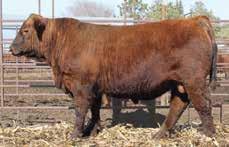
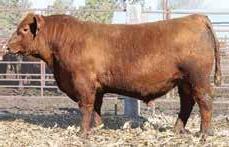
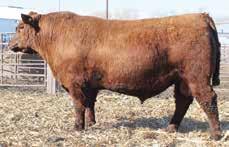
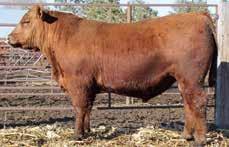
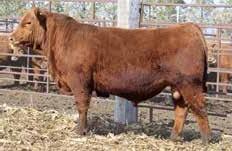
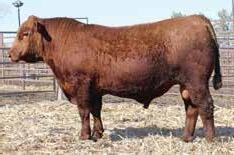
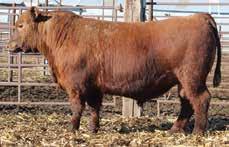
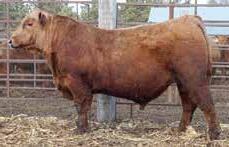
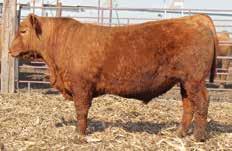
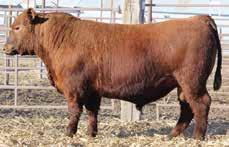
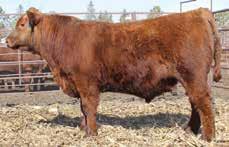
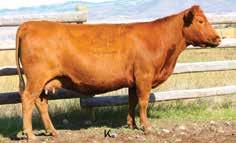
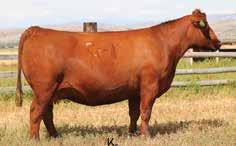
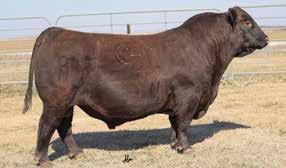
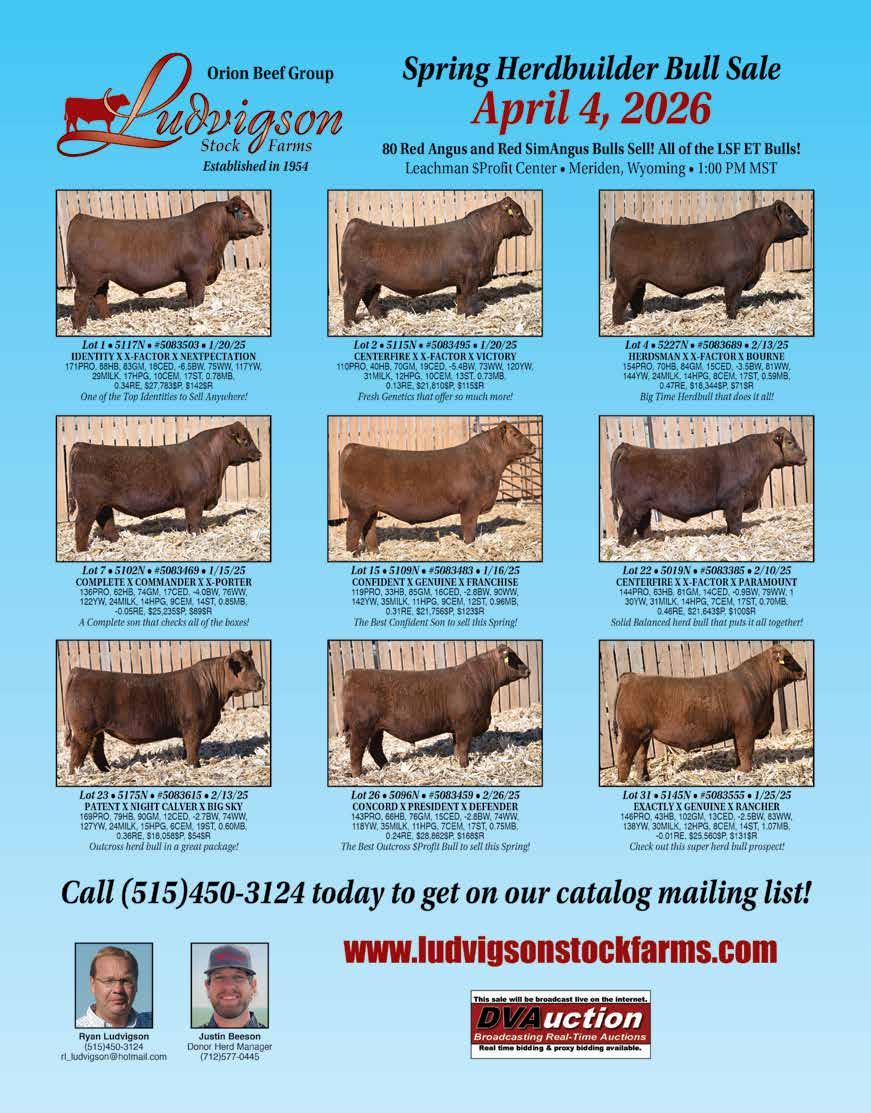
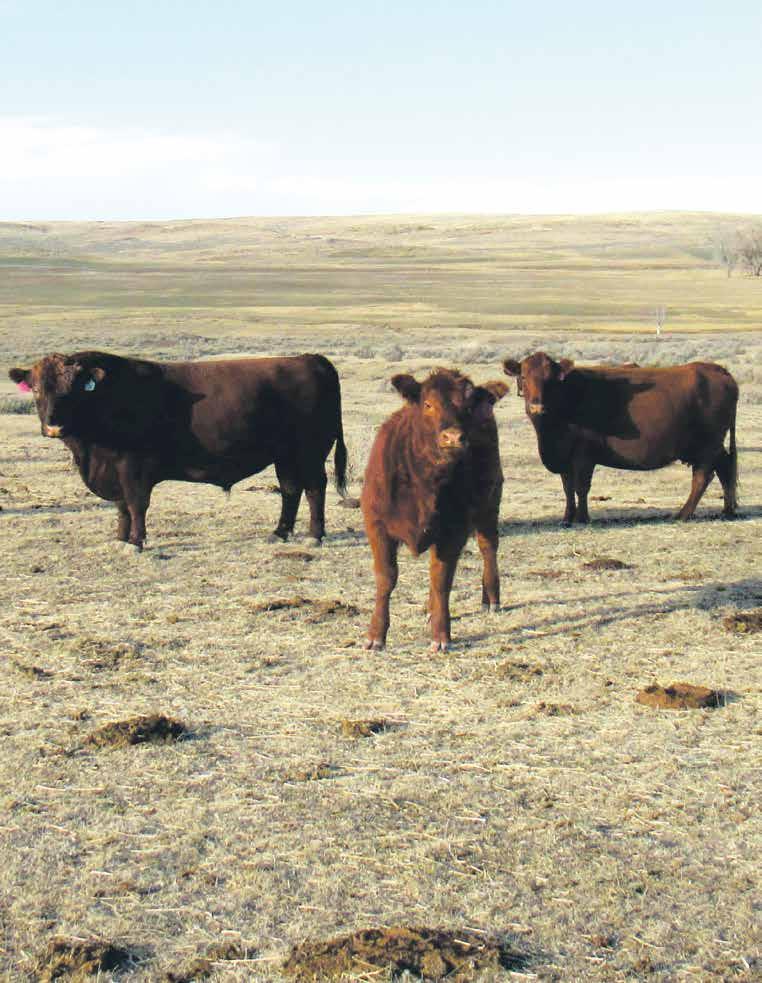
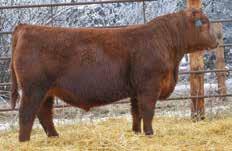
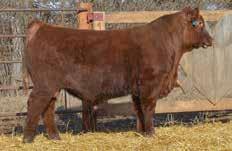
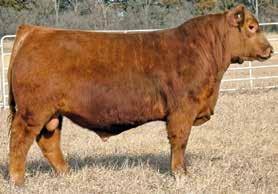
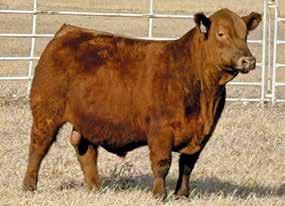
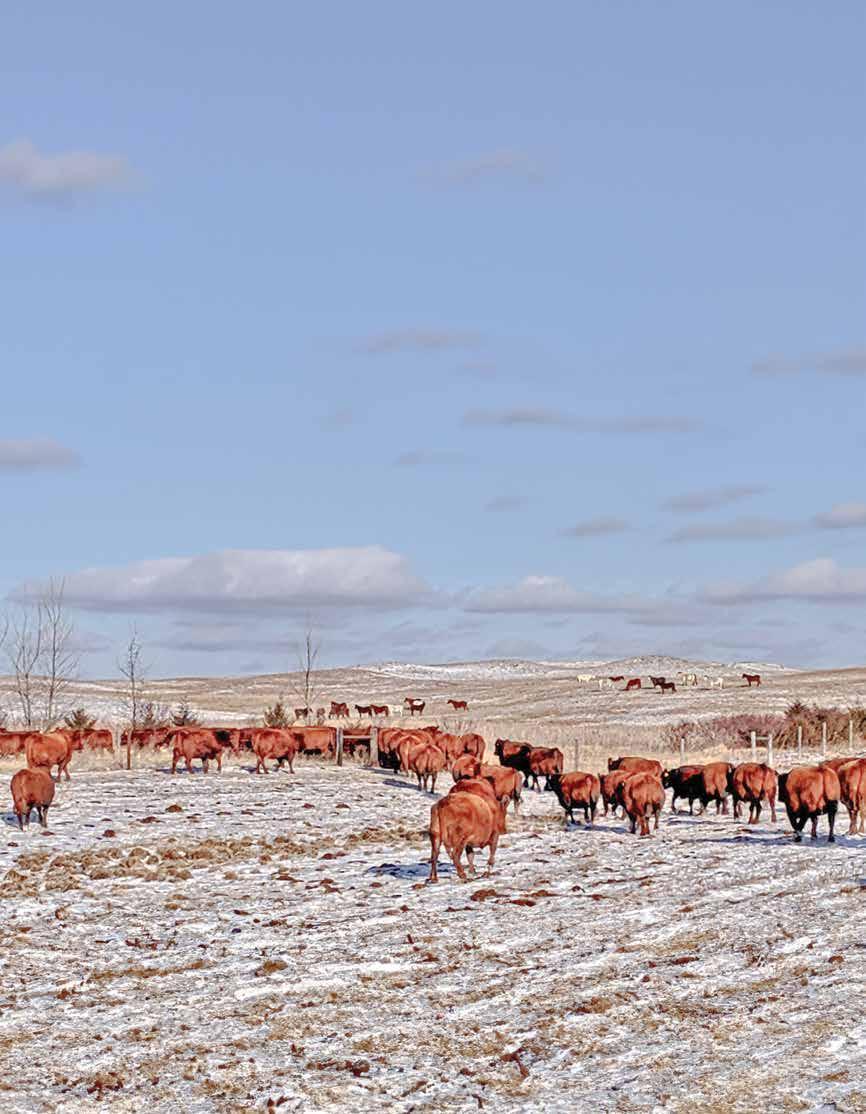
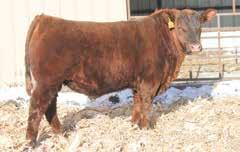
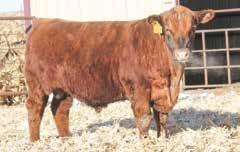
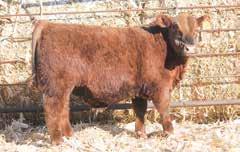
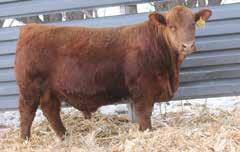
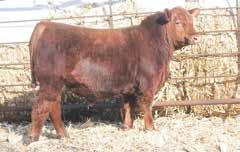
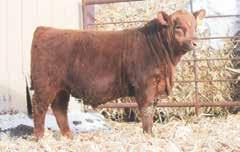
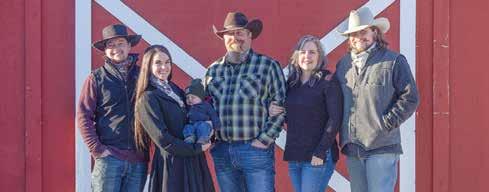
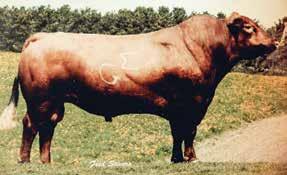
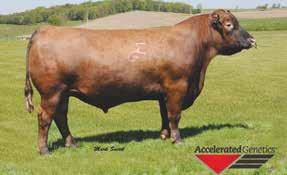
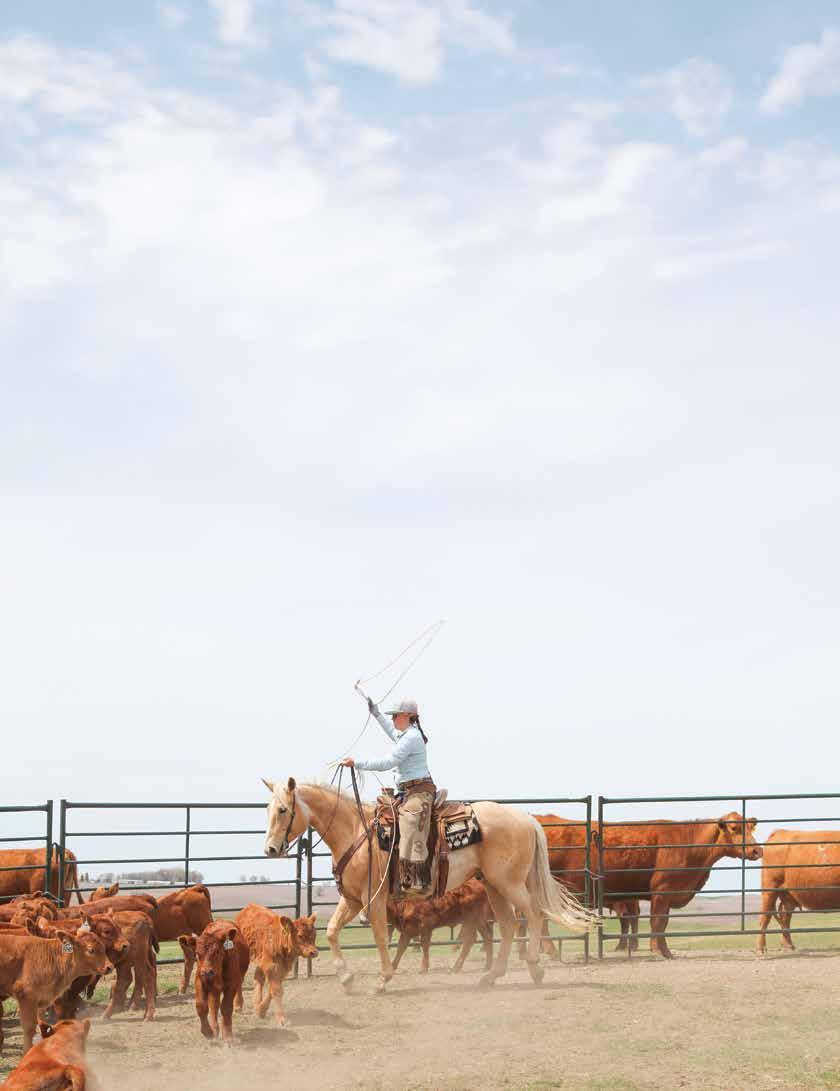
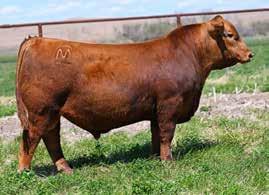
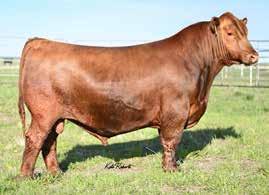
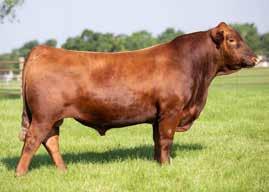
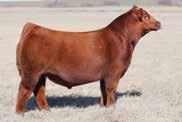
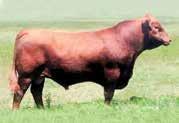
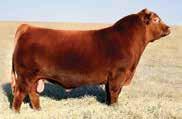
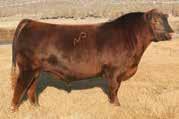
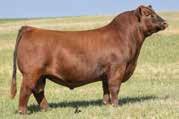
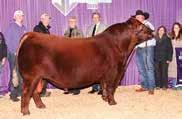
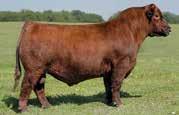
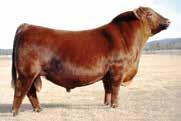
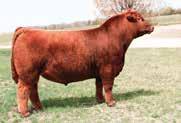
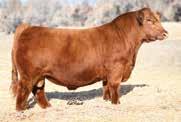
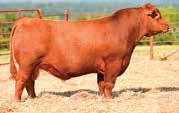
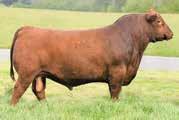
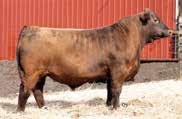
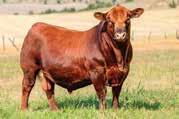
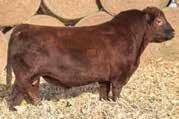
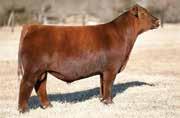
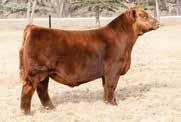
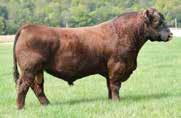
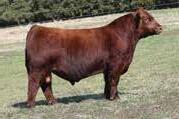
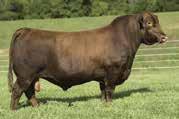
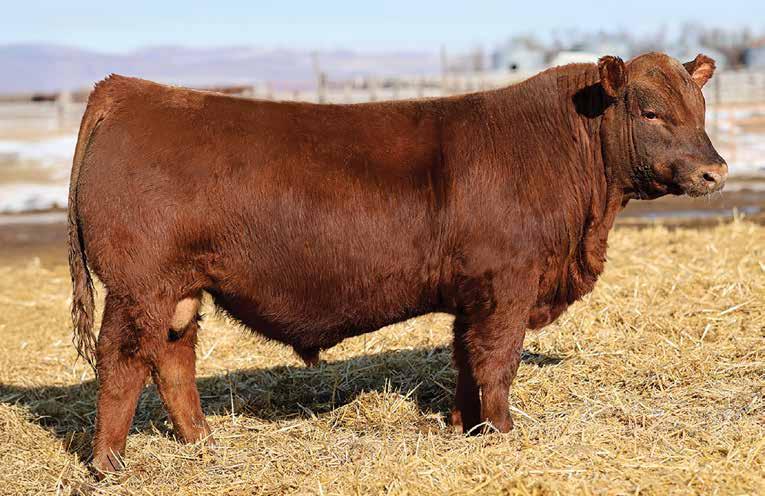
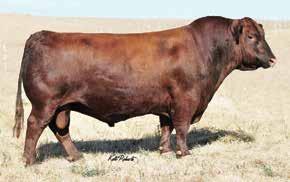
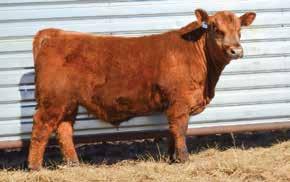
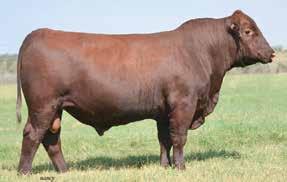
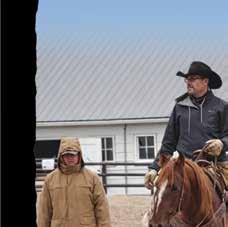
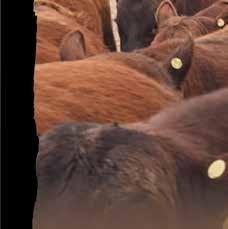
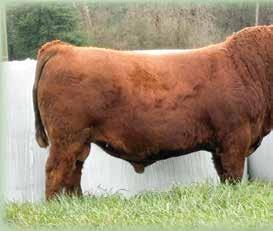
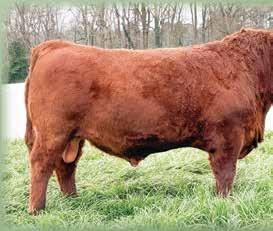
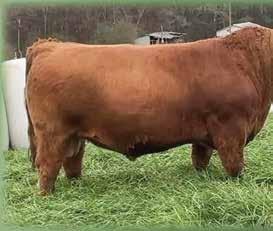
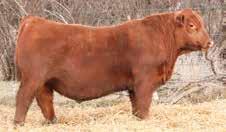
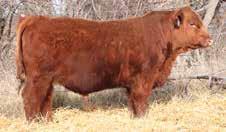
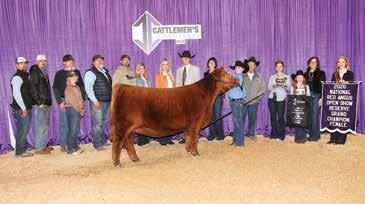
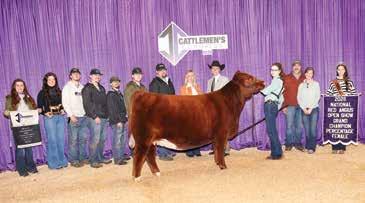
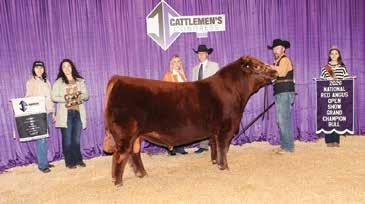
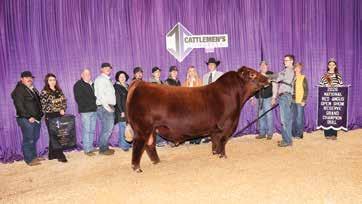
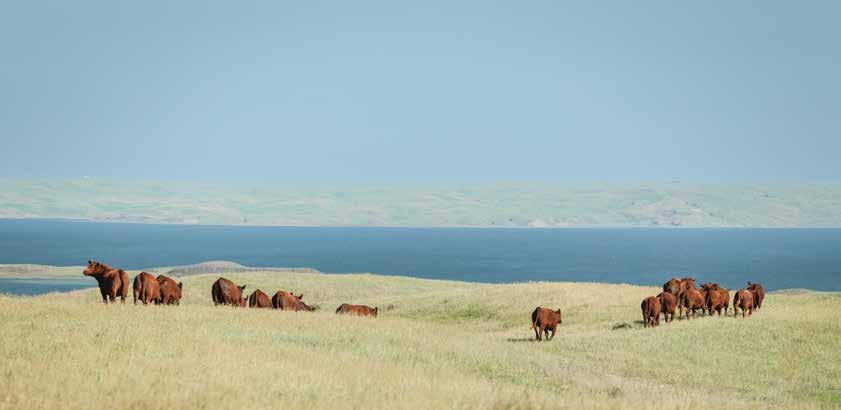
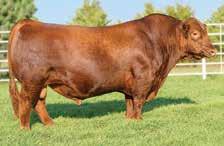
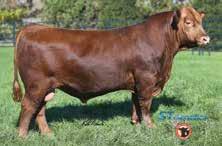
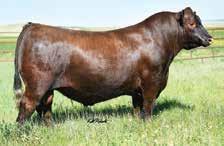
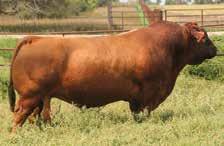
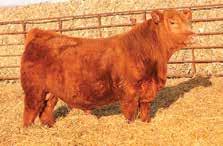
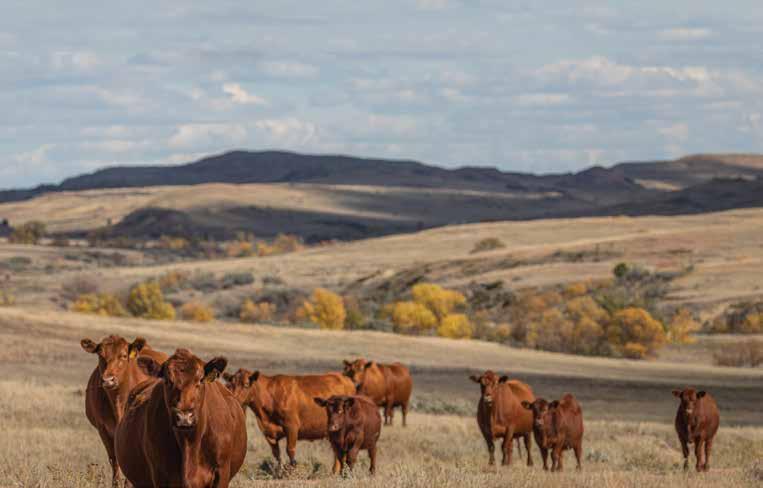
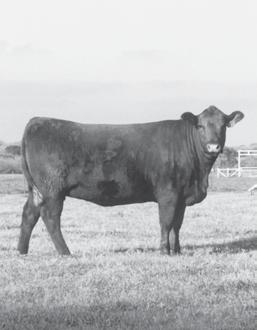
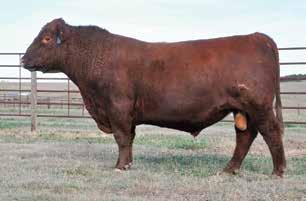
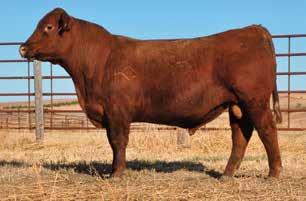
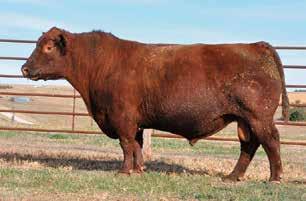
Beckton's 81st Anniversary Bull and Heifer Production Sale
Tuesday, April 14, 2026
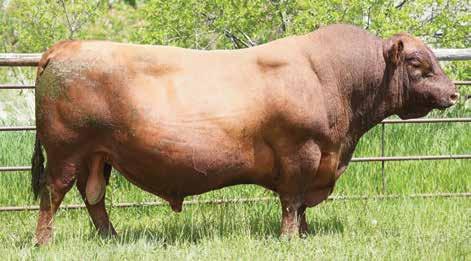
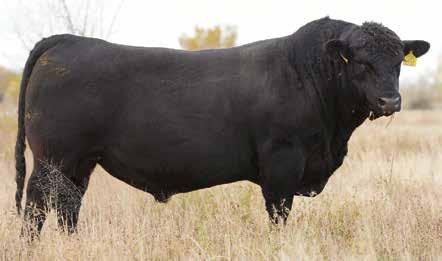
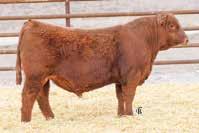
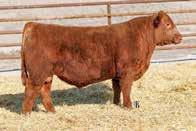
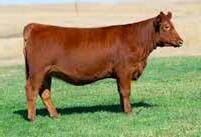
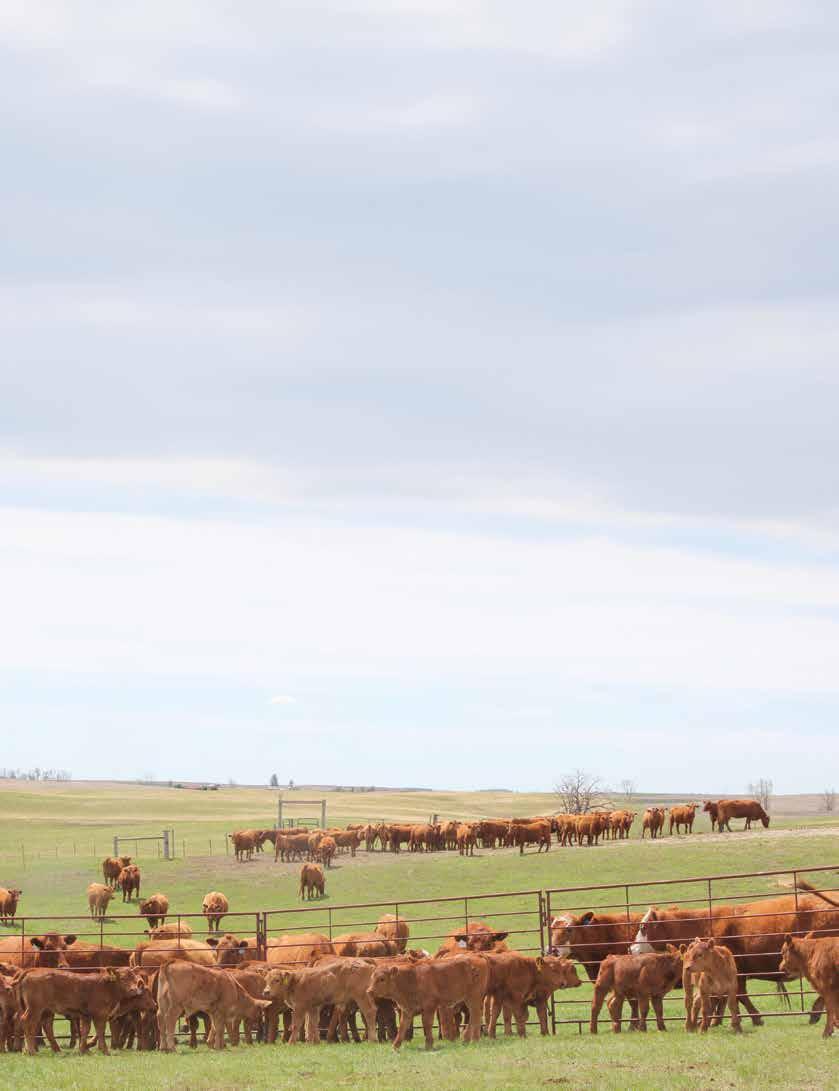
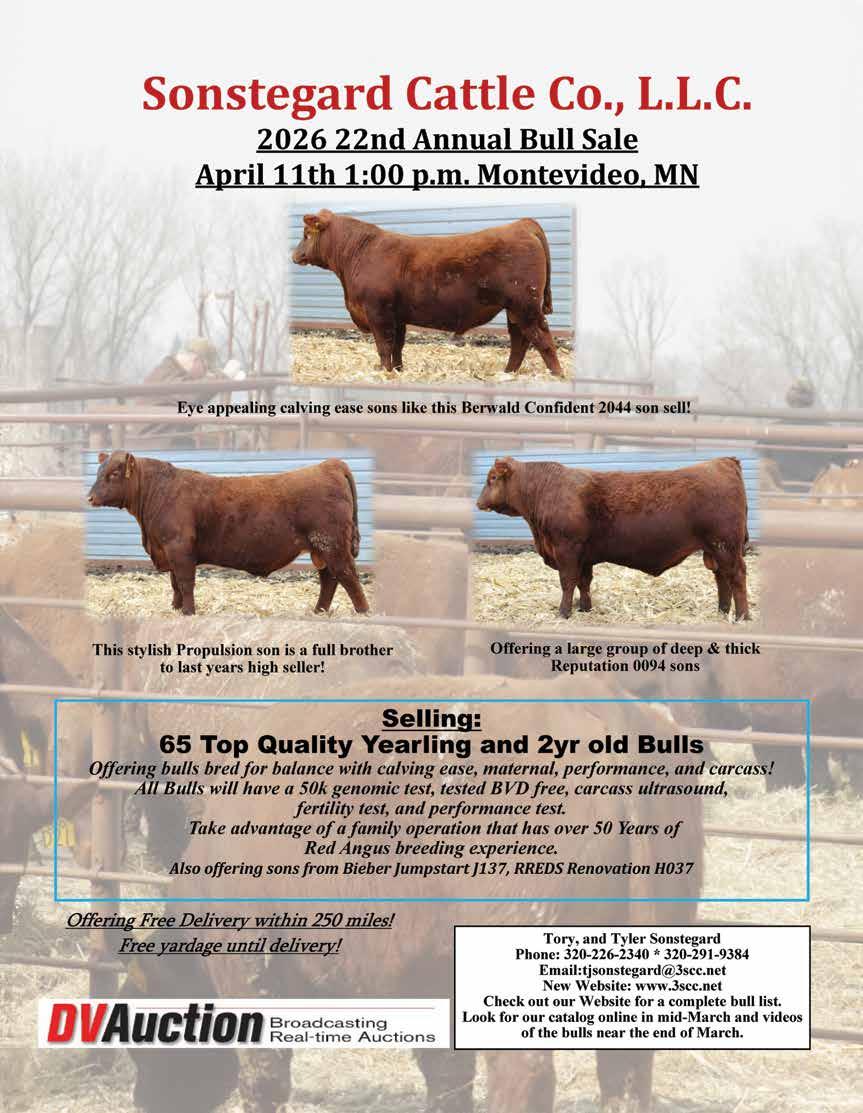
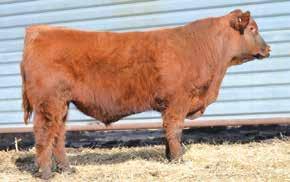
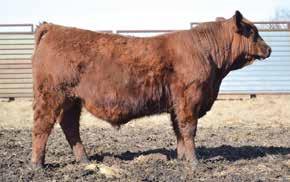
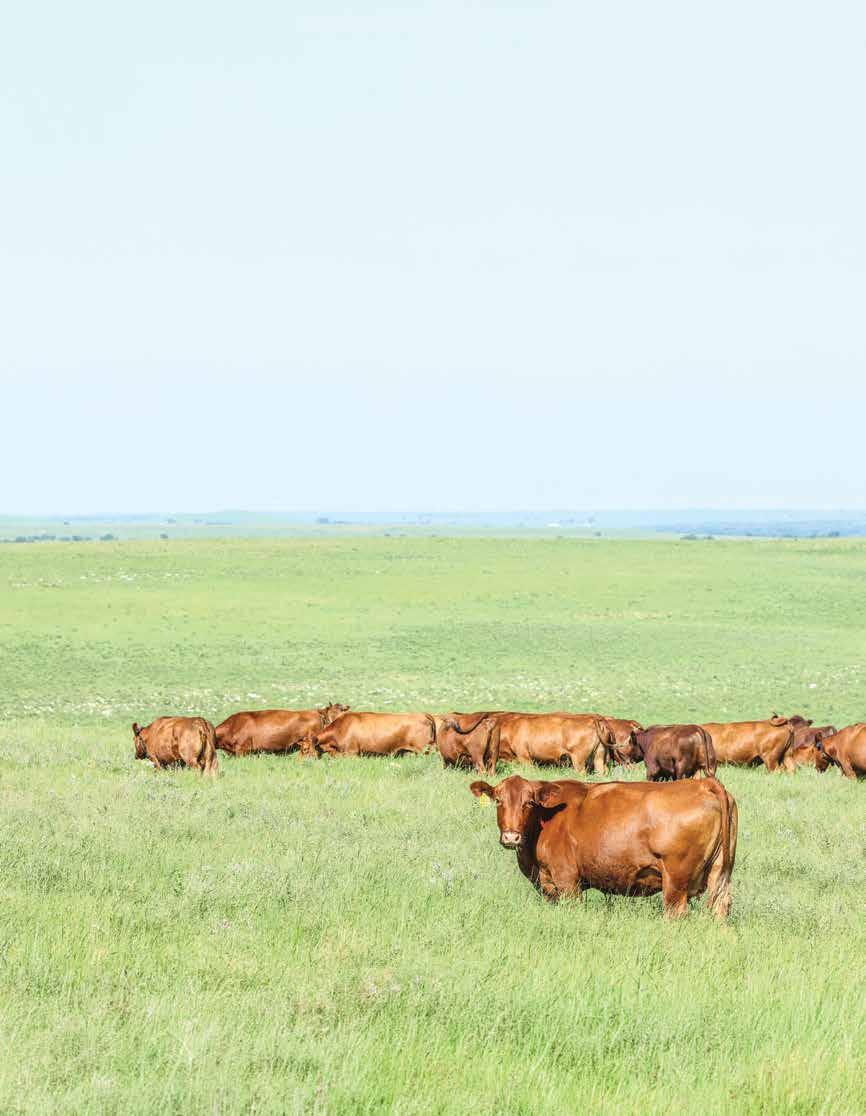
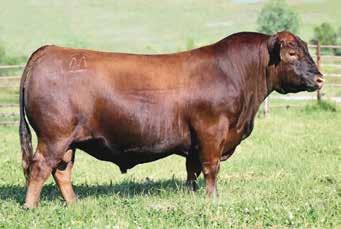
Selling 260 Red Angus
220 Bulls and 40 Heifers
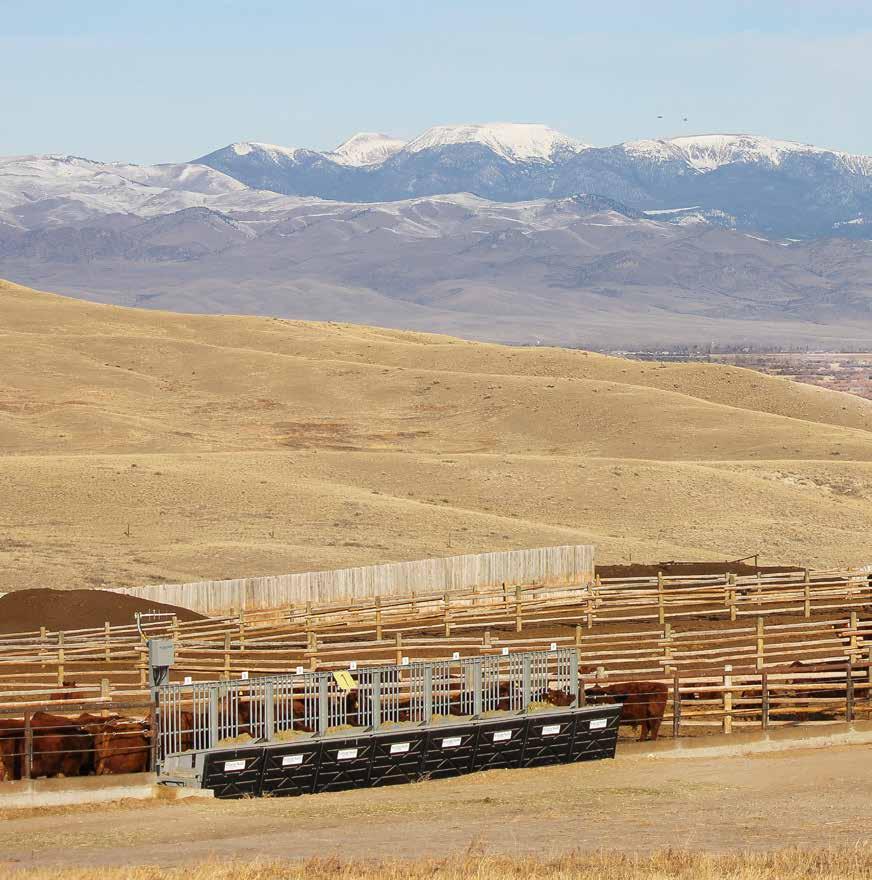
1:00 pm at our ranch 10 miles west of Sheridan
Online bidding will be available on DV Auction and Superior Livestock
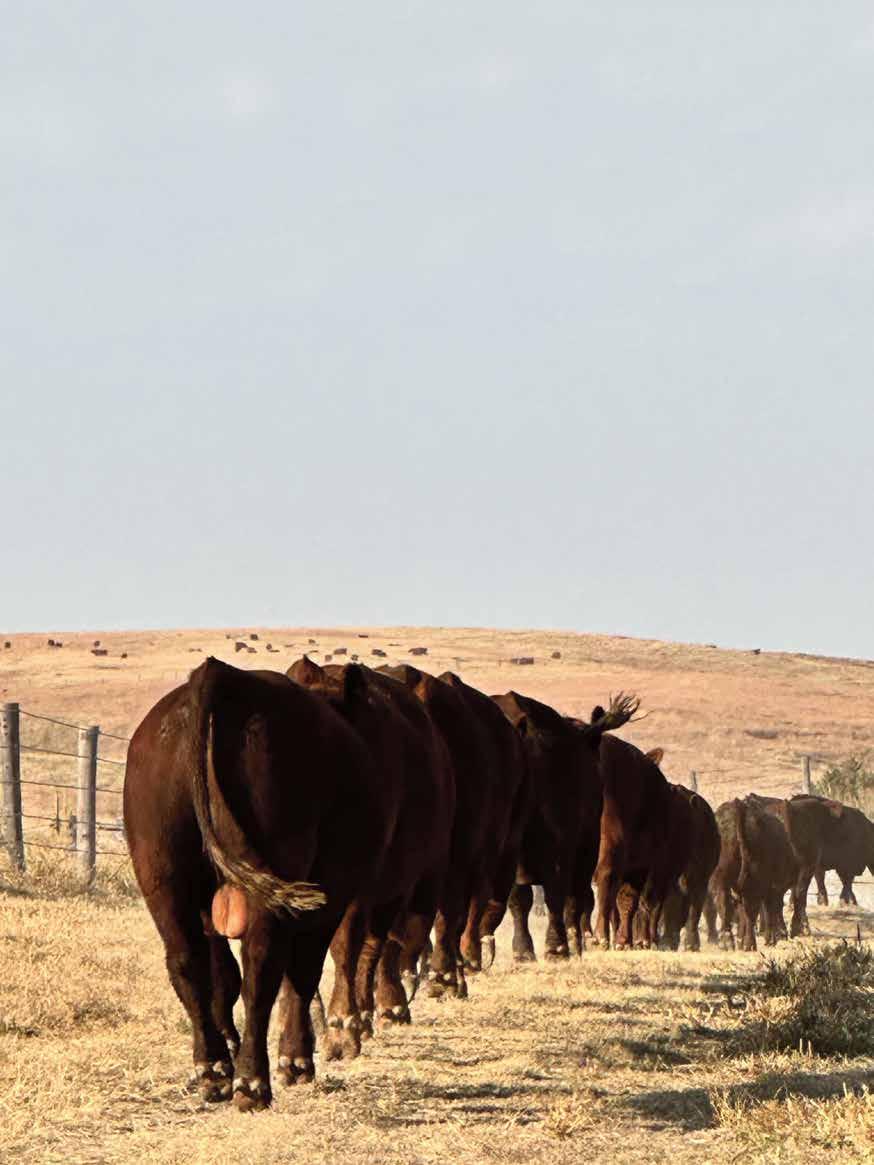
Beckton is the Foundation Herd of the Red Angus breed
80 years of performance evaluation and genetic selection brings you industry leading genetics for Total Efficiency
Calving Ease and Calving Percentage Efficiency
More total live calves per cow in the herd - 17 of the top 20 sires in the entire Red Angus breed for Calving Ease EPD are Beckton sires or descended from Beckton sires.
Cow Herd Efficiency
Moderate sized cows have lower feed maintenance requirements.
More cows per acre means more calves per acre.
The average size of our mature cow age 5 and older is 1100-1150 pounds.
We list the actual weight of each dam for every bull in our sale catalog.
Growth and Feed Conversion Efficiency
Rapid and cost efficient gain to market weight - 13 of the top 20 sires in the entire Red Angus breed for Dry Matter Intake EPD are Beckton sires or descended from Beckton sires.
Overall Profitability
16 of the top 20 sires in the Red Angus breed for HerdBuilder Index are Beckton sires or descended from Beckton sires.
Additional Facts:
19 of the top 20 sires in the breed for low Birth Weight EPD are Beckton sires or descended from Beckton sires.
16 of the top 20 sires in the breed for Heifer Pregnancy EPD are Beckton sires or descended from Beckton sires
12 of the top 20 sires in the breed for Stayability EPD are Beckton sires or descended from Beckton sires
Finally: On the consumer's dinner plate - Beckton's many generations of DNA selection for beef tenderness make our cattle very popular for specialty beef marketing programs
Magazine
Official Publication of the Red Angus Association of America Volume 62, Number 4
18335 E 103rd Avenue, Suite 202 Commerce City, CO 80022
940-387-3502 • Fax 888-829-6069 RedAngus.org
Publisher/Advertising Director Tracey Koester 701-391-5440 • tracey@redangus.org
Affiliated with National Cattlemen’s Beef Association Beef Improvement Federation U.S. Beef Breed’s Council National Pedigreed Livestock Council
GENERAL INFORMATION
Published 10 times annually by the Red Angus Association of America at the national headquarters (18335 E. 103rd Ave., Suite 202, Commerce City, CO 80022). A non-political magazine dedicated to the promotion and improvement of breeding, feeding and marketing Red Angus cattle. Subscription rate: U.S., 1 year - $30; 2 years - $55. Canada and Mexico, 1 year - $44, 2 years - $82 (Payable in U.S. Funds Only). International Air Mail, 1 year - $55; 2 years - $100 (Payable in U.S. Funds Only). These rates are based on Third Class Bulk mailed from Jefferson City, Missouri. Add $20 per year for First Class.
EDITORIAL AND ADVERTISING POLICY
Advertising and editorial content are not limited to any particular class of product or subject matter. However, we reserve the right to refuse publication of any material not within the bounds of high agricultural ethics. While we devote the utmost care to the preparation of each advertisement, we cannot be held responsible for ads received after the ad deadline. Furthermore, the accuracy and content of copy received over the telephone is entirely the responsibility of the advertiser. No adjustment for incorrect ad copy will be considered for ads that are received after the ad deadline or that are placed over the telephone.
All unused reserved advertising space that is not canceled by the advertising deadline will be billed to the advertiser.
ADVERTISING RATES
Board of Directors
PRESIDENT
Jeff Pettit | Sebree, Kentucky jeff@diamondpcattle.com
FIRST VICE PRESIDENT
AREA 4 DIRECTOR - SOUTHWEST
Tony Ballinger | Morgan Mill, Texas anthony.ballinger@akralos.com
SECOND VICE PRESIDENT
AREA 6 DIRECTOR - GREAT PLAINS
Jason Anderson | Oberlin, Kansas jasonea9@hotmail.com
AREA 3 DIRECTOR - ROCKY MOUNTAIN Ron Christensen | Sterling, Utah hotshoeredangus@gmail.com
AREA 7 DIRECTOR - NORTHEAST
Rob Hess | Hershey, Pennsylvania hessfarm@verizon.net
AREA 8 DIRECTOR - SOUTHEAST
Michael Watkins | Harrison, Arkansas watkinscattleco@windstream.net
AREA 9 DIRECTOR - MIDWEST Will Andras | Manchester, Illinois andras@irtc.net
Board Commentary
Opportunities: Past, Present and Future
by John M. Langdon, Region C Director
There are two types of movement in business: circular and linear. Sometimes it’s both, in and out or back and forth. In 1917, the American Aberdeen Association went linear and barred the registration of red cattle. They grew back and forth from circular to linear as their opportunities arose.
Then in 1954, a group of critical-thinking pioneers, faced with their present circumstances, boldly went linear with no crystal ball, and the Red Angus Association of America was born. Over the years, we’ve grown linear and circular, establishing industry-leading management practices. This has grown us into a major national breed of Red Angus seedstock.
Meanwhile, I have watched five generations of Langdons feed commercial hogs and the pork industry grow from independent to vertically integrated, along with poultry. Make no mistake, the Langdons are not advocates for beef vertical integration, but I believe we can learn from the present protein producers’ position. Watching pork and poultry go to meat-branded programs and be recognized in retail stores.
This is an opportunity to look into the future with a more linear approach. My question is: How can we pioneer and forge relationships with feeders, packers, processors and retail stores to achieve an Angus-verified branded product? This would create a pull-through market we dream of from pasture to consumer. In my mind, this aligns with our Strategic Plan.
Here we are faced with the present, and one could say we have moved into a safer, circular management mode. As our forefathers faced their present and future challenges, this should challenge us to step into a more linear mode and grasp as much value as we can – crossing over from animal production to the retail customer with an Angus Access-verified retail product.
“We must be bold and smart, and act based on accurate data to ensure generations of profitability and sustainability in Red Angus beef.”
This would benefit commercial cattlemen and bridge the black-versus-red gap that we have dealt with since 1917. We must be bold and smart, and act based on accurate data to ensure generations of profitability and sustainability in Red Angus beef.
I encourage you to reference The Parable of the Talents in Matthew 25:14-30, and The Parable of the Ten Maidens found in Matthew 25:1-13, and finally Philippians 4:13.
As your Region C Director and owner of Langdon Farms, my heart and soul are postured toward building a sound foundation for our sons and daughters to enjoy rural living and produce protein for the world with our Lord’s guidance and blessings. //
Taylor Dorsey 970-397-0356 | taylordorsey@redangus.org
RECEPTIONIST
Tabitha Romero Ext. 3 | receptionist@redangus.org
Association Commentary
Elevating Our Story. Strengthening Our Service.
by Halla Ramsey, Executive Director of Operations
As we look ahead to 2026 and beyond, one theme continues to rise to the surface in conversations with members, board leadership and staff: customer service must remain at the center of everything we do.
Customer service is not simply answering the phone faster or sending more emails. It is clarity. It is accessibility. It is trust. It is meeting our members where they are and communicating in a way that strengthens their confidence in the Red Angus Association of America.
Since the onboarding of Luke Bolin, director of communications, he has conducted an extensive evaluation of the communications department, but also within each department of RAAA to learn more of what our members need to feel supported including structure, workflows, strengths and opportunities. This review was done intentionally alongside the board’s SWOT analysis and Strategic Plan to ensure alignment with the broader vision of the Association.
What emerged from that work is not just a need for departmental adjustment, but a strategic shift designed to elevate the Red Angus breed and improve the member experience at every touchpoint.
The Seven Pillars of Progress
As we move forward, the communications department will be guided by seven pillars:
Recenter – Recenter all communications around telling the complete Red Angus story, the breed, the Association and the people who drive its success across seedstock, commercial and junior sectors.
Meet – Meet members where they operate (sale barns, pastures, feedlots, classrooms and show rings) ensuring our communications reflect real-world production and profitability.
Expand – Expand from a print-first model to a fully integrated communications ecosystem where digital, social, video and print work together to maximize reach and relevance.
Develop – Develop clear educational pathways that strengthen member understanding of Association programs, genetic tools and practical on-farm success.
Streamline – Streamline and condense messaging to deliver content that is easier to consume, more impactful and better aligned with how today’s cattlemen receive information.
Commercial Marketing Team and Value-Added Programs staff is on page 12
Refresh – Refresh and modernize the Red Angus brand to ensure long-term relevance, credibility and industry leadership.
Improve – Improve departmental efficiency and role clarity to better leverage existing resources and support strategic growth initiatives.
Genetic Opportunities from Big Sky Country!
Auction Details: Online Embyro and Rare Semen Auction runs from April 9-11, 2026. Sale closes at 5 p.m. MDT on April 11. To access the sale, go to www.superiorlivestock.com, Auctions and SmartAuctions – Or access directly at smartauctions.co.
FEDDES LAKINA Y17 Reg. #1423157
A staple in our herd and the mother of Silver Bow B226 as well as many other sons that have become herd sires across the country. Her daughters are among the top cows in our herd. She boasts an MPPA of 111. Half interest in a reputation daughter sold for $15,000 at 3 months of age. Her Drifter and Hollywood sons are at the top of our 2026 production sale. Her calves continue to be at the top no matter the sire.
High powered Red Rock Donor cow. Dam of C-T Markets Up 2119, herd bull selling to Diamond P Cattle Co, KY. Beautiful udder and phenotype all backed by the proven Blockana cow family. MPPA 101, Solid EPDs with 8 traits in top 9%.
FEDS BLOCKANA C34 704 Reg. #3731167
704 is phenotypically flawless with great feet and a near perfect udder. She boasts an MPPA of 109 with average WR 110, YR 112 and IMF-R of 125. Her daughters are stunning and her sons have sold into many top herds around the country. Her first son sold to Leland Red Angus and was a great herdsire for them. 14 traits in the top 33% including 10 in the top 25% makes her extremely balanced. A very complete cow with phenotype, numbers and production record.
C-T BLOCKANA 8017 Reg. #3948245
FEDDES EASTWOOD 3284 Reg. #4787522
Eastwood was the high-selling Drifter son in the 2024 sale to ABS. He knocked it out of the park with ratios of 116 weaning, 110 yearling and 187 IMF. He boasts outstanding growth and carcass with top-of-the-breed maternal traits. Phenotypically he was a standout with extra depth, spring of rib, thickness and very correct structure. His dam is a gorgeous Mimi daughter with a 105 MPPA. Eastwood will add growth, carcass and maternal traits. He could become one of the most complete bulls the breed has seen. His first sons are standouts in the bull pen and the heifers are extremely soft made with extra depth of rib and a very feminine build. Feet and structure look amazing at this point.
FEDDES BLOCKANA Y63-C31 Reg. #3469586 C31 has quickly become a top donor in our herd. She boasts 10 EPDs in the top 22% of the breed and has as much rib shape and length as any cow in the breed. Her 137E daughter topped the Bet on Red sale at $30,000, we sold half interest in another daughter for $10,000 and recently sold half interest in C31 for $25,000. She just calved again on time and has a perfect udder and outstanding feet. Her calves on the ground are incredible. One of her daughters out of Captain and Drifter are moving into the donor pen this spring.
C-T REPUTATION 0094 Reg. #4296453
A Red Rock son with power and eye appeal that is quickly gaining steam and siring numerous high sellers around the country. One of the most sought-after bulls in the breed. Balanced EPDs with 17 traits in the top 36% of the breed. Top calving ease, growth, carcass and maternal traits with near-perfect feet and great structure. Semen available through Beef 360.
Solid Make Mimi x Grand Canyon donor cow. Dam of herdsire C-T Prime 5097 who sold to Bauman Red Angus, ND. High-seller donor to Rocking Bar H in our 2018 Big Sky Elite Sale. MPPA 105 Rare Semen Offering:
Feddes Big Sky R9 C-T Red Rock 5033
Feddes Montana X44
Feddes Silver Bow B226 C-T Grand Statement 1025
PIE One of a Kind 352 Conquest
Feddes Eight Ball 9231
Feddes Tread Stone 9352
Bieber Payday K113
Big Sky Country Red Angus ... Where Performance Meets Maternal!
www.ctredangus.com
C-T LINSEY 0964 Reg. #1309226
Elevating Our Story. Strengthening Our Service.
These pillars are not cosmetic adjustments. They are service-driven commitments.
Aligning Talent with Vision
To support this direction, we are implementing a new communications department structure designed to attract high-quality talent and increase internal accountability, which aligns with critical objective No. 3 of the Strategic Plan – Attract, Develop and Retain Talent. So, what does that look like?
• Director of Communications
Providing strategic leadership, creative direction and alignment across departments to ensure clarity and consistency in our messaging.
• RAM Managing Editor
An in-house position fully dedicated to evolving the Red Angus Magazine into the strongest breed publication possible – from concept to mailbox.
• Digital Marketing Specialist
Focused on social media, digital campaigns, website presence and analytics to measure what is working and where we can improve.
• Industry Partnership Specialist
Serving as the primary point of contact for partnerships, advertising and sponsorship development for both the Association and the Foundation. Strengthening revenue streams while providing greater value to industry collaborators.
• Creative Content Specialist
Producing compelling visual storytelling that builds emotional connection to the breed, the Association and our members.
Every decision made has been guided by the Strategic Plan and a commitment to long-term sustainability.
What This Means for Customer Service in 2026
At its core, this is about service. Better structure leads to clearer communication. Clearer communication leads to stronger trust. Stronger trust leads to deeper engagement.
In 2026 and beyond, you will see:
• More intentional storytelling
• Clearer educational resources
• Better digital engagement and measurable impact
• Stronger partnerships that add value
• Streamlined information delivery
• A brand presence that reflects the strength of the Red Angus breed
Customer service is not one department’s responsibility – it is cultural. But communication is often the first impression and the consistent touchpoint. When members feel informed, supported and understood, we have done our job well.
Moving Forward with Purpose
Change is never made lightly. Each adjustment is rooted in the belief that Red Angus deserves excellence not only in genetics, but in leadership, professionalism and service.
Our commitment is simple: Every change we make must serve the betterment of the Association. Every decision must align with the Strategic Plan. Every effort must elevate the Red Angus breed.
The road ahead is full of opportunity. By strengthening how we communicate, we strengthen how we serve. And by strengthening how we serve, we ensure a vibrant and competitive future for Red Angus cattle and the families who stand behind them. //
“Customer service is not simply answering the phone faster or sending more emails. It is clarity. It is accessibility. It is trust.”
Red Angus Commercial Marketing Team and Value-Added Programs
DIRECTOR OF COMMERCIAL MARKETING
Kelly Smith 417-855-9461 | kelly@redangus.org
COMMERCIAL MARKETING SPECIALIST
Cory Peters | cory@redangus.org 402-418-2351
COMMERCIAL MARKETING SPECIALIST
Taylor Ohlde | taylor@redangus.org 913-626-2715
COMMERCIAL MARKETING SPECIALIST
Elizabeth Caskey | elizabeth@redangus.org 706-513-4951
ENROLL IN VALUE-ADDED PROGRAMS AND ORDER TAGS: tags@redangus.org 940-477-4593
Weekly Email Marketing Service of Feeder and Finished Cattle
The Red Angus show list informs feedyard managers, order buyers and other interested parties of Red Angus-influenced cattle. Producers can market feeder or finished cattle through this free service when selling through a sale barn, video auction or private treaty. The weekly show list is emailed to potential buyers through the Red Angus FeederFax email service. To upload information about cattle or to view cattle available, visit RedAngus.org/showlist.
To receive the weekly FeederFax marketing service that will highlight that week’s show list, please visit bit.ly/RAAAFeederFax.
Marketing Update GridMaster Challenge Overview
by Cory Peters, Commercial Marketing Specialist
The GridMaster Challenge has officially kicked off and is underway. The program was envisioned and developed by the commercial marketing team throughout the summer and fall of 2025. The formal announcement and introduction were made at the National Red Angus Convention in September, with enrollment and registration taking place during October and November.
The primary goals of the Challenge are to promote education and increase membership engagement. Feedback from commercial operations consistently highlights a desire for greater insight into feedlot and carcass performance, as well as information about programs available through RAAA. The GridMaster Challenge was designed to help address these needs.
Participants will receive detailed reports during and after the contest outlining animal performance throughout the feeding phase and on the rail. DNA testing, carcass ultrasound data and feet and leg scores will also be collected to enhance producer reporting and contribute to RAAA’s genetic evaluation.
RAAA’s goal is to use the information gathered through this test to promote the value of Red Angus steers in today’s marketplace. By utilizing feeding and rail performance data, we aim to demonstrate to the industry that Red Angus is Angus.
The Challenge is divided into two age divisions: senior and junior participants, both of whom must be RAAA members or enrolled in RAAA’s Angus Access program. The inaugural year of the contest is limited to steer calves only.
Steers enrolled in the GridMaster Challenge are evaluated for feedlot performance, carcass merit and structural soundness to strengthen Red Angus genetic insight.
GridMaster Challenge Overview
Enrolled animals are divided into two divisions: purebred and commercial. Purebred calves must have two RAAA-registered parents. Commercial, or “Access,” calves must have at least one registered Red Angus parent, preferably one that can be parentage verified. Enrollment in RAAA’s Angus Access program is required for all animals entered in the Challenge.
All steers were required to be weaned at least 45 days prior to delivery and vaccinated according to the Superior Vac45+ program. For entry requirements, please visit RedAngus.org.
Cattle arrived through December 2025, with 53 steers originating from both commercial and purebred operations across the central U.S. corridor. The Challenge is being hosted by Nilan Feedyard in Oakland, Iowa. Initial test weights were collected before Christmas, with an average arrival weight of 798 lbs. Animals were tagged, revaccinated and implanted, and DNA samples were collected. During initial processing, steers also received muscle, frame, body condition and disposition scores from a USDA grader.
Following a 35-day acclimation phase, cattle were reweighed in late January. The average weight at that time was 908 lbs., reflecting an average daily gain of 2.48 lbs. During the acclimation period, cattle were stepped up through three rations, with the final “hot” ration beginning immediately after the second weigh-in.
Looking ahead, steers will be reweighed in early April for reimplantation. At that time, animals will also be evaluated for feet and leg scores and will undergo carcass ultrasounds. Based on these weights, final harvest dates will be determined. Official results and awards will be announced at the 2026 National Red Angus Convention in Hershey, Pennsylvania.
Planning is already underway for the 2026-2027 GridMaster Challenge. If you would like to learn more about the program or discuss opportunities for next year, please reach out to a member of the commercial marketing team. We look forward to visiting with you. //
Calvo
Jessi 693A)
Calvo Jessi 631D
(Full sister to Calvo Forager 57E)
Jessi
(Dam of Forager 57E & Julio L251)
Member Service Reminders
• The final installment of Fall THR was billed March 13 and payment is due April 25.
Member Services
No Progeny? No Problem!
by Stephanie Essegian, Member Services Specialist, and Kaitlyn Fulmer, REDSPro & Registry Team Lead
Between work, life and calves running around, sometimes making sure all your calf crop data is reported to RAAA gets missed. Our goal is to collaborate with you to maximize data collection, ensuring that we capture as much information as possible to advance the Red Angus breed.
The no progeny report is a warning that one or more of your cows is at risk of inactivation. This notification for Spring 2025 was sent to you via email in March. Failure to report data for the cows listed on this report will result in them going inactive on Friday, May 29, at 8 a.m. Reactivation fees will apply after this point.
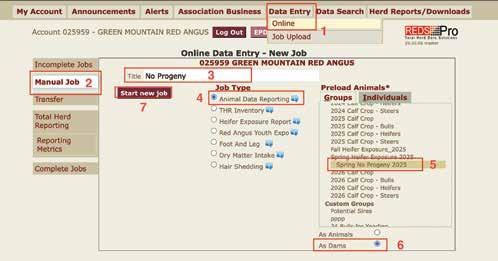
To report the necessary information, follow these steps:
Sign up for THR Text Message Reminders: https://bit.ly/RedAngusReminders
Download the Go RedAngus App
Need a little one-on-one help?
Schedule a meeting by scanning the QR code or visiting: RedAngus.org > Herd Management > Red Angus Alley
1. Log in to REDSPro and navigate to Data Entry > Online
2. Click on the “Manual Job” tab.
3. Give this job a title.
4. Choose “Animal Data Reporting” as the job type.
5. Locate the “Preload Animals” box on the right side, scroll towards the bottom of the list and choose the group labeled “Spring No Progeny 2025.”
6. Under the “Preload Animals” box, find the two listed options: “As Animals” or “As Dams.” Select “As Dams” to have the group loaded into the dam columns.
7. Click “Start New Job.”
8. Starting at the “Animal ID” column, fill in calf information from the missing year you are reporting. Work your way to the right, filling in as much as you can. Choose “No” for the “REG” column if you do not wish to register the calf, but simply record it to keep the cow active.
9. Click the “BrthDam” tab at the top of the spreadsheet.
10. Towards the right of the spreadsheet, find the “Reason Code” column and select the closest, appropriate reason that cow did not have a calf.
11. The next column to the right is “Reason Code Year.” It is required when reporting a reason code and must be filled in with the year you are NOT reporting a calf (ex. 2025 for the Spring 2025 No Progeny Report).
No Progeny? No Problem!
12. When you are done recording information for each cow, click Continue to Next Step > Continue to Next Step* > Final Submit.
Helpful tips
When entering the job, any cows should be loaded into the left side of the spreadsheet and the rest of the spreadsheet should appear fairly blank. If your spreadsheet is fully filled in from left to right, the job has been started incorrectly, which indicates Step 6 was missed. Please delete the job and retry the steps.
If you have calf data from 2025 to report, follow Step 8. If you have a cow that did not have a calf, skip to Step 9.
It is required by THR to report on each cow, each year. Calves that were sold commercially, died or were sold after birth, or you do not wish to register, must be recorded.
If you have cows in this job that do not have calf data from the previous year, assign them a reason code as to why they do not have a calf to adhere to THR requirements.
Spring 2025 No Progeny is due May 22. Inactivations will begin May 29 at 8 a.m. MDT.
Please contact the registration department, data@redangus. org or 940-387-3502, Ext. 1, with any questions. //
Reporting calf data each year keeps cows active in the registry and supports the genetic evaluation that drives breed improvement.
Balanced for Profit at 5L
Steers that earn AMAZING closeouts | Cows that FIT their Environment
5L’s latest closeout:
• 44 Steers harvested October 2025
• Live Weight = 1726 lbs. (after 4% shrink)
• ADG = 4.4lbs/day (over last 78 days)
• 100% Prime & Choice (18% Prime & 64% Upper 2/3 choice)
• $4100+ per carcass
Your source for:
1) Bulls that will sire calves with similary profitable closeouts.
2) Bulls that because of these results will help your feeder cattle earn market topping reputations
3) Bulls that will sire daughters with fertility, fleshing ability, adaptability and longevity.
2026 Spring Profit $eeker Bull Sale Friday, April 10, 2026 • at the ranch, Sheridan, MT
Request our Sale Catalog Today!
300+ Red & Black Angus, SimAngus and Char x Red Angus Bulls All Bulls: Feed Efficiency Tested | Fertility Evaluated | PAP Tested Volume Discounts | 1st Season Bull Warranty | Free Bull Delivery (with min. pv-urchase)
150+ Open Yearling Red Angus Commercial Replacement Heifers
By Christopher Schneider, D.V.M., M.S.
The Equation to Build BRD Resilience in your Calf Crop
It is a universal rule across cattle herds that every calf counts. Whether a calf will significantly add to or detract from a producer’s profitability may come down to their herd’s ability to overcome bovine respiratory disease (BRD) — the costliest and deadliest disease facing cattle producers.1,2
In my decades of experience as a cattle veterinarian, the herds that minimize significant economic losses from respiratory disease have adopted a BRD resilience mindset and action plan. They work with their veterinarian to leverage innovations in three key areas: genetics, management techniques and disease prevention.
Here are some observations on frequent practices they use for stronger, more productive, disease-resilient herds:
1. They focus on BRD prevention and realize vaccination is a critical component. Calves are born with a developing but not yet fully functioning immune system. Intranasal vaccines can help bolster calves’ immunity early in life while avoiding the potential risk of maternal antibody interference.
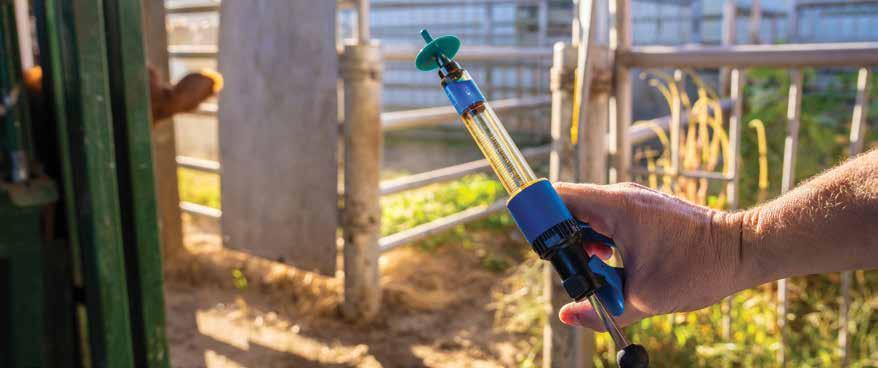
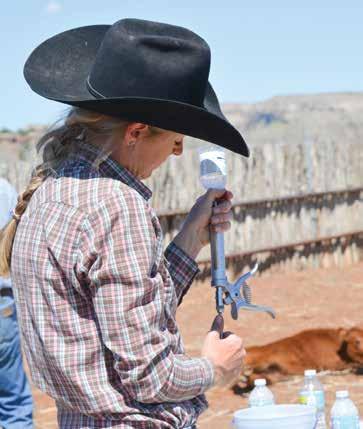
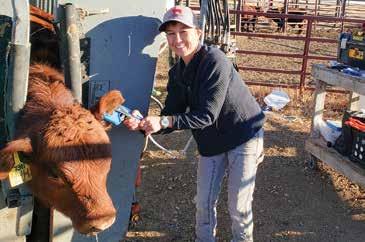
BOVILIS® NASALGEN® 3-PMH is an intranasal, modified-live vaccine shown effective against five of the most common viral and bacterial pathogens that cause BRD. It can be given to nursing calves as young as one week of age. Use ALLFLEX® CleanVax™ nozzles and disposable shields (shown in photo) to help reduce product drip and ensure a hygienic and more even distribution of the vaccine inside the nostril.
2. They follow a preconditioning program to not only increase the value of their calves but to give them the best opportunity for the next production phase. A 2023 dataset of nearly 900,000 calves shows that those vaccinated with two doses of a clostridial vaccine, two doses of a five-way modified live viral vaccine, and at least one dose of Mannheimia haemolytica and/or Pasteurella multocida vaccine, and weaned at home for 45 days before delivery, added nearly $45 per head compared to those receiving only one dose of each of the three vaccines and weaned at shipping.3 The calves also weighed more.
References:
3. They leverage information related to genetic selection and animal breeding. Understanding and utilizing genetic selection and animal breeding information, especially as it relates to disease incidence, is impactful. It is vital to correctly interpret Expected Progeny Differences (EPD) and data on bulls to understand how this will impact the next calf crop. For commercial producers, understanding the importance of hybrid vigor is important as it pertains to calf health and performance.
4. They know BRD resilience starts with the mama cow, so they ensure the cow has adequate nutrition, has been dewormed and is up to date on her vaccinations.
5. They use a strategic deworming program. Internal parasites reduce feed intake and can compromise immune function, including response to vaccination. For spring calving herds, deworm calves six to eight weeks after turnout onto pasture.4 Deworming cattle ahead of vaccination doesn’t have to mean a trip through the chute. Feed and mineral forms of dewormers require relatively little time and labor and are highly effective. Building BRD resilience equals a more productive herd Work with your veterinarian who knows your goals and the health challenges in your area to determine the practices and protocols for your herd. Putting a plan together to build resilience to BRD in your calf crop can result in healthier animals, less treatment pressure and more profits.
For more information, visit MAHCattle.com
Christopher Schneider, D.V.M., M.S. Livestock Technical Services
Merck Animal Health
1. Fulton, RW. Bovine respiratory disease research (1983–2009). Cambridge University Press. Anim Health Res Rev. 2009;10(2):131–139.
2. Preview: Economic effects of Bovine Respiratory Disease. J. Anim. Sci. 2020;98(2).
3. Superior Livestock Auction Data 2023.
4. Kevin Gould, M. S. U. E. Beef cattle deworming strategies. MSU Extension. Jan. 21, 2022. https://www.canr.msu.edu/news/beef_cattle_deworming_strategies.
The color of unmatched protection against viral and bacterial pneumonia.
BOVILIS NASALGEN 3-PMH is the first and only intranasal vaccine that protects against IBR, BRSV, PI3 , Pasteurella multocida and Mannheimia haemolytica
It’s safe to use in calves 1 week of age and older for a strong, healthy foundation. And a unique BluShadow® diluent means there’s no secondguessing which animals have been vaccinated.
innovative, proven BOVILIS vaccine line.
Breed Improvement Efficient and Adaptable: Why Hair Shedding Matters
by Dotun Olaoye with foreword by A.J. Knowles, Director of Breed Improvement
Foreword: The Red Angus Stakeholder’s Foundation supports research that advances the genetic improvement of Red Angus cattle. This month’s article highlights ongoing work led by Jared Decker, Ph.D., and Dotun Olaoye, whose research is focusing on the development of a Hair Shedding EPD for Red Angus members. Dotun’s work, and other projects like it, are made possible through RASF and generous support of Red Angus members nationwide. We are proud to support research that translates directly into practical tools for Red Angus breeders and are grateful to the members whose contributions make this progress possible.
Hair shedding is economically important in beef cattle because it directly impacts performance and reproduction. Studies have shown that hair shedding is influenced by length of daylight, temperature and metabolic status. Animals that shed their winter coat early in the summer are
better adapted to heat stress. An animal that will not shed its winter coat on time is not just sensitive to heat; it is unable to properly respond to seasonal cues, affecting performance. For animals grazing toxic fescue, especially in the Southeast, endophytes cause blood vessel constriction, blocking heat loss and suppressing prolactin, the hormone that triggers shedding. Interestingly, hair shedding is moderately heritable, holding potential for meaningful genetic progress.
In a recent study led by the Decker Lab at the University of Missouri, data from over 12,000 cattle across multiple breeds, including Red Angus, was analyzed to understand what drives hair shedding and selection strategies.
They found genetic variants that are linked to the genes controlling hair shedding, and showed that hair shedding is more affected by day length than
Cattle that shed their winter coat early are better able to handle heat stress while grazing, supporting stronger performance, fertility and adaptability.
temperature, which explains why hair shedding is an important trait across all environments where beef cattle are raised. Results showed selection for hair shedding could benefit producers facing various environmental stressors, such as fescue toxicosis.
Responding to breeder feedback, the Red Angus Association of America started collecting additional hair shedding data in 2025 to create a research Hair Shedding EPD.
Because hair shedding reflects the animal’s ability to sense changes in day length and have the resources to respond, breeders across the country should collect this phenotype. This highlights the importance of continued participation of producers in obtaining high-quality phenotypic data that contributes to the accurate development of EPDs for new traits like hair shedding.
SIRE: GAME CHANGER MGS: LARAMIE
• 1/2 brother to 2024 high seller
• Beautiful donor dam calved at age 15 with 104 MPPA
• 705 WW
• Heifer bull prospect!
SIRE: C-T REPUTATION 0094 MGS: BUF CRK EXTRA DIMENSION U202
• 15 year old dam just calved
• Balanced EPD's
• 75 lb BW
• 112 WW Ratio
SIRE: KING ROB MGS: MULBERRY
• Throw back to two all-time greats in the breed with maximum accuracy!
• 815 WW
• Exceptional Mulberry donor dam with 104 MPPA
SIRE: STOCKYARD MGS: NEW DIRECTION
• 74 lb BW, calving ease!
• Huge BW to WW spread - 110 WW ratio
• Donor quality dam
Efficient and Adaptable: Why Hair Shedding Matters
The Hair Shedding EPD allows producers to select animals that are efficient and adaptable. To more rapidly develop this EPD, Red Angus breeders are encouraged to submit hair shedding scores using REDSPro. Here’s how you can score hair shedding data for your herd:
Hair shedding should be evaluated visually, and can either be done while working cows or simply by evaluating while out on pasture.
• Score 1: 0% of the winter coat remains, animal is fully shed.
• Score 2: approximately 25% of the winter coat remains, with hair typically remaining on the lower quarter and flank.
• Score 3: approximately 50% of the winter coat remains.
• Score 4: 75% of the winter coat remains, typically winter hair is removed from the neck but is present elsewhere.
• Score 5: 100% of the winter coat remains, no shedding.
The ideal scoring window is in late spring to early summer, when most animals are around a score of 3. The exact timing will depend on your location and climate.
In hotter, Southern regions, cattle should be scored earlier, typically April to early May.
In areas further north, the scoring can be done later in the season depending on distribution of phenotypes.
Sex-based differences should also be con-
5
Cattle have shed none (0%) of their winter coat. Thick, longer hair still covers their entire body.
4
Cattle have shed only 25% of their winter coat. Due to how cattle shed hair, this will mainly occur around their neck but may also include their topline.
3
Cattle have shed approximately half (50%) of their winter coat. In addition to the hair along the neck, this will include hair along the body, often in patchy spots.
2
Cattle have shed 75% of their winter coat. There will be a small amount of hair remaining along their flank and hindquarter.
sidered. Bulls tend to shed earlier than cows or heifers. For consistency, score bulls approximately two weeks before females.
For genetic evaluations to be meaningful, animals should be grouped into contemporary groups – sets of animals raised under similar conditions and handled the same way, including data collection.
The following fields define a hair shedding contemporary group:
• Farm ID – Captures the local management and environmental context
• Score Date – Accounts for day-today weather and daylight variation
• Age in Years – Accounts for differences in shedding due to age and nutritional requirements
• Calving Season – Controls for the stage of pregnancy, which again can affect nutritional requirements
• Score Group – Used when animals are scored on different days in the same season
• Toxic Fescue Grazing Status –Indicates whether animals were exposed to toxic fescue
As the Red Angus breed continues to expand into regions challenged by heat and toxic forage, hair shedding serves as a practical indicator of adaptation and productivity. Across the continent, hair shedding likely reflects metabolic efficiency and in turn, environmental physiology. The entire Association can improve herd efficiency, resilience and overall profitability by investing in collecting and reporting hair shedding scores. Selecting cattle that shed their coats efficiently is not just about appearance; it’s about increasing resiliency in tough conditions.
Have questions about the project or submitting Hair Shedding phenotypes? Contact A.J. Knowles, RAAA Director of Breed Improvement at aj@redangus.org.
1
Cattle have shed all (100%) of their winter coat. All that remains is a shorter, smooth, summer coat.
To support the Red Angus Stakeholder’s Foundation and research projects, contact Kyley DeVoe, RASF president, kyley@3klandandcattle.com. //
Tom, Katie, Buck, Bob, Julie and Jim Morton
Jim Morton – GMRA Founder
The Rise of Cattlewomen in Modern Agriculture
by Julia Sanderson for the Red Angus Magazine
The concept of women running the world is often heard, rarely seen and rarely fully understood. However, in the agricultural industry, women provide a distinct perspective to modern operations, bringing measurable value while often serving in a unique matriarchal role.
Dating back to the Neolithic, Bronze and Iron ages, evidence shows women regularly performed manual labor as part of their daily routines. Bone density studies indicate women were responsible for a significant portion of the physical labor within prehistoric settlements, meaning women have played a role in production since the birth of agriculture. In modern agriculture, women serve in a multitude of capacities on operations, ranging from management and financial oversight to hands-on physical labor.
During periods of agricultural revolution, however, labor distribution shifted. With the domestication of animals and crops, men gained more time to focus on specialized farm tasks and gradually assumed responsibilities that had traditionally fallen to women.
The Henry Ford Museum documents this shift through firsthand accounts from Mary Ford, mother of Henry Ford. In these accounts, Ford describes her daily responsibilities, which included preparing three meals a day, 365 days a year, milking cattle and tending chickens. She was also often tasked with caring for and educating children from neighboring farm families. Her instruction encompassed domestic duties such as sewing and cooking, as well as farm-related chores including milking and canning.
This model of shared responsibility fostered strong community ties, particularly in rural farming towns, and later
Sallie Miller
Diana Wirth Ryan Rhoades, Ph.D.
extended into the ranching regions of the American West. Connections within agriculture are deeply personal, shaped by an understanding of the industry’s unique challenges and opportunities – many of which are fully understood only by those working within the sector.
In October 1939, a group of women at the historic Four Bar Ranch in Douglas, Arizona, formalized that connection by organizing the “Cow Belles,” a women’s group centered on beef promotion and fellowship among women in the cattle industry. By 1951, interest in similar organizations had grown nationwide, prompting leadership to establish a national organization known as the American National Cattlewomen’s Association, which was later renamed American National Cattlewomen.
Today, ANCW includes 24 state affiliates, each supported by local chapters. Using Colorado as an example, the Colorado CattleWomen organization includes 31 individual chapters operating under the state association. The primary mission of these chapters is to promote the beef industry while uplifting and supporting individuals involved in it. ANCW is also responsible for several nationally recognized beef promotion events, including the annual National Beef Cook-Off contest.
Women continue to shape modern agriculture through leadership, education and advocacy while strengthening ranch management, industry connections and beef promotion.
The Rise of Cattlewomen in Modern Agriculture
Colorado is home to the Red Angus Association of America headquarters – maintains two midlevel groups beneath the state association to better connect women across the Eastern and Western slopes. On Nov. 1, the Eastern Colorado CattleWomen hosted their inaugural meeting, where just over 20 attendees from three counties gathered to dedicate a morning to education, networking and community engagement within the beef industry.
Sallie Miller of Croissant Red Angus, a dedicated member of the Weld County CattleWomen, attended the event and reflected on the organization’s impact on her personal and professional life.
“This group has helped me learn the value of being involved in a group, supported me as my life changed, gave me friendships and mentors, and allowed me to follow a passion of mine – educating people about agriculture while pursuing a full-time career,” Miller said.
With women representing communities across Colorado’s Front Range, one of the key discussions at the Eastern Colorado conference centered on the value found within CattleWomen groups. One attendee noted that the educational outreach and volunteer opportunities associated with the organization helped increase direct-to-consumer beef sales in her operation. Another emphasized the impact of youth involvement, referencing programs such as CCW’s Beef Ambassadors, which allow younger generations to learn about and advocate for the cattle industry.
Women contribute hands-on labor and management in modern ranching, balancing daily cattle work with the many responsibilities of running an operation.
“The industry needs people to step up and be a part of both political and promotional groups,” Miller said. “If we don’t advocate for ourselves, no one else will.”
Education remained a focal point of the gathering, as Ryan Rhoades, Ph.D., of Colorado State University, presented on business and economic factors influencing the cow-calf sector.
“Optimization is not the same as maximizing,” Rhoades said, explaining the importance of not only collecting data, but also analyzing it effectively to improve operational outcomes.
Increasing assets can optimize production; however, doing so often requires significant capital investment and time. Alternatively, internal evaluation can improve performance without dramatically increasing expenses. Attention to detail – a trait often associated with women – can be especially valuable in areas such as recordkeeping and financial organization. Serving chute-side, taking detailed notes and maintaining organized production records may seem routine, yet accurate documentation of weaning weights, pregnancy percentages and herd performance can make the difference between breaking even and achieving profitability.
At RAAA, data submission supports Total Herd Reporting and calving performance records. The more information collected and submitted, the more value can be derived in marketing tools and breeding decisions. Developing, analyzing and understanding ranch data sets can also provide future generations with a comprehensive financial and managerial perspective of the operation.
“Women can be found doing any of the jobs in agriculture, and I have friends who do it all,” Miller said. “However, they also tend to pick up the more mundane tasks – daily chores, feeding the crew, cleaning up – and can be the glue that holds everything together.”
7AR116 MUSHRUSH
4926528 | Top Tier x Forager
TOP SECRET is an exciting new outcross sire offering elite indexes and exceptional phenotype. Study his data closely. He ranks among the best in the breed for economically relevant traits including CE, YW, ADG, MILK, STAY and MARB. His pedigree, mating flexibility, data set and eye appeal make him easy to use.
From Mushrush Red Angus, KS
7AR115 LSF JLM
LEVERAGE
4886000 | Confidence x Premier
LEVERAGE is the $130,000 sale topper and one of the most sought-after Red Angus sires to sell in 2025. His combination of elite EPDs and phenotype are hard to match. He excels for Calving Ease, growth and all carcass traits (Marbling, REA and CW). With outstanding phenotype on both sides of his pedigree and an elite EPD profile. LEVERAGE is a difference maker that will move your herd forward in one generation.
7AR112 PIE
CADILLAC
4865308 | Confidence x FRANCHISE
CADILLAC offers added phenotype with balanced data to add pounds and performance to your herd. His dam is a beautiful FRANCHISE daughter with a picture-perfect udder and an excellent production record. He has a massive, muscled body and ranks near the top of the breed for REA and CW. CADILLAC is a big spread sire with added performance exceling for WW, YW, and ADG.
From Pieper Red Angus, NE; Feddes Red Angus, MT; and Twedt Red Angus, ND
From Bieber Red Angus, SD; Bottomley Cattle Company, NC; Ludvigson Stock Farm, MT; and JL Morris Farm, GA
The Rise of Cattlewomen in Modern Agriculture
Rhoades further addressed how resource limitations can create production plateaus. Many ranch resources are fixed, including land base and machinery, while others, such as rainfall, are beyond managerial control. Labor and overhead remain high fixed costs.
Expanding human capital – for example, by learning to manage QuickBooks and analyze financial statements –allows operations to identify areas of loss or opportunity through informed internal oversight.
While fostering data and strengthening operational resources are tangible contributions, the broader legacy of cattlewomen represents a powerful force within the industry. In the U.S., women account for approximately 36% of agricultural producers and 26.4% of agricultural laborers, both figures that have steadily increased over the past decade. Federal recognition of this growth has resulted in specialized loan programs and support initiatives designed specifically for women in agriculture.
RAAA has also highlighted strong female leadership, with women serving in high-level roles, including board president and executive director of operations. Beyond the Association, Red Angus producers across the country represent the strength and influence of cattlewomen within their communities.
Women account for an increasing share of agricultural producers and laborers in the United States, reflecting their expanding influence.
The Rise of Cattlewomen in Modern Agriculture
Fifth-generation rancher Diana Wirth of Klamath Falls, Oregon, was recently named incoming president of the Oregon Cattlemen’s Association. Wirth and her husband operate a Red Angus-based cow-calf enterprise with a strong commercial foundation. She remains active in youth development through FFA and rodeo queen events and played a leading role in rancher relief efforts following the devastating 2021 Bootleg Fire, demonstrating the resilience and community leadership often embodied by cattlewomen.
Each person who interacts with a cattlewoman walks away with a unique perspective. Many impressions are positive reflections of advocacy and education within an industry that can seem elusive to the general public. Others reflect internal growth and strengthened community bonds.
At the Eastern Colorado conference, one attendee suggested that sustained beef demand may in part reflect decades of marketing and promotional efforts led by CattleWomen across the country. Through community engagement, educational programming and consistent advocacy, these organizations have provided meaningful support to producers while cultivating the next generation of industry leaders.
“I originally joined because my mother said I should,” Miller said. “Once I got started, I realized it was a great group of women with a common interest – advocating, educating and
2026 Production Sales
April 2 Northern Lites Red Angus, Glasgow, MT
May 7 Koenig Red Angus, Glasgow, MT
Women involved in agriculture strengthen ranch operations through leadership, education and daily involvement in the work that keeps cattle operations moving.
promoting beef. I learned a lot about community service and stewardship from these women, and I’ve shared some great experiences.”
To be a cattlewoman is more than simply being a woman who owns cattle. CattleWomen are dedicated to promoting the longevity of the American beef industry while increasing value – not only within their own operations, but across the communities and networks they serve. //
2026 Private Treaty Sales
26 Bar Cattle Co. – Missoula, MT
Ahlgren – Winnett, MT
Blom Red Angus – Vida, MT
Boot Jack Cattle Co. – Lewistown, MT
Christensen Red Angus – Park City, MT
Dalton Cattle – Richfield, ID
DKF Angus – Gladmar, Saskatchewan
Dry Creek Ranch – Amidon, ND
Elam Red Angus – Musselshell, MT
Flathead Farms – Kalispell, MT
Franz Ranch – Sidney, MT
Geib Red Angus – Dagmar, MT
Glacier Red Angus – Polson, MT
Heritage Red Angus – Chinook, MT
Hidden Hollow Ranch – Townsend, MT
Kingfisher Farm – Lolo, MT
L Lazy T Cattle Co. – Harlem, MT
Laubach Red Angus – Big Timber, MT
Lost Creek Red Angus – Molt, MT
MARS Red Angus – Kinsey, MT
Ostendorf Red Angus – Powderville, MT
Ott Red Angus – Reed Point, MT
Owings Red Angus – Powell Butte, OR
Red Fork Red Angus – Kaycee, WY
Rutledge Red Angus – Big Sandy, MT
Shepherd Red Angus – Cody, WY
Shoco Ranch – Augusta, MT
Summers Red Angus – Flaxville, MT
TG Red Angus – Dagmar, MT
TJB Reds/LB Farms – Powell, WY
Walking T Genetics – Joliet, MT
Wiseman Red Angus – Glasgow, MT
MARSHAL OF THE HIGH PLAINS
EASTWOOD
FEDDES EASTWOOD 3284 | 29AR0294 | RAAA 4787522
» Star of the 2024 spring bull sale season
» Impressive phenotype with rapid early growth, meshed with breed leading longevity and marbling
» Highly productive dam with 6 calves at a 104 MPPA
3/3/23 |
» Will not only add performance, but also muscle, body, dimension, softness and structure in a middle frame
» A complete package offering growth, performance, muscle, dimension, cow power, and longevity in a stylish attractive outline
Born:
Owned by: Feddes Red Angus, MT; ABS Global, Inc., WI
Son – Feddes Eastwood 176-5289
Feddes Red Angus, MT
Son – Feddes Eastwood
Feddes Red Angus, MT
Daughter – Feddes Lakina 373-508 Feddes Red Angus, MT
Setting Calves Up for Summer
by McKenna Murphy for the Red Angus Magazine
Branding season has long been considered the big day circled on the dusty barn calendar. When neighbors come together to work calves, listen to stories from years before and enjoy a hot meal.
However, for the calves, branding and summer turnout are not an isolated event. They are distinct moments within a biological and management system that begin at calving and carry through to carcass quality.
For commercial cow-calf producers, the 30 to 60 days leading up to branding and turnout may be some of the most influential days in a calf’s life. During this time, immunity is taking a hit, nutritional demands are at an all-time high and management decisions can either stack those stressors or reduce them.
“Immunity does not trump stress,” said Ron Gill, DVM, veterinarian with Iowa State University Extension. “Excess stress and exposure can overwhelm even the best immunity.”
For producers, understanding that balance is crucial to the success of their operation. Between immunity, stress and timing, there’s a big difference in calves that were managed well and ones that were managed poorly.
Immune Lag
Most spring calves are 50 to 80 days old at branding, depending on calving dates and forage conditions. That age range carries a biological significance.
Scott Lake, Ph.D., former beef Extension specialist for the University of Wyoming, now with Biozyme, said maternal antibodies transferred through colostrum in the first hours of life begin to decline around four to six weeks of age.
“There is a bit of a lag that occurs between the decline of maternal antibody protection and the calf’s immune system really becoming dominant,” Lake said. “This lag period can leave calves susceptible to illness.”
That vulnerability typically happens at the same time as branding season.
Producers may not be able to control the weather patterns or seasonal pathogen load, but they can influence the amount of stress, nutritional support and handling procedures during this time.
By providing proper shelter during harsh weather, maintaining condition, supporting milk production and minimizing stressful events, producers can help bridge that immune gap.
Colostrum
Calf resilience starts with the source, the cow. Colostrum quality is largely determined during the final 60 to 90 days of gestation. Cows entering calving in poor body condition often produce lower quality colostrum in less abundance.
“Manage the cow herd to be at least a body condition score of 5 at calving,” Gill said. “5 is not a fat cow, it’s just one that’s not thin.”
When cows are nutritionally drained from extended lactation or late-gestation intake, calves may begin their life at a disadvantage. Maternal antibodies provide passive immunity, but that protection is only temporary, typically only lasting three to five months.
Reducing stress during branding helps protect calf immunity and supports better health and performance.
Ron Gill, DVM
In the
ReWaRdS
Yard and on the Grid
Chappell Feedlot is seeking Red Angus feeder cattle to purchase or custom feed. Your calves are bred to earn – put them in a program focused on performance, gain and carcass value to capture grid-driven returns. Cattle are finished for grid success, then processed through Sustainable Beef – a plant that rewards premium-quality Angus genetics which meet the Red Angus Live Animal Specifications.
“Sustainable Beef is appreciative of Red Angus genetics and the quality of beef they provide us with for our Angus label.”
– Mark Nelson, Director of Procurement, Sustainable Beef LLC
“We like feeding Red Angus cattle. They do well in the feedlot and they tie into our relationship with Sustainable Beef to fill our chain space with quality Angus carcasses.”
– Tom Williams, Co-Owner, Chappell Feedlot
Accepting cattle enrolled in:
Let’s talk about ...
Chappell Feedlot
ranch-retained ownership programs for your calves, financing and available risk-management options.
Tom Williams • 308-874-4193 • williamstom.cfl@gmail.com
Billy Hall • 918-244-0154 • bkcattlecfl@gmail.com
Setting Calves Up for Summer
Eventually, calves have to develop their own immunity to the world around them, whether through natural exposure or vaccination. This takes time and stress can interfere with this process.
“It is important to remember that immunity does not trump stress,” Gill said. “Keep stress as low as possible, exposure as limited as possible and immunity as high as possible.”
Stress Before the Chute
Branding day, although exciting, is often viewed as the primary stress event. In many cases, stress stacking begins well before calves even reach the processing barn.
“The way the herd is gathered, the way cattle are sorted leading up to the chute, whether they’re transported or not – it all matters,” Gill said.
Rough gathers, loud sorting and unnecessary pressure can all play a role in suppressing immune functions before they even get their first vaccination.
Gill compares the experience to sending a child to kindergarten. They are exposed to a new environment, new schedule and new stresses. For calves, branding and turnout represent a similar transition.
If multiple stressors are continuously piled on, branding, weaning, hauling and turnout, calves might not have enough time to recover before the next challenge begins.
45-Day Recovery Principle
Research has shown that stress recovery in calves can take longer than producers even realize.
“You can physically look at calves and within two to three weeks they look fine,” Gill said. “But it takes around 45 days for a calf to completely recover from a major stress event.”
That 45-day window informs certain vaccination-timing protocols.
On the outside, calves may appear normal and healthy, but internally, their immune systems are still processing and trying to return to a stable state.
Stacking stressors overwhelms the recovery window. Operations that brand, wean and ship calves all within a short timeframe may see the effects.
“That’s stacking of stressors,” Gill said. “Then we wonder why calves get sick. We overwhelm their system.”
The Branding Pen
Branding carries a cultural weight in the Western world. While it may be many people’s favorite time of the year, Gill cautions against allowing branding to become more sport than stewardship.
“You can’t use working cattle as a sport,” he said. “The focus needs to be on the cattle.”
Setting Calves Up for Summer
That does not mean eliminating tradition and the camaraderie that branding brings. It does mean prioritizing calm, efficient handling over speed or showing off.
Gill said the least stressful branding occurs when calves are separated from cows for the shortest time possible and returned to pasture quickly so pairs can mother up. Sorting cows off calves rather than pulling calves from cows reduces distress. Quiet movement through facilities, smaller working groups and experiences help further reduce stress load.
“My dad had a saying he adapted from the military; ‘Slow is smooth and smooth is fast,’” Lake said.
“The quicker and quieter we can be with cattle, the less stress we apply.”
Handling Begins Early
Low stress handling does not begin on branding day. It begins at birth.
Working with your herd ahead of time and allowing them to get familiar with responding to horses, ATVs or even people in the pasture can improve gather quality and reduce shrink.
“I’ve been to places where it’s just whooping and hollering and raising sand,” Gill said. “That leads to rank cattle.”
On the other hand, ranches that practice calm, consistent interaction tends to gather more efficiently and preserve weight. Shrink from high stress gathers represents not only lost pounds but lost revenue as well. While not always immediately visible, it impacts profitability and performance.
“Time spent handling pairs throughout the year makes fall gather easier and reduces stress and shrink prior to weaning and shipping,” Gill said.
Nutrition as a Management Tool
Both Gill and Lake emphasized nutrition as foundational.
Peak milk production typically occurs around day 60 postpartum, coinciding with increasing calf demand. Maintaining adequate cow body condition supports yield and milk. High-quality forage, rotational grazing, protein supplementation and balanced mineral programs contribute to immune resilience in both the cow and the calf.
Lake also highlighted gut health in young calves.
“Seventy percent of the immune system is in the gut,” he said. “Gut health is critically important for cattle, especially young calves.” Stress interrupts gut function, affecting immune response and nutrient absorption. Supporting gut health through strong nutritional management can improve resilience during high-stress windows of time.
Balanced TRAITS. Outcross GENETICS.
• Free delivery up to 250 miles
• Bulls are grown out, not fed out
• All bulls are fertility and soundness tested
• Volume discounts available
Leland Red Angus
Grateful for Your Continued Support
Leland Red Angus extends our sincere thanks to the many friends, customers and neighbors who support our program year after year. Your trust in our cattle and our family means a great deal to us.
The gate is always open – we invite you to stop by the ranch anytime and see the cow herd at work raising the next calf crop.
Connect with us –and ride along on our ranch!
Setting Calves Up for Summer
However, nutrition cannot compensate for chronic mishandling.
Turnout – Relief or Risk?
Moving calves from smaller traps to larger summer pastures often reduces stress due to decreased density and pathogen concentration. Turnout timing still matters.
Calves still recovering from branding may benefit from a slight delay before being required to travel long distances for forage or water. Young or even underperforming calves may require additional attention before the transition.
The theme remains consistent: avoid stacking stressors.
Long Term
Stress and sicknesses early in a calf’s life can carry consequences beyond the cow-calf phase.
Research conducted in the early 1990s indicated calves experiencing sickness events rarely recover fully in terms of carcass potential.
“If an animal ever gets sick, it may drop a carcass grade,” Gill said.
Stress can influence marbling development, tenderness and overall eating experience.
While no single operation determines the entire beef industry’s reputation, consistent management across the production chain supports product quality.
“Cattle without health issues gain better,” Gill said. “Anything that reduces health problems protects performance.”
While every operation differs in resources and labor availability, several principles consistently emerge:
• Maintain cows at an adequate body condition at calving.
• Prioritize colostrum quality and early calf vigor.
• Work pairs ahead of branding to build handling trust.
• Keep branding efficient, calm and cattle focused.
• Avoid stacking major stress events within short windows.
• Continue nutritional support until forage quality meets demand.
At the end of the day, calf health through summer is not about a single product or event and more about a systems approach. Doing things consistently and calmly.
“Look at how cattle are handled from the time they’re born until you ship them,” Gill said. “That manages stress.”
Branding may last a day or two, turnout may take an afternoon, but the preparation behind them and the recovery afterward determine whether calves merely survive summer or truly perform. //
Preparation and Response to Flies After a Mild Winter
by Heather Smith Thomas for the Red Angus Magazine
Warm weather brings flies – and after a mild winter, it often brings more of them. Large populations of biting flies reduce cattle performance, increase stress and, in some cases, spread disease. When winter temperatures are moderate, more flies survive in dormant stages, seasons stretch longer and early planning becomes critical.
“In some parts of the country, winters have been milder, which allows more flies to survive. Some southern regions may have flies year-round,” said David Boxler, entomology Extension educator at the University of Nebraska, who has conducted extensive research on ectoparasites affecting livestock.
Nancy Hinkle, Ph.D., Department of Entomology at the University of Georgia, studies fly problems in horses and livestock. In much of the Southeast – particularly along the coast – only a few days each winter fall below freezing, allowing horn flies to persist.
Alec Gerry, Ph.D., professor and cooperative Extension specialist in veterinary entomology at the University of California, Riverside, said mild winters can shift the geographic boundary where flies remain active. Areas that historically saw little wintertime activity may experience greater early-season abundance.
The practical takeaway for producers is simple: start watching early. Fly problems should be addressed before populations explode. Monitoring cattle behavior and understanding economic thresholds allow producers to respond strategically rather than reactively.
Horn Flies: Small Insect, Measurable Loss
Horn flies overwinter as pupae in or under manure pats in a dormant state. A prolonged, open winter with sustained cold can reduce survival, but a mild winter increases the number that carry over into spring. Early warm weather and extended fall conditions create a longer fly season.
Producers should check fly populations in spring, estimat-
ing numbers in the morning before temperatures climb. In the heat of the afternoon, horn flies move under the belly to avoid direct sunlight. On a sunny 70-degree day, the skin temperature of a dark-colored animal can exceed 100 degrees, far warmer than ambient air temperature.
The accepted economic threshold for horn flies remains 200 flies per animal, or roughly 100 per side.
“When the mama cow has good horn-fly control and fewer flies, she will probably wean a calf 18 to 20 lbs. heavier,” Hinkle said. “With today’s cattle prices, horn-fly control definitely pays.”
Beyond reduced weight gain, heavy infestations increase stress. Cattle toss their heads, swish their tails and repeatedly attempt to dislodge flies. These defensive behaviors signal discomfort and lost efficiency.
Horn flies breed exclusively in fresh cow manure, which makes manure management and timing critical components of control programs.
Stable Flies: Underestimated Disruptors
Stable flies differ in feeding behavior and economic impact. Rather than clustering along the topline, they feed on legs and lower body areas.
“For stable flies, we don’t have a definite economic threshold,” Boxler said. “Some people say five flies per leg.”
In a three-year University of Nebraska study evaluating sta-
Alec Gerry, Ph.D.
David Boxler
Nancy Hinkle, Ph.D.
Preparation and Response to Flies After a Mild Winter
ble flies on pastured yearlings, researchers documented an average of 3.6 flies per leg, resulting in a 0.44-lbs. reduction in average daily gain.
Gerry noted that researchers typically count stable flies by observing the outside of one leg and the inside of the opposite leg, one full leg from a single view. However, even low numbers can alter cattle behavior. Recent studies indicate that an average of one fly per leg can cause cattle to bunch.
When cattle bunch in corners or stand tightly grouped in an attempt to escape stable flies, they are not grazing. They may stamp their legs repeatedly and become restless. On hot days, bunching reduces airflow and increases the risk of heat stress.
Historically, stable flies were associated primarily with dairies, feedlots and other confined operations with concentrated manure. Today, they are increasingly problematic in beef systems as well.
Stable flies breed in rotting organic matter, wasted hay around large bale feeders, silage piles and winter-feeding areas where manure, urine and moisture accumulate. Cleaning or spreading those materials before fly season can significantly reduce breeding habitat.
BAILEY RANCH
“If you clean up those piles before fly season, to remove or spread out and dry that material, it helps,” Boxler said. “Or you can use Neporex, a larvicide that comes in granular or spray form.”
Moisture is a necessary ingredient for stable fly development. Heavy rains in late spring can saturate organic matter and trigger explosive population growth. Boxler recalls research cattle carrying as many as 90 flies per leg following saturated conditions.
Stable flies also can travel long distances. Weather fronts can carry them far from their breeding sites. Gerry noted that stable flies originating in Georgia may end up along Florida’s beaches when shifting air currents deposit them along the coast.
Face Flies and Pinkeye Risk
Face flies present a different concern. Feeding around the eyes, they spread bacteria associated with pinkeye from animal to animal.
“If you see flies feeding around the eyes, it’s time to control them,” Boxler said. “Even just one face fly can vector the bacteria.”
Because pinkeye affects performance, welfare and marketability, timely face-fly control is important in regions where they are prevalent.
Horse Flies and Deer Flies
Horse flies and deer flies are intensely irritating. Their bites are painful; they slash the skin to create blood flow and then lap it up. Breeding sites may be miles away in swampy areas or near standing water. Some operations experience chronic infestations, with animals covered by dozens at a time.
While control options are limited due to distant breeding areas, awareness of environmental conditions that favor them can help producers anticipate seasonal pressure.
Matching
the Method to the Fly
Fly control is not one-size-fits-all. Mountain pastures differ from valley pastures. Arid rangelands present different challenges than wet soils. In large range settings where cattle are widely scattered, horn flies may concentrate near water sources where fresh manure accumulates, while deer flies may emerge from timbered areas, bogs and seeps.
“You must match the method to the fly you are targeting, as well as whether it will work in your management system,” Boxler said.
Forced-use dust bags can be effective for horn flies when placed near mineral or water sources that cattle visit daily, especially if animals must pass through a gate to access them.
HARMS PLAINVIEW RANCH
Calving season is here, which means selecting your next herdsire is on the horizon. Make your choice at HPR… where the dams, granddams and great-granddams of every bull we offer are raised and maintained on our ranch. We combine the latest science and technology available with real-world, hands-on stockmanship and experience… progressive and practical. Purchase your bulls where the females and our customers always come first.
RED ANGUS SIRES
Preparation and Response to Flies After a Mild Winter
Application technique also matters. Horn flies primarily occupy the topline and sides of the animal, while stable flies concentrate on legs and belly. Sprays must be directed at appropriate body regions.
Ear tags are generally ineffective against stable flies. Insecticide sprays applied liberally to the legs and underside may provide some control, though tall pasture grass can wipe material off quickly, reducing residual activity.
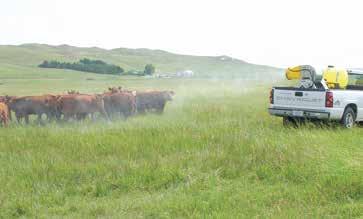
Because stable flies feed briefly and then rest, treating resting areas can improve results. They often rest in sheltered spots such as trees, windbreaks, building walls, fences and tall grass near host animals or breeding sites. Producers can spray these areas using mist blowers or low-pressure sprayers mounted on pickups or ATVs.
Stable fly traps typically do not capture enough flies to provide stand-alone control but may supplement other strategies. One design, the Biting Fly Trap, uses a clear plastic sheet with a sticky surface that attracts flies, causing them to collide and become trapped.
Botanical repellents are also being evaluated. Some may effectively deter stable flies from landing, but protection duration can be limited. Daily application may be feasible for horses but impractical for pasture cattle.
Feed-Throughs, Rotation and Genetics
Because horn flies breed exclusively in fresh manure, feed-through growth regulators can prevent maggots from developing.
“If you put this in the feed, you can prevent horn-fly production,” Hinkle said.
However, effectiveness depends on consistent intake. If some cattle consume inadequate amounts, untreated manure can support enough flies to affect the entire herd.
Strategic spraying with mist blowers helps control flies that stress cattle and reduce grazing time.
Neighboring herds without control programs can also contribute flies across fence lines. Feed-through products often serve best as adjuncts to other control methods. In isolated herds with consistent intake, they may significantly reduce horn-fly pressure.
Some producers report reduced fly numbers with intensive pasture rotation, moving cattle away from fresh manure pats before flies complete development. If cattle are moved daily and do not return before flies hatch, emerging adults may not locate a host.
Genetic variation also exists. Certain breeds and individual animals appear more resistant to horn flies. Limited selection efforts are underway in some operations.
Resistance: The Ongoing Challenge
Only three major classes of insecticides are approved for use on cattle. Resistance within one product often extends to all products in that class.
Organophosphates have been used for decades, and resistance levels are high in many horn-fly populations. Pyrethroids, once highly effective, have also seen increasing resistance, particularly in the South, where 12 to 15 hornfly generations may occur annually.
“Anything that works well can kill off susceptible flies, leaving only the handful that are resistant,” Hinkle said. “They are the only ones left to breed.”
All insecticides carry an IRAC (Insecticide Resistance Action Committee) code indicating mode of action. Rotating products by IRAC group number, rather than simply switching brand names, helps slow resistance development.
Group 1B includes organophosphates. Group 3A includes pyrethroids. Group 6 includes macrocyclic lactones, which act systemically against blood-feeding parasites.
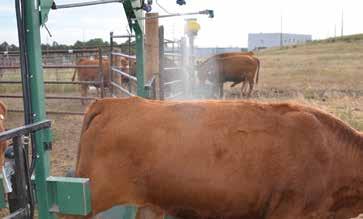
Walk-through sprayers treat cattle as they pass through gates, helping manage fly pressure during peak season.
Preparation and Response to Flies After a Mild Winter
Rotating classes annually and sometimes within a single season in long fly seasons, can improve effectiveness.
Timing Ear Tags Correctly
Timing matters as much as product choice. Ear tags typically provide effective control for 12 to 14 weeks. Installing them too early wastes protection before peak pressure arrives.
In southern regions with extended fly seasons, producers may begin with pour-ons, sprays or dust bags early in the season and switch to ear tags during peak fly pressure.
In more northern areas, fly season begins later. Installing ear tags in late May or early June often maximizes benefit.
Insecticide levels in tags decline over time. By early fall, additional treatment may be necessary. When cattle are gathered for pregnancy checking, producers can apply a pour-on and remove ear tags. Leaving depleted tags in place exposes flies to sublethal doses, accelerating resistance.
Pour-on macrocyclic lactones provide only short-term hornfly control and are better conserved for internal-parasite management, where resistance is also emerging. For face flies, pyrethroid tags with some repellency tend
to provide better results. In cow-calf herds, both cows and calves should be tagged according to label instructions, often requiring two tags per animal.
Looking Ahead
Few new insecticides are in development. However, fatty acids derived from palm and coconut oil show promise. These compounds appear to disrupt insect guidance systems and may act as repellents or behavior modifiers.
Boxler is evaluating formulations delivered through automated sprayers triggered as cattle walk through.
Treated cattle often stand calmly afterward, with flies dispersing quickly.
For producers developing spring and summer fly-control plans, regional Extension specialists remain valuable resources. The National Veterinary Entomology Extension and Education website and its Vet-Pest-X pesticide database allow producers to search insecticides by animal species and target pest, including feed-throughs, pour-ons and ear tags.
After a mild winter, fly season may begin earlier and last longer. Close observation, strategic timing and thoughtful rotation of control methods can protect cattle performance and profitability through the season. // JULY 13-17, 2026
Mushrush Dorado Reg#
Semen Available
Members Encouraged to Seek Board Positions
Four director seats and the position of president will be up for election this fall at the National Red Angus Convention. The Red Angus Association of America nominating committee encourages RAAA members in good standing who are interested in serving the Association in these volunteer posts, to throw their hat in the ring.
Board Position Openings
Area 4 – Southwest
Tony Ballinger has completed two three-year terms and is ineligible for re-election.
Area 7 – Northeast
Rob Hess has completed two three-year terms and is ineligible for re-election.
Area 9 – Midwest
Will Andras has completed one three-year term and is eligible for re-election.
Region A – West
Keith Hickle has completed one three-year term and is eligible for re-election.
President
Jeff Pettit has served one year as president and is eligible for re-election.
Responsibilities
The BOD leads and oversees the affairs and business of the Association as outlined in the RAAA Bylaws.
RAAA directors are leadership volunteers and are not reimbursed for their time nor receive a salary. Expenses may be compensated for scheduled BOD meetings which are held a minimum of three times a year – January, June and September. Conference calls are scheduled as required to conduct business between BOD meetings.
The BOD adheres to the core policies, mission and vision of the RAAA for guidance in all decisions as they follow the course set by the Strategic Plan. Members of the BOD also populate and chair the various RAAA committees. The core policies and committee listings are found online at redangus.org/about-red-angus.
Members may access the entire Bylaws, Strategic Plan and Board of Director Minutes by logging on to REDSPro and clicking on the “Association Business” tab, then selecting from the Table of Contents on the left.
Qualifications
Candidates must be residents of – or have a primary mailing address in – the Area or Region they represent and be a member of RAAA in good standing for a minimum of three years.
Designated representatives of corporations and partnerships and other legal entities are eligible to caucus with and are eligible for election to the Board from the Area and/or Region of their corporate membership designation.
The president must be a member of the current Board of Directors or has served as a director in the past. Complete qualifications are outlined in the RAAA Association Bylaws.
A director’s term is three years with a two-term limit. The president shall be elected annually by the membership for a one-year term, limited to two terms. He or she must currently be or have been a member of the RAAA Board of Directors for one year.
Nominations
The nominating committee is populated by past RAAA presidents and a current director. If interested in running for the RAAA Board, please contact one of the following by June 15.
Tony Ballinger, 817-371-4520 anthony.ballinger@adm.com
Johnny Rogers, 336-504-7268 jrrogers1968@gmail.com
Steve Koester, 701-400-1611 koesterredangus@gmail.com
The candidate should submit a short biography – no longer than 350 words – and high-resolution headshot by June 22, for inclusion in the July/August Red Angus Magazine, to Maclaine Shults-Mauney, Red Angus Magazine editor, at maclaine@redangus.org.
Members may also run from the floor at convention. To view the voting and caucus guidelines in the RAAA Bylaws, visit https://redangus.org/herd-management/breeders-guide/. //
National Red Angus Champions Crowned at Cattlemen’s Congress
The National Red Angus Show was held in January during Cattlemen’s Congress in Oklahoma City, Oklahoma, where exhibitors from across the country competed in junior, open and pen show divisions, showcasing elite Red Angus genetics.
In addition to division champions, special recognition was awarded to outstanding exhibitors and industry leaders. Addison Vowell, Forest, Mississippi, was named Premier Exhibitor; Zachary Griffeth, Marietta, Oklahoma, earned Premier Breeder honors;
Grand Champion Open Female
HEH SHELLEY 1M ET – Shaylee Hartman, Tecumseh, NE
Reserve Grand Champion Open Female
TMAS MS MAYBELLINE 4736M ET – Preston Hartman, Tecumseh, NE
Grand Champion Open Percentage Female
GR RANCH REVIVAL – Carly Shuter, Frankton, IN
and Tyler Hahn, Russell, Kansas, was recognized as Herdsman of the Year. The Red Angus Association of America congratulates these individuals, along with all exhibitors, for their commitment to excellence and dedication to advancing the breed.
Grand Champion Open Bull
–
Reserve Grand Champion Open Bull ML CLOSE ENCOUNTERS 2319 – Meadow Lane Farms, Mayview, MO
Reserve Grand Champion Open Percentage Female BKGR MS LYDIA 301N – Reid Groves, Beggs, OK
HAHN WEEKEND WARRIOR 3M
Hahn Cattle Service, Russell, KS
2026 National Red Angus Open Show – Judges: Brad & Dawn Gohr
Show Photos by Next Level Images
For questions about Red Angus shows, contact Erin Dorsey, RAAA show coordinator, at erin@redangus.org. //
Grand Champion Junior Female
HEH SHELLEY 1M ET – Shaylee Hartman – Tecumseh, NE
Reserve Grand Champion Junior Female
AUBSS RED SERENA 402 – Kennadi Brogdon, Waxahachie, TX
2026 Cattlemen’s Congress Junior Red Angus Regional Show – Judge: Webb Field
Grand Champion Junior Percentage Female
T BAR S MS 1228L – Lanie Sasser, Edmond, OK
Reserve Grand Champion Junior Percentage Female GR RANCH REVIVAL – Carly Shuter, Frankton, IN
Grand Champion Pen of Three Bulls T Bar S Cattle Co. – Billings,MO
Grand Champion Pen of Three Heifers Rhett Tripp – Nardin, OK
Reserve Grand Champion Pen of Three Bulls Timber Creek Ranch – Marietta, OK
Reserve Grand Champion Pen of Three Heifers Illingworth Farms – Funk, NE
2026 National Red Angus Pen Show – Judge: Nate Kolterman
Tyler Hahn Honored as 2026 Red Angus Herdsman of the Year
Tyler Hahn, western Kansas cattleman and owner of Hahn Cattle Service, was named the 2026 Red Angus Herdsman of the Year at Cattlemen’s Congress in Oklahoma City. The honor recognizes a cattleman whose handson work, professionalism and dedication to presenting Red Angus cattle have made a meaningful impact on the breed.
Hahn owns and operates Hahn Cattle Service alongside his wife, Jordan, and their children, Stetson and Briar. Together, the family raises Red Angus and Hereford seedstock, building on a long history in the cattle business. Hahn brings 30 years of experience raising multiple breeds of cattle, giving him a broad perspective on what it takes for a cow herd to remain productive and profitable over time.
A graduate of Kansas State University, Hahn was a member of the 2007 Reserve National Champion Livestock Judging Team. He also earned top academic honors in the animal science department as the academic quadrathlon winner in 2007. Those experiences helped sharpen both his eye for quality livestock and his understanding of the science behind successful breeding programs.
After college, Hahn worked for Trans Ova Genetics as a technical services embryologist, where he gained valuable experience in advanced reproductive technologies. That background added another layer to his cattle
knowledge and helped shape the foundation for his own business and breeding program.
Hahn later established Hahn Cattle Service, a custom-fitting business that assists clients in preparing cattle for shows and sales. Over time, he also began assembling a herd of Red Angus females that now serve as the base of the family’s program. Those females, paired with Hahn’s years of hands-on cattle experience, have helped create a program recognized for producing quality stock in and out of the show ring.
Among the program’s accomplishments, Hahn and his family bred, raised and exhibited the 2024 National Champion Bull, HD Road Warrior 3K. Yet for Hahn, one of the most meaningful milestones came more recently – watching his stepson, Stetson, lead the 2025 Grand Champion Owned Female at this year’s Red Angus Youth Expo. That moment reflected more than success in the ring. It represented the next generation carrying forward a passion for Red Angus cattle.
Hahn says the greatest advantage of Red Angus cattle is simple: they are built to work for the producer, not the other way around. In his part of the country, that means cattle that can handle environmental extremes, stay productive under practical conditions, raise a big calf, breed back and repeat the process with consistency. He values the breed’s
low-input nature, durability and ability to perform in rough terrain.
Just as important to Hahn is the people behind the breed. He speaks highly of the staff and leadership of the Red Angus Association of America and says their support of breeders and commercial cattlemen alike adds to his confidence in the breed’s future.
For Hahn, that confidence extends beyond today’s herd and into the future of his family. Red Angus cattle, he says, are not only a fit for his program, but a breed he is proud to raise his kids with as well. //
Named 2026 Red Angus Herdsman of the Year, Tyler Hahn was recognized at Cattlemen’s Congress for his professionalism and dedication in presenting Red Angus cattle.
Three Decades of Total Herd Reporting Strengthen Red Angus Data
by Maclaine Shults-Mauney, Red Angus Magazine Editor
For nearly 30 years, one principle has anchored the data behind Red Angus genetics: report everything.
The Total Herd Reporting program was built on the idea that meaningful genetic progress depends on complete and unbiased information from working cowherds. Rather than allowing selective reporting, the program captures whole-herd production data to strengthen the reliability of genetic tools used across the breed.
“Instead of only reporting their best animals, producers in the THR program report information on their entire calf crop,” said Kenda Ponder, database and registration consultant for the Red Angus Association of America.
Today, that structure remains central to the breed’s standing in a data-driven industry.
“THR is the foundation that makes Red Angus genetics credible, predictable and commercially relevant,” Ponder said. “It ensures the data behind Red Angus genetics reflects reality –not just the highlights.”
RAAA implemented THR in 1995, becoming the first breed organization to adopt a mandatory total herd reporting system. The move addressed a long-standing issue in cattle evalu-
ation: selective reporting, which can skew performance data and weaken genetic predictions.
By capturing complete herd records, the program provides a more accurate picture of how cattle perform in real-world production systems, not just under ideal circumstances.
That full data set also makes it possible to evaluate complex, economically relevant traits such as fertility and longevity. Population-level analysis over the past three decades shows measurable progress. Genetic trend data indicate that, under selection alone, a contemporary group of 100 Red Angus heifers would be expected to produce roughly three more calves than a comparable group 30 years ago.
At the same time, the average age at first calving has declined, meaning heifers are entering production earlier and with more opportunity to remain productive long term. Broader herd improvements reflect both genetic selection and advances in management practices supported by consistent reporting.
Over time, the program has evolved alongside the breed and the broader beef industry, incorporating new technology and responding to market demands while maintaining its original purpose.
“THR has stayed true to its original purpose – complete, unbiased data –but it has expanded and adapted as the Red Angus breed and the beef industry have changed,” Ponder said. “It started as a solution to a data reporting problem. Over time, it has become the pillar behind Red Angus’ reputation for reliable, profit-driven genetics.”
For members, the value compounds over time. “THR is an investment in better data, better animals and better outcomes for members’ customers,” she said. “The reward is in the consistency, with genetics that perform predictably and hold their value over time.”
As THR approaches its 30th anniversary, the milestone reflects more than longevity.
“This milestone represents proof that RAAA’s leaders made a hard but right decision – and stayed committed to it,” Ponder said. “It marks three decades of integrity, progress and foresight.”
Looking ahead, she sees the program’s role only increasing.
“THR will continue to be the backbone of Red Angus decision-making,” Ponder said. “It turns information into insight, insight into confidence and confidence into long-term profitability.” //
Total Herd Reporting strengthens Red Angus data, giving producers greater confidence in genetic predictions.
Missing the Forest for the Trees: Why U.S. Beef Can’t Afford to Forget the Global Market
Why record calf prices shouldn’t distract us from the reality that quality and exports still drive long-term value.
by Nate Smith, General Manager, Top Dollar Angus
Since my time at Kansas State University, one lesson has stuck with me: U.S. agriculture doesn’t operate in a vacuum. We are part of a global system, one that rewards quality and punishes complacency.
I have the late Barry Flinchbaugh, Ph.D., to thank for that perspective. If you’ve never heard his name, take a minute and look him up. He was instrumental in shaping the 1996 U.S. Farm Bill and taught thousands of undergrads about the intersection of farm policy and global trade.
In the classroom, he was as entertaining as he was sharp – usually with a cigar in his mouth, a cane in his hand, and a one-liner ready for anyone not paying attention. He made sure we understood that American agriculture’s reach and responsibility extend far beyond our borders.
The World Still Wants U.S. Beef That lesson rings louder today. The U.S. cow herd still hasn’t begun to expand, tightening supplies both at home and abroad. Fewer cow numbers mean fewer high-quality beef cuts available for export, cuts that trading partners are willing to pay a premium for.
About 10%-15% of U.S. beef is exported each year. That might not sound like much, but what matters is what
“U.S. agriculture doesn’t operate in a vacuum. We are part of a global system that rewards quality and punishes complacency.”
we export. Japan and South Korea, our two top partners by beef export value, account for the bulk of that business.
Exports fall into two general categories:
1. Variety meats – tongues, livers, tripe and other items that have limited domestic demand.
2. High-value cuts – ribeyes, loins, short ribs and other premium muscles that drive profitability.
Those premium cuts make up roughly 55% of the total value of all U.S. beef exports. In other words, our global reputation is built squarely on the quality of what’s in the middle of the carcass.
So, what does this mean for the U.S. cow-calf producer?
If we let the quality of our product slip, others are ready to fill the void. Countries like Australia, others in the global south and even parts of Europe are steadily improving their herds, adopting the genetics, management and technologies that made U.S. beef the global standard. They’re learning fast. And they’re not content to stay in second place.
Now is not the time to ease off the throttle.
Beef is unique among globally traded commodities because its value hinges on eating experience.
derness, flavor and marbling.
And when we deliver a better experience, the market rewards us for it.
Don’t Let Record Prices Breed Complacency
Yes, calf prices are historically high right now. But that’s exactly when it’s easiest to forget the fundamentals. Strong markets can mask slippage in quality. And if we take our eye off the ball, the global market will find another supplier willing to meet those premium demands.
It might not feel like much at first, a few cents per pound here, a few less buyers there, but as every producer knows, every penny matters.
A Reality Check, Not an Alarm
The U.S. beef industry remains the world leader in both quality and innovation. We’re constantly adopting new tools, from genetic selection to feed efficiency technologies.
But let’s not fool ourselves – competition is growing faster than many realize.
At Top Dollar Angus, we’re already fielding inquiries from overseas organizations wanting to understand our program and what “Top Dollar Verified” really means. That tells me the world is watching.
Nate Smith, General Manager
Grains and other proteins don’t face that same hurdle. They can be traded purely on volume and consistency. Beef, on the other hand, wins on tenwww.topdollarangus.com
Let’s make sure we stay in first place – not by resting on past success, but by doubling down on the genetics, management and technology that got us here in the first place. //
Chris & Jolyn Wasem • Halliday, ND 701/938-8365 • 701/260-1513
jolyn.wasem@gmail.com wasemredangus.com
ND Red Angus Association
President: Bryan Ressler
Vice President: Ben Lodoen
Immediate Past Pres.: Sam Twedt
Directors: Ryan Clemetson, Rick Rohrich, Max Robison & Blake Wold
Sec./Treas.: Chuck & Annette Steffan
701/290-9745
heartrivergenetics@yahoo.com
Rounding Up the Next Generation of Breeders and Leaders
by J.D. Miller, JRA Board
When asked what events have shaped me into the young Red Angus breeder I am today, there is a long list that comes to mind. However, there is one event that sets itself apart from all the others I have participated in. This event nurtures leadership skills, allows youth to connect with breeders, and build numerous memories. That event is the annual Junior Red Angus Round-Up trip.
My first Round-Up trip was in the summer of 2023, touring central and south Florida. This Round-Up trip not only allowed me to explore Florida’s agricultural industry, but also to build the foundations of what I hope are life-long relationships with other Junior Red Angus breeders. I was also able to meet and network with industry professionals while still gaining knowledge to apply on my own operation. Not only did I meet industry leaders, but I was also able to engage one-on-one with my JRA board members who encouraged me to become more active within our junior association.
Although many JRA members remember Round-Up for the fun times we had with the members of our association, we often forget about the educational benefit
Engage with JRA!
Gracie Rogers, President - jragracie1@gmail.com
from these trips. Every year the Junior Red Angus Association works tirelessly to put together a broad list of educational stops and experiences during our trip.
Last year at the Big Sky Round-Up, taking place in southern Montana, we had great stops at Green Mountain Red Angus, Beartooth Ranch, Yellowstone Cattle Feeders, PAYS Auction Yard, Midland Bull Test and many more.
With such a wide variety of stops covering topics from all parts of the cattle industry, Junior Red Angus members get to build their network and get a better grasp of how the pieces of our great industry all fit together.
Every year the Junior Red Angus Association works hard to encourage team bonding through group events that promote leadership, teamwork and community.
Last year, JRA created a team project where members were split into groups of all ages and asked to design a sale advertisement for a registered Red Angus female. Here, older and younger members alike worked as a team to construct
Peyton Andras, Vice President - peyton.s.andras@gmail.com
Addison Green Russell, Communication Chair - agreenrussell@gmail.com
Zane Downey, Director - zane.t.downey@outlook.com
Claire McIntyre, Director - clairemcintyre090706@gmail.com
James Miller, Director - jdmiller306@gmail.com
Taylor Dorsey, Junior Program Coordinator taylordorsey@redangus.org
a creative, yet well-structured marketing advertisement.
On top of educational and team development, JRA doesn’t let a fun opportunity pass by. Every year, we enjoy a trip to a local attraction. During last year’s trip, we were able go white-water rafting. Not only did this experience promote teamwork and communication, it also gave junior members a chance to let go, have fun and build memories that will last a lifetime.
Round-Up is an incredible opportunity for Junior Red Angus members to grow, connect and experience leadership in action. We’re excited to bring the Red Dirt Round-Up to the great state of Oklahoma this year.
Participants must be at least 12 years old by the registration deadline to attend. We strongly encourage early registration, which closes May 15. Late registration will remain open through May 29.
Don’t miss your chance to be part of an unforgettable week filled with learning, laughter and lasting friendships – we can’t wait to see you in Oklahoma! //
Website: juniors.redangus.org
Facebook: juniorredangus
Instagram: juniorredangus
Snapchat: juniorredangus 2025-2026 JRA Board of Directors
Common Hashtags: #jra
Member News
In Memory
John Paul Sutphin III
John was born May 9, 1969, in Denver, Colorado, to John Paul and Nancy Sue (Ballard) Sutphin Jr. He passed away Jan. 17, 2026, at Memorial Central Hospital in Colorado Springs, Colorado, with his family by his side at the age of 56.
He was preceded in death by his nephew, Xander Rowan; his niece, Teagyn; and his nephew, Ryder Shipman.
John is survived by his wife, Angela Sutphin, of the family home in Lamar, Colorado; his children, John Paul (Jessica) Sutphin IV of Lamar, Colorado; Chanelle (Caleb) DuVall of Granada, Colorado; Jozlyn (Kadyn) Hicks of Lamar, Colorado; and McKenzie (Kolby) Stegman of Lamar, Colorado. He is also survived by his grandchildren, Blakelynn, Sawyer, Annistyn, Slade, Tilden, John V, Krew and Kross.
Additional survivors include his siblings, Monette Sutphin of Wiley, Colorado; Melissa (Eddie Uratani) Shipman of Lamar, Colorado; Monica Sutphin of Lamar, Colorado; and Christopher (Courtney) Stewart of McClave, Colorado; his parents, John (Susan) Sutphin Jr. of Lamar, Colorado, and Nancy (Mike Huddleston) Sutphin of Lamar, Colorado; his sister-in-law, Sara (Dustin) Campbell of Lamar, Colorado; his mother-in-law and father-in-law, Alfred and Susan Bergquist of Lamar, Colorado; as well as numerous aunts, uncles, nieces, nephews, cousins, extended family members and a host of friends.
In lieu of flowers, memorial contributions may be made to the John Sutphin III Memorial Scholarship through Wiley Consolidated School.
Joy Butler Davidson
Joy Butler Davidson, 90, of Marietta, Oklahoma, went to be with her Lord and Savior Feb. 19, 2026, in Ardmore, Oklahoma.
Joy was born on April 25, 1935, in Kaufman, Texas, to Cleo and Ruby Fife Butler. She graduated from Kaufman High School in 1953 and earned a Bachelor’s degree in Business and Library Sciences from East Texas State University.
On March 10, 1955, in Kaufman, Texas, she married the love of her life, Tommy Jack (T.J.) Davidson. Together they shared 59 years of devoted marriage grounded in faith, loyalty and enduring love.
Joy dedicated 49 years to education, teaching business courses including typing, accounting and shorthand, in addition to later serving as a librarian. After retiring from Era in 2010, she moved to Marietta, Oklahoma, where she and T.J. continued building out their dreams on Timber Creek Ranch. She was a faithful member of Marietta First United Methodist Church and was involved in community outreach programs.
She is survived by her daughters, Nancy Davidson and Tammy Glascock, her son-in-law, Randy Glascock; her grandchildren, Rachel Gray (Gatlan) and Thomas Glascock (Madison); and her great-grandchildren, Brigham, Beckett and Cooper Gray, and Piper, Leddy and Levi Glascock.
She was preceded in death by her beloved husband, Tommy Jack Davidson; her parents, Cleo and Ruby Fife Butler; and her brother, Troy Butler.
Joy leaves behind a legacy of strength, faith, determination, and deep love for her family and the life her and T.J. built. While we rejoice in the promise of eternal life, she will be remembered
always and missed beyond measure while we are here on earth.
The family requests that memorial donations be made to the Love County Library in honor of her many years as an educator and librarian (checks payable to Southern Oklahoma Library System, 500 South Highway 77, Marietta, OK 73448).
Carol Lynn Craig Carol Lynn Craig of Sebree, Kentucky, peacefully left her earthly home on Feb. 28, 2026.
Born Jan. 13, 1950, in Long Beach, California, she was the daughter of L.L. and Marjorie (Jones) Craig, who preceded her in death.
She is survived by her daughter, Michelle Pettit and husband Jeff Pettit of Sebree, Kentucky; granddaughter Ashley Washer and husband Dustin Washer of Sebree, Kentucky; grandson Nolan Pettit and wife Genaea Pettit of Sebree, Kentucky; three granddaughters, Halle Washer, McKenzie Washer and Sadie Washer; her brother, Mark Craig and wife Carol of Lakewood, California; and her best companion of 15 years, her dog, Tater Tot.
Carol led an adventurous life. She worked as a truck driver hauling purebred cattle across the United States, wrote a column for a cattle publication and served as a substitute teacher. She was always willing to help wherever she was needed. Her gift was making people laugh in every situation, and she loved deeply.
Her final journal entry read: “I’ve had a full, unique life, full of wonderful people. I honestly believe I’m on a path where God wants me.” She wrote every page of her life, and her family finds comfort and peace knowing her last page was given to God.