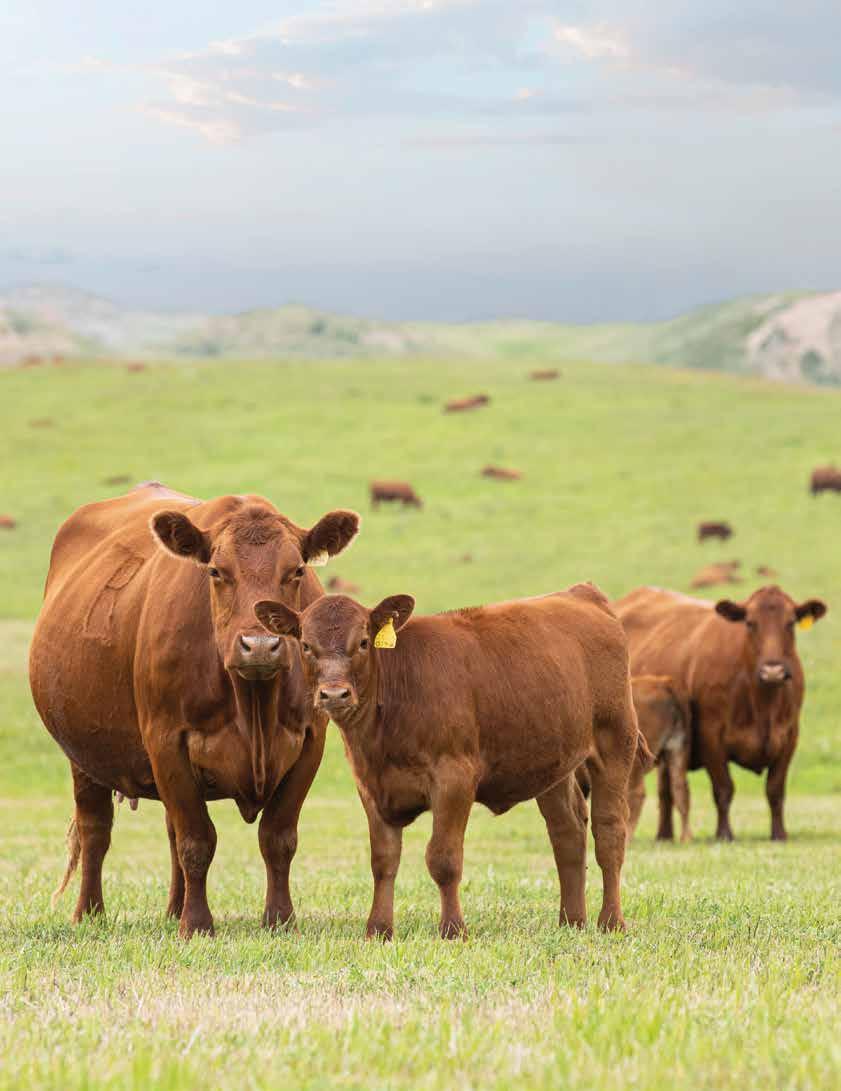
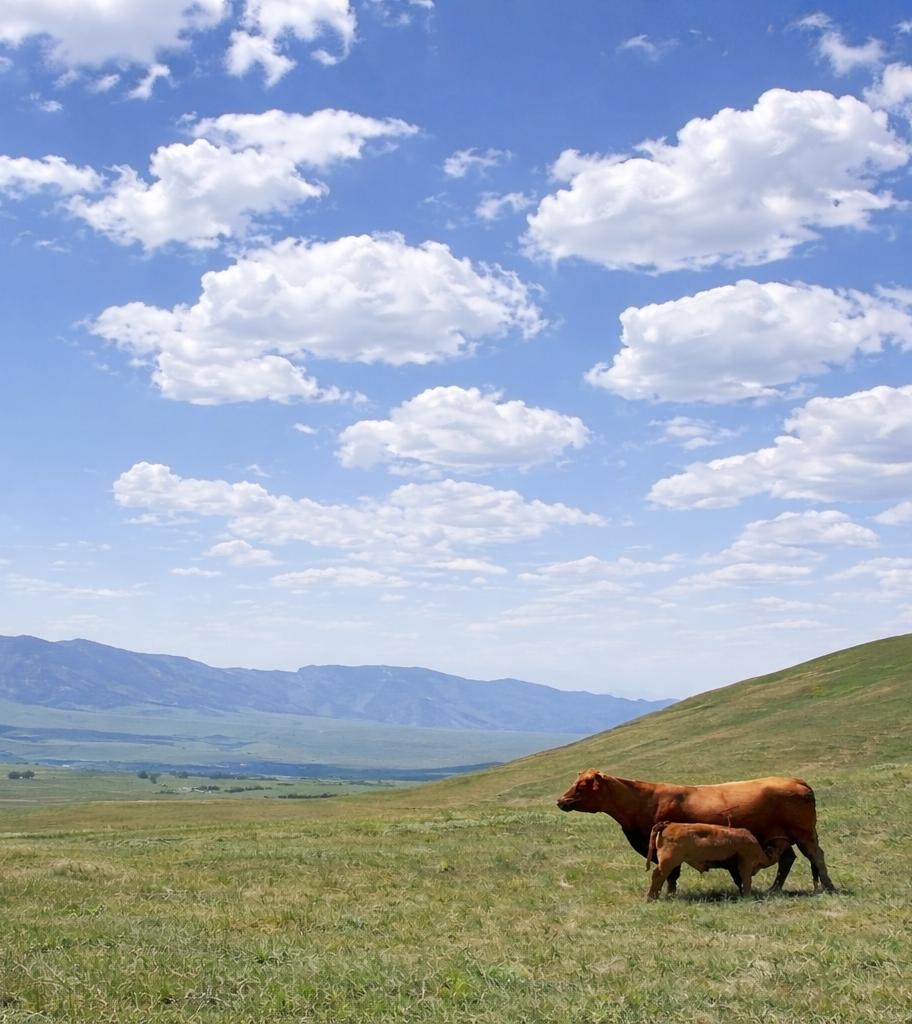
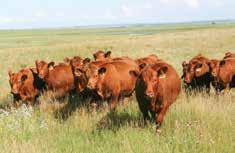
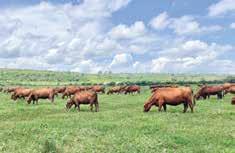
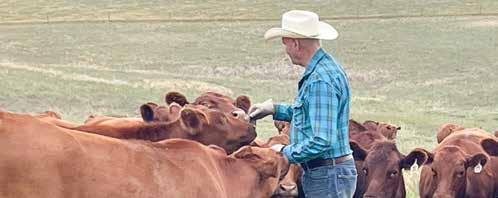
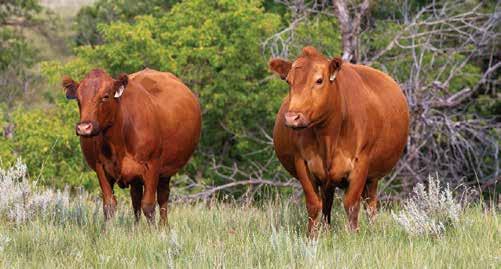
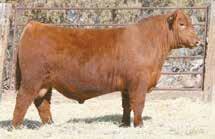
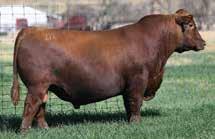
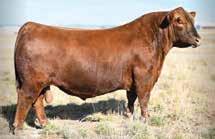
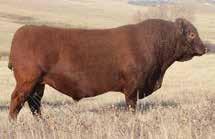
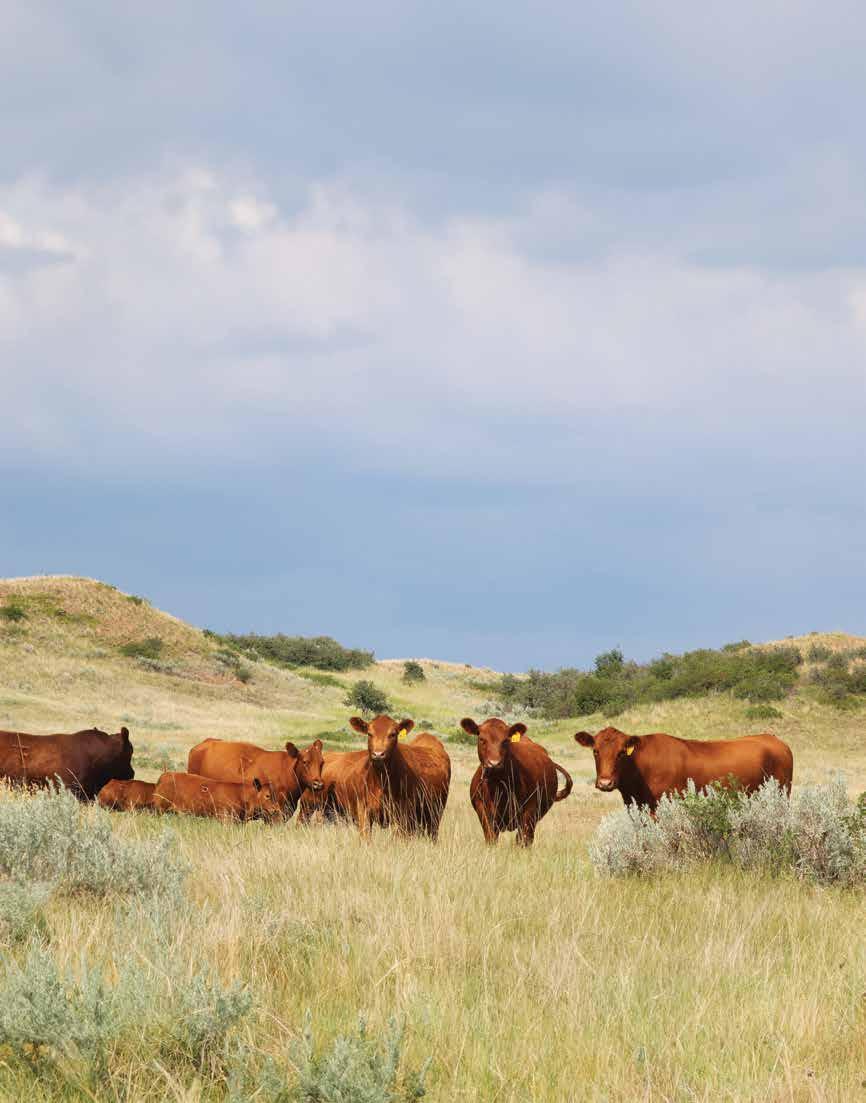
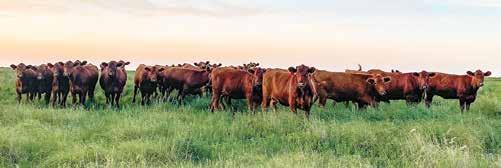
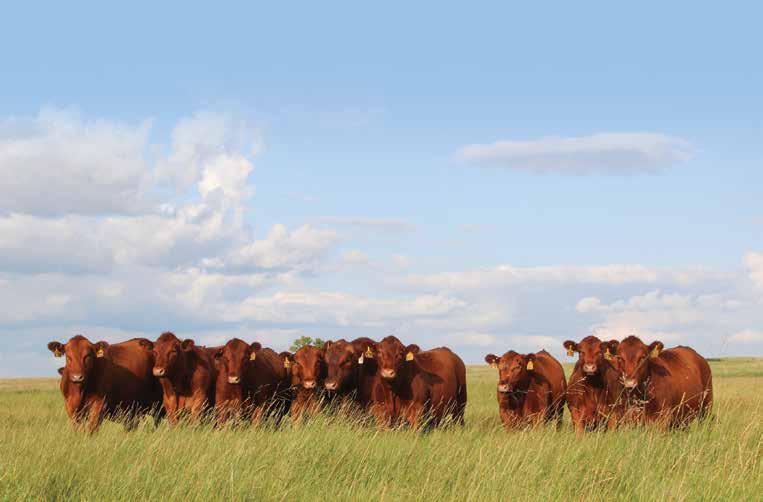
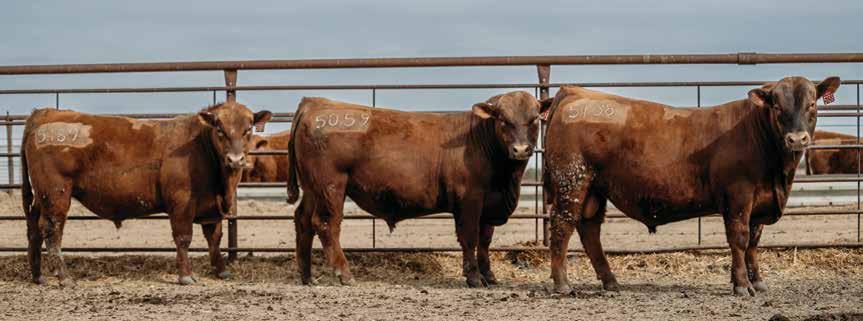
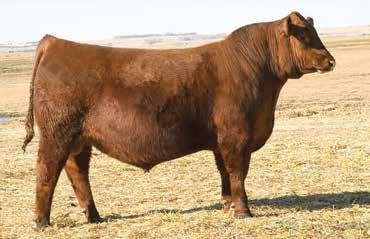
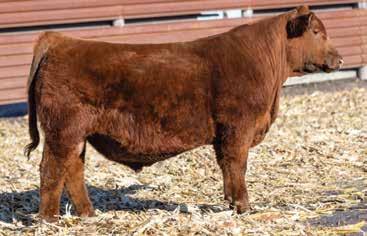
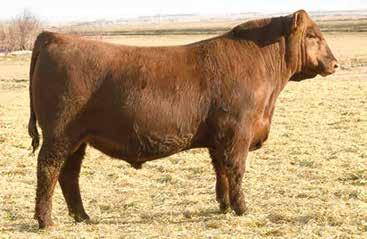
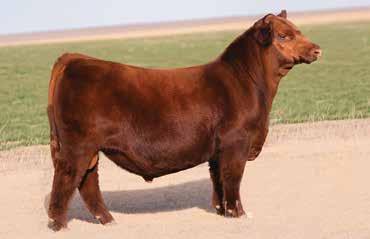
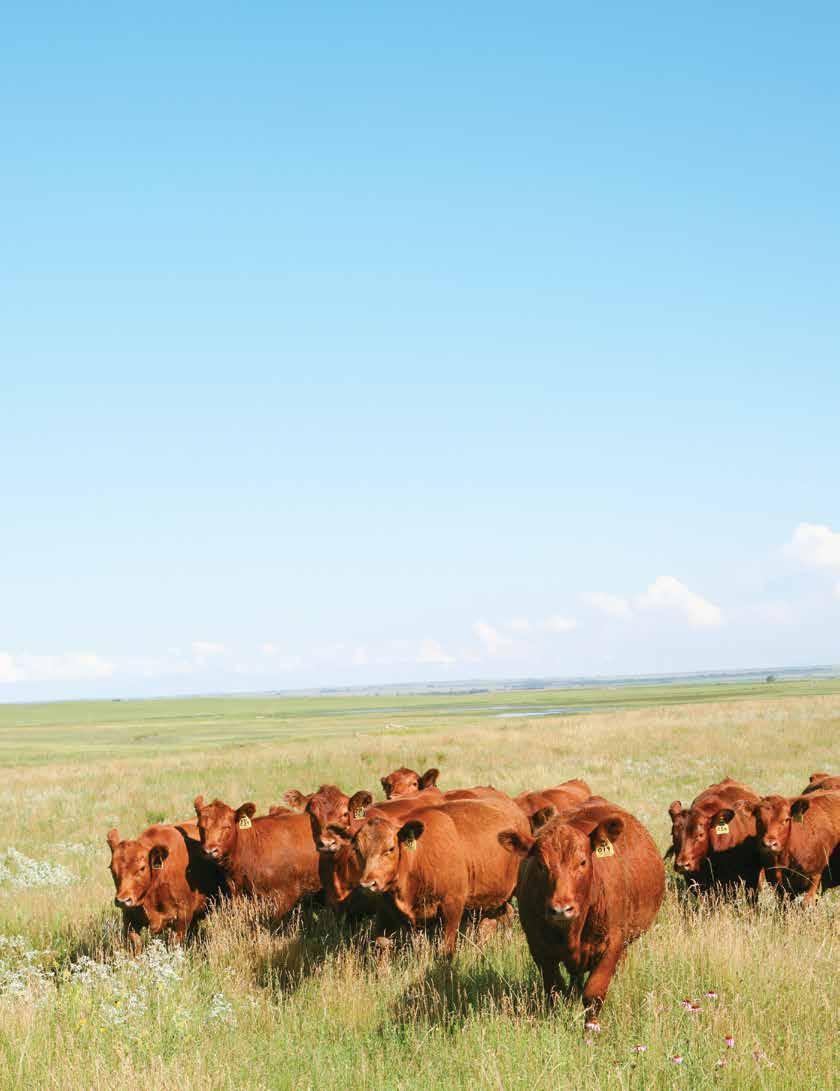
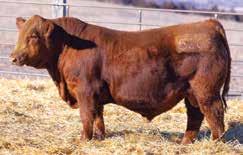
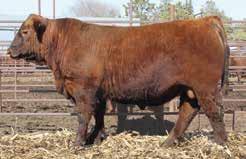
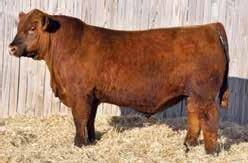
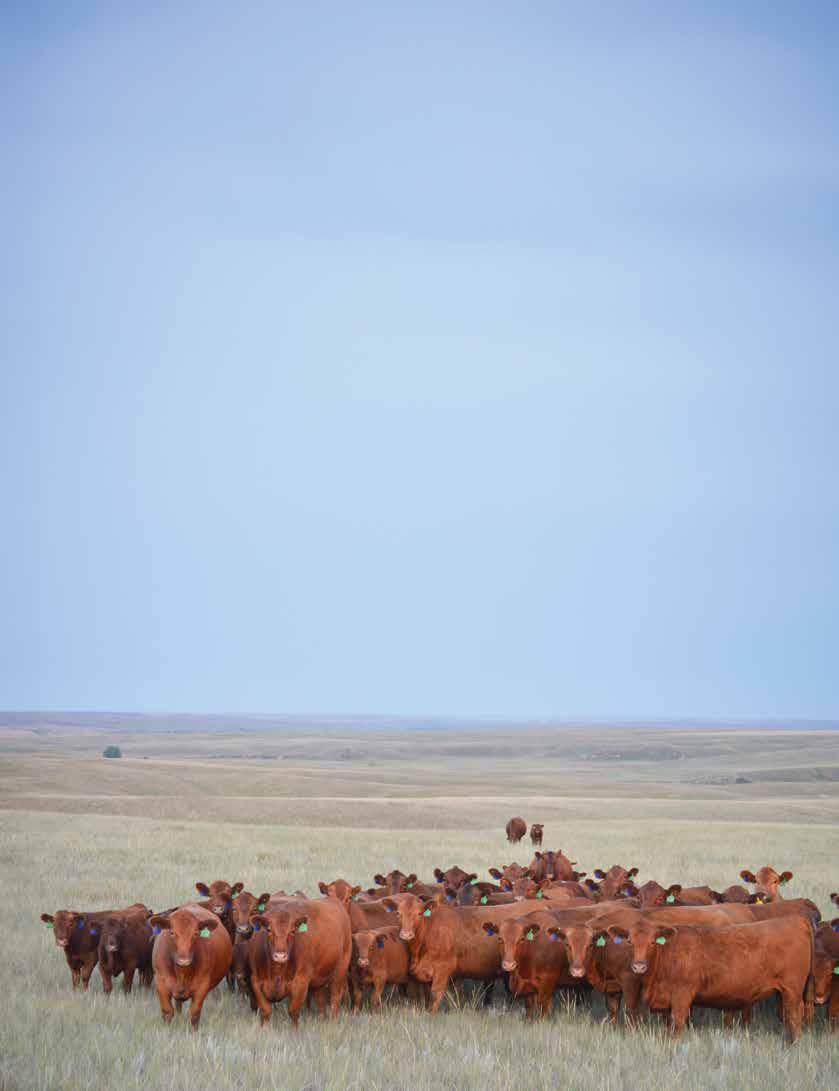
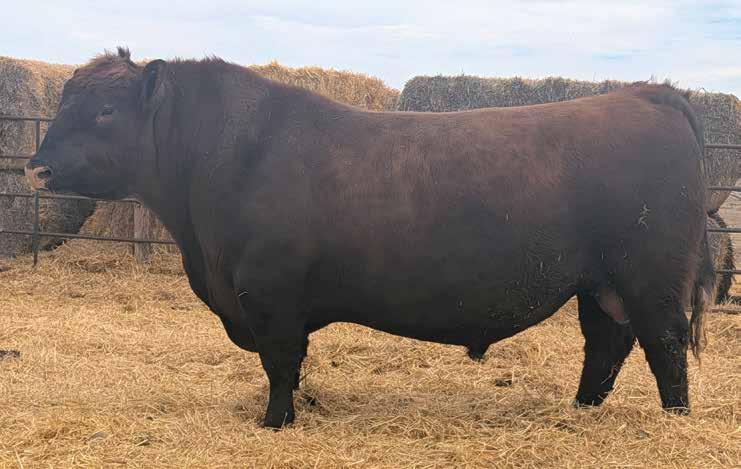
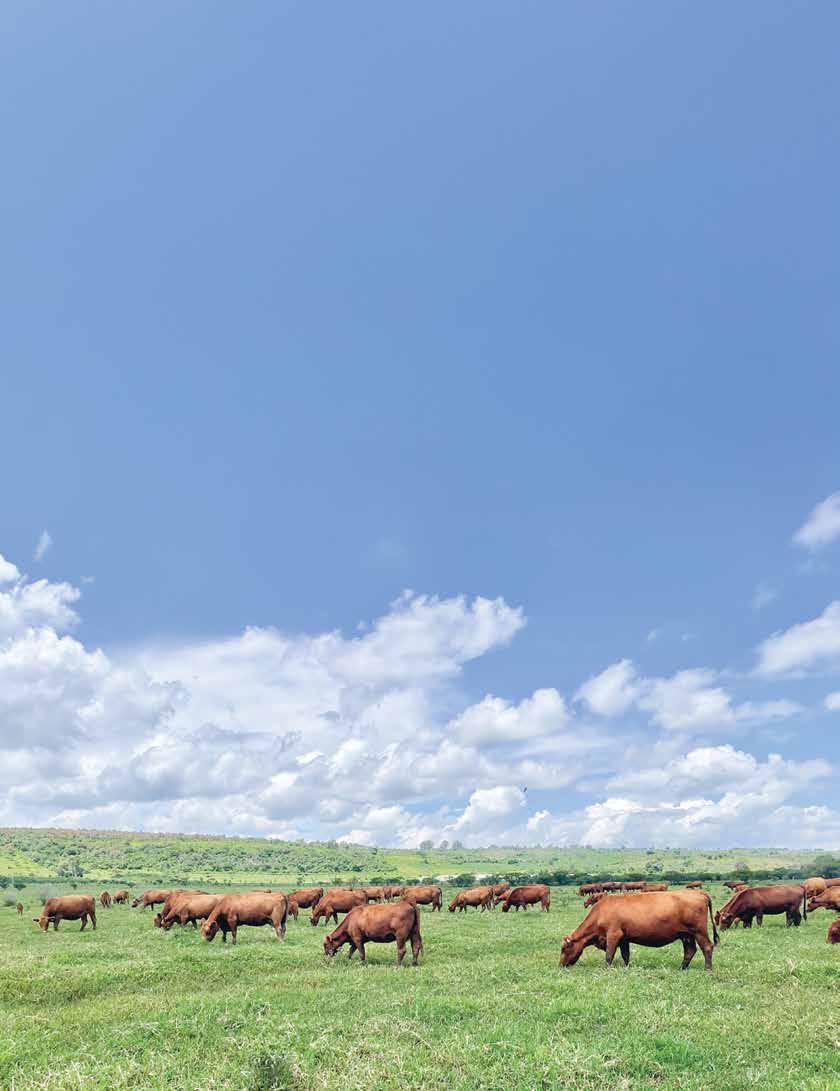
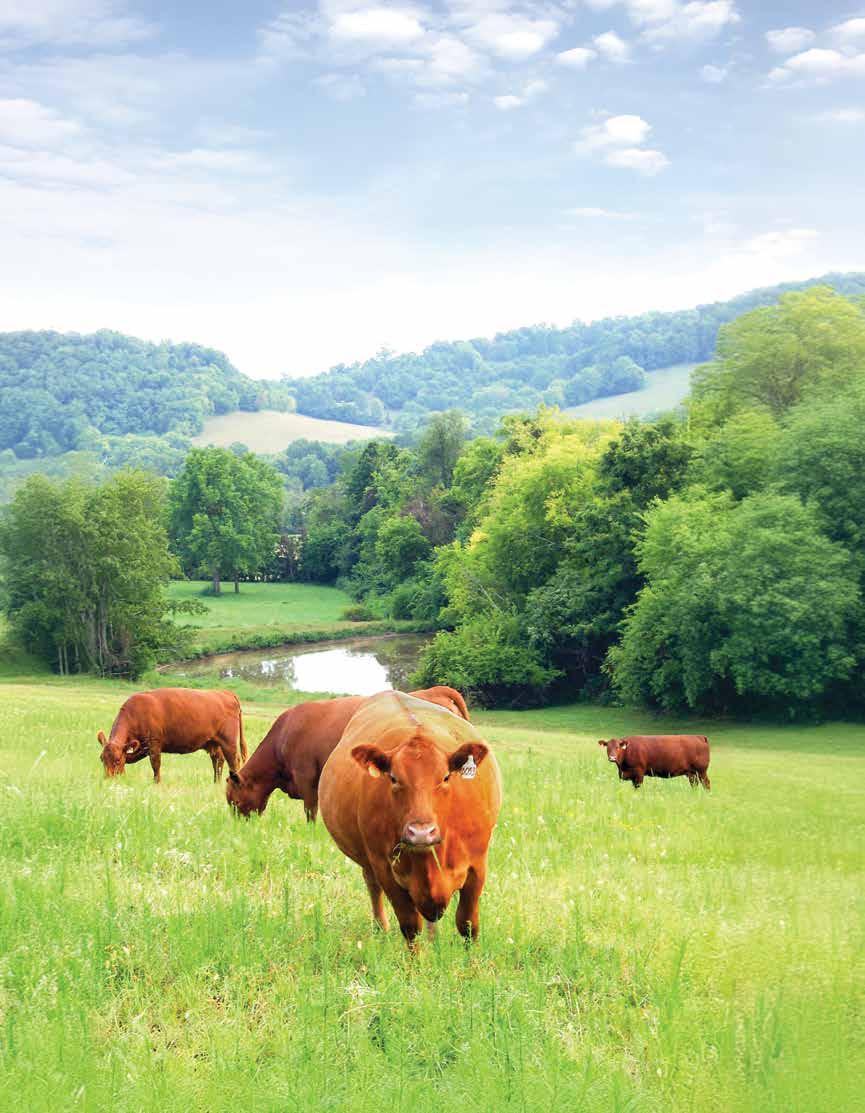
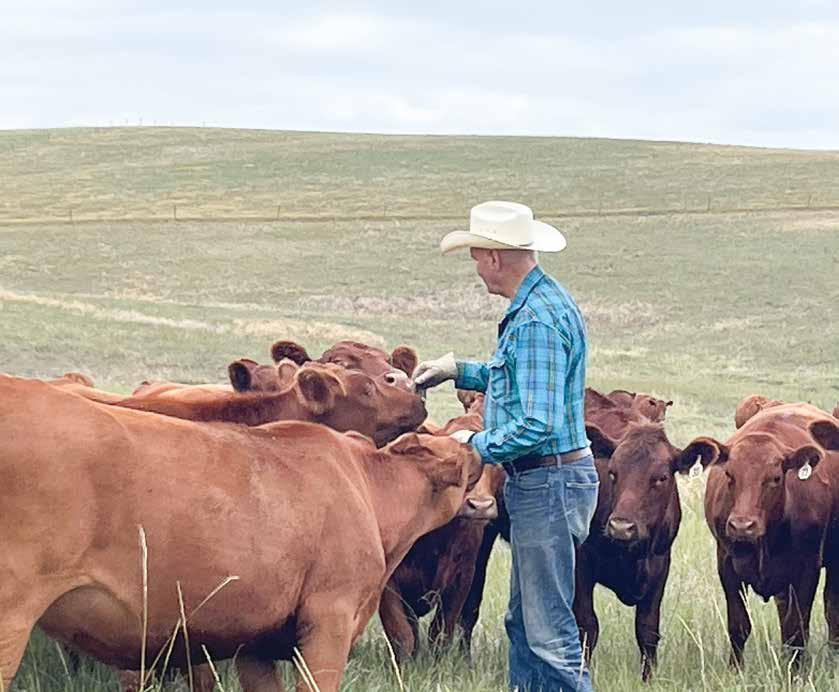
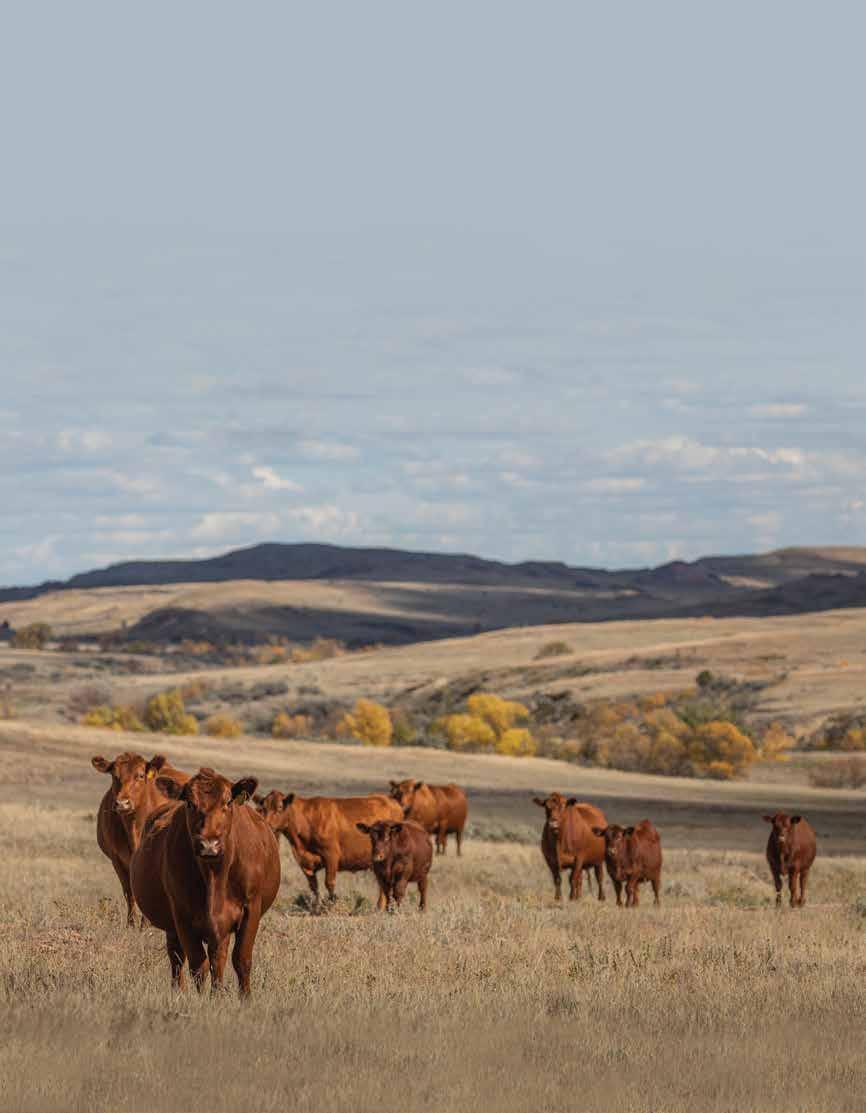
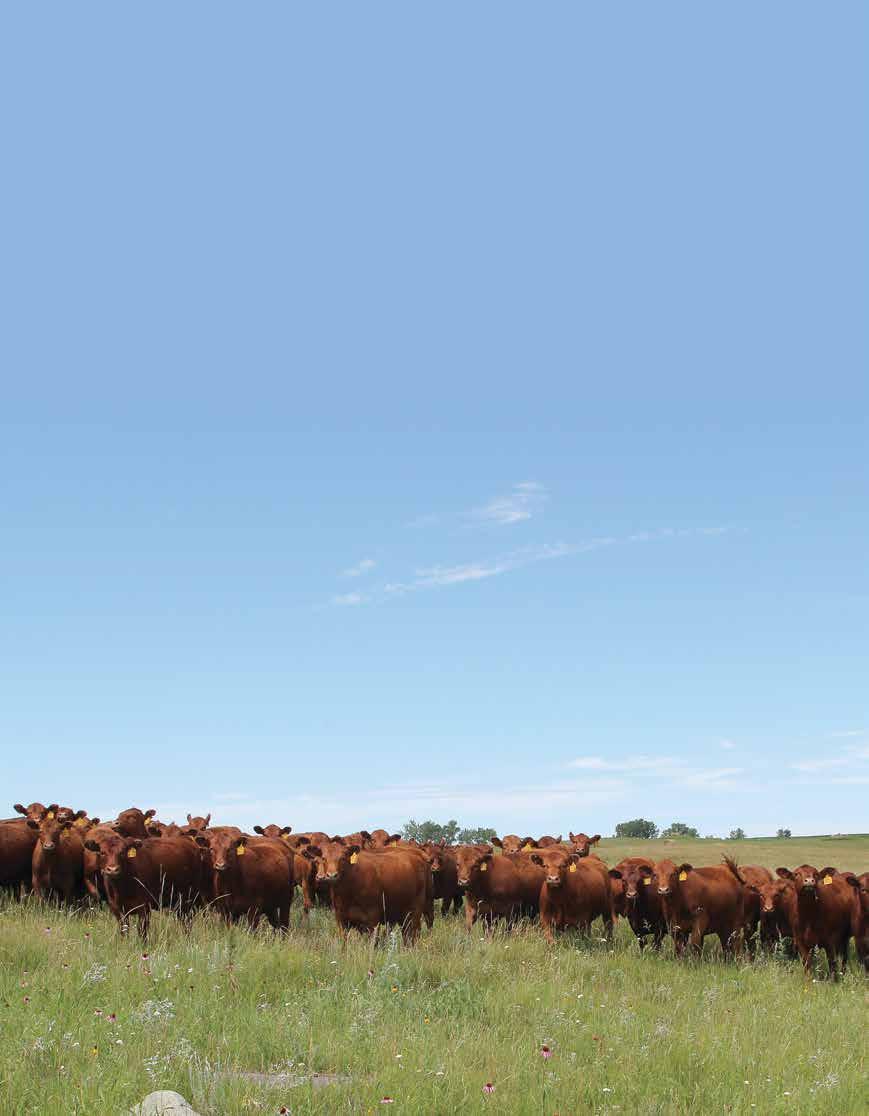
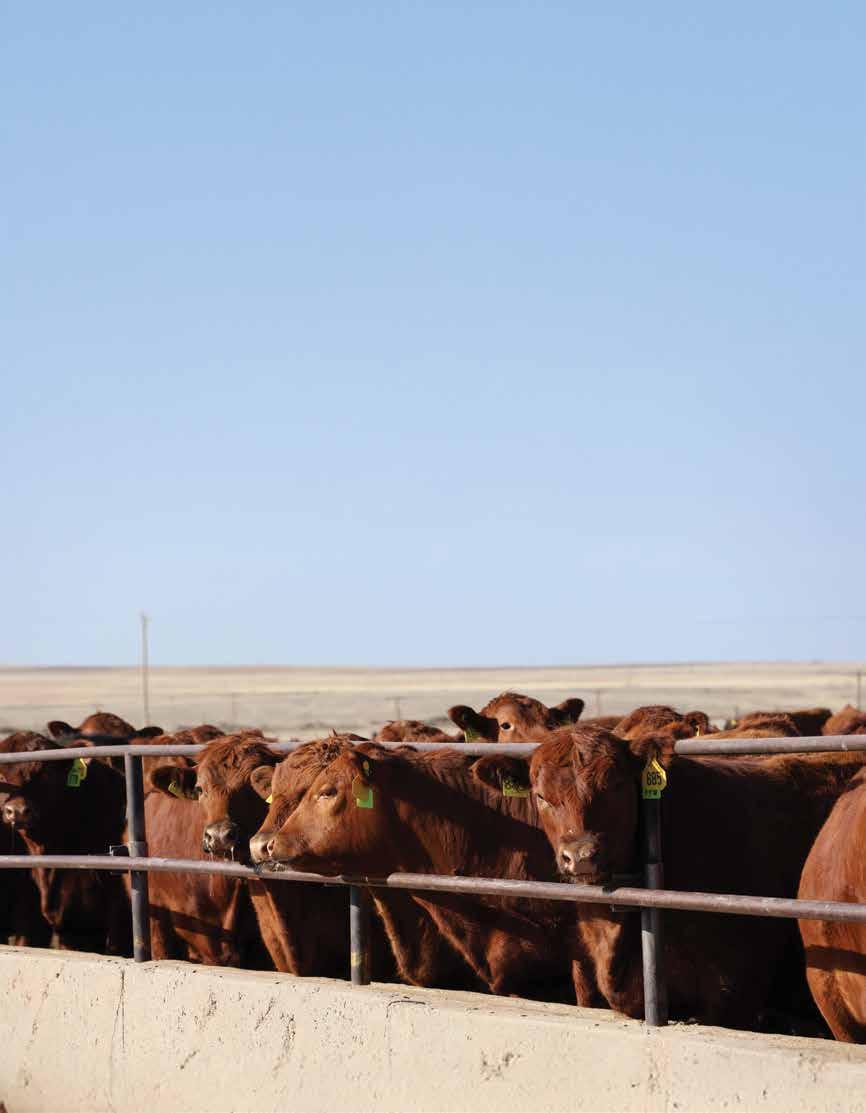
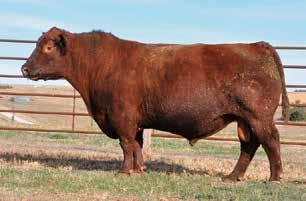
For generations, Beckton has been recognized as a leading breeder of Red Angus cattle, known for producing animals that have industry leading maternal traits such as calving ease, and robust growth - traits that enhance the success of commercial cow-calf herds. Our focus on well-rounded genetics and maternal strengths have helped us become the preferred provider for replacement females and for establishing and building productive cow herds.
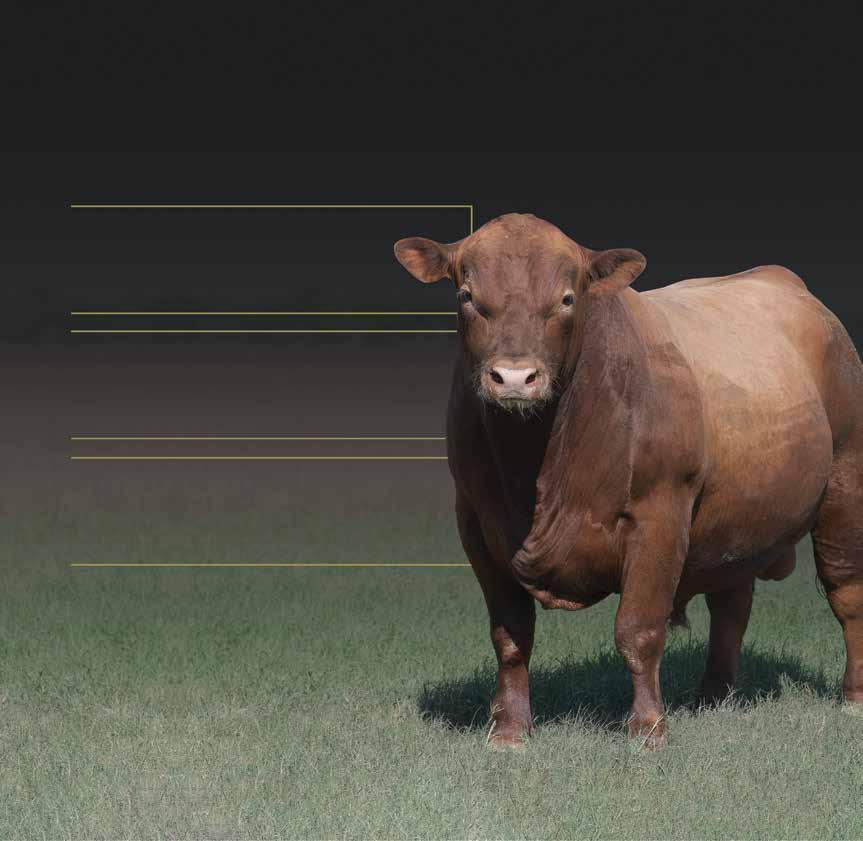
17 of the top 20 sires in the entire Red Angus breed for Calving Ease EPD are Beckton sires or descended from Beckton sires
16 of the top 20 sires in the entire Red Angus breed for Average Daily Gain EPD are Beckton sires or descended from Beckton sires
16 of the top 20 sires in the entire Red Angus breed for HerdBuilder Index are Beckton sires or descended from Beckton sires
19 of the top 20 sires in the breed for low Birth Weight EPD are Beckton sires or descended from Beckton sires
Magazine
Official Publication of the Red Angus Association of America Volume 62, Number 5
18335 E 103rd Avenue, Suite 202 Commerce City, CO 80022
940-387-3502 • Fax 888-829-6069 RedAngus.org
Publisher/Advertising Director Tracey Koester 701-391-5440 • tracey@redangus.org
Affiliated with National Cattlemen’s Beef Association Beef Improvement Federation U.S. Beef Breed’s Council National Pedigreed Livestock Council
GENERAL INFORMATION
Published 10 times annually by the Red Angus Association of America at the national headquarters (18335 E. 103rd Ave., Suite 202, Commerce City, CO 80022). A non-political magazine dedicated to the promotion and improvement of breeding, feeding and marketing Red Angus cattle. Subscription rate: U.S., 1 year - $30; 2 years - $55. Canada and Mexico, 1 year - $44, 2 years - $82 (Payable in U.S. Funds Only). International Air Mail, 1 year - $55; 2 years - $100 (Payable in U.S. Funds Only). These rates are based on Third Class Bulk mailed from Jefferson City, Missouri. Add $20 per year for First Class.
EDITORIAL AND ADVERTISING POLICY
Advertising and editorial content are not limited to any particular class of product or subject matter. However, we reserve the right to refuse publication of any material not within the bounds of high agricultural ethics. While we devote the utmost care to the preparation of each advertisement, we cannot be held responsible for ads received after the ad deadline. Furthermore, the accuracy and content of copy received over the telephone is entirely the responsibility of the advertiser. No adjustment for incorrect ad copy will be considered for ads that are received after the ad deadline or that are placed over the telephone.
All unused reserved advertising space that is not canceled by the advertising deadline will be billed to the advertiser.
ADVERTISING
RATES –
RAAA Board of Directors
PRESIDENT
Jeff Pettit | Sebree, Kentucky jeff@diamondpcattle.com
FIRST VICE PRESIDENT
AREA 4 DIRECTOR - SOUTHWEST
Tony Ballinger | Morgan Mill, Texas anthony.ballinger@akralos.com
SECOND VICE PRESIDENT
AREA 6 DIRECTOR - GREAT PLAINS
Jason Anderson | Oberlin, Kansas jasonea9@hotmail.com
Ron Christensen | Sterling, Utah hotshoeredangus@gmail.com
AREA 7 DIRECTOR - NORTHEAST
Rob Hess | Hershey, Pennsylvania hessfarm@verizon.net
AREA 8 DIRECTOR - SOUTHEAST
Michael Watkins | Harrison, Arkansas watkinscattleco@windstream.net
AREA 9 DIRECTOR - MIDWEST
Will Andras | Manchester, Illinois andras@irtc.net
Board Commentary
A Season of Progress and Opportunity
by Michael Watkins, Area 8 – Southeast Director
As we begin to look ahead to the spring and summer months in the cattle business, it brings a renewed sense of excitement and optimism. We have made it through the winter-feeding season and now look forward to moisture, warmer temperatures and the return of green grass. This transition always signals new opportunities and reward for cattle producers.
For spring-calving operations, this is one of the most anticipated times of the year. Each day provides a first look at the results of last year’s mating decisions. Every calf represents the combination of genetics, management and planning, offering both excitement and valuable insight into the direction of the herd.
For fall-calving operations, this season is equally important. Producers are gathering performance data and evaluating how cattle have developed through the winter. These observations help guide future breeding decisions and keep operations moving toward their long-term goals.
It’s also an exciting time for the Red Angus Association of America. Demand for quality cattle remain strong, and female values continue to rise. It has been especially encouraging to see the increased use of Red Angus genetics across the southeastern United States, where adaptability and efficiency are essential.
Over the course of March, I had the opportunity to meet with several producers throughout Arkansas. These visits provided valuable time to learn more about their operations, hear firsthand about the challenges and opportunities they are facing, and share the advantages and opportunities that Red Angus genetics and programs can offer.
Building these relationships and gaining a deeper understanding of regional operations continue to be an important part of serving our membership and strengthening the breed.
A Season of Progress and Opportunity
One of the key advantages of Red Angus cattle is their heat tolerance, which is gaining wider recognition. As environmental pressures increase, this trait becomes even more important for maintaining productivity.
In addition, the crossbreeding value of Red Angus offers significant opportunities for commercial producers. More operations are incorporating Red Angus with Bos indicus genetics to improve maternal traits and maintain heat tolerance, while increasing feeder calf value.
Interest in the newly rebranded Angus Access program is also growing. Awareness and understanding across the supply chain are critical to success, and early interactions with
“The decisions being made today will shape herds for years to come, and it is encouraging to see the level of commitment from producers.”
As bull sale season moves forward, there is a strong sense of confidence in the future of our association and the industry. The decisions being made today will shape herds for years to come, and it is encouraging to see the level of commitment from producers.
As we move deeper into the grazing season, it is important to remain focused on management decisions that support long-term success. Proper nutrition, herd health and pasture management all play critical roles
lasting impacts on productivity and profitability. By staying attentive and proactive, producers can position their herds to take full advantage of favorable conditions and market opportunities throughout the year.
Careful planning and consistent evaluation will ensure continued progress and resilience in an ever-changing cattle industry landscape for years ahead.
As always, it is my hope that your cattle stay where you put them, your
Not all Genetics Are Equal – Leland Red Angus
BERWALD ABIGRACE 5016 #5155665
We don’t chase trends. Instead, we sort through a lot of cattle to find the ones that fit our program. We select new genetics to strengthen our already-proven cow base with the kind of phenotype, structure and maternal strength we won’t sacrifice.
We’re adding carcass and performance merit without giving up the convenience traits our customers count on. If they don’t hold up here, they don’t stay. Decisions Made Easy – We’ve already done the hard sorting for you.
Or better yet, stop in for a tour of the cow herd this summer.
Annual Production Sale Friday, March 12, 2027
1 p.m. MT • At the Ranch 41 mi. N of Beach, ND, or 34 mi. SE of Sidney, MT Selling: 185 Bulls • 65 Comm. Yearling Heifers Including age-advantaged bulls from Koester Red Angus
Connect with us –and ride along on our ranch! Request Your Catalog:
Taylor Dorsey 970-397-0356 | taylordorsey@redangus.org
RECEPTIONIST
Tabitha Romero Ext. 3 | receptionist@redangus.org
Association Commentary
Why Not First?
by Greg Ruehle, Executive Vice President
A breeder recently posed the following question: “Has the Red Angus cow (maternal attributes) reached its peak regarding breed growth?” He followed with, “What is required for additional growth of the Red Angus breed relative to other breeds?”
From my perspective, the influence of Red Angus in the cow herd has not reached its peak, if for no other reason than a rebuild of the U.S. cow herd is on the horizon. Red Angus-influenced females will continue to contribute a variety of positive attributes: heat tolerance, reproductive efficiencies, docility and dry matter conversion, among others, to this herd rebuild.
But what about the contribution of Red Angus to the beef supply chain? The smallest cow herd in 75 or more years results in fewer calves being born. Yet fewer calves has not created a void in pounds of beef produced – in fact, we are within a few percentage points of previous years’ total beef production figures.
The beef supply phenomenon has remained nearly unchanged due to higher carcass weights (50+ pounds higher than last year), a larger number of heifers being fed rather than retained as replacements, and continued cow culling at historically high prices.
Much like their female counterparts, Red Angus-influenced fed cattle contribute a number of benefits to the beef supply chain – high quality (upper two-thirds Choice and Prime) products consumers are demanding; moderate carcass size (which results in moderately sized primal and sub-primal beef cuts that retailers are searching for); heat tolerance (critical for cattle on feed during the upcoming summer months); and efficiently converting feed to pounds of gain during the feeding period.
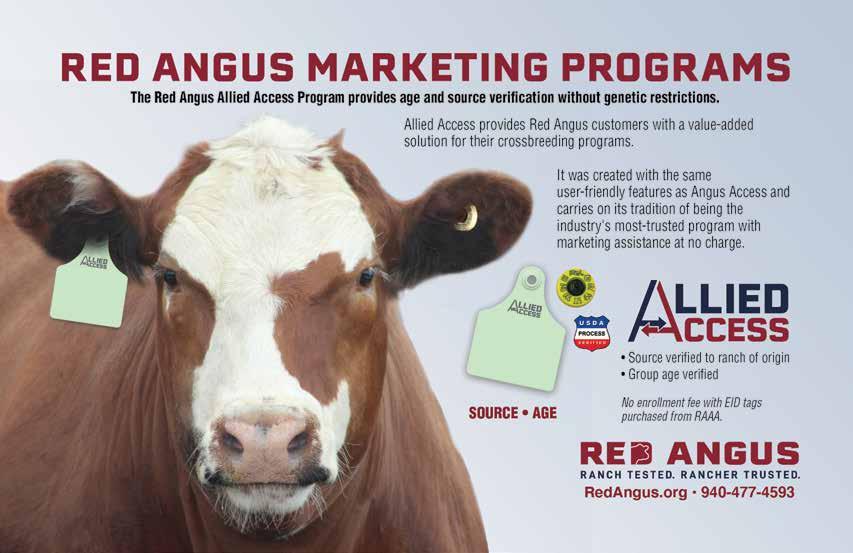
But with all these attributes identified, how do we erase the discount for red cattle versus blacks? First, by participating in the Angus Access and Allied Access programs. Hanging that unique RAAA tag in the ear of your calves, or your bull customers’ calves, creates a supply of breed, age and source-verified calves that meet the updated “Product of the U.S.” guidelines. Potentially overlooked is the role that an Angus Access/Allied Access tag can play as producers search for high-quality replacement females. Females displaying an Angus Access/Allied Access tag have met the same breed, source and age verifications as their male herd mates.
Commercial Marketing Team and Value-Added Programs staff is on page 14
Heifer
Why Not First?
We also make the breed stronger by making the Red Angus tent bigger by actively pursuing new breeder-members, including commercial producers, junior members and allied industry. Membership at RAAA is a bit of a passive activity, rather than a process where we actively pursue members by sharing the benefits of being part of something bigger than themselves and their operations. I believe this is an important next step for growth and success.
We are in the midst of redesigning our marketing programs to include live cattle (bulls, replacements, seedstock) and beef (feeders, packer/processors, and retail/food service) segments. Past efforts in this area have laid the groundwork for what now must be a more aggressive effort to build a Red Angus supply chain that links seedstock cattle to commercial producers, feedlots, packers and, ultimately, retail and food service beef buyers.
We have discovered literally dozens of packer programs that currently do not restrict red-hided cattle from participation – the challenge is to develop a program that rewards high-quality Red Angus cattle. Sustainable Beef has one such program, and others are likely to follow. The RAAA Industry Affairs Committee remains in discussions with these programs to build more demand specifically for Red Angus-influenced calves.
Industry Affairs is also taking a more aggressive role with retailers and food service businesses in discussing the benefits of adding Red Angus cattle to their supply chain during times of tight supply and uncertain fed cattle numbers. Tagging calves with the Angus Access/Allied Access tag before they leave their farm or ranch of origin assures these cattle can be utilized in red-hided programs specifically, and helps reduce the red hide color discount.
So where is the proper place for Red Angus among the largest breed associations in the country – Fifth? Third? Even First?
As a testament to my optimism, I can attest that our THR numbers through March of this year are higher than the same time last year, and in the face of a declining U.S. cow herd.
Executing bull and female registration transfers at the time of sale is critical to our future growth. Transfer numbers for bulls and females are fewer compared to this time last year. Every animal that is sold should be transferred to the new owner within a reasonable time following the sale, including sales to commercial buyers.
Reversing this trend increases Red Angus visibility and ensures continued eligibility of their progeny for the Angus Access and Allied Access programs. //
RAAA Names Larry Keenan as Interim Director of Breed Improvement
The Red Angus Association of America has named Larry Keenan as interim director of breed improvement, reinforcing its commitment to advancing genetic progress and supporting its membership.
“Larry brings a unique combination of real-world experience and technical knowledge. I’m excited to see what he can contribute to Red Angus,” said Jason Anderson, second vice president of RAAA.
Keenan expressed appreciation for the opportunity and a clear focus on continuity in the role. “I am truly grateful for the opportunity to rejoin the Red Angus family and serve as interim director of breed improvement. In this role, I am committed to maintaining momentum across key breed improvement initiatives, ensuring the continuity of weekly genetic evaluations, and addressing breeder questions in a timely and responsive manner. As economic indicators in the cattle industry continue to support herd rebuilding, I believe Red Angus is well positioned to be the preferred female choice in the next phase of cow
herd expansion. I appreciate the proactive steps taken by RAAA leadership to ensure that breed improvement services and projects continue without interruption.”
Keenan holds a bachelor’s degree from Oklahoma State University and a master’s degree from Kansas State University. His contributions to the breed include development of the RAAA Herd Navigator test and leadership in implementing key breed improvement programs such as carcass-progeny testing, udder scoring, carcass weight and yield grade EPDs, and the development of the HerdBuilder and GridMaster indices, along with numerous research projects and EPD model enhancements.
Many within the industry are already familiar with Keenan and his longstanding involvement in the breed. He previously served in this role eight years ago before before transitioning to a position in the insurance industry and expanding his commercial Red Angus operation. He brings a depth of experience that will be valuable as the Association
continues to move breed improvement efforts forward.
“In this interim role, Larry will work closely with our team and key partners to ensure continuity across our genetic evaluation programs, IGS collaboration and ongoing projects,” said Greg Ruhele, executive vice president of RAAA. “His familiarity with our programs and commitment to serving breeders positions us well to maintain progress and build on the strong foundation already in place.”
Keenan will also be a candidate for the permanent director of breed improvement position as the Association conducts its search. Members are encouraged to reach out with questions at LarryKeenan@redangus.org, particularly regarding EPDs and breed improvement initiatives. //
Red Angus Commercial Marketing Team and Value-Added Programs
COMMERCIAL MARKETING SPECIALIST
Cory Peters | cory@redangus.org 402-418-2351
COMMERCIAL MARKETING SPECIALIST
Taylor Ohlde | taylor@redangus.org 913-626-2715
COMMERCIAL MARKETING SPECIALIST
Elizabeth Caskey | elizabeth@redangus.org 706-513-4951
ENROLL IN VALUE-ADDED PROGRAMS AND ORDER TAGS: tags@redangus.org 940-477-4593
Weekly Email Marketing Service of Feeder and Finished Cattle
The Red Angus show list informs feedyard managers, order buyers and other interested parties of Red Angus-influenced cattle. Producers can market feeder or finished cattle through this free service when selling through a sale barn, video auction or private treaty. The weekly show list is emailed to potential buyers through the Red Angus FeederFax email service. To upload information about cattle or to view cattle available, visit RedAngus.org/showlist.
To receive the weekly FeederFax marketing service that will highlight that week’s show list, please visit bit.ly/RAAAFeederFax.
Marketing Update Investing in Red Angus Pays in Today’s Market
by Jesse Henson, Commercial Marketing Specialist
As temperatures rise and the American cow herd needs rebuilt, it’s a great time to be in the Red Angus business. There are many reasons why I’m such a believer in the Red Angus female. For many spring-calving operations, you’re in the middle of breeding season.
Heat tolerance in Red Angus cattle offers benefits for feed efficiency, docility and reduced health risk associated with high-heat climates, but I believe there are additional advantages. For those breeding cattle during hot temperatures, cows that are more comfortable and maintain a lower body temperature are more likely to breed in a timely manner.
While these things can seem small, they add up to more profit. As summer feeder calf auctions kick off, they continue to prove that more consistent cattle in tighter groups bring more money.
We just wrapped up an absolutely incredible spring bull sale season. For almost everyone, averages were up from last year. We saw some sales as much as $4,000 higher than a year ago. I’m not saying this is a total shock, as bull prices tend to follow the cattle market, which has been phenomenal.
Any chance I was given to speak at events or sales this spring, there was a consistent message I tried to convey. Currently, with this strong cattle market, most producers have a little extra money in their pockets.
The ones that continue to thrive once the market settles back down are those who position themselves right during times like this. Invest in better genetics and maybe buy a bull that has been a little out of your price range in years past. It has been a lot of fun to watch commercial cattlemen step in and buy bulls that will truly impact their programs and improve their calf crops.
The value of the Red Angus female has been very apparent. Through the fall and spring sales, red commercial bred heifers have held solid around $5,000. While
Investing in Red Angus Pays in Today’s Market
this seems high and might deter some from wanting to grow their cow herd or replace females, the reality is with feeder calf prices where they are, these heifers are paying for themselves quickly – often in two calves or less.
While we focus a lot on bulls and commercial females, it was evident this spring that there is a ton of value in cow power. Proven donors were very hot, with some reaching $100,000 or more. Again, people are taking the opportunity to invest in the future of their operations, because if reproductive strategies work, many of these high-end donors can pay for themselves within a flush or two.
During my time with RAAA, I have learned is information is key. There are multiple factors that have enhanced cattle prices across the board, but this does not mean all cattle are equal. There is added value on the management side, such as weaning
and vaccinating calves, but there is also extra value tied to the information that comes with them.
Angus Access and Allied Access are both great ways to track information such as genetics, age and source. Cattle buyers continue to confirm the information that comes with enrolled cattle is very helpful and holds value.
Another piece of information that holds great value with buyers is sire or dam information. Even as little information as whether cattle are terminal or maternally bred can give buyers more confidence in the predictability of those calves and can lead to them paying a little extra for that group.
If you’re part of one of our RAAA feeder calf programs, our marketing team would love any information and additional data you’re willing to provide so we can better help promote your stock.
Even if you’re selling calves through a sale barn, don’t be afraid to attach this kind of information to your load and let the sale barn know what you have.
The RAAA feeder calf programs have been extremely useful for multiple decades now, but I truly believe some of the updates to the programs over the past year have opened the door for additional opportunities.
EID tags continue to offer an edge to producers tracking genetics and carcass data. Putting real numbers alongside EPDs to see how cattle actually perform on the rail will only increase the value of your program’s genetic offering.
It’s definitely not a stale time in the Red Angus breed. With updated programs and new opportunities, it’s an exciting and fast-moving time for RAAA and it’s a privilege for me to be a part of it. //
Add $51 per head with VAC45
Buyers prove the value of preconditioning practices at sale time
By Dave Sjeklocha, DVM Cattle Technical Services Manager Merck Animal Health
Picture yourself unloading a group of uniform, healthy calves at the sale barn; each is a testament to outstanding stockmanship and careful management. Now, envision the financial rewards that follow, especially the sale premiums realized because every box was checked, which leads to increased revenue.
Preconditioning boosts the immune system and health status, helping equip calves to thrive in a backgrounder or feedyard phase.
A successful preconditioning program includes a series of vaccinations and management practices, such as weaning, deworming, and transitioning calves to dry feed, as well as castrating and dehorning.
Does the investment pay off?
Merck Animal Health, Superior Livestock Auction and Kansas State University have worked together to evaluate the management decisions, programs, and health protocols that drive the price per pound paid by buyers. The 2025 dataset includes information from 860,433 calves with an average weight of 572 pounds.1 Each trait was evaluated relative to a base with all other factors being constant. So, an additive approach can be used when evaluating multiple traits.
VAC45 calves, that is, those vaccinated with two doses of a clostridial vaccine, two doses of a five-way modified live viral vaccine, and at least one dose of Mannheimia haemolytica and/or Pasteurella multocida vaccine, and weaned at home for 45 days before delivery, added $9.03/ cwt compared to those receiving only one dose of each of the three vaccines and weaned at shipping.2 Not to mention, calves weighed more at the end of a 45-day preconditioning program than those weaned at sale time. Selling calves on a VAC45 program added $51.65 per head.
References:
1. Superior Livestock Auction Data 2025.
More opportunities to add value
While not directly rewarded with premiums, producers not implanting forfeit an average of 23 lbs. of gain, which translates to $85 per head at the sale block compared to calves that were implanted.
Simply by following a VAC45 program and implanting your calves, you can potentially add $136 per head.
Other factors that delivered value include selling no-horn calves, having medium- to large-frame vs. small-frame calves, using known bulls with high genetic merit and breed type. While lots described as fairly even stood to gain an additional $4.28/cwt, those described as very uneven brought $4.28/cwt less than lots that were described as uneven or were missing a classification.
Certain marketing and nutrition programs can add value at auction, but it is important to evaluate the costs and make sure the economic return is there.
Realize the rewards of your investment
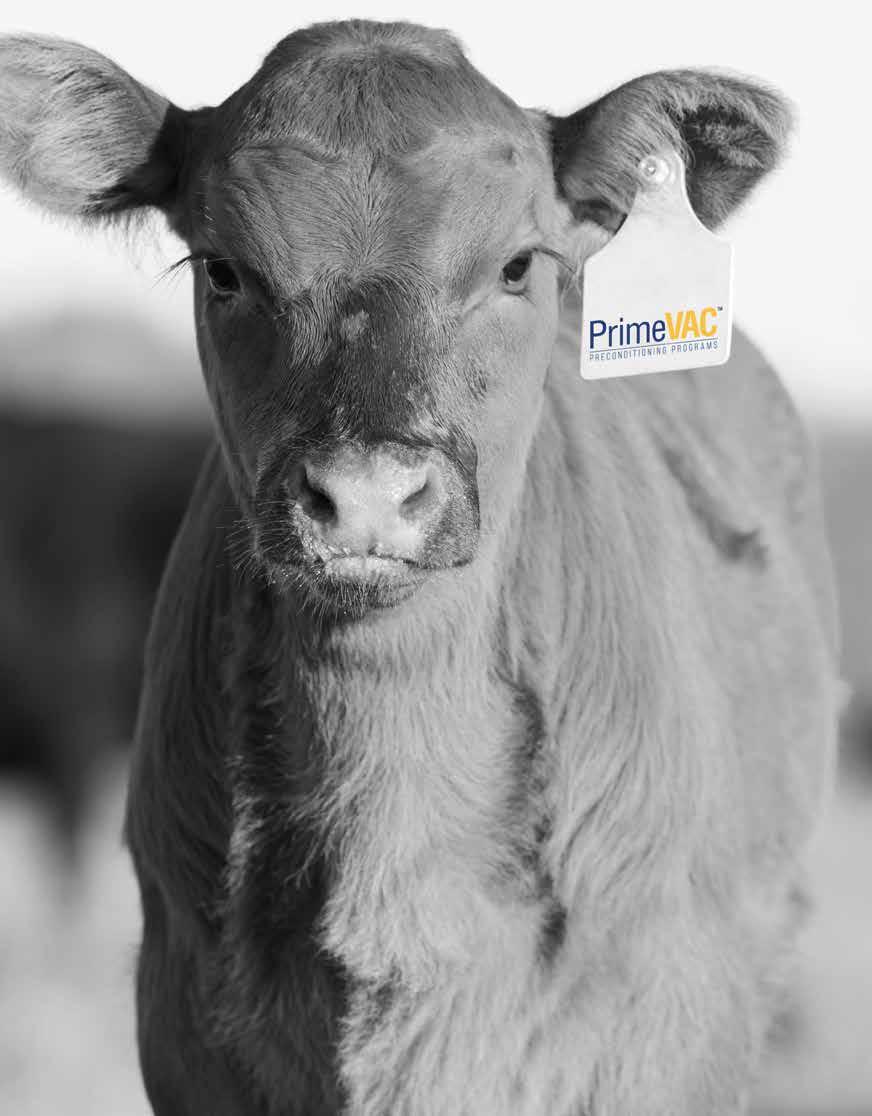
PrimeVAC™ by Merck Animal Health is a value-added preconditioning program that focuses on respiratory and clostridial vaccinations, as well as protection against internal parasites. It also includes optional implant protocols. No matter your herd goals, PrimeVAC has options to help you get calves off to the best start.
Work with your veterinarian to select and certify a PrimeVAC protocol that best fits your operation and maximizes your return at sale.
To see more of the Superior Livestock Auction dataset and get resources on the PrimeVAC program, visit PrimeVAC.com.
2. Glynn T. Tonser. Kansas State University. Dept. of Agricultural Economics. Evaluation of 2025 Superior Livestock Auction data.
Member Services Reminders
Registration
Spring 2025 data is due Friday, May 22 and inactivations will be May 29, 8 a.m. MDT.
Membership
• Regular, Associate and Junior Memberships will automatically renew on July 10th.
• The first installment of Spring 2026 THR will be billed July 10.
Member Services Bulletin
What are the DNA Requirements for RAAA?
by Ariana Maxey, DNA Programs Manager
With another calving season and sale season under our belts and a new breeding season quickly approaching it’s important to make sure you have all your boxes checked to ensure a smooth calf registration process.
RAAA has several DNA requirements on animals that are registered within the Association, so let’s review and make sure you have everything completed.
Sires and Donor Dams
All donor dams, natural service sires, AI sires and sires being used for ET matings need to have DNA on file. To meet our “on file” requirement, all sires and donor dams must have at least a parentage test completed.
Sign up for THR Text Message
Reminders: https://bit.ly/RedAngusReminders
Download the Go RedAngus App
Need a little one-on-one help?
Schedule a meeting by scanning the QR code or visiting: RedAngus.org > Herd Management > Red Angus Alley
At the time of registration, if there are progeny of a sire or donor dam that do not have DNA information on file, you will be notified in your registration job.
All progeny registered to a sire or donor dam that does not have DNA information on file will be placed on a “Z” hold status until requirements are met.
Show Animals
All animals entered in a Red Angus regional or national show must have DNA on file. To meet our “on file” requirement, show animals must have a parentage test completed.
It’s always recommended to check and ensure that any bulls that are put out on cows for breeding, whether they were purchased or raised, have DNA on file before they breed cows.
If they do not have DNA on file, a sample will need to be collected and sent into RAAA. The same for donor cows; it’s recommended before flushing that a check has been done to ensure DNA requirements have been met for that donor and, if not, a sample is collected.
If an animal has already been tested with another association, please contact RAAA for assistance in transferring that information.
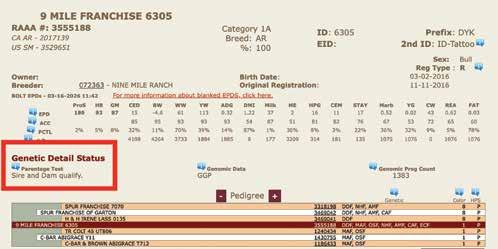
There are two easy ways you can check the DNA status of an animal.
Collect DNA samples early to meet requirements and avoid registration delays.
Apple Store Google Play
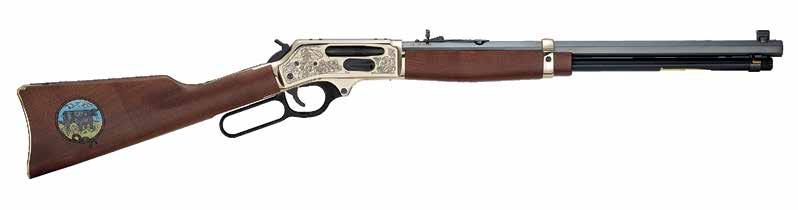
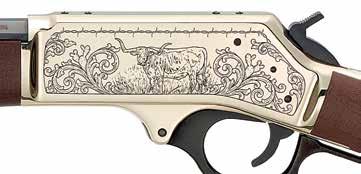
Introducing the American Cattleman Tribute Edition Rifle
From the wide-open ranges of the 19th-century Western frontier to the family ranches that have stood steadfast for generations, America’s story has always included the men and women who sweat and toil to raise the cattle that feed our nation. The American Cattleman Tribute Edition Rifle is our tip of the hat to this enduring way of life.
Built on our brass-framed .30-30 lever action platform, this rifle is made for those who put in the long, hard hours from sunup to sundown, and it stands as a testament to the animals and their stewardship at the heart of it all. Featuring genuine American walnut furniture paired with an engraved, highly polished brass receiver, every detail honors the grit and tradition that define the cattleman’s trade. Long live the American Cattleman.
1. Pull up that individual animal in REDSPro and confirm they have results under the parentage results section of their profile.
2. Email dna@redangus.org with the registration numbers of the animal(s) in question. A member of the DNA team will give you confirmation on if DNA is on file.
Knowing these DNA requirements, it’s also crucial to get your DNA samples in sooner rather than later. The standard lab processing times are four to six weeks with extensions up to five to seven weeks during peak season.
Please always allow ample time for your samples to be processed. Keep in mind, your samples could take the full six to seven weeks to be processed as there is no rush service offered, so plan accordingly.
To ensure the fastest turnaround time possible:
1. Fill out and complete the order form with a signature, test selection and complete animal information to accompany every shipment of samples sent to the office.
2. Provide payment with your samples, or payment information to RAAA prior to your samples’ arrival.
3. Providing a good quality sample on every animal is crucial.
Registration Reminder
Cows on the No Progeny list must be reported, otherwise there will be no record on file for the Spring 2025 calf crop.
For females on the No Progeny list, be sure and answer these questions:
1. Did she have a calf? If yes, report all the calf data. Even if the calf was born dead, died shortly after birth or is intended to be commercial.
2. Was she open? If yes, report the proper reason code for 2025.
3. Was she culled? If yes, report the proper disposal code.
One of these data points should be reported ASAP before inactivation’s occur.
This deadline is critical for data reporting. If it is missed and the cow becomes inactive, one of the above data points must still be reported, and a fee will apply to reactivate her.
If reactivated within six months of inactivation, the fee is $50. After six months, the fee increases to $100.
Reference the tutorial, “How to Submit the No Progeny Report” for stepby-step instructions. Spring 2025 data is due Friday, May 22 and inactivations will be May 29, 8 a.m. MDT. //
RANCH TESTED. RANCHER TRUSTED.
Hershey, Pennsylvania September 15 - 18, 2026
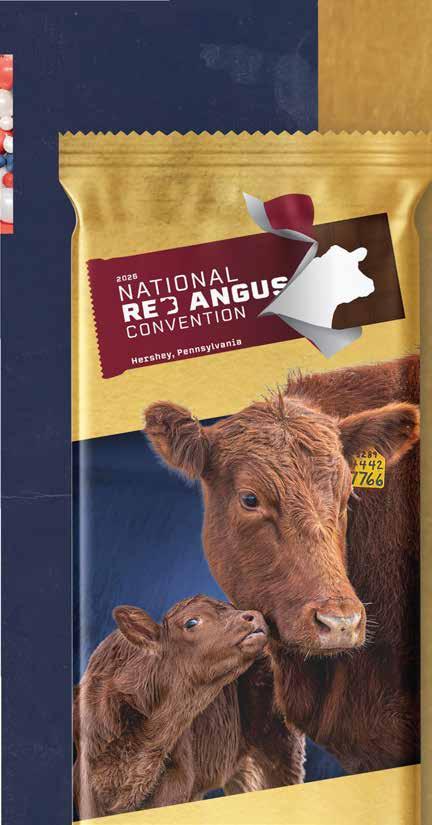
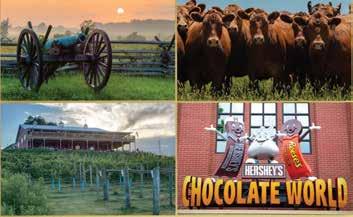
Join us this September in Hershey, Pennsylvania for the National Red Angus Convention and experience more than just a great event, make it a full get away. Bring the family and enjoy everything the area has to offer, from the excitement of Hersheypark to the history of Gettysburg National Military Park, along with scenic wineries, rolling countryside and visits to local Red Angus operations. Whether you are coming for the cattle, the connections or the experience, this is the perfect opportunity to build a trip around something meaningful. We cannot wait to welcome you to a convention that is as memorable outside the meeting room as it is inside. Scan Here for
Breed Improvement
Heifer Pregnancy EPD: Same Name, New EPD
by A.J. Knowles
Producers selecting for fertility will have powerful but familiar tools at their fingertips, thanks to our friends over at International Genetic Solutions.
Coming this summer, their release of the new, genomically enhanced Heifer Pregnancy EPD will provide Red Angus members with a more powerful way to select on a familiar trait.
While HPG has been available to breeders before now, EPDs were estimated quarterly at Colorado State University as part of a single-breed evaluation without genomics.
With this enhancement, the trait now benefits from expanded data, added genomic information and the power of the IGS multi-breed database, all resulting in improved accuracy and better predictions, particularly for young animals.
What HPG Represents
Heifer Pregnancy predicts the difference between sires for the number of offspring that are expected to become pregnant during their first breeding season.
Expressed as a percentage, higher values indicate a greater likelihood of heifers conceiving on time, a major driver of profitability in herds today.
For example:
Bull A HPG EPD = 10
Bull B HPG EPD = 12
With everything else held equal, we would expect 2% more of Bull B’s daughters to get pregnant than Bull A’s during their first breeding season. Because of fertility’s importance to profitability, even modest increases in HPG can translate into meaningful economic impact when applied across a herd or population.
What’s Changing
With the transition from CSU to IGS, differences in models, pedigrees and processes can all make differences in the resulting EPD.
While some reranking will occur, the transition to IGS represents a substantial improvement in how the trait is evaluated and applied.
Namely, increased accuracy; genomics and the multi-breed population improve prediction accuracy, especially for low-accuracy animals in the evaluation.
This creates a more reliable EPD, supporting more confidence in selection decisions and greater success in reproduction.
The Heifer Pregnancy EPD will be genomically enhanced for improved fertility selection accuracy.
HRP JUMPSTART 4110M
Reg. # 4944016 | Jumpstart X C-Bar Abigrace 636D
ProS
• High selling bull at the 2025 HanSine Red Angus bull sale at $40,000
• Awesome phenotype and performance out of the great Abigrace 636D cow
HRP INTENSITY 5172N
Reg. # 5113565 | PIE Intensity 295 X PIE Bonnie Bel 852 (Captain’s dam)
• 2nd High selling bull at the 2026 HanSine Red Angus bull sale at $58,000
• Calving ease x strong maternal.
NAMKEN BOLD RULER
Reg. # 5149895 | Namken Hugo 70H X Dahlke Miss Hilton
• High selling bull in the 2026 Namken Red Angus sale at $41,000
• Eye appeal and performance by a strong cow line
LMG GILLS OUTRIGHT
Heifer Pregnancy EPD: Same Name, New EPD
Getting
the Most from HPG
Because fertility traits are heavily influenced by environment, complete and accurate data reporting are essential to long-term genetic progress.
Follow the tips below for successful data reporting for Heifer Pregnancy:
1. Expose heifers within a defined breeding season of 90 days or less. Longer breeding seasons may be split into two groups.
2. Report all data. This includes artificial insemination events and bull turnout dates.
3. Maintain contemporary groups from birth. Maximizing group size allows for variation to be captured and credited to the evaluation appropriately.
“There can be no production without reproduction, making Heifer Pregnancy a foundational driver of herd profitability year after year.”
What HPG Means for your Herd
There can be no production without reproduction, making Heifer Pregnancy a foundational driver of herd profitability year after year.
Heifers that conceive early tend to calve earlier, stay in the herd longer and be more productive over their lifetime than animals that do not conceive in their first breeding season.
While reproductive traits are often expressed with low heritability, updates to HPG enable consistent genetic
progress across herds by identifying animals with a higher probability of reproductive success.
When combined with sound management practices, selection for HPG improves reproductive efficiency, reduces heifer investment costs and increases long-term herd productivity.
By using the new HPG EPD to select females, Red Angus breeders can make more informed, lower-risk decisions that will help build fertile, efficient and profitable cow herds. //
Putting Grass Acres to Work
by Laura Handke for the Red Angus Magazine
The vast majority of ranchers are grass farmers first and cattle producers second. It’s the natural order of operations when you think about what it takes to put a steak on the plate.
A rancher’s profitability depends on stocking rate and cowcalf weaning ratio. Moderately framed cows that wean big calves to maximize every ray of sunshine, drop of water and, ultimately, blade of grass, is the magic formula we all seek.
Grass and water management are also beginning to align with financial backing that comes from off the ranch. These programs are administered by USDA’s Natural Resources Conservation Service and allocate millions of dollars toward regenerative and conservation-focused grazing and water management systems.
Initiatives like EQIP and CSP are helping producers offset the cost of fencing, water infrastructure, cover crops and grazing improvements. And for ranchers willing to adopt or expand on their regenerative practices and management, those programs reduce upfront risk and accelerate a return that can be directly tied to better land management.
The goal is simple: healthier soil, more productive forage and more resilient operations that produce more pounds of beef with fewer inputs. It’s the definition of sustainability and the ranchers who employ the practices are helping to redefine what true stewardship looks like.
Grazing is no longer a seasonal consideration; it’s a yearround strategy.
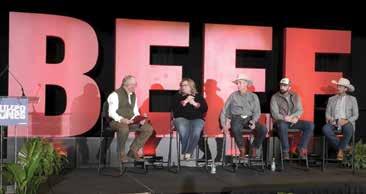
At the 2026 Cattleman’s College session “Grazing with Purpose,” producers from across the country, from some of the most challenging ranching environments, shared just how they are rethinking their grazing strategies.
From the northern timber country of Minnesota to the wide-open ranges of Montana and the crop-integrated systems of Nebraska, each of the ranchers on the panel is working to build a grazing program that fits their environment and goals.
Rachel Gray of Little Timber Farms in Blackduck, Minnesota, has developed a heifer development program centered on real-world functionality. She’s raising females designed to perform in commercial settings around the country.
Further west, Montana’s Greg Gardner, owner of G and G Livestock, and Wacey Cathey, Cathey Cattle Co., along with fifth-generation farmer and rancher Logan Pribbeno, Wine Glass Ranch, in southwest Nebraska, are tackling very different landscapes with a common goal of stretching the grazing season and improving grazing quality year over year.
Profitability begins with grass as producers balance stocking rates and forage resources to maximize pounds of beef.
Greg Gardner Logan Pribbeno
Rachel Gray
Wacey Cathey
Faster, Cleaner, Easier DNA Collection
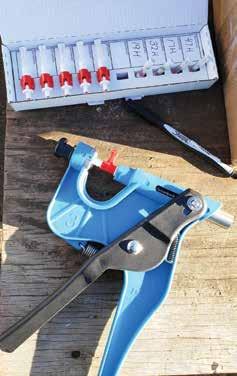
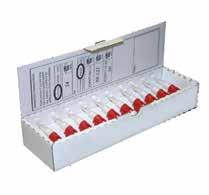
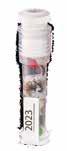
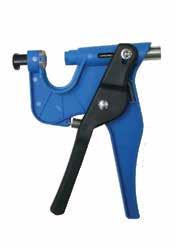
Eliminate the hassle of taking blood or hair samples. Allflex Tissue Sampling Units (TSUs) quickly capture clean, high-quality DNA. One squeeze and you’re ready for genomics in breeding and marketing. Plus, matched sets of Allflex TSUs, EID tags and custom visual tags make it easier to link performance data to genetics to market demand, authenticating your brand of cattle in the supply chain.
Putting Grass Acres to Work
Gardner and Cathey have focused on infrastructure and grazing management, investing in water systems and implementing rest-rotation strategies to better utilize rugged terrain and improve pasture recovery.
These ranchers are thinking outside the box to achieve the adaptability Mother Nature has forced on them.
Rachel Gray: Building a Niche Through Grass, Genetics and Data
Rachel Gray’s heifer development program is designed to produce females that work – on someone else’s ranch, under someone else’s management, in someone else’s environment.
“We buy a six-weight heifer in the fall, bring that heifer onto the ranch, develop her, get her bred and make sure she’s good for your ranch. Then we send that development on to the next producer,” she said.
Little Timber’s heifer replacement program just has one flaw: they can’t produce enough heifers to fill the demand they are generating across the country.
And if Rachel narrows factors that contribute to her success, she’ll tell you, “Starting with the best quality front-end heifers and data collection” make all the difference.
“We use rotational grazing. We focus a lot on cover crops,” she told the audience. “We like to keep heifers out on grass year-round or at least as much as we can, because that’s
Matching cattle to available forage through intentional grazing improves efficiency, reduces inputs and supports long-term herd productivity
Panelists Gray, Gardner, Cathey and Pribbeno shared grazing strategies at CattleCon 2026, focusing on forage use and long-term profitability.
where they learn to work and perform in a real-world environment.”
Gray shared that the operation utilizes directional-bored watering systems within their rotational grazing strategy. Bored at a depth of 8 feet, the watering pipelines lie under the numerous wetlands on the operation and are at a depth that prevents freezing.
“It’s 40 below right now,” Gray told the audience from the stage of CattleCon at the beginning of February. “If we’re going to keep heifers on grass year-round, we have to make sure those watering systems hold.”
Gray collects data on her heifers, their calves and the lands they graze for a full-circle management picture. Using pasture mapping, soil sampling and forage tracking, she can evaluate how different pastures perform, how grazing pressure impacts regrowth and where adjustments need to be made.
Putting Grass Acres to Work
“The more data I know, the more I can do a better job,” she said.
The data reinforces practical sustainability practices that make a difference long-term. When cattle are better matched to their environment, they require fewer inputs. When calves are more vigorous, they require less intervention. When forage is managed more effectively, those acres produce more grass.
“For our operation, when we think of stewardship, we’re really focusing on soil health and livestock health, but we’re really doing is focusing on the health of our legacy,” Gray said. “My focus is how do I provide opportunity for that legacy.”
Greg Gardner and Wacey Cathey: Turning Infrastructure into Grazing Opportunity In Montana, Greg Gardner and his son-in-law, Wacey Cathey, operate in a landscape that demands intention.
Elevation changes from their valley acres to the mountain range they graze; variability in moisture and soil types, and the challenge of water distribution all shape the how, the where, and the why of cattle grazing for the operation.
Their approach has been to take what the land gives them, build systems that allow them to use more of it, and utilize the funding resources that allow them to effectively get it done.
“We’ve put in miles of pipeline, and our biggest struggle has been getting water up high on the mountains and then keeping the cows up there where the water’s supposed to be,” Gardner said. “We’ve used NRCS a lot for our pipelines; we’ve probably put in 10 miles of pipeline in conjunction with the NRCS. Now I have my own plow so I can plow in my own pipelines.”
That statement is the struggle that resonates with every rancher at some point – getting resources where they need to be and then getting cattle in the same location to utilize the resources is a challenge.
By investing in water infrastructure and the GPS technology to keep cattle where they want them when they want them there, Gardner and Cathey have been able to expand the number of acres that can be effectively grazed, improved distribution and reduced pressure on their lusher valley acres. It’s a shift that directly translates to more consistent forage utilization and better pasture recovery.
But infrastructure is only part of the equation.
Grazing management, specifically rest and rotation, plays a critical role in their system. With more than 100 pastures in rotation, their goal is to balance use with recovery, even in drought years.
“We’re trying to do deferred restoration, rest rotation, but preferably rest rotation,” Gardner explained, and Cathey added the importance of allowing grass to recover and compete.
“You can spray all you want to, but if you don’t rest those pastures, that grass won’t compete.”
Technology is also beginning to play a larger role in how they manage acres and the cattle stocking those acres. From tracking systems to emerging tools that help forecast grazing pressure and pasture recovery; Cathey is focused on using data to improve timing and efficiency.
“It comes down to having data at your fingertips,” he said of the programs, software and technologies the operation is using. “Data helps you make a quicker decision.”
Investing in water infrastructure and GPS technology allows more acres to be grazed efficiently, improving distribution and supporting consistent forage utilization and pasture recovery.
Revitalize
REVITALIZE your Red Angus or commercial herd with 3C REVITALIZE! Put some eye appeal, substance and bone back into your cattle. He is good footed and level made. His calves will be impressive at weaning and you will appreciate how attractive they are. His EPDS offer top-end growth with stayability and milk. All three indexes land in the upper one third of the breed.
3C Miss Justice Oscar 1309, the dam of Revitalize 3112, offers longevity through and through. She is a feminine designed, model cow, that is tight uddered and very good footed. She raised 3112 at 10 years of age. She ratios 9 at 101 for WW and 8 at 107 for YW, and records a calving interval of 362 days and an MPPA of 101.
REVITALIZE sons topped the sales at 3C/Sutherlin Farms, and Klompien Red Angus this spring, while serving as the preferred herd sire at LB Farms and TJB Reds!
If you are looking to put muscle, growth and WOW factor into your calves look no further than REVITALIZE!
Putting Grass Acres to Work
Logan Pribbeno: Building Flexibility into Every Acre
In southwest Nebraska, Logan Pribbeno laughed as he followed Gardner and Cathey.
“Southwest Nebraska doesn’t look like Montana. It’s very different and we’re utilizing resources very differently,” he shared.
Limited native range has forced Pribbeno to rethink what “grazable acres” really means. Instead of relying solely on owned pasture, Pribbeno expanded his forage base by integrating crop ground, cover crops and partnerships with neighboring farmers.
“The circles that you see are irrigated corn fields. We spend most of our time on farmland: our farmland or someone else’s farmland,” he explained.
Temporary fencing, flexibility and a willingness to adapt are essential tools. His operation moves cattle where the feed is, rather than forcing the land to match the cattle.
“If you’re allergic to fencing, do not work at Wine Glass Ranch,” he joked in seriousness.
Cover crops aren’t just a soil health tool for Pribbeno, they are a grazing resource, a cost-control measure and a way to build resilience into his operation.
“Cover crops are a very important part of our cropping system and our animal management system. They allow us to handle our stockers better than if we were just strictly range,” he said.
By grazing cover crops, he is able to monetize acres that might otherwise sit idle or operate at a loss in traditional grain production systems. At a time when commodity prices are below the cost of production, that flexibility creates opportunity for Pribbeno and the farmers he leases acres from.
It also improves the land.
Cover crops add organic matter, protect soil from erosion and improve water infiltration. When combined with grazing, they cycle nutrients back into the soil and reduce the need for additional inputs.
It’s a system that builds soil while producing pounds.
But perhaps the most important piece of his operation is how he thinks about time.
“If you’re looking at it on a generational scale, sustainability and soil health practices are the most profitable in the long term,” he said. “It’s not about having more land. It’s about using every acre more effectively.”
Put Every Blade of Grass to Work
It’s all a long-term investment. From the cattle to the pastures to the watering and fencing infrastructures that allow for better management, everything we do on the ranch is an investment. And we all knwow that some investments pay better than others.
“You have to be patient,” Cathey said. “It’s a tough balance. You have to get creative and look for off-farm funding when you can, especially when the cash flow isn’t there for a year or multiple years.”
Grazing with purpose isn’t about one practice or one decision. It’s about long-term strategy that builds resilience into an operation. From the adaptability of the cattle you run to the flexibility of the fencing and watering infrastructure, there’s no cookie-cutter solution.
It starts with recognizing that as ranchers we are grass farmers first and building strategy and identifying opportunity around that fact.
“I think [getting started] it’s overwhelming for all of us,” Gray said. “My dad’s theory and what has helped our operation is just starting with one thing. Those small steps, one thing a year, snowballs on you!” //
REDS RISING
Escalate Your Prosperity
Red Angus boosts profitability with docile temperaments, environmental resilience, premium carcass quality and exceptional maternal traits. Registrations have surged by 24% over the past decade, underscoring Red Angus’ significance across all segments of the beef industry.
Trouble-Free by Design: A South Dakota Rancher’s Low-Input Approach
by Heather Smith Thomas for the Red Angus Magazine
John Sides’ strict culling for disposition creates calm, manageable cattle that require minimal handling, reducing labor and improving overall herd efficiency.
John Sides has spent decades refining a straightforward goal on his ranch near Smithwick, South Dakota: cattle that require minimal attention. Through strict selection and management, he has developed a Red Angus herd designed to calve unassisted, stay contained and perform with very little labor or input.
“We calve late in the spring to get away from early storms, and we try to keep our mature cow size smaller than the breed average and more efficient,” Sides said. “That’s hard to do today because most bull breeders and sale catalogs don’t list frame size. You have to go by family lines and how big those cattle tend to be.”
Selecting for Function First
Calving ease, udder quality and disposition are the foundation of Sides’ program because they directly affect how much labor is required at calving time.
“We’ve only pulled one calf in the last five years,” he said. “We cull any cow we have to deal with in any way.”
If a cow requires assistance, she does not remain in the herd.
“No more chances,” Sides said. “If she crawls through a fence, we might give her one more chance if there’s a reason, like a hole in the fence. If a cow wants to fight us, she finds a new home.”
Udder problems are treated the same way.
“My wife and I are getting up in age, and we don’t want to deal with problems,” he said.
“When I was a kid, we ran Herefords, and I remember helping my dad deal with cows with bad udders and big teats. Some nights we had a dozen cows in the corral so the calves could nurse. We don’t want to go back to that.”
Sides chose to raise Red Angus in part because of their temperament.
“When we switched from Herefords, we chose Red Angus over black,” he said. “I’ve helped a lot of people work cattle and the red ones were easier to deal with.”
Disposition remains a top priority.
The Rally research collaboration between RAAA and Neogen is designed to increase phenotypic data collection and submission for mature weights, body condition scores and genotypes on Red Angus females. Female genotype and phenotype information helps to improve genetic predictions and overall data on your Red Angus herd.
This is a really great opportunity to receive genotyping at a reduced rate.
REQUIREMENTS:
• Registered females only
• Must test 90% of females on active inventory
- Already genotyped females can count toward this 90%
• There is also no cap on herd size, as long as the 90% requirement is met, so this program is tailored to small and large producers
• Samples submitted for the Rally need to be TSUs (tissue)
BY PARTICIPATING IN THE RALLY YOU WILL RECEIVE:
• GGP100K (GGP-LD) testing for $22 (regularly $50)
- OS and MA testing can be added for $2/test; other defect testing is normal pricing
• $5 Age Rebate
- At completion of testing, you will receive a one-time reimbursement of $5 for females submitted that are 6+ years old (circa 2016)
• $5 Phenotype Rebate
- Submit both Mature Cow Weights (MCW) and Body Condition Scores (BCS) for a one-time reimbursement
- Must be on every cow that weans a calf that season
- Must be within a week of calf weaning date
- You don’t have to apply for the rebates if you don’t want to; these are just additional ways to save money!
Trouble-Free by Design: A South Dakota Rancher’s Low-Input Approach
“Blacks are more likely to kick. Red Angus seem to have better dispositions, which is very important to us,” Sides said. “We don’t want to be chased or have to run after a cow – we handle our cows seldomly.”
Management That Reduces Labor
For the Sideses, later calving is a key management decision that helps them prevent problems before they start.
“Usually, the weather is better which eliminates a lot of scour problems and respiratory disease,” he said. “We keep the cattle out on grass where it’s cleaner and less stressful.”
During calving season, the herd is checked twice daily.
“We check around 6 a.m. and 6 p.m. During the day we move pairs to another pasture, but we don’t handle the calves.”
Additional detailed measurements are not part of the system.
“We don’t need a scale to tell us if one is small,” he said. “If a calf doesn’t belong, we sell both the cow and her calf.”
Heifers are managed the same as mature cows and calve on pasture.
“If a cow has any problem, she gets sold and so does her calf,” he said. “We never keep a heifer out of a problem cow.”
Sides began this strict culling approach more than 15 years ago. “The first two years we sold a lot of cattle,” he said. “After that, it got much easier because we had eliminated many of the problems. To this day, it makes life simpler.”
Practical Handling Methods
The Sideses rely on horses as a primary tool for working cattle, including roping and dragging calves for branding, though they occasionally use a side-by-side to check cows.
“I sometimes use a side-by-side because it saves time,” Sides said. “But we still use horses a lot and try to work cattle in good weather.”
Calves are marketed early in the fall, before winter conditions develop.
“They come off the truck and go right to eating, and they’re gentle,” he said. “We don’t pamper them. They run on pasture year-round.”
Years of culling for disposition contribute to that behavior.
“One wild cow can disturb the whole herd,” he said. “If you get rid of those bad actors and handle cattle properly, they’re easy to work.”
A Different Production Philosophy
Sides’ approach differs from many neighboring operations that calve early and sell later for heavier weights.
“We calve late and sell early to save labor and feed and avoid bad weather,” he said. “Our ranch is in muddy country, so if it gets wet, it’s hard to get around. If you can get a truck in this week, you’d better do it in case it rains next week.”
Replacement heifers are identified shortly after birth.
“That’s when they show their true colors,” he said. “You can see udder quality, disposition and how easily she calved.”
Trouble-Free by Design: A South Dakota Rancher’s Low-Input Approach
Feeding practices also reflect the goal of low-input costs. Sides stopped feeding hay about 15 years ago and relies on winter pasture supplemented with cake.
“We usually have two or three pastures each year we never graze,” he said. “We’re understocked, which gives us flexibility and lets us withstand drought longer.”
Minimal equipment helps reduce expenses and maintenance. “If we have a bad winter, I can push out a place in the snow so we can feed cake,” he said. “The cows might not get fat, but they’ll do fine until the snow melts.”
He believes cattle adapt to harsh conditions when they are not overly supplemented.
“Once you start feeding them heavily, they get spoiled,” Sides said. “We had a big storm a few years ago. Our cows were spread out grazing and calving, while cattle across the fence were bunched up waiting to be fed. If they get used to something, they don’t think they can exist without it.”
Facilities That Support Efficiency
Maintained infrastructure allows work to proceed quickly and safely.
“Every gate on our ranch swings. None drag,” Sides said. “I’ve been to ranches where you have to fix corrals before you can even start working cattle.”
When help arrives, the system runs smoothly.
“We only need five or six people to bring in 400 cows, sort the calves and load trucks,” he said. “It takes about four hours, including loading.”
Patience is emphasized during cattle work, particularly for younger helpers.
“I tell my grandkids that slow is fast,” Sides said. “You have fewer wrecks and everything goes smoother.”
Built for Longevity
Sides’ grandchildren, who live in town, regularly visit to help with ranch work and learn cattle handling skills.
“They love to help and they’re good with cattle and horses,” he said. “Working with animals teaches patience and responsibility.”
For Sides, raising trouble-free cattle is about creating a system that remains manageable over time. By selecting for functional traits, culling aggressively and structuring management to prevent problems, he has developed a herd that largely takes care of itself.
In an industry where labor shortages, weather and costs continue to challenge producers, that reliability is not just convenient. It is essential. //
Grandkids gain hands-on experience working cattle, building confidence and learning skills that carry forward ranch values.
Sides passes down cattle handling skills and values, as grandchildren learn patience, responsibility and pride in ranch life.
Igenity® Beef
Build a better cow herd with stronger selection tools
Igenity® Beef is the first genomic profile designed for crossbred commercial cattle. This tool utilizes DNA to rank cattle on traits with high impact to productivity to predict genetic merit in both heifers and steers.
Igenity Beef results provide a 1-10 ranking on 17 maternal, performance and carcass traits along with parentage. Cowcalf producers with this tool can make confident decisions about the heifers they retain and develop for their breeding herd.
Take your herd to the next level:
1. Contact RAAA to order testing kits.
2. Collect samples: Blood or tissue samples required for testing. Hair samples will not be accepted.
3. Submit DNA samples, completed order form and payment to RAAA.
4. The RAAA DNA department will email out your results at the completion of testing.
Bigger Cows Isn’t the Whole Story
by Nate Smith, General Manager, Top Dollar Angus
Paul Beck, Ph.D., of Oklahoma State University recently published an analysis in Drovers examining the relationship between mature cow weight and hot carcass weight. Bringing a data-driven, 60-year statistical perspective to a question the industry has been asking for decades.
It’s a question that comes up regularly in our conversations with cow-calf producers. The coffee shop talk about record fed cattle weights, layered on top of longstanding concerns about cow efficiency and frame size, keeps pushing this topic to the surface. The common assumption: heavier carcasses are simply the product of bigger cows.
Beck’s analysis tells a more nuanced story.
His data spans more than 60 years of mature cow weight and hot carcass weight records. Over that period, average mature cow weight increased at roughly 7.7 lbs. per year, while average hot carcass weight grew at 4.8 lbs. per year, directionally similar, but not the same in magnitude.
The 2024 and 2025 jumps of 20 lbs. and 24 lbs. in average hot carcass weight drew significant industry attention, but Beck’s data shows they aren’t unprecedented. Similar yearover-year spikes occurred seven times since 1994, suggesting these periodic
jumps are part of a long-time pattern rather than a permanent shift.
When Beck compares carcass production against cow size, measuring hot carcass weight per 100 lbs. of mature cow weight, the efficiency gain is modest: roughly 60 lbs. of carcass weight per 100 lbs. of cow weight in the early 1960s, compared to about 69 lbs. today. That’s a gain of only 9 lbs. over 66 years, or approximately 0.12 lbs. per year.
However, here’s where the data gets interesting. When Beck isolates that same ratio to just the last 20 years, 2005 to 2025, the rate nearly doubles to 0.27 lbs. of carcass weight per 100 lbs. of mature cow weight per year. Mature cow size over that same window continued its steady climb at roughly 7.7 lbs. per year, unchanged from the long-term average.
That acceleration in carcass efficiency, against a constant rate of cow size increase, points directly at factors beyond frame, genetics, nutrition and feed management. We’ll dig into each of those below.
Let’s look at the genetics side of the equation. Over the last 20 years, the widespread adoption of EPDs, and more recently, selection indexes have fundamentally changed how producers identify and select for efficiency. That shift matters when interpreting Beck’s data. Animals that were genetically superior for efficiency existed in previous generations, but they were difficult to identify. Today, the depth of data collected across large populations allows us to pinpoint the specific genetic traits that improve carcass weight without requiring a larger cow.
Compound that selection accuracy across multiple generations, and the result is a cow herd that no longer has to rely on physical attributes alone as an indicator of efficiency. The modern producer isn’t just selecting a body
type, they’re selecting a genetic profile. That’s a meaningful distinction when trying to explain why carcass weights are climbing faster than cow weights over the last two decades.
Nutrition and feeding management tell a similar story. Feed and supplement technology has advanced alongside genetics, giving producers the tools to allow animals to express their full genetic potential at each stage of production. Replacement heifer development programs can be managed to reach targets without overbuilding mature frame.
Contrastingly, steers and cull heifers from the same calf crop, kept on the correct plane of nutrition through the feeding phase, can finish more efficiently and yield heavier carcasses. Thus, the link between carcass weight and cow size is at least partially severed.
Genetics and nutrition aren’t working in isolation here. They’re compounding. And when Beck’s data shows carcass efficiency accelerating over the last 20 years against an unchanging rate of cow size increase, this compounding effect is exactly what the numbers are reflecting.
The takeaway for cow-calf producers is straightforward: frame size is not the only lever.
Producers gaining ground on carcass efficiency are doing it through intentional genetic selection and sound nutritional management, tools that are readily available. Beck’s data confirms what the best seedstock and commercial operators have known for years. Better genetics are an investment that pays the producer back in multiple ways and keeps paying for generations.
Source: Beck, Paul. “Why Bigger Cows Aren’t the Only Reason for Record Carcass Weights.” Drovers, March 20, 2026. //
RED ANGUS MARKETING PROGRAMS
How to Enroll in Angus Access & Allied Access
1. Contact the Red Angus valueadded department at 940-477-4593 and complete a short supplier enrollment questionnaire over the phone. RAAA staff will ask general management, animal identification and breeding questions. If needed, the producer may be asked to supply additional documentation on breeding such as semen receipt, lease agreements or information on purchased females.
2. After all documentation is recorded, staff will ship the tags directly to the producer who must tag the calves before they leave the ranch of origin – birth, branding, preconditioning, weaning or before loading on the semi.
3. The producer will receive a customer enrollment agreement to fill out and return to RAAA with a copy of their calving records.
4. Staff will issue the USDAapproved Certificate of Compliance upon receiving the customer enrollment agreement and calving record.
EID Tags are required for program identification. Outside-purchased EIDs can be brought in for $1 per tag.
• Traceability to at least 50% registered Angus bloodlines
• Source verified to ranch of origin
• Group age verified
processverified.usda.gov
Angus Access is the first step in differentiating your cattle to buyers, feedlots and packers. Experience industry-leading return on investment for just the cost of an EID tag when purchased through RAAA. Dangle tags are optional but may be purchased for management purposes.
GENETICS
• Source verified to ranch of origin
• Group age verified
processverified.usda.gov
The Red Angus Association of America marketing team offers assistance to Red Angus bull customers at no charge.
Visit RedAngus.org for contact information.
Red Angus Marketing Assistance
• Angus Access
• Allied Access
• Premium Red Baldy
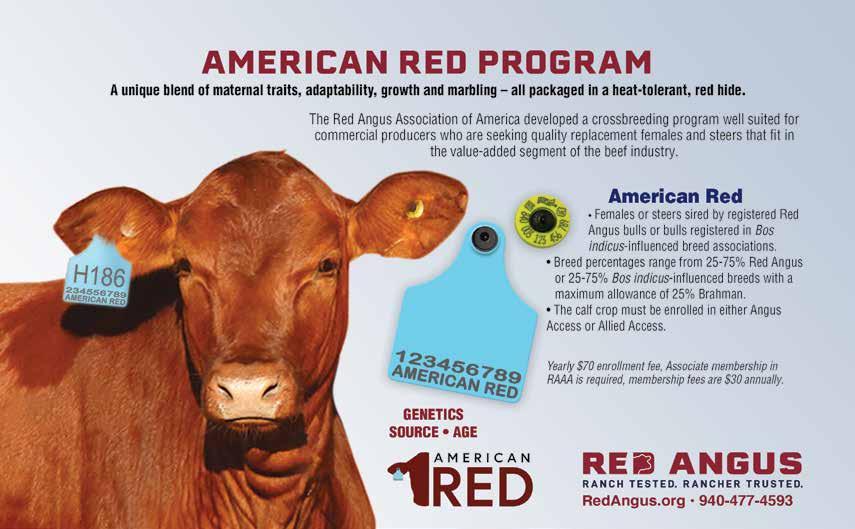
• American Red
• Feeder/Fat Cattle Show List
• Stockyard
• Calendar of Events
• Red Angus FeederFax
• Red Angus FeM@il
Igniting Leadership: The SPARK Program
by J.D. Miller, JRA Board
Stimulate, Propel, Advance, Red Angus Kids: SPARK
Leadership often begins with a single spark – an idea, a moment of inspiration or the courage to take the first step forward. Similar to my junior experience, many young exhibitors become involved in agriculture and youth programs through family tradition.
Beyond that first step are experiences that challenge them to grow, serve others and represent something bigger than themselves. SPARK captures that journey through five simple but powerful ideas: stimulate, propel, advance Red Angus kids.
At its core, SPARK reflects how leadership and personal growth are developed. It begins by stimulating curiosity and passion, encouraging young people to discover what motivates them. From there, it challenges them to propel themselves into action, taking initiative rather than waiting for opportunities. As leadership grows, juniors learn how to advance those around them, recognizing that strong leaders help others succeed.
Junior programs within Red Angus provide opportunities to build confidence, responsibility and pride in the industry. Ultimately, leadership’s greatest impact is seen in how it shapes the next generation.
One of my favorite parts of serving on the junior board has been meeting juniors and watching them grow. Thanks to Garry and Kathy Buchholz of GKB Cattle, SPARK brings
Engage with JRA!
Gracie Rogers, President - jragracie1@gmail.com
Peyton Andras, Vice President - peyton.s.andras@gmail.com
Addison Green Russell, Communication Chair - agreenrussell@gmail.com
Zane Downey, Director - zane.t.downey@outlook.com
Claire McIntyre, Director - clairemcintyre090706@gmail.com
James Miller, Director - jdmiller306@gmail.com
Taylor Dorsey, Junior Program Coordinator taylordorsey@redangus.org
these ideas to life, welcoming juniors from several states and Canada to Desdemona, Texas.
Participants gain valuable professional development experiences that prepare them for opportunities beyond the show ring. They develop resumes, explore LinkedIn as a networking tool and complete the True Colors assessment to better understand their leadership style and communication strengths.
The program also includes a tour of the GKB Cattle operation, offering insight into a successful program and the beef industry.
SPARK also builds friendships and confidence in a fun environment, with activities like a cooking contest and dance that create lasting memories.
By participating in SPARK, juniors leave with more than knowledge – they gain confidence, purpose and a renewed sense of leadership.
SPARK participants are ready to lead with integrity, inspire others and create positive change, ensuring a strong future for the beef industry. //
Website: juniors.redangus.org
Facebook: juniorredangus
Instagram: juniorredangus
Snapchat: juniorredangus 2025-2026 JRA Board of Directors
Common Hashtags: #jra #redangus
SATURDAY, JUNE 20
TUESDAY, JUNE 23
THURSDAY, JUNE 25
SUNDAY, JUNE 21
MONDAY, JUNE 22
WEDNESDAY, JUNE 24
FRIDAY, JUNE 26
Land Use & Balanced Development: A Shared Global Challenge
by Karley Williams, previously published in Drovers
With 50 million acres of U.S. grasslands lost in a decade, the International Year of Rangelands and Pastoralists highlights the global need for balanced development. Learn how ranchers are navigating land conversion to protect the future of working lands.
Across global grazing operations, day-to-day decisions revolve around forage conditions, water availability, weather, herd health, market variability and more. With so much attention required on the ground, it can be easy to miss some of the broader forces shaping the future of working lands.
As part of the International Year of Rangelands and Pastoralists, February’s theme focused on land use and balanced development, which accounts for producer livelihoods, ecosystem health and long-term land function, each connecting pastoralists worldwide.
The Global Perspective
Around the world, ranchers and pastoralists are navigating increasing pressure on the land that sustains their livelihoods and their communities. Depending on geography, governance, history or any other number of factors, land access and land security look different.
In many lower-middle-income regions, securing rights to land means establishing land tenure, protecting common property resources and maintaining mobility for livestock, sometimes across national borders.
For pastoralists who rely on seasonal movement and shared grazing systems, land security is essential to both food production and community well-being.
In upper-middle-income regions, the challenge often shifts from access to management and retention. Producers must navigate a complex mix of public
land leasing and private land ownership, regulatory frameworks and social pressures. Across all regions, however, pastoralists share a common concern – how to ensure progress continues in ways that support our grazing lands.
Shared Challenge, Different Expression
While the context varies, the pressure on land is universal. The landscapes we rely on are increasingly shaped by competing land uses. This is where the global IYRP conversation meets a distinctly American reality.
For the U.S., grazing land conversion has emerged as one of the most significant challenges tied to securing land and achieving balanced development. It occurs when grazing lands are converted to other uses, often permanently.
Key drivers include:
• Conversion of native grazing lands to cropland or other non-grazing uses such as recreation or hunting leases
• Woody encroachment — afforestation of invasive tree species due to absentee land ownership or mismanaged lands
• Residential and commercial development
• Transportation and energy infrastructure
• Renewable energy development like wind and solar
Each of these changes may be driven by legitimate societal needs. Taken together, however, they create combined pressure on grazing landscapes and the producers who depend on them.
Understanding the Scale
According to the U.S. Fish and Wildlife Service, in the last 10 years alone, the U.S. has lost more than 50 million acres of grasslands.
When viewed at scale, grazing land conversion is not a collection of isolated decisions. It is a trend with long-
term implications for grazing operations, wildlife habitat, carbon storage and rural communities.
Once grazing lands are converted, they are rarely converted back to their grazing function.
This is particularly important to note because not all acres are interchangeable.
Grazing lands provide ecosystem services that are difficult, if not impossible, to replace. They support biodiversity, protect soil and water resources, store carbon and depend on cattle and other grazing animals to remain healthy.
Balanced Development Is the Goal
As pastoralists and ranchers move forward, the goal for all is simple: intentional, balanced planning, with development that recognizes the value of working lands and the people who steward them.
Balanced development means:
• Considering long-term land function over short-term gains
• Planning development projects in ways that minimize fragmentation of grazing lands
• Ensuring pastoralists and ranchers are at the forefront of land-use conversations
Throughout IYRP, topics like this will continue to connect local management decisions with global priorities.
Balanced development isn’t about choosing between progress and grazing. It’s about making room for both.
Looking Ahead
The February IYRP theme highlights a shared global concern of how to move forward without leaving pastoral systems and healthy rangelands behind. For American ranchers, grazing land conversion is one of the most visible expressions of that challenge. //
Once-in-a-Lifetime Triplets
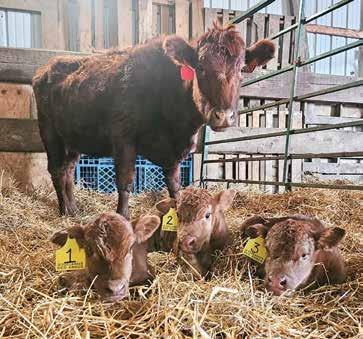
Triplets are a rare surprise in any calving season, but at Erdle Ranch near Hebron, North Dakota, one commercial Red Angus heifer made it a standout event.
First-calf heifer 4093 delivered three bull calves unassisted –all alive, healthy and vigorous. For this commercial operation, it marks a once-in-a-lifetime kind of event, made even more remarkable coming from a first-calf heifer.
Triplet births in beef cattle are estimated to occur in roughly 1 out of every 100,000 to 200,000 calvings, according to University of Nebraska–Lincoln Extension.
Each calf has its own story. “Chug” (58 lb.) spent his first month on a nurse cow and is now being grafted onto a foster dam. “Fuzzy” (63 lb.) was grafted onto a foster dam early and, after briefly losing his hair, is now coming back strong. The third calf, weighing 66 pounds, remains on 4093 and is growing nicely.
It’s a memorable event for the Erdle Ranch and a reminder that nature can still surprise you. //
RED ANGUS DIGITAL MEDIA
Triplet bull calves were born on the Erdle Ranch near Hebron, North Dakota, to a first-calf commercial Red Angus heifer.
Sale Reports
Nordlund Stock Farm, LLC
29th Annual Production Sale Feb. 21, 2026
Clearbrook, Minnesota
Auctioneer: Chisum Peterson
82
5
Lot 23, NSFR Confidence N152, a son of Bar M Confidence 3187 x STRA Hercules 706, sold to Bullis Creek Ranch of Nebraska for $31,000.
Lot 26, NSFR Ideal N20, a son of Brown Ideal K1377 x WSM Quaterback 076H, sold to Leland Red Angus of Montana and Koester Red Angus of North Dakota for $22,500.
Lot 3, NSFR Hollywood N1, a son of PIE Hollywood 222 x RREDS Blue Print H001, sold to Kemen Red Angus of Minnesota for $21,000.
Lot 25, NSFR Ideal N96, a son of Brown Ideal K1377 x 3SCC Domain A163, sold to Tlach Red Angus/ Butcher Red Angus of Iowa for $14,500.
Lot 10, NSFR Freedom N4, a son of NIO American Freedom 1005 x NSFR My Kind D37, sold to Leland Red Angus of Montana for $14,000.
Lot 94, NSFR Mimi M193, a NIO American Freedom x Bieber Deep End B597 daughter, sold to Tyler Truman of Minnesota for $12,500.
Lot 95, NSFR Lola M208, a WSM Quarterback 076H x NSFR My Kind D37 daughter, sold to NGN Red Angus of Minnesota for $12,500.
Lot 127, NSFR Rachel N147, a Musgrave Proclaim L04 x Brown Oracle B112 daughter, sold to Allen Brothers Farm of Arkansas for $11,000.
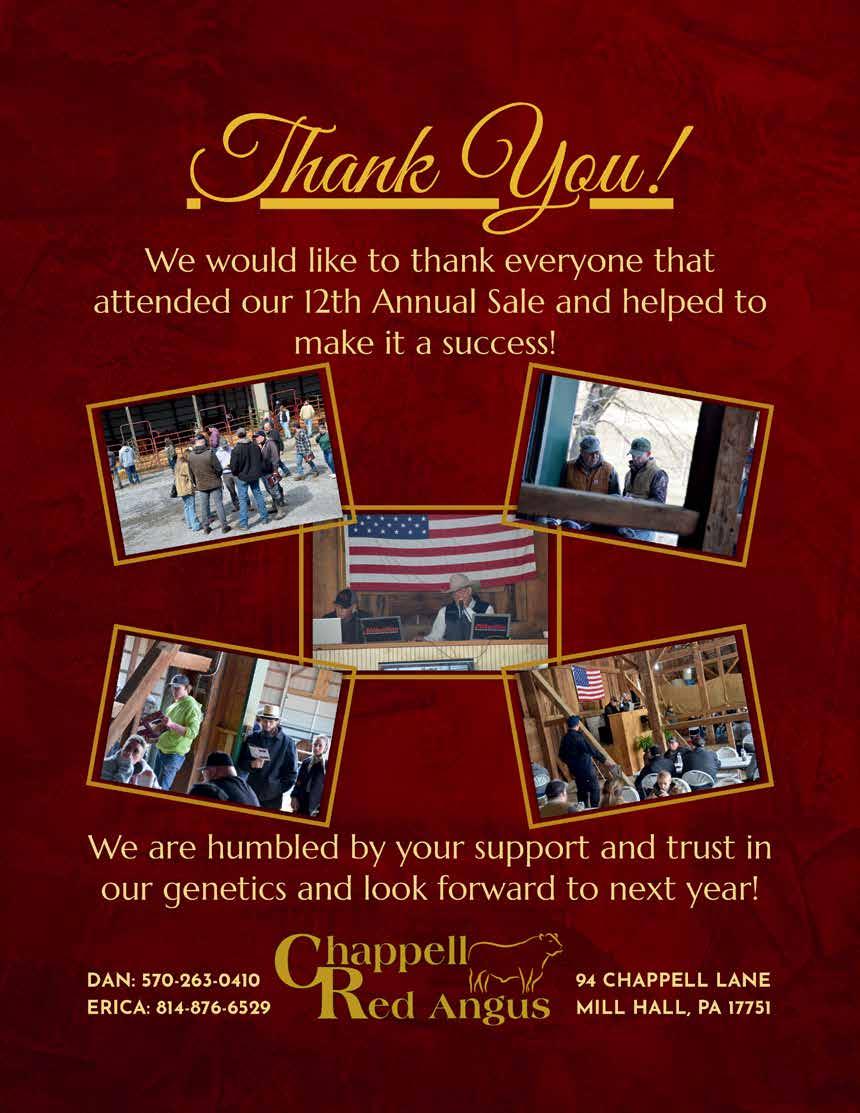
Chappell Red Angus 12th Annual Bull & Female Sale March 7, 2026
Lot 4, Chappell Landman N506, son of PIE Hollywood 222 x Feddes Brunswick D202, sold to Nicholas Bryan of Columbia Cross Roads, Pennsylvania, for $10,000.
$8,125
$8,708 Open Yearling Heifers
The top-selling bull, Lot 2, Chappell Inforcer N502, son of PIE Intensity 295 x HXC Patent 6608D, sold to Long Stone Farm of Lovettsville, Virginia, for $13,000.
Lot 16, Chappell Priority N507, son of PIE Intensity 295 x STRA Relentless, sold for $11,500 to Dwight Harper of Tina, Missouri.
Lot 5, CHAPP-BRYAN Trademark 2501, son of HXC Patent 6608D x 5L Defender 560-30Z, sold to RJ Griscom of Pilesgrove, New Jersey, for $11,000.
Lot 7, CHAPP-BW Confident 2514, son of Berwald Confident 2044 x 9 Mile Franchise 6305 MGS, sold to John Grand of Lock Haven, Pennsylvania, for $11,000.
Lot 10, Chappell Wall Street N505, son of Bieber CL Stockmarket E119 x GM Atomic Sky 904, sold to Hidden Creek Farm of Mansfield, Ohio, for $11,000:
Lot 9, CHAPP-HILL Cow Boss N11ET, son of PIE Herdsman 2012 x PIE Quarterback 789, sold to Whitley Red Angus of Horton, Alabama, and Traylor’s Red Angus of Delta, Alabama, for $10,500.
Lot 21, Chappell Stockmarket NE1, son of Bieber CL Stockmarket E119 x Brown BLW Fantastic C5959, sold to Steven Shannon of Nescopeck, Pennsylvania, also for $10,500.
Lot 3, CHAPP-HILL Icon N02ET, son of PIE Hollywood 222 x Red U-2 Mama’s Boy 167X, sold to Sonstegard Cattle Co of Montevideo, Minnesota, for $10,000.
Lot 6, Chappell Full Capacity N511, son of PIE Intensity 295 x Bieber CL Stockmarket E119, sold to Kluesner Family Cattle Co of Bloomington, Wisconsin, for $10,000.
Lot 11, CHAPP-MPKE Opportunity 502, son of Badlands Opportunity 53Y x GMRA Tesla 6214, sold to Wesley Boyd of Littlestown, Pennsylvania, also for $10,000.
Lot 1, a flush to HRP Ruby 520-N5360, daughter of Brown CRSB Confidence G1410 x PIE One of a Kind 352, sold to C Davis Farms of Ford City, Pennsylvania, for $14,000.
Lot 36, a flush to any cow in the Chappell herd, sold to Star G Ranch of Douds, Iowa, for $5,000.
The top-selling open heifer, Lot 42, a Hillegas Blockana C31-N14ET, a TAC Drifter H10 x Brown Redemption Y1334 daughter, sold for $10,000 to RJ Griscom of Pilesgrove, New Jersey.
Lot 40, Hillegas Bonne Bel 3340-N18, a Berwald Completely 2056 x Red MRLA Respect 42G daughter, sold to Scott Hartman of Newark, New York, for $9,500.
Lot 39, Chappell Miss Molly N513, a HRP Raisland Quarterbak 2704 x GM Atomic Sky 904 daughter, and Lot 41, Chappell Windsong N512, a HRP Raisland Quarterbak 2704 x Feddes Brunswick D202 daughter, both sold to Adam Glienke of Washta, Iowa, for $9,000.
Lot 44, Hillegas Della J1062-N12ET, a Berwald Confident 2044 x LSF SRR President 8177F daughter, sold to Chad Nicklas of Hershey, Michigan, for $9,000.
Cattle sold to Alabama, Iowa, New Jersey, Maryland, Michigan, Minnesota, Missouri, New York, Ohio, Pennsylvania, Virgina and Wisconsin.
Leland Red Angus and Koester Red Angus March 13, 2026
At the ranch near Sidney, Montana Auctioneer: Seth Weishaar
The top-selling yearling bull was Lot 2, Leland Insight 5491, a March 29, 2025, son of Lorenzen Insight 9917 out of a Lorenzen Charter 0906 daughter. He sold for $22,000 to Ken Elkins of Taylor, North Dakota.
Saunders Land & Livestock of Gillette, Wyoming, purchased Lot 16, Leland Patent 5444, a March
24, 2025, son of LSF SRR Patent 1083J out of a Leland Long Load 122-4464 daughter, for $18,500.
Mark Brunelle of Williston, North Dakota, purchased Lot 5, Leland Patent 5418, a March 20, 2025, son of LSF SRR Patent 1083J out of a 3SCC Dictate C74 daughter, for $18,000.
Tyrell Kalberer of Hazelton, North Dakota, purchased Lot 10, Leland Stockmarket 30J-5667, an April 12, 2025, son of Bieber ROU Stockmarket 30J out of an LCOC Redemption A043F daughter, for $18,000.
The top-selling age-advantaged bull was Lot 38, Koester Charter 459, an Aug. 14, 2024, son of Lorenzen Charter 0906 out of a Lorenzen Insight 9917 daughter. He sold to Shaw Ranch of Joes, Colorado, for $22,000.
Diamond H Ranch of Victoria, Kansas, purchased Lot 51, Koester Chancellor 4111, an Aug. 20,
2024, son of BCRED Chancellor 214 out of a Bieber CL Stockmarket E119 daughter, for $20,000.
Shaw Ranch of Joes, Colorado, purchased Lot 31, Koester Insight 479, an Aug. 15, 2024, grandson of Lorenzen Insight 9917 out of a Bieber CL Stockmarket E119 daughter, for $19,000.
The commercial heifers sold to two buyers for $3,750 each. Keith Ham of Caputa, South Dakota, purchased 15 head and Prewitt & Co. of Sidney, Montana, purchased 50 heifers.
Volume bull buyers were Leiseth Ranch of Arnegard, North Dakota, and Swenson Ranch of Belfield, North Dakota, with 10 head each, Murchison Farms of Cove, Oregon, with eight head, and Prewitt & Co. of Sidney, Montana, with seven head. Kalberer Ranch of Hazelton, North Dakota, Shaw Ranch of Joes, Colorado, and Ron Erbes of Greeley, Colorado, each purchased six head.
Dahlke Red Angus Production Sale
March 22, 2026 At
Lot 1, DAHLKE ALPHA 506N, sired by DAHLKE ROCKEFELLER 009H, sold to Niobrara Red Angus, in Nebraska, for $70,000.
Lot 4, DAHLKE JOCK 517N, sired by RED U2Q PLAYBOY 2197K, sold to Westphal Red Angus, Grass Range, Montana, for $27,000.
the Best Red Angus
Westphal Red Angus
Grass Range, MT
March 25, 2026
Auctioneer: Ty Thompson, Billings, MT Sale Management: Deichmann Livestock Brokerage, Hobson, MT
64 Yearling Red Angus Bulls
Yearling Open Registered Heifers
The top-selling bull was VGW Dateline 506, WEBR Declare 2106 x Red Ter-Ron GW Cleveland 25J. He sold for $37,000 to V8U Ranch of Mountain View, Alberta, Canada.
VGW Leader 558, 1DRA Leading Edge 1004 x HXC Charter 6610D sold to Green Mountain Red Angus of Three Forks, Montana, for $20,000.
VGW Deep Tread 538, LSF TLA Deep Knight 2586K x VGW Mercy-Mercy 412, sold to Flying K Ranch of Swift Current, Saskatchewan, Canada, for $20,000.
Four registered females topped the offering, selling for $6,500 each. Iron Triangle of Canyon City, Oregon, purchased BGW Wiz-Dora 2505, Lchmn Wizard A129J x VGW Dora.
Brickhouse Farms of Tina, Missouri, purchased VGW Wiz-Indigo 2574, Lchmn Wizard A129J x VGW Indigo 2261; VGW Wiz-Tabitha 2575, Lchmn Wizard A 129J x VGW Tabitha 2233; and VGW Deep-Firefly 2527, LSF TLA Deep Knight x VGW 446-Firefly 1872.
Ken Niewoehner of Deering, North Dakota, purchased a pair of VGW-sired commercial heifers, topping at $3,500 each. //
Welcome to our Newest RAAA Members!
Area 1 –West
Director – George Murdock
AUTREY RED ANGUS
JASON AUTREY 18443 GOODSON RD CALDWELL, ID 83607
B3 RANCH
HEATHER TRAXTLE 1603 MUSTANG DRIVE OAKLAND, OR 97462
Area 3 – Rocky Mountain
Director – Ron Christensen
WHITES ANGUS CATTLE
AMANDA WHITE PO BOX 71 KIOWA, CO 80117
ELLIE WINDSCHEFFEL 1880 L ROAD FRUITA, CO 81521
Area 4 – Southwest
Director – Tony Ballinger
NASH CREEK RED ANGUS PIPER HARBORTH 3560 FM-1104 KINGSBURY, TX 78638
817 FARMS
JEFF JOHNSON PO BOX 1111 GAINESVILLE, TX 76241
AUBREY SCHNEIDER
5340 W FM 922 VALLEY VIEW, TX 76272
RACHAEL SCHNEIDER
5340 W FM 922 VALLEY VIEW, TX 76272
CROSS TIMBERS AG FARMS
KENSLEY VIETH P.O. BOX 104 WINDTHORST, TX 76389
WADDING FAMILY ANGUS
JACK WADDING 535 N FM 2869 WINNSBORO, TX 75494
DOUBLE W RANCH
LELAND WOOD 1030 KONETZKE LANE LA GRANGE, TX 78945