Sinkhole Remediation Explained: Early
Warning Signs and How to Fix Them
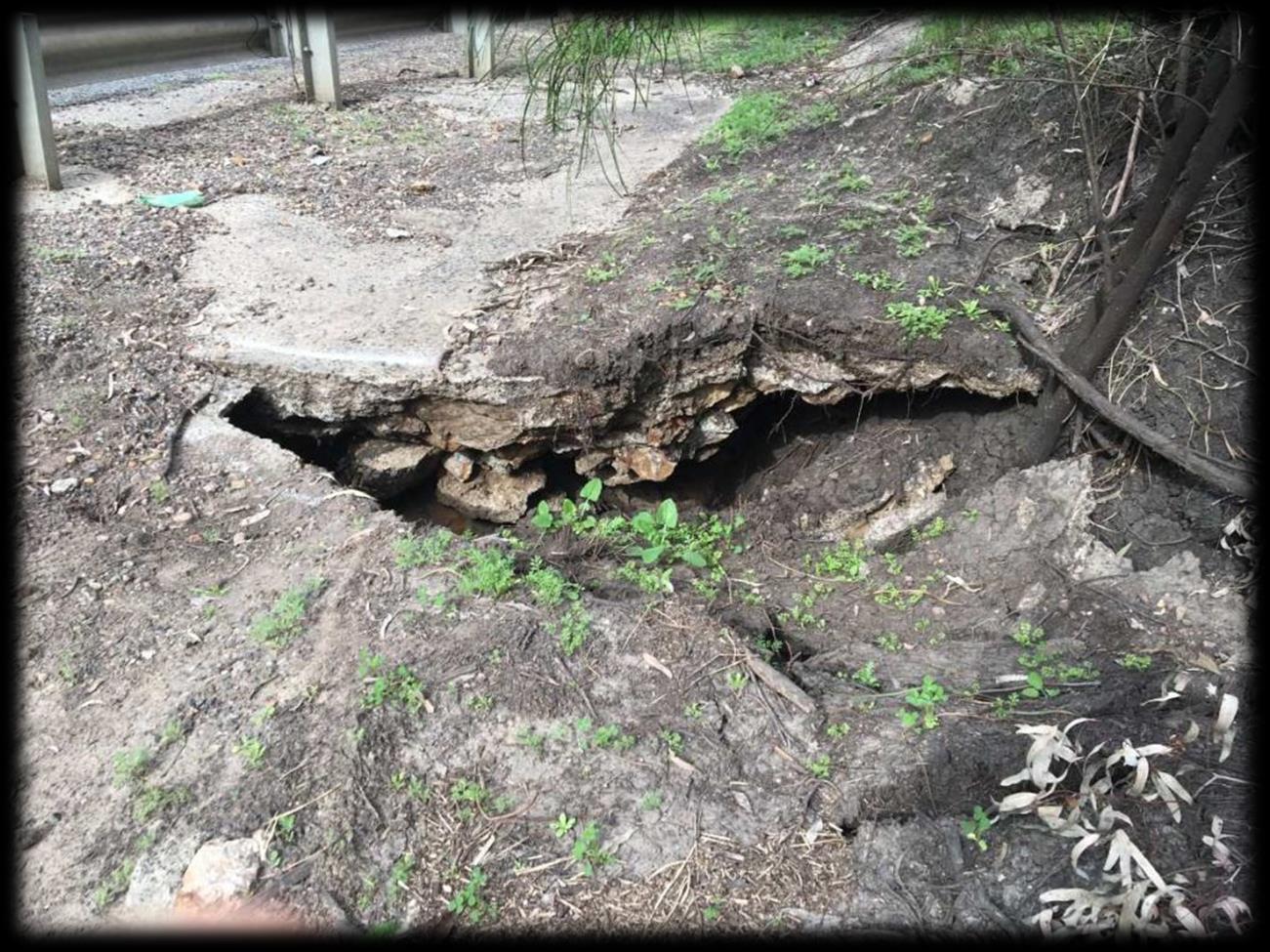
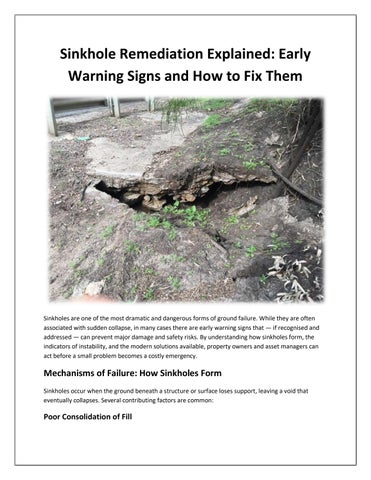
Sinkholes are one of the most dramatic and dangerous forms of ground failure. While they are often associated with sudden collapse, in many cases there are early warning signs that if recognised and addressed can prevent major damage and safety risks. By understanding how sinkholes form, the indicators of instability, and the modern solutions available, property owners and asset managers can act before a small problem becomes a costly emergency.
Mechanisms of Failure: How Sinkholes Form
Sinkholes occur when the ground beneath a structure or surface loses support, leaving a void that eventually collapses. Several contributing factors are common:
Poor Consolidation of Fill
Where engineered fill has not been adequately compacted, long-term settlement can lead to voids and instability beneath slabs, pavements, or building foundations.
Large Water Leaks
Burst water mains, leaking sewers, or poor drainage can wash away fine soils, gradually hollowing out the ground until a collapse occurs.
Old Mining Areas
Abandoned mine shafts and tunnels are a frequent cause of subsidence. When left unfilled, they create hidden voids that may collapse decades later, triggering large sinkholes at the surface.
Geological Factors
In some regions, natural processes such as the dissolution of limestone or reactive clays can create cavities in the ground that later fail.
Early Warning Signs of Sinkhole Activity
While some sinkholes appear suddenly, many provide visible warning signs:
Cracks forming in concrete slabs, pavements, or foundations.
Depressions or soft spots developing in lawns, car parks, or roads.
Tilting of fences, retaining walls, or utility poles.
Doors and windows sticking due to uneven building settlement.
Localised ponding of water in previously level areas.
A hollow or “drumming” sound when slabs are tapped, indicating voiding beneath.
Recognising these symptoms early is critical they signal the ground is losing support and that intervention is required before a full collapse.
How to Fix Sinkholes
The right remediation method depends on the scale and cause of the voiding.
Resin Injection
Best For: Small to medium sinkholes or voids beneath slabs, pavements, and foundations.
How It Works: High-strength expanding resins are injected into the ground through smalldiameter holes. The resin fills cavities, compacts surrounding soils, and re-supports the overlying structure.
Benefits:
Fast curing often trafficable within hours.
Non-invasive — no need for bulk excavation.
Precise can stabilise with millimetre-level control.
Cellular Concrete (Flowable Fill)
Best For: Large voids, abandoned mine shafts, and extensive washout zones.
How It Works: Pumpable cellular concrete flows into large cavities, filling irregular spaces and providing lightweight, durable support.
Benefits:
Effective for bulk stabilisation.
Lightweight material avoids overloading weak soils.
Cost-effective compared to excavation and rebuild.
Why Proactive Repair Matters
Waiting until a sinkhole has collapsed dramatically increases repair complexity and cost. Emergency interventions often require:
Full slab or pavement replacement.
Extensive excavation and reinstatement.
Closures of roads, facilities, or utilities.
Higher safety risks during remediation.
By acting early, voids can be stabilised quickly with resin injection or cellular concrete, preventing collapse and preserving infrastructure with minimal disruption.
Preventative Measures
Regular inspection of slabs, pavements, and landscaped areas for signs of voiding.
Maintenance of plumbing and drainage systems to avoid leaks and erosion.
Proactive investigation in areas with known mining history or reactive soils.
Incorporating ground remediation into asset management programs rather than waiting for failures.
Rectify: Specialists in Sinkhole Remediation
Rectify provides tailored solutions for sinkhole remediation, from residential properties to major infrastructure. With expertise in both resin injection and cellular concrete filling, Rectify delivers:
Rapid, non-invasive stabilisation of small to medium voids.
Large-scale remediation of mine-related and erosion-induced sinkholes.
Documented outcomes with level surveys and treatment records.
Customer-focused delivery with minimal disruption to property owners and the public.
Conclusion
Sinkholes represent a serious risk, but they rarely occur without warning. Cracks, depressions, and water pooling are all signals that the ground is losing support. Modern engineered solutions such as resin injection and cellular concrete filling allow voids to be stabilised safely and cost-effectively before a collapse causes major damage.
With proven expertise across a wide range of ground remediation projects, Rectify Group is the trusted partner to detect, stabilise, and repair sinkholes, safeguarding property and infrastructure for the long term.
Follow us on Social Media:
https://www.facebook.com/RectifyGroupMelbourne/
https://au.linkedin.com/company/rectify-group-au
https://www.instagram.com/rectify.group/
https://www.youtube.com/@rectifygroup6000