Is Your Uneven Floor a Sign of Bigger Problems?
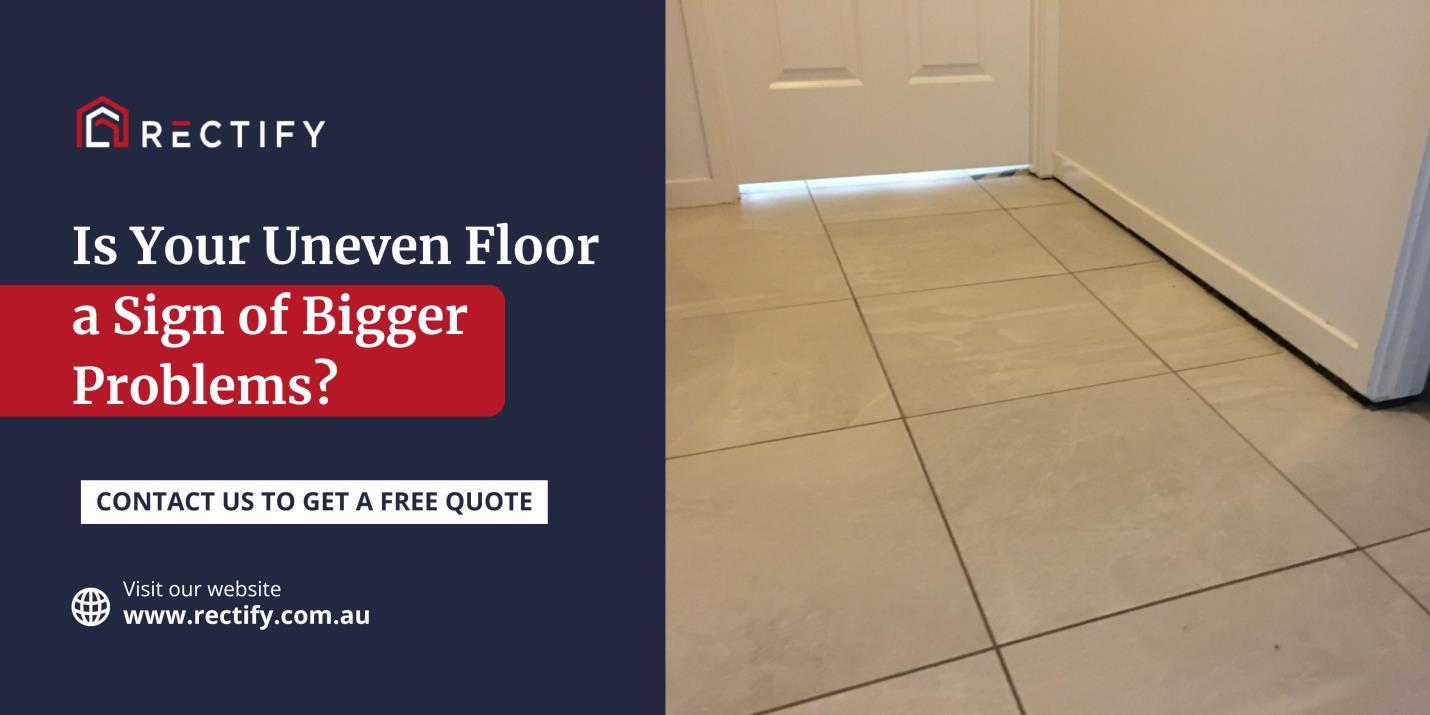
That crack in your warehouse floor? The way certain sections of your factory feel slightly off when you walk across them? Yeah, that's worth paying attention to.
Most business owners notice uneven flooring and think it's just cosmetic. Maybe annoying when a forklift wheel catches on a raised edge, but not a real issue. Here's the thing uneven floors usually aren't the problem itself. They're telling you something else is going wrong underneath.
What Uneven Floors Actually Mean
Concrete doesn't just start lifting or sinking for no reason. Movement in your floor points to foundation shifts, moisture problems, settling, or structural stress that's been building for months or years. When you ignore it, that minor unevenness becomes a major liability.
The real danger shows up later. Equipment starts wearing faster. Workers trip over transitions. Your building's integrity gets compromised. What looked like a small cosmetic issue turns into a five-figure repair that shuts down operations.
Why It Matters Right Now
Uneven surfaces create genuine safety risks. A tripping hazard in a busy warehouse isn't just inconvenient it's a lawsuit waiting to happen. Beyond that, machinery performs worse on unstable ground. Shelving units don't sit flush. Forklifts operate at angles they're not designed for.
Moisture underneath is often the culprit. Water finds its way beneath the surface, weakens the substrate, and causes the concrete to shift. Leave it alone and you're looking at accelerating damage that spreads across more of your floor.
What Industrial Floor Levelling Actually Involves
Here's where most people get confused. You can't just pour more concrete on top and call it fixed. That's treating the symptom, not the cause.
Industrial floor levelling requires diagnosing what caused the problem in the first place. Is water pooling somewhere? Is the foundation settling unevenly? Is there structural movement happening? The solution depends entirely on what's actually going on beneath your feet.
Modern levelling typically involves injecting a self-levelling compound or polyurethane foam underneath the surface to restore the floor to its proper elevation. It's not complicated, but it needs to be done right. Cutting corners here means the problem comes back in a couple years.
Also read about Sinking Slab Repair related topic.
Getting a Floor Levelling Service Before It's Too Late
This is where timing matters. The sooner you catch uneven flooring, the simpler and cheaper the fix. Wait too long and you're dealing with cracking, buckling, or structural damage that requires serious intervention.
A proper floor levelling service doesn't just measure and patch. Real professionals assess what's causing the unevenness, design a solution that actually addresses the root issue, and execute it in a way that lasts. They'll tell you if your floor just needs levelling or if there's a bigger structural problem you need to handle first.
The Bottom Line
Uneven flooring is your building trying to tell you something. Pay attention now, and you fix a manageable problem. Ignore it, and you're eventually dealing with something way more expensive and disruptive.
If you're noticing an uneven floor in your facility, get it looked at. The difference between a quick fix today and a major repair tomorrow is usually just a phone call.
Also, Follow us on Social Media
https://au.linkedin.com/company/rectify-group-au
https://www.instagram.com/rectify.group/
https://www.youtube.com/@rectifygroup6000