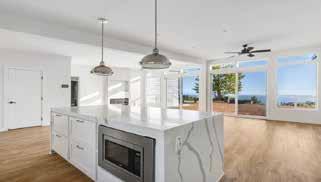
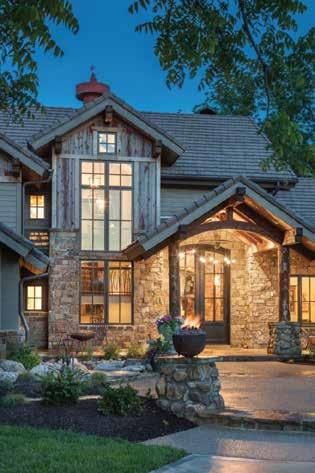
RE-BU MAGAZINE was created with a singular purpose: to guide and empower fire survivors in Malibu, the Palisades, and Altadena as they navigate the overwhelming journey of rebuilding not just their homes, but their lives. In the aftermath of wildfire devastation, the path forward can feel complex, confusing, and deeply personal. RE-BU exists to bring clarity, confidence, and trusted information to every step of that process.
At its core, RE-BU Magazine is a carefully curated collection of consumer-friendly, 600–800 word articles written by experienced professionals across the rebuilding ecosystem. These experts break down complicated topics into clear, actionable insights—whether itʼs understanding how construction financing is structured, evaluating the benefits of modular versus traditional rebuilding, or learning why working with a public insurance adjuster can significantly impact your claim outcome. Each article is designed to meet survivors where they are, offering practical guidance without overwhelming jargon.
To further simplify the process, RE-BU includes a comprehensive glossary of rebuilding terms, helping readers decode the language often used by contractors, insurers, and government agencies. This resource alone can transform uncertainty into understanding, giving homeowners the confidence to make informed decisions.
The magazine also features a dedicated product spotlight section, highlighting innovative materials and technologies designed to create more resilient, fire-hardened homes. From defensible space solutions to fire-resistant building products, RE-BU introduces readers to the tools that can help protect their future investment.
In addition, RE-BU serves as a trusted connector. The back of the magazine includes a robust directory of vetted rebuilding professionals, making it easier for homeowners to assemble the right team. From architects, builders, and permit expediters to public insurance adjusters, interior designers, and landscape/hardscape specialists, this resource streamlines the search for qualified expertise.
More than a magazine, RE-BU is a roadmap for recovery a reliable, compassionate guide designed to help fire survivors move forward with clarity, strength, and a renewed sense of possibility.
Production
Business
Anthony McDemas - Publisher
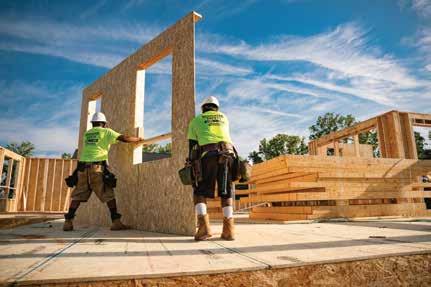
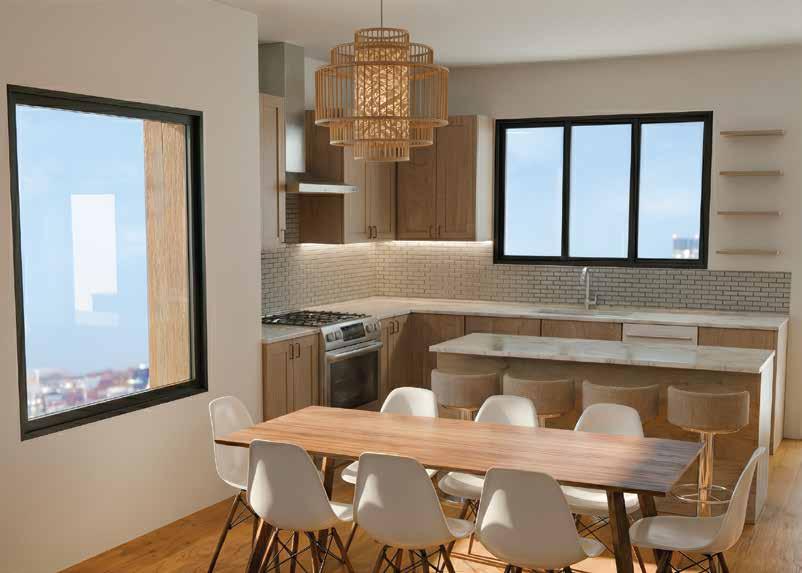
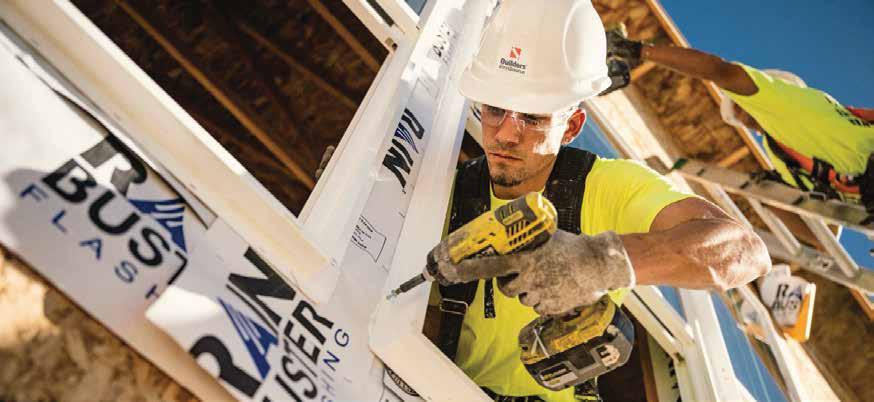
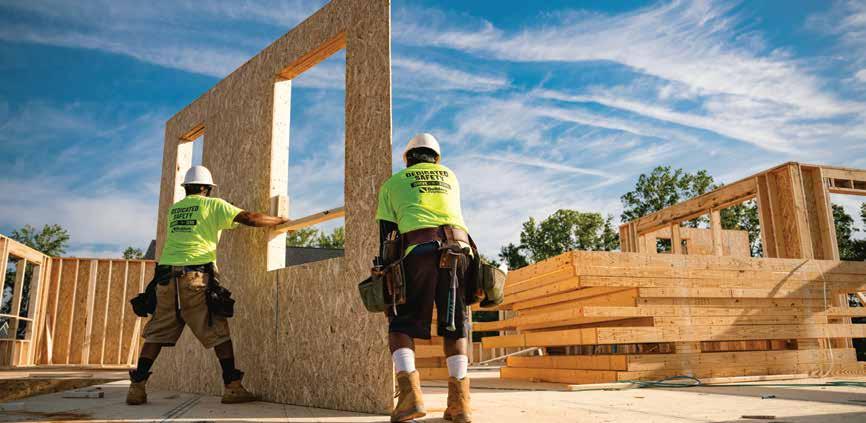
Photo Courtesy of Builders
RE-BU Magazine
Prefab Homes 101: Understanding Manufactured and Modular Housing
As housing costs continue to rise and rebuilding timelines stretch across California, more homeowners are exploring prefabricated construction as an alternative to traditional site-built homes. Prefab housing—an umbrella term that includes both manufactured and modular homes—offers a faster, more controlled way to build while maintaining high levels of quality and design flexibility.
What Is a Prefabricated Home?
This article explains the basics of prefab homes, outlines the differences between manufactured and modular construction, and highlights key considerations for buyers evaluating these options.
A prefabricated (or “prefabˮ) home is one where a significant portion of the construction takes place in a factory rather than entirely on-site. Building indoors allows for improved quality control, protection from weather delays, and greater construction efficiency. Once built, the home or its sections are transported to the site and installed on a permanent foundation. The two most common types of prefab homes are manufactured homes and modular homes. While they share many similarities, they differ in building codes, delivery methods, and project execution.
Manufactured Homes: Built to a Federal Standard
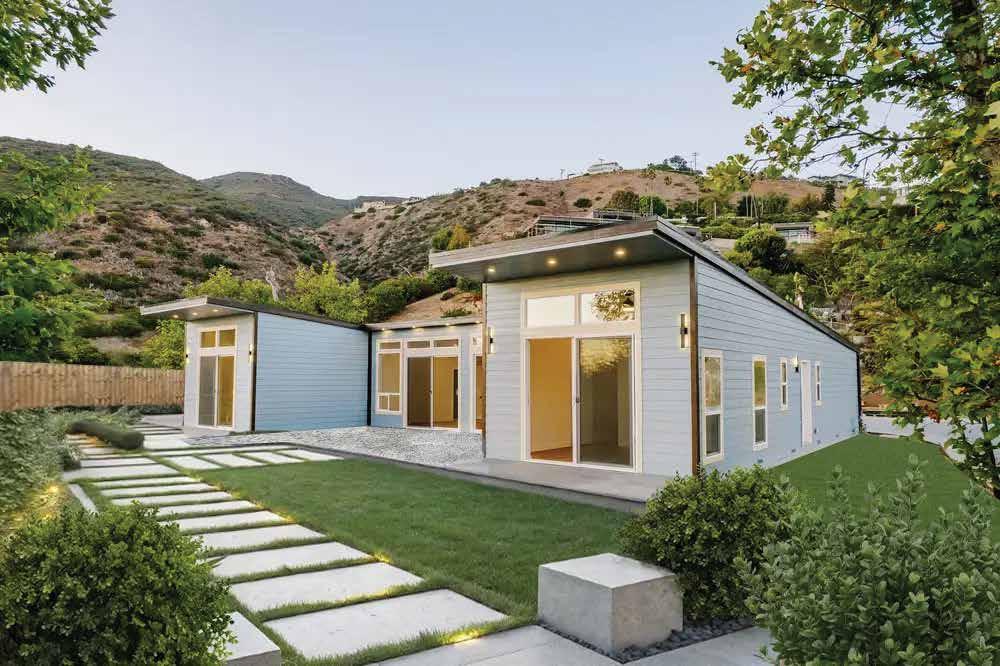
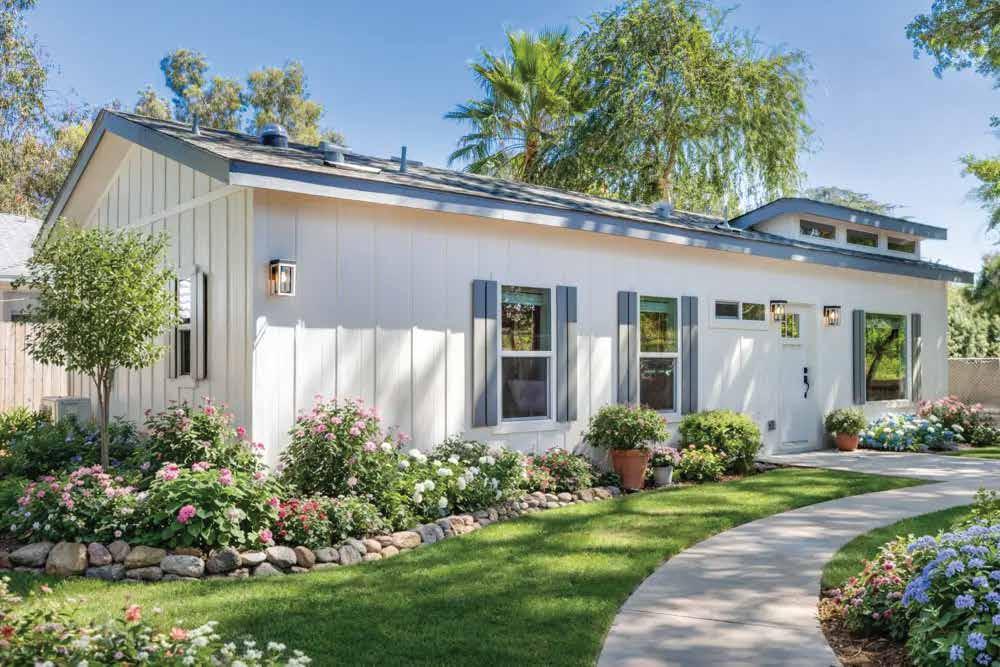
Manufactured homes are built to the HUD Code, a federal building standard established in 1976 that regulates structural integrity, fire safety, energy efficiency, and transportation requirements. One of the primary advantages of manufactured homes is cost efficiency. These homes are produced in large factories that build hundreds of homes per year, allowing manufacturers to benefit from economies of scale. Bulk purchasing of materials, repeatable production processes, and streamlined labor all contribute to more predictable pricing and potential cost savings for homeowners. Manufactured homes are typically installed on permanent foundations and, when properly titled as real property, can appraise similarly to site-built homes depending on location, design, and market conditions. They are most commonly single-story structures, which aligns well with many residential zoning and fire rebuild requirements.
Modular Homes: Built to Local Building Codes
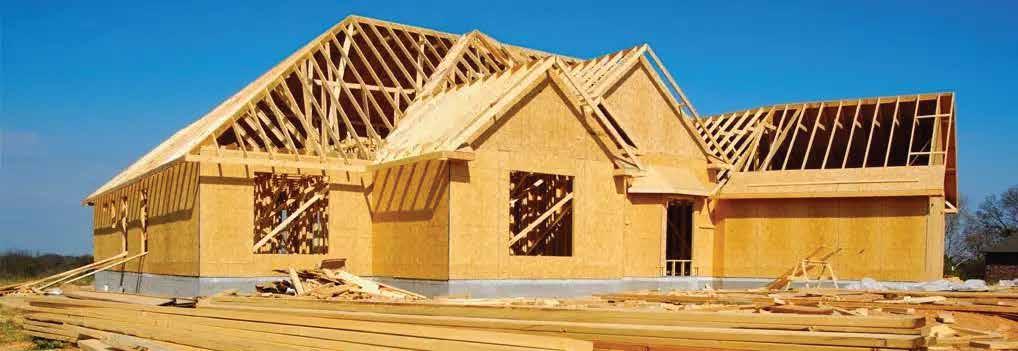
Modular homes are also built indoors, but they are constructed to the same local building codes as traditional site-built homes. The home is assembled in sections (modules), transported to the site, and set on a permanent foundation.
A key benefit of modular construction is design flexibility—particularly for multi-story homes. Because modular homes follow local codes, they can integrate more seamlessly into jurisdictions that are accustomed to conventional construction methods. This familiarity can be advantageous in certain permitting or financing scenarios.
Modular construction still benefits from indoor fabrication, reducing weather exposure and improving consistency, while allowing for a high degree of architectural customization.
RE-BU Magazine
Prefab
Comparing: Cost, Speed, and Process
Manufactured and modular construction offers options to traditional construction meeting the needs of a select rebuild profile.
Both manufactured and modular homes offer significant advantages over traditional site-built construction, especially in speed, quality control, and efficiency.
Manufactured homes often have a cost advantage due to large-scale factory production. Building hundreds of homes annually allows manufacturers to reduce per-unit costs, minimize waste, and streamline labor—savings that are frequently passed on to homeowners.
Modular homes, while generally more expensive than manufactured homes, offer flexibility in height, layout, and jurisdictional familiarity. They can be an excellent option for buyers seeking multi-story designs or projects in areas where local building departments prefer traditional code pathways.
Both housing types are customizable, use the same materials found in site-built homes, and benefit from controlled indoor construction environments. The difference lies primarily in code structure, scale of production, and how each approach aligns with a buyerʼs budget, timeline, and site conditions.
Which Option Is Right for You?
Choosing between manufactured and modular construction depends on several factors, including budget, design goals, site constraints, permitting requirements, and timeline expectations. Understanding how each system works—and working with professionals experienced in prefab construction—is key to a successful project.
About the Author
Trace McGuire is a California real estate broker and the Head of Sales at THE HOME GALLERY, a Southern California–based builder specializing in high-end manufactured homes. He holds a Bachelor of Science degree in Real Estate and has extensive experience in factory-built home development throughout the state. Trace is currently working with dozens of families rebuilding in Malibu, the Pacific Palisades, and Altadena, helping homeowners navigate new construction, fire rebuilds, and land development using modern, high-quality manufactured housing solutions.
This article is intended for educational purposes to help homeowners better understand prefabricated housing options.
Coming Home: A Consumer’s Guide to Construction Financing
With the thousands of homes that have been lost during the recent fres in California, many people are looking at various fnancing options to help with the rebuild their property. One option which will be explored below is a residential construction loan.
How to Finance Your Dream Home Utilizing a Construction Loan
A construction loan is a fnancing tool that allows an owner to borrow the funds needed to build a home and this is done with various draw fundings over time. A traditional mortgage provides a funding all upfront, but a construction loan is funded as a percentage of the work that is complete. The construction loan funds a percentage of the land value, soft costs (architect and engineering, plans and specs, permits and fees), hard costs (the cost of ground up construction), contingency (an allowance for cost over runs) and closing costs.
“Understanding the mechanics of a construction loan on a consumer level is vital for project management and peace of mind.ˮ
Alson Schweitzer Flagstar Private Bank
Once a borrower has a signed construction contract and completed plans and specs, it is a good time to fnd a construction lender to proceed with the underwriting of the construction loan. The contractor is vetted to make sure they have a good track record and are fnancially stable. The borrower then provides their fnancial information to include: federal tax returns for both their business and personal returns, any K-1’s, W-2’s, bank, brokerage and retirement statements and current pay stubs.
The construction lender will look at the fnished value of the project and also the total cost to build in determining a loan amount. The construction loan term will usually match the time needed to complete the project.
RE-BU Glossary: Draw Schedule: A pre-approved timeline of payments to the builder, outlining when funds will be released for completed work milestones.
Some lenders provide a construction and permanent loan that are combined. This is called an all in-one-close. This type of loan is advantageous to a borrower in that they avoid two sets of closing costs and get to lock During the construction phase, the lender typically advances funds based on a percentage of the work completed. Lien releases are collected from the contractor/subs to ensure a lien free completion of the home.
Construction Loan to a Standard Home Loan
When you build a home with a construction loan, that loan is meant to be short-term—just to cover the cost of building. Once the house is fnished and you have your fnal inspections and certifcate of occupancy, you usually replace that temporary loan with a regular long-term mortgage. This is done either automatically (if you signed up for a “construction-to-permanent” loan from the start) or through a separate refnance, where a new mortgage pays of the construction loan in full and you’re left with one normal monthly payment, just like any other homeowner.
If you have to get a new mortgage, the process looks a lot like a standard refnance. A lender reviews your income, credit, and debts, orders an appraisal of the completed home, and then sets up a closing where the new mortgage money is used to pay of the construction loan. After that, the construction loan disappears, and you just make principal-and-interest payments on your new mortgage over 15, 20, or 30 years. The key timing piece; is making sure the home is fnished and approved with a ‘Certifcate of Occupancy’, so the lender sees it as a completed property, not an active construction project.
About the Author RE-BU Glossary: Contingency Reserve: A portion of the loan budget set aside to cover unexpected costs, such as price spikes in materials.
Alison Schweitzer is a Group Director at Flagstar Private Bank with over 40 years of experience in construction lending and private banking. She grew up in Pacifc Palisades and went to Palisades High School and holds a degree in Economics from UCLA. She has fnanced over $1 billion in mortgage loans throughout her career and specializes in luxury residential construction projects of $10+ million. As a member of the Pacifc Palisades Malibu Chamber of Commerce, she is committed to helping the community rebuild following the January 2025 fres.
This article is for educational purposes and does not constitute fnancial advice. All lending decisions are subject to credit approval and underwriting guidelines. Flagstar Bank, N.A. Member FDIC. Equal Housing Lender.
Protecting Your Home from Wildfire: Starts Closer Than You Think
Wildfire Protection Starts at Home.
When most people imagine a wildfre, they picture towering fames racing across hillsides toward homes. In reality, the greatest threat often comes from something much smaller: embers.
“If it can be predicted it can be preventedˮ
Rick Caruso
The idea that once you can foresee a risk (fires, crime, infrastructure failures, economic impacts, etc.), thereʼs a responsibility to put systems in place to reduce or avoid the damage.
After nearly every major wildfre, investigators fnd the same pattern where homes are lost not from a wall of fames but from wind-driven embers landing on vulnerable surfaces. These fragments can travel miles on the wind. While each ember may be no larger than a coin, hundreds or even thousands can land on and around a home during a single wildfre. Embers are small and lightweight, which makes it easy for wildfre winds to carry them long distances. When that wind reaches a building, air fow slows and swirls, creating natural “catch points” where debris gathers. Gutters, roof valleys, deck corners, and the base of exterior walls are all spots where embers can settle along with combustible materials. These small fuel pockets can make all the diference. One home may survive a wildfre while the one next door is lost, simply because embers landed on something that could ignite.
RE-BU Glossary: Embers: Wind-driven embers can travel miles ahead of a wildfire, igniting homes by landing on vulnerable materials like roofs, decks, vents, and vegetation—often destroying houses without direct flame contact.
The First Five Feet Matter Most
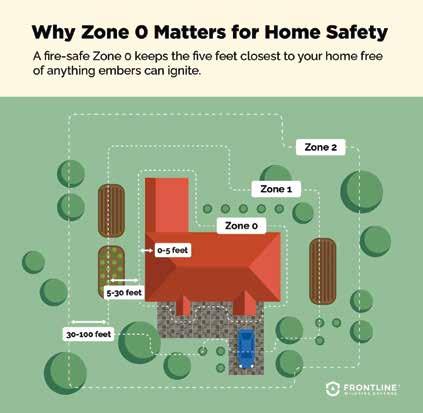
The First Five Feet Matter Most Not all areas around a home are equally vulnerable to embers. The risk of ignition changes with distance from the structure, which is why fre scientists use Home Ignition Zones (HIZs) to talk about risk. These zones identify where embers are most likely to land and which fuels could carry fre to the house, helping homeowners focus protection where it matters most. Zone 0, the fve feet immediately surrounding a home, is the most critical area for wildfre defense. Embers landing here can ignite any material in contact with the structure, creating a direct path for fre. That’s why experts recommend keeping this near-building zone as clear as possible. This includes removing debris, creating defensible space, eliminating fuel ladders, and thinking strategically about what stays in the near-building area. Of course, real homes are lived in. Patio furniture, umbrellas, and everyday items naturally end up close to the house, and any combustible material in this zone can act as a bridge for ember ignition. Creating an efective Zone 0 doesn’t have to mean stripping the area bare. It means making choices that reduce the risk of ember ignition while maintaining a space people actually use and enjoy.
RE-BU Glossary: Zone 0: creates an ember-resistant, five-foot buffer around buildings in high fire-hazard zones by removing nearby combustible materials to reduce the risk of home ignition.
Why Layered Protection Matters
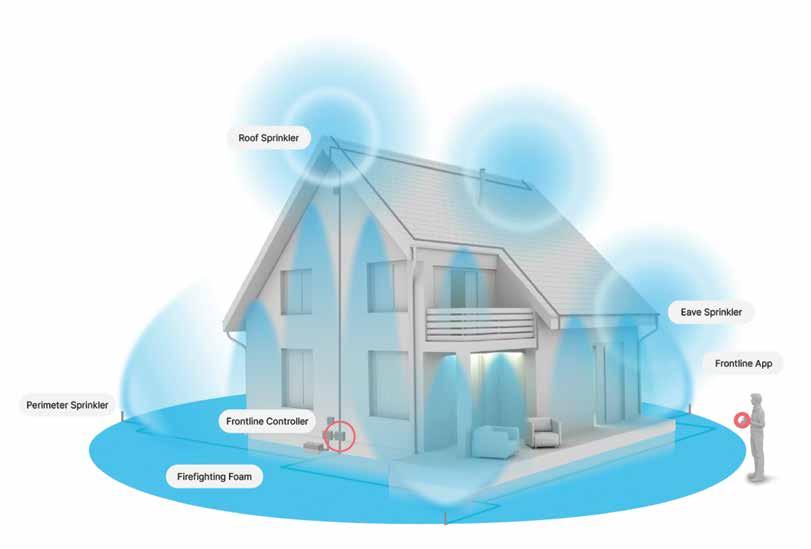
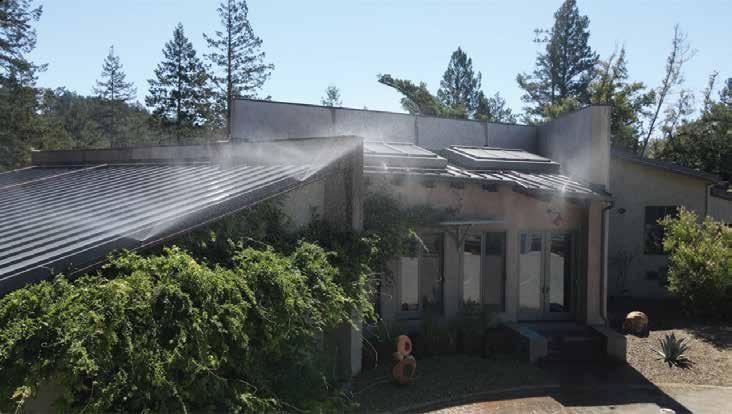
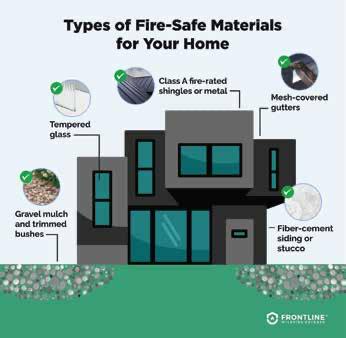
This is where layered defenses become important. Hardscape surfaces, fre-resistant materials, and active systems like exterior sprinklers can interrupt ignition pathways and reduce ember exposure. By focusing on the immediate perimeter frst and combining maintenance, design choices, and active defenses, homeowners create a layered approach that gives the home its best chance of surviving a wildfre. Layering Defenses: Passive and Active Measures The most efective wildfre protection comes from layering passive and active defenses. Passive measures reduce the likelihood of ignition in advance by removing or limiting fuels around the home. While active measures operate during wildfre conditions, wetting and cooling surfaces to reduce the chance that remaining embers can ignite. Passive protection includes the measures most homeowners are already familiar with like home hardening, defensible space, and vegetation management. This can range from low-cost steps like replacing wood mulch, installing ember-resistant vents, moving plants away from exterior walls, and regularly clearing gutters. Larger investments such as upgrading to fre-resistant roofng, noncombustible siding, tempered glass windows, or thoughtfully designed fre-resistant landscaping further strengthen the home.
Protecting Your Home from Wildfire:
Active Fire Defense Systems
Passive and Active Protective Measure = Powerful Protection Against Wildfire
When passive and active layers work together, passive measures reduce fuel and ignition opportunities, while active systems address remaining exposure during extreme conditions. This creates a more complete and resilient approach to wildfre protection. Living with Wildfre, Not Just Fighting It Resilient homes don’t require sacrifcing aesthetics or comfort. Thoughtful materials, defensible landscaping, and layered protection strategies allow homes to withstand ember exposure while preserving design and character. Wildfre resilience starts with understanding how homes ignite, focusing on Zone 0, and employing systems that act when needed. By prioritizing the frst fve feet and layering defenses, homeowners can live confdently in wildfre-prone areas, knowing they are better prepared long before fames arrive.
Multiple points of protection surrounds your home in a halo of prevention. Proactive planning before disaster strikes significantly improves the probability of survival.
About Frontline Wildfre Defense Frontline Wildfre Defense® designs and installs whole-home wildfre defense systems engineered specifcally for wildfre conditions. Combining exterior sprinkler protection with remote activation, battery backup, and satellite connectivity, Frontline’s systems help homes remain protected during power outages or evacuation, supporting a science-based approach to living safely in fre-prone regions. Website : www.frontlinewildfre.com | Phone: 888.510.1175
Rebuilding Reality:
How Change Orders Impact Your Budget
How Change Orders Impact Your Budget & Peace of Mind
In the wake of tragic fires, families are anxious to return home. Rebuilding is more than a construction project; it is an emotional journey. However, before construction begins, homeowners face the long and unfamiliar process of designing and building a new home.
Unexpected Change
Orders cause significant additional costs and loss of time frequently delaying completion by months. Fully understanding your design upfront creates confidence in an on time-on budget delivery!
Under typical circumstances, homeowners spend close to a year deciding to build, months evaluating options, understanding budgets, and clarifying their vision. Assembling the right team, selecting an architect and interviewing contractors — can take another three to four months. The design process itself adds four to six months before construction commences. Yet, even in meticulously planned projects, surprises emerge once construction begins. It is nearly impossible to fully understand a home looking at two-dimensional drawings and material samples alone. Floor plans are abstract, elevations are flat, and a rendering cannot truly convey how light enters a kitchen or how a hallway feels
Many homeowners admit to signing construction contracts without fully grasping what their new home will look and feel like –a leap of faith. The uncertainty often reappears during framing, when walls are physically laid out and spaces take shape. A room feels smaller than imagined, a window seems off, or a doorway disrupts flow. What looked balanced on paper may feel awkward in real life. This is when change orders emerge.
A change order is a formal modification to the original construction contract.
While the changes are critical to creating the family home, they often come with substantial financial and scheduling consequences. For example, moving an interior wall can add anywhere from $1,500 to $15,000 in costs, depending on structural, electrical, or plumbing impacts. Adding a window can range from $4,000 to over $25,000 when factoring in all necessary modifications and revisions.
Beyond direct costs, there are ripple effects. Materials may need reordering, custom items can have long lead times, subcontractors must be rescheduled, and inspections may need repeating. What seems like a small shift can result in weeks of delay.
These moments can also create tension between homeowners, and their build team.
Homeowners are frustrated the design wasn't clearer; contractors point to approved plans; and architects defend their intent. In an already stressful environment, these conversations can become emotionally charged. Frank Lloyd Wright famously said, “You can use an eraser on the drafting table or a sledgehammer on the construction site.ˮ His words underscore a fundamental truth: changes are far less expensive and disruptive during design than during construction.
Some homeowners, determined to avoid added costs, choose to live with designs they later regret, reporting tight, non-functional spaces, or a lack of space to place their TV. The cost of not making changes might not be financial, but the regret can linger for decades.
Walking into your future home with confidence and certainty.
Continued Rebuilding Reality:
Know Your Design • Inside & Out
As homeowners begin building in this heightened emotional environment, the most important step is ensuring you fully understand your home before construction begins. In addition to models, photo realistic renderings, site visits, and material samples, modern technology offers powerful tools to bridge the gap between drawings and reality. Interactive 3D viewers, augmented/virtual reality can provide fully immersive walkthroughs, helping you understand scale, flow, and natural light in ways traditional plans cannot. These tools can dramatically reduce uncertainty—and with it, costly change orders.
Rebuilding after loss is never simple.
Emotions run high, timelines feel urgent, and decisions carry weight. But taking the time to thoroughly understand your design can protect your budget, your schedule, and your relationships — most importantly it ensures you return not just to a house, but to the home you truly envisioned.
“Return not just to a house, but to the home you truly envisioned.ˮ
About the Author
Ade Ayoade, an architect and technologist with over 25 years of professional experience across London, Malawi, Toronto, Cincinnati, and Los Angeles, is the founder of The Little Things AI. This Los Angeles startup is dedicated to developing technology to assist homeowners with their building projects. Their offerings include *TKEI, an immersive home review app designed for reviewing plans before construction commences. Ade holds a diverse educational background, including a Bachelor of Science in Computer Science, an MBA, and a Masters in Architecture and Design. He and his team are currently focused on collaborative efforts with homeowners and non-profits involved in rebuilding efforts in Malibu, the Pacific Palisades, and Altadena.
Ade Ayoade - The Little Things AI
Making Difficult Decisions Simple
Should I Stay or Should I Go?
A Practical Tool to Help Palisades & Malibu Homeowners Decide:
Should I Stay or Should I Go?
In the months following a major loss, many homeowners in Pacifc Palisades fnd themselves facing one of the most difcult decisions they will ever make: whether to rebuild on their property or sell and move elsewhere.
This practical tool assists homeowners evaluate if they are in a position to take on rebuilding their home. For some the answer is yes. Unfortunately for others, the answer is no.
This decision is rarely straightforward. Insurance settlements, construction timelines, fnancing realities, and family considerations all play a role. For many people, the number of moving parts makes it hard to even know where to begin, leaving them feeling stuck in uncertainty.
To help bring clarity to this process, a new portal has been created to guide homeowners through a structured decision-making process.
The portal, available at: www.monumenthomebuilders.com/survey, is a questionnaire built to help homeowners better understand their situation, identify key constraints, and think through next steps.
Rather than ofering generic advice, the portal helps homeowners evaluate their specifc circumstances in a practical and organized way.
How the Portal Works
The questionnaire walks homeowners through several categories of questions that refect the real issues involved in rebuilding or selling. Each section focuses on a diferent part of the decision-making process.
Living Plans and Personal Priorities
The survey begins by helping homeowners refect on their personal situation. Questions explore how long they lived in their home, whether they have family ties in the Palisades, and who may be living with and near them in the future.
Participants are also asked to identify their biggest concerns regarding next steps. These may include obtaining insurance, fnancing a rebuild, navigating the construction process, or uncertainty about how the neighborhood will recover. These responses help clarify the personal priorities that often infuence long-term decisions.
Where You Are in the Rebuilding Process
Another section focuses on progress and timing. Homeowners can indicate whether they are still working through insurance, preparing architectural plans, beginning permitting, or looking for guidance on how to start.
Insurance and Claim Status
Insurance proceeds and claim progress often determine what options are realistically available. The survey includes questions about insurance carriers, estimated proceeds, whether proceeds must be used to rebuild on the existing lot, and whether the homeowner is working with an adjuster or public adjuster. These factors can signifcantly infuence both the timing and feasibility of rebuilding.
Should I Stay or Should I Go?
Continued
Financial and Mortgage Considerations
A simple rebuild survey designed to be a practical decision making tool, helping you set aside emotions so you can make clear, realistic choices about how and when to rebuild.
Financial realities are an important part of the decision, and the portal addresses these directly. Homeowners are asked about household income ranges, mortgage balances, and whether they are currently in mortgage forbearance. These questions help identify potential constraints that may afect rebuilding feasibility or fnancing options. The purpose is not to make judgments, but to ensure homeowners consider the fnancial framework surrounding a rebuild or sale.
Funding and Financing Options
For homeowners considering rebuilding, the portal also explores how construction might be funded. Questions address how many months of rental compensation remain, how a potential funding gap might be covered, and whether the homeowner is interested in learning about construction loans, second trust deed fnancing, or potential joint-venture structures (where the owner can partner with a builder and build in order to deliver a fnished home and not leave money on the table by selling vacant land too early. These questions are designed to help homeowners recognize that there may be multiple paths to rebuilding, even when insurance alone does not cover the full cost.
Property and Design Considerations
The survey also addresses practical rebuilding steps such as desired home size, whether a land survey or engineering evaluation has been completed, and whether an architect has been hired.
Homeowners are also asked whether they are considering adding an Accessory Dwelling Unit (ADU) or JADU, which may be used for rental income or family needs and can play a role in long-term planning.
A Tool for Clarity, Not Pressure
The goal of the portal is not to push homeowners toward rebuilding or selling. Both paths can be the right decision depending on individual circumstances.
Instead, the purpose is to help people move from uncertainty to clarity. By working through the questionnaire, many homeowners fnd they gain a clearer understanding of their priorities, constraints, and possible next steps. For those who have felt overwhelmed, organizing the decision into manageable pieces can be an important frst step forward.
About the Author
Eddie Lorin CEO Monument Home Builders
Monument Home Builders is a residential builder and development team with decades of experience in homebuilding, construction management, and project fnancing.
The survey and portal were created by Monument Home Builders as a complimentary resource to help Pacifc Palisades homeowners better understand their options and make informed decisions about rebuilding or selling. The goal is to provide practical information and guidance so homeowners can move forward with confdence, whatever path they choose.
Smart Rebuild Choices: Avoiding Costly Mistakes During a Post-Fire Rebuild
Rebuilding after a wildfre is one of the most signifcant fnancial and emotional undertakings a homeowner can face. It is not simply construction. It’s a process involving insurance recovery, updated building codes, permitting, material coordination, and dozens of decisions.
In the feld, we consistently see the same patterns. The homeowners who avoid major cost overruns and delays are not necessarily those with the largest budgets. They are the ones who avoid predictable mistakes early. Below are the most common and costly errors to watch for.
Hiring Out of Sequence
“Follow a sound plan which includes what to do and what to avoid. This article outlines the most common pitfalls to reconstruction that can cause construction delays and cost overruns.ˮ
Jonathan Kohanoff
A frequent early mistake is hiring a contractor before plans are fully developed. Without fnalized architectural and engineering drawings, estimates are often incomplete. This can lead to scope gaps, revisions during permitting, and change orders once construction begins. The proper sequence typically includes:
• Architect or Designer
• Structural Engineer
• Soils/Geotechnical Consultant
• Contractor
• Material Coordination
Underestimating Updated Code Requirements
Rebuilding rarely means replicating what existed before. Homes in wildfre-prone areas are often subject to intense standards. These may require:
• Class A fre-rated materials
• Dual pane tempered glass windows
• Fire-resistant exterior assemblies
• Ignition resistant decking
Homeowners who do not account for these upgrades early often face unexpected cost increases during plan review or inspection. Understanding requirements upfront prevents redesigns and delays.
Failing to Budget for Unknown Conditions
Even with detailed planning, post-fre sites can reveal hidden issues once demolition begins. Examples include:
• Foundation issues
• Soil instability
• Drainage corrections
• Utility infrastructure upgrades
Without contingency built into the budget, these discoveries can stall progress. A realistic reserve is a must.
Smart Rebuild Choices:
Delaying Material Decisions
"Measure twice, cut once" is a widely used proverb advising that one should thoroughly check measurements and plan meticulously before taking irreversible action to avoid waste and errors. Originating from trades like carpentry and tailoring, this idiom emphasizes efficiency, precision, and careful preparation in both manual work and professional decision-making.
In a rebuild environment, supply chain timing matters. High demand materials such as engineered lumber, roof trusses, windows, and specialty exterior components can carry extended lead times. Late selections often result in:
• Framing delays
• Inspection scheduling issues
• Crew downtime
• Extended carrying costs
Early coordination between design, contractor, and materials planning protects both schedule and budget.
Misalignment Between Insurance and Scope
Insurance recovery and construction planning must move in parallel. Problems arise when scope exceeds approved allowances, upgrades are not documented, or change orders are not tracked carefully. Misalignment can delay reimbursements and create fnancial strain late in the process. Maintaining clear documentation and communication between contractor, designer, and adjuster helps prevent disputes and unexpected out-of-pocket costs.
RE-BU Magazine
Making Mid-Project Design Changes
Design adjustments after permits are submitted or construction begins are among the most expensive decisions homeowners make. Changes often trigger plan revisions, additional engineering, and permit resubmittals, all of which impact timeline and budget. Homeowners who make frm, thoughtful decisions early typically experience smoother rebuilds.
Rebuilding Without Long-Term Resilience in Mind
It is natural to want to recreate what was lost. However, rebuilding presents an opportunity to strengthen the home for the future. Beyond minimum code requirements, homeowners may consider enhanced fre-hardening measures, improved defensible space planning, energy efciency upgrades, and durable exterior materials. Strategic upgrades today can reduce future risk and long-term maintenance costs.
Final Perspective
Rebuilding after a wildfre is rarely straightforward. It requires planning, coordination, and disciplined decision-making at every stage. Homeowners who experience smoother rebuilds tend to build the right team early, understand requirements upfront, and make key decisions before construction begins.
Every project is diferent, but avoiding these common mistakes can reduce stress, protect budgets, and keep timelines moving. Rebuilding is an opportunity to create a safer, more resilient home. With the right preparation, the process becomes more manageable and the outcome stronger.
About the Author
Jonathan Kohanof supports the LA Fire Rebuild initiative with Builders FirstSource in Los Angeles. Based in Southern California, he works closely with homeowners, builders, architects, and local organizations to help coordinate rebuilding eforts following wildfre events, with a focus on construction planning, material logistics, and helping communities rebuild safely and efciently. Jonathan.Kohanof@bldr.com
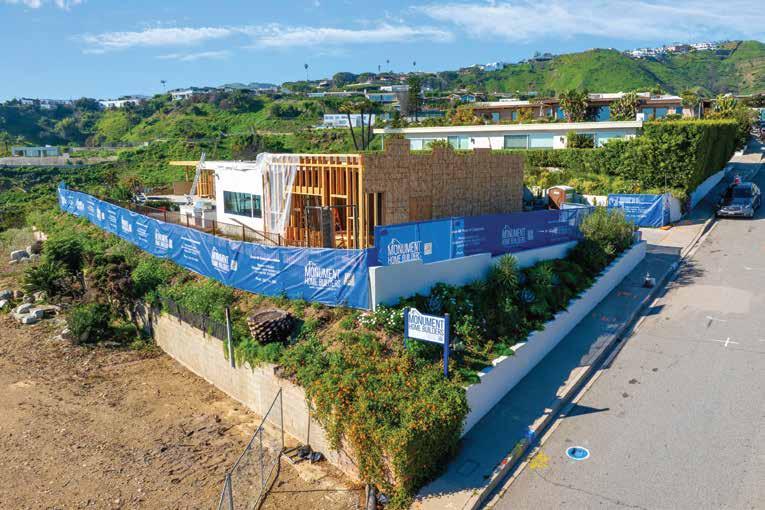
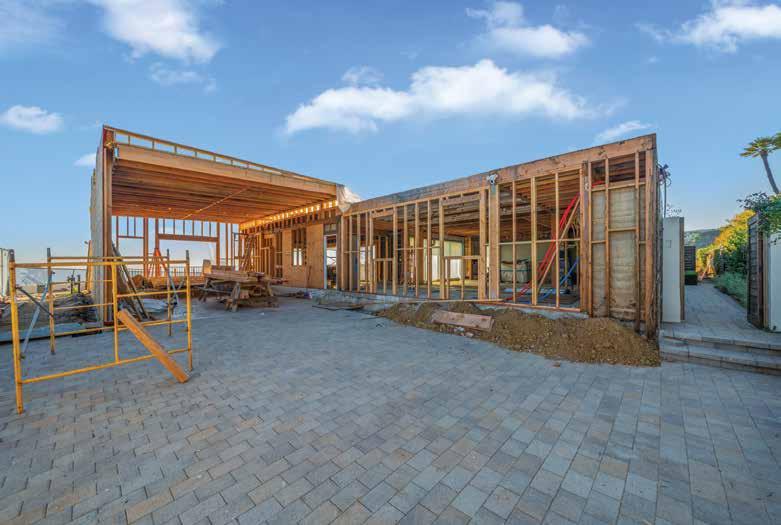
Image courtesy of Monument Home Builders
REBUILD 101: Glossary of Essential Terms
A Plain-English Guide to Navigating Fire Recovery, Insurance, and Rebuilding
Rebuilding a er a wildfire can feel overwhelming. From insurance claims to permi ing and construction, homeowners are quickly introduced to unfamiliar terminology. This glossary breaks down the most important terms you’ll encounter—so you can move forward with clarity and confidence.
INSURANCE AND FINANCIAL PLANS
Actual Cash Value (ACV)
The value of damaged property a er depreciation is deducted.
Additional Living Expenses (ALE)
Insurance coverage that pays for temporary housing, meals, and other costs while your home is uninhabitable.
Adjuster (Insurance Adjuster)
A representative from your insurance company who evaluates damage and determines claim payouts.
Appraisal Clause
A policy provision allowing disputes over claim value to be resolved by independent appraisers.
Coverage Limits
The maximytum amount your insurance company will pay under a specific part of your policy.
Depreciation
Reduction in value due to age, wear, or condition.
Dwelling Coverage (Coverage A)
Insurance coverage specifically for rebuilding or repairing the structure of your home.
Extended Replacement
Additional coverage that allows rebuilding costs to exceed the policy limit by a certain percentage.
Like-Kind Replacement
Rebuilding with materials and construction similar to the original home.
Ordinance or Law Coverage
Insurance coverage that pays for rebuilding upgrades required by current building codes.
Public Adjuster
An insurance professional hired by the homeowner to negotiate claims with the insurance company.
Replacement Cost Value (RCV)
The full cost to rebuild or replace damaged property without depreciation
PERMITS AND PLANNING
Building Permit
Official approval required before construction begins.
Plan Check
City review process ensuring your plans meet safety and zoning codes.
Certificate of Occupancy (CO)
Final approval confirming your home is safe to live in.
Setback
Required distance between your home and property lines.
PERMITS AND PLANNING - Continued
Zoning Regulations
Local rules governing land use, density, and building type.
Coastal Commission
Agency regulating development in coastal areas like Malibu.
CONSTRUCTION FINANCING
Construction loan: A short-term loan that pays for building or remodeling a home. The money is released in stages as the work gets done, and you usually only have this loan during construction.
Draw: A partial payment from the construction loan to the builder. Draws happen at milestones—like a er the foundation, framing, or roofing is finished—so the builder gets paid as work is completed.
Interest-only payments: During construction, many loans require you to pay only the interest each month, not the amount you borrowed. This keeps your monthly payments lower while the home is being built.
Principal: The actual amount of money you borrow, not including interest or fees. When you “pay down the loan,” you’re reducing the principal.
Permanent loan (end loan): The regular long-term mortgage that replaces the short-term construction loan once the home is finished and ready to live in.
Construction-to-permanent loan: A single loan that covers both the construction phase and the long-term mortgage. You close once, build the home, then the loan automatically converts into a regular mortgage.
Contingency fund: Extra money built into the budget (o en 5–15%) to cover surprise costs, price increases, or changes during construction so you’re not caught short.
Loan-to-value ratio (LTV): How much you’re borrowing compared to what the finished home is expected to be worth. For example, if the completed home value is $500,000 and your loan is $400,000, the LTV is 80%.
Appraisal (as-completed value): An independent estimate of what your home will be worth a er it’s built or remodeled. The lender uses this to decide how much they’re willing to lend.
Closing costs: Upfront fees you pay when starting the loan—such as lender fees, title and escrow costs, appraisal, and government recording fees—usually totaling a few percent of the loan amount.
KNOW THIS FIRST
INSURANCE AND FINANCIAL PLANS
Actual Cash Value (ACV)
The value of damaged property a
Additional Living Expenses (ALE)
Insurance coverage that pays for temporary housing, meals, and other costs while your home is uninhabitable.
Adjuster (Insurance Adjuster)
A representative from your insurance company who evaluates damage and determines claim payouts.
Appraisal Clause
A policy provision allowing disputes over claim value to be resolved by independent appraisers.
Coverage Limits
The maximytum amount your insurance company will pay under a specific part of your policy.
Depreciation
Reduction in value due to age, wear, or condition.
Dwelling Coverage (Coverage A)
Insurance coverage specifically for rebuilding or repairing the structure of your home.
Extended Replacement
Additional coverage that allows rebuilding costs to exceed the policy limit by a certain percentage.
Like-Kind Replacement
Rebuilding with materials and construction similar to the original home.
Ordinance or Law Coverage
Insurance coverage that pays for rebuilding upgrades required by current building codes.
Public Adjuster
An insurance professional hired by the homeowner to negotiate claims with the insurance company.
Replacement Cost Value (RCV)
The full cost to rebuild or replace damaged property without depreciation.
Defensible Space
Cleared area around your home to reduce wildfire risk.
Fire Hardening
Upgrading materials and design to improve fire resistance.
Fire-Resistant Materials
Building materials designed to withstand ignition.
Wildland-Urban Interface (WUI)
Areas where homes meet wildland vegetation and require stricter fire codes.
ASSISTANCE & RESOURCES
FEMA
Provides disaster grants and recovery support.
SBA Disaster Loan
Low-interest loans available to homeowners a er disasters.
Right of Entry (ROE)
Permission allowing government crews to clear debris on your property.
Local Assistance Center (LAC)
One-stop location for recovery services and support.
HOMEOWNERS TIPS
Always keep a written record of:
• Insurance conversations
• Receipts and expenses
• Contractor agreements
• Permit approvals
This documentation can signifcantly impact your recovery timeline and reimbursement.
“Knowledge is one of the most powerful tools in rebuilding—not just your home, but your future.”