
Explore Texas Magazine

Page 1


The most exclusive ranches, farms, cattle-ranches, investment properties, mountain homes, and luxury waterfront property for sale in the United States.

Management

ADVISORs

Board members

KATIE MECHAM Creative Director
DARIN GOSDA Board Member
HERB HOFMANN Media Analyst
GEORGE LANE Chairman & CEO
WATERS DAVIS Board Member
MICHAEL CHADWICK Advisor
DAVID GOW Board Member
RICK HARSCH Advisor
DON McCOY Chamber Liaison
NOEL ROBERTS Board Member
CLEO FRANKLIN Advisor
ANDREW VAN CHAU EDC Liaison
ADAM WINTERS Senior Vice President
DOUG PIKE iHeart
JUAN RIVAS VP of Operations
BENNETT ROBERTS Legal
PRIOR EXPLORE.us EVP
BONNIE McFERREN Office Manager
DANIEL McJUNKIN Community Relations
BOB HODGDON Sales Director
STEVE DAWSON Board Member
BRET HAMMETT Board Member
TRACY MILLER CPA
GRAHAM McKERNAN National Client Advisor
STEVE MULLEN Chief Technology Officer
GEORGE LANE Chairman & CEO
MARK GERICK COMMUNITY RELATIONS
JACLYN RITTER Editor
MELISSA PRIOR EXPLORE.us

TEXAS Welcome To

Challenging times have made small town visitation your safest and most rewarding travel option. We sincerely hope this magazine stimulates, educates, and guides you to your favorite places in the greatest state in the country. As you peruse the pages that follow, you will experience detail like you’ve never encountered about communities we’ve selected in this first volume.

Did You Know That...

Conroe: For a brief period in the 1930s, during the Great Depression, Conroe could boast that it had more millionaires, per capita, than any other city in America?

The Woodlands: Is the number one selling masterplanned community in Texas and is ranked number two nationally?

Huntsville:General Sam Houston, the most prominent citizen of Huntsville, was the only man in American history to have been elected governor of two different states, Tennessee and, later, Texas?

Kerrville: The behemoth H.E.B. grocery store chain was founded in 1905 by Florence Thornton Butt as a tiny grocery store she operated from the first floor of her home in Kerrville?

Boerne: Has more than tripled its population in the last 20 years?

Bandera: This tiny town of 900 has produced more world championship cowboys (and one cowgirl) than any place else on planet Earth?

Fredericksburg: Is the home of “Texas German,” a dialect spoken by the first generation of colonists in 1846 and one that persists to the present day among a small segment of the population?

Johnson City: The most famous guest of the 1894 Blanco County Jail-- one of the oldest, if not the oldest, jails still in operation in Texas--was the singersongwriter, Jerry Jeff Walker, who had been arrested on a DUI charge as he passed through Johnson City from a Luckenbach concert with Willie and Waylon, on his way back to Austin?

Blanco: In the January 1890, election to choose between Blanco and Johnson City as the Blanco County seat, there was an Old West-style gunfight between opposing factions resulting in the death of one and the wounding of a deputy sheriff?

Cuero: The Sutton-Taylor Feud in DeWitt County, which eventually included the famous outlaw John Wesley Hardin as one of the participants, was the longest, bloodiest feud in Texas history, resulting in 35 deaths, far more than the 13 deaths attributed to the better known feud between the Hatfields and McCoys of Kentucky and West Virginia?

Bastrop: Was founded in June 1832, as the very first settlement of Stephen F. Austin’s “Little Colony”?

Brenham: The present site of downtown Brenham was sold to the founders by a twice-widowed pioneer woman with seven children named Arabella Jemima Gray Deaver Harrington who, in 1831, was one of the few women ever to secure a league of land from the Mexican government as a land grant?

We’ve also included a great resource for each community we’ve titled DOWNTOWN & AROUND which features fun things to do. Included are dining, shopping, hospitality options, and an events page.

Last but not least, check out ExploreTexas.com. We’ve created a beautiful website for over 1,000 Texas communities and included virtually every business in each published community.

We hope you enjoy this publication and we look forward to creating many more.

Welcome To BANDERA

INTRODUCTION TO

BANDERA, TEXAS

GENESIS OF A SMALL TEXAS TOWN

According to Stephanie Day’s superb article, “Bandera History,” written for the local Chamber of Commerce, three men and their families were among Bandera’s earliest settlers in 1852. Shingle makers A.M. Milstead, P.D. “Judge” Saner, and Thomas Odom, along with their families, settled in tents along the Medina River amidst the cypress trees that would furnish the raw materials for their new enterprise. Their roofing materials were much needed by builders, as well as the military, in San Antonio, which was located about 53 miles southeast of the new settlement. Odom would later serve in the Texas State Legislature.

Later that year a veteran of the Mexican War, Amasa Gleason Clark, along with his friend Rufus Brown, settled in the area. Clark lived to be 101 and fathered 19 children and became a walking, talking textbook on the history of the region. He owned and operated a successful business, the Elmdale Nursery, where he grew pear trees. Clark died in 1927. From his middle and surnames, it may be inferred that he was of Irish heritage.

In 1853 a Bexar County surveyor named John James and his partner, Charles de Montel, arrived at the settlement, acquired land, platted it, and laid out the site that would formally establish Bandera as a town. The size was a mere 1.2 square miles. James had performed the same services for the new town of nearby Boerne, Texas, one year earlier. The two men also built a horse-powered sawmill to process the lumber and shingles harvested from the abundant cypress groves along the river.

Presumably, the town took its name from scenic Bandera Pass, north of the town on the way to Kerrville, another Texas frontier town that had its origins in the shingle-making business. The word “bandera” is Spanish in origin and is translated as banner or flag. Some historians believe that a flag was flown at Bandera Pass to signify Indian territory, thus a warning to travelers of potential danger.

In March, 1854, a controversial figure of the Mormon church, Elder Lyman Wight, along with 250 of his followers, arrived in Bandera and set up a furniture factory. He and his polygamous group did not stay long, moving further down the Medina River in 1856 to a spot known locally as Mormon Camp, the site which is now covered by Lake Medina. Shortly thereafter they moved twelve miles south of Bandera, where they joined fellow Mormons who had founded the settlement of Mountain Valley in 1854, in northern Medina County.

The next group of settlers, Polish immigrants, arrived in Bandera in 1855, and they came to stay. They quickly organized what was to become the second-oldest Polish Catholic Church in America, St. Stanislaus parish. To this day, the male members of the parish maintain an active Knights of Columbus group.

Some of the original Polish settlers were skilled carpenters and went to work for James and de Montel and their new partner, John H. Herndon, at the sawmill. Each Polish family was awarded a lot in town upon which to build a house, as well as an option to purchase farmland near Bandera. Many of their descendants continue to reside in Bandera and are easily recognizable by their surnames.

The first African-American to own land in Bandera was a man named Hendrick Arnold, who was a hero of the Texas Revolution. For his scouting and spying services at the Battle of San Antonio in 1835 and the Battle of San Jacinto on April 21, 1836, Arnold was awarded an immense 640-acre tract of land near Bandera. Although Arnold’s father was white and his mother black, which in that era legally defined him as being black, Arnold was considered a free black man. He was married to a woman named Martina who was the stepdaughter of another Texas Revolution hero, Erastus “Deaf” Smith. Her mother was a Tejana widow named Guadalupe Ruiz Duran whom Smith had married in 1822. Since Arnold died in the cholera epidemic of 1849 in Bexar County, he never got to settle on the property given him by the new Republic of Texas. Nevertheless, the town of Bandera later honored Arnold by naming the black cemetery there after him.

In 1856 Bandera County was created out of Bexar County and the town of Bandera was named the new county seat. This was not accompanied in subsequent years by any great growth in the population of Bandera, which even today numbers only 900 souls.

“COWBOY CAPITAL OF THE WORLD”

There are three factors that, when added together, probably account for tiny Bandera being christened with the honorific, “Cowboy Capital of the World.” Chronologically, the first reason came about in 1874, when cattle baron, trailblazer,

and drover John Thomas Lytle blazed the Great Western Cattle Trail from its southern terminus at Bandera all the way to Fort Robinson, Nebraska, with 3,500 Longhorn cattle. Lytle’s trail ran west of and roughly parallel to the Chisholm Trail, which went to Kansas. Lytle’s trail was also known by five other names: Western Trail, Fort Griffin Trail, Dodge City Trail, Northern Trail, and Texas Trail. At one time its reach extended as far north as Deadwood, South Dakota.

Bandera’s Great Western Trail Heritage Park has a marker commemorating the town’s role as the starting point for perhaps the greatest cattle trail that ever existed. One has to wonder how much the Great Western inspired the creation of the characters Gil Favor and Rowdy Yates on the popular Western television series, Rawhide, of the late 1950s and early 1960s.

According to the website, Legends of America, “When the U.S. Army successfully concluded the Red River War in 1875, driving the Comanche and Kiowa onto reservations, Lytle’s trail became the most popular path to the railheads in Kansas and Nebraska. By 1879, it would become one of the most traveled and famous cattle trails in U.S. history.” Not only was it longer than the Chisholm Trail, it was in use two years longer than the one that has the more recognizable name today.

The second contributing factor to Bandera’s acquisition of this (self-proclaimed?) title has to do with the seven dude ranches which are in close proximity to this tiny Texas town. In the 1920s and 1930s, when automobiles became more affordable, the city dwellers in hot, flat San Antonio were desirous of a cooler climate in which to spend their summers. Lacking a train terminal in Bandera, the automobiles made the relatively short trip to Bandera’s much cooler climate a no-brainer, and the dude ranch industry there began to flourish.

According to the September 30, 1999, issue of Texas Monthly, writer Suzy Banks, in her entertaining, informative, and comprehensive article about the best dude ranches in Texas, entitled “Hey, Dude,” says that “The Hill Country’s grandest temple to the tenderfoot is the MAYAN DUDE RANCH, a 334-acre retreat” located about one and a half miles north of Bandera. And the BALD EAGLE RANCH situated 10 miles west of Bandera she describes as “swanky southwestern digs, constructed of limestone and cedar, feature log beds and D’Hanis tile floors.” She also notes that “The Hill Country State Natural Area, right next door, is a pony’s playground with forty miles of scenic trails.” Banks also cites the DIXIE DUDE RANCh, “a 725-acre spread that has unabashedly embraced cowpoke culture [since 1937]. The wranglers are sociable, the activities are Old West, and . . . the atmosphere is decidedly happy.” It is located seven and a half miles west of Bandera. (Note: the DIXIE DUDE RANCH has, since the penning of Ms. Banks’s article 21 years ago, acquired the BALD EAGLE, merging the two).

Next on Ms. Banks’s list of the best dude ranches in Texas is the RUNNING-R GUEST RANCH, ten miles west of Bandera. Of this ranch she states, “By Texas standards, the Running-R is a small ranch, with fewer than 230 acres, but it makes good use of the nearby, rider-friendly Hill Country State Natural Area.” Of the TWIN ELM GUEST RANCH, which is three miles southwest of Bandera, Banks observes that it “has been honing its cowboy character since it opened . . . in 1939.” She opined that she “especially liked the stables and the corral, which look as if they’d been plucked from a John Ford western.”

Of the final Bandera-area dude ranch to make the cut on Banks’s list is the LH7 RANCH AND RESORT (now known as the FLYING L RANCH RESORT), which she describes as “PURE HILL COUNTRY: 1,200 acres of rolling pastures, limestone bluffs, thickets of cedar and live oak . . . , and huge pecan and cypress trees along the Medina River.” The Flying L is three and a half miles northwest of Bandera. Under new ownership, the Flying L now boasts an 18-hole championship golf course with a full-service pro shop, the Lone Star Lagoon Water Park, even a putt-putt golf course. Of the eleven dude ranches covered in Ms. Banks’s masterful article about Texas’s best, six of them were located in the environs of Bandera, Texas. That ought to make it clear, even to a tenderfoot who drinks sarsaparilla instead of hard liquor, where he needs to go giddy-up during the hot, humid Texas summers.

Though unmentioned in Ms. Banks’s article, the other two dude ranches in the environs of Bandera worthy of inclusion are RANCHO CORTEZ, advertised as a “cowboy fitness farm” and health retreat, and the SILVER SPUR GUEST RANCH, considered one of the top ten attractions in Bandera. With a total of seven authentic dude ranches, it is easy to comprehend what the primary industry of Bandera is today. It has redefined itself since the shingle-making era of the 1850s as the go-to spot for city-slickers who want to experience first-hand (in luxury) a taste of Texas cowboy history. For this purpose there is no finer destination than Bandera, Texas, located in the Texas Hill Country, a region nicknamed the “Tuscany of Texas.”

The third, final, and perhaps most significant, factor that has contributed to Bandera’s moniker of “Cowboy Capital of the World” is that this tiny little town of barely 900 people has produced, per capita, more world championship cowboys (and one cowgirl) than anyplace else on earth, a total of nine.This last factor is attested to by a monument on the lawn of the Bandera County Courthouse. This memorial was designed by the late artist Norma Jean Anderwald, undoubtedly a descendant of one of the Polish immigrants of the same name who settled in Bandera in the mid-1850s.

DEMOGRAPHICS

According to U.S. Census reports, the population of Bandera has never experienced the growth spurts of its neighbors Kerrville and Boerne, both about 25 miles from the Old West town. In 1900, for instance, the population of Bandera was 419; a century later it stood at 957, with the year 1950 hitting the highest numbers of the 20th century, at 1,325. The estimated population in 2018 was only 901. The 2000 Census report showed the racial makeup of Bandera to be: 94.98% White; 2.51% from other races; 1.78% from two or more races; 0.52% Native American; and 0.21% African American. Hispanic or Latino of any race constituted 21.84% of the population.

Of the 408 households represented, 24.5% had children under the age of 18; 43.4% were married couples living together; 41.4% were non-families; 34.1% were individuals; and 16.2% had someone 65 years of age or older living alone. The age groupings were revelatory, with only 21.5% under the age of 18; the remaining 78.5% were all adults. The median age was 44 years; The male-to-female ratio was 83.3 per 100.The median income for a family was $36,500; for males, $27,604; for females, $17,813; per capita $16,502; about 15.3% of the population were below the poverty line.

HISTORIC BUILDINGS

Bandera is home to several historic buildings from the 19th century, many of them falling under the heading of Recorded Texas Historic Landmarks or the National Register of Historic Places: the 1855 building on Cypress St that’s the oldest stone building in town; Old Huffmeyer Store from the mid 1870s, located at the corner of Main and Cypress; Schmidtke-Callahan House, at Cypress and Main Streets was constructed in the 1870s of limestone in a Greek Revival architectural style; the 1876 Jureczki House at 607 Cypress St is one of the biggest and most well-preserved Polish pioneer homes in Bandera; the aforementioned St. Stanislaus Catholic Church, built in 1876; and 1881’s Bandera County Jail, no longer in use or open to the public.

The 1890 Bandera County Courthouse, at the corner of 500 Main and Pecan Streets, is a three-story structure constructed of rusticated limestone hewn from a local quarry in the thenpopular Renaissance Revival style. It features a distinctive clock-less clock tower and is the focal point of the town square. These days the courthouse grounds also feature an assortment of monuments, statues, and historical plaques, among them a monument to those Bandera boys who were killed-in-action during World Wars I and II. In the same vicinity is a sidewalk display of all the Bandera County cattle brands used to burn the hide of indignant Longhorn steers from area ranches.

CHURCHES

At last count there were 16 Christian churches in Bandera, among them, appropriately enough, the Ridin the River Cowboy Fellowship. The denominations represented are: Assembly of God; Baptist; Catholic; Christian; Church of Christ; Episcopal; Lutheran; Non-Denominational; Pentecostal; and United Methodist. There is still no Mormon congregation in Bandera. With a population of only 901, that works out to an average congregation of 56, that is, if every citizen was a church member. But of course, there are all those dude ranch guests who must also be taken into consideration.

ACTIVITIES UNIQUE TO BANDERA

The Bandera 100K trail run and the Cactus Rose 100-mile endurance run, two of the toughest ultramarathons in Texas, are both held annually in the Hill Country State Natural Area, hosted by veteran trail runner Joe Prusaitis. The “Bandera Breakfast Run” is held every Sunday morning, attracting bikers from San Antonio wishing to hit the road on their (mainly) Harley-Davidson scooters.

It has been a tradition since the 1920s (probably with the advent of the dude ranches) that rodeos are held every Friday night from Memorial Day weekend until the start of school in August. Frequently staged historical “High Noon” shootouts are great crowd-pleasers, too, adding to the town’s Old West ambience. Gary Cooper would’ve been proud to meet the Miller Gang there and deal them frontier justice in deadly lead. Four-to-one odds were no big deal to Coop. Where is he now when we need him most?

The Bandera Riverfest is held each June on the Medina River, offering live music concerts, cook-offs, tubing, and kayaking throughout the weekend. On the fourth Saturday of every July, Bandera celebrates the National Day of the Cowboy in a Texas-sized fashion, with country music, barbeque, and

rodeos. Labor Day weekend finds the National Professional Bull Riders the focal point of “Celebrate Bandera,” the annual festival that includes the Longhorn Cattle Drive and Parade, Circle of Life Intertribal Pow Wow, Texas pioneer living history exhibitions, and the Lonestar BBQ Society’s Cook-off.

Of the 27 restaurants located within a three-quarter-mile area in Bandera, there is likely none better known than the OST (Old Spanish Trail) Restaurant, considered one of the best in Texas, especially renowned for its homemade pies. The Red Horse Saloon is one of the favorite watering holes, but no self-respecting cowpoke wannabe would dare pass up a visit to Arkey Blues Silver Dollar Saloon, reportedly the oldest continuously operating honky-tonk in the great state of Texas.

“COWBOY CAPITAL OF THE WORLD” REDUX

There is one snag in Bandera’s claim to being the “Cowboy Capital of the World.” There is another American city that also makes the same claim, and that is Oakdale, California. History tells us that there were a lot of claim-jumpers during the great California Gold Rush of 1849. Looks like the descendants of the ‘49ers are still carrying on an old family tradition. Must be something in their genes. (Or is that jeans?) Let’s take a long hard look at the numbers and the definition of the term “per capita.”

Oakdale claims to have 24 world championship rodeo cowboys living in a city that numbers 23,455 (according to the 2018 census estimate). And not all of them are natives of that city; many are what you might call transplants. That works out to right at one championship cowboy per 1,000 in population, right?

Tiny Bandera, with a population of 901 (same year’s census estimate) lays claim to nine championship cowboys, one of whom is a cowgirl, over its entire existence, people who were actually from Bandera. Since the population of Bandera hasn’t changed all that much in over a century, then its per capita is one champion per 100 in population. On that basis alone, Bandera has produced at least ten times the number of championship rodeo cowboys that Oakdale can claim

Further, there are only two dude ranches in Oakdale versus Bandera’s seven. And there were no cattle trail drives that originated in, or even passed through, Oakdale. C’mon, Oakdale, cease and desist with this 21st century version of claim-jumping!

(830) 997-9084

W MAIN ST • BANDERA OLDGERMANBAKERYANDRESTAURANT.COM

997-5555

E MAIN ST • BANDERA MENUPAGES.COM

BANDERA - SHOPPING

Welcome To BASTROP

INTRODUCTION TO

BASTROP, TEXAS

EARLY DAYS IN BASTROP

Unlike most of the towns and cities founded in the first half of the 19th century in Texas, Bastrop did not have its genesis in the era of the Texas Revolution. Rather, it began circa 1805 as a Spanish military post named Puesta del Colorado (Post on the Colorado), strategically situated at the Colorado River Crossing and the Old San Antonio Road, which led to Nacogdoches. The primary purpose of the soldiers at the post was to act as escorts for mail couriers and supply trains that traveled this main highway of early Texas. The entire garrison, if it may be called that, likely never numbered more than 30. The Spanish soldiers decamped their outpost around 1812, when ordered to do so by superiors who reassigned them to San Marcos, where their presence was more urgently required.

Also recorded in the history of this era is the indisputable fact that a Dutch businessman who called himself Philip Hendrik Nering Bogel, the self-styled Baron de Bastrop, was on the run from Dutch authorities for embezzlement of tax funds and had hastily immigrated to America. After a stay in Spanish Louisiana, he came to Spanish Texas when Louisiana was sold to the United States. Forming an invaluable association with the last Spanish Governor of Texas, Antonio Maria Martinez, Bastrop was instrumental in convincing the Spaniard to allow Moses Austin to establish an Anglo-American colony in Texas in 1820. Though Moses died the following year, his son Stephen F. Austin took up the cause of Texas colonization.

By 1823, the Baron de Bastrop was busy helping Austin as his Land Commissioner, and by 1827, serving in this intercessory capacity with the new Mexican government, which had supplanted the Spanish, enabled Austin to obtain permission to establish his “Little Colony” of 100 families on the site. The founding grant was signed by Mexican Land Commissioner Jose Miguel de Arciniega. Austin named the town Villa de Bastrop, in honor of his old friend and go-between. The

name of the town was later shortened to Bastrop in the wake of the Texas Revolution of 1836. The town was officially established on June 8, 1832, as the principal settlement of Austin’s “Little Colony.” Commissioner Arciniega had in the original grant himself referred to Bastrop as the “capital” of the new colony.

In the three years following the founding of Bastrop, the population grew to approximately 1,000. It attracted such pioneers as: Josiah Wilbarger, a legendary early Texan who survived for 12 years after being scalped by Comanche Indians in 1833; Reuben Hornsby, one of Austin’s primary surveyors; and Edward Burleson, who was destined to become a commander of Texian Army forces during the Texas Revolution, the third vice president of the Republic of Texas, and a U.S.. Senator from Texas after it was annexed to the United States in 1845.

In 1834, Bastrop was renamed Mina by the Mexican government, after a legendary Spanish general and hero. According to the Texas State Historical Association (TSHA): “The town served as a business, commercial and political center . . . . It was the place where settlers rallied for retaliation and forted up for protection when Indian depredations occurred in the vicinity. In May 1835, Mina citizens became the first to organize a committee of safety to stockpile arms and keep citizens informed of revolutionary developments. The town suffered greatly in the Runaway Scrape of 1836, when residents returned to find it completely destroyed by the Mexican army and Indians. Three Bastropians signed the Texas Declaration of Independence in 1836, several died at the Alamo, and 60 men are recorded as having fought at the Battle of San Jacinto.” It can be safely said, without exaggeration, that Bastrop was a bastion of Texas liberty.

Incorporated on December 18, 1837, under the laws of the new Republic of Texas, the fledgling nation’s Congress changed the name back to Bastrop. At the time, the little town, which also became the county seat of Bastrop County that same year, boasted “a courthouse, a hotel, a stockade, a gunsmith shop, a general store, and a number of residences, “ according to the TSHA. Farming and timber, harvested from the nearby Lost Pines Forest, were the primary industries of Bastrop during this period. When Austin, Texas, became the capital of the Republic in 1839, Bastrop began supplying that city, as well as San Antonio, with most of their lumber needs.

The decade of the 1850s witnessed a fair amount of growth in the town. The first newspaper, the Colorado Reveille, published its first issue on November 30, 1851, noting the many advances made since the town’s founding less than two decades earlier; but the paper’s publishers, Desha and Kelly, left town only a few months later. Their newspaper was succeeded on March 3, 1853, by one called the Bastrop Advertiser, which is still in existence today.

The first private co-educational school, the Bastrop Academy, opened in 1852; and in 1857, the male part of the Academy became the Bastrop Military Institute, eventually preparing young men for service in the Confederate Army during the Civil War. The town had, like many other, primarily German, small Texas Hill Country towns, voted against secession from the Union.

In fact, 18 counties voted against secession; 32 newly created counties, not yet organized, reported no voting results whatsoever; most of what we now refer to as West Texas, then known as the Bexar Land District, had not even been divided into counties; there were nowhere near the 254 counties that now comprise the state. Even the Texas Governor, Sam Houston himself, was vehemently opposed to secession, subsequently resulting in him being deposed from office. It is estimated that fully 25% of the state’s population was opposed to leaving the Union. When, however, Texas as a state voted in favor of secession, the citizens of Bastrop supported the cause, both financially and with manpower. For in Texas, as in most democracies, the majority rules.

The 1860s saw disaster strike Bastrop twice: in the form of a devastating fire in the downtown district in 1862; and in 1869 the worst flood in the town’s recorded history forced the residents to evacuate. Undeterred by these catastrophes, the citizens of Bastrop rallied and rebuilt, and the town now has over 130 historic buildings, earning it the honorific, “Most Historic Small Town in Texas.”

The town suffered severe periodic flooding up until the 1930s, until President Franklin Delano Roosevelt’s New Deal backto-work programs constructed dams to better control the flooding. The worst catastrophe, however, was yet to come, in the form of the Central Texas Wildfire. In September 2011, Bastrop County suffered the most destructive wildfire in Texas history, which destroyed over 1,600 homes.

HERITAGE TOURISM

Bastrop can legitimately lay claim to being the home of 130 historic buildings, most of them listed on the National Register of Historic Places or the Recorded Texas Historic Landmarks, or both. Ken Kesselus, the Chairman of the Bastrop County Historical Commission, was an immense help in navigating these waters, providing details and anecdotes about the history of the region. Ken was even kind enough to send me the first few pages of his manuscript entitled “Bastrop County Texas Before Statehood,” which enabled me to make several corrections to the first draft of my own article, and for that gesture I am extremely grateful. It’s all in the details. Any mistakes or omissions made in the retelling of the early settlement or architectural history of Bastrop are entirely my own.

According to Wikipedia, which enumerated what they purport to be a comprehensive listing of all these buildings and places that are on the National Register of Historic Places in Bastrop, there are 131 buildings and one commercial downtown district, which by itself accounts for 32 of these structures. It is not within the scope of this article to attempt to list all these buildings, but suffice it to say that of those listed on the National Register, two dozen of them are also on the Recorded Texas Historic Landmarks (RTHL) roster. RTHL is a legal designation by the Texas Historical Commission (THC) and the highest honor the state of Texas can bestow on a historic structure. Of these structures that carry both designations, only one, the Bastrop County Courthouse,

built in 1884, also carries the designation of State Antiquities Landmark, an even rarer honor.

Moreover, Bastrop bears the honorific of being a “Texas Main Street” city, a title bestowed upon it in 2007 by the THC. Currently only 88 other communities of the 1,214 in the vast State of Texas, or 7.2%, can lay claim to this honor. Bastrop was also named a Distinctive Destination in 2010 by the National Trust for Historic Preservation; in 2012, the Texas Commission on the Arts designated Bastrop a Cultural Arts District; and it became one of two designated Culinary Districts in the county in 2013.

It is quite possible that Bastrop has more historic structures, per capita, than any other similarly sized town in Texas. One must wonder how many more, and older, buildings would exist today were it not for the fire of 1862, which decimated the downtown area. One would get no argument from this researcher that Bastrop richly deserves the title, “Most Historic Small Town in Texas.” For it was a true cradle for the infant Republic of Texas, the only state in America that was an independent nation before its statehood.

Since it is nigh impossible to cover all 131 structures in Bastrop that fall under the category of structures listed on the National Register of Historic Places, I have selected 11 that I, as an impartial observer, feel best represent the societal, historical, and cultural diversity of the town’s heritage. It is a purely subjective list, I grant you, but I think a fair one. If I have offended any citizen of this wonderful community by my exclusion of their favorite building, I apologize in advance. The list is arranged in chronological order by date of construction. Most are included on both the National Register of Historic Places and Recorded Historic Texas Landmarks.

Circa 1836: Jenkins House is the oldest building in Bastrop, constructed the same year as the Texas Revolution for Sarah Jenkins.

1857: Crocheron-McDowall House is a Greek Revival-style house, which was for many years the social and intellectual center in Bastrop.

1883: Calvary Episcopal Church was, according to Ken Kesselus, designed by renowned 19th century architect Jasper Newton Preston and was the only example of Ecclesiastical architecture he ever did. It was the first building in Bastrop to be listed as a Recorded Historic Texas Landmark.

1884: Bastrop County Courthouse is a three-story, stuccoedbrick Neoclassical Revival structure with a copper-domed clock tower on a flat roof. It represented the governmental organization of the first Anglo-American settlement in Texas. The building used 1.3 million bricks, Austin cut stone, and lumber from the Lost Pines Forest for its construction materials.

1889: Bastrop Opera House is a performance art theater that offers wonderful plays, musicals, and dinner theater shows, as well as concerts.

1889: First National Bank is still in its original location 131 years later.

1892: Old Bastrop County Jail is a distinctive Victorian-styled, three-story, tan and red brick structure designed to belie its primary function.

1892: [Dr.] H.P. Luckett House was built in the Queen Anne

style and is a 14-room home. Dr. Luckett, an influential citizen of the period, practiced medicine in Bastrop for almost half a century.

1905: T.A. Hasler House was built in the Classical Revivalstyle. The two-story home was renovated from a farm housestyle dwelling . It was featured in the 2008 Julia Roberts film, Fireflies in the Garden

1914: Kerr Community Center, aka Kerr Hall, was an African American gathering place in an age of segregation. It also served as a USO for black soldiers stationed at nearby Camp Swift during the Second World War.

1924: Colorado River Bridge, aka “Old Iron Bridge,” is actually constructed of steel, according to my new friend Ken Kesselus and now serves as a pedestrian walkway. He thinks of the bridge as a “time tunnel,” for when one crosses over it, one leaves the 21st century and steps back into the 19th. It is also an appropriate spot to join the quirky International Society of Bridge Spitters, according to a different source.

DEMOGRAPHICS

According to World Population Review calculations, Bastrop, Texas has a 2020 population of 10,120 and is the 241st largest city in Texas. Currently growing at a rate of 3.58% annually, its population has increased 40.21% since the 2010 U.S. Census. More than 11 square miles in area, Bastrop’s population density is 931 people per square mile. Of the 6,768 adults in Bastrop, 1,576, or 23.3%, are seniors.

The city’s average household income is $71,305 with a poverty rate of 5.47%. The median rental cost is $941 per month, with a median house value of $173,300. The median age is 38.8 years and for every 100 females there are 108 males. The rate of home ownership is 54.2%.

According to the most recent ACS (American Community Survey), the racial composition of Bastrop was:

7,281

906

220

171

or more races: 1.09% 95

American:

63

There were 789 male high school graduates and 836 female. Those earning a Bachelors Degree were 616 males, 564 females. And among those holding a Graduate degree, 298 were male, while females numbered 340. The highest rate of high school graduates is among Native Americans, with a rate of 100%. And among those holding Bachelors degrees, Asians scored highest with a rate of 45s.9%.

In terms of languages spoken, 88.57% of Bastrop citizens speak English only, Spanish is spoken by 8.53% of the population, and other non-English languages are spoken by the remaining 2.9%.

According to the U.S. Census 2018 ACS 5-year Survey, there were 794 veterans, of whom 743 were male and 51 were female. The wars they served in were as follows:

First Gulf War 309

Second Gulf War 199

Vietnam 182 Korea 22 World War II 12

Bastrop Place of Birth:

95.04% are native born, of whom 68.61% were born in Texas. Of the 4.96% who are foreign born citizens, most are from Latin American countries, and 2.94% are non-citizens.

THE TEXAS INDEPENDENCE TRAIL

A map of the Texas Independence Trail is made up of 28 contiguous Texas counties where key events occurred during the Texas Revolution. It is a circuitous, criss-crossing sort of map that identifies 40 different sites in southeast and central Texas relevant to Texas’s struggle for independence from Mexico in 1835 and 1836. It is one of ten regions that comprise the Texas Heritage Trails Program of the Texas Historical Commission.

There are the familiar spots that every boy and girl who took Texas History courses in middle school can give a fairly accurate description of: Washington-on-the-Brazos, where the Texas Declaration of Independence was signed; the Battle of the Alamo, the most hallowed battleground in Texas, if not world, history; the Massacre at Goliad, where over 425 captured Texian prisoners of war under the command of Colonel James Fannin were summarily executed on the orders of infamous Mexican General Santa Anna; San Jacinto Battleground, where the vastly outnumbered, ragtag Texian Revolutionary Army under the command of General Sam Houston, routed the superior forces of General Santa Anna while they were taking a siesta, later capturing the cowardly Santa Anna as he attempted to make his escape disguised in a woman’s dress; and the San Jacinto Monument, the tallest war monument in the world. But these account for only five of the 40 sites designated on the map of the Texas Independence Trail.

Every trail must have a beginning, and this trail’s first identified locale to visit is Bastrop, Texas. It is not a chronological map, per se, but one likely conceived by the Texas Historical Commission in its attempt to give the true Texas history buff a significant starting place in his or her quest to visit those locales where decisive events occurred during the Texas Revolution. The THC could not have chosen a better starting place than Bastrop. Notably, the end of the Trail, number 40, is Cuero, Texas, also much heralded for its preservation of historic buildings. Both the Alpha and the Omega of this historic trail take seriously their responsibilities to preserve the past. Respect must be paid.

As mentioned earlier. Bastrop was destroyed by the invading Mexican army during the Runaway Scrape, of which Wikipedia provides a succinct summary: “The Runaway Scrape events took place mainly between September 1835 and April 1836, and were the evacuations by Texas residents fleeing the Mexican Army of Operations during the Texas Revolution, from the Battle of the Alamo through the decisive Battle of San Jacinto.” Santa Anna’s was essentially a scorched earth policy, a precursor to Sherman’s March through Georgia during the American Civil War. Many Texians decided to burn down their own towns and destroy their crops and livestock to deprive the invading army of food and other provisions.

CHURCHES, A MUSEUM, AND OTHER INDOOR ACTIVITIES

There is no shortage of Christian houses of worship in Bastrop, whether your denomination is Episcopal, Catholic, Baptist, Methodist, Non-denominational, Lutheran, Mormon, Church of Christ, Christian, or a Bible church. I counted 18. And some of them can claim a lineage back into the 19th century. For instance, the first Baptist Church ever established in Texas was Providence Baptist Church in 1834, about 12 miles south of Bastrop. As best I could ascertain, it relocated to Bastrop proper and changed its name to First Baptist.

The next congregation to form up appears to have been the First United Methodist Church of Bastrop in 1851. Then there was the Bastrop Christian Church founded in 1857; they still worship in their church built in 1895. It was followed by Calvary Episcopal Church in 1869, which still congregates in its beautiful sanctuary constructed in 1888, the first structure in town to have been designated a Recorded Texas Historic Landmark. As best I could determine, the next denomination to form a congregation was Ascension Catholic Church, which still worships in their 1907 parish. I could uncover no older congregations than these five. If I have overlooked some church that falls in this age range, please accept my humble apologies.

The only facility I could uncover that could rightly fall under the category of “museum” is the Museum and Visitor Center of the Bastrop County Historical Society, aka the Bastrop County Museum and Visitor Center. The Society was founded in 1952 and is located in the renovated historic City Hall. Here can be found exhibits that cover a 200-year period, from Native American relics to artifacts and documents from early European settlers, on up through the 1960s, an era which is fair game since it is now 50 years old. Special exhibits and dioramas tell history in chronological sequence. One of the newest exhibits is called “Cowboys, Cows, and Cattlemen.”

I wonder if a special exhibit is devoted to the Vietnam War, where 60,000 of my comrades-in-arms lost their lives? The only Bastrop County soldier I could uncover in my research who died during that war was U.S. Army Spec-4 Donnell Phillips, who was killed in action at the Battle of Ia Drang Valley, the first major confrontation between American military and the NVA (North Vietnamese Army) in the Vietnam War. The battle was made famous by the Mel Gibson Film, We Were Soldiers [Once . . . and Young]. The official Army photograph of Phillips, who was from Smithville, shows the face of a brightly smiling, young African American who had volunteered to serve his country. I apologize to the memory of any other Bastrop County Vietnam War K-I-A’s I may have overlooked due to inadequate research on my part.

It is hard to believe that was 50 years ago. I reckon that makes me an old man. And as novelist Cormac McCarthy observed in the title of one of his finest books, there just ain’t No Country for Old Men. I hasten to add that the novel was adapted into a multi-Academy Award-winning film starring fellow Texan Tommy Lee Jones, who was born in San Saba, only a hop, skip, and a jump down the road from Bastrop. Just an aside. folks.

Founded in 1998 as the Bastrop Fine Arts Guild, but now known as the Lost Pines Arts Center, this 12,000 square-foot indoor/outdoor facility is located in the century-old Powell

Cotton Seed Mill and silos. Fine art from all over the world, with special emphasis on local artisans, is on exhibit here, much even created in the studios here. Classes for both adults and children are offered in various art forms.

OUTDOOR ACTIVITIES IN AND AROUND BASTROP

Situated in the heart of the 6,000-acre Lost Pines Forest is Bastrop State Park, which was established in 1933. It is located less than two miles from Bastrop and consists of 200 acres and features an 8.5-mile hiking trail good for backpacking and primitive camping. Adjacent to it is a lake, which is suitable for kayaking, canoeing, and fishing. Equipment can be rented at the nearby Bastrop River Company. There is also an 18-hole golf course spread through the forest and a swimming pool that is open during the summer months. Wildlife consists of the endangered Houston Toad, whitetailed deer, squirrels, rabbits, and armadillos. For adrenaline junkies there are zip lining at Zip Lost Pines and rock climbing at McKinney Roughs.

The park and the Lost Pines Forest surrounding it are still in recovery mode from the 2011 Central Texas Wildfire that destroyed 95% of the park. It makes for an invaluable learning experience for youngsters, however, enabling them to witness firsthand the devastation that can occur from a forest fire but also to see the resiliency of nature in recovering from such a disaster. Fortunately, the facilities constructed in the 1930s by the Civilian Conservation Corps (CCC) were untouched by the wildfire; they have been designated a National Landmark.

The Lost Pines are so-called because of their genetic match with the loblolly pine trees that are found in the East Texas

Piney Woods 100 miles to the east. Geologists attribute the separation of these genetic twins to a massive prehistoric glacier that tore the forest into two parts.

Located three miles northeast of Bastrop is Lake Bastrop, a 900acre reservoir created from the Colorado River Basin. A perfect spot for fishing and other forms of water recreational activities, it also offers cabins, tent camping, and RV campsites.

Within walking distance of the downtown district is Fisherman’s Park, which is the largest and most popular of Bastrop’s city parks. Situated along the Lower Colorado River, it offers fishing (as the name implies) as well as a kiddie splash pool, basketball courts, canoeing, kayaking, two covered pavilions, a fenced playground area, a boat dock and ramp, fishing pier, 21 picnic tables, BBQ pits, sand volleyball and tennis courts, and a soccer field. It makes for a great respite from all the shopping at the antique stores and specialty shops in century-old downtown Bastrop.

Finally, there are at least three annual festivals: Spring’s Sherwood Forest Faire; the Bastrop Music Festival in May; and the Veterans Day Cruise-In and Car Show held each November. As one can readily see, there’s a fistful of things to do in this Texas town of 10,000 stout-hearted souls.

HEALTHCARE FACILITIES AND HOTELS

There is no shortage of professional medical care available in Bastrop: Ascension Seton Bastrop Hospital; the Bastrop Family Medical Center; St. David’s Emergency Center; Physician’s Premier Emergency Room; Lakeside Hospital; Fast Aid Urgent Care; Lost Pines Family Health Clinic; Ascension Health, with two locations; and Seton Physical Therapy and Fitness Center.

Similarly, for the weary traveler in need of a place to lay his head, B and B’s, hotels, inns, and motels in all price ranges abound. There’s no sense saving the best for last in this enumeration of Bastrop’s finest hostelries. The four-starred Hyatt Regency Lost Pines Resort and Spa is a riverside retreat set on 405 acres in nearby Cedar Creek, Texas. It offers a water park as well as the Hyatt Wolfdancer Golf Club, an 18-hole championship golf course designed by world-renowned golf course architect Arthur Hills.

The remaining nine which round out the top ten such establishments are arranged in no particular order here, so the sequence of the list bears no significance to the quality, or price, of the inn or hotel shown: Comfort Suites Bastrop; Hampton Inn Suites Bastrop; Quality Inn Bastrop; Best Western Bastrop Pines Inn; Holiday Inn Express Hotel and Suites Bastrop; Days Inn by Wyndham Bastrop; the Perry Riverhouse; Casa del Rio Bed and Breakfast; and Yerber at Bastrop.

EATERIES AND WATERING HOLES

There are more places to eat and drink in Bastrop than you can shake a stick at. A fellow could go cross-eyed trying to keep count of all the places to chow down or wet his whistle. In such lists I try to avoid the national chains and fast-food restaurants, because everybody has already pretty much got their favorites. My focus is always on the locally owned and operated establishments, and I will make this comment about such eateries in Bastrop: they sure seem to have their fair share of barbeque and TexMex type joints. But that’s okay by me since I am Texas-born and bred and those are about the only kinds of places I like to eat in anyway. Here’s what I came up with, again in no particular

order that infers the quality of the food or drink.

Restaurants:

Fitties BBQ; Southside Market and BBQ, Texas’s oldest BBQ joint, dating back to the 1880s (I’m just sayin’ . . .); Morelia Mexican Grill; 602 on Main (the number is not the address but rather the last three digits of Bastrop’s zip code); Pine Creek Chop House; Johnson’s Bakery; La Hacienda; The Roadhouse; Paw-Paw’s Catfish House; Neighbor’s Kitchen and Yard; Refresqueria 95 Serves Tacos; Baxters on Main; Bastiano’s Pizzeria and Creamery; Texas Grill Restaurant; Cedar’s Mediterranean Grill; Los Cocinas; Jalisco Mexican Restaurant; Billy’s Pit Barbq; El Nuevo Mexico; Guadalajara Mexican Restaurant; Maxine’s Café; and Bassano Del Grappa Italian Restaurant and Pizzeria. Now that’s a mouthful!

Watering Holes:

Back 9 Bar; Old Town Restaurant and Bar; Bastrop Beer Company; Pit Stop Sports Grill; Copper Shot Distillery; Consilina Pizzeria; Leon’s Country Store (an old-fashioned Texas honkytonk); Radiant Mama Juice Bar; and (who would’ve thought it?) Kyoto Sushi (kind of makes me hanker for a sake martini). Of course, all the aforementioned restaurants also likely serve alcohol, so Bastrop probably has as many places, per capita, to wet your whistle as it does buildings on the National Register of Historic Places, per capita, in the great State of Texas.

My general impression of the Baron de Bastrop is that he was some kind of wheeler-dealer. Just take a look at his legacy. Any town that has experienced a 40% population growth rate in the last decade has got something going for it. I trust that my little article on Bastrop has shed some light on why that is.

Welcome To BOERNE

INTRODUCTION TO

BOERNE, TEXAS

DEEP IN THE HEART OF TEXAS!

Thirty-two miles northwest of San Antonio, in the Texas Hill Country, lies Boerne, Texas, a city where German colonists from Bettina, Texas, first settled in 1849, when the budding town was named Tusculum. No trace of Bettina remains today. According to tradition, the new settlement of Tusculum had taken its name from a hilly region in Italy where ancient Roman nobility traveled in the summers to escape the heat of Rome. It was also home to Cicero, the famous Roman statesman, lawyer, philosopher, political theorist, orator, and prose stylist.

Modern-day Tusculum was relocated a few miles southeast of its original site and platted in 1852 by John James, a Bexar County surveyor, and his partner in the endeavor, Gustav Theissen. The site was 11.61 square miles in area. They renamed the town Boerne (pronounced Burn-ee) in honor of the German-Jewish writer and political philosopher, Karl Ludwig Borne, whose writings later influenced Karl Marx. One of Borne’s most famous sayings was, “Every hour devoted to hatred is an eternity taken away from love.” How his name came to be misspelled in the naming of the Texas town remains a mystery.

It is little wonder that a town founded on the humanistic principles espoused by Cicero and Borne should become a natural attraction to German immigrants in the late 1840s. For they were trying to escape the numerous revolutions engulfing the continent of Europe, and Germany in particular, in 1848. Ever worsening economic conditions, religious persecution, and political oppression were the primary reasons they pursued a different destiny in America, the Land of the Free.

GERMANIC INFLUENCES

When one thinks of Texas towns and cities settled by 19th century German immigrants, among those that automatically

spring to mind unbidden are New Braunfels, Fredericksburg, Brenham, and Schulenburg. With a population of 84,612, New Braunfels is by far the behemoth of these German communities. At the turn of the 21st century, however, tiny Boerne, with a population of 6,178, began growing by leaps and bounds to rise to a 2018 estimated population of 17,106, nearly tripling its size in only 18 years.

On April 20th, 1842, preparatory to this settlement of German communities in Texas, a group of German noblemen had organized a group known as the Adelsverein (Society for the Protection of German Immigrants in Texas). Its purpose was to encourage mass emigration, both as a means of providing new opportunities to economically hard- pressed commoners and of establishing foreign markets for German industry. Thousands of these German and Prussian immigrants settled in Texas, hundreds of them in the Texas Hill Country, e.g., Llano and Comal counties.

Boerne originated as an offshoot of the Texas Hill Country Freethinkers Latin Settlements. They were known as “Fortyeighters” because of their flight from the 1848 revolutions in Germany. According to Wikipedia, the Forty-eighters were “intellectual liberal abolitionists who enjoyed conversing in Latin and who believed in utopian ideals that guaranteed basic human rights to all. They reveled in passionate conversations about science, philosophy, literature, and music.” The early history of Boerne does not align itself with any other Texas city. Even today the German influence of freethinkers remains alive and well in a somewhat modified form in this unique Texas town.

Among the cultural, societal, and educational changes the Germans brought with them to America were: the concept of the entire weekend as days off from work, as opposed to the standard six-day work week typically observed by Americans; the tradition of the Christmas tree; the introduction of hot dogs and hamburgers as food alternatives; and the introduction of kindergarten to the school system (notice the retention of the German spelling for this term). The German philosophers of this era whose ideas the immigrants brought with them were, among others: Schelling, Hegel, Kant, Marx, and Schopenhauer. Never doubt that there were many intellectuals among the German dirt farmers who settled in Boerne and the rest of the Texas Hill Country.

EARLY REAL ESTATE AND COMMUNITY DEVELOPMENT

The raw land in Boerne platted by James and Theissen in 1852 was purchased, divided into individual lots, and put up for sale before there were any settlers. Initially, growth in Boerne was slow, but it became known as a retreat with restorative health properties, surrounded by a beautiful landscape. It also lay within close proximity to a trade route known as the Camino Veijo Trail, which had been previously established by Native Americans. Easy access to this trail

improved Boerne’s exposure and status among the German immigrants. Once they bought land they constructed simple mud huts, and by 1858 there were ten wooden cabins in the little town, giving it more permanence. In 1859, Ye Kendall Inn (still extant), was constructed, providing lodgings for travelers and bringing a Southern Colonial style of architecture to the Texas Hill Country. By 1862 Boerne had become the county seat of Kendall County, and the first Kendall County Courthouse (also still extant) was built in 1870, utilizing simple German vernacular construction. That same year Boerne’s population stood at 250.

One of the major promoters of Boerne was the San Antonio & Aransas Pass Railroad, which made Boerne an official stop on March 12, 1887. It was a huge event for the little town and the cause of much celebration, eventually generating an increase in settlers among laborers and others seeking new opportunities, such as the recent 1870s wave of British immigrants to the Texas Hill Country. With the arrival of the railroad Boerne also quickly became a health resort destination, particularly for the citizens of nearby San Antonio, where the topography was flat and the weather mercilessly hot in the summer months.

DEMOGRAPHICS

According to estimates by the US Census ACS (American Community Survey) 5-year survey, as of February 17, 2020, the racial composition of Boerne was as follows:

13,177 (89.04%) White

937 (6.33%) Other race

428 (2.89%) 2 or more races

168 (1.14%) African-American

33 (0.22%) Asian

31 (0.21%) Native American

25 (0.17%) Native Hawaiian or Pacific Islander

Total population: 17,106. 157th largest city in Texas. Overall median age: 38.5 years. Proportion of men to women: 92 per 100. Total area: 29.78 square miles. Median household income: $63,420. Noteworthy is the population growth between 2010 and 2018, from 10,736 to 17,106, an increase of 59.3% over 8 years. Rate of home ownership: 52.7%. Residents holding a Bachelor’s degree: 28.33%. Graduate degree 11.05%. Languages spoken: English—84.3%; Spanish—14.8%. Marriage rate overall: 53.3%.

Total number of US military veterans: 1125, of which 1009 were male, 116 female, broken down by the following numbers and percentages per war:

431 (35.9%) Vietnam

324 (27.0%) First Gulf

298 (24.9%) Second Gulf

134 (11.2%) Korea

12 (01.1%) WW II

PRESERVATION OF HISTORIC BUILDINGS

According to Trip Advisor, there are no less than ten landmark historic structures in Boerne that the citizens have done their utmost to restore and/or preserve: 1859’s Ye Kendall Inn, now expanded from its original four rooms to 36 and considered a “boutique hotel;” the original 1870 Kendall County Courthouse, which received a grant from the Texas Historical Commission for its full restoration and

was rededicated in 2010; the 1885 Kuhlman-King Historical House; 1859’s Robert E. Lee House, so named because the famous general often stayed there between trips to US forts in the area before the Civil War, when he was stationed in Texas; the Weyrich Building, constructed In 1878; the 1855 Herff-Rozelle Farm, now home to the Cibolo Nature Center; the 1891 Henry J. Graham Building; the 1910 Boerne City Hall, formerly a school serving all grades; Kronkosky Tower, built in 1911; and 1923’s St. Peter’s Catholic Church, modeled in part on Mission Concepcion in San Antonio.

OUTDOOR ACTIVITIES IN AND AROUND BOERNE

Bounded by Cibolo Creek, Interstate Highway 10, and US Highway 87, Boerne has much to offer the adventurous individual who enjoys the outdoors and likes to explore, hike, backpack, go fishing, swimming, tubing, boating, or canoeing, bird-watching, picnicking, riding mountain bikes or horses, or even strolling through a butterfly garden. All these experiences can be had in the environs of Boerne-at the aforementioned Cibolo Nature Center; at the Cave Without a Name, eleven miles northeast of Boerne, a natural living cavern filled with incredible stalactites and stalagmites; Cascade Caverns, cool, year-round temperatures and spectacular rock formations (watch out for the tiny bats!); the 189-acre Boerne City Lake Park; the River Road Park on the banks of Cibolo Creek; Guadalupe River State Park; and the “That’s History” backpacking trails in and around Boerne and neighboring towns of Comfort and Sisterdale.

OTHER UNIQUE PLACES OF INTEREST

St. Scholastica Monastery sits serenely upon a hilltop in Boerne. It has been the Motherhouse of the Benedictine Sisters since 1962. Today there are sixteen Sisters in the Boerne community. With the help of dedicated laity, they continue to minister to the spiritual, educational, health, and legal needs of thousands of area residents each year. Founded in Cuba in 1911, they were forced to relocate to Boerne in 1918 after a hurricane ravaged their island home.

The Agricultural Heritage Museum contains blacksmithing and woodworking shops, a replica of a pioneer house, outdoor displays of antique farm equipment, and a museum full of various exhibits. It also hosts the annual Boerne BierFest in September, which is similar to New Braunfels’ Wurstfest held in November of each year.

The Hill Country Mile is a collection of locally owned specialty shops and restaurants that runs all the way through the heart of historic downtown Boerne. It is a true shopper’s paradise

featuring sixteen specialty and gift stores, three art galleries, boutique clothing, home décor, eight antique shops, and eateries. The Boerne Wine Company has an incredible selection of cigars, wine, and food.

CHURCHES, HOSPITALS, HOTELS, AND AUTOMOBILE DEALERSHIPS

Most of the mainstay Christian denominations are represented in Boerne—numerous independent Bible churches, Church of Christ, Baptist, Catholic, Methodist, Anglican, Episcopal, Presbyterian, Unity, Pentecostal, Lutheran, Mormon, even Cowboy Church. The nearest Jewish Synagogues and Muslim Mosques are located in San Antonio.

There are 27 hospitals in or near Boerne. Also numbered among the healthcare facilities are several hospices. The motto of one of them, Alamo Hospice, is: “No One Dies Alone, Afraid, or in Pain.” Wow! Talk about “Amazing Grace.” Remember the Alamo!

There are 57 hotels, including over 20 bed and breakfast inns, which can accommodate nearly any budget and offer a range of amenities, including bars, restaurants, wifi connections, pools, health and wellness facilities, and, at several, pets are allowed.

Where transportation needs are concerned, just about every major automobile manufacturer on Planet Earth is

represented in Boerne, whether, American, Japanese, British, German, Italian, or Korean. From Fords to Land Rovers, Boerne has you covered.

KEY INDUSTRIES

With the unprecedented number of people moving to Boerne in recent years, it is little wonder that real estate sales and homebuilders’ new construction jobs are literally going through the roof, pardon the play on words. And the trickledown effect these two industries have on title insurance companies, appraisers, mortgage lenders, banks, home inspection services, sales of homeowners’ insurance policies, surveyors, exterminators, and the like is simply incalculable.

The local economy in Boerne revolves around industries involved in aviation, arts and crafts, automotive, finance, textiles, information technology, insurance, pharmaceuticals, and telecommunications. The city’s three largest industry categories are: healthcare and social assistance; retail sales; and accommodation and food service.

There’s no doubt about it. Somebody has finally put Boerne, Texas on the map. And I’m betting the local Chamber of Commerce had just a whole lot to do with that accomplishment. Congratulations, ladies and gentlemen, on a job well done!

Welcome To BRENHAM

INTRODUCTION TO

BRENHAM, TEXAS

BRENHAM’S FOUNDING MOTHER

In the dozen or so previous articles I have had the privilege to write about Texas cities and towns, it seems that the story invariably begins with some man or group of men who were responsible for the founding of the settlement—Founding Fathers, as it were. None of my research thus far has uncovered the roles that women played in such endeavors. It is therefore my great honor and pleasure to tell the story of a tough-as-nails pioneering woman and the role she played in the founding of Brenham, Texas.

As it so happens, the lady in question was the greatgrandmother (x4) of a lifelong friend of mine, Ronnie Avery, with whom I went to high school in Pasadena, Texas, in the mid-1960s. Ronnie was kind enough to share with me an unpublished family history document co-authored by his mother, Joy Eileen Green Avery. She was a descendant, on her father’s side, of this intrepid, twice-widowed, middleaged woman who was hell-bent on moving her family to Texas, circa 1824, ostensibly with the intention of becoming part of Stephen F. Austin’s original colonists, known as “The Old Three Hundred.” Though her name is not listed among those 297 on the master list, she endured the same hardships as the others, and she did it alone, in her mid-forties, perhaps mid-fifties, without the aid of a husband.

I knew Mrs. Avery and her husband Dr. Avery, a prominent Pasadena physician, quite well, since I was a frequent visitor in their home. She was a proud member of the Daughters of the Republic of Texas, as well as the Daughters of the Confederacy. Had she gone to the trouble to do so, she could also have qualified for the Daughters of the American Revolution. This lady had some kind of lineage! The document she co-authored with Joyce Martin Murray is a testimony to her thoroughness in research, even utilizing old family Bibles to establish the facts of the yarn, which she wrote and passed on to her grandchildren in the form of a letter.

Please allow me to relate to you the story of Arabella Jemima Gray Deaver Harrington, as recounted by Mrs. Avery and Mrs. Murray in a document dated June 29, 1986, which you may accept for the most part as accurate. For Mrs. Avery would not have been comfortable bending the truth of her family history. Her document is supplemented by my own independent research, which dug up a few very minor discrepancies, but also some supplemental details. Her research was of course done prior to the advent of the Internet, while mine was done some 34 years later (after Al Gore had invented it).

Both Arabella’s father and her first husband were North Carolinian soldiers in the Colonial Army during the American Revolution. Her father was killed in 1780 at the Battle of King’s Mountain, when she was either twelve or maybe two years old. She later married her first husband, Nathaniel Deaver, to whom she bore four children. After the Revolution, the Deavers migrated westward to Illinois, where Nathaniel died in 1810. From there, family tradition says that Arabella and her children moved south to Missouri, just in time to experience the Great Earthquake of 1811.

According to Mrs. Avery’s history, co-authored by Mrs. Murray, it is uncertain when and where Arabella met and married her second husband, John William Harrington, to whom she bore three children. Harrington allegedly died in Arkansas as the family wended its way to Texas as part of the colonists hoping to be included in Stephen F. Austin’s “Old 300.” Austin had received his grant from the Mexican government in 1823, and Arabella and her young Harrington brood arrived, circa 1824, following in the footsteps of her eldest son, William Harvey Deaver, who had settled in Washington County in 1821.

Arabella spent the next several years “securing land, registering her cattle brand, doing some small farming,” until receiving her land grant on New Year’s Creek from the Mexican government on March 22, 1831. She was then either 53 or 63 years old. It was a league of land, 4,428.4 acres, on a site she had prudently chosen on the upland prairie, known thereafter as the “Arabella Harrington League.”

This industrious, no-nonsense, pioneering woman was probably the individual who named a section of her land “Hickory Grove,” as it was known in 1843, the year before she sold that particular 100-acre parcel to Jesse Farral and James Hurt. It was a site she reportedly recommended to them as the most suitable for the new town they intended to establish.

Farral and Hunt were eager to have the Washington County seat located near their own homes and so donated this 100-acre parcel of land, which later became downtown Brenham, toward that purpose. The name of the new settlement was changed from Hickory Grove to Brenham, in honor of Dr. Richard Fox Brenham, who had practiced

medicine in the Hickory Grove area before taking part in the Mier Expedition, which led to his death in Mexico in 1843. He was then, and is now, considered a hero of the Republic of Texas. Many viewed him as a martyr, thus was he accorded this singular honor.

Arabella’s oldest son, William Harvey Deaver, as well as her youngest, John Walton Harrington, both served in the Texas Revolutionary Army. Deaver, according to Ronnie Avery, fought at the Battle of San Jacinto, presumably manning one of the famous cannons known as the “Twin Sisters.” The younger son, who joined the Texas Army, post-San Jacinto, was a “boy-soldier of 14 years (not unusual at the time). He was also subsequently a Texas Ranger for a number of years.”

Though unrecorded in Mrs. Avery’s family history, Ronnie Avery tells me that Arabella’s elder Deaver son knocked Sam Houston to the ground one day when Houston insulted Deaver’s horse. I reckon that must have been a grievous offense back in those days. Ronnie tells me he read that story in a history book around 1988 and that he believes it was published by the Daughters of the Republic of Texas. The anecdote, he recalls, was related by a pastor, which leant it credibility in his mind.

Arabella Jemima Gray Deaver Harrington, this “Founding Mother” of Brenham, Texas, died in 1860, at approximately age 82 or 92 and is buried in Hatchett Cemetery just east of Brenham, along with her son William and some of his family. Her final resting place is designated with a Citizens of the Republic of Texas Grave Marker.

Arabella had been a charter member of Brenham Methodist Church, founded in 1844, and had sold those 100 acres to Farral and Hunt for the sole purpose of contributing the ideal location for the townsite of Brenham, Texas. She had practiced midwifery, tended the sick, and served meals in her home to travelers as ways of supporting her family. She built her home, a small cabin, on a hill south of Brenham. No doubt she now occupies a mansion in the sky.

As with any aspect of history dealing with folks who are not exactly household names, there are usually discrepancies that crop up, and so it was with Mrs. Avery’s document. Her son Ronnie was unsure who the co-author, Joyce Martin Murray, may have been. And as I pondered the dates of birth of Arabella’s youngest children, it seemed improbable that a woman born in 1768 (as Mrs. Avery’s document states) would still be bearing children at age 54 (her youngest, John Walton Harrington, was born in 1822).

I consulted one of my closest friends, one of Houston’s preeminent OB/GYNs, and he opined that it would have been “extremely unlikely” that she could have had children at that advanced age. It seems that the only evidence supporting Arabella’s 1768 year of birth (no month or day indicated) is her tombstone, for I could uncover no baptismal record or birth certificate, which is not surprising for that era. I saw a photo of this tombstone, and sure enough, only a year is indicated for her birth, while her death is shown with month and date as well as year.

This led me to the supposition that Arabella’s likely birth year was somewhere around 1778, which would have made her last child born at age 44, a more reasonable, likely age. The 1768 year was most likely established by her son William Deaver, in whose cemetery plot she is buried. Where he came up with that year is anybody’s guess. Its uncertainty is augmented by the absence of a precise date of birth. It

could even be attributable to an error by the tombstone’s engraver.

One source states that Arabella married Harrington in North Carolina in 1812, three years before the birth of their first child, Lydia. A different source says they were married in Missouri, where Lydia was born. When researching Arabella on the findagrave.com website, it states her birth year as 1768 (repeating the tombstone date) and her marriage to first husband Deaver occurring in 1791, when she supposedly would have been 23 years old, so all that seemed to correlate, at least on the surface. But then the Deavers waited another 12 years before having their first child? That seemed somewhat incongruous for that day and age.

But if she were born in 1778, as I conjecture, and then married in 1791, that would mean she was only 13 years old when she married Deaver. According to two credible sources on the internet, women of the Colonial period in America were “often married at age 13 or 14.” Mrs. Avery’s account states that Deaver died in 1810, which then allows for a decent period of mourning before her marriage to Harrington in 1812.

Now here’s where things get interesting. When I further researched Arabella, I came up with an undated article about her published on the Texas State Historical Association website. The author was none other than Joyce Martin Murray, the same lady who co-authored Mrs. Avery’s family history in 1986. Hmm . . , the thick plottens.

In this article for the TSHA, Mrs. Murray contradicts herself from the document she co-authored with Mrs. Avery, stating that Arabella was born in 1790, not 1768, and that she married Nathaniel Deaver in the early 1800s instead of 1791. The only thing wrong with this claim is that Arabella’s father was killed in the Revolutionary War at the Battle of King’s Mountain in 1780, which I confirmed independently, so she could not have been born a decade after her father’s death.

Mrs. Murray’s article does, however, substantiate Mrs. Avery’s claims that first husband Deaver died in 1810, that she returned home to North Carolina with her four children, where she left her three oldest daughters with an uncle there before returning to Missouri. This would accord with her meeting Harrington in North Carolina and marrying him there in 1812, as findagrave.com asserts.

It may well have been that Harrington was willing to take on the son, but not the three daughters, of Arabella’s children and thus prevailed upon her to leave them in North Carolina when he and Arabella struck out west--first to Missouri, then to Arkansas, where he allegedly died in a sawmill accident. This was not an express train they were on, more like a workyour-way-across-America mule train. For it took about a dozen years for Arabella to get to Texas, circa 1824, from North Carolina in 1812. Her youngest son, John Walton Harrington, recalled that they came to Texas on horseback, he as a toddler sharing the horse with his mother.

Arabella never saw her three Deaver daughters again. There is however a surviving letter that she penned to two of them dated October 28, 1842, in which she is responding to a letter from them. The opening paragraph is quoted here. It demonstrates an articulate, God-fearing woman:

“Your affectionate letter of the 4th, July, 1842, was duly received and thankfully reciprocated, and remembered and by the helping hand of a kind providence, found us

enjoying gratefully its munificent blessings, in good health with a tolerable share of this world’s goods, except money which has become as scarce as angels visits, few and far between. I trust that through the mercies of the same bountiful dispenser of both temporal and spiritual blessings, these lines may reach you enjoying to full fruition the height of earthly prosperity and celestial comforts.”

I am grateful to my lifelong friend. Stephen Driscoll, who is Ronnie Avery’s and my mutual best friend, for uncovering this letter through his own independent research and forwarding it to me. This missive was written about one year before Arabella sold 100 acres of Hickory Grove, the site of present downtown Brenham, to Messrs. Farral and Hunt. In the body of the letter she remarks that “through the invasion of our country [Republic of Texas] this fall by Mexicans I am at present, left alone, John having been drafted into the army . . . . I am unable, at my age, without company, to come to you.” This sounds like her response to an invitation to return home to her daughters. Her age then would have been either about 64 or 74.

She goes on to describe her efforts to obtain a power of attorney “when, I trust, we shall be able to realize some remuneration for our long suffering and patient delay in claiming our own from the hands of griping avaricious and unfeeling kindred.” My interpretation of this is that she was unable to sell her own land at that time without a power of attorney due to some interference by relatives. But which ones, who can say?

The only adult kinfolk she had in Texas were her Deaver and Harrington sons and two Harrington daughters and all their spouses. Could it be that she had already been approached by Farral and Hunt to sell her land but was prevented from doing so without the aforesaid power of attorney? Sounds logical to me. Oftentimes, in situations like this, one must read between the lines. Selling those 100 acres would have put much needed money in her hands.

Arabella also refers to her “advanced age . . . infirmities . . . [and] rheumatism, [that] disqualify me for taking long journeys on horseback, or I should be tempted to visit you in that way.” In 1842, age 64 would have been considered “advanced” given the average life expectancy of that era. Nor do I think a woman of 74 would have even considered a journey by horseback halfway across the country, from Texas to North Carolina, with or without “infirmities.”

Whether Arabella Jemima Gray Deaver Harrington was born in 1768, as her tombstone states, or (more logically) circa 1778, as I surmise, it makes no difference in the final outcome of the establishment of Brenham, Texas, on land she sold with that specific purpose in her mind.

The 12-year span of time that elapsed between her marriage in 1791 and the birth of her first child in 1803 is more easily explained by a child bride’s reluctance, or inability, to bear children at such a tender age, or perhaps several miscarriages or still-births occurring during those dozen years. We will probably never know.

It seems rather obvious to me that Mrs. Avery employed Murray to co-author the document with her, relying on Mrs. Murray’s expertise as a researcher and an accomplished author of several books on county deed abstracts in Texas, Tennessee, and Kentucky--one of the books on Washington County, Texas. The fact that Murray’s name precedes Mrs. Avery’s at the bottom of the document lends credence to this supposition.

Mrs. Avery was a very hands-on type individual, who would not have been content to sit idly by while someone else did all the heavy lifting on a project so near and dear to her heart, that of a legacy for her grandchildren. The true history of Texas and the South was the blood in her veins; it was in her DNA. Her truth, to the best of her knowledge, was unvarnished. If she did not know something to be a fact, she said so. I knew of the lady’s uncompromising integrity, so I can personally vouch for this document’s veracity based on the information available to her at the time she penned it.

Joy Avery’s family legacy for her grandchildren has now become a legacy for the citizens of the City of Brenham, Washington County, and the State of Texas. Perhaps the current city fathers of Brenham will someday honor this gutsy, pioneering woman by, say, naming a street after her. Maybe something in the price range of Arabella Avenue, Deaver Drive or, better yet, Harrington Highway. I’m just sayin’ . . .

WASHINGTON COUNTY, TEXAS— “BIRTHPLACE OF TEXAS”

On March 2, 1836, 59 Texian delegates met at Washingtonon-the-Brazos to sign the Texas Declaration of Independence from Mexico. This event occurred just five years after Arabella Harrington had received her league of land from the Mexican government. It was also only four days before over 180 men valiantly gave their lives at the Alamo in order to buy the precious time for these delegates to assemble for this purpose and to enable General Sam Houston to begin raising an all-volunteer army to fight the invading Mexican Army.

Once the original county seat of Washington County, Washington-on-the-Brazos [River] is virtually nonexistent as a town anymore, having gone into rapid decline after the railroad bypassed it in the late 1860s and ‘70s. It is located 19 miles from Brenham on 293 acres of unincorporated land and exists as a Texas State Historic Site on the Texas Independence Trail. A replica of the building where the Declaration was signed has been erected on the site. The town was also briefly the capital of the infant republic, from 1842 until 1845, when Texas was annexed by the United States and the capital permanently moved to Austin.

When the Republic of Texas legislature convened in 1836, Washington County was formed but did not organize until late 1837. The county seat was moved to Mount Vernon in 1841, but then an election was held in 1844 between Brenham and Independence to determine a new county seat due to great population growth in the county as a result of European immigration to the area. Brenham won by a mere three votes and has remained the county seat ever since. Of the 40 designated sites to visit on the Texas Independence Trail, Brenham is listed as number five, Washington-on-the-Brazos as number six.

SUBSEQUENT 19TH CENTURY GROWTH OF BRENHAM

After Brenham was recognized by the legislature as the new Washington County Seat, it did not experience the immediate growth that Farral and Hurt had hoped for. The had the town surveyed and lots were assigned, followed by an auction in which the top value corner lots sold for only $15 or $17 and good ones could be had for as little as $3. Agribusiness—cotton, corn, and cattle—was the primary industry for the fledgling community.

The first public building erected was the Washington County Courthouse in 1844, a small, two-story cedar structure located on the site of the present courthouse. In late 1844, Brenham consisted of six houses and a log schoolhouse known as Hickory Grove School or Academy. The Brenham post office was established in 1846. By 1852 the first courthouse had proven inadequate and a new one was constructed of Brenham-manufactured brick. The foregoing facts and much of what follows can be confirmed in Mrs. R. E. Pennington’s thoroughly detailed 1915 book, The History of Brenham and Washington County, Texas, and in the February 1990, National Register of Historic Places, prepared by the Texas Historical Commission.

The first major hurdle for the new Brenhamites to overcome was getting their farm produce to market. Rather than wait on the railroads to come to them, the citizens of Brenham, under the leadership of local attorney J.D. Giddings, took the bull by the horns and in 1856 received a charter for their own Washington County Railroad, which was completed in 1861. This connected them to the Houston and Galveston markets via a linkup with the Houston and Texas Central (H&TC) Railroad in Hempstead.

The railroad made Brenham the agricultural and commercial hub of the county and many people from nearby towns, realizing this, sold their homes and moved to Brenham. The population was also augmented by many Lowland South Anglo-Americans and their slaves, as well as the everincreasing German, Czech, and Polish immigrants. These recent arrivals from the Lowland South who owned slaves were economically better off, many of them living in grander homes, some even on plantations, as they had in the states they had hailed from. Cotton, of course, was king. By the late 1850s, Brenham was a firmly established and burgeoning community. It incorporated as a municipality in 1858.

1861 and the Civil War brought a screeching halt to these grandiose lifestyles of the few, and in 1866, when immigration resumed, it is recorded that more than 10,000 acres of land, formerly worked by slaves, were sold to 90 German immigrants over a six-month period. As Bob Dylan would sing a century later, “The Times, They Are a-Changin’.” The brief building boom of permanent commercial masonry structures that had begun in the late 1850s likewise suffered the adverse effects of economic and political stagnation that the Civil War inflicted on the community.

Then came the so-called Reconstruction years, from 1865 to 1870, which accomplished little in the way of economic reconstruction of Brenham’s fortunes but did much to fan the flames of racial tension in the community with the garrisoning of Federal troops outside the city limits of Brenham at a post locally referred to as “Camptown.”

In September 1866, an incident occurred between Yankee soldiers and two Brenham men that resulted in two soldiers being shot but only slightly wounded. The Federal troops retaliated by burning an entire city block of downtown commercial buildings. Despite formal complaints resulting in an indictment of the soldiers’ commanding officer, all charges were eventually dismissed by an army general. Not even a slap on the wrist was administered to the troops. This incident is documented in the 2012 book, The Burning of Brenham, by local author Sharon Brass.

And as if things were not bad enough already, a Yellow Fever epidemic broke out in 1867, killing some 500 residents of Brenham, at the time approximately 25% of its population.

Many Federal troops perished from the outbreak of the disease as well. The bodies of the Yellow Fever victims were buried in a mass grave in a local cemetery now referred to as the Yellow Fever Cemetery, aka Masonic Cemetery or Wilderness Cemetery.

Despite the garrison of troops still stationed there in late 1867 amid U.S. President Andrew Johnson’s draconian Reconstruction policies, new construction of commercial buildings on the courthouse square began in earnest again, as did new residential building, though mostly on a more modest scale. The transfer of the Federal troops to Waco in May 1870, was a welcome relief to all. Brenham was beginning to make a comeback.

By the 1870s, Brenham’s black citizenry was beginning to reap the benefits of their new-found status as free men and women, albeit on a segregated basis. Their primary social activities developed around their churches. Though the Freedman’s Bureau’s first attempt to establish a free, taxsupported school for blacks on the heels of the Civil War was unsuccessful, in 1875, they finally triumphed. It was presumably the first free high school for African Americans opened in Texas, part of the new Brenham public school system.

Just as Brenham was getting on its feet, disaster struck again, however, in the form of another big fire in 1873, destroying many of the remaining wooden commercial buildings. And then yet another destructive fire hit four years later. Neither could storms nor droughts deliver a knockout punch to these Brenhamites. They were a resilient lot; seemingly nothing could keep them down.

With the arrival of the Gulf Colorado and Santa Fe Railroad in August 1880, Brenham now had intersecting railroads that resulted in the city becoming the hub for transportation, mercantile, and banking activities for not only Washington County but the region as a whole. According to the February 1990, National Register of Historic Places report:

“The presence of two major railroads . . . brought large shipments of goods into the area and sent even larger shipments out . . . . This transportation activity stimulated commercial and banking activities and prompted industrial and agricultural processing businesses that depend on rail service to establish bases in Brenham. The intersection of the railroads southwest of the central business district made an additional impact by changing the town form and creating segregated areas of special [industrial] land uses.”

German immigration to Brenham peaked in the early 1880s. The Germans brought with them new, advanced methods of precision machine work, financial discipline and business acumen, innovative techniques gleaned from the industrial revolution sweeping Europe, deep-seated religious beliefs, a work ethic second to none, and expertise in baking and tailoring.

Their advancements in education techniques also added value to the community via modernized school systems, introducing the concept of kindergartens (notice the retention, even today, of the German spelling of the word).

Blinn Community College was undoubtedly the most significant overall contribution that the Germans made to Brenham’s educational system. Though founded in 1883 by the Southern German Conference of the Methodist Episcopal Church, subsequent attempts to relocate it by

that denomination were resisted by the citizens of Brenham as a whole, and it remains a Brenham institution to this day. Blinn is today also a partner with Texas A & M University, to which many of its graduates matriculate. The main campus in Brenham has grown to include satellite campuses in the surrounding cities of Schulenberg, Sealy, and Bryan, where more than 65% of Blinn’s students are enrolled. Blinn Community College is the second largest employer in Brenham.

German social clubs, a German-language newspaper, churches, and mandatory German language classes in schools were common in this era, up until the advent of World War I, which predictably had a backlash on all things German. The reemergence of the infamous Ku Klux Klan, sadly, had a deleterious effect on Brenham’s German community, as it did on all American cities where it had a foothold. I am reminded of one of the most famous sayings of the early 19th century German-Jewish writer and political philosopher, Karl Ludwig Borne: “Every hour devoted to hatred is an eternity taken away from love.”

“WE EAT ALL WE CAN AND SELL THE REST”

I cannot tell a lie. I am an unabashed connoisseur of Blue Bell Ice Cream, so this portion of my article is going to be the most prejudiced aspect of this piece. My personal relationship with Blue Bell goes back to the late 1950s, when I used to accompany my father on his sales calls to Blue Bell, where he sold them ice cream cartons by the train carload. Dad was known as a “manufacturer’s representative,” which was fancy parlance in those days for a traveling salesman, a “drummer.”

I lived with my father in Dallas—just the two of us—and so as a little boy was pretty much forced to go with him on his sales trips throughout the South, particularly in the summer, when school was out. I always dreaded these trips, except on those occasions when he would announce, with a gleam in those twinkling Irish blue eyes, “We’re going to Brenham, Johnny.” Man, I couldn’t get packed fast enough! Because I knew that when we got to Blue Bell, it was going to be my pot of gold at the end of my own Irish rainbow.

Dad always dealt with one of the Kruse brothers, who ran Blue Bell, but which one I cannot recall, for they were both “Mister” Kruse to me. After I took my seat in the corner of Mr. Kruse’s office with my stack of comic books in my lap, he would eventually but invariably turn to me and say, “Johnny, would you like to take a tour of the creamery while your father and I tend to business? We’ve got a new flavor I’d like to get your opinion on.” Geez, talk about an offer you can’t refuse!

I knew all of my dad’s customers and Mr. Kruse was my favorite, not just because I got to eat all the ice cream I wanted but also because Mr. Kruse was genuinely nice to me, paid attention to me, didn’t treat me like I was a nuisance, as some of Dad’s other customers did. My favorite flavors back in those days were Chocolate Ribbon and Neapolitan.

Last night, as I was pondering how I would structure this portion of my article on Brenham, I was eating a bowl of Blue Bell Homemade Vanilla and I was struck with the realization that the reason it tasted homemade was because you could literally taste the ice, the chill, of homemade ice cream in it. How do they do that? I wondered. Then I remembered, “Oh yeah, it’s their most closely guarded secret.” No wonder it’s their perennially best-selling flavor.

I don’t think I ever eat a bowl of Blue Bell, which is almost every night, that I don’t think fondly of my father and Mr. Kruse, going over the details of my father’s latest sales pitch, and Mr. Kruse with his shirt sleeves rolled up—a true working man--smiling kindly at me and making that offer I couldn’t refuse. These days I am partial to the flavors, Peppermint and Peaches & Homemade Vanilla, though I do occasionally pick up a half-gallon of Homemade Vanilla or Dutch Chocolate. I often lament the fact that my three grandsons live in faraway California, where there are plenty of fruits and nuts but no Blue Bell.

That “little creamery in Brenham,” was just a local concern back in the mid-to late 1950s, when I was a kid. It is now, according to statista.com, based on 2019 figures, in a virtual dead heat for the #2 position in America in terms annual sales of ice cream, to the tune of $567.8 MILLION! By comparison, Blue Bell reached the then-milestone of $1 million in sales in 1963. Where did this incredible success come from?

As I mentioned previously in my description of the German immigration to Brenham of the early 1880s, that nationality— and I think I’m on safe ground stating that the Kruse family is of German heritage—brought with them “financial discipline and business acumen, innovative techniques . . . ,deepseated religious beliefs, [and] a work ethic second to none.”

A more apt description of the three generations of the Kruse family and their chosen successor at Blue Bell, Ricky Dickson, could not be found, I do not believe. Mr. Dickson was named CEO and President of Blue Bell after 36 years with the company, when Mr. Paul Kruse retired in 2017, after 98 years of continuous Kruse family leadership.

They say that a picture is worth a thousand words. When I contacted Blue Bell’s public relations department for some background details, I was e-mailed a host of documents and photos by Mrs. Courtney Ginn, an extremely nice and helpful young lady who bent over backwards to assist me, as did her capable associate, Ms. Shelby Smith, who clarified several things for me later on. Among the photos sent me was one that is quite telling. It shows the fleet of Blue Bell delivery trucks all lined up in a row with their drivers standing beside each. In the foreground are three men in suits standing by their automobiles—mid-1950s, two-door sedans, basic model Chevrolets.

Two of these executives I recognized as the Kruse brothers, the third I did not know. What was significant to me is that the top-paid men in the company were driving company cars of the least expensive model automobile that General Motors manufactured in that day and age. No fancy Buick Roadmasters for these frugal Germans! For they were plowing Blue Bell’s profits back into the company. It immediately brought to mind one of my father’s favorite sayings: “If you watch the pennies, the dollars will take care of themselves.” (My family has about half as much German blood as we do Irish.)

The Brenham Creamery Company was founded in 1907 (their phone number then was “98”), with its sole purpose being the purchase of local dairy farmers’ excess cream that could then be churned into sour cream and butter and then sold back to the local population. In 1911, under the leadership of then-president of the company, H.F. Hohlt, the creamery produced ice cream for the first time, a maximum daily production of two gallons of the hand-cranked product.

The years during World War I were tough on the little creamery in Brenham, and there was talk of shutting it down.

But in February 1919, Mr. Hohlt persuaded E.F. Kruse, a highly regarded local businessman, to take over management of the company and in short order he had it back in the black. In 1930 Mr. Kruse changed the name of the company to Blue Bell Creameries, Inc. And in 1941 he brought his two sons— Ed, age 13, and Howard, age 11—on as part-time workers at the rate of 10 cents per hour. After both boys had graduated from Texas A & M University with degrees in dairy science, they soon came into the family business.

Ed came on board in 1951 as a sales supervisor and later that year when their father died, Ed ascended to the positions of manager and secretary/treasurer. Howard, after military service in the Korean War, joined the company in 1954; he was appointed assistant manager two years later. During the 1950s they were competing against 25 other creameries for essentially the same market areas.

In the early 1950s, the two brothers developed “Blue Bell Supreme” (now commonly known as Blue Bell Ice Cream), which was quickly recognized in the industry as a superior product line. Though the company had continued making butter for half a century, they discontinued its production in 1958, to focus solely on ice cream and frozen snacks. This was about the time I became acquainted with these two fine gentlemen, as an impressionable boy of 9 or 10.

In 1960, under the guidance of John Barnhill, who, like the Kruse brothers, had worked there as a youngster, Blue Bell opened its first branch, in Houston, the closest metropolitan market. And this was a game-changer. They knew they couldn’t outspend their Goliath-like competition--Borden’s, Oak Farms, Carnation—so they decided to outwork them. That good old German work ethic again!

Unlike their competition, Blue Bell Ice Cream is delivered solely by Blue Bell driver/sales people who are responsible for everything—regulating temperatures, uncompromising quality of service, ensuring that the grocers’ freezer cases are freshly stocked and the displays always tidy, spotless, aesthetically pleasing to the eye. For it is, in the eyes of each driver/salesman, his or her own fiefdom, over which he or she is 100% responsible. This attitude promotes pride in the employees like few other corporate cultures of any business in America.

In the coming years things really started busting loose for the little creamery in Brenham: 1970—a new 100,000 square-foot plant was constructed to vastly increase production; 1977— the now iconic logo of the little girl leading the cow was introduced and it is still, 43 years later, the company’s symbol; 1978—they opened up a branch in Dallas; 1989—a facility in Oklahoma City, their first outside Texas, was built. Today the end result—or is it the end?—is that Blue Bell is selling their ice cream in 22 states, from the East Coast to Arizona in the west, from Texas as far north as Wyoming. They have 52 distribution centers to accommodate the ever-increasing demand for their more than 250 products.

In addition to the regular line of ice cream, Blue Bell now offers “light” and “no sugar added” varieties, as well as sherbert and frozen yogurt. They maintain a rotating menu of 45 different flavors and introduce brand new flavors each year. This company does not rest on its laurels. Thank God that some genius at Blue Bell came up with the Banana Pudding flavor about 40 years ago!

Perhaps the last Kruse family member to sit at the helm of Blue Bell, Paul Kruse, summed up their success best with

these words: “People values, integrity, character, a good education, common sense, a strong work ethic, and the will to succeed.” More than 100,000 visitors tour the Blue Bell plant in Brenham annually--not too shabby a tourist attraction, that!

I observed that, when I was researching this article and used the 8 or 10 different browsers I utilize in my work, on virtually every list of the top 10, 15, or 20 things to do in Brenham, the Blue Bell Creamery was shown as the #1 recommended tourist attraction. I know I’m going back pretty soon so I can buy a couple of Blue Bell T-shirts for my collection, probably one for each of my three grandsons, too. I hope Blue Bell gets to California PDQ. Those kids don’t know what they’re missing. Blue Bell Ice Cream is a rite of passage in childhood, or at least it should be. We senior citizens are pretty crazy about it, too.

HERITAGE TOURISM

Of the 67 properties and districts listed on the National Register of Historic Places for Washington County, Texas, 38 of them are located in Brenham, thus making it a mecca for architectural history buffs like myself. And of these 38, 20 are also on the Recorded Texas Historic Landmarks roster; the vast majority are also designated as Historic and Architectural Resources Brenham MPS.

It is not within the scope of this article to attempt a listing of all 38 properties, so I will limit my list to those that share both the National and Texas designations, plus three others of significance. Like the National Register, which I obtained from Wikipedia, I shall arrange the list in alphabetical order, starting with the date of construction, where known.

1822: Allcorn-Kokemoor Farmstead; the Allcorns were part of Stephen F. Austin’s “Old 300,” the original settlers of Brenham.

1876: Bassett and Bassett Banking House—part of the Brenham Downtown Historic District (BDHD).

1884: Blinn College, described above.

1935—1940: Blue Bell Creameries Complex—Historic and Architectural Resources of Brenham. I saw the photo of the front façade of this building in the National Register and knew it at once as the place where my father and I used to call on Mr. Kruse in the late 1950s. Such a flood of pleasant memories!

1861—1939: Brenham Downtown Historic District—comprised of over 100 buildings that are representative of relatively untouched commercial architecture during this era.

c. 1840: Brenham School is located in Hickory Grove, on Arabella Harrington’s original 100-acre parcel she recommended and sold to accommodate the founders of Brenham in 1844.

1875—1940: East Brenham Historic District is comprised of nine city blocks on 58 acres. It is primarily a residential area with 79 contributing resources, though there are a few commercial buildings in the mix, as well as one church. Architecturally, it is representative of both the American Movements and Revivals of the late 19th and early 20th century. I took note that the primary architect mentioned was Moses Ginn, and I wondered if he was related to my new friend at Blue Bell, Courtney Ginn.

1870: Giddings—Stone Mansion

1843: Giddings—Wilkins House and Museum. Incidentally, both of these Giddings homes were owned by J.D. Giddings, the attorney responsible for spearheading the founding of the Washington County Railroad in 1861.

1853: Hatfield Plantation

1883: Main Building, Blinn College

1845: Pampell—Day House

Unable to determine: Reue—Eikenhorst House

1925: Santa Fe Railway Company Freight Depot

1914: Fritz Paul and Emma Schroeder House

1895: F.W. Schuerenberg House

c. 1880: W.E. Seelhorst House

c. 1920: Southern Pacific Railroad Freight Depot

1893: Synagogue B’nai Abraham

1914—1916: U.S. Post Office—Federal Building Brenham

1824: James Walker Log House

1939: Washington County Courthouse, built in the Art-Deco style of that period, it is the fourth courthouse in the county.

1897: Wood—Hughes House

DEMOGRAPHICS

According to the World Population Review website, Brenham is located in East-Central Texas, approximately 70 miles northwest of Houston and 90 miles east of Austin. Its size is 13 square miles and it has a population density of 1,352 people per square mile. According to 2020 U.S. Census estimates, Brenham’s population is 17,442, an increase of 10.98% since the 2010 census. The average household income is $58,875, with a poverty rate of 18.58%. The median rental costs are $819 per month and the median house value is $157,200. The median age is 32.3 years; and for every 100 females there are 90.7 males.

Based on the most recent ACS (American Community Survey), the racial composition was:

The highest rate of high school graduates was among multiple race people, at 100%, whereas whites ranked highest in Bachelors degrees with 31.36%.

The average overall earnings was reported at $30,742, and of those, males earned an average of $39,804, while females earned $24,026.

In the language category, 80.24% spoke English only; Spanish was the primary language of 16.36%; and the remaining 3.4% spoke other languages.

VETERANS: According to the ACS 2018 5-year survey table, there were a total of 1,149, of whom 1,085 were male and 64 were female. They served in the following wars in these numbers:

Vietnam 408 35.51%

Second Gulf 379 32.99%

Korea 142 12.36%

First Gulf 87 7.57% World War II 65 5.66%

Based on racial composition, 845 Whites served, Blacks numbered 252, Hispanics accounted for 124, and two or more races comprised 52 of those who fought and bled for their country.

PLACES OF BIRTH

Texas

American-born outside Texas

Foreign born, most in Latin America

Non-citizens

SHOP TILL YOU DROP!

There are a myriad of locally owned and operated retail specialty stores and boutiques in Brenham, the vast majority located in the Downtown Historic District, which is a must-see for every visitor to this intriguing and charming Texas town. I cannot begin to list all of them, but among those that come highly recommended for a unique shopping experience are the following: The Barnhill House Toys and Books (any kin to Blue Bell’s John Barnhill?); Leftovers Antiques; South Texas Tack, purveyor of true cowboy gear; Hermann General Store (a throwback to the time before that entity known as a department store?); Bliss Candy Store (the name says it all); Downtown Art Gallery; Jr.’s Antiques and Collectibles; Book Nook; Today and Yesterday; and Hermann Furniture. This is by no means all that is available in those 100+ historic buildings in the downtown area, but rather just a sampling to whet your appetite.

There are 12,715 adults, of whom 2,997, or 23.6%, are senior citizens. The rate of home ownership is 62.3%, and the average family size is 3.51. Females comprise 8,798, or 52.44%, of the population, while males number 7,980, or 47.56%.

EDUCATIONAL ATTAINMENT

FOOD AND DRINK

And speaking of appetites, you are sure to work one up after your shopping and sightseeing excursions around Brenham. Thank goodness there are an abundance of such places to choose from. As with the retail merchants, I tend to avoid the mention of fast-food chains and nationally known brands, instead sticking with the locally owned establishments.

As with most small Texas towns, there seem to be more barbeque joints and Tex-Mex establishments than any other type of food offerings. That’s alright with me, ‘cause I’m a Texas boy born and raised just a few miles down the road, and those are my preferred type foods anyway. In most instances, the name of the restaurant gives you a pretty good idea of what to expect. Get your highlighter out so you can choose a few from among the many, which are arranged in no particular order.

Nathan’s BBQ; Funky Art Café; Volare Italian Restaurant; Los Cabos Mexican Grill and Steakhouse; BT Longhorn Saloon and Steakhouse; Smitty’s Café and Bakery; Must Be Heaven; 96 West; Mobius Coffeehouse; Las Americas Latin Cuisine; LJ’s BBQ; Southern Flyer Diner; Capital Grille; Kay’s Cuisine for the Soul; Sealand Seafood and Steaks; Dairy Bar; Pizzaiolo’s; Guadalajara Mexican Restaurant; Golden Imperial (Chinese and Japanese); On Deck Restaurant (crawfish a specialty); Andrea’s Taco Shop; Truth BBQ; Texas Seafood and Steakhouse; and my personal favorite fast-food restaurant, Whataburger. Naturally, most of these establishments can quench your thirst with your favorite alcoholic beverage, but if imbibing is your primary goal on a warm day, then might I suggest: Shooters Saloon; Carol’s Ice House; Legends Billiards and Grill; Mundy’s Hideout; Lone Wolf Tavern; and The Boys Club and Saloon? Don’t the names of some of these places sound like something straight out of a Louis L’Amour novel, complete with desperadoes?

TOP ATTRACTIONS

Numero uno on just about every list I consulted was—you guessed it—the Blue Bell Creamery tour, hospitality room, and gift shop. I would be sure to take a tour of the historic homes and commercial buildings I listed up above under the topic of “Heritage Tourism,” too. In a similar vein you’ve got several museums: Brenham Heritage Museum; Giddings Wilkins House and Museum; Texas Baptist Historical Museum; Toubin Park (historic cisterns); Brenham Fire Company #1 Fire Museum; and the Heritage Society of Washington County.

But that’s not all, folks. There are the following specialty venues such as: Antique Rose Emporium; Home Sweet Farm Market, featuring the finest Texas craft beers; Brazos Valley Brewery; Pleasant Hill Winery; Windy Winery: GiddingsStone Mansion; Chappell Hill Lavender Farm; Unity Theatre and the 1925 Simon Theatre, which feature live plays, musicals, and concerts; Tegg Art Studio; Michael Hodnett Art Gallery; Horseshoe Junction; the Blue Bell Aquatic Center, featuring three swimming pools; and three parks—Fireman’s, Henderson, and Hohlt.

INNS AND HOTELS

Naturally, once you get through with all this sight-seeing, shopping, eating, and drinking, you’re going to need a night or three’s accommodations to rest up for the next day’s round. I came up with 14 such lodgings, though I’m

sure there are several others. For instance, there are, in no particular order: Super 8 by Wyndham Brennan; Best Western Inn of Brenham; Main Street House; Coach Light Inn Brenham; Inn at Indian Creek; Holiday Inn Express and Suites Brenham South; Art Street Inn; Far View Bed and Breakfast Estate; Hampton Inn and Suites Brenham; Motel 6 Brenham; Comfort Suites; Knights Inn Brenham; Baymont Inn and suites Brenham; and America’s Best Value Inn Brenham.

CHURCHES AND HOSPITALS

This town of 17,000+ is liable to give you a workout of both body and soul. In that eventuality, there are more than adequate alternatives to refresh both aspects of your inner and outer beings. Since the churches vastly outnumber the watering holes in town, I am not going to attempt the gargantuan task of listing each and every church. I will make this observation: it is little wonder that the Baptists have their own museum, for they seem to outnumber any other denomination’s number of locations for worship.

Though there is one Jewish synagogue shown on the National Register of Historic Places, I’m unsure if it is still open. There is no Muslim mosque in Brenham. Everything seems to be of one Christian denomination or another: the aforementioned Baptists; United Methodists; Independent Bible churches; Missionary Baptist; A.M.E.; Church of God; Lutheran; Catholic; Presbyterian; Assembly of God; Episcopal; Christian; Brethren; Jehovah’s Witness.

On the outside chance that you may need some expert medical attention during your stay in Brenham, they’ve got you covered there, too: Baylor Scott and White Medical Center and a Clinic with the same name, as well as the Scott and White Hospital Brenham. Then there is the CHI St. Joseph Health Primary Care and its affiliated Express Care facility.

AN APPROPRIATE CLOSING

Texas history buff that I am, I was fascinated by the little 122page book I discovered during my research that was written in 1915 by Mrs. R.E. Pennington, The History of Brenham and Washington County, and I would like to cite a short piece of her superb prose from page 31 of it here in my closing:

“Nearly seventy-two years ago, in the glorious springtime, when Texas was a republic, life began for Brenham in a beautiful post oak grove, where native song birds sang wonderful melodies to fragrant flowers that bloomed on the surrounding prairies, and where quail, wild turkeys, prairie chickens and deer scurried away, frightened at the approach of the settlers. The grove was a princely gift, and good women honored a hero where they gave the town the name of Brenham. People with inherent love of liberty, the Christian religion, education and progress came and built homes and were blessed with health, happiness and prosperity.”

Certainly, one of the “good women” Mrs. Pennington makes reference to here was Arabella Jemima Gray Deaver Harrington, who she mentions elsewhere in her book as one of the original settlers of Brenham. Let us pay homage to these stout-hearted pioneer women, as represented by Arabella.

(830) 997-9084

W MAIN ST • BRENHAM OLDGERMANBAKERYANDRESTAURANT.COM

Welcome To CONROE

INTRODUCTION TO

CONROE, TEXAS

HUMBLE ORIGINS

From an inauspicious beginning on October 16th, 1881, Isaac Conroe, a retired Civil War Union cavalry officer from Illinois, decided to establish a sawmill operation on the far western edge of the East Texas Piney Woods about 40 miles north of Houston. The site was just east of the junction of the International & Great Northern (I & GN) and Santa Fe railroads. Isaac Conroe could have had no inkling that a half century later the city that evolved from his humble sawmill would, for a brief time at least, boast more millionaires per capita than any other city in America.

Originally christened “Conroe’s Switch” by an obliging railroad official who had made the sawmill a regular stop, the name was eventually shortened to Conroe. Emboldened by the Yankee officer’s success and access to the railroads, which made transport of the finished product, lumber, easier, others set up their own sawmills in competition. For in that neck of the woods, timber was excessively abundant. Despite several epidemics and two disastrous fires, the fledgling town steadily grew and within eight years the unofficial population of Conroe approximated 300 people. In December 1904 the city officially incorporated.

DEPRESSION ERA BOOM TOWN

By 1930, Conroe, with a population of 2,457, was a dying town, another victim of the Great Depression. The lumber industry was fading, the local bank had shuttered its doors, the schools needed funding to continue operations. The town needed a savior. Along came Texas oilman and wildcatter George W. Strake, a man of great vision, determination, faith in God and in his own abilities, a man for whom perseverance was his watchword. In the parlance of the time, he had “sticktuitiveness.” Fortunately, Strake’s South Texas Development Company held oil leases on 8,500 acres of land southeast of Conroe, the largest area of land ever under lease at that time.

A World War I veteran who had served in the newly formed US Army Air Corps, Strake was no stranger to innovation, new ideas, and doing things differently than others. He was ahead of the curve in all areas of his life. After achieving great success in the Mexican oil boom of the 1920s, he returned to Texas to make his mark. He was a true “wildcatter,” a term Merriam-Webster’s Dictionary defines as “one that drills wells in the hope of finding oil in territory not known to be an oil field.” That description fit Strake to a T.

Strake had attempted to partner with several major oil companies, but none of them would have anything to do with him. He would have to go it alone. Time was running out for him. If he didn’t drill a well by August 1931, he would lose his leases. Against all odds, he met his midnight deadline, backed by his faithful crew, hand- turning the drill bit to a depth of 50 feet, thereby saving his leases.

Four months later, on December 5th, 1931, Strake’s newest well struck black gold—a true gusher!—and the Conroe Oil Field was born, and Conroe itself and Montgomery County were reborn. Conroe’s population soared almost overnight from 1,500 to over 20,000. It is safe to say that it was Strake who put Conroe on the map. It became known as “the Miracle City.” Like the mythical phoenix, Conroe had risen from the ashes of destruction and recreated itself . . . with a little help from George William Strake. His new oilfield, an elliptical-shaped area in South Central Montgomery County, became the third largest in America. Then Humble Oil and Refining Company (now Exxon Mobil) came calling, eating a large slice of Humble Pie. Strake, not a man to hold grudges or say, “ I told you so,” saw the wisdom in partnering with Humble and several independents to achieve maximum penetration and production. The local newspaper, the Conroe Courier, reported that Strake’s 19,000-acre oilfield was producing 10,000 barrels a day. Strake was 37 years old. He eventually parlayed his wildcatter bet into $100,000,000! Some of those independents who joined him in the venture also became millionaires.

But that was not the end of the story. As a philanthropist, Strake was the Bill Gates of his day, and Conroe would become a major benefactor of his largesse. Strake served on the national executive board of the Boy Scouts of America, and in 1942 he donated 2,175 acres in Montgomery County to the Sam Houston Area Council (SHAC) of the BSA. The camp was dedicated in 1944 and was named, appropriately, Camp Strake. Until its sale in November 2013 by SHAC to Houston-based Johnson Development Corporation for a reported $62.4 million, it was the third largest Boy Scout camp in America. The site is now a master-planned community called Grand Central Park. Meanwhile, the new Camp Strake, now located on 2,800 acres just east of Huntsville, about eight miles south of Lake Livingston, is scheduled to open the summer of 2020.

A devout Catholic, Strake was a founding benefactor of the St. Joseph Hospital Foundation, donating $500,000 to that institution. This “wildcatter,” whose generosity knew no bounds, was also a benefactor to the University of St. Thomas and the Strake Jesuit College Prep School. All three of these institutions are located in Houston, Texas, where Strake made his home.

HISTORIC DOWNTOWN CONROE AND ITS ENVIRONS

Conroe is the county seat of Montgomery County. Its historic downtown area experienced an unprecedented growth spurt in the early to mid-1930s, in the wake of the oil boom. One of the finest examples of that period’s architecture is undoubtedly the Crighton Theatre, built in 1935 and often referred to as “the Crown Jewel of Montgomery County.” Along with the Owen Theatre, the Crighton is home to music concerts and theatrical performances, as well as the Conroe Symphony Orchestra. The lively downtown area also offers an abundance of art galleries, antiques, unique shops, bars, and restaurants. Also noteworthy, architecturally speaking, is the Montgomery County Courthouse, built in 1936, another by-product of Strake’s oil discovery.

Located not far from the downtown area are the Heritage Museum of Montgomery County, the Conroe Art League, and The Lone Star Monument and Historical Flag Park. The latter features an array of the 13 different flags, all mounted on individual flag poles, which have flown over Texas during its history. A bust of Dr. Charles B. Stewart, the designer of the Lone Star flag, the official Texas flag since its creation in 1839, holds a place of prominence here, as does a statue of a typical soldier of the Texas Revolution era. Also of interest to the Texas history buff is the Spirit of Texas Bank, a museum itself, with its Texas Lady Liberty statue outside its front interest.

DEMOGRAPHICS

The population of Conroe in 2018 was estimated at 87, 654. The racial mix is (rounded) 84% White, 8% African-American, 4% other race, 2.5% Asian, 1.5% two or more races, .5% Native American. 86.5% of the residents are U.S. citizens, which is lower than the national average of 93.2%. The city is 52.7 square miles in area. According to the Census Bureau it was the fastest growing large city in the nation between July 1, 2015 and July 1, 2018, and is the 41st largest city in Texas, by population. The city is bordered by the 22,000-acre Lake Conroe, the Sam Houston National Forest, and the W. Goodrich Jones State Forest.

LAKE CONROE: THE GAME CHANGER

Conceived as an alternative water supply for Houston in 1970, the Lake Conroe reservoir was completed in January 1973 at a cost of $30 million and filled by October 31st of that same year by flooding the West Fork of the San Jacinto River. It yields 90 million gallons of water per day. The lake is 21 miles long, 75 feet deep at its deepest point, with a mean depth of 20.5 feet and a surface area is almost 33 square miles. The San Jacinto River Authority is the controlling agency and owns a one-third interest in the lake; the City of Houston owns the other two-thirds.

Given its size, proximity to Houston, and incomparable amenities, Lake Conroe is the area’s premier destination for water sports. Boating--whether power, sail, canoe, or kayak--are all to be found here. Water skiing, Jet-skiing, hydro rockets, are also quite popular activities. Nor will the

dedicated angler be disappointed by the excellent fishing available in the well-stocked lake. The five most common species caught here are: largemouth bass; bluegill; channel catfish; white bass; and hybrid striped bass.

There are three master planned communities of approximately 1400 acres each—Walden on Lake Conroe, April Sound, and Bentwater. Walden, which opened in 1972 on a tree-lined peninsula, is the oldest of the three and boasts an 18-hole golf course that is ranked by Golf Digest as the best in the Houston area and 5th in the state. April Sound also opened in the early 1970s and has three 9-hole courses. Bentwater Yacht and Country Club, the last of the three to open several years later, offers 54 holes of golf on three different courses. April Sound and Bentwater are gated communities of the first order.

OTHER PLACES AND ACTIVITIES OF INTEREST

Jurassic Quest is a dinosaur park and museum featuring trueto-life-sized dinosaurs. Some even move and walk around, roaring, creating a wonder, especially for imaginative children who have been saturated with similar-themed Hollywood films. It is a fun, interactive event, even for adults, featuring adorable baby dinosaurs.

Adults who savor a good brew will enjoy stopping in at the hospitality rooms of the two local breweries, B-52 and Southern Star. For those with a taste for alcohol made from the grape, the Bernhardt Winery in Plantersville, about 25 miles west of Conroe, will find a wine to accommodate every palate. Then there are the distilleries—at least ten of them!—the oldest being Bartlett’s, famous for its single malt whiskey and rum.

The Conroe area features, at last count, ten golf courses, both public and private. And for those who aren’t satisfied with walking the standard 18 holes of golf or even the Wedgewood Golf Course’s 27 holes, there is always the 129-mile-long Lone Star Hiking Trail in the nearby Sam Houston National Forest, the longest continuous trail in Texas.

Hotels, motels, RV parks, rental condos in a price to fit every pocketbook are to be easily had in this accommodating city that has somehow managed to retain its small-town ambience in spite of master-planned communities, golf courses and yacht clubs

There is no shortage of bars and restaurants, whether you are looking for one of the standard franchises or a local pub or eatery that specializes in cuisine you would think unlikely in a city the size of Conroe. Mexican food, bar-bque, steaks, seafood, even sushi are all available. And don’t overlook Vernon’s Kuntry Katfish, out on Highway 105, where the hushpuppies are to die for. Among the more famous dancehalls and nightclubs are Johnny B. Dalton’s and Maverick’s Saloon.

Finally, the local icehouses add a unique imbibing experience totally native to Conroe, where the real locals can be found holding down their usual barstool, sucking down their favorite longneck, playing C & W music on the jukebox, maybe shooting a game of eight-ball, or scooting their boots on a sawdust-covered dancefloor. Ah, here’s to the memory of old-time Conroe!

CONROE - SHOPPING

Welcome To CUERO

CUERO, TEXAS INTRODUCTION TO

FOUNDING FATHERS?

Some of what follows about the early history of Cuero, Texas, was excerpted from an article written by Dr. Craig H. Roell, which was subsequently published by the Texas State Historical Association. Born in nearby Victoria, Texas, Roell earned his M.A. and Ph.D. at the University of Texas in Austin. He has published several books on the early history of Texas, so an amateur historian such as myself must be extremely careful in attempting to correct one glaring error in the opening to Dr. Roell’s article, “Cuero, Texas.”

The first post office in DeWitt County was established in May 1846 in former Texas Ranger Daniel Boone Friar’s store, four miles north of the present site of modern-day Cuero, Texas. The post office was initially called Cuero but was later changed to Old Cuero when Cuero proper came into being 26 years later, in November 1872, with the initial construction of homes and businesses. According to Dr. Roell, three of the new town’s first residents were men of some significance in the annals of Texas history and are worthy of more than just a listing of their names with no mention of their accomplishments.

Probably the most famous of the three that he mentioned was Benjamin McCulloch. Roell states: “Among the first residents [of Cuero] were Benjamin McCulloch and Gustav Schleicher. . . . and Robert J. Kleberg.” Being a serious student of Texas history myself, the name Ben McCulloch was a magnet to me, drawing me into a well-intended summary of his life as one of the supposed founders of Cuero. Problem is, it just was not true. Just to be sure that I got all the pertinent data on the gentleman correct, I went to the trouble to read several of his mini-biographies available on the Internet, one of the most informative of the lot being one also published by the Texas State Historical Association, authored by Thomas W. Cutrer.

A personal friend and neighbor of David Crockett’s back in Tennessee, McCulloch and his brother Henry followed Crockett to Texas but were too late to join him at the Alamo. He was not too late, however, to join fellow Tennesseean and family friend Sam Houston at the Battle of San Jacinto. There he was given a battlefield commission and promoted to the rank of first lieutenant by Houston for commanding one of the famous “Twin Sisters” cannons during the battle that won Texas its independence from Mexico.

Following that came service as a Texas Ranger, fighting Indians under the command of the legendary Ranger Captain, John Coffee “Jack” Hays. Here McCulloch’s reputation grew even greater as a scout and commander, taking on not only Indians but many desperadoes and cattle rustlers as well. He was elected to the legislature of the Republic of Texas in 1840 but chose not to run for reelection in 1842 so he could join the Republic of Texas Army to fight the Mexican army’s numerous incursions into Texas in the early 1840s, once again distinguishing himself. He apparently preferred enforcing the laws rather than making them.

By the time Texas was annexed by the United States on December 29, 1845, McCulloch had already been elected from Gonzales County (not DeWitt County) to the First Legislature of the new State of Texas. Before he could even roll his sleeves up and begin that job, the Mexican-American War of 1846 began on April 25, 1846. He was appointed Major General of all Texas militia west of the Colorado River. Obviously, he was a little too busy to be a co-founder of Old Cuero in May 1846 with his former Ranger cohort Daniel Boone Friar.

Following his appointment in the Texas militia came service in the U.S. Army during the war, where he was promoted to the rank of major because of his invaluable service as chief of scouts under General Zachary Taylor, particularly at the Battles of Monterrey and Buena Vista. After the war he became one of the thousands of “49ers” who headed to the gold fields of California. While there he was elected sheriff of Sacramento County in 1850. Failing to strike it rich, he returned to Texas in 1852 and was appointed U.S. Marshal for the Eastern District of Texas.

Next came service in the Confederate Army after Texas seceded from the Union. He was given the rank of colonel but soon thereafter was promoted to the rank of Brigadier General. McCulloch was shot and killed by a Yankee sniper at the Battle of Pea Ridge in Benton County, Arkansas, on March 7, 1862, more than ten years prior to Cuero’s founding in November 1872.

Benjamin McCulloch was one of the greatest heroes of Texas in its first quarter century of existence: soldier in the Texas Revolutionary Army and key participant at the Battle of San Jacinto; Texas Ranger extraordinaire; officer in the Republic of Texas Army prior to statehood; chief of scouts for

General Zachary Taylor in the U.S. Army during the Mexican War of 1846; Sheriff of Sacramento County, California; U.S. Marshal for the Eastern District of Texas; and finally, Brigadier General in the Confederate Army during the Civil War, where he died gloriously, leading his men into battle. You might say his exploits rivaled, perhaps even surpassed, those of a more contemporary Texas hero, Audie Murphy, winner of the Congressional Medal of Honor and the most highly decorated soldier of World War II.

Though it is possible that McColloch passed through the area of what later became Old Cuero during his Indian-fighting days as a Texas Ranger, he could not have been one of the founders of that settlement either because of his election to the Texas State Legislature in 1846, the same year Old Cuero became the first post office in DeWitt County. And when the Mexican War of 1846 came along, McCulloch did his duty there, so could not have helped found that settlement with his former Texas Ranger compadre, Daniel Boone Friar, the postmaster there. Ben McCulloch was most certainly not one of the founders of Cuero in 1872, as stated by Dr. Roell, nor was he a “settler” anywhere. He was a lawman and soldier, first and foremost. He never married. His one true love was Texas.

In all my hours of exhaustive research to try to somehow prove up Dr. Roell’s claim that Ben McCulloch was one of the early settlers of either of the two Cueros, I could find not a single shred of evidence connecting McCulloch with either town. Personally, I think General Ben McCulloch was too busy fighting Mexican soldiers and banditos, Indians, cattle rustlers, and Yankees to settle down anywhere for long, but especially not in Cuero. Dead men do not resurrect themselves to found towns. The last resurrection from the grave that I am aware of took place 2,000 years ago, and He founded, not a small town in South Central Texas, but the Christian faith, which has changed the world.

The other two men that Dr. Roell claims to have been among the early residents of Cuero, Gustav Schleicher and Robert J. Kleberg, do appear to have served in capacities that would qualify them as “founding fathers.”

Schleicher, an immigrant from Germany, was an engineer, surveyor, and entrepreneur. He surveyed for the Gulf, Western Texas and Pacific Railway when it decided to extend its reach from Indianola to San Antonio, with Cuero chosen as the halfway point in that stretch of the line. Schleicher stayed in Cuero and platted the new settlement for his Cuero Land and Immigration Company. He had also served briefly in the Texas legislature and in the Confederate Army during the Civil War prior to his involvement in the settling of Cuero.

Robert J. Kleberg also surveyed the site in January 1873, the month finished laying tracks to Cuero. A veteran of the Texas war for Independence, he fought in the Battle of San Jacinto and was one of those selected to guard the captured Mexican General Santa Anna. After the war he volunteered to serve for six months in the Texas Army. During this time he participated in a retaliatory campaign in DeWitt County against Indians at Escondido Creek.

He was a loyal member of the Democratic party and supported the cause of the Confederacy. Though he raised a company of militia that he hoped to command, he was not allowed to serve because of his advanced age (58). A true patriot of Texas, he died at age 85 at his daughter’s farm near Cuero, where he was buried. A longtime member of the Texas Veterans Association, his grave is marked by a

tent-shaped monument that has the words, “Remember the Alamo,” carved at its base. Kleberg County was named in his honor in 1913, and a marker at his homesite near Cuero was erected In 1936. His youngest son, Robert Justus Kleberg, became the head of the King Ranch in 1885.

EARLY HISTORY OF CUERO

DeWitt County was formed in 1846, after Texas had been annexed by the United States. It was named after Green DeWitt, one of the early empresarios of Mexican Texas, who established his colony in 1822. The original county seat was in Clinton, Texas. Cuero took its name from Cuero Creek, which the Spanish had named Arroyo del Cuero, or Creek of the Rawhide, a reference to the Indian practice of killing cattle that got stuck in the mud of the creek bed.

The Cuero city government was organized in the summer of 1873, and by April 23, 1875, the town had incorporated. Cuero had grown as Clinton had declined and in 1876 it had replaced Clinton as the DeWitt County Seat. The growth of Cuero’s population was due in part to the great hurricanes of 1875 and 1886, which devastated Indianola, a city on Matagorda Bay that for a period had rivaled Galveston as a port city. The citizens of Indianola virtually flocked to Cuero which, at 67 miles further inland, offered a safe haven. Indianola now carries the sobriquet, “Queen of Texas Ghost Towns.” Some of the Indianolans even tore down their homes and transported the materials to Cuero, where they reconstructed them. Some of these are extant today.

In September 1873, Professor David W. Nash opened Guadalupe Academy, aka Nash’s School, aka Cuero Institute, a coeducational private school, which operated until about 1910. The Cuero Independent School District was formed in 1892, whites, blacks, and Mexican-Americans attending separate schools, as segregation was still the order of the day.

The first Cuero church congregation to organize was the Episcopalians in 1874. The Catholics established both church and parochial school in 1876, with the Baptists and Presbyterians not far behind them in 1877 and 1878, respectively. The Methodists made their first appearance on the scene in 1884, and the German Lutherans by 1889.

Local newspapers flourished during this same period. There were as many of them as there were churches: the Star, started in June 1873; a German language paper, Deutsche Rundschau, in 1880; the Bulletin in the early 1880s; the Sun in the early 1890s; the Constitution in the 1890s; and the Daily Record in November 1894, which absorbed the Star and the Deutsche Rundschau and is Cuero’s longest-running newspaper.

Cuero prospered despite a period of lawlessness and a disastrous fire in April 1874. The Home Protection Club was a military unit formed to aid law enforcement officers when called upon. There was even a running blood feud between two families, the Suttons and the Taylors. According to Google’s summary of the Sutton-Taylor Feud, it “began as a county law enforcement issue between relatives of Texas state law agent, Creed Taylor, and a local law enforcement officer, William Sutton, in DeWitt County, Texas. The feud cost at least 35 lives and eventually included the outlaw John Wesley Hardin as one of its participants.” It was considered the longest and bloodiest feud in Texas history. Comparatively speaking, the more famous and more well-

known feud between the Hatfields and McCoys of Kentucky and West Virginia during the same era claimed a mere 13 lives. Everything is bigger in Texas.

In 1886, shipping of locally produced goods increased when the San Antonio and Aransas Pass Railway connected Cuero to Houston, 140 miles away. Cuero’s major industries at this time were poultry, livestock, truck farming, and cotton. As of 1887, Cuero could boast of an opera house, a fire department, two large schools, and a hotel.

HERITAGE TOURISM

In this series of articles I have written about, primarily, Texas Hill Country towns, only two other towns are in the same league with Cuero when it comes to preservation of historic buildings--Fredericksburg and Blanco. That is not to say there are not others, but thus far I have not been assigned to write about them. Someone--or several someones--in Cuero have taken seriously the task of preserving and restoring the town’s rich historical architecture, which has become one of the, if not the, main tourist attractions in this wonderful South Central Texas community.

It was a formidable task going through the National Register of Historic Places in Cuero in an attempt to identify all 52 still extant structures, but it is a task I particularly enjoyed, being the history buff that I am. Unfortunately, space does not allow me to describe, or even list, all of them, so I have selected nine based on limited criteria: those that are listed on the National Register as well as the Recorded Texas Historic Landmarks.

In the process of identifying these structures, I came up with my own classification system for describing their primary usage, which I will break down for you here: residential dwellings—35; churches—4; schools—2; government buildings—3; commercial buildings—2; Residential Historic Districts—2; Commercial Historic District—1; archaeological site—1; monument—1; and bridge—1.

Those listed on both registers:

1) DeWitt County Courthouse: the only structure also listed as a State Antiquities Landmark. Constructed in 1896 in the architectural style known as Romanesque Revival, this is one of the most magnificent courthouses in the 254 counties of Texas, truly breathtaking;

2) Keller-Grunder House, built in 1851, probably the oldest structure in Cuero;

3) English-German School, date unknown; property condemned;

4) William Frobese, Sr. House, date unknown;

5) Bates-Shepherd House, 1886;

6) Grace Episcopal Church, 1889;

7) Edward Mugge House, circa 1870s;

8) Cuero Commercial District: 1873 to 1936; consisting of 52 contributing structures, 31 non-contributing; and

9) Terrell-Reuss Streets Historic District: 65-acre district; 63 contributing buildings of significance built from 1883 to early 20th century.

MOST NOTABLE PERSON EVER TO HAIL FROM CUERO, TEXAS

Master Sergeant Raul Perez “Roy” Benavidez was a member of the U.S. Army Special Forces (Green Berets) who was awarded the Congressional Medal of Honor for valorous actions on May 2, 1968, in the Vietnam War. Would anyone

like to argue with my choice based on my purely subjective criteria? If so, I’ll meet you out back.

DEMOGRAPHICS

According to the World Population Review, the estimated population of Cuero for 2020 is 7,944, an increase of 16.12% since the 2010 U.S. Census. It is the 281st largest city in Texas and has a population density of 1,210 people per square mile. It has an average household income of $62,393 and a poverty rate of 18.08%. The median rental cost is $847 per month and a median house value of $88,600. Median age is 39; 39.4 for males; 38.2 for females. For every 100 females there are 130.7 males. Average family size is 3.23.

The most recent ACS (American Community Survey) has established Cuero’s racial composition as follows:

Those residents who consider themselves Hispanic or Latino in origin number 1,473, or 17.64%. Languages spoken: English only—78.18%; Spanish—21.71%; other—0.11%.

Educationally, 2,497, or 40.34%, are high school graduates; 317, or 5.12%, hold an A.A. degree; 348, or 5.62%, have a Bachelor’s degree; and 155, or 2.5%, finished Graduate School. Of those holding a Bachelor’s degree, males earned an average of $76,250 per year, females earned $40,750. Those males holding a Master’s degree earned $44,107. No numbers were available for females. Average earnings overall was $32,267; males, $40,632; females, $27,447.

Overall marriage rate: 49.0%; widowed, 7.9%; divorced, 14%; separated, 3%; never married, 26.1%.

Place of birth: Texas, 81.4%; native born, 97.09%; foreign born, 2.91%; non-citizen, 1.75%.

Veterans

Source: U.S. Census 2018 ACS 5-year survey. Total, 520; male, 475; female, 45. The breakdown by war is as follows:

Second Gulf 176 41.7%

Vietnam 125 27.6%

First Gulf 90 21.3%

Korea 21 4.0%

WW II 10 1.9%

CHURCHES, HOSPITALS, AND HOTELS

As alluded to previously, there are four churches listed on the National Register of Historic Places in Cuero. The oldest of these is Grace Episcopal Church, built in 1889 and also listed as a Recorded Texas Historic Landmark. The other three are listed only on the National Register: First Methodist Church, 1886; Macedonia Baptist Church, 1890; and St. Michael’s Catholic Church, 1931. Today there are no less than 32 churches of various Christian denominations in Cuero: 10 Baptist; 3 Catholic; 1 Church of Christ; 1 Episcopal; 3 Lutheran; 3 Methodist; 6 Non-denominational; 3 Pentecostal; 1 Presbyterian; and 1 Spirit-Filled.

There are four area hospitals to serve the community: Cuero Community Hospital; Cuero Medical Clinic Inc,. Bohman; Cuero Regional Hospital; and Cuero Medical Center.

Tripadvisor rates the nine Cuero hotels and motels thusly: TexInn, “Exceptional,” at 9.6; Baymont by Wyndham Cuero, “Good,” at 7.8; Hotel Texas (motel), “Very Good,” at 8.0; Americas Best Value Inn & Suites Cuero (motel), “Good,” at 7.6; Fairfield Inn & Suites Cuero, “Superb,“ at 9.2; Executive Inn Cuero, “Good,” at 6.8; Wildflower Inn & RV Park (motel), no rating, at 4.8; Holiday Inn Express & Suites Cuero, “Good,” at 7.6; and Cuero Oilfield Housing (motel), “Exceptional,” at 9.4. And Los Robles Ranch House Bed & Breakfast, though not listed on Tripadvisor, also enjoys a sterling reputation. I’m just sayin’ . . . .

BARS, RESTAURANTS, AND SHOPPING

In Cuero proper there are four watering holes of some repute: The Hardwood; Eagleford Restaurant; K&N Root Beer Drive In; and the Crossroads Café and Biergarten. If you are willing to drive a little further out of Cuero to do your imbibing, there is the 5D Steakhouse and Lounge 16 miles away in Yorktown and the Broadway Bar & Grill in Nordheim, 24 miles away. In Victoria, however, only 28 miles from Cuero, there are 8 such establishments worthy of your time and trouble: The PumpHouse Riverside Restaurant & Bar; the Wellhead Tavern, a karaoke bar; Shooters Bar, for the serious sports fans; Eskimo Hut; Frances Marie’s Restaurant & Cantina; Brown Bag Saloon; Moonshine Drinkery; and that good old dependable franchise, Chili’s.

When it comes to locally owned and operated restaurants, Cuero can hold its own against any other Texas Hill Country town. Tripadvisor recommends the following: La Bella Tavola, Italian and pizza; Maya Mexican Restaurant; Taqueria Jalisco; Rosie’s Mexican Restaurant; Monster Burger Sports & Grill; the Eagleford, steakhouse; and K&N Root Beer Drive In. According to the yelp website, the 10 best places to shop in Cuero are, in this order: Be—women’s clothing; Friends—antiques; Badda Bling—women’s clothing, shoes, and accessories; La Femme Boutique—accessories; Bloomingdeals (not to be confused with Bloomingdale’s)— thrift store; Leather Creations by Renee Wilke—leather goods; Doc’s Antiques; Walmart—department store and groceries; Tillman’s Antique City; and Beall’s—department store, cosmetics, and shoes.

FUN THINGS TO DO IN CUERO

Whereas the Texas Hill Country is known as the “Tuscany of Texas,” and DeWitt County as the “Wildflower Capital of Texas,” Cuero, too, has a well-deserved and recognized sobriquet as the “Turkey Capital of the World.” I did not know this before I started researching this article. From now on I shall reflect on this fact every Thanksgiving when I sit down to enjoy my holiday dinner. While the raising of turkeys dates back to Cuero’s early days as one of its primary industries, it was in 1908 that things got serious for these big birds. For it was in that year that the first slaughterhouse opened in Cuero (like I said, “serious” for the turkey population). It was then that DeWitt County farmers began raising these birds on a grand scale. There were after all railroads to transport these processed birds to large cities in Texas, e.g., Houston, 140 miles away, and San Antonio, 90 miles away.

Ever year in the fall, conveniently prior to Thanksgiving, the local farmers would herd their turkeys through the streets of Cuero to the packing house. This became quite an attraction, drawing locals and tourists to watch the event. By 1912 this annual roundup had evolved to the point that the Cuero Chamber of Commerce wisely chose to name the spectacle the “Turkey Trot,” attracting visitors from all over Texas. Now known as the Cuero Turkeyfest, it has become a three-day-long event each October, a truly unique Texan experience. It may only be a one-time event in your life, but you would be well-advised to put it on your Bucket List. “Gobble-Gobble!”

There are two nature trails that intersect in Cuero: the Guadalupe Valley Paddling Trail, a 13.8-mile-long section of the Guadalupe River where those interested in canoeing and kayaking can try their skills; and the Texas Coastal Birding Trail, where many species of birds may be observed along the grasslands of the Guadalupe, especially during migration seasons in the spring and fall. Cuero Municipal Park is also a primo location for birding, with an 8.5-acre lake and creek that runs into the Guadalupe River.

The Cuero Mural Tour includes close to a dozen exquisite murals on mostly exteriors of buildings, all within easy walking distance of one another. Most were painted by Rafael Acosta, Jr., who specializes in such art. One mural in particular should not be missed, and that is the one that runs along the rear of Reuss Pharmacy, the oldest continually run drugstore in Texas. These murals, depicting various aspects of life in Cuero, provide excellent backdrops for photo-ops.

When it comes to museums, Cuero can boast of three truly unique such institutions, each specializing in a different type of heritage: the Chisholm Trail Heritage Museum, which celebrates the famous cattle trail that over 9 million head of cattle traveled from South Texas to northern markets between the years 1867 and 1890 (it even features an actual chuck wagon of the era); the Pharmacy and Medical Museum of Texas, located in a 19th century building in downtown Cuero that once was an actual pharmacy, has on display a myriad of artifacts that are truly mind-boggling relics of a time gone by; and the Cuero Heritage Museum commemorates in both permanent and rotating exhibits those aspects of Cuero’s unique history dating back to its founding in 1872. On rainy days in Cuero there are no better places to while away your time, but don’t wait for precipitation to justify your visits to these terribly interesting indoor attractions.

LOCATION

Cuero, Texas is located at the center of DeWitt County at the convergence of U.S. Highways 183, 77-A, and 87. It is the largest city in DeWitt County. It is well worth the relatively short drives from Houston, San Antonio, and Austin for a weekend getaway to discover a part of Texas history that you may have overlooked in your meanderings around the Lone Star State. Once again, I would emphasize the preservation and restoration of the many historic buildings and commercial and residential districts as a primary motivation for the serious history buff to visit this South Central Texas oasis.

Author’s Note: Cuero is not to be confused with Jose Cuervo, though I am sure this gentleman with the similar sounding name can be found in just about any bar in the city.

Welcome To FREDERICKSBURG

INTRODUCTION TO

FREDERICKSBURG, TEXAS

GERMANIC ORIGINS AND INFLUENCES

When one thinks of Texas towns and cities settled by 19th century German immigrants, among those that spring to mind unbidden are New Braunfels, Fredericksburg, Brenham, and Schulenberg. With a population of 84,612, New Braunfels is by far the behemoth of these German communities. It was also the very first. Fredericksburg, the subject of this article, was the second.

On April 20th, 1842, preparatory to the settlement of German communities in Texas, some German noblemen had organized a group known as the Mainzer Adelverein, aka the “Noblemen’s Society,” aka the Society for the Protection of German Immigrants in Texas. The Society’s purpose was to encourage mass emigration, both as a means of providing new opportunities to economically hardpressed commoners and of establishing foreign markets for German industry. Thousands of these German and Prussian immigrants settled in Texas, hundreds of them in the Texas Hill Country, e.g., Comal and Gillespie Counties. This emigration was comprised in part by the liberal intelligentsia fleeing the economic, social, and political conditions in the Fatherland that precipitated the German Revolution of 1848, and in part by the proletariat.

Among the cultural, societal, and educational changes the Germans brought with them to America were: the concept of the entire weekend as days off from work, as opposed to the standard six-day work week typically observed by Americans; the tradition of the Christmas tree; the introduction of hot dogs (frankfurters) and hamburgers as food alternatives; and the origination of kindergarten into the school system (notice the retention of the German spelling for this term). The German philosophers of this era whose ideas the immigrants brought with them were, among others: Schelling, Hegel, Kant, Marx, and Schopenhauer. Never doubt that there were many intellectuals among the

German dirt farmers who settled in Fredericksburg and the rest of the Texas Hill Country.

EARLY DAYS IN FREDERICKSBURG

Baron Otfried Hans von Meusebach, upon his arrival in America, renounced his royal nobleman’s title and took the Americanized name of John O. Meusebach, a fitting gesture for the leader of the first group of German immigrants to establish the city of Fredericksburg, Texas, in a new country where everyone is created equal. He was the new Commissioner-General of the aforementioned Mainzer Adelsverein and as such had much influence among his fellow immigrants who looked to him for leadership in this new venture. Their trust was neither unwarranted nor unrewarded, for he possessed a background in botany and had been educated and trained as an attorney, a profession that would serve him and his fellow immigrants well in the near future.

In 1845 Meusebach set out from New Braunfels, which was 73 miles southeast of the site he eventually selected for the second settlement in the Fisher-Miller Land Grant. The valley he chose was surrounded by seven hills and was situated four miles north of the Pedernales River, between two creeks, later named Barons and Town Creeks, the former in his honor. He named the new town Fredericksburg, in honor of Prince Frederick of Prussia, the highest-ranking member of the Mainzer Adelsverein and nephew of King Frederick William III of Prussia. Old-time German residents often referred to Fredericksburg as Fritztown, a nickname still used in some businesses.

For the new settlement Meusebach purchased 10,000 acres of land on credit, and in December 1845, ordered construction of a road to connect Fredericksburg and New Braunfels. In 21st century parlance he would have been known as a “mover and a shaker.” On April 23rd, 1846, the first wagon train of settlers departed New Braunfels, arriving at the Fredericksburg site on May 8th, 1846, historically looked upon as the date of the city’s founding.

Each settler received a lot in the town proper, upon which to build a “Sunday House,” as well as 10 acres of farmland outside of town. The colonists prepared for the arrival of more of their fellow Germans who arrived throughout the summer. They planted corn as their first crop and constructed storehouses out of logs to protect their trade goods and provisions, as well as a stockade and a blockhouse.

In 1847, the unique, octagonal-shaped Vereins Kirche, aka “Society Church,” was the first public structure erected in Fredericksburg. It encompassed all religions under one roof. It also served as the local school and meeting hall. Most of the original colonists of Fredericksburg were members of the Evangelical Protestant Church, though there were also Lutherans, Methodists, and Catholics in the mix.

Drawing on his negotiating skills he’d honed as a lawyer, an unarmed Meusebach, accompanied by six other colonists, bravely met with several tribes of the indigenous Penateka Comanche Indians to broker a treaty between them and the German Immigration Company. In exchange for the colonists being allowed to farm land along the Llano River, the Comanches would be allowed to come into town to trade at any time. Meusebach sweetened the deal by assuring the Indians that in times of hunger, the town would trade the Comanches grain in exchange for wild game, honey, and bear fat. He also paid the Indians $3,000 in food, gifts, and other commodities for signing the treaty. The 1847 Meusebach-Comanche Treaty was agreed upon by both parties and was one of the few such treaties never broken by white men with Native Americans. It also brought peace to the region, a not unappreciated side benefit to the settlers who were undoubtedly unnerved by the local presence of their fierce, war-like neighbors.

In 1848 Gillespie County was formed from parts of Bexar and Travis Counties, and Fredericksburg was named its county seat. That same year the first road connecting Fredericksburg with Austin was constructed, and Fort Martin Scott was created by the U.S. government as part of a string of cavalry outposts in the Hill Country to protect the newly arrived settlers and travelers from marauding Indians.

The 1850 U.S. Census reported that the fort housed 100 men, four officers’ wives, and seven children. Thanks to Meusebach’s 1847 treaty with the Comanche tribes in the region, the soldiers’ presence was found to be unnecessary and the fort was closed without ceremony in 1853. It was however utilized by the Texas Rangers as a camp both before and after the Army was stationed there. It is now a restored historic site and home to the world-class Texas Rangers Heritage Center.

The years 1846 through 1850 saw great growth in the region. The 1850 U.S. Census reported the population of Fredericksburg as 754, accounting for more than half of Gillespie County’s 1,235 residents. With Meusebach’s blessing, the Mormons established their nearby settlement of Zodiac, which became an important resource for the Germans’ learning curve in terms of frontier farming techniques.

Germans have been stereotyped as being a stubborn people, and the early Fredericksburg Germans were evidence of that character trait by virtue of their initial hardheaded refusal to adopt English as their new language. The city is known as the home of “Texas German,” a dialect spoken by the first generation of colonists and one that persists to the present day among a small segment of the population.

During this same time frame the first privately owned store was opened, as was the Nimitz family’s hotel in 1852, which soon became the most famous hotel in Central Texas. A steamboat-shaped façade was added in 1870. This same Nimitz family were the progenitors of Fleet Admiral Chester W. Nimitz, Sr., renowned commander of the Pacific theater during World War II. Along with Generals Eisenhower and MacArthur, Admiral Nimitz distinguished himself as one of only three of that war’s theater commanders. Thanks to Admiral Nimitz’s largesse, his family’s old hotel now serves as the National Museum of the Pacific War, drawing in excess of 150,000 visitors per year. It is considered the world’s premier museum about World War II’s Pacific Theater.

MILESTONES IN THE LAST HALF OF THE 19TH CENTURY

The first public and Catholic schools in Fredericksburg were established in 1856. When the Civil War broke out in 1861, it was no surprise that the majority of the liberal-minded, antislavery citizenry of Fredericksburg remained staunchly proUnion, though a tiny segment of the population was loyal to the Confederacy. Gillespie County voted 400 to 17 against Secession from the Union. The first newspaper published in Gillespie County was the German language Fredericksburg Wochenblatt in 1877. The first electric lights were introduced in 1896.

As the insular town grew it began to open up to outsiders. Fredericksburg became, and still is, the principal manufacturing center of the county. It was home to metal and iron works, a cement plant, granite and limestone quarries. It was during this period, too, that many of the extant historic buildings, both commercial and residential, public and religious, were constructed, a great number of them today listed on the National Register of Historic Places or as Texas Historic Landmarks. Unsurprisingly, many of these buildings were constructed from the limestone indigenous to the area.

LBJ AND HIS NEXUS TO FREDERICKSBURG

Lyndon Baines Johnson, 36th President of the United States, had a special connection to Fredericksburg and Gillespie County all his life. Born in his family’s home near Stonewall, just down the road from Fredericksburg, he was a frequent visitor to this county seat throughout his childhood and adolescence. And when he retired after the presidency and moved back to Stonewall, he and his wife Lady Bird regularly attended services at St. Barnabas Episcopal Church in Fredericksburg.

Like many other Texas Hill Country cities of German heritage that had experienced a certain amount of backlash during World Wars I and II, simply because of their German ancestry, Fredericksburg had remained somewhat isolated from the commercialization of its culture for the first half of the 20th century. In one visit LBJ changed all that. For when he, Admiral Nimitz, and First Chancellor of West Germany Konrad Adenauer paid a visit to this city of less than 4,800, between 7,000 and 10,000 people turned out to see and hear them. From that point forward, Fredericksburg prospered from tourism, changing it, seemingly overnight, from its status as an insular society to one catering to tourists.

FROM INSULAR TO RELEVANT

The boon from tourism helped propel Fredericksburg’s growth as a weekend retreat for big city dwellers from Austin and San Antonio, also making it a desirable destination for retirees looking for a simpler way of life. Thus, the real estate business there got a boost as prices rose as a result of the old law of supply and demand. Moreover, as the descendants of the original German colonists disburse, the city is gradually blending with the customs of newcomers and being supplanted by tourist-oriented perceptions of German heritage and the Texas cowboy culture.

Tiny Luckenbach, Texas (population: 3), only ten miles from Fredericksburg, came into its own as part of this Texas cowboy

culture as a result of Jerry Jeff Walker’s 1973 landmark album, Viva Terlingua, being recorded in the Luckenbach Dancehall. This was followed in 1977 by Willie and Waylon’s (are last names really necessary?) hit song, “Luckenbach, Texas,” and naïve, uninformed visitors had to find lodgings in nearby Fredericksburg as a result of their pilgrimage to Luckenbach. Fredericksburg was in the right place at the right time to feed and bed down the weary, dusty pilgrims.

DEMOGRAPHICS

Based on projections of the latest US Census estimates, the current population of Fredericksburg is 11,690. According to World Population Review, the city has a population density of 1,351 people per square mile; an average household income of $79,595; a poverty rate of 12.62%; median rental cost of $943 per month; median house value of $273,500; rate of home ownership is 59.7%; median age of 46.1; overall marriage rate of 54.9%; and 85.6 males for every 100 females. Those holding a Bachelor’s degree are 1,957, or 23.9%; those with a Graduate degree are 888, 10.85%.

The internet browser, Wikipedia, reports that: Hispanics or Latinos of any race constituted 17% of the population; English speakers were 72.73%; Spanish 14.77% and 12.48% still claim Texas German as their primary language. In terms of ancestry 39.7% claimed German; 12.5% Irish; 10.8% English; 4.9% American; 3.2% Scotch-Irish; 2.3% Scottish; and another 2.3% Dutch.

According to the most recent ACS (American Community Survey) the racial composition of Fredericksburg was:

White: 10,067 (90.23%)

Native American: 508 (4.55%)

Two or more races: 391 (3.50%)

There were 694 veterans living in Fredericksburg, of which 633 were male and 61 were female. The breakdown by war that they served in is as follows:

Vietnam 275

Korea 97

First Gulf War 66

Second Gulf War 63

World War II 59

PRESERVATION OF HISTORIC BUILDINGS

Perhaps no city in Texas has done such a marvelous job of restoring and preserving the homes and public and commercial structures that represent its heritage. And this is due in a large measure to the efforts of the Gillespie County Historical Society, which was formed in 1934. Its first major accomplishment was the reconstruction, in the centrally located Marktplatz (or Town Square), of the Vereins Kirche, which had been demolished in 1896. It was rebuilt in 1936 in the original Carolingian architectural style, utilizing the cornerstone from the original structure.

This replica became the first home of the Pioneer Museum, which today encompasses three acres and eleven buildings, nine of which are actual historic structures. The first of these, acquired by the Historical Society in 1955, was the Kammlah House and Store, which included a smokehouse

and barn. Occupied by these founding Kammlah settlers for generations, from 1847 until 1955, the purchase of the entire homestead was the initial step in creating what is now the Pioneer Museum complex.

To attempt to list the dozens of historic structures of Fredericksburg, their histories, dates of construction, original owners, classification as residential, commercial, public, or religious, would be impossible within the narrow scope of this article. The true architectural history buff of this era and region is therefore directed to the book, A Guide to the Historic Buildings of Fredericksburg and Gillespie County, by Kenneth Hafertepe. Another superb reference for descriptions of these structures can be found on the website Wikipedia under the heading, “Architecture of Fredericksburg, Texas,” which was the source of much of the information on this topic for this article.

Not wishing to leave the reader of this piece totally bereft of information on this all-important subject, I shall give a brief overview of some of those structures I found most interesting, among them what were labeled “Sunday Houses.” These were homes that the early settlers erected on their in-town lots for overnight use when they left their farms to come to town for church attendance or to purchase supplies. Once the younger generations took on responsibilities for working the farms, their parents would often simply retire to the Sunday House permanently. Typically constructed of limestone coated with whitewash, these small (usually) two-story houses were of simple design, with sleeping quarters upstairs normally reached by means of an outside staircase. Many of these mid-19th century dwellings have been restored and are now utilized as 21st century Bed and Breakfast inns.

The Bank of Fredericksburg, located in the 100 block of Main Street in the downtown historic district, was constructed circa 1889 in the architectural style known as Richardsonian Romanesque. It is listed on the National Register of Historic Places in Texas and now houses a real estate company.

The Pioneer Memorial Library (formerly the 1882 Gillespie County Courthouse) was designated as a Recorded Texas Historic Landmark in 1967, and four years later was added to the National Register of Historic Places in Texas, one of the few such structures to have both honors bestowed upon it.

The Schandua Building, at 205 E. Main Street, was built in 1897 of hand-hewn limestone. The Schandua family resided on the second floor and used the street level for their hardware store, which was in operation until 1972. The Masonic Lodge used to hold their meetings on the second floor. In 1979 the building was designated as a Recorded Texas Historic Landmark.

Constructed in 1888 of native limestone, the White Elephant Saloon is famous for its elephant relief parapet and rich iron cresting. It was originally part of a chain of gentleman’s resorts, then operated as a saloon until 1920, when the 18th Amendment to the US Constitution (Prohibition) went into effect. Now known as Talk of the Town, it is a jewelry store and art gallery in its 21st century reincarnation.

Holy Ghost Lutheran Church, formerly known as Evangelical Protestant Church of the Holy Ghost (Heilige Geist), separated from the Vereins Kirche in 1886, laid the cornerstone for the new church in 1888, and finished construction in 1893. It was designated as a Recorded Texas Historic Landmark in 1981.

St. Mary’s Catholic Church began in a log cabin in 1848. The first permanent location, still in use, was known as Marienkirche and was completed in 1863, constructed of native limestone. The honor of ringing its tower bell at its dedication was given to a Native American. The new St. Mary’s, built in 1908 beside the old one, also of native limestone and also having a tower, was of Gothic architectural style. In 1919 Our Lady of Guadalupe Chapel was constructed to serve the Spanishspeaking residents of the area. The famous twin towers of the two church buildings “have long been beacons of faith, hope, and love in Fredericksburg and throughout the Texas Hill Country.” St. Mary’s was added to the National Register of Historic Places in Texas in 1983.

NATURAL PHENOMENA AND LBJ’S LEGACY OF AREA PARKS

Enchanted Rock, in the State Natural Area of the same name, is located 17 miles north of Fredericksburg and is the largest pink granite monadnock in the United States. Rising 1,825 feet above sea level, it is a popular hiking and rock-climbing area. In 1936 it was designated a Recorded Texas Historic Landmark and was named a National Natural Landmark in 1971 by the National Park Service.

Cross Mountain, at an elevation of 1,915 feet, is a tad higher than Enchanted Rock and is less than two miles from Fredericksburg. It was discovered by Anglos in 1847 and was thought to have been used by Native Americans to alert one another about intrusions into their territory. As part of Dr. John C. Durst’s 10-acre allotment, he happened upon a timber cross on the mountain, which indicated to him that Spanish Catholic missionaries had once used the site. Durst christened the place “Kreuzberg,” or Cross Mountain. In 1946 St. Mary’s Catholic Church erected a permanent concrete and metal cross. The site was designated a Recorded Texas Historic Landmark in 1976.

The Lyndon B. Johnson National Historical Park is less than 20 miles from Fredericksburg. According to Wikipedia, “The park protects the birthplace, home, ranch, and final resting place of Lyndon B. Johnson.” It is on the U.S. National Register of Historic Places and is designated as both a U.S. National Historic Landmark and a Recorded Texas Historic Landmark. During LBJ’s time in office as President it was known as the “Texas White House” because he spent an inordinate amount of time there. In 1965 the state of Texas created the Lyndon B. Johnson State Park and Historic Site along the Pedernales River, in Stonewall, about 17 miles from Fredericksburg, on donated land, to honor the man as a “national and world leader.” It is little more than one square mile in area.

AREA WINERIES, WATERING HOLES, RESTAURANTS, AND HOTELS

One could very easily make the case for the primary industry in Fredericksburg and the surrounding area these days being that of the manufacture of wine, for there are no less than fifteen vintners doing a thriving business in this fertile area known as the “Tuscany of Texas.” Several are located in downtown Fredericksburg proper, but the majority are to be found along scenic Highway 290 in Gillespie County and the adjacent Blanco County to its east. Tours of these wineries are to be had for the mere asking.

In a similar vein, there is what’s known as Pedal Tour Texas, presumably designed for those who prefer to pedal about town on what’s known as a bike bar. Also known as “Das Bier Wagon” Pub and Bar Crawl Tour, this 16-seat, pedal-powered bar not only takes its peddler-riders to a half-dozen saloons, pubs, and beer gardens in downtown Fredericksburg on a two-hour-long excursion, but it has its own bartender aboard to facilitate imbibing while en route from one bar to the next. Among the watering holes typically visited are: Hondo’s; Crossroads Saloon; Fredericksburg Brewing Company; Silver Creek Beer Garden; and Auslander (“foreigner”) Restaurant.

Trip Advisor lists 30 restaurants in Fredericksburg that cater to every conceivable taste bud and budget. Whether your preference runs to German, Italian, Mexican, New Orleans, Caribbean, burgers or sausages (remember, both introduced by German immigrants to America!), steaks, seafood, barbeque, or some variation thereof, Fredericksburg can accommodate you. A few venues even feature music to liven things up a bit. There is something for everyone in “Fritztown.”

Nor is there a shortage of hotels, inns, and that good old standby, the bed and breakfast, to give rest to weary bones that have prowled the streets shopping in the many independently owned specialty stores that abound in the downtown area. That same quality of rest is available to those whose interest lies in touring the countless historical homes, churches, museums, and commercial and public buildings, for this city is a mecca to the architectural history buff. Of the 30 or so hotels in the area, national chains such as Marriott, Hampton, La Quinta, and Best Western are all represented. But if you are a more adventuresome sort, some of the local hostelries, such as the Vineyard Trail Cottages, Hoffman Haus, Blacksmith Quarters on Barons Creek, and Contigo Ranch, are highly rated.

In any tour of the Texas Hill Country, Fredericksburg is a place one does not want to miss. Indeed, especially for architectural and military history buffs and wine aficionados, it should be “Nummer Eins” or, as we say down in South Texas, “numero uno,” on your list of cities to visit. As Wayne Newton would say, “Danke Schoen.”

- RESTAURANTS OLD GERMAN BAKERY (830) 997-9084

225 W MAIN ST • FREDERICKSBURG OLDGERMANBAKERYANDRESTAURANT.COM NAVAJO GRILL (830) 990-8289

803 E MAIN ST • FREDERICKSBURG WWW.NAVAJOGRILL.COM HILDA’S TORTILLAS (830) 997-6105 149 FM 2093 • FREDERICKSBURG WWW.HILDASTORTILLAS.COM

ASIAN GARDEN (830) 997-5555

1408 E MAIN ST • FREDERICKSBURG MENUPAGES.COM GATTI’S PIZZA (830) 997-9797

2931 S STATE HWY 16 • FREDERICKSBURG MRGATTISPIZZA.COM HILL COUNTRY DONUTS (830) 990-2424 605 E MAIN ST • FREDERICKSBURG WWW.HILLCOUNTRYVISITORSCENTER.COM

BREWING CO (830) 998-7486

HITCHIN POST • FREDERICKSBURG WWW.PEDERNALESBREWING.COM

JUICERIE (830) 990-2366

507 W MAIN ST • FREDERICKSBURG WWW.VISITFREDERICKSBURGTX.COM

STEAKHOUSE (830) 992-3288 305 W MAIN ST • FREDERICKSBURG WWW.CROSSROADS-TEXAS.COM

(830) 997-5904

902 S ADAMS ST • FREDERICKSBURG WWW.SUNSETGRILLFBGTX.COM

(830) 307-3336

316 E AUSTIN ST • FREDERICKSBURG OTTOSFBG.COM

FREDERICKSBURG - SHOPPING

SHOP (830) 997-9084 225 W MAIN ST • FREDERICKSBURG OLDGERMANBAKERYANDRESTAURANT.COM

992-3288

Welcome To HUNTSVILLE

INTRODUCTION TO

HUNTSVILLE, TEXAS

HOME TO ONE HERO AND NOT A FEW VILLAINS

Nestled among the East Texas Piney Woods is one of the oldest cities in Texas to have been established by AngloAmericans. In 1836, the same year that Texas won its independence from Mexico, what would become the city of Huntsville was founded by two brothers, Pleasant and Ephraim Gray, who had opened a trading post there in 1835 to conduct business with the local Native Americans. 1837 saw Ephraim appointed postmaster of the new settlement, which he named after his hometown of Huntsville, Alabama.

At this point in time the new town of Huntsville was part of the Republic of Texas, a new nation that had emerged under the guidance of General Sam Houston, leader of the ragtag army of volunteers who, though greatly outnumbered, defeated Mexican general Santa Anna at the battle of San Jacinto on April 21, 1836. For the next nine years or so, Huntsville was part of this new republic, until its annexation by the United States on December 29, 1845. That same year Huntsville was incorporated as a city and became the county seat of what is now Walker County. The annexation of Texas by the U.S. was the primary cause of the MexicanAmerican War in 1846, for Mexico had never ceded its rights to Texas, this despite Santa Anna’s capitulation a decade earlier, when Sam Houston had captured him while trying to make his escape from San Jacinto, disguised as a woman, wearing a dress.

TEXAS PRISON SYSTEM

In 1847 the Texas state legislature created the Texas State Penitentiary and decided on Huntsville for its site, an act that would have a profound effect on the city’s development, direction, and reputation in the years to come. Construction was begun on the original prison, the Huntsville Unit, aka “The Walls,” so named because of the 15-foot-high brick walls that surrounded the prison yard. The Walls occupies 54 acres of downtown Huntsville. This structure was, according to

historian Robert Perkinson in his book, Texas Tough: The Rise of a Prison Empire, “the first public work of any importance” constructed in the state. This fact gives some indication of the priorities and mindset of the state legislature. This mindset seemed to persist well into the 20th century, as evidenced by the proliferation of new prisons constructed under the administrations of Governors Ann Richards and George W. Bush. Possibly due to the prison being located in Huntsville, the city lost out to Austin in the vote for the site of the capitol of Texas in 1850.

Though construction was not finally completed until 1853, the first prisoners were accepted at the new facility on October 1, 1849. During the first year of the Civil War the inmates at The Walls manufactured most of the tents and uniforms for the Confederate Army. Initially The Walls was segregated, accepting only white inmates. The only punishments left to the disenfranchised black felons, since incarceration was not an option, was the lash of the bullwhip or hanging. There was no middle ground. It must be remembered that Texas had been admitted to the Union as a slave state, so the whip was an already accepted form of discipline for blacks by their white overseers. Not so for the poor black slaves and convicted felons, who would have preferred a more humane form of punishment.

In all likelihood, this policy of segregation persisted until the conclusion of the Civil War, when news of Lincoln’s Emancipation Proclamation finally reached Texas on June 19, 1865.This announcement gave rise to an unofficial state holiday known as “Juneteenth,” which has been observed by Texas African-Americans ever since. Those who are incarcerated are traditionally fed barbequed pork ribs for their holiday meal. Inmates eat better on Juneteenth than they do on either the Fourth of July or Cinco de Mayo, which gives some indication of the balance of power among the races in the new, 21st century, integrated prison system.

The Texas Prison System was subsequently renamed the Texas Department of Corrections (TDC) and is now known as the Texas Department of Criminal Justice (TDCJ). Since its inception the prison has been the largest employer in Huntsville. It is also the only state agency not headquartered in Austin, the state capital. Over the years six other prison units have been built in and around Huntsville. The total prison population in the Huntsville area alone, which hovers around 13,000, approximates one-third of the city’s population. For many years it was a common practice for TDC to contract convicts out to area farmers to work their fields or to local businessmen to perform other forms of manual labor at a cheap rate. Naturally, the convicts were not compensated for their efforts; the money was paid directly to prison officials in this arrangement; it is doubtful that much, if any, of this money found its way into TDC’s coffers.

TDCJ is infamously known as the “death penalty capital of the United States,” a dubious distinction that has had a polarizing

effect on the citizens of Texas for decades. Between 1924 and 1964, 361 inmates were executed in the electric chair, affectionately known as “Old Sparky.” It now has a place of honor in the impressive and informative Texas Prison Museum since its retirement, when the more humane form of lethal injection replaced it. Prior to the introduction of the electric chair in 1923, when all executions were thenceforth ordered carried out by the state, executions had been carried out by the individual counties. From 1819 until 1923 hanging was the means of execution.

Texas leads the U.S. in the number of executions since the death penalty was reinstated by the U.S. Supreme Court in 1976; it is by far the busiest execution chamber in America. The state has put to death over 567 prisoners since 1982. Of these, 279 met their fate during Governor Rick Perry’s administration (2001-2014), more than any other governor in U.S. history. Objectively, one must consider several factors that contribute to these high numbers: 1) Texas is the second most populous state, behind California, in the U.S.; 2) the citizens of Texas are traditionally politically conservative; 3) in the vast majority of cases where the death sentence is meted out, it is juries, not judges, who hand down the sentence; 4) a significant majority of Texans endorse the use of the death penalty as evidenced by their continued election of state legislators who represent their views on this issue.

The prison cemetery, located about a mile from The Walls, was originally and unofficially known as “Peckerwood Hill” as a result of its segregated status for what was considered the final resting place for poor white trash. It contains over 3,000 graves of inmates who died in prison and whose bodies went unclaimed. Over 100 inmates are still buried here annually. Those tombstones bearing the inscription, “EX,” signify those who were executed by the state.

The official name of the cemetery now is the Captain Joe Byrd Cemetery, a possible concession, at least in part, to the Civil Rights Act of 1964. Byrd was an assistant warden who was the state’s official executioner during the 1960s; he personally “pulled the switch” on dozens of inmates himself. To his credit, Byrd was also the man responsible for the general cleanup of Peckerwood Hill in the 1960s, which was in a terrible state of neglect, with many graves unmarked from a century of indifference.

Some of the more well known names of men who were incarcerated at The Walls over the years are: the notorious outlaw and quick-draw gunslinger John Wesley Hardin, who killed at least 21 men in gun duels and ambushes between 1868 and 1877; Clyde Barrow who, with girlfriend Bonnie Parker, robbed innumerable country grocery stores and gas stations but in reality very few banks, as Hollywood would have us believe; rock star David Crosby, of the super groups, the Byrds and Crosby, Stills, Nash, and Young, for possession of cocaine and carrying a pistol; and Charles Harrelson, the only man to have assassinated a federal judge in the 20th century, and father to actor Woody Harrelson. Only Crosby still rocks on. He has vowed never to return to the state of Texas. And he only spent a few months in “the joint.”

An interesting footnote to the history of TDCJ was the personal employment in 1956 by then warden of The Walls, O.B. Ellis, of a man going by the alias of Ben W. Jones. Based on forged documents Jones was hired, not as a mere prison guard but given the rank of lieutenant by Ellis himself. Within a month or so Ellis promoted Jones to the rank of captain, the equivalent in those days of assistant warden, and he was put in charge of maximum security (solitary confinement) at The

Walls. In December 1956, just a few days before Christmas, Jones’s fraud was exposed and he was identified as none other than Ferdinand Waldo Demara, Jr., the man known as “The Great Impostor.” He of course vehemently denied this accusation with expert aplomb when confronted by Ellis and other prison officials. Allowed to return to his quarters, he snuck off the prison grounds in the dark of night and was in the wind. He never returned to Texas, nor was he pursued by the authorities. This incident is well documented in Robert Crichton’s biography, The Great Impostor, which was adapted into the 1961 film starring Tony Curtis as Demara. As one might imagine, this was an embarrassing incident for both Warden Ellis and TDC, one they’d just as soon not have been resurrected.

DEMOGRAPHICS

From a demographics perspective, Huntsville’s estimated population in 2018 was 41,521. According to Wikipedia the 2010 U.S. Census reported the city’s racial makeup to be comprised of (rounded): 66% white; 26% African-American; 16% Hispanic; and 8% other races. Obviously, someone cannot add because this totals 116%. Huntsville is located 72 miles north of Houston and 171 miles south of Dallas. Relative to Texas, Huntsville has a crime rate higher than 68% of Texas’s cities and towns of all sizes. Weather-wise, Huntsville has hot humid summers and mild to cool winters. The city’s size is 36 square miles. Before the prison system came along, timber and cattle were the backbone of the local economy and still play an important role overall.

SAM HOUSTON, HERO OF THE TEXAS REVOLUTION

Huntsville’s leading and most famous citizen was General Sam Houston, hero of the Texas Revolution. Not only was he elected the first and third president of the Republic of Texas, he became its first governor after it became the 28th state in the Union, and he was later elected to represent it in the U.S. Senate. Before coming to Texas Houston had been governor of Tennessee as well as a U.S. congressman from that state. He is the only man in our nation’s history to have achieved the distinction of having been governor of two different states.

Houston was opposed to the Civil War, an unpopular position during that era in Texas, which was part of the seceded nation, the Confederate States of America. It may be presumed that, because of Houston’s intimate association with Native Americans as an honorary member of the Cherokee Nation, he was no racist, thus his opposition to the war. Although a slaveholder himself, Houston repeatedly voted against the spread of slavery to new territories. Texas legend says that Houston freed his dozen slaves before he was legally required to do so. Since he died in 1863, before the Civil War ended, the legend rings true.

Houston’s homes in Huntsville, Woodland and Steamboat House, are both still standing in restored condition and are tourist attractions, along with the Sam Houston Memorial Museum, where his personal papers, memorabilia, and other personal artifacts are on display. When he died at Steamboat House on July 26, 1863, at age 70, his last words to his wife were, “Texas, Margaret, Texas!” He is buried in Huntsville, where he had lived since 1847. His mentor and sometime nemesis, Andrew Jackson, commented upon Houston’s passing that “The world will take care of Houston’s fame.” And indeed it has, for on the northbound side of Interstate45’s entrance to Huntsville stands a white 67-foot-tall statue

of General Sam by artist David Adicks called “Tribute to Courage,” the world’s largest statue of an American hero. Moreover, the City of Houston, Texas, also named after him, is the fourth largest city in America. It is the only one of the top four named for a genuine American hero. Predictions are that it will soon displace Chicago as the third largest city in the country.

SAM HOUSTON STATE UNIVERSITY

According to Wikipedia, Sam Houston State University was created, appropriately, on San Jacinto Day, April 21st, 1879. It is the second largest employer in Huntsville, with approximately 600 academic staff plus support personnel. SHSU is the third oldest college or university in Texas and had as its stated goal from its inception the training of teachers for Texas public schools. Its Austin Hall was constructed in 1851 and is the oldest university building west of the Mississippi River still in operation. The current student enrollment exceeds 21,000. It is organized into eight colleges, including its College of Criminal Justice, which is the largest ibillbru@ icloud.comn America. Many of the TDCJ employees who work in the seven prisons in the Huntsville area are criminal justice students here. SHSU offers 88 undergraduate degree programs, 59 Masters degrees, and 8 Doctoral. Some of its notable alumni are: Charlie Wilson, former U.S. Congressman; Dan Rather, former CBS anchorman; and Marcus Luttrell, former U.S. Navy Seal.

LOCAL OUTDOOR ACTIVITIES

Located six miles southwest of Huntsville is the 2,083-acre Huntsville State Park, a beautiful wooded recreational area, one of the nicest state parks in Texas. Situated on the edge of the Sam Houston National Forest, it began as one of FDR’s New Deal back-to-work programs in the mid-to-late 1930s. The project got interrupted by World War II and did not officially open until 1956. It offers camping areas equipped with showers and restrooms and 17 miles of hiking and biking trails. Additionally, there is 21-acre Lake Raven with its superb fishing that requires no license. Kayaking and canoeing are also permitted. Birdwatchers will likewise be impressed by the 218 species that can be spotted throughout the year. And for the equestrian-minded, there is guided horseback trail riding. Finally, Raven Hall, built in 1942, is available for rental for weddings, reunions, and other social events.

Also nearby is the Blue Lagoon, the premier diving facility in the state. It is a privately owned property consisting of two former limestone quarries, each filled with 28 feet of warm, spring-fed crystal blue water. It is used primarily for scuba diving instruction, where for $435, divers can earn their certification over a weekend.

CULTURAL ACTIVITIES

Visitors to Huntsville will be impressed with its cultural district, which was one of the first seven such districts created by the Texas Commission on the Arts in 2009. It is especially attractive to Texas history buffs, with its three comprehensive museums dedicated to Sam Houston, the Texas Prison System, and American military veterans. Architecturally, some of the finest historical architecture in Texas can be appreciated via the restored, renovated, and preserved homes and commercial buildings throughout the downtown area. World famous artist Richard Haas has contributed handsome murals he has painted in the downtown area. There is even a replica of the

original Gray Brothers’ log cabin style trading post on the site where it was erected nearly 200 years ago.

For the aesthetically inclined there are numerous art galleries, artists’ studios and workshops, theaters featuring music, dance, and theatrical performances. The shopping district on the downtown square, featuring its fair share of antiques, is a wonderful place to while away a few hours on a morning or afternoon stroll.

NIGHTLIFE

A half century ago Walker County was a “dry” county, meaning in the parlance of that time that one could not purchase alcohol within the county. There was not a single bar or restaurant serving alcohol in Huntsville. In that era each of the 254 Texas counties could vote whether their county would be wet or dry. My, how times have changed! For there are now no less than 16 bars and restaurants in Huntsville and its environs, ranging from a crawfish and oyster bar, to sushi, karaoke, bar-b-que, Mexican food, seafood, steaks, to—get this!-- Mongolian cuisine. The city also lays claim to the oldest café in Texas, the 83-year-old Café Texan, located downtown on the courthouse square. Its famous chicken fried steak is a lunchtime favorite among the café’s patrons. For convenience sake most of these bars and restaurants are located within walking distance of one another in the downtown area, close to the university. When one considers that the net civilian population of Huntsville is, less the 13,000 inmates. about 28,000, and then you add back in the 21,000 student population, then the city has close to 50,000 potential customers for these popular nightclubs, bars and restaurants. And this does not take into consideration the tourist trade, which is growing with each passing weekend. Huntsville, Texas is thriving! As crossdressing General Santa Anna may’ve said, “Viva Huntsville!”

Welcome To JOHNSON CITY

INTRODUCTION TO

JOHNSON CITY, TEXAS

JOHNSON FAMILY GENEALOGICAL CORRECTIONS

The founder of Johnson City, Texas, James Polk Johnson, was undoubtedly named after U.S President James K. Polk, since Johnson was born in 1845, the same year Polk annexed Texas to the United States, precipitating the Mexican War of 1846. Polk and Johnson were also both Democrats, a political affiliation that persisted down through Lyndon Baines Johnson’s (LBJ’s) lifetime and continues to this day in his family.

In researching the origins of Johnson City, I encountered innumerable references to James Polk Johnson being LBJ’s great-uncle. But the same references said, too, that James Polk Johnson was also the nephew of Samuel Ealy Johnson Sr., LBJ’s grandfather. This was an incongruity that I, as an amateur genealogist, could not abide. Therefore, let us proceed, here and now, to rectify the historical record that seems to have been misconstrued and perpetuated as fact via mere repetition for well over a century.

LBJ’s grandfather, Samuel Senior, was the youngest of ten children. One of his elder brothers, Dr. John Leonard Johnson, was the father of James Polk Johnson, so James was indeed nephew to Sam Sr., who was only seven years older than James. Sam Sr.’s son, Sam Jr., was thus first cousins with James Polk, thereby making Sam Jr.’s son, LBJ, a second cousin to James Polk Johnson, not a great-nephew to him. Although LBJ had no less than three great-uncles on his father’s side of the family—Dr. John Leonard, Jesse Thomas (“Tom”), and Andrew—James Polk was most certainly not one of them. Admittedly, a minor correction to the historical record but nevertheless a necessary one to accurately set the stage for what followed. As the old axiom goes, “facts is facts.”

In a similar vein, some longtime Johnson City residents like to boast that LBJ was born there when in fact he was born in his grandfather’s cabin in Stonewall, some 16 miles west of Johnson City. Originally founded as the town of Millville in 1879, the same year Johnson City was founded, the name was later changed to Stonewall in 1882 in honor of Confederate General Thomas J. “Stonewall” Jackson.

Though the original cabin where LBJ was born was torn down in the 1940s, he had it reconstructed in exacting detail on its actual site, which is now part of the Lyndon B. Johnson National Historical Park, the primary tourist attraction in the Johnson City area.

THAT STUBBORN JOHNSON CLAN

Upon his return from service in the Confederate Army after the Civil War, Samuel Ealy Johnson, Sr. and his brother Tom started a successful ranching and cattle-raising operation that eventually grew to be the largest in a seven-county area. They and their nephew, James Polk Johnson, also a veteran of the Confederate Army, conducted at least four cattle drives along the old Chisholm Trail with herds of 2,500 to 3,000 head of cattle, in all likelihood Longhorns.

They had established their ranch along the banks of the Pedernales River in the vicinity of what was to later become Johnson City. This was about 14 miles north of the town of Blanco, which had become the county seat of Blanco County when the county was created in 1858 by the state legislature via the appropriation of land from surrounding counties. This gerrymandering of county boundaries was a common occurrence in the early days of Texas.

This is where Texas state law of the period gets interesting. For it mandated that the county seat be located within five miles of the geographic center of the county, unless twothirds of the voters decided otherwise. At the time, 1858, the town of Blanco was almost dead center of the county and there is no record of opposition from anyone to it becoming the county seat.

This was, however, prior to the arrival of the Johnson clan on the scene or to the subsequent alterations the state legislature made to the boundaries of Blanco County, e.g., to carve Kendall County out of a large chunk of Blanco County. In 1885 the voters of Blanco County approved an outlay of $27,000 to build a new county courthouse utilizing local limestone. It was one of the most magnificent county courthouses in the state, built in the architectural style known as “Second Empire.” It was to replace a more modest structure built in 1860.

In his July 1, 2017 column, “Hindsights,” on the website, texasescapes.com, Michael Barr does a superb job of recreating the history of what occurred next in his article, “[Looking back at a] Bitter Election in Blanco County,” which supplied some of the material for this section of my piece. Mr. Barr states:

“With a talent for political scheming and backroom bargaining—a talent inherited by Sam’s grandson, the one who became president of the U.S.—the Johnsons and their neighbors established a new town on the banks of the Pedernales River, strategically located near the center of Blanco County. From the beginning Johnson City had

one major goal: to wrestle the seat of government from its neighbors 14 miles to the south. It took 12 years, some bloodshed and a lot of hard feelings to get it done.”

The brothers Johnson had dissolved their partnership in 1871 and sold their holdings to their nephew, James Polk Johnson, who in 1879 generously donated 320 acres (0.5 square mile) along the Pedernales River for the site of the new town, which was named in his honor. And thus were the battle lines formed.

After several petitions to the state legislature and contentious elections to try to get the county seat moved to Johnson City, the Johnsons and their cohorts finally succeeded in January 1890, when they won the election to settle the issue once and for all by a mere 65 votes. There were rumors of ballotstuffing, a tactic LBJ was also accused of years later in one of his bids for election to the U.S. Congress. And there was even an Old West-style gunfight on election day between two men from opposing factions that resulted in one death and the wounding of a deputy sheriff. The man responsible for the mayhem was promptly taken into custody before an angry mob could arrange a “necktie party.” The perpetrator’s name and affiliation are lost to history, but I would wager he was from Johnson City.

In the aftermath of the change of county seats, the magnificent new five-year-old Blanco County courthouse, located in the city of the same name, has been used over the subsequent 130 years for a variety of purposes: school, town hall, theater, hospital, office building, museum, library, even a restaurant. Commonly referred to as “the Old Courthouse,” it was designated a Recorded Texas Historic Landmark in 1972. In the 1990s it underwent an extensive exterior renovation and was officially reopened in a ceremony over which thenGovernor George W. Bush presided. It and 37 other buildings in Blanco are in the National Register of Historic Places.

JOHNSON CITY’S HISTORIC STRUCTURES PRESERVED AND STILL IN USE

The new Blanco County Courthouse in Johnson City was not constructed until 1916, some 25 years after the fateful election. A majority of the voters were apparently not anxious to see another large sum of their tax dollars spent so quickly on yet another fancy courthouse. It, too, is a magnificent structure built from Texas Hill Country limestone but was constructed in the architectural style known as “Classical Revival.” The building features Doric columns and a domed cupola. In 1983 it also became a Recorded Texas Historic Landmark.

As it so happened, in 1885 James Polk Johnson had under construction at the time of his premature death, at age 40, a building originally intended to be a general merchandise store. When the 1890 election moved the county seat to Johnson City, this building, still extant, was used as the interim county courthouse; its basement housed the county jail. The first church congregation in the city, the Methodists, met in an upstairs room of this building until they built their own church. Years later LBJ officed in this building as well. Presently it is home to the Johnson City Bank, which has been headquartered there since 1944. It is officially known as the James Polk Johnson Building.

After founding the town that bears his family’s name, James Polk Johnson made a successful transition from rancher to businessman. In 1880 he built a grist mill on Town Creek in

what is now the heart of the city. It was a steam-powered cotton gin and grist mill that, according to the website, oldhouses.com, “featured unique mechanical innovations that were used to process, sort and distribute grain to its rural community. The original steam mill was converted to a flour mill in 1901 and later was converted to electrical power and evolved into a feed mill in the 1930’s. The mill ceased operation in the 1980’s.”

Now known as the Hill Country Science Mill, Johnson’s old grist mill is still standing 140 years later. Absent any big city skyscrapers, it serves as a beacon to this town of 2,100 for the weary traveler looking for something different in the way of a Hill Country experience. These days it serves as a family-oriented museum that offers fun, interactive learning experiences via technology-based exhibits and games. Visitors thus gain an understanding and appreciation for science as it relates to their everyday lives.

James Polk Johnson’s second entrepreneurial project was the construction of the historic Pearl Hotel, located on the town square across the street from where the Blanco County Courthouse would be built over 30 years later. I had the great pleasure to interview the current owner of the Pearl Hotel, Mrs. Charlene Crump, who gave generously of her time to provide a detailed historic account of this building that she purchased in 2007 and finished restoring in 2019. The only concessions she made to modernize the building were the additions of central heating and air-conditioning and a barrier-free downstairs bathroom. Otherwise, it is pretty much in the same shape as originally conceived in the early 1880s, right down to the clawfoot bathtubs.

According to Mrs. Crump, who spent much of her childhood in Johnson City and recently returned to her old hometown, the hotel was named after one of James Polk Johnson’s five daughters. He and his wife had eight children altogether. One wonders if Pearl was his favorite or if the children drew straws to determine who would have the honor of having the hotel named after her (or him).

Mrs. Crump also told me that the original hotel had a total of eight bedrooms (one for each Johnson child?) of the lath and plaster construction technique and a stucco exterior. There was a subsequent add-on of a kitchen and dining room in the early 1880s. Over the years she said the building has served as a stagecoach inn, a school, and a Western Union office.

Now Mrs. Crump conceives of it as a bed and breakfast inn suitable for a large family, where the parents can settle disputes over how long each child may spend in the lone upstairs bathroom. She washes her hands of refereeing such disputes, though she is quick to remind you that there are two additional bathrooms downstairs. Mrs. Crump is a very wise woman and pragmatic innkeeper and an absolute delight to talk to. Now that her restoration labors are complete, she hopes to have the Pearl Hotel added to the rolls of Recorded Texas Historic Landmarks. At age 80, she shows no signs of resting on her laurels. I have no doubt she will succeed in her next endeavor.

Toward the end of our friendly little hour-and-a-half-long chat, I remembered that this was an interview and I asked Mrs. Crump if she knew of any other buildings of historic merit in Johnson City. She instantly replied that the Dr. Barnwell House was located on the other side of the courthouse square from the Pearl Hotel, telling me that it also served as Johnson City’s first hospital.

Researching this lead a little later I learned that Dr. James Frances Barnwell built the 2,300 square-foot, two-story, fourbedroom house in 1913. He used the first floor as his family’s residence and the second for his medical practice, which included an operating room and recovery room, in essence, a hospital. When he died in 1934, his widow, who had also been his nurse, turned the building into a boarding house. It has subsequently been restored to its original glory by subsequent owners.

The last historic building I feel compelled to mention is the 1894 Blanco County Jail, which is, according to an article dated October 4, 2006, by Roger Croteau, on the website, myplainview.com, one of the oldest, if not THE oldest, county jails still in use in the state. Maximum capacity is seven inmates, also ranking it as the smallest. In 1893 the Blanco County commissioners spent the then outrageous sum of $6,450 to have it built after the basement of the James Polk Johnson Building proved inadequate for that purpose.

The jail’s most famous guest was singer-songwriter Jerry Jeff Walker, who was arrested on a DUI charge in 1991 on his way to Austin from Luckenbach after playing a concert there with Willie and Waylon in that tiny town with a population of only three. Old Jerry Jeff must have had too much of that Sangria wine he sings about on Viva Terlingua, his landmark 1973 album he happened to record, coincidentally, at the Luckenbach Dance Hall.

Aside from these six structures—the 1880 grist mill, the early 1880s Pearl Hotel, the 1885 James Polk Johnson Building, the 1894 Blanco County Jail, the 1913 Barnwell House, and the 1916 Blanco County Courthouse—I could uncover no evidence of other extant historic buildings in Johnson City proper. The only exception to this is LBJ’s childhood home, which I shall cover in the next section of this article.

I am reliably informed by my new friend, Mrs. Charlene Crump, that a couple of fires in the downtown area over the years pretty much destroyed any other structures that may have been of historic significance. If Johnson City ever needs a new town historian, it would do well to look in Mrs. Crump’s direction.

LOCAL LEGACY OF LBJ, 36TH PRESIDENT OF THE UNITED STATES

The Lyndon B. Johnson National Historical Park is divided into the LBJ Ranch District and the Johnson City District. It was on the ranch that he was born in his grandfather’s cabin, but it was in his boyhood home In Johnson City that he was raised, thus he is claimed as one of their own, and rightfully so. LBJ’s father Samuel Ealy Johnson, Jr. purchased this Folk Victorian house in town in 1913, when LBJ was five years old, for $2,925, which included the surrounding 1.75 acres. And it was here that LBJ lived all the way through his high school graduation. On the grounds of the site are a museum and structures appropriate for their time. The home is managed by the National Park Service and has been restored to what its appearance would have been during LBJ’s teenage years, i.e., in the mid-1920s.

That portion of the Lyndon B. Johnson National Historical Park known as the LBJ Ranch District, in Stonewall, 16 miles from Johnson City, contains: the reconstructed cabin where LBJ was born; the “Junction School,” the first school he attended as a four-year-old; the sprawling “Big House,” a Southern term used to denote the main dwelling on a ranch or plantation; once LBJ became President, the ranch house became known as the “Texas White House” because he

spent about 20% of his time here, the first president to set up an functioning office in a home away from the real White House in Washington, D.C.; the family cemetery, where both President and Mrs. Johnson are buried; a huge outdoor museum; and the landing strip and hangar he used to fly into the ranch in the 13-passenger, VC-140 Lockheed JetStar nicknamed “Air Force One Half.”

The federal government rescued the aircraft from its “bone yard” storage facility in Tucson, Arizona and spent $261,000 to get it in shape to return it to its rightful home at the Texas White House, even giving it a shiny new paint job that replicates the outside of Air Force One. I am indebted to Denise Gamino’s October 7, 2016 article, “Piece of flying history lands on LBJ ranch,” which was posted on statesman. com, for the details about the plane’s restoration and return. And then there’s the Lyndon B. Johnson State Park and Historic Site, across the Pedernales River from LBJ’s ranch. Situated on 733 acres and maintained by the Texas Parks and Wildlife Department, the park offers visitors recreational facilities including swimming, fishing, tennis, baseball, and a nature trail for hiking. The park rangers even maintain small herds of Texas Longhorn cattle, American Bison, and Whitetailed deer.

The park is also home to the Sauer-Beckmann Farmstead, a living history farm that presents the rural life of an early German-Texan farm family as it was circa 1918. According to the Texas Hill Country Trail website, “Johann and Christine Sauer built the homestead’s original timber and rock cabin in 1869. The Beckmann family purchased the farm in 1900 and, with the proceeds of a good cotton crop in 1915, added a barn and a Victorian home. The original smokehouse, windmill and water tank complete the living history farmstead.”

Park employee/interpreters attired in period clothing perform daily routine chores such as blacksmithing, soap making, and butchering, using period tools and techniques. This place should be at the top of any history buff’s bucket list of things to see in Johnson City. As tight-knit a community as Johnson City was (and is), where everybody knows everybody, there is little doubt in my mind that the Sauers were well acquainted with the Johnson brothers, Sam and Tom, and their nephew James Polk, or that the Beckmanns were on at least speaking terms with Sam Jr. and his boy, Lyndon.

“CROSSROADS OF THE TEXAS HILL COUNTRY”

Given Johnson City’s strategic location at the intersection of U.S. Highways 290 and 281, it can justifiably lay claim to the title, “Crossroads of the Texas Hill Country.” For these two highways are the gateways to many points—north, south, east and west—of the Texas Hill Country, which has been labeled the “Tuscany of Texas.” These highways lead to such storied Texas Hill Country towns and cities as: Marble Falls, Dripping Springs, Fredericksburg, New Wimberley, Boerne, Kerrville, Bandera, and New Braunfels.

Within a 25-mile radius of Johnson City, the adventuresome, nature lover sort will have easy access to many natural sights and wonders such as: Hamilton Pool Preserve, which features swimming in a natural pool complete with a 50-foot waterfall and surrounded by a grotto created by massive erosion of an underground river thousands of years ago; Pedernales Falls State Park, consisting of 5,211 acres, eight square miles, where tubing, swimming, hiking, camping (69 campsites), horseback riding, fishing, bird-watching are all available, plus the huge slabs of layered limestone where the falls are located, and the Wolf Mountain Trail, which is an 8.25 miles

loop around the park ending up at the Pedernales Falls; Reimer’s Ranch Park that features climbing and mountain biking; and the Westcave Outdoor Discovery Center, a 30acre nature preserve.

DEMOGRAPHICS

The most recent (2020) estimate of the population of Johnson City is 2,118. That’s about a 143% increase since the 1980 U.S. Census of 872 souls. As of December 2019, the overall median age is 45.1; population density is 1,173 people per square mile; the town has grown from the ½ square mile patch of land donated by James Polk Johnson in 1879 to 1.74 square miles; 25.8% of the citizens are of Hispanic or Latino heritage; and the average family size is 3.1.

World Population Review is an incredible source of demographics information. What follows is only a snapshot of their statistics: Johnson City is the 579th largest city in Texas; average household income is $52,909; poverty rate is 12.43%; median rental cost is $806; median house value is $179,000; there are 103.3 males per 100 females; 958 males and 927 females.

Racial makeup, according to the ACS (American Community Survey) is as follows:

White: 1,677 (88.97%)

Other race: 122 (06.40%)

Native American: 74 (03.93%)

2 or more races: 7 (00.37%)

Asian: 3 (00.16%)

African American 2 (00.11%)

EDUCATION:

High school graduates: 583 (44.30%)

Bachelor’s degree: 154 (11.70%)

Graduate degree: 54 (04.10%)

PRIMARY LANGUAGE SPOKEN: English, 79.96%; Spanish, 19.49%; Other, .55%.

VETERANS:

109, all males; the breakdown by war they served in is as follows: Vietnam: 48 (53.9%)

First Gulf War: 33 (37.1%)

World War II: 5 (05.6%)

Korea: 3 (03.4%)

PLACE OF BIRTH:

94.69% USA

75.70% Texas

05.31% Foreign born 01.10% Non-citizens

THIRST QUENCHERS

In this town of 2,118 folks it is easy to see what one of the key industries of the area is: ALCOHOL! For I counted no less than 20 wineries, breweries, and distilleries, all within 10 or 15 minutes of Johnson City. Good ol’ boy bootleggers and moonshiners don’t stand a ghost of a chance in this town. Shoot, they’ve got one alcohol-producing facility for every 100 residents. I wonder how many AA clubs they’ve got here?

To make things a little more time-efficient for the harried, hurried tourist, I’ll arrange these manufacturers of spirits by city: Stonewall—Becker Vineyards; Hye—Blue Lotus Winery/Texas Mead Works, Garrison Brothers Distillery, Horn

Winery, Hye Cider Company, Ron Yates Wines, William Chris Vineyards, Zero 815 Winery; the remainder all appear to have Johnson City addresses—290 Wine Castle Chateau de Chasse, 290 Vinery, Carter Creek Winery Resort and Spa, Crowson Wines, Farmhouse Vineyards—Tipsy Trailer, Lewis Wines, Pecan Street Brewing, Reck ‘Em Right Brewing Company, Rowdy Flock Distillery, Siboney Cellars, Texas Hills Vineyard, Vinovium Wine. And just think: LBJ grew up in this town during Prohibition. Sure looks like Johnson City is making up for lost time.

TEXAS TROUBADOURS, HOTELS, RESTAURANTS, AND CHURCHES

It’s a good thing that the tourists to this area who may’ve spent a little too long in the wine-tasting rooms or at the Luckenbach Dance Hall have an abundance of places they can hole up for the night. Otherwise they may wind up sharing a cell with Jerry Jeff in that 1894 County Jailhouse. Of course, Waylon and Cash are no longer with us, but thank God, the elder statesmen of that crowd, Willie and Kris, are still going strong at 87 and 83, respectively. Aside from them, Jerry Jeff is the oldest of that crew, at 78. And Jerry Jeff’s old pardner from Viva Terlingua, Gary P. Nunn, at age 74, is probably singing “London Homesick Blues” in some Texas honky-tonk tonight. Thank goodness we’ve got those youngsters, Lyle Lovett, 62, and his old Aggie roommate, Robert Earl Keen, 64, to take up some of the slack. But I digress.

I am quite sure that any of the aforementioned musicians, when tempted to drive through Johnson City from Luckenbach to Austin “under the influence” well recall Jerry Jeff’s detention and decide to head instead to one of Blanco County seat’s finer hostelries, among them The Crossroads Inn, Walden Retreats, Rose Hill Manor, and—for goodness sakes—don’t forget about the historic Pearl Hotel in downtown Johnson City, across the street from the Blanco County Courthouse and not far from the county jail. Besides these four there are at least 16 other area hotels, inns and B & Bs to fit any taste or budget. ‘Cause there ain’t no airconditioning in that 126-year-old county calaboose. Just ask Jerry Jeff!

And as far as tying on the feed bag, well, there’s an abundance of locally owned and operated restaurants that can fill the bill: Bryans On 290 can satisfy anyone raised on homemade bread pudding; try the “ultimate grilled cheese” at the East Main Grill; El Charro’s is a Mexican food lover’s Paraiso; Ronnie’s Ice House Barbeque serves up some mean ribs, pork steaks, potato salad and sauerkraut; Hometown Donuts is where local law enforcement hangs out; though pretty renowned for their burgers and fries, you don’t want to miss out on Fat Boy Burgers’ world-shaking onion rings and fried catfish; and in Stonewall there’s the Cowboy Cantina and the aforementioned Rose Hill Manor, a local favorite for its French toast, eggs Benedict, and crab cakes. There are others, too, but I’m running out of room, so I better head on to church.

And what better way to say a benediction to this article than to close out with a reference to those institutions that undoubtedly had more to do with the perseverance of this little Hill Country town than any other factor--the dozen or more Christian churches that are the proverbial light on a hill? What better place to be on a “Sunday Morning Coming Down,” as envisioned by Kris Kristofferson, than a small country town in the Texas Hill Country? I can think of no better place. Heck, they’ve even got Faith Christian Cowboy Church in Johnson City, Texas. Amen, brother!

JOHNSON CITY

Welcome To KERRVILLE

INTRODUCTION TO

KERRVILLE, TEXAS

NATIVE AMERICANS AND EARLY PIONEERS

Archaeological evidence suggests that the first humans to inhabit the environs of present-day Kerrville, Texas, date back some 10,000 to 12,000 years. Nineteenth century Native American tribes such as the Kiowa, Comanche, and Lipan Apache freely roamed this Texas Hill Country region at the time the first European settlers arrived in 1846. These intrepid souls were led by Joshua David Brown, a Kentucky native and a veteran of the Battle of San Jacinto. Brown, along with his family and ten other men and their families, primarily from Germany and other European countries, had explored the Guadalupe River Valley and decided to establish their settlement at the site of present-day Kerrville, along the Guadalupe River. Initially driven off by the Indians, they were undeterred and returned to stay in 1848, naming their little village Brownsborough.

Brown had chosen this site because of the abundance of Cypress trees that grew along the beautiful river, this wood being the best type for the shingle-making business he and his group intended to develop. The finished product they figured they could easily sell to other European, particularly German, communities springing up in the region. They figured right and Brown and his fellow pioneers prospered when their enterprise became the hub that served the middle and upper Texas Hill Country in the late 1840s and early 1850s.

Thus began the first successful industry in the city that Brown would eventually rename after his friend and fellow Kentuckian, James Kerr, a major in both the Texas Rangers and the Army of the Texas Republic. Kerr was also one of the signers of the Texas Declaration of Independence, a congressman for the Republic of Texas, as well as a surveyor and physician. Kerrsville, later shortened to Kerrville, was formally created on January 26, 1856, when it was platted after Kerr County was organized out of Bexar County. Kerrville is the county seat of Kerr County. It is called the “Capitol

of the Texas Hill Country,” and the Hill Country is called the “Tuscany of Texas.” James Kerr died in 1839, seven years before the city that now bears his name, was founded as Brownsborough.

Though he did not settle in the area at the time, in 1842, Canadian immigrant Joseph A. Tivy, in his position as a surveyor for the General Land Office, acquired a 640-acre Military Land Warrant along the Guadalupe River from the heirs of Thomas Hand, a veteran of the Army of the Texas Revolution. This tract of land joined the old B.F. Cage Grant, eventually adding substantially to the size of the city yet to come.

Tivy was an interesting fellow with a varied career. For instance, in 1844 he joined the Texas Rangers, serving under Colonel Jack Hays’s command. Over the next half century he was a surveyor (always his fallback occupation); rancher; county judge; a Texas state representative; a “49er” during the great California gold rush of 1849, where he spent eight years mining for gold, running a hotel and a general store and surveying for Tulare County; spent a year in New Mexico, probably as a surveyor, as he made his way back to Texas; returned to Karnes County, Texas in 1858; served as a captain in the Confederate Army from 1862 to 1864, when he was mustered out for health reasons.

In 1872 Tivy returned to Kerrville with his two spinster sisters to finally settle on the land he had acquired there 30 years earlier. He married late in life, to a much younger woman, the widow of a friend of his. He then served in 1877 as County Judge for Kerr County, and when Kerrville was incorporated in 1889 with an aldermanic form of government, Tivy was elected its first mayor, at age 71.

An ardent proponent of free public education, in 1890 Tivy donated 16 2/3 acres of land for the site of the first free public schools in Kerrville. Moreover, he contributed another 23 blocks of land to finance construction and furnishing of the first schools in the city. On March 1, 1891, the first public school opened. Tivy died the following year, on July 5, 1892, at age 74. But he had lived long enough to see his dream become a reality.

Each year the graduating class of Tivy High School pays its respects to its benefactor with the traditional pilgrimage up Tivy Mountain to his gravesite on the anniversary of his death. Where else but in a small town in Texas is such a tradition honored 128 years later? But that’s the kind of values instilled in the hearts and minds of Kerrville’s young people. These kids comprehend the meaning of the word “Heritage.” One would have to search long and hard to find a better community to raise a family than in the “Capitol of the Texas Hill Country.”

In the chronological telling of the history of Kerrville, homage must be paid to Cattle Baron, trailblazer, and drover John

Thomas Lytle who, in 1874, blazed The Great Western Cattle Trail from the grazing ranges near Kerrville all the way to Fort Robinson, Nebraska with 3,500 Longhorn cattle. Lytle’s trail ran west of and roughly parallel to the Chisholm Trail, which went to Kansas. Known by no less than five other names, the most widely accepted name is The Great Western Cattle Trail.

According to Legends of America, “When the U.S. Army successfully concluded the Red River War in early 1875, driving the Comanche and Kiowa onto reservations, Lytle’s trail became the most popular path to the railheads in Kansas and Nebraska. By 1879, it would become one of the most traveled and famous cattle trails in U.S. history.” Not only was it longer than the Chisholm Trail, it was in use two years longer than the one that has the more recognizable name today. It must be duly noted that there is a gigantic, five-pointed star, a “Lone Star,” embedded in cement in the middle of one of the main intersections of downtown Kerrville. Known as the “Heritage Star,” it marks the spot where cattle were once gathered for the trail drives that passed through the city.

The last of these 19th century pioneer entrepreneurs to leave his imprint on Kerrville was another immigrant, Charles Armand Shreiner, and his contributions were in a class all by themselves. Originally from the Alsace-Lorraine region of France, Shreiner, like Tivy, wore many hats. A former Texas Ranger, from 1854 to 1857, Shreiner also served as a private in the Confederate Army infantry during the Civil War for three and a half years.

After the war Schreiner became a prominent merchant, rancher, banker, politician, real estate developer, and philanthropist. He settled in Kerrville in 1869, and with his business partner and financier, August Faltin, started a general merchandising business known as the Faltin and Schreiner Mercantile Company. Ten years later Schreiner bought out Faltin’s interest in the enterprise. That same year, 1879, Schreiner started the first bank in Kerrville. Shortly thereafter he began to develop the Kerrville downtown business district with the construction of commercial buildings, many of which still bear his name to this day.

Because of the likelihood of American Indian attacks in the area, a home guard known as the Texas Mounted Riflemen was organized in Kerrville in 1875. Because of his previous service in the Texas Rangers, Schreiner was elected captain of the group and was ever after known by this honorific.

Often referred to as the “Father of the Texas Hill Country,” Shreiner bought 27,000 acres of land in Kerr County in 1880 to form the Y. O. Ranch. The “Y. O.” was derived from the brand burned into the hide of the first Longhorn cattle, which Schreiner purchased to begin his ranch. He also raised sheep at the Y. O. And it was Schreiner who persuaded the San Antonio and Aransas Pass Railway to make Kerrville a regular stop in 1887, connecting it with many other Texas Hill Country towns such as Boerne. This may have been somewhat selfserving since he undoubtedly had cattle and sheep to get to market, but it nevertheless also made passenger service available to Kerrville area residents.

Schreiner’s greatest legacy was probably his endowment of $250,000 and 140 acres of land to the Presbyterian Synod of Texas that created the Schreiner Institute in Kerrville in 1923. It is one of only four Presbyterian institutions of higher learning in the state of Texas and has been coeducational since 1932, when it was still a two-year junior college. In 1973 the school’s name was changed to Shreiner College and in 1982

it began offering a four-year Bachelor’s degree. In 2001 it became Shreiner University. It currently enrolls approximately 1,300 undergraduate and graduate students, offering 27 four-year undergraduate programs, as well as MBA and Masters of Education degrees on the graduate level. A side benefit to an education here is that these young people will learn and appreciate the uniqueness of being Texan. The motto of Schreiner University is “Enter with Hope, Leave with Achievement.” Amen to that!

DEMOGRAPHICS

According to the latest figures available, the estimated population of Kerrville in 2018 was 23, 729. It is the 124th largest city in Texas. The population density per square mile is 1,053; median age is 47.3; male to female ratio is 90 to 100; married residents number 57%; English speakers are 83%, Spanish 16%; cost of living is equal to the Texas average but 9% less than U.S. average; crime rate is 28% lower than the Texas average, 23% lower than U.S. average: overall crime is down 31%; household income is 26% lower than Texas average; median household income is $40,770, 26% lower than U.S. average; unemployment rate is 4%, 5% lower than U.S. average; home values are 10% higher than Texas; median home value is $157,300, 15% lower than U.S. average; high school graduates 88.4%; college graduates 27.1%; the poverty rate is 12.2%; average commute time is 14.6 minutes; and the average number of cars per household is 2.

The racial composition of Kerrville is as follows:

15,400 (67.1%) White

6,270 (27.3%) Hispanic r Latino

612 (2.67%) African-American

334 (1.46%) 2 or more races

270 (1.18%) Asian

32 (00.1%) American Indian or Alaskan Native

PRESERVATION OF HISTORIC BUILDINGS

The 1879 Schreiner Mansion, now a museum, is probably the oldest, most magnificent, and best preserved of the historic buildings in Kerrville. It was the first building in Kerrville to be constructed of Hill Country limestone. The architectural style has been described as a combination of Romanesque Revival and Chateauesque. Expert stonemasons were brought over from Germany to construct the mansion in a grand style, featuring two turrets and a magnificent front porch. It was two stories, had six bedrooms, and an indoor bathroom and kitchen, unusual for that day and time. It was also the first home in the city to get electricity. Schreiner had it built right next door to his general store. Legend has it that there was a tunnel connecting the store to the house so that Schreiner could safely bring home the day’s cash receipts in what was still a Wild West town.

When Shreiner died in 1927 at age 88, over 3,000 people from all walks of life and from all across the state of Texas attended his funeral, so beloved was he by so many. The mansion was then sold that same year to the Kerrville Masonic Lodge, which removed most of the interior walls on the second floor, converting the six individual bedrooms into a large Free Masons meeting hall. The home was purchased by the Hill Country Preservation Society in 1975 and it made extensive renovations to the property before donating it to Schreiner University in 2009. The university in turn transferred ownership of the mansion to another non-profit organization,

The Cailloux Foundation, in 2015. The home is now known as the Shreiner Mansion and Hill Country Museum.

Other historic buildings, mostly in the downtown district, are: the 1886 Guthrie Building, originally home to a newspaper; the 1890 Masonic [Lodge] Building; an 1890 structure in the Italiante style, originally a saloon, now home to Francisco’s Restaurant; a 1907 furniture store, restored in 1988; a 1907 barber shop; and several others, including the first H-E-B grocery store, started in 1905 in Kerrville, now one of the largest privately held grocery store chains in America and, as of 2018, with 350 store locations employing 100,000, with revenues of $21 billion. Two buildings date back to 1935, the Notre Dame Catholic Church, which now serves as a school, and the Kerr Arts and Cultural Center, originally a post office.

THE GUADALUPE RIVER: THE NATURAL CENTERPIECE OF KERRVILLE

Running through the center of the city is the beautiful waterway that first attracted Joshua Brown’s attention 174 years ago, the Guadalupe River. Kerrville is in fact best known for the many beautiful parks that border the river, nearby youth summer camps, hunting ranches, and RV parks. Among the parks along the Guadalupe are: KerrvilleSchreiner Park, situated on 500 acres, which offers dozens of RV and tent campsites; the Kerrville River Trail, a five-milelong hike and bike trail that parallels the river; the Riverside Nature Center, an arboretum and wildlife and native plant sanctuary located in downtown Kerrville at the confluence of the Guadalupe River and Town Creek; Yogi Bear’s Jellystone Park Camp-Resort, popular with the kids, offering cabins with kitchens, pools, water park, pizza pub, hot tubs, and gyms, a wonderful , family-oriented attraction; By the River RV Park Campground: and Louise Hays Park, 64 acres in downtown Kerrville, with trails, playground, horseshoe pits, large covered pavilion, 39 concrete tables, and Tranquility Island, a 7-acre Cypress lined idyll in the middle of the river, connected by bridges to the main park and to stairs below the library on the other side of the river.

OTHER UNIQUE LOCAL ATTRACTIONS

No visit to Kerrville would be complete without visits to these one-of-a-kind attractions: The Coming King Sculpture Prayer Garden, where many come to meditate, pray, and ponder the sacrifice that Christ made in order to secure their eternal salvation; the Museum of Western Art, which is, according to Wikipedia, “dedicated to the painting and sculpture of living artists of the American West who follow in the tradition of Frederic Remington and Charles M. Russell. In addition to the rotating collection, the museum also has an art library and teaching facilities”; Kerrville Hills Winery, situated atop a hill high above the city and the Guadalupe River Valley, offers a wine tasting room, tours, and a gift shop; Cailloux Theater, a venue for the performing arts, including Symphony of the Hills concerts; Stonehenge II, a replica of and homage to the original Stonehenge prehistoric monument located in Wiltshire, England; and the Kerrville Folk Festival, a music festival held annually for 18 consecutive days in late spring/ early summer at the Quiet Valley Ranch.

CHURCHES, HOSPITALS, AND HOTELS

At last count there were 63 churches of virtually every major Christian denomination, plus one Jewish congregation, in Kerrville.

In addition to the 18 nursing homes in the area, there are three major medical facilities: the Kerrville State [Mental] Hospital; the Peterson Regional Medical Center, a private facility; and the Veterans Affairs Medical Center. This latter facility provides healthcare for over 20,000 U.S. military veterans in the Texas Hill Country. The idea for a hospital for World War I veterans was conceived in 1919 and $500,000 was raised to fund the project. Two of Charles Schreiner’s sons, Louis and A.C. Sr., in the spirit of their father’s generosity, donated 790 acres for the site of the hospital.

There are hotels to suit just about every taste and budget, from La Quinta Inn & Suites, Days Inn, Holiday Inn Express & Suites, Best Western Sunday House Inn to the Inn of the Hills Hotel & Conference Center, to the ultra-exclusive Escondida Live Water Boutique Resort Hotel & Spa.

KEY EMPLOYMENT INDUSTRIES

The top 15 industries, and the percentage of the local work force they employ, is as follows:

RESTAURANTS AND WATERING HOLES

Besides the standard bill of fare offered by the chain restaurants and fast food outlets, there are many unique, locally owned and operated dining establishments to suit just about every culinary taste. Among them are: Cowboy Steak House; Texarita Restaurant; Soaring Dragon Restaurant; Thai Bistro; Jazz Cajun Restaurant; and the famous Y. O. Ranch— Texas Wildlife Steakhouse.

When it comes to happy hour and nightlife in Kerrville, there is a virtual smorgasbord of bars, pubs, and nightclubs that seek the opportunity to quench the thirst of the weary traveler or resident: Pier 27 River Lounge; Mulligan’s Pub; The Boat, Oyster Bar & Grill; Wilson’s Ice House; Ol’ Waterin’ Hole; Inn Pub Inn of the Hills; Azul Lounge; Gravity Check Saloon & Arena; Elm Waterhole Saloon; Blue Sage Hall; Lazy Dog Sports Bar; Grape Juice; Brew Dawgz Grille & Ale; 4th & Goal Wing House; Guadalupe River Club; Southway Pub; Chateau Club; Nautilus Beach Bar; Y. O. Social; and 8 Ball Billiards.

FAMOUS MODERN ERA FOLKS FROM KERRVILLE

Florence Thornton Butt was the founder in 1905 of a little grocery store that she operated from the first floor of her home in Kerrville. Her son, Howard Edward Butt, Sr., succeeded his

mother as CEO of the H-E-B grocery store chain that is now based in nearby San Antonio.

Fleet Admiral Chester William Nimitz, Sr. of the U.S. Navy, who served his country in both World Wars, was promoted to Pacific Fleet Commander by President Franklin Roosevelt in the immediate aftermath of Pearl Harbor. Because there were few surface vessels in operation as a result of the dastardly sneak attack, Nimitz, himself a long-serving submariner, took the battle to the enemy with the most viable weapons at his command, the untouched submarine fleet. He, along with Generals MacArthur and Eisenhower, was one of the three great theater commanders of World War II.

In 1954 James Avery started a jewelry business out of his (then) mother-in-law’s garage with about $250 in capital. The name of the company born in that garage was James Avery Artisan Jewelry. From that inauspicious beginning, the business has grown to become a worldwide operation with 270 stores and 2,000 employees. According to Wikipedia, the company designs, manufactures, and sells jewelry, primarily with a Christian theme. Though Avery died on April 30, 2018 at age 96, his sons carry on the family owned business, which is still headquartered in Kerrville. Some folks never forget their roots, especially when their family tree grew up alongside the beautiful Guadalupe River in historic Kerrville, Texas.

Welcome To LA GRANGE

INTRODUCTION TO

LA GRANGE, TEXAS

GENESIS OF 19TH CENTURY LA GRANGE

During what it is referred to as the “Spanish Period” (c. 1680 to 1820s) in early Texas, the site of present-day La Grange was an early crossing of the Colorado River along La Bahia (Lower Road) of the El Camino Real (King’s Highway). The actual precursor to the city of La Grange and Fayette County can be traced back to the first Anglo-American settlers in the area, Aylett C. Buckner, of Virginia, and Peter Powell, an Englishman who came to Texas from Baltimore, Maryland.

Sometime between 1819 and 1821, these two men settled on what came to be known as Buckner’s Creek, which originated in what is now southeast Bastrop County and traveled 33 miles through what later became Fayette County before emptying into the Colorado River just south of present-day La Grange. Their abode was slightly west of the site of the future town.

It is likely that the reason the creek was named after Buckner instead of Powell is because Buckner had made three previous incursions into Texas, whereas this was Powell’s first trip, thus could Buckner claim a seniority of sorts. According to the Texas State Historical Association’s (TSHA) website, www.tshaonline.org, Buckner was a “filibuster [‘a person engaging in unauthorized warfare against a foreign country’ (Oxford Languages)], Indian fighter, Old Three Hundred colonist, and folklore hero of colonial Texas.” (Author’s note: Much of what follows is appropriated from this same website, an invaluable resource. As a member of the TSHA, I heartily endorse it for the serious student of Texas history.)

Born circa 1794, Buckner first came to Texas as part of the Gutierrez-Magee expedition of 1812-1813, which was a joint filibustering expedition by the United States and Mexico against Spanish Texas during the early years of the Mexican War of Independence. His second foray into Texas occurred

in 1817, this time under the command of Francisco Xavier Mina, another filibuster operating in cooperation with the United States. It had some minor successes, but Mina was eventually captured and executed by the Spanish, who still controlled Mexico. Buckner eluded capture and returned to Texas again in 1819, with Dr. James Long on yet a third failed filibustering expedition.

Buckner’s thirst for such adventuring apparently evaporated and, in partnership with Peter Powell, he settled, circa 1820, on the substantial tributary named after him. This was of course prior to the establishment of Stephen F. Austin’s colony on the site of present-day La Grange in 1822, by part of the group that came to be known as the “Old Three Hundred.” Since they were already ensconced there, both Buckner and Powell were naturally included in that illustrious classification of colonists. Buckner received one sitio (320 acres for a single man) of land from the new independent Mexican government on July 24, 1824. Buckner later died in combat at the Battle of Velasco in June 1832, against that same Mexican government.

Meanwhile, things continued apace in the future La Grange area. Sometime between 1826 and 1831 (opinions vary), Tennessean John Henry Moore built a twin blockhouse, aka “Moore’s Fort,” as protection from Comanche depredations. Over the 80 years of his long life, Moore developed a fierce reputation as an Indian fighter, participant in the 1836 Texas Revolution (Colonel of militia at the Battle of Gonzales), and Texas Ranger, always willing to serve when called upon to do so. He, too, is numbered among the “Old 300.”

The blockhouse he built was relocated to nearby Round Top in 1976, for restoration. It remains there, a Bicentennial gift from Moore’s descendants to the Texas Pioneer Arts Foundation. It is the oldest structure in Fayette County. It also served as the first church in the county. Moore’s Fort gave birth to a small community of settlers, many presumably also from Tennessee, on May 17, 1831, at the site of La Grange.

Powell and Buckner had parted company and Powell moved southeast about 120 miles to what was to become Matagorda County, where he and a new partner, William Kingston, received a sitio of land on Caney Creek from the Mexican government on May 8, 1827. Powell was with his old partner, Aylett C. Buckner, at the Battle of Velasco in 1832, when the latter was killed there. The point here is that La Grange was originally settled by three Texas heroes-Buckner, Powell, and Moore.

In 1837, during the Republic of Texas era, La Grange was platted and designated by the new nation’s legislature as the county seat of the newly organized Fayette County. According to one source, both town and county were named in honor of the French aristocrat and military officer, Marie-Joseph Paul Yves Roch Gilbert du Motier, Marquis de La Fayette, who had fought in the American Revolutionary War. La Fayette had heroically commanded American troops

in several battles, including the Siege of Yorktown. He was a close friend of General George Washington’s. His castle in France was called the Chateau de la Grange-Bleneau, hence the naming of the town La Grange, subsequent to the Marquis’s death in 1834.

An alternative, though related, theory about the naming of the town is set forth by author Frank Lotto in his 1902 book, Fayette County, Her History and Her People. In it he states: “The first settlers had come from Tennessee and named their new home after their old home, La Grange in Tennessee. (La Grange is French, the name of La Fayette’s estate, and means ‘the mansion.’)” Coincidentally, the Tennessee La Grange is also located in a county named Fayette. It seems to me a likelihood exists that the town had been christened La Grange, circa 1831, before the Republic of Texas legislature designated it the county seat of the newly formed county of Fayette, which name they may have appropriated from the county in Tennessee.

An aside: I can recall my first trip to the Alamo as a six-yearold boy, wearing my authentic Walt Disney/Fess Parker/Davy Crockett coonskin cap. My father, who was born in Nashville, Tennessee, proudly pointed out a plaque on the wall of the interior of the Alamo, which listed the names of the brave men who had given their lives there. It was arranged in alphabetical order by state and it was easy to see that the number of combatants who hailed from the state of Tennessee vastly outnumbered those from any other state. My father told me that was why Tennessee was called “The Volunteer State.”

Therefore, it seems logical to assume that at least a plurality of the 1837 Texas legislature was comprised of former Tennesseans who may have influenced the naming of Fayette County, Texas, because of the pre-existing town of La Grange, thereby maintaining a continuity of sorts with their Tennessee heritage. Regardless of whether Tennessee was an intermediate stepping-stone for the naming of the town and county, it all harkens back to the Marquis de La Fayette, n’est-ce pas?

The capital of the nascent republic remained in a state of flux until 1839, when the Capital Commission decided on Austin as its permanent home. La Grange had also been in the running for this distinction and had defeated eight other towns for the honor. But in a surprise move, President Sam Houston vetoed the legislature’s vote and it did not have enough votes to override his veto. How different might things have turned out for La Grange had Houston not exercised his authority in the matter?

Despite Texas winning its independence from Mexico at the Battle of San Jacinto on April 21, 1836, incursions by the Mexican Army into the Republic of Texas continued sporadically into the 1840s. On September 18, 1842, one of these incursions resulted in the Battle of Salado Creek and the Texian Army emerged victorious.

Unfortunately, about a mile away from and concurrent with that battle, 53 Texians, on their way to the Salado Creek battle as reinforcements—many if not most of them from Fayette County--under the command of Captain Nicholas Mosby Dawson, were being slaughtered by 500 Mexican cavalrymen. Like Santa Anna at the Alamo, the Mexicans showed no quarter, not even when Dawson, outnumbered ten to one, attempted to surrender.

Had this same Mexican cavalry joined their comrades at the main battle, perhaps the Mexicans may have prevailed.

They chose instead to kill off this small contingent of Texians. The colonists’ bodies were later buried in shallow graves in the mesquite thicket where they had been murdered. The incident was ever after known as the Dawson Massacre.

Three months later the Texians of the Mier Expedition, which had departed from La Grange after meeting under its stillstanding “Historic Old Oak Tree,” aka the “Mustering Tree,” were captured in Mexico after being similarly outnumbered by the Mexican Army in battle. Many managed to escape their captors, but 176 were eventually recaptured and were sentenced to death by the despot, Santa Anna.

Keep in mind, this was the same cowardly Santa Anna who had been captured by Sam Houston’s soldiers after fleeing the Battle of San Jacinto wearing a dress, trying to disguise himself as a woman. American diplomats interceded on behalf of the Texian prisoners and Santa Anna agreed to execute only one out of ten. This resulted in the infamous “Black Bean Death Lottery,” whereby 17 men were chosen at random by the drawing of a black bean from an earthen jar otherwise filled with 159 white beans. They were executed on March 25, 1843. All 17 accepted their fate like men and died like men, bravely facing the firing squad, heads held high. Many were from La Grange and Fayette County.

Their bodies were disinterred by the Mexicans and returned to Texas in 1848, at the conclusion of the Mexican War of 1846, when the victorious United States dictated the terms of the peace. By that time Texas had already been annexed by the U.S., said annexation in December 1845, being the incident that had triggered the war. Their bodies, along with those from the Dawson Massacre, were reinterred together in a mass grave with a sandstone vault in La Grange on September 18, 1848. The ceremony was attended by more than 1,000 people, including former President of the Republic of Texas, current Senator from and future Governor of the State of Texas, General Sam Houston.

The site, located on a scenic, 200-feet-high limestone bluff overlooking the Colorado River, is now known as Monument Hill. In 1933, the Daughters of the Republic of Texas purchased a new granite vault for the tomb, and in 1936, the Texas Centennial Commission erected a 48-foot monument to mark the mass grave. Aside from the Alamo and Goliad, there is probably no more hallowed ground in Texas than this one in La Grange. Respect must be paid to courageous men murdered by barbarians. And so it is. For each year, La Grange commemorates “Texas Heroes Day” on the weekend closest to September 18th, honoring at the Monument Hill Tomb the men who fought and died to maintain the independence of the Republic of Texas.

In 1848, the continent of Europe was engulfed in revolutions. This was especially true in Germany, where immigrants fled in droves for America to escape political, economic, and religious persecution. The state of Texas was one of the most attractive locales to them and they established, or greatly increased the populations of, communities all over the state: Boerne, Fredericksburg, New Braunfels, Brenham, Schulenberg, to name but a few. La Grange was also one of these magnets that drew the German, and later, the Czech settlers, whose cultural influences can still be felt 170 years later. They also brought with them a frugality and a work ethic second to none.

(Note: Much of what immediately follows is pretty much a paraphrase of John Leffler’s history of La Grange as published in the TSHA’s Handbook of Texas.)

Postal service in La Grange was established in 1838. The economy was essentially plantation-oriented, which naturally meant there were slave holders, probably many from Tennessee, where Moore had come from, and other southern states such as Virginia and Maryland, where Buckner and Powell had hailed from.

The last recorded fatality attributable to Native Americans (Wacos the tribe suspected) occurred in September 1840, when La Grange farmer Henry Earthman was killed and scalped while attempting to recover eight horses stolen from him by the Indians.

The town’s first newspaper, the La Grange Intelligencer, began to be published in 1844. Also organized in the 1840s were the first Presbyterian and Methodist churches, pretty much the predominant Protestant denominations in the South during the mid-19th century.

The city of La Grange incorporated in 1850 and there were at least four schools by the mid-1850s. With the arrival of the initial wave of German immigrants in the late 1840s-early 1850s came the first Lutheran congregation in 1851, and in 1859, the German Free School opened its doors.

It is a given that where there are Germans, there will also be beer, speaking as one who is at least 1/8 German myself. And so it was that in 1860, a German immigrant, Heinrich Kreische, established one of the first commercial breweries in Texas. It was situated, along with his home, on the same prominent bluff as Monument Hill. It was called “Bluff Beer,” and during the 20-plus years of its operation the brewery became the third largest in Texas.

The 1860s were not kind to La Grange due to the Civil War, but more especially the Reconstruction years that followed in its wake. For many Germans were anti-slavery, and Fayette County, because of its large German and Czech population had voted against Secession from the Union, as had many other counties in Texas comprised predominantly of immigrants from European countries. Many of these German immigrants had refused to fight for the Confederacy, choosing instead to return to Germany or flee to Mexico for the duration of the war. When the war ended many returning Confederate Army veterans, embittered toward local Germans in general, instigated several altercations, some of them quite serious.

The only disruptions of the peace worse than those between the Germans and the Rebel veterans were those between the defeated Confederates and the Yankee troops garrisoned in the vicinity as a result of U.S. President Andrew Johnson’s draconian Reconstruction policies. For many of the Union troops were black, which did not sit well with the former slave-owning white Confederate veterans, whose world as they knew it had been turned upside down. There were many near-riots as a result of these encounters.

But this was nothing unique to La Grange, for many other Texas towns experienced similar racially motivated episodes between the white citizenry and their black Union occupiers, often exacerbated by the rapidly emerging Ku Klux Klan. Nearby Brenham springs to mind, where Federal troops burned down an entire block of the downtown commercial district in the wake of a racial incident. Navasota, too, had its share of troubles along these lines during this period. La Grange apparently managed to at least keep the Klan out of its affairs.

In 1867, there was an outbreak of yellow fever, which decimated the populations of many Texas towns. La Grange lost approximately 20 percent of its population, as did Brenham and Navasota. The victims, which also included many Federal troops, were often buried in mass graves. Somehow La Grange managed to hold on, fighting these disparate battles on so many fronts, even major floods in 1869 and 1870 from the adjacent Colorado River.

In 1880, La Grange got a much-needed shot in the arm when the Galveston, Harrisburg (Houston) and San Antonio Railway built a spur to the town, enabling it to grow as a commercial trade center for the region. This success was augmented by the construction in 1883 of La Grange’s first bridge across the Colorado River. Over the course of the next 20 years the town grew by the proverbial leaps and bounds, adding churches, schools, banks, newspapers, electric service, waterworks, another bridge, an opera house, gristmills and cotton gins, a developing downtown commercial district, not to mention the still extant, magnificent three-story stone 1891 Fayette County Courthouse. Between 1870 and 1900, the population had more than doubled, from 1,165 to 2,392. Thus did the 19th century end on a high note for La Grange.

HERITAGE TOURISM

For any architectural history buff, La Grange is a must-see town in Texas. Not only is it the second stop on the 40-stop Texas Independence Trail, which begins in nearby Bastrop, it has been designated a “Texas Main Street City” as a result of its revitalized downtown commercial district which preserves the town’s historic 19th century past. Seven sites have been listed on the National Register of Historic Places (NRHP); of these, four are also shown on the Recorded Texas Historic Landmarks (RTHL). Another eleven sites are also listed on the RTHL register. Allow me to provide them for you here. The year shown is the date of construction.

National Register of Historic Places

1841—Nathaniel F. Faison House, the oldest building in La Grange; (RTHL).

1891—Fayette County Courthouse and 1883 Fayette County Jail; (RTHL); State Antiquities Landmark. This unique courthouse is a truly magnificent structure designed in the Romanesque Revival style. It utilizes four different types of native Texas stone in its exterior construction: Blue Muldoon Sandstone; Belton White Limestone; Pecos Red Sandstone; and Pink Burnet Granite. It has massive arched doorways and windows and a central atrium to promote good lighting and natural ventilation. The 1883 County Jail was in use until 1985.

(Note: I am indebted to a 2005 U.S. History paper titled “The History of La Grange, Texas,” authored by Jamie Rapp, a junior college student in the Alamo Colleges District, for these architectural details, as well as for particulars concerning “Texas Heroes Day,” the 1913 Flood, and the Chicken Ranch, yet to follow. This was a truly remarkable research paper for a college freshman. This individual is probably a tenured professor of history at a major university by now.)

? - Fayette County Courthouse Square Historic District, the city square upon which the courthouse is located, as is the Veterans Memorial located on the lawn in front of the courthouse.

1848 –Mier Expedition & Dawson Massacre Monument & Tomb; (RTHL); State Historic Site; State Antiquities Landmark. 1849-1850—Henry L. Kreische Brewery & House; State Historic Site; State Antiquities Landmark

1865—St. James Episcopal Church; (RTHL).

1940—State Highway 71 Bridge at Colorado River.

Recorded Texas Historic Landmarks

c. 1865—Kallus House

c. 1884—Meerscheidt House

c. 1870—Kaulbach House

1835—Earthman Farm (originally owned by Henry Earthman, who was the last fatality of marauding Indians in Fayette County in 1840).

c. 1862—Hermes House

1852—City Library Building

c. 1840s—Bradshaw Killough House

1860—Old Masonic Building

c. 1894—Lenert House

c. 1856—John Vogt Homestead

1856—Beer Office & Bottling Company

LA GRANGE STATISTICS

According to World Population Review, the current population of La Grange is 4,662, predicated on the latest 2020 US Census estimates. It has a land area of 4.1 square miles and a population density of 1,127.2 people per square mile. It is the 381st largest city in Texas. The average household income is $57,927. Median rental cost is $822 per month, and the median house value is $123,900. Median age is 36.7 years, and for every 100 females there are 106.2 males. Languages spoken: English only—67.47%; Spanish—27.45%; other--5.08%.

20TH CENTURY REVERSALS OF FORTUNE

The first major catastrophe to strike La Grange in the new century was the flood of December 4, 1900, in which nearly 160 homes were damaged or destroyed. The population of the town declined greatly during the first 25 years of the new century. The flood of 1900 was undoubtedly a contributing factor, as was the even more devastating flood of 1913, the worst in the town’s history.

According to Jamie Rapp’s aforementioned, superbly researched college paper:

“The portion of the Colorado River that flows through La Grange is in the lower basin of the river, aka ‘Flash Flood Alley.’ In 1913, a result of the flood was the merging of the mouths of the Colorado and Brazos Rivers, which formed a lake 65 miles wide until the flood waters subsided. One-half million acres were flooded, causing total devastation to the city.“

Little wonder, then, that people and businesses were in steady decline the first quarter of the 20th century. Just when things seemed to be recovering somewhat in the last half of the Roaring Twenties, the stock market crashed on October 24, 1929, the worst economic event in world history, sending the nation spiraling into the Great Depression. The number of businesses in La Grange declined from 130 in 1931 to only 75 by 1933. Still, the little town held on, as did the rest of the country, until FDR’s New Deal policies could take effect. And by 1939, the town had indeed bounced back, recording 140 businesses and approximately 3,000 residents.

Then, on September 1st, 1939, Adolph Hitler invaded Poland with his Blitzkrieg, plunging the world into World War II. Since La Grange had no heavy industry to offer the war effort, its only contribution was its traditional cotton production, which would be necessary for the millions of uniforms needed to clothe American fighting men. When the war ended in 1945, so did the nation’s need for the town’s primary product, cotton, decrease mightily.

During the 1950s and 1960s, La Grange’s civic leaders made valiant efforts to attract new and varied industries to town and were somewhat successful in this endeavor. According to John Leffler’s article on La Grange in the Handbook of Texas, this resulted in a new “mattress factory and a furniture-manufacturing plant, two banks, two cotton gins, three hatcheries, seven feed mills, and more than 100 retail establishments. By 1969 it also included a bottling plant, a structural-steel fabricator, and a business that built laminated beams.”

“A LIL’ OLE BITTY PISSANT COUNTRY PLACE”

Two events catapulted La Grange into the national spotlight in the summer of 1973. The first was the release, on July 26th, of the song, “La Grange,” by “that little ol’ band from Texas,” ZZ Top, which made a not-so-subtle reference to the prostitutes working at the worst kept secret bordello in the state. As you can see from the lyrics, which I have reproduced below, the three-piece band didn’t have to say much on their primarily instrumental blues song to get their message across.

“Rumor spreadin’ ‘round/In that Texas town/About that shack outside La Grange/And you should know what I’m talkin’ about/Just let me know if you wanna go/To that home out on the range/They got a lot of nice girls/Have mercy/A haw, haw, haw, haw, a haw/A haw, haw, haw/Well I hear it’s fine/If you got the time . . . “

If the first event was akin to the firing of a 12-gauge shotgun loaded with double-aught buck into the front door of the Chicken Ranch, the second was as if the atomic bomb had landed simultaneously on La Grange and Sealy, Texas, instead of Hiroshima and Nagasaki, Japan. For Texas Governor Dolph Briscoe gave the order to shut down the Chicken Ranch and the Wagon Wheel brothels, respectively, in those two Texas towns on August 1st, less than a week after the release of ZZ Top’s song. Brother, talk about unlikely “coincidences!”

The closures of the two bordellos took no one by surprise, of course, especially after more than two years of bad publicity and the unrelenting “investigative reporting” of Marvin Zindler, a television journalist with ABC’s Houston affiliate, KTRK, Channel 13, “Eyewitness News.” I knew Marvin casually when I was a young Houston police officer and he was a Harris County deputy sheriff. We used to run into one another

in the little nighttime D.A.’s office at 61 Riesner Street, where HPD was headquartered.

Marvin was not particularly well regarded as a law enforcement officer among his peers, so I reckon he decided to carve out a second career in TV journalism, where his flamboyant style would make a bigger splash and bring him more local recognition. His Friday night restaurant reports warned the Houston citizenry of those restaurants that had “slime in the ice machine” and “mouse droppings in the food pantry.”

Occasionally, though, he accomplished something of a positive nature, as when he was able to secure much needed dental treatment for a destitute woman, free of charge, from his and my mutual friend and dentist, Dr. Harvey W. Fodell. And not all the restaurant reports were of a negative nature either. For Marvin’s, and my, favorite restaurant, Pino’s Italian, owned by the Farinola brothers, Pino and Adriano, also mutual friends, always got rave reviews from Marvin. When Marvin died in 2007, all three of these men served as pallbearers at his funeral.

There was no way to side-step the story of the Chicken Ranch in any recounting of the history of La Grange and Fayette County, so I decided to research it properly, not restricting my efforts to Internet postings. The most recent book on the subject was written by Mr. Jayme Lynn Blaschke and was published in 2016 by The History Press. It is called Inside the Texas Chicken Ranch: The Definitive Account of the Best Little Whorehouse. It is endorsed by none other than former five-term Texas Lieutenant Governor William P. “Bill” Hobby, Jr., as “the best account of the Best Little Whorehouse in Texas ever written.” Good enough for me. Much of what follows in this section is taken from Blaschke’s book.

Nearly a half century after the closing of the Chicken Ranch, the La Grange Chamber of Commerce decided to embrace its history rather than try to sweep it under the carpet, when they elected to erect a sign on the outskirts of town advertising the city as “The Best Little Town in Texas.” This is of course a tongue-in-cheek reference to the farcical musical play and movie, The Best Little Whorehouse in Texas, produced in the aftermath of the events in 1973.

Prostitution in Texas dates back to the Spanish period, when whores in San Antonio and El Paso plied their illicit trade. When the Anglo-Americans began to filter into Texas in the early part of the 19th century, bawdy houses sprang up in virtually every settlement of note, including nearby Houston and Galveston. “Away from the cities, in smaller, rural agricultural communities like La Grange, prostitutes tended to enjoy a better life than their urban sisters. . . . The brothels were smaller, unpretentious but clean. The farmers, cowboys and other common men who patronized the country whorehouses were rarely wealthy but were open to marrying a ‘soiled dove’—no small consideration” (Blaschke, p. 23).

Prostitution in La Grange likely began circa 1844 in a backstreet saloon close to the ferry that transported travelers across the Colorado River. There they could whet their thirst and satisfy any sexual urges they might have. Also located in the vicinity was the horserace track. Gambling, drinking, and whoring were then and are now kissing cousins. Thus did the brothel prosper for the next 50 years or so in an area known as the Kalamazoo vice district.

The Germans and Bohemians that began to overtake the original Anglo-American settlers in sheer numbers had a more tolerant, liberal attitude toward prostitution. This may

have been attributable to their European background and/or a difference in religions--the Europeans being predominantly Catholic or Lutheran, the original settlers, now outnumbered, being Protestant. Plus, as previously noted, the Europeans were, on the whole, fonder of alcohol than their Anglo-American brethren. The majority ruled, so alcohol consumption and prostitution became staples of La Grange society, as in most other Texas communities where Europeans outnumbered the “Old 300.”

Eventually, however, the brothel district was relocated to a part of town where the population was predominantly black. It was referred to as “the Shacks” and was viewed as something of a comedown for the illicit trade that had formerly occupied nicer accommodations in a boarding house in the Kalamazoo district. This coincided with the appearance on the scene, circa 1913, of Fay Stewart, aka “Aunt Jessie” Williams, who became the new madam of “a wretched hotel in a shanty town straddling the segregated black neighborhood” ( p. 32).

It seems that everyone in town, including Aunt Jessie herself, wanted the brothel out of the more public part of town. Thus did she partner with Grace Koplan on July 31, 1915, to purchase, for $700, an unpretentious farmhouse situated on eleven acres about a mile outside of La Grange. And here the institution later known as the Chicken Ranch was born, hidden away from the town’s sight but not its knowledge and acquiescence. Aunt Jessie later bought out her partner and became the sole owner of the house of ill repute.

Aunt Jessie was apparently a savvy businesswoman and began to build enduring relationships with La Grange merchants and bankers. She was even generous in donating large sums of money ($10,000 on one occasion!) to local civic causes, such as the local hospital. In order to protect her vulnerable enterprise, Aunt Jessie began to develop a friendly relationship with the county sheriff, August Loessin. Rules were established between them about what would and would not be tolerated on the grounds of the whorehouse, mostly relating to alcohol consumption. Additionally, Aunt Jessie acted as an informant of any criminal activities she or her girls became aware of through their brief encounters with petty crooks who liked to brag about their exploits to try to impress a pretty girl.

In 1924, Aunt Jessie’s relationship with the sheriff’s office continued when August’s younger brother, “Mr. Will,” was elected to the office. It is said that the new Sheriff Loessin made a nightly visit to the Chicken Ranch to gather gossip from Aunt Jessie. Moreover, he laid down a few new rules of his own to ensure a more controlled situation: though beer was sold on the premises, no drunkenness would be tolerated; no gambling; and mandatory weekly medical examinations of the girls to check for venereal disease. And twice a year the sheriff would give the Fayette County Grand Jury a full report on activities at the bordello. Aunt Jessie agreed to all the sheriff’s conditions. As if she had a choice in the matter.

Along about 1947, a 19-year-old prostitute by the name of Miss Edna Milton showed up at the Chicken Ranch looking for work. At that time Aunt Jessie was 62 and in declining health due primarily to uncontrolled diabetes. Not long afterward, one of her legs was amputated as a result of the diabetes, which left her either confined to a wheelchair or bedridden. Her new whore, Miss Edna, was a hard worker, but she was also very frugal, always saving for that inevitable rainy day.

Over the next four years Aunt Jessie’s health began to deteriorate as did her mental acuity, and she began to lose control of the daily management of the whores and the whorehouse. “By the middle of 1961, the sedate country whorehouse had turned downright wild and rowdy as Aunt Jessie completely lost control and the inmates took over the asylum” ( p. 58).

The new sheriff, T.J. “Big Jim” Flournoy, was having none of it and ordered Aunt Jessie to shut down the whorehouse for good and get rid of the girls. Frugal Miss Edna, sensing an opportunity, bought the Chicken Ranch on November 27, 1961, for $28,500, which represented a 4,000% return on Aunt Jessie’s initial investment 45 years earlier of $700. The monthly payments on the owner-financed mortgage were Miss Jessie’s sole source of income, aside from some meager rentals on one other property she owned.

Legend has it that the way the Chicken Ranch acquired its name was during the Great Depression, when money was scarce, and the customers were allowed to pay for the girls’ sexual favors with chickens or other livestock. This made for a good yarn, so Aunt Jessie allowed the myth to be perpetuated.

The truth of the matter, however, as related to author Blaschke in an interview with Miss Edna, was that on one occasion a Fayette County Grand Jury had decided to investigate the premises themselves. It was recommended to Aunt Jessie that she purchase a whole bunch of chickens (fairly inexpensive in those days) and pass the place off to the jurors as a chicken farm. The ruse apparently worked, the jurors left, feeling they had done their civic duty, and the girls ate a lot of fried chicken in the weeks to come. So much for “printing the legend.”

Blaschke asserts that not only did the common folk patronize the Chicken Ranch, so did the rich and famous, among them many state legislators from nearby Austin. He alleges, with some seemingly detailed, credible corroboration from former whores and Miss Edna, that the following men were patrons of the Chicken Ranch: Bob Hope, who treated all the men who worked on his concert tour to an evening’s entertainment there one night after a show in Houston; renowned Houston criminal attorney Dick DeGuerin, in his younger days as a student at U.T.; oilman and one-time gubernatorial candidate Clayton W. Williams, Jr.; and Dusty Hill and Billy Gibbons of the iconic Texas rock band, ZZ Top.

“U.S. representative Charles Wilson, widely known as ‘Good Time Charlie,’ for his relentless partying and womanizing, denied ever visiting the Chicken Ranch, although he allowed that he may have ‘driven past it a time or two’” (p. 128). Future Texas Governor John Connally and his brother Wayne, a future Texas state senator, and President Lyndon B. Johnson were also frequent patrons. These latter three were at least discreet in their visits’ timing or had one of the girls brought to them rather than visit the Chicken Ranch in person. In other words, Miss Edna Milton had “connections” at the absolute highest levels of state and national government.

Meanwhile, back in Houston, Marvin Zindler’s out-sized ego, flamboyant, in-your-face style, and questionable testimony under oath in a criminal trial had gotten him into hot water with the recently elected Sheriff of Harris County, Jack Heard. Given a choice to resign or be fired, Zindler chose to be fired and called a news conference to announce it to the TV cameras he so adored being in front of.

I went to the trouble to watch the 1982 film, The Best Little Whorehouse in Texas, which I had never seen before, as part of my research for this article. The big opening number is Dolly Parton singing the hilarious “A Lil’ Ole Bitty Pissant Country Place.” I knew of course that it was a farcical musical that took great liberties with the truth. Nevertheless, I was immensely entertained for a couple of hours and did see certain incidents portrayed that actually took place, though with a more dramatic Hollywood flair attached to them.

One of the most comical was the physical altercation that occurred between the sheriff (Burt Reynolds) and the Zindlerlike reporter (Dom DeLuise), wherein the sheriff yanked off the reporter’s toupee in the scuffle, an incident that, in real life, resulted in Zindler filing a lawsuit against Sheriff Flournoy.

In the movie, the Texas A&M cadets played their historical/ hysterical parts as well, travelling en masse to the Chicken Ranch to reap their rewards for winning a football game against their cross-state rival, the University of Texas. In Blaschke’s book, Miss Edna attested to having a particular fondness for the A&M cadets. Even though U.T., University of Houston, and Rice University students were also frequent visitors, the Aggies were her favorites.

It was a rite of passage to manhood in the 1950s and 1960s for a Texas boy to pay at least one visit to the Chicken Ranch. With its closure in 1973, the Chicken Ranch became a legend, and bragging rights abound today among senior citizens who can now (proudly?) say, “I do declare, there were times I was so lonesome I took some comfort there,” as Paul Simon described such rendezvous in his song of that period, “The Boxer.”

One of the things both the book and the movie stress is the notion that some folks do not know the difference between crime and sin. You see, for all the hullabaloo that was stirred up over the Chicken Ranch, the fact of the matter was that the crime of prostitution was in the state of Texas only a misdemeanor, thus could not be prosecuted by state law enforcement officials such as the DPS (Department of Public Safety) or the Texas Rangers. It was strictly a local matter.

Lagging third behind the NBC and CBS network affiliates in the nightly news ratings, the ABC affiliate in Houston, Channel 13, took the drastic step of recruiting Zindler to come work for them, even though he had no formal education or training in journalism whatsoever. The station’s brass knew one thing: Zindler was an attention-getter, and the common viewers liked his over-the-top style. He was pure entertainment. A few months later he was knee-deep into the Chicken Ranch and Wagon Wheel brothels expose. Right time, right place for Zindler. Wrong time, wrong place for Miss Edna and her girls.

The newly elected State Attorney General, John Hill, had allowed one of his assistants to head up his newly formed organized crime task force. In February 1973, it launched an investigation of the Chicken Ranch and Wagon Wheel brothels, operating on the (unfounded) assumption that organized crime was behind both operations. This task force was headed up, I learned from the book, by Tim James, a former HPD policeman who had been one of my training officers when I was a rookie in 1968. I knew Tim to be a hardworking, strait-laced, by-the-book cop, who happened to possess keen political instincts.

Even then, Tim held a law degree and was adding to his resume by a stint with HPD before moving on to greener pastures with the Harris County District Attorney’s office. Ever politically minded, Tim even ran for office for the state legislature, endorsed by John Hill, who Tim introduced me to at a fund-raiser for his campaign, circa 1971, when Tim and I were still nominally friends. He ran, naturally enough, as a law and order candidate, and many of us at HPD supported his campaign, which he lost to his Republican opponent. I lost track of Tim after that.

Tim had an interesting pedigree, for he was the son of one of the greatest of the 1930s and ‘40s Big Band leaders, and my personal favorite trumpet player, the incomparable Harry James. His stepmother was THE World War II pinup girl and beautiful blonde actress, Betty Grable, whose legs had been insured by her studio, 20th Century Fox, for $1,000,000, by Lloyd’s of London as a publicity stunt.

Tim was not overly fond of Miss Grable, holding her responsible for the breakup of his parents’ marriage. Possibly as a result of this experience Tim had a moral streak that denounced sexual sins like adultery and prostitution. I was not surprised to learn, then, in reading Blaschke’s book, that Tim had been the one to instigate the investigation of the Chicken Ranch and Wagon Wheel bordellos. Everyone has an axe to grind.

In an indirect manner, then, I suppose we can lay this investigation, which led directly to the closing of the Chicken Ranch, at the feet of Miss Betty Grable, the most popular actress of the 1940s. Hugh Hefner later admitted that her famous pinup inspired his Playboy Magazine concept of the centerfold. Miss Grable died, coincidentally, on July 2, 1973, one month before the Chicken Ranch was shut down.

Tim James’s investigation ran into a brick wall, as had previous investigations by the DPS and Texas Rangers. One of his task force members, Herb Hancock, decided, on his own, to secretly take the matter to someone in the press who he felt could bring enough heat to bear that the politicians would eventually be forced to take action. He chose Marvin Zindler. On the 4th of July 1973, Hancock handed over a purloined copy of the investigation report to Marvin with his assurance that the reporter would not reveal his source. Zindler kept his word.

Armed with the official report, Zindler convinced the powersthat-be at Channel 13 to let him run with the story. He was assigned another reporter and a cameraman to assist him, and the young reporter went undercover to the Chicken Ranch to prove prostitution was in full swing. In order to do so, he of course had to submit to experiencing the guilty pleasures himself. No sacrifice was too great, he reckoned, to obtain the truth.

After a few weeks of Marvin’s nightly news reports hammering away on his investigation of the alleged organized crime behind the two houses of prostitution in La Grange and Sealy (which was never proven, by the way), the politicians were forced to cave in. At a meeting in Governor Dolph Briscoe’s office held on July 31, 1973, most of the major players were present. Noticeably absent was Lieutenant Governor Bill Hobby, who had a good relationship with the Chicken Ranch. Noticeably present was the governor’s wife Janey. “’I say this with all affection, because I’m very fond of Dolph,’ Hobby said, ’but Janey, his wife, . . . [the Chicken Ranch] is the kind of thing she would just go ape over. I think that had a good deal to do with Dolph’s reaction’” (p. 212).

“[Herb] Hancock, too, felt that Janey Briscoe’s ferocious opposition to the brothels dramatically limited the governor’s options in responding to the situation” (p. 212).

After wrestling with the problem all night, the next day, August 1st, 1973, Governor Dolph Briscoe made the fateful phone calls to the two county sheriffs, Flournoy and Maddox, ordering them to shut down, immediately, both whorehouses. The governor later admitted, “’For several days afterward I kept waiting for someone to point out that I had no legal authority to close the place down, but no one did,’”

After all was said and done, there was no smoking gun; no evidence, much less proof, of the involvement of organized crime; no confirmation of payoffs to politicians, especially the sheriffs; no corroboration of assertions by Texas state law enforcement personnel or Marvin Zindler of a statewide prostitution ring; no so-called “white slavery.”

The closest anyone could come to evidence of bribery were the generous, civic-minded contributions made by Aunt Jessie and Miss Edna to La Grange’s hospital, city swimming pool, and Little League team. Whoa! Such diabolical schemes! Quick, manacle and shackle those felons! Oh, that’s right, prostitution was not then, and is not now, a felony. It is a simple misdemeanor, like a traffic ticket, or public intoxication, or vagrancy.

And these ladies were no vagrants by any stretch of the imagination. Let me remind you: these were “working girls,” (pardon the play on words)--young women who paid for their room and board at Aunt Jessie’s and Miss Edna’s boarding house known as the Chicken Ranch. They had no hospitalization plan, even had to pay for their mandatory weekly medical exams out of their own pockets. They caused no trouble in town, avoiding any establishment that served alcohol, always deferential to the other law-abiding citizens of La Grange. As Dolly Parton asserted in that song, the Chicken Ranch was “just a lil’ bitty pissant country place . . .ain’t nothin’ much to see . . . lots of good will and maybe one small thrill, but ain’t nothin’ dirty goin’ on.”

I am reminded of the Shakespearean play, Much Ado About Nothing. Marvin Zindler would do just about anything to sensationalize an incident if he could get a good headline or a few soundbites out of it. His Friday night restaurant reports focusing on “slime in the ice machine” were in my opinion more newsworthy than his closure of two Texas institutions where the “world’s oldest profession” was practiced. All he accomplished was the dispersal of the girls to other houses of ill repute in large cities like Houston, Dallas, Austin, or San Antonio that were not as well controlled, either from health or behavior standards, as Miss Edna’s Chicken Ranch. Yeah, Marvin did the citizens of Texas a real public service there, didn’t he?

But the legend of the Chicken Ranch lives on thanks to three enterprising artists from Texas who turned The Best Little Whorehouse in Texas into one of the biggest hits in Broadway history and a successful movie musical when everyone thought that genre of film was dead and buried.

Perhaps syndicated Texas newspaper columnist, Dave McNeely, hit the nail on the head when he opined, “’Somewhere here there is a moral. If anyone can figure out what it is—other than chickens coming home to roost— please let me know’” (p. 239).

Downtown & Around LA GRANGE

LA GRANGE - SHOPPING

Welcome To NAVASOTA

INTRODUCTION TO

NAVASOTA, TEXAS

entirely different, though also from a Native American source. Cushman states: “In the Yoeme dialect, a southwestern culture that once traveled and traded all over Texas, the words ‘nava’ and ‘sota’ easily translate into prickly pear and pot. To a Native American, a storage pot of prickly pears was the symbol of prosperity. The prickly pear was a major source of food for most of the nomadic tribes who especially sought and enjoyed the prickly pear fruit known as tunas. Navasota is a good location to establish the easternmost native range of this anciently important natural resource.”

CHRONOLOGY OF EVENTS: 1687 to 1858

On March 19, 1687, the famous French explorer, Rene-Robert Cavalier, Sieur de La Salle, was allegedly ambushed and murdered by Pierre Duhaut, a disgruntled member of his expedition. This presumably occurred near a Hasinai (Tejas) Indian village in the vicinity of Navasota, Texas, where it is believed his bones lay buried. There are, however, at least seven other communities that lay claim to being the site of this heinous deed, among them Cherokee County and Rusk County, Texas, even a site in eastern Oklahoma. Where La Salle’s final resting place is will only be made known on Resurrection Day. It is one of many mysteries in this 333-yearold murder case.

Thus far, Navasota is the only one of these suggested sites that has put its money where its mouth is, so to speak. For in 1936, the citizens of Navasota and the Texas Society of the Daughters of the American Revolution erected a bronze statue to the memory of the Frenchman, thereby staking a proper claim to being the scene of this grisly affair. Moreover, in 1976, the French government donated a stone bust of La Salle to the city, which now has its home in August Horst Park. Navasota’s statues will have to serve in place of a gravestone until the Rapture of the saints, when all will be made abundantly clear.

The next major occurrence of some significance was the naming of the Navasota River in 1727 by a brigadier general of the Spanish Army, Pedro de Rivera y Villalon. It was this river for which the town was eventually named. The origin of the word Navasota likewise has more than one explanation. It may be a derivation of the Native American word, “nabatoto” which translates into “muddy water.”

Or, as Mr. Russell Cushman opines in his article entitled “The History of Navasota—From Brazos Bottom Refuge to Butterfly,” the source of the name may signify something

Yoeme is, according to the freedictionary.com website, closely related to the more commonly known term Yaqui, which is the name of a Native American people of northwestern Mexico and southern Arizona. Due to ongoing conflict with the Mexican government, many of this tribe sought asylum in the early 1800s in an area that was later to become part of the United States. Thus, for appropriations of their language to have spread to Texas by the Spanish, i.e., General Villalon by the early 18th century, would be no stretch. Nonetheless, the name Navasota has a beautiful, poetic ring to it, regardless of its origin.

According to John Leffler’s undated article, “NAVASOTA, TX,” published on the Texas State Historical Association’s (TSHA) website, the original name of the site of Navasota was Hollandale, so named for Francis Holland, one of empresario Stephen F. Austin’s “Old 300”, the first Anglo-American colonists Austin enticed to settle in Texas. Holland bought land in the area in 1822 from Andrew Millican and settled on Ten Mile Creek, later named Holland Creek, a tributary of the Navasota River. Holland received title to his league of land in Grimes County on August 10, 1824. A “league” was the Spanish nomenclature and equivalent for 4,428.4 acres, or approximately 6.9 square miles, the standard land grant issued by the Spanish and, later, the Mexican governments of that era.

The next major character that was to become a player on the evolving Navasota stage was the self-proclaimed “Judge” James Nolan, who is known as the “Father of Navasota.” What follows is a brief summary from my own independent research from disparate sources as well as Mr. Cushman’s above referenced article, and some details lifted from the Grimes County Historical Commission’s newsletter published January 2017. Though the author is uncredited, it was presumably written by Ms. Vanessa Burzynski, the commission’s Newsletter & Publicity committee head.

Nolan (1807-1879) arrived on the scene, circa 1848, and the unnamed settlement founded by European Americans in 1831 quickly became known as Nolansville, later shortened to Nolanville. Little more than a stagecoach stop on what was then known as the LaBahia Trail, Nolan was a law unto himself, serving in the capacities of the dispenser of all aspects of criminal justice.

He wore many other hats as well-- a real entrepreneur, this on: innkeeper, blacksmith, saloon owner, possibly a brothel master (a genteel way of phrasing a different term used in 21st century parlance), farmer, general store proprietor, whiskey peddler, slave trader, land speculator. He had his fingers in every pie baked in his town, including eventually the railroads that were to become such an integral part of Navasota’s economy in years to come.

Nolanville was apparently a typical frontier wild west town during the 1850s, a condition that persisted up until the early 20th century. Ruffians, drunks, prostitutes, gamblers, ne’erdo-wells of all sorts made the slowly growing downtown area unfit and unsafe for women and children even in broad daylight.

The legend persists that at one point some enraged citizens prevailed upon Nolan to serve as judge (even though he held no law degree or mandate from the citizenry at large) in the trial of some miscreant the crowd wanted to swing from a rope for some grievous offense. Predictably, the accused was found guilty and promptly lynched. Ever after Nolan carried the sobriquet of “Judge.” Or so the story goes. With Nolan it is often difficult to separate fact from fiction.

What does appear to be a fact is that in 1858, for whatever reason, Nolanville’s name was changed to Navasota. Perhaps this change was an attempt by the citizens to lay to rest Nolanville’s reputation for lawlessness with the prospect of the Houston and Texas Central Railway (H & TC) considering the town for a railhead. To sweeten the deal, Judge Nolan contributed 80 acres of land to the railroad to be used as a right-of-way.

RAILROAD TOWN

The advent of the railroad in Navasota was a game-changer, not only for the town but for Grimes County and the entire region. For along with the railroad came increased building in the downtown area, which the railroad passed through. Warehouses were necessary to store the local produce going out and for the items imported that could not be produced locally, until they could be distributed to local merchants or sent on to other destinations.

With the arrival of the very first railroad, the Houston and Texas Central Railway (H & TC) in 1859, Navasota began its rapid ascent to becoming one of the more significant railroad towns in Texas. Laying track from Houston, which was about 72 miles away, the H & TC expanded in a northwesterly direction, becoming the first major north/south railroad in Texas. This gave Navasota about a two-year head start over Brenham’s railroad aspirations, 25 miles to the southwest.

It also eliminated Washington-on-the-Brazos, about eight miles southwest of Navasota, as a contender for the railroad, which bypassed it in favor of Navasota, and later, Brenham. This was a death knoll for “Old Washington,” as it was referred to by the locals. The town that had served as the site for the historic signing of the Texas Declaration of Independence from Mexico on March 2,1836, and as the first capital of the Republic of Texas is now relegated to the status of a State Historic Site. Sitting on 293 acres, it features a replica of the cabin where the historic document was signed.

Though the Civil War interrupted further expansion of the H & TC, by 1873, the railroad had extended its reach into

Oklahoma Territory. Today, after a series of mergers, the H & TC is now owned and operated by the Union Pacific (UP).

But the H & TC Railway also spelled disaster for Navasota in 1865, at the conclusion of the Civil War. For its warehouses were bulging with supplies that had been much needed by the Confederate Army to fight the war, the war they had just lost, in part, for lack of these very supplies. I am reminded of that old parable: “For want of a nail a horseshoe was lost; for want of a horseshoe a horse was lost; for want of a horse a rider was lost; for want of a rider a battle was lost; for want of a battle a war was lost; for want of the war a kingdom was lost.”

Perhaps the recently released, out of work, homeless, hungry returning Rebel soldiers were in some way reminded of this ages-old story when they saw Navasota’s railway warehouses bursting at the seams with the very war materials they’d needed to wage the war in which they’d just been defeated. Navasota was the end of the line for the railroad at that time, thus an out-sized number of veterans were there gathered in profusion and confusion--at the end of their proverbial rope, as it were.

Weapons, including now impotent firearms, swords, and bayonets, as well as gunpowder and ammunition, shoes, Confederate uniforms manufactured there in Navasota, countless bales of cotton—all produced in nearby towns and cities like Galveston and Anderson—stored for what? Some future hopeless, “the South will rise again” fantasy? Or for the victorious Yankees to eventually plunder and appropriate for their own uses?

Whatever their motivation, it is almost a dead certainty that one or more of these disgruntled veterans, undoubtedly bitterly recalling their dead comrades they’d had to bury in some already forgotten mudhole beside a nameless battlefield that would also soon be little remembered, set the warehouses ablaze. This ignited an ear-shattering explosion of the stored gunpowder that engulfed all the warehouses and half the downtown commercial district in a conflagration unlike any seen before or since in this small Central Texas town.

But, like the mythical phoenix being reborn from its own ashes, Navasota demonstrated its resiliency and rebuilt, this time bigger and better. Little could its citizens have imagined that more disastrous fires would later ensue, testing their mettle time and again. But there were other, more life-threatening, imminent crises on the horizon that would challenge these already hard-pressed Navasotans beyond anything they could have envisioned in 1865. We will get to that presently.

In 1878, the town’s second railroad, the Central & Montgomery (C & M) Railway laid 27 miles of track from Montgomery to Navasota, parallel to and east of the H & TC. It is now owned by the Burlington Northern and Santa Fe Railway (BNSF), which was purchased in 2009 by Berkshire Hathaway. This entity is controlled by Warren Buffett, who is ranked, as of July 2020, the fourth-wealthiest person in the world. Thus does Warren Buffet profit from the economy of Navasota, Texas in the 21st century.

Finally, the International-Great Northern (I-GN) Railroad constructed a main line from Houston to Fort Worth in 1902, passing through Navasota and paralleling the other two railroads to their east, placing the BNSF in the middle. Today this third railroad operates south of town as the Union Pacific.

POST-CIVIL WAR PESTILENCES, CONFLAGRATIONS,

RECOVERY, AND RECONSTRUCTION

Right on the heels of the disastrous fire of 1865, a cholera epidemic swept through Navasota in which many perished. In 1866, however, the undeterred town incorporated, as if to say, “Here, take that, you can’t keep us down. We’re not licked yet!” But no one could have foreseen the 1867 yellow fever epidemic that made the cholera episode look like child’s play. The town’s population, approximately 2,700 in 1865, decreased by half, either due to the citizens fleeing for other parts of the state unaffected by the deadly disease or simply because they died from it.

It is estimated that casualties from yellow fever numbered some 20 percent of the population, or more than 500. Those that remained behind were either struck with the fever or had stayed behind to minister to those thus stricken. The epidemic produced numerous local heroes and heroines who put the needs of their family members, friends, and neighbors above their own safety. Their names may have been forgotten for the most part with the passage of 153 years, but they are undoubtedly recorded in the Lamb’s Book of Life.

The Reconstruction years (1865-1874) also gave rise to a manmade disease—racial hatred--as evidenced by the rise of the infamous Ku Klux Klan, which fanned the flames of racial tension between the (mostly) black Union soldiers stationed in the area and many white supremacists resentful of the Federal troops’ overseer status and attitudes. Consequently, a showdown between the two groups was inevitable, though I could find no record of loss of life or property as a result of this encounter.

The Ku Klux Klan had been organized in 1865, In Pulaski, Tennessee, in adversarial response to the Reconstruction policies of the Federal government. The organization’s first elected leader, or “grand wizard,” was former Confederate General Nathan Bedford Forrest. As can be imagined, the majority of the initial membership was comprised of disgruntled Confederate veterans, many of those from Texas undoubtedly from Navasota. By 1870, the Klan’s tentacles reached into nearly every former southern slave state. But white supremacy was the KKK’s end game, and they were tenacious in stirring up trouble at every opportunity, on any pretext.

A year earlier, under similar circumstances, neighboring Brenham had not been so fortunate as Navasota in avoiding trouble. A racial incident there had provoked the Union troops stationed on the outskirts of that town to retaliate by torching an entire block of the downtown central business district. Though the white commanding officer of the Federal troops was indicted for the incident, the charges were later dismissed by a Union general. Not so much as a slap on the wrist was administered to any Union soldiers who actually started the fire.

As a footnote to this history of racial tension in these neighboring towns, it should be noted that the Union General assigned to command the occupying forces was none other than George Armstrong Custer, of Little Big Horn fame and foolishness a decade later. Custer, though courageous in battle, was also foolhardy in his quest for glory on that fateful day of June 25, 1876, where he fought his last stand on a small knoll in Montana. 260 men, or roughly the equivalent of two

and a half cavalry troops of the legendary 7th Cavalry, died that day under demoted, vainglorious Lieutenant Colonel Custer’s command. The bodies of all the soldiers killed in the battle that day, with the sole exception of Custer’s, whom the Indians respected as a great warrior, were mutilated in obscene ways by the Native American victors.

But back in 1865 and ’66, Custer was headquartered in Hempstead, about 22 miles from either Navasota or Brenham, and each city was connected to Hempstead by railroads, thus easily accessible by him to the sites of these confrontations, had he cared to involve himself. Indeed, Custer may have been the unidentified Union general who dismissed the charges against the white officer in the Brenham incident.

With one stroke of U.S. President Andrew Johnson’s pen, the southern white man’s world was turned topsy-turvy by his draconian Reconstruction policies that were anything but reconstructive. What construction and reconstruction that did take place in Navasota during that nine-year period occurred as a result of the Navasotans’ own initiative and hard work and had little if anything to do with impeached and disgraced, one-termer Johnson’s unelected presidency.

There were eventually four more fires that ravaged, to one degree or another, the downtown central business district—one in 1868, two in 1869, and one of more sweeping destruction, the “Great Fire” of July 13, 1874. Each time Navasotans rose to the occasion, rolled up their sleeves, and went to work under the umbrella of their own reconstruction policies, not Washington D.C.’s, and rebuilt their town. George Armstrong Custer and Nathan Bedford Forrest be damned, Navasotans were weary of all this outside interference in their local affairs. It could easily have been they who coined the phrase, “Yankee, go home!”

According to Jeff Leffler’s article, “NAVASOTA, TX,” published on the THSA website, “By 1884 about 2,500 people were living in Navasota and in addition to the [cottonseed] oil mill the town had five churches, two flour mills, several steampowered cotton gins, a bank, an opera house that could seat 1,000, and a newspaper.”

Progress continued throughout the 1880s, with the addition of telephone service, a water system, and electricity. According to the National Register of Historic Places, dated October 25, 1982, by 1885 there were over 50 stone and brick commercial establishments in Navasota—five hotels; four groceries; four saloons; three drug stores; ten general merchandise stores; and two printing shops. By the mid1890s, there were four newspapers for a population of 3,500.

Despite all this progress, however, lawlessness continued unabated into the 20th century. Wikipedia describes Navasota during this period: “shootouts on the main street were so frequent that in two years at least a hundred men died.” In 1900, an organization known as the White Man’s Union, which was a secret, oath-bound organization made up of white Democrats opposed to black populists efforts to form alliances with Republicans, violently took over elections that year after they’d been defeated in the 1896 and ’98 elections. Several black Populist leaders were killed in the confrontations that ensued.

It was at this juncture that Navasota’s city fathers prevailed upon 24-year-old Texas Ranger Frank Hamer to come to work for Navasota in the position of City Marshal. In three

short years, between 1908 and 1911, Hamer’s no-nonsense, two-fisted style of fighting crime tamed the lawless town, making it safe for law-abiding citizens to walk down the streets in broad daylight again. Preferring not to use his Colt .45 thumb-buster unless called for in a deadly force scenario, Hamer was more likely to kick his prisoners to the jailhouse rather than force them there at gunpoint.

Hamer’s biography is eloquently recounted by Russell Cushman in a blog he posted as a result of research he did on the man for a sculpture he created of the 6’3” lawman. It is a marvelous work of art that now stands in front of the Navasota City Hall. The episode for which Hamer is of course best remembered is his hunting down and killing the notorious Depression-era outlaws, Clyde Barrow and Bonnie Parker, in 1934.

Hamer’s role in this manhunt is most accurately portrayed in the 2019 Netflix film, The Highwaymen, which starred Kevin Costner as Hamer. Warren Beatty’s 1967 film, Bonnie and Clyde, by contrast, was pure Hollywood, depicting this legendary lawman as some sort of buffoon. According to Cushman, Hamer had been involved in over 20 life-ordeath shootouts in his career as a lawman and carried the bullet wound scars to prove it. Reading Mr. Cushman’s short biography of Hamer gave me a new-found appreciation for this Alpha-male lawman. Myself a former police officer, I would have been proud to have had Frank Hamer for my partner.

HERITAGE TOURISM

Based on the stated rules for a building to be eligible for consideration for inclusion on the National Register of Historic Places (NRHP), the first qualification is that it be at least 50 years old. By that criteria, any building constructed prior to 1970 would be eligible for consideration. Therefore, I am operating at something of a disadvantage, because the most recent NRHP I have available is dated October 25, 1982, thus itself nearly 38 years old.

This particular document delineates the 88 buildings in the Navasota Commercial Historic District into three distinct categories: “Contributing” (45), which denotes those over 50 years old that retain a significant amount of their historical and architectural integrity and are representative of late 19th- and early 20th-century commercial architecture; “Compatible” (33), those fitting the age requirement whose architectural integrity has been adversely affected by moderate alterations but could be reclassified as “Contributing” if certifiable work is performed; and “Intrusive” (10), meaning those that either do not qualify via the age criteria or are so far altered that their architectural integrity is unrecoverable.

Mind you, these 88 buildings are all lumped together as one entry on the NRHP and are also listed together on the Recorded Texas Historical Landmarks (RTHL) roster. And on the NRHP for Navasota, there are only three other buildings shown: the 1900, Foster House; the c. 1896, Steele House; and the 1874-1875, P.A. Smith Hotel, the town’s finest architectural example of the combined use of vernacular limestone rubble with cast iron detailing, perhaps the most ambitious and handsome commercial structure in Navasota.

Since it is not within the scope of this article to detail every building in the Navasota Commercial Historic District, I have

chosen out a few of those that seemed to grab my attention as I read through the list of 88 descriptions. I hope no one will be offended if I omitted their favorite building from among those that did make my, admittedly subjective, cut. They are listed in no particular order, so neither should any prejudice be attached to their sequence.

c. 1890 J. Youens & Company: late 19th century wood and metal commercial structure that represents the oldest continuous business in Navasota, a lumber company established in the late 1860s

1860 Giesel House: three-story structure: represents the oldest extant commercial building in Navasota

1871 Lewis J. Wilson Building: first brick commercial structure erected in Navasota

1884 Blumenthal’s Fruit Palace: turn-of-the-century owner perished in 1912 on the Titanic

1873 Schumacher’s Cottonseed Oil Mill

c. 1875 Navasota Opera House, located on the second floor of the First National Bank Building

c. 1885 Atchison, Topeka and Santa Fe Railroad Depot

c. 1880 S & S Farm Store

c. 1881 Casino Inn

c. 1891 European Restaurant and Hotel

1920 U.S. Post Office

1888 Old Ruby Bar

1870 Holsum Foods

c. 1879 American Legion Building

1873 Old Schumacher Home

c. 1899 Old Citizens National Bank Building

DEMOGRAPHICS

According to World Population Review, Navasota’s current population is 8,101 based on 2020 U.S. Census estimates. It is the 273rd largest city in Texas, with a population density of 991.4 people per square mile within its 8.2 square mile land area. Since the 2010 census it has grown 14.92%.

The average household income in the city is $61,878, with a poverty rate of 21.4%. The median rental costs in recent years is $744 per month, and the median house value is $110,400. Rate of home ownership is 59.9%. Median age is 35.5 years--28.7 for males, and 38.6 for females. For every 100 females there are 88.1 males. Average family size is 3.81.

According to the latest ACS (American Community Survey) the racial composition is as follows:

Education Attained

Note: In all the above categories, females outnumber males. The highest rate of earnings were those with graduate degrees: average overall, $84,926; males, $95,313; females, $84,779.

Languages: 71.08% speak English only; Spanish speakers accounted for 28.47%; and only .45% speak other languages.

Marriage Rates: overall, 45.9%; males, 44.3%; females, 47.4%.

Veterans: total of 247; 196 males; 51 females. The number of veterans by war is as follows:

Vietnam 76

Second Gulf War 20

World War II 16

Korea 16

First Gulf War 8

Place of Birth

GENERAL INFORMATION

The main part of Navasota lies in southwestern Grimes County, east of and on a bend of the Navasota River, which is a tributary of the Brazos River. The town is located at the confluence of State Highway 105 and Farm Roads 3090 and 1227. In 2005 the Texas State Legislature designated the city as the “Blues Capital of Texas,” in honor of Navasota native son Mance (short for Emancipation) Lipscomb (18951976), a prominent blues singer and guitarist of his era. Coincidentally, as a youngster Lipscomb used to regularly serve as driver for Marshal Frank Hamer’s horse and buggy.

And lest one perceive Navasota as a place where nothing good happened during its “lawless” years, prior to Frank Hamer’s arrival in 1908, it should be noted that Dr. Hal Palmer’s Sanitarium opened there in 1907. Palmer, a Civil War-trained physician, performed treatments for cancer without surgery. He had several clinics in the region but always seemed to prefer the Navasota site. This was long before the advent of M.D. Anderson Hospital in Houston. Dr. Palmer was ahead of his time and was much beloved for his dedication to the treatment of this much misunderstood disease in that era.

According to the TSHA website, Navasota is considered the “Gateway to Washington-on-the-Brazos State Park,” which is only seven miles from the city. Besides the replica of the cabin where the 59 delegates gathered to sign the Texas Declaration of Independence on this historical site, visitors to “Old Washington” can tour the Star of the Republic Museum, which is dedicated to the decade, 1836-1846, when Texas was an independent nation prior to its voluntary annexation to the U.S. Also in the area is Barrington Living History Farm, where tourists can observe reenactors dressed in period attire going about their daily lives, as if from that period. It is here that Dr. Anson Jones’s plantation home, Barrington, is preserved as well. Jones was the fourth and last president of the Republic of Texas.

Other interesting sights to see in Navasota include: the museum, Navasota Blues Alley; Horlock History Center, an art gallery and museum; Bluebonnet Vintage Collectibles, specializing in antiques; Navasota Theater Alliance, for concerts and shows; Bee Weaver Honey Farm; and Stonecraft Marketplace, for a great shopping experience.

BARS AND RESTAURANTS

For a small town, Navasota seems to offer an array of watering holes to choose from: The Western Club Bar and Grill; Whiskey Tango Bar & Grill; Dizzy Llama, which purports to have been voted the “Best Bar in Grimes County” the last four years in a row; Threshold Vineyards, a winery; Outback theclub; Wings Locas, a sports bar; and the Asian Cajun Bar & Grill (in Washington).

There are no less than a dozen homegrown eateries to choose from, as well as several of the national fast-food chains. I prefer to emphasize the unique, locally owned and operated restaurants since most everyone already knows which of the franchises they prefer. Among the former are: Wooden Spoke; Café M Bloomers, rated one of the top ten tearooms in Texas; Mallett Brothers Barbeque; La Casita Mexican Restaurant; El Paisano (Tex-Mex); Las Fuentes Steak and Grill; China Inn; Cow Talk Steak House; Hi-Ho Store & Café; and 4141 Coffeehouse.

CHURCHES AND MEDICAL FACILITIES

Of the 32 places of worship I found in Navasota, 13 were of the Baptist denomination, four were United Methodists, five were Nondenominational, and there was one each of these other Christian denominations, plus one Hindu: Presbyterian; Episcopal; Church of God and Christ; Church of Christ; Catholic; Lutheran; Seventh-Day Adventists; Church of Jesus Christ of Latter Day Saints; Jehovah’s Witnesses; and Christian.

Navasota’s medical facilities number three: CHI St. Joseph Health Grimes Hospital; Navasota Medical Center; and Baylor Scott & White Clinic. Naturally, there are any number of physicians in private practice from which to choose for your medical needs.

THE BOTTOM LINE

21st century Navasota is a far cry from its wild and wooly early days as a lawless town, where death was dealt in deadly lead and the undertaker went around every Sunday morning to retrieve the victims of the Saturday night shootouts. No longer is there a need for the questionable tactics of a Frank Hamer to maintain law and order in this wonderful, tranquil community with the colorful past. The racism that was, admittedly, a part of its history is now over a century past in its rearview mirror. Navasota is a wonderful milieu for anyone seeking to get away from the hustle and bustle of big city life, whether for a weekend getaway or permanently, as a retiree. Here, the present and the future far outweigh the past. Count your blessings that there is a Navasota where anyone can begin anew.

- SHOPPING

INTRODUCTION TO

SEALY, TEXAS

RAILROAD TOWN FROM THE GET-GO

There are many so-called railroad towns in Texas, among them nearby Navasota and Brenham. But like the vast majority of railroad towns in the state, they became such after there had been enough growth in the town and surrounding area to justify the railroad establishing a presence there. In other words, the railroad had to deem it profitable to them, for one reason or another, to put the town on their route and physically lay tracks to or through the town, frequently building a freight and possibly a passenger depot, if and when the demand grew great enough.

Oftentimes there was some politicking involved to get the railroad to agree to build a spur to the town. In the case of Navasota, for instance, one of the prominent citizens donated land for the railroad’s right-of-way. Brenham, on the other hand, couldn’t wait for the railroad to come to it, so the town obtained a charter to build its own railroad to tie into one in Hempstead so it could gain access to the markets in Houston and Galveston. Some citizens were farsighted enough to realize that for their town to grow, they needed that all-important railhead or designated stop on the route. Those iron horses, they realized, signified economic development.

Unlike the general scenarios described above, however, Sealy came into being because the Gulf, Colorado and Santa Fe Railroad (GCSF) needed a town to come into being as a main division point between Galveston and Brenham. For it was at this site that the railroad had decided to build their roundhouse, wooden turntable, and machine shops. They needed workers, so the town of Sealy sprang up as a result of the railroad’s needs, not the other way around, as was the normal course of events.

But for all of this to come about, the GCSF first had to acquire the right-of-way to construct their railroad in Austin County. They were turned down by their first choice, nearby San Felipe de Austin, in the mid-1870s, to route their new spur through that historic community. But in 1875, San Felipe became willing to accommodate the railroad by selling it an 11,635-acre tract through the western section of its original 1824 Mexican Land Grant of 22,000 acres, that is, more than half of its original grant.

The GCSF then began surveying a townsite south of Bullinger’s Creek along the projected line of the new spur. Meanwhile the area had begun to attract German and Czech immigrants, who either went to work for the railroad, the settlement’s principal employer, or started their own farms and ranches. Thus was the burgeoning town of Sealy founded in 1879, the namesake of George Sealy, a director of the railroad. Moreover, many residents and businesses moved from San Felipe de Austin and Cat Spring to this rapidly developing new commercial center of the county, for they could see the handwriting on the wall: Sealy, Texas, with its railroad, was where the action was. Sealy’s post office was established in 1880.

George Sealy was a prominent 19th century Galveston entrepreneur who had his fingers in at least two dozen other business enterprises and charitable organizations. For it was the railroad, undoubtedly due to Sealy’s influence, that donated land for the Sealy Public Cemetery in 1887. And Sealy, who served on the missionary board of the Episcopal Diocese of Texas, was also instrumental in the 1885 founding of St. John’s Episcopal Church in his namesake town. Sadly, Sealy died in 1901 while en route to New York City to negotiate the interest rate on bonds needed to rebuild Galveston after the great hurricane of 1900, which killed between 6,000 and 8,000 people. It remains the worst natural disaster and most deadly hurricane in U.S. history.

In January 1880, a depot was constructed in Sealy and passenger and freight service both began. Within a year of its founding, the growing community had two passenger trains and two freight trains passing through it daily. Things were moving apace, and new homes and businesses were springing up like mushrooms after a good soaking rain. Hotels, factories, stores, churches, cotton gins, grist mills, and a public school became part of the local landscape.

By 1892, the GCSF was not the only railroad in Sealy, for that year the Missouri, Kansas, and Texas (Katy) Railroad had constructed a line through the town. This was a good thing, too, for in January 1900, the Santa Fe Railroad division point was moved from Sealy to Bellville, about 14 miles to its northwest. This resulted in a shift toward agriculture as Sealy’s economic base when many Sealy residents and businesses followed the railroad to Bellville. Then, in 1903, a third railroad came to town, the Cane Belt Railroad, which linked Sealy to Matagorda, 82 miles to its south.

THE GAME-CHANGERS: THE HAYNES AND SEALY MATTRESS

FACTORIES

In 1881, Daniel Haynes, a former cotton gin builder, arrived in Sealy and within four years had invented a process and a machine that revolutionized the mattress industry. For he had developed a method for manufacturing a felted cotton, non-tufted mattress. Initially he sold it only to friends and neighbors in the general vicinity, but word quickly spread of his superior product and he eventually expanded into sales across the South. His mattress became associated with the name of the town and was referred to as a “Sealy Mattress.” Haynes’s factory appears to have supplanted, at least to some degree, the railroads as Sealy’s primary industry and employer. The little town was rapidly coming into its own.

Haynes seized a window of opportunity and in 1906, sold the patents to his process and machine, as well as the factory itself, to another company which formally adopted the name, Sealy Mattress Company. By licensing the process to other mattress manufacturers across the country, the Sealy Corporation grew into a behemoth nationwide operation, merging with or buying out their former partners in various parts of the country as far north as Ohio. The Sealy Corporation eventually relocated its headquarters to North Carolina, where it now sells its products under three wellknown brand names: Sealy Posturepedic; Stearns & Foster; and Bassett. I myself have owned the first two brands with complete satisfaction.

There must have been no non-compete clause in the sale of his company, for in 1909, Haynes and his son Richard, armed with new, improved technology, started the Haynes Mattress Factory anew in Sealy, where it remained in operation until 1976. The subsequent owners of the company, after Richard’s death in 1942, felt compelled to close their doors as a result of the implementation of new federal laws mandating the use of certain chemicals as flame retardants in the manufacturing process, which caused the owners no small amount of concern for the health of their employees. Or so the story goes, according to one local source.

When I uncovered the name Richard Haynes in my research, my mind quickly made the jump to a former client and friend of mine, Richard “Racehorse” Haynes, one of the preeminent criminal attorneys of his era. But after several hours of searching I finally decided there was no familial connection, just a coincidence of names. Too bad, for it would have been an interesting tie-in.

HERITAGE TOURISM

One of the prime attractions of these towns that sprang up in the 19th century is the collection of historic homes and commercial buildings still extant. Some towns that got an earlier start naturally have more than Sealy. Though there are none that yet appear on the National Register of Historic Places in Sealy, there are about a dozen that have the designation of an Historic Marker as designated by the Texas Historical Commission, and of these several have also been added to the roster of Recorded Texas Historical Landmarks (RTHL).

For the died-in-the-wool architectural history buffs these are sights not to be missed. Allow me to list them for you here in no particular order. The year shown designates the date of founding or construction. I shall also list a few other items

of historical significance that have been preserved by the Sealy Area Historical Society in its Sealy Historical Park.

1879: Site of Sealy’s founding; marker only; 415 Main Street.

1909: Haynes Mattress Factory; marker only; except for a small business engaged in the manufacture of luxurious, custom-made handbags, the remainder of the building is closed at the present time; 109 N. Hardeman Street.

1895: Dr. James West Bostick House; marker only; home still standing in beautiful condition; 319 Hardeman Street.

1887: Sealy Public Cemetery; marker only; on the west end of Main Street.

1886: Preibisch Building; RTHL as well as a marker; old CocaCola signs adorn the exterior walls; easy to find due to the clock tower directly in front of it; 207 Main Street.

1910: St. John’s Episcopal Church; founded in 1885, the first church building was constructed in 1889 but was destroyed in the great hurricane of 1900 and rebuilt on this site 10 years later; marker only; 311 6th Street.

1911: Paul and Mahala Hackbarth House: RTHL as well as marker; 325 6th Street.

1907: Hackbarth Building: marker only; built to house the owner’s mercantile & dry goods and grocery businesses, as well as the Citizens State Bank; building still extant; 111 & 113 Main Street.

1914: Liedertafel (German for “Song Hall”); aka Firemen’s Hall; an octagonal-shaped structure originally utilized for a German singing society, plays, concerts, and dances; marker only; 116 Lux Road; purchased by the Sealy Volunteer Firemen’s Association in 1944, they donated it to the Sealy Area Historical Society in 1995 because it was in serious need of restoration. Unfortunately, some of the changes made to the building disqualify it for inclusion on the RTHL’s roster.

1910: Trinity Lutheran Church; marker only; building no longer there; 402 Atchison Street.

1901-1902: Haynes-Felcman House; RTHL as well as marker; 305 Hardeman Street.

1929: Texas Theater; no marker but nevertheless an interesting commercial structure in downtown Sealy; the front exterior, an Alamo-like façade, has been lovingly restored, though the interior has been gutted and is presently utilized for apartments on the second floor and dance studio on the first; it was in continuous operation from 1929 until 1981 as a single-screen theater until a fire destroyed the interior; 223 Main Street.

1893: Ward House; I saved the best of these structures for last, so I suppose I lied when I said earlier that they were arranged in no particular order; so sue me. This is a magnificent Victorian Queen Anne residence completely restored in 2008; no marker or RTHL designation yet; 613 Ward Street.

SEALY HISTORICAL PARK

Founded by the Sealy Area Historical Society, this park truly preserves the heritage of Sealy in its own unique fashion. It is located at East Main and Silliman Streets. The 1900 Sealy Weekly News Building was relocated here and is now home

to the Santa Fe Park Museum since 1989, home to many interesting artifacts, even the piano used in a silent film era theater that was the precursor to the Texas Theater. Also on display is the first film projector used at the latter venue that dates back to 1929.

A steel caboose, painstakingly restored to its original condition, was one of the first group of steel cars manufactured by the Atchison, Topeka, & Santa Fe Railroad (successor to the GCSF) in 1927. It is reminiscent of Sealy’s railroad town heritage.

The tiny 1880 Hackbarth House, where the owners of the Hackbarth grocery and mercantile first lived when they started their business, is located here as well; the little house was moved with them as an adjunct to two subsequent, larger and grander residences as an ever-present reminder of their early frugality and humble beginnings.

The 1884 city jail, aka “calaboose,” was in use until a new county jail was built in 1928. It still bears the bent bars from an escape attempt by a visiting circus strongman.

A very rare, circa 1900, road grader, one that had to be pulled by a team of oxen, is also on display. Find one of these elsewhere if you can!

BYGONE BIGOTS, BANDITS, AND BROTHELS

Those of you who have read articles of mine about the histories of other small towns in Texas know that I am not one to “print the legend,” so to speak. I consider myself a researcher who seeks truth and accuracy in my reporting, as best I can determine it, with no personal agenda attached. This oftentimes upsets the applecart of previously published, continual repetitions of so-called facts. These “facts” can frequently be corrected for the historical record by diligence and perseverance in research.

Most Texas towns founded in the 19th century have their tales to tell which add “color” to the town’s history without reflecting unfavorably on its current residents’ or town’s reputation. Let’s face it, early Texas, whether Republic or state, was an area suffused with its share of violence, bloodshed, feuds, prejudices, and resultant crimes and criminals, much of it racially motivated.

Fact of life, simple as that. If you keep your eyes and ears open, however, there’s no telling what you are likely to stumble upon. I always do my best to separate fact from fiction and legend from legitimacy. Besides, such histories give a community some undertones that make it an interesting destination for potential visitors to or new residents in the town.

For instance, who among us would not make it a point to pay a visit to the site of the Gunfight at the O.K. Corral the next time we happen to pass through Tombstone, Arizona? I would drive considerably out of my way to do so. For the ghosts of the Earp brothers, Doc Holliday, and the dastardly Clantons still permeate the milieu . . . or so they say.

“1922 SHOOTOUT IN DOWNTOWN SEALY”

This is the headline given to a three-part series published in The Bellville Times by Staff Writer Herbert Kollatschny in the November 3rd, 10th, and 17th, 2016, editions of

that periodical. He was drawing on more contemporary accounts of the incident published in his own newspaper as well as the Houston Post, as his primary sources, for what was, essentially, a rehashing of the episode.

I supplemented his summary with articles published by the Galveston Daily News, which was dated September 7, 1922, two days after the episode, thus a slightly different account with a more contemporary perspective, and written by a staff reporter who actually conducted interviews with witnesses to and investigators of the shootout.. The title of this second article is “Four Deaths From Sealy Affray: Downtown Fight Waged With Awful Toll; One Man Now Under Arrest.” It was written by Clara Ogden Davis.

But the main banner front page headline of that same newspaper read: “ANTI-KLAN PLANKS ARE NOT INCLUDED IN PLATFORM.” This was a reference to the Texas Democratic Party’s Convention being held in San Antonio the same week of the Sealy shootout. Another column headline read: “Democratic Convention Uproariously Adjourns.” A quote from it reads, “. . . reaffirmation of the [Democratic] party as a white man’s party . . . “ And yet another headline read: “Convention Stops Debate on K.K.K.” Republican Party Chairman Creager is quoted as saying, “the democratic party should declare itself as the klanocratic party” (emphasis mine). It was a heated convention as one can infer from the above headlines and citations.

I cannot vouch for the accuracy of Mr. Kollatschny’s article since it would be considered, at best, a tertiary, as opposed to a primary, source, and I have no corroborating evidence, aside from Ms. Davis’s article, which is a secondary source but seems to agree with his on the major points. But the two combined, generally, appear credible to me, though there may have been some omissions of relevant details by the reporters who wrote the original stories some 94 years earlier. For there may have been some political dots that were not connected in 1922, concerning the “why” of this heinous crime.

The incident itself took place at approximately 8:00 PM on September 5, 1922, during an era when the Ku Klux Klan (KKK) was experiencing a resurgence in membership across the Southern, Eastern, Northern, and Midwestern parts of the United States. These were regions where bloody battles of the Civil War had been fought and/or the soldiers who fought and died in those battles hailed from. The Western part of the country, where slavery had not been an issue, was little impacted by the KKK.

In a recent posting by D.G. Montalvo on tylerhistory.org, titled “1922: Meet the 1st U.S. KKK Senator,” the author writes a brief bio on the U.S. Senator from Texas, Earle B. Mayfield, whose name is prominently featured in the aforementioned Galveston newspaper articles dealing with the Klan issues. It seems he had no opposition candidate from the Republican party at that moment in time, though a challenger did eventually step up to oppose him.

In the closing Note to his post, Mr. Montalvo states, “In 1923, the Ku Klux Klan was at the height of its power in Texas. The Klan had as many as 150,000 members in the state. . . . early success in Texas: Klansmen were elected mayors of Dallas, Fort Worth, and Wichita Falls . . . and Klansmen probably constituted a majority of the Texas legislature.” He was probably referring to the elections held in November 1922.

In research for this article I dug up a recording of a March 17, 2017, interview of the Texas Public Radio program, “Texas Matters,” with guest historian Patricia Bernstein, author of the book, Ten Dollars to Hate: The Man Who Fought the Klan. In her interview with host David Martin Davies, she said that the number of Americans in the early 1920s who were Klan members was “minimally between one and three million.” She also declared, “Texas was the first big stronghold . . . and the first state to be completely and thoroughly infected by the KKK.” The man she writes about in her book is Dan Moody, the Texas district attorney who prosecuted the sole surviving assassin in the Sealy incident, as well as other KKK cases. Moody was subsequently elected the youngest governor in the state’s history.

According to Mr. Kollatschny’s articles, the murders of two prominent Sealy citizens, the Schaffners, and the wounding of another, a father and his two sons, were carried out by the three Bell brothers, and possibly one or two accomplices, from nearby Bellville, which had been so named after one of their ancestors. The Bell brothers were members of the local chapter of the KKK, as testified to at their funeral service by the presiding minister--this according to the Houston Post and by the presence of four robed and hooded Klansmen who laid a wreath of flowers on their graves, then quickly made themselves scarce.

This reemergence of the KKK had occurred in the aftermath of World War I, where many veterans had just fought the Germans in the trenches of Europe. The Klan’s hate-filled agenda included not only African Americans, their primary targets, but Jews, Catholics and immigrants as well. This was especially true if the immigrants were of German descent or spoke the German language, as did the first generation Swiss-American Schaffner family of Sealy.

It apparently made little difference to the Bell brothers and their KKK accomplice(s) that Switzerland had been neutral during the war, or that Fritz C. Schaffner’s father Jacob, not Fritz, had been the original immigrant, or that the two Schaffner sons were actually second-generation Swiss Americans. They were German speakers, weren’t they? That was apparently all that was needed to fuel the fires of KKK hatred and justify in their minds the deadly attack. Or was it?

There is speculation there may have been other factors involved, and I believe that my above analysis of the political milieu of Klan-dominated politics in Texas during the early 1920s drives home the fact that these were potentially politically motivated hate crimes. For they were carried out the very week that the Klan-controlled Democratic party of that era was meeting not 150 miles away in San Antonio to vote down any anti-Klan planks in the party platform.

About three months prior to the shootout (ambush?), on June 2, 1922, there had been an altercation between Robert Lee Schaffner, age 21, and Thompson Bell, age 25, at a picnic in nearby Cat Spring, where two candidates for county judge were making speeches. One of the candidates decided to speak in German so that some of those in attendance, who were more comfortable with that language, could better understand him. This was after all an audience comprised of a great many German Americans.

A young lady who was with Bell objected to this, saying, in essence, that America had lost a great many young men in the Great War to German bullets and that the Germanspeaking candidate ought to be tarred-and-feathered. This was a favorite intimidation tactic of the KKK. Robert Schaffner

apparently overheard her remarks and made a few comments of his own, which developed into an altercation between Bell and Schaffner that had to be broken up by local law enforcement officers. There were vows to settle the matter later.

I am not much of a believer in coincidences. For instance, why would the Bell brothers wait three whole months to settle the otherwise insignificant squabble at the picnic? The timing of their attack, I believe, was specifically orchestrated to coincide with the political convention being held that very same night in San Antonio.

It is also rumored that the KKK had approached the elder Schaffner sometime prior to the assassinations with some sort of proposal, which he rejected out of hand, angering his KKK visitors. There was some conjecture that the KKK wanted him to join their group. That seems highly unlikely since they hated Germans or those they perceived as friendly with Germans, due to the First World War. The KKK would not want him, nor would he want anything to do with them.

It seems to me more likely that their visit would have been for the purpose of obtaining the support of a prominent citizen of Sealy for the KKK senatorial candidate, Mayfield, probably even soliciting a financial contribution for the campaign coffers. Therefore, if Schaffner turned them down flat, he would have been a marked man from that point forward. Had he, as a leading citizen of Sealy, come out as a supporter of their candidate, might not others of his ilk--whatever the KKK perceived his ilk to be—have followed his lead with their votes and possibly their pocketbooks?

There is one other aggravating piece to this puzzle. Two of the Bell brothers worked for the railroad as brakemen and one of them was at work that day. The other two brothers were waiting for his return before engaging in their dastardly act. Where was he returning from? San Antonio? The Democratic convention? With orders from, or at least permission from, KKK leaders to make an example out of the stubborn Schaffners? Sounds logical to me. These Bell brothers were certainly not leaders in the KKK but more likely merely foot soldiers who carried out orders. Forgive, if you will, the conjectures and suspicions of an old ex-cop.

With the assassinations of the Schaffners, the Klan was sending a not-so-subtle message to those perceived by them as immigrants, or Germans, to vote in November for the man they wanted as the next U.S. Senator from Texas, Klan member Earle B. Mayfield. And they got what they wanted when Mayfield received more than twice as many votes as his Republican opponent, George E.B. Peddy.

I would be remiss if I did not point out that the name, “Bell,” is generally considered to be of Northern English or Scottish origin, the primary enemy of Germany in both World Wars. There was no love lost between the two nations or their descendants in America so soon after “The War to End All Wars,” as World War I was then being referred to.

The attacks upon the Schaffners took place in front of Meyer’s drug store at 224 Fowlkes Street. The Bells and their accomplice(s) employed some weapon akin to brass knuckles as well as guns and knives. They meant business and came prepared. After the smoke had cleared, literally, father Fritz C., age 49, and son Robert Lee Schaffner were dead at the scene. Fritz had been shot several times, twice in the back, stabbed, and beaten with brass knuckles on the head above his right eye. Son Robert had also been shot

several times, at least once in the back, once in the right temple, execution-style, at point blank range, as evidenced by the residue of powder burns. Younger brother Ernest, 17, had been stabbed in the right lung but eventually recovered. Of the Bell brothers, Luther, age 33, was. shot in the shoulder with the bullet migrating to his neck, where he died at the scene. Thompson Bell was shot above the heart and in the stomach; he subsequently died of his wounds in a Temple hospital. Both the deceased Bell brothers were brakemen for the railroad, whereas the Schaffners were a fairly affluent family, so perhaps there was some other animosity—class difference?-- at play besides the altercation at the picnic three months earlier, the KKK-dominated political milieu of the era, and Fritz Schaffner’s refusal of the rumored KKK proposal.

Foster Bell was slightly wounded and had powder burns on his fingers. There was no indication that any of the Bells were shot in the back, as were their victims. All the wounds of the Bell brothers were from the front. The Texas Rangers were called into the investigation--probably due to the KKK involvement-- and remained in town for a while to ensure that law and order were restored. In today’s world, this would have been considered a hate crime. The weapons used in the crime had conveniently disappeared before the arrival of investigators on the scene, indicative of the fact that the Bells did have at least one accomplice.

Based on the details as reported in The Bellville Times and the Galveston Daily News, 94 years apart, it seems readily apparent that the Bell brothers bushwhacked the Schaffner family, not expecting them to return fire in self-defense. A jury apparently agreed with this assessment, because Foster Bell, the surviving Bell brother, the one with the powder burns on his fingers, was found guilty of assault to commit murder and sentenced to five years in the Texas State Penitentiary.

It is easy to connect the dots when one victim has powder burns on his temple and his assailant has powder burns on his fingers. That’s what we call a no-brainer in 21st century police parlance. But only five years, the minimum sentence for that type crime? There must have been some Klansmen on that jury for sure. They knew they couldn’t get an acquittal, but they could at least minimize the punishment.

There were no other convictions, only a dismissal of charges against one initial suspect, the mistrial of another, and the acquittal of a third. This incident of course occurred nearly 100 years ago and the Bell brothers, the primary perpetrators of the crime, were not citizens of the otherwise peaceful community of Sealy. Thus ended the Sealy, Texas, version of the Gunfight at the O.K. Corral.

By the late 1920s, the Ku Klux Klan’s influence and membership had declined drastically, possibly as a result of this crime and similar ones. e.g., lynchings, committed by KKK members during the Roaring Twenties. Their gospel of hate, racial prejudice, and religious intolerance is unpopular in the 21st century except among a very tiny minority of hate-mongers. They are no longer a major voice for the white Protestant denominations in America, if they truly ever were. For the most part, they are considered pariahs in a more enlightened age.

Bonnie and Clyde Pay a Visit to

Sealy

The Clyde Barrow/Bonnie Parker gang is alleged to have killed nine law enforcement officers and four civilians during

their relatively short-lived life of crime. Their two-year-long reign of terror came to an abrupt and bloody halt on May 23, 1934, when the most celebrated lawman of his day, former Texas Ranger Frank Hamer, caught up with them in Louisiana, and met force with overwhelming force. When they died, Clyde was 25 years old, Bonnie was 23.

There is a misconception, fostered by Hollywood, that this pair and their gang were bank-robbing desperadoes of the first order. Nothing could be further from the truth. They were more likely to stick up mom-and-pop grocery stores and gas stations for chump change, Arthur Penn’s superbly entertaining 1967 film, Bonnie and Clyde, starring Warren Beatty and Faye Dunaway, notwithstanding.

The truly professional bank robbers of that era bore names like “Pretty Boy” Floyd, John Dillinger, Alvin “Creepy” Karpis, Willie Sutton, and “Baby Face” Nelson. Willie Sutton was undoubtedly the most proficient of the bunch, with a career spanning 40 years. When asked by a reporter why he robbed banks, he famously quipped, “’Because that’s where the money is.” Nicknamed “Slick Willie,” Sutton was considered a gentleman by his victims. Not once did he ever fire his gun. He was also a prison escape artist, successfully breaking out of jail on three separate occasions.

Long-time Sealy resident Hugh Anderson, who lived to the ripe old age of 104, used to relish telling the story of his encounter with Bonnie and Clyde in the early 1930s. According to Hugh, the pair pulled up beside him one hot afternoon on the streets of Sealy and inquired if he knew where they might buy some moonshine. He pointed them in the direction of San Felipe, four miles down the road. The young couple, who he did not recognize, asked him if he would mind riding with them and directing them to the still where the white lightning could be had.

Hugh, having nothing better to do, agreed to their request and climbed into the back seat. There he observed an assortment of firearms, the likes of which he had never seen. It didn’t take long for him to connect the dots when he heard them call one another by their first names. After arriving at their destination and facilitating their purchase, the pair asked Hugh if they could give him a lift back to Sealy. Hugh politely declined, saying he had business to attend to there. As the murderous duo drove off down the road in a cloud of dust, Hugh thanked his lucky stars that he had survived the encounter. Or so the story goes, as related to me by a knowledgeable longtime resident of Sealy.

The Wagon Wheel Motel

Located about 10 miles west of Sealy on the north side of Interstate-10, was a ramshackle, failed motel that found a second life as a brothel. Every truck driver, soldier, and male U.T. student knew of its existence and many “took some comfort there,” as Paul Simon characterized such rendezvous in his song, “The Boxer.”

The Wagon Wheel wasn’t as famous as its competitor in La Grange known as the “Chicken Ranch,” but that was because the Austin County sheriff had sense enough not to make a big to-do about its closure, and it died a quiet death with no fanfare. Marvin Zindler of ABC affiliate, Houston’s Channel 13, “EYEWITNESS NEWS!”-- as Zindler liked to shout at the conclusion of his nightly segment--saw to the closing of both establishments in the summer of 1973.

The Fayette County sheriff, on the other hand, put up a fight, resulting in a farcical musical play titled The Best Little Whorehouse in Texas being written and produced about the incident. It was later adapted into a motion picture starring Burt Reynolds and Dolly Parton, in the roles of the sheriff and the madame with comedian Dom Deluise as the reporter based on Marvin Zindler. I am reliably informed by one of Marvin’s and my mutual friends that he found it immensely entertaining. He could laugh at himself.

As a consequence, the Wagon Wheel subsequently became known as “the second-best little whorehouse in Texas.” Keep in mind, the Wagon Wheel was not located in Sealy proper but 10 miles down the road, in Austin County. As one who lived through that time nearly a half century ago and who knew Marvin casually when I was a young Houston Police Officer and he a Harris County Deputy Sheriff, the incident is as laughable now as it was then.

I am reminded of the Shakespearean play, Much Ado About Nothing. Marvin Zindler would do just about anything to sensationalize an incident if he could get a good headline or a few soundbites out of it. His Friday night restaurant reports focusing on “slime in the ice machine” were in my opinion more newsworthy than his closure of two Texas institutions where the “world’s oldest profession” was practiced. All he accomplished was the dispersal of the girls to other such houses of ill repute to ply their trade. It is rather doubtful that any of them repented and became schoolmarms or members of the PTA. One or two may have drifted down to New Orleans and gone to work at the House of the Rising Sun.

BIRTHPLACE OF TEXAS

Due to its proximity to San Felipe and to the main corridor of Interstate-10, Sealy, as the largest city in Austin County and its economic hub, provides quick access to the birthplace of Texas. Sealy did not exist in the Republic of Texas era. But because San Felipe and the Stephen F. Austin State Historical Park are only four miles from Sealy, the city serves as a sort of entranceway to the San Felipe de Austin State Historic Site and Museum.

The State of Texas recently spent $12.56 million to build this new museum in San Felipe de Austin with plans to add more structures. Sealy is stop #10 on the Texas Independence Trail, and San Felipe is #11. It was the Texas Historical Commission

that arranged the order of the 40 stops on this Trail, so one must assume there was a reason for the sequence of the stops. Coincidentally, but logically, Bellville is #9.

This town with a current population of 838 souls is where Stephen F. Austin established his first settlement for his new colony in 1823 Mexican Texas. It is therefore considered the birthplace of Anglo-Texas. San Felipe also briefly served as the capital of the new Republic in late 1835 and early 1836. But it was burned by its own citizens in early 1836 during the Runaway Scrape to keep its stores and supplies from falling into the hands of the invading Mexican army. San Felipe was just one of many Texas towns to take such drastic, sacrificial, self-destructive measures.

There are periodic contemporary archaeological digs in the San Felipe environs to attempt to reconstruct the evanescent town that once served such an important role in the founding of Texas. It is believed that only a few hundred people, at most, lived there 200 years ago. From a purely historical perspective, though, it is one of the primary sights to see during any visit to Sealy.

OTHER THINGS TO DO, SIGHTS TO SEE

Two wineries beckon those with a taste for the grape, the Yellow Brick Road Winery and the Cast Iron Winery. I’ll let your imagination conjure up what those two names might imply. For those with nonalcoholic taste buds there is the Studio Blend Gallery and Coffee Shop.

And if you care to take the short trip to nearby Brookshire (14 miles), there is a very intriguing spot known as Hemi Hideout, which is for serious gearheads and admirers of antique, autorelated neon signs and loads of cars with hemi-engines, as well as vintage tractors and motorcycles. My three grandsons would think they had died and gone to Heaven. So would Grandpa, come to think of it.

ANNUAL EVENTS

Spring Fest is a celebration of life as it was lived in the early days of Sealy’s history. Features are demonstrations, musical and dance performances, games, food and handmade items for sale, and all are reminiscent of yesteryear. The event is put on by the Sealy Area Historical Society.

“Sealybration” is a fund-raising event held each July featuring named entertainment, vendors, a baseball game, and barbeque cookoff. It benefits the Sealy Community Foundation.

Every other year, in even-numbered years, the Sealy Area Historical Society hosts a “Ghost Tour,” where the tour participants hear from the spirits of the deceased who were associated with the sites visited. These ghostly apparitions— at least those who choose to cooperate—tell the tour group members tales of Sealy’s past. Sometimes even the Schaffners and their assassins, the Bell brothers, show up to tell their disparate sides of the story. The event is held, appropriately, on the first Saturday before Halloween.

The Fantasy of Lights, sponsored by the Sealy Community Foundation, is a parade and other activities held the first week of December.

SEALY STATISTICS

As previously noted, Sealy is the largest city in Austin County with a population of 6,582, according to the World Population Review estimates for the 2020 census. It is the 302nd largest city in Texas, and its population increased by 9.35% since the last U.S. census in 2010. Over the last 50 years, Sealy’s population has increased 245%. It is located 51 miles west of Houston, 149 miles east of San Antonio, and 121 miles southeast of Austin. It is 13.3 square miles in land area with a population density of 494.1 people per square mile.

The Texas State Historical Association (TSHA) describes Sealy in this manner: “market and manufacturing center at the junction of the Missouri, Kansas and Texas and the Atchison, Topeka and Santa Fe railroads on State Highway 36 and Interstate 10.” Even 140 years later, Sealy is still, in some ways, considered a railroad town.

Based on the U.S. Census 2018 ACS 5-year Survey Table, there were 291 American military veterans in Sealy; of that number 17 were females. The breakdown by war in which they served is as follows:

SEALY INDUSTRIES

The three largest industries in Sealy and the number of people employed in each are as follows: retail trade, 754; healthcare and social assistance, 517; and manufacturing, 492. In reviewing the various companies headquartered in Sealy, the one word that sprang to my mind was “diversification.”

The following list is by no means meant to be all-inclusive but merely representative of the industries in Sealy; the company names are for the most part self-explanatory: Indoor Recessed & Track Lighting; Sealy Security Systems; T3 Industries Inc.; Ram Industries (metal fabrication); BAE Systems (engineer & consulting); Hennessey Performance (largest lineup of late model high-performance sports cars); Sealy Precision Machining Inc.; ATS Irrigation, Inc.; Goodwill Industries; Texas Disposal Systems; Sealy Precision Roofing

& Restoration; Sealy Paving Inc.; Sealy Concrete; and Williamette Industries, Inc.

CHURCHES AND HEALTHCARE

As previously noted, St. John’s Episcopal Church, founded in 1885, is the oldest church in Sealy. Following right on its heels, however, is Immaculate Conception Catholic Church, founded in 1889. Unfortunately, both sanctuaries were destroyed in the great 1900 hurricane and had to be rebuilt.

There are no less than a dozen other churches of the Christian faith to be found in Sealy, among them: Baptist, United Methodist; Church of Christ, Lutheran; Church of Jesus Christ of Latter Day Saints; as well as several independent and nondenominational churches, even a cowboy church.

Where healthcare is concerned, there are two major facilities serving the city--the Sealy Urgent Care Center and Medical Clinic and the Sealy Emergency Room LLC. Additionally, there is the Colonial Belle, an assisted living facility, and Oak River Home Healthcare Services Inc., which offers personalized care. Moreover, there is one hospice in Sealy proper and ten others in the area.

BARS, RESTAURANTS, AND HOTELS

I located four actual bars identified as such, though most of the restaurants will naturally offer up libations to quench the traveler’s thirst. There are undoubtedly one or two local ice houses where one can find a game of pool and a jukebox to accompany an ice-cold longneck. The bars are: Saddleback Saloon Bar & Grill; Creekmore’s Sports Bar; Othie’s; and the Garden Lounge.

Where eateries are concerned, I try to stick with the locally owned and operated establishments, for the national fastfood chains seem to already have their established following. And for a town with a population of less than 7,000 souls, Sealy seems to offer an abundance of such establishments. Allow me to itemize them here for you, in no particular order: Tony’s Family Restaurant; Hinze’s Barbeque & Catering; Kathy’s Korner; Prasek’s Hillje Smokehouse; Sealy Farms; Ernesto’s Mexican Restaurant & Cantina; Jim’s Asian Café; Repka’s; Mesquite Mexican Grille; Double E Grocery; Huddle House; Cazadores Mexican Restaurant; Bertalotto’s Pizza; Herrera’s Mexican Restaurant #2; Mamie’s Kitchen; Anthony’s Market Grill; Galla Mexican Café; Sealy Truck Stop Diner; The Café at Brookwood; El Comal Mexican Restaurant; Emery’s Buffalo Creek; and Ranch Country Markets.

At the end of a long weary day of taking in the Sealy area’s historical sights, watering holes, and many dining alternatives, one must find a safe, comfortable place to lay one’s head. I located several in Sealy proper: Super 8 by Wyndham; Holiday Inn Express Hotel & Suites; Countryside Inn; American Inn; and Motel 6.

At about 7,000 words, this article represents the approximate population of the town of Sealy, an interesting coincidence for a man who does not believe in coincidences. Perhaps there are ghostly apparitions at work here. Ya think? Sealy and nearby San Felipe are well worth a weekend family outing, perhaps even permanent relocation to or retirement in a small-town, semi-rural environment that harkens back to an era in America’s past that we all long for again.

WOODLANDS

INTRODUCTION TO

THE WOODLANDS, TEXAS

GROGAN-COCHRAN LUMBER MILL

In 1917 two lumbermen merged their operations to form one entity, the Grogan-Cochran Lumber Mill. In that era of the industry, sawmills, like their workers, were transients, frequently relocating after they had harvested all the oldgrowth trees in a given area. Unlike many of their competitors who engaged in irresponsible clear-cutting--the logging practice that removes every tree from a targeted area-Grogan and Cochran were environmentally conscious, and they engaged in the practice of replanting the areas where they had cut down trees.

Fortunately, their new, permanent sawmill was situated in what is now the master-planned community known as The Woodlands. Their orientation toward the future of the forests they had worked had as its result the wonderful legacy of an intact forest that future generations could enjoy. In 1928 they merged with Lone Star Lumber Company and, in spite of less profitability throughout the Great Depression, continued on with their policy of replanting right up into the 1950s, leaving intact the forests where they had harvested trees. In1964 they sold 2,800 acres of their pristine forest to George P. Mitchell, the Texas oil and gas magnate who had made his mark in that industry by perfecting the economic extraction of shale gas known as “fracking.” He had spent ten years and $6 million of his own money to solve the problem. Critics told him he would fail. He didn’t.

“MIGHTY

OAKS FROM LITTLE ACORNS GROW” (14th CENTURY PROVERB)

After conquering the oil and gas industry Mitchell turned his attention to real estate development on a grand scale. After acquiring those original 2,800 acres, Mr. Mitchell’s “acorn” grew into a “mighty oak” of 17,455 acres over the next

decade through his acquisition of 300 additional tracts of land, and the site for The Woodlands was born. For Mitchell had attended a symposium on how to develop HUDfinanced Title VII towns and his game plan came together with striking clarity. In 1972 HUD provided Mitchell $50 million in loan guarantees, and work on The Woodlands began in earnest shortly thereafter. Skeptics abounded, for the “HUD New Town Program” had had many casualties. Out of more than a dozen such HUD-backed projects across the nation, only one had been even moderately successful. But none of those others had either the vision or determination to succeed with a George Mitchell at the helm. BIG difference! The HUD plan died a quiet death by 1978, but Mitchell’s new baby was alive and kicking.

The Woodlands was deeply rooted in the very woods that engulfed it. Mitchell’s original development plan was predicated on environmental design principles championed by Ian McHarg, the landscape architect who literally wrote the book on the subject, Design With Nature. Unafraid to adopt good ideas from others who had been successful in this area, Mitchell utilized many of the environmental design concepts that had been employed in other highly regarded new communities of the 1970s, such as Columbia, Maryland.

Total investment in The Woodlands had reached $1 billion by 1983. Besides the constantly crowded and over-used Interstate 45 corridor, new routes connecting Harris and Montgomery Counties were needed. The Hardy Toll Road and the functional and aesthetically appealing Harmony Bridge, came into being as this rapidly growing community demanded alternatives for ingress and egress. Since the vast majority of The Woodlands was located in Montgomery County, it was clearly that governmental entity that benefited the most from these alternative routes, especially to and from Downtown Houston and Bush Intercontinental Airport. The Woodlands had become a transportation game-changer.

In what was quickly becoming an affluent community, The Woodlands Country Club, with a professional Tournament Players Course (TPC) designed by golf legend Arnold Palmer, opened in 1989. The development of The Woodlands was in “full swing,” as Arnold himself might have said. By the 1990 US Census its population numbered more than 30,000 and total investment stood at a staggering $2 billion.

In April of that same year The Cynthia Woods Mitchell Pavilion opened with great flourish when none other than “The Chairman of the Board,” “Old Blue Eyes” himself, the undisputed greatest pop singer of the 20th century, Frank Sinatra, christened the amphitheater with his own unique brand of panache. With a seating capacity of 16,500, this venue, named after George Mitchell’s wife, is ranked among the top five amphitheaters in the world and caters to both the performing arts as well as contemporary artists. In 2018, an estimated 467,000 concert patrons attended programs offered there.

In 1993 The Woodlands Township was established and Town Center, a mixed-use commercial real estate development was announced. Mitchell’s original master plan had called for the creation of nine residential “villages,” each with its own neighborhood shopping center tied down by a major grocery store chain. The Town Center, on the other hand, would eventually offer more than 11 million square feet of shopping space, making The Woodlands one of America’s premier shopping destinations. Seemingly, Mitchell had the “Midas Touch.”

The first Village to be created was named Grogan’s Mill in homage to the man who, along with his partner Cochran, had been so conscientious about preservation of the forests. Though each village would offer homes in varying architectural styles and price ranges, Grogan’s Mill is considered the most desirable village due to its abundance of high-end homes. Known as the historic district of The Woodlands, it bears the moniker, “gateway to The Woodlands” and is home to The Woodlands Resort and Conference Center.

Mitchell’s vision was embodied in The Woodlands Development Corporation, which called for protection of the environment by preserving the trees and minimizing flooding and balancing the spirit of neighborhood life with commercial development and innovative business, all of this nestled within a natural setting. That he achieved his goals by dedicating 1,800 acres to open greenspace, the creation of 147 parks, 220 miles of hike and bike trails, and 14 swimming pools is evidence in and of itself of the realization of his goals and of a plan well executed. To Mitchell, the success of The Woodlands was evidence, if not proof, of the viability of the science of environmental sustainability, a topic near and dear to his heart.

THE PASSING OF THE TORCH

In 1997 Mitchell sold his interests in The Woodlands to a partnership of two real estate investment firms who carried

on with Mitchell’s utopian vision, first with the construction of The Woodlands Waterway in 1999, then in 2001 with a new golf course designed by Jack Nicklaus, followed by the 2003 opening of the first urban residential units on The Waterway in Town Center. These initiatives helped cement the area’s mixed-use destiny. Ownership of the partnership changed hands a couple of times without doing any damage to the overall long-range game plan.

The City of Houston, with its predatory instinct for annexing areas that would shore up its tax base, e.g., Clear Lake City and Kingwood, eventually decided to gobble up The Woodlands, assuming it would be easy pickings. But the little township successfully fought off the advances of the fourth largest city in America, obtaining approval from the State of Texas to form its own government in 2007. Once again David bested Goliath. The Woodlands Township is governed by a seven-member Board of Directors, elected by the community at large to serve two-year staggered terms. They serve as the legislative body, setting policy and approving the budget.

By 2011 The Woodlands’ population numbered more than 100,000. In January of that year the partnership sold its interests to the behemoth Howard Hughes Development Corporation, enabling it to gain 100% control. As with the company’s namesake, it wasted no time capitalizing on its investment with the establishment of Exxon-Mobil’s massive campus along the newly opened Grand Parkway. Other major corporations quickly followed suit, among them Southwestern Energy, Anadarko Petroleum Corporation, Baker Hughes, and Chevron Phillips. In the words of one observer, The Woodlands had become the “quintessential American suburb.”

DEMOGRAPHICS

The ACS (American Community Survey) annual census report differs from the US Census conducted every ten years in that it shows us how we live, e.g., occupations, housing, schools, etc., providing data concerning the social and economic needs of a community. According to its 2018 report, the racial composition of The Woodlands was as follows:

93,689 (85.3%) White

6,203 (5.7%) Asian

4,738 (4.3%) African-American

3,069 (2.8&) Two or more races

1,862 (1.7%) Other races

145 (0.13%) Native Hawaiian or Pacific Islander

137 (0.12%) Native American

Total population: 109,843. Overall median age: 40.5 years. Proportion of men to women: 94.3 per 100. Total area: 113.24 square miles. Median household income: $118,836. Mean household income: $167,144. Rate of home ownership: 71.4%. Residents holding a Bachelor’s degree: 39.25%. Graduate degree: 25.83%.

Total number of US military veterans: 5,440, broken down by the following percentages:

HEALTHCARE, EDUCATION, HOTELS

According to the internet browser bing, The Woodlands Foundation is a place “where children and adults with disability and chronic illness find the freedom and empowerment to experience programs that enrich lives. Fully accessible and barrier-free facilities open new doors to safe, inclusive and engaging participant opportunities.” Volunteer physical therapists and occupational therapists lend a sense of neighbor helping neighbor to this wonderful institution, which includes among its many amenities an aquatic center that is second to none.

Hospitals abound in The Woodlands to serve a diversity of medical needs: Memorial Hermann; The Woodlands Medical Center; Houston Methodist; CHI St. Luke’s; Texas Children’s; and The Woodlands Hospital. There is little need for the average resident to venture outside his or her own community for typical, and in many cases atypical, medical care. The master planners of The Woodlands have most all the bases covered.

Because of the amount of territory encompassed by The Woodlands, the educational needs of the children are met by three different school districts: Conroe ISD; Tomball ISD; and Magnolia ISD. Moreover, there are 14 private schools to choose from, some of which are parochial. The local community college, Lone Star College, offers an excellent educational foundation for freshmen and sophomores bound for institutions of higher learning.

Nor is there a shortage of hotel rooms for visitors to The Woodlands, e.g.: Hilton Garden Inn; Hyatt Centric; Waterway Marriott Hotel and Convention Center; Residence Inn, also by Marriott; Market Street Courtyard; Spring Hill Suites; Hyatt Place; Drury Inn and Suites; Best Western Plus; La Quinta by

Wyndham; Fairfield Inn and Suites, and the list goes on. There are hotels to suit every taste and budget, as befits a multiuse master-planned community. Over 200 restaurants cater to every culinary taste known to modern man.

MISCELLANEOUS DATA NOT TO BE DISCOUNTED OR OVERLOOKED

The Woodlands is the #1 selling community in Texas; nationally it ranks #2. It is one of the safest places to live because of the security offered by the Montgomery and Harris Counties law enforcement agencies who work in concert, rather than competition, with one another. Moreover, there are private security firms employed by the three gated communities. There are now a total of seven golf courses, two of them designed by Gary Player and Tom Fazio, totaling 135 holes of golf.

Hughes Landing, on The Waterway, forms the community’s nexus of approximately 2,200 businesses, as well as entertainment and culture. The Woodlands Towers at The Waterway are as modern and aesthetically appealing office buildings as can be found in the Greater Houston Metropolitan area. The nature preserve that Mitchell was so keen to maintain provides a natural habitat for many species of animals indigenous to the area that are now making a comeback from near-extinction.

Finally, that venerable, institution, the YMCA, is alive and well in this master-planned community. Known as The Woodlands Family YMCA at Shadowbend, its mission statement reads as follows: “To put Judeo Christian principles into practice through programs that build healthy spirit, mind and body for all.” Now that is as American a motto for a utopian community as one could hope to come up with. Thank you, George P. Mitchell, for making your dream of the allAmerican town a reality in the great State of Texas.

Downtown & Around THE WOODLANDS

OLD GERMAN BAKERY (830) 997-9084

225 W MAIN ST • THE WOODLANDS OLDGERMANBAKERYANDRESTAURANT.COM

ASIAN GARDEN (830) 997-5555

1408 E MAIN ST • THE WOODLANDS MENUPAGES.COM

PEDERNALES BREWING CO (830) 998-7486

97 HITCHIN PT • THE WOODLANDS WWW.PEDERNALESBREWING.COM

NAVAJO GRILL (830) 990-8289

803 E MAIN ST • THE WOODLANDS WWW.NAVAJOGRILL.COM

GATTI’S PIZZA (830) 997-9797

2931 S HWY 16 • THE WOODLANDS MRGATTISPIZZA.COM

JUICERIE (830) 990-2366

HILDA’S TORTILLAS (830) 997-6105

149 FM 2093 • THE WOODLANDS WWW.HILDASTORTILLAS.COM

HILL COUNTRY DONUTS (830) 990-2424

605 E MAIN ST • THE WOODLANDS WWW.HILLCOUNTRYVISITORSCENTER.COM

507 W MAIN ST • THE WOODLANDS WWW.VISITFREDERICKSBURGTX.COM RED BIRD GRILL (830) 997-7480

341 S LOOP • THE WOODLANDS WWW.GOLFFREDERICKSBURG.COM

CROSSROAD STEAKHOUSE (830) 992-3288

305 W MAIN ST • THE WOODLANDS WWW.CROSSROADS-TEXAS.COM

SUNSET GRILL (830) 997-5904

902 S ADAMS ST • THE WOODLANDS WWW.SUNSETGRILLFBGTX.COM

OTTO’S (830) 307-3336

316 E AUSTIN ST • THE WOODLANDS OTTOSFBG.COM

Turn static files into dynamic content formats.
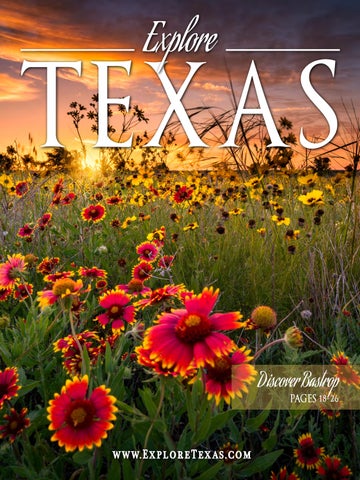
Create a flipbook