RDJ Publishing (Pty) Ltd is the publishing home of the Energy and Sustainability Africa, written and authored through the collaboration with RDJ Consulting Services CC (www rdjconsulting co za)
RDJ Consulting Services CC is an advisory consultancy to the Energy, Water and Transport Sectors with a focus on sustainable operations and renewable energy
THE AFRICA WE KNOW, RENEWED ENERGY IMPACT OR A DREAM...?
Renewable Energy: Energy derived from natural sources that are replenished at a higher rate than they are consumed. Generating renewable energy creates far lower emissions than burning fossil fuels Global renewable energy capacity grew by 15.1% in 2024, largely driven by solar.
– World Economic Forum (https://www weforum.org /stories/2025/04/renewab le-energy-transitionwind-solar-power-2024/)
USD 467 billion
Tracking Renewable Progress in Africa –
“Is there Demand?”
In 2024, the renewable energy sector continued to expand globally, cementing its position at the heart of modern energy systems and economic
development As such, history was made globally when 741 gigawatts (GW) of renewable power capacity were added in a single year (2024). However, behind this headline figure, a striking imbalance persists. While China alone accounted for more than 60% (445 GW) of new capacity, Africa and the Middle East together contributed less than 2% (13 GW) (REN21,2025) This disparity raises an important question for the continent:
‘is Africa lacking demand for renewables, or is it constrained by deeper structural challenges?
The recorded global expansion of renewables is unfolding against a backdrop of rapidly rising energy demand. In 2024, total global energy demand grew by 2.2%, with electricity demand increasing by more than 4%, well above the 3 2% growth in global GDP This was driven by cooling demand resulting from extreme
temperatures, growing consumption by industry, the electrification of transport, and the expansion of the data centre sector The good news is that renewables and nuclear (a low-carbon energy source) met 80% of the growth in global electricity generation Renewables accounted for the largest share of the growth in global energy supply (38%), followed by natural gas (28%), coal (15%), oil (11%) and nuclear (8%) (International Energy Agency (IEA), 2025). This highlights their growing competitiveness and scalability
At the continental level, Africa’s renewable energy trajectory remains closely linked to its persistent energy access challenges. Encouragingly, worldwide, the number of people without electricity declined by approximately 8 million people in 2024, yet around 737 million people still lack access, and nearly 80% of them live in Sub-Saharan Africa At this pace, progress is insufficient to meet the target of “Sustainable Development Goal (SDG) 7 1”, which promotes universal electricity access by 2030. Therefore, reaching this target will require the rate of electrification to accelerate by roughly a factor of ten, underscoring the
urgency of scaling up both grid-based and decentralised renewable energy solutions
Notably, African governments are increasingly recognising renewables as essential to their electrification strategies. Countries such as Côte d’Ivoire, Chad and the Democratic Republic of the Congo have set ambitious targets for universal or nearuniversal access by 2030 or earlier, backed by detailed implementation plans Others, including Niger, Nigeria, Senegal and Zambia, are combining grid expansion and off-grid strategies, including mini-grids and distributed home solar systems, to reach rural and underserved communities This integrated approach reflects a broader shift away from a one-size-fits-all model towards a more integrated electrification strategies that combine infrastructure development with decentralised renewable energy deployment that promotes flexible and locally appropriate energy solutions.
Policy frameworks have also matured in several countries Ethiopia, Rwanda, Senegal, Uganda and Cameroon have adopted relatively comprehensive electricity access policies that link electrification to renewable energy deployment. The Ethiopian government in 2017 launched the National Electrification Program (NEP), ambitiously targeting universal electricity access with a full-fledged integrated approach towards electrification By 2022, 55% of its population had access to electricity, which is a major improvement compared to the rate of 20% access recorded in 2015 (World Bank, 2025). However, there is still a gap. While urban areas have a 94% electrification rate, many rural areas still struggle with
access to electricity
Remarkably, these national efforts are increasingly reinforced by regional and international initiatives. Programmes such as Mission 300, launched in 2024 by multilateral development banks (World Bank, in partnership with the African Development Bank), aim to connect three hundred (300) million Africans to electricity by 2030 using a blend of grid and decentralised technologies such as solar home systems and mini-grids. Another example of a notable initiative is the Accelerating Sustainable and Clean Energy Access Transformation (ASCENT) Program, launched by the World Bank in 2023 to exponentially accelerate sustainable and clean energy access and provide lifetransforming opportunities for 100 million people in about 20 countries across Eastern and Southern Africa over the next seven years.
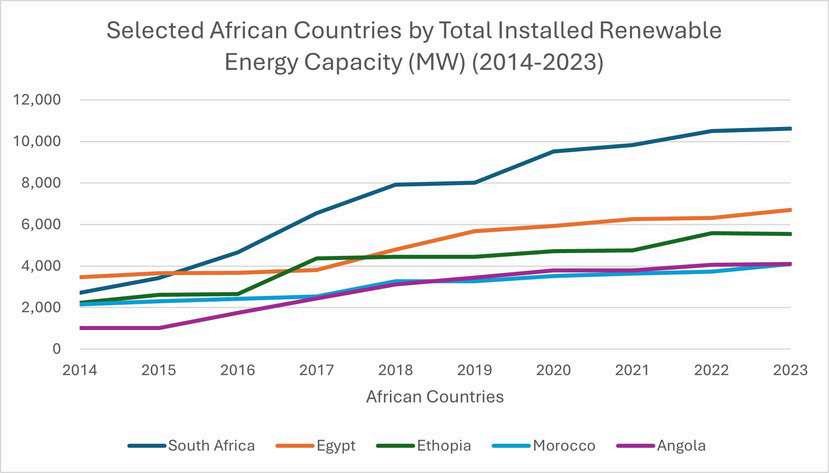
However, progress in Africa has been uneven, with renewable energy development concentrated in a limited number of leading markets According to International Renewable Energy Agency (IRENA) data for 2023, South Africa, Egypt, Ethiopia, Morocco and Angola accounted for a significant share of the continent’s total installed renewable energy capacity, making them the leading markets that year. Their progress has been driven by factors such as abundant natural resources, relatively stable policy environments and supportive investment frameworks Figure 1 illustrates trends in total installed renewable energy capacity, measured in megawatts, across these leading countries over the past decade.
In contrast, countries such as South Sudan recorded minimal or no renewable energy installations between 2014 and 2017, followed by just 1 MW in 2018 with no additional capacity until 2021. More recently, however, capacity increased to 15 MW in 2022 and 28 MW in 2023, signalling growing efforts to deploy renewable energy technologies and highlighting emerging momentum in previously lagging markets
Beyond these frontrunners, a second tier of emerging renewable energy markets is beginning to take shape, with countries such as Rwanda, Tunisia, Tanzania and Algeria expanding solar and wind capacity Namibia and Mozambique are also positioning themselves as future renewable energy hubs, leveraging abundant solar, wind and hydropower resources to explore new frontiers such as green hydrogen.
Although many flagship projects remain in the planning or early development stages, the continent’s strategic intent is evident, reflected in the growing momentum despite persistent challenges Renewable energy employment in Africa remains modest compared to its potential, mostly due to constrained investment and underdeveloped supply chains. In addition, skills shortages, permitting delays, grid constraints, financing difficulties and policy uncertainty continue to slow deployment Globally, factors such as high interest rates, currency volatility, and continued fossil fuel subsidies in some countries have further distorted markets, often disadvantaging clean energy deployment in developing economies.
Nevertheless, global opportunities are expanding, presenting African countries with clear pathways to accelerate renewable energy adoption Distributed solar systems are growing rapidly, particularly in off-grid and weak-grid areas, demonstrating strong underlying demand for clean, reliable power. Africa is expected to source about 28% (55 TWh) of the additional supply from solar PV, alongside significant growth in gas-fired generation, followed by expanding hydropower, wind and nuclear output (International Energy Agency (IEA), 2026). The increasing corporate demand for power
ECOWAS, Spain Sign $19 Million Agreement Based on Mutual Interests
ECOWAS, Spain’s AECID sign €16 million cooperation deal Program targets rural development, gender equality, regional integration Agreement supports agriculture, energy, infrastructure under Vision 2050
ECOWAS and the Spanish Agency for International Development Cooperation (AECID) signed two memoranda of understanding on Monday, Feb
23, under the 2025-2028 ECOWAS-AECID cooperation program
With a budget of 16 million euros (about $19 million), the partnership aims to strengthen member states’ resilience, promote inclusion, and accelerate regional integration in West Africa, ECOWAS said on X The program will focus on rural development, gender equality, and the empowerment of women and girls
The agreement will also support priority sectors including agriculture and food security, energy access, infrastructure, and institutional strengthening, in line with ECOWAS Vision 2050
A strategic partnership for resilience and inclusion
ECOWAS Commission President Omar Alieu Touray described the initiative as the most significant cooperation agreement with a regional economic community in Africa, adding that it is based on shared interests rather than an aid-based approach
The agreement comes as ECOWAS member states step up joint regional initiatives to strengthen economic and agricultural integration Through its Department of Economic Affairs and Agriculture, ECOWAS held a second round of regional meetings from Nov. 26 to Dec. 3, 2025, aimed at accelerating integration, promoting trade, boosting agricultural productivity, protecting the environment, improving food security, and supporting inclusive growth
The sub-region continues to face political tensions following the withdrawal of Mali, Burkina Faso, and Niger. At the same time, member states are seeking to diversify their economies, reduce reliance on raw materials, and boost intra-African trade
Through these agreements, ECOWAS and AECID aim to strengthen institutional capacity and deliver tangible benefits to West African populations, particularly women and girls.
Lydie Mobio
US$059
US$067
The US$ equivalent refers to current exchange rates (25 February 2026)
Information available at the time of publication. Reliance on this information is not advised
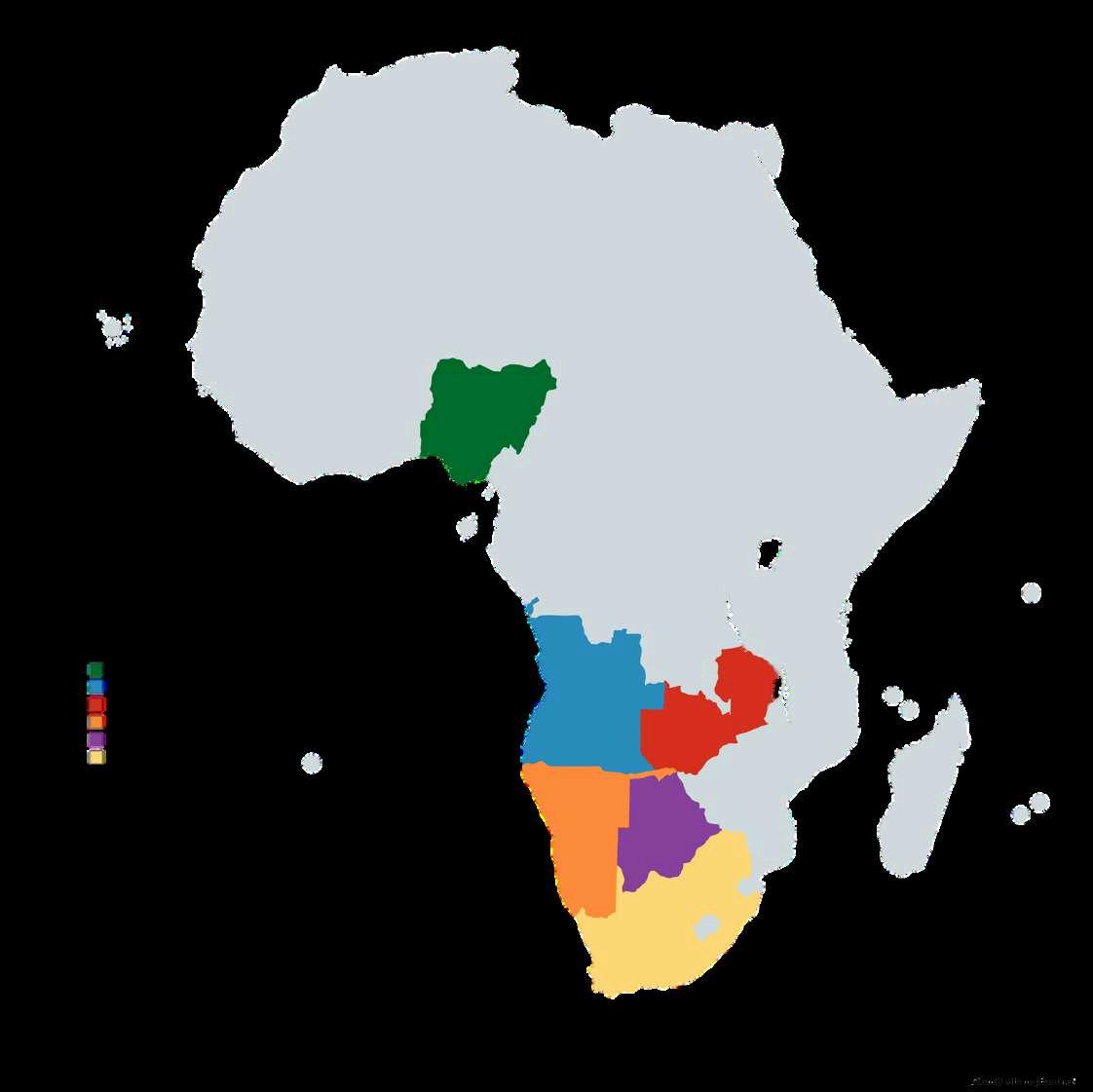
Data Source:Namibia: www.mme.gov.na, Botswana: www.bera.co.bw, Zambia: www.erb.org.zm, Others: theglobaleconomy.com
Growing Food, ‘Africa's Challenges’
Long known as the world’s breadbasket, Africa produces nearly 10% of the world’s agricultural output and holds about 60% of the world’s
uncultivated arable land. For decades, Africa has been celebrated not only for its fertile soils and diverse climates but also as a continent brimming with agricultural promise Yet as global markets evolve and demand for value-added food products surges, the African agricultural landscape finds itself at a threshold of transformation. While the continent accounts for significant shares of global staple production, its position in production, exports and imports reveals persistent structural gaps that obscure its full economic promise Many African nations remain net importers of processed foods and agricultural value chains, even as they export large volumes of raw commodities.
The resulting imbalance of exporting raw commodities while importing finished products has long constrained job creation for value addition, industrial growth and foreign exchange stability on the continent However, a shift is underway across key agricultural powerhouses as governments and private sector stakeholders are investing in agro-processing zones, agribusiness reforms, regional trade integration, and commercial
farming models designed to retain value locally. This article unpacks the following by exploring how the continent’s agricultural powerhouses, with a specific focus on Nigeria, are navigating transitions from subsistence and bulk commodities towards competitive, value-driven markets
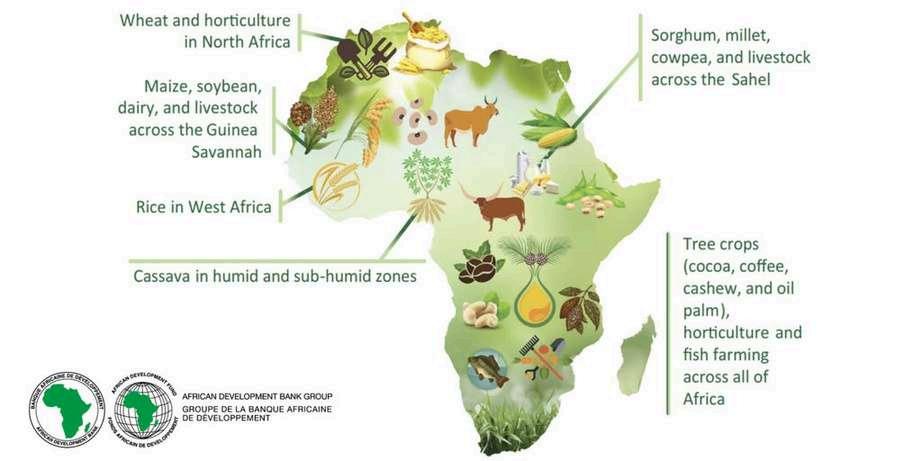
Africa’s “food baskets” are regions and countries with high agricultural productivity, fertile land, favourable climates, and strong farming activity, which produce a large share of the continent’s staple foods and agricultural commodities Across West Africa, the Guinea Savannah Belt, spanning Nigeria, Ghana, Côte d’Ivoire and neighbouring states, supports extensive production of maize, rice, cassava, yams, sorghum and livestock, making it one of the continent’s most promising agricultural corridors. In East Africa, the highlands of Ethiopia, Kenya, Uganda and Tanzania form another vital breadbasket, known for maize, wheat, coffee, tea, horticulture and dairy production The Nile Basin, particularly Egypt and Sudan, relies on irrigated agriculture to produce wheat, rice, sugar and vegetables, while Southern Africa’s maize belt, led by South Africa and Zambia, remains central to regional grain supplies
and commercial farming These zones are critical not only for domestic food security but also for exports and regional trade
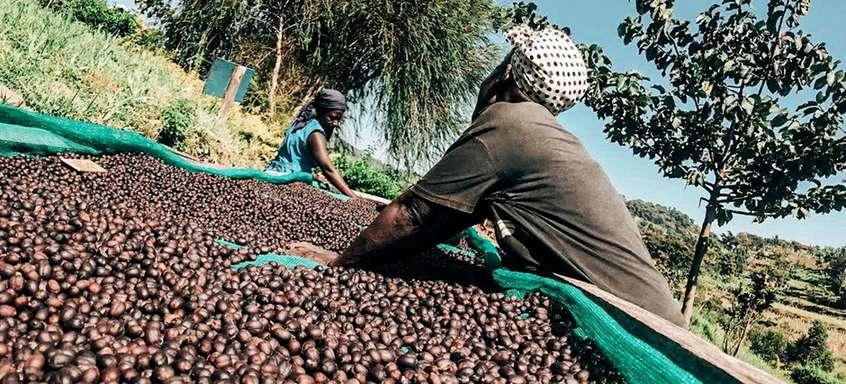
Beyond geographic zones, certain countries function as continental agricultural anchors due to their production scale and export strength Nigeria leads globally in cassava and yam production; Côte d’Ivoire and Ghana dominate cocoa exports; Kenya is a major horticulture and tea exporter; Ethiopia is a key coffee and livestock producer; and South Africa operates one of the continent’s most advanced and diversified agricultural economies. Together, these regions and countries constitute Africa’s food baskets, productive agricultural hubs that sustain domestic food systems and supply international markets While these food baskets generate substantial volumes of raw commodities, much of the value embedded in their production continues to be realised outside the continent. Cocoa is exported before it becomes chocolate, coffee before it is branded and packaged, cotton before it becomes textiles, and grains before they are transformed into higher-value processed goods As a result,
‘Africa’s agricultural powerhouses remain production-rich but value-poor in global trade terms.’
Before assessing whether Africa’s food baskets are advancing, it is essential to clarify what transformation truly entails In agricultural terms, value addition refers to the process of increasing the economic worth of a commodity by processing, packaging, branding, refining, or transforming it into higher-value products.
It is the difference between exporting raw cocoa beans and exporting finished chocolate; between selling unprocessed cotton and producing textiles; between shipping green coffee and marketing roasted, branded blends. Value addition extends beyond manufacturing; it includes storage, grading, cold chain systems, certification, logistics, and market positioning that allow producers to command higher prices and access premium markets
Commercialisation, meanwhile, represents the shift from subsistence-oriented farming to market-driven production. It involves integrating farmers into structured value chains, improving productivity through mechanisation and technology, strengthening access to finance, ensuring consistent quality standards, and building reliable links between producers, processors, and export markets. Commercialisation transforms agriculture from a survival activity into a competitive business sector capable of generating employment, attracting investment, and contributing meaningfully to gross domestic product (GDP) growth and has thus been considered a key strategy for sustainably reducing poverty and for achieving equitable growth in many countries in Sub-Saharan Africa.
The continent has long demonstrated its capacity to produce in volume, yet production alone has not translated into proportional economic gains The challenge, therefore, is not simply to grow more food, but to grow smarter and to retain more value domestically In recent years, many of Africa's agricultural powerhouses have made progress, with countries like Kenya, Ethiopia, and South Africa taking active measures to diversify their agricultural exports and encourage private sector
investment in these sectors. Kenya, for example, is leveraging policy reforms and establishing agroprocessing zones to increase the commercial value of its agricultural products, including tea, coffee, and floriculture The Kenyan government has also focused on building infrastructure to ease logistics and improve the efficiency of supply chains Additionally, Kenya has attracted private-sector investment, particularly in the processing of horticultural products for export. Thereby, enhancing food safety standards, improving production efficiency, and expanding market access beyond the traditional European markets
These strides made by Kenya and other African agricultural powerhouses in value addition and commercialisation are not isolated cases. Across the continent, a growing focus on agro-processing zones, policy reforms, and private sector investment is reshaping the agricultural landscape Ethiopia, for instance, has also worked to boost its coffee exports by improving processing techniques and fostering a more robust export infrastructure. South Africa, known for its wine and citrus production, has heavily invested in both value-added processing and expanding its agricultural exports to new global markets These success stories underline the potential for African countries to shift from merely exporting raw materials to producing higher-value goods that can better withstand the volatility of global commodity prices.
However, while countries like Kenya are advancing, Nigeria, the continent’s largest economy and most populous country, offers a more complex picture Its agricultural sector, once the backbone of the economy, is grappling with both structural and systemic challenges that make the transformation of its food basket more intricate. As Nigeria attempts to navigate this shift, it illustrates not only the potential of Africa’s agricultural powerhouses but also the complexities that come with scaling up such a transformation Below, the article examines how Nigeria is navigating this shift
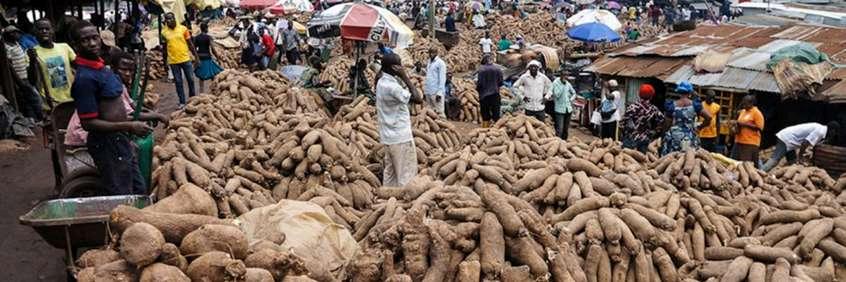
Nigeria, Africa’s most populous country and largest economy, is home to 182 million people, nearly 60 per cent of whom are under 35, creating both opportunities and pressures for employment and food security Over half of Nigerians live in rural areas, where agriculture remains the primary livelihood. About 70 per cent of rural households are smallholder farmers producing roughly 90 per cent of the country’s food, mostly on rain-fed plots. The country is one of the world’s largest producers of cassava and yams, and it is also a significant producer of cocoa, rice, sorghum, and palm oil But although the country leads in cassava production, much of the crop is consumed locally in basic processed forms or sold with minimal industrial refinement. Similarly, Nigeria exports cocoa beans but has relatively limited large-scale chocolate manufacturing for international markets
This situation illustrates the gap between production and value capture Nigeria also spends substantial sums importing food, including rice and processed consumer goods, and despite agriculture contributing 21 per cent of GDP in 2015, the sector remains underdeveloped due to poor infrastructure (power, water, roads) and high operating costs As a result, the country remains dependent on imports to meet the demand for quality processed foods In 2018, food imports for Nigeria represented 10.9% of the total merchandise imports. Nigeria is a substantial net importer of agricultural products, with total imports of over USD 5.81 billion (N2 21 trillion) in 2018 Against this backdrop, Nigeria’s efforts to commercialise agriculture and expand value addition offer key insights into the broader challenge of transforming Africa’s food baskets into competitive, industrialised agricultural economies.
Recent policy interventions and development programs, particularly by the International Fund for Agricultural Development (IFAD) and government initiatives, the Central Bank of Nigeria (CBN) and others, aim to bridge
Case study: Nigeria
these gaps Efforts focus on empowering rural farmers, strengthening cooperatives, promoting Agroprocessing, improving access to finance, and integrating smallholders into value chains. Below, a few of these are outlined.
One of the most widely discussed programs is the Anchor Borrowers’ Programme (ABP), led by the CBN This initiative links smallholder farmers with large buyers or “anchors” such as processors and agribusinesses, providing farmers with access to credit, inputs like seeds and fertiliser, and guaranteed markets for their produce. By connecting farmers to processors, ABP fosters production beyond subsistence farming and helps anchor companies secure raw materials for local industrial processing, a key step toward value addition and commercialised agriculture To further support commercialisation, the CBN operates several financing schemes that target different parts of the agricultural value chain. These include the Commercial Agriculture Credit Scheme (CACS) offering loans at affordable interest rates to commercial farms, and other programs like paddy and maize aggregation facilities that help organise and finance production, storage, and processing activities. These schemes are aimed at closing the long-standing credit gap in agriculture and enabling farmers and processors to invest in largerscale production and processing facilities
The ABP has had one of its most visible impacts in the rice value chain Rice is a staple food in Nigeria and a major component of the country’s food import bill. Before recent interventions, Nigeria relied heavily on imported rice despite having suitable land and climate for domestic production Through the ABP, smallholder rice farmers were provided with credit, improved seeds, fertiliser, and extension support, while being linked directly to large rice millers who served as anchors This structured arrangement ensured that farmers had guaranteed buyers, while millers had a stable supply of paddy rice for processing. As a result, domestic rice production increased, and several integrated rice mills expanded operations
Another important development is the Value Chain Programme in Northern Nigeria (VCN), co-funded by the government, IFAD, and the French Development Agency (AFD). This initiative aims to strengthen agricultural value chains in several northern states by improving productivity, market access, and processing capacity for staple and high-potential crops The focus is on increasing income for rural farmers, including women and youth, thus encouraging broader participation in commercialised agriculture.
Madagascar ends 21 oil permits and 21 productionsharing contracts
Government terminates 21 hydrocarbon permits and 21 PSCs OMNIS loses four permits; 17 expired titles declared void Madagascar Oil remains sole operator with active PSC
Madagascar has formally terminated 21 hydrocarbon exploration and production permits and 21 production-sharing contracts
(PSCs) through a series of decrees. The decision was announced in a statement issued after the Council of Ministers meeting held at the Iavoloha Palace on February 5
The government canceled the PSC signed on August 27, 2015, with U.S.-based CB World Trade Natural Energy Ltd. The contract covered exploration and potential production activities in the Belo Profond Nord area, which includes blocks 1841 5, 1841 6, 1941 1, 1941 2, 1941 3 and 1941 4
Authorities also withdrew four hydrocarbon exploration and production permits from the Office of National Mines and Strategic Industries (OMNIS), ending the rights attached to them.
Seventeen other permits that had expired were declared void after reaching the end of their validity period In addition, the state terminated 20 production-sharing contracts signed with international oil companies, although the official statement did not specify the parties involved.
With this move, Madagascar ends the permits and contractual frameworks in force across the affected areas
The official statement did not outline the reasons behind the decision
A sector “cleanup” cited by local media
Although the government did not formally explain the cancellations, local media outlets, including L’Express de Madagascar, have described the move as part of a broader “cleanup” policy in the oil sector
In late January 2025, Olivier Herindrainy Rakotomalala, then Minister of Mines and Strategic Resources, presented a plan to restructure the oil sector framework, according to statements reported by Ecofin Agency. The plan came amid limited development of the country’s identified oil potential.
According to those reports, the strategy included canceling oil contracts with companies that had withdrawn from the country, without detailing the timeline or the process for reallocating the blocks. Authorities also mentioned strengthening the upstream legal framework through a new model productionsharing contract
On January 29, Carl Andriamparany, Minister of Mines and Strategic Resources, addressed the issue during a conference on extractive sector governance coorganized by EITI Madagascar and the Institute of Political Studies of Madagascar.
“As we consider launching a new oil promotion campaign, it is legitimate to clean up all these areas,” Andriamparany said, according to local outlet 2424 mg,
referring to the cancellation of expired oil contracts in 2024.
He added that “areas where exploration work was carried out now revert to the state, through OMNIS, and we can therefore seek new partners to carry out these research activities ”
According to the minister, Madagascar Oil SA remains the only operator with an active production-sharing contract, notably covering the Tsimiroro exploration block 3104, where resources are estimated at 1 7 billion barrels of heavy oil
In 2022, Madagascar Oil announced several heavy fuel oil supply agreements with Malagasy companies in the agribusiness and textile sectors, according to company statements.
Abdel-Latif Boureima
Courtesy: Canva
Let's Connect the Dots of Water
Across Africa, water is more than a resource; it is the invisible infrastructure sustaining ecosystems, economies, and national
development strategies. This interdependence is especially visible in tourism, one of the world’s largest industries, accounting for one in ten jobs and approximately 10 4% of global GDP, or $8 8 trillion annually In Africa, nature-based tourism is particularly vital in East and Southern Africa, where it underpins foreign exchange earnings, community livelihoods, and conservation financing. Each year, millions of visitors travel to witness the Great Migration, track mountain gorillas, or experience vast ecosystems that still function on a grand, untamed scale Yet the wildlife movements, vegetation cycles, and overall viability of safari destinations all depend fundamentally on healthy rivers and wetlands Despite this deep connection, water, wildlife, and tourism are too often managed in silos.
Water forms the foundation of ecological productivity In many African ecosystems, hydrological cycles determine vegetation growth, grazing patterns, predator-prey relationships, and species migration routes. Freshwater ecosystems themselves function as natural infrastructure. Rivers transport sediments and nutrients that maintain soil fertility downstream. Wetlands filter pollutants, recharge aquifers, and buffer communities against floods Seasonal rainfall dictates the movements of millions of wildebeest across the Serengeti–Mara ecosystem Perennial rivers sustain dryseason refuges for elephants, buffalo, and antelope in semi-arid landscapes. Wetlands such as the Okavango Delta transform seasonal flood pulses into nutrient-rich habitats that support extraordinary biodiversity concentrations In these systems, water availability
does not simply influence ecological conditions; it defines them When rainfall is sufficient and rivers flow predictably, grasslands regenerate, herbivore populations stabilise, and predators thrive
Africa is renowned for its stunning landscapes and incredible biodiversity, making it a prime destination for wildlife tourism. From the majestic elephants of the Savannah to the elusive leopards of the rainforest, the continent offers an unparalleled opportunity for visitors to experience nature in its most pristine form Protected areas attract millions of international visitors annually, generating revenues that fund conservation operations, anti-poaching initiatives, infrastructure development, and community projects. In countries such as Tanzania, Morocco, South Africa, Egypt, Tunisia, Ghana, and Rwanda, tourism constitutes one of the largest sources of foreign currency inflow The economic model of many protected areas depends directly on visitor fees, concession agreements, and lodge operations. In turn, the attractiveness of these destinations relies on the abundance, diversity, and visibility of wildlife populations
The relationship between wildlife and tourism is therefore economically reinforcing but ecologically fragile. Wildlife abundance depends on healthy ecosystems, and healthy ecosystems depend on reliable water systems. When hydrological conditions deteriorate, wildlife populations decline or redistribute Drought reduces forage quality and water availability, leading to lower reproductive success and increased mortality among herbivores Predators follow shifting prey distributions, altering established viewing patterns. Reduced wildlife density diminishes tourist satisfaction, potentially lowering visitation rates and
revenues. Declining tourism revenue can then constrain conservation budgets, weaken ecosystem management, creating a negative feedback loop Water insecurity thus becomes an economic risk factor, not merely an environmental concern
At the same time, tourism itself is a significant water consumer. Safari lodges, tented camps, hotels, and associated infrastructure require water for guest services, cleaning, sanitation, food preparation, landscaping, and staff housing In remote conservation areas, tourism facilities frequently rely on boreholes, river abstractions, or local aquifers Research in parts of southern Africa has shown that per capita water use in luxury wildlife lodges can exceed that of surrounding communities several times over. In water-scarce environments, this disparity can create tensions between tourism operators and residents, particularly during drought periods when water supply is constrained
Africa’s water resources are both abundant and scarce, depending on geography Roughly two-thirds of Africa is categorised as arid or semi-arid, despite the continent possessing close to 9% of global freshwater resources This is primarily because of the uneven distribution of these resources, as 54% of the continent’s supply is held by only six countries, while 27 of the countries
facing severe water poverty share only 7%. Central Africa benefits from major river systems such as the Congo River, while North and Southern Africa face chronic water shortages and recurring droughts Millions of Africans still lack reliable access to clean water, and increasing population growth, agriculture, mining, and urban expansion continue to strain available supplies.
Climate change has intensified rainfall variability, making droughts more frequent and prolonged in already vulnerable regions Drought reduces surface water availability and concentrates wildlife around shrinking waterholes, increasing competition and the spread of disease. On the other hand, where extreme rainfall is experienced, and even flooding, soil erodes, riverbanks are damaged, and it can even destroy tourism-supporting infrastructure, such as roads and bridges Floods can isolate lodges, disrupt supply chains, and damage facilities The Water-WildlifeTourism Nexus is therefore subject to both ecological and financial climate risks, reinforcing the need for anticipatory adaptation strategies
To tackle the challenges described above and create cohesion within the water-wildlife-tourism nexus, action must unfold in a clear and logical sequence. First, solutions must be grounded in systemic planning.
Integrated Water Resources Management (IWRM) provides a basin-wide framework that reconciles competing demands by treating entire river systems as single planning units. Within this structure, environmental flows for ecosystems and wildlife can be scientifically assessed, formally defined, and legally protected Determining minimum water levels necessary to sustain biodiversity and ecosystem services ensures that water allocation policies recognise ecological needs alongside agricultural, industrial, and urban demands. By embedding these requirements into national frameworks from the outset, tourism expansion can occur within clearly defined ecological limits rather than at their expense
Through the Global Water Partnership, which is an international network created to foster an integrated approach to water resources management, numerous African countries have adopted and begun implementing the national IWRM action plans that integrate environmental sustainability into basin-level planning and water allocation decisions At the continental scale, the Africa Water Vision 2025, championed by the African Ministers' Council on Water, has provided a strategic framework for aligning water governance with ecosystem protection, economic growth, and regional cooperation. Together, these initiatives demonstrate that integrated, ecosystemsensitive water management is not merely aspirational, but already embedded in policy reforms and institutional practice across many African nations
As these governance structures establish ecological boundaries, implementation at the tourism level becomes essential Water-smart tourism practices translate policy into operational reality Technological interventions, including low-flow fixtures, rainwater harvesting, greater recycling, solar-powered boreholes, and wastewater reuse systems, can substantially
reduce freshwater abstraction Transparent monitoring and public reporting of water consumption further enhance accountability and encourage benchmarking across the sector. In highly water-scarce regions, abstraction caps linked to seasonal variability may be necessary to ensure that tourism demand remains aligned with hydrological availability
Finally, long-term sustainability depends on inclusive, community-centred governance Local communities are primary stakeholders in both water systems and wildlife landscapes. When tourism revenues are equitably shared, and reliable water access is secured for domestic and pastoral needs, conservation incentives are strengthened, and social legitimacy is built Devolved management structures, such as community conservancies in parts of East and Southern Africa, demonstrate how aligning economic benefits with ecological stewardship can reduce conflict and improve resource management outcomes.
Across Africa, several countries have demonstrated that wildlife tourism can serve as a powerful engine for economic growth while reinforcing conservation objectives. Botswana is a global leader in conservation through its high-value, low-volume tourism model, carefully regulating visitor numbers and waterdependent ecosystems to maintain ecological integrity Kenya has combined protected area management with community conservancies, linking wildlife conservation to local livelihoods in water-sensitive Savannah landscapes. Among these examples, Namibia stands out as a particularly compelling case. As one of the driest countries in sub-Saharan Africa, Namibia faces extreme water scarcity, yet it has successfully developed a globally recognised wildlife tourism industry Below, the article illustrates how water, wildlife, and tourism intersect on the ground
Despite its arid climate and limited freshwater resources, Namibia has become a global leader in community-based conservation. Through its communal conservancy system, local communities are granted rights to manage and benefit from wildlife resources However, for Namibia, climate variability is not theoretical; it is a lived economic reality The country experiences recurring droughts, periodic floods in the northern area, and highly unpredictable rainfall patterns. These extremes directly affect the delicate balance between water, wildlife, and tourism and reveal how tightly Namibia’s tourism sector is linked to hydrological stability
Pressures such as land degradation, unsustainable agricultural practices, overexploitation of natural resources, and inadequate land use planning affect multiple sectors, including agriculture, energy, mining, fisheries, and tourism While integrated, ecosystembased approaches such as rangeland restoration and nature-based solutions (NbS) can deliver co-benefits for adaptation, mitigation, and conservation, their adoption remains uneven. These challenges are further compounded by the expansion of tourism, which increases water demand in an already fragile ecosystem and places additional stress on Namibia’s limited groundwater reserves, especially as drought cycles become more intense
Despite these challenges, Namibia's deliberate effort to integrate water governance with wildlife conservation and economic planning has leveraged it as a catalyst for innovation, creating systems that prioritise sustainability, community empowerment, and ecological balance A defining feature of Namibia’s approach is its Community-Based Natural Resource Management (CBNRM) programme. Through communal conservancies, rural communities gain rights over wildlife management and tourism partnerships. This governance model shifts conservation from a state-only responsibility to a shared economic enterprise In regions bordering protected areas such as Etosha National Park, communities actively manage water points, monitor wildlife populations, and collaborate with tourism operators. Water infrastructure, including boreholes and solar-powered pumps are strategically placed to balance ecological sustainability with tourism visibility, ensuring that wildlife access does not lead to groundwater over extraction
Namibia has further integrated climate adaptation into tourism and conservation planning. Early warning drought monitoring systems, diversified tourism products (such as desert-based experiences in the
Kenya Warns Against 21 Phone Brands Over Health Risks, Network Interference
contributed by:
Devices lack mandatory Type Approval safety certification
Regulator cites health risks and network interference concerns
Kenya's Communications Authority (CA) has warned consumers against using 21 mobile phone brands that do not meet national safety
standards. The regulator said in a statement published on Tuesday, Feb. 10, 2026, that the devices could pose health and safety risks to users
The authority said the phones lack the mandatory "Type Approval" certification required for all telecommunications equipment sold in the country. The process verifies that devices comply with technical and health standards, including electromagnetic emissions, network compatibility and component safety
"Through market surveillance, the Authority has observed an influx of non-type approved mobile phones which pose a safety and health risk of the users," the statement said.
The announcement comes as adoption of telecommunications services accelerates in Kenya. According to CA data, 75 million phones were connected to Kenyan mobile networks in the third quarter of 2025, up from 67 7 million in the same period in 2024, a rise of about 10 8%
Beyond individual risks, the regulator noted that uncertified phones can degrade network quality by generating interference.
Adoni Conrad Quenum
Kenya warns against 21 uncertified mobile phone brands
For the Long Haul‘Africa Fuel Dilemma’
Across Africa, long-distance trucking remains the backbone of regional trade From fuel tankers supplying landlocked economies to container
trucks shuttling goods between ports and inland markets, road freight underpins food security, industrial supply chains, and cross-border commerce Despite renewed interest in rail revival and green logistics, trucks continue to dominate the movement of goods between African countries.
Therefore, what powers these trucks today reflects both structural realities and historical trade choices, while what will power them tomorrow will be shaped by cost and affordability, infrastructure readiness, and the growing urgency of climate action.
Since 2010, the volume of goods transported by heavyduty trucks has increased by more than 30%, broadly mirroring global economic growth, with global gross domestic product (GDP) rising from around USD 65 trillion in 2010 to approximately USD 90 trillion in 2022 (as cited by International Renewable Energy Agency (IRENA), 2024). Heavy-duty trucks account for only about 9% of the global vehicle fleet, yet they are responsible for nearly a quarter of transport-related CO₂ emissions In 2023, this translated into roughly 1 89 gigatonnes of CO₂, which approximately equates to 5% of global emissions, exceeding the combined emissions of international aviation and shipping.
Globally, heavy-duty trucks run almost exclusively on diesel, which accounts for about 95% of consumption The remaining share relies on petrol, natural gas, or limited volumes of biofuels Diesel’s dominance is not accidental. Diesel engines deliver high torque, strong fuel
economy under heavy loads, and high compression ratios, which are typically between 14:1 and 25:1, compared to 8:1 to 12:1 for petrol engines Their robust design supports better lubrication, lower operating speeds, and reduced wear on critical components such as pistons, bearings, and valves, translating into durability in demanding conditions
In Africa, these technical advantages are reinforced by practical constraints Diesel remains the only fuel reliably available along most major trade corridors, particularly beyond urban centres. This dependence is further entrenched by the age profile of the continent’s truck fleet, which is significantly older than fleets in Europe or Asia and heavily reliant on imported second-hand vehicles designed for diesel combustion
Infrastructure realities also play a decisive role. Crossborder trucking routes often traverse countries with uneven road quality, limited service stations, and unreliable electricity supply Diesel engines are valued not only for efficiency under heavy loads but also for their mechanical simplicity and ease of repair in regions where advanced diagnostic tools are scarce For logistics operators operating on thin margins, fuel availability and reliability consistently outweigh environmental considerations. As a result, even countries with ambitious climate commitments continue to depend on dieselpowered freight to sustain trade flows
According to the International Energy Agency, transport accounts for the majority of Africa’s final oil consumption. In 2023, oil products made up about 69% of transport energy use, with diesel alone accounting for
45%, compared to 31% for motor gasoline This dependence carries rising economic and environmental costs Road freight contributes significantly to local air pollution, greenhouse gas emissions, and fuel import bills. Many African economies are net importers of refined petroleum products, leaving transport systems exposed to global oil price volatility and currency risk Under a business-as-usual scenario, transport-related emissions in Africa could triple by 2050, driven largely by freight growth linked to population expansion, urbanisation, and deeper regional integration.
Looking ahead, Africa’s long-haul trucking future is unlikely to be defined by a single fuel Instead, it will involve a gradual diversification of energy sources aligned with infrastructure development and economic feasibility In the near to medium term, diesel will almost certainly remain dominant, but with mounting pressure to improve efficiency. This includes the adoption of newer, cleaner engines, improved fuel standards, and better fleet management systems to reduce fuel consumption per tonne-kilometre Egypt, for example, has tightened vehicle import regulations by banning most used vehicle imports except electric vehicles up to three years old, in an effort to curb the inflow of high-emission vehicles. Studies suggest that stricter controls on imported used vehicles could reduce particulate matter (PM₂.₅) emissions by up to 20% and nitrogen oxides (NOₓ) by as much as 30%
Although not a renewable energy source, natural gas is emerging as a transitional alternative along selected corridors, particularly in countries with domestic gas
resources such as Nigeria, Mozambique, and Egypt
Compressed and liquefied natural gas trucks offer lower carbon intensity and, in some cases, lower operating costs than diesel. However, across Africa, their uptake remains constrained by limited refuelling infrastructure and vehicle availability Without coordinated, corridorbased investment, gas-powered freight is likely to remain a niche solution rather than a continental game-changer
Electric trucking, frequently highlighted in global decarbonisation debates, faces more complex barriers in Africa’s long-haul context. Battery-electric trucks are well-suited to urban delivery and short-haul routes, but long-distance freight demands high-capacity batteries, reliable fast-charging networks, or alternative technologies such as hydrogen fuel cells In regions with weak grid access or fossil-fuel-dominated power generation, the climate benefits of electrification are less straightforward. That said, pilot projects are beginning to test electric freight in controlled environments, particularly where renewable energy can be integrated into charging solutions
Further on the horizon, green hydrogen and hydrogenderived fuels present a compelling, if still speculative, pathway for decarbonising long-distance trucking. Hydrogen fuel cell trucks offer long driving ranges and fast refuelling, attributes well-suited to freight operations Africa’s abundant solar and wind resources position the continent as a potential low-cost producer of green hydrogen, especially in countries developing hydrogen export hubs. Yet costs remain high, and widespread adoption will depend on global technology learning curves, supportive regulation, and coordinated infrastructure planning In 2022, mining company Anglo American unveiled the world’s largest hydrogen-powered truck at a platinum mine in northern South Africa, a 220tonne truck powered by 2 MW hydrogen fuel cells and capable of hauling nearly 290 tonnes of ore, clearly demonstrating the technology’s technical promise, if not yet its commercial readiness
According to the International Renewable Energy Agency, underscored that significant reductions in transport
South Africa’s Largest Private Solar-Plus-Storage Project Reaches Financial Close
SOLA reaches financial close on 300 MW Naos-1 project
Hybrid plant to supply Sasol, Air Liquide via grid
Operations targeted first half 2028, backed by local banks
South African independent power producer SOLA Group said on Monday it had reached financial close on the Naos-1 project, a hybrid solar and
battery storage plant that will supply renewable electricity to Sasol and Air Liquide via the national grid under wheeling arrangements.
Located near Viljoenskroon in South Africa’s Free State province, Naos-1 will have 300 MW (435 MWc) of solar capacity combined with 660 MWh of battery storage The project is backed by long-term power purchase agreements with Sasol and Air Liquide. Its hybrid design will allow solar power generated during the day to be stored and dispatched during peak demand periods, particularly in the evening, ensuring a more reliable supply of dispatchable electricity to industrial customers Commercial operations are targeted for the first half of 2028.
“Naos-1 represents a major step forward for dispatchable renewable energy in South Africa’s private power market and is the result of close collaboration with Sasol and Air Liquide over several months,” said Jonathan Skeen, chief commercial officer of SOLA Group “The project aligns with SOLA’s objective of turning solar generation into affordable on-demand power for our clients and supports our target of reaching 2 GW of solar capacity and 5 GWh of storage by 2030 ”
Described as the largest privately contracted solar-plusstorage project to reach financial close in South Africa, Naos-1 is backed by local financial institutions including the Development Bank of Southern Africa. Construction will be carried out by a joint venture between SOLA Build and WBHO
The project forms part of a broader industrial decarbonisation drive. In October 2025, Sasol and Air Liquide commissioned the 97.5 MW Damlaagte solar plant, the first facility brought online under their joint 900 MW renewable energy programme
Separately, SOLA Group in 2025 commissioned the 195 MW Springbok plant ahead of schedule, described as the country’s largest operational wheeling facility. The projects underscore the growing role of wheeling in supplying renewable electricity to large industrial consumers in South Africa and reflect the expansion of the electricity sector to private operators
Abdoullah Diop
Shaping Tomorrow’s Energy Solutions
Interview with Mr Ebnabbas Ahmed
In Sudan, where energy stability is the key to all development, I felt a responsibility to master this field
- Ebnabbas Ahmed
As the world moves toward cleaner and more sustainable energy solutions, young innovators are stepping forward to shape the future of power and
technology Among them is Ebnabbas Ahmed, a passionate Electrical Engineering student whose academic journey is driven by a strong interest in renewable energy and its potential to transform communities. In this interview, we explore his inspiration for studying electrical engineering, his perspective on renewable energy, and how young professionals can contribute to building a more sustainable energy future
Personal
Ebnabbas Ahmed is a fourth-year Electrical Power Engineering student at Karary University in Sudan, whose academic journey is driven by a strong commitment to technical excellence mastery and a belief that engineering is a collective effort. He is passionate about bridging the gap between the complex theories and practical understanding for my peers Ebnabbas believes that an engineer’s true value is measured not just by personal achievement, but by the ability to simplify science and uplift the entire engineering community to solve realworld energy challenges.
1. What inspired you to pursue Electrical Power Engineering?
“My inspiration comes from a fascination with the "invisible backbone" of our civilization, the power grid I’ve always wanted to understand how massive systems operate in harmony to keep the world running. In Sudan, where energy stability is the key to all development, I felt a responsibility to master this field I wanted to be more than a consumer; I wanted to be the engineer who understands the physics of the grid well enough to ensure its resilience and teach others how to do the same ” Ebnabbas replied
2. What excites you most about the global shift toward renewable energy, especially solar power?
“What excites me is the "democratization of energy." In a sun-rich region like Africa, solar power represents a shift from centralized dependency to local empowerment It gives us the ability to provide reliable electricity to underserved areas without waiting for massive infrastructure projects This transition allows us to build a
sustainable future that is decentralized, clean, and inclusive ” Ebnabbas stated
3. In your opinion, what is the biggest challenge facing the integration of renewable energy into existing power grids?
“From a technical standpoint, the biggest challenge is Grid Stability Traditional grids were built for steady, predictable sources Integrating intermittent renewables like solar requires a high level of technical precision in managing voltage and frequency fluctuations Without advanced Power Flow analysis and a deep understanding of system dynamics, we risk the reliability of the grid. We need a new generation of engineers who can master these complexities to make the transition seamless ” Ebnabbas explained
4. How do you see Smart Grids shaping the future of electricity systems, particularly in developing Countries?
“Smart Grids are the "digital nervous system" that will allow developing countries to leapfrog old infrastructure issues. By integrating real-time data and IoT, we can move from reactive repairs to proactive management This is crucial for reducing high transmission losses and integrating decentralized renewable sources For us, a Smart Grid isn't just a luxury; it’s a necessary tool to build a modern, self-healing network ” Ebnabbas emphasised
5. Where do you see yourself contributing to the energy sector after completing your studies?
“I see myself at the intersection of technical optimization and mentorship My goal is to work on designing resilient hybrid grids that maximize our renewable potential Simultaneously, I plan to continue being a technical resource for my colleagues I believe that Africa’s energy sector will only thrive if we foster a culture of knowledgesharing, where every technical breakthrough is used to empower the next generation of engineers ” Ebnabbas said
“Our continent doesn't just need smart engineers; it needs generous leaders.”
-EbnabbasAhmed
6. In conclusion, what message would you like to share with young people aspiring to build a career in renewable energy and power systems?
“My message is: "Seek the 'Why' behind the science, then share it " Don’t just study to pass exams; study to understand the core of the machine Engineering is a team sport when you find a concept difficult and finally master it and explain it to a peer In doing so, you strengthen your own expertise and contribute to our collective progress. Our continent doesn't just need smart engineers; it needs generous leaders.” Ebnabbas concluded.
TENDERS
Ministry of Information, Communications Technology and National Guidance - Uganda
Description: Framework contract for Fuel and Lubricants
Bid Closing date: 12 March 2026
https://egpuganda.go.ug/login
Environmental Investment Fund of Namibia (EIF)
Description: Provision of Consultancy: To Revise and Strengthen an Adaptation Fund Concept Note on Climate-Smart Villages for Group Resettlement Farms in Namibia
Bid Closing date: 13 March 2026 at 12h00 https://www eif org na/download/rfp-provision-of-consultancy-to-revise-and-strengthen-an-adaptation-fund-conceptnote-on-climate-smart-villages-for-group-resettlement-farms-in-namibia
Ministry of Energy - Lesotho
Description: REQUEST FOR EXPRESSION OF INTEREST (EOI) FOR THE IMPLEMENTATION AND OPERATION OF A TURNKEY FUEL MARKING PROGRAMME (FMP) SOLUTION
Bid Closing date: 26 March 2026 at 10:30 am https://doe gov ls/post/view/11#: :text=INTEREST%20(EOI)%20FOR-,THE,-IMPLEMENTATION%20AND%20OPERATION
Botswana Power Corporation
Description: DESIGN, INSTALLATION, COMMISSIONING AND OPERATION OF 10 MW COAL BED METHANE (CBM) PILOT PLANTS IN BOTSWANA AS INDEPENDENT POWER PRODUCERS (IPPs)
Bid Closing date: 08 April 2026 at 10h00 https://www bpc bw/wp-content/uploads/2026/02/Tender-No 7614-25 pdf
DAVID JARRETT
EDITORAND CHIEFEXECUTIVEOFFICER @RDJGROUP
NICOLE FELIX CHIEFDESIGNER (LAYOUTANDDESIGN) @RDJPUBLISHING