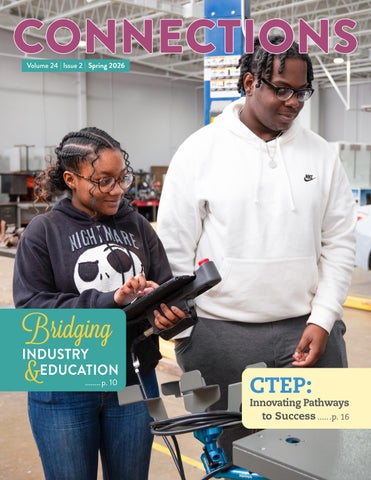
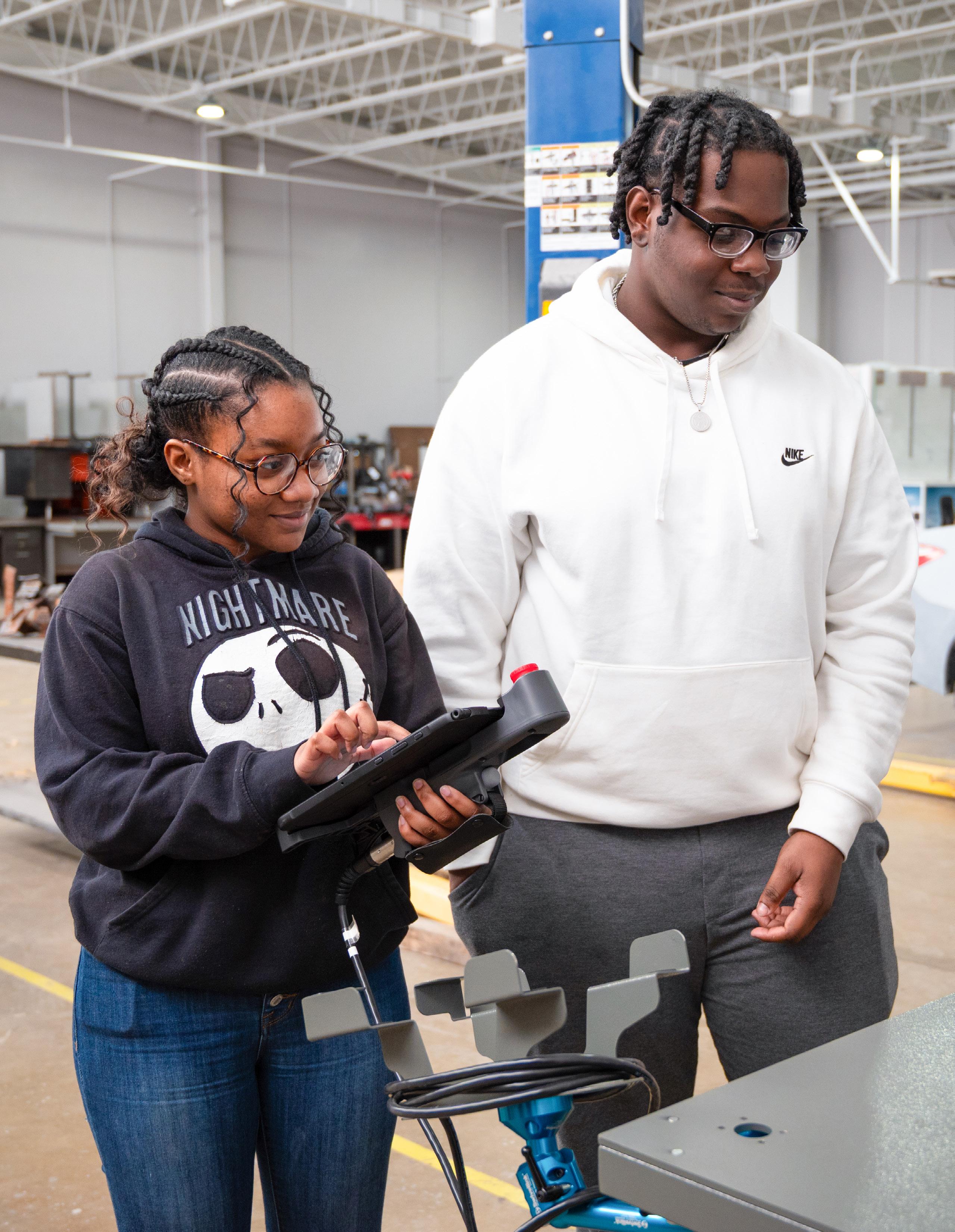
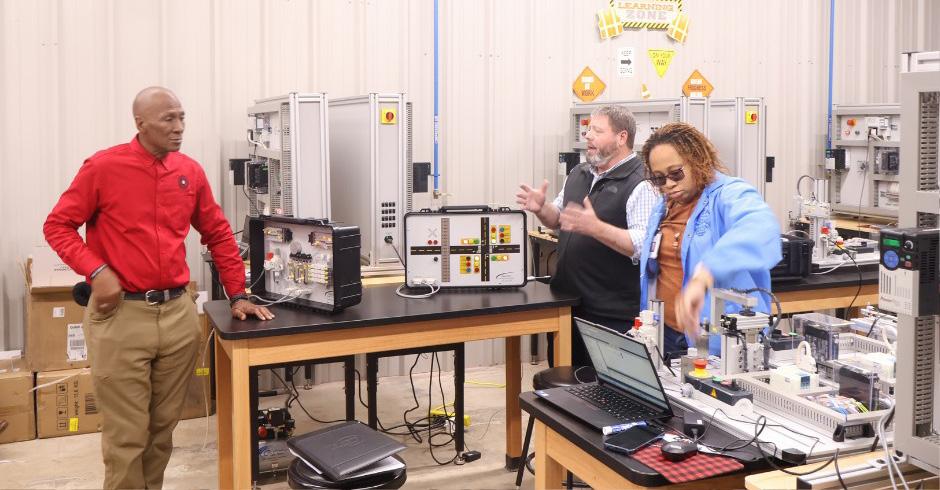
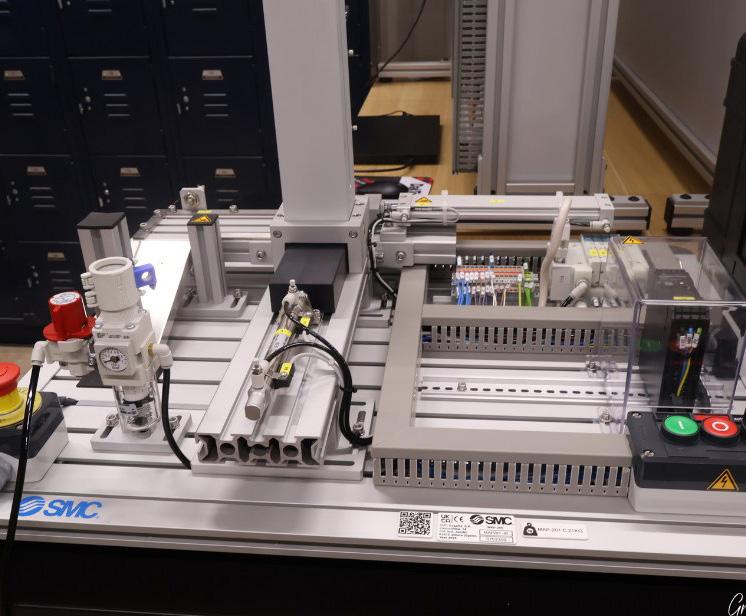
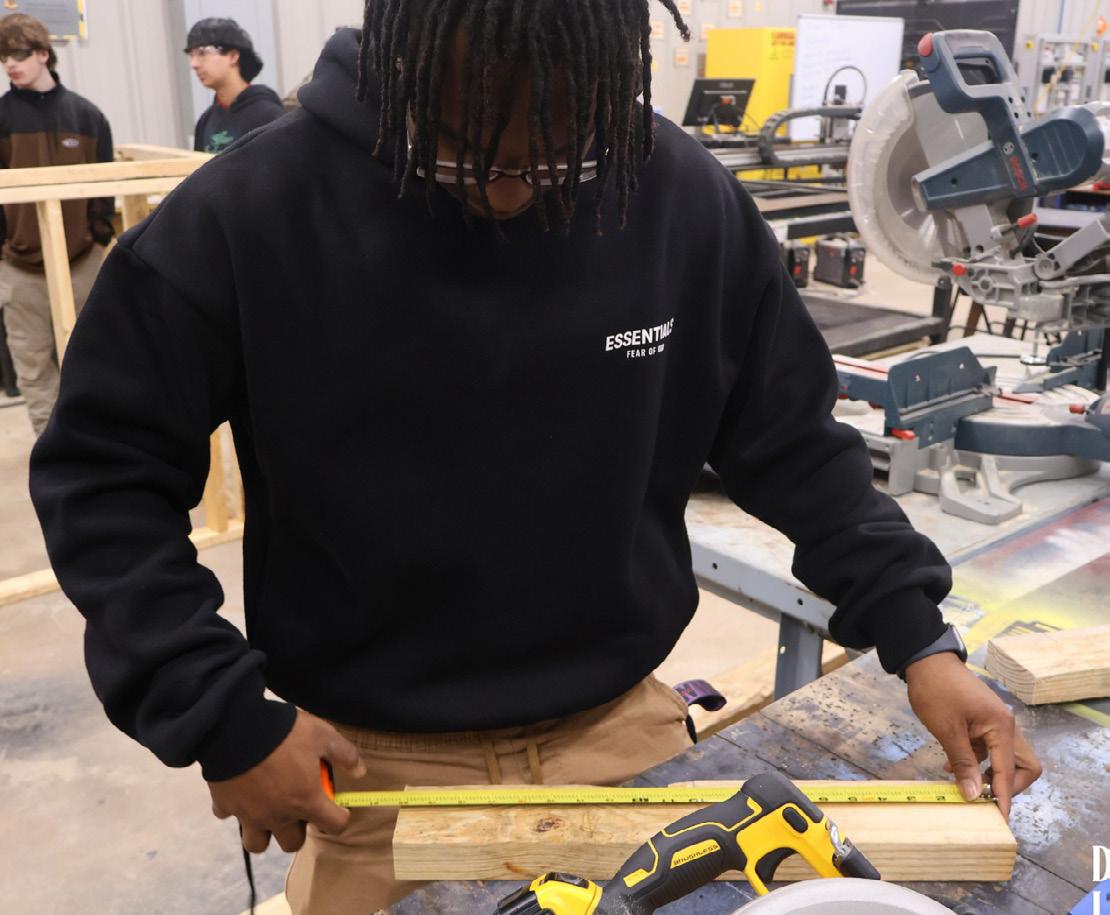
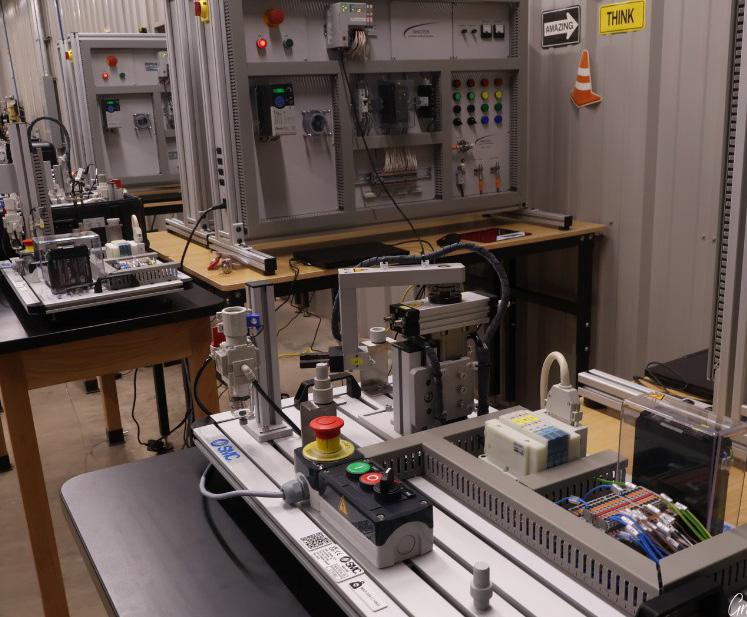
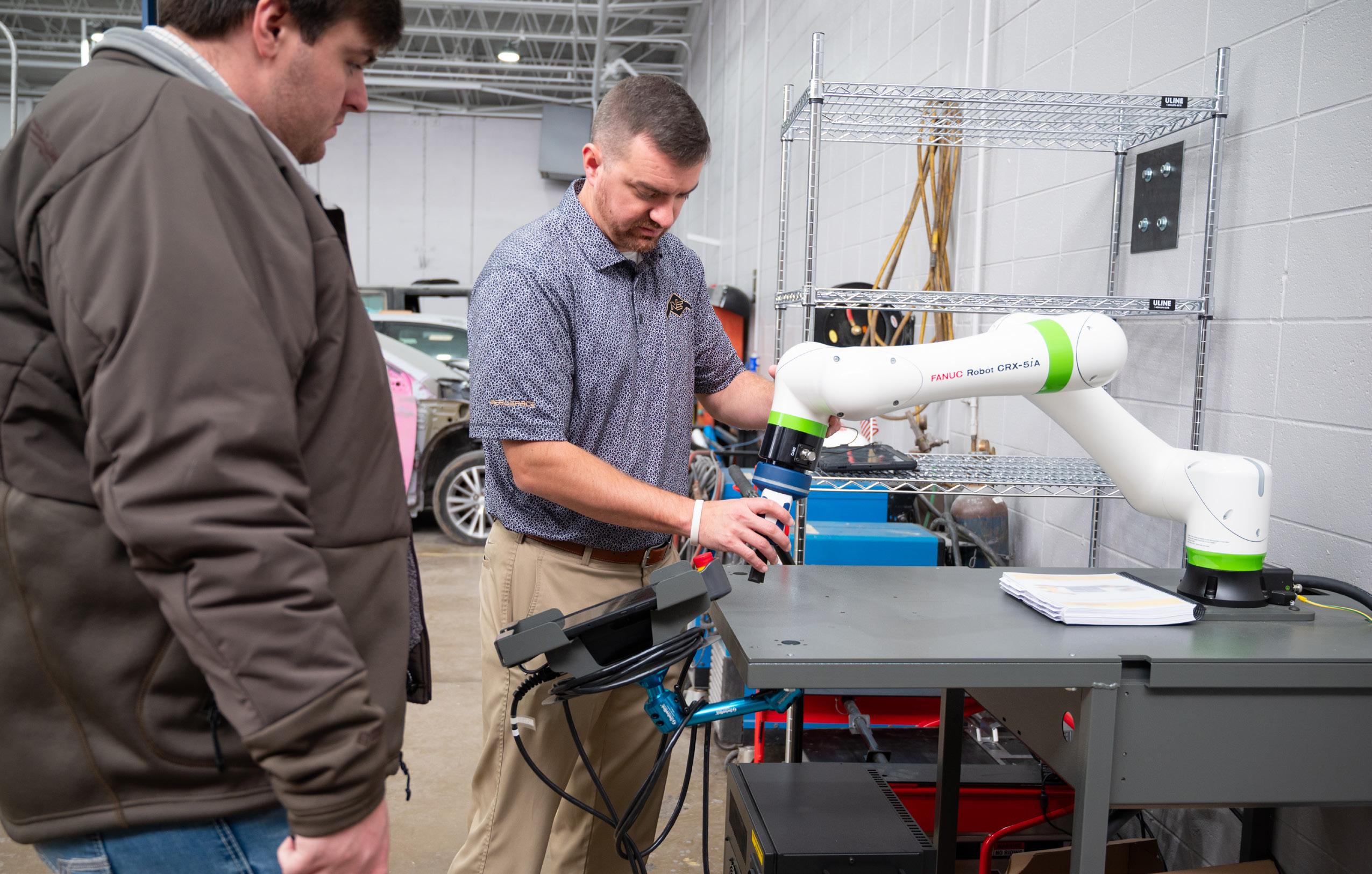
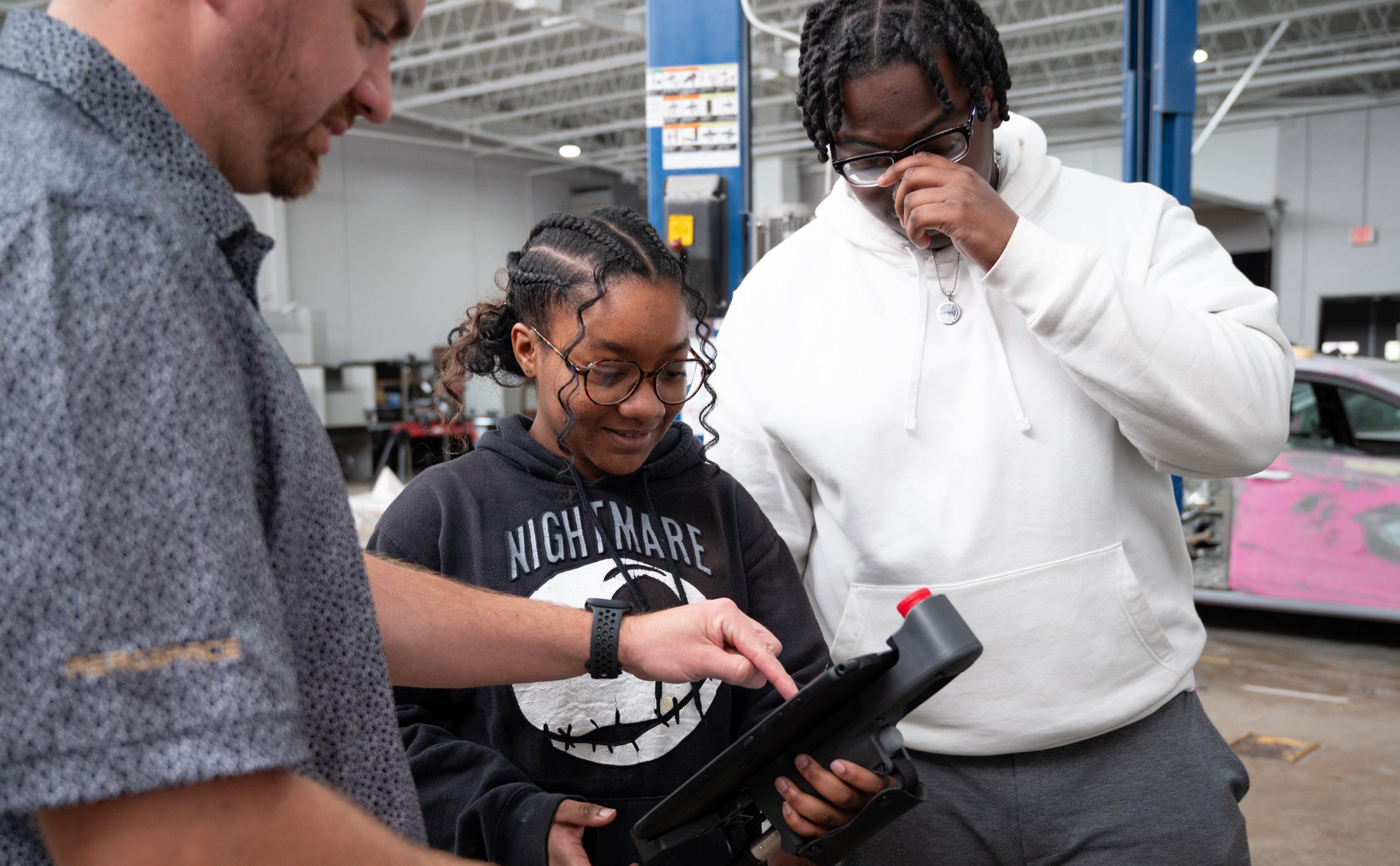
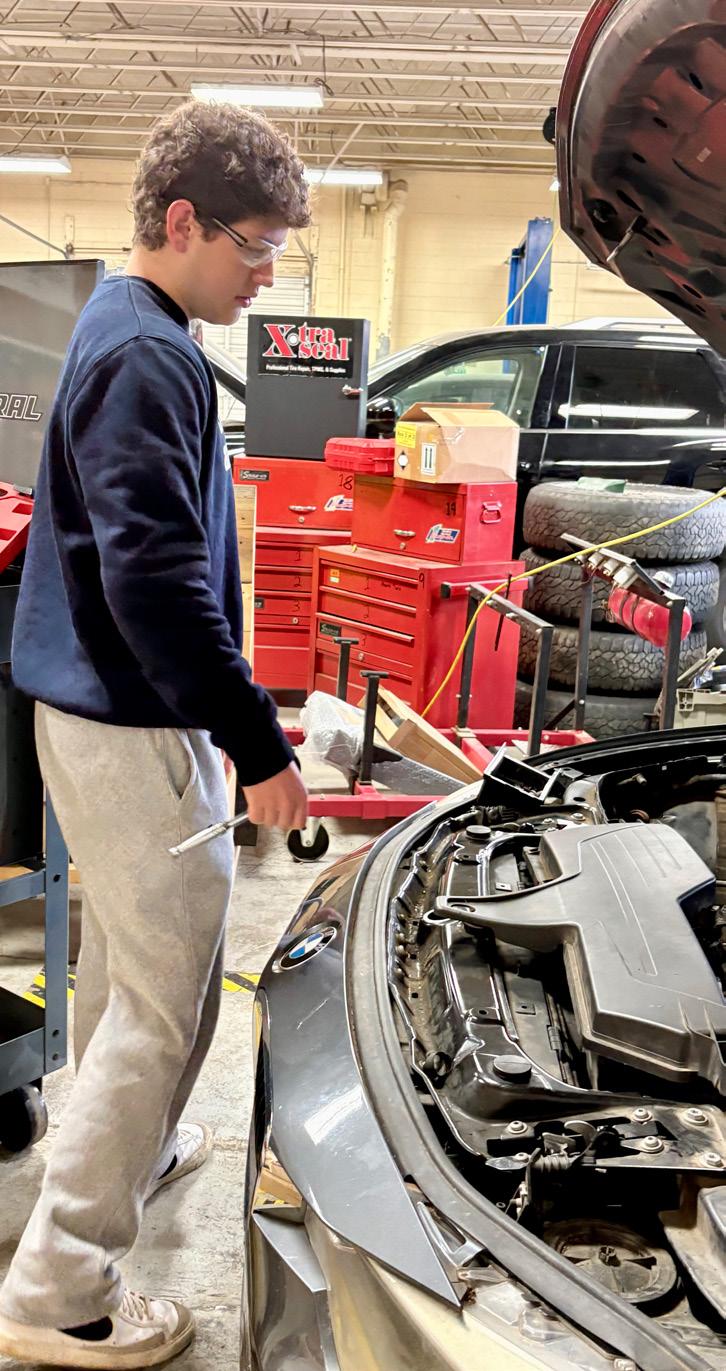
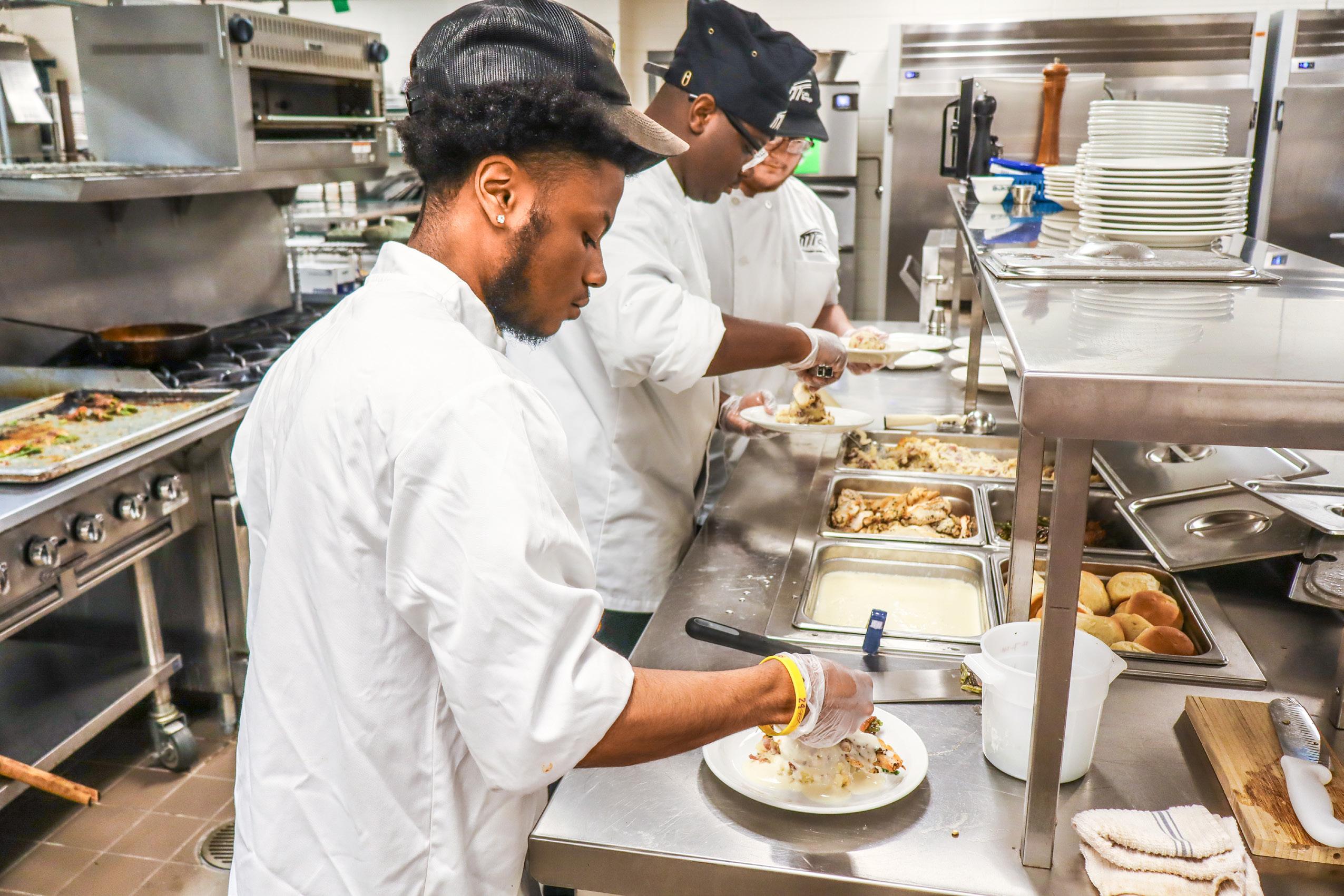
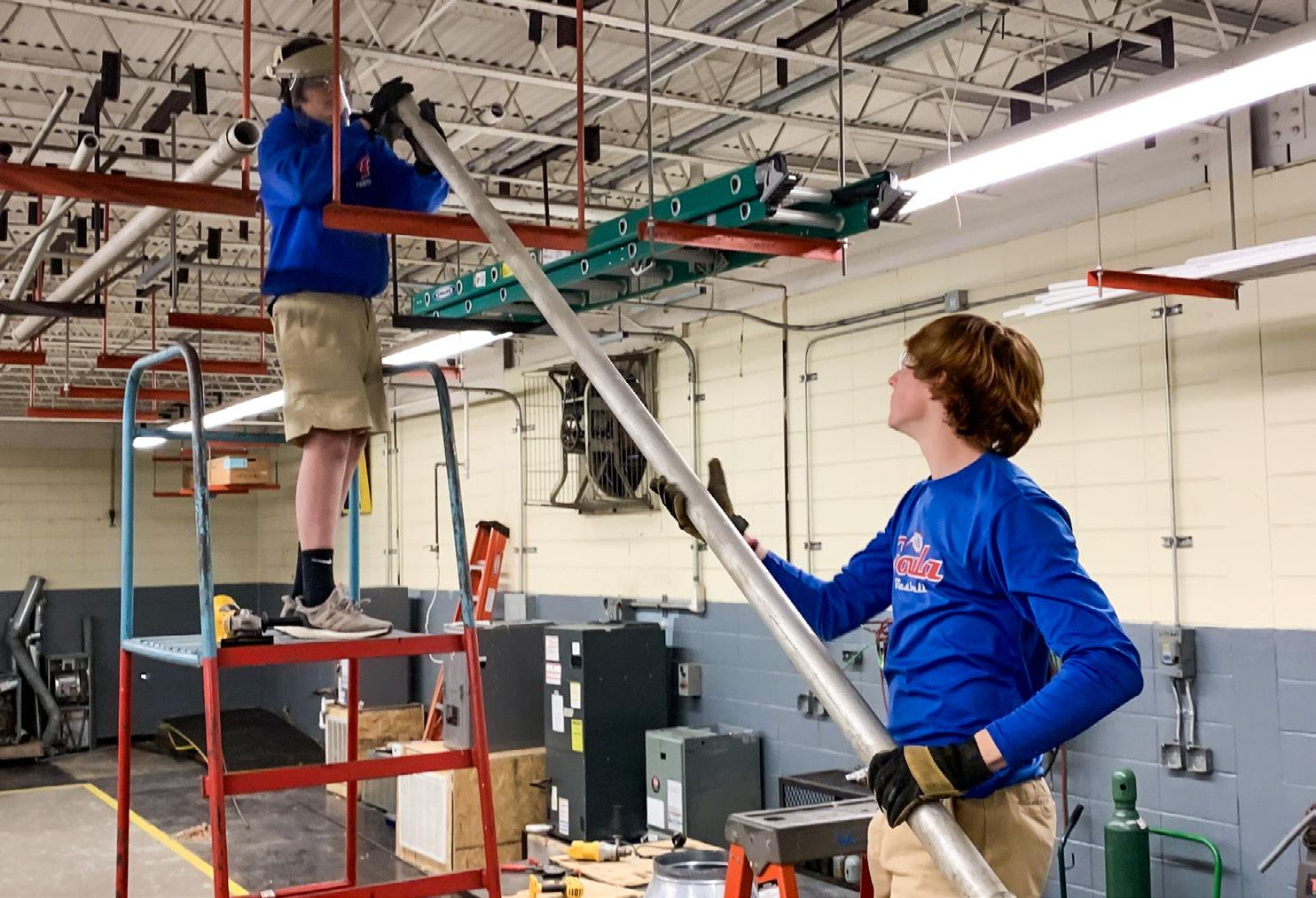
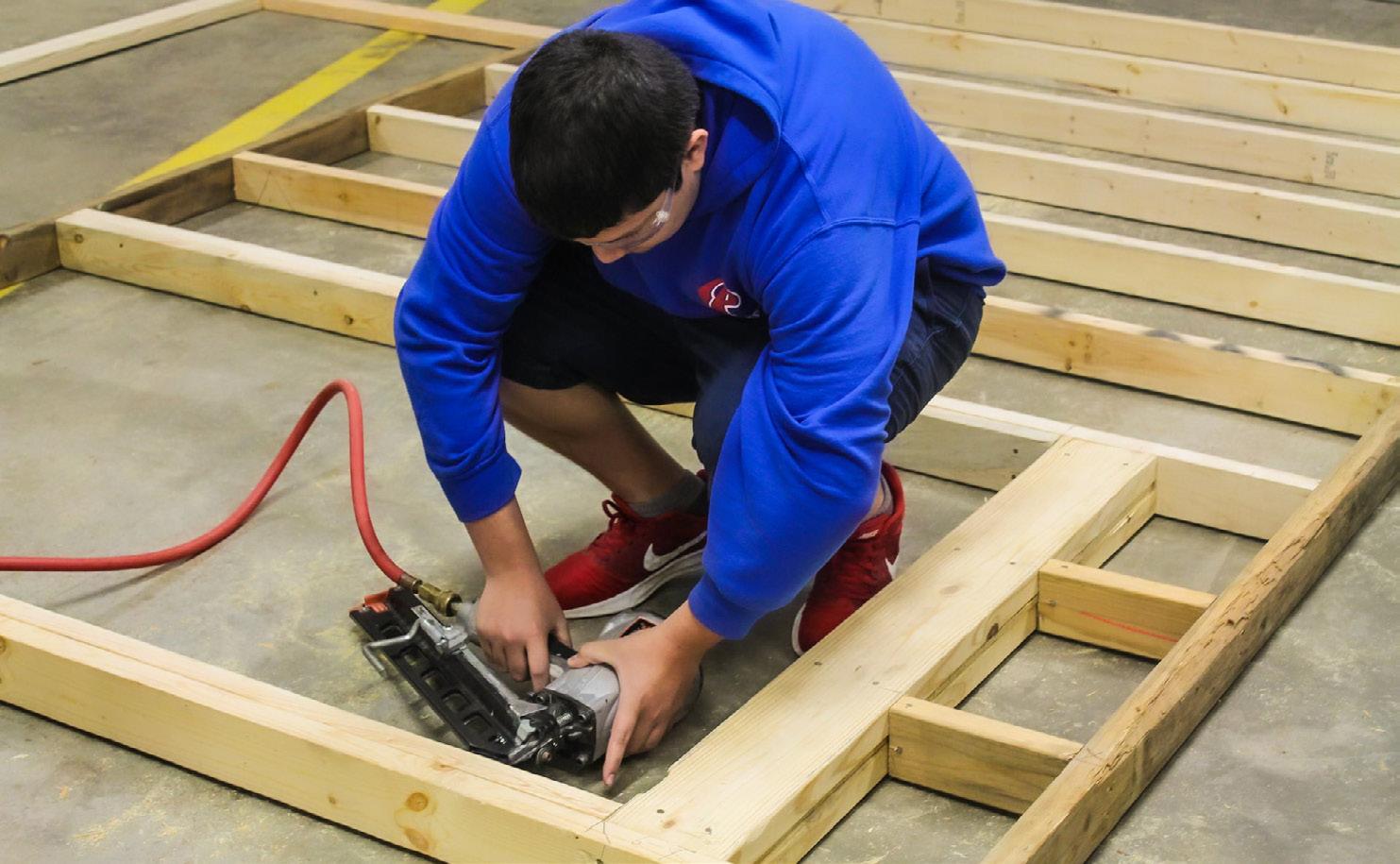
Advanced manufacturing students learning to use the CoBot at Itawamba Career and Technical Center.
Dear Readers,
Welcome to the latest issue of Connections magazine! In these pages, we are proud to share stories that highlight the impact of Career and Technical Education (CTE) across Mississippi. As editor-in-chief, it is a privilege to help amplify the voices of the students, educators and partners who make CTE such a vital part of our state’s workforce pipeline.
This issue places a special emphasis on advocacy, celebrating not only what CTE accomplishes every day in classrooms and labs, but why continued investment in these programs matters now more than ever. Our article on advocating for Career and Technical Education highlights the critical role CTE plays in preparing Mississippi students for highdemand, high-skill careers while strengthening local economies and communities statewide.
We are also excited to spotlight the ongoing work of SmartTech MS, an MSU-led initiative advancing manufacturing innovation while intentionally connecting industry needs with CTE programs. Through collaboration with education, workforce and industry partners, this program demonstrates how strategic alignment can create meaningful, real-world opportunities for students and educators alike. The goal is to ensure Mississippi remains competitive in an evolving manufacturing landscape.
In addition, this issue highlights Career and Technical Education Plus (CTEP), a program focused on expanding access to CTE opportunities for students in the special education population. CTEP showcases how inclusive program design and intentional support can open doors for all learners, empowering students to build skills, confidence and pathways toward meaningful employment and postsecondary success.
Together, these stories reflect a shared commitment to student success, workforce readiness and opportunity for all. They demonstrate what is possible when education and industry work hand in hand and when CTE is recognized as a cornerstone of Mississippi’s future.
We invite you to explore these stories and the many others included in this issue of Connections. Thank you for your continued support of Career and Technical Education and for championing the students and educators who are shaping tomorrow’s workforce. We encourage you to share these stories with colleagues, partners and communities across the state.
Sincerely,
Brett Robinson Associate State Superintendent Office of Career,
Technical and Workforce Development Education
Preparing Mississippi’s Students for Success CAREER AND TECHNICAL EDUCATION
Kelly
Watson
Career and Technical Education (CTE) is transforming education in Mississippi. Across the state students are gaining skills, earning industry credentials and building confidence as they prepare for college and their future careers. With workforce needs rapidly evolving, CTE is more important than ever, not just for individual students, but for our communities, our employers and the future of Mississippi’s economy.
CTE within our state is not only growing but also thriving. Brett Robinson, associate state superintendent of career and technical education and
workforce development, said, “Career and Technical Education in Mississippi is experiencing unprecedented momentum across multiple state agencies and all branches of state government. This level of alignment and support is allowing us to be far more strategic and innovative in how we design CTE programs and deliver instruction ensuring the maximum return for students and our workforce partners. This is not just a good moment for CTE; it is a pivotal moment that will define what CTE in Mississippi looks like for years to come.”
CTE courses are currently offered in more than 500 schools and 15 community and junior colleges across
the state. Students can access CTE programs in secondary, postsecondary and short-term adult sessions, as well as through industry training and partnerships with local employers. In the 2023–24 school year alone, over 70,000 Mississippi students in grades 7–12 were enrolled in CTE courses, exploring pathways from health sciences and advanced manufacturing to information technology and construction.
CTE concentrators (students who are enrolled in the terminal credit for a specific pathway) are seeing exceptional results. For the 2024–25 accountability year, CTE concentrators in Mississippi posted a 99.6 percent
graduation completion rate, outpacing many traditional academic measures and highlighting the power of handson, career-linked instruction.
Mississippi’s economy is experiencing a growing demand for skilled workers. State labor data shows that a large share of jobs require post-high school training but not necessarily a fouryear degree. CTE empowers students to meet these needs, positioning graduates for success in well-paying and in-demand careers. Melinda Lowe, executive director at FORGE, said “Career and Technical Education gives students something invaluable—a connection between learning and real life. CTE helps young people discover their strengths, build practical skills and see a future for themselves in high-demand careers. When students can visualize where their education can take them, they are more engaged, more confident and better prepared to enter the workforce ready to succeed.”
Programs are intentionally designed with employer input to reflect current and future workforce needs. Through work-based learning experiences,
internships and industry certifications, students graduate with skills that local businesses value and need which strengthens Mississippi’s economy from the ground up.
CTE isn’t only technical training, it builds the whole student. Students develop communication, collaboration, critical thinking and professionalism. Work-based learning experiences, such as internships and job shadowing, reinforce this readiness and connect classroom learning to real world contexts.
Community college CTE programs also play a key role. Many graduates with CTE certificates or associate degrees remain in Mississippi and either secure employment or continue their education at state universities, often in fields tied directly to their training. These graduates often earn an average starting salary significantly higher than what many high school-only graduates earn.
CTE students are more engaged in school and prepared for life beyond graduation. These programs help close the skills gap, support economic development and offer students
of Mississippi jobs will require education beyond high school but less than a bachelor’s degree by 2031. Career and technical education (CTE) programs prepare students for these jobs in key Mississippi industries such as:
• advanced manufacturing
• agriculture, food and beverage
• aerospace and defense
• automotive
In 2023, more than
Mississippi high school CTE concentrators graduated having earned a recognized postsecondary credential.
secondary CTE participants
postsecondary CTE participants
FY 25 Federal Perkins CTE Funding for Mississippi
multiple pathways to success whether that’s entering the workforce directly, earning credentials or continuing their education.
The Research and Curriculum Unit at Mississippi State University is proud to support CTE across the state by providing curriculum guidance, professional learning and research that highlights what’s working and what future investments can help students even more. When asked about the value of this work, Courtney McCubbins, curriculum and assessment manager at the RCU, said, “The curricula, assessments and work-based learning initiatives developed here at the RCU provide students with the tools they need, from experiential skills such as wiring a residential home or balancing tires to essential skills like communication, professionalism and critical thinking.
Together with our instructors and industry partners, we develop content that meets the ever-changing needs of Mississippi’s workforce and empower students to succeed in any career path they choose.”
As Mississippi looks to the future, Career and Technical Education stands as a key pillar of both education and economic strategy.
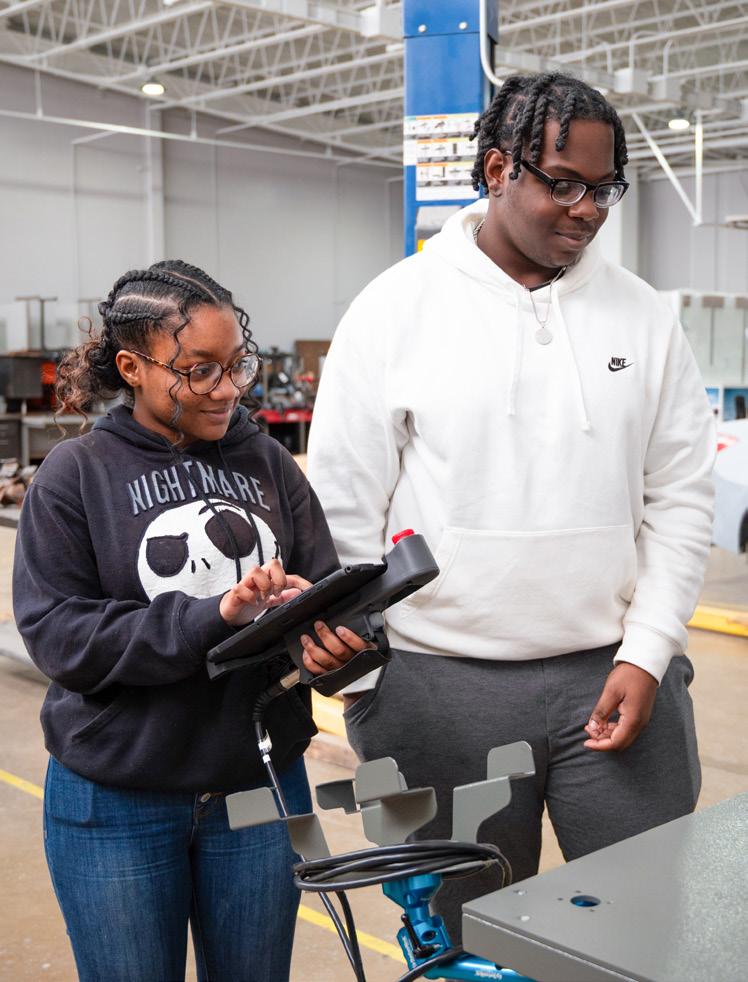
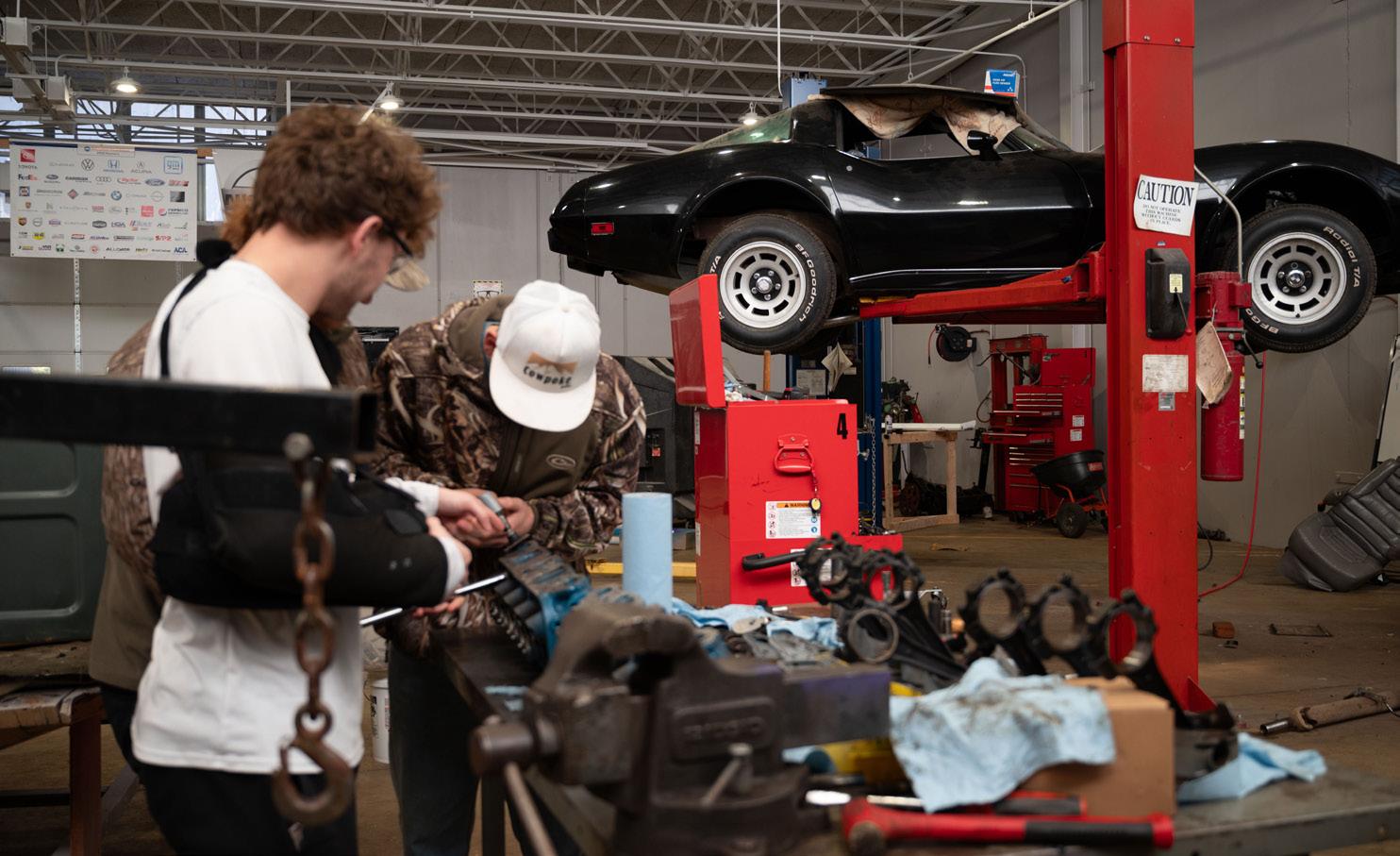
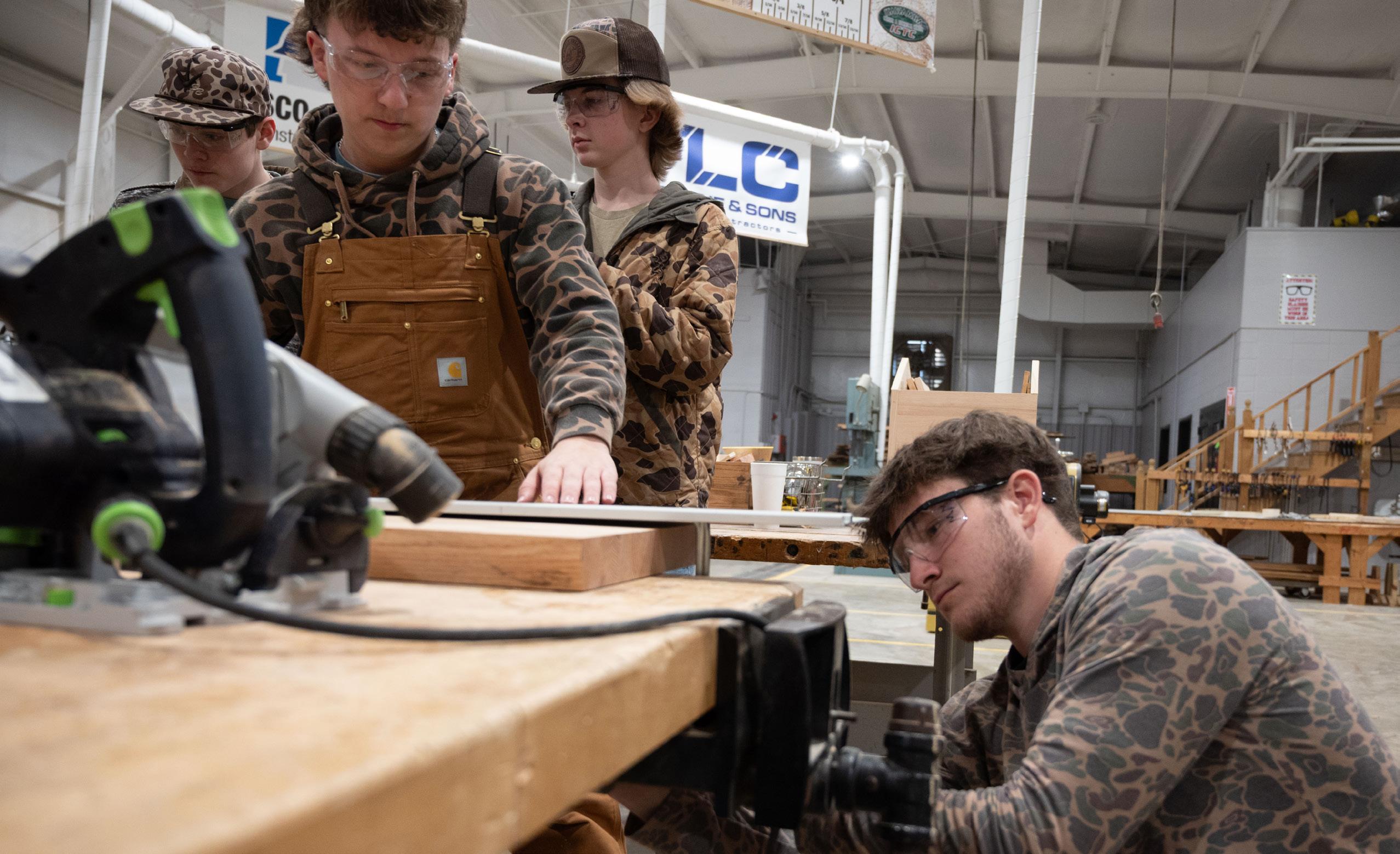
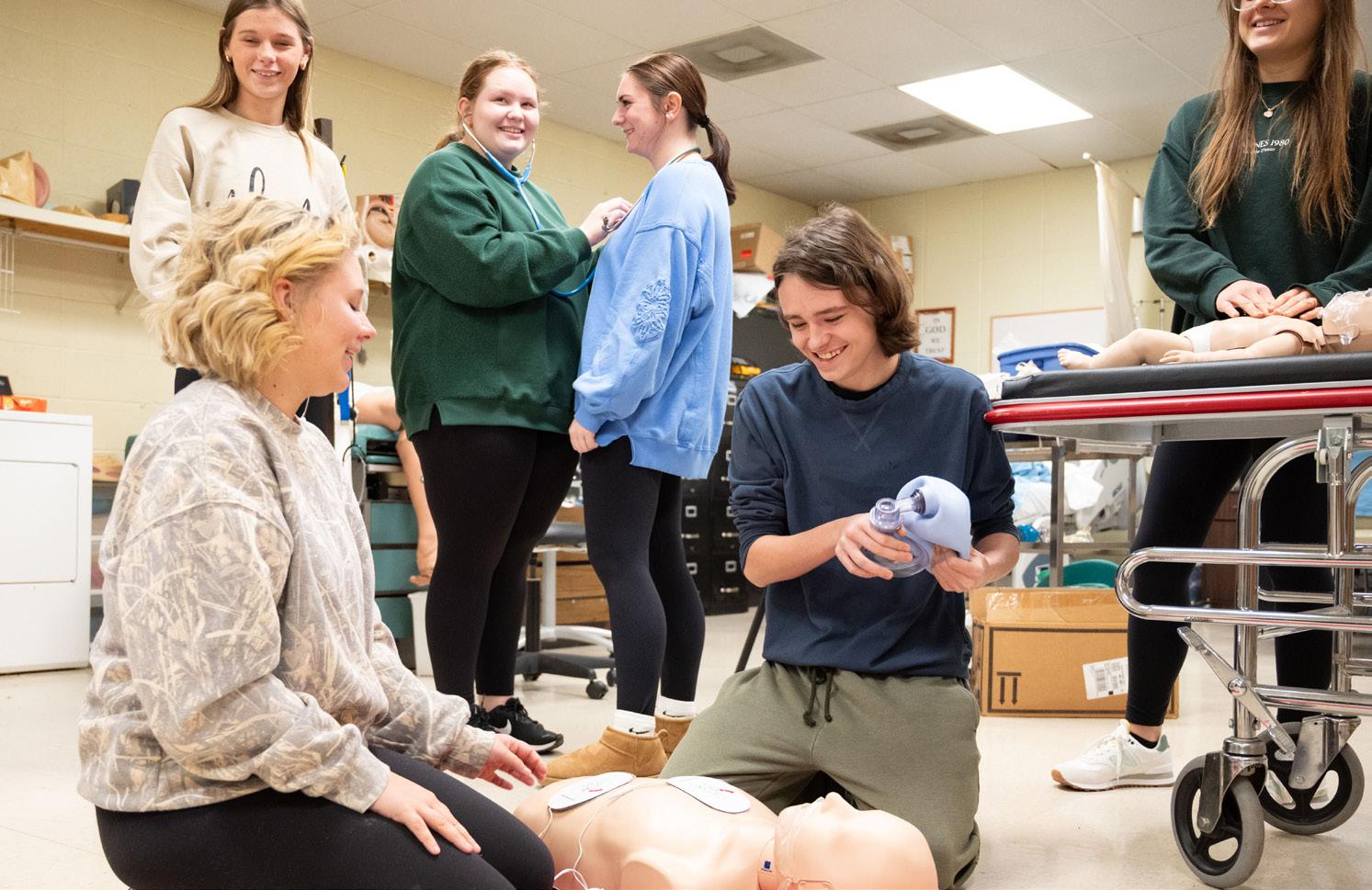
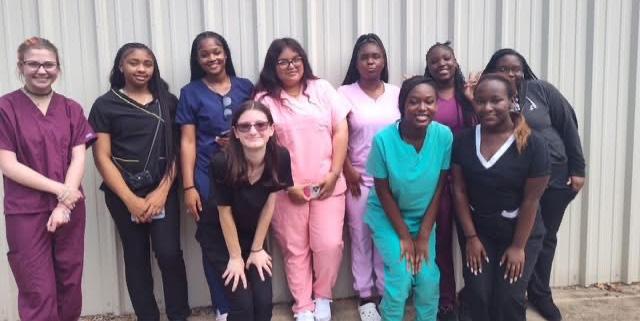
Top: Construction students getting hands-on practice in their workshop at Itawamba CTC. Above: Health science students at Itawamba CTC practicing CPR.
Big Lessons From Little Learners: Early Childhood Education CTE Students Gain Real-World Experience
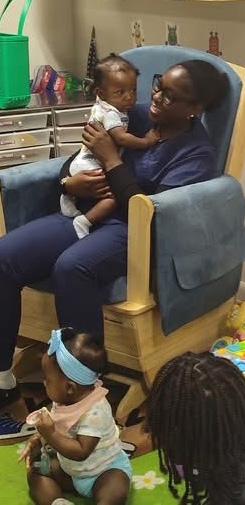
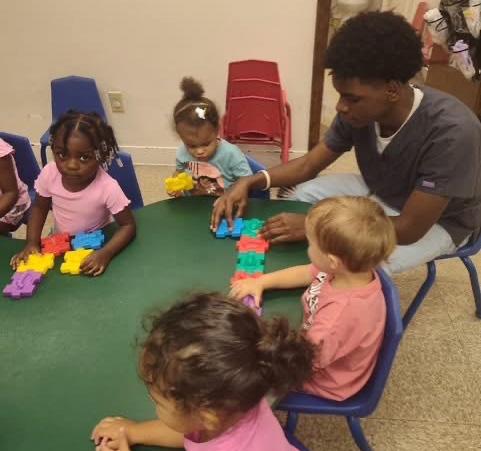
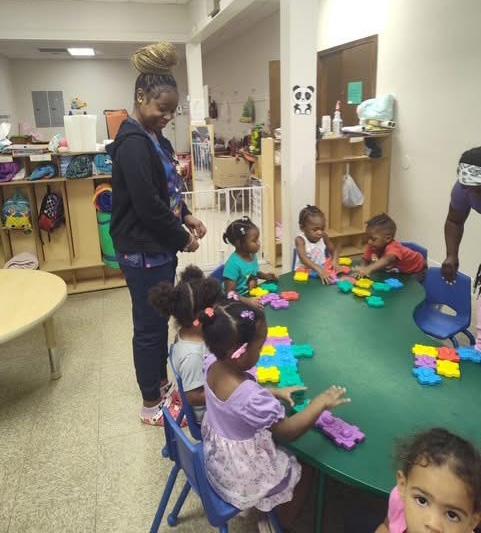
Students in the Early Childhood Education program at the Vicksburg Warren Career & Technical Education Center are taking their classroom learning to the next level through hands-on experience at Cutler’s Grow and Learn Daycare Center.
This partnership gives students the chance to apply their knowledge in real-world settings while developing the skills needed for future careers in childcare and education.
At the day care, students assist with lesson activities, support daily routines and engage young learners in play and growth. These experiences strengthen vital workplace skills such as patience, communication, leadership and problem-solving.
Program Instructor Alice Leach said the collaboration is invaluable.
“It’s one thing to learn about child development in class, but it’s another to put those skills into action. Our students are experiencing what it truly means to nurture and guide children in a professional setting.”
She also expressed her pride in their progress: “Watching them take on real responsibilities has been incredible. They’re not only learning job skills, but they’re also discovering their own strengths, and that makes me excited for their futures.”
Early Childhood Development students getting experience at Cutler’s Grow and Learn Daycare Center.
Hands-On and High-Tech: Eddie Dixon
CTE’s Advanced Manufacturing Momentum
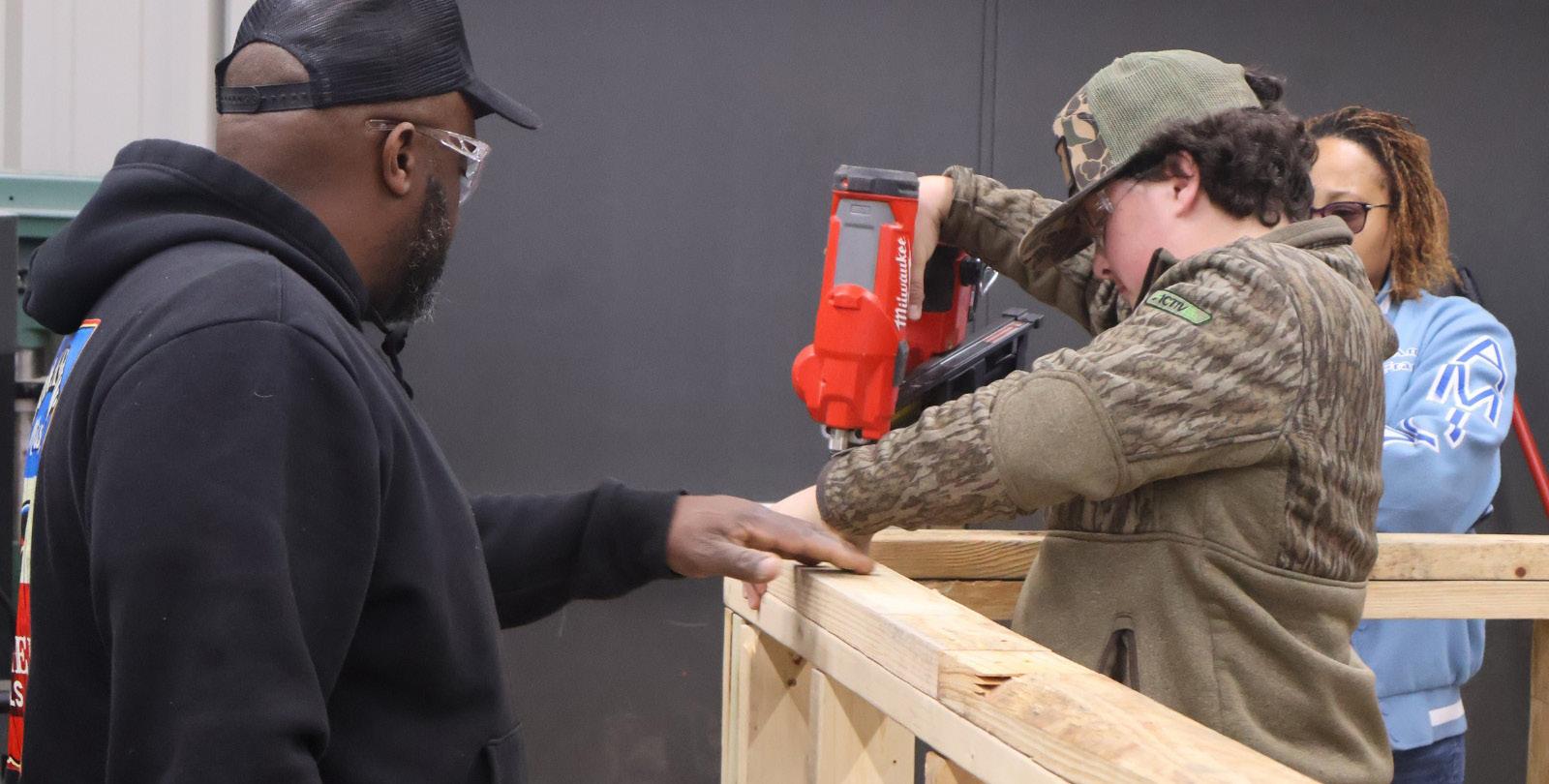
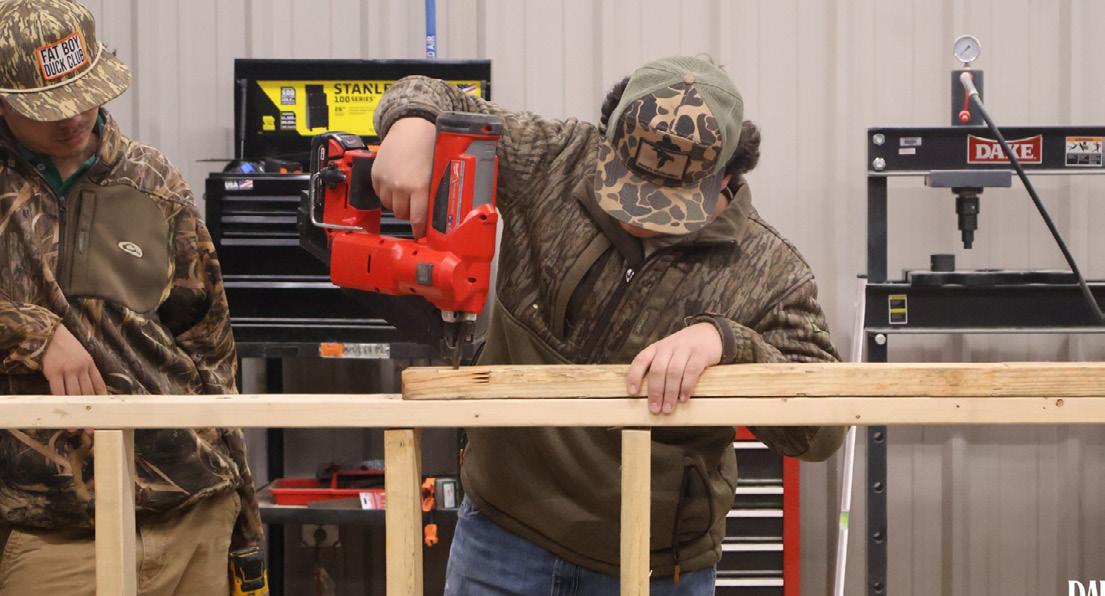
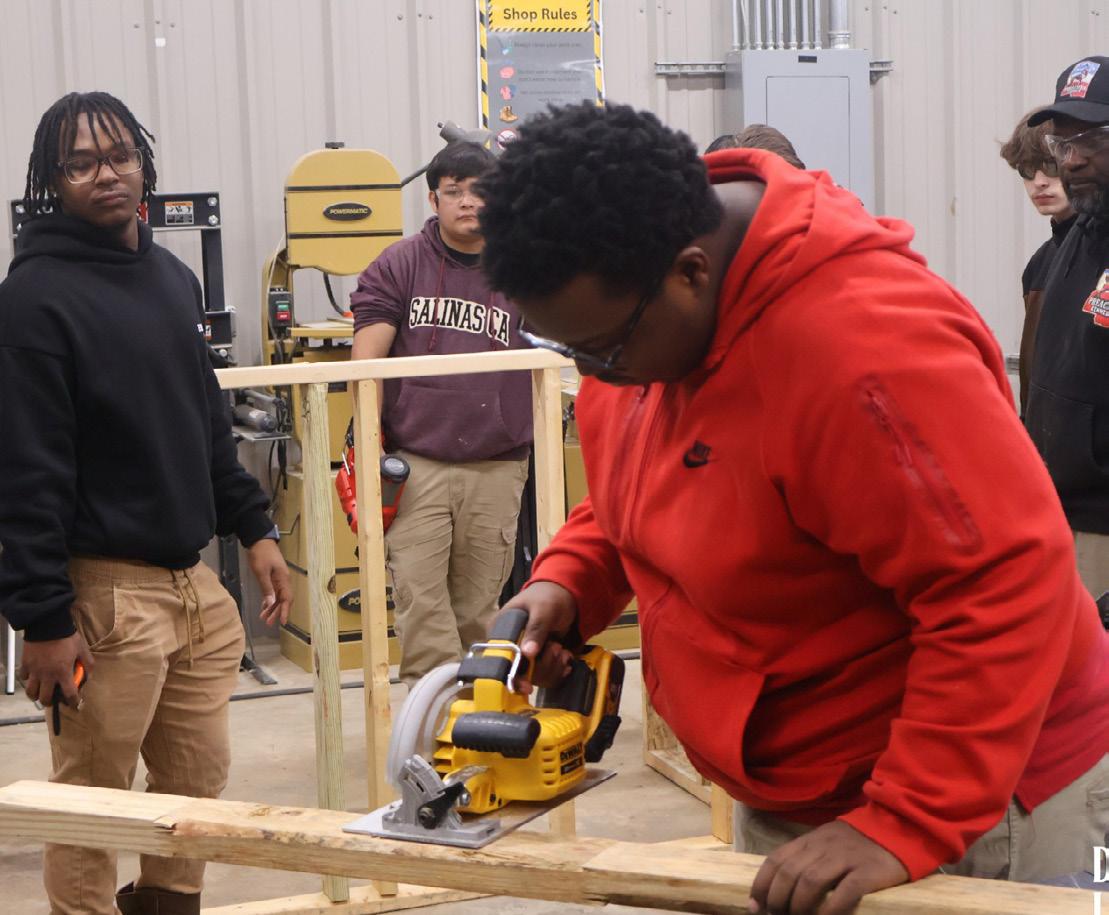
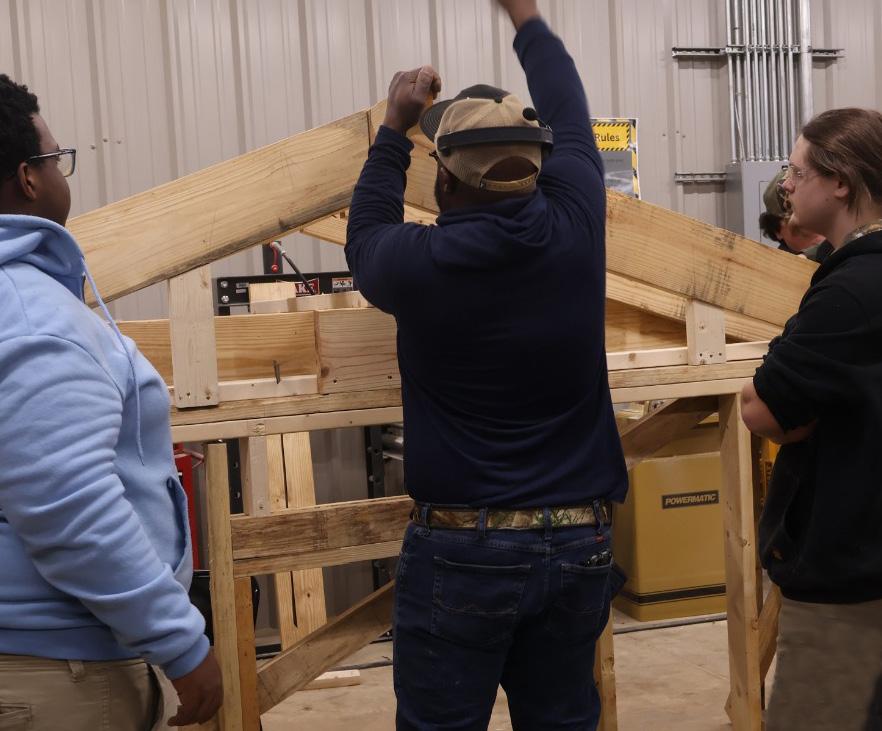
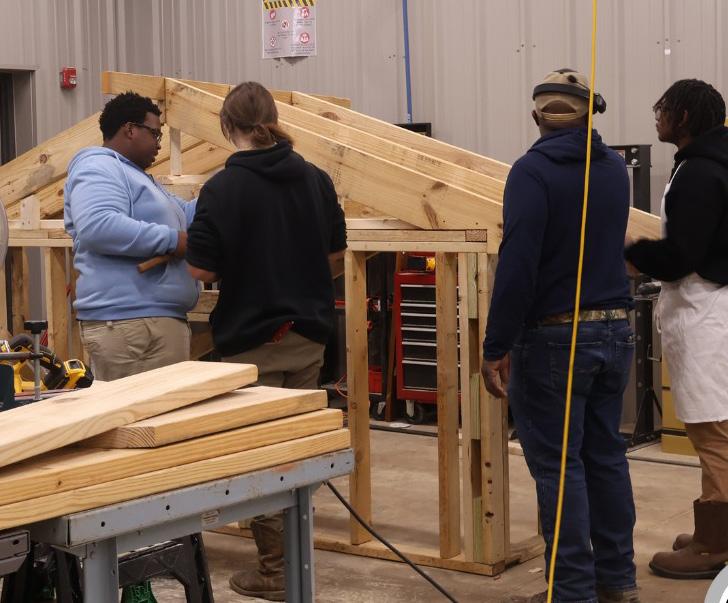
Top and bottom right: Students preparing for the upcoming Skills USA competition where they will build a house frame. Bottom left: Eddie Dixon CTE center procured PLCs through the EquipMS grant. Opposite page: Advanced manufacturing students working in the classroom.
Big things are happening at the Eddie Dixon Career and Technical Education Center. On top of excitement in gearing up for the upcoming Spring 2026 Skills USA Competitions, in which Advanced Manufacturing students will be building a house frame, Eddie Dixon
CTE recently procured Programmable Logic Controllers (PLCs) through the EquipMS grant from Accelerate MS. These PLCs give students hands-on experience with real industry tools, build problem-solving and troubleshooting skills and prepare them for careers in
Advanced Manufacturing outside of high school. Grants like these are crucial in the development of certain programs as they ultimately help turn classroom lessons into career-ready confidence and help continue advancements being created for Marshall County students in the future.
BRIDGING EDUCATION INDUSTRY
How SmartTech MS is Enriching Advanced Manufacturing in Mississippi Classrooms
Kelly Watson
Mississippi’s manufacturing sector continues to evolve rapidly, driven by automation, robotics and emerging technologies that are reshaping how work gets done. Preparing students and educators for this future requires more
than updated textbooks; it requires access to relevant equipment and strong connections between classrooms and industry. That’s where SmartTech MS comes in.
SmartTech MS is a Mississippi State University–led initiative launched in May 2023 through a National Science
Foundation (NSF) Engines Development Award. The program’s mission is to progress manufacturing education across central and north Mississippi by bringing together education, industry and innovation partners to address real-world challenges in workforce development and automation.
Through a collaborative, multi-partner leadership team, SmartTech MS works closely with automotive, aerospace and equipment manufacturing partners to identify both current and emerging workforce needs. During the first 18 months of the initiative the team conducted extensive regional mapping and outreach, which revealed two key gaps impacting CTE programs.
First, many high school advanced manufacturing programs lack exposure to the advanced technologies currently used in modern manufacturing environments. Second, educators and training providers need stronger, more consistent connections to industry to better understand not only today’s skill requirements, but the skills students will need in the future.
To address the first gap, SmartTech MS launched a high school CTE Advanced Manufacturing equipment-lending program featuring a collaborative robot (CoBot) and an autonomous mobile robot (AMR). These tools allow students to engage directly with automation technologies commonly found on today’s manufacturing floors. The program includes training, classroom-ready resources and instructional guidance designed to support effective and confident implementation.
Morgan Fisher, director of advanced manufacturing at Northeast Mississippi Community College, notes “It’s an amazing opportunity for educators to expose their students to some really fun technology that is starting to spread
across manufacturing. These experiences they are having at a 9-12 grade level is something that normally they would only get either in industry or at a community college or university.”
During the current school year, the shared equipment is rotating among several career and technical centers that offer advanced manufacturing or engineering programs and participated in summer training. The pilot began at Baldwyn School Career and Technical Center, where students and teachers used the equipment from September 1 through October 23 under the leadership of Director Danny Ramsey and Advanced Manufacturing Instructors Lee Roberts and Garret Mauney. “I think it’s a great opportunity to further expose these students to the new tech-
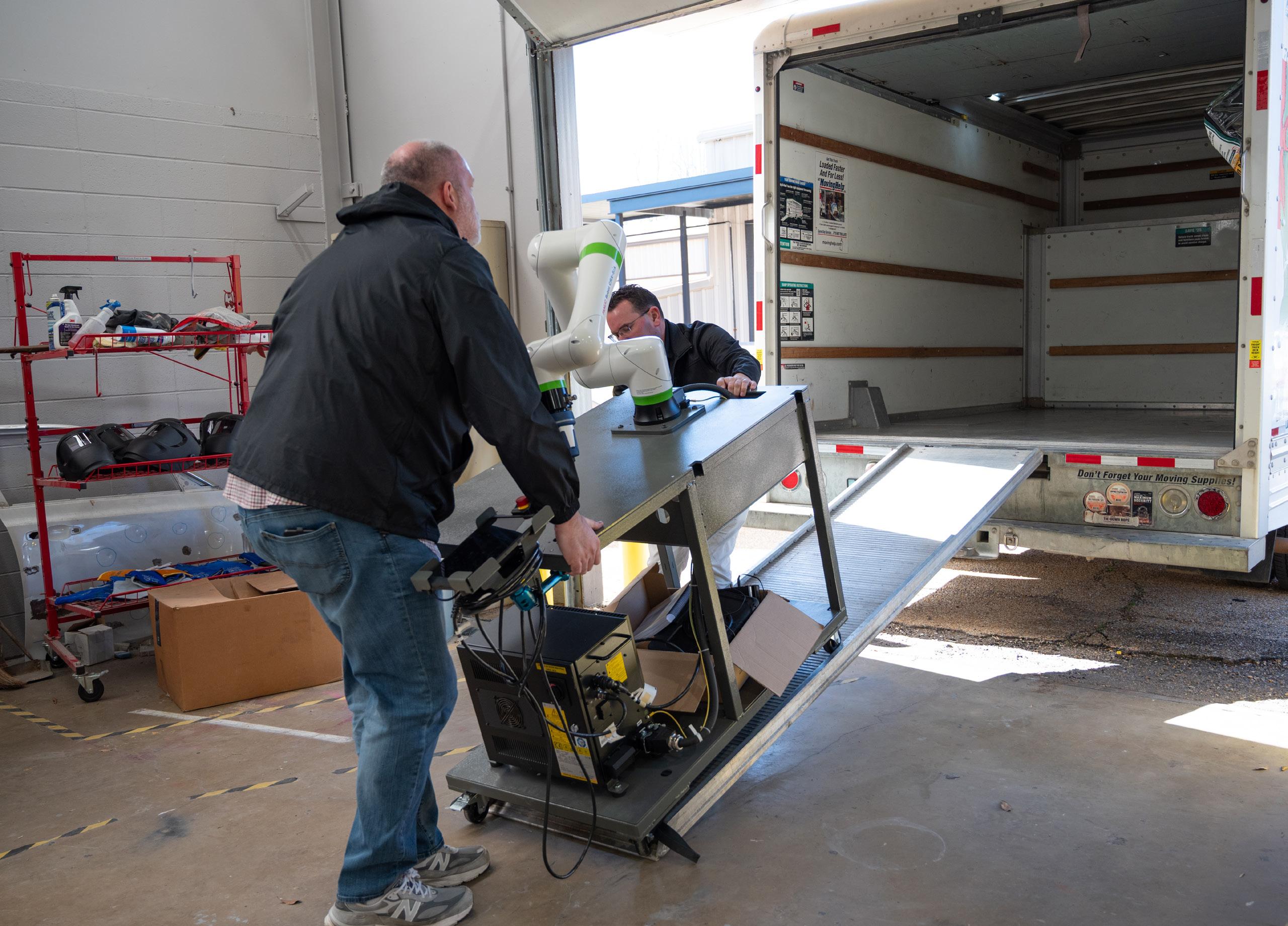
Opposite page: Fisher helping Farrar set up the CoBot at Itawamba CTC. Above: Fisher demonstrating how to control the CoBot for students at Itawamba CTC.
nology that is found in industry today,” said Ramsey. “It will give them a step ahead by being exposed and being able to put their hands on it and program it. I think it will motivate them to pursue fields in advanced manufacturing.”
From October 23 through January 15, the equipment moved to Tishomingo County Career and Technical Center, led by Director John Grady Taylor and Engineering Instructor Heather Brooks. The program will continue at Itawamba Career and Technical Center, led by Director Carrie Grubbs, from January 15 through spring break. Reid Farrar, Itawamba’s advanced manufacturing instructor said, “I’m excited for
the students to get experience with the actual industrial robotics that they will see in the real-world. They are getting to put their hands on equipment that has only been made available to three other programs within the state, so they will have a leg up entering the workforce.”
The program will conclude at Calhoun County Career and Technical Center with Director Willie Mays and Engineering Instructor Chris Webb from spring break through the end of the academic year. This rotating model allows multiple programs to benefit from advanced equipment that would otherwise be difficult for individual schools to acquire.
A key component of the educator support model is the Canvas course developed by the Research and Curriculum Unit (RCU). Created by RCU Project Manager Nathan King, the course serves as an additional classroom resource for teachers working with the robots and students. The Canvas course provides structured content, instructional materials and guidance that educators can adapt to their local programs, helping bridge the gap between new technology and daily classroom instruction. “Fun, interactive assignments help with incrementally advancing high school students from beginning programmers to skilled operators
RCU staff has transfered the AMR and CoBot equipment between the participating districts.
capable of simulating industrial CoBot automation,” said King. “Also, a stepby-step script is built into this Canvas course, providing teachers with a clear roadmap to guide their students.”
The impact of these experiences extends beyond immediate classroom engagement. As Fisher said, “I believe the experience they have with this robot sharing program can help to spark an interest in robotics, mechatronics or industrial maintenance that could lead to the pursuit of a career they wouldn’t have otherwise sought out.”
To address the second gap, SmartTech MS is facilitating a series of structured conversations with regional industry leaders. These conversations give ed-
ucators, curriculum developers and training providers direct insight into workforce trends and future skill projections, helping ensure instructional programs remain aligned with industry expectations.
The RCU, a key SmartTech MS partner, is piloting both initiatives and supporting implementation during the 2025-2026 school year. Anticipated outcomes of the shared equipment project include teacher training, curriculum activities, classroom integration guides and long-term guidelines for shared access to advanced robotics. Outcomes from the industry conversations include deeper alignment between education and industry and data
to inform curriculum development, equipment purchasing and workforce training decisions at the secondary and postsecondary levels.
This project is ongoing, and feedback from participating educators has been overwhelmingly positive. Teachers have reported that access to the equipment, combined with training and ready-to-use instructional resources, has been highly beneficial in engaging students and strengthening advanced manufacturing instruction. As SmartTech MS continues to expand and refine its efforts, the initiative stands as a strong example of how targeted support and collaboration can make a meaningful difference in CTE classrooms.
MS Power Grant Fuels Environmental Sustainability Engineering at CCTI
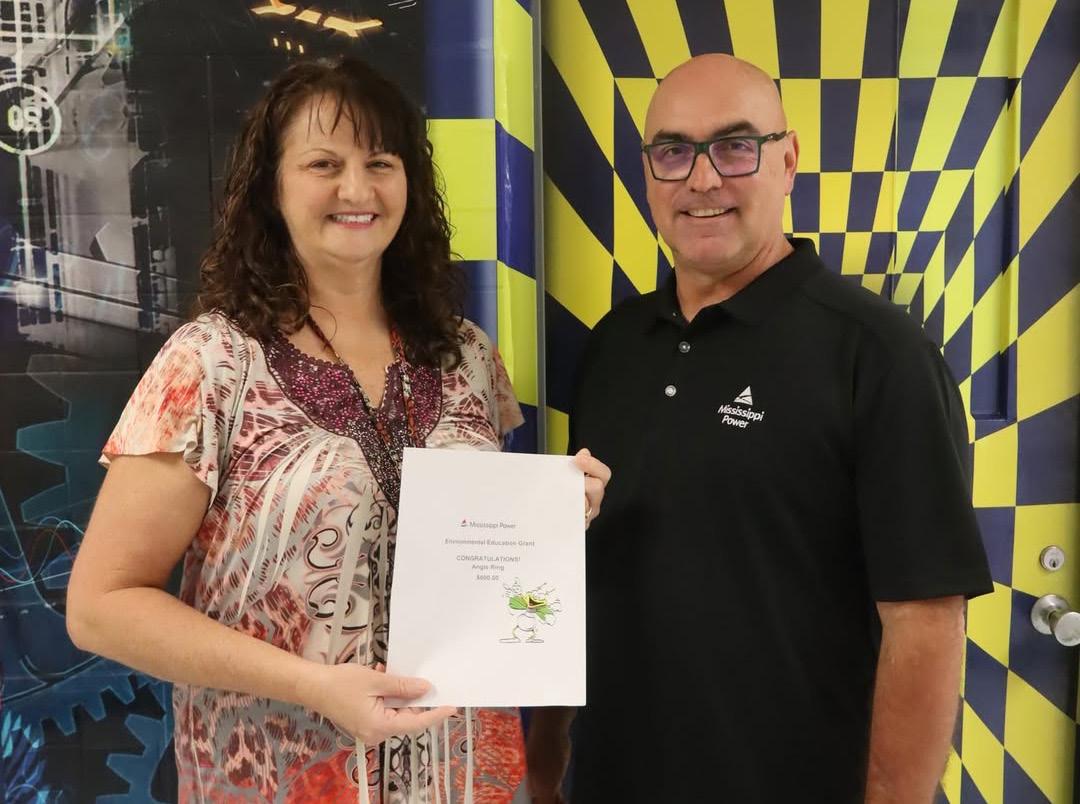
Pascagoula-Gaiter College and Career Technical Institute’s (CCTI) Engineering Instructor Angie Ring was recently presented with a grant from MS Power. Ring applied for the grant to provide her Environmental Sustainability Engineering class with the opportunity to complete a Groundwater Model Project. Through this project, students will design and build a groundwater model that allows them to conduct multiple tests measuring water contaminant levels. These handson experiments will help students better understand how groundwater is affected by spills and other environmental impacts.
Triple Completer at New Albany School of Career and Technical Education
New Albany High School senior Landon Hall will soon be credited with an extraordinary achievement. By May, he will be recognized as a “triple completer” at the New Albany School of Career and Technical Education, finishing three full CTE programs:
Drafting, Automotive Technology and Work-Based Learning.
Hall’s drive, curiosity and work ethic have made him a standout student, and a model of what Mississippi’s career and technical education can offer. “What I’ve gained is more than
just knowledge,” Landon says, “it’s also critical thinking skills.”
Landon hopes to attend the University of Tennessee-Knoxville next fall and work toward a degree in architecture. Stephanie Gregg, work-based learning coordinator at
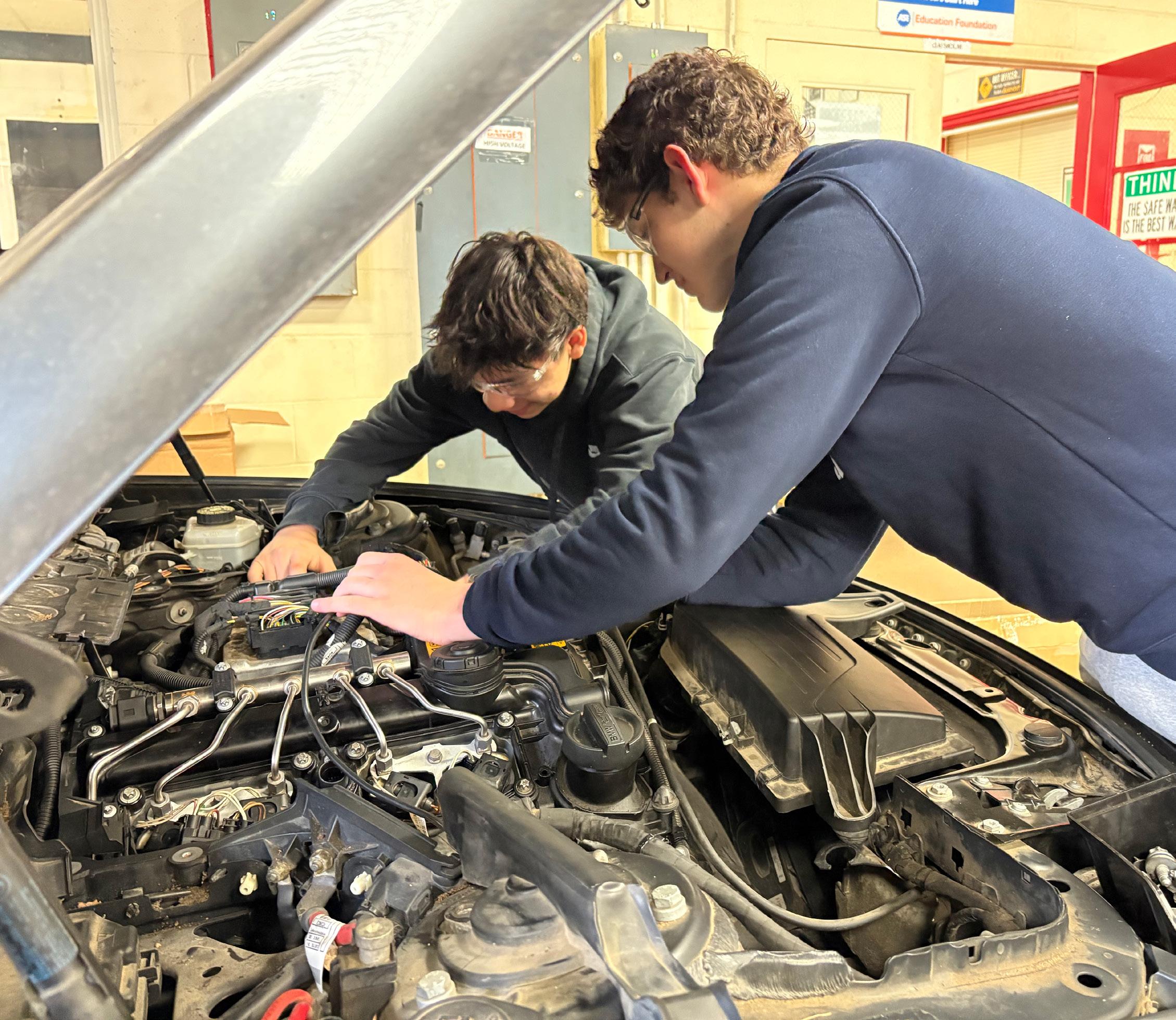
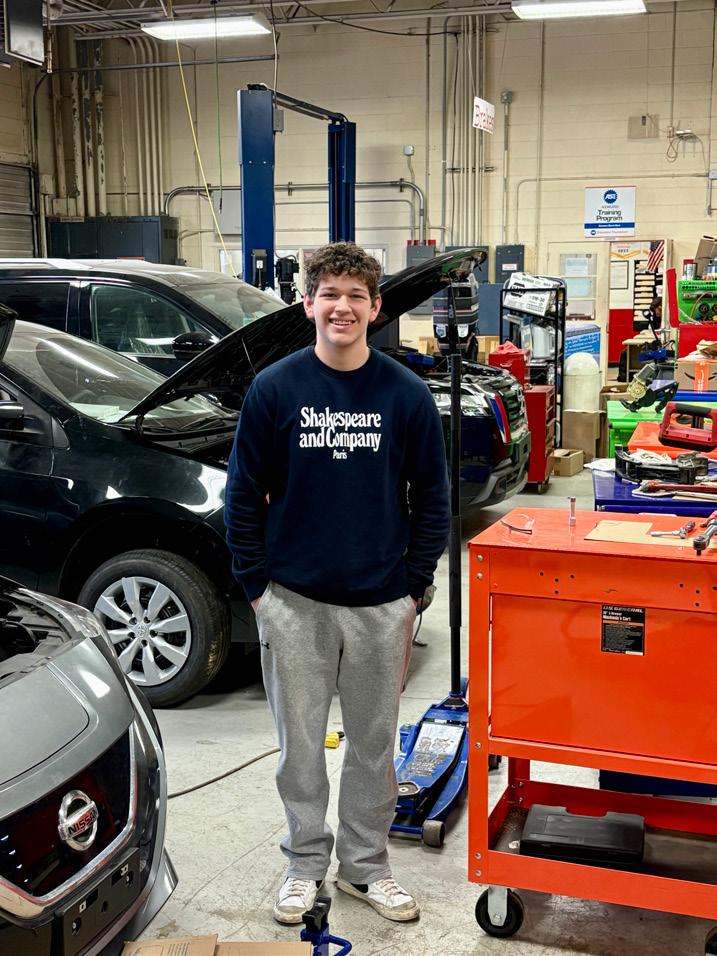
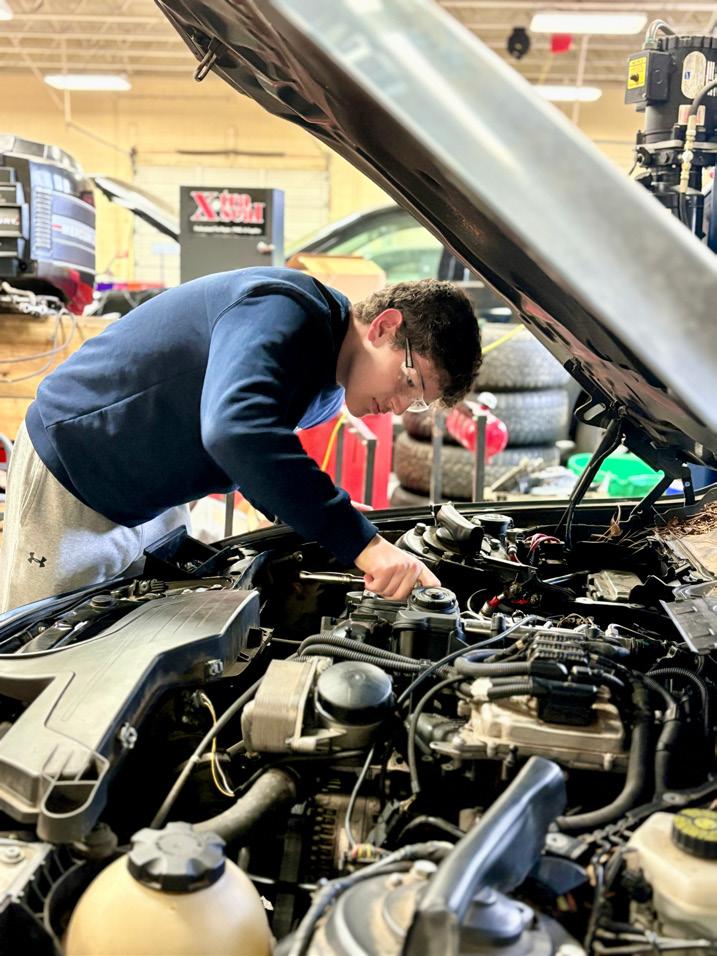
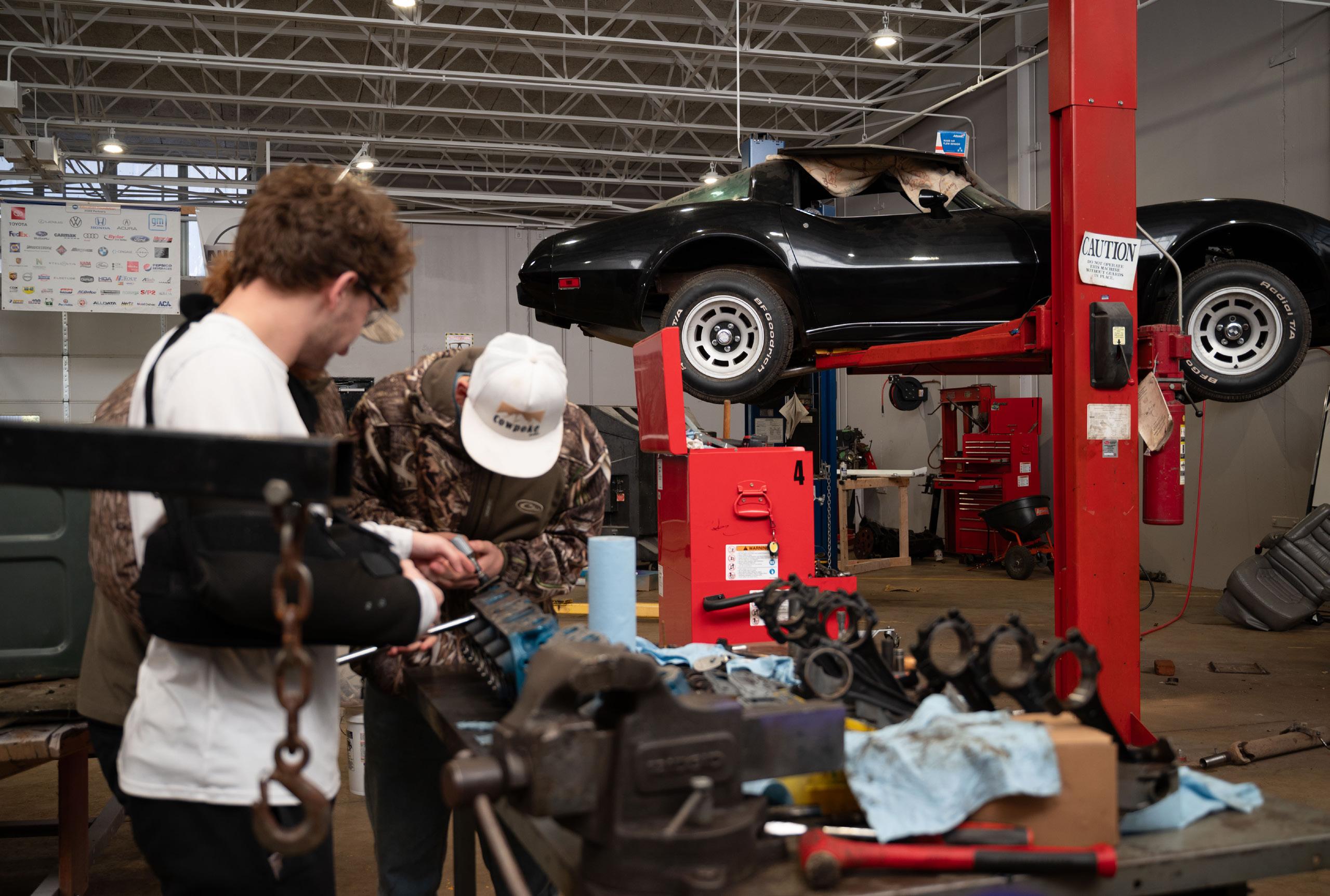
Hall working with another student during automotive technology class.
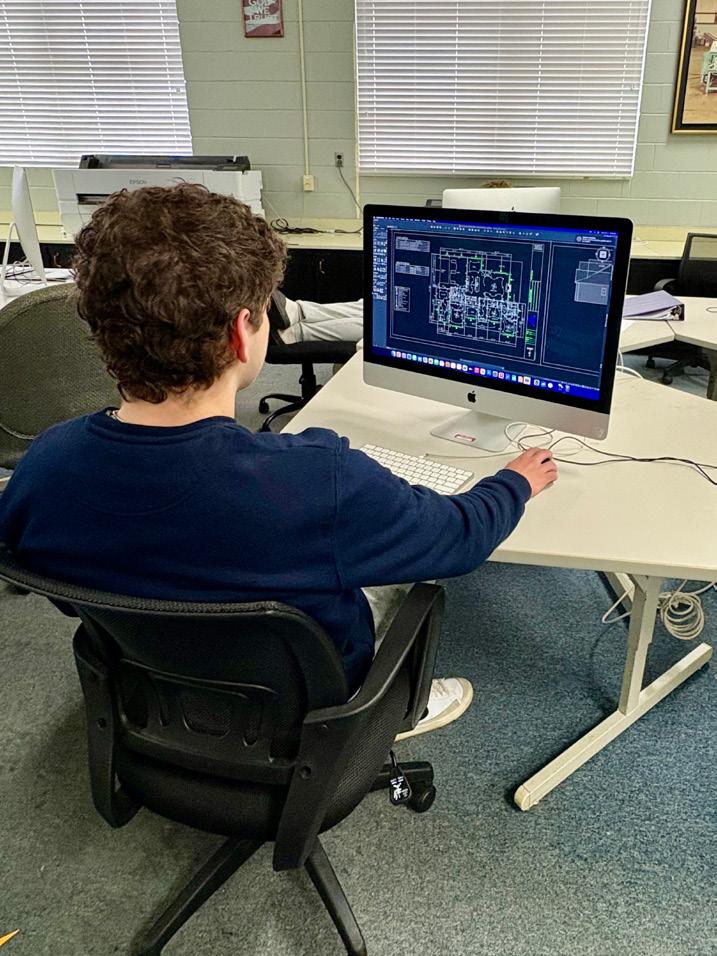
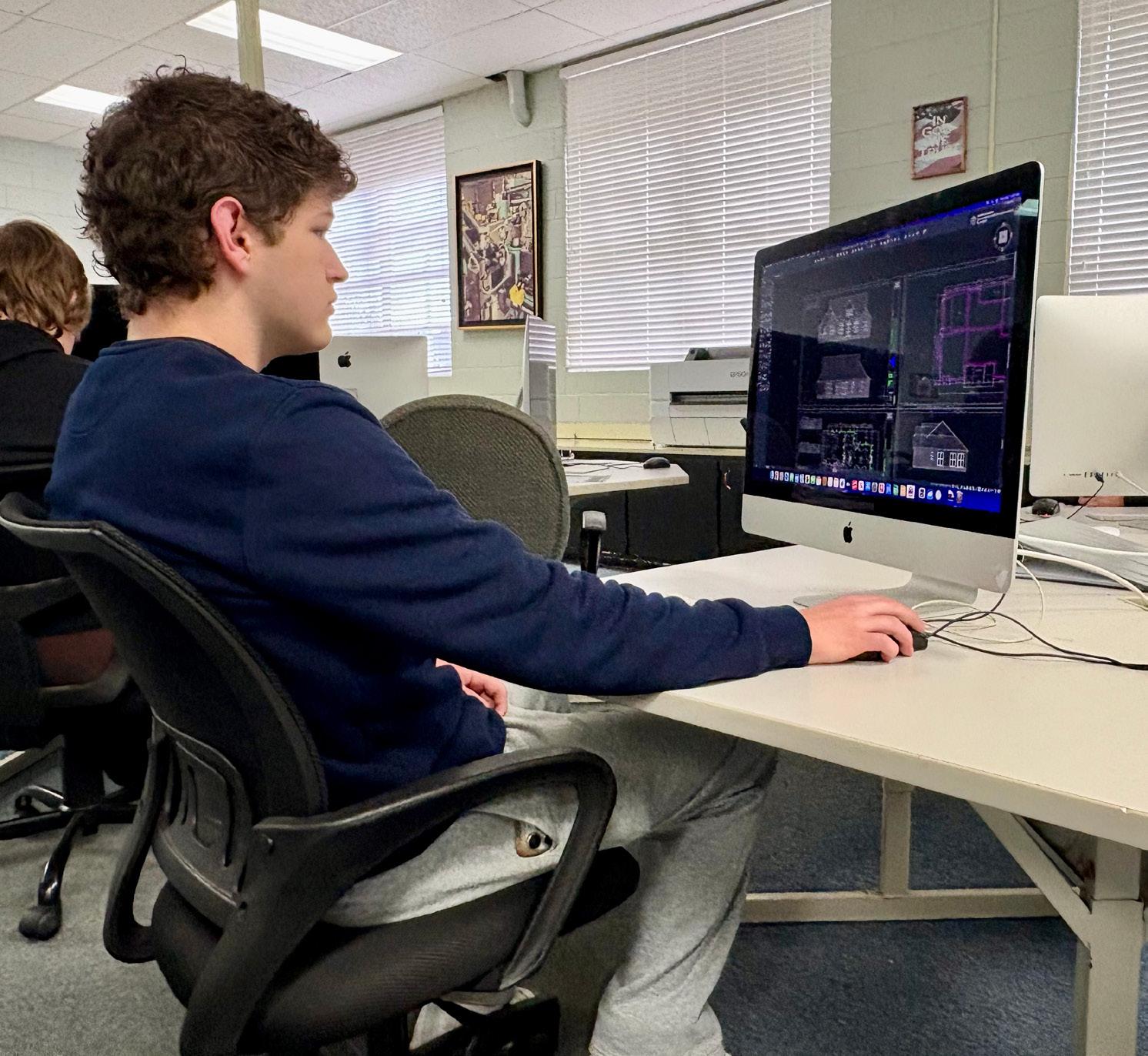
Hall pictured in his drafting and automotive technology classes.
New Albany School of Career and Technical Education, says “Landon breaks the stereotype that CTE isn’t for college-bound students. He is among the top of his graduating class and has perfect scores on state assessments,
as well as a 32 ACT score.” Gregg further points out that Hall is a wellrounded student by saying, “Landon is not only an exceptional student, but also, he is kind, respectful and empathetic. I can’t wait to watch his
journey, and I am so proud to be a small part.” As the state continues to expand CTE opportunities and workforce partnerships, students like Hall show that Mississippi’s future is in capable hands.
Innovating Pathways for Success
Allison Allsup
The Pascagoula-Gautier School District (PGSD) is quickly becoming known for its innovation. Located in the southeast corner of Mississippi, this public school district houses approximately 6,500 students in 19 elementary (K-4), academy (5-6), middle school (7-8), high school (9-12) and specialty school campuses that serve the cities of Gautier and Pascagoula, MS.
Under the leadership of Derek Read, director of CTE and workforce development, the district is making strides in offering diverse opportunities for its students. As the director now for five years,
Read has recently established CTE Plus, a program that brings cutting-edge education opportunities for high school students, especially for those with an Individualized Education Program (IEP).
Read designed CTEP specifically to target the CTE programs that have lower enrollment numbers. Not only does this allow students who receive special education services the opportunity to participate in CTE programs but also boosts the overall enrollment of all CTE programs in this district.
Partnering with companies like Ingalls, McDonald’s and Singing River Federal Credit Union, high school students are gaining on-the-job experience with
internships and work-based learning before they graduate. Knowing how impactful and lifechanging opportunities like these can be, Read has made it his goal to create pathways to success for all students as they figure out their college and career decisions, especially those who may have had no other way of accessing them otherwise. The importance of this program cannot be overstated as it helps to promote growth and equity among all students by providing those opportunities to a much broader base.
Programs like these are already making a big impact, and not just to the students of this district. The recent push to include special education students into
certain classrooms has other districts taking notice. So much so that many are now working to achieve something similar. With plans to meet with other directors every other month and also spreading the word through conferences and word of mouth, Read hopes that will be the case sooner rather than later.
“There are pockets of phenomenal programs throughout the state, but it’s programs like these that I wish I could see more of because of how much it’s done for us,” Read said. “When I can give a student something that lets them feel like they can do something for themselves, whether it be getting a job or just feeling confident in themselves to do something and take care of themselves after they graduate, that’s success to me.”
Special education directors have wanted programs like this for years, and as a former counselor himself, Read knew how necessary it was as well. After he became the CTE director, he knew he was in the right position to start making changes. With an idea in mind, the next step became finding the right teacher for the job.
While Read set the ball in motion, Eric Hollis, football coach and CTE Plus coordinator, has been responsible for successfully implementing it. “It wouldn’t work without Hollis,” Read emphasized. “As a coach, he can reach students that sometimes a normal teacher can’t.”
Hollis, who has been the CTEP coordinator for two years now, functions essentially as an inclusion teacher for the students in CTEP. Working closely with student services liaisons, Hollis provides special education services for those students while helping the CTE instructors with remediation and strategies to better serve those under his instruction. Having only taught SPED in his career, Hollis is passionate about the position to help students with disabilities since many of them do not have the proper support needed to achieve their postsecondary goals. With this in mind, he sets out each day to help
those who need it find a direction or purpose for their life after high school.
“You have to be willing to take a risk with programs like these,” Hollis stated. “You may get some students that have behavioral issues or concerns, but what I have seen is the vast majority of those students find their passion in those buildings, and it helps transform them into something better.”
To make this program thrive, there are a lot of moving parts with many people involved in every step. Everyone is working together to bring the best possible outcomes for students. While Read hopes to continue adding more offerings and programs to expand its reach for years to come, Hollis believes every CTE building nationwide should be trying to adopt programs such as these.
“Dr. Read has a vision to target and assist any student with an opportunity to be a part of our programs and give them the foundation and tools to hopefully build a successful career after graduation from high school,” Hollis reiterated. “I think what makes it a triumph is for the simple fact that we are giving an entire population of students a chance at success that they otherwise would not have had.”
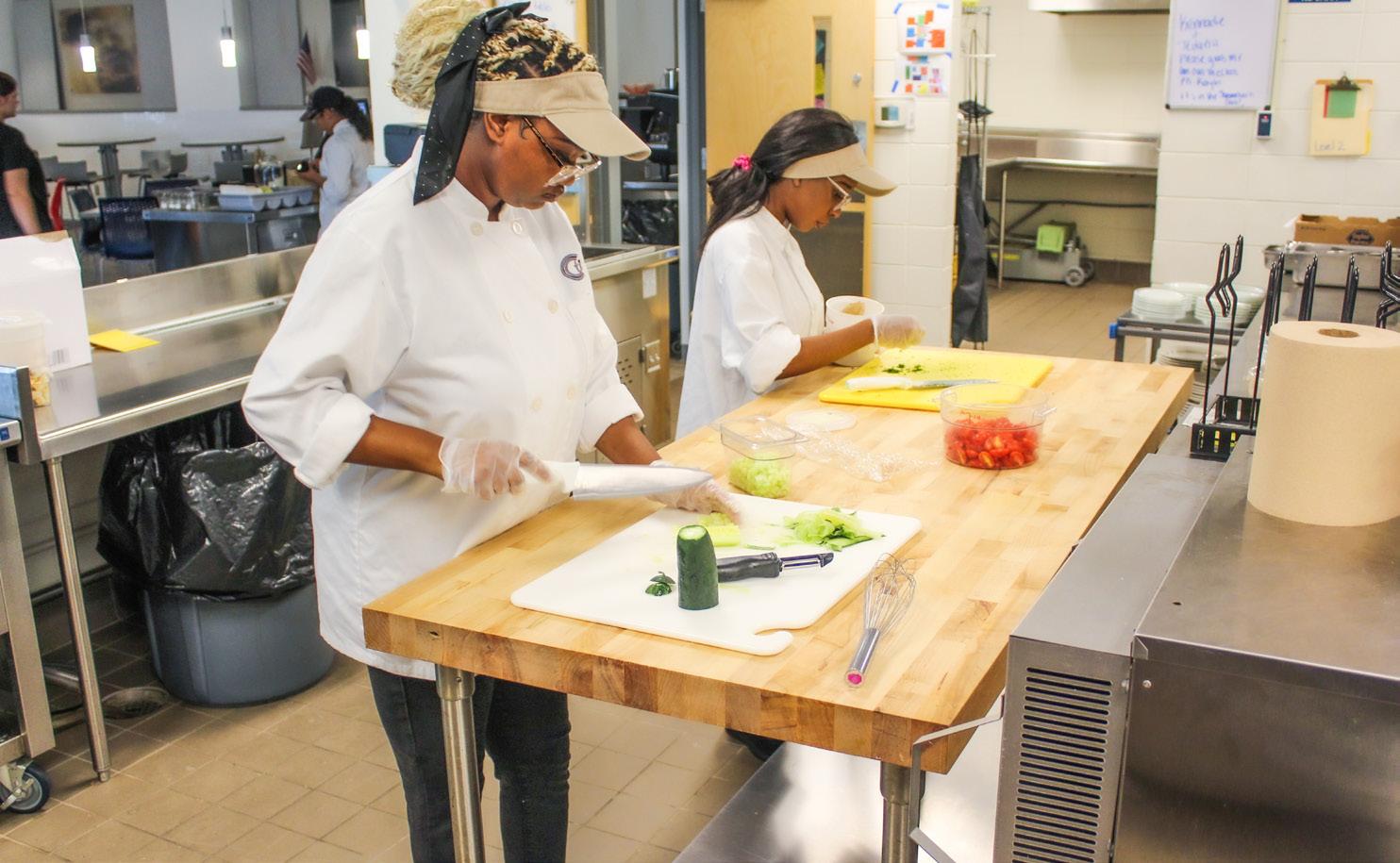
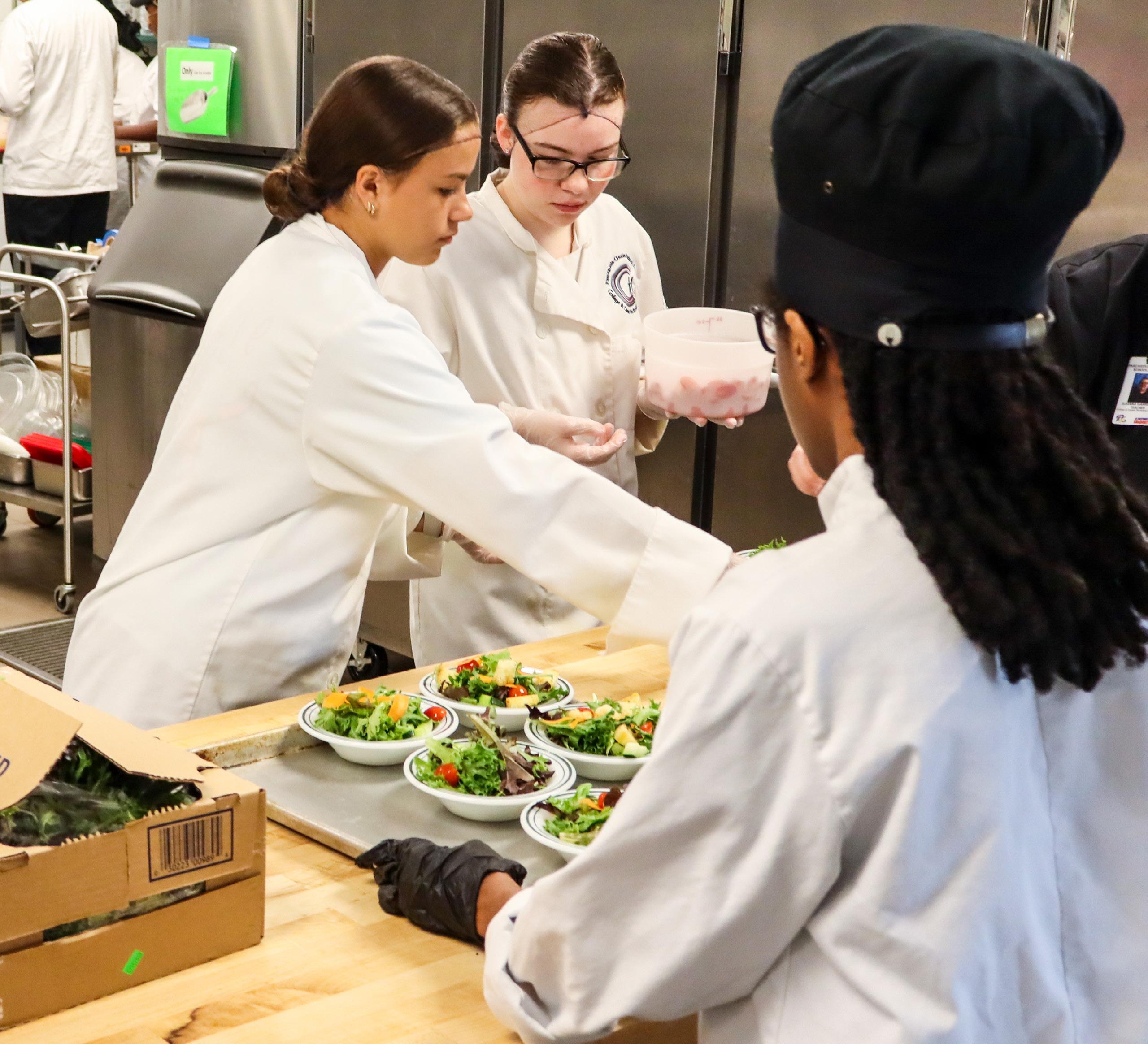
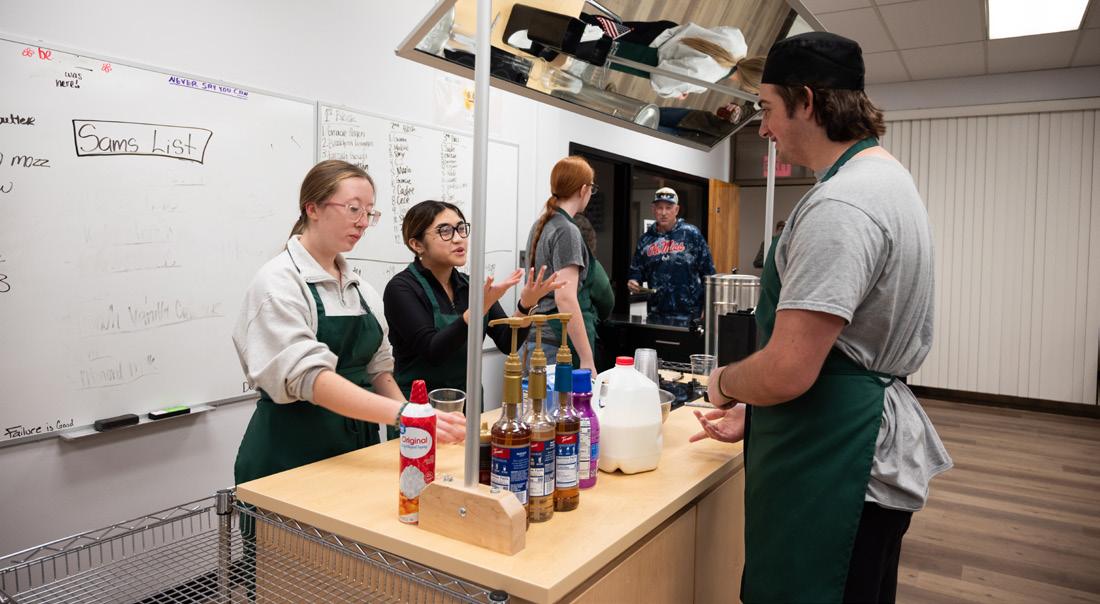
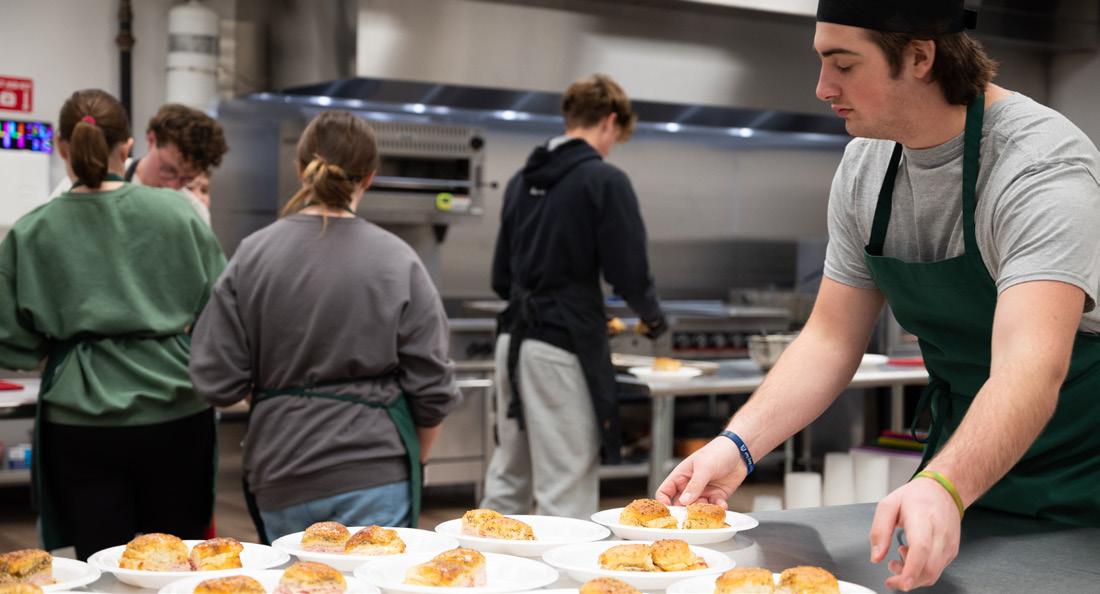
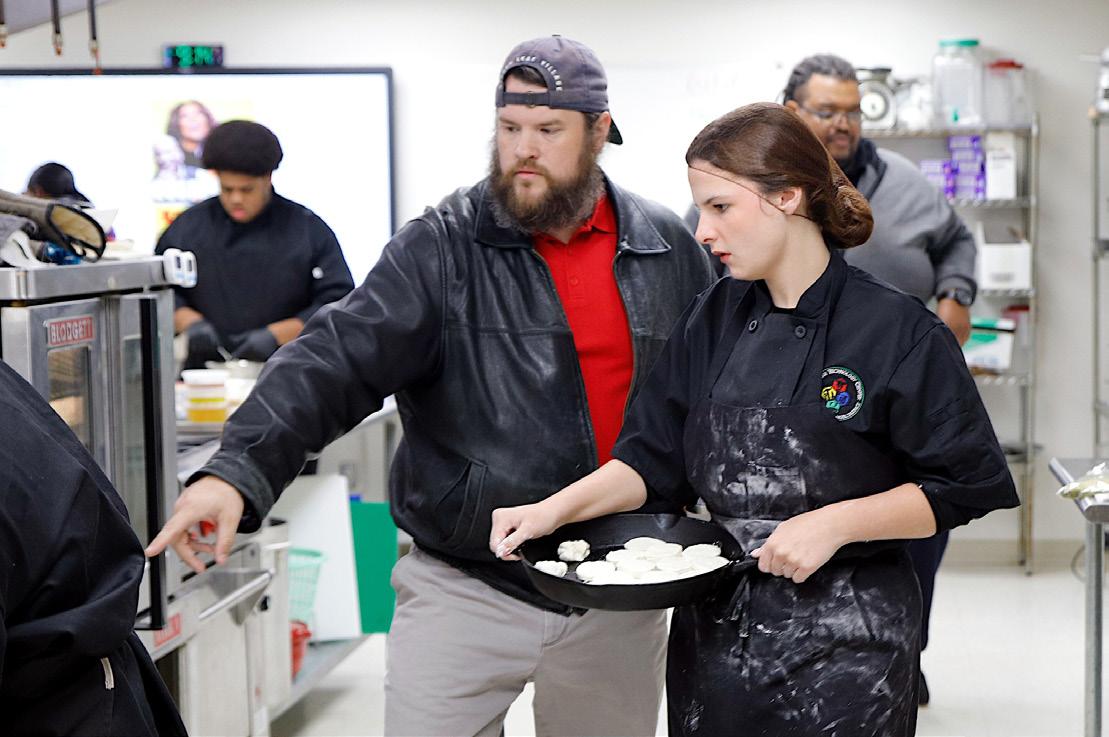
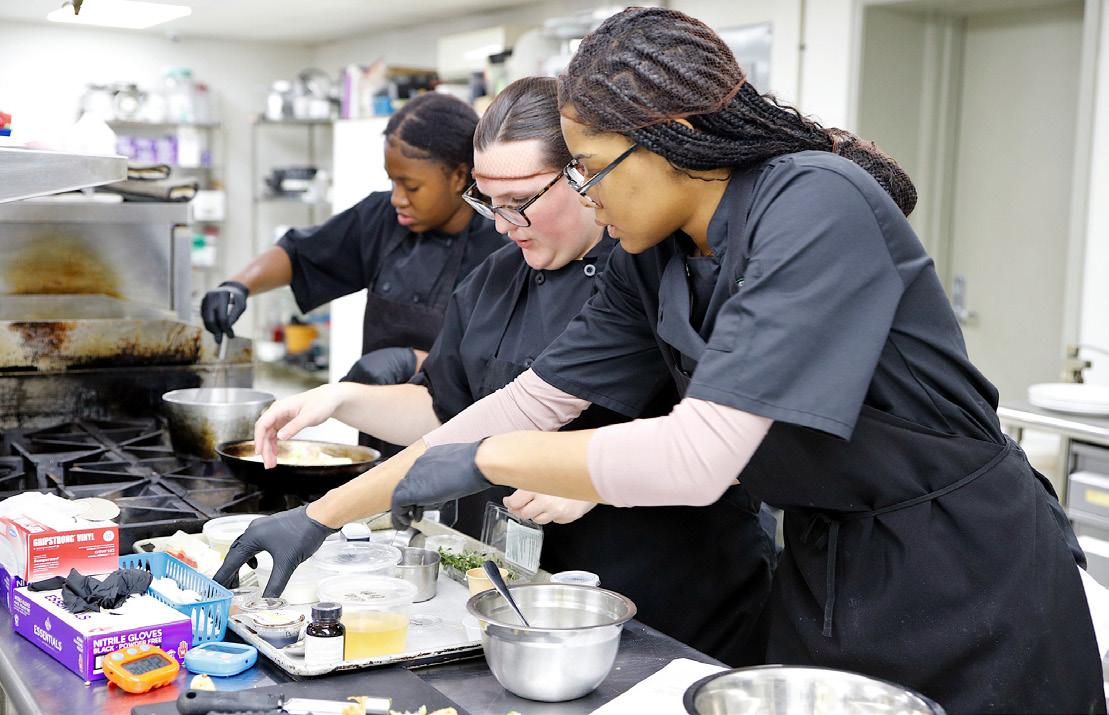
Students working together to prepare meals for the café as part of the culinary CTE class.
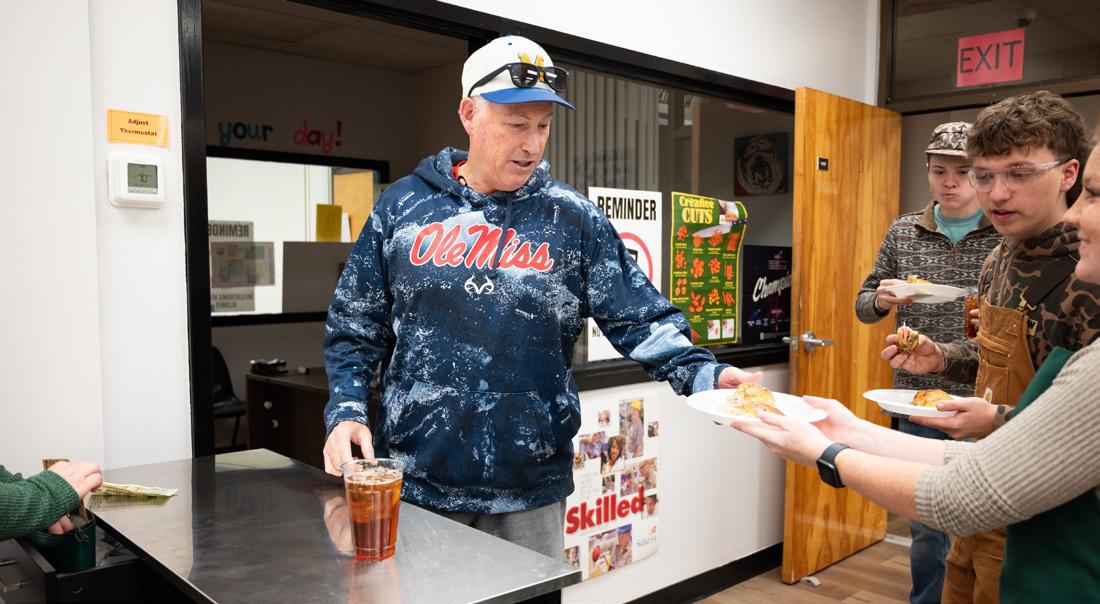
Café Thursdays: Serving Up Real-World Experience at Itawamba CTC
Every Thursday, the culinary arts program at the Itawamba Career and Technical Center springs to life with Café Thursdays, a student-led dining experience that blends real-world learning with community connection. Culinary students take on ownership of the café by planning menus, prepping ingredients, cooking meals and serving their fellow CTE peers throughout
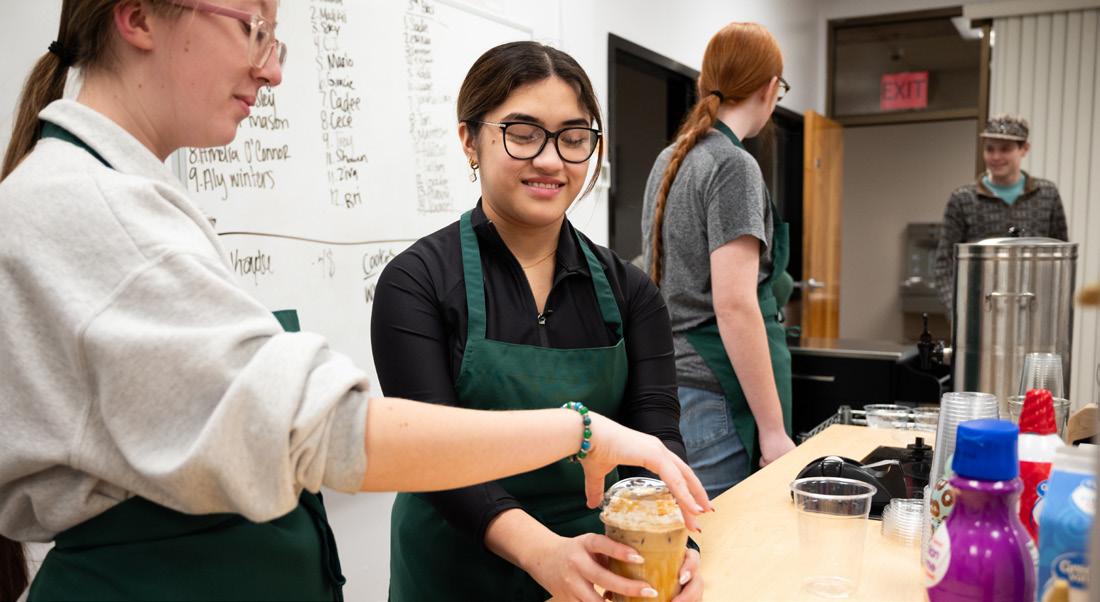
the day. To mirror a professional kitchen schedule, students serve three different courses across the day, with each class block featuring a unique menu item. A popular coffee cart is always available, keeping customers energized and adding to the authentic café atmosphere.
Café Thursdays also teach valuable financial responsibility. Students
earn money from café sales, which is reinvested to purchase groceries used in class throughout the week. Led by Instructor Maylee Aldridge in just her second year of teaching, the program has already seen impressive success. Café Thursdays showcase the power of hands-on learning, student entrepreneurship and the bright future of culinary education at Itawamba CTC.
From Classroom to Career: Madison CTE Opens Doors to Industry
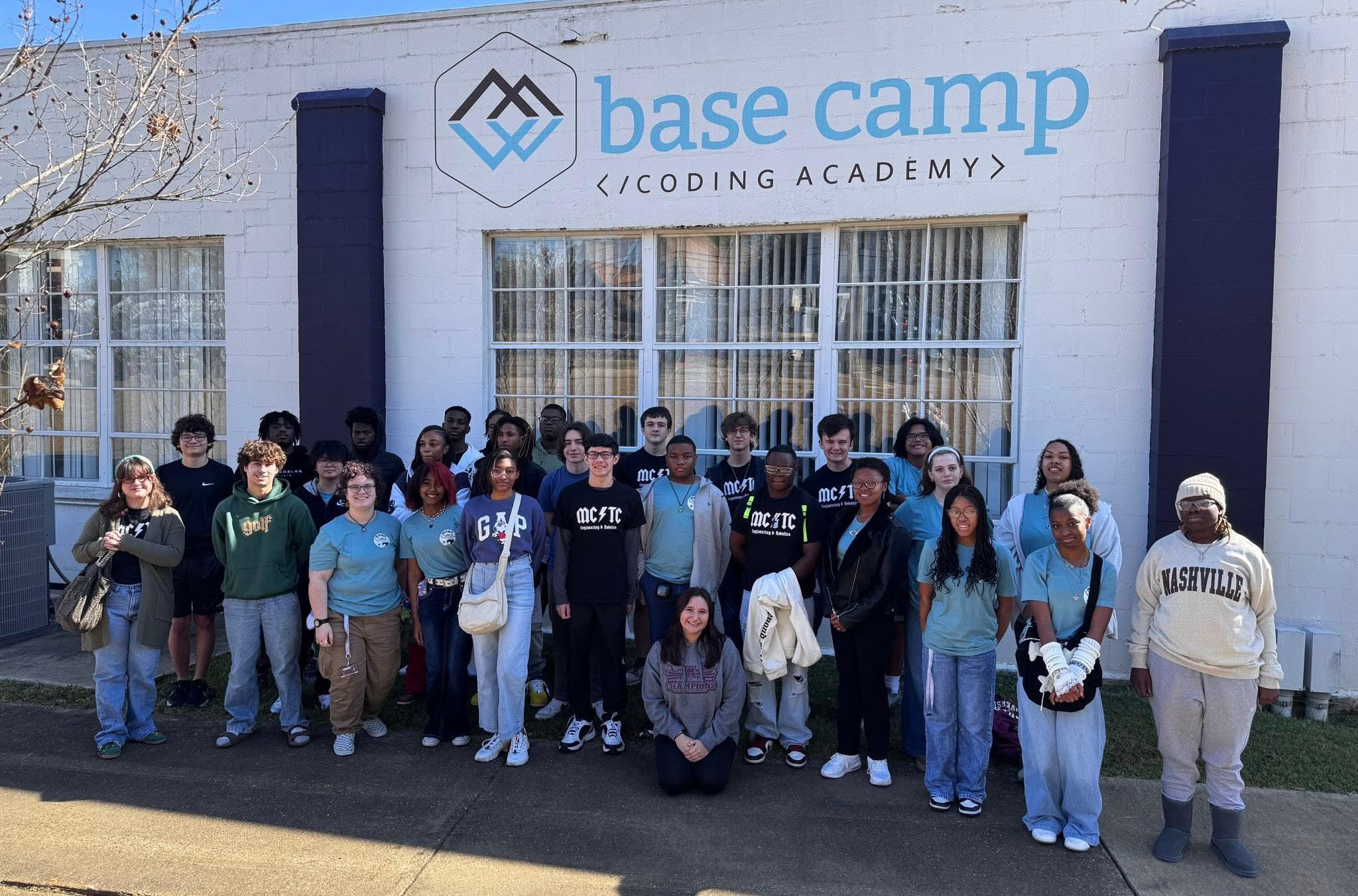
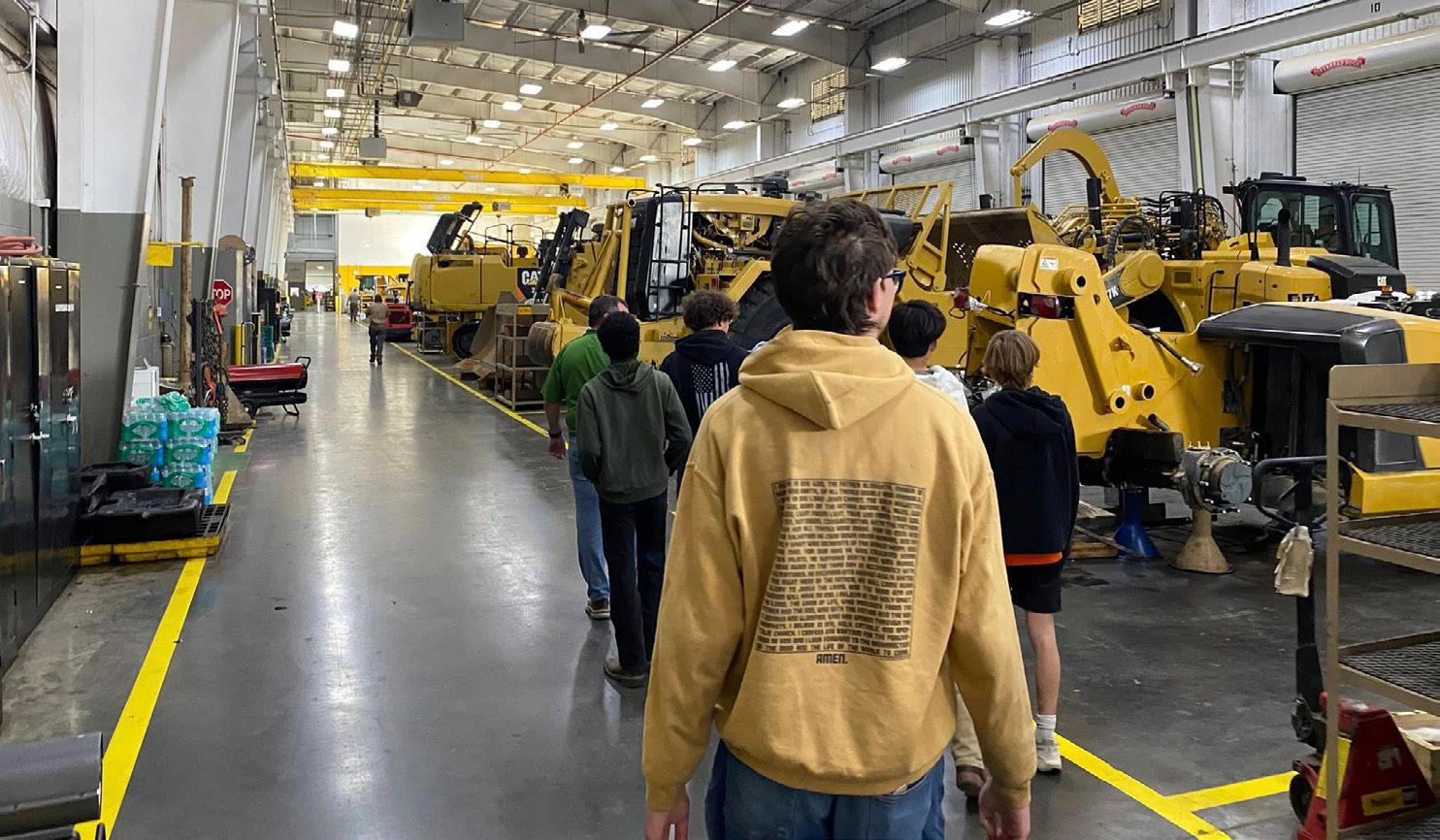
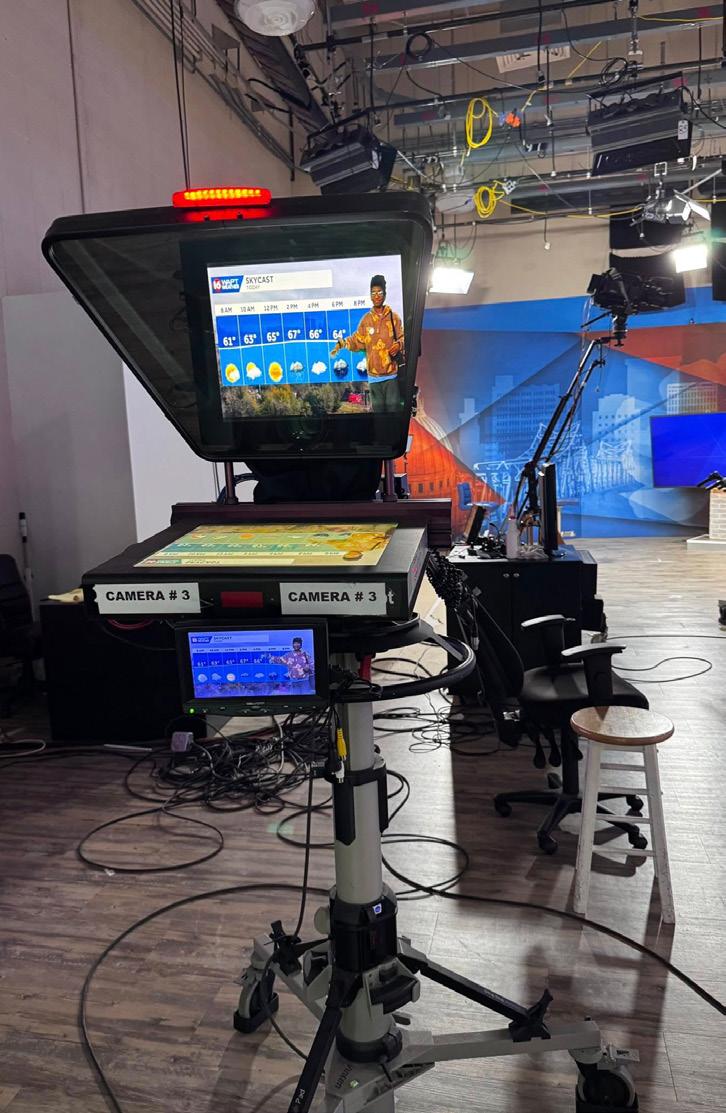
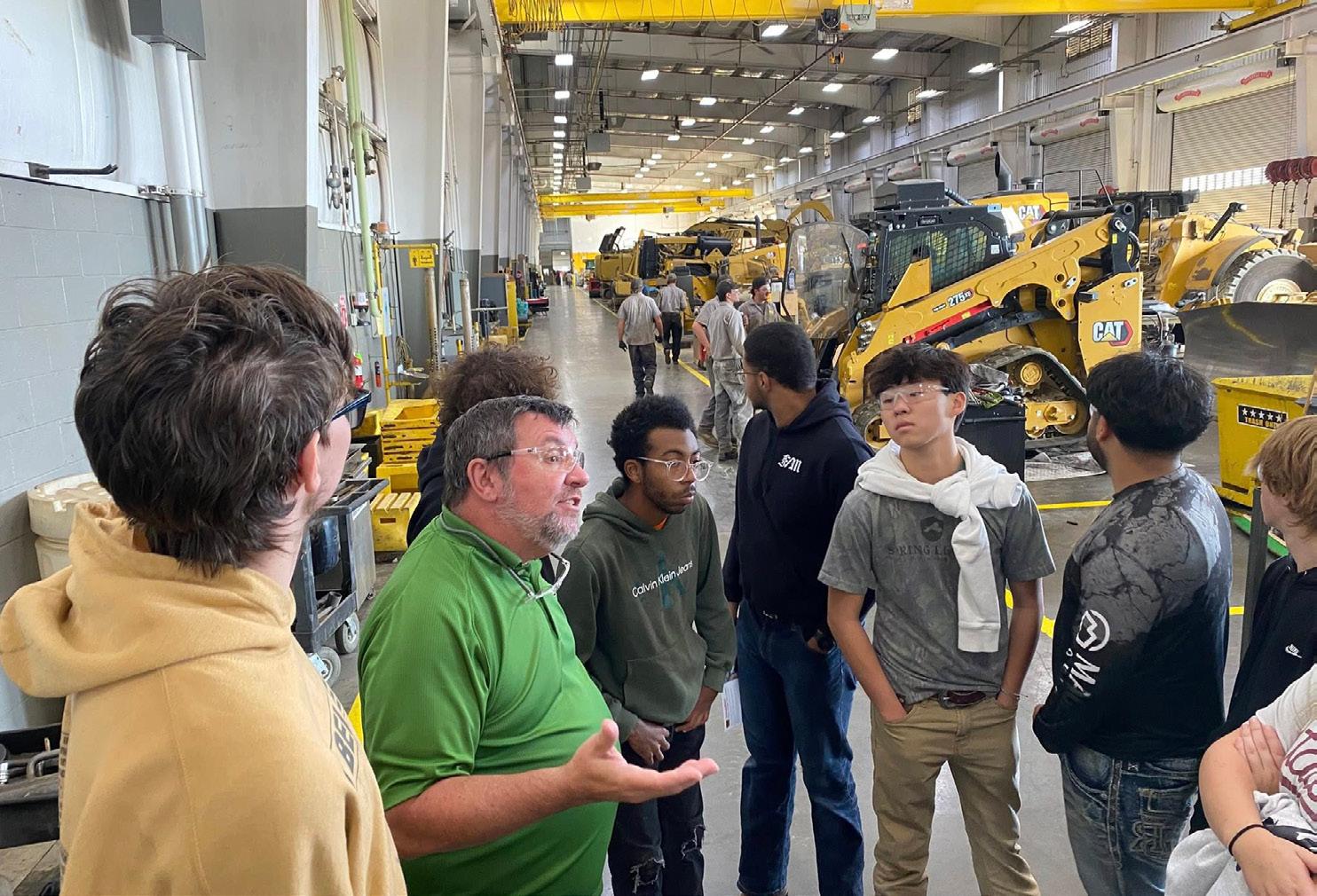
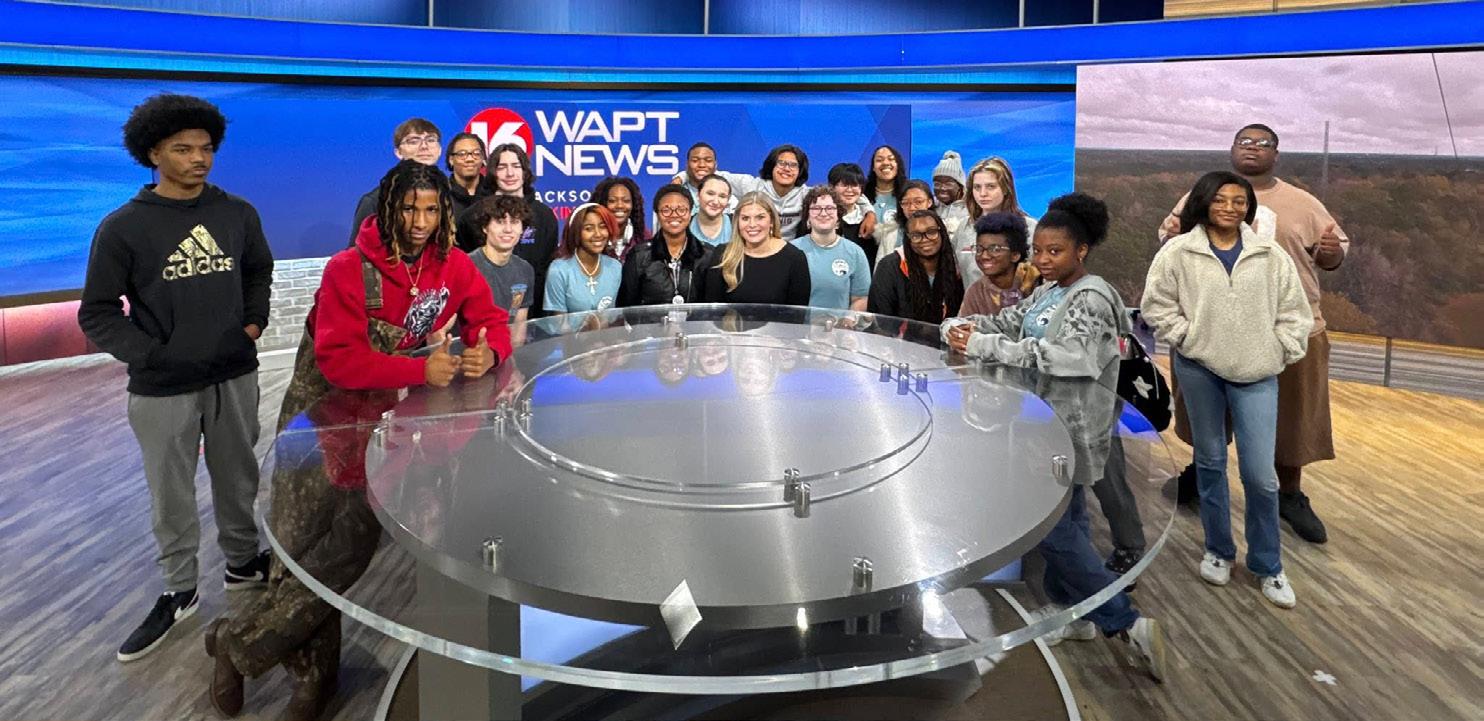
Madison Career & Technical Center is creating avenues for their students to get hands-on learning opportunities. By making the effort to connect with industry partners, such as CAT Puckett, Base Camp Coding and WAPT News Station, Madison CTE is granting exposure to a wide range of current workplace careers. By exposing students to these occupations, Madison CTE is giving their students the tools to make future decisions by allowing them the chance to learn from those in business today. These experiences give students a firsthand look at the skills needed to
Top: MCTC students pictured on a visit to Base Camp Coding Academy. Above: Students touring CAT Puckett in Flowood, MS.
succeed in one of these roles while also helping to connect classroom learning to real-life industry. Some of these industry visits include exploring the world of news production at WAPT News Station, visiting innovative tech-training environments and ascertaining the difference in certain career pathways within construction. While visiting CAT Puckett in Flowood, MS, students in the Automotive and Construction program were able to meet trainers, managers and industry professionals within one of the world’s leading equipment companies. While there, students heard from professionals who shared real-world insight into career pathways within CAT, job expectations and technical training opportunities. Those in Information Technology, Robotics & Engineering, and Multimedia programs traveled to Base Coding Academy in Water Valley, MS in order to explore one of Mississippi’s most innovative techtraining environments. Here, students
were able to learn about coding and software development pathways, meet instructors, student ambassadors and program leaders to see real projects in action. These insights were used to highlight how technology, engineering and digital media intersect in today’s workforce. Other students from the Multimedia and Information Technology programs were able to spend a day in the world of news production at WAPT News Station in Jackson MS, where they were
able to tour the facility, test out the meteorology room, try their hand at anchor positions and learn crucial behind-the-scenes technical operations. It gave students a true look into the fast-paced world of media and technology, along with the skills needed to thrive in it. Overall, opportunities like these allow students to see the possibilities waiting for them after high school while also gaining them a deeper understanding of the dedication and creativity required to thrive in these fields.
While visiting CAT Puckett, students in the Automotive and Construction program were able to hear from industry professionals.
MCTC students pictured behind the anchor desk at the WAPT News Station.
A Recipe for Success: Golden Spoon Competition Showcases Student Talent
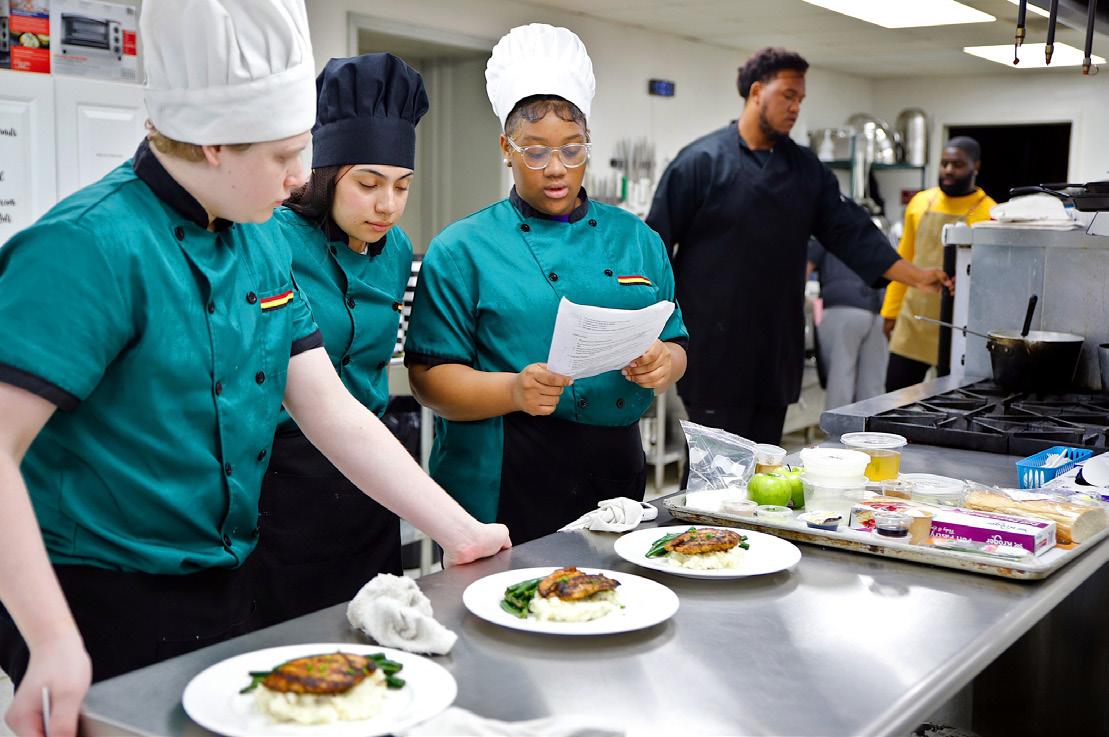
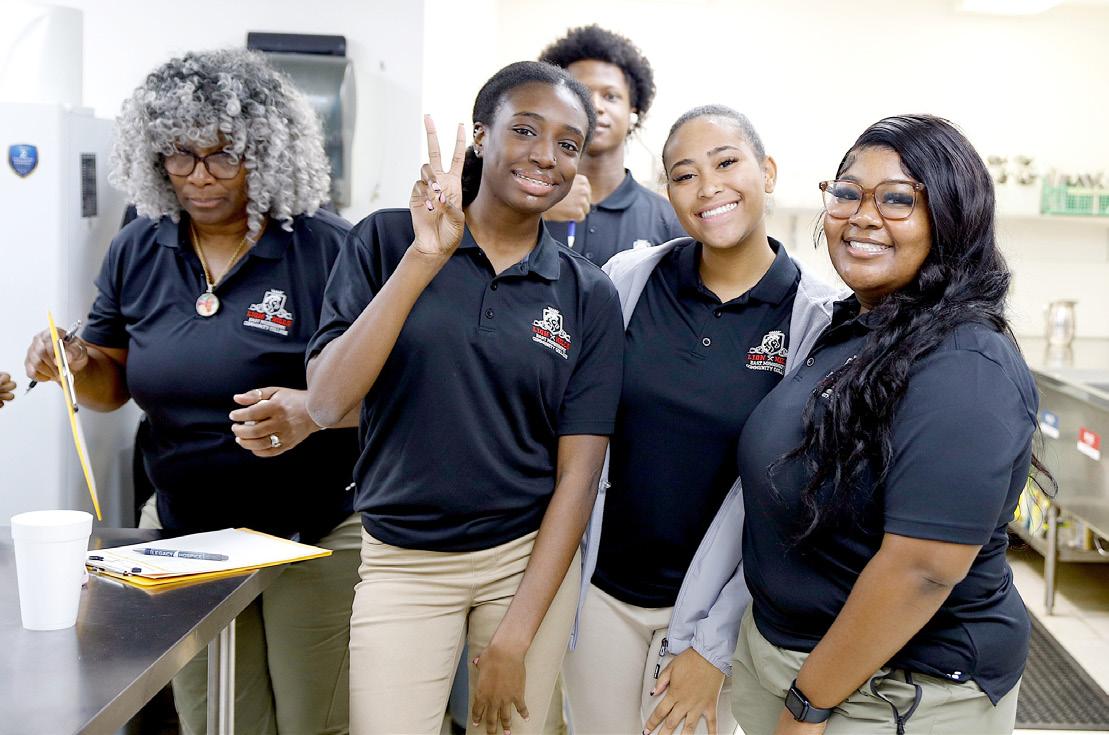
Congratulations are in order for the contestants of the Golden Spoon high school cooking competition. Teams from the Lowndes County Career Technical Center, the McKellar Technology Center and the West Point Career Tech Center competed in the event which was held at the East Mississippi Community College Lion Hills Annex in November 2025. Hosted by the EMCC Culinary Arts program and the Lion Hills Center, the competition consisted of three main components: a cooking competition for the main course, a baking competition for desserts and a Knowledge Bowl,
Top: Pictured are the student’s caramelized onion and bacon croissants.
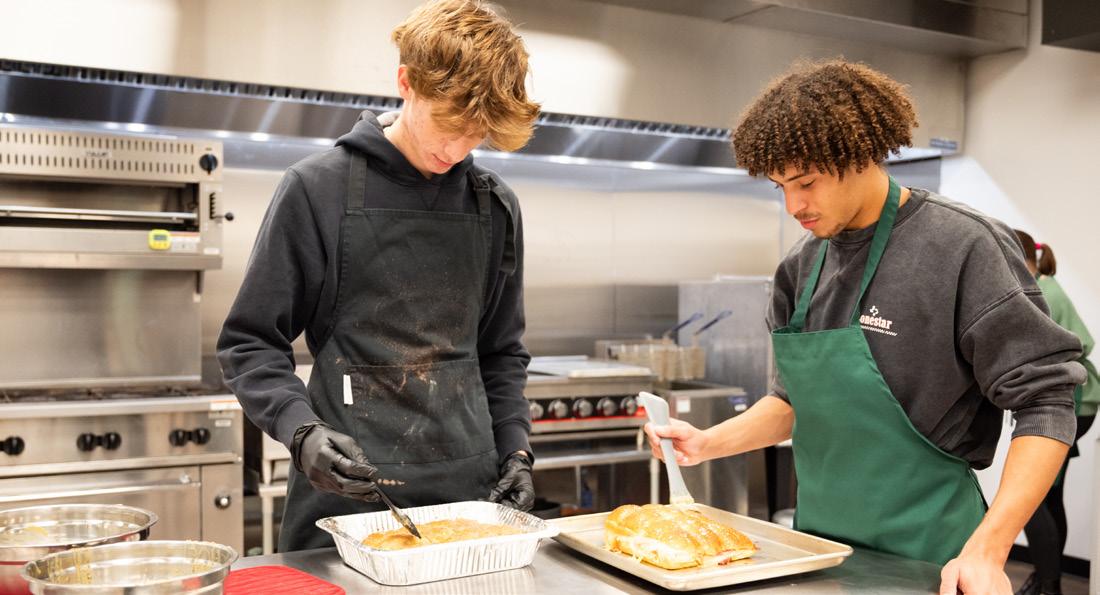
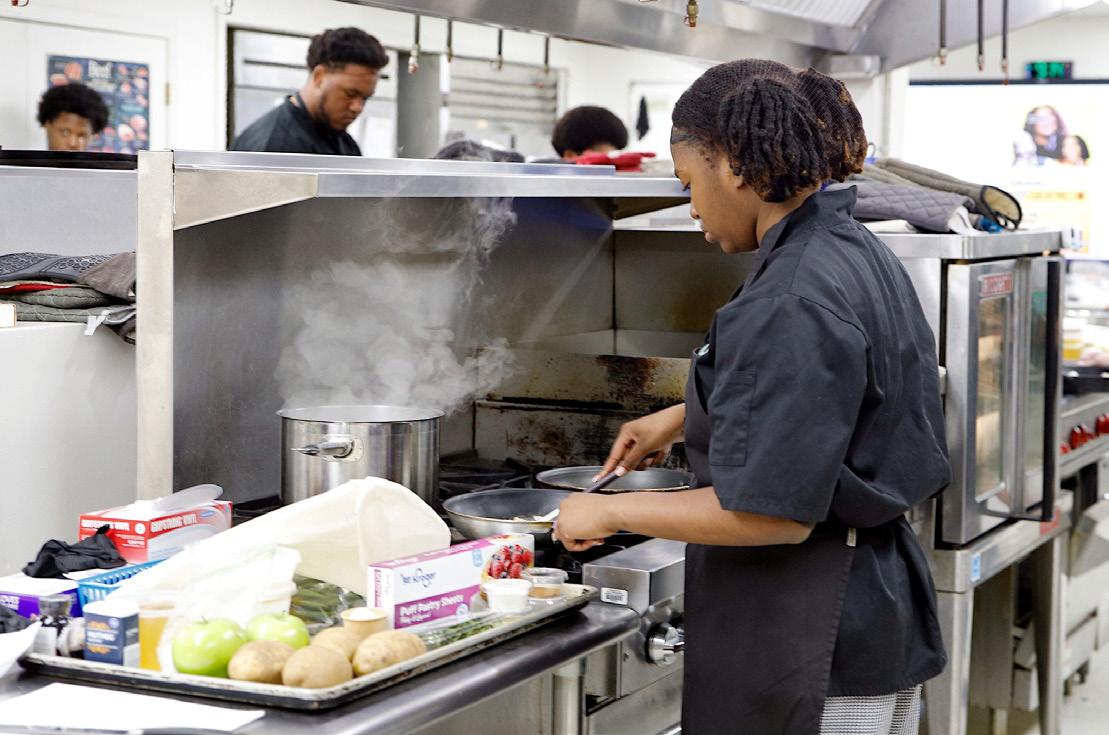
which is a test that covered a wide range of topics related to culinary terminology and methodology. For the cooking competition, the students had to create a menu consisting of caramelized onion and bacon croissants, pan-seared chicken breasts
with green beans and russet potatoes, and apple turnovers with caramel drizzle. For the baking competition, students were required to make chocolate chip cookies, biscuits and blueberry muffins. Each of these three categories tested students on
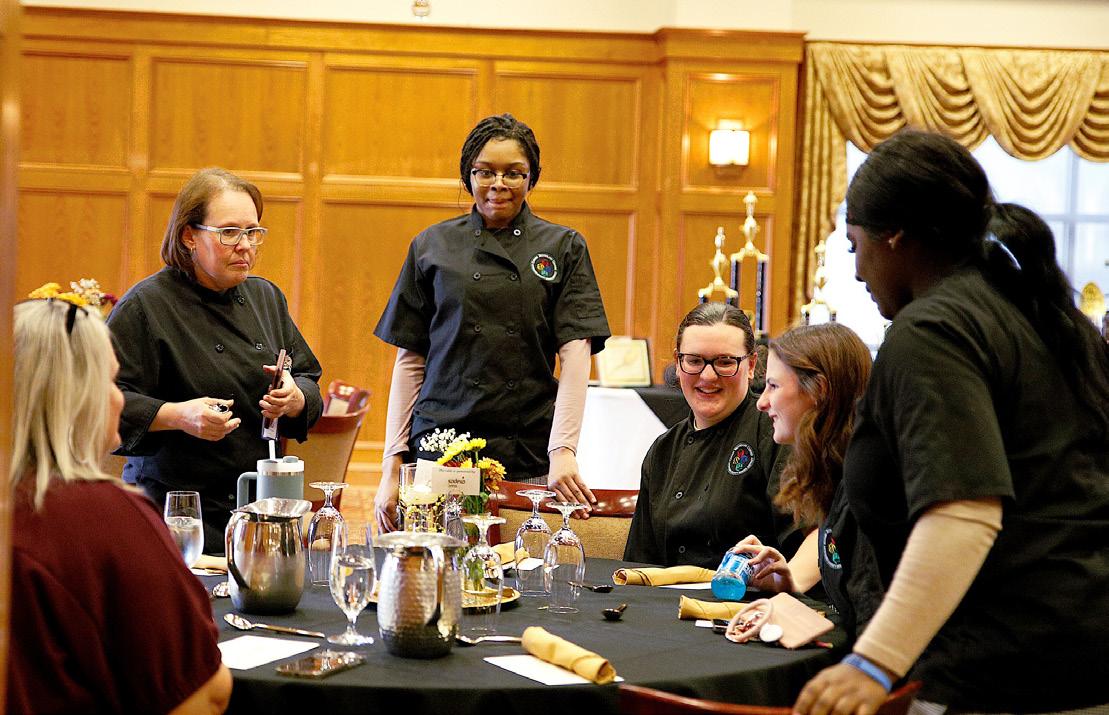
their skills and knowledge of and in the kitchen. Once completed, a lunch and awards ceremony followed at the Lion Hills Center & Golf Course, allowing the students a chance to socialize, network and celebrate their hard work.
This competition required students to participate in both cooking and baking.