THE GREAT REBALANCING: HOW EFFICIENCY-FIRST CARRIERS ARE RESHAPING THE PARCEL MARKET PAGE 10 WHEN SUSTAINABILITY MEETS PERFORMANCE: A TOTAL COST OF OWNERSHIP GUIDE TO PACKAGING DECISIONS PAGE 14 THE E-COMMERCE PLAYBOOK FOR A VOLATILE WORLD PAGE 28
Travis Rimel
Jeff Juiliano
Parth Davé
Melissa Irmen
Having the right data on hand is merely one step in a larger process that puts it to
Whether you use your data effectively and to its full potential comes down to the details.
Quinn Nelson
EDITOR’S NOTE
STAYING AHEAD OF THE CURVE
By Amanda Armendariz
There’s been a lot going on in our industry lately, and it can be hard to stay on top of it all. Even in the best of times, shippers have to juggle changing customer expectations, carrier surcharges, and increasing competition. Add in the uncertainty the supply chain is experiencing due to the conflict in Iran, and there are a lot of factors for shippers to juggle.
Take the fact that for the first time ever, the United States Postal Service is implementing a “transportation-related, time-limited price change.” According to the USPS’s press release, this surcharge “will provide a necessary bridge to a permanent mechanism to reflect
market conditions in prices for competitive products that can support the Postal Service’s ability to achieve the universal service obligation in a more financially sustainable manner going forward.” This eight percent increase affects base postage prices on Priority Mail Express, Priority Mail, USPS Ground Advantage, and Parcel Select. While the USPS maintains that, “Transportation costs have been increasing, and our competitors have reacted with a number of surcharges. We have steadfastly avoided surcharges and this charge is less than one-third of what our competitors charge for fuel alone,” this surcharge is indicative of the fact that the industry is facing a number of challenges in the current environment.
One of the best ways shippers can help mitigate these challenges and ensure their operation stays competitive is to make sure their carrier mix is optimized. Hopefully, this issue of PARCEL helps you do just that. We’ve profiled some leading regional and final-mile carriers starting on page 20, so if one of your to-do list tasks is making sure that you have the right carrier for your operation, you’ll want to be sure to check that out.
As always, thanks for staying connected with PARCEL.
When Throughput Disrupts Flow
Most high-volume fulfillment operations chase the same goal: move more packages in less time.
That pressure is understandable. Shipping windows keep shrinking, order profiles keep changing, and labor availability is rarely predictable. The problem is that many facilities focus so heavily on speed that they overlook the thing that holds the operation together: flow.
When flow starts breaking down, the symptoms show up quickly. Accumulation builds between work areas. Labor gets pulled from one process to fix another. Packers wait on product while induction lines back up somewhere upstream. Teams start relying on manual workarounds just to keep orders moving.
The operation may still be moving fast in isolated areas, but it is no longer moving cleanly.
That distinction matters.
In parcel environments especially, throughput is not just about how quickly products move through a sorter. It is about how consistently the entire system handles changing conditions throughout the day. Volume spikes, staffing shortages, SKU growth, and mixed order types all put pressure on fixed workflows.
That is where flexible sortation becomes valuable.
Facilities no longer operate with a single order profile. One wave may include e-commerce orders with one or two units. The next may include store replenishment, wholesale shipments, or returns processing. Trying to force all those workflows through one rigid process usually creates bottlenecks somewhere downstream.
Modular sorting systems give operations more room to adapt without rebuilding infrastructure every time requirements shift.
Instead of committing to a fixed layout or static process, operations can adjust induction points, divert locations, routing logic, and labor allocation as conditions change. That flexibility helps facilities balance throughput without layering on unnecessary complexity.
The same principle applies to labor.
Many operations struggle because labor demand changes faster than the system can respond. Picking may become overloaded for two hours while packing sits underutilized. By afternoon, the issue reverses.
A rigid workflow forces supervisors to compensate manually, often through overtime, temporary staffing, or reactive process changes.
A more flexible sorting approach gives facilities better control over where labor is applied and how product moves through the building. Instead of redesigning workflows every peak season, operations can scale around existing infrastructure.
This is one reason configurable systems continue gaining attention across parcel automation.
Solutions like the Chameleon sorting system are designed around adaptability rather than one-size-fits-all throughput targets. Facilities can configure sort destinations, layouts, and processing strategies around existing workflows instead of restructuring processes around the equipment.
That flexibility becomes especially useful as fulfillment networks evolve. Many facilities need automation that supports growth without forcing major disruptions every time order volume changes.
The same thinking carries into pick and put wall operations.
Light-directed workflows such as LightSort pick-to-light and put-to-light systems help facilities improve accuracy and reduce search time without introducing another complicated layer of automation. Because the system can scale with changing SKU counts and order volume, teams gain flexibility without sacrificing visibility or control.
That balance matters more than ever.
Warehouse operators are under pressure to increase throughput while controlling labor costs and avoiding operations slowdowns. The answer is not always adding more equipment or increasing conveyor speed.
In many cases, the better investment is creating a system that absorbs change without becoming harder to manage.
The strongest fulfillment operations are usually not the loudest or the fastest. They are the ones that stay stable when conditions change.
That stability comes from flow.
And flow depends on systems flexible enough to support the operation instead of forcing the operation into constant adjustment.
As fulfillment demands continue shifting, operations that prioritize adaptability will be better positions to respond without adding friction, labor strain, or unnecessary process layers. The goal is not simply to move faster. It is to build an operation that can maintain performance consistently, even as volume, staffing, and customer expectations shift from one day to the next.
SUPPLY CHAIN SUCCESS
THE RISE OF THE FUEL SURCHARGE
By Andy Johnson
Rising fuel costs have long been a volatile variable in parcel shipping, but in 2026, they have triggered a notable shift: both the United States Postal Service (USPS) and Amazon have introduced new fuel surcharges, marking a significant evolution in how these major players manage transportation cost pressures.
USPS Introduces a First-Ever Fuel Surcharge
For decades, the USPS stood apart from private carriers by avoiding fuel surcharges altogether. That distinction has now ended. In response to sustained increases in fuel prices — driven in part by geopolitical instability and energy market volatility — the Postal Service has proposed and begun implementing a temporary fuel surcharge on package deliveries.
Key Details of the USPS Surcharge
Scope: The surcharge applies to competitive products, including Priority Mail, Priority Mail Express, and Parcel Select.
Structure: Unlike UPS and FedEx, which use indexed fuel surcharge tables tied to diesel or jet fuel benchmarks, USPS has opted for a more simplified, flat or semi-variable fee structure tied to prevailing fuel conditions.
Temporary Nature: USPS has emphasized that the surcharge is intended as a temporary measure, subject to regulatory approval and periodic review.
Rationale: The Postal Service cited “extraordinary” fuel cost increases as the primary driver, noting that transportation expenses represent a significant portion of its operational budget.
This move reflects the USPS’s ongoing financial pressures and its increasing alignment with commercial shipping practices. And even with their assurance this surcharge is temporary, anyone who has been in the industry for long knows that once this type of fee begins to generate revenue, it rarely goes away.
Amazon Expands Fuel Surcharges Across Fulfillment Services
Amazon, already a dominant force in logistics through its Fulfillment by Amazon (FBA) and Seller Fulfilled Prime networks, has also moved to implement fuel surcharges across multiple services.
Key Details of Amazon’s Surcharge
Magnitude: Reports indicate a surcharge in the range of three to five percent, depending on the service and fulfillment channel.
Applicability: The surcharge affects third-party sellers using Amazon’s fulfillment and transportation services, including inbound shipping, last-mile delivery, and certain multi-channel fulfillment offerings.
Dynamic Pricing: Amazon’s surcharge is designed to be flexible, allowing for adjustments based on fuel market fluctuations.
Justification: Amazon has pointed to global fuel price volatility, including geopolitical tensions impacting oil supply, as the impetus for the change.
Unlike the USPS, Amazon is not new to dynamic pricing adjustments; however, this move signals a deeper integration of fuel cost passthrough mechanisms into its logistics network — bringing it more in line with traditional carriers while reinforcing its position as a hybrid platform and carrier.
How the USPS and Amazon Compare to UPS and FedEx Fuel surcharges are nothing new for UPS and FedEx. Both carriers have long relied on detailed, index-based surcharge systems that adjust weekly based on national fuel price averages.
Established Carrier Practices
Indexed Surcharges: UPS and FedEx publish fuel surcharge tables tied to US Department of Energy fuel price indices.
Mode-Specific Rates: Separate surcharge tables exist for ground, air, and international services.
Weekly Adjustments: Rates are updated frequently, providing transparency but also variability.
Compounding Effect: Fuel surcharges are typically applied as a percentage of base rates — and often on top of other accessorial charges.
The USPS’s approach is the least mature, reflecting its new entry into fuel-based pricing. Amazon’s model is more flexible but less transparent than UPS and FedEx. Meanwhile, the private carriers continue to offer the most structured and predictable — if complex —systems.
Strategies to Mitigate Fuel Surcharge Impact
While fuel surcharges are largely unavoidable, there are ways to reduce their impact.
1. Optimize Carrier Mix
Diversifying across carriers
can help balance cost exposure. With USPS, Amazon, UPS, and FedEx all implementing fuel-related charges, the key is to continuously evaluate which carrier offers the best rate — including surcharges — for each lane and service level. However, when dynamically optimizing a network, shippers must also constantly monitor how shifted volumes impact revenue/volume discounting with their primary carrier(s).
2. Leverage Zone Skipping By consolidating shipments and injecting them deeper into carrier networks, shippers can reduce transportation distances — and therefore fuel-related costs.
3. Negotiate Contracts Shippers should revisit carrier agreements to negotiate caps, discounts, or alternative surcharge structures. While USPS offers less flexibility, Amazon, UPS, and FedEx contracts may provide opportunities for relief.
4. Improve Packaging Efficiency Reducing dimensional weight can lower the base rate to which fuel surcharges are
applied. Even small packaging improvements can yield meaningful savings at scale.
5. Use Regional Carriers
Regional carriers often have different surcharge structures and may offer lower overall costs in certain markets. Incorporating them into a multi-carrier strategy can provide a hedge against national carrier surcharges.
6. Pass Through Costs Strategically
For some businesses, especially in e-commerce, passing a portion of the surcharge to customers — through shipping fees or product pricing — may be
necessary. Transparency is key to maintaining customer trust.
7. Get Professional Help
The many intricacies of the current parcel industry can sometimes feel overwhelming. Parcel consultants can provide the added bandwidth and expertise some shippers need to make truly informed decisions. With their ability to model dynamic, real-world scenarios and show total financial impacts to a network, this can be a strategic way to mitigate new surcharges for many shippers.
Johnson is Consulting Project Manager, Infios.
Andy
THE GREAT REBALANCING: HOW EFFICIENCY-FIRST CARRIERS ARE RESHAPING THE PARCEL MARKET
By Brian Estes
The small parcel market is not simply evolving; it is reorganizing around a different set of priorities. For decades, national carriers focused on maximizing volume, expanding networks, and capturing market share, with growth serving as the primary measure of success.
Today’s market, however, is being reshaped by an evolution toward efficiency, margin discipline, and network optimization. Meanwhile, regional carriers and emerging players are expanding, refining operating models, and introducing meaningful innovation, creating a more dynamic and competitive landscape. To understand what is happening, it helps to look beyond parcel.
A Familiar Pattern: Lessons from the Rail Industry
The transformation in parcel mirrors what occurred in North American rail during the rise of Precision Scheduled Railroading (PSR). Before PSR, railroads operated complex transportation systems designed to accommodate a wide range of freight, with efficiency often secondary to coverage and volume. That changed as operating models were restructured around precision, asset utilization, and profitability. Railroads began prioritizing consistent freight flows, high-density shipments, and operational simplicity, while freight that did not conform became more expensive or undesirable. The result was more efficient and profitable major carriers, alongside the expansion of regional and shortline operators serving displaced freight. This pattern of creative destruction is now unfolding in the parcel market.
From
Volume to Yield: The Strategic Pivot
UPS and FedEx are no longer operating as volume-driven networks. They are engineered systems focused on yield. This transition is evident in three key areas:
more deliberate about the freight they accept. High-density, predictable shipments are favored, while complex shipments are priced out through targeted surcharges rather than explicit service cuts.
Cost-to-Serve: Rate structures are no longer dictated solely by zones. Package efficiency, cubic volume, and delivery complexity now drive the price. The movement away from less efficient B2C profiles reflects this math.
Margin Precedence: Carriers are actively managing yield even when it results in reduced volume.
This is the defining inflection point. UPS and FedEx are no longer competing for all business; they are selecting the business they want.
A More Fragmented Carrier Landscape
Pricing as a Strategic Lever
Network Selectivity: National carriers are becoming
As national carriers refine their business models, the market is becoming more fragmented. Freight that no longer fits within that model does not disappear, but instead moves to other providers, creating opportunity for regional and specialized carriers. These carriers are not just low-cost alternatives. Many are highly focused on specific geographies, operationally efficient within those areas, and delivering strong service performance. Several are leveraging advanced technology and operating as much like technology companies as transportation providers.
At the same time, new entrants are driving innovation in final-mile delivery, routing, and visibility, not by replicating national footprints and approaches, but by complementing them. The result is a more diversified, multi-carrier environment where a single-carrier strategy is increasingly misaligned with market realities.
Pricing changes offer a clear view of how the traditional major players are reshaping their priorities. Surcharges and accessorials are no longer just revenue tools; they are used to influence shipper behavior and reduce operational complexity. Residential surcharges continue to increase, and more ZIP Codes are being added to delivery area surcharge classifications. At the same time, dimensional penalties are expanding, with Additional Handling, Oversize, and Unauthorized charges increasingly targeting shipments that exceed specific thresholds.
Rate structures now reflect how these firms want to operate, and it can no longer be considered just as a cost, it must be taken as a signal.
The USPS Factor: When the Floor Starts Moving
For years, the United States Postal Service provided a stabilizing force in the parcel market, serving as a reliable, cost-effective outlet for lightweight and residential shipments and often acting as a baseline option within INDUSTRY INSIGHT
broader carrier strategies. That role is now changing.
Recent rate increases and the introduction of temporary surcharges point to a clear shift in approach, as the Postal Service actively manages its economics, modernizes its network, and addresses long-standing financial pressures. The broader implication is significant; when the traditional low-cost option moves up-market, it raises the floor for the entire industry, making strategies that once relied on USPS for cost control less predictable.
The End of the All-In-One Model
Historically, many shippers relied on a single primary carrier. This offered simplicity and leverage. In today’s environment, it introduces risk and eliminates strategic flexibility needed to navigate change.
As UPS and FedEx become more selective, dependence on one network increases exposure to pricing pressure and misalignment. At the same time, the growth of regional service providers has made alternative strategies more viable. This reflects a broader pivot, as parcel execution moves from consolidation to orchestration.
What This Means for Shippers
This restructuring requires a different approach. Securing competitive contracts still matters, but it must be paired with a clear understanding of how a shipper’s profile fits within the multiple network and business model options. Without alignment, negotiated terms will erode over time.
Small parcel strategy must reflect market structure. A varied service provider mix allows shippers to match freight with the options best suited to handle it. Furthermore, operational decisions carry greater financial impact. Packaging, fulfillment strategy, and delivery promises now directly influence the bottom line. Parcel is no longer just a transportation function. It is a cross-functional lever.
A Market Redefined
The parcel industry is not becoming less stable. It is becoming more intentional. The Big 2 + USPS are optimizing efficiency and profitability. Regional providers are expanding to capture targeted opportunities. Pricing is evolving to reinforce these structural trends. As baseline options evolve and the cost floor rises, the advantage transfers to shippers who understand not just their contracts, but the direction of the market.
As a senior transformation and delivery leader, Brian Estes of Intelligent Audit helps organizations translate complex technology initiatives into measurable business outcomes — faster time-to-value, stronger adoption, improved retention, and scalable operating performance.
REVERSE LOGISTICS
RETURNS’ IMPACT ON THE ENVIRONMENT
By Tony Sciarrotta
Arecent Fast Company article written by the chief sustainability officer of Blue Yonder, Saskia van Gendt, caught my attention. Van Gendt wrote that while free returns have become a “powerful driver of online shopping,” they also come with hidden environmental consequences.
Many shoppers do not think about what happens after an item has been returned — most assume the item is simply returned to stock for resale, but as Van Gendt points out, a large share of returned items cannot be resold due to various reasons. Instead of recycling, repairing, or reselling items in the secondary markets, many returned items end up in landfills because it’s often thought of as less expensive versus repairing or recycling.
According to the Sierra Club, in 2020, 5.8 billion pounds of returned goods in the United States ended up in landfills in 2020. This resulted in returned clothes being responsible for 700 million pounds of waste.
Globally, the Ellen MacArthur Foundation estimates that the world produces over 92 million tons of textile waste annually, equivalent to a truckload dumped every second. Fashion is among the world’s highest polluting industries. If that’s not enough to catch your attention, here’s another data point: Glimpse From The Globe estimates as much as 39,000 tons of unwanted clothing are dumped annually in Chile’s Atacama Desert.
It’s not only fashion and textiles. According to the UN’s E-waste Monitor 2024, a record 62 million tonnes of e-waste was produced in 2022, up 82% from 2010 and on track to rise another 32% to 82 million tonnes in 2030. Furthermore, the UN notes that only 25% of e-waste was recycled in 2022.
Reducing Waste
As Van Gendt writes, reducing the environmental impact of returns will require both retailer and consumer changes — such as improving product information to prevent returns, offering incentives for more sustainable return methods, and expanding resale or recommerce channels. Without such shifts, the convenience of free returns will continue to carry a largely invisible but growing environmental cost.
Small changes in behavior, such as buying thoughtfully, maintaining products, and disposing of them responsibly, can make a significant impact.
Brands should also adopt circular design principles. This includes designing for recyclability and minimizing blended fabrics that are difficult to process at the end of life. Some companies also offer take-back programs, in which worn garments are collected for reuse or recycling. Recycling is also critical for managing e-waste, as electronics contain valuable materials such as copper, gold, and rare earth elements. Proper recycling ensures these materials are recov-
ered and reused, reducing the need for new resource extraction. However, recycling systems must be accessible and well-regulated to prevent illegal dumping or unsafe processing practices. Many manufacturers and retailers now offer e-waste collection programs, but greater participation and awareness are needed to make these systems effective.
Small changes in behavior, such as buying thoughtfully, maintaining products, and disposing of them responsibly, can make a significant impact. By prioritizing longevity and circular use, consumers help reduce waste, conserve resources, and encourage companies to adopt more sustainable practices.
Ultimately, reducing apparel and electronic waste depends on a shift toward a circular economy, where products are designed, used, and reused in a continuous loop rather than discarded after a single lifecycle. Consumers, businesses, and policymakers all play a role in driving this transition. Through more mindful consumption, better design, and stronger recycling systems, it is possible to significantly reduce waste and its environmental impact.
Tony Sciarrotta is a global leader and authoritative voice for the returns industry and former executive director of the Reverse Logistics Association.
WHEN SUSTAINABILITY MEETS PERFORMANCE : A Total Cost of Ownership Guide to Packaging Decisions
By Eva Caspary
Sustainability has become an integral part of the customer experience. In e-commerce, packaging is often the first physical touchpoint a consumer has with a brand. It shapes perceptions of quality and responsibility long after delivery — and increasingly influences whether that customer returns.
At the same time, parcel fulfillment operations face constant pressure to increase output while controlling cost. Packaging decisions now sit where customer expectations and operational reality meet, which has caused sustainability to be treated as a tradeoff rather than an advantage.
It does not have to be.
Defining Sustainable Packaging in Practical Terms
Sustainable packaging is often framed as a material decision. In practice, it is an operational outcome. Recyclability and recycled content matter, but sustainability also depends on how well packaging prevents damage and avoids waste throughout fulfillment.
Packaging that performs consistently reduces reshipments and excess material while supporting efficient pack execution. Environmental impact improves when packaging is evaluated across its full lifecycle of handling and delivery, not as a standalone material decision.
Sustainable materials are often assumed to carry higher upfront cost. That perception alone can slow adoption when decisions stop at unit price.
Packaging is still too often purchased on unit price alone, even as the most significant cost drivers sit outside the purchase order.
A fulfillment operation may choose a lower priced package that technically meets specifications, only to find that it drives higher shipping charges once parcels move through the
carrier network. The material savings are real, but they are immediately offset by recurring transportation costs applied to every shipment. What looks economical at purchase can become expensive in execution.
Why Total Cost of Ownership Changes the Conversation
Total cost of ownership (TCO) is a decision-making framework that provides the structure to evaluate sustainability in operational terms. A total cost view brings alignment across stakeholders who approach packaging differently or rarely factor it into broader decisions. Procurement sees price. Operations sees throughput. Transportation sees cube efficiency. Brand teams see customer retention. All too often, sustainability KPIs are viewed outside of these performance-driven priorities. TCO creates a shared jumping off point that reflects how packaging decisions move through the business rather than stopping at the purchase order. When viewed this way, sustainability functions as a performance lever rather than a competing priority.
A TCO mentality also considers the impact that macro trends, such as legislation, may have on material pricing. State-driven movements in the US, such as Extended Producer Responsibility (EPR), are adding an additional layer of consideration for businesses as they evaluate materials. These regulations hold producers financially responsible for managing their products and packaging at end of life, rather than governments or consumers. If strategically managed, packaging solutions that align with EPR policies (e.g., recyclability, recycled content, etc.) allow companies to potentially mitigate the cost of paying higher fees — this decision directly impacts the bottom line.
Evaluating Sustainable Materials and Systems Through a TCO Lens
Material choice remains an important sustainability lever, but only if those materials can consistently meet performance expectations. Avoiding repacks and reshipments by reducing damage is one of the most effective ways to meet sustainability KPIs.
Recycled content and recyclable packaging influence the customer experience long after delivery. Packaging that is easy to recycle reduces friction at the point of disposal and reinforces brand credibility, while recycled content signals progress toward sustainability goals customers increasingly expect. When packaging protects products and arrives rightsized, the result is a positive unboxing experience, keeping customer satisfaction intact without introducing threats to fulfillment output.
The equipment or system that is used in tandem with the materials can also have a significant impact on business operations.
Incorporating rightsized automation allows for per unit cost savings balanced with sustainable materials and practices. Packaging designed to match product dimensions reduces excess material and improves yield. When paired with recycled content paper, rightsized automation can deliver lower cost per shipped unit while meeting consumer expectations and significantly supporting operational KPIs. More packages, lower costs, minimized environmental impact, and more happy customers, all thanks to a balanced packaging decision.
The value lies not in avoiding unit cost reductions, but in ensuring that savings do not trigger higher costs elsewhere.
Packaging Performance at Scale
TCO impact becomes most visible when fulfillment operations move from managing exceptions to managing volume. As order profiles shift and variability increases, packaging performance must hold steady across thousands of packs, not just a single line or shift.
The consistency from packaging automation turns small efficiencies into measurable advantages. Predictable pack execution stabilizes labor planning, controls freight exposure, and protects performance as volume increases.
Sustainability priorities are easy to overlook as fulfillment operations scale and focus shifts to maintaining output. A TCO lens reconnects those priorities to the same operational choices that support volume.
A Practical Starting Point
Introducing the TCO framework into your operation doesn’t have to mean a complete overhaul; progress can start with simple alignment. To get started, consider the checklist below:
Bring together the teams whose KPIs are affected by fulfillment and packaging decisions, with clear sustainability representation
Define sustainability in execution terms, such as material efficiency, fewer reshipments or lower transportation impact
Start with packaging decisions that impact throughput,
labor, freight, and damage rather than material substitutions
Compare options based on performance at volume while identifying opportunities to reduce manual touchpoints and allow for repeatable execution
Document tradeoffs so near-term savings do not create downstream risk
Compare holistic per unit pricing vs. TCO pricing implications
Apply the approach to one decision and use the outcome to guide future evaluations
Bringing It All Together
Sustainability has often been treated as a separate consideration because packaging decisions are evaluated narrowly, under pressure to protect cost and output. A TCO view changes that by making sustainability part of how performance is measured rather than something managed alongside it. When labor stability, freight exposure, damage and material use are considered together, tradeoffs become clearer and priorities align.
Packaging does not drive cost in isolation. Through total cost of ownership, it becomes clear how packaging performance supports output, controls expense and preserves sustainability as volume grows.
To learn more about Pregis, visit www.Pregis.com. For questions related to sustainability and packaging, contact Eva directly at ecaspary@pregis.com.
Eva Caspary is the Sustainable Packaging Specialist for Pregis. She holds a PhD in chemical engineering from Louisiana State University.
BY JEFF JUILIANO
AI IN PARCEL AUDITING: WHAT'S REAL, WHAT'S NEXT, AND WHAT STILL NEEDS A HUMAN
Parcel auditing has always been a discipline built on precision. Define the rules, run them against the data, and recover what's owed. For years, that model worked well, and in many respects, it still does. But the environment in which auditing operates has changed considerably, and the tools available to auditors have changed with it.
AI is now a meaningful part of how sophisticated audit programs function. That is worth examining honestly: what AI genuinely improves, where its limitations are real, and why human expertise remains indispensable. The industry conversation tends to swing between breathless optimism and reflexive skepticism. Neither is useful if you're the one actually running an audit program.
What Has Actually Changed
The most fundamental shift AI introduces to parcel auditing is not speed, though speed has improved. It is the ability to move beyond strictly deterministic logic. Traditional audit systems are excellent at what they are designed to do. They reliably identify late deliveries, billing errors, surcharge miscalculations, and dimensional weight discrepancies. That capability has not been displaced. What AI adds is a layer on top: the ability to surface anomalies and patterns that do not fit into predefined categories.
This matters because carrier pricing is not static. FedEx, UPS, USPS, DHL, and regional carriers each operate under its own surcharge logic, service definitions, and billing structures, all of which continue to evolve. A rule written to catch
a specific error today may not capture a variation of that error six months from now. AI helps close that gap. Rather than forcing data into rigid structures, it allows audit systems to adapt as carriers refine their networks and pricing.
The other area where AI delivers tangible value is data normalization. Working across multiple carriers means working with different data formats and conventions. Reconciling those differences accurately, at scale, is a labor-intensive problem that AI handles more effectively than manual processes or fixed schemas.
From Cost Recovery to Cost Intelligence
Perhaps the most significant change AI enables is the expansion of what auditing can tell you.
Traditional auditing answered a transactional question: did this shipment qualify for a refund? That remains important. But AI makes it practical to look across an entire shipping portfolio and identify trends by lane, by carrier, and by service level that would not be visible in a transaction-by-transaction review.
We call it “drift” internally: gradual, incremental changes in surcharge behavior that individually appear reasonable but aggregate into meaningful cost increases over time. No single charge triggers a flag. Viewed in isolation, each looks defensible. Viewed across hundreds of thousands of shipments over several months, a pattern emerges that has real financial significance. That is the kind of signal AI is well-positioned to detect.
Cross-carrier comparison is another area where this capability creates value. When normalized data across carriers makes it practical to compare performance and cost on similar lanes, you gain visibility into optimization opportunities that go beyond error recovery. Auditing begins to inform shipping strategy, not just identify billing mistakes.
Where AI Still Requires Human Oversight
None of this means AI output can be treated as authoritative without review. That's where implementations go sideways.
AI is effective at identifying what is happening and quantifying its apparent impact. It is less equipped to determine what should be done about it. Carriers operate complex, highly optimized networks. There are frequently valid operational reasons behind pricing or service outcomes that are not apparent in the data. Deciding whether a discrepancy warrants a claim, a strategic adjustment, or a broader conversation with a carrier partner requires contextual judgment that a model does not have.
The risk of over-reliance is real and worth naming directly. When AI-generated findings are acted upon without adequate human review, the consequences can extend beyond missed recoveries. Pursuing claims that are not well-supported damages carrier relation-
ships that are built over time and are central to long-term shipping program performance.
Good audit practice has always required calibration between what can be recovered and what should be recovered. AI does not change that principle, but because it generates findings at a scale and speed that can make bulk action feel reasonable, the validation step has to be more consciously protected than it was when humans were embedded in the identification process from the start.
There is also a subtler risk: the erosion of domain expertise. The value of AI in auditing is directly correlated with the quality of the people shaping and validating what it produces. If organizations treat AI adoption as a reason to deprioritize investment in experienced auditors, they will find that the tool underperforms. The best results come from teams who understand carrier contracts, pricing behavior, and operational context enough to distinguish a genuine opportunity from a false positive.
Data Quality Is Not a Secondary Concern
Any real conversation about AI in auditing has to start with data quality, because nothing else works without it. Audit data originates from multiple carriers, each with its own structure, cadence, and conventions. If that data is not normalized and validated before it reaches an AI system, the model will produce unreliable results regardless of its sophistication. This is not a theoretical concern; it is where a significant number of implementations underdeliver. A strong data layer is not a prerequisite that can be addressed later; it is the condition under which AI becomes useful at all.
Governance and Accountability
Effective AI-augmented auditing also requires governance structures that keep humans accountable for outcomes. High-value or unusual claims warrant human review before action is taken. Model performance should be monitored on an ongoing basis. Escalation paths need to be defined for findings that fall outside expected patterns.
The underlying principle is that automation should earn trust incrementally, not be granted it in advance. Every finding should be explainable in terms of what data was used, what triggered the flag, and why it is significant. A practical benchmark: if you cannot clearly articulate the reasoning behind a finding in a conversation with a carrier, it is not ready to act on.
The Road Ahead
The trajectory of AI in parcel auditing points toward greater continuity and earlier intervention. Rather than reviewing invoices after the fact, audit systems will increasingly identify issues closer to real time, enabling faster action and reducing the window during which money is left on the table. Auditing will also become more connected to broader supply chain decisions. Cost and delivery performance, for example, are usually analyzed in separate silos, but they're deeply related. As those data sets come together, auditing stops being just a recovery function and becomes an input into how companies ship in the first place.
What will not change is the need for experienced people to manage those systems, interpret what they surface, and maintain the carrier relationships that underpin efficient shipping operations. The auditor's role is evolving, not disappearing.
The organizations that will get the most from AI in this space are the ones that build on what already works, invest in the data and governance infrastructure that makes AI reliable, and keep developing the human expertise that turns insight into action. That combination, and not AI alone, is what drives durable results.
Jeff Juiliano is the VP of Engineering at Sifted. With over 14 years of experience in full-stack development and engineering leadership, Jeff guides the technical teams behind Sifted's logistics intelligence platform, building AI and data systems into practical, high-impact software solutions for shippers.
The Dimensional Data Blind Spot
How estimated dimensions create billing gaps at scales
By Parth Davé
Parcel shipping costs are often modeled with confidence. Historical shipment data is analyzed, packaging assumptions are applied, and contract scenarios are reviewed in detail.
Yet once execution begins, costs often exceed expectations.
One common reason is a mismatch between how shipment dimensions are represented in internal systems and how they are measured by carriers. Parcel cost models usually rely on estimated or system-defined dimensions. Carriers bill using scanned dimensions captured in their network.
That gap may seem small at the package level. At scale, it becomes expensive.
Parcel costs are modeled using estimated dimensions but billed using scanned reality.
Why Dimensional Weight Is Often Misunderstood
Dimensional weight reflects how much space a package occupies in a carrier network. Large, light packages consume capacity differently than dense shipments, and pricing reflects that.
Even so, dimensional weight is often treated as a contract issue or a packaging issue, rather than a data-quality issue.
Three assumptions contribute to this misunderstanding.
First, many believe dimensional weight mainly affects oversized cartons. In practice, even modest dimensional differences can push shipments into higher billed weights, particularly when dimensional factors are tight.
Second, dimensional exposure is often viewed as something that can be addressed through contract terms alone. While dimensional factors can be negotiated, the data used to model dimensional exposure often influences cost more than the negotiated factor itself.
Third, dimensional exposure is often assumed to be stable. In reality, it shifts with changes in order profiles,
packaging practices, and fulfillment behavior.
These assumptions lead organizations to focus on pricing mechanics while overlooking the quality and consistency of the dimensional data itself.
Where Dimensional Data Breaks Down
To understand the issue, it helps to distinguish three layers of dimensional data.
The first is packaging design, where carton sizes are defined. These dimensions represent how packaging is intended to be used.
The second is shipping system data, where dimensions are stored in warehouse or parcel management systems. These values may come from packaging specifications, but they are often estimated, rounded, or used as defaults.
The third is carrier scan data, where dimensions are captured automatically during sorting and billing. This is the data carriers use to calculate charges.
Most parcel cost analysis relies on the second layer. Carrier invoices rely on the third. That gap is where cost distortion begins.
In one parcel program review, a standard carton was defined in the shipping system as 18×12×10. Carrier scans consistently measured similar shipments closer to 20×13×11 once packaging variability and handling were factored in. The difference appeared minor on individual shipments, but it increased billed dimensional weight across thousands of packages.
This type of mismatch is not unusual. Shipping systems are designed for consistency and speed. Carrier networks measure physical reality. When the two diverge, cost models stop reflecting how shipments are actually billed.
Small dimensional differences at the carton level can create large cost differences at scale.
Why Dimensional Exposure Is Underestimated
Dimensional exposure is often modeled as if it were static. In reality, it is not.
One driver is packaging variability. Even when standard cartons are defined, actual dimensions can change based on packing methods, sealing, and material behavior in transit. Changes in packaging suppliers or material specifications can also alter how cartons behave in real shipment conditions.
In some cases, procurement decisions such as reducing the number of box sizes to simplify sourcing can increase average carton fill inefficiency. When these changes are not reflected in system dimensions, dimensional exposure begins to drift.
A second driver is carton selection behavior. Fulfillment teams may choose cartons based on availability or convenience rather than strict packaging rules. This can reduce packing efficiency and increase billed dimensional weight.
A third driver is changing order profiles. As product mixes evolve, carton utilization changes with them. Orders that once fit efficiently in a carton may begin shipping with more empty space.
Together, these factors cause dimensional exposure to drift over time. When parcel contracts are modeled using historical averages, that drift is rarely captured.
The financial impact is not theoretical. In one parcel audit case study, accessorial charges and shipping charge corrections represented roughly 10% of total shipping spend. After the shipper standardized box sizes and configured its parcel management system so box dimensions were calculated automatically, it saved nearly $300,000 in 45 days.
The point is not the specific number. The point is that small dimensional-data inconsistencies can create measurable cost leakage.
What Shippers Should Examine Before Negotiating
Dimensional weight is often addressed during contract negotiations. The more important question is whether the data used to model dimensional exposure reflects operational reality.
Before entering a negotiation cycle, shippers should examine how dimensional data is created, stored, and used.
This includes comparing carrier scan data to system-stored dimensions to understand the magnitude of variance. It also includes evaluating carton utilization patterns and how consistently packaging standards are followed in fulfillment.
Shipment profiles should be reviewed to understand how different product combinations affect billed dimensional weight. Over time, even modest shifts in order composition can materially change parcel cost.
One frequently overlooked area is how parcel systems assign dimensions. Default values and static assumptions may simplify operations, but they can also obscure how shipments are actually billed.
Negotiating a dimensional factor without understanding dimensional data quality often solves the wrong problem.
Conclusion: Execution Defines Cost
Dimensional weight is not just a pricing mechanism. It reflects how efficiently shipments use carrier capacity.
When the dimensional data used in analysis differs from the dimensional data used in billing, parcel programs operate with an incomplete view of cost.
Closing that gap does not require more complex models. It requires alignment between packaging design, system data, and carrier-measured reality.
Without that alignment, parcel contracts are negotiated against assumptions that may no longer hold in practice. With it, organizations gain a clearer understanding of cost drivers and a stronger foundation for both operational and contractual decisions.
Parth Davé is a supply chain and transportation strategist with more than a decade of experience supporting parcel, logistics, and execution improvement across consumer goods, healthcare, retail, and industrial sectors. His work focuses on contract performance, shipment behavior, and the operational decisions that drive parcel cost and service outcomes. Parth is the founder of NexaFlux, a fractional supply chain practice supporting execution-focused performance improvement. Contact him at pdave@nexafluxinc.com.
US territories
Puerto Rico
U.S. Virgin Islands
Guam
Northern
American Samoa
Mariana Islands
Washington, D.C.
Final-Mile Delivery Service Area
DHL
F I N A L - M I L E C A R R I E R S O L U T I O N S 2 0 2 6
AL, AK, AR, AZ, CA, CO, CT, DE, FL, GA, HI, IA, ID, IL, IN, KS, KY, LA, ME, MA, MD, MI, MN, MO, MS, MT, NE, NC, ND, NH, NJ, NM, NV, NY, OH, OK, OR, PA, RI, SC, SD, TN, TX, UT, VA, VT, WA, WI, WV, WY and US territories
ePost Global
AL, AK, AR, AZ, CA, CO, CT, DE, FL, GA, HI, IA, ID, IL, IN, KS, KY, LA, ME, MA, MD, MI, MN, MO, MS, MT, NE, NC, ND, NH, NJ, NM, NV, NY, OH, OK, OR, PA, RI, SC, SD, TN, TX, UT, VA, VT, WA, WI, WV, WY and US territories
Hackbarth Delivery
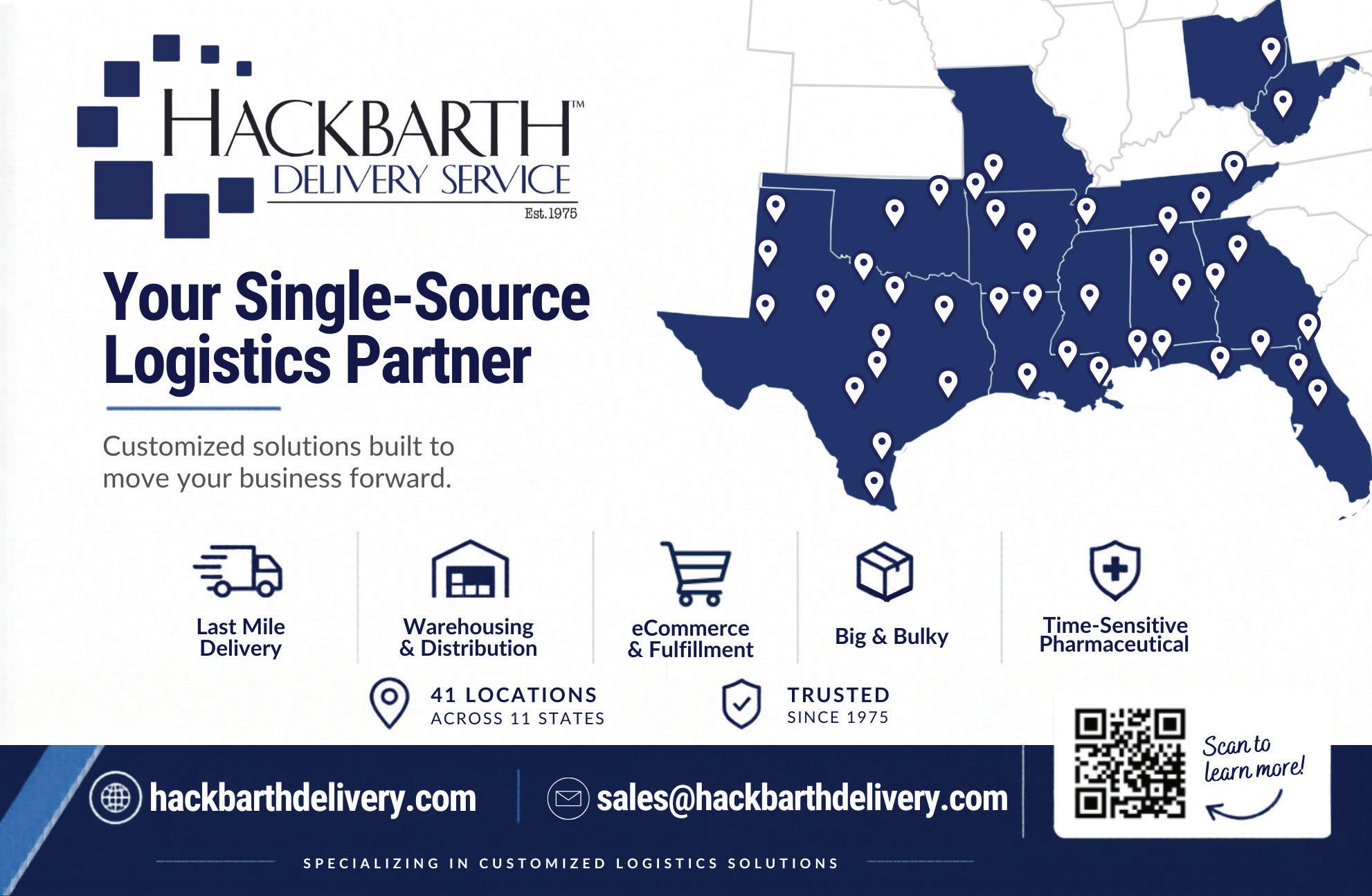
AL, AR, GA, FL, LA, MO, MS, OH, OK, TN, TX, WV
Pace
AL, AR, AZ, FL (Panhandle and Central Florida), GA, IL, IN, KS, KY, LA, MO, MS, NC, NM, OH, OK, PA, SC, TN, TX, VA, WI, WV
Reliable Logistics
AL, AK, AR, AZ, CA, CO, CT, DE, FL, GA, HI, IA, ID, IL, IN, KS, KY, LA, ME, MA, MD, MI, MN, MO, MS, MT, NE, NC, ND, NH, NJ, NM, NV, NY, OH, OK, OR, PA, RI, SC, SD, TN, TX, UT, VA, VT, WA, WI, WV, WY and US territories
United Delivery Service IL, IN, and WI
6 GREAT CHOICES FOR MAKING YOUR FINAL-MILE DELIVERIES
DHL eCommerce provides end-to-end domestic delivery built to help e-commerce shippers control costs while meeting rising speed and service expectations. Our intelligent middle-mile network optimizes routes to move parcels at scale across the US, reducing transit times and total delivery spend. With a nationwide network of 18 distribution centers and the USPS as our trusted final-mile delivery partner, DHL eCommerce reaches virtually every consumer in the country.
The result: scalable capacity, dependable performance, and complete visibility — making DHL eCommerce the smart choice for reliable nationwide delivery at scale www.dhl.com/us-en/home/ecommerce.html eCS.AM.CS.AskCustomerService@dhl.com | 800.805.9306
Pace USA is the transportation partner dedicated to helping shippers streamline their supply chains through dependable capacity, facilitybased operations, and asset-light delivery solutions. We call it our “Solving Logistics Together” mindset. www.pace-usa.com | sales@pace-usa.com | 866.410.7222
ePost Global is your resilience layer against international shipping chaos. As one of the largest privately held US-based DTC international shipping providers, we deliver to 200+ countries with vendor-agnostic, multi-carrier routing — saving clients 30–40% over single-carrier dependency. Unlike traditional consolidators that optimize for their own margins, we act as your strategic partner, proactively rerouting before carriers fail and keeping your merchants unaffected. With 25+ years of experience and 900+ combined years of global logistics expertise on our team, we don't just ship packages — we protect your brand and eliminate cross-border volatility. epostglobalshipping.com | Info@epostglobalshipping.com 866.784.8444
Reliable Logistics is a Canadian supply chain provider specializing in parcel delivery, customs brokerage, fulfillment, and freight management solutions. As a licensed Canadian Customs Broker, we help e-commerce businesses simplify cross-border shipping and successfully grow within the Canadian market. Through our proprietary TMS, ShipEzee, our customers benefit from real-time visibility and streamlined transportation management, while our experienced team delivers flexible solutions tailored to evolving business needs. Backed by reliability, transparency, and proactive customer support, our logistics solutions are designed to help growing businesses scale confidently across North America. www.reliablelogistics.ca | sales@reliablelogistics.ca 844.607.1234
Founded in 1975, family-owned Hackbarth Delivery Service is a leading Southeast regional logistics provider specializing in warehousing, distribution, and final-mile delivery. A certified woman-owned business, SmartWay partner, and GDP certified company, Hackbarth operates 42 locations across 12 states and delivers more than 20 million packages annually. Services include parcel delivery, box truck and white glove delivery, dedicated routes, warehousing, pick and pack, and cross docking. Guided by a mission to improve lives through logistics, Hackbarth combines outstanding customer service with innovative technology to deliver efficiency, optimization, and full shipment visibility. www.hackbarthdelivery.com | sales@hackbarthdelivery.com | 251.478.1401
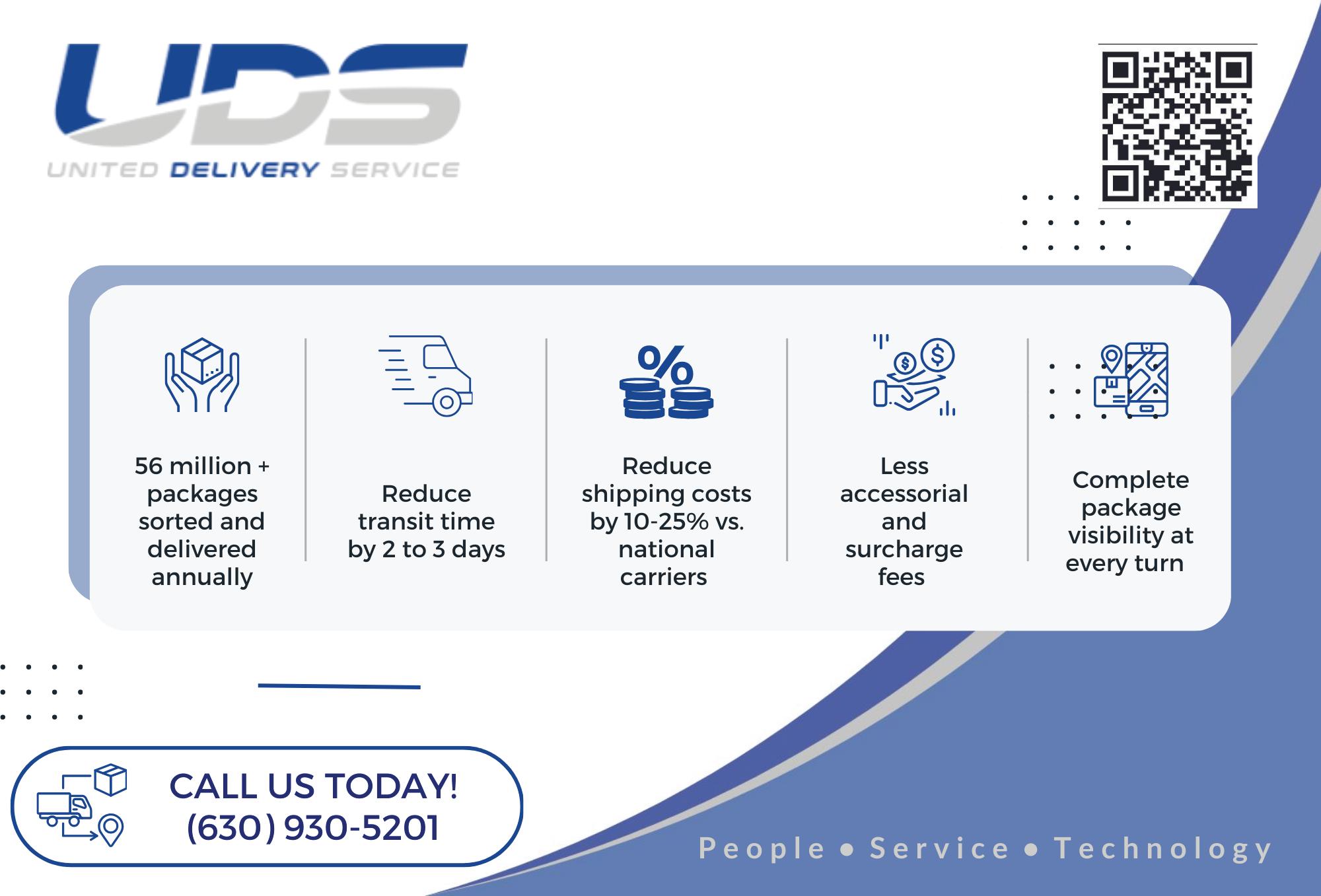
United Delivery Service (“UDS”) is a premier last-mile next-day regional courier. For more than 50 years, many of the world’s most trusted brands have partnered with UDS to enhance the delivery experience of their customers in the Midwest. UDS offers proprietary software that allows us the flexibility to develop solutions to meet the specific needs of our customers. Our technology stack offers real-time tracking including SMS notifications, Visual Proof of Delivery, and a suite of online tools for complete visibility of your shipment every step of the way. UDS . . . The First Name in Last-Mile Delivery www.uniteddeliveryservice.com | Sales@uniteddeliveryservice.com 630.930.5201
CUSTOMS CHANGE LIFTS TARIFF BURDEN IN US FTZS
By Melissa Irmen
For companies operating in US Foreign-Trade Zones (FTZs), the first several weeks after the Supreme Court’s striking down of the International Emergency Economic Powers Act (IEEPA) tariffs on February 20 brought more confusion than relief.
Those weeks were marked by a level of uncertainty that supply chain leaders have grown all too familiar with in today’s trade environment: rapid policy changes, uneven implementation, and real financial consequences tied to both.
Now, thanks to the collective advocacy of the Foreign-Trade Zone community, a behind-the-scenes policy correction by US Customs and Border Protection (CBP) is delivering immediate and meaningful relief to these businesses.
As of March, CBP has stopped collecting tariffs assessed under IEEPA on FTZ entry summaries. While no formal announcement has been issued as of the time of this writing, the change represents a critical course correction for importers and exporters who rely on US FTZs to manage costs, cash flow, and compliance.
For small-package shippers navigating increasingly complex global supply chains, the implications are both practical and strategic for the bottom line.
Policy Gap With Real Consequences & Industry Advocacy’s Role in the Fix
The issue came to light on February 20, 2026, with a ruling by the US Supreme Court, which clarified that certain tariffs imposed under IEEPA authorities should no longer be collected.
However, in the days and weeks following that decision, US FTZ operators reported a disconnect: despite the ruling — and an accompanying Executive Order directing that collections stop — companies were still being required to report and, in some cases, pay those tariffs on FTZ entry summaries.
For businesses using the zones, this created a costly contradiction that dragged on for more than two weeks.
US FTZs are designed to provide flexibility in tariff timing and treatment. Companies can defer or reduce duties depending on how goods move through the zone. But when tariffs that have effectively been invalidated are still being collected at the point of entry, that core benefit is undermined, particularly for small and mid-sized shippers managing tight margins and high shipment volumes.
Even short-term misalignment can have outsized effects. For parcel-driven supply chains, where inventory turns quickly and cash flow cycles are compressed, unexpected tariff collections can ripple across fulfillment timelines, pricing strategies, and customer commitments.
The turning point came through rapid intervention by the National Association of Foreign-Trade Zones (NAFTZ).
After learning that IEEPA tariffs were still being applied within US FTZs, NAFTZ escalated the issue to senior administration officials and engaged directly with CBP and other agencies to resolve the discrepancy. The organization also worked to prevent Type 06 FTZ entries — those used for goods entering US commerce from a zone — from being rejected when those tariffs were excluded.
Following those discussions, NAFTZ was informed that CBP had halted the collection of IEEPA tariffs on all FTZ entry summaries as of 7 p.m. Eastern on March 4.
While CBP has not issued a formal notice, this operational shift is already changing how US FTZ entries are being processed and rectifying at least part of the nation’s tariff impact on businesses.
Policy Implementation Still Challenging & Why It Matters
Despite this particular policy correction, execution on the ground has not been entirely consistent.
For a short time, some US FTZ entry summaries were being accepted, while others with other trade remedy tariffs applicable on the entry were rejected. This was also corrected once brought to CBP’s attention. That variability underscores a broader reality in today’s trade environment — policy changes often move faster than system-wide implementation.
For small-package shippers and logistics teams, this creates a near-term need for continued vigilance and resource allocation to be made in compliance.
Companies operating in these designated zones should be closely monitoring entry outcomes, coordinating with customs brokers, and documenting any inconsistencies in how filings are handled. In a landscape where compliance systems are still catching up to policy direction, operational awareness is becoming a more significant supply chain competitive advantage than the former leaders of speed and price.
While US Foreign-Trade Zones are often associated with large-scale manufacturing or bulk imports, they play an
increasingly important role in parcel-driven logistics as well. Especially as e-commerce and direct-to-consumer fulfillment models expand, US FTZs are becoming more highly valued for their breadth of reach and opportunity for impact.
For small package shippers, the benefits of FTZs include:
Duty deferral: Tariffs are paid only when goods enter US commerce, not when they arrive at the port
Inventory flexibility: Goods can be stored, assembled, or reconfigured within the zone
Cash flow optimization: Reduced upfront costs support faster inventory turns and reinvestment
The improper collection of IEEPA tariffs threatened to erode these advantages at a time when many shippers are already recalibrating supply chains in response to shifting federal policies, geopolitical pressures, and evolving customer expectations.
By halting those collections, CBP’s adjustment restores a degree of predictability and reinforces the deep value of FTZs as a tool for navigating uncertainty.
What Comes Next for the Shipping & Logistics Industry?
While the Supreme Court’s ruling on IEEPA tariffs felt significant, tariffs as a central economic policy tool have by no means gone away.
NAFTZ will continue working with CBP and administration officials to ensure the Supreme Court’s ruling, and any
future rulings, are implemented consistently across all FTZ operations around the US.
In the meantime, companies should expect some continued variability as systems and processes are fully aligned. The absence of a formal CBP notice means that, for now, much of the guidance is being communicated informally through industry channels — like this one.
For small package shippers, the takeaway is clear, as well. Awareness and education should be a consistent organization priority.
Trade policy shifts can, and will, continue to impact day-to-day operations in the years ahead. But as this episode shows, they can also create opportunities to optimize strategy, strengthen partnerships, and leverage tools like US FTZs even more effectively.
And in a logistics environment where margins are tight and expectations are high, even incremental improvements in cost structure and cash flow can make a meaningful difference.
Melissa Irmen is Director of Advocacy at the National Association of Foreign-Trade Zones (NAFTZ), where she leads efforts to advance policy and strengthen the US FTZ program. With more than 20 years of career experience in global trade and customs compliance, she is a recognized industry expert and frequent speaker on trade issues. Irmen is a Certified and Accredited Zone Specialist and previously served as Chair of the NAFTZ Board of Directors.
SHIPPING DATA –
IT’S ALL IN THE DETAILS
Having the right data on hand is merely one step in a larger process that puts it to work. Whether you use your data effectively and to its full potential comes down to the details.
By Quinn Nelson
Data is at the heart of everything shippers do, from refining shipping operations and lowering costs, to securing better terms and conditions in carrier contracts and providing crucially important intelligence for operational and financial leaders. Shippers often ask me if there are steps they can take to make their data more usable — not just for fulfillment and warehouse operations, but across the business for pricing strategies, accounting, and expansion efforts. The ensuing data science is often complex and unique to every organization, but several practices are broadly applicable to all shippers.
Normalize Your Shipping Data
One of the key findings in our “2025 Parcel Shipping Intelligence Market Survey Report” last year was that a vast majority of shippers, 91%, expect to expand their carrier networks to help reduce parcel shipping costs. A multi-carrier approach has many benefits, including more inherent resiliency and the ability to match the right parcels with the right carrier, but it also requires shippers to have a much better handle on their data. This includes ensuring that they are able to do everything from monitoring agreed-on volume tiers to comparing carriers’ costs quickly and easily in an apples-toapples fashion.
Importantly, each carrier has its own vernacular for the same charges. For example, FedEx says Standard Overnight, but UPS says Next Day Saver. Yes, there are nuances, but we’re essentially talking about the same services with different names. This disparity occurs across numerous data elements within each data source and makes translating data sources into a common normalized language paramount.
It’s vastly easier to analyze costs between carriers when the entire dataset adheres to the same format for important
parameters like service, zone, currency, units of measurement for weight, units of measurement for dimensions, etc.
Speak Your Own Language
It is also imperative to add customized elements to your data that reflect your organization’s terminology. This allows data to be aggregated in ways that are familiar not only to the shipping operation, but also to business functions and departments that can benefit from shipping intelligence. The addition of custom data elements like account groups, business units, location names, location types, fiscal dates, and other parameters can immediately make data much more useful. It is much easier to report and apply data internally if it mimics the terminology used by everyone.
Check out the difference:
Unmodified: Next Day spend is elevated on account numbers 123456 and 456789 during the week of October 15.
In your organization’s language: Expedited spend is elevated for the Furniture Group, impacting Outbound Shipments at the Reno DC during Fiscal Week 45 because of new delivery area surcharges for the following ZIP Codes...
Combine Data Sources
Carrier data is sterile and purposely limited to include only the basic data elements a carrier must provide to get paid. It is also very transportation-specific and fails to touch on the many ways that shipping practices impact the business’s operations and finances. By creating true hybrid datasets, you can combine carrier invoice, TMS, OMS, WMS, and rate shop data to obtain a far more granular view into shipping performance and costs. Previously, you only had the service, weight, location, and cost for each shipment. With a combined dataset, you can append
elements like order number, retail price, unit cost, customer promised-by date, and shipping costs paid by the customer.
This unlocks powerful analyses: accrual reporting, customer experience metrics, shipping revenue vs. shipping cost, rate shop accuracy, and carrier performance comparisons. It also puts SKU-level profitability metrics at your fingertips — enabling you to spot anomalies like an entire product line shipped at a loss because of a carrier's definitional change.
Match the Granularity of Your Shipping Data
Every data source is structured differently. Before analyzing data, it is critical to know what level of granularity your data is at. In its most basic sense, this means understanding what each line of data in your database represents. I often see examples where shippers inadvertently fail to maintain the granularity of their data source in a consistent manner.
For example, let’s say UPS issues a charge for a given shipment, then two weeks later issues a shipping charge correction for the same shipment. Now, you have two lines in your data set that reflect only one shipment. By not accounting for nuances like this in your data, it is easy to significantly compromise the integrity of your analyses. This is especially important when combining data sources. You must choose a master level of granularity and stick to it across your combined data source.
Granularity varies by source:
FedEx Data: Each line of data is a shipment
UPS Data: Each line of data is a unique charge on a unique
shipment (One shipment may have four lines of data)
OMS Data: Each line of data may represent one order, or maybe one SKU. (One order may be split across multiple shipments, or multiple orders may be included in the same shipment.)
When combining data sources, choose a master level of granularity and stick to it.
Put Your Shipping Data To Work
By keeping these points in mind, shippers can unlock the actionable insights within their parcel shipping data — insights that lower costs, strengthen customer relationships, mitigate risks, and drive profits. In a time when reliable fulfillment and effective shipping performance matter more than ever, the details of how you manage your data have never been more important.
Quinn Nelson is a Transportation and Business Intelligence professional with over a decade of experience helping organizations optimize parcel spend strategies and leverage data-driven insights. He specializes in customized parcel analytics, transportation business intelligence design, and serving as a subject matter expert on parcel spend. Quinn holds a degree in Logistics and Supply Chain Management from Ball State University. Prior to joining Reveel, he held senior analytics and business intelligence roles at Körber Supply Chain, enVista, and Discover Financial Services.
By Travis Rimel
UNDER PRESSURE: THE E-COMMERCE PLAYBOOK FOR A VOLATILE WORLD
Global shipping disruptions are putting direct pressure on e-commerce businesses in ways that go well beyond missed delivery windows.
Slowing logistics routes and disrupted trade corridors have made international shipping less predictable and more expensive. Major carriers have warned merchants about extended transit times, suspended services, and temporary halts across certain routes, sending shockwaves through supply chains and leaving companies scrambling to adapt.
The cost pressure compounds fast. Carriers dealing with oil price volatility are passing the burden onto merchants in the form of fuel surcharges and emergency fees. When it all adds up, the cost of getting a product to a customer keeps rising while delivery performance is becoming harder to predict. This creates a difficult gap between customer expectations and reality. ShipStation’s research found that 59% of North American consumers expect two-day delivery, while only 40% of retailers can meet that mark.
If you’re feeling this pressure across sourcing, pricing, and fulfillment all at once, that’s not a coincidence. These challenges are connected. The merchants navigating this best are the ones who have stopped treating them as separate problems and are instead optimizing their entire systems.
Build Resilience Across Your Whole Operation
The first thing to know is that volatility doesn’t stay in its lane. Shipping disruptions affect your pricing decisions, sourcing strategies, inventory planning, and eventually your customers. Treating these as isolated issues is how manageable disruptions turn into full-blown crises.
Businesses that hold up best don’t wait for the pressure to ease. They build flexibility into their operations before they need it, so when conditions shift, the response is quick and controlled rather than reactive and expensive.
Know What Things Actually Cost
Start with your numbers. Calculate the true landed cost of each product — sourcing, duties, shipping fees, and fuel surcharges together — then build enough room into your pricing model to absorb movement without a complete re-pricing every time conditions change. Know which products can support a price adjustment, which customer segments are most sensitive to it, and where your margins are already too thin to take another hit.
The goal isn't to land on a perfect price, but to build a pricing setup that doesn't require a crisis to change. If your cost structure shifts, your prices need to be able to follow without a complete overhaul of how you go to market.
Diversify Your Carrier Mix
From working with our customers, we know that relying on a single carrier is one of the fastest ways to turn a disruption into a crisis. When events like weather slow down or suspend service on a route, you need alternatives that are already set up and ready to go rather than scrambling to evaluate options after orders have already been affected.
A multi-carrier strategy gives you room to compare rates, service levels, and delivery estimates in real time. Businesses with alternatives in place can pivot quickly without having to rebuild their workflow from scratch. That kind of agility becomes a meaningful competitive advantage when trade conditions shift suddenly.
Get Inventory Visibility Right First
Before rethinking your sourcing, get a clear picture of inventory you already have and where it is. Stock sitting in the wrong location, or delayed in a disrupted trade corridor, frustrates customers and leads to canceled orders. In a volatile environment, smarter forecasting and better inventory placement aren’t just efficiency improvements — they’re risk management strategies.
Next, take a hard look at your sourcing. The past year's volatility has already pushed many merchants to think more carefully about supplier concentration and diversifying sourcing across regions to avoid risk. Companies that proactively responded to tariffs by creating backup sourcing for critical products are finding their supplies are already secure despite trade disruptions. To do this, try having one domestic supplier for critical products with backup suppliers in other regions.
Communicate Before Customers Have to Ask
Active customer communication often gets treated as a reactive measure. Flip that around. Delays may be outside of your control, but how they’re communicated is not. Acknowledging the gap between what customers want and what is possible during disruptions matters. Review open orders shipping through affected areas, and add clear updates to order confirmations before customers are left wondering where their package is. Proactively updating customers before they have to reach out signals that your business is on top of it and helps maintain trust during volatile periods.
Moving Forward
The current trade environment isn’t going to simplify overnight. The full impact of ongoing disruptions may not be measurable for months, but waiting for perfect clarity isn’t a strategy you can afford.
The businesses that will perform best will be the ones who build flexible operations that adapt quickly with pricing adjustments, clear customer communications, diversified carriers, and inventory visibility. Resilience isn’t about predicting outcomes. It’s about building a business that can absorb change without breaking.
Find the EQUIPMENT you need
Travis Rimel is Chief Product Officer at ShipStation.
PARCEL COUNSEL
MADE IN AMERICA: STRONGER ENFORCEMENT AHEAD?
By Andrew M. Danas
Parcel shippers subject to regulations governing when goods can be advertised or labeled using terms such as “Made in USA” or “American-made” may soon be in a heightened enforcement environment due to an Executive Order (EO) issued by President Trump on March 13, 2026. This includes possible stricter verification responsibilities on companies and online markets selling products making “Made in America” claims (EO No. 14392, Ensuring Truthful Advertising of Products Claiming to Be Made in America).
The Federal Trade Commission (FTC) is the primary agency charged with enforcing rules governing when a product sold in the US can be advertised or labeled as being “Made in USA.” Falsely advertising or labeling goods as being American-made is an unfair and deceptive trade practice under the Federal Trade Commission Act. (15 U.S.C. § 41). In addition to potential enforcement actions by the FTC, the Lanham Act also allows private parties, including competitors, to sue if they are damaged by a false designation of origin.
A 1997 FTC policy statement provides guidance on “unqualified” and “qualified” “Made in USA” claims. It generally requires that a product advertised as being “Made in USA” be “all or virtually all” made in the United States.
In 2021 the FTC adopted regulations governing the labeling of products as being “Made in the USA.” All products advertised or sold in the US, except those subject to other specific US laws governing country-of-origin labeling requirements, are subject to the FTC’s regulations. While the FTC works alongside Customs and
Border Protection (CBP), the FTC criteria for “Made in USA” advertising and labeling are not the same as CBP country-of-origin rules for imported goods.
The FTC has brought multiple enforcement actions, resulting in civil penalties, against companies that have violated the “Made in USA” rules. In EO No. 14392, President Trump has ordered the FTC Chairman to prioritize such enforcement actions as part of an effort to protect US manufacturers and American consumers from such fraudulent origin claims, especially when products are purchased from digital marketplaces.
EO No. 14392 also instructs the FTC to consider proposing regulations providing that the failure of an online marketplace to establish procedures for verifying country-of-origin claims may constitute an unfair or deceptive practice under the FTC Act. Under current FTC standards, a company must have and rely on a “reasonable basis” to support a “Made in USA” claim. If new regulations are adopted, companies and digital marketplaces may face stricter standards.
In addition to the FTC, EO No. 14392 encourages all federal agencies with oversight of country-of-origin labeling to consider promulgating regulations that promote voluntary country-of-origin labeling. It also requires all US agencies
purchasing products through government contracts to periodically review and verify any “Buy American Act”, “Country of Origin USA”, or similar American-origin claims. The EO directs that entities found to misrepresent an American-origin status of any product sold to the federal government shall have their products removed from the Government procurement availability listing, with violators referred to the Department of Justice for possible actions under the False Claims Act.
Parcel shippers who advertise or label the goods they sell and ship as “Made in America” or the equivalent should take note of EO No. 14392. At this time businesses making such claims should verify and document the origin and assembly of the materials in each product to ensure that their labeling and advertising complies with existing FTC rules.
All for now!
Andrew M. Danas is a Partner, Grove, Jaskiewicz and Cobert, LLP, Washington, D.C. Visit www. gjcobert.com or email adanas@ danaslaw.com for more information. The information contained in this article is intended to be general background information. It does not constitute and should not be relied upon as legal advice. Readers should contact a qualified attorney should they have a specific legal question.