IMPROVING THE PERFORMANCE OF YOUR DIRECT MAIL PIECE.
PAGE 14
STOP OVERPAYING FOR PARCELS: A COMPARISON BETWEEN THE USPS AND THE BIG TWO. PAGE 20
GETTING THE MOST OUT OF YOUR TIME AT THE NATIONAL POSTAL FORUM. PAGE 28
IMPROVING THE PERFORMANCE OF YOUR DIRECT MAIL PIECE.
PAGE 14
STOP OVERPAYING FOR PARCELS: A COMPARISON BETWEEN THE USPS AND THE BIG TWO. PAGE 20
GETTING THE MOST OUT OF YOUR TIME AT THE NATIONAL POSTAL FORUM. PAGE 28
POSSIBLE WHEN ADDRESS DATA IS TRUSTED?
PAGE 26
SPONSOR MAGAZINE




05 Editor's Note
Meeting of the Minds By Amanda Armendariz
Real-Life Management Let’s Be High Road Leaders! By Wes Friesen
Inkjet Info From Speed to Strategy: How Modern Inkjet Is Redefining Direct Mail Production By Karen Kimerer 10 The Trenches
Mail in a Real-Time World By Mike Porter 12 Postal Insights PRC Limits USPS to One Price Increase per Year — and Gets Sued By Leo Raymond
PCC Corner National Postal Forum 2026: PCC Engagement and Visibility By Eric Roberts

VOLUME 39, ISSUE 2
MAGAZINE STAFF
President Chad Griepentrog
Publisher Ken Waddell
Editor Amanda Armendariz
amanda.c@rbpub.com
Contributing Writers
Erin Allen, Greg Brown, Jim Burns, Wes Friesen, Karen Kimerer, Adam Lewenberg, Christopher Lien, Mike Porter, Leo Raymond, Kathleen J. Siviter, John Whittington
Audience Development Manager
Rachel Chapman
rachel@rbpub.com
Advertising Ken Waddell
608.235.2212
ken.w@rbpub.com
Design Kelli Cooke
MadMen3
708 W Mohawk Trail, DeForest, WI 53532
Tel: 608.241.8777
Email: customerservice@rbpub.com
SUBSCIRBE
Subscribe online at MailingSystemsTechnology.com
Subscriptions are free to qualified recipients: $20 per year to all others in the United States. Subscription rate for Canada or Mexico is $40 per year, and for elsewhere outside of the United States is $45. Back issue rate is $5.
SEND SUBSCRIPTIONS TO:
Mailing Systems Technology, 708 W Mohawk Trail, DeForest, WI 53532 Call 608.446.6200
E-mail rachel@rbpub.com Online at MailingSystemsTechnology.com.
REPRINTS: For high quality reprints, please contact Chad Griepentrog, 608.241.8777, chad.g@rbpub.com
All material in this magazine is copyrighted ©2026 by MadMen3 All rights reserved. Nothing may be reproduced in whole or in part without written permission from the publisher. Any correspondence sent to Mailing Systems Technology, MadMen3 or its staff becomes property of MadMen3.
The articles in this magazine represent the views of the authors and not those of MadMen3 or Mailing Systems Technology. MadMen3 and/or Mailing Systems Technology expressly disclaim any liability for the products or services sold or otherwise endorsed by advertisers or authors included in this magazine.
Mailing Systems Technology (ISSN 1088-2677), Volume number 39, issue number 2, Copyright ©2026 by MadMen3 is published six times per year (January/February, March/April, May/June, July/August, September/October, November/December) by MadMen3, 708 W Mohawk Trail, DeForest, WI 53532. Subscriptions are free for qualified recipients. Call 608.446.6200 to subscribe. Periodicals postage is paid at DeForest, WI (and additional offices).
POSTMASTER: Send address changes to Mailing Systems Technology 708 W Mohawk Trail, DeForest, WI 53532.
BY AMANDA ARMENDARIZ
Iam very much looking forward to this year’s National Postal Forum, which may be where some of you are first reading this issue (if that’s the case, please stop by our booth and say hello!). NPF is one of the best offerings available to mailers and shippers, and I am so thrilled to be at this year’s show as a speaker and as a publication partner.
The mailing industry is one that is constantly juggling rising paper and postage costs, legislative rulings, and a common misunderstanding among the general public of how important mail is. How often do you hear people refer to mail as “junk mail,” despite the fact that studies have shown (and companies can attest) that the level of engagement and the retention rate are much higher with physical mail than they are with digital counterparts? I’d wager it’s quite often, if the comments I get when I tell people I am the editor of a magazine focused on mailing are any indication. That’s why it’s so crucial to attend and
support events like NPF, where mailers and shippers can come together to learn about these problems facing our industry, brainstorm ideas for tackling these problems head-on, and hear from those in the USPS itself about what the organization is doing to make sure that the American postal system remains viable for years to come.
I’d love for you to stop by our booth (#205) if you’re at the show, and if you’re looking for a session to attend on Wednesday morning, consider sitting in on my panel on how physical and digital mail can work together to achieve optimal performance. After all, the best way to succeed in this industry is by educating ourselves and staying up to date on the latest happenings, and the educational sessions at NPF are top-notch.
As always, thanks for reading Mailing Systems Technology.

BY WES FRIESEN
The world and our teams want and need leaders that embrace and practice High Road Leadership, a philosophy that emphasizes commitment to integrity, ethical decision-making, and values that include seeking out the best interest of others that we work with. It includes consistently taking the “high road” and doing what is right, even when it’s difficult or doesn’t personally help us. High Road Leadership goes beyond merely knowing what is right by consistently acting on values that help others. Leadership expert John Maxwell emphasized that point by saying, “The high road is not a matter of principle, it’s a matter of practice.”
The consistent practice of High Road Leadership has desirable benefits, including:
Results in long-term success. When we consistently practice ethical practices and prioritize the well-being of others, we create a roadmap for enduring success rather than fleeting achievements.
Builds Positive Culture. As High Road leaders, we can create an environment where ethical behavior and adding value to others is expected and celebrated. Team members and our stakeholders will feel respected and cared for. That is culture I would want to be a part of; what about you?
Earn trust, respect, and credibility. When we are known for our integrity, ethical decision-making, and seeking out the best interests of others, we earn the trust and respect of those we work with. Our credibility grows and helps us positively influence others for the greater good.
Increased employee engagement, retention, and motivation. When our team members feel valued and see us acting in their best interests, they will likely be engaged, motivated, and not looking to leave us. I agree with Richard Branson when he said, “Take care of your employees and they’ll take care of your business.”
Improved decision-making and innovation. If we have a positive culture, including transparency and psychological safety, open communication and diverse opinions will be encouraged. This results in better informed decisions and supports worthwhile innovation.
10 Keys to Being a High Road Leader
1. Live our values and lead with character. Good character is the foundation for long-term leadership success. We can be a person of character by clearly understanding our core values and ensuring our actions align with them, even in the face of adversity and challenges.
2. Increase self-awareness and emotional intelligence. We cannot lead others to higher ground if we don’t know where we stand. We need to develop our self-awareness and emotional intelligence. How? Methods include soliciting input via confidential autonomous surveys, making time for personal reflection on how we are treating people, and empowering one or more advisors to give us candid feedback.
3. Practice accountability and transparency. We can hold ourselves to the standards and values we espouse. We can take responsibility for our words and
actions. And we can model transparency by communicating openly and honestly and admitting our mistakes and rectifying when needed.
4. Be humble and grace oriented. We have all seen how the proverb that “pride goes before the fall” has proven true. As High Road leaders, we want to be humble and recognize our own need for grace and extend grace to others. I’m not perfect; what about you? We all make mistakes at times and cultivating a climate of grace will help us and our teams thrive. We also should not hog the spotlight and draw attention to ourselves but look to give credit to others. Andrew Carnegie said, “No man will make a great leader who wants to do it all himself, or to get all the credit for doing it.”
5. Show empathy and compassion. It is crucial for us to understand and appreciate the perspective of others and show empathy. Our team members appreciate it when we show them kindness and respect. Recent Gallup research on what people need from their leaders listed compassion as one of the top needs. Life can be tough, and showing compassion is a trait of a High Road leader.
6. Be a “giver”, not merely a “taker.” Winston Churchill said, “We make a living by what we get. We make a life by what we give.” Anne Frank wrote, “No one has ever become poor by giving.” We can choose to have a giving mindset focused on serving and adding value to others. How can we be givers to others? We can share our talents and help others develop theirs. We can give our time to help others and provide opportunities that help our team members — including beneficial work experiences (e.g., job shadowing, cross-training, and projects and special assignments). We can take people to conferences and professional association meetings with us, and we can share our connections that may be helpful to their growth and development. CEO A.L. Williams counseled, “The greater you help others, the greater your own success.” Giving and helping others is mutually beneficial — the ultimate “win-win.”
7. Don’t hold grudges and seek retribution. As leaders, we must always take the high road when others, intentionally or unintentionally, wrong us.
Reality is that sometimes people will be negative towards us. But we can control how we respond. Newscaster David Brinkley wisely counseled, “A successful man is one who can lay a firm foundation with the bricks others have thrown at him.” Michelle Obama once said, “When they go low, we go high,” and Proverbs 12:16 in the Bible counsels, “A fool shows his annoyance at once, but a prudent man overlooks an insult.” And seeking retribution is a lose-lose proposition as Mahatma Gandhi warned, “An eye for an eye will only make the whole world blind.”
8. Value people. As aspiring High Road leaders, we should value all people. John Maxwell wrote, “When you value all people, everybody wins.” I believe that every person was created by God in his image and should be valued. Not everybody will share that belief, but we can all acknowledge that every person desires to feel valued and have someone else acknowledge it. We have the privilege to let people know we see and value them and set a positive example for others to follow.
9. Serve and add value to others. Martin Luther King, Jr., said, “Everyone can be great, because everyone can serve.” High Road leaders embrace the Servant Leadership philosophy, which says our role as leaders is to serve and add value to others — employees, customers, and other key stakeholders. If you think about the most respected and effective leaders you know, chances are they saw themselves as “serving leaders,” not “self-serving leaders.” Being a servant leader is rewarding for the people we serve, and for us. I appreciate this quote from Dr. Albert Schweitzer, “I don’t know what your destiny will be, but one thing I do know. The only ones among you who will be really happy are those who will have sought and found how to serve.”
10. Be a “uniter,” not a “divider.” We need more leaders that unite versus dividing people, don’t we? As High Road leaders we can work on being uniters by closing the gap between people and bringing them together. To do so we need to truly listen, find common ground, and avoid dehumanizing those we disagree with. We can show respect to everybody,
and model how to disagree without being disagreeable.
Concluding thoughts: Being a High Road leader is often not the easiest path, but it’s the one that creates the most value for our organization and teams and the people we serve. Here is a closing quote from author Brian Dodd who summarizes key characteristics of High Road leaders: “High-road leaders value all people. They do the right things for the right reasons. They give more than they take. They place other people ahead of themselves and their agenda. They’re accountable for their actions. They don’t keep score.”
Wes Friesen (MBA, EMCM, CMDSM, MCOM, MDC, OSPC, CCE, CBF, CBA, ICP, CMA, CFM, CM, APP, PHR, CTP) is a proven leader and developer of high-performing teams and has extensive experience in both the corporate and non-profit worlds. His book, Your Team Can Soar!, has 42 valuable lessons that will inspire you and give you practical pointers to help you — and your team — soar to new heights of performance. Wes can be contacted at wesmfriesen@gmail.com or at 971.806.0812.
BY KAREN KIMERER
For years, conversations about inkjet technology focused on a primary metric: speed.
Faster presses enabled higher throughput, lower unit costs, and the replacement of analog processes. While speed still matters, it is no longer the most important part of the story, especially for direct mail.
Today’s direct mail environment is more demanding than ever. Campaigns are highly personalized, schedules are compressed, data files are complex, and clients expect printers and mail houses to be responsible at every stage. These realities place enormous pressure on production teams to deliver accuracy, consistency, and reliability at scale.
In recent years (and especially in the last 12 to 24 months), production inkjet technology has moved beyond just printing fast. Modern systems now serve as intelligent production platforms that reduce risk, cut through complexity, and bring advanced direct mail programs into day-to-day operations. This shift goes beyond improving mail quality. It is changing how production teams work and strengthening an organization’s confidence to say “yes” to more advanced direct mail projects.
Early adoption of inkjet printing was driven by economics: shorter runs, reduced makeready, and the ability to print variable data quickly. While these
benefits remain, today’s inkjet platforms are increasingly defined by automation, intelligence, and integrated workflows. Rather than relying on operator intervention to discover issues after the fact, modern inkjet environments are designed to identify and correct problems in real time.
For direct mail, where a missed deadline or reprint can derail an entire campaign, this evolution is significant. It shifts production from a reactive model to a forward-looking one, reducing uncertainty in high-volume, time-sensitive mailings.
Direct mail production leaves little room for error. Address accuracy, color
consistency, and piece integrity must be maintained across dozens or hundreds of thousands of impressions, often under tight postal drop schedules.
New inkjet automation capabilities immediately deal with these challenges in the following ways:
Inline monitoring ensures that print quality is consistent throughout long runs.
Automated adjustments reduce the likelihood of color drift or registration issues.
Faster job setup and changeovers decrease downtime between campaigns.
For production teams, this translates into fewer interruptions, less waste, and fewer emergency interventions late in the shift. For mailers, it means that campaigns stay on track without costly reprints or missed in-home dates.
Operational reliability is only part of the story. Once production teams gain control over consistency and throughput, the conversation shifts from keeping jobs on track to expanding what those jobs can do. That shift shows up in several meaningful ways across today’s direct mail operations. Specifically:
1. Personalization has shifted from an optional enhancement to a baseline expectation in direct mail. Today’s campaigns frequently include variable messaging, images, offers, and tracking elements, frequently within the same job. Modern inkjet platforms now offer the ability to manage complex variable data at full production speed.
Advancements now support:
High-resolution output that preserves image quality and fine text
Reliable printing of barcodes, QR codes, and postal elements
Stable throughput even with heavily variable files
This is important because the value of personalization is lost when production is disrupted, causing relevance to fade over time. If the press slows, jobs become fragmented, and operators may hesitate to run complex data. Ultimately, this undermines the promise of one-toone marketing. New inkjet capabilities make personalization routine, not risky, so production teams can support sophisticated direct mail programs without jeopardizing efficiency.
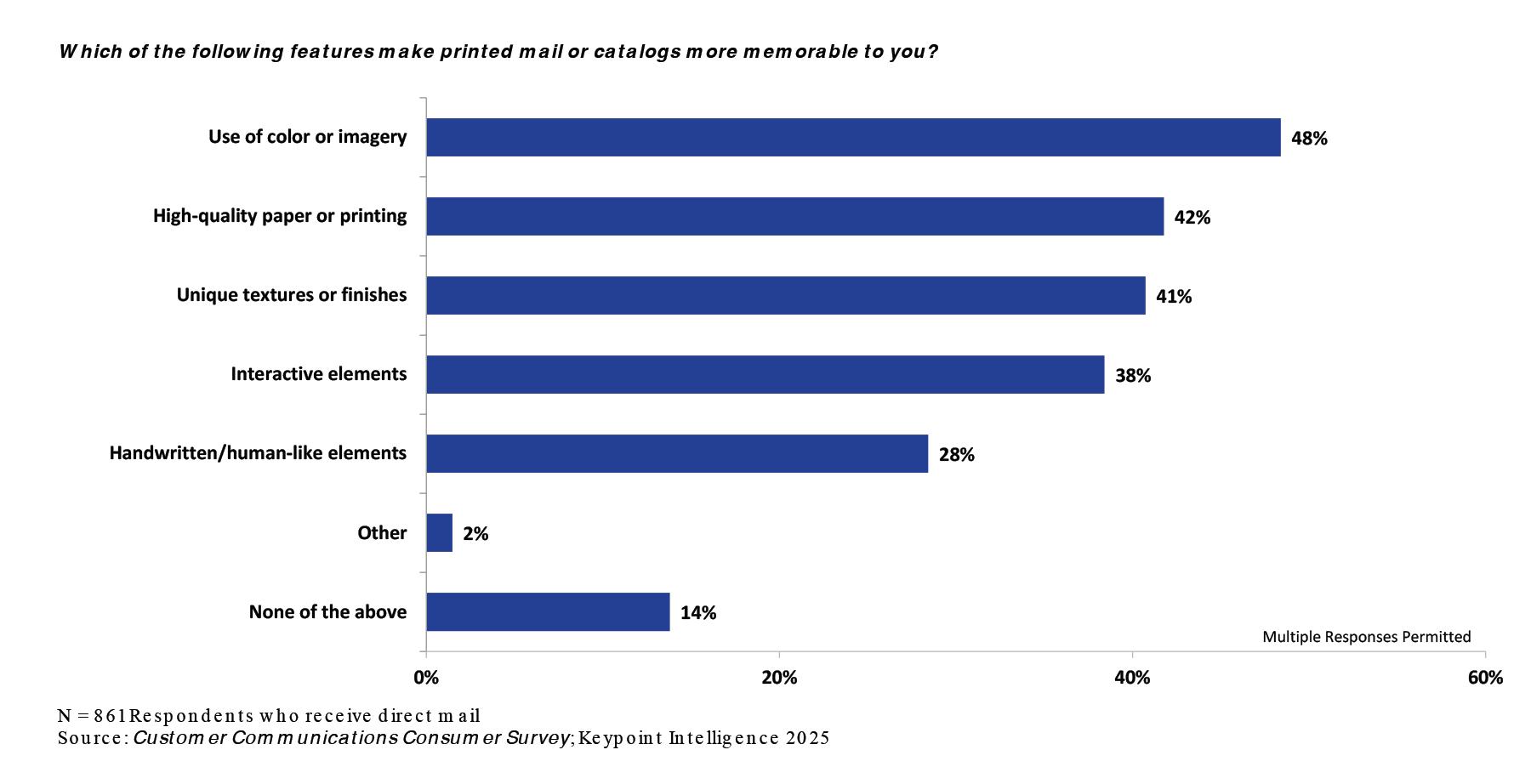
2. Direct mail is tactile by nature. Paper choice, finish, and weight all influence how a piece is perceived and whether it gets noticed. New data from Keypoint Intelligence reveals the elements that make direct mail more memorable. The use of color or imagery topped the list, followed by high-quality paper or printing (see Figure 1).
Recent advancements in inkjet technology expand the range of substrates that can be printed reliably, and these include heavier, more challenging stocks. Improved ink chemistry, drying systems, and media handling have made it easier to deliver visually compelling mail while maintaining process stability and throughput at scale.
For direct mail programs, this enables:
Greater creative freedom in design
Premium-looking mail without offsetlevel complexity
Better alignment between marketing intent and production feasibility
For production teams, greater media flexibility means fewer compromises, less need for workarounds, and fewer jobs diverted to alternate processes.
3. Speed to the mailbox is critical in direct mail, particularly for eventdriven or response-based campaigns. Any delay between print and induction can reduce effectiveness. Modern inkjet environments continually integrate inline and near-line finishing, along with tighter connections between print, finishing, and mailing workflows. These integrations reduce manual handling, compress manufacturing schedules, and minimize opportunities for errors.
The benefits include:
Faster transitions from print to finishing
Reduced labor dependency between stages
More predictable production schedules
This means improved workflows and fewer handoffs at the production level. For direct mail clients, campaigns can be launched faster and with greater confidence.
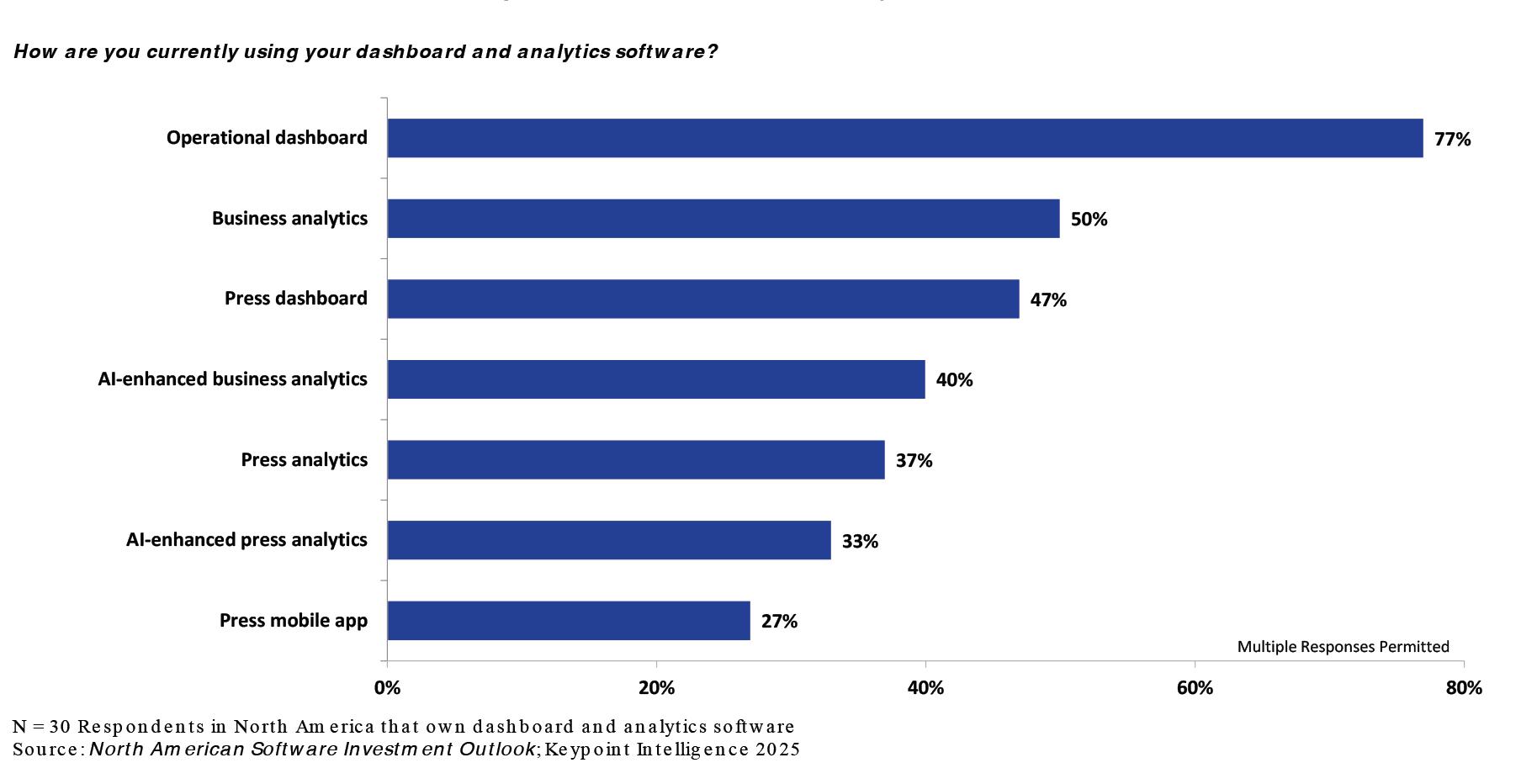
4. One of the most underappreciated developments in production inkjet technology is the rise of production intelligence. Data from Keypoint Intelligence’s North American Software Investment Outlook report points to a clear priority: operational dashboards and press analytics sit at the top of the list for print service providers that are seeking better operational insight (see Figure 2).
The good news for inkjet owners is that modern systems generate data on uptime, throughput, waste, and maintenance data that can be used not just to report on performance, but to improve it. For direct mail operations, this intelligence enables:
More exact scheduling for multi-drop campaigns
Better forecasting of shipment schedules and costs
Proactive maintenance that prevents unplanned downtime
Production teams can benefit by shifting from gut-based decisions to data-driven planning. Leadership gains improved visibility into performance, while clients enjoy more reliable execution.
5. Sustainability continues to influence how brands evaluate their
marketing partners. Although direct mail often faces scrutiny, modern inkjet production has made significant strides in cutting waste and advancing efficiency.
New inkjet capabilities support:
Reduced spoilage through automation and consistency
Lower energy consumption compared to legacy processes
More precise ink use and fewer overruns
For mailers, this supports the alignment of direct mail programs with broader sustainability goals. For production teams, it results in cleaner operations and less wasted effort.
Production teams are facing unprecedented pressure from multiple sides. For example, skilled labor is harder to find and retain, turnaround expectations continue to shrink, and campaign complexity is increasing, not decreasing.
In this environment, technology must do more than print quickly. It must reduce cognitive strain, minimize risk, and support consistency. This is especially the case for direct mail, where errors are amplified at scale.
Karen Kimerer of Keypoint Intelligence has experienced the many challenges of expanding current market opportunities and securing new business. She has developed a systematic approach to these opportunities, addressing the unique requirements of becoming a leader in our changing industry.
BY MIKE PORTER
Consumers expect communication that responds to their actions in the moment. They get a text confirming their food delivery within seconds of ordering, streaming services recommend their next show before they finish watching the current episode, and retailers send cart abandonment emails minutes after someone clicks away from an online shopping cart. More brands could use the mail channel to reinforce these interactions. But print and mail service providers may need to make operational adjustments enabling them to deploy postal mail that keeps pace with digital expectations.
Triggered mail initiated by customer behaviors or events demands speed and precision that traditional large batch-optimized production workflows may be challenged to support. But the rewards may justify the adjustment. Triggered mail outperforms scheduled campaigns. It arrives when recipients are primed to respond. Service anniversaries trigger loyalty offers and declined credit card transactions prompt renewal reminders, for instance. Each piece arrives at a moment of heightened interest.
Effectively executing this strategy, however, requires reexamining how your shop operates.
Triggered mail programs rely on data streams that originate far from the print floor. An action or event starts things off. A consumer may have a product reaching the end of a warranty, miss a subscription payment, or hit a membership anniversary. That action sends a signal through a customer relationship management system, an e-commerce platform, or a marketing automation tool. Eventually the trigger data needs to reach your mail center and initiate production.
Service providers need access to the data from these upstream client systems to turn triggers into print-ready data. This may involve APIs that connect your production workflow to client platforms. Some operations may opt to receive batched files at defined intervals rather than connecting directly to client systems.
Triggered mailings depend on personalized content that goes beyond the recipient’s name and address. You’ll need purchase history for cart abandonment reminders, usage patterns for upgrade offers, or transaction details for service recovery pieces. Your clients’ systems must supply this information with each trigger, and the data must be structured consistently so your composition and print workflows can consume it automatically.
Traditional mail operations run on predictable rhythms like weekly billing cycles, monthly statements, or quarterly promotions. Triggers disrupt this cadence. Clients might need to mail a discount offer within 24 hours of a complaint. A payment failure reminder loses strength if it arrives a week late. Churn prevention offers only work when they reach at-risk consumers before they’ve signed with a competitor.
You don’t need true live production. The mail only goes out once a day. Accumulate triggered jobs throughout the day and release them in batches at designated cut-off times. This balances responsiveness with operational efficiency.
The scheduling strategy depends on trigger type and client service level agreements. You can batch birthday mailings overnight, or even weekly, and they will still arrive during the acceptable time period. Other pieces, however, might need a daily afternoon cut-off for mail to reach consumers within the optimal window.
You’ll need to set volume controls that automatically release a batch when it reaches an efficient production size, even before the scheduled cut-off. Your standard procedure for reprinting damaged documents might also need to be refined to speed it up.
Triggered mail pieces reference specific consumer actions and often include transaction details or account information. Mismatches can be a disaster.
Your production workflow should feature camera-based verification systems that validate document integrity. Barcodes will link each mail piece to its data record, allowing for automated quality checks.
On data intake, automated routines should verify that data fields populate correctly and personalization logic will execute as intended. If a job fails the quality checks, rapid correction procedures will allow you to fix the errors and continue. Triggers tied to time-sensitive events can’t always roll into the next day’s batch.
White paper workflows give triggered mail the flexibility it needs, eliminating the complexity and delays of managing pre-printed shells. This approach lets you produce triggered personalized pieces from several clients or applications without stopping for equipment or material changeovers.
Inserter-based envelope printing extends this flexibility. You can print logos, return addresses, and full-color graphics onto plain white or window envelopes. Branding can vary on every piece while the line keeps running.
Triggered mail isn’t as predictable as your familiar batch applications. You may not accumulate daily volumes that justify holding for postage optimization or co-mingling. First-Class Mail may be necessary for time-sensitive triggers. Clients must weigh higher postage costs against the value of faster, more predictable delivery.
Clients who invest in triggered mail will want visibility into performance. They need to know which triggers generate responses, how quickly pieces reached recipients, and how well the campaign performed. Your workflow should be able to tell clients when triggers fired, when pieces entered production, when they dropped at postal facilities, and when the USPS delivered them.
Use personalized URLs, unique phone numbers, or QR codes that tie physical mail back to digital behavior and track responses, working with clients to implement these mechanisms.
Mail shops may hesitate to pursue triggered mail because it conflicts with the economies of scale that make traditional mail processing profitable. Smaller batches, more frequent production runs, and tighter timelines threaten the profit margin in legacy mail production environments.
Wariness about small jobs is understandable but it’s always been a factor. I remember when our service bureau had to accept small-volume daily work from a client as a condition for doing the monthly
statement job we really wanted. Those daily stock trade confirmation notices were unprofitable and they were a pain to run, but in the mid-90s, we didn’t have the technology to do the work efficiently. Now it doesn’t have to be as disruptive.
Today the focus of mail should be on value rather than volume. Triggered mail commands higher prices because of its enhanced relevance and complexity. Clients should pay for the integration work, the rapid turnaround, and the sophisticated data handling. On the plus side, these capabilities deepen client relationships by embedding your systems into
If you combine triggered jobs from multiple clients into shared production runs, you can retain some of the workflow efficiency on which you built your operation.
their marketing infrastructure, making it harder for competitors to replace you.
If you combine triggered jobs from multiple clients into shared production runs, you can retain some of the workflow efficiency on which you built your operation. You might accumulate birthday greetings for one retailer, subscription renewal reminders for a financial services client, and service anniversary letters for a telecom provider, for example. With a white paper workflow, you can print and process those applications together.
As traditional statement and invoicing volumes decline, triggered mail can replace some of that lost income with higher-margin work. The operational investment you make to support trig-
gers positions your shop to serve clients who increasingly expect omnichannel coordination and personalized customer journeys across their entire customer experience strategy.
Triggered mail isn’t just faster batch mail. It represents a new relationship between the print/mail service operation and your clients’ marketing strategies. Your operation moves from the end of the workflow, where you simply receive files and produce what clients hand you. Processing triggered mail moves your firm into a position closer to the decision point about what gets mailed and when.
This proximity creates opportunities. You can advise your client about effective triggers and impressive personalization approaches. Use your production expertise to add value rather than simply executing your clients’ marketing strategies-a critical principle for prosperity over the next decade.
Transition won’t happen overnight. Start with one client willing to pilot triggered campaigns and build the infrastructure to support them. Prove the model works before scaling to more clients and more complex event streams. Mastery in handling triggered postal mail will differentiate your company from the competition, and clients will notice.
The trend is clear. Consumers expect communication that acknowledges their actions and arrives in context. Digital messages alone can’t deliver the tangible impact that drives response in crowded channels. Print and mail service providers who can bridge these worlds by turning digital intent signals into physical touchpoints with near-digital speed will align their service offerings with market demands and be regarded as valuable partners by their clients.
Mike Porter at Print/Mail Consultants and PMC Content Services creates content that helps attract and retain customers for companies in the mailing and document industry and he assists companies as they integrate new technology. Learn more about his services at www.pmccontentservices.com. Follow @ PMCmike on X, or send him a connection request on LinkedIn.
BY LEO RAYMOND
In an order issued January 13, the Postal Regulatory Commission ruled that the Postal Service cannot seek above a de minimis price increase for market-dominant products more than once per fiscal year.
The 245-page decision was part of its consolidated docket Statutory Review of the System for Regulating Rates and Classes for Market Dominant Products Much of the document was devoted to reviewing the statutory basis for the current ratesetting system, both as originally established and as later modified; stating and responding to issues raised by commenters, including the Postal Service; and a lengthy explanation of the commission’s reasons for its decision, relating them back to the relevant statutory requirements.
As the commission stated:
“The Commission’s final rule to limit Postal Service rate increases above the de minimis threshold to once per year is directly responsive to the concerns of the private sector businesses and consumers that are being directly impacted by the decisions of the government actor (the
Postal Service) to generally raise rates twice per year since FY 2021. The Commission expects this rule change will have beneficial effects on the general public, business mail users, and private delivery enterprises. Namely, restricting the Postal Service from adjusting rates above the de minimis threshold more than once per year would enable members of the general public, business mail users, and private delivery enterprises to better forecast and prepare for rate adjustments given the certainty that rates will generally remain in effect until the next fiscal year’s rate change. The rule change will also reduce the administrative burden and increase the transparency of the ratemaking process by having all parties and the Commission undergo it once per year instead of twice per year. …
“Significantly, this rule change only restricts the Postal Service’s pricing flexibility in one dimension: its discretion to increase Market Dominant rates above the de minimis threshold more than once per year. The Postal Service will retain all other dimensions of pricing flexibility it is allowed under the Initial Ratemaking System and
the Modified Ratemaking System. ... In addition, to the extent that any structural changes proposed by the Postal Service will not involve using the rate authorities provided under [PRC regulations] above the de minimis threshold, the once-peryear frequency restriction in the final rule will not apply to such structural changes. Finally, the final rule provides sufficient safety valves, including the exception for exigent rate increases and a 5-year sunset period.”
Significantly, the PRC spoke to the Postal Service’s use of price increases to resolve its financial woes:
“Although financially stable in the short term, the Postal Service has experienced nearly 2 decades of persistent medium-term and long-term financial instability. The Postal Service argues that the system should prioritize revenue generation to continue allowing multiple rate increases per fiscal year for the opportunity to obtain fractionally more revenue from customers of its Market Dominant products. However, the Postal Service’s position, though understandable, fails to account for the broader context of its financial challenges. The Commission has repeatedly emphasized that the Postal Service’s financial instability cannot be resolved by using pricing authority alone. Financial stability will require a comprehensive set of initiatives that go well beyond the parameters of modifying the Market Dominant ratemaking system, including cost reductions and operational efficiencies, not just rate increases. Additionally, the Postal Service’s ad hoc decisions to forgo semiannual rate increases (most recently planned for January 2025 and January 2026) and any associated incremental revenues further confirm that obtaining these incremental revenues is not essential to the Postal Service’s short-term financial stability. ...”
Not surprisingly, the Postal Service wasn’t pleased. In a “statement” filed on January 23, the agency commented on the timing of the January 13 order, particularly given that the USPS had filed its own proposals to change the ratemaking system only on December 22 (the comment period on that filing ended February 17). In its statement, the USPS repeated its claims that it urgently needs more revenue in order to not “run out of cash”:
“… If the Commission does not act quickly to restore financial stability, this
emergency will force us to make difficult financial decisions, would compromise priorities that the Commission itself has identified as important to fulfillment of [statutory] objectives (e.g., capital investments expected to improve service quality and efficiency), and could even impede the near- and/or longer-term fulfillment of our statutory mission to serve the American people. ...”
The Postal Service took the next step on February 12, suing the PRC in the US Court of Appeals for the DC Circuit. In its filing, the USPS asks the court to review the PRC’s January 13 order, but there may have been another motive.
The practice of semi-annual price increases was introduced by former postmaster general Louis DeJoy. The higher frequency doesn’t change the agency’s rate authority under the CPI-based cap. Rather, the benefit for the Postal Service derives from compounding, i.e., basing each semi-annual percentage increase on a higher base.
For example, over the seven price filings from August 2021 through July 2025, the percentage increases for First-Class Mail totaled 40.608%, but the benefit to the Postal Service was 48.215% because of compounding. By that device — and by shortening the interval between price filings — the USPS netted greater revenue than would be provided by the CPI and “adders” alone. It’s likely the Postal Service is keen to preserve this tactic and, therefore, is strongly motivated to oppose the PRC’s decision blocking it.
Though the Postal Service has yet to divulge its arguments, the agency likely will assert that the PRC lacks the authority to craft ratesetting rules that limit the frequency of USPS price filings for market dominant products. Ironically, in March 2020, the Postal Service took a different position. In comments filed March 4, 2020, as part of another docket about ratesetting, the Postal Service’s legal team argued that the
PRC not only had the authority to modify the ratemaking system, it had the obligation to do so. Of course, at that time, it was urging the Commission to grant it additional pricing authority; the PRC later established the “adders” in its November 30, 2020, order concluding the rulemaking. Now, however, when the Commission has shown an interest in limiting the agency’s use of pricing authority, the Postal Service has changed its tune.
As of this writing, the court hasn’t yet established a calendar for filing of pleadings or for oral arguments, but the timeline for resolving the appeal likely will run well into the last half of the year before a decision is rendered. The Department of Justice will defend the PRC; Postal Service lawyers — paid for by ratepayers — will argue its case.
Leo Raymond is Owner and Managing Director, Mailers Hub. He can be reached at lraymond@mailershub.com.

By Erin Allen

Direct mail has grown increasingly data-driven, with campaigns expected to be more targeted, personalized, and responsive to real consumer behavior. Yet performance doesn’t always follow a straight path. Many campaigns underperform despite appearing to “check all the boxes.” The list is clean, the offer is strong, and the creative is optimized, but results still fall short.
The gap often comes down to strategy. Metrics rarely improve simply because a campaign follows best practices on paper. They improve when the effort reflects who the audience is, why the message matters to them, and how they prefer to respond.
Personalization remains one of the strongest drivers of performance because it directly addresses relevance and answers the recipient’s silent question: Why should I care? When that question is answered quickly and clearly, results tend to improve across the board. Even small adjustments to offer framing or headlines can determine whether a piece is read or discarded.
With 84% of consumers saying personalization makes them more likely to open direct mail — and 52% expecting it — it is now a necessity rather than a differentiator. Marketers report significant response improvements from personalized campaigns, along with acquisition cost reductions of up to 50%.
Relevance plays a direct role in response rate, which is why personalized language consistently outperforms generic offers. Messaging that focuses on “what’s in it for me” generates stronger engagement than product- or brand-centric communication.
High-performing campaigns increasingly rely on behavioral segmentation instead of demographics alone. Signals such as purchase behavior, engagement history, inferred interests, and lifecycle stage often provide more actionable insight than age or location.
Lifecycle messaging and intent indicators align offers with readiness rather than assumption. From an ROI perspective, effective segmentation reduces wasted spend, improves response quality, and sharpens attribution. Instead of chasing volume, campaigns can prioritize efficiency and meaningful engagement.
When language is tailored to clearly defined audience groups, brands achieve relevance without sacrificing scale. Campaigns built around specific audiences consistently outperform those designed for reach alone. When recipients immediately recognize a message is meant for them, engagement, response, and conversion rates rise.
Response rate is often treated as the primary benchmark for success, but leading organizations evaluate direct mail through a broader lens. Metrics such as cost per acquisition, lifetime value, retention impact, and cross-channel lift provide a more complete picture of effectiveness.
When segmentation and personalization support these outcomes, direct mail evolves from a short-term acquisition tactic into a contributor to sustainable growth. Brands that integrate mail performance data with digital, CRM, and sales systems gain clearer attribution and stronger insight into what truly drives results. This holistic view supports smarter investment decisions and more resilient marketing strategies.
Still, having the right data is only part of the equation. Using it to reach the right consumers at the right time is what ultimately moves the conversion needle.
Personalization and segmentation create the foundation for performance, but testing transforms insight into measurable results. Without a structured testing approach, campaigns rely on assumption rather than evidence.
Testing also strengthens decision-making confidence. When creative, format, and messaging choices are validated through data, brands can scale what works and retire what doesn’t with greater speed and clarity.
Strong testing programs typically share several characteristics:
Clear predictions tied to business objectives
Controlled variables that support statistical validity
A consistent testing cadence rather than one-time experiments
Alignment across internal teams, agencies, and vendors
Testing is most effective when rooted in audience understanding. Campaigns built around real consumer behavior generate more actionable insight than those guided solely by creative preference.
A specialty insurance provider set out to improve acquisition performance while maintaining brand integrity. Although traditional USPS letter-sized envelopes are widely considered the top-performing format in the insurance industry, early testing revealed a different outcome.
A self-mailer emerged as the strongest performer, surpassing the control package by 12% in sales rate. Rather than treating the result as an outlier, the organization implemented a disciplined creative testing schedule and continuously introduced new concepts against clear benchmarks.
The impact was substantial:
New creative concepts drove acquisition sales rates more than 30% higher
Optimized formats reduced production costs by 20%
The self-mailer outperformed the previous control package by 12%
The example underscores how testing strengthens performance, efficiency, and profitability.
One of the most common causes of weak performance is the gap between interest and action. Because comfort with technology varies by generation, response mechanisms must reflect those differences. For example:
Digital-native audiences are comfortable scanning QR codes and completing actions on mobile devices
Others may prefer calling a phone number or mailing a response card
Some segments engage digitally but hesitate to finalize transactions online
Understanding the audience is essential:
Where do they spend their time?
How comfortable are they with digital interaction?
How much effort are they willing to make?
A QR code may perform exceptionally with one segment and poorly with another. Likewise, requiring younger audiences to call can suppress response. Performance improves when brands acknowledge these preferences and provide response paths aligned with comfort levels.
Before a single word is read, visuals shape whether a piece feels relevant. Imagery signals who the mail is intended for and whether the recipient should invest attention.
Campaigns that reflect the target audience visually tend to generate stronger engagement. Personalized mail can produce significantly higher response rates when visuals — not just names — are tailored. Relatable imagery deepens emotional connection, captures attention, and builds trust, while mismatched stock photography can dampen engagement before the message is processed.
These creative choices carry measurable impact. Campaigns featuring relevant representation often see higher response rates, increased time spent with the piece, and stronger brand recall. Representation builds trust; when recipients see people who look or live like they do, the message feels more personal and credible.
Direct mail remains a powerful channel, but expectations continue to rise. As marketers prioritize efficiency and relevance, the campaigns that succeed will place the audience at the center — from message to imagery to response path.
For mailing professionals, the takeaway is clear: designing for real people is designing for performance.
Erin Allen is the Vice President of Enterprise Growth at Franklin Madison Direct, a full-service direct marketing agency offering strategy, creative, data, proprietary testing, campaign execution, and analytic services for direct mail and digital marketing campaigns.

BY KATHLEEN J. SIVITER
If you are as passionate about hardcopy mail as I am, then you may get riled up when you see articles or information being shared that claims hardcopy mail has a negative impact on the environment and that digital alternatives are much more “earth-friendly.” So how do you defend use of mail against those positions? Luckily, there are lots of resources out there that organizations can use to do so.
Let’s start with a reminder of why hardcopy mail is preferred by many businesses over its digital cousins. Put in simple terms, it works!
Speaking on behalf of nonprofit organizations who use the mail for raising funds, distributing publications, building membership, and communicating with members, donors, constituents, and lawmakers, direct mail continues to have a better response rate than digital alternatives. According to The Rome Group’s 2025 Philanthropic Landscape Survey, direct mail was one of the top three most effective fundraising strategies.
It’s not just nonprofit organizations that use direct mail because it works. According to Lob’s recent State of Direct Mail report, 90% of leaders increased their allocation to direct mail this year. According to Modern Postcard, “[d]irect mail is delivering exceptional results in 2025, with 161% ROI outperforming digital channels… Smart marketers are capitalizing on the physical mailbox as a high impact channel where messages receive focused attention and drive measurable business outcomes,” it said.
The USPS on its Delivers website provides articles and resources on the effectiveness of hardcopy direct mail. One such article recaps neuroscience research performed by Temple University (https://www.uspsdelivers.com/why-direct-mail-is-more-memorable/) that shows physical advertisements have a strong impact on consumer decision-making, are more memorable, and leave a more long-lasting impression than digital alternatives.
There are many more studies and articles on the neuroscience behind the success of direct mail. According to a study sponsored
by Canada Post and conducted by Canadian firm, TrueImpact, “direct mail requires 21% less cognitive effort to process than digital media. This is because we are able to physically touch and feel the mail, which makes it easier for our brains to process the information. The study also found that participants who received direct mail spent 39% more time looking at it compared to email. This shows that physical mail captures our attention for longer periods of time, which is a valuable asset for any marketing campaign.”
A Royal Mail market research study, The Private Life of Mail, studied brain response using steady state topography and discovered that compared to email, hardcopy mail had 32% greater engagement, 22% greater emotional intensity, and 32% greater long-term memory encoding.
So, direct mail is great… but is it “green?” What about all that environmental mud-slinging about print and paper, direct mail included?
We need to counteract those attacks with some myth-busting. First, “[p]aper is one of the few products on earth that already has an environmentally sustainable, circular life cycle,” says Two Sides North America. “It is made from a renewable natural resource — trees that are purpose-grown, harvested and regrown in sustainably managed forests… It is manufactured using mostly renewable, carbon neutral bioenergy in a process that uses a lot of water, but consumes very little of it. And paper products are recycled more than any other material.”
Two Sides North America (https://twosidesna.org/) is part of a non-profit Two Sides global network that includes 600 member companies. Two Sides’ mission “is to dispel common environmental misconceptions and to inspire and inform businesses and consumers with engaging, factual information about the environmental sustainability and value of print, paper and paper-based packaging.” Two Sides provides great resources for
businesses to use to defend their use of print & paper, including Fact Sheets (https://twosidesna.org/two-sides-fact-sheet) on topics such as environmental myths related to both paper and electronic communications.
The American Forest & Paper Association (https://www. afandpa.org/) shares information about the sustainability of paper and paper products. The association has an ambitious set of goals, Better Practices, Better Planet 2030: Sustainable Products for a Sustainable Future, to further advance the role the “industry plays in the circular economy.”
There are lots of great advocates and resources out there to defend the use of hardcopy mail over digital alternatives. There also are many third-party certification programs, such as the Forest Stewardship Council (FSC) certification, to verify that products meet strict environmental, social, or ethical standards through independent, transparent audits.
What about the other players in the direct mail supply chain? Well, the USPS is a big piece of that supply chain and has many sustainability initiatives in place (https://about.usps.com/what/ corporate-social-responsibility/sustainability/), including a USPS BlueEarth Carbon Accounting Service for business customers (https://about.usps.com/what/corporate-social-responsibility/ sustainability/pdf/blue-earth-carbon-accounting-info-sheet.pdf) to determine how much of the USPS’ carbon emissions their mail is responsible for. As far as direct mail manufacturers and others in the supply chain responsible for producing and sending mail, there are additional corporate sustainability certification programs such as B Corp Certification, the Green Business Bureau, Carbon Neutral Certification, Leadership in Energy and Environmental Design (LEED) certification, and more!
Two Sides suggests that the reason why so many companies, government agencies, and media organizations are “encouraging us to ‘go green’ by switching from paper to electronic communications,” are “driven by the desire to cut costs, misguided marketing strategies, or both — not on sound science.” As noted above, paper is made with a renewable natural resource — trees that are purpose-grown, harvested, and re-grown in sustainably managed forests.
“In contrast,” Two Sides reports, “electronic communication requires environmentally invasive drilling and mining for the finite raw materials needed to manufacture electronic devices and the massive server farms that support them. These devices and server farms are powered mostly by fossil fuel energy, and very few smartphones, tablets, laptops and computers get recycled.”
Under the heading of businesses pushing for electronic alternatives to mail to reduce costs, there currently is a piece of legislation being considered in the Senate that includes a provision that would allow regulatory documents that today are required to be sent hardcopy to be sent electronically if the legislation passes. A small provision in the larger INVEST Act (HR3883 / S1718), which was passed in the House late last year, and if passed in the Senate and enacted, would have a significant negative impact on the postal system through rapid acceleration of First-Class Mail volume decline.
Kathleen J. Siviter is the Executive Director of the Alliance of Nonprofit Mailers (ANM) as well as President of Postal Consulting Services Inc. (PCSi), and she has over 30 years’ experience in the postal industry. She has worked for the U.S. Postal Service, Association for Postal Commerce (PostCom), National Association of Presort Mailers (NAPM) and others. She has also worked with PostalVision 2020, an initiative designed to engage stakeholders in discussions about the future of the American postal system.

By Christopher Lien

Direct marketing effectiveness is measured by response rates, and few, if any, single channels have as high a response rate as direct mail. The challenge, of course, is that it has traditionally been difficult to directly measure the efficacy of a direct mail campaign. That is all changing now that the USPS Informed Delivery program has reached a national saturation exceeding 36%.
Through Informed Delivery, mail owners and their service providers can now get real measurement that the physical mail piece received a digital impression, and, ultimately, a physical impression as well once the piece is retrieved from the mailbox. This phygital (physical + digital) impression is resulting in higher response rates for direct mail, and increased response rates are really the purpose of piece.
Even though the USPS does not charge for Informed Delivery, its usage as part of this phygital opportunity is severely lagging. Less than 50% of all direct mail pieces are leveraging USPS promotions and of those, only 37% are including Informed Delivery. During a recent webinar with over 400 mail service providers in attendance, the primary reasons for not leveraging USPS promotions or Informed Delivery were 1) I don’t know how to do it, 2) I don’t know how to sell them, and 3) I don’t know how to make money on them as the postage discounts go to the mail owner who is most often the payer of the postage.
Perhaps it’s time for mail service providers to shift from the price of the postage to the purpose of the piece. While it is true
that the USPS offers postage discounts for promotions such as tactile and interactive mail pieces, it is the increased response rate from these innovative mail piece enhancements that are driving higher response rates. And when Informed Delivery is added to the promotion, the response rates go even higher.
Consider a conversation between a mail service provider and a mail owner where the price to create, mail, and measure a direct mail campaign is based on the incremental response rate versus purely postage discounts. “Ms. Customer, I can help you get a four percent response rate on your direct mail for $X including postage. Or, if you would like, I could get you a six percent response rate by adding a spot gloss treatment to the mail piece for just a modest 10% more in price for my services. Or, if you’d really like to maximize your direct mail campaign, let me add a digital impression of the mail piece that is emailed to the recipient with a 60% open rate, allowing them to begin engaging with your brand even before they touch the mail piece and get you into an eight percent or perhaps even higher response rate for just an additional 15% more in price.” Of course, the percentile increases in this hypothetical conversation may vary but hopefully you can see where this is going.
By selling based on incremental response rates rather than postage discounts, the conversation begins to move toward the purpose of the piece. Some mail service providers are already selling in this manner, taking advantage of the key stakeholder position the service provider has in the direct mail process.
USPS promotions and Informed Delivery are not the only tools that a service provider has to increase response rates. Removing undeliverable as addressed (UAA) as well as ineffective as addressed (such as deceased suppression) also improves direct mail response rates. Traditionally, service providers were reluctant to remove addresses from a mailing list as they were charging their services based on the piece. However, selling direct mail services based on measured response rates changes the conversation to focus again on the purpose of the piece, which in this context means timely, predictable, and ultimate delivery rather than contribute to the multibillion-piece problem of UAA.
It’s time for the mailing industry to recognize that physical and digital go better together, and with USPS promotions and Informed Delivery, mail service providers can shift the focus from just postage discounts to being the stakeholders that they are in the purpose of the piece.
As the USPS continues to develop and enhance their APIs (Application Programming Interface), software providers are beginning to integrate these into new tools that facilitate enrollment of mailings for USPS promotions and Informed Delivery. These new tools often demonstrate the incremental response rates USPS promotions and Informed Delivery bring to a phygital direct mailing and can facilitate uploading the complex payload of data to the USPS without having to navigate USPS portals.
And the USPS isn’t the only one that is helping to create this phygital experience. The entire mail supply chain recognizes the power of the physical piece and the halo effect of trust it extends to other complementary messaging. This halo effect of extended trust is best seen with the intelligent use of QR codes that enable a mail piece recipient to dynamically interact with a brand in a far more personalized way than before.
It’s time for the mailing industry to recognize that physical and digital go better together, and with USPS promotions and Informed Delivery, mail service providers can shift the focus from just postage discounts to being the stakeholders that they are in the purpose of the piece. If you are attending the National Postal Forum in Phoenix, AZ this year, you will absolutely want to check out the sold-out exhibit hall featuring the latest in mailing technology including physical, digital, and omnichannel opportunities that focus on the purpose of the piece.
Christopher Lien is EVP Postal Affairs for BCC Software.


BY ADAM LEWENBERG
“We have the best rates through UPS.”
“We ship everything through FedEx.”
“We use the free UPS (or FedEx) online shipping platform.”
These are the most common statements we hear and, ironically, they usually signal the largest savings opportunities.
This is not a sales pitch for the United States Postal Service (USPS). It is a strategic discussion about where USPS fits within a modern shipping mix, how its economics differ from private carriers (UPS and FedEx), and how to access the most competitive pricing structures.
For this analysis, we will focus on the most widely used USPS services, including Priority Mail (2–3 Day) and Ground Advantage (2–5 Day), and compare them to two-day, three-day, and Ground (1–5 Day) services from UPS and FedEx. In the overnight space, most mid-to-high volume shippers can typically negotiate competitive private-carrier rates, so that segment is not our focus.
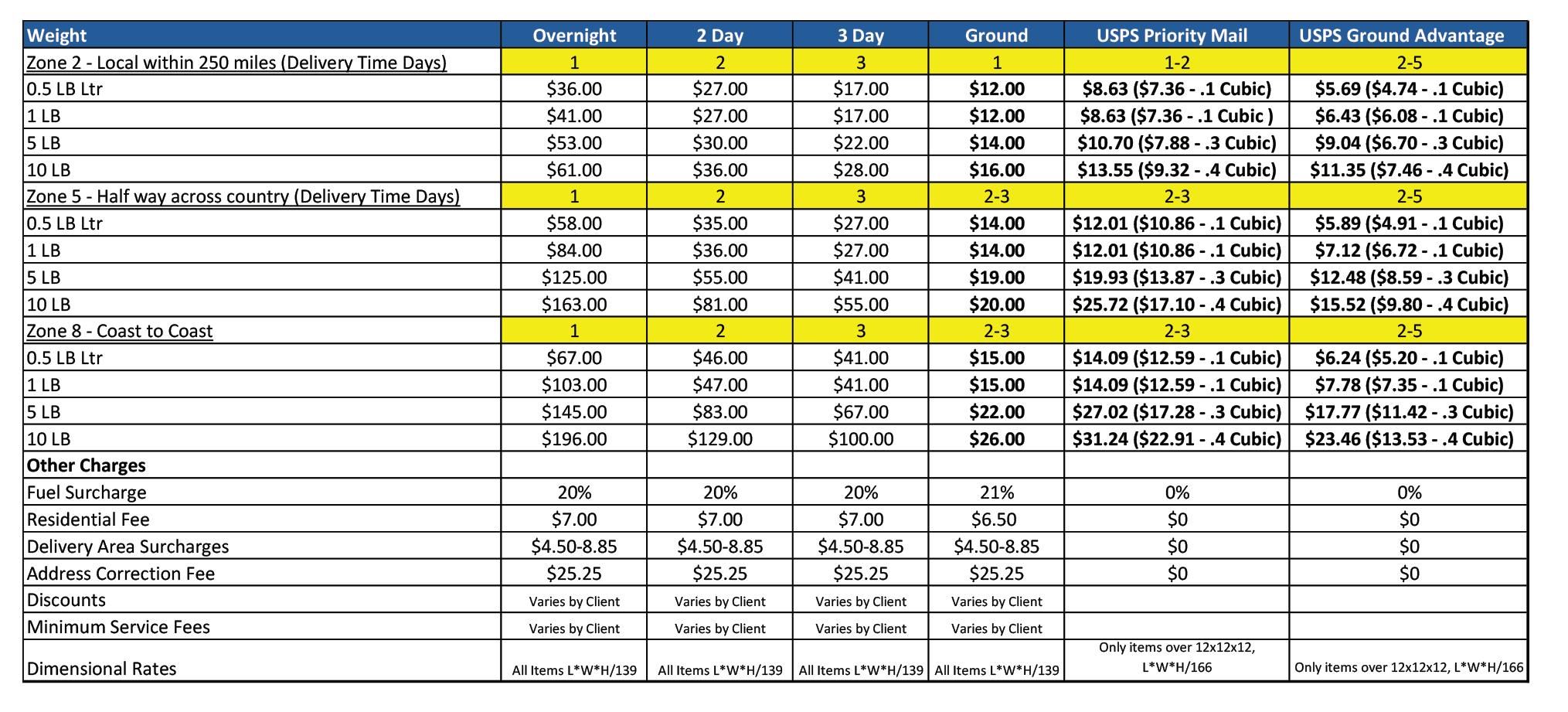
In Figure 1, we have provided the list prices of the private carriers (UPS and FedEx). Most customers will have some sort of discount off these rates that can
be as high as 80%. There is one area that most customers don’t pay attention to called “Minimum Service Fees.” This is a threshold that no matter how big your discount is, the rate cannot go below.
For example, if a 1 lb. Zone 2 Ground shipment lists at $12 and you have a 60% discount, you would expect to pay $4.80. However, if your Minimum Service Fee is $10, that discount becomes largely irrelevant.
For many lightweight, short-zone, or low-revenue shipments, the Minimum Service Fee quietly erodes negotiated savings. Understanding where those thresholds apply is essential before assuming your private carrier agreement is optimized. Also, it is the minimum service fee rate that should be compared, which may be higher than the USPS service.
These fees can make up 20-50% of the shipping charge and are growing at the fastest rate. We are going to focus on the most common UPS/FedEx fees that the USPS does not charge, making them ripe for savings.
Fuel Surcharges – These fluctuate, but at the time of writing this article are at
20% for Air and 21% for Ground. These will typically add at least $2 per package.
Residential Fees - $6.50–$7.00 per shipment. For organizations shipping to homes, this is often the single largest cost driver and one of USPS’s strongest competitive advantages.
Delivery Area Surcharges (DAS) – $4.50–$8.85. These apply to approximately 61% of US ZIP Codes deemed less densely populated. Notably, carriers now apply DAS in parts of New York City due to operational complexity.
Address Corrections - $25.25 per occurrence
When layered together, these fees can double the effective cost of a shipment. In many residential or rural areas, USPS pricing can create substantial savings simply by eliminating these accessorial costs.
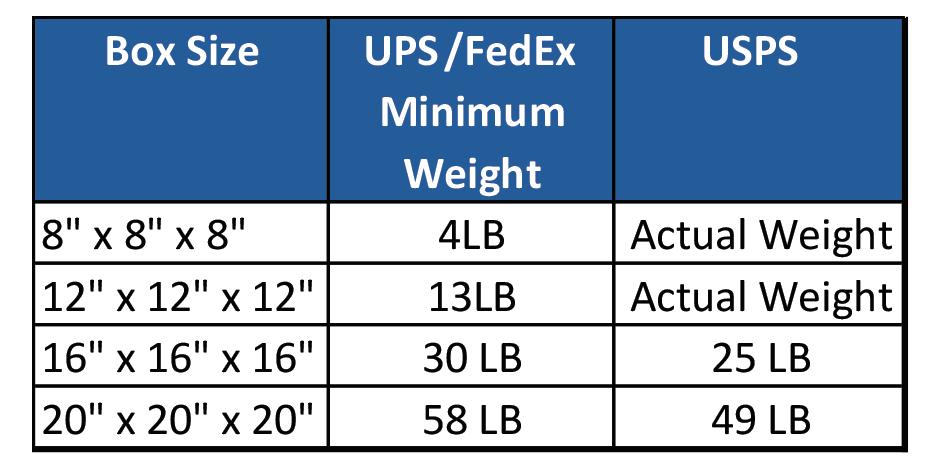
Private carriers have dimensional rates on all boxes, where the USPS only calculates these rates for items over 1 cubic foot. Also, the private carriers calculate dimensions as length x width x height divided by a factor of 139. USPS calculates with the same method but uses a factor of 166.
This means that for each box size, USPS will rate at a lower weight, as you can see in Figure 2 below.
USPS pricing is not a single rate; it is a layered structure with four distinct levels. Optimization depends on how shipments are processed, the technology supporting them, and what volume commitments you can make.
Retail – These are the rates paid at the Post Office counter or when processed through a postage meter.
Commercial – This requires you to generate a 4X6 shipping label through a third-party shipping platform or API connection. The savings over Retail averages 16% for Priority Mail and 28% for Ground Advantage (based on items 20LB and under, which are the most common).
Cubic – This is a rate structure that provides discounts for taking up less than a cubic foot of space. This is great for dense material going in the smallest boxes possible. These rates are primarily offered through third-party shipping systems who make available their direct negotiated discounted rates with the USPS. As you can see from Figure 1, we listed out the most common cubic rates available. The discounts can be as high as 89% based
on weight, zone, and dimensions. The technology required also starts at nominal levels of $15 per month.
USPS Direct Negotiated Service Agreement (NSA) – If you can commit to higher mail volumes, the USPS will be able to give you your own specific rate structure where you can get their lowest prices.
USPS pricing is not a single rate; it is a layered structure with four distinct levels.
While every shipping profile is unique, USPS deserves consideration in the following scenarios:
Shipments under 20 lbs.
Residential items should always be compared due to the high accessorial fees.
Items shipped to rural areas due to Delivery Area Surcharges
Dense items produced in boxes less than a cubic foot due to the dimensional rates of the private carriers. Also, the USPS gives extra cubic discounts for items taking up smaller percentages of a cubic foot.
Items that are less than 1 LB to be sent USPS Ground Advantage because it has 4-, 8-and 12-ounce rates vs. the private carriers that start at 1LB.
Paper – Many companies send a lot of documents typically going through expensive air services. USPS is a huge savings opportunity due to the reasons above.
Prescriptions – Many pharmacies are shipping prescriptions UPS and FedEx which is expensive with the accessorial fees. USPS can provide attractive pricing and is the main carrier for the largest chains.
It would be great if we could put our heads in the sand and just use one carrier for all items. The issue is we will be subject to much higher rates for this convenience. There are many scenarios where USPS should be considered. Also, there needs to be thought about how USPS shipments are being processed because of the differences in discount levels. The best case is that you have technology that can compare the carriers side by side on a transaction-by-transaction basis. This will make it the easiest to make the right decisions for each item. The good news is that if these comparisons are done, there are significant cost reductions available.
Adam Lewenberg, CMDSS, MDC, President/CEO of Postal Advocate Inc., runs the largest Mail Audit and Recovery firm in the United States and Canada. They manage the largest portfolio of postage, mail equipment, USPS permits, and outsourced print mail and presort services in the world. Their mission is to help organizations reduce mail and parcel related expenses, recover lost postage funds, and simplify visibility and oversight. Since 2011, they have helped their clients save an average of 74% and over $111 million on postage, equipment, and third-party mail service fees. He can be reached at 617.372.6853 or adam.lewenberg@postaladvocate.com
By John Whittington

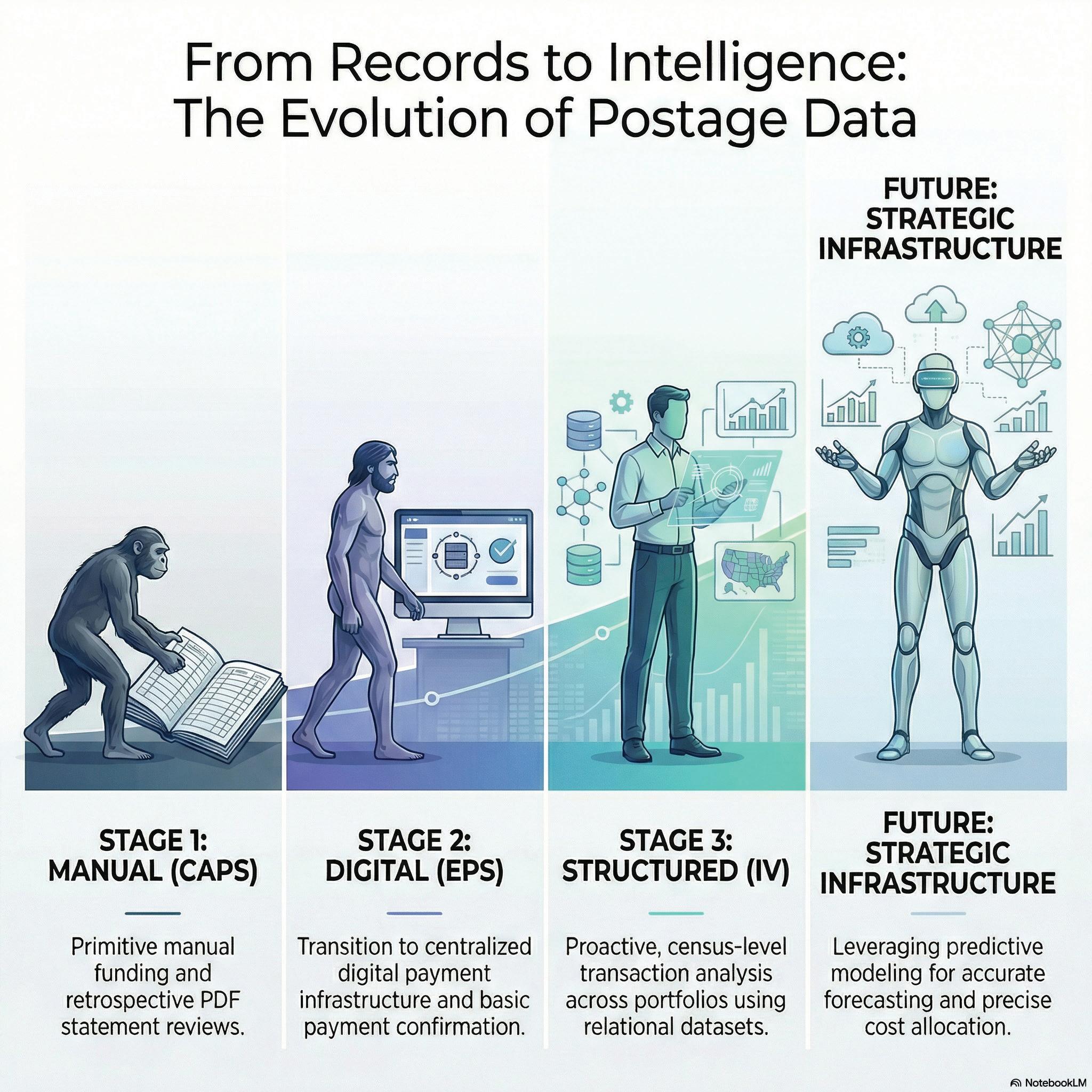
In 2024, this publication examined how the Enterprise Payment System (EPS) and the Informed Visibility (IV) platform were reshaping access to structured postage data. At that time, most mailing organizations were still grounded in statement-based workflows. Postage statements were retrieved from PostalOne!, downloaded as PDFs, organized into spreadsheets, and reconciled manually across permits, CRIDs, and EPS accounts. The availability of structured EPS data through IV, particularly for eDoc submitters, marked an important milestone. For the first time, transaction-level postage data became accessible at scale in a relational format.
The initial phase of modernization centered on access. Today, the industry has moved beyond that threshold. The strategic question is no longer whether structured postage data is available, but whether organizations are prepared to use that data as a strategic asset. As access has stabilized, attention has shifted toward refinement, integration, and long-term analytical capability.
That shift is also expanding the scope of discussion. While EPS remains the financial backbone of postal transactions, the industry is increasingly evaluating additional postage-related data elements
available through Mail.dat and PostalOne!, and considering how those attributes can be incorporated into IV feeds. The objective is not incremental enhancement. It is the development of a more cohesive analytical environment where financial and operational data can be evaluated in context rather than in isolation.
Postage data delivered through IV should not be viewed as a predefined reporting tool. It functions as census-level infrastructure. It provides comprehensive transaction data that organizations can use to design their own reporting models, reconciliation frameworks, forecasting methodologies, and performance dashboards. IV does not dictate interpretation; it enables it. The distinction is significant because it reframes postage data from an operational record into a strategic resource.
When structured EPS data became accessible to authorized eDoc submitters at the time of the previous article, it addressed a longstanding imbalance between financial control and operational execution. Historically, EPS account holders were the only parties able to retrieve structured postage data through IV, even though operational responsibility for mail submission and management often resides with mail service providers, consolidators, and software partners.
Although these operational teams could view individual statements within PostalOne!, meaningful analysis required manually downloading and assembling large volumes of statements. This approach was workable but inefficient and
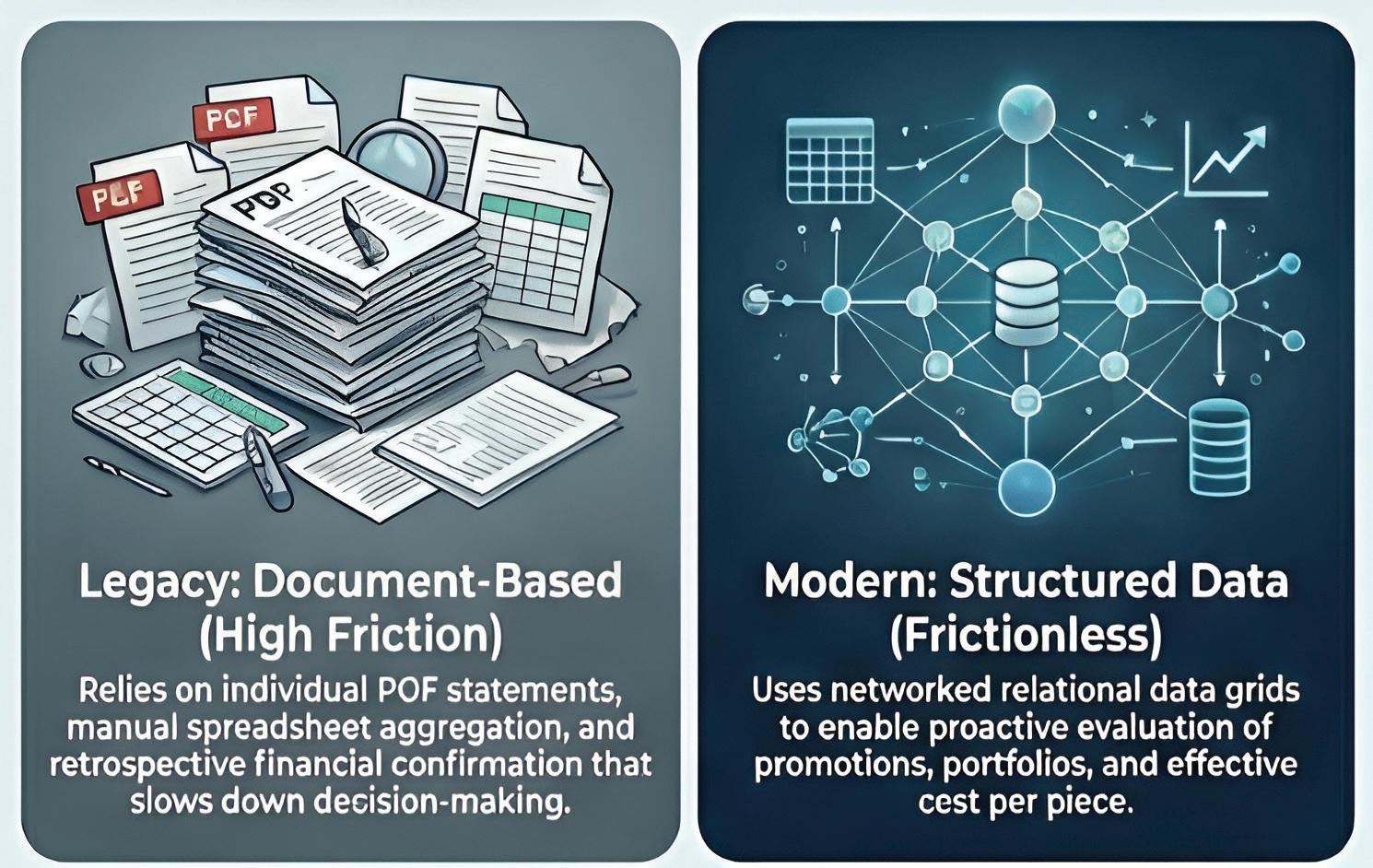
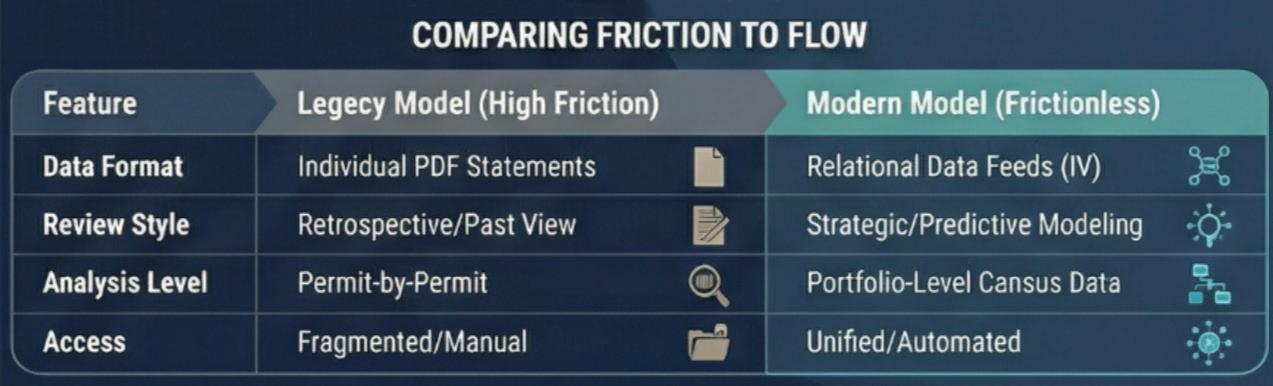
LEGACY MODEL MODERN MODEL
FORMAT: Manual PDF Statements FORMAT: Relational Census-Level Data
ANALYSIS: Permit-by-Permit Review
POSTURE: Retrospective Confirmation
ANALYSIS: Portfolio-Level Promotion Analysis
POSTURE: Proactive Strategic Evaluation
inherently limited in scale. Structured data access through IV aligned analytical visibility with those responsible for mailing execution, reducing manual compilation and enabling a more integrated view of mailing activity.
This alignment did more than improve workflow efficiency. It allowed operational leaders to participate directly in strategic evaluation, using the same dataset that supports financial reconciliation. As a result, mailing organizations are increasingly positioned to make decisions informed by shared data rather than fragmented records.
Access alone does not create strategic advantage. The quality, consistency, and completeness of the dataset determine whether insight can scale across portfolios and time periods.
The formation of the MTAC User Group 4 Deep Dive Subgroup reflects a maturation in how the industry approaches IV data feeds. Rather than treating data outputs as static, the subgroup began reviewing file structures, attribute definitions, naming conventions, and population logic at a granular level. Postage data was the first focus area,
followed by tracking scan feeds and additional feed types.
The review identified areas where attribute naming differs across feeds, where certain fields are not consistently populated, and where structural differences complicate broader analysis. These findings may appear technical, yet at census scale, consistency directly affects analytical reliability.
The subgroup also confirmed that previously requested enhancements, including expanded promotion indicators and additional postage statement date detail, have already improved analytical
flexibility. At the same time, the group identified additional data elements that would add meaningful value if integrated in the future. These include expanded Mail Owner and Mail Preparer CRID and MID identifiers, SKU-level detail, and selected attributes currently available through Mail. dat or PostalOne! that are not yet incorporated into IV feeds. Integrating these elements would strengthen the linkage between mailing activity and financial analysis, enabling deeper campaign-level and portfolio-level evaluation.
The broader implication is that the industry is no longer confined to evaluating what EPS contains. It is assessing the full ecosystem of postage-related data and determining how that information can be unified within IV to support more advanced analytical use cases.
Historically, postage management was largely retrospective. Statements were reviewed after payment. Reconciliation confirmed what had already occurred. Promotional participation was often evaluated at a single-campaign level without broader portfolio context.
Structured postage data changes that posture. When transaction-level data can be analyzed relationally across permits, CRIDs, time periods, and classes of mail, analysis becomes cumulative and contextual. Promotion participation can be evaluated across quarters rather than individual statements. Effective cost per piece can be measured against discount programs and overall budget targets. Spending patterns can be assessed across business units or product lines to identify concentration, variability, and emerging trends.
Reconciliation evolves from verifying individual statements to analyzing aggregate withdrawal behavior and identifying systemic patterns. Financial forecasting becomes more disciplined because historical performance can be evaluated at scale. Cost allocation becomes more precise because data can be segmented across portfolios and operational categories.
When structured data is applied thoughtfully, it lowers the barrier to advanced postal analysis and broadens internal expertise. More professionals within an organization can interpret postal cost drivers with clarity, reducing reliance on isolated specialists and strengthening institutional knowledge.
The transition from CAPS to EPS digitized postal financial management. The integration of EPS data into IV introduced scalable access to structured transaction data. The current phase extends beyond both, focusing on the integration of additional postage-related attributes into a more unified analytical framework.
As pricing structures evolve and promotional strategies become increasingly targeted, analytical precision becomes essential. Organizations must forecast more accurately, allocate costs more transparently, and evaluate promotional effectiveness across broader portfolios. Achieving this level of discipline requires comprehensive, consistent data.
Postage data delivered through IV provides the foundation for that discipline. The continued evaluation of additional attributes available through Mail.dat and PostalOne! signals a recognition that strategic insight depends on completeness and cohesion. When financial transactions, operational identifiers, and mailing attributes are aligned within a unified dataset, analysis becomes more reliable and more actionable.
The future of postage analytics will not be defined by access alone. It will be defined by how effectively organizations translate structured data into strategic capability. Those who invest in developing internal expertise around this data will strengthen forecasting accuracy, sharpen promotional planning, and respond more confidently to pricing and regulatory changes. In a competitive mailing environment, the ability to interpret and apply structured postage data will increasingly separate organizations that react from those that lead.
John Whittington has been in the mailing and postal industry for 25 years, beginning his career at Time Inc., where he worked across all aspects of magazine fulfillment, postage, and postal affairs. At Intelisent, he helps organizations harness the “firehose” of postal data, including delivery, address, Informed Delivery, and postage analytics, to generate actionable insights. An MTAC member for 15 years, he has participated in dozens of industry user groups, workgroups, and task teams and has co-led several industry initiatives. If attending NPF this year, visit Intelisent at booth #945. John can be reached at jwhittington@intelisent.com.
BY ERIC ROBERTS
The National Postal Forum (NPF) is more than a mailing and shipping industry conference; it is an excellent opportunity for Postal Customer Councils (PCCs) across the country to connect, collaborate, and showcase the strength of its network. This year’s PCC presence at NPF highlights education, engagement, and community-building in action.
Kicking off on Sunday, May 3, the PCC General Session and Leadership Awards Ceremony will bring together postal and industry leaders to celebrate the accomplishments of PCCs nationwide. This highly anticipated annual session recognizes innovation, collaboration, and the outstanding efforts of local councils that strengthen relationships between the United States Postal Service (USPS) and the mailing and shipping community. It is both a celebration and a reminder of the vital role PCCs play in driving communication, continuing education, and growth across the industry.
On Monday, attendees will have the opportunity to participate in two insightful
PCC workshops designed to deliver best practices, practical tools, and actionable strategies. Starting with Membership Meeting Mastery: Live PCC Event Simulation, which offers a hands-on, interactive experience that walks participants through planning and executing a successful PCC general membership meeting from agenda development to member engagement. This workshop simulates a complete general membership meeting, showcases how to engage diverse attendees, deliver valuable content, facilitate networking, and manage the flow of a successful event.
The second workshop, Engagement Engine: Growing and Energizing Your PCCs, focuses on sustainable growth and meaningful participation. Attendees will explore proven approaches for recruiting new members, increasing retention, and creating value-driven programming that keeps councils vibrant and relevant. Together, these workshops reinforce PCCs’ mission to educate, connect, and empower business mailers, shippers, and USPS leadership alike.
Monday evening continues the momentum with the PCC Reception; an opportunity to network, strengthen partnerships, and foster collaboration in a relaxed setting. The reception serves as a reminder that relationships are at the heart of every successful PCC.
PCC visibility will also be present throughout the Exhibit Hall. The PCC Advisory Committee (PCCAC) will staff a dedicated booth on the Exhibit Hall floor, providing resources, giveaways, answering questions, and connecting with PCC leaders from across the country. Additionally, the Arizona Desert Skies PCC will proudly host the Welcome Booth, serving as the first stop for many attendees and setting the tone for engagement and hospitality next to the Registration Desk. These booths offer attendees direct access to information, guidance, and the broader PCC network.
From recognition and education to networking and outreach, PCC events and booths at the National Postal Forum provide energy, leadership, and collaboration that define PCCs nationwide. We look forward to seeing you there and continuing to strengthen and enhance the PCC community.
Eric Roberts is a Customer Outreach Specialist with the United States Postal Service. In this role, his primary responsibilities include managing Southern Area Postal Customer Councils and supporting the National Postal Forum and Mailers Technical Advisory Committee programs. Eric began his postal career in 2015 as a letter carrier in Waterbury, Connecticut, and has since grown into a role focused on building strong relationships between the Postal Service and the business customers it serves. He currently serves as the Postal Co-Chair for the Postal Customer Council Advisory Committee Education Sub-Committee, where he contributes to advancing education and professional development for individuals and businesses within the mailing and shipping industry. With a commitment to clear communication and customer-centered service, Eric brings both expertise and dedication to supporting Postal business customers across the country.

BY GREG BROWN
Address cleansing software is alive and well, but the way companies use it is changing dramatically. Traditional applications are moving to API- or cloud-based models, and familiar concepts like national change-of-address (NCOA) processing and list hygiene have become part of a more flexible foundation of data enrichment. Getting more out of your address software requires using it as a platform, not just a tool.
Addresses are business infrastructure, and so is address cleansing. When mailers fully capitalize on address cleansing software, it becomes a foundation for better data-based workflows. Improved delivery outcomes are the star, but they are closely followed by reductions in waste, stronger data on which to build customer relationships, and more adaptable (and cost-effective) marketing and fulfillment operations.
With standardized, verified, and enriched addresses, retail and e-commerce operations are most certainly optimized, and logistics and delivery industries can streamline operations. But these aren’t the only beneficiaries... cities can reach their citizens more efficiently, healthcare organizations can consider geographic insights relative to outcomes, insurers can confirm the best hazard data, and so much more. Addresses are obviously of vital concern for any business, but the ideal is to leverage them to do more for your organization. Think big, and stick to four key themes: consistency, automation, enrichment, and enterprise-wide application.
A big part of the problem is that data managers may rely on a stop-and-start approach. Once a file is “clean,” it is set aside until the next mail cycle is on the
horizon. This both limits the value of the software and fails to consider the lifecycle and inherent significance of data built upon the address. For example, customer matching and analytics fall apart when data is only structured from time to time.
NCOA processes may be commonly run prior to a mailing, but they represent the tip of the iceberg in address management. For example, these operations can be integrated with alerts that monitor and automatically cleanse customer data for move or address update, changes in property transactions, or major events such as death or natural disaster. Adding even greater value, routine and consistent address maintenance is streamlined only when updates are processed.
The takeaway? The address is a stable, universal piece of information that effectively anchors customer data elements across an organization — and it deserves regular attention.
Just like publicly available books are identified by an ISBN (International Standard Book Number), every street address in your firm’s database can have its own unique identifier. Adding this kind of persistent ‘address key’ tool makes it easy to manage and link stored addresses for analytics enrichment, mapping, risk assessment, resource allocation, and more.
Data is processed more efficiently, with automatic updates based on current USPS and other postal data. Key-based tools easily and automatically retrieve changes to ZIP Codes and ZIP+4 extensions, street and city names, and geocoding data such as latitude and longitude coordinates. In a database with 100 million addresses, as many as 30,000-50,000 addresses will change in a single quarter; address keys will process changes only, dramatically reducing the time and associated costs of address update operations.
If your business runs on customer data, consider that only clean, standardized addresses enable records to line up across platforms. When it comes to operations such as fraud prevention and identity matching, addresses are one of the strongest pieces of customer data and can be used as a foundation for realtime identity resolution.
This overall address value applies to all kinds of business operations; once address information is verified and standardized, businesses have a reliable tool to use in matching records across differ-
ent data sources. Duplicate customer records are eliminated and a “golden record” is created, that is, a single customer view upon which a business can base its relationship with an individual: their shopping likes and dislikes, delivery
This overall address value applies to all kinds of business operations; once address information is verified and standardized, businesses have a reliable tool to use in matching records across different data sources.
preferences, proximity to sales locations, special offers, spending habits, account management, loyalty status, and more. That’s precious information in serving an individual customer, but also in seeking lookalikes that can help build your bottom line in the smartest ways.
Cleansed addresses are a gateway of sorts, creating opportunities to leverage higher-value data. For instance, the addition of geocoding at the rooftop or parcel level, delivery area attributes, or residential vs business delivery indicators powers smarter logistics and reduced shipping costs.
Pairing geographic insight with demographic context takes the value beyond logistics and into compliance, marketing, access to select services, and risk management. That’s actionable intelligence spread throughout business operations.
These days, mailing software is not one-size-fits-all. Flexibility is a fortunate offshoot of more organizations needing different capabilities delivered in different ways, such as batch processing, real-time validation, APIs that are customizable to specific business workflows and needs, and online or SaaS-based options. This greater flexibility is an advantage in itself, aligning closely with an organization’s needs and making it more seamless to keep data accurate over time.
Address cleansing software is a starting point for managing customer data and creating a stable foundation on which to build business operations. Applicable to a global customer base, businesses can reduce costs and win hearts with worldwide address validation and standardization. When data becomes system-agnostic, address records can act as persistent identifiers for every customer, living inside a company’s databases and traveling with records as they move across systems. This offers tangible business value across all kinds of operational platforms and can become even more valuable with consistent cleansing processes that ensure customer records don’t decay over time.
Everything works better when it’s based on great data. And as complex as data management can be, the humble address is an ideal place to call home for overall business operations.
Greg Brown is Vice President of Global Marketing, Melissa, a provider of contact data quality and identity verification tools. Melissa’s solutions integrate seamlessly into CRM, ecommerce, and master data management platforms to support the full data quality lifecycle. Connect with Greg at greg.brown@melissa. com or on LinkedIn.

BY JIM BURNS
In an era defined by rapid digital transformation, AI-driven workflows, and shifting customer expectations, it’s easy to assume that in-person trade shows are becoming less relevant. After all, when information is available online 24/7, what’s the incentive to spend days away from the office, travel to another city, and walk a convention floor?
For mailers and postal industry professionals, the answer is simple: trade shows deliver value that cannot be replicated through screens. They offer a rare combination of high-density learning, hands-on technology exposure, and access to the exact people — vendors, industry leaders, postal executives, and fellow mailing professionals — who shape the future of mail.
And among all industry events, the National Postal Forum (NPF) stands out as the most impactful and strategically significant gathering for mailers seeking to stay competitive, improve workflow efficiencies, and understand where the USPS is headed next.
An average of 4,000+ industry professionals attend the National Postal Forum. Over 85% of these attendees are potential buying customers with the mailing industry. An additional 1,000 attendees represent exhibiting companies, and 500 are USPS representatives. This is the only event that brings together all senior-level
USPS executives, leaders of the mailing and shipping industry as well as the industry’s major suppliers and partners. You can’t afford to miss this opportunity to listen and learn from these champions of mailing and shipping!
Although webinars, virtual events, and online research provide valuable information, they lack the depth and real-world experience that in-person events offer. Trade shows remain relevant because they concentrate information, innovation, and human expertise in a single place.
For mailers, nothing compares to seeing equipment run live on the show floor. Trade shows create an environment where technology isn’t just demonstrated — you can touch it, question it, compare it, and evaluate it against your operation’s specific needs.
Attendees can:
Observe full mail production workflows running in real time
Compare multiple vendors side-by-side
Ask detailed, technical questions directly to product engineers
Explore emerging categories of automation that they may not yet know they need
This hands-on exposure accelerates decision-making and reduces risk when considering new investments.
2. Networking with Industry Experts and Peers
Innovation doesn’t happen in isolation. Trade shows bring together professionals from across the mailing ecosystem — operations managers, technologists, USPS representatives, logistics providers, consultants, software developers, and more.
For attendees, this creates opportunities to:
Discuss challenges with peers
Learn how other organizations solve similar problems
Build relationships that turn into longterm partnerships
Hear directly from USPS leadership about upcoming changes
These conversations are often as valuable as the formal sessions.
3. Exposure to Innovation Beyond the Mail Center
Some of the most transformative ideas don’t come from within a mail operation — they come from adjacent technologies or solutions designed for entirely different industries.
Automation tools originally built for manufacturing, e-commerce logistics, or
warehouse mobility often find new applications in mail facilities.
NPF offers direct access to USPS leadership, high-quality education, and hands-on technology exploration. It is the only event where mailers can speak directly with USPS executives, hear upcoming plans, and gain clarity on operational and regulatory changes. This year, the educational tracks will cover the reimagination of direct mail, empowered leadership, mastering mail operations, and more.
At NPF 2025, I watched a vendor demonstrate an autonomous Tugbot system — technology typically used in a warehouse environment. At first, it seemed unrelated to mail operations. But as I observed how the robot identified, attached to, and transported materials, I realized it could solve a longstanding challenge in our Linen operations at Mass General. Our department falls under Materials Management, and our Linen team moves and exchanges more than 200 carts of clean and soiled linen every day.
The Tugbot presented a new way to automate this workflow. By attaching QR codes to our linen carts, the robot can locate the correct cart at the loading dock, hook itself up automatically, and deliver it to a designated drop off point near the appropriate elevator bank. Employees stationed throughout the hospital then complete the exchange on each floor before the Tugbot returns to the dock to retrieve the next cart.
This automated loop also includes returning empty carts to designated parking areas, allowing the Tugbot to continuously shuttle materials back and forth without requiring staff to push or pull 400–500 pound carts across long corridors at Mass General. The result is a more efficient, consistent, and safer workflow that reduces injury risk while freeing staff to focus on higher value tasks.
We will implement the Tugbot system this summer — not in the mail center, but in our linen operations with potential to expand to our Food & Nutrition and Environmental Services departments, where safe and reliable material transport is critical. This insight, sparked by a demonstration I almost overlooked, is a powerful example of how attending NPF can reveal solutions that transform operations into unexpected areas.
Attending NPF is an investment — of time, travel, and budget — so approaching the event with intentionality is the key to unlocking its full strategic value. Whether you’re attending for the first time or returning as a seasoned participant, the following strategies help ensure that every session, conversation, and demo contributes meaningfully to your operational goals.
While solo attendance can be valuable, there is no substitute for the coverage, diversity of perspectives, and collaboration that come from attending as a team. A multi-person presence allows you to divide and conquer educational tracks, compare notes, evaluate technology from multiple functional viewpoints, and develop unified takeaways. Teams also generate stronger post-conference action plans because insights come from multiple stakeholders.
The show floor is large and busy, and vendors book up quickly. Scheduling meetings in advance ensures dedicated time with product specialists, private demonstrations tailored to your workflow, and the ability to compare multiple vendors back to back. Arriving with a pre-planned calendar is one of the most effective ways to increase conference ROI.
NPF is the only event where mailers can hear directly from USPS executives, ask questions, and gain clarity about upcoming initiatives and regulatory changes. These sessions provide early insights into operational updates, USPS strategies and priorities, and guidance on navigating policy changes. The access to postal leadership is unmatched.
Some of the most transformative takeaways from NPF come from technologies or ideas not originally on your radar. Walking the show floor with curiosity rather than a rigid shopping list can reveal automation tools from adjacent industries, workflow solutions designed for entirely different sectors, or robotics and analytics platforms with unexpected applications.
The relationships formed at NPF often deliver the longest lasting impact. Introduce yourself proactively to peers and USPS leaders, ask other organizations how they approach similar challenges, participate in after hours events, and follow up with new contacts shortly after the conference. These connections often become trusted partners and ongoing resources.
With dozens of sessions, demos, and conversations happening at once, insights can easily get lost. Hold short team debriefs each evening, document key takeaways from each session, identify emerging themes, and note which vendors require follow up. By the time you return home, you’ll have a structured, prioritized summary rather than scattered notes.
7. Build an Actionable Post-NPF
NPF’s value is realized after the event, when insights are translated into operational changes. A strong post NPF plan includes high impact opportunities, quick win vs. long term initiatives, technology, or process improvements to explore, vendor follow ups, and internal presentations to leadership. Turning your week into a roadmap ensures lasting impact.
Rather than treating NPF as a once a year event, revisit your takeaways each quarter to evaluate pilot programs, track benefits of implemented changes, adjust plans based on USPS updates, and keep your team aligned with industry trends. This transforms NPF into a year round engine for continuous improvement.
NPF is more than a conference; it’s a catalyst. It inspires innovation, sparks new partnerships, and equips organizations with the knowledge needed to remain competitive in a rapidly evolving industry. By approaching the event with purpose and carrying its insights back into daily practice, mail professionals ensure that the impact of NPF continues long after the conference concludes.
Jim Burns is Sr. Operations Manager, Materials & Mail Services, Linen, CS/Equipment, MGH Materials Management.

Visit Firstlogic at Booth #408 to discover how our CASS-certified address quality solutions deliver the high-volume performance your enterprise requires. We offer on-premise and private cloud deployment options designed for complete data security and control. Whether processing in batch or real-time, our unlimited records model ensures predictable costs and maximum scalability. With 40+ years of expertise, we focus on enhancing overall data integrity across your organization. Our experts will be available to discuss how our selfmanaged software can meet your unique business needs. firstlogic.com | experts@firstlogic.com | 678.256.2900
Stop by BCC Software at booth 911 and pick up an end-to-end mail stream passport to see for yourself how BCC Software products, solutions, and services are deeply integrated into all phases of the ecosystem. Not only that, but you’ll be introduced to a critical micronetwork of solutions providers across the entire ecosystem, with whom we have dynamic workflow integrations to make your current workflow faster, more streamlined, and most cost effective. Visit us at booth 911 to see our software in action, get firsthand dialogue with our professionals, and see how we help transform business operations.
bccsoftware.com

One of Direct Logistics’ largest clients just “stopped by our booth” last year. They needed to support an entirely new DDU entry model for a major client; and we had it rolling in under 30 days. If you send mail-as-freight to SCF and DDUs, we’ve been delivering palletized Destination Entry mail 98.6% on-time for 25 years. Our online portal supports mail.dat uploads and we’re integrated into BCC Software. There is no faster, easier way to estimate, tender, track, and confirm LTL drop-shipping to USPS facilities nationwide. To learn more about Direct Logistics Postal-Aware LTL™ solutions, stop by our booth. DirectLogistics.com

Engineering Innovation helps mail operations grow smarter, faster, and more efficient at every stage. Stop by our booth at NPF to see Apian Sort in action and learn how it adapts to your workflow today while scaling for what’s next. Connect with our mail experts at the Apian Sort kiosk for practical insights and real-world solutions designed to simplify complexity, reduce costs, and keep your operation moving. Get a first look at what’s new, including a hands-on LightSort pick-to-light demo.
www.eii-online.com

For more than 75 years, Kern has helped mailing organizations improve production with dependable automation and experienced support. If you’re dealing with labor challenges, throughput demands, accuracy concerns, or aging equipment, stop by Booth 405 and talk with our team. Kern provides inserting and card automation solutions designed to keep mail moving efficiently. Beyond the equipment, our service and support teams work closely with customers to understand their operations and help keep systems running reliably day after day.
www.kerninc.com
The USPS booth places you in the heart of the action at the NPF Exhibit Hall. Explore new videos, engage in a fun interactive game, and learn about Small Parcel Lockers and other retail programs. Interact with Educational Kiosks and witness the return of The Next Generation Delivery Vehicle. Join us for an exciting and informative experience to discover how USPS can help your business grow. www.usps.com

Discover how XiJet can elevate your printing capabilities — visit us at NPF booth 128! Whether you need wider-width cartridges, higher capacity options, or cost effective monochrome and color piezo inkjet solutions, XiJet delivers. From simple addressing to vibrant, full color postcard printing on virtually any substrate, our technology is built to meet your demands. Don’t miss the chance to see the Brady 1” cartridge and Galaxy full color inkjet printers in action. Stop by booth 128 and see what’s possible with XiJet! www.XiJet.com | sales@XiJet.com | 203.397.2800