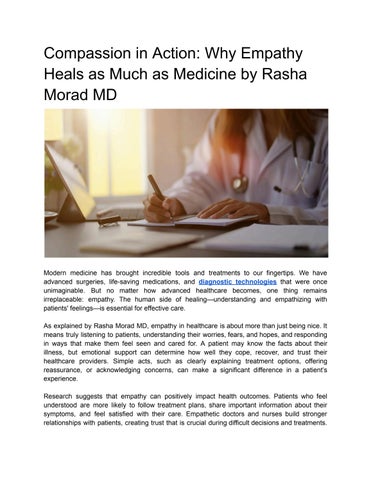
Compassion in Action: Why Empathy Heals as Much as Medicine by Rasha Morad MD
Modern medicine has brought incredible tools and treatments to our fingertips. We have advanced surgeries, life-saving medications, and diagnostic technologies that were once unimaginable. But no matter how advanced healthcare becomes, one thing remains irreplaceable: empathy. The human side of healing—understanding and empathizing with patients' feelings—is essential for effective care. As explained by Rasha Morad MD, empathy in healthcare is about more than just being nice. It means truly listening to patients, understanding their worries, fears, and hopes, and responding in ways that make them feel seen and cared for. A patient may know the facts about their illness, but emotional support can determine how well they cope, recover, and trust their healthcare providers. Simple acts, such as clearly explaining treatment options, offering reassurance, or acknowledging concerns, can make a significant difference in a patient’s experience. Research suggests that empathy can positively impact health outcomes. Patients who feel understood are more likely to follow treatment plans, share important information about their symptoms, and feel satisfied with their care. Empathetic doctors and nurses build stronger relationships with patients, creating trust that is crucial during difficult decisions and treatments.