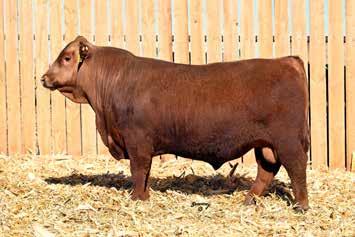
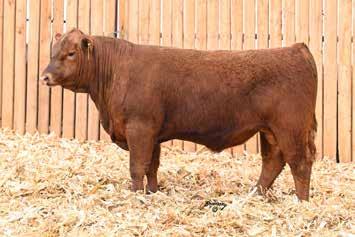
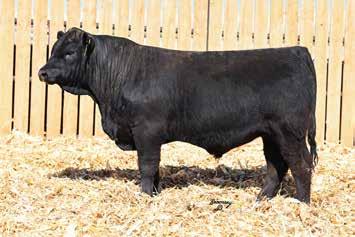
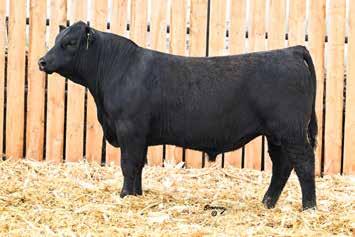
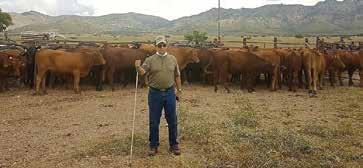
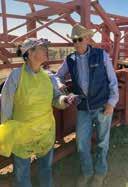
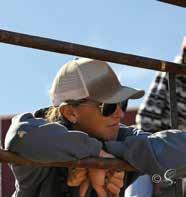
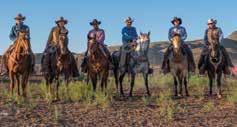
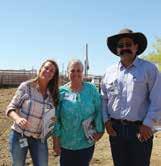
Sam Garcia................................ (520) 456-7804
Spencer Prosser (928) 856-0186
Sale Vet Dr Colin Durham (719) 339-0326
Superior Livestock (800) 422-2117
FRIDAY, April 10th:
• Bull viewing all day
• 12:00 PM Lunch at the bunkhouse
• 5:30 PM Social with Heavy Hors d’oeuvres & Entertainment with Franklin Smith
• 7:00 PM Barbara Jackson discussing Foothills Abortion Disease and New World Screwworms.
SATURDAY, April 11th:
• 11:30 AM Diablo Burger lunch Sponsored by AgWest Farm Credit
• 1:00 PM Sale
PAP TESTS:
Please note that we need a list of your prospective bulls that need a PAP test by April 3th
Accommodations:
Twin Arrows Casino, 928-856-7200
La Posada Motel in Winslow, 928-289-4366
Best Western Motel in Winslow, 928-289-2960
The Winslow Motel, 928-882-9009
There are numerous motels on the East side of Flagstaff ~ 45 miles.
Delivery:
Free Delivery on bulls to adjoining states at central locations or to your ranch in Arizona. A $75 Discount will be given if your bull is picked up sale day.
Please check the website for a sortable spreadsheet with updated Gelbvieh EPDs and $Profit indexes
Map to Sale Site: For information contact:
The Supplement Sheet will be available on April 7th, at www.bartbar.com, with ultrasound, frame scores, scrotals and PAP.
Bob & Judy Prosser PO Box 190 Winslow, AZ 86047 (928) 380-5149 - Bob cell
Eric Duarte
Exit 233 I-40
Flagstaff 30 miles
Twin Arrows Casino 10 miles Winslow 20 miles
Valued Customers and Friends,
We look forward to seeing you on April 11th at Crater Ranch Headquarters for our annual bull sale. Thank you all who attended our Century of Ranching and Bull Sale last year, it was quite an event. Those that couldn’t make it missed an educational and enjoyable celebration. This year we will be back to the viewing of bulls, lunch at Headquarters, and at the Crater on Friday evening where there will be a social with heavy hors d’oeuvres. Following this, Barbara Jackson will give us a presentation on Foothills Abortion Disease. Lunch will be provided on Saturday before the sale by AgWest Farm Credit. Customer credits will be updated by sale day for our long-term customers. The cattle markets have surprised everyone with unbelievable demand and record prices. It certainly has provided a much-needed revenue injection to the cow calf producer. We must thank our beef consumers for making this possible.
It is unfortunate that much of the West has been in drought for the past 3-4 years. Mother nature picks winners and losers, but for the West it has been hit and miss. Cow numbers are at record lows, and it has been difficult to rebuild. We know that this business is not predictable, but we have a long history of working on the things that we CAN affect. Improving the cattle is one of them. The bulls we are offering are a result of generations of cattle that will do more with less. Less feed, less labor, more fertility, and calves that will sell well or perform if you’re feeding them. The rewards for the carcass merit are real. The bulls are out of the most proven range cow herd in the west. Females sired by these bulls will not disappoint you on preg-checking day. Every bull is DNA tested, phenotyped, feed efficiency tested, and is out of a cow that calves in the first 45 days every year or she is gone. These are not just claims, as they are backed by data from the most robust evaluation in the business - $PROFIT. This is data you can trust and is an easy way to sort and choose the bulls for your herd. We cull for every fitness trait: disposition, udders, feet, and fertility. These bulls are ready for your evaluation and consideration. Our reputation is for great females and cattle that will work in arid and rough environments from Mexico to Oregon.
If you are looking to rebuild your cowherd these genetics can make that journey more predictable and more profitable. You can improve your pounds of production per unit of land by utilizing these genetics.
There is a PAP Epd for every bull in the catalog. We will do actual PAP testing on April 4th so if you get your list of bulls you want tested to us by the 3rd we will test them and have scores available before the sale. There is free delivery to central points determined after the sale. All bulls are trich tested and will be able to leave sale day if needed. If you cannot attend the sale it will be broadcast on Superior Livestock and you can bid online. If you are uncomfortable doing that please contact us and we will have numerous people there sale day to help you on the phone. There will be a sortable spreadsheet and videos on our web site.
A special thanks to our managers Kristin and Devin Hovey, the Leachman crew for bull development & catalog , Dr. Colin Duram, veterinarian, Roy Redhead, Brand Inspector, the entire crew here at -T-, and good friends that help make this all happen.
Sincerely ,
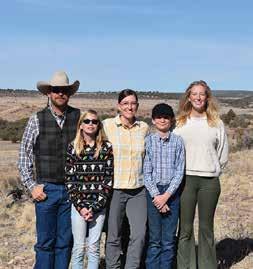
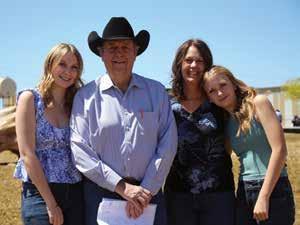
The Prosser Family
Bar T Bar Ranch Annual Bull Sale • April 11, 2026
1 pm PDT • Bar T Bar Crater Ranch Headquarters • Winslow, AZ
Ranchers,
There has never been a better time to be in the cow business! Now is the time to make wise investments in genetics on both the bull and female side. For bulls, you cannot find a better supplier than Bar T Bar. These bulls are fully characterized, selected for profit, and they stem from a cowherd that runs in YOUR ENVIRONMENT! That is absolutely the gold standard. To build the best possible cowherd, you should be using Zoetis Inherit Select to pick your replacements.
Good cattle are cattle that make you more money than do average or poor cattle. This really comes down to a few simple things:
• Your replacements need to breed up the first time and breed back the 2nd and 3rd times.
• Your cows must earn their own living by getting bred and bringing in a good calf year after year.
• Your feeder cattle need to gain, convert, hang up a heavy carcass, and marble.
The Bar T Bar bull offering will build cows ideally suited to extensive, semi-arid environments. The cows have been proven to work in that very scenario. You will find that these bulls will hold up well and will get your cows bred. Best of all, these bulls are backed by people you can trust.
Whether you are a repeat buyer or a potential first-time buyer, be sure to come early to study the bulls before the sale!
These bulls offer something for everyone. From elite profit Angus bulls, to Balancers, to Southern Balancers – you will find plenty of calving ease, super soundness, and cattle that will gain and hang up a valuable carcass. With 180+ bulls selling, the volume and quality is deeper than ever.
We look forward to seeing you at the Bar T Bar sale in April!
Regards,
Lee Leachman
Bull Tags: Each bull is wearing a colored breed tag. Breed tags correspond to the tattoo numbers and are colored as follows:
White w/underline & star= 13-24% SimmentalXBalancer
Pink= 50% Santa GertrudisXBalancer
Pink w/ underline= 25-49% S. GertXBalancer
Pink w/underline & star= 8-24% S. GertXBalancer
Turquoise= 50% SenepolXBalancer
Red w/ underline= Hybrid (anything that is less than 25% GV and 25% AN/AR)
Clipped corner on tag represents 3-7% American Breeds
$PROFIT® WHAT IS
& WHY IS IT IMPORTANT?
The $Profit® index stands as one of the most innovative and effective tools in modern beef production. Designed to help cattle producers maximize their profitability while improving the efficiency of their herds, the $Profit® index has gained recognition across the beef industry as a game-changing resource. By focusing on longterm sustainability and optimizing genetic potential, The $Profit® system empowers producers to make informed decisions that benefit both their bottom line and the future of the beef industry as a whole.
WHAT IS THE $PROFIT® INDEX?
At its core, the $Profit® index is a genetic selection tool that calculates the expected profitability of beef cattle based on specific genetic traits. It is a comprehensive program that goes beyond the typical focus on individual traits like weight gain or carcass quality and instead integrates a range of factors that affect overall production costs and returns. The system evaluates 22 traits such as growth rates, feed efficiency, reproductive success, and carcass merit, assigning each animal a profitability score that reflects its overall potential for long-term profitability.
In the cattle business, you have to balance all of the traits that impact profitability. This is nearly impossible for anyone to do without understanding the tradeoffs and economic impact of each trait. Simply put, $Profit® does this work for you. By selecting for $Profit®, your cowherd will become more profitable (Cows that Work) and your feeder calves will make more money (Steers that Pay).
The $Profit® index utilizes a powerful algorithm to consider the various inputs that contribute to profit, including both direct and indirect costs associated with production.
This allows beef producers to select animals that not only perform well in traditional areas, such as
weaning weights or ribeye area, but also in more complex aspects like feed efficiency and herd longevity. As a result, the program offers a more holistic view of genetic potential and provides a roadmap for selecting the bulls and cows that will yield the best financial outcomes.
HOW IS $PROFIT® CALCULATED?
The $Profit® score is calculated by taking into account a variety of economic factors. These include:
Reproductive Performance: Since the production of each calf is a major source of income, reproductive efficiency is critical. Bulls that produce cows with higher reproductive performance contribute to the overall profitability of the herd by ensuring higher calf crop percentages.
Longevity and Durability: Cows that live longer and continue to produce calves effectively contribute to long-term profits, reducing replacement and depreciation costs for herds.
Feedlot Performance: The $Profit® system incorporates expected performance data for animals as they enter feedlots, taking into account how efficiently they will gain weight and how well they will grade once processed.
Carcass Merit: Factors like carcass weight, marbling, ribeye size, and yield grade are all considered to predict how well the animal will perform in the marketplace. Higher carcass quality leads to higher premiums at the packing plant, increasing profitability.
$Profit® is generated from a combination of industry standards, genomic testing, and performance records from Leachman Cattle and the broader cattle industry. By assigning a dollar value to each trait, the $Profit® score provides a numerical representation of the expected profit an animal can generate across its lifetime.
$Profit® includes nearly every trait that impacts profitability.
WHY BEEF PRODUCERS SHOULD USE HIGH $PROFIT® BULLS
Beef producers who use high $Profit® bulls from Bar T Bar are investing in the future success and sustainability of their operations. These bulls are specially selected based on their genetic potential to maximize profitability through superior performance in a variety of traits. Here are some reasons why producers should consider using these bulls:
Increased Profit Margins: Bulls with high $Profit® scores contribute to higher-quality offspring that are more efficient in converting feed, grow faster, and produce better carcass quality. These traits all lead to reduced costs and increased returns for producers.
Reduced Production Costs: Feed is one of the largest costs in beef production. Bulls with high feed efficiency can help reduce feed costs by producing more weight per unit of feed. Additionally, selecting for reproductive success and longevity means fewer replacement animals are needed, reducing overall herd management costs.
Adaptability to Market Shifts: The $Profit® index helps producers select bulls that are not only profitable in the present but are also adaptable to future market trends. Whether it’s responding to changing consumer preferences for beef quality or meeting sustainability demands, high $Profit® bulls are a smart investment for navigating future industry challenges.
IMPORTANCE TO THE BEEF INDUSTRY
The $Profit® index is essential to the future of the beef industry because it helps producers to adopt more sustainable and efficient practices. As the global population grows and demand for beef increases, the industry must find ways to meet that demand while reducing resource use and maintaining profitability.
By using genetic selection tools like the $Profit® index, beef producers can improve the efficiency of their operations. The focus on feed efficiency, reproductive success, and animal longevity helps produce more beef with fewer resources, which is crucial as the industry faces pressure to produce sustainably in a world of limited resources.
Moreover, the system helps producers align their operations with consumer expectations for highquality, responsibly produced beef. By selecting for superior carcass merit and growth efficiency, producers can meet market demands for premium beef while improving their bottom line.
The $Profit® index is an invaluable tool for modern beef producers who want to maximize profitability and sustainability. By choosing high $Profit® bulls, producers can improve herd performance, reduce costs, and contribute to the long-term health of the beef industry. The system offers a clear path forward in an increasingly competitive and resourceconscious market, ensuring that the beef industry remains strong and profitable for generations to come.
WHAT IS $RANCH®
& WHY IS IT IMPORTANT?
The $Ranch® index represents a groundbreaking approach to improving your cow herd. No other index builds cows that excel at all of the drivers of cowherd profitability. $Ranch® will reduce cow feed intake, increase cow fertility and longevity, and increase weaning weights. The $Ranch® index stands as a strategic tool that helps producers optimize their herds for long-term success. By focusing on ranch-level profitability, this system is designed to help cattlemen and women produce better replacement females.
WHAT IS THE $RANCH® INDEX?
The $Ranch® index is a comprehensive genetic evaluation tool that helps beef producers select bulls that will maximize the profitability and sustainability of their cowherd. The system uses a robust economic model that integrates both the direct and indirect factors that influence the profitability of a cow/calf operation that sells calves at weaning. These include feed costs, reproductive performance, longevity and calf weaning weight. By taking all of these into account, the $Ranch® index calculates a dollar value for each cow that reflects its annual contribution to the overall profitability of a ranch. Herds that use $Ranch® will improve the profitability of their cowherd.
HOW IS $RANCH® CALCULATED?
The $Ranch® score is derived from an intricate calculation that factors in a wide range of economic and biological variables. $Ranch predicts relative profit per cow on the daughters of a bull. In simple terms, higher $Ranch® bulls will generate cows that make more money each year. The index considers:
Cow Size and Feed Requirements: The $Ranch® estimates a cow’s annual feed cost using both the cow’s size and its feed intake predictions. Selection for $Ranch® will reduce per cow feed requirements. This will allow both heavier stocking rates and reduced supplemental feed per cow.
Reproductive Performance: Fertility is #1 driver of $Ranch®
The Cow Fertility EPD predicts the number of calves that a bull’s daughter will have in her lifetime. Ultimately, higher Cow Fertility herds will have higher calf crop percentages and lower
replacement rates. This positively impacts revenue per cow exposed to the bull and also reduces the depreciation cost per calf. The combined impact on increased revenue and reduced depreciation make reproduction the most important single trait to cow/calf operations that sell calves at weaning.
Maternal Weaning Weight: The $Ranch® index favors cows that wean bigger calves. However, the impact of weaning weight is less significant that either cow feed cost or reproduction. Nonetheless, selection for $Ranch® will increase herd weaning weights over time.
By evaluating these various factors, the $Ranch® index provides a profitability score that reflects the expected long-term success of a cow. This enables producers to select bulls that will make more profitable cowherds.
$Ranch is profit from birth through weaning. Includes: fertility, milk, growth, cow feed intake and mature size
IMPORTANCE TO THE BEEF INDUSTRY
The $Ranch® will help producers change the trajectory of their cowherds. The 40-year pursuit of increased growth rates has built cows that are too big and eat too much. This has made it increasingly difficult to generate high calf crop percentages. It has also reduced longevity and driven up supplemental feed costs.
The future of profitable cow/calf operations will be to find the females that are more efficient with higher fertility and longevity By using high $Ranch® bulls, herds will generate more cows that make it to nine years of age by producing a calf every year. In an era of changing market dynamics, ranches that utilize this program will be well-positioned for future success.
The $Ranch® index is an essential tool for modern beef producers who are looking to optimize their operations for profitability and sustainability.
WHAT IS $Feeder®
& WHY IS IT IMPORTANT?
The $Feeder® Index is an innovative genetic evaluation tool that focuses on maximizing the profitability of cattle once they enter the feedlot. With the increasing demand for high-quality beef and ever-tightening margins in the industry, it’s more important than ever for beef producers to focus on the entire production cycle. From conception to the feedlot, the $Feeder® index provides a clear, data-driven way to select genetics that will yield the highest returns for producers at the feedlot level. By optimizing cattle performance in terms of feed efficiency, weight gain, and carcass quality, the index ensures that feeder cattle will be more valuable and generate more profit.
WHAT IS THE $FEEDER® INDEX?
The $Feeder® index is a genetic selection tool designed to enhance the performance of cattle once they enter the feedlot phase of production. It calculates the potential profitability of cattle by evaluating a range of traits that influence how well they will perform in the feedlot. These traits include feed conversion, growth rates, and carcass traits like marbling, ribeye size, and yield grade. The goal is to select bulls whose genetics will produce feeder calves that are efficient, fast-growing, and highyielding, thus maximizing returns during the feedlot phase.
Unlike traditional genetic programs that may focus solely on individual traits, the $Feeder® index combines various factors into a comprehensive score that provides producers with an accurate, bottom-line-focused metric for evaluating bulls. This ensures that each animal’s contribution to profitability is fully understood, allowing producers to make smarter breeding decisions for optimal feedlot outcomes.
HOW IS $FEEDER® CALCULATED?
The $Feeder® score is calculated using a combination of genetic factors that are proven to impact the performance of cattle in the feedlot. The primary factors included in the $Feeder® index calculation are:
Feed Efficiency: This is one of the most critical components in the feedlot phase. Cattle that convert feed into weight gain efficiently cost less to feed and require less time to reach market weight. Bulls that pass on genes for high feed efficiency can significantly reduce overall feed costs, which make up a large portion of the feedlot’s expenses.
Average Daily Gain (ADG): Cattle that grow faster are more profitable because they reach market weight sooner, reducing feed costs and labor. The $Feeder® index calculates how quickly an animal can gain weight based on its genetic predisposition for growth.
Carcass Quality: The $Feeder® index also takes into account marbling score and how it will impact grid premiums. In
particular, the index targets the production of higher quantities of Prime and high Choice. Higher marbling carcasses are highly desired by consumers and packers, ensuring the cattle generate more premiums.
Fat Cover and Yield Grade: The amount of fat and muscle on an animal influences its market value. A proper balance is essential—too much fat can lower the quality of the carcass, while too little can result in lower yields. The $Feeder® index evaluates these factors to ensure that cattle reach the ideal weight and fat levels for optimal market prices.
Carcass Weight: The goal of all feeder indexes should be to produce carcasses that can reach maximum weights efficiently. This requires having the growth potential to produce 1,000 pound carcasses. High $Feeder® bulls will produce steers that can reach the highest acceptable carcass weights.
By combining these traits, the $Feeder® index assigns a dollar value to each bull based on how likely their offspring will be to perform efficiently and profitably in the feedlot. This provides a clear indication of the economic return producers can expect from selecting a particular bull for their breeding program.
$FEEDER® is the profit from weaning to harvest. Includes: feed conversion, carcass value and carcass weight.
MPORTANCE TO THE BEEF INDUSTRY
The $Feeder® index is crucial for the future of the beef industry because it helps producers meet the ever-growing demand for high-quality beef while improving feedlot efficiency and overall profitability. $Feeder® will improve feed conversion faster than any other feeder index available in the industry.
By utilizing genetics that optimize feedlot performance, producers can help ensure that cattle reach market weight faster, with fewer resources. This contributes to greater overall efficiency in the beef supply chain, from the ranch to the packer. The $Feeder® index also helps producers adapt to shifting market demands by selecting for high carcass quality traits that are in increasing demand by consumers.
The $Feeder® index offers a powerful, economically focused approach to cattle breeding. By selecting high $Feeder® bulls, producers can optimize feedlot performance, reduce costs, and improve profitability. The program not only enhances the financial outcomes of individual ranches but also plays a critical role in ensuring that the beef industry remains competitive and efficient in the face of future challenges.
U OF I STUDY LINKS FEED EFFICIENCY TO HEAT STRESS IN CATTLE
John O’Connell | UI Extension Beef Specialist
A new University of Idaho-led study explores the scientific reason why some cows spend hot summer days lazing along a shady streambank while others brave the heat and graze the hillsides.
The study suggests cattle that inefficiently convert feed into body mass are more apt to struggle with heat stress while grazing rangeland in hot weather than their efficient counterparts. Consequently, efficient cattle tracked for the study took fuller advantage of the forage throughout their range, including on steep slopes, during hot days while their inefficient counterparts hunkered in lowlands and were more apt to trample riparian areas.
“There are adaptations that cows take to adapt to their environment, and it’s different between the efficient and inefficient cattle,” said Jim Sprinkle, a UI Extension beef specialist and principal author of the study. “They adapted their grazing differently, and it’s influenced by their physiology.”
The researchers conducted the experiment in 2016, closely tracking 12 efficient and 12 inefficient 2-year-old HerefordAngus cross cows on rangeland at U of I’s Rinker Rock Creek Ranch in the Wood River Valley of central Idaho. They followed the cattle over four days in June and for four more days in August.
Unlike in a feedlot, where ration sizes can be controlled, it’s extremely difficult to estimate how much forage cattle consume on rangeland. The team devised a creative method to quantify rangeland grazing — adding a small amount of a marker molecule to the rumen before starting the trial. The researchers followed each cow and collected its manure throughout the experiment to calculate forage consumption based on the dissipation of the marker in the manure over time.
To validate estimates from their marker-based approach, they conducted the same analysis with cattle given the
same marker and fed a known amount of forage in a feed intake monitoring system known as a GrowSafe unit. Those calculations enabled the researchers to create a table for adjusting forage-consumption estimates obtained from the rangeland trials.
Cattle in the study were classified as efficient or inefficient as yearlings, based on the amount of feed they consumed in a GrowSafe unit.
As expected, inefficient cattle spent more time grazing to meet their nutritional requirements.
“The efficient cows are more purposeful about how they graze. They get in and get it done,” Sprinkle said.
In June, when forage was lush and easily digestible, efficient and inefficient cows grazed rugged terrain and slopes. In August, however, efficient cattle continued grazing the hillsides, but inefficient cattle stuck to the lowlands, near shade and water. Sprinkle and his colleagues discovered inefficient cows had significantly more undigested forage in their rumen than their efficient counterparts during August grazing, when vegetation was dry and full of less digestible fiber. The inefficient cows were driven to keep eating to gain adequate nutrition and became overwhelmed by the combination of the summer heat and the heat generated inside of their rumen as forage accumulated.
Based on the study results, Sprinkle advises ranchers who graze on rugged terrain in the summer to consider selecting their replacement heifers with efficiency in mind.
“The majority of ranchers are not going to test their cows. However, you can buy bulls that have been tested for feed efficiency,” Sprinkle said. “You could do some selection over time to try to get some of those efficient cattle that presumably would use more of the rugged terrain.”
The paper was published in the Dec. 13, 2025, edition of Journal of Animal Science.
Other U of I co-authors of the paper “Forage Intake and Digesta Kinetics of Lactating Beef Cattle Differing in Feed Efficiency While Grazing Idaho Rangelands,” include UI Extension Educator Carmen Willmore, Bingham County; John Hall, Extension beef specialist and lead at Rinker Rock Creek Ranch; and Melinda Ellison, Extension specialist in range livestock and sheep.
Co-authors from other institutions include Ronald Lewis, University of Nebraska-Lincoln; Douglas Tolleson, Texas A&M AgriLife Research-Sonora; and David Jaramillo, with the U.S. Department of Agriculture’s U.S. Dairy Forage Research Center in Marshfield, Wisconsin.
We are committed to helping ranchers reduce the losses from brisket disease.
We know from our own cowherds that losing calves to brisket at any time from birth through yearling stage can have significant financial cost. We are convinced that pulmonary artery pressure (PAP) scores are very strong predictors of whether or not animals will have the disease. For this reason, we have collected over 9,133 PAP scores on cattle in our program.
Unfortunately, taking measurements will not solve the problem. Most ranchers know that buying PAP tested bulls reduces the problems with brisket, but most still report losing 3% - 8% of their calves to brisket depending on the year. This level of calf loss is still unacceptable!
We believe that the best strategy to reduce brisket disease is to use genomically enhanced expected progeny differences (EPDs) for PAP. Think of selecting for low birth weight. Just buying bulls under 80 pounds would help calving ease, but using low birth weight EPD bulls is a much more effective strategy. This is true, because an EPD takes into account much more information. For example, buying a 75 lb. BW bull out of a sire that generally sires very heavy calves is far less likely to be easy calving than is a similar BW bull out of a sire that generally sires light calves. The same is the case with PAP.
Our PAP EPD closely relates to the actual PAP score of the bulls as shown in the graph below. The correlation between the PAP scores and the PAP EPDs are 85%. This is typical in a trait like PAP that is 30% heritable. However, as with all EPDs, you can see that some bulls score better or worse on the EPDs than on the actual score. Ranchers concerned with PAP scores should use the EPDs – not the actual PAP scores.
Key points regarding PAP and PAP
EPDs:
• We have taken 9,133 PAP scores (all by Dr. Tim Holt).
• PAP is 30% heritable.
• The PAP EPDs reported were calculated by Zoetis. They include information related to the genomics of the bulls. This increases the accuracy of the prediction, even without a PAP test.
• Selecting bulls using the PAP EPD is FAR more accurate than simply using the PAP scores.
• Herds that have significant brisket disease should use the lowest PAP EPD bulls.
Guidelines for High Altitude Selection of Cattle
AGE: Yearling Yearling 18 months + ELEVATION: 6,000 ft. and lower 7,000 ft. and higher 8,000 ft. and higher
Low Risk 41 and lower 42 and lower 45 and lower
Moderate Risk 42 to 48 43 to 48 46 to 51
High Risk 49 and higher 49 and higher 52 and higher
and
0.0 and lower Little to no loss
-0.7 and lower Improve herd
Bar T Bar guarantees any bull that we PAP at 40 or lower before the sale, to PAP 45 or lower at 8000 feet in the fall.
Dr. Tim Holt PAP Testing.
Real Ranchers - Real Tough Country Real Results!
“We operate in country that is high, dry, rocky and relatively wide, much like many others out here in the Southwest. We ask our bulls to perform in temperatures ranging from below zero to well above 100, at altitudes ranging from 4,000 to 9,000 feet, and in pastures that are miles wide, so it is always nearly a surprise to see such a good, rich crop of calves resulting from our investment in good bulls from our neighbors the Prossers. We cannot go wrong with their program.”
Jackson Brown, Brown Families St. Johns, Arizona Foreman Award Recipient
“We made the decision to change direction with our genetics eight years ago. After 25 years of running exclusively Brangus bulls and letting the environment select our heifers, we had a pretty solid herd of acclimated cows. Our weak link was breed back during dry years, which I felt was linked to mature cow size. That made the choice to start sourcing bulls from Bob and Judy Prosser pretty easy as their philosophy on how to successfully run cows in the arid Southwest aligns with mine.
Since switching to Balancers in 2018 our average mature cow size has dropped 140 pounds while our average weaning weights have remained about the same. Time will tell how that will affect breed back, but I am confident that we are trending in the right direction.”
Almida Land and Livestock, Gipe and Verner Families, Paulden, Arizona Foreman Award Recipient
X4 Cattle Company, Griffin Family, Globe, Arizona Homestead Award Recipient
“We started buying Balancer bulls from Bar T Bar around 30 years ago. We were completely destocked in the early 2000s. When we began to rebuild the herd in 2004, we went back to buying our bulls from Bob and Judy. We have some tough country in Gila County and the bulls go right to work and hold up well on our range. They have helped us drastically improve our cow herd through the years. Their calves do well for us as replacement heifers and at the sale barn. We have around a 25 percent higher calf crop percentage and have added more than 75 pounds to our average yearling weights over what was historically here prior.”
“Since 2015 I have been helping my friend, Jesus Fimbres, on his operation in the low desert area of Carbo, Sonora.
Rancho Grande is a family-owned ranch that consists of 50,000 acres divided into five divisions that are all on cleared and plowed land that has been planted with Buffel grass. The ranch owns about 3,600 mother cows. The bulk were straightbred Charolais. Their market was the border trader.
A decision was made to transform the cattle into three terminal sire programs. The black Brangus were mated to Balancer bulls and Angus bulls to improve productivity. Terminally, they will be bred to black bulls or Charolais bulls. The red herd was bred to Senepol, Balancers and Southern Balancers to improve their productivity, and terminally they will be bred to high marbling Charolais bulls. The Charolais were mated to Senepol, Balancer and Southern Balancer bulls to improve size, fertility and adaptability, terminally they will be bred to homo black bulls.
The better end of the Charolais were bred to top 1 percent marbling Charolais bulls and Akaushi, as we could not find a reliable source of high marbling Charolais bulls for sale in the United States.
It did not take us long to realize that we could feed our own cattle and increase the revenue per calf produced at the ranch. We have consistently made more than $250 per head by selling them fed and on the rail rather than by selling them as calves at the border.
At Rancho Grande we keep extensive records on our cattle, which allows us to cull the sub-fertile and poor producer cows.
Rancho Grande is a beautiful ranch with an excellent hunting program. Hunts on trophy Mule, Whitetail deer and Desert Sheep are the mainstay of the operation. A pivot sprinkler system adds a resource to be used to develop heifers and the cow herd in bad years.
Our goal is to produce top-of-the-market, quality animals that can rival their American counterparts. The cow herd will be maintained in semi-desert ranches that are not good for any other kind of agricultural endeavor. We believe our advantage in weather, labor,
land and other resources will give us a market advantage.
We look at Bar T Bar as our supplier of highly adaptable genetics for both the female side and for the terminal sire side.”
R&R Agro Tech
and Rancho Grande, Ray Rodgiquez , Trailblazer Award Recipient and Jesus Fimbres, Foreman Award Recipient
“A little more than 10 years ago, my wife Barbara and I purchased a small ranch north of Sonoita, AZ. The ranch consists of 180 deeded acres, a US Forest Service permit for 100 head and 180 acres of rented land.
Bar T Bar low birthweight Balancer bulls have been part of our cow-calf operation for the past 10 years. Historically we retain 10 to 15 head of replacement heifers each year. The low birthweight bulls allow these first-calf heifers great success when calving. Over the years we have only lost one calf and assisted three or four heifers during calving.
Our Balancer heifers grow well on native pastures with only Crystalyx protein, tubs and balanced minerals. On average the heifers wean at 600 pounds and weigh 900 to 1,000 pounds when they calve each February.”
Timothy Jackson, Oak Tree Land and Cattle Company LLC, Sonoita, Arizona
Foreman Award Recipient
Real Ranchers - Real Tough Country Real Results!
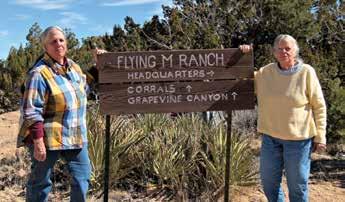
Kit and Dianna Metzger, Flying M Ranch Flagstaff, Arizona Pioneer Award Recipient
“We have been using Bar T Bar bulls for close to 30 years. Their genetics have made our cow herd almost drought proof. The cows have shelled out the milk, raised a good calf and rebred under some pretty harsh conditions. We have been at 90 percent or more breed up through some tough years. We think the feed efficiency of these cattle really pays off. Weaning good-sized, healthy calves on so-so feed and water is fantastic. Our replacements calve out mostly unassisted using BTB calving ease bulls. The calves are small at birth but catch up by fall and sell right along with our older cows’ calves. Not only do these genetics produce the maternal traits for us as a cow-calf operation, but our repeat calf buyers like how they grow and feed out. Thanks to Bob and Judy – and everyone at Bar T Bar – for sharing their knowledge and helping Flying M purchase bulls that fit our operation.”
“I’ve been buying and using Bar T Bar bulls since 2005. I chose Balancer bulls because they are hardy and they produce females that are fertile and make great mothers. Last fall my cows bred back 95 percent in short feed conditions and weaned calves averaging 665 pounds for steers and 628 pounds for heifers. The data that Bar T Bar provides on their bulls is very helpful in selecting the bulls that fit my criteria. My hats off to your 100th year ranch anniversary – congratulations!
Danny Major, Major Cattle Company
Chino Valley, Arizona
Homestead Award Recipient
It’s been almost 20 years since we purchased our first Bar T Bar bull, and we haven’t looked back. We have been extremely satisfied with the results. Our pregnancy rates have increased in spite of the rough terrain we deal with. I believe that not only the rigor of the bulls but also the maternal traits they have shared with our herd has made the difference. Many years ago I took a tour of the Bar T Bar Ranch and, at the time, I wished my herd looked like Bob and Judy’s. It’s beginning to happen. The quality of the bulls and the positive effect they have had is great, but the main reason we keep coming back is because of the way Bob and Judy treat their customers. Thank you guys.
Jack and Cathy Neal, Moorman Ranch, Ely, Nevada
Homestead Award Recipient
We Study the Bulls...
Will you use this bull on heifers?
eeeee Easiest calving bulls in the industry.
eeee For use on smaller heifers with Minimal assistance.
eee For use on larger heifers with some assistance.
Are you concerned about Feet, Disposition or
Phenotype?
eeeee These bulls excel in the trait and are trait improvers.
eeee These bulls are at the top of the class and very solid for the trait.
eee You will not go backward on the trait. Use to maintain the trait in question.
4017 MR BLACK CROSS 4017M
Will you retain heifers out of your herd sire?
eeeee These will make the most Profitable, bullet proof heifer replacements in the industry.
eeee For use in herds that need to improve maternal traits.
eee For use in above average maternal herds to maintain maternal strength.
Will you retain progeny through the Feedlot?
eeeee These will produce industry leading genetics in the Feedlot. Highly sought after feeder calves.
eeee For herds that want to improve Feedlot performance in their herds.
eee Used to maintain Feedlot performance and premiums in your herd.
OUR STAR SYSTEM: EXPLAINED
CALVING EASE: The predicted calving ease if you use the bull on heifers.
The easiest calving bulls in the industry.
Use on smaller heifers with minimal assistance needed.
Use on larger heifers with some assistance expected.
(If no stars are shown, the animal is recommended for use on cows only.)
GROWTH: A formula combines WW and YW to predict how much performance the sire will pass on to their progeny.
Most growth.
MATERNAL: An estimate of the maternal efficiency of the daughters this sire will produce. It includes cow size, milk, udder quality, fertility/longevity, growth, feed efficiency/ intake and calving ease.
Keep these heifers! They will make the most profitable females in the business.
FEEDLOT: A formula that combines: gain, conversion, carcass weight and carcass merit to predict post weaning performance.
Maximum overall value in your feeder calves.
UDDER: An estimate of the daughter’s udder quality.
Thumb size teats and tight bag suspension.
FERTILITY: An estimate of the amount of calves the daughters will have in their lifetime.
Will produce about 2 more calves in their life time than 1-Star fertility.
DISPOSITION: An observation of the sires disposition.
Average - respects flight zones and handles well, but is not a pet.
$Profit® financial indexes allow you to
$RANCH: Profit from birth through weaning. Includes:
• Fertility, Milk, Growth
• Cow feed intake and mature size
$FEEDER: Profit from weaning to harvest. Includes:
• Feed conversion
• Carcass value
• Carcass weight
$PROFIT: Puts it all together. $Ranch + $Feeder
• One number that predicts your bottom line!
FEED:GAIN: Difference in the amount of feed a bull's progeny will consume to produce one pound of gain.
Example: A -0.50 F:G EPD means this animal's progeny will consume 1/2 pound less feed per pound of gain than would progeny of a 0.00 F:G EPD sire.
FEED INTAKE: Difference in feed consumption of each of a bull's progeny in a 112 day feeding period.
Example: A steer whose sire has a -100 Intake EPD will eat 100 pounds less feed in 112 days than one whose sire had a zero Intake EPD.
ACROSS BREED COMPARISONS
DARE TO COMPARE:
You cannot afford to make mistakes in your breeding program! Choosing to use sires with incomplete or low value data can unknowingly make your herd less profitable - same work, same cost, poor results - unacceptable. $Profit® ABC’s are the most reliable and comprehensive EPD’s in the industry. They are backed by a large (nearly a million), long-standing (over 30 years), multi-breed (over 15 breeds) database. Using this system assures you of making sound breeding decisions with minimal risk of failure.
We make bull buying easy!
When it comes to picking bulls, the first thing you need to do is choose how to balance the traits. Maternal vs Feed/Carc. $Ranch vs $Feeder. Moderate cow size & fertility vs growth and carcass weight. Bar T Bar provides MORE data than any other bull producer. We also provide BETTER data.
Most catalogs are pretty good at telling you which bulls are terminal -- just look at indexes like $Feeder, $Beef, or TI, or TSI. However, there are almost no good indexes for finding ideal maternal bulls. At Bar T Bar, we have had the $Ranch index for some time. Now, we also have Udder stars and Fertility stars.
A few years ago we introduced a new concept: AllAround Bulls™. These bulls score four stars or more on BOTH Maternal and Feed/Carc. They are elite for both $Ranch and $Feeder. By definition, they are high on $Profit. The Bar T Bar sale offers more 4-Star and higher AllAround Bulls than any other sale in the country. Why or how? Simply put, we select for these bulls.
The AllAround Specialists are scored 4, 4.5, and 5 Stars. 5-Star AllAround bulls are five for both Maternal and Feed/Carc. 4.5-Star AllARound bulls are 4 on Maternal or Feed/Carc and 5 on the other. 4-Star AllAround bulls are 4 stars on both Maternal and Feed/Carc. We think that these AllAround bulls are the most valuable bulls in the industry. They give you maximum flexibility to keep heifers, sell calves, and/or feed our your calves and sell on a grid. These bulls will bring a little more, but they are worth it.
First choose your trait emphasis. Then buy as much $Profit as you can afford.
What you get:
Moderate, fertile, longlived cows
More pounds per acre
Many may excel in Feed/ Carc traits as well
High gaining and heavy carcass weight Better conversion and more grid value
Many may excel in Maternal traits as well
These bulls combine 4 & 5 stars on both Maternal & Feed/Carc
NOTE: AllAround bulls can also be used as either Maternal or Feed/Carc Specialists. They are just as good as the specialist. Be sure to include them on your lists.
Hooks Capitalist 37C
This 5-Star Accuracy, 5-Star Maternal, Senior AI Herd Sire exemplifies the tremendous opportunity within our system to build an elite commercial herd that will stand the test of time. $Ranch 171 (Top <.1%), F:G .01 (Top 33%), Intake -2.5 (Top 18%), Mat. Wt. 2.9, Gest. -1.8, 4-Star Udder, 4-Star Disp., 5-Star Fertility. All with proven Balanced Proofs and a -3.1 BW. ABC/EPD.
VIEWING THE AUCTION
The auction will be broadcast online at Bid.SuperiorLivestock.com and the prerecorded videos will also be hosted there. You do not need an account just to watch the auction or view videos of the sale offering.
ONLINE BIDDING
Go to Bid.SuperiorLivestock.com for Superior’s new online bidding platform. If you have not registered there before you will need to create an account if you wish to bid (there is no registration required just to watch the auction). Once you have created an account, request a buyer number and you will then be able to bid online with the largest and most trusted cattle marketing entity in North America. Superior’s new platform allows you to see both the live stream of the auction AND the pre-recorded videos on one screen at the same time!
TURN IN BIDS OVER THE PHONE
This is Superior’s suggested bidding method for anybody who does not have consistent, high-speed internet. You still must register an account at Bid.SuperiorLivestock.com and request a buyer number. Upon doing so you will see the bid line phone number. Just watch the auction online and call in at least 2 lots ahead of the lot you are looking to bid on.
FOR HELP WITH REGISTRATION OR ANY PART OF THE BIDDING PROCESS PLEASE CALL SUPERIOR
One Year Guarantee!
Bar T Bar is offering a one year guarantee on all bulls that we sell. This guarantee will cover your purchased bull(s) against death, injury, infertility, and loss of use. If, during the first year from purchase, you lose the use of your bull for whatever reason, we will give you a credit towards the purchase of a new bull. We only ask that your herd veterinarian provide a written statement describing the death, injury, or infertility. If the bull in question can be salvaged, we would like you to keep the salvage value, and a credit will be issued, less the salvage amount you receive for the bull. If the bull is turned out for breeding, then the credit will be given at 75% of the original purchase value (less any salvage value). All claims must be made within 1 year from the date of purchase and cannot exceed the greater of 2 bulls per invoice or 15% of the total invoice.
Example 1: Your $5,000 bull dies before you turn him out to breed. You receive a full credit of $5,000. (Purchase Price - $0 Salvage - $0 Use).
Example 2: Your $5,000 bull injures his scrotum after you pull him from the cows. You sell him for $1000 in salvage. You receive a credit of $2,750 ($5000 purchase - $1000 salvage - $1250 usage).
Requirements for claims:
1. All claims must be made within 365 days of purchase.
2. A veterinary statement regarding the circumstances is required.
3. A verbal agreement from Bar T Bar Ranch is required prior to a bull being sold for salvage. Documentation of the salvage value of the bull, including identification of the bull on the sale barn ticket, that corresponds to the bulls Bar T Bar identifications (ear tag or metal clip) is also required.
This credit can be used for the purchase of bulls, females, semen, and/or embryos from Bar T Bar. If the credit is not used within 24 months of the date of issuance, then it will expire.
Note: Guarantee will be revoked on all bulls that are not paid for within 30 days of invoice date.
Terms and Conditions: The cattle will sell under the Terms and Conditions of the American Gelbvieh Association and the American Angus Association. In the event of default in any part of the Terms and Conditions covering the sale by either the buyer or seller, it shall be the responsibility of the buyer or seller to instigate any action necessary to bring about a fair settlement of any claims arising from the sale and to be responsible for any costs included therein. The sale management assumes no responsibility, legal or otherwise, for the failure of either buyer or seller to fulfill their obligations.
Disclaimer: Although all has been done to make sure this is a safe sale to attend, please do so at your own risk. The owners of Bar T Bar Ranch or any of the Leachman Cattle employees and the sale management take no responsibility for any accident or loss that you may incur.
How to read this catalog
1. Reg#: the registration number of the animal. NotReg means the animal is not registered. Pending means that a registration number has been applied for, but was not issued at the time of catalog printing.
2. Brd: Shows the percentage of each breed.
3. DOB: date of birth
4. P = polled. S = scurred. H = horned. PP = Homozygous Polled. PH = Heterozygous Polled.
5. Cooperator herd where the bull was raised.
6. Color: BBK=homozygous black, BLK = black, BWF = black white face, BBF = black brockle face, RED = red, RWF = red white face, WHT = white, BRC = black red carrier.
7. Pen numbers will be on Supplement sheet.
8. Genetic Defect codes - a C appended to the end denotes carrier and an F denotes tested free and P denotes possible but untested.
NH - Neuropathic Hydrocephalus
AM - Arthrogryposis Multiplex
CA - Contractural Arachnodactyly
OS - Osteopetrosis
DD -Developmental Duplication
Phenotype Scores to Make Bull Buying Easier:
9. CE: Calving Ease is the predicted calving ease if you use the bull on heifers. If there is a number in the brown box, this indicates the breed calculated calving ease direct EPD. In addition, we provide our Leachman estimated calving star system.
***** The easiest calving bulls in the industry.
**** Use on smaller heifers with minimal assistance needed
*** Use on larger heifers with some assistance expected.
10. Maternal: This is an estimate of maternal efficiency, NOT milk. It includes $Ranch, Udder EPD and Fertility EPD as the basis for the Star system. The bulls are scored from one star to five stars. Five Star bulls will produce some of the most profitable, good uddered cows in the industry.
Professional Bull Buyers Guide
BLACK CROSS 5047N
11. Fertility: Predicts the number of calves that a bull’s daughters will have in the first 8 years of their life. As Fertility stars go up we would expect you to have a higher % weaned calf crop.
12. Udder EPD: This EPD assesses the bag attachment and teat size of the bull’s daughters. Bulls with 5 & 4 stars should sire females with exceptional udder quality.
13. Growth: This is a score from one star to five stars, where five stars means maximum growth. Even the one star bulls are as growthy as any bull in America 20 years ago.
14. Feedlot: This looks at all of the post weaning traits including gain, conversion, carcass weight, and carcass merit. Scored from one star to five stars, where five stars would produce maximum overall value in your feeder calves.
15. Feet: Is an estimate of the claw shape of an animal’s feet. The bulls are scored on a 1 to 5 scale. Bulls that are 5 and 4 Star for Feet should improve your herds feet and have a low incidence of claw issues himself. One star bulls should be used in a terminal breeding program.
16. Disposition: Our traditional score of 1 – 5 on disposition. Score 5 bulls are bulls you can walk up to and touch. Score 3 is about average historically for Leachman bulls. However, we are making a concerted effort to improve disposition, so most bulls score 3 or higher. The bulls scored 2.5 or 2 are nervous and do not like to be in close quarters with people on foot – but they are great for big range operations.
17. Phenotype: A combination of eye appeal and overall kind. Scored from one star to five stars. Five star bulls are the best phenotypic bulls in the sale (in our opinion)! Two star bulls are less attractive visually than average.
18. $Ranch EPD: This Leachman profit index that predicts weaning profitability based on calving ease, weaning weight, maternal milk, cow cost, and FERTILITY. Based on producing 100 calves. This EPD assumes a slide on calf prices of $10 / cwt.
19. $Feeder: This number is expressed in terms of the bull’s added value to the sale price of your feeder calves. It is expressed in dollars per head. Thus when comparing a +100 bull vs. a +50 bull, we expect the first bull to sire calves worth $50 per head more at weaning (regardless of their weight).
20. $Profit™ EPD: One, simple, proven number that gives each trait a weight according to its impact on profit.
EPDs/ABCs
Breed Association EPDs (Expected Progeny Differences) are listed for all registered animals. Leachman ABCs (Across Breed Comparisons) are listed for all un-registered animals. All ABCs are on an Angus base and can be compared across breeds within this catalog. EPDs are appropriate association EPDs without any adjustments.
21. Calving Ease Direct EPD from AGA on the Gelbvieh and from AAA on the Angus.
22. Calving Ease Maternal EPD from AGA on the Gelbvieh and from AAA on the Angus.
23. Birth weight EPD from AGA on the Gelbvieh and from AAA on the Angus.
24. Weaning weight EPD/ABC expressed on a breed scale. The Composites are expressed on an Angus scale.
25. Yearling EPD/ABC expressed on a breed scale. The Composites are expressed on an Angus scale.
26. Milk EPD/ABC expressed on a breed scale. The Composites are expressed on an Angus scale. This is the best predictor of a bull’s daughter’s ability to milk. It measures the difference in weaning weight that will be produced between one bull’s daughters and another bull’s daughters due solely to milk.
27. MWT is the predicted mature weight of daughters that you will get if you use the bull on a 1250 pound cow. If your cows weigh 1350, add 100 to this predicted weight. If your cows weigh only 1150, subtract 100 from this predicted weight. This EPD is the best indicator of daughter size -- far better than frame score or yearling height.
28. YHT is an EPD, expressed as frame score, predicting the yearling frame score of a sire’s progeny, compared to that of other sires.
29. IMF is the ultrasound based EPD/ABC for marbling expressed on a breed scale. The Composites are expressed on an Angus scale.
30. REA is the ultrasound based EPD/ABC for ribeye area expressed on a breed scale. The Composites are expressed on an Angus scale.
31. F:G is the pedigree estimated feed to gain EPD that predicts the feedlot efficiency of the bulls offspring. A negative number means that the bull’s progeny will feed more efficiently. Example: -0.50 means that the bulls progeny will require ½ pound less feed per pound of gain.
32. Intake: is an estimate of the amount of feed that the bull’s progeny will consume over a 112 day feeding period. It is expressed in pounds. Animals with higher intake will consume more throughout their life. Animals with lower intake will consume less.
33. SC is an EPD, expressed in centimeters, predicting the yearling scrotal circumference of a sire’s progeny, compared to that of other sires.
34. PAP: PAP EPD. Actual PAP Scores will be on supplement sheet .
35. Bulls with the red “Southern Balancer” have > 12% American Breeds.
Key to bull comments:
• Any reference to % rank is the percentile rank within that bull’s breed. Top 1% means the animal ranks better than 99% of the population on that trait.
• Reference to the number rank (i.e. #2 $Profit) is the bulls rank within his breed within the sale bulls for that trait. So, #4 F:G ST means the 4th best Feed:Gain Stabilizer bull in the sale.
• Other abbreviations used in the comments include:
• Dam 5@101 NR – indicates that the bull’s dam has five calves with an average weaning ratio of 101
• WR & NR = weaning or nursing ratio. How the calf ranked within herd on their adjusted weaning weight.
• YR = yearling ratio. How the calf ranked within herd on adjusted yearling weight.
• AWW = adjusted 205 day weaning weight. AYW = adjusted 365 day yearling weight.
• REA & IMF = either adjusted data or ratios for ultrasound ribeye area and inter-muscular fat (marbling).
• ADG = average daily gain on test. WDA = weight per day of age at a year.
Ray Rodriguez, 86, passed away Jan. 26, 2026, in Tucson, AZ. He was born Feb. 1, 1939, in Jayuya, Puerto Rico. He spent his childhood on the family farm in Mameyes, Puerto Rico and traveled to Connecticut at the age of 12 to advance his education at the Cheshire Academy. After graduating from high school, he began his college career at the University of Florida, ultimately earning his doctorate in animal genetics in 1974. With a deep understanding of genetics, he was instrumental in the introduction of the Nelore cattle breed to the United States. Nelore are known for their hardiness, with many traits that allow them to adapt to various southwestern environments. Leveraging these characteristics, his herds displayed major advancements in weight, disease resistance and fertility, contributing to his growing reputation in the cattle industry. All of this work was driven by his lifelong love of animals. From a young age, he raised small pets in his home, later breeding and showing champion Dobermans and horses, culminating with his ultimate passion, cattle. In the last 60 years, he dedicated his life and passion to the improvement of beef cattle. He will be remembered for his role in bringing the beef business to Mexico through his ability to educate and teach the science and economics of beef cattle production. Few can say they had more friends and business impacts in the Western Hemisphere as Ray Rodriguez. He set
the bar for genetics and improvement in Mexico and beyond. He was well respected by his peers and recognized by President Carter’s administration for his efforts. Ray took great pleasure in sharing his knowledge, mentoring young and old; the only criteria was a desire to learn.
Ray is survived by his four children, Quita (Bill), Lori (Martin), Pete (Monica) and Joaqui (Lisa), and 12 grandchildren. He relished his role of wise patriarch and opened his heart to be the godfather of many. During his lifetime, he traveled many places while gathering an extended family that knew no borders. From the “Jibaritos” – hardworking cowboys –of Puerto Rico to his many “compadres,” his best times were spent in dusty corrals and pastures reviewing and critiquing his four-legged children.
We will never forget you, our compadre!
BAR T BAR PARTNERS
Quarter Circle H Angus LLC was established in 1985 as Quarter Circle H Farm and raised Holstein replacement heifers and alfalfa hay. A strong interest in animal genetics initiated the change from Holsteins to Angus cattle in 1996. After spending a little more than a year learning Angus genetics, expected progeny differences (EPDs) and traveling around the country looking at a lot of fine Angus cattle and talking to breeders, we purchased our foundation herd of 10 females from Mark and Abby Nelson of 5 Star Land and Livestock, Wilton, CA.
Since purchasing our foundation herd of registered Angus to produce our seedstock cattle, we have focused on breeding our females to balanced herd sires that provide genetics to improve calving ease, growth, carcass and efficiency. We have seen firsthand – through our enrollment in the American Angus Associations AHIR program and our association with the Bar T Bar ranch – the value of paying
Quarter Circle H Angus Diamond G Ranch
Diamond G Ranch is a family-owned and operated ranch established in 1964. Located at the base of Mt. Taylor in Cibola County, managing the ranch during drought is a delicate balance between stocking density, feed and water availability, and matching the right type of cattle to our environment. Grazing management has long been the most important factor for successful and sustained range livestock production on our ranch. Like most New Mexico range livestock producers, Diamond G Ranch is in the business of forage production. Diamond G’s cow herd genetics are fundamental to our drought management plan, helping to ensure cow herd fertility remains high during sustained periods of drought.
Diamond G Ranch has used Bar T Bar Ranch Southern Balancer genetics for more than 20 years. Our cattle are registered hybrid seedstock that have documented pedigrees and expected progeny differences (EPDs). Diamond G Balancer cattle are 25 to 75 percent Gelbvieh with the balance of Angus or Red Angus. Balancer cattle combine Gelbvieh growth, fertility, longevity and low Yield Grade with Angus carcass qualities. The Diamond G Balancer cow herd has maintained a consistent, high (approximate 90
attention to EPD and DNA data, and data and selecting traits that improve cattle genetics not only for our herd but our customers’ herds as well. We have been involved with the Bar T Bar Bull Sale since its inception and feel very fortunate to be included in the 2026 sale.
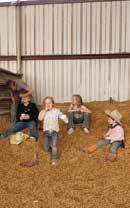
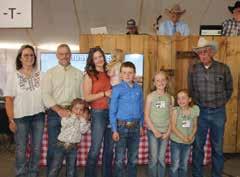
Diane and Larry Holland of Quarter Circle H Angus with their grandchildren.
percent or better) breeding percentage, a 60-day breeding season and average weaning weights of 550 to 600 lbs.
A good drought management plan is all about taking the “guesswork” out of decision-making and helping producers take control of their production and marketing options. Balancer cattle are an integral part of our drought management plan and have allowed the Diamond G Ranch to make proactive decisions that minimize negative effects on rangeland and/or livestock production during prolonged periods of drought.
Wade and Maggie Woodbury of Diamond G Ranch.
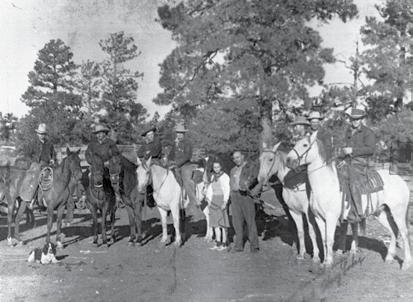
Friends & Crew
Four Generations of Cattlemen!
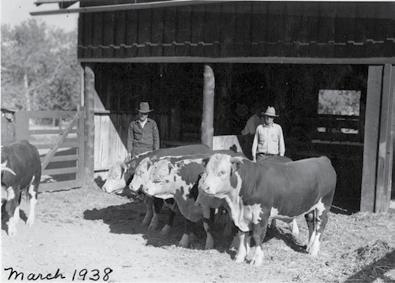
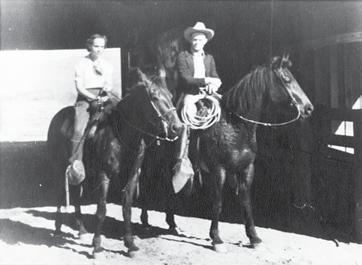
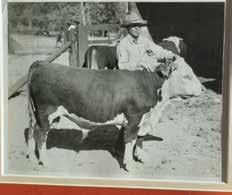
Judy Prosser’s grandfather, Boss Chilson, pictured with with one of the Carload of bulls they purchased at Denver in the early 40’s. He was born in 1876.
Ernest and Evelyn Chilson in the early 1950’s in the office at Crater Ranch.
1913
Boss Chilson (Judy’s Grandfather) had holdings in Tonto Basin.
Bud Prosser with new frozen ampule machine before starting IBB with Mac Cropsey.
Bob & Judy Prosser met working at the AICA.
1964
1940
Sold holdings in Tonto Basin and acquired Pitchfork Ranch near Winslow.
1960
1924
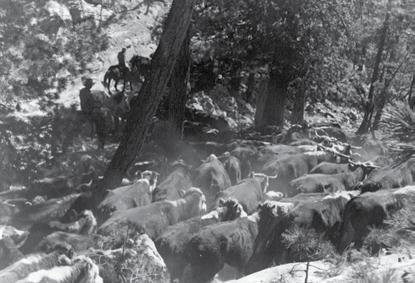
Boss Chilson acquired holdings at Double Circle on the Mogollon Rim. Cattle were trailed every year from Payson to Double Circle a 60-mile trek.
1950’s
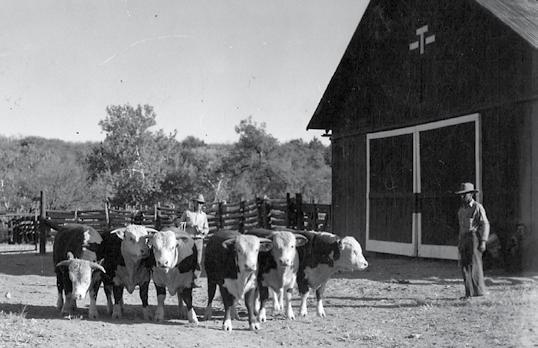
Added a Registered Hereford herd.
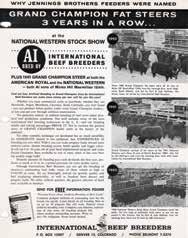
IBB flyer promoting AI sired Champion Steers 3 years in a row owned by Clayton Jennings.
Ernest Chilson (Judy’s father) began performance testing the registered Hereford herd.
Bud Prosser (Bob’s Dad) and Mac Cropsey built International Beef Breeders an all Beef Semen collection facility in Broomfield, CO.
1962
Bud Prosser believed in crossbreeding. He promoted this at IBB by offering Dwarf-free Beef semen.
1980
1985
Moved to Bar T Bar Ranch aging the Registered Hereford and introduced Angus, Charolais, Gelbvieh to the breeding program.
MARC released Clay Center’s Phase II Germplasm report highlighting the pounds weaned per cow exposed advantage of Gelbvieh Cattle.
1979
Bob & Judy meet working for the American International Charolais Association.
1981 Married
The Market a sales and bull company.
Judy, Bob, Spencer, and Warren with a Charolais heifer they raised.
Co. manHereford herd Charolais, and program.
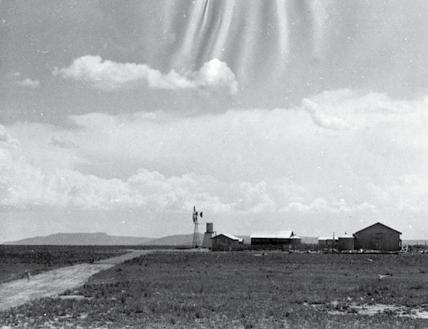
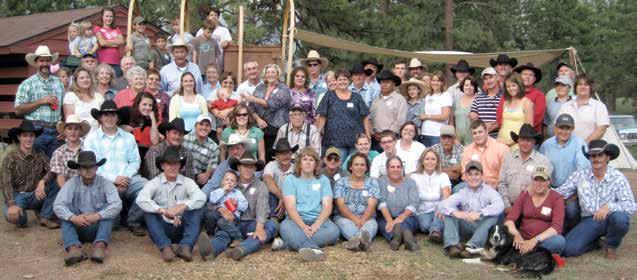
2008 was a Bar T Bar Ranch Reunion celebrating 70 years of operation with 3 of the 4 generations represented.
Since 1925
Bar T Bar Ranches
A Century
Learning, Improving and Advancing the Family Legacy
1998 (to Present)
The 1st or 2nd largest producer of Dams of Merit or Dams of Distinction in the US.
1992
Fully committed to Composite bull program utilizing Balancer (Gelbvieh x Angus) genetics.
2010
Southern Balancer recognized as a breed. Industry Excellence with a touch of ear.
2006
Awarded USFS National Rangeland Stewardship Award and Region 6 NCBA Stewardship winner.
2017
Awarded Range Manager of the Year by Arizona SRM. Bob was awarded Cattlemen of the Year by Arizona Cattlegrowers’ Association.
2011
Bar T Bar & Flying M Ranch awarded BEEF magazine's Trail Blazer Award for our work with Diablo Trust.
2000
Married and started Market Company management bull development company.
2025 Celebrating 100 years ranching on the Mogollon Rim.
2022
Received the Country Natural Beef Award for the Most Profitable Lot of Cattle in the Rocky Mountain Region.
2008
Balancer recognized as a breed
1991
With the help of Ernest Chilson, Prossers purchased Bar T Bar Ranch.
Started selling our commercial cattle through Country Natural Beef and collecting carcass data
2002
Implemented Ultrasound Scanning for Carcass traits and PAP testing.
2015
Installed Growsafe Feed Efficiency Testing System at headquarters and held first bull sale on the Ranch.
2011
Began Individual Feed efficiency testing the bulls and held our sale in Nevada at Snyders’.
2022
Developed an advisory board for the ranch to include family and Chuck Phillips, Duane Coleman, Tom Field and Burke Teichert.
We appreciate our customers!
STABILITY THROUGH EVERY CATTLE CYCLE
Markets swing. Weather changes. Input costs climb. CNB offers stable pricing through every part of the cattle cycle, including Cattle Fax 6 State Fed Steer price + $25/cwt for cattle that hit the grid and additional premiums for USDA Prime cattle. Pricing is averaged over 12 months of Cattle Fax 6 State, and because CNB is also a meat company, members share in the meat profits generated by the meat company.
WE DON’T JUST RAISE CATTLE. WE RAISE THE STANDARD.
A cooperative built by ranchers, for ranchers.
Country Natural Beef® began with a conviction: leave the land better than you found it. For 40 years, that philosophy has guided over 100 ranches across the West. The cooperative is committed to preserving open space, water, and wildlife habitats — and ensuring the right returns flow back to family ranches.
“CNB strives to create a premium marketing opportunity for trusted, authentic ranchers who focus on preserving natural resources and open spaces for the next generation,” 12-year member Alec Oliver said. “That mission is real — and it’s working.”
DATA THAT BUILDS BETTER HERDS
Membership means access to personalized feeding and carcass data. That information has helped our ranchers sharpen their genetic selection and build a more consistent, high-performing herd.
CNB also offers flexibility with genetics and ranching practices, as long as membership requirements are met.
DIRECT CUSTOMER CONNECTION — WITHOUT THE HEADACHE
CNB beef is sold in major grocery stores and restaurants. A full-time staff manages sales, marketing and day-to-day operations of the meat company, while members still have the opportunity to share their ranch’s story.
A COMMUNITY THAT HAS YOUR BACK
No member fees or dues. Education and grant opportunities. A network of ranchers continually striving to improve. And a co-op where your voice is heard.
If you’re thinking about the next cattle cycle, the time to act is now. Scan the QR code and see if Country Natural Beef is a match for your operation and family.
Why Animal Health Express?
NEW: Cost effective technology you can use at your ranch; Vaccines, Wormers, BVD-PI Snap Tests, Pregnancy Tests.
EXPANDED: Our Farrier Supplies section - all the shoes, tools, etc.
ATTENTION: We pride ourselves on our knowledgeable, friendly service. We pay attention to You, and work hard to earn your trust.
LOCATION: We are located in Arizona to serve you faster and better.
Orders placed by 3 pm MST ship the same day! Locally owned and managed since 1990 by Tim & Barbara Jackson.
Purchase Inherit Select® through a Leachman representative and unlock $PROFIT®, $RANCH®, and $FEEDER® indexes for your herd at the best test price available.