To get people home safely every day
Annual Report 2025
11,600 Revenue, SEK million (10,400)
12 Growth, % (17)
21 EBITDA margin, % (20)
5,600 Employees (5,300)
13 Countries (12)
198 Depots (188) 2025 in numbers
To get people home safely every day
Annual Report 2025
11,600 Revenue, SEK million (10,400)
12 Growth, % (17)
21 EBITDA margin, % (20)
5,600 Employees (5,300)
13 Countries (12)
198 Depots (188) 2025 in numbers
Ramudden Global is the world’s largest Group specialising in safety solutions for road and construction sites, public environments, industrial settings and infrastructure projects. We have operations in 13 countries, have around 5,600 employees and more than 10,000 customers, consisting primarily of infrastructure contractors as well as public authorities and municipalities. We operate primarily in three strategic business segments: urban solutions, highway solutions and traffic services. As a full-service provider, we offer advisory and planning services, rental of safety products, site establishment, site supervision, digital solutions, reporting and dismantling upon project completion. We also engage in product development and digitalisation in order to address evolving societal requirements and safety expectations. Ramudden Global is owned by Triton, an investment firm, and by key individuals within the company. Our head office is located in Stockholm, Sweden. In 2025, we generated approximately 1 billion EUR in sales.
At the end of December 2025, Triton entered into an agreement to sell Ramudden Global to I Squared Capital. The acquisition is expected to be completed in the first part of 2026.
We continued our journey to improve safety in traffic environments. In 2025, we entered the Swiss market, while also strengthening our presence in North America, Germany and the UK. We also achieved record sales within the Group, which proves that our business model is both relevant and able to withstand a turbulent business environment.
The company name Ramudden was registered in Sweden on 30 May 2005 – and this year the Swedish part of the Group celebrated 20 years of growth, development and fantastic employee contributions. Over the course of these two decades, the business has grown from a small, local operation to a global player, which still bears the Swedish name Ramudden. Sales within the original Ramudden have increased from SEK 10 million to SEK 1.5 billion during this period.
The acquisition of imoTRAFFIC, a family-owned business that supplies traffic light systems, also marked the establishment of Ramudden Global in a new market. In addition to providing access to imoTRAFFIC’s expertise and local customers, the acquisition is paving the way for continued expansion in Switzerland.
We reached an important milestone in 2025 when, as a Group, we exceeded EUR 1 billion in sales for the first time. The business unit in Germany deserves extra credit for this, having demonstrated extremely good development, as well as the Netherlands, which was our fastest growing market for the third year in a row.
Digital solutions are a crucial aspect of realising our mission to ensure that everyone gets home safely every day, and the level of interest is gradually increasing. We are proud to conclude that we reached our goal of having more than 10,000 digital products in use by our customers, compared to the figure of 6,000 digital products recorded last year. These are mainly held by customers in the Nordic region, but also in the UK, Belgium and North America.
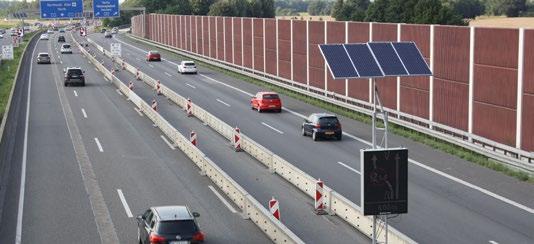
Last year’s major acquisition, RSG International, has been fully integrated into Ramudden Global during 2025, and together we have created a new and efficient organisation. We also acquired Curtin Co., Carolina Traffic Devices and Transpo Distributor Group during the year, providing us with an even stronger position on the East Coast of the USA.
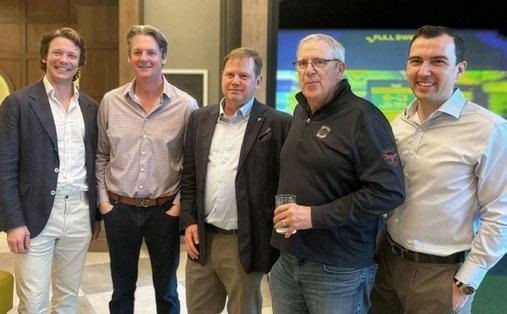
We have consolidated our market position in Germany through a number of acquisitions, resulting in established operations in six different locations. These include Kasch Verkehrssicherungs GmbH, a well-known road safety service company in Magdeburg for 25 years, and Signature Verkehrssicherung GmbH, which operates in urban traffic environments in Münster and Unna. At the end of 2025, Verkehrstechnik Böber in Dresden was also acquired, in order to meet the growing need for urban services.
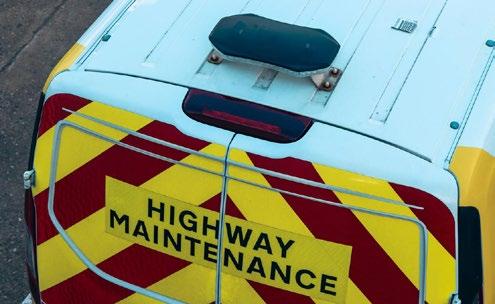
With 50 years in the sector, Highway Care is renowned for its range of innovative safety products and solutions. By acquiring the company, Ramudden Global is strengthening its capacity to deliver the market’s smartest solutions in a larger international market.
At the end of December 2025, Triton entered into an agreement to sell Ramudden Global to I Squared Capital, a fund that invests in infrastructure and that has its head office in Miami. The acquisition is expected to be completed in the first part of 2026.
During 2025, we continued our investment in conscious leadership within the Group’s various companies. Within the framework of Ramudden Business School, we have gathered 50 managers in various positions to date, with the aim of creating a common understanding of our corporate culture, business development, sustainability, digital solutions, acquisitions and finance.
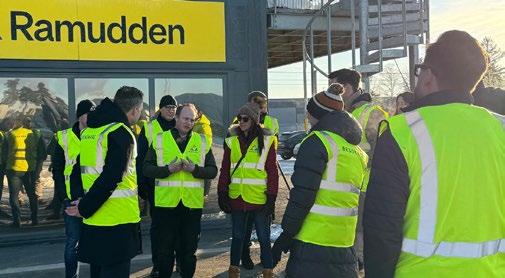
Passing EUR 1 billion in sales not only represents a milestone, but also confirms the strength of our business model in an expansive market. Our solutions are scalable, relevant and well adapted to the societal challenges that will characterise the next few decades. Growth in itself is an important driving force, as we are constantly developing the Group, the sector and the level of safety in society.
My first year as Group CEO has provided me with great opportunities to see the strength of our organisation up close. I have visited all 13 of our markets, and at each and every place I've seen our employee's pride in and commitment to what we are doing: creating safer environments. Their energy and sense of responsibility permeate the entire Group.
An organisation built for acceleration
Looking back, I see several pieces that have fallen into place during the year that has made us even better equipped for growth in a global arena. A new management team was appointed in 2025, and we continued our investment in Ramudden Business School in order to shape conscious leadership and consolidate our model. As part of this, a number of building blocks are strengthening us throughout the entire chain, from the most senior levels of the business to individual depots. It is precisely this balance between global priorities and local customer service that makes the Group stand out. Our entrepreneurs working operationally still represent the core, but central functions are enabling local deliveries to become both stronger and clearer. During the year, we have increasingly formalised the Group’s joint work on safety, quality, efficiency and our ability to secure our long-term competitiveness. It is also worth mentioning our three strategic
business segments – urban solutions, highway solutions and traffic services – which interlink the business across national borders. These segments, where we have created a structure during the year aimed at optimising central support, are providing us with good opportunities to learn from each other, find the right balance, act flexibly and create opportunities for growth.
We have continued to grow on several fronts. Our operation in North America has grown rapidly, with our largest acquisition to date, RSG International, now being fully integrated and delivering top-notch results. We have also completed further acquisitions in the region during the year. In Switzerland, we have identified the right partner in order to establish an operation, which represents the starting point for a broader presence in the country. It is also pleasing to note how many of our products are being rolled out across the various markets. The SVEA barrier system, for example, is now part of the urban scene around the world.
We have passed the milestone of EUR 1 billion in sales – and have demonstrated our resilience in an unsettled business environment. Our local roots and low exposure to trade barriers make us robust, even in turbulent times: when things are rocky, there are factors we can control in our model to mitigate the impact.
An offering in step with the times Growth remains a key driver. The solutions and services we supply are both clearly applicable and replicable on a global basis. We also have a robust, highly relevant offering that is based on megatrends that will be influencing society for decades to come. Our business model is making it possible for us to broaden our operations in step with the times, for example in relation to high-security solutions and preparedness. I feel a great sense of pride in the successes we have achieved and, above all, in the people behind them. It is the commitment of our employees that is making our journey possible.
And do you know what the best thing is? When things go well for us, they go well for others as well. Our strong safety culture, our ability to innovate and our desire to influence the entire industry are in turn influencing the safety in several parts of society. A good example of this is how we've been working to improve road safety standards in Estonia for a decade (read on page 32).
Our journey of growth is now continuing with our new owners, I Squared Capital, who are expected to take over during the first part of 2026. Our owners may have changed, but not our day-to-day operations or our ambition to make the world a little safer, where we are continuing to work on an ever-larger scale. Moving into 2026 feels exciting.
“It is our employees’ unique skills and safety focus that make our journey possible.”
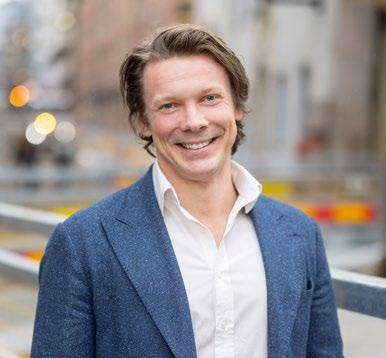
On the Group CEO’s radar for 2026
We want to continue to:
• deliver safety and efficiency in high-risk environments in a growing market.
• export our three business segments – urban solutions, highway solutions and traffic services – to new markets together with our new owners.
• be the first choice in the sector for both existing employees and new talent.
Our journey of success is the story of local entrepreneurship, collaboration and an unwavering focus on safety. Working together, we have built a model for long-term, sustainable growth – a journey that is continuing every day.
Ramudden Global has its roots in a network of driven entrepreneurs who, from an early stage, identified a clear need in the market: to create safe workplaces in high-traffic environments. Over the years, more than 60 entrepreneurs have remained active within the Group. Their commitment and experience form the basis of our long-term competitiveness. The combination of local entrepreneurship and a global context is key to our identity – and provides us with the strength to be close to our
customers, while at the same time being able to share knowledge, innovation and resources across borders.
Historic milestones
The first company in the Group was founded back in 1962 in Germany, closely followed by Powell in Canada in 1967. Over the next few decades, a number of national companies emerged, each with strong local roots, an entrepreneurial spirit and a good
The first company within Ramudden Global was founded by AVS in Germany. 1962 Fero is established in Belgium. 2004
Triton acquires Ramudden from IK Investment Partners.
2017
understanding of their customers. One of the companies to be formed was Ramudden in Sweden, whose name the Group bears. This name has come to symbolise our culture and our common values. The Swedish part of the company is celebrating its 20th anniversary this year, and the head office of the Ramudden Global Group is located in Stockholm. Other milestones achieved by the Group include the merger of Ramudden, Chevron, AVS and Fero in 2020, as well as the
establishment of our operation in Canada in 2021. We have continued our expansion through a number of acquisitions, including the acquisitions of RSG International and Curtin Co, with the aim of consolidating our presence in North America. We continued our journey into another market in 2025, through the establishment of an operation in Switzerland and the acquisition of imoTRAFFIC.
Chevron is founded in the UK. 2005
Ramudden is founded in Sweden.
2018
Triton acquires Fero in Belgium.
2019
Triton acquires AVS and Chevron in Germany and the UK.
Stinson is acquired in Canada.
2022
2020
Ramudden, AVS, Chevron, and Fero merge into a single group.
2024
I Squared Capital enters into agreement to acquire Ramudden Global. 2025
Ramudden Global acquires RSG International and gains a stronger foothold in North America.
We are sometimes asked about the advantages of being a global group in the field of safety solutions, a business whose deliveries always takes place in close proximity to local customers. In short: it is precisely the combination of local customer knowledge and global priorities, where we utilise insights from various markets and the efficiency of central governance, that makes us so strong.
A replicable, stable model
Ramudden Global’s success is based on a set of well thought-out building blocks. Together, these form a stable model through which we can deliver quality in all our markets, at the same time as being able to gear up quickly. Group-wide functions include product development and digital solutions, IT, accounting, finance, acquisitions, business development, sustainability and communication and marketing.
Our people make it happen
With the industry’s largest network of experts, we have built a strong safety culture from the outset – driven by high employee engagement.
Decentralised leadership and extensive depot network
Our finely meshed network of local depots is the backbone of our operations. This proximity enables us to provide rapid support with both planning and products, whenever and wherever needed.
The strength of central functions
Through effective Group functions that reach all the way to depot level, we can share knowledge, support one another and swiftly respond to new needs.
When developing safety products, we often aim beyond regulatory requirements – always with the working environment as our guiding principle.
Our early investment in digital monitoring and automated processes gives us a competitive edge.
with a business focus
We strive to contribute to sustainable development for people and the environment while building a sustainable business.
A segment-based strategy enabling an integrated approach
In our various markets, we operate in three common, strategic business segments: urban solutions, highway solutions and traffic services. This structure allows us to interlink markets, local entrepreneurs and new acquisitions across borders – and to find the right balance for each market. For example, we can quickly apply the lessons we have learned, satisfy new requirements and scale the business in each segment, regardless of geography.
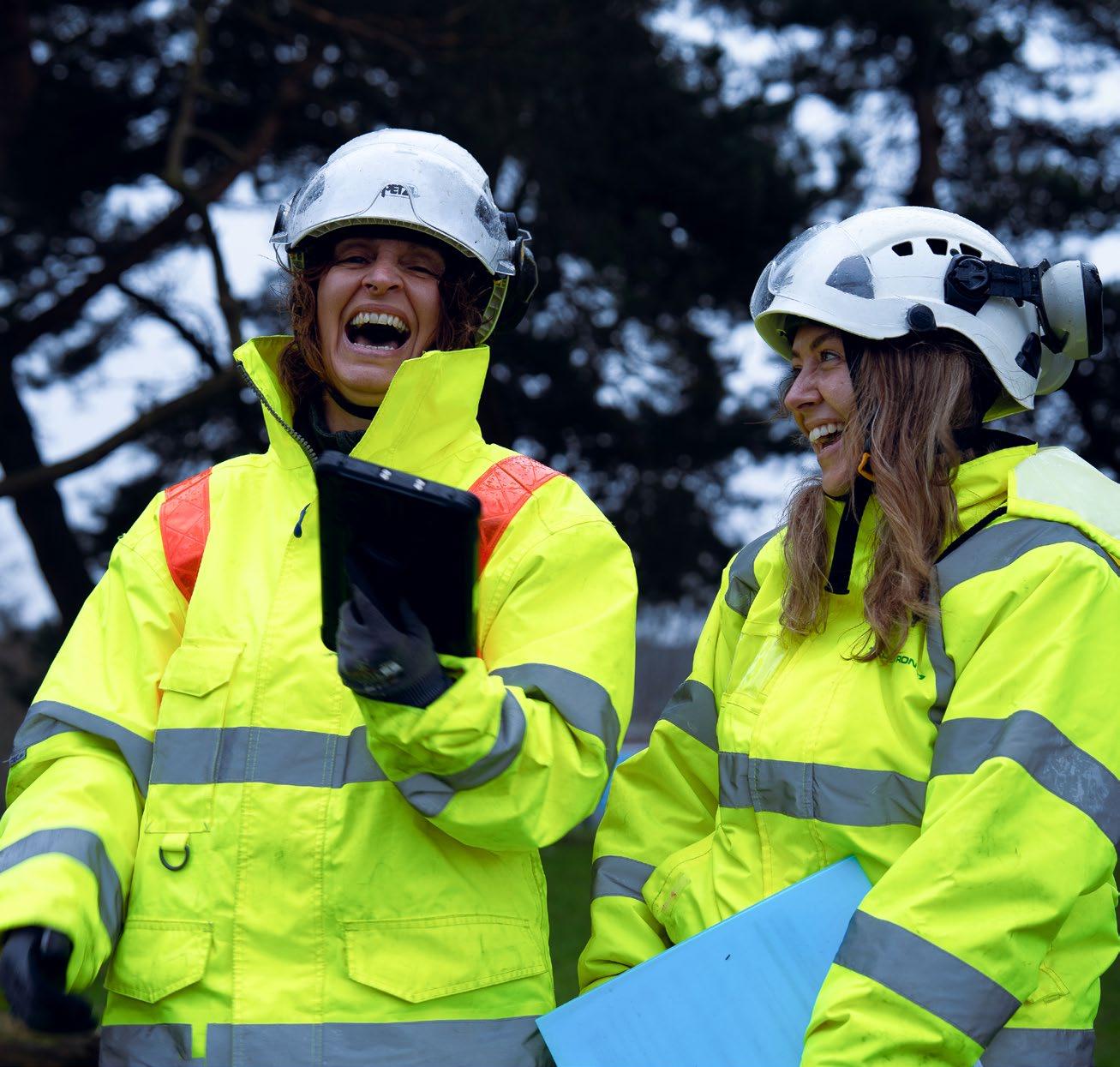
We operate in high-risk environments that demand specialist expertise, flexible solutions and a strong safety mindset. The value we provide lies in creating a safe working environment for employees and customers, along with a safe and accessible traffic flow for road users.
Advisory, planning, installation, supervision and training.
To get people home safely every day
Market-leading safety products for infrastructure projects.
Innovative products and solutions for enhanced safety and efficiency.
Our business concept is delivered through full-service solutions, to create safety in and around road and construction sites, on motorways, in urban environments and in public spaces.
• Safety is always at the top of our agenda. As a leader in our segment, we have both the opportunity and the responsibility to drive progress towards greater safety in trafficdense environments.
• Customer-focused and reliable in delivering the highest quality in every project to ensure critical assignments proceed according to plan.
• Care and safety go hand in hand. We respect and care for our colleagues, our customers, everyone working on the roads, and the people in surrounding communities.
• Entrepreneurship is a key building block and a value that helps us continuously evolve, find new solutions and drive the industry forward.
As part of the company’s strategy, Ramudden Global monitors the following key performance indicators – both financial and non-financial.
Financial key indicators Non-financial key indicators
Growth
EBITDA margin
EBITA margin
ROCE margin
Serious workplace accidents
Lost time injury frequency rate (LTIFR)
Number of connected digital devices
Ramudden Global’s business is structured around three strategic business segments: urban solutions, highway solutions and traffic services. These cut across the business units and reduce barriers to both entering new markets and expanding within existing ones.
Operating on the basis of the three strategic segments provides leverage across the business units and enables effective central support. It also makes us flexible. Because in addition to utilising depots, employees, assets and knowledge between the segments, we can also enter new markets based on the opportunities offered by the various geographic regions. For example, we can enter a market initially through basic traffic solutions, and then expand the offering as the market matures.
Our structure also provides the opportunity for good business dealings when our customers’ investment priorities change; we can quickly scale up and meet the needs in one of the segments while scaling down in another. This reduces our vulnerability in difficult times.
Innovation and commitment
In addition, we can offer solutions and products from our own portfolio in all three business segments. Both product development and digitalisation are managed centrally. We have an established process for capturing new local requirements – requirements that we then use as a starting point when developing new solutions and products. Here, we also have the ability to scale up quickly in order to
implement the solutions in more markets. This ability allows us to stand out in the sector. Another important component is that fact that we also act as local advisors and experts, for example when new safety standards or regulations are being developed in our markets. This further strengthens our credibility as a well-established and knowledgeable player (read more on page 31).
Our structure strengthens us globally
Together, the three strategic business segments account for approximately 90 percent of Ramudden Global’s revenue. Within each of these segments, we offer both physical and digital products as well as services. The segments have different dynamics, and the projects range from small, flexible assignments to long-term, large-scale contracts. Traffic services are a more staff-intensive and less capital-intensive area, while within urban services and highway services, we benefit from our ability to deliver full-service solutions all the way from planning to products and execution.
In addition to these segments, we also provide limited sales of products and digital solutions to other industry players, road marking services and other services.
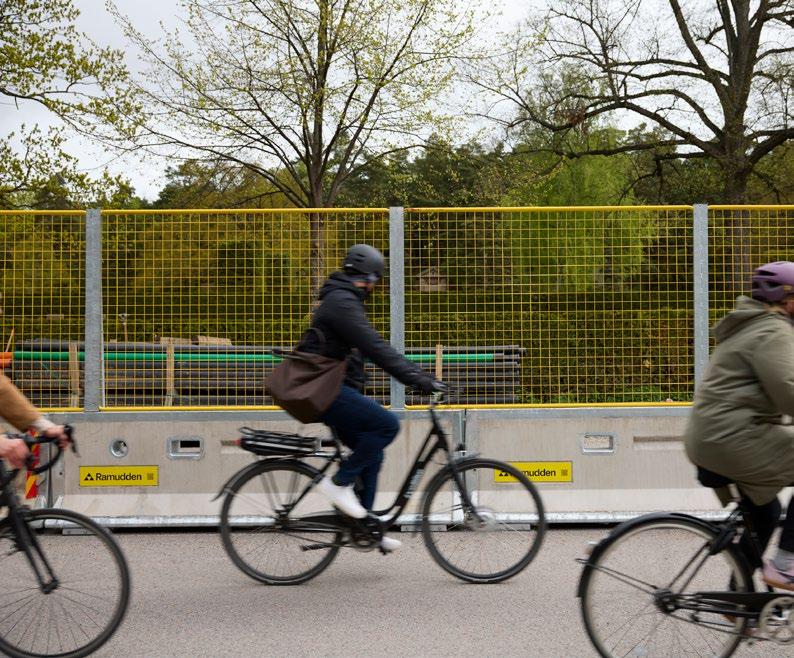
Modular and flexible solutions and products, as well as services, for contractors in roadworks, construction and infrastructure in urban environments. Delivery is managed through Ramudden Global’s decentralised depot network to ensure fast and efficient logistics. It combines heavy-duty and lightweight traffic control equipment with added services to provide a complete solution.
Our growth strategy in this area
• Expand geographically by continually adding new depots, based on our established urban concept. This includes the full range of services, products and solutions.
• Improve delivery and performance at selected depots by adopting practices and working methods from the most successful locations.
• Continue to pursue acquisitions to expand geographically and increase local density.
• Expand into adjacent segments such as airports, police and special properties.
Temporary traffic and safety solutions (TTM) with a focus on large-scale road and infrastructure projects. The end customer is usually some form of publicly funded business, and the projects extend over a long period of time. Work is usually planned and delivered from larger regional depots with coverage across wide geographic areas.
Our growth strategy in this area
• Establish ourselves in nearby geographies through strategically located depots.
• Extend existing businesses and gain market share through improved products, bidding capabilities and pricing.
• Use mergers and acquisitions as a springboard to enter new markets.
Primarily a service and staffing segment using lightweight traffic control equipment for simple and flexible operations – for example, temporary lane closures (by the day), excava tion work and paving. Here, digital products have strong potential to enhance both safety and efficiency. Our growth strategy in this area
• To offer the market’s best solutions with high quality to ensure long-term customer relationships.
• To scale up our digital solutions with a focus on increased safety, faster service and reduced climate impact.
• To take advantage of in-house tools to ensure efficient delivery through resource and route optimisation, as well as reduced exposure in high-risk environments.
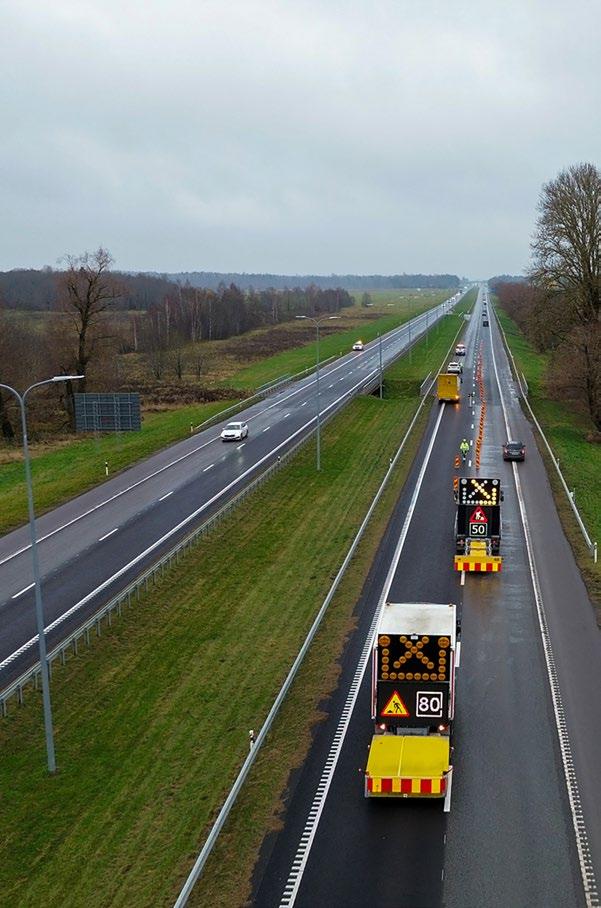
“Our three strategic business segments cut across the business units and reduce barriers for both entering new markets and expanding within existing ones.”
When we are at our best, we go unnoticed. We work in the background to ensure that the infrastructure works: traffic flows smoothly, road users travel past unobstructed, and employees and customers return home safely at the end of the working day.
We have more than 10,000 customers within the Group, mainly working in infrastructure, industry and construction. Our customer surveys show that we generally have a broad base of satisfied and recurring customers throughout the entire Group. We primarily work with infrastructure projects that are financed by public funds. These include assignments from public authorities, municipalities or indirectly via various contractors carrying out the maintenance and new construction of roads, buildings, water/sewage, fibre networks, etc.
Our customers are divided into the following groups:
• Contractors: Private companies that run infrastructure projects, either as a fullservice supplier or as a niche subcontractor.
• Public authorities and state-owned companies: Organisations that approve and fund major public projects.
• Municipalities: Local authorities that are responsible for small-scale traffic safety, maintenance and community development projects.
• Public services: Private or public actors that are responsible for electricity, gas, water and telecoms infrastructure.
• Other: Event companies, security companies, as well as companies in industry and manufacturing.
Unlike the majority of our competitors, we provide end-to-end solutions for safe infrastructure – from planning, consulting and training, to traffic services, product rental and digital solutions. Ideally, we aim to be involved early in projects so that we can optimise them at the planning stage in terms of logistics, safety, cost efficiency and environmental considerations. As customers hire equipment from us rather than purchasing it themselves, we can ensure high utilisation rates and resource efficiency throughout the entire life cycle of the equipment.
One important component within our comprehensive offering is the rental of safety products in the following areas:
• Heavy equipment such as barriers, footbridges, crash cushions and traffic beams.
• Light equipment such as signs, cones, gates and fencing.
• Digital/electronic solutions such as digital monitoring, traffic lights and sign trailers.
• Equipment for services such as Track
Mounted Attenuator (TMA) vehicles, offering collision protection during roadworks, and wheel loaders.
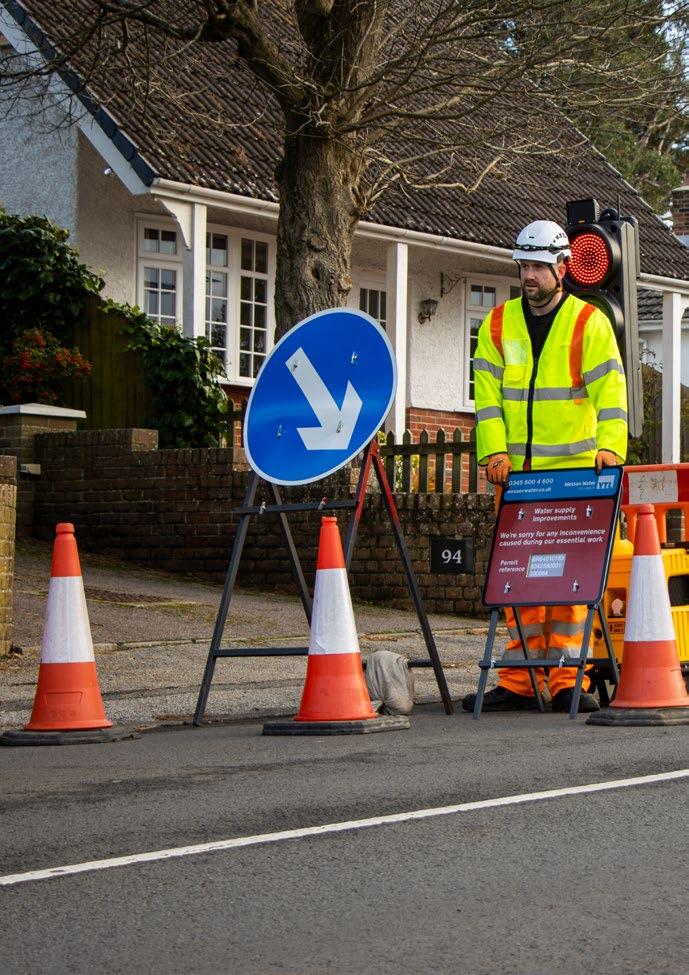
For a number of years, we have invested in our model in order to increase the degree of professionalisation and thereby opportunities for growth. This growth takes place both organically when we gain market shares and through strategic acquisitions. The pace is high.
In the coming years, the pace of acquisitions is expected to remain at a high level. We have a good pipeline of acquisition candidates.
Why is Ramudden Global a good owner?
• Global network of founders and entrepreneurs.
• Experience of scaling up businesses with the support of a strong brand.
• Strong financial base to enable expansion.
• Access to products and solutions that can differentiate the offering locally.
• Industry experience, best practice and a “business playbook” for how we can increase revenues and improve processes at the acquisition targets.
What do we look for in our target companies?
• Strong local management, because entrepreneurship is highly valued and acquired companies frequently constitute independent legal entities with freedom subject to responsibility.
• The company should have a leading market position with stable, documented profitability.
• Sustainable operations that complement Ramudden Global’s product and distribution offering, and that share our core values.
• Strong strategic coherence and synergy opportunities to promote the overall business strategy and growth.
The acquisitions are led from the Group
The growth strategy focusing on large-scale acquisitions is led from Group level and is based on the opportunities in our strong global model. This is done in combination with the three strategic business segments: urban solutions, highway solutions and traffic services. Smaller and complementary acquisitions are generally carried out locally.
We are constantly evaluating new markets, particularly in North America and in selected European growth areas. The North American market is fragmented, and there are no large, national companies with a widespread presence. Our competitors mainly focus on staff-intensive services and/or pure leasing operations. Here we can see that our position in the value chain as a full-service supplier is providing good opportunities for future expansion (read more on page 22).
Going forward, we want to scale our urban offering in the major markets of North America, Germany and the UK, consolidate within highway solutions and continue the digitalisation of our offering to further improve safety. The growth plans also include making the network of depots even denser in order to get closer to our customers. In the coming years, we are planning to open around 60 new depots.
We want to continue our ongoing acquisition journey, where we have established processes to ensure that the acquisitions generate value as soon as possible. As a Group, we have completed more than 60 acquisitions since 2018, the majority of which have entailed geographical consolidation. This has given us access to five new markets in Europe and North America, strengthened our capabilities in product and digital development, and enabled growth in adjacent areas.
Following each acquisition, we appoint a project group to work on the integration of the acquired company into Ramudden Global. The integration process takes place within strategy, business development, finance, HR, marketing, sustainability and IT. The integration work continues for a number of months, before switching to more regular activities. The integration process enables us to achieve synergies and gain strength from the common central functions, while at the same time safeguarding local business practices.
The entry into North America has been a strategic three-stage process – from the establishment of the operation in Canada in 2021, followed by the acquisition of Stinson, scaling-up through the acquisition of RSG International in 2024, and the strengthening of our presence in the USA through the acquisitions of Curtin Co and Carolina Traffic Devices (Curtin) in 2025. Together, this has resulted in a better presence, a broad and varied customer base and a stable foundation for further acquisitions in the future.
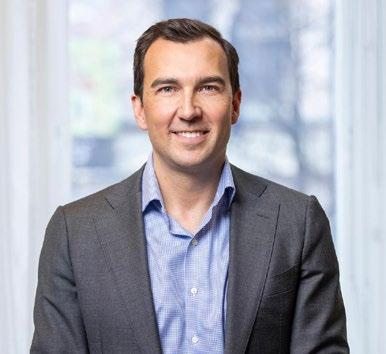
Before entering the North American market, we closely monitored both the needs of customers and the activities of competitors. The aim was to be able, at the right time, to introduce our corporate culture together with products and solutions on a new continent. A successful entry here would provide us with access to a market three times the size of the European one.
“The depth, scope and relatively undeveloped nature of the North American market, together with the absence of full-service suppliers, provided a golden opportunity for us to establish ourselves as the first major player in the sector,” said Paul Radchuck, Regional President North America.
We initially established an office in Toronto, Ontario, and shortly thereafter made a few supplementary acquisitions. The next step was even bigger: in June 2024, we acquired RSG International, a Canadian group which also has some operations in the USA, and which specialises in planning, installation, product development and traffic management. RSG International, which is now fully integrated into Ramudden Global, was our largest acquisition to date and made us a truly global group.
“The first stage confirmed our hopes – the market was well prepared for Ramudden Global’s offering. The next stage, the acquisition of RSG International, gave us exactly the broad base of expertise and customers we needed to establish scale in Canada and at the same time gain exposure to the USA.”
The third stage was the acquisition of Curtin in 2025, which provided an almost unbeatable level of density regarding road and infrastructure safety, especially in the southeastern United States. This provided new opportunities to run the business more efficiently and to gear up at a faster pace. Before the end of the year, we also acquired Transpo Distributor Group, which further strengthened our geographical reach to New York and the New England market.
“The acquisitions are in line with our longterm ambition of improving road safety in North America,” says Paul Radchuck. “In total, North America now accounts for approximately a third of Ramudden Global’s sales and contributes to a more diversified geographical and business mix.”
Stable model to gear up from Ramudden Global’s solutions and in-house products have been very well received. So
what is it that we offer that our competitors don’t? The backbone is our well-established model, where local presence, tried and tested processes and specialised products enable fast and comprehensive solutions in the field of infrastructure safety. At the same time, the local operations are supported by central functions to ensure efficiency and innovation. Few other players can match this.
In North America, the focus is on expansion within two strategic areas: urban solutions and highway solutions, where Ramudden Global has a proven recipe for scaling up. This also includes offering products and solutions such as the SVEA city barrier and digital solutions such as Intellitag. In connection with the 2025 Toronto International Film Festival (TIFF), Intellitag was used for the first time to enable real-time monitoring of traffic signs. During the event, Ramudden Global managed barriers, perimeter protection and traffic flow, among other things, in order to create a safe and accessible environment for the thousands of festival visitors.
“Within the Group, we have a well-developed model for delivering in these segments,” says Paul Radchuck. “Going forward, we will be establishing a network of depots in urban environments, and since demand is greater than anticipated, I feel confident in our continued growth.”
Highway solutions currently account for 76 percent of our existing operations, urban solutions for 10 percent, traffic services for 7 percent and other sales for 7 percent. Going forward, we can see considerable growth potential in the highways area and expanding regions that will be investing in infrastructure, as well as in densely populated areas and cities where both awareness and regulations linked to safety are advancing. In these segments, we will continue to grow through greater density, where we are planning to open more than 20 new depots, for example, as well as through the roll-out of our global concepts, products and digital solutions. Both of these segments are currently fragmented, with few or no international competitors that can offer the full range of services, products and solutions.
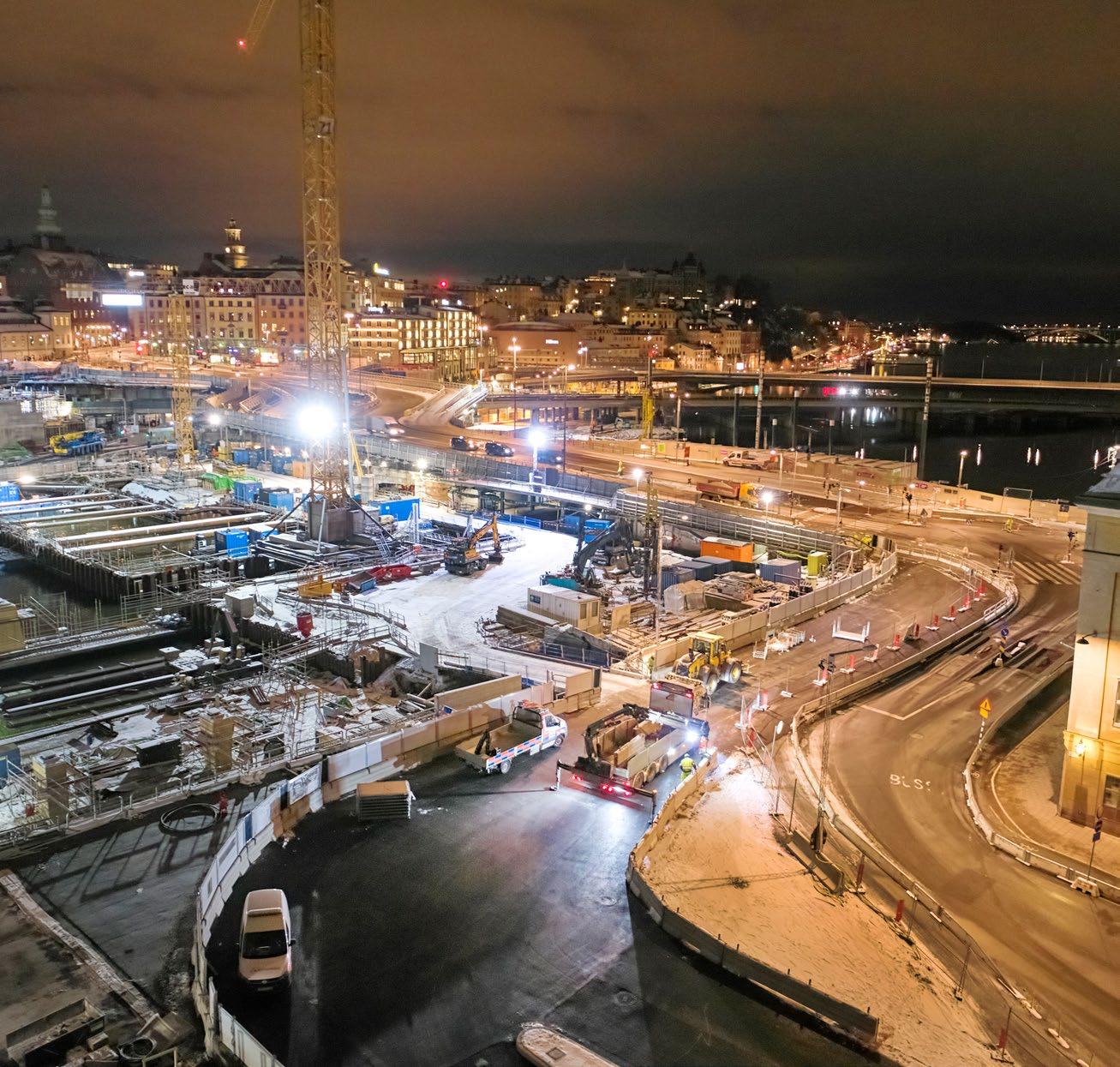
Ramudden Global operates in a changing world, where urbanisation, infrastructure requirements, climate challenges and increased safety awareness are driving demand for our solutions. We are well equipped to meet new needs, both now and in the future.
A number of factors influence the need for Ramudden Global’s services and solutions in the markets in which we operate. Trends such as urbanisation, maintenance requirements, the expansion of infrastructure and rising traffic volumes are driving demand for safe sites and efficient traffic flows. Societal needs related to district heating, energy, water and sewage systems and fibre networks, as well as increased demands for climate adaptation, are also contributing to rising demand for our services and solutions. Our operations are further influenced by an uncertain global environment, where geopolitical instability and a heightened threat level have all contributed to a new reality for us.
All of these components are increasing security awareness across a broad front – both at an individual level as well as in municipalities, government agencies and society in general. Both regulatory factors as well as a completely new view of workplace safety and
responsibility for passers-by are reflected in our customers’ expectations of us. These trends support an actor that safeguards regulatory compliance, promotes a risk-preventive approach and develops smart and effective solutions. At the same time, as a company we can never lean back. We have to continue our work in order to keep pace with –or preferably ahead of – the times. We also have to adapt to both new environmental requirements as well as a reality characterised by more extreme weather, where we need to adjust and adapt both our operations and our customer offering.
55% of the world’s population currently lives in cities –a figure that is expected to grow to around 65% by 2040. (UN)
Our 0-vision
Increased global focus on road safety through stricter regulatory requirements, in line with Vision Zero’s goal of reducing the number of serious injuries and deaths in traffic. 55%
15 trillion
Global investments in transport infrastructure are expected to reach EUR 15 trillion by 2037. (Oxford Economics)
38 trillion
The global costs associated with extreme weather are expected to be close to USD 38 trillion annually by 2050 (total economic losses including productivity losses caused by the impact of climate change on, for example, agricultural yields, labour productivity and infrastructure). (Potsdam Institute for Climate Impact Research)
“We have expanded our product portfolio in response to a changing societal climate and growing demands for advanced protective measures in public spaces.”
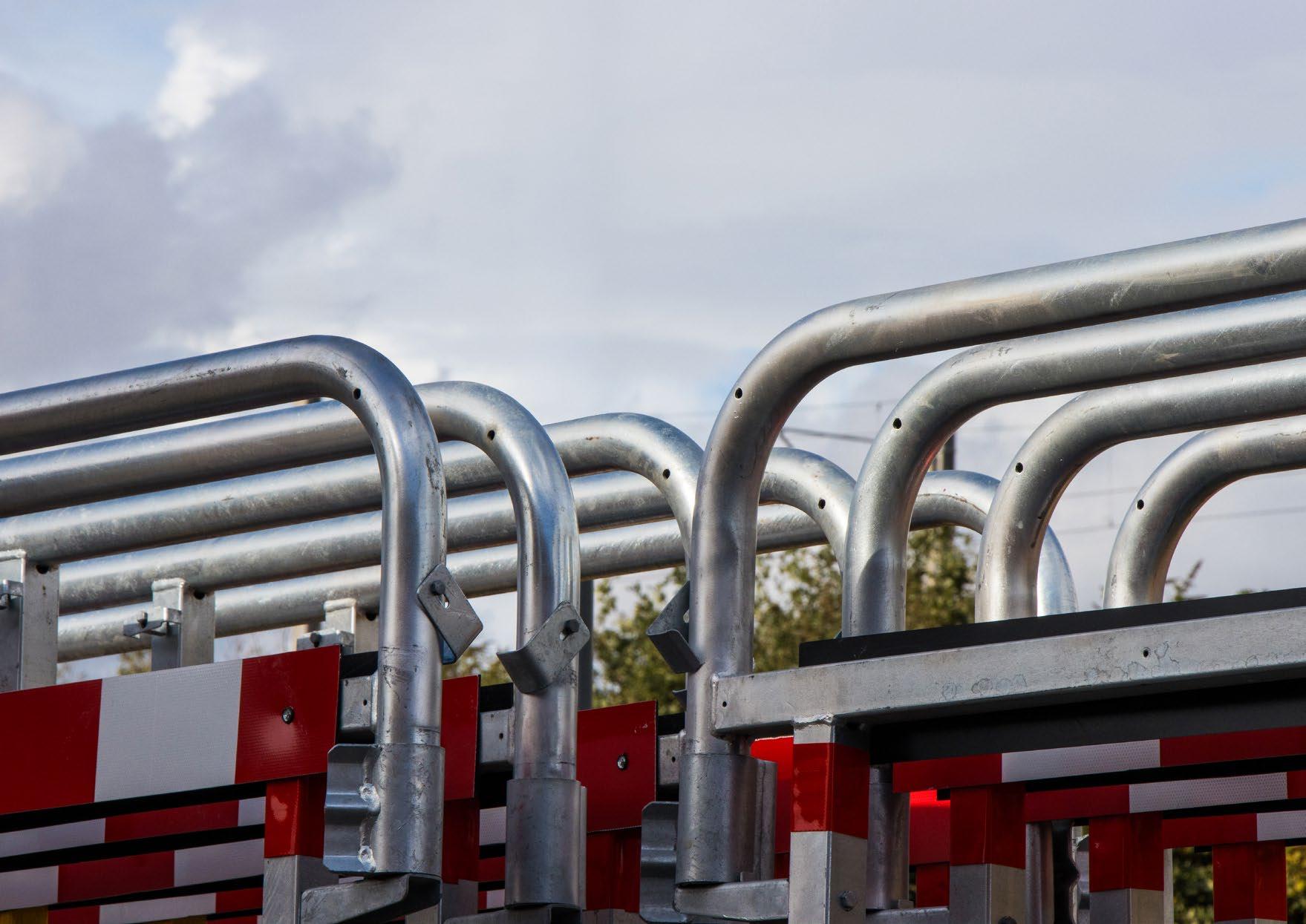
The threat profile in society has increased as a result of conflicts involving the major powers, hybrid warfare, terrorism and the intelligence activities of foreign powers. The worsening security situation is now driving the need for flexible security solutions for various targets that are deemed worthy of protection, as well as for public environments. This may involve critical infrastructure such as water and energy facilities, government buildings and sensitive operations, as well as occasions when large numbers of people gather in a restricted area, such as at major events. In line with new demands, we have expanded
our product portfolio in response to the changing societal climate and growing demands for advanced protective measures in public spaces. This includes vehicle-stopping solutions certified for anti-terror use at public events, along with specialised high-security adaptations. We also offer full-service solutions including advice, technical drawings and planning, setup, service and dismantling of the products. A good example of an occasion where we have planned and designed a safe environment in close collaboration with our client is when the Eurovision Song Contest was hosted by Malmö in southern Sweden in 2024.
Droughts, forest fires, torrential rain, flooding and storms – extreme weather is becoming increasingly common and is already causing considerable damage in our communities. An analysis commissioned by the International Chamber of Commerce (ICC) has looked at 4,000 climate-related extreme weather events in the period 2014–2023. The results demonstrate that these extreme weather events cost the world around USD 2 trillion. This includes damage to buildings and infrastructure, as well as power and water outages. The insurance industry is also witnessing a sharp increase in costs associated with natural damage, and there is a risk of insurance
becoming more expensive or of buildings in risk zones not being able to be insured at all, for example. In the future, we can expect more and longer heat waves, heavier rain and more powerful storms. This is driving the need for protection and preparedness among individuals and for society to strengthen resilience. From our customers’ perspective, we are seeing greater awareness regarding extreme weather, resulting, for example, in new demands for the protection of critical infrastructure, new protective barriers and embankments. These are areas where, with our dense network of depots, we can deliver quickly and flexibly to local customers.
The industry in which we operate is highly segmented – both in terms of niche infrastructure segments and geographic spread. This is where our strategic positioning stands out –where both the size of the Group and our dense network of depots make us strong.
Our various entrepreneurs were among the first players in their respective markets, and as a result we hold a leading position everywhere we operate. We are now the only truly multinational player with a presence on several continents. As a global, full-service supplier with close proximity to customers, as well as with integrated innovation capabilities, we hold an almost unbeatable position in the value chain. The threshold for competing businesses is high: new players find it difficult to deliver the same service quality and availability in a cost-effective manner, due to the capital-intensive nature of the business.
For several years, we have been consciously working to create a model that allows us to stand out in the market. Our model is structured around a decentralised leadership and proximity to our customers, which provides us with a good knowledge of local needs, regulations, trends and specific conditions. The employees at our local depots, and their risk-preventive approach and safety culture, are crucial to the quality of our delivery. They build long-term customer relationships and we enjoy a very high proportion of repeat customers.
At the same time, priorities, governance and support are established centrally. Thanks to efficient Group functions, as well as a clear focus on development, digitalisation and sustainability, we are able to create long-term value down at depot level. In fact, we are the only player in our sector that conducts integrated product development and thereby has the ability to realise innovations from initial concept to finished solution and rollout in our various markets.
This also means that we have created a model that can be replicated internally, where our international footprint provides opportunities to export the best aspects between different parts of the business. Measurability and common key ratios allow us to compare business units and business segments, for example, in order to learn from each other and apply best practices everywhere.
Despite the stability we enjoy, we have not escaped being affected by the generally unstable economic situation in recent years. It’s true that inflation has slowed down, yet many of our customers are still struggling and we are witnessing a delay in projects related to new construction. At the same time, infrastructure
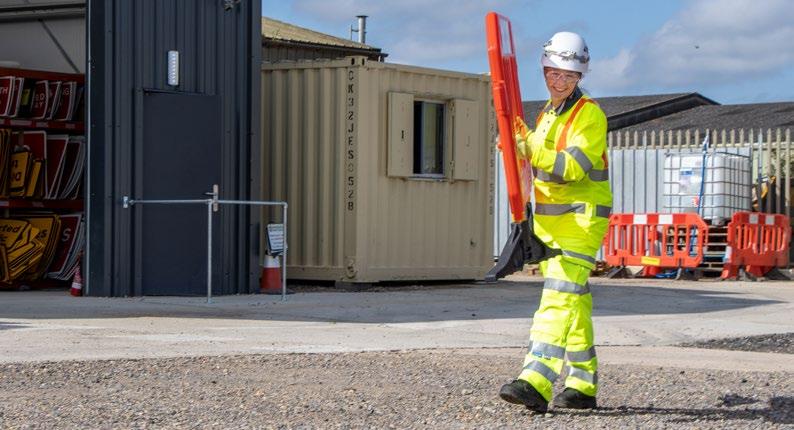
At the same time, infrastructure maintenance commenced in 2025, after earlier delays. From April/May, we were able to note increased demand from our customers in several markets. Overall, we have continued to deliver in our various markets – with sales exceeding EUR 1 billion for the first time. Our flexible and resource-efficient offering, where customers
do not have to purchase their own products and bear fixed costs, seems to be an advantage in troubled times. For 2025, we can particularly mention Germany, where developments have been extremely good, as well as the Netherlands, which is consistently delivering strong results and was our fastest growing market for the third year in a row.
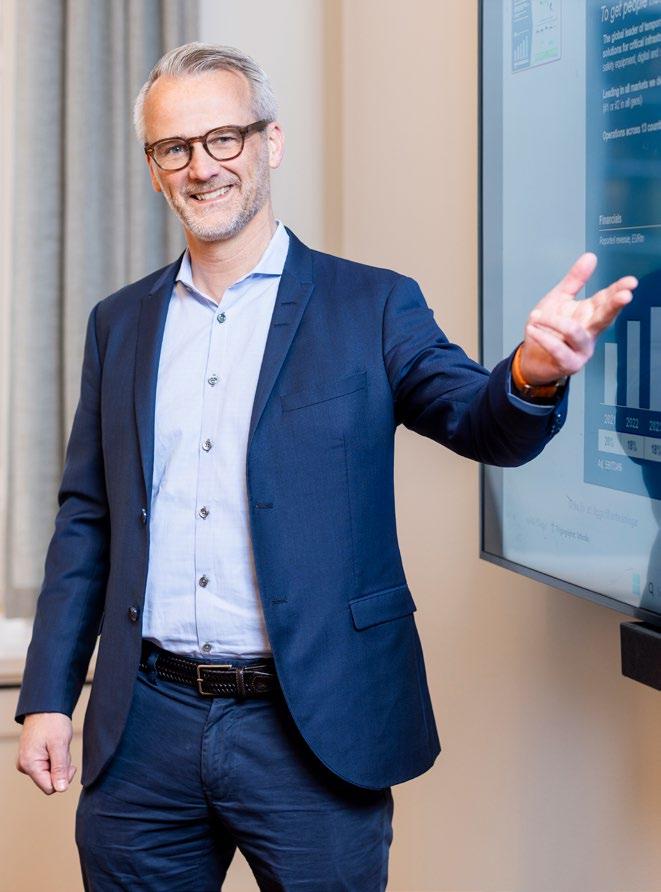
“We are enjoying stability both in our model and in terms of demand”
Marcus Hagegård, Group CFO, of Ramudden Global, says the company remains resilient despite ongoing macroeconomic and geopolitical turbulence. Here, he answers three questions about the market environment in 2025 and shares his outlook for the year ahead.
“Our model, which comprises global muscle, proximity to our customers and the ability to deliver full-service solutions, is both a well-oiled and flexible machine.”
Marcus
Hagegård, Group CFO Ramudden Global
Which factors characterise the market you operate in?
Our operations are primarily driven by maintenance and development projects and other public infrastructure – projects that are ultimately financed by public funds. The market is characterised by large volumes and relatively low volatility compared to many other industries. In times of boom, activity increases through expansion and investment, while during economic downturns, infrastructure projects are often used as a tool to stimulate the economy. As a result, our sector is less cyclical than many others.
How have you been affected by the troubled business environment in 2025?
We are fundamentally stable, but of course we have not been completely unaffected by all the things going on around us. The macroeconomic
environment is characterised by continued uncertainty linked to geopolitical tensions, changing trade patterns, as well as an increased emphasis on regional and local trade as a result of protectionist tendencies and tariffs. This could potentially have an impact on inflation, interest rates and freight costs in the long term.
How does Ramudden Global compare to the competition looking ahead?
Our market is continuing to show resilience. Although tariffs and trade policy changes are having some indirect impact, the business is predominantly local and thereby less exposed to fluctuations. This contributes to robust underlying stability, even in times of global economic uncertainty. In addition, our model, which comprises global muscle, proximity to our customers and the ability to deliver full-service solutions, is both a well-oiled and flexible machine.
Generally speaking, anyone who drives through Europe will end up in Germany sooner or later. Germany’s central location, along with a well-developed motorway network and an intensive traffic flow that extends into the cities, means that its cities are characterised by high levels of traffic, while also being the site of ongoing construction, excavation and maintenance work. This has paved the way for our German subsidiary AVS, to focus on safe products and solutions for urban environments.
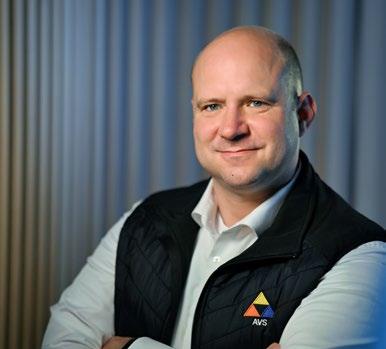
Germany’s role as a European transport hub has long made the country one of the most important in relation to traffic and safety infrastructure. Tobias Schweitzer is one of the regional managers at AVS, the market leader in terms of temporary traffic and construction site safety in Germany. The company has more than 1,000 employees and is part of Ramudden Global. Since 2010, when he started as a depot manager, he has been following market developments.
“Awareness of safety risks linked to heavy traffic is generally high here in Germany. Every year, new regulations are issued by the authorities to protect cyclists and pedestrians, for example.”
Around four years ago, Tobias Schweitzer and his team launched a strategic initiative to expand within the urban segment. The project volumes within highway solutions failed to grow and the projects were characterised by price pressure, yet AVS had more to offer.
“We want to deliver high service and quality where we utilise the entire range of our products and digital solutions. In the cities, where large traffic flows meet, there are completely different requirements for keeping track of
regulations, capacity, accessibility and safety, which closely match our ambitions.”
The urban environment also offers good opportunities to drive innovation within digital services, smart traffic lights, traffic measurement and intelligent devices. Solar-powered lamps and connected traffic lights are already being used, for example, where the devices can be monitored via a portal.
Since the urban segment was introduced, the area has grown and is continuing to report double-digit growth every year. In 2025 alone, two new urban depots were opened. Several acquisitions have also been completed within the urban segment in 2025, jointly providing us with a presence in six new cities. In the long term, the aim is to eliminate all white spaces on the map by opening depots in every major town and city.
What about the competition? Even though they have good customer contacts and some comparable products, they often lack a large Group’s potential to offer full-service and innovative solutions. Tobias Schweitzer says that they have become something of a ‘one-stop shop’ for safety in urban environments – where
rapid service is the key.
“We have around 40 depots in Germany and, thanks to the national network, we can always deliver flexible solutions to meet our customers’ needs. Our competitors are dependent on subcontractors and have longer lead times. This doesn’t really work in fast-moving urban environments.”
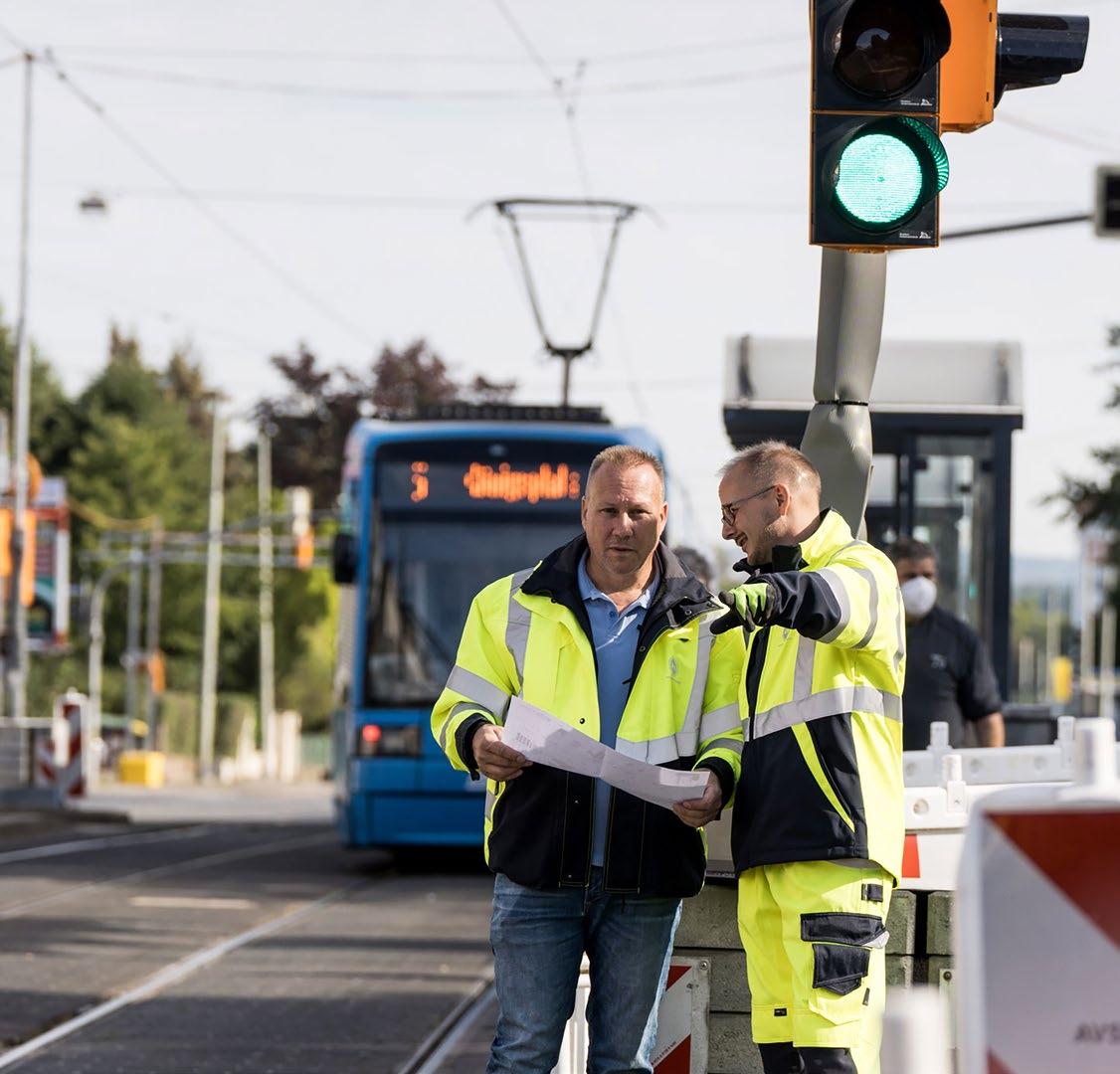
Around Germany’s cities, during Christmas markets, renovations, maintenance and other work, there are now barriers, signs, road blocks and digital solutions. One of the major projects is Tram-Westtangente, an 8.25 km long tram line with 17 stops, which will strengthen public transport in western Munich.
Several dedicated project managers are working on the project, where they have to act flexibly with rapid road blocks set up and diversions to ensure that the surrounding traffic flow is impacted as little as possible. The volume of the materials being handled bears witness to the complexity of the work: approximately 7,000 metres of barriers, 400 traffic signs, 1,400 warning lights, 40,000 metres of marking tape, 3 systems for monitoring the vehicle fleet and 90 metres of concrete urban barriers.
The bridge over the A42 motorway and into the city of Bottrop is another important project. Here, AVS has been involved in traffic planning and rerouting, and has also developed a special fuel cell system for its LED signs. These fuel cells minimise the need for frequent battery changes and site visits where employees have to spend time in the traffic environment, which would otherwise have been necessary for the 55 LED signs being used in the project. The project has been extended into the city, where additional closures, diversions and special height controls have been installed – all with the aim of increasing safety.
“Working to minimise risks and reduce incidents and accidents during temporary setups in urban traffic is an important mission. Success here benefits all of us, and goes hand in hand with Ramudden Global’s mission.”
When a bridge on the A4 motorway in Overath, near Cologne in Germany, was to be renovated, the planned diversions through the town caused concern among residents. They started a petition on Facebook in protest. To ensure that the increased traffic could flow smoothly at intersections in the city, AVS installed stateof-the-art traffic light technology.
In all, 67 mobile traffic lights with 23 cameras and sensors have been installed. The mobile traffic signal solutions, which have been developed and manufactured in-house, are equipped with the latest detector and thermal camera technology. The solutions provide precise monitoring of the current traffic situation and enable as many vehicles
as possible to pass through 3–4 intersections when the lights are on green. This is leading to significant reductions in, or even the complete elimination of, traffic congestion during the morning and evening rush hours.
What do residents think about the project now? Once we had installed the mobile traffic light system and the traffic has been flowing smoothly, the residents are satisfied once more and are now giving positive feedback in the Facebook group.
The large scale of Ramudden Global gives us both the investment capacity and the capability to drive product and digital development on a global market. Our central function quickly identifies new customer requirements, which can then be translated into new, secure solutions, stemming from genuine needs. In this respect, we are pioneers in the sector.
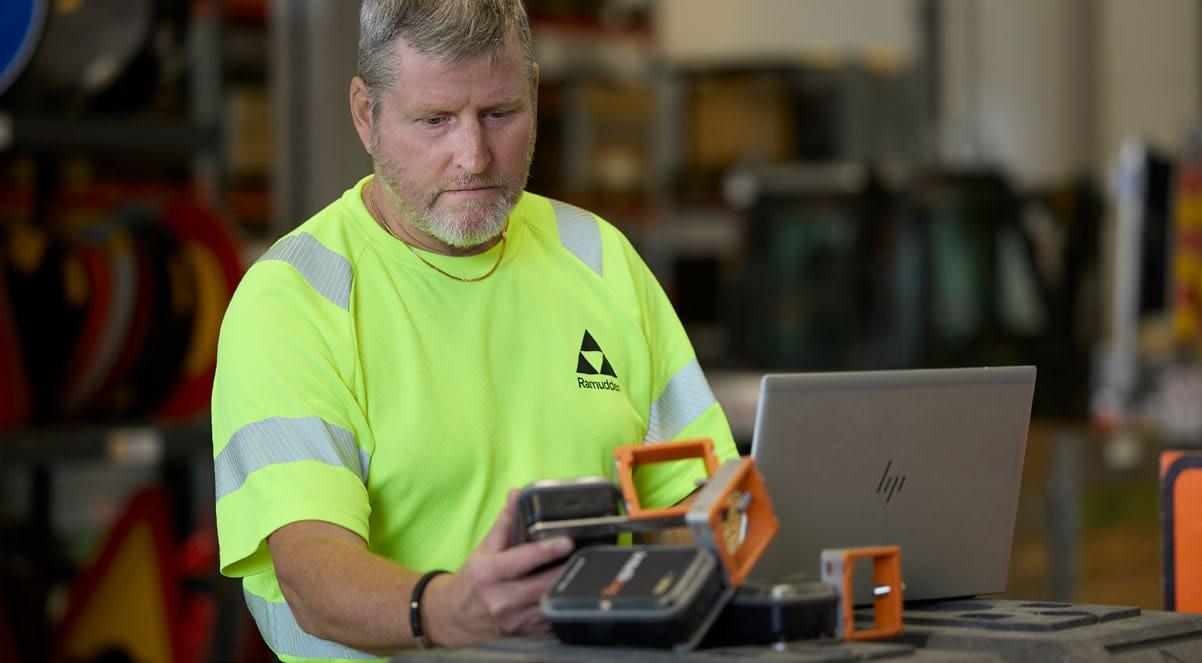
Ramudden Global’s Group-wide Products & Digital function sets us apart from many of our competitors. We are one of the few players in the industry to have an internal development department, within which we can utilise both local customer knowledge and our global scale to quickly bring innovative products to market. In this way, we are driving continuous improvements in safety within our area in order to reduce risks for all stakeholders in the long term.
We have made a number of acquisitions to strengthen our global capacity within product development and innovation. These include the 2023 acquisition of Worxsafe, where we increased our control over the entire supply chain, as well as the 2025 acquisitions of Highway Care in the UK and Curtin Co. in the USA. We coordinate and manage the global initiatives from Stockholm, even though the work is carried out in multiple locations across our companies in order to best utilise our collective experience.
The products we offer to make temporary traffic installations safe or to protect public environments, for example, are constantly being developed to meet new requirements. At the heart of this work is product development in close collaboration with customers and in line with current regulations.
We have a structured process for identifying and qualifying initial ideas from employees and local entrepreneurs, as well as a short line from development to the implementation of our own solutions. The key is to successfully combine our depot employees’ tangible knowledge with the expertise of our engineers – as well as knowledge about road safety laws and regulations in each market.
The products we develop and bring to market consistently demonstrate high quality, as evidenced by strong crash test performance. We also develop products with shorter installation times in order to actively reduce the risk of damage and increase efficiency during setup. Examples of innovative safety products that have been developed to meet society’s changing needs include:
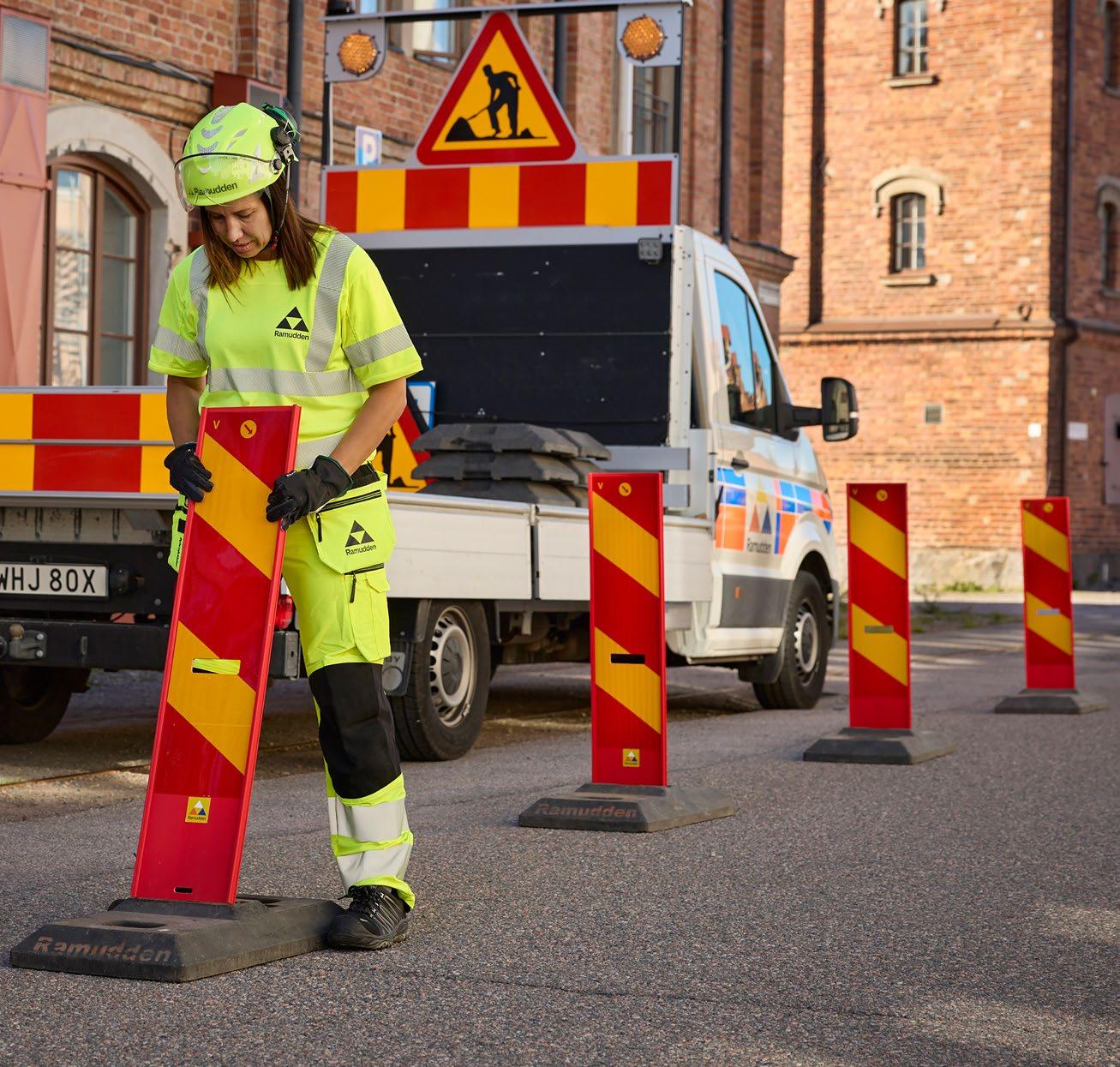
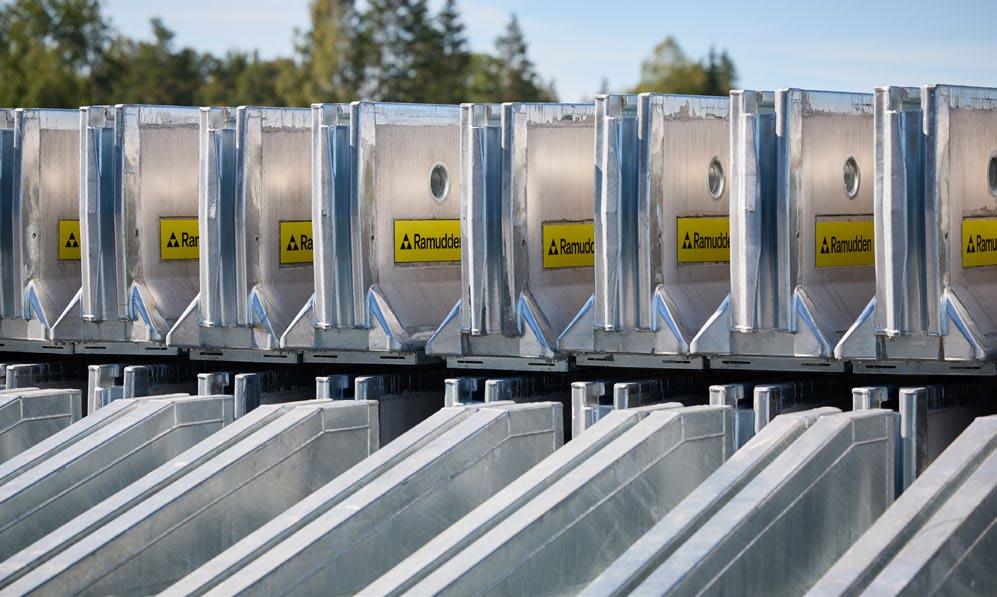
• SVEA. Flexible protective barrier for tough traffic environments, with a focus on quick and safe installation and short closure lengths with high levels of protection.
• TORUN. A new urban barrier, adapted for unprotected road users such as pedestrians and cyclists, to ensure increased safety in urban environments.
• SoundPanel. Sound absorbing panel and perimeter protection solution with noise-reducing properties for mounting on the SVEA barrier.
Digital solutions are a crucial aspect of realising our mission to ensure that everyone gets home safely every day. A connected traffic setup provides greater safety, faster service and reduced environmental impact, while also delivering better cost-effectiveness.
Smart solutions are already a widely used and important complement to physical products. For example, SVEA barriers and traffic signs can be equipped with digital components to increase measurability and monitoring. Globally, we have more than 10,000 digital products utilised in projects with our customers, mainly in the Nordic region, although also in countries such as the UK, Belgium and North America. Ultimately, digitalisation enables more automated and optimised traffic management, where customers move from routine-based to event-triggered monitoring. This in turn results in a reduction in the number of inspection visits, as well as in fewer people needing to spend time in high-risk environments.
Our digital offering focuses on two product areas: Digital Supervision and Worker Safety. In addition to the IPAWS (Incursion Public Alert & Warning System) system, which we will discuss below, Intellitag, a device that is attached to equipment such as signs and barriers to automatically raise the alarm if something happens, is also an important component. We also have systems for traffic analysis and traffic flow control.
Our vision is to have a digital traffic environment where the setups are monitored and controlled in real time, either by us or directly by the customer themselves. In this way, it immediately becomes apparent if and when traffic systems need to be reset.
At the heart of the system is a central digital platform, a product we developed in 2024. This platform is designed to be able to be scaled up as more countries join.
The more data-driven approach, including the potential to learn lessons from key figures and insights, will help to improve quality, bring about efficiency improvements and increase safety for everyone who works or moves about in high-traffic environments.
“More
automated and optimised
traffic management, where customers
move from routine-based to eventgoverned monitoring.”
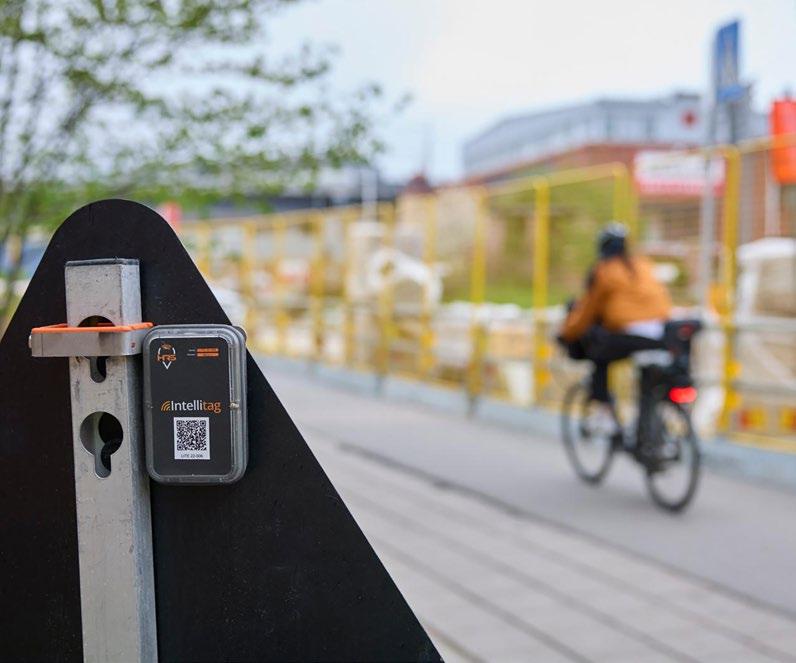
New digital solutions are making it possible both to reduce the need for employees in high-traffic environments and to better protect those who have to work on site.
A good example of this is IPAWS, which has been used during the year to increase safety on around 40 occasions in connection with complex projects in Stockholm.
When complex traffic environments need to be closed off, it is sometimes necessary to have slightly more than just standard safety products. The IPAWS system, which has been developed within Ramudden Global and whose use is already well-established with barriers in the UK, addresses precisely this issue. Fredrik Lysén, Regional Manager for Ramudden Global in Stockholm, explains that the solution has now started to be used to an increasing extent in Sweden in a number of projects.
“In advanced projects such as total closures for maintenance work on roads and in tunnels, for example, it is extremely important to create a safe environment for those carrying out the work on site. This is has previously been addressed both with the aid of physical barriers, as well as by staffing the sites.”
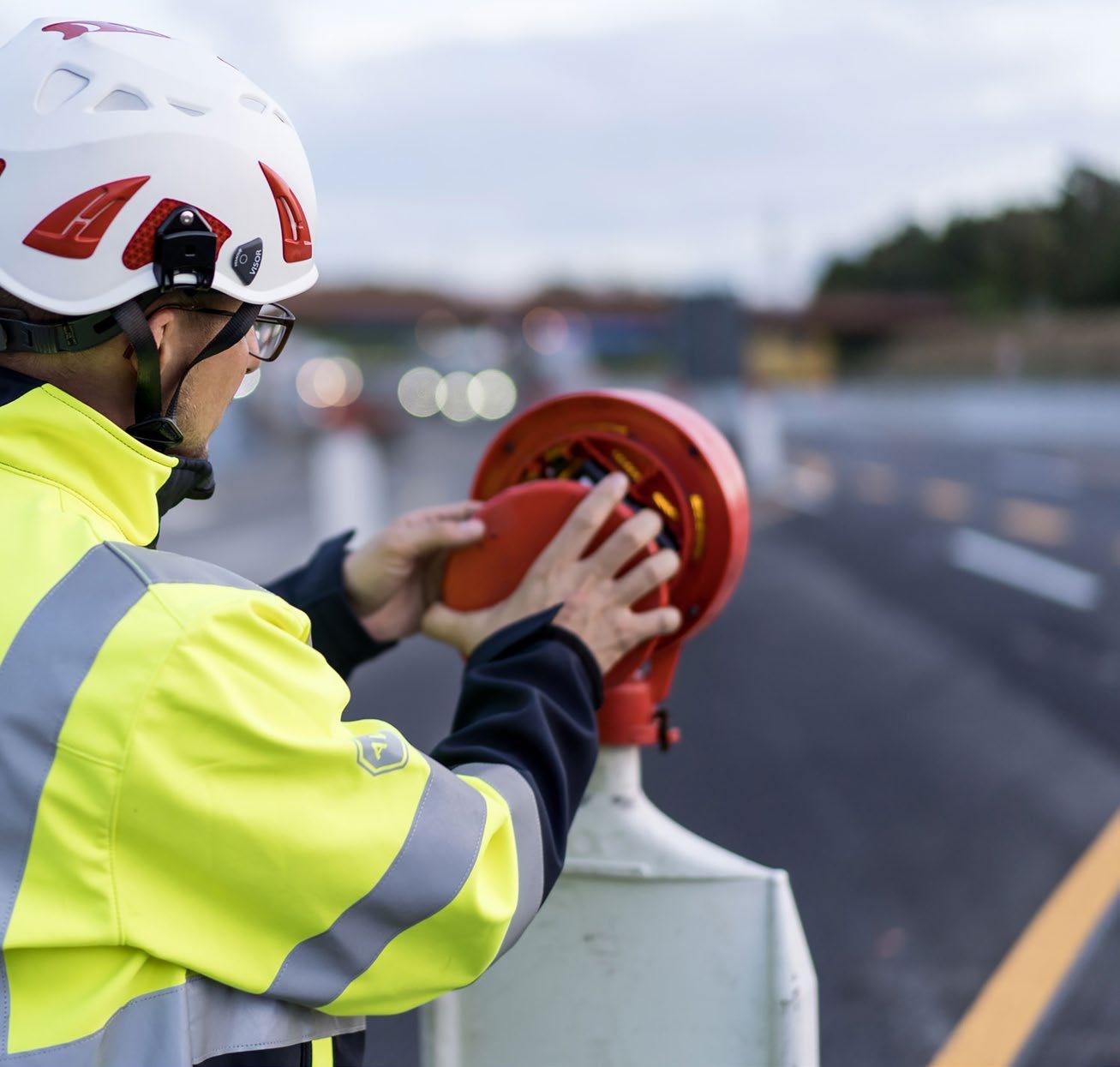
The “PSA pucks” (Portable Site Alarm) are one feature of IPAWS. These enable remote monitoring and issue audio and light alarms immediately if, for example, a vehicle enters a closed work area. They are well suited for
environments with high volumes of traffic and advanced systems and technical solutions. As well as reducing the number of people who need to spend time in high-risk environments, they can be used to effectively make closed lanes safe, to monitor safety zones, or as emergency evacuation systems.
A good example of the latter is the Muskö Tunnel, a road tunnel almost three kilometres in length that connects Muskö to the mainland. Here, Ramudden Global is responsible for traffic closures on nights when various contractors are carrying out maintenance work in the tunnel. There are no emergency exits, but the IPAWS solution issues an alert if the personnel on site need to leave the tunnel or let traffic pass. Up to 14 PSA pucks are deployed along the road in the tunnel.
“The Muskö Tunnel is the only fixed link to the mainland for those living on the island, which means that it has to be possible to pass through at all times,” says Fredrik Lysén. “With this solution, we have closed a safety gap. If the
emergency services have to get past, we can also turn on the blue light version, something that has happened on a couple of occasions during night-time projects when an ambulance has to pass quickly, for example. The customer is happy that we can successfully handle third parties here.”
Another complex project in which IPAWS is being used is in the Löttinge Tunnel in northern Stockholm. In some parts of the closure, there is a risk of third parties accidentally entering the work area via slip roads. The digital solution effectively improves both safety and the work environment.
“The PSA pucks carry out effective monitoring when maintenance work is being conducted, so that no road users breach the barriers and put themselves or someone else at risk,” says Fredrik Lysén. “This new, smart technology minimises risks and increases efficiency. We are currently looking into whether there are any more application for IPAWS.”
In many of our markets, we collaborate with the authorities to develop safety at roadworks sites, serve as advisors in various forums and contribute expertise and experience to industry organisations. We do this to jointly shape the traffic environments of the future.
The global strength of the Group, in combination with local knowledge, provides us with good opportunities to pursue important industry issues. We do this by influencing standards, regulations and awareness locally, with the aim of increasing safety for employees, customers and passers-by.
This involves a range of local and national initiatives, many of which have been in progress for a long time. International examples of such work include involvement within the Transportation Research Board (USA), the International Road Federation (globally), and in Europe within the European Union Road Federation and the European Committee for Standardisation.
In the Nordic and Baltic regions, we have long been involved through various bodies.
In Sweden, for example, have a representative on the National Work Environment Committee of the Swedish Construction Federation, and we have also contributed to a new standard for protecting pedestrian and cycle paths through our working group on traffic control devices for unprotected road users. We are also involved in the Swedish Association for Safer Roadwork Sites (SBSV) and Trafikksikkerhetsforeningen (the Norwegian Road Safety Association).
In Finland and Estonia, too, we are involved in a number of organisations to drive the industry towards increased safety.
When Ramudden Global commenced operations in Estonia in 2015, both regulations and awareness about workplace safety in high-traffic environments were essentially non-existent. Ten years later,
MD Oliver Linnas and the workforce of around 50 individuals have established a completely new industry standard. At the same time, work is constantly underway to raise the bar even further.
When Ramudden Global established its operation in Estonia, there was basically no market for traffic safety. However, starting with a clean slate provided good opportunities to do things in a new, better and safer way.
“I remember the first time we drove out with our Swedish colleagues,” says Oliver Linnas, VP of Ramudden Global in Estonia. “They were shocked by the difference in safety culture –here it was a case of doing everything quickly and cheaply. We wanted to change that.”
Collaboration with various players
Ramudden Global’s strategy was clear: to take the Swedish safety model and implement it as close to the original as possible. They were initially granted temporary permission to test how the products worked in Estonian traffic environments.
In parallel with this, Oliver Linnas initiated a wide-ranging strategic collaboration. The objective was to bridge the gap between the government agencies, which had already woken up to the situation, and the more cautious attitude of the private sector. The challenges could be linked in part to the lack of a clear regulatory framework.
“We were lucky with the timing, because Estonia needed to change its entire approach
to high-traffic environments at the request of EU authorities. As part of this work, we brought together local contractors, government representatives, Swedish colleagues and Transpordiamet, the Estonian Transport Administration.”
A great many meetings were held, resulting in an updated rulebook which, since 2018, has essentially become the law for everyone working at and on roadworks sites. The rulebook is currently being updated by Transpordiamet.
Right from the outset, there has also been heavy investment in training – not just internally, but for the entire industry. Between 2023 and 2025, more than 500 external participants were trained under the direction of Ramudden Global, and several customers are opting to train their entire workforce. The training courses are approved at an official level, and “Work on the Road” is still the only one of its kind in Estonia.
The next step is to push for regulations to ensure that everyone who works with temporary traffic setups possesses adequate skills. This is still a grey area, as the training is voluntary. Oliver Linnas and his team have now succeeded in moving these issues higher up
on the public agenda. The goal is to make the training mandatory.
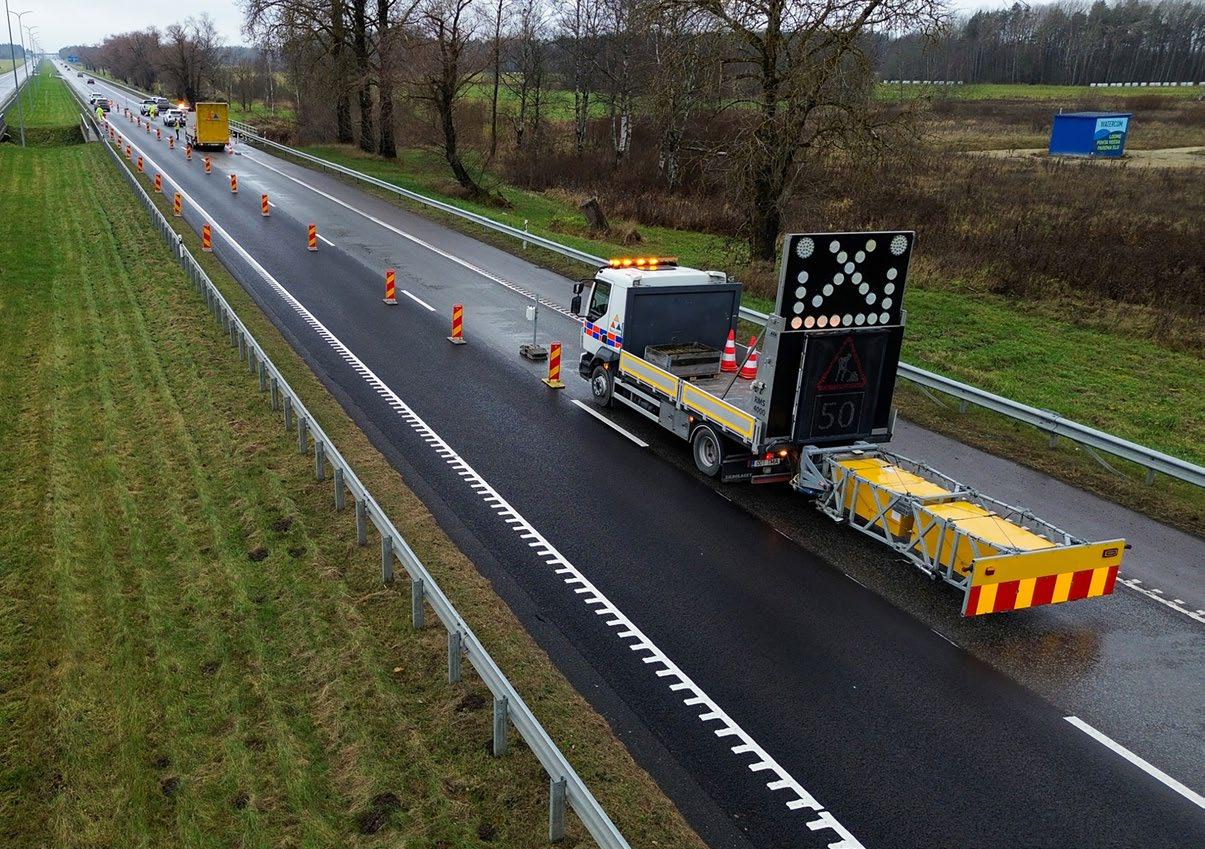
Ramudden Global in Estonia is also involved in three different industry organisations, provides instruction regarding safety work on the engineering programme at Tallinn University of Technology and collaborates with municipalities in major cities such as Tallinn and Tartu. The portfolio also includes innovative products, such as a mobile, solar-powered VMS (variable message sign) trailer that has been developed together with Transpordiamet.
In 2025, Ramudden Global in Estonia took home the award as the best company within road safety for the fifth year in a row – and around them, the understanding of the value of safety is increasing. But not for everyone. Even though the regulations are now in place, it is important to get more people to comply with them. Oliver Linnas still has daily conversations with customers, during which he hammers home the importance of working safely without shortcuts. It’s ultimately a cultural issue – at the end of the day, many players aren’t issued with fines. But there is hope: the younger generation in Estonia has a more Scandinavian view of road safety, sustainability and the living
environment. They want to have cities and traffic environments that are safe, where you can cycle, walk and live without disturbance, which is in line with Ramudden Global’s philosophy, according to Oliver Linnas.
Despite a sharp decline in road construction volumes, with an annual decrease of 30 percent between 2022–2024, Ramudden Global Estonia has continued to grow, both in terms of revenue and profitability. Several major projects related to new motorways and railways are currently underway in the region.
As a pioneer in the sector in Estonia, the company has shown that it is possible to run a profitable business while simultaneously raising safety levels. This success is primarily attributed to dedicated employees, but is also the result of long-term strategic work.
“I feel proud of what we have achieved. We have built a market and changed the way people view safety. It’s quite hard for others to compete at the same level now, but we hope they will try. The more people who adopt a safety first approach, the better it is for society.”
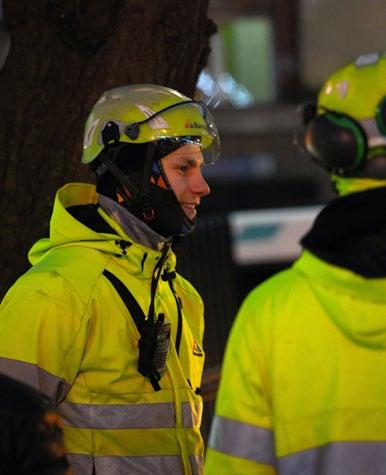
Step by step towards safer traffic environments
• 2021: Officially recognised by Transpordiamet in Estonia as an authorised trainer of traffic controllers.
• 2023–2025: One of the few that provides training regarding temporary traffic setups and workplace safety in Estonia. To date, 52 separate external training courses for more than 500 participants have been held.
• 2025: Estonia’s first TMA vehicle test is being conducted, under the observation of Transpordiamet, with the aim of contributing to future guidelines and regulations for TMA vehicles.
“When
we launched our operation in Estonia, there were no clear regulations and no general awareness of safety. We wanted to change that, and I am very proud of what the team has achieved so far.”
Ramudden Global is at the heart of societal development. In streets and squares, along railways and motorways, in industrial areas and at temporary sites – wherever construction, excavation, maintenance, diversions, protection and roadblocks are taking place, we are there. We are ultimately working to ensure that everyone gets home safely every day. We are therefore at our best when we are barely noticed at all.
We purchase services, materials and equipment – such as road signs, traffic barriers, vehicles and protective gear –from a selection of suppliers who meet our quality and safety standards.
Our day-to-day operations centre on creating safe work sites in high-traffic environments. In many cases, we are involved throughout the process – from planning to equipment rental, setup, supervision and dismantling. Digital solutions are playing an increasingly important role in improving safety and reducing climate impact.
Globally, we support more than 10,000 customers operating in construction, roadworks and civil engineering. Whatever the project, our top priority is to create secure environments with high accessibility and safety, enabling our customers to focus on their core business.
Sustainability is deeply rooted in Ramudden Global’s identity. Through consideration for people, a strong focus on safety and a business model that is based on resource efficiency, we are working to create long-term value – for employees, customers and the society around us.
Ramudden Global’s guiding principle is clear: to create safety in high-risk environments. This includes everyone who operates in or is affected by our sites: employees who establish infrastructure around roadworks and construction sites, customers who carry out the work on site, as well as road users, residents and passers-by.
Our business model is based on principles that promote circularity and the more efficient use of resources, where we offer products that can be reused and thereby contribute to the more sustainable use of resources. In addition, we are striving to constantly improve products, solutions and services, as well as working on the development of regulatory frameworks to further improve the safety level.
Sustainability is also a driving force for business and a must in order to meet the demands of customers, employees, partners, investors and authorities. In addition to the regulatory framework, parameters such as CO₂ emissions and life cycle assessments have also become increasingly important when choosing suppliers for our customers.
Sustainability strategy based on three focus areas
As the Group grows, we are formalising our work on sustainability, quality and efficiency, which have previously mainly been handled
locally. We are operating through a decentralised model, where each business unit has operational responsibility in their respective markets. At the same time, however, everything is now being held together at Group level in a centralised strategy in order to ensure clear direction, consistency and regulatory compliance going forward.
At Group level, a framework is being established for the way we develop policies, targets and prioritised actions, while the local implementation of the strategy is owned and conducted by each business unit.
Our core sustainability strategy is based on the Group’s mission of ensuring that everyone gets home safely every day. The strategy has been formulated around three focus areas where we have the greatest impact, risks and opportunities: Safety, Employees & Culture and the Environment.
Business conduct is a fourth area, and is an enabler for effective governance, both in terms of our focus areas and for ensuring that we operate according to ethical guidelines.
The strategy can also be structured according to the ESG framework – Environment, Social sustainability and Governance.
The sustainability strategy is evaluated annually through our double materiality assessment (see page 41).
Mission
To get people home safely every day.
Business concept
Our business concept is, through full-service solutions, to create safety in and around road and construction sites, on motorways, in urban environments and in public spaces.
• Safety is always at the top of our agenda. As a leader in our segment, we have both the opportunity and the responsibility to drive progress towards greater safety in traffic-dense environments.
• Customer-focused and reliable in delivering the highest quality in every project to ensure critical assignments proceed according to plan.
• Care and safety go hand in hand. We respect and care for our colleagues, our customers, everyone working on the roads, and the people in surrounding communities.
• Entrepreneurship is a key building block and a value that helps us continuously evolve, find new solutions and drive the industry forward.
As a global company, we see our responsibility to manage our environmental impact as a given. This is important for the society in which we operate, as well as for our employees and customers.
• Greenhouse gas emissions in the vehicle fleet and in the supply chain linked to products and services
• Adaptation of operations to climate change
• Waste management
Commitment
• Reduce emissions from the vehicle fleet
• Reduce the negative environmental impact of products and services
• Increase resource efficiency
The core of our business
The safety of people – our own employees and those of our customers – is always at the core of our business.
People in focus
Our employees represent the foundation of our mission to deliver the highest quality and safety in every project.
An honest and transparent approach is essential to conducting long-term sustainable business.
• Health and safety for our employees
• Safety for our customers
• Safety for road users
• Work environment and human rights
• Gender equality and diversity
• Working conditions and human rights in our supply chain
• Preventive processes and procedures to ensure compliance
• Corruption and bribery in business relationships
Commitment
Enhance safety for
• our employees in high-risk environments
• our customers through our products and services
• road users through our products and services
Commitment
• Create an inclusive and safe working environment
• Ensure a workplace with inclusive leadership, where we both attract and retain talent
• Ensure compliance with human rights
Commitment
• Ensure compliance with laws and regulations
• Ensure robust application of business ethics and sound standards
• Maintain high integrity in our business relationships
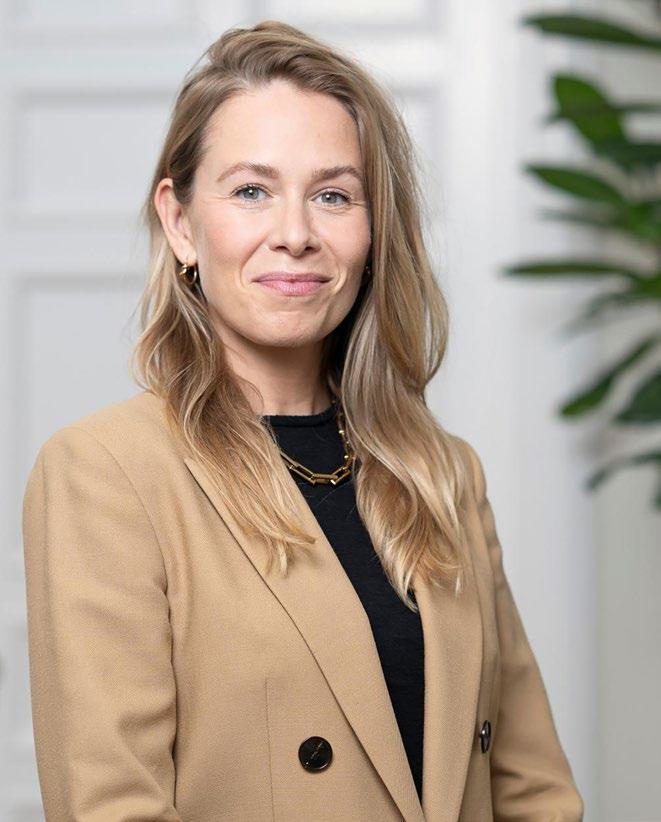
“We are confident in our long-term direction.”
As Group Head of Sustainability at Ramudden Global, Cecilia BevikCronqvist highlights the importance of consistently following the Group’s internal guidelines on safety, quality and efficiency, despite an ever-changing regulatory landscape. Sustainability is basically about employing a long-term approach in everything we do.
Group Head of Sustainability
What has characterised the Group-wide work during 2025?
During the year, our business units have continued to develop on many levels, while at the group level we have been preparing for the next step. We have focused on creating common definitions, guidelines and targets that bind the organisation together and provide a solid foundation for advancing our sustainability efforts. At heart, we are confident about the focus areas we have laid down – and we are working to identify a good, shared level and to deliver on this basis in our various markets.
Can you name any specific initiatives?
One key focus has been to identify and integrate a more automated governing and reporting tool. The purpose is to free up time
Our business is affected by the Corporate Sustainability Reporting Directive (CSRD), the Sustainable Finance Disclosure Regulation (SFDR) and, a little further down the line, the Corporate Sustainability Due Diligence Directive (CSDDD). At a local level, we are affected, for example, by the Energy Efficiency Directive (EED) and the Carbon Border Adjustment Mechanism (CBAM).
The Omnibus proposal, which is the European Commission’s proposal
from data collection, in order to focus instead on analysis and value creation activities, as well as to increase internal controls and ensure compliance with the CSRD. We have also developed our data management (with clearer definitions, improved quality and harmonised measurement) to enable better comparisons and deeper insights. This is creating the conditions for more informed decisions and more effective governance. We have also been working to map our CO₂ emissions and have started the journey of developing a strategy to reduce our negative environmental impact.
What form does this take locally in your various markets?
Safety for employees, customers and third parties is the core of our business, and so we are
for regulatory simplification, will affect the timetable, who is covered by the reporting requirements, as well as the scope of the reporting. According to the latest notifications from EFRAG (European Financial Reporting Advisory Group), we will be covered by the CSRD for the year 2027 (compared to the previously announced 2025). We are following developments closely, awaiting the delegated act for the simplified reporting standard and continuing to prepare our operations.
“Sustainability is basically about employing a long-term approach in everything we do.”
contributing to increased sustainability in our various markets by working to improve delivery in general. In addition, there have long been a number of local initiatives in the areas of safety, quality, efficiency and the environment. Each business unit also has its own specialists in the fields of health and safety, work environment, and environmental topics. These specialists work on location-specific initiatives to further improve safety training, waste management and the electrification of vehicles, to name a few examples.
As an international Group, how are you affected by the EU’s sustainability rules? Since we are based in Sweden, we are subject to the EU’s regulatory framework and the decisions taken there regarding sustainability. During 2025, the focus within the EU has shifted more towards geopolitical security and strengthened competitiveness, and we are also affected by this. The global arena is always subject to numerous, rapid changes; the best we can do is to steadily continue in our stated direction to be the sector’s Safety and Sustainability Champion, as well as to plan how to manage, act and prepare for long-term impacts and effects.
What are you focusing on in 2026?
We will continue to integrate sustainability in our business model as part of our day-to-day work, at both a strategic and an operational level. Many of the efforts we have made so far at Group level in this area have not yet started to be visible from the outside. Over the course of a couple of intensive years, we have built up the Group’s foundations, such as a new organisational model for governance, the consolidation of data, as well as processes and solutions to support the business units. During 2026, our aim is to be able to accelerate this work, focusing on analysis and tailored activities and projects, in order to drive our sustainability work and integration to the next level.
Safety Champion
An industry leader in safety – for our customers, road users and for our employees.
Providing our customers with the most sustainable products and services on the market.

An ongoing dialogue with Ramudden Global’s many stakeholders is essential in order for us to run a relevant and responsible business. Their perspectives, priorities and expectations help us to ensure that our contribution to the development of society creates value.
Historically, this dialogue has principally taken place locally within our business units, but as the Group has become more coordinated, the work has also become more structured at Group level. By actively listening to employees, customers, suppliers and other stakeholders, we are able to gain insights that affect both our sustainability work and the development of processes, projects and products. These insights also constitute an important foundation in our DMA (double materiality assessment) and in our due diligence work. The views of our stakeholders regarding impact, financial risks and opportunities are discussed on an ongoing basis in our various working groups for Health & Safety, People
& Culture and Environment. These working groups meet monthly and include representatives from both global and local sustainability teams.
Our solutions also affect many people thanks to our presence in the public infrastructure, although our direct contact with the public is limited.
Read more about our stakeholder dialogue during 2025 on page 119.
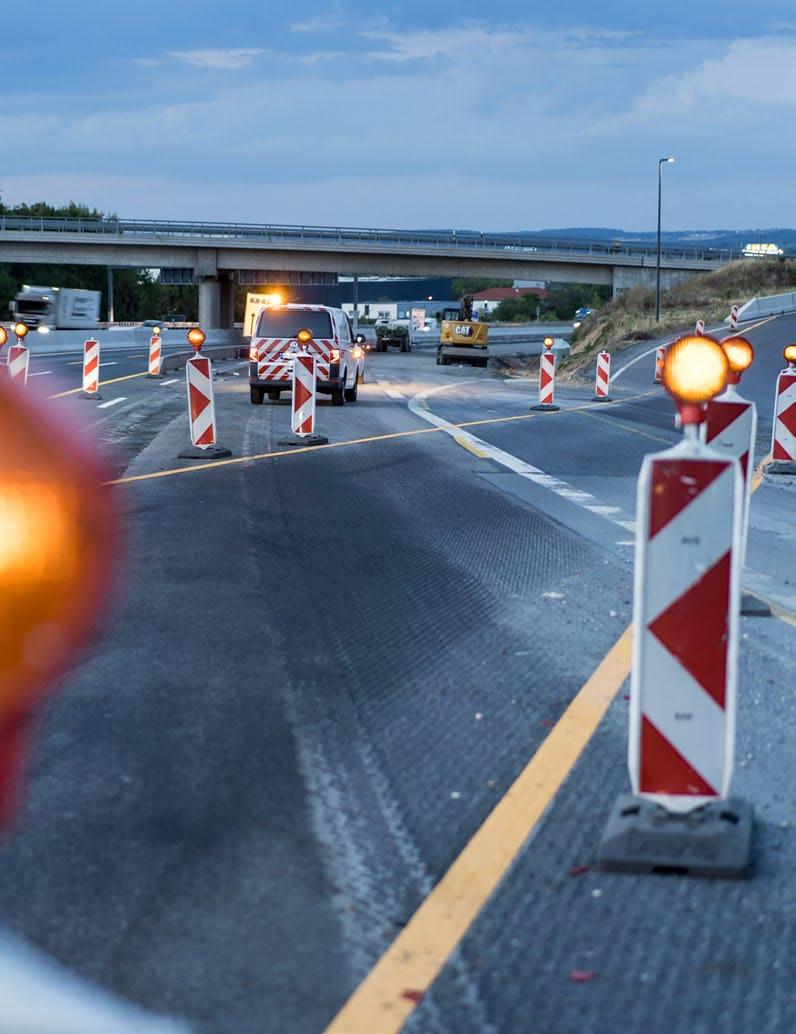
A key aspect of our CSRD preparations is the implementation of a double materiality assessment (DMA). The insights from this assessment form the basis of our work, are linked to our business model and determine which areas we present in our Sustainability Report.
In 2024, we conducted a DMA to identify the issues that are of greatest significance to our business and our stakeholders. The assessment evaluated each area from two perspectives: Ramudden Global’s impact on people and/or the environment (impact materiality), as well as the impact on the company’s financial performance (financial materiality). The DMA covered the entire organisation, as well as our value chain both upstream and downstream
where deemed relevant. The priority areas that emerged in this process also form the basis for the sustainability aspects that are included in this year’s Sustainability Report.
While awaiting clarification of the CSRD, we conducted an updated DMA in 2025 focusing on changes between the years. Based on the work carried out in 2024, we have analysed and
conducted stakeholder workshops in order to understand how changes through acquisitions (such as our expansion into the USA) and changes in the business environment (such as market and legislation) are affecting us as a company.
We have used an AI-based software platform to analyse changes in the sustainability areas, based on a large amount of data from company reports, news, scientific research
and legislation. Finally, we have also discussed and validated the updated DMA results at the highest executive level.
DMA process step-by-step
The various steps describe the work on the preliminary assessment carried out in 2024, which also forms the basis for the 2025 assessment.
Our DMA process in brief
1 2 3 4 5 6
Stakeholder dialogues
Our work is based on a range of stakeholder dialogues, as well as dialogues and workshops with internal subject matter experts. We also included a survey with comments from employees at various levels of the organisation, customers, suppliers, public companies and authorities.
We used an AI-based software platform to support the process. Here, we carried out a data-driven analysis tailored to our business context, value chain and geographical presence. Drawing on large volumes of data from company reports, news, scientific research and legislation, a list of proposed impacts, risks and opportunities (IROs) was generated, adapted to our context.
The impact materiality assessment considered both negative and positive impacts. Negative impact was scored based on severity (in terms of scale, scope and possibility for remediation) and likelihood. Positive impact was scored based on scale, scope and likelihood.
Assessment of financial risks and opportunities
The financial materiality assessment considered both financial risks and opportunities. The outcome was scored based on the potential magnitude of the risk or opportunity and its likelihood. As part of the financial materiality assessment, sustainability matters were integrated into the workshop attended by each business unit's VP of Finance.
Thresholds established
The sustainability team, in consultation with representatives from the management team, established thresholds in the form of quantitative scoring.
Validation of matters
The material sustainability matters from the ESRS topic list were ultimately validated by representatives from the management team. The results have been discussed at Board meetings.
The assessment we carried out in 2024 showed that seven of the sustainability matters included in the ESRS topic list (European Sustainability Reporting Standards) are material to us. The updated DMA conducted in 2025 points to the same areas, with some minor adjustments in certain aspects. The assessment is consistent with the work already undertaken, confirms our previous sustainability strategy and focus areas, and is closely linked to our business model. Our Sustainability Report therefore continues to be based on these areas. No entity-specific sustainability matters were identified.
! We are seeing how climate change in the form of extreme weather is having an increasing impact on our customers’ industries – which in turn is also having financial consequences for us. Extreme heat, cold, storms and flooding, for example, affect the ability to maintain and rebuild roads, buildings and other infrastructure.
At the same time, the consequences of climate change mean that infrastructure needs to be strengthened and repaired – an area of work we are assisting with.
– Our greatest negative environmental impact comes from greenhouse gas emissions. In our own operations, this principally relates to emissions from the vehicle fleet, while in the supply chain it relates to purchased products and services, as well as the production of concrete and steel products.
+ At the same time, these challenges also present an opportunity to drive the transition within our industry, which can lead to reduced environmental impact.
! The main climate-related risks are linked to regulatory changes and increasing customer demands. Transitioning and reducing our climate emissions requires financial investment.
At the same time, this work also presents a potential business opportunity – for example, through efficiency gains, energy savings and new business segments such as digital products.
– There is a general underrepresentation of women in our industry. The imbalance is particularly pronounced in traditionally more physically demanding roles within the construction sector, but gender distribution is also uneven among white-collar positions.
– Our products and services for safe infrastructure solutions are designed to protect both our customers’ employees and third parties. Workers in the value chain, like our own employees, often work in high-risk environments and may potentially be exposed to accidents or incidents at the work sites.
+ Our positive impact in this area is the very reason for our existence as a company – to develop safety products and services that enhance safety for our customers and third parties, such as passers-by or local residents.
! The potential financial risk arises if we fail to create safer working environments for our customers’ employees through our products and services.
Our financial opportunity lies in our ability to deliver products and services that create a safer working environment for our customers and passers-by, which is a competitive advantage.
– Our operations involve the rental of materials and products for safe infrastructure solutions, such as barriers and signs. These setups are often temporary, and the materials are then reused in the next project. How we develop and manage these products throughout their life cycle is important, as resource use and waste have a negative environmental impact in a variety of ways.
– Every working day involves numerous risk factors, as employees operate in high-traffic environments while handling heavy materials. Stress, passing vehicles and at times directly threatening situations involving violence and harassment have a negative impact on employees.
+ We contribute through our proactive approach to a safer working environment (for example via training, accident prevention, safety solutions and anti-discrimination), resulting in a positive impact on the work environment.
! As we operate in a high-risk sector, accidents resulting in employee injury and harm represent a significant financial risk for the company.
! We operate in a sector that carries a risk of corruption, bribery, money laundering, breaches of antitrust and competition law or other violations of our values. This makes an honest and transparent approach, supported by robust processes and procedures throughout the Group, essential to conducting long-term sustainable business.
The overall strategy and direction for the sustainability work are set at global level, while practical adaptation and integration take place locally. Representatives from our various business units collaborate and support each other in this work. We are fundamentally a decentralised organisation where, at Group level, we target ambition, direction and focus areas which are then realised in practice at local level.
Our focus in this work is based on three parts of the organisation:
• Governance, developments are conducted through working groups within respective focus areas to bring about effective local management and the implementation of common guidelines.
• Corporate culture and leadership, where we foster a sense of responsibility regardless of role within the organisation.
• Technology and innovation, which help us to improve procedures, reduce costs and accelerate the work within safety and the environment.
Monthly performance measurement
During the latter part of 2025, we established a new process to monitor and evaluate the development of key figures in each business unit on a monthly basis – known as the Global scorecard. In addition to financial reporting, we monitor a number of sustainability-related key figures within our focus areas; health and safety, people & culture, quality and the environment. Developments within the business units are followed up with the senior management every month.
The Board of Directors has overall responsibility for our strategic direction. At Board meetings, the sustainability strategy and action plans are approved and reviewed annually, and we report key figures with a particular focus on health and safety quarterly. We do not yet have any sustainability-related key figures forming the basis for incentive programmes for our Board or Group management.
Together, they are responsible for ensuring that the sustainability strategy aligns with the company’s overall strategic plan, and they monitor its monthly progress.
Our global head of sustainability is responsible for developing the overarching sustainability strategy. The Head of Sustainability is also a member of the Group management team.
Group management receives the same sustainability data as the Board every quarter. The business unit Presidents, as part of the Group management, are also ultimately responsible for integrating the sustainability strategy locally.
The sustainability work is organised within four focus areas through dedicated working groups: Health & Safety, People & Culture, Environment and Governance. Each working group is led by a global manager and consists of experts from each business unit. Together, the groups drive the development, implementation and following-up of the Group’s strategies and standards in their respective fields.
All employees are responsible for integrating sustainability through their role and in daily operations, in line with the company’s strategies, policies and guidelines.
Climate change and increased demands mean that we need to work smarter. We are constantly developing our working methods and solutions to support both safety and sustainability. For us, this means that we need to work in both the short-term and the long-term, locally and globally, to reduce our environmental impact and contribute to more sustainable development.
Our main negative impact on the environment comes from greenhouse gas emissions, both in our own operations and in the supply chain. Primarily, this relates to CO₂ emissions resulting from fuel consumption in our vehicle fleet, as well as emissions during the production of products. Several important measures have already been initiated around the organisation in order to reduce CO₂ emissions, although much work remains to be done.
With the safety product rental as one of our cornerstones, we place great emphasis on resource efficiency and material selection. High utilisation rates and good handling of the products throughout their life cycle can enable us to both reduce emissions and waste and, at the same time, strengthen the sustainability of our offering.
During 2025, we have established a working group consisting of environmental experts from all our business units, whose task is to strengthen cooperation and accelerate the work on environmental issues within the organisation. The working group is currently focusing on developing a climate strategy, identifying the measures that can have the greatest impact in our efforts to reduce environmental impact, and developing support that helps our customers to reduce the climate footprint of their projects. Information according to the EU taxonomy can be found on page 121.
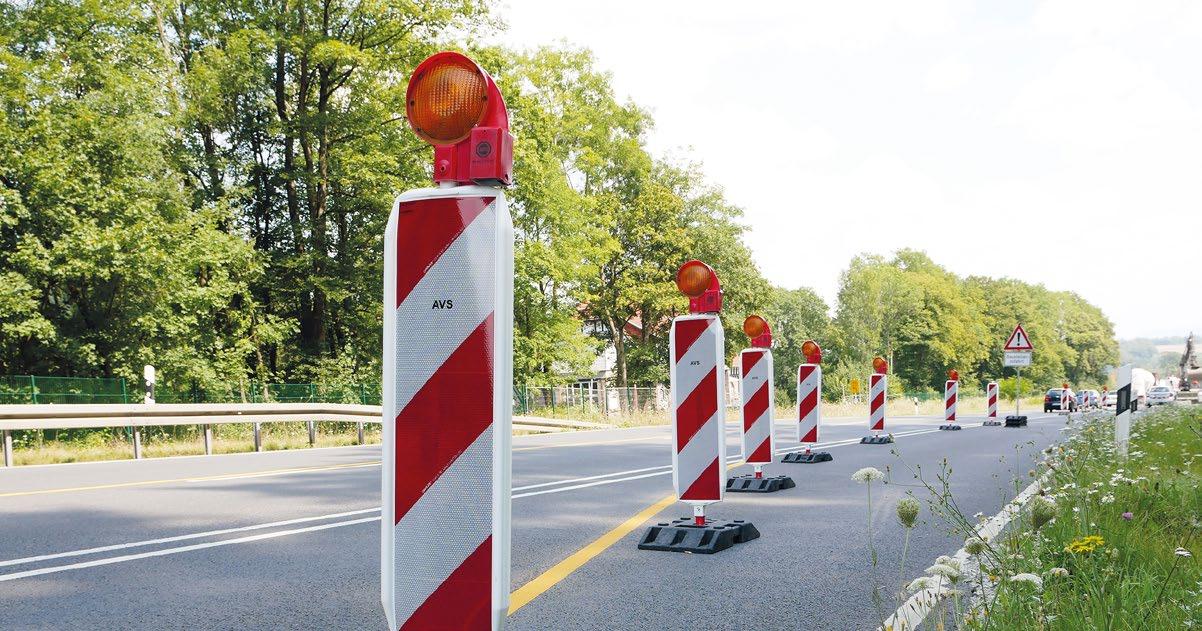
We are actively working to minimise our impact on climate change. In addition to contributing to a sustainable societal transformation, our ambitions also relate to our long-term competitiveness, as we meet the climate demands and expectations laid down by our stakeholders. Our business model, in which rental of products is a key component, entails a number of advantages. Instead of customers investing in their own products, they can rent them from us as necessary. By focusing on a long service life and high utilisation rates, we are striving to ensure that no unnecessary products are scrapped or remain unutilised.
Greenhouse gas emissions are categorised into three different scopes, depending on where in the value chain they arise, and the degree of control the company exercises over them. In 2024, we calculated and consolidated our greenhouse gas emissions at Group level for the first time and we established Ramudden Global’s emissions baseline, covering scope 1, 2 and 3. This means we included both emissions under our direct control and those generated across our value chain. We need this foundation in order to develop the strategy, a detailed plan and identify the relevant targets to reduce greenhouse gas emissions.
During the yar, we have continued to work on improvements regarding data quality and collection. We completed several acquisitions during the year, and as a result we have also established climate data reporting for the legal entities that have joined the Group.
In order to speed up the process, we have established multiple dedicated forums where we learn from each other and collaborate to reduce emissions in our primary CO2 emissions areas:
• A forum for reducing emissions from fuel consumption (scope 1) comprising vehicle managers from each business unit.
• A forum comprising representatives from the departments within each business unit that deal with procurement, suppliers and the purchase of goods and services (scope 3).
• Both of these forums also include environmental experts from each business unit.
Starting from the Group-wide baseline that we developed in 2024, we have continued to explore the next steps for a transition plan related to climate change during 2025. We have also continued our work on suitable targets for reducing emissions.
Our global sustainability declaration, together with local process descriptions within the business units, describes how we work to address climate change.
We are working to develop and establish targets for reducing Ramudden Global’s greenhouse gas emissions. These should be in line with scientifically accepted guidelines consistent with limiting global warming to 1.5°C, in accordance with the Paris Agreement. During 2025, we have established specific, shortterm targets for those markets that have not yet had any. These targets take into account our extensive journey of growth. Our operation in the UK has previously approved SBTi in line with the Paris Agreement for the business Chevron Traffic Management.
Several local initiatives are underway:
• Electrification and fuels. Several initiatives are underway to transition to hybrid and electric vehicles, as well as renewable fuels such as HVO (hydrotreated vegetable oil), to reduce emissions from the vehicle fleet. We have invested in electric vehicles in a number of markets, such as Belgium, Germany, the United Kingdom, Sweden and Finland. The latter two now have electric heavy-duty vehicles as well.
• Vehicle efficiency improvements. Local initiatives are in place to improve driving behaviour, optimise vehicle use and reduce idling. A good example of this is in the UK, where a new fleet management system was implemented in 2025 to optimise routes as well as improve safety and fuel efficiency. The system also identifies vehicles that are suitable for electrification. In Canada, we have equipped TMA crash vehicles with APUs (Auxiliary Power Units) to reduce diesel consumption when vehicles need to idle at work sites.
Progress is monitored twice a year with the aim of quickly starting to reduce our climate impact at the same time as growing the business. This allows us to steer towards lower emissions per unit of turnover already now, before assessing our absolute targets. The targets serve as a transitional solution while we simultaneously develop science-based climate targets in line with the SBTi in selected markets. This process requires extensive data validation, establishment within operations and a review of methods.
• Digital solutions. We are seeing an increase in the use of digital solutions, which is helping to reduce fuel consumption through automated functions. For example, Intellitag uses event-driven alarm functions to reduce the need for physical monitoring and transport. Smart batteries, solar-powered products and automated barriers are also driving developments in the same direction.
• Product development. We aim to reduce the environmental and climate impact of our product development and maintain close collaboration with our suppliers. Suppliers of concrete and steel are a particular focus, as these products account for a significant share of our environmental impact.
• Environmental training. In the UK, we have conducted training regarding climate change and environmental sustainability through an ESG Acclerator programme, where 30 future managers have been trained as ESG Ambassadors in various core functions and business units.
“Cross-border collaboration is crucial to creating sustainable solutions.”
During 2025, we developed a global performance measurement, a global scorecard, where CO2 emissions are one of six sustainability key performance indicators that are continuously monitored. The targets are currently set on business unit level.
Apart from this there is also local targes: in the UK, for example, we established approved Science Based Targets initiatives (SBTi) in line with the Paris Agreement for Chevron Traffic Management. This commitment requires us to reduce absolute scope 1, 2 and 3 greenhouse gas emissions by 42 percent by the 2030 financial year in the UK, compared with the 2021 base year. In 2025, our operations in the UK accounted for 28 percent of Ramudden Global’s greenhouse gas emissions.
The ambition for 2026 is to continue developing a strategy that is anchored in the organisation, local conditions, risks and opportunities, in order to reduce the company’s negative environmental impact in the best possible way.
Every year, our owner Triton, working alongside a third party, conducts an overarching climate-related screening/scenario analysis for the business. The analysis is a first step in understanding the potential impact of climate-related physical and transition risks, as well as in preparing the business for future potential climate scenarios. This analysis serves as an indicator rather than a basis for
assessing the climate-related areas in our DMA. We intend to initiate a more in-depth climate-related analysis in the future.
Enhanced climate reporting as the Group grows In 2025, we expanded our climate reporting by integrating the year’s acquisitions and new geographies, including the USA, Austria and Switzerland. This provides a more complete and comparable picture of the Group’s climate impact and means that our reported emissions base grows in line with the organisation’s expansion.
Total greenhouse gas emissions increased as more operations were included in the reporting. Emissions from acquired entities are reported from the date of acquisition. Emissions intensity also rose, primarily because several newly acquired companies in the USA operate in more CO2-intensive segments. The integration of these businesses enables us to introduce common ways of working and strengthen our long-term efforts to reduce emissions.
At the same time, several of our established markets, including the UK and Belgium, reduced their absolute emissions through local efficiency measures and a focus on fuel and energy use. These improvements help balance the Group’s emissions profile during a period of strong growth and structural change.
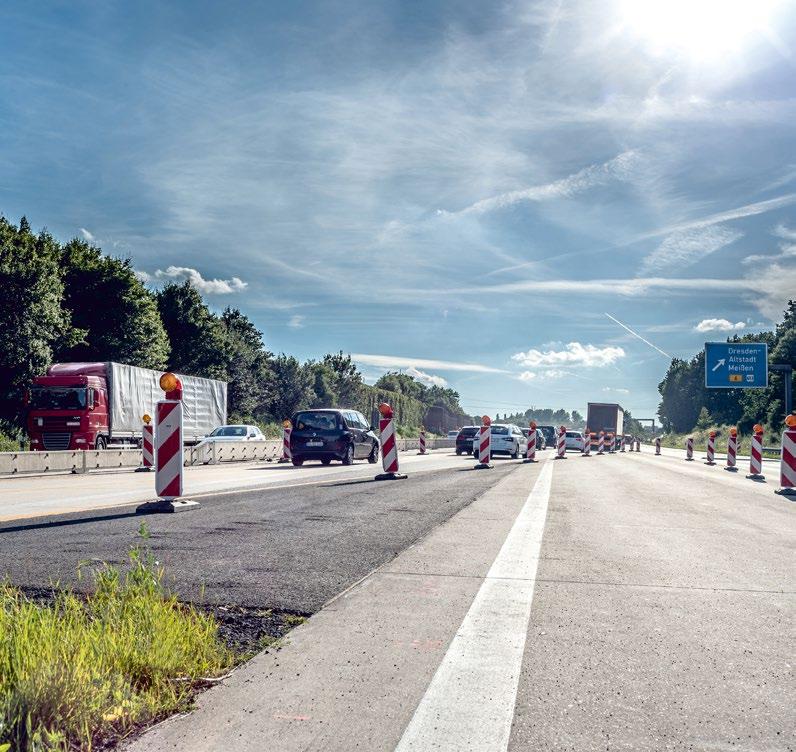
1.
2.
Our greenhouse gas emission calculations follow the methodology described in the GHG Protocol. All emissions are reported in tonnes of carbon dioxide equivalents (CO2eq) and include all relevant greenhouse gases as specified in the Kyoto Protocol. For the conversion of greenhouse gases to CO2eq, global warming potentials (GWP) based on the IPCC Fifth Assessment Report (AR5) are used, (2013. Chapter 8, Table 8.A.1, Lifetimes, Radiative Efficiencies and Metric Values) over a 100-year period in order that conversion factors are in line with current national and international reporting requirements. Our energy use is reported in MWh. Data collection is carried out locally and consolidated at Group level.
1) Calculations for scope 1 are based on actual fuel consumption in litres, with data primarily obtained directly from suppliers where available. Emission factors are sourced either from suppliers or from relevant public sources such as DEFRA, the National Inventory Report from the Government of Canada, the US EPA GHG Emission Factors Hub and UBA Germany. Our vehicle fleet uses biodiesel, which is a form of bioenergy. These emissions are captured within scope 1. For a limited part of the business where we currently have restricted access to scope 1 data, we have extrapolated the calculations to ensure comprehensive reporting.
2) Calculations for scope 2 are based on consumption of electricity, natural gas and other energy sources. Data is primarily obtained from suppliers. Emission factors for the market-based method are sourced either directly from suppliers or from public sources relevant to the region where the energy is consumed. We purchase our renewable electricity certificates as part of our electricity supply packages. For a limited part of the business where we currently have restricted access to scope 2 data, we have extrapolated the calculations to ensure comprehensive reporting.
3) Our scope 3 emissions include both our upstream and downstream value chain.
4) For purchased goods and services, as well as capital goods, we have primarily calculated emissions using EPA emission factors and a spend-based method (kg CO₂e per US dollar). We have also applied specific emission factors based on LCAs for products where such data was available. As our reporting matures, we will gradually evaluate the possibilities of using more product-specific information, including supplier data and LCA-based emission factors. During the year, we have gained improved data access and increased transparency in these categories. Therefore, the underlying data for Scope 3 categories 1 and 2 has also been updated retroactively for 2024 to ensure greater consistency and comparability over time. Water emissions are also calculated using DEFRA emission factors applied to water consumption volumes.
5) Calculations for upstream fuel-related activities are based on actual fuel consumption and DEFRA emission factors.
6) For our freight-related scope 3 emissions, we have adopted a hybrid approach, applying both spend-based and distance-based calculation methods. Due to limited data availability, EPA emission factors were applied.
7) Our waste emissions are calculated by applying DEFRA’s emission factors for waste, where we identify the type of waste and its disposal route, and using the relevant conversion factors.
8) For business travel, we calculated our emissions based on travel type (air, rail, bus, etc.), distance and travel class. We also used a spend-based method where data availability was limited.
9) For employee commuting to and from the workplace, we applied country-specific surveys on commuting patterns and DEFRA’s average intensity data for home working.
10) We currently have limited insight into the end-of-life treatment of sold products and have therefore only calculated related emissions for products where we have an LCA.
A fundamental component of our offering is the product rental of our equipment. Our operations are based on principles that support circular working methods, where high utilisation rates and long-lasting products contribute to the efficient use of resources in projects. We are constantly developing our working method, employing local initiatives that drive both efficiency and improve solutions in our projects.
By managing our products in a well thoughtout way throughout their lifecycle, we can both extend their useful life and reduce the environmental impact of materials and components. As a result, we prioritise the development of products that are easy to maintain and repair, so that they can be used for a long time. We are striving to work in line with to the waste hierarchy, in order to reduce both resource consumption and the environmental impact associated with waste. This means that we need to get better at taking into account the origins of raw materials and material combinations in our products, so that recycling and reuse are made easier and waste volumes are reduced.
At a local level, several of our markets already have clear targets for reducing waste and extending the service life of the products. A number of initiatives are also in progress linked to specific product areas – such as adapting the manufacturing process for road markings and signs so that different parts can be recycled. We are also evaluating the potential to convert recycled concrete into new concrete products.
Our ambition is to develop a specific environmental policy in 2026, which will include resource use and the circular economy.
Waste management has historically been carried out locally. This has resulted in a range of local targets and initiatives focused on reducing landfill waste. These targets will remain in place until Group-wide targets have been established.
• In the UK, we have launched a project in which old, damaged plastic products are ground down and given a new life in a different form. As a result, more than 18 tonnes of plastic in the form of cones, cone accessories and barriers have been sent for recycling instead of going to landfill.
• Belgium is one of our markets that has particularly high demands. During 2025, we have implemented detailed digital waste tracking and analysis, as well as adopted a robust approach to training employees in respect of resource efficiency and circular principles.
• In Sweden, projects are being run to reuse concrete barriers that can no longer be repaired, giving them a new lease of life in other types of operations where the products are not subject to the same critical safety requirements.
Waste management and data collection are carried out locally, and the ability to collect activity data depends on local conditions, such as how the waste collection company charges, sorts and measures volumes. The majority of business units use actual
and direct measurements from their
waste management provider. The data is therefore based on the weight specified on the invoices. Where actual weight is
We operate in high-risk environments. As a result, a safe working environment for both employees and customers is always at the top of the agenda. A good safety culture is built from the ground up through awareness and a risk preventive approach, although this is a job that is never really completed.
Our employees spend time in high-traffic environments when deploying and dismantling temporary workplaces. Every working day is associated with several risk factors. For this reason, we are constantly working on risk elimination and awareness, as well as creating a basic safety culture by training employees in respect of safe procedures, behaviours and instructions, while also improving our processes. At a local level, the business has always been characterised by a risk-awareness approach.
At Group level, we have previously identified several areas of impact, risks and opportunities related to our own workforce. Here, we are referring to all those who make up our workforce, regardless of their form of employment. The majority of our workforce is made up of direct employees, although employment types vary from market to market due to local differences in hiring practices and changes in labour needs, such as seasonal variations. Our workforce therefore includes direct employees, project employees and hired personnel. Much of the work we carry out regarding social sustainability therefore naturally also addresses employees in the value chain.
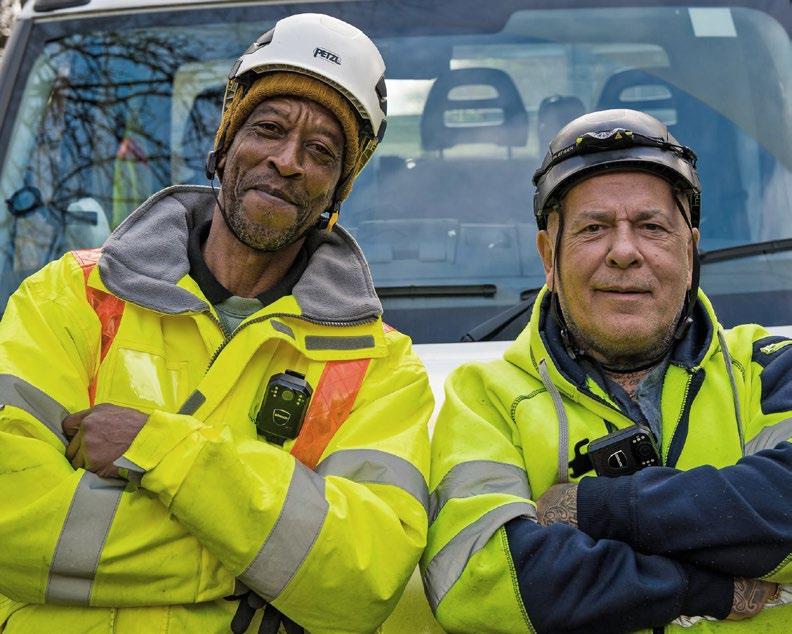
Our
The management of our employees’ working environment and their health and safety is critical to us; our success is ultimately determined by their well-being, commitment and competence. As described in the introduction, employees are often present in hazardous environments on and around busy roads, construction sites and industrial areas. The risks primarily affect those who deploy, dismantle and supervise various projects in traffic environments.
Unfortunately, the high-risk environments are also associated with violence and harassment from third parties. Countering violence and harassment is therefore an important part of creating safe workplaces. Aggressive road users, who are offensive towards employees who are working in traffic on various projects, are a real occupational health and safety problem in our industry. This is particularly relevant for operations in the Nordics, the Baltics and the United Kingdom, as confirmed by local employee surveys.
Number of fatalities1) 0 0 Number of work-related accidents2)
182 – of which accidents resulting in absence3) 150 147
Proportion of work-related accidents (LTIFR)4) 12,2 13.2
Data collection and management of accidents are carried out locally and then consolidated at Group level. The calculations apply to all members of our workforce, regardless of their form of employment.
1) Refers to the number of fatalities caused by workrelated injuries.
2) The number of work-related accidents refers to the recordable work-related accidents.
3) The number of work-related accidents refers to recordable work-related incidents resulting in more than one day’s absence, i.e. lost time injury (LTI).
4) The method for calculating fatality/accident frequency reflects the approach recommended in the ESRS. It is calculated by counting the number of workplace accidents resulting in more than one day’s absence and dividing this by the total number of hours worked, multiplied by one million hours. In this way, the lost time injury frequency rate (LTIFR) shows how many work-related accidents occur per million hours worked.
During 2025, we have adapted our governing documents at Group level through an in-depth dialogue with the business units’ health and safety experts. The aim was to gain a better understanding of the local conditions and challenges. The initial outcomes have been an expand-
At Group level, our ambition for 2029 is as follows:
• Zero employees seriously injured or killed at work
• Lost Time Injury Frequency Rate: <9
The following measures in relation to workplace safety have been ongoing or planned:
• Global framework. The global approach within health and safety has been developed through close collaboration with the business units’ own health and safety teams. We have continued with monthly meetings focusing on the exchange of knowledge regarding incidents, accidents and related measures and risk assessments.
In addition, we are in the process of expanding our cooperation through more thematic discussions and a closer follow-up of the business units’ initiatives.
• Monitoring of key figures. For each business unit, we monitor the trends of incidents and accidents. The trends are discussed with the individuals responsible for safety and sustainability within each business unit. The management of each business unit, as well as the Board, receives a monthly summary of safety key figures. They also receive a more in-depth review of these key figures, together with sustainability key figures, twice a year.
• Ongoing training. In order to work at Ramudden Global, everyone receives function relevant employee training regarding safety. We continuously develop our safety training to ensure that all employees, especially those working in high-risk environments, are fully equipped to handle potential hazards. This includes updates to safety protocols, ISO updates, procedure reviews, equipment handling, annual incident reviews and corrective actions, as well as emergency procedures. 85 percent of our employees have completed safety training in the past two years.
• Annual safety days. We conduct annual safety days in conjunction with the ILO’s “World Day for Safety and Health at Work”, during which we highlight a safe working environment from various perspectives. We do this through workshops, training courses, visits by the management team to the depots, as well as awards for those depots that really stand out.
ed health and safety policy together with Group-wide guidelines. 58 percent of our employees are covered by the health and safety management systems. Since the actions of third parties are beyond our control, it is difficult to deal with violence and harassment from
During 2025, we have developed a global scorecard that will be reviewed during the business units’ business reviews. It includes targets for LTIFR (Lost Time Injury Frequency Rate) and SIF (Serious Injuries and Fatalities), along with other financial and sustainability-related targets.
external sources by means of a Group policy. One thing we can do, however, is to help prepare our employees and to develop procedures and preparedness that help mitigate the consequences.
• Risk assessments. We carry out ongoing risk assessments, which include internal audits and inspections, personal risk dialogues, emergency procedures and safety training. These assessments may cover machinery safety, vehicles, ergonomic evaluations and the handling of chemicals, to name a few examples.
Local initiatives during the year include:
• Germany. We have restructured and expanded the health and safety organisation in line with growth in order to proactively prevent accidents and manage risk analyses.
• Belgium. A higher implementation rate for internal audits relating to safety and well-being, with following-up of corrective measures in cooperation with project managers. Comprehensive training programmes for all operational personnel in the fields of first aid, fire safety and job-specific risks (such as working at height, forklift operation, etc.).
• UK. An AI-powered telematics solution that is improving safety through alerts and individual coaching of drivers has been implemented. Through this solution, it is possible to monitor factors such as seat belt use, driver fatigue and mobile phone usage, as well as other metrics such as speed violations, hard braking and acceleration. We have already seen clear improvements in the safety statistics, such as increased use of seat belts, reduced mobile phone use and fewer insurance claims linked to vehicles. We have also conducted an externally accredited training course regarding behavioural safety for our health and safety team. More than 250 operational staff will be trained during 2026.
• North America. We have restructured and expanded the health and safety organisation in line with growth, as well as to proactively prevent accidents and manage risk analyses. Given the strong growth here, the focus this year has been on adapting the business and achieving a shared foundation.
As regards violence and harassment, we have continued our work to gain further insight into the incidents and circumstances in order to establish a Group-wide starting point. We have not yet set any specific targets in this area.
Our actions in the area of health and safety are informed by discussions within our working group of internal health and safety experts, the results of employee surveys and analysis of the workplace accidents, incidents and events that are reported. The effectiveness of the measures is measured by the number and categories of workplace accidents and incidents, as well as the reporting of leading indicators. Measures planned or underway to limit the negative impact of violence and harassment include:
• Digital products. Deployment of digital devices that provide warnings of danger and unauthorised intrusion at work sites.
• Processes and procedures. To prevent and manage harassment and violence from road users, we have, where relevant, begun to develop and implement clear procedures for handling threats and violence.
A number of measures have been implemented locally:
• In the Nordic and Baltic regions, we have been working on this area through the National Work Environment Committee. We have also produced a film about threats, violence and attitudes/types of behaviour at roadworks sites.
• In Norway, the occupational health service has shared tools and discussed techniques with employees in order to work on the de-escalation of conflicts and heated situations.
• In Belgium and the Netherlands, we have developed a specific policy as well as guidelines for dealing with aggressive behaviour by third parties.
We sometimes deliver complete solutions, while at other times we only address certain parts of a project. Regardless of the scope of the assignment, we always put safety first, so that our customers feel safe and can concentrate on their work. Because just like our own employees, our customers’ employees also spend time in high-risk environments while carrying out their work – environments that are characterised by traffic, stress and the handling of heavy materials. Road users also move about in connection with the worksites, in or on vehicles and on foot.
The safety of customers and road users is therefore crucial to us and forms part of our mission to ensure that everyone gets home safely every day.
You can read more about how we work with customer and road user safety in the chapters about our operations, business model, value chain and sustainability strategy.
For us, working to ensure the safety of our customers and road users is equivalent to ensuring quality in delivery, because safety is the primary value we sup-
In every project, quality of delivery – and thus enhanced safety – is the goal. At Group level, our focus
• General quality improvement. Every completed delivery and every initiative in product development is a measure in itself, as the aim is always to enhance safety.
• Ongoing checks. We inspect and maintain signs, barriers and other equipment for temporary setups to ensure they always comply with the requirements.
• Customer survey. We conduct an extensive customer survey by sending out questionnaires in the Nordic and Baltic regions, focusing on safety for our customers and the quality of the delivery.
• Collaboration with customers. We work closely with our customers and suppliers regarding health and safety, as well as in relation to product development. This applies, for example, to the enhanced mobile carriageway closure (EMCC) solution, which prevents collisions with safety vehicles by creating a controlled, traffic-free zone where employees can install and dismantle temporary traffic devices. Any incursions into the workplace are managed using integrated digital warning technology.
• Project group for external safety. The project group, with a focus on external safety, is develop-
ply. The close connection with delivery means that our approach and guidelines for this area permeate a range of different documents and processes.
is on developing a structured analysis and measurement of safety for our customers and road users.
ing the analysis and monitoring of safety for our customers and road users. As a basis for future priorities, the team has conducted a study during the year in order to chart international public accident statistics related to accidents at roadworks.
• Ongoing training. Various safety training sessions to ensure that those working in high-risk environments, including workers in the value chain, are fully equipped to handle potential hazards.
• Risk assessment. Risk assessment through internal audits and inspections of installations, including personal risk dialogues and emergency procedures.
• Regulation updates. We always monitor and comply with current legislation and road safety regulations, and deliver products that meet all safety standards.
Our actions in the area of safety are informed by discussion and collaboration with customers and industry organisations. The effectiveness of the above measures is currently assessed through dialogue with our customers and within industry organisations.
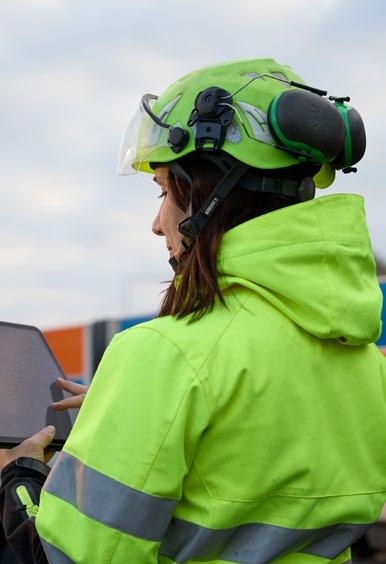
Having satisfied and happy employees is a prerequisite for us as a company to be successful. Our long-term goal is to have the most satisfied employees in the industry, and we are therefore focusing on strengthening the internal dialogue, developing processes to drive measures, identifying and further developing talent, as well as strengthening our corporate culture.
Our employees are one of the Group’s most important stakeholder groups, and we have launched initiatives and improvement measures during the year aimed at further strengthening their satisfaction with us as an employer. We have been working on multiple fronts to develop the Group-wide foundation for the next steps, including through better data collection for decision-making and a continued focus on promoting and developing our talents with our annual Business School (read more on page 7). A number of initiatives have also continued locally, including committees, working groups and employee dialogues.
Human rights and fair working conditions are fundamental to our business. This applies both internally, in our relationships with our stakeholders, as well as in the communities in which we operate. Respect for the freedoms and rights of individuals, as well as compliance with internal policies and relevant laws, regulations, regulatory requirements and guidelines in our markets, are key elements for responsible and sustainable business.
Any breaches of international norms and
standards for human rights must be addressed based on the specific context of each case.
Since Ramudden Global was established at the end of 2020, no violations of human rights or internationally recognised norms or standards have been verified. We also see no indication of high risk of forced labour or child labour in any part of our operations.
Our policies addressing human rights are our Anti-Slavery and Human Trafficking Policy, our Internal Code of Conduct, our Health and Safety Policy, as well as our Gender Equality and Inclusion Policy. These are in line with the UN Guiding Principles on Business and Human Rights and the International Labour Organization’s (ILO) Declaration on Fundamental Principles and Rights at Work.
At present, we have not set any targets for the Group as a whole in relation to human rights and working
During the year, we have further developed common policies for health and safety as well as for gender equality and diversity. We have also followed up training courses and further developed strategies to provide our employees with additional protection against accidents.
Next year, we are planning to establish improved internal governance in this area, as well as a proactive approach to preventing breaches of human rights.
These policy documents, further developed at Group level in 2025, apply to all our employees as well as our hired personnel. The markets subject to local legal requirements to maintain a specific policy on human rights and slavery (Belgium, Canada, the Netherlands, Norway and the United Kingdom) have already established this.
conditions, but we are continuing to work consistently to ensure that there are no violations of human rights.
Over the course of the year, we have also developed and rolled out internal KPIs in relation to our employees for monthly reporting, and have developed our processes to ensure better monitoring of targeted actions based on the results of the employee survey. Employee reviews between individual employees and their managers also take place annually.
Gender equality is a key issue for us, both because it is a fundamental principle of a just society and because a more equal workforce provides us with access to a broader skills base. Women are generally underrepresented in our industry. The construction sector is one of Europe’s most male-dominated industries and, according to Eurostat, women make up only around ten percent of employees, a level that is similar to both the defence and mining industries. This imbalance is particularly
To manage risks to and impacts on our employees, we apply our policy on gender equality and inclusion. This policy sets out how we counteract discrimination, how
evident within the traditionally more physical professional roles, although the gender divide is also uneven among white-collar workers. At the end of 2025, 21 percent of the employees in our organisation were female. As an employer, we have both the responsibility and the opportunity to contribute to positive change in the sector by creating an inclusive culture that values and actively promotes diversity from multiple perspectives.
we promote equal opportunities for all and various ways to increase inclusion and diversity. The grounds for discrimination covered by the policy are aligned
with international norms and standards. Irregularities are identified through the employee survey and dialogues and via the whistleblowing channel.
We have continued to establish a baseline for our work on gender equality, work that will form the basis for the targets we set in this area.
During the year, the following measures have continued or been planned in relation to equality:
• Local partnerships. Local community partnerships in the majority of our markets (including North America, Germany, Belgium and the United Kingdom) to increase employment opportunities for marginalised individuals facing barriers to employment, such as
women, refugees and people with disabilities.
• Training. Training programmes for gender equality and diversity, such as the organisational DEI (Diversity, Equity and Inclusion) framework.
• Equal opportunities. Mentoring programmes and tailored career development pathways to ensure equal opportunities and advancement within the
organisation in Belgium and Norway.
Data on the number of employees who are women and men, as well as the results of the employee survey, inform our actions in this area. The effectiveness of the above measures is measured by the results of the employee survey and recruitment outcomes.
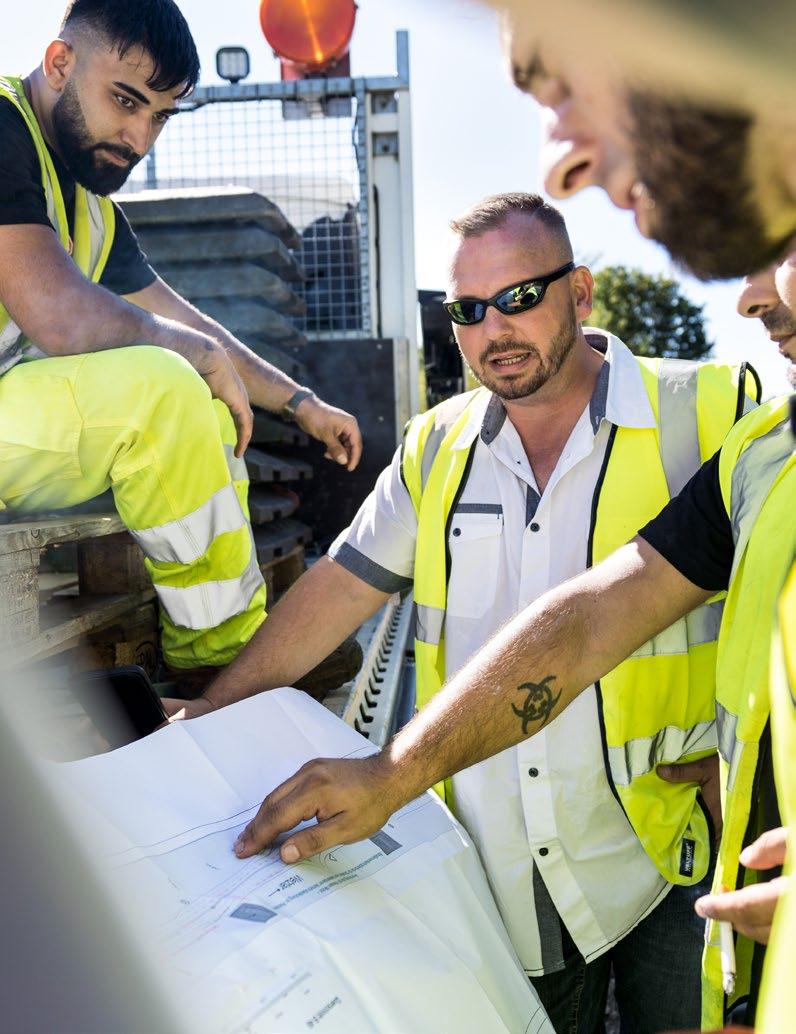
“As an employer, we have both the responsibility and the opportunity to contribute to positive change in the sector by creating an inclusive culture.”
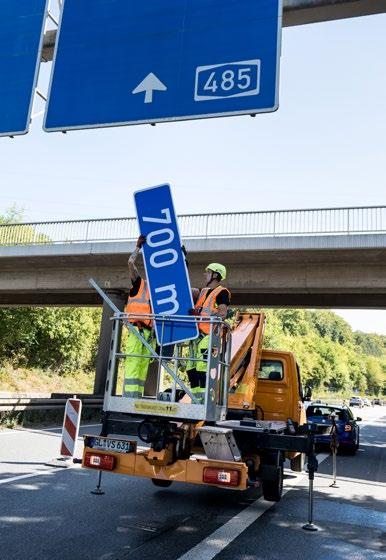
Method and estimates
When reporting the number of individuals in the Sustainability Report, this is presented as a headcount as at 31 December 2025, unless otherwise specified. This differs from note 7 in the financial statements, which presents the average number of employees calculated as full-time equivalents (FTE) during the year. As Austria is not yet included in the Sustainability Report, this differs from the financial statements.
1) The Board of Directors is not included in the total number of employees
We work actively to maintain a sound corporate culture with high integrity, regardless of the market. This means that we are clear about the types of behaviour we expect from all employees across the organisation. It is fundamentally a matter of ensuring that our stakeholders feel safe with the actions we take, while also ensuring that we operate according to ethical guidelines.
Business conduct encompasses the principles and practices by which Ramudden Global is governed and controlled, with a focus on transparency, ethical conduct and responsibility. All stakeholders should be able to feel confident that we always act in an ethically, socially and environmentally responsible manner. Through our actions we show respect for each other, as well as safeguarding our professional pride, our reputation and all those who come into contact with us. In this way, we create the conditions to deliver high quality, maintain a healthy corporate culture and contribute to a sustainable society. We consider it essential to work in line with the UN Guiding Principles on Business and Human Rights, ILO principles as well as OECD guidelines. The senior management has the ultimate responsibility for ensuring we always act ethically and in accordance with the guidelines for responsible business conduct.
The independent whistleblowing channel, which is available to internal and external stakeholders in all business units, is important when it comes to enabling the reporting of suspected breaches or irregularities in connection with our activities. This can, for example, relate to criminal activity, environmental
damage, inappropriate behaviour, financial irregularities, fraud, failure to comply with laws and requirements, bribery, health risks and the deliberate concealment of any of these.
We have previously begun mapping our suppliers in order to develop a Group-wide strategy for supplier management, based on due diligence. In the future, we will be further developing our policies in line with the EU’s CSDDD, as well as integrating them at Group level. This, in turn, will lead to a Group-wide approach to managing compliance with human rights and internationally recognised norms or standards.
During the year, we have further developed our policy framework covering, among other things, anti-corruption and bribery, anti-money laundering, sanctions, code of conduct and sustainability. Ramudden Global’s board is ultimately responsible for these policies, yet ownership lies under each relevant department. The policies that promote responsible business
Work on the integration of our policy framework has continued during the year, during which we have
The mechanisms and processes required to identify and report illegal behaviour or conduct that contravenes our codes of conduct are managed locally. This includes, for example, national guidelines for gifts, bribery and hospitality, including monetary limits, types of gifts and reporting protocols.
conduct are rooted in Ramudden Global’s mission – To get people home safely every day – as well as our shared values: safety, customer focus, care and entrepreneurship. The guidelines help us achieve our mission by creating internal structure, providing guidance and establishing standards. Our policies are continuously updated to remain aligned with
regulations, expectations and changes, and help us foster a strong corporate culture at all levels. All relevant policies are aligned with the UN Guiding Principles on Business and Human Rights, the UN Convention against Corruption, ILO principles and OECD guidelines.
improved and adapted our instruments following feedback from stakeholders within the organisation.
We have not set any specific targets for business conduct during the year.
During the year, we have undertaken the following:
• Mapped our existing processes for sharing policies with employees as well as for follow-up.
• Evaluated approaches at Group level as well as locally to develop how employees access policies.
• In the UK, we have implemented a new joint
learning and skills management system to ensure that all compulsory training courses and policies are performed by our employees. Within these frameworks, we also support the development of our employees by offering additional training.
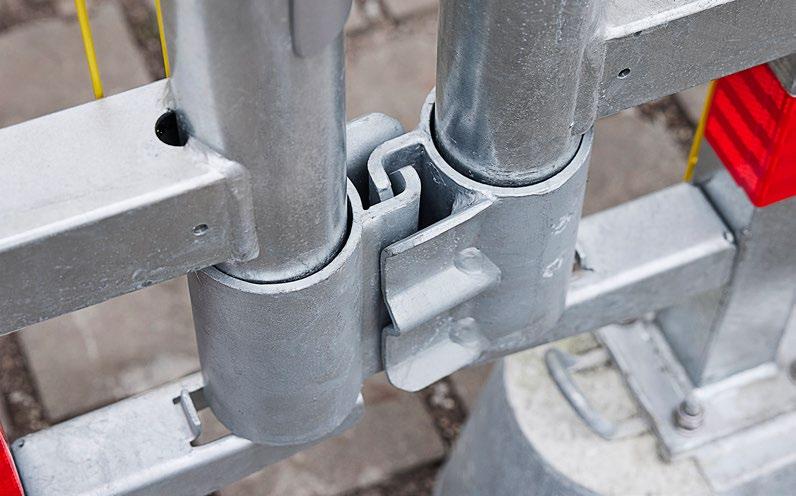
In several of our markets, we are certified in accordance with ISO and other standards to maintain robust management systems aligned with international best practice standards:
ISO 9001 (quality management system). Sweden, Norway, the United Kingdom and the Netherlands, as well as parts of the German operations and parts of the Canadian operations.
ISO 14001 (environmental management system). Sweden, Norway, the Netherlands and the majority of the UK operations. In
development within the German operations together with EMAS.
ISO 45001 (occupational health and safety management system). Sweden, Norway, the majority of the UK operations and parts of the Canadian operations.
ISO 50001 (energy). Belgium as well as the majority of the UK operations.
VCA certification (health and safety and environment). The majority of the Belgian and Dutch operations.
We operate in an industry where there is a tangible risk of corruption and bribery, issues that can negatively affect both human rights and society. The risk of corruption can occur throughout the value chain, especially in the supply chain. The most vulnerable functions in the organisation are those that are in direct contact with customers and suppliers, as well as those involved in public procurement. We have zero tolerance for all forms of corruption and bribery. In order to prevent and detect suspected infringements and potential crimes, we are constantly developing and implementing various control mechanisms. When investigating suspected cases of bribery or corruption offences, we handle the reporting of results on a case-by-case basis.
During the year, we have further developed our global policy framework covering, among other things, anti-corruption and bribery.
Our global objective is to have zero verified cases of corruption or bribery in which our employees have been involved.
• Training. All employees are to receive training in our code of conduct and policies relating to anti-corruption when they join the Group and on a recurring basis. We are now developing guidelines and a framework to enable us to monitor the proportion of employees who have received annual training.
Of which, number of legal cases concerning corruption brought against the company or our employees 0 0
Of which, number of cases where employees have been dismissed due to corruption 0 0
• Internal control. We conduct internal controls and audits to monitor financial transactions and business practices, as well as to ensure compliance with anti-corruption policies. This may include spot checks, audits of high-risk departments and a review of all third-party contracts and relationships to reduce the risk of corruption.
• Supplier relations. Our work with suppliers, the selection of suppliers and following-up has been handled locally. Our ambition is to develop a Group-wide approach to supplier management based on due diligence.
“It’s great to see people and businesses grow.”
How can Ramudden Global secure a skills supply and at the same time contribute to the society around us? One way is to support young, local talent and show them that a professional career in traffic safety can be a solid way forward. In the UK, a number of initiatives are in progress aimed at widening the talent pool.
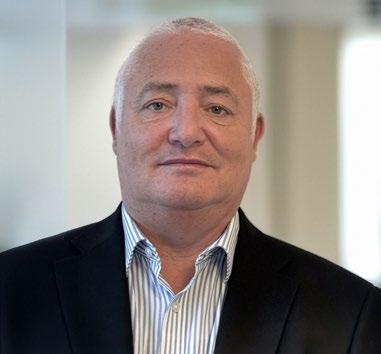
With an ageing population and competition for labour, it is difficult for a relatively unknown industry such as that of Ramudden Global to attract new employees. In addition to a lack of awareness about the industry, there is also a high staff turnover in many of the less skilled entry-level roles. This is something that Ramudden Global in the UK has noticed.
Darren Gagan is People Director for Ramudden Global in the UK and works on issues such as long-term inclusion and skills supply initiatives. One of the programmes is Early Careers, which focuses on attracting, developing and retaining people between the ages of 16–25 in the road safety industry (although individuals must be at least 18 to work on the roads). It’s clear that Darren Gagan is really passionate about his cause.
“It’s not just about filling vacancies, it’s about giving young people a sense of meaning, structure and pride by contributing to the safety of the community. Getting to see their confidence grow as their careers take off is incredibly satisfying.”
A number of activities take place within the framework of Early Careers. Ramudden Global’s Talent team in the UK visit schools and
various local agencies, as well as offering paid internships and apprenticeships, mentoring and training in the industry’s core competencies. In time, the young people will have the opportunity to grow into a role as a permanent employee.
The initiative is rooted in Ramudden Global’s business and strategic priorities, recognizing that securing a steady inflow of employees is essential to supporting long-term growth.
The aim is to achieve a more diversified group of employees, a reduction in staff turnover through early engagement, as well as the ability to provide the entire organisation with an injection of energy thanks to new team members with different perspectives.
“At the same time as working in line with our business interests, we are contributing to society and offering young people new opportunities,” says Darren Gagan. “In addition, getting involved locally and offering meaningful career paths for young people is strengthening our position as a socially responsible employer and providing us with credibility in tendering procedures.”
Planting a seed for the future
So what was the result? The response has been overwhelmingly positive from schools,
local communities and the young people themselves. The initiative has also attracted attention externally: In 2025, Concilium, a service company within Ramudden Global in the UK, was named as one of the top 50 employers across the whole of the UK, regardless of industry, for its work on apprenticeships.
Since the start of the initiative in 2023, 250 young people have taken part in activities such as school visits, practice interviews, career programmes aimed at young people and support for STEM (Science, Technology, Engineering and Mathematics) activities through local educational institutions. The mentors testify to school-weary youngsters who flourish, and to date 36 youngsters have gone on to permanent positions. Included among these numbers are some real feel-good stories, with participants in the apprenticeship scheme now holding supervisor positions in charge of their own teams.
More than anything, Darren Gagan wants to plant a seed for the future, showing that it is possible to build a rewarding working life in this sector.
“The whole industry needs to work together to attract more young people. If I were to advise others, I would tell them to start small,
“It’s
about giving young people a sense of meaning, structure and pride by contributing to the safety of the community.”
through partnerships with local schools, to engage their employees and, most importantly, to listen to the young people in order to design the programme based on their needs and aspirations.”
The next step in Early Careers is ‘reverse mentoring’, where the young talents will teach their older colleagues about digitalisation and smart, innovative working methods, for example. In short, this mutual exchange is creating a positive spiral, for both Ramudden Global and the local community.
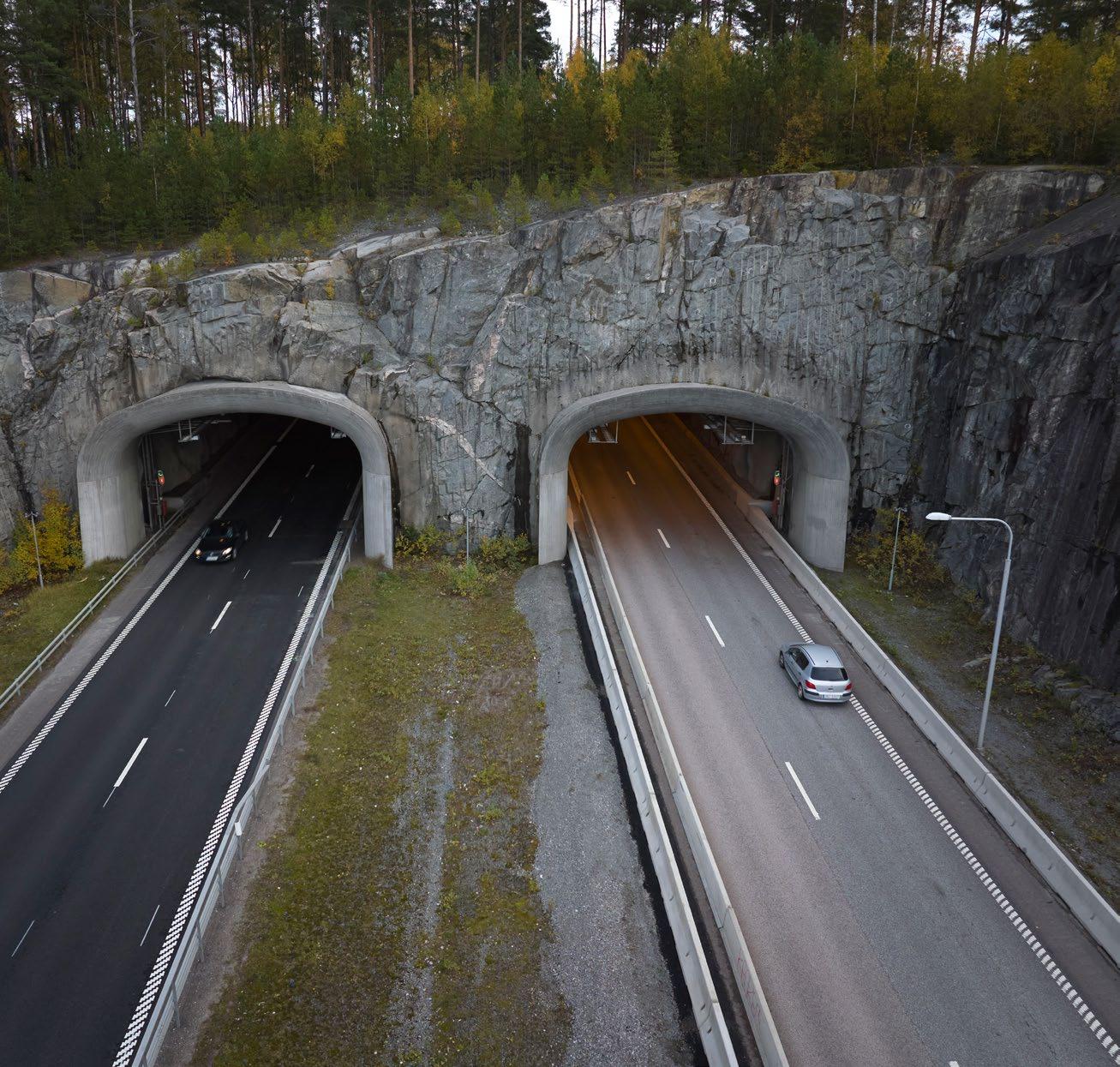
Ramudden Global’s operations are influenced by a number of external factors, the effects of which on the Group’s operating profit can be controlled to varying degrees. To mitigate potential risks, we therefore conduct ongoing and structured risk management activities.
The process of identifying, evaluating, managing and monitoring risks forms an important part of the governance and control of Ramudden Global’s operations. We have an established risk management process that serves as a framework for this work. The aim is to provide a Group-wide view of the risk landscape, minimise negative impacts on results and clarify responsibilities and authorities. Compliance with the rules is monitored by the designated party and reported to Group management. In this way, we can make continuous improvements and minimise potential risks. The highest governing body for risk management is Ramudden Global’s Board of Directors and its Audit Committee, which regularly addresses these risks. During the year, a joint workshop was held together with the Group’s business areas to identify and verify the Group’s principal risks, including sustainability risks.
Senior executives from Group and business area management are represented on local boards or through ongoing business reviews within the business units. Through this work,
control activities and the monitoring of, among other things, risks are decided and implemented locally.
The Group’s broad geographical presence, combined with the number of customers and suppliers, provide a solid underlying diversification of risk.
Risk assessment relating to financial reporting aims to identify and evaluate the most significant risks affecting the internal control in respect of the financial outcome and financial reporting within the Group’s entities, business areas and processes. The current situation is assessed and areas for improvement are determined. Control activities are evaluated and assessed on an ongoing basis.
With regard to sustainability risks, we develop frameworks centrally which are communicated to and implemented in each business unit. These cover approaches and guidelines in areas such as the environment, employees, business conduct and anti-corruption, responsible supply chains and
partnerships, as described in more detail in the Sustainability Report. Risks are to be minimised through compliance with codes of conduct for employees and suppliers, as well as other policies. You can read more about sustainability risks on pages 42-43.
Crisis management, monitoring and evaluation
Ramudden Global’s crisis management is decentralised. Events are managed and addressed locally wherever possible, close to where the incident occurs. In cases where a more serious incident occurs that may affect the Group as a whole, Group management and the Board of Directors must be informed and assess how the incident should be handled. Insurance is managed locally by each subsidiary, but there are plans to coordinate this centrally.
Monitoring to ensure the effectiveness of internal control over the financial outcome and financial reporting is carried out by the Board of Directors, Group CEO, Group CFO, Group COO and Group management, as well as by the management of each subsidiary. Monitoring
includes monthly financial reports with comparisons against budget, the previous year and targets, with written commentary presented at performance reviews.
Monitoring also includes follow-up of observations reported by Ramudden Global’s auditors. We follow an annual plan based on the risk analysis, covering prioritised entities, acquired entities, key processes and specific risk areas such as intangible assets and the valuation of accrued income and trade receivables. An evaluation of internal control is carried out each year, verified by our auditor and reported annually to the Audit Committee. This evaluation then forms the basis for the Group’s improvement measures.
A limited review has also been carried out of the Group´s interim financial statements January - June, 2025, as part of the sales process.
Within Ramudden Global, a risk is defined as a future event that could adversely affect the Group’s ability to achieve its objectives. The risk definition focuses on risks with significant potential to threaten one or more of the defined strategic objectives. Risks are categorised as financial, operational and sustainability-related, and are assessed based on their impact on overall strategic objectives – specifically in terms of materiality and the likelihood of occurrence within the next five years. For each risk, we also develop mitigation measures and action plans. The risks are then mapped based on probability and impact.
2025 was marked by success and significant achievements for Ramudden Global, despite many challenges in the world and geopolitical tensions, we have managed to continue acquiring and developing the company, a growth journey that now continues with the new owner I Squared Capital.
A balanced focus on the company’s long-term and short-term goals is a central part of the board’s work. During the year, we have made progress in several different areas. The Group’s geographical presence was expanded through nine acquisitions, with each acquisition contributing valuable synergies and further strengthening Ramudden Global’s decentralized business model. On April 1, 2025, Curtin & Co in Charlotte, USA was acquired, strengthening the company’s presence in North America. The collaboration between the board and management has continued to be very positive throughout the year. Together, we have evaluated various strategic choices and projects as well as identified both opportunities and risks. One of the strengths of Ramudden Global’s decentralized business model is its ability to quickly and flexibly adapt effectively to local changes. In a highly changing environment, this is extremely valuable.
During 2025, the strategy has been clarified regarding future growth areas and implemented across all business segments.
In 2025, efforts to find a new owner for Ramudden Global were intensified. The work has involved several external parties at all levels of the company’s management as well as the board. At times, it has been very intense for everyone involved. I look forward with excitement to handing over the chairmanship and would also like to take the opportunity to thank everyone on the board, the management team, and the entire organization for their commitment and valuable contributions during the year. These dialogues and ideas help a future owner continue to develop Ramudden Global. There are still many markets to explore where safety needs to be strengthened.
“With a decentralised business model and our corporate governance at Ramudden Global, we ensure that the highest customer value is achieved”
Lars Blecko Chair of the Board
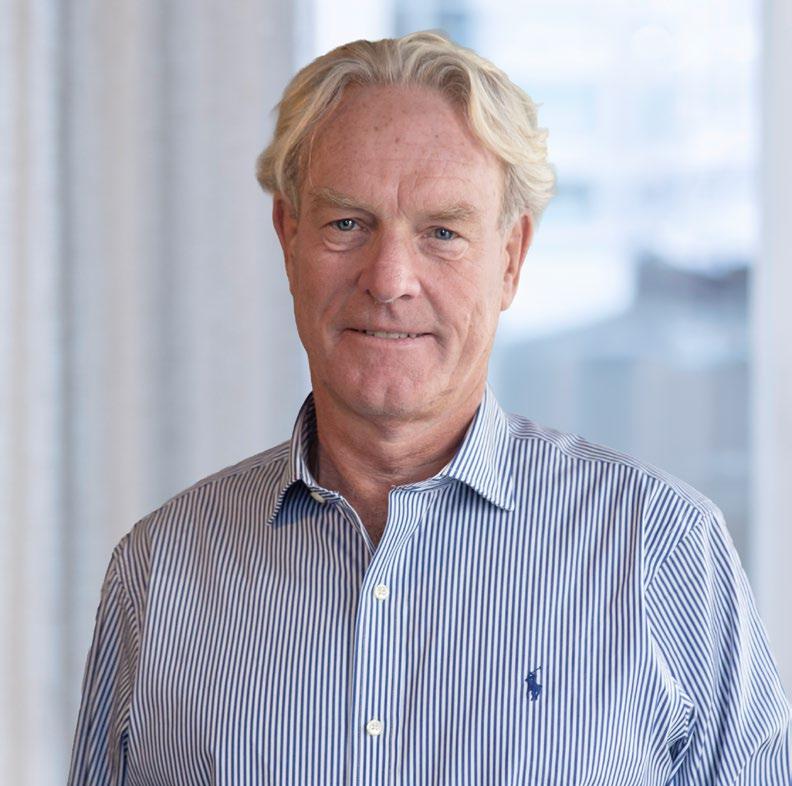
Ramudden Global is, by nature, a decentralised Group with strong shareholder influence, with the principal shareholders represented on the Board of Directors. The principle of extensive decentralisation is of great importance for each entity’s sense of significance and for employee motivation. The entities’ own organisations play a key role in shaping corporate culture and the control environment, with short decision-making paths and a strong presence of local management. Delegating responsibility and authority fosters a commitment to meeting these responsibilities and the expectations that follow.
Board work – the foundation of corporate governance
Ramudden Global’s legal structure largely coincides with its operational structure, meaning there are few decision-making forums that are separate from the civil law responsibilities of the various legal entities.
Management activities are based on the work of the Board of Directors, which forms the backbone of corporate governance, and extend to the boards of the Group’s various entities. The regulations governing corporate governance, such as the Swedish Companies Act, form the basis for the work of the Board of Directors. These laws define the scope of authority and responsibility. Decisions taken by the boards are recorded in the minutes and are subject to close follow-up. As a general rule, we require that each manager consults with their immediate superior to anchor decisions before they are made, particularly in critical matters such as key personnel issues and organisational matters.
The Annual General Meeting was held on 7 April 2025 and resolved as follows:
• Adoption of the income statement and statement of financial position included in the Annual Report, as well as the consolidated income statement and consolidated statement of financial position. It was resolved that no dividend would be paid.
• Re-election of Board members: Lars Blecko (chair), Peder Pråhl, Hans-Olov Blom, Patrick Kaudewitz, WIlliam Powell and Ilkka Tuominen.
• Election of Öhrlings PricewaterhouseCoopers AB as the company’s auditor for 2025, with Patrik Adolfson as the auditor in charge.
• Discharge from liability for the Board of Directors and the CEO.
An Extraordinary General Meeting was held on 30 June, 2025. The General Meeting resolved, in accordance with the Board’s proposal, on a new share issue to Raegar Luxco Sarl in an amount corresponding to SEK 61 680 858. Payment was to be made by contribution of non-cash consideration.
An Extraordinary General Meeting was held on 28 October, 2025. The General Meeting resolved, in accordance with the Board’s proposal, on a new share issue to Raegar Luxco Sarl in an amount corresponding to SEK 26 431 200. Payment was to be made by contribution of non-cash consideration.
According to the Articles of Association, the Board of Directors shall consist of not fewer than one and not more than ten members, with or without deputies. Board members are elected annually at the Annual General Meeting for the period until the end of the next Annual General Meeting.
The Chair is responsible for ensuring that the work of the Board is well organised, conducted efficiently and that the Board fulfils its duties. The Chair monitors the business in dialogue with the Group CEO. The Chair is responsible for ensuring that the other Board members receive the information and documentation necessary to ensure high quality in discussions and decision-making, and verifies that the Board’s resolutions are implemented.
For 2025, the Board comprised of the following members: Lars Blecko (Chair), Peder Pråhl, Hans-Olov Blom, Patrick Kaudewitz, William Powell and Ilkka Tuominen. The CEO and CFO attend all Board meetings, and other Group officers participate as needed to present specific matters. For further information on the Board members, see page 66.
At each ordinary Board meeting, the company’s economic and financial position and investment activities are among the matters addressed. During 2025, the work has largely
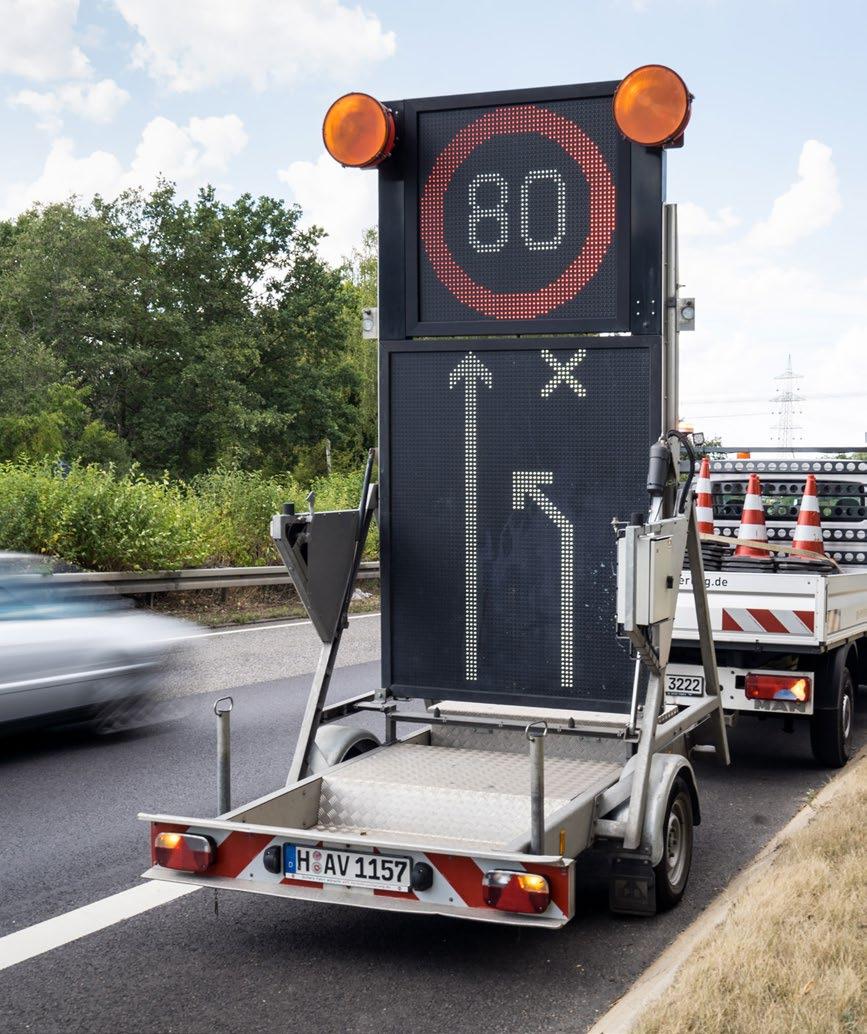
focused on strategy and continued expansion through business combinations, as well as increased profitability and the sales process. The company’s auditor has met with the Board several times during the year. Between Board meetings, numerous contacts have taken place between the company, its Chair and the other Board members. The members have been provided on an ongoing basis with written information regarding the company’s operations, economic and financial position and other relevant matters. The measures taken by the Board to monitor the effectiveness of internal control in connection with financial reporting, and to ensure that reporting to the Board functions properly, include requesting more detailed information in certain areas, discussions with members of Group management and requesting descriptions of the components of internal control, as established at the inaugural Board meeting following the Annual General Meeting. At the same time, the Board adopts instructions for the CEO.
All members have attended all Board meetings, which have been held both digitally and in person during the year. An evaluation of the Board’s work has been carried out.
The Audit Committee was established in 2023 and met two times during 2025. Members of the Audit Committee have comprised two Board members, the CFO and the Head of Finance and Reporting. All members have been present at all meetings, which have been held both digitally and in person during the year.
The work has mainly focused on:
• Current and new accounting issues
• Review of the Annual Report and financial reporting
• Review of reports from Ramudden Global’s auditor, including audit plan and follow-up of internal control.
In 2025, the Board had a Remuneration Committee consisting of the Chair and a shareholder representative. The Remuneration Committee met twice during 2025. All members attended all meetings, which were held digitally during the year. The Remuneration Committee is responsible, among other things, for monitoring and evaluating:
• Remuneration to senior executives, as well as the prevailing remuneration structures and levels within the company
• Variable remuneration for senior executives.
The Annual General Meeting appoints the external auditor. Ramudden Global’s auditor is the audit firm Öhrlings PricewaterhouseCoopers AB (ÖPwC), with authorised public accountant Patrik Adolfson as the auditor in charge. ÖPwC was appointed by the 2025 Annual General Meeting as Ramudden Global’s auditor for a term extending until the 2026 Annual General Meeting.
A limited internal control function is in place. The function has carried out a risk mapping exercise, identified focus areas and conducted a self-assessment process with the Group’s
entities. Ramudden Global does not have a fully developed internal audit function. Ramudden Global defines internal control as a process influenced by the Board of Directors, Audit Committee, CEO, Group management and other employees, designed to provide reasonable assurance that the Group’s objectives are achieved in terms of: effective and efficient operations, reliable reporting and compliance with applicable laws and regulations. The internal control process is based on the control environment, which establishes discipline and provides a structure for the components of the process – risk assessment, control structures and monitoring. For information on risk management, see pages 60–61.
Morten Finslo assumed the role of Group CEO and President of Ramudden Global on 1 January 2025. He succeeded Hans-Olov Blom, who is moving to a Board position. The Group CEO, who also serves as Group President, is responsible for the day-to-day management of Ramudden Global’s operations and is supported by a Group management team comprising the heads of business units, finance, legal, strategy, M&A, IT, marketing and sustainability. At the end of 2025, Group management, including the Group CEO, comprised 14 individuals. For further information on Group management, see pages 67-69.
The external governing instruments that provide the framework for corporate governance within Ramudden Global include:
• Swedish Companies Act
• Swedish and international accounting standards
• Swedish and international sustainability regulations
The internal binding governing instruments include, among others:
• Articles of Association
• Rules of procedure for the Board of Directors
• Instructions for the CEO
• Authorisation and delegation policy
• Code of ethics
• Finance policy
• Finance manual
• Internal control process
• Whistleblowing procedure
In addition, a number of recently developed Group-level policies are in place; for further details, see pages 46-57.
Lars Blecko
Chair
Year of birth: 1957
Education:
Master of Science, Karlstad University
Other positions:
Chairperson of Loomis ,Sortera AB, and Hissen AB, board member Axel Johnson Inc
Previous positions:
Regional Director Loomis USA, CEO Loomis, CEO Rottneros, SVP Sales and Marketing Cardo Rail, President Radiopharmaceuticals, Du Pont Group
Board member
Year of birth: 1964
Education: MBA Finance, BSc Economics, Wharton School, University of Pennsylvania
Other positions: CEO and Managing Partner Triton
Previous positions: Doughty Hanson, Morgan Stanley
Board member
Year of birth: 1966
Education: Swedish National Defence College
Other positions: Board member NP3
Previous positions: Group CEO Ramudden Global, Founder and CEO Ramudden, Officer in the army
Board member
Year of birth: 1963
Education:
MBA Economics, Universität der Bundeswehr Munich
Other positions: Chair of Wumart, Advisory Board IFCO
Previous positions: Investment Partner SCP, Chair Real, CEO Kaufland, COO Lidl
Board member
Year of birth: 1973
Education:
Highschool diploma, Ontario, and various internal training courses.
Other positions:
Managing Director Barrier Ridge Capital
Previous positions: CEO Powell Contracting
Ilkka Tuominen
Board member
Year of birth: 1989
Education: MSc and BSc Economics & Business Administration, Accounting and Finance, Tampere University
Other positions:
Investment Professional Triton Partners, board member Mac Gregor
Previous positions:
Investment Professional EQT Partners, Bain & Company
Group CEO
Year of birth: 1986
Employed since: 2019
Education:
MSc Business & Economics, BI Norwegian Business School, Cultural Studies, University in Oslo, Norway
Other positions: None
Previous positions: President Nordic Region & Baltics, A.T. Kearney
Group CFO
Year of birth: 1973
Employed since: 2023
Education:
AMP Harvard Business School, BSc in Commerce, University of Virginia, US
Other positions: None
Previous positions: CFO Asset Living, CFO Loomis and EY
Group COO
Year of birth: 1980
Employed since: 2025
Education:
MBA Harvard Business School, MSc in Applied Mathematics and Statistics, Johns Hopkins University, US
Other positions: Uniwater AB
Previous positions: COO Anticimex, Business development Skandia, Bain & Company Nordic
President Nordic Region & Baltics
Year of birth: 1973
Employed since: 2015
Education:
Bachelor of Science in Engineering and Industrial Economics
Other positions: Board member Norrlandsfonden
Previous positions:
CFO Ramudden Nordics & Baltics, Head of Finance Brynäs IF, Sales Manager & Head of Finance IKEA Gävle
President North America
Year of birth: 1983
Employed since: 2024
Education:
Bachelor of Engineering, Master of Business Administration
Other positions: None
Previous positions: CFO Molli Surgical, VP Investment
Banking Lazard & Morgan Stanley, Technical Professional, Halliburton
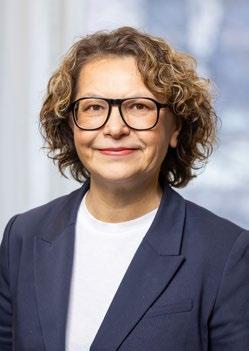
President Germany, Switzerland, Austria
Year of birth: 1969
Employed since: 2022
Education: University degree
Other positions: None
Previous positions: MD Rentokil Initial, Illbruck
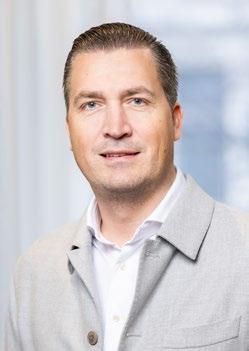
President Belgium & Netherlands
Year of birth: 1978
Employed since: 2002
Education: Business Engineer
Other positions: None
Previous positions: -
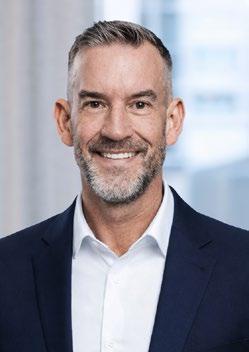
President UK
Year of birth: 1972
Employed since: 2025
Education: HDN Hotel & Catering Management
Other positions: Chair Hire Association EuropeTraffic Management Board
Previous positions: MD Travis Perkins Hire, National Sales Director Sunbelt Rentals and HSS Hire
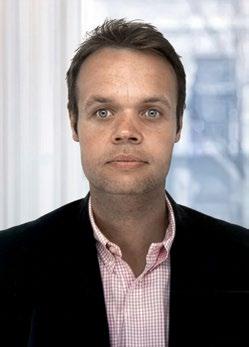
Group Head of M&A
Year of birth: 1981
Employed since: 2019
Education:
Education BA Finance, Institute of Chartered Accountants, Member of Institute for Turnaround and Chartered Institute for Securities and Investment
Other positions: None
Previous positions: PwC, Deutsche Bank, DIC European Private Equity, Bank of America, Merrill Lynch Capital Partners, Icelandic banks
Group Head of Sustainability
Year of birth: 1985
Employed since: 2023
Education:
M.A in Human Rights, Uppsala University, B.A. Anthropology, Lund University and Goldsmiths University of London, Economics, Lund University
Other positions: None
Previous positions: Head of Sustainable Investing at Nordic Credit Partners, Board member Sustainergies, Team Lead ISS Ethix, Senior Consultant EY
Group Head of Strategy
Year of birth: 1992
Employed since: 2021
Education:
Bachelor of Science (B.SC) & Master of Science KTH, Stockholm, Master of Science, University in New South Wales, Sydney
Other positions: None
Previous positions: Ramudden AB, A.T Kearney
Group Head of Marketing
Year of birth: 1980
Employed since: 2022
Education:
Journalism, marketing at Stockholms university
Other positions: None
Previous positions: Ramudden AB, Randstad, Microsoft, Nokia, Swedish Match
Group Head of IT
Year of birth: 1984
Employed since: 2024
Education:
Bachelor of Science in Information Systems
Other positions: None
Previous positions: Polygon Group, Nynäs, H&M, Länsförsäkringar
Group Legal Counsel
Year of birth: 1980
Employed since: 2020
Education:
Solicitor of England and Wales
Other positions: None
Previous positions:
Ramudden Global UK, Karen Millen, Hearst Magazines, Toshiba UK, Norton Rose
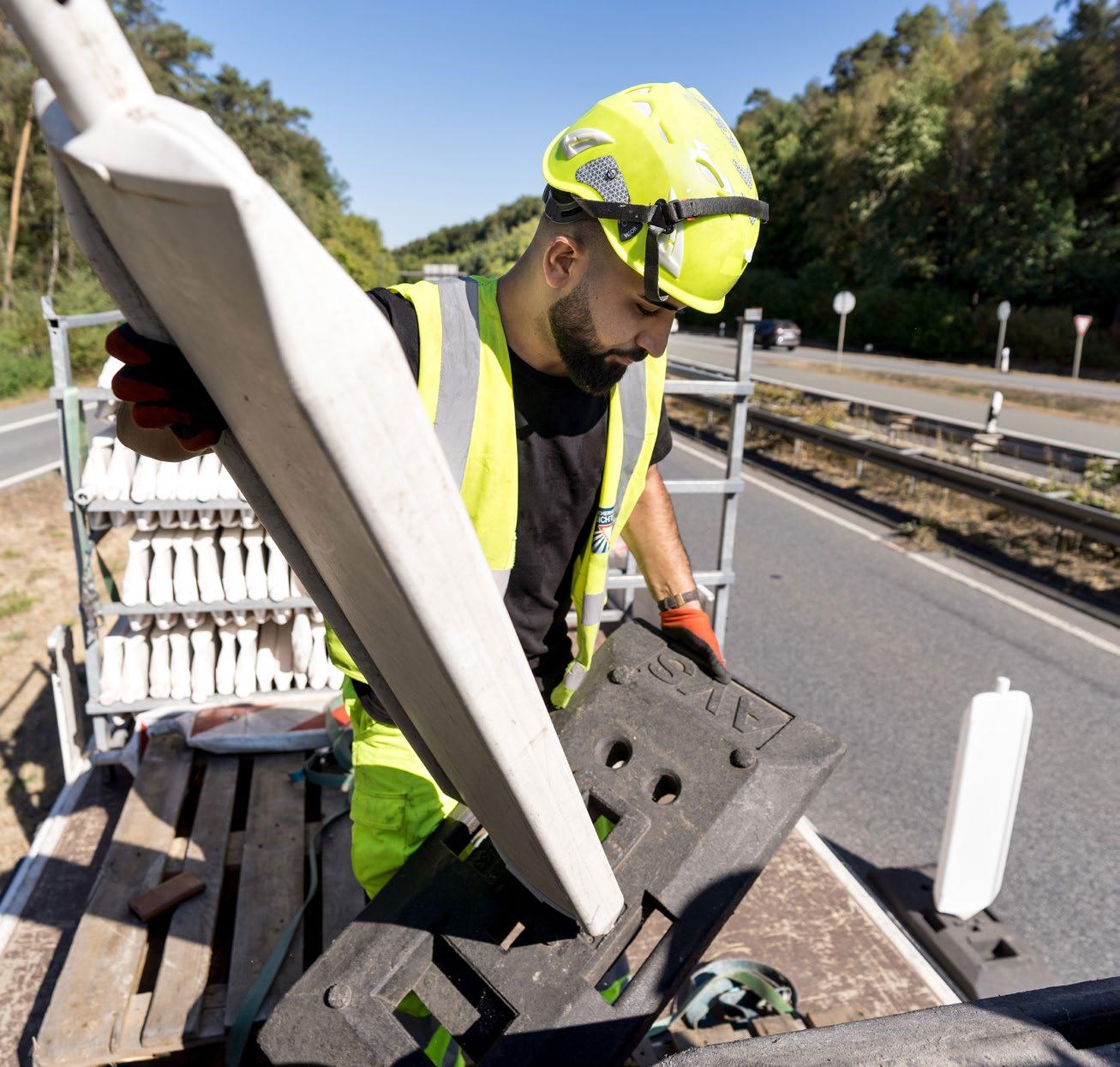
The Board of Directors and the CEO of Ramudden Global AB (corp. ID no. 559113-9778), with its registered office in Gävle, hereby submit the Annual Report and Consolidated Financial Statements for the 2025 financial year. All amounts are stated in SEKm unless otherwise indicated.
General information about the business Ramudden Global AB, the parent company, and its subsidiaries (together the Group) provide comprehensive infrastructure solutions with a focus on safety. The vision is to improve safety at buildings and work sites and to reduce the risk of injury for people working or passing by. The Group creates added value by contributing technical expertise to its products, market knowledge and experience, as well as efficient logistics management and product availability. The Group also offers services such as road markings and infrastructure equipment solutions, as well as digital solutions. The Group has subsidiaries in Europe and North America.
The Group operates in six business units. These business units comprise the Nordics and Baltics business unit (Sweden, Norway, Finland, Denmark and Estonia), the Germany, Austria and Switzerland business unit, the Belgium and Netherlands business unit, the United Kingdom business unit and the North America business unit (Canada and the US). All global product development takes place within Products and Digital. The Group has approximately 5,600 (5,300) employees in total.
The largest shareholder is Raegar LuxCo S.à.r.l., holding 79.27% of the shares and votes as at 31 December 2025. The other shareholders are key individuals or companies controlled by key individuals within the Group. The company is part of Triton Fund IV.
During 2025, the Group grew both organically and through nine business combinations further strengthening its position through acquisitions in the USA, entering into the Swiss market and complementary acquisitions in Germany.
The business combinations contributed SEK 835 million (1,285) in revenue and SEK 17 million (69) to profit for the year for the 2025 financial year. The business combinations were financed through bank loans and own cash resources. The company has increased the long-term funding with EUR 200 million in the beginning of 2025 of which EUR 150 million has been used to pay down the revolving credit facility and the rest has been used for the acquisition of Curtin LLC. Ramudden Global also renegotiated the interest margin down from 4.25% to 3.50% in March 2025 on the entire credit facility, which reduced the company’s interest expenses by approximately SEK 100 million during 2025. In November 2025, Chevron Green Services Ltd was divested to an external party. At the end of 2025, Triton signed an agreement to sell Ramudden Global AB to I Squared Capital, a fund that invests in infrastructure with headquarters in Miami. The transfer of ownership is expected to occur in the first part of 2026.
After the end of the financial year, Ramudden Global acquired 100% of the shares in Dähler Verkehrstechnik AG in Switzerland.
In February 2026, the entire credit facility was refinanced in preparation for the upcoming change of ownership. The loan facility will be changed from EUR 1,195 to EUR 1,175 million and the revolving credit facility will increase from EUR 215 to EUR 300 million. The interest margin will be reduced from 3.50% to 3.25% on the entire credit facility, which will reduce the company’s interest expenses by approximately SEK 30 million on an annual basis. The new loans mature in 2032 and 2033.
Revenue amounted to SEK 11,570 million (10,343) and the Group’s operating profit was SEK 1,064 million (922) for the full year. Revenue growth of 11.9% (17.2) was primarily
attributable to acquired entities, which contributed 9.9%, with organic growth accounting for 2.0%. Operating profit improved year-onyear due to the business combinations and cost-side economies of scale.
The Group’s net finance costs amounted to SEK –1,112 million (–1.212). Net finance costs has been positively affected by a lower interest margin and negatively by exchange rate effects. Profit before tax amounted to SEK –48 million (–290). Profit for the year amounted to SEK –292 million (–497).
Cash flow for 2025 was SEK 200 million (764) and cash and cash equivalents at yearend amounted to SEK 1,787 million (1,608). Items affecting comparability refer to costs that are temporary and not a natural part of the company’s long-term cost structure.
Ramudden Global AB aims to contribute to sustainable development. The Group works
in a structured manner with the sustainability areas where our impact, opportunities, and risks are assessed to be greatest. For more detailed disclosures, see the sustainability section on page 34 of this Annual Report. The scope of the sustainability report is the same as that of the financial report.
The Group does not conduct any activities requiring a permit under the Swedish Environmental Code. Nor does the Group conduct any permit-requiring activities in other countries where it operates.
Information on pages:
Environment 37, 42–43, 45–49, 57, 121–122
Social conditions 37, 42–43, 50–57
Personnel 37, 42–43, 50–57
Respect for human rights 37, 53, 56–57
Anti-corruption 37, 42–43, 57
Business model 12, 14–16, 35, 42–43 Material sustainability risks 42–43, 64–65
The Group is exposed to various risks in its operations. These risks include operational risks such as market risks, customer structure, procurement and supplier risks, as well as financial risks.
With growing infrastructure needs for maintenance, replacement construction, upgrades and new builds, there is increased demand for the Group’s range of solutions. In addition, the Group sees a growing focus on safety in public spaces, around properties and at work
sites, which is also driving increased demand. As a result, market risk is considered low and governments tend to invest more in infrastructure during challenging times. The business is highly diversified, as the Group offers not only services in the procurement-driven highway segment but also in the more short-term, project-based urban sector. Operations are conducted in 13 countries, reducing dependence on individual national markets, and the company is also active in certain adjacent areas, providing the opportunity to balance work across different segments.
The business has a broad and diversified customer base, which reduces customer dependency and the occurrence of significant customer credit risks. In some cases, customers are large government agencies and authorities, as well as organisations with low credit risk.
To mitigate procurement and supplier risks, the Group has several alternative suppliers, as the majority of purchased materials are standardised products. In 2023, the Group acquired a company that develops products in the safety sector, in order to secure access to products and to enable the launch of these products in other geographies.
The Group is primarily exposed to the financial market through access to capital, interest rate and currency risks, and continuously monitors developments in these areas, also hedging some of these risks. Business combinations are normally financed in EUR or in local currency. The Group presents its covenants
and debt ratio to the Board of Directors on a monthly basis and to the lenders on a quarterly basis.
The Group relies on cash flow generated and access to a revolving credit facility (RCF) to manage ongoing liquidity needs. The most significant financial covenant for the Group’s agreements relating to senior loan facilities (Senior Facilities Agreement) is the CSSNLR (Consolidated Senior Secured Net Leverage Ratio), which applies only to the RCF. For a summary of current financing, see note 23.
The market for temporary traffic management services and solutions in connection with roadworks continues to grow, while authorities are increasing regulatory requirements. Factors such as increased urbanisation, greater government spending on infrastructure projects and the growing focus on smart cities and sustainable transport are expected to drive demand for temporary traffic management solutions and services. In addition, technological advances and expanded technical requirements are likely to create new growth opportunities in this market. Given the positive underlying growth trend in the industry, the Group plans to open new depots and carry out a number of new business combinations in 2026.
During 2025 and at the time of signing the Annual Report, the external environment remains complex, with geopolitical tensions and ongoing war. Increased trade barriers and turbulence creates cost increases in the global supply chains and affects investment decisions,
while war continues in the Middle East.
The market and demand for infrastructure services are growing in both economic downturns and upturns. The Group is well positioned to meet these expectations and has the products and personnel required to respond to increasing demand. The area of digital services is expected to grow faster than the market as a whole.
The parent company is a holding company with limited administrative expenses, primarily insurance costs, audit fees, finance costs and tax expenses. The company’s registered office is in Gävle, Sweden. The company reports profit after tax of SEK 11 million (17).
Proposed appropriation of the company’s profit or loss
The following amounts in SEK are at the disposal of the Annual General Meeting:
The Board of Directors proposes that the profit be appropriated as follows: Total amount to be carried forward 6,349,373,357
1) In August 2024, a new share issue was carried out totalling SEK 1,781 million, with consideration received in the form of a non-cash issue.
2) In December 2024, a further new share issue was carried out totalling SEK 58 million, with consideration received in the form of a non-cash issue. The
as at 31 December 2024.
3) In June 2025, a new issue was carried out totalling SEK 62 million, with consideration received in the form of a non-cash issue.
4) In October 2025, a further new issue was carried out totalling SEK 26 million, with consideration received in the form of a non-cash issue.

1) In December 2024, a new issue was carried out totalling SEK 58 million, with consideration received in the form of a non-cash issue. The issue was registered with the Swedish Companies Registration Office on 7 February 2025 and is therefore reported as an ongoing new share issue as at 31 December 2024.
2) In June
In
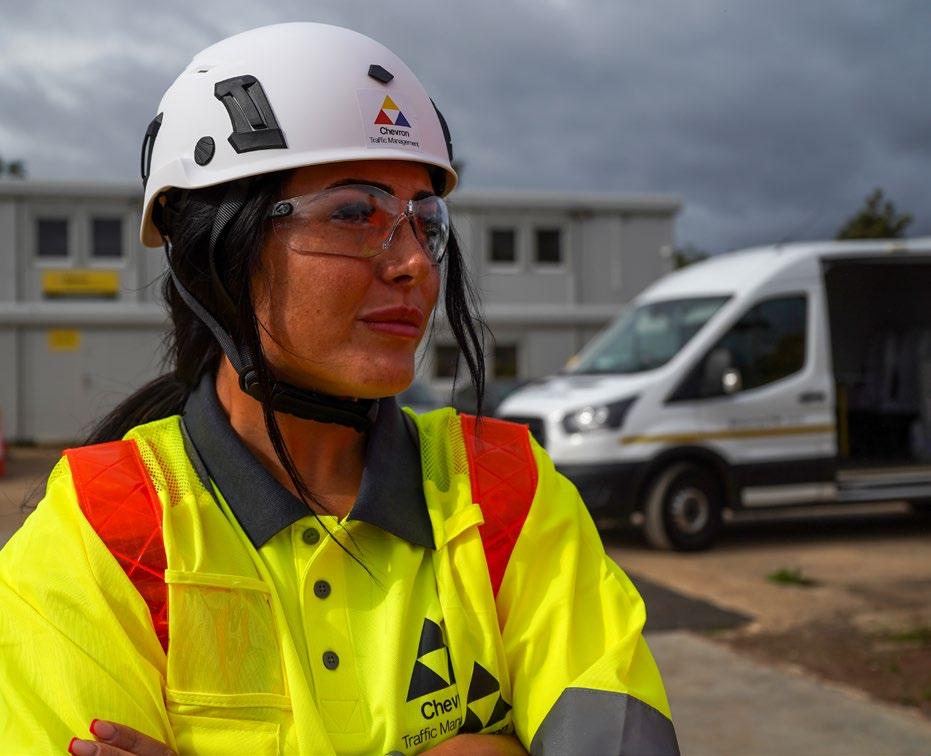
Ramudden Global AB, the parent company, and its subsidiaries (together the Group) comprise a group providing products and services in the infrastructure sector with a focus on safety. The Group creates added value by contributing technical expertise to its products, market knowledge and experience, as well as efficient logistics management and availability of products for hire. The Group has subsidiaries in Europe, Canada and the US.
The accounting and measurement policies applied in the 2024 Annual Report have also been applied in this Annual Report, except for the adoption of new accounting standards as set out below. All amounts are presented in millions of Swedish kronor unless otherwise stated, and figures in parentheses refer to the preceding financial year. Certain reclassifications have been made to improve comparability between years.
The parent company’s registered office is in Gävle, Sweden. The address is Box 298, 801 04 Gävle, Sweden. The Board of Directors approved the consolidated financial statements on 25 March 2026 and will present them to the Annual General Meeting on 30 March 2026.
The consolidated financial statements have been prepared in accordance with the Swedish Annual Accounts Act and International Financial Reporting Standards (IFRS) as issued by the International Accounting Standards Board (IASB) and as adopted by the EU. In addition, the Swedish Financial Reporting Board’s recommendation RFR 1 Supplementary Accounting Rules for Groups has been applied.
The parent company applies the same accounting policies as the Group except in those cases specified below under “Parent company accounting policies”.
Of the other new or amended standards or interpretations published by the IASB, the new accounting standard IFRS 18 Presentation and Disclosure in Financial Statements, which replaces IAS 1, is expected to have an impact on the Group’s reports.
The key concepts introduced by IFRS 18 relate to:
• the structure of the statement of profit or loss, including defined subtotals;
• requirements to determine the most useful structured format for presenting expenses in the income statement;
• mandatory disclosures in a single note in the financial statements for certain performance measures reported outside the financial statements (i.e. management-defined performance measures); and
• enhanced principles for aggregation and disaggregation applicable to the primary statements.
The Group is currently assessing the impact that the implementation of IFRS 18 will have on its financial statements.
The new standard will be applied from 1 January 2027.
The Group’s financial statements have been prepared on the basis of historical acquisition costs, except for certain financial assets and liabilities, such as derivatives, which are measured at fair value.
The parent company’s functional currency is Swedish kronor, which is also the reporting currency for the parent company and the Group. This means that the financial statements are presented in Swedish kronor. All amounts are, unless otherwise stated, rounded to the nearest million. Due to rounding and presentation in millions of SEK, some totals may not correspond exactly with the sum of the individual figures, and percentages may not precisely reflect the absolute values.
In preparing these consolidated financial statements, management has made judgements, estimates and assumptions that affect the application of the Group’s accounting policies and the reported amounts of assets, liabilities, income and expenses. Actual outcomes may differ from these estimates. The judgements are based on experience and assumptions that management and the Board of Directors consider reasonable under the prevailing circumstances. Actual results may differ from these judgements if other conditions arise. Estimates and assumptions are evaluated and reviewed on an ongoing basis. Changes in accounting estimates are recognised in the period in which the estimate is revised and in future periods if the change affects both current and future periods.
Information on uncertainty in assumptions, estimates and judgements that entails a significant risk of material adjustments for the financial year ending 31 December 2025 is included in the following notes:
• Note 4 Business combinations
• Note 10 Income taxes
• Note 12 Intangible assets and goodwill
• Note 17.3.2 Credit risk
In all cases, assumptions and estimates are based on the information available at the time the Group’s financial statements are prepared. These assumptions are reviewed regularly and adjusted as necessary in line with actual developments.
A number of the Group’s accounting policies and disclosures require the determination of fair value, both for financial and non-financial assets and liabilities. The Group has established a control framework for fair value measurement. Management has overall responsibility for reviewing all significant fair value measurements, including fair values classified as level 3. Management regularly reviews unobservable inputs and valuation adjustments. Where information from third parties, such as broker quotes or pricing services, is used for fair value measurement, management assesses data obtained from third parties to support the conclusion that such valuations meet the requirements of IFRS, including the levels of the fair value hierarchy in which such valuations should be classified. Significant valuations are reported to the Group’s Board of Directors.
In measuring the fair value of an asset or liability, the Group uses observable data as far as possible. Fair value is categorised into different levels in a fair value hierarchy based on the inputs used in the valuation techniques as follows:
• Level 1: quoted prices (unadjusted) in active markets for identical assets or liabilities.
• Level 2: other observable inputs, either directly (i.e. as price quotations) or indirectly (i.e. derived from price quotations), other than those included in level 1.
• Level 3: inputs for the asset or liability that are not based on observable market data (unobservable inputs).
If the inputs used to measure the fair value of an asset or liability fall within different levels of the fair value hierarchy, the fair value measurement is categorised in its entirety in the same level of the fair value hierarchy as the lowest level input that is significant to the entire measurement.
The Group recognises transfers between levels of the fair value hierarchy at the end of the reporting period in which the change occurred.
Further information on the assumptions made in measuring fair value is included in the following notes:
• Note 4: Business combinations
• Note 17: Financial instruments
• Note 23: Non-current and current interest-bearing liabilities
Basis of consolidation
Business combinations
The Group accounts for business combinations using the purchase method when control is transferred to the Group (see note 2 Subsidiaries below). The consideration transferred in a business combination is generally measured at fair value, as are the identifiable net assets acquired. The purchase price allocation is provisional from the acquisition date and for a maximum of 12 months during the current financial year. Any goodwill arising is tested annually for impairment. Any gain on a bargain purchase is recognised immediately in profit or loss. Transaction costs are expensed as incurred, except where they relate to the issue of debt instruments (see note 2, Financial instruments below).
Non-controlling interests in the acquired entity are recognised using the full goodwill method and measured at fair value through equity.
Any contingent consideration is measured at fair value as at the acquisition date. Otherwise, changes in the fair value of contingent consideration are recognised in profit or loss. The obligation to acquire additional interests from non-controlling interests in the future constitutes a financial liability that is recognised through equity. As the Group’s commitment to acquire non-controlling interests in the future through the put option is recognised as a financial liability via equity, no non-controlling interest is recognised.
Subsidiaries are entities controlled by the Group. The Group controls an entity when it is exposed to, or has rights to, variable returns from its involvement with the entity and has the ability to affect those returns through its power over the entity. The financial statements of subsidiaries are included in the consolidated financial statements from the date control is obtained until the date it ceases. When the Group loses control, the subsidiary’s net assets and any non-controlling interests are derecognised. The gain or loss on disposal is recognised in profit or loss.
Any retained interest in the former subsidiary is measured at fair value at the date when control ceases.
Non-controlling interests in the results and equity of subsidiaries are presented separately in the consolidated income statement, statement of comprehensive income, statement of changes in equity and consolidated balance sheet.
Intra-group transactions eliminated on consolidation
Intra-group balances, transactions and unrealised income and expenses arising from intra-group transactions are eliminated. Unrealised losses are eliminated in the same way as unrealised gains, but only to the extent that they do not indicate impairment.
Foreign currency transactions
Foreign currency transactions are translated into the functional currency of each Group entity at the exchange rates prevailing on the transaction date. Monetary assets and liabilities denominated in foreign currency are translated into the functional currency at the exchange rate prevailing at the reporting date.
Exchange differences are recognised in the income statement. Non-monetary items measured at historical cost in a foreign currency are not retranslated. Exchange gains and losses not attributable to financial instruments are recognised as other operating income or expenses.
Assets and liabilities in foreign subsidiaries with a functional currency other than Swedish kronor (SEK) are translated into SEK using the exchange rates prevailing at the reporting date (rates as at year-end). Income and expenses in foreign operations are translated into SEK using average exchange rates for the period.
Exchange differences arising are recognised in other comprehensive income and accumulated in the translation reserve.
When a foreign operation is sold in whole or in part such that control, significant influence or joint control is lost, the accumulated amount in the translation reserve attributable to the foreign operation is reclassified to the income statement as part of the gain or loss on disposal.
The exchange rates for significant currencies of countries whose currency is not SEK, used in the preparation of the consolidated financial statements, were as follows:
Accrued revenue from the provision of equipment not yet invoiced is calculated at each year-end.
Revenue is recognised when control of the asset has been transferred and when the entity is no longer involved in the ongoing management typically associated with ownership, nor retains any effective control over the units sold. Revenue is recognised on the settlement date, depending on the type of contract entered into by the Group.
Revenue is measured at the amount received or to be received in accordance with the contract.
Obligations for short-term employee benefits are measured on an undiscounted basis and expensed when the related service is rendered. A liability is recognised for the amount expected to be paid.
Obligations for contributions to defined contribution pension plans are expensed when the related service is rendered. Prepaid contributions are recognised as an asset to the extent that a cash refund or a reduction in future payments is available.
Termination benefits are expensed when the Group has made a decision regarding termination and no duty to work remains, and when the Group recognises costs for a restructuring. If the benefits are payable more than 12 months after the reporting date, they are discounted to present value.
IFRS 15 is applied in respect of revenue recognition. Revenue from the Group’s sales is recognised when control of the services or goods is transferred to the customer upon delivery, and there are no outstanding obligations that could affect the customer’s acceptance of the goods. Revenue is measured at the fair value of the consideration received or receivable and corresponds to the amounts received for services rendered or goods sold, net of discounts and excluding VAT.
Revenue comprises the performance of services (employee services, training and consultancy), and the provision of equipment, such as barriers, vehicles, signs and digital products. This combination enables the Group to supply customers with a complete business solution. The following accounting and measurement methods are applied to the various revenue streams:
Revenue is recognised when the services have been performed at the agreed price and is recognised over time as the performance obligation is satisfied. Accrued revenue for hired personnel not yet invoiced is calculated at each year-end.
Revenue from the provision of equipment is recognised over time, starting in the period in which the equipment is provided at the agreed price, as the performance obligation is fulfilled and control is transferred.
Net finance costs for the Group comprise:
• Interest income
• Interest expense
• Dividend income
• Exchange rate gains and losses on financial assets and financial liabilities
Exchange rate gains or losses on working capital are recognised in other income or expenses.
Income tax comprises current and deferred tax. It is recognised in profit or loss, except where the tax relates to items recognised in equity or other comprehensive income.
Current tax is the expected tax payable or receivable for the year, together with any adjustments to tax payable in respect of previous years. It is measured using tax rates enacted as at the reporting date. Current tax also includes tax arising on dividends. Current tax assets and tax liabilities are offset only when certain criteria are met, for example where there is a legally enforceable right to offset current tax assets against current tax liabilities and when the current tax assets and liabilities relate to income taxes levied by the same taxation authority and
either pertain to the same taxable entity or to different taxable entities where there is an intention to settle the amounts on a net basis.
Deferred tax assets are recognised for unused loss deductions, unused tax credits and deductible temporary differences to the extent that it is probable that future taxable profits will be available against which the temporary differences can be utilised. Deferred tax assets are reviewed at each reporting date and are reduced to the extent that it is no longer probable that the related tax benefit will be realised; such reductions are reversed when the probability of future taxable profits increases.
Deferred tax is measured at the tax rates expected to apply to temporary differences when they reverse, using tax rates that have been enacted or substantively enacted as at the reporting date. The measurement of deferred taxes reflects how the Group expects, at the end of the reporting period, to recover or settle the carrying amount of the related assets or liabilities.
Deferred tax assets and liabilities are offset only when certain criteria are met, for example where there is a legally enforceable right to offset current tax assets against current tax liabilities and when the deferred tax assets and liabilities relate to income taxes levied by the same taxation authority and either pertain to the same taxable entity or to different taxable entities where there is an intention to settle the amounts on a net basis.
Inventories are measured at the lower of cost and net realisable value as at the reporting date. The cost of inventories is based on the first-in, first-out (FIFO) method. In the case of finished goods and work in progress, cost includes an appropriate share of production overheads based on normal operating capacity.
Recognition and measurement
Goodwill
Goodwill arising from business combinations is measured at cost less accumulated impairment losses following annual impairment testing.
Brands and trademarks
Trademarks acquired in business combinations are measured at cost less accumulated impairment losses following impairment testing. An exception is made for trademarks that are considered to have enduring value for the Group’s strategic development. Trademarks are tested annually for impairment.
Development costs are capitalised provided that the cost can be measured reliably, the product or process is considered technically and commercially viable, it is probable that future economic benefits will be generated and the Group intends, and has sufficient resources, to complete the development and to use or sell the asset. In all other cases, such costs are recognised in the income statement as incurred. Subsequent to initial recognition, development costs are measured at cost less amortisation and any accumulated impairment losses.
Other intangible assets, including customer relationships and patents acquired by the Group, have finite useful lives and are measured at cost less accumulated amortisation and any accumulated impairment losses.
Software maintenance costs are recognised as expenses as incurred. Development costs that are directly attributable to the design and testing of identifiable and unique software assets controlled by the Group are recognised as intangible assets when the following criteria are met:
• it is technically feasible to complete the software so that it can be used
• the company intends to complete the software and to use or sell it
• there is the ability to use or sell the software
• it is possible to demonstrate how the products are likely to generate future economic benefits
• adequate technical, financial and other resources are available to complete the development and to use or sell the software
• the expenditure attributable to the software during its development can be measured reliably.
Directly attributable costs that are capitalised as part of the software include employee expenses and a reasonable proportion of indirect costs.
Capitalised development costs are recognised as intangible assets and are amortised from the date the asset is available for use.
Subsequent expenditure on acquired intangible assets is capitalised only if it increases the future economic benefits embodied in the specific asset to which it relates. All other costs, including expenditure on internally generated goodwill and internally developed brands, are recognised in the income statement as incurred.
Amortisation is based on the cost of the assets and is charged on a straightline basis over their estimated useful lives, and is recognised in the income statement. Goodwill is not amortised.
The estimated useful lives for the current and comparative periods are as follows:
Recognition and measurement
Items within tangible fixed assets are measured at cost less accumulated depreciation and any accumulated impairment losses. Cost includes expenditure directly attributable to the acquisition of the assets.
Where the construction or production of intangible assets or tangible fixes assets extends over a period of more than one year, directly attributable borrowing costs incurred up to the completion of the assets are capitalised as part of the construction or production cost. Other borrowing costs are recognised in the income statement.
If significant parts of a tangible fixes asset have different useful lives, they are accounted for as separate items (significant components) of tangible fixes assets.
Any gain or loss on the disposal of an item of tangible fixed assets (calculated as the difference between the proceeds and the carrying amount of the asset) is recognised in the income statement.
Subsequent expenditure is capitalised only if it is probable that the future economic benefits associated with the expenditure will flow to the Group.
Tangible fixes assets are depreciated from the date they are available for use. Depreciation is based on the cost of the assets less their estimated residual values and is charged on a straight-line basis over the estimated useful lives of the assets. Depreciation is generally recognised in the income statement unless the amount is included in the carrying amount of another asset.
Expenditure on improvements to third-party property or certain items of tangible fixed assets held under finance leases is depreciated over the shorter of their useful life or the lease term.
No depreciation is charged on land. The estimated useful lives for the current and comparative periods for significant items of tangible fixes assets are as follows:
The Group classifies non-derivative financial liabilities into the following categories:
• financial liabilities measured at amortised cost
• financial liabilities measured at fair value in the income statement
Financial assets measured at fair value in the income statement
Directly attributable transaction costs are recognised in the income statement as incurred. Financial assets measured at fair value in the income statement are measured at fair value, and changes in value, including interest expense or dividend income, are recognised in the income statement.
Financial assets measured at amortised cost
Assets held with the objective of collecting contractual cash flows that are solely payments of principal and interest, and which are not designated as measured at fair value through the income statement, are measured at amortised cost. The carrying amount of these assets is adjusted for any recognised expected credit losses. Interest income from these financial assets is recognised in net finance costs using the effective interest method.
Financial liabilities measured at fair value in the income statement
Financial non-derivative liabilities measured at fair value in the income statement are remeasured monthly and the changes in fair value are recognized in the income statement under net financial items.
Financial liabilities measured at amortised cost
Non-derivative financial liabilities are initially recognised at fair value less directly attributable transaction costs. Subsequent to initial recognition, these liabilities are measured at amortised cost using the effective interest method.
Contingent consideration is recognised at fair value based on the outcome of agreed clauses in the share transfer agreement as at the acquisition date. The contingent considerations are remeasured monthly and the changes in fair value are recognized in the income statement under net financial items.
The company has until June 2025 used hedging instruments in the form of interest rate caps, which are classified as derivatives. The derivatives have initially been recognised at fair value. Subsequent to initial recognition, these assets have been measured at fair value in accordance with level 2, taking into account market data and forward-looking swap and interest rate curves.
Amortisation methods, useful lives and residual values are reviewed at each reporting date and adjusted if necessary.
The rights to use acquired trademarks are considered to have an indefinite useful life and are not amortised in the consolidated financial statements. This is because a key strategy is to develop the trademarks into market leaders in the markets in which the company operates.
Depreciation methods, useful lives and residual values are reviewed at each reporting date and adjusted if necessary.
Financial instruments
The financial instruments comprise financial assets such as derivative instruments, accounts receivables and cash and cash equivalents, and financial liabilities in the form of non-current and current interest-bearing liabilities, other non-current liabilities, non-current and current lease liabilities and accounts payables. The Group classifies non-derivative financial assets into the following categories:
• financial assets measured at amortised cost
• financial assets measured at fair value in the income statement
Incremental costs directly attributable to the issue of ordinary shares, net of tax, are recognised as a deduction from equity. An issue that has been completed but not yet registered with the Swedish Companies Registration Office is classified as unregistered share capital.
Impairment
Non-derivative financial assets
The Group applies the simplified approach for calculating expected credit losses. This approach means that expected losses over the entire lifetime of the receivable are used as the basis for measurement.
Financial assets
The Group considers evidence of impairment of these assets both at the level of individual assets and on a collective basis. All individually significant assets are assessed individually for impairment. Those not considered to be impaired are then collectively assessed for impairment that has arisen but has not yet been individually identified. Assets that are not individually significant are assessed collectively for impairment.
When the Group performs collective assessments of impairment, historical information is used regarding the timing of repayments and the amount of losses incurred, with adjustments made if current economic and credit conditions are such that actual losses are likely to be greater or less than those indicated by historical trends.
An impairment loss is calculated as the difference between the asset’s carrying amount and the present value of estimated future cash flows discounted at the asset’s original effective interest rate. Impairment losses are recognised in the income statement and reflected in a loss allowance account. When the Group determines that there are no realistic prospects of recovering the asset, the relevant amounts are written off. If the amount of impairment loss decreases in a subsequent period and the decrease can be objectively related to an event occurring after the impairment was recognised, the reversal of the previously recognised impairment loss is recognised in the income statement.
At each reporting date, the Group reviews the carrying amounts of its non-financial assets (other than inventories and deferred tax assets) to determine whether there is any indication that those assets may be impaired. If any such indication exists, the recoverable amount of the asset is estimated.
For impairment testing, assets are grouped into the smallest identifiable groups of assets that generate cash inflows from continuing use that are largely independent of the cash inflows from other assets or cash-generating units. Goodwill arising from a business combination is allocated to cash-generating units or groups of cash-generating units that are expected to benefit from the synergies of the combination.
The recoverable amount of an asset or cash-generating unit is the higher of its value in use and its fair value less costs of disposal. Value in use is based on the estimated future cash flows discounted to present value using a pre-tax discount rate that reflects current market assessments of the time value of money and the risks specific to the asset.
Impairment losses are recognised in the income statement. They are allocated first to reduce the carrying amount of any goodwill allocated to the cash-generating unit, and then to proportionally reduce the carrying amounts of the other assets in the cash-generating unit. An impairment loss for goodwill is not reversed. For other assets, an impairment loss is reversed only to the extent that the asset’s carrying amount does not exceed the carrying amount that would have been recognised, net of depreciation, if no impairment loss had been recognised.
The Group as lessee
The Group assesses whether a contract is, or contains, a lease at the inception of the contract. The Group recognises a right-of-use asset and a corresponding lease liability for all lease arrangements in which it is the lessee, except for shortterm leases (defined as leases with a term of 12 months or less). For leases of low-value assets below EUR 5,000, the Group recognises the lease payments as an operating expense on a straight-line basis over the lease term, unless another systematic basis better reflects the pattern in which the economic benefits from the leased assets are consumed.
The lease liability is initially measured at the present value of the lease payments that are not paid at the commencement date, discounted using the interest rate implicit in the lease.
If that rate cannot be readily determined, the lessee’s incremental borrowing rate is used.
The incremental borrowing rate depends on the lease term, currency and commencement date of the lease and is determined based on a range of inputs including: the risk-free rate based on government bond yields, a countryspecific risk adjustment, a credit risk adjustment based on bond yields and an entity-specific adjustment where the risk profile of the entity party to the lease differs from that of the Group and the lease is not guaranteed by the Group.
Lease payments included in the measurement of the lease liability comprise:
• Fixed lease payments (including in-substance fixed payments) less any lease incentives receivable
• Variable lease payments that depend on an index or a rate, initially measured using the index or rate at the commencement date
• Amounts expected to be payable by the lessee under residual value guarantees
• The exercise price of a purchase option if the lessee is reasonably certain to exercise that option
• Payments of penalties for terminating the lease, if the lease term reflects the exercise of an option to terminate the lease.
The lease liability is presented as a separate line item in the consolidated balance sheet. The lease liability is subsequently measured by increasing the carrying amount to reflect interest on the lease liability (using the effective interest method) and by reducing the carrying amount to reflect lease payments made.
Right-of-use assets comprise the initial measurement of the corresponding lease liability, lease payments made at or before the commencement date less any lease incentives received, and initial direct costs. They are subsequently measured at cost less accumulated depreciation and impairment losses.
Right-of-use assets are depreciated over the shorter of the lease term and the useful life of the right-of-use asset. If a lease transfers ownership of the underlying asset or if the cost of the right-of-use asset reflects that the Group expects to exercise a purchase option, the related right-of-use asset is depreciated over the useful life of the underlying asset. Depreciation commences on the commencement date of the lease.
As a practical expedient, IFRS 16 permits a lessee not to separate nonlease components and instead to account for lease and related non-lease components as a single arrangement. The Group has not applied this practical expedient. For contracts that contain a lease component and one or more additional lease or non-lease components, the Group allocates the consideration
in the contract to each lease component on the basis of the relative stand-alone price of each lease component and the aggregate stand-alone price of the non-lease components.
The statement of cash flows has been prepared using the indirect method. The statement of cash flows includes only transactions involving incoming or outgoing payments. In addition to cash, the company classifies as cash and cash equivalents available balances with banks and other credit institutions, as well as short-term liquid investments that are listed on a marketplace and have a maturity of less than three months from the date of acquisition. Changes in blocked funds are recognised in investing activities.
The parent company has prepared its annual report in accordance with the Swedish Annual Accounts Act and the Swedish Financial Reporting Board’s RFR 2 Accounting for Legal Entities. Accordingly, the parent company applies the same accounting policies as the Group, where relevant, except in the cases set out below. Differences between the parent company’s and the Group’s accounting policies arise due to limitations on the parent company’s ability to apply IFRS as a result of the Swedish Annual Accounts Act and the Swedish Act on Safeguarding of Pension Obligations, as well as the options permitted under RFR 2.
The income statement has been prepared using the nature of expense method.
Basis of measurement for the parent company
RFR 2: IFRS 3 Business Combinations
The parent company measures cost as the sum of the fair value at the acquisition date of assets transferred and liabilities incurred or assumed, together with all costs directly attributable to the acquisition. Contingent consideration is recognised as part of the cost if it is probable that it will be realised. The acquisition cost is adjusted in subsequent periods if the initial assessment requires revision.
RFR 2: IFRS 9 Financial Instruments
The parent company applies IFRS 9 except in respect of financial guarantees relating to subsidiaries. For further information, reference is made to the accounting policies adopted by the Group for financial instruments.
RFR 2: IFRS 15 Revenue
Anticipated dividends from a subsidiary are recognised as income in the parent company in accordance with RFR 2 if the parent company has the sole right to determine the amount of the distribution and has made a decision regarding the amount of the distribution before its financial statements are published.
RFR 2: IFRS 16 Leases
The parent company does not apply IFRS 16. Consequently, leases in which the parent company is the lessee are recognised as an operating expense in the income statement on a straight-line basis over the lease term. There are no agreements in which the parent company is the lessor.
RFR 2: IAS 27 Consolidated and Separate Financial Statements
The parent company instead applies the alternative rule in RFR 2: IAS 27 regarding Group contributions, which means that Group contributions from subsidiaries and Group contributions to subsidiaries are recognised as appropriations in the income statement.
Shares in subsidiaries
Interests in subsidiaries are initially recognised at cost, with subsequent adjustments for capital contributions, impairment losses and remeasurement of contingent consideration. Interests in subsidiaries are tested for impairment whenever events or changes in circumstances indicate that the carrying amount may not be recoverable.
Significant estimates and judgements – parent company
Valuation of interests in subsidiaries
The assessment of the market value of the parent company’s shareholdings is based on discounted cash flow forecasts, which include assumptions regarding, among other things, future sales growth, operating margins and working capital, as well as the stock market valuation of comparable listed companies. A change in the assumptions made may result in an impairment loss.
The business model and customer contracts range from longer-term projects to shorter agreements. Revenue is generally priced per unit of time and customer contracts have credit terms of between 30 and 60 days.
The valuation of identifiable assets and liabilities in connection with the acquisition of subsidiaries or businesses includes both a number of items in the acquired company’s balance sheet and items not previously recognised in the acquired company’s balance sheet, such as customer relationships, which are measured at fair value. There are generally no quoted prices for the assets and liabilities to be measured, and various valuation techniques must be applied. These valuation techniques are based on a range of different assumptions. For the Group, non-current assets are a significant item in the statement of financial position that can be difficult to value, as they must be recognised at fair value in the purchase price allocation. This has been carried out using historical information on levels of rental solutions, estimated useful life and price levels. Such calculations require a high degree of estimation, which must be carefully evaluated, measured and analysed. Preliminary values related to acquisitions may be adjusted to fair value for up to one year after completion of the acquisition if new information is obtained regarding facts and circumstances that existed at the acquisition date. Total cash outflow for business combinations amounts to SEK -816 million (–1,620).
For information on contingent considerations, see note 17.
During the year, the following nine companies were acquired:
The Group has a diversified customer base with many stable customers, including public sector organisations and companies.
Curtin Co. LLC USA North America
Transpo Industries Inc USA North America Highway Care Ltd United Kingdom Products & Digital imoTRAFFIC AG Switzerland Germany, Austria & Switzerland
Safeguard Perimeter Inc Canada North America
Signature Verkerssicherung GmbH Germany Germany, Austria & Switzerland
Kash Verkerssicherung GmbH Germany Germany, Austria & Switzerland
Verkershtechnik Böder GmbH Germany Germany, Austria & Switzerland
4.1 Acquisitions during the financial year
The largest acquisition is specified below, with the other five acquisitions presented under other acquisitions. The effects of the acquisitions on revenue and profit for the year are presented in table 4.2.
The Group has various pension plans in different entities that meet the eligibility requirements for participation. Through these plans, most employees are covered in the event of death, disability and retirement. The plan covers active members who are accruing benefits, as well as retired members. The occupational pension plans are either defined benefit or defined contribution.
The Group offers defined contribution plans that meet the eligibility requirements based on legal obligations or tariffs, as well as employment contracts. The Group pays contributions to publicly or privately administered pension insurance schemes on a mandatory, contractual or voluntary basis. The Group has no further payment obligations once the contributions have been paid. Contributions are recognised as employee benefit expenses in the period in which they are due. Prepaid contributions are recognised as an asset to the extent that a cash refund or a reduction in future payments is available to the Group. During the reporting period, expenses for defined contribution plans amounted to SEK 141 million (122). For the Chief Executive Officer, 30% of salary is allocated to pension provisions.
Pension plans that cannot be classified as defined contribution plans are classified as defined benefit plans. Such obligations are measured using the projected unit credit (PUC) method, based on realistic actuarial assumptions. The Group has defined benefit pension plans in AVS Verkehrssicherung GmbH. The plans relate to pension commitments for disability, retirement, sickness and survivors’ pensions for three individuals. No expense has been incurred during the current year.
Audit assignments refers to the statutory audit of the annual and consolidated financial statements and accounting records, as well as the administration of the Board of Directors and the Chief Executive Officer, together with audit and other review work performed in accordance with agreements or contract.
This includes other assignments that are the responsibility of the company’s auditor, as well as advisory services or other assistance arising from observations during such review or the performance of such other assignments.
The audit fee includes the audit of the parent company and the Group.
Audit services other than the statutory audit mainly comprise work related to the review of interim reports and services related to new share issues.
10.1 Amounts recognised in profit or loss
Deferred tax assets and liabilities are recognised for deductible temporary differences and for the potential future utilisation of tax loss carry-forwards. The Group’s deferred tax assets relate to tax loss carry-forwards and other temporary differences. The deferred tax liabilities relate to excess values identified in connection with acquisitions and other temporary differences. The measurement of temporary differences and tax loss carry-forwards is based on management’s estimates of future taxable profits in various tax jurisdictions and management’s business plans. Tax assets arising from tax loss carry-forwards have arisen in subsidiaries as a result of interest deduction limitations. It has been assessed that the loss carry-forwards can be utilised against future taxable profits. Ongoing reassessments are made to evaluate the future ability to utilise deferred tax assets. Assessments regarding the ability to utilise loss carry-forwards in the future may change over time and may therefore affect the tax expense for the period. The Group considers that the accruals for tax liabilities are sufficient for all open tax years, based on its assessment of a number of factors, including interpretations of tax legislation and past experience.
The company follows the OECD model rules for Pillar 2, which via the Minimum Tax Directive (EU) 2022/2523, has been implemented into Swedish law, Act (20023:875) on additional tax. This means that the Group is subject to international tax regulations designed to ensure a fair assessment. Under the legislation, the Group may be required to pay a top-up tax for the difference between its GloBE effective tax rate in each jurisdiction if the rate falls below 15%. The Group applies the exemption from recognising and disclosing deferred tax assets and deferred tax liabilities related to income taxes under Pillar 2 and, to the extent possible, also applies the temporary relief provisions. The company assesses that any minimum tax will not be applicable to the companies within the Group.
There are certain unrecognised tax loss carry-forwards in the Group as at the reporting date, which will not be recognised in the future and will therefore have no impact under Pillar 2. Based on this, the Group has not made any provision for additional tax expenses in accordance with Pillar 2.
10.3 Liabilities and assets related to current tax
The current tax liabilities of SEK 137 million (72) in the Group mainly relate to Belgium, United Kingdom, Germany and Canada. The current tax assets of SEK 103 million (19) primarily relate to United Kingdom, Germany and Canada.
Deferred tax assets are not recognised unless it is probable that they can be utilised in the near future. The Group prepares forecasts for a period of three to five years in the subsidiary (or group of subsidiaries if consolidated for tax purposes) to determine whether the deferred tax assets will be utilised against future profits. Most tax losses arise in jurisdictions where there is no defined expiry period, but they may be limited by other factors. Unrecognised tax loss carry-forwards amount to SEK 432 million and mainly relate to losses due to interest deduction limitations.
Summarised financial information is presented below for the subsidiary with non-controlling interests. The amounts stated for the subsidiary are before intra-group eliminations. The non-controlling interest that arose during 2024 relates to a put option, under which the selling shareholder of the Canadian part of the RSG acquisition, Roadsafety Holding Inc, has retained
in the sub-group. There is an agreement for Ramudden Global to acquire the remaining interest if the conditions for the option are met.
New investments
For acquired intangible assets, see note 4.
Amortisation of intangible assets
Amortisation of intangible assets is included in the consolidated income statement, with amortisation recognised in cost of sales in the amount of SEK 2 million (1) and in selling and administrative expenses in the amount of SEK 384 million (332).
Impairment testing for cash-generating units containing goodwill and trademarks
In connection with impairment testing of goodwill and other acquisition-related intangible assets, it is necessary to ensure that the carrying amounts of these items are not overstated. Accordingly, a calculation has been prepared to determine the respective recoverable amounts of these items. The recoverable amount is the higher of an asset’s net selling price and its value in use. As there are generally no quoted prices available to estimate an asset’s net selling price, value in use is typically the amount against which the carrying amount is compared. The calculation of value in use is performed using a discounted cash flow model, based on various assumptions and estimates. The most significant assumptions relate to organic sales growth and growth in operating margin, taking into account capital employed and the relevant weighted average cost of capital (WACC) used to discount future cash flows. The model is constructed using an operating budget for year one, assumptions regarding growth for a further four-year period and, finally, a terminal value. The discount rates applied are stated before tax and reflect the specific risks associated with the respective cash-generating units.
Overall, this means that the valuation of the Group’s goodwill, amounting to a net SEK 10,367 million (10,129), and acquisition-related intangible assets,
amounting to SEK 3,762 million (3,978), is subject to significant estimates and assumptions.
For impairment testing, assets are allocated to the lowest level for which there are identifiable cash flows (cash-generating units), i.e. Nordics and Baltics, United Kingdom, Germany, Belgium, the Netherlands, Austria, Canada and the United States. The above country-specific allocation represents the smallest identifiable group of assets that generates cash inflows for the Group after adjustments have been made at Group level. This allocation also corresponds to the way in which the business is measured and monitored. The total value of goodwill by cash-generating unit is distributed as follows:
assumptions are prepared by executive management and approved by the Board of Directors. Cash flows beyond this period were extrapolated using an estimated growth rate. Where possible, the Group uses external sources of information. Past experience is important, as there is no official index or similar benchmark that can be used without further adjustment as a basis for the assumptions and estimates made in connection with impairment testing.
Goodwill is tested annually for impairment by comparing the carrying amount with the value in use. Value in use is the present value of estimated future cash flows. The cash flows are based on financial plans. These plans are derived from the Group’s operating budget and certain growth assumptions. Such
A summary of the assumptions and estimates underlying the impairment test is presented below, broken down by the Group’s cash-generating units:
Value in use has been calculated using discounted cash flows and is based on forecasts for the next four years approved by executive management. The forecasts have been prepared using estimates from each company for the respective cash-generating unit.
Impairment testing for all cash-generating units is based on financial data as at 31 December 2025. Sensitivity analyses have been performed based on a decrease or increase in operating margin of up to 3 percentage points, and a decrease or increase in the cost of capital of up to 1.5 percentage points. The sensitivity analyses have not resulted in any impairment for any of the cash-generating units.
Management considers that there are good growth opportunities and potential to improve performance, and that no impairment will be required in 2026. No significant change in earnings capacity is needed for the cash-generating units to meet their forecasts. The calculations are based on management’s assessment of reasonably possible adverse changes in operating margin and cost of capital, but these are hypothetical and should not be interpreted as an indication that such changes are likely to occur.
Sensitivity analyses should therefore be interpreted with caution.
The Group’s trademarks and trade names are reported in the category Group-wide, as they represent a common asset for the Group. They relate to the trademarks listed below, all of which are used in their respective markets and constitute an important cash-generating component.
Impairment testing of trademarks and trade names is based on an established method for valuing trademarks and trade names known as the “relief-from-royalty” method, which has been applied using an internal model. The assumptions for impairment testing of trademarks are consistent with those used for goodwill impairment testing in respect of revenue, tax rates and WACC per unit. An assumption has been made of a royalty rate of 1 and 1.5%, respectively. The valuations show that the value in use of trademarks and trade names exceeds their carrying amount.
Depreciation of tangible assets
Depreciation is included in cost of sales in the amount of SEK 991 million (790) and in selling and administrative expenses in the amount of SEK 307 million (205).
Collateral
The Group has provided collateral for loans granted by external institutions; for further information, see note 23.
The Group leases various types of assets, including premises, vehicles and other items such as IT equipment. No lease agreements contain covenants or other restrictions beyond the security interest in the leased asset. When discounting future lease payments, each country’s Stibor 90 and three-month international market rates in EUR (The Riksbank) are used for all categories in all countries, plus the average borrowing rate for premises and other lease agreements. The Group has assessed that this reflects the actual interest rate and takes into account the financial strength of the subsidiaries, country-specific conditions and the leased asset, considering the term, security, value and economic environment of the relevant lease agreement. Adjustments to interest rates for each country could either increase or decrease the calculated value of the leased asset and, consequently, the related liability. Changes in interest rates would also affect the expense recognised in profit or loss and the amounts recognised as depreciation and finance costs.
The Group holds options to purchase certain manufacturing equipment for a nominal amount when the lease term expires. The Group’s obligations are secured by the lessor’s right to the leased assets under such lease agreements. Additions to right-of-use assets during 2025 amounted to SEK 827 million (711). This amount includes the cost of right-of-use assets acquired during the year as well as additional amounts arising from the remeasurement of lease liabilities due to changes in payments resulting from modifications to the lease term.
The Group does not face any significant liquidity risk in respect of lease liabilities, which are also monitored by the Group’s finance function. Amortisation of lease liabilities during the year amounted to SEK 506 million (395). Total cash outflow for leases amounted to SEK 533 million (435).
Inventories are measured at the lower of
and net
value. The cost of inventories is based on the first-in, first-out principle. For finished goods and work in progress, the cost includes an appropriate share of production overheads based on normal operating capacity. Inventory counts are carried out at least once a year. Procedures are also in place to identify obsolete goods and, where applicable, record them as expenses.
The following table presents the carrying amount and fair value of financial assets and liabilities. It does not include disclosures on fair value for financial assets and liabilities not measured at fair value where the carrying amount is a reasonable approximation of fair value.
Accounts receivables and accounts payables generally have short maturities. The carrying amounts as at the reporting date largely correspond to fair value.
The fair value of the financial instruments has been determined based on available market information as at the balance sheet date. Relevant categories of assets and liabilities have been addressed as set out below.
Level 1 is defined as measurement using quoted prices (unadjusted) in active markets for identical assets or liabilities. Level 2 is defined as measurement based on observable inputs other than quoted prices included within level 1 that are observable for the asset or liability, either directly (as price quotations) or indirectly (derived from price quotations). Level 3 is defined as measurement based on inputs for the asset or liability that are not based on observable market data (unobservable inputs).
Liabilities to former owners of acquired entities relate to contingent consideration and amount for reinvestment and are measured in accordance with level 3.
The contingent consideration and amount for reinvestment relates to acquisitions in Germany, the United Kingdom and USA. It is classified as a financial liability and is remeasured at each reporting period, with changes recognised in the consolidated statement of profit or loss. In the event that the operations of the subsidiaries achieve certain profitability measures during a given period, in accordance with the contingent consideration clauses contained in the purchase agreement, additional cash payments will be made. Outstanding amounts for reinvestment will be settled in connection with Triton’s sale to I Squared.
As of the balance sheet date, the fair value of the contingent consideration and amount for reinvestment was SEK 849 million (60).
The following table shows changes in contingent consideration and amount for reinvestment during the period.
This note presents information on the Group’s exposure to each of the above risks, the Group’s objectives, policies and processes for measuring and managing risk, and the Group’s management of capital.
17.3.1
The Group’s risk management policy is designed to identify and analyse the risks faced by the Group and to mitigate them by establishing appropriate risk limits and controls, as well as by monitoring and ensuring compliance with these limits. Risk management principles and systems are reviewed regularly to reflect changes in market conditions and the Group’s activities. The Group aims, through training and executive management standards and procedures, to create a disciplined and constructive control environment in which all employees understand their roles and responsibilities.
A Group-wide risk management system provides a framework for the timely identification and documentation of risks that threaten the company’s viability, as well as for defining and monitoring actions to mitigate those risks. Clear standards have also been established for risk strategy at both Group and entity level, particularly with regard to significant risk thresholds and ad hoc risk mitigation (special measures). At the core of the system is an independent, decentralised IT platform managed by trained risk officers worldwide.
17.3.2
Credit risk is the risk of a financial loss to the Group if a customer or counterparty to a financial instrument fails to meet its contractual obligations, and arises primarily from the Group’s accounts receivables and investments in securities. The financial instruments comprise financial assets such as accounts receivables and cash and cash equivalents, and financial liabilities in the form of non-current and current interest-bearing liabilities, other non-current liabilities, non-current and current lease liabilities and accounts payables.
The Group classifies non-derivative financial assets into the following categories:
• financial assets measured at amortised cost
• financial assets measured at fair value in the income statement
The Group classifies non-derivative financial liabilities into the following categories:
• financial liabilities measured at amortised cost
• financial liabilities measured at fair value in the income statement
Financial assets measured at fair value in the income statement
17.2.1
The Group’s interest-bearing loans and borrowings are measured at amortised cost except for the facility agreement, the contingent considerations and amount for reinvestment that are valued at fair value in the financial statements under net financial items for the period. For further information on loans and borrowings, see note 23.
17.3
The Group is exposed to the following risks arising from financial instruments:
• Credit risk
• Liquidity risk
• Market risk
Directly attributable transaction costs are recognised in the income statement as incurred. Financial assets measured at fair value in the income statement are measured at fair value, and changes in value, including interest expense or dividend income, are recognised in in the income statement.
Financial assets measured at amortised cost
Assets held with the objective of collecting contractual cash flows that are solely payments of principal and interest, and which are not designated as measured at fair value through the income statement, are measured at amortised cost. The carrying amount of these assets is adjusted for any recognised expected credit losses. Interest income from these financial assets is recognised in net finance costs using the effective interest method.
Changes in the provision for impairment of accounts receivables during the 2025 and 2024 financial years are as follows:
Subsequent to initial recognition, these liabilities are measured at amortised cost using the effective interest method. The carrying amount of the financial
credit exposure.
The Group’s exposure to credit risk is primarily influenced by the characteristics of each individual customer. In addition, management considers the demographics of the Group’s customer base, including the risk of default in the industry in which customers operate, as these factors may affect credit risk. The Group establishes a provision for impairment representing its estimate of losses incurred in respect of accounts receivables and other receivables. The main components of this provision are a specific loss component relating to individually significant exposures and a collective loss component established for groups of similar assets in respect of losses incurred but not yet identified.
The company’s assessment is that the reserved amounts are recoverable, based on historical payment behaviour and analysis of the underlying customers’ credit ratings.
The Group had cash and cash equivalents, including overdraft facilities, of SEK 1,787 million (1,608), representing its maximum credit exposure for these assets. Cash and cash equivalents are held with a number of banks and financial institutions as counterparties, including UniCredit, LBBW and SEB, with ratings from A to BBB*, based on Standard & Poor’s ratings.
Liquidity risk is the risk that the Group will encounter difficulty in meeting obligations associated with its financial liabilities that are settled by delivering cash or another financial asset. Liquidity risk is mitigated by applying short- to medium-term planning models, which provide the Group with the necessary forward-looking visibility. The medium-term forecast covers a twelve-month time horizon. The tools used are based on legal entities. The collection of data on a monthly basis provides Group Finance with an overview of the expected
liquidity position. Financing is provided within the Group through partial use of a cash pool. The business units covered by the cash pool are the Nordics and Germany that has a local cash pool for the German entities.
The Group presents summaries of quantitative data on its exposure to liquidity risk based on information provided internally to executive management. The information obtained is primarily derived from a rolling twelve-month forecast. This forecast is prepared from the bottom up by all entities. Regularly provided bank reports and covenant reports (quarterly), previously submitted on the basis of this information, have indicated no such liquidity risks. Furthermore, no such unplanned cash outflows from surplus cash balances as defined in the refinancing arrangements are currently anticipated.
For the foreseeable future, the cash outflows included in these data are not expected to occur significantly earlier than indicated or to differ materially from the stated amounts.
The following maturity structure represents how the contractual cash flows for undiscounted liabilities (including principal and interest) recognised as at 31 December 2025 will affect the Group’s liquidity position (further information on the year of repayment is provided in note 23).
The assumptions underlying the maturity schedules shown below are as follows:
• If a liability has a different maturity date due to the nature of the payment terms (such as discounts), the earliest possible maturity date is used for the above calculation.
• Interest payments on non-current and current interest-bearing liabilities that extend over the year-end are allocated based on the proportion of the interest period attributable to the current year.
• This process corresponds to the calculation method used to determine fair value for all other financial instruments.
In addition to the below, the Group has a revolving credit facility of EUR 215 million, as described in note 23.
17.3.4 Market risk
With regard to international business operations, the Group is exposed to market price risks arising from fluctuations in exchange rates and interest rates. These market price risks may have an adverse effect on the company’s net assets as well as its financial position and performance. Market price risks are managed and monitored through regular measures in day-to-day operations and financing activities and, where appropriate and meaningful, by using derivative financial instruments. The Group regularly assesses the aforementioned risks by tracking changes in key economic indicators and market information. The Group is also exposed to commodity price risks arising in the course of its operations.
The Group has a broad, diversified customer base, which reduces customer dependency and the incidence of significant customer credit risk. With regard to procurement and supplier risks, the Group has several alternative suppliers as the materials rented out are standardised products.
The various Group companies operate internationally and are therefore exposed to currency risk in transactions in foreign currencies. These currency risks arise from future commercial transactions as well as recognised assets and liabilities. Such transactions are limited within our existing operations. The Group conducts operations in the following major currencies: SEK, EUR, GBP, NOK, DKK, CAD, CHF and USD. As a result, changes in exchange rates may affect the Group’s financial performance. During the reporting period, changes in exchange rates had a material impact on the Group’s results and financial position, with an impact on net financial items of SEK 377million (-4). Group Finance continuously monitors the potential effects of fluctuations in currency markets. An analysis of net positions in accounts receivables and accounts payables denominated in foreign currencies at year-end showed that the Group was not exposed to any significant currency risk as at the reporting date since the companies have most of their accounts receivables and payables in local currency, the currency exposure in the business areas is therefore moderate.
The Group also has translation exposures arising from sales and purchases in foreign currencies other than the functional currency, as well as borrowings in foreign currencies. To mitigate the impact of exchange rate fluctuations in day-to-day operations, the Group continuously assesses its exposure and seeks to balance revenue and costs in the same currency, thereby reducing currency risk. Although Group Finance continuously monitors such currency movements, the Group does not currently hedge this type of risk.
As SEK is the reporting currency in the consolidated financial statements, income and expenses in these subsidiaries are translated into the Group’s currency prior to consolidation of the Group’s financial reports. Period-on-period changes in exchange rates may have a significant impact on, among other things, the company’s revenue and net profit. Unlike the effect of exchange rate fluctuations on transaction exposure, translation risk does not affect cash flows in the local currency. When net asset values are translated into SEK, fluctuations result in corresponding changes between periods in those net asset values. The company’s equity position reflects these changes in net asset values.
An increase or decrease of 10 percent in the value of currencies against SEK would result in an effect of approximately +/– SEK 110 million on operating profit (EBIT), based on management’s simulations. In addition to currency exposure against the Group’s functional currency, SEK, as at the reporting date there is a translation risk primarily between USD and GBP. An increase or decrease of 10
percent in the value of USD against GBP would result in an effect of approximately
17.3.5 Interest rate risk
Interest rate risk arises from the sensitivity of financial assets and financial liabilities to changes in market interest rates. The Group’s exposure is determined by its interest-bearing cash balances and outstanding loan liabilities.
As at 31 December 2025 and 2024, the company’s cash and cash equivalents amounted to SEK 1,787 million and SEK 1,608 million, respectively.
Group Finance coordinates all financing and investment activities within the Group. For this purpose, a summary of unutilised balances is prepared and invested centrally. Local deposits are generally made where country-specific rules and restrictions prohibit the transfer of funds to the ultimate parent company’s accounts. The potential sensitivity of the Group’s interest income stream associated with changes in relevant interest rates applied to interest-bearing cash balances is marginal.
Interest rate risk for the Group’s existing financing arises as the interest on the Facility B agreement is variable, set at EURIBOR plus a margin.
The margin depends on the defined leverage ratio in the facility agreement and currently amounts to 3.50% for both the Facility B and the RCF. As at 31 December 2025, the nominal interest rates are 5.39% for Facility B and 5.41% for the RCF. For 2026, the Group has budgeted an interest rate of 5.41% for Facility B and 5.41% for the RCF.
If the three-month Euribor were to exceed our assumption by 100 basis points, the change in interest rates would reduce profit (net of tax) by SEK 106 million.
Accrued income comprises ongoing fixed-price assignments, meaning that consideration is received as a fixed amount when the assignment is completed or when milestones have been completed and approved for invoicing. The process for ongoing assignments requires assumptions and judgements to be made regarding the status of the assignment, assessment of the stage of completion, and monitoring of the associated costs and income relating to the assignment. The judgements are based on experience and assumptions that management and the Board of Directors consider reasonable under the prevailing circumstances. Actual results may differ from these judgements if other conditions arise.
The Group have used two interest rate caps and one interest rate floor, which has been classified as derivative instruments and measured at fair value. Approximately half of the loan amount have been hedged through interest rate caps. The derivatives have expired during the year. The change in the value of the derivative instrument for the year amounts to SEK -4 million (-39). For the 2025 financial year, the interest rate caps have resulted in a reduction in interest expenses of SEK 4 million (67) in total.
The maturity structure of
21.1 Total equity
Number of shares and share capital as at 31 December 2025:
All shares carry one vote each. The quotient value is SEK 1.0038 per share. Preference shares (PREF) have priority over ordinary shares (STAM) with respect to dividends.
The structure of the preference shares is such that the holders have preferential rights to the dividend, which only applies if any dividends are paid. There is no obligation to pay dividends, but this refers only to the payment of proceeds after liquidation.
The preference shares are non-interest bearing. Accordingly, there are no accrued interest amounts attributable to these shares. No dividend is proposed in respect of the 2025 financial year for Ramudden Global AB.
Nature and purpose of reserves
Translation reserve
The translation reserve comprises all exchange rate differences arising from the translation of all balance sheet items in foreign subsidiaries into Swedish kronor (SEK).
The reserve for revaluation of pension obligations includes pensions, gains and losses from changes in the present value of the defined benefit obligation and the return on plan assets, excluding amounts included in net interest, net of deferred tax.
21.3 Other contributed capital
Share premium reserve
When shares are issued at a premium, a share premium reserve is created. This means that the price of the shares exceeds their nominal quotient value.
21.4 Proposal for distribution of profit, SEK
The parent company’s and the Group’s income statements and balance sheets are subject to approval by the 2026 Annual General Meeting.
Share premium reserve
4,065,049,329
Accumulated profit or loss 2,295,617,662
Profit for the year –11,293,634
Total 6,349,373,357
The Board of Directors and CEO proposes that the profits be appropriated as follows:
Total amount to be carried forward
6,349,373,357
The Board of Directors proposes that the total amount of SEK 6,349,373,357 available to the Annual General Meeting be carried forward.
This note provides information on the contractual terms of the Group’s interest-bearing loans and borrowings, which are measured at amortised cost except for the facility agreement and the contingent considerations that are valued at fair value in the financial statements under net financial items for the period. For the comparative period all of the Group’s interest-bearing loans and borrowings were measured at amortised cost.
The table below presents the fair value loan amount for liabilities to credit institutions and overdraft facility, and the nominal loan amount for other loans (excluding arrangement fees, interest rate caps and accrued interest). For the comparative period the loans are presented at nominal value (excluding arrangement fees, interest rate caps and accrued interest).
On 19 July 2019, the company entered into an agreement for a senior loan facility, which has subsequently been increased and, as at the reporting date, amounts to a fair value of EUR 1,165 million and an amortised cost of EUR 1,195 million. The agreement is divided into two facilities: Facility B and a revolving credit facility (RCF). The agreement expires in December 2029 for Facility B and in June 2029 for the RCF. Ramudden Global renegotiated the interest margin during the year so the facility carries interest at Euribor plus a margin of 3.50% instead of as previously, an interest margin of 4.25%.
The Company used to have two interest rate caps and one interest rate floor, that hedged about 50% of the total loan amount, that matured during the period. No new derivatives exist at the end of the year.
The facility agreement is secured by several pledged collateral agreements including shares, intra-group loans and bank accounts. The pledged assets are intended not only to secure Facility B, but also the amount utilised under the RCF.
The company has an approved credit limit of EUR 215 million, of which EUR 59 million was utilised as at the balance sheet date. The RCF may be used for revolving loans, issuing letters of credit, bank guarantees and for additional facilities on a bilateral or unilateral basis. The RCF carries interest at EURIBOR plus 3.50%. During the year the company converted EUR 150 million of the revolving credit facility into a term loan.
The facility agreement also includes certain conditions regarding covenants, change of control and various restrictions on the payment of dividends, including loans to the ultimate shareholder or other parties outside the Group. The shareholder loan is a subordinated loan and is unsecured. It contains provisions regarding extraordinary termination events, such as change of control, grounds for termination by the lender under § 490.1 of the German Civil Code (Bürgerliches Gesetzbuch), as well as illegality or insolvency.
The most relevant financial covenant is the CSSNLR (Consolidated Senior Secured Net Leverage Ratio), which applies only to the RCF.
The CSSNLR is calculated only if 40% of the RCF has been utilised, determined in accordance with the SFA definitions of RCF utilization, and, under the terms of the RCF, the Group is required to meet the following financial loan covenant at the end of each quarter:
• The CSSNLR must be below 9.31 times Adjusted EBITDA (as defined in the SFA).
• The Group has complied with the loan covenant throughout the period.
As at the reporting date, less than 40% of the RCF had been utilised and the CSSNLR stood at 4.69 times, ensuring the Group’s continued access to the RCF.
The term loan facilities do not have any financial covenants.
There are no indications that the Group will have difficulty meeting the covenants at the next test date, 31 March 2026.
In connection with the renegotiation of the facility agreement, new costs arose for bank fees and other transaction-related services from external advisers.
The total amount of these capitalised costs was SEK 27 million. Net debt will be increased on an ongoing basis until the quota value for bank liabilities is reached. Arrangement and advisory fees allocated to the loan facilities will be accrued until maturity.
Guarantee provisions mainly comprise a general provision based on historical warranty costs. Additional specific provisions are made for significant individual cases. Warranty periods range from 12 to 24 months.
Employee-related provisions represent an obligation to provide compensation in an amount dependent on several factors, the most significant of which is the occurrence of a change of ownership in the Group.
Adjustments for non-cash items mainly relate to
of financial position, gains on the sale of subsidiaries/businesses/tangible fixed assets, and non-operating provisions for certain severance bonus provisions.
29.1 Parent company and ultimate controlling party – largest shareholder Related parties comprise the largest shareholder, Raegar LuxCo S.a.r.l., certain co-investors as described below, and entities within the Group collectively referred to as “subsidiaries”.
Transactions with key management personnel
Remuneration to key management personnel
During the reporting period, the Board members of the parent company received SEK 3 million (0) in fees for fulfilling their duties in the various Group companies. Furthermore, as at the date of preparation of these consolidated financial statements, the parent company had no approved loans, advances or other benefits to its former or current chief executive. In addition, the parent company had no pension or guarantee obligations to former or current Board members.
Total remuneration to key management personnel in the Group’s executive management during the reporting period amounted to SEK 121 million (95) and consisted of salaries and other benefits.
Management participation programme
A number of key management personnel collectively own approximately 21 percent of the shares in Ramudden Global AB (the company). A condition of ownership is that the relevant executives hold an active employment with the company or one of its subsidiaries. In accordance with IFRS 2.43B(b) in conjunction with IFRS 2.3a, the programme relates to share-based payments in the form of equity instruments.
The management participation programme stipulates that if an executive is dismissed or resigns for any reason, the company has an option, as set out in the shareholders’ agreement, to purchase all or part of the executive’s shares. The pricing mechanism is defined in the shareholders’ agreement and depends on the reason for termination (i.e. good leaver/bad leaver) and ranges from the original amount paid to the market value of the shares.
The indirect shareholding in the Group was acquired at fair value by the relevant executive. The purchase price is an amount proportionate to the acquisition price for the Group’s business. If an executive acquires shares in the company after the acquisition date of the Group’s business, the acquisition price is determined based on EBITDA multiples.
Various relationships exist between Group companies, including the supply of materials and services, performance of services, recharging of costs, charging of interest and legal ownership. In addition, certain entities are responsible for global projects in areas such as mergers and acquisitions (M&A) and IT projects. In such cases, costs transferred between entities are fully eliminated. In addition to these types of transactions, costs are, in certain minor cases, recharged within the Group. These are eliminated for consolidation purposes.
Ramudden Global (Group) GmbH and Ramudden Global (Group) AB act as cash centralising entities, optimising liquidity within the Group. Interest is charged to each Group company. Receivable, liability and interest transactions are eliminated in the consolidated financial statements.
Transactions between the parent company and subsidiaries are priced in accordance with arm’s length principles. The parent company’s transactions with related parties comprise:
with shareholder
The Group
Interest may either be capitalised or paid to the lender. The loan matures on 11 December 2029.
As the Group is part of Triton Fund IV, consultancy fees relating to certain advisory services provided by other companies associated with Triton and their employees have been classified as related party transactions. Professional fees relate almost exclusively to advisory services and the recharging of external services connected to the acquisition and integration of the Group’s business. All of the above-mentioned related party transactions are priced on an arm’s length basis.
After the end of the financial year, Ramudden Global acquired 100% of the shares in Dähler Verkehrstechnik AG in Switzerland.
In February 2026, the entire credit facility was refinanced in preparation for the upcoming change of ownership. The loan facility will be changed from EUR 1,195 to EUR 1,175 million and the revolving credit facility will increase from EUR 215 to EUR 300 million. The interest margin will be reduced from 3.50% to 3.25% on the entire credit facility, which will reduce the company’s interest expenses by approximately SEK 30 million on an annual basis. The loan facility matures 7 years after the acquisition date, i.e. in 2033 and the revolving credit facility matures 6.5 years after the acquisition date, i.e. in 2032.
Acquisition of Dähler Verkehrstechnik AG
On 2 February 2026, Ramudden Global (Germany) GmbH acquired 100% of the issued shares in Dähler Verkehrstechnik AG. The financial effects of this transaction have not been reported as of 31 December 2025. The operating profit and assets and liabilities of the acquired company are consolidated from 2 February 2026.
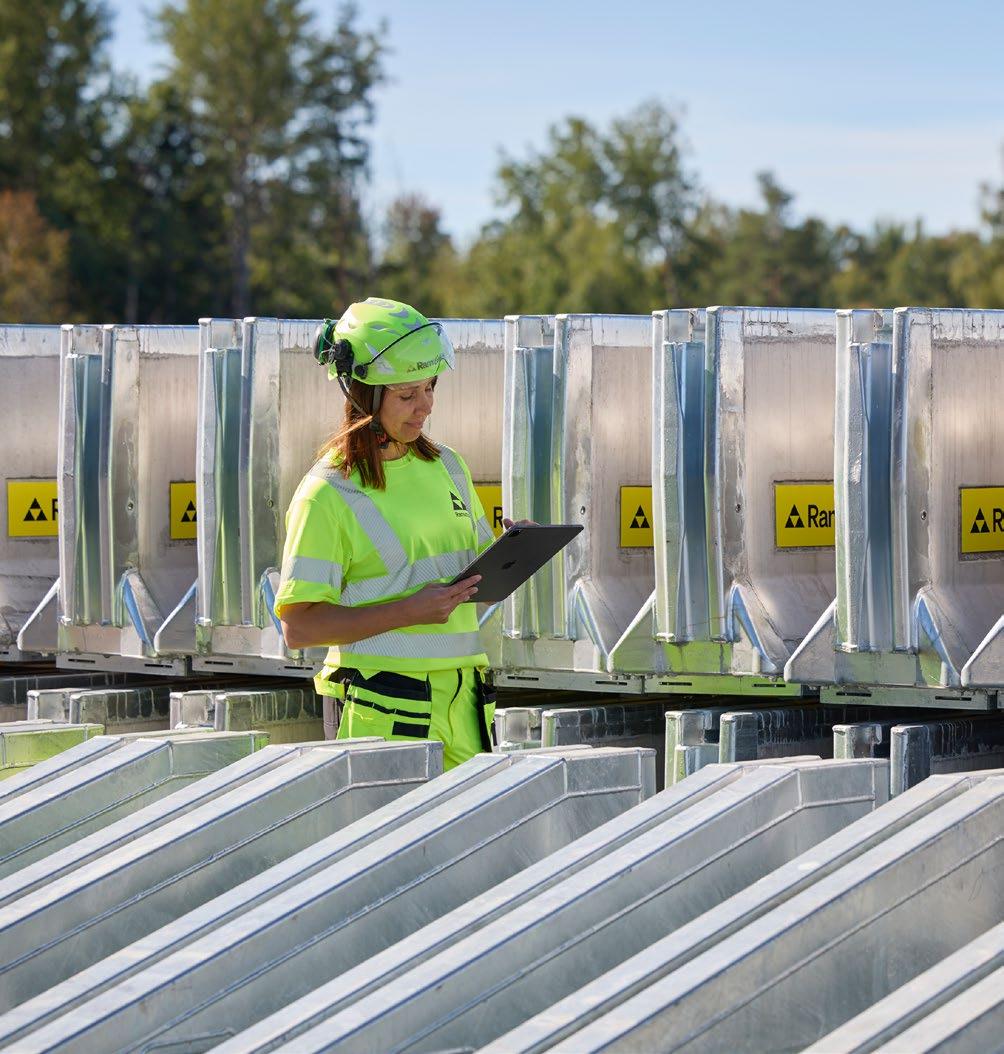
Ramudden Global (Austria) GmbH FN 503669s Bürs Austria
R. u. H. Bartenbach GmbH FN 389745f Bürs Austria 100%
Auer & Koessler Bodenmarkierungen GmbH FN 178307s Wien Austria 100%
Simark Beteiligungs GmbH FN 85640t Hürm Austria 100%
Simark GmbH & Co KG FN 4182a Hürm Austria 100%
Fero Group NV 875843187 Willebroek Belgium 100%
Ramudden Global (Belgium) NV 732834505 Willebroek Belgium 100%
Men at Work SRL 476647706 Flemalle Belgium 100%
Safety Truck NV 642759414 Willebroek Belgium 100%
Signaroute SRL 474519050 Andenne Belgium 100%
Signco BV 864533581 Willebroek Belgium 100%
Boardwalk BidCo Inc 769393026 Concord, ON Canada 100%
Boardwalk CallCo Inc 731838959 Concord, ON Canada 100%
Direct Traffic Management Inc 820747863 Markham, ON Canada 100%
Infrastructure Logistics Inc 829932375 Stouffville, ON Canada 100%
OBW Equipment Inc 818060485 Markham, ON Canada 100%
Peninsula Construction Inc 104138151 Fonthill, ON Canada 100%
Pivot Safety Products Inc 842327926 Stouffville, ON Canada 100%
Powell (Gormley) Contracting Ltd 851495762 Stouffville, ON Canada 100%
Powell (Richmond Hill) Contracting Ltd 104278593 Stouffville, ON Canada 100%
Ramudden Global (Canada) Inc 776016867 Markham, ON Canada 100%
RSG International Corp 766753081 Stouffville, ON Canada 100%
Safe Roads R&D Inc 777585704 Stouffville, ON Canada 100%
Safeguard Perimeter Inc 798408761 Markham, ON Canada 100%
Silverback Traffic Solutions 737968677 Fonthill, ON Canada 100%
Stinson Equipement Ltd 105026389 Markham, ON Canada 100%
Stinson ITS Inc 756653531 Markham, ON Canada 100%
Summit Rentals Inc 725815914 Stouffville, ON Canada 100%
Ramudden Denmark A/S CVR 29511098 Roskilde Denmark 100%
Ramudden Denmark BidCo ApS CVR 44518333 Roskilde Denmark 100%
Ramudden OÜ 12969700 Tallinn Estonia 100%
Ramudden Oy Ab 2465445-5 Esbo Finland 100%
Ramudden Global (MidCo) GmbH HRB 130329 Frankfurt Germany 100%
Ramudden Global (Group) GmbH HRB 129588 Frankfurt Germany 100%
Ramudden Global (Germany) GmbH HRB 80452 Köln Germany 100%
AVS Services GmbH HRB 80237 Köln Germany 100%
Peter Berghaus GmbH HRB 45635 Köln Germany 100%
AVS Verkehrssicherung GmbH HRB 46046 Köln Germany 100%
SRV Verkehrstechnik GmbH (SRV GmbH) HRB 4156 Chemnitz Germany 100%
Lorenz-GmbH HRB 1606 Neuruppin Germany 100%
AVS Verkehrssicherung Berlin GmbH HRB 14870 Cottbus Germany 100%
Signature Verkehrssicherung GmbH HRB 125025 Köln Germany 100%
Kasch Verkehrssicherung GmbH HRB 10379 Magdebur Germany 100%
Verkehrstechnik Böber GmbH HRB 27552 Dohma Germany 100%
Ramudden Global (Netherlands) B.V. 855882669 Tilburg Netherlands 100%
Ramudden B.V. 817832816 Tilburg Netherlands 100%
VHV Houdstervennootschap B.V. 853118437 Tilburg Netherlands 100%
Ramudden Norge AS 913798317 Vinterbro Norway 100%
Ramudden AB 556674-6730 Gävle Sweden 100%
Ramudden Global (Group) AB 559136-4244 Stockholm Sweden 100%
Ramudden Global AB 559113-9778 Gävle Sweden 100%
Ramudden Midco AB 559136-4251 Gävle Sweden 100%
TMA Centralen AB 556932-0491 Gävle Sweden
Wewab Trafiklösningar AB 556849-0196 Gävle Sweden 100%
Worxsafe AB 556831-7167 Östersund Sweden 100%
Ramudden Global Products and Digital AB 559499-0482 Östersund Sweden
Ramudden Nordics and Baltics AB 559546-5682 Gävle Sweden 100%
Ramudden Global (Switzerland) AG CHE-495.086.746 Luzern
Audit assignments refers to the statutory audit of the annual and consolidated financial statements and accounting records, as well as the administration of the Board of Directors and the Chief Executive Officer, together with audit and other review work performed in accordance with agreements or contract. This includes other assignments that are the responsibility of the company’s auditor, as well as advisory services or other assistance arising from observations during such review or the performance of such other assignments. The audit fee includes the audit of the parent company. Audit services other than statutory audit mainly comprise work related to new share issues.
Tax loss carry-forwards
The parent company’s tax loss carry-forwards amounted
(154.8) and relate to non-deductible interest of SEK
(154.8). No
losses are currently recognised due to uncertainty as to whether they can be realised. Based on changes in the Group structure, restrictions apply to the utilisation of tax loss carry-forwards.
All shares carry one vote each. The quotient value is SEK 1.0038 per share. Preference shares (PREF) have priority over ordinary shares (STAM) with respect to dividends.
The structure of the preference shares is such that the holders have preferential rights to the dividend, which only applies if any dividends are paid. There is no obligation to pay dividends, but this refers only to the payment of proceeds after liquidation.
The preference shares are non-interest bearing. Accordingly, there are no accrued interest amounts attributable to these shares. No dividend is proposed in respect of the 2025 financial year for Ramudden Global AB.
21.2 Nature and purpose of reserves
Translation reserve
The translation reserve comprises all exchange rate differences arising from the translation of all balance sheet items in foreign subsidiaries into Swedish kronor (SEK).
The reserve for revaluation of pension obligations includes pensions, gains and losses from changes in the present value of the defined benefit obligation and the return on plan assets, excluding amounts included in net interest, net of deferred tax.
21.3 Other contributed capital
Share premium reserve
When shares are issued at a premium, a share premium reserve is created. This means that the price of the shares exceeds their nominal quotient value.
21.4 Proposal for distribution of profit, SEK
The parent company’s income statement and balance sheet are subject to approval by the 2026 Annual General Meeting.
The Board of Directors and CEO proposes that the profits be appropriated as follows:
amount to be carried forward
The Board of Directors proposes that the total amount of SEK 6,349,373,357 available to the Annual General Meeting be carried forward.
The Board of Directors and the Chief Executive Officer confirm that the consolidated financial statements have been prepared in accordance with IFRS as adopted by the EU and provide a true and fair view of the Group’s financial position and performance. The parent company’s financial statements have been prepared in accordance with generally accepted accounting principles in Sweden and provide a true and fair view of the parent company’s financial position and performance.
The statutory Directors’ Report for the Group and the parent company provides a fair overview of the development of the Group’s and the parent company’s operations, financial position and performance, and describes the principal risks and uncertainties faced by the parent company and the entities within the Group.
The Board of Directors and the Chief Executive Officer also present the Ramudden Global AB Sustainability Report for 2025. The Sustainability Report describes the Group’s work from economic, environmental and social perspectives.
The statements of profit or loss and financial position of the parent company and the Group are subject to approval by the Annual General Meeting on 30 March 2026.
Gävle, 25 March 2026 (digital by nature)
Lars Blecko Chair
Ilkka
Our report is dated as per the date in the electronic signature Öhrlings PricewaterhouseCoopers AB
Patrik Adolfson
Authorised Public Accountant
Principal Auditor
For identification purposes only
This is a translation of the Swedish language original. In the event of any differences between this translation and the Swedish language original, the latter shall prevail.
To the general meeting of the shareholders of Ramudden Global AB, corporate identity number 559113-9778.
Opinions
We have performed an audit of the annual accounts and consolidated accounts of Ramudden Global AB for year 2025. The annual accounts and consolidated accounts of the company are included on pages 70–108 in this document.
In our opinion, the annual accounts have been prepared in accordance with the Annual Accounts Act and present fairly, in all material respects, the financial position of the parent company as of 31 December 2025 and its financial performance and cash flow for the year then ended in accordance with the Annual Accounts Act. The consolidated accounts have been prepared in accordance with the Annual Accounts Act and present fairly, in all material respects, the financial position of the group as of 31 December 2025 and their financial performance and cash flow for the year then ended in accordance with IFRS Accounting Standards, as adopted by the EU, and the Annual Accounts Act. The statutory administration report is consistent with the other parts of the annual accounts and consolidated accounts.
We therefore recommend that the general meeting of shareholders adopts the income
statement and balance sheet for the parent company and the group.
We conducted our audit in accordance with International Standards on Auditing (ISA) and generally accepted auditing standards in Sweden. Our responsibilities under those standards are further described in the Auditor’s Responsibilities section. We are independent of the parent company and the group in accordance with professional ethics for accountants in Sweden and have otherwise fulfilled our ethical responsibilities in accordance with these requirements.
We believe that the audit evidence we have obtained is sufficient and appropriate to provide a basis for our opinions.
This document also contains other information than the annual accounts and consolidated accounts and is found on pages 2–69 and 112–117. The Board of Directors and the Managing Director are responsible for this other information.
Our opinion on the annual accounts and consolidated accounts does not cover this other information and we do not express any form of assurance conclusion regarding this other information.
In connection with our audit of the annual accounts and consolidated accounts, our responsibility is to read the information identified above and consider whether the
information is materially inconsistent with the annual accounts and consolidated accounts.
In this procedure we also take into account our knowledge otherwise obtained in the audit and assess whether the information otherwise appears to be materially misstated.
If we, based on the work performed concerning this information, conclude that there is a material misstatement of this other information, we are required to report that fact. We have nothing to report in this regard.
The Board of Directors and the Managing Director are responsible for the preparation of the annual accounts and consolidated accounts and that they give a fair presentation in accordance with the Annual Accounts Act and, concerning the consolidated accounts, in accordance with IFRS Accounting Standards, as adopted by the EU, and the Annual Accounts Act. The Board of Directors and the Managing Director are also responsible for such internal control as they determine is necessary to enable the preparation of annual accounts and consolidated accounts that are free from material misstatement, whether due to fraud or error.
In preparing the annual accounts and consolidated accounts, the Board of Directors and the Managing Director are responsible for the assessment of the company and group’s ability to continue as a going concern. They disclose, as applicable, matters related to going concern and using the going concern basis
of accounting. The going concern basis of accounting is however not applied if the Board of Directors and the Managing Director intends to liquidate the company, cease operations or has no realistic alternative to doing any of this.
Our objectives are to obtain reasonable assurance about whether the annual accounts and consolidated accounts as a whole are free from material misstatement, whether due to fraud or error, and to issue an auditor’s report that includes our opinions. Reasonable assurance is a high level of assurance, but is not a guarantee that an audit conducted in accordance with ISAs and generally accepted auditing standards in Sweden will always detect a material misstatement when it exists. Misstatements can arise from fraud or error and are considered material if, individually or in the aggregate, they could reasonably be expected to influence the economic decisions of users taken on the basis of these annual accounts and consolidated accounts.
A further description of our responsibility for the audit of the annual accounts and consolidated accounts is available on the Swedish Inspectorate of Auditors’ website: www. revisorsinspektionen.se/revisornsansvar. This description is part of the auditor’s report.
Opinions
In addition to our audit of the annual accounts and consolidated accounts, we have also audited the administration of the Board of Directors and the Managing Director of Ramudden Global AB for year 2025 and the proposed appropriations of the company’s profit or loss.
We recommend to the general meeting of shareholders that the profit be appropriated in accordance with the proposal in the statutory administration report and that the members of the Board of Directors and the Managing Director be discharged from liability for the financial year.
We conducted the audit in accordance with generally accepted auditing standards in Sweden. Our responsibilities under those standards are further described in the Auditor’s Responsibilities section. We are independent of the parent company and the group in accordance with professional ethics for accountants in Sweden and have otherwise fulfilled our ethical responsibilities in accordance with these requirements.
We believe that the audit evidence we have obtained is sufficient and appropriate to provide a basis for our opinions.
The Board of Directors is responsible for the proposal for appropriations of the company’s profit or loss. At the proposal of a dividend, this includes an assessment of whether the dividend is justifiable considering the requirements which the company and group’s type of operations, size and risks place on the size of the parent company’s equity, consolidation requirements, liquidity and position in general.
The Board of Directors is responsible for the company’s organization and the management of the company’s affairs. This includes among other things continuous assessment of the company and group’s financial situation and ensuring that the company’s organization is designed so that the accounting, management of assets and the company’s financial affairs otherwise are controlled in a reassuring manner. The Managing Director shall manage the ongoing administration according to the Board of Directors’ guidelines and instructions and among other matters take measures that are necessary to fulfill the company’s accounting in accordance with law and handle the management of assets in a reassuring manner.
Our objective concerning the audit of the administration, and thereby our opinion about discharge from liability, is to obtain audit evidence to assess with a reasonable degree of assurance whether any member of the Board of Directors or the Managing Director in any material respect:
• has undertaken any action or been guilty of any omission which can give rise to liability to the company, or
• in any other way has acted in contravention of the Companies Act, the Annual Accounts Act or the Articles of Association.
Our objective concerning the audit of the proposed appropriations of the company’s profit or loss, and thereby our opinion about this, is to assess with reasonable degree of assurance whether the proposal is in accordance with the Companies Act.
Reasonable assurance is a high level of assurance, but is not a guarantee that an audit conducted in accordance with generally accepted auditing standards in Sweden will always detect actions or omissions that can give rise to liability to the company, or that the proposed appropriations of the company’s profit or loss are not in accordance with the Companies Act.
A further description of our responsibility for the audit of the administration is available on the Swedish Inspectorate of Auditors’ website: www.revisorsinspektionen.se/ revisornsansvar. This description is part of the auditor’s report.
Stockholm 25 March 2026 Öhrlings PricewaterhouseCoopers AB
Patrik Adolfson Authorized Public Accountant
To the general meeting of the shareholders in Ramudden Global AB, corporate identity number 559113-9778
It is the board of directors who is responsible for the statutory sustainability report for the year 2025 on pages 34–58 and that it has been prepared in accordance with the Annual Accounts Act according to the prior wording that was in effect before 1 July 2024.
Our examination has been conducted in accordance with FAR’s standard RevR 12 The auditor´s opinion regarding the statutory sustainability report. This means that our examination of the statutory sustainability report is substantially different and less in scope than an audit conducted in accordance with International Standards on Auditing and generally accepted auditing standards in Sweden. We believe that the examination has provided us with sufficient basis for our opinion.
Opinion
A statutory sustainability report has been prepared.
Stockholm the date indicated by our electronic signature
Öhrlings PricewaterhouseCoopers AB
Patrik Adolfson
Authorized Public Accountant
For identification purposes only
This audit report and the related consolidated financial statements are a translation of the Swedish original. For any differences between the versions it is the Swedish original that takes precedence. The original signature of PricewaterCoopers AB and their authorized public accountants is on the Swedish original.
The English version is signed for identification purposes only and for no other purpose.

CSRD – Corporate Sustainability Reporting Directive refers to the EU legislation on corporate sustainability reporting, effective from 1 July 2024.
DMA – Double Materiality Assessment is a methodology for identifying and prioritising the most relevant sustainability issues by considering two key dimensions: impact materiality and financial materiality.
EPD – Environmental Product Declaration is a summary report of the results from a life cycle assessment.
ESRS – European Sustainability Reporting Standards refers to the reporting standards under the CSRD.
HVO – Hydrotreated Vegetable Oil is a type of biodiesel.
LCA – Life Cycle Assessment is a methodology for calculating environmental impact across the entire life cycle of a product.
Minimum safeguards – Minimum safeguards in the EU Taxonomy are measures to ensure that companies’ sustainability work meets certain standards regarding human rights, labour law, taxation and fair competition.
SBT – Science Based Targets is a methodology for companies to set scientifically grounded climate targets in line with the Paris Agreement.
TMA – Truck Mounted Attenuator, also known as a TMA vehicle or Impact Protection Vehicle (IPV), is an impact protection device used at roadworks.
TTM – Temporary Traffic Management refers to temporary traffic and safety solutions.
VMS – Variable Message Sign, a digital sign used, for example, at roadworks.
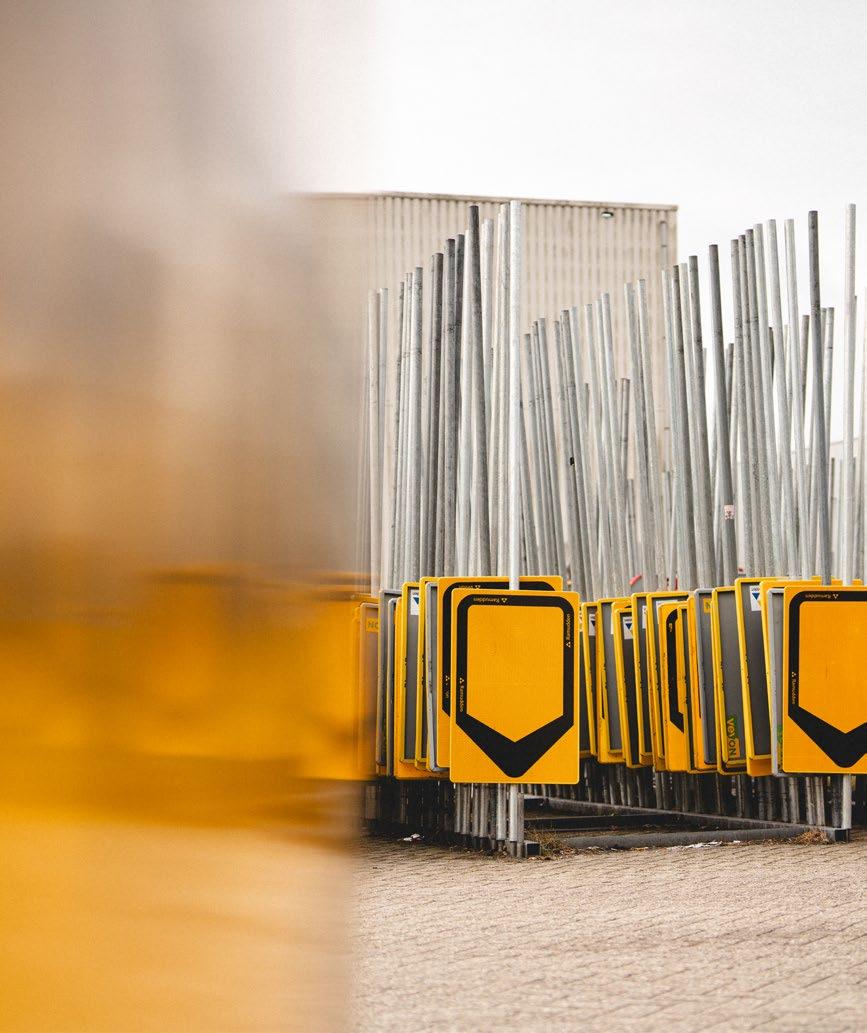
Employees
• Annual employee survey
• Workshops with wider employee groups where their perspectives, thoughts and ideas are being raised and discussed
• Regular workplace assessments to ensure that safety and working environment standards align with our guidelines
• Work within various committees, such as health and safety
• Training on topics such as mental health, antiracism and LGBQ+ rights
Customers
• Customer survey
• Continuous customer dialogues
• Customer visits
• Customer workshops
Suppliers
• Strategic, regular meetings with key suppliers
• Supplier visits, evaluations and audits
• Supplier survey
• Various forums for the supply chain
• Ongoing dialogue via email
Investors, owners and banks
• Ongoing investor dialogue through calls, questionnaires and email
• Periodic reporting
• Triton’s annual ESG conference
• Board meetings
Authorities and industry organisations
• Engagement in various local and national industry organisations, committees and associations, as well as dialogue with authorities
Trade unions
• Regular meetings with trade union representatives
• Regular meetings with safety committees
• Workshops with trade unions
• Surveys for unionised employees
• Collective bargaining processes
• Understanding employee expectations and identifying potential improvements to the working environment
• To ensure we understand our employees’ perspectives and hear their ideas and thoughts
• Contributing to a sustainable workplace and working life, where employees have the right knowledge and skills to work safely and responsibly
• Safeguarding human rights and workers’ rights is our highest priority, particularly in creating a safe and supportive working environment for all workers in the value chain
• Understanding customer needs, expectations and satisfaction
• Developing new products and services
• Developing the industry standards related to health and safety
• Ensuring customer satisfaction regarding our performance on values and sustainability
• Collaborating on best practice, innovation and sustainability targets
• Quality checks
• Ensuring suppliers comply with our standards for sustainability, safety and ethics
• Gathering feedback on performance, challenges and expectations regarding quality, sustainability and labour rights
• Understanding expectations on sustainability efforts and priorities
• Attracting investors
• Advancing industry standards in traffic safety
• Strengthening collaboration and gathering information
• Coordinating with emergency services regarding interventions that affect road closures
• Discussing matters related to workers’ rights, collective agreements and workplace conditions
• Consulting with trade unions on topics such as workplace safety, compensation, employee benefits and sustainability
• Understanding union members’ satisfaction with working conditions, job security and the effectiveness of union representation
• Safeguarding human rights and workers’ rights
• The results of the employee survey form the basis for several improvement initiatives
• Adapting the strategy and business model in response to employee input
• Policies on mental health and antiharassment have been updated and strengthened in response to employee comments and requests
• Improved communication from management
• Adapting the business model and strategy
• Updating and developing internal policies
• Improving products and service offering
• Improving products and services
• Improving the supply chain strategy from a broader, more strategic perspective on sustainability and ethics
• Responding to investor questionnaires for transparency and benchmarking
• Developing internal policies
• Developing internal collection of data points in line with investor community requirements
• Influencing new industry standards for traffic safety
• Updated regulations, specifications and contracts
• Insights to help us prepare for upcoming changes and requirements
• Improved workplace conditions through dialogue with unions, such as safer working environments, flexible working hours and enhanced health benefits
• Updated procedures related to collective agreements
• Improved communication between management and employees
Our industry is currently not included in the Taxonomy, and our turnover is not covered. Despite this, in 2024 we carried out an initial assessment of our operations in accordance with the EU Taxonomy Regulation.
The EU Taxonomy is a classification system that sets out criteria for when an economic activity is considered environmentally sustainable. The analysis we conducted in 2024 of Ramudden Global’s operations was a more highlevel assessment. This means we have not yet assessed taxonomy alignment or conducted a minimum safeguard assessment. Since we are currently not covered by the CSRD requirements, we continuously monitor developments in the framework and adapt our analysis accordingly
The Taxonomy requires companies to disclose the proportion of their turnover, capital expenditures (CapEx), and operating expenditures (OpEx) that are covered by and aligned with the Taxonomy. See the taxonomy tables on page 122.
Our industry is not covered by the EU Taxonomy, which has led us to determine that the turnover KPI is not applicable to the majority of our operations.
Below are the relevant taxonomy activities we have identified as applicable to capital expenditure:
• 6.5 Transport by motorcycles, passenger cars and light commercial vehicles
• 7.7 Acquisition and ownership of buildings
Of the total capital expenditure of SEK 1,567 million, these activities account for SEK 621 million (40 percent). The denominator for the CapEx key figure is calculated based on accounting records in accordance with our capital expenditure accounting policies (see property, plant and equipment and intangible assets on pages 95 and 98 of the financial statements).
In light of the above determination regarding turnover, we identified few applicable operating expenses during our review.
The denominator for the OpEx key figure is calculated in accordance with the EU Taxonomy (1.1.3.1 in Annex I of Commission Delegated Regulation (EU) 2021/2178), and includes costs not capitalised in the statement of financial position, as well as maintenance and repairs, building renovation, shortterm leases, lowvalue leases and research and development costs.