The Spatial Dynamics of Proxemics and Natural Surveillance in AcademicArchitecture: A Computational and Observational Study at SPA Vijayawada
-Rajavarman A, Rohan Agrawal
Abstract
This paper investigates the intricate relationship between architectural spatial design, human proxemic behaviour, and natural surveillance within an academic environment. Focusing on the School of Planning and Architecture Vijayawada (SPAV), the study employs a mixed-methods approach, combining user surveys, observational data, and advanced computational simulations using Voronoi diagrams. It explores how specific spatial design parameters derived from the Aleatoric Milieu framework and Defensible Space Theory such as, influence interpersonal distances, navigation design territorial markers, visual fields, and environmental image quality and foster a peer-led surveillance network. Findings reveal distinct proxemic preferences among different user groups and cultural backgrounds, and demonstrate how adaptable designs, supported by computational tools, can optimizespaceutilizationwhileenhancing socialinteractionand perceived safety. The research underscores the practical application of theoretical constructs in creating responsive and inclusive built environments.
KEYWORDS: Proxemics, Defensible Space, Interpersonal Distances, Personal Space, Symbolic Barriers, Natural Surveillance, Human Spatial Behaviour
1. Introduction
In the complex landscape of institutional environments, the interplay between spatial design and human behaviour is paramount to fostering both safety and a sense of community. While architectural principles have long guided the construction of educationalspaces,adeeperunderstandingofhowthesephysicalsettingsinfluencesocial dynamics and, in particular, natural surveillance, remains a critical area of inquiry. The physical environments actively shape how people see, approach, and respond to one another (Gehl, 2011). Natural surveillance the ability to unobtrusively observe and monitor activity in shared spaces has been shown to reduce crime and improve perceived safety (Crowe, 2000) as well as encourage prosocial behaviour (Newman, 1972), Newman’sDefensibleSpacetheoryidentifies fourmaincomponents territoriality,natural surveillance, image, and milieu that foster these outcomes. However, limited research explores how proxemic behaviour human use of interpersonal distances (Hall, 1966) interacts with spatial design in such settings.
Personal space, as described by T. Hall as the "invisible psychological bubble" surrounding individuals, functions as both a psychological and symbolic barrier to intrusion. These symbolic boundaries communicate ownership and comfort thresholds (Altman, 1975) that shape when and how people feel willing to monitor or intervene in the environment. In peer environments like SPA Vijayawada, boundaries between intimate, personal, social and public spaces are continually negotiated. Breach of these
boundaries can evoke defensive or withdrawal behaviours, whereas respect for them facilitates trust and informal surveillance. Additionally, the Aleatoric Milieu framework (Lui, 2015) adds a spatial navigation dimension, emphasising how movement corridors, nodes, and transitional zones influence both interpersonal distances and visibility. These navigation sequences can expand or compress proxemic comfort zones, impacting how effectively peers observe their surroundings (Lui, 2015)For example, safe adjoining areas and well-designed paths can maintain appropriate social distances while still enabling “eyes-on-the-street” surveillance (Crowe, 2000).
Table 1 Conceptual overlaps between Aleatoric Milieu’ Elements and Defensible space principles (Source: Author)
Defensible Space Principles Related Proxemic Zone(s)
Defensible space Intimate to Personal Distances
Territoriality Personal to Social distances
Predicted Proxemic Behaviour / Meaning
Breach here represents direct threat where occupants cannot effectively defend, emphasizing need for strong control mechanisms.
Occupant/ user feel ownership/control over intimate to social distances, fostering informal defence and engagement with others.
Natural Surveillance Public space distances
Image Interaction of interpersonal distances & design parameters (Node, Narthex and Paths)
Safe Adjoining Areas Social to Public transitional zones (Paths)
Observation from a distance supports deterrence of unwanted behaviour at public distances without direct interaction.
Positive image encourages closer social distances and safer interpersonal engagement, enhancing perceived safety and community ties.
Transitional and connecting zones like paths enhance surveillance, reduce anonymity, and support safe navigation between territories.
Perception in Terms of Interpersonal Distances (People & Space)
Interpersonal distances between Intimate and personal feels highly protected breach triggers defensive action.
People interact more comfortably and frequently within (personal/social range) in their own territories; the surrounding space feels “theirs,” reducing stranger intrusion.
People position can themselves (public range) while still visually monitoring activity; spatial layout allows “eyes on the street” without encroaching on personal zones.
Sound ‘Intimacy gradient’ spaces prompt people to interact within comfortable social zones and linger in space longer, both with people and physical surroundings.
People maintain social distances while moving through or sharing these spaces; spatially, these areas feel safer and more legible when wellmonitored and maintained.
Measurable Outcome Variable Example Hypothesis Link
Reported feelings of safety within personal space; intrusion incidents
Frequency of neighbour interaction within social distance; perceived control
Average public distance maintained; crime rates near visible areas
Duration and frequency of social zone interactions; occupant's satisfaction
Foot traffic counts, co-use rates, perceived safety in transitional paths
Intimate space boundary protection reduces personal crime risk
Territorial markers promote social interaction and territorial defences
Higher surveillance at public zones increases safety perception
Better environmental image correlates with closer social interactions
Safe adjoining areas/pathways increase social interaction and reduce crime risk
Despite these conceptual overlaps, there is a lack of empirical integration of Defensible Space principles, proxemics, and aleatoric sequencing in Indian academic contexts (EBSCO, 2024). SPA Vijayawada, with its mix of architectural forms, cultural diversity,
and peer dynamics, provides an ideal case to study how symbolic personal space boundaries shape both surveillance capacity and social engagement. Thus, the study examines three main questions in step-up like School of Planning and Architecture, Vijayawada.
1. Examine the relationship between interpersonal distances, cultural norms, and perceived safety mong peers.
2. Analyze how spatial design influences navigation sequences and natural surveillance opportunities.
3. Formulate evidence-based design recommendations that balance personal comfort with effective natural surveillance in educational spaces.
Bridging a significant gap in the literature by empirically integrating the principles of Defensible Space, proxemics, and Aleatoric Milieu within a specific Indian academic context. By examining the unique environment of SPA Vijayawada, this study aims to understand how symbolic personal space boundaries influence both the capacity for natural surveillance and the fostering of social engagement. Ultimately, the findings will provide actionable, evidence-based design recommendations that can help create safer, more collaborative, and community-oriented educational spaces in India and beyond.
2. Theoretical Framework and Architecture Context
Drawing from a rich body of architectural and social theory, this study integrates established frameworks to analyse the dynamic relationship between space, perception, and human behaviour within the context of SPA Vijayawada a perfect setting to apply the Aleatoric Milieu. It is an architectural theory centered on proxemics and navigation design, proposing that architectural elements can be orchestrated to create dynamic and adaptable spatial experiences. Aiming to establish a "seamless gradient of intimacy," where public, semi-public, and private zones fluidly blend, facilitating both social interactions and individual comfort within a single environment. The design intent is to guide users through a sequence of spaces that subtly shift in their perceived social dimension, influencing movement and interaction patterns.
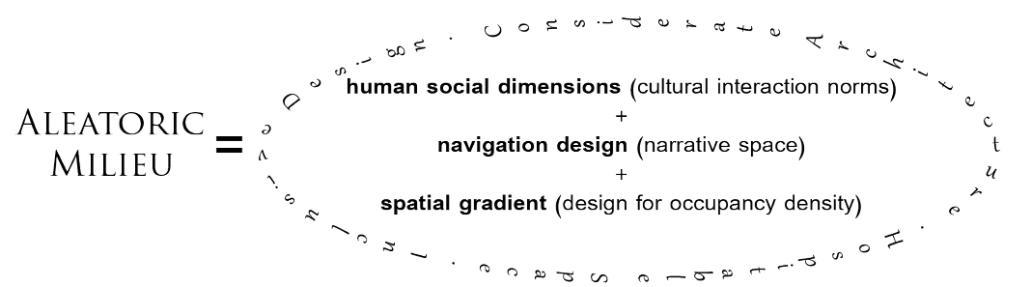
In the context of SPAV's design, several elements exemplify the application of Aleatoric Milieu principles:
● Entry Design: The ground floor entry is characterized by a "murky ceiling with percolated light from the sides, concrete walls, and overhead lighting that extends the public dimension".
● Stair Design: The stairs are conceived with a "social dimension," fostering comfortable spaces that appear to possess "seemingly limitless dimensions".
● Exhibit Floors: The exhibit floors feature heights "slightly beyond public dimensions," utilizing screened daylight to create an "ambiguous ceiling height".
● Aleatoric Sequence: The overall architectural sequence transitions fluidly between public and social nodes, with the stairs acting as mediators between exhibits in public nodal proportions.
This perceptual control can lead to a feeling of greater expansiveness or a reduced sense of clear boundaries, potentially encouraging different proxemic behaviors, such as a greater openness to social interaction or observation. This directly aligns with the concept of "Environmental Image Quality" as a significant spatial design parameter. Such subtle architectural cues, beyond explicit spatial divisions, can profoundly influence human comfort, interaction patterns, and even perceived surveillance. The Aleatoric Milieu, therefore, is not just about the physical configuration of space but also about the psychological experience ofspace,leveraging ambiguity to enhanceuserengagementand flexibility. Similarly, the transformation of stairs often purely functional elements into spaces with a "social dimension" and "seemingly limitless dimensions" is noteworthy.
Additionally,EdwardT. Hall'sinhisfoundational work(Hall,1966)onproxemicsdefines four primary interpersonal distances: intimate, personal, social, and public. Intimate distance (0-0.45m) is reserved for close relationships, while personal distance (0.451.2m) is for interactions with friends and family. Social distance (1.2-3.6m) is typical for formal and impersonal business, and public distance (3.6m+) is for public speaking or large gatherings. These theoretical constructs are crucial for informing the design and analysis of human interaction within built environments. Other scholars, such as Robert Sommer, who explored "Personal Space," and Sundstrom & Altman, who researched "Interpersonal Relationships and Personal Space," (Altman, 1975; Sommer, 1969) have further enriched this understanding. Urban theorists like Jan Gehl, through works like "Life between Buildings" and "Cities for People," have extended these concepts to the urban scale, emphasizing the importance of public spaces in fostering social life (Gehl, 2011). These theories collectively provide a comprehensive framework for understanding how spatial arrangements influence human behaviour and social dynamics.
3. Research Methodology
The research employed a mixed-methods approach, combining surveys, direct observation, and computational simulations to comprehensively analyze proxemic behavior and natural surveillance at SPAV.
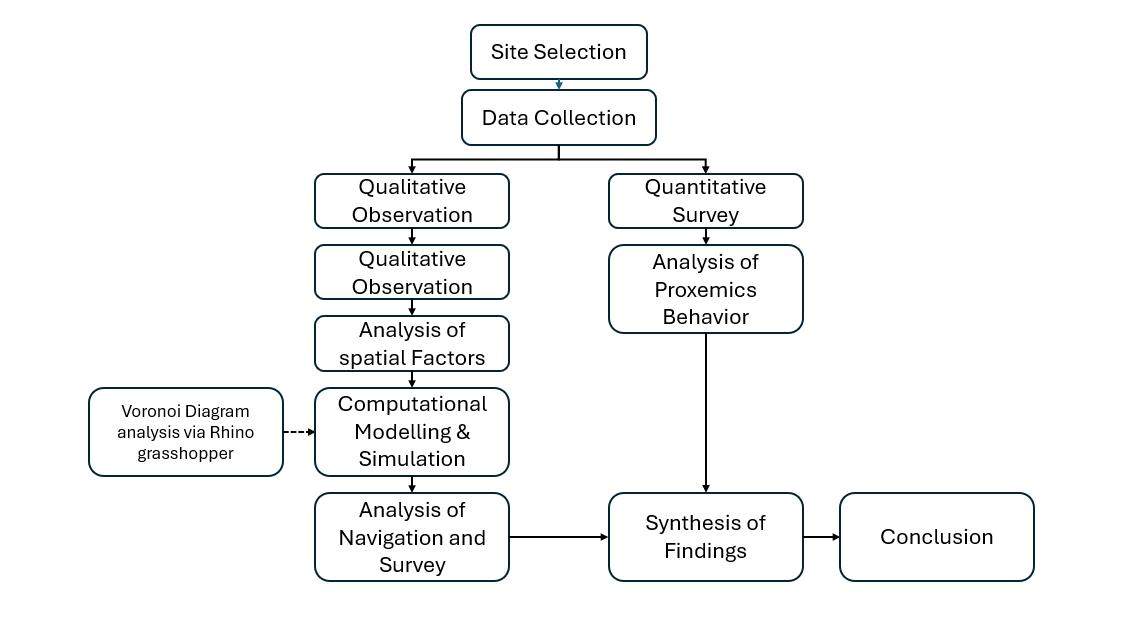
Figure 2: Methodology flowchart for the research conducted
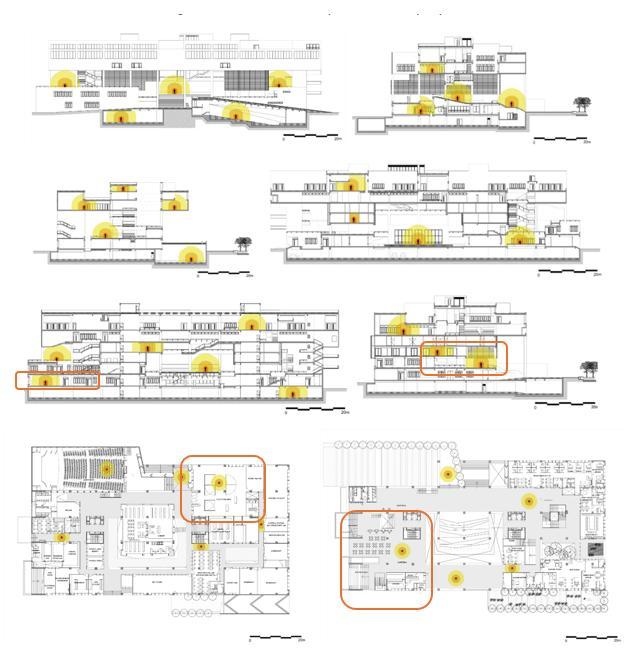
The study identified three primary spatial design parameters, derived from the Aleatoric Framework, as independent variables influencing proxemic behavior and natural surveillance namely, Territorial Markers defined as seating areas strategically placed along the edges of wide public corridors, occasionally demarcated by landscaping. These elements are conceptualized to influence a sense of ownership and personal space within communal areas. Visual Fields, refer to partially double-height spaces integrated with publicnodesandsemi-openareas,featuringaparasol-styledesignthatenhancesopenness and extends lines of sight. These elements are designed to promote natural surveillance by ensuring clear visibility across spaces. Environmental Image Quality, encompassing high floor-to-floor heights, strategic landscaping, and open-air theatres, all contributing to visually open, well-maintained, and engaging spaces. A high environmental image quality is hypothesized to foster trust and encourage longer stays and social interaction Figure 3 provides a visual context for these elements.
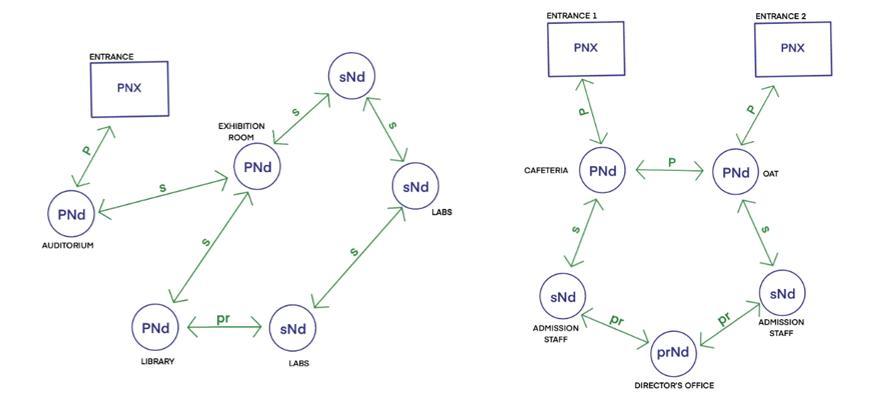
Figure 3 Aleatoric Milieu Diagrams for Ground and first floors respectively (Source: Author)
Further, a survey was conducted to ascertain the preferred interpersonal distance preferences of the user groups. The sample comprised 80 students, representing 10% of the student body, and 15 faculty members. Followed by the following questions, their preferred distance for interaction with close friends/peers, their preferred distance for interaction with acquaintances, their comfort levels with strangers in formal settings, and their general spacing preference in crowded areas. Followed by survey for understanding users’ perception interpersonal spaces and understanding how culture influence them. Further Based on criterion of CEPTED like visibility and surveillance potential of the space, Usage Intensity and Activity Levels, Diversity of Social Integration, Access Control and Flow, historical incident data for observations and simulations were selected i.e., Exhibition space and Cafeteria.
Following the survey and site selection, a period of direct observation was conducted to complement the quantitative data. The observational study focused on key semi-public and public spaces, including the exhibition room, the cafeteria, and the central public corridor. The goal was to record actual user behaviour in relation to the previously identified spatial parameters (Territorial Markers, Visual Fields, and Environmental Image Quality). This involved documenting how different groups individuals, pairs, and larger groups occupy space, their movement patterns, and their engagement with the environment. The observations focused on identifying symbolic boundaries and "safe adjoining areas" where individuals could maintain an appropriate personal distance while still being within a zone of natural surveillance.
To further quantify these behavioural patterns, computational simulations were employed. Using Voronoi diagrams, the study modelled personal space and analysed the potential for conflict or crowding in specific areas. These diagrams served to visualize how spatial layouts influence the "invisible psychological bubble" of personal space. Additionally, aleatoric simulations were run to analyse pedestrian movement and navigation, providing dataonhowpeople movethroughandinteract with thespaces. This computational analysis provided a data-driven complement to the direct observations,
allowing for a more precise understanding of how the architectural design influences proxemic behaviour and, consequently, natural surveillance.
4. Data Collection
Spaces for observation and experimentation were carefully chosen based on key CPTED (Crime Prevention Through Environmental Design) criteria to ensure a comprehensive study of diverse interaction dynamics. Selection was based on visibility and surveillance potential (e.g., corridors, lobbies, and "dead corners"), usage intensity and activity levels (e.g., cafeterias and main corridors), and diversity of social interaction (from social lounges to semi-formal exhibition rooms). The study also considered access control and flow at key entrances and passages, as well as any historical incident data to identify areas of past discomfort or underuse.
Based on these criteria, two key spaces at SPA Vijayawada were selected for in-depth study, visually depicted in Figure 4:
● Exhibition Hall (Ground Floor): Chosen for its role as a semi-formal gathering and display space, facilitating both transient and stationary interactions. Its open sightlines and moderate foot traffic made it ideal for examining visibility and social distancing preferences.
● Cafeteria (First Floor): Serving as a social hub with varying occupancy throughout the day, this space was ideal for studying natural surveillance and group proxemics. Its mixed-seating arrangements provided opportunities to observe patterns in personal space negotiation.

4: Selected area for experimentation: 1. Exhibition room in the ground floor, 2. Cafeteria at second floor (Source: Author)
Survey Results: Interpersonal Relationship Distances
The survey revealed distinct preferences in interpersonal distances between students and faculty, as summarized in Table 3. Students generally exhibited comfort with smaller intimate and personal distances, a characteristic attributed to their age and the cultural
diversity prevalent within the student body. In contrast, faculty members expressed a preference for wider personal and social distances, reflecting professional hierarchies and a greater degree of formality in their interactions.
Table 3: User groups and their interpersonal relationships (n = 95)
Cultural Influence Analysis
To further explore the nuances of proxemic preferences, the survey results were analyzed based on regional cultural backgrounds within India. This analysis revealed subtle yet significant variations in preferred distances across different regions, highlighting the impact of cultural norms on spatial preferences. For instance, East India showed slightly smaller intimate and personal distances compared to Central and North and West India, while South India aligned closely with the overall student averages.
Table 4: Survey Results by Region from which students are present (n=95) Students from various regions in India
Observational Data: Interaction Distances in Common Spaces
Empirical data on actual interaction distances was collected through observations in the selected common spaces. This provided a real-world perspective on how individuals utilize space compared to their stated preferences.
Table 5: Observed Spaces their interpersonal distances based on data collected
AnotableobservationfromtheExhibitionAreawasameaninteractiondistanceof2.03m, which strongly suggests formal and observational behaviour within that space. The relatively low standard deviation of 0.36m further indicates a uniform behaviour among visitors, implying that the proxemic behaviour in this space is effectively designed to facilitate ease of movement while observing exhibits.
Acomparison betweenthestated preferences from thesurvey andtheobserved behaviour reveals interesting dynamics. For instance, students preferred personal distance is 0.75m, which aligns perfectly with the observed mean distance of 0.75m in the cafeteria, a social hub. This congruence suggests that in a highly social and informal setting like a cafeteria, individuals' actual behaviour closely matches their preferred personal space. However, in the Exhibition space, the observed mean distance was 2.03m, which aligns precisely with the calculated mean social distance of 2.00m. This indicates that while individuals may express a preference for certain distances in general, the specific architectural context significantly influences their actual behaviour, often guiding interactions towards the 'social' or 'public' range in more formal or open spaces. This highlights the powerful influence of environmental design in subtly guiding human behaviour, sometimes even overriding individual preferences to align with the intended function of a space. Such a dynamic reinforces the CPTED principle of "territoriality” and “natural surveillance" by promoting appropriate spatial distancing that facilitates observation.
The analysis of "cultural diversity" in proxemics, as noted in the survey, reveals that it is not a monolithic concept but manifests in subtle regional variations within a national context. While the overall student average for intimate and personal distances is 0.35m and 0.75m respectively, the detailed regional breakdown shows slight differences. For example, South India aligns perfectly with these averages, while North and West India show slightly larger intimate and personal distances (0.4m, 0.8-0.85m), and East India shows slightly smaller ones (0.3m, 0.7m). This emphasizes the need for highly granular cultural sensitivity in architectural design, particularly in diverse countries. A "one-sizefits-all" approach based on broad cultural assumptions could lead to discomfort or underutilization of spaces. Designers should therefore strive for adaptable spaces that can accommodate a spectrum of culturally influenced proxemic behaviors, perhaps through flexible furniture arrangements or multi-functional zones.
Based on the comprehensive survey data, the study synthesized and categorized the final proxemicdistances according tointeractiontype.Thesecategories serveas astandardized reference for understanding spatial relationships within the context of this research. A visual representation of these categories is provided in Figure 18.
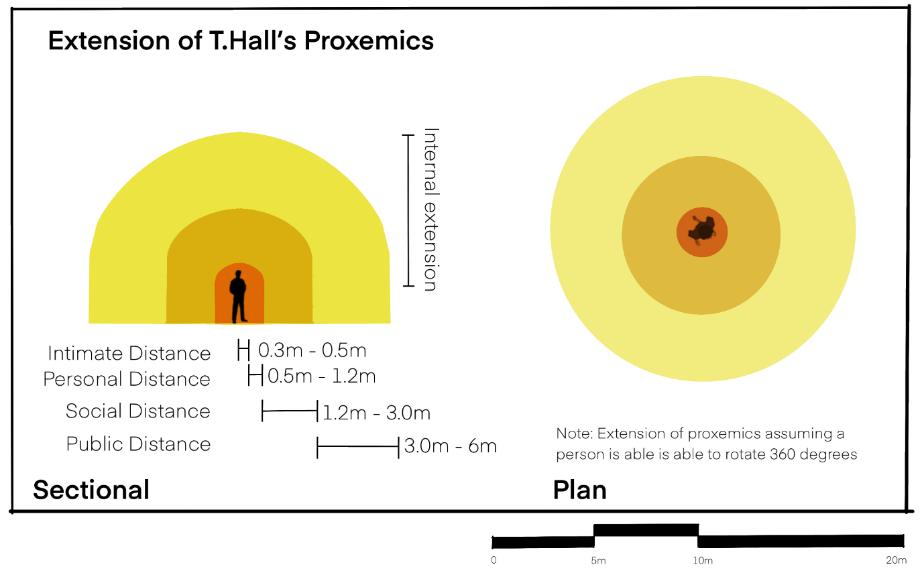
Figure 5 Informal Classification, Based on the survey
The strategic selection of spaces for this study, guided by detailed CPTED criteria, demonstrates a robust research design. Moving beyond simple high-traffic areas, the criteria included considerations for "dead corners," "transitional spaces," and a "spectrum of spaces". The deliberate choice of the Exhibition Hall (a semi-formal space with open sightlines) and the Cafeteria (a social hub with mixed-seating arrangements) allowed for observations acrossdifferent interactiontypesand levels of formality,from"transient and stationary interactions" to "personal space negotiation". This comprehensive approach aims to capture a holistic picture of proxemic behavior rather than isolated instances. It suggests that understanding the interplay of different spatial functions and their inherent socialdynamicsiskeyto designingeffectiveandsafeenvironments.Theselectioncriteria implicitly acknowledge that natural surveillance and social cohesion are not uniform across a building but are context-dependent, requiring a nuanced observational strategy.
5. Computational Experimentation and Simulation
Experimentation Process: Voronoi Diagram Creation and Simulation
The study employed computational methods, specifically Voronoi diagrams, to simulate and analyze human occupancy within the chosen spaces while maintaining appropriate social distancing. The fundamental purpose of using Voronoi diagrams was to model how interpersonal spaces form around individuals and how these spaces are dynamically influenced by surrounding stimuli.
The process involved:
● Voronoi Diagram Creation: Randomized seed points were generated within the boundaries of the selected spaces (Exhibition Room and Cafeteria) to create Voronoi cells. This technique allowed for the visualization of individual territories within a given area.
● Theoretical Basis: The approach is grounded in the understanding that people naturally orient themselves and adjust the shape of their personal space based on
external factors, such as nearby objects or other individuals. Voronoi diagrams serve as a powerful tool to simulate this dynamic relationship between individuals and their environment.
● Social Distance Consideration: A critical factor in the simulation was the prevention of personal spaces from overlapping. The study rigorously considered both the minimum and maximum social distances observed during the initial survey to ensure realistic modeling of human interaction.
● Data Collection and Analysis: Survey data provided the empirical basis for defining interpersonal space areas, which ranged from 4.52m² to 28.27m², corresponding to radii from 1.2m to 3.0m. These values directly reflected the observed range of social distances.
● Node Circle Selection: A standard node circle with a 2m radius was selected, representing the average social distance observed in the surveys. This circle was used as a consistent unit for iterating through the space.
● Simulation and Iteration Process: Iterations were performed to calculate the maximum number of people who could comfortably occupy the space without violating the established 2m personal space radius. This process determined the optimal occupancy capacity while maintaining appropriate social distancing. The Grasshopper code utilized for these simulations is provided in

The application of Voronoi diagrams in this study represents a significant method for bridging quantitative data with qualitative experience. This computational technique is not merely a technical exercise; it serves to visualize and quantify the otherwise abstract concept of personal space and its dynamic interaction with the environment. By randomizing seed points andsimulating non-overlapping personal spacecircles,thestudy translates subjective comfort levels, derived from user surveys, into objective spatial requirements for design. The understanding that "literature suggests that people naturally orient themselves and adjust the shape of their personal space based on external factors" underscores the dynamic nature that these diagrams attempt to capture. This approach demonstrates the power of computational tools in making human-centered design principles actionable and measurable. It moves beyond intuitive design to provide empirical grounding for decisions related to density, flow, and comfort, offering
architects a powerful tool for predictive modeling of human behavior in proposed spaces.
Simulation Results for Selected Spaces
Thecomputational simulations providedquantitativeestimates of comfortableoccupancy for the selected spaces, considering the established proxemic parameters:
● Exhibition Room: The simulation indicated that approximately 18 to 28 people could comfortably utilize the Exhibition Room without their personal territory being breached, while simultaneously remaining within their public distance vicinity, thereby facilitating natural surveillance. The iterations for this space are visually presented in Figure 7.
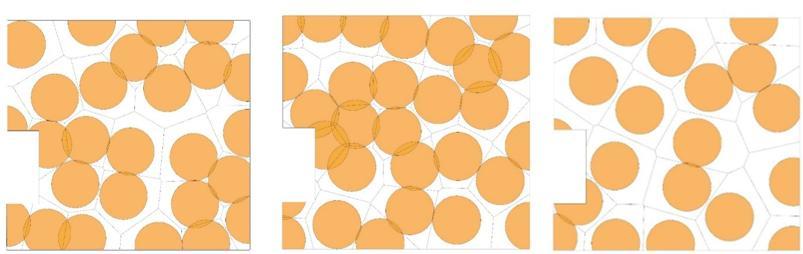
7: Iterations made using the boundary of exhibition room (Source: Author)
● Cafeteria: For the Cafeteria, as depicted in Figure 8 the simulations determined that approximately 32 to 48 people could occupy the space comfortably, ensuring their personal territory was not infringed upon and they remained within a range conducive to natural surveillance.
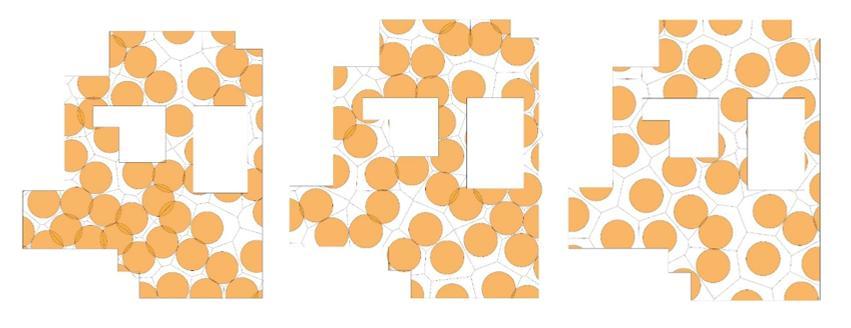
Figure 8: Iterations made using the boundary of Cafeteria (Source: Author)
A critical observation from these simulation results is the dual role of "public distance vicinity" in optimizing both occupancy and surveillance. The explicit statement that
people can use the space "without their territory not being breached and in surveillance within their public distance vicinity (surveillance)" highlights a crucial dual outcome. This implies that the design is not merely about maximizing comfortable fit (a proxemic concern) but also about ensuring that the presence of individuals contributes to natural surveillance. The 2m radius used for social distance in the simulation is particularly relevant here, as it is large enough to allow for observation while maintaining personal comfort. This reveals a sophisticated understanding of space utilization where density is optimized not just for capacity but for safety and social interaction. It suggests that designing for optimal proxemics inherently supports CPTED principles, creating environments where users naturally monitor each other, thereby potentially reducing the need for overt security measures. This constitutes a powerful argument for integrating behavioral insights early in the design process.
Observation in terms of Proxemics and Defensible Space
Observation, in the context of this study, refers to the systematic examination of how interpersonal distances (proxemics) and spatial boundaries (defensible space principles) collectively shape patterns of natural surveillance, social interaction, and perceived safety within an architectural setting. At SPA Vijayawada, the observational methodology involved meticulously measuring how students interacted in relation to territorial markers, visual fields, and environmental image quality. This was achieved through various methods, including spatial mapping, analysis of sectional and CAD plans, and the application of computational models to record proximity, movement, and occupancy patterns.
Proxemics served as a guiding framework for analyzing specific zones, such as personal, social, and public distances. The observations focused on whether peers maintained comfortable separations and how the spatial layout influenced group formations and opportunities for mutual monitoring. Concurrently, defensible space principles including territoriality, surveillance, image, and adjoining areas were applied to interpret howphysical andsymbolicboundaries functioned.Elements likecorridoredges, strategic landscaping, and seating zones were examined for their role as symbolic and physical barriers that support a sense of ownership and facilitate informal oversight. This integrated approach demonstrated that proxemic behavior, the presence of symbolic barriers, and the overall spatial design collaboratively produce a robust natural surveillance capacity among peers. This finding was further validated by the measured distances, observed interaction frequencies, and the outcomes of the spatial simulations.
6. Findings and Analysis
The experimentation and case study analysis at SPA Vijayawada underscore the effectiveness of integrating proxemics with computational design, revealing how specific spatial design parameters profoundly influence human behavior and natural surveillance.
Territoriality and its Impact on Social Cohesion and Surveillance
The study found that seating areas and strategic landscaping along public corridors
function as effective territorial markers. These markers play a crucial role in enabling comfortable personal-social distance interactions, typically ranging from 1.2 to 3 meters in the inferences and 1.4 to 2.8 meters in the conclusions. Furthermore, these elements extend informal oversight into adjoining public and movement areas, thereby enhancing natural surveillance. The observed mean distance in the Cafeteria (0.75m), indicative of personal-intimate interactions, and in the Exhibition (2.03m), reflecting social-public interactions, illustrates how these territorial markers subtly guide the type and proximity of interactions within different spaces.
Visual Fields and Effective Public-Distance Observation
Partial double-height nodes and semi-open spaces, particularly those with a parasol-style design, wereidentifiedas creatingclearandexpansivevisual fields. Thesedesign features are instrumental in supporting unobtrusive observation at public distances, typically greater than 3.5 meters. By reducing concealment opportunities, these clear sightlines actively promote effective peer surveillance. The Exhibition Hall, with its inherent open sightlines and moderate foot traffic, exemplifies this principle, making it an ideal environment for observing visibility and social distancing preferences.
Environmental Quality and User Engagement
High floor-to-floor heights, strategic landscaping, and open-air theatres significantly contribute to a high environmental image quality within SPAV. This superior environmental quality has a direct behavioral impact: it encourages users to stay longer and engage in denser social-distance interactions, ranging from 1.2 to 3.5 meters. This outcome reflects and fosters a heightened sense of trust and perceived safety among occupants, aligning with the Aleatoric Milieu's aim to create an "inspiring and conducive environment for learning and creativity".
Symbolic Barriers and Protection Against Intrusion
The presence of clear edge definitions for intimate and personal zones, typically less than 1.2 meters, functions as effective symbolic barriers. These non-physical demarcations are crucial in reducing intrusion incidents and significantly increasing users’ feeling of safety within these more private areas. This finding connects directly to the survey results regarding preferred intimate and personal distances, demonstrating how architectural elements can accommodate and reinforce these preferences through subtle cues.
Safe Adjoining Areas and Path Design for Movement and Interaction
Well-lit and visually connected corridors were found to create safe adjoining areas and facilitate effective path designs. These design elements maintain appropriate social distances while simultaneously stimulating spontaneous peer encounters and mutual visibility, effectively acting as observation conduits. This directly relates to the Aleatoric Sequence, which orchestrates transitions between public and social nodes, and the overall design of the entry and pathways that enhance intuitive navigation throughout the building.
Synthesis
of Analysis: Design Adaptability, Navigation, Intimacy, and Cultural
Implications
Theanalysis highlightsseveral overarching themes thatunderscorethesuccess ofSPAV's design approach:
● Design Adaptability: The application of Voronoi diagrams and parametric modeling proved instrumental in tailoring spatial configurations to diverse user needs. This flexibility demonstrates the significant potential of computational tools in addressing the nuanced cultural and contextual variations in proxemics.
● Enhancing Navigation and Intimacy: By applying Aleatoric principles, SPAV successfully achieved a seamless gradient of intimacy, blending public, semi-public, and personal spaces. This fluid transition facilitates both social interactions and individual comfort, which are essential in academic and public environments.
● Cultural Implications: The cross-cultural analysis of proxemics revealed a universal need for adaptable designs. These designs must not only respect local cultural norms butalsoactivelyfosterinclusivity,acriticalconsiderationforcreatingspacesthatcater to a global audience.
● Practical Application of Theory: The study affirms that the Aleatoric Milieu, when supported by computational tools, provides a robust framework for bridging theoretical constructs like proxemics with practical design solutions. SPAV's architecture serves as a compelling case study, demonstrating the tangible benefits derived from this integrated approach.
Thefindings consistently linkspecificproxemicbehaviors,such as comfortablepersonalsocial distances and encouraging longer stays, with enhanced natural surveillance, including informal oversight and unobtrusive observation. This relationship is not merely correlational; it suggests a causal loop were designed for comfortable interaction actively leading to increased mutual visibility and perceived safety. For instance, a "high environmental quality" encourages "denser social-distance interactions," which in turn "fostertrust andperceived safety".This observationforms acore argument forintegrating proxemic considerations into CPTED. It suggests that designing for positive social interaction is, in itself, a powerful crime prevention strategy, moving beyond defensive architecture to a more proactive, community-building approach. Spaces that evoke comfort and facilitate natural interaction are inherently safer.
Furthermore, the study found that SPAV successfully created a "seamless gradient of intimacy" by blending public, semi-public, and private spaces. This sophisticated design, which allows for fluid transitions between zones, provides users with a choice in social engagement or privacy. The research also highlights the psychological power of design, noting that clear edge definitions for personal spaces (less than 1.2m) reduce intrusion and enhance feelings of safety, even without physical barriers. This suggests that subtle design cues like lighting, landscaping, and spatial articulation can effectively implement CPTED principles, offering a cost-effective and aesthetically integrated method for shaping human behaviour. .