WEETINGTRAININGWEEKEND
April Sth and 6th 1986
Mr and Mrs Parrott and S.A.C. member Kathryn who some of you will have met have kindly invited us to Fen Farm for a weekend with the chance of talking to them and their friends in the engine world of Thetford, the home of Burrells.
There will be an area for camping and caravans, if parents or you wish to come for the whole weekend and engines will be in steam on both days. We are hoping there will be around eight engines which will be threshing, sawing and stone crushing as well as free moving. We are not sure about ploughing engines at present.
There will be films or videos with slides in the evening on Saturday, so a full two days are expected, as those of you who came before will remember.
A Caterers vehicle had been laid on and he will be serving meals starting with breakfast from 9 am if you are camping. The prices are reasonable and a supper will be available too before the film show. Hot drinks and food will be ready all day.
It will help us if you can let David know you are coming but turn up any how if you can arrange transport at short notice Brandon station on the Ely-Norwich line is nearby so train may be your method of travel.
This is a splendid chance to meet engine men, hear engine talk and meet both Sylvia, David and Stuart as well as your fellow Apprentices so please support us and come if you possibly can. Put the date in your diary and on the family calender straight away.
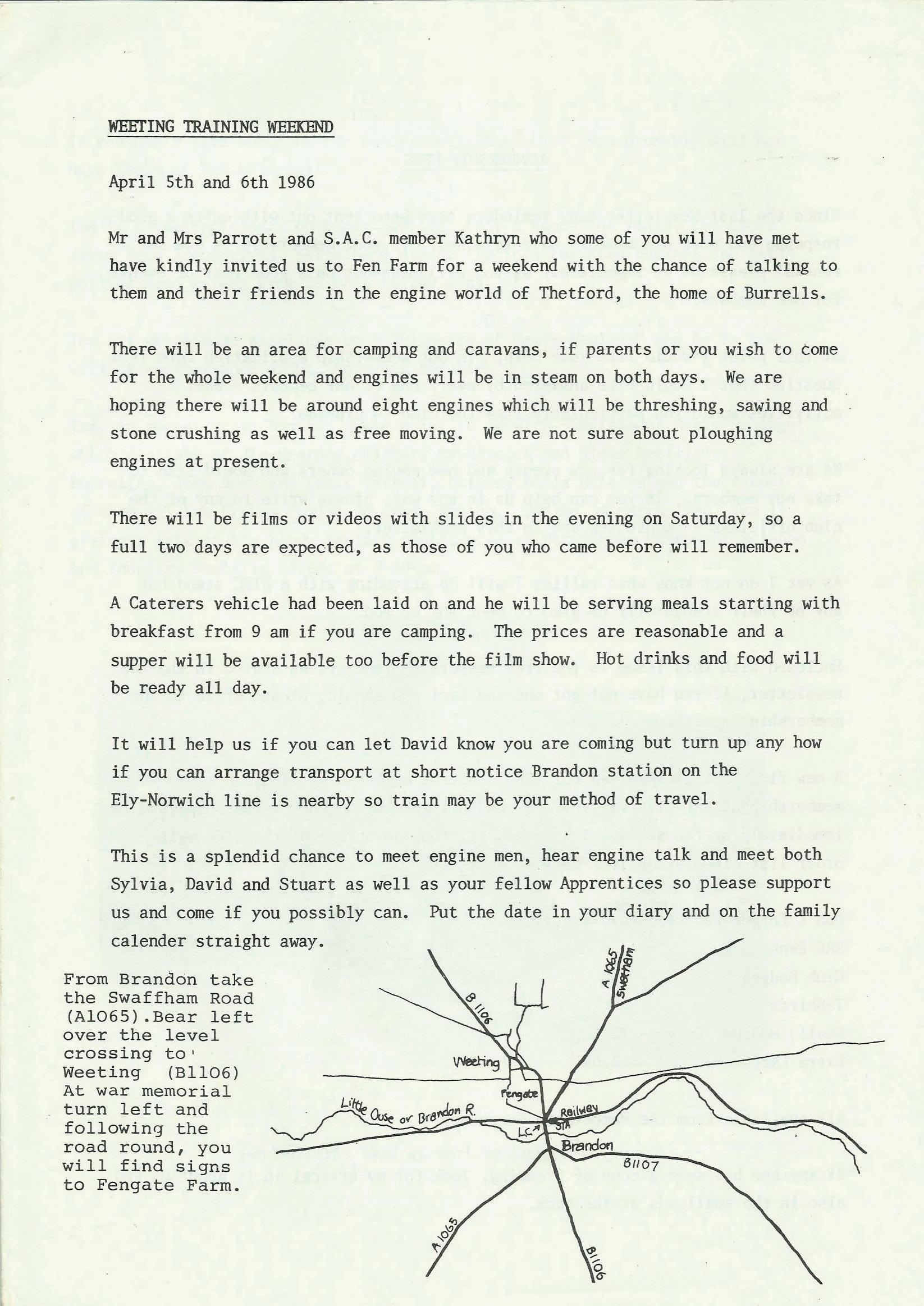
From Brandon take the Swaffham Road (Al065).Bear left over the level crossing to• Weeting (B1106) At war memorial turn left and following the road round, you will find signs to Fengate Farm.
MfMBERSHIPNEWS
Since the last Newsletter many reminders have been sent out with quite a good response and some old members have rejoined. If your membership is due for renewal please do it immediately as you will miss out on a good year of events for SACmembers.
At this point I would like your help. In our membership application forin is a question that I would like answered by every one of our members -What activities would you particularly like the Club to provide?
We are always looking for new events and new engine owners who would like to take our members. If you can help us in any way, please write to any of the club officials -addresses are in this newsletter.
As yet I do not kno~ what rallies I will be attending with a NTECstand but any of their stands \-vill be glad to meet any of you.
Enclosed with this issue is the free membership vouchers as stated in the last newsletter, if you have not got one and feel you should, please write to the membership secretary.
A new first being organised for 1986 concerns membership. You can renew your membership at any NTEC.rally stand and be issued with a new membership card immediately by the stand. I hope you all took advantage of the NTECmail order list circulated with the last newsletter.
Don't forget we still have available:SACPens -lSp Club Badges -65p T-Shirts
Small, Medium, Large -£2.50
Extra Large -£3.00
All available from the Membership Secretary.
If any one has seen a copy of Steaming, look for my artical in it about us and also in the small ads at the back.
If you don't live North of the Border near Santa Land, you probably will not have heard of Tam McTaggart.
Tam is a leading expert on heavy haulage. For a number of years, Tam drove steam ro~d locomotives, petrol and diesel tractors for Road Engines and Kerrs pulling load weighs from 25 tons to 200 tons.
Tam has written an excellent boot< "Pioneers of Heavy Haulage" and he is now ·, writing another book about 'Norman E Box Ltd'.
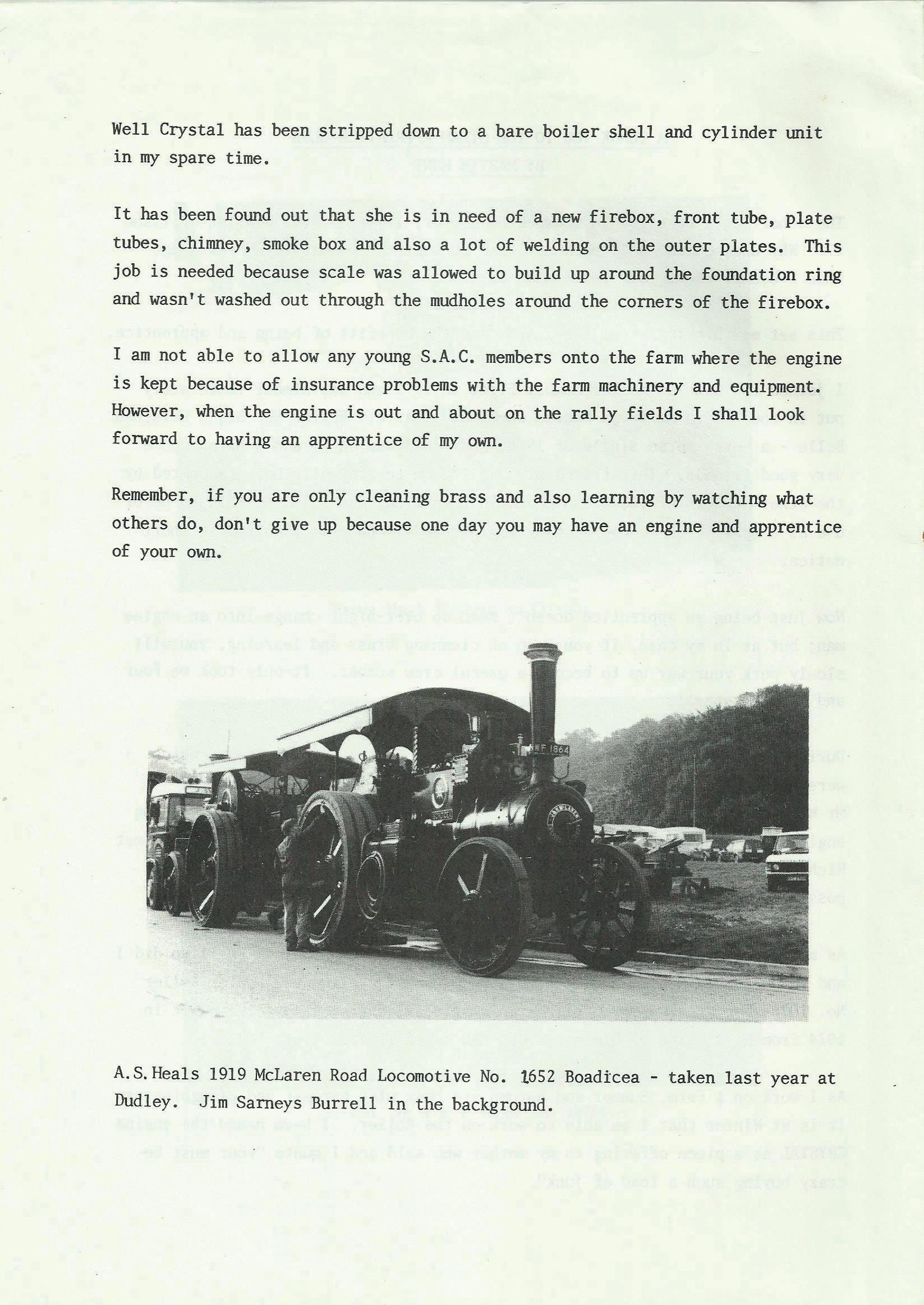
Tam, in recent years has had quite a lot to do with 'Amalgament Heavy Haulage' which consists of Jim Snarney, Richard Sandercock and Steve Neville's Burrell's, John Bush and Cos., Garrett, Anthony Heals McLaren and the finest of them all Len Cranes Fowler B6 Crane Engine. On the 24 March 1986, Tam is giving a talk on his heavy haulage experiences at Birmingham Museumof Science and Industry Newhalls Street at 7.30 pm.
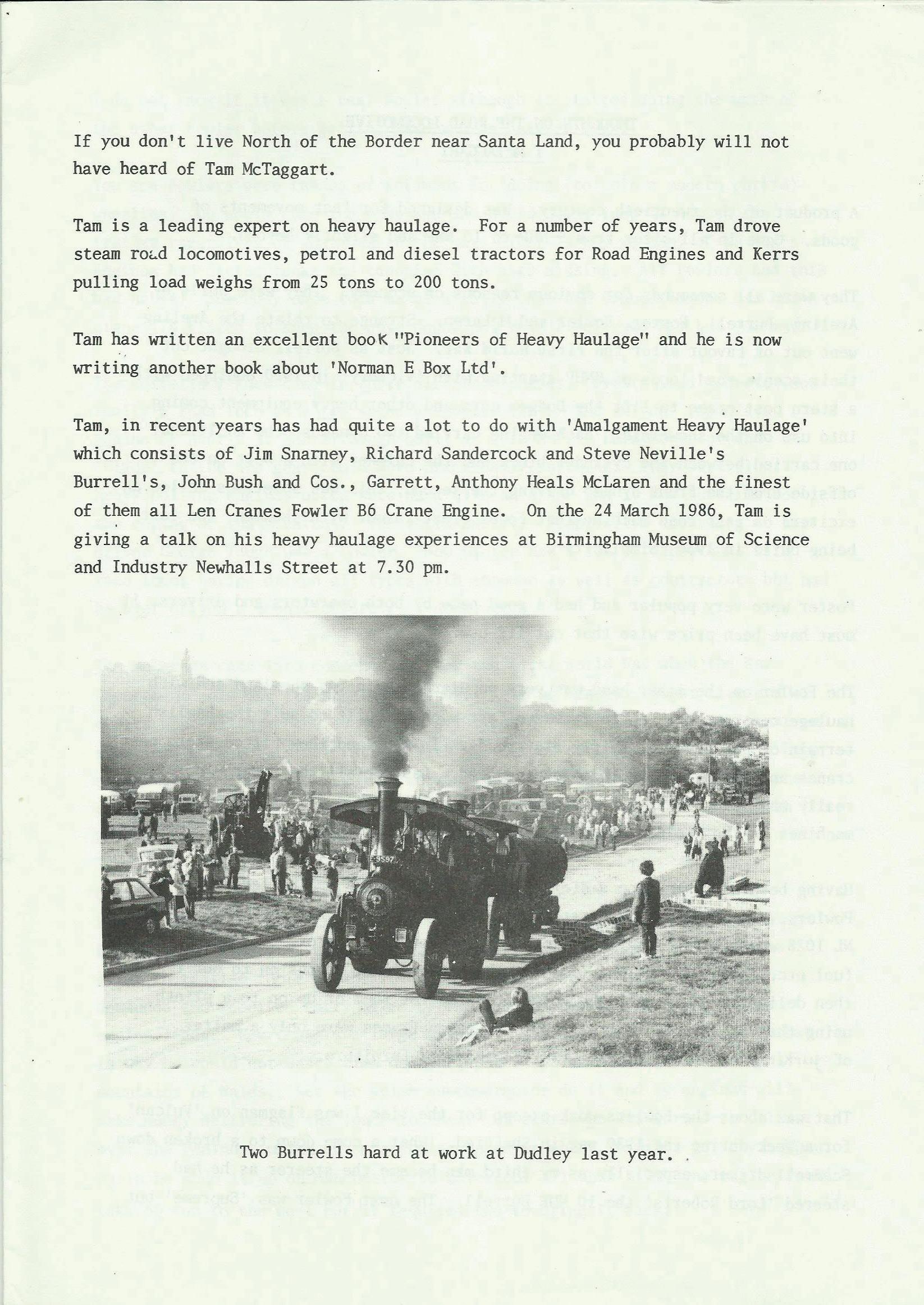
Two Burrells hard at work at Dudley last year.
rnouGHTSONnIE
ROADLOCCM)TIVE
T McTAGGART
A product of the twentieth century. Was designed for fast movements of goods. Came in all sizes from 5 NHPto 10 NHPand slightly beyond.
They were all compounds for obvious reasons of economy. They were built by Aveling, Burrell, Foster, Fowler and McLaren. Strange to relate the Aveling went out of favour after the First World War. Just as Burrell brought out their scenic road locos of BNHPstarting with 'Victory' in 1920 equipped with a stern post crane to lift the Dodgemcars and other heavy equipment coming into use on the showfield. Each engine carried two dynamos, the additional one carried between the cylinder block and the chimney with a belt on the offside from the front dynamo driving the second, this was sometimes called an exciter. A fast road machine that found great favour with showmen, the last being built in 1930. 'Simplicity'.
Foster were very popular and had a good name by both operators and drivers, it must have been price wise that cut its use.
The Fowler on the other han'i was very popular both in the showland and with haulage contractors. Again it was a fast machine built to suit the English terrain of hard, solid, fairly flat roads. In showland they fitted stern post cranes and anything else that was required. Last of all the McLaren never really made a popular showmanschoice although they had a small percentage of machines in the field. Again it was fairly popular in the contractors market.
Having been brought up on a diet of Burrells, McLarens and believe it or not! Fowlers, Yes! Fowlers, my first job of flagman was on Fowler No. 9986 Reg No. NL 1028 where we shifted light work ie; stern frames approx. 25 tons, tanks, fuel etc., about 30 ft long, loading them off railway wagons on to our trailer then delivering them into the holes prepared for them or up on to a plinth using the wire rope for both jobs. The stern frames were only a matter of jurk.ing between the other traffic and road furniture.
That was about the Fowlers work except for the time I was flagman on 'Vulcan' for a week during the 1939 war in Sheffied. What a come down to a broken down Scammell driver, especially as my third man became the steerer as he had steered 'Lord Roberts' the 10 NHPBurrell. The next Fowler was 'Supreme' but
I do not know if it was a real Fowler although it started doing the work of the other Fowler before getting involved in heavier work.
You see Fowlers were famous or infamous for doing (to coin a modern phrase) wheelies. Up would come the nose and she would swing into line with the trailer regardless of what was in the way. That is why so many of NE Box's engines had dented tanks and canopies with bits missing. All Fowlers had this bad habit. Somebodyonce told me at a rally that Len Cranes engine had had a crane jib fitted to keep the nose down, not that I believed_him but you may.
The Burrells I knew came in three different phases. First 'Lord Roberts' not really a road loco as a two speed and built 1897. The 'Clyde' top class engine of nearly 12 NHPalthough built as a 10 NHP. 'Lord Roberts' and 'Clyde' in the wee gear could move practically anything. They were slow, heavy pulling engines often were used with an 8 NHPand 10 NHPBurrells before the coming of the McLarens. The third Burrell 'Simplicity' according to her driver George Tough was a Fowler. NowGeorge had a lot of experience with road locos having driven all types with showmenas well as contractors but had he ever driven a scenic before? -I doubt it.
The McLarens came into commonuse after the first World War when the War Department sold off its surplus engines. Kerr of Glasgow bought five and others went all over the country to all types of work. Big 'Goliath' went on showfield work but is now retires with Mr Lithgow of Lymmin Cheshire, a huge engine with a large appetite for work. Every McLaren looks so big that one thinks it is 2 horse power above its rating. Kerrs Mc's worked along with the Burrells as they were much the same in gearing and speed.
Going back to Fowlers used by contractors nearly every heavy haulier in England and Wales used them. The only exceptions being Hickey of London_on Burrells and a McLaren user in Huddersfield. NormanE Box was one of the first to realise their capabilities on the hard fairly level roads. He demanded and received forty miles or thereabouts per day with one or two engine loads. Nowthat is a large mileage to achieve with heavy loads, that is why he would not waste time delivering boilers and crushers into the mountains of Wales. Let the Welsh subcontractor do it and my engines will make money delivering the loads to them. Of course he was forced to deliver over the Peninnes which cut the engine speed to about 15 miles per day. Then again he made it up on Manchester to Liverpool all down hill, one engine could take 60 ton to the pool but it required two to bring it back.
Nowwe can return to the two enigmas of the road locomotives 'Simplicity' and 'Supreme' were they Burrells or Fowlers? We have Burrell building a scenic engine for Mrs Deakin of showland a fast machine was designed and she got it. A couple of years later a second engine was required but Burrells works and business were gone. The only big engine builder left was Fowler and who should be the designer. So he set out to build another scenic Burrell with Fowlers name on it. What did he achieve? Two engines of equal strength and power. The first time a Burrell and Fowler could work together, engines unlike any that had been built before. We cannot prove this theory for 'Simplicity' is no longer with us but 'Supreme' is and what is her rating 8 or 10 NHP?
In Michael Lanes classic book 'Burrell ShowrnensRoad Locomotive' states that the scenic 8 NHProad foco was the most powerful 8 NHPbuilt in Britain and as far as the writer knew, in the world. This should give you some food for thought.
This next artical is by John Wharton who is Chairman of the Engine Owners Sub Committee. The Committee is responsible for sorting out engine owners legal problems for the majorit: of the time eg., RoadTax, Boiler Insurance and Appearance Money, so John knows what engine men expect of their crews. John also drives his fathers Burrell ShowrnensEngine King George VI. His father Jack is President of the National Traction Engine Trust who owns the Fowler ShowrnensEngine Supreme.
Just a few suggestions to Steam Apprentices -John Wharton
When you have been bitten by the steam engine bug you have the disease for life. There is no known antedote.
Having been infected, one sets sights on looking after the engine of your dreams. It may be a ploughing engine, a wagon, a tractor, a roller, a traction engine or any other type. Steam engines are now very expensive and if you ever find yourself fortunate enough to own one, you should consider yourself extremely lucky. But you don't have to own a steam engine to look after one. If you go to a steam engine rally, I doubt whether you would be able to see much more than half of the engines presently driven by their owners. So how do you get to that position whereby you are left in sole charge of someone'elses engine? I will try to give you a few tips.
Other owners maybe carrying out repair work. You might not be able to help in maintaining or welding, but you can always lend that extra pair of hand when needed. You might offer to put on the undercoat of paint, you never know you could develop the skill of a painting. If you become a good friend of the owner, you may be taught some of the modern day useful skills. Many young people have learnt to arc-weld whilst repairing steam engines.
You might catch an owner getting an engine ready for the summer. With the most careful preparation for the winter you always find the rusty piece of steel you forgot to grease, the black tarnished brass and rust forming on the chimney that then has to be rusted down and repainted (without dripping paint all over the boiler and front wheels). Help would usually be welcomed.
When the rally comes, you would almost certainly be welcomed on the footplate -all without saying can I come up and have a look. Anyone will pay a reward for genuine assistance. You may not even touch the steering wheel for a year, but if your enthusiasm is strong enough, and you can make a good friend of the owner you could eventually finish up being one of those looking after an engine for an owner. You have to build that trust. Trust takes time.
Your enthusiasm is you best asset. Never mind the btmcombe of wearing caps and badges; just wear what your mumdoesn't mind you wearing, with a decent pair of shoes or boots.
Please note these are suggestions, not a recipe for success. For example, I have a full crew on the engine I drive. Unfortunately my footplate is already invariably overcrowded. At the moment I could n9t accomodate anymore helpers than I have. Don't be down hearted, if you come across this situation. Persistance and enthusiasm will always win.
Whowould you lend your bicycle or motorbike to? It would have to be someone you know quite well. Someone who would take care of it and not scratch the paintwork. Someone who would not thrash the thing to destruction. Someone who would recognise when something is wrong, before something is broken. Someone who knows and understands how it works and would carry out minor repairs even on the road side. Someone who acts sensibly and is level headed. Trust someone would have to be a friend.
A steam engine is a fairly complex machine based upon simple engineering. They are powerful, some are fairly fast and they could all do a lot of damage in the wrong hands.
Howto get the knowledge and make a friend of a steam engine owner to the degree that he trusts you.
Very little of the work on a steam engine is carried out on the rally-field. Most of the work is dirty, filthy, carried out on cold days, out in the open. Some can get great reward first by doing this work. Others consider that the winter work is agony that comes before the ecstasy of taking the engine out in the summer.
So be sensible. Don't set your sights on an engine 100 miles away from home; you would hardly ever be able to visit it during the winter. Find an engine owner at home preferably within 20 miles - cycling distance! Make contact with the owner, preferably get some other owner to recommendyou (ask Sylvia about that). Tell the owner how keen you are and say that you would be eager to help out anytime, with any task.
Many owners religiously lay their engines up for the winter, draining every drop of water out (of the boiler and tender, plus all the pipes, not forgetting the pump and other places where water can sit) in case of frost damage. All the tubes are swept, smoke box and fire box cleaned. The steel and brass would be protected etc. There are other owners who don't clean the fire box out until the next time they want to light a fire.
If you could help an owner put an engine away for the winter you would be genuinely helping the owner in a dirty, tedious task. Any help is welcome. That is a good time to get you foot in the door.
FOWLERG.P. 127617HP191112 TONS
BY J E SANSo.ffi
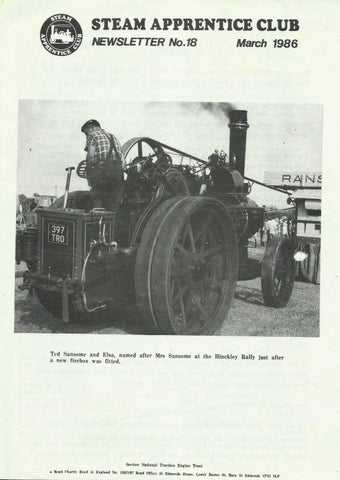
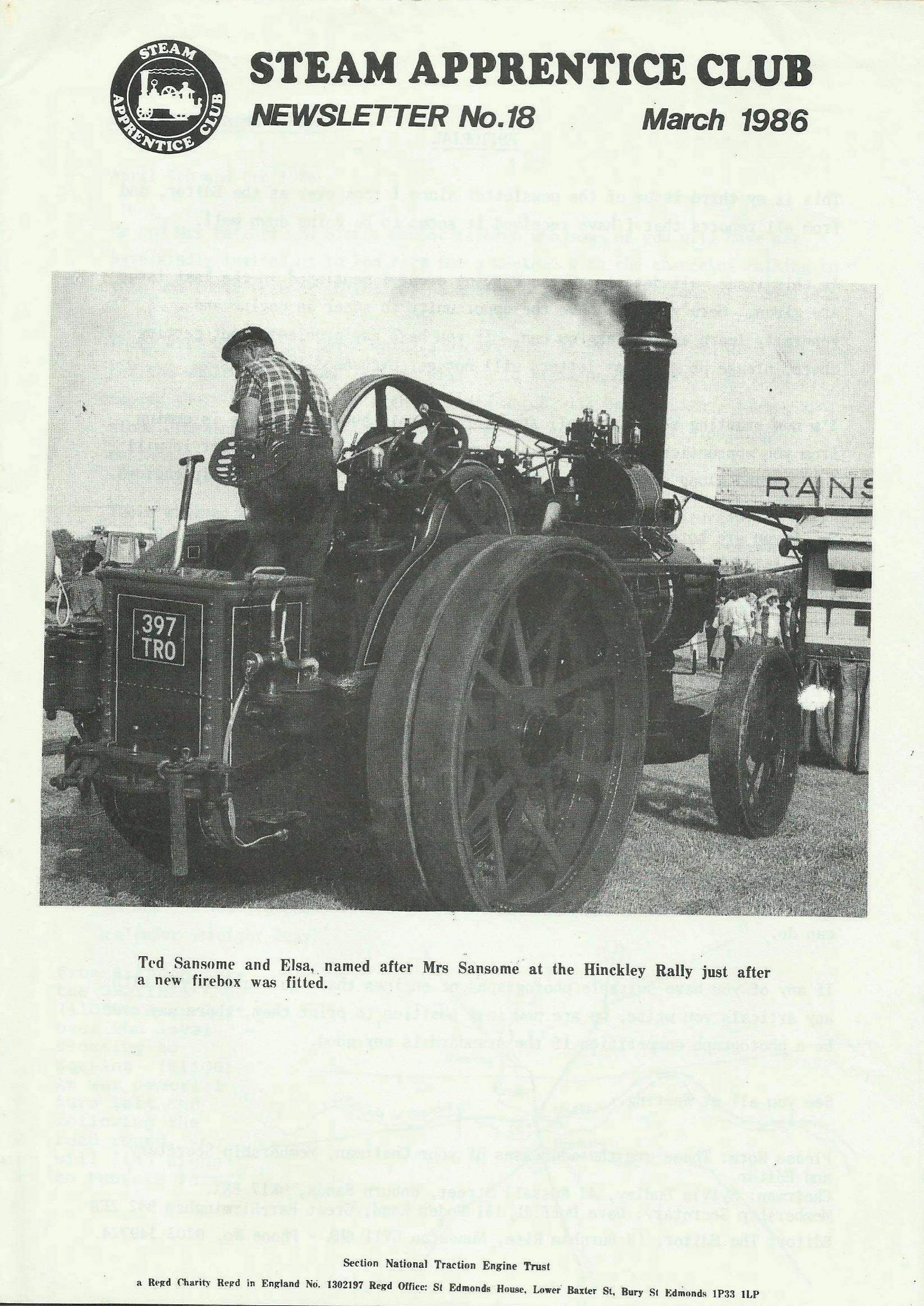
This engine was bought by the Ministry of Food and Fishers for work in the forests around Gloucestershire and Monmouthshire namely the Forest of Dean. The engine travelled all over the forest on the private roads that ran through it. This engine along with four more - two Ransomes, one Clayton and one more Fowler but a compoundthis time did all the work that was needed.
12761 did a lot of timber pulling but only after the timber had been felled, what she had to do was to go and fetch the felled timber up to the loading point and then help with the loading and then help to get the loaded timber drug out on to the road. This she did by getting at the back and pushing. Whenwe got her the front towing bracket was worn out. The hole was so big even my big pin dropped straight through. Sha also did a lot of rope work like getting felled timber out of awkwardplaces where the engine could not get and I would think that it most likely would have to go on the sawmill occasionally.
Looking at the engine when I got it, she had had a hard life. She was never taxed or registered for running on the public roads, so the Reg. No. is 397TRO a 1963 Reg Number. The scrap man at Tring Registered. He bought the lot, sawmill as well. The engines were all parked up and left at a place called Breams all in the open with no sheets on them from 1946-1963.
rnE FIRST TRIP
BY J E SANSOME •
I got this old Fowler during the winter of 1963/64 and over the next six months my friend and I worked on it to try and make it look something like a traction engine. The winter was not too cold so we got on very well with the job. We had to do some pattern making and things like that, anyway to cut a long story a bit shorter it was ready by the end of July 1964, and ready for the Market Bosworth Rally. We test drove it around our little village and around our field and everything worked as it was supposed to do. Anywaythe great day arrived and we set off on the Saturday morning of the rally to go to Market Bosworth Rally. I had been and asked the farmer in the village if I could borrow one of his trailers to put behind the Fowler for this trip. He said yes and we got an ex railway horse dray with an A-bar in place of the shafts, so with the trailer on the back, off we set.
From our village into Hinckley it is down hill all the way. (On the way to Hinckley we had to pass by a certain little girls house and she was at the window when we went by and I blew the whistle for her)~ Everything was going very well, everybody was looking and we could see their mouths opening and shutting, but due to the noise the Fowler was making we could not hear anything.
Out of Hinckley we climbed up the hill past the Police Station and on to the Ashby Road and this is a down hill stretch. On the engine there were two of us - my friend and I. On the trailer was a young boy out of the village, he sat on a bag of coal. I was doing the driving, my friend was doing the steering (we were riding on straks at this. time so the vibration was quite severe). Anywayon the way down this hill we had to go past the local cemetery, it was then that I noticed one or two people pointing at us and I looked at the engine which was now blowing off, and everything looked okay to me. It was then I remembered we had a trailer on the back (or should have been on the back). I turned and looked back and there was the trailer going into the cemetery with the young lad jumping up and down trying to make us hear his shouts. What had happened was being a farmers trailer the A-bar had a bit of wire to hold or stop the bar coming out and the bar slid out into the gutter, so when the wire wore out due to the vibration of_ the engine and the bar shook itself out onto the pavement.
We recovered the trailer out of the cemetery, put the pin and bar back in the right way this time, coupled up and away ~e went. The only damage was to our pride. I must say that the Midland Red Bus driver did stop and let the trailer go into the cemetery and that the gates were open, as a hearse was in there making a delivery!
P.S. That little girl came to be my driver later on.
Stop Press
The S.A.C. will ·be attending a rally in Holland this summer. If any member would like a Dutch pen-pal, write your Name, Address, Age and a few details about yourself. down and send them to: Sylvia Dudley, 42 Russell Street, Woburn Sands, MK17 8NX. A full Hst of rallies will be sent to members as soon as they are printed by the N.T.E.T.
FROMRICHARDHURLEY
Tiffi IS JULY1985
Last year I was lucky enough to be albe to do an interesting days work on an engine (again it was Ted Haggard's Burrell S.C.C.). British Telecom were opening a new electronic telephone exchange in Swindon, and they dexided to ask Fred Didnah (the Bolton Steeple Jack) to come and open it for them. The theme was to be 'From the steam age to the electronic age with Fred Dibnah.'
But before he opened the exchange they wanted him to drive around the town on a traction engine; as it would be too far for him to bring his own engine it was decided that he would use our engine.
So on the morning of the 5th of July we arrived at the yard to get the engine in to steam. After the fire had been lit we proceeded to give the engine a good clean. Soon after 10 am, Fred arrived. By now the engine was in steam and as the boiler inspector was present he checked that the safety valves lifted at the correct pressure (160 P/in sq). After that we left the yard with Fred driving and Colin steering with me passing logs over watching the traffic and talking to Fred. While driving the engine through the town we pulled a trailer saying what we were doing and also carrying a radio mast. The mast was for the local Swindon Station because while travelling we had a live broadcast for the engine. About 11 am we stopped at the town hall for a book signing interval. By now great interest was being shown in the engine and Fred. After our short stop we went on to the telephone exchange where we were to drive through a mock brick wall. Whenwe arrived we couldn't find the entrance or the brick wall, this was because the wall looked so real. We lined up the engine and opened the regulator and went straight through the wall with no problems. All this was filmed by Swindon Cable TV and HTVand so now I have a brick from the wall and also a video recording of the whole day.
All of this is descibed in Fred's new book -'Fred Steams On'. It also has many photographs of the day.
(If you have the book I'm the one wearing the boiler suit and cap).
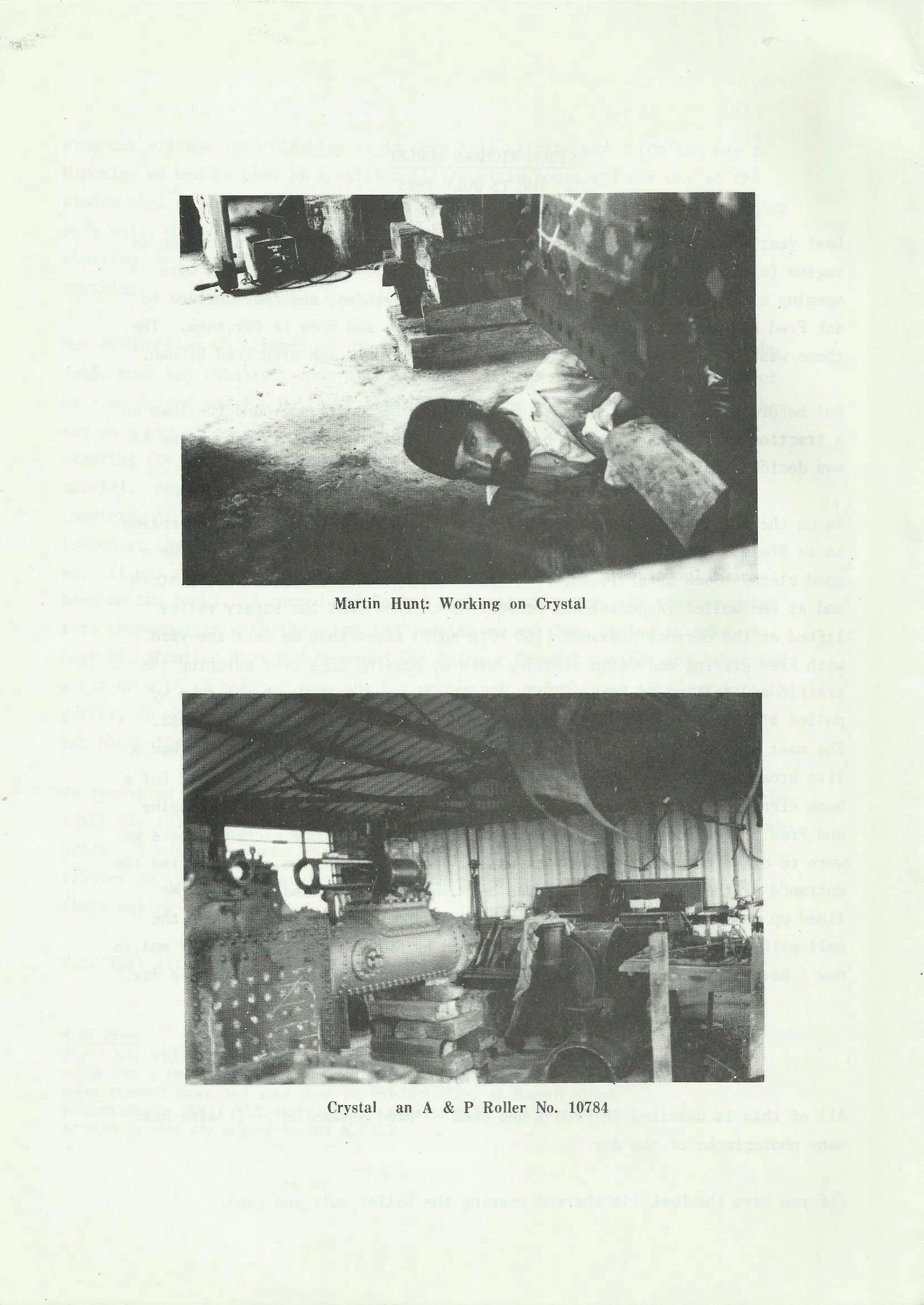
Martin Hunt: Working on Crystal
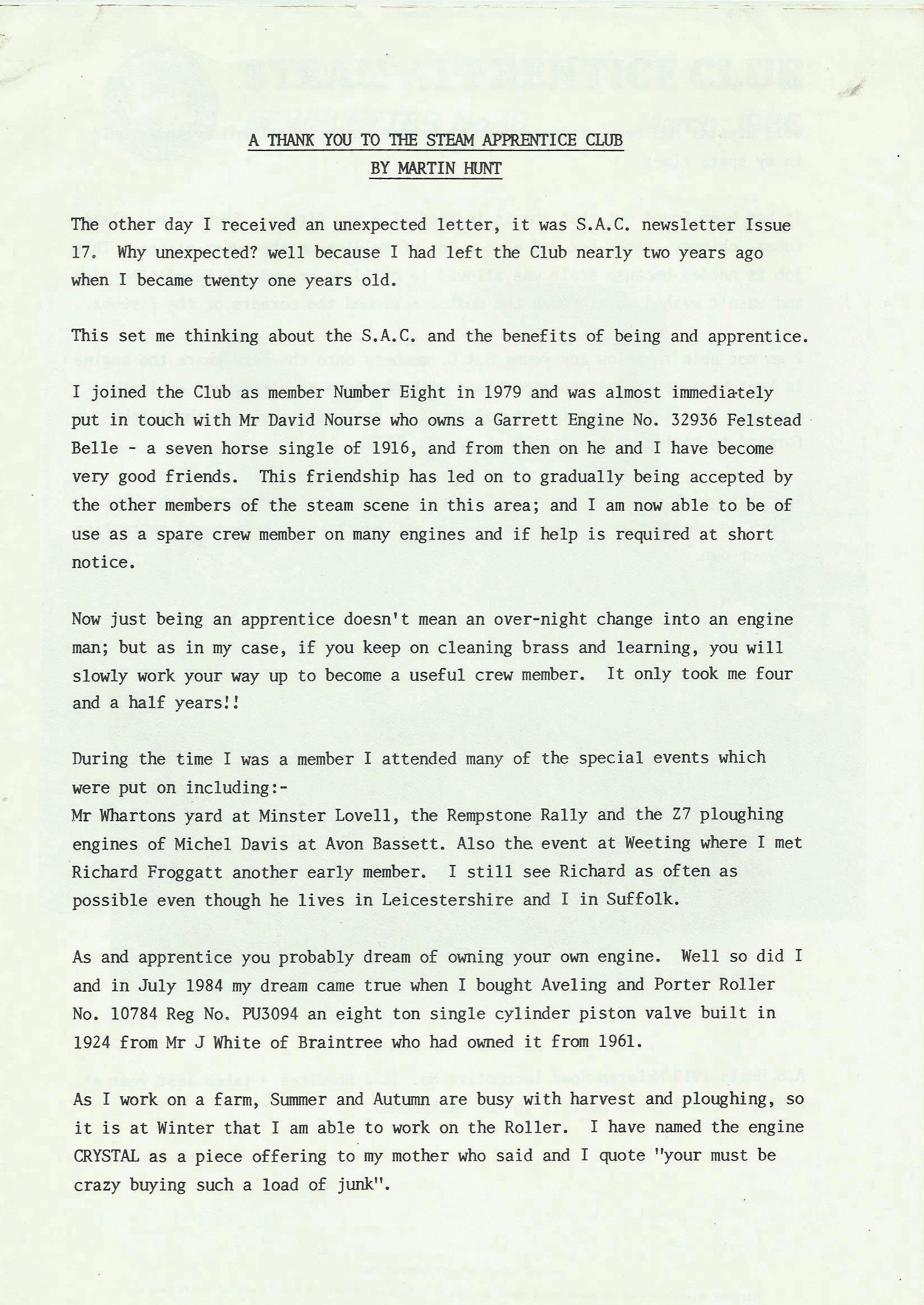
Crystal an A & P Roller No. 10784