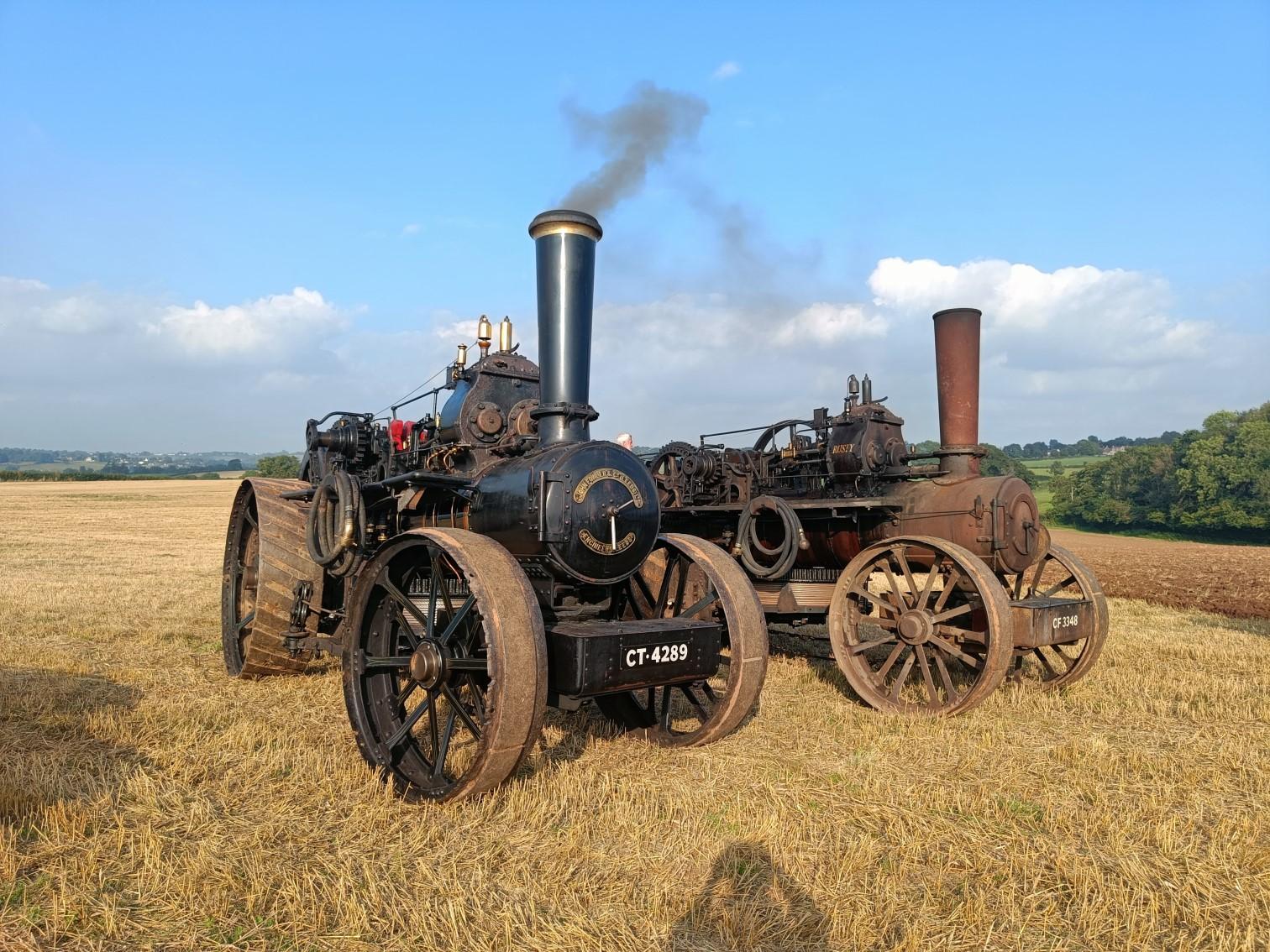
The Editor welcomes any contributions of articles, shorter items or photographs for inclusion in future issues. All material submitted is voluntary and payment cannot be made for any material published.
The opinions expressed in the magazine, with the exception of Club announcements, are those of the contributors and do not indicate the views of the Club as a whole. All items are held copyright by the contributor and the NTET. The Editor reserves the right to amend or refuse contributions. The magazine is normally published during January, April, July and October. The Club accepts no liability for failure to meet intended publication dates.
The Steam Apprentice Club is a section of the National Traction Engine Trust. NTET is a Registered Charity, No. 291578. Registered in England No. 1302197. Registered Office: 4 Church Green East, Redditch, Worcestershire B98 8BT.
www.ntet.co.uk general.secretary@ntet.co.uk
Have you got an image or story you’d like to share? Why not send it to sac.raisingsteam@ntet.co.uk!
Find us on Facebook www.facebook.com/SteamApprenticeClub
Follow us on Instagram www.instagram.com/SteamApprenticeClub
Follow us on Twitter @SteamTeamSAC
Follow us on TikTok @steamapprenticeclub
Thoughts from the Editor
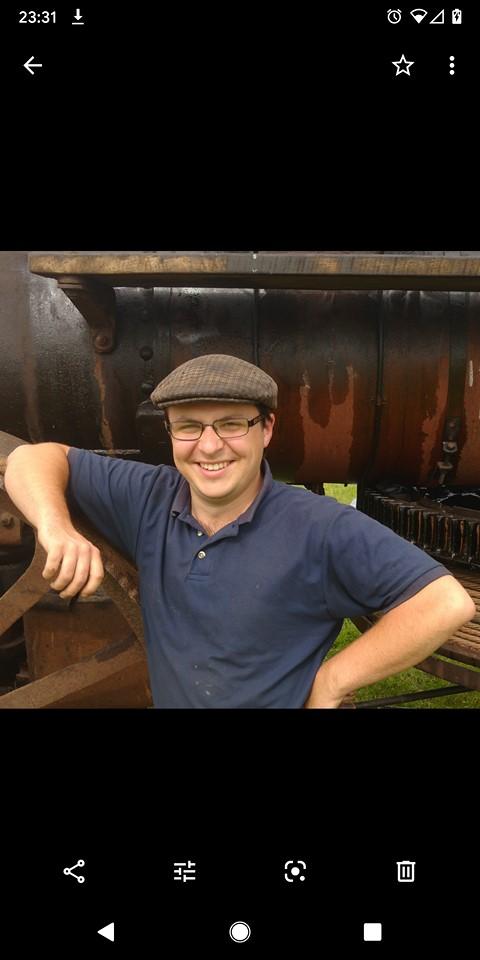
Jim Huntley
Hello and welcome to the winter 2023 edition of Raising Steam. A happy new year to you all! I’d like to start by apologising for this edition getting to you late, we were still awaiting confirmation of driving day details and figured it best to hold back from publishing until we had the dates, knowing how important these are to you all!
On the topic of driving days, it’s brilliant to see such a full calendar of driving days this year. A few new ones have been included, including some offered by the MSRVS for those who’d like to have a go on miniatures. There is also the possibility of some form of driving day to be organised on a steam boat, which you can read about later in the magazine. Make sure you get your application forms for driving days in as soon as possible, they do fill up fast!
You’ll notice a request for scholarship applications in this edition, the submission date will have passed by the time Raising Steam gets to you, but please still make contact if you are interested in these.
As ever I’ll include a request here for more contributions from members - this time I only received one article from a member. Surely you’re all getting up to some interesting things that you’d like to write in and tell your fellow SAC
members about?!
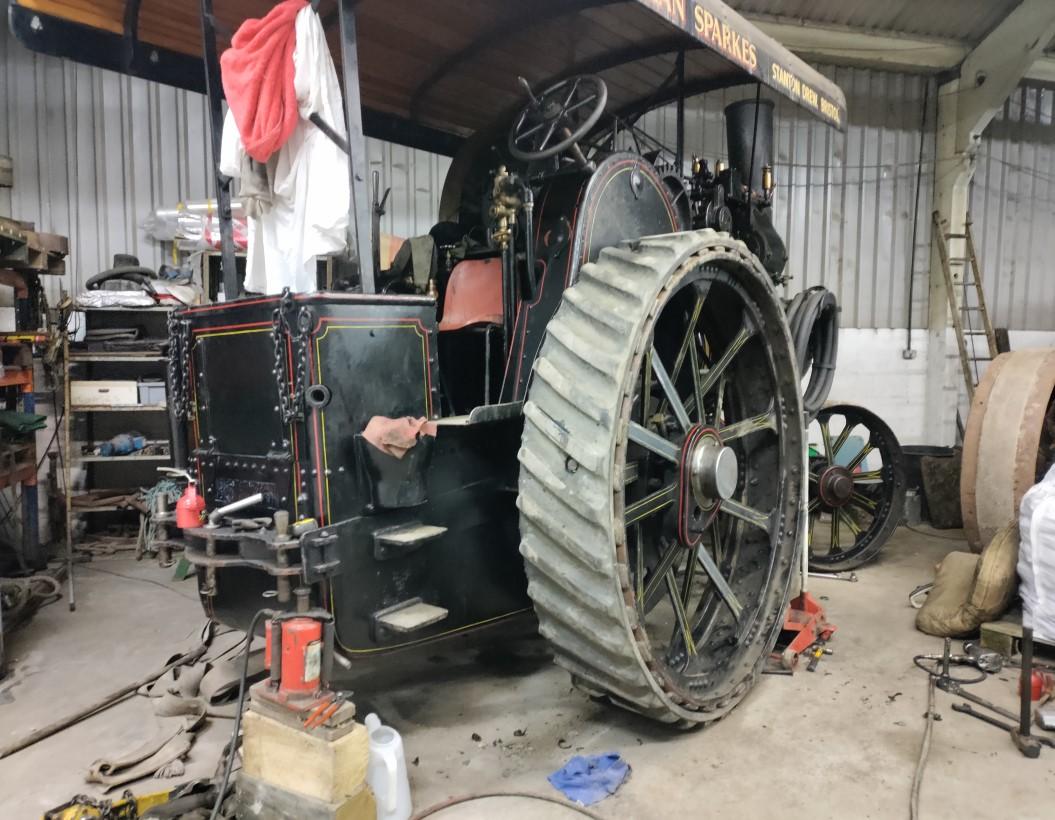
I’d like to congratulate Oliver Maunder for his Apprentice of the Year Award. He has been a great help with the SAC Playpen over the last year. Very well deserved! Meanwhile, down ‘The Yard’, we’ve been busy with winter projects which has included fitting a set of Quadtracks to a Fowler traction engine, removing and fitting new stays to a huge Marshall portable engine, straightening a shaft on an old Clayton threshing machine, a couple of ten year boiler tests, and making a new set of gears for a McLaren road locomotive….amongst other things!
As ever, it’s all go down there. I intend to write an article on fitting the Quadtracks for Raising Steam, but we’d not quite finished fitting them as this edition went to press.
As ever, happy steaming!
Thoughts from the Chairman
Nick Bosworth (Acting Chair)
Happy New Year from the Steam Apprentice Club! I hope you have all had a good Christmas and new year.
In November I attended the NTET’s Annual General Meeting in Northallerton. As well as the AGM meeting itself, the NTET organise visits on the Saturday and Sunday mornings.
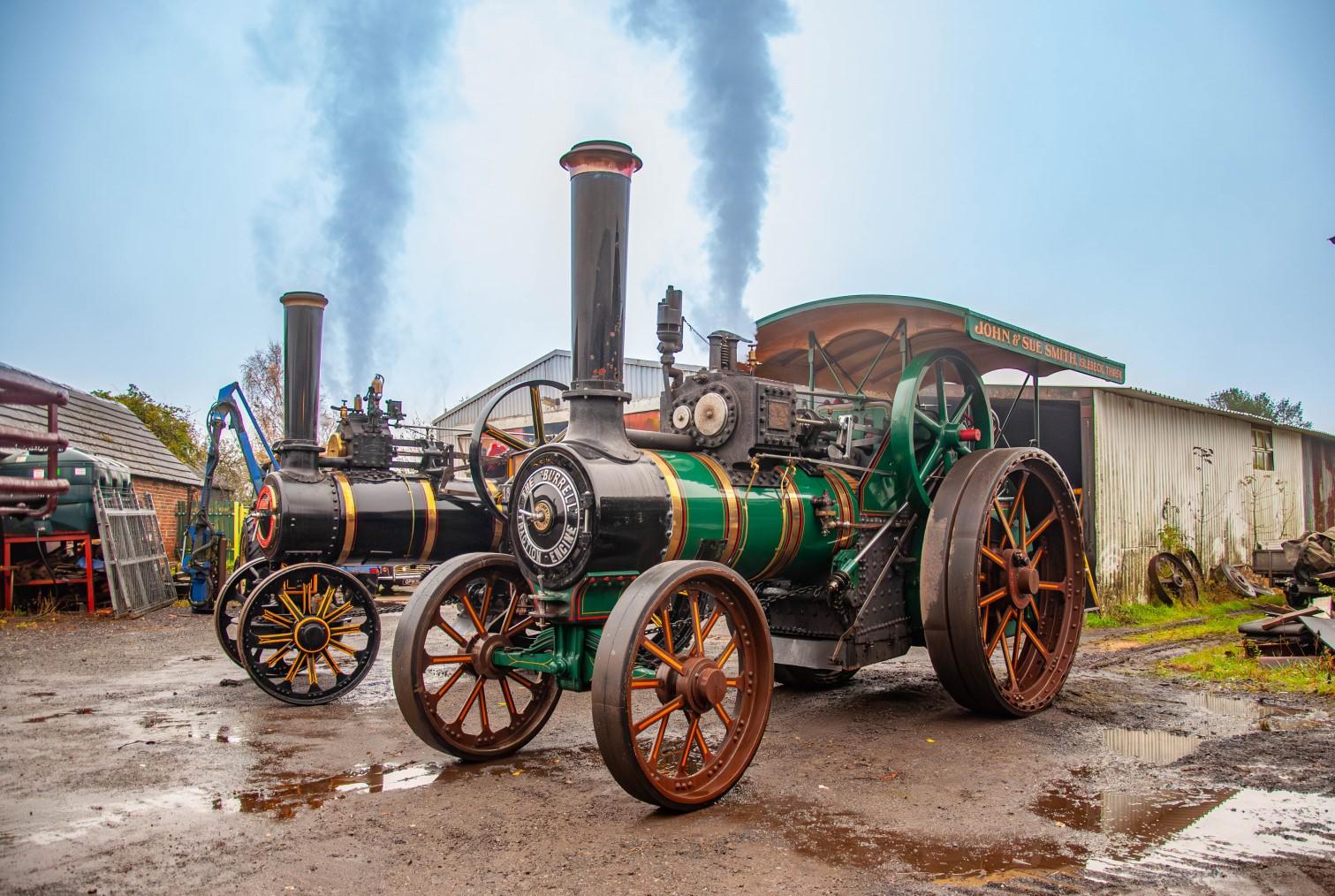
This year, the Saturday morning visit was to John and Sue Smith's yard, where half a dozen engines were in steam, and the Sunday was a visit to the Preston Family's collection.
There were the usual trophy presentations after the meeting, and this year we awarded the Apprentice of the Year award to Oliver Maunder, who has
helped out the SAC at quite a few events. A worthy recipient!
We are planning to have our usual compliment of driving days in 2024. I have been getting in touch with the organisers, and setting dates for their driving days this summer.
A list of the events with confirmed dates is printed later in the magazine, including a couple of new events for this year!
In the coming weeks I am hoping to organise a meeting for the SAC committee where we can plan out where we hope to attend this year. Following a very hectic 2023, we have standing offers to attend several events. We will post
details on the SAC & NTET Facebook pages and websites when we have some definite events on the list.
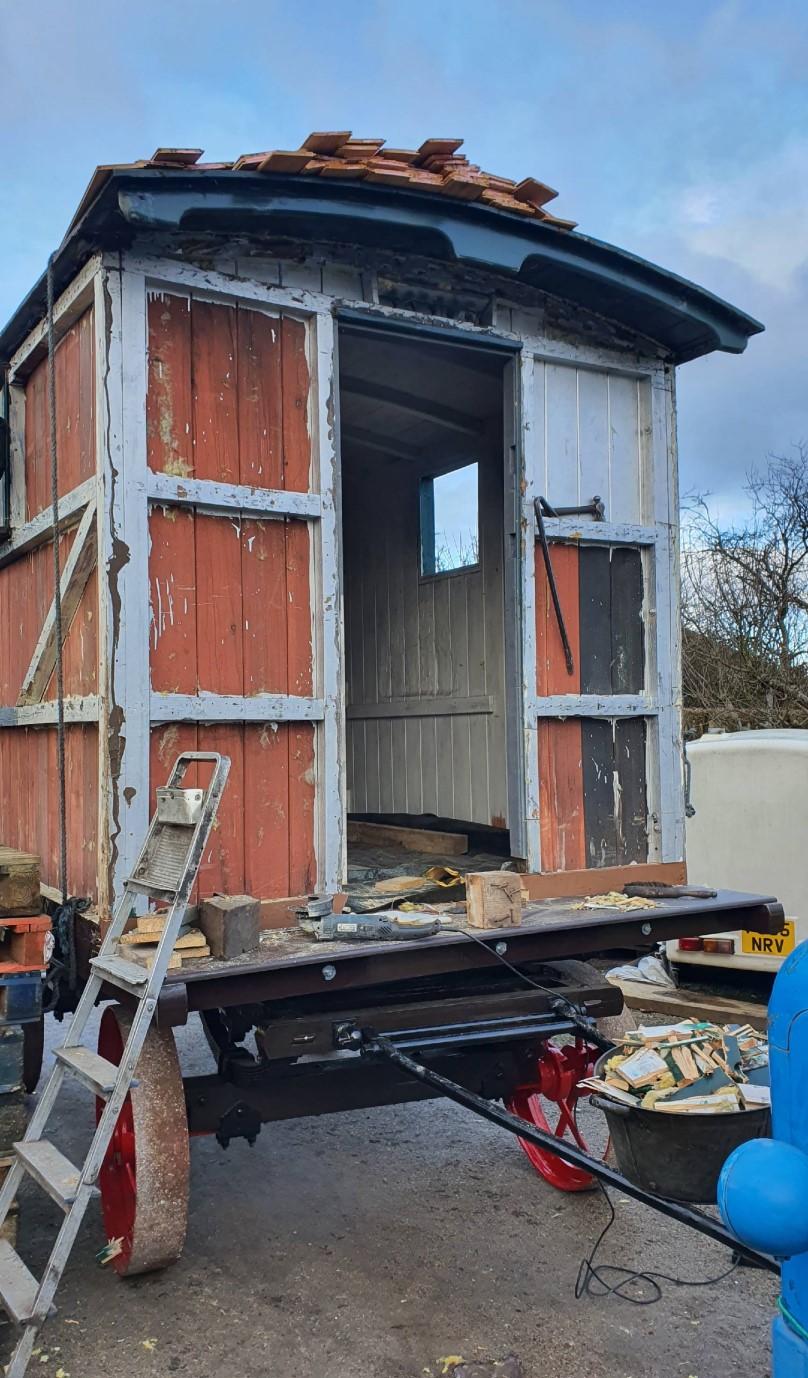
On a personal note, both of the Bosworth engines are washed out for the winter, and we’re completing a bit of routine maintenance. We have also made some progress on the Garrett Living van. Nearly two years after completing the new chassis for the ‘trailer’ part of the living van, we finally mounted the body back on top of it. Some more of the old outer boarding has been removed ready for replacement, and we are making plans for the refurbishment of the interior. When the living van came to us, the interior was pretty bare, so we need to re -create the bunks and other interior furniture. We’re planning to include a few mod-cons, such as electric lights, but we are hoping to keep it looking reasonably authentic. Happy Steaming!
SAC Apprentice of the Year
SAC Apprentice of the Year – J T Beeby Cup This award is made to a Steam Apprentice who has demonstrated a high level of knowledge and practical achievement relating to the working, operation and maintenance of traction engines, in any of their forms.
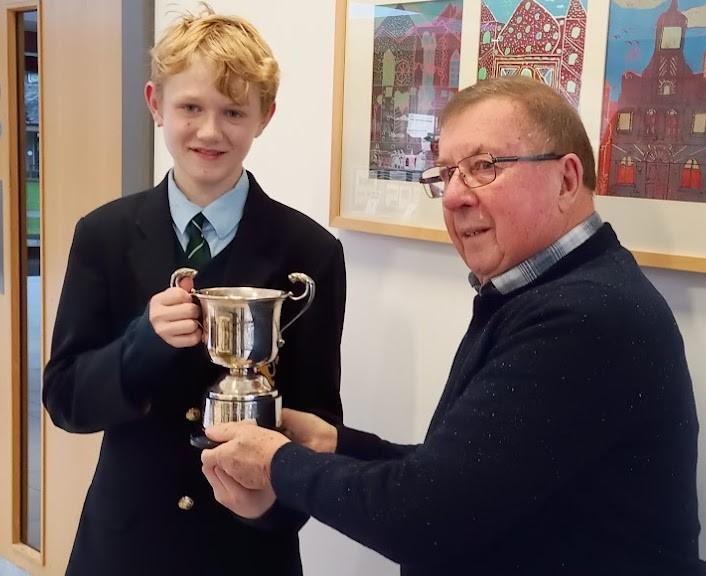
Recipient: Oliver Maunder
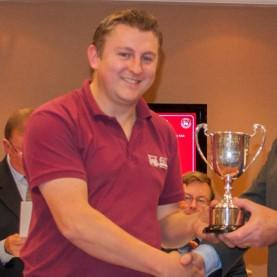
Ollie has, in fact, previously been the recipient of this award, back in 2018. His quiet demeanour, his hunger for knowledge, and the gentlemanly way in which he displays those attributes when on and around, not only his own scale Burrell Traction Engine but also on full size engines is quite something to behold. His enthusiasm for the hobby is reflected in the great support he receives from his mum who herself has become quite a dab hand at loading and unloading the engine onto and off trailers. Often to be found at rallies giving other youngsters rides and hands-on experiences on his miniature traction engine, we can consider the future of our hobby is safe if it is in the hands of Ollie and others like him. The award was made by Vice-President David Smith to Ollie at school, with the school’s PR team who took photographs notes for publication in their in-house magazine. They also made a small video for the school Blog.
Oliver Maunder receiving The Apprentice of the Year Award.
Victoria’s Torton Tales
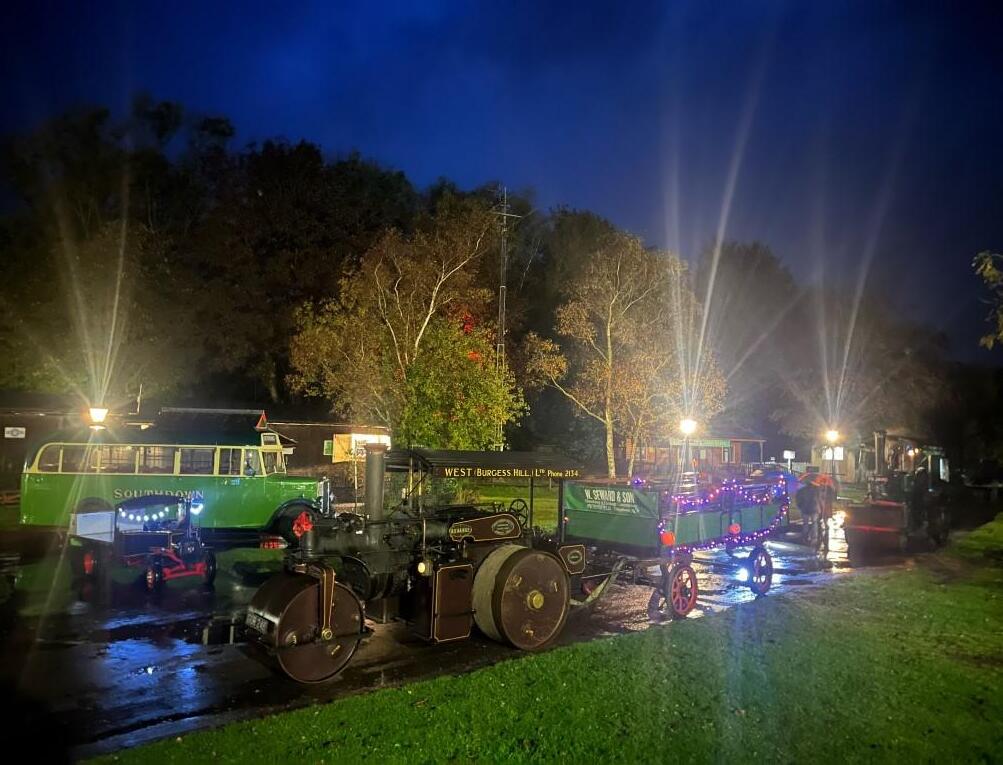
Here we are at the start of 2024, but before that let’s just finish off 2023. At the end of October, we joined in the Halloween fun at Amberley and steamed up both Victoria and the Foden, we decorated the trailer with a few lights so we could give trailer rides through the evening. Also in steam was the West Sussex Roller “Joan” and Nick Pidgley’s Wallis Advance roller. The rain tried to stop us all having fun, but the public streamed in, and the evening was a great success.
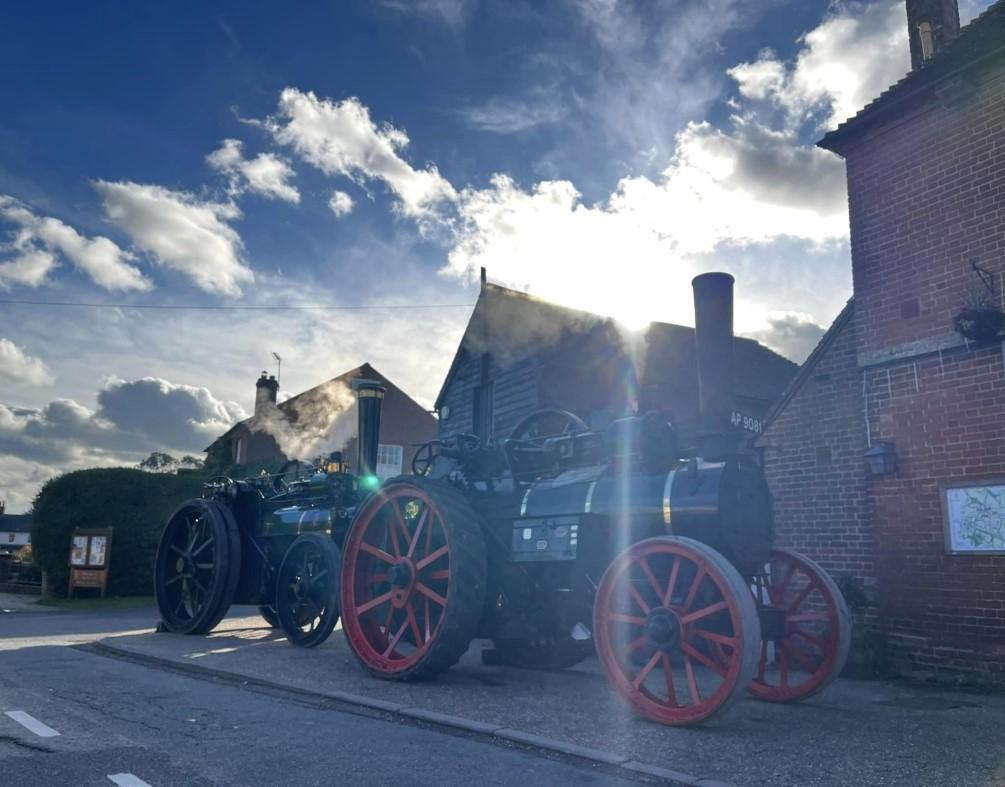
We then went on another trip, leaving Amberley Museum for the last time in 2023, where we had spent most of our summer, we were off to a friend’s yard to join them on a road run. It was the middle of November now so a little chilly but Victoria and the Foden were steamed up to make the trip to the pub for lunch. We were joined by Allchin traction engine “Bess”, and we took along our trailer which we filled with passengers of course. The day was great, albeit a little chilly riding in the trailer, we trundled to the pub, about 4 miles away, had our lunch and chatted to friends who had joined us and then trundled back to the yard. It was a great day to finish off the season with.
Then Christmas and New Year came and went. We were hoping to get a day in between Christmas and the New Year to take Victoria out for a run but sadly due to family commitments and being busy over the festive period this didn’t happen.
However, we had a free day at the beginning of January so with the weather looking fine and dry we decided to go for a trip out, again we filled the trailer with friends and headed towards our local town of Petersfield in Hampshire. We always like to take a trip to the town as this is where Victoria first worked in 1886 and it’s always nice to trundle down through the town. What we didn’t realise was that there was the monthly farmers market on in the town so with us trundling through we coursed absolute chaos, but everyone was pleased to see us, with lots of waves and plenty of camera phones out pointing at Victoria. We then made our way back towards home, but we had arranged to meet a friend with their engine at a local pub. Micheal Oldham and his partner Ellie were there waiting for us with their lovely Marshall Q Class. It turned out to be a great afternoon, with many friends turning up to see us too.
We also took a quick trip out with Victoria the following weekend as we knew the weather was going to get cold so we thought we would just steam up and take her for a quick trip around our village. We had a great 4-mile trip and then it was back on the drive and just a few days later with the weather getting cold we had to knock her mudhole doors in to empty her of water. Victoria lives out all year round so we must be careful of the weather, and when it gets chilly we make sure that there is no water left in her so it can’t freeze as this will cause damage and we don’t want that.
As I write this, we have now dropped Victoria’s ashpan off and taken the fire bars out, we have given her firebox a really good clean along with her smokebox and tomorrows job is to wash out her boiler and then we will be getting our boiler inspector out for her yearly checks.
We have also taken our little Foden apart, he has had his ashpan and grate taken out and cleaned, we have also ashed out his smoke box, hoovered it out and given it a coat of WD40.
We hope to be back out on the road again when the warmer weather returns, we already have a few events booked in. June we are off to Hollycombe in Liphook for their Marshall special rally and then Amberley Museum for their steam rally in July.
If you see us out somewhere do come a say hi.
Don’t forget you can keep up to date through our website www.victoriastortontales.uk or our social media pages on Facebook.
See you all soon.
Wendy Wakelin
Sailing Days?
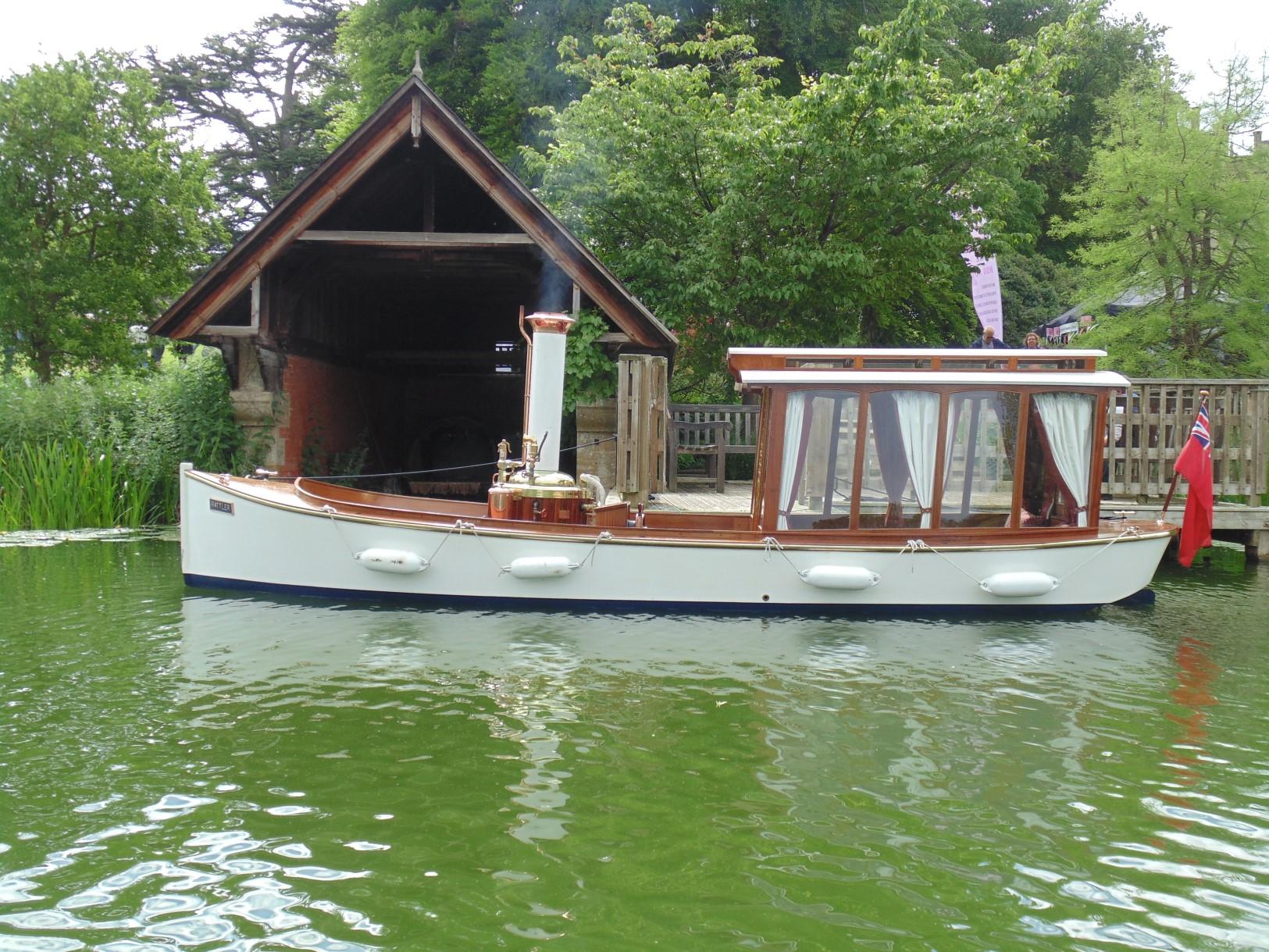
The SAC has recently been approached by the Steam Boat Association (SBA) to see if there was any interest amongst the SAC members for getting involved with experiencing the joys of steam boating. The idea is very early days at the moment, but there is talk of offering some form of steam boat sailing experience at one of the SBA members training days, or other events held around the country, a bit like we do with our SAC Driving Days.
Although there has been little firm planning made yet, if you think this sounds as though it may be of interest to you, then please do make contact with the editor via: sac.raisingsteam@ntet.co.uk, and if there is sufficient interest, we will liaise with the SBA to try and organise something.
For further information on the Steam Boat Association, please take a look at their website below: www.steamboatassociation.co.uk
SL Rattler
In the Workshop...
David Cooper has kindly written in with another of his Christmas holiday Mamod projects to inspire SAC members to have a go at building accessories for their toy steam engines. If you’ve a similar project on the go, then why not write in and tell us about it!
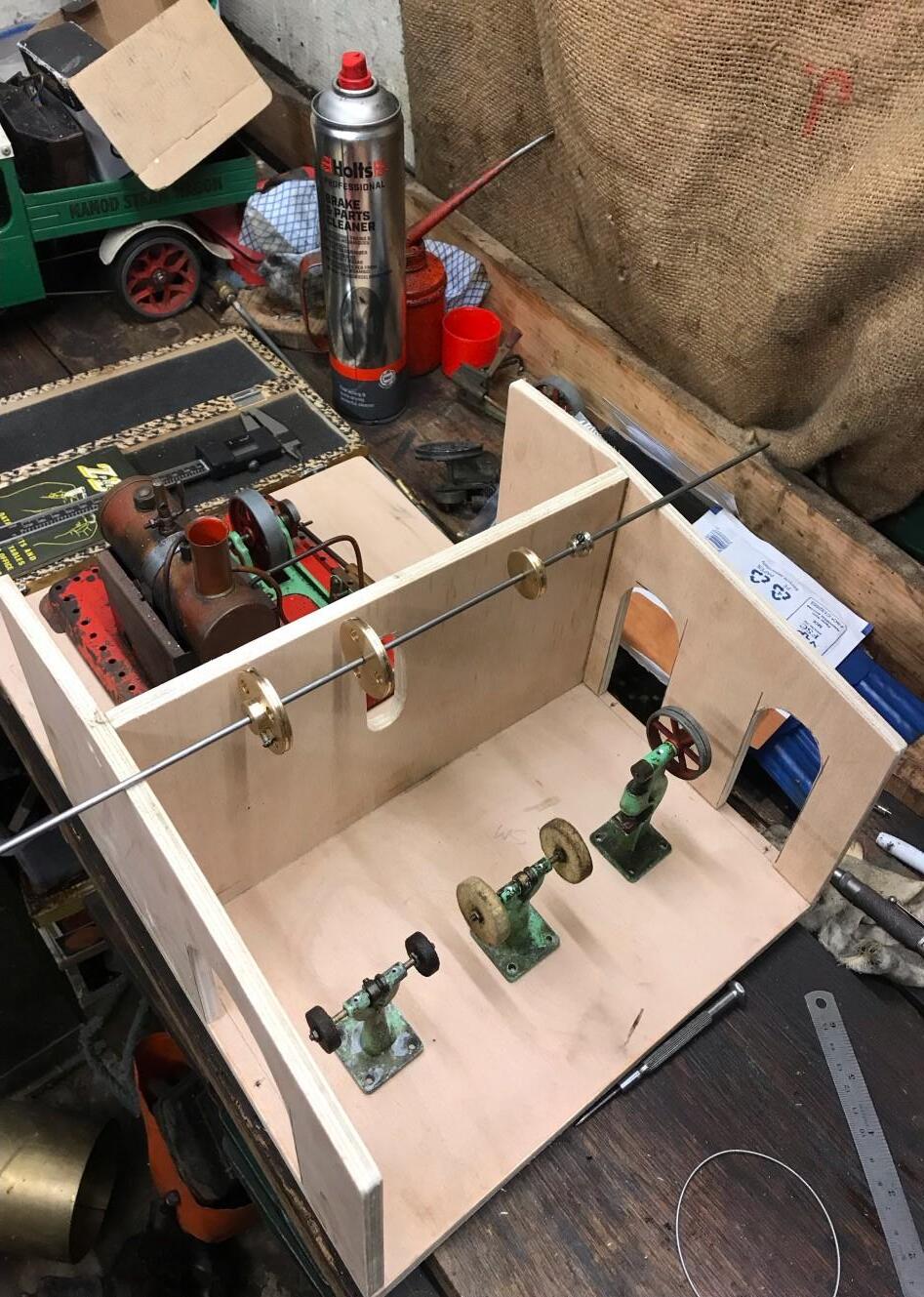
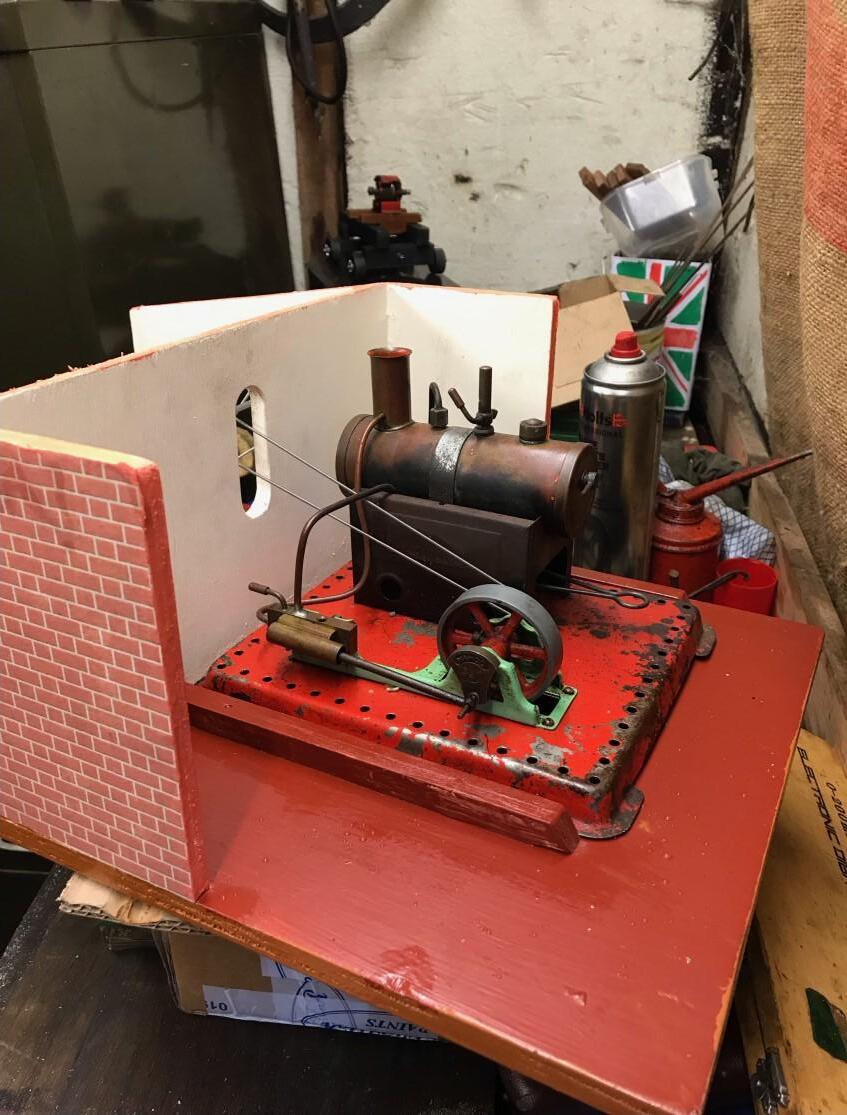
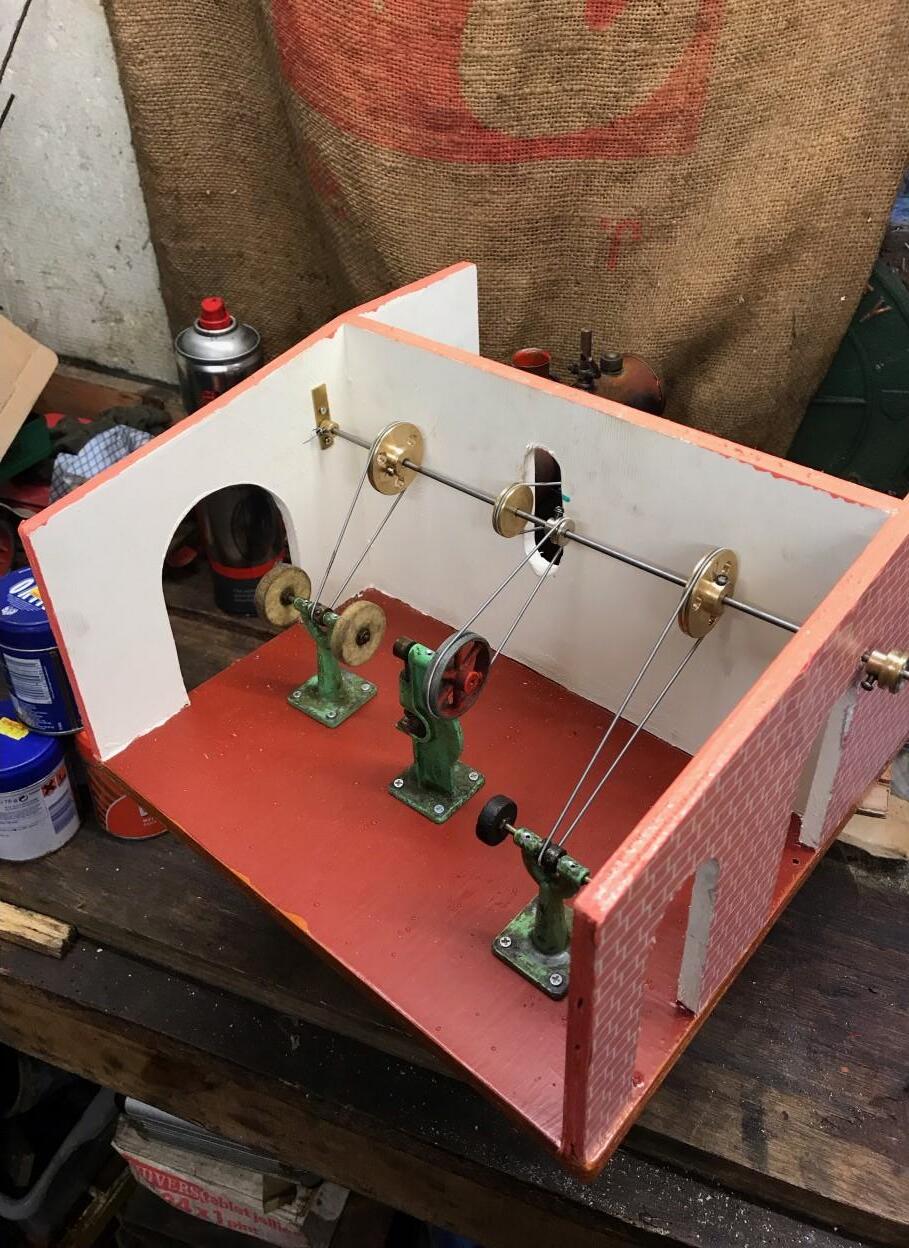
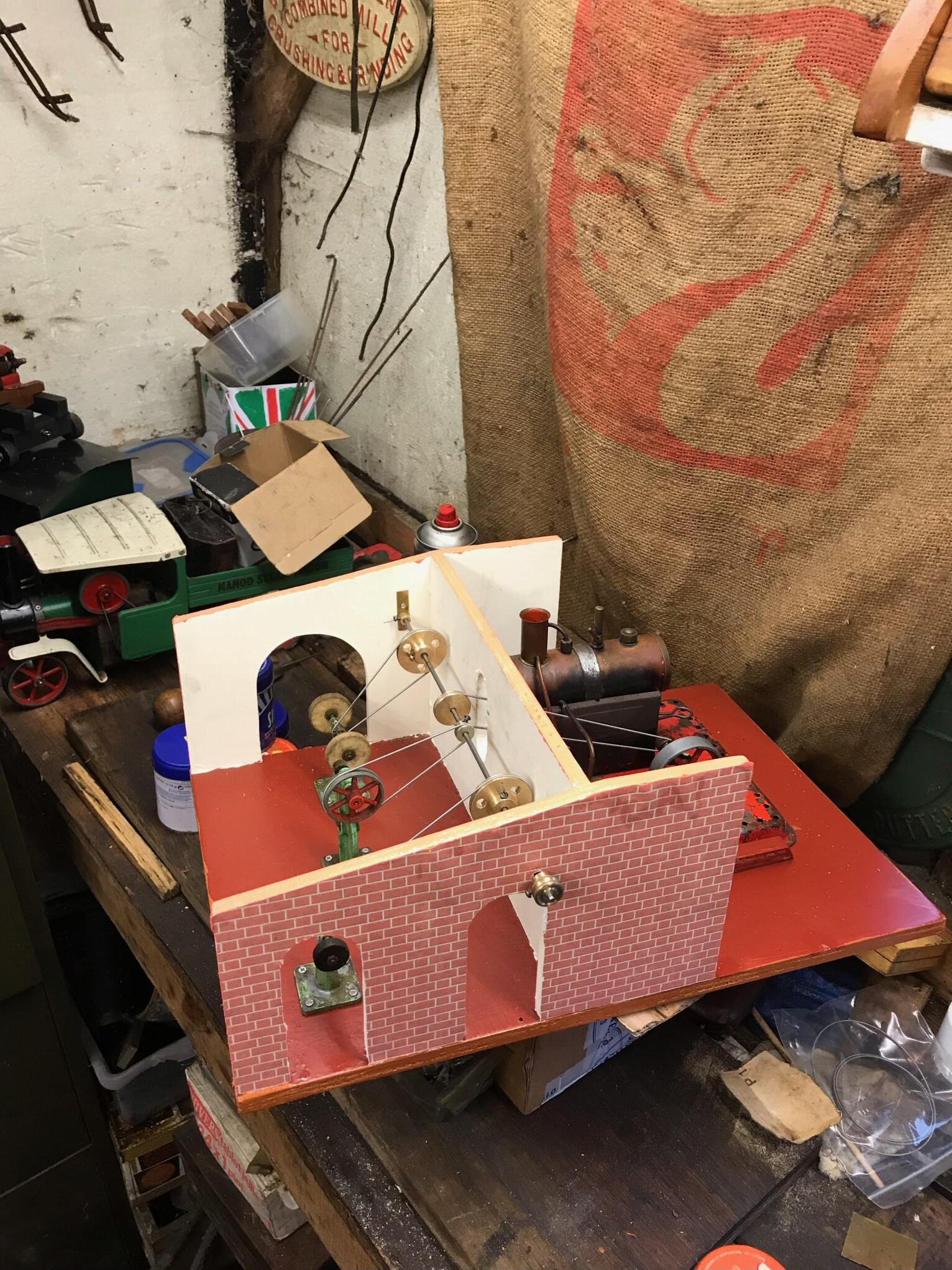
For every great cotton mill in the North, with its magnificent mill engine turning miles of line shafts and hundreds of spinning and weaving looms, there was a multitude of smaller concerns. Small factories and estate sawmills with moderate size engines driving a few bits of machinery. This year’s project centres around a Mamod stationary engine and a few donated machine tools. Some spare partition. The engines were often separated from the working/factory area in real life. Once windows and doors were cut out and sanded, the whole lot was glued and pinned together. I had the use of a band saw, but everything can be done with a hand coping saw, and other hand tools if you don’t have access to one.
Two strips of wood were glued and pinned down to hold the engine in place, whilst still allowing for it to be lifted out. This allows for easy cleaning and maintenance of the engine once the belt is removed.
The pulleys were made from odd of cuts of scrap brass bar on the lathe, and are fixed to the shaft by grub screws in the pulleys. They can however be bought if needs be, or ready made line shafts are available. The shaft again was an off cut laying around. If you drive from a small pulley to a larger one, this gears the drive down. So the pulley on the shaft was made approximately twice the size of the engine pulley. This means for every two turn the engine does, the shaft turns once, or runs at half the engine speed. There is again a small to big drive to run the press slowly, however the grinder and polishing machines are the opposite as they need to run faster. The shafting runs on two bearings cut from about 1.5mm plate screwed over a good size clearance hole on the ply. I also added another pulley to the outside of the building to drive auxiliary equipment, quite common in the day. You could also drive the workshop with another engine from this pulley if you wanted.
The machine tools had already lost their Meccano bases so were screwed straight down to the base. This followed with the addition of some oil holes to keep them free running. The belts are standard spring drive bands, and the tools were spaced out to suit their length.
The floors were painted with left over garage floor paint, and internal walls with some satin magnolia. The outside walls are covered with Hobbies brick paper, put on with wall paper paste. After trimming up this was treated with satin varnish. The edges of the walls were painted pink to represent brickwork.
Hopefully a little time spent researching to get the correct layout and correct speeds, not only gains you a bit more knowledge about steam and engineering, but turns a few simple toys into something that represents a proper little factory. The addition of figures, wall posters, benches etc is something that can be added as well, again by studying old photo etc for inspiration.
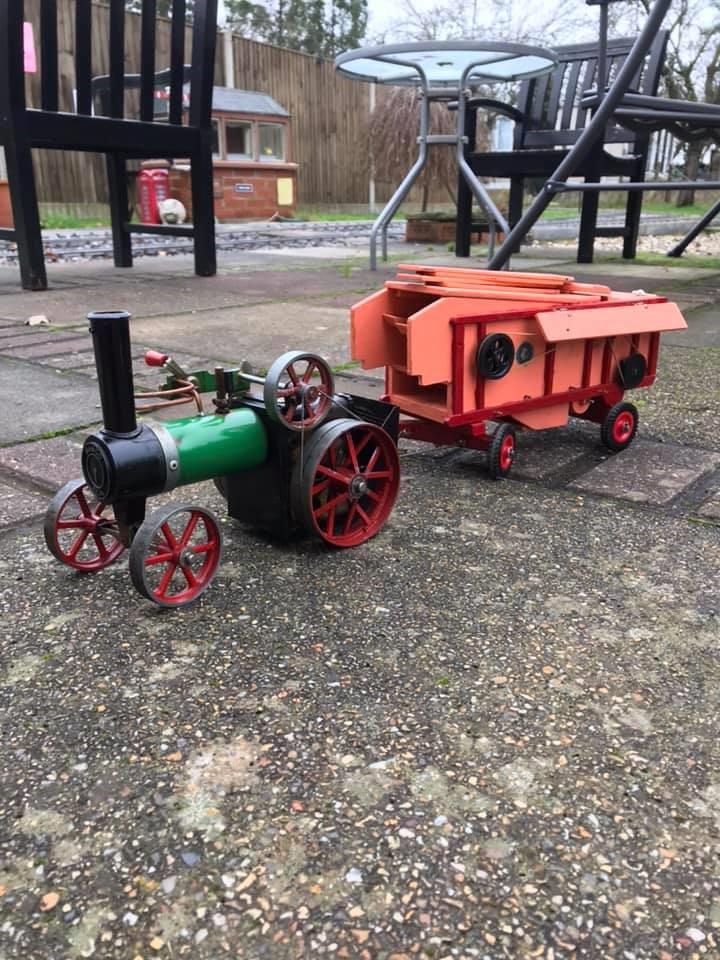
ve included a photo of one of David s other Mamod projects, a threshing machine to drive with a Mamod traction engine as inspiration for other things to make to go with
Working Clothes...
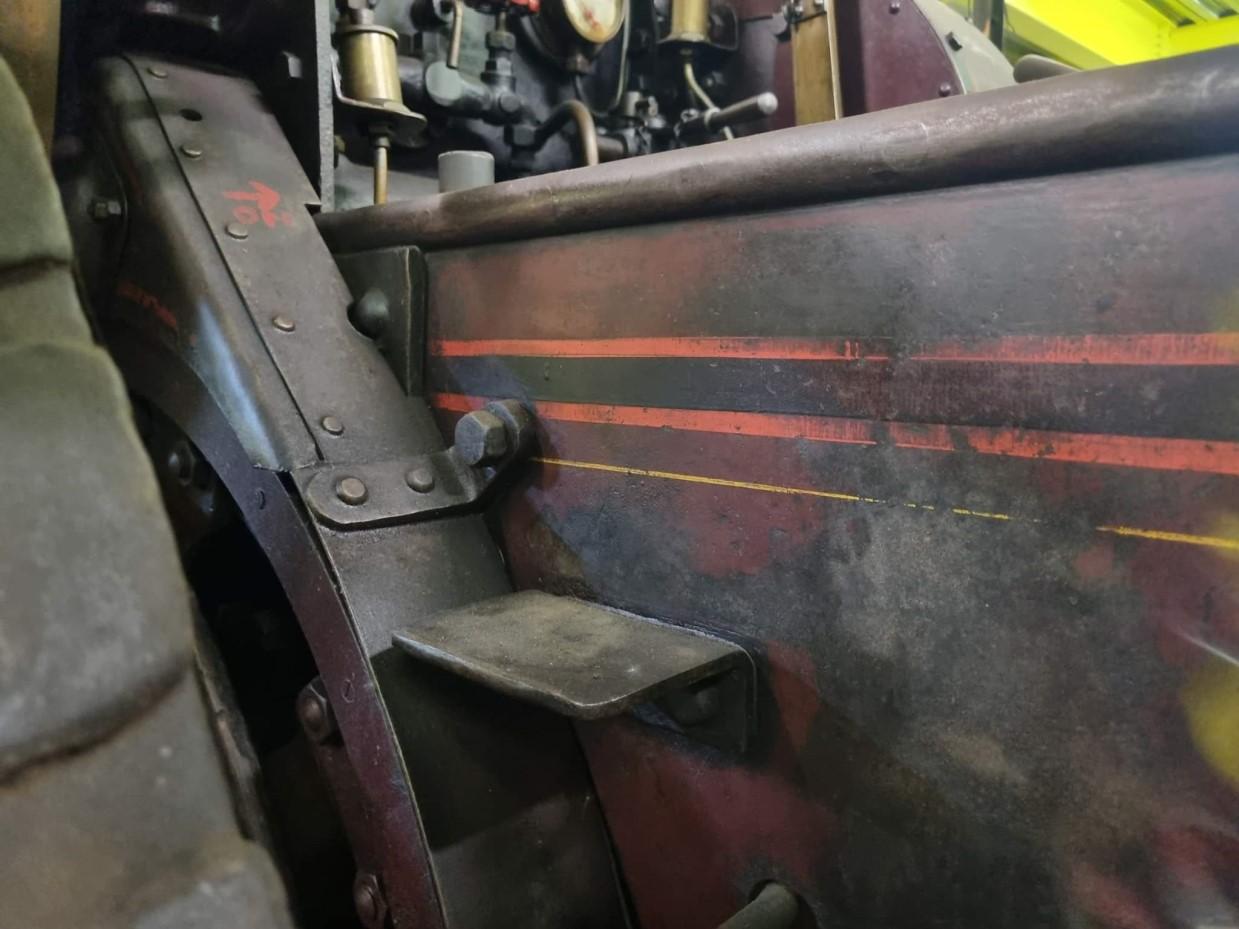
Traction engine signwriter, and fairground artist, Harley Harris has recently been to study a Burrell Gold Medal Tractor in the Birmingham Museum stores. This engine has been beautifully preserved and still exhibits original paint and lining from the Burrell works. It is an amazing survivor. He has shared some photos as he felt they may be of interest to SAC members. I hope to publish more of his photos of the engine in future.
From The Archive...
Elijah Bell has written in to share some more working day and early preservation photos of traction engines with the SAC members. If you’ve done any research and come across any interesting photos that you think the members would like to see, please do send them in to share with the members.
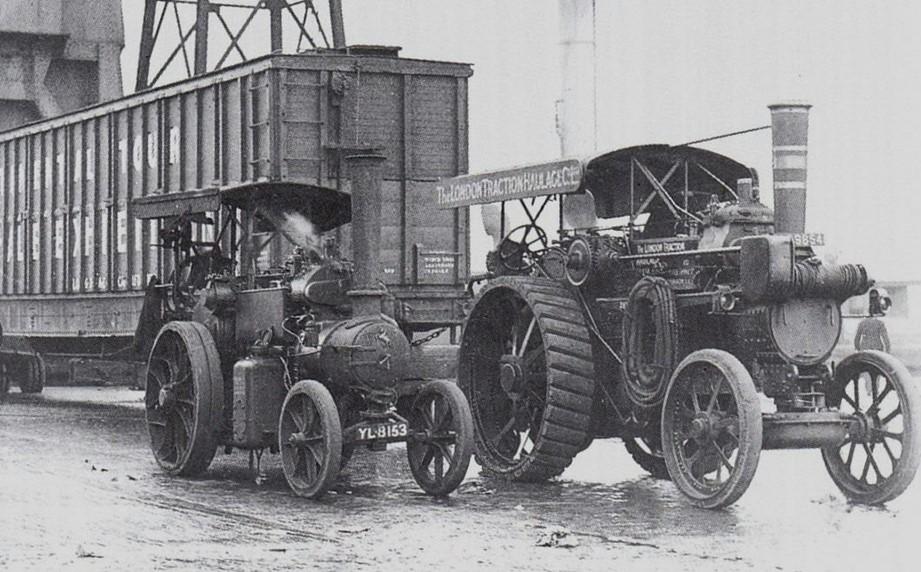
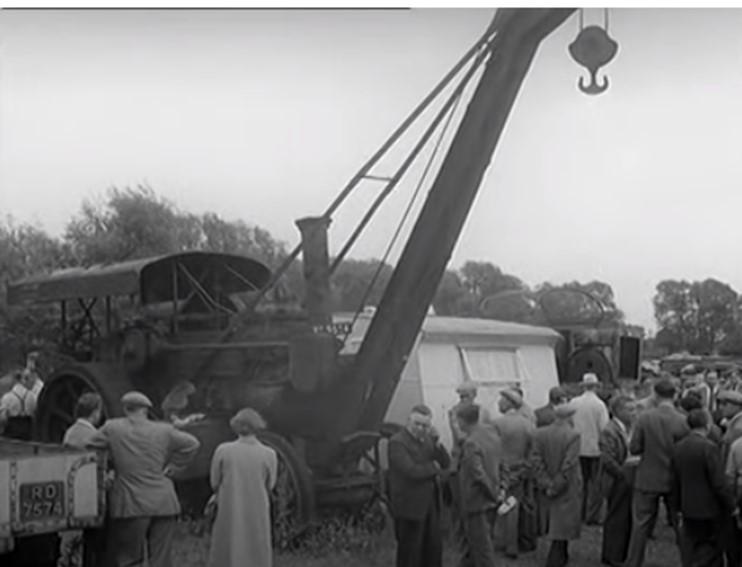
An interesting pairing is this Aveling Porter Tractor and Fowler 7NHP R3 Crane Engine No. 12749 of 1911 ‘Daisy’ both owned by the London Traction Haulage Company Ltd. ‘Daisy’ went on to work for Pickfords, later ending up at Goodey’s Yard at Twyford. She was sold in their auction in 1956, but sadly did not make it into preservation.
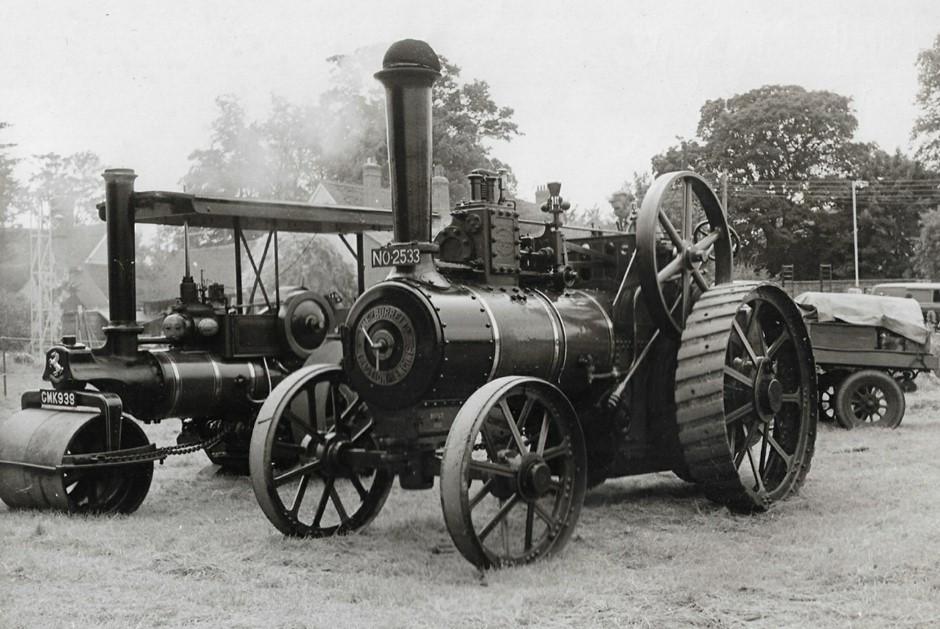
A fine example of an early Burrell 8NHP Agricultural Engine No. 1606 of 1892 ‘Spanker’ pictured at an early preservation event somewhere in East Anglia, in company of Aveling and Barford Roller No. 621 ‘Lady Helen. One of my favourite engines! Ed
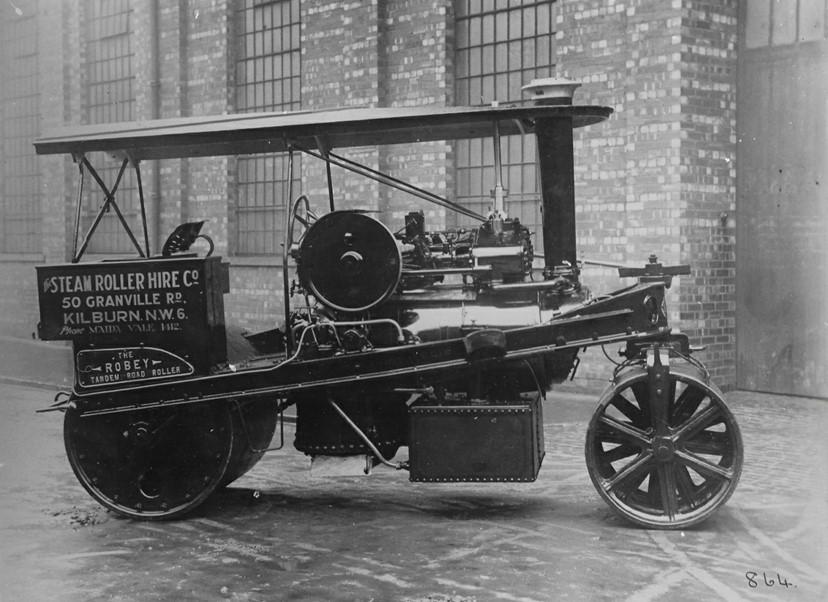
The unconventional lines of a Robey Tandem Road Roller No. 42197. Pictured when new and ready for delivery to the ‘Steam Roller Hire Co.’ of Kilburn in January 1925.
Lady Sylvia
Did you know the Steam Apprentice Club has its own steam engine?
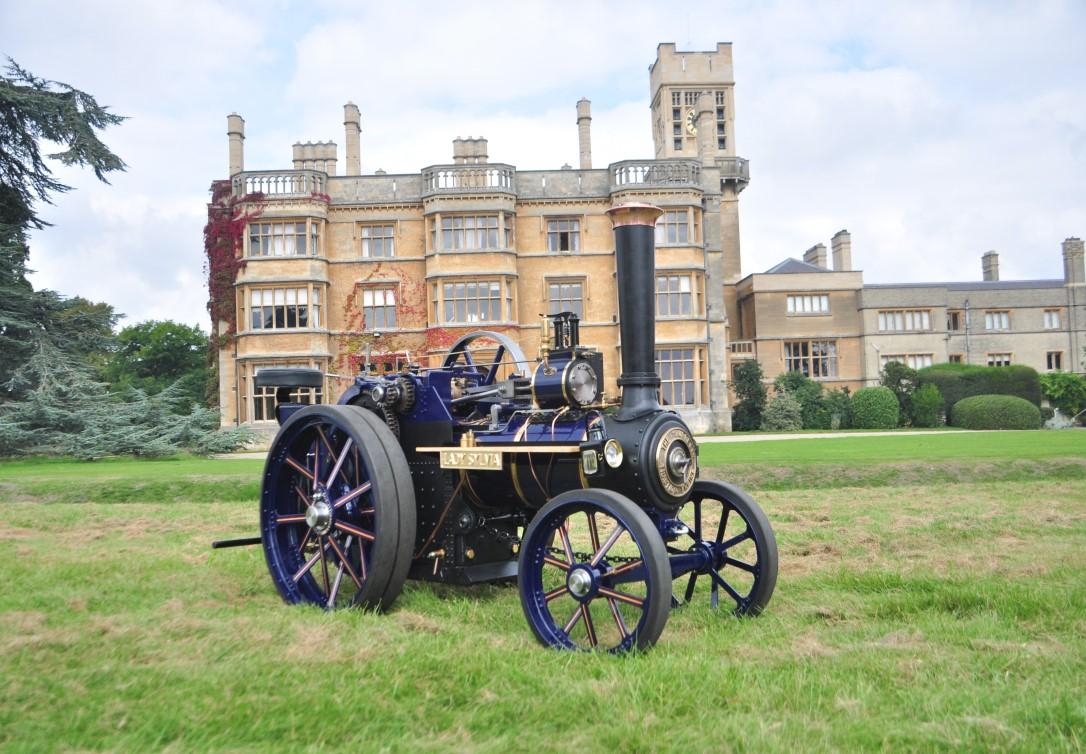
It’s a four inch scale miniature Burrell traction engine named ‘Lady Sylvia’. Our members actually built the engine as part of the ‘Build a Burrell Project’.
Thanks to the invaluable support given to from our sponsors; we were able to get a kit from a company called Steam Traction World. This provided us with the parts to put a traction engine together, with all the heavy and more difficult machine work already done.
Our apprentices got to see and handle many of the different parts of this engine, see how where they were supposed to go and fit them together themselves under supervision.
This gave our apprentices many opportunities to learn and develop their skills.
The project took two years in total, and at the Bedfordshire Steam and Country Fayre, September 2014, the newly completed Burrell Traction Engine was introduced. All our sponsors turned up, alongside apprentices and their parents to see Lady Sylvia unveiled. Although, many of the apprentices had already spent some time with her that day, polishing her up to look her best!
Later in the day, after all the special cakes had been eaten, some of the apprentices took her for a drive around a spacious, quiet area. They all had a turn driving and steering, it was such a fun day for all around.
Two weeks later, Lady Sylvia was given the number one spot at the National Traction Engine Trust’s 60th Anniversary Road Run. She, alongside a few apprentices and SAC volunteers, lead the start of this special run around the roads of Bedfordshire.
Now Lady Sylvia tours the country each year, attending different steam events and driving days. When possible, we ask for apprentices to come and help us steam and look after her. She is used to help apprentices learn how engines work, how they need to be cared for and maintained and how to drive a traction engine! Lady Sylvia is one very special engine; don’t forget to keep a look out for her running around!
Sponsors of Lady Sylvia
Building Lady Sylvia wouldn’t have been possible without the generous help from our sponsors. First and foremost, we have Steam Traction World who provided the kit of parts to build Lady Sylvia, and more recently a replacement perch bracket to replace the damaged original.
The SAC would again like to thank everyone who has contributed to the building, maintenance and ongoing running of Lady Sylvia since her creation in 2014.
With the years rolling on parts of Lady Sylvia will continue to wear out and eventually parts will need replacing: be them fire bars, tubes… this is natural wear and tear that comes from the successes of having her in steam for Apprentices to use. The very reason she was built!
Would you be interested in sponsoring Lady Sylvia? Contact us to learn more about how you can keep her steaming and being used by Apprentices.
List of Sponsors
A Dream Come True...
Tom Attwood, ex SAC Member, and now NTET General Council member has written in to tell us about his journey from SAC member to engine owner, and of his experiences in the first year of owning his Foden steam wagon.
A long time ago, back in the early spring of 1994 when I was 7, I bought my 2nd Mamod after a lot of saving and domestic chores for pocket money. It was a brown and cream steam wagon from a model shop in Bourton-on-the-Water in Gloucestershire, I loved it and it led to a visit to the Mamod factory a few weeks later. Inside the box with the wagon, was a little leaflet and application form for the SAC and that’s how I came to be a member of the club and eventually a member of the NTET as an adult.
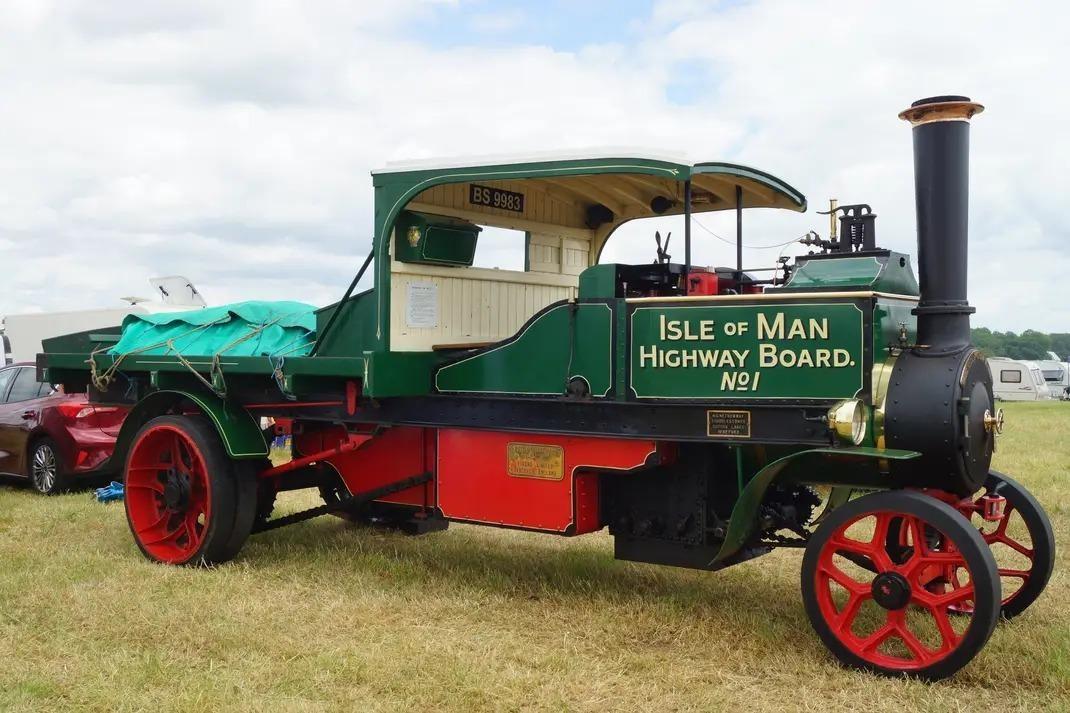
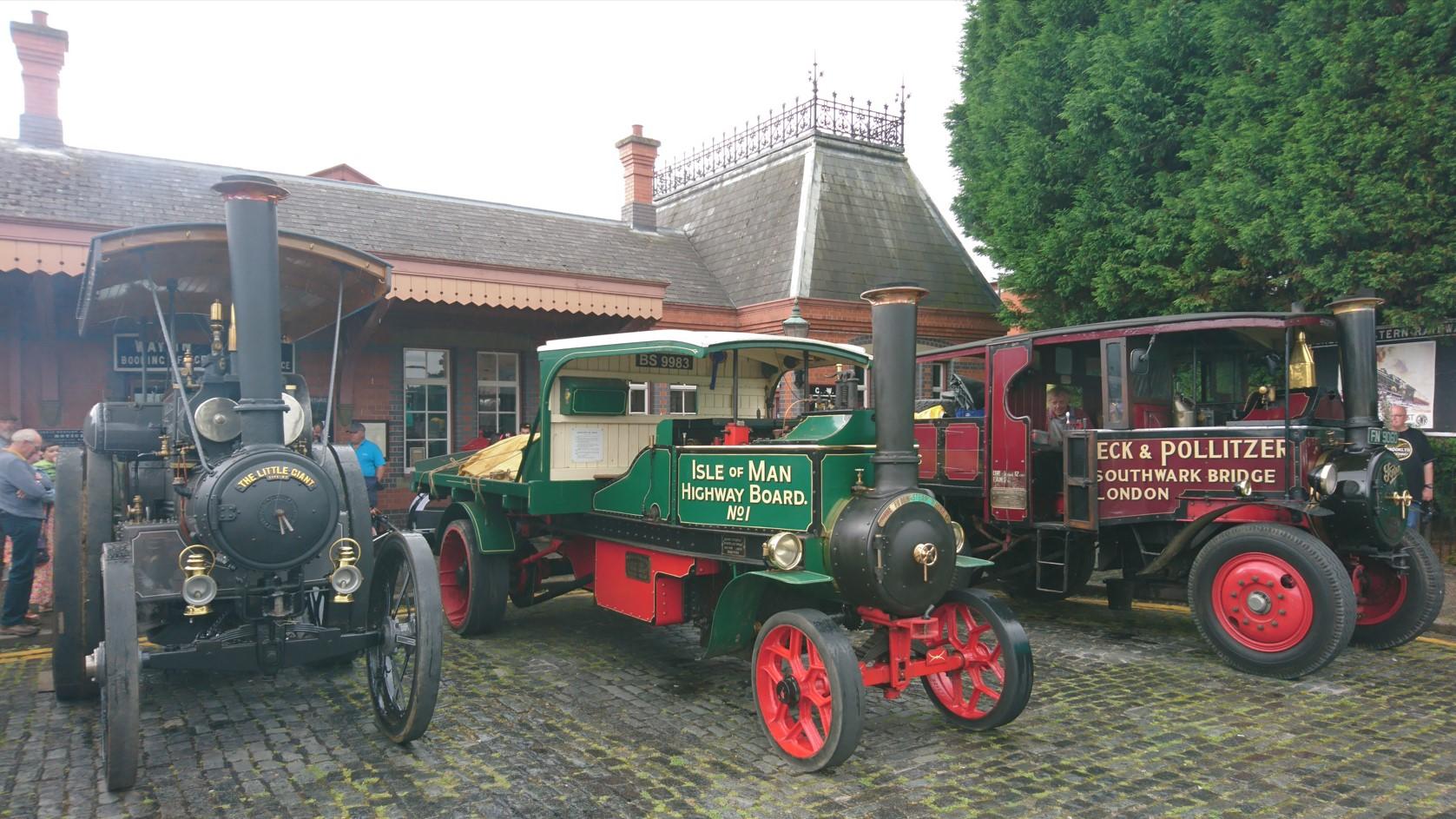
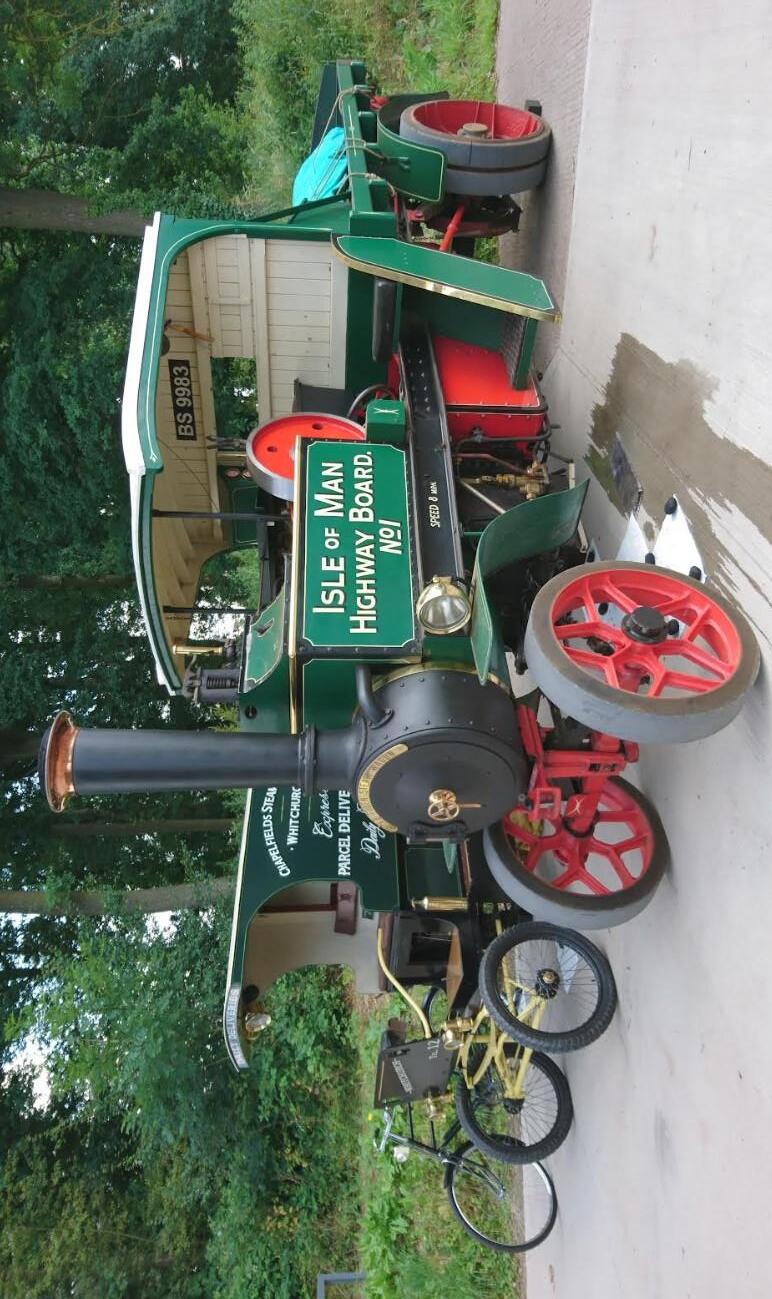
Fast forward to the winter of 2023, nearly 30 years later the ambition and same determination to save for what I really wanted came to reality when I bought my first full size coal fired steam engine. A 1920 Foden Steam Wagon Works No 10320, made new as a pair of tipping body steam wagons sold to the Isle of Man Highway Board, where both wagons worked into the 1950s.
This is a steam wagon I have known for a very long time, as the previous owner Henry Netherway from Hereford was a friend of the collection of engines I helped on as a youngster at Eastnor Castle, whom also have a Foden, albeit a later example from 1927. When Henry first bought the Foden in 1999, it was little more than scrap, being a boiler and broken cylinder. Over 4 years he and his friends restored, rebuilt and made many thousands of new parts to recreate the wagon back to running condition and by 2006 it was fully completed. As a teenager, I would often steer for Henry to events and as the years passed myself and a local young enthusiast would also do the boiler wash out, preparing the engine for inspection and any routine maintenance jobs.
I never thought I would get the opportunity to own a Foden but in the summer of 2023 and a lifetime of saving, and Henry and his wife now prepared to part with the wagon that they had rescued and restored, I became the very proud owner. As part of the agreement with Henry, he wished to keep the wagon until the annual Christmas event in his village, where the Foden had delivered Father Christmas to the village hall for many years and a final run to a local garden centre of lunch with Eastnor Castle team brining their Foden along too.
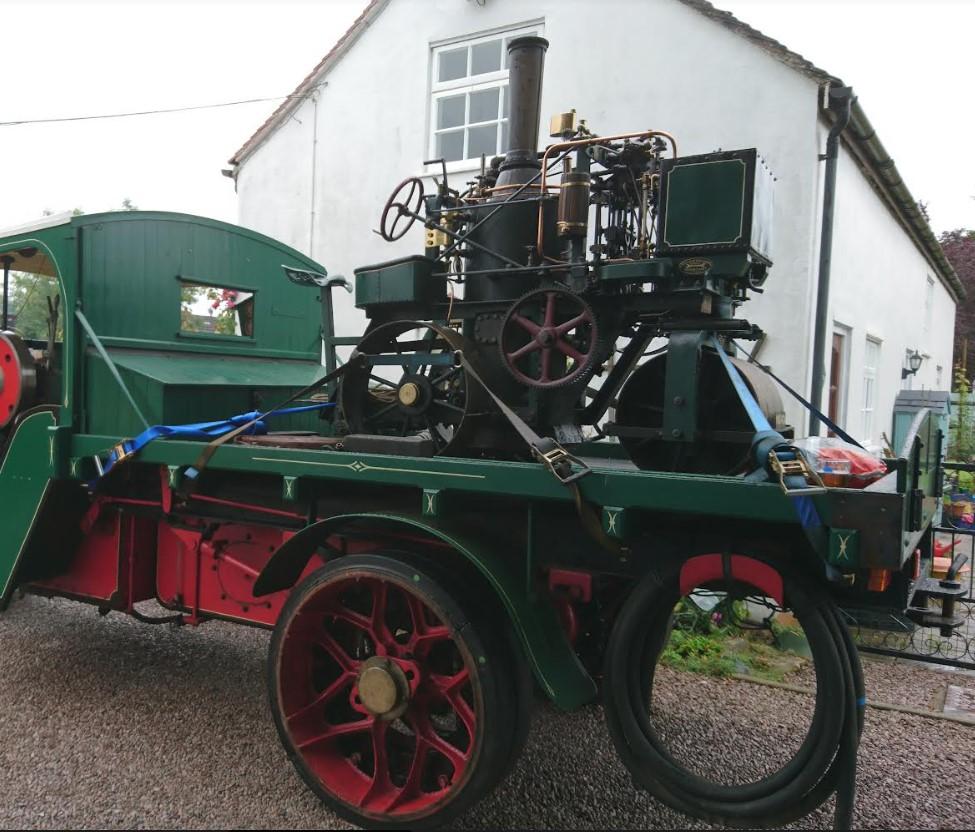
So, 2024 began and the Foden has been used by me to carry out many fuel and coal trials in the late winter – early spring season, many reported on in Steaming and on the NTET social media accounts. I undertook a fairly busy rally season, taking the wagon down to Eastnor Castle for their steam and vintage weekend. I then based the Foden here for a few months and we went to Banbury rally, The new Hop Rally in Suckley, Welland Steam Rally, a local road run for friends in early August, where we loaded the 1 -ton Trotter steam roller onto the deck of the Foden, so it could participate in the road trip too! The Foden then started heading home, going to Steam on the Road at the Severn Valley Railway, then Onslow Park in Shropshire,
before driving home on the bank holiday Monday evening of the show, arriving as it was dark. We then attended a local carnival and a couple of trips out before the end of season Bonfire Do that a friend has every year, and our local MP came to see us. The Foden is now with my good friend James Allison having some winter maintenance jobs and improvements carried out, including brand new solid tyres all round. It is in very capable hands with James who is a very skilled young engineer. He is making great progress while I am away working again and getting ready for an even busier 2024, with the plan that we will take the Foden back to the Isle of Man this year for a few months – something I am very excited about!
Like many of you, owning a full-size engine is a dream come true and despite having to work and save for a very long time, it is everything I would have hoped and wanted ownership to be. If you see me and the Foden around at a show, say hello, let me know you are a SAC member and read this article and if I am able to will show you how a Foden Wagon works, as they have some slightly different features compared to some other engines.
Steam Still In Use...
Paul Ritchie, editor of the NTET’s magazine Steaming , has written in to share some pictures and tell you about a Marshall portable engine he is involved with that is still in commercial use to this day….
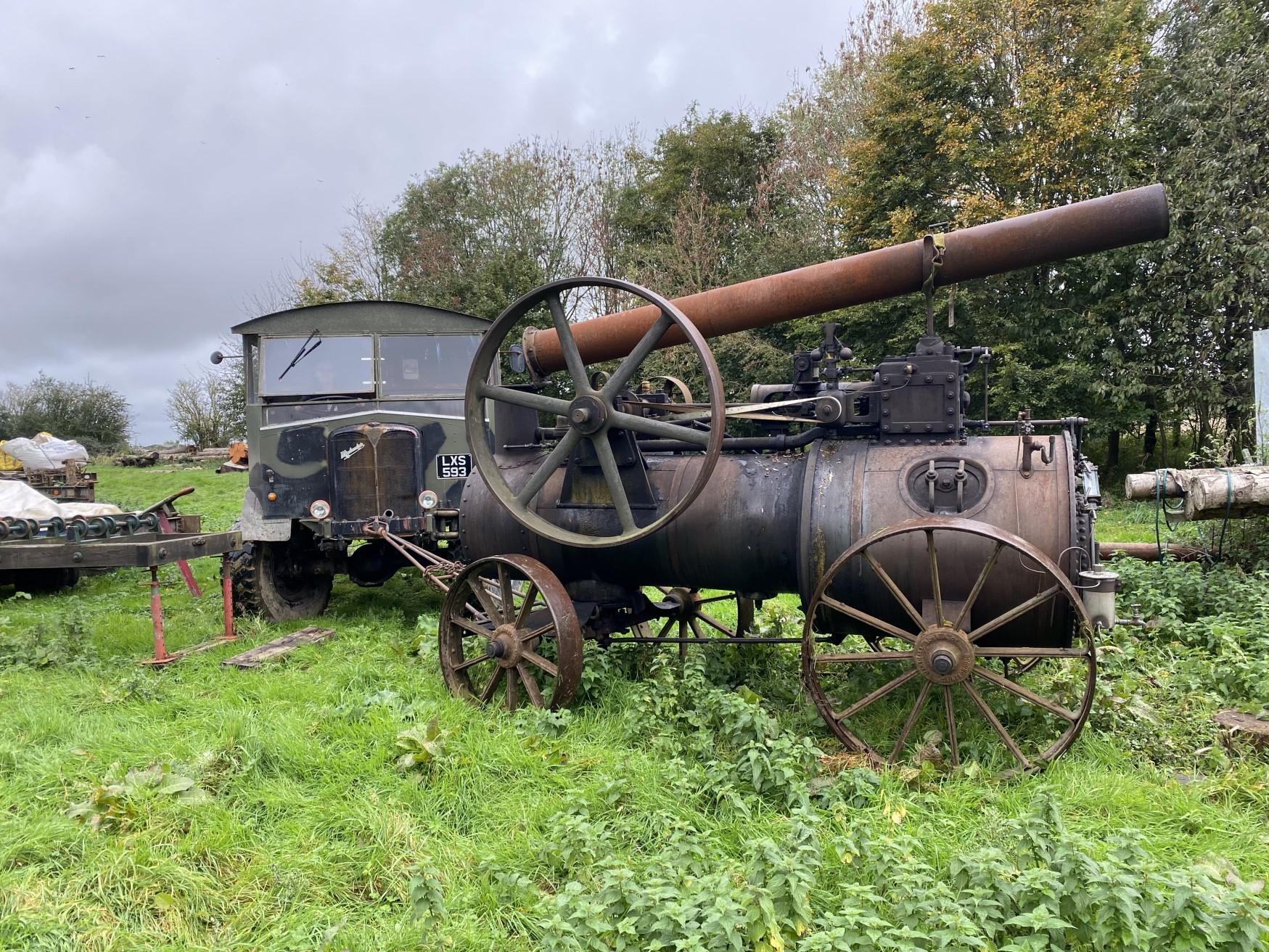
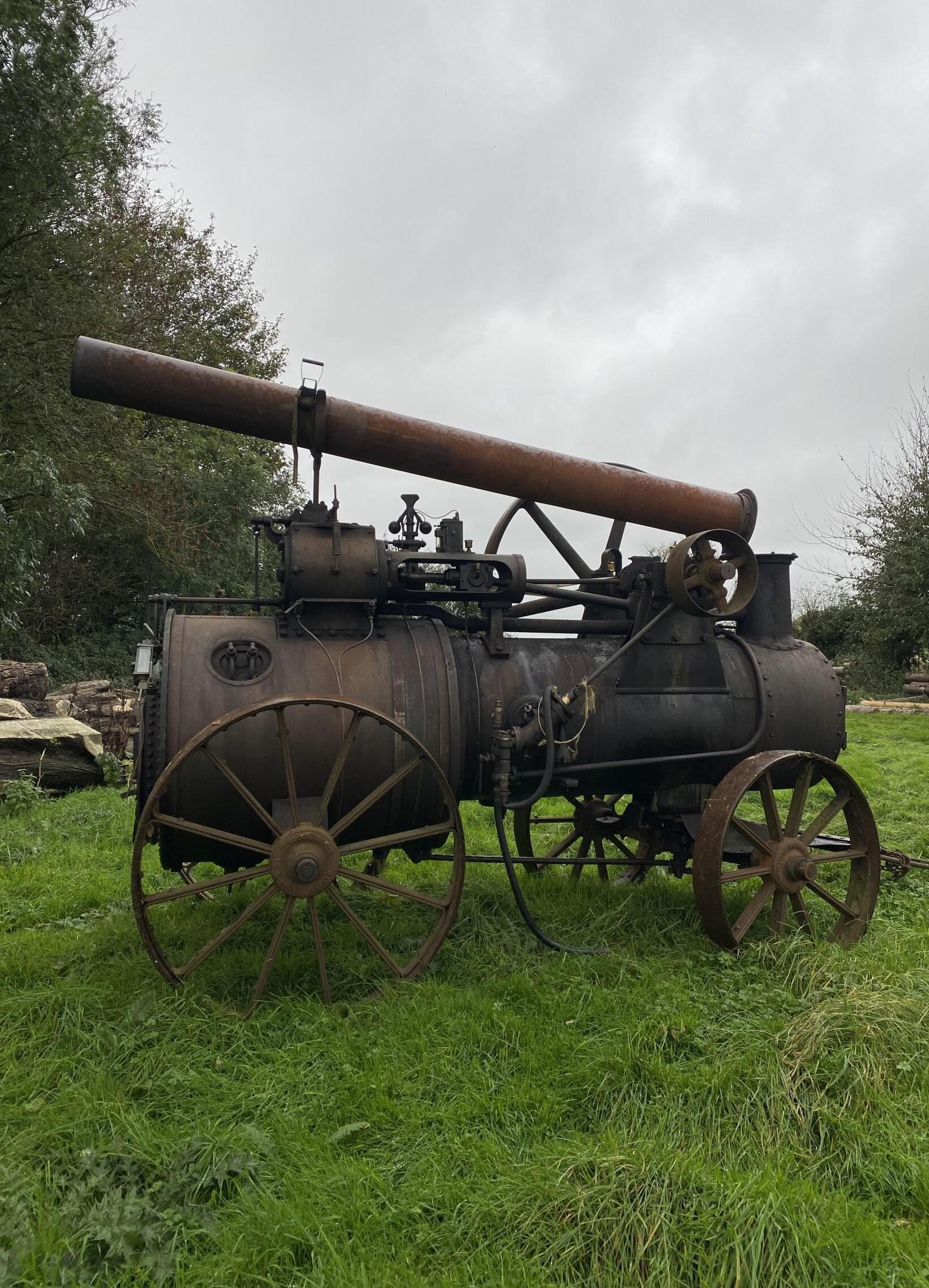
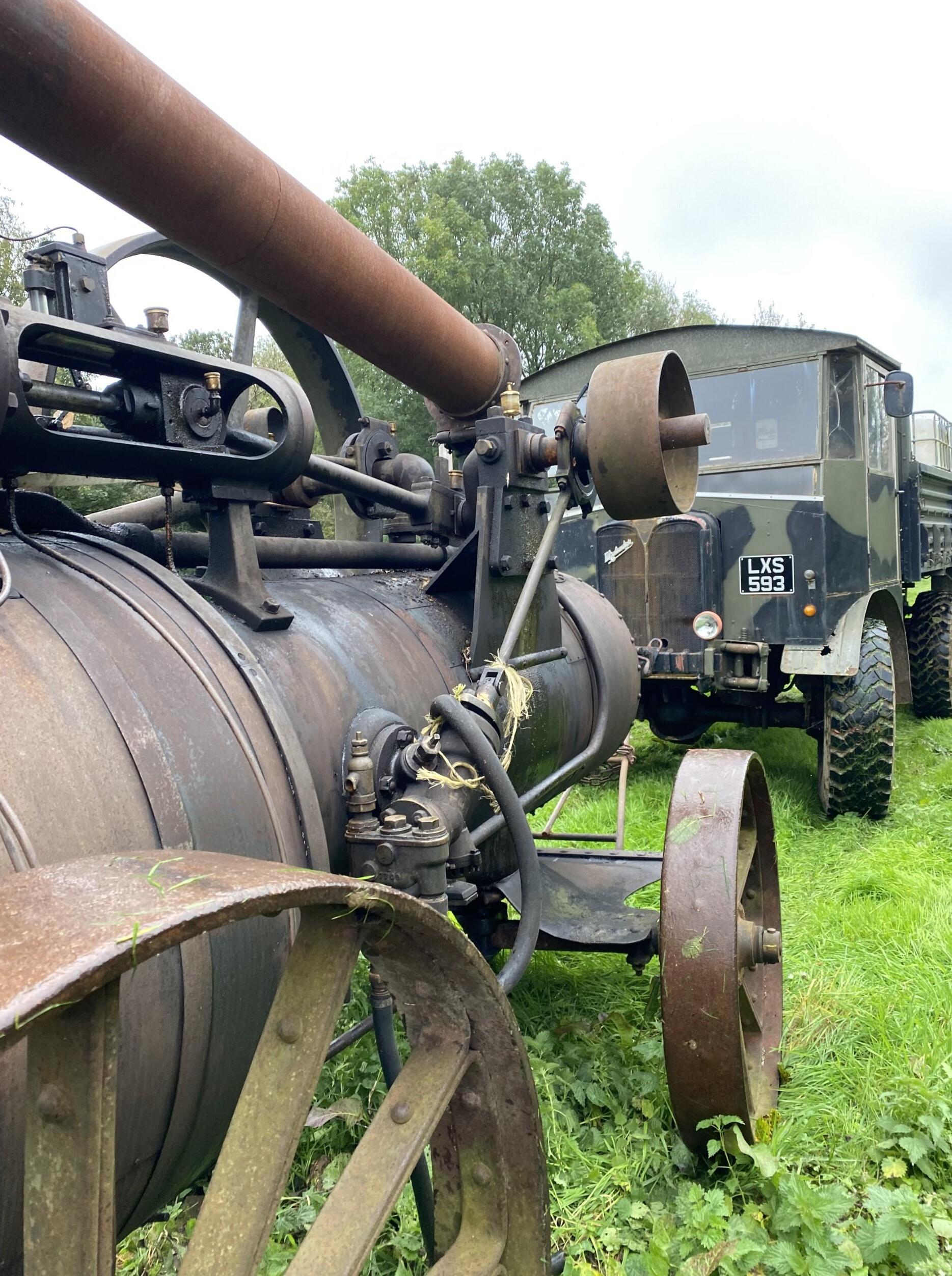
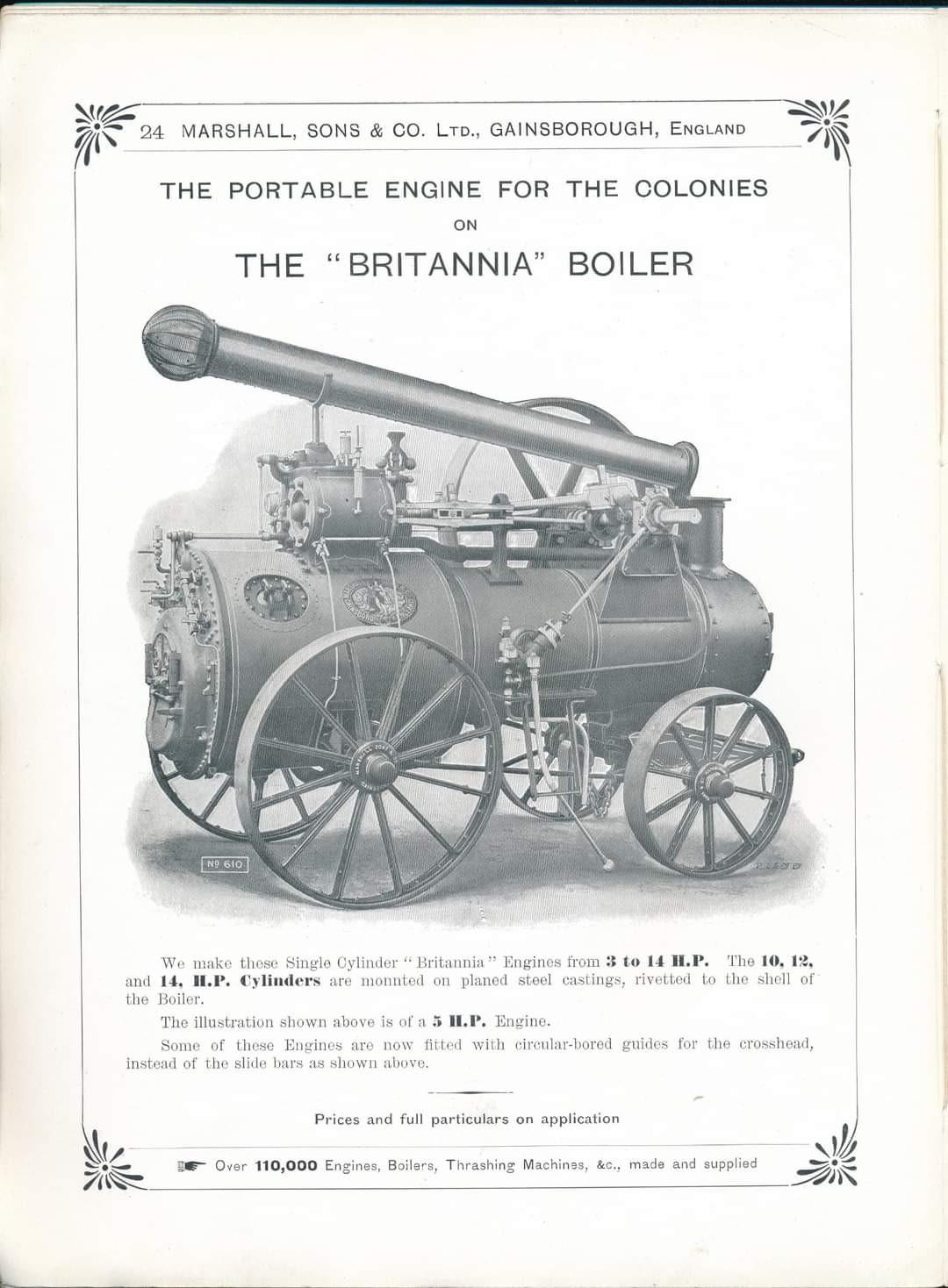
These photos show a Marshall portable steam engine owned by Eddie Butterfield. It’s a Marshall Britannia style engine that spent its working life in South America. Eddie rent some land, hidden in the depths of a Dorset farm, next to a wooded area very close to where I live. It is totally in the middle of nowhere! He is a craftsman with many skills, in particular metal work and woodwork. For a living he restores and creates Shepherd’s Huts, using wood that he has cut up on his saw bench, driven by the portable engine. The bench is a vintage E.W. Maundrell rack bench. He also takes his kit out to shows during the rally season, usually belted up to an agricultural traction engine running on its governor, but sometimes with his portable engine. He recently asked me to help him move the engine back in to place as with the rally season over he was keen to get sawing ready for his latest Shepherd’s Hut commission. We had fun manoeuvring the
be removed, along with the firebox to facilitate cleaning, washing out, and repairs. Due to this simple design, they were marketed for export abroad and could be found in use all over the world. The Britannia style portable engine was built right up to the end of steam engine construction at Marshalls. The Britannia name presumably came from the name of the Marshall factory, The Britannia Ironworks.
I have included an advert for a Britannia portable engine overleaf. Ed.
SAC Logbook
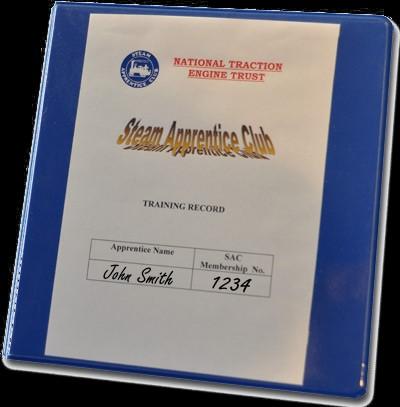
The log book is a very important tool for an apprentice. The purpose of a log book is to keep a record of your experiences with the different steam engines you have helped with.
Then, when you start with a new steam engine, the engine owner/crew can look through your records and get a good understanding of what you can already do, and what new things they should be teaching you.
Though be warned, although the majority of steam engines work in a similar way, just because something happens one way on a certain make of engine it doesn’t necessarily follow it will be the same on another.
Log books can be bought from NTET Sales. Email Kathy Smith at sales@ntet.co.uk for more information.
Driving Days 2024
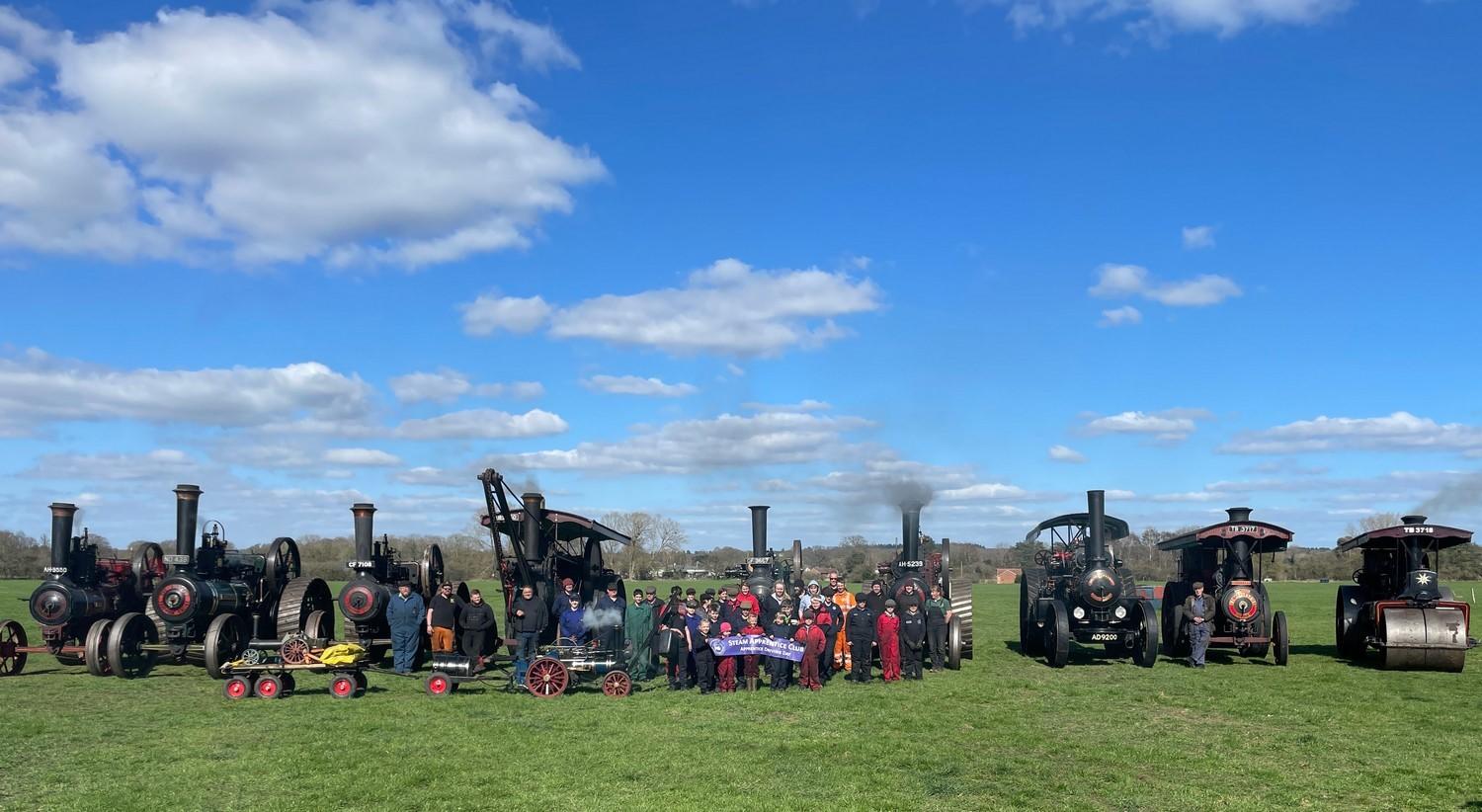
We are happy to announce that we have another full calendar of Driving days planned for 2024!
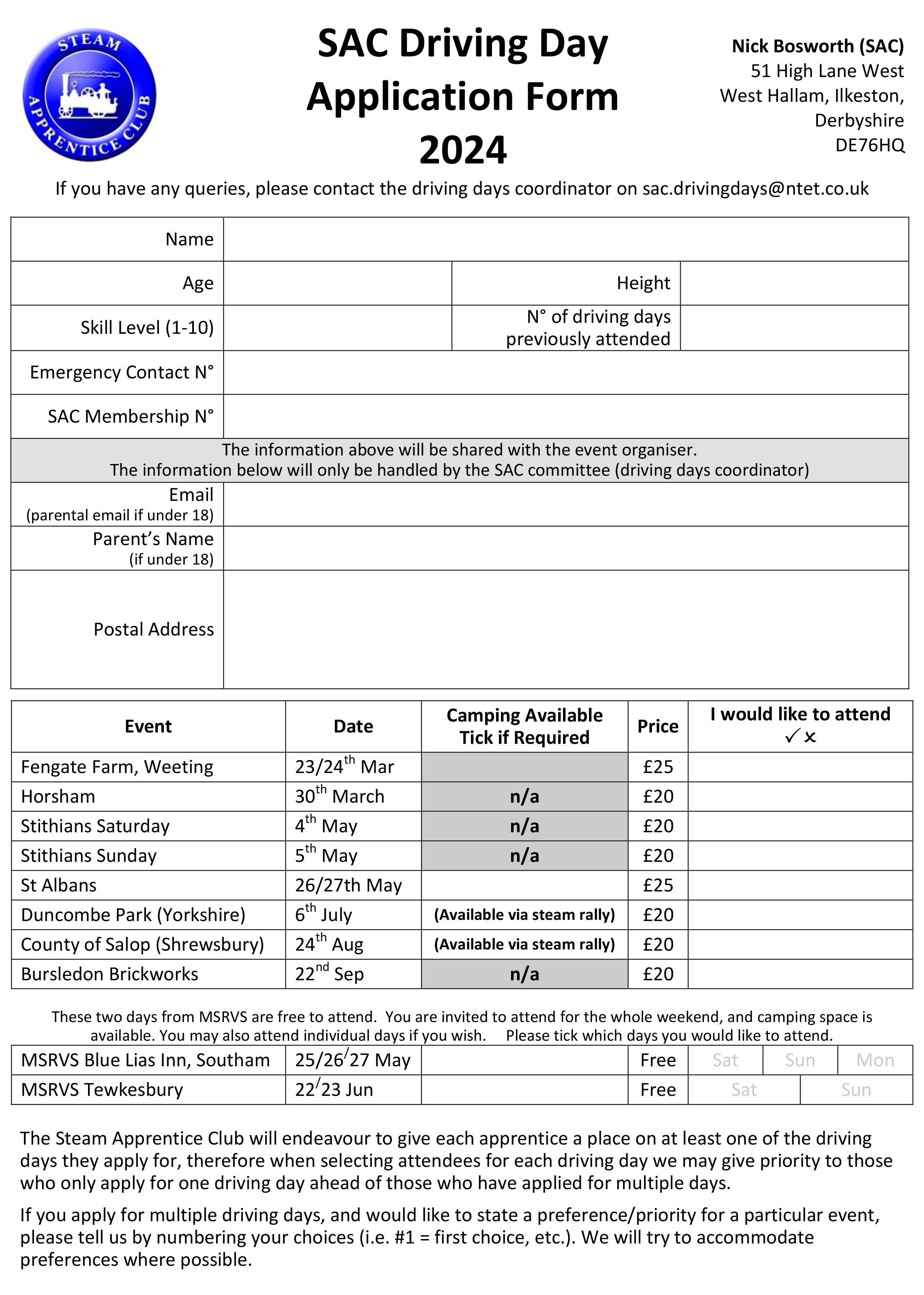
Overleaf is our list of Driving Days for 2024. New this year is a day organised in conjunction with the Duncombe Park steam rally in Yorkshire, which should hopefully cater for our more northern members. We also have two slightly different events by the MSRVS. The Model Steam Road Vehicle Society have invited SAC members to join in with their club's meet-up weekends. There are two meet-ups this year, and SAC members are invited to come along free of charge, and camping space is available for anyone wanting to stay over. Places are limited, so please book in using the same form as the other driving days.
The St. Albans driving day is back again, with a new location just south of Stotfold, where the Bedford driving day has previously taken place. With the return of St Albans, Bedford are taking a year off and we will revert to the alternating year-on, year-off swap with these two events.
Horsham, Weeting, Stithians, Salop and Bursledon are going ahead as usual, so that brings our events to a grand total of 15 days over the summer!
The application form can be downloaded from the SAC website, or photocopied from the pages in this magazine.
2024 Driving Day Dates
Location Date
Leader Comments
Fengate Farm, Weeting. 23rd & 24th March Kate Plant
Horsham Traction Company 30th March Dee Searle
Mr Parrott has a collection of engines with others also on site. They are running over two days. Camping/Caravanning space is available.
The Searle family are back with another driving day held in the grounds of their haulage yard.
Stithians (Sat) Cornwall 4th May Sam Eastman Two SEPARATE days run by the West of England Steam Engine Society. Being run on the showground at Stithians.
Stithians (Sun) Cornwall 5th May Sam Eastman
St Albans 26th & 27th May Emma De Jesus
Duncombe Park (Yorkshire) 6th July
At a new location, just south of Stotfold.
Sophie Webster A new event, running alongside the Duncombe Park steam rally.
County of Salop (Shrewsbury) 24th August Doug Milns
Bursledon Brickworks 22nd September Douglas Hynd
MSRVS Blue Lias Inn, Southam 25th - 27th May John Kidley
MSRVS Tewkesbury 22nd & 23rd June John Kidley
Being run on the Saturday before the County of Salop Steam Rally. Camping available (Book via the steam rally).
Located in Hampshire, it is thought to be the last Victorian steam-driven brickworks left in the UK. Plenty to see and do!
SAC members are invited to attend the MSRVS meet up weekends. You are welcome to attend for the whole weekend, and camping space is available at both events. Both events are free to attend.
NO RALLIES TO GO TO OVER THE WINTER? WHY
NOT
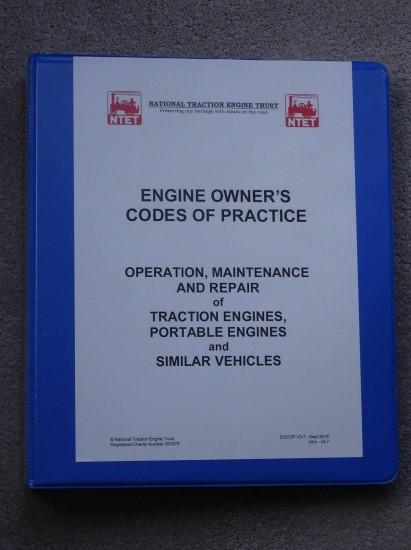
READ THE Engine Owners’ Code of Practice
The NTET Code of Practice; “The Management of Traction Engines and Similar Devices” has for a long time been widely accepted in the Insurance and Boiler Repair and Steam Engineering communities as a 'de facto' reference manual.
The CoP is 200 pages of practical advice on every aspect of engine usage, including Operation and Maintenance, Driving on the Road and in Public Places, Transport, Laying up and Storage, the NTET Written Scheme of Examination, Mechanical Inspection, Repairs, Appeals and Arbitration, and Records and Reports.
Your Steam Apprentice logbooks have been developed based on the information in the CoP to give you a good grounding with steam vehicles, and the CoP provides an excellent addition to further develop your understanding of the usage of steam vehicles.
The Code of Practice can be downloaded free as a PDF from the NTET website (www.ntet.co.uk). Alternatively, you can purchase a hard copy in a loose-leaf folder, with pages in plastic wallets, by sending a cheque for £35 inc. p&p payable to the NTET to the Chairman of the Engine Owners Section (address below). The hard copy includes relevant extracts from British Standards which are NOT available to download.
Bob Siddall
Stud Farm House
Castle Hill
Carlton-on-Trent
Nottinghamshire
NG23 6NX
Steam it Sunday
Steam-It Sunday is a national event based on the idea from the Federation of British Historic Vehicle Clubs ‘Drive It Day’.
The National Traction Engine Trust decided it needed an event where we all try and promote Steam on the road in it’s various forms, through a series of improvised and essentially free events organised at grass roots and local level, like in the early days of the road going steam movement.
In short: Steam it Sunday takes place on the first Sunday of October (this year will be 6th October) and is all about steaming up your engines and enjoying our hobby!
Every year there are many gatherings up and down the UK and we are delighted with the response to the idea. Be it at local club level, regional society or just one man taking his for
a trundle, the first weekend in October will be alive the sight, sound and smell of engines doing what they do best – being enjoyed.
We encourage any enthusiast who wants to know more about local activities to contact their own local or regional steam and vintage club, to see what may be happening in your region. We would like to thank everyone who has supported ‘Steam It Sunday’. As you would expect we hope it will take off and become a free for all annual event for everyone to enjoy and to highlight the fact that we are still able to drive steam driven vehicles of various designs on our highways and byways.
Please share your pictures on with the members here in Raising Steam, or on social media, and don’t forget to tag the SAC!
In The Workshop
Traction Engines run on steam, which is the water from the boiler, boiled by the heat from the fire. It is used in the cylinder to make the motion turn, then the steam is exhausted up the chimney, making the familiar CHUFF we all know.
For every chuff we hear, that’s a little bit of water that’s no longer in the boiler, so at some point we needs to replenish that water before it runs out.
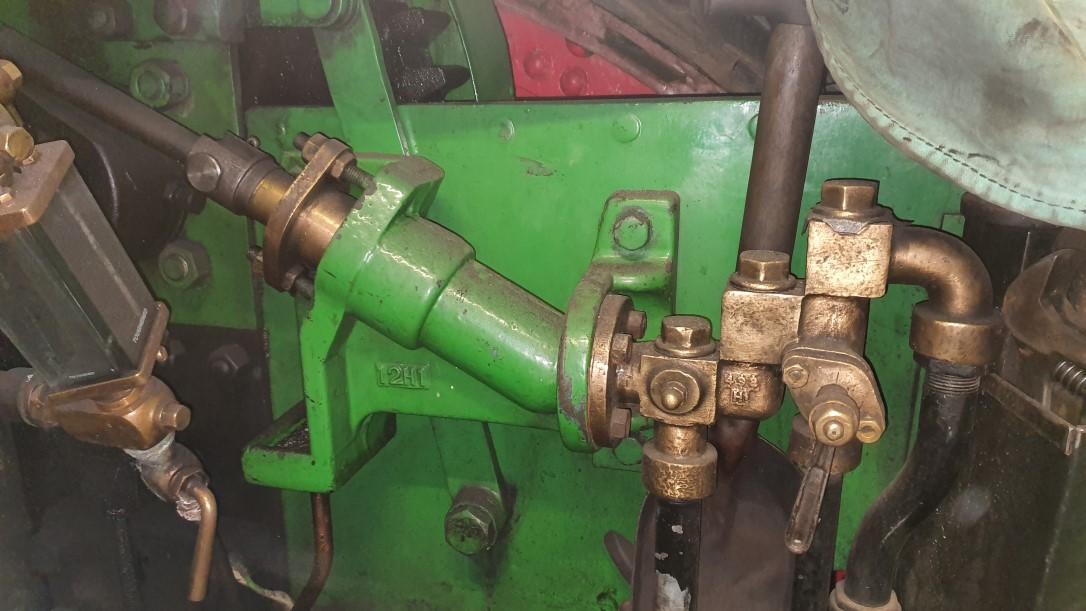
On most traction engines, there are two ways to put water into the boiler whilst in steam; the reciprocating pump, and the Injector. This article explains how the reciprocating pump works and how the water is moved by it.
The reciprocating pump is basically a piston that is moved in and out by an eccentric on the crankshaft, which sucks water in when being moved in one direction, then pushes it out again when moved back.
But how do we ensure that the suction stroke of the pump gets fresh water from the tender, and the delivery stroke sends the water to the boiler (and not the other way around!!)
This is done by a series of valves next to the pump. Each valve only lets water flow in one direction.
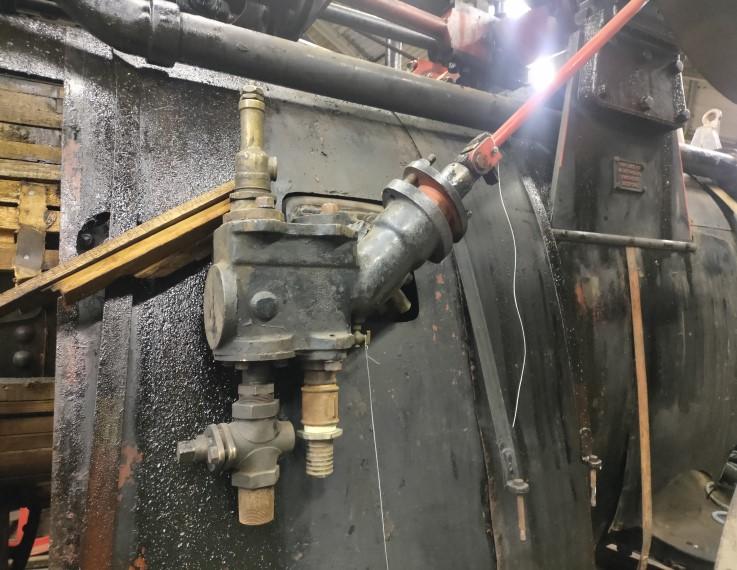
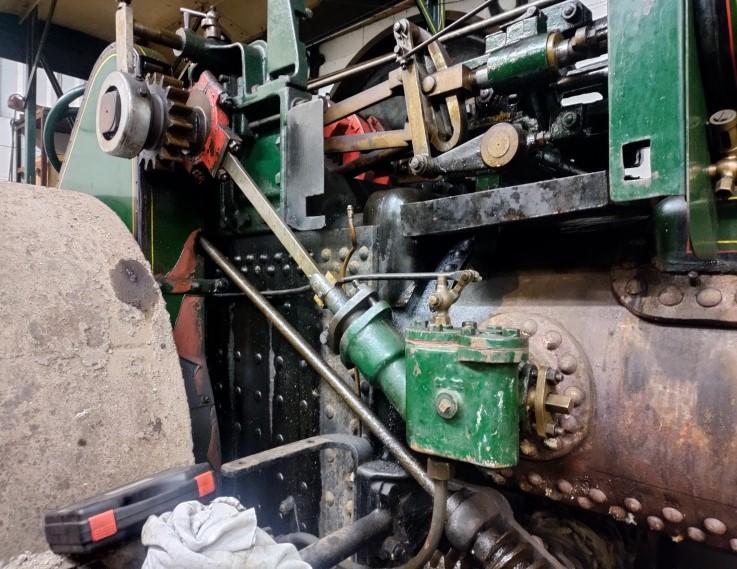
Pumps are usually located on the footplate, where the supply of water is below in the tender. This is close enough to the crankshaft for it to be driven by an eccentric.
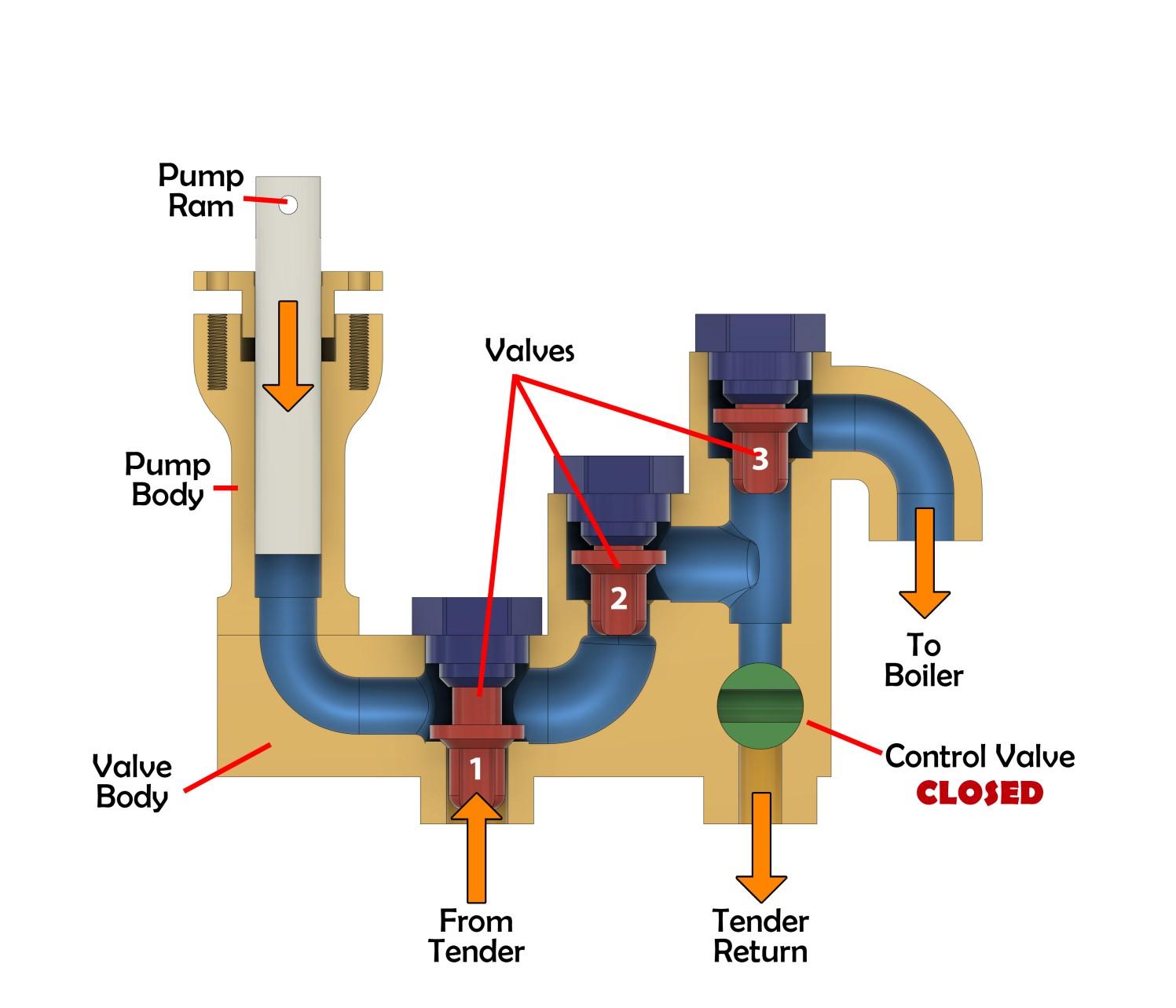
Because the pump is driven from the crankshaft it pumps water continuously whenever the crankshaft is turning, but we don’t always want to pump water into the boiler. The valve body incorporates a control valve, which allows the pumped water to either pass back into the tender, or into the boiler, depending on how the valve is set.
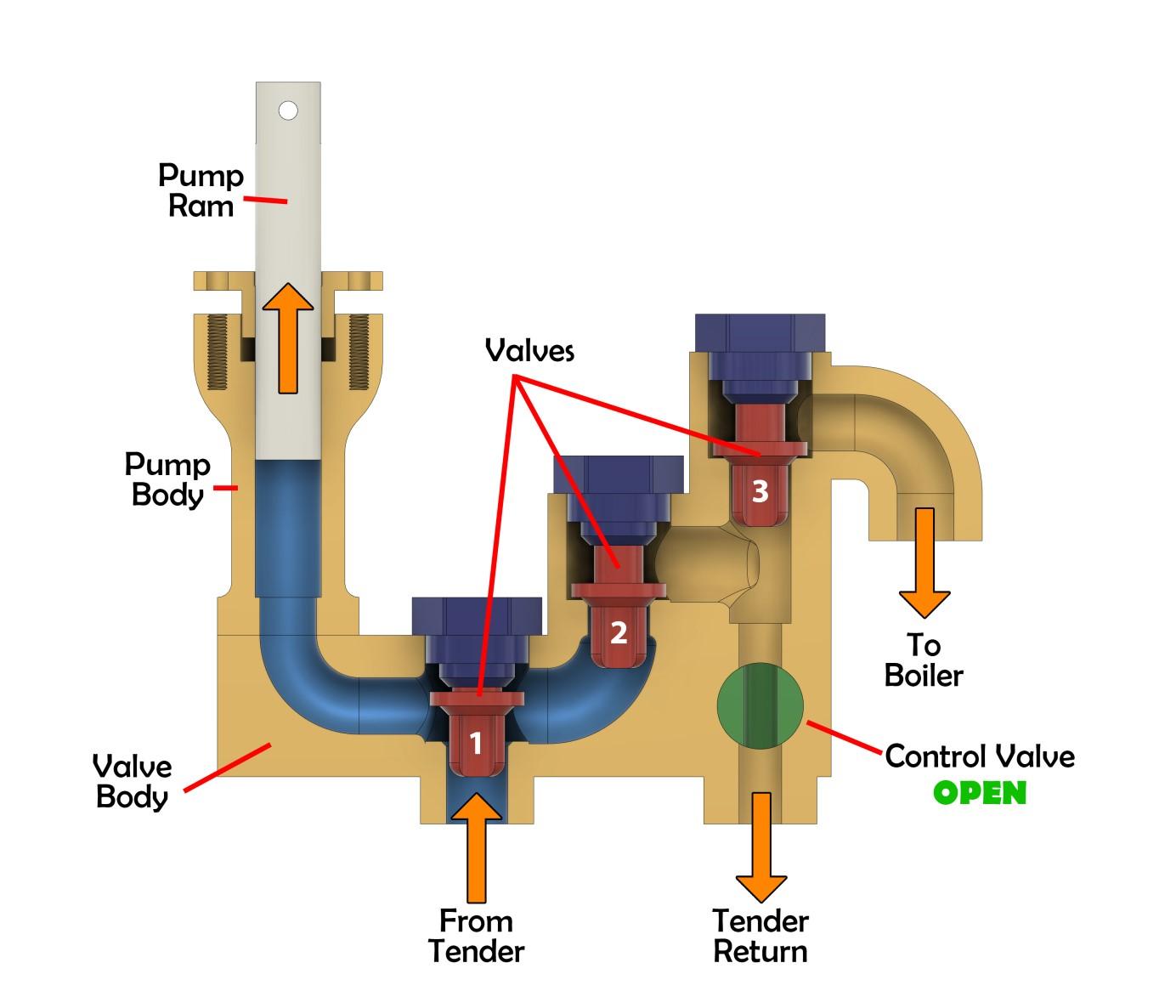
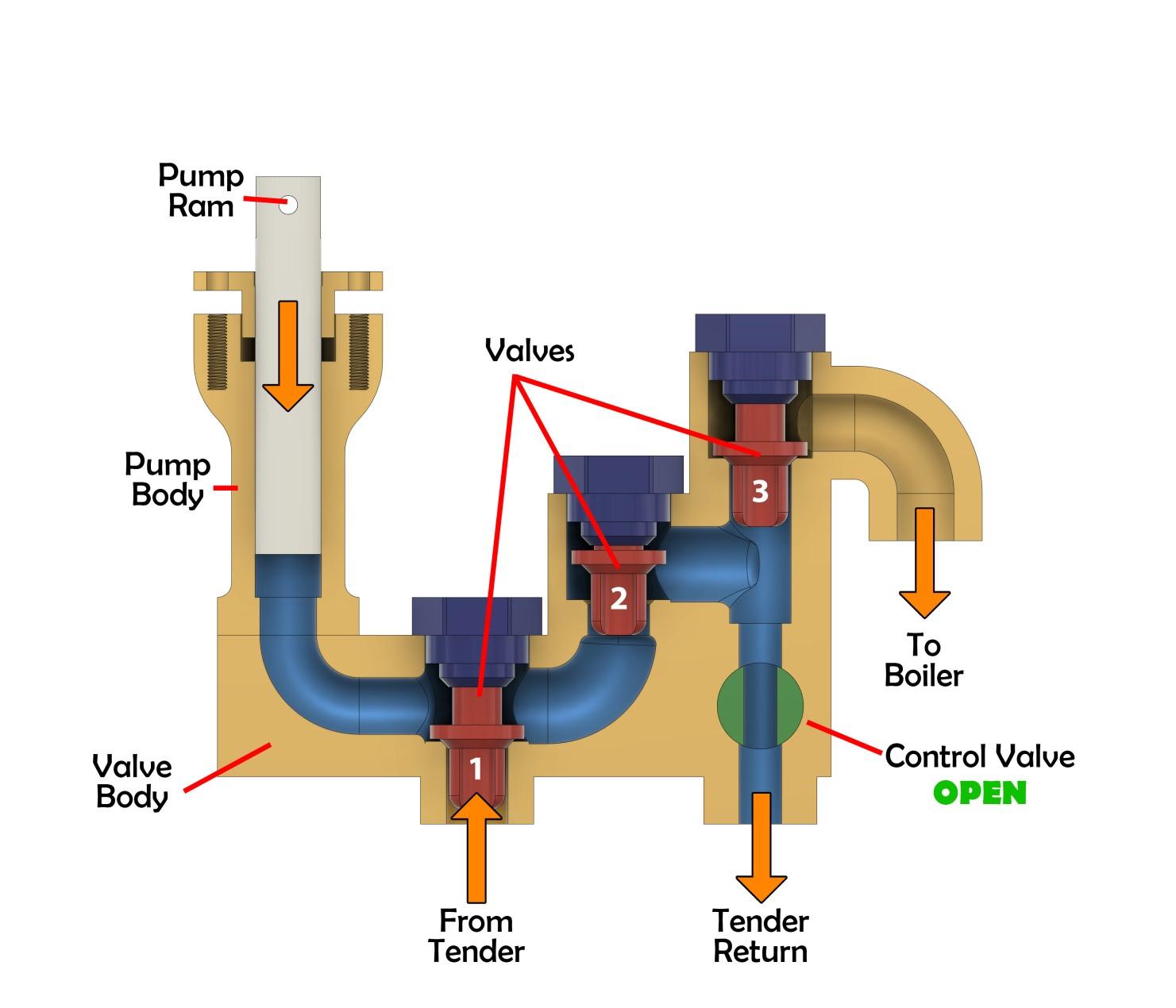
This diagrams below show a cutaway of a pump and valve block.
The pump ram/piston is on the left, and would be connected to the crankshaft eccentric so it moves up and down. There are three valves (shown in red), which can lift to let water move upwards, but will not let water back down again. The control valve is at the bottom-right (shown in green).
Diagram 1 shows the suction stroke. Then ram is moving upwards, and it sucks water up through valve 1. The water comes from the tender below. Water previously pumped cannot come back down through valve 2.
Diagram 2 shows the pump stroke. The ram is moving down. Valve 1 has dropped to stop water from flowing back down to the tender. The only way he water can move is towards valve 2. Valve 2 has lifted to allow water through into the next passage.
At this point there are two options for the water to go. Either down towards the tender return, or up through valve 3 to the boiler.
The water doesn’t go towards the boiler because to do so, it would have to overcome the pressure of the boiler. With the control valve open, it has an easy route back to the tender.
Diagram 3 is the same as diagram 2, but with the control valve closed. This time, the water does not have an easy route back to the tender. Instead, it goes upwards through valve 3 and on to the boiler. The pump creates enough pressure to overcome the pressure of steam in the boiler.
Member Mail
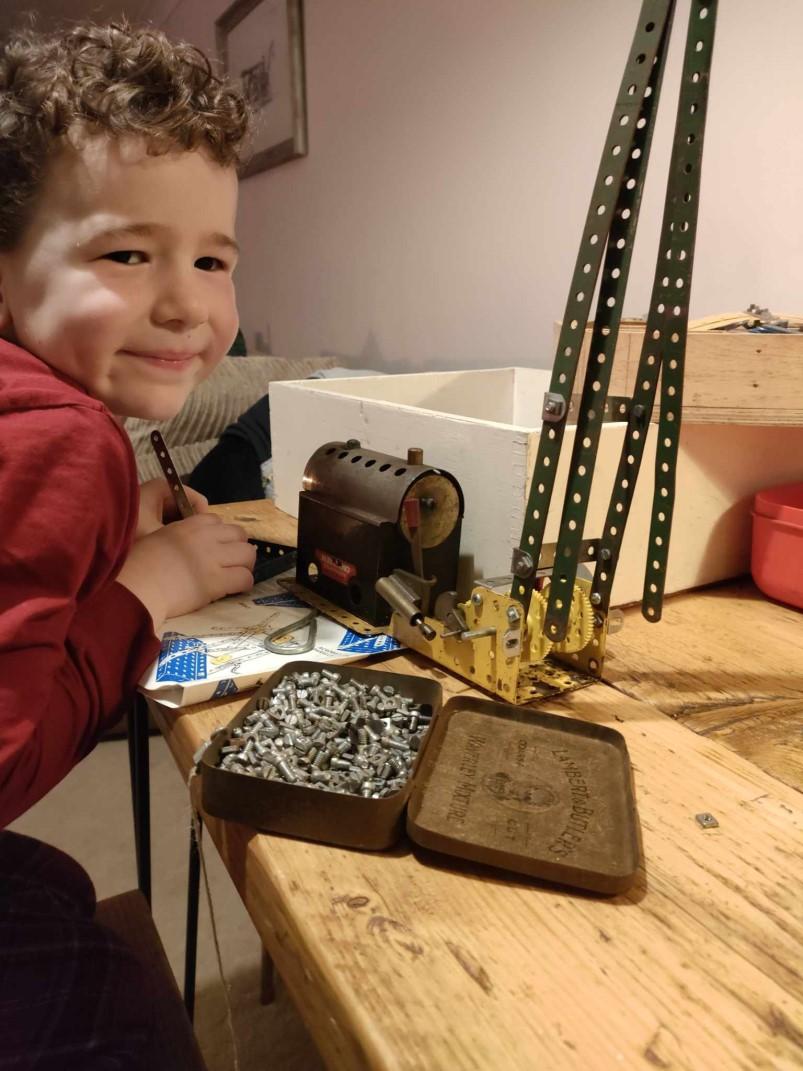
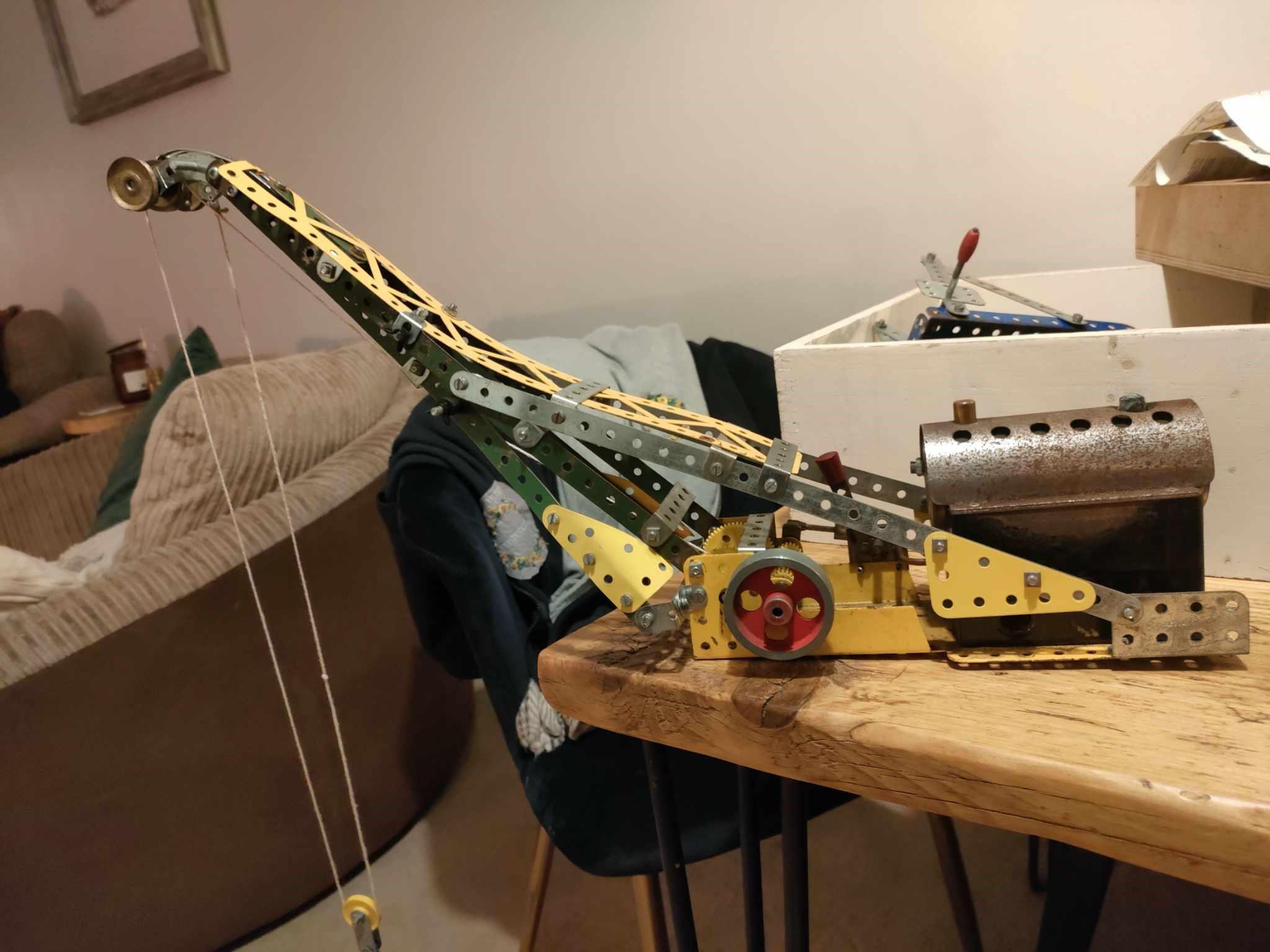
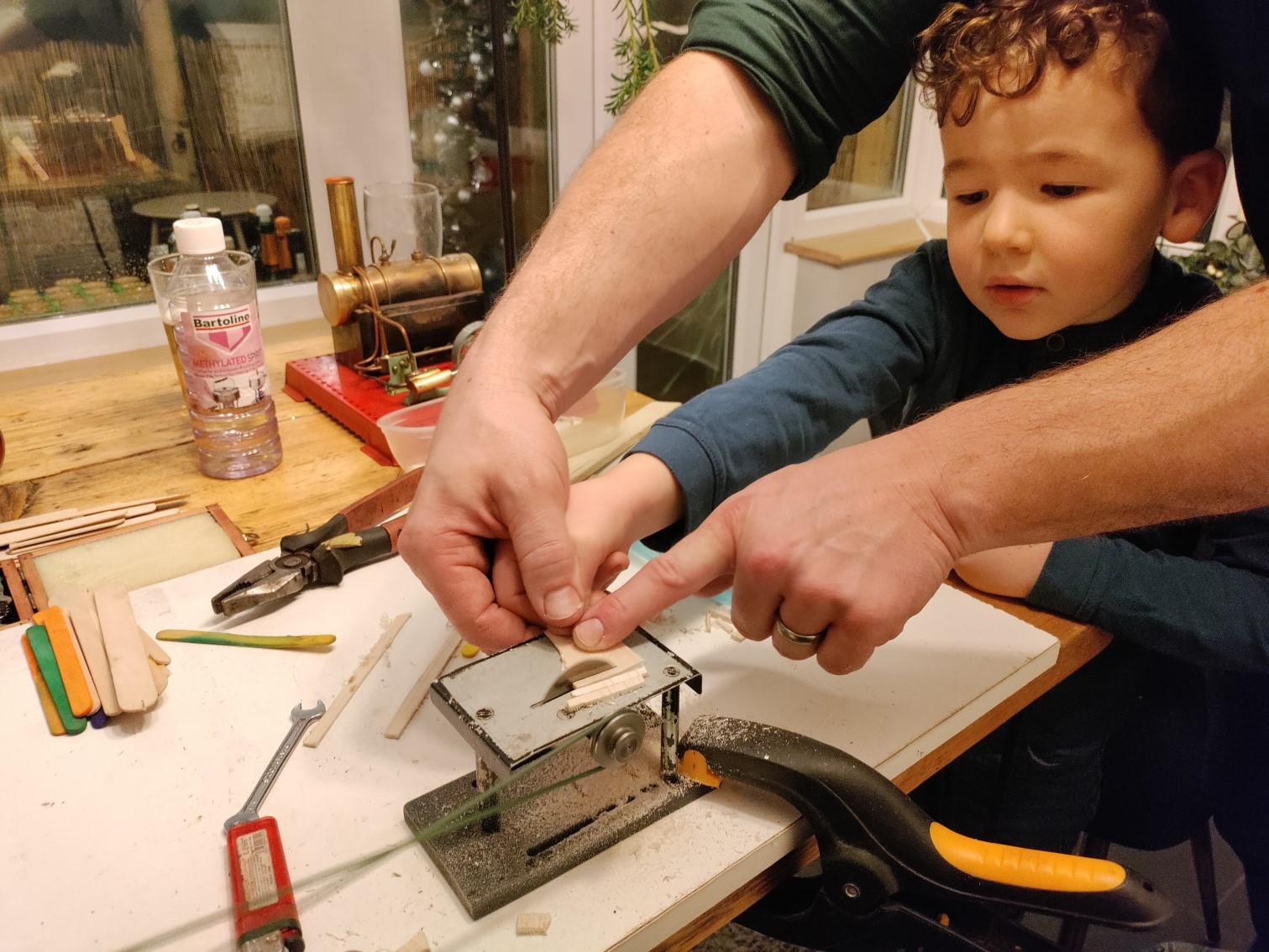
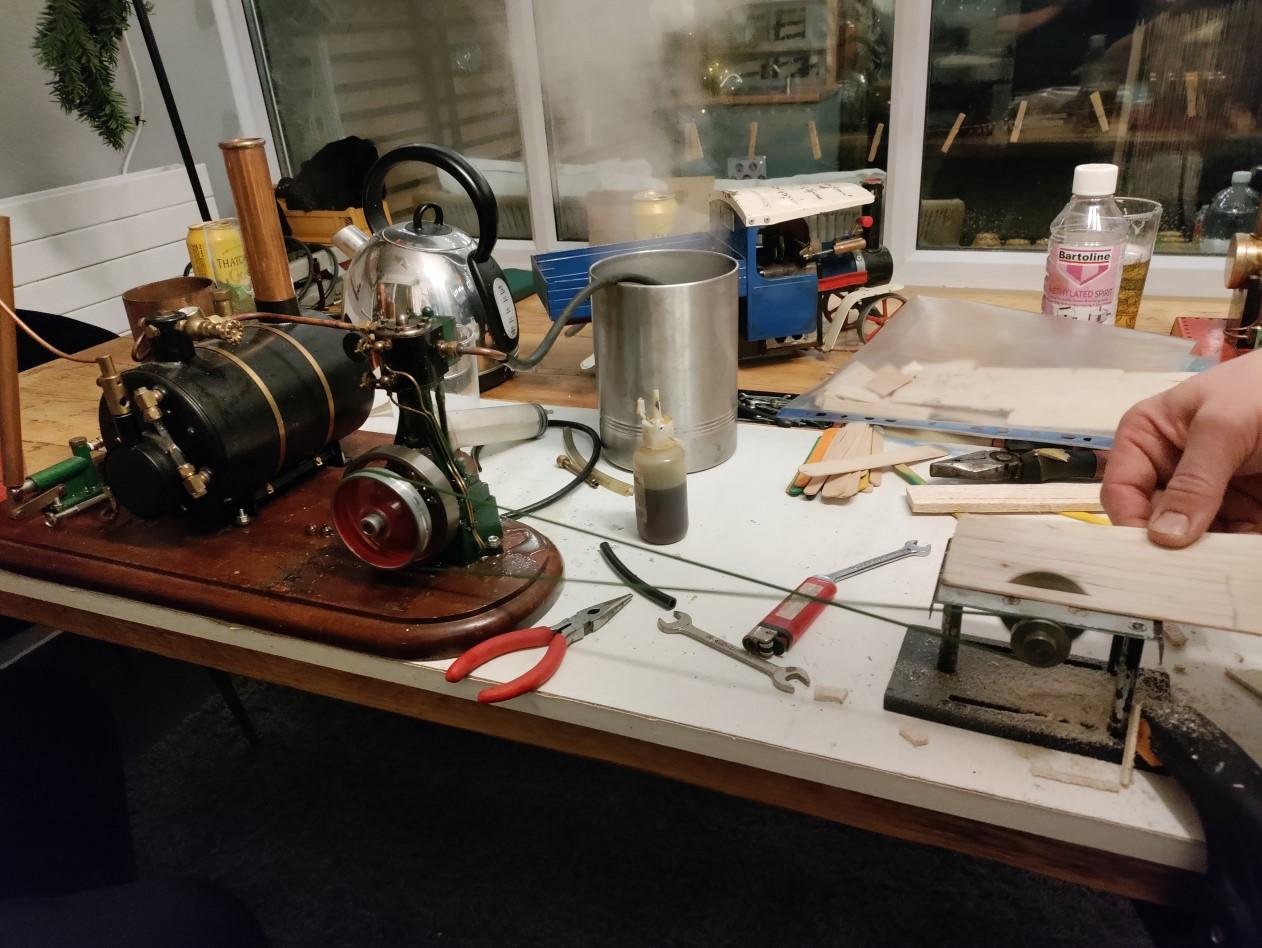
SAC member Bertie Chiverton has been very busy over the winter with various projects and has sent us in some pictures of what he’s been up to.
He was given a few box of Meccano for Christmas and has been building a model steam crane with his dad. It is powered by a Mamod steam engine, and they’re currently working to improve how much it can lift.
He has also been learning about steam powered sawmills with a model steam engine driven saw bench. He tells me that he has made a set of numberplates and nameplates for his Mamod steam wagon. Mind your fingers Bertie!
Christmas Steam Up
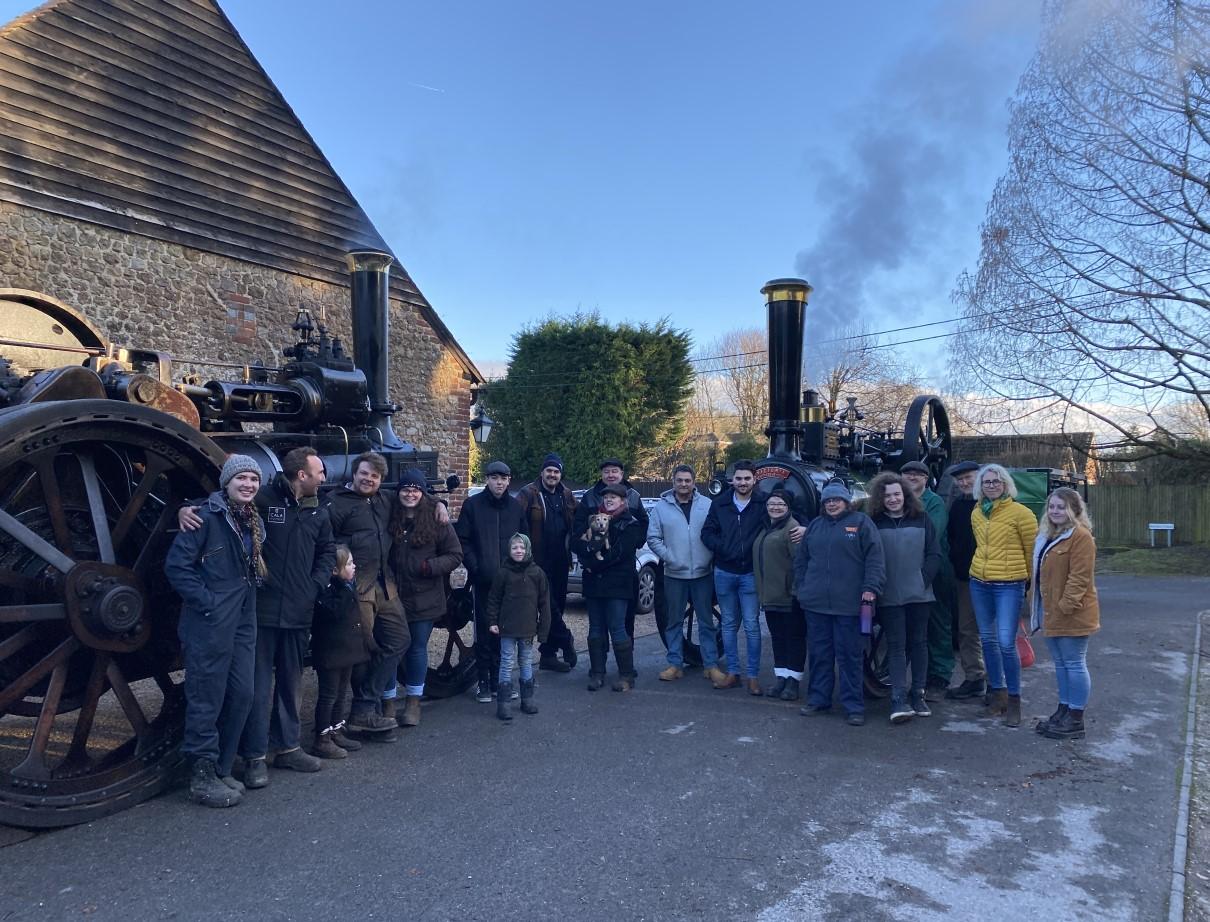
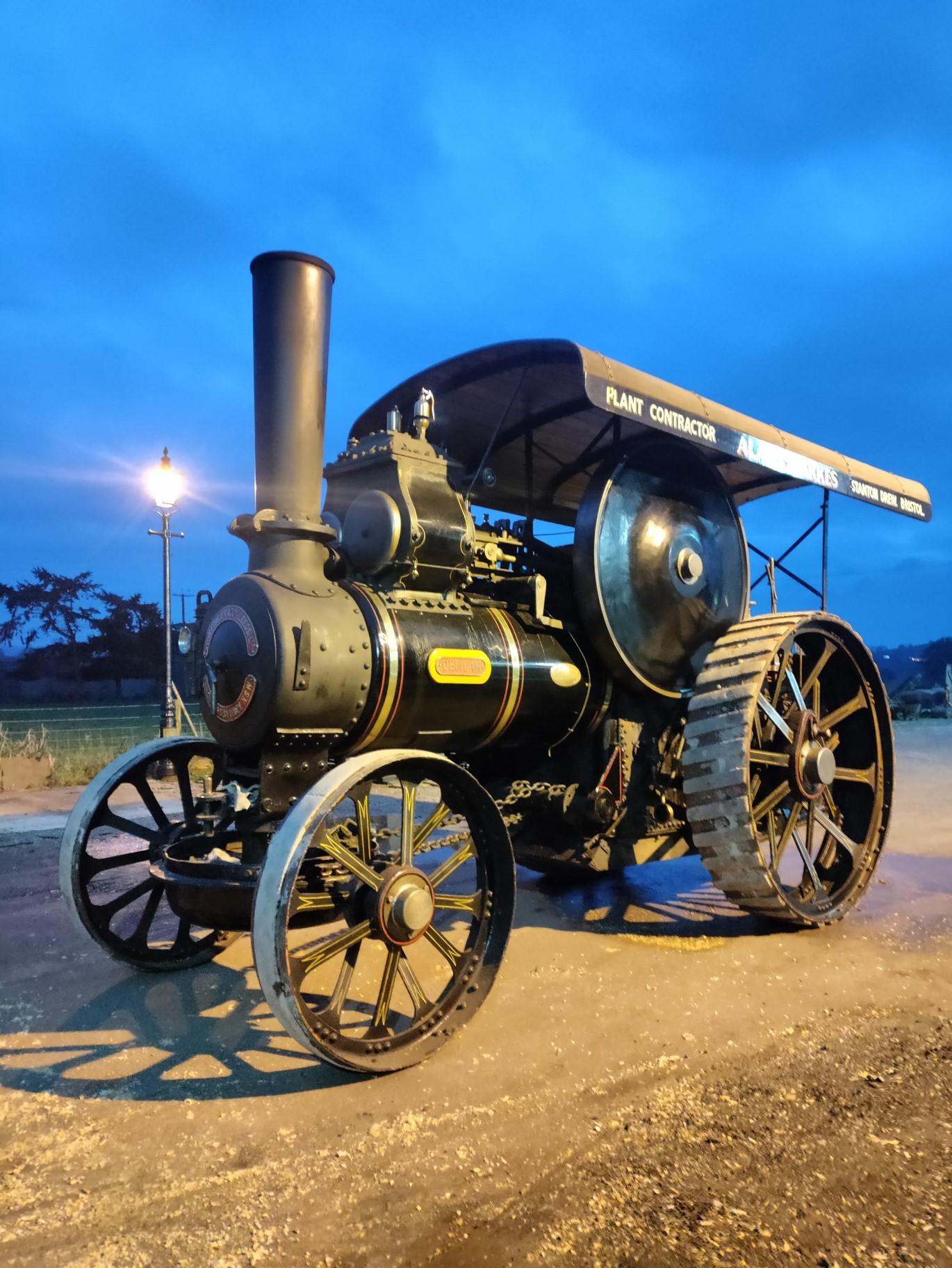
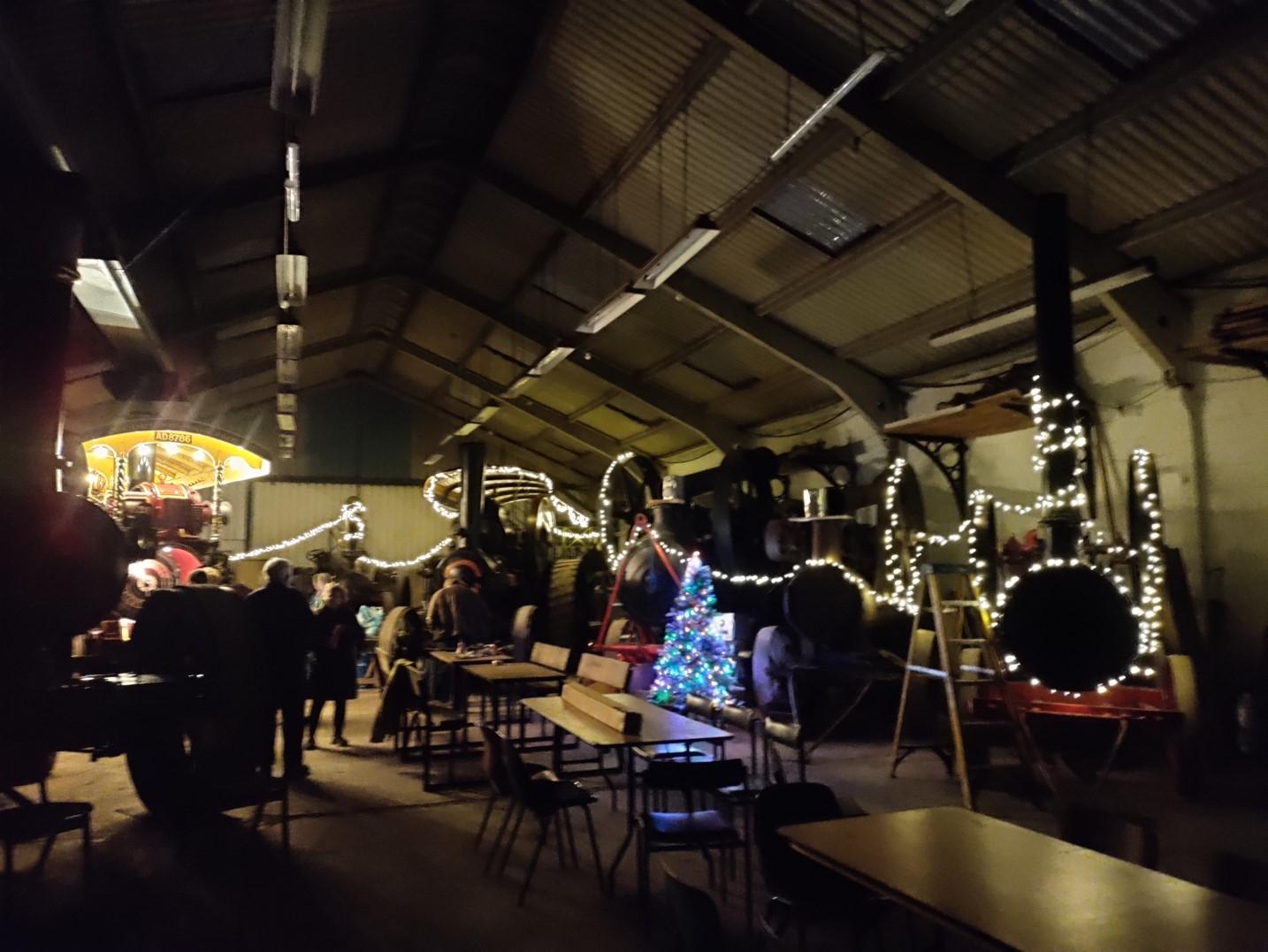
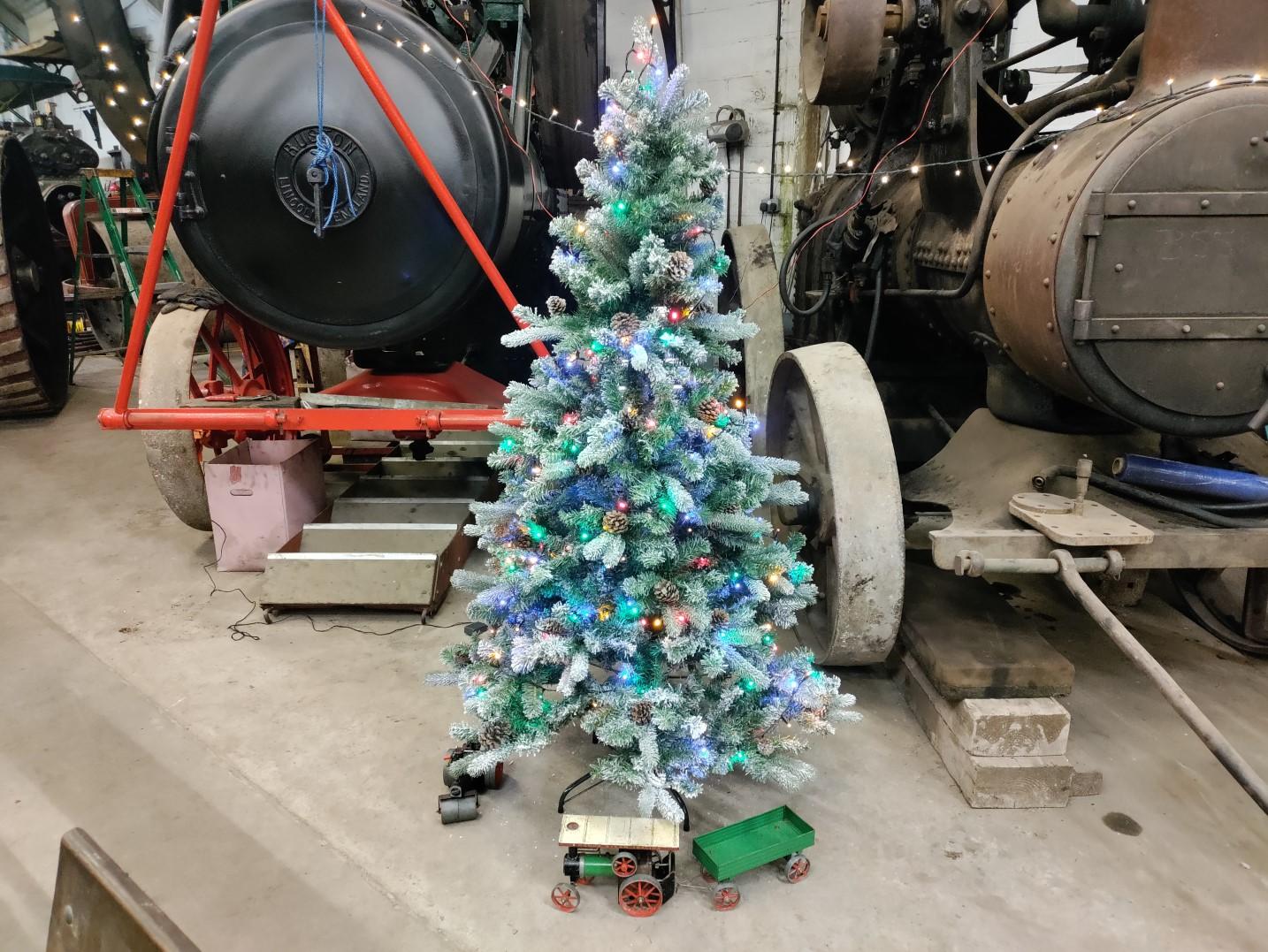
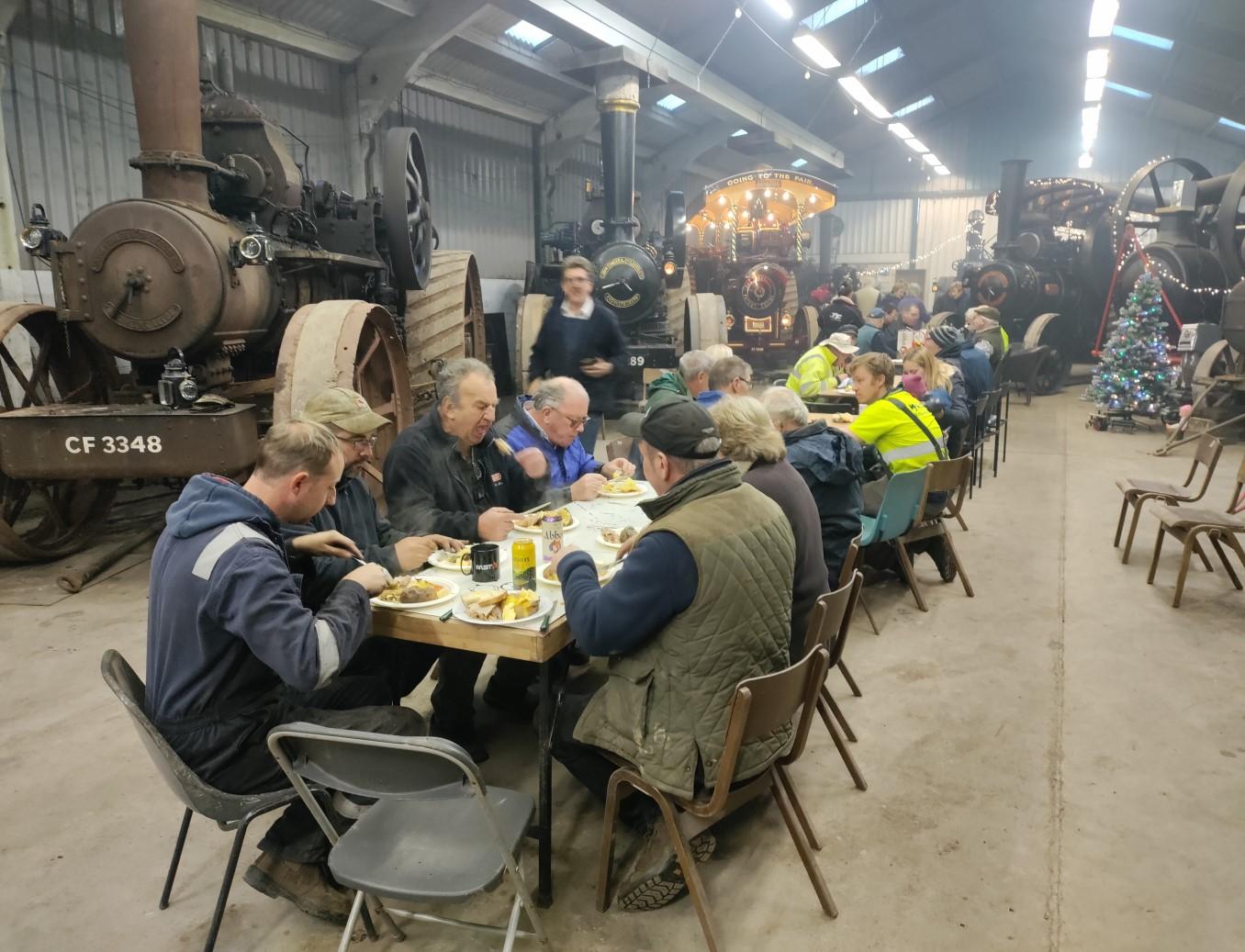
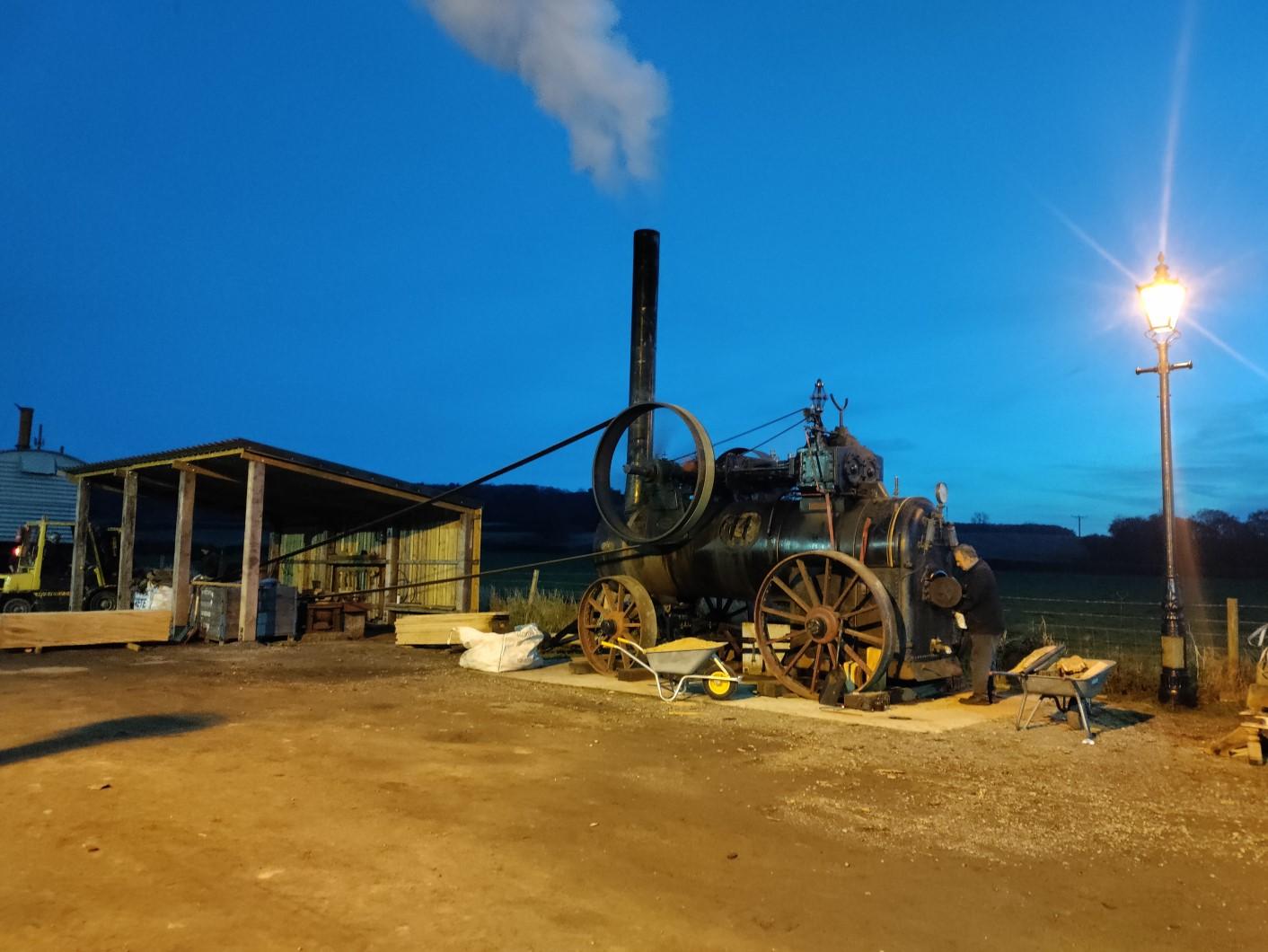
Every year down ‘The Yard’, we organise a bit of a Christmas Steam Up for all of the crew, helpers and friends to make sure we have a bit of steam in the long winter months without rallies. This year was no different, we had seven engines in steam, the steam sawmill running, and we cooked several joints of pork, and jacket potatoes cooked in the engines. We had Christmas lights and a Christmas tree set up over the portable engine line up which looked brilliant in the dark. A wonderful day and night was had by all, but the summer still can
NTET DRIVER TRAINING SCHOLARSHIPS
The NTET is awarding Scholarships to participate in the NTET Driver Training Course which is held in May each year. The Scholarship covers the course fees for one year, NOT incidental expenses such as travelling, accommodation and food.
The scholarships are open to non-engine owners being members of nonengine owning families, who are members of the NTET.
For more details of the Scholarship and Course, visit: www.ntet.co.uk
Applications including a cv and a statement of why you wish to attend the 3 year Driver Training Course should be submitted by 31st January to the General Secretary of the Trust: general.secretary@ntet.co.uk
NTET Driving Training Course
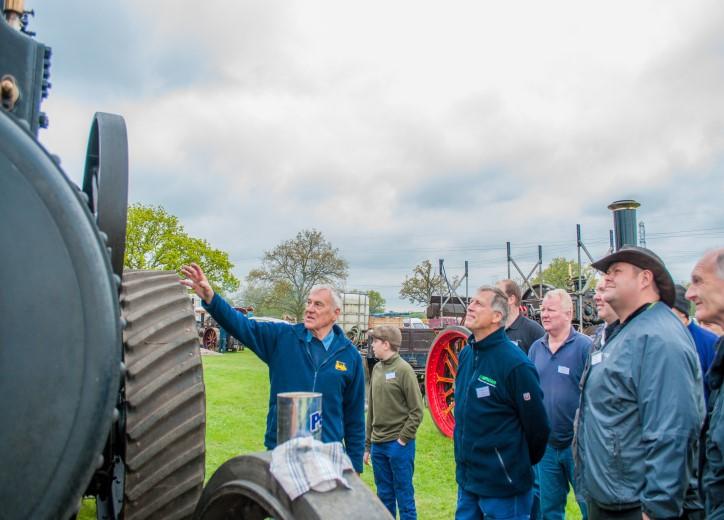
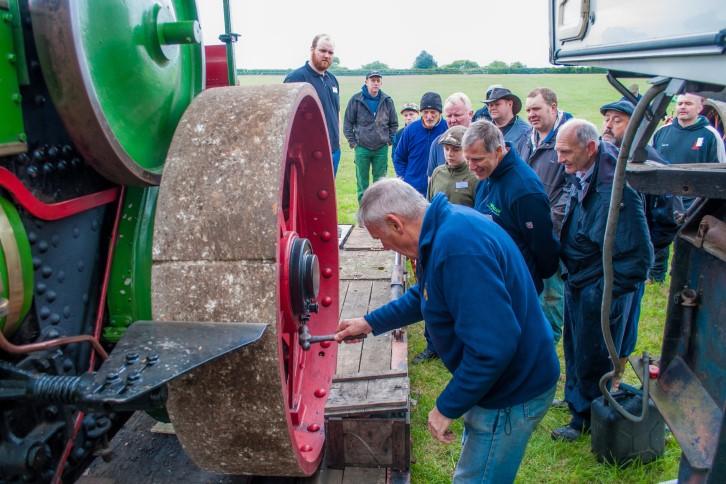
The NTET hosts a driver training weekend once a year for its members.
This course consists of both practical hands on driving time and theory sessions and is now open to Apprentices aged 13 years or older.
The course has three levels: foundation, intermediate, and advanced. It is recommended that Apprentices start with foundation and move up each year to get the most from the training.
Each level consists of a mix of both theory sessions with our skilled members and plenty of practical time on a selection of steam traction engines.
If you have any questions regarding this event please contact the event organiser, Joe Black, at:
training@ntet.co.uk
Tel: 07595 466353 Date
11th & 12th May 2024
£280 for the two days for members if paid before 31st March £315 from April 1st (discounted for SAC members)
NTET Driving Training Course
Foundation Day 1
Introduction to Traction Engines -Boiler construction and Fittings -Motion work drive train and brakes, lubrication and gland packing, drive an engine, clean the engine.
Foundation Day 2
Light up and steer/drive an engine, engine insurance, engine maintenance, clean engines and help load up.
Intermediate Day 1
Light up and drive engine, repacking glands and ring bush renewal, Gauge frames and gauge glasses, Safety valves, cocks and clacks, clean the engine.
Intermediate Day 2
Washing out and preparation for inspection, low loading demonstration, water pumps and mechanical lubricators, boiler management and combustion, drive an engine, clean engines and help load up.
Advanced Day 1
Light up and drive engine, steering chains and maintenance, replacing tubes and stays, injectors, hydraulic testing and valve timing, clean the engine.
Advanced Day 2
Shafts, bearings, axles and wheel bushes, engine insurance, low loader demonstration, boiler management and combustion, drive an engine, clean engines and help load up.
Technical Achievement Award 2024
Applications are invited for the SAC Technical Achievement award. Areas of achievement may include: engineering work on full size engines, model engineering or any other appropriate steam related subject (bearing in mind that we are essentially a road steam organisation).
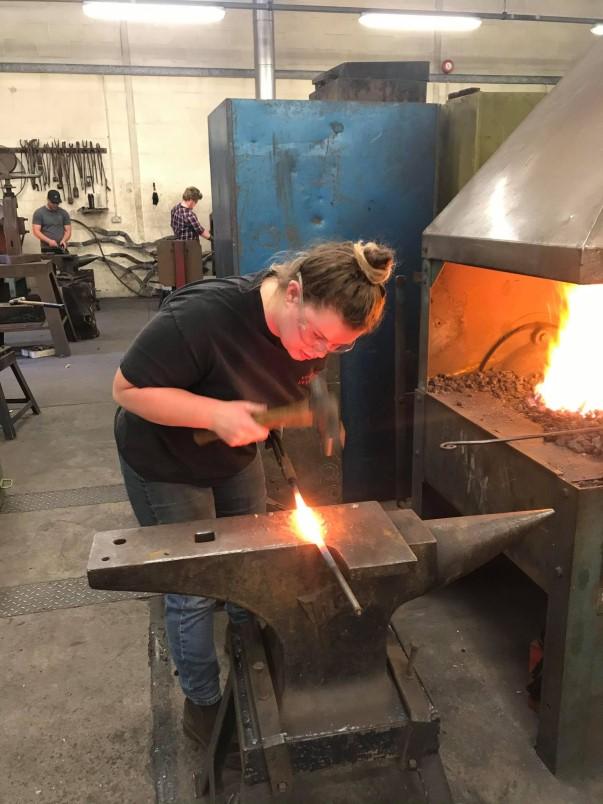
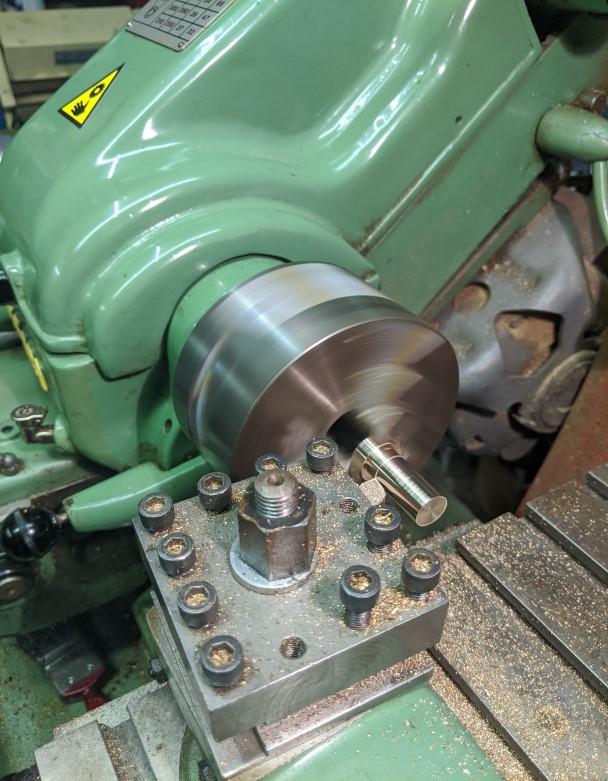
The purpose is to encourage young people to develop hands-on experience generally within typical engineering skills. This can be using various machines such as lathes and mills as well as handwork. Nominations to be entered by a sponsor for whom they have been working under the instruction of, or apprentices may enter themselves.
Applications to be received by August 15th and should consist of a brief description on one side of A4 paper with 3 or 4 photographs and/or sketches. See address inside your latest copy of Raising
Steam. The judging committee will then contact the nominator or apprentice by either phone or in person to discuss the application. From these discussions, suitable candidates will be chosen, and final and fully detailed submissions will be invited to be with the Chairman by September 15th.
Judging will be completed by mid October with the announcement of the winner by the end of October. The award will be presented at the NTET AGM.
Judges will be from members of the SAC Committee plus invited persons form an area appropriate to the subject entered.
Please note that due to the all round experience we are looking for it is unlikely the award will be awarded to an apprentice under 15. Though as we know there is always an exception to the rule, so please don’t hesitate to either enter or contact the Chairman for guidance.
If you have someone in mind to nominate, contact sac.publicity@ntet.co.uk
Apprentice Of The Year 2024
This award is to recognise an Apprentice who has shown all round enthusiasm in their involvement with Road Steam. This may be hands on experience with an engine, or helping to maintain or restore and engine. Consideration should be given to how well they have learnt and respected the necessary skills needed in the operation of an engine. There is no particular type of submission we are looking for other than that you feel the Apprentice has made an effort, has learned from whatever activity they are doing and has shown the ability to ‘stay the course’. We would expect that the Apprentice has been working with one engine or group for at least 3 or 4 years.
Submission should consist of a brief description on one side of A4 paper of what they have been doing and why you think the Apprentice deserves the award, perhaps with 3 or 4 photographs and/or sketches if you feel it will better illustrate the case.
Entries to be with the SAC Chairman by mid September, see address inside your latest copy of Raising Steam or Steaming. Judging will be completed by mid October, with the announcement of the winner to be made at the NTET AGM where the award will be presented.
The final decision on the recipient will be made by the SAC Committee.
If you have someone in mind to nominate, contact sac.publicity@ntet.co.uk
Competition
Thankyou to those who got in touch to guess what the photo was in the last edition, we had one correct answer this time, from William Goddard.
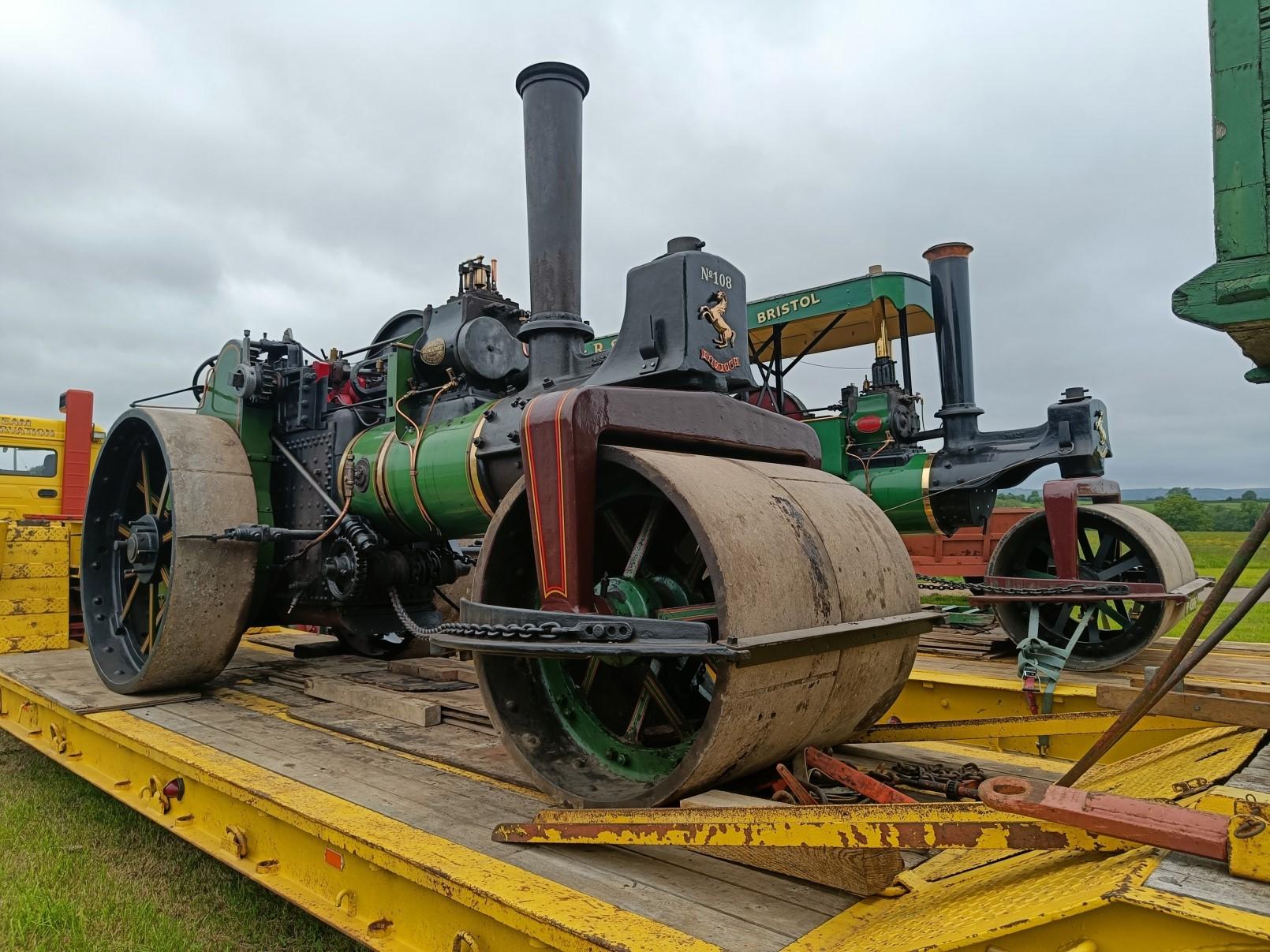
It was a roller mounted on to the front forks of an Aveling & Porter steam roller. These were fitted when the roller was intended to be used for driving machinery, usually for a roller, a stone crusher, and allowed the belt to be run up and over the roller on the front forks, to stop it rubbing and wearing on the top face of the front fork.
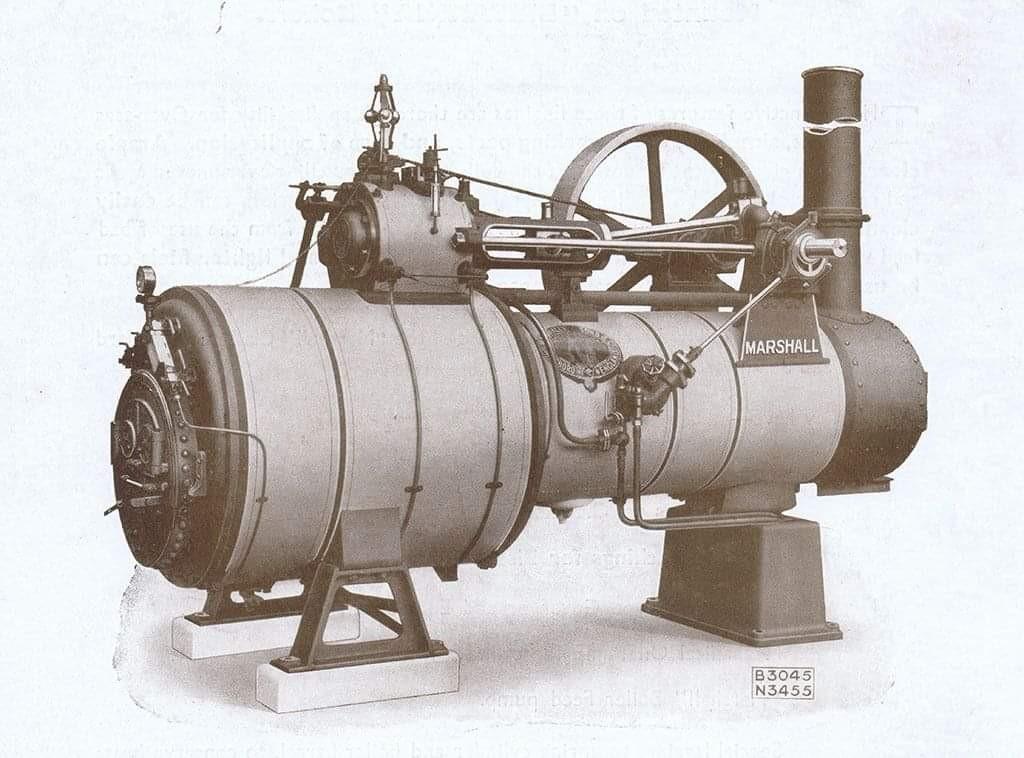
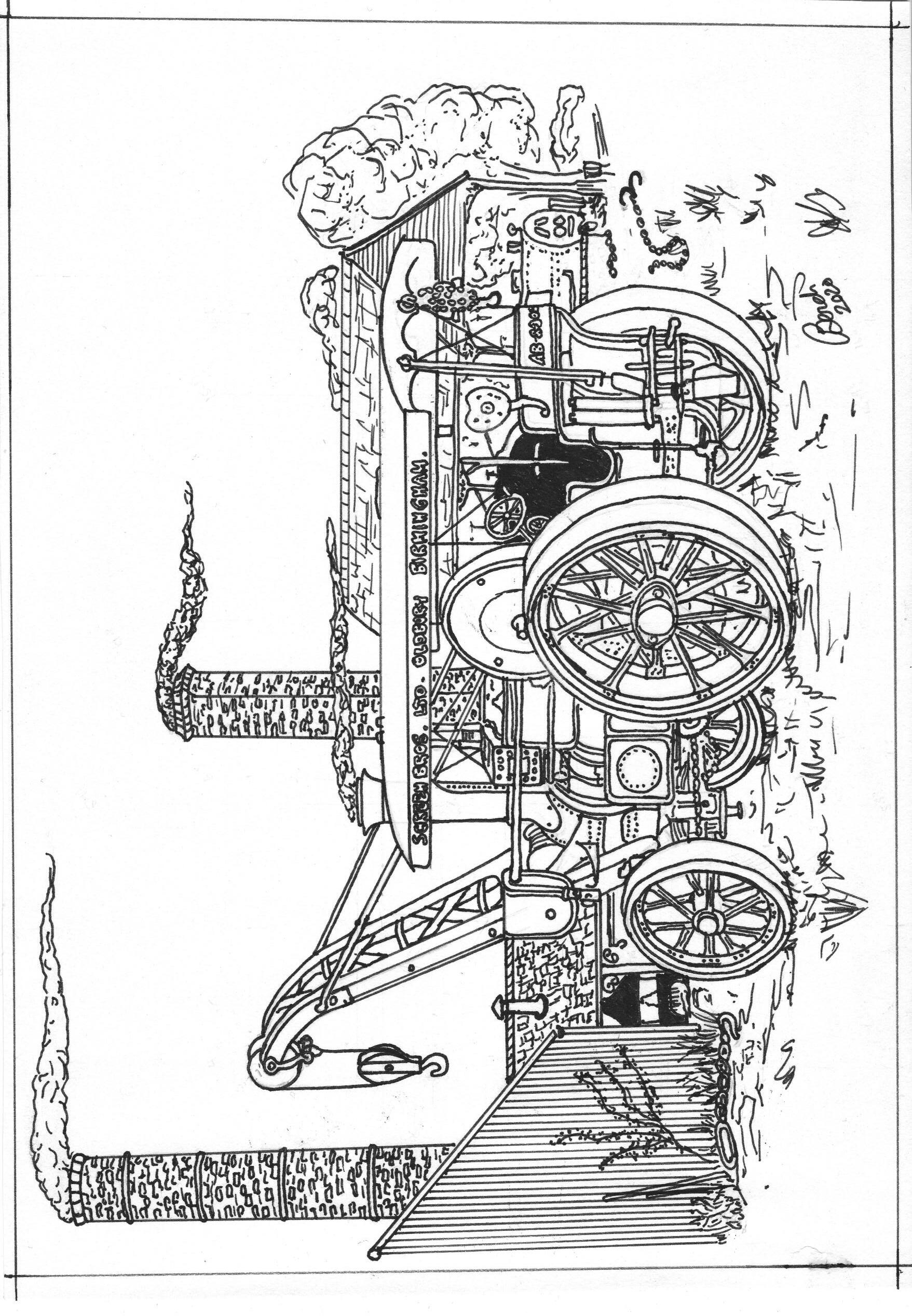
For this editions quiz, can anyone tell me what this type of engine (a close relation to the portable engine/traction engine) is, and how it would’ve been used originally?
Send in your guesses or answers to sac.raisingsteam@ntet.co.uk and we’ll publish the correct answer in the next edition of Raising Steam.
Then and Now
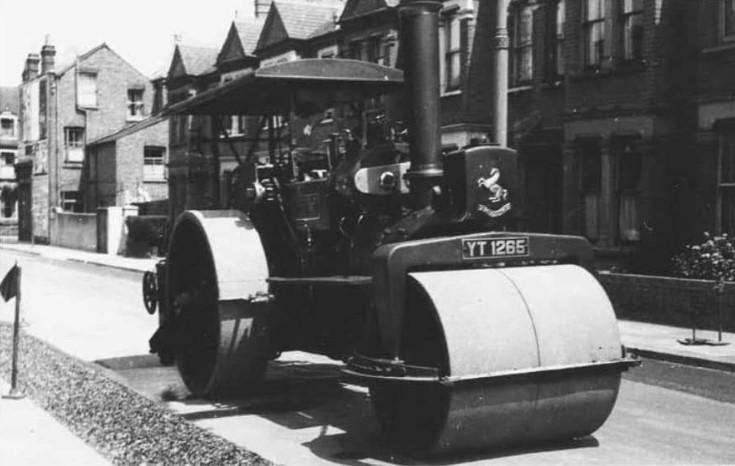
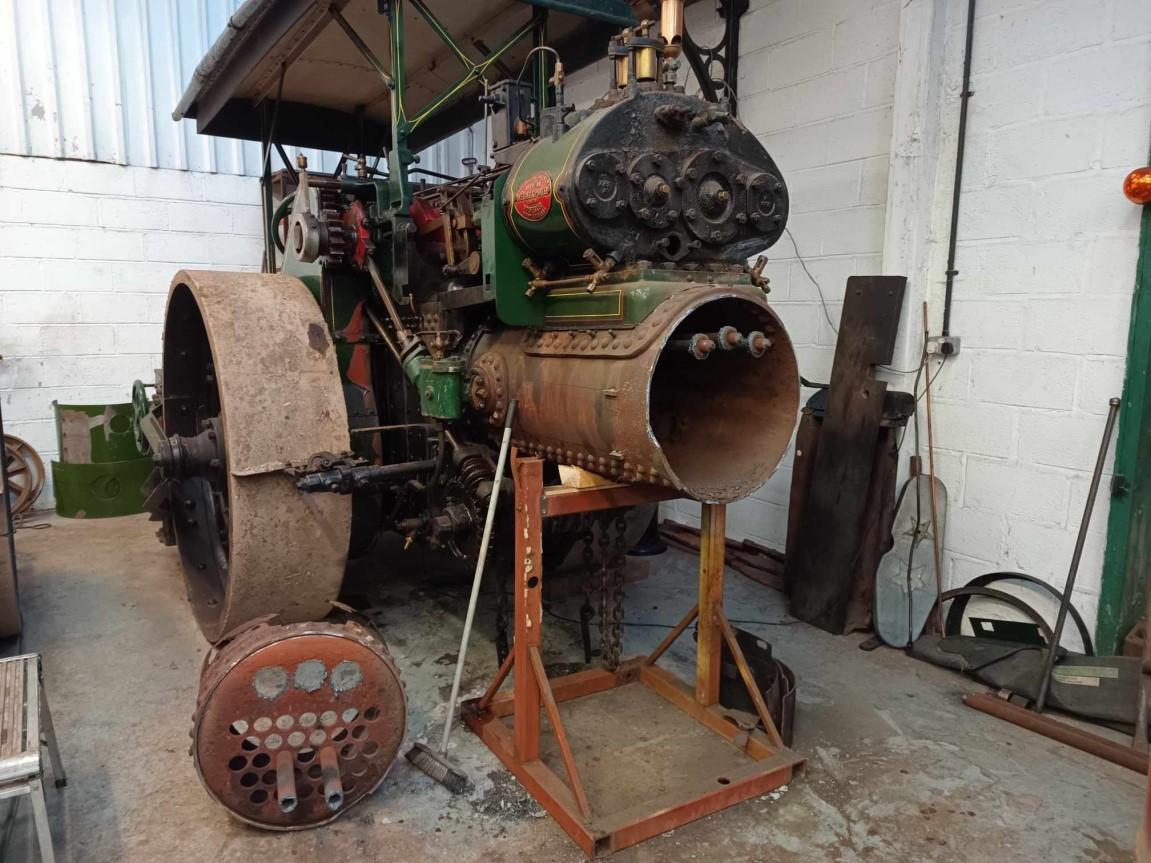
For this editions ‘Then and Now’ we take a look at the Aveling and Porter 10 Ton steam roller No. 11793 of 1927
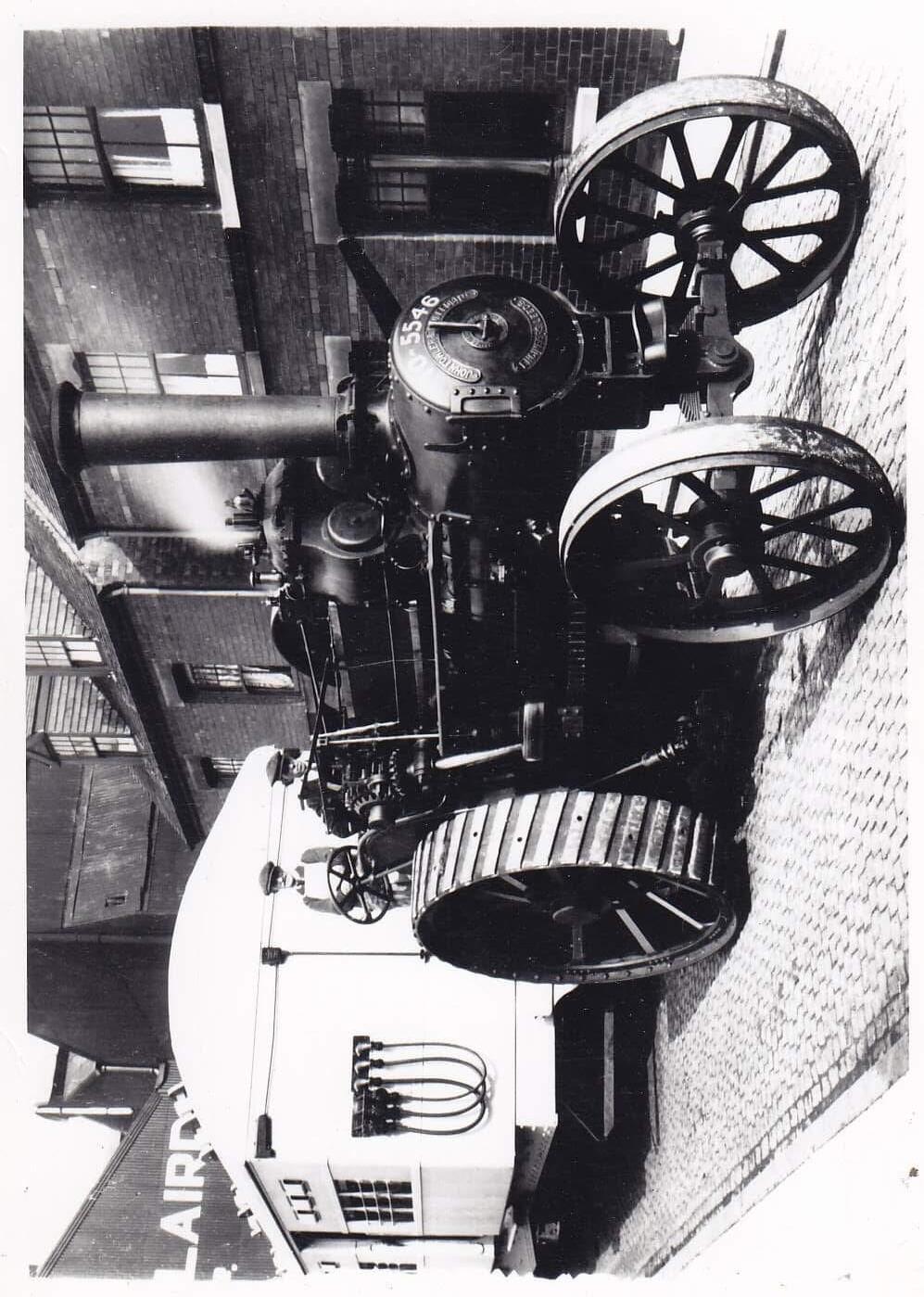
Then: No. 11793 when owned by Wandsworth Borough Council. Photographed at work.
Now: No. 11793 undergoing boiler work. She now lives back in Somerset.
AVELING BOILER DORSET
GOVERNOR
HERITAGE
SHOWMANS
TRAILER
LATHE
LIVINGVAN
MANZEL
PISTON
PLOUGH
RIVET
RUSTON
WILESCO
Code of Conduct
Keeping everyone safe on a rally field (grown ups this means you too)
Now that the events season is nearly starting we thought it would be useful for everyone to be reminded of how to keep EVERYONE safe when we are at a Steam Apprentice Club driving event – or at any other event where we get to be hands on with an engine.
We are very proud of our apprentices that get to experience hands on working with an engine and we work hard to make these opportunities happen! This means that we must be safe and remember to make people proud to be associated with the Steam Apprentice Club.
It only takes one Steam Apprentice to do something silly or dangerous for Engine Owners to decide that they don’t want to allow young people to go on engines and stop offering their vehicles to driving events. Every engine our apprentices get to go on at an event is volunteered by its owner and crew and we are very lucky that many give their time so willingly.
With Facebook and Twitter news of bad behaviour will spread very quickly and affect EVERY driving day.
Of course we are not just concerned about the behaviour of Apprentices – but
also the engine crews as well!
As enthusiasts we must do everything we can to protect each other.
If you are at an event and see something that you do not think is right and could be dangerous – don’t be scared and tell the rally organiser right away!
Apprentices
• Dress safely
• Ask if you are not sure about something
• Be polite and respectful to both then engine crew and their machine
• Always be sensible when walking around moving vehicles
• Have a great time and remember to say thank you when you finish!
Crews
• It is not your responsibility to physically help a person on to or off an engine. Give advice on where to stand or what to hold on to but it is up to the Apprentice (and their adult) to safely climb on to your engine.
• You have the right to stop immediately, and ask any Apprentice misbehaving or acting unsafely to leave your engine or workspace and return to their responsible adult. You have given your time and
equipment willingly and we realise that as Apprentices we must respect both them and your crew.
Responsible Adults
• It is your responsibility to help your apprentice climb on and off an engine.
Listen carefully to the engine crew as they will give you instructions on how to so safely.
• Do not leave the area where your Apprentice is on an engine or attending a session (i.e. instructional workshops or story time). In the event of a mechanical
or medical emergency you will be required so quickly escort your Apprentice to safety. Unattended children will be removed from the activity and taken to the lost child points for their own safety.
• You are responsible for the behaviour of your Apprentice at all times.
• Please ask before you take photographs of your Apprentice on the engine: some crews are very shy. Others might show you where to stand for a better photograph!
Bursaries
The National Traction Engine Trust encourages and supports road steam by offering financial assistance and bursaries (maximum £500) for those who would like to improve their knowledge and skills so they can help and take part in maintain steam on the road.
These skills can include but are not limited to:
•Boiler maintenance
•Boiler management
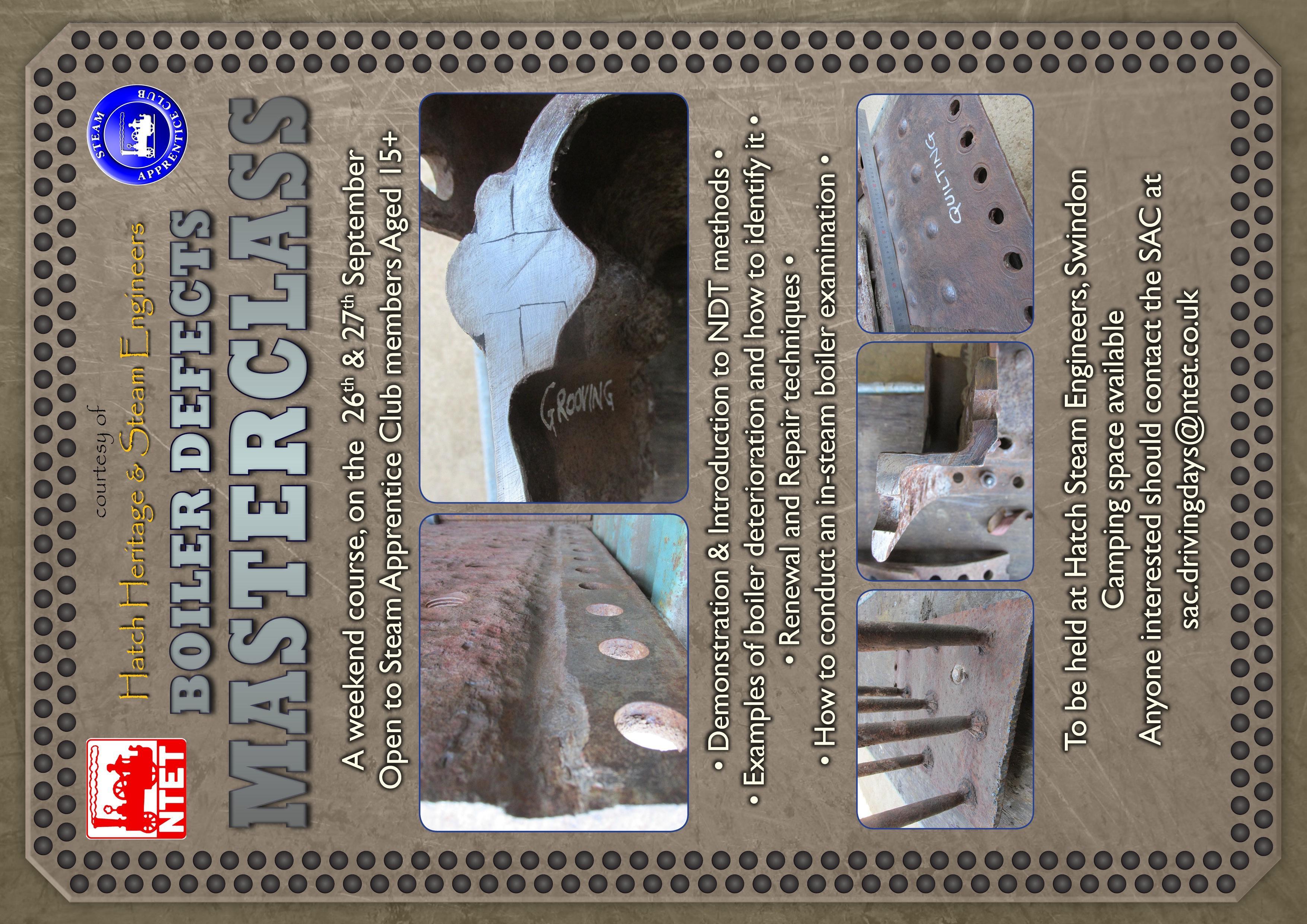
•Boiler Inspection
•Signwriting
•Welding
•Fabricating
Lathe and millwork
The list is not exhaustive and any application will be considered which shows that it informs and educates about road steam as described in the NTET mission statement:
“Preserving our heritage with Steam on the Road”
Look in the heritage journals and prospectuses of colleges and schools for suitable courses. Approach people who already have a skill you are interested in to see if they would be willing to share their knowledge then fill out the application form with all the details. An application form can be found by going to:
www.ntet.co.uk/heritageeducation
Formula Mamod
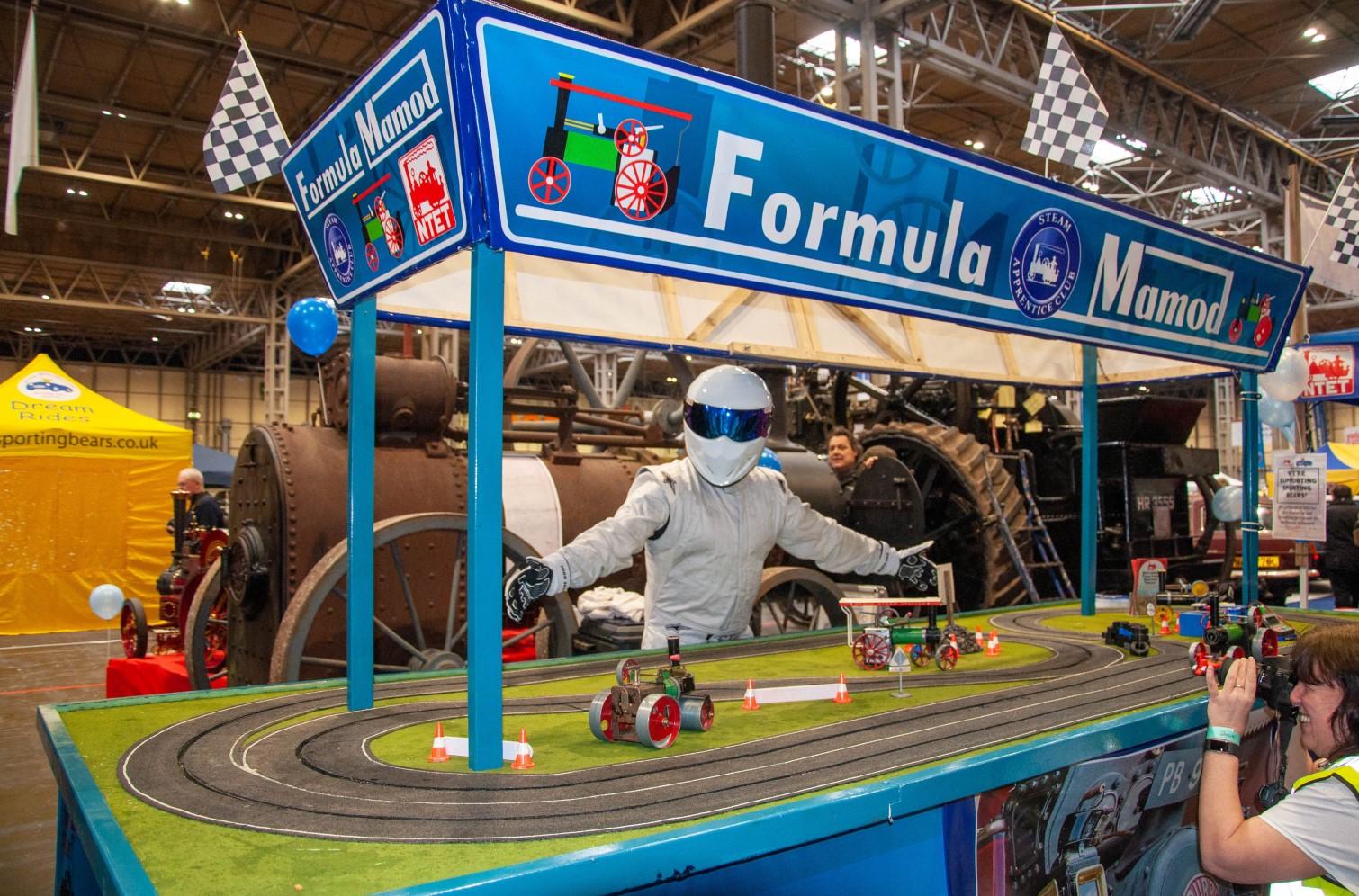
Formula Mamod gives members the opportunity to test your engine building and driving skills out on the track!
If you have a Mamod and want to modify it to get a faster lap time, remember that:
• The firebox must be standard.
• The safety valve must be standard.
• The fuel burner tray (solid fuel) must be standard.
To ensure a fair competition the SAC provides you with fuel to use a solid fuel burner tray if you don’t have one.
Don’t worry if you don’t have a Mamod as we have been donated standard engines for you to use.
A member of the team will inspect vehicles prior to their racing to make sure they’re safe to use (just like all race cars) and help you set yours up if you are not sure how to.
Remember that Formula Mamod is only for SAC and NTET members so if you have a friend who wants to join in, make sure they are signed up!
We’ll have to wait and see which rallies happen to know if Formula Mamod will be out and about this year, but if we do then with all the time you’ve had to modify and fettle your Mamods in lockdown, we’re expecting to see some very quick times!
Over 18? Nearly 21?
Older Members of Steam Apprentice Club will be delighted to know that from the age of 18 you can receive FREE copies of the National Traction Engine Trust (NTET) quarterly magazine STEAMING.
Once you turn 21 you are eligible to join the NTET for the reduced rate of £15 for your first year: the same you currently pay for your SAC membership!
If you could like to take up either of these offers just contact Clara.
Email: membership@ntet.co.uk
Richard Semple, NTET Membership
Linden Lea, Lydham
Bishops Castle, Shropshire
SY9 5HB
You do not need to be an owner or driver of an engine to be a member of the NTET.
As a member you will receive STEAMING magazine, the quarterly publication. It provides communication from the trust to its members, technical topics, historical articles and photos, information on events and engines around the U.K. as well as free classified adverts available to members.
You will be able to vote at the Annual General Meeting and stand to be part of the committee of volunteers.
The NTET produce an extensive rally list, detailing all NTET authorised events across the U.K. This is issued at the beginning of each year NTET authorised events have paid a small fee and agree to abide by the Rally Organisers Code of Practice, as produced by the Rally Organisers section of the NTET, which if followed ensures a safe and trouble free event.
About the NTET
The National Traction Engine Trust represents owners and enthusiasts alike and is pleased to be regarded as the World’s Premier Steam Traction Preservation Organisation.
Now in its 67th year the NTET aspires to be the Organisation of Choice for the vintage steam enthusiast, engine owner or driver and events organiser working together to meet a common aim:
Preserving our Heritage in Steam on the Road.
The main aims of the NTET are to:
• Encourage ownership and preservation of all forms of steam powered equipment.
• Set and maintain standards in equipment management and operation.
• Provide facilities to teach basic skills in engine management.
• Attract junior members via the Steam Apprentice Club.
• Set and monitor safety and operating standards in rallies and event organisation.
• Secure insurance and other related services for the benefit of members and rally organisers.
• Support the maintenance of records of engine manufacturers, design, livery and colour schemes, history and ownership.
• Administer a ‘rare spares and patterns’ register.
• Monitor and manage the introduction of legislation as it effects the movement.
• Administer a world wide club membership scheme.
• Communicate with members, clubs, organisations via the quarterly magazine STEAMING.
• Affiliate with similar bodies in the UK and World Wide.
• Promote the production and distribution of books, videos, tapes and other related memorabilia.
About the SAC
The Steam Apprentice Club (SAC) is a dedicated club for everyone aged under 21 who has an interest in steam.
Formed 41 years ago 1979, our slogan is ‘The Future Driving the Past’. We firmly believe our members are THE FUTURE and what can be more fun than DRIVING a traction engine: some of which are over 100 years old and are an important link to our industrial and engineering PAST.
Who can be a member?
You don’t have to own a traction engine or even have a traction engine in your family to be a member! Your parents might be members of the NTET or they may not have any interest in steal at all. We don’t mind if you work on an engine every weekend or if you’ve never been on an engine before.
All we ask is that you are interested in traction engine! It could be that you enjoy taking photographs at rallies, or that you want to learn more about the technical side of driving or even how to build an engine yourself. Simple really. Everyone is welcome to join us up until their 21st birthday - after that we encourage you to join the NTET (which is why after the age of 18 years you can ask to receive FREE copies of the NTET quarterly magazine STEAMING).