The Editor welcomes any contributions of articles, shorter items or photographs for inclusion in future issues. All material submitted is voluntary and payment cannot be made for any material published.
The opinions expressed in the magazine, with the exception of Club announcements, are those of the contributors and do not indicate the views of the Club as a whole. All items are held copyright by the contributor and the NTET. The Editor reserves the right to amend or refuse contributions. The magazine is normally published during January, April, July and October. The Club accepts no liability for failure to meet intended publication dates.
The Steam Apprentice Club is a section of the National Traction Engine Trust. NTET is a Registered Charity, No. 291578. Registered in England No. 1302197. Registered Office: 4 Church Green East, Redditch, Worcestershire B98 8BT.
www.ntet.co.uk general.secretary@ntet.co.uk
Have you got an image or story you’d like to share? Why not send it to sac.raisingsteam@ntet.co.uk!
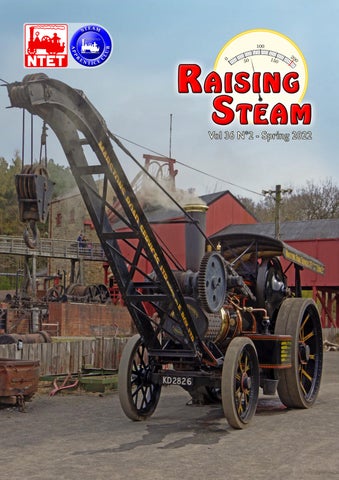
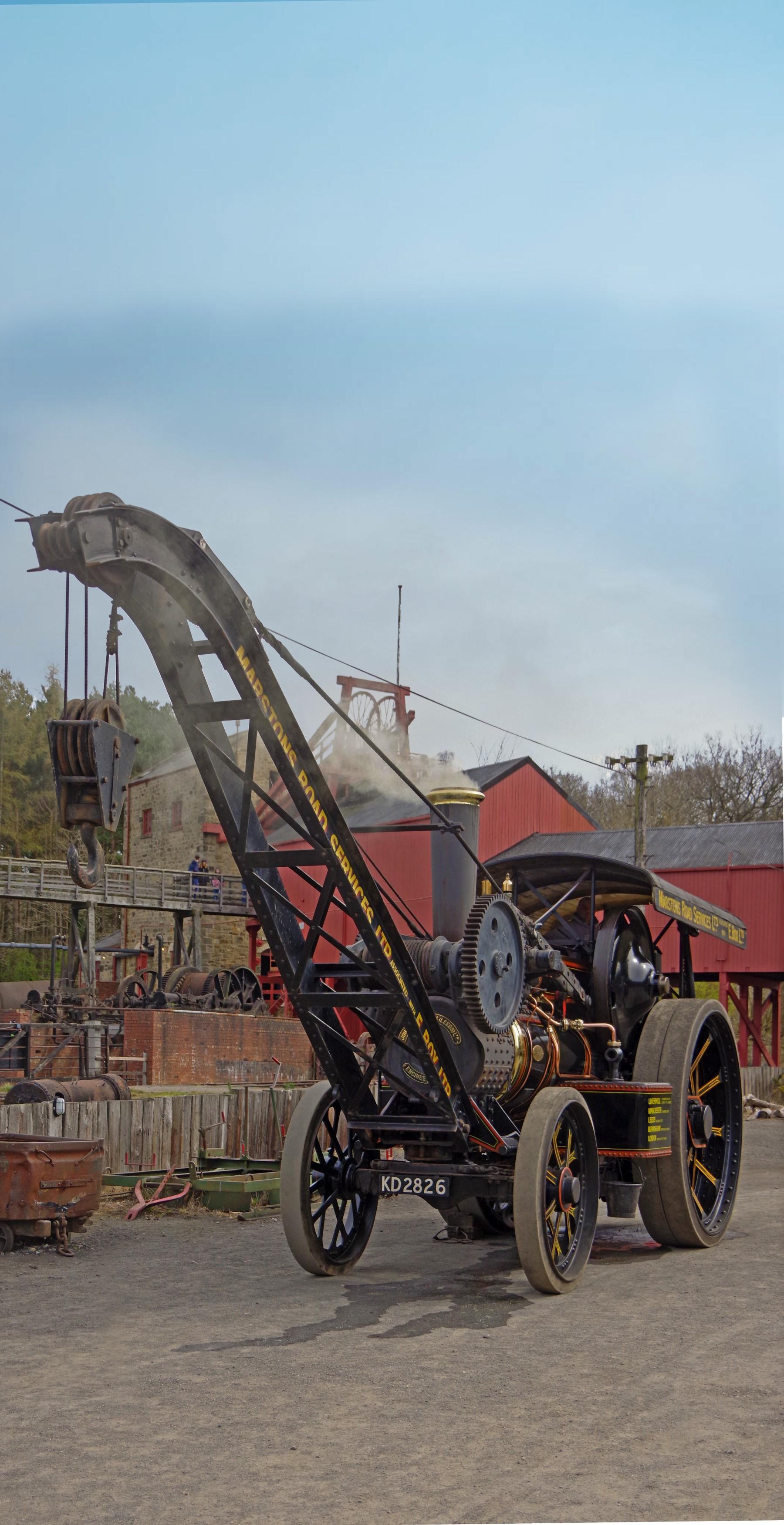
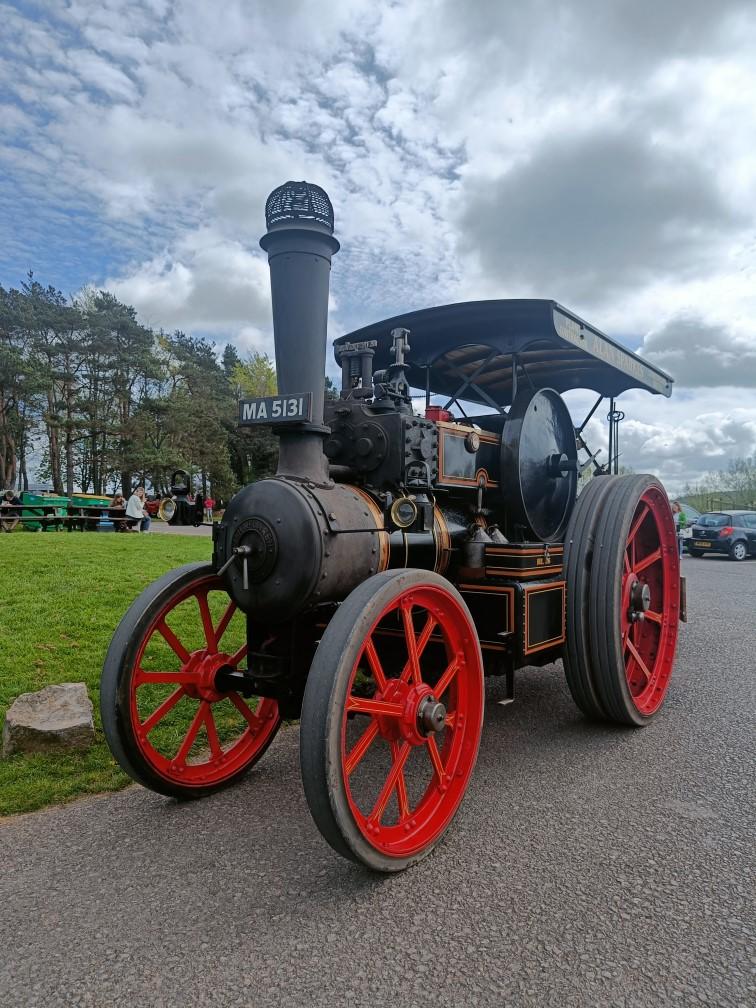
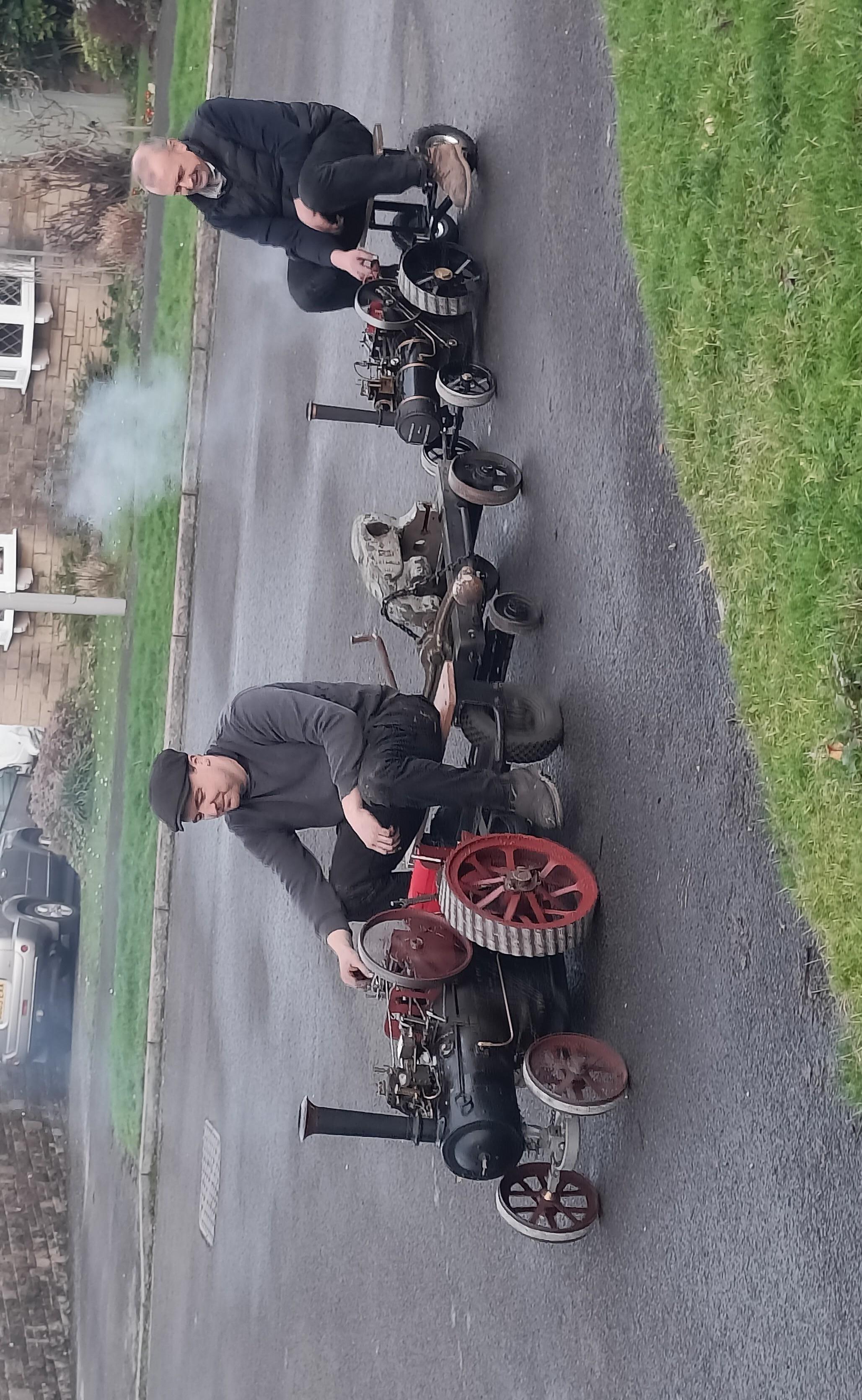
Front cover: Fowler B6 crane engine No. 17106 of 1928 at Beamish Steam Fair. Photo: Steve Cockram. Rear cover: Heavy haulage with a pair of miniature engines; a 3” scale freelance and a 2” scale Savage.
Thoughts from the Editor
Jim Huntley
Hello and welcome to the Spring edition of Raising Steam!
I hope you’ve all been keeping busy and perhaps have managed to get to a rally or two, or spotted an engine on the road since the weather has warmed up a bit. I was very pleased to receive a report about the Weeting driving day held in early April. It looks like the apprentices had a brilliant day, and it’s very much what the SAC is all about. For the first time since 2019 we have a packed calendar of Driving Days so don’t forget to get your application in as soon as possible as they are filling up fast. If you’re off to a driving day this year, then please write in to say what you got up to! As I write this I’m filling in a pile of entry forms for various steam rallies and I’m hoping for a full season of rallies this year after two quiet years! Hopefully we’ll see plenty of SAC members about at rallies and events this year so be sure to say hello if you see me around. There have been several events already this year and it’s been lovely to see everyone out enjoying themselves with engines - the heavy haulage special at Beamish was particularly impressive. On the topic of heavy haulage, later on in this edition you’ll see an article about the Searle’s London-Brighton run with their three road locomotives and a haulage trailer on May 8th 2022. They’re repeating the run they did in 2011 and are raising money for charity again. It’ll be an awesome sight to see on the road if you fancy the day out to watch and I’m sure you’ll all join me in wishing them
well. The team this time around is made up of the Searle Crèche many of whom are ex SAC members. We’ve been keeping busy at continuing with the restoration of the Ruston portable amongst other projects, and getting the other engines ready for the rally season of course! We’ve been trialling a few sample of the new eco-coal options in various different engines including a road run with McLaren road locomotive No. 1647. We’ve found the stuff we’ve trialled so far to be very good, and plan to tell you more about it in the future once further trials have been conducted and more results are known. Happy Steaming!
Thoughts from the Chairman
Nick Bosworth (Acting Chair)
Bouncing Back!
With a new rally season upon us, and events going ahead, the Steam Apprentice Club will be out and about with our usual summer activities.
We have 6 driving days planned, and applications are coming in thick and fast. Please check the events page of our website for a full list and to download an application form.
On the 17th of March we had a committee meeting to kick off our 2022 activities, and discussed plans for the summer, membership, Lady Sylvia, Raising Steam and also vacant roles within the committee.
Membership
Sadly, over the past couple of years, membership of the SAC has declined. This is to be expected, given that our activities have been limited due to covid lockdowns. However, now is the time to encourage those who may have let their membership lapse to re-join, and here is why:
Free Entry to Rallies –
Driving Days – with events running throughout the summer and across the country, our driving days are a chance for our members to gain hands-on experience on the footplate, especially for those without an engine in the family. And for those who do have access to an engine, it’s a change to have a go on something different!
Many NTET authorised rallies offer free entry to SAC members. This year there are 34 events offering free entry. A full list can be found in your copy of the NTET 2022 rally list, included with this magazine, or on the NTET website. And if you’re thinking of visiting the Great Dorset Steam Fair, membership of the SAC is better value than buying entry for two days!
GDSF – we have some great plans for this year’s Dorset Steam Fair. The NTET have been granted some extra space outside our marquee, and we plan to use this as our own mini-playpen for SAC members, with some invited miniature engines. We will be having our usual ‘cavalcade’, which for those who do not know, is an evening when members of the SAC get to ride, steer or maybe drive a full size engine around the main playpen. Not forgetting Formula Mamod – Our very own Mamod race track will be in the NTET marquee. Members can bring along their Mamod and race against the clock.
Raising Steam – our quarterly magazine full of educational articles, photos and competitions.
SAC Log Book – If you spend time on multiple engines, or attend driving days, these are ideal to keep a record of your experience on engines.
Lady Sylvia – Our 4 “ scale miniature, who has recently passed her boiler test, will be attending rallies. So do come up and say hello, and even have a go!
So please do spread the word that the SAC is bouncing back for 2022. Whilst as a member you have received this magazine and are reading this report, our lapsed members will not, so I ask you to encourage them to re-join.
On a personal note, we have made more progress on the Garrett living van restoration. The chassis is back on it’s wheels and we have also fitted the new
floorboards. Soon we will be putting the living van body back on top of the trailer. I have also spent some time in the workshop refurbishing the piston rod, glands and also the valve gear of my family’s Foster traction engine. Check out an article later in this magazine for more about that!
Best wishes, and Happy Steaming
Nick Bosworth, sac.chairman@ntet.co.uk
Weeting Driving Day Report
It was brilliant to see such a full calendar of driving days for SAC members in the last edition of Raising Steam. The Weeting driving day was held early in April and Kate Plant from Weeting has written in with a report and some photos of what sounds like a brilliant weekend. If you’re off to a driving day this year then please do write in to tell us how you got on or what you learnt!
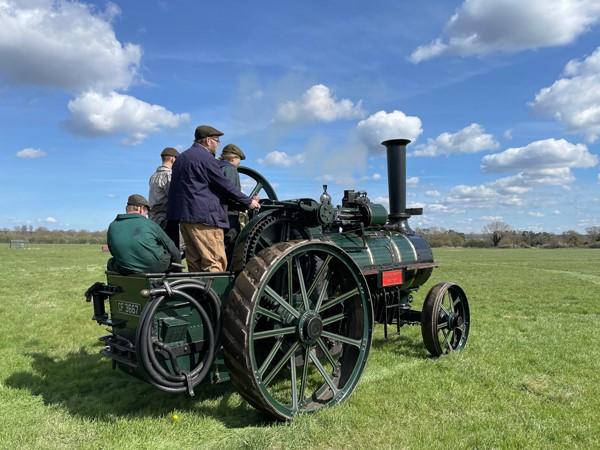
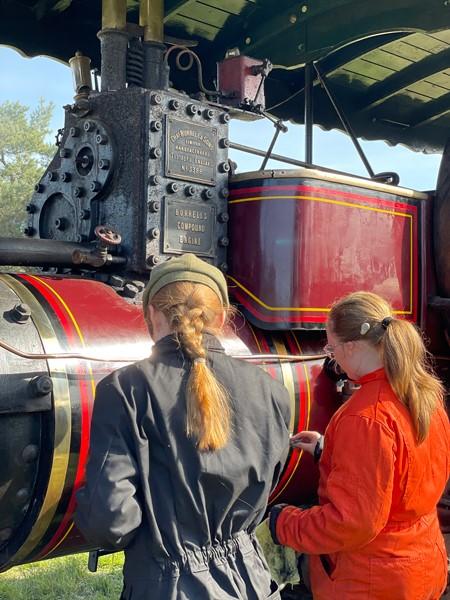
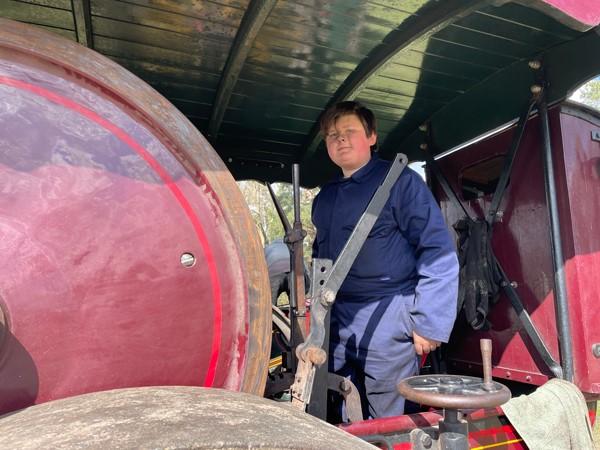
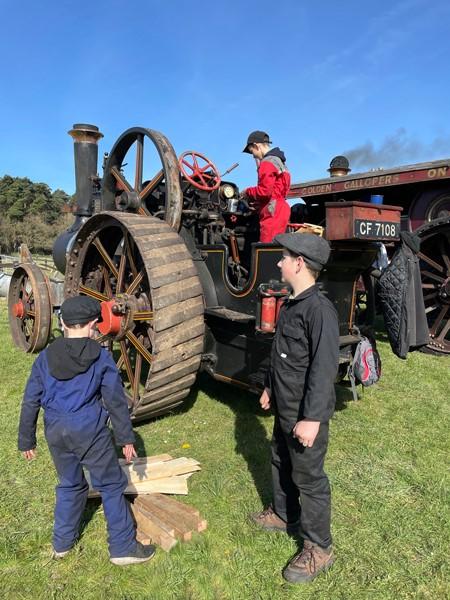
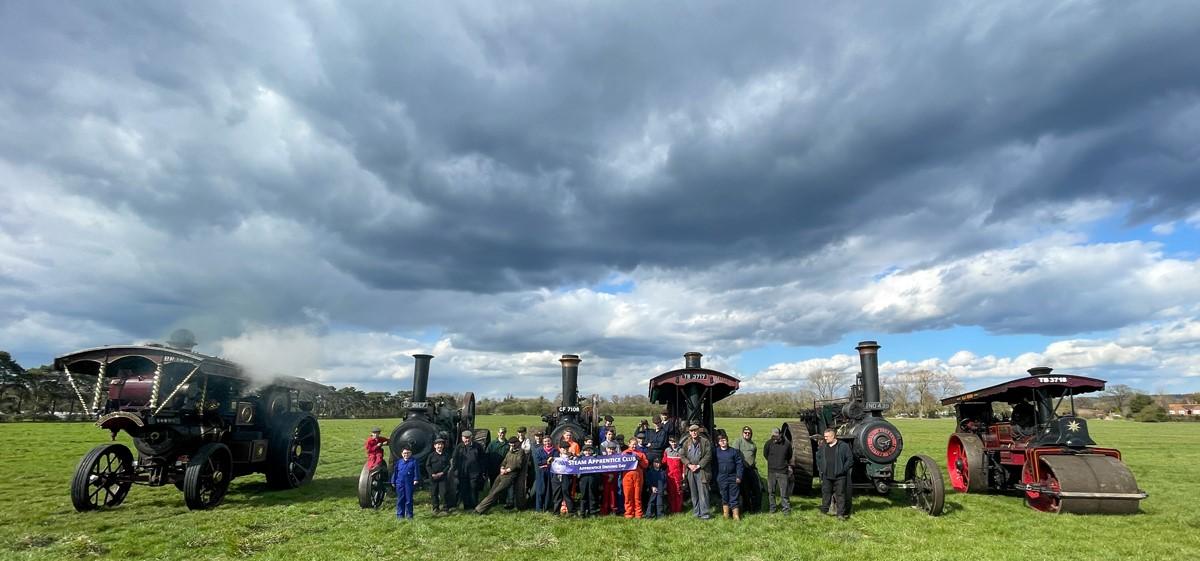
We couldn’t have asked for better weather to host 25 apprentices for our 2022 Steam Apprentice Club Driving Weekend! Having not been able to hold the event since 2019, due to Covid, everyone was raring to go and the sunshine made it all that more enjoyable. All apprentices, mentors and parents thoroughly enjoyed the two days and said what a fantastic way it was to spend a weekend!
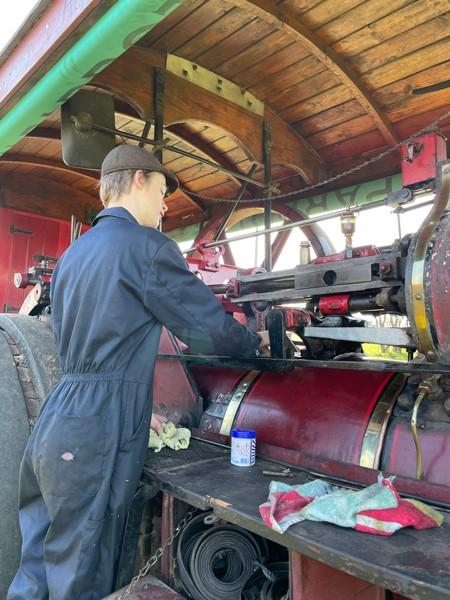
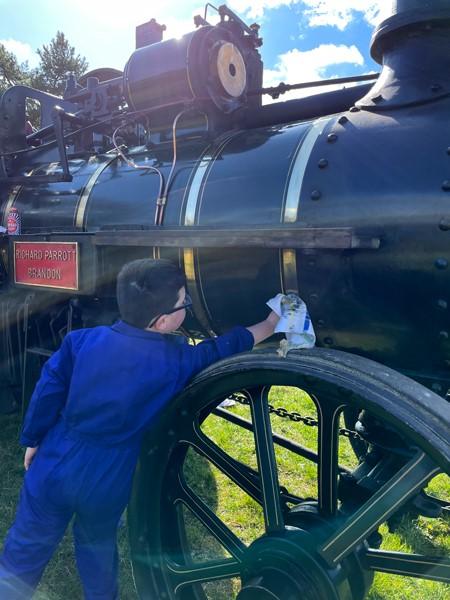
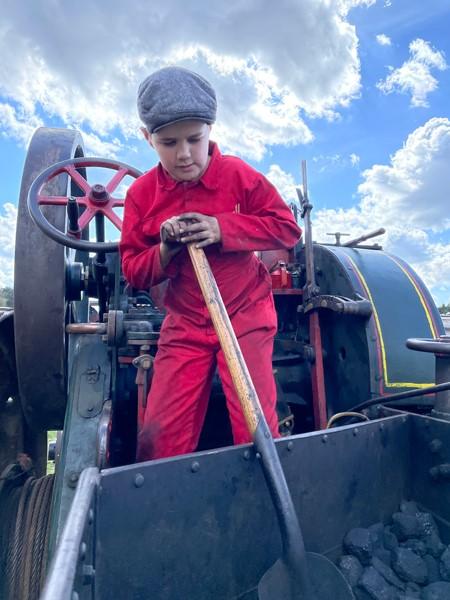
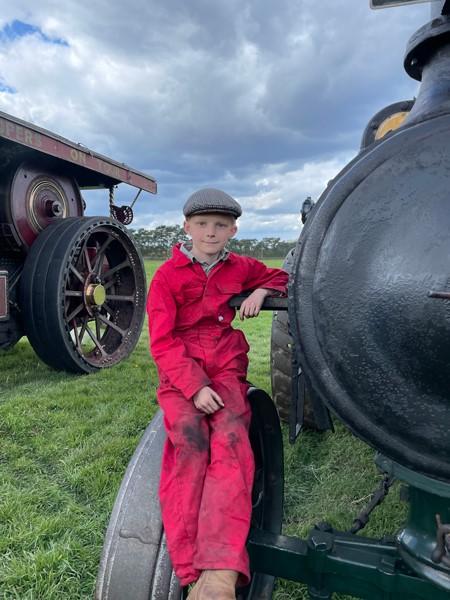
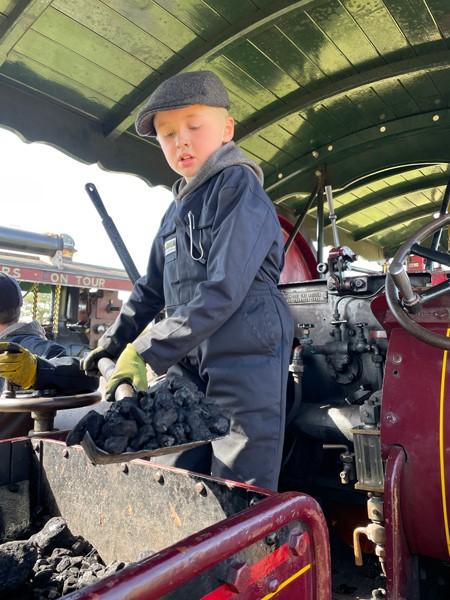
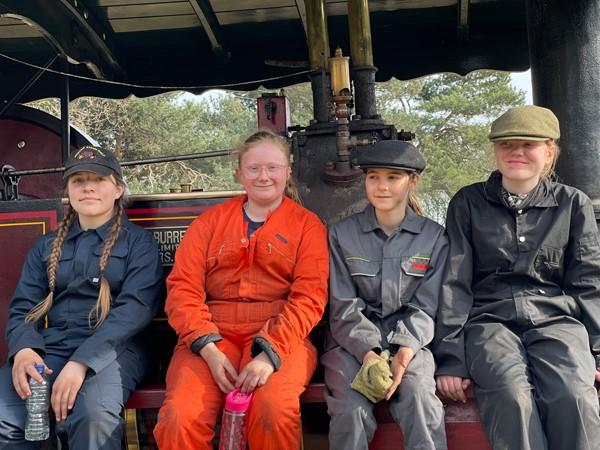
The driving day was held on the weekend of 9th and 10th April 2022. Starting each day at 9am, apprentices began with taking off the engine sheets, learning how to fold sheets, then learning all about cleaning the engines; plenty of Brasso and rags were used to clean all brass-work before learning about lighting the fire and the process of steaming up the engine.
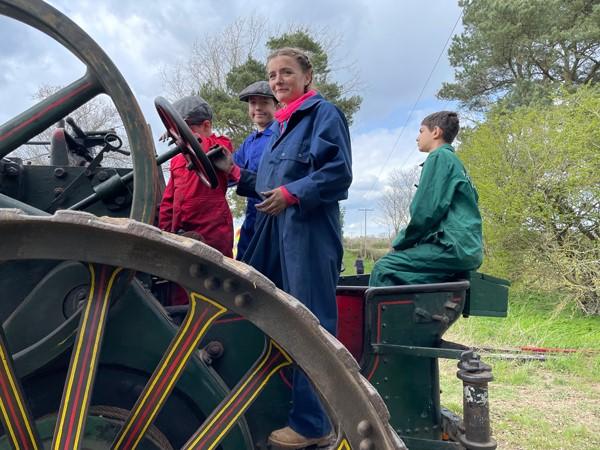
Apprentices were split into groups, with ages ranging from 7 to 19 years old and varied skill levels, they were teamed up with a mentor on each engine. They spent the day on one engine and then changed engines for the second day, giving each team a different experience than the day before. Everyone gained knowledge and increased their skills over the weekend, learning all about how a steam engine works, how to maintain fire and water levels and all the necessary skills required to operate the engine, and some learnt about the history of the engine they were working on and what it had originally been used for.
We have plenty of space on the Weeting Rally site for engines to drive around, good for those who have never steered an engine before and may be a bit nervous, those nerves were soon gone when they were taught what to do and fear soon became fun.
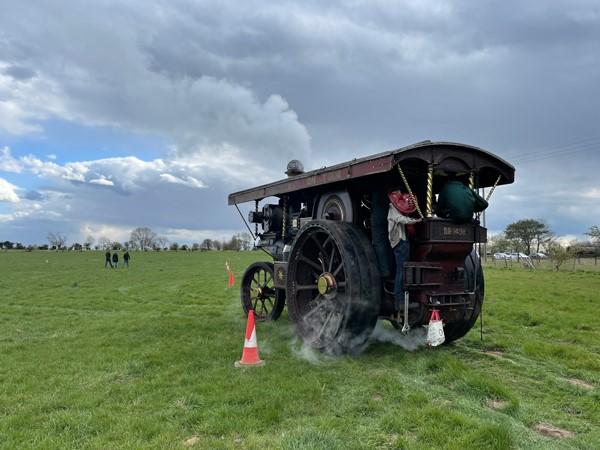
We created cone obstacles to help increase steering and driving skills including: a hairpin course, a garage bay to reverse into and cone slaloms, some apprentices were reversing around the hairpin course by the end of the weekend, and also gained the skill of solo driving and steering, and some were towing a trailer.
The weekend ended with all apprentices receiving a certificate for successfully completing a steam engine driver experience, along with a Weeting Rally glass and Steam Apprentice keyring, a great way to end a superb couple of days.
It was lovely to see the apprentices make new friends, gain new or increase existing skills and see their confidence grow. Part of the Weeting Rally mission is to educate on the history, use and maintenance of steam driven vehicles, which is why we hold a driving day for the Steam Apprentice Club, and to encourage the next generation of steam enthusiasts. I think we can say with full certainty that goal was achieved, even the parents had fun and all were very thankful for a well organised weekend.
Richard Parrott was very disappointed he missed the weekend and sent his apologies, he had been unwell in hospital but is now home and doing much better.
The steam engines used were Richard Parrott’s Burrell traction engines Century mentored by Alan and Stuart Hines, Princess Royal mentored by Sam Ellerton, and Spitfire mentored by David Blackburn, the Cole Family’s Burrell traction engine Betty mentored by Paul ‘Sooty’ Coupland, Roger Adams Burrell roller Jeanette mentored by James Collin and the Charles Burrell Museum’s showman’s engine Queen Mary mentored by Richard Stock.
We are forever grateful to the mentors who volunteer their time, along with their knowledge and skills, all helps to develop the next generation of steamers.
A big thank you to Sam Ellerton who sponsored the lunches provided for all apprentices and mentors over the weekend, to Kate Plant for organising the driving weekend alongside the Steam Apprentice Club and Jack Douglas and Matt Stroud for additional help throughout the event.
We now look forward to our own steam engine rally, being held on Friday 15th through to Sunday 17th July and hope to see the apprentices return for some public steering around the main ring!
Photo Credits : Kate Plant
(Parental approval for use of photos was gained)
Please see overleaf for various photos of the driving day. I’ve included as many as I could - can you spot yourself or your friends in any of the photos?! Ed.
Weeting Photos
From the Archive
Elijah Bell has had another trawl into his archives to share with you. If any members enjoy researching engines like Elijah, I’d love to publish what you’ve found out...
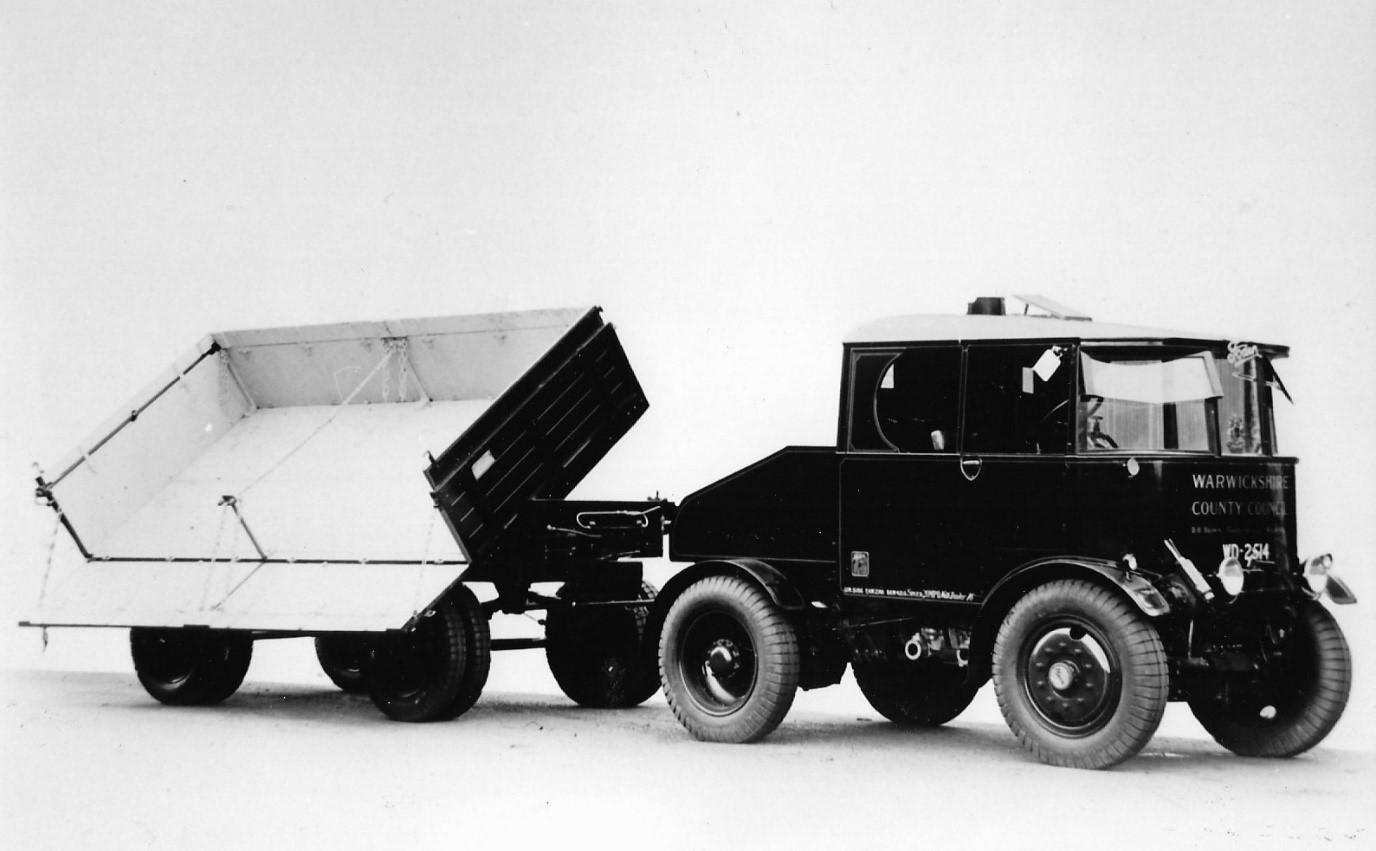
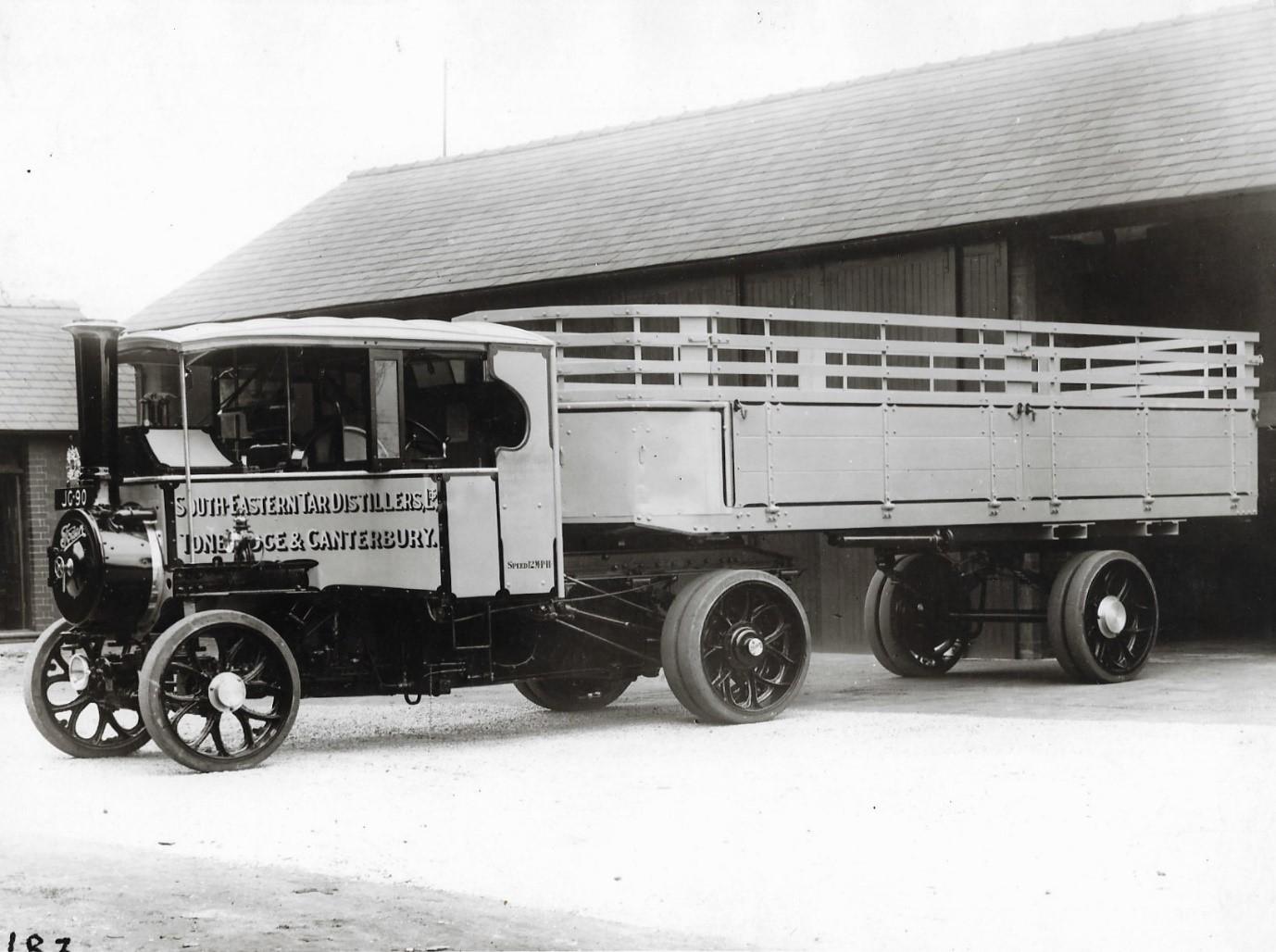
Foden J Type Articulated Six Wheeler No.13368 new in May 1929 to South Eastern Tar Distillers Ltd. Foden made a number of these pioneering articulated units, and one survives now in the ownership of the Vincent family in Cornwall.
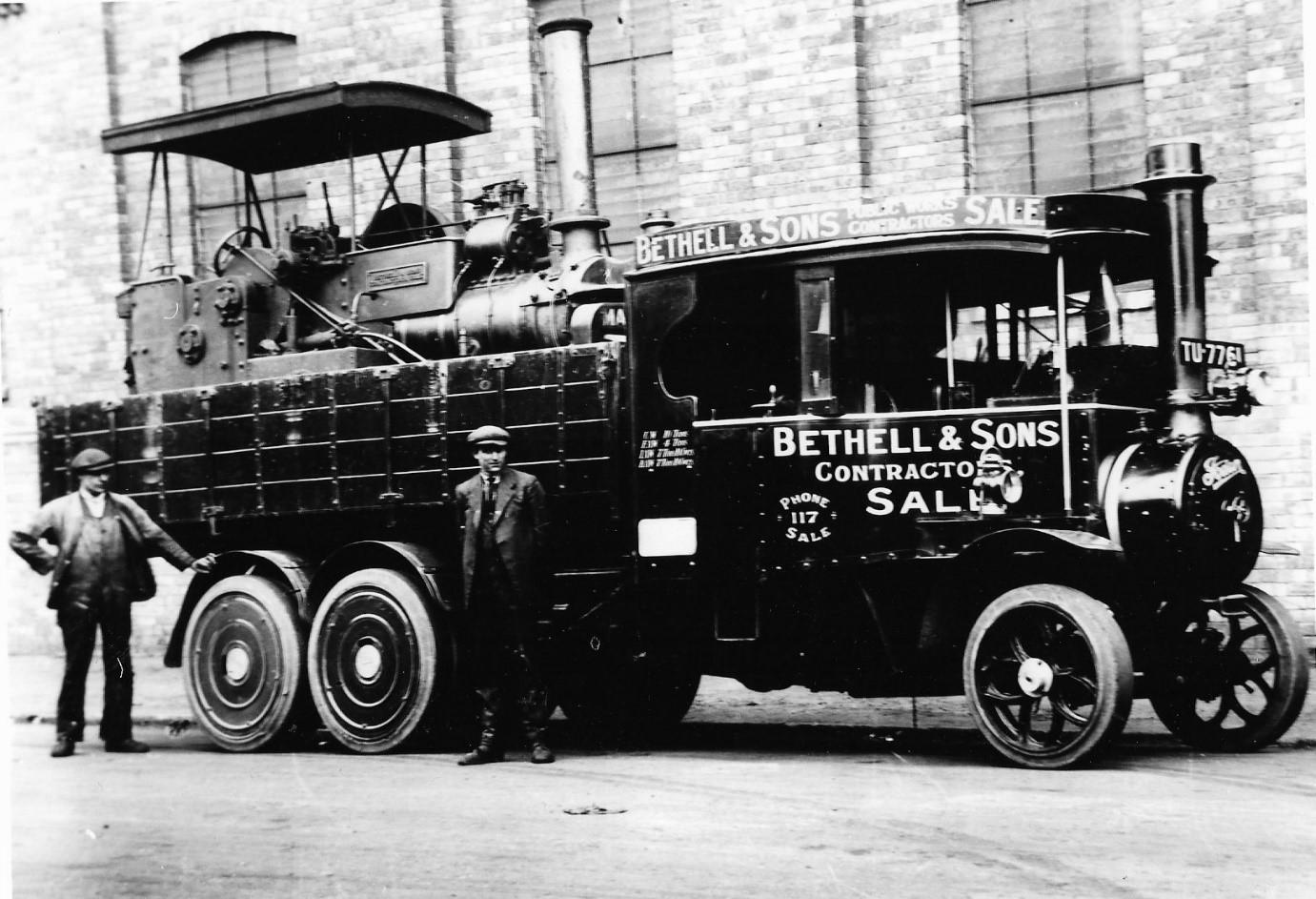
Foden K Type Six Wheeler No.12688 new in March 1928 to Bethell & Sons of Sale. Carrying an unusual load of an Aveling tandem Road Roller which looks to have suffered a nasty crack to the headstock. One can only imagine what fun loading and unloading that was!
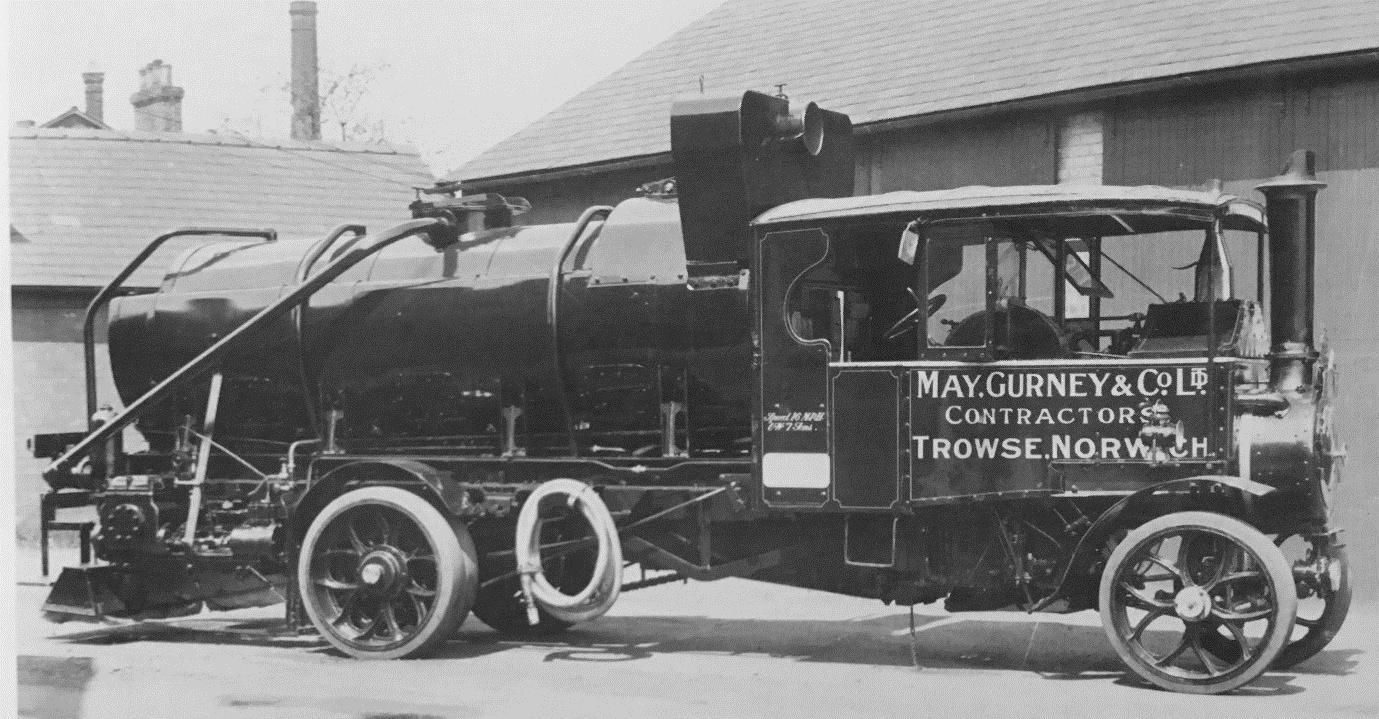
A Foden C Type Wagon fully outfitted as a Tar Spraying wagon for road contractors May Gurney of Norwich. This is probably No.13708 ‘Boadicea’ of 1930 which was new to May Gurney, before being purchased for preservation by George Cushing of Thursford and then sold to Alan Bloom at Bressingham. It is now in the ownership of the Saunders family. The wagon could also be No. 13178 of 1928 which was new to Mylon Bros but then returned to Foden’s and reconditioned as a tar sprayer for May Gurney in 1930. This wagon also happily survives.
Member Mail
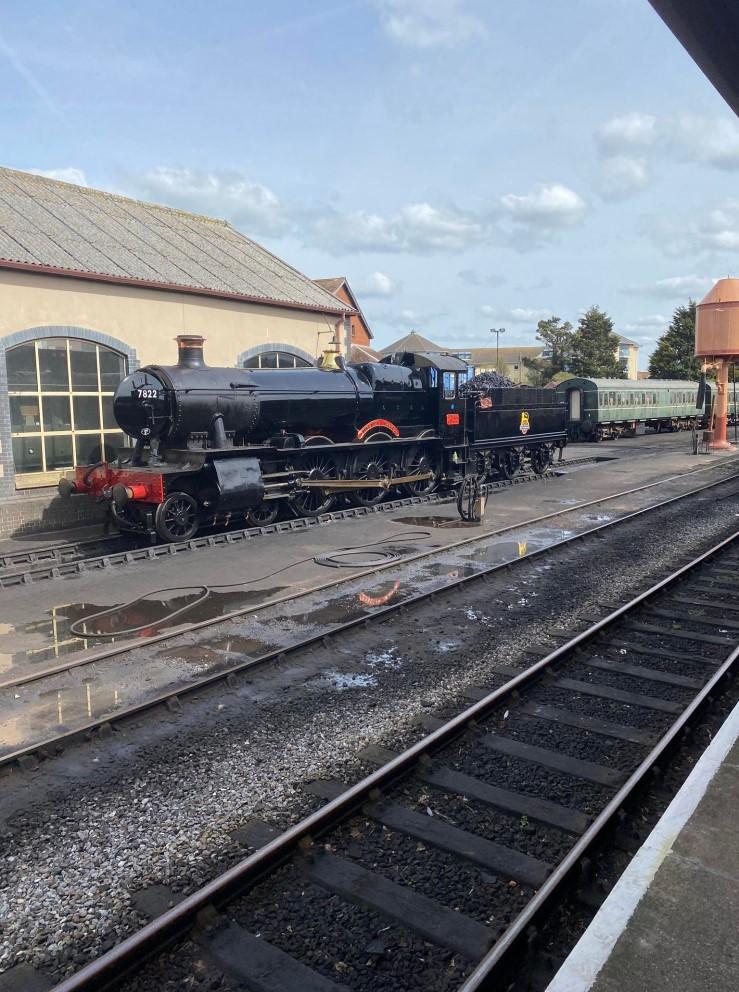
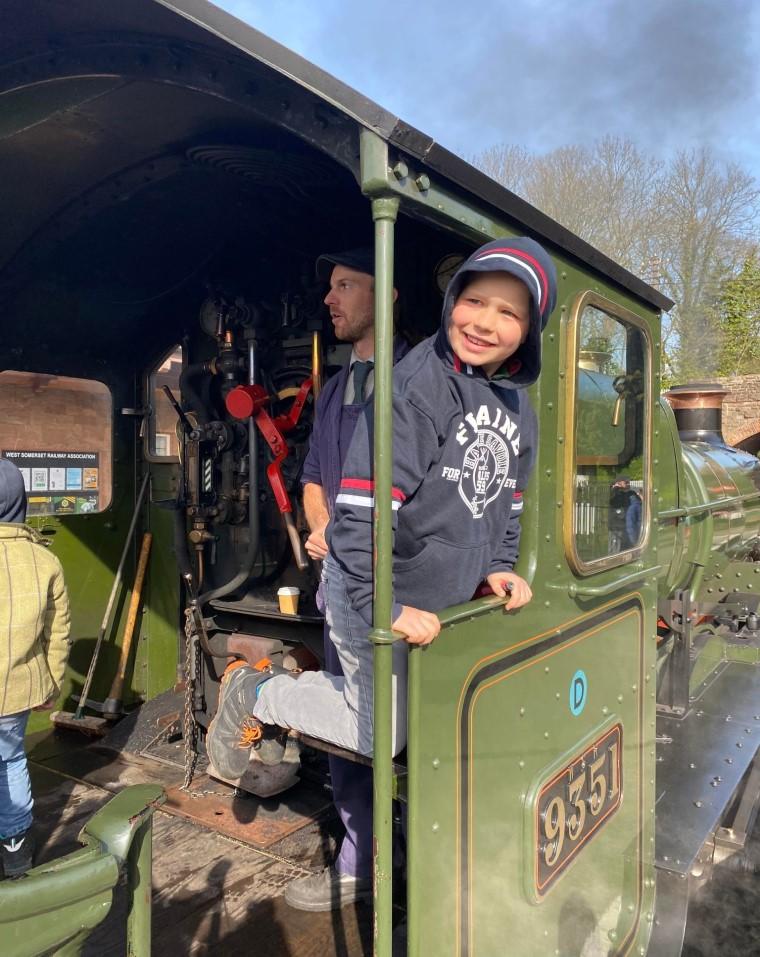
One of the advantages of joining your local traction engine club is the opportunity to take part in club visits to see all sorts of interesting places. SAC members Toby and Olly Reynolds are both also members of the Somerset Traction Engine Club and have written in to tell you about their club visit to the West Somerset Railway.
“The Somerset Traction Engine Club went on the West Somerset Railway. We went on the footplate. There were 6 carriages on the train. The West Somerset Railway is the longest heritage railway in England. We went around Minehead on an open top bus and we went on the beach in Minehead.
Then we caught the 2:30 train in Minehead to Watchet. In Watchet we went around the harbour and looked around the Market House Museum. Then we went in the pub and on the train back to Bishops Lydeard.
Toby Reynolds, Age 7” “Olly’s West Somerset Railway Facts
The Engine number was 9351.
26 people went on the trip.
The railway is 22.75 miles long.
The museum had fossils 200,000,000 years old!
Olly Reynolds, Age 5”
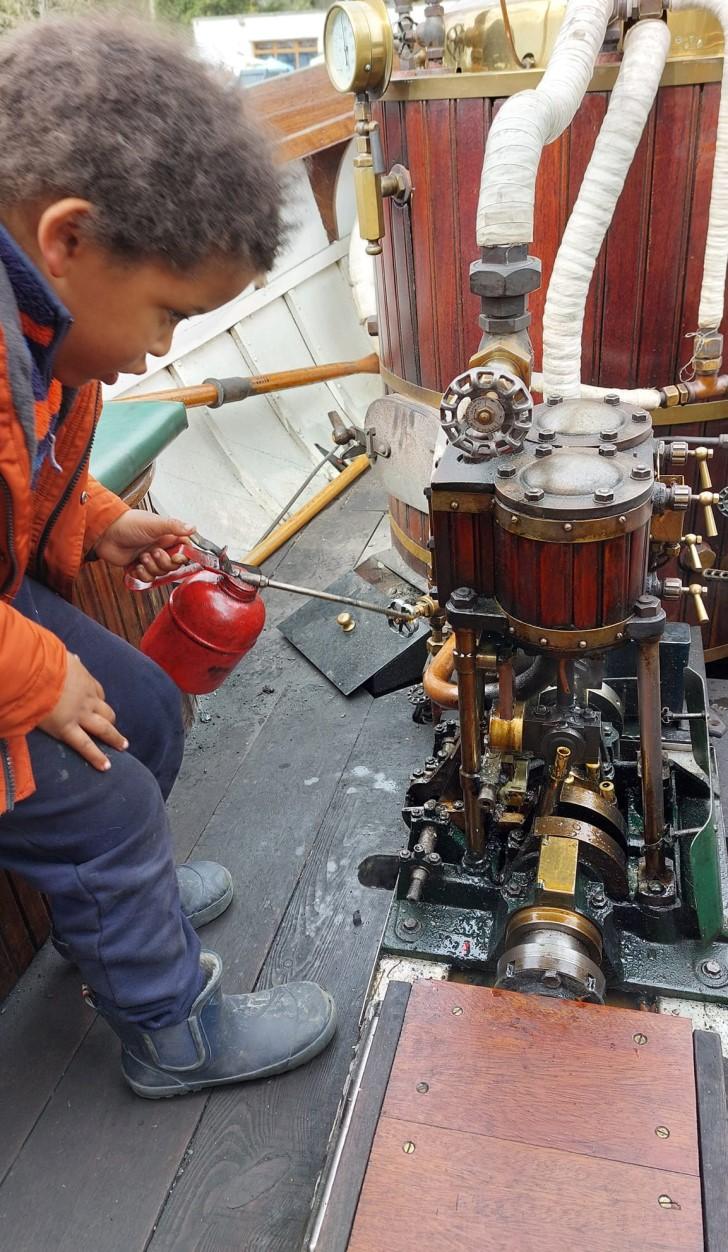
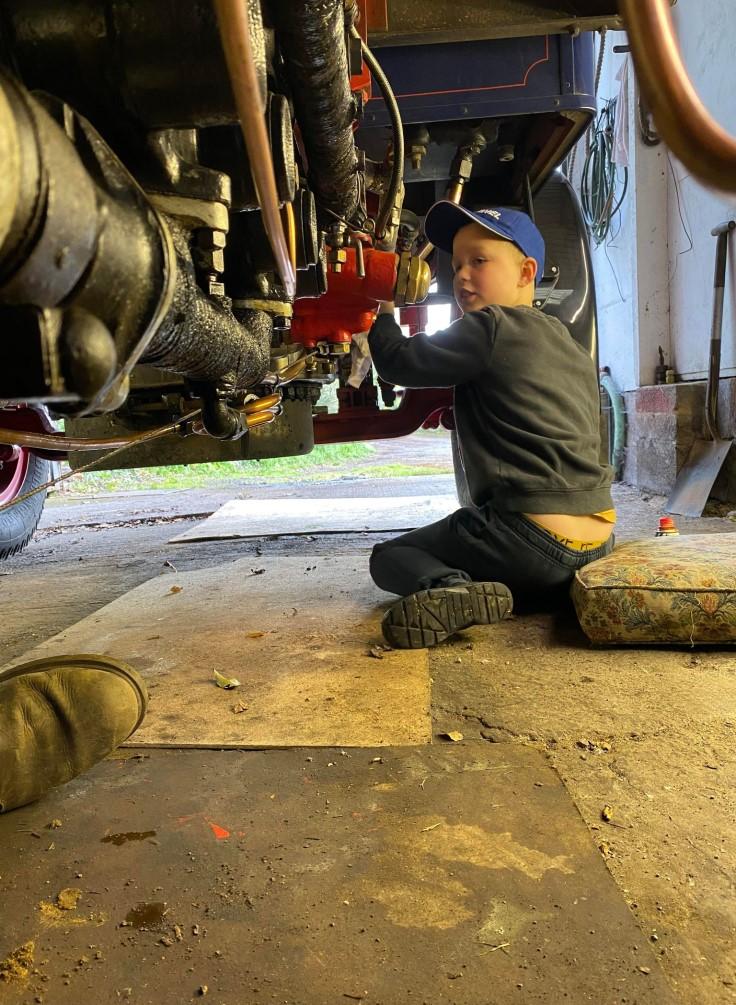
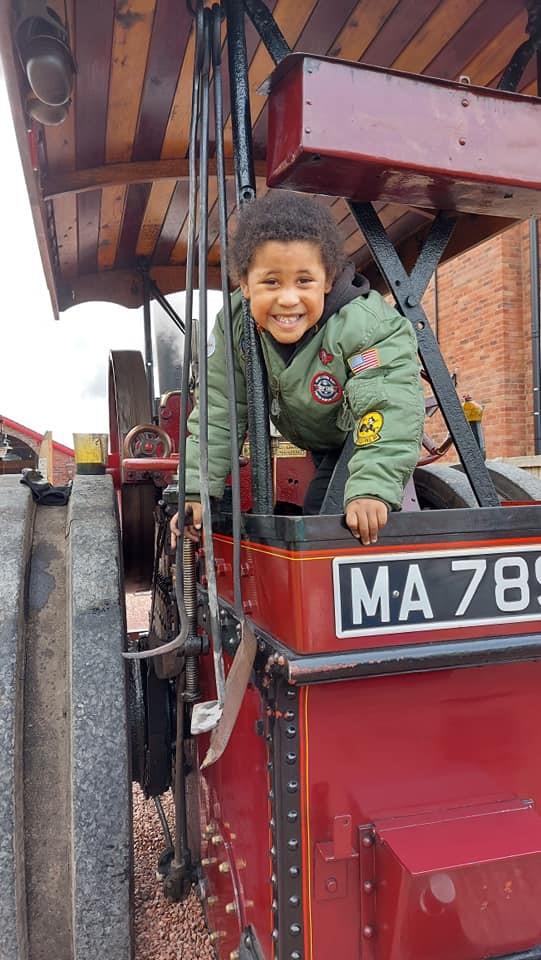
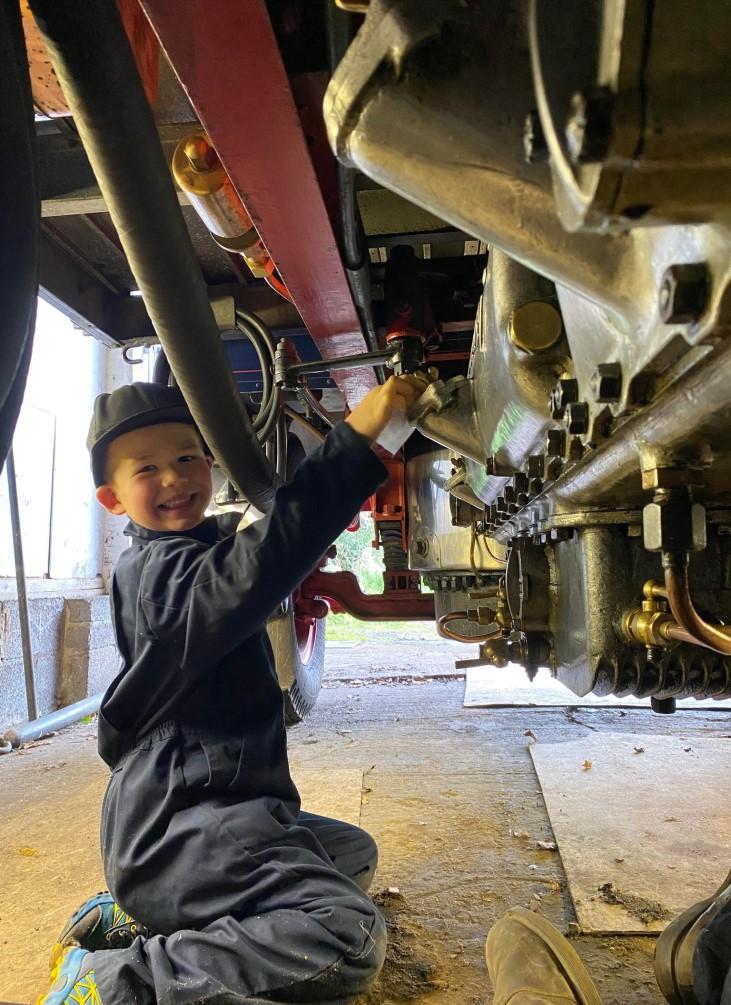
John Adamson has been getting to grips with maintenance on his dad’s new steam launch, ‘Columbine’, as well as enjoying himself out on the road on Aveling, ‘Vanguard’.
Toby and Olly Reynolds have been hard at work with maintenance of their families s rally season!
Victoria’s Torton Tales
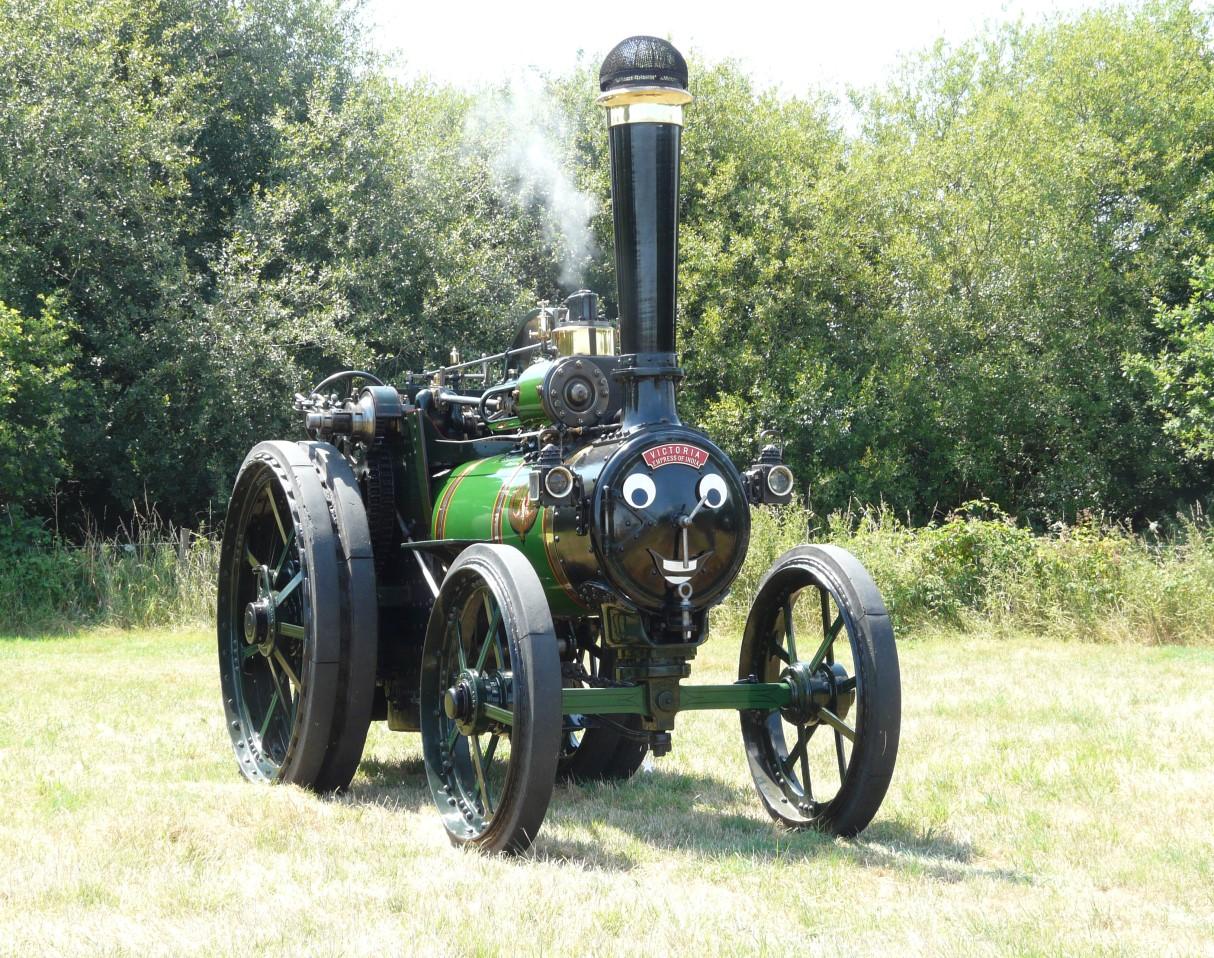
Hi everyone, let me introduce myself, you may have come across me, my family and our traction engine, who’s the star of the children’s storybook series Victoria’s Torton Tales written by me, Wendy Wakelin. The stories are all about our family traction engine called Victoria and her adventures. There are now 5 storybooks in the series and many more to come, we hope. You can find out more by visiting our website at www.victoriastortontales.uk
website and at the end of this the presenter holding the meeting asked for more articles for their magazine so I thought that maybe I could write a piece each time about what we get up to with
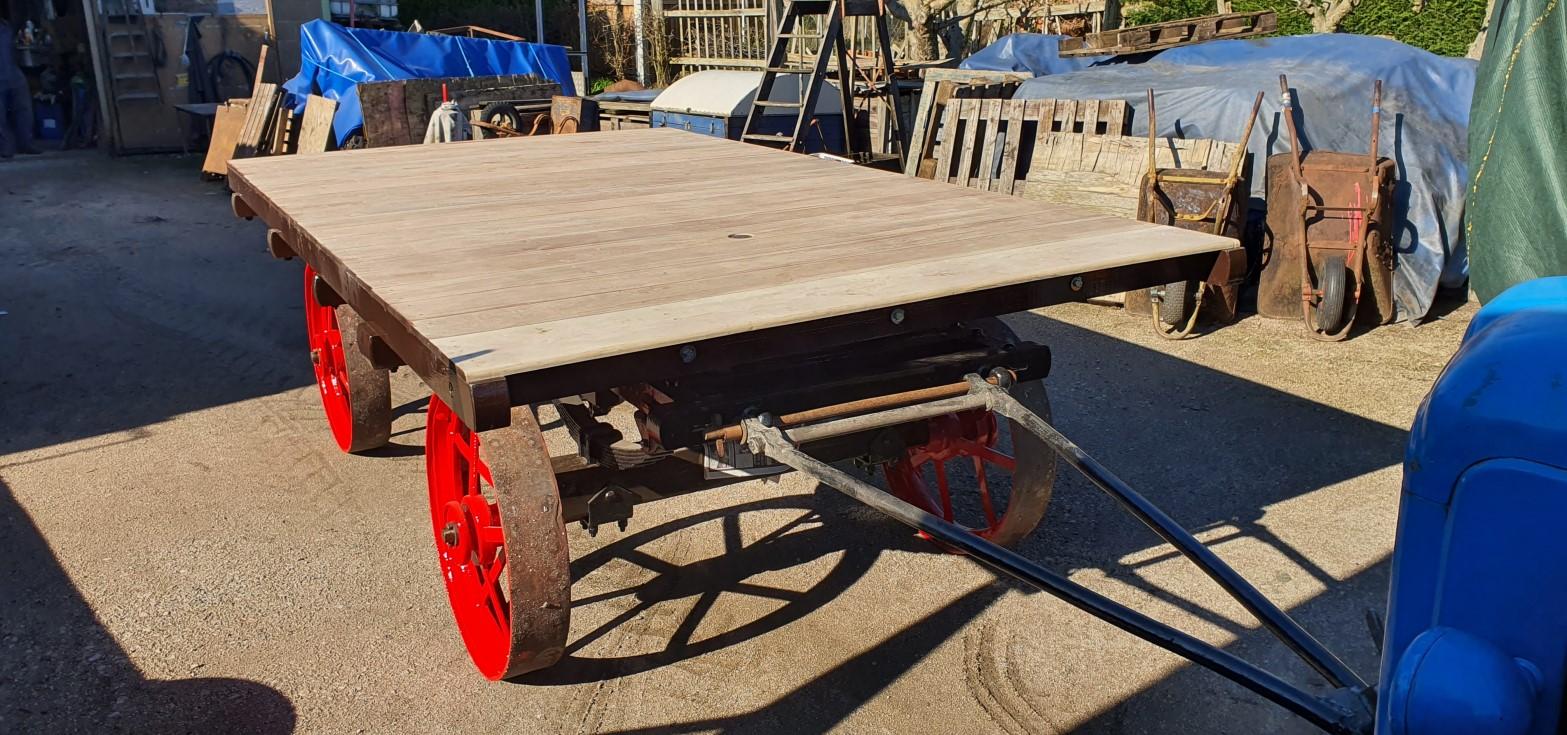
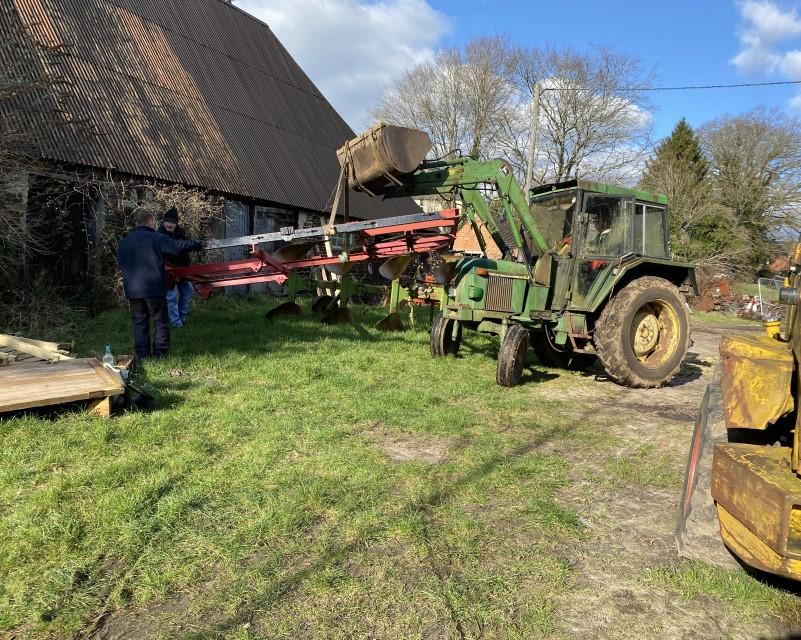
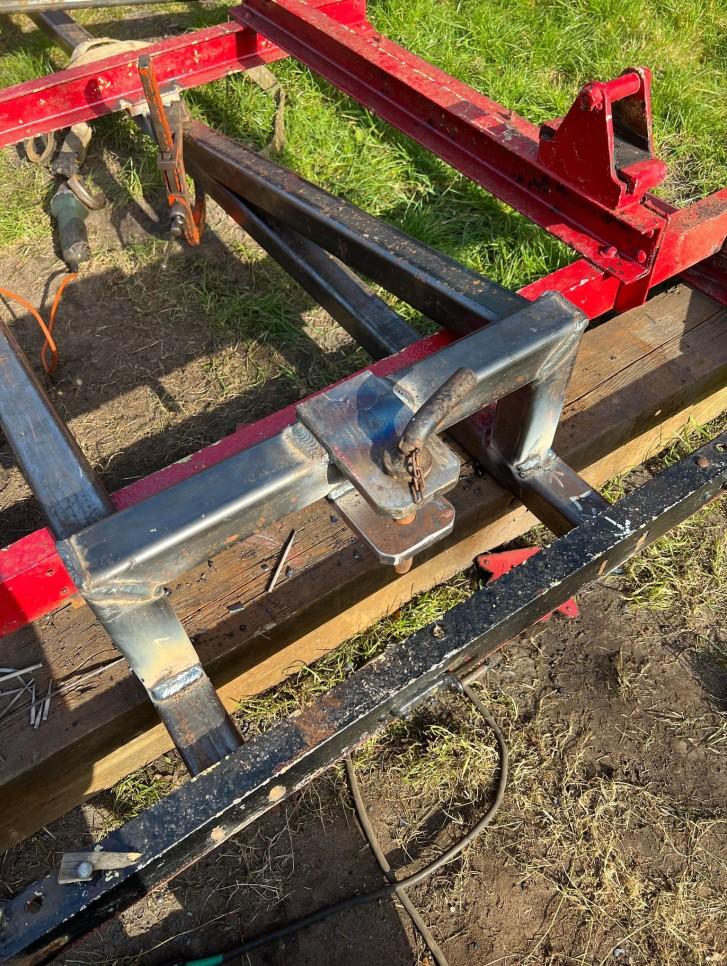
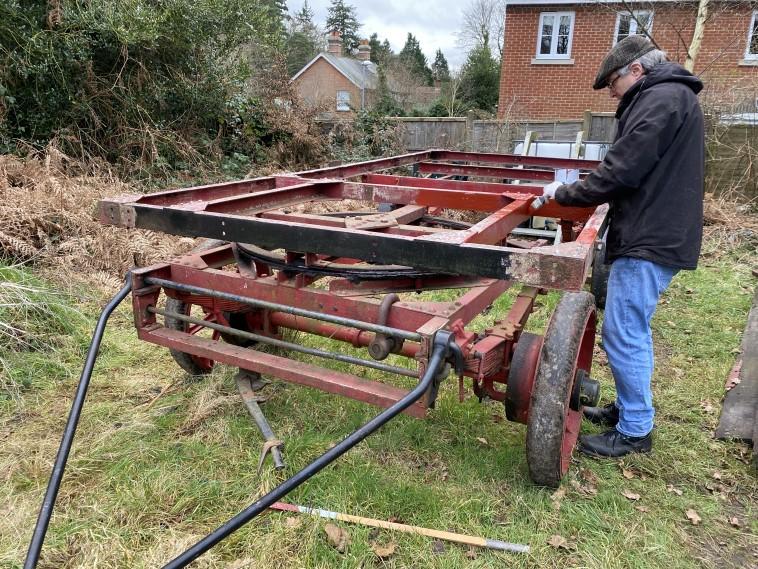
projects and repairs on the various bits of equipment we have so thought it would be good to share this with you. Where should we start? How about what we are up to at this very moment? When we go out on the road with Victoria, she tows our 1920’s living van and our trailer - we purchased the trailer back in 2013, got it home, did a few bits to it and then we have used it over many miles since. This year the trailer is having lots of work done, including extra metal work welded into its frame, a new hitch added to the back and all new wood on the floor and sides. It’s going to be a big
The idea is that we carry a lot of weight in the trailer and as it is, at the moment, it’s not really strong enough to carry our water cube (1000 litre IBC plastic tank) and all the coal, sometimes a tonne of it
for 2 engines on a fairly long journey.
So, all the wood was taken off the sides and floor of the trailer. We were then down to the metal base and axles. The base was then lifted off the axles ready for it to have all the extra metal added to strengthen it. This is now going well and coming together nicely as you can see in the pictures.
Also, at the moment, we are preparing the timber, so the boards that go on the base of the trailer have been treated with Cuprinol to help protect them from the weather. Next, we are starting to paint the axles, we have decided to paint the axles and the metal bed of the trailer brown to match our living van, we hope it will look nice. That’s where we are up to and hopefully, we will soon have it all back together and able to carry much more weight without the worry of our trailer breaking. We also do a few road runs throughout the year and take many friends and family for rides around the local countryside on the trailer, which we hope we will soon be doing again.
We will update you in the next issue and hope you have enjoyed the article so far.
If you see us at an event please do come and say hi, Victoria always loves to meet new and old friends
See you all soon.
Wendy Wakelin and Victoria.
In the Workshop - Refurbish or Replace?
For a little while now, I have been noticing some wear in the motion of my family’s Foster traction engine ‘SPRIG’. One issue was the piston rod leaking steam. We would tighten up the gland packing, but soon after it would be leaking again. Another issue was wear in the valve gear, with the die-block being loose inside the valve link.
Over the past few months I have made repairs. Unlike modern vehicles, where you just replace parts with new ones, traction engines are very over-built, with spare material on wearing surfaces so they can be re-machined, rather than replaced. I managed to reuse and repair almost all of the parts that were worn.
Starting with the piston rod. The reason that it was leaking steam was because the rod itself was pitted and worn. This meant the gland packing that is supposed to seal the piston rod was being damaged.
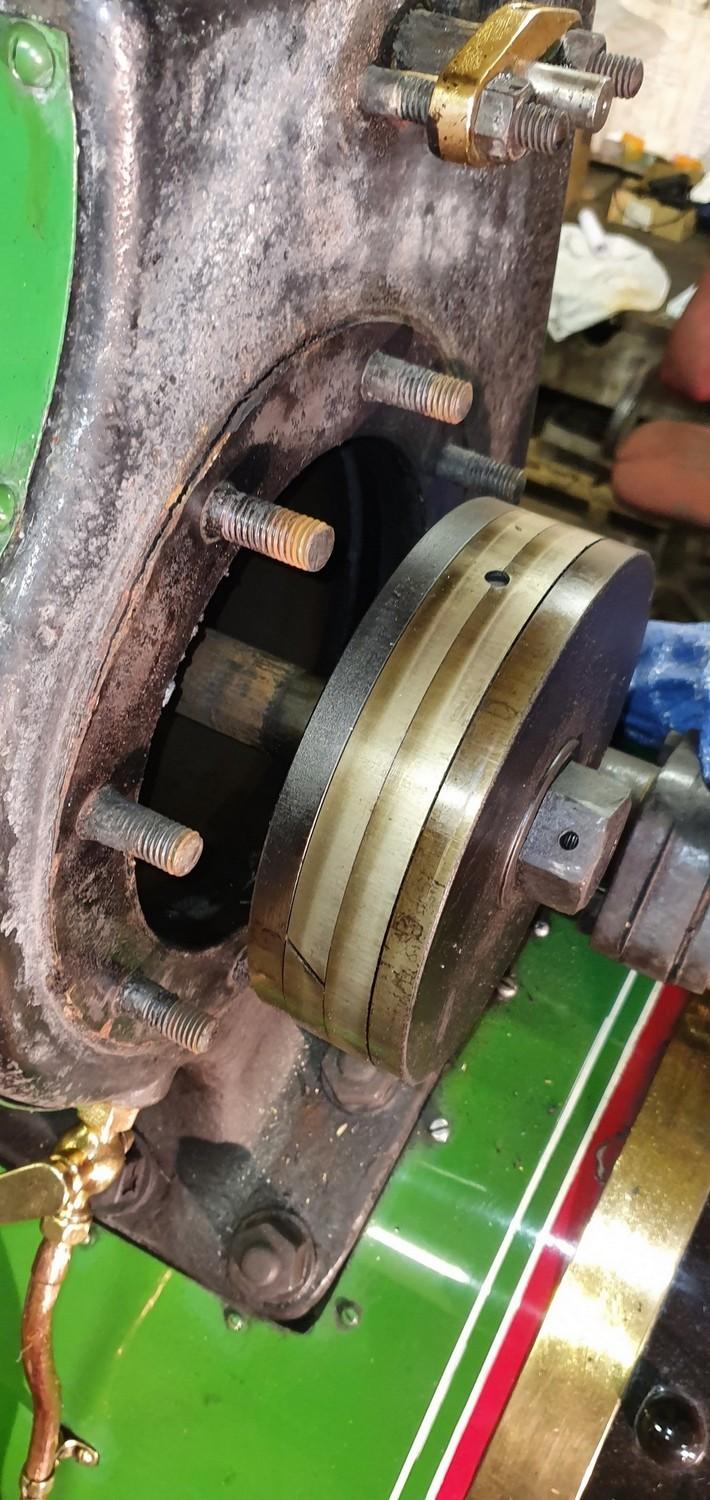
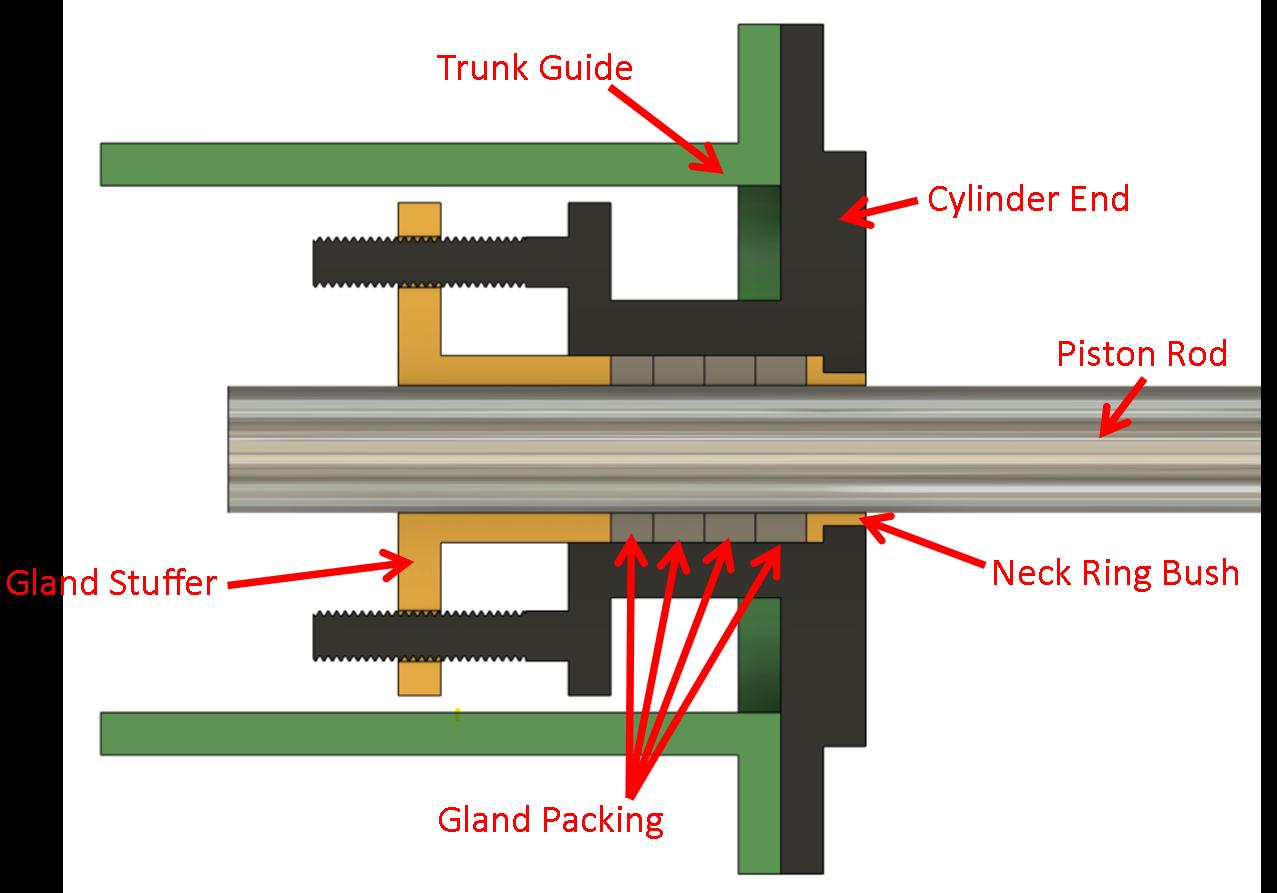
Here is a cut-away diagram of the piston rod. The steam inside the cylinder is prevented from escaping down the sides of the piston rod by the gland packing, which is held in place by the gland stuffer. As the gland stuffer is tightened, it compresses the gland packing against the piston rod, making a steam-tight seal.
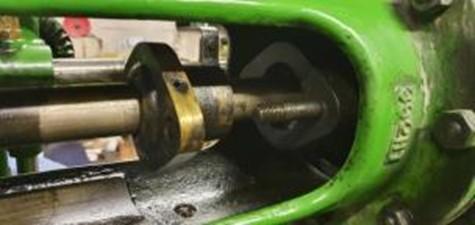
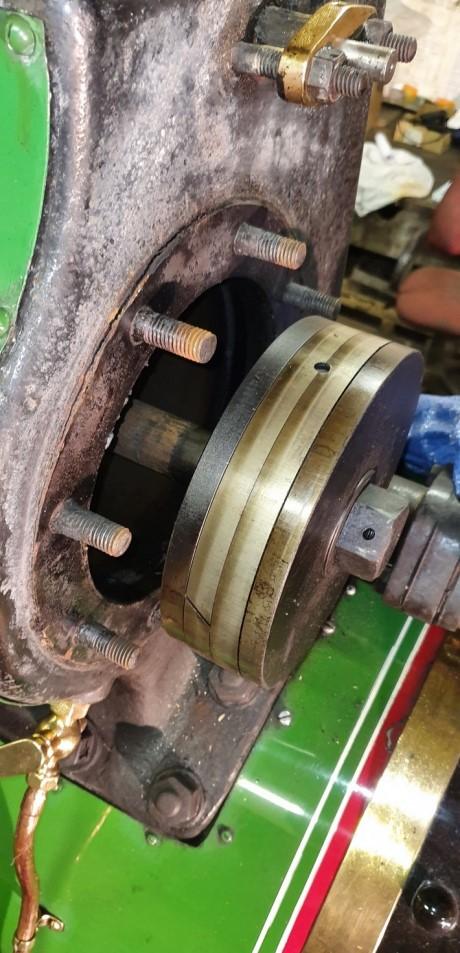
The first thing I had to do was to dismantle the piston and rod.
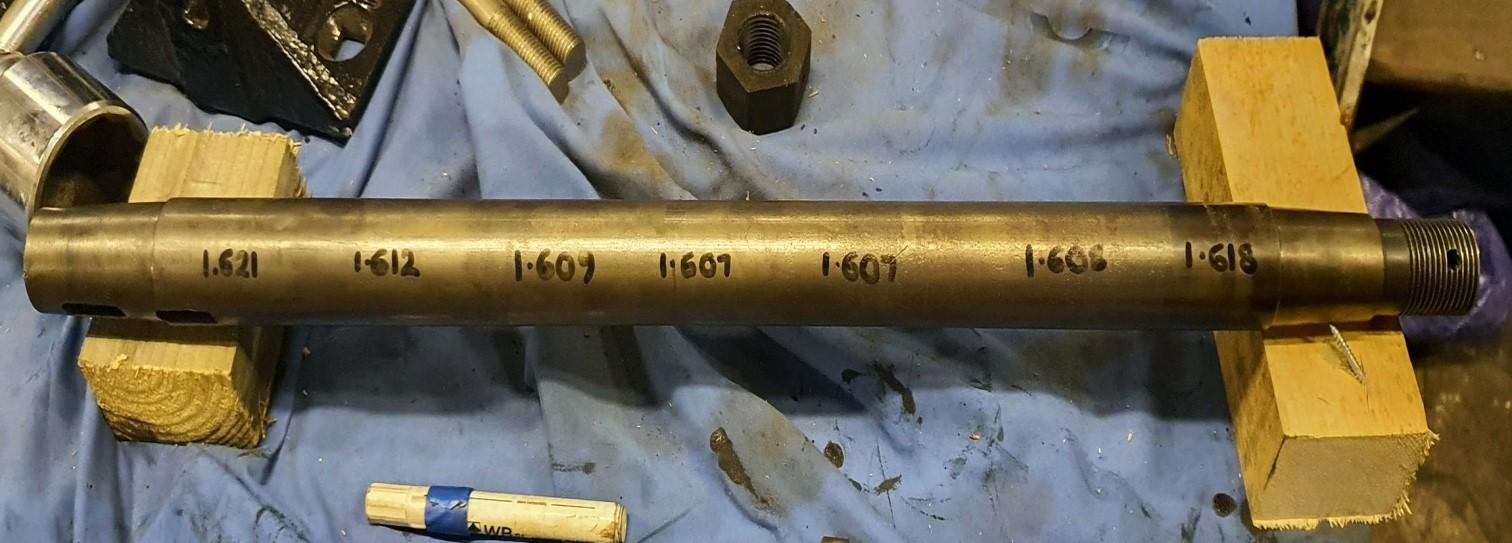
After dismantling the rod and measuring it, I found that it was more worn in the middle than at the ends, which would also have contributed to the leaks. If you look closely you can see the diameter measured at various points written along the rod.
Now I had a decision to make, should I get a new piece of metal and make a new one, or should I try to repair this one.
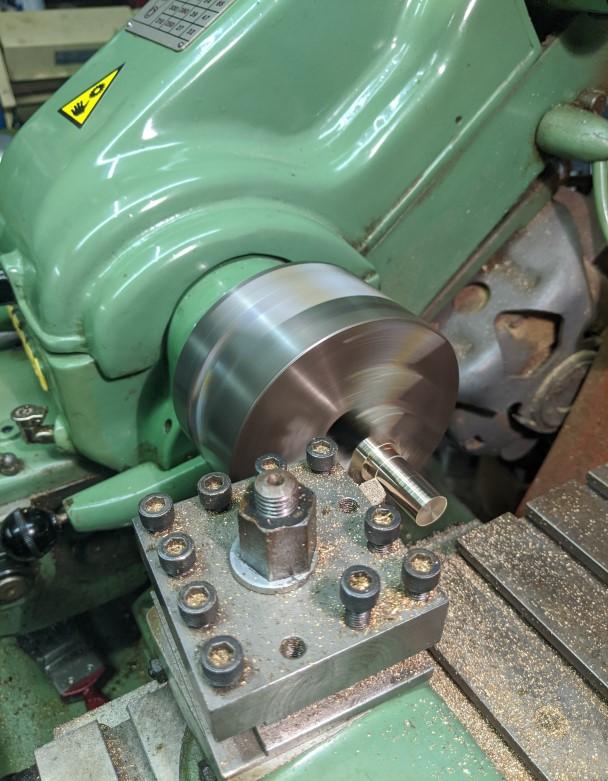
I decided to try to repair this one, because it would be less work than making a new one, which would mean making the tapered sections at each end, and the threaded part for the nut that holds the piston on. In order to remove the pitting in the piston rod, it would need to be put in a lathe, and skimmed to remove material until the rod was smooth again.
Fortunately I didn’t have to remove too much metal. Originally the rod was 1.625 inches in diameter, and after skimming the surface, it was 1.599 inches. 26 thousandths of an inch (0.66 millimetres) smaller than original, and still strong enough to do it’s job.
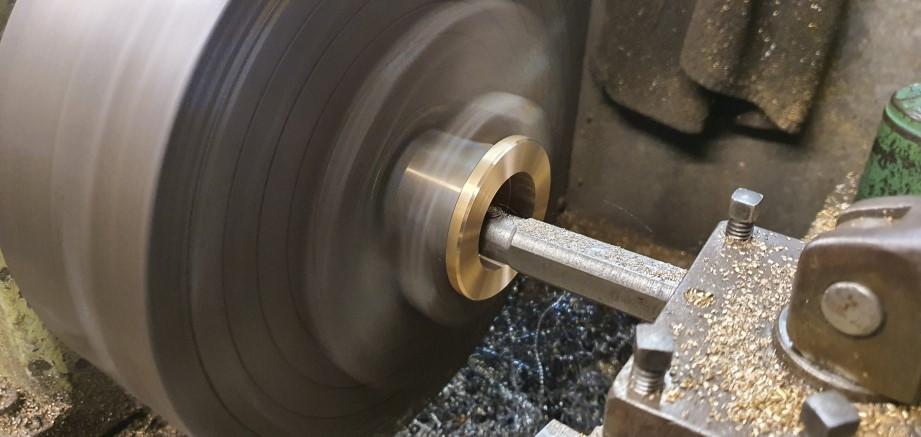
After skimming the piston rod, I turned my attention to the parts it passes through. With the rod being slightly smaller than it was, it was not a loose fit through the gland stuffer and the neck ring bush, however, these were worn too, and I planned to repair them, making them match the smaller piston rod. When something like the gland stuffer becomes worn, sometimes the best repair is to ‘bush’ the hole in the middle. To ‘Bush’ something is to make the hole a little larger, and then a tube of new material is fitted into the part to replace the material lost by the wear.
The benefit of fitting a bush is that less new material is needed, which makes the repair easier and cheaper. It is much easier to make a tubular piece as a bush, than to make a brand new complete gland stuffer.
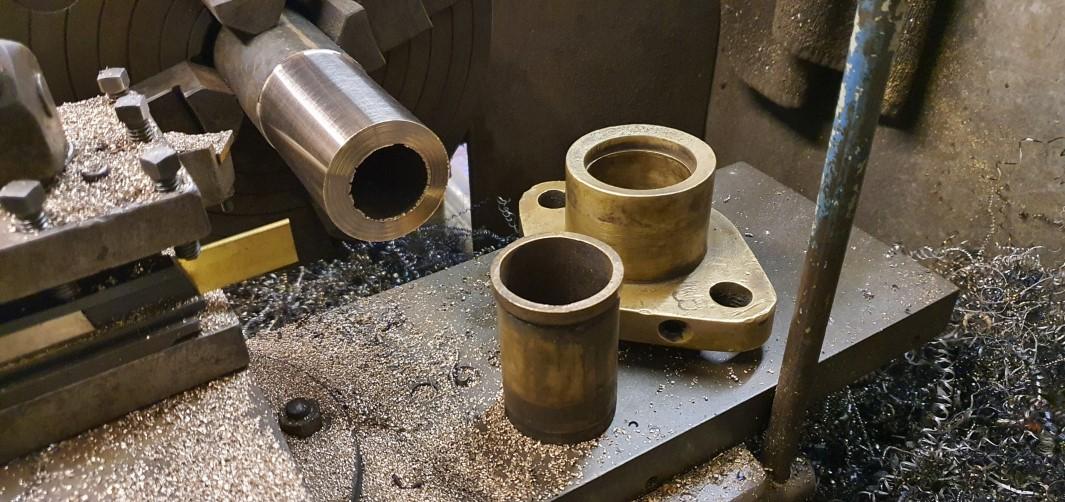
The gland stuffer had already had a bush fitted, so I just needed to make a new one, with a slightly smaller hole in the middle. The photo above shows the old bush removed from the stuffer, and the start of a new one being made.
The neck ring bush however was too thin to have a bush fitted, so I had to make a complete new one, again, with a smaller hole in the middle.
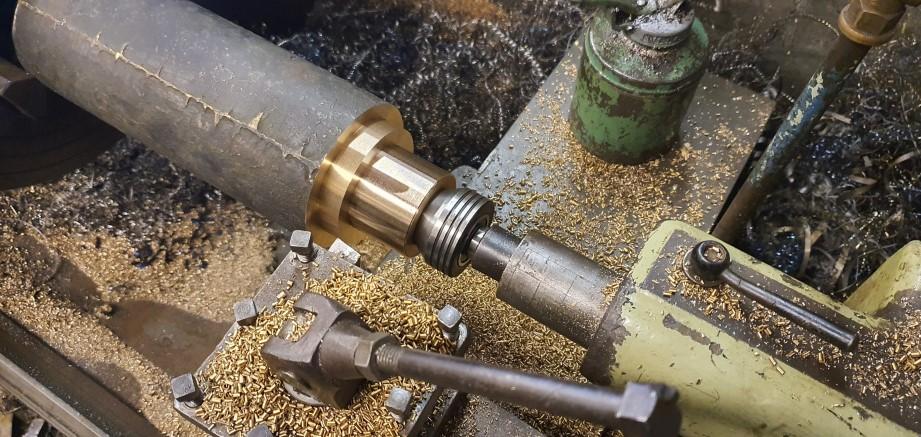
The new bush and neck rung were simple turning jobs in the lathe. The bush for the gland stiffer was made to be a very tight fit inside the body of the stuffer, so once it was pressed into place, it wouldn’t come out again. The neck ring bush is also a tight fit in the end of the cylinder.
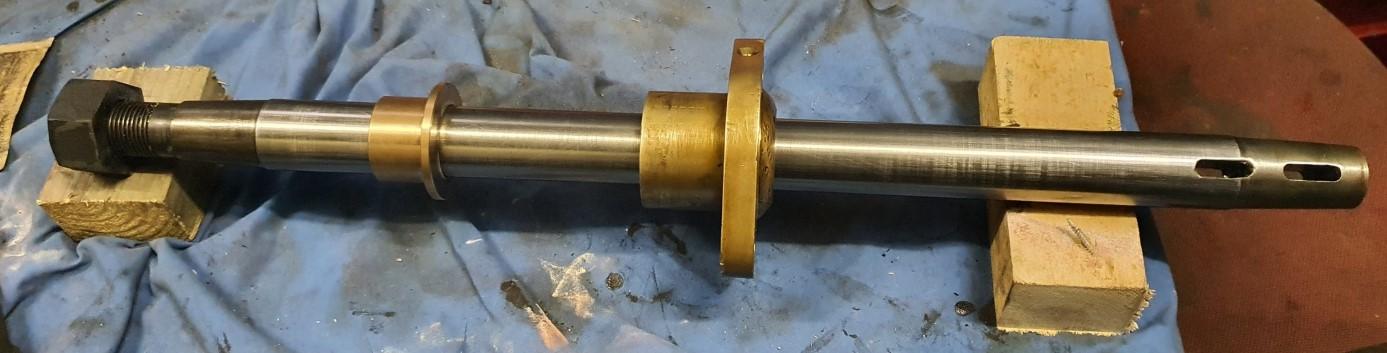
Here we have the two parts test-fitted on the piston rod. Nick Bosworth. To be continued...
Unusual Engines 7
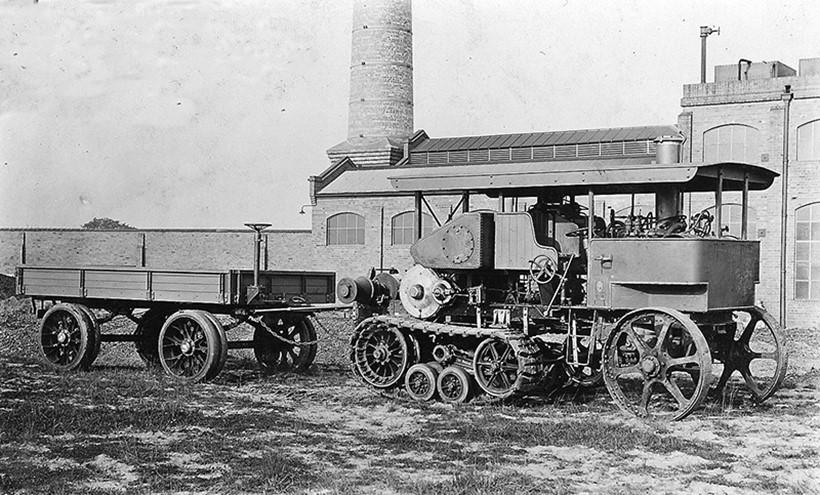
In this edition’s Unusual Engines we take a look at the Sentinel Roadless Tractor. In the 1920s, Sentinel were well known for their undertype steam waggons and they soon realised that the power unit from their waggon could be adapted to be used in other types of vehicle. Sentinel first developed a wheeled steam tractor using the engine and boiler from a steam waggon. The steam tractor sold well abroad, so Sentinel formed a partnership with the Roadless Traction Ltd company to develop and produce a tracked version of the tractor. Tracked vehicles had seen a lot of development during WW1 and by the 1920s were a practical system to use. The Sentinel Roadless Tractor was what we would now call a half track design, with normal steering wheels at the front, and tracks at the rear. The boiler was mounted at the front and the weight was
evenly distributed by fitting the water tank at the rear. The advantage of tracks vs wheels was that the pressure on the ground was low and it was able to traverse rough terrain with ease. Sadly, the Roadless Tractor was not a success and a total of only 18 were built between October 1925 and September 1926, and unfortunately none survive. They were primarily sold abroad to be used for haulage work, although experiments were conducted with using them for direct ploughing - the low ground pressure meaning they didn’t compress the soil in the same way a conventional steam tractor would. Three were sold to customers within the UK and were used for timber haulage. If you’re interested in seeing one in operation, there is some footage on YouTube of tests of the Roadless Tractor at the Sentinel works.
Heavy Haulage on the London to Brighton!
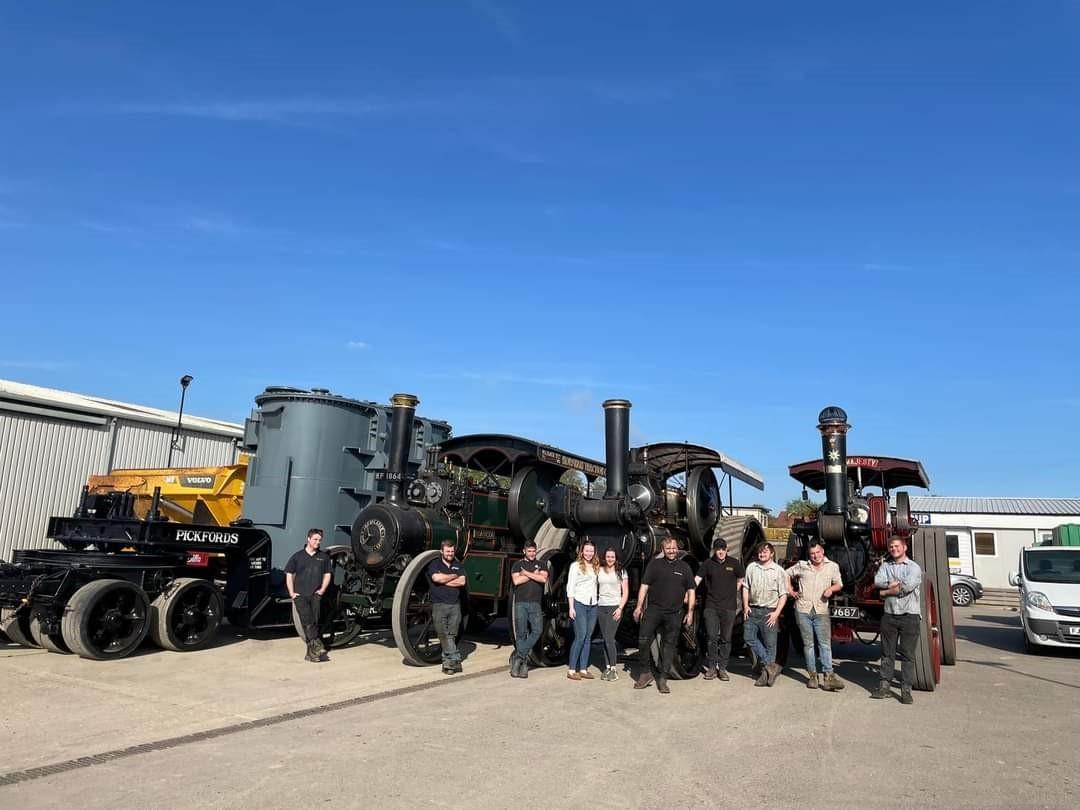
In 2011, Les and Dee Searle and Horsham Traction Company were loaned the 80 ton Crane Heavy Haulage Trailer, owned by Martin Oliver of the Great Dorset Steam Fair, to complete the 2011 Historic Commercial Vehicle Society (HCVS) London to Brighton run with their three road locomotives; Boadicea, His Majesty and The Great North.
The next generation of Horsham Traction Company, affectionately known as the Crèche, have long since been inspired by the achievement of the 2011 team, and have always dreamt of completing the run themselves. 11 years later, many discussions were had between Les, Dee and the Crèche, and it was decided that the next HCVS London to Brighton run would be the Crèche’s turn.
The heavy haulage display will be raising money and awareness for the charity, Horsham Community Responders. The charity was set-up in 2007 to train volunteers to provide immediate care in an emergency situation prior to the arrival of an ambulance. Horsham Community Responders is an important charity to every member of the group, following an incident in 2021 which left a member of the Crèche in a critical
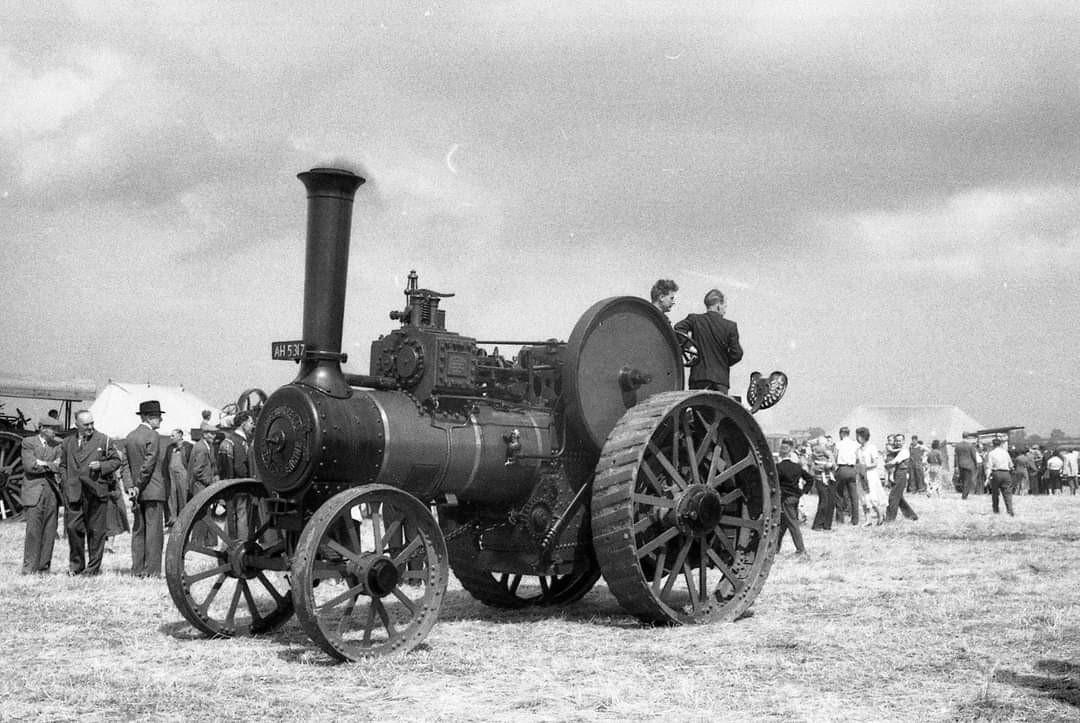
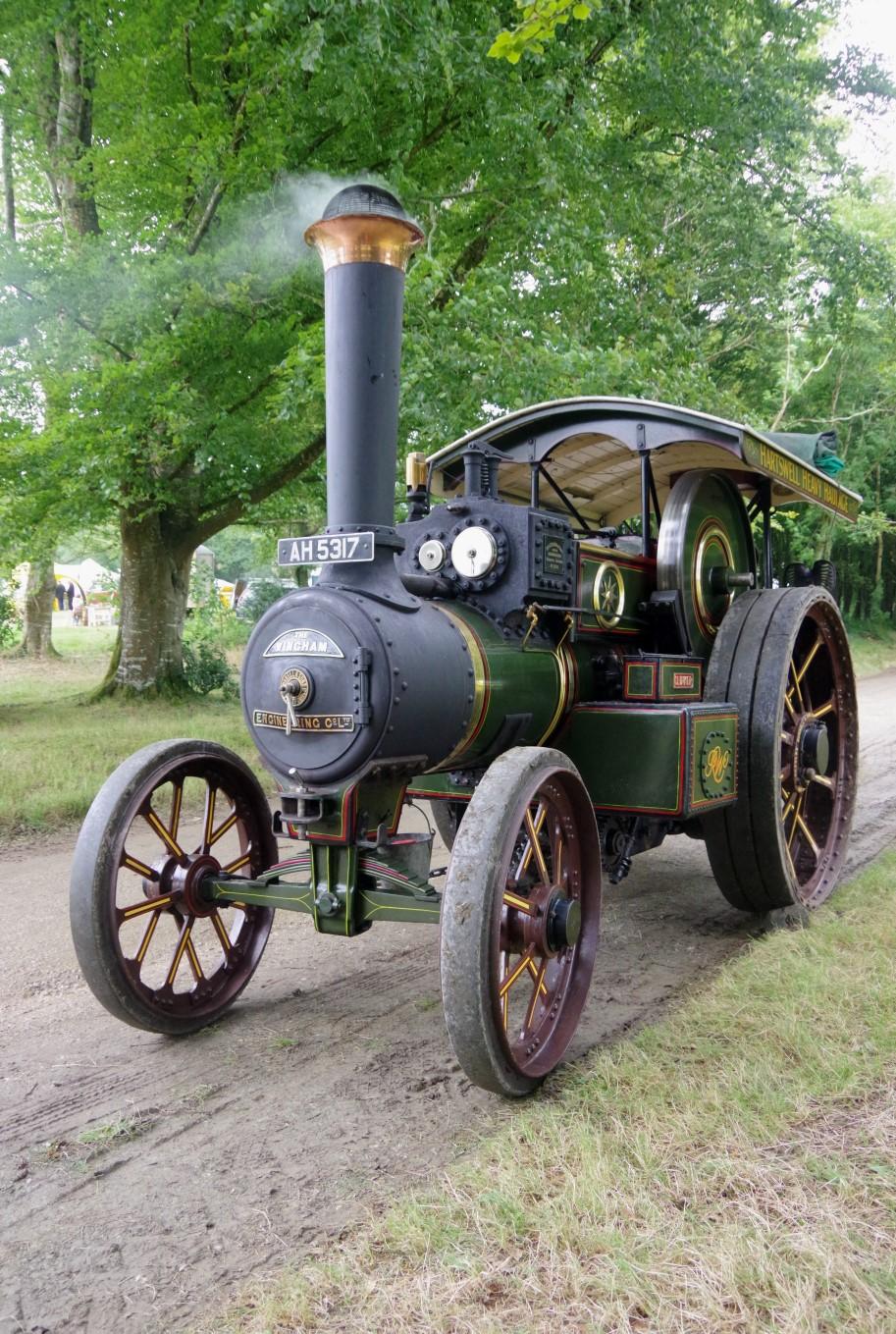
For this editions 3257 of 1911
Then and Now
Then: Photo taken in at Rempstone rally some time in the late 1950s or early 1960s.
Now: Photo taken in 2017 at Bocconoc. Now owned by NTET Chairman, Rob Wing.
Competition
Thankyou to those who got in touch to guess what the photo was in the last edition, we had just the one correct answer this time, from Toby and Olly Reynolds.
The component was one of the springing gear linkages that ties the back axle to the third shaft on the engine to keep the gears meshing correctly. The spring gear allows the back axle to move around on rough ground to smooth the ride for the crew.
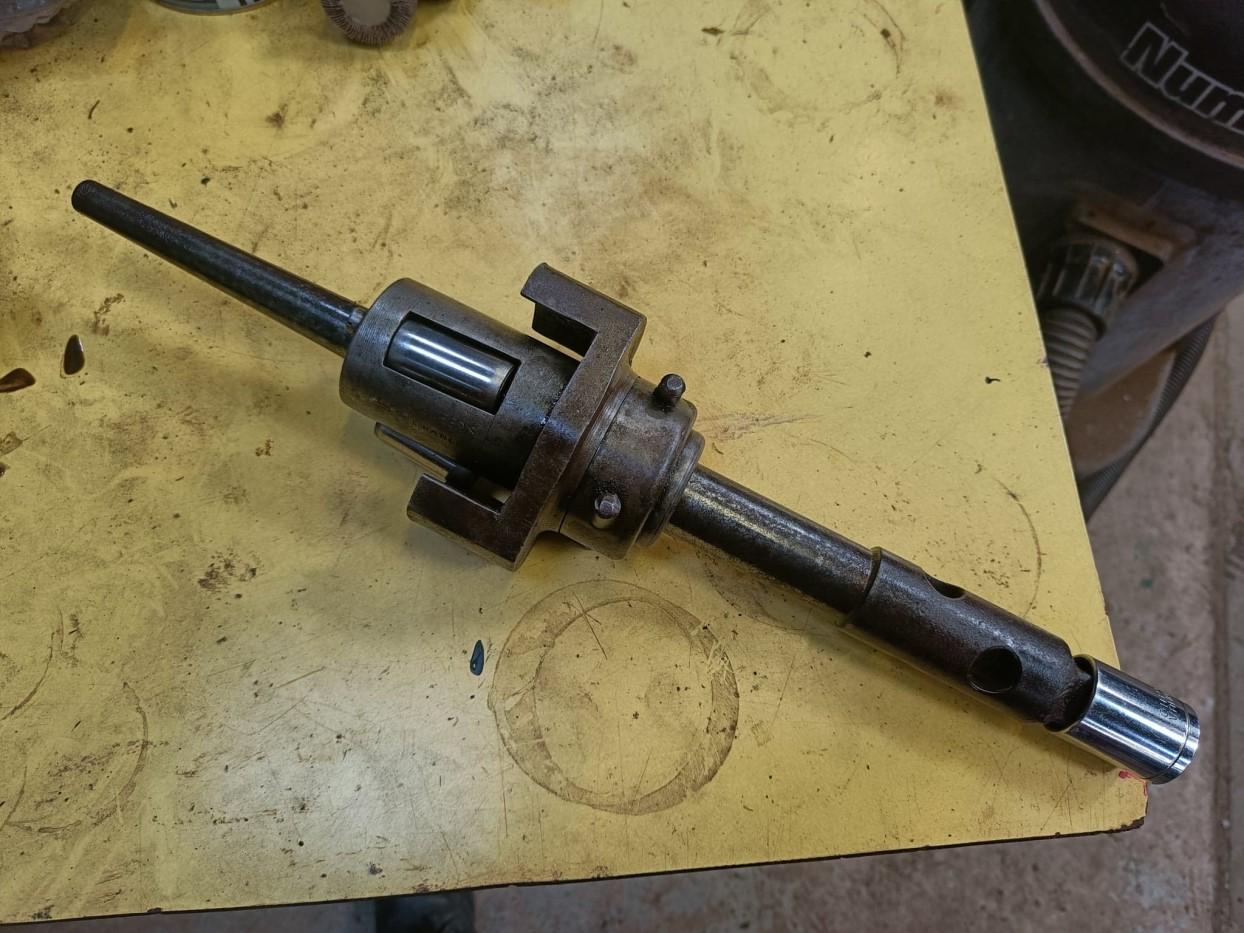
For this months question, I wonder if anyone can tell me what the tool is below and what it is used for when restoring a traction engine?
Send in your guesses or answers to sac.raisingsteam@ntet.co.uk and we’ll publish the correct answer in the next edition of Raising Steam.